



Creamy peanut chicken for weeknight dinners has a way of making a tired kitchen smell like toasted peanuts, garlic, and ginger in under half an hour. The skillet gets glossy. The sauce thickens. And by the time you spoon it over rice, the whole thing looks like you planned dinner with more confidence than you probably felt at 5:30.
I keep coming back to this style of chicken because it solves a very specific problem: you want something that tastes cooked, not assembled. Peanut butter gives the sauce body, coconut milk softens the edges, and lime keeps the whole pan from feeling heavy. That balance matters. Too much sweetness and it turns sticky. Too much broth and it tastes thin. The right version lands somewhere better — rich, salty, bright, and clinging to the chicken in that slightly messy way that makes a bowl worth scraping clean.
The other reason it earns a place in the rotation is that the technique is forgiving without being lazy. Chicken thighs brown beautifully, peanut sauce emulsifies if you whisk it properly, and spinach melts into the pan without asking for much. Get the heat right and the sequence right, and the dish behaves.
Why This Peanut Chicken Keeps Working on Busy Nights
-
It moves fast without tasting rushed: The whole dish comes together in about 45 minutes, and most of that is hands-off simmer time while you make rice or slice a cucumber salad.
-
The sauce actually clings: Peanut butter, coconut milk, and broth make a sauce that coats the chicken instead of pooling uselessly at the bottom of the bowl.
-
Chicken thighs buy you margin: Thighs stay juicy even if the skillet runs a minute hot, which is a gift on nights when the phone rings, the rice takes longer, or someone asks where the serving spoon went.
-
The pantry list is short: Peanut butter, soy sauce, vinegar, broth, and a little honey do most of the heavy lifting. The fresh ingredients add lift, not chaos.
-
Leftovers get better overnight: The sauce thickens in the fridge, so tomorrow’s lunch tastes more deliberate than the first pass, especially over rice or noodles.
-
Vegetables slip in cleanly: Bell pepper and spinach fit the sauce instead of fighting it, which means you get color and texture without turning the pan watery.
Dinner at a Glance
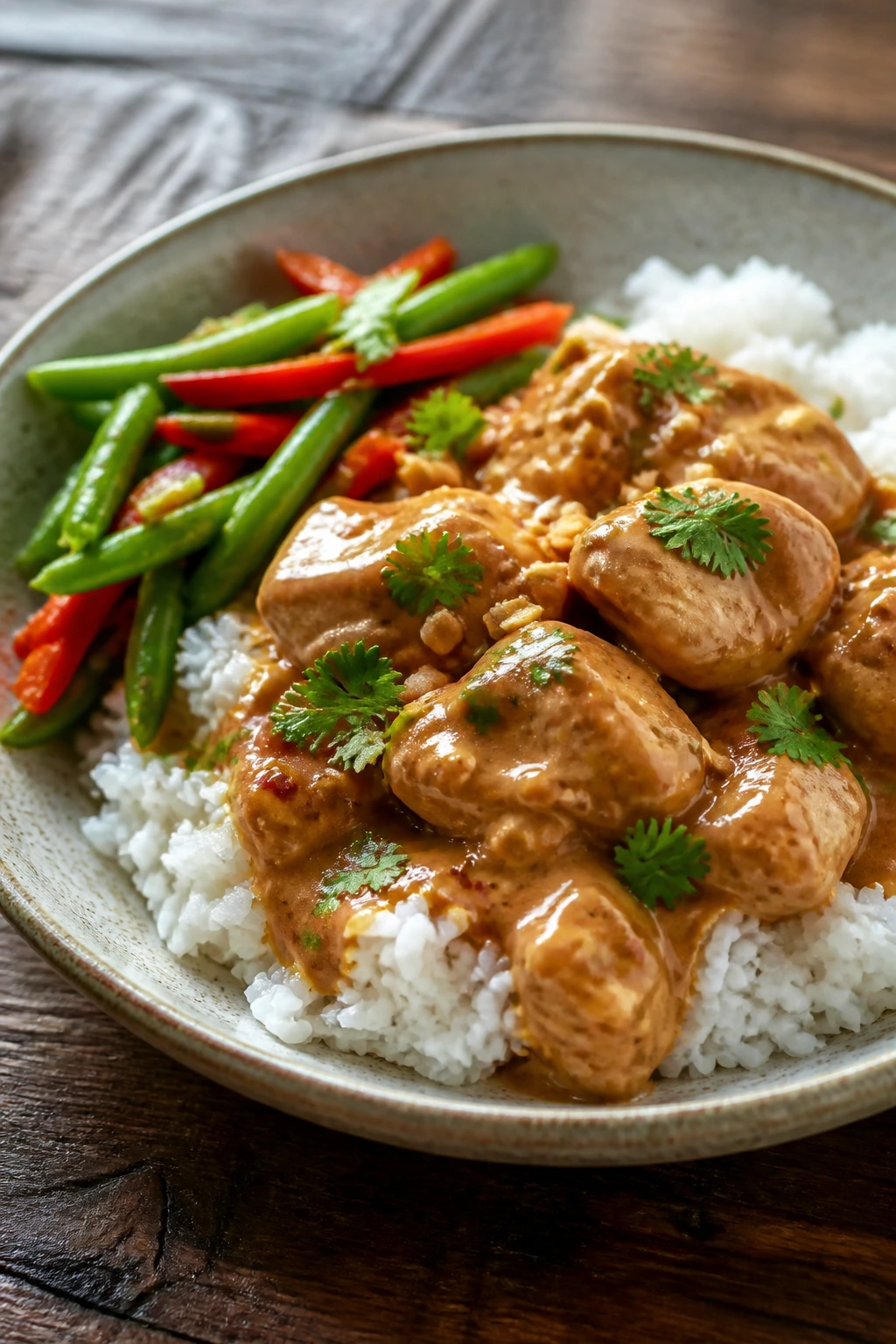
Yield: Serves 4
Prep Time: 20 minutes
Cook Time: 25 minutes
Total Time: 45 minutes
Difficulty: Beginner — the steps are straightforward, and the sauce smooths out if you whisk patiently.
Best Served: Hot from the skillet over steamed jasmine rice, rice noodles, or a pile of tender vegetables.
This is one of those dinners that sounds busier than it is. Once the chicken is cut and the sauce is mixed, the rest is mostly heat control and timing. Keep the simmer gentle and the pan moving, and the whole thing behaves.
The Ingredient List That Actually Matters
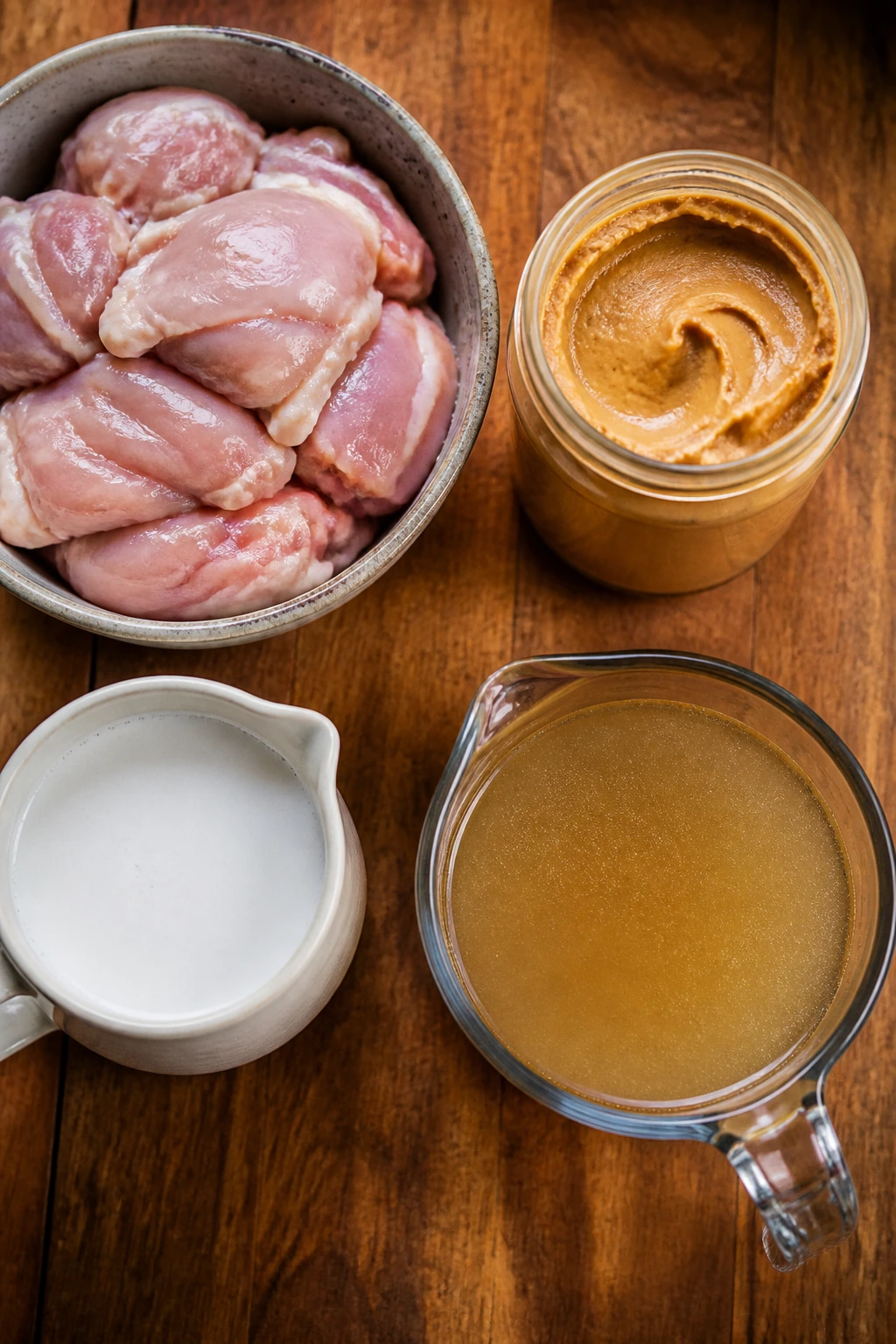
The list is short on purpose. Nothing here is decorative, and that is part of the charm.
For the Chicken
- 1½ pounds boneless, skinless chicken thighs, cut into 1-inch pieces
- 1 teaspoon kosher salt
- ½ teaspoon black pepper
- 2 tablespoons cornstarch
- 2 tablespoons neutral oil, divided
For the Sauce and Vegetables
- 1 small yellow onion, thinly sliced
- 1 red bell pepper, thinly sliced
- 3 garlic cloves, minced
- 1 tablespoon fresh ginger, grated
- ⅓ cup creamy peanut butter
- 1 cup low-sodium chicken broth
- ½ cup full-fat coconut milk
- 2 tablespoons soy sauce
- 1 tablespoon honey or packed brown sugar
- 1 tablespoon rice vinegar
- 1 tablespoon lime juice
- 1 to 2 teaspoons chili garlic sauce, or more to taste
For Finishing
- 2 cups baby spinach
- 2 tablespoons chopped roasted peanuts
- 2 tablespoons sliced scallions
- 1 tablespoon chopped cilantro, optional
Why Each Ingredient Pulls Its Weight
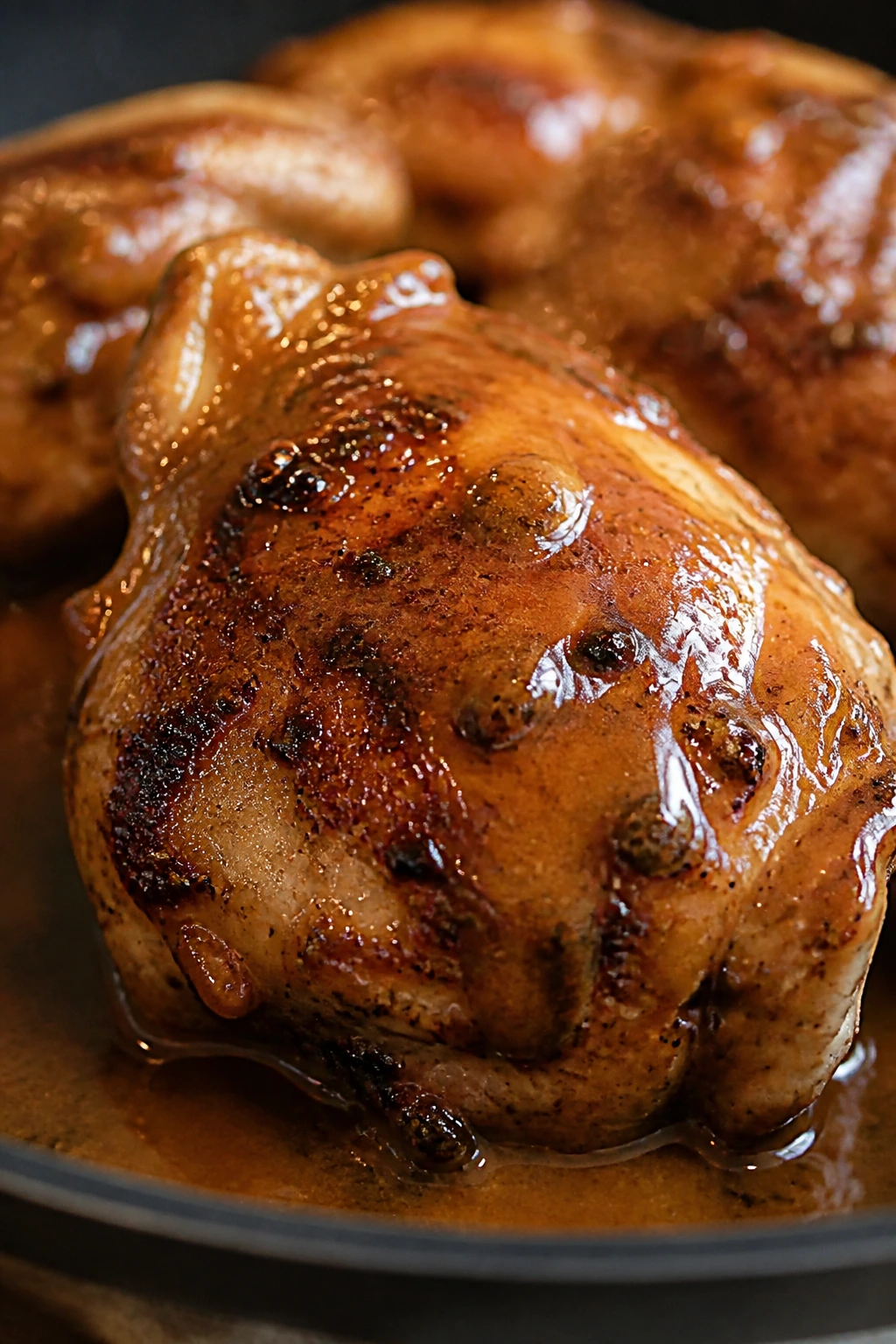
Chicken Thighs: The Part That Stays Juicy
What to use: 1½ pounds boneless, skinless chicken thighs, cut into 1-inch pieces.
Preparation: Pat the pieces dry first, then cut them into roughly equal chunks so they brown at the same pace. The cornstarch coating goes on right before the pan, not hours early.
Substitutions: Boneless chicken breasts work if you shorten the simmer, and firm tofu can take the same sauce if you want a vegetarian version.
Tips: Thighs give you a wider cooking window. That matters here because the sauce needs a few minutes to thicken, and breasts can punish small timing mistakes.
Peanut Sauce Base: Where the Creaminess Comes From
What to use: ⅓ cup creamy peanut butter, 1 cup low-sodium chicken broth, and ½ cup full-fat coconut milk.
Preparation: Whisk the peanut butter with warm broth before it hits the pan if your jar is stiff. That keeps little peanut lumps from hanging around in the finished sauce.
Substitutions: Natural peanut butter works if you stir it very well; cashew butter can stand in, though the flavor becomes milder and a little softer.
Tips: Full-fat coconut milk gives you the silkier texture. Light coconut milk works in a pinch, but the sauce gets thinner and needs a little longer over the heat.
Aromatics and Acid: The Parts That Keep It Awake
What to use: 1 small yellow onion, 1 red bell pepper, 3 garlic cloves, 1 tablespoon grated ginger, 1 tablespoon rice vinegar, 1 tablespoon lime juice, and 1 to 2 teaspoons chili garlic sauce.
Preparation: Slice the onion and pepper before you start cooking. Grate the ginger finely so it disappears into the sauce rather than showing up as fibrous strands.
Substitutions: Red onion can replace yellow onion, and a splash of apple cider vinegar can stand in for rice vinegar if that is what you have. Lemon works for lime, though lime has a cleaner edge here.
Tips: Add the lime juice at the end, not at the beginning. Heat blunts citrus faster than people expect, and this dish needs that sharp, fresh finish.
Finishing Ingredients: The Texture You Feel at the Table
What to use: 2 cups baby spinach, 2 tablespoons chopped roasted peanuts, 2 tablespoons sliced scallions, and 1 tablespoon chopped cilantro if you like it.
Preparation: Keep the spinach dry and add it last so it collapses in seconds, not minutes. Chop the peanuts a little rough so they crunch instead of disappearing.
Substitutions: Baby kale can replace spinach, though it needs a minute or two longer in the pan. Basil works if you want a fresher, sweeter finish.
Tips: The peanuts are not garnish in the decorative sense. They give the dish a needed crunch, and the sauce tastes flatter without them.
The Tools That Make the Skillet Easier
-
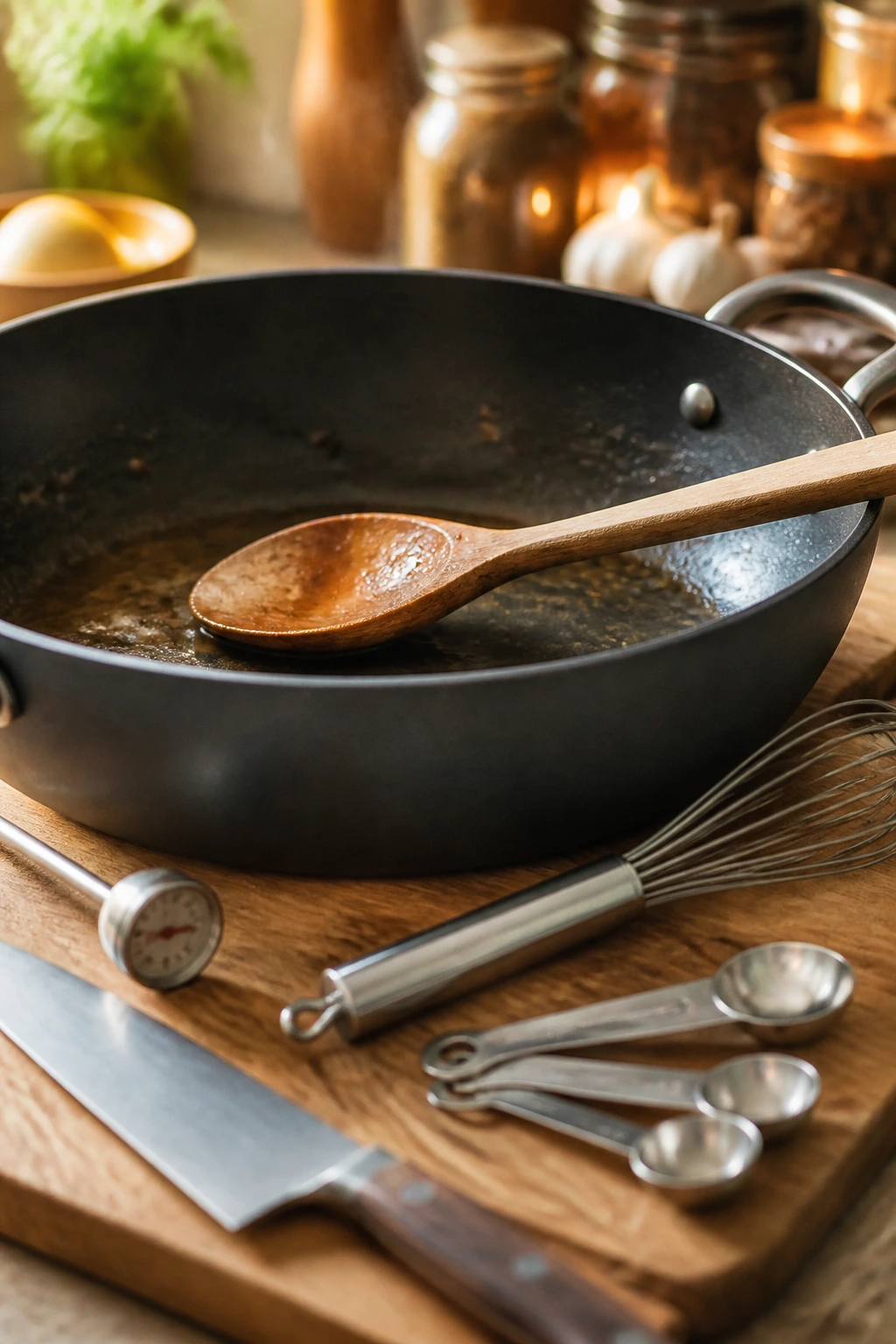
Large 12-inch skillet with high sides: A wide pan gives the chicken room to brown and leaves enough space for the sauce to simmer without splashing.
-
Medium mixing bowl: You need one for the sauce, and a bowl with a little extra room makes whisking peanut butter into broth less annoying.
-
Whisk: This is the thing that turns the peanut butter mixture from stubborn to smooth.
-
Wooden spoon or silicone spatula: Good for scraping browned bits off the skillet and folding spinach through at the end.
-
Sharp chef’s knife and cutting board: The chicken and vegetables cook more evenly when they are cut into similar pieces.
-
Instant-read thermometer: Helpful, not mandatory, but it tells you exactly when the chicken reaches 165°F without guesswork.
-
Measuring spoons and cups: Peanut sauce is forgiving, but the balance of soy, lime, and honey is better when the ratios are honest.
How to Cook Creamy Peanut Chicken Without Breaking the Sauce
Prep the Sauce and Chicken
-
In a medium bowl, whisk together the peanut butter, chicken broth, coconut milk, soy sauce, honey, rice vinegar, lime juice, and chili garlic sauce until smooth. If the peanut butter fights back, whisk in 2 tablespoons of warm broth first, then add the rest.
-
Pat the chicken thighs dry with paper towels and toss them with the salt, pepper, and cornstarch until every piece is lightly coated. The coating should look dusty, not paste-like.
Brown and Build the Skillet
-
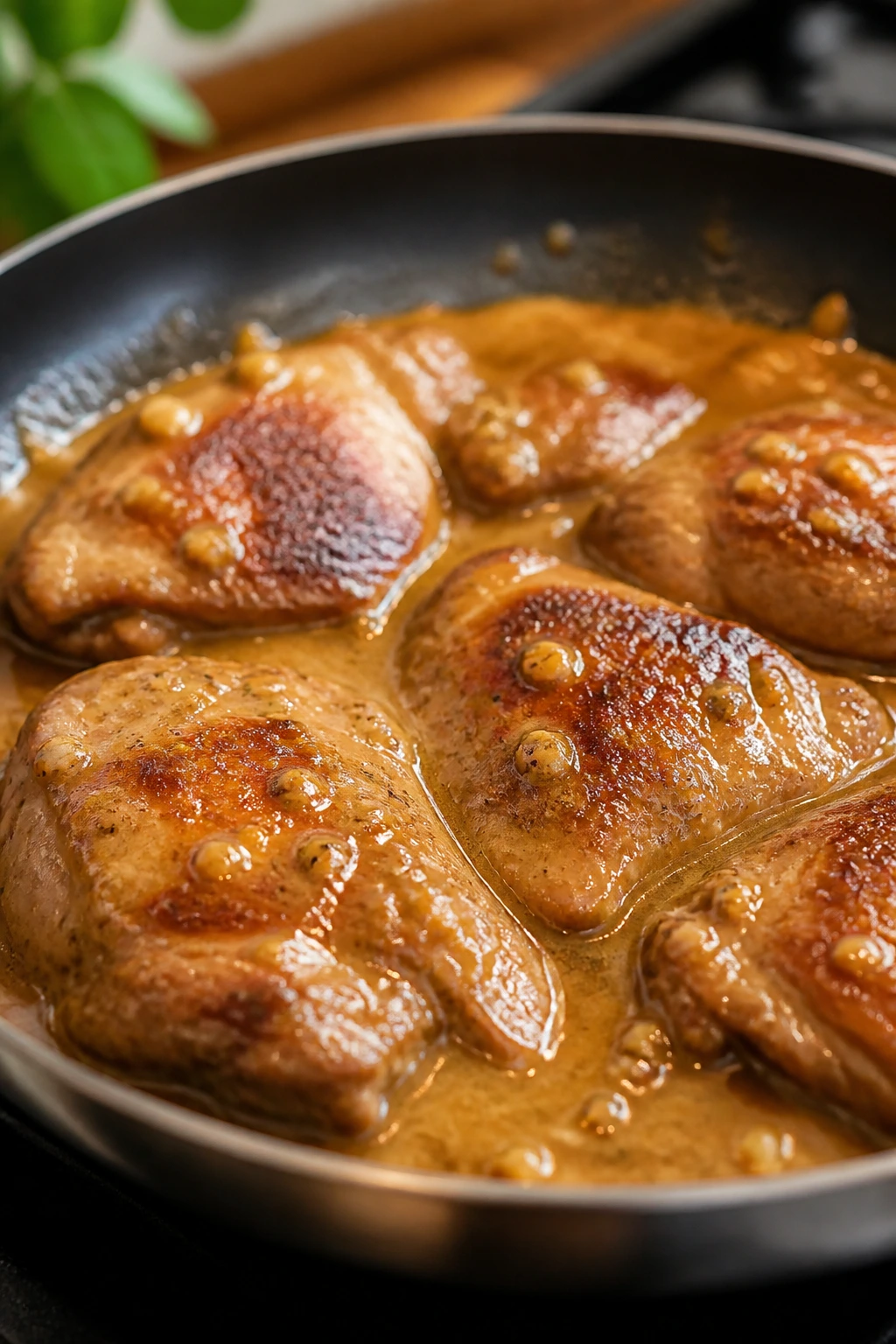
Heat 1 tablespoon of the neutral oil in a large skillet over medium-high heat until it shimmers. Add the chicken in a single layer and cook for 3 to 4 minutes on the first side, then 2 to 3 minutes on the second side, until browned but not cooked through. Do not crowd the pan or the chicken will steam instead of sear. Transfer the chicken to a plate.
-
Add the remaining 1 tablespoon oil to the skillet. Stir in the onion and bell pepper with a small pinch of salt and cook for 4 to 5 minutes, until the onion turns translucent and the pepper starts to soften at the edges.
-
Add the garlic and ginger and cook for 30 seconds, stirring constantly, until fragrant. Pour in the peanut sauce and scrape up every browned bit from the bottom of the pan. Bring the sauce to a gentle simmer over medium heat. Keep it at a low simmer, not a hard boil, or the sauce can split and turn oily.
Finish the Chicken and Serve
-
Return the chicken and any collected juices to the skillet. Reduce the heat to medium-low and simmer for 5 to 7 minutes, stirring once or twice, until the chicken reaches 165°F in the thickest piece and the sauce looks glossy enough to coat a spoon.
-
Add the spinach and stir for about 1 minute, just until it collapses into the sauce. Taste and adjust with a little more lime juice, soy sauce, or chili garlic sauce. If the sauce thickens more than you want, splash in 2 to 4 tablespoons of broth.
-
Spoon the chicken over rice or noodles, then finish with the chopped peanuts, scallions, and cilantro. Serve immediately while the sauce is still silky.
The Best Way to Plate It
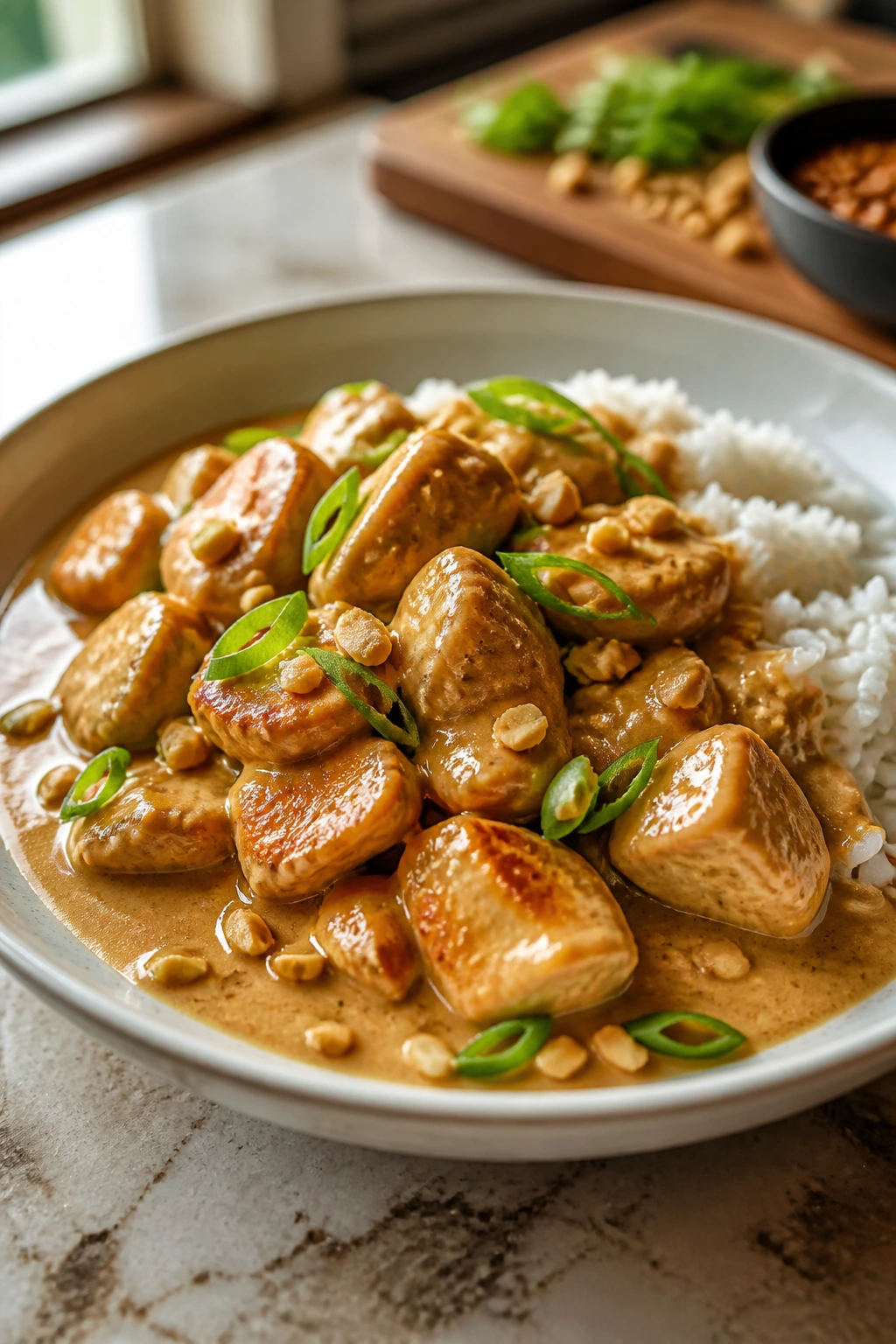
Presentation: Spoon the chicken into shallow bowls rather than deep ones. A wide bowl lets the sauce pool around the rice and keeps the peanuts and scallions visible instead of buried. If you want the plate to look tidy, hold the herbs and peanuts until the last second.
Accompaniments: Steamed jasmine rice is the most natural partner because it absorbs the sauce without competing with it. Rice noodles work when you want a softer, slurpier dinner, and a quick cucumber salad with rice vinegar and salt gives the plate a cold, crisp edge. Steamed broccoli or broccolini fits too, especially if you want the meal to lean more vegetable-heavy.
Portions: Four generous servings is the honest yield here. If you’re feeding big eaters, serve it with extra rice and a side of greens; if you want six smaller bowls, add more vegetables and stretch the sauce a little with another splash of broth.
Beverage Pairing: Iced jasmine tea is my favorite nonalcoholic match because it cools the peanut richness without making the meal feel flatter. If you want wine, an off-dry Riesling handles the lime, soy, and peanut notes without getting lost.
Small Tweaks That Pay Off
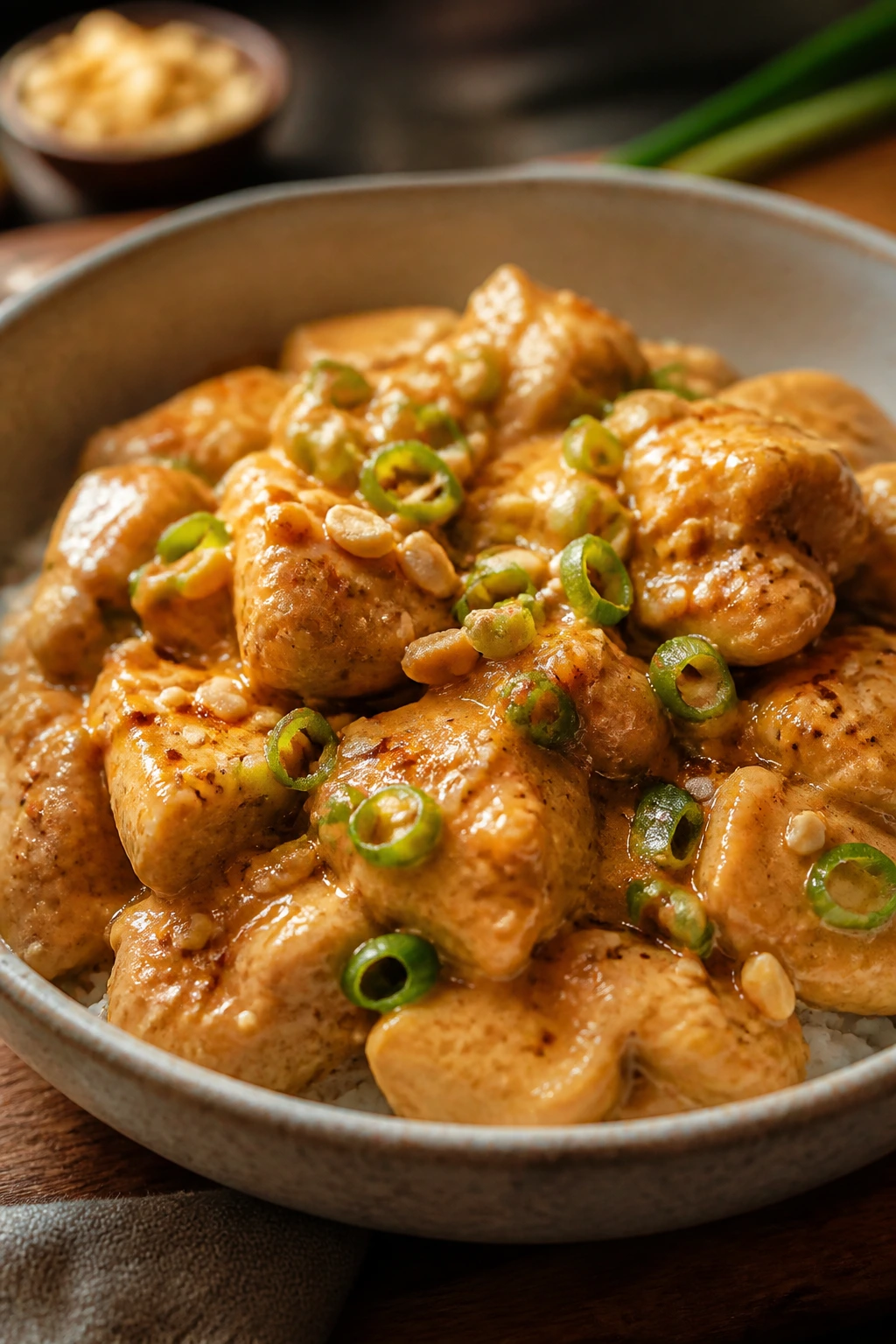
Flavor Enhancement: A tiny finish of toasted sesame oil — about ½ teaspoon, added off heat — makes the whole pan smell deeper and more nutty. Go easy. Too much and it takes over.
Time-Saver: Cut the onion, bell pepper, garlic, and ginger before you start cooking anything. Once the chicken is in the pan, you do not want to be chasing a garlic clove around the board with greasy fingers.
Cost-Saver: Store-brand creamy peanut butter works fine here. I’d rather spend the money on good broth and fresh ginger than on a fancier jar of peanut butter with syrupy extras you do not need.
Make-It-Yours: If you like more vegetables, add broccoli florets or snap peas during the last 4 to 5 minutes of simmering. If you want a lower-sodium pan sauce, use low-sodium broth and reduce the soy sauce to 1 tablespoon, then make up the flavor with a little extra lime.
Serving Suggestions: A few extra chopped peanuts on top change the whole experience. So does a ribbon of scallion and a squeeze of lime right at the table. The sauce wakes up with that final citrus hit.
Mistakes That Leave the Sauce Flat or Grainy
-
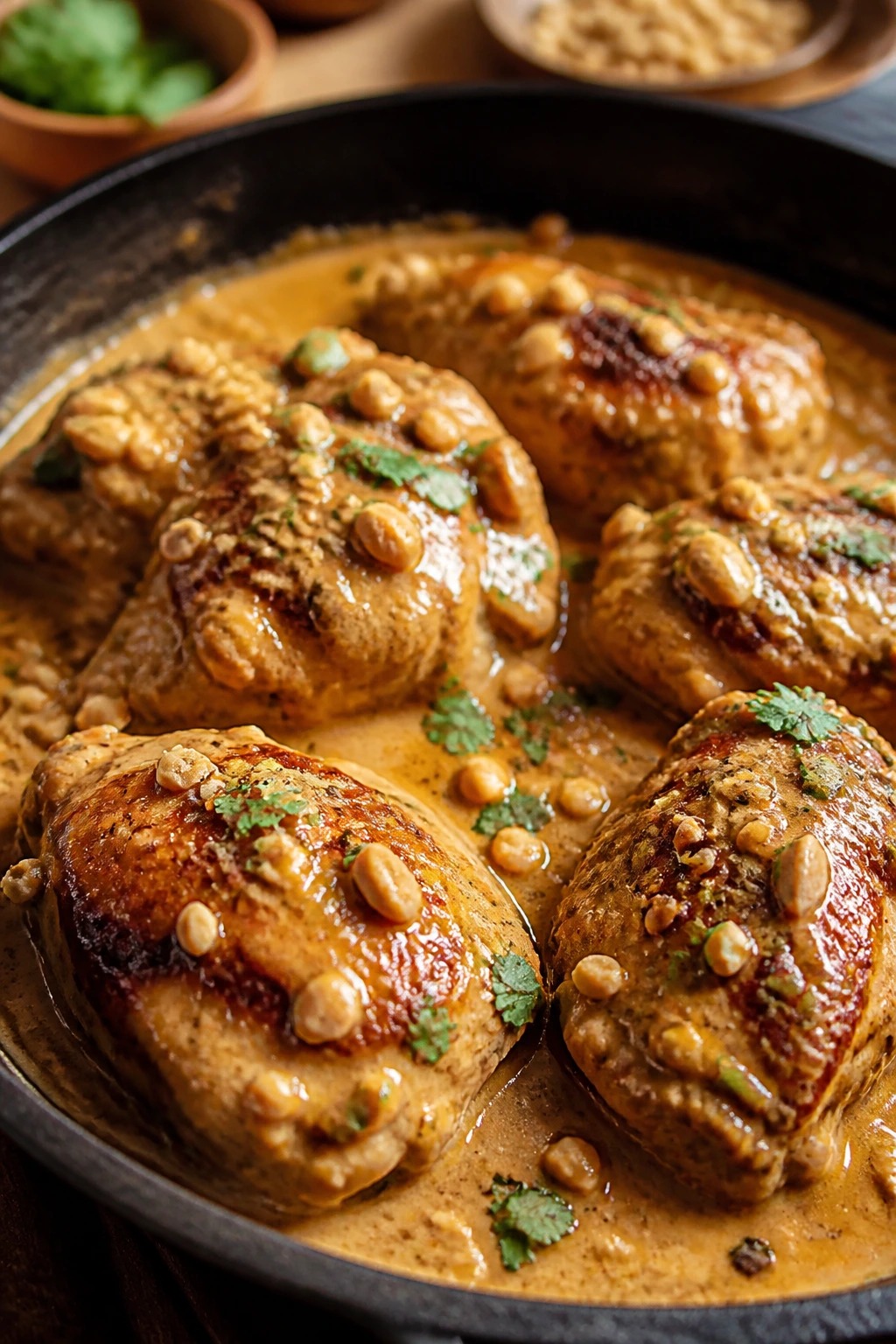
Crowding the skillet: If the chicken pieces are piled on top of one another, they steam and go pale instead of turning golden. The fix is simple: sear in two batches if your pan is not large enough.
-
Boiling the sauce hard: Peanut sauce can split if you cook it like soup. Keep the heat at a gentle simmer and whisk as it comes together; the texture should stay glossy, not greasy.
-
Using peanut butter straight from a cold jar without whisking it well: Some jars separate, and cold peanut butter can clump in the sauce. Stir the jar first and whisk it into warm broth before it meets the pan.
-
Adding lime too early: Citrus loses brightness when it cooks too long. Save the lime juice for the finish so the final bite tastes clean instead of dull.
-
Letting the spinach cook down to nothing: Spinach only needs a minute or so. If it sits in the pan longer, it turns limp and murky, and you lose the fresh green contrast that keeps the dish from feeling heavy.
Variations for Different Kitchens
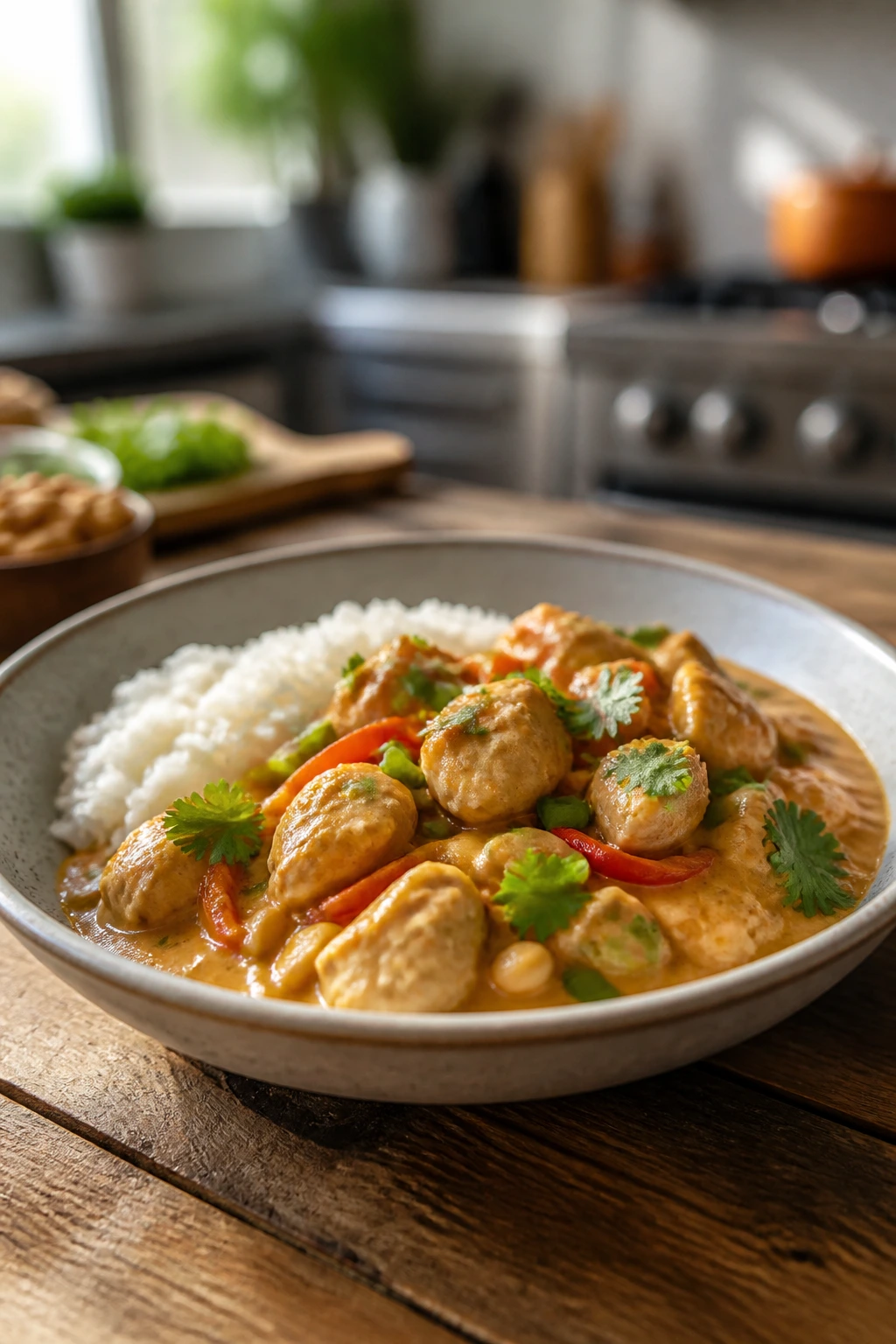
Red Curry Satay Skillet: Stir 1 tablespoon red curry paste into the onions right after they soften, then build the sauce as written. The curry paste gives the dish more heat and a deeper, more savory base, which is useful if you want the peanut flavor to lean sharper and less sweet.
Broccoli-and-Snap-Pea Dinner Bowl: Add 2 cups broccoli florets with the onion, then throw in 1 cup snap peas during the last 3 minutes of simmering. The vegetables stay bright and give the sauce something crisper to cling to, which makes the whole meal feel a little lighter.
Gluten-Free Tamari Version: Swap the soy sauce for tamari and make sure your chili garlic sauce is gluten-free too. The flavor stays the same shape, just with a slightly rounder saltiness that works well with the peanut butter and coconut milk.
Lean Chicken Breast Version: Use 1½ pounds of boneless, skinless chicken breast cut into 1-inch pieces, but shorten the final simmer to 3 to 4 minutes after the chicken goes back into the pan. Breasts cook faster and dry out sooner, so keep the heat lower and check early with a thermometer.
Peanut Noodle Night: Serve the finished chicken over rice noodles instead of rice and loosen the sauce with an extra splash of broth if needed. This version eats more like a noodle bowl and tends to disappear fast because the sauce gets tangled in every strand.
Make-Ahead, Storage, and Reheating That Actually Works
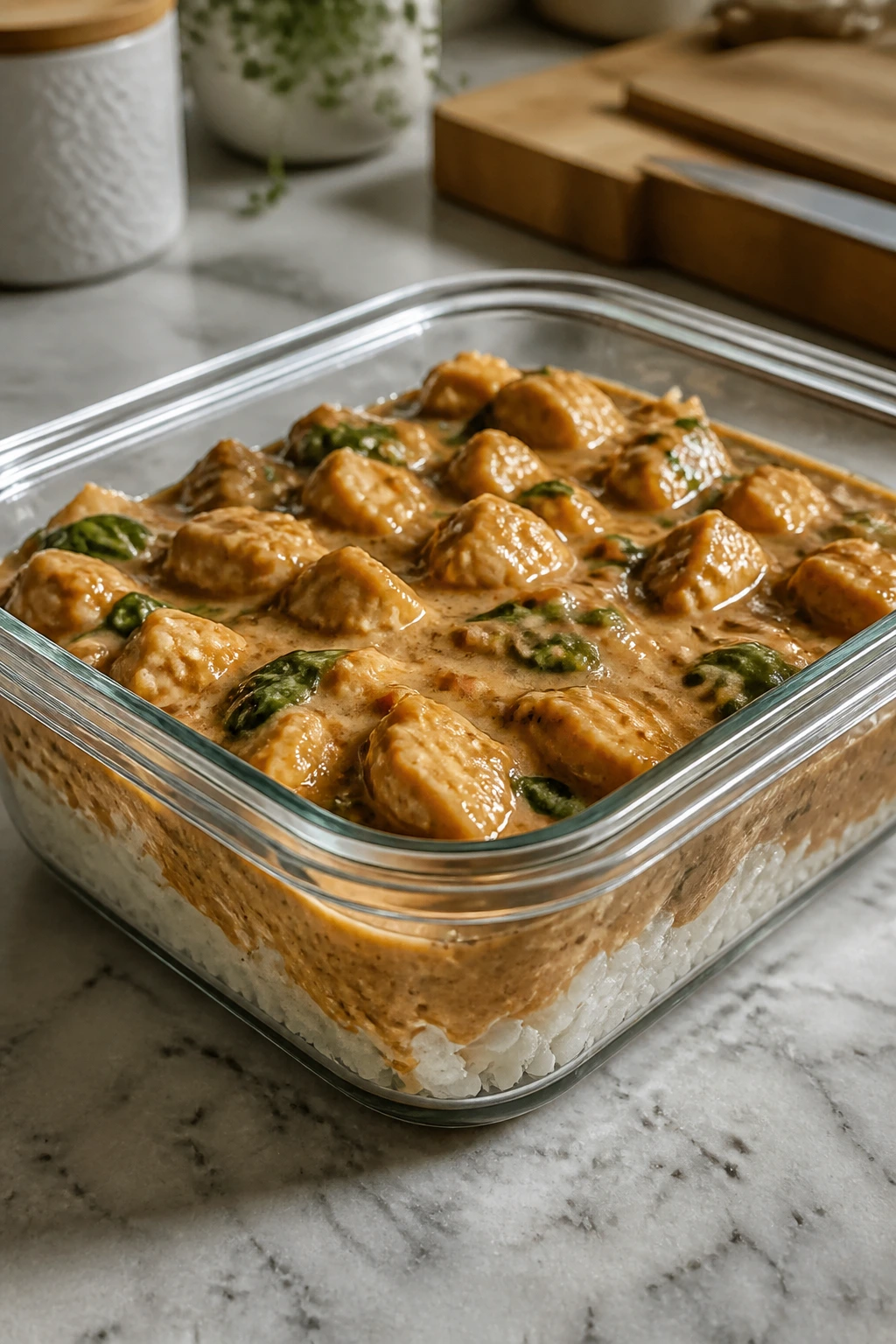
Creamy peanut chicken holds up well, but the details matter. At room temperature, do not leave it out for more than 2 hours. If the kitchen is hot and the bowl sits near the stove, I’d be stricter and pack it away sooner.
In the refrigerator, the chicken keeps for 3 to 4 days in an airtight container. The sauce thickens as it chills, which is normal and actually useful if you plan to serve leftovers over rice or noodles. Keep the chicken and rice in separate containers if you can; rice tends to dry out faster than the sauce.
The freezer window is about 2 months. Freeze portions in shallow containers or flat freezer bags so they thaw faster and more evenly. The texture of the spinach softens after freezing, so if you know you are making this as a freezer meal, skip the spinach during the first cook and stir in a fresh handful when you reheat it.
Reheat gently. A skillet over medium-low heat is the best choice because you can add 1 to 3 tablespoons of broth and loosen the sauce without wrecking it. Stir often, cover loosely, and stop when the chicken is hot and the sauce has gone back to a glossy, spoon-coating texture. The microwave works too — use 45-second bursts and stir between each one so the peanut sauce does not separate in one corner of the bowl.
For make-ahead cooking, the sauce can be mixed up to 3 days ahead and kept in the fridge. You can also slice the onion and bell pepper a day in advance, and cut the chicken a few hours ahead if you keep it cold and covered. If you want the dish to taste freshest, cook the chicken and sauce the day you plan to eat it, then handle the rice ahead of time.
Questions Home Cooks Ask First
Can I use chicken breast instead of thighs?
Yes, but the timing needs a shorter leash. Chicken breast works best if you cut it into even pieces and pull it as soon as it reaches 165°F, because an extra few minutes can make it dry and stringy.
What kind of peanut butter gives the smoothest sauce?
A creamy, shelf-stable peanut butter gives the most predictable texture. Natural peanut butter can work, but stir it thoroughly first so the oil is fully mixed back in, or the sauce may look looser and slightly split.
What can I use instead of coconut milk?
Heavy cream or half-and-half will make a rich sauce, though the flavor shifts away from the coconut-peanut balance. If you want a lighter dairy-free swap, use extra broth and another tablespoon of peanut butter, knowing the sauce will be less plush.
Is this dish spicy?
Not unless you make it that way. One to 2 teaspoons of chili garlic sauce gives a gentle warmth, not a burn. If you want it mild, leave the chili sauce out and serve red pepper flakes at the table instead.
Can I freeze leftovers with rice?
You can, but the rice texture will suffer more than the chicken. For the best result, freeze the peanut chicken on its own and cook fresh rice when you reheat it.
How do I thin the sauce if it gets too thick?
Add broth, not water, a tablespoon at a time while the pan is on low heat. Broth keeps the seasoning balanced, and peanut sauce loosens faster than people expect once the liquid hits the hot skillet.
Can I make this in a slow cooker?
Yes, but the texture changes. Brown the chicken and soften the onions first for the best flavor, then cook everything on low for about 2 to 3 hours and add the spinach and lime at the end. A slow cooker gives you a softer sauce and less browning, so it works best when you want convenience over a deeply seared finish.
What vegetables fit best if I want to add more?
Broccoli, snap peas, mushrooms, and baby bok choy all fit the sauce without getting in the way. Hard vegetables should go in early enough to soften, while tender ones like spinach or bok choy can wait until the final minutes.
Why This Chicken Stays in Rotation
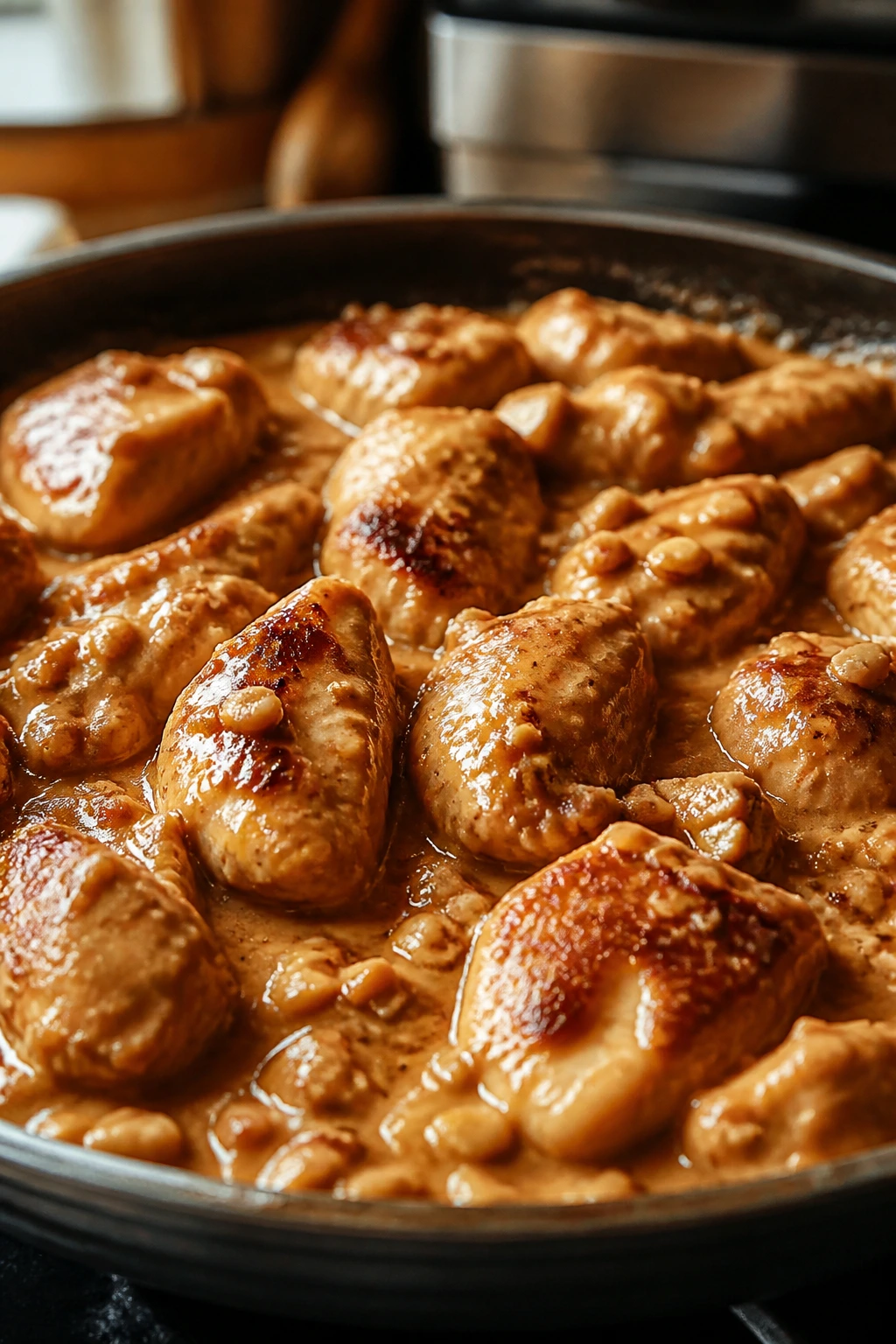
A lot of chicken dinners ask for more work than they give back. This one does the opposite. The ingredient list is short, the method is sane, and the sauce tastes richer than the time commitment suggests — which is really the sweet spot for a busy-night skillet.
It also leaves room for judgment, and I mean that as a compliment. You can lean it brighter with lime, deeper with sesame oil, hotter with chili garlic sauce, or heavier on vegetables when the fridge starts looking inconvenient. Keep a jar of peanut butter and a carton of broth in the pantry, and this is the kind of dinner that stays within reach when the day has already used up your patience.
Creamy Peanut Chicken for Weeknight Dinners — Recipe Card
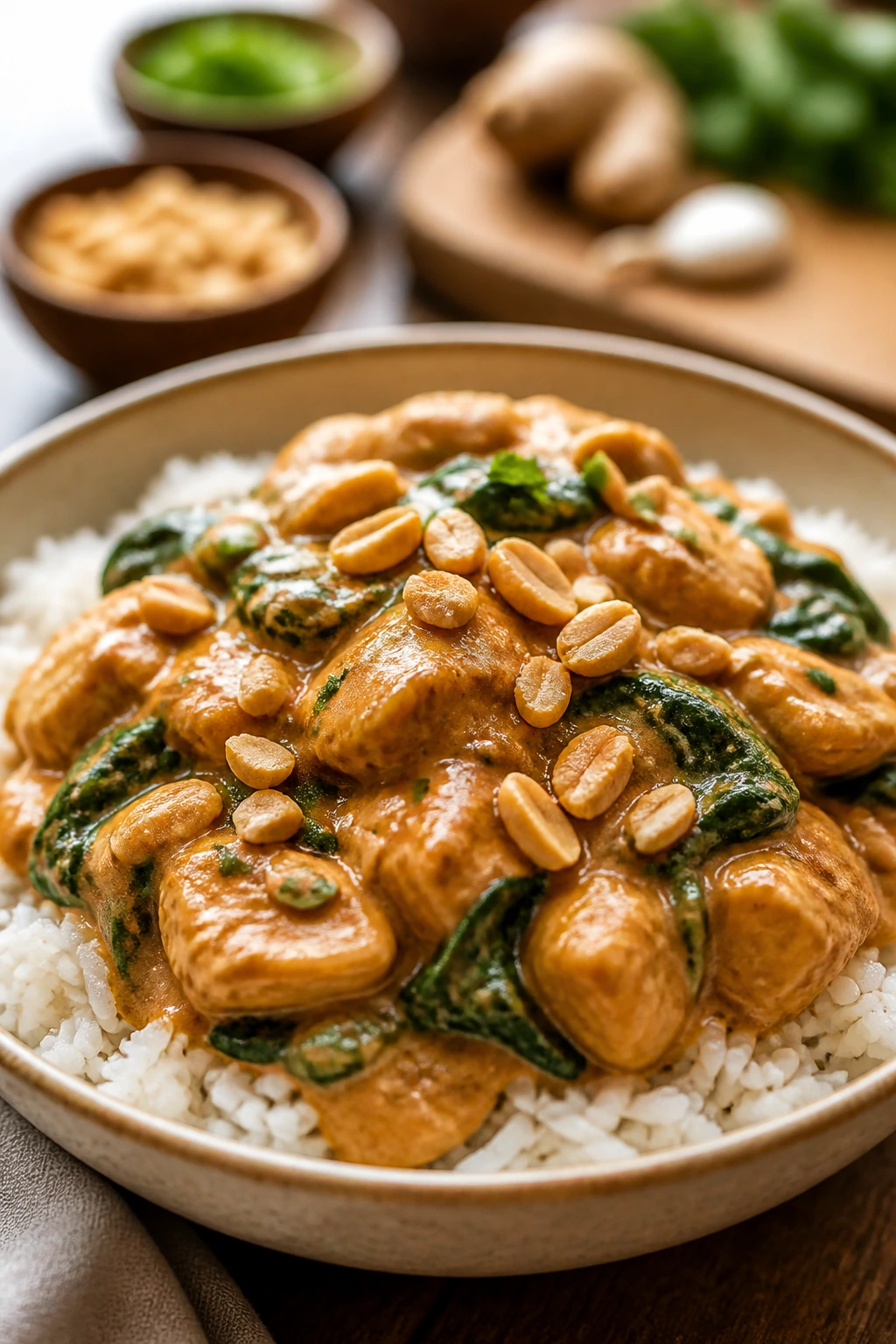
Recipe Name: Creamy Peanut Chicken for Weeknight Dinners
Description: Juicy chicken thighs simmered in a glossy peanut-coconut sauce with garlic, ginger, lime, and spinach. Serve it over rice or noodles and finish with peanuts for crunch.
Prep Time: 20 minutes
Cook Time: 25 minutes
Total Time: 45 minutes
Course: Dinner, Main Course
Cuisine: Asian-Inspired
Servings: 4 servings
Calories: 520 kcal per serving
Ingredients
For the Chicken
- 1½ pounds boneless, skinless chicken thighs, cut into 1-inch pieces
- 1 teaspoon kosher salt
- ½ teaspoon black pepper
- 2 tablespoons cornstarch
- 2 tablespoons neutral oil, divided
For the Sauce and Vegetables
- 1 small yellow onion, thinly sliced
- 1 red bell pepper, thinly sliced
- 3 garlic cloves, minced
- 1 tablespoon fresh ginger, grated
- ⅓ cup creamy peanut butter
- 1 cup low-sodium chicken broth
- ½ cup full-fat coconut milk
- 2 tablespoons soy sauce
- 1 tablespoon honey or packed brown sugar
- 1 tablespoon rice vinegar
- 1 tablespoon lime juice
- 1 to 2 teaspoons chili garlic sauce, or more to taste
For Finishing
- 2 cups baby spinach
- 2 tablespoons chopped roasted peanuts
- 2 tablespoons sliced scallions
- 1 tablespoon chopped cilantro, optional
Instructions
-
Whisk the peanut butter, broth, coconut milk, soy sauce, honey, rice vinegar, lime juice, and chili garlic sauce together until smooth.
-
Pat the chicken dry, then toss it with the salt, pepper, and cornstarch.
-
Heat 1 tablespoon oil in a large skillet over medium-high heat and brown the chicken in a single layer, 3 to 4 minutes per side. Transfer to a plate.
-
Add the remaining oil, then cook the onion and bell pepper for 4 to 5 minutes until softened.
-
Add the garlic and ginger and cook for 30 seconds. Pour in the sauce and bring it to a gentle simmer.
-
Return the chicken and any juices to the skillet. Simmer over medium-low heat for 5 to 7 minutes, until the chicken reaches 165°F and the sauce thickens.
-
Stir in the spinach and cook just until wilted. Taste and adjust with more lime, soy sauce, or chili garlic sauce.
-
Serve over rice or noodles and top with peanuts, scallions, and cilantro.
Notes: Use smooth peanut butter for the silkiest sauce. Keep the simmer gentle so the sauce stays glossy. Add a splash of broth if the sauce tightens during reheating.