



A good creamy lemon chicken does something sneaky. It tastes rich on the tongue, then the lemon pulls the finish back into focus so the whole plate feels lighter than the ingredient list suggests. That’s why I keep coming back to this style of skillet dinner when the evening is crowded and the appetite is not.
The version I like best starts with thin cutlets, a quick flour dredge, and a pan that’s hot enough to give you real browning without turning the chicken dry. Then the sauce builds in the same skillet, which is the part a lot of people skip when they’re rushing. Don’t skip it. Those browned bits at the bottom are where the sauce gets its depth, and once they loosen into broth and cream, the whole pan tastes like it took more work than it did.
There’s a narrow sweet spot here. Too much lemon and the sauce turns sharp. Too much cream and it feels sleepy. The right balance gives you garlic, butter, Parmesan, and citrus in one clean, glossy spoonful — the kind that clings to chicken, mashed potatoes, or a piece of bread you meant to save for later.
Why This Creamy Lemon Chicken Earns Its Place on Busy Nights
- One skillet does the job: The chicken sears, the pan sauce comes together, and dinner stays down to one pan instead of a pile of dishes in the sink.
- Bright without tasting sour: Fresh lemon zest and juice keep the cream from feeling heavy, while Parmesan rounds the edges so the sauce stays smooth.
- Fast enough to trust on a tight evening: Thin cutlets cook quickly, which means the whole dish lands on the table in about 40 minutes.
- Flexible with what’s in the fridge: Chicken breasts, thighs, or a mix of both can work, as long as the pieces are even and not too thick.
- The sauce has real grip: A light flour dredge, reduced broth, and finely grated Parmesan help the sauce cling instead of sliding off the chicken like thin soup.
- It scales without fuss: If you need more servings, you can double the sauce and keep the flavor steady, which matters when the table is crowded.
This dish sits in a useful middle ground. It borrows the brightness of chicken piccata, then softens the edge with cream, which is exactly why it feels comfortable on a Tuesday and not too fussy for company. The sauce is still lively, but it’s not trying to shout.
I also like that it rewards good technique without demanding a lot of it. You only need to watch two things: get the chicken browned, and keep the sauce at a gentle simmer after the cream goes in. That’s the whole game. If you do those two things well, the rest falls into place.
The other detail that matters more than people expect is the cut of the chicken. Thick breasts invite trouble; thin cutlets brown faster, stay juicier, and give the sauce a better ratio of meat to pan coating. That ratio is what makes this feel like dinner rather than a bowl of sauce with a few floating pieces of chicken.
Quick Facts From the Skillet
I like to have the numbers in front of me before I even turn on the burner.
Yield: Serves 4
Prep Time: 15 minutes
Cook Time: 25 minutes
Total Time: 40 minutes
Chill/Rest Time: 3 minutes
Difficulty: Beginner — the steps are straightforward, but the sauce wants gentle heat and a little attention.
Best Served: Warm, right after the sauce finishes and the chicken has rested briefly.
What Goes Into the Pan
For the Chicken
- 1½ lbs boneless, skinless chicken breasts, patted dry and sliced horizontally into 4 cutlets
- 1 teaspoon kosher salt
- ½ teaspoon black pepper
- 1 teaspoon garlic powder
- ⅓ cup all-purpose flour, for a light dredge
- 2 tablespoons olive oil
- 2 tablespoons unsalted butter, divided
For the Lemon Cream Sauce
- 4 garlic cloves, minced
- 1 cup low-sodium chicken broth
- ¾ cup heavy cream
- 2 teaspoons Dijon mustard
- 1 lemon, zested and juiced
- ⅓ cup finely grated Parmesan cheese
- ¼ teaspoon red pepper flakes, optional
- 2 tablespoons chopped fresh parsley
- Salt and pepper, to taste
A lot of chicken dinners fall apart because the ingredient list is trying to do too much. This one stays tight. You have seasoning, a light coating for browning, liquid for the pan sauce, and a few finishing ingredients that lift the whole thing out of the “cream and chicken” danger zone. That’s enough.
Why Each Ingredient Pulls Its Weight
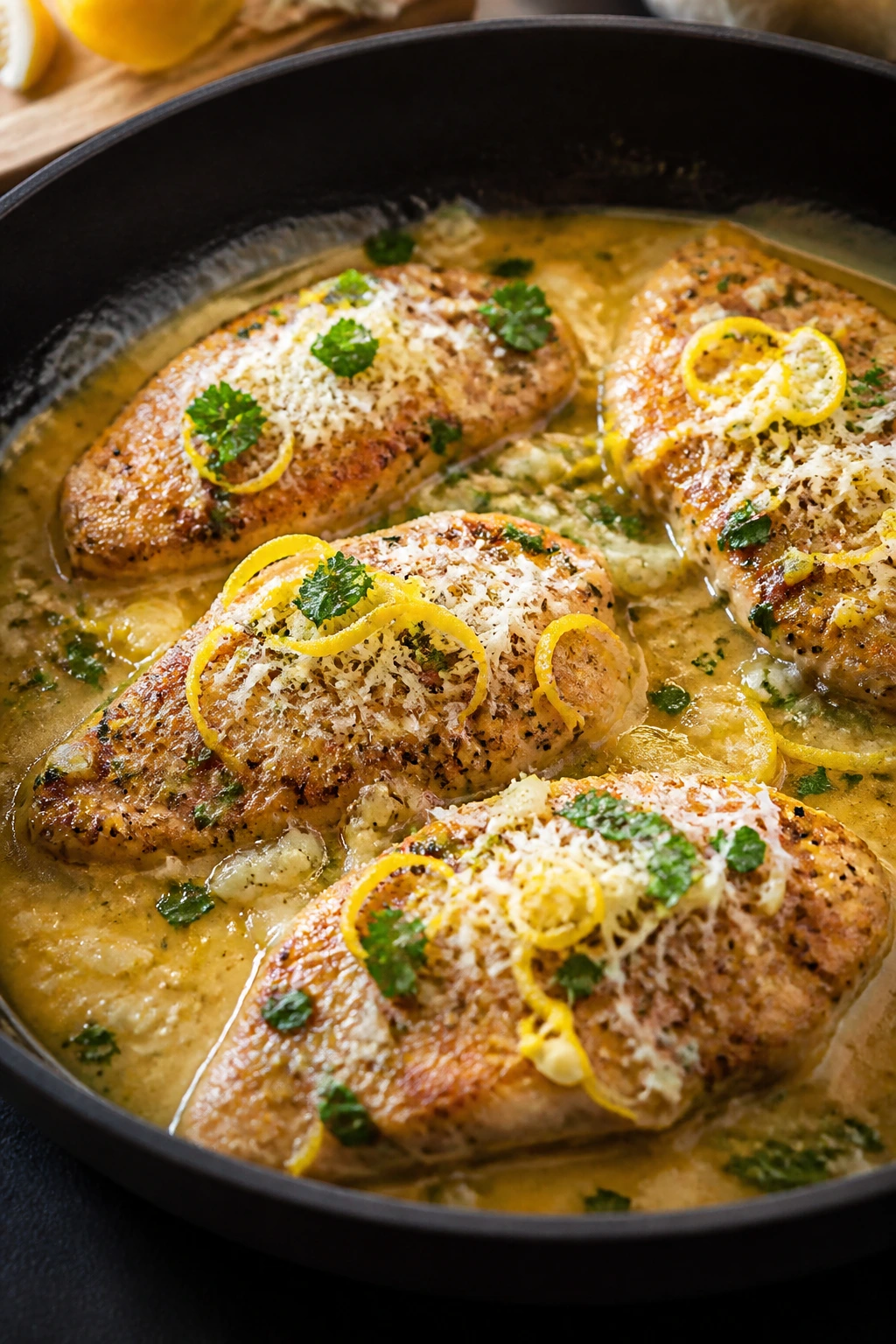
Chicken Cutlets
- What to use: 1½ lbs boneless, skinless chicken breasts, sliced into 4 even cutlets, or the same weight in thighs if you want a richer result.
- Preparation: Pat the meat dry, then cut it horizontally or pound it until each piece is about ½ inch thick. Even thickness matters more than most people think; it keeps the chicken from drying out while the sauce finishes.
- Substitutions: Boneless thighs are the easiest swap. They cook a little more slowly, but they stay tender if you’re distracted by a phone call or the rice cooker beeping.
- Tips: Dry chicken browns instead of steaming. If the surface feels wet when it hits the pan, you’ll lose color and flavor before the sear ever starts.
The Light Flour Coat
- What to use: ⅓ cup all-purpose flour, seasoned chicken, and enough fat in the pan to coat the bottom in a thin film.
- Preparation: Dredge lightly, then shake off every bit of excess. You want a whisper of flour, not a thick shell.
- Substitutions: A 1:1 gluten-free flour blend works cleanly. Cornstarch can also stand in, though it gives a slightly crisper, more delicate coating.
- Tips: The flour does two jobs at once: it helps the chicken brown and it gives the sauce a little body. Too much flour turns the sauce pasty, which is a common problem in rushed skillet dinners.
Lemon, Cream, and Broth
- What to use: 1 cup low-sodium chicken broth, ¾ cup heavy cream, 1 lemon for zest and juice, and 2 teaspoons Dijon mustard.
- Preparation: Zest the lemon before juicing it. It sounds obvious, but it saves you from trying to zest a slippery half-squeezed lemon while the garlic is already in the pan.
- Substitutions: Half-and-half can replace heavy cream if you add a teaspoon of cornstarch mixed with cold water. Vegetable broth works if you want a milder base, though chicken broth gives the sauce a fuller taste.
- Tips: Lemon and cream can fight if the heat is too high. Keep the sauce at a lazy simmer and it stays glossy instead of grainy.
Finishing Ingredients
- What to use: ⅓ cup finely grated Parmesan, 2 tablespoons parsley, and ¼ teaspoon red pepper flakes if you want a little edge.
- Preparation: Grate the Parmesan fresh if you can. The powdery shelf-stable stuff melts less cleanly and can leave the sauce a little gritty.
- Substitutions: Pecorino gives a saltier bite. Chives can stand in for parsley if you want a softer onion note.
- Tips: Add the cheese off the hottest part of the cook, then finish with parsley at the end. That keeps the sauce smooth and the herbs green instead of wilted and dark.
Special Equipment for a Smooth Pan Sauce
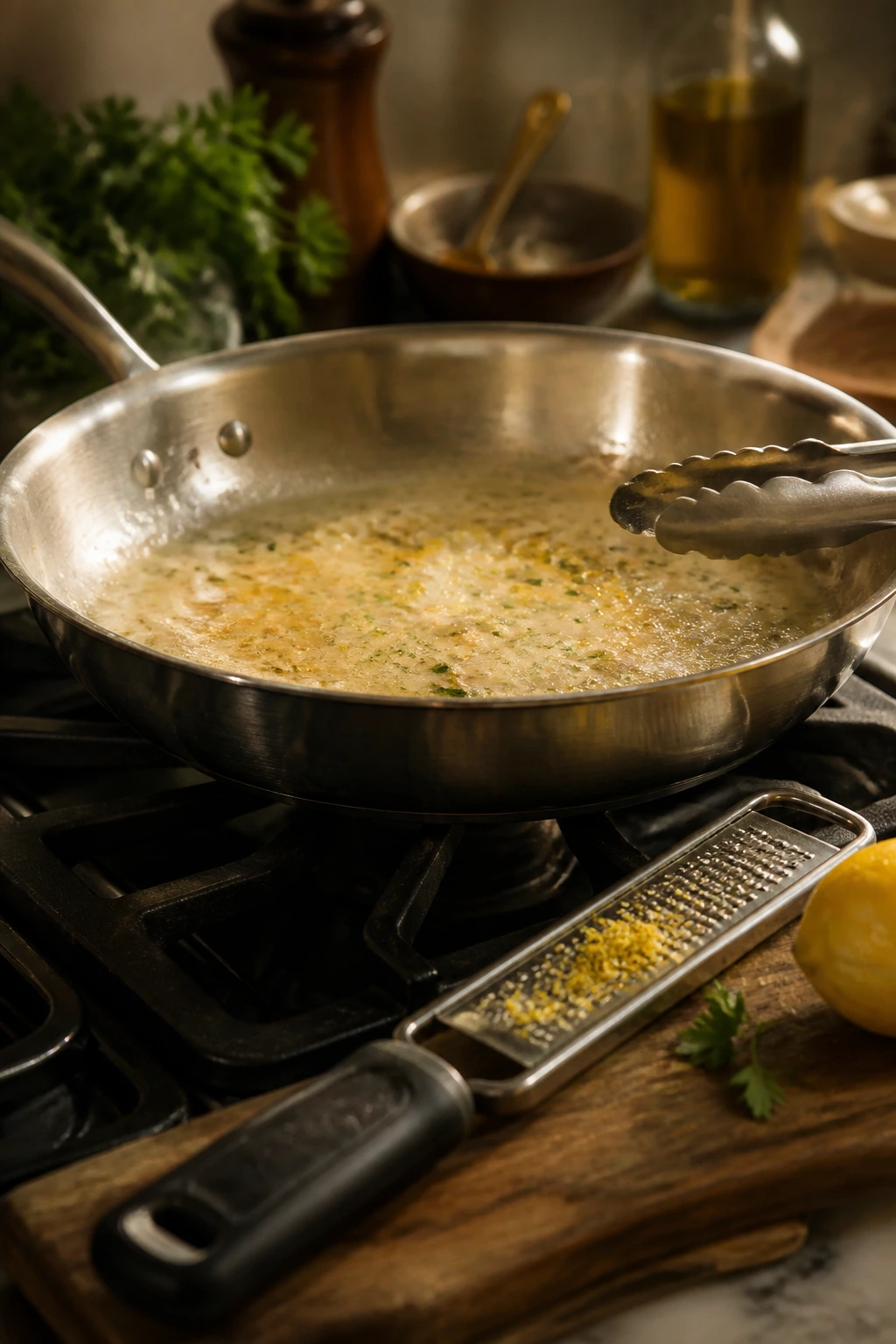
- 12-inch skillet with straight sides: Stainless steel is my first choice for this dish because it shows you the fond clearly and deglazes cleanly. Cast iron works too, though it holds heat so well that you need to lower the burner faster once the cream goes in.
- Tongs: They make it easy to turn the cutlets without tearing the flour coating.
- Instant-read thermometer: This takes the guesswork out of chicken. You’re looking for 160°F when the chicken comes off the pan and 165°F after it rests in the sauce.
- Microplane or fine zester: Lemon zest needs to be fine, not in long bitter strips.
- Whisk: The sauce behaves better when the Dijon and cream are whisked into the broth instead of stirred lazily with a spoon.
- Cutting board and sharp knife: Thin cutlets are easier to make when the knife is sharp and the board stays steady.
- Small bowl or plate for dredging: A wide shallow dish keeps the flour coat even and avoids clumps on the chicken.
A 10-inch skillet can work if that’s what you own, but don’t crowd it. Cook in batches. Crowding is how you end up with pale chicken and a pan full of water.
Step-by-Step: Sear, Simmer, Gloss
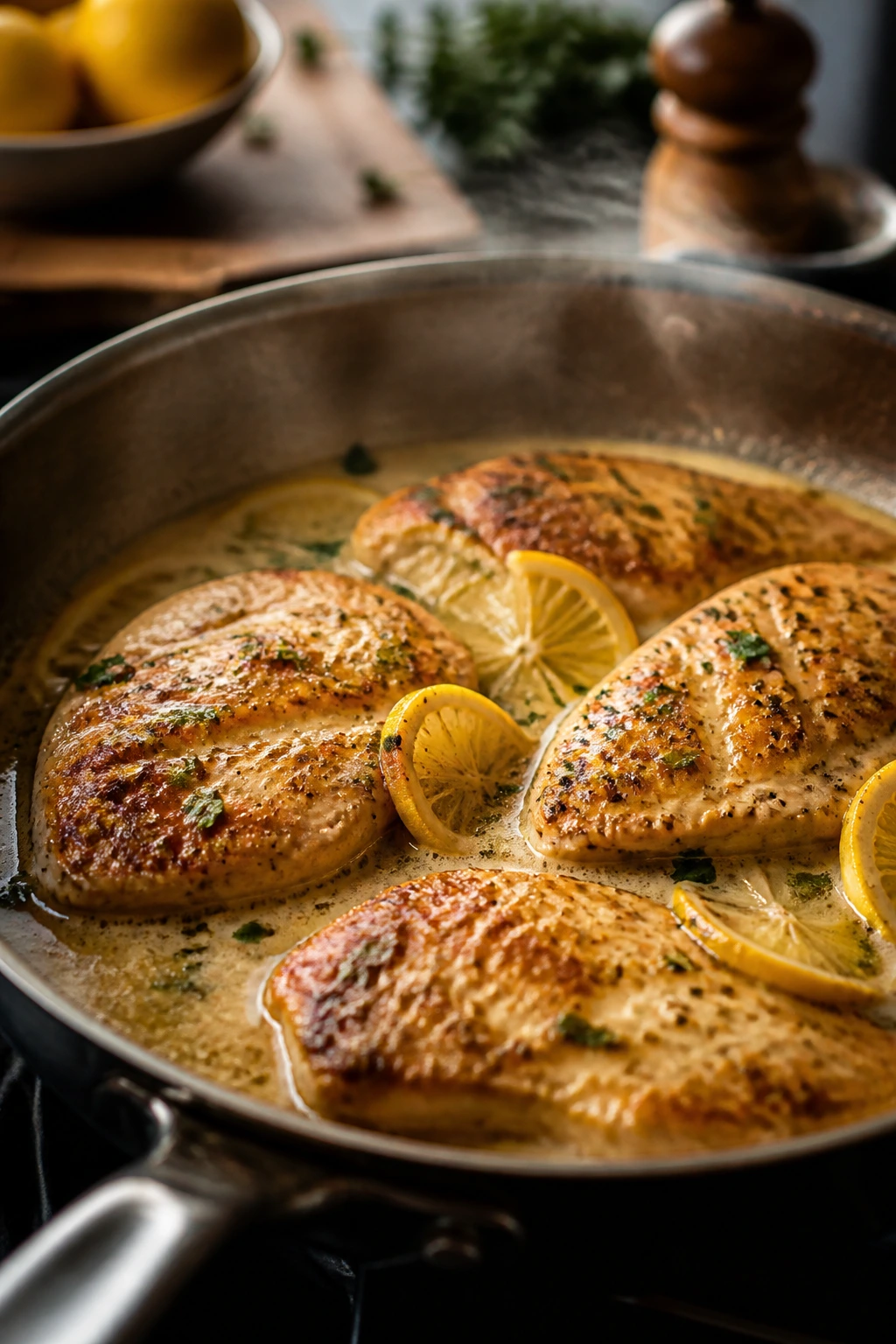
Prep the Chicken
- Pat the chicken dry with paper towels. If the breasts are thick, slice them horizontally into 4 cutlets and press them gently to an even ½-inch thickness.
- Season both sides with the salt, pepper, and garlic powder.
- Spread the flour on a shallow plate and dredge each cutlet lightly, shaking off the excess. You want a thin dusting, not a thick jacket.
Brown the Cutlets
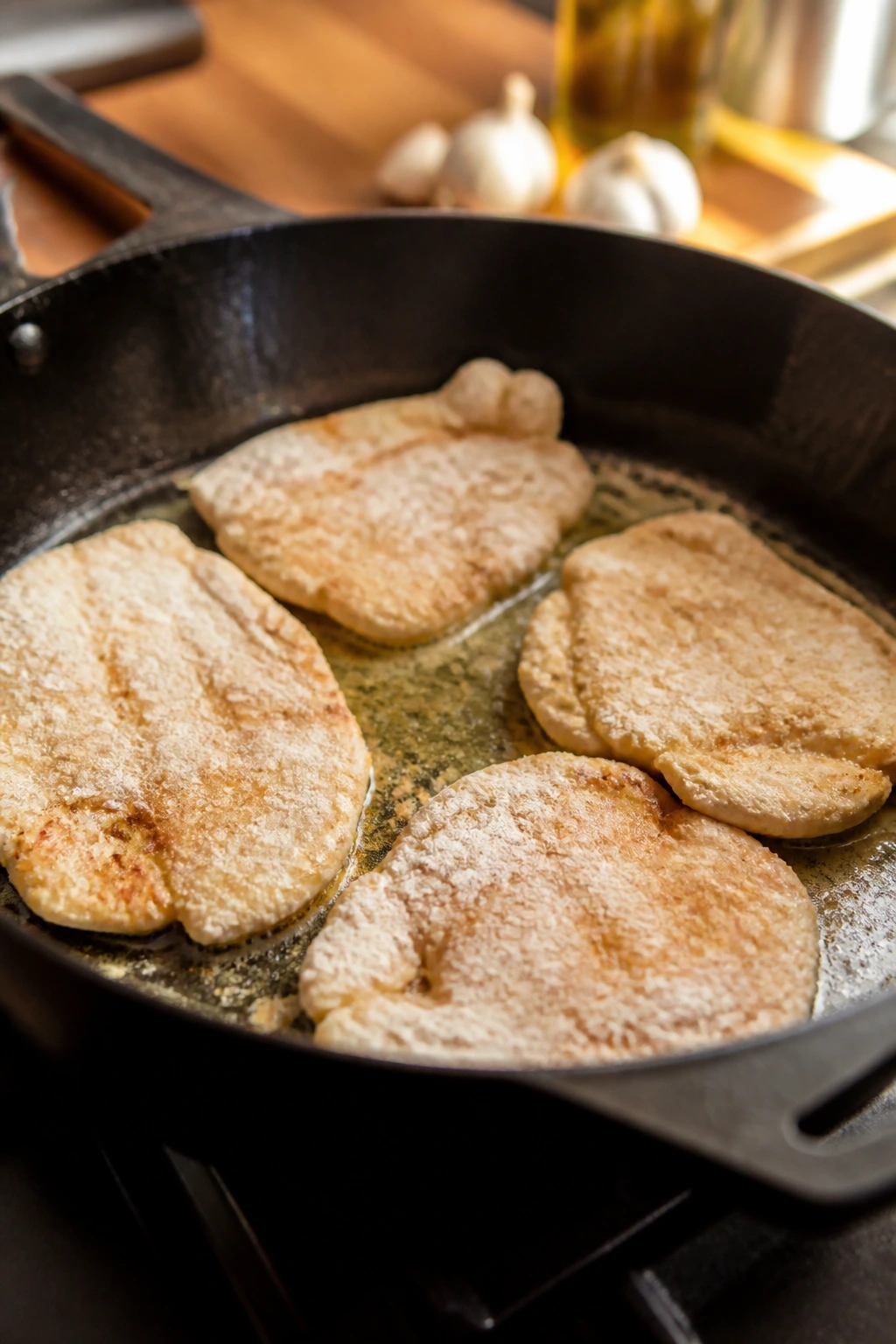
- Set a 12-inch skillet over medium-high heat. Add the olive oil and 1 tablespoon of the butter. When the butter foams and starts to quiet down, lay the chicken in a single layer.
- Sear for 4 to 5 minutes per side, until the cutlets are deep golden and the thickest part reads about 160°F on an instant-read thermometer. Transfer the chicken to a plate. Do not worry if it is not fully cooked yet; it will finish in the sauce.
Build the Sauce
- Lower the heat to medium. Add the remaining tablespoon of butter and the minced garlic. Stir for 20 to 30 seconds, just until the garlic smells sweet. If it starts to brown, move quickly to the next step so it does not turn bitter.
- Pour in the chicken broth and scrape up every browned bit from the bottom of the skillet with a wooden spoon. Let it bubble for 2 minutes, until the liquid reduces a little and the bottom of the pan looks glossy instead of wet.
- Whisk in the heavy cream, Dijon mustard, lemon zest, lemon juice, and red pepper flakes if you’re using them. Simmer gently for 2 to 3 minutes, stirring often, until the sauce thickens enough to coat the back of a spoon. Keep the heat low enough that the sauce barely bubbles.
Finish the Dish
- Stir in the Parmesan a handful at a time until it melts. Nestle the chicken back into the skillet, along with any juices on the plate, and spoon sauce over the top.
- Simmer for 2 to 4 minutes more, just until the chicken reaches 165°F and the sauce settles into a smooth, creamy layer around the cutlets.
- Turn off the heat, stir in the parsley, taste the sauce, and add more salt, pepper, or a tiny squeeze of lemon if it needs more brightness.
- Let the pan sit for 3 minutes before serving. That short rest helps the sauce thicken a touch and keeps the chicken from losing its juices the moment you cut into it.
How to Plate Creamy Lemon Chicken at the Table
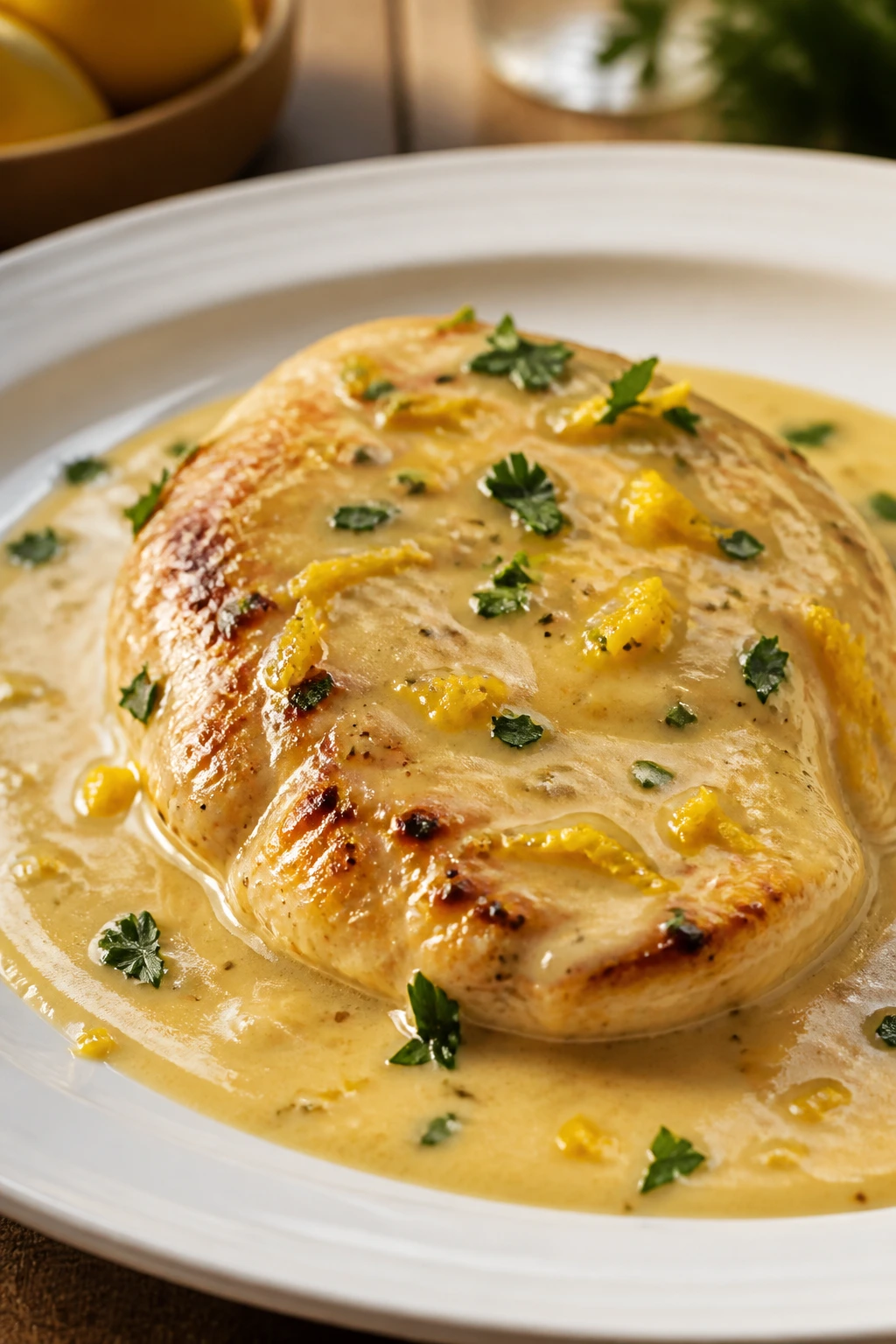
Presentation: Spoon a little sauce onto warm plates first, then set the chicken on top and ladle more sauce over the center rather than burying everything. A few flecks of parsley and a bit of lemon zest on top make the pan look fresh instead of heavy. If you want the plate to look tidy, wipe the rim with the corner of a towel before it leaves the kitchen.
Accompaniments: Buttery mashed potatoes are the obvious partner because they soak up the sauce without getting in the way. Rice works well too, especially long-grain white rice or jasmine rice, which stays fluffy under the cream. If you want more crunch on the plate, add roasted asparagus, broccoli, or green beans with a little salt and olive oil.
Portions: One cutlet per person is usually enough if the sides are substantial. If the chicken breasts were large, cut the cooked pieces in half on the bias so each plate gets a cleaner portion and more sauce around it. For a bigger table, you can scale the sauce up by 1½ times without changing the method much, but sear the chicken in batches so the skillet stays hot.
Beverage Pairing: A crisp Sauvignon Blanc or Pinot Grigio plays nicely here because the acid cuts through the cream. If you want something nonalcoholic, sparkling water with lemon or an unsweetened iced tea keeps the meal bright instead of muddying the citrus. Heavy, oaky wines tend to flatten the lemon, so I’d skip those.
Extra Tips for a Brighter, Silkier Sauce
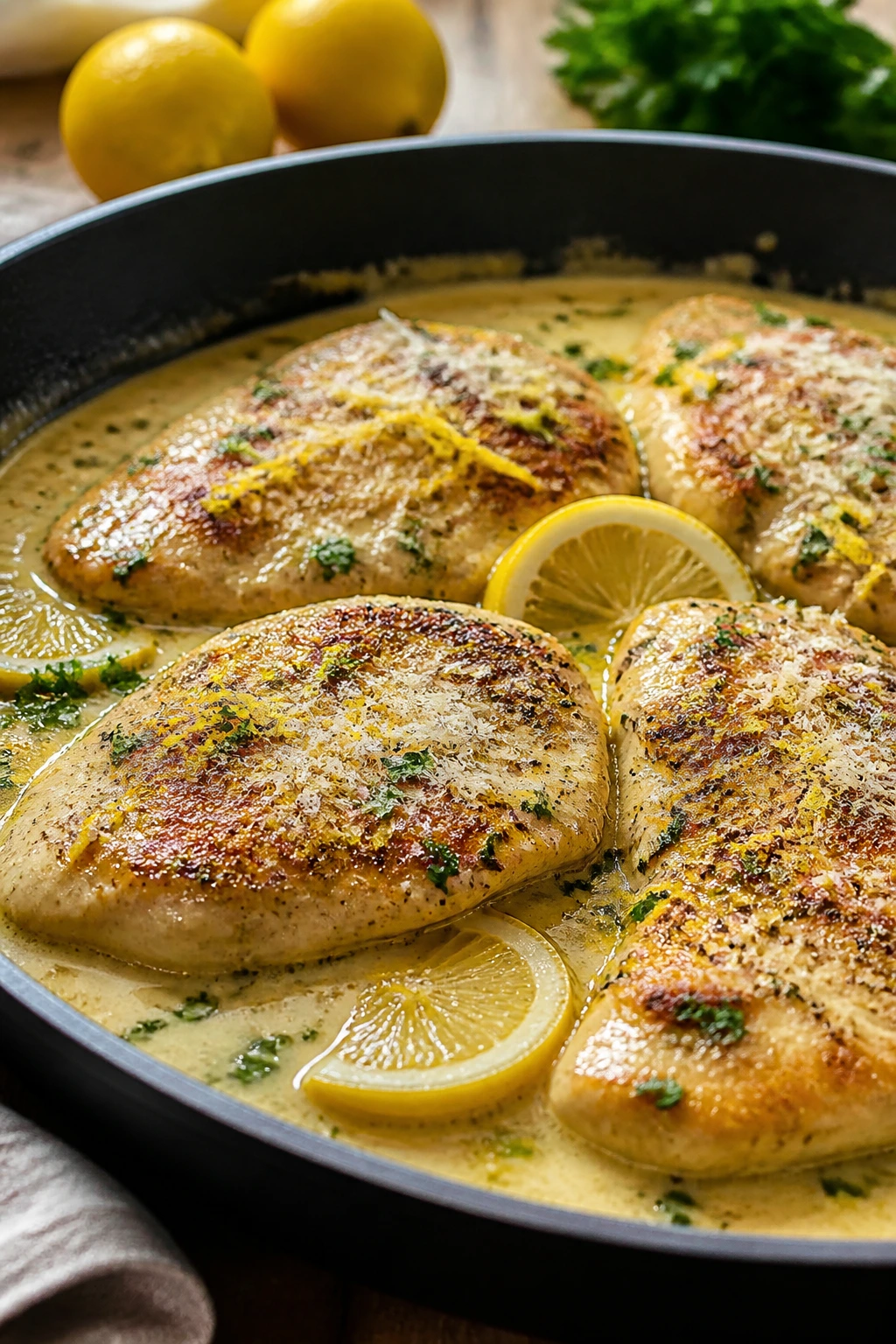
- Flavor Enhancement: Zest the lemon before you juice it, then add half the zest early and the rest at the end. The first dose perfumes the sauce; the second keeps the lemon flavor sharp and fresh.
- Time-Saver: Buy thin-sliced chicken cutlets if your grocery store carries them. You’ll skip the pounding step, and the cutlets will cook in about 8 to 10 minutes total.
- Pro Move: Warm the cream for 15 to 20 seconds in the microwave before you add it. Cold cream is not a disaster, but warm cream slides into the broth more smoothly and helps the sauce come together faster.
- Cost-Saver: Boneless thighs usually give you a little more margin for error and often cost less than breasts. They’re especially good if your skillet tends to run hot.
- Make-It-Yours: If you like a sharper finish, add 1 teaspoon of caper brine or a small spoonful of drained capers right at the end. It doesn’t turn the dish into piccata, but it does wake the sauce up.
Mistakes That Turn the Sauce Grainy or Flat
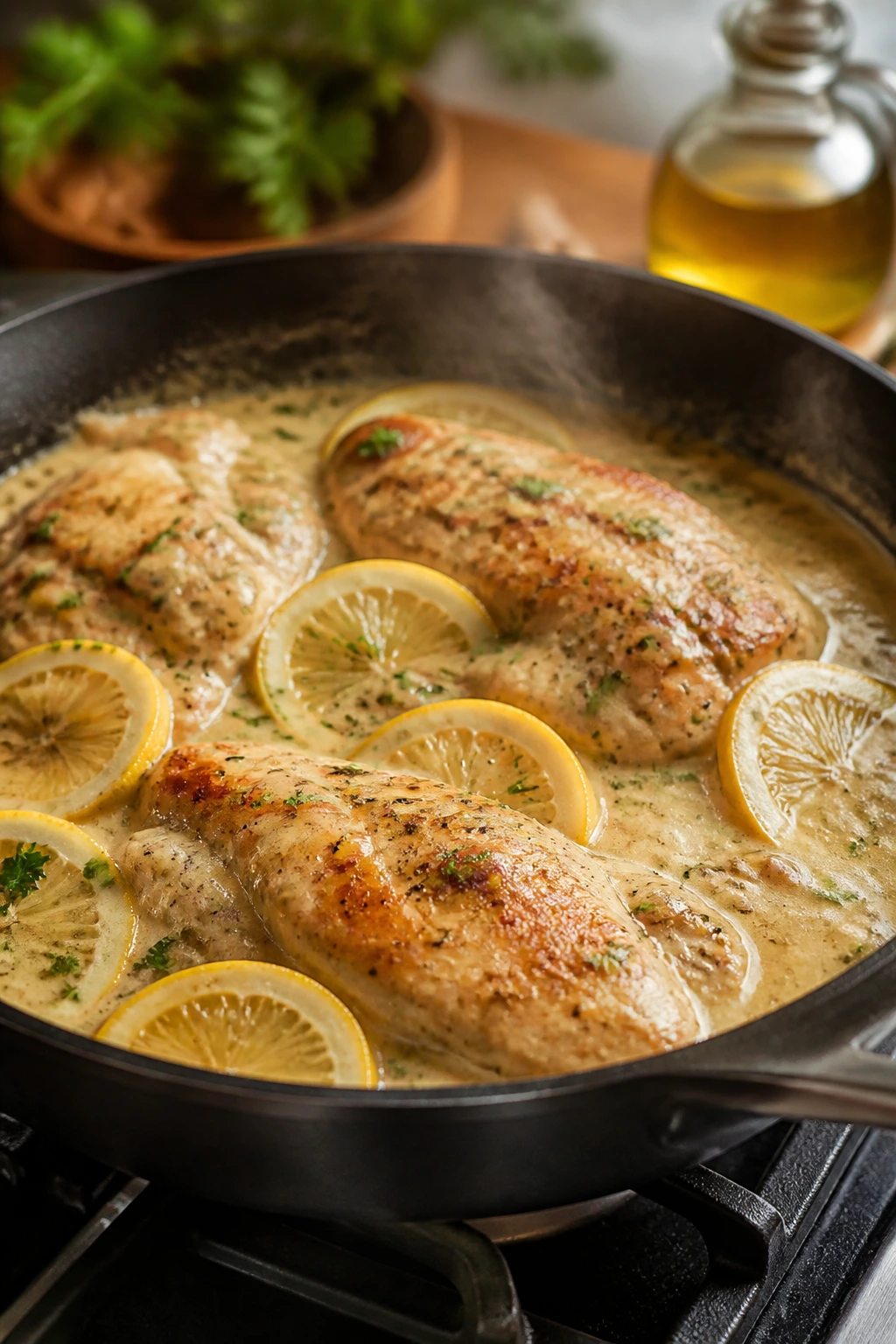
- Crowding the skillet: When the chicken pieces sit too close together, they steam instead of sear. The result is pale chicken and a sauce that tastes thin because you never got enough browned bits. Fix it by cooking in batches or using a wider pan.
- Adding lemon to a hard boil: Cream sauces are touchy when citrus hits high heat. If the sauce is bubbling aggressively, the dairy can look speckled or slightly broken. Keep the heat at a gentle simmer once the cream and lemon are in.
- Using too much flour on the chicken: A heavy dredge turns the pan sauce dull and pasty, and the coating can clump as it cooks. Shake off the extra flour before the chicken ever touches the skillet.
- Leaving the garlic in too long: Garlic goes from sweet to bitter in a blink once butter is in the pan. If it turns tan or brown, the sauce will carry that bitterness all the way through. Cook it only until fragrant, then move on.
- Relying on pre-shredded Parmesan: The anti-caking coating in packaged grated cheese can leave the sauce grainy or gritty. Freshly grated Parmesan melts smoother and gives you a cleaner finish.
- Skipping the final taste check: Lemon, Parmesan, and broth vary a lot in salt and acidity. If the sauce tastes flat, it usually needs a pinch more salt, not more cream.
Variations Worth Trying
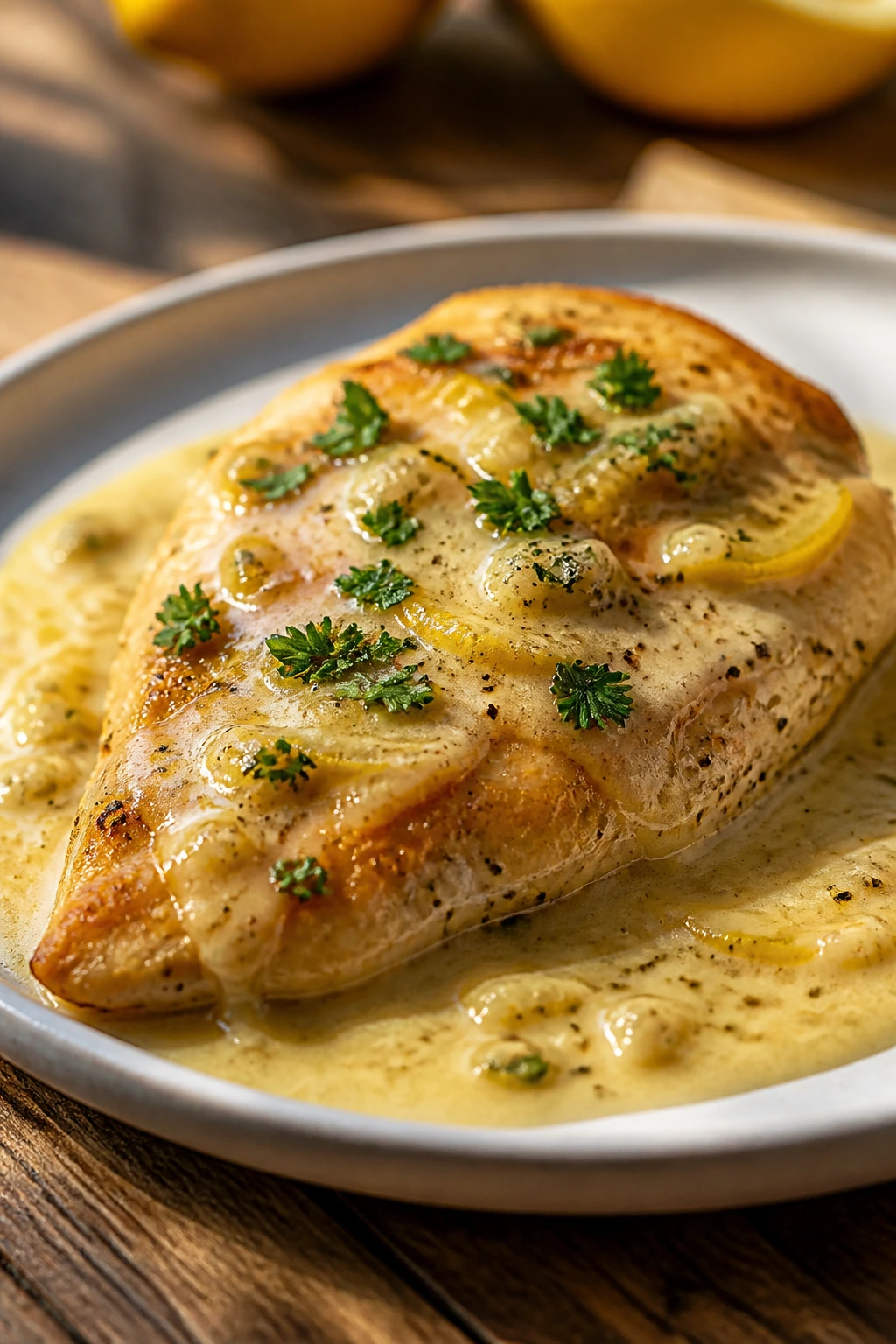
Piccata-Style Bright Cutlets
Add 1 tablespoon of capers and ¼ cup of dry white wine after the garlic cooks. Let the wine reduce by half before you pour in the broth, then finish with extra parsley for a sharper, more bracing sauce that still has the creamy base.
Mushroom and Thyme Skillet
Brown 8 ounces of sliced cremini mushrooms in the butter and oil after the chicken comes out, then proceed with the garlic and broth. A teaspoon of fresh thyme gives the sauce a woodsy note that makes the plate feel fuller, especially if you’re serving it over rice.
Spinach-Loaded Dinner Pan
Stir 2 packed cups of baby spinach into the sauce just before the chicken goes back in. The leaves wilt in under a minute, which gives you a little green on the plate without adding another pot or pan.
Gluten-Free Cutlets
Swap the all-purpose flour for a 1:1 gluten-free flour blend or a light cornstarch dredge. The chicken still browns nicely, and the sauce thickens well as long as you keep the simmer steady and give it the full couple of minutes to reduce.
Dairy-Free Lemon Chicken
Use full-fat coconut milk in place of the heavy cream and leave out the Parmesan. The flavor shifts a little toward rounder and softer, but the lemon keeps it lively; finish with extra zest and parsley so it doesn’t taste muted. If you want more body, whisk in a small cornstarch slurry after the broth reduces.
Make-Ahead, Storage, and Reheating
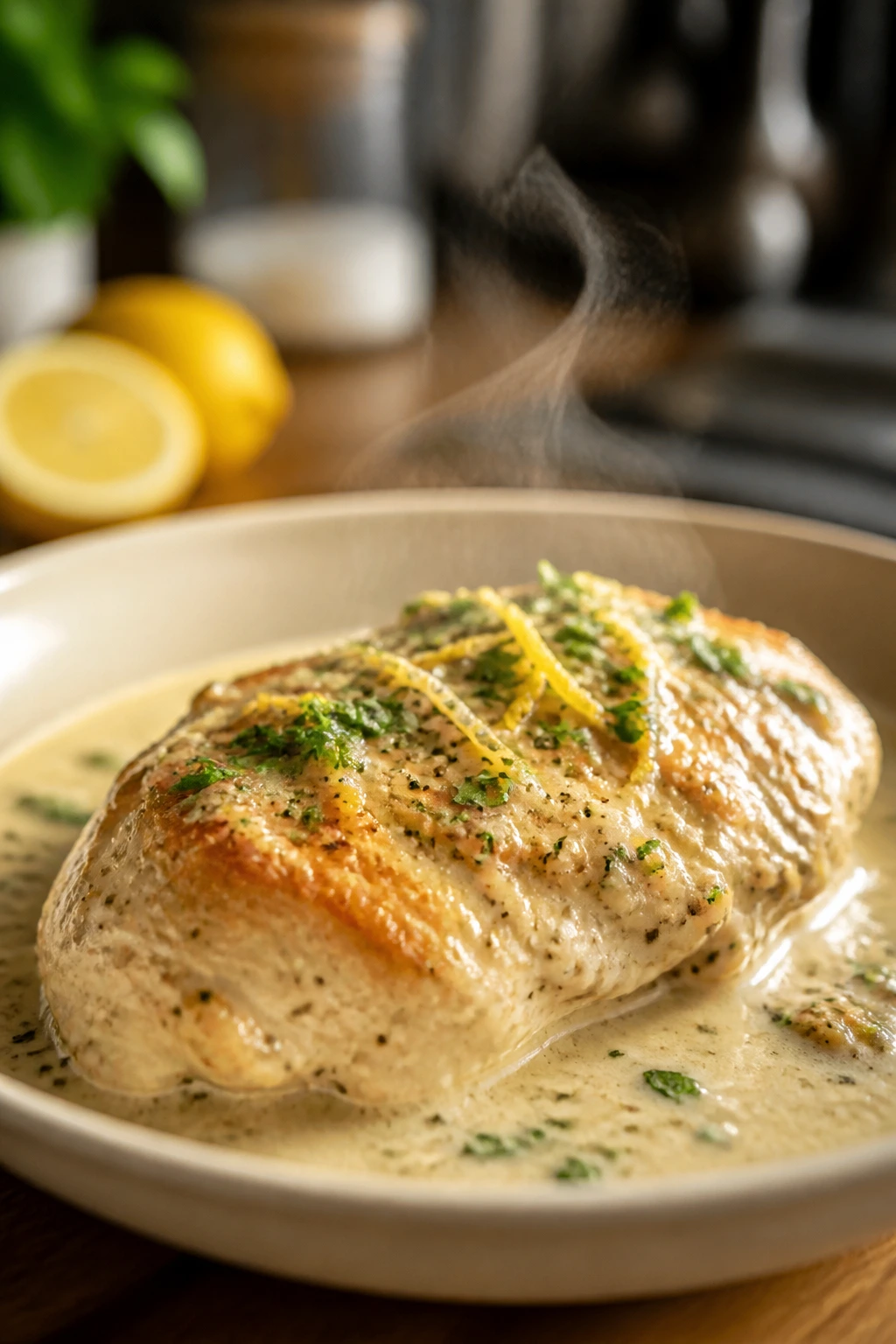
Creamy lemon chicken holds up better than people expect, but it does have a few rules.
Refrigerator: Store leftovers in an airtight container for 3 to 4 days. The sauce thickens as it chills, and the chicken soaks up some of the liquid, so don’t be alarmed if the leftovers look tighter than the fresh pan did. That’s normal.
Freezer: You can freeze the chicken and sauce together for up to 2 months, though the cream may separate a little when it thaws. If you know you’re freezing it, stop cooking the chicken when it reaches about 160°F and let it finish gently during reheating so it doesn’t dry out. Freeze in flat portions if you want the fastest thawing.
Reheating: The stovetop is the safest choice. Put the chicken and sauce in a skillet over low heat with a splash of broth, water, or cream, cover loosely, and warm for 5 to 8 minutes until the sauce loosens and the chicken is hot through. The microwave can work in a pinch, but use 50% power and short bursts so the sauce does not split.
Make-Ahead: You can season and dredge the chicken up to 8 hours ahead and keep it covered in the fridge. That actually helps the coating cling a little better. I would make the sauce fresh, though; lemon cream has a livelier finish when it’s just cooked, and the garlic tastes cleaner.
If the sauce thickens too much after refrigeration, whisk in a tablespoon or two of broth while reheating. If it separates a bit, take the pan off the heat and whisk in a small knob of cold butter. That usually pulls it back together.
Creamy Lemon Chicken Questions
Can I use chicken thighs instead of breasts?
Yes, and thighs are forgiving if you tend to overcook chicken by a minute or two. Sear them a bit longer on the first side because they’re usually thicker and fattier than cutlets, then finish them in the sauce until they reach 165°F.
How do I keep the sauce from splitting?
Keep the heat low once the cream and lemon go in, and do not let the pan boil hard. Freshly grated Parmesan melts better, and stirring the cheese in off the hottest part of the burner helps a lot too.
Do I have to dredge the chicken in flour?
No, but the light flour coat gives the chicken better browning and helps the sauce cling. If you skip it, the dish still works, but the sauce will feel thinner and the pan won’t build as much fond.
Can I make this with half-and-half instead of heavy cream?
You can, but the sauce needs a little help. Add 1 teaspoon of cornstarch mixed with 1 tablespoon of cold water, then simmer gently until it thickens. The texture will be lighter and a bit less rich, which some people prefer.
Is bottled lemon juice okay?
It works if that’s what you have, but the flavor is flatter and sharper than fresh lemon. If you use bottled juice, make sure you still add fresh zest; that’s what gives the sauce its bright, citrus smell.
What should I serve if I don’t want pasta or potatoes?
Rice, couscous, or crusty bread all handle the sauce well. If you want something lighter, roasted cauliflower or steamed green beans give you a clean base without making the plate feel heavy.
Can I make this ahead for a busy night?
You can season and dredge the chicken ahead, and you can also cook the dish earlier in the day and reheat it gently. I would not hold it for too long at room temperature, though, because cream sauces are best kept cold once the meal is done.
What if the sauce gets too thick while it sits?
Add broth a tablespoon at a time and whisk over low heat until it loosens. If you add too much at once, the sauce turns watery fast, so creep up on it slowly.
A Pan You’ll Reach For Again
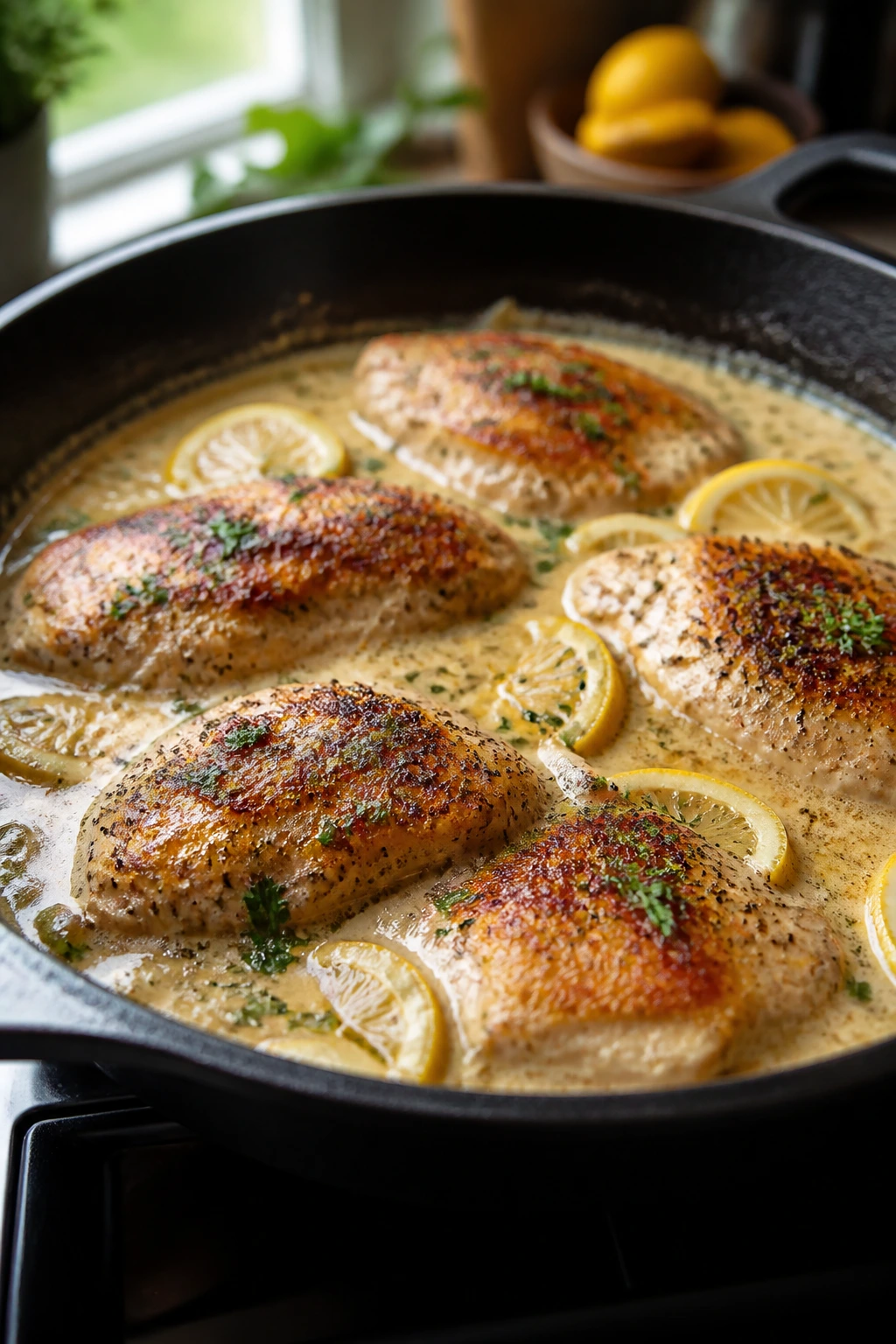
Creamy lemon chicken works because it keeps its balance. The chicken is browned enough to taste like dinner, the sauce is rich without getting dull, and the lemon keeps the whole pan awake. That contrast is the real reason it keeps showing up on repeat.
I like recipes that know exactly what they are. This one is not trying to be fancy, and it does not need to be. A little heat, a little patience, and one decent lemon go a long way here — and the next time the evening feels too tight for anything complicated, this is the pan I’d pull out first.
Creamy Lemon Chicken — Recipe Card
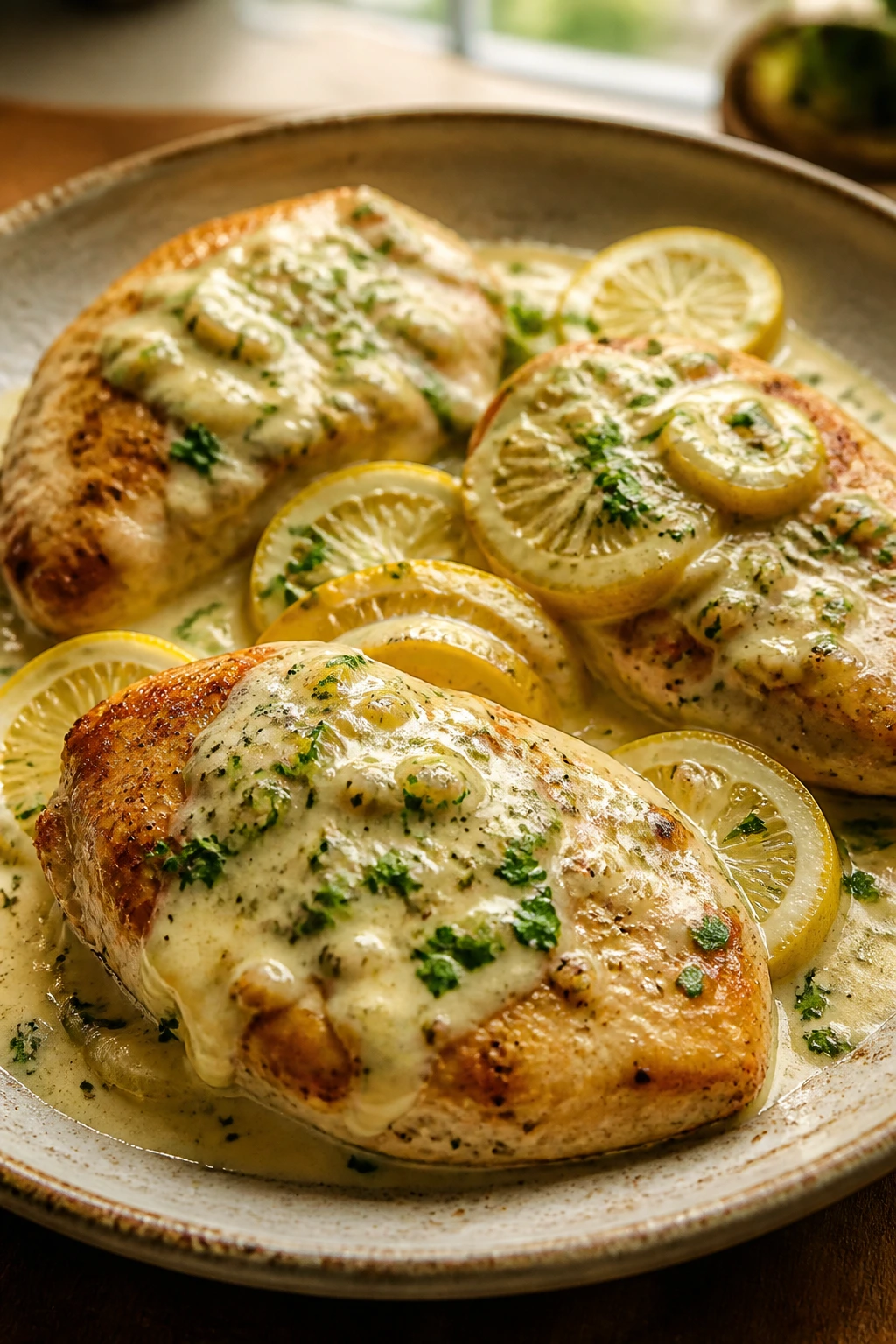
Recipe Name: Creamy Lemon Chicken
Description: Tender chicken cutlets seared in one skillet and finished in a silky lemon-Parmesan cream sauce with garlic and Dijon.
Prep Time: 15 minutes
Cook Time: 25 minutes
Total Time: 40 minutes
Course: Main Course
Cuisine: American
Servings: 4
Calories: About 520 kcal per serving
Ingredients
For the Chicken:
- 1½ lbs boneless, skinless chicken breasts, patted dry and sliced horizontally into 4 cutlets
- 1 teaspoon kosher salt
- ½ teaspoon black pepper
- 1 teaspoon garlic powder
- ⅓ cup all-purpose flour, for a light dredge
- 2 tablespoons olive oil
- 2 tablespoons unsalted butter, divided
For the Lemon Cream Sauce:
- 4 garlic cloves, minced
- 1 cup low-sodium chicken broth
- ¾ cup heavy cream
- 2 teaspoons Dijon mustard
- 1 lemon, zested and juiced
- ⅓ cup finely grated Parmesan cheese
- ¼ teaspoon red pepper flakes, optional
- 2 tablespoons chopped fresh parsley
- Salt and pepper, to taste
Instructions
- Pat the chicken dry, slice it into cutlets if needed, and season both sides with salt, pepper, and garlic powder. Dredge lightly in flour and shake off the excess.
- Heat the olive oil and 1 tablespoon of butter in a 12-inch skillet over medium-high heat. Sear the chicken 4 to 5 minutes per side, until golden and nearly cooked through. Transfer to a plate.
- Lower the heat to medium. Add the remaining butter and the garlic, and stir for 20 to 30 seconds.
- Pour in the broth and scrape up the browned bits. Simmer for 2 minutes.
- Whisk in the cream, Dijon, lemon zest, lemon juice, and red pepper flakes. Simmer gently for 2 to 3 minutes, until the sauce thickens slightly.
- Stir in the Parmesan, return the chicken and any juices to the pan, and simmer 2 to 4 minutes more until the chicken reaches 165°F.
- Turn off the heat, stir in the parsley, taste and adjust seasoning, and rest 3 minutes before serving.
Notes: Fresh lemon zest gives the sauce its brightness; freshly grated Parmesan melts cleaner than pre-shredded cheese; if the sauce thickens too much, loosen it with a splash of broth over low heat.