



A hot sheet pan can rescue a tired evening faster than takeout can load. Slide in chicken thighs, a few potatoes, some carrots, and an onion, and the oven starts doing the part of dinner that usually drains the will out of you: browning, softening, and making the whole kitchen smell like you planned ahead.
The useful version of a roasted quick chicken dinner is not a whole bird. It’s bone-in thighs, cut to roast at the same pace as small vegetables, with the skin left on so the edges go crackly and the meat stays moist even if you leave it in the oven a few minutes too long. That matters on a weeknight, when timing is rarely tidy and somebody always asks for one more minute.
What you want here is a hot oven, a dry chicken surface, and vegetables cut to the size of a walnut half or a fat carrot coin. Do that, and dinner lands in about 50 minutes with browned potatoes at the edges, onions sweet enough to eat with a fork, and chicken that hits 175°F without turning stringy. The first useful section is the one that tells you why this recipe earns a place on the repeat list.
Why This Roasted Quick Chicken Dinner Earns Its Keep
-
It fits the clock you actually have. The oven does the heavy lifting in about 35 to 40 minutes, which is long enough for browning and short enough to stay realistic after work.
-
The pan seasons itself. Chicken fat runs into the potatoes and carrots, so the vegetables taste roasted instead of merely heated.
-
Thighs buy you breathing room. Bone-in, skin-on thighs stay juicy at 175°F, which means a five-minute delay doesn’t turn dinner into dry shreds.
-
The chopping stays modest. Potatoes, carrots, and onion all roast well when they’re cut small and even, so you don’t end up juggling five different doneness times.
-
Lemon at the end keeps the whole pan awake. The acid cuts through the olive oil and chicken drippings, and the finished plate tastes brighter than the ingredient list suggests.
-
Leftovers behave better than most chicken dinners. The meat reheats well, and the vegetables hold their shape instead of collapsing into mush.
A lot of recipes claim speed and then ask for a sauce, a marinade, and a second skillet. This one stays honest. The sheet pan is the whole job.
The Timing and Yield You Can Count On
Yield: Serves 4
Prep Time: 15 minutes
Cook Time: 35 to 40 minutes
Total Time: 50 to 55 minutes
Chill/Rest Time: 5 minutes
Difficulty: Beginner — the cutting is straightforward, and the oven does the part that usually requires the most babysitting.
Best Served: Right out of the oven, with lemon squeezed over the chicken and the pan juices spooned on top.
A hot oven matters here. The higher heat gives the chicken skin a chance to blister at the edges before the vegetables go soft, and that’s the difference between a tray of dinner and a tray of steamed food pretending to be dinner.
If your carrots are thick or your oven runs cool, give the pan another 5 minutes. Use the thermometer, not the clock, for the chicken itself.
What Goes Into the Pan
For the Chicken and Vegetables:
- 2 pounds bone-in, skin-on chicken thighs, patted dry
- 1 pound baby potatoes, halved if larger than 1 inch
- 3 medium carrots, cut into 1-inch diagonal chunks
- 1 medium red onion, cut into 8 wedges
- 4 cloves garlic, smashed
- 3 tablespoons olive oil, divided
- 1 1/2 teaspoons kosher salt, divided
- 1/2 teaspoon black pepper, divided
- 1 teaspoon smoked paprika
- 1 teaspoon dried oregano
- 1/2 teaspoon garlic powder
For Finishing:
- 1 lemon, half sliced into rounds and half cut into wedges
- 2 tablespoons chopped fresh parsley
The ingredient list stays short on purpose. You’re building flavor through heat, spacing, and the fat in the chicken skin, not by piling on extra components that need their own saucepan and attention span.
Why These Ingredients Behave So Well Together
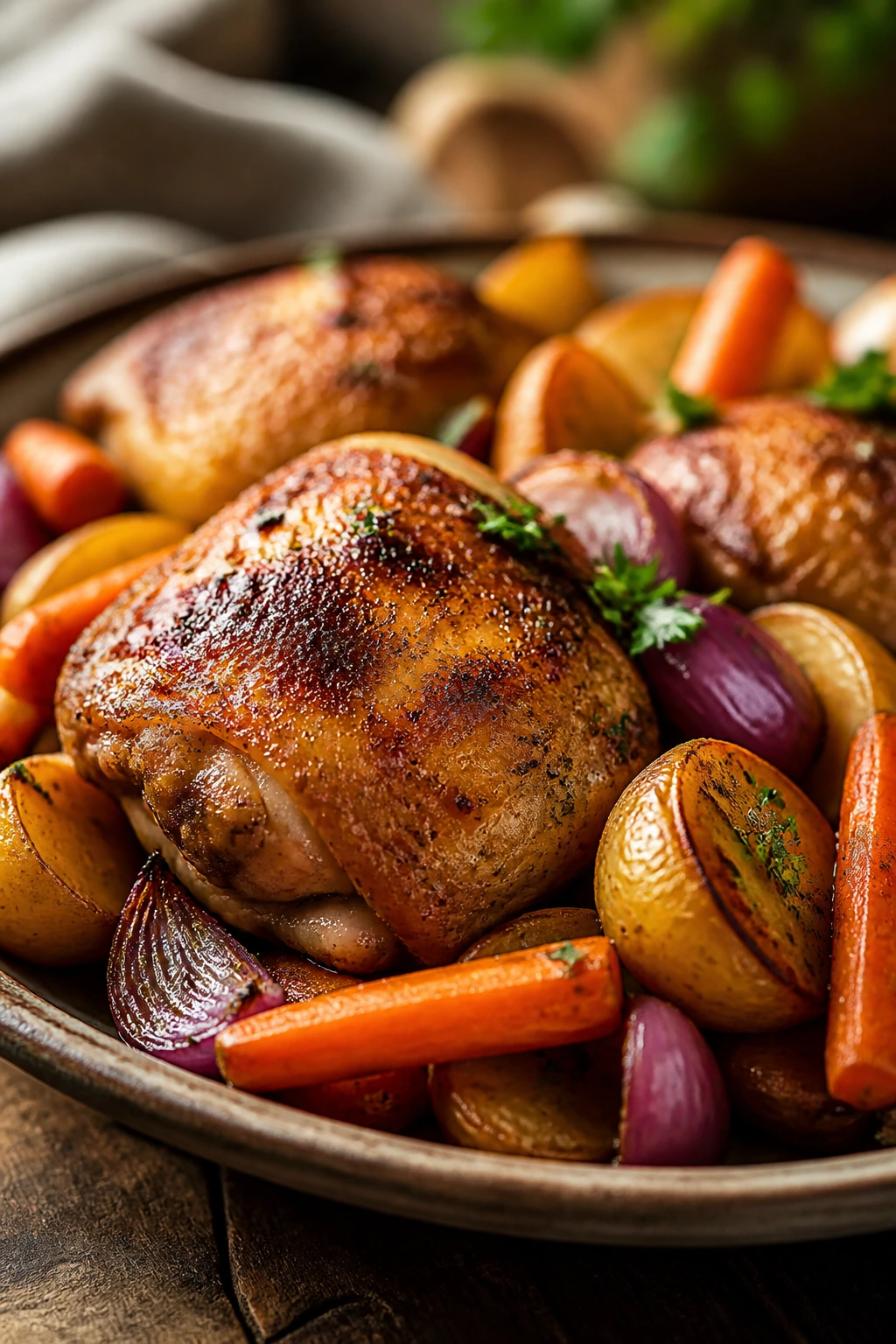
Chicken thighs
What to use: 2 pounds bone-in, skin-on chicken thighs, about 4 to 6 pieces depending on size.
Preparation: Pat them dry with paper towels, especially under the thighs where moisture likes to hide. If you see loose skin, tuck it back over the meat so it crisps instead of curling.
Substitutions: Bone-in drumsticks work well with the same timing. Boneless, skinless thighs can be used, but they cook faster and won’t give you the same browned top.
Tips: Thighs are the right cut for this kind of roast because they stay tender at a higher finished temperature. I like them at 175°F, not because I’m trying to overcook them, but because the connective tissue softens there and the meat turns supple instead of stringy.
Potatoes, carrots, and onion
What to use: 1 pound baby potatoes, 3 medium carrots, and 1 medium red onion.
Preparation: Keep the potato halves and carrot chunks close in size so they finish at the same time. Cut the onion into wedges with the root end still attached to each wedge, which helps the pieces stay together.
Substitutions: Yukon Gold potatoes, fingerlings, parsnips, or sweet potatoes all fit here. If you don’t have red onion, a yellow onion works fine, though it cooks a little sweeter and a little less sharply.
Tips: Vegetable size matters more than vegetable type. If a potato chunk is twice the size of a carrot chunk, the carrot will turn soft while the potato stays chalky in the middle.
Seasoning and olive oil
What to use: 3 tablespoons olive oil, 1 1/2 teaspoons kosher salt, 1/2 teaspoon black pepper, 1 teaspoon smoked paprika, 1 teaspoon dried oregano, and 1/2 teaspoon garlic powder.
Preparation: Mix the spices into the oil so the chicken gets a light coating instead of dry dusting. That little paste clings better and gives the skin a deeper color.
Substitutions: Sweet paprika can replace smoked paprika if that’s what you have, though the flavor will be softer. Rosemary or thyme can stand in for oregano, and a pinch of red pepper flakes will add a little heat.
Tips: Paprika is doing more work than people give it credit for. It gives the skin that brick-red color and helps the potatoes look roasted even before you cut into them.
Lemon, garlic, and parsley
What to use: 1 lemon, 4 cloves garlic, and 2 tablespoons chopped parsley.
Preparation: Slice half the lemon into rounds so it can roast and wedge the other half for serving. Smash the garlic cloves so they soften and sweeten instead of burning.
Substitutions: A lime can step in if lemons are missing, though the flavor shifts a little sharper. Dill works in place of parsley if you want the finish to lean more green and less grassy.
Tips: Add the lemon rounds partway through roasting so they warm and perfume the pan without going bitter. Parsley belongs at the end, when the chicken is off the heat and the surface still glistens.
The Tools That Keep the Pan Moving Fast
-
Large rimmed half-sheet pan, 18 by 13 inches — big enough for the chicken and vegetables to sit in one layer without crowding.
-
Large mixing bowl — useful for tossing the vegetables with oil and spices before they go to the pan.
-
Sharp chef’s knife — makes the carrot and onion prep fast and keeps the cuts even.
-
Cutting board — a sturdy board matters more than people think when you’re working quickly before dinner.
-
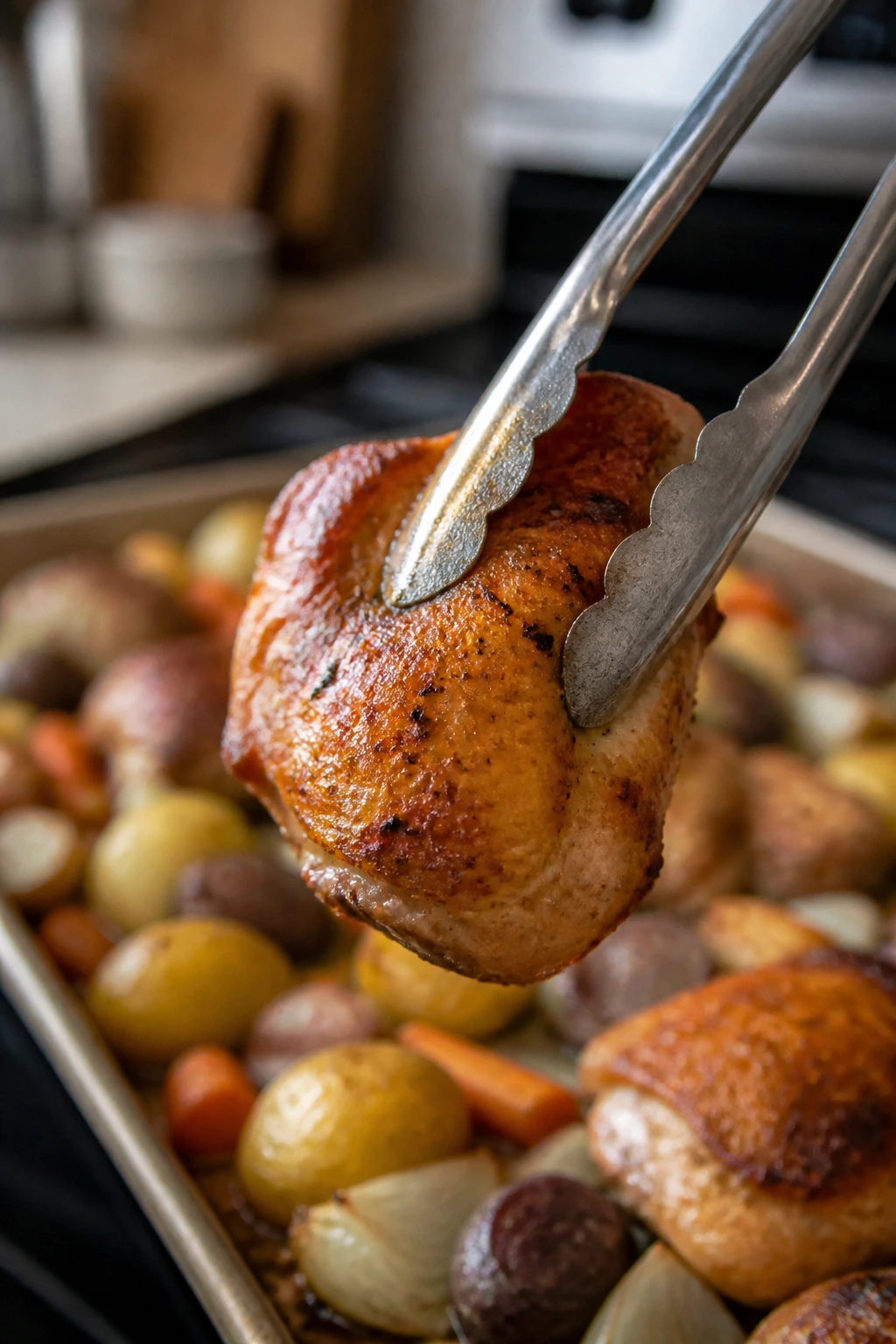
Tongs — handy for moving the chicken and turning the vegetables without tearing the skin.
-
Instant-read thermometer — the one tool I would not skip; chicken thighs can look done before they are.
-
Paper towels — not glamorous, but they are the difference between crisp skin and damp skin.
-
Heavy-duty aluminum foil, optional — useful if you want less cleanup, though a bare pan browns the vegetables a little better.
Roasting the Chicken and Vegetables Without Guesswork
Heat the oven and build the pan:
-
Preheat the oven to 450°F (232°C) and position a rack in the upper-middle of the oven. A hot oven gives you browning before the vegetables slump.
-
Set out a large rimmed sheet pan and, if you want an easier cleanup, line the outer edges with foil while leaving the center open. Do not crowd the pan; if everything is packed tight, the vegetables will steam instead of roast.
Season the vegetables and chicken:
-
In a large bowl, toss the potatoes, carrots, onion, and smashed garlic with 2 tablespoons olive oil, 1/2 teaspoon kosher salt, and 1/4 teaspoon black pepper until every piece is lightly coated.
-
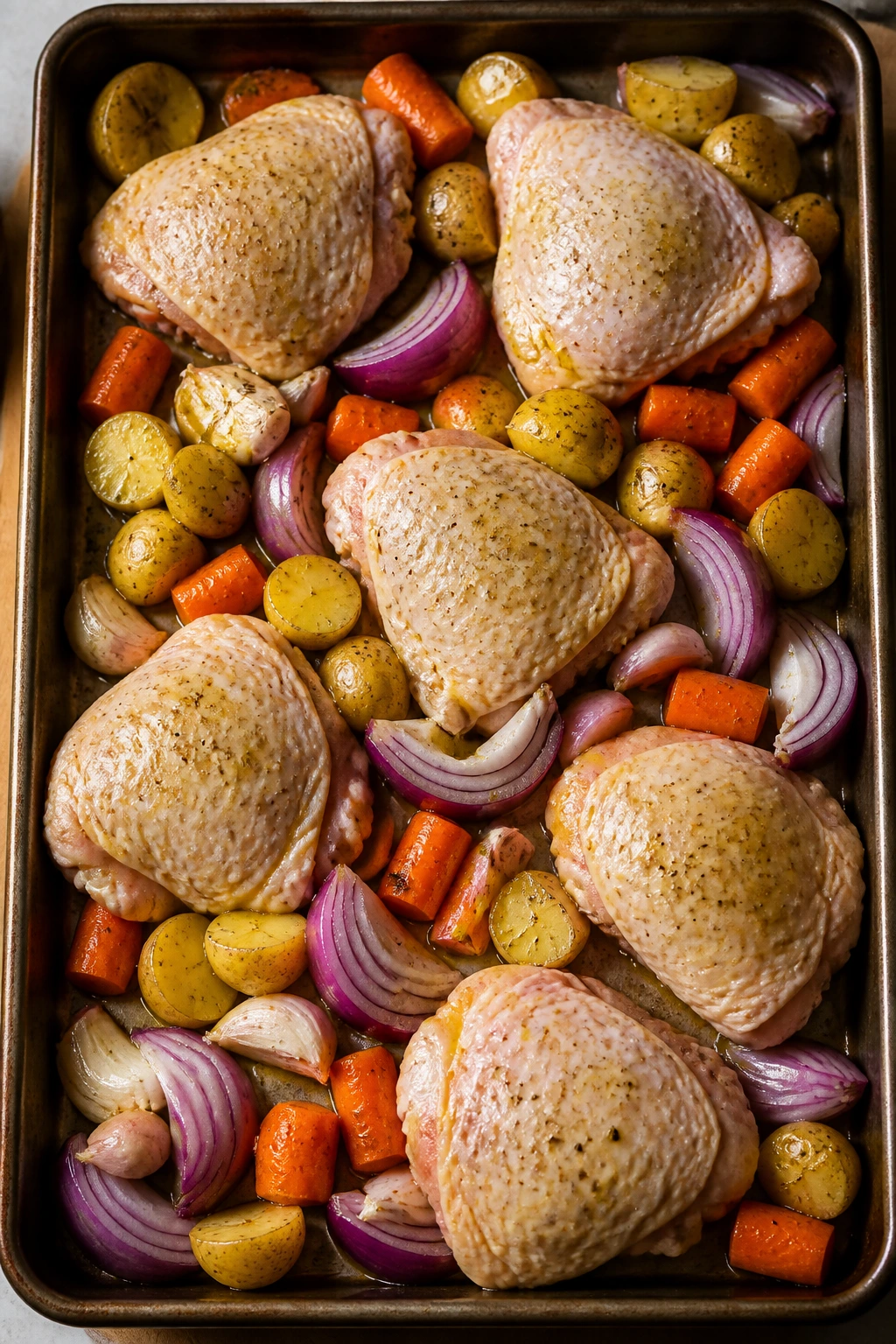
Spread the vegetables across the pan in a single layer, leaving a little space between the potato pieces. They should look loosely scattered, not stacked.
-
In the same bowl, toss the chicken thighs with the remaining 1 tablespoon olive oil, 1 teaspoon kosher salt, the remaining 1/4 teaspoon black pepper, the smoked paprika, oregano, and garlic powder. Rub the seasoning over the skin so the thighs look evenly colored, not patchy.
-
Nestle the chicken thighs skin-side up among the vegetables. Slide the lemon rounds into open spots on the pan, but save the wedges for serving. Keep the skin facing up at all times so it can crisp instead of sitting in its own steam.
Roast and finish:
-
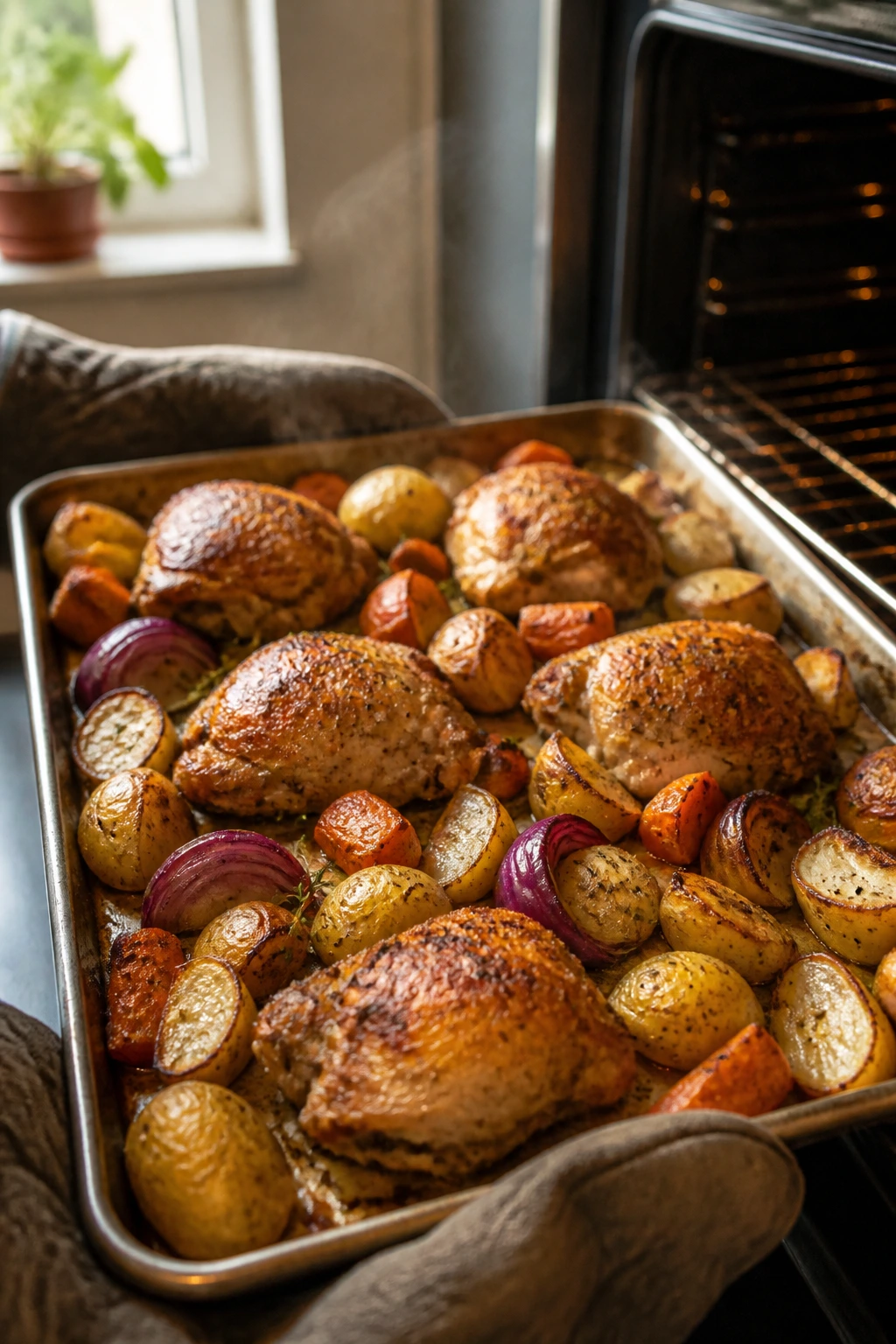
Roast for 20 minutes, then remove the pan and rotate it front to back. If the vegetables are browning unevenly, give them a gentle turn with tongs.
-
Scatter the lemon slices over the pan if they are not already in place, then roast for another 15 to 20 minutes, until the thickest part of each thigh reads 175°F and the potatoes are tender enough to pierce with a paring knife. The skin should look bronzed and tight, and the onions should have browned edges.
-
If the skin needs a little more color, turn on the broiler for 1 to 2 minutes and stay right there. Broilers go from useful to scorched in a hurry.
-
Rest the chicken for 5 minutes on the pan. Spoon the juices over the thighs, sprinkle on the parsley, and serve with the lemon wedges on the side.
That’s the whole trick. Not a parade of steps. Just enough structure to let the oven do the work cleanly.
How to Serve This Roasted Chicken Dinner Without Extra Work
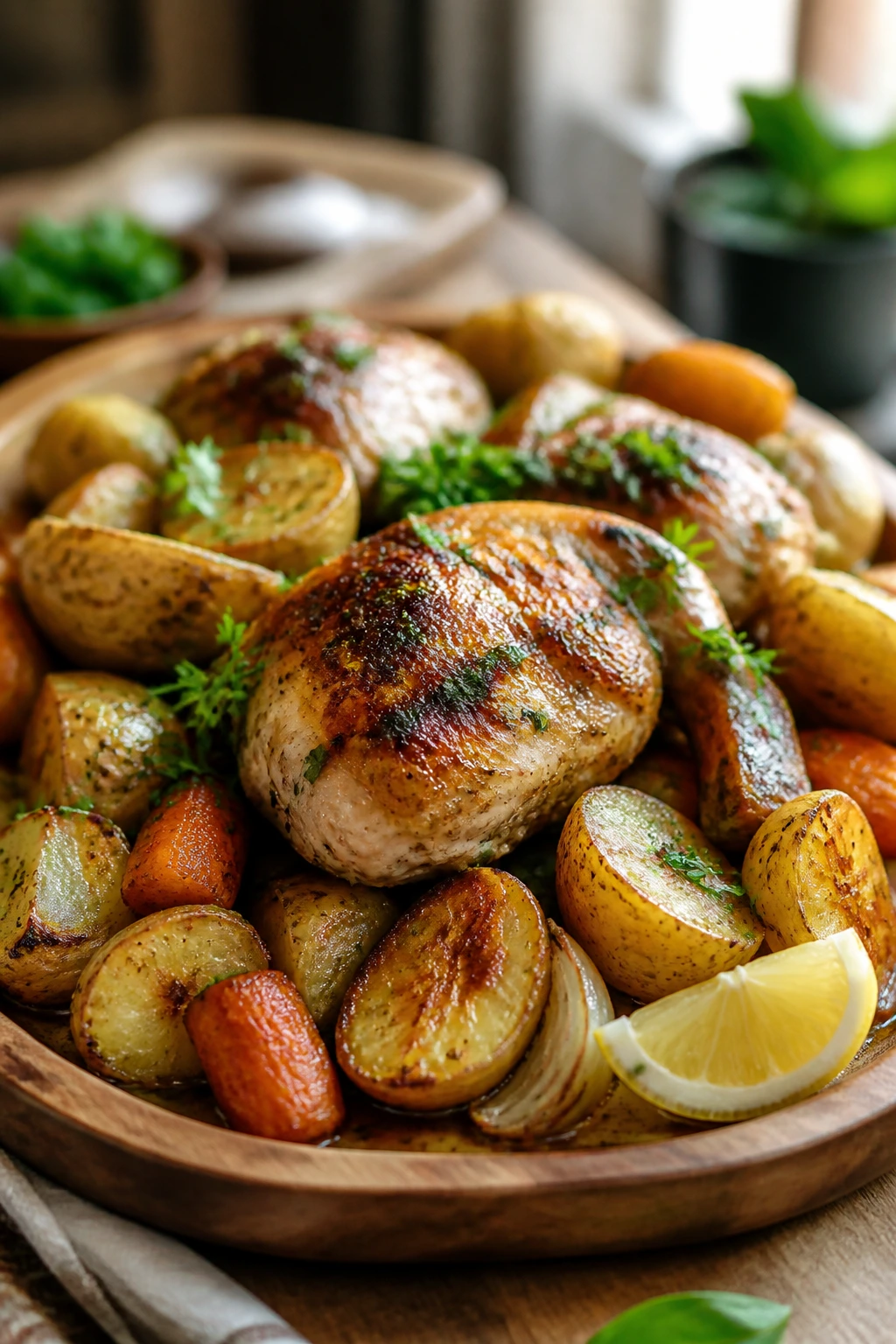
Presentation: Slide the chicken onto a warm platter, then pile the potatoes and carrots around it so the browned bits are visible. Spoon the pan juices over the top and finish with parsley and a few lemon wedges; the plate should look rustic and generous, not arranged to death.
Accompaniments: A peppery arugula salad with a sharp vinaigrette keeps the meal from feeling heavy. If you want bread, pick something crusty enough to mop up the pan juices, like a torn baguette or a slice of country loaf. Green beans, peas, or a simple cucumber salad all sit nicely beside the roast without adding more cooking.
Portions: Plan on one thigh and a solid scoop of vegetables per adult for a standard dinner. If the people at your table eat hard after a long day, count on two thighs each and stretch the meal with salad or bread.
Beverage Pairing: A crisp Sauvignon Blanc or a dry hard cider works well because both cut through the olive oil and lemon. For a nonalcoholic pairing, cold sparkling water with a squeeze of lemon stays clean and bright.
I like this dish on shallow bowls more than on deep ones. The pan juices pool at the bottom, and that little bit of shine makes the whole thing taste more deliberate.
Small Tweaks That Add More Flavor
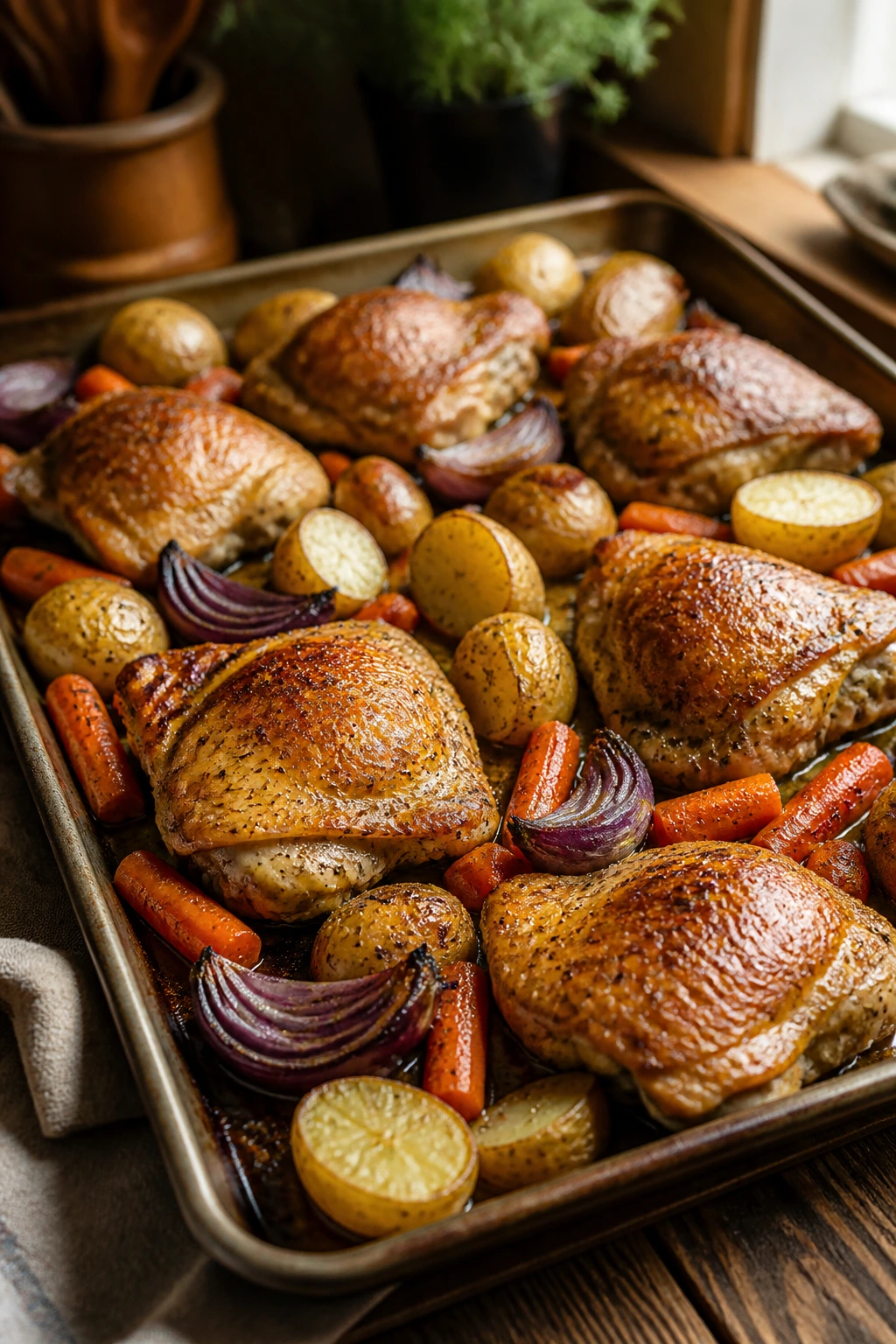
Flavor Enhancement: Finish the hot pan with a little lemon zest and a pinch of flaky salt right before serving. The zest hits the warm chicken fat and smells sharper than plain juice alone.
Time-Saver: If you only have larger Yukon Gold potatoes, microwave the halved pieces with 2 tablespoons of water in a covered bowl for 4 minutes, then drain well before tossing them with oil. That head start takes a real bite out of the roasting time without changing the flavor.
Cost-Saver: When chicken thighs are priced higher than you want, use drumsticks or leg quarters instead. Drumsticks follow the same schedule, while bigger leg quarters may need 5 extra minutes; either way, they still give you skin, bones, and drippings worth keeping.
Make-It-Yours: A small pinch of crushed red pepper gives the lemon more pop without making the dish feel spicy. If you want a more herb-forward pan, swap the oregano for thyme or rosemary and keep the rest exactly the same.
Serving Suggestions: A spoonful of Dijon mustard on the side is good for people who want a little sharpness at the table. I also like a handful of chopped dill or basil if I’ve got it around; both make the finished pan taste fresher than the ingredient list suggests.
These are not dramatic changes. That’s the point. A dinner like this gets better from small, careful nudges, not from piling on more ingredients until the pan looks crowded.
Mistakes That Leave You With Pale Skin or Soft Vegetables
-
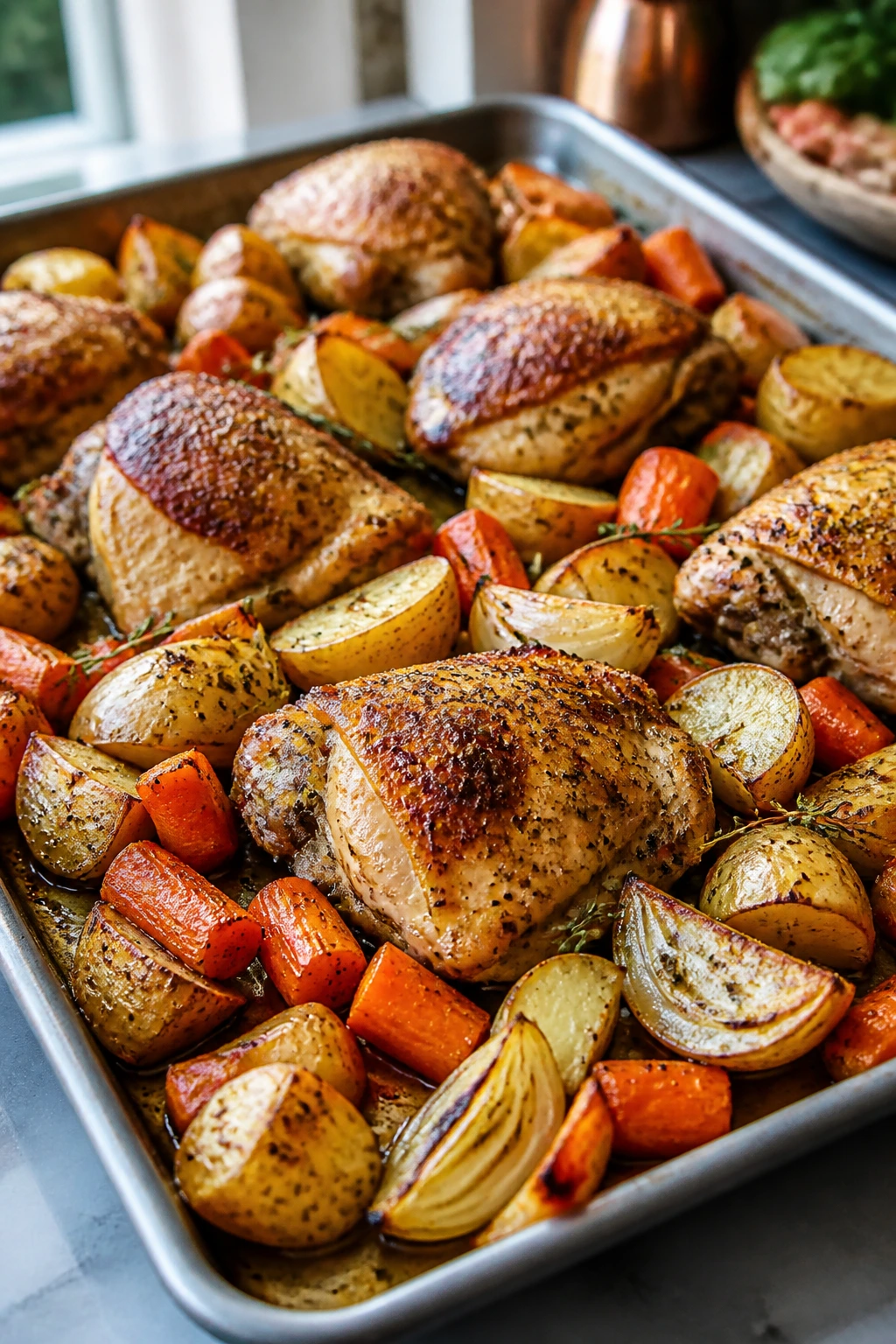
Starting with wet chicken. If the thighs go into the oven damp, the skin steams first and browns later, which means you lose that crisp top layer. Pat the chicken dry with paper towels before seasoning, and if time allows, let it sit uncovered in the fridge for 15 to 30 minutes.
-
Cutting the vegetables too large. Big potato chunks are the usual culprit when the chicken is done and the potatoes are still hard in the center. Keep the potatoes at about the size of a half walnut and the carrots to 1-inch pieces so they finish together.
-
Crowding the sheet pan. When the vegetables sit in a thick pile, they trap moisture and turn soft instead of browned. If your pan looks packed, split the recipe across two pans; that’s better than pretending one pan can handle too much food.
-
Skipping the thermometer. Chicken thighs can look deeply browned and still need a few more degrees inside. Pull them at 175°F in the thickest part near the bone, not when they merely look done.
-
Forgetting to rotate the pan. Oven heat is not always even, and the back corner often browns faster. Rotate the pan at the halfway point so the potatoes don’t scorch in one spot while the onions lag behind.
-
Adding the parsley too early. Fresh herbs lose their bright color and smell if they roast. Sprinkle them on after the pan comes out so they stay green and sharp.
The fix for every one of these problems is boring, and boring is good here. Dry meat, even cuts, space on the pan, and a thermometer solve most of what goes wrong.
Variations for Different Moods
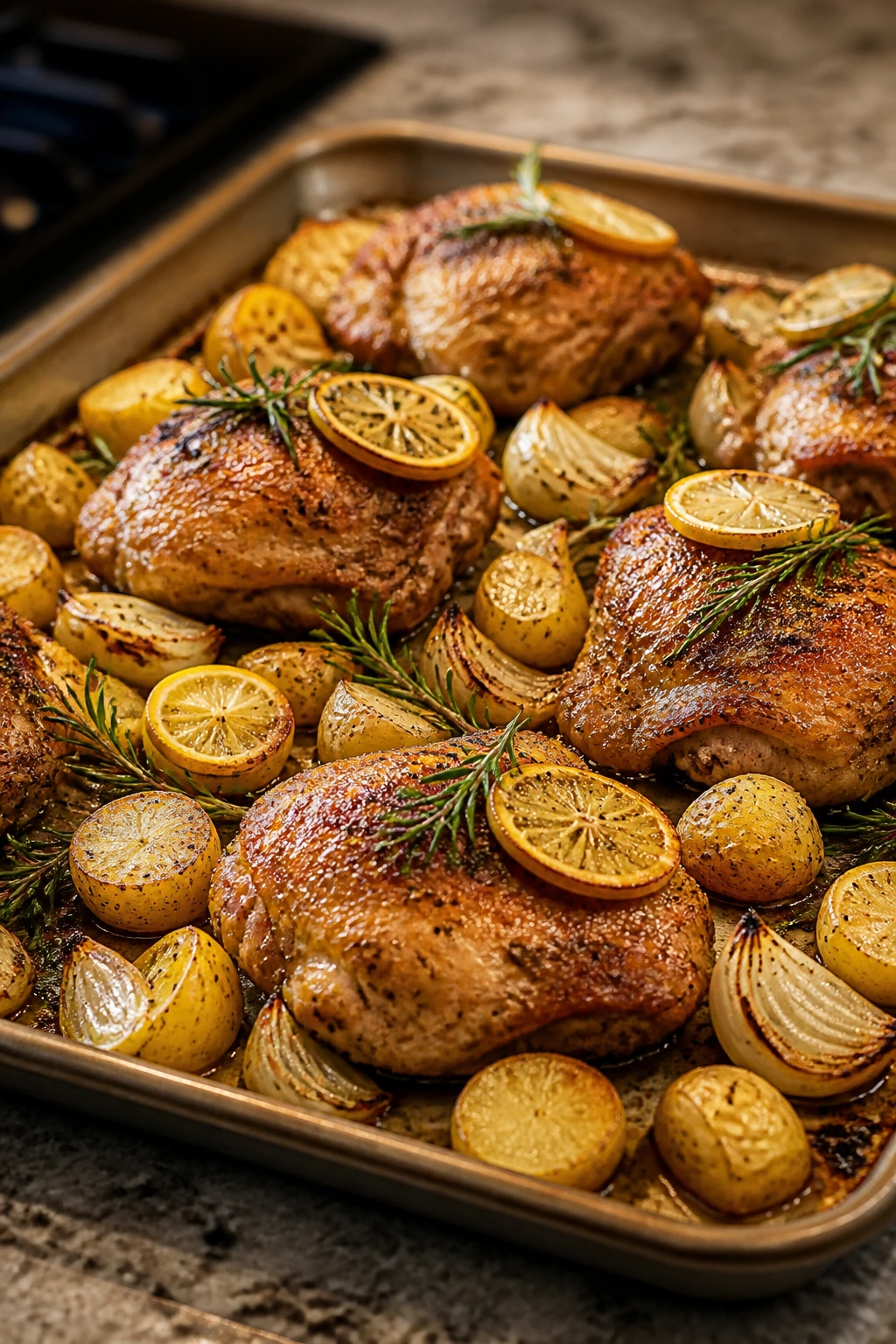
Rosemary-Lemon Roast
Swap the oregano for 1 teaspoon chopped rosemary and 1 teaspoon chopped thyme. The flavor gets woodier and a little more classic, which is nice when you want the kitchen to smell like a Sunday roast without spending all day on it.
Smoky Paprika and Pepper Roast
Add 1/2 teaspoon chipotle powder and use a mix of yellow and red onions. The dish picks up a gentle heat and a deeper color, and it works especially well if you like the chicken skin to lean more savory than herbal.
Garlic-Parmesan Finish
After the chicken comes out of the oven, toss the hot vegetables with 2 tablespoons of finely grated parmesan and the parsley. Don’t add much more than that, or the cheese will start to clump instead of melting into the pan juices.
Honey-Mustard Glazed Chicken
Mix 1 tablespoon Dijon mustard with 1 teaspoon honey and brush it over the thighs before roasting. The glaze gives the skin a darker, stickier finish, though you may want to check the pan a few minutes early because sugar browns faster.
Cabbage-and-Chicken Tray Bake
Replace the potatoes with 1 small green cabbage, cut into 1 1/2-inch wedges, and add the carrots as written. The cabbage softens at the edges and soaks up the drippings, which makes the whole dish lighter but still very satisfying.
I usually steer people toward the rosemary or garlic-parmesan versions first. They change the mood of the dish without changing the method, and that’s the sweet spot for a weeknight dinner.
Storage, Reheating, and Make-Ahead Notes
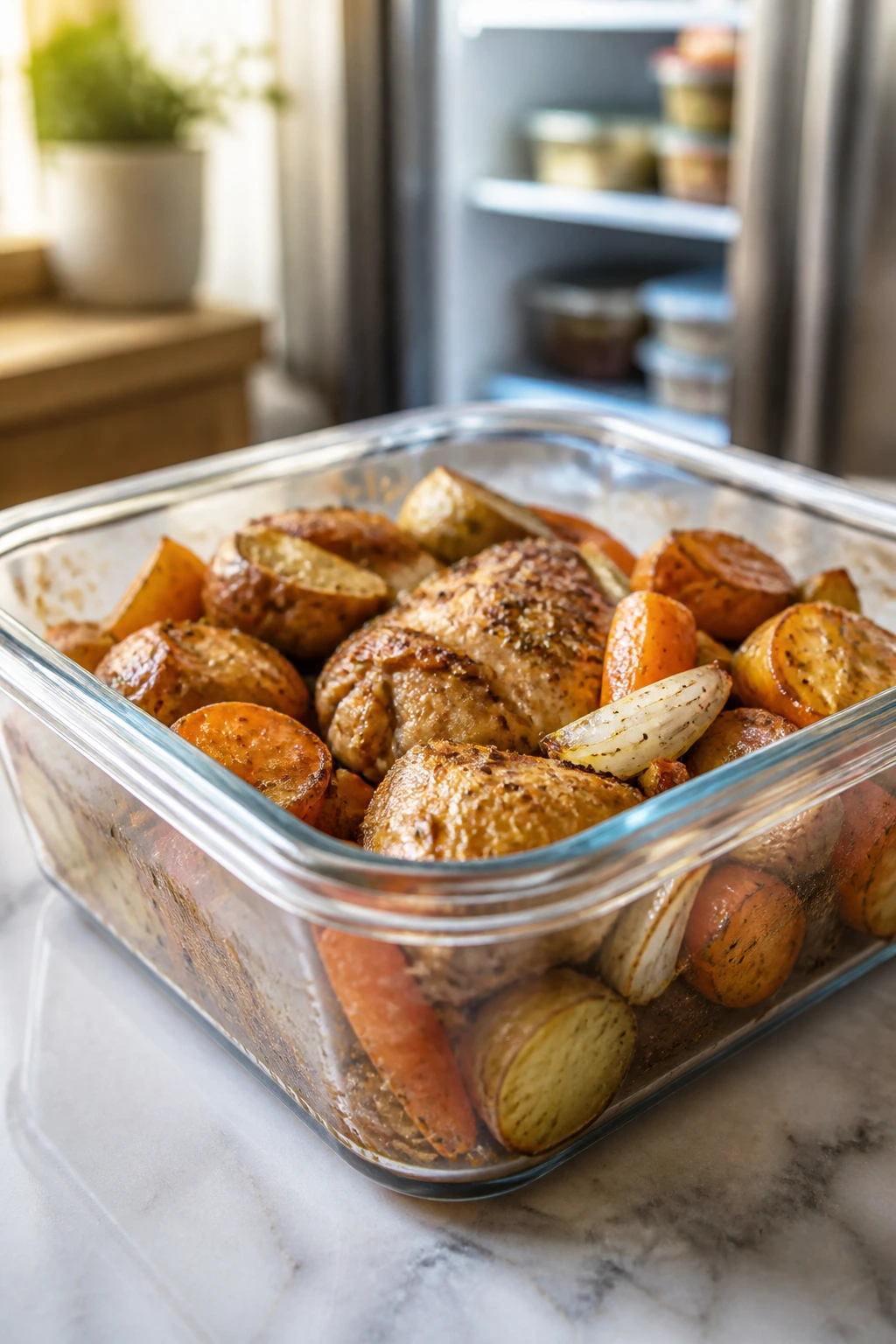
Let the chicken and vegetables cool for about 20 to 30 minutes before packing them up. You do not want them sitting out longer than 2 hours total, but you also don’t want to seal in steam while the pan is still hot enough to fog the container.
Store leftovers in an airtight container in the refrigerator for 3 to 4 days. If you want the best texture, separate the chicken from the vegetables and keep a spoonful of the pan juices with the meat; that keeps the chicken from drying out when you reheat it.
Freezing works, but the vegetables soften. I prefer to freeze the chicken meat off the bone with a little pan juice for up to 2 months, then roast a fresh batch of vegetables later. If you freeze the whole thing, expect the potatoes to lose their edges and the carrots to go a little soft.
For reheating, the oven is the cleanest fix. Set it to 375°F and warm the chicken and vegetables on a sheet pan for 12 to 15 minutes, loosely covered with foil for the first half so the meat doesn’t dry before the center warms through. If you want the skin crisper, uncover it for the final 3 to 4 minutes.
A skillet works too, especially for the chicken. Put the thighs skin-side down in a dry skillet over medium heat for 4 to 5 minutes, then add a tablespoon of water and cover for another minute to warm the center. Microwave only the vegetables if you’re in a hurry; the chicken skin will go rubbery there, and there’s no reason to pretend otherwise.
For make-ahead prep, cut the vegetables up to 24 hours ahead and store them in an airtight container with a paper towel inside to catch condensation. The chicken can be seasoned up to 12 hours ahead and kept uncovered in the refrigerator for a drier skin, but I would not fully assemble the pan more than a few hours in advance or the vegetables will start shedding moisture.
Common Questions About This Chicken Dinner
Can I use chicken breasts instead of thighs?
You can, but they need less time and they dry out more easily. Bone-in breasts are safer than boneless ones for roasting, and you’ll want to start checking them around 20 to 25 minutes, pulling them at 165°F.
Do I have to use baby potatoes?
No. Regular Yukon Gold potatoes work fine if you cut them into 1-inch chunks and keep the size even. Waxy potatoes hold their shape better than russets, which can get fluffy and break apart before the chicken is done.
Can I roast this on parchment paper?
You can, but parchment softens browning a little. If easy cleanup matters more than the deepest color, parchment is fine; if you want the potatoes to get crisper, go straight on a lightly oiled sheet pan.
What if the vegetables finish before the chicken?
Pull the vegetables to a serving bowl and tent them loosely with foil, then return the chicken to the oven for a few more minutes. The reverse can happen too, and if it does, take the chicken out and give the vegetables another 5 minutes while the meat rests.
How do I know the chicken is done?
Use an instant-read thermometer in the thickest part of the thigh, close to the bone but not touching it. You’re looking for 175°F for thighs; that number sounds higher than people expect, but it gives you better texture.
Can I double the recipe?
Yes, but use two sheet pans. If you stack the food on one pan, the vegetables will steam and the chicken skin will lose its edge, which is the one thing this dinner really depends on.
How do I keep the skin crisp when reheating?
Warm the chicken in a hot oven or a dry skillet, not in the microwave. A final minute under the broiler can help too, but keep your eyes on it because crisp skin can turn black fast once it gets too close to the flame.
Why This Pan Stays in Rotation
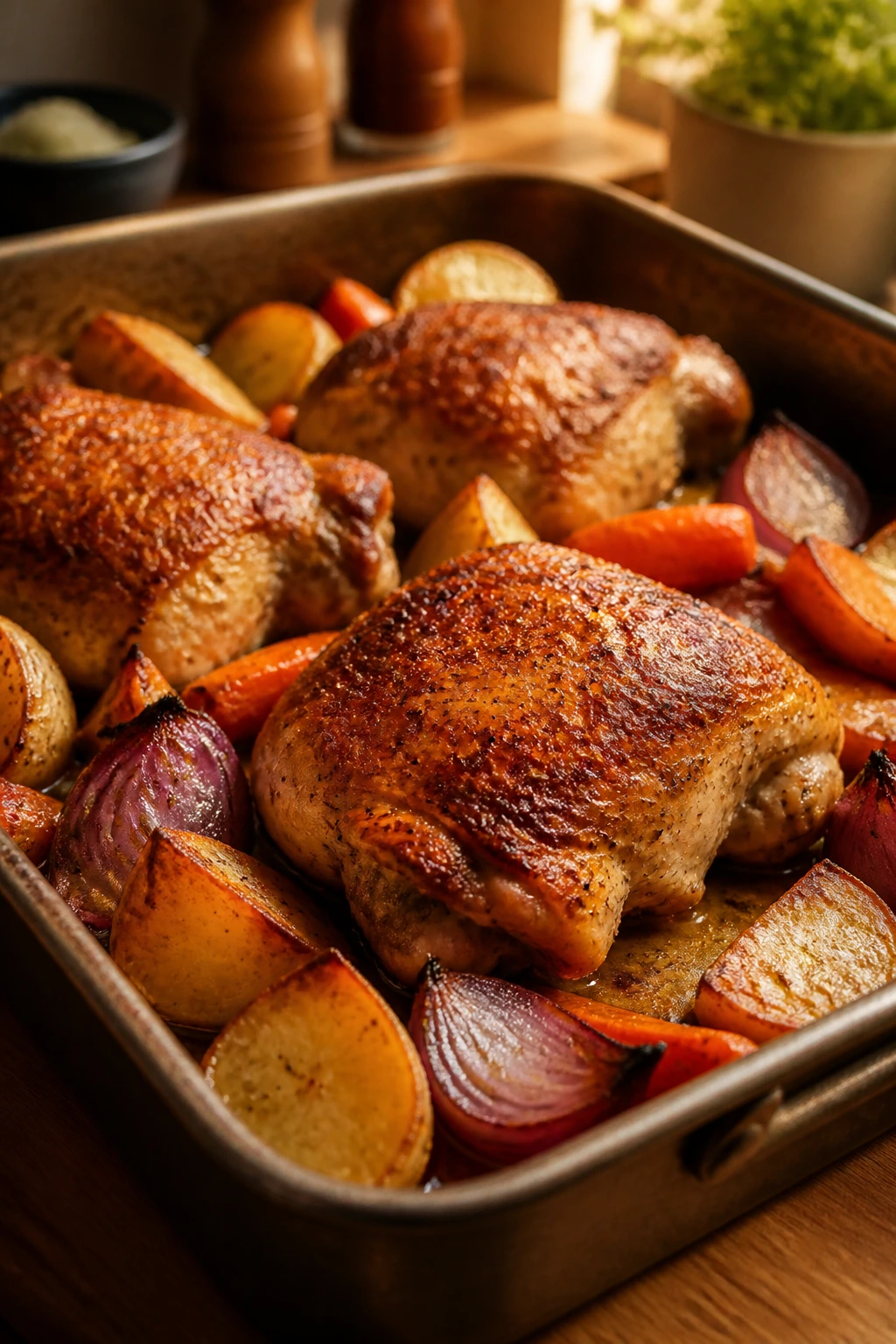
Some dinners ask for a clean counter, full attention, and a second round of dishes. This one asks for a hot oven and a little common sense. That’s why it survives on nights when the schedule goes sideways and the energy level is running on fumes.
The appeal isn’t mystery. It’s the crackle of the skin, the sweet onion edges, the potatoes soaked with chicken fat, and the lemon that keeps the whole thing from feeling heavy. Keep a pack of thighs and a lemon around, and this pan can step in whenever the evening gets longer than it was supposed to be.
Roasted Quick Chicken Dinner with Lemon and Vegetables — Recipe Card
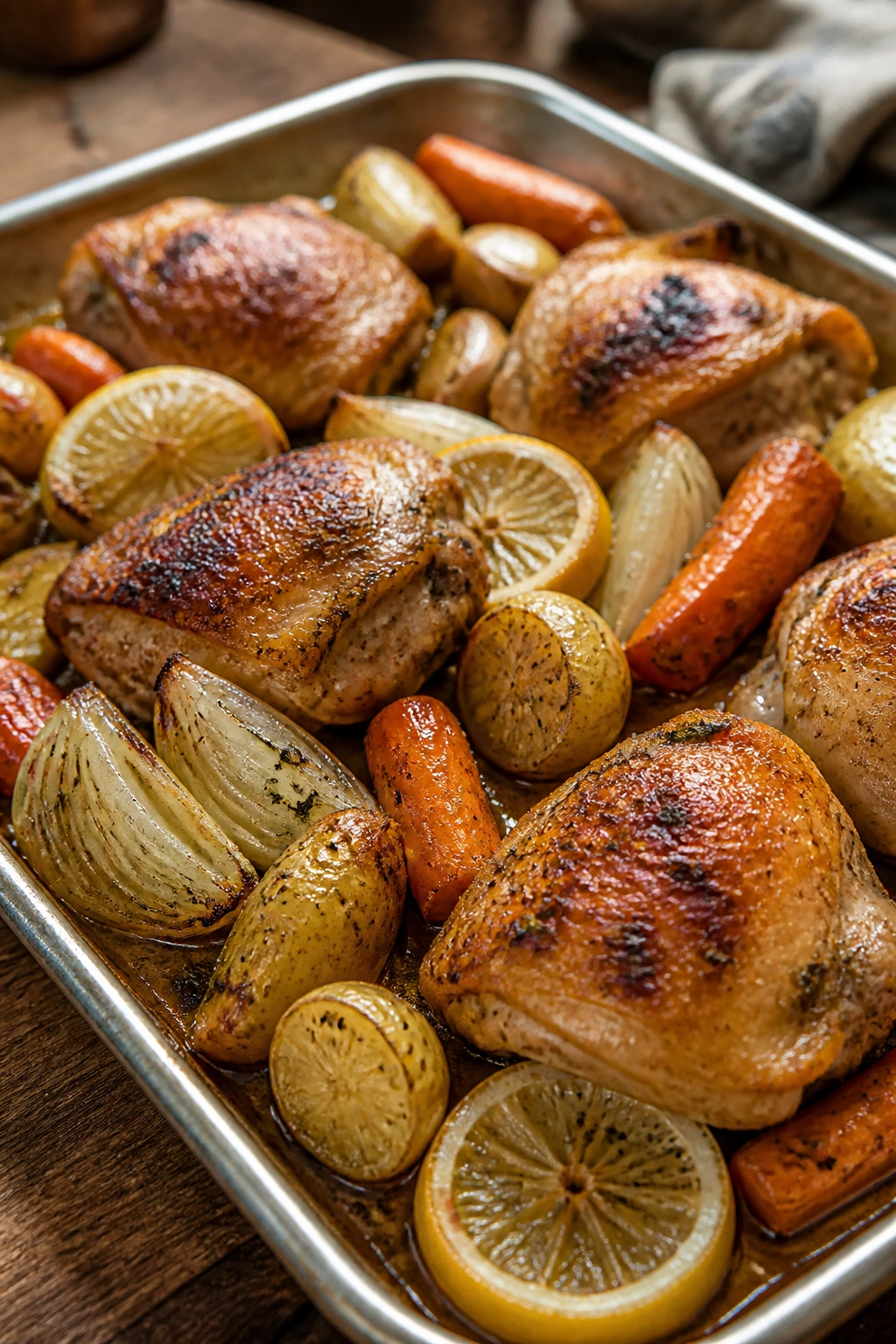
Recipe Name: Roasted Quick Chicken Dinner with Lemon and Vegetables
Description: Bone-in chicken thighs roast with baby potatoes, carrots, onion, garlic, and lemon on one sheet pan. The skin turns bronzed, the vegetables soak up the drippings, and dinner lands with very little cleanup.
Prep Time: 15 minutes
Cook Time: 35 to 40 minutes
Total Time: 50 to 55 minutes
Course: Dinner, Main Course
Cuisine: American
Servings: 4 servings
Calories: 520 kcal per serving
Ingredients
For the Chicken and Vegetables:
- 2 pounds bone-in, skin-on chicken thighs, patted dry
- 1 pound baby potatoes, halved if larger than 1 inch
- 3 medium carrots, cut into 1-inch diagonal chunks
- 1 medium red onion, cut into 8 wedges
- 4 cloves garlic, smashed
- 3 tablespoons olive oil, divided
- 1 1/2 teaspoons kosher salt, divided
- 1/2 teaspoon black pepper, divided
- 1 teaspoon smoked paprika
- 1 teaspoon dried oregano
- 1/2 teaspoon garlic powder
For Finishing:
- 1 lemon, half sliced into rounds and half cut into wedges
- 2 tablespoons chopped fresh parsley
Instructions
-
Preheat the oven to 450°F (232°C) and position a rack in the upper-middle of the oven.
-
Toss the potatoes, carrots, onion, and garlic with 2 tablespoons olive oil, 1/2 teaspoon kosher salt, and 1/4 teaspoon black pepper. Spread on a large rimmed sheet pan in a single layer.
-
Toss the chicken thighs with the remaining 1 tablespoon olive oil, 1 teaspoon kosher salt, remaining 1/4 teaspoon black pepper, smoked paprika, oregano, and garlic powder. Nestle skin-side up among the vegetables.
-
Roast for 20 minutes, then rotate the pan and add the lemon slices if needed.
-
Roast for 15 to 20 minutes more, until the chicken reaches 175°F in the thickest part and the vegetables are tender and browned at the edges.
-
Broil for 1 to 2 minutes if the skin needs more color, watching closely.
-
Rest for 5 minutes, then spoon the pan juices over the chicken. Finish with parsley and serve with lemon wedges.
Notes: Use an instant-read thermometer for the thighs; don’t judge doneness by color alone. For crispest skin, keep the chicken skin-side up the entire time. Leftovers keep 3 to 4 days in the refrigerator.