



A garlicky vegetable medley can be either dinner or disappointment, and the difference usually comes down to one blunt little thing: whether you respect how each vegetable cooks. Broccoli and cauliflower want heat. Zucchini wants restraint. Garlic wants attention, not a blast furnace. Put them all together without thinking, and you get a tray that tastes like warm water with ambition.
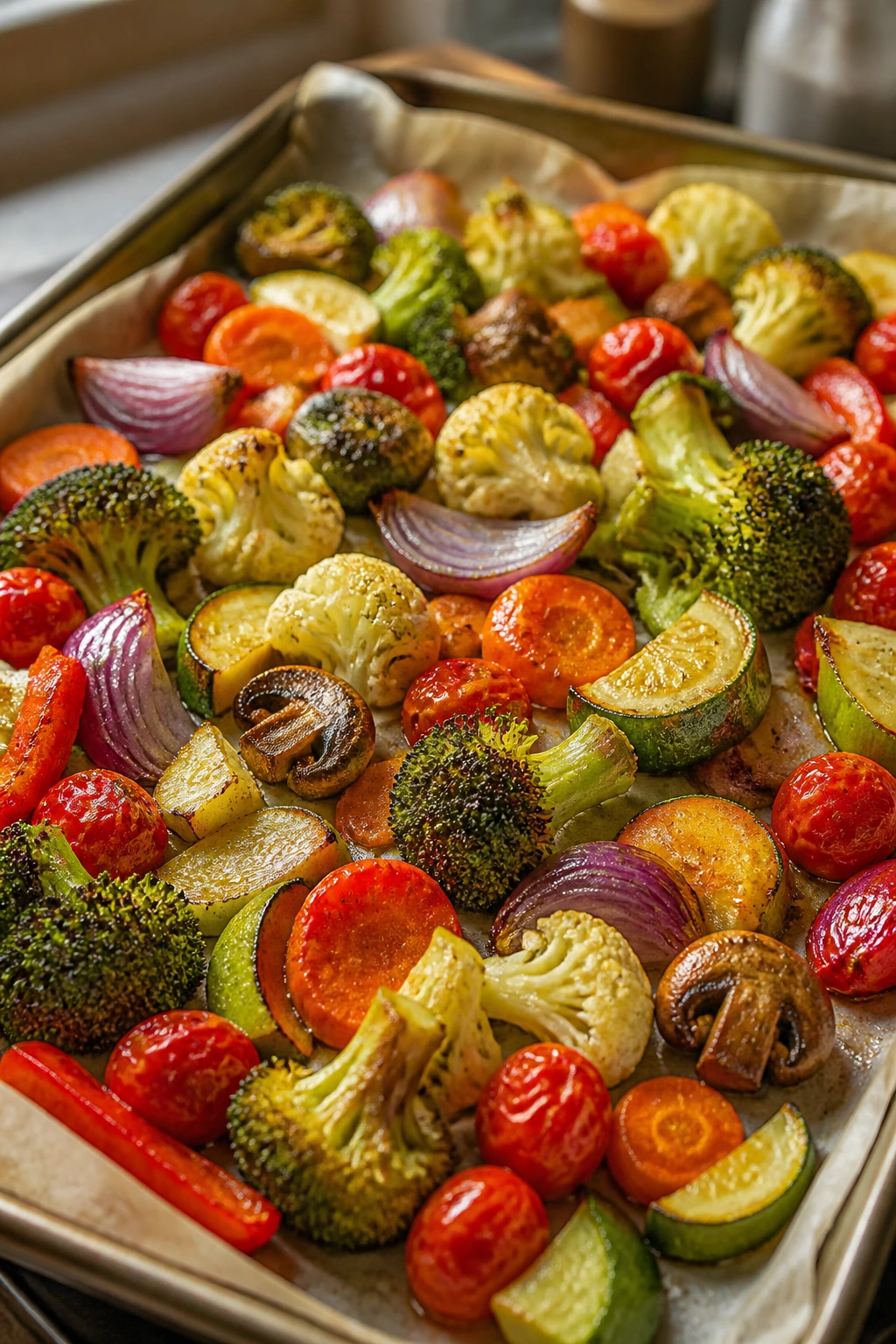
The version I keep coming back to is built around contrast. The broccoli edges go bronze and a little crisp. The carrots hold their shape but lose that raw snap. The mushrooms wrinkle at the sides and soak up the garlic oil like they were waiting for it. Then the lemon hits at the end, and the whole pan wakes up. That last squeeze matters more than people think. Without it, the vegetables can taste flat even when they’re perfectly roasted.
What makes a garlicky vegetable medley work for a healthy dinner is not some abstract promise of being “good for you.” It’s the fact that the vegetables still taste like vegetables. Sweet. Sharp. Earthy. A little charred. A little glossy from olive oil, but never slick. And because the method staggers the vegetables instead of treating them like a single, obedient pile, you end up with dinner that feels deliberate instead of apologetic.
Why This Garlicky Vegetable Medley Belongs at Dinner
-
The vegetables keep their own personalities. Broccoli stays crisp at the edges, carrots turn sweet, and mushrooms bring that meaty, savory thing that makes the plate feel complete.
-
The garlic stays fragrant instead of bitter. Gently warmed garlic oil gives you a big aroma without the burnt, harsh note that ruins a lot of roasted vegetable dishes.
-
It works as a side or a main. Spoon it over quinoa, pile it next to eggs, or set it beside fish or tofu; the same pan pulls all three jobs without changing the method.
-
The cleanup stays honest. One or two sheet pans, parchment, and a small skillet if you want the garlic oil finished separately. No sauce pot. No pile of extra dishes.
-
It uses produce that cooks at different speeds without making a mess. That staggered roasting is the whole trick. It keeps zucchini from collapsing before the carrots soften.
-
Leftovers still have a job. Cold roasted vegetables can slide into grain bowls, omelets, wraps, or a fast lunch with hummus, which is more than I can say for a lot of “healthy” dinners.
Timing, Yield, and the Shape of the Recipe
Yield: Serves 4 as a light main or 6 as a side
Prep Time: 20 minutes
Cook Time: 25 minutes
Total Time: 45 minutes
Difficulty: Beginner — the technique is simple, but the vegetable sizing and roasting order matter.
Best Served: Right away, while the edges are still crisp and the lemon smells bright
Chill/Rest Time: None, though the vegetables benefit from a 2-minute rest before serving
The timing looks short, and it is, but the short version hides a little choreography. The carrots and cauliflower need a head start. The zucchini and tomatoes need to arrive later so they don’t turn soft and watery. Garlic gets its own careful moment, because if you let it scorch, the whole pan picks up a sharp, bitter note that no amount of parsley can fix.
If your oven runs cool, give the first roast an extra 3 to 4 minutes. If it runs hot, pull the pan the moment the broccoli tips darken and the tomatoes start to wrinkle. That’s the zone you want. Not a pale tray. Not a shriveled one.
How This Pan Became My Favorite Vegetable Dinner
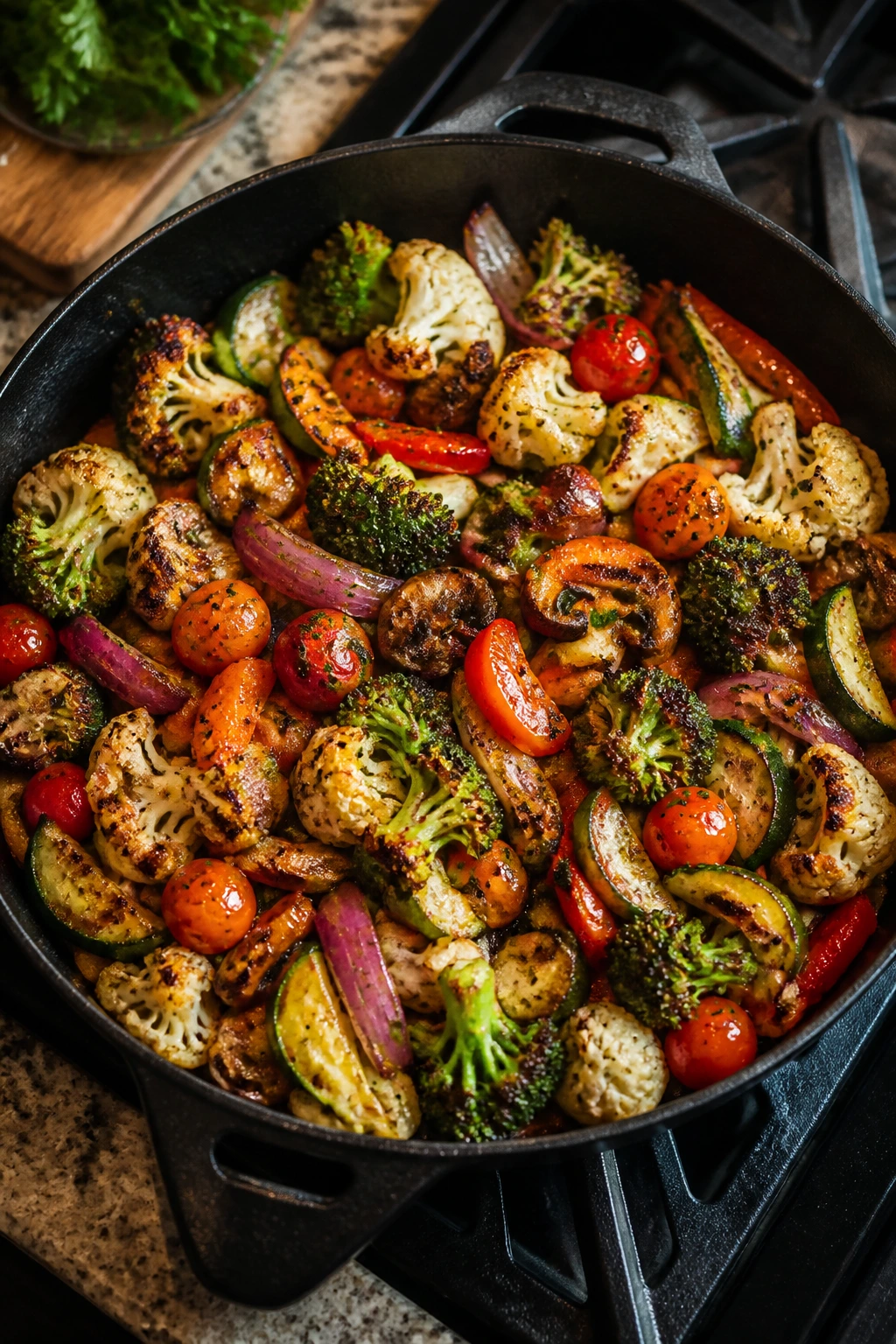
There’s a reason roasted vegetables show up on so many dinner tables: the oven does the hard part for you, and it does it with more patience than most of us have on a weeknight. The catch is that vegetables are not all built the same. Some release water almost immediately. Some need a little longer to soften. Some taste dull until a little browning happens, and then suddenly they’re alive.
This recipe leans into that difference instead of fighting it.
Broccoli and cauliflower can take the first blast of heat without losing much. Carrots need enough time to loosen up in the middle. Mushrooms don’t need to be coddled, but they do need space or they’ll steam in place. Zucchini and cherry tomatoes come in late because they’re water-heavy and quick to collapse. That’s the part a lot of home cooks skip, then wonder why the pan tastes flat.
I also like this version because it doesn’t pretend garlic is a background note. It isn’t. Garlic is the spine of the dish. But raw minced garlic thrown on a sheet pan burns easily, and burnt garlic is loud in the wrong way. Gentle garlic oil solves that problem. You get the sweetness, the smell, the savoriness, and none of the scorched edge.
That’s the real pleasure here. Not the idea of a vegetable medley. The actual texture of it. Bronze at the tips. Tender in the center. A little lemon on top. Dinner can be that plain and still feel finished.
What You’ll Need for the Pan
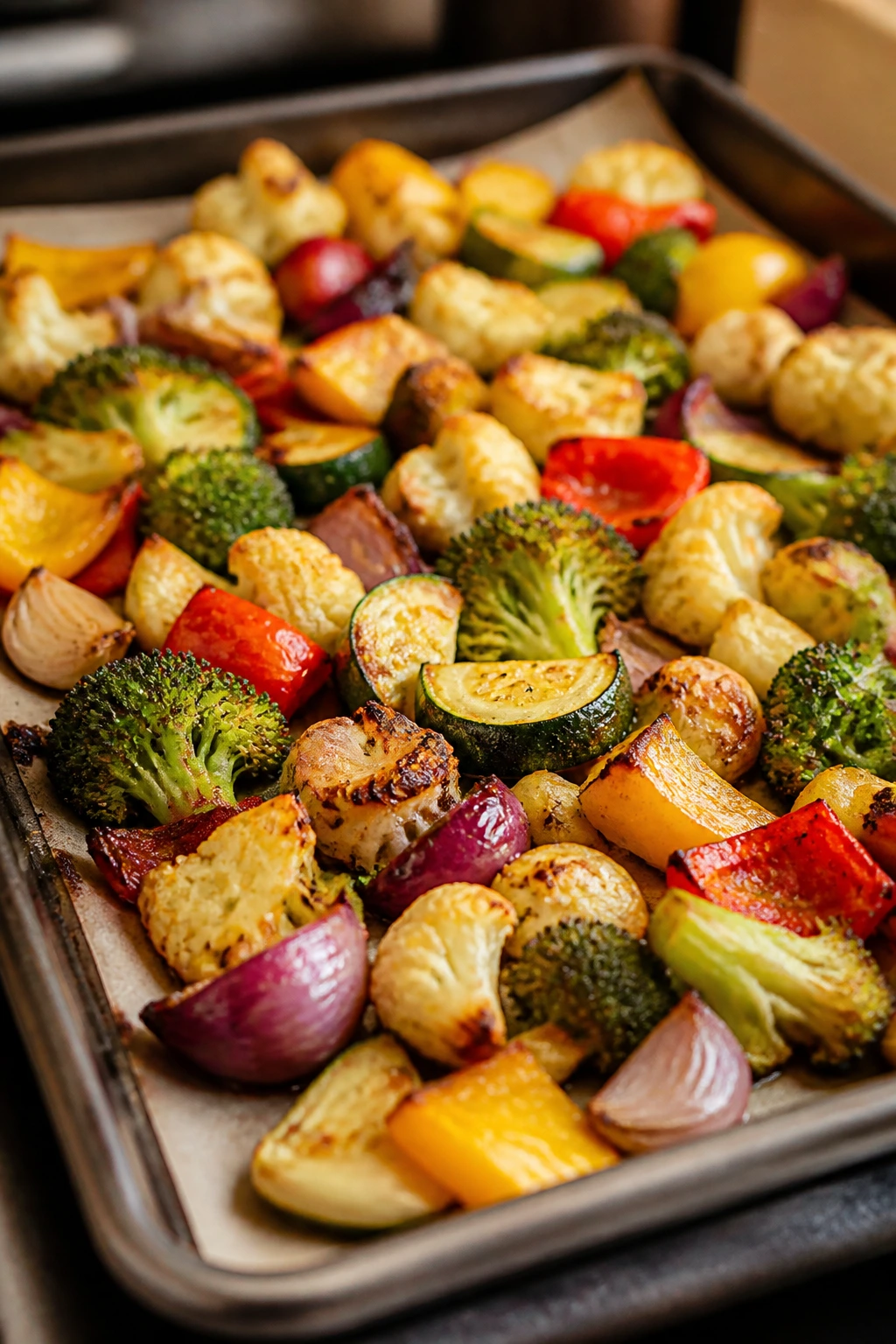
For the Roasted Vegetables:
- 1 large head broccoli, about 12 oz, cut into 1½-inch florets
- 1 small head cauliflower, about 1 lb, cut into 1½-inch florets
- 2 medium carrots, peeled and sliced into ¼-inch coins on the bias
- 1 small red onion, cut into 1-inch wedges
- 1 red bell pepper, seeded and sliced into 1-inch strips
- 1 medium zucchini, halved lengthwise and sliced into ½-inch crescents
- 8 oz cremini mushrooms, halved if small or quartered if large
- 1 cup cherry tomatoes
For the Garlic-Lemon Finish:
- 5 tbsp olive oil, divided
- 5 cloves garlic, finely minced
- 1 tsp kosher salt, plus more to taste
- ½ tsp black pepper
- 1 tsp dried Italian seasoning
- ¼ tsp red pepper flakes, optional
- 1 lemon, zested and juiced
- 2 tbsp chopped fresh parsley
Optional Garnish:
- 2 tbsp grated Parmesan cheese or nutritional yeast
- 2 tbsp toasted pumpkin seeds or chopped almonds
Why Each Ingredient Matters in the Oven
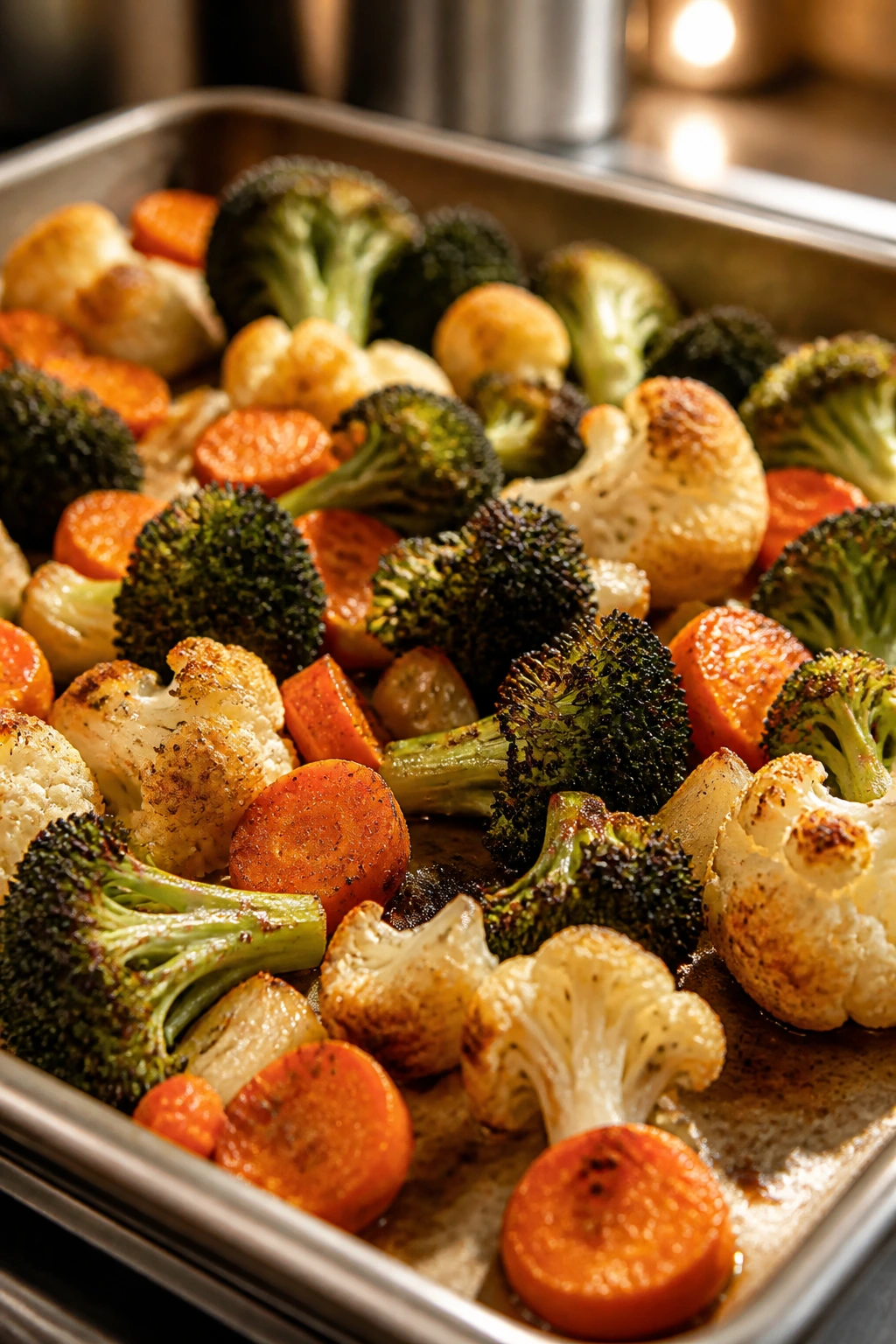
Sturdy Vegetables That Need the Head Start
What to use: 1 large head broccoli, 1 small head cauliflower, 2 medium carrots, and 1 small red onion are the backbone of the pan.
Preparation: Cut the broccoli and cauliflower into similar 1½-inch florets so they roast at the same pace, and slice the carrots thin enough to soften without turning limp. The onion wedges should stay big enough to hold together.
Substitutions: Broccolini can replace broccoli, parsnips can replace carrots, and yellow onion works if you don’t have red onion. If cauliflower is missing, use extra broccoli or trimmed Brussels sprouts.
Tips: These vegetables need the longest exposure to heat, so don’t cut them too small. Tiny florets burn before they brown, and very thick carrot coins stay stiff in the middle.
Quick-Cooking Vegetables That Join Late
What to use: 1 red bell pepper, 1 medium zucchini, 8 oz cremini mushrooms, and 1 cup cherry tomatoes bring color and moisture to the pan.
Preparation: Slice the pepper into wide strips, cut the zucchini into half-moons about ½-inch thick, and keep the mushrooms in larger pieces so they don’t dry out. Leave the cherry tomatoes whole.
Substitutions: Yellow squash works in place of zucchini, and baby bell peppers can replace the red bell pepper. If mushrooms are not your thing, use extra peppers or thin asparagus tips.
Tips: These vegetables all release water fast, so they go in after the first roast. If you add them too early, you’ll get soft vegetables and a tray of steam instead of caramelized edges.
The Garlic-Lemon Finish
What to use: 5 tbsp olive oil, 5 cloves minced garlic, 1 lemon, and 2 tbsp chopped parsley make the finishing layer.
Preparation: Mince the garlic finely so it perfumes the oil evenly, then zest and juice the lemon before the vegetables come out of the oven. Chop the parsley just before serving so it stays bright.
Substitutions: Lime can replace lemon if that’s what you have, though the flavor leans sharper. Cilantro can stand in for parsley if you want a stronger herbal finish.
Tips: Garlic should be warmed, not browned. The moment it smells sweet and starts to sizzle gently, pull it off the heat. That one decision saves the dish.
Optional Garnishes and Dinner Add-Ins
What to use: 2 tbsp grated Parmesan or nutritional yeast, plus 2 tbsp toasted pumpkin seeds or chopped almonds if you want crunch.
Preparation: Grate Parmesan finely so it melts lightly over the hot vegetables, and toast nuts or seeds in a dry skillet until they smell nutty and take on a deeper color.
Substitutions: Feta can replace Parmesan if you want a salty, crumbly finish. Sunflower seeds work in place of pumpkin seeds and cost less in many stores.
Tips: Garnishes are not decoration here. They change the eating experience by adding salt, crunch, or a little richness at the end, which is useful when the whole dinner is built from vegetables.
What the Garlic and Lemon Are Really Doing
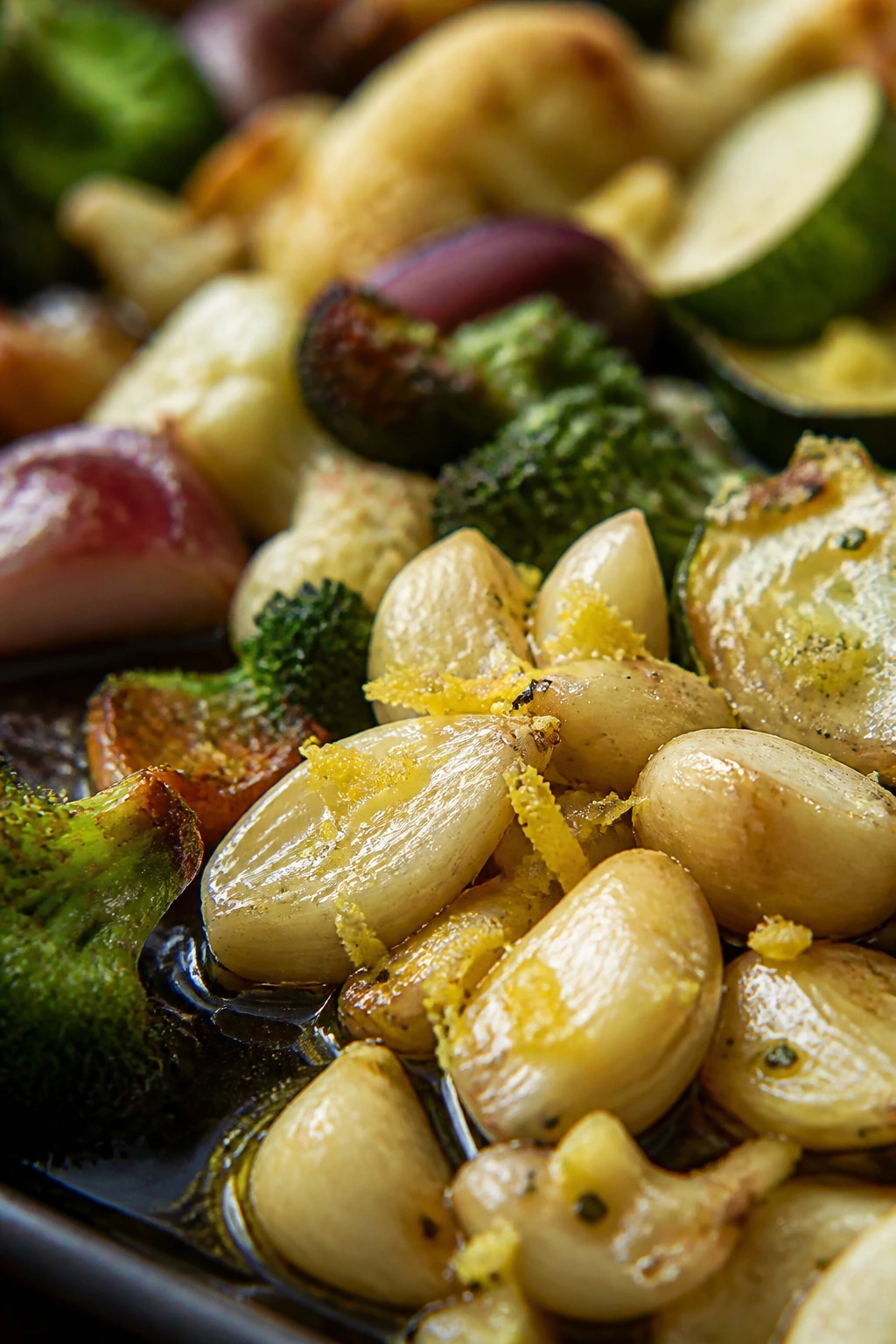
Garlic in a vegetable dish has one job that people underestimate: it ties the pan together. Without it, the broccoli tastes like broccoli, the mushrooms taste like mushrooms, and the carrots keep doing their sweet little thing without any sense of unity. Garlic bridges those flavors.
But garlic needs temperature control. High heat turns minced garlic from sweet and nutty to bitter in a flash. That’s why this recipe uses garlic as a finish, not a sacrifice. You warm it in olive oil just long enough for the smell to turn round and savory. Then you pull it off the heat and let the oil do the work.
Lemon matters for the same reason salt matters. Not because the vegetables are bland, but because roasted vegetables can wear a little heaviness after twenty-five minutes in the oven. Lemon cuts that weight. It sharpens the sweetness in the carrots, makes the mushrooms taste deeper, and keeps the whole pan from feeling oil-heavy.
If you’ve ever eaten roasted vegetables that looked fine but tasted tired, acid was probably the missing piece. A tablespoon or two of lemon juice changes the finish more than another pinch of salt ever will.
Tools That Make Roasting Easier
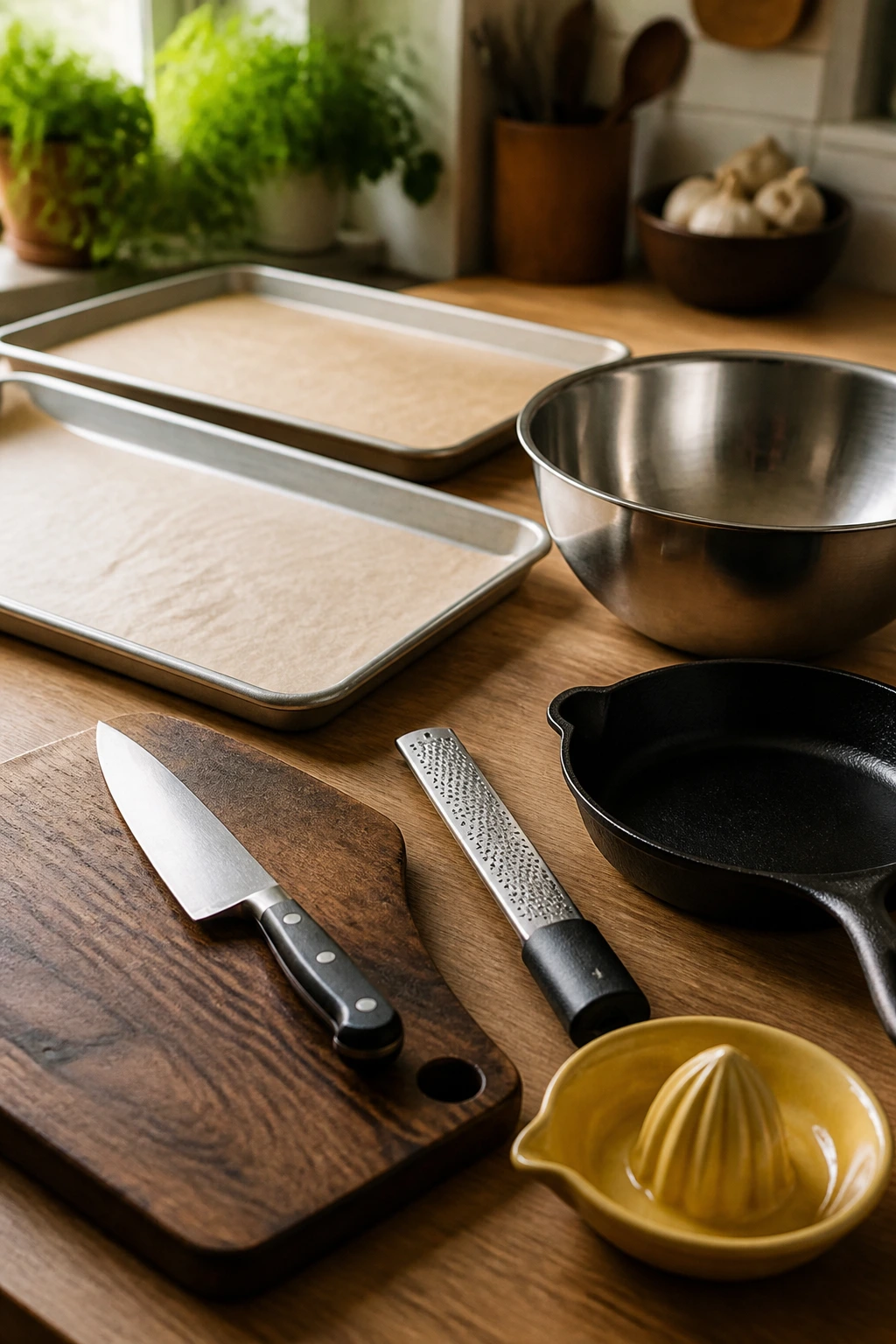
- 2 rimmed sheet pans — Use two if your vegetables crowd a single pan; space is what gives you browning.
- Parchment paper — It keeps the vegetables from sticking and makes cleanup fast.
- Large mixing bowl — Big enough to toss the vegetables without knocking half of them onto the counter.
- Chef’s knife — A sharp blade matters here because clean cuts roast more evenly.
- Cutting board — A sturdy one keeps the vegetable prep from turning slippery and irritating.
- Small skillet or saucepan — Optional, but helpful if you want to warm the garlic oil separately and control the garlic more closely.
- Microplane or fine grater — Best for lemon zest and, if you like, a tiny bit of Parmesan over the finished pan.
- Citrus juicer or fork — Not essential, but it keeps the lemon seeds out of your dinner.
How to Roast the Medley Without Turning It Soft
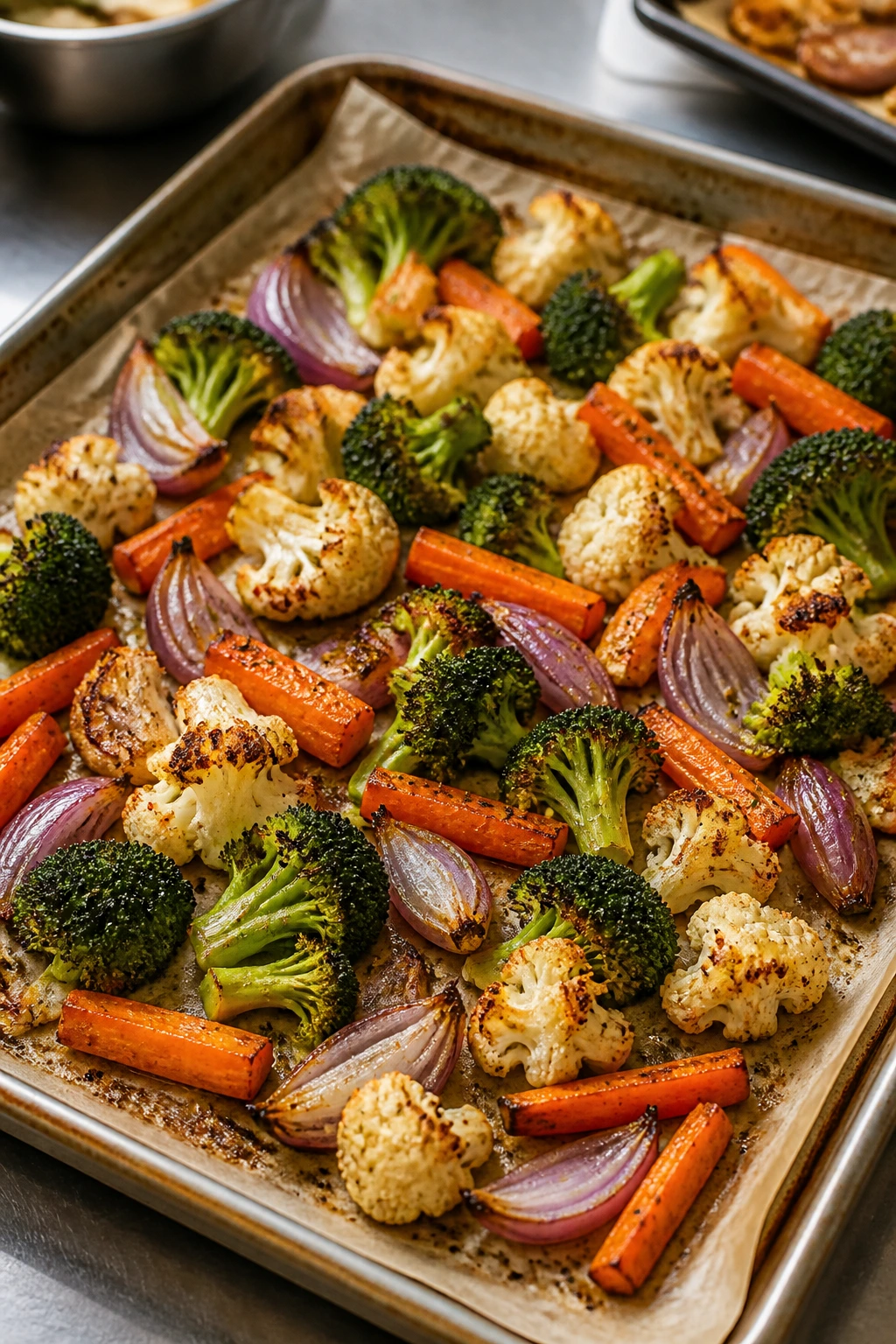
Prepare the Pan and Preheat:
-
Preheat the oven to 425°F (220°C) and position a rack in the center. Line one large or two medium rimmed sheet pans with parchment paper.
-
Cut all the vegetables to the sizes listed in the ingredients. If the broccoli florets are much smaller than the cauliflower pieces, the broccoli will overcook before the rest of the pan is ready. Dry the vegetables well after washing them; water on the surface creates steam and ruins browning.
Start the Sturdy Vegetables First:
-
In a large bowl, toss the broccoli, cauliflower, carrots, and red onion with 3 tablespoons olive oil, 1 teaspoon kosher salt, ½ teaspoon black pepper, and the Italian seasoning. Spread them in a single layer on the prepared pan or pans. Do not pile them up; if the vegetables overlap heavily, they steam instead of roast.
-
Roast for 12 minutes, then remove the pan and stir the vegetables with a spatula. You should see the first browned spots on the broccoli and a little color on the carrots.
Add the Quicker Vegetables:
- Toss the bell pepper, zucchini, mushrooms, and cherry tomatoes with the remaining 2 tablespoons olive oil and a pinch of salt. Add them to the pan, then roast for 10 to 12 minutes more until the zucchini is tender at the edges, the mushrooms have shrunk and darkened, and the tomatoes have blistered.
Build the Garlic Finish:
-
While the vegetables roast, warm the remaining 5 cloves minced garlic in a small skillet with 1 tablespoon of olive oil over low heat for about 45 to 60 seconds, stirring constantly. The garlic should smell sweet and fragrant, not tan. If it starts to brown, pull it off the heat immediately.
-
Remove the skillet from the heat and stir in the lemon juice, lemon zest, and chopped parsley. If you’re using Parmesan, you can add a little here or save it for the finished dish.
Finish and Serve:
-
Transfer the roasted vegetables to a serving platter or back into the mixing bowl. Drizzle the garlic-lemon mixture over the top and toss gently until the vegetables look glossy. Taste and add a final pinch of salt if needed. Top with Parmesan, nutritional yeast, or toasted seeds if you want extra texture.
-
Serve immediately. If the vegetables sit too long on the hot pan, the broccoli loses its edge and the zucchini softens more than it should.
How to Serve It So the Plate Feels Finished
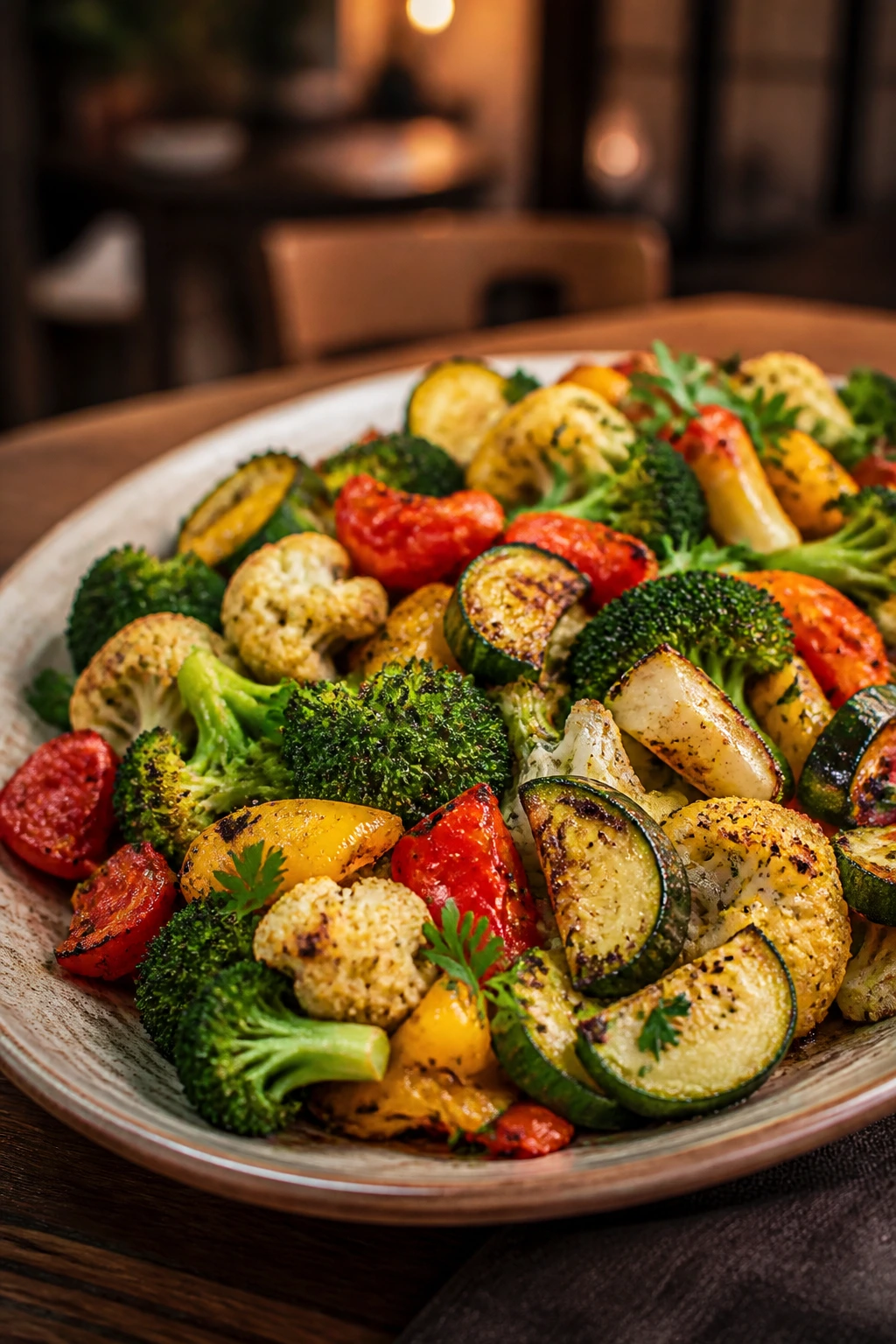
Presentation: Spoon the vegetables onto a warm platter instead of serving them straight from the sheet pan. The browned broccoli and blistered tomatoes look better when they’re not crushed against parchment, and a few extra parsley leaves on top make the whole thing feel fresh.
Accompaniments: For a light dinner, pile the medley over quinoa, farro, couscous, or brown rice. If you want it beside something else, it sits nicely with grilled salmon, roast chicken, seared tofu, fried eggs, or a thick slice of sourdough. A bowl of plain yogurt with lemon and herbs also works as a cooling side.
Portions: As a side dish, plan on about 1 to 1½ cups per person. As a main, you’ll want closer to 2 to 2½ cups per person, especially if you add grains or a protein. If you’re cooking for people with large appetites, double the batch and use two sheet pans so you don’t lose the roasted texture.
Beverage Pairing: A crisp sparkling water with lemon keeps the plate light. If you want wine, a dry Sauvignon Blanc or Pinot Grigio fits the lemon and garlic without bulldozing the vegetables.
Small Adjustments That Push the Flavor Further
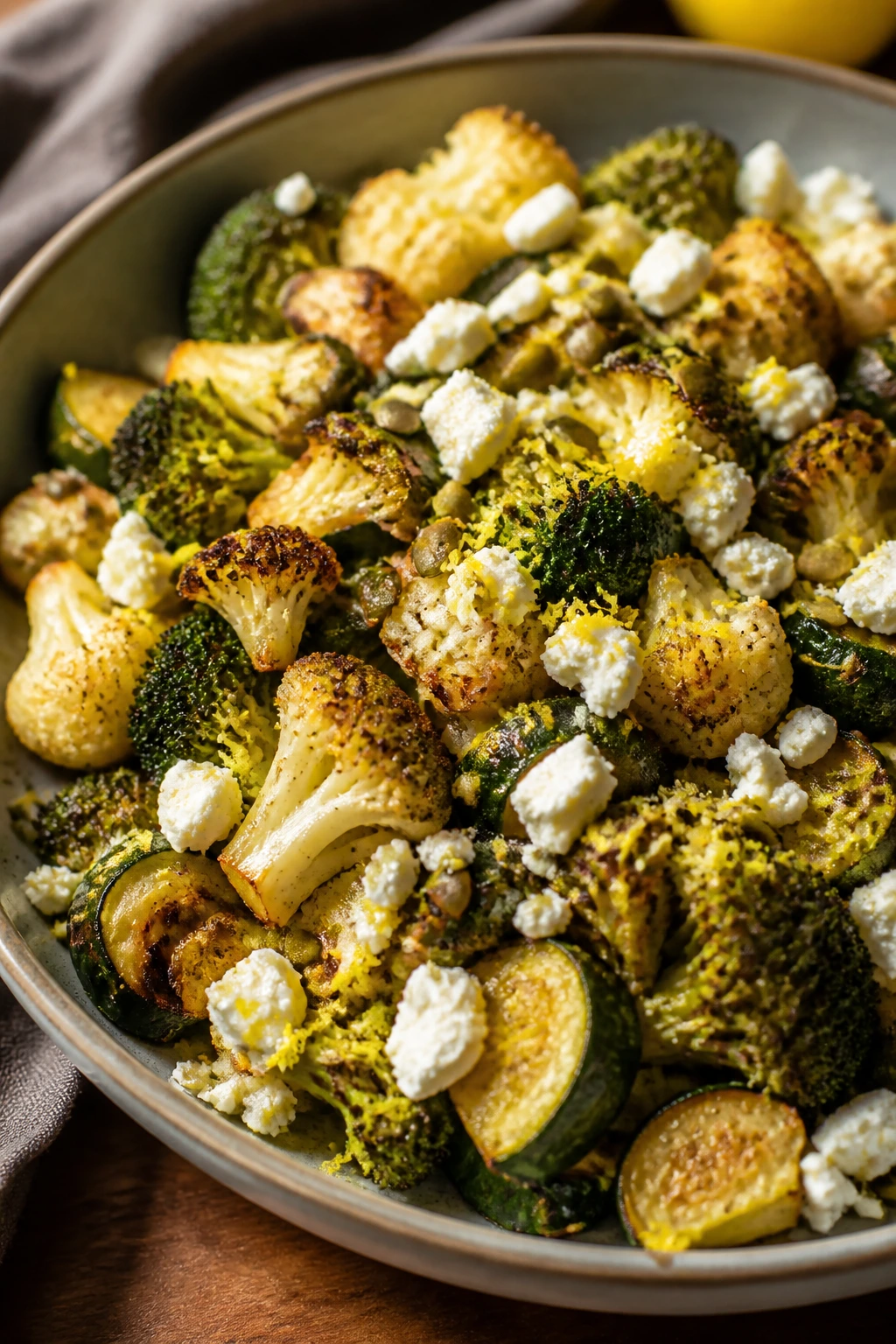
Flavor Enhancement: A tiny spoonful of Dijon whisked into the lemon juice gives the finish more grip. It sounds odd until you taste how the mustard helps the garlic oil cling to the vegetables instead of slipping off the pan.
Time-Saver: If you buy pre-cut broccoli and cauliflower florets, dry them thoroughly before seasoning. Wet packaged vegetables often carry extra moisture, and that can turn a good roast into a sad steam bath.
Texture Upgrade: Toasted pumpkin seeds, almonds, or sunflower seeds change the dish fast. A tablespoon or two scattered over the top gives you crunch in every bite, which makes a vegetable dinner feel more composed.
Make-It-Yours: For a richer plate, crumble feta over the vegetables instead of Parmesan. For a vegan version with more savory depth, add a teaspoon of nutritional yeast and a pinch more salt. If you like heat, finish with chili flakes or a small spoonful of chili crisp on the side.
Common Mistakes That Leave Vegetables Limp or Bitter
-
Crowding the pan. If the vegetables touch in a thick layer, the moisture has nowhere to go, and they steam instead of browning. Use two sheet pans if needed; the extra pan is worth it.
-
Adding the garlic too early. Garlic that goes into the oven from the start can brown too fast and turn bitter. Warm it gently in oil and toss it on after roasting, or add it only in the final few minutes if you insist on using the oven.
-
Cutting everything the same size. Zucchini cut too thin turns mushy before the carrots are tender. Keep the quick vegetables thicker and the dense ones smaller only where needed.
-
Skipping the acid finish. Without lemon, the vegetables can taste heavy, even when they’re perfectly cooked. A squeeze at the end sharpens the sweetness and makes the whole dish feel brighter.
-
Leaving the vegetables wet after washing. Water on the surface steals browning and gives you pale edges. A clean kitchen towel or a salad spinner solves this in a minute.
-
Over-roasting the tomatoes. Cherry tomatoes should blister and slump, not collapse into leather. Add them late and pull the pan as soon as their skins split.
Variations for Different Tastes and Diets
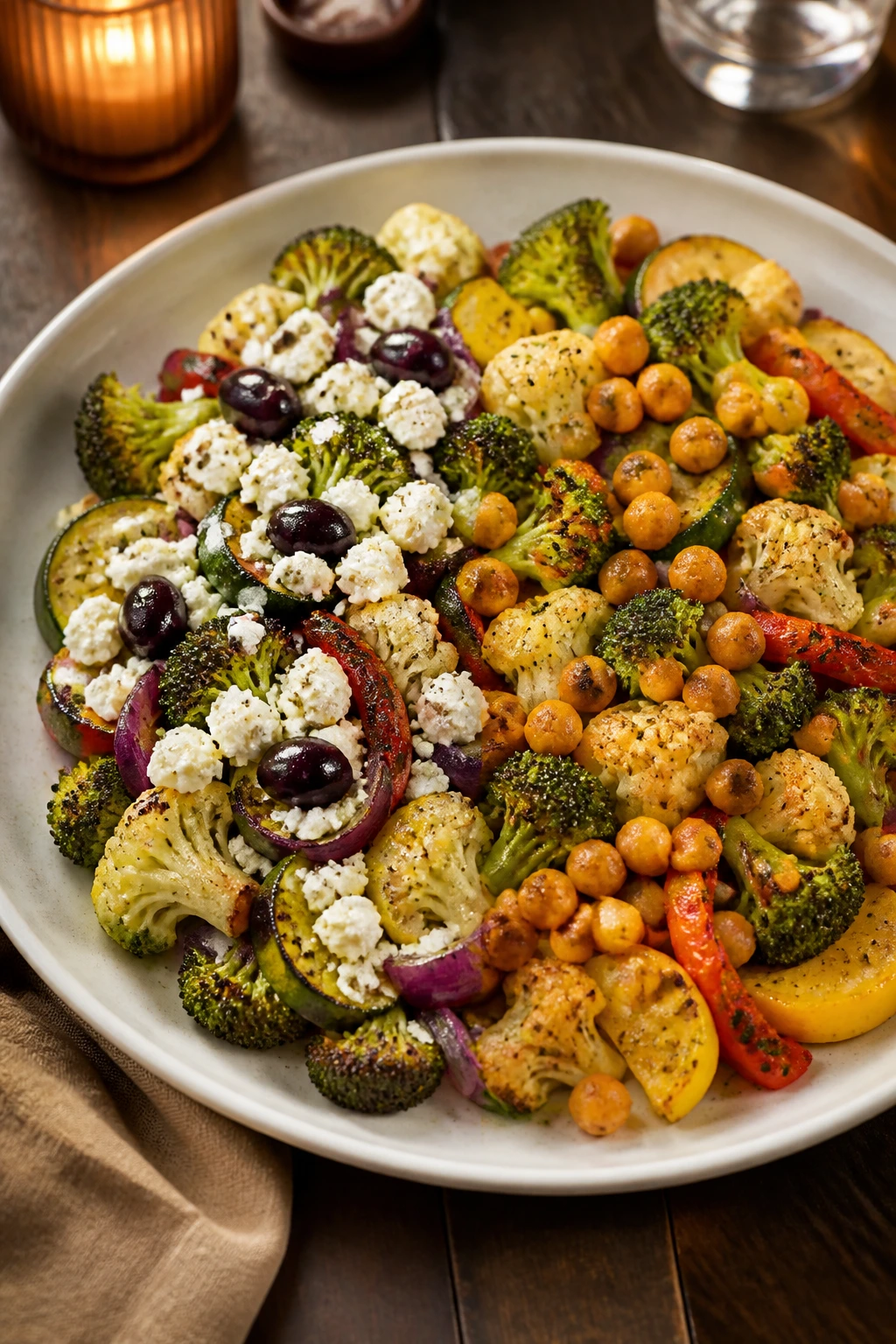
Mediterranean Lemon-Feta Pan: Add ¼ cup crumbled feta and a handful of pitted Kalamata olives after roasting. The salty brine plays well with the garlic and lemon, and the olives make the dish feel more like a dinner bowl than a side.
Chickpea Dinner Bowl: Toss 1 can chickpeas, rinsed and well dried, with the sturdy vegetables during the first roast. The chickpeas pick up browning on the outside and give the medley enough heft to stand on its own over greens or grains.
Smoky Pantry Version: Add 1 teaspoon smoked paprika to the initial seasoning mix and finish with chopped parsley and a squeeze of lime instead of lemon. The paprika gives the vegetables a deeper, almost grill-like note without requiring any special equipment.
Parmesan Herb Roast: Skip the seeds and use 2 to 3 tablespoons finely grated Parmesan over the vegetables while they’re still hot. If you also add a little chopped basil or oregano at the end, the dish leans more Italian and less purely lemon-garlic.
Chili Crisp Shortcut: Drizzle 1 to 2 teaspoons chili crisp over the finished vegetables instead of red pepper flakes. It adds heat, garlic, and a little crunch in one move, which is useful when you want the dinner to feel less plain without changing the core recipe.
Make-Ahead, Storage, and Reheating
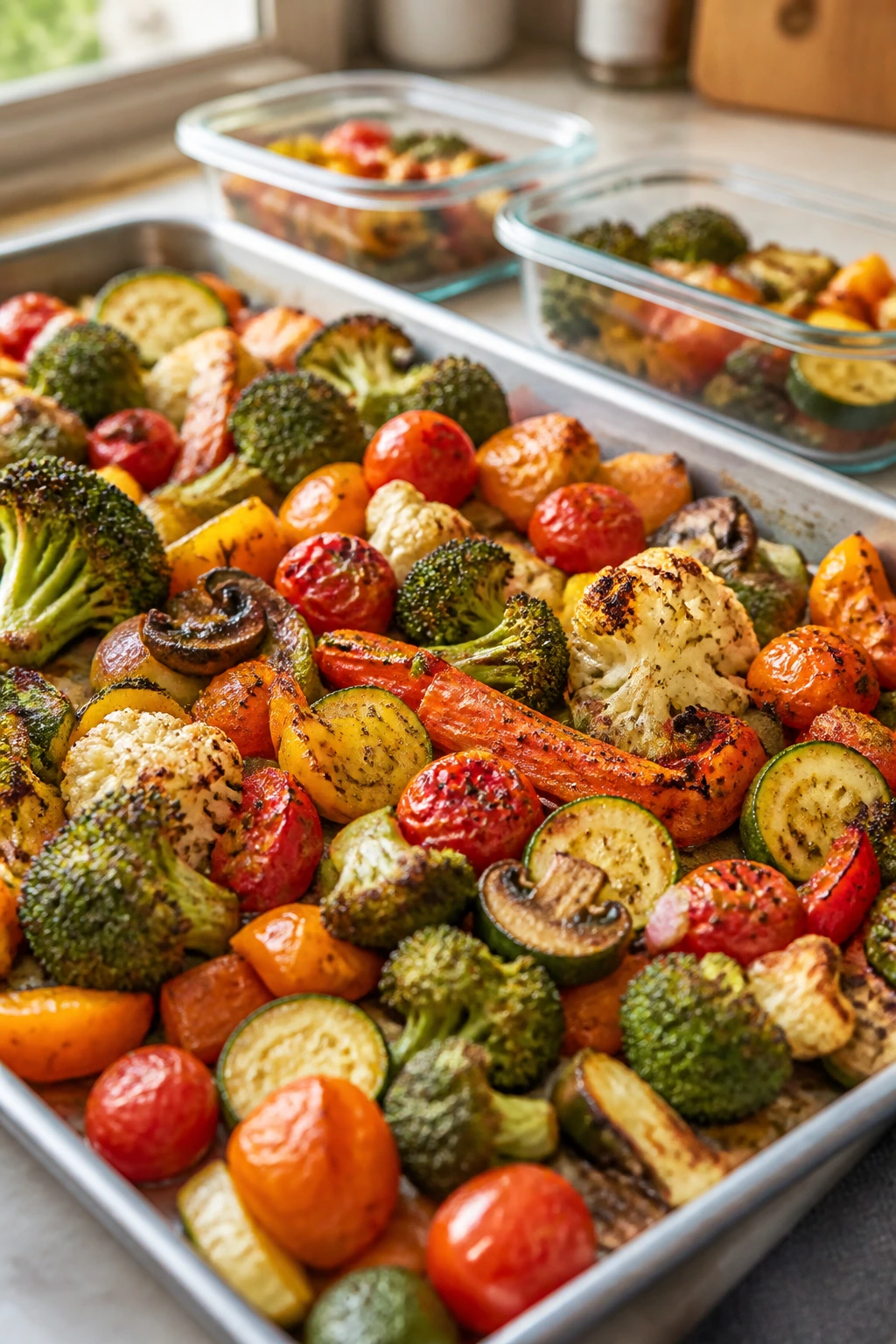
Roasted vegetables keep well, but they do not keep their original texture forever. That’s fine. They’re still useful. Store leftovers in an airtight container once they’ve cooled to room temperature, but don’t let them sit out longer than 2 hours. In the refrigerator, they’ll hold for 3 to 4 days.
Freezing is possible for this dish, though the zucchini and tomatoes soften once thawed. If you want to freeze it, spread the cooled vegetables on a tray first, freeze until firm, then move them into freezer bags or containers. They’ll keep for up to 2 months. The broccoli, cauliflower, and carrots survive this better than the softer vegetables.
For reheating, a sheet pan in a 400°F (205°C) oven is the best move. Spread the vegetables out and heat them for 8 to 10 minutes until the edges recover some of their texture. A skillet over medium heat works too; add a teaspoon of olive oil and stir for 4 to 6 minutes until warmed through. The microwave is the fastest option, but it softens the vegetables, so use 45-second bursts and stop as soon as they’re hot.
If you want to make part of the recipe ahead, chop the broccoli, cauliflower, carrots, onion, pepper, and mushrooms a day early and store them in separate containers or one large container lined with a paper towel. Keep the zucchini and tomatoes separate until cooking day. Make the garlic-lemon finish fresh, or if you cook the garlic oil ahead, refrigerate it and use it within 3 days.
Questions People Ask Before They Cook It
Can I use frozen vegetables instead of fresh?
Yes, but choose the right ones. Frozen broccoli, cauliflower, or green beans can work if you thaw them and pat them dry first. Frozen zucchini and tomatoes are much harder to rescue because they turn watery and soft.
How do I keep the zucchini from getting mushy?
Cut it into thicker half-moons and add it late, with the quicker vegetables. If your zucchini is oversized and seedy, scoop out some of the center before slicing; that watery core is usually the troublemaker.
Can I make this on the stovetop?
You can, as long as you use a wide skillet and cook in batches. Start with carrots, broccoli, cauliflower, and onion, then add the softer vegetables once the first group has taken on color. Finish with the garlic oil and lemon off the heat.
What if I want this to be a full meal instead of a side?
Add chickpeas, serve it over quinoa or farro, or top the whole thing with a fried egg. A little protein changes the shape of the dinner without changing the flavor much.
Do I need Parmesan?
No. Parmesan adds salt and a little savory depth, but nutritional yeast or toasted seeds work well too. If you skip all of them, taste the vegetables at the end and add an extra pinch of salt.
Can I prep the vegetables earlier in the day?
Yes, and it helps on a busy night. Cut the sturdier vegetables ahead of time, keep the wetter ones separate, and wait to make the garlic-lemon finish until you’re ready to roast.
What do I do if the garlic starts to burn?
Take the skillet off the heat right away and don’t try to save it by adding lemon or more oil. Burnt garlic tastes bitter in a way that spreads through the whole dish. If it goes brown, start over with fresh garlic; that’s the honest fix.
A Sheet Pan Worth Repeating
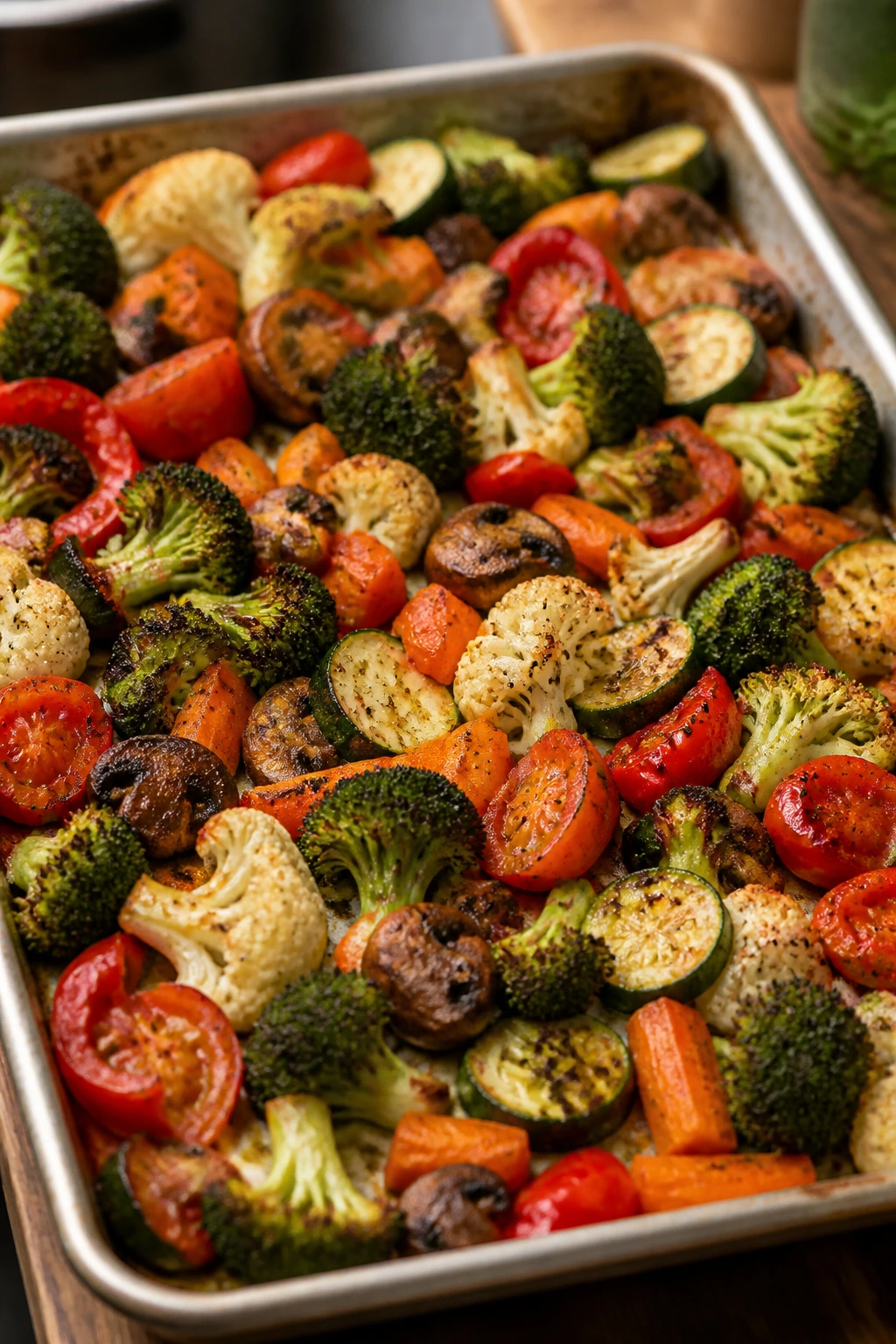
A pan of vegetables can be forgettable if you treat it like filler. This one isn’t filler. It’s the kind of dinner that respects the shape of the ingredients and rewards a little attention with real flavor.
I like recipes like this because they don’t ask for a long grocery list or a complicated sauce. They ask for one good pan, a sharp knife, and the willingness to give each vegetable the time it needs. That’s not fussy. It’s just smart.
The next time the crisper drawer looks like a mixed bag of odds and ends, this is the move.
Garlicky Vegetable Medley — Recipe Card
Recipe Name: Garlicky Vegetable Medley
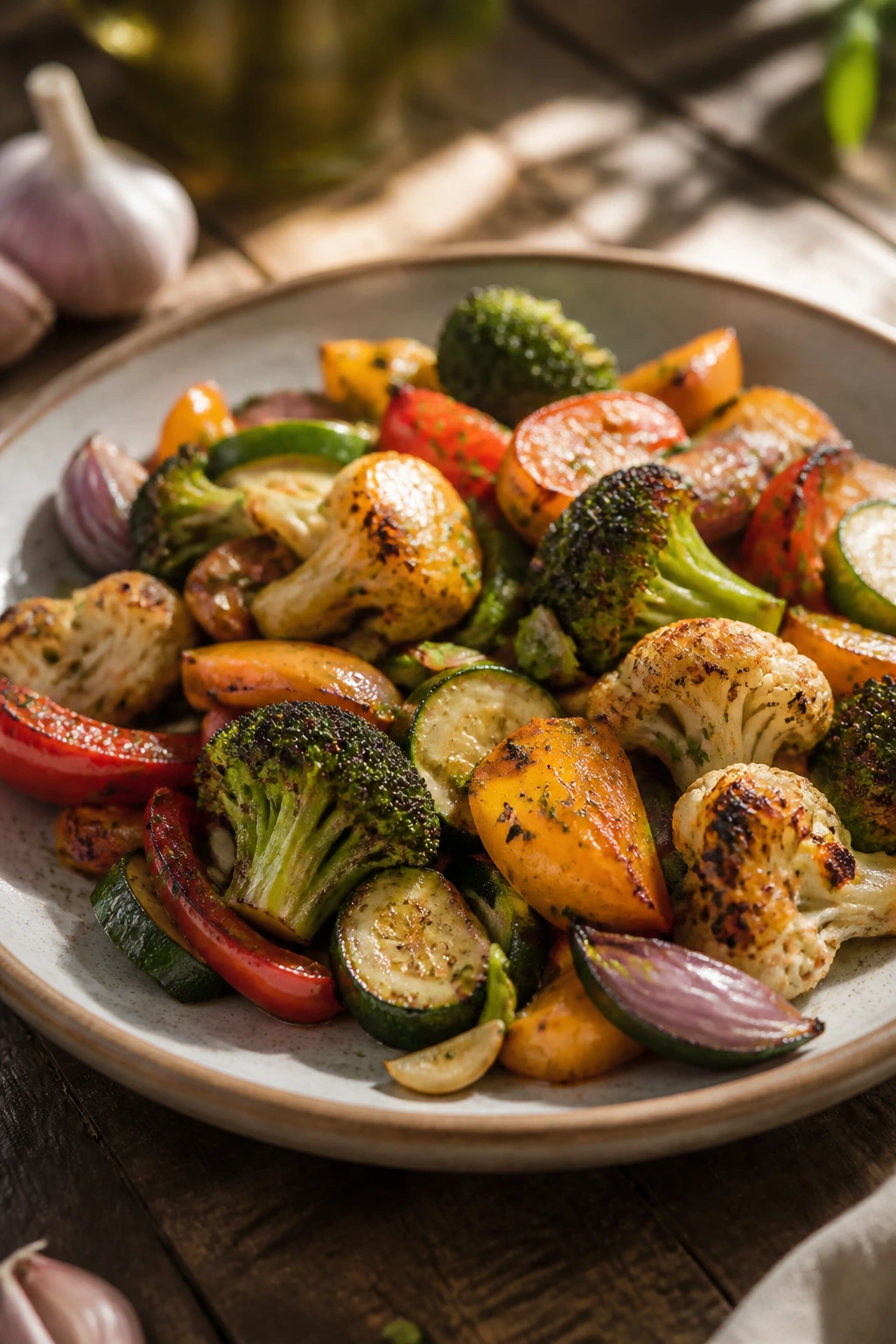
Description: A roasted mix of broccoli, cauliflower, carrots, mushrooms, zucchini, peppers, and tomatoes tossed with a warm garlic-lemon finish. Serve it as a light vegetarian dinner, a hearty side, or a grain bowl base.
Prep Time: 20 minutes
Cook Time: 25 minutes
Total Time: 45 minutes
Course: Side Dish / Light Main
Cuisine: American
Servings: 4 servings as a light main or 6 as a side
Calories: About 190 kcal per serving
Ingredients
For the Roasted Vegetables:
- 1 large head broccoli, about 12 oz, cut into 1½-inch florets
- 1 small head cauliflower, about 1 lb, cut into 1½-inch florets
- 2 medium carrots, peeled and sliced into ¼-inch coins on the bias
- 1 small red onion, cut into 1-inch wedges
- 1 red bell pepper, seeded and sliced into 1-inch strips
- 1 medium zucchini, halved lengthwise and sliced into ½-inch crescents
- 8 oz cremini mushrooms, halved if small or quartered if large
- 1 cup cherry tomatoes
For the Garlic-Lemon Finish:
- 5 tbsp olive oil, divided
- 5 cloves garlic, finely minced
- 1 tsp kosher salt, plus more to taste
- ½ tsp black pepper
- 1 tsp dried Italian seasoning
- ¼ tsp red pepper flakes, optional
- 1 lemon, zested and juiced
- 2 tbsp chopped fresh parsley
Optional Garnish:
- 2 tbsp grated Parmesan cheese or nutritional yeast
- 2 tbsp toasted pumpkin seeds or chopped almonds
Instructions
-
Preheat the oven to 425°F (220°C) and line one large or two medium rimmed sheet pans with parchment paper.
-
Cut the vegetables to size and dry them well after washing.
-
Toss the broccoli, cauliflower, carrots, and red onion with 3 tablespoons olive oil, salt, black pepper, and Italian seasoning. Spread in a single layer and roast for 12 minutes.
-
Toss the bell pepper, zucchini, mushrooms, and cherry tomatoes with the remaining 2 tablespoons olive oil and a pinch of salt, then add them to the pan.
-
Roast for 10 to 12 minutes more, until the vegetables are tender and lightly browned.
-
Warm the minced garlic in 1 tablespoon olive oil over low heat for 45 to 60 seconds until fragrant, then remove from the heat and stir in the lemon juice, lemon zest, and parsley.
-
Transfer the vegetables to a serving platter, drizzle with the garlic-lemon finish, toss gently, and top with Parmesan, nutritional yeast, or toasted seeds if using.
Notes: Use two sheet pans if the vegetables crowd one tray. Add the garlic at the end so it stays sweet. Leftovers keep for 3 to 4 days in the refrigerator.