



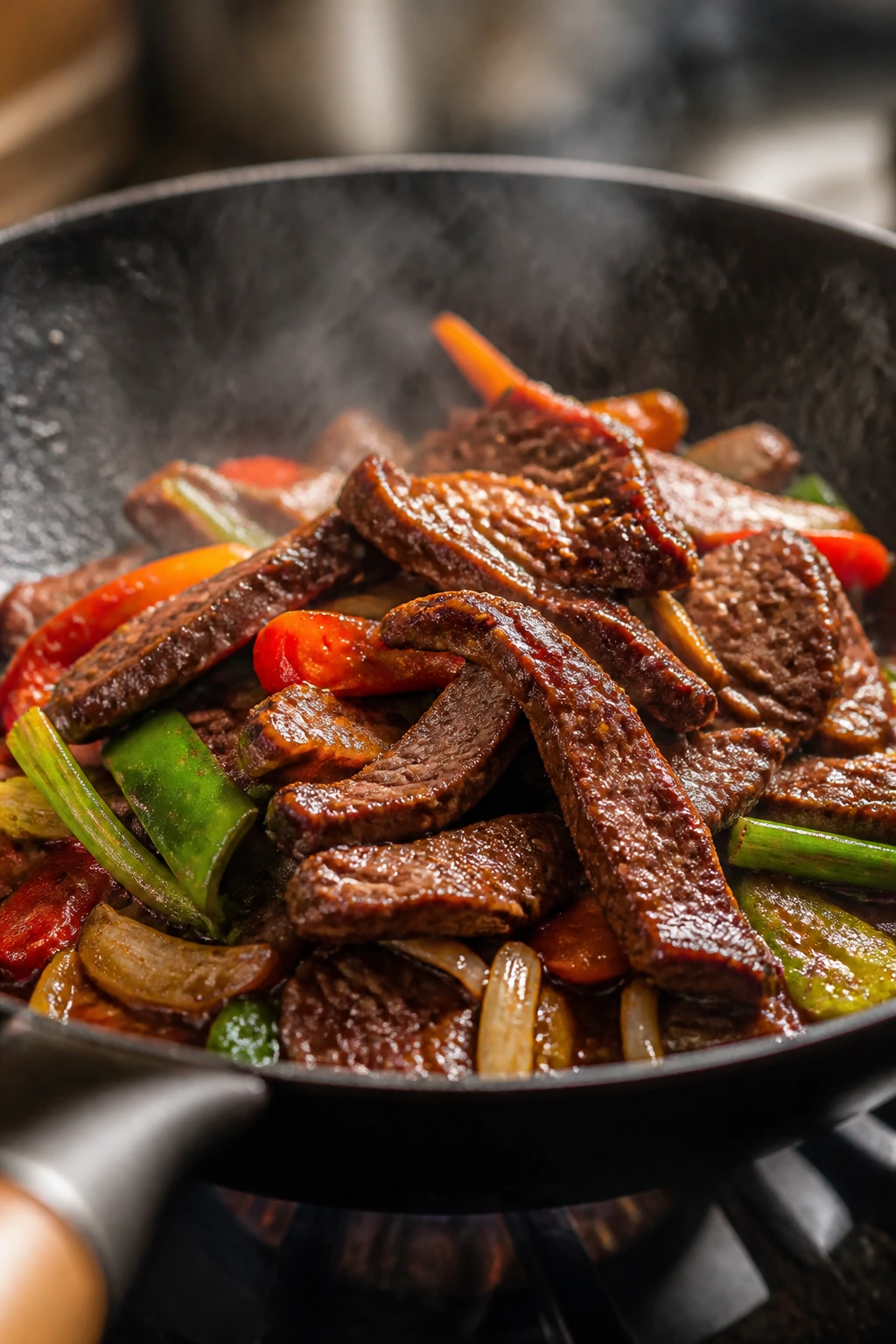
A good beef stir fry should hit the pan with a hiss, not a sigh. If the beef goes in cold, wet, or piled too high, you get gray strips in a sad puddle. If it goes in dry, thin, and into a properly heated pan, you get something else entirely: crisp-edged slices of beef, bright vegetables, and a glossy sauce that clings instead of pooling at the bottom of the skillet.
That texture shift matters more than most people admit. A lot of beef stir fry recipes taste fine but feel dull, which is usually a heat problem, not a seasoning problem. The meat steams, the vegetables overcook, and the sauce turns everything into one soft color. This version keeps the pan moving and the beef browned. That’s the whole trick, and it’s a good one.
There’s also a particular kind of satisfaction in making a Chinese-inspired beef stir fry at home that actually eats like one. The beef should have little dark edges. The broccoli should still have a bit of bite. The sauce should smell like ginger, garlic, soy, and sesame the second it hits the hot metal. And yes, it should be the kind of dinner that makes a takeout menu feel unnecessary.
Why This Stir Fry Earns a Spot on the Weeknight Lineup
-
Crispy Beef First: The beef gets a light cornstarch coating and a hard sear, which gives you browned edges instead of soft, boiled strips.
-
Fast Cooking, Real Flavor: Once the vegetables are cut, the whole dish comes together in about 15 minutes on the stove, and the flavor still tastes layered because the sauce is built separately.
-
Sauce That Stays Put: A little cornstarch in the sauce gives it that restaurant-style gloss, so it clings to the meat and vegetables instead of sliding to the bottom of the bowl.
-
Flexible Produce: Broccoli, snap peas, carrots, bell pepper, and onion all work here because they can handle high heat without collapsing into mush.
-
Pantry-Forward: Soy sauce, oyster sauce, rice vinegar, sesame oil, and cornstarch do most of the heavy lifting, which means you don’t need a long shopping list.
-
Leftovers Still Taste Good: The beef won’t stay crunchy forever, but the flavors hold up nicely, and the leftovers reheat better than most skillet dinners if you use a hot pan.
Timing and Ingredients at a Glance
Yield: Serves 4
Prep Time: 20 minutes
Cook Time: 15 minutes
Total Time: 35 minutes
Difficulty: Intermediate — the steps are straightforward, but the pan needs to be hot and the timing needs attention.
Best Served: Immediately, while the beef edges are still crisp and the vegetables are bright.
For the Beef
- 1 1/2 lbs flank steak or top sirloin, sliced very thin against the grain
- 2 tablespoons low-sodium soy sauce
- 1 tablespoon Shaoxing wine or dry sherry
- 1 tablespoon cornstarch
- 1 teaspoon neutral oil
For the Stir Fry
- 2 tablespoons neutral oil, divided
- 1 small yellow onion, cut into wedges
- 1 medium carrot, cut into thin diagonal slices
- 2 cups broccoli florets, cut small
- 1 red bell pepper, sliced into 1/2-inch strips
- 1 cup snap peas, strings removed
- 3 cloves garlic, minced
- 1 tablespoon fresh ginger, minced
For the Sauce
- 1/3 cup low-sodium soy sauce
- 2 tablespoons oyster sauce
- 1 cup beef broth or water
- 1 tablespoon rice vinegar
- 1 tablespoon honey or brown sugar
- 1 tablespoon cornstarch
- 1 teaspoon toasted sesame oil
- 1/2 teaspoon crushed red pepper flakes, optional
For Finishing
- 2 scallions, sliced on the bias
- 1 teaspoon toasted sesame seeds, optional
- Cooked jasmine rice, for serving
Why the Classic Stir Fry Formula Works
Stir fry only looks simple from a distance. Up close, it’s a timing puzzle. The beef needs to brown fast enough to pick up flavor, but not so long that it turns tough. The vegetables need enough heat to soften at the edges, but they should still crack a little when you bite them. And the sauce has to arrive at exactly the right moment, when the pan is hot and the starch can thicken in seconds instead of simmering for minutes.
That’s why this style of cooking holds together so well when it’s done right. The beef is sliced thin across the grain, which shortens the muscle fibers and makes each bite feel tender instead of chewy. A little cornstarch on the meat does more than coat it; it helps protect the surface from drying out while also encouraging those browned, crisp bits that taste like you spent more time than you did.
Thin Slices, Fast Heat
The cut matters. Flank steak gives you that clean beef flavor and cooks quickly if you slice it properly. Top sirloin is a little more forgiving and usually easier to work with if your knife skills are average. Either way, the slices should be thin enough that they almost look floppy before they hit the pan. Thick slices are where stir fry starts to fall apart.
Cornstarch, Sauce, and the Slick Finish
Cornstarch shows up twice in this recipe for a reason. A small amount on the beef helps the surface brown and keeps the meat from drying out. A separate spoonful in the sauce gives you that glazed, glossy finish that coats the vegetables instead of soaking them. Skip that step and the dish gets watery fast.
Why the Vegetables Go in Late
Vegetables aren’t decorative here. They’re part of the texture. Onion and carrot can go in first because they need a little more time. Broccoli, bell pepper, and snap peas should stay colorful and firm, so they go in later. If you throw everything in at once, the broccoli turns drab and the snap peas lose their snap. Nobody wants that.
What Each Ingredient Is Doing in the Pan
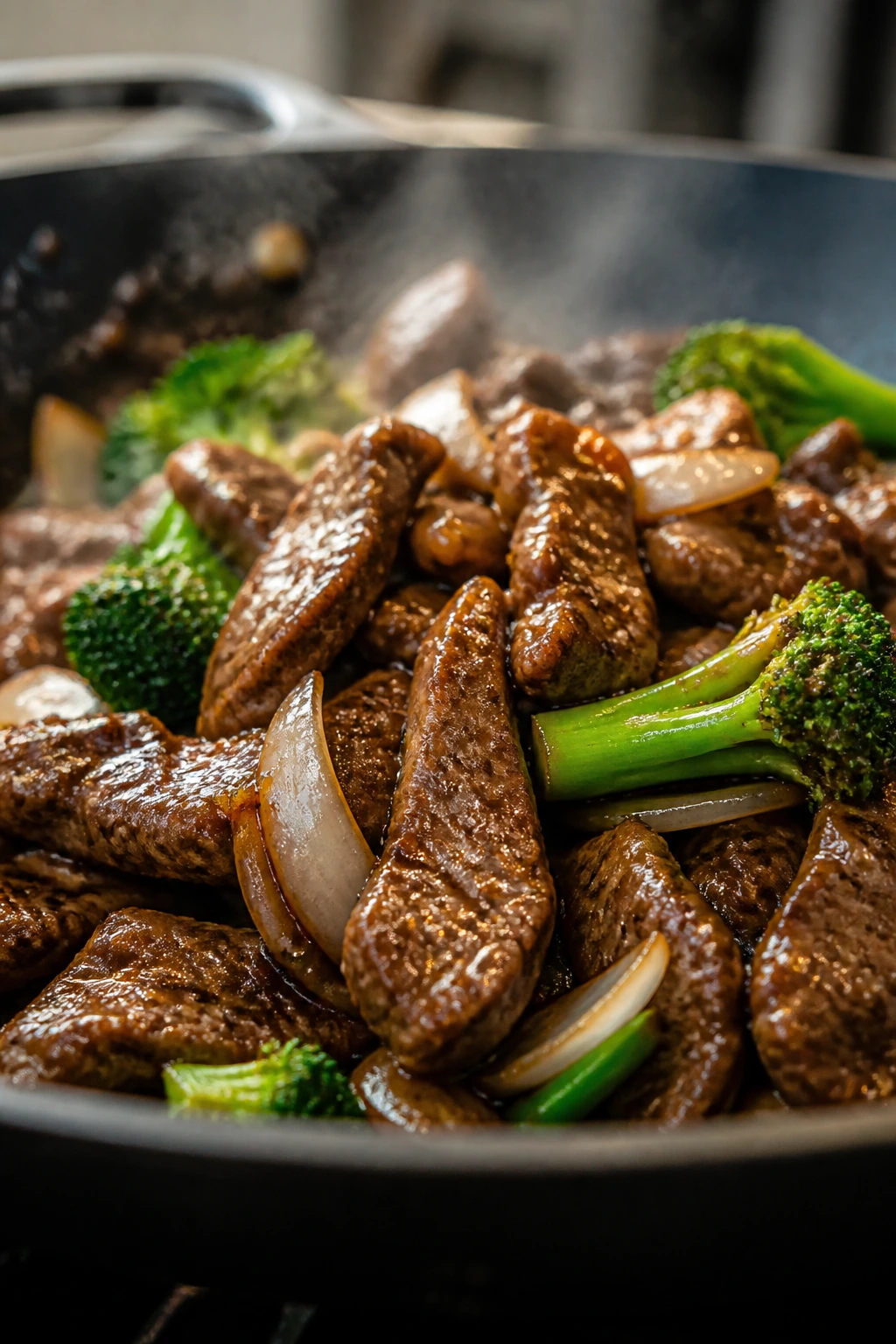
Beef
- What to use: 1 1/2 lbs flank steak or top sirloin, sliced thin against the grain. Flank has a bolder, beefier flavor; sirloin is a little more tender and easier to trim.
- Preparation: Put the steak in the freezer for 15 to 20 minutes first if it’s slippery. That firms it up enough to slice into thin, even strips, about 1/8-inch thick.
- Substitutions: Skirt steak works if you slice it very thin; ribeye tastes richer but is pricier and a little less traditional for a fast stir fry. Chicken thighs can take the same sauce if beef isn’t what you have.
- Tips: Pat the slices dry before tossing them with the marinade. Wet beef steams, and steamed beef is exactly what we’re avoiding.
Vegetables
- What to use: Onion, carrot, broccoli, bell pepper, and snap peas give you a mix of sweet, crisp, and tender. That combination makes the bowl feel balanced without needing a long ingredient list.
- Preparation: Cut the carrot thin and the broccoli small so everything cooks at the same pace. The vegetables should look uniform enough that none of them lag behind in the pan.
- Substitutions: Baby bok choy, mushrooms, asparagus, or green beans all work. Mushrooms need a little extra time to brown, while bok choy cooks fast and should go in near the end.
- Tips: Keep the pieces bite-sized. If the vegetables are too large, the beef overcooks while you wait for the carrots to soften.
Sauce
- What to use: Soy sauce, oyster sauce, beef broth, rice vinegar, honey or brown sugar, cornstarch, toasted sesame oil, and a small pinch of red pepper flakes if you want heat.
- Preparation: Whisk the sauce until the cornstarch disappears completely. Tiny white lumps in the bowl become little gel pockets in the skillet, and that’s not the texture you want.
- Substitutions: Tamari stands in for soy sauce if you need gluten-free; water can replace broth in a pinch; hoisin can help if you’re out of oyster sauce, though it will make the sauce sweeter.
- Tips: Taste the sauce before it hits the pan. Soy brands vary a lot in saltiness, and a tablespoon of water can save a sauce that leans too salty.
Finishing Ingredients
- What to use: Scallions, sesame seeds, and a final drop of sesame oil. That last little drizzle matters because it smells louder when it’s added off heat.
- Preparation: Slice scallions thin on the bias so they don’t clump on top of the dish.
- Substitutions: Cilantro can work if you like a fresher finish, though it pulls the dish away from the classic flavor profile.
- Tips: Add the sesame oil at the end, not in the pan from the start. It’s a finishing oil here, not a cooking oil.
The Tools That Make the Sear Easier
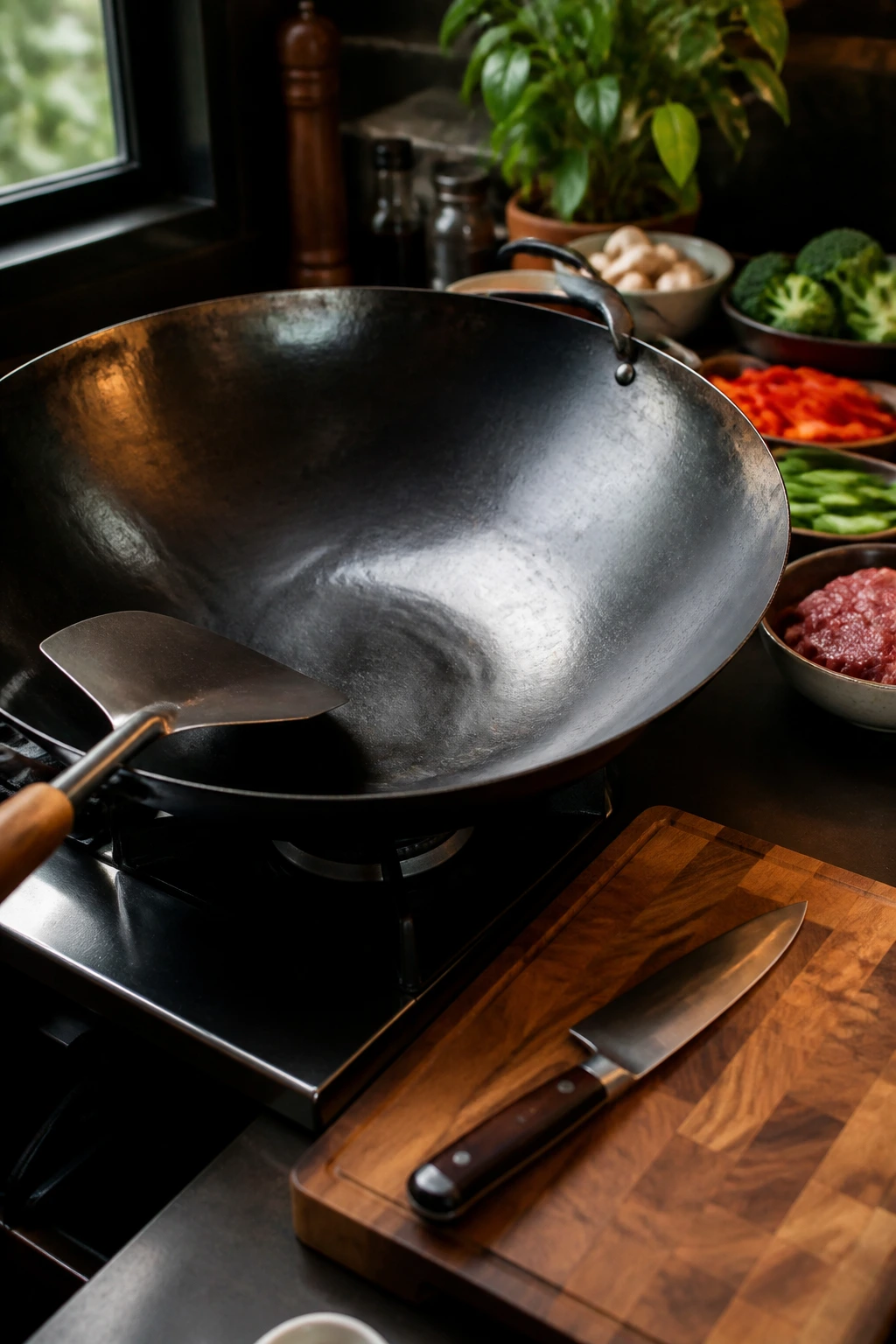
- 14-inch wok or wide 12-inch stainless steel skillet — A wide surface keeps the beef from crowding and helps the pan stay hot.
- Sharp chef’s knife — Thin, even slices start with a clean edge.
- Large cutting board — Give yourself room to separate the beef, vegetables, and aromatics without mixing everything into one heap.
- Medium mixing bowl — Perfect for the beef marinade.
- Small bowl and whisk — A quick way to blend the sauce without lumps.
- Tongs or a wok spatula — Best for flipping beef fast and scraping browned bits off the pan.
- Measuring spoons and cups — The sauce needs enough structure to thicken; freehanding it usually means too much salt or too much liquid.
How to Cook the Beef, Vegetables, and Sauce
Prep the Beef and Sauce
-
Pat the beef dry with paper towels, then slice it very thin against the grain into 2-inch strips. If the steak feels slippery, chill it in the freezer for 15 to 20 minutes before slicing so the knife can cut cleanly.
-
In a medium bowl, combine the sliced beef, 2 tablespoons soy sauce, 1 tablespoon Shaoxing wine, 1 tablespoon cornstarch, and 1 teaspoon neutral oil. Toss until the meat looks lightly coated and tacky. Let it rest for 10 minutes while you prep the vegetables. Do not let it sit for so long that the coating turns gummy.
-
In a small bowl, whisk together 1/3 cup soy sauce, oyster sauce, beef broth, rice vinegar, honey, 1 tablespoon cornstarch, sesame oil, and red pepper flakes if using. Stir until the cornstarch disappears and the liquid looks smooth and glossy. Set it right beside the stove.
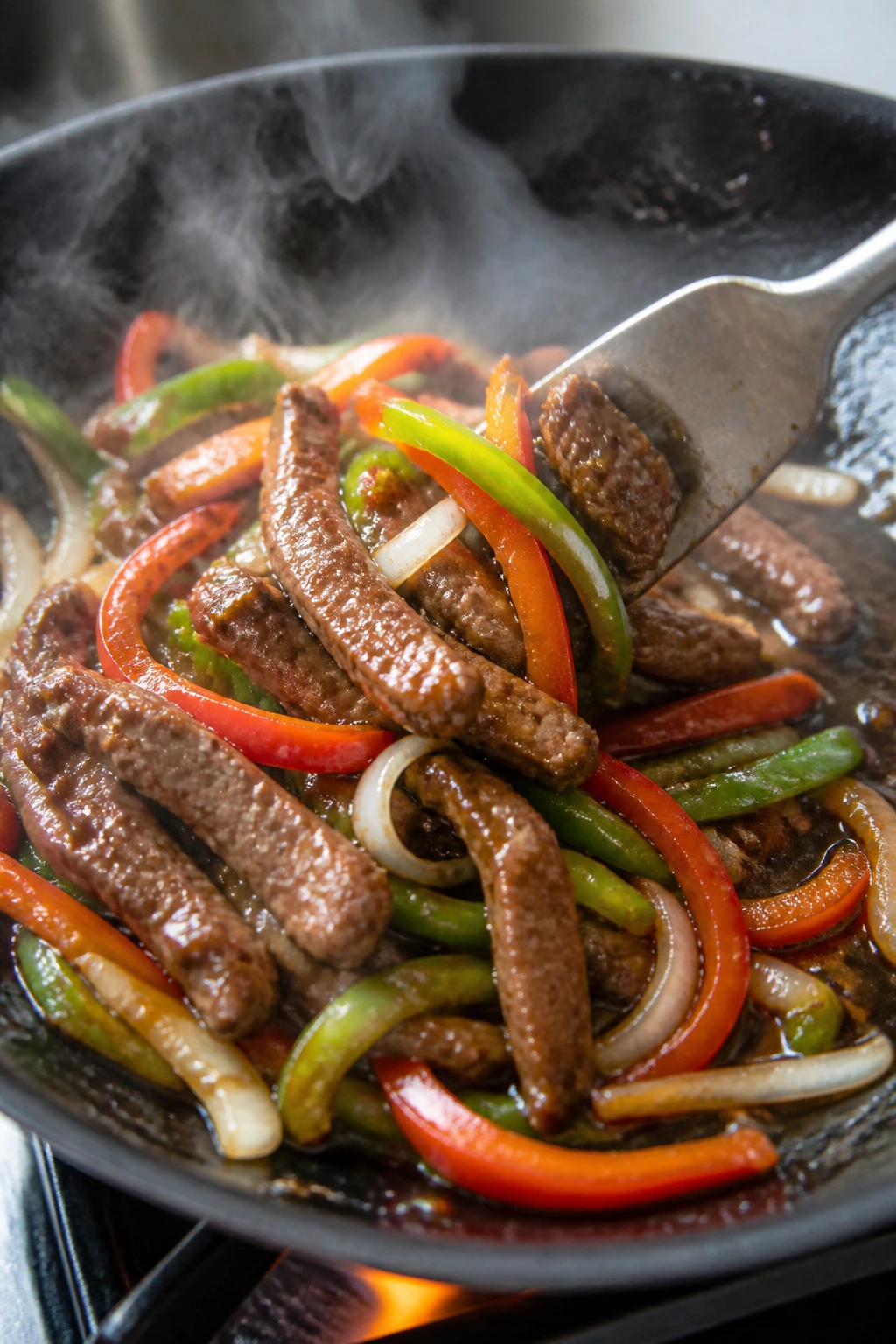
Sear the Beef 4. Heat a wok or large skillet over high heat until it’s very hot, then add 1 tablespoon of neutral oil. Swirl the oil so it coats the bottom, then add half the beef in a single layer. Sear for 60 to 90 seconds on the first side without moving it, then flip and cook for another 30 to 60 seconds until the edges are browned and the beef is just cooked through. Transfer it to a plate. Repeat with the remaining beef and another small splash of oil if the pan looks dry. If you crowd the pan, the meat will steam and lose its crisp edges.
-
Lower the heat to medium-high and add the remaining 1 tablespoon oil. Add the onion and carrot first, then stir-fry for 1 to 2 minutes until the onion starts to soften and the carrot loses its raw edge. Add the broccoli and cook for another 1 to 2 minutes, tossing often so the florets pick up a little color.
-
Add the bell pepper, snap peas, garlic, and ginger. Stir constantly for 30 to 45 seconds, just until the garlic smells fragrant and the vegetables look bright and slightly glossy. You want them crisp-tender, not soft. Garlic burns fast in a hot pan, so keep it moving.
Bring It All Together 7. Return the beef and any juices to the skillet. Pour in the sauce and toss everything together for 30 to 60 seconds, until the sauce bubbles and thickens enough to coat the beef and vegetables in a shiny layer. If it thickens too fast, splash in 1 to 2 tablespoons of water or broth and toss again.
- Turn off the heat. Add the scallions and give the pan one last toss. Taste a piece of beef and one vegetable, then adjust with a tiny splash of soy sauce or vinegar if the balance feels flat. Serve immediately over jasmine rice, and don’t let it sit in the pan where steam can soften the edges.
How to Serve It So the Crisp Bits Stay Crisp
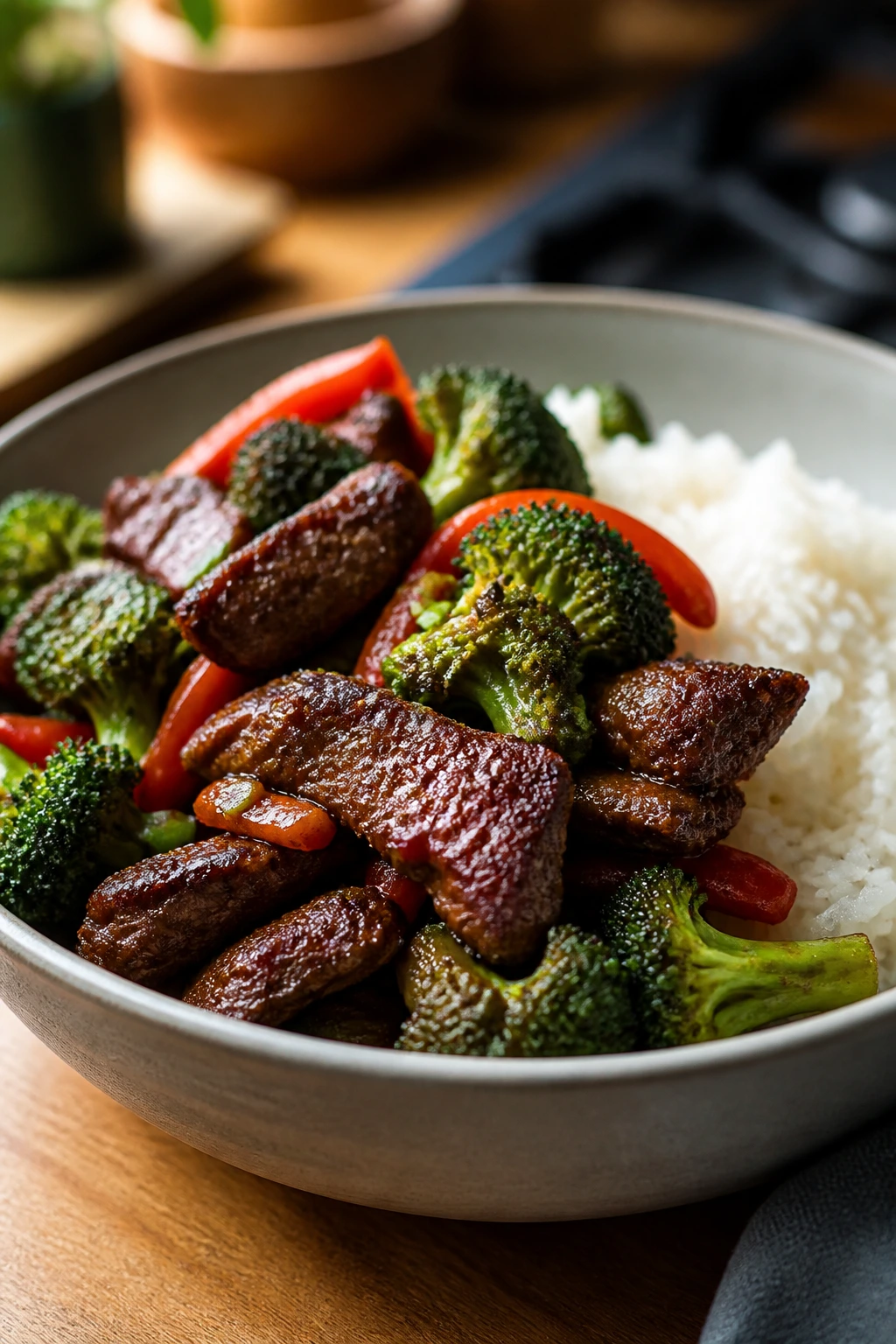
Presentation: Spoon hot jasmine rice into shallow bowls, then pile the beef and vegetables over one side instead of burying them completely. That keeps the broccoli green and the beef edges visible, which matters more than people admit. A scatter of scallions and sesame seeds on top gives the bowl some height.
Accompaniments: Jasmine rice is the cleanest match because it soaks up the sauce without fighting it. Brown rice works if you want a nuttier base, and thin lo mein noodles are a good switch when you want something closer to a noodle bowl. A simple cucumber salad or quick-pickled cucumbers on the side cuts through the savory sauce and keeps the meal from feeling heavy.
Portions: Four servings is the sweet spot here if you’re serving it with rice and nothing else. If you’re feeding bigger appetites or adding noodles, the same skillet can stretch to five or six smaller portions. Just keep the pan hot if you ever scale it up; doubling the ingredients without enough surface area is how crisp beef turns soft.
Beverage Pairing: Unsweetened iced green tea keeps the meal clean and sharp. A dry lager or a light, dry riesling also works well because both can handle the salty-sweet sauce without making the dish feel heavier.
Extra Tips for More Flavor and Better Texture
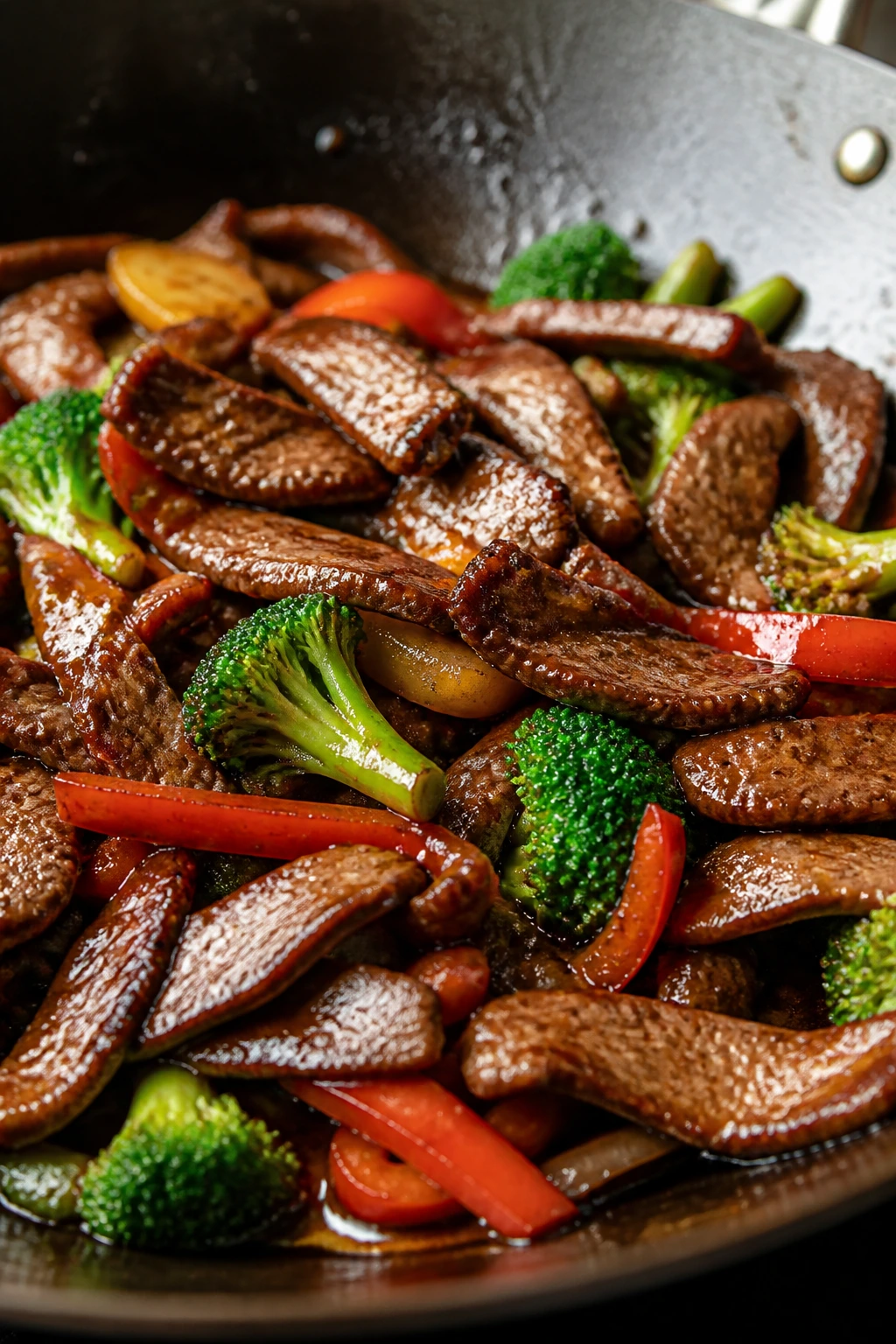
Flavor Enhancement: A teaspoon of chili crisp stirred in at the very end brings heat, crunch, and a little garlic depth without changing the core flavor. If you want more brightness, a small splash of black vinegar after the heat is off wakes up the sauce in a way rice vinegar can’t quite match.
Customization: Swap the bell pepper for sliced mushrooms if you want a meatier, earthier bowl. Baby bok choy is another strong move; just separate the stems from the leaves so the stems go in first and the leaves wilt at the end. Cashews can be tossed in at the table if you want a nutty crunch that sticks around.
Serving Suggestions: Thin-sliced scallions are the obvious finish, but a few sesame seeds and a drizzle of sesame oil make the bowl smell richer the moment it lands on the table. If you like heat, sliced fresh chilies or a spoonful of chili oil on the side lets everyone control their own spice level.
Make-It-Yours: For gluten-free cooking, use tamari and a gluten-free oyster sauce. If you want the dish a little lighter, cut the honey to 2 teaspoons and add an extra tablespoon of water to the sauce so it still moves around the pan. The flavor stays savory, not flat.
Common Mistakes That Make Stir Fry Soft
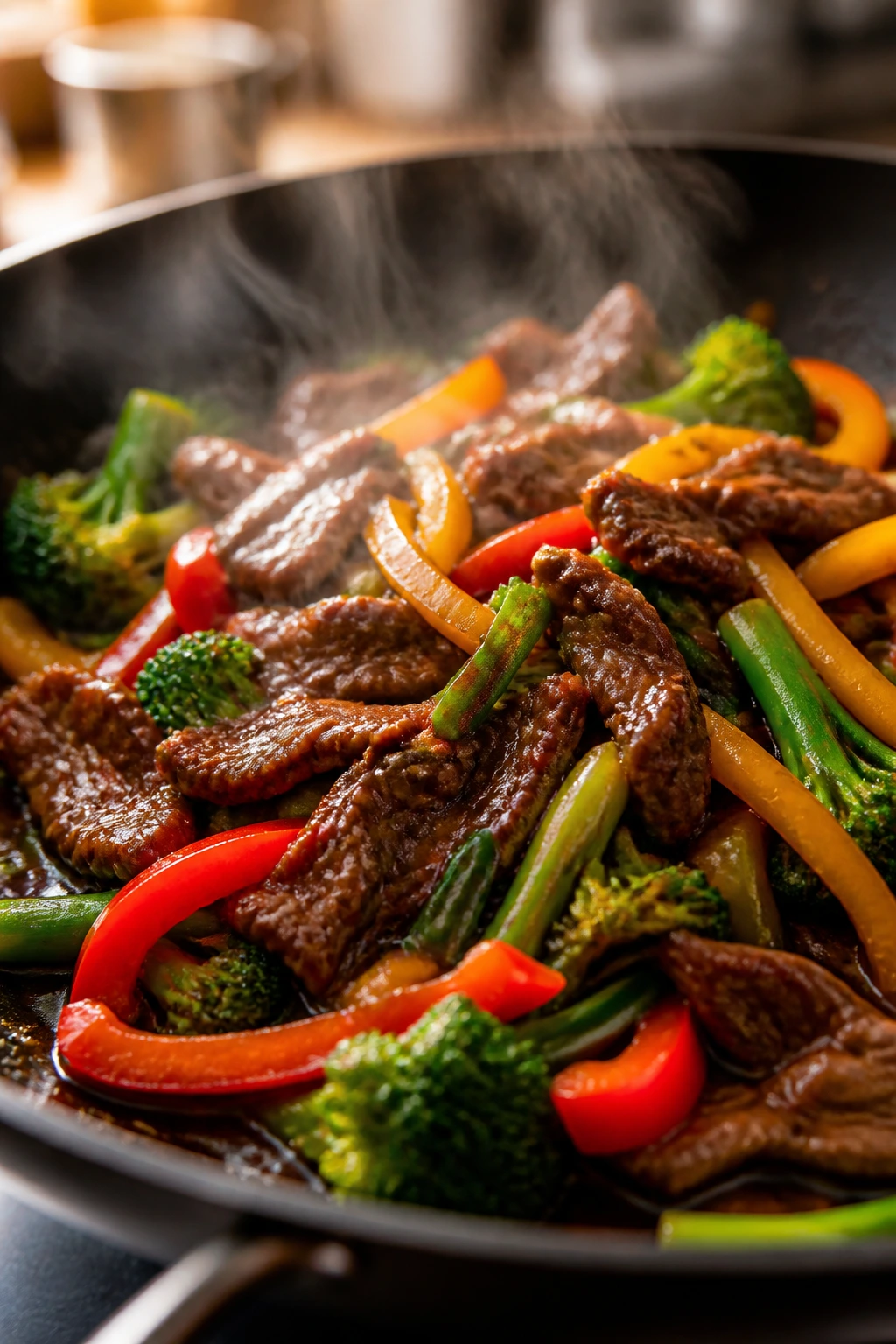
-
Slicing the beef with the grain: The meat gets chewy instead of tender because the long fibers stay intact. Cut across the grain and keep the slices thin enough that they cook in under 2 minutes.
-
Crowding the pan: The beef releases moisture, the moisture traps the heat, and the whole thing steams. Cook in batches, even if it feels annoying, because a crowded pan is the fastest route to gray meat.
-
Adding the sauce too early: If the vegetables haven’t had time to pick up a little color, the sauce softens them before they’re ready. Let the vegetables stay crisp-tender first, then pour in the sauce and finish fast.
-
Using too much cornstarch: A heavy coating turns the beef pasty and the sauce gummy. Stick to the amounts listed, and whisk the sauce until it looks smooth before it hits the pan.
-
Letting garlic burn: Garlic goes from fragrant to bitter in a blink over high heat. Add it late, stir quickly, and move on the second it smells sweet and sharp.
-
Serving it after it sits in the pan: Steam softens the crust on the beef almost immediately. Get the rice ready first, then plate the stir fry the moment the sauce thickens.
Variations That Still Taste Like the Same Dish
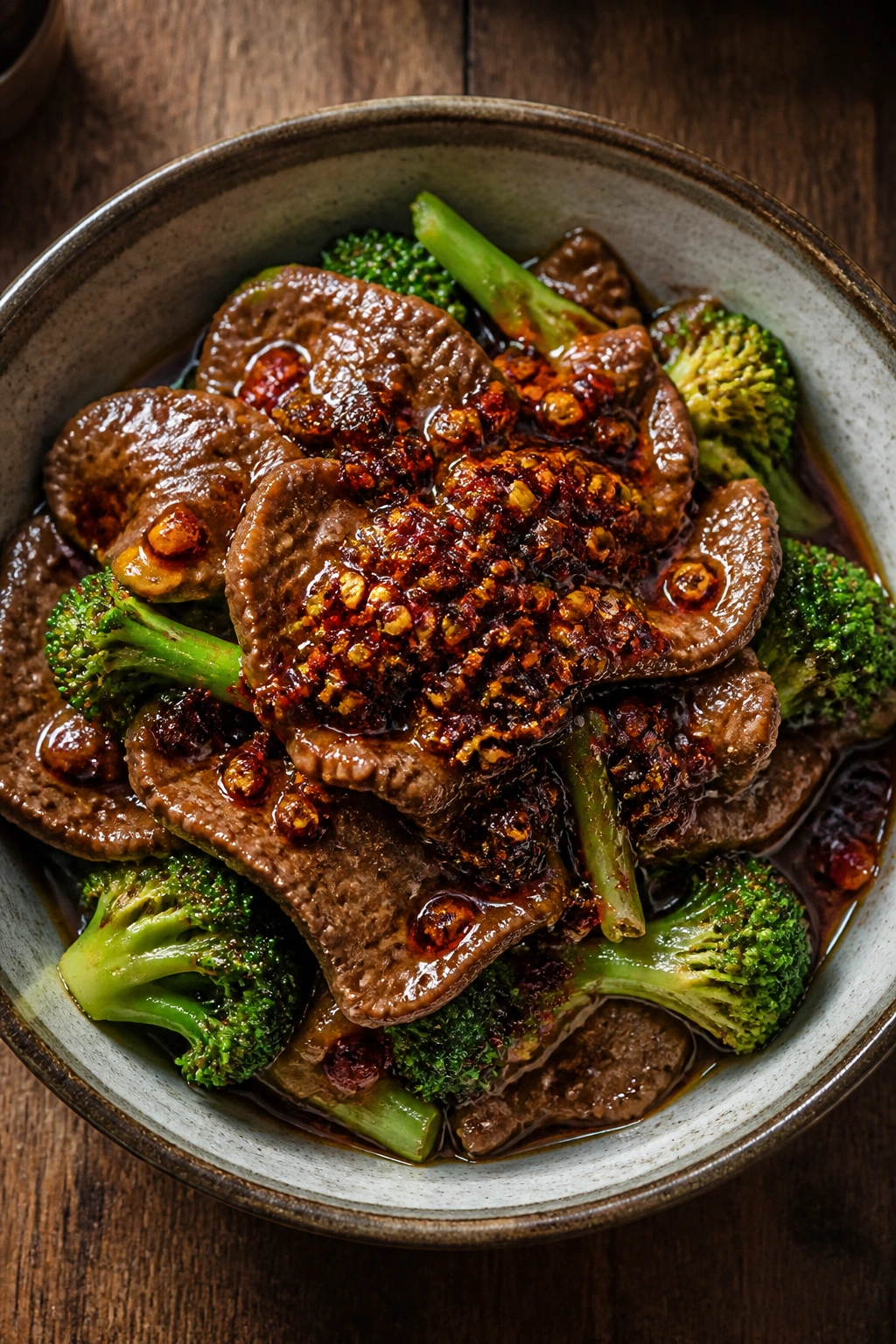
Spicy Chili Crisp Beef
Add 1 to 2 teaspoons of chili crisp to the sauce or finish the dish with a spoonful over the top. The crisp beef can handle the heat, and the crunchy bits in the chili oil add a second texture that feels right at home here.
Broccoli and Mushroom Skillet
Swap half the broccoli for 8 ounces of sliced cremini mushrooms. Brown the mushrooms first, remove them, then add them back with the beef so they don’t dump too much water into the pan.
Orange-Ginger Beef Stir Fry
Replace the rice vinegar with 2 tablespoons fresh orange juice and add 1 teaspoon orange zest to the sauce. The result is brighter and a little sweeter, which works especially well if you’re serving it with plain rice and nothing else.
Gluten-Free Tamari Version
Use tamari instead of soy sauce and choose a gluten-free oyster sauce if you can find one. The rest of the recipe stays the same, and the beef still gets that dark, savory edge.
Chicken Thigh Swap
If beef isn’t on hand, use 1 1/2 lbs boneless, skinless chicken thighs sliced thin. Thigh meat handles the hot pan well and stays juicy, though you’ll want to cook it until the centers are opaque and the edges are lightly browned.
Storing, Reheating, and Making It Ahead
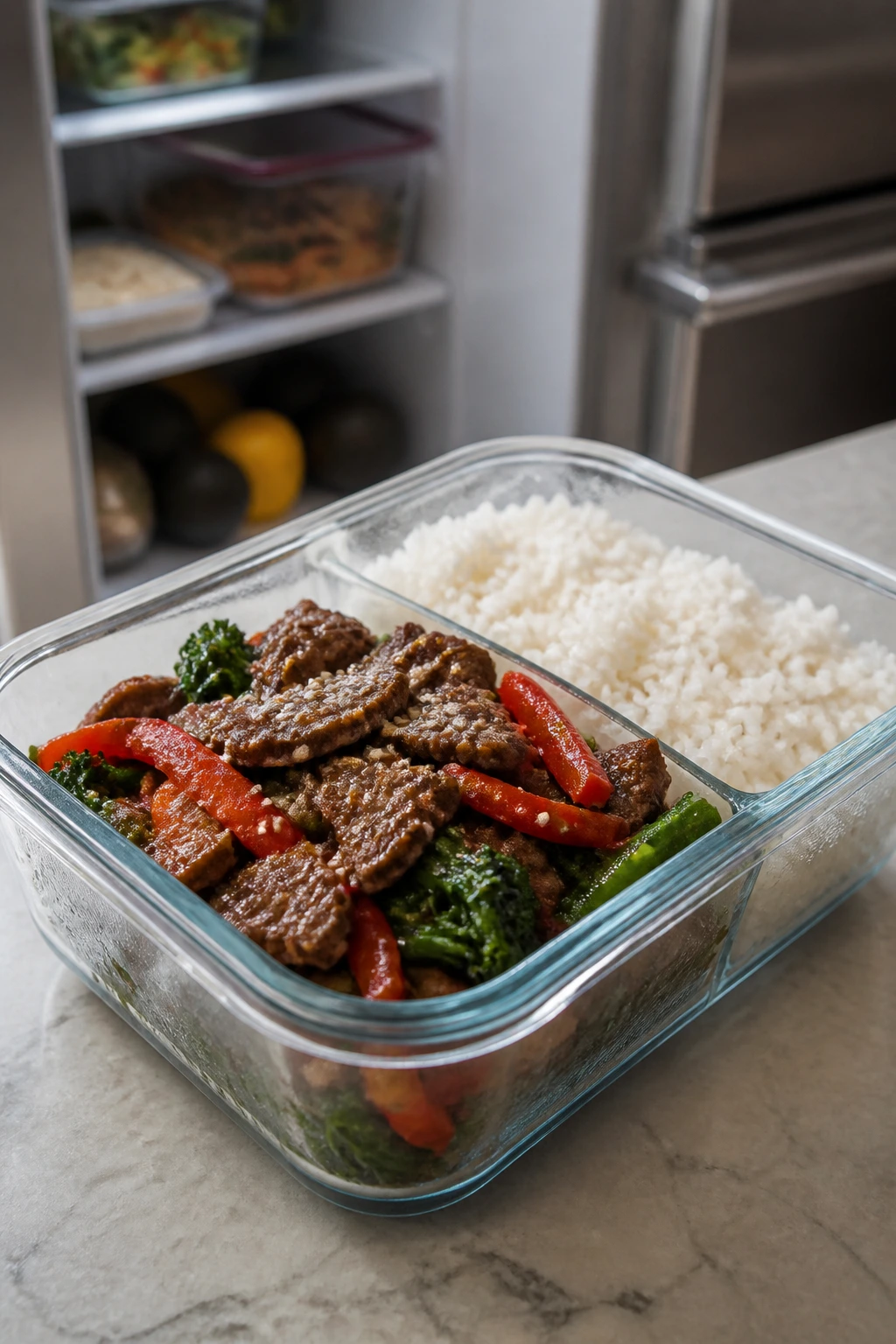
This stir fry keeps for 3 to 4 days in the refrigerator in a tight container. Store the rice separately if you can; rice gets dry in the fridge, while the stir fry itself softens a little but still tastes good. The vegetables will lose some snap by day two, so if crispness matters to you, eat it sooner rather than later.
For the freezer, pack the cooled stir fry in airtight containers or freezer bags for up to 2 months. The beef and sauce freeze better than the vegetables, so expect the broccoli and peppers to come back a little softer after thawing. That’s fine if you’re planning to reheat and eat it over rice, but it won’t taste like a fresh sear.
Reheat it in a skillet over medium-high heat with 1 to 2 tablespoons of water or broth. Cover it for 30 seconds to loosen the sauce, then uncover and toss until the steam cooks off and the beef is hot. The microwave works in a pinch, but it softens the beef faster and gives the vegetables a damp edge.
For make-ahead work, the sauce can be whisked together up to 3 days ahead, and the beef can be sliced and marinated up to 2 hours ahead. I would not marinate the beef overnight with this light coating; the cornstarch changes the texture too much. You can also cut the vegetables a day in advance and keep them in separate containers, lined with paper towels if they’re especially wet.
Frequently Asked Questions
Can I use flank steak, sirloin, or something more expensive?
Flank steak is the most classic choice because it slices nicely and tastes beefy after a quick sear. Top sirloin is easier to handle and a little more tender, while ribeye brings richer flavor but costs more and gives you less of a clean stir-fry bite.
Do I really need a wok?
No. A wide 12-inch stainless steel skillet works well if you heat it properly and cook in batches. A wok is nice because its sloped sides make tossing easier, but a flat skillet can still brown the beef if the surface is wide enough.
How do I keep the beef crisp after I add the sauce?
The short answer: don’t drown it. The sauce should be thick enough to coat, not flood the pan, and it should go in only after the beef is browned and the vegetables are crisp-tender. Serve the dish immediately so the beef doesn’t sit in steam.
Can I use frozen vegetables?
You can, but thaw them first and pat them dry. Frozen vegetables hold extra water, and extra water is the enemy of browning. Broccoli florets and snap peas from the freezer aisle work better than mixed blends with softer vegetables.
What if my sauce tastes too salty?
Add 2 to 4 tablespoons of water and a small splash of rice vinegar to loosen the salt. If it still tastes sharp, a little more broth or a teaspoon of honey can smooth it out without making the dish sugary.
Can I make this ahead for meal prep?
Yes, but keep the cooked components separate if you want the best texture. Store the rice, beef, and vegetables in different containers, then reheat the beef and vegetables in a skillet before combining them. That keeps the beef from going limp in the fridge.
What if my beef came out chewy?
Chewy beef usually means the slices were too thick, cut with the grain, or cooked in a pan that wasn’t hot enough. Next time, slice thinner, cut across the grain, and sear in smaller batches. A hotter pan and shorter cook time solve most of it.
A Hot Pan, a Clean Plate
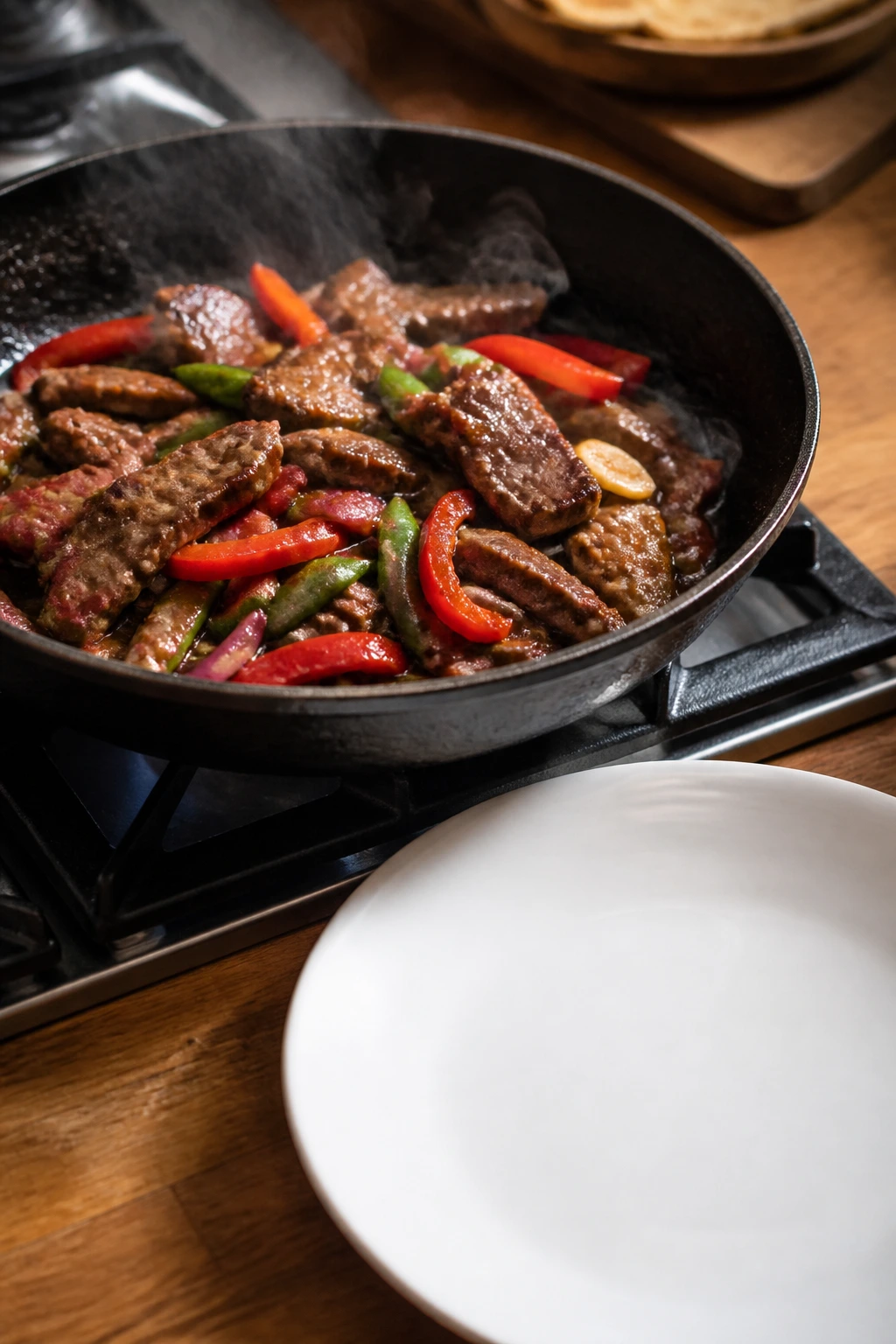
This kind of beef stir fry rewards attention more than effort. You don’t need a long marinade, a pile of ingredients, or a complicated sauce. You need a dry slice of beef, a hot pan, and the patience to let each ingredient do its job before the next one goes in.
That’s why this dish works so well. The beef stays crisp at the edges, the vegetables keep their shape, and the sauce lands glossy instead of soupy. Once you’ve got that rhythm down, the recipe starts feeling less like a weeknight compromise and more like a standard you’ll keep coming back to.
Crispy Easy Beef Stir Fry — Recipe Card
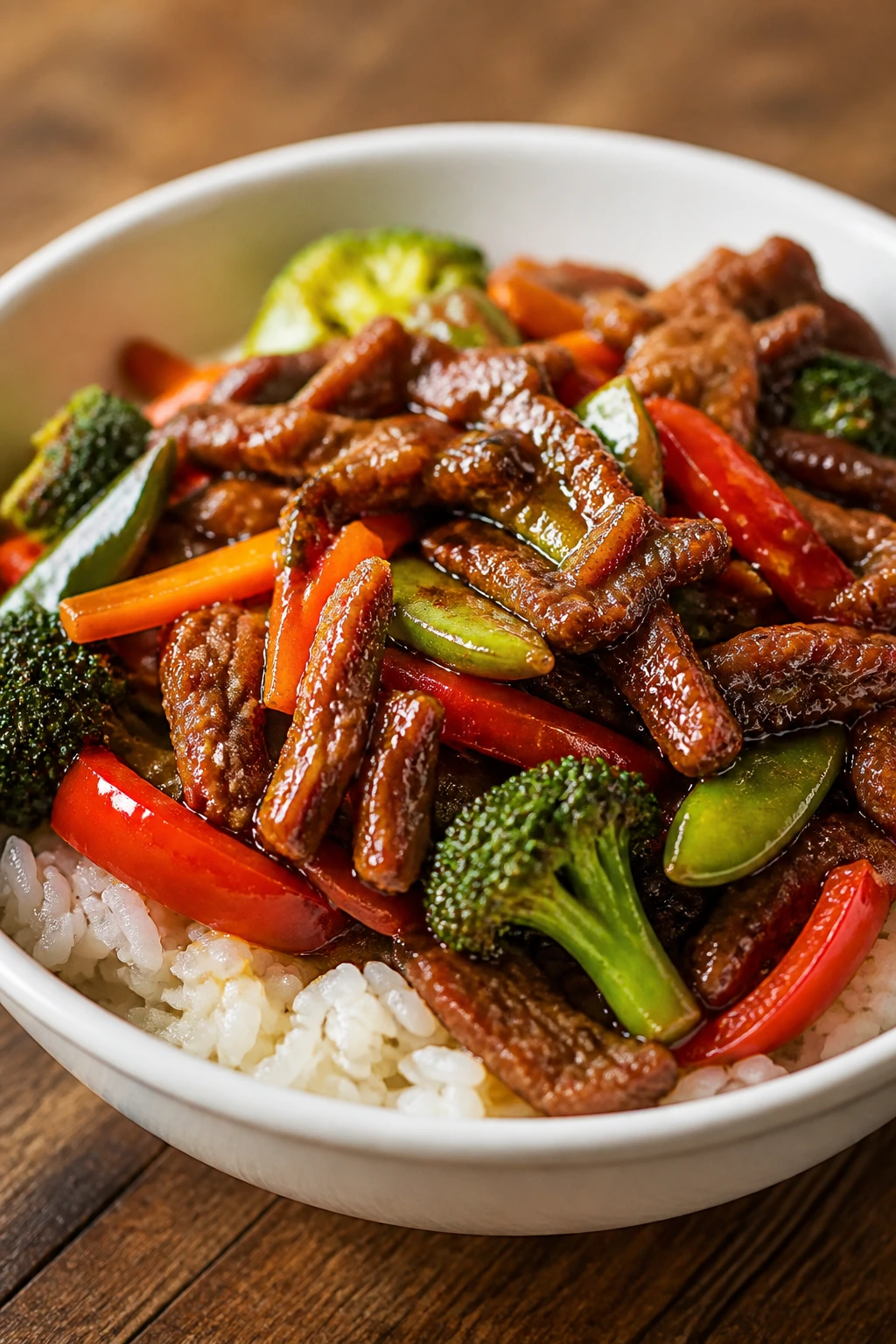
Recipe Name: Crispy Easy Beef Stir Fry
Description: Thin slices of beef are seared until crisp at the edges, then tossed with bright vegetables and a glossy soy-ginger sauce. Serve it over jasmine rice for a fast, savory dinner with restaurant-style texture.
Prep Time: 20 minutes
Cook Time: 15 minutes
Total Time: 35 minutes
Course: Main Course, Dinner
Cuisine: Asian-Inspired, Chinese-Inspired
Servings: 4 servings
Calories: About 430 kcal per serving
Ingredients
For the Beef
- 1 1/2 lbs flank steak or top sirloin, sliced very thin against the grain
- 2 tablespoons low-sodium soy sauce
- 1 tablespoon Shaoxing wine or dry sherry
- 1 tablespoon cornstarch
- 1 teaspoon neutral oil
For the Stir Fry
- 2 tablespoons neutral oil, divided
- 1 small yellow onion, cut into wedges
- 1 medium carrot, cut into thin diagonal slices
- 2 cups broccoli florets, cut small
- 1 red bell pepper, sliced into 1/2-inch strips
- 1 cup snap peas, strings removed
- 3 cloves garlic, minced
- 1 tablespoon fresh ginger, minced
For the Sauce
- 1/3 cup low-sodium soy sauce
- 2 tablespoons oyster sauce
- 1 cup beef broth or water
- 1 tablespoon rice vinegar
- 1 tablespoon honey or brown sugar
- 1 tablespoon cornstarch
- 1 teaspoon toasted sesame oil
- 1/2 teaspoon crushed red pepper flakes, optional
For Finishing
- 2 scallions, sliced on the bias
- 1 teaspoon toasted sesame seeds, optional
- Cooked jasmine rice, for serving
Instructions
-
Pat the beef dry and slice it very thin against the grain. If needed, chill it briefly so slicing is easier.
-
Toss the beef with soy sauce, Shaoxing wine, cornstarch, and neutral oil. Rest 10 minutes.
-
Whisk the sauce ingredients in a small bowl until smooth.
-
Heat 1 tablespoon neutral oil in a wok or large skillet over high heat. Sear half the beef in a single layer for 60 to 90 seconds per side, then remove. Repeat with the remaining beef.
-
Add the remaining oil. Stir-fry the onion and carrot for 1 to 2 minutes, then add broccoli and cook for 1 to 2 minutes more.
-
Add bell pepper, snap peas, garlic, and ginger. Stir for 30 to 45 seconds until fragrant and crisp-tender.
-
Return the beef and any juices to the pan. Pour in the sauce and toss for 30 to 60 seconds until glossy and thickened.
-
Turn off the heat, add scallions, and serve immediately over jasmine rice.
Notes: Slice the beef thin and cook it in batches for the crispiest edges. Add sesame oil at the end, not during searing. Leftovers keep for 3 to 4 days in the fridge, but the dish is best right out of the pan.