



Crispy grilled veggies for a healthy dinner sound simple until the first time you pull a tray of limp zucchini off the grate and realize the grill was never the problem. The vegetables were. Too much moisture, too little heat, slices that are cut like they’re headed for soup instead of fire — that’s what turns a promising dinner into a soft pile with a few sad stripes on it.
The fix is less about cleverness and more about discipline. Cut the vegetables wide enough to hold their shape, dry them well, season them with a measured hand, and give them a grill hot enough to brown the surface before the centers collapse. That’s where the magic lives. Not in fancy marinades. Not in a sugar-heavy glaze. In heat, timing, and restraint.
When you get that part right, grilled vegetables stop feeling like a side dish you tolerate and start acting like the actual point of the meal. The edges blister, the onions sweeten, the asparagus keeps its snap, and the mushrooms pick up enough smoke to taste like they were meant to be there all along. Add lemon at the end, and the whole plate wakes up.
Why Crispy Grilled Veggies Belong on a Healthy Dinner Plate
Fast with a real payoff: Most of the work here happens in the first 10 minutes of prep, and the grill takes care of the rest in about 15 minutes. That means you get dinner with color, texture, and a little char without standing over a skillet for half an hour.
The texture does the heavy lifting: A hot grill turns the cut surfaces golden and slightly crisp while the inside stays tender. That contrast is what makes grilled vegetables worth repeating; soft vegetables are fine, but soft vegetables with browned edges are much better.
The ingredient list is short on purpose: Zucchini, squash, peppers, onions, mushrooms, asparagus, olive oil, salt, pepper, and a few dry spices are enough. You do not need a long marinade or a sauce that hides the vegetables underneath.
It plays well with the rest of dinner: These vegetables can sit beside grains, eggs, beans, tofu, halloumi, or a simple piece of bread and still feel like the meal makes sense. That flexibility matters on nights when the fridge is half-full and the energy level is low.
The oil stays under control: Three tablespoons of olive oil for four servings is enough to coat everything without turning the vegetables slick. That keeps the vegetables browning instead of frying in their own coating.
Leftovers hold up better than you’d think: Grilled vegetables taste best fresh, but they also work cold on salads, tucked into wraps, or reheated hard and fast in a skillet. A soggy casserole this is not.
Timing, Yield, and the Best Moment to Serve Them
Yield: Serves 4 as a side, or 2 as a main when paired with grains, beans, or eggs
Prep Time: 20 minutes
Cook Time: 15 to 18 minutes
Total Time: 35 to 38 minutes
Difficulty: Beginner — the method is straightforward, but the grill needs attention so the vegetables char instead of soften.
Best Served: Within 10 minutes of coming off the grill
Chill/Rest Time: None
The window matters here. Grilled vegetables lose their edge fast once they pile up in a bowl and trap steam, so have the plate ready before the first piece hits the grate. If you’re serving these as dinner, get the grains, protein, or bread set before you light the grill.
Ingredients for the Vegetables, Seasoning, and Finish
For the vegetables
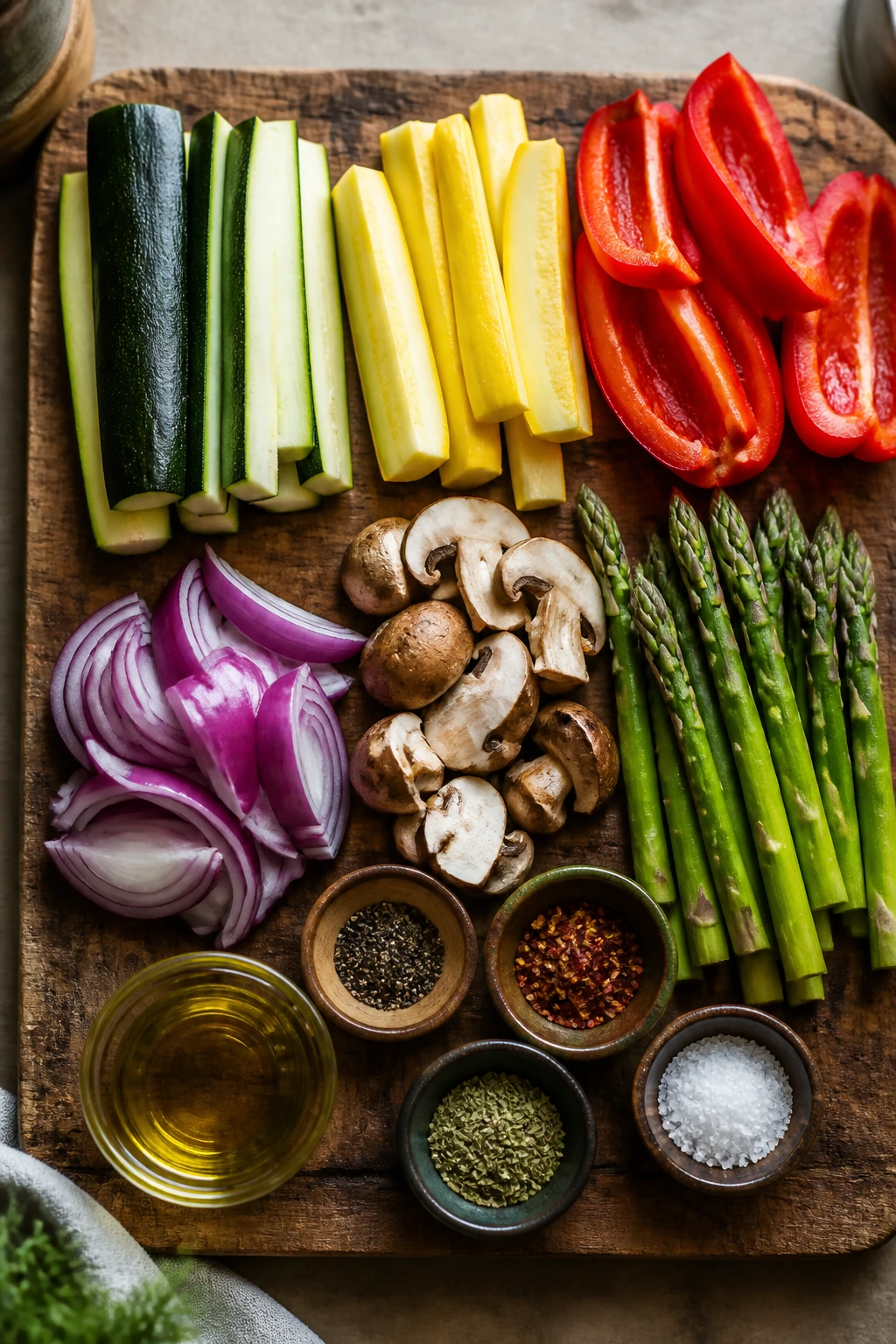
- 2 medium zucchini, halved lengthwise and cut into 1/2-inch planks
- 2 medium yellow squash, halved lengthwise and cut into 1/2-inch planks
- 2 red bell peppers, stemmed, seeded, and cut into large flat pieces
- 1 large red onion, peeled and cut into 1/2-inch wedges
- 12 oz cremini mushrooms, wiped clean and stems trimmed
- 1 bunch asparagus, about 1 lb, woody ends snapped off
For the seasoning
- 3 tablespoons extra-virgin olive oil
- 1 1/2 teaspoons kosher salt
- 1 teaspoon freshly ground black pepper
- 1 teaspoon garlic powder
- 1 teaspoon smoked paprika
- 1 teaspoon dried oregano
- 1/4 teaspoon red pepper flakes, optional
For finishing
- 1 lemon, cut into wedges
- 2 tablespoons chopped fresh parsley, basil, or dill
Why Each Ingredient Matters on the Grill
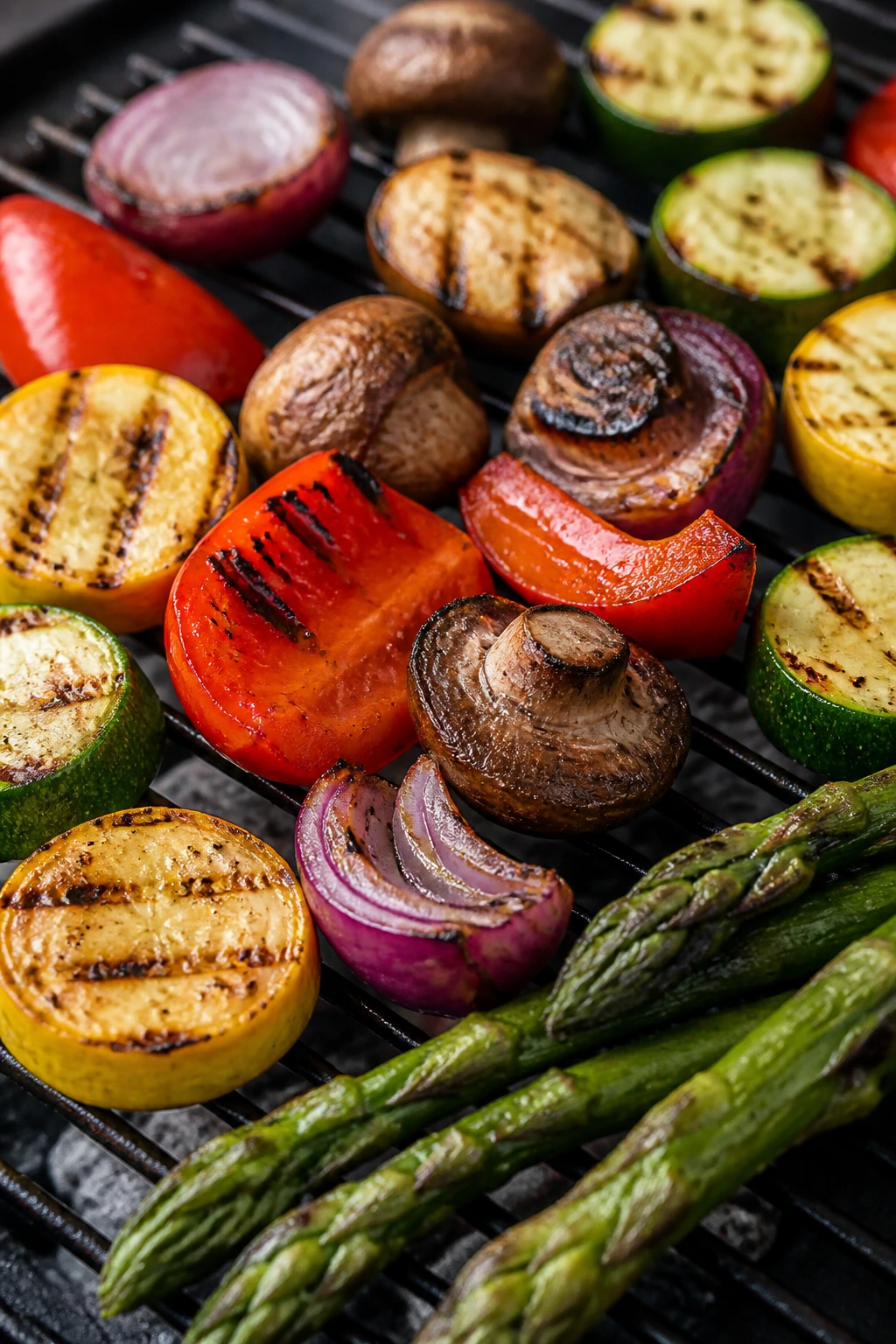
The Vegetable Mix
What to use: The mix here leans on zucchini, yellow squash, red bell peppers, red onion, cremini mushrooms, and asparagus. That combination gives you a range of textures: soft but structured squash, sweet peppers, punchy onion, earthy mushrooms, and asparagus with a clean snap.
Preparation: Cut the zucchini and squash into planks, not coins. Flat surfaces meet the grill better and are less likely to slip through the grates. Keep the pepper pieces broad, and cut the onion into wedges that still hold together at the root end.
Substitutions: Eggplant slices work if you want a meatier feel, and broccolini can stand in for asparagus when you want a little more bite. If mushrooms aren’t your thing, thick slices of fennel behave well on a hot grill.
Tips: Dry the vegetables after washing. Water on the surface turns to steam, and steam is the enemy of browning. This is especially true for mushrooms, which need to be wiped clean rather than soaked.
The Seasoning Layer
What to use: Three tablespoons of olive oil, kosher salt, black pepper, garlic powder, smoked paprika, oregano, and a small pinch of red pepper flakes make a clean, savory coating that supports the vegetables instead of burying them.
Preparation: Toss the vegetables in a bowl until every piece has a thin sheen, not a heavy slick. If oil pools at the bottom, there’s too much in the bowl or the vegetables were still wet.
Substitutions: Avocado oil handles high heat well if you want a slightly more neutral taste. If smoked paprika isn’t available, use sweet paprika and add a tiny extra pinch of black pepper for backbone. Italian seasoning can stand in for oregano in a pinch.
Tips: Keep the spice layer dry. A wet marinade softens the vegetables and can stick to the grates. A dry-ish coat of oil and seasoning gives better color and a cleaner grill mark.
The Bright Finish
What to use: Lemon wedges and chopped fresh herbs are the last move, and they matter more than people think. A squeeze of lemon after grilling wakes up the char and keeps the vegetables from tasting flat.
Preparation: Chop the herbs right before serving so they stay bright and don’t bruise into a damp green paste. Cut the lemon into wedges that are easy to squeeze with one hand while the other hand plates dinner.
Substitutions: Sherry vinegar or a few drops of balsamic vinegar can replace the lemon if that’s what you have. Parsley is the most flexible herb here, but basil brings sweetness and dill gives the whole plate a cooler edge.
Tips: Acid goes on after grilling, not before. If you add lemon too early, the vegetables soften faster and the edges lose that crisp bite you worked for.
The Tools That Keep the Veggies from Falling Through
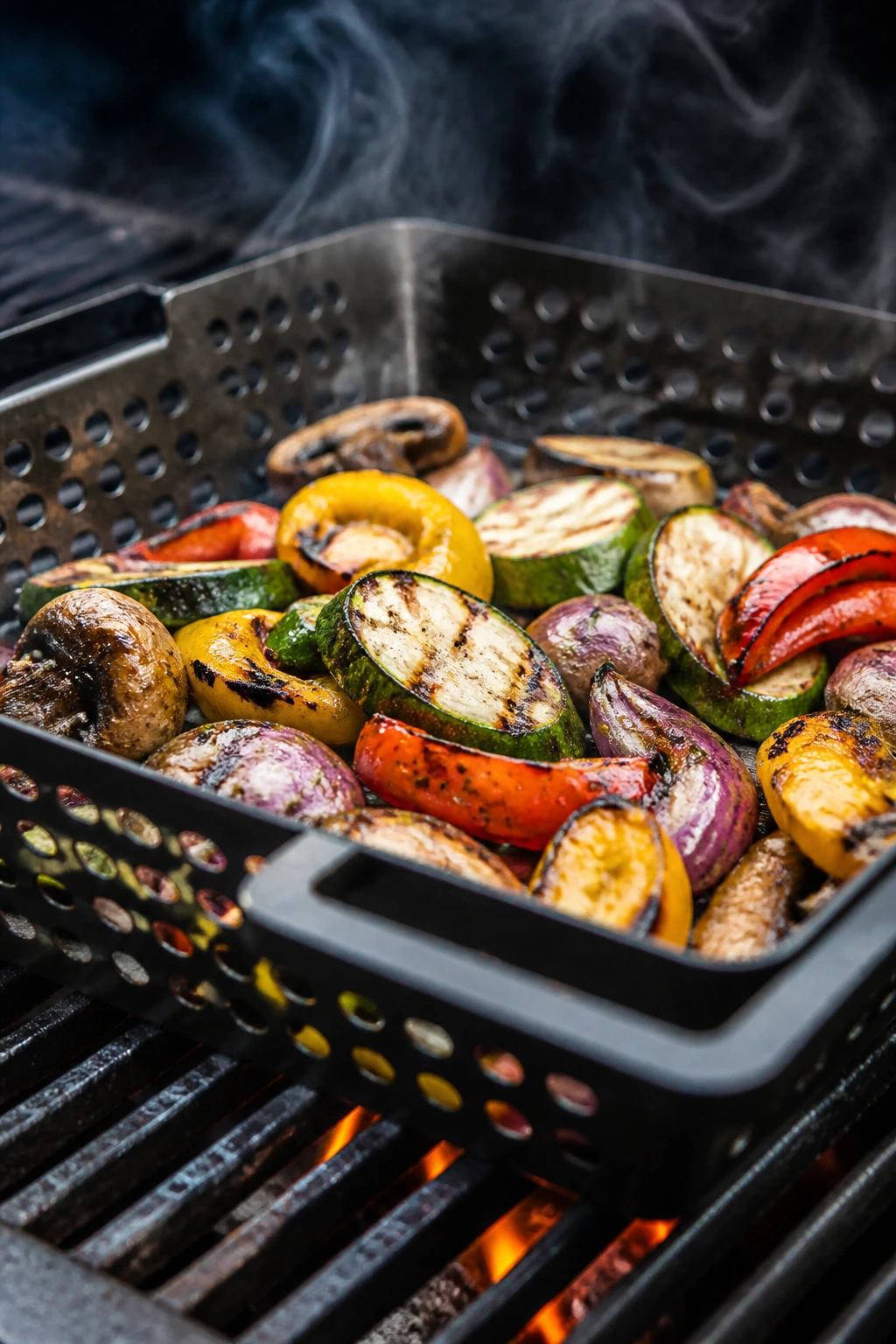
- Outdoor gas or charcoal grill: A hot grill around 450 to 500°F gives you quick browning before the vegetables go limp.
- Long-handled tongs: You want enough length to turn pieces without hovering over the flame.
- Large mixing bowl: Big enough to toss everything without half the seasoning ending up on the counter.
- Rimmed sheet pan or large platter: Useful for carrying the vegetables to and from the grill in a single layer.
- Grill basket or perforated grill pan: Especially handy for the mushrooms and asparagus if your grates are wide.
- Paper towels or a clean kitchen towel: For drying vegetables before oiling them.
- Metal skewers or wooden skewers, optional: Helpful if you want to thread asparagus or smaller mushroom pieces.
- Pastry brush, optional: Useful if you prefer brushing oil on instead of tossing, though tossing gives more even coverage.
From Cutting Board to Grill Marks
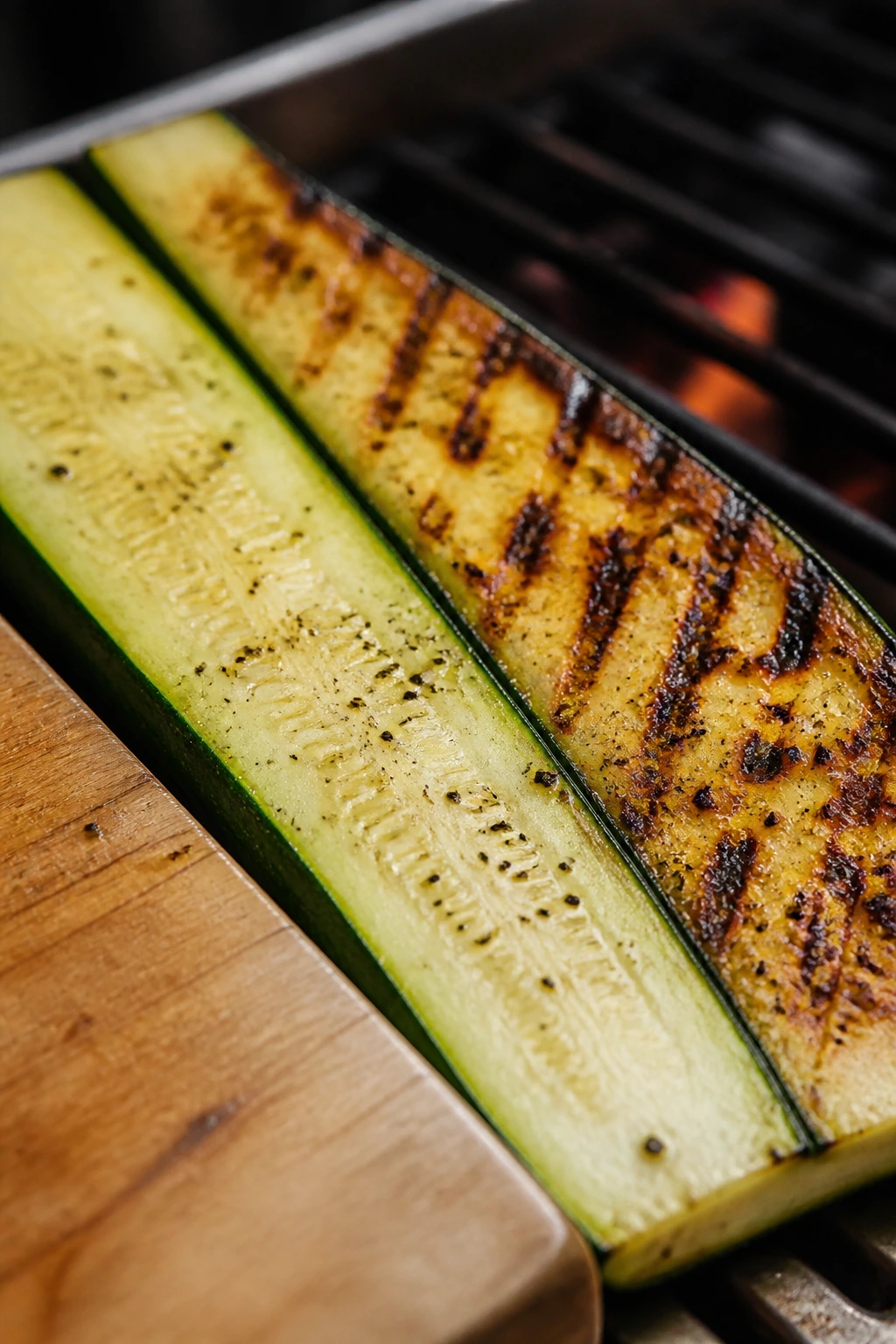
Prep the Grill and the Tray
-
Preheat the grill to medium-high, about 450 to 500°F. Scrub the grates clean, then oil them by folding a paper towel into a small pad, dipping it lightly in oil, and gripping it with tongs before wiping the grates. A clean, lightly oiled grate is what keeps the vegetables from sticking and tearing.
-
Prepare all the vegetables before you season anything. Cut the zucchini and yellow squash into 1/2-inch planks, the bell peppers into broad flat pieces, the onion into wedge-shaped sections that stay intact, and trim the mushrooms and asparagus. Pat everything dry with a towel. If the vegetables look shiny with water, they’re not ready yet.
-
Place the vegetables in a large bowl and add the olive oil, salt, pepper, garlic powder, smoked paprika, oregano, and red pepper flakes. Toss until everything is lightly coated. The vegetables should look seasoned, not drenched. Let them sit for 5 minutes while the grill finishes heating.
Grill in Batches
-
Lay the zucchini, yellow squash, bell peppers, and onion wedges directly over the hot grates in a single layer. Grill for 3 to 4 minutes on the first side, until dark lines appear and the edges start to blister. Flip each piece with tongs and grill for 2 to 3 minutes more, until the vegetables are crisp-tender and the onion has softened at the outer layers. Do not move the pieces around constantly; let the heat do the work.
-
Add the asparagus to the grill basket or place it directly across the grates if the spears are thick enough to hold steady. Grill for 4 to 6 minutes total, turning once or twice, until the spears are bright green with browned spots and still snap when bent. Add the mushrooms to a grill basket or perforated pan and grill for 4 to 5 minutes, tossing once, until they shrink slightly and give off a little steam. If the mushrooms start leaking liquid, keep grilling until it cooks off; that moisture has to leave before any browning can happen.
Finish and Serve
-
Transfer the vegetables to a warm platter as soon as each batch is done. If a piece has strong grill marks but still feels stiff in the center, move it to a cooler edge of the grill for another minute or two rather than leaving it over the flame. The goal is crisp-tender, not charred-to-the-middle.
-
Squeeze lemon over the vegetables while they’re still hot, then scatter the chopped herbs across the top. Taste one piece first. If it needs more salt, add a small pinch right at the end instead of salting heavily before grilling.
-
Serve immediately. If the vegetables sit in a deep bowl, they steam themselves soft from the inside out, and all that crisp edge work disappears fast.
How to Serve These Grilled Vegetables as Dinner
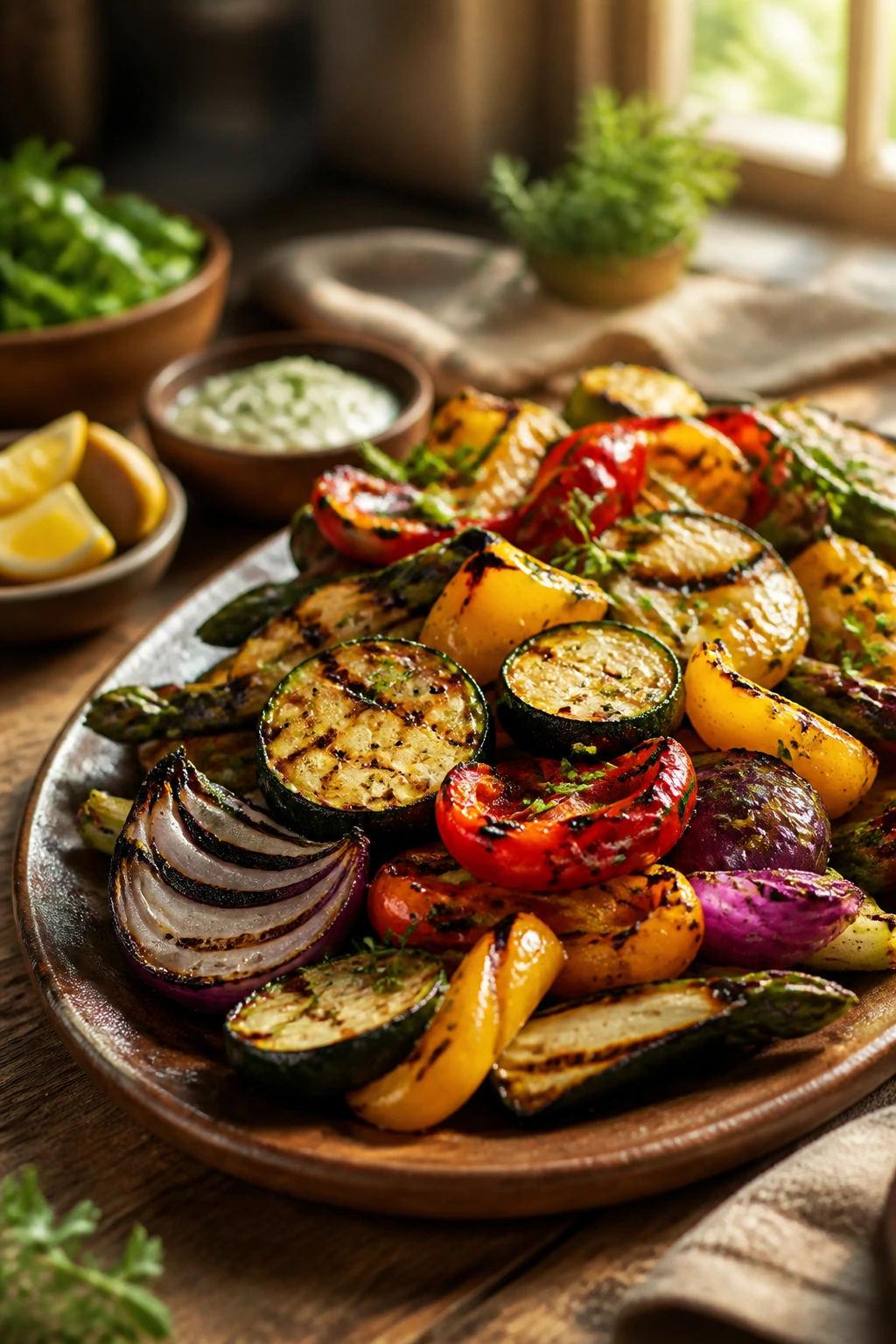
Presentation: Spread the vegetables across a warm platter instead of piling them into a mound. Keep some of the darker edges visible, tuck the onion wedges near the center, and leave the peppers and squash in broad pieces so the color reads at the table. A final scatter of herbs and a few lemon wedges on the side make the plate look finished without turning it fussy.
Accompaniments: Spoon the vegetables over cooked farro, quinoa, or brown rice if you want a grain base that catches the juices. A bowl of hummus, white beans, or tahini sauce turns the plate into a fuller meal fast. Grilled flatbread, warm pita, or a fried egg works too, and I like a handful of chickpeas on the side when I want the dinner to hold me longer.
Portions: Plan on about 3/4 to 1 cup per person as a side and 1 1/2 to 2 cups per person as a main when you’re pairing them with grains or protein. If you’re feeding a bigger crowd, grill in batches and keep the finished vegetables spread out on a tray in a warm oven, uncovered, for no more than 10 minutes.
Beverage Pairing: Sparkling water with lemon keeps the plate bright and clean. If wine is on the table, a dry Sauvignon Blanc or Pinot Grigio fits the smoke and herbs without getting heavy. For a nonalcoholic option with more character, cucumber-mint iced tea works better than anything sweet.
Small Moves That Add More Flavor
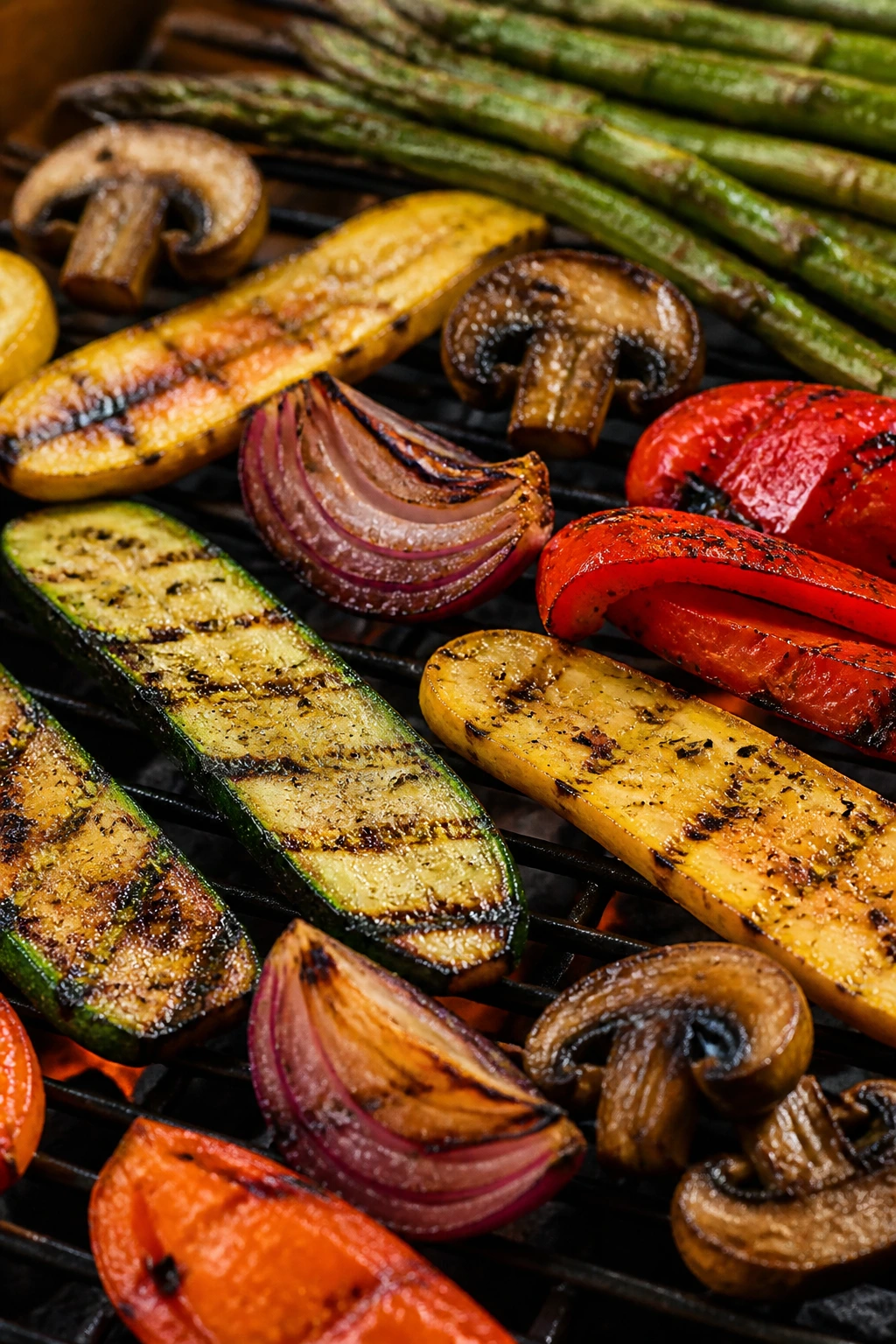
Flavor Enhancement: A tiny pinch of lemon zest over the finished platter brings the vegetables into sharper focus. It doesn’t take much — maybe 1/2 teaspoon across the whole dish — but it makes the smoked paprika and char taste more awake.
Time-Saver: Cut the zucchini, squash, onion, peppers, and asparagus up to a day ahead, then store them in separate containers lined with paper towels. Keep the mushrooms in their own container so they don’t dampen everything else. Season only when you’re ready to grill.
Cost-Saver: Use whatever squash and peppers are priced well, then stretch the plate with more onions and mushrooms. Those two are cheap, they grill beautifully, and they make the platter look fuller without adding much cost.
Make-It-Yours: If you want more protein on the plate, set aside one portion of the seasoning mix and toss it with chickpeas, then warm the chickpeas in a grill basket or in a skillet until the outside is a little crisp. For a dairy finish, crumble a small amount of feta over the platter after grilling; the saltiness works especially well with the lemon.
Mistakes That Turn Vegetables Limp
-
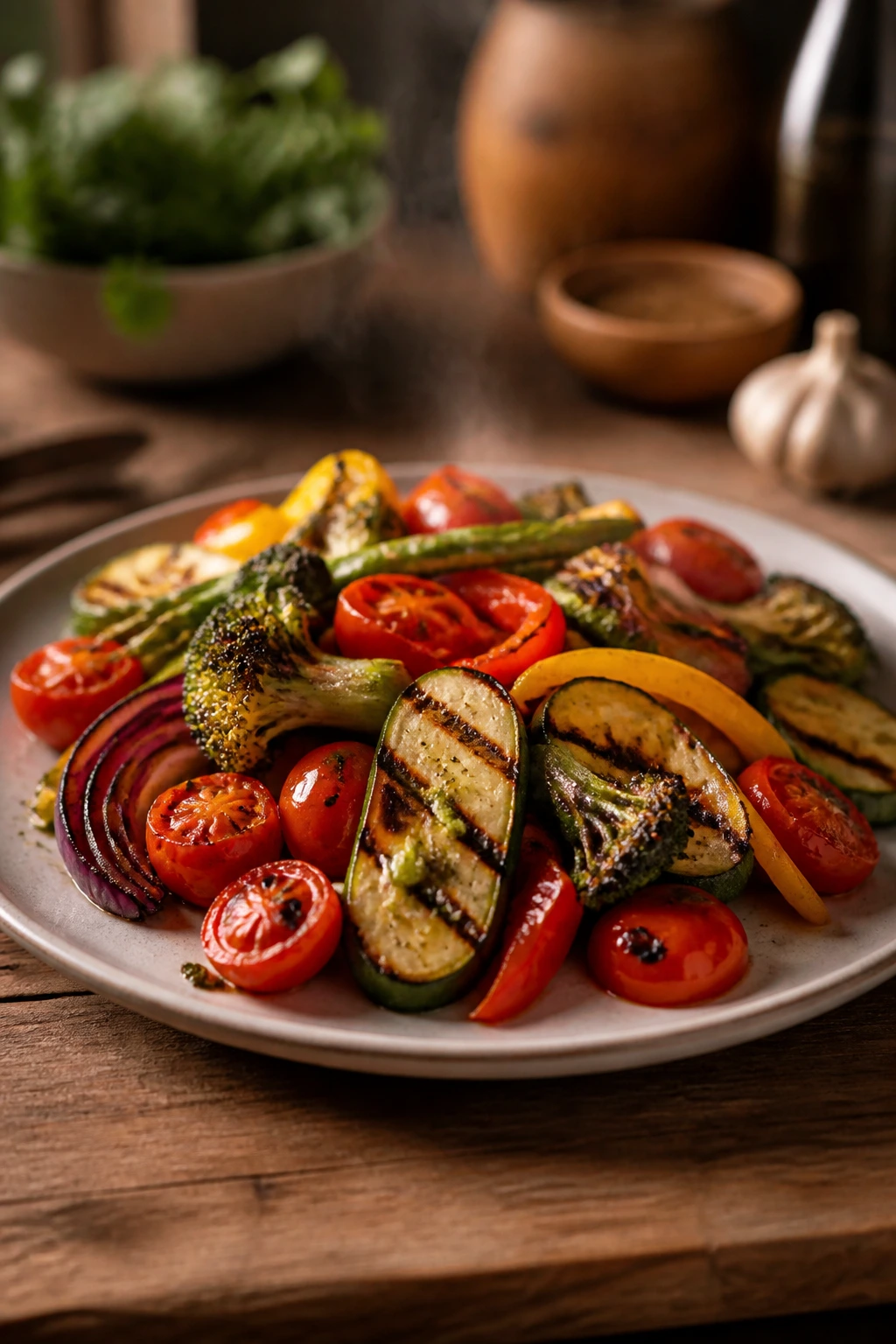
Crowding the grill: When the pieces sit on top of each other or touch too much, they steam instead of sear. The symptom is pale vegetables with soft edges and no browning. Fix it by grilling in two batches and leaving small gaps between pieces.
-
Cutting everything too thin: Thin zucchini coins and narrow pepper strips cook through before they ever get color. The result is a soft center with no structure. Cut broad planks and large wedges so the vegetables can take heat without collapsing.
-
Starting with wet vegetables: Water on the surface keeps oil from sticking evenly and slows browning. You’ll hear more hiss than sizzle, and the vegetables may look oddly glossy instead of lightly coated. Pat everything dry before seasoning, especially mushrooms.
-
Using medium heat because you’re afraid of burning: Lower heat sounds safer, but it usually gives you limp vegetables with weak grill marks. The fix is a hot grill and close watching. If a piece browns too fast, shift it to a cooler spot rather than lowering the whole grill.
-
Adding lemon too early: Acid before grilling softens the cut surface and makes it harder to get crisp edges. The vegetables can taste flat and a little tired. Finish with lemon after the vegetables come off the grill, not before.
-
Walking away after the first flip: Vegetables change quickly once they hit the grates. A minute too long can turn good char into bitter blackening, especially on onion and pepper edges. Stay near the grill and use tongs, not guesswork.
Variations That Still Taste Light
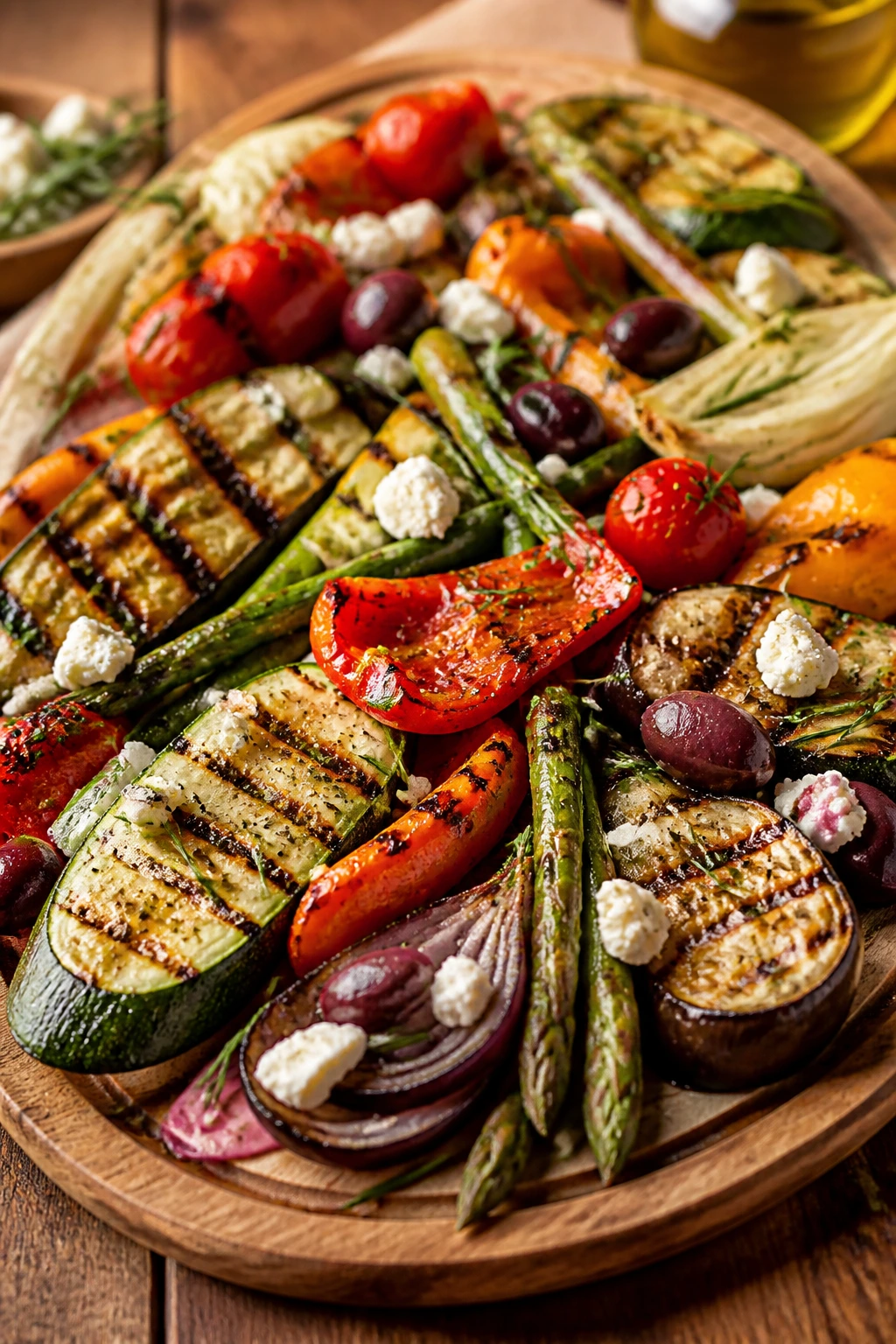
Smoky Mediterranean Tray: Swap the oregano for chopped rosemary and finish the platter with a few olives and a crumble of feta. The briny pieces add punch without drowning the vegetables, and the rosemary’s sharper note works especially well with grilled peppers.
Harissa Heat: Add 1 teaspoon harissa paste to the olive oil before tossing the vegetables, then finish with chopped mint instead of parsley. Harissa brings heat and a little earthiness, so this version feels bolder without becoming heavy. Keep the paste measured; too much and the vegetables start tasting like the sauce instead of themselves.
Sesame-Lime Finish: Replace the oregano with a pinch of ground coriander, grill the vegetables as written, then finish with lime juice and 1 teaspoon toasted sesame seeds. A small drizzle of tamari on the finished platter works too, but keep it light so the salt doesn’t overpower the char. This version leans clean and a little nutty.
Broiler Backup: If the grill is unavailable, arrange the seasoned vegetables on two foil-lined sheet pans and broil them 6 inches from the heat. Flip the vegetables once when the edges brown, usually around the 4-minute mark. The flavor is different — less smoke, more direct roast — but the crisp edges still show up if you keep an eye on them.
Protein-Ready Bowl: Add warm chickpeas, grilled tofu, or sliced halloumi to the same seasoning profile and serve everything over grains. The vegetables stay the lead, but the bowl becomes a full dinner instead of a side dish wearing a costume.
Make-Ahead, Storage, and Reheating
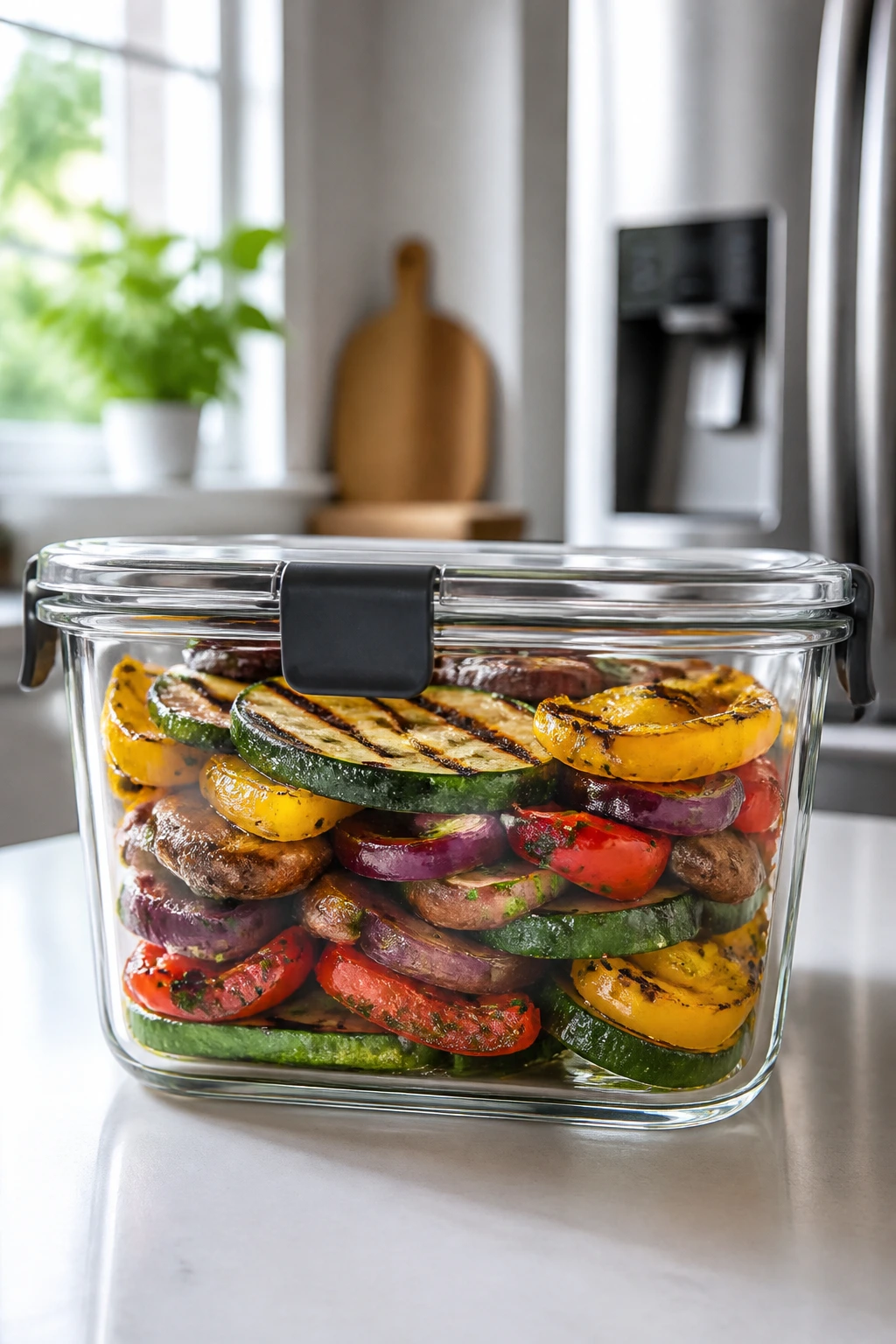
Grilled vegetables are best within minutes of leaving the fire, but they hold up better than people give them credit for. Let them cool for no more than 2 hours at room temperature, then move them into an airtight container. If they sit open on the counter much longer, condensation starts building and the crisp edges soften.
In the refrigerator, they keep for 3 to 4 days. Line the container with a paper towel if you want to catch extra moisture, and store the lemon and herbs separately so the vegetables don’t get damp and flat. If you’re planning to use them in bowls or wraps later, leave the vegetables a little underdone on day one so they can take a quick reheat without turning mushy.
Freezing is possible, but it is not the move I’d choose unless you plan to fold the vegetables into soup, pasta, or a baked frittata later. They’ll keep for up to 2 months frozen, but the texture softens after thawing. If you do freeze them, spread them in a single layer on a tray first so they freeze apart, then move them to a freezer bag once firm.
For reheating, a hot skillet is the best bet. Toss the vegetables in a dry skillet over medium-high heat for 3 to 5 minutes, shaking the pan so the edges dry and re-crisp. An air fryer at 375°F for 3 to 4 minutes works well too, especially for zucchini and peppers. The oven is the slowest option — about 8 to 10 minutes at 425°F — but it’s fine if you’re reheating a full tray. The microwave works only if texture doesn’t matter much, and on grilled vegetables, texture is half the point.
For make-ahead dinner prep, cut the vegetables and mix the seasoning up to a day in advance. Grill the vegetables right before serving. That order keeps the finish sharp instead of watery.
Common Questions About Grilled Vegetables
Can I make these on a grill pan instead of an outdoor grill?
Yes, and a heavy grill pan can do a solid job if you heat it properly. Preheat the pan until a drop of water sizzles and evaporates on contact, then work in batches so the vegetables still have room. You’ll get less smoke flavor than from charcoal, but the browning can still be excellent.
Why do my zucchini always come out soft?
Zucchini usually gets soft for one of three reasons: it was cut too thin, it was too wet, or the grill wasn’t hot enough. Cut it into planks, pat it dry, and keep the heat up around 450°F. If the slices still collapse, they were probably left on the heat too long.
Can I season the vegetables ahead of time?
You can cut them ahead, but hold the salt until close to grilling if you want the crispest result. Salt pulls moisture to the surface, and moisture makes browning slower. A light toss with oil and spices can sit for a short stretch, but if you’re waiting more than 20 to 30 minutes, season right before the grill.
What vegetables should I avoid for this method?
Very watery vegetables like tomato halves, cucumber, and mushrooms that haven’t been dried well can struggle on a hot grill. That doesn’t mean they’re impossible, only that they need different handling. Tomatoes are better stuffed or roasted, while cucumbers belong in a salad, not on a grate.
How do I turn this into a full dinner without making it heavy?
Serve the vegetables over farro, quinoa, or lentils and add a protein that doesn’t fight the grill flavor — chickpeas, tofu, a fried egg, or a little grilled halloumi all fit. A spoonful of tahini or hummus on the side gives the plate enough body without smothering the vegetables. The vegetables stay the main event, which is the point.
Can I use frozen vegetables?
Not for this style. Frozen vegetables release too much water as they thaw, and the grill ends up steaming them before they can brown. If frozen is what you have, roast them from frozen on a sheet pan instead.
How do I keep the mushrooms from shrinking into nothing?
Use cremini mushrooms that are fairly even in size and dry them well before oiling. If they’re very small, thread them onto skewers or use a grill basket so they don’t tumble around and dry out too fast. They will shrink a little — that’s normal — but they should still feel meaty when done.
A Plate Worth Repeating
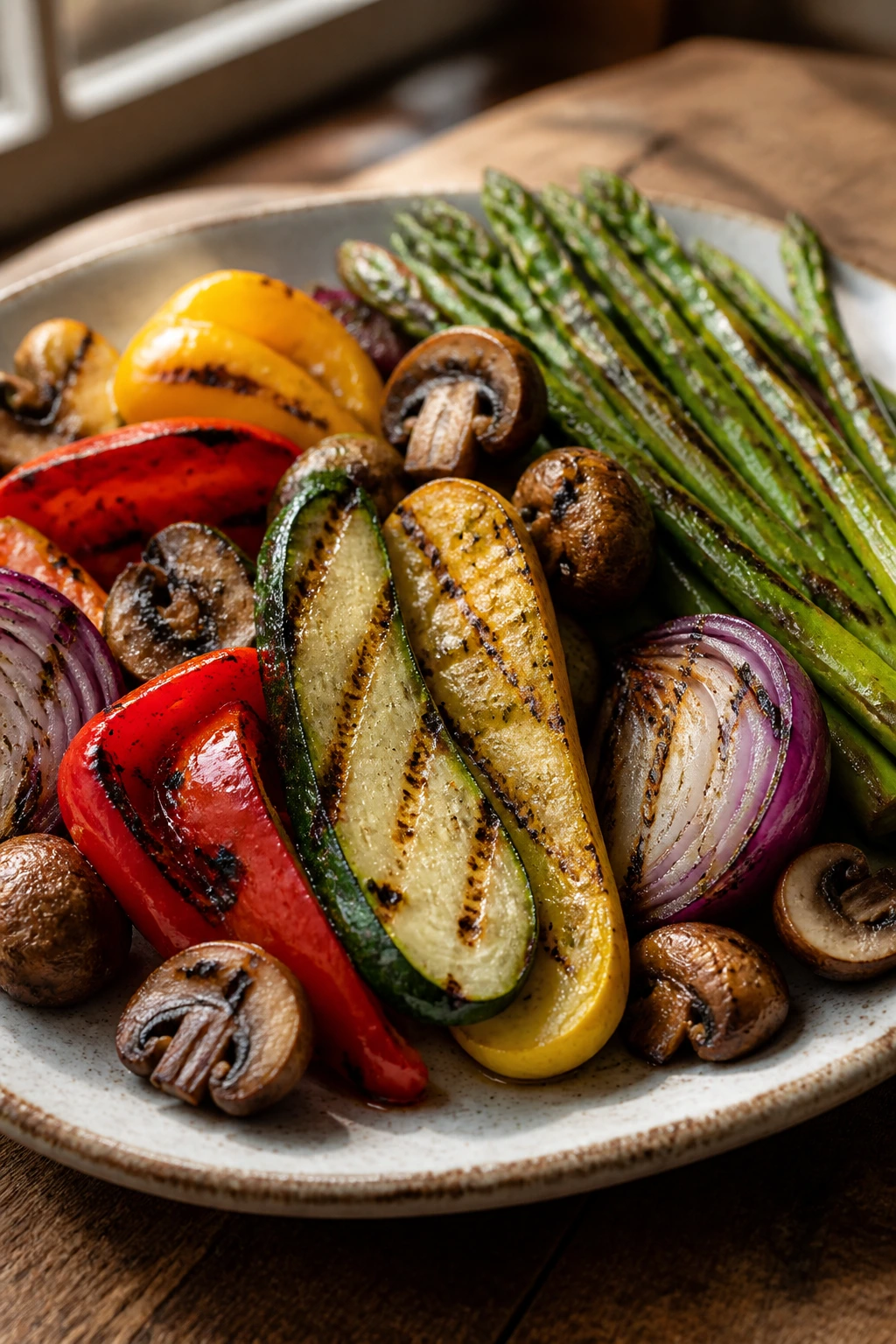
There’s a reason grilled vegetables keep showing up on weeknight tables and summer plates alike: when the heat is right, they taste like the best version of themselves. The zucchini gets sweet at the edges, the peppers soften into something almost jammy, and the mushrooms pick up enough char to make the whole tray feel deliberate instead of accidental.
The trick is not to treat them like a backup plan. Give them enough space, enough heat, and a little lemon at the end, and they can carry dinner with far more personality than most people expect from a pile of vegetables. Keep the cut broad, keep the grill hot, and this is the kind of meal that starts getting requested before the plates are washed.
Crispy Grilled Veggies for a Healthy Dinner — Recipe Card
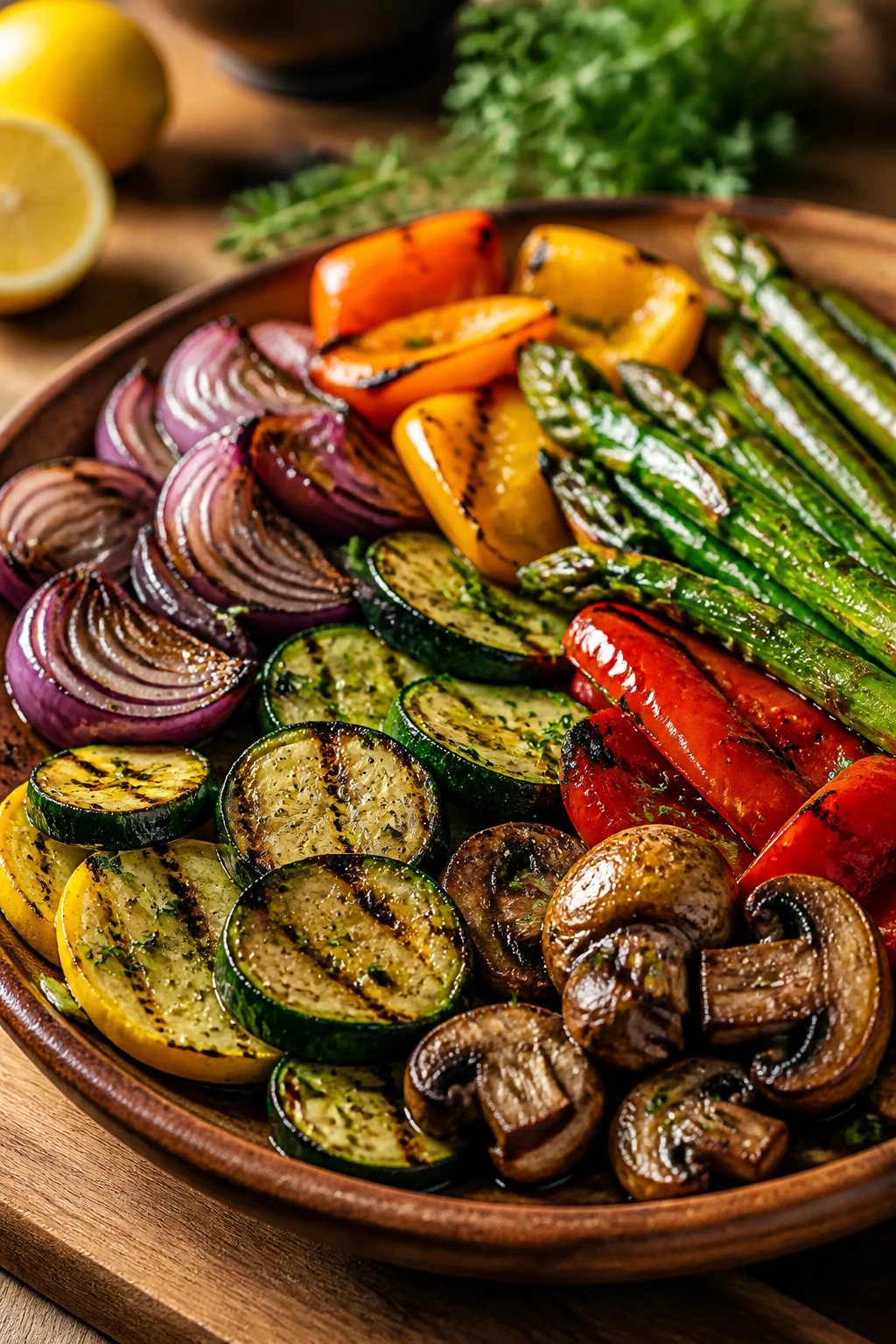
Recipe Name: Crispy Grilled Veggies for a Healthy Dinner
Description: A colorful mix of zucchini, yellow squash, bell peppers, red onion, asparagus, and mushrooms grilled over high heat until the edges char and the centers stay crisp-tender. Lemon and fresh herbs keep the finish bright, and the whole plate comes together with very little fuss.
Prep Time: 20 minutes
Cook Time: 15 to 18 minutes
Total Time: 35 to 38 minutes
Course: Dinner, Side Dish
Cuisine: American
Servings: 4 servings
Calories: Approx. 145 kcal per serving
Ingredients
For the vegetables
- 2 medium zucchini, halved lengthwise and cut into 1/2-inch planks
- 2 medium yellow squash, halved lengthwise and cut into 1/2-inch planks
- 2 red bell peppers, stemmed, seeded, and cut into large flat pieces
- 1 large red onion, peeled and cut into 1/2-inch wedges
- 12 oz cremini mushrooms, wiped clean and stems trimmed
- 1 bunch asparagus, about 1 lb, woody ends snapped off
For the seasoning
- 3 tablespoons extra-virgin olive oil
- 1 1/2 teaspoons kosher salt
- 1 teaspoon freshly ground black pepper
- 1 teaspoon garlic powder
- 1 teaspoon smoked paprika
- 1 teaspoon dried oregano
- 1/4 teaspoon red pepper flakes, optional
For finishing
- 1 lemon, cut into wedges
- 2 tablespoons chopped fresh parsley, basil, or dill
Instructions
- Preheat the grill to medium-high, about 450 to 500°F, and oil the grates.
- Cut the vegetables as directed and pat them dry.
- Toss the vegetables with olive oil, salt, pepper, garlic powder, smoked paprika, oregano, and red pepper flakes.
- Grill the zucchini, squash, peppers, and onion for 3 to 4 minutes per side, until browned and crisp-tender.
- Grill the asparagus and mushrooms for 4 to 6 minutes total, turning once or twice, until bright, browned, and just tender.
- Transfer to a platter, squeeze lemon over the top, and finish with chopped herbs.
- Serve immediately.
Notes: Keep the vegetables in a single layer while grilling so they brown instead of steam. For a fuller meal, serve over farro, quinoa, or lentils with chickpeas or a fried egg on the side.