



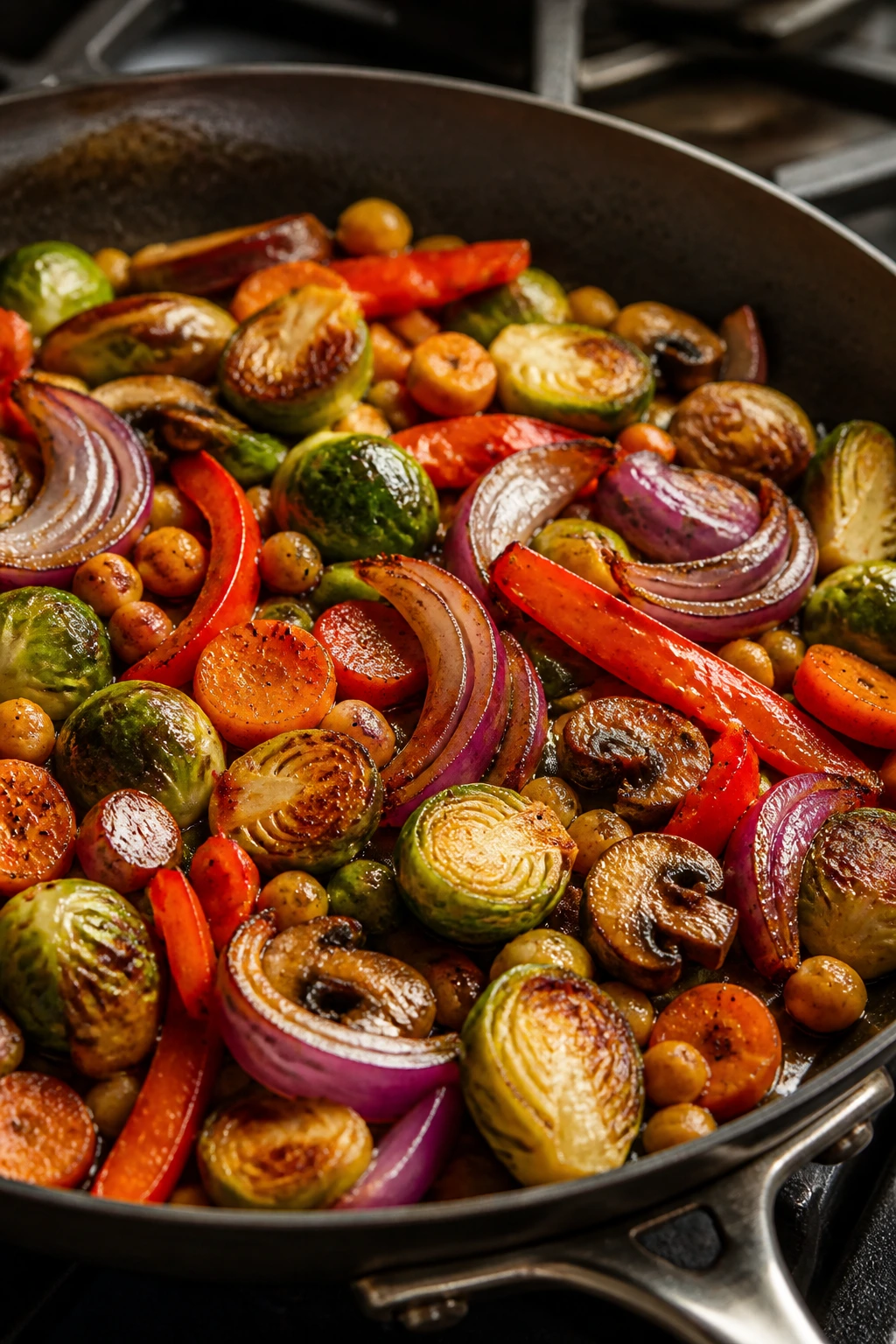
A caramelized easy veggie for a healthy dinner only sounds modest until the onions slump into sweet, browned ribbons and the Brussels sprouts pick up those dark, nutty edges that smell like you spent far more time at the stove than you actually did. That scent matters. It’s the whole point here — not a bowl of pale, politely cooked vegetables, but a skillet with actual color, actual texture, and enough savory depth to make you stop thinking of vegetables as a side note.
Most vegetable dinners fail for one simple reason: they’re crowded, rushed, and pulled off the heat before anything has a chance to brown. Caramelization doesn’t happen in a hurry. It needs dry surfaces, a hot pan, and a cook who can resist poking at everything every ten seconds. Chickpeas help turn the whole thing into dinner instead of an apologetic pile of vegetables waiting for a protein that never shows up.
You do not need fancy ingredients. You need a good skillet, a little heat, and the nerve to leave the vegetables alone long enough to color. That’s where the flavor lives.
Why This Skillet Earns a Spot on Busy Nights
-
Browning does the heavy lifting: The onions, carrots, and Brussels sprouts pick up a deep, roasted flavor in the pan, so the skillet tastes like it took longer than the clock says it did.
-
Chickpeas make it feel like dinner: A 15-ounce can adds enough body and protein to keep the dish from reading like a side dish with aspirations.
-
One hot pan keeps the work sane: If you prep everything first and use a 12-inch skillet, the whole meal stays contained instead of turning into a sink full of bowls.
-
The finish stays bright: A splash of balsamic and a squeeze of lemon keep the browned vegetables lively, not heavy or muddy.
-
Leftovers behave well: Carrots, sprouts, mushrooms, and chickpeas hold their shape better than softer vegetables, so the next-day bowl still has texture if you reheat it the right way.
-
It adapts without becoming vague: You can swap the seasoning, change the bean, or serve it over grains and still end up with the same basic idea: a caramelized vegetable dinner that tastes deliberate.
Yield: Serves 4 as a main dish, 6 as a side
Prep Time: 20 minutes
Cook Time: 25 minutes
Total Time: 45 minutes
Difficulty: Beginner — the chopping is straightforward, and the only real skill is watching the heat and not crowding the pan.
Chill/Rest Time: None
Best Served: Right away, while the edges are still crisp and the balsamic glaze is glossy
What Goes Into the Pan
For the Skillet:
-
3 tablespoons extra-virgin olive oil, divided — Helps the vegetables brown instead of sticking; use a sturdy olive oil that can handle medium-high heat.
-
1 large red onion, cut into 1/2-inch wedges — The wedges hold together long enough to caramelize and soften without melting into the pan.
-
3 medium carrots, peeled and sliced on the bias into 1/4-inch pieces — Thin enough to tenderize, thick enough to keep some bite.
-
12 ounces Brussels sprouts, trimmed and halved — The cut sides get the best browning, which is where the flavor lives.
-
8 ounces cremini mushrooms, halved if small or quartered if large — They bring a meaty chew and soak up the seasoning.
-
1 red bell pepper, seeded and cut into 1-inch strips — Adds sweetness and a little juicy contrast.
-
1 can (15 ounces) chickpeas, drained and patted very dry — These give the skillet staying power and toast better when they’re dry.
-
4 garlic cloves, minced — Added late so they smell sweet, not bitter.
-
1 teaspoon kosher salt, plus more to taste — Pulls flavor out of the vegetables and helps the browning along.
-
1/2 teaspoon black pepper — Sharpens the sweetness in the carrots and onions.
-
1 teaspoon smoked paprika — Gives the skillet a faint campfire note without taking it over.
-
1 teaspoon dried thyme or 1 tablespoon fresh thyme leaves — Earthy and quiet, the kind of herb that belongs in browned vegetables.
For the Finish:
-
1 1/2 tablespoons balsamic vinegar — Added at the end for a shiny, tangy finish.
-
2 tablespoons chopped flat-leaf parsley — Brings freshness and a little color.
-
1 lemon, cut into wedges — A final squeeze wakes up the whole pan.
Why Each Ingredient Matters
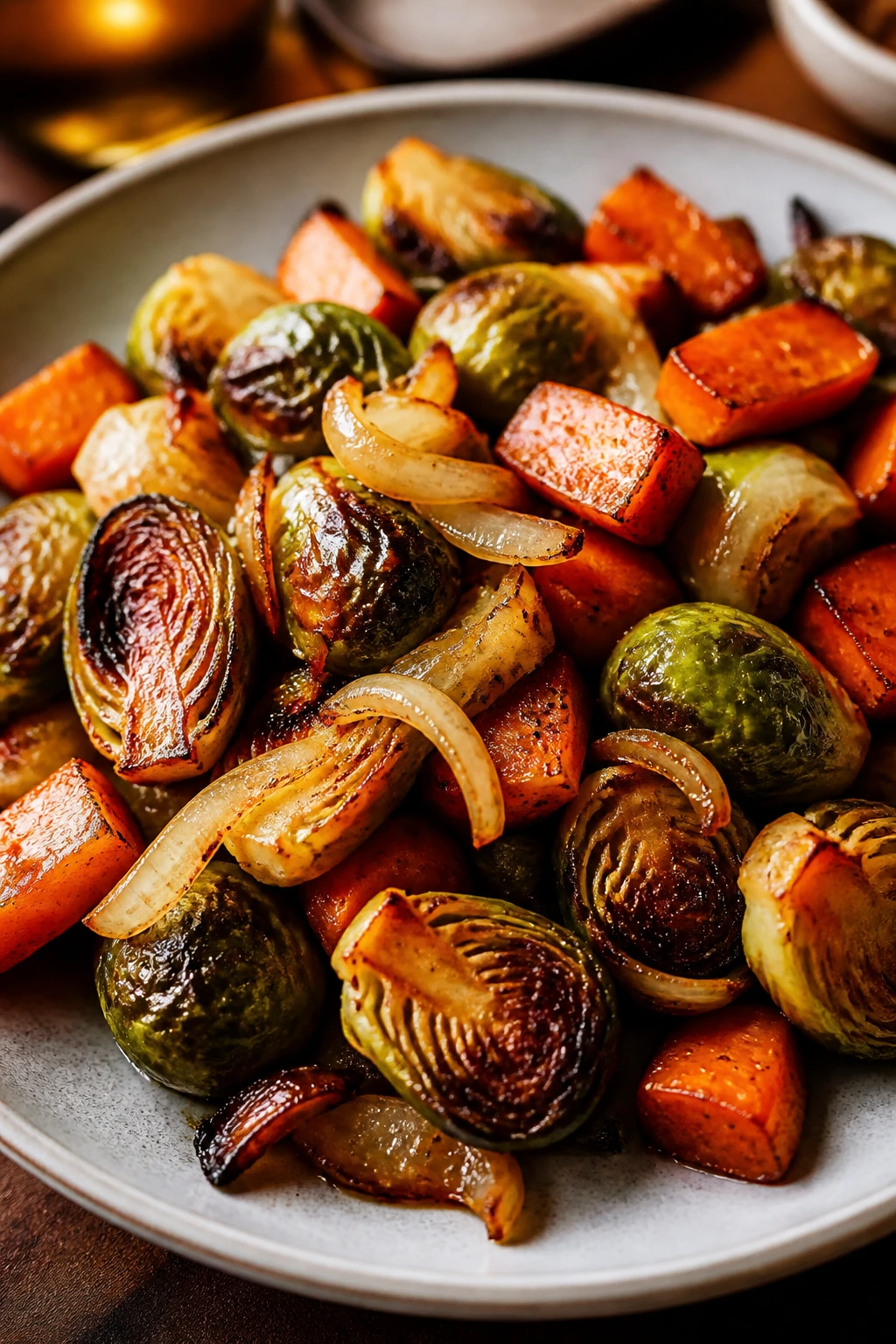
Vegetables
What to use: The base here is 1 large red onion, 3 medium carrots, 12 ounces of Brussels sprouts, 8 ounces of cremini mushrooms, and 1 red bell pepper. That combination gives you soft sweetness, savory browning, and enough texture contrast that the skillet never feels flat.
Preparation: Cut the onion into wedges instead of dicing it, slice the carrots to a similar thickness so they cook evenly, and halve the Brussels sprouts through the stem so the cut faces can hit the pan. Keep the mushrooms on the larger side; tiny pieces disappear before they brown.
Substitutions: Yellow onions work if that’s what you’ve got, broccoli florets can stand in for Brussels sprouts, and green beans can replace the bell pepper if you want something snappier. Sweet potatoes are a good swap for carrots, but they need a few extra minutes in the pan.
Tips: Size matters more than variety here. If you cut one vegetable much smaller than the rest, it will scorch before the others go tender. I’d rather see a few chunky pieces with real browning than a uniform pile of timid little cubes.
Chickpeas
What to use: One 15-ounce can of chickpeas gives the skillet substance without turning it into a bean stew. They should be drained, rinsed, and then dried well on a clean towel.
Preparation: After rinsing, spread the chickpeas on a towel and blot them until the skins look matte, not shiny. A little patience here pays off later, because wet chickpeas steam and refuse to take on much color.
Substitutions: Cannellini beans work if you want a creamier result, and cubed extra-firm tofu works if you want something more substantial. Halloumi can be used too, though that shifts the dish into a richer lane and stops it from being vegan.
Tips: Dry chickpeas are the difference between soft and toasty. If you want them to pick up real texture, let them sit in the hot pan with the vegetables for at least a minute before you stir.
Seasoning, Oil, and Acid
What to use: Three tablespoons of olive oil, 4 minced garlic cloves, 1 teaspoon smoked paprika, 1 teaspoon thyme, 1 teaspoon kosher salt, 1/2 teaspoon black pepper, and 1 1/2 tablespoons balsamic vinegar give the skillet its backbone.
Preparation: Measure the spices before you turn on the heat. Once the vegetables are moving in the pan, you don’t want to be fumbling with jars while the garlic edges toward bitter.
Substitutions: Regular paprika works if smoked paprika is missing, though you lose that roasted edge. Apple cider vinegar or red wine vinegar can step in for balsamic, but use a little less because they’re sharper.
Tips: Put the balsamic in at the end, not the beginning. Vinegar can go harsh if it cooks too long, and garlic burns fast enough that it deserves only the last minute or so of contact with the hottest pan.
Fresh Finish
What to use: Two tablespoons of chopped flat-leaf parsley and 1 lemon cut into wedges are the clean, bright finish that keep the skillet from tasting brown-on-brown.
Preparation: Chop the parsley just before serving so it stays perky, and cut the lemon into generous wedges. If the lemon is small, use two wedges per plate instead of one.
Substitutions: Dill changes the mood in a good way, and cilantro makes the skillet lean more Mediterranean or South Asian depending on the other seasonings. Orange zest can work if you want a gentler, slightly sweeter finish.
Tips: Acid is not decoration here. A squeeze of lemon on hot vegetables wakes up the carrots, balances the balsamic, and makes the skillet taste more complete than extra salt ever could.
The Tools That Help the Vegetables Brown
-
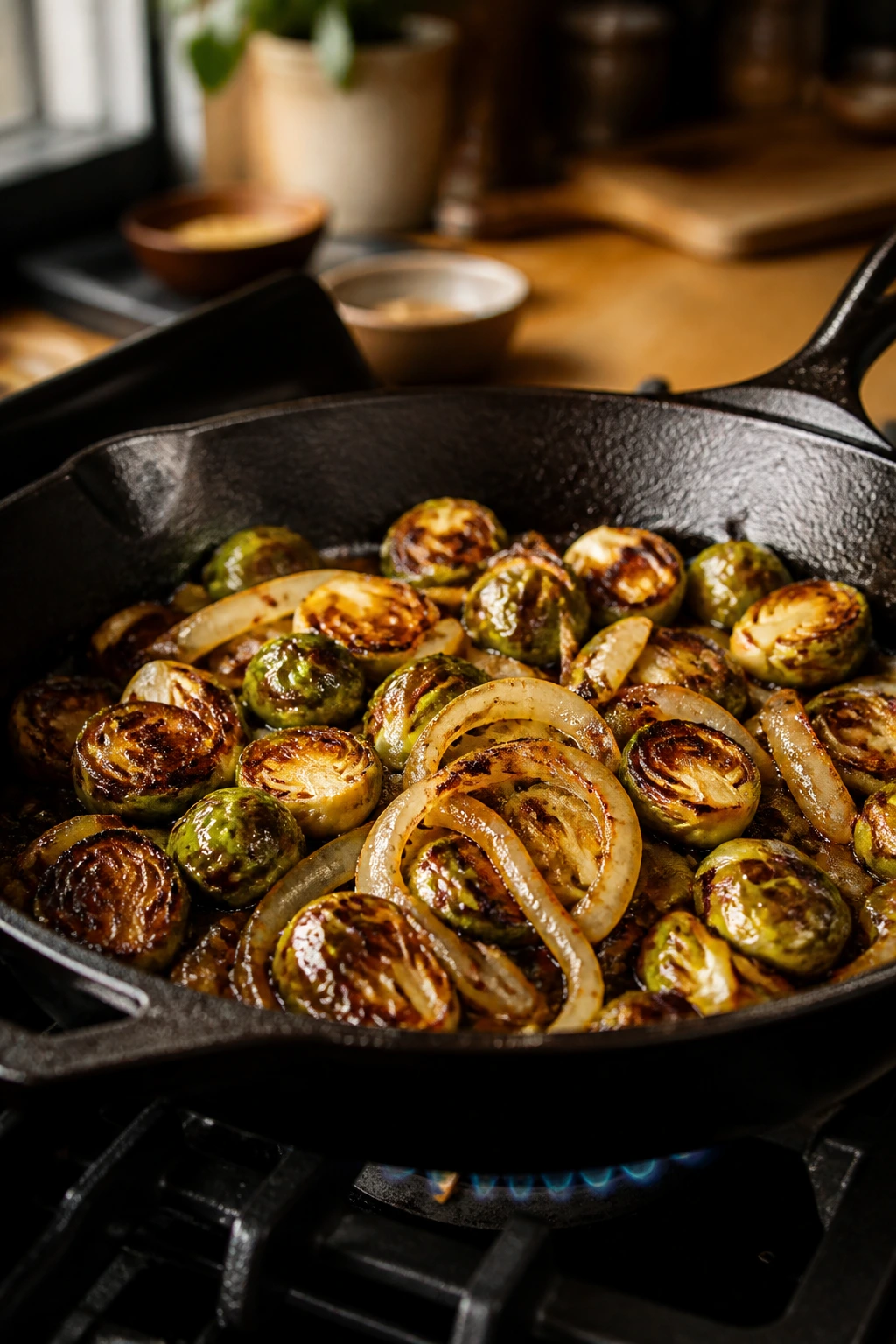
12-inch cast-iron skillet or heavy stainless-steel skillet — The pan needs to hold heat well; a thin skillet loses temperature the second the vegetables go in.
-
Wooden spoon or thin spatula — Useful for turning vegetables without scraping off the browned bits you actually want.
-
Chef’s knife — Sharp enough to cut the onion and carrots cleanly; ragged cuts brown unevenly.
-
Cutting board — A sturdy one matters more than people admit, especially when you’re moving quickly.
-
Colander — For rinsing the chickpeas without leaving them soaked in their canning liquid.
-
Clean kitchen towel or paper towels — Dry chickpeas are happier chickpeas.
-
Measuring spoons — The smoked paprika and balsamic need some precision; you don’t want the dish to tip from savory into sweet.
-
Citrus juicer or your hands — Optional, but useful if you want to pull more juice from the lemon without wrestling with seeds.
How to Build the Skillet, Step by Step
Prep the Vegetables and Dry the Chickpeas:
-
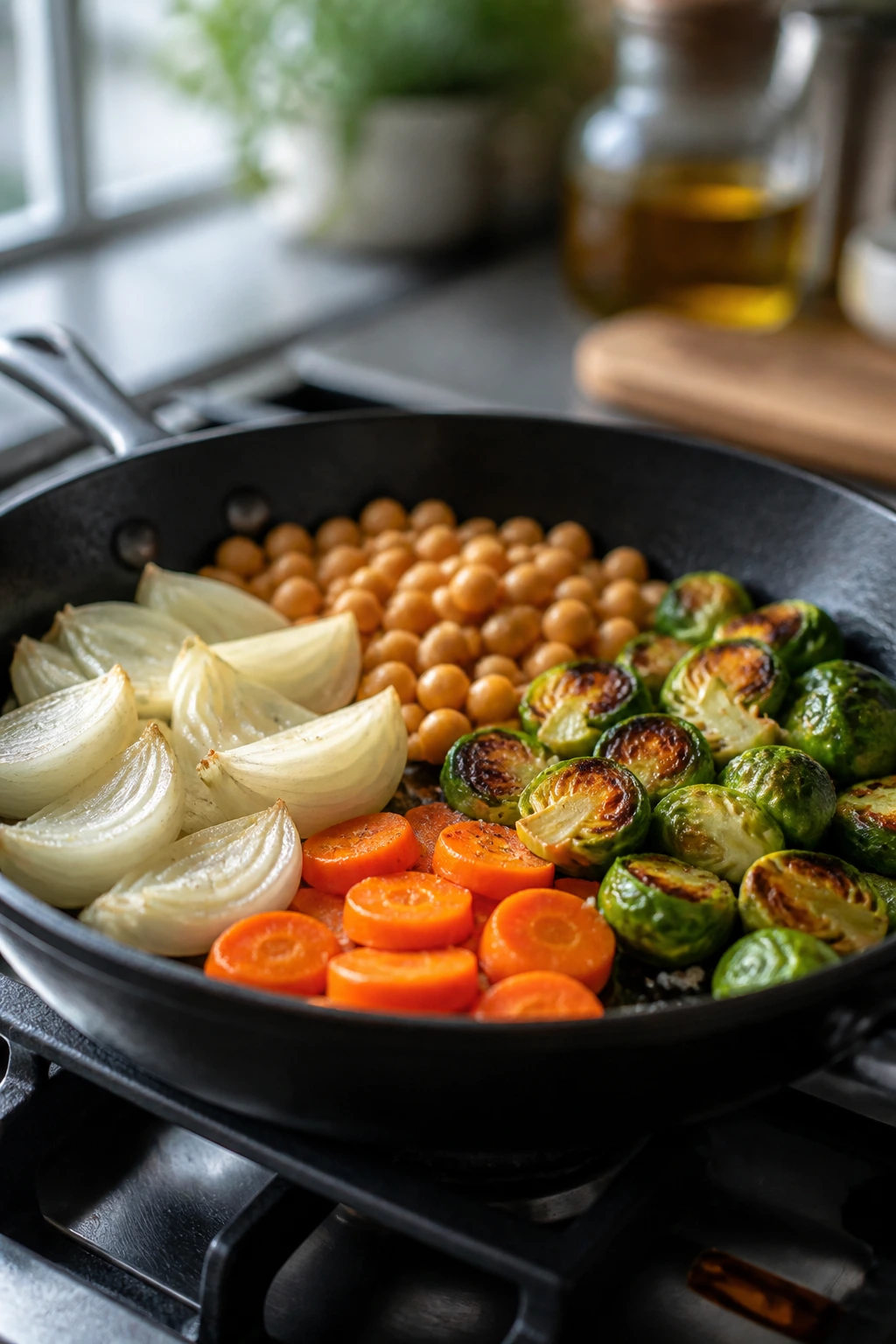
Slice everything before the heat goes on. Cut the onion into 1/2-inch wedges, the carrots into 1/4-inch slices, halve the Brussels sprouts, cut the bell pepper into strips, and halve or quarter the mushrooms depending on size. Drain and rinse the chickpeas, then pat them dry until they feel matte.
-
Mix the spices nearby. Stir together the salt, black pepper, smoked paprika, and thyme in a small bowl so you can add them fast later. Garlic should stay separate for now, because it only needs a short ride in the pan.
Brown the Vegetables:
-
Heat 2 tablespoons of olive oil in a 12-inch skillet over medium-high heat. Wait until the oil shimmers and moves easily across the pan. If it starts smoking hard, lower the heat for a moment; you want hot, not burned.
-
Add the onion and carrots with a small pinch of salt. Cook for 6 to 8 minutes, stirring only every minute or so, until the onion edges start to brown and the carrots pick up golden spots. Do not stir constantly — the vegetables need contact with the hot pan to caramelize.
-
Add the Brussels sprouts cut side down and cook for 3 to 4 minutes without stirring. This is the moment that gives you the good brown faces. Flip and cook for 2 more minutes, just until the sprouts start to soften and the cut sides turn deep golden.
-
Add the mushrooms and bell pepper, along with the remaining 1 tablespoon olive oil if the pan looks dry. Cook for 5 to 6 minutes, stirring only every so often, until the mushrooms release their liquid and that liquid evaporates again. The pan should look glossy, not wet.
Finish and Season:
-
Stir in the chickpeas, garlic, smoked paprika, thyme, black pepper, and the remaining salt. Cook for 2 to 3 minutes, until the garlic smells sweet and the chickpeas feel hot through. If a few chickpeas pick up a browned edge, that’s a good thing.
-
Pour the balsamic vinegar around the edge of the pan and scrape up any browned bits. Cook for 30 to 45 seconds, just until the vinegar turns shiny and clings to the vegetables. Do not add the balsamic early or let it boil away for long — you want brightness, not syrup.
-
Turn off the heat, scatter over the parsley, and squeeze lemon over the top. Taste and add a final pinch of salt if needed. Serve the skillet hot while the edges still have some texture and the smell is still loud.
How to Serve It So It Feels Like a Meal
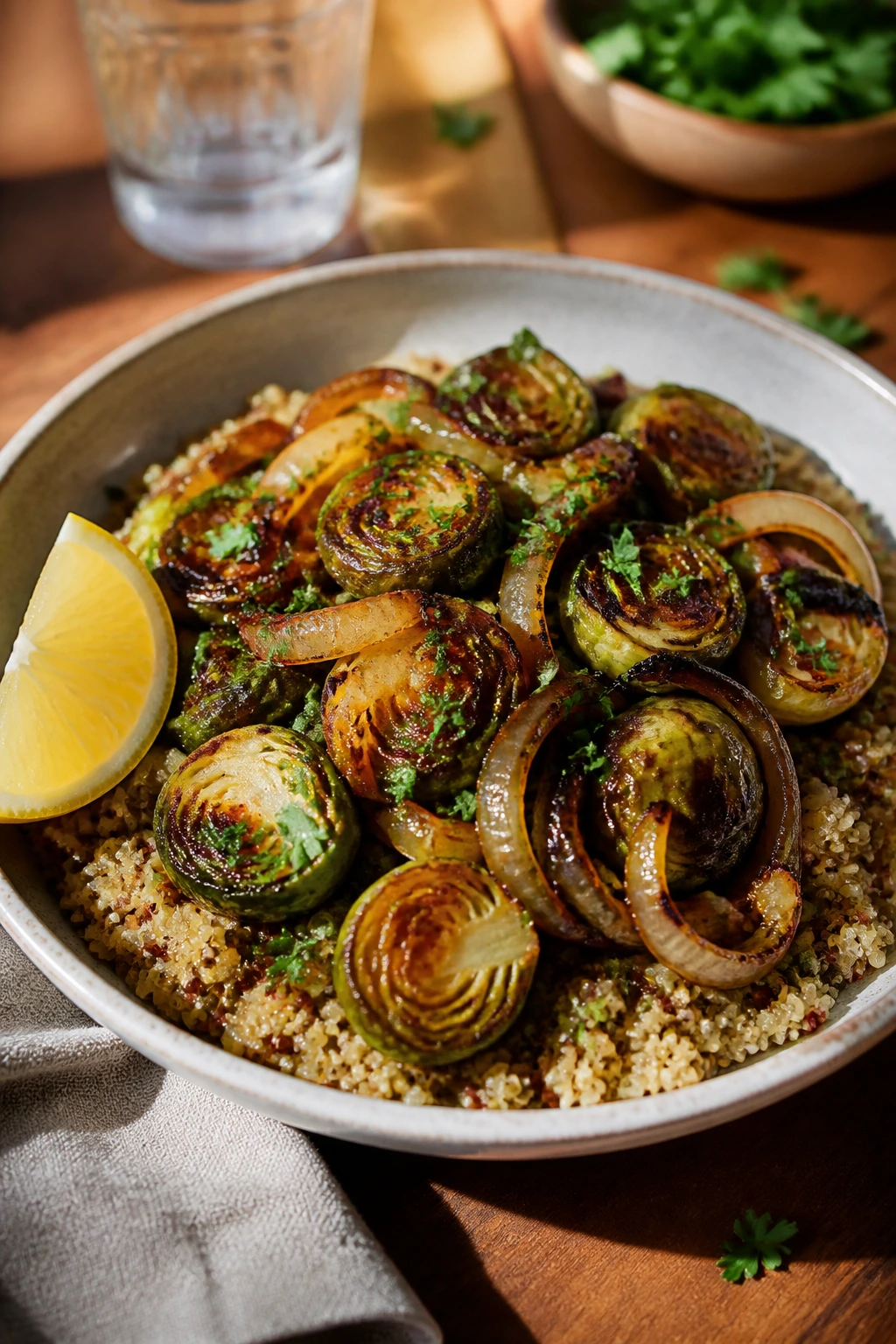
Presentation: Spoon the vegetables into shallow bowls instead of deep ones. That keeps the browned tops visible and gives the balsamic sheen a place to show off. A final scatter of parsley and a few lemon wedges on the side make the whole thing look deliberate, not like an afterthought.
Accompaniments: If you want this to eat like a full dinner, serve it over cooked quinoa, farro, or brown rice. Toasted pita or warm flatbread works too, especially if you like scooping up the glossy bits at the bottom of the pan. A plain arugula salad with olive oil and lemon sits nicely next to the warmth without competing with it.
Portions: As a main dish, plan on about 1 1/2 to 2 cups per person. As a side, you can stretch it to 6 servings, especially if the rest of the plate has grains or a protein. If somebody at your table is extra hungry, a fried egg on top does a lot of work with very little fuss.
Beverage Pairing: Sparkling water with lemon keeps the meal bright and clean. If you want wine, a dry Sauvignon Blanc or a light Pinot Grigio works better than anything oaky or heavy. For a nonalcoholic option with more character, try unsweetened iced tea with mint.
Additional Ways to Push the Flavor
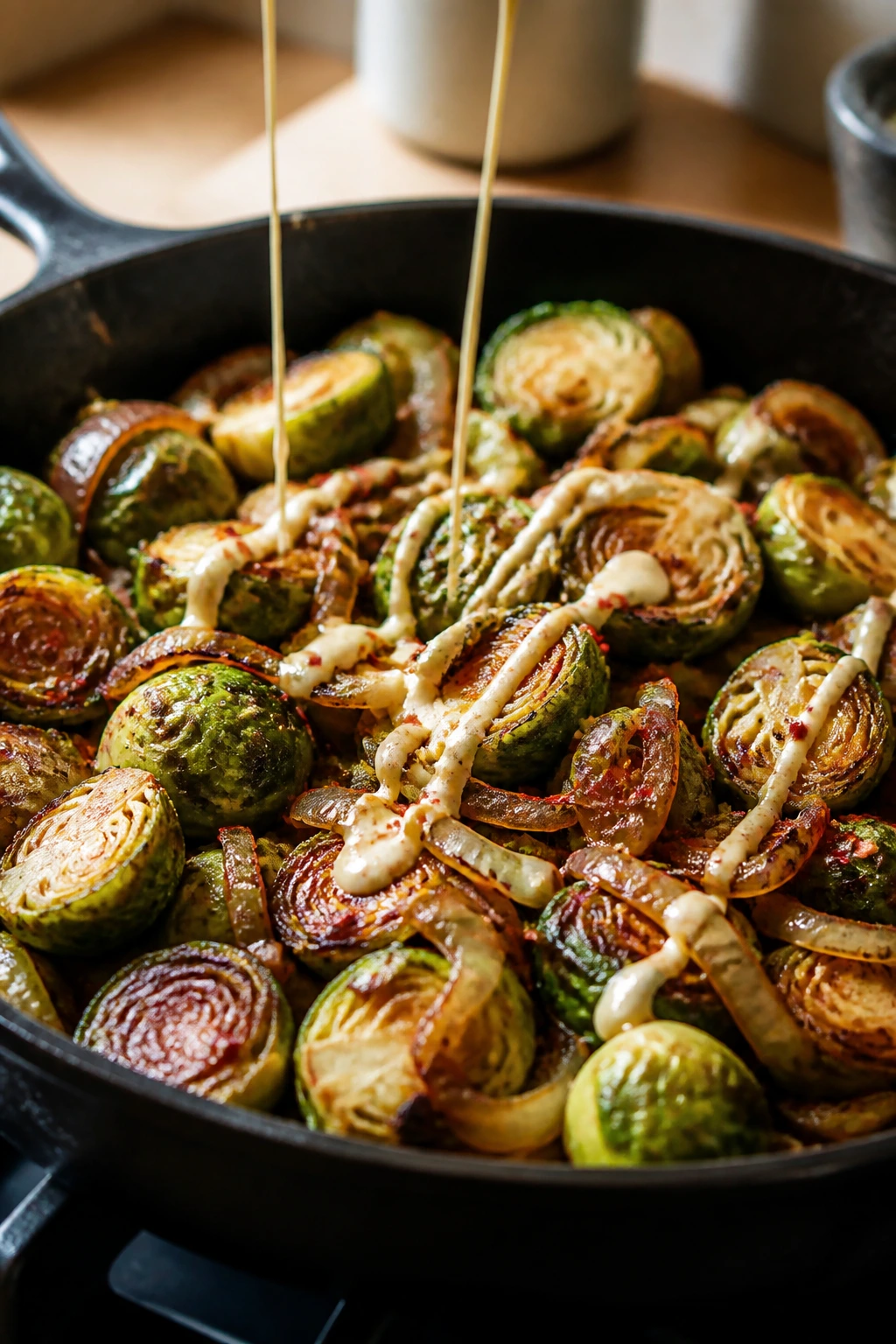
Flavor Enhancement: A small drizzle of tahini over the hot vegetables changes the whole plate. It adds a creamy, nutty line through the browning and makes the dish feel fuller without turning it into something heavy. If you like heat, a pinch of red pepper flakes with the spices gives the vegetables a little spark.
Customization: Stir in 2 packed cups of baby spinach right at the end if you want more greens; the leaves wilt in seconds. If chickpeas aren’t your thing, white beans can slide into the same role, though they’re softer and less toasty. A spoonful of capers works if you want a salty punch that leans sharper.
Serving Suggestions: Toasted pumpkin seeds are one of my favorite add-ons here because they bring crunch where the vegetables are soft. A little lemon zest on top tastes brighter than more juice and looks cleaner than a heavy sauce. If you like herbs, parsley is safe, dill is more fragrant, and cilantro gives the skillet a sharper edge.
Make-It-Yours: For a dairy-free plate, keep the finish simple with lemon, herbs, and olive oil. If you want extra protein, add pan-seared tofu cubes or serve it beside a fried egg. For a lower-carb version, skip the grains and pile the vegetables over shredded cabbage or baby greens that wilt under the heat.
Common Mistakes That Keep Vegetables Pale
-
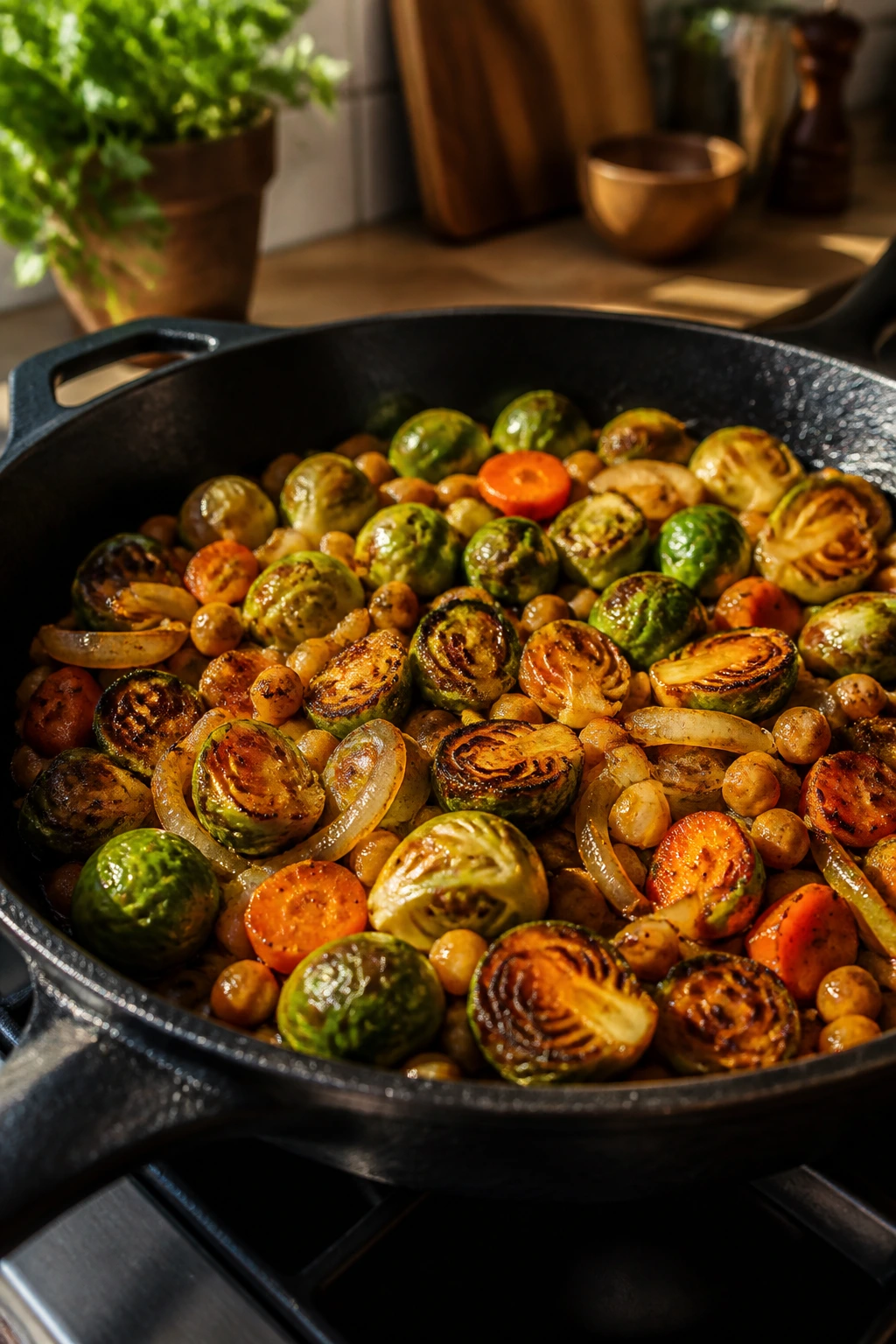
Crowding the skillet: If the vegetables are stacked on top of each other, they steam instead of brown. The fix is simple: use a 12-inch pan or split the vegetables into two batches. If the pan looks crowded, it is crowded.
-
Using wet chickpeas: Moisture on the chickpeas keeps them soft and dull. Pat them dry until they no longer shine, and give them a minute in the hot pan before stirring.
-
Adding balsamic too early: Vinegar added too soon can cook down into a sharp, sticky glaze before the vegetables are properly browned. Wait until the end, after the color is already where you want it.
-
Stirring nonstop: Constant stirring sounds careful, but it steals the vegetables’ contact with the pan. Let the onion wedges, sprouts, and carrots sit long enough to pick up real color before you move them.
-
Cutting everything too small: Tiny pieces cook fast, but they also burn fast and lose their shape. Keep the carrots and onions in pieces big enough to survive a hot skillet, and the whole pan will look better and taste better.
-
Using low heat because you’re nervous: A timid pan gives you soft vegetables and no caramelized edges. Medium-high heat is the friend here, as long as you watch the pan and lower it a touch if the garlic starts to darken too quickly.
Variations That Still Belong in the Same Family
Smoky Harissa Skillet
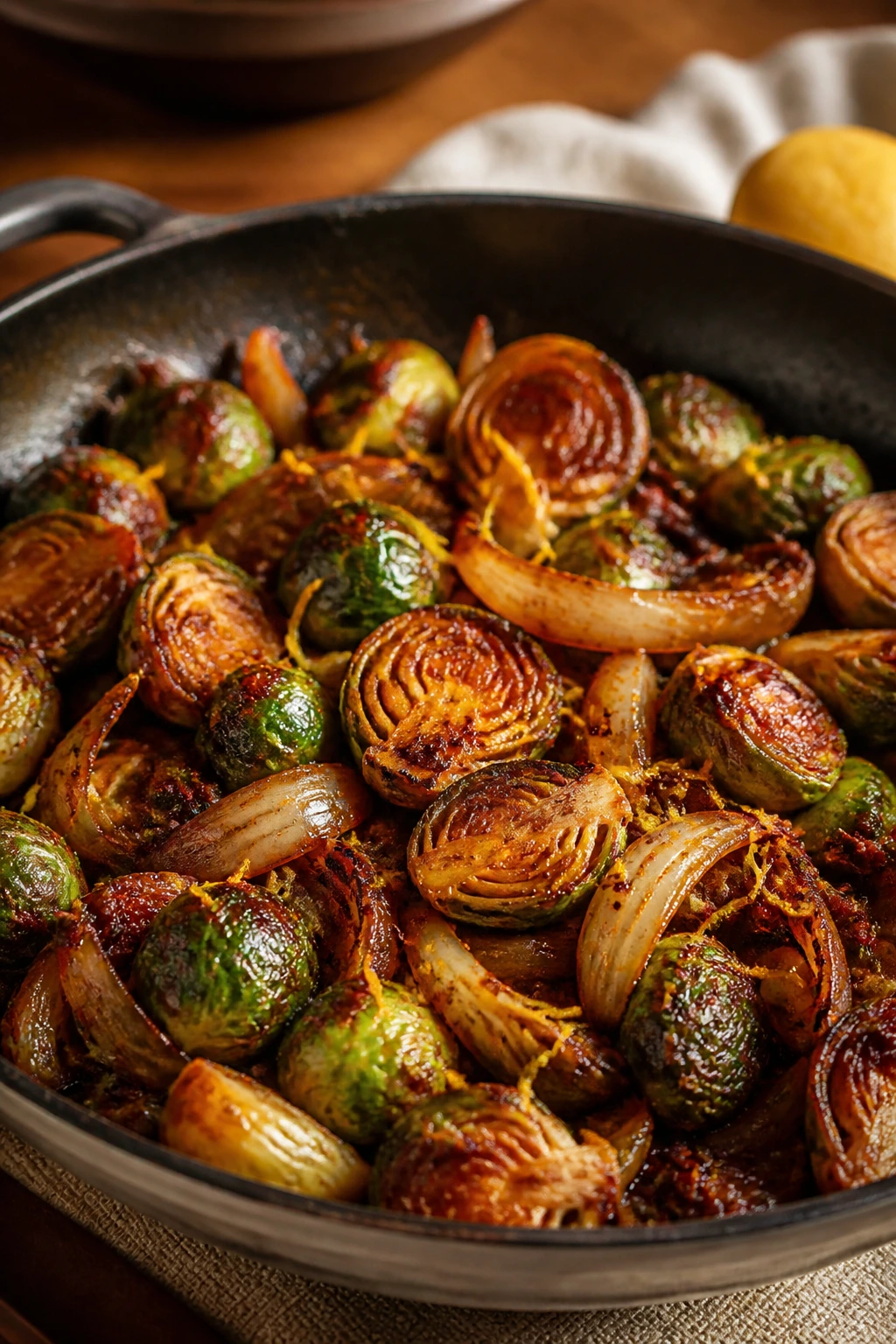
Stir 1 to 2 teaspoons of harissa paste into the pan with the chickpeas and garlic. It adds heat, smoke, and a little tomato depth without changing the structure of the dish. I like this version with extra lemon at the end because the spice needs a bright edge.
Lemon-Tahini Dinner Bowl
Keep the skillet exactly the same, then spoon a thin tahini sauce over the top after plating — tahini, lemon juice, water, and a pinch of salt whisked until pourable. It gives the vegetables a creamy finish and works especially well if you’re serving the pan over quinoa or farro.
Root-Veg Swap
Replace the bell pepper and mushrooms with 1 medium sweet potato, peeled and cut into 1/2-inch cubes, plus 1 small parsnip if you like a slightly earthier taste. Start those root vegetables first and give them a few extra minutes, because they need more time than peppers and mushrooms do.
Mediterranean Pantry Version
Add a handful of halved cherry tomatoes in the last 2 minutes and finish with chopped olives instead of extra balsamic. The tomatoes collapse just enough to make a light, saucy coat around the vegetables, and the olives add salt without making the dish louder.
Bean-Free, Egg-Topped Plate
Skip the chickpeas and serve the vegetables over grains with a fried egg on top. This version feels a little lighter and more breakfast-for-dinner friendly, but it still keeps the caramelized vegetable flavor front and center.
How to Store, Reheat, and Prep Ahead
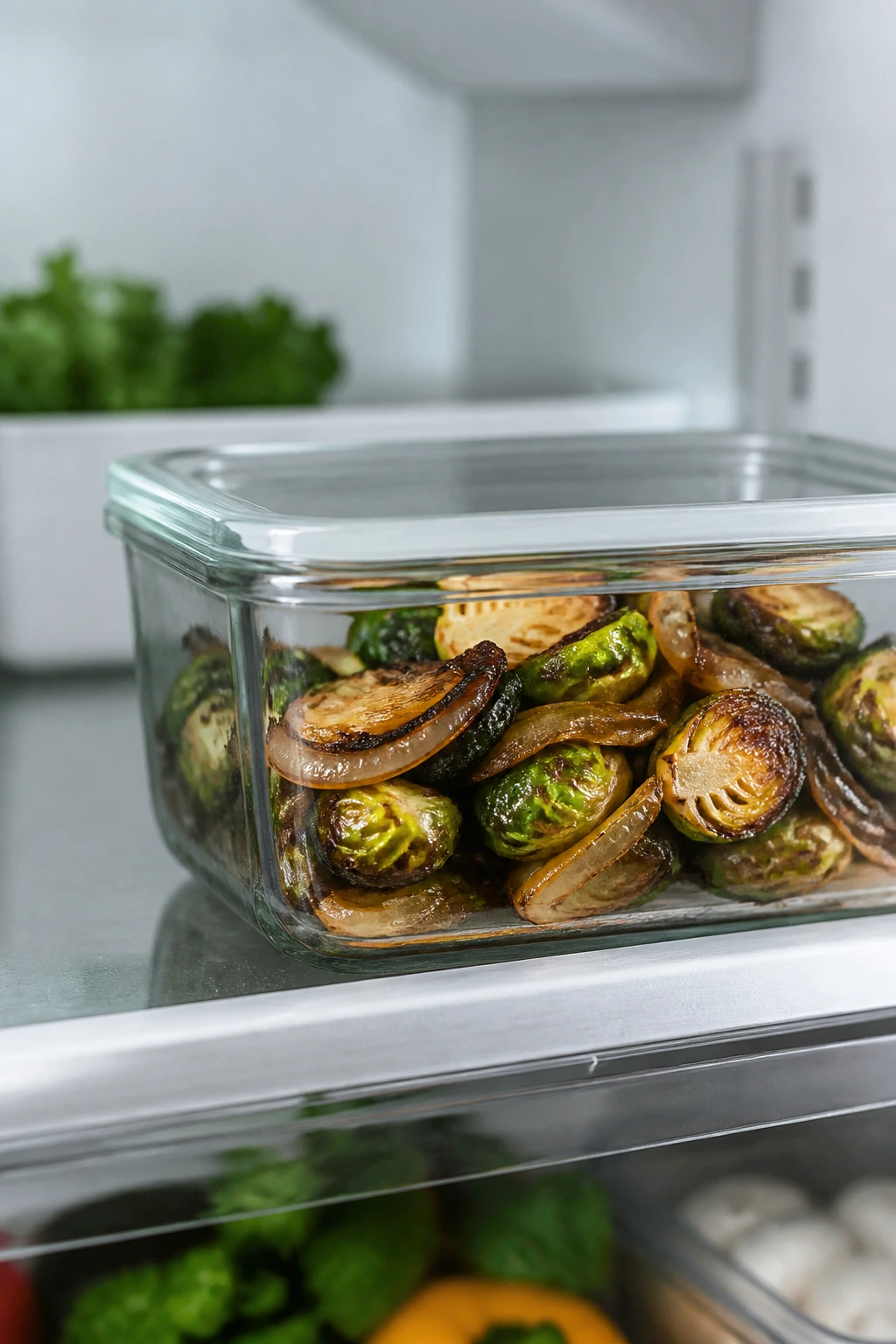
Leftovers keep best when they’re cooled and packed away within 2 hours at room temperature. If you’ve added a dairy sauce or egg on the side, get them into the fridge sooner. Vegetables do not like to sit around in a warm pan; they soften fast, and the texture goes from pleasant to tired before you know it.
Stored in an airtight container, the skillet holds well for 3 to 4 days in the refrigerator. The flavor usually deepens by the next day, especially around the onions and balsamic, but the mushrooms will soften a bit. If you’re planning for lunches, keep any grains in a separate container so they don’t soak up all the moisture and turn sticky.
For the freezer, pack the cooled vegetables and chickpeas into a freezer-safe container or zip-top bag and freeze for up to 2 months. The texture won’t be as crisp after thawing, so I treat frozen portions as bowl fillers, not as a glossy fresh skillet. Thaw overnight in the fridge if you have the time.
Reheat in a skillet over medium heat with 1 to 2 tablespoons of water or olive oil for 4 to 6 minutes, stirring once or twice. That method brings the edges back more cleanly than the microwave does. If you use the microwave, keep it to short bursts and stop before the vegetables turn soft; they usually only need 45-second intervals.
For make-ahead prep, chop the onions, carrots, Brussels sprouts, mushrooms, and pepper up to 2 days ahead and keep them in separate containers if you can. Rinse and dry the chickpeas the day you cook, not two days early, because they lose their dry edge in the fridge. You can also measure the spices in advance and keep the balsamic ready, which saves enough time to matter when dinner is crowded.
Frequently Asked Questions
Can I make this without chickpeas?
Yes, but the dish stops feeling like a full dinner and starts leaning back toward a side. If you leave them out, serve the vegetables over grains or tuck a fried egg on top so the plate still has enough body.
What vegetables caramelize best in this skillet?
Onions, carrots, Brussels sprouts, and mushrooms all behave well because they brown without collapsing too quickly. Broccoli, cauliflower, and sweet potatoes also work, but watery vegetables like zucchini need to be added later or they can make the pan soggy.
Can I roast the vegetables instead of cooking them on the stove?
You can. Spread everything on a rimmed sheet pan and roast at 450°F until browned at the edges, usually 20 to 30 minutes, tossing once halfway through. Add the balsamic near the end so it doesn’t burn, and watch the thinner vegetables closely.
Why did my vegetables turn soft instead of browned?
Usually the pan was too crowded or the heat was too low. Another common culprit is wet vegetables, especially mushrooms and chickpeas, which release moisture and block browning. Use a bigger skillet, dry the ingredients well, and give them more undisturbed contact with the pan.
What’s the best way to make this more filling?
Serve it over quinoa, farro, brown rice, or even mashed potatoes if you want a more comforting plate. A drizzle of tahini or a fried egg can also make the bowl feel more complete without changing the core flavor.
Can I make this oil-light?
Yes, but expect less browning. Use a nonstick or well-seasoned skillet, keep the vegetables moving a little more often, and accept that the finish will be softer. I still think a little olive oil is worth it here, because the flavor payoff is real.
How do I keep leftovers from getting soggy?
Store the vegetables and any grains separately, and reheat in a skillet instead of a microwave when you can. A small splash of water helps revive the pan, but too much liquid makes the vegetables lose the browned edges you worked for.
A Pan Worth Repeating
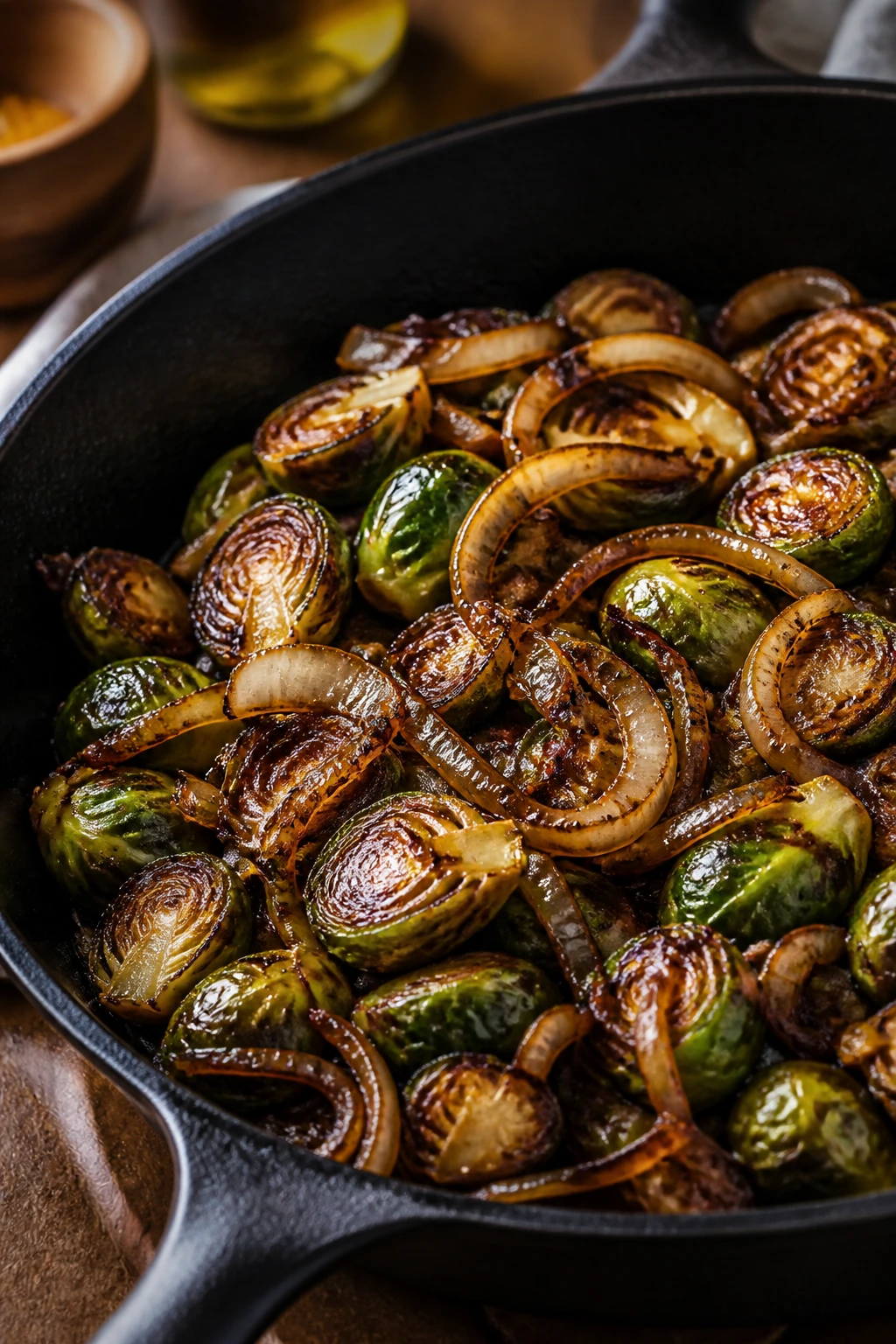
There’s something satisfying about a dinner that starts with a hot skillet and ends with vegetables that actually taste cooked. Not boiled-cooked. Not politely warmed through. Cooked, browned, and edged with enough balsamic and lemon to make the whole pan feel awake.
That’s why this one keeps sneaking back into my kitchen. It uses ordinary vegetables, ordinary beans, and a few pantry seasonings, then turns them into something with shape and personality. The next time dinner feels thin, start with a hot pan and a little patience. The rest tends to fall into place.
Caramelized Vegetable Skillet — Recipe Card
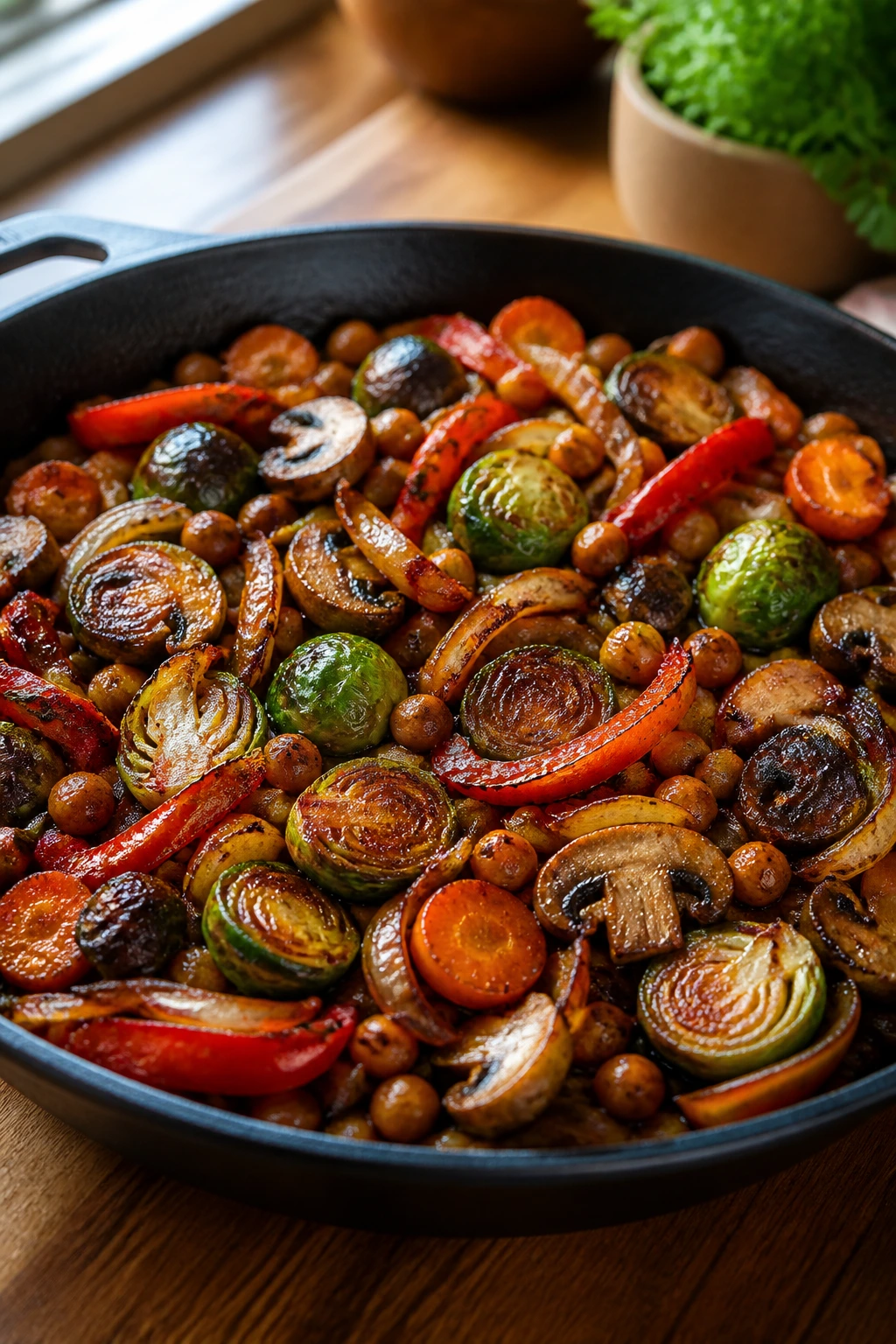
Recipe Name: Caramelized Vegetable Skillet with Chickpeas
Description: A skillet of browned onions, carrots, Brussels sprouts, mushrooms, bell pepper, and chickpeas finished with balsamic, parsley, and lemon. Served on its own or over grains, it eats like a full vegetarian dinner with real texture and savory depth.
Prep Time: 20 minutes
Cook Time: 25 minutes
Total Time: 45 minutes
Course: Dinner, Main Course
Cuisine: Vegetarian, Mediterranean-inspired
Servings: 4 servings
Calories: About 230 kcal per serving
Ingredients
For the Skillet:
- 3 tablespoons extra-virgin olive oil, divided
- 1 large red onion, cut into 1/2-inch wedges
- 3 medium carrots, peeled and sliced on the bias into 1/4-inch pieces
- 12 ounces Brussels sprouts, trimmed and halved
- 8 ounces cremini mushrooms, halved if small or quartered if large
- 1 red bell pepper, seeded and cut into 1-inch strips
- 1 can (15 ounces) chickpeas, drained and patted very dry
- 4 garlic cloves, minced
- 1 teaspoon kosher salt, plus more to taste
- 1/2 teaspoon black pepper
- 1 teaspoon smoked paprika
- 1 teaspoon dried thyme or 1 tablespoon fresh thyme leaves
For the Finish:
- 1 1/2 tablespoons balsamic vinegar
- 2 tablespoons chopped flat-leaf parsley
- 1 lemon, cut into wedges
Instructions
-
Slice the vegetables, rinse the chickpeas, and pat them dry until matte. Mix the salt, pepper, paprika, and thyme in a small bowl.
-
Heat 2 tablespoons olive oil in a 12-inch skillet over medium-high heat until shimmering.
-
Add the onion and carrots with a pinch of salt. Cook for 6 to 8 minutes, stirring occasionally, until the edges start to brown.
-
Add the Brussels sprouts cut side down. Cook for 3 to 4 minutes without stirring, then toss and cook for 2 more minutes.
-
Add the mushrooms and bell pepper, plus the remaining 1 tablespoon olive oil if the pan looks dry. Cook for 5 to 6 minutes, until the mushrooms release and reabsorb their moisture.
-
Stir in the chickpeas, garlic, paprika, thyme, black pepper, and remaining salt. Cook for 2 to 3 minutes, until the garlic smells sweet and the chickpeas are hot.
-
Pour in the balsamic vinegar around the edge of the pan and scrape up the browned bits. Cook for 30 to 45 seconds, until glossy.
-
Turn off the heat, add the parsley, and finish with lemon juice to taste. Serve immediately.
Notes: Dry chickpeas brown better; add the balsamic at the end; if your skillet is small, cook the vegetables in two batches so they can caramelize instead of steaming.