



Crispy Korean cooking has a bad habit of humiliating takeout. The first bite from a just-fried wing or a kimchi pancake with lacy edges is sharp, hot, and a little rude — in the best way. Then the lid closes, steam gathers, and twenty minutes later the same food can feel like it was wrapped in a damp towel.
That gap is exactly why this style is worth making at home. Korean-style crunch depends on details that delivery can’t protect: a dry surface, the right starch, hot oil that does not crash when the food goes in, and a sauce that arrives at the table only after the crust has done its job. Get those things right and the result is louder than restaurant takeout, with a cleaner snap and less grease on your fingers.
The smell alone makes the effort make sense. Garlic hits hot oil. Sesame oil lands in a glaze at the end, not before. A spoonful of gochujang turns glossy and brick-red in the pan. If you like food that crackles before it softens, and you want to know why Korean fried chicken and jeon can stay crisp when so much fried food turns soggy, the answer is hiding in the method, not the ingredients list.
Why Homemade Korean Crunch Beats the Delivery Box
-
Crispness comes from timing, not luck: When you fry at the right temperature and sauce at the last possible moment, the coating stays dry enough to stay loud for the first ten to fifteen minutes on the plate.
-
You can build the texture you actually want: Potato starch gives a thin, brittle shell; rice flour gives a drier edge on pancakes; a little flour can help things cling without turning heavy.
-
The heat stays where it belongs: Home cooking lets you hold fried pieces on a rack instead of trapping them in a closed carton, which means the underside doesn’t steam itself soft.
-
Sauce stops being the enemy: A reduced soy-garlic or gochujang glaze can cling in a lacquered layer instead of soaking through the crust.
-
The same method works on more than chicken: Tofu, mushrooms, shrimp, eggplant, kimchi pancakes, and scallion pancakes all benefit from the same dry-surface, hot-pan logic.
-
Leftovers don’t have to be sad: Unsauced pieces can be reheated in a hot oven or air fryer and still come back with some bite if you store them the right way.
Why Takeout Korean Food Goes Soft So Fast
Takeout isn’t the problem. Steam is. The minute fried food gets sealed into a box, moisture has nowhere to go, and the box becomes a tiny sauna. The crust that was shattering in the fryer starts to absorb its own steam, then the sauce on top speeds up the whole collapse.
I’ve watched perfectly good fried chicken lose its edge in the time it takes to find chopsticks. Same with kimchi pancakes. Same with twigim. The issue is not that the food is flawed. It’s that fried food wants air around it, and delivery containers are basically designed to deny that air.
A restaurant can get away with this for a few minutes because the fryer is hot, the turnover is fast, and the food is usually assembled in a rush right before it leaves the kitchen. At home, you have a small advantage that matters more than people think: you can stage the whole thing so the crust is finished before the sauce ever shows up.
That means a wire rack instead of a paper-towel nest. It means a bowl for the glaze on the side. It means serving the food while the crackle is still audible. Steam is the thief. Once you start planning around that fact, the whole style gets easier.
The Starches That Build the Shell
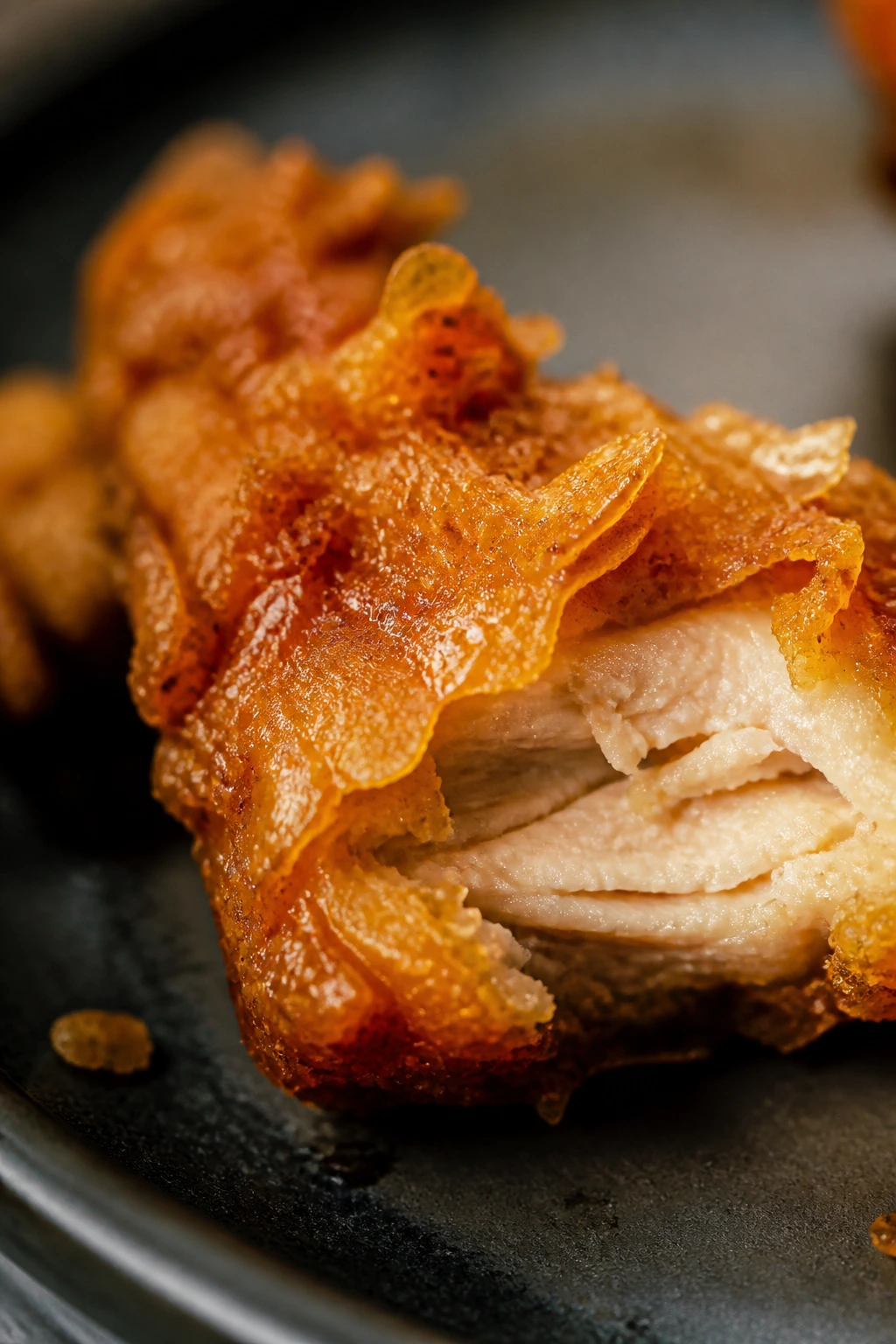
Potato starch is the ingredient I reach for first when I want a crust that bites back. It fries into a thin, almost glassy shell that looks delicate but feels firm when you bite through it. That is the texture people remember from good Korean fried chicken — not thick breading, not heavy batter, just a sharp little crack.
Potato Starch: The Sharpest Shell
Potato starch works because it dries fast and fries pale. You get crispness before you get heaviness, which is exactly the point. It’s especially good on bite-size chicken, tofu cubes, and mushrooms with a lot of surface area.
Use it when you want the coating to look thin and a little rough, not puffy. If you let the pieces sit for a few minutes after dredging, the starch hydrates just enough to cling, and that cling is what keeps the shell from sloughing off in the oil.
Cornstarch: The Lighter Backup
Cornstarch gives you a finer, tighter crunch. It’s less brittle than potato starch, but it still dries out well and makes a good coating when you want something a touch more restrained. I like it in blends, especially if I’m working with a sauce that has to stick.
It’s also useful when potato starch is hard to find. Straight cornstarch is fine on chicken wings or tofu, but it can taste a little squeaky if you use too much. Blend it with a bit of flour and the texture settles down.
Rice Flour: The Pancake Specialist
Rice flour belongs in kimchi jeon and pajeon because it helps the edges fry up drier and crisper. The grain is a little coarser than wheat flour, which sounds like a flaw until you taste the finished edge and realize that little roughness is what keeps the pancake from going limp.
Use too much, though, and the texture can go sandy. That’s why rice flour usually works best as part of a blend, especially when there’s enough liquid and scallion to keep the batter from turning pasty.
The Blends I Trust Most
For fried chicken, I like a mix that leans hard on starch and keeps flour in the background. Something like 3 parts potato starch to 1 part all-purpose flour gives you a shell that stays light but still clings.
For pancakes, I prefer rice flour plus all-purpose flour rather than rice flour alone. The wheat gives structure; the rice flour keeps the pan edges dry. For tofu or eggplant, a straight dusting of starch before frying is enough. You do not need a thick batter to get good crunch. In fact, thick batter is usually the thing that ruins it.
Dry Prep Is Half the Battle
Wet surfaces make bad crusts. That sounds obvious, but people still skip it because they’re in a hurry and the coating looks like it’s sticking. It is not the same thing as sticking well. A damp piece of chicken or tofu turns the starch into paste before it ever reaches the oil.
Chicken Needs Dry Skin, Not Just Seasoning
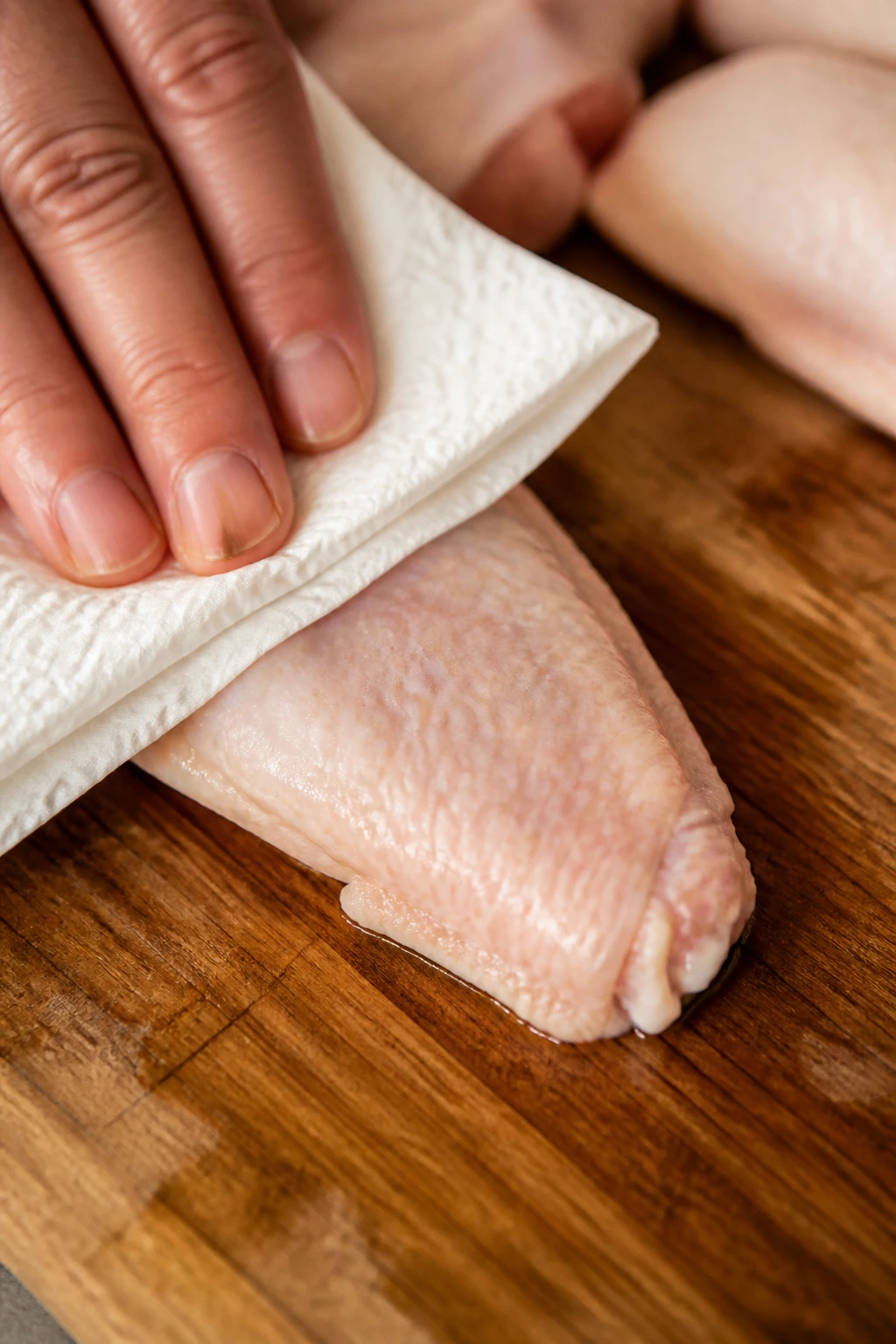
For wings, drumettes, or boneless thighs, pat the meat dry with paper towels first, then season lightly with salt and let it sit. If you have thirty minutes, leave it uncovered in the fridge. That little dry rest pulls surface moisture away from the skin and gives the starch something better to grab.
If you’re cutting boneless chicken into bite-size pieces, keep the pieces fairly even — around 1 to 1½ inches is a good range. Bigger chunks take longer to cook and can tempt you into overbrowning the coating before the center is ready. Smaller than that, and they can dry out before they get a proper shell.
Tofu Needs Pressure Before It Needs Spice
Tofu is all about water management. Press it for 20 to 30 minutes between towels with a plate and a heavy skillet, then cut it into slabs or cubes. If you skip the press, the tofu steams from the inside and the starch on the outside turns muddy.
Firm or extra-firm tofu works best. Silken tofu is a different game entirely — delicious, but not the route you want for this kind of crackling crust. Dust the pressed tofu in starch right before frying, not half an hour ahead, or the coating can start to go gummy.
Vegetables and Seafood Need Their Own Rules
Mushrooms, eggplant, zucchini, and seafood all bring water to the party, which means they need a quick hand. Eggplant slices can be lightly salted and blotted before frying. Mushrooms need a dry towel and a quick starch dust. Shrimp and squid should be as dry as you can make them before they hit the bowl.
The goal is not to strip every bit of moisture away. The goal is to keep surface water from fighting the crust. A wet vegetable can still crisp. It just needs a hotter pan and a lighter coating than people expect.
Double-Frying the Korean Way
Double-frying sounds fussy until you taste the second fry. The first pass cooks the food through and sets the shape. The second pass dries the crust, evens out the color, and makes the outside feel sharp instead of soft. That’s the move behind a lot of the best Korean fried chicken.
The First Fry: Pale on Purpose
For chicken pieces, I like the oil around 325°F to 340°F on the first fry. That gives the coating time to set without scorching. Small boneless pieces may need 4 to 5 minutes. Wings and drumettes often need 6 to 8 minutes, depending on size.
The piece should come out pale gold, not dark brown. Pale is good here. Dark on the first fry usually means the second fry will push it too far before the inside has the chance to stay juicy. You are building structure, not finishing the color.
Do not crowd the pot. Cold food drops the oil temperature fast, and a cooler fryer gives you greasy crust. A couple of batches is better than one overloaded one.
The Rest: Where the Crunch Gets Its Shape
After the first fry, let the pieces rest on a wire rack for 5 to 10 minutes. This is not dead time. Steam inside the food keeps moving outward, and the surface shell tightens as it cools slightly.
That pause is also where the food gets a little more flexible on the inside and a little drier on the outside, which is exactly what you want before the second fry. If you rush straight from one fry to the next, the shell can blister unevenly and some pieces will darken too fast.
The Second Fry: Hotter and Shorter
For the second fry, raise the oil to 375°F to 380°F. The pieces only need 45 seconds to 2 minutes, depending on size. You’re not cooking from raw anymore. You’re drying and crisping.
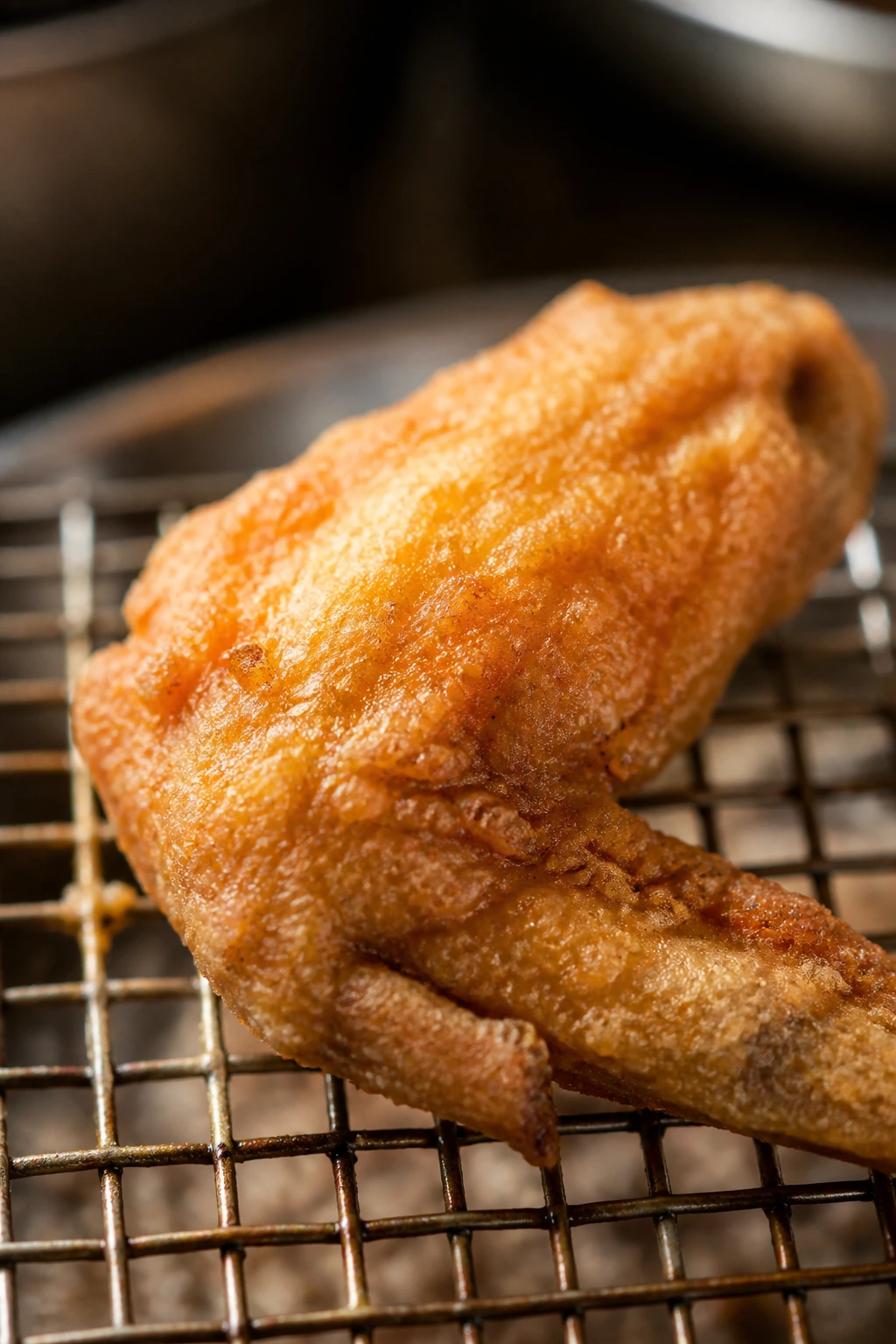
The sound changes when the second fry is working. It gets sharper, faster, a little more aggressive. That is what you want. Pull the food once it looks deep golden and the surface feels hard when nudged with tongs. If you have an instant-read thermometer, chicken should still hit 165°F in the center. Wings and drumettes can ride a bit longer because the skin protects them.
If the oil temp drops, wait. Don’t rush the second batch into cooler oil just because it’s there. That’s how you get a crust that looks fine and eats soft.
Beyond Fried Chicken: Kimchi Pancakes, Twigim, and Tofu
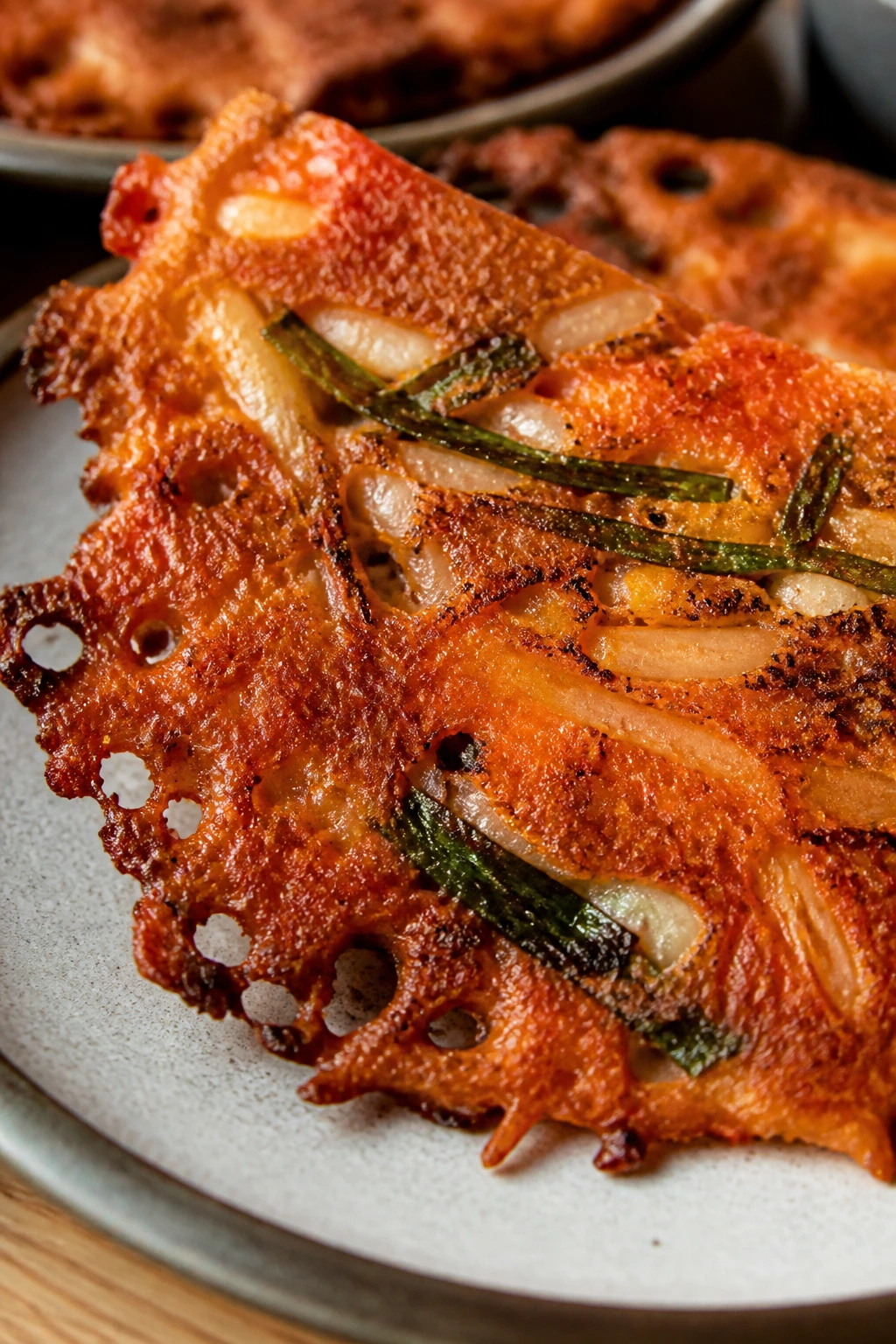
Not every crispy Korean dish starts with chicken, and that’s part of the fun. The same logic — dry surface, hot pan, careful timing — shows up in pancakes, vegetable fritters, seafood fry-ups, and tofu dishes that are far better when they have a brittle edge.
Kimchi Jeon and Pajeon
Kimchi jeon wants a batter that spreads without fighting back. Too thick and it turns doughy; too thin and the filling falls apart. I want enough liquid that it pours like heavy cream, with bits of kimchi or scallion suspended in it rather than buried in a paste.
Pajeon is all about the scallions. Use long pieces and enough oil that the edges can lace and brown. The bottom should sound like a light crackle when the spatula slides under it. If it bends like a tortilla, it needed more heat or more time.
The crispest jeon often comes from a bit of rice flour in the batter and a pan that’s hot enough to brown the edges before the center turns wet. Keep the batter cold if you can. Cold batter hits the pan in a cleaner way.
Twigim and Snack-Platter Frying
Twigim is the snacky, mixed-fry side of Korean cooking — vegetables, seafood, sweet potato, seaweed rolls, and whatever else the cook feels like dipping and frying. The pieces are usually small, which means the oil temp matters even more. One soggy batch can sour the whole platter.
Sweet potato sticks are one of the best tests of your oil temp. They should come out tender inside with a crisp skin, not limp and browned on the outside while still stiff in the middle. Squid should fry fast enough that it stays tender. If you let it linger, it gets rubbery in a hurry.
Tofu, Mushrooms, and Eggplant
Tofu rewards a dry starch dust and a firm pan. Mushrooms reward patience — let the moisture cook off before you expect browning. Eggplant wants either a firm pre-salt and blot or a hot, shallow fry that seals the slices fast.
These ingredients are where people often overcomplicate things. They reach for a big batter when a light dusting and a hot surface would do the job better. Crispness here is about restraint. Less coating, less moisture, less chaos in the pan.
Seafood That Needs a Short Clock
Shrimp and squid do not want a long fry. Shrimp curl and color fast; squid goes from tender to chewy with almost no warning. That’s why a light starch coat and a very hot fry work so well. You get the surface crunch without overcooking the middle.
If you’re making a mixed platter, fry the seafood last. It cooks too fast to wait around on a tray while you finish something else, and the texture is best when it comes from the oil straight to the plate.
Sauces That Gloss Instead of Soak
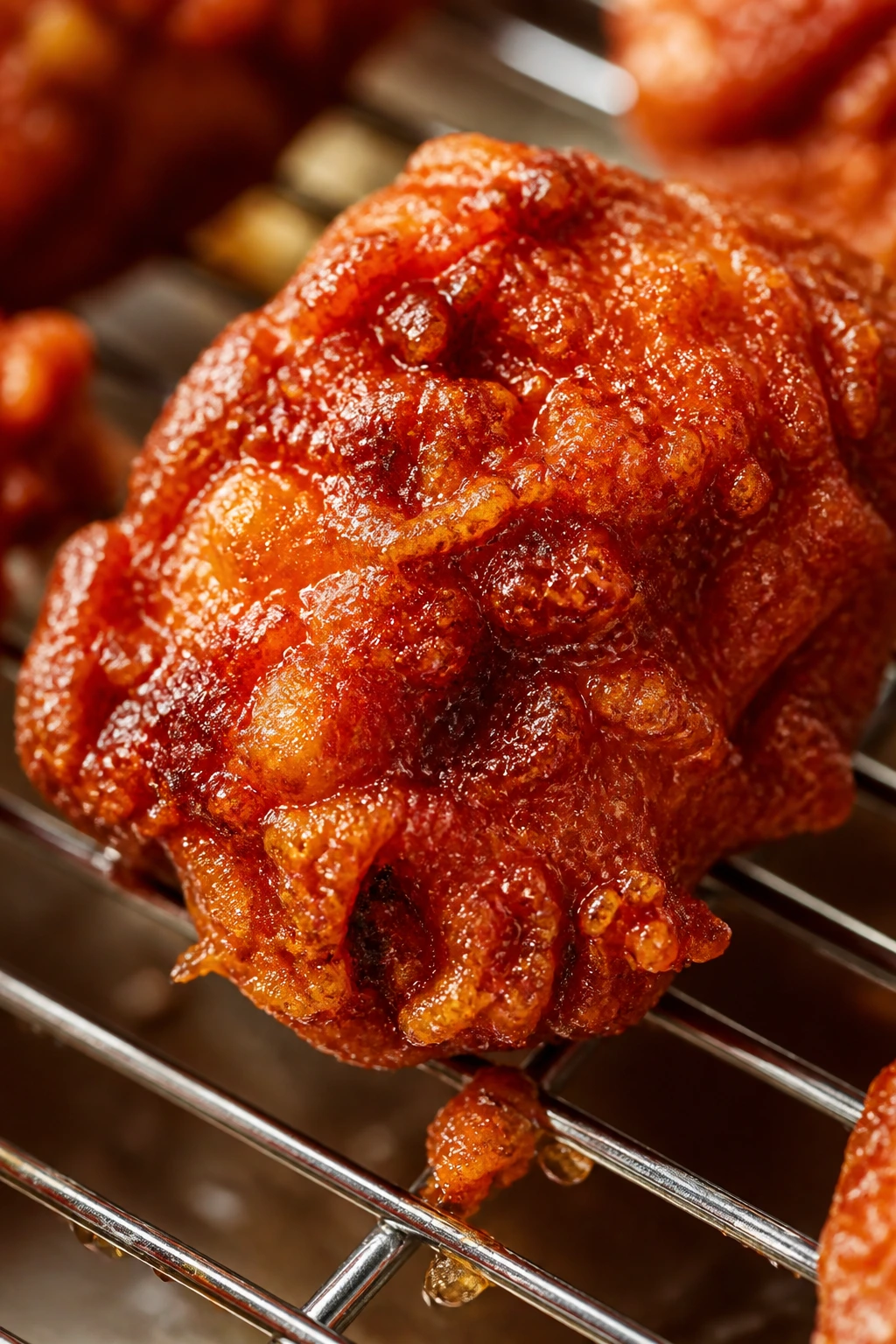
Sauce can be gorgeous and rude at the same time. Pour it on too early and it ruins the crust. Reduce it too much and it turns sticky in the pan before it ever reaches the food. The trick is to make the sauce thick enough to cling, then add it at the exact moment the food is ready to eat.
Soy-Garlic Gloss
A good soy-garlic glaze starts with soy sauce, minced garlic, a little ginger if you want it, and a sweetener that can be honey, brown sugar, or corn syrup. Simmer it until the spoon leaves a trail through the liquid and the bubbles slow down a little.
The garlic should smell sweet, not bitter. If it starts to taste sharp and burnt, the heat is too high. Pull the pan off the burner and let the residual heat finish the job. A splash of rice vinegar near the end keeps the glaze from tasting flat.
Sweet Sticky Glaze
This is the dakgangjeong lane. You want something glossy enough to coat the chicken in a thin sheen, not a drippy sauce. Honey or corn syrup makes the glaze cling. A pinch of gochugaru gives warmth without flooding the crust with moisture.
The sauce should feel almost syrupy on the spoon. When it’s ready, toss the fried pieces in a bowl, not in the hot pan. The bowl lets you coat quickly and stop when the surface is just painted, not drowned.
Heat-First Finishes
If you want more heat, use gochujang carefully. It brings depth, but it also thickens fast and can turn the sauce heavy if you throw too much into the pot. I like to build the glaze with a little gochujang, then finish with gochugaru or black pepper for lift.
A thin brush of sauce on top of fried pieces keeps the underside drier. That sounds fussy. It is worth it. When you bite in, the top gets sweet and spicy while the bottom still crackles.
How to Serve Crispy Korean Food So It Stays Crisp
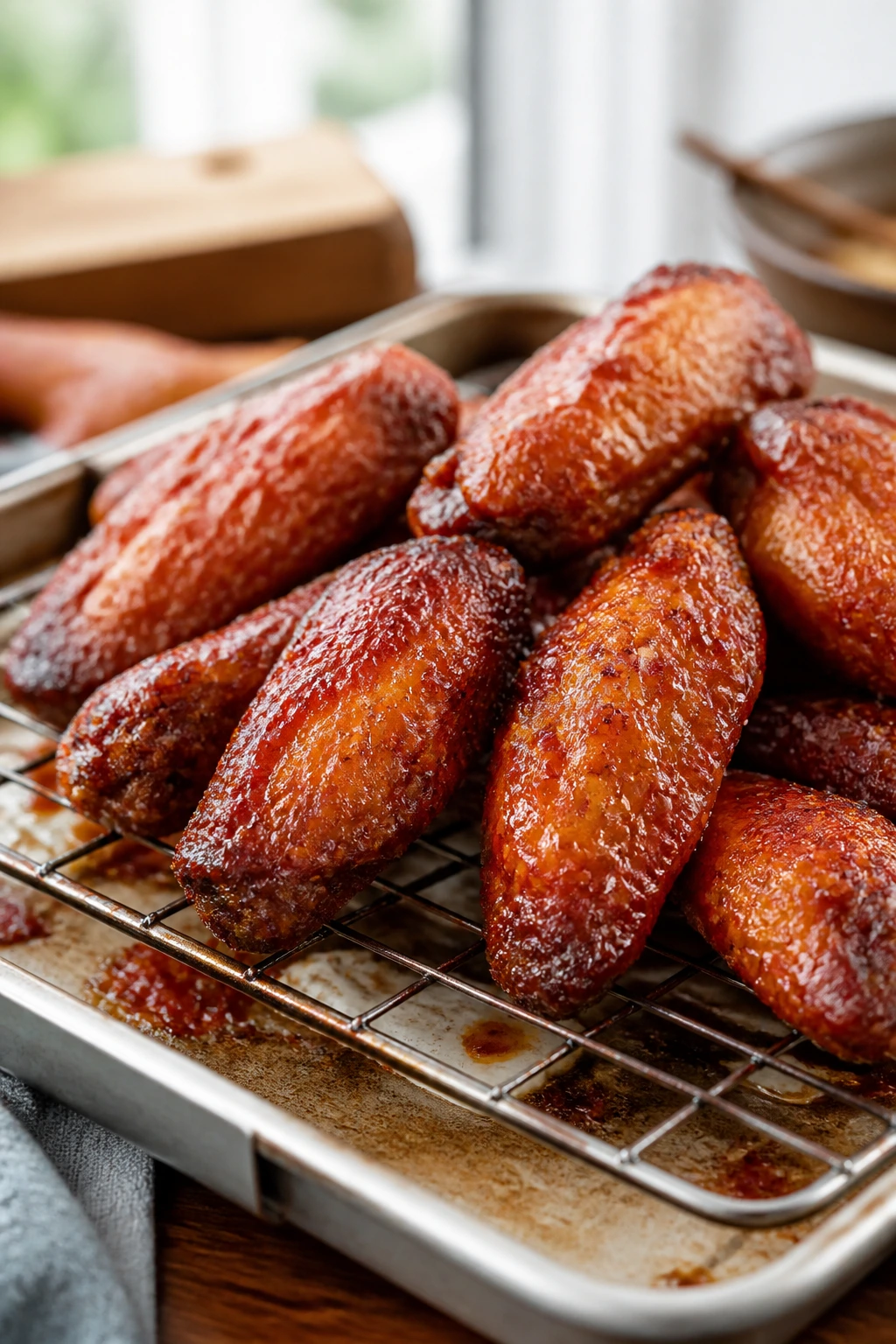
Presentation: Serve the fried pieces on a wire rack set over a rimmed sheet pan if people are eating over time, or on a wide platter if the food is going straight to the table. A rack looks less polished, maybe, but it keeps the underside dry. If you want a cleaner look for a plated dinner, brush sauce over only the top surfaces and leave a few edges bare.
Accompaniments: Short-grain rice gives you something soft to balance the crunch, but I also like quick-pickled radish, cold kimchi, and a simple cucumber salad with rice vinegar and sesame oil. A handful of shredded cabbage with a tiny pinch of salt works better than people expect. It’s cheap, cold, and sharp.
Portions: For fried chicken, figure 4 to 5 wings or 6 to 8 bite-size pieces per adult if rice and sides are on the table. For jeon or twigim, 2 to 3 pieces make a starter portion and 4 to 6 works as a meal if there’s rice or soup beside it. If you’re feeding a mixed group, fry a little extra. The second batch vanishes faster than the first.
Beverage Pairing: A cold lager fits the salt, fat, and glaze without crowding the food. So does lightly sweet makgeolli, which has a soft tang that plays well with fried edges. If you want something nonalcoholic, chilled barley tea or sparkling water with a squeeze of lime keeps the meal bright instead of heavy.
Small Habits That Keep the Crunch Loud
-
Flavor Enhancement: Add a teaspoon of toasted sesame oil to the glaze at the very end, not to the frying oil. That tiny amount gives the food the Korean aroma people recognize without making the crust greasy.
-
Time-Saver: Mix your dry coating and simmer your sauce before the oil gets hot. Once the first batch is frying, you do not want to be chopping garlic with one hand and babysitting oil with the other.
-
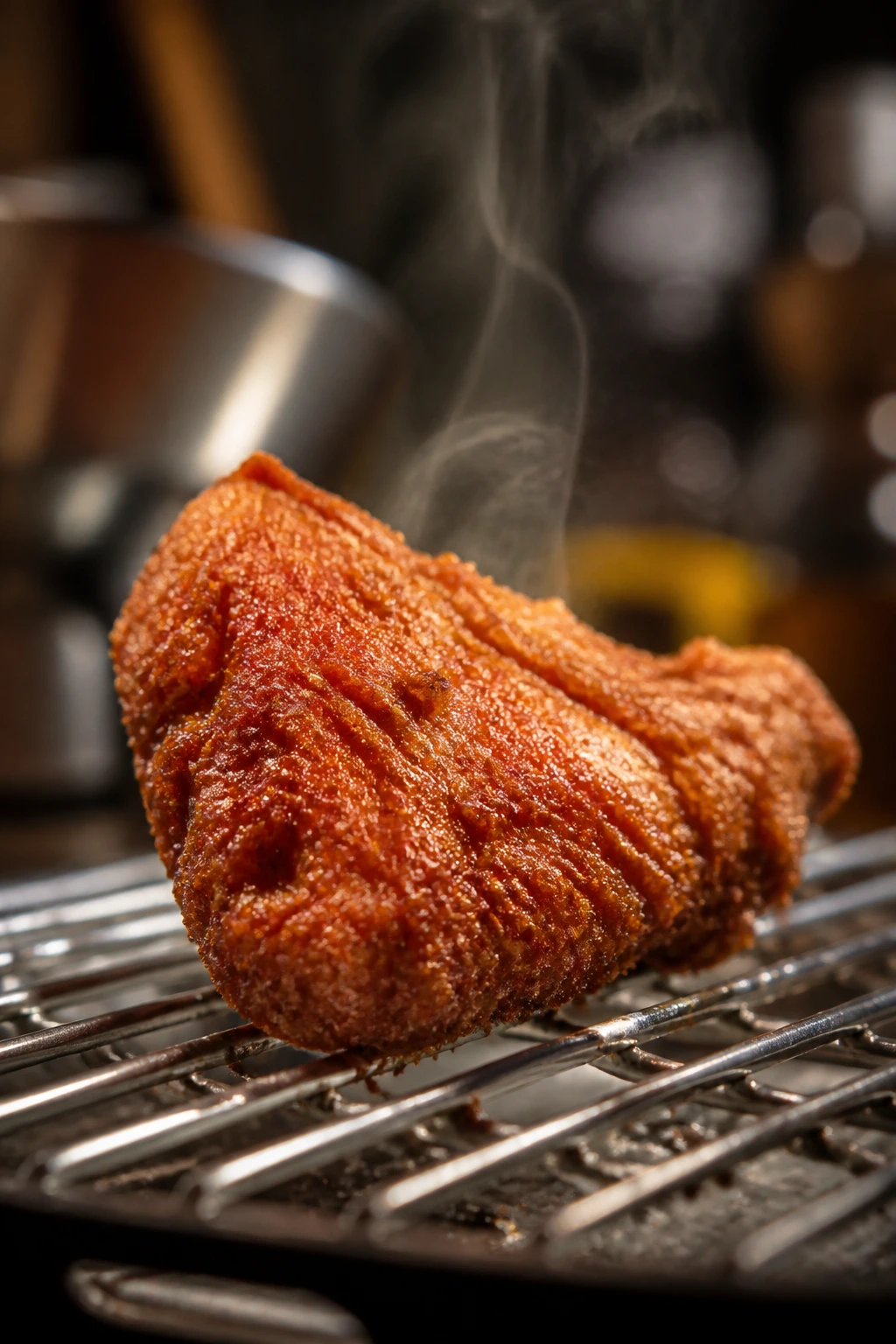
Pro Move: Hold finished pieces on a wire rack in a 250°F oven for up to 20 minutes while you finish the rest of the batch. That’s long enough to keep a crowd fed without turning the first tray flabby.
-
Cost-Saver: Buy whole wings, drumsticks, or a whole chicken and break it down yourself if you’re comfortable with a knife. You pay less per pound, and the fryer does not care whether the pieces came from a perfect butcher case.
-
Texture Upgrade: Sift your starch once before coating. Clumps in the bowl turn into pale lumps on the crust, and those lumps brown unevenly. A quick sift looks annoying. It saves the finished texture.
The Mistakes That Turn Crunch Soft
-
Starting with wet food: The symptom is a gummy crust that peels or turns spotty. The fix is boring but nonnegotiable — pat the food dry, then let it sit long enough for the surface moisture to settle before it hits the starch.
-
Crowding the pot: If the oil temperature drops, the food starts drinking oil instead of sealing. Fry in smaller batches, and wait for the thermometer to climb back before adding the next round.
-
Saucing too early: A coated piece that sits in sauce for five minutes loses its edge. Toss the food right before serving, or keep the sauce on the side and let people dip.
-
Resting on paper towels: Paper towels catch grease, but they also trap steam under the food. A wire rack gives the crust somewhere to breathe. That matters more than people think.
-
Using one batter for everything: Kimchi pancakes need a loose batter. Chicken wants a dry starch coat or a light batter. Seafood wants a shorter fry. Treating all of them the same is how you get bland results and weird texture.
-
Skipping the thermometer: Oil that looks hot can still be too cool, and oil that’s a little too hot can burn the coating before the center cooks. A simple thermometer fixes the guesswork and saves a lot of disappointment.
Flavor Variations and Easy Swaps
Dakgangjeong Street-Style
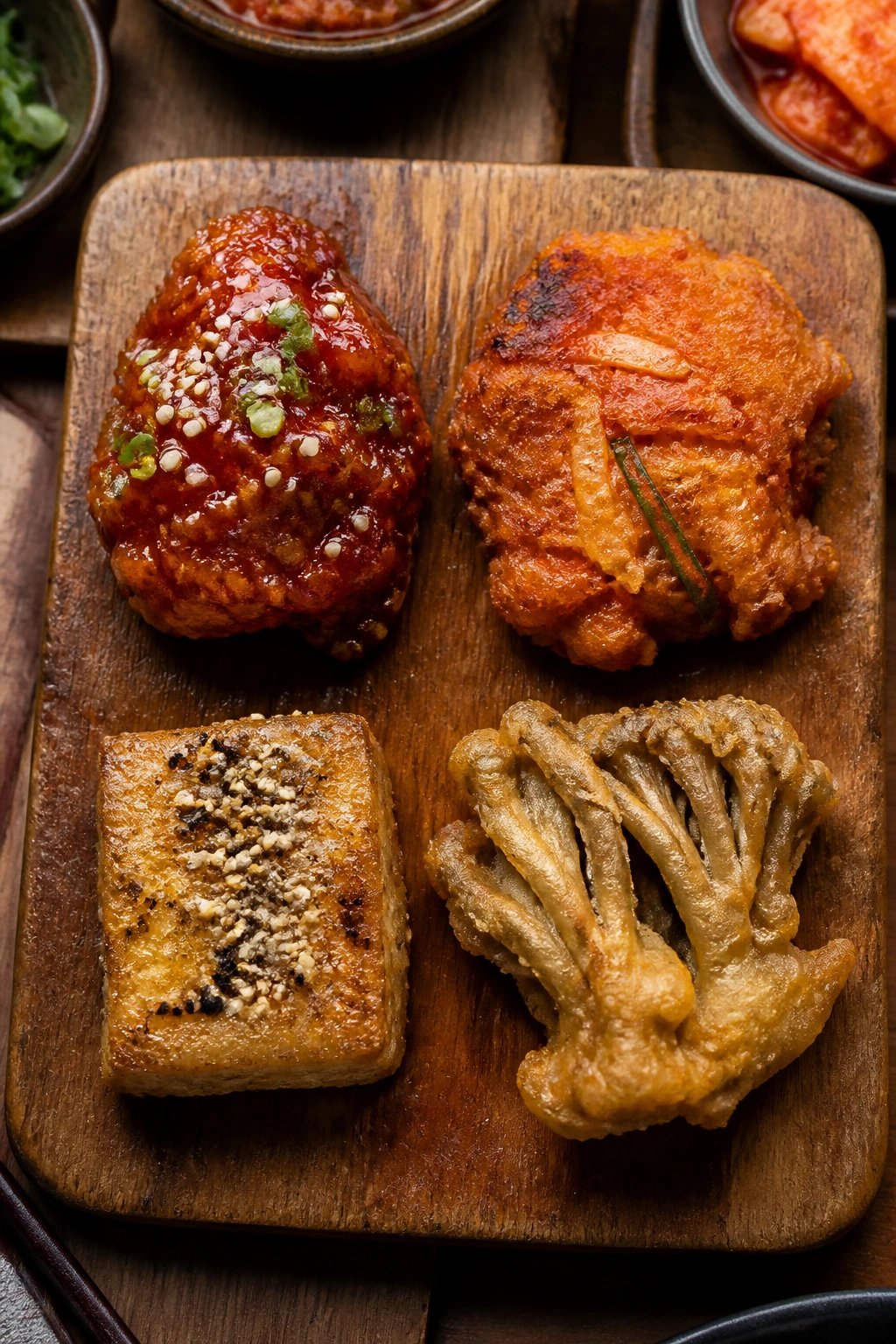
This is the sticky, sweet-spicy chicken version with a glossy coat and a little chew from sesame seeds or crushed peanuts. Fry the chicken twice, then toss it in a sauce built from soy, honey or corn syrup, garlic, ginger, and gochugaru. It’s the one to make when you want the food to feel bold and a little messy in the good way.
Kimchi Jeon With Extra Edge
Use well-squeezed kimchi, scallion whites, a bit of rice flour, and enough cold water to keep the batter loose. A hotter pan and a little more oil around the perimeter make the edges lace up and crisp. This version is sharp, tangy, and perfect when you want something that feels snacky but still substantial.
Sesame-Pepper Tofu Bites
Press firm tofu, cut it into cubes, dust it in potato starch, and fry until the outside blisters. Finish with soy sauce, toasted sesame oil, black pepper, and sliced scallions. If you want more heat, add a pinch of gochugaru at the end — not before.
Mushroom Twigim Tray
King oyster mushrooms, shiitakes, or maitake all work here. Keep the coating light, fry fast, and season with salt, pepper, and a little garlic powder while the pieces are still hot. Mushrooms have enough flavor on their own, so they don’t need a heavy sauce to make sense.
Gluten-Free Rice Flour Fry
If you want to skip wheat, use rice flour and potato starch together. The crust will be a touch drier and lighter, with a little more snap and less chew. This works well for wings, shrimp, and vegetable fritters, though you still want the coating thin. Thick gluten-free batter gets pasty fast.
Tools and Equipment That Make It Easier
-
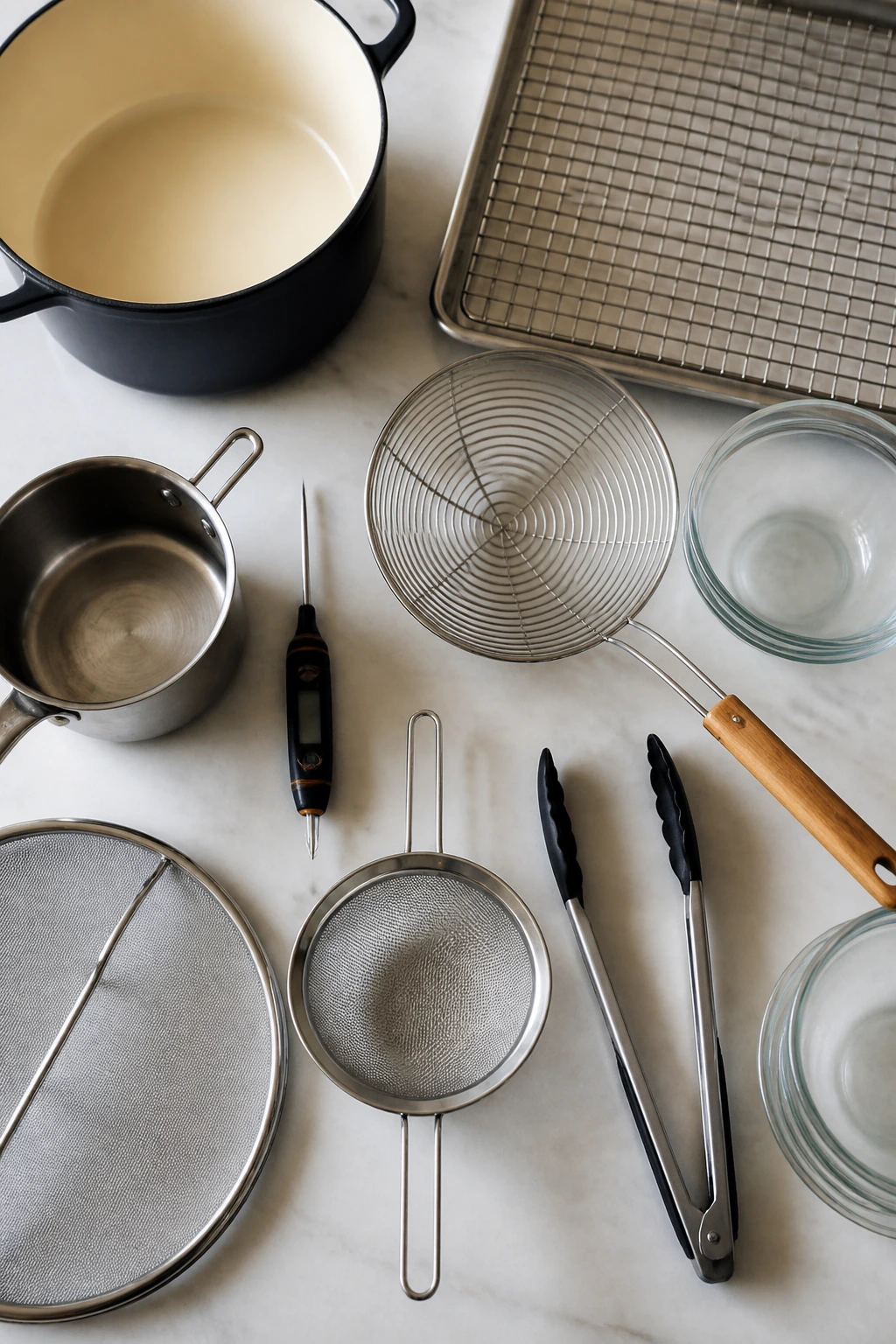
Instant-read thermometer: The most useful tool in the whole process. It tells you when the oil is actually ready and whether chicken has reached a safe internal temperature.
-
Heavy Dutch oven or deep pot: A deep vessel holds temperature better than a thin skillet and gives you room for oil without dangerous splatter.
-
Wire rack over a rimmed sheet pan: This is the resting place that keeps the bottom crust from steaming soft. Paper towels can be a backup, but they’re not the first choice.
-
Spider strainer or slotted spoon: Better than tongs for loose pieces and small fry batches. It lets oil drain fast without squeezing the crust.
-
Mixing bowls: One for starch, one for sauce, one for finished pieces. Separating them keeps clumps and steam from building in the wrong place.
-
Small saucepan: Handy for reducing soy-garlic or gochujang sauces until they cling.
-
Tongs: Useful for turning bigger wings or tofu slabs without breaking the coating.
-
Fine-mesh strainer: Great for pulling burnt crumbs out of oil between batches, which keeps the fryer from tasting bitter.
-
Splatter screen: Optional, but useful if your pot runs shallow or you hate oil freckles on the stove.
Storing and Reheating Without Killing the Crust
In the Fridge
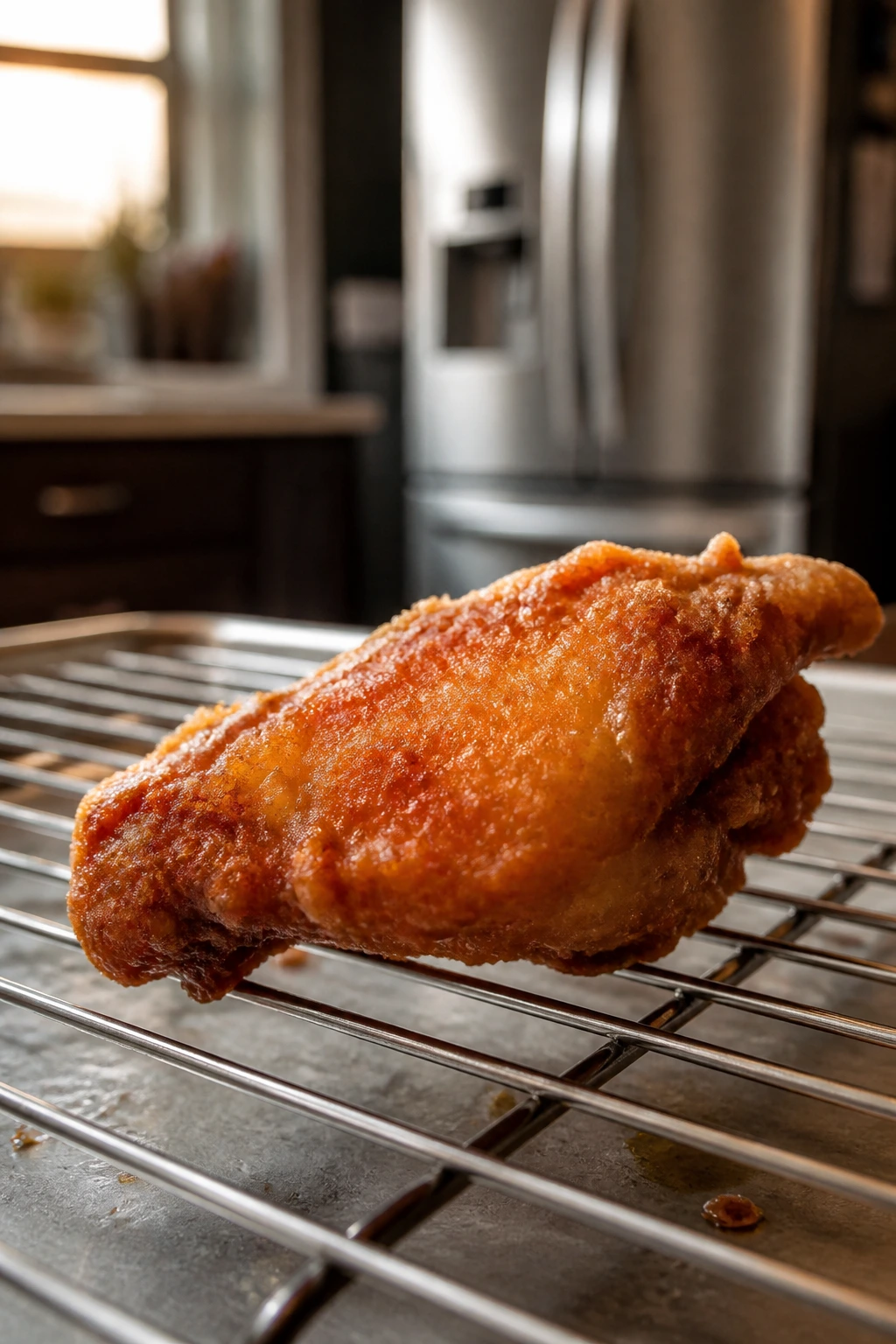
Unsauced fried chicken keeps well for up to 3 days in the refrigerator. Sauced pieces are better within 24 to 48 hours because the glaze keeps softening the crust. Kimchi pancakes and pajeon usually hold for 2 days before the edges start to lose their snap.
Cool everything completely before it goes into a container. If you pack hot food, condensation forms inside the lid and the crust gets soggy before it ever reaches the fridge. A single layer on a rack until it stops steaming makes a real difference.
In the Freezer
Unsauced chicken can be frozen for up to 2 months if you spread the pieces on a tray first, freeze them until firm, then bag them. That keeps them from sticking together and lets you pull out only what you need. I would not freeze sauced chicken unless you have no other option — the texture never comes back cleanly.
For tofu and vegetable fritters, freezing is more hit-or-miss. Some hold up fine, but the crust usually gets a little more brittle and less fresh. If you know the dish will be frozen, under-sauce it or leave the sauce off entirely.
Reheating by Dish
For fried chicken, use a 400°F oven on a wire rack for 8 to 12 minutes, or an air fryer at 375°F for 4 to 6 minutes. You want the outside crisp again before the inside dries out. If the pieces came from the freezer, thaw them overnight first.
For kimchi pancakes and pajeon, a skillet works better than the oven. Heat a thin film of oil over medium heat and re-crisp each side for 2 to 3 minutes. The edges come back better in a pan than anywhere else.
For tofu or mushrooms, the air fryer can be useful, but watch them closely. They dry out fast once the surface crunch returns. A short blast is enough.
Make-Ahead Timing
The sauce can be made up to 5 days ahead and kept in the fridge. Dry starch blends keep for weeks in a sealed jar. Kimchi pancake batter can sit for a short time — about 30 minutes to 1 hour — but it’s best mixed close to cooking so the batter stays lively and the vegetables don’t bleed too much water.
If you want to prep fried chicken ahead for a dinner, do the first fry, cool the pieces, and save the second fry for just before serving. That gives you the best chance of bringing back the crunch without overcooking the meat.
Questions People Ask About Crispy Korean Cooking
What makes Korean fried chicken crispier than regular fried chicken?
The big difference is the double fry and the lighter starch-heavy coating. The first fry cooks the chicken and sets the shell; the second fry dries the outside and gives it that thin, crackly finish. Sauce gets added after that, not before.
Can I use cornstarch if I don’t have potato starch?
Yes. Cornstarch gives a good crisp bite, though it tends to be a little tighter and less brittle than potato starch. If you want to split the difference, mix it with a small amount of all-purpose flour so the coating clings better.
Do I have to double-fry every crispy Korean dish?
No. Double-frying is most useful for wings, drumettes, and bite-size chicken. Pancakes, tofu, mushrooms, and vegetables often do better with a hot pan, a shallow fry, or a lighter second pass instead of a full double fry.
How do I stop kimchi pancakes from tearing in the pan?
Start with kimchi that’s been squeezed dry, and keep the batter loose enough to spread. A medium-hot pan helps the bottom set before you try to move it. If you flip too early, the pancake tears; if you wait until the edges are crisp and the center has lost its wet shine, it usually turns cleanly.
Can I make crispy Korean chicken in an air fryer?
You can get close, but it won’t have the same shattery shell as a true fry. Spray the coated chicken lightly with oil, leave space around each piece, and cook until the surface is deep golden before you add sauce. The texture is decent. It is not identical.
What oil is best for frying?
Use a neutral oil with a high smoke point, like canola, soybean, sunflower, or refined avocado oil. You want the oil to stay quiet and clean, not bring its own flavor into the food. Toasted sesame oil belongs in the sauce or as a finish, not in the fryer.
What if the coating falls off while frying?
That usually means the food was too wet, the coating was too thick, or the oil was disturbed too much early on. Pat the food dry, let the dredged pieces sit for a few minutes so the coating can cling, and lower them into the oil gently. Once the shell sets, stop poking at it.
Can I make the sauce ahead of time?
Yes, and it helps. A made-ahead sauce thickens a little as it cools, so you can judge whether it needs a splash of water before serving. Just rewarm it gently and stop the simmer before it turns too sticky.
A Plate Worth Making Again
Crunch is a timing problem, not a mystery. Once you dry the food properly, choose the right starch, and keep the sauce waiting until the last minute, crispy Korean cooking stops feeling fragile and starts feeling repeatable. That’s the part I like best. It isn’t luck. It’s control.
The box from a restaurant still has its place when convenience matters. But when you want the crackle, the garlic, the sweet heat, and that first hot bite to hit all at once, the kitchen can do a better job. Keep the oil steady, keep the rack ready, and let the crust speak before the glaze gets involved.