



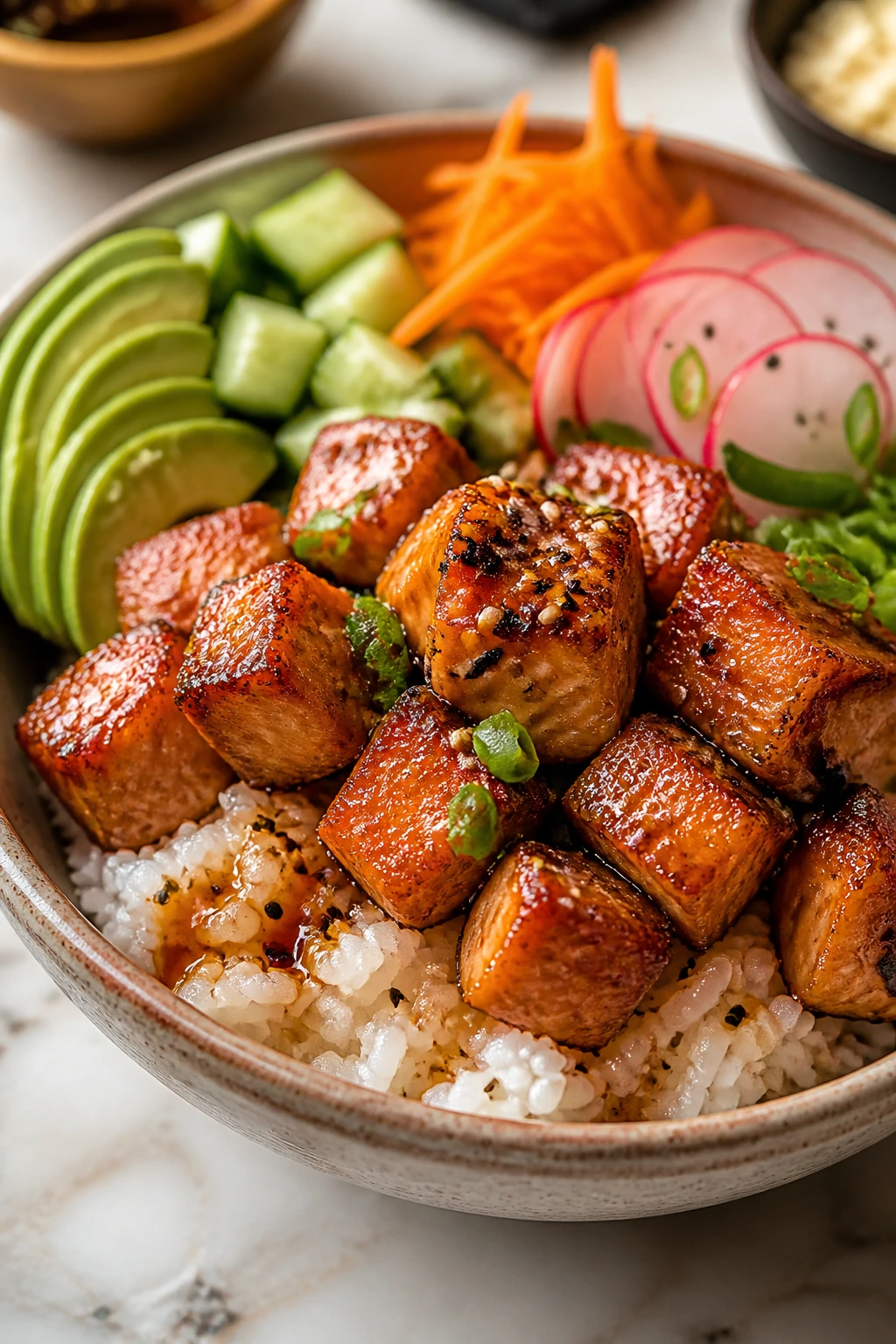
The fastest way to ruin a salmon poke bowl is to let the fish steam itself into sadness. You know the version: soft, slippery, a little lukewarm, and somehow already soggy before the chopsticks even get there. A proper crispy salmon poke bowl should do the opposite. The rice stays warm and seasoned, the salmon lands with browned edges and a tender center, and the cold toppings bring enough crunch and snap to make every bite feel composed.
That contrast is the whole point. A good bowl like this needs temperature, texture, and restraint. The salmon is not buried under a heavy sauce. The rice is not drenched. The cucumber is not left dripping across the bottom of the bowl like a small kitchen accident. When those pieces stay separate until the last second, the bowl tastes sharper, cleaner, and far more deliberate than most delivery versions.
And yes, this is poke-style rather than a strict raw-fish bowl. That’s the smart move here. Cooking the salmon gives you more control, a little more forgiveness, and those crisp edges that make people keep going back in for one more bite. The cornstarch is the small trick that matters. It looks modest in the ingredient list; it does the heavy lifting in the pan.
Why This Crispy Salmon Poke Bowl Works So Well
- The salmon gets a real crust: A light cornstarch coating and a hot skillet give the fish bronzed edges instead of that pale, steamed look you get from crowded pans.
- The bowl has temperature contrast: Warm rice underneath, cool cucumber and avocado on top, and salmon that lands somewhere in the middle is exactly what keeps the whole thing interesting.
- The sauce stays bright, not heavy: Soy sauce, rice vinegar, sesame oil, a little honey, and ginger give you that salty-sweet hit without turning the bowl into a gloopy mess.
- It’s flexible without getting vague: You can swap the rice, change the toppings, or dial the heat up and down, but the structure still holds together.
- It feels like takeout, only fresher: The ingredients are simple, but the final bowl tastes like someone actually cared about texture. That’s the difference.
- It’s weeknight-friendly in the real sense: Most of the time goes into rice and chopping; the salmon itself cooks in a few minutes and doesn’t need babysitting forever.
Timing, Yield, and What to Expect at the Stove
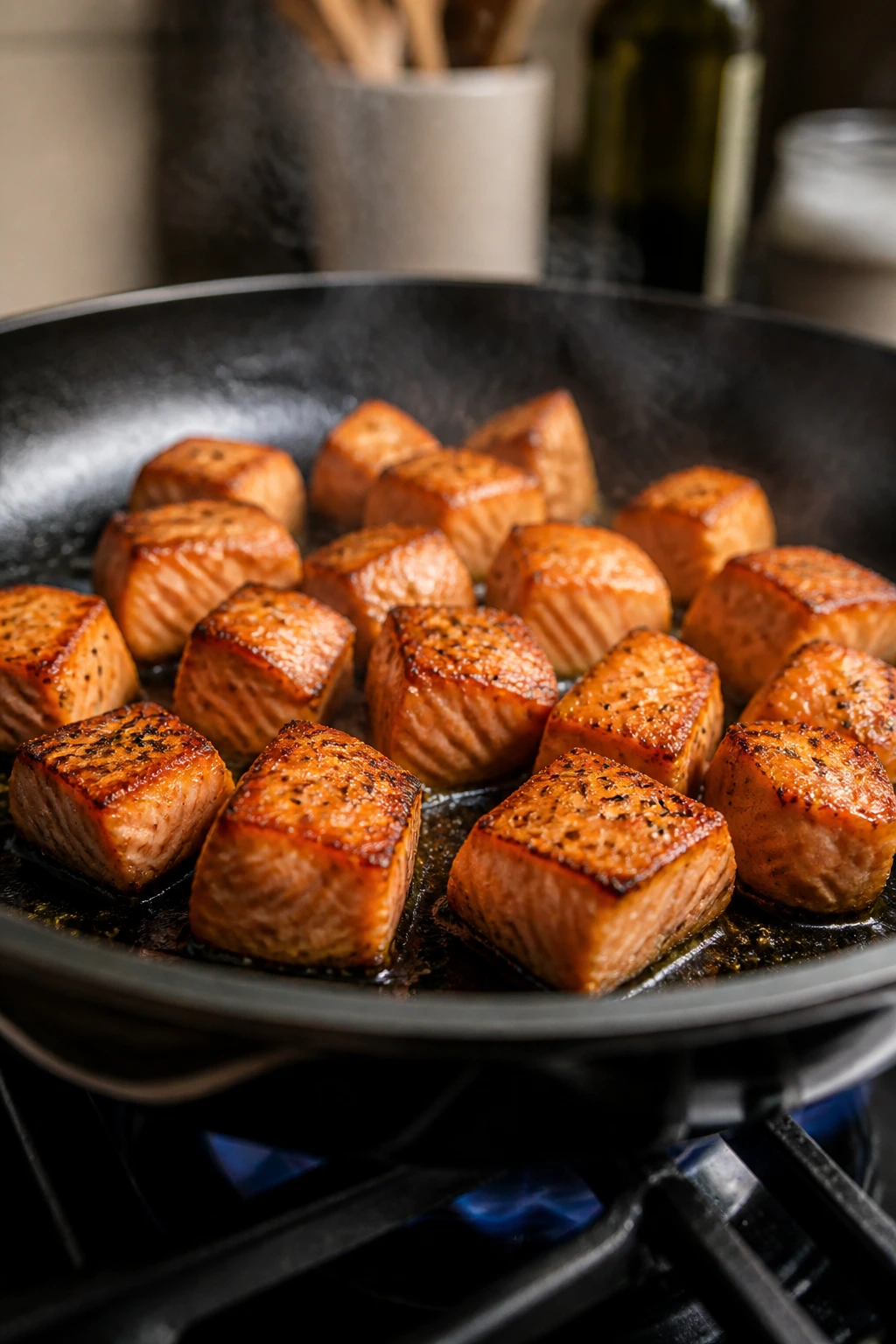
The rice sets the pace here, not the fish. Once you’ve got the simmer going, the rest moves quickly, and the salmon cooks so fast that you’ll want toppings prepped before the skillet even heats.
Yield: Serves 4
Prep Time: 20 minutes
Cook Time: 20 minutes
Total Time: 40 minutes active + 10 minutes resting
Difficulty: Intermediate — the steps are straightforward, but the salmon rewards a hot pan, a dry surface, and a little timing awareness.
Chill/Rest Time: 10 minutes for the rice to steam after cooking
Best Served: Immediately, while the salmon edges are crisp and the rice is still warm
A lot of poke bowls taste best in theory. This one tastes best when it leaves the stove and hits the bowl right away. Let the salmon sit too long and the crust starts to soften. Let the rice cool all the way down and the bowl loses its warmth. The sweet spot is easy to miss if you rush, but once you feel it once, you’ll stop guessing.
The Ingredient List That Gives the Bowl Its Shape
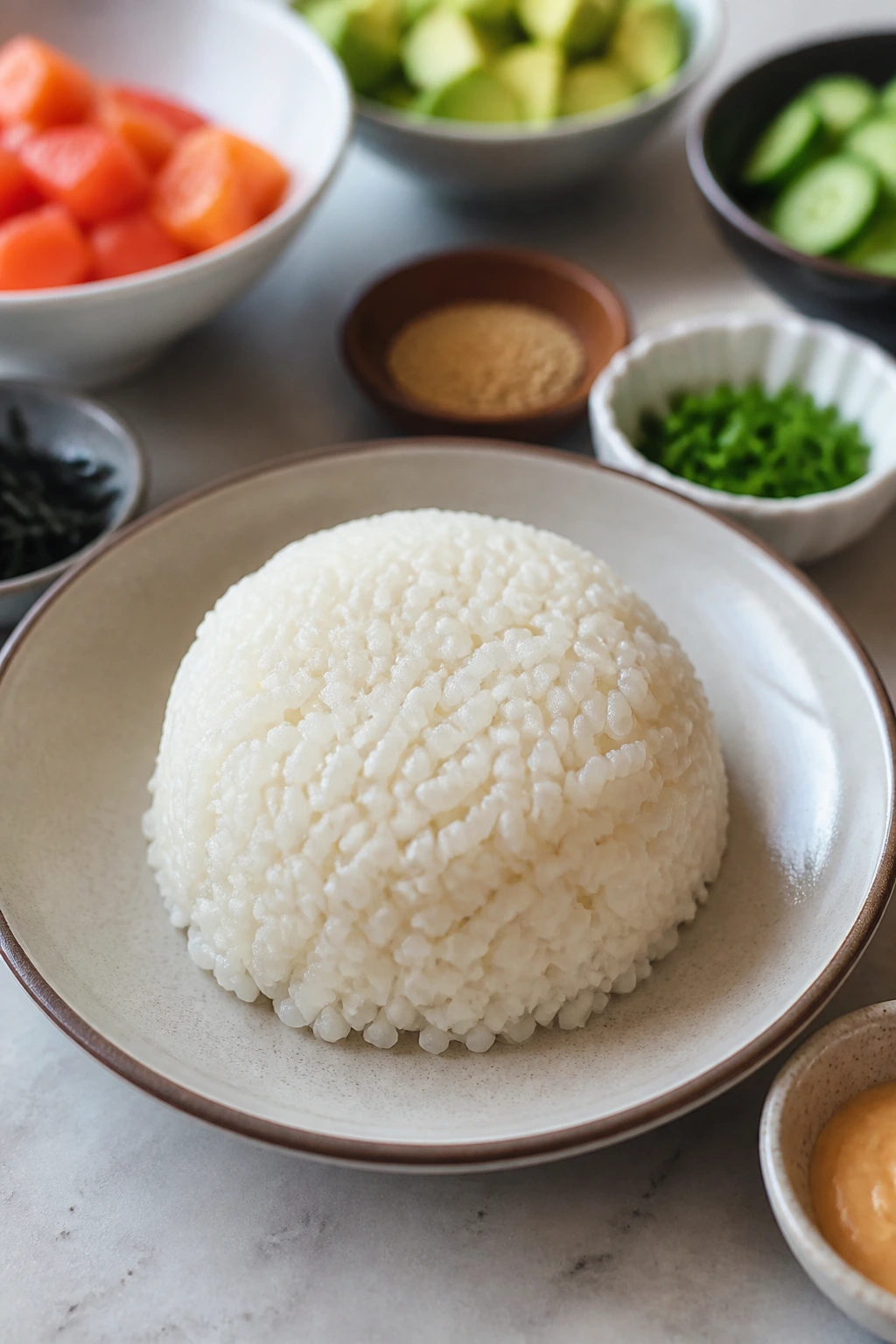
For the Rice
- 1 1/2 cups sushi rice or other short-grain white rice, rinsed until the water runs mostly clear
- 1 3/4 cups water
- 2 tablespoons rice vinegar
- 1 teaspoon sugar
- 1/2 teaspoon kosher salt
For the Crispy Salmon
- 1 1/2 pounds skinless salmon fillet, cut into 1-inch cubes and pin bones removed
- 1 tablespoon soy sauce
- 1 tablespoon toasted sesame oil
- 1 tablespoon cornstarch
- 1/4 teaspoon kosher salt
- 1/4 teaspoon black pepper
- 1 tablespoon neutral oil, such as avocado, grapeseed, or canola
For the Poke Sauce
- 3 tablespoons soy sauce
- 1 tablespoon rice vinegar
- 1 tablespoon mayonnaise
- 1 teaspoon honey
- 1 teaspoon sriracha
- 1 teaspoon grated fresh ginger
- 1 small garlic clove, grated or finely minced
- 1 teaspoon toasted sesame oil
For the Toppings
- 1 avocado, sliced
- 1 cup cucumber, thinly sliced or diced
- 1 cup shelled edamame, thawed if frozen
- 1/2 cup shredded carrots
- 2 scallions, thinly sliced
- 2 tablespoons toasted sesame seeds
- 2 sheets nori, cut into thin strips
- 1 lime, cut into wedges
The ingredient list is short on purpose. Nothing in this bowl needs to fight for attention. The salmon brings richness, the rice brings body, and the toppings are there to keep the bowl from tasting one-note after three bites. That’s a good thing. Overbuilt poke bowls tend to drown themselves.
What Each Ingredient Does in the Bowl
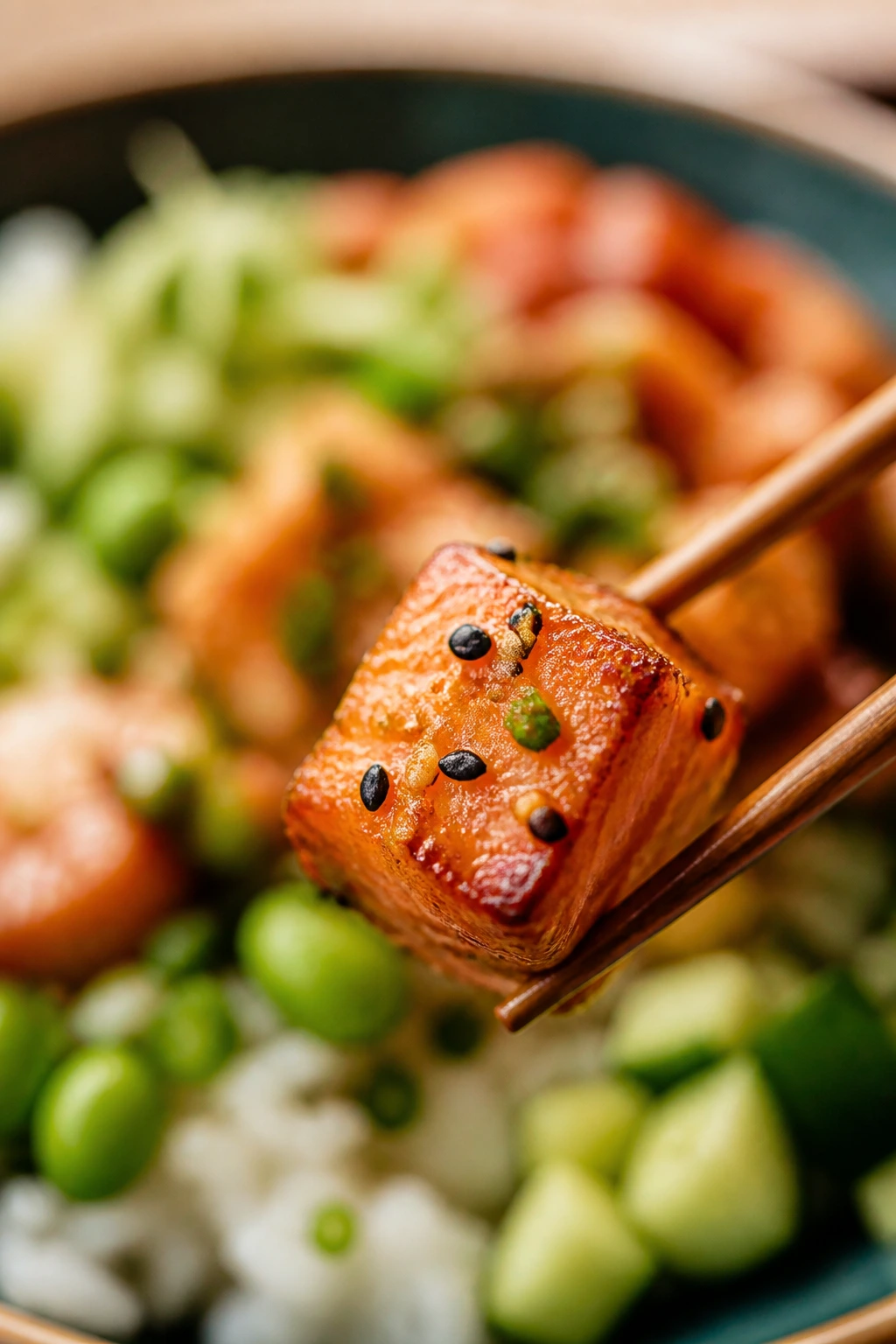
Salmon
What to use: 1 1/2 pounds of skinless salmon fillet, preferably a center-cut piece with even thickness, cut into 1-inch cubes.
Preparation: Remove any pin bones first, then pat the salmon dry with paper towels before cutting. A dry surface is the difference between a crisp crust and a wet, stubborn sear.
Substitutions: Steelhead trout or arctic char work well if salmon isn’t available. Both take the same seasoning and brown nicely in the skillet.
Tips: Buy a fillet that looks bright and clean, not dull or dry at the edges. If the tail end is thinner than the rest, cut those pieces slightly larger so they don’t overcook before the thick ones are ready.
Rice
What to use: 1 1/2 cups sushi rice or another short-grain white rice, 1 3/4 cups water, plus rice vinegar, sugar, and salt for seasoning.
Preparation: Rinse the rice until the water is mostly clear, then let it rest after cooking before seasoning it. That keeps the grains separate instead of sticky and heavy.
Substitutions: Jasmine rice gives you a lighter, looser bowl, while brown rice adds chew and a nuttier flavor. Cauliflower rice works in a pinch, but it changes the bowl into something much lighter and less plush.
Tips: Season the rice while it’s still warm. Cold rice doesn’t take on the vinegar mixture as evenly, and the finished bowl tastes flatter because of it.
Poke Sauce
What to use: Soy sauce, rice vinegar, mayonnaise, honey, sriracha, ginger, garlic, and toasted sesame oil.
Preparation: Whisk the sauce until it looks smooth and slightly glossy. You want it pourable, not watery, with enough body to cling to the rice and toppings.
Substitutions: Tamari handles a gluten-free version cleanly. If you want less heat, drop the sriracha and add a tiny pinch of red pepper flakes later, after tasting.
Tips: Make the sauce before the salmon hits the pan. It only takes a minute, but having it ready means you can assemble the bowls while the salmon is still crisp and warm.
Toppings
What to use: Avocado, cucumber, edamame, shredded carrots, scallions, sesame seeds, nori, and lime.
Preparation: Slice the avocado at the last minute, drain the edamame well after thawing, and keep the cucumber dry. If your cucumber is especially juicy, blot it with a paper towel.
Substitutions: Radish, thinly sliced snap peas, pickled onion, or shredded cabbage all work. Mango can also fit if you like a little sweet fruit against the salmon.
Tips: Keep the toppings cold and the rice warm. That temperature contrast is part of what makes the bowl feel fresh instead of merely assembled.
The Tools That Make Crispy Salmon Easier
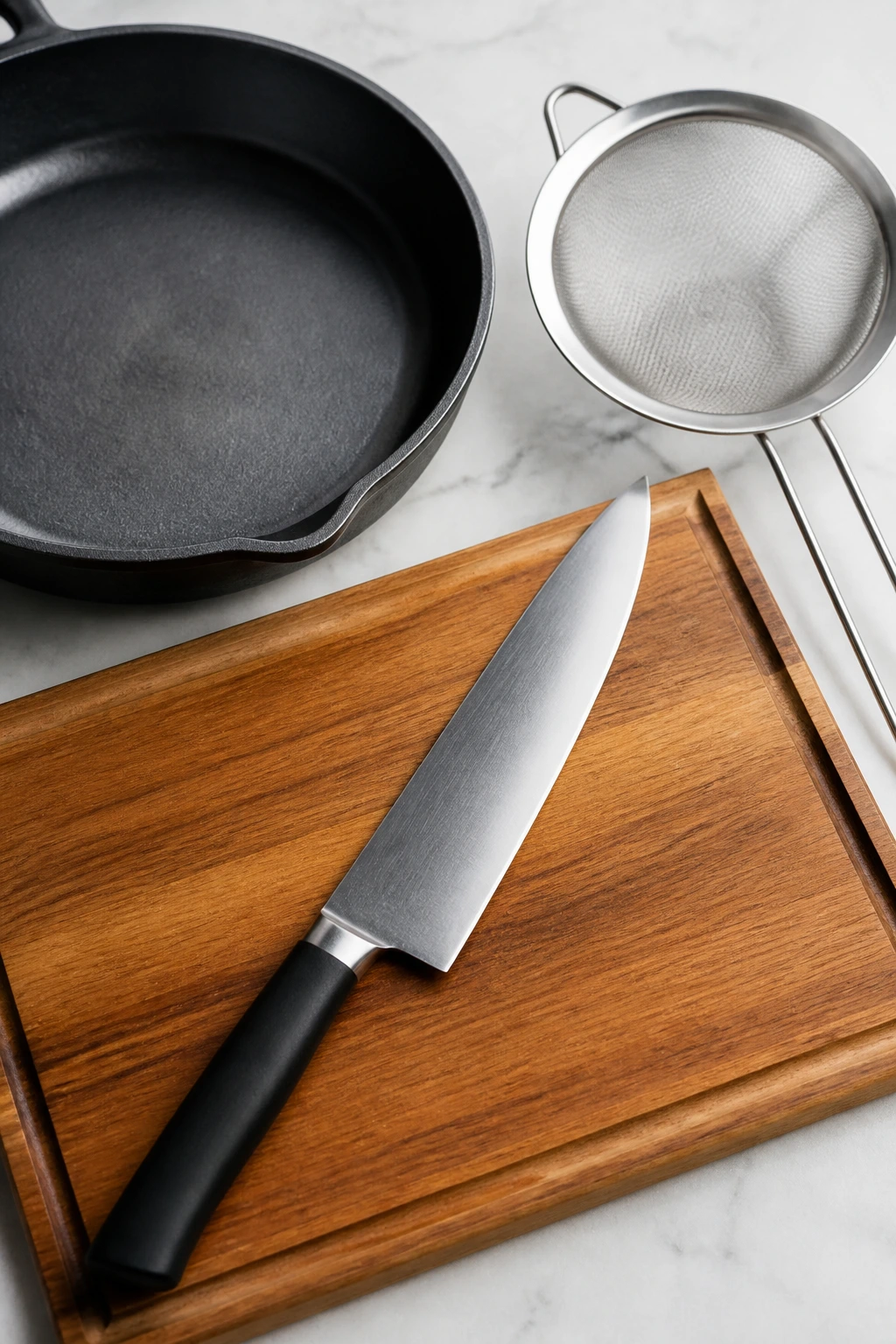
- Medium saucepan with a tight lid — needed for the rice; a loose lid lets too much steam escape.
- Fine-mesh strainer — the cleanest way to rinse rice until the water runs mostly clear.
- 12-inch skillet, preferably nonstick or stainless steel — big enough to keep the salmon in one layer so it browns instead of steaming.
- Sharp chef’s knife — useful for cutting the salmon into even cubes and prepping the vegetables cleanly.
- Cutting board — a stable board makes the salmon cubes easier to handle and keeps prep fast.
- Small mixing bowl and whisk — for the sauce; a fork works in a pinch, but a whisk gives you a smoother texture.
- Rice paddle or fork — for folding vinegar into the rice without crushing the grains.
- Instant-read thermometer — optional, but it removes the guesswork from salmon doneness.
- Airtight storage containers — helpful if you’re making the components ahead.
A wide skillet matters more than people think. Salmon cubes need space. If they’re crowded, the edges soften before they ever have a chance to bronze. That’s not a dramatic failure; it’s just the difference between a good bowl and one that tastes like a compromise.
How to Build the Bowl, One Careful Layer at a Time
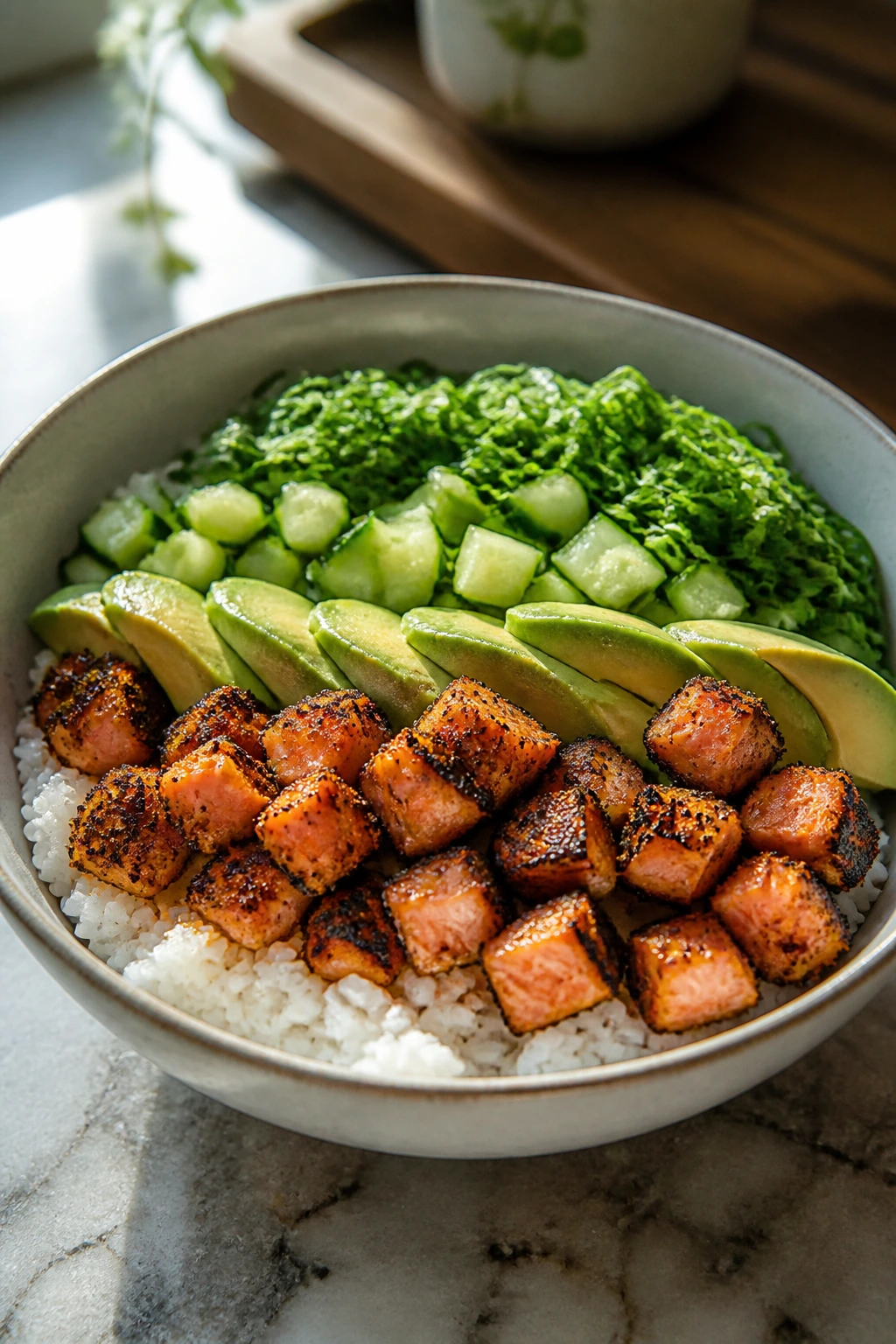
Phase 1: Cook and Season the Rice
-
Rinse the rice thoroughly. Put the 1 1/2 cups rice in a fine-mesh strainer and rinse under cold water, swishing it with your hand, until the water running off looks mostly clear. This strips away surface starch so the rice cooks up glossy instead of gummy.
-
Simmer the rice gently. Combine the rinsed rice and 1 3/4 cups water in a medium saucepan. Bring it to a boil over medium-high heat, then immediately reduce the heat to the lowest simmer, cover tightly, and cook for 15 minutes. Do not lift the lid while it cooks. That steam is what finishes the grains.
-
Let the rice rest, then season it. Remove the pan from the heat and let it sit, covered, for 10 minutes. In a small bowl, stir the rice vinegar, sugar, and salt together until dissolved. Fluff the rice with a fork or rice paddle, then fold in the vinegar mixture gently. The grains should look glossy and separate, not wet and mashed. Spread the rice in a wide bowl or on a sheet pan for 5 minutes so the steam can escape.
Phase 2: Make the Sauce and Prep the Toppings
-
Whisk the poke sauce until smooth. Combine the soy sauce, rice vinegar, mayonnaise, honey, sriracha, ginger, garlic, and sesame oil in a small bowl. Whisk until the sauce looks creamy and even. Taste it. It should be salty, tangy, and slightly sweet with a clean ginger finish.
-
Prep the vegetables and finishing ingredients. Slice the avocado, cucumber, scallions, and carrots. Thaw and drain the edamame. Tear or cut the nori into thin strips. If the cucumber is watery, blot it dry so it doesn’t puddle at the bottom of the bowl.
Phase 3: Crisp the Salmon
-
Season and coat the salmon cubes. Pat the salmon dry again, then toss it with the soy sauce and toasted sesame oil. Sprinkle the cornstarch, kosher salt, and black pepper over the fish and toss gently until every cube is lightly coated. The surface should look dusty, not paste-like. If the fish looks wet, add another 1/2 teaspoon cornstarch.
-
Sear the salmon in a hot skillet. Heat the neutral oil in a 12-inch skillet over medium-high heat until it shimmers. Add the salmon cubes in a single layer with a little space between each one. Cook for 2 to 3 minutes without moving them, until the bottoms are deep golden and the pieces release from the pan with almost no effort. Flip and cook for 1 to 2 minutes more. The edges should look crisp and the centers should still be tender. For a fully cooked texture, aim for 145°F in the thickest piece; for a softer center, many cooks pull it at 125-130°F and let the carryover heat finish the job. Do not crowd the pan. If the skillet is small, cook in two batches.
Phase 4: Assemble the Bowls
- Build the bowl while the salmon is still warm. Divide the rice among 4 bowls. Arrange the salmon, avocado, cucumber, edamame, carrots, scallions, and nori over the top in separate sections if you want a cleaner look. Spoon the sauce over the rice and toppings, or serve it on the side if you want the salmon crust to stay sharper. Finish with sesame seeds and a squeeze of lime. Serve immediately.
There’s a reason the assembly happens last. Warm rice makes the whole bowl feel generous. Crisp salmon needs to be eaten before the steam in the bowl softens it. And sauce, no matter how good it is, should never be allowed to do all the work.
How to Serve It So the Crunch Lasts
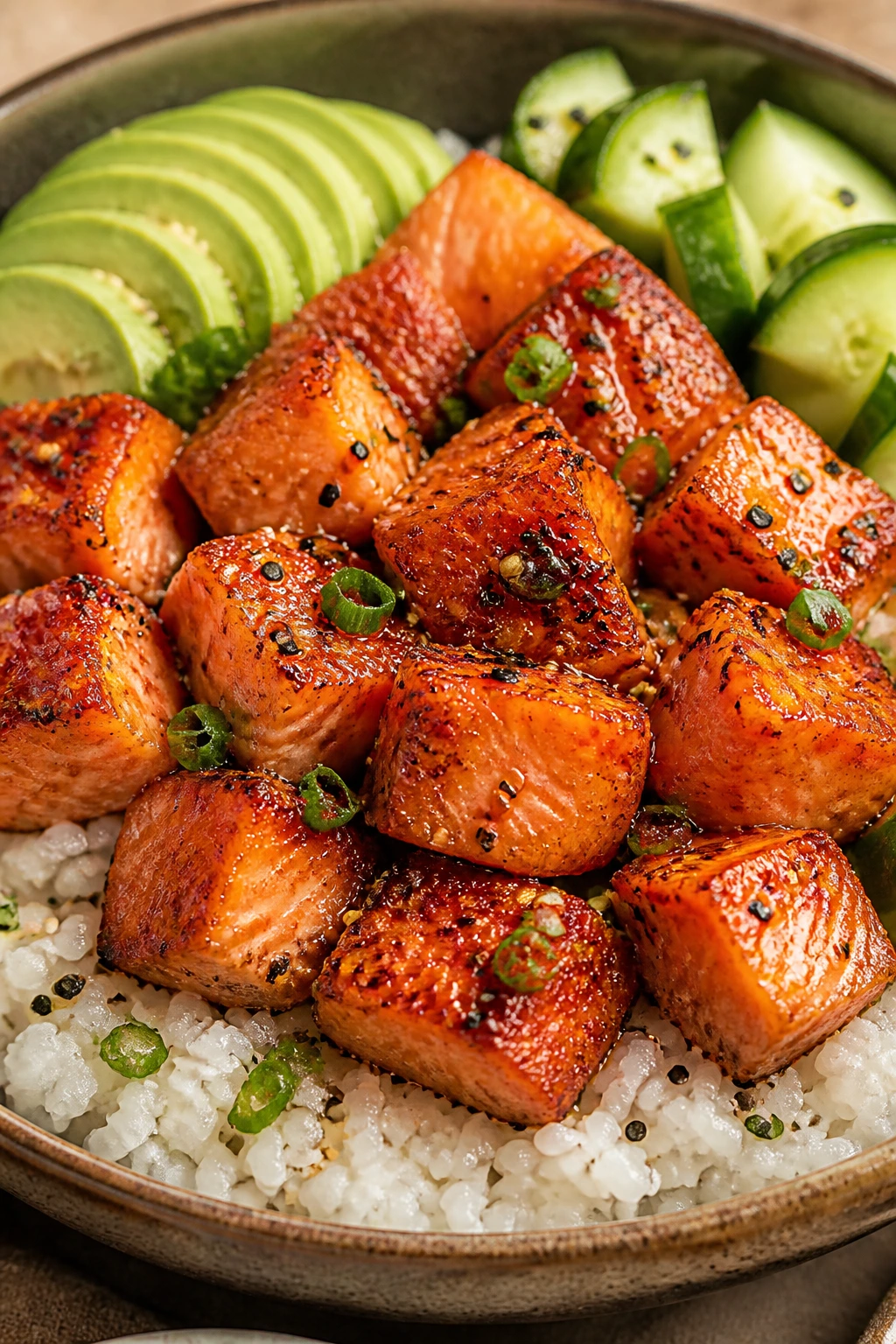
Presentation: Use shallow bowls instead of deep ones. A shallow bowl shows off the rice, keeps the toppings visible, and makes it easier to arrange the salmon in one clean layer instead of burying it. I like to build the bowl in little sections — salmon here, avocado there, cucumber and carrots off to the side — because the bowl looks fresher before the first bite even happens.
Accompaniments: A small bowl of miso soup, quick cucumber salad, or a simple seaweed salad fits neatly beside this without stealing the show. If you want more crunch, a few extra nori strips or a side of chilled snap peas does the job. Plain edamame, lightly salted, is also a nice side if you’re feeding people who want more to nibble on.
Portions: Four ounces of salmon and about 3/4 to 1 cup cooked rice per person makes a lighter lunch. For dinner, 5 to 6 ounces of salmon and a full cup of rice feels right, especially if you’re serving this as the main meal. The toppings are flexible, but don’t let them shrink to the point where the bowl becomes mostly rice.
Beverage Pairing: Cold unsweetened green tea keeps the bowl clean and balanced. Sparkling water with lime works if you want something simple. If you’re pouring something alcoholic, a dry lager or a crisp sake is the right lane; anything too sweet muddies the sesame and soy flavors.
One thing I’ve learned from bowls like this: the garnish matters less than the temperature. A neat bowl that sits too long is still a dull bowl. A slightly messy bowl that hits the table while the salmon is crisp is the one people remember.
Practical Ways to Improve the Flavor and Texture
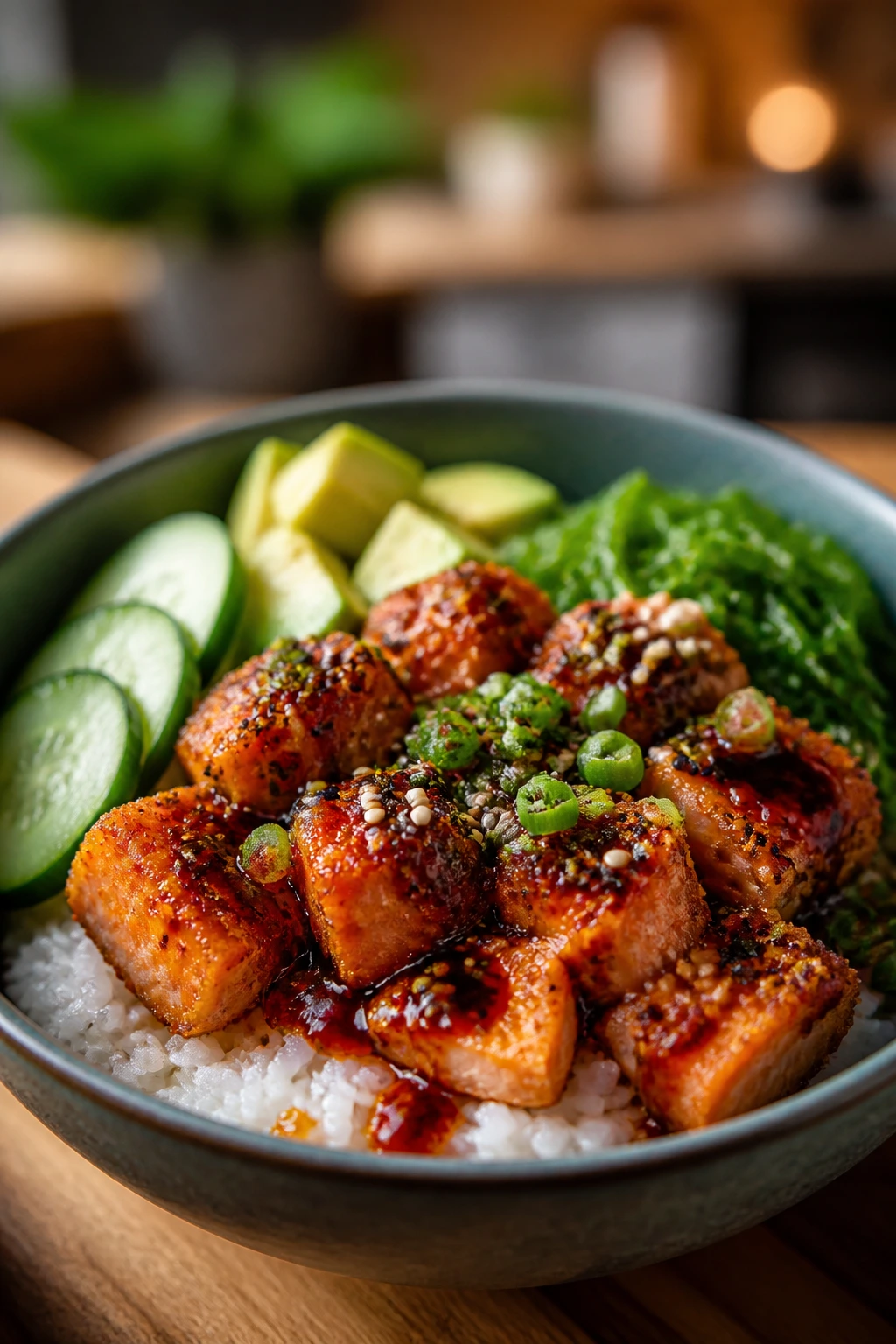
Flavor Enhancement: A small spoon of chili crisp on top changes the whole bowl. It adds heat, garlic, and little crunchy bits that feel expensive even when they’re not. Use it lightly at first. The salmon already has enough richness to carry a bowl without help.
Customization: Swap the cucumber for shaved snap peas or thin radish slices if you want more snap. Add pickled ginger if you like sharper acid, or tuck in a few strips of mango when you want a sweet note against the soy and sesame. The bowl handles those swaps well because the rice and salmon stay the anchor.
Time-Saver: Cook the rice ahead and rewarm it with a tablespoon of water per cup in the microwave, covered loosely with a damp paper towel. It comes back softer and more forgiving than dry leftover rice. Sauce can be mixed 5 days ahead and kept in the fridge; just stir it before using.
Serving Suggestions: Toasted sesame seeds are fine, but a mix of sesame seeds and thin nori strips gives better texture. Scallions should go on last so they stay sharp and green. If you want one more layer of crunch, a spoonful of toasted panko cooked in a teaspoon of sesame oil is a smart finish, though it is optional.
A little acid at the end helps more than another heavy drizzle. The lime wedge isn’t there for decoration. It wakes the salmon up and keeps the bowl from tasting like it was assembled by a sleepy hand on autopilot.
Common Mistakes That Turn a Good Bowl Soggy
-
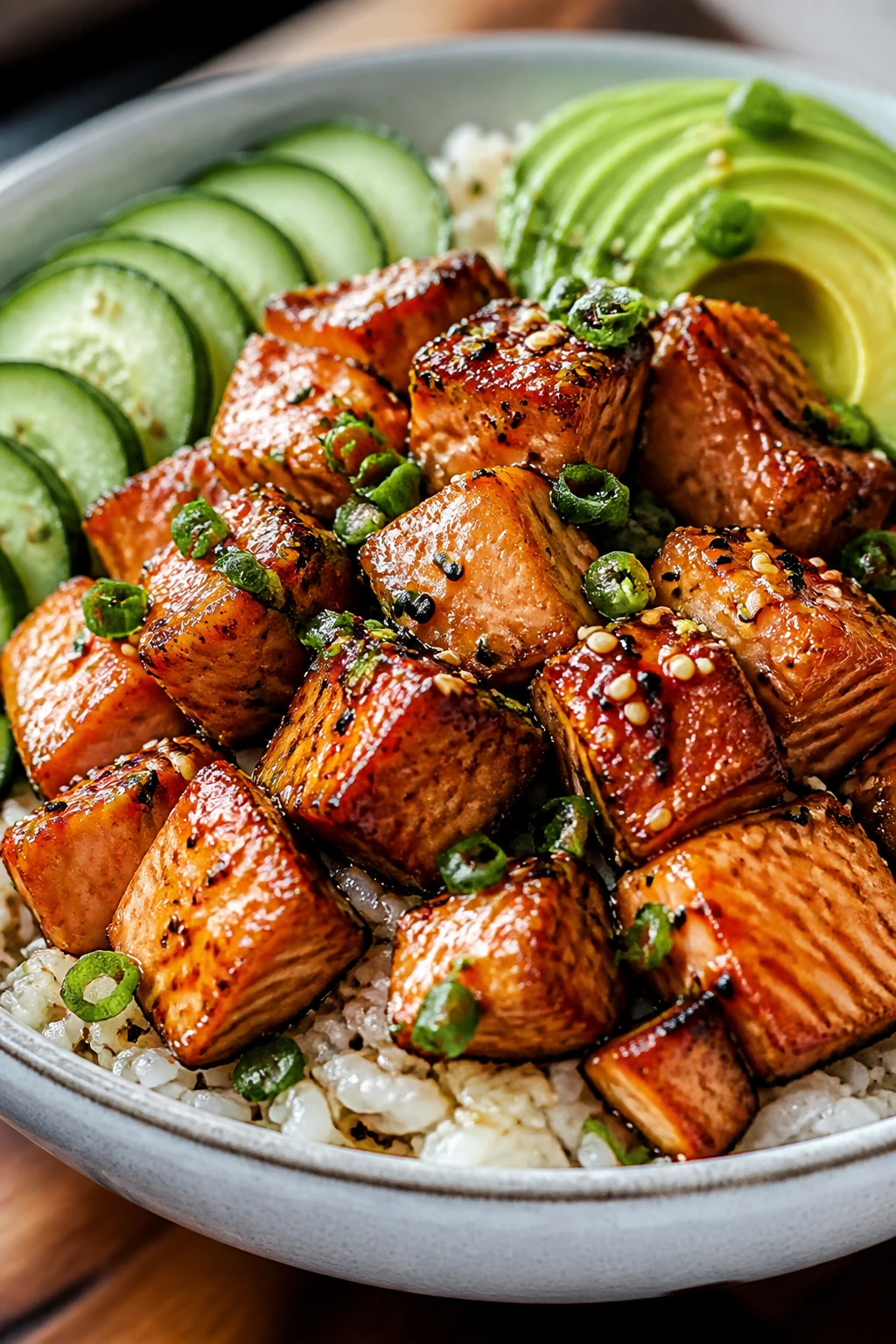
Starting with wet salmon — If the fish goes into the skillet damp, it steams before it browns. Pat it dry twice: once before cutting, once before seasoning. If the surface still looks shiny, it’s too wet for a crisp crust.
-
Crowding the pan — Salmon cubes need a little breathing room. If they’re jammed together, the pan loses heat and the fish turns pale and soft. Cook in batches if you have to. It’s slower by about 3 minutes, but the result is worth it.
-
Pouring sauce over everything too early — That’s the fast lane to losing the crust. Keep the sauce for the rice, the vegetables, or a final drizzle at the table. If you want the salmon surface to stay crisp for even a few extra minutes, sauce only what you’re eating first.
-
Using cucumber that’s too wet — Some cucumbers leak a surprising amount of water after slicing. If the bowl ends up puddled, the rice gets sloppy at the bottom and the sauce thins out. Slice, salt lightly if needed, and blot dry.
-
Overcooking the salmon — Cubed salmon cooks faster than most people expect. The fish is done when the outside is golden and the center flakes with a bit of resistance. Push it too far and the texture turns dry and chalky, which is a shame after all the other care.
-
Skipping the rice seasoning — Plain rice makes the bowl feel unfinished. The vinegar, sugar, and salt don’t make it taste sweet; they make it taste complete. That tiny seasoning step is what keeps the base from fading under the toppings.
The common thread here is moisture. Too much of it, in the wrong place, and the bowl collapses. Hold the line on that one detail and the rest falls into place.
Variations and Swaps That Still Taste Right
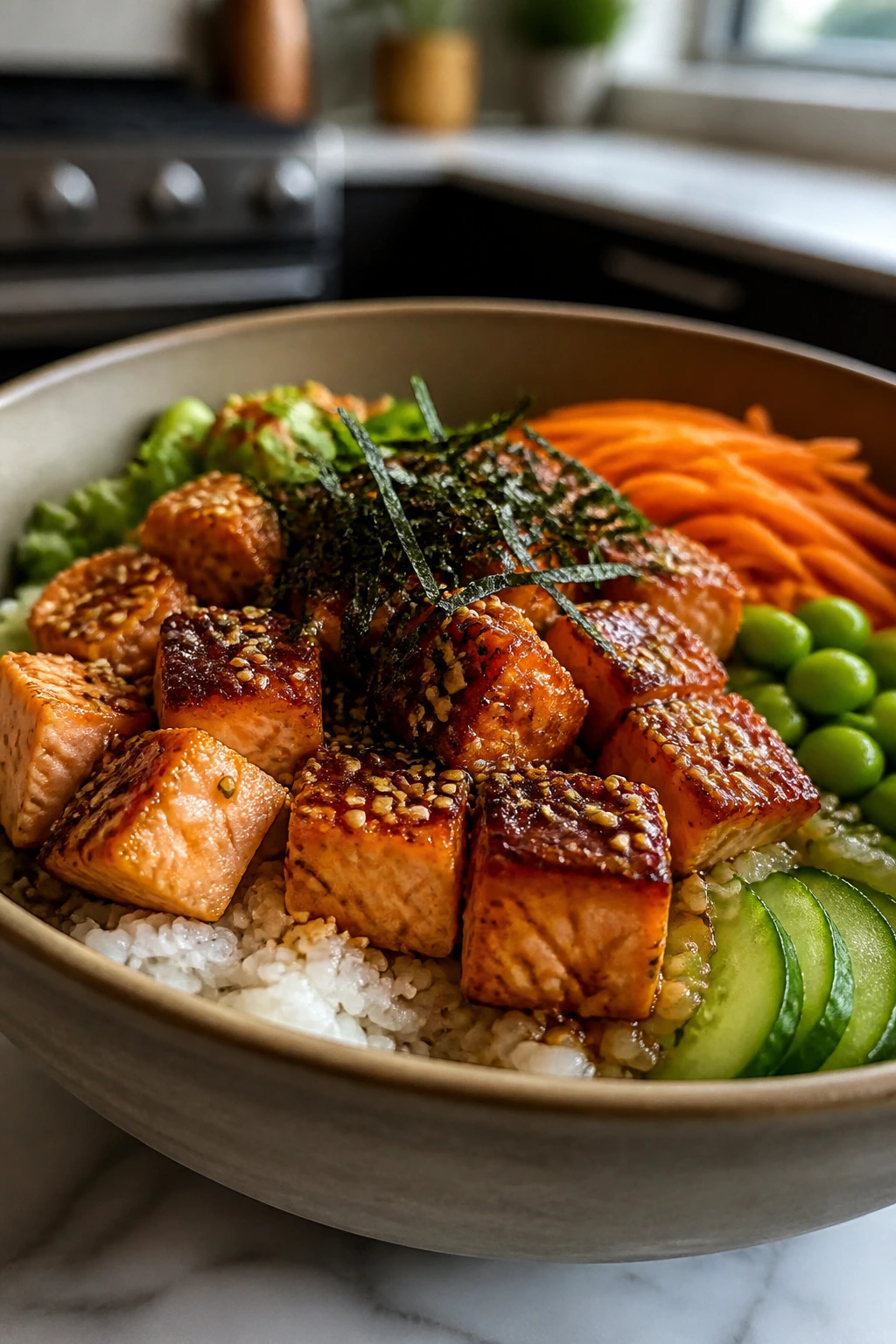
Spicy Chili Crisp Bowl: Stir a teaspoon of chili crisp into the sauce or spoon it over the finished bowl. The garlic heat fits the sesame-soy base cleanly, and the crunchy bits give the salmon one more layer of texture. This is the variation I reach for when I want the bowl to feel less delicate and more assertive.
Ginger-Lime Bright Bowl: Add the zest of half a lime to the sauce and lean a little harder on the rice vinegar. The flavor gets sharper and cleaner, which helps if your salmon is especially rich. Finish with extra lime juice right before eating so the bowl tastes lively instead of heavy.
Gochujang Sesame Bowl: Replace the sriracha with 1 teaspoon gochujang and add a splash of warm water to loosen the sauce if needed. Gochujang brings deeper chile flavor and a little fermented sweetness, which works well against crisp salmon. The bowl turns darker and more savory, which I happen to like a lot.
Brown Rice Crunch Bowl: Swap the sushi rice for brown rice if you want more chew and a nuttier base. You’ll need more water and a longer simmer, but the payoff is a sturdier bowl that holds up well if you pack leftovers for lunch. Add the vinegar seasoning while the rice is still warm, the same way.
Low-Mayo Drizzle: Skip the mayonnaise and add 1 extra teaspoon of rice vinegar plus 1 teaspoon water to the sauce. The flavor gets lighter and sharper, though it loses some of the creamy texture that clings to the rice. This version works better if you want the salmon crust to stay the main event.
Each variation keeps the basic architecture intact: seasoned rice, crisp salmon, cool toppings, and a sauce that doesn’t bulldoze everything else. That’s the trick. Change the accents, not the whole house.
Storing, Reheating, and Making It Ahead
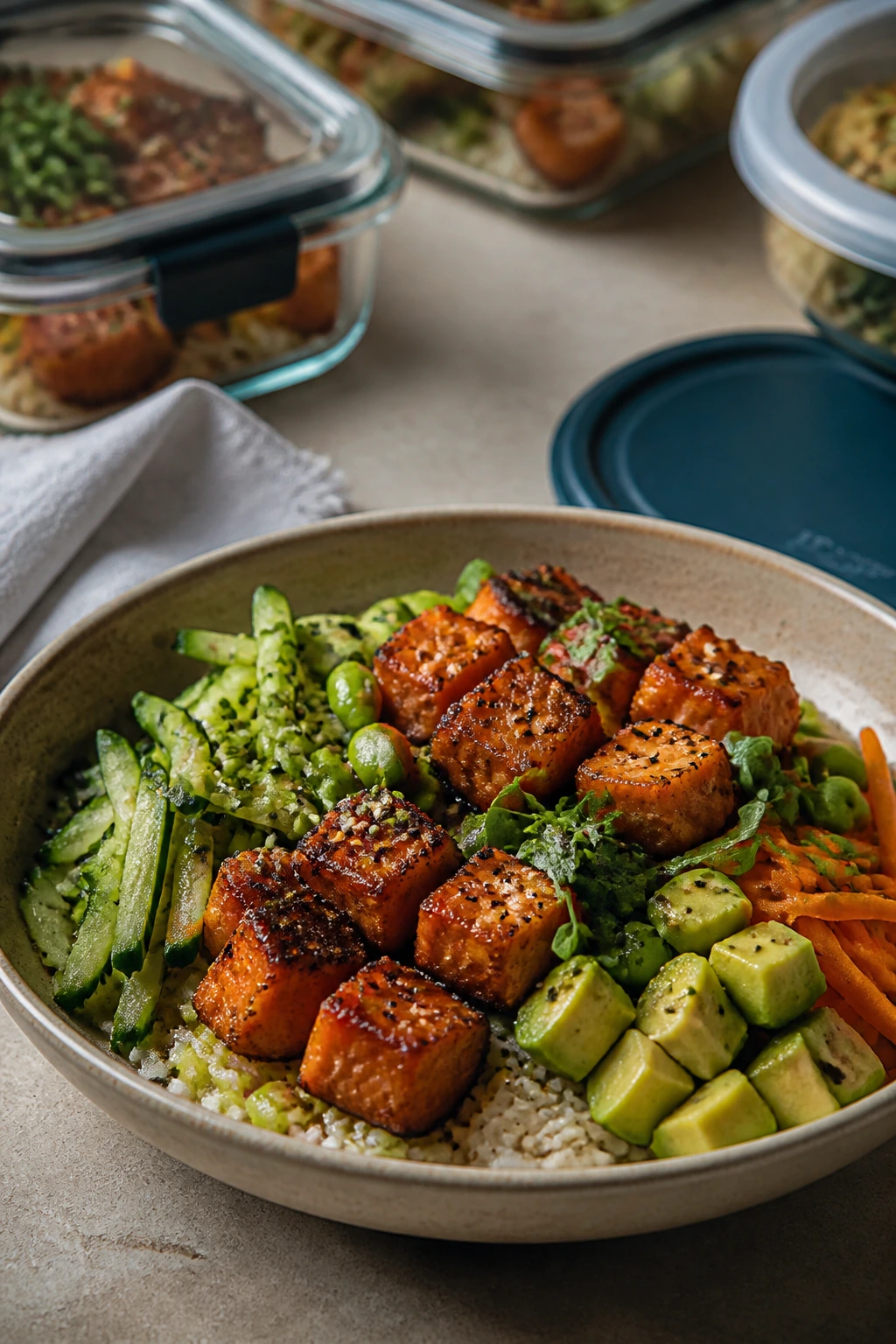
Cooked salmon and rice don’t behave the same way in storage, so keep them separate. The salmon and rice both hold well in the refrigerator for up to 3 days, though the salmon tastes best within the first day. The poke sauce keeps for up to 5 days in a sealed container. Cucumber, avocado, and scallions are best cut close to serving time; avocado especially turns blunt and brown if it sits around too long.
For the freezer, the salmon can be frozen for up to 2 months after cooking, though the texture softens a little when it thaws. Rice can also be frozen for up to 1 month if you spread it out to cool before packing it away. Don’t freeze the avocado, cucumber, or sauce. Those ingredients lose the exact texture this bowl depends on.
Reheating the salmon takes a little care. The best route is a 375°F oven or air fryer for 4 to 6 minutes, just until the outside is warm and the edges start to crisp again. A skillet over medium heat works too; give it 1 to 2 minutes with a thin film of oil. The microwave is the fastest option, but it softens the crust, so save it for when texture doesn’t matter much.
Rice reheats well with a small splash of water. Cover it loosely and microwave in 30-second bursts, fluffing once between rounds if needed. If you’re reheating from the fridge, a tablespoon of water per cup of rice usually brings it back to life without making it wet. Let it sit for a minute after heating so the moisture evens out.
For make-ahead prep, the smartest order is sauce first, toppings second, salmon last. You can mix the sauce and cut the vegetables the day before. You can also cook the rice ahead and reheat it gently. I would still cook the salmon close to serving time. That’s where the crisp lives.
Questions People Ask About Crispy Salmon Poke
Do I need sushi-grade salmon for this recipe?
No, because the salmon is cooked. You still want fresh, good-quality salmon from a shop you trust, but the “sushi-grade” label is not needed for a fully cooked bowl. Handle it cold, cook it promptly, and don’t leave it sitting on the counter while you prep everything else.
Can I use frozen salmon?
Yes. Thaw it overnight in the refrigerator, then pat it dry very well before cutting. Frozen salmon often holds more surface moisture after thawing, so the extra drying step matters more here than it would in a soup or stew.
Can I make the salmon in an air fryer instead of a skillet?
You can. Toss the cubes the same way, then air fry at 400°F for about 7 to 9 minutes, shaking the basket once halfway through. It won’t give you the same pan-browned edges, but it does make a clean, crisp result with less stovetop attention.
What if my salmon sticks to the pan?
Usually it means one of three things: the fish was too wet, the pan wasn’t hot enough, or you tried to move the pieces too soon. Let the salmon sit until it releases on its own. If it tears, don’t scrape hard; wait another 20 to 30 seconds and try again with a thin spatula.
Can I make this with brown rice or cauliflower rice?
Yes, and both change the bowl in useful ways. Brown rice gives you chew and a nuttier flavor, while cauliflower rice makes the bowl lighter and less filling. Just know that cauliflower rice should be cooked quickly and left fairly dry, or it will water down the sauce.
How do I pack this for lunch without ruining it?
Store the rice, salmon, sauce, and vegetables in separate containers if you can. Assemble at lunch, not the night before. Avocado should be sliced fresh if possible; if not, press plastic wrap directly against the cut surface and add it right before eating.
Can I leave out the mayonnaise in the sauce?
Yes. If you want a thinner, sharper drizzle, skip the mayo and add a teaspoon of water plus a little extra rice vinegar. The sauce will be less creamy and more soy-forward, which works fine if you want the salmon crust to stay the textural star.
How do I know when the salmon is done?
Look for deep golden edges and a center that flakes with gentle pressure. If you’re using a thermometer, 145°F is the standard fully cooked target. Some cooks prefer to pull it a little earlier for a softer middle, but the important part is to avoid leaving it in the pan until it turns dry and pale.
A Bowl Worth Making Again
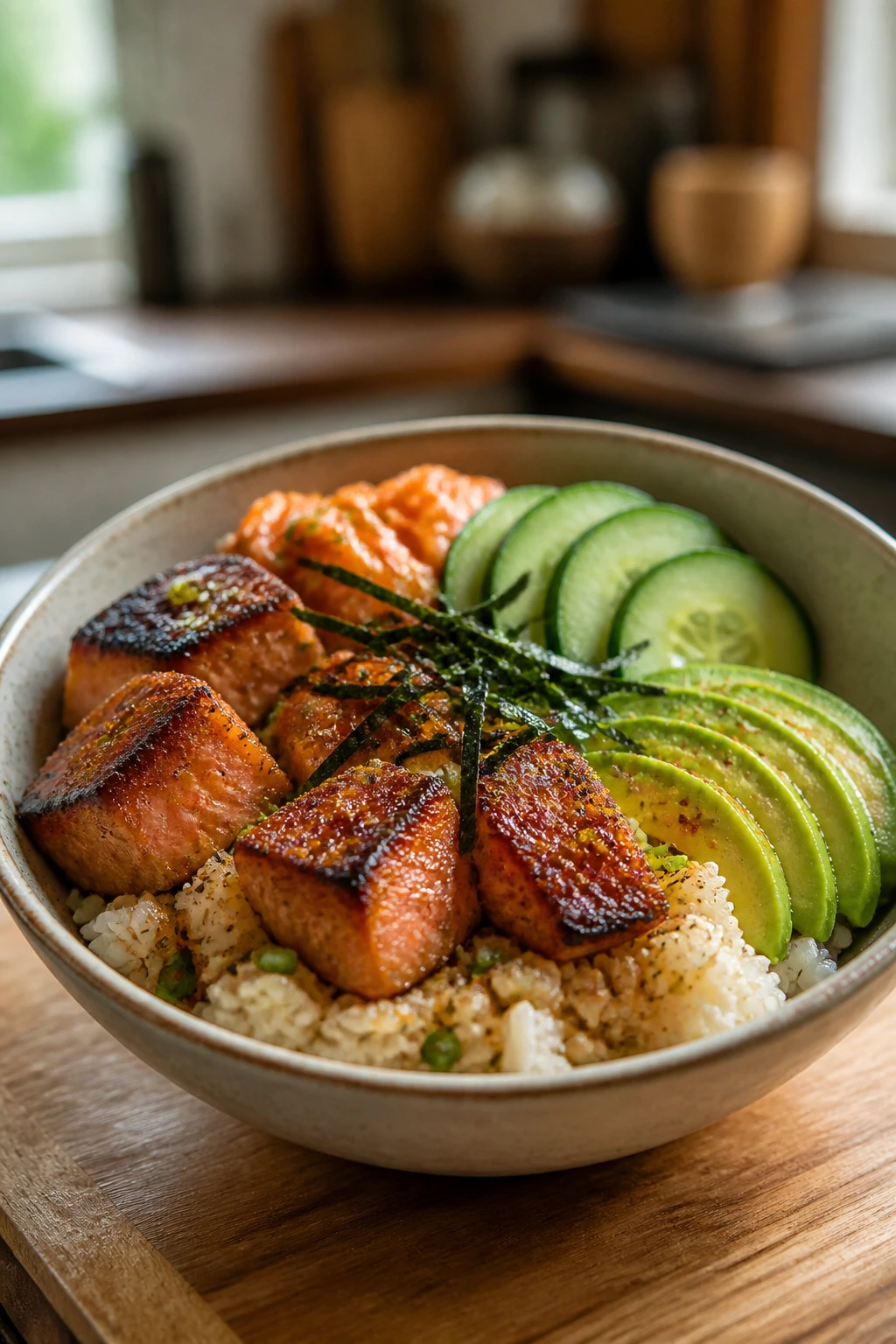
A good salmon poke bowl should feel awake. Warm rice. Cold cucumber. Creamy avocado. Salmon with crisp edges that don’t vanish the second the sauce lands. That is the whole game, and it’s why the home version beats the takeout version so often: you get to protect the texture instead of accepting whatever showed up in the container.
The details are small, but they matter in a very practical way. Dry the fish. Heat the pan. Season the rice. Keep the sauce ready and the toppings cold. Do those things with a little care and the bowl lands exactly where it should — not fussy, not muddy, not trying too hard.
Make it once that way, and it stops feeling like a recipe you’re testing. It becomes the bowl you reach for when you want dinner to taste cleaner than the delivery menu.
Crispy Salmon Poke — Recipe Card
Recipe Name: Crispy Salmon Poke Bowl
Description: A poke-style salmon bowl with crisp pan-seared salmon, seasoned sushi rice, cool vegetables, and a soy-sesame drizzle. The contrast between warm rice and cold toppings keeps every bite sharp and balanced.
Prep Time: 20 minutes
Cook Time: 20 minutes
Total Time: 40 minutes active + 10 minutes resting
Course: Dinner, Main Course
Cuisine: Asian-Inspired, Hawaiian-Inspired
Servings: 4 servings
Calories: 650 kcal per serving
Ingredients
For the Rice:
- 1 1/2 cups sushi rice or other short-grain white rice, rinsed until the water runs mostly clear
- 1 3/4 cups water
- 2 tablespoons rice vinegar
- 1 teaspoon sugar
- 1/2 teaspoon kosher salt
For the Crispy Salmon:
- 1 1/2 pounds skinless salmon fillet, cut into 1-inch cubes and pin bones removed
- 1 tablespoon soy sauce
- 1 tablespoon toasted sesame oil
- 1 tablespoon cornstarch
- 1/4 teaspoon kosher salt
- 1/4 teaspoon black pepper
- 1 tablespoon neutral oil, such as avocado, grapeseed, or canola
For the Poke Sauce:
- 3 tablespoons soy sauce
- 1 tablespoon rice vinegar
- 1 tablespoon mayonnaise
- 1 teaspoon honey
- 1 teaspoon sriracha
- 1 teaspoon grated fresh ginger
- 1 small garlic clove, grated or finely minced
- 1 teaspoon toasted sesame oil
For the Toppings:
- 1 avocado, sliced
- 1 cup cucumber, thinly sliced or diced
- 1 cup shelled edamame, thawed if frozen
- 1/2 cup shredded carrots
- 2 scallions, thinly sliced
- 2 tablespoons toasted sesame seeds
- 2 sheets nori, cut into thin strips
- 1 lime, cut into wedges
Instructions
-
Rinse the rice until the water runs mostly clear, then combine it with 1 3/4 cups water in a saucepan. Bring to a boil, cover, reduce to low, and cook for 15 minutes. Rest, covered, for 10 minutes.
-
Stir together the rice vinegar, sugar, and salt. Fluff the rice, fold in the vinegar mixture, and let it cool for a few minutes until warm.
-
Whisk together the soy sauce, rice vinegar, mayonnaise, honey, sriracha, ginger, garlic, and sesame oil until smooth.
-
Pat the salmon dry, toss it with soy sauce and sesame oil, then sprinkle with cornstarch, salt, and pepper. Toss gently to coat.
-
Heat the neutral oil in a skillet over medium-high heat until shimmering. Add the salmon in a single layer and cook 2 to 3 minutes without moving it.
-
Flip and cook 1 to 2 minutes more, until the salmon is crisp at the edges and cooked through to your liking.
-
Divide the rice among bowls. Top with salmon, avocado, cucumber, edamame, carrots, scallions, nori, and sesame seeds. Drizzle with sauce and finish with lime.
Notes: Keep the salmon dry, don’t crowd the pan, and add the sauce at the end if you want the crust to stay crisp. Refrigerate the components separately for the best leftovers.