



A good spicy ground beef stir fry does not need a delivery app attached to it. It needs a hot pan, a short ingredient list, and a sauce that turns glossy instead of watery the second it hits the skillet. When those three things line up, dinner tastes louder than the ingredient list suggests.
Ground beef is the overlooked part of the equation. It browns fast, grabs chile heat without sulking, and leaves little crisp edges in the pan that soak up soy, ginger, garlic, and sesame oil. You do not have to marinate it, trim it, or slice it against the grain. Pull it from the fridge, chop a few vegetables, and the whole thing can be on the table while rice is still steaming.
This version leans Chinese-American takeout style on purpose. The vegetables stay bright and a little snappy, the beef tastes browned rather than boiled, and the sauce hits that sticky, savory, spicy point where a spoon keeps going back into the bowl. By the end, the skillet smells like soy, chile, and browned meat in the best possible balance, which is about as close to a guaranteed repeat as a dinner gets.
Why You’ll Want This Stir Fry in Your Weeknight Back Pocket
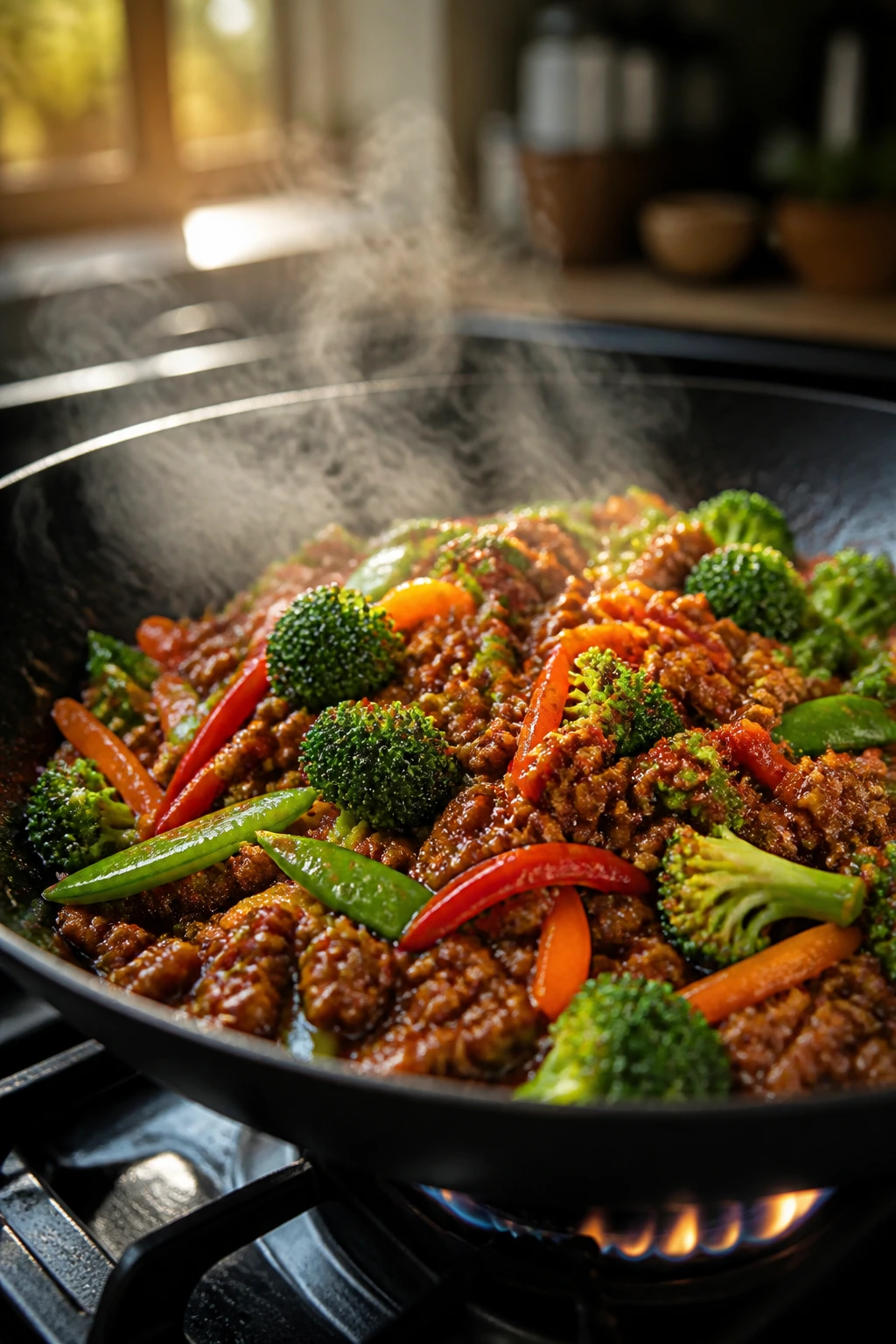
-
Fast Browning: A pound and a half of ground beef needs only a few minutes to pick up real color, so the meaty flavor shows up before the vegetables even finish their first turn.
-
Glossy Sauce: Cornstarch thickens the soy-oyster-chile mixture just enough to coat every bite, not drown it.
-
Crisp Vegetables: Broccoli, carrot, bell pepper, and snap peas all survive high heat if you cut them to the right size and stop cooking before they slump.
-
Pantry-Heavy Flavor: Soy sauce, oyster sauce, rice vinegar, chili garlic sauce, and sesame oil are regular shelf items, which makes this easier to repeat than a takeout order that needs three sauces and a side of waiting.
-
Leftovers That Behave: Ground beef reheats cleaner than sliced steak because the meat is already broken into small pieces, and that matters when lunch comes from the fridge.
-
Heat You Can Control: The spice level is built into the sauce and the fresh chiles, so you can push it up with chili crisp or pull it back without changing the whole dish.
Why Ground Beef Belongs in a Takeout-Style Stir Fry
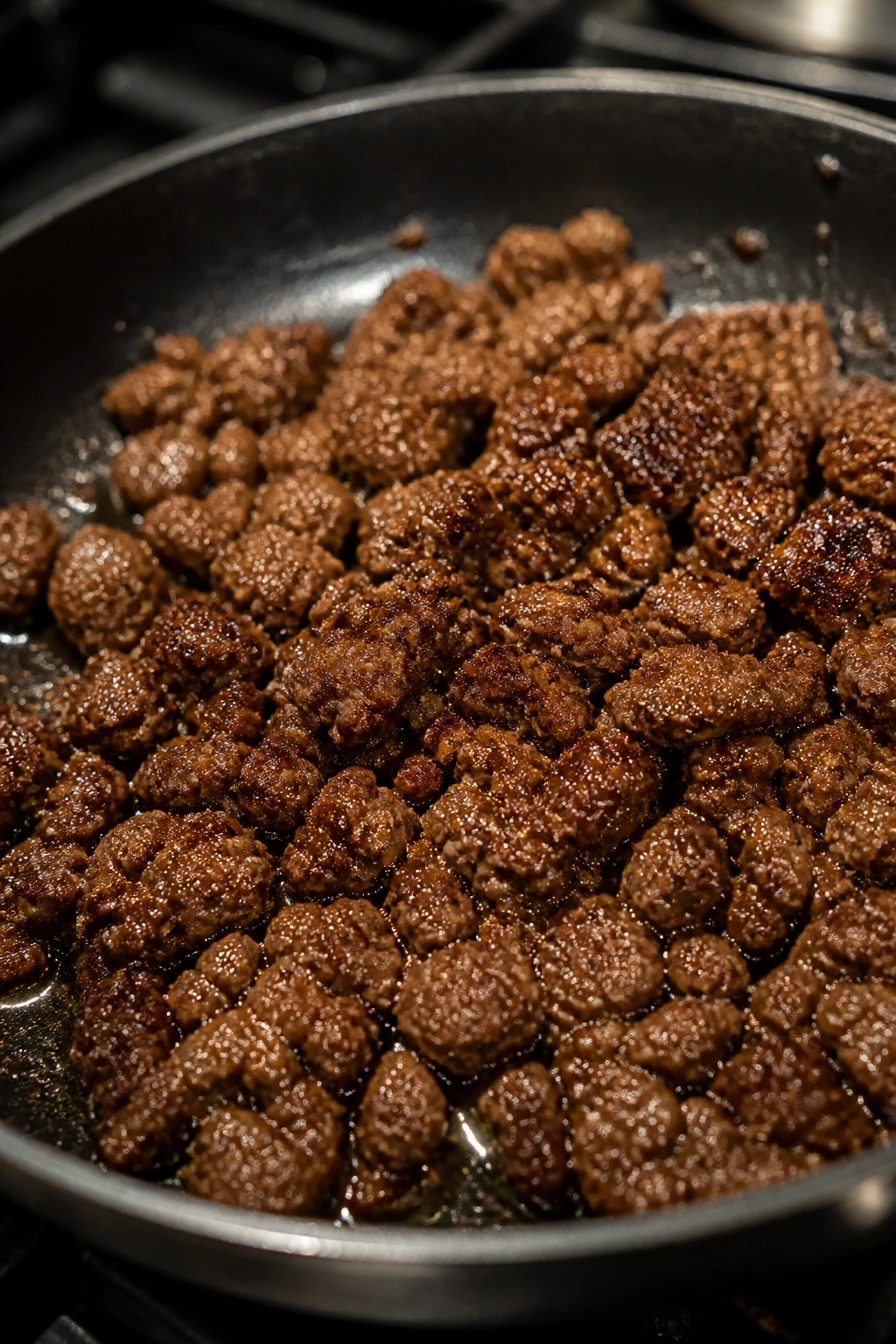
Not every stir fry needs strips of flank steak. Ground beef gives you a different kind of advantage: contact. Every crumb touches the hot pan, which means more browned surface area and more little savory bits stuck to the metal before the sauce goes in.
That is the part most home cooks miss. Browning is not a side note here. It is the flavor base. If the meat goes in cold and gets stirred immediately, you get soft gray crumbles and a pan full of moisture. If you let it sit for a minute before breaking it up, the beef picks up a darker, richer flavor that tastes closer to a good restaurant skillet than a hurried dinner.
I also like how forgiving ground beef is. An 85/15 blend gives enough fat to carry the aromatics without turning the whole pan into a slick. Leaner beef still works, but you need a little neutral oil to keep the garlic and ginger from tasting thin. Very fatty beef works too, though you have to spoon off some grease or the sauce starts swimming instead of clinging. That small bit of fat management changes everything.
There is one more reason I keep coming back to it. Ground beef does not pretend to be fancy. It just works. That matters on nights when the fridge is full of vegetables with odd ends and the only thing standing between you and dinner is the decision to turn heat on.
Timing, Yield, and the Kind of Dinner This Makes
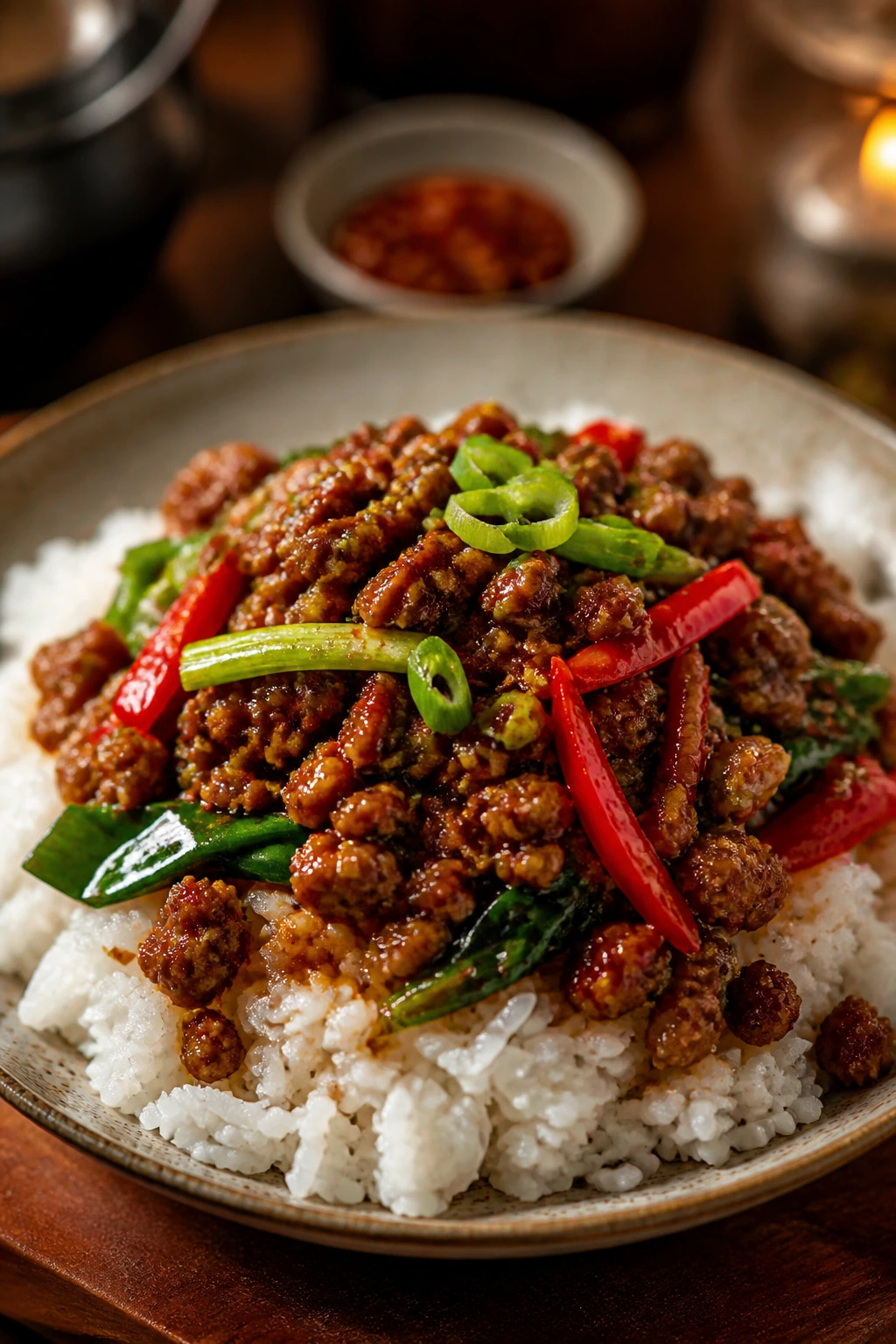
Yield: Serves 4
Prep Time: 15 minutes
Cook Time: 15 minutes
Total Time: 30 minutes
Difficulty: Beginner — the pan work is quick, but the steps are straightforward and easy to follow if you keep the ingredients chopped before the heat goes on.
Chill/Rest Time: None
Best Served: Right away over steamed rice or noodles
The actual stove time is short. The chopping takes the longest slice of the job, which is why I like to finish the sauce before the pan ever gets hot. Once the beef starts browning, this moves fast enough that you do not want to be hunting for a knife or measuring spoon.
If you have a rice cooker going in the background, all the better. If not, noodles work. The sauce is thick enough to coat either one without disappearing into the bowl.
The Full Ingredient List for a Spicy Ground Beef Stir Fry
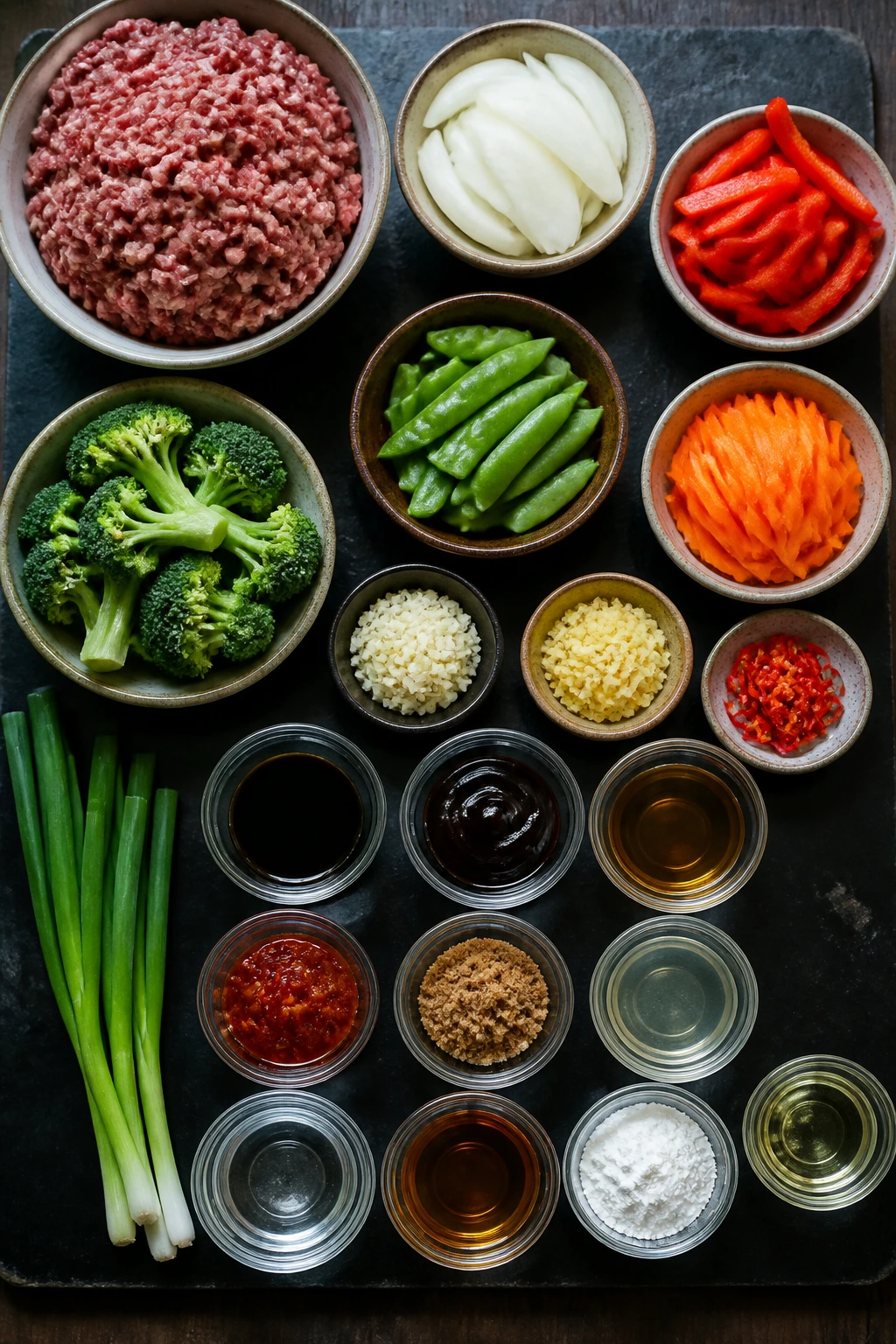
For the Stir Fry:
- 1 1/2 pounds ground beef, 85/15 preferred
- 1 tablespoon neutral oil, only if the beef is very lean
- 1 medium yellow onion, thinly sliced
- 1 red bell pepper, thinly sliced
- 1 small broccoli crown, cut into bite-size florets (about 3 cups)
- 1 cup snap peas, trimmed
- 1 medium carrot, cut into thin matchsticks
- 4 cloves garlic, minced
- 1 tablespoon fresh ginger, finely grated
- 2 to 3 Thai chilies, thinly sliced, or 1 teaspoon red pepper flakes
- 3 scallions, sliced, plus extra for garnish
- 1/2 teaspoon kosher salt
- 1/4 teaspoon black pepper
For the Sauce:
- 1/4 cup low-sodium soy sauce
- 2 tablespoons oyster sauce
- 1 tablespoon Shaoxing wine or dry sherry
- 1 tablespoon chili garlic sauce
- 1 tablespoon brown sugar or honey
- 2 tablespoons rice vinegar
- 1/4 cup water or low-sodium beef broth
- 1 teaspoon toasted sesame oil
- 1 tablespoon cornstarch
- 2 tablespoons cold water
For Garnish:
- 1 teaspoon toasted sesame seeds
How the Beef, Sauce, and Vegetables Pull Their Weight
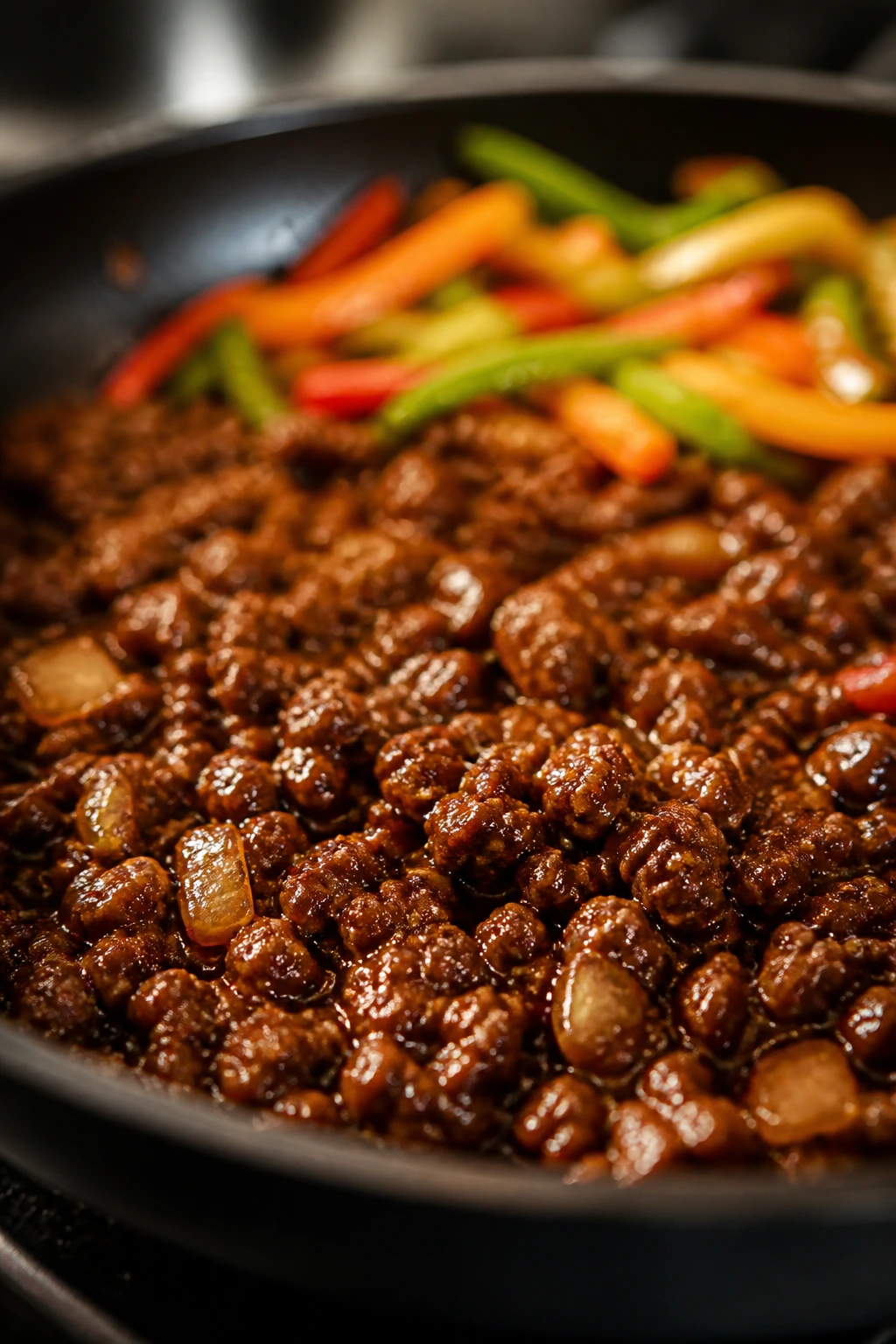
Ground Beef
What to use: 1 1/2 pounds ground beef, ideally 85/15. That fat level gives the skillet enough richness without drowning the vegetables.
Preparation: Break the meat into a few large chunks before it hits the pan. Let it sit for a minute before stirring so it can brown instead of steam.
Substitutions: Ground pork gives a sweeter, slightly fattier finish. Ground turkey works too, but it needs 1 tablespoon of neutral oil or the skillet tastes dry.
Tips: If your beef is 73/27, spoon off all but about 1 tablespoon of fat after browning. If it is extra lean, keep an eye on the pan; dry beef can make the garlic taste harsh.
Sauce Base
What to use: Soy sauce, oyster sauce, Shaoxing wine, chili garlic sauce, brown sugar, rice vinegar, water or beef broth, toasted sesame oil, cornstarch, and cold water.
Preparation: Whisk everything except the cornstarch slurry in a bowl until the sugar disappears. Stir the slurry in a second bowl so it stays smooth and ready to thicken at the end.
Substitutions: Tamari can replace soy sauce for a gluten-free version. Hoisin plus a splash of water can stand in for oyster sauce if that is what you have, though the flavor will run sweeter.
Tips: The brown sugar is not there to make the dish taste sugary. It rounds off the soy and lets the chile taste deeper. Add the cornstarch only at the end; if it cooks too long, the sauce can turn pasty.
Vegetables That Stay Crisp
What to use: Onion, bell pepper, broccoli, snap peas, and carrot.
Preparation: Keep the pieces fairly small and similar in size. Broccoli florets should be bite-sized, not big little trees that stay raw in the center while the rest of the pan softens.
Substitutions: Mushrooms, baby bok choy, shredded cabbage, or snow peas all work. If you use mushrooms, give them a few minutes alone first so they can brown and lose some moisture.
Tips: Carrot and broccoli need a little more time than snap peas and peppers, so they go in first. That one detail keeps the vegetables from landing in mushy, uneven territory.
Aromatics and Heat
What to use: Garlic, ginger, Thai chilies or red pepper flakes, and scallions.
Preparation: Grate the ginger finely, mince the garlic, and slice the chiles thin so the heat spreads through the sauce instead of hiding in random hot spots.
Substitutions: Sambal oelek works in place of chili garlic sauce if you want a cleaner chile hit. Serrano peppers can stand in for Thai chilies, though they bring a sharper burn.
Tips: Garlic and ginger only need 20 to 30 seconds in the pan. If they go much longer, they lose sweetness and start to taste bitter around the edges.
Finishing Touches
What to use: Scallions and toasted sesame seeds, plus the sesame oil already in the sauce.
Preparation: Slice the scallions just before cooking so they stay crisp and bright. Keep the sesame seeds dry until garnish time.
Substitutions: A spoonful of chili crisp at the table is a smart swap if you want crunch and heat. A few torn cilantro leaves can work too, though I prefer scallions here.
Tips: The final splash of sesame oil is there for aroma, not volume. Too much can flatten the chili and make the whole dish feel oily instead of glossy.
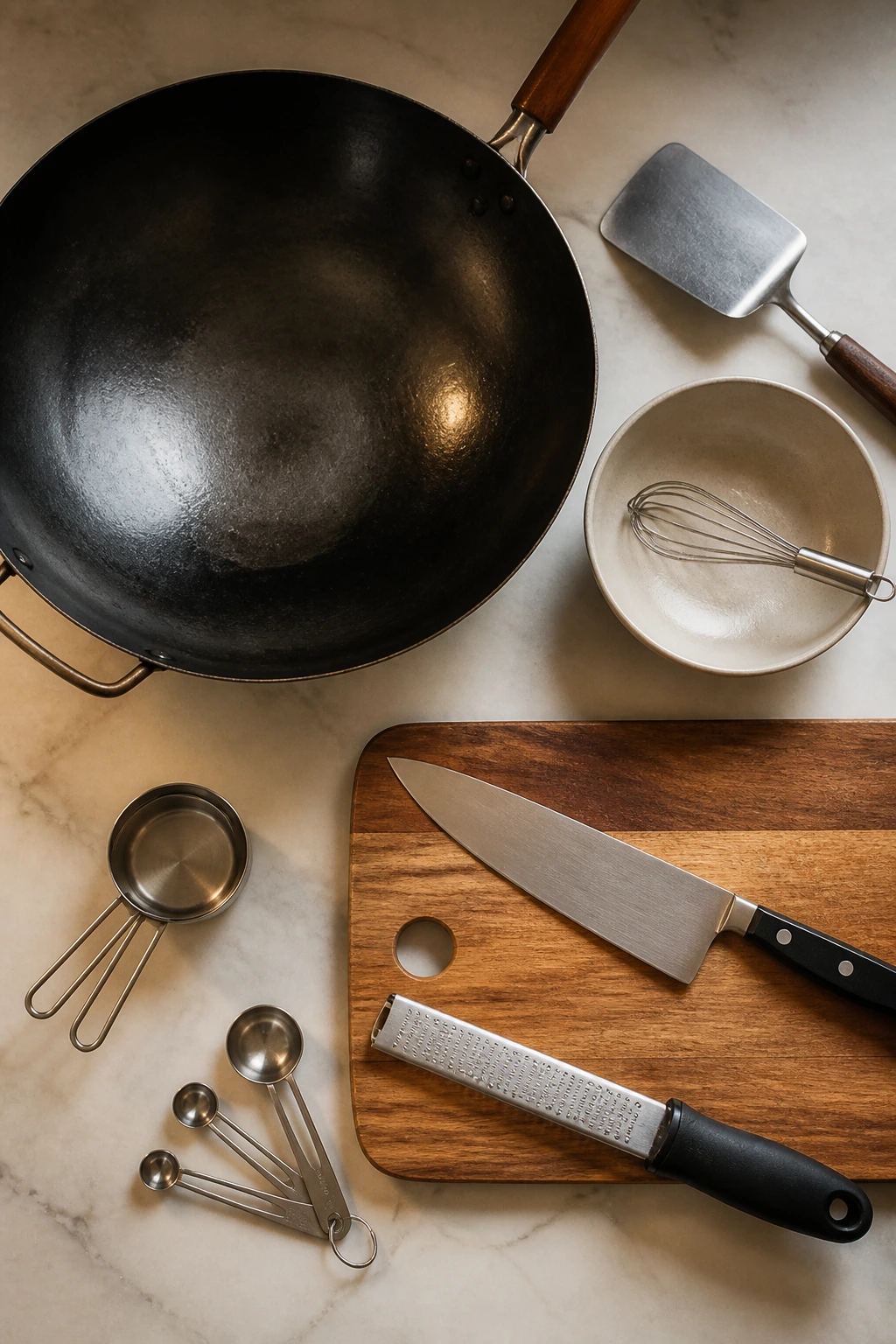
Special Equipment for a Fast, Hot Stir Fry
-
12-inch wok or wide skillet: A big surface keeps the beef from crowding, which is the difference between browning and steaming.
-
Heavy spatula or wooden spoon: You need something sturdy enough to break up the beef and scrape up the browned bits at the bottom.
-
Small bowl and whisk: The sauce comes together faster if it is already mixed before the pan is hot.
-
Sharp chef’s knife: Thin slices on the onion, pepper, and carrot cook at the same speed, which keeps the pan balanced.
-
Cutting board: A roomy one matters here because the vegetable prep is most of the work.
-
Microplane or fine grater: Ginger grates more evenly than it minces, and that tiny texture disappears into the sauce instead of poking out.
-
Measuring spoons and cups: Stir fry moves fast. Guessing at the sauce is how people end up with a pan that tastes flat or overly salty.
How to Cook It Without Ending Up with Grease or Gray Vegetables
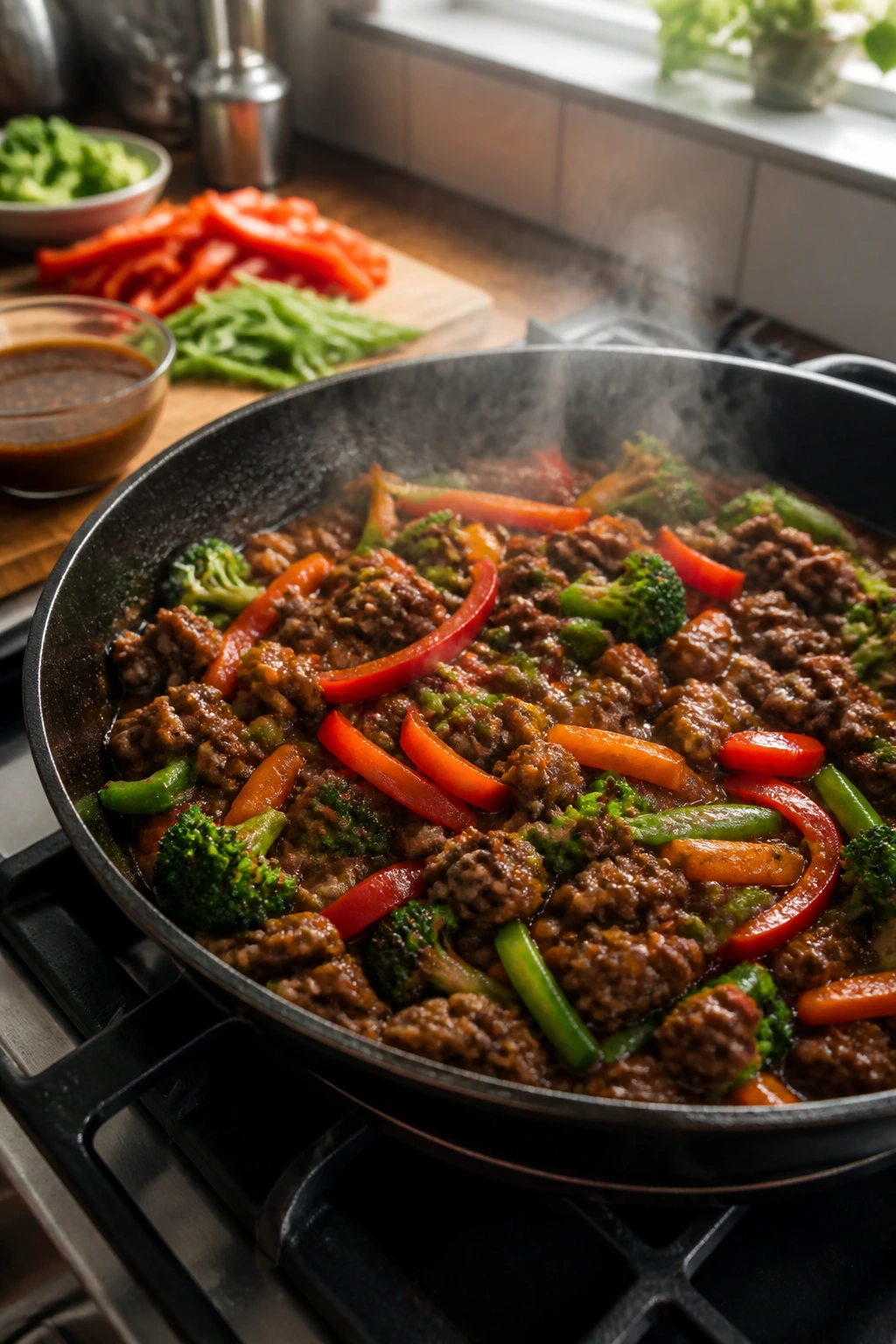
Prep the Sauce and Vegetables
-
In a small bowl, whisk together the soy sauce, oyster sauce, Shaoxing wine, chili garlic sauce, brown sugar, rice vinegar, water or broth, toasted sesame oil, and black pepper until the sugar is dissolved.
-
In a second small bowl, stir the cornstarch and cold water until smooth and milky. Keep it near the stove, because it goes in at the end and does not need to wait around.
-
Slice the onion, bell pepper, carrot, broccoli, snap peas, garlic, ginger, chilies, and scallions before the pan heats. Stir fry is fast. Once the beef goes in, there is no time to hunt for a cutting board.
Brown the Beef
-
Set a 12-inch wok or skillet over medium-high heat. When the pan is hot enough that a drop of water skitters across the surface, add the ground beef in an even layer. Leave it alone for 1 minute, then break it up and stir until browned, 5 to 7 minutes. Sprinkle in the kosher salt while it cooks.
-
If the beef gives off a lot of fat, spoon off all but about 1 tablespoon. If the pan looks dry because you used very lean beef, add the neutral oil and stir once to coat the surface.
Cook the Vegetables
-
Add the onion, carrot, and broccoli. Stir-fry for 2 minutes, moving them constantly so the edges pick up a little color. Splash in 2 tablespoons of water, cover the pan for 1 minute, then uncover and add the bell pepper and snap peas.
-
Cook for another 2 to 3 minutes, until the vegetables are bright, the broccoli is crisp-tender, and the peppers still bend instead of collapsing. The pan should smell hot and clean, not wet.
-
Add the garlic, ginger, and sliced chilies. Toss for 20 to 30 seconds, just until the garlic smells sweet and the ginger loses its raw bite. If the garlic starts browning hard, pull the pan off the heat for a moment. Bitter garlic can drag the whole skillet down.
Glaze and Finish
-
Pour in the sauce and let it bubble for 30 seconds. Stir the cornstarch slurry again, then drizzle it around the edge of the pan while tossing everything quickly. Cook for 45 to 60 seconds, until the sauce turns glossy and clings to the beef and vegetables instead of running to the bottom.
-
Turn off the heat, fold in the scallions, and taste. Add a small splash of rice vinegar if the sauce tastes heavy, or a pinch more salt if the beef needs it. Finish with toasted sesame seeds and serve immediately. Wait too long and the sauce thickens in the pan.
How to Serve Spicy Ground Beef Stir Fry Without Soggy Rice
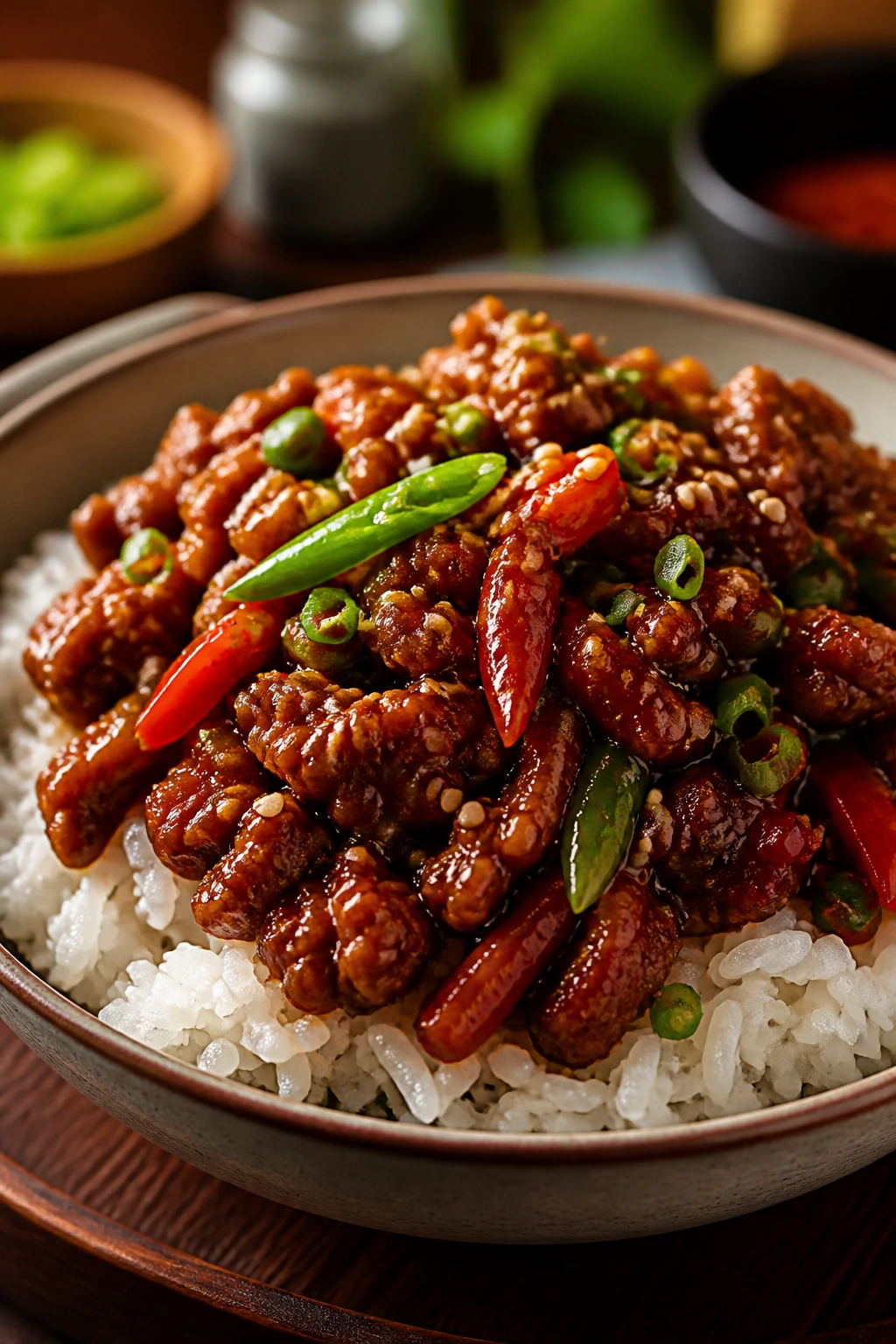
Presentation: Spoon the stir fry over hot jasmine rice and mound it slightly instead of spreading it thin. That keeps the glossy sauce visible and stops the bowl from looking like a mixed-up heap. A scatter of scallions and sesame seeds on top gives the bowl a cleaner finish.
Accompaniments: Plain steamed rice is the easiest answer because it lets the sauce do the talking. Lo mein noodles work when you want a heavier dinner, and a quick cucumber salad or some sliced cucumbers with rice vinegar gives the plate a cold, crunchy counterpoint. If you like more green on the side, sautéed bok choy is a natural fit.
Portions: Four people can eat this as a main dish over rice. If you need to stretch it, add another bell pepper or a few extra cups of vegetables rather than thinning the sauce with more liquid. That keeps the flavor concentrated.
Beverage Pairing: Cold jasmine tea is the cleanest match. A dry lager works well too, and sparkling water with lime keeps the chili from feeling too heavy between bites.
Small Upgrades That Make the Sauce Taste Bigger
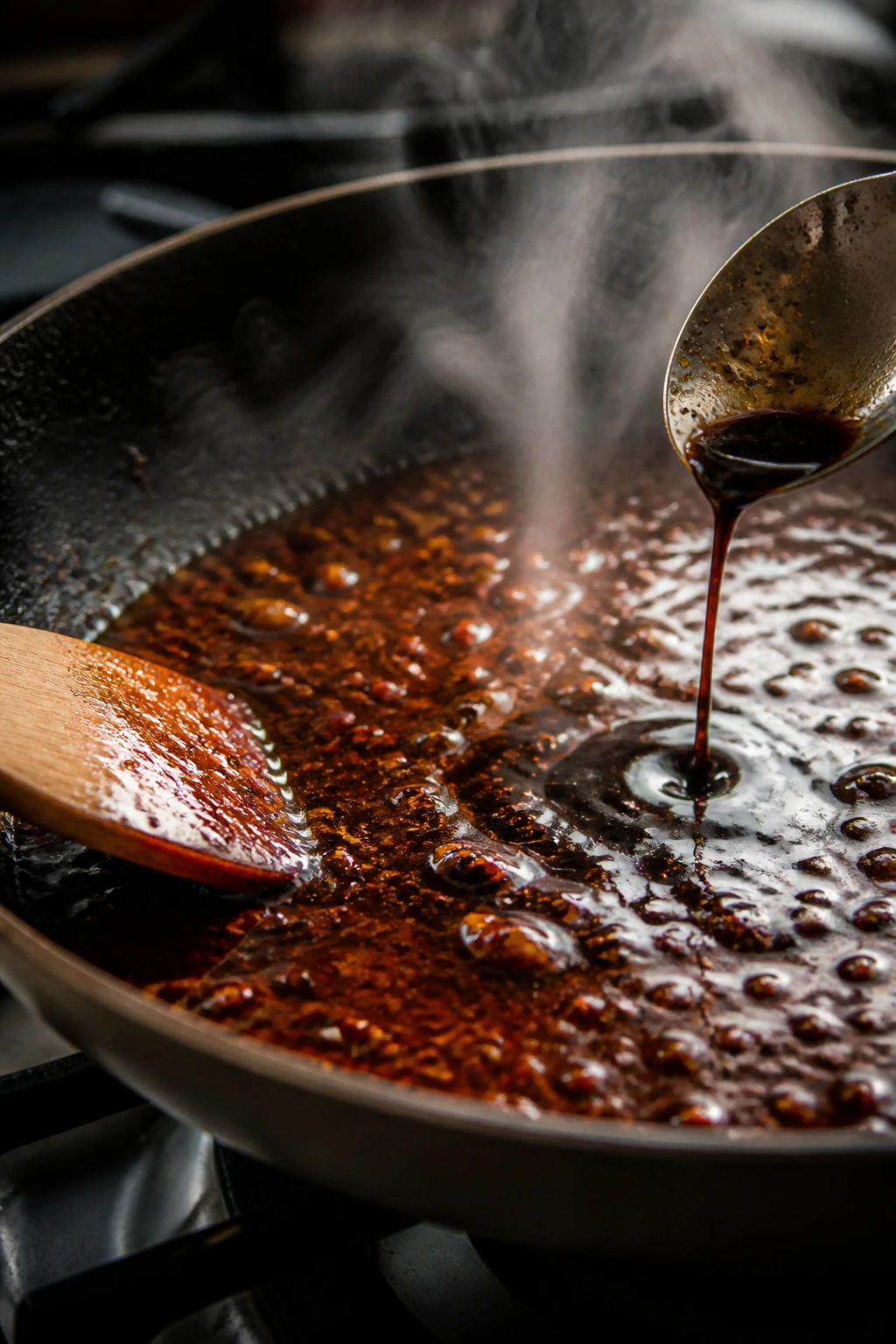
Flavor Enhancement: A teaspoon of black vinegar at the end wakes up the soy and gives the sauce a darker edge. If you like more texture, a spoonful of chili crisp added at the table brings heat without muddying the pan.
Customization: Mushrooms, cabbage, or baby bok choy can join the vegetables without changing the sauce formula. If you add mushrooms, cook them first so they lose water and pick up a little color before the beef comes back in.
Serving Suggestions: I like more scallions than the recipe technically needs. A few extra slices on top keep the dish from feeling heavy, and a small pinch of sesame seeds adds a little nutty crunch. A squeeze of lime is not traditional here, but it can brighten the soy if your palate likes sharper edges.
Make-It-Yours: Ground turkey or pork both work with the same sauce. For a lower-sodium version, cut the soy sauce to 3 tablespoons and add another tablespoon of water plus a little extra rice vinegar so the flavor stays lively.
Mistakes That Flatten the Heat or Leave the Pan Wet
-
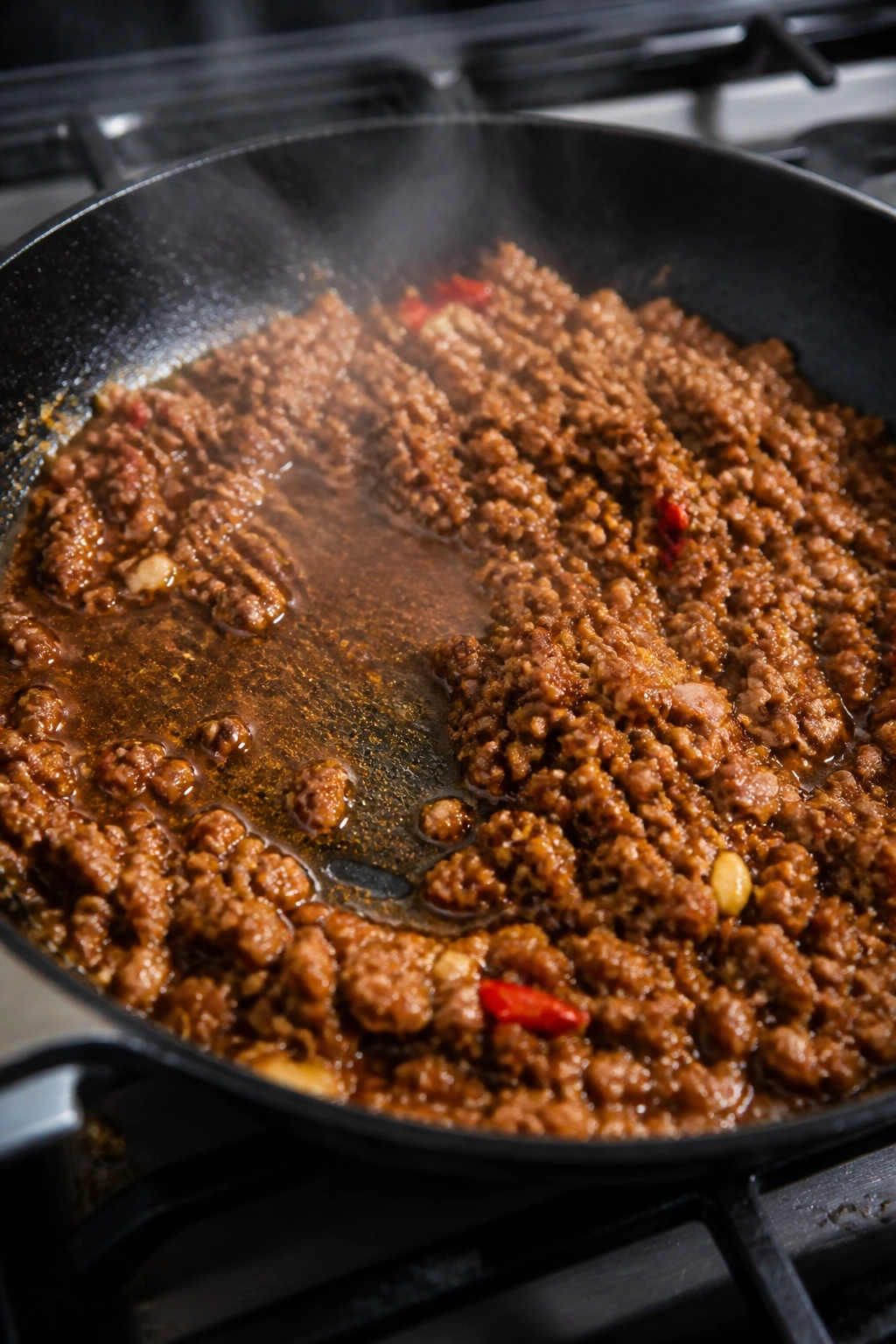
Crowding the Pan: If the skillet is packed, the beef steams and the vegetables go soft before they brown. Cook in two batches if your pan is smaller than 12 inches.
-
Using Low Heat: Stir fry needs a hot surface. A medium pan gives you pale beef, limp broccoli, and sauce that tastes boiled instead of glazed.
-
Adding Garlic Too Early: Garlic burns faster than the vegetables. If it goes in at the same time as the onions, it can turn sharp and bitter before the sauce arrives.
-
Pouring the Sauce In Before the Vegetables Are Ready: Once the sauce goes in, the clock starts. If the broccoli and carrots still need time, you will end up reducing the sauce while the vegetables are still hard.
-
Over-Thickening the Sauce: Cornstarch works quickly. If the sauce turns paste-like, add 1 to 2 tablespoons of water or broth and toss over low heat for a few seconds until it loosens.
Ways to Bend the Recipe Without Breaking It
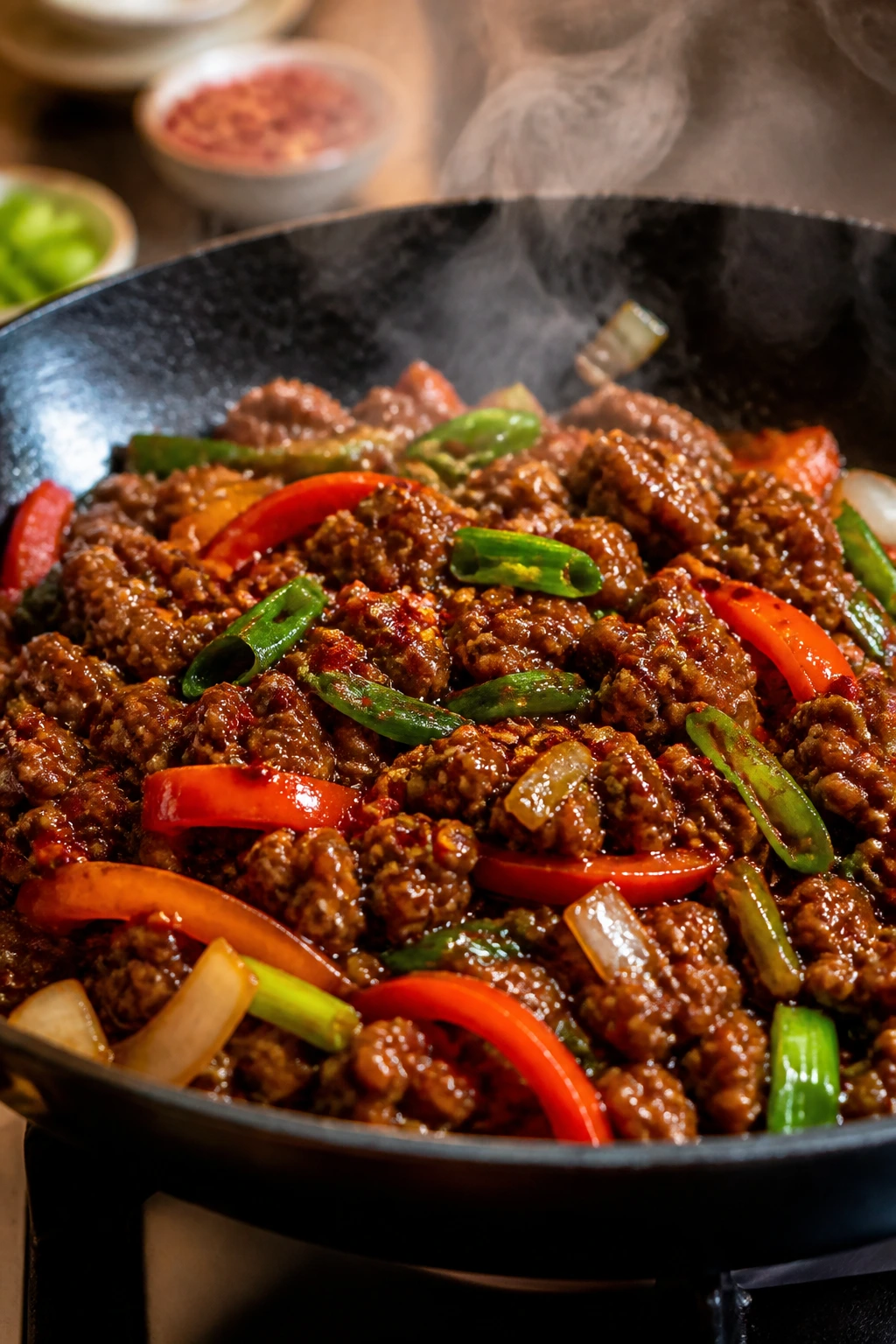
Firecracker Beef: Add an extra tablespoon of chili garlic sauce and finish with a teaspoon of chili crisp. This version leans hotter, shinier, and a little more aggressive, which is useful when you want the bowl to have some bite.
Mushroom Street Skillet: Add 8 ounces of sliced cremini mushrooms with the onion and let them brown before the beef goes back in. They drink up the sauce and make the pan taste meatier without adding much cost.
Milder Sesame Bowl: Skip the fresh chilies and cut the chili garlic sauce to 1 teaspoon. Add an extra tablespoon of soy sauce plus 1 teaspoon of honey so the dish keeps its balance without pushing the heat too far.
Noodle Toss: Cook 8 ounces of lo mein or rice noodles, then toss them into the pan after the sauce thickens. Add 2 tablespoons of noodle water if needed so the sauce coats the strands instead of clinging in dry patches.
Storing, Freezing, and Reheating the Leftovers
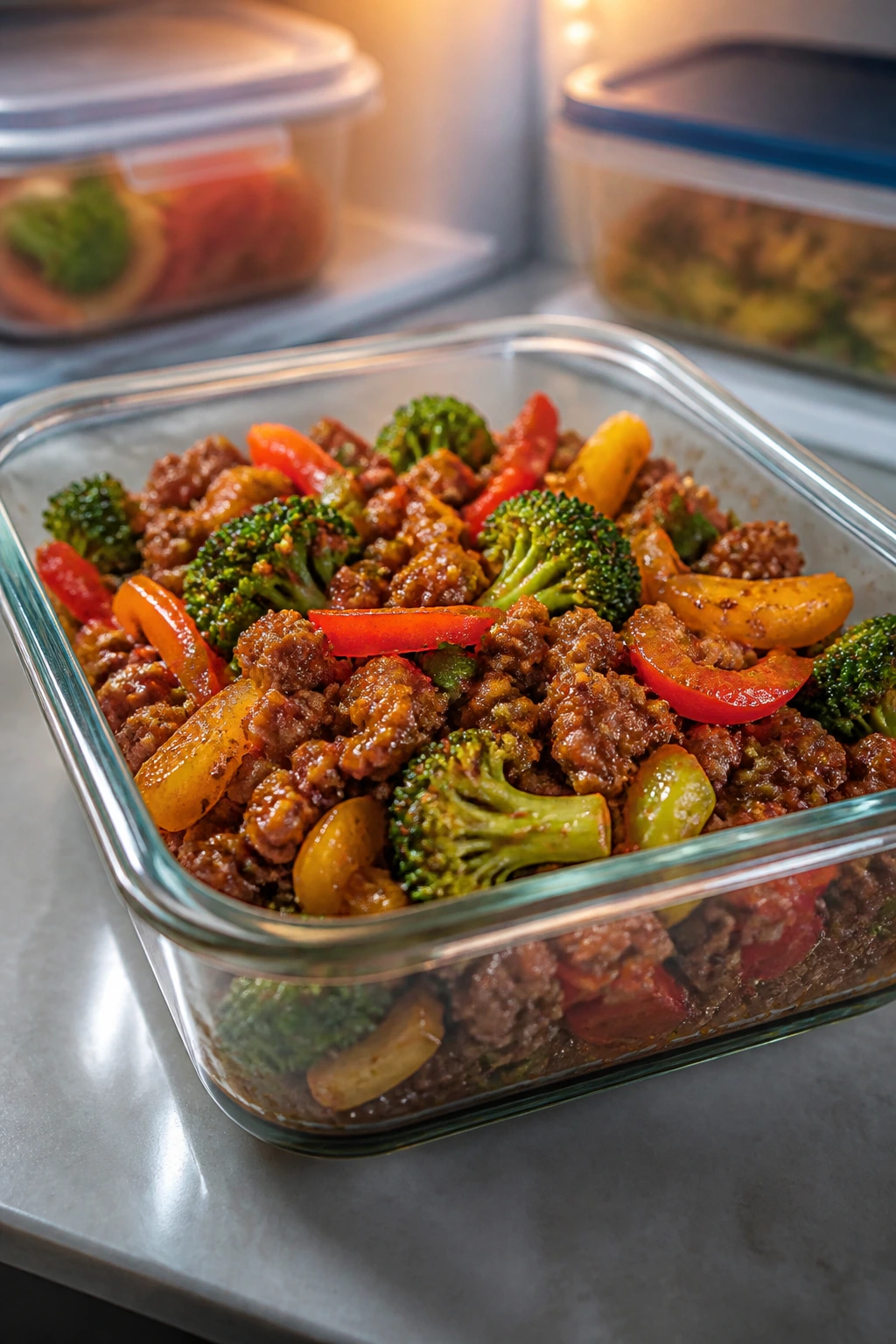
Refrigerator: Cool the stir fry within 2 hours and store it in airtight containers for 3 to 4 days. If you are serving it with rice, keep the rice in a separate container so the sauce does not soak everything into one soft mass.
Freezer: Freeze the beef-and-vegetable mixture for up to 2 months. The broccoli softens a bit after thawing, so if freezer meals matter to you, use a little more bell pepper and mushrooms next time; they hold their shape better than broccoli does.
Reheating: The best reheat is a skillet over medium heat with 1 to 2 tablespoons of water or broth. Cover the pan for 2 minutes, then uncover and stir until hot. The microwave works in 45-second bursts, but stop before the vegetables lose their bite.
Make-Ahead: The sauce can be mixed up to 3 days ahead, and the vegetables can be sliced a day ahead. I would not fully cook the stir fry ahead unless you have to; ground beef holds up well, but the vegetables are at their best when they hit the pan fresh.
Questions People Ask Before They Make It

Can I use lean ground beef instead of 85/15?
Yes, but add 1 tablespoon of neutral oil so the pan has enough fat to carry the garlic and ginger. Very lean beef tastes cleaner, but it can also feel dry if you do not compensate.
What can I use if I do not have oyster sauce?
Hoisin plus a splash of water is the closest pantry swap, though it will be sweeter and less briny. If you keep mushroom stir-fry sauce around, that is another solid option for a deeper savory note.
Can I make this with frozen vegetables?
You can, but thaw them first and pat them dry so they do not dump water into the pan. Frozen broccoli or a stir-fry mix works best when the pieces are small and you keep the heat high.
How spicy is it as written?
Medium. The heat comes through, but it does not bury the soy, garlic, or sesame. If you want more burn, add chili crisp at the table. If you want less, skip the fresh chilies and cut the chili garlic sauce back to 1 teaspoon.
Do I need a wok?
No. A wide 12-inch skillet is often better for home cooks because it sits flat and gives the beef more contact with the pan. Surface area matters more than the shape of the pan.
Can I double the recipe?
Yes, but brown the beef in batches so the pan stays hot. If you dump everything in at once, the vegetables steam and the sauce turns thinner than it should.
What if the sauce gets too thick before I serve it?
Add 1 to 2 tablespoons of water or broth and toss the pan over low heat for 20 seconds. Cornstarch thickens fast once the heat drops, so the fix is usually just a little liquid and a quick stir.
Can I make it ahead for lunch?
Yes, and it holds up better than a lot of stir fries because the beef is already broken into small pieces. Keep the rice separate, though, or the whole lunch turns soft by the time you reheat it.
A Hot Pan Beats a Delivery Bag
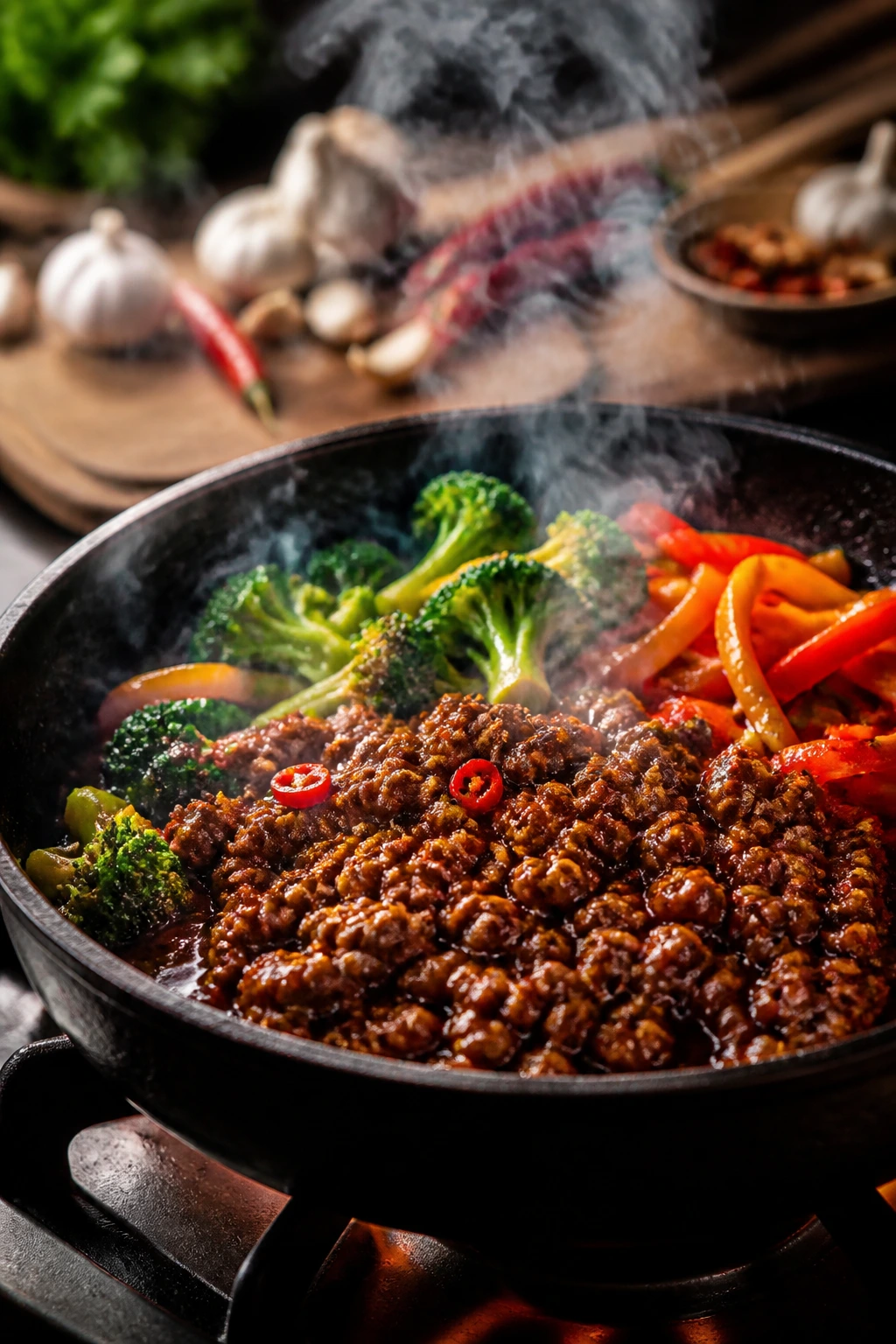
This recipe works because it respects the way stir fry actually behaves in a home kitchen. You do not need mystery ingredients or a mountain of steps. You need high heat, a sauce that knows when to thicken, and vegetables cut to the right size so they can finish on time.
That is why I keep coming back to it. The beef browns, the sauce clings, the peppers stay crisp, and the whole skillet lands on the table hot enough to matter. Keep the sauce mixed and the vegetables chopped, and the next time takeout starts looking tempting, this is the pan I would reach for first.
Spicy Ground Beef Stir Fry Better than Takeout — Recipe Card
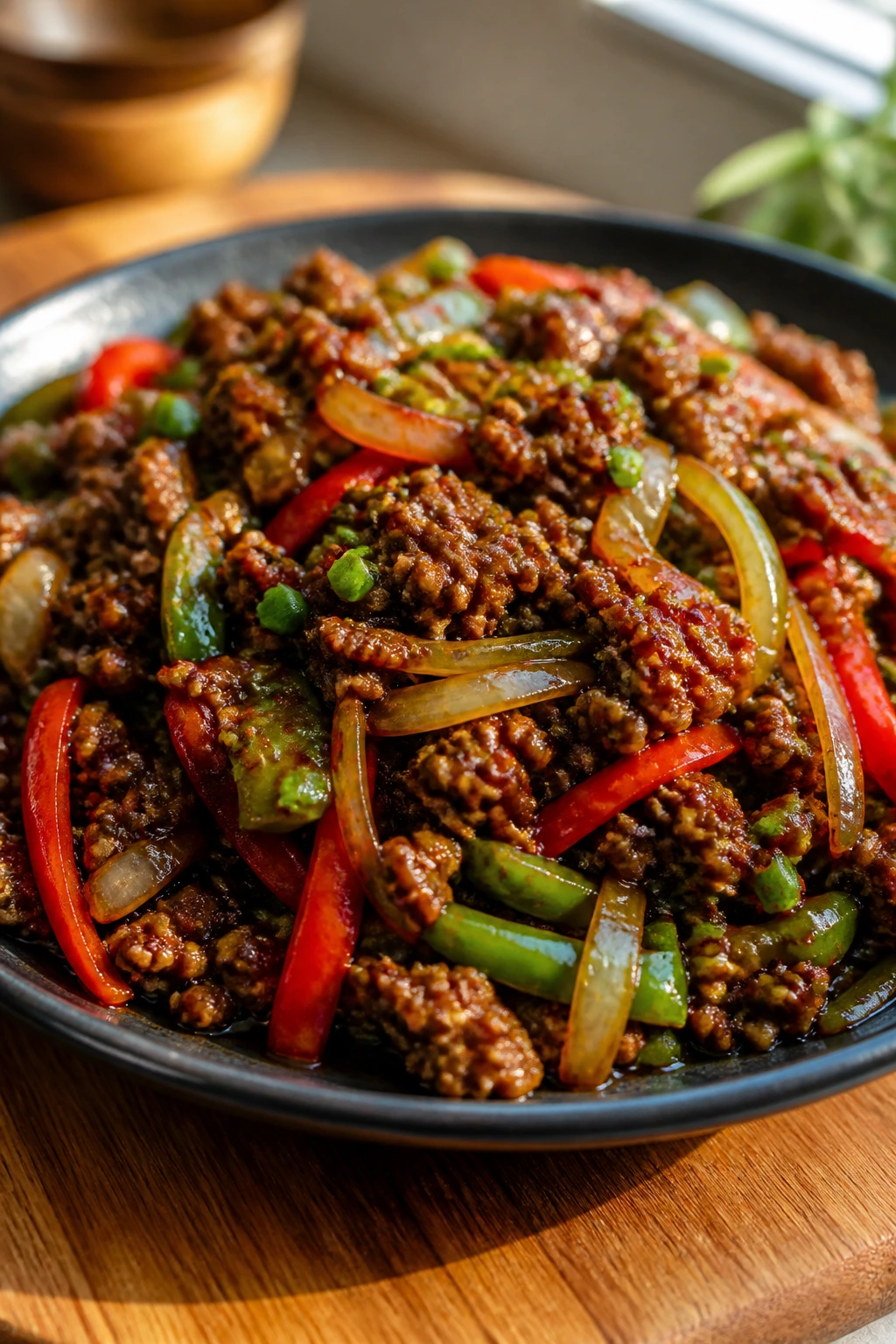
Recipe Name: Spicy Ground Beef Stir Fry Better than Takeout
Description: A fast, takeout-style stir fry with browned ground beef, crisp vegetables, and a glossy soy-chile sauce. It tastes bold, savory, and a little spicy without needing a long marinade or fancy equipment.
Prep Time: 15 minutes
Cook Time: 15 minutes
Total Time: 30 minutes
Course: Dinner, Main Course
Cuisine: Asian-inspired, Chinese-American inspired
Servings: 4 servings
Calories: About 540 kcal per serving
Ingredients
For the Stir Fry:
- 1 1/2 pounds ground beef, 85/15 preferred
- 1 tablespoon neutral oil, only if the beef is very lean
- 1 medium yellow onion, thinly sliced
- 1 red bell pepper, thinly sliced
- 1 small broccoli crown, cut into bite-size florets (about 3 cups)
- 1 cup snap peas, trimmed
- 1 medium carrot, cut into thin matchsticks
- 4 cloves garlic, minced
- 1 tablespoon fresh ginger, finely grated
- 2 to 3 Thai chilies, thinly sliced, or 1 teaspoon red pepper flakes
- 3 scallions, sliced, plus extra for garnish
- 1/2 teaspoon kosher salt
- 1/4 teaspoon black pepper
- 1 teaspoon toasted sesame seeds, for garnish
For the Sauce:
- 1/4 cup low-sodium soy sauce
- 2 tablespoons oyster sauce
- 1 tablespoon Shaoxing wine or dry sherry
- 1 tablespoon chili garlic sauce
- 1 tablespoon brown sugar or honey
- 2 tablespoons rice vinegar
- 1/4 cup water or low-sodium beef broth
- 1 teaspoon toasted sesame oil
- 1 tablespoon cornstarch
- 2 tablespoons cold water
Instructions
-
Whisk together the soy sauce, oyster sauce, Shaoxing wine, chili garlic sauce, brown sugar, rice vinegar, water or broth, sesame oil, and black pepper in a small bowl. In a second bowl, stir the cornstarch and cold water until smooth.
-
Slice the onion, bell pepper, carrot, broccoli, snap peas, garlic, ginger, chilies, and scallions before heating the pan.
-
Heat a 12-inch wok or skillet over medium-high heat. Add the ground beef in an even layer and let it brown for 1 minute before stirring, then cook until browned, 5 to 7 minutes. Add the salt while it cooks.
-
Spoon off excess fat if needed. If the beef is very lean and the pan looks dry, add the neutral oil.
-
Add the onion, carrot, and broccoli. Stir-fry for 2 minutes, then splash in 2 tablespoons water, cover for 1 minute, and uncover.
-
Add the bell pepper and snap peas. Cook for 2 to 3 minutes, until the vegetables are crisp-tender.
-
Add the garlic, ginger, and chilies. Toss for 20 to 30 seconds, until fragrant.
-
Pour in the sauce and let it bubble for 30 seconds. Stir the cornstarch slurry again, then drizzle it into the pan while tossing. Cook for 45 to 60 seconds, until glossy and thick.
-
Turn off the heat, fold in the scallions, and taste. Add a splash of rice vinegar if needed, then finish with sesame seeds and serve at once.
Notes: Keep the pan hot, do not crowd it, and add the sauce only when the vegetables are already crisp-tender. For extra heat, spoon chili crisp over the finished bowls.