



A good bowl of spicy Korean bibimbap has a way of making the rest of dinner feel lazy. Steam rises from the rice, the gochujang hits your nose with that peppery-sweet funk, and the egg yolk sits there like it knows it’s about to be stirred into something better than the sum of its parts. That’s the whole trick: bibimbap is not a neat bowl. It’s a bowl with edges, contrast, and a little drama.
Takeout versions often miss the point. The rice goes soft, the vegetables blur into each other, and the sauce tastes like it was built from one note and a prayer. A proper spicy Korean bibimbap needs texture in every corner: sticky rice, crisp carrots, tender mushrooms, wilted spinach, a glossy beef layer, and a runny egg that turns the whole thing into a silky red-gold mess once you mix it.
Make it at home and you get control over every bite. You can keep the vegetables bright, push the heat as high as you like, and make the rice do what it should do in a bibimbap bowl—catch sauce, not drown in it. If you’ve ever had a bowl where the last few spoonfuls tasted like the best part, you already understand the appeal. This is that bowl, only hotter, sharper, and a lot less greasy.
Why This Spicy Korean Bibimbap Hits Harder Than Delivery
Balanced heat: The gochujang sauce brings heat, sweetness, and fermentation in one spoonful, so the spice feels deep instead of one-dimensional.
Real texture in every bite: Short-grain rice, crisp vegetables, tender beef, and a soft egg yolk keep the bowl from turning mushy after five minutes.
Fast enough for a regular night: Most of the work happens while the rice cooks, which means the stovetop stays busy without getting chaotic.
Easy to tailor: Swap the beef for mushrooms or tofu, use whatever sturdy vegetables you already have, and keep the same rice-sauce-egg structure.
Better leftovers than most rice bowls: The toppings store separately, so tomorrow’s lunch can still taste fresh instead of soggy and flat.
One skillet, one pot, one bowl at a time: You do not need a pile of equipment here. A rice cooker helps, sure, but it isn’t the difference between success and failure.
A little messy in the best way: Bibimbap is supposed to be mixed right before eating, which means the final bowl gets glossy, saucy, and deeply satisfying fast.
Yield: Serves 4
Prep Time: 25 minutes
Cook Time: 25 minutes
Total Time: 50 minutes
Difficulty: Intermediate — there are a few moving parts, but none of them are hard; the bowl just asks for steady timing and a little attention.
Best Served: Hot, with the rice still steamy, the vegetables warm, and the egg yolk loose.
The Ingredients That Build a Real Bibimbap Bowl
For the Rice
- 2 cups short-grain white rice, rinsed until the water runs mostly clear
- 2 1/2 cups water
For the Vegetables
- 1 small zucchini, julienned into 2-inch matchsticks
- 2 medium carrots, julienned into 2-inch matchsticks
- 8 ounces shiitake mushrooms, stems trimmed and thinly sliced
- 5 ounces baby spinach
- 1 cup bean sprouts
- 1 tablespoon toasted sesame oil, divided
- 1 teaspoon soy sauce, divided
- 1 teaspoon rice vinegar
- Fine salt, to taste
For the Beef
- 1 tablespoon neutral oil
- 1 pound ground beef
- 2 cloves garlic, minced
- 1 teaspoon grated fresh ginger
- 2 tablespoons soy sauce
- 1 tablespoon brown sugar
- 1 tablespoon toasted sesame oil
For the Gochujang Sauce
- 3 tablespoons gochujang
- 1 tablespoon soy sauce
- 1 tablespoon rice vinegar
- 1 tablespoon honey
- 1 tablespoon water
- 1 teaspoon toasted sesame oil
- 1 small garlic clove, finely grated
For the Eggs and Finishing Touches
- 4 large eggs
- 1 tablespoon neutral oil
- 2 scallions, thinly sliced
- 1 tablespoon toasted sesame seeds
- 1 cup kimchi, for serving, optional
Why Bibimbap Works So Well in a Home Kitchen
Bibimbap literally means “mixed rice,” which sounds plain until you taste one made with care. The bowl is built around contrast: warm rice under cool or lightly cooked vegetables, something savory in the middle, a little heat, a little sweetness, and a soft egg to pull the whole thing together. When it’s done right, every spoonful changes a little as you move through the bowl.
The home version has one big advantage over restaurant delivery: you can keep each topping distinct. That matters more than people think. Bibimbap is not supposed to be a stew disguised as dinner. The carrots should still have a slight snap, the spinach should taste green and clean, and the mushrooms should be browned rather than boiled.
The texture map matters
A bibimbap bowl lives or dies on texture. Soft rice is the base, but it should never feel gluey. The vegetables should give you a small burst of resistance before they soften, and the beef should be saucy enough to coat the rice without soaking everything around it.
That’s why the sauce belongs on top at the end, not poured into the pan early. Once the gochujang hits the rice, the bowl changes fast. The egg yolk makes the sauce richer, the sesame oil makes it smell warm and nutty, and the kimchi, if you add it, brings a clean punch that stops the whole thing from feeling heavy.
Why this version earns its keep
I like this version because it respects the bowl without turning dinner into a project that eats the evening. The vegetables are simple, the beef is quick, and the sauce relies on pantry staples that already know how to behave. No fancy tricks. No long marinade. Just good timing.
The other reason it works is that it stays flexible. If your fridge has mushrooms but no zucchini, use more mushrooms. If you want the bowl hotter, add another spoonful of gochujang and a splash of vinegar. Bibimbap can take that kind of adjustment, which is one reason it never gets boring.
Rice That Stays Fluffy Under the Toppings
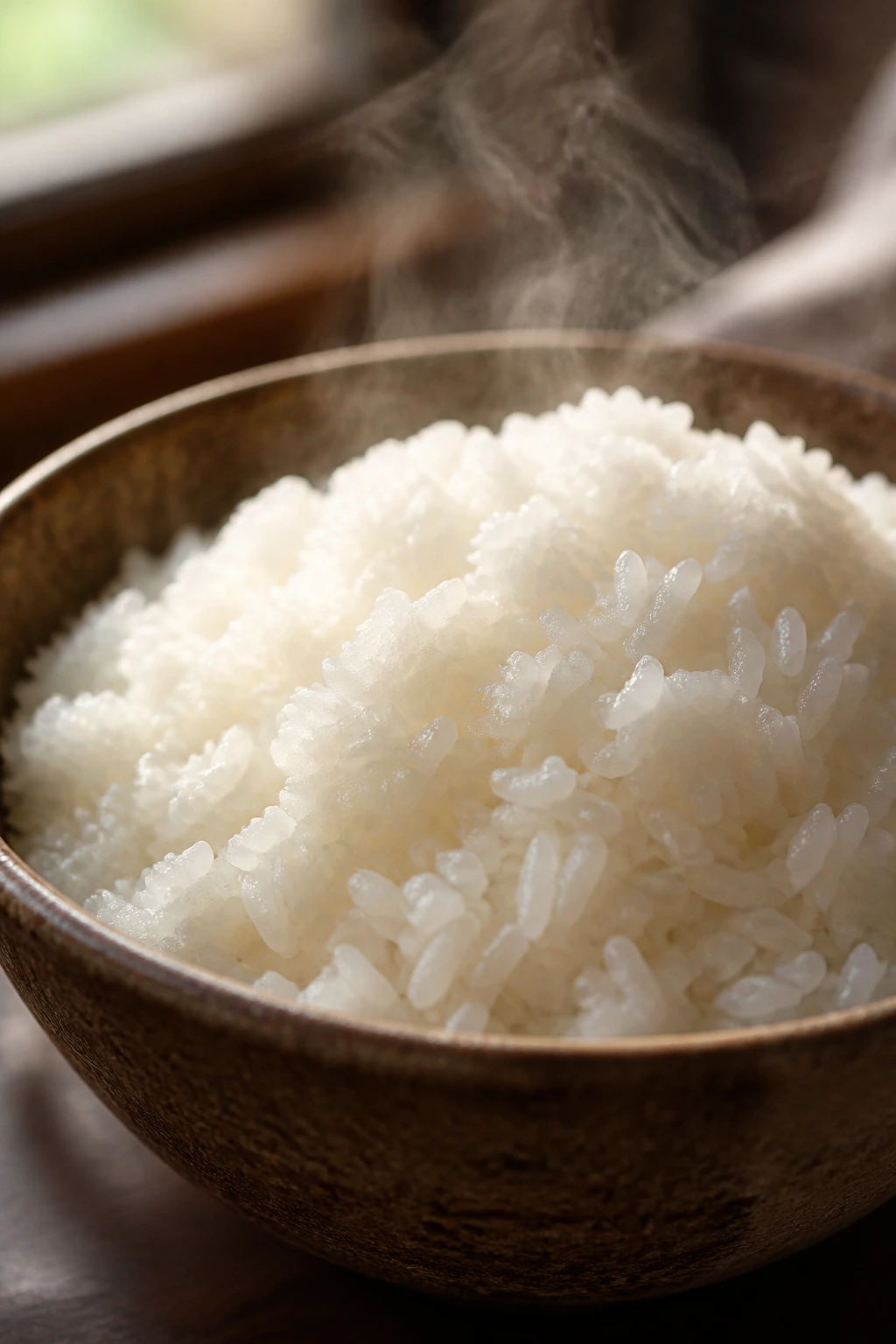
Short-grain rice is the right call here. Long-grain rice stays too separate and dry; bibimbap wants rice that holds together a little so it can grab the sauce, sesame oil, and egg yolk without collapsing into paste. Sushi rice or any good medium-grain short rice works well.
What to use: 2 cups short-grain white rice and 2 1/2 cups water. That ratio gives you rice that’s tender but not wet, with enough body to support the toppings.
Preparation: Rinse the rice in a fine-mesh strainer or bowl until the water looks cloudy instead of milky. That usually takes 3 to 5 rinses. If you skip this, the bowl still works, but the rice can feel sticky in the wrong way.
Substitutions: Medium-grain white rice is the closest swap. If you need brown rice, use 2 cups brown short-grain rice with the water and cook according to the package, then expect a nuttier texture and a longer cooking time.
Tips: Let the rice rest for 10 minutes after cooking, lid on, before you fluff it. That little pause helps the grains settle and keeps the bottom from turning wet when you start plating.
A rice cooker makes this even easier, but a saucepan is fine. If you’re using the stove, keep the lid tight and the heat low after the water comes to a boil. Once the rice is done, resist the urge to stir it hard. A gentle fluff is enough.
If your rice seems a little soft, spread it on a tray for 5 minutes before assembling. It dries just enough to keep the bowl from sliding around in the sauce.
Vegetables That Keep Their Bite
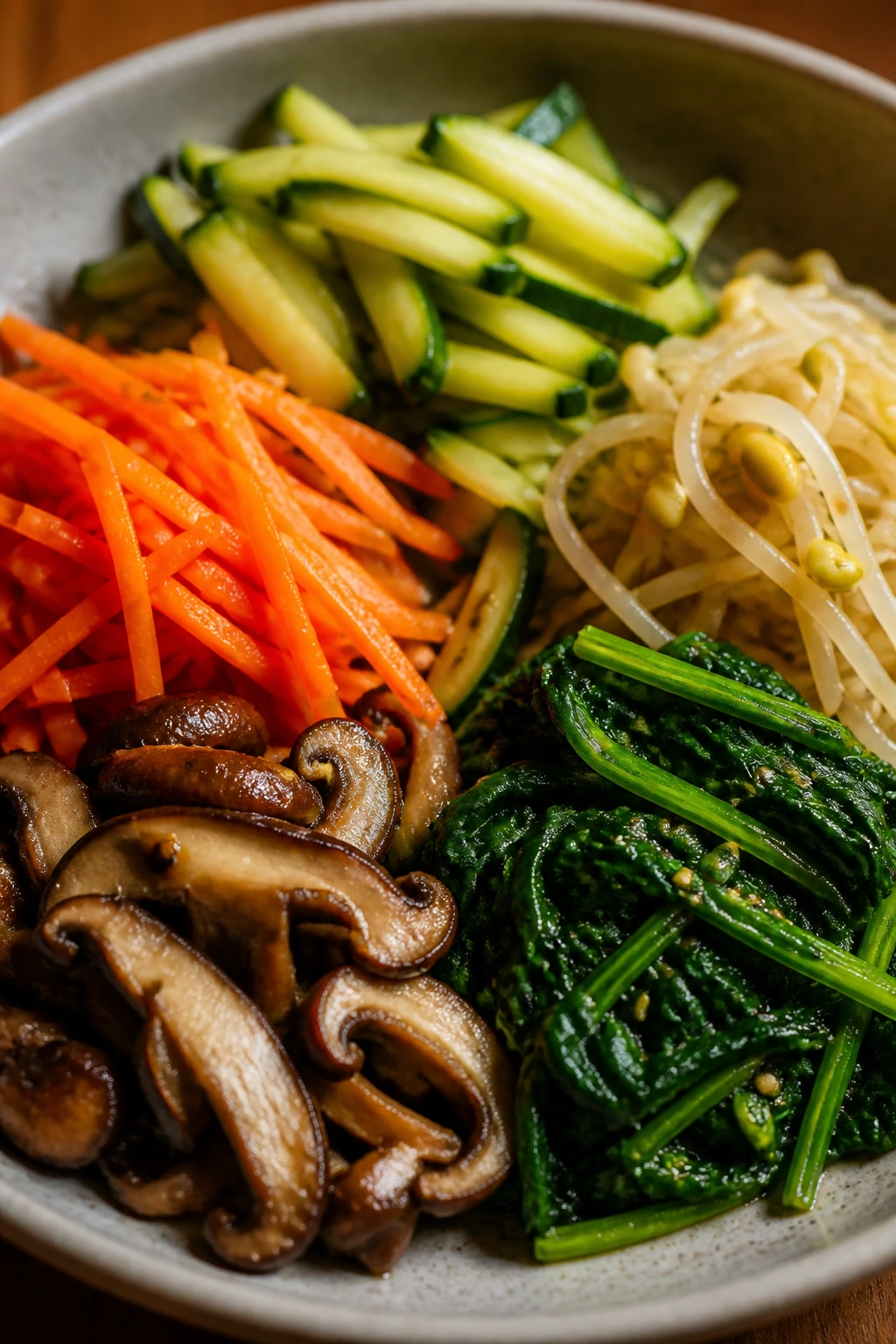
Vegetables are not filler in bibimbap. They’re the part that keeps the bowl awake. If they’re soggy or bland, the whole dish falls flat, even if the beef and sauce are perfect.
What to use: 1 small zucchini, 2 medium carrots, 8 ounces shiitake mushrooms, 5 ounces baby spinach, and 1 cup bean sprouts. That mix gives you soft, crisp, earthy, and bright all in one bowl.
Preparation: Julienne the zucchini and carrots into similar matchsticks so they cook at the same speed. Trim and slice the mushrooms thinly. Spinach should be rinsed and drained well, and bean sprouts need a quick rinse before cooking.
Substitutions: Bell peppers, cucumber ribbons, cabbage, or snow peas can step in if needed. If you can’t find bean sprouts, a handful of shredded napa cabbage or a few extra zucchini strips keeps the crunch.
Tips: Season each vegetable lightly and separately if you have the time. It’s a small bit of fuss, but that’s how you keep the flavors clean instead of muddled.
Spinach is the easiest place to go wrong. It cooks in a flash and then releases water if you manhandle it. Blanch it for 30 seconds or sauté it briefly, then squeeze it dry and season it with a few drops of sesame oil, a pinch of salt, and a tiny bit of garlic if you like that sharper edge.
The mushrooms need a hotter pan. Let them brown in a single layer so they lose moisture and pick up a little color at the edges. If you crowd them, they’ll steam, and steamed mushrooms taste like regret. Carrots and zucchini can stay a little firmer; that’s part of the charm.
Beef, Eggs, and the Rich Center of the Bowl
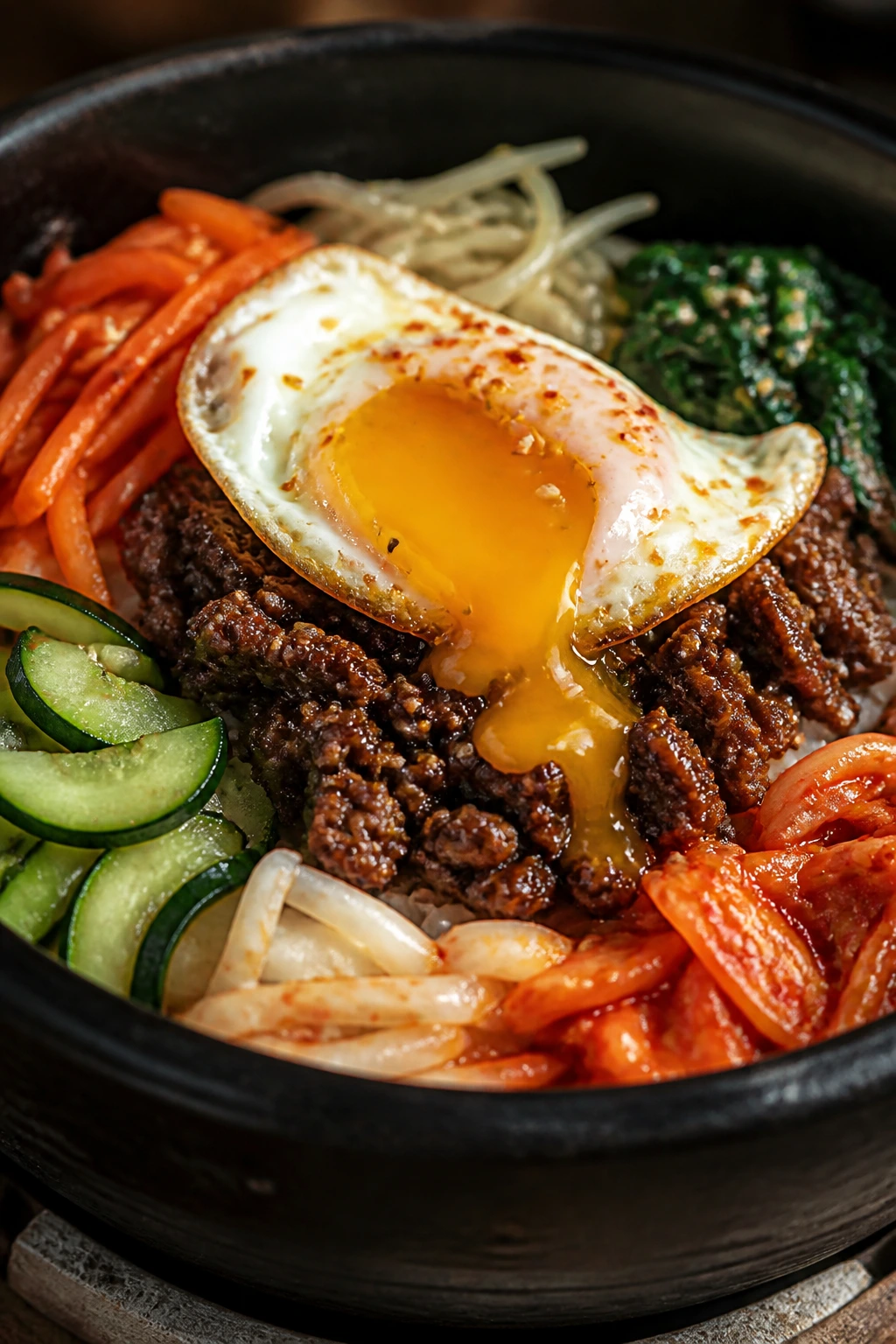
The center of the bowl should taste rich enough to anchor all the vegetables around it. Ground beef does that job well because it cooks fast, clings to the sauce, and gives the bowl a savory base without demanding a long braise or a full marinade.
What to use: 1 pound ground beef, 2 cloves garlic, 1 teaspoon fresh ginger, 2 tablespoons soy sauce, 1 tablespoon brown sugar, and 1 tablespoon toasted sesame oil. Four large eggs finish the bowl, one per serving.
Preparation: Keep the garlic minced fine so it disappears into the beef instead of burning. If your ginger is fibrous, grate it on a microplane. Use the eggs fresh; bibimbap wants a yolk that spreads, not one that sits like a hard marble.
Substitutions: Ground turkey works, though it needs a little more sesame oil or a splash of neutral oil to avoid drying out. Thinly sliced ribeye gives you a more classic beef version, and extra-firm tofu can step in for a meatless bowl.
Tips: Brown the beef in a hot skillet and let it sit against the pan before stirring. That’s how you get little caramelized bits instead of gray crumbles. The egg should be fried until the whites are set and the yolk is still soft enough to run.
The beef seasoning is simple on purpose. Soy sauce brings salt, brown sugar rounds it out, and sesame oil gives it that warm, toasted finish. If the meat tastes flat, the fix is usually a small splash more soy or a pinch more sugar—not a flood of sauce.
And the egg matters more than some people want to admit. A fried egg with a loose yolk makes bibimbap taste like a completed dish instead of a bowl of separate things. Break it only when you’re ready to mix.
Gochujang Sauce That Brings the Heat
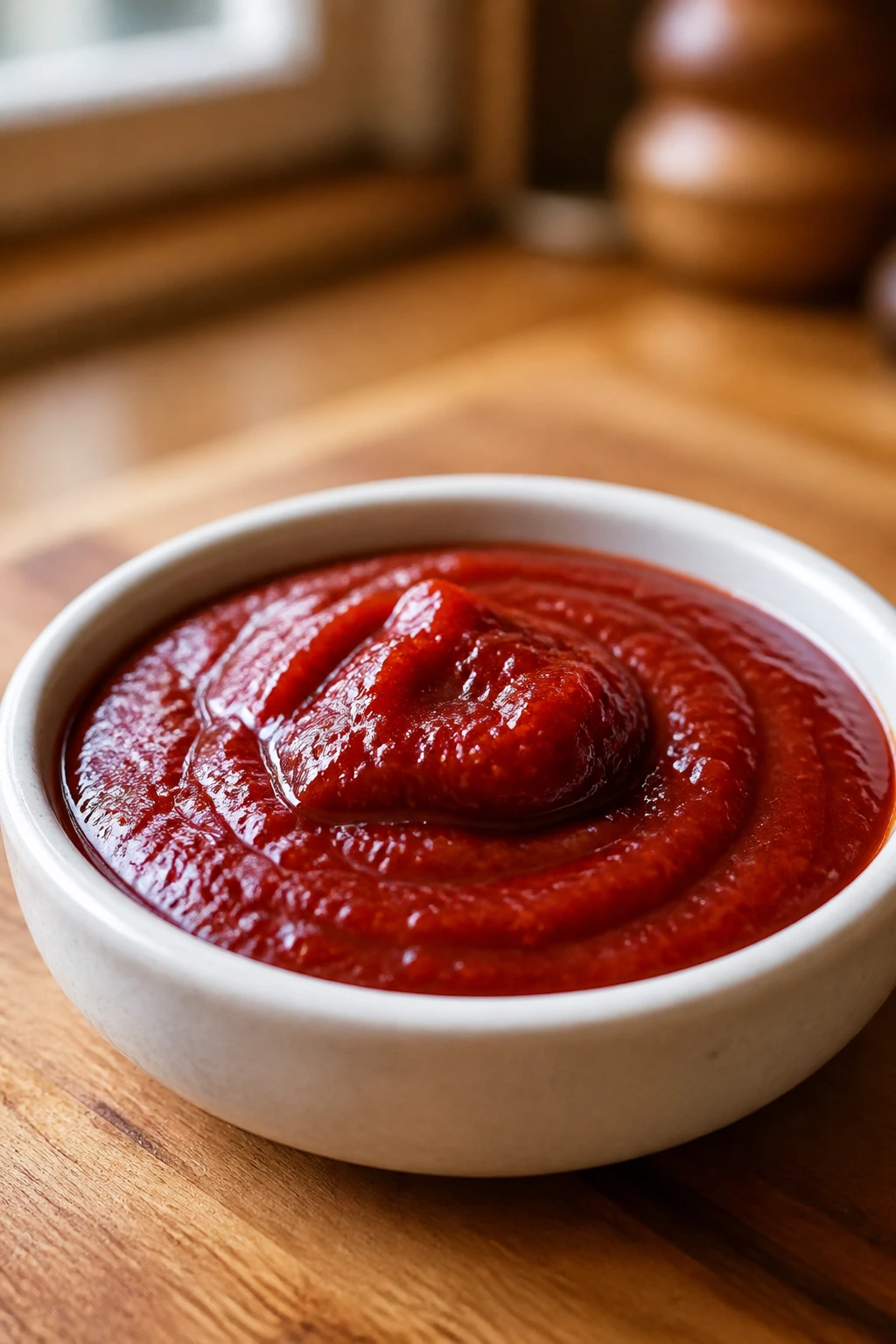
Gochujang is the part people remember. It’s chili paste, yes, but that description undersells it. Good gochujang has heat, sweetness, salt, and a fermented depth that keeps it from tasting sharp or thin.
What to use: 3 tablespoons gochujang, 1 tablespoon soy sauce, 1 tablespoon rice vinegar, 1 tablespoon honey, 1 tablespoon water, 1 teaspoon toasted sesame oil, and 1 small garlic clove grated fine.
Preparation: Stir the sauce until it turns glossy and smooth, with no thick streaks of paste left in the bowl. If your gochujang is very stiff, add the water a teaspoon at a time instead of dumping it all in at once.
Substitutions: Maple syrup can replace honey. If you want less sodium, use low-sodium soy sauce and lean a little harder on vinegar and sesame oil for balance.
Tips: Taste the sauce before serving. If it tastes too hot and one-note, add a touch more honey or a few drops more vinegar. If it tastes sweet but dull, the answer is usually more gochujang—not more sugar.
The sauce should be punchy enough to wake up the rice but not so thick that it sits like paste on top of the bowl. You want it to coat the spoon and slide slowly. That texture matters because it helps the sauce spread once you mix everything together.
Kimchi, if you’re using it, plays the same role in a louder key. A few spoonfuls on the side add acidity, heat, and crunch. It also keeps the bowl from feeling too rich, which can happen when you use a runny egg and sesame oil in the same sitting.
Tools That Keep the Counter From Turning Into a War Zone
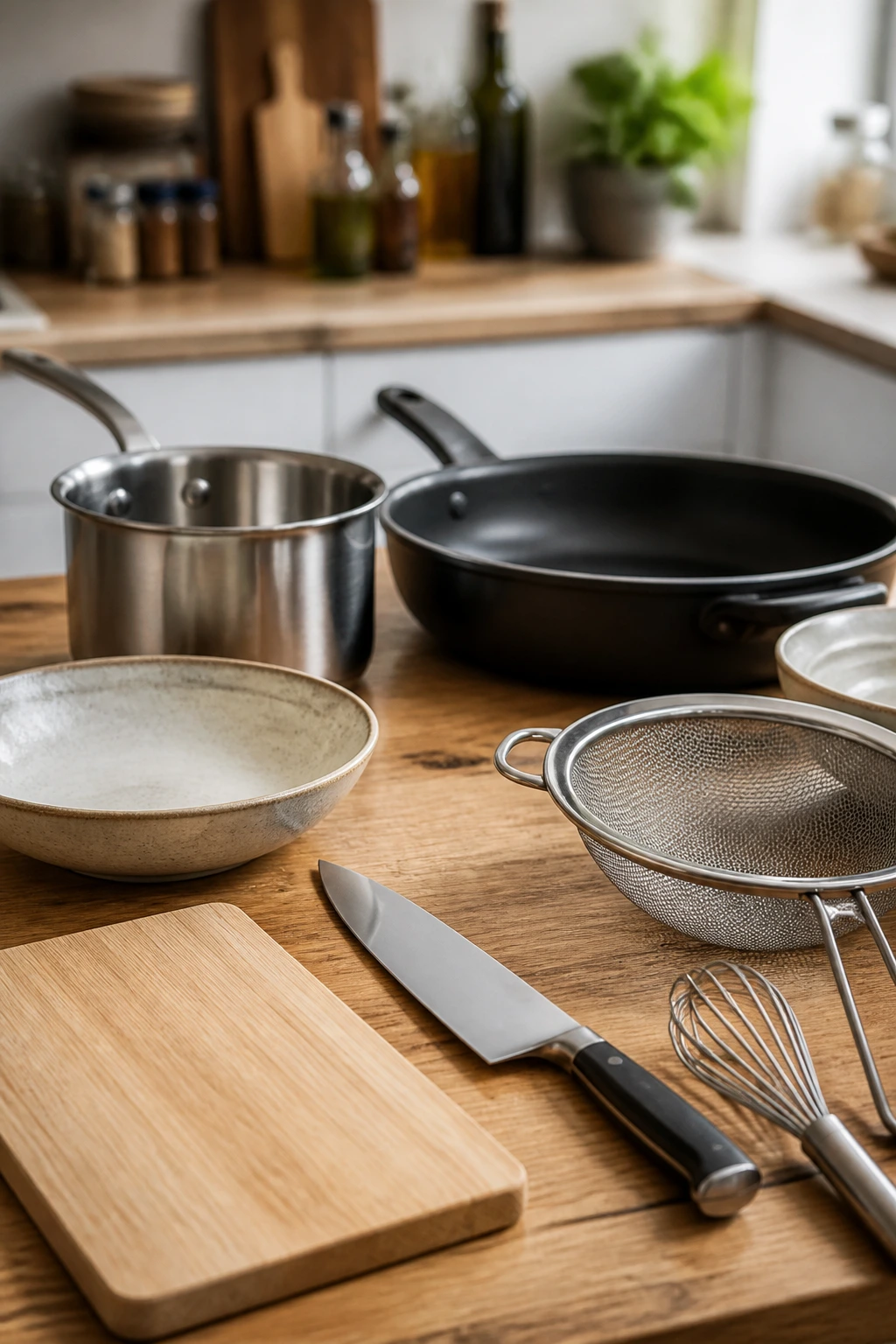
You don’t need a special bibimbap kit to make this work. A few basic tools make the process calmer, though, especially if you like to cook all the toppings in one run.
- Medium saucepan with a tight lid or a rice cooker — This handles the rice without much babysitting.
- Large skillet or cast-iron pan, 12-inch if you have it — A wide surface helps the beef and vegetables brown instead of steam.
- Second skillet or sauté pan — Handy for cooking vegetables in batches if you don’t want to juggle everything in one pan.
- Fine-mesh strainer — Useful for rinsing rice and draining bean sprouts quickly.
- Small bowl and whisk — For the gochujang sauce; a fork works in a pinch, but a whisk makes the sauce smoother.
- Sharp chef’s knife and cutting board — Julienne-cut vegetables are much easier with a decent knife.
- Wide serving bowls — Bibimbap looks best in shallow bowls that give each topping room to sit before the mix happens.
- Spatula or wooden spoon — For browning the beef and moving vegetables without shredding them.
If you have a cast-iron skillet and want the crispy-bottom version, keep it nearby. That’s not mandatory, but it’s one of those upgrades that makes dinner feel a little more dramatic.
Prep the Rice and Whisk the Sauce
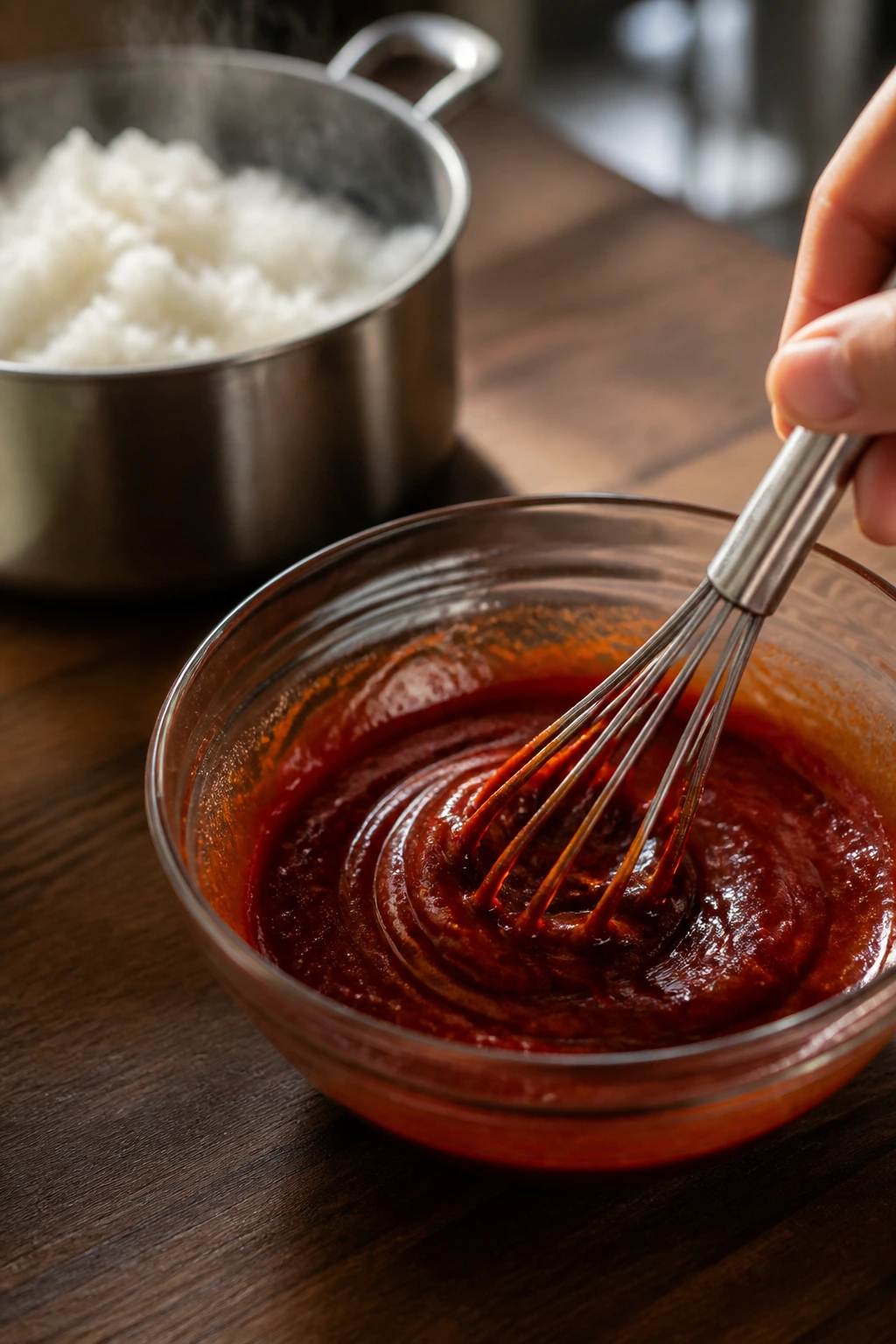
Rice and Sauce:
- Rinse and cook the rice. Rinse 2 cups short-grain white rice in a fine-mesh strainer until the water looks mostly clear, then combine it with 2 1/2 cups water in a saucepan or rice cooker. Bring it to a boil on the stove, cover, reduce the heat to low, and cook for 15 minutes, or until the water is absorbed and the surface looks gently pocked. Do not stir while it cooks or the rice will turn gummy.
- Rest the rice. Turn off the heat and let the rice sit, covered, for 10 minutes. The grains finish steaming during this rest, which keeps the bowl fluffy instead of wet.
- Mix the sauce. In a small bowl, whisk together 3 tablespoons gochujang, 1 tablespoon soy sauce, 1 tablespoon rice vinegar, 1 tablespoon honey, 1 tablespoon water, 1 teaspoon toasted sesame oil, and 1 small grated garlic clove until the sauce is smooth and glossy. Taste it. If it feels too thick, add 1 teaspoon more water.
The rice can sit quietly while you cook everything else. That’s the best kind of dinner rhythm.
Cook the Vegetables and Beef
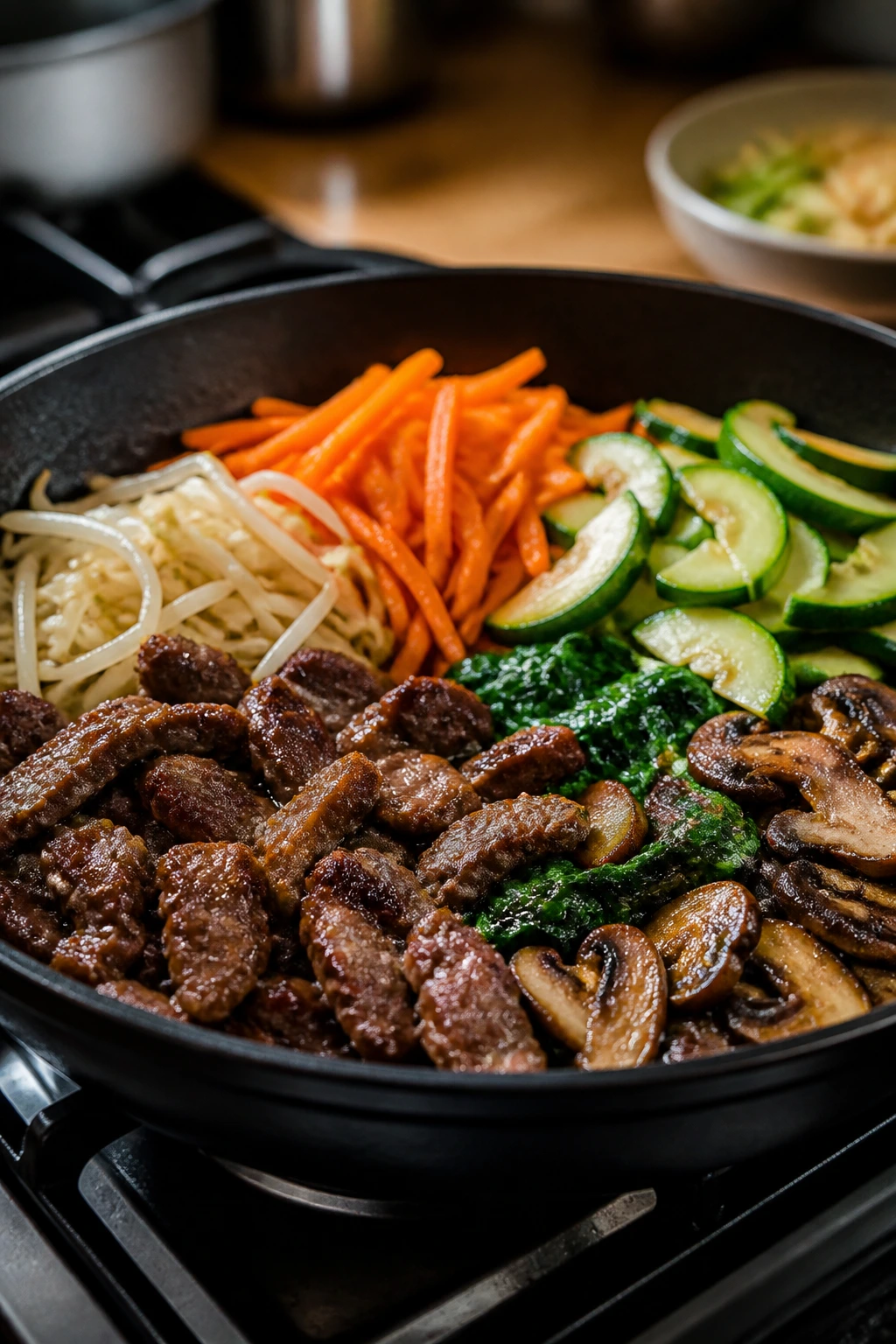
Vegetables and Beef: 4. Blanch or wilt the spinach. Bring a small pot of salted water to a boil, drop in 5 ounces baby spinach for 20 to 30 seconds, and drain immediately. Squeeze it dry in your hands or press it in a clean towel, then toss with a pinch of salt, a few drops of sesame oil, and a tiny splash of soy sauce. It should taste fresh, not salty. 5. Cook the bean sprouts. Blanch 1 cup bean sprouts in the same boiling water for 30 to 45 seconds, drain well, and season with a pinch of salt, 1/2 teaspoon sesame oil, and a few drops of rice vinegar. They should stay crisp. 6. Sauté the carrots and zucchini. Heat 1/2 tablespoon sesame oil in a skillet over medium-high heat. Add the julienned carrots and zucchini with a pinch of salt and cook for 2 to 3 minutes, stirring once or twice, until the edges soften but the centers still have a little snap. If the pan gets crowded, cook them in two batches so they don’t turn watery. 7. Brown the mushrooms. Add the sliced shiitake mushrooms to the hot skillet with a tiny pinch of salt and cook for 4 to 5 minutes, stirring only enough to keep them from burning, until they look browned and their moisture has cooked off. They should smell nutty, not damp. 8. Cook the beef. Wipe out the skillet if needed, heat 1 tablespoon neutral oil over medium-high heat, and add 1 pound ground beef. Let it brown for 2 minutes before breaking it up, then add the minced garlic and grated ginger. Stir in 2 tablespoons soy sauce, 1 tablespoon brown sugar, and 1 tablespoon toasted sesame oil. Cook for 2 to 3 minutes more, until the beef looks glossy and the sauce has reduced to a light coating. Drain off excess fat if the pan looks greasy.
Do not rush the vegetables together. The bowl tastes better when each one still has its own shape and its own season. That little bit of separation is what makes bibimbap feel composed instead of random.
Fry the Eggs and Build the Bowls

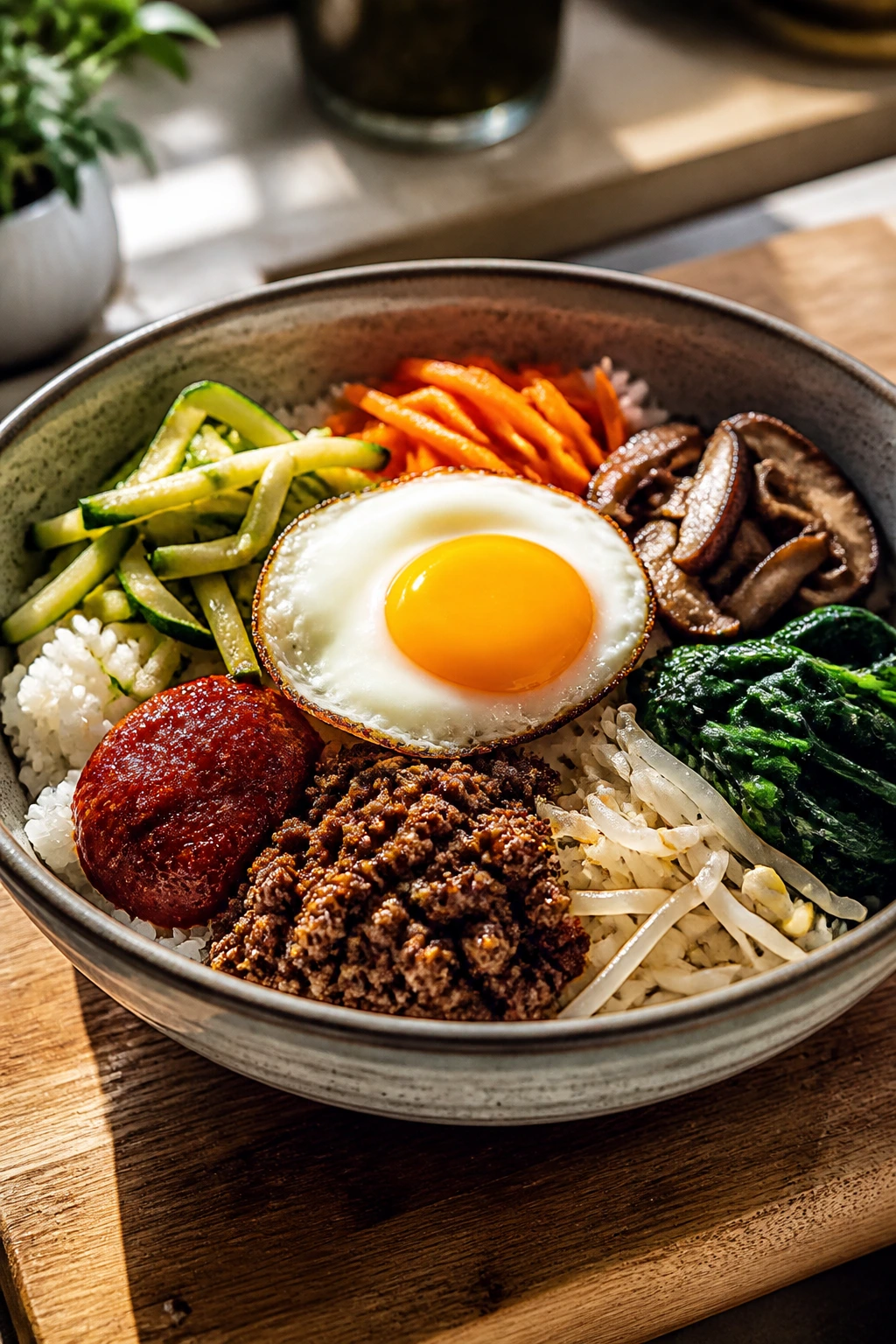
Eggs and Assembly: 9. Fry the eggs. In a clean skillet, heat 1 tablespoon neutral oil over medium heat. Crack in 4 large eggs and cook them until the whites are set but the yolks are still soft and jiggly, about 3 to 4 minutes. If you like a firmer yolk, cover the pan for the last 30 seconds. Do not overcook them; the yolk should help sauce the rice. 10. Assemble the bowls. Divide the rice among 4 wide bowls, then arrange the spinach, bean sprouts, carrots, zucchini, mushrooms, and beef in separate sections over the rice. Place one fried egg on top of each bowl, spoon over the gochujang sauce, and finish with scallions, sesame seeds, and kimchi on the side if you want it. Serve immediately and mix at the table.
The bowl should look almost too pretty to stir. That’s the joke.
Then you mix it anyway.
How to Serve Bibimbap Like You Mean It
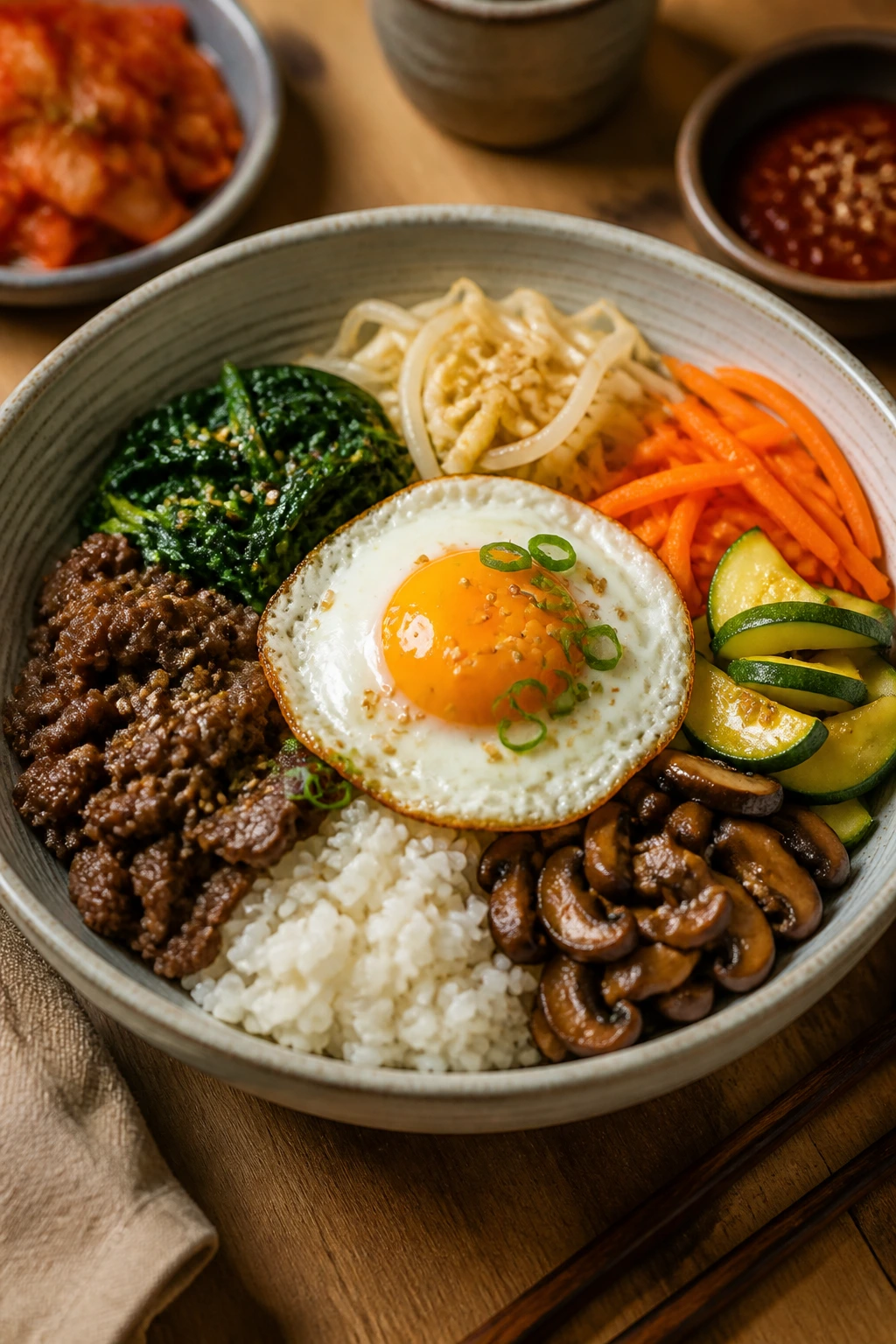
Presentation: Use wide, shallow bowls so the toppings sit in clean sections instead of sinking into the rice. If you want the stone-bowl look without a dolsot, preheat a cast-iron skillet, oil it lightly, and build the rice in the hot pan to get a crisp edge on the bottom.
Accompaniments: Kimchi is the obvious side, and for once the obvious answer is the right answer. A simple cucumber salad, pickled radish, or a small bowl of soup works too, especially if you want to stretch the meal without adding more sauce-heavy dishes.
Portions: Plan on about 1/2 cup cooked rice per bowl if the toppings are generous, or a full cup if this is the whole meal. For bigger appetites, add more beef or one extra egg before you increase the rice; bibimbap gets heavy fast if you only enlarge the starch.
Beverage Pairing: Cold barley tea is the quiet pairing I like best because it clears your mouth between spicy bites. A crisp lager or a sparkling water with lime also works if you want the heat to stay bright instead of creeping up on you.
Serve the bowls while the rice is still hot. Bibimbap changes character as it sits; that’s part of the fun, but it’s also why the first few bites are the best ones. The egg should be runny, the sauce should still be glossy, and the sesame seeds should still smell toasty when they hit the steam.
Tricks That Make the Bowl Taste Restaurant-Level
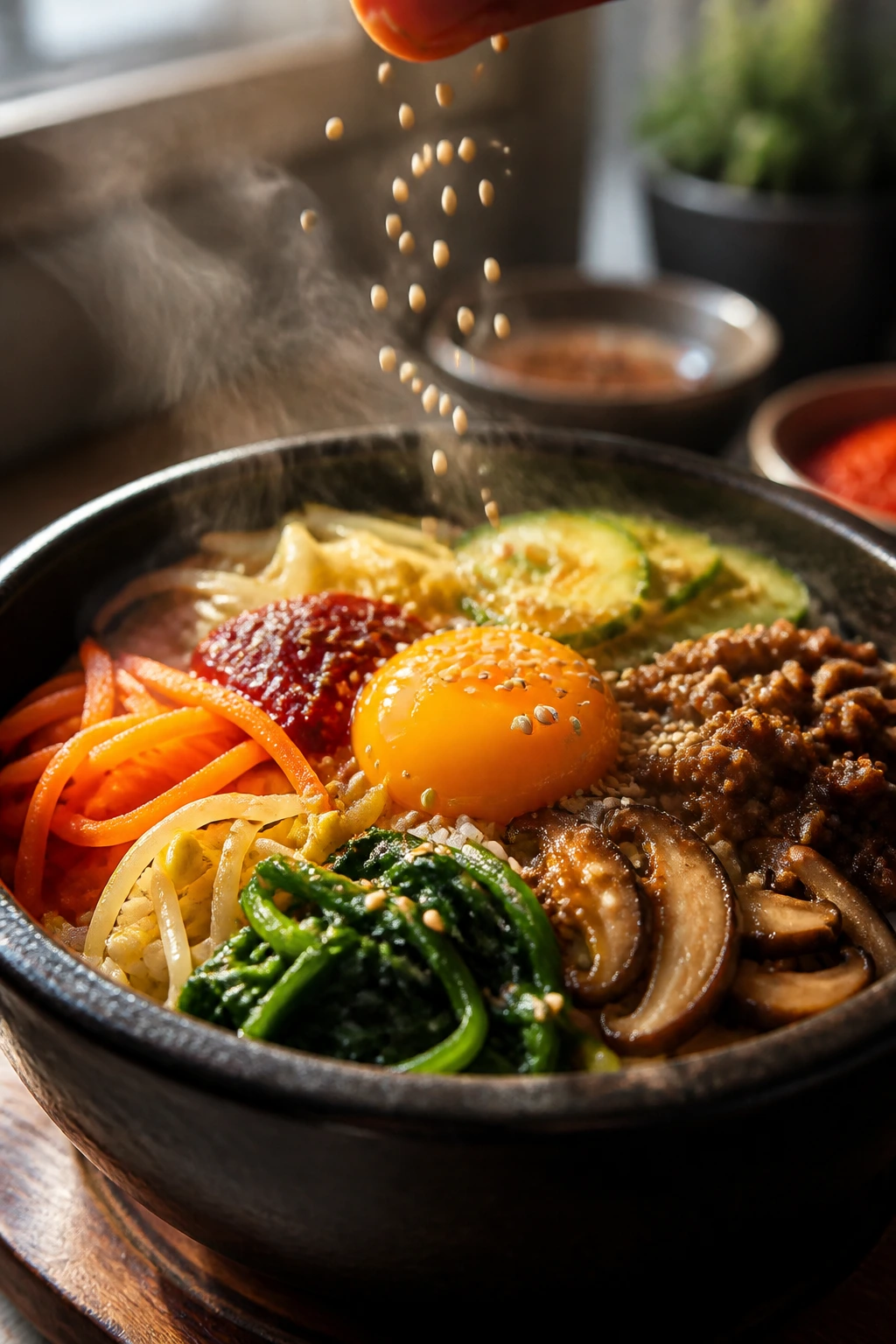
Flavor Enhancement: Toast the sesame seeds in a dry skillet for 1 to 2 minutes before sprinkling them on top. The nutty smell is small, but it changes the whole bowl. A few drops of sesame oil right before serving help too, though you don’t need much; too much and the bowl starts tasting flat and oily instead of fresh.
Customization: If you want more heat, add a teaspoon of gochujang to the beef near the end of cooking or stir a pinch of gochugaru into the sauce. If you want more green vegetables, add blanched broccoli, shredded napa cabbage, or sautéed snap peas. Bibimbap is one of the few bowls that actually gets better when you use what you already have, as long as the textures still make sense.
Serving Suggestions: A few strips of nori on the side are nice if you like that ocean-salty note with the beef and rice. I also like sliced scallions for sharpness and a final spoon of kimchi juice over the rice if the bowl needs more acid.
Make-It-Yours: For a dairy-free bowl, nothing needs changing. For gluten-free bibimbap, use tamari instead of soy sauce and check that your gochujang is gluten-free; some brands are, some aren’t. For a lighter bowl, use extra mushrooms and half the beef, then keep the egg and sauce exactly where they are.
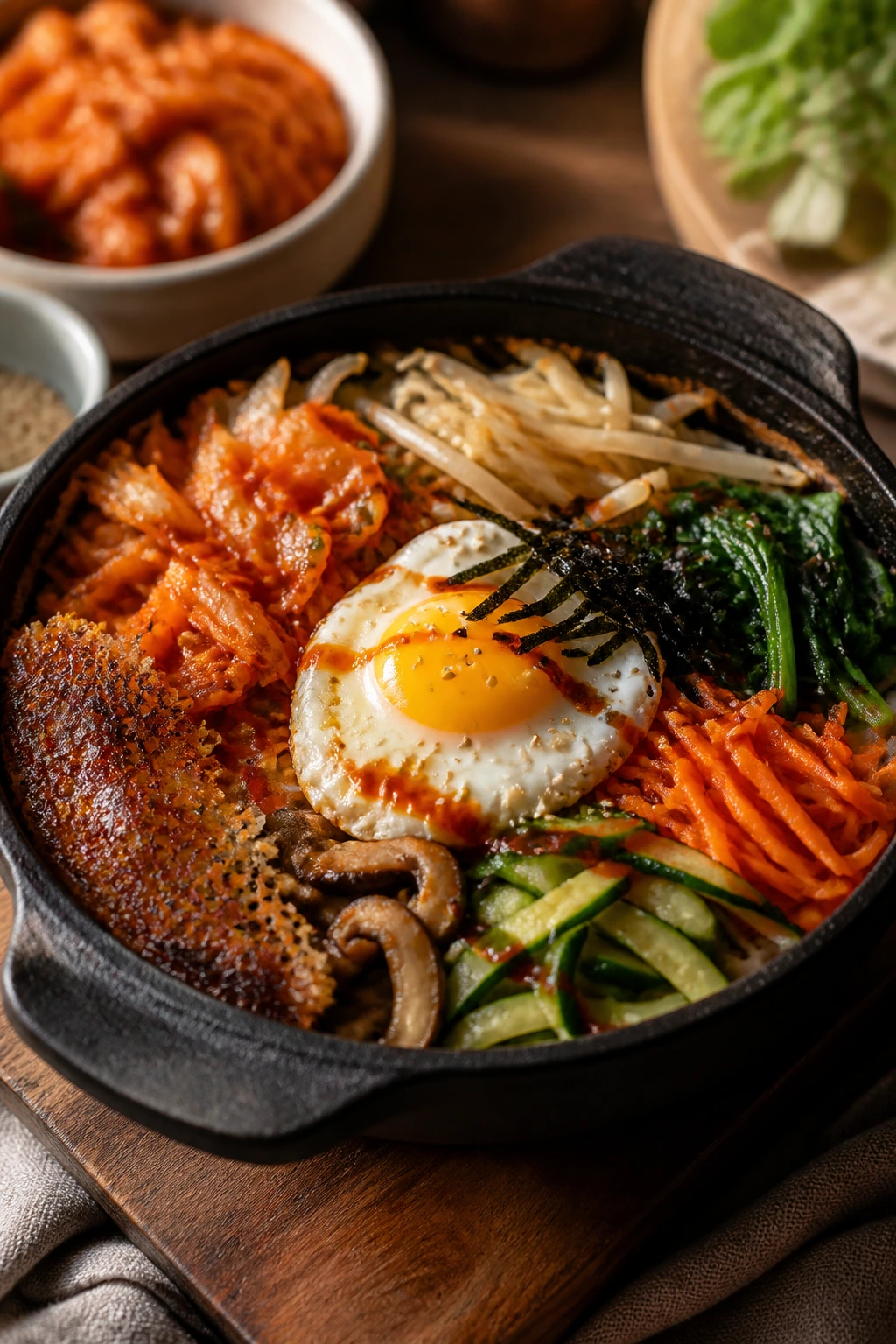
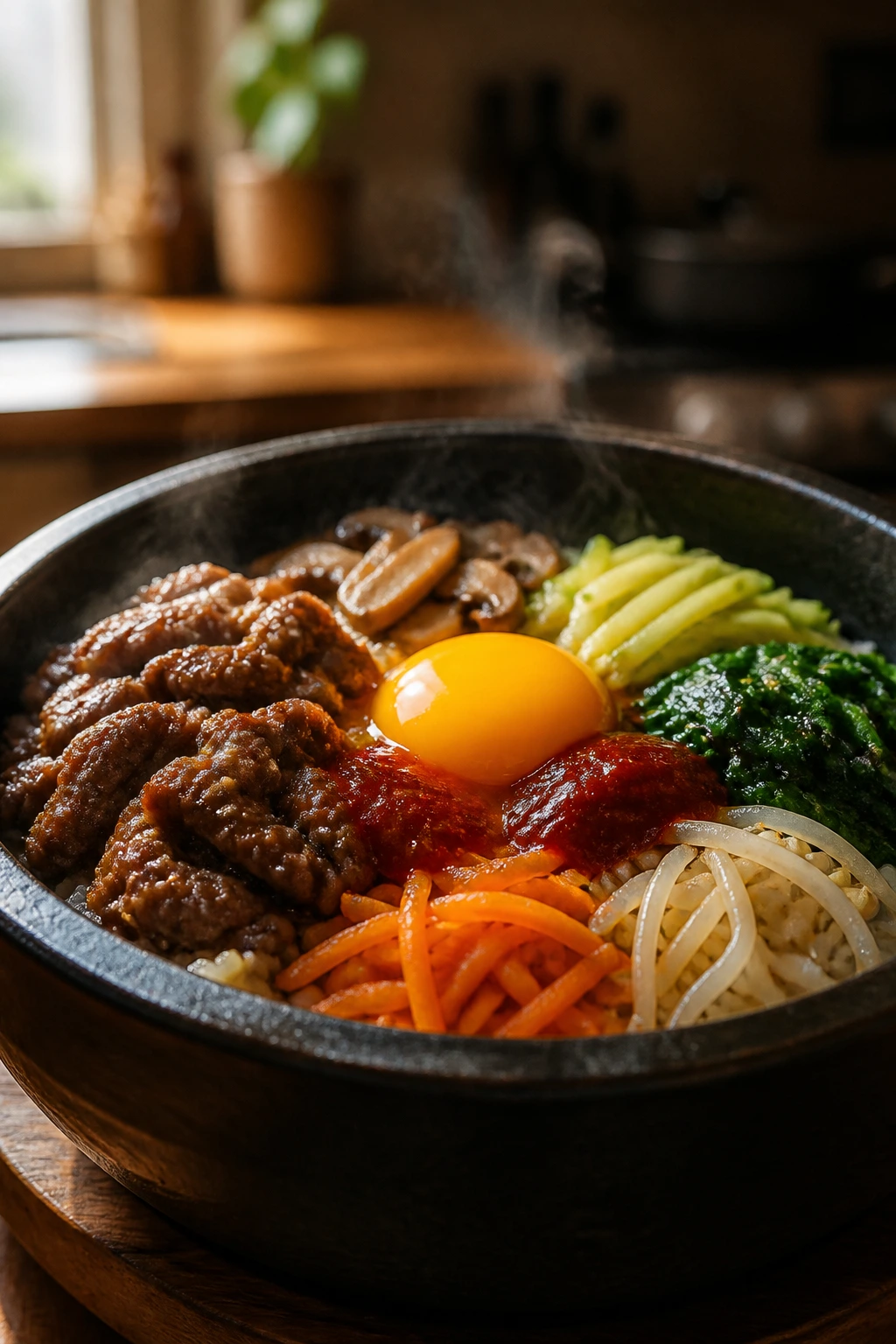
One more thing. If you own a cast-iron skillet and want a crisp rice bottom, don’t be timid. Heat the skillet, add a little oil, press the rice in, and let it sit undisturbed for 2 to 3 minutes until you hear the faint crackle around the edges. That’s not required, but it’s one of the best parts of the dolsot-style version.
Mistakes That Make Bibimbap Soggy or Flat
-
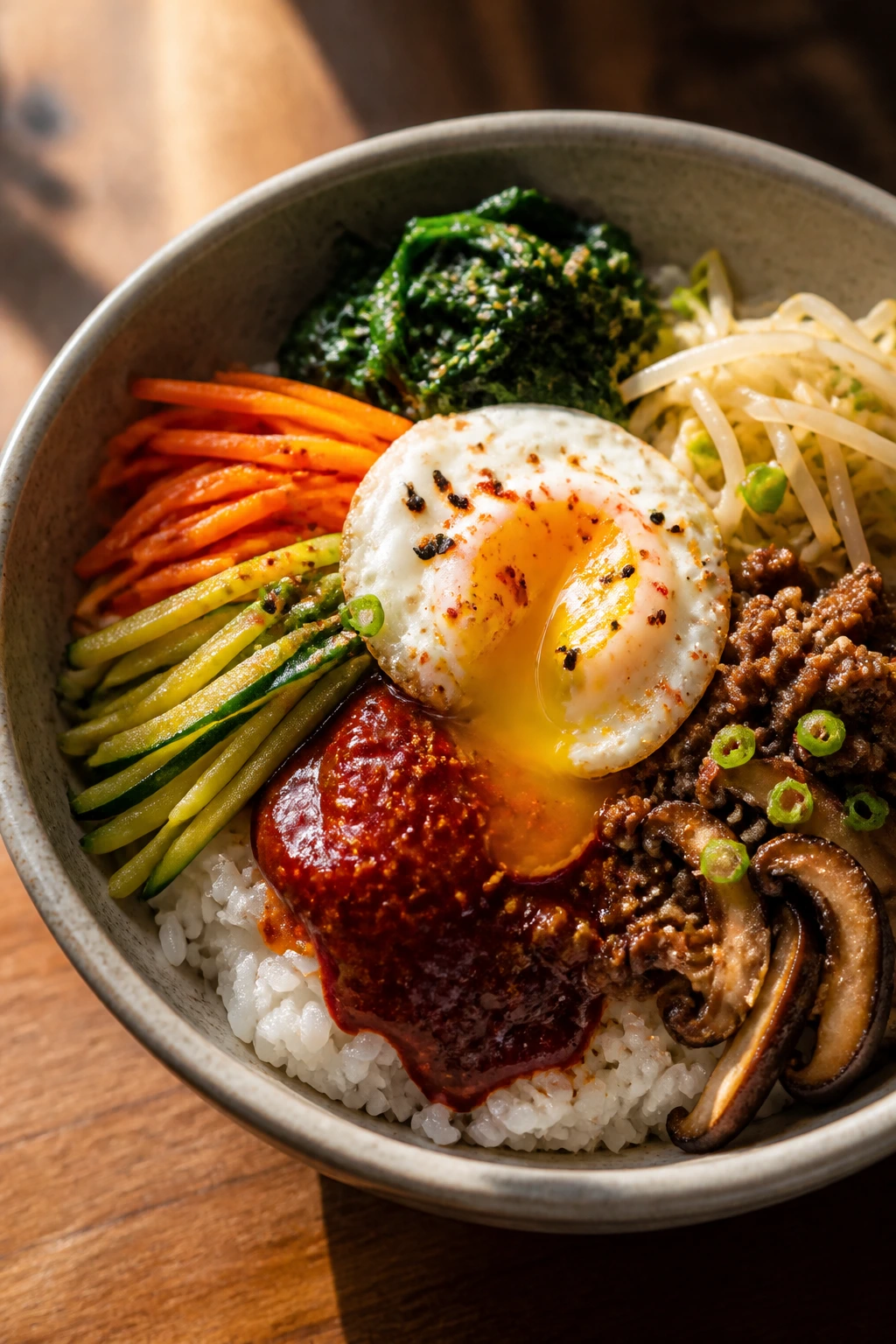
Wet vegetables: Spinach, mushrooms, and bean sprouts all hold water, and if you skip the draining step, that water runs straight into the rice. The fix is simple: squeeze the spinach, drain the sprouts well, and cook the mushrooms until their moisture is gone.
-
Sauce that tastes one-note: Gochujang alone can be too thick, too sweet, or too sharp depending on the brand. If the sauce tastes flat, adjust with vinegar for brightness and honey for roundness instead of dumping in more chili paste.
-
Eggs cooked too hard: A hard yolk turns the bowl dry fast. The soft yolk is part of the sauce, so pull the eggs the moment the whites are set and the center still jiggles.
-
Overcrowding the pan: When carrots, zucchini, and mushrooms all pile into one pan at once, they steam instead of browning. Cook in batches, or at least separate the mushrooms from the wetter vegetables.
-
Mixing too early: The bowl should be arranged before it gets stirred. If you mix everything while the toppings are still steaming in the kitchen, the colors blur and the rice loses structure before the first bite.
-
Underseasoning the rice: Plain rice is fine, but bland rice is not. A properly seasoned beef, bright vegetables, and bold sauce can still fall flat if the rice is undercooked or soggy. Let it rest, fluff it, and keep the texture right.
The fix for most bibimbap problems is not more ingredients. It’s cleaner handling. Keep the components distinct, keep the moisture under control, and the bowl will do the rest.
Variations That Fit Different Kitchens
-
Dolsot-Style Crisped Rice: Build the bowl in a hot cast-iron skillet or stone bowl with a little neutral oil and let the rice sit against the pan for 2 to 3 minutes before topping it. You get those crunchy edges that cling to the sauce, and they’re worth the extra minute.
-
Tofu and Mushroom Bibimbap: Replace the beef with 14 ounces extra-firm tofu, pressed dry and crumbled or sliced, then pan-sear it until the edges turn golden. Add another 4 ounces of mushrooms so the bowl keeps that meaty chew.
-
Chicken Bibimbap Bowl: Use thinly sliced chicken thigh instead of ground beef and season it with soy sauce, garlic, ginger, and 1 teaspoon gochujang during cooking. Chicken takes the bowl in a lighter direction, but it still holds the sauce nicely.
-
Lower-Sodium Bibimbap: Use low-sodium soy sauce in both the beef and sauce, then lean on rice vinegar and scallions for brightness. You’ll keep the bowl lively without letting salt do all the work.
-
Vegetable-Heavy Bibimbap: Double the spinach, mushrooms, and carrots, then keep the beef at half the amount or skip it entirely. Add cucumber ribbons at the end for crunch that tastes cool against the heat.
The nicest thing about these variations is that they all keep the same structure. Rice, sauce, egg, vegetables, something savory in the middle. That skeleton is the reason bibimbap stays recognizable even when you swap half the bowl.
Make-Ahead, Storage, and Reheating
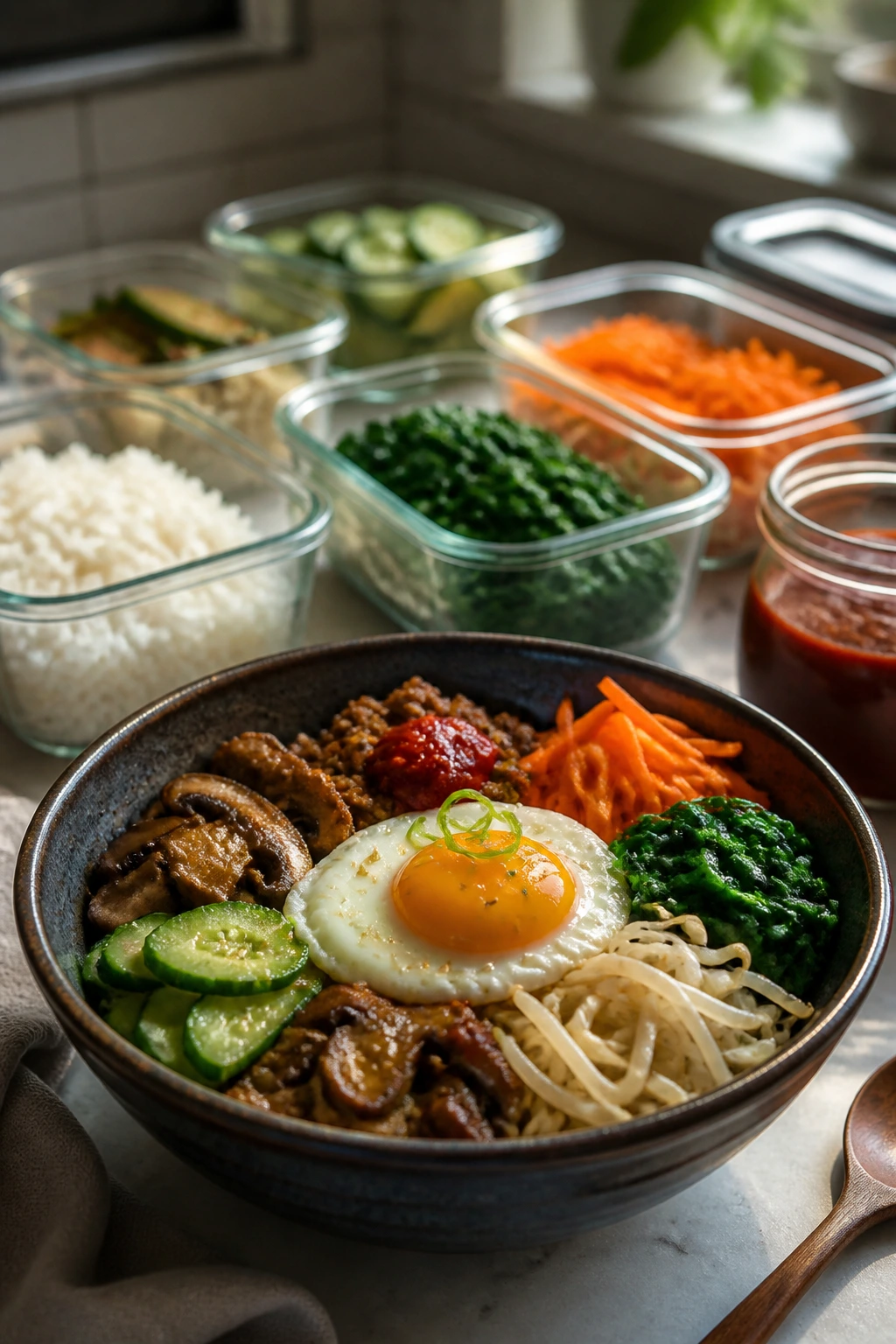
Bibimbap is best assembled fresh, but most of the parts hold up well if you store them separately. The sauce keeps for up to 1 week in the refrigerator in a sealed jar. The cooked beef lasts 3 to 4 days, and most of the cooked vegetables are good for 2 to 3 days if they’re cooled before sealing. Rice holds for up to 4 days refrigerated or 2 months frozen.
Keep the eggs fresh. I wouldn’t cook them ahead unless you have to; the yolks are too important to the final bowl. If you do need to move quickly, make the rice, beef, vegetables, and sauce earlier in the day, then fry the eggs right before serving.
For reheating rice, sprinkle it with 1 to 2 teaspoons of water per bowl, cover it loosely, and microwave it in short bursts until hot. If you like a drier texture, reheat the rice in a skillet over medium heat with a tiny dab of oil, then stir once or twice so it doesn’t stick. The beef can go in the microwave or back into a pan for a minute with a splash of water.
Vegetables need a gentler hand. Spinach and sprouts are fine served cold or at room temperature if you stored them well. Mushrooms, carrots, and zucchini can be warmed briefly in a skillet, but don’t cook them again for long or they’ll lose the bite that makes the bowl work in the first place.
Bibimbap Questions, Answered
Can I make bibimbap with leftover rice?
Yes, and leftover rice is often better than freshly cooked rice if it’s a day or two old. Reheat it with a little water so it steams back to life, then fluff it gently before assembling the bowl. Dry, cold grains can work, but they need that steam to stop them from tasting hard.
What if I can’t find gochujang?
You can fake the general direction with chili paste, a little miso, soy sauce, honey, and vinegar, but it won’t taste the same. Gochujang has a fermented depth that’s hard to copy, so if you cook Korean food often, it’s worth buying a tub and keeping it in the fridge.
Is bibimbap supposed to be mixed?
Yes. The whole point is that you arrange the toppings neatly, then mix them right before eating so the sauce and egg coat the rice. If you want a few neat bites for the table, take your photos first. Then stir it.
Can I make this vegetarian?
Easily. Swap the beef for extra mushrooms, crumbled tofu, or a handful of pan-seared tempeh, then keep the sauce and egg exactly the same. If you also want it vegan, leave off the egg and add a little more sesame oil or avocado for richness.
How spicy is this bowl?
With the sauce as written, the heat is medium and very manageable for most people. You can push it hotter by adding more gochujang or a pinch of gochugaru, or you can calm it by adding a little more honey and a spoonful of water. The sauce should wake up the rice, not bully it.
Can I use one pan for everything?
You can, but you’ll need to cook in stages and wipe the pan between components. Mushrooms and vegetables need space to brown, and the beef leaves behind enough fat that the spinach won’t taste clean if you rush it. One pan works best if you’re patient.
What if my vegetables turn watery?
That usually means the pan was too crowded or the heat was too low. Pull the vegetables out sooner than you think, especially the mushrooms, and keep the spinach and sprouts very dry before they hit the bowl. Watery vegetables are the fastest way to make bibimbap taste tired.
A Bowl Worth Repeating
Bibimbap works because it doesn’t pretend to be neat. It asks for separate parts, a little timing, and a final stir that turns dinner into something louder and better than the sum of what you cooked. That’s also why it’s such a good home recipe: the bowl forgives substitutions, but it rewards attention to texture every single time.
If you remember only one thing, make it this: keep the rice fluffy, keep the vegetables distinct, and keep the egg yolk soft. Do that, and the spicy Korean bibimbap lands exactly where it should—hot, glossy, and a little bit messy in the best possible way.
Spicy Korean Bibimbap Better than Takeout — Recipe Card
Recipe Name: Spicy Korean Bibimbap Better than Takeout
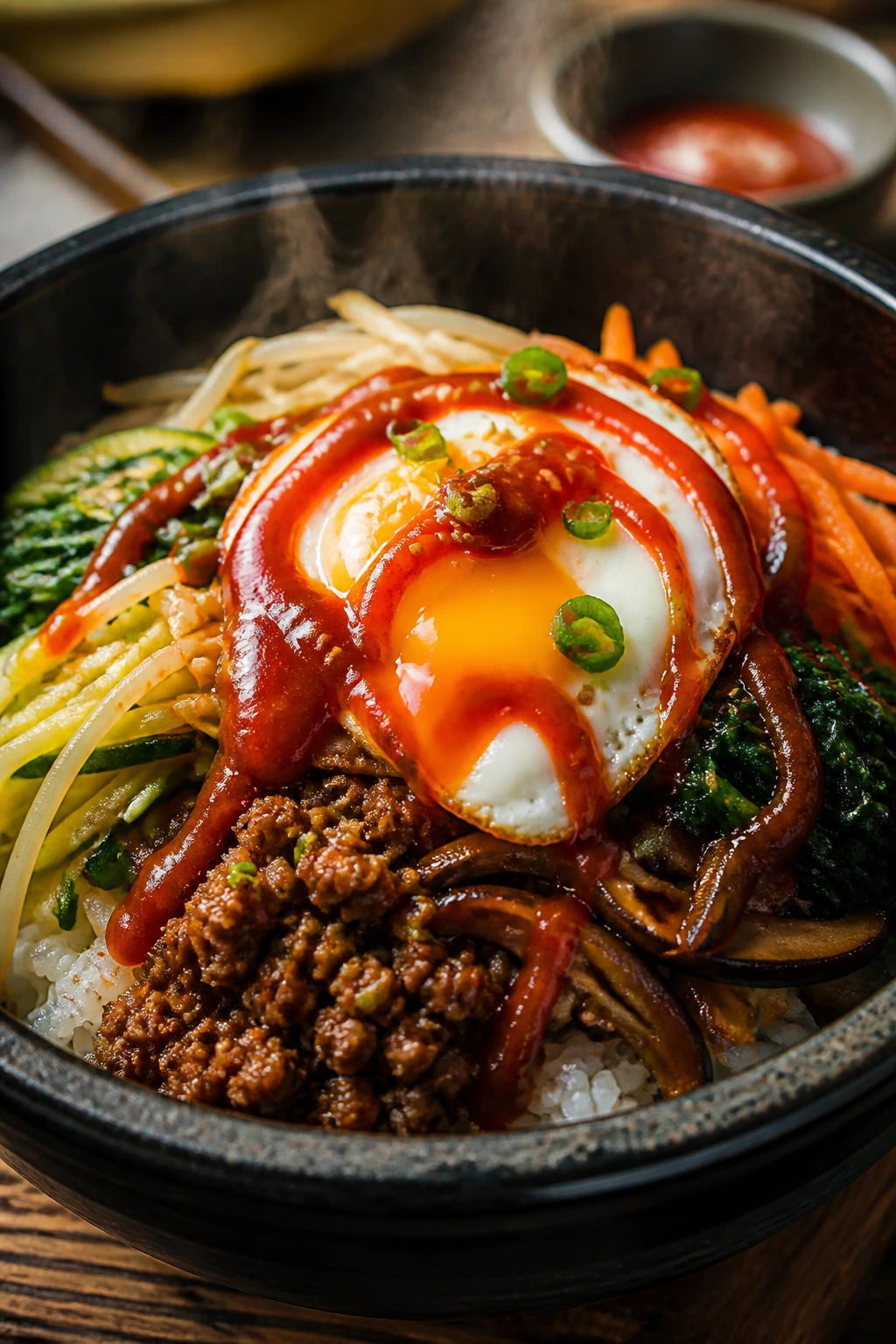
Description: A rice bowl built with fluffy short-grain rice, sautéed vegetables, savory beef, a runny fried egg, and a bold gochujang sauce. Stir it together at the table and every bite turns glossy, spicy, and rich.
Prep Time: 25 minutes
Cook Time: 25 minutes
Total Time: 50 minutes
Course: Main Course, Dinner
Cuisine: Korean-Inspired
Servings: 4 servings
Calories: About 620 kcal per serving
Ingredients
For the Rice
- 2 cups short-grain white rice, rinsed until the water runs mostly clear
- 2 1/2 cups water
For the Vegetables
- 1 small zucchini, julienned into 2-inch matchsticks
- 2 medium carrots, julienned into 2-inch matchsticks
- 8 ounces shiitake mushrooms, stems trimmed and thinly sliced
- 5 ounces baby spinach
- 1 cup bean sprouts
- 1 tablespoon toasted sesame oil, divided
- 1 teaspoon soy sauce, divided
- 1 teaspoon rice vinegar
- Fine salt, to taste
For the Beef
- 1 tablespoon neutral oil
- 1 pound ground beef
- 2 cloves garlic, minced
- 1 teaspoon grated fresh ginger
- 2 tablespoons soy sauce
- 1 tablespoon brown sugar
- 1 tablespoon toasted sesame oil
For the Gochujang Sauce
- 3 tablespoons gochujang
- 1 tablespoon soy sauce
- 1 tablespoon rice vinegar
- 1 tablespoon honey
- 1 tablespoon water
- 1 teaspoon toasted sesame oil
- 1 small garlic clove, finely grated
For the Eggs and Garnish
- 4 large eggs
- 1 tablespoon neutral oil
- 2 scallions, thinly sliced
- 1 tablespoon toasted sesame seeds
- 1 cup kimchi, for serving, optional
Instructions
-
Cook the rice. Rinse the rice until the water looks mostly clear, then combine it with the water in a saucepan or rice cooker. Cook until tender and fluffy, then let it rest covered for 10 minutes.
-
Mix the sauce. Whisk together the gochujang, soy sauce, rice vinegar, honey, water, sesame oil, and grated garlic until smooth. Adjust with a teaspoon more water if needed.
-
Prepare the spinach and sprouts. Blanch the spinach briefly, drain it well, squeeze it dry, and season with a little sesame oil, salt, and soy sauce. Blanch the bean sprouts briefly and season with sesame oil, rice vinegar, and a pinch of salt.
-
Cook the carrots and zucchini. Sauté the julienned carrots and zucchini in sesame oil over medium-high heat until just tender and still crisp at the center.
-
Brown the mushrooms. Cook the sliced mushrooms in the hot skillet until browned and their moisture has cooked off.
-
Cook the beef. Brown the beef in neutral oil, add the garlic and ginger, then stir in soy sauce, brown sugar, and sesame oil until glossy and cooked through.
-
Fry the eggs. Fry the eggs in neutral oil until the whites are set but the yolks are still soft.
-
Assemble the bowls. Divide the rice among four bowls, arrange the vegetables and beef in sections, and top each bowl with a fried egg.
-
Finish and serve. Spoon the gochujang sauce over each bowl, then garnish with scallions, sesame seeds, and kimchi if using. Mix right before eating.
Notes:
Use short-grain rice for the best texture. If you want a crispy-bottom version, press the rice into a hot cast-iron skillet for 2 to 3 minutes before topping it. Store the sauce, beef, vegetables, and rice separately for the best leftovers.