



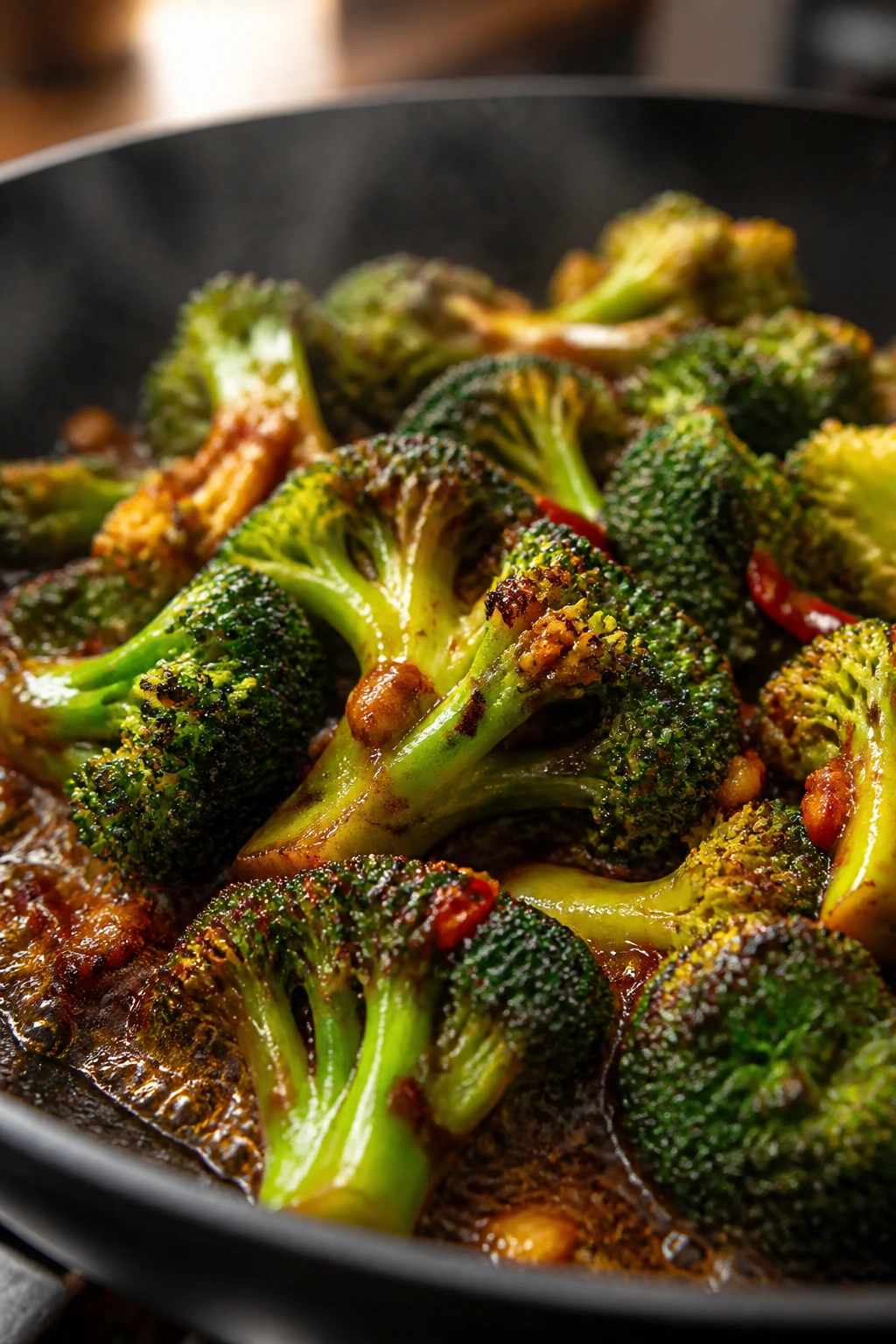
A spicy broccoli stir fry better than takeout depends on one thing most people get wrong: the broccoli has to hit the pan hot enough to blister before it ever sees the sauce. If the florets start soft, the whole dish turns watery, the color goes dull, and the sauce has to do all the heavy lifting. It can’t.
I like broccoli when the cut sides pick up browned spots, the stems still have a clean snap, and the garlic hits the heat just long enough to smell sweet instead of bitter. That’s the sweet spot here. The dish should taste punchy and green at the same time, with a glossy sauce that clings instead of pooling in the bottom of the bowl.
And yes, the takeout comparison is fair. A good restaurant version usually has three things going for it: a very hot pan, a sauce that’s already mixed, and a cook who doesn’t let the broccoli sit around steaming itself into submission. You can do that at home. You just need to be a little bossy with the heat.
Why This Spicy Broccoli Stir Fry Earns a Spot on the Table
-
Fast, but not rushed: The broccoli gets a short sear, a brief steam, and a quick toss in sauce, so the whole pan lands on the table in about 25 minutes without tasting abbreviated.
-
Glossy instead of soggy: A little cornstarch in the sauce gives you that thin, shiny coat that sticks to the florets and stems instead of turning into a puddle at the bottom.
-
The stems matter here: Broccoli stems cook into sweet, crunchy pieces when you peel them and slice them thin, and they catch sauce better than a lot of people expect.
-
Spice with shape, not chaos: Chili garlic sauce gives the dish heat, but the soy, oyster sauce, vinegar, and brown sugar keep it from tasting one-note or harsh.
-
Works as a side or a bowl: Pile it beside jasmine rice, tuck it into noodles, or add tofu and call it dinner. The sauce has enough body to carry the whole plate.
-
Uses a small, sane ingredient list: No hunting through six specialty aisles. Most of what you need lives in a good pantry already, which is part of why this dish gets made again and again.
Yield: Serves 4 as a side, or 2 as a main over rice
Prep Time: 15 minutes
Cook Time: 10 minutes
Total Time: 25 minutes
Difficulty: Beginner — the method is simple, but the heat has to stay high and the broccoli needs to stay dry.
Chill/Rest Time: None
Best Served: Right away, while the sauce is still shiny and the broccoli still has a little bite
Why Restaurant-Style Broccoli Tastes Better When You Control the Pan
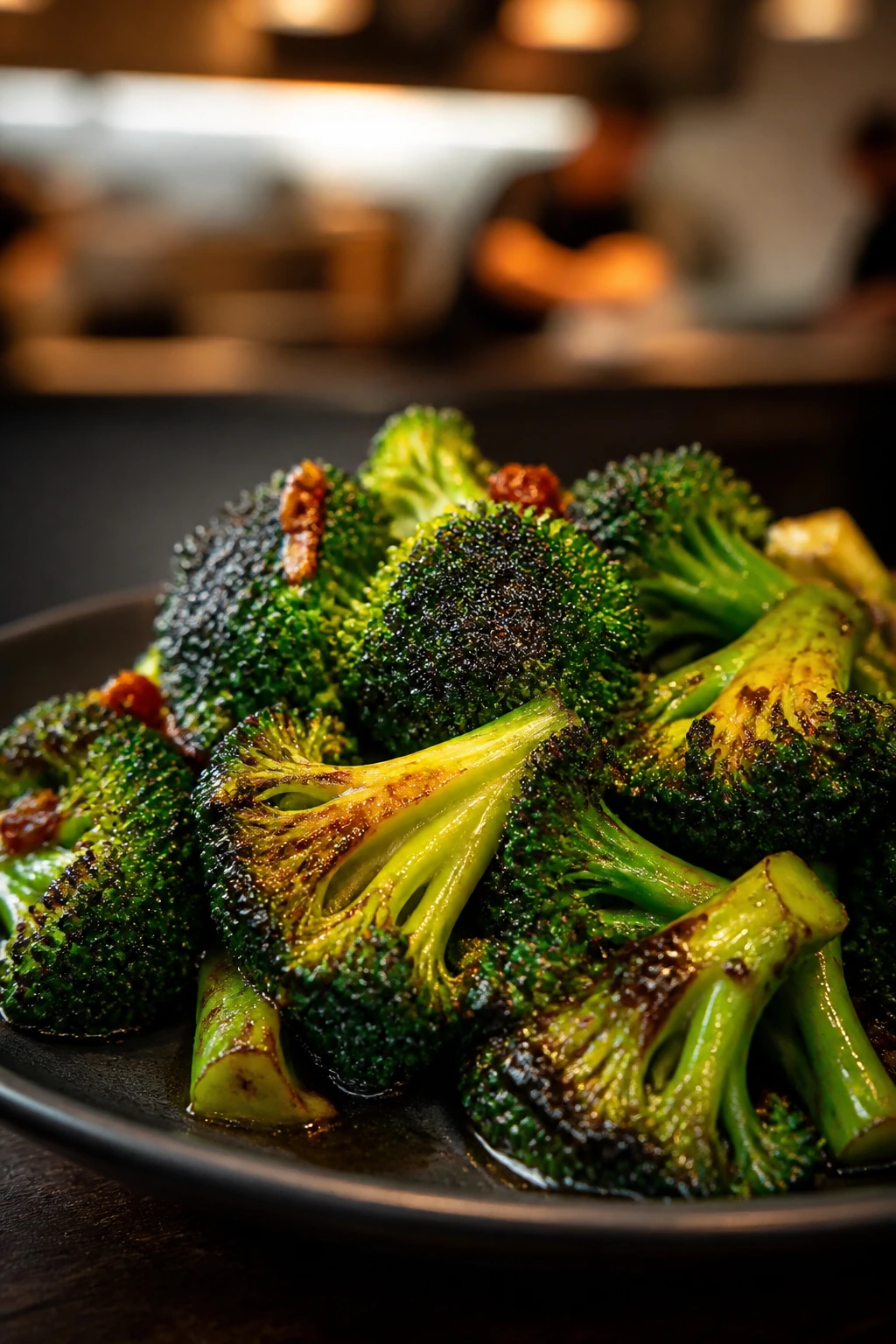
Restaurant broccoli dishes look simple because they are simple, but the timing is doing a lot of the work. Broccoli has a lot of water in it. If you crowd it, or cook it on medium heat, that water comes out fast and the pan turns into a steamer. Steam is useful for tenderness. It is terrible for browning.
The better move is to give the broccoli a brief run in hot oil first, then add a splash of water and cover it just long enough to soften the stems. That gets you two textures in one pan: a lightly blistered edge and a crisp interior. The sauce then slides over the top and sinks into the ridges without washing out the color.
I also think broccoli is one of the best vegetables for this style of cooking because it doesn’t disappear. A carrot rounds off. Spinach wilts away. Broccoli stays visibly broccoli, which means the seasoning matters. If the sauce tastes flat, you know it right away. If the garlic is burned, you know that too. There’s no hiding in this dish.
One more thing: the stems are not scraps. Peel them and slice them on a slight angle, and they behave like little crunchy coins that soak up sauce in a way the florets can’t. That’s the part a lot of takeout versions miss. They use broccoli as a green delivery system. I like mine to taste like broccoli first, sauce second.
Spicy Broccoli Stir Fry Ingredients, Measured and Ready
For the Stir Fry
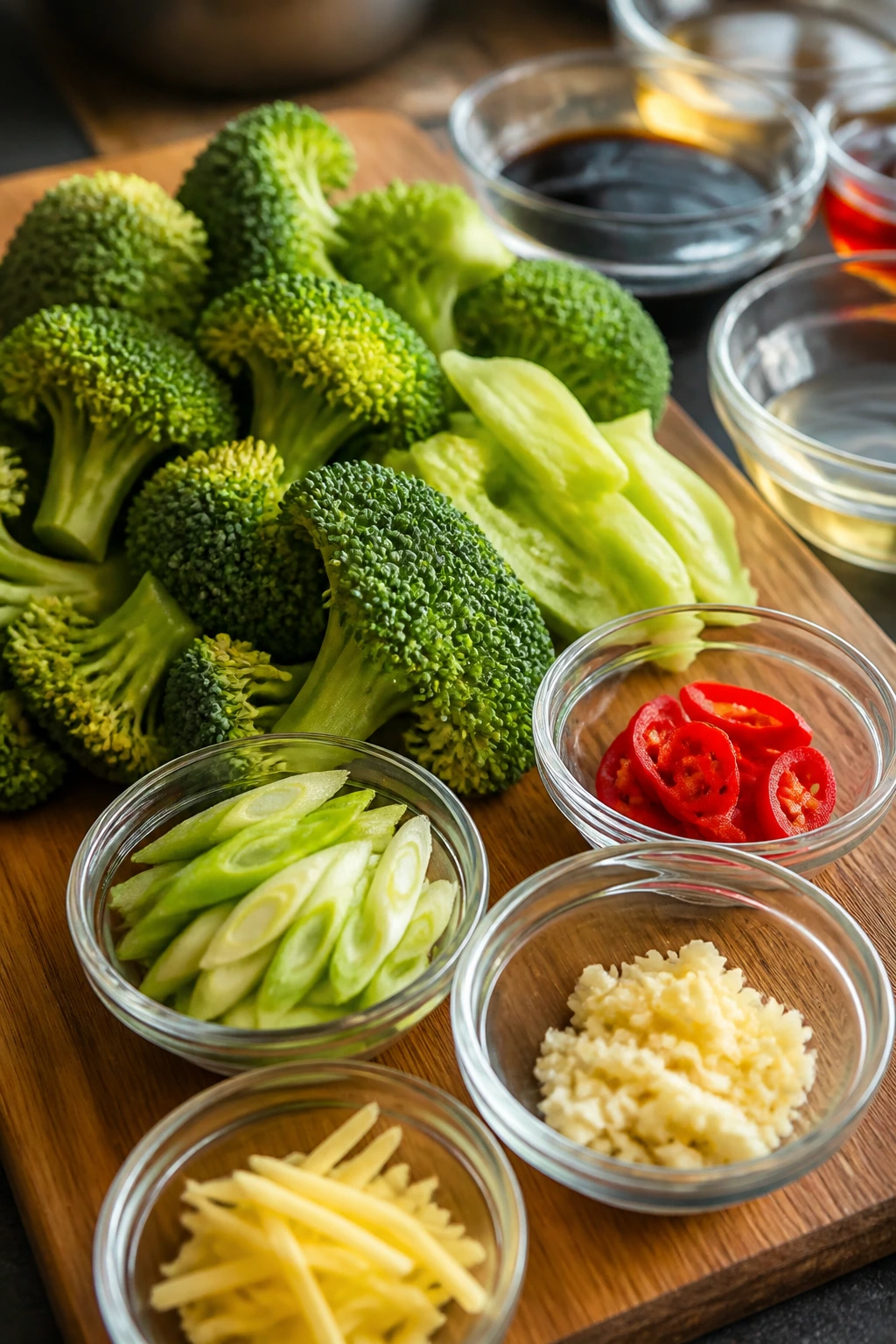
- 1 1/2 pounds broccoli florets, with stems peeled and sliced into 1/2-inch pieces
- 2 tablespoons neutral oil, divided
- 5 cloves garlic, finely chopped
- 1 tablespoon fresh ginger, finely grated
- 2 scallions, thinly sliced
- 1 teaspoon toasted sesame seeds, for finishing
For the Sauce
- 3 tablespoons low-sodium soy sauce
- 1 tablespoon oyster sauce
- 1 tablespoon rice vinegar
- 1 teaspoon packed brown sugar
- 2 teaspoons chili garlic sauce
- 1 teaspoon cornstarch
- 1/4 cup water or low-sodium vegetable broth
- 1 teaspoon toasted sesame oil
Why Each Ingredient Pulls Its Weight in This Broccoli Stir Fry
Broccoli
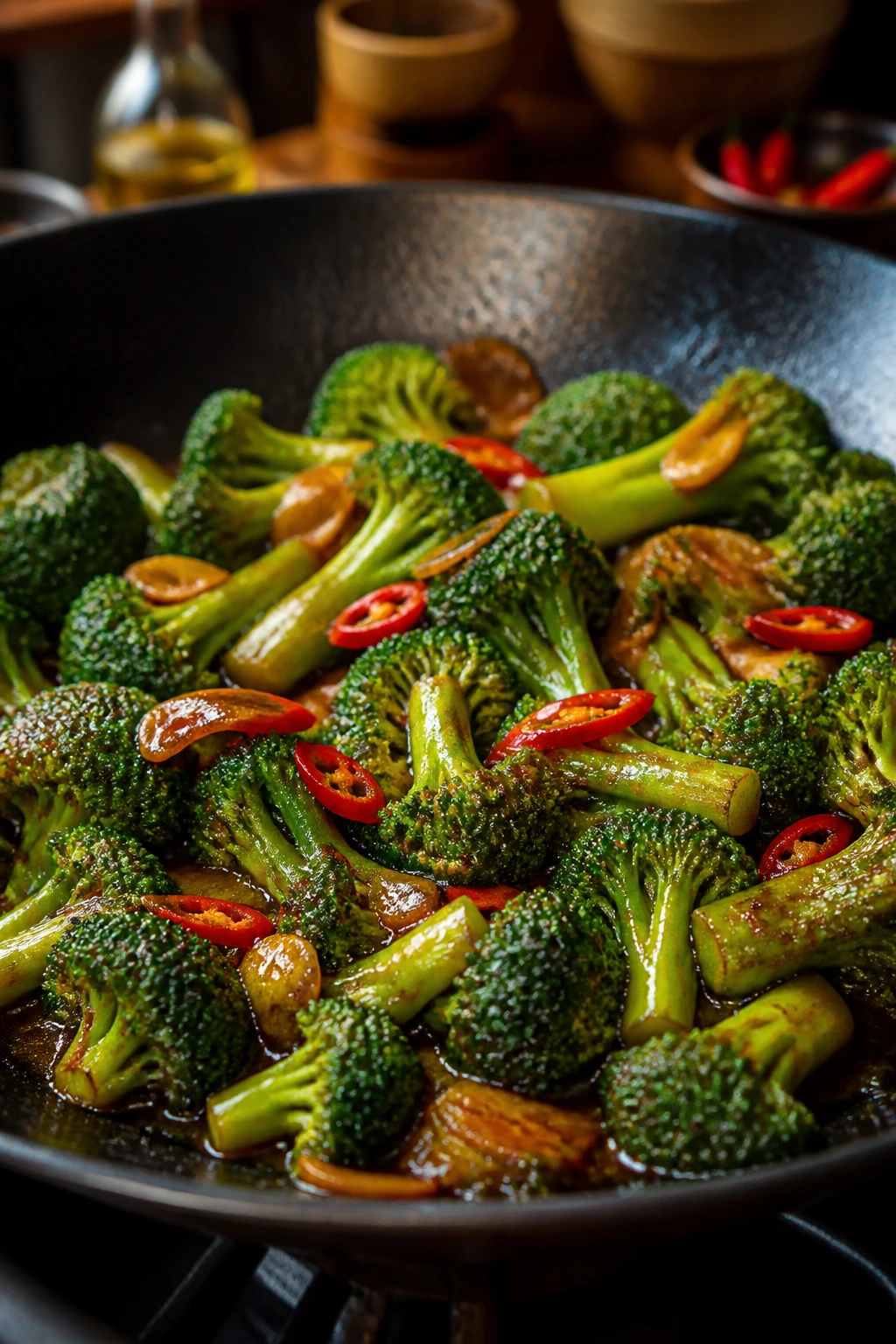
What to use: 1 1/2 pounds broccoli florets, with peeled stems sliced into 1/2-inch pieces. That amount fills a large skillet without feeling crowded, which matters more here than people expect.
Preparation: Cut the florets into bite-size pieces so they cook at the same pace, and peel the stems before slicing. The peeled stem cooks tender instead of stringy, and it gives the dish a better mix of textures.
Substitutions: Broccolini works if you want something slimmer and slightly sweeter, and cauliflower can stand in if broccoli is what the fridge refused to give you. Snow peas can join the party too, but they won’t carry the sauce quite the same way.
Tips: Dry the broccoli well after washing. Damp florets steam before they brown, and once that happens you’ve lost the best part of the dish.
Cooking Oil
What to use: 2 tablespoons neutral oil, divided. Peanut, grapeseed, avocado, or canola all work; you want something that can take heat without smacking the flavor around.
Preparation: Keep the oil measured and nearby before the pan gets hot. Stir-fries move fast once the burner is on, and you do not want to be fishing for the bottle while the garlic is already flirting with burnt edges.
Substitutions: Peanut oil is the nicest swap if you like a more restaurant-like aroma. If you avoid peanuts, any neutral high-heat oil will do the job.
Tips: Use one tablespoon for the broccoli and save the second tablespoon for the aromatics. That small split helps the garlic and ginger bloom instead of frying in the same oil the broccoli used.
Aromatics & Heat
What to use: 5 cloves garlic, 1 tablespoon fresh ginger, and 2 teaspoons chili garlic sauce. That combination gives the stir fry its sharp, savory kick without making it feel like a chili paste bowl.
Preparation: Chop the garlic finely and grate the ginger so they cook in seconds, not minutes. If the pieces are too big, the garlic can burn before the ginger gives up its flavor.
Substitutions: Sambal oelek works in place of chili garlic sauce, and red pepper flakes can step in if that’s what you have. Ground ginger will do in a pinch, but fresh ginger is brighter and less dusty.
Tips: Add these only after the broccoli has already started to brown. Garlic and ginger are fast little things; if they sit on direct heat too long, the whole pan turns bitter.
Sauce Base
What to use: 3 tablespoons low-sodium soy sauce, 1 tablespoon oyster sauce, 1 tablespoon rice vinegar, 1 teaspoon packed brown sugar, 1 teaspoon cornstarch, and 1/4 cup water or low-sodium vegetable broth. This is the part that tastes like takeout, only cleaner and less salty.
Preparation: Whisk everything until the cornstarch disappears. If you see little white streaks, keep whisking; those streaks are where lumps are hiding.
Substitutions: Tamari works for a gluten-free version. If you need vegetarian, use a mushroom stir-fry sauce or vegetarian oyster sauce in place of the oyster sauce, then taste and adjust the sweetness.
Tips: The brown sugar does not make the dish sugary. It softens the edges of the soy and vinegar, and it helps the sauce glaze instead of tasting sharp and thin.
Finishers
What to use: 1 teaspoon toasted sesame oil, 2 scallions, and 1 teaspoon toasted sesame seeds. These are small ingredients, but they change the final smell and texture more than their size suggests.
Preparation: Slice the scallions thin so they soften on contact with the hot broccoli. Toasted sesame seeds can go in at the end, and sesame oil should be ready to drizzle once the burner is off.
Substitutions: Chopped cilantro or a few crushed peanuts can replace the scallions if you want a different finish. Chili crisp can also join at the table, though I prefer it as an extra spoonful rather than built into the whole pan.
Tips: Add sesame oil at the end, not at the beginning. Its nutty smell fades if you cook it too long, and that little smell is half the point.
The Pan, Knife, and Small Tools That Make Stir-Fry Easier
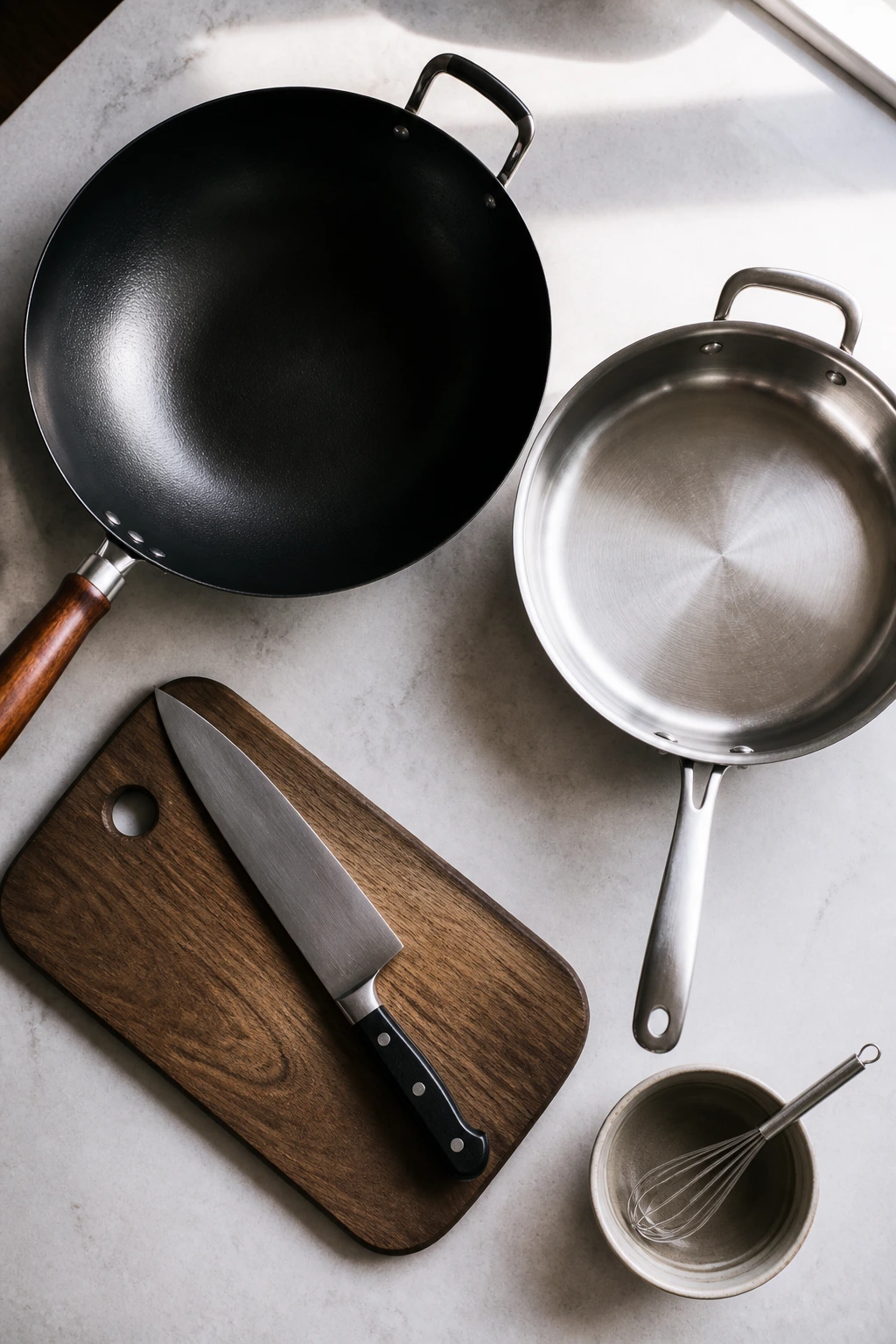
A stir fry is not a kitchen gadget contest, but a few tools make the whole thing smoother. I care less about brand names here and more about size, shape, and heat tolerance. The wrong pan can turn broccoli into damp green pebbles. The right one gives you a shot at blistered edges and a clean finish.
-
12-inch wok or large stainless skillet: A wok is lovely if your burner can get it hot. A wide skillet works too, and I actually like stainless better than nonstick here because it handles higher heat without making the broccoli feel steamed.
-
Small bowl and whisk: The sauce needs to be mixed before the pan is hot. A whisk keeps the cornstarch from settling into clumps that show up later as pale little streaks.
-
Chef’s knife: You want clean broccoli cuts, not jagged chunks that cook unevenly. A sharp knife also makes the stems easier to peel and slice.
-
Cutting board: Sounds obvious, but a roomy board matters when you’re separating florets and trimming stems. I keep the broccoli on one side and the aromatics on the other so the pan work doesn’t feel chaotic.
-
Tongs or a thin spatula: Either one helps toss the broccoli without crushing the florets. A heavy spoon can mash the stems a bit, and once that happens the sauce starts collecting in broken bits instead of shiny surfaces.
-
Lid or sheet pan that covers the skillet: You only need this for the short steam stage. If your skillet doesn’t have a lid, a rimmed baking sheet works in a pinch.
Spicy Broccoli Stir Fry: The Step-by-Step Method
Prep the Sauce and Vegetables:
-
In a small bowl, whisk together the soy sauce, oyster sauce, rice vinegar, brown sugar, chili garlic sauce, cornstarch, and water until the mixture looks smooth and the cornstarch has disappeared. Set it near the stove, because once the pan is hot you will not want to hunt for it.
-
Trim the broccoli into bite-size florets and peel the stems before slicing them into 1/2-inch pieces. Keep the florets and stems together in a bowl, but make sure the pieces are dry. Wet broccoli steams; dry broccoli browns.
-
Chop the garlic, grate the ginger, and slice the scallions. Keep each one in its own little pile. Stir-fry moves fast, and the pan does not care that you were halfway through measuring a coffee.
Cook the Broccoli:
-
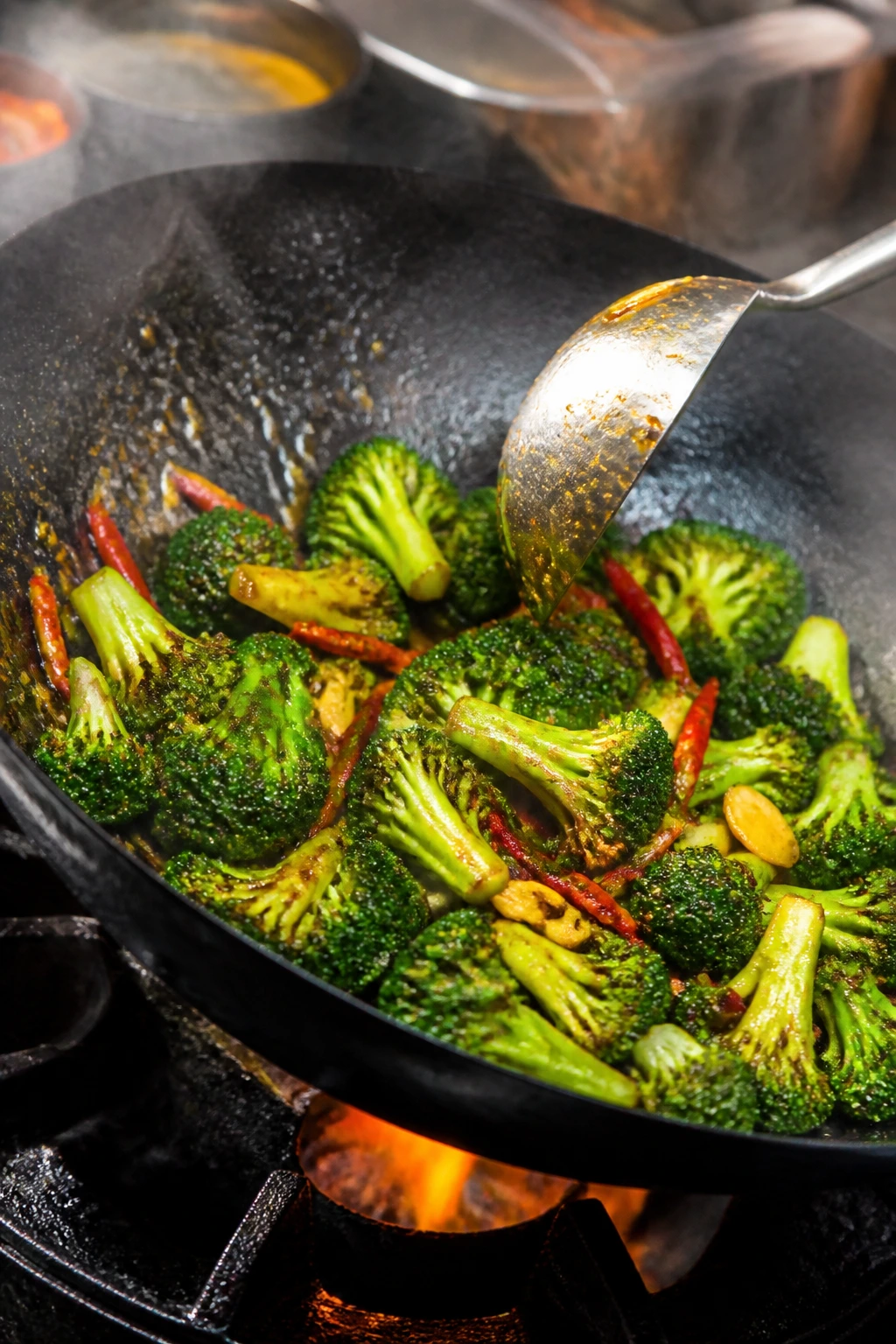
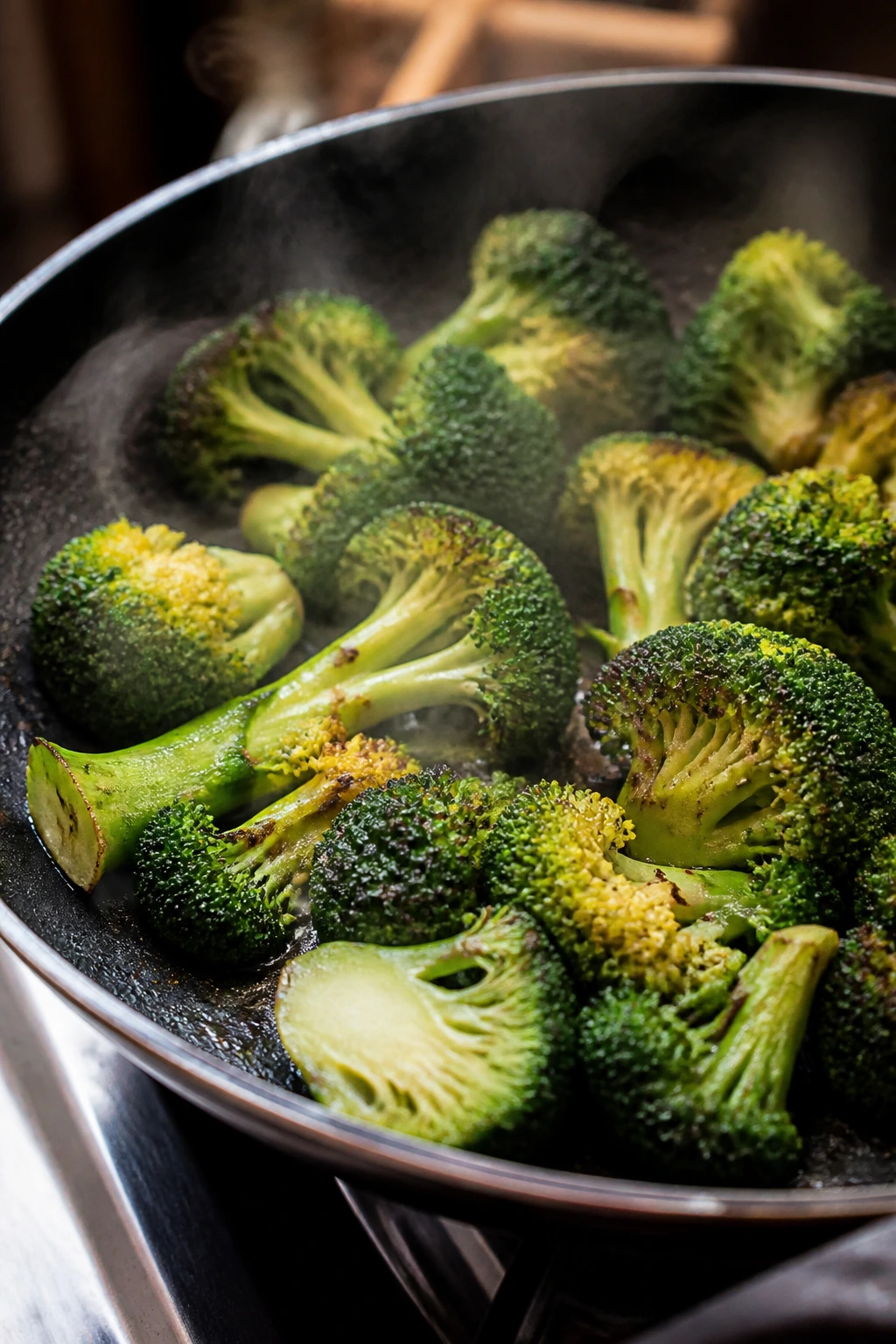
Set a 12-inch wok or skillet over high heat and let it get hot for 1 to 2 minutes. Add 1 tablespoon of the neutral oil, swirl it around, and add the broccoli in a single layer. Let it sit for about 30 seconds before stirring so the cut sides can pick up a little color. Then stir-fry for 1 to 2 minutes, until the broccoli turns bright green with a few browned spots. Do not crowd the pan; if your skillet is small, cook the broccoli in two batches.
-
Add 2 tablespoons of water, cover the pan, and cook for 60 to 90 seconds. The stems should be crisp-tender and a knife tip should meet only a little resistance. Uncover right away and let the last bit of moisture cook off. You want the pan back to dry heat before the aromatics go in.
Build the Sauce and Finish:
-
Push the broccoli to the sides of the pan and add the remaining 1 tablespoon oil to the center. Add the garlic, ginger, and chili garlic sauce. Stir constantly for about 20 to 30 seconds, just until the garlic smells sweet and the ginger loses its raw edge. If the garlic starts to brown, move faster or lower the heat for a few seconds.
-
Give the sauce one more whisk, pour it into the center of the pan, and toss everything together for 30 to 60 seconds until the sauce turns glossy and thick enough to coat the broccoli in a thin sheen. If it looks too tight, splash in 1 to 2 tablespoons of water. If it looks thin, keep tossing for another 15 seconds.
-
Turn off the heat. Drizzle in the toasted sesame oil, add the scallions, and toss once or twice more. Taste a floret and adjust with a tiny splash of soy sauce or rice vinegar if it needs more salt or lift. Finish with sesame seeds and serve immediately.
How to Serve the Finished Pan
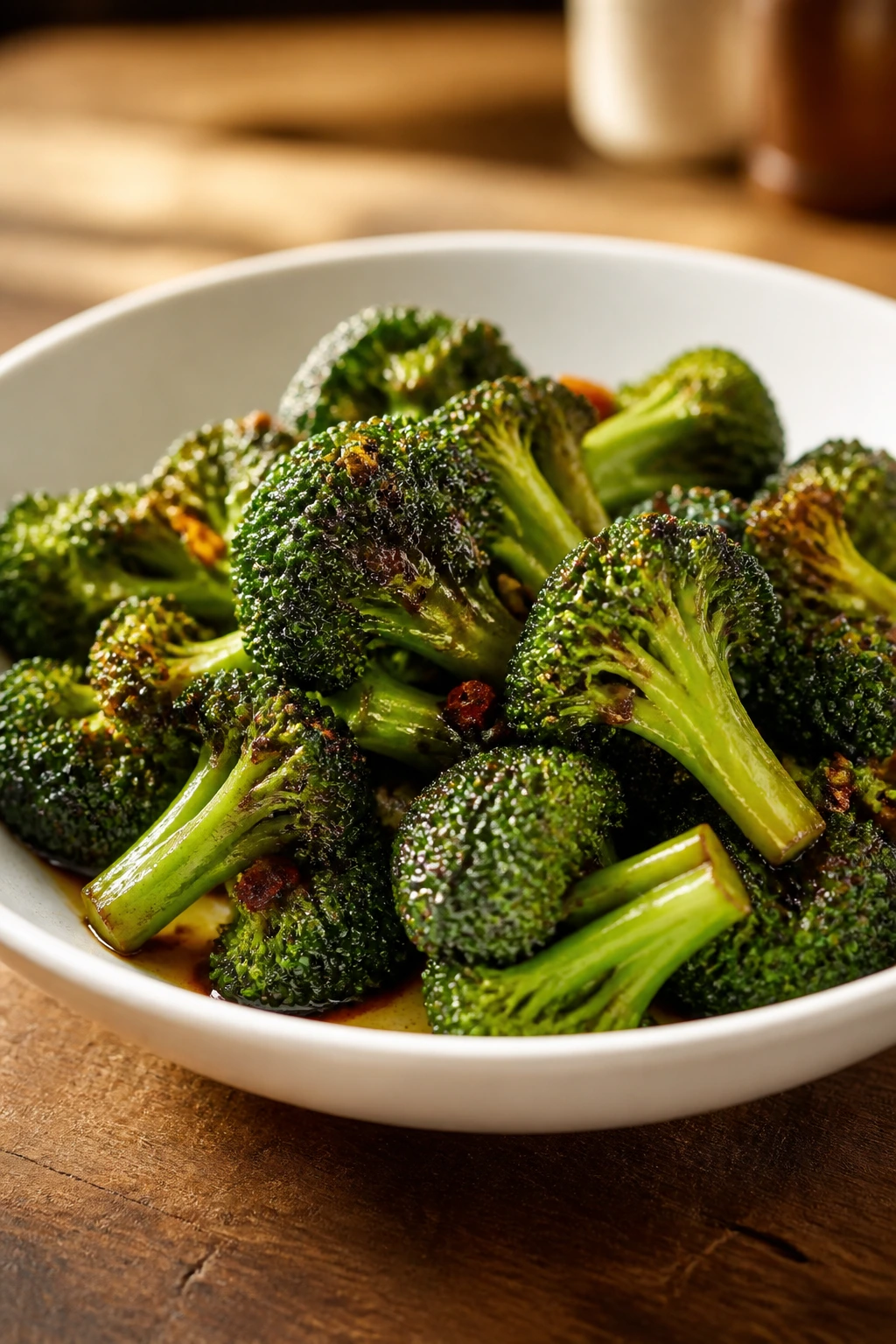
Presentation: Pile the broccoli into a shallow bowl or wide plate instead of a deep one. The sauce looks better spread across the florets, and you get that glossy, slightly sticky surface that makes the dish look alive rather than puddled.
Accompaniments: Jasmine rice is the obvious move, and honestly it’s the one I reach for most because the grains catch the sauce without stealing the flavor. Lo mein noodles, steamed rice, or a fried egg on top all work too. If you want something richer, serve it beside tofu, seared salmon, or simple grilled chicken.
Portions: Four people can eat this as a side dish. As a main, it feeds two if you add rice or noodles underneath. If you’re cooking for a crowd, double the sauce with caution only if your pan is big enough; broccoli needs room more than it needs more liquid.
Beverage Pairing: Jasmine tea is the cleanest match because it keeps the garlic and chili from hanging on the palate too long. A cold lager or sparkling water with lime works if you want something refreshing and unfussy.
Small Changes That Make the Pan Taste Better
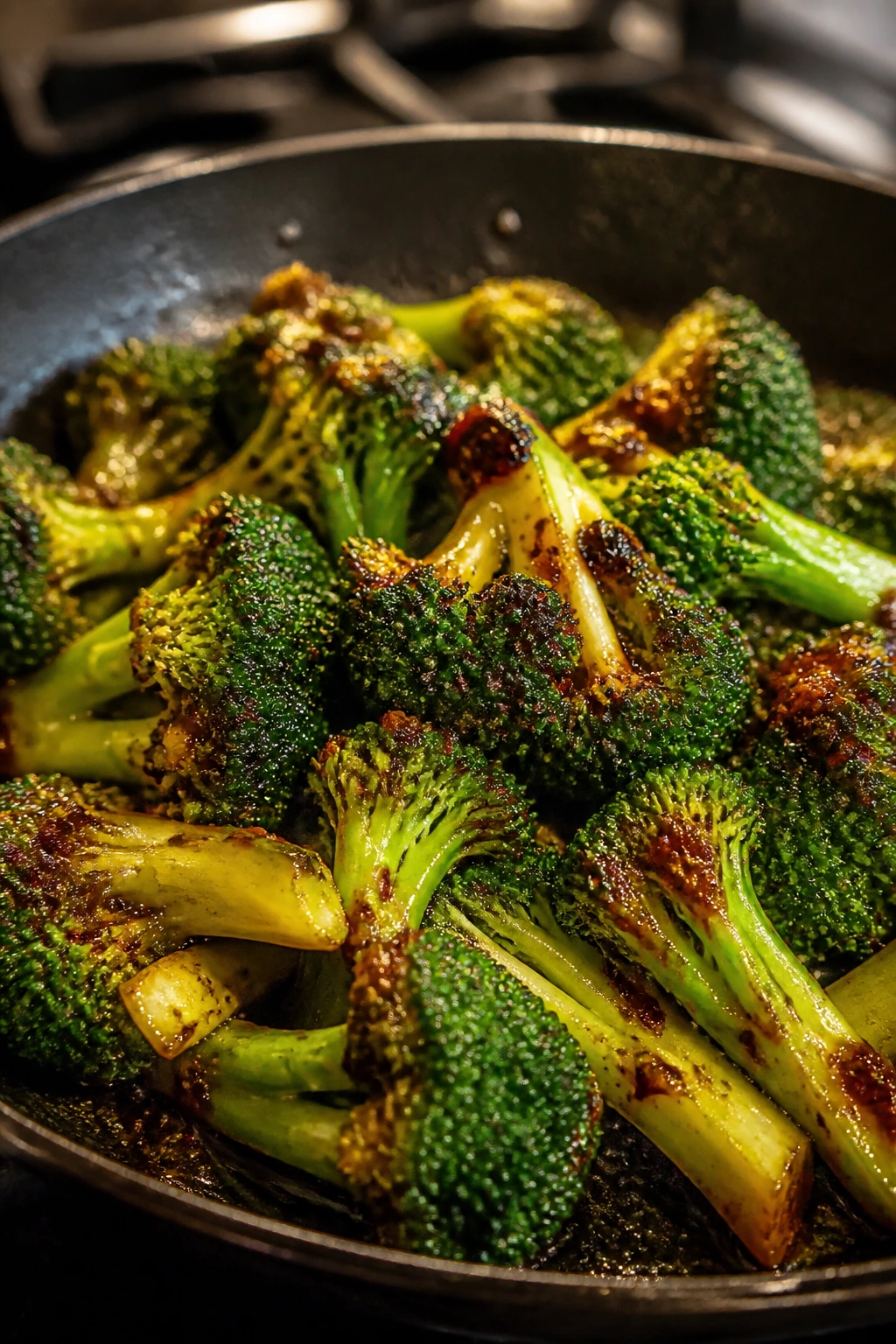
Flavor Enhancement: A tiny spoon of chili crisp at the table gives this dish a deeper, toastier heat than chili garlic sauce alone. I like it as a finish, not a main ingredient, because it keeps the broccoli bright and lets each person choose their own burn level.
Time-Saver: Mix the sauce in a jar instead of a bowl, screw the lid on, and shake it hard. That saves a whisk, and the cornstarch disperses surprisingly well when it gets a little agitation before it hits the pan.
Pro Move: Peel the broccoli stems all the way around before slicing them. The tough outer layer is the part that gets stringy, and once it’s gone the stem cooks almost like a crunchy vegetable coin. That’s the detail that makes the dish feel restaurant-made instead of patched together.
Cost-Saver: Broccoli crowns are handy, but whole heads usually give you more usable pieces for the money because the stems are part of the meal, not waste. I buy the biggest heads with tight, dark green florets and sturdy stems. Loose, yellowing broccoli is tired broccoli.
Make-It-Yours: If you like more crunch, finish with chopped peanuts or cashews. If you want a softer edge, add a handful of sliced mushrooms during the first sauté so they soak up the sauce. Both changes fit the dish without pulling it away from its core.
The Slip-Ups That Turn Broccoli Limp
-
Cooking wet broccoli: The pan fills with steam before the florets can brown, and the whole dish tastes flat. Pat the broccoli dry after washing it, or let it air-dry on a towel for a few minutes before it hits the oil.
-
Crowding the pan: If the broccoli is stacked on top of itself, the pieces steam instead of sear, and you lose those browned edges that give the dish some backbone. Use a larger skillet or cook in batches. The extra minute is worth it.
-
Adding garlic too early: Garlic burns in a blink over high heat. When it goes in before the broccoli has had a chance to color, the sauce picks up a bitter edge that no amount of soy can hide.
-
Pouring in the sauce and walking away: The cornstarch starts working almost immediately. If you leave it alone, it can go from glossy to sticky in a few seconds. Toss until the sauce just coats the broccoli, then turn off the heat.
-
Letting sesame oil cook for too long: Toasted sesame oil smells wonderful, but that smell fades fast under high heat. Add it after the burner is off so you keep the nutty finish instead of burying it.
-
Using broccoli that’s cut too small: Tiny florets cook fast, which sounds helpful until they start to collapse before the stems are done. Bigger, even pieces hold their shape and give you something to bite into.
Variations That Still Taste Like the Same Dish
Chili Crisp Finish: Stir 1 tablespoon chili crisp into the finished pan or spoon it over the top at the table. This version tastes deeper and a little smokier, with crunchy bits that sit nicely against the broccoli.
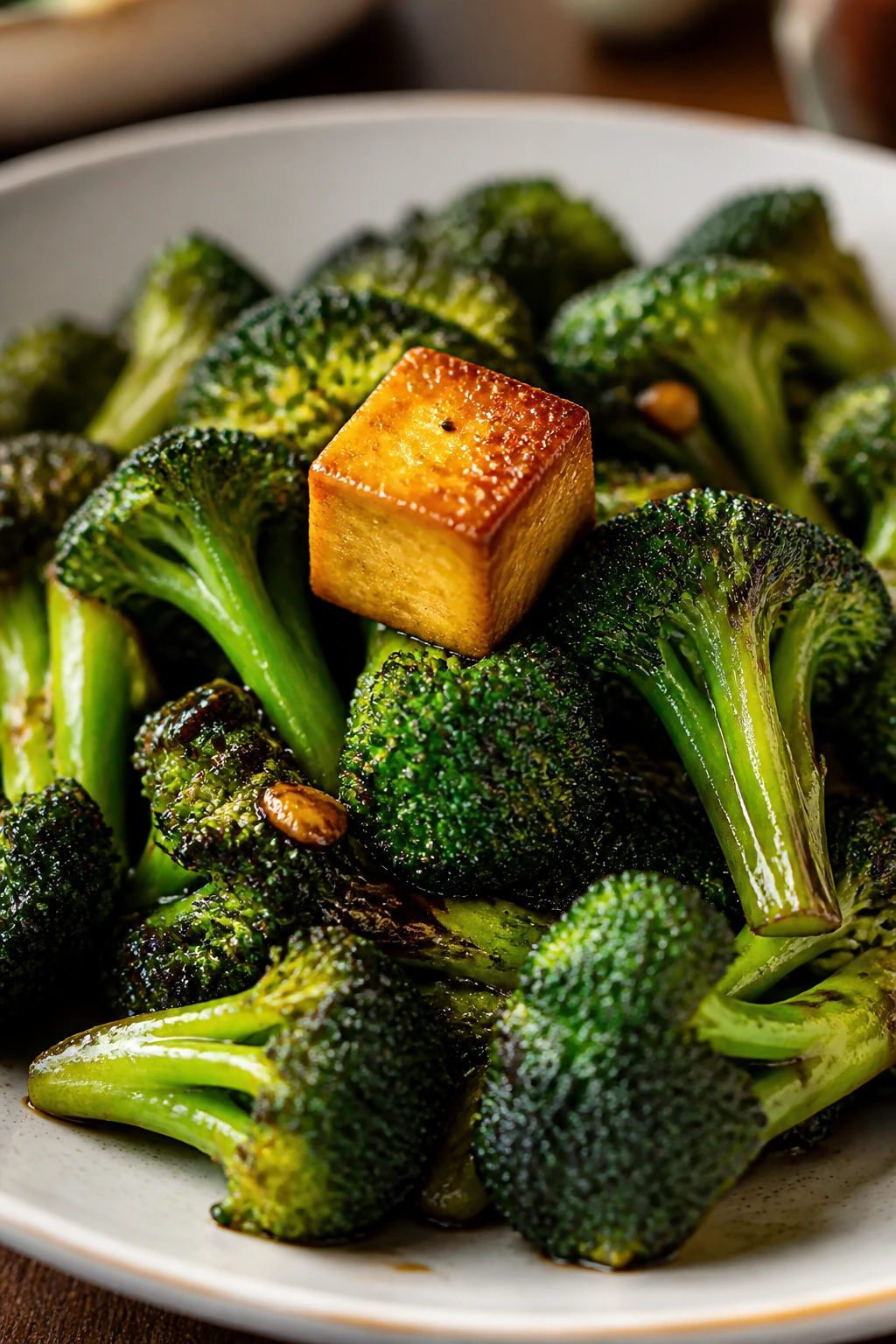
Tofu Bowl Version: Add 10 to 12 ounces extra-firm tofu, pressed dry and cubed, then pan-seared until the edges are golden before the broccoli goes in. The tofu soaks up the sauce and turns the dish into a full meal without making it feel heavy.
Vegetarian Umami Swap: Replace the oyster sauce with vegetarian mushroom oyster sauce or a thick mushroom stir-fry sauce. The flavor gets earthier and a bit darker, which is useful if you want the same glossy finish without any shellfish.
Orange-Ginger Heat: Add 1 teaspoon orange zest and 1 tablespoon orange juice to the sauce, then reduce the water by 1 tablespoon. The result is brighter and a little rounder, with a citrus note that plays nicely with the ginger.
Milder Family Pan: Cut the chili garlic sauce down to 1 teaspoon and add another 1 teaspoon of brown sugar. You still get the savory glaze, just without the sharper burn at the front of each bite.
Keeping the Broccoli Sharp After Dinner
Cooked broccoli is one of those dishes that tells the truth the next day. It does not improve for free. The sauce can still be tasty, but the texture softens, so the best move is to treat leftovers gently and not expect the same crisp bite you had at the stove.
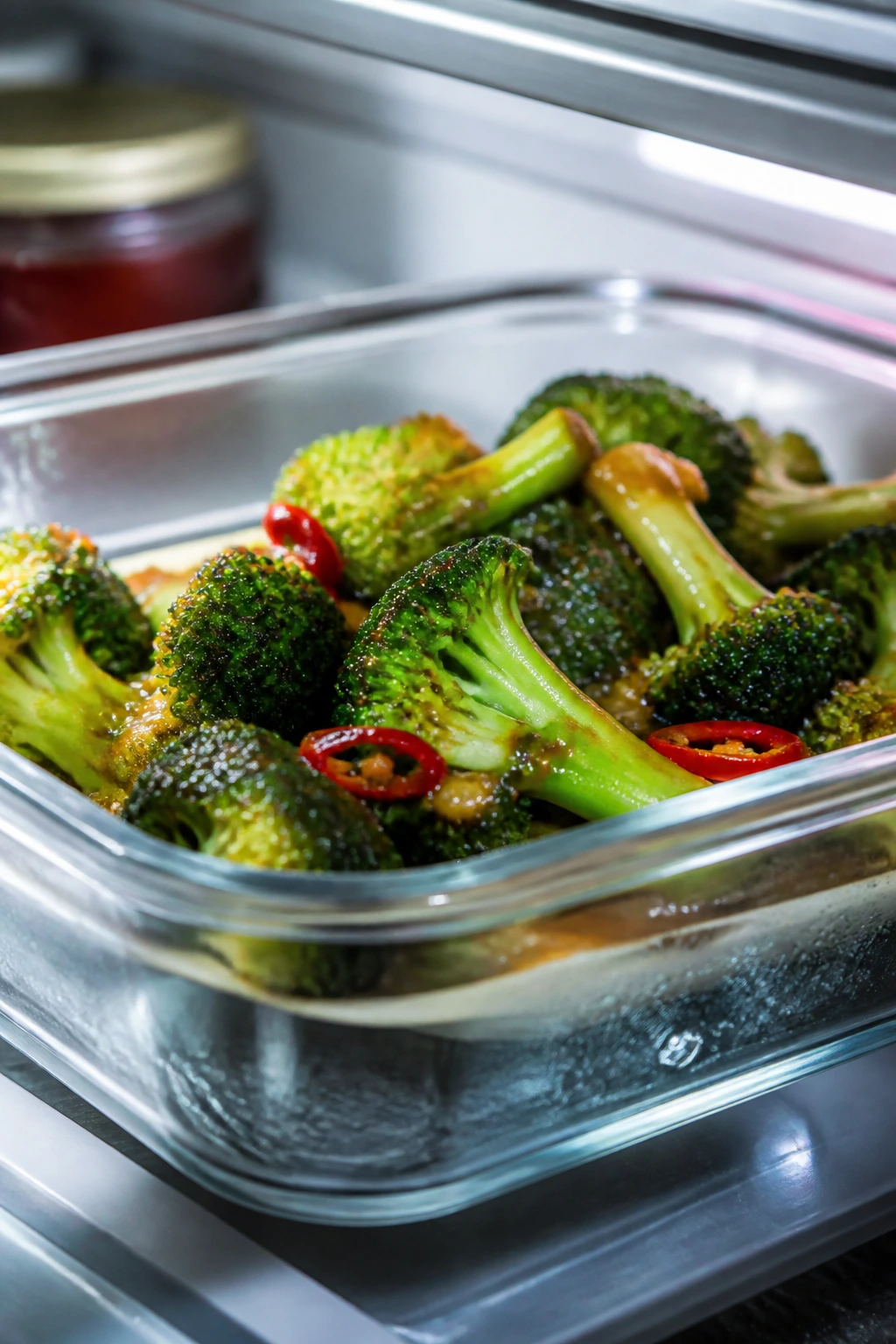
At room temperature, this dish should sit out no longer than 2 hours. After that, move it into an airtight container and refrigerate it for 3 to 4 days. If you want to keep the broccoli from getting too soft, cool it quickly in a shallow container instead of leaving it in a deep, hot pile.
Freezing is possible for up to 1 month, but I only recommend it if you already know you’re fine with softer broccoli later. The sauce survives better than the vegetable. If you do freeze it, pack it tightly in a freezer-safe container and reheat it straight from frozen in a skillet rather than trying to thaw it in the microwave.
The best reheating method is a skillet over medium heat with 1 to 2 teaspoons of water. Cover it for about a minute to loosen the sauce, then uncover and toss until the excess moisture cooks off. That gets you closer to the original texture than the microwave does. Microwaving works in a pinch, but do it in short 30- to 45-second bursts and stop as soon as the broccoli is hot.
For make-ahead work, mix the sauce up to 1 week in advance and keep it refrigerated. You can also cut the broccoli and slice the stems 1 to 2 days ahead, then store them dry in a sealed container lined with a paper towel. Cook the dish right before serving. It’s one of those recipes that likes fresh heat more than advance assembly.
Questions People Ask Before Turning on the Burner
Can I use frozen broccoli?
Yes, but the texture will be softer and the browning less dramatic. Thaw it fully, pat it dry, and skip the steam step or shorten it to a few seconds. If you want the closest match to fresh, frozen is a backup rather than the first choice.
Do I need a wok for this?
No. A 12-inch skillet works well if it gets hot enough and isn’t overcrowded. A wok gives you more room to toss, but a wide stainless or cast-iron skillet can still give you browned edges and a glossy finish.
What if I don’t have oyster sauce?
Use vegetarian mushroom oyster sauce if you want a close swap, or add 1 extra teaspoon soy sauce plus 1 teaspoon hoisin for a sweeter, lighter version. You’ll lose a little depth, but the dish will still taste balanced and savory.
How spicy is it with 2 teaspoons of chili garlic sauce?
It lands in the medium range for most people. The heat comes on with the garlic and lingers a little at the back of the mouth, but it doesn’t drown out the broccoli. If you want less, drop to 1 teaspoon; if you want more, add chili crisp at the table.
Can I add chicken, shrimp, or tofu?
Yes, and it works best if you cook the protein first, remove it, then return it at the end just long enough to coat in sauce. That keeps the broccoli from overcooking while the protein finishes. Tofu is the easiest add because it doesn’t need long to warm back through.
Why did my sauce get lumpy?
The cornstarch probably settled before it hit the pan, or the sauce was poured into a cooler skillet. Whisk it again right before pouring, and keep the pan hot so the slurry thickens evenly. If a few lumps do show up, stir hard for 20 seconds; many of them will disappear.
Can I make this gluten-free?
Yes. Use tamari or a certified gluten-free soy sauce, and swap in a gluten-free oyster-style sauce or mushroom sauce. Cornstarch is already gluten-free, so the rest of the recipe stays the same.
A Hot Pan, a Green Pile, and Not Much Left Behind
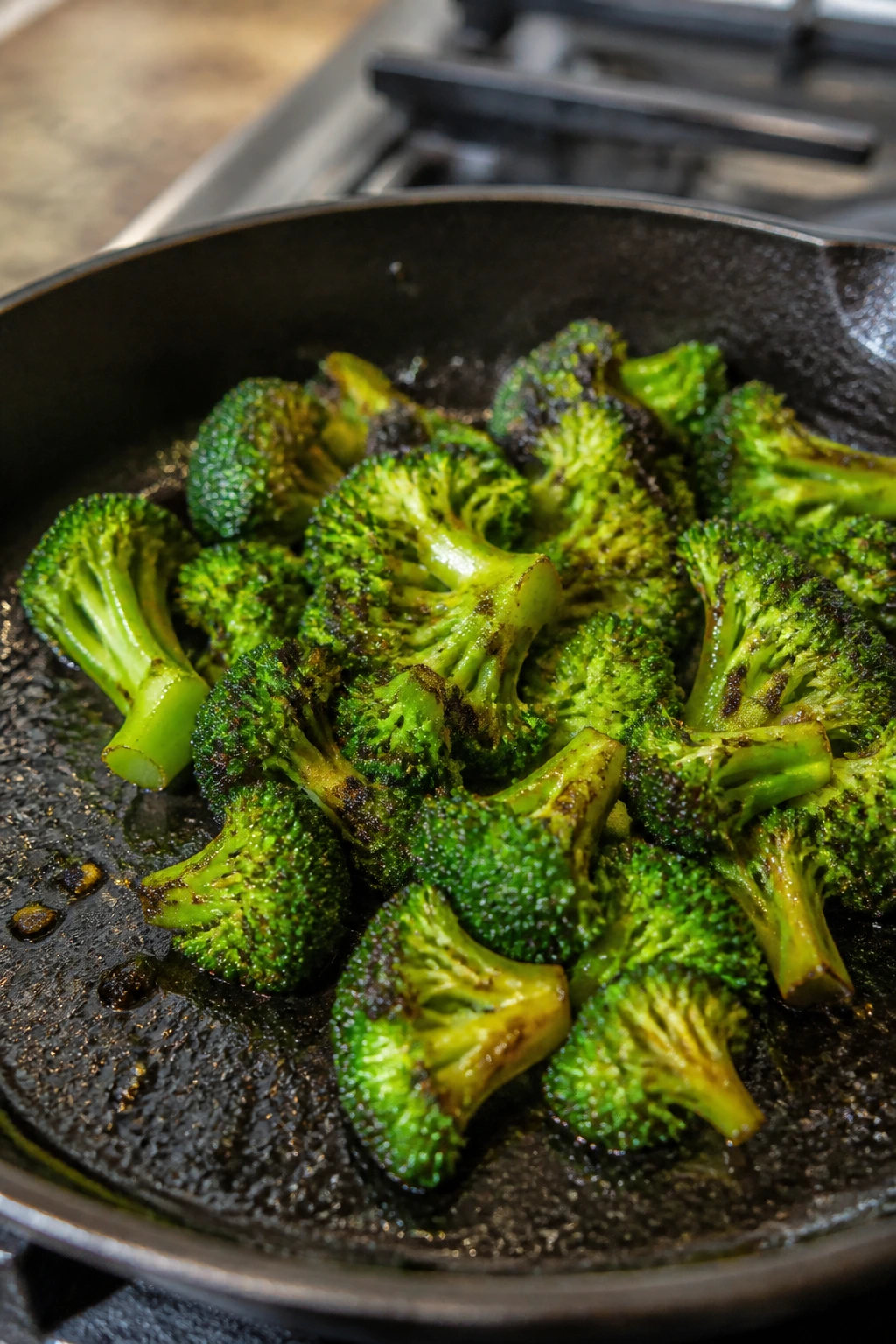
The best broccoli stir fry doesn’t need to apologize for being broccoli. It should be bright, a little spicy, and firm enough to make you notice the bite. That’s what happens when the pan stays hot, the sauce is mixed before the heat starts, and the vegetable gets enough room to brown before it gets glossed.
I like recipes like this because they reward attention without asking for a fuss. You don’t need a basket of strange ingredients or a restaurant burner. You just need dry broccoli, a sane amount of sauce, and the willingness to stop cooking a little earlier than your instincts might suggest.
Once you get that balance right, this starts feeling less like a side dish and more like the thing you planned the whole meal around. And the takeout menu can wait.
Spicy Broccoli Stir Fry Better than Takeout — Recipe Card
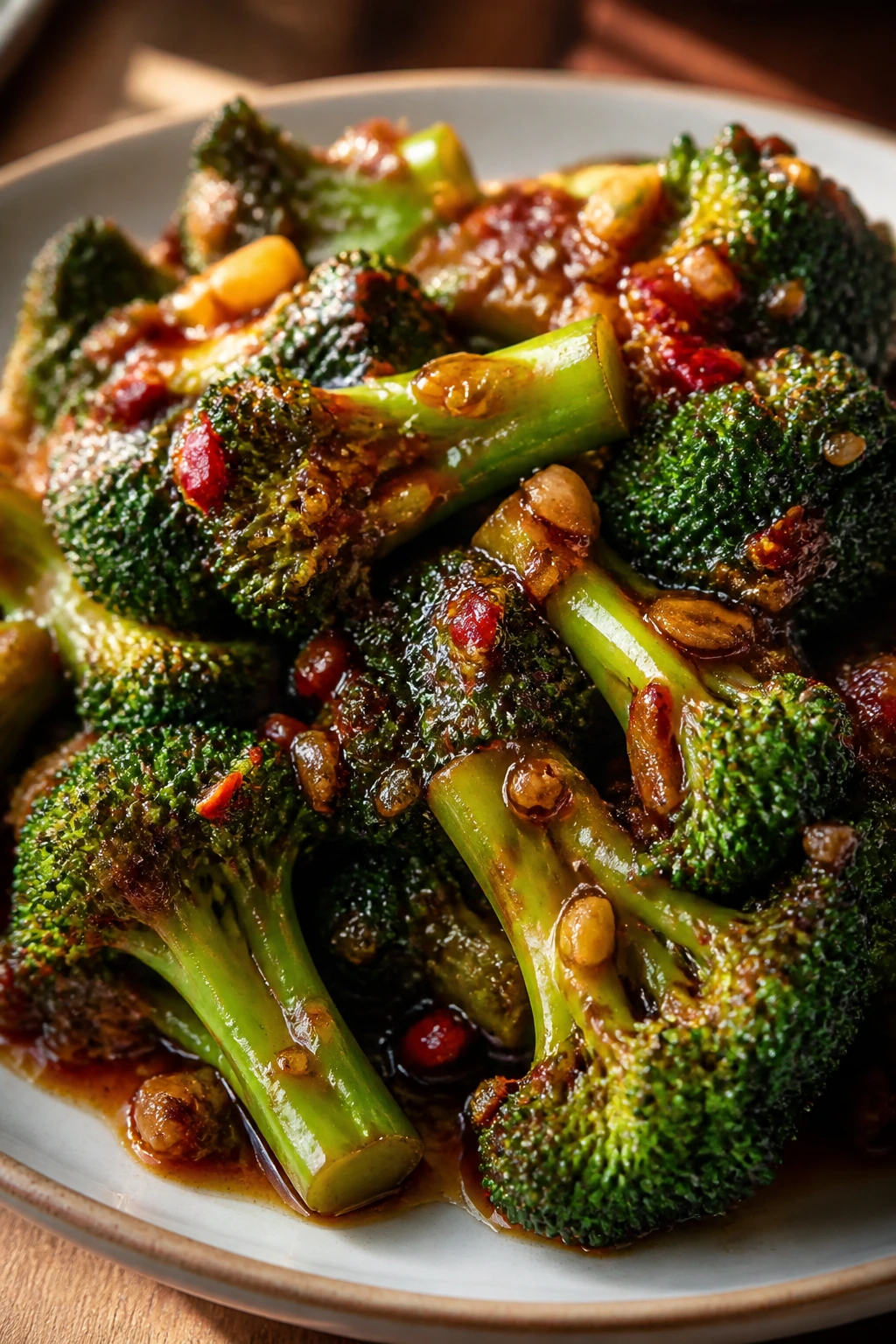
Recipe Name: Spicy Broccoli Stir Fry Better than Takeout
Description: Crisp broccoli florets and peeled stems get seared, briefly steamed, and tossed in a glossy garlic-ginger chili sauce. Serve it as a side or over rice for a fast, punchy meal.
Prep Time: 15 minutes
Cook Time: 10 minutes
Total Time: 25 minutes
Course: Side Dish
Cuisine: Chinese-Inspired / Asian-Inspired
Servings: 4 servings
Calories: about 165 kcal per serving
Ingredients
For the Stir Fry:
- 1 1/2 pounds broccoli florets, with stems peeled and sliced into 1/2-inch pieces
- 2 tablespoons neutral oil, divided
- 5 cloves garlic, finely chopped
- 1 tablespoon fresh ginger, finely grated
- 2 scallions, thinly sliced
- 1 teaspoon toasted sesame seeds, for finishing
For the Sauce:
- 3 tablespoons low-sodium soy sauce
- 1 tablespoon oyster sauce
- 1 tablespoon rice vinegar
- 1 teaspoon packed brown sugar
- 2 teaspoons chili garlic sauce
- 1 teaspoon cornstarch
- 1/4 cup water or low-sodium vegetable broth
- 1 teaspoon toasted sesame oil
Instructions
-
Whisk together the soy sauce, oyster sauce, rice vinegar, brown sugar, chili garlic sauce, cornstarch, and water until smooth.
-
Trim the broccoli into bite-size florets, peel the stems, and slice them into 1/2-inch pieces. Dry well.
-
Heat a wok or large skillet over high heat. Add 1 tablespoon oil and the broccoli in a single layer. Stir-fry for 1 to 2 minutes until bright green with some browned spots.
-
Add 2 tablespoons water, cover for 60 to 90 seconds, then uncover and let the moisture cook off.
-
Push the broccoli to the sides, add the remaining 1 tablespoon oil to the center, then stir in the garlic, ginger, and chili garlic sauce for 20 to 30 seconds.
-
Whisk the sauce again, pour it into the pan, and toss until glossy and thick enough to coat the broccoli.
-
Turn off the heat, drizzle with sesame oil, toss in the scallions, and finish with sesame seeds. Serve immediately.
Notes: Dry broccoli browns better than wet broccoli. If the sauce thickens too fast, add 1 to 2 tablespoons water. Best served right away with rice or noodles.