



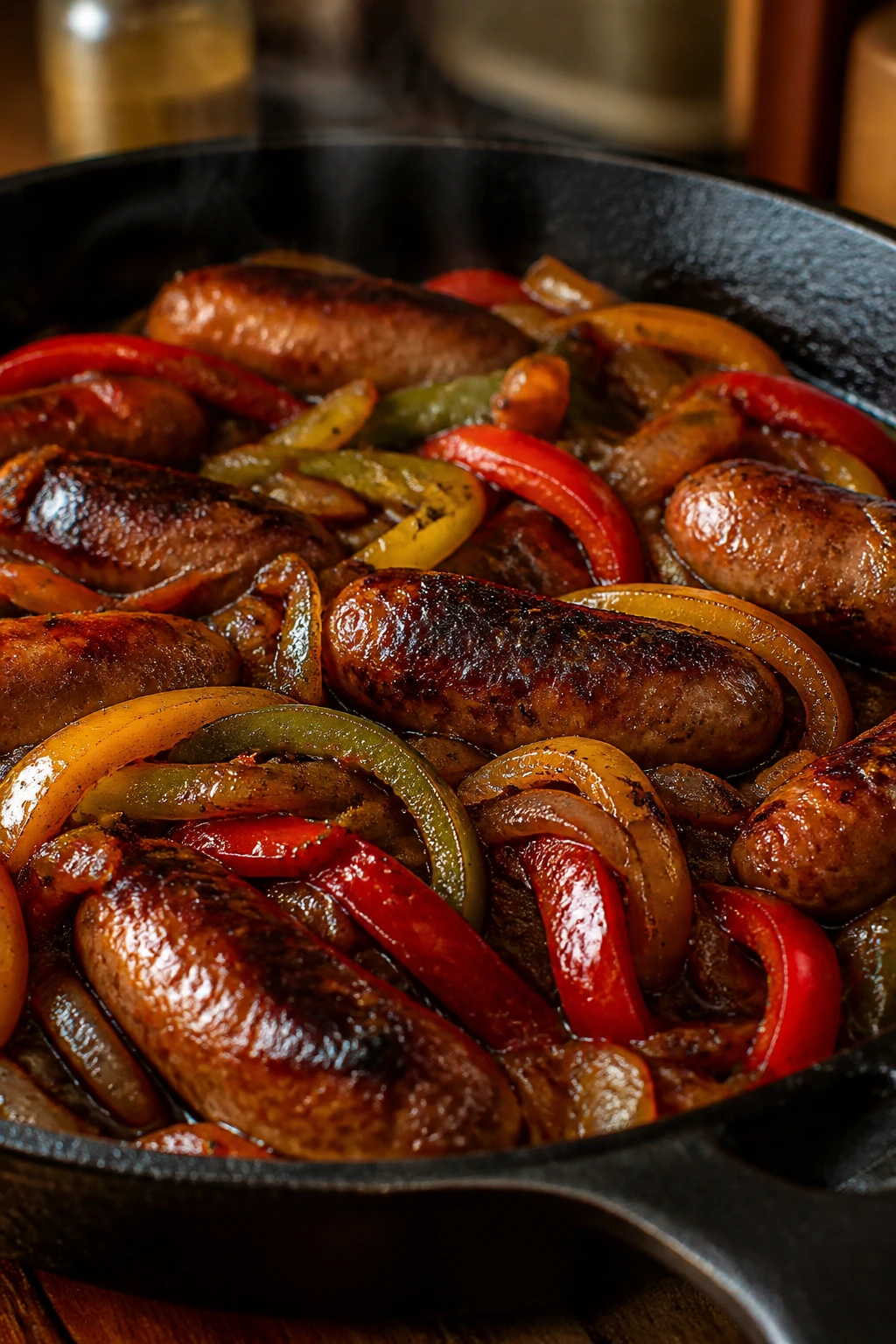
If you like dinner that leaves the stove smelling like caramelized onions, browned sausage skin, and a faint whisper of sticky sweetness, this one earns a permanent spot in the rotation. Juicy sausage and peppers with brown sugar glaze is the kind of skillet meal that looks like you fussed over it far longer than you did, mostly because the glaze turns glossy and dark at the edges while the peppers stay just firm enough to keep their shape.
Most sausage-and-pepper skillets stop at savory and call it a day. That’s fine, but it can feel a little flat after a few bites. A brown sugar glaze changes the entire picture. The sugar brings shine, the vinegar keeps it from turning cloying, and the mustard gives the whole pan a little backbone so the final bite tastes complete instead of sugary.
I prefer pork Italian sausage here because it brings its own seasoning and enough fat to stay tender while the vegetables soften around it. The trick is to brown the sausage first, let the peppers and onions take on a little color, and only then let the glaze tighten in the last few minutes. Once you’ve done it that way, the skillet stops feeling like a recipe and starts feeling like a habit.
Why This Skillet Earns a Spot on the Stove
- The sausage does the heavy lifting: Good pork Italian sausage already carries fennel, garlic, salt, and pepper, so the glaze only has to sharpen what’s there instead of building flavor from nothing.
- The glaze is sweet, but not candy-sweet: Brown sugar, apple cider vinegar, Dijon, and soy sauce make a sticky coating that lands in the sweet-savory zone, not dessert territory.
- The peppers stay worth eating: Slicing them into 1/2-inch strips lets them soften without collapsing into mush, so you still get a little chew under the glaze.
- One pan covers the whole meal: You can spoon this over rice, tuck it into rolls, or serve it with mashed potatoes and never feel like you needed a separate sauce.
- The leftovers behave: The glaze keeps the sausage from drying out in the fridge, which is more than I can say for a lot of skillet dinners that look better on paper than they taste the next day.
Why Brown Sugar, Sausage, and Peppers Click Together
Sausage and peppers already have a long-standing friendship. The dish shows up in deli counters, backyard pans, festival stands, and a thousand home kitchens because it’s sturdy, cheap enough to feed people, and forgiving when the heat gets away from you for a minute. The brown sugar glaze is the piece that changes the tone.
A small amount of sugar in a savory skillet does If you’ve ever made sausage and peppers and thought, this should taste louder, the missing piece is usually the glaze. Not more sausage. Not more garlic. A better finish. Juicy sausage and peppers with brown sugar glaze is one of those skillet dinners that looks rustic and slightly messy in the pan, then turns glossy and deeply savory the second the glaze hits the heat.
The flavor balance matters more here than people expect. Brown sugar on its own would be too sweet. Vinegar on its own would be sharp. Dijon on its own would feel lonely. Put them together, then let the sausage fat and pepper juices join the party, and you get something sticky, shiny, and oddly hard to stop eating.
I like this version because it respects the sausage instead of drowning it. The links still taste like pork, fennel, and garlic. The peppers stay bright, the onions go soft at the edges, and the glaze catches on everything without turning syrupy or burnt. That last part matters. Burn the sugar and the whole skillet goes bitter in a heartbeat.
Why You’ll Want This Skillet on Repeat
-
The glaze gives the dish a real finish: Brown sugar, apple cider vinegar, and Dijon leave a thin, lacquered coat on the sausage instead of a loose puddle at the bottom of the pan.
-
The sausage stays juicy because it’s handled in stages: Browning first, then a short covered cook, then slicing and tossing in glaze keeps the links from drying out.
-
The peppers still taste like peppers: Cutting them into sturdy strips means they soften just enough to pick up glaze without collapsing into orange and red strands of nothing.
-
You only need one skillet and a few basic tools: A heavy pan does the browning, the pepper softening, and the sauce reduction all in the same space.
-
It plays well with bread, rice, potatoes, or pasta: That sticky sauce clings to whatever you put under it, which is handy when you want dinner to feel complete without making a second side that steals time.
-
Leftovers reheat better than most skillet meals: The glaze gives the sausage a little armor, so reheated portions stay moist instead of turning chalky and sad.
How Much This Recipe Makes and How Long It Takes
Yield: Serves 4 to 6
Prep Time: 15 minutes
Cook Time: 25 minutes
Total Time: 40 minutes
Difficulty: Beginner to Intermediate — the steps are straightforward, but the glaze needs a little attention so it doesn’t scorch.
Best Served: Hot from the skillet while the glaze still looks shiny and loose enough to coat the spoon.
The serving size depends on how you plate it. Over rice, it feeds six with no trouble. Piled into toasted rolls, it feeds four hungry people or five if you add a salad or chips on the side. If you want this to feel more like a full dinner than a sandwich filling, plan on one and a half links per adult and be generous with the peppers and onions.
The timing is forgiving, which is one reason I keep this in the “real dinner” category rather than the “project” category. You can slice the vegetables first, mix the glaze in a bowl, and still have the whole thing done before a pot of water would even come to a boil.
The Ingredient List for Juicy Sausage and Peppers with Brown Sugar Glaze
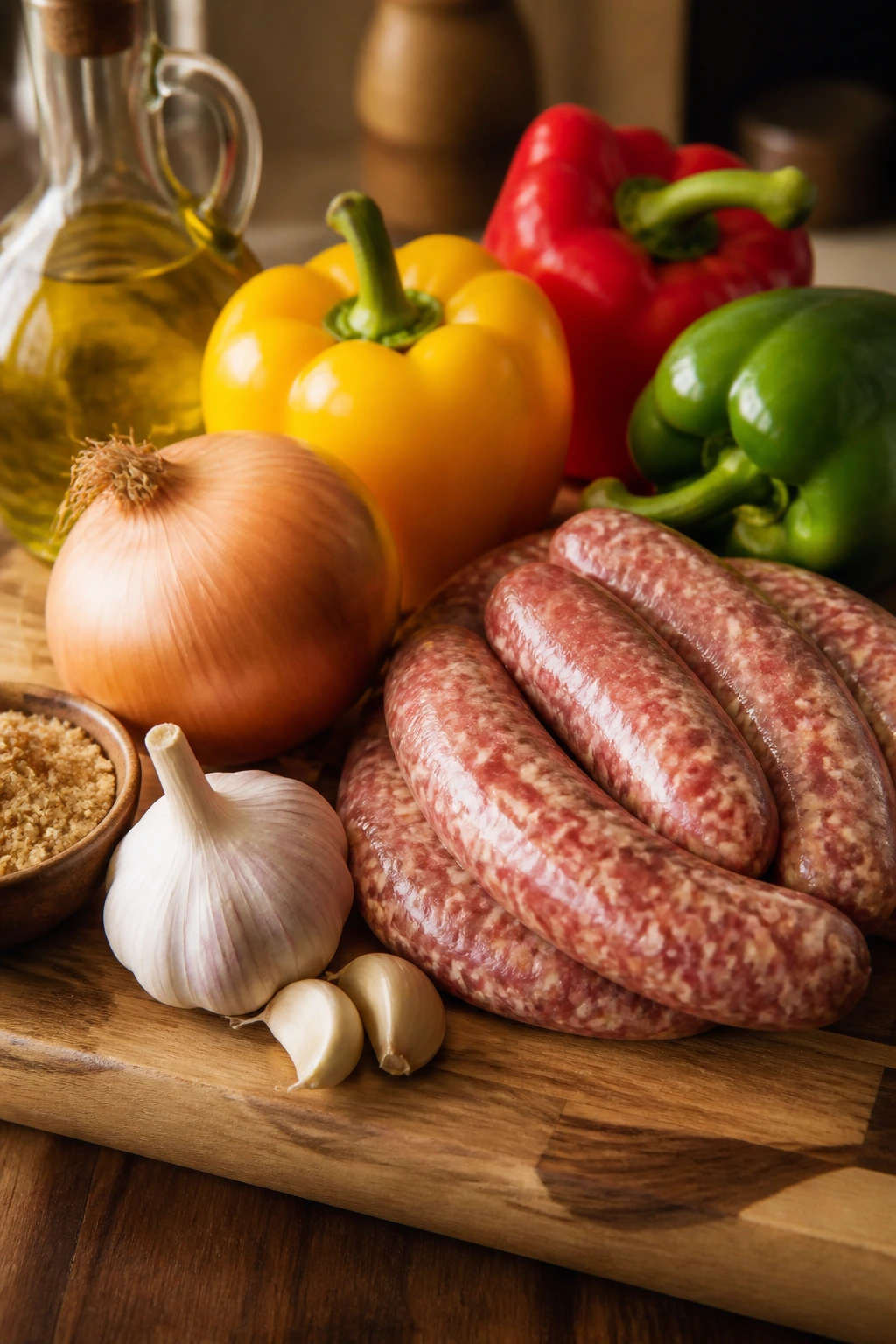
For the Sausage and Vegetables:
- 1 1/2 pounds uncooked pork Italian sausage links, sweet or hot
- 2 tablespoons olive oil
- 1 large yellow onion, sliced into 1/2-inch strips
- 3 bell peppers, any colors, seeded and sliced into 1/2-inch strips
- 3 cloves garlic, minced
- 1/2 teaspoon kosher salt, divided, or less if your sausage is already salty
- 1/2 teaspoon black pepper
- 1/4 teaspoon crushed red pepper flakes, optional
For the Brown Sugar Glaze:
- 1/3 cup packed light brown sugar or dark brown sugar
- 1/4 cup apple cider vinegar
- 2 tablespoons Dijon mustard
- 1 tablespoon low-sodium soy sauce or Worcestershire sauce
- 1/2 cup low-sodium chicken broth
- 1 tablespoon unsalted butter
For Serving:
- Chopped fresh parsley
- Toasted hoagie rolls, cooked rice, mashed potatoes, or buttered egg noodles
That ingredient list looks short on paper, and that’s part of the appeal. The flavor comes from technique and balance, not from a long parade of extras. If you buy sausage with good seasoning and enough fat, the rest of the ingredients have room to do their jobs.
I also want to say this plainly: the peppers matter. Don’t treat them like filler. They’re the sweet, crisp-soft counterweight to the sticky glaze, and they keep the dish from tasting heavy.
Why Each Ingredient Matters in the Brown Sugar Glaze
Pork Italian Sausage
- What to use: 1 1/2 pounds uncooked pork Italian sausage links, sweet or hot, ideally in natural casings.
- Preparation: Leave the links whole for browning, then rest and slice them after they’ve cooked through.
- Substitutions: Turkey Italian sausage works if you want a leaner pan, and chicken sausage works too if it’s well-seasoned.
- Tips: Look for sausage with visible fat marbling. That fat keeps the links juicy and gives the peppers a little flavor to soak up.
Bell Peppers and Onion
- What to use: 1 large yellow onion and 3 bell peppers, sliced into 1/2-inch strips.
- Preparation: Keep the strips fairly even so they soften at the same rate and still hold shape in the final toss.
- Substitutions: Red onion, poblano peppers, or cubanelle peppers all fit here without changing the basic structure.
- Tips: Don’t shave the peppers into paper-thin slivers. They disappear fast, and once they do, the skillet loses texture.
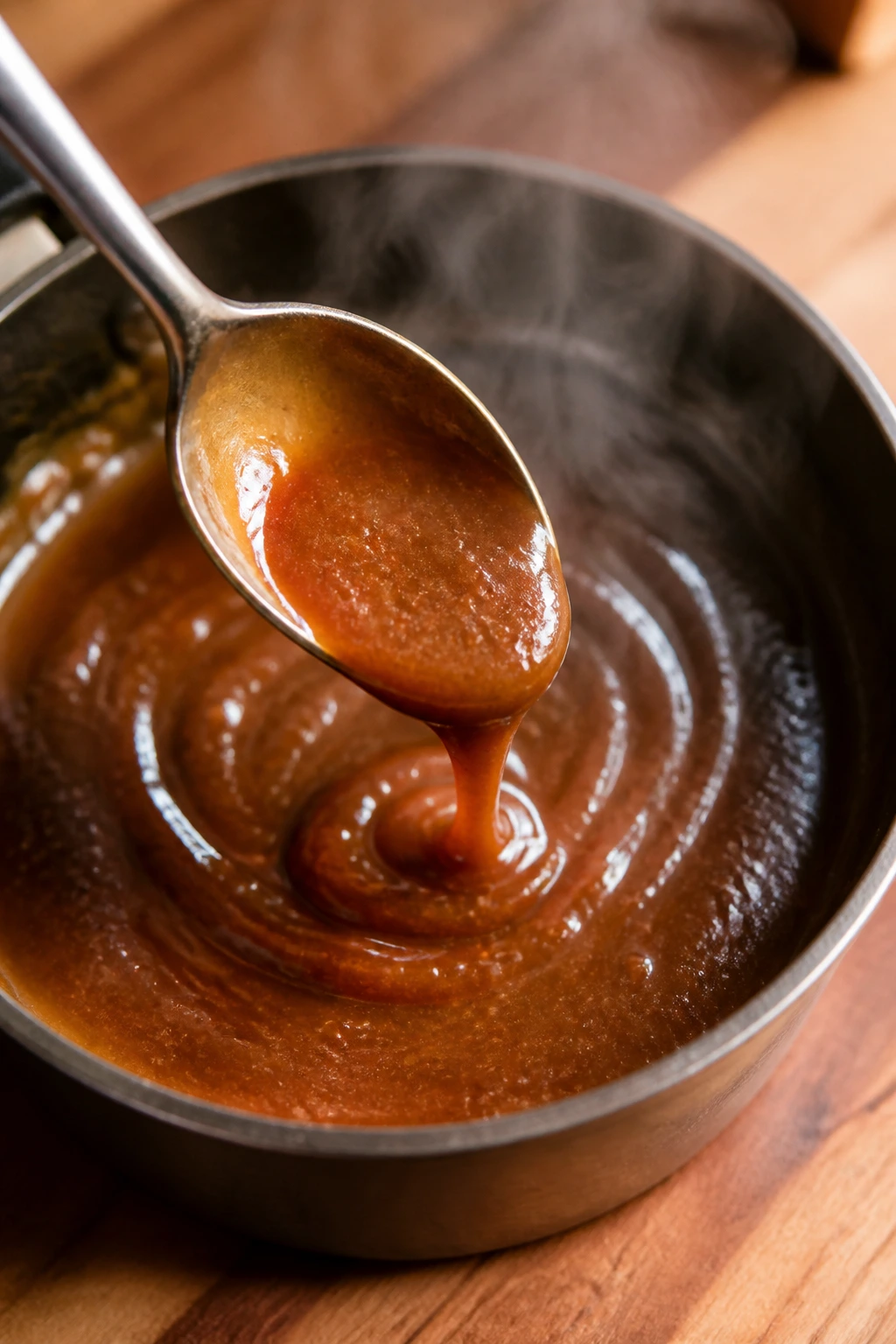
The Brown Sugar Glaze
- What to use: 1/3 cup brown sugar, 1/4 cup apple cider vinegar, 2 tablespoons Dijon, 1 tablespoon soy sauce or Worcestershire, and 1/2 cup chicken broth.
- Preparation: Whisk the glaze in a bowl before it touches the pan so the sugar starts dissolving immediately.
- Substitutions: Honey can replace part of the brown sugar, red wine vinegar can stand in for cider vinegar, and whole-grain mustard gives a grainier finish.
- Tips: Keep the heat at medium once the glaze goes in. Brown sugar scorches fast when the pan is too hot, and scorched sugar tastes harsh instead of sticky.
Seasoning and Finish
- What to use: Garlic, black pepper, a little salt, and optional crushed red pepper flakes, plus parsley at the end.
- Preparation: Add garlic after the vegetables have softened so it doesn’t burn in the dry pan.
- Substitutions: A pinch of dried oregano or fennel seed can lean the dish a little more Italian without taking it somewhere else entirely.
- Tips: Fresh parsley doesn’t just look neat. It wakes up the glaze and keeps the last bites from tasting flat.
Tools That Make the Job Easier
-
12-inch cast-iron skillet or heavy stainless steel skillet — You want enough surface area for browning, not a crowded pan that traps steam.
-
Tongs — Best for turning sausage links without piercing them and letting the juices run out.
-
Sharp chef’s knife — Clean, even pepper strips cook more evenly and look better in the pan.
-
Cutting board — Use one with a damp towel underneath so it doesn’t skate around while you slice the peppers and onions.
-
Small bowl and whisk — The glaze mixes faster and more evenly before it hits the heat.
-
Instant-read thermometer — Helpful for checking that pork sausage reaches 160°F in the center.
-
Wooden spoon or heatproof spatula — Good for scraping up browned bits when the glaze goes in.
-
Lid that fits the skillet, or a loose sheet of foil — Handy for finishing the sausage through without overcooking the exterior.
How to Brown the Sausage and Build the Brown Sugar Glaze
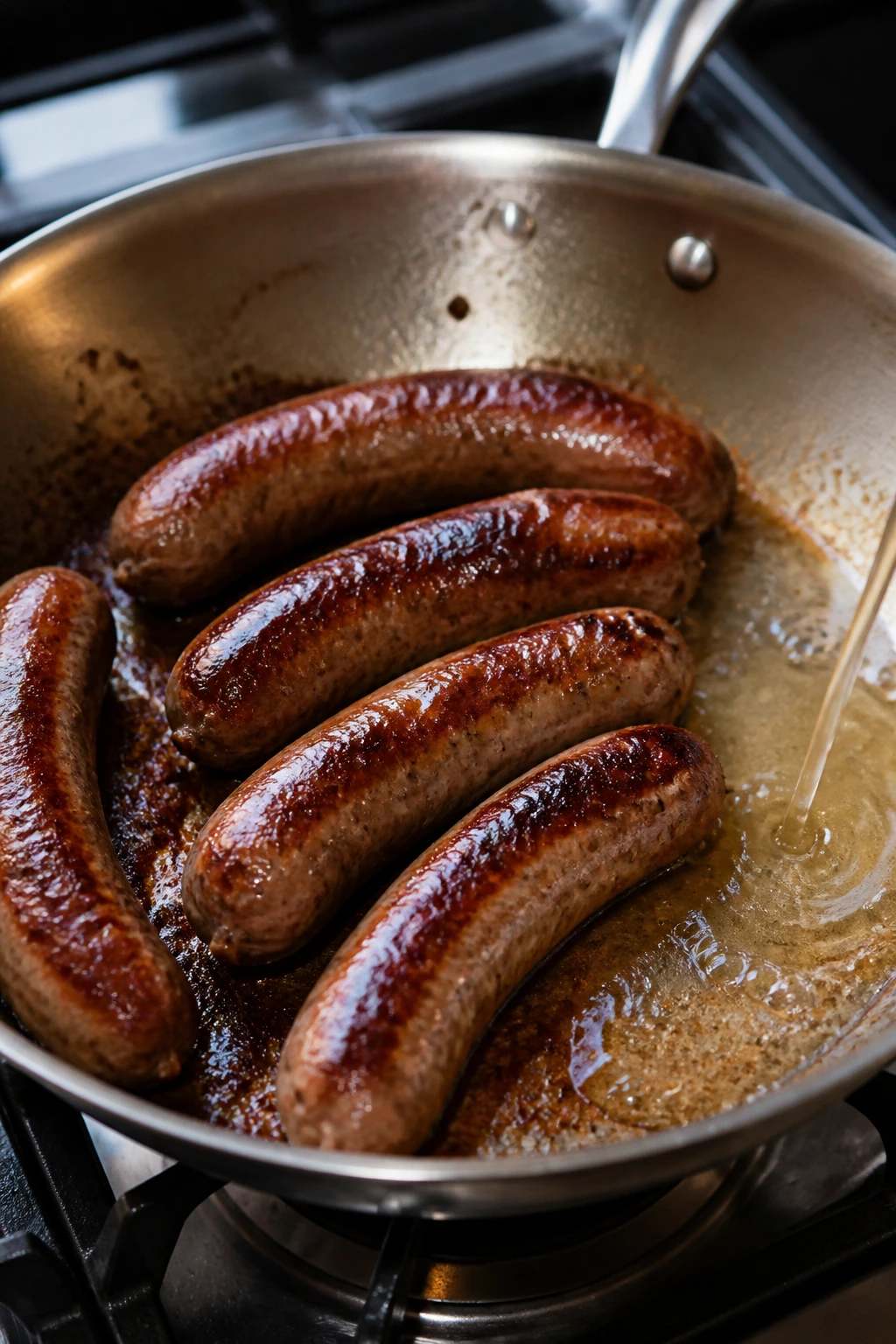
Brown the Sausage
-
Heat 2 tablespoons olive oil in a 12-inch skillet over medium-high heat until the oil shimmers and moves easily across the bottom of the pan.
-
Add the sausage links in a single layer and sear for 2 to 3 minutes per side, turning with tongs until the casings are deeply browned in spots. Don’t crowd the skillet; if the links are packed together, they steam instead of browning.
-
Pour in 1/4 cup chicken broth, lower the heat to medium, cover the skillet, and cook for 6 to 8 minutes, turning once halfway through, until the sausage reaches 160°F in the center. Transfer the links to a plate and let them rest for 5 minutes.
Cook the Peppers and Onions
-
Pour off all but 1 tablespoon of the fat. Add the onion and bell peppers, plus 1/4 teaspoon salt and the black pepper. Cook for 6 to 8 minutes, stirring every minute or so, until the onions are soft and the pepper edges start to blister and brown.
-
Add the garlic and crushed red pepper flakes, if using, and cook for 30 seconds. The garlic should smell sweet and warm, not sharp or burnt.
Make the Brown Sugar Glaze
-
In a small bowl, whisk together the brown sugar, apple cider vinegar, Dijon mustard, soy sauce or Worcestershire, and the remaining 1/4 cup chicken broth until the sugar starts to dissolve.
-
Pour the glaze into the skillet and stir, scraping up the browned bits from the bottom. Let it simmer over medium heat for 2 to 4 minutes, until it reduces slightly and looks glossy enough to coat the back of a spoon.
-
Slice the rested sausage on a slight diagonal into 1/2-inch pieces. Return the sausage to the skillet and toss for 1 to 2 minutes until the slices are coated and the glaze clings to the peppers.
Finish the Pan
-
Remove the skillet from the heat and stir in 1 tablespoon unsalted butter. Taste the sauce and adjust with a pinch of salt or a splash more vinegar if it needs a sharper edge.
-
Scatter chopped parsley over the top and serve immediately while the glaze is still loose and shiny.
A note on step 8: slicing after resting is what keeps the sausage juicy. If you cut it immediately after cooking, the steam and juices run straight onto the cutting board, and the whole point of the browned exterior gets lost.
How to Serve Sausage and Peppers So the Brown Sugar Glaze Stays Glossy
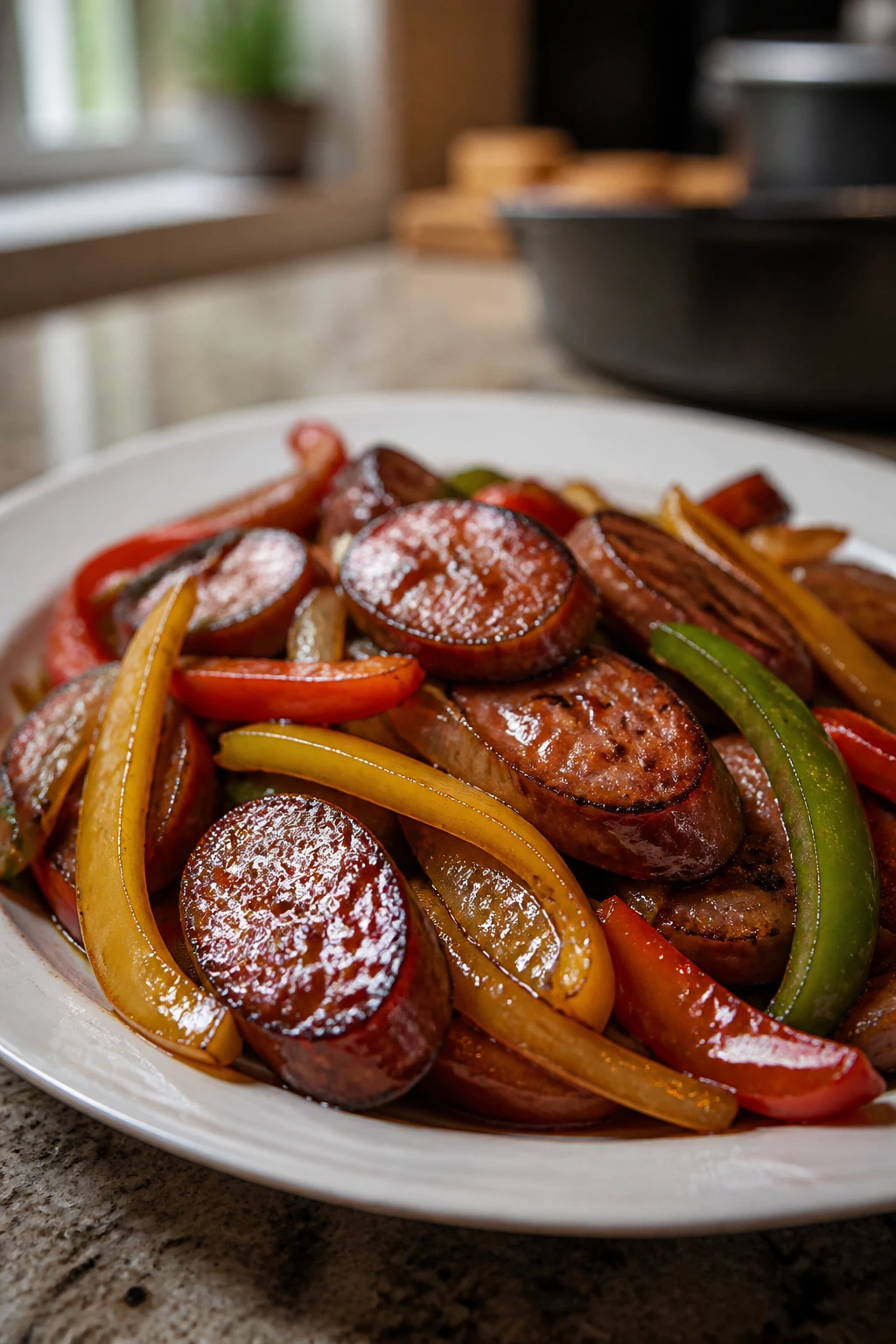
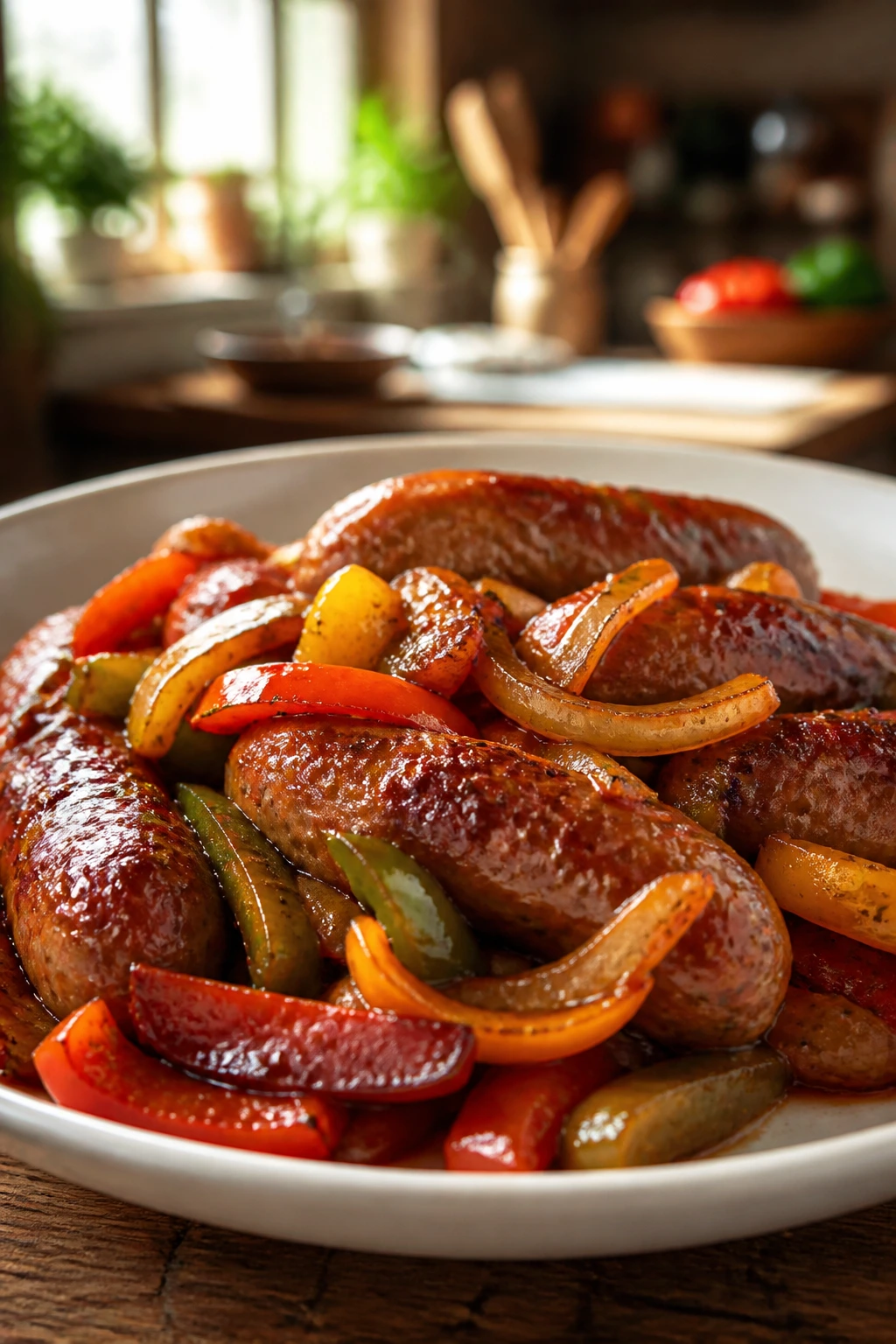
Presentation: Spoon the sausage and peppers into a shallow bowl or onto a wide platter, then drag the glaze over the top with a spoon so some of it pools under the peppers and some of it clings to the sausage slices. If you’re serving rolls, tuck the filling into toasted hoagie buns and let a little of the sauce soak into the bread, but not so much that the bottom goes soggy before the first bite.
Accompaniments: Toasted hoagie rolls are the obvious move, and they’re the move for a reason. They hold the glaze without collapsing. If you want a plate dinner, serve the skillet over buttery mashed potatoes, soft polenta, white rice, or buttered egg noodles. A plain green salad with sharp vinaigrette gives the pan something crisp to sit beside, which helps because the glaze is sticky and a little rich.
Portions: For dinner plates, plan on 1 to 1 1/2 sausage links per person with a generous scoop of peppers and onions. If you’re making sandwiches, one full link per roll usually works unless the rolls are tiny. For rice or potatoes, stretch the pan across six servings by leaning harder on the vegetables and spooning the glaze evenly.
Beverage Pairing: A dry hard cider is a very nice fit because it echoes the apple cider vinegar without making the meal sweeter. A cold pilsner or lager also works, especially if you’re serving the sausage in rolls. For a nonalcoholic glass, sparkling water with lemon or unsweetened iced tea keeps the sweetness in check.
Small Tweaks That Change the Flavor Fast
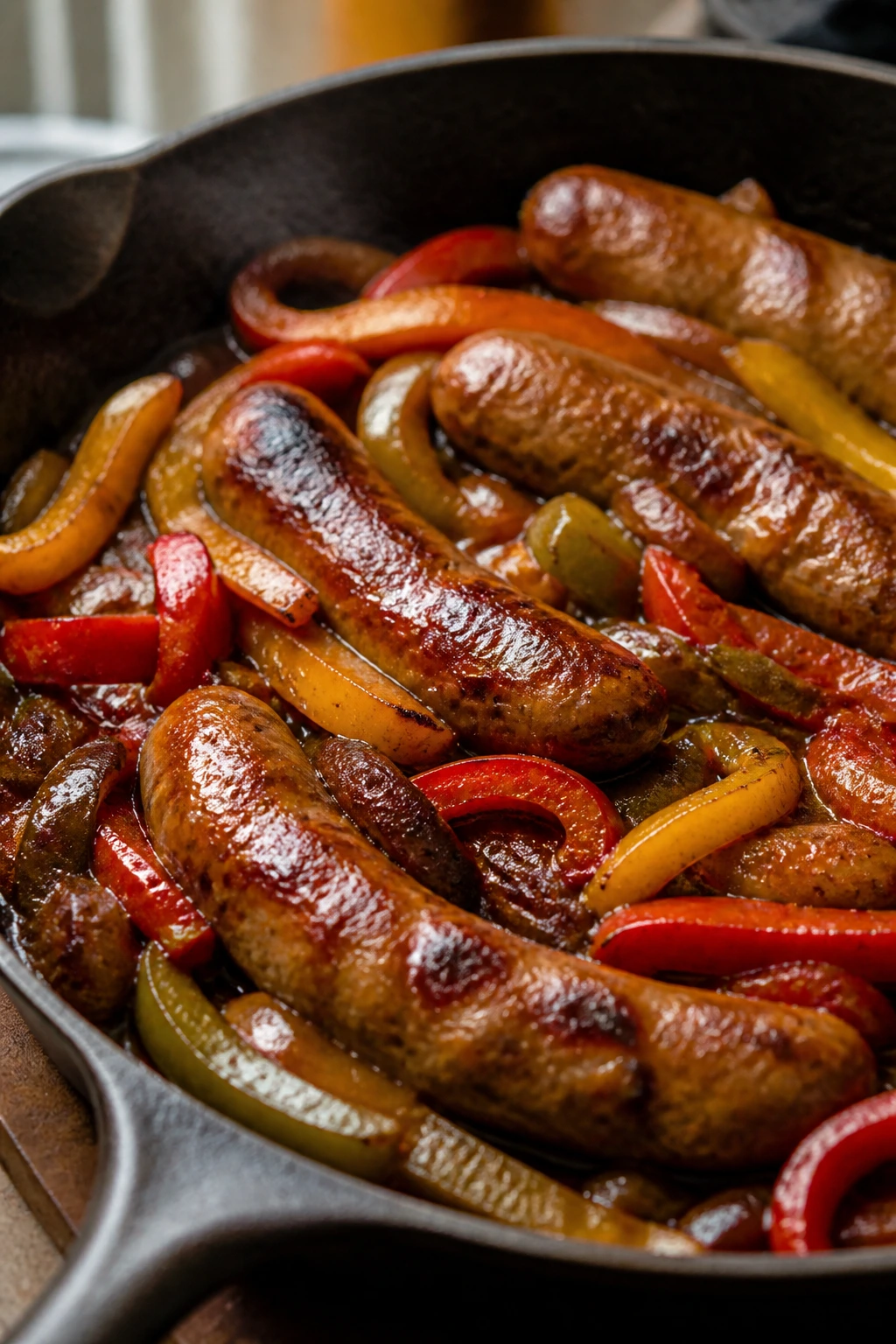
Flavor Enhancement: A teaspoon of fennel seed added with the onions gives the whole skillet that unmistakable Italian sausage smell, even if you’re using a milder link. If you like the sauce a little deeper, let the glaze bubble for an extra minute before the sausage goes back in. That small reduction changes the texture more than people expect.
Customization: If you want a heavier vegetable skillet, add 8 ounces sliced mushrooms after the peppers have cooked for about 3 minutes. They’ll pick up the glaze and give you more volume without turning the pan watery. A sliced zucchini can work too, but it should go in late so it doesn’t turn soft and gray.
Serving Suggestions: Fresh parsley is the easy finish, but grated Pecorino Romano or a few torn basil leaves can push the flavor in a different direction. I like a tiny spoonful of the glaze dripped over the bread right before serving. Not much. Just enough to make the first bite sticky.
Make-It-Yours: Use sweet Italian sausage if you want the brown sugar glaze to feel rounder and gentler. Use hot Italian sausage if you want the vinegar and mustard to stand out more. For people who like extra heat, add a pinch of Calabrian chili flakes or a little crushed red pepper to the glaze instead of piling on hot sauce at the end.
Common Mistakes That Make Sausage and Peppers Dry or Muddy
-
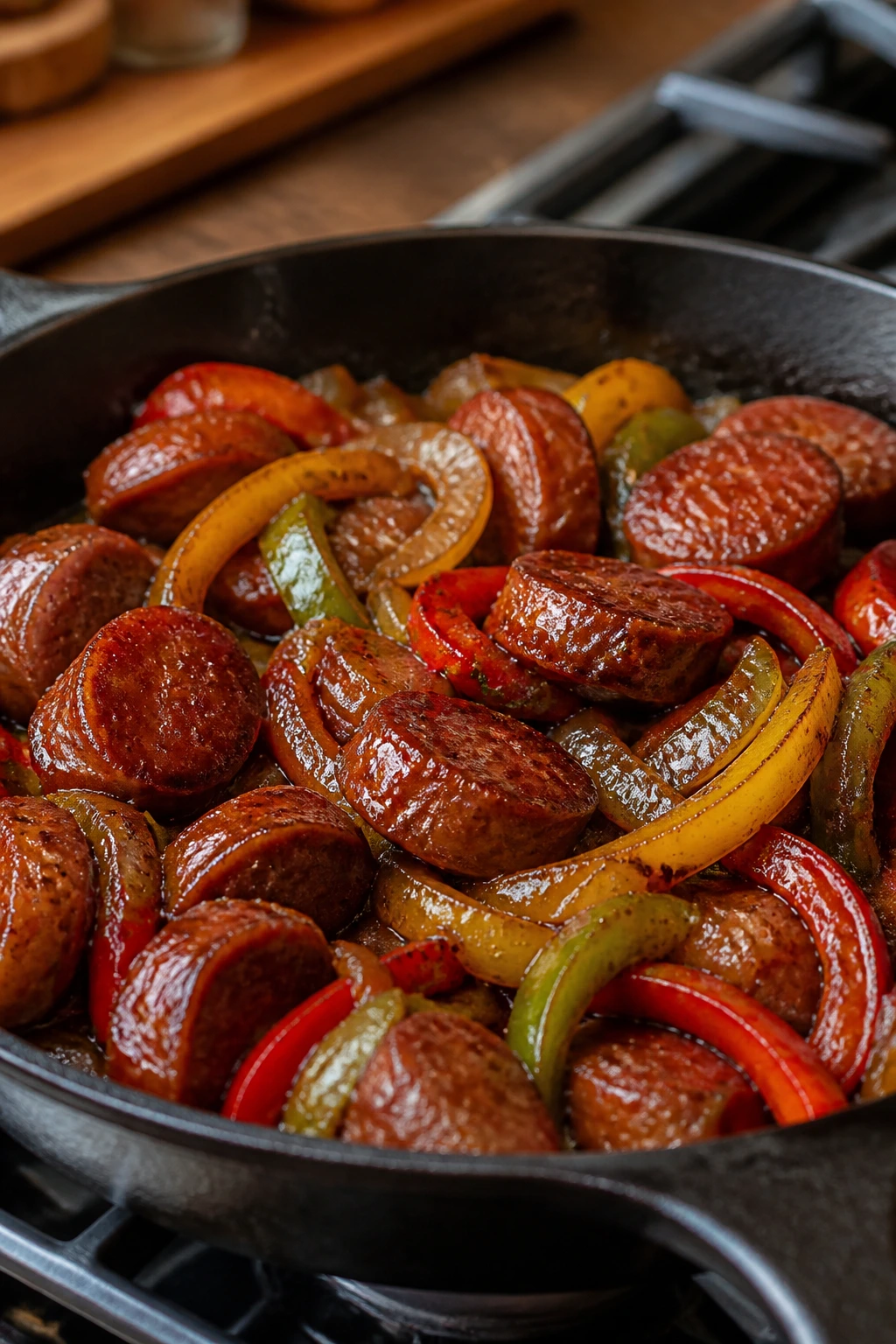
Crowding the skillet: If the sausage links are jammed together, they steam instead of browning, and the peppers turn limp before they pick up any color. Use a large skillet, or brown the sausage in two batches if yours is smaller.
-
Leaving the sausage in too long after it’s cooked through: Pork sausage only needs to reach 160°F. If you keep it over heat far past that point, the casing tightens and the interior gets crumbly. Pull it out, rest it, then slice and finish it in the glaze.
-
Burning the sugar: Brown sugar can go from glossy to bitter fast once it hits a hot pan. Keep the burner at medium for the glaze stage, and don’t let it boil hard. You want a simmer, not a furious bubble.
-
Cutting the peppers too thin: Thin pepper strips collapse and disappear into the sauce. The dish loses shape, and you end up with something that tastes fine but looks muddy. Half-inch strips hold together and still soften enough to be pleasant.
-
Using too much salt too early: Italian sausage already brings a lot of seasoning. Taste the glaze before you add extra salt, especially if you used soy sauce or Worcestershire. It’s easier to fix a pan that needs a little more salt than one that got too salty on the first pass.
-
Skipping the rested sausage slice: Slicing straight from the skillet leaks juices onto the board. Resting for 5 minutes keeps those juices in the meat, where they belong.
Good Variations When You Want a Different Lane
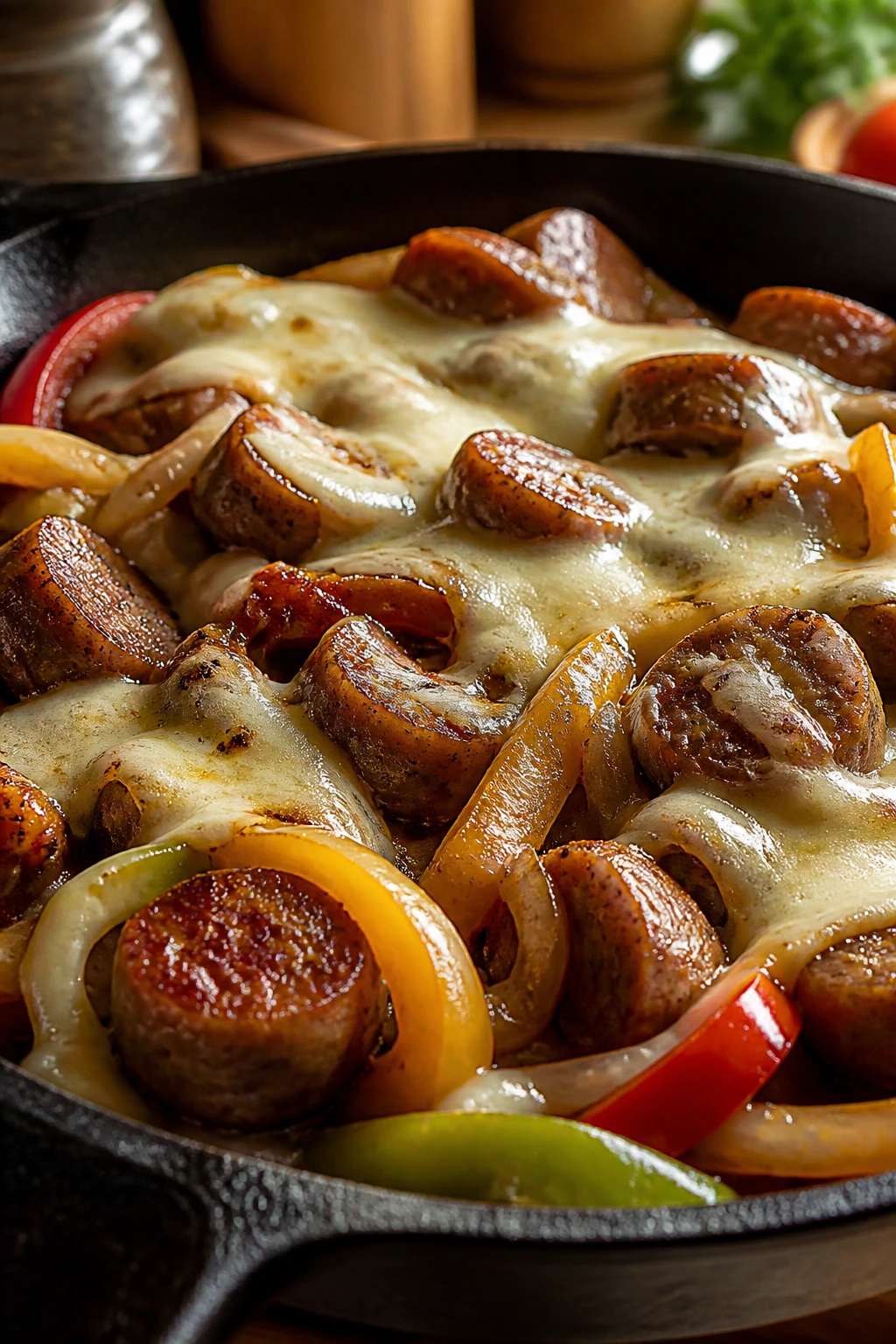
Philly-Style Hoagie Pan
Add sliced provolone over the sausage and peppers during the last minute of cooking, then cover the skillet just until the cheese melts. Pile everything into toasted hoagie rolls and spoon a little extra glaze over the top. It’s still the same skillet meal, just with a more sandwich-shop energy.
Honey-Mustard Version
Swap half of the brown sugar for honey and add an extra teaspoon of Dijon. The glaze turns a little looser and more fragrant, which works well if you’re serving the dish over rice or polenta instead of bread. I like this version with sweet sausage and red peppers only.
Spicy Calabrian Twist
Stir 1 to 2 teaspoons Calabrian chili paste into the glaze, or replace the crushed red pepper with a spoonful of chili oil. The heat lands in the back of the throat instead of screaming from the front, which suits the sticky sweetness nicely. It’s the version I’d make when I want the plate to taste a little sharper and a little meaner.
Herby White Wine Finish
Replace half of the chicken broth with dry white wine and add a teaspoon of chopped rosemary or thyme with the peppers. The glaze gets less sweet, more savory, and a little lighter on the tongue. This one works especially well if you’re serving the skillet with potatoes rather than sandwiches.
Storing, Reheating, and Making It Ahead
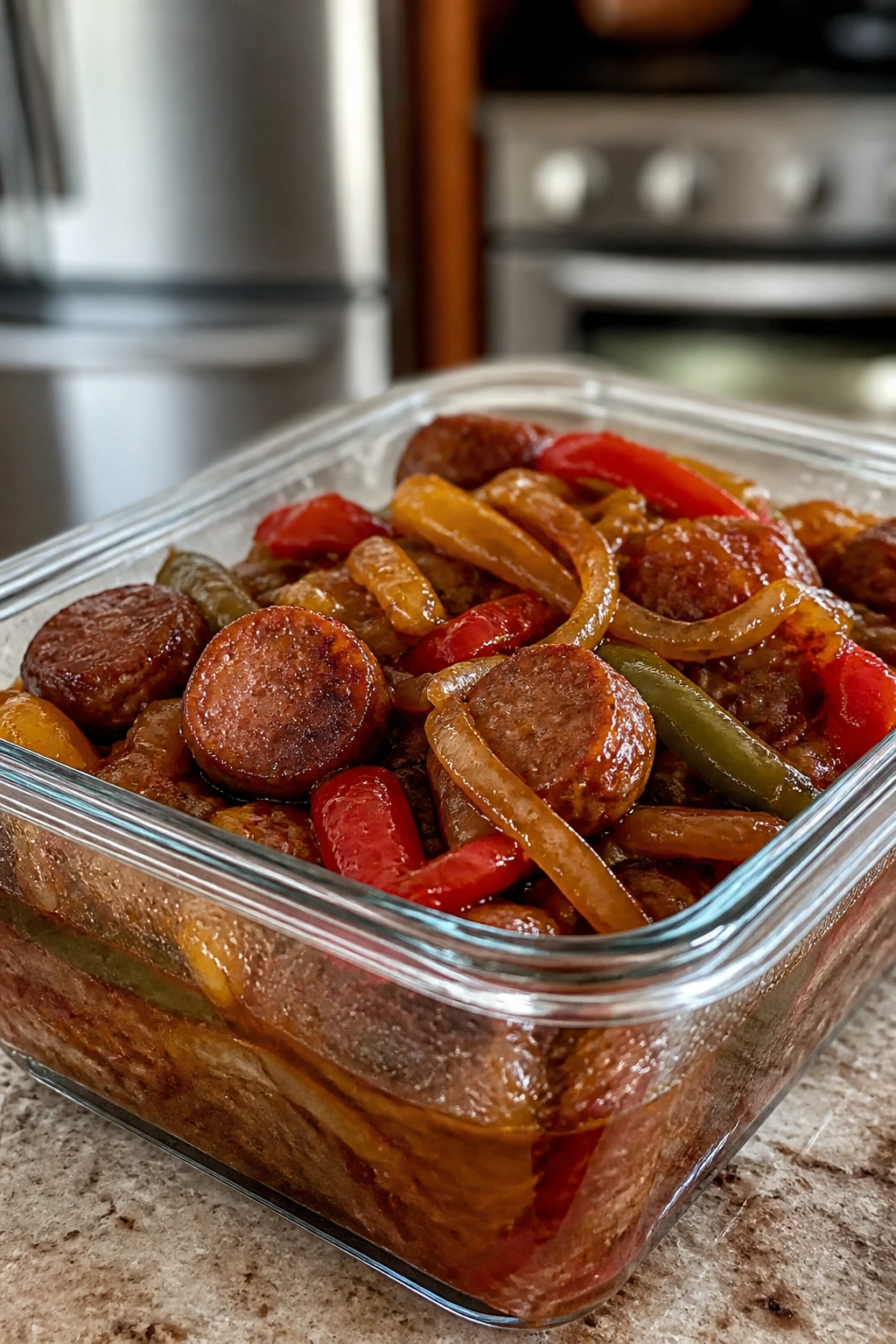
Let the sausage and peppers cool for about 20 to 30 minutes before packing them away. Once they’re no longer steaming hard, transfer everything to an airtight container and refrigerate for 3 to 4 days. The glaze will thicken as it sits, and the peppers will soften a little more, which is not a problem unless you’re after a crisper texture.
For the freezer, pack the cooled mixture into a freezer-safe container or heavy freezer bag and freeze for up to 2 months. The sausage holds up fine, but the peppers will be softer after thawing. That’s normal. If you know you want to freeze it, undercook the peppers by a minute or two so they don’t go too far during reheating.
The best way to reheat is in a skillet over medium-low heat with a tablespoon or two of chicken broth or water. Stir gently until the sausage is hot all the way through and the glaze loosens again. This usually takes 5 to 8 minutes depending on how full the pan is. The microwave works in a pinch, but cover the container loosely and heat in short bursts so the glaze doesn’t split and the sausage doesn’t turn rubbery.
You can make parts of the dish ahead without sacrificing texture. Slice the peppers and onions a day in advance and keep them sealed in the fridge. The glaze can be whisked together up to 2 days ahead and stored separately. I would not fully cook the whole skillet more than a day ahead unless you’re fine with softer peppers, because that’s the tradeoff. The dish still tastes good, but the texture shifts from fresh-skillet to leftover comfort food.
Questions People Ask About Sausage and Peppers with Brown Sugar Glaze
Can I use pre-cooked sausage instead of raw links?
Yes. Slice it into thick coins and brown it briefly before adding the peppers, then shorten the sauce stage because the sausage only needs to heat through. Pre-cooked sausage will never be as juicy as raw links here, but it works if that’s what you have.
Will turkey or chicken sausage work?
It will, and the glaze helps lean sausage feel less dry. Use a little less heat and be careful not to overcook it, because turkey and chicken sausage tighten up faster than pork. I’d also keep the butter in the finish so the pan doesn’t taste lean.
How do I make the glaze less sweet?
Cut the brown sugar back to 1/4 cup and add another teaspoon of vinegar or a squeeze of lemon at the end. Dijon also helps keep the sweetness in line, so don’t skip it unless you have to. If the sausage itself is very sweet, go heavier on vinegar and black pepper.
What if the glaze gets too thick?
Add a splash of chicken broth, water, or even cider and stir over low heat until it loosens. The sauce should coat the sausage in a thin layer, not sit on it like jam. If it turns sticky enough to drag across the pan in clumps, the heat was a little high.
Can I bake this instead of cooking it on the stove?
Yes, though the skillet version gives you better browning. You can brown the sausage first, then roast the peppers and onions at 425°F on a sheet pan with the glaze added near the end. The flavor is good, but the sauce won’t get quite as glossy as it does in the pan.
What’s the best bread for serving this in rolls?
Use sturdy hoagie rolls or sub rolls with a tight crumb. Soft dinner rolls collapse under the glaze, and crusty baguette-style bread can fight the bite. Toasting the cut sides for a minute or two in a dry skillet helps a lot.
Can I make this dairy-free?
Yes. Just skip the butter at the end and use a little more broth if the sauce needs loosening. The glaze will still shine thanks to the sausage fat and the reduced sugar.
A Sticky Finish Worth Repeating
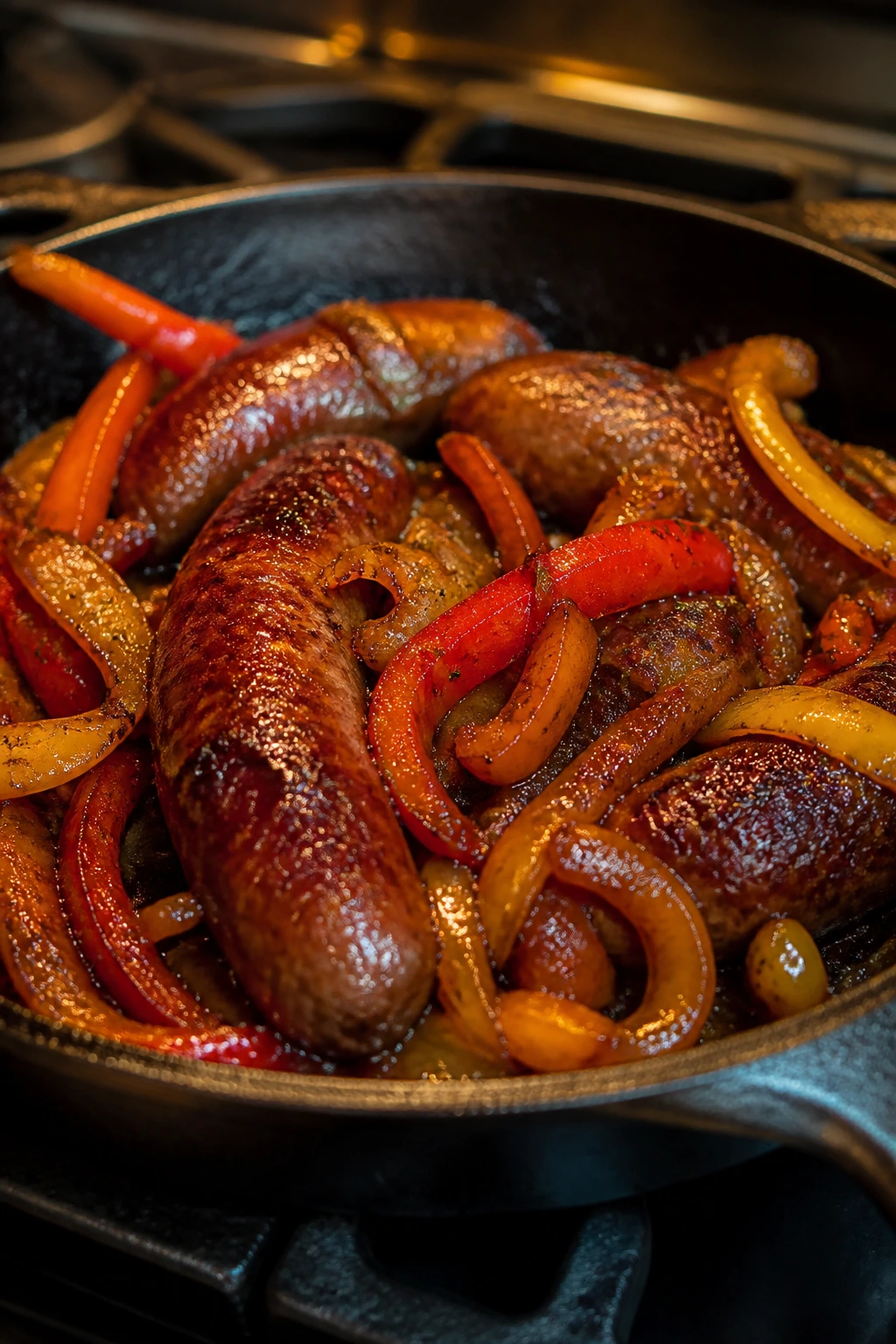
There’s a reason skillet dinners like this keep showing up in home kitchens. They don’t ask for much, but they give back a lot. A few good sausages, a couple of peppers, an onion, and a glaze that knows when to stop sweetening and start clinging—that’s enough to make dinner feel deliberate.
What I like most is how honest the dish is. It doesn’t pretend to be delicate. It lands on the plate glossy, warm, and a little unruly, with the sausage still juicy and the peppers still doing some work. Make it once, and you’ll start keeping brown sugar and Italian sausage around for the sole purpose of making it again.
Juicy Sausage and Peppers with Brown Sugar Glaze — Recipe Card
Recipe Name: Juicy Sausage and Peppers with Brown Sugar Glaze
Description: Pork Italian sausage links are browned, simmered, and sliced into a glossy skillet of peppers and onions finished with a sticky brown sugar glaze. The sauce is sweet, sharp, and savory enough to spoon over rolls, rice, potatoes, or noodles.
Prep Time: 15 minutes
Cook Time: 25 minutes
Total Time: 40 minutes
Course: Dinner, Main Course
Cuisine: American, Italian-American
Servings: 4 to 6 servings
Calories: About 420 kcal per serving
Ingredients
For the Sausage and Vegetables:
- 1 1/2 pounds uncooked pork Italian sausage links, sweet or hot
- 2 tablespoons olive oil
- 1 large yellow onion, sliced into 1/2-inch strips
- 3 bell peppers, any colors, seeded and sliced into 1/2-inch strips
- 3 cloves garlic, minced
- 1/2 teaspoon kosher salt, divided, or less if your sausage is already salty
- 1/2 teaspoon black pepper
- 1/4 teaspoon crushed red pepper flakes, optional
For the Brown Sugar Glaze:
- 1/3 cup packed light brown sugar or dark brown sugar
- 1/4 cup apple cider vinegar
- 2 tablespoons Dijon mustard
- 1 tablespoon low-sodium soy sauce or Worcestershire sauce
- 1/2 cup low-sodium chicken broth
- 1 tablespoon unsalted butter
For Serving:
- Chopped fresh parsley
- Toasted hoagie rolls, cooked rice, mashed potatoes, or buttered egg noodles
Instructions
-
Heat the olive oil in a 12-inch skillet over medium-high heat. Add the sausage links and brown them for 2 to 3 minutes per side.
-
Pour in 1/4 cup chicken broth, lower the heat to medium, cover, and cook for 6 to 8 minutes until the sausage reaches 160°F. Transfer to a plate and rest for 5 minutes.
-
Pour off all but 1 tablespoon of the fat. Add the onion, bell peppers, salt, and black pepper. Cook for 6 to 8 minutes until softened with browned edges.
-
Add the garlic and crushed red pepper flakes, if using, and cook for 30 seconds.
-
Whisk the brown sugar, vinegar, Dijon, soy sauce or Worcestershire, and the remaining 1/4 cup chicken broth in a small bowl.
-
Pour the glaze into the skillet and simmer for 2 to 4 minutes until slightly reduced and glossy.
-
Slice the rested sausage into 1/2-inch pieces, return it to the skillet, and toss for 1 to 2 minutes until coated.
-
Remove from the heat, stir in the butter, and finish with parsley.
Notes: For a less sweet finish, cut the brown sugar to 1/4 cup and add a little extra vinegar at the end. Reheat gently in a skillet with a splash of broth, and don’t skip the resting time before slicing the sausage.