



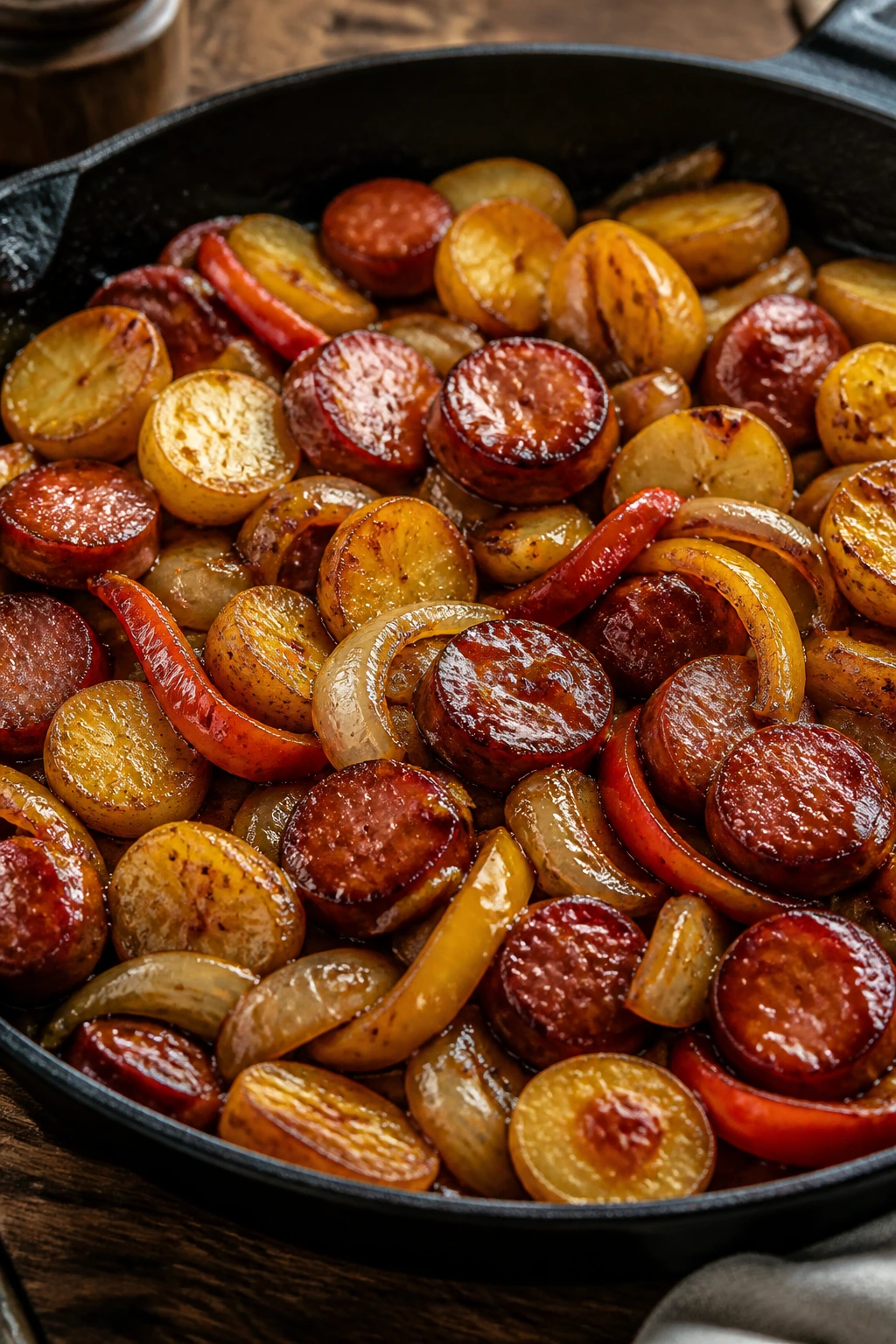
The best smoked sausage pan dinner has a smell that gets people wandering into the kitchen before you call them. First comes the sausage browning in hot oil, then the onion softening at the edges, then the brown sugar glaze melting into a sticky, glossy coat that clings to every potato half and pepper strip. It’s savory, sweet, a little smoky, and—if you do it right—not remotely sugary in a dessert way.
That balance matters. Smoked sausage already brings salt, smoke, and a dense, meaty bite, so the job of the glaze is not to smother it. The glaze should sharpen the sausage, wake up the potatoes, and leave a shiny finish on the pan without turning the whole dinner into syrup. When people say they want a “simple pan dinner,” this is usually what they mean: one pan, real browning, and food that tastes like more effort went into it than actually did.
I like this style of dinner because it respects the ingredients. The sausage does not need hours. The potatoes need a head start, not a babysitter. The glaze should be quick enough to come together while the pan roasts, and sturdy enough to caramelize at the end without burning into bitterness. That last part is where a lot of recipes wobble. This one stays on the right side of sticky.
Why This Pan Dinner Earns a Spot on the Table
-
The glaze stays savory first: Brown sugar, Dijon, vinegar, and soy sauce keep the sweetness in check, so the finish tastes glossy and balanced instead of candy-like.
-
The sausage keeps its snap: Sliced smoked sausage browns fast, and because it’s already cooked, you’re really building flavor on the outside rather than chasing doneness on the inside.
-
The potatoes earn their place: Baby Yukon Golds turn creamy in the middle and crisp at the cut edges, which gives the pan enough body that it feels like dinner, not just sausage and peppers.
-
The pan does the heavy lifting: Once the potatoes get their first roast, the rest slides into place fast. You’re mostly timing, stirring, and not overthinking it.
-
It stretches well without tasting stretched: Add a pepper, add green beans, add a second onion. The glaze still coats everything, and the dish still feels cohesive.
-
Leftovers hold up better than you’d expect: The sausage stays flavorful, and the potatoes reheat well if you use the oven instead of the microwave.
What Gives This Smoked Sausage and Brown Sugar Combo Its Edge
This dinner sits in a very old, very sensible place on the flavor map: salty meat, sweet glaze, sharp acid, and vegetables that can take heat. Nothing in that idea is new. What makes it worth making is the ratio. Too much sugar and the pan tastes sticky in the wrong way. Too little acid and the glaze feels flat. Too much liquid and you lose the caramelized edges that make a pan dinner worth the trouble.
Smoked sausage is a cheat code, but a useful one. It’s already seasoned and cooked, which means you’re not starting from zero. You’re browning the casing, warming the center, and letting the sausage release a little fat that helps the onions and potatoes taste better. That fat is not an accident; it’s the engine of the whole dish.
The brown sugar glaze works because it lands late. If you pour it on too early, the sugar can scorch before the potatoes finish. If you wait until the end, it melts into the hot pan juices and turns into a shiny coat that clings to the sausage rounds and picks up the pepper edges. That’s the part I always look for: gloss, not puddles.
And the vegetables matter more than people think. A pan full of sausage alone can be one-note, even if the glaze is good. Potatoes absorb the sauce. Onions go sweet and almost jammy around the edges. Peppers bring a little snap and color so the pan doesn’t look brown from one end to the other. It’s a simple structure, but it has enough contrast to keep every bite moving.
Quick Facts at a Glance
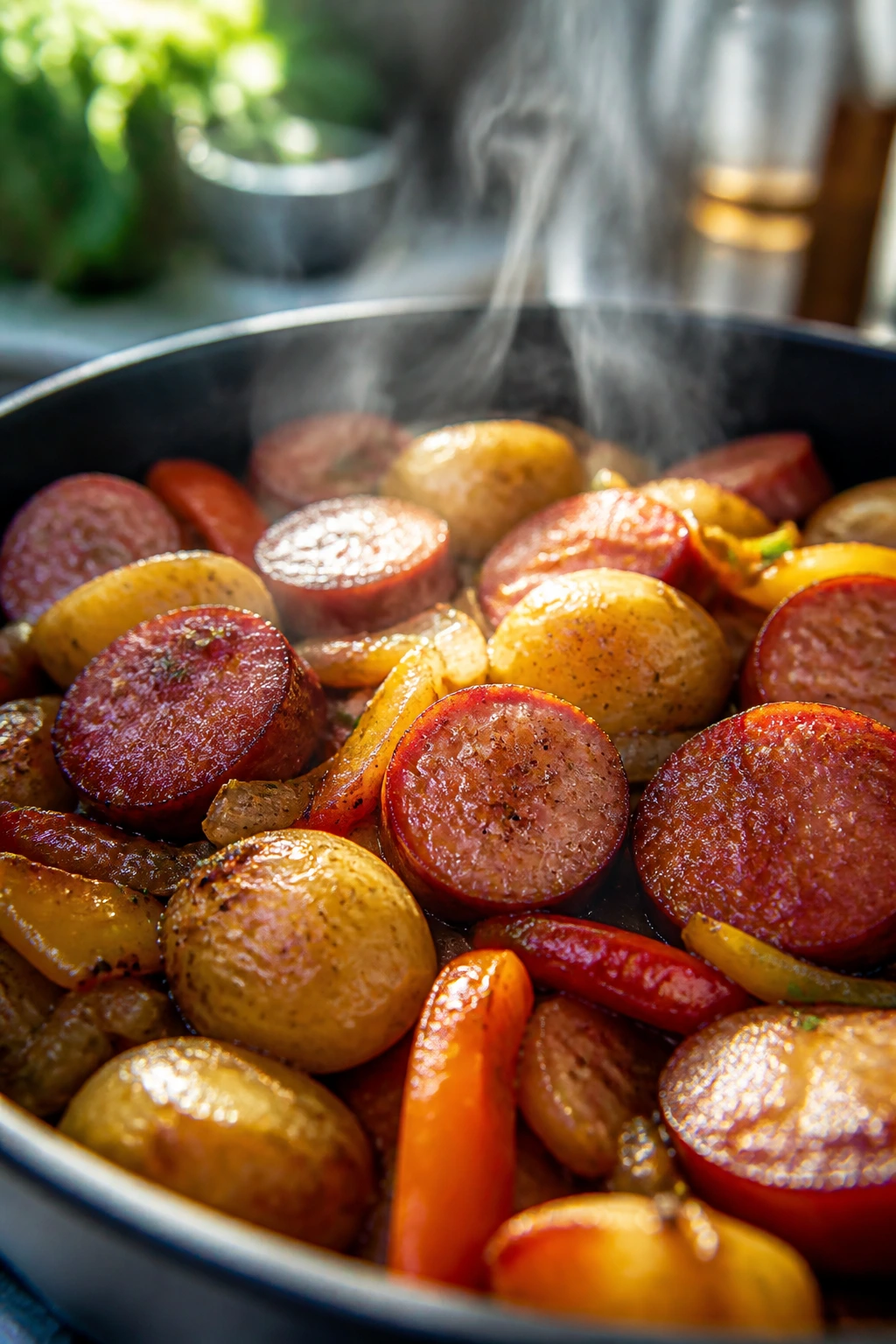
Yield: Serves 4 to 5
Prep Time: 15 minutes
Cook Time: 30 to 35 minutes
Total Time: About 45 to 50 minutes
Difficulty: Beginner — the steps are straightforward, but the glaze timing matters and the potatoes need one good head start.
Best Served: Hot from the pan, after a short 5-minute rest so the glaze clings instead of running everywhere.
Ingredient List for the Pan Dinner
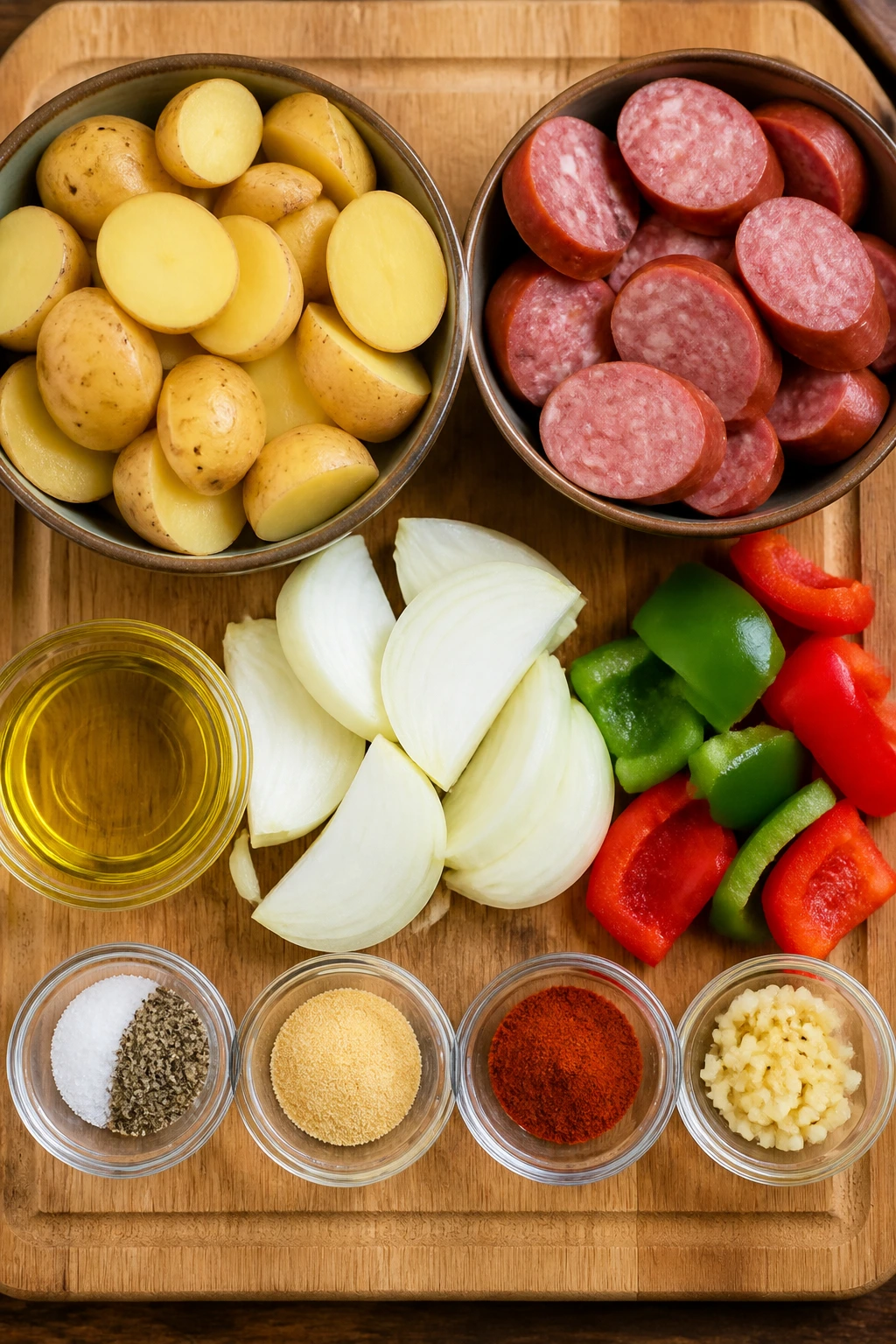
For the Pan Dinner:
- 1 1/4 pounds baby Yukon Gold potatoes, halved
- 14 to 16 ounces smoked sausage, sliced into 1/2-inch rounds
- 1 large yellow onion, cut into thick wedges
- 2 bell peppers, seeded and sliced into 1/2-inch strips
- 2 tablespoons olive oil
- 1 teaspoon kosher salt, divided
- 1/2 teaspoon black pepper
- 1/2 teaspoon garlic powder
- 1/2 teaspoon smoked paprika
- 2 cloves garlic, minced
For the Brown Sugar Glaze:
- 1/3 cup packed light brown sugar
- 1/4 cup low-sodium chicken broth
- 2 tablespoons Dijon mustard
- 1 tablespoon apple cider vinegar
- 1 tablespoon low-sodium soy sauce
- 1 tablespoon unsalted butter
- 1/4 teaspoon crushed red pepper flakes, optional
For Finishing:
- 2 tablespoons chopped fresh parsley
- 1 tablespoon sliced scallions, optional
What Each Ingredient Does in the Skillet
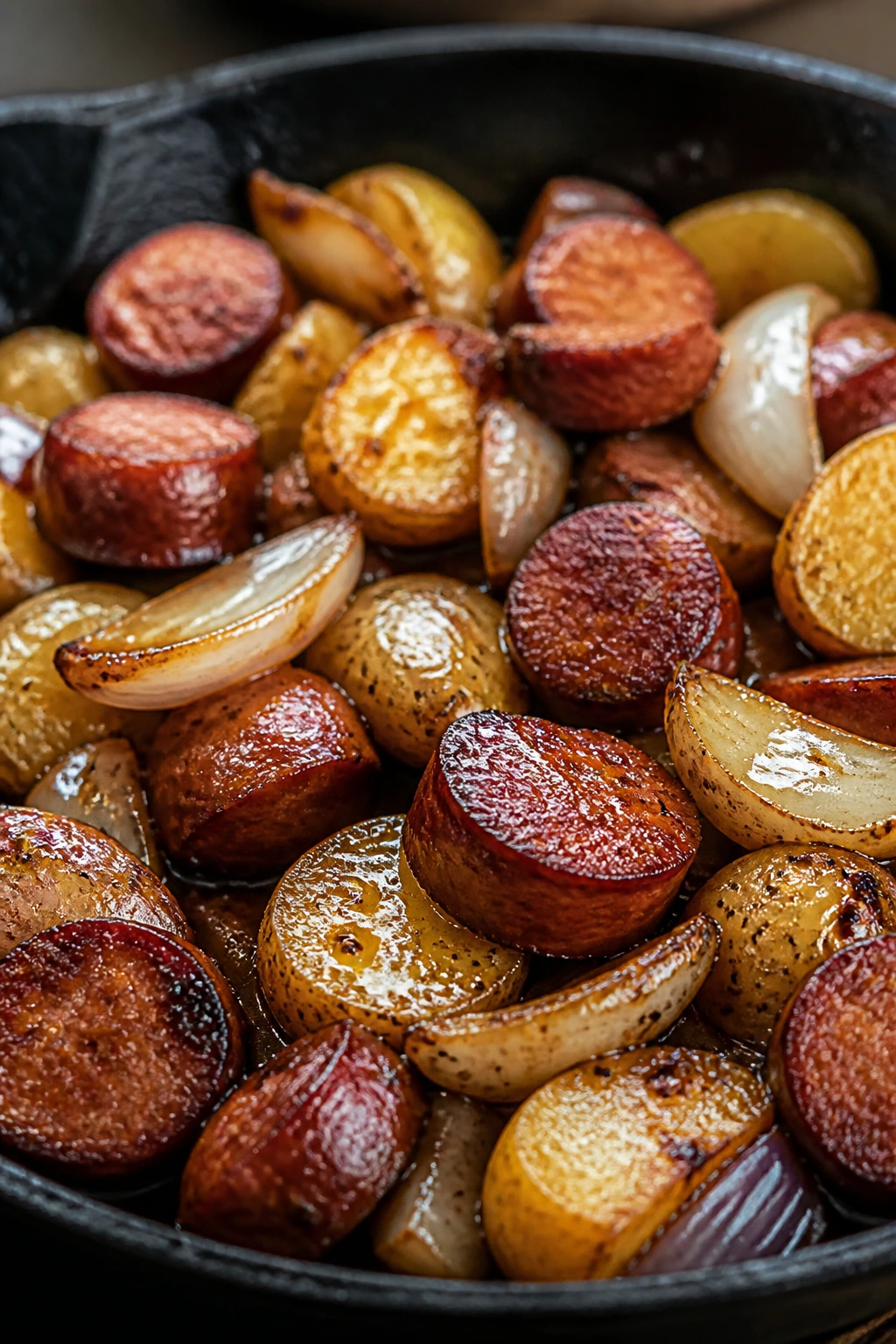
Smoked Sausage
What to use: 14 to 16 ounces of smoked sausage, sliced into 1/2-inch rounds.
Preparation: Slice it a little thicker than you think you need. Thin coins dry out faster, and they curl hard at the edges before they’ve had a chance to brown properly.
Substitutions: Kielbasa works cleanly here, and so does turkey smoked sausage if you want a leaner pan. Andouille brings more heat, which changes the whole mood of the dish in a good way if that’s what you want.
Tips: Choose a sausage with a casing that browns well. The pan gets its best flavor from those bronzed edges, and sausage that breaks apart in the pan is a pain to serve.
Baby Yukon Gold Potatoes
What to use: 1 1/4 pounds baby Yukon Gold potatoes, halved.
Preparation: Keep the halves as even as you can so they finish together. If a few are large, cut them into quarters. The cut side should be flat and dry before it hits the pan.
Substitutions: Small red potatoes work, though they stay a bit firmer. Sweet potatoes change the flavor toward maple and cinnamon territory, which can work, but then the glaze feels sweeter than I prefer.
Tips: Yukon Golds are the right move because they go creamy inside without falling apart. Russets can turn fluffy and crumbly, which is not what you want in a glazed pan dinner.
Brown Sugar Glaze
What to use: 1/3 cup packed light brown sugar, 1/4 cup chicken broth, 2 tablespoons Dijon, 1 tablespoon apple cider vinegar, 1 tablespoon soy sauce, 1 tablespoon butter, and optional red pepper flakes.
Preparation: Whisk the glaze until the brown sugar is mostly dissolved. It does not need to look polished at this point; the heat finishes the job.
Substitutions: Maple syrup can replace part of the brown sugar if you want a softer sweetness, and tamari can stand in for soy sauce. If you want a sharper finish, swap half the broth for apple cider.
Tips: The acid matters. If you leave it out, the glaze tastes heavy and sticky in a boring way. Dijon gives the glaze a little backbone, which keeps it from reading like dessert sauce.
Bell Peppers and Onion
What to use: 1 large yellow onion and 2 bell peppers, sliced into wide pieces.
Preparation: Cut the onion into thick wedges so it keeps some shape. Slice the peppers into strips wide enough to stay juicy after roasting, not paper-thin pieces that wilt away.
Substitutions: Red onions bring more bite. Green bell peppers sharpen the flavor and make the pan look brighter. A handful of sliced mushrooms can also slide in if you want more depth.
Tips: Don’t cut the vegetables too small. Once the glaze goes on, tiny pieces can go mushy fast, and this dish wants some bite left in the vegetables.
Garlic, Butter, and Finishing Herbs
What to use: 2 cloves garlic, 1 tablespoon butter, 2 tablespoons parsley, and optional scallions.
Preparation: Mince the garlic finely so it doesn’t burn in the oven. Chop the parsley just before serving so it stays green and sharp.
Substitutions: Chives can replace scallions, and a little thyme works if parsley is not in the fridge. If you don’t want butter, the glaze still works without it, though it loses a little shine.
Tips: Garlic goes in with the vegetables, not at the very start. If it sits on the pan alone for too long, it can go bitter and get stuck to the metal.
The Tools That Make This Easy
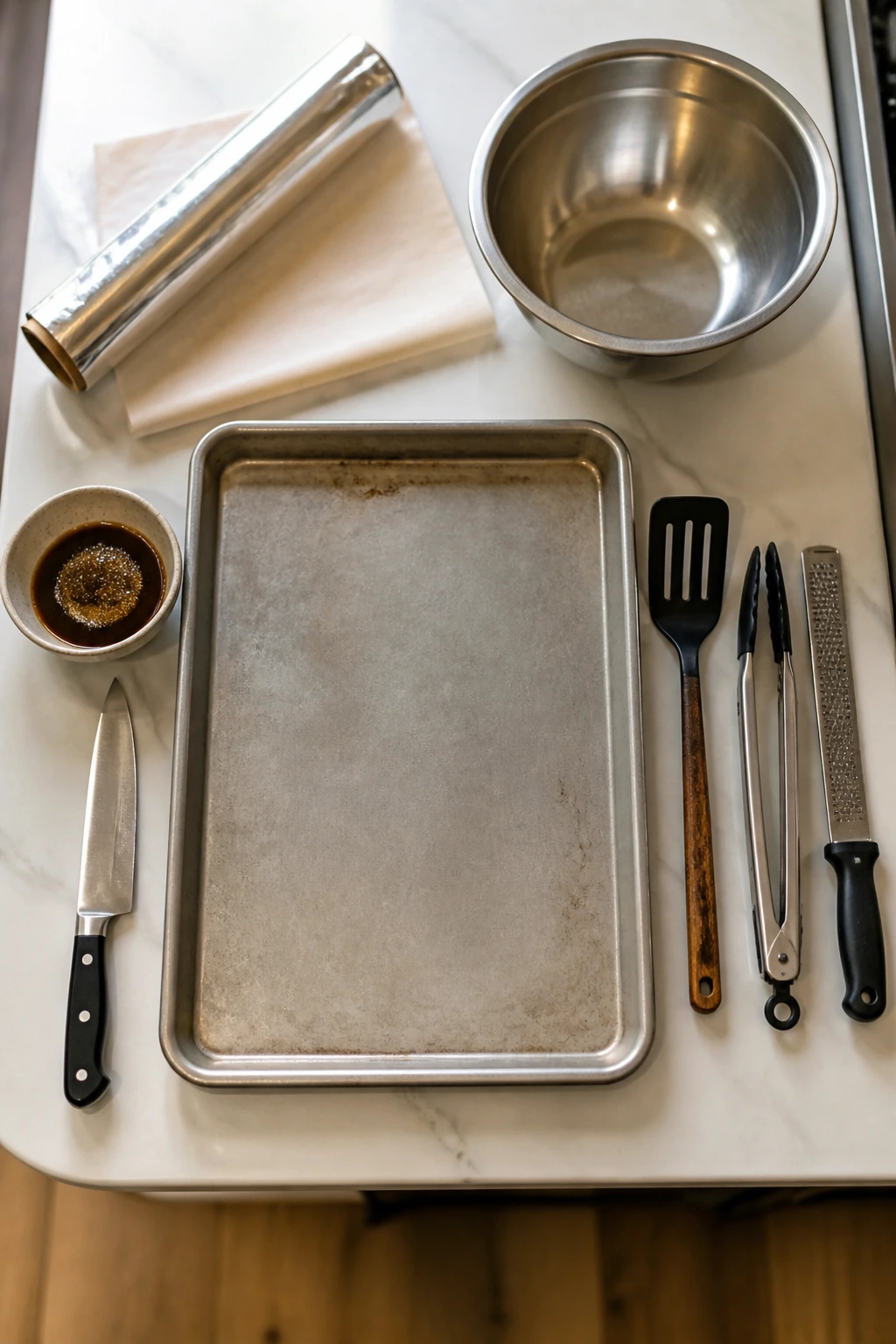
-
18 x 13-inch rimmed baking sheet: Big enough for the potatoes to roast instead of steam; this is the main pan I’d use.
-
Heavy-duty foil or parchment, optional: Foil makes cleanup easier. Bare metal browns better, so I usually skip the liner if I can.
-
Large mixing bowl: You need room to toss the potatoes with oil and seasoning without knocking pieces onto the counter.
-
Small bowl or measuring cup: Handy for whisking the brown sugar glaze before it hits the pan.
-
Sharp chef’s knife: A clean slice matters here; ragged cuts on potatoes and sausage make the pan look messy and cook unevenly.
-
Sturdy spatula or tongs: You’ll want something that can turn the vegetables without crushing the potatoes.
-
Microplane or garlic press, optional: Not required, but either one makes the garlic easier to work into the glaze or seasoning mix.
How to Roast, Glaze, and Finish the Pan
Prep the Pan and Oven:
-
Preheat the oven to 425°F (220°C) and set a rack in the center. If you’re using foil, line the baking sheet and brush it lightly with oil; if you’re using bare metal, oil the pan directly. Do not use parchment if you want the most browning on the potatoes.
-
Toss the halved potatoes in a large bowl with 1 tablespoon of the olive oil, 1/2 teaspoon of the salt, the black pepper, garlic powder, and smoked paprika. Stir until every cut side has a thin coat. The potatoes should look glossy, not drenched.
Start the Potatoes First:
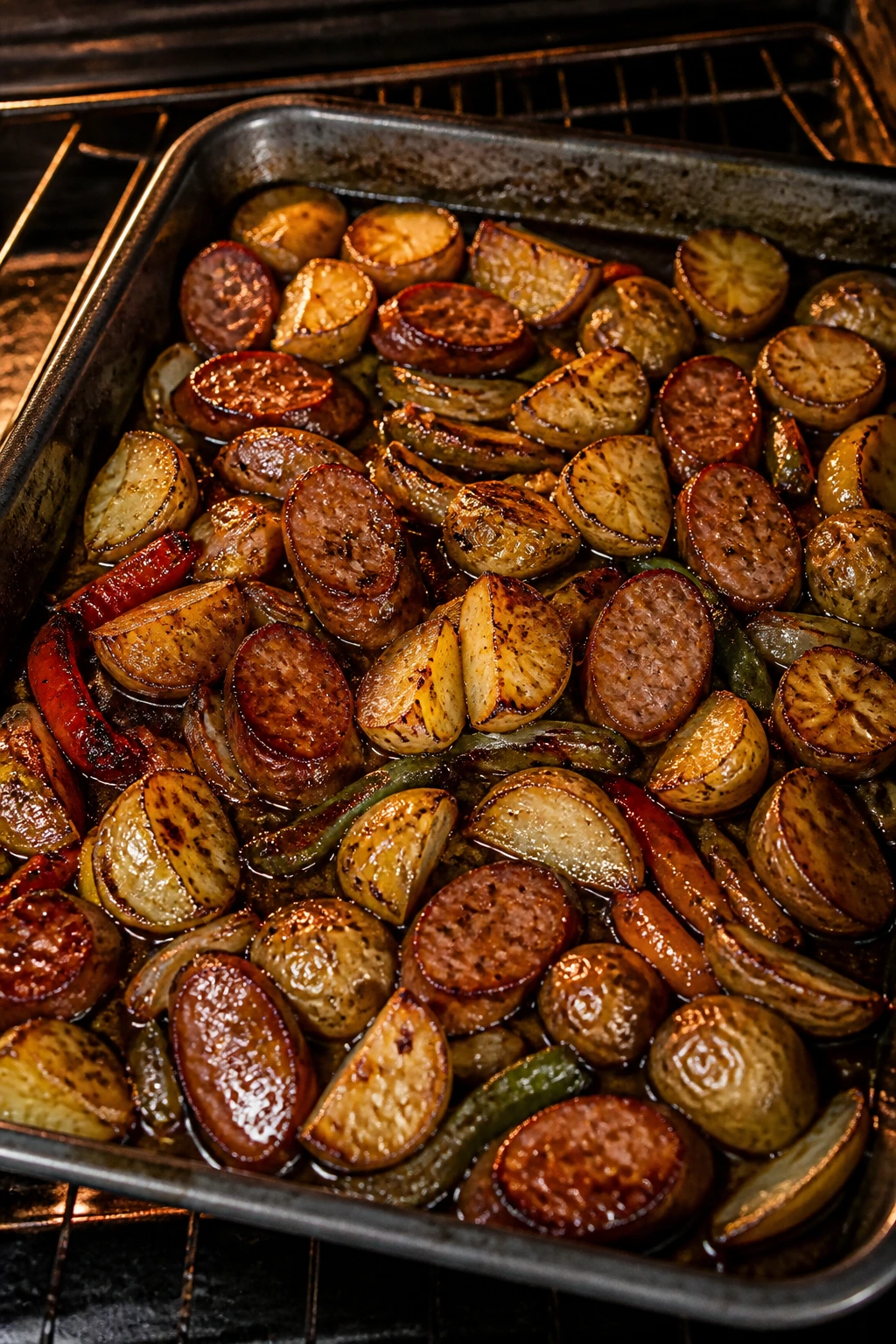
- Spread the potatoes cut-side down on the baking sheet in a single layer. Roast for 15 minutes, then pull the pan out and check the edges. The cut faces should be taking on color, and the bottoms should look a little dry and bronzed.
Add the Sausage and Vegetables:
-
While the potatoes roast, whisk the brown sugar, chicken broth, Dijon, vinegar, soy sauce, butter, and red pepper flakes in a small bowl. The mixture will look thin and a little grainy; that’s fine.
-
Add the sausage, onion, bell peppers, minced garlic, remaining 1 tablespoon olive oil, and the rest of the salt to the bowl with the potatoes. Toss fast, then spread everything back into a single layer. Roast for another 12 to 15 minutes, stirring once halfway through, until the onions are soft at the edges and the sausage rounds are browned on the cut sides. The sausage is already cooked; you’re browning it, not trying to cook it from raw.
Glaze and Finish:
-
Pour the glaze over the hot pan and toss quickly with a spatula so the sugar mixes with the hot drippings. Return the pan to the oven for 5 to 7 minutes, just until the glaze bubbles and clings to the sausage and potatoes in shiny patches.
-
If you want extra caramelization, switch the oven to broil for 1 to 2 minutes and watch the pan the whole time. Pull it out the second the edges deepen in color. Sugar burns fast, and once it turns dark, the flavor goes bitter.
-
Rest the pan for 5 minutes, then scatter over the parsley and scallions. Serve while the glaze is still glossy and the potatoes still have a little structure.
How to Serve It Hot and Glossy
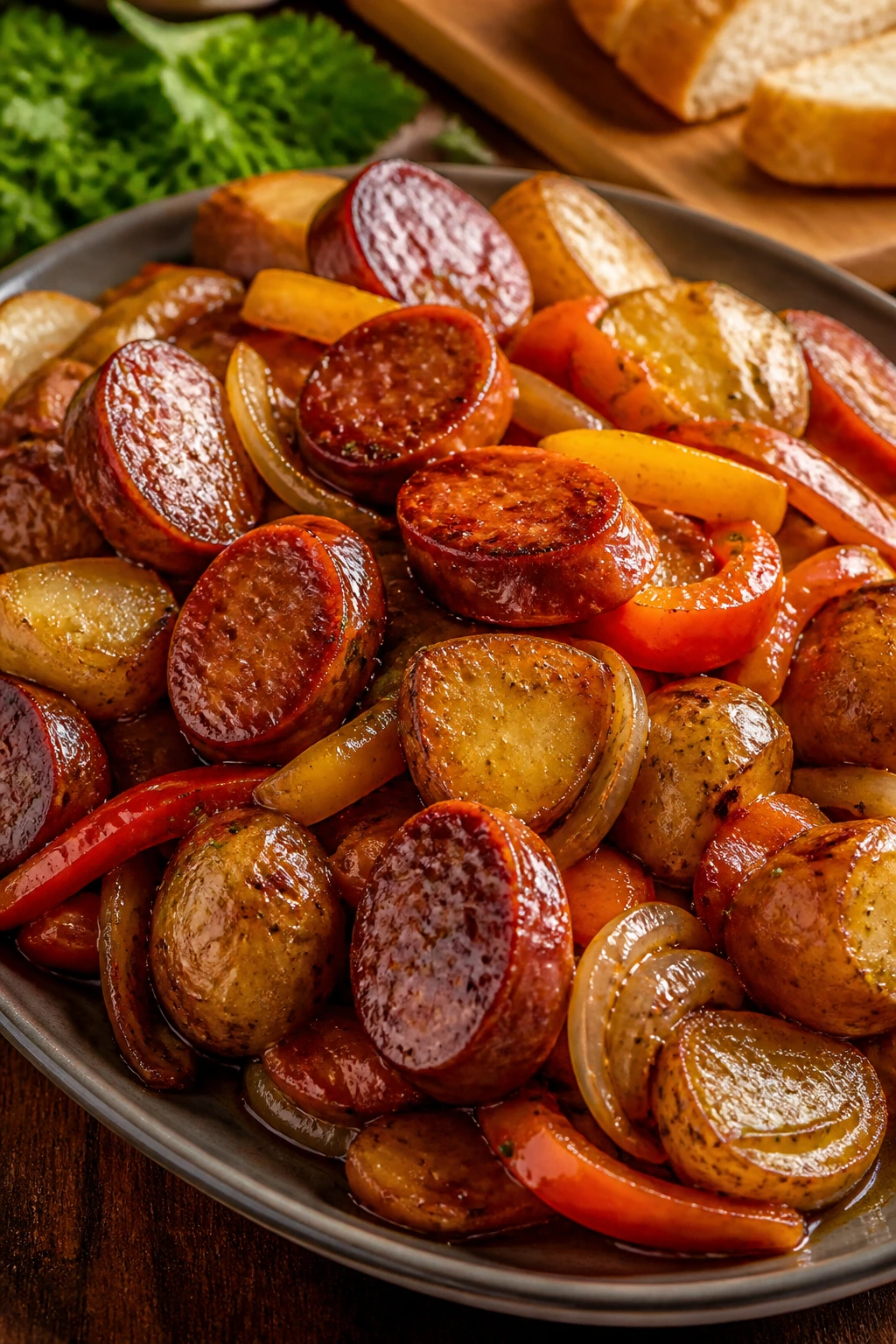
Presentation: Pile the sausage, potatoes, onions, and peppers into a shallow bowl or onto a warmed platter, then spoon the sticky pan juices over the top. A little herb scatter goes a long way here because the dish is otherwise all burnished gold and deep brown.
Accompaniments: I like this with a sharp green salad dressed in lemon vinaigrette, or with simple steamed green beans if I want the plate to stay in one-pan territory. Crusty bread is also worth having around, because the glaze at the bottom of the pan is the part people keep chasing.
Portions: Four hearty portions is the honest answer if you serve it as a main course without extra sides. If you’re feeding bigger appetites, stretch it to five by serving it with salad or bread. For six servings, add another half-pound of potatoes and one more pepper so the pan doesn’t feel bare.
Beverage Pairing: A dry hard cider fits the sweet-salty glaze better than something heavy and sweet. If you want beer, go with a cold pilsner or a light lager. For a non-alcoholic pairing, sparkling apple cider or ginger beer works better than plain soda because it keeps up with the mustard and vinegar in the glaze.
Small Moves That Improve the Flavor
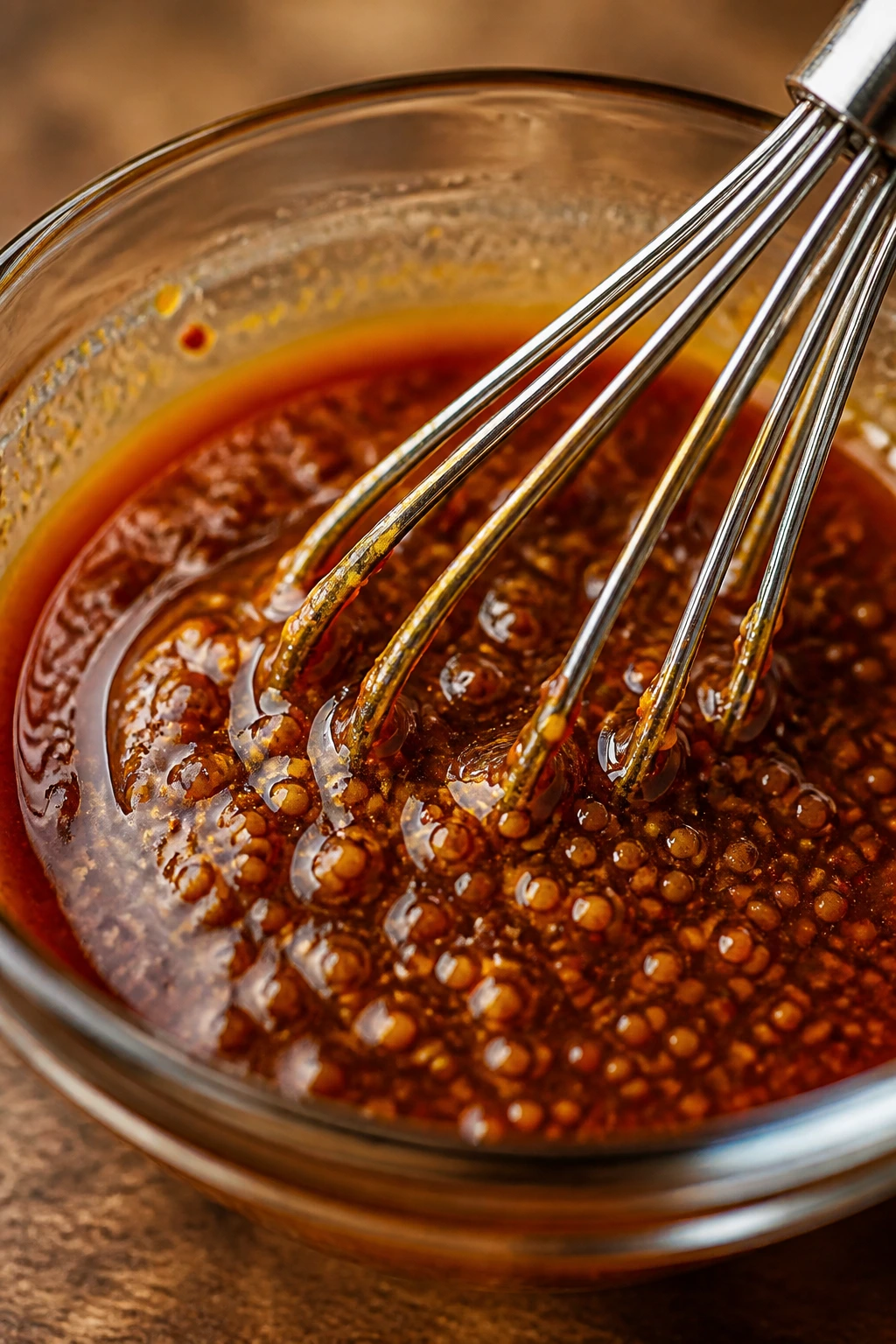
Flavor Enhancement: A teaspoon of whole grain mustard stirred into the glaze gives you tiny pops of sharpness, which makes the brown sugar taste deeper instead of louder. I like this addition when the sausage leans mild.
Time-Saver: If your potatoes are on the large side, microwave the halved pieces for 3 minutes with a splash of water before they hit the pan. Dry them well afterward. They’ll roast faster, and the whole dinner stays on schedule.
Texture Fix: If the pan looks crowded, split it onto two baking sheets. Crowding steals browning. You get steam, pale potatoes, and sausage that never develops those bronzed edges that make the dish taste finished.
Cost-Saver: Use one red pepper and one green pepper if that’s what’s cheapest. The color changes, but the flavor still works, and the green pepper adds a little sharper note that cuts through the glaze nicely.
Make-It-Yours: If you like a less sweet glaze, cut the brown sugar to 1/4 cup and add 1 extra teaspoon of Dijon. If you want more comfort-food richness, stir a teaspoon of butter into the finished pan just before serving so the glaze loosens and shines.
Mistakes That Can Flatten the Dish
-
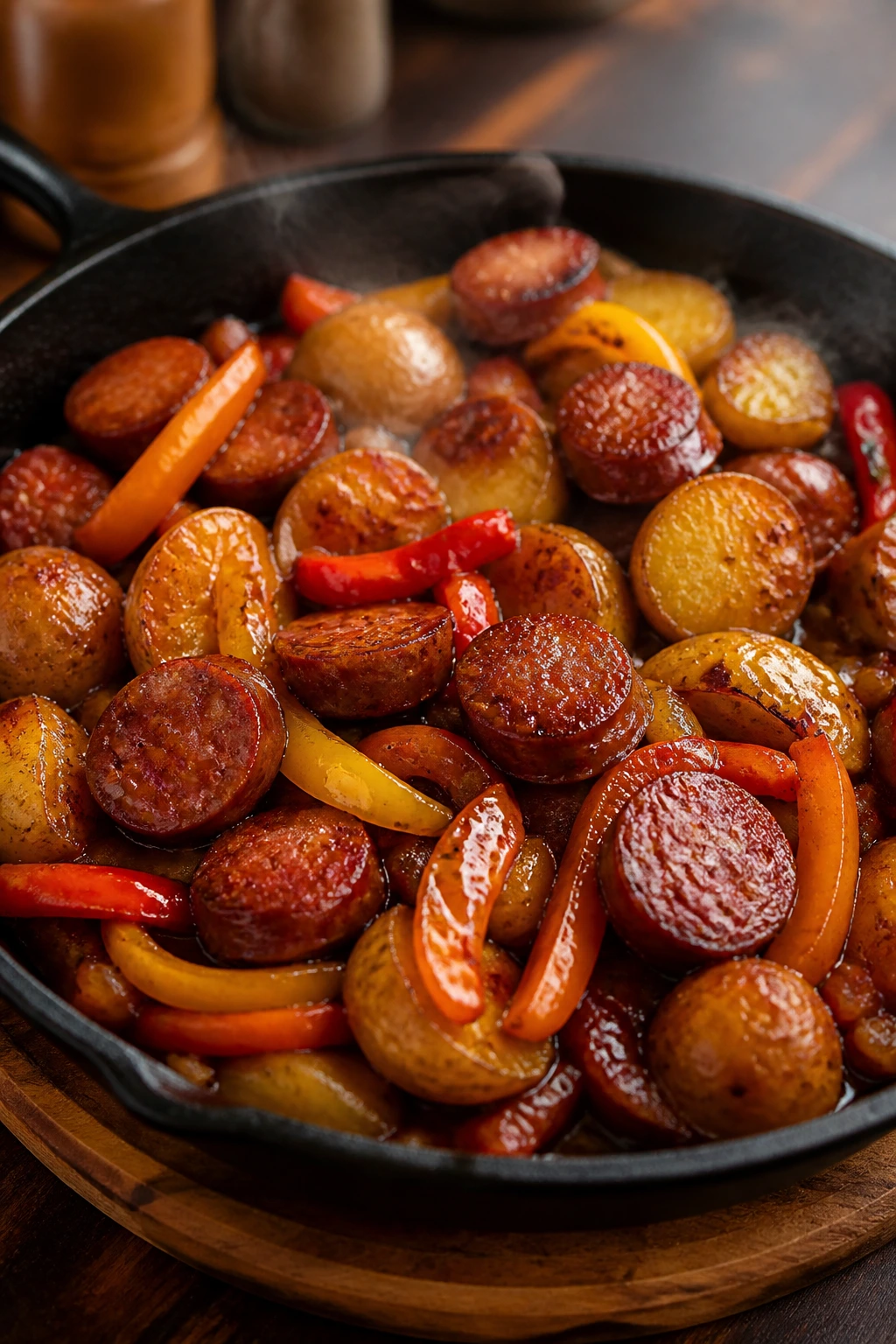
Cutting the sausage too thin: Thin slices dry out and curl into little hard coins. Keep the rounds around 1/2 inch so they brown on the outside but stay juicy in the middle.
-
Adding the glaze too early: Sugar burns before the potatoes are done. Wait until the vegetables have already taken on color and the potatoes are almost tender, then glaze the pan for the last stretch.
-
Crowding the baking sheet: When everything piles up, the vegetables steam. You’ll see pale potatoes and limp peppers instead of browned edges. Use a bigger pan or roast in two batches if needed.
-
Skipping the seasoning on the potatoes: The sausage brings salt, but the potatoes need their own seasoning. If you don’t season them before roasting, they taste bland under the glaze.
-
Walking away during the broil: A minute too long under the broiler can ruin the whole pan. Stay right there and pull it the moment the glaze darkens and bubbles in small, sticky spots.
-
Using tiny vegetable pieces: Small pepper strips and onion slivers can collapse into the glaze. Thick wedges hold shape, soften at the edges, and still feel like vegetables when they hit the plate.
Variations Worth Trying
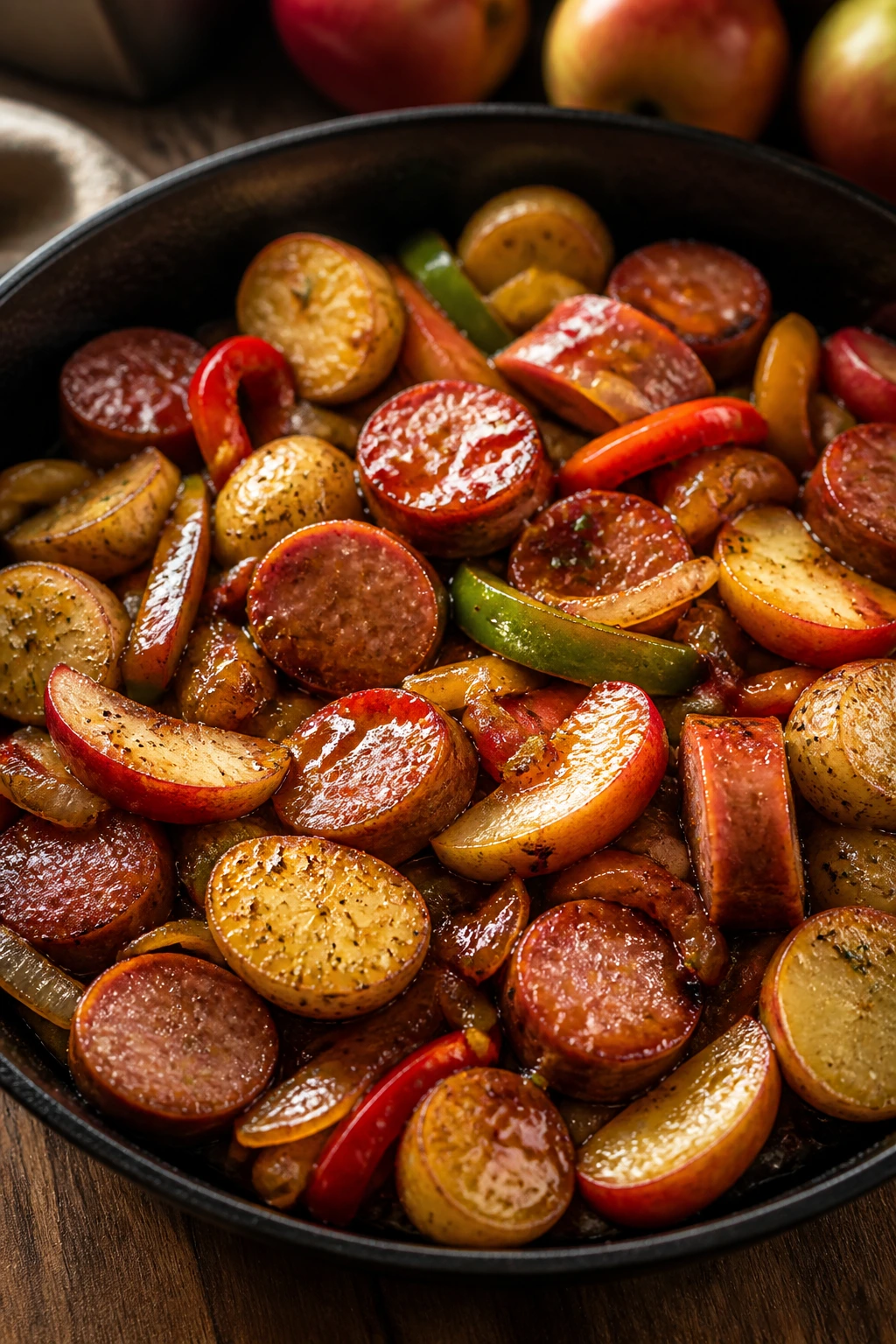
Apple Orchard Version
Add 1 tart apple, cored and cut into thick slices, with the peppers and onions. The apple softens just enough to soak up the glaze and gives the whole pan a pork-and-apple feel that works especially well with kielbasa.
Spicy Mustard Glaze
Increase the Dijon to 3 tablespoons, add 1/2 teaspoon cayenne, and swap the bell peppers for one bell pepper and one poblano. The glaze gets sharper and warmer, with a little heat that hangs around after each bite.
Green Bean and Sausage Pan
Toss in 8 ounces of trimmed green beans during the last 10 minutes of roasting. They stay crisp-tender and give the dish a cleaner, brighter edge that keeps the sweet glaze from feeling too heavy.
Smoky Maple Swap
Replace 2 tablespoons of the brown sugar with pure maple syrup and add an extra pinch of smoked paprika. The sauce turns deeper and a little more woodsy, which is a nice shift if you want something less straightforward and a bit more round on the tongue.
Make-Ahead, Storage, and Reheating
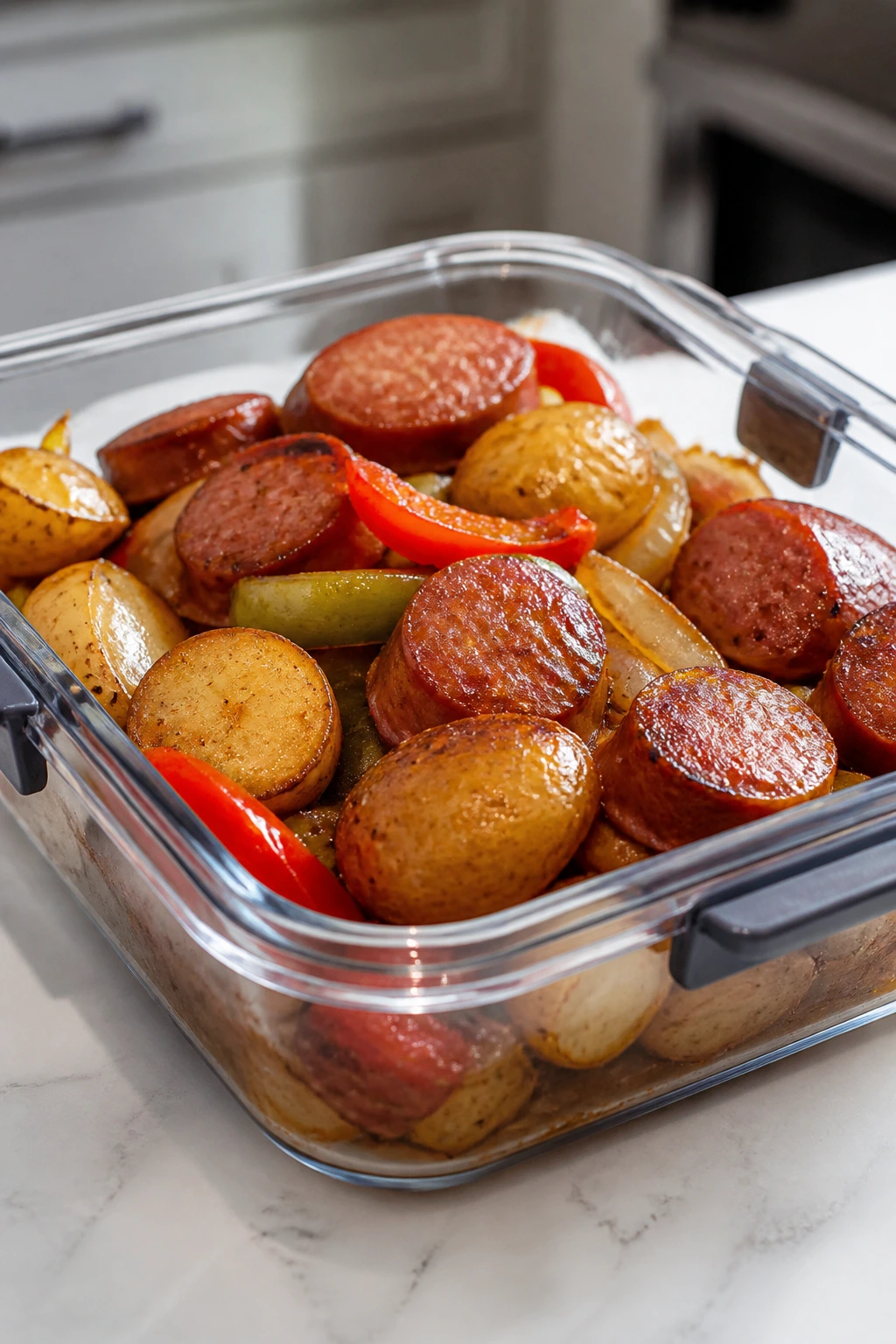
This dinner holds up better than most roasted pan meals, but there are still a few rules worth following. Leftovers should go into shallow airtight containers within 2 hours of cooking. The sausage, potatoes, onions, and peppers will keep in the refrigerator for 3 to 4 days.
If you want to freeze it, you can, though the potatoes will come back softer after thawing. I’d freeze only if you’re fine with a less crisp texture later. Seal the cooled leftovers tightly and freeze for up to 2 months. Thaw in the refrigerator overnight before reheating.
The best reheating method is the oven. Spread the leftovers on a baking sheet or in a skillet, cover loosely with foil, and warm at 350°F (175°C) for 10 to 15 minutes, then uncover for the last few minutes so the glaze wakes back up. A skillet over medium heat also works well if you add 1 to 2 tablespoons of water or broth to loosen the pan juices.
The microwave is the fastest option, and it will do in a pinch, but the potatoes go soft and the glaze loses some shine. If you use it, heat in 45-second bursts and stop once the food is hot through. For make-ahead work, the glaze can be mixed up to 3 days ahead and kept in the fridge. You can also slice the sausage and vegetables the night before; just keep the potatoes submerged in cold water if you cut them early, then dry them thoroughly before roasting.
Questions About Smoked Sausage Pan Dinners
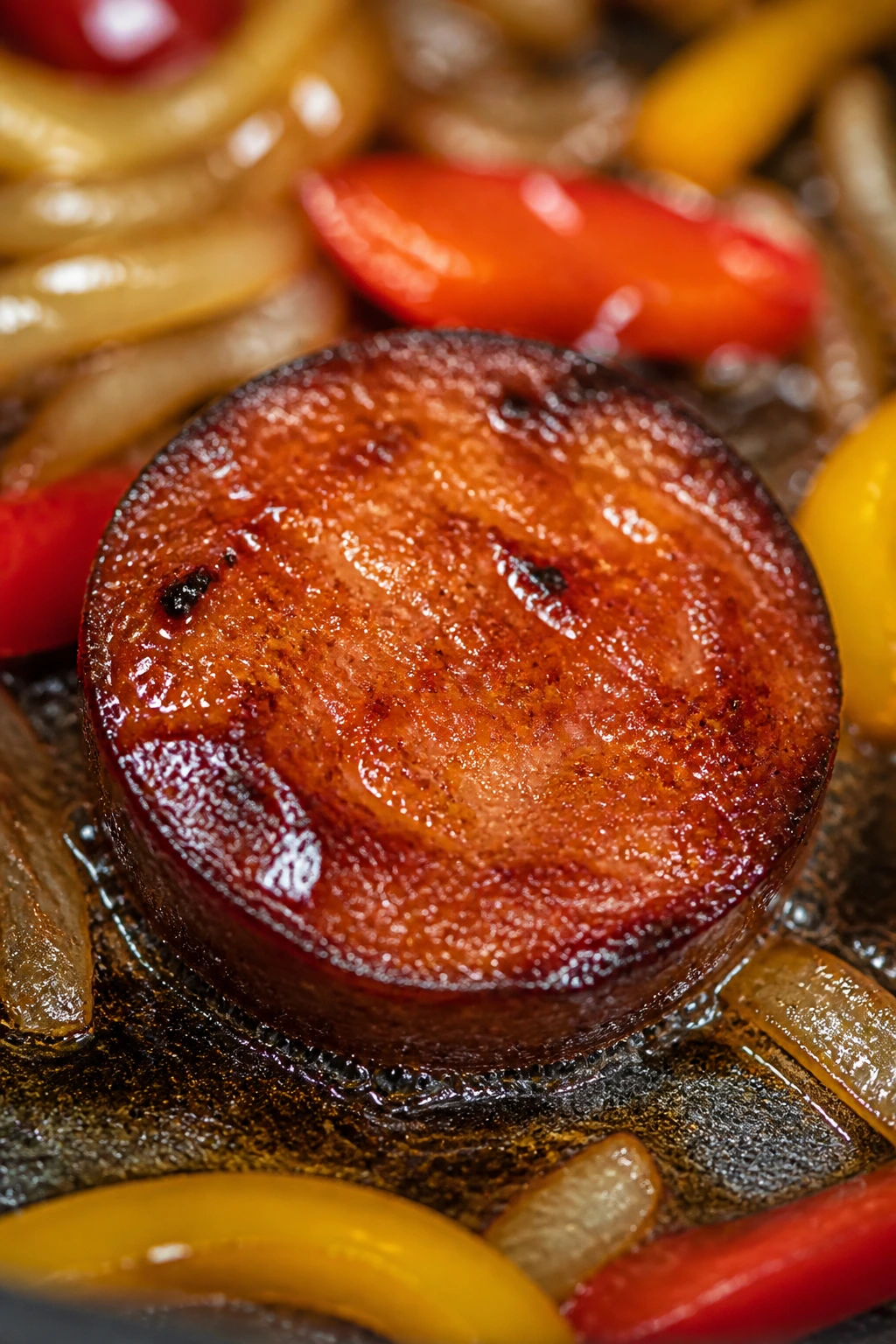
Can I use turkey smoked sausage instead of pork sausage?
Yes. Turkey smoked sausage works well here because it still browns at the edges and picks up the glaze. It has less fat, so keep the pan lightly oiled and don’t let it sit in the oven longer than needed after the glaze goes on.
Do I have to use baby Yukon Gold potatoes?
No, but they’re the easiest fit for this recipe. Red potatoes are the closest substitute. If you use larger potatoes, cut them small and give them a longer first roast so the centers catch up with the rest of the pan.
Can I make this on the stovetop instead of baking it?
You can, though the browning changes. Use a large skillet, roast the potatoes first in batches, then add sausage and vegetables, and pour the glaze in at the end. You’ll need to stir more often so the sugar doesn’t sit on one hot spot and scorch.
How do I keep the glaze from burning?
Add it late and keep the oven at 425°F or lower. The pan should already be hot and the potatoes nearly tender when the glaze goes on. If your oven runs hot, skip the broiler and let the glaze finish in the steady oven heat instead.
What vegetables can I swap in without wrecking the balance?
Green beans, broccoli florets, mushrooms, and Brussels sprouts all work, but they should be cut to a size that matches the sausage pieces. Keep watery vegetables like zucchini to a minimum or add them only in the last 8 to 10 minutes so they don’t turn soggy.
Is this good for meal prep lunches?
Yes, especially if you like savory lunches that reheat without much fuss. The flavor holds up for several days. Reheat in the oven if you can, because the potatoes keep more of their texture than they do in the microwave.
What if the potatoes are done before the sausage and vegetables look browned?
Pull the potatoes to one side of the pan and give the sausage and vegetables a little more space, then roast for a few extra minutes. If needed, take the potatoes out early and return them during the glaze stage so they don’t overcook while the rest catches up.
A Sticky Finish Worth Repeating
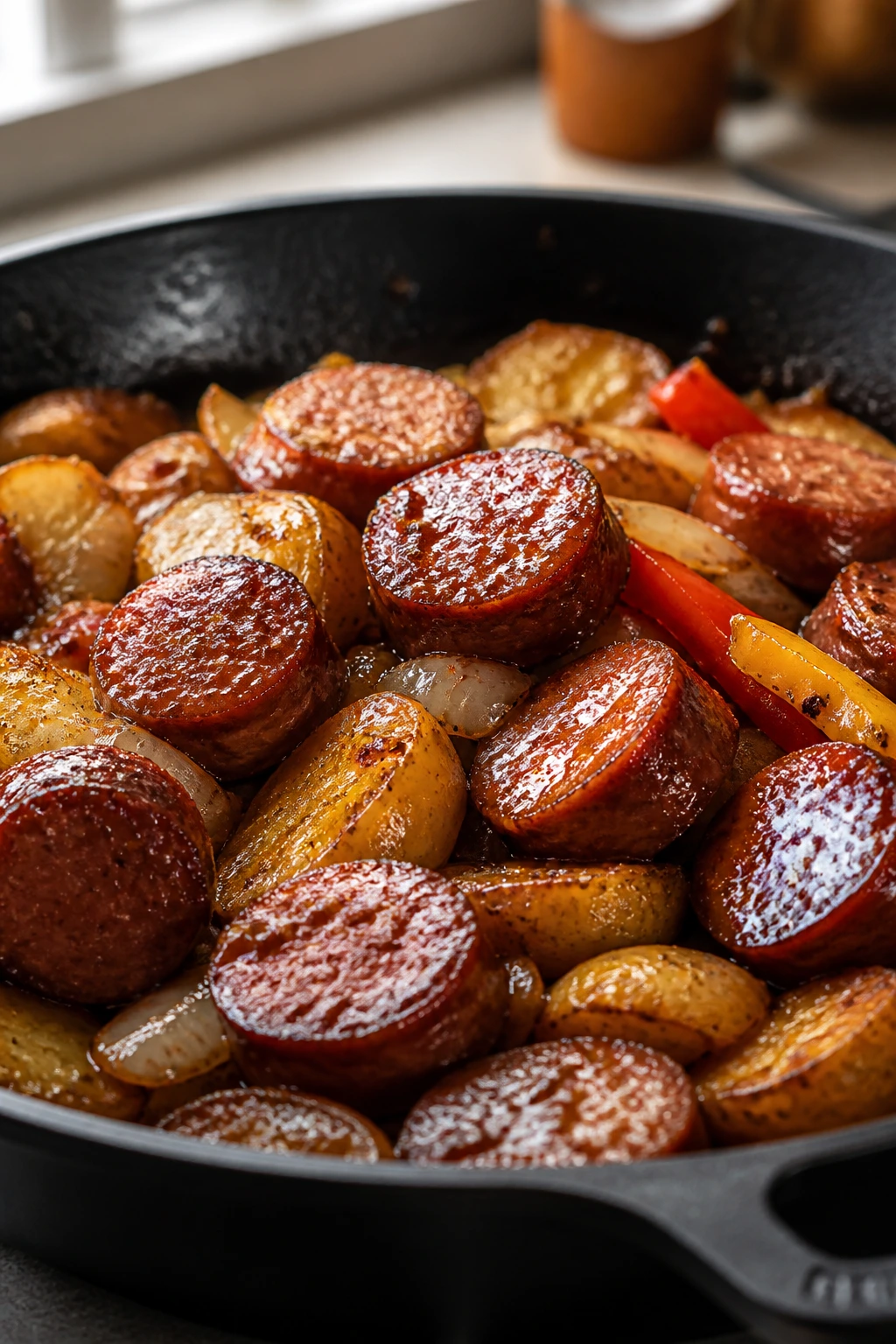
There’s a reason this kind of dinner hangs around in home kitchens. It doesn’t ask for much, but it gives you a pan full of contrast: browned sausage, soft onions, crisp-edged potatoes, and a glaze that lands sweet for a second and savory right after. That little swing is what keeps the plate interesting.
The main trick is timing. Let the potatoes get ahead. Let the sausage brown. Let the glaze arrive last, when the heat can turn it shiny instead of burnt. Do that once and the whole pan tastes more deliberate than the ingredient list suggests.
Juicy Smoked Sausage Pan Dinner with Brown Sugar Glaze — Recipe Card
Recipe Name: Juicy Smoked Sausage Pan Dinner with Brown Sugar Glaze
Description: A one-pan dinner with browned smoked sausage, tender Yukon Gold potatoes, onions, and bell peppers, finished in a savory-sweet brown sugar glaze that turns glossy and sticky in the oven.
Prep Time: 15 minutes
Cook Time: 30 to 35 minutes
Total Time: About 45 to 50 minutes
Course: Dinner, Main Course
Cuisine: American
Servings: 4 to 5 servings
Calories: About 380 kcal per serving
Ingredients
For the Pan Dinner:
- 1 1/4 pounds baby Yukon Gold potatoes, halved
- 14 to 16 ounces smoked sausage, sliced into 1/2-inch rounds
- 1 large yellow onion, cut into thick wedges
- 2 bell peppers, seeded and sliced into 1/2-inch strips
- 2 tablespoons olive oil
- 1 teaspoon kosher salt, divided
- 1/2 teaspoon black pepper
- 1/2 teaspoon garlic powder
- 1/2 teaspoon smoked paprika
- 2 cloves garlic, minced
For the Brown Sugar Glaze:
- 1/3 cup packed light brown sugar
- 1/4 cup low-sodium chicken broth
- 2 tablespoons Dijon mustard
- 1 tablespoon apple cider vinegar
- 1 tablespoon low-sodium soy sauce
- 1 tablespoon unsalted butter
- 1/4 teaspoon crushed red pepper flakes, optional
For Finishing:
- 2 tablespoons chopped fresh parsley
- 1 tablespoon sliced scallions, optional
Instructions
- Preheat the oven to 425°F (220°C) and line or oil a large rimmed baking sheet.
- Toss the potatoes with 1 tablespoon olive oil, 1/2 teaspoon salt, black pepper, garlic powder, and smoked paprika.
- Roast the potatoes for 15 minutes.
- Whisk the brown sugar, broth, Dijon, vinegar, soy sauce, butter, and red pepper flakes.
- Add the sausage, onion, peppers, garlic, remaining olive oil, and remaining salt to the pan; roast 12 to 15 minutes, stirring once halfway through.
- Pour the glaze over the hot pan, toss, and roast 5 to 7 minutes more until sticky and glossy.
- Broil for 1 to 2 minutes, if needed, for extra caramelization, watching closely.
- Rest for 5 minutes, then finish with parsley and scallions.
Notes:
- For a sharper glaze, add 1 extra teaspoon of Dijon.
- Leftovers keep 3 to 4 days in the refrigerator and reheat best in the oven at 350°F.
- If you want more browning, skip parchment and use a lightly oiled bare pan.