



A soggy tray of vegetables is the fastest way to make a healthy dinner feel like punishment. A crispy vegan air fryer dinner does the opposite: it gives you browned edges, a little chew in the middle, and enough texture that the plate feels satisfying instead of apologetic. That matters more than people admit. If the food has no bite, you start reaching for extra sauce, extra bread, extra everything.
The air fryer is a blunt little machine in the best way. It moves hot air hard and fast, which means it can dry the surface of tofu, tempeh, chickpeas, broccoli, or Brussels sprouts before the inside overcooks. But it only works when you respect moisture, space, and heat. Skip those three, and the basket turns into a steam chamber with a fan attached.
That’s why the phrase “crispy vegan air fryer for a healthy dinner” means something very specific in practice. It is not code for sad lettuce and a handful of roasted cubes. It’s a method: choose plant foods that brown well, coat them lightly, keep the pieces dry, and pair the crunchy bits with something fresh, saucy, or starchy enough to make the meal feel complete. Get those pieces right, and dinner lands with a proper crackle when you bite into it.
Why This Approach Earns Its Keep on a Weeknight
Less oil, more browning: A teaspoon or two of oil per batch is often enough to get the surface going, especially on tofu and broccoli florets, so you’re not building dinner around a greasy finish.
Crunch without deep frying: The air fryer gives you crisp edges on ingredients that would normally need a skillet full of oil or a long oven roast, and that saves both mess and time.
One basket can cover the whole plate: A protein, two vegetables, and a quick sauce can all live in the same dinner plan, even if they do not all cook at the exact same minute.
Better texture than most “healthy” dinners: Air-fried tofu gets a dry, snappy shell; chickpeas turn blistered and firm; cauliflower gets those dark little ridges that make people keep picking at the tray.
Easy to scale up or down: If you cook for one, the basket size works in your favor. If you cook for four, batch cooking is still easier than firing up multiple pans.
The cleanup is merciful: A lined basket, one mixing bowl, and a cutting board are usually enough. That alone makes the method worth repeating.
What Crispy Actually Means in a Plant-Based Air Fryer Meal
The word crisp gets thrown around a little too casually. A dry bean is not crisp. A browned edge is not the same thing as a proper crust. For a vegan air fryer dinner, crisp usually comes from a thin, dry exterior that dehydrates quickly under high heat, then browns before the inside collapses into mush.
That sounds technical, but you can feel it on the cutting board. Press tofu with a towel and the surface should stop weeping. Toss broccoli with a little oil and the cut faces should look lightly glossed, not wet enough to drip. Shake chickpeas in starch and seasoning and they should look dusty, not paste-covered.
Air fryers are really tiny convection ovens with a loud personality. The basket works because air reaches almost every side of the food at once. That is also why crowding ruins everything. If the pieces are packed together, the moisture has nowhere to go, and you get soft tops, pale sides, and that strange rubbery texture that makes people blame the appliance when the problem was the load.
Surface moisture is the villain
Water is the enemy of browning here. It has to leave the surface before the food can take on that toasted, almost nutty flavor people love in a crisp dinner. Tofu needs pressing. Mushrooms need space. Frozen vegetables need extra drying time if you insist on using them.
Thin coatings beat heavy batter
A thick wet batter is a mess in a basket. It tends to drip, clog, and cook unevenly. A dry starch coating, a panko crust, or a light oil-and-seasoning toss works better because it sticks, stays put, and browns where the hot air can actually reach it.
Crisp is a texture, not a religion
I like food with contrast. Crunch matters because it makes vegetables and plant proteins feel finished. But healthy dinner still needs softness somewhere on the plate: rice, a creamy sauce, avocado, a bean mash, even a warm grain salad. If everything is crisp, the meal gets tiresome halfway through.
The Plant Foods That Brown Best
Some ingredients are born for the air fryer. Others are fussy, high-maintenance, and more trouble than they’re worth on a busy night. The winners are the foods that either start dry or can be dried quickly, then hold their shape under heat.
Tofu is the obvious star. Extra-firm tofu, pressed for 15 to 30 minutes, cuts into cubes or slabs that turn golden at the corners and chewy in the center. Tempeh comes next, especially when it’s sliced thin and given a little marinade before it hits the basket. Chickpeas are the small miracle here: when you dry them well and roast them hot, the skins split a bit and the centers stay firm.
Vegetables matter too, but not all vegetables behave the same way. Broccoli, cauliflower, Brussels sprouts, green beans, and asparagus all reward high heat. They get charred at the tips and sweet at the edges. Mushrooms can work, but they need a little patience because they throw off liquid before they start browning. Zucchini is the diva of the group. It can turn soft fast, so it needs thick slices, a hot basket, and no crowding.
Sweet potatoes deserve a note of their own. They do not get shattery-crisp like a French fry in this setup, and I’d rather tell you that straight than pretend otherwise. What they do get is a caramelized rim and a soft, almost custardy center, which is still excellent in a dinner bowl when paired with something sharper, like lemony cabbage or garlicky tahini.
The best candidates, by behavior
- Extra-firm tofu: Best for cubes, slabs, and breaded cutlets.
- Tempeh: Best for thin strips or triangles with a short marinade.
- Chickpeas: Best when dry, seasoned, and cooked in a single layer.
- Broccoli and cauliflower: Best cut into medium florets with flat faces.
- Brussels sprouts: Best halved and trimmed, with loose outer leaves removed.
- Green beans: Best lightly oiled and left whole.
- Mushrooms: Best when fairly dry and not overloaded.
- Sweet potatoes: Best for wedges or cubes when you want browning, not crackly crispness.
A small caution. Delicate vegetables like spinach, tomatoes, and very thin zucchini slices are usually better used as finishing ingredients than basket stars. They can still belong in the dinner, just not in the part you expect to crunch.
How to Build a Balanced Healthy Plate Around the Crunch
A healthy dinner works better when it feels finished, not stripped down. The basket gives you crisp texture. The rest of the plate has to do the supporting work: fiber, protein, some slow carbs if you want real staying power, and a sauce that ties the whole thing together without drowning the crust you worked for.
The simplest structure is protein plus vegetables plus one soft base. Tofu and broccoli over brown rice is almost boring on paper, which is exactly why it works in real life. Chickpeas, cauliflower, and quinoa hold up well with a lemon-tahini drizzle. Tempeh, green beans, and roasted potatoes become a more substantial plate when you add a spoonful of pickled onions or a quick herb sauce.
Portioning matters more than the wellness crowd likes to admit. If you pile the basket with only vegetables, you’ll be hungry again in an hour. If you treat starch like the enemy, the meal can feel thin and strangely unsatisfying. A good dinner plate usually has a clear protein anchor, at least two vegetables, and enough sauce or acid to keep the flavors moving.
A simple plate formula
- Protein: 4 to 6 ounces of tofu or tempeh, or 1 to 1½ cups chickpeas.
- Vegetables: 2 to 3 cups of air-fried broccoli, cauliflower, Brussels sprouts, or green beans.
- Base: ½ to 1 cup of cooked rice, quinoa, farro, couscous, or a small roasted potato portion.
- Sauce or finishing touch: 1 to 3 tablespoons of something bright, creamy, or spicy.
- Acid: a squeeze of lemon, lime, or a splash of vinegar right before serving.
I like to think of the sauce as a last-mile ingredient, not a bath. Add just enough to make the food taste alive. Too much, and the crispness disappears under the weight of the drizzle.
When to keep it lighter
If dinner is late or you want a plate that leans cleaner, skip the big starch and lean into more vegetables plus tofu or tempeh. A pile of air-fried broccoli with crispy tofu, herbs, and a sharp lemon sauce can be enough on its own. For colder weather, or if you’re feeding someone with a bigger appetite, the grain or potato belongs there. No guilt. Just proportion.
The Coating Tricks That Create Crunch Without Deep Frying
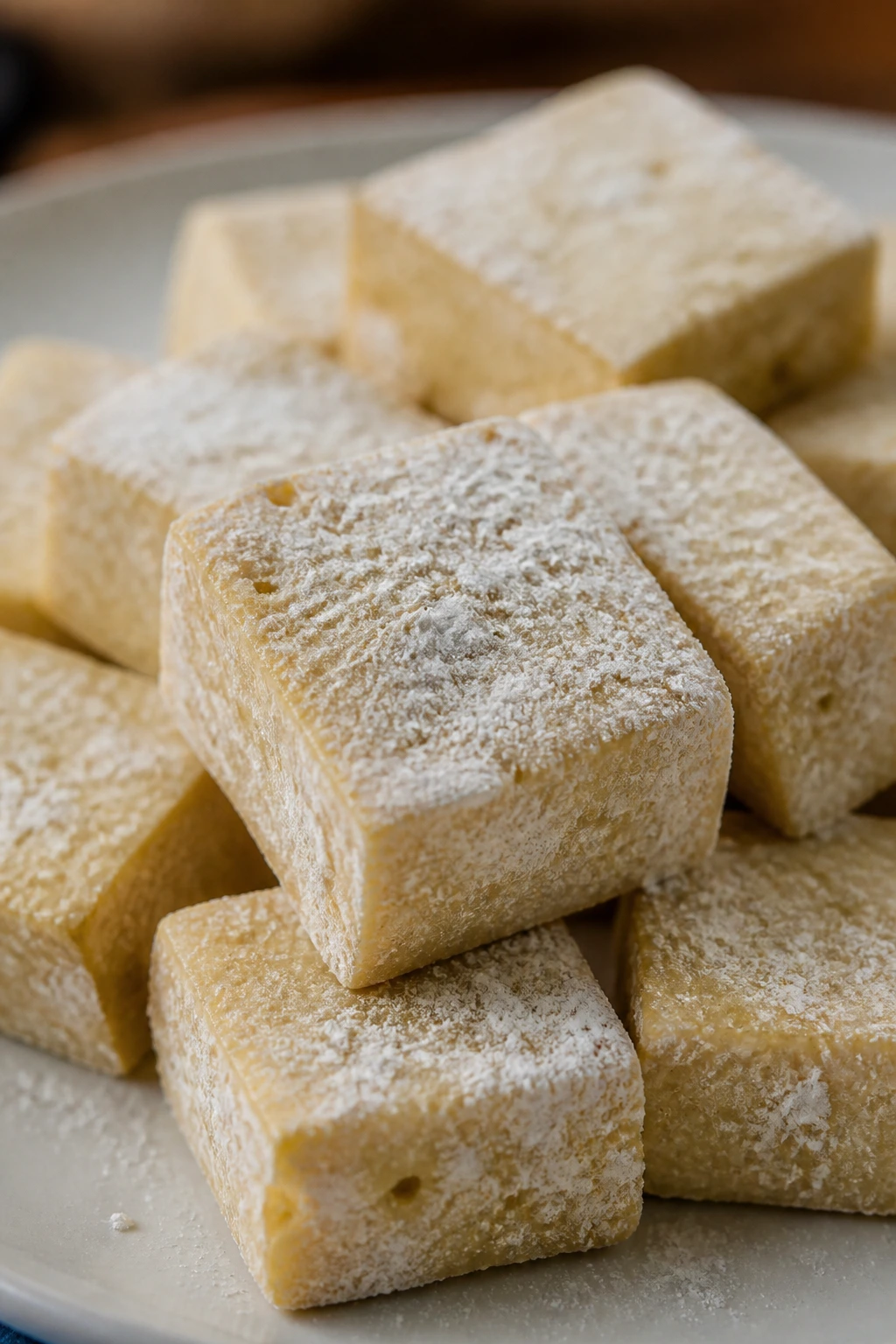
The coating is where a lot of home cooks overcomplicate things. They reach for a batter, make a paste, or dump on enough crumbs to look generous, and then wonder why the bottom stays gummy. Air fryer crispness is usually simpler than that. Dry surface, light coating, hot air. That’s the whole game.
Cornstarch is the workhorse. Tossing pressed tofu or dry chickpeas with a spoonful or two gives the surface enough starch to dry into a thin crust. Arrowroot works too, though I find cornstarch a touch more forgiving. Rice flour creates a lighter shell on tofu and tempeh, especially if you want something that feels a little more delicate than panko. For a fuller crunch, panko breadcrumbs are the move, and crushed cornflakes can be genuinely good if you want a rougher, audibly crisp texture.
The order matters. Wet first, then dry. For tofu, I like a light seasoning toss with soy sauce or tamari, then a dusting of starch, then a small drizzle of oil. For chickpeas, it’s usually oil plus starch plus seasoning all at once, shaken until each bean looks a little chalky. For vegetables, the coating should be almost invisible. You want a film, not a shell.
Coatings that work, and what they’re good for
- Cornstarch: Best for tofu, tempeh, and chickpeas when you want a thin, crisp skin.
- Rice flour: Best for a lighter, drier crust with less stickiness.
- Panko: Best for tofu cutlets, cauliflower bites, or anything you want to feel more like a nugget than a roast.
- Crushed cornflakes: Best for a coarse, crunchy finish on thicker pieces.
- Chickpea flour: Best for savory batter-style coatings, though it needs restraint and good airflow.
- Aquafaba: Best as a binder if you need crumbs to cling without eggs.
I would not use a wet batter here unless you’re prepared for disappointment. It tends to drip through the basket, burn in spots, and leave the food pale where it touched the metal. A dry coating may sound less glamorous. It works better.
Oil still matters, but not much
A tiny amount of oil helps the surface brown. That doesn’t mean you should drown the food. A mist from a spray bottle or 1 to 2 teaspoons tossed through a batch is enough in many cases. Too much oil can make panko slide off or make chickpeas taste slick instead of crisp.
Heat, Time, and Basket Space: Where the Magic Happens
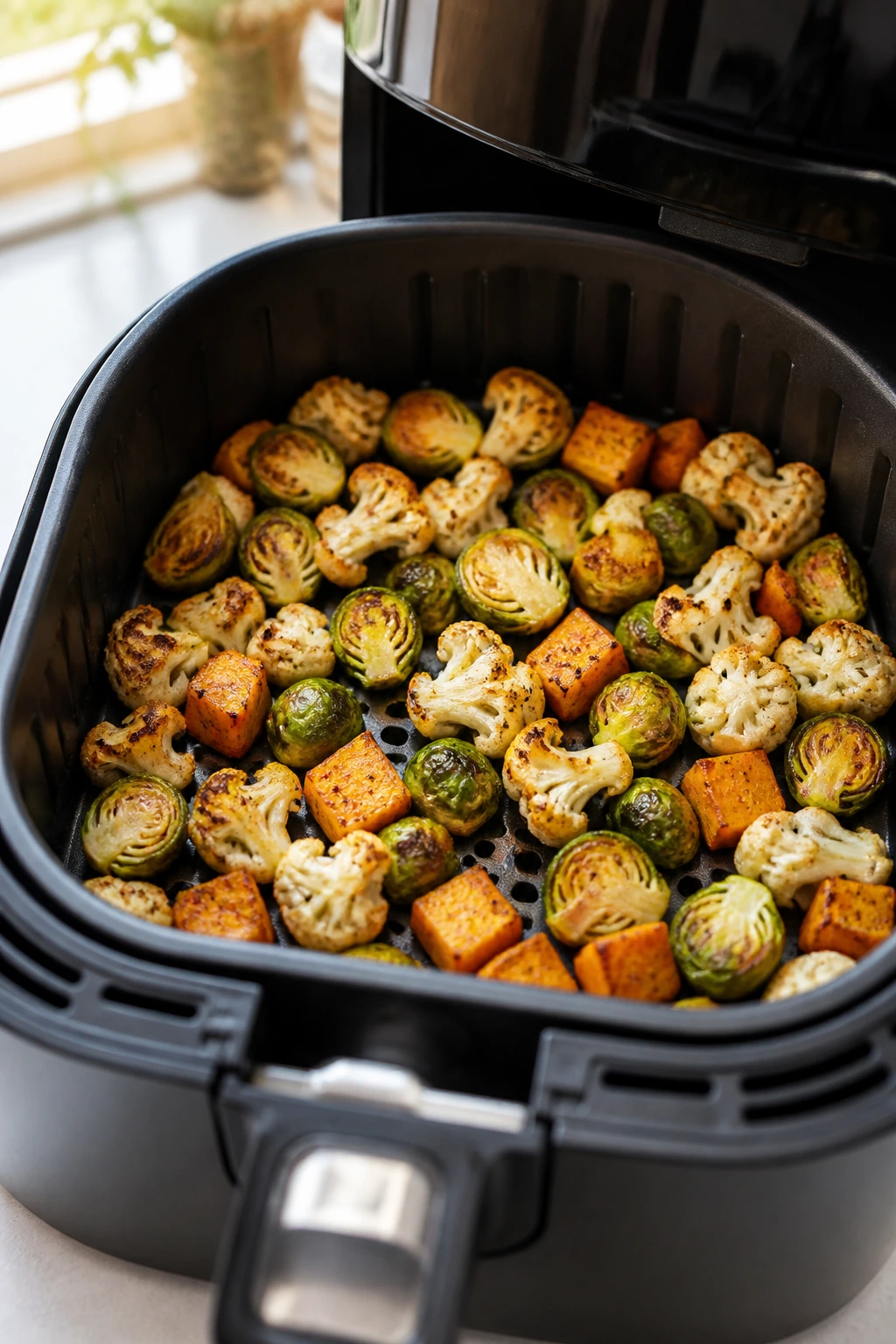
Most air fryer mistakes are timing mistakes dressed up as equipment complaints. People treat every ingredient the same, then act surprised when broccoli is scorched and tofu is still soft. Heat is not the problem. Bad spacing is the problem. So is pretending the basket can cook five different textures at one exact pace.
A good starting point for vegan air fryer dinners is somewhere between 375°F and 400°F. Tofu and cauliflower like the higher end. Delicate vegetables, or anything with a breaded coating that burns quickly, may do better at 375°F to 390°F. Preheat the basket for 3 to 5 minutes if your model allows it. That first burst of heat helps the food start drying right away instead of sitting in a cool metal tray and steaming itself.
Basket space is non-negotiable. Single layer is the rule that saves dinner. You can overlap a little if the pieces are thick and you plan to shake often, but if the food is stacked, the bottom layer will lose. Better to cook in two batches than force one crowded load and end up with soft edges.
Useful temperature anchors
- Tofu cubes: 400°F for about 15 to 18 minutes, shaken halfway.
- Tempeh strips: 390°F to 400°F for about 10 to 14 minutes.
- Chickpeas: 390°F for about 12 to 16 minutes, shaken twice.
- Broccoli florets: 400°F for about 8 to 10 minutes.
- Cauliflower florets: 400°F for about 10 to 14 minutes.
- Brussels sprouts: 390°F to 400°F for about 14 to 18 minutes.
- Green beans: 390°F for about 8 to 10 minutes.
Those numbers are not sacred. They are a working map. Small cubes cook faster than slabs. Wet ingredients need more time. If your appliance runs hot, pull things early. If it runs cool, give it a few more minutes and trust the color more than the clock. Golden edges tell you more than a timer does.
Shaking is not optional
Shake or turn the food halfway through. That one move exposes fresh surfaces to the heat and keeps one side from going leathery while the other side sits there looking smug and underdone. For breaded pieces, use tongs and flip carefully. For chickpeas and small florets, a good basket toss is enough.
Seasonings and Sauces That Keep the Plate Bright
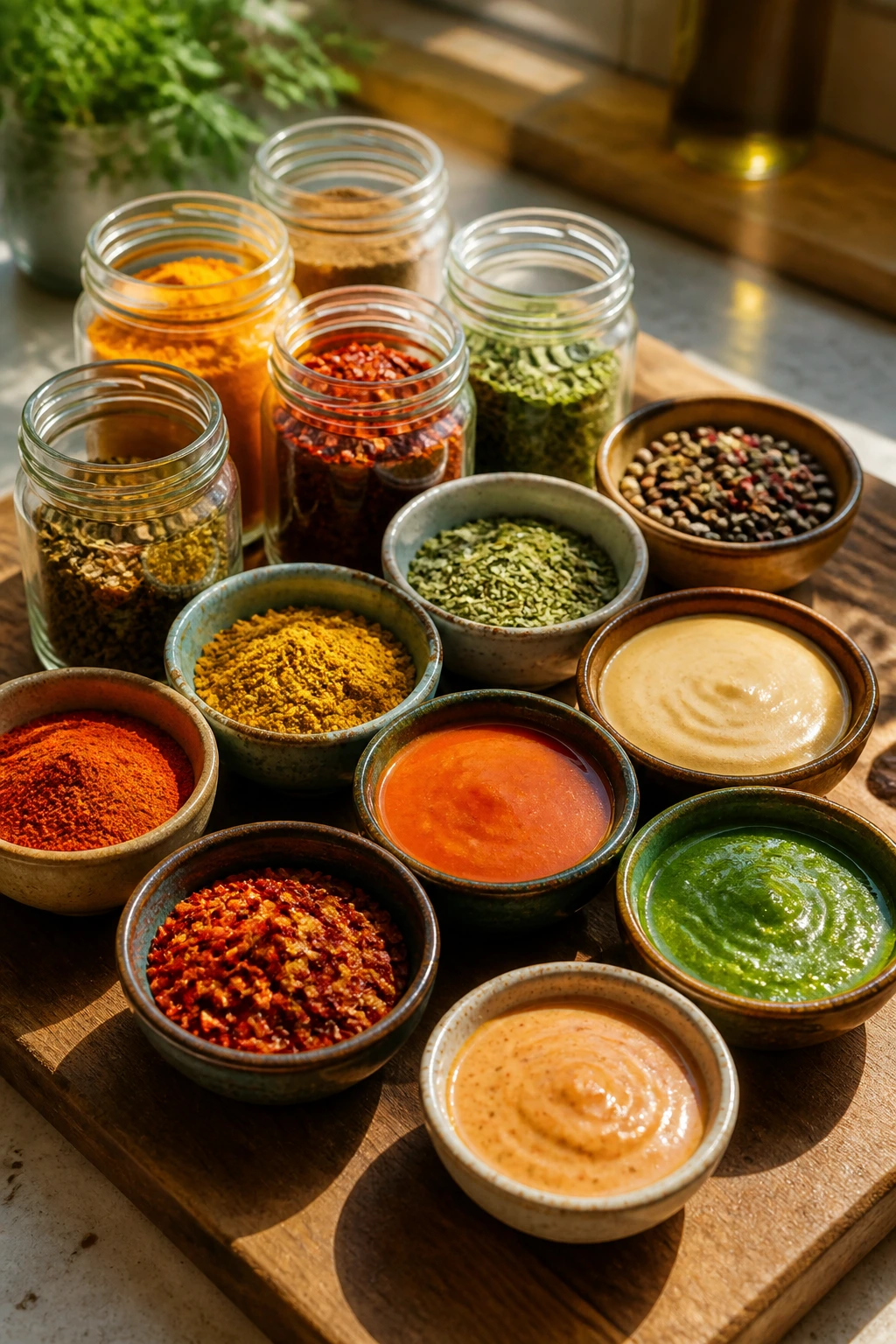
A crisp dinner can get flat fast if the seasoning sits only on the surface. The air fryer mutes some flavors and intensifies others. Garlic powder, onion powder, smoked paprika, cumin, coriander, curry powder, chili flakes, black pepper, and lemon zest all hold up well. Fresh garlic is a little trickier because it can burn. I use it sparingly in marinades or save it for sauces.
The simplest seasonings are often the best. Salt, pepper, smoked paprika, and garlic powder cover a lot of ground. From there, you can move the meal toward different places: warm and earthy with cumin and coriander, sharp and smoky with chipotle powder, bright and herbaceous with dill and parsley, or savory and almost cheesy with nutritional yeast.
Sauces should be bold because the food itself is working hard on texture. Tahini thinned with lemon juice and water is one of the best air fryer partners on earth. Peanut-lime sauce works with tofu and broccoli. A quick miso-sesame sauce gives tempeh a deep, salty edge. Salsa verde, chimichurri, harissa yogurt made with plant yogurt, or a simple soy-vinegar glaze can each change the tone of the dinner without asking you to start from scratch.
What to keep away from the basket
Sugary glazes are a little dangerous. Maple syrup, agave, and sweet chili sauce can burn on the outside before the food finishes. That doesn’t mean you can’t use them. It means brush them on near the end, or serve them on the side. The same goes for thick sauces with a lot of starch in them. Add them after cooking if you want the crunch to survive.
A tiny hit of acid at the end does more than most people think. Lemon juice on broccoli. Lime on chickpeas. Rice vinegar over tofu. It cuts the oil, wakes up the salt, and makes the whole plate taste more deliberate.
How to Plate It So the Crunch Stays Put
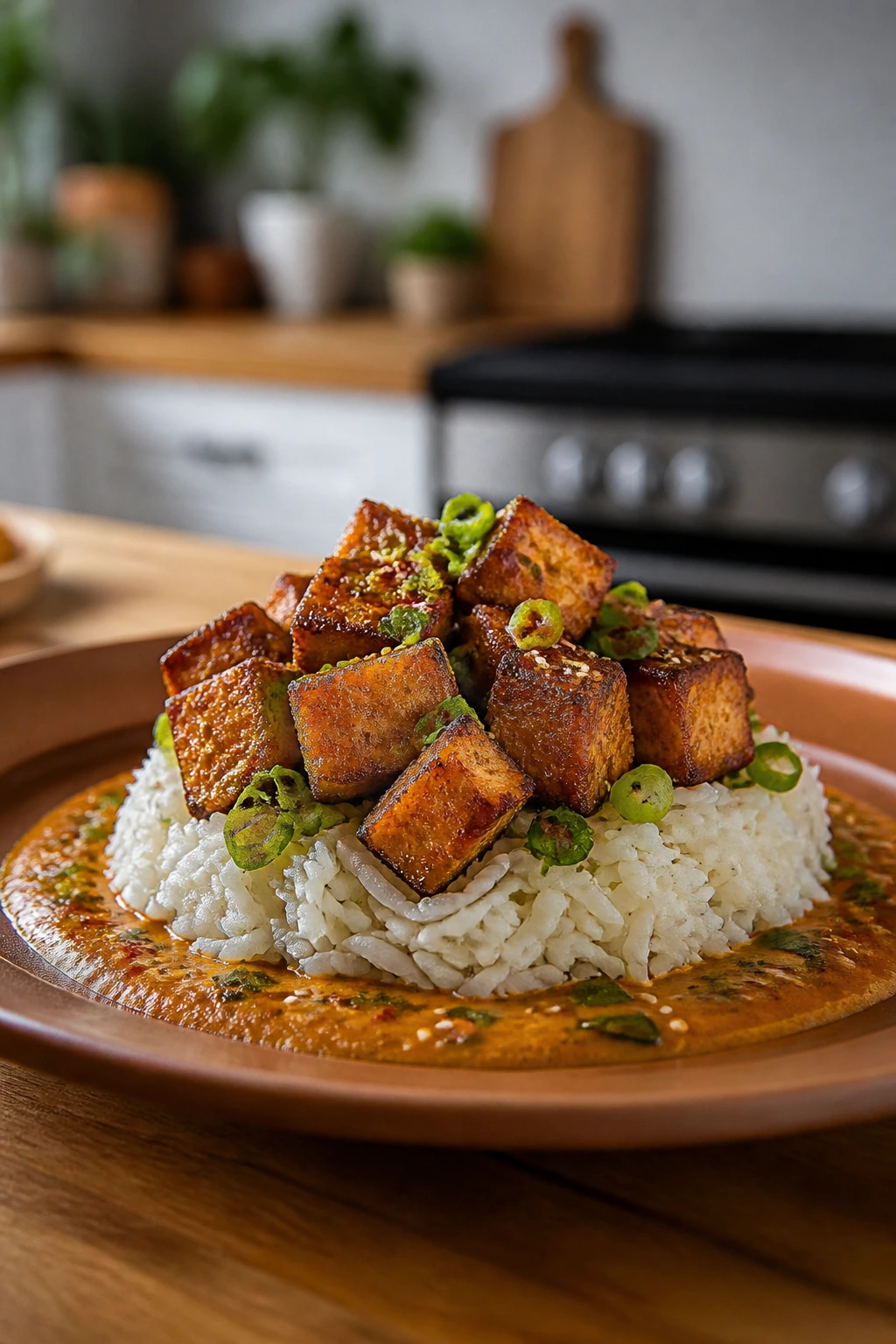
Presentation sounds fussy until you’ve watched perfectly crisp tofu go limp under a lake of sauce. Then it feels practical. The aim is not restaurant drama. The aim is to keep the best part of the food where your fork can find it.
Serve the crisp pieces on top of the starch or next to it, not buried in it. If you’re using rice or quinoa, make a low mound and place the tofu, tempeh, or chickpeas slightly off-center. Spoon sauce around the edge or in a small streak across the plate. Finish with herbs, sesame seeds, chopped scallions, or a little citrus zest. Those small touches do not just look nice; they keep the flavors from reading as one flat note.
Presentation
Use a wide bowl or shallow plate if you can. Deep bowls trap steam, which is annoying when you’ve just worked to create a crisp surface. I like a warm plate for anything with a sauce and a crisp top. Cold ceramic pulls heat away fast, and the food starts softening before you sit down.
Accompaniments
Brown rice, jasmine rice, quinoa, farro, roasted potatoes, cucumber salad, slaw, and quick-pickled onions all fit naturally here. If you want more freshness, add a handful of herbs and a raw crunch element like shredded cabbage or sliced radish. If you want a heartier plate, use a grain and a bean together, then keep the air-fried element focused and crisp.
Portions
A good serving usually means one crisp protein portion, two cups or so of vegetables, and a modest base. For one person, that might be 4 to 6 ounces of tofu with a heaped cup of broccoli and half a cup of rice. For four, multiply the base ingredients first and cook the crisp items in batches if needed. Crowding to save ten minutes usually costs you texture.
Beverage Pairing
Sparkling water with lime keeps the plate feeling fresh. Unsweetened iced green tea works well too, especially with sesame, soy, or miso flavors. If you want something a little more relaxed, a dry ginger beer or a light lager can stand up to the salt and heat without fighting the food.
Small Moves That Make a Big Difference
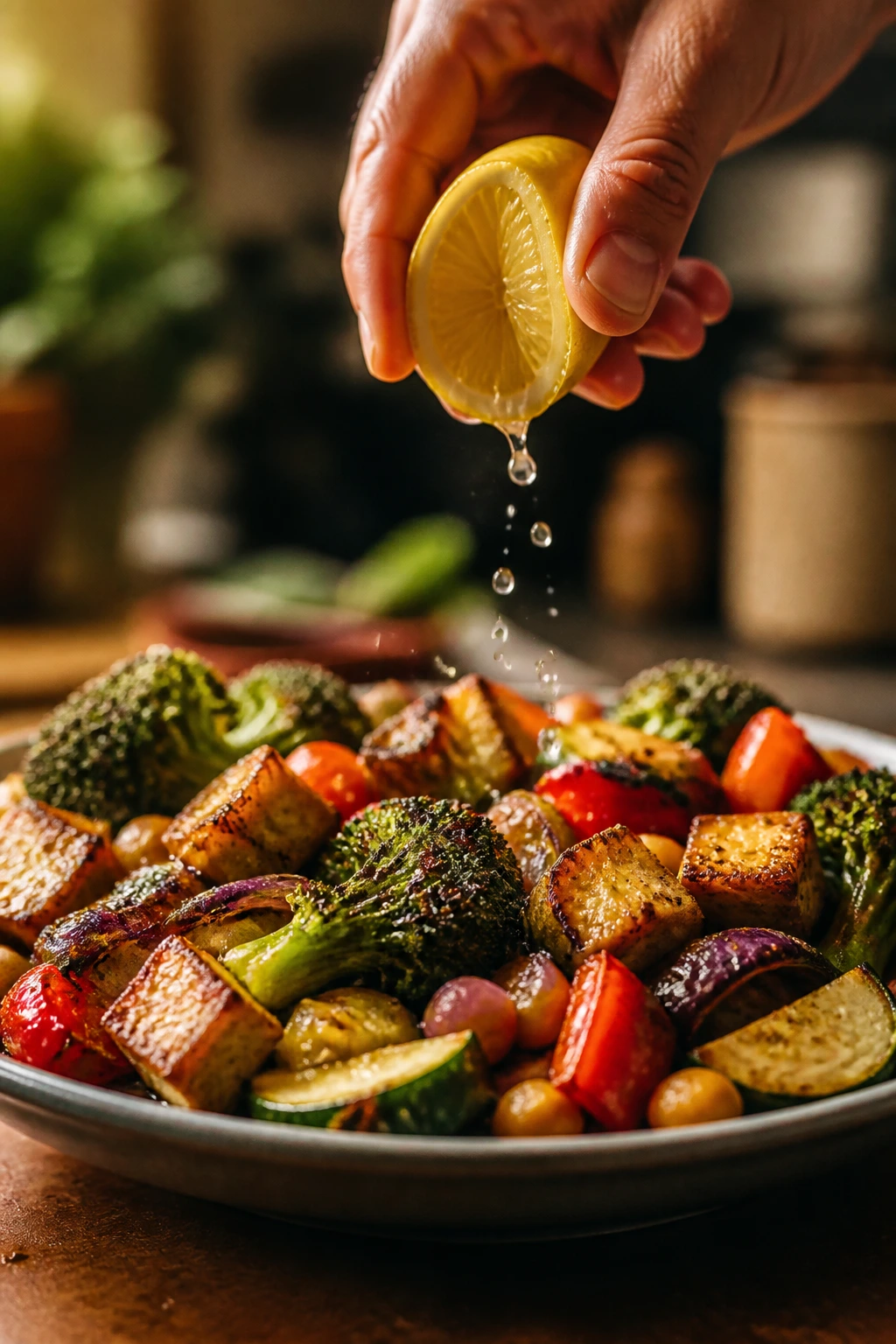
Flavor Enhancement: A squeeze of lemon or lime at the end changes the whole dinner. The food tastes brighter, the salt tastes more controlled, and the crisp bits stop reading as heavy.
Time-Saver: Cut tofu, tempeh, or vegetables into evenly sized pieces the night before and store them in a lined container with a paper towel. That little bit of prep removes the worst part of weeknight cooking.
Pro Move: Preheat the air fryer basket for 3 to 5 minutes, then add the food immediately. The first blast of heat helps the surface set before moisture has time to collect.
Cost-Saver: Chickpeas, cabbage, broccoli, and tofu are the budget heroes here. They take seasoning well, buy you a filling dinner, and do not need expensive sauces to taste finished.
Texture Trick: If something has to stay crisp, keep the sauce separate until the last second. Dip, drizzle, or spoon around the food. Don’t bury it.
Color Trick: Add one raw or fresh element right at the end—scallions, parsley, cilantro, thin radish slices, or a handful of shredded cabbage. The plate stops looking brown and starts tasting alive again.
Common Mistakes That Leave Vegan Air Fryer Food Soft or Dry
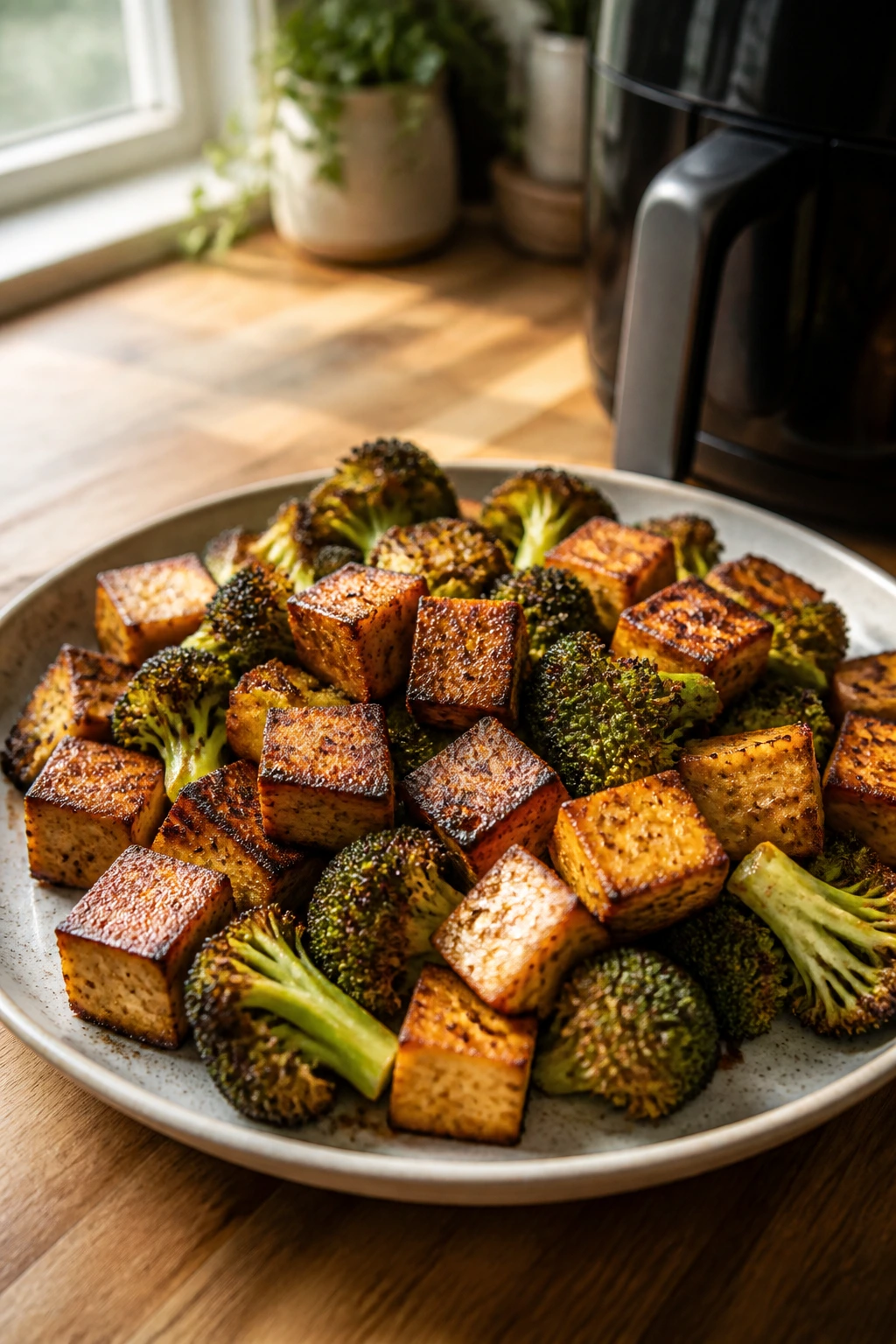
The first mistake is using wet ingredients straight from the bowl. If tofu is still damp from pressing, or vegetables are tossed in a watery marinade, the basket has to fight that moisture before anything browns. The fix is simple: dry the surface thoroughly, then add only enough oil or seasoning to coat.
Crowding is the second one, and it ruins more dinners than bad recipes do. A basket packed edge to edge will steam food from the bottom up. You’ll see pale spots, limp edges, and uneven browning. Cook in smaller batches and shake or flip once; it is slower by a few minutes, but the texture is worth it.
The third mistake is treating every ingredient like it shares the same clock. Broccoli can finish before thick cauliflower. Tofu cubes cook faster than slabs. Chickpeas need more drying and a little more time than people expect. If you are combining ingredients, either cut them to similar sizes or stagger them so the basket doesn’t punish the smallest piece.
Another problem: sauce too early. This one is painful because the food can look perfect right before you ruin it. Sticky glaze, creamy dressing, or thinned tahini should usually go on after cooking unless you’re intentionally making a softer finish. If you want a sticky edge, brush lightly during the last minute or two, not from the start.
Finally, people undersalt plant food and then wonder why the dinner tastes flat. Vegan ingredients often need more seasoning than meatier dishes because they don’t bring the same built-in savory depth. Salt the tofu, season the chickpeas, and don’t be shy with acid at the end. Flat food usually isn’t missing the fryer. It’s missing the finishing touch.
Variations and Alternative Approaches to Try
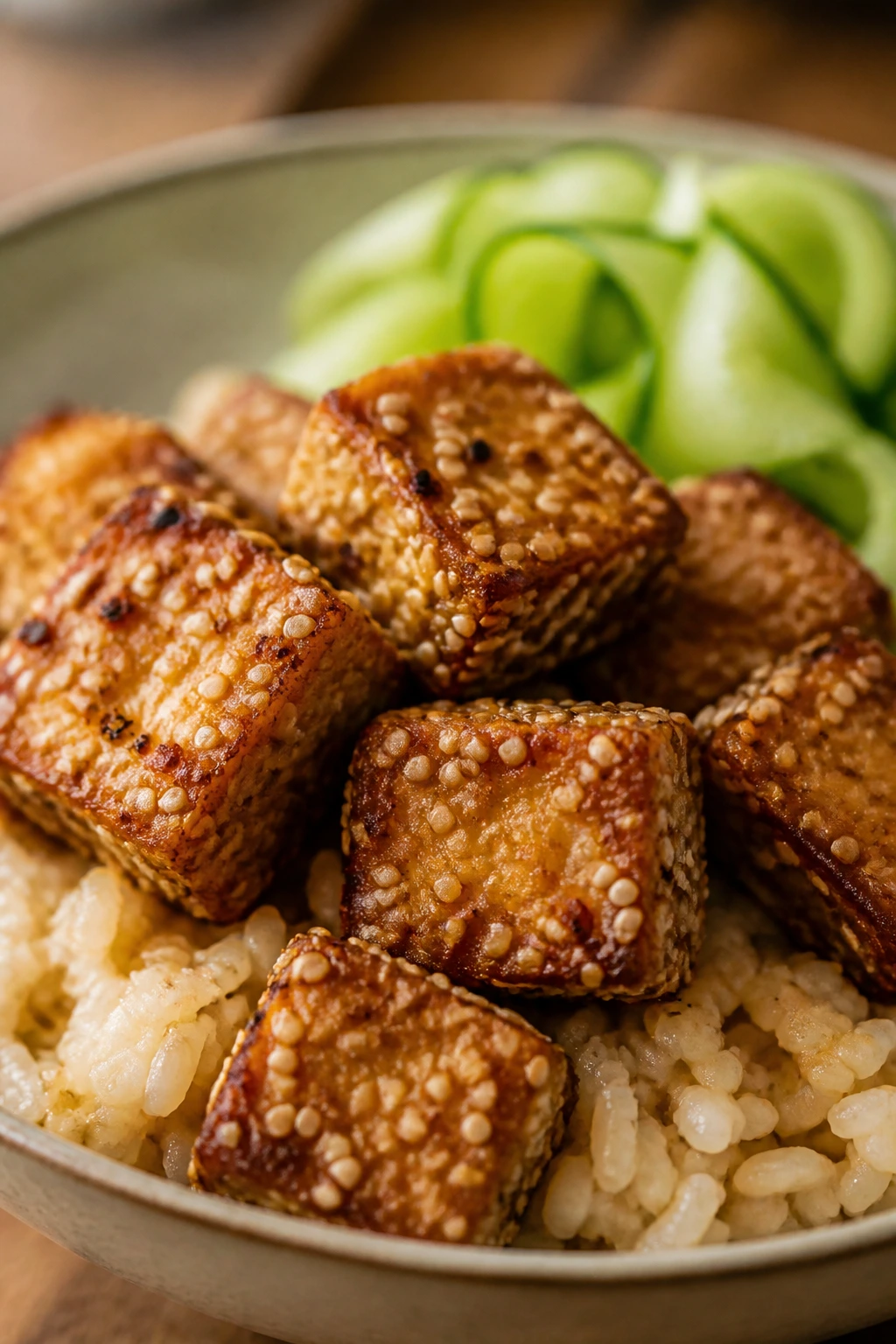
Sesame-Ginger Tempeh Night: Slice tempeh thin, toss it with tamari, grated ginger, a little oil, and cornstarch, then air fry until the edges darken. Serve it over rice with cucumber ribbons and a tahini-sesame drizzle. It’s the version I reach for when I want something savory and a little chewy.
Buffalo Tofu and Broccoli Bowl: Coat pressed tofu in a light starch mixture, air fry it until crisp, then toss it in buffalo sauce after cooking. Add broccoli on the side, keep the sauce separate until the last minute, and serve with celery, carrots, and a dairy-free ranch if you want the full sharp, salty hit.
Chickpea Shawarma Plate: Season chickpeas with cumin, coriander, paprika, garlic powder, and a pinch of cinnamon, then air fry until blistered. Pair them with cauliflower, chopped tomato, cucumber, and a lemon-tahini sauce. This one tastes like more effort than it actually takes.
Panko Cauliflower Cutlets: Flatten cauliflower florets a little, dip them in aquafaba or plant milk, and coat them with panko plus seasoning. They cook up with a rough, crackly shell that feels more substantial than plain roasted cauliflower. Good for when dinner needs to feel a little more like comfort food.
Low-Oil Minimalist Version: Skip heavy coating and use only a light mist of oil, plenty of seasoning, and the hottest safe setting for your ingredient. This works best with broccoli, Brussels sprouts, and tofu that has been pressed very well. The result is less crunchy than panko, but cleaner and faster.
Essential Equipment for Reliable Results
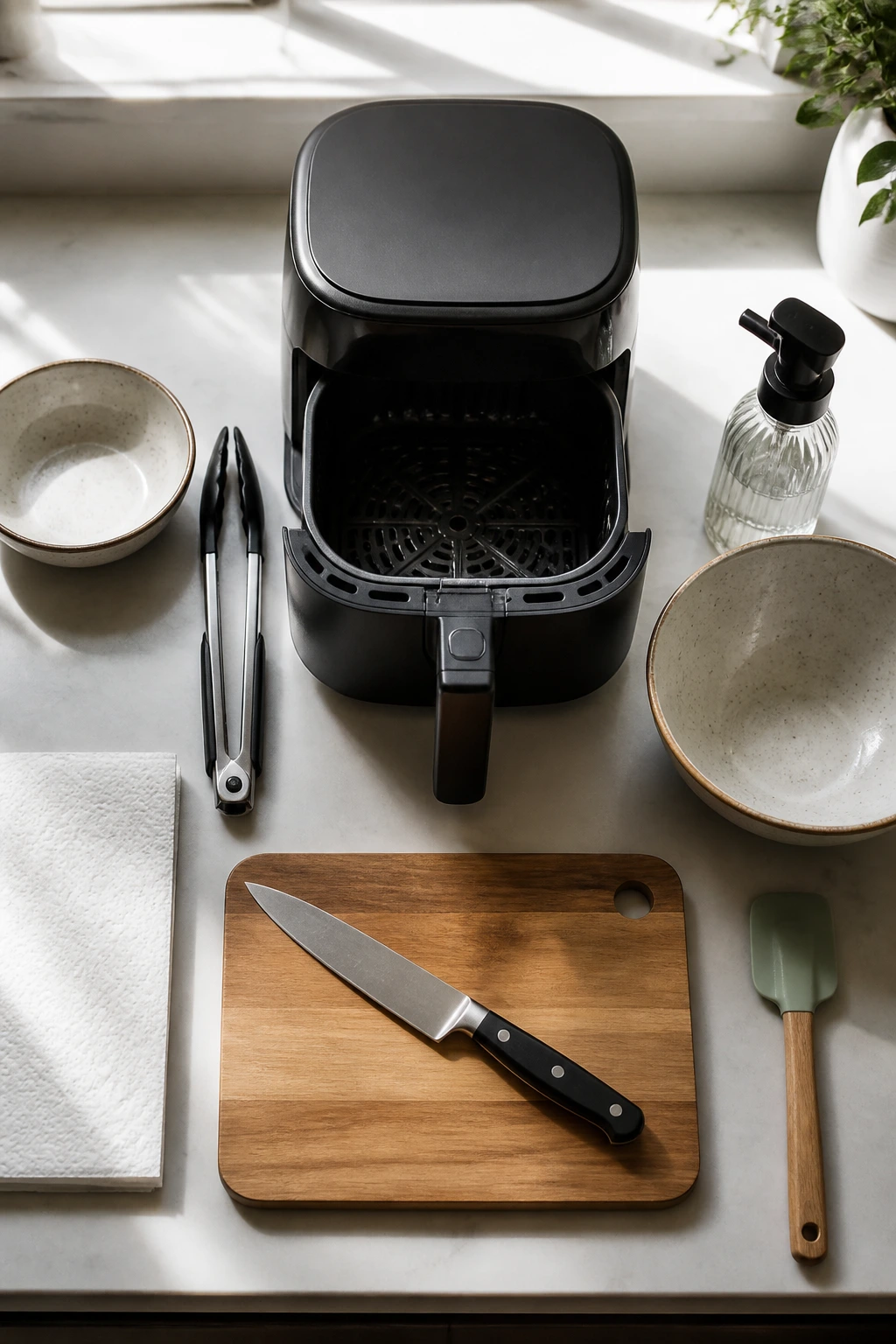
- Basket-style or oven-style air fryer: Either works, but basket models usually brown edges faster because air moves around the food more directly.
- Tongs: Best for flipping tofu slabs, tempeh strips, and any breaded piece you do not want to tear.
- Mixing bowls: You’ll want at least two—one for coating and one for staging the raw ingredients.
- Paper towels or a clean kitchen towel: This is what makes tofu, chickpeas, and vegetables dry enough to crisp.
- Chef’s knife: Even cuts matter more than people think here.
- Cutting board: Preferably one with a towel underneath so it doesn’t slide when you’re working fast.
- Oil spray bottle or mister: Helpful for a light, even coat without drowning the food.
- Silicone spatula: Good for scraping seasoning from the bowl so you don’t lose the best part.
- Perforated parchment liners: Optional, but handy for sticky coatings and easier cleanup.
- Instant-read thermometer: Not essential for tofu, but useful if you’re cooking potato wedges or want a quick check on thicker vegetables.
Make-Ahead, Storage, and Reheating Guidance
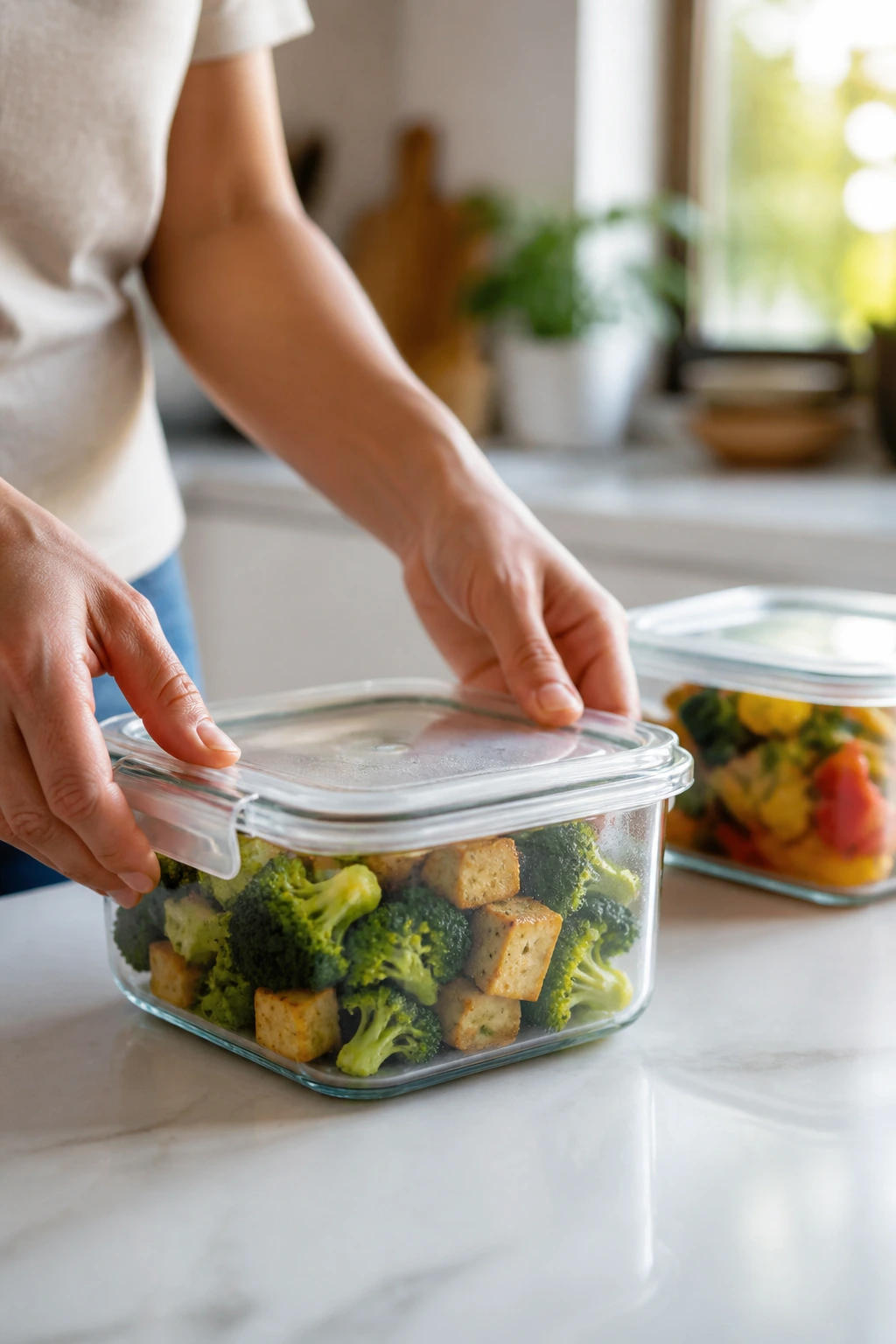
A crispy vegan air fryer dinner is best eaten right away, while the surface still has a little snap. That is the honest answer. Once the steam starts to settle, the crust softens. It does not fall apart instantly, but it does change.
You can still work ahead in smart ways. Press tofu earlier in the day or even the night before, then keep it wrapped in the fridge. Cut broccoli, cauliflower, or Brussels sprouts up to a day ahead and store them dry in an airtight container with a paper towel. Chickpeas can be drained and dried in advance, though I’d season and cook them close to mealtime if you want the best texture.
Cooked leftovers keep in the fridge for 3 to 4 days in a sealed container. Separate sauces whenever possible. A tahini drizzle, peanut sauce, or vinaigrette should go into its own small container so the crisp food doesn’t absorb it overnight. Freezing is possible for cooked tofu and tempeh for up to 2 months, but the texture gets a little firmer and chewier after thawing. Chickpeas and delicate vegetables do not freeze well once cooked.
For reheating, skip the microwave if crunch matters. Use the air fryer at 375°F to 390°F for 4 to 8 minutes, depending on the size of the pieces. Put the food in a single layer and check once halfway through. If the item already has sauce on it, reheat it more gently and expect less crispness. That is the tradeoff.
Leftover grains and sauces can make the next meal better than the first one if you handle them separately. Reheat rice or quinoa in the microwave with a damp paper towel, warm the vegetables in the air fryer, then combine at the end. That keeps each part close to its best texture.
Frequently Asked Questions
Can I make a crispy vegan air fryer dinner without oil?
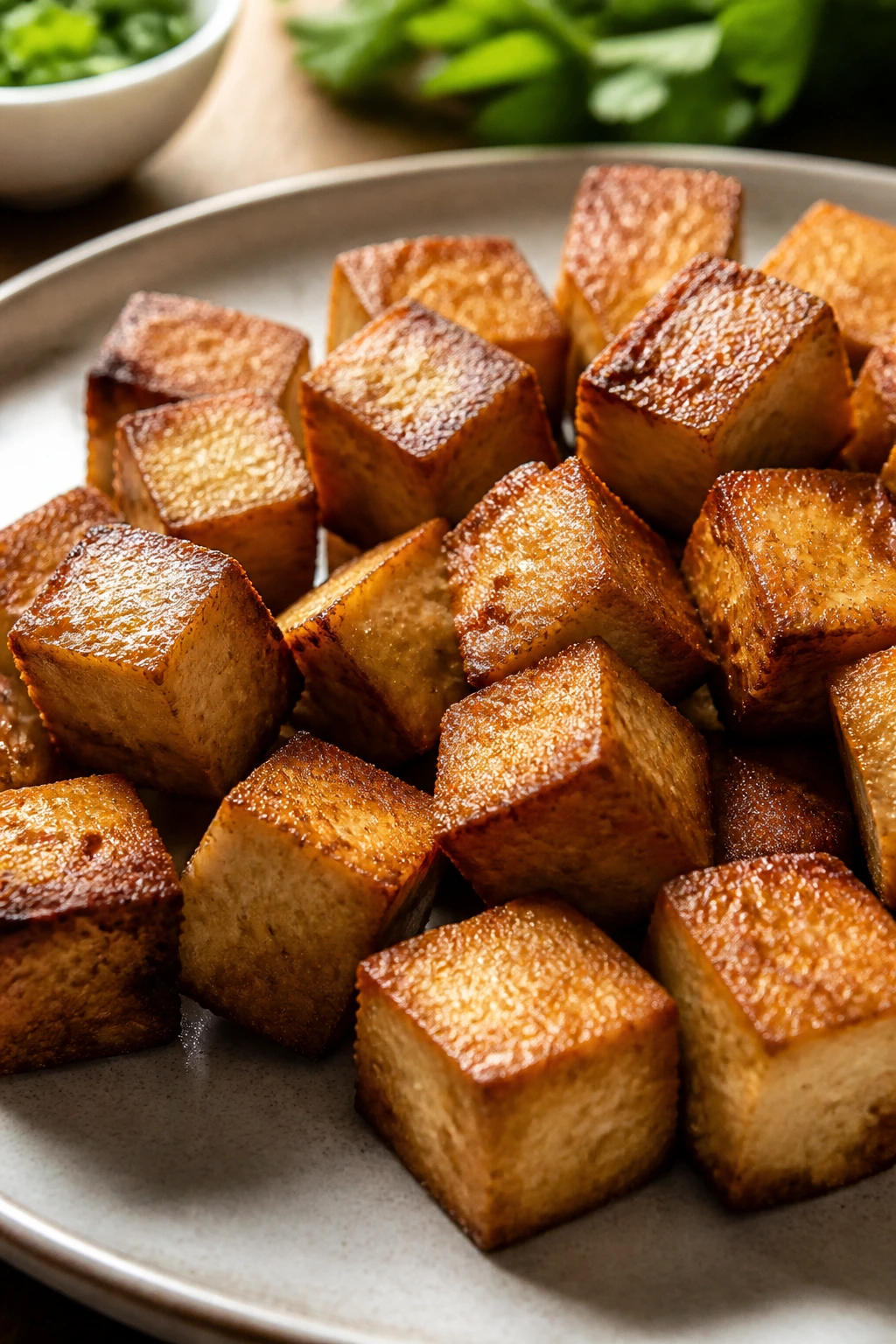
You can get close, but not every ingredient will brown well. Broccoli, cauliflower, and well-dried tofu can still crisp up with a starch coating and a good hot basket, though a teaspoon of oil often improves the result a lot.
What’s the best vegan protein for the air fryer?
Extra-firm tofu is the most reliable because it presses well and crisps on the outside without turning chalky inside. Tempeh is a close second if you like a firmer, nuttier bite, and chickpeas are excellent when you want something a little more snacky and loose.
Can I use frozen vegetables?
Yes, but dry them hard before cooking or they will steam. Frozen broccoli and cauliflower can work if you thaw them first, blot off the moisture, and give them a little extra time in the basket. They will not usually get as crisp as fresh ones.
Why does my tofu stick to the basket?
Usually because the surface was too wet or the basket was not lightly oiled. Press the tofu, coat it with starch, and use a tiny mist of oil or a parchment liner with holes if your model allows it.
What if my food browns too fast before it cooks through?
Lower the heat by 15°F to 25°F and cut the pieces a little smaller or a little thicker depending on the problem. Thick pieces with a dark crust usually need a lower temperature and a longer finish; thin pieces need less time, not more oil.
Can I meal prep this for the week?
You can prep the components, yes. Press tofu, cut vegetables, and mix sauces ahead of time, then cook the crisp parts fresh when you want the best texture. Leftovers reheat, but they do not stay crunchy as long as fresh batches.
Is panko better than regular breadcrumbs?
For this kind of dinner, yes. Panko is lighter and airier, so it dries into a sharper crust instead of sinking into a dense layer. Regular breadcrumbs can still work, but they usually give a tighter, softer finish.
How do I keep a sauce from ruining the crisp coating?
Serve it on the side or spoon it around the edge of the plate. If you want the food coated, toss it only right before eating so the texture has a chance to survive the first few bites.
A Crisp Dinner Worth Repeating
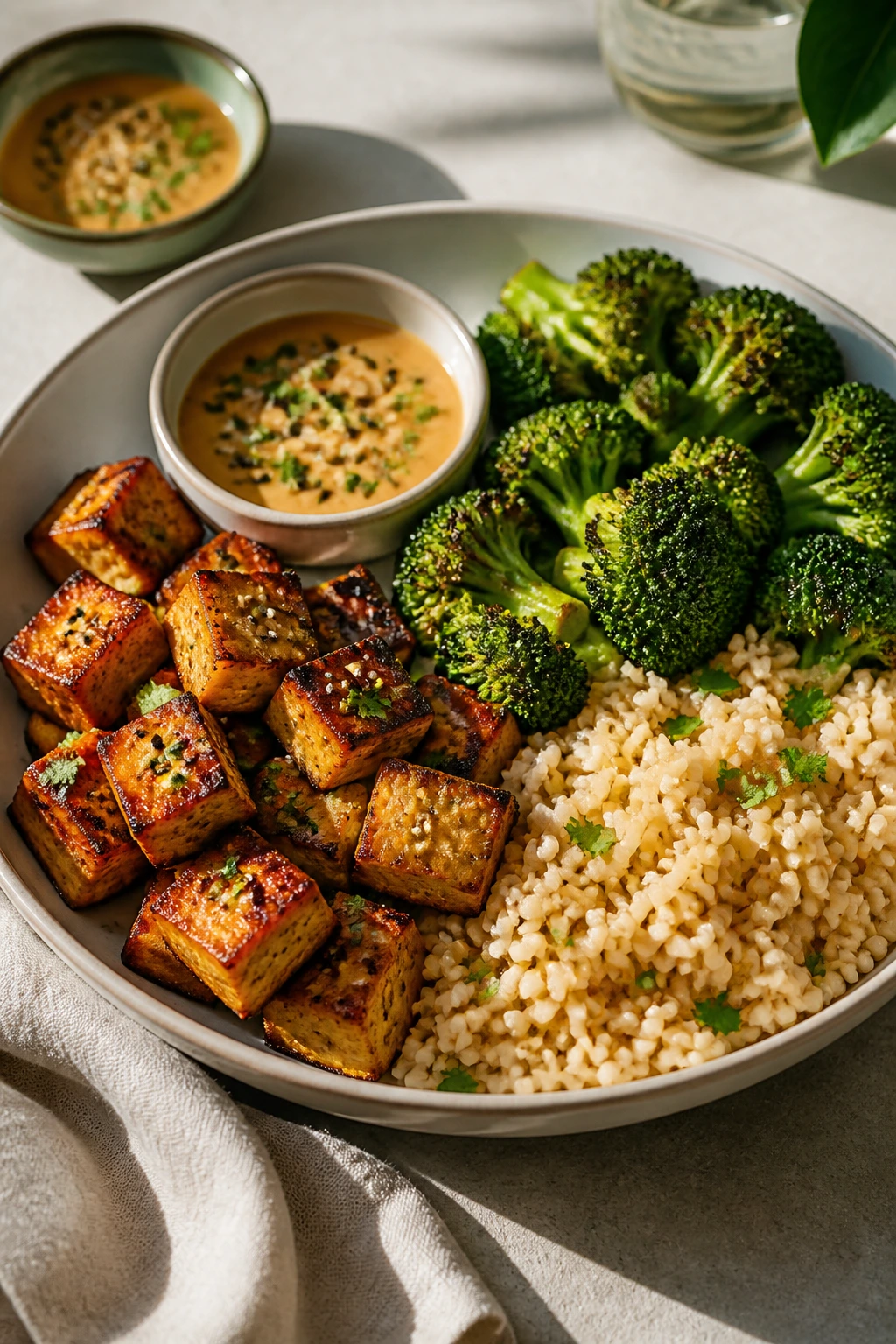
The best vegan air fryer dinners are not trying to apologize for anything. They are not pretending to be fried chicken, and they are not hiding behind a pile of sauce. They’re using heat well enough that tofu gets chewy, vegetables get browned, and chickpeas turn from plain pantry food into something you keep stealing off the tray.
That’s what makes this kind of dinner worth keeping on repeat. It gives you texture, color, and enough real flavor to feel finished without loading the plate with oil or fuss. If you keep a block of tofu, a can of chickpeas, and a couple of sturdy vegetables around, the rest becomes a matter of heat, timing, and not crowding the basket. Simple. A little blunt. And, when it works, exactly the kind of dinner you want to make again tomorrow.