



Crispy vegetable flowers are one of those dinners that look fussy from across the kitchen and then behave like a very sensible recipe once you actually make them. The trick is not magic. It’s moisture control, a hot pan, and vegetables that are cut small enough to cook through before the edges give up and turn soft.
The first time I made a tray like this, I learned the hard way that zucchini can sabotage the whole thing if you treat it like a casual ingredient. Grate it, salt it, squeeze it until your wrist complains, and the batter suddenly starts acting like dinner instead of vegetable soup with aspirations. That’s the whole mood here: crisp edges, tender centers, a little sweetness from carrot and sweet potato, and enough lemon and herbs to keep every bite lively.
I like these best as a real meal, not a side dish pretending to be important. A spoonful of garlicky yogurt on the plate, a chopped cucumber salad on the side, and a few hot flower-shaped fritters still steaming in the middle — that’s the kind of vegetarian dinner that earns repeat requests. And if you’ve only ever had vegetable patties that were pale, damp, and vaguely apologetic, this version fixes the part that usually goes wrong.
Why These Crispy Vegetable Flowers Earn a Spot at Dinner
-
The edges actually crisp: A hot metal pan and a thin coat of oil give you browned ridges instead of soft, steamed sides, which is the difference between “nice idea” and something you want a second helping of.
-
The vegetables stay front and center: Zucchini, carrot, sweet potato, and broccoli each bring a different texture, so the finished bites taste layered rather than blended into one mushy green thing.
-
The shape makes them feel special without extra work: A flower-shaped muffin pan gives you petal-like edges, but even a regular muffin tin makes a tidy, dinner-worthy bite that looks more intentional than a loose fritter.
-
The batter is light enough for a healthy dinner: Chickpea flour, egg, and a little panko hold the vegetables together without the heavy, bready feel you get from some fritter recipes.
-
The lemon yogurt sauce keeps the plate bright: A cool, tangy sauce with dill and garlic cuts through the browned vegetables and stops the whole dish from tasting flat.
-
Leftovers don’t have to be sad: Reheat them in the oven or air fryer and the crispness comes back. The microwave, on the other hand, turns them soft in a hurry.
Timing, Yield, and the Crunch You’re Chasing
Yield: 12 vegetable flowers, serves 4 as a main dish or 6 as a side
Prep Time: 25 minutes
Cook Time: 22 minutes
Total Time: 47 minutes active, plus 15 minutes of draining and resting
Difficulty: Intermediate — the steps are straightforward, but squeezing the vegetables dry and packing the molds neatly takes a little care.
Chill/Rest Time: 10 minutes for draining the zucchini, plus 5 minutes for the batter to rest
Best Served: Warm from the oven, when the edges are still crisp and the center is tender
The texture you want is specific. The tops should be golden and set, the edges should feel dry to the touch, and the middle should spring back when you tap it lightly. If the center jiggles or looks damp, give it a few more minutes. If the pan is doing its job, the underside will pick up deep color first, which is exactly what you want.
A lot of vegetable bakes miss this mark because they chase tenderness and forget about browning. Not this one. The best batch has a light crackle on the edges and a savory, almost nutty smell from the browned vegetables and parmesan. That smell tells you more than a timer does.
The Ingredient List for the Flowers and Yogurt Sauce
For the Vegetable Flowers:
- 2 medium zucchini, grated on the large holes and squeezed dry
- 2 medium carrots, peeled and grated
- 1 medium sweet potato, peeled and grated
- 1 cup broccoli florets, very finely chopped
- 4 scallions, thinly sliced
- 2 large eggs
- 1/2 cup chickpea flour
- 1/2 cup panko breadcrumbs, or gluten-free panko if needed
- 1/3 cup finely grated Parmesan
- 2 tablespoons chopped parsley
- 1 tablespoon chopped dill
- 1 teaspoon baking powder
- 1 teaspoon kosher salt, plus extra for draining the zucchini
- 1/2 teaspoon black pepper
- 1/2 teaspoon garlic powder
- 1/2 teaspoon smoked paprika
- 3 tablespoons olive oil, plus more for brushing the pan
For the Lemon Yogurt Sauce:
- 1 cup plain Greek yogurt
- 1 tablespoon lemon juice
- 1 teaspoon lemon zest
- 1 small garlic clove, finely grated
- 1 tablespoon chopped dill or mint
- 1/4 teaspoon kosher salt
- 1 to 2 teaspoons water, if needed to thin
For Serving:
- Lemon wedges
- Extra chopped herbs
- A pinch of flaky salt, if you like a sharper finish
Why Each Ingredient Pulls Its Weight
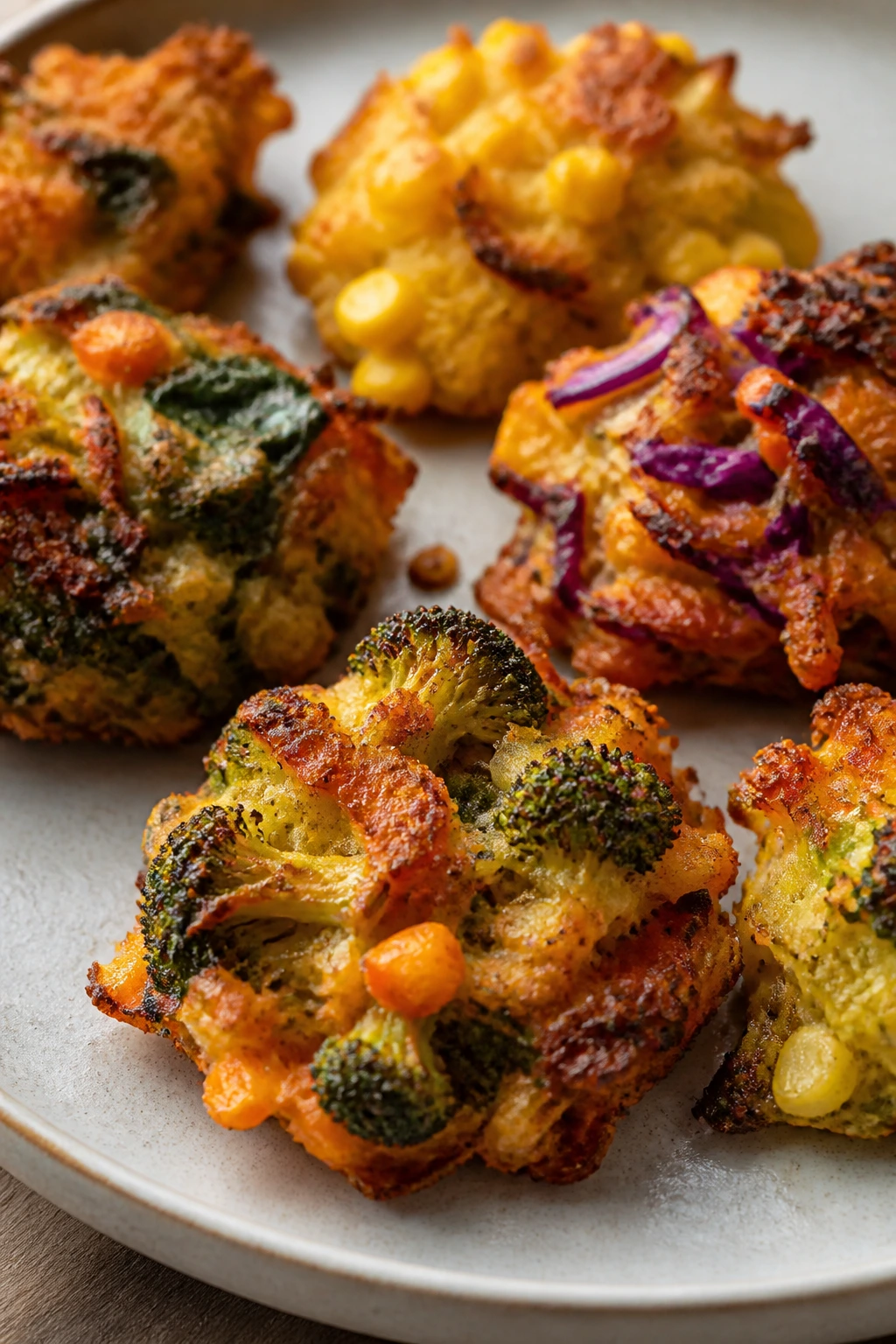
Main Vegetables
What to use: 2 medium zucchini, 2 medium carrots, 1 medium sweet potato, 1 cup finely chopped broccoli, and 4 scallions.
Preparation: Grate the zucchini, carrots, and sweet potato on the large holes of a box grater, then chop the broccoli very small so it softens in the oven instead of staying chewy. Slice the scallions thinly so they disappear into the mix without making the texture stringy.
Substitutions: Yellow squash can stand in for zucchini, cauliflower can replace the broccoli, and shredded cabbage works if you want a slightly sweeter, more cabbage-forward result.
Tips: Keep the total vegetable volume about the same even if you swap one item. If you overload the mix with wet vegetables, the batter turns slack and the flowers bake up pale.
Binder and Crunch
What to use: 2 large eggs, 1/2 cup chickpea flour, 1/2 cup panko breadcrumbs, 1/3 cup Parmesan, and 1 teaspoon baking powder.
Preparation: Whisk the eggs before adding the dry ingredients so the batter comes together evenly, then fold everything until the vegetables are coated and no dry flour pockets remain.
Substitutions: All-purpose flour can replace chickpea flour, but the flavor gets less nutty; oat flour works too, though the texture is slightly softer. Gluten-free panko keeps the crispness if you need the recipe fully gluten-free.
Tips: The chickpea flour does more than bind. It gives a clean, savory flavor that keeps the flowers from tasting like a generic fritter. Baking powder helps the mixture puff just enough to stay light instead of dense.
Seasonings and Browning
What to use: 1 teaspoon kosher salt, 1/2 teaspoon black pepper, 1/2 teaspoon garlic powder, 1/2 teaspoon smoked paprika, 2 tablespoons parsley, 1 tablespoon dill, and 3 tablespoons olive oil.
Preparation: Chop the herbs finely so they spread through the batter, and brush the oil onto the pan instead of pouring it in a puddle.
Substitutions: Parsley can be swapped for cilantro or basil; dill can become mint if you want a brighter finish. If you like a little heat, add 1/4 teaspoon chili flakes.
Tips: Salt matters twice here. A little on the zucchini pulls out water, and a measured amount in the batter keeps the vegetables from tasting flat after baking.
Lemon Yogurt Sauce
What to use: 1 cup Greek yogurt, 1 tablespoon lemon juice, 1 teaspoon lemon zest, 1 small grated garlic clove, 1 tablespoon dill or mint, and 1/4 teaspoon salt.
Preparation: Stir the sauce until it looks smooth and glossy, then thin it with a teaspoon or two of water if you want it drizzleable instead of spoonable.
Substitutions: Sour cream works if you want a richer sauce, and tahini makes a good dairy-free version when mixed with lemon and water.
Tips: Lemon zest does more than juice alone. It gives the sauce a bright smell that wakes up the whole plate before you even take a bite.
The Pan, Towel, and Grater That Make the Shape Hold
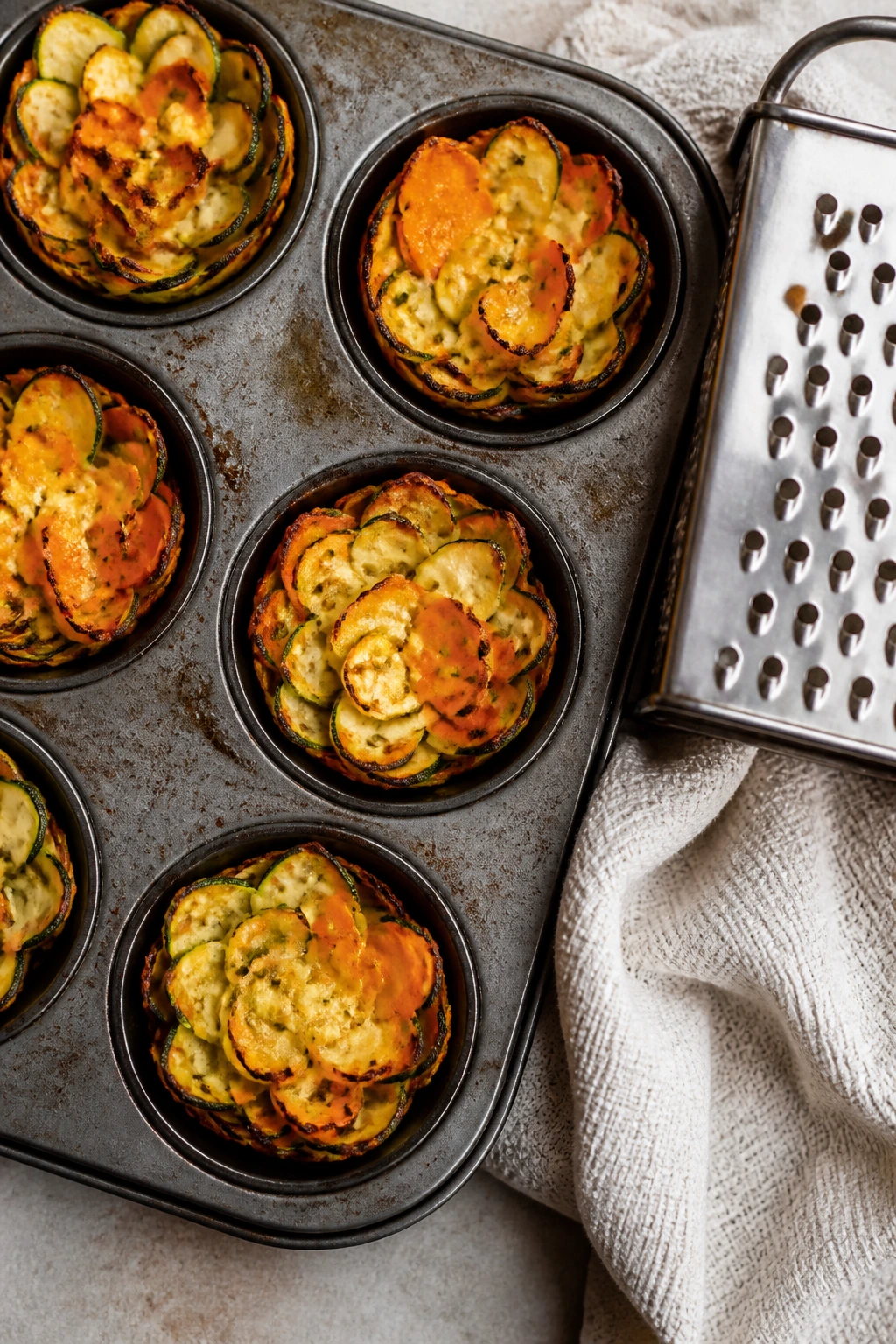
What you need: a 12-cup metal muffin tin or a flower-shaped muffin pan, a box grater or food processor with a shredding disc, a large mixing bowl, a clean kitchen towel, a pastry brush, a microplane, and a thin spatula.
Why it matters: metal browns. Silicone usually doesn’t. If you want crisp edges, a metal pan is worth using, even if the shape is only regular muffin cups. A flower-shaped pan is a nice bonus, not a requirement.
The kitchen towel is the quiet hero here. Paper towels tear when you twist them around damp zucchini, and a colander alone won’t push out enough water. A clean towel lets you wring the shreds until they feel almost fluffy. That one move changes the whole recipe.
A thin spatula also earns its place. These little flowers release cleanly when they’ve had a few minutes to rest, but they still need a gentle lift. A thick spatula can break the petals right off the edge, which is annoying after you’ve done the work to get them browned.
Drying the Vegetables Until They Stop Weeping
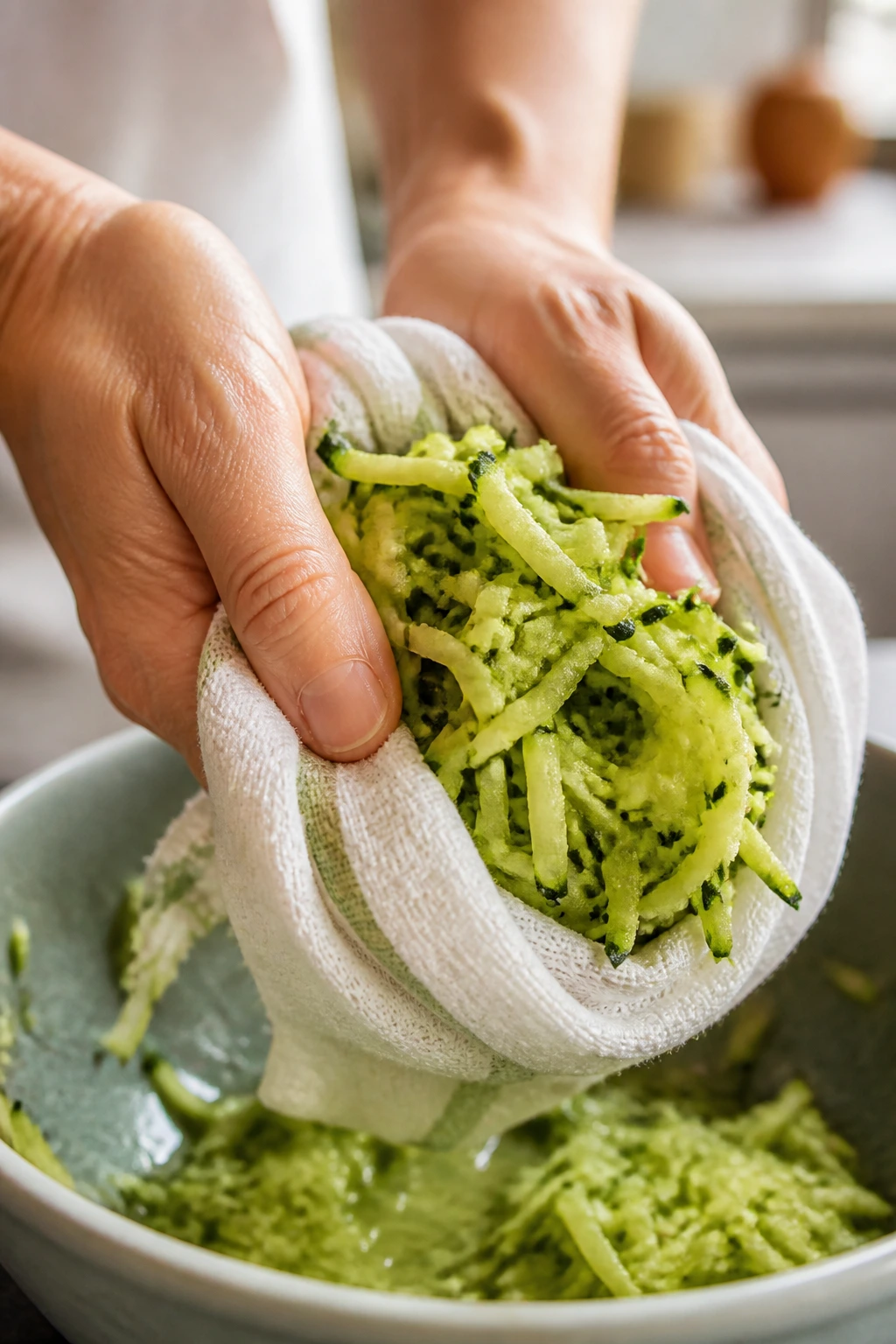
Prep the zucchini first.
-
Grate the zucchini into a colander and sprinkle it with 1/2 teaspoon of the salt. Let it sit for 10 minutes while you prep the other vegetables. You’ll see beads of water collect on the shreds, and that’s exactly what you want.
-
Grate the carrots and sweet potato, then chop the broccoli as finely as you can without turning it into paste. Thin scallion slices are enough; they don’t need to be tiny. If you’re using a food processor, pulse carefully so you don’t end up with vegetable mush.
-
Gather the zucchini in a clean kitchen towel and twist it hard over the sink. Keep going until the shreds feel dry and a little springy, not wet and slippery. If you can squeeze out a pool of liquid, you’ve done it right.
The smell at this stage should still be fresh and clean. No sour notes, no cabbage funk, no bitterness. You’re just removing the water that would otherwise steam the flowers from the inside.
Do not skip the draining. I know, it feels tedious. It’s also the part that decides whether these taste crisp at the edges or vaguely soggy in the middle.
Mixing the Batter So It Holds Its Shape
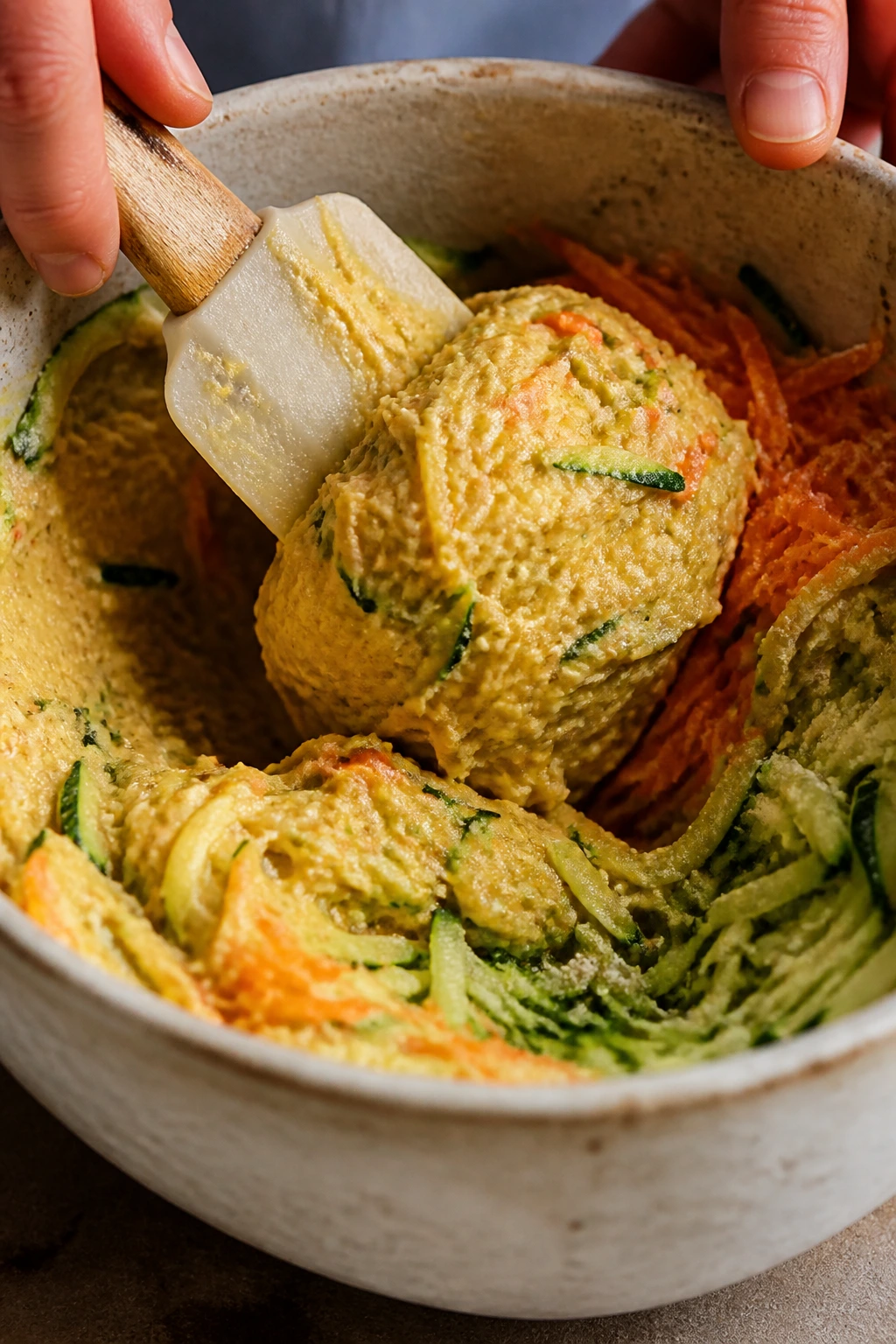
Build the base before you add the vegetables.
4. In a large bowl, whisk the 2 eggs with the chickpea flour, panko, Parmesan, baking powder, black pepper, garlic powder, smoked paprika, the remaining 1/2 teaspoon salt, and 1 tablespoon of the olive oil. The mixture will look thick and a little shaggy, which is fine.
-
Add the dried zucchini, grated carrot, grated sweet potato, broccoli, scallions, parsley, and dill. Fold everything together with a spatula until the vegetables are coated and the batter clings to them. It should look sticky and textured, not wet enough to pour.
-
Let the mixture rest for 5 minutes. The panko softens a little, the chickpea flour hydrates, and the whole mass tightens up. If it still looks loose after resting, add 1 to 2 more tablespoons of panko.
This is the point where the mixture tells you what it wants to be. Too wet and it slips around in the bowl. Too dry and it crumbles when you spoon it. You’re aiming for a mound that holds together when pressed, but still looks like vegetables rather than a dough ball.
I’d rather err on the slightly looser side here and pack the molds firmly than overdo the flour and end up with something bready. The vegetables should still taste like vegetables. Not cake.
Packing the Tin and Baking for Crisp Edges
Preheat the pan, not just the oven.
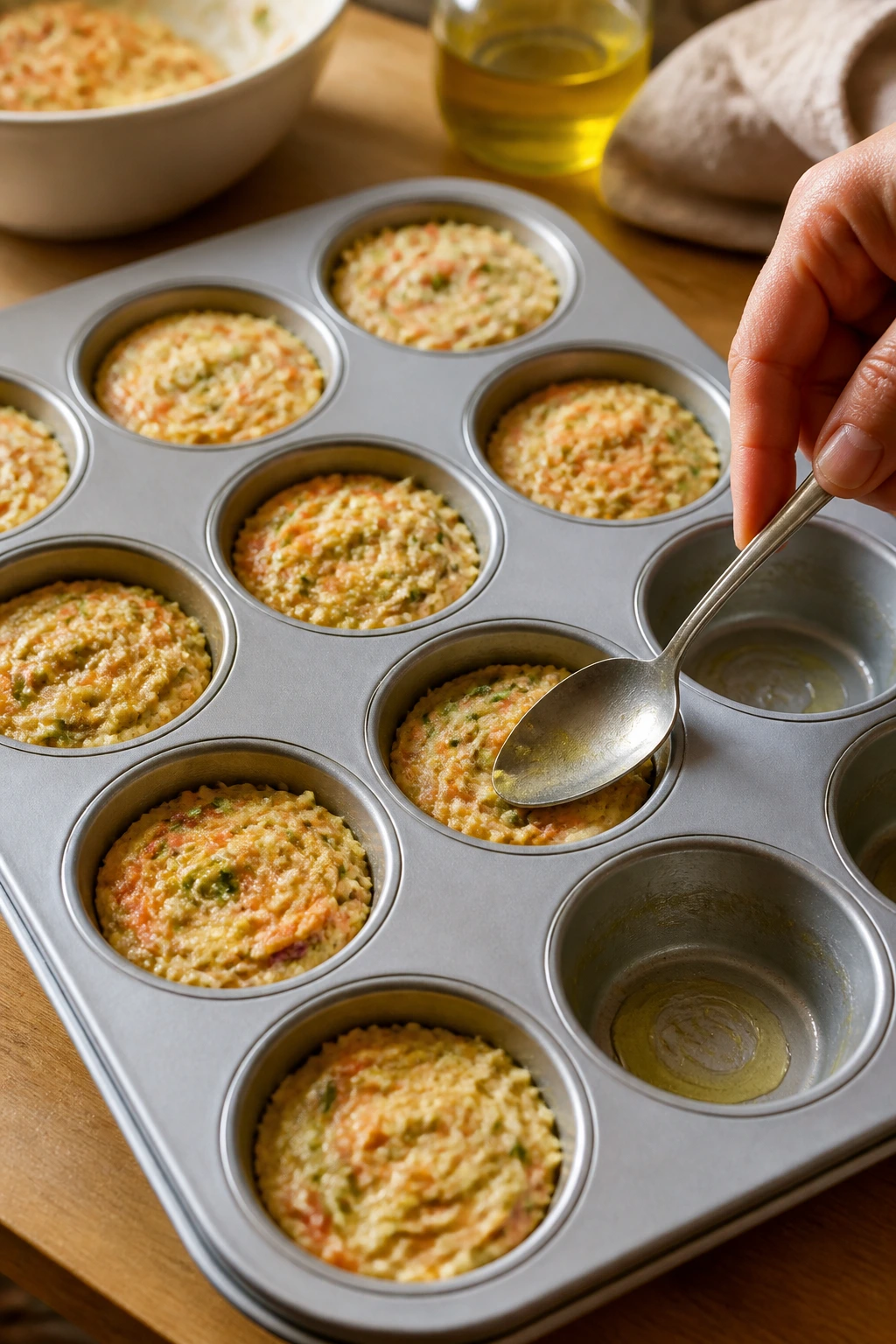
7. Set the oven to 425°F / 220°C and put a metal muffin tin on the middle rack while it heats. Once the oven is hot, remove the pan carefully and brush each cavity with a little olive oil, making sure the sides and bottom are coated. Spoon the mixture into the cups, packing it in firmly and smoothing the tops with the back of a spoon. If you’re using a flower-shaped pan, press the mixture into the petals so the edges look defined.
-
Bake for 18 to 22 minutes, until the tops are golden and the edges have turned deep brown in spots. The centers should feel set when you tap them lightly. If the tops look pale after 22 minutes, switch the oven to broil for 1 to 2 minutes and watch them closely. Do not walk away during broiling. They can go from browned to scorched in a blink.
-
Let the flowers rest in the pan for 5 minutes, then run a thin spatula around the edges and lift them onto a wire rack. Whisk the yogurt sauce while they rest. The short pause helps them release cleanly and keeps the bottoms from tearing.
-
Stir together the Greek yogurt, lemon juice, lemon zest, garlic, dill, salt, and a teaspoon or two of water. Spoon or drizzle the sauce onto plates, not over the flowers if you want the crispness to stay intact. Serve warm with lemon wedges and extra herbs.
That final rest matters more than people think. Fresh from the oven, the flowers are still settling. Give them a few minutes and they hold together better, which is especially useful if you’re plating them one by one and want them to look neat.
How to Serve Crispy Vegetable Flowers for Dinner
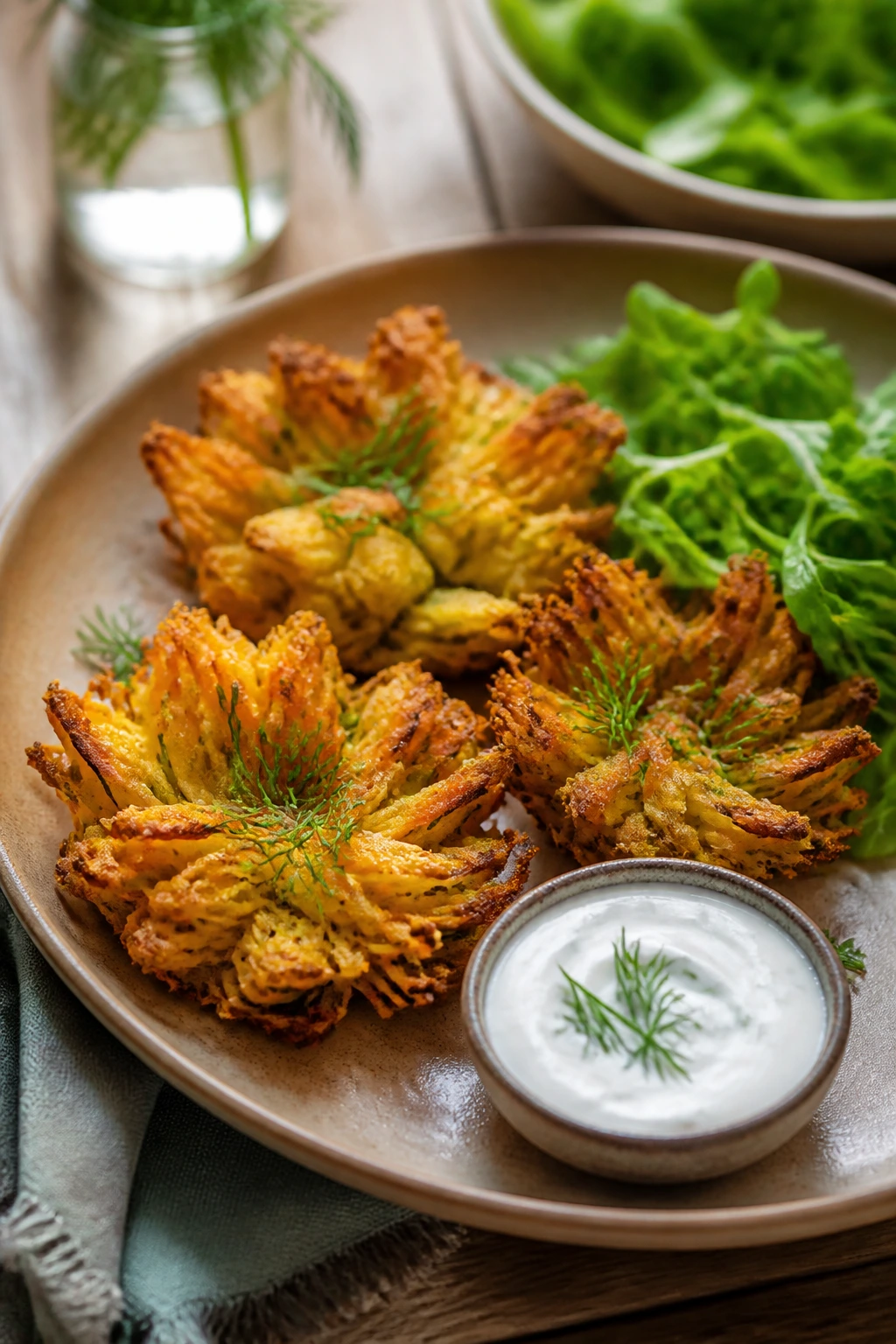
Presentation: Set three flowers slightly overlapping on each warm plate and keep the yogurt sauce on the side or in a small swoosh underneath. The edges stay crisp longer when the sauce isn’t poured straight on top. A scatter of dill or parsley over the plate makes the whole thing look finished without much effort.
Accompaniments: A chopped cucumber-tomato salad, lemony quinoa, or a simple arugula salad fits this dish well because the flowers already have body and browning. Warm pita or toasted sourdough helps if you want a more filling plate. If you’re serving it as a main, add a fried egg or a soft-boiled egg on top; the yolk mingles with the yogurt sauce in a way I never get tired of.
Portions: Two flowers make a light dinner with salad. Three flowers make a fuller plate. If you’re feeding people who tend to want seconds, plan on four flowers per person and use the sauce generously.
Beverage Pairing: Sparkling water with lemon keeps the plate bright, and a dry white wine like Sauvignon Blanc or Pinot Grigio plays nicely with the herbs and yogurt. If you want something nonalcoholic with a little more character, mint tea or cucumber water fits the same lane.
Small Tweaks That Make Them Taste Sharper and Crisp Better
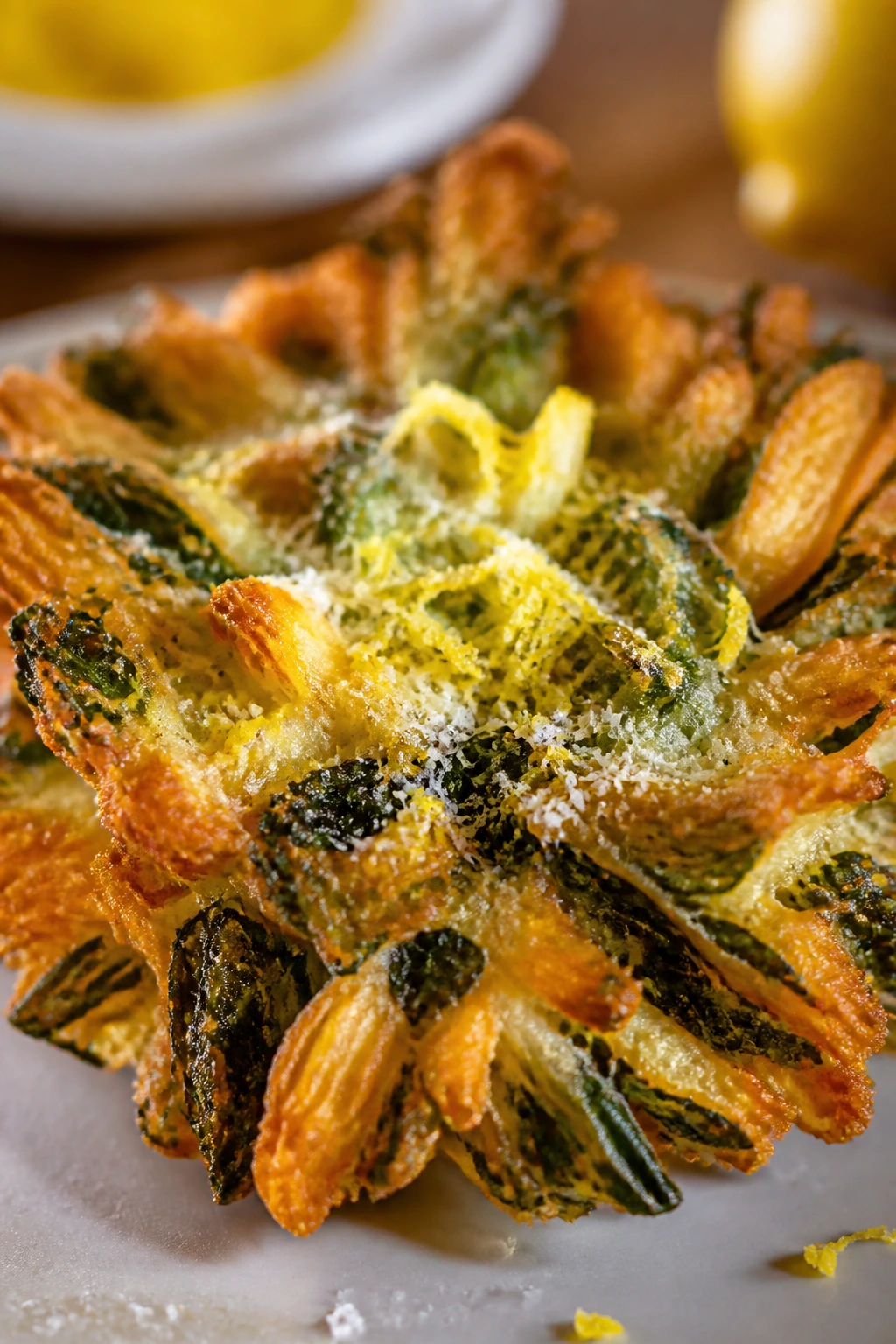
Flavor Enhancement: A pinch of lemon zest in the batter gives the flowers a brighter smell before they even hit the plate. If you like a slightly deeper, savory finish, add 1 tablespoon of finely grated pecorino instead of some of the Parmesan and finish with a tiny pinch of flaky salt after baking.
Time-Saver: A food processor with a shredding disk turns the whole prep into a five-minute job. Just stop before the vegetables become wet paste. You want shreds, not confetti.
Pro Move: Preheat the muffin tin with the oven and brush the cups with oil only after heating. That hot metal starts browning the edges the second the batter hits it, which is exactly what you want for crisp bottoms.
Cost-Saver: Use zucchini and carrots as the base and treat broccoli as optional. The recipe still works if the broccoli is replaced with more carrot or a handful of finely chopped cabbage, and those vegetables usually cost less by weight.
Make-It-Yours: For a dairy-free version, skip the Parmesan and use 2 tablespoons of nutritional yeast in the batter plus a tahini-lemon sauce instead of yogurt. For a gluten-free version, use chickpea flour and gluten-free panko, and the texture stays sturdy enough to bake cleanly.
Mistakes That Leave Them Soggy
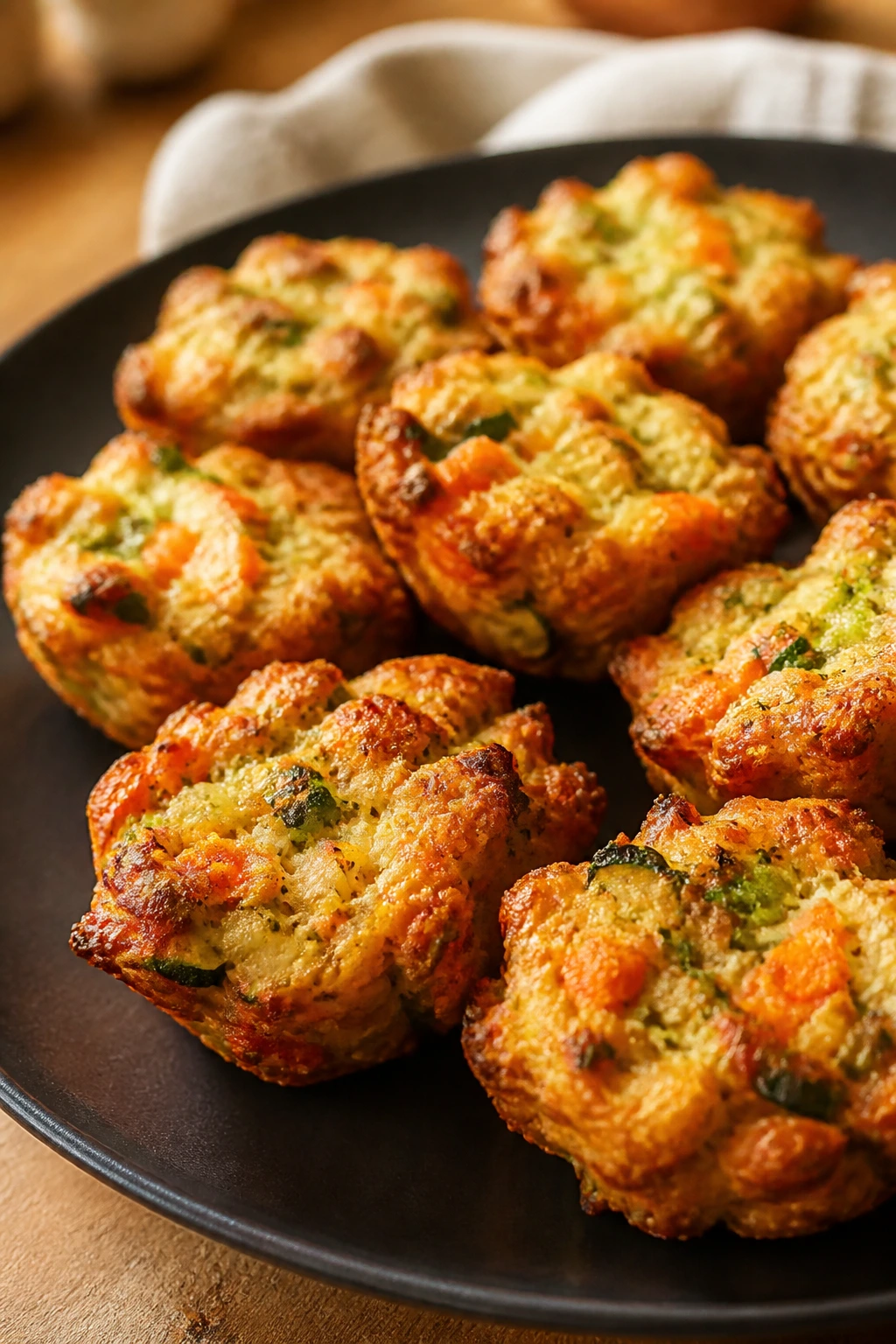
Skipping the zucchini squeeze: This is the big one. Wet zucchini makes the batter slack, the flowers steam, and the centers turn soft before the edges brown. Salt the shreds, rest them, and wring them out like you mean it.
Using too much binder: If you add extra flour or panko because the mix looks loose, you can end up with a heavy, bready interior. The batter should cling to the vegetables, not bury them. If it feels loose, let it rest first; the vegetables often tighten the mixture on their own.
Packing the tin too loosely: Loose mounds fall apart and spread unevenly. Press the mixture into the cups firmly enough that the shape holds, but don’t smash it flat. You want contact with the hot metal, not a compressed brick.
Pouring sauce over the top too early: Yogurt sauce is great. Soggy flowers are not. Serve the sauce on the side or under the flowers if you want the crisp edge to survive the plate.
Using a silicone pan or paper liners: Both trap steam and block browning. If crispness matters, use metal and grease it well. This is one of those cases where the pan matters more than the batter.
Named Variations for Different Kitchens
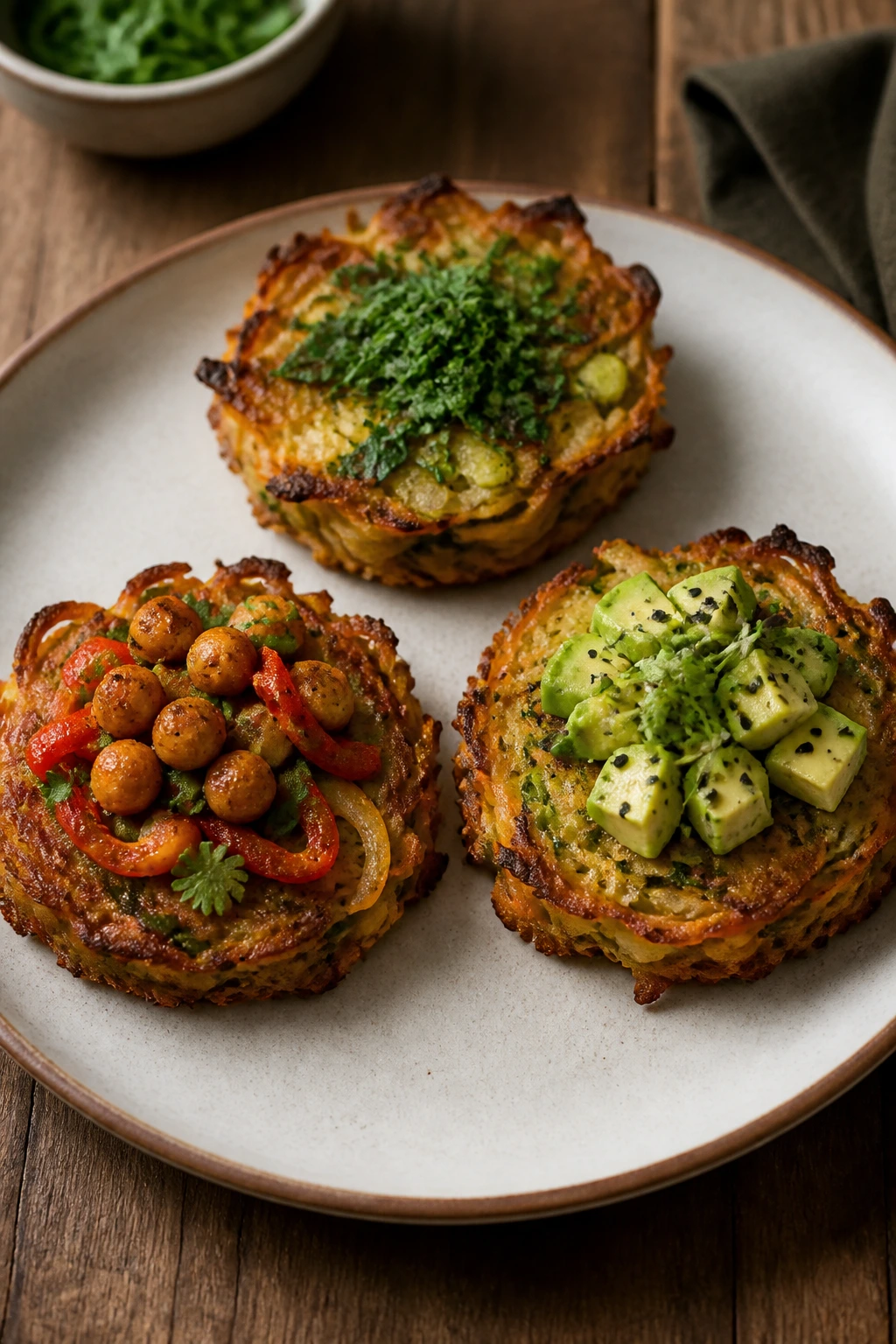
Herb Garden Flowers
Swap the parsley and dill for a mix of mint, basil, and chives, then add the zest of half a lemon to the batter. This version tastes fresher and a little more springlike, which is nice when you want the vegetables to stay bright rather than earthy.
Spiced Chickpea Flowers
Add 1/2 teaspoon ground cumin, 1/4 teaspoon coriander, and a pinch of chili flakes to the batter. Serve with tahini sauce instead of yogurt. The spices give the flowers a more middle-eastern lean, and chickpea flour stops feeling like a supporting act.
Dairy-Free Market Flowers
Leave out the Parmesan and add 2 tablespoons nutritional yeast plus an extra tablespoon of panko. The flavor is a little more nutty and less salty, so finish with a squeeze of lemon and a pinch of flaky salt after baking. A tahini-garlic sauce works better here than yogurt.
Extra-Crisp Air-Fryer Flowers
Shape the mixture into smaller portions and air-fry them at 375°F / 190°C for 12 to 14 minutes, flipping once halfway through. Spray or brush the surface with oil before cooking. The outside gets sharp and browned quickly, though the shape is a little less tidy than the oven version.
Sweet Potato and Corn Flowers
Replace the broccoli with 1/2 cup thawed frozen corn and increase the sweet potato to 1 1/2 medium potatoes. This version tastes sweeter and more kid-friendly, especially with a little extra black pepper and a yogurt sauce that’s heavy on lemon.
Storing, Reheating, and Making Them Ahead
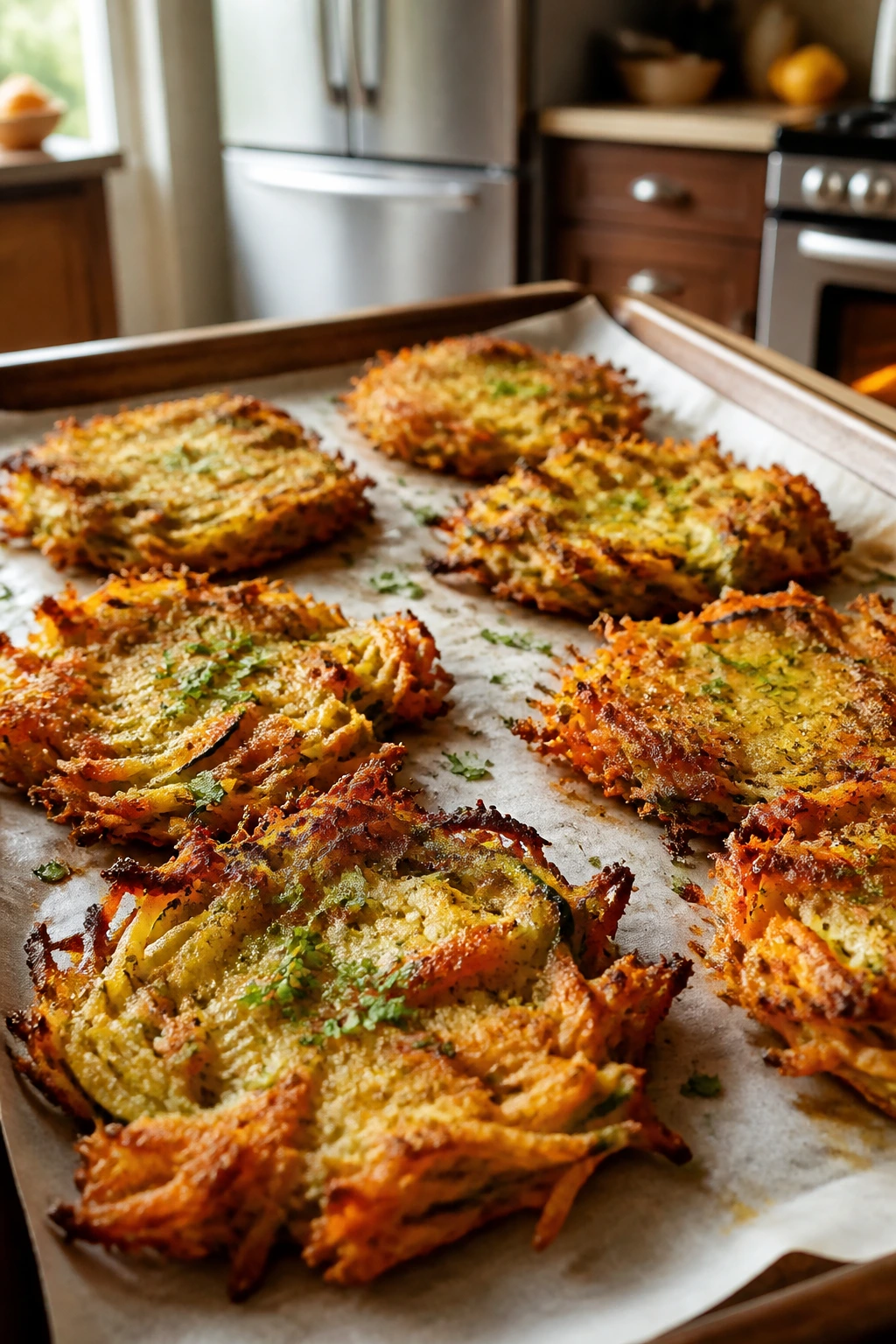
Cooked vegetable flowers keep in the refrigerator for 3 to 4 days in an airtight container. Stack them with a piece of parchment between layers if you need to, but don’t pack them too tightly or the edges steam and soften. The yogurt sauce keeps for 3 days as well, though it’s best stirred before serving because it can thicken slightly in the fridge.
They freeze well for up to 2 months. Freeze the cooked flowers on a baking sheet first, then move them to a freezer bag or container once they’re solid. That first freeze keeps them from clumping together and tearing when you grab one later.
For reheating, the oven is the safest bet. Set it to 400°F / 205°C and warm the flowers for 8 to 10 minutes from the fridge, or 12 to 14 minutes from frozen, until the edges crisp again and the centers are hot. An air fryer at 375°F / 190°C for 5 to 7 minutes also works well. The microwave is a last resort; it softens the crust and flattens the texture in a way you’ll notice immediately.
For make-ahead prep, grate the vegetables and store them separately in the fridge for up to 24 hours. The yogurt sauce can be mixed a day ahead, and the dry ingredients can be combined in a bowl earlier in the day. I wouldn’t mix the full batter too far in advance, though. Once the salt and moisture meet, the vegetables start giving up water, and that’s not the kind of head start you want.
Questions Home Cooks Ask Most
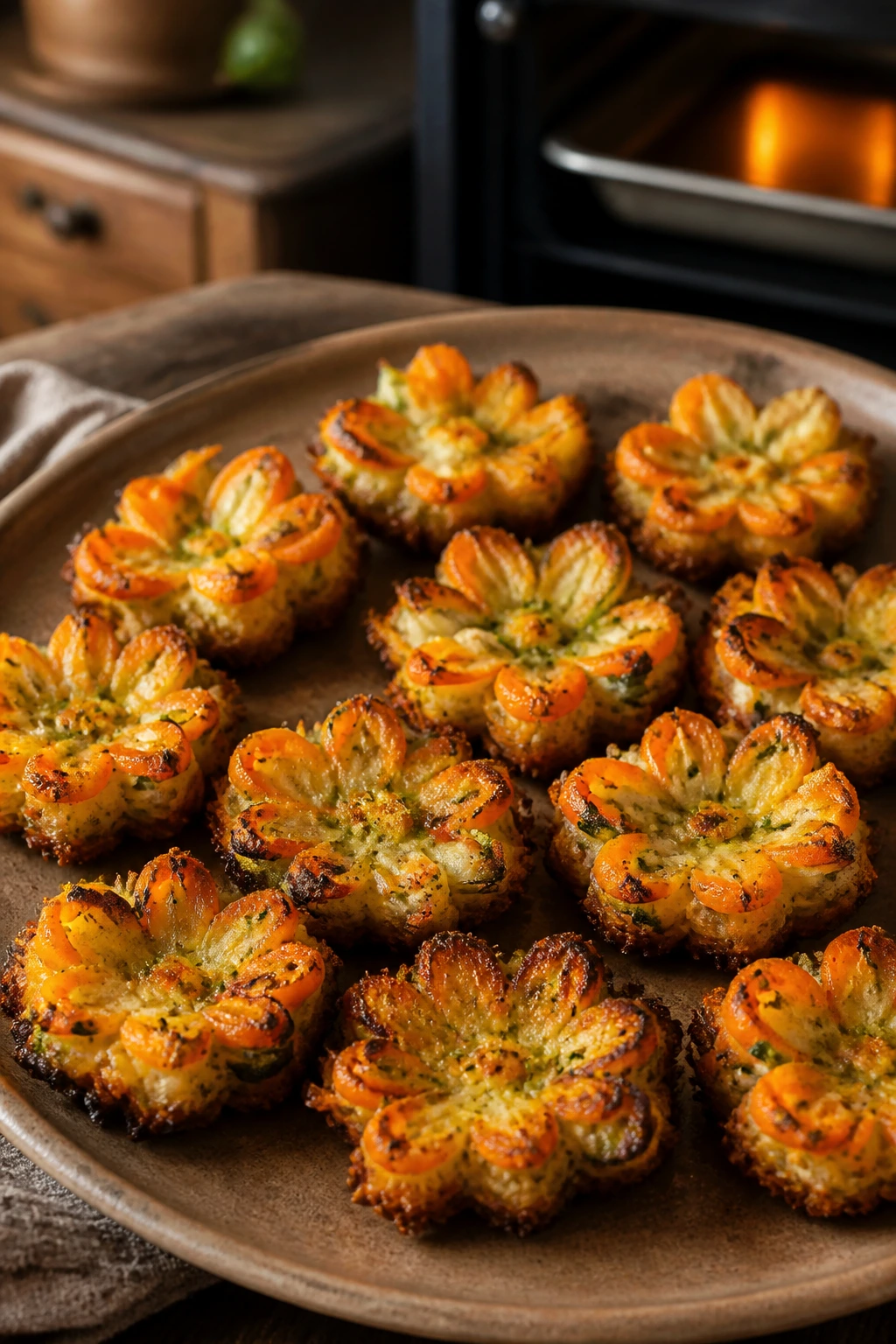
Can I make crispy vegetable flowers without a flower-shaped pan?
Yes. A standard metal muffin tin works fine, and the shape just becomes round instead of petaled. The crispness comes from the hot metal, the oil, and the dry vegetables, not from the pan’s design. If you own a flower pan, use it for looks. If not, don’t stall the recipe waiting for one.
Can I use frozen vegetables?
You can use frozen broccoli or corn, but thaw them first and dry them well before adding them to the bowl. Frozen zucchini is a bad trade here because it releases too much water and turns the batter loose. Fresh grated zucchini is worth the small bit of extra effort.
Why did my flowers fall apart when I lifted them out?
They were probably underbaked, too wet, or packed too loosely in the tin. Give them the full rest in the pan, make sure the centers feel set, and press the mixture firmly enough that the vegetables stick together. If they’re still fragile, leave them in the oven two minutes longer next time.
Can I make them gluten-free?
Yes. Chickpea flour is already doing most of the structural work, so swapping regular panko for gluten-free panko is enough for most kitchens. Keep an eye on moisture, since some gluten-free breadcrumbs absorb liquid differently and may need a tablespoon less or more.
What if I want these to be the main course instead of a side?
Pile them over quinoa, lentils, or a big salad and add a protein like eggs, white beans, or grilled halloumi. The vegetables give you texture and flavor, but the extra grain or protein makes the plate feel complete enough for dinner. I’d also make the yogurt sauce a little more generous.
Can I pan-fry them instead of baking?
Yes, though it takes more attention. Use a thin layer of oil in a nonstick or cast-iron skillet over medium heat and cook smaller mounds for about 3 to 4 minutes per side until browned and set. The texture is a bit richer, while the oven version gives you more hands-off time and less oil splatter.
How do I keep the bottoms from getting soggy after baking?
Move the flowers to a wire rack as soon as they’ve rested for a few minutes. A plate traps steam under the hot fritters, and that steam softens the browned bottom fast. If you need to hold them for a bit, the rack is the better place.
One More Tray
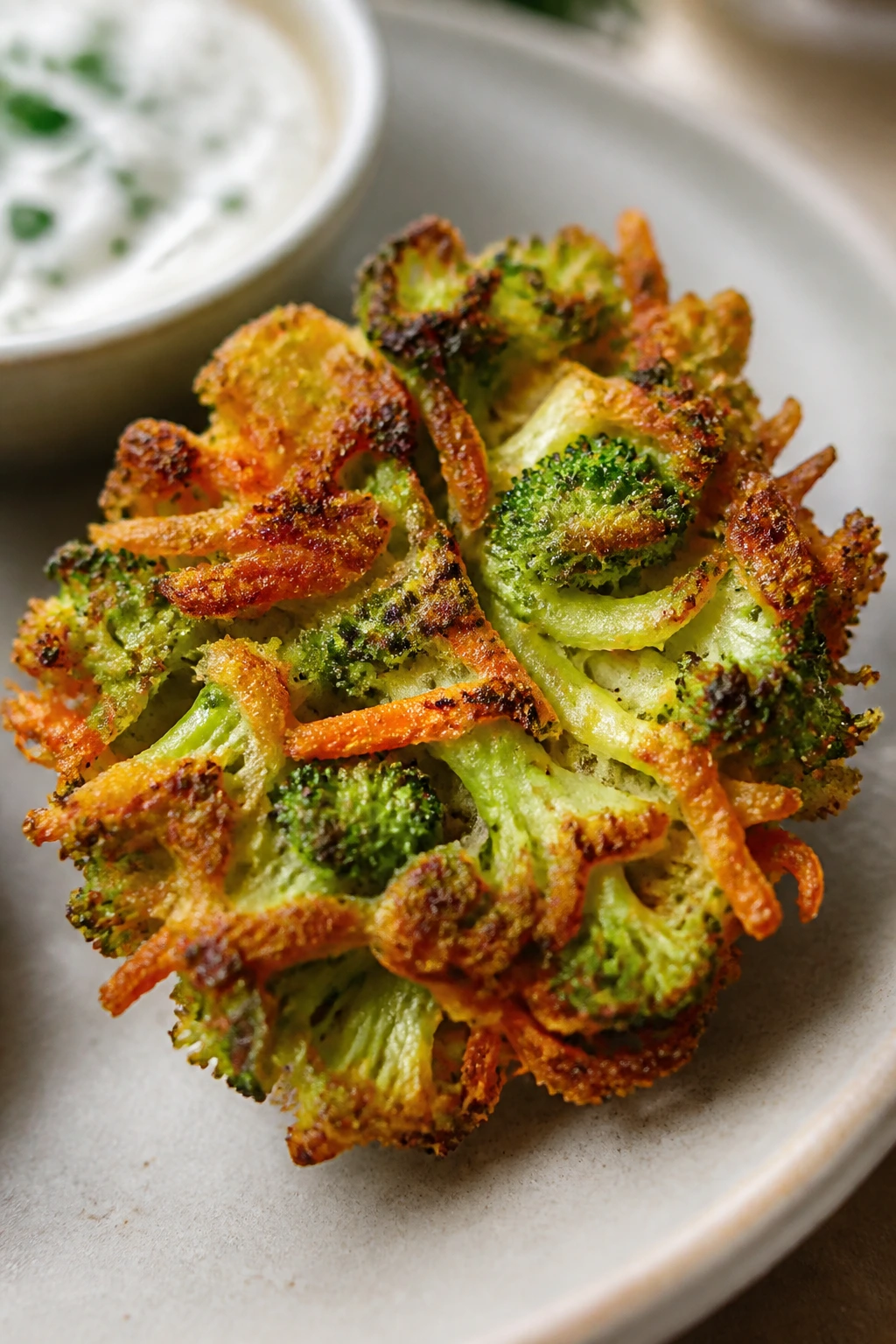
Crispy vegetable flowers work because they respect the vegetables instead of hiding them. You squeeze out the water, give the pan enough heat, and let browning do what it does best. That’s why the finished dish tastes alive rather than heavy.
I keep coming back to recipes like this because they solve a dinner problem without pretending to be something else. They’re vegetables, and they’re proud of it. Serve them hot, give them a sharp sauce, and don’t be shy with the lemon.
Crispy Vegetable Flowers — Recipe Card
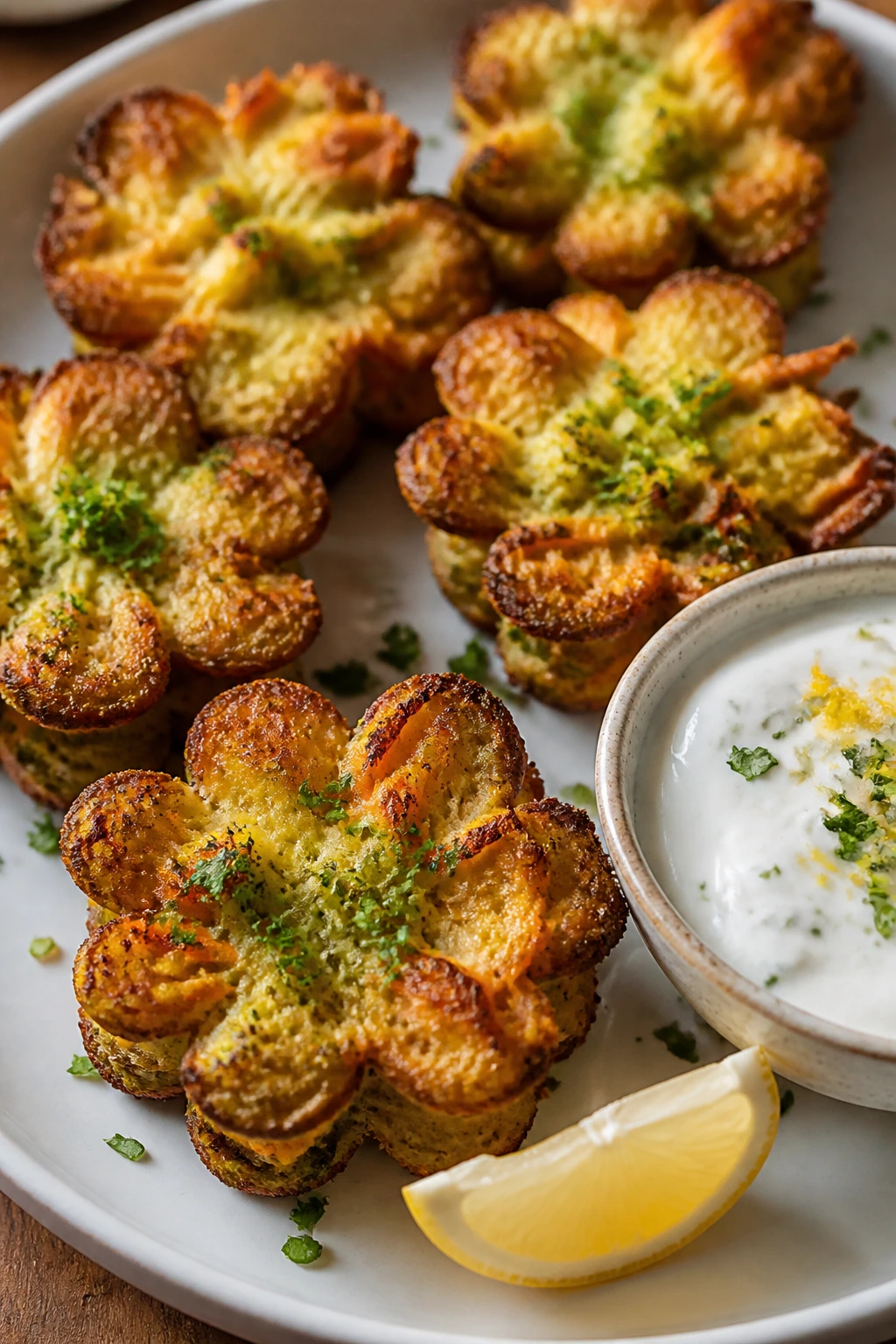
Recipe Name: Crispy Vegetable Flowers
Description: Savory baked vegetable fritters shaped in a flower-style muffin tin, with crisp browned edges, tender centers, and a lemon yogurt sauce for dipping. They work as a light vegetarian dinner or a substantial side.
Prep Time: 25 minutes
Cook Time: 22 minutes
Total Time: 47 minutes active, plus 15 minutes of draining and resting
Course: Dinner, Main Course
Cuisine: Vegetarian
Servings: 4 servings
Calories: About 230 kcal per serving
Ingredients
For the Vegetable Flowers:
- 2 medium zucchini, grated and squeezed dry
- 2 medium carrots, peeled and grated
- 1 medium sweet potato, peeled and grated
- 1 cup broccoli florets, very finely chopped
- 4 scallions, thinly sliced
- 2 large eggs
- 1/2 cup chickpea flour
- 1/2 cup panko breadcrumbs, or gluten-free panko
- 1/3 cup finely grated Parmesan
- 2 tablespoons chopped parsley
- 1 tablespoon chopped dill
- 1 teaspoon baking powder
- 1 teaspoon kosher salt, plus extra for draining the zucchini
- 1/2 teaspoon black pepper
- 1/2 teaspoon garlic powder
- 1/2 teaspoon smoked paprika
- 3 tablespoons olive oil, plus more for brushing the pan
For the Lemon Yogurt Sauce:
- 1 cup plain Greek yogurt
- 1 tablespoon lemon juice
- 1 teaspoon lemon zest
- 1 small garlic clove, finely grated
- 1 tablespoon chopped dill or mint
- 1/4 teaspoon kosher salt
- 1 to 2 teaspoons water, if needed to thin
For Serving:
- Lemon wedges
- Extra chopped herbs
- Pinch of flaky salt, optional
Instructions
-
Grate the zucchini into a colander, sprinkle with a little salt, and let it drain for 10 minutes. Grate the carrots and sweet potato, finely chop the broccoli, and slice the scallions.
-
Twist the zucchini in a clean kitchen towel until it feels dry and springy, with as much liquid removed as possible.
-
Whisk the eggs, chickpea flour, panko, Parmesan, baking powder, salt, pepper, garlic powder, smoked paprika, and olive oil in a large bowl.
-
Fold in the drained zucchini, carrot, sweet potato, broccoli, scallions, parsley, and dill until coated and sticky. Rest the mixture for 5 minutes.
-
Preheat the oven to 425°F / 220°C. Heat a metal muffin tin in the oven, then carefully brush each cavity with olive oil.
-
Pack the vegetable mixture firmly into the muffin cups or flower molds, smoothing the tops lightly.
-
Bake for 18 to 22 minutes, until golden and set. Broil for 1 to 2 minutes if you want deeper browning, watching closely.
-
Rest the flowers in the pan for 5 minutes, then lift them onto a wire rack.
-
Stir together the yogurt, lemon juice, lemon zest, garlic, dill, salt, and enough water to reach your preferred texture.
-
Serve warm with the yogurt sauce, lemon wedges, and extra herbs.
Notes:
- Squeeze the zucchini well; that’s the main difference between crisp and soggy.
- A metal muffin tin browns better than silicone.
- Serve the yogurt sauce on the side if you want the edges to stay sharp.