



A good crispy veggie stir fry is a small act of defiance. It says you do not need a delivery bag, a mystery slick of sauce, or limp broccoli to get dinner on the table fast. You need a hot pan, vegetables cut with some thought, and the nerve to leave them alone long enough to pick up a little color.
The first minute matters most. If the pan is lukewarm, the vegetables leak water and slump into a soft pile before the sauce even shows up. If the pan is hot enough, the carrots keep their snap, the snap peas stay bright, and the peppers blister at the edges in that way that makes the whole kitchen smell like a busy restaurant line.
This version leans into that kind of cooking. It uses a simple soy-ginger sauce, a handful of sturdy vegetables, and one very practical idea: cook the hard stuff first, the delicate stuff second, and the garlic only when you’re ready to move fast. That rhythm matters. It’s the difference between a bowl that feels fresh and a pan that tastes like it spent too long steaming under a lid.
Why This Stir Fry Earns a Spot in the Dinner Lineup
-
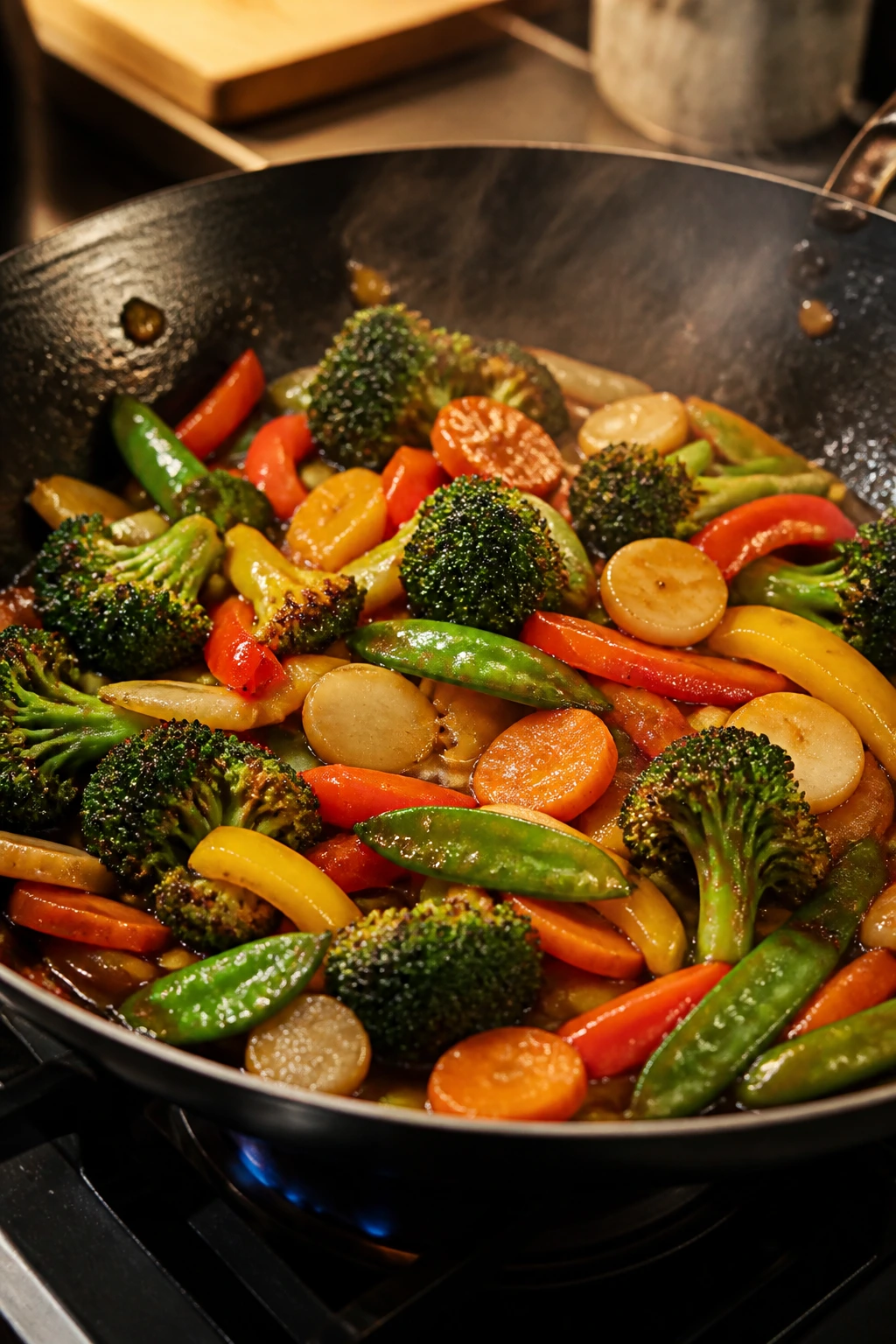
The vegetables stay in charge: Broccoli, carrots, peppers, snap peas, and water chestnuts each keep their own texture because they are added in the right order, not dumped in together.
-
The sauce clings instead of pooling: A small amount of cornstarch thickens the soy-ginger sauce just enough to lacquer the vegetables in under a minute.
-
The pan does most of the work: Once the chopping is done, the cooking moves fast — the kind of fast that keeps the garlic sweet instead of bitter.
-
It plays nicely with what’s in the crisper drawer: If you’ve got cabbage, baby bok choy, green beans, or mushrooms hanging around, they can slide into this recipe without a full rewrite.
-
It works as a side or a main: Spoon it over jasmine rice, tuck it into noodles, or pile it next to tofu or chicken when the dinner needs more heft.
A Quick Look at Yield, Time, and Difficulty
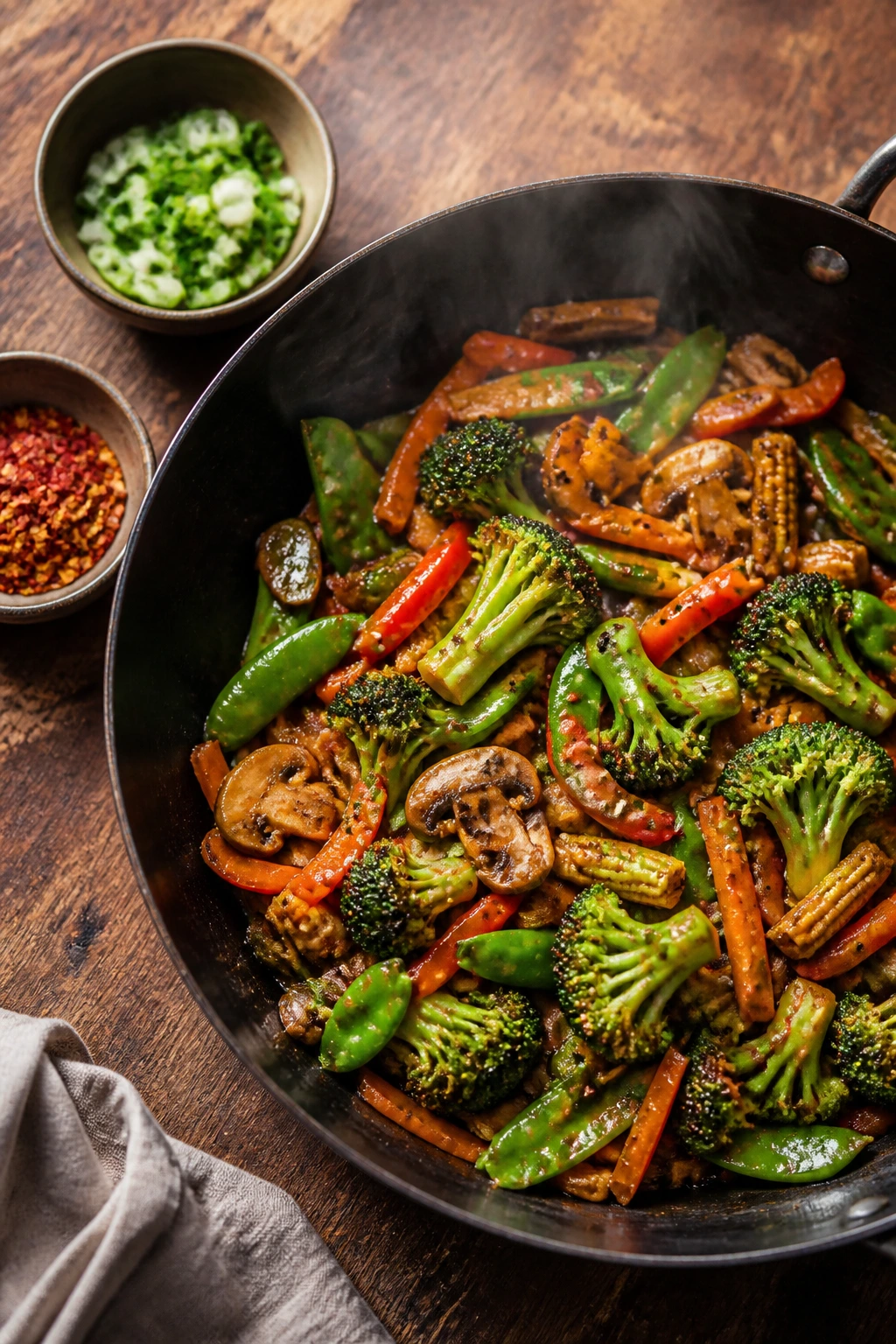
Yield: Serves 4 as a main side dish, or 2 to 3 as a light dinner
Prep Time: 20 minutes
Cook Time: 10 to 12 minutes
Total Time: About 30 to 32 minutes
Difficulty: Beginner — the ingredient prep takes the longest, and the cooking itself is straightforward once the pan is hot.
Best Served: Right away, while the vegetables still have some bite
The Ingredient List for Crisp, Glossy Vegetables
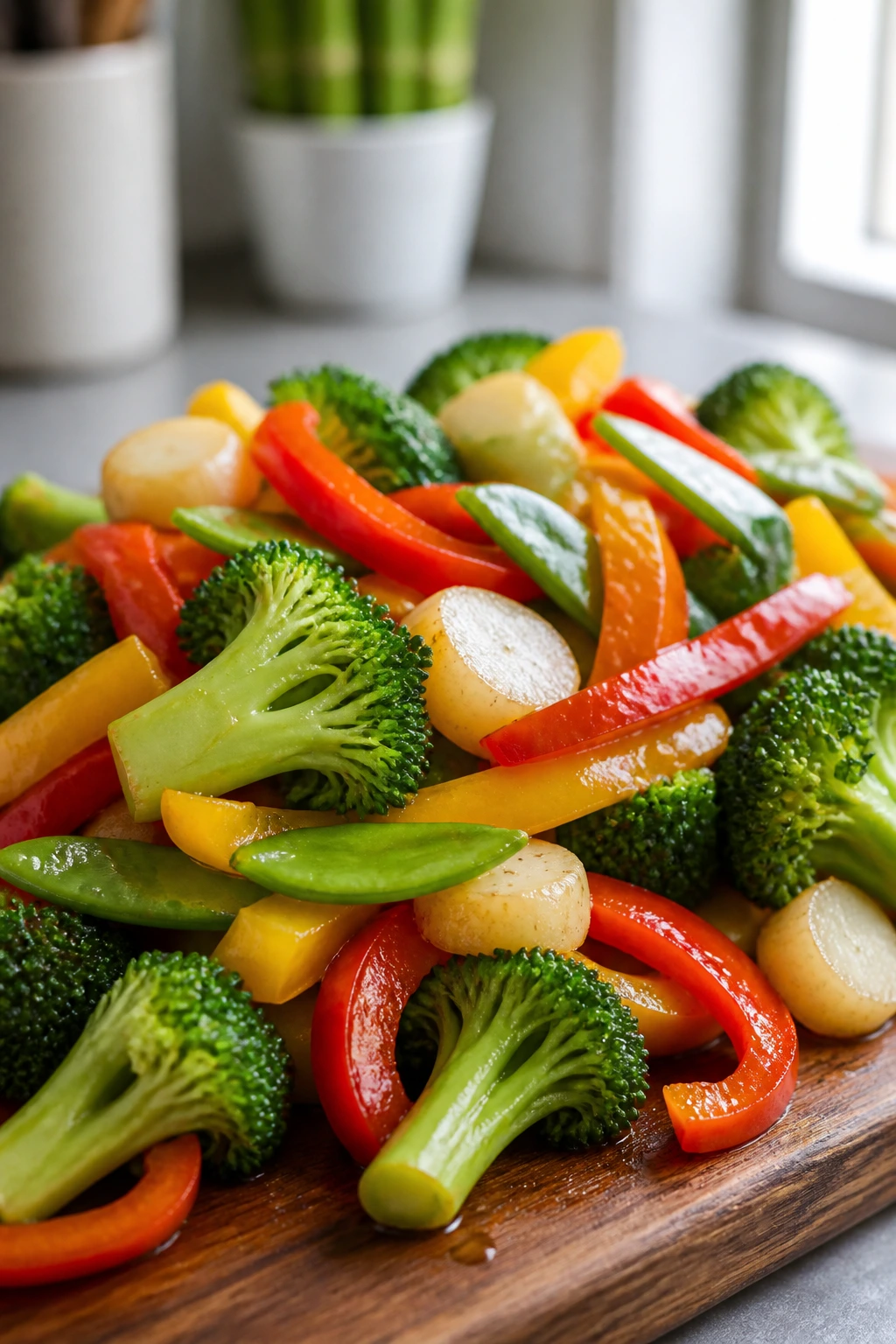
For the Stir Fry
- 2 tablespoons neutral oil, such as peanut, avocado, or grapeseed
- 3 cups broccoli florets, cut small so they cook evenly
- 2 medium carrots, peeled and sliced into thin coins or matchsticks
- 1 red bell pepper, thinly sliced
- 1 yellow bell pepper, thinly sliced
- 1 cup snap peas, strings removed
- 1 can (8 ounces) sliced water chestnuts, drained and patted dry
- 3 scallions, whites and greens separated, thinly sliced
- 3 cloves garlic, minced
- 1 tablespoon fresh ginger, finely grated
For the Sauce
- 1/3 cup low-sodium soy sauce
- 2 tablespoons rice vinegar
- 1 tablespoon oyster sauce or vegetarian mushroom stir-fry sauce
- 1 tablespoon honey or packed brown sugar
- 1 teaspoon toasted sesame oil
- 2 teaspoons cornstarch
- 1/4 cup water
For Finishing
- 1 tablespoon toasted sesame seeds
- 1/2 teaspoon red pepper flakes or 1 tablespoon chili crisp, optional
- Cooked jasmine rice or noodles, for serving if you want a full meal
Why Each Ingredient Matters in a Good Vegetable Stir Fry
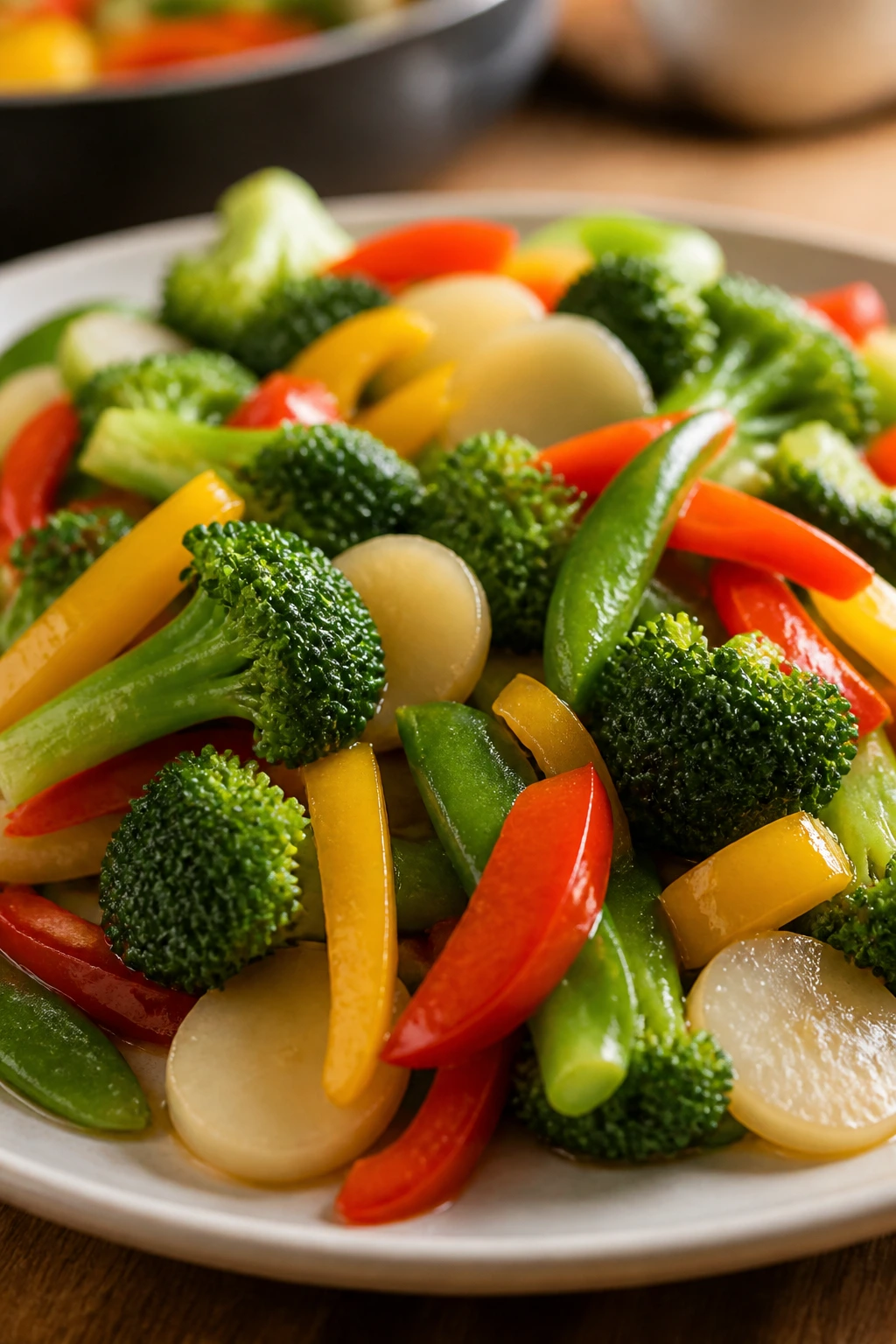
The Vegetables That Keep Their Bite
What to use: 3 cups broccoli florets, 2 carrots, 1 red bell pepper, 1 yellow bell pepper, 1 cup snap peas, and 1 can of water chestnuts give you a mix of firm, crisp textures.
Preparation: Cut the broccoli into small florets and peel the stems if they’re thick; slice the carrots thin enough to soften in minutes; keep the peppers in long strips; and pat the water chestnuts dry so they don’t cool the pan.
Substitutions: Green beans, cabbage, baby bok choy, snow peas, or mushrooms can take over part of the mix. Zucchini works too, but only if you add it at the very end because it gives up water fast.
Tips: The best stir fry vegetables are the ones that can handle high heat without collapsing. Hard vegetables go in first, softer vegetables later, and anything watery should be handled like a problem child — late, briefly, and with no room for drama.
The Sauce That Clings to the Vegetables
What to use: 1/3 cup soy sauce, 2 tablespoons rice vinegar, 1 tablespoon oyster sauce, 1 tablespoon honey, 1 teaspoon sesame oil, 2 teaspoons cornstarch, and 1/4 cup water build a sauce that tastes salty, tangy, and a little rounded at the edges.
Preparation: Whisk the cornstarch into the liquid until the mixture looks smooth and milky, with no dry specks at the bottom of the bowl.
Substitutions: Tamari handles gluten-free cooking well. Coconut aminos can stand in, but they run sweeter, so cut the honey back a little. If you skip oyster sauce, add another teaspoon of soy sauce and a pinch of sugar to keep the flavor from going flat.
Tips: Keep the sauce near the stove, not across the kitchen. Once the vegetables are ready, you want to pour and toss, not search drawers while the garlic burns.
Aromatics and Finishing Pieces
What to use: 3 cloves garlic, 1 tablespoon ginger, and 3 scallions are the backbone of the aroma, while sesame seeds and chili flakes finish the pan with a little crunch and warmth.
Preparation: Mince the garlic fine, grate the ginger on a microplane or the small holes of a box grater, and split the scallions so the white parts cook with the garlic and the green parts stay fresh for the end.
Substitutions: Garlic paste and ginger paste work in a pinch. Shallots can replace scallions. Toasted peanuts or cashews can replace sesame seeds if you want a louder crunch.
Tips: Aromatics belong near the end of the cooking, not at the beginning. Garlic turns bitter fast over high heat, and ginger can go sharp in a way that tastes harsh instead of lively.
Optional Add-Ins for a Fuller Bowl
What to use: Cubed tofu, cooked chicken, shrimp, or a handful of roasted cashews can turn this into a more complete meal without changing the core method.
Preparation: Cook proteins separately and add them back at the end so the vegetables stay crisp. If you’re using tofu, press it first so it browns instead of steaming.
Substitutions: Edamame, baby corn, or thinly sliced cabbage can stand in for some of the vegetables if your fridge looks bare. A spoonful of chili crisp can replace the red pepper flakes if you want heat with more flavor behind it.
Tips: Anything crunchy should go on top or go in at the end. If you cook the garnish too long, you lose the point of having it there in the first place.
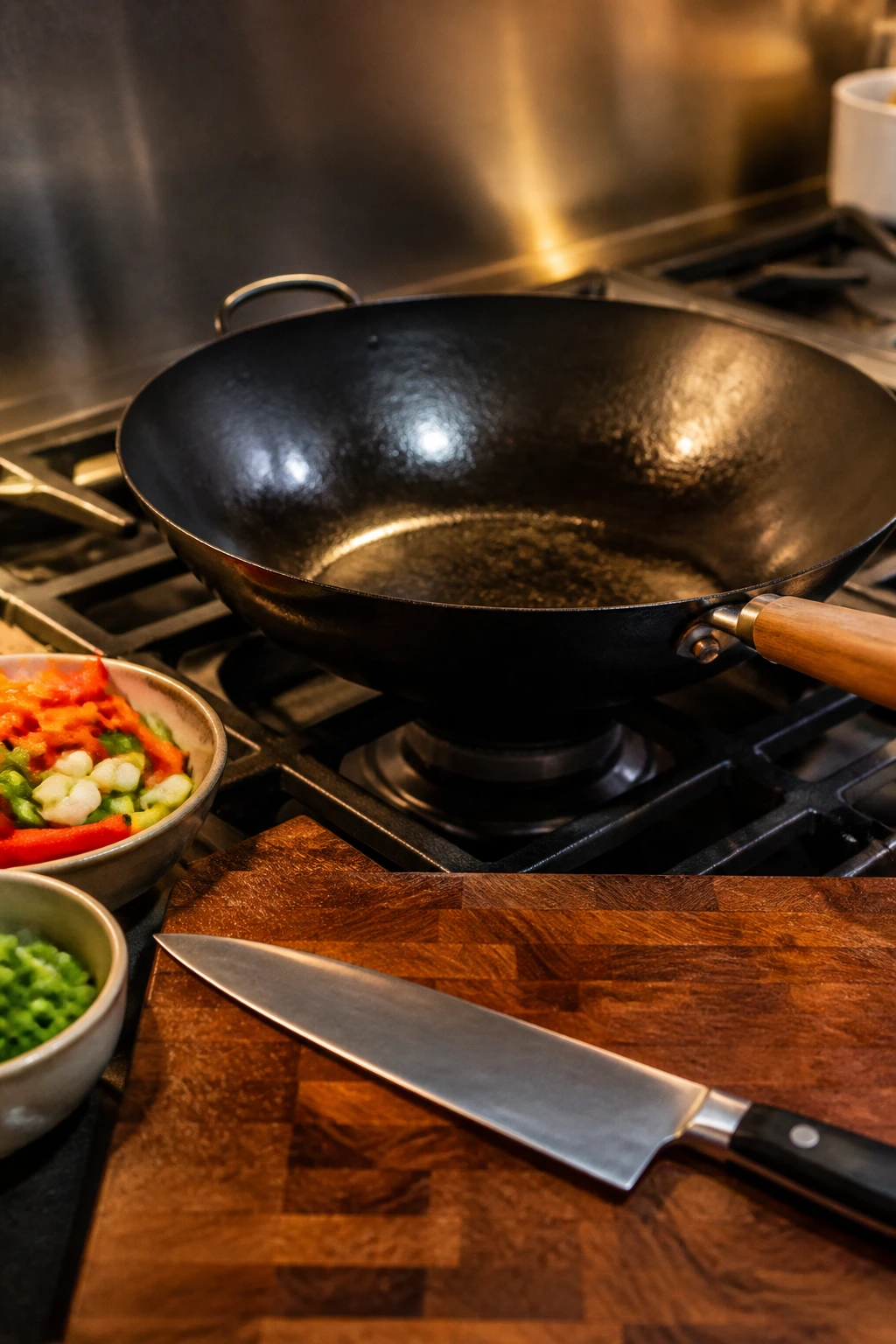
The Tools That Make High-Heat Cooking Less Fussy
-
Wok or 12-inch stainless steel skillet: A wok is ideal because the sides stay hot and give you room to toss, but a large skillet works if you keep the batch small.
-
Sharp chef’s knife: The vegetables cook at different speeds, so clean, even cuts matter more here than in a soup or stew.
-
Cutting board: A sturdy board gives you enough room to prep everything before the pan heats up.
-
Small bowl and whisk: You want the sauce mixed before the vegetables hit the heat, not halfway through the stir fry.
-
Wooden spoon, heatproof spatula, or long chopsticks: Something that can move vegetables quickly without scratching the pan or melting at the edge.
-
Measuring spoons and cups: Stir fry moves too fast to eyeball the sauce and hope for the best.
-
Large plate or sheet pan: Use it to hold the cooked vegetables while you finish the aromatics if your pan needs to be used in stages.
-
Airtight storage containers: Leftovers keep better when they cool quickly and go straight into a sealed container.
The Fast, Hot Method for Keeping the Vegetables Crisp
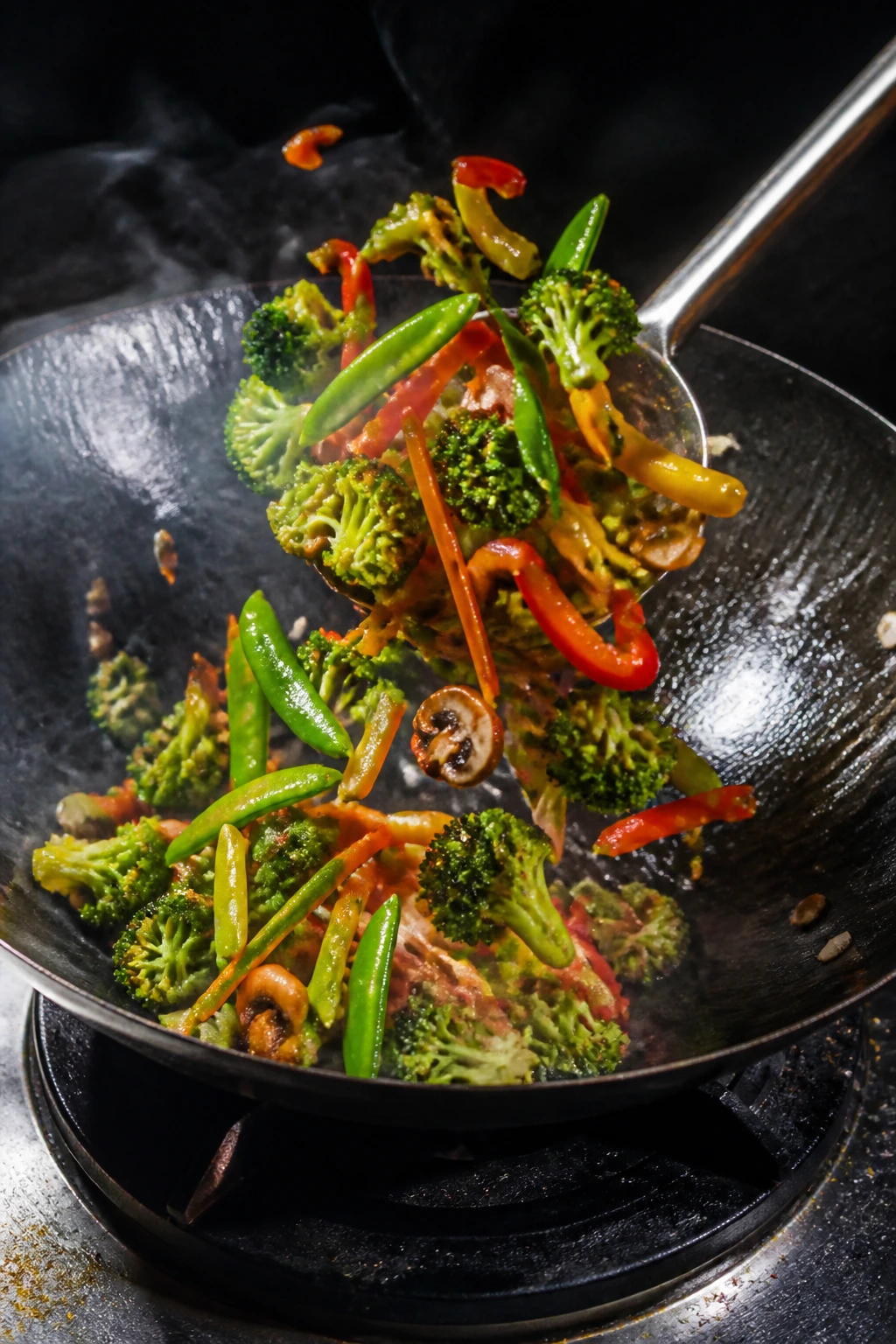
Mix the Sauce and Prep the Pan:
-
In a small bowl, whisk together the soy sauce, rice vinegar, oyster sauce, honey, toasted sesame oil, cornstarch, and water until the mixture looks smooth and the cornstarch has disappeared.
-
Cut all vegetables before you start cooking and keep the broccoli, carrots, peppers, snap peas, and water chestnuts in separate piles if you can. Dry the vegetables well with a clean towel or paper towels, especially the water chestnuts and snap peas.
-
Set a wok or large skillet over high heat for 2 to 3 minutes. You want it hot enough that a drop of water sizzles and vanishes almost at once.
Cook the Vegetables in Stages:
-
Add 1 tablespoon of neutral oil and swirl to coat the bottom. When the oil shimmers, add the broccoli and carrots. Stir-fry for 2 minutes, moving them constantly so the edges pick up a little color but don’t soften all the way.
-
Add the red and yellow bell peppers, snap peas, and water chestnuts. Stir-fry for 1 to 2 minutes more, just until the peppers look bright and the snap peas still snap when pressed. Do not crowd the pan; if the vegetables pile up, they start steaming instead of searing.
-
Push the vegetables to the sides of the pan and add the remaining 1 tablespoon oil to the center. Stir in the garlic, ginger, and scallion whites. Cook for 20 to 30 seconds, just until the garlic smells sweet and sharp, not browned.
Finish with Sauce and Garnish:
-
Whisk the sauce one more time, then pour it into the center of the pan. Toss everything for 30 to 60 seconds until the sauce thickens, turns glossy, and lightly coats the vegetables instead of sliding off in a puddle.
-
Turn off the heat. Stir in the scallion greens, sprinkle with sesame seeds, and add red pepper flakes or chili crisp if you want heat. Serve immediately over rice or noodles while the vegetables are still lively.
How to Serve It So the Crunch Survives the Trip to the Table
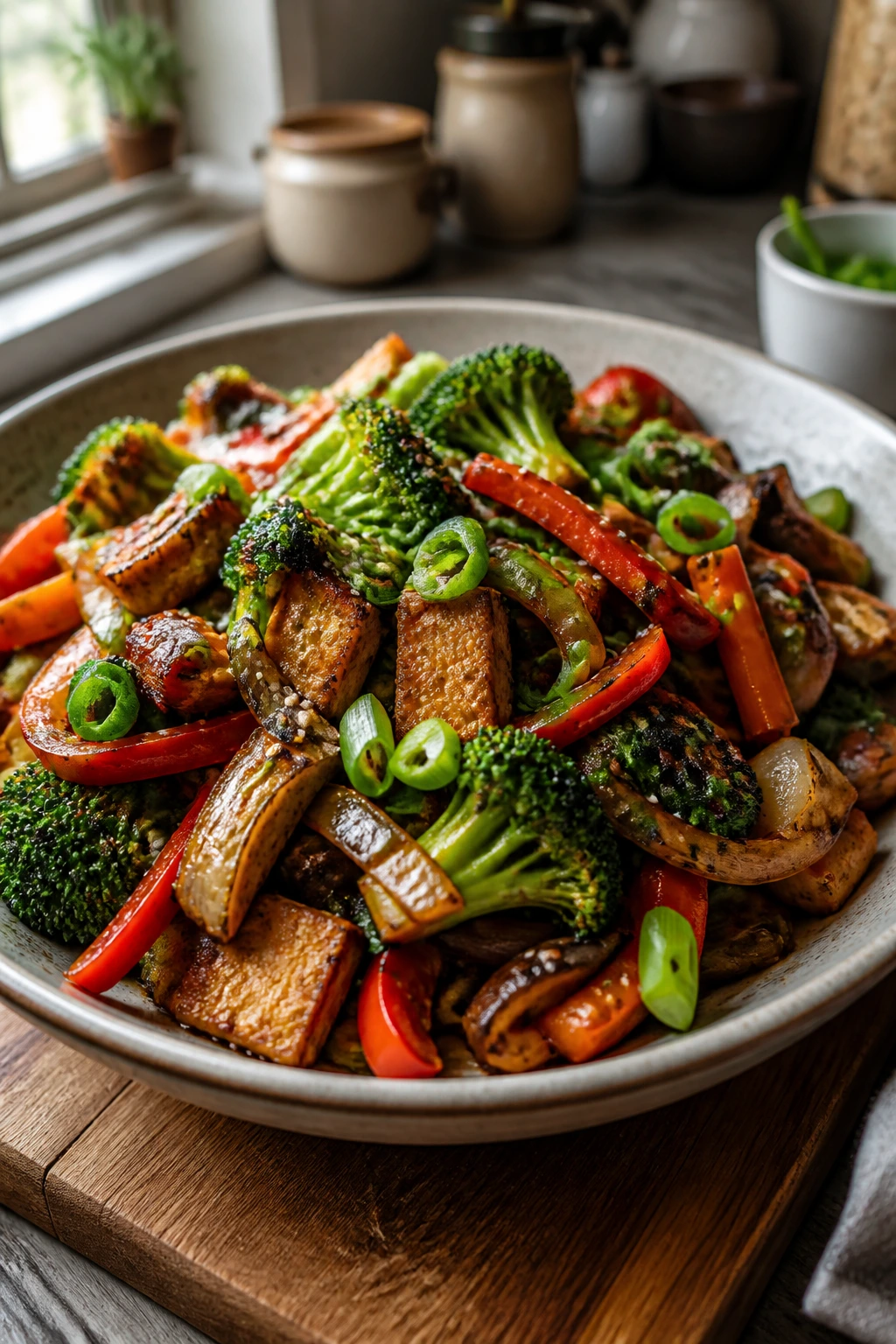
Presentation: A shallow bowl or wide dinner plate works better than a deep soup bowl because the vegetables can spread out instead of trapping steam. Pile the stir fry high in the center, then scatter the scallion greens and sesame seeds over the top so the colors stay distinct.
Accompaniments: Steamed jasmine rice is the classic move because it soaks up the sauce without competing with the vegetables. Brown rice gives the dish a nuttier base, and soba noodles work if you want something with a little chew. A simple cucumber salad or a plate of plain steamed dumplings keeps the meal from feeling too heavy.
Portions: As a side, this serves 4 comfortably. As a main dinner, count on 2 to 3 servings unless you add tofu, chicken, or shrimp. If you’re feeding bigger appetites, stretch the pan with an extra cup of broccoli or a second can of water chestnuts rather than drowning it in more sauce.
Beverage Pairing: Cold jasmine tea suits the ginger and sesame without fighting them. A dry lager works if you want something colder and a little sharper. Sparkling water with a lime wedge is the quiet answer when you want the vegetables to stay center stage.
Small Moves That Make the Pan Happier
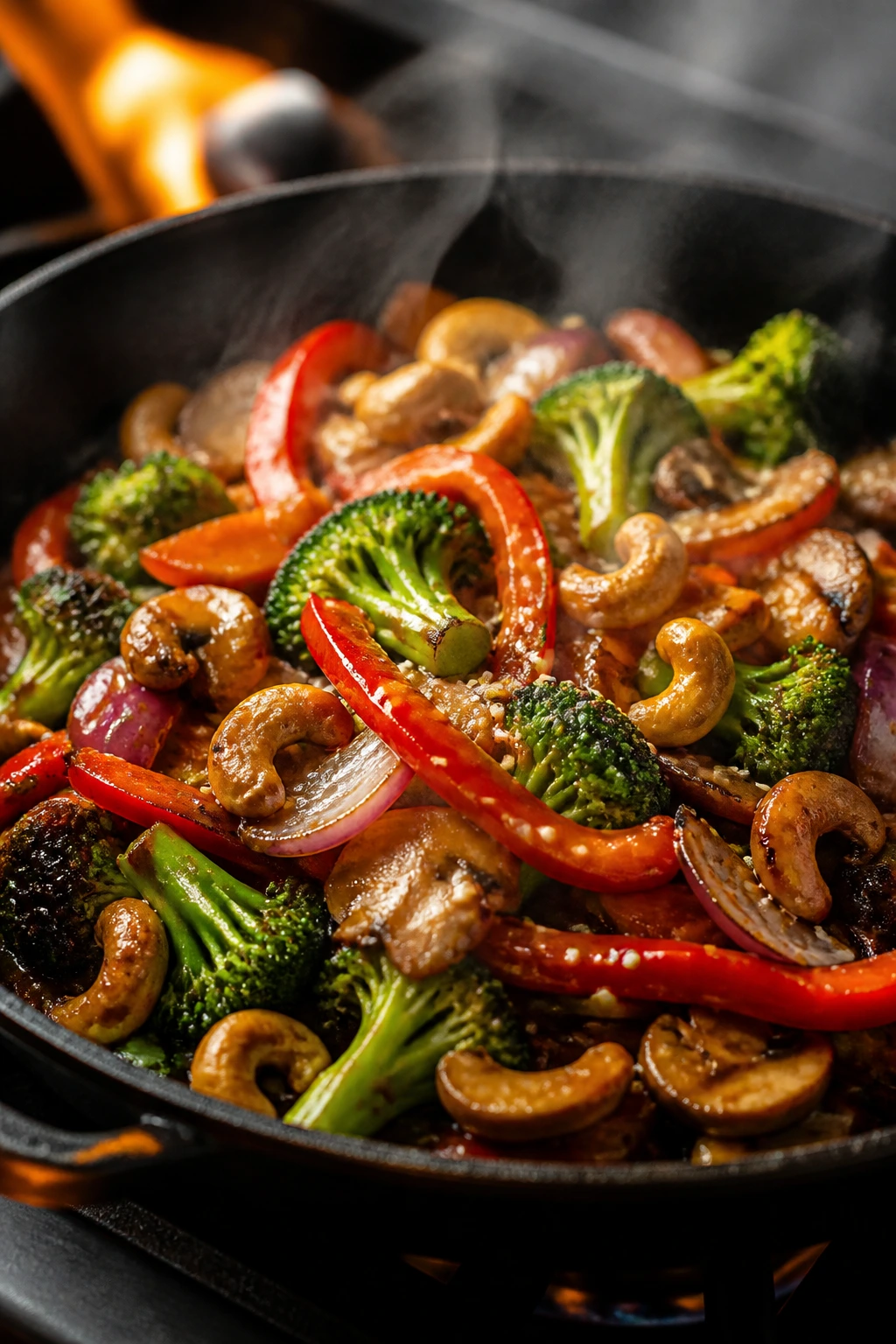
Flavor Enhancement: A teaspoon of black vinegar or a small squeeze of lime at the end wakes up the soy sauce in a way plain salt never will. The acid cuts through the cornstarch glaze and makes the vegetables taste brighter, especially if you’re serving rice on the side.
Customization: If you like heat, add sliced fresh chili with the garlic or use chili crisp in place of the red pepper flakes. If you want more richness, toss in a handful of cashews during the final 30 seconds so they stay crunchy and pick up the sauce.
Serving Suggestions: Toasted sesame seeds are nice, but chopped peanuts, cilantro, or a spoonful of fried shallots can make the bowl feel more finished. I also like a few extra scallion greens on top because they stay sharp against the warm vegetables.
Time-Saver: Pre-cut broccoli florets and bagged snap peas save real minutes here. Frozen vegetables can work in a pinch, but thaw them first and pat them dry or they’ll drag the pan temperature down.
Cost-Saver: Cabbage, carrots, and onions are cheaper than a tray full of specialty vegetables and they still hold up well to high heat. If the fridge is lean, that mix makes a perfectly respectable stir fry — maybe not flashy, but it cooks well and eats well.
Common Mistakes That Turn a Good Stir Fry Limp
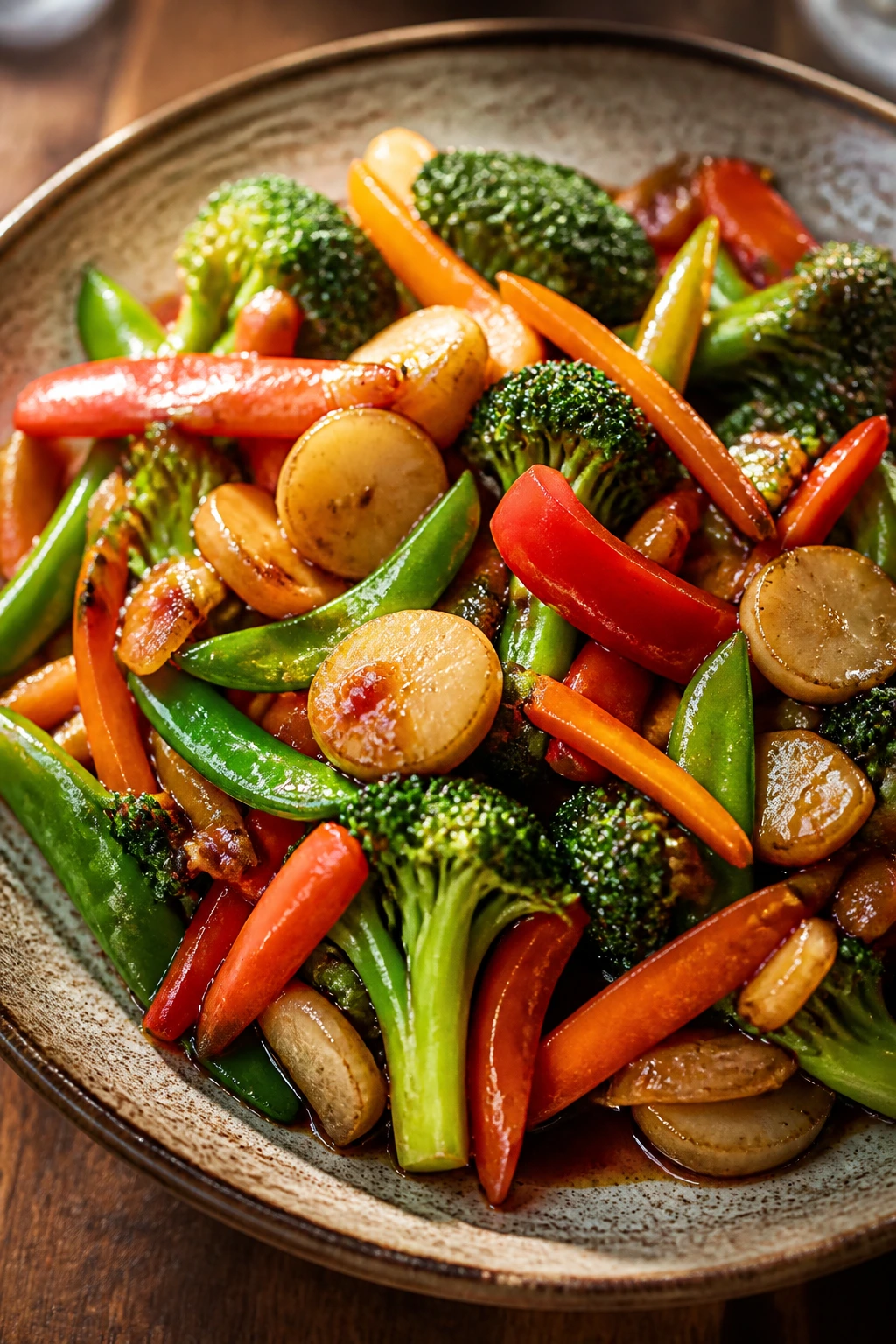
-
Starting with a pan that isn’t hot enough: If the pan only feels warm, the vegetables sweat instead of sear, and you end up with a gray, steamy mix. The fix is simple: give the pan a full 2 to 3 minutes over high heat and don’t add the oil until the surface is ready.
-
Crowding every vegetable into the pan at once: The minute the pan looks overloaded, the temperature drops and the whole thing turns soft. Cook in two batches if you need to — especially if you’re using a skillet instead of a wok.
-
Adding garlic too early: Garlic can go from fragrant to bitter in seconds on high heat. Keep it for the final minute, right after the vegetables have had time to pick up some color.
-
Using wet vegetables: Water chestnuts, snap peas, and even rinsed broccoli can dump enough moisture into the pan to thin the sauce. Dry everything well before it goes near the heat.
-
Pouring in the sauce before the vegetables are done: If the sauce goes in too soon, the vegetables keep cooking in liquid and lose their snap. Wait until the broccoli is bright green with a few browned edges and the peppers still look firm.
-
Adding too much sauce: A stir fry should be glazed, not soupy. If there’s a puddle at the bottom of the pan, the vegetables were probably under-heated or the sauce was doubled without a reason.
Variations for Different Cravings and Diets
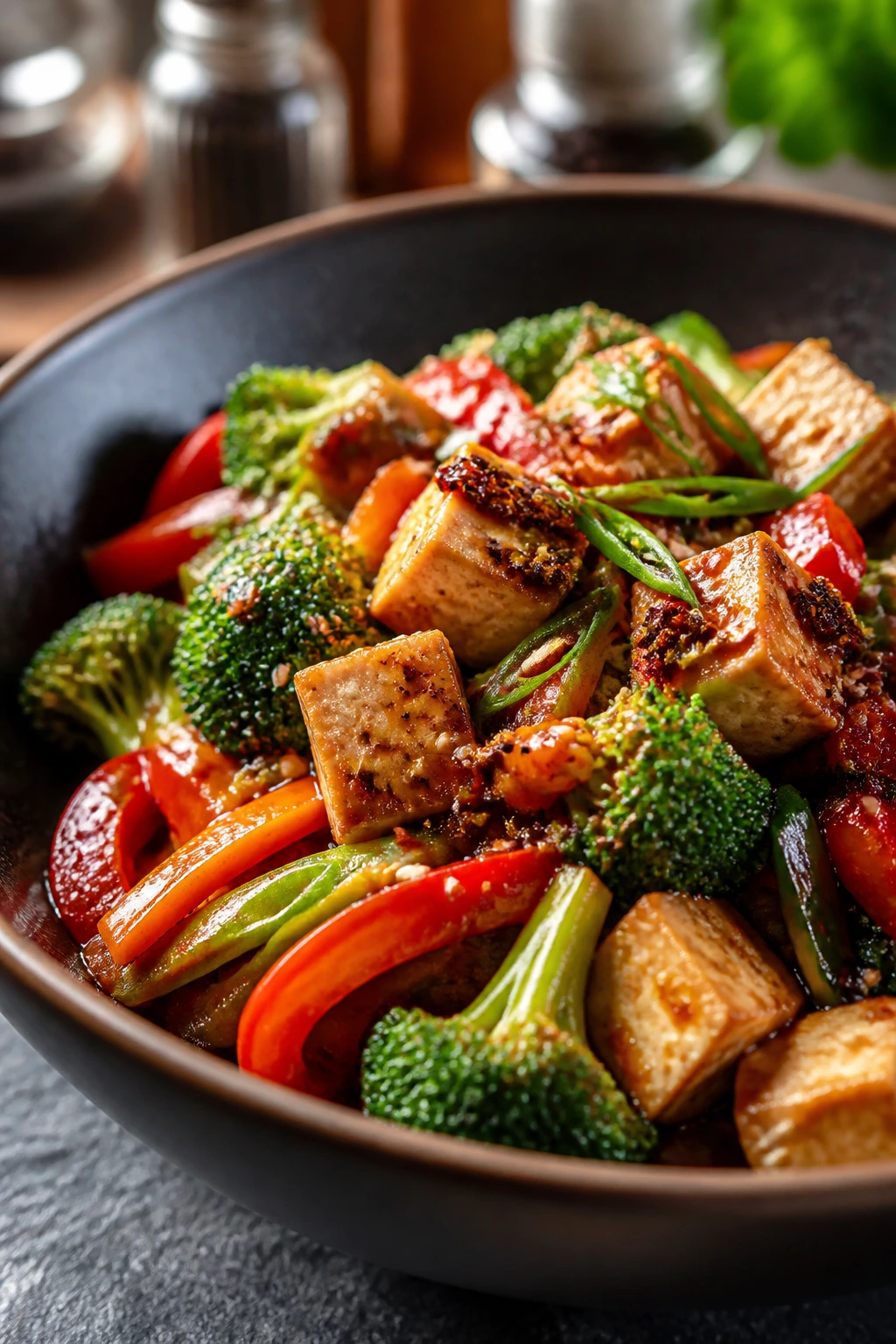
Chili Crisp Crunch Bowl: Stir 1 to 2 tablespoons of chili crisp into the finished pan and skip the red pepper flakes. The chili oil adds heat, garlic, and little fried bits that cling to broccoli and peppers, which is handy when you want more punch without changing the whole recipe.
Tofu and Broccoli Dinner Plate: Press 14 ounces of extra-firm tofu for 20 minutes, cube it, and sear it separately until the edges are golden before cooking the vegetables. Add it back at the end and spoon the sauce over everything; the tofu soaks up the glaze and turns the dish into a real dinner.
Sesame-Miso Version: Whisk 1 tablespoon white miso into the sauce and reduce the honey a little. The miso brings a deeper, saltier note that works especially well if you’re serving the stir fry with plain rice and want more body in the sauce.
Cashew and Snow Pea Swap: Replace the water chestnuts with 3/4 cup roasted cashews and trade the yellow pepper for extra snow peas. The cashews make the bowl feel richer, and snow peas bring that clean snap that holds up well even after a quick toss in the pan.
How to Keep Leftovers From Turning Sad
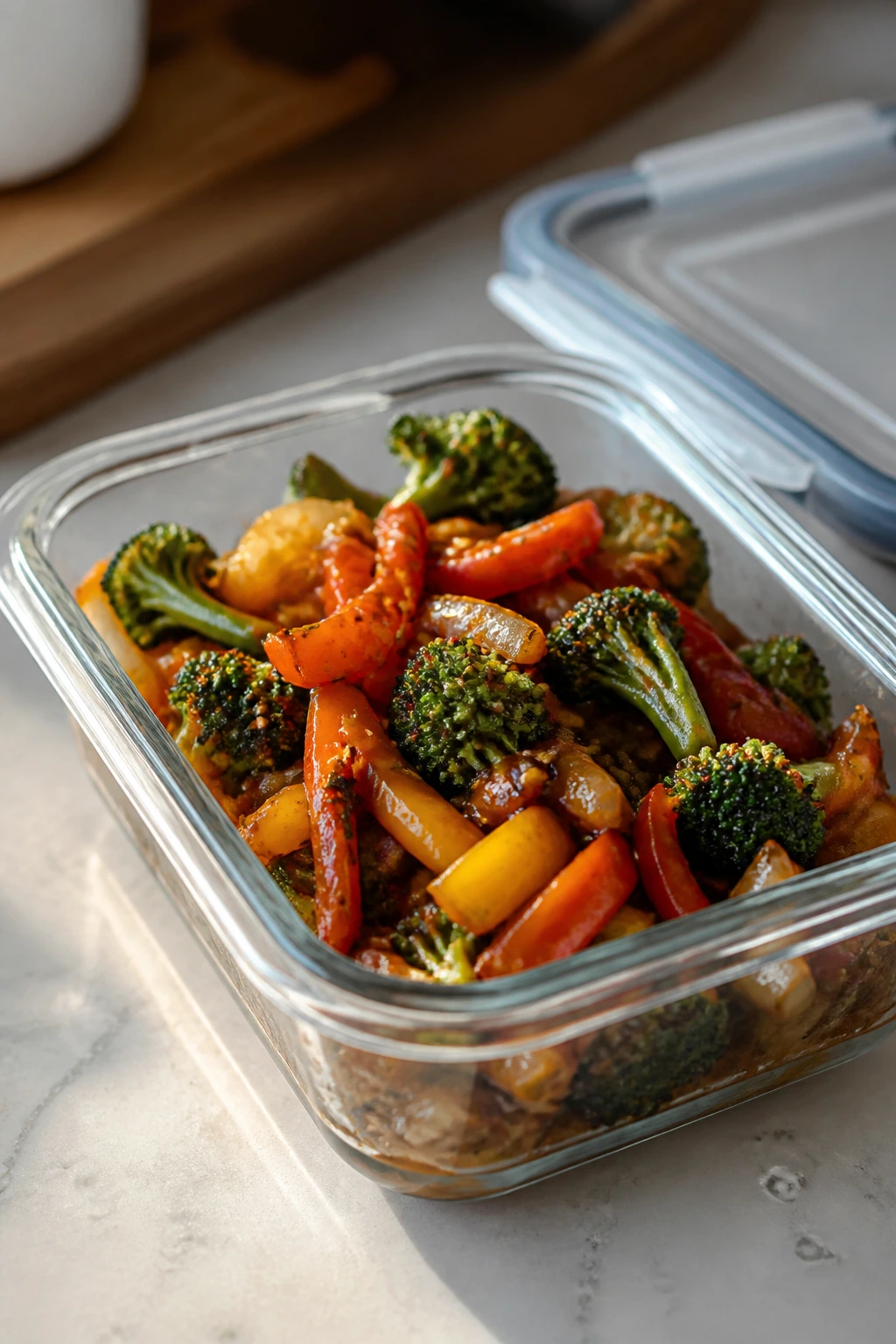
This stir fry is best the day it’s made. After that, the vegetables start losing the edge that makes the dish worth making in the first place. If you do have leftovers, cool them quickly and get them into an airtight container within 2 hours.
Stored in the refrigerator, the stir fry keeps for 3 to 4 days. The broccoli softens a little each day, but the water chestnuts and peppers hold up better than you might expect. If you plan to eat leftovers, keep them plain rather than layering them into rice for storage; rice can turn the whole container gummy.
Reheat it in a skillet over medium-high heat with 1 teaspoon to 1 tablespoon oil or a splash of water, just until the vegetables are hot and the sauce loosens again. That usually takes 2 to 3 minutes. The microwave works if you’re in a hurry, but use short bursts — 30 to 45 seconds at a time — so the snap peas don’t collapse completely.
Freezing is not my favorite move here. The peppers and broccoli lose too much texture, and the snap peas get mealy after thawing. If you absolutely need to freeze it, expect a softer dish and use it within 1 month. The better move is to freeze the sauce separately and cook fresh vegetables later.
For make-ahead work, the sauce can be whisked together up to 5 days ahead and kept in the fridge. The vegetables can be washed and cut 1 day ahead, then stored in separate containers lined with paper towels so they stay dry. That little bit of prep means the actual dinner takes only a few minutes.
Stir Fry Questions People Ask at the Stove
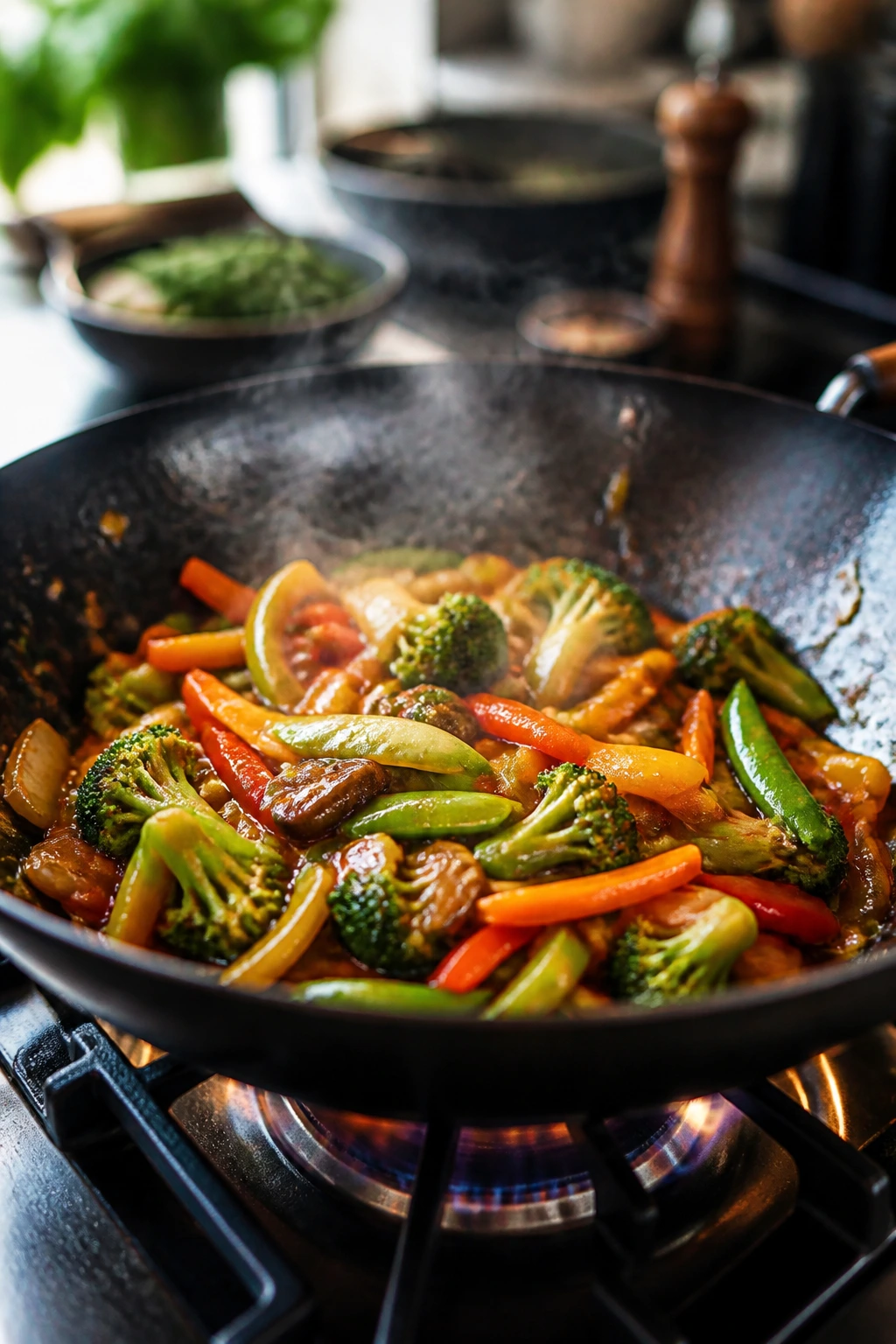
Can I use frozen vegetables instead of fresh ones?
Yes, but they need a little respect. Thaw them first and pat them dry or they’ll flood the pan, and choose sturdier vegetables like broccoli, green beans, or cauliflower over zucchini or mushrooms if you want any hope of keeping texture.
What pan works if I don’t own a wok?
A 12-inch stainless steel skillet is the best backup because it heats quickly and gives you space to move the vegetables around. Cast iron works too, though it holds heat so well that the sauce can reduce faster than you expect.
How do I keep the vegetables crisp after cooking?
Dry them well, cook on high heat, and stop sooner than your instincts tell you. Vegetables should still have a little resistance when you bite them because the last minute in the sauce finishes the job.
Can I add chicken, shrimp, or tofu to this recipe?
Absolutely. Cook the protein first, take it out, and add it back at the end so the vegetables don’t overcook while the meat finishes. Tofu benefits from a separate sear, while shrimp only needs a few minutes and should be pulled the moment it turns opaque.
Why does my sauce turn watery instead of glossy?
Usually the pan was too cool, the vegetables were wet, or the sauce sat in the pan too long before it thickened. A proper stir fry sauce needs heat and motion; once it hits the pan, keep tossing until it turns shiny and coats the vegetables in a thin layer.
Is oyster sauce required?
No. It adds depth, but a vegetarian mushroom stir-fry sauce works well, and you can also use a little extra soy sauce with a pinch of sugar if that’s what you have. The key is balancing salt, sweetness, and a bit of acidity, not chasing a single ingredient.
Can I make this lower in sodium?
Yes. Use low-sodium soy sauce, keep the oyster sauce modest, and brighten the dish with a little extra rice vinegar or lime at the end. That keeps the flavor awake without forcing you to rely on more salt.
What if I want this saucier for rice?
Double the sauce ingredients, but don’t double the cornstarch unless you like a very thick glaze. The better move is to add a little extra water and simmer the sauce for a few more seconds so it stays pourable.
Why This One Stays on the Stovetop
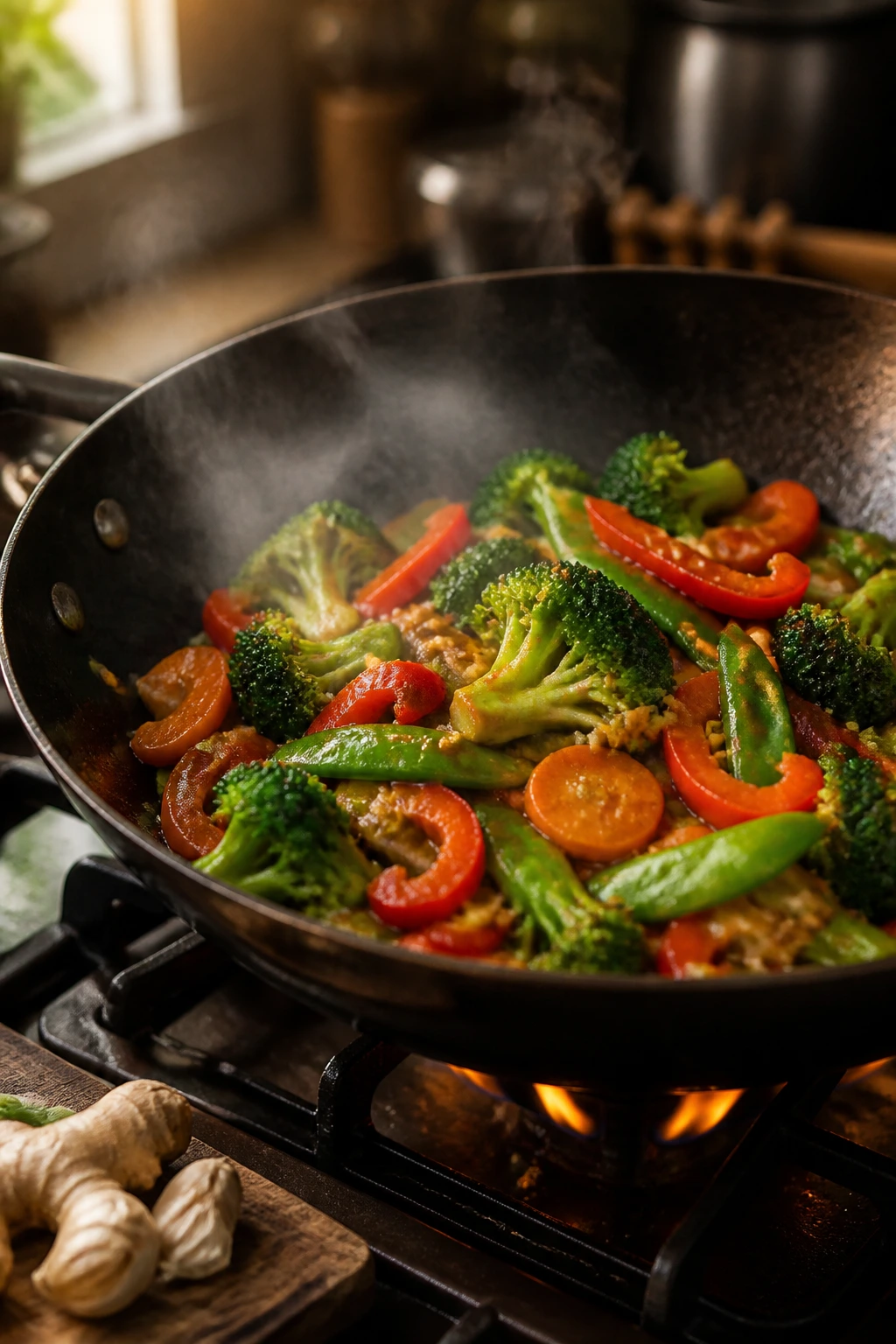
A stir fry like this is mostly about timing, and that’s the part people tend to overthink. Once the vegetables are cut and dry, the rest comes down to a hot pan, a short wait, and the discipline to stop cooking before everything turns soft.
That’s the part I like most. The recipe is flexible enough to absorb whatever’s in the crisper drawer, but it still tastes deliberate — crunchy where it should be, glossy where it needs to be, and sharp with ginger and garlic at the finish. Not fancy. Just right.
The next time the fridge gives you a few tired vegetables and a half-open can of water chestnuts, this is the move that makes dinner feel intentional again.
Crispy Veggie Stir Fry Better than Takeout — Recipe Card
Recipe Name: Crispy Veggie Stir Fry Better than Takeout
Description: A fast vegetable stir fry with broccoli, peppers, carrots, snap peas, and water chestnuts tossed in a glossy soy-ginger sauce. The vegetables stay crisp, the sauce clings, and the whole pan comes together in about 30 minutes.
Prep Time: 20 minutes
Cook Time: 10 to 12 minutes
Total Time: About 30 to 32 minutes
Course: Main Course, Side Dish
Cuisine: Asian-Inspired, Chinese-Inspired
Servings: 4 servings as a side; 2 to 3 as a light main
Calories: About 180 kcal per serving, not including rice or noodles
Ingredients
For the Stir Fry:
- 2 tablespoons neutral oil, such as peanut, avocado, or grapeseed
- 3 cups broccoli florets, cut small
- 2 medium carrots, peeled and sliced thin
- 1 red bell pepper, thinly sliced
- 1 yellow bell pepper, thinly sliced
- 1 cup snap peas, strings removed
- 1 can (8 ounces) sliced water chestnuts, drained and patted dry
- 3 scallions, whites and greens separated, thinly sliced
- 3 cloves garlic, minced
- 1 tablespoon fresh ginger, finely grated
For the Sauce:
- 1/3 cup low-sodium soy sauce
- 2 tablespoons rice vinegar
- 1 tablespoon oyster sauce or vegetarian mushroom stir-fry sauce
- 1 tablespoon honey or packed brown sugar
- 1 teaspoon toasted sesame oil
- 2 teaspoons cornstarch
- 1/4 cup water
For Finishing:
- 1 tablespoon toasted sesame seeds
- 1/2 teaspoon red pepper flakes or 1 tablespoon chili crisp, optional
- Cooked jasmine rice or noodles, for serving if desired
Instructions
-
Whisk together the soy sauce, rice vinegar, oyster sauce, honey, sesame oil, cornstarch, and water in a small bowl until smooth.
-
Prep all vegetables before cooking and keep them dry.
-
Heat a wok or large skillet over high heat for 2 to 3 minutes, then add 1 tablespoon oil.
-
Stir-fry the broccoli and carrots for 2 minutes.
-
Add the bell peppers, snap peas, and water chestnuts; stir-fry for 1 to 2 minutes more.
-
Push the vegetables aside, add the remaining oil, and stir in the garlic, ginger, and scallion whites for 20 to 30 seconds.
-
Whisk the sauce again, pour it into the pan, and toss for 30 to 60 seconds until glossy and thickened.
-
Turn off the heat, add the scallion greens, sesame seeds, and chili flakes or chili crisp if using.
-
Serve immediately over rice or noodles.
Notes: Best eaten right away for maximum crunch. The sauce can be mixed 5 days ahead, and the vegetables can be prepped 1 day ahead if kept dry. For more heat, add chili crisp at the end.