



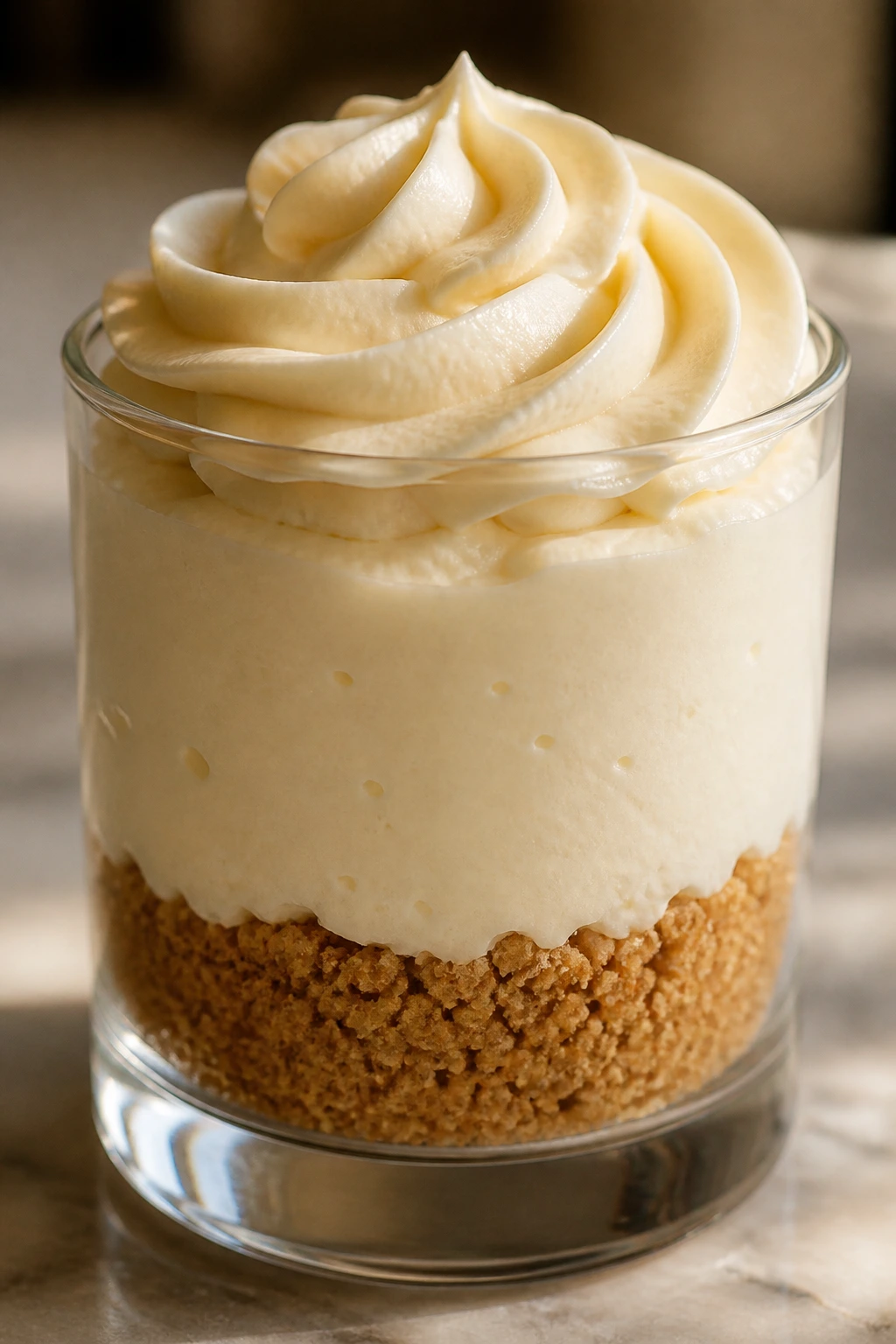
These decadent cheesecake parfaits with cream cheese frosting have a particular kind of swagger: they look like a dessert that took all afternoon, then disappear with a spoon in about four bites. The layers do the talking. Butter-crisp crumbs at the bottom, a cool cheesecake filling in the middle, and a tangy frosting cap on top that tastes like someone borrowed the best part of a frosted slice of cheesecake and gave it its own bowl.
What I like most is the texture balance. A lot of no-bake desserts collapse into one soft note. These don’t, if you treat the layers properly. The crumbs need to stay a little loose, not packed into a cement base. The filling should be airy but not foamy. And the cream cheese frosting needs enough body to hold a spoon mark without sliding off the side of the glass.
There’s also a practical reason this dessert earns its keep. You get the cheesecake flavor without babysitting a springform pan, worrying about cracks, or waiting for a giant cake to cool before you can even think about serving it. Clear glasses, a hand mixer, and cold ingredients are enough. Get the ratios right, and the result feels composed instead of fussy.
Why These Cheesecake Parfaits Earn Their Place in the Fridge
No oven required: The filling sets in the refrigerator, so you skip water baths, cracked tops, and the whole business of hoping the center trembles in the right way.
The layers stay distinct: A loose crumb base, a whipped cheesecake filling, and a pipeable cream cheese frosting give you three different textures in one spoonful instead of one soft blur.
Portion control is built in: Six small parfait glasses look generous without turning into a giant leftover situation, and they’re easier to serve cleanly than a whole cake.
The flavor is easy to steer: Add berries, chocolate, citrus zest, or caramel and the dessert shifts without needing a new method.
Make-ahead friendly: The filling actually benefits from a chill, so the refrigerator is helping you, not slowing you down.
A little fancy, not fragile: Clear cups and a piping bag make the whole thing look polished, but the recipe itself is straightforward enough for a weeknight when the sweet tooth is loud.
Yield, Timing, and the Shape of the Dessert
Six small glasses is the sweet spot here. Bigger than that and the frosting starts to feel heavy; smaller and you lose the layered look that makes parfaits worth making in the first place. I like 6-ounce to 8-ounce dessert cups, mason jars, or short tumblers with straight sides.
Yield: Serves 6
Prep Time: 25 minutes
Chill Time: 1 hour
Total Time: 1 hour 25 minutes
Difficulty: Beginner — there’s no baking, but the cream cheese has to be smooth and the whipped cream has to be folded in gently.
Best Served: Chilled, within 24 hours of assembling
Make-Ahead: The crumb base, filling, and frosting can each be made a day ahead and assembled the next day.
The Ingredients That Build the Layers
For the Graham Crumb Base:
- 1 1/2 cups graham cracker crumbs
- 3 tablespoons packed light brown sugar
- 6 tablespoons unsalted butter, melted
- 1/4 teaspoon fine sea salt
For the Cheesecake Filling:
- 16 ounces full-fat cream cheese, softened to room temperature
- 1/3 cup powdered sugar, sifted
- 1/4 cup full-fat sour cream
- 1 tablespoon fresh lemon juice
- 1 1/2 teaspoons vanilla extract
- 1 cup cold heavy whipping cream
- Pinch of fine salt
For the Cream Cheese Frosting:
- 8 ounces full-fat cream cheese, softened
- 1/4 cup unsalted butter, softened
- 1 to 1 1/4 cups powdered sugar, sifted
- 1 teaspoon vanilla extract
- 1 to 2 tablespoons heavy cream
- Pinch of fine salt
Optional Berry Layer and Garnish:
- 1 cup sliced strawberries or raspberries
- 1 teaspoon granulated sugar
- 1 teaspoon lemon juice
- 2 tablespoons shaved white chocolate or extra graham crumbs
How Each Ingredient Earns Its Place
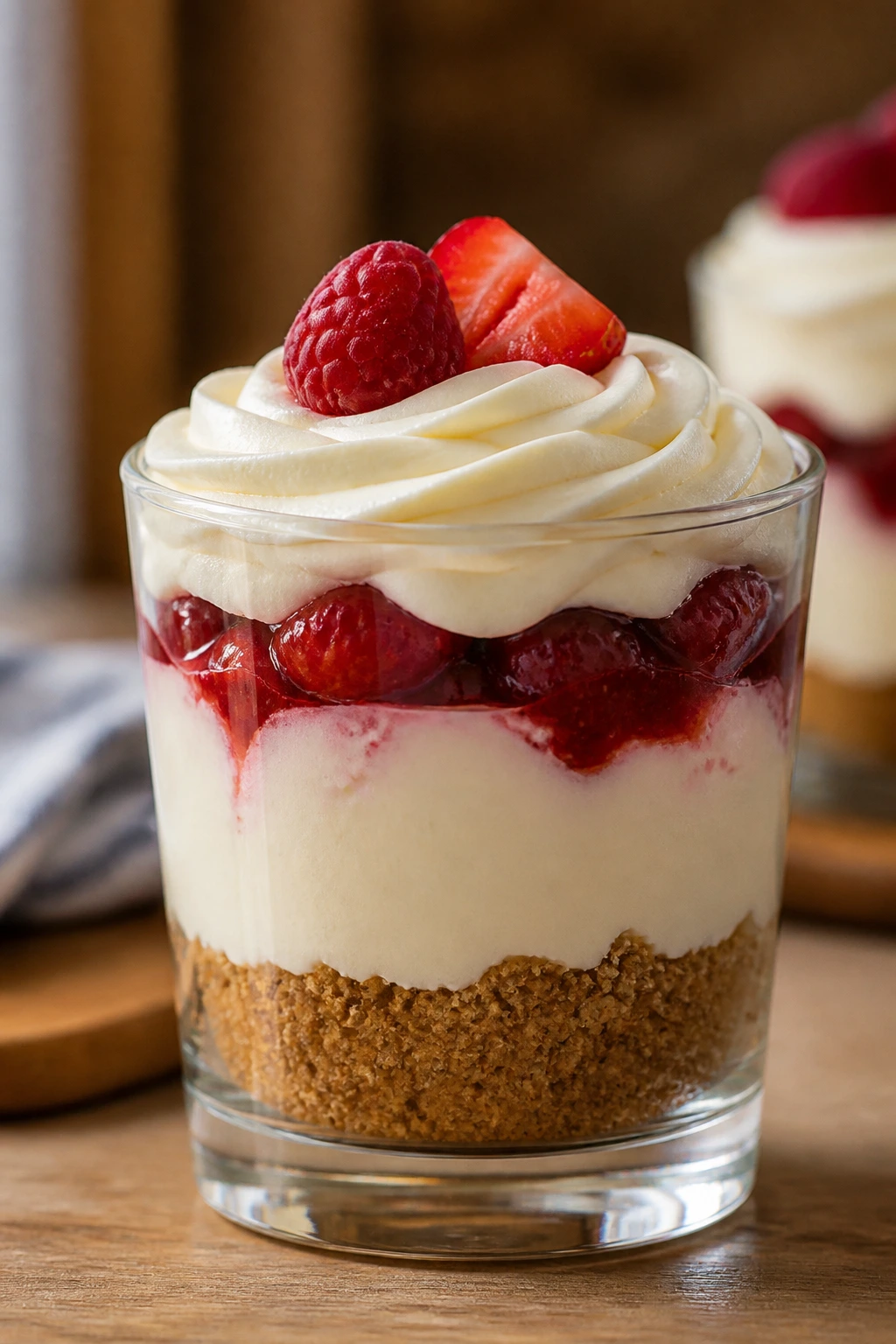
Graham Crumb Base
- What to use: 1 1/2 cups graham cracker crumbs, 3 tablespoons packed light brown sugar, 6 tablespoons melted unsalted butter, and 1/4 teaspoon fine salt.
- Preparation: Stir everything until the crumbs look like damp sand and hold together when pinched, then let the mixture sit for a minute so the butter spreads evenly.
- Substitutions: Vanilla wafer crumbs, digestive biscuits, or finely crushed shortbread all work; chocolate wafers are a good swap if you want a darker, richer base.
- Tips: If the crumbs are too wet, they turn greasy and dense. If they’re too dry, they fall apart in the glass and won’t give you that nice spoon-breaking bite.
Cheesecake Filling
- What to use: 16 ounces softened full-fat cream cheese, 1/3 cup powdered sugar, 1/4 cup sour cream, 1 tablespoon lemon juice, 1 1/2 teaspoons vanilla, 1 cup cold heavy cream, and a pinch of salt.
- Preparation: Beat the cream cheese first until it’s smooth with no little lumps, then add the sugar, sour cream, lemon juice, vanilla, and salt before folding in whipped cream.
- Substitutions: Greek yogurt can replace the sour cream if it’s thick and plain; mascarpone can replace half the cream cheese for a softer, richer filling.
- Tips: Full-fat block cream cheese behaves better than spreadable tub cream cheese. Tub versions usually carry more moisture and give you a looser filling that never quite firms up the same way.
Cream Cheese Frosting
- What to use: 8 ounces softened cream cheese, 1/4 cup softened unsalted butter, 1 to 1 1/4 cups powdered sugar, 1 teaspoon vanilla, 1 to 2 tablespoons heavy cream, and a pinch of salt.
- Preparation: Beat the cream cheese and butter until the mixture is smooth before adding the sugar; that order keeps the frosting from turning grainy.
- Substitutions: If you want a sharper tang, swap half the butter for more cream cheese. If you want a softer, more pipeable top, add the cream by teaspoons until it holds a ridge.
- Tips: Sift the powdered sugar if yours tends to clump. One stubborn lump becomes a little white pebble that shows up right on top, and there’s no elegant way to hide it.
Optional Berry Layer and Garnish
- What to use: 1 cup sliced strawberries or raspberries, 1 teaspoon granulated sugar, 1 teaspoon lemon juice, and 2 tablespoons shaved white chocolate or extra graham crumbs.
- Preparation: Toss the berries with sugar and lemon juice just before assembling so they turn glossy without collapsing into syrup.
- Substitutions: Thick raspberry jam can replace fresh berries if you want a deeper fruit note with less moisture. Blueberries work too, but their flavor stays quieter than raspberries or strawberries.
- Tips: Keep fruit layers thin. A heavy fruit layer makes the parfait look messy in the glass and can loosen the filling around the edges.
The Tools That Make the Layers Clean
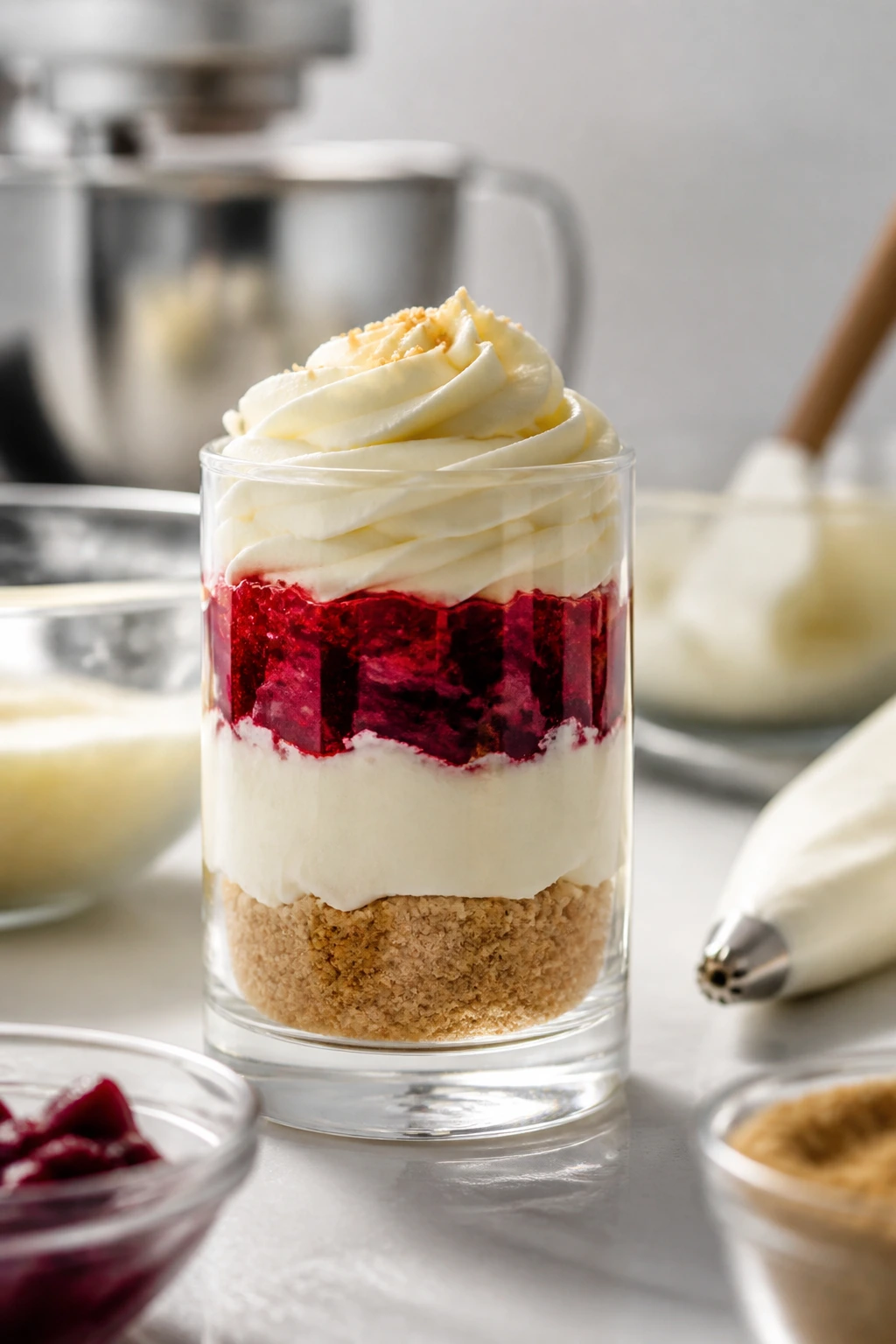
You do not need a pastry school setup for this dessert. What helps most is a little control, because layered cups show every sloppy spoon stroke.
- Hand mixer or stand mixer: Either one works for the filling and frosting. A hand mixer is fine if you don’t want to drag out the bigger machine.
- Large and medium mixing bowls: One for the filling, one for the frosting, and one small bowl for the crumb mixture keeps things moving.
- Rubber spatula: This is the tool that saves the filling after whipping. It folds in the cream without knocking all the air out.
- Measuring cups and spoons: Exact ratios matter here, especially for the frosting, which can go from pipeable to loose with one extra splash of cream.
- 6 clear dessert glasses or jars: Straight-sided cups make the layers visible and easier to stack.
- Spoon or small cookie scoop: Helpful for portioning the crumbs and filling without smearing the sides of the glass.
- Piping bag with a star tip, optional: Nice for the frosting cap. A zip-top bag with the corner snipped off works too.
- Food processor or zip-top bag and rolling pin: For turning graham crackers into crumbs if you’re starting with whole sheets.
From Crumbs to Chilled Glasses: The Step-by-Step Build
Make the Crumb Base
-
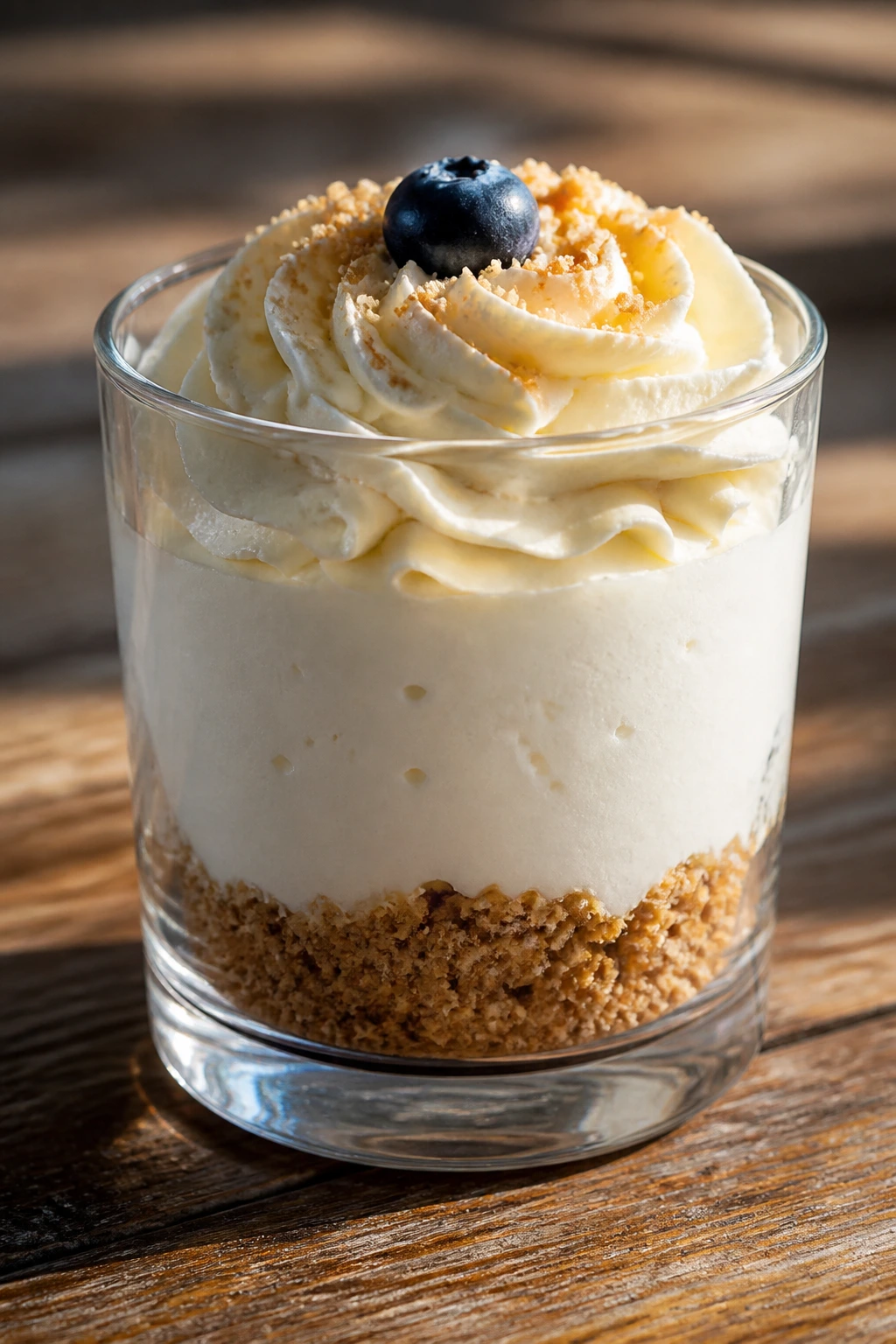
In a medium bowl, stir together the graham cracker crumbs, brown sugar, salt, and melted butter until the mixture looks evenly moistened and clumps slightly when squeezed. It should smell like toasted cookies and butter, not like wet paste.
-
Divide the crumb mixture among 6 clear dessert glasses, adding about 2 tablespoons to each glass for the first layer. Press it down lightly with the back of a spoon. Do not pack it hard; a loose layer gives the parfait a better spoonful and keeps the bottom from turning into a crusty block.
Whip the Cheesecake Filling
-
In a large bowl, beat the softened cream cheese on medium speed for 1 to 2 minutes until smooth and glossy, with no little lumps around the bowl. Scrape down the sides once or twice so the bottom doesn’t hide a cold pocket of cheese.
-
Add the powdered sugar, sour cream, lemon juice, vanilla, and salt. Beat again on medium speed for about 30 seconds, just until the mixture looks even and silky. It should taste like cheesecake filling that already wants to be eaten with a spoon.
-
In a separate chilled bowl, whip the cold heavy cream on medium-high speed until soft peaks form, about 1 to 2 minutes. The peaks should lean over at the tip, not stand like stiff little spikes.
-
Fold the whipped cream into the cream cheese mixture in 2 additions, using a rubber spatula and broad strokes from the bottom of the bowl to the top. Stop as soon as the filling looks uniform and fluffy. If you keep stirring after that point, you push out the air and the texture gets heavy.
Build the Parfaits
-
Spoon or pipe a layer of the cheesecake filling over the crumb base, using about one-third of the filling per glass for the first round. If you’re using berries, tuck a few slices of strawberry or a few raspberries along the edge of the glass where they’ll show.
-
Add the remaining crumb mixture in a thin second layer, then divide the rest of the cheesecake filling among the glasses. Leave about 1/2 inch of room at the top for the frosting.
Make the Frosting and Finish
-
In another bowl, beat the softened cream cheese and butter together for 1 minute until smooth. Add the powdered sugar, vanilla, salt, and 1 tablespoon of heavy cream. Beat for 30 to 45 seconds, then check the texture. If it’s too stiff to pipe cleanly, add the second tablespoon of cream a little at a time.
-
Spoon or pipe the frosting onto each parfait, making a neat swirl or a thick little cap. Chill the cups for at least 1 hour before serving, then finish with shaved white chocolate, extra crumbs, or a few berries right before they hit the table.
How to Plate Them So They Look Intentional
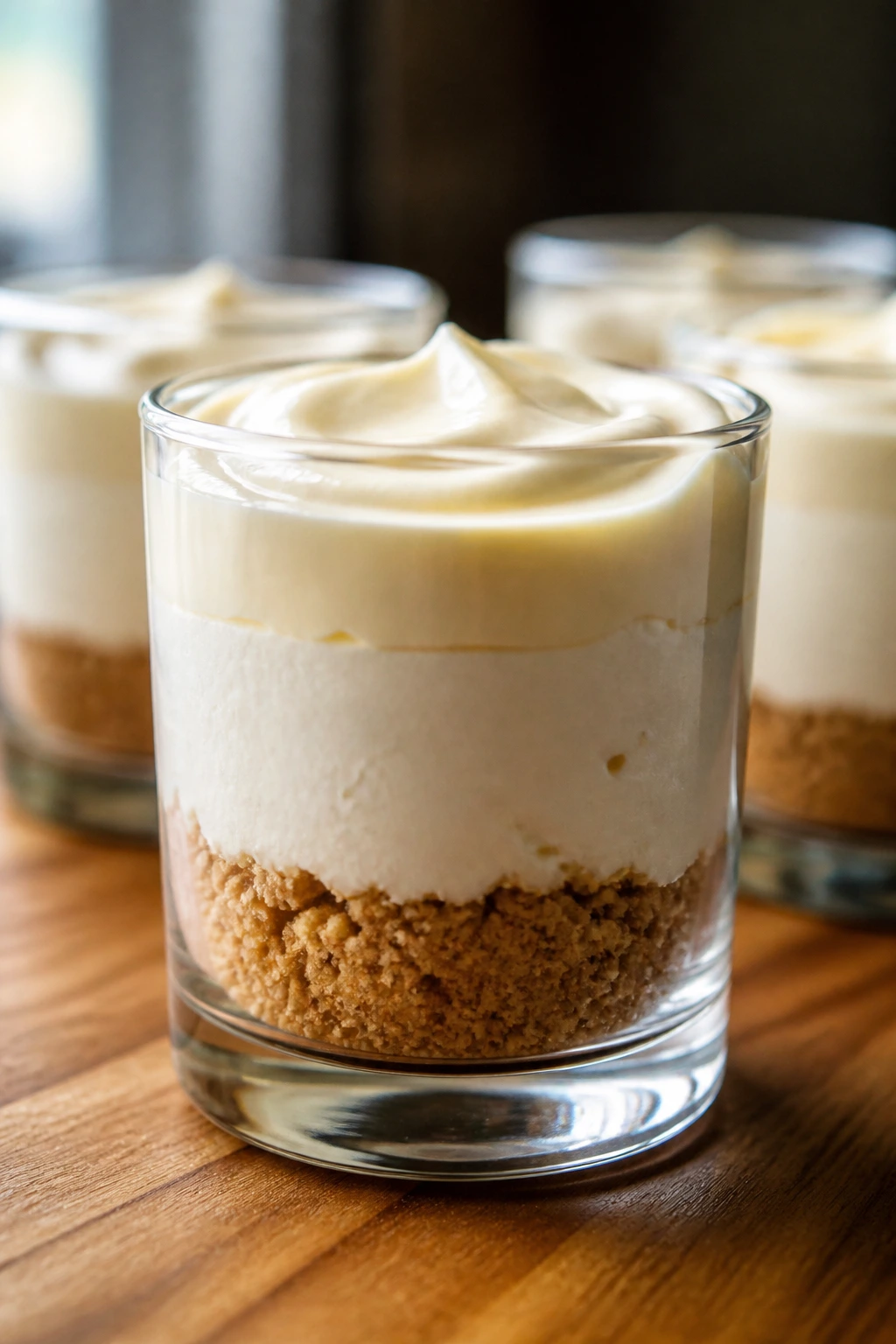
Presentation: Use clear glasses with straight sides, not opaque mugs or bowls. The layers are half the appeal here, and the clean edge of the glass makes the crumbs, filling, and frosting read like separate parts instead of one sweet heap. A small offset spoon or a round teaspoon helps you build the layers without smearing the sides.
Accompaniments: These parfaits sit well next to plain black coffee, espresso, or a strong cup of tea because they’re sweet enough on their own. If you want a fuller dessert spread, add a bowl of fresh berries or a thin almond cookie on the side. I would not put them beside another creamy dessert; that just makes the table feel heavy.
Portions: One 6-ounce parfait is a tidy after-dinner serving. If you’re using larger 8-ounce glasses, I’d call that a full serving for a rich meal and a shareable portion after a lighter lunch. The recipe scales cleanly if you want more cups; just keep the crumb-to-filling ratio the same.
Beverage Pairing: Hot espresso cuts through the frosting better than a sweet drink, and a cold brew with a splash of milk works if you want the coffee to feel as cool as the dessert. For a non-coffee option, a tart berry tea or plain sparkling water with lemon keeps the palate fresh between bites.
Small Tweaks That Change the Whole Batch
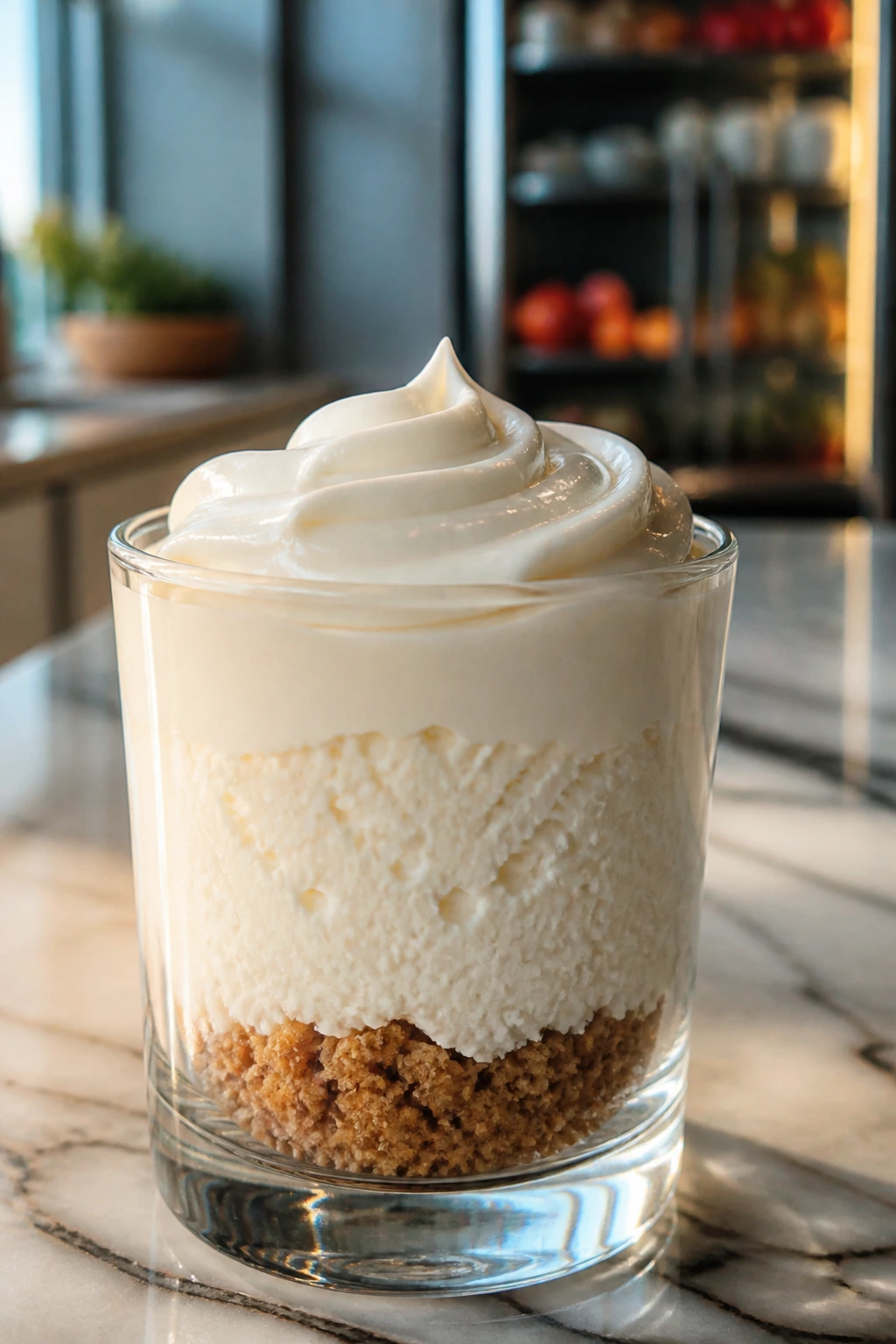
Flavor Enhancement: Add 1 teaspoon of finely grated lemon zest to the cheesecake filling. The zest doesn’t make the dessert taste lemony; it just sharpens the cream cheese so the frosting tastes less flat.
Time-Saver: Crush the graham crackers in a zip-top bag with a rolling pin if you don’t want to wash the food processor. The crumbs don’t need to be dust-fine, either — a few tiny uneven bits give the base a better bite.
Texture Fix: Chill the bowl and beaters for the whipped cream if your kitchen runs warm. Cold tools help the cream reach soft peaks faster and keep the filling from turning soupy before it gets into the glasses.
Make-It-Yours: For a deeper vanilla flavor, use vanilla bean paste in both the filling and the frosting. For a sharper dessert, cut the powdered sugar in the frosting by 2 tablespoons and add a touch more salt.
The Mistakes That Turn a Silky Parfait Grainy or Runny
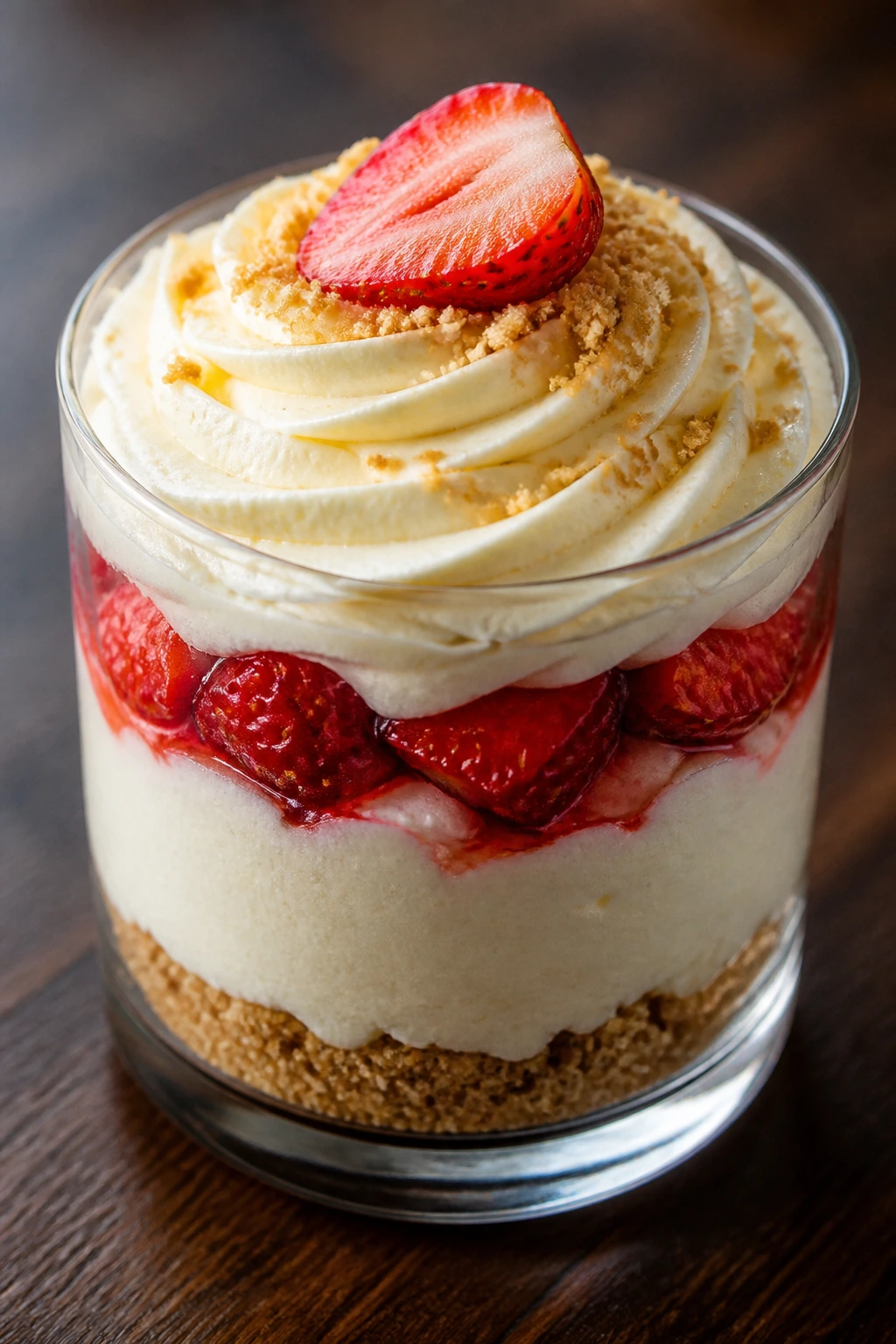
The most common trouble starts with the cream cheese. If it’s still cold in the middle, you’ll get tiny white lumps that refuse to disappear, even after more mixing. Let it soften at room temperature until it bends easily when pressed, then beat it before adding sugar or sour cream.
Overwhipping the heavy cream causes a different problem. The filling starts looking fluffy, then suddenly turns grainy or splits into little butterish flecks that never fold back together cleanly. Stop at soft peaks. You want the cream to hold shape loosely, not stand at attention.
Packing the crumb layer too tightly is another mistake that looks minor until you try to spoon through it. The base turns into a hard disk and fights the rest of the dessert. A light press is enough; if you use the bottom of a glass and mash the crumbs down hard, you’ve made a crust, not a parfait layer.
Fruit can also sabotage the texture if you overload it. Juicy strawberries or raspberries can bleed into the filling and thin out the edges, especially if they sit overnight. Keep the fruit layer thin, pat the berries dry, or use a thicker jam if you want more color and less moisture.
Finally, skipping the chill time is the fastest way to end up with frosting that slumps. The filling needs time to settle, and the frosting firms up in the fridge. If you serve the cups immediately, they’ll still taste good, but the layers won’t hold their edges and the dessert loses the whole point of being a parfait.
Variations That Change the Mood of the Dessert
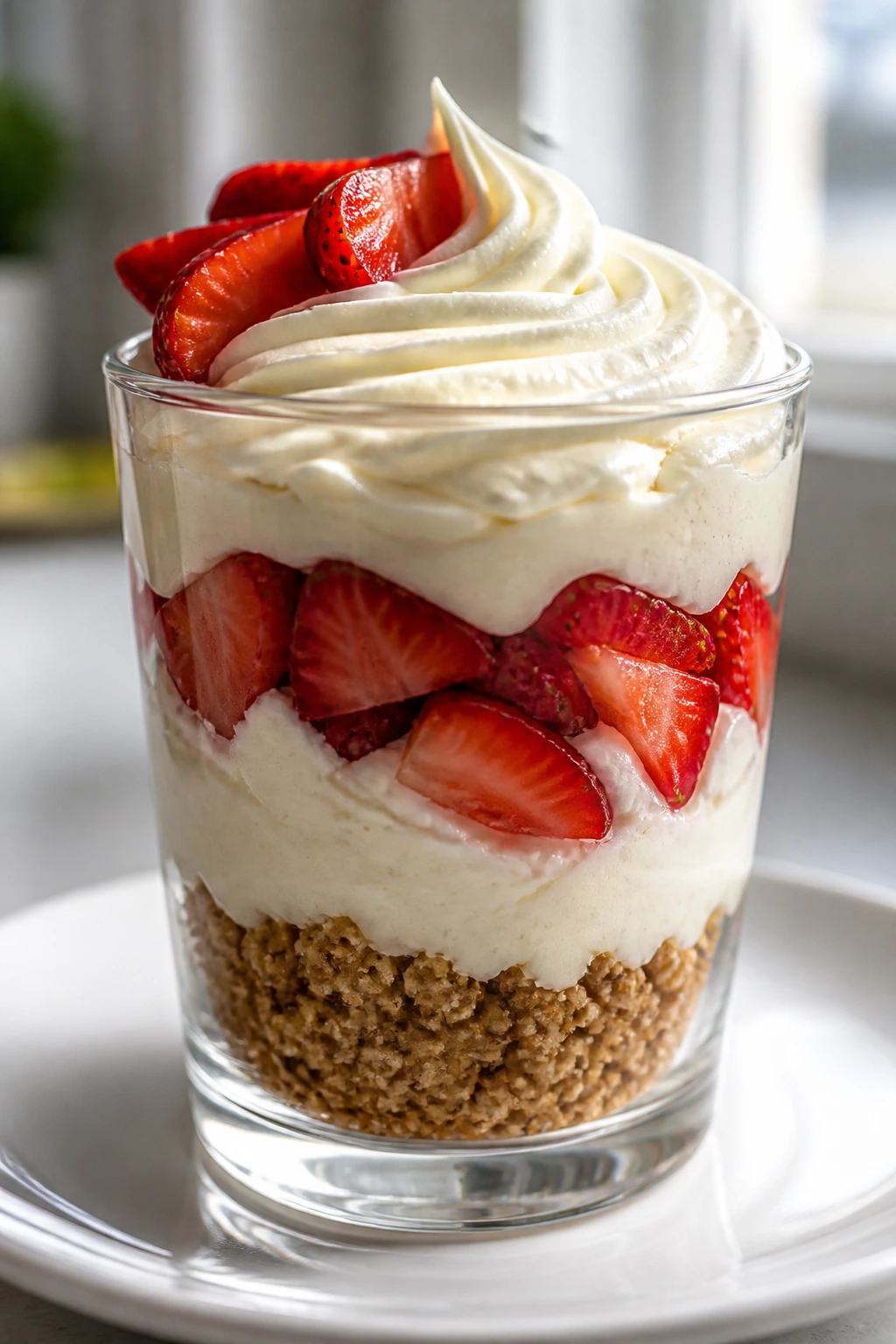
Strawberry Shortcake Cups: Swap the graham crumbs for crushed vanilla wafers and layer sliced strawberries between the filling and frosting. A tiny splash of almond extract in the filling makes the berries taste brighter.
Chocolate Cookie Crush: Replace the graham crumbs with crushed chocolate sandwich cookies or chocolate wafers. The darker base gives the dessert a sharper contrast, and a few mini chocolate chips folded into the filling make it feel even richer.
Lemon Berry Bright Version: Add 1 tablespoon of lemon zest to the filling and use raspberries or blueberries for the fruit layer. This version tastes lighter and cleaner, which helps if you’re serving the parfaits after a heavy meal.
Salted Caramel Pretzel Parfaits: Swap half the graham crumbs for finely crushed pretzels and drizzle a teaspoon of caramel between the layers. The salty crunch wakes up the frosting and keeps the dessert from leaning too sweet.
Gluten-Free Cookie Swap: Use gluten-free graham-style crumbs or finely crushed gluten-free shortbread instead of regular grahams. The rest of the recipe stays the same, which is one reason I like this dessert for mixed tables — you can change the base without rebuilding the whole thing.
Keeping Them Chilled and Fresh
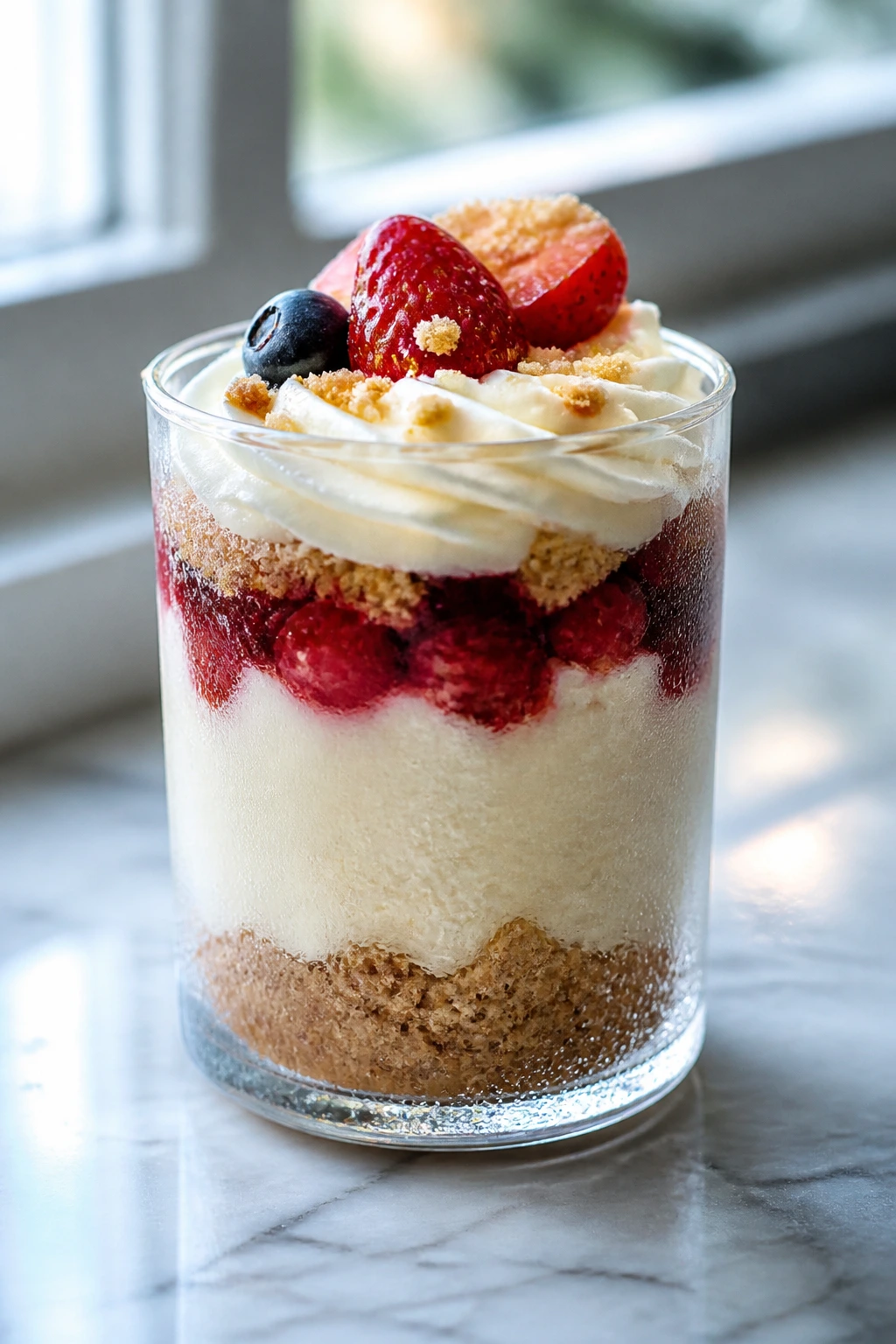
These parfaits are best kept cold, covered, and out of the air. At room temperature, they should sit no longer than 2 hours, and less than that if the room is warm or the glasses are small and shallow. The cream-based layers soften faster than a baked cheesecake would.
In the refrigerator, assembled parfaits hold well for 3 to 4 days, though the crumb layer softens a little each day. I actually like them best within 24 hours, when the filling has set but the crumbs still have some grit left in them. If you know you’ll be serving them the next day, keep the garnish off until the last minute.
Freezing the assembled cups is not my favorite move. The cream cheese filling can freeze, but the whipped texture changes and the frosting loses some of its smoothness after thawing. If you want to work ahead, freeze the crumb mixture separately for up to 1 month and keep the filling and frosting in airtight containers in the fridge for up to 2 days. Stir the frosting before piping, and if it feels thick, loosen it with a teaspoon or two of cream.
Make-ahead order matters. Assemble the crumb base and filling the day before if needed, then add the frosting a few hours before serving. Fruit should go on last, especially juicy berries. That small delay keeps the top looking clean instead of wet and streaked.
Questions People Ask Before Making Cheesecake Parfaits
Can I make these cheesecake parfaits the day before?
Yes, and the texture usually improves after a night in the fridge. The filling firms up, the frosting sets, and the layers hold their shape better the next day. Just save the berries and crumb garnish for the final touch.
Do I have to use heavy cream in the filling?
Heavy cream gives the filling its airy texture, so I wouldn’t skip it unless you’re changing the recipe on purpose. If you want a denser filling, you can replace it with an equal amount of softened whipped topping, but the dessert will taste sweeter and less like cheesecake mousse.
Can I use store-bought whipped topping instead of making the frosting from scratch?
You can, but it changes the feel of the dessert. If you use whipped topping, keep the cream cheese frosting portion small or skip it entirely, because the finished cups can become too sweet and lose that tangy top note. I prefer the homemade version for the frosting because it gives the parfaits a sharper finish.
What if my filling looks lumpy after mixing?
Usually the cream cheese was still too cold. Keep mixing for a short time, but if the lumps stay, press the mixture through a fine sieve or beat it a little longer before folding in the whipped cream. Preventing the problem is easier: let the cream cheese soften until it’s completely bendable.
Can I make one large trifle instead of individual cups?
Yes, and the layering method is exactly the same. Use a 2- to 3-quart trifle bowl, build the layers with care, and chill it a little longer so the slices hold when you scoop them out. A large bowl looks dramatic, but the individual cups are easier to serve neatly.
How do I keep the crumb layer from getting soggy?
Use enough butter to bind the crumbs, but not so much that they look shiny or wet. If you’re adding fruit, keep it thin or choose a thicker jam so juice doesn’t migrate into the base. Assembling closer to serving also helps keep the crumbs snappy.
Can I make these gluten-free or dairy-free?
Gluten-free is easy with a good gluten-free cookie crumb base. Dairy-free is harder because both the filling and frosting depend on cream cheese, but dairy-free cream cheese alternatives can work if they’re firm and not watery. The texture won’t be identical, so I’d treat that as an adaptation, not a perfect clone.
Cold, Creamy, and Worth the Spoon
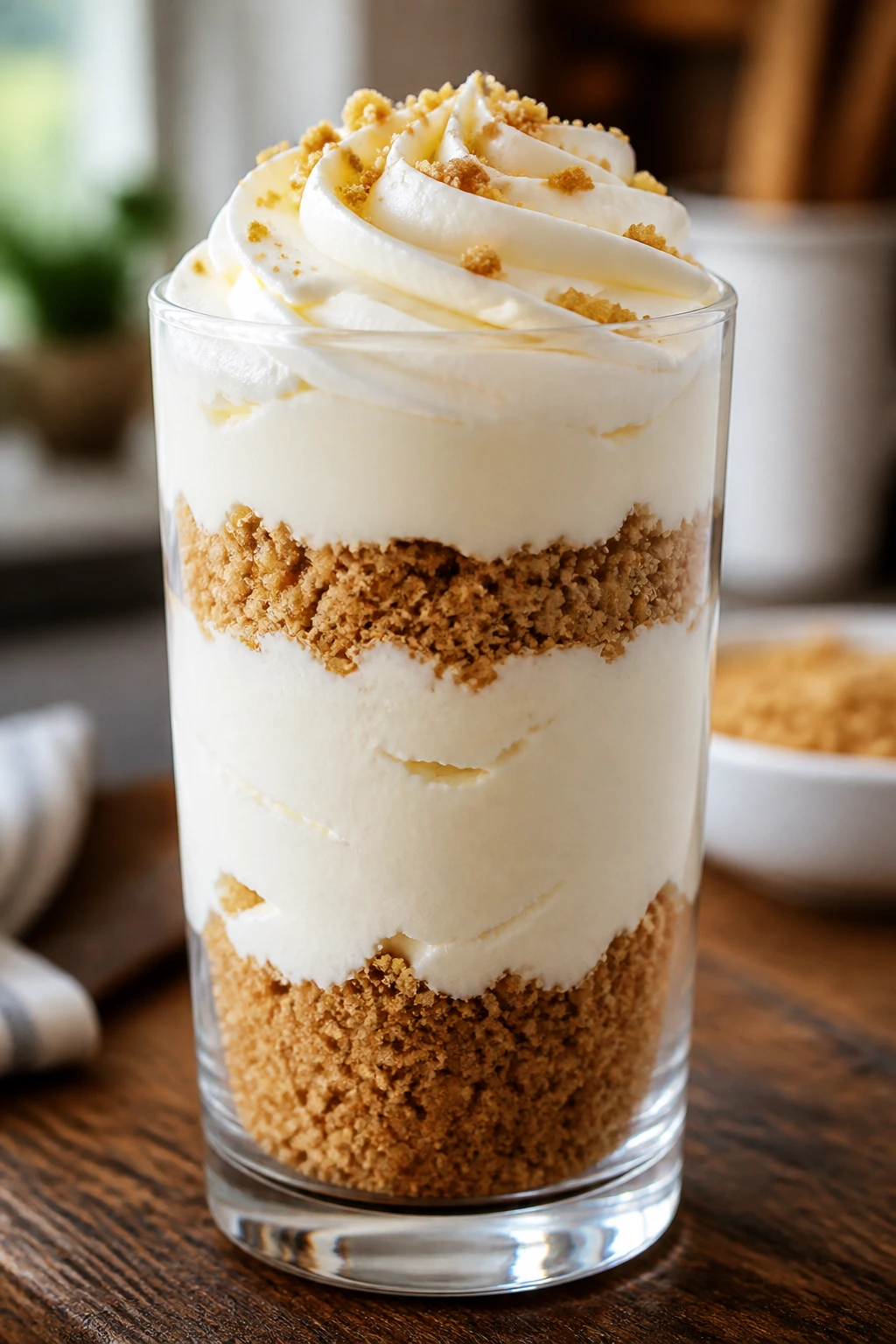
There’s a reason layered desserts keep showing up at potlucks, birthday tables, and late-night fridge raids: they give you a lot of visual payoff without asking for a dramatic amount of technique. These cheesecake parfaits with cream cheese frosting are the same idea in neat little cups. They’re cool, rich, and tactile in a way baked cheesecake can’t quite match.
Keep the ingredients cold, resist the urge to pack the crumbs too hard, and let the fridge do its job. That’s most of the recipe, really. The rest is arranging the layers so the first spoonful tastes like a little bit of effort and a lot of butter.
Decadent Cheesecake Parfaits with Cream Cheese Frosting — Recipe Card
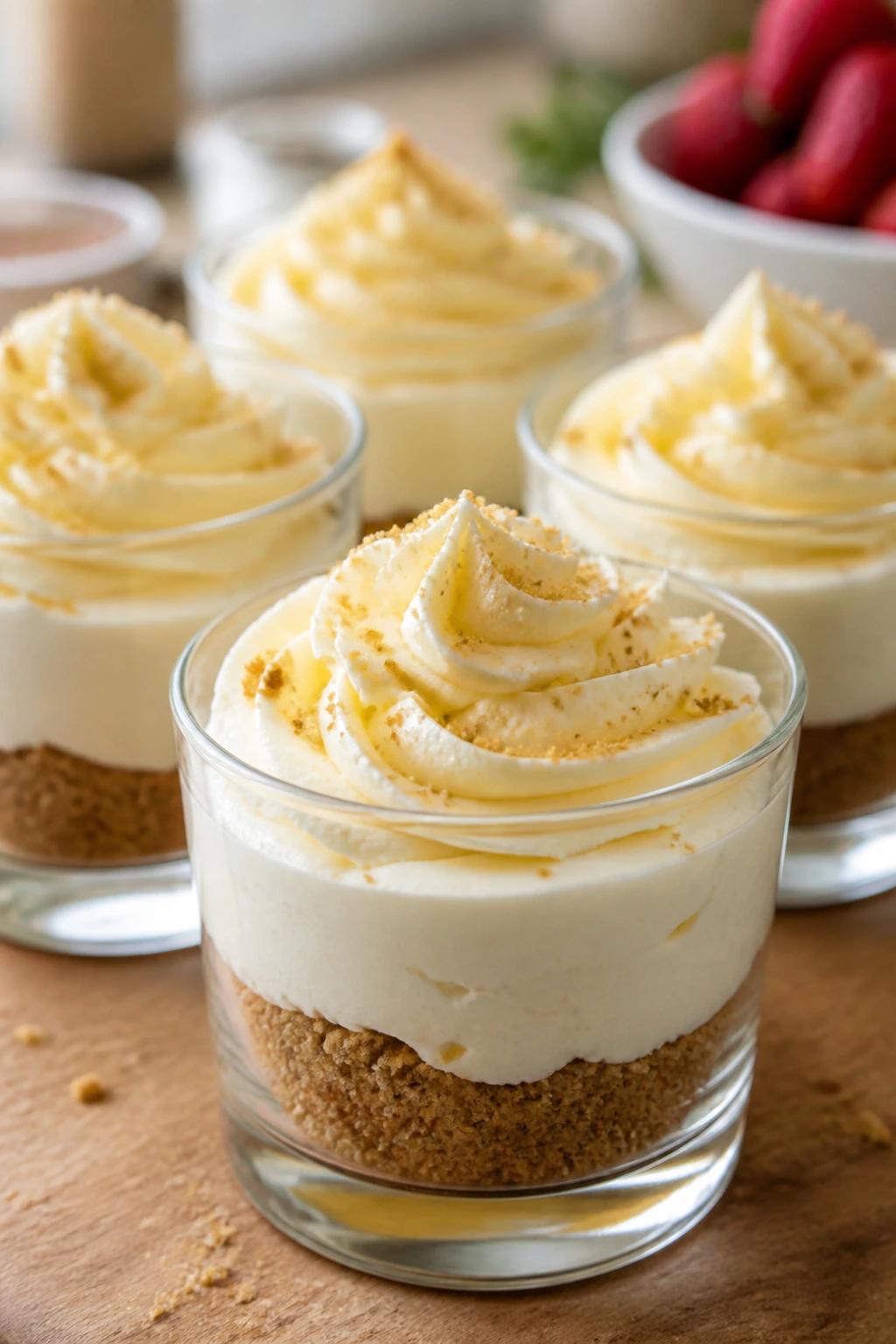
Recipe Name: Decadent Cheesecake Parfaits with Cream Cheese Frosting
Description: Creamy no-bake cheesecake parfaits with a buttery graham crumb base, a light whipped filling, and a tangy cream cheese frosting on top. Optional berries add a fresh bite between the rich layers.
Prep Time: 25 minutes
Cook Time: 0 minutes
Total Time: 1 hour 25 minutes
Course: Dessert
Cuisine: American
Servings: 6 parfaits
Calories: About 560 kcal per serving
Ingredients
For the Graham Crumb Base:
- 1 1/2 cups graham cracker crumbs
- 3 tablespoons packed light brown sugar
- 6 tablespoons unsalted butter, melted
- 1/4 teaspoon fine sea salt
For the Cheesecake Filling:
- 16 ounces full-fat cream cheese, softened to room temperature
- 1/3 cup powdered sugar, sifted
- 1/4 cup full-fat sour cream
- 1 tablespoon fresh lemon juice
- 1 1/2 teaspoons vanilla extract
- 1 cup cold heavy whipping cream
- Pinch of fine salt
For the Cream Cheese Frosting:
- 8 ounces full-fat cream cheese, softened
- 1/4 cup unsalted butter, softened
- 1 to 1 1/4 cups powdered sugar, sifted
- 1 teaspoon vanilla extract
- 1 to 2 tablespoons heavy cream
- Pinch of fine salt
Optional Berry Layer and Garnish:
- 1 cup sliced strawberries or raspberries
- 1 teaspoon granulated sugar
- 1 teaspoon lemon juice
- 2 tablespoons shaved white chocolate or extra graham crumbs
Instructions
-
Stir together the graham cracker crumbs, brown sugar, salt, and melted butter until the mixture looks evenly moistened.
-
Divide the crumb mixture among 6 clear dessert glasses and press it down lightly.
-
Beat the softened cream cheese until smooth, then add the powdered sugar, sour cream, lemon juice, vanilla, and salt.
-
Whip the cold heavy cream to soft peaks in a separate bowl, then fold it into the cheesecake mixture until fluffy.
-
Spoon or pipe a layer of filling over the crumb base, then add a few berries if using.
-
Repeat with another thin crumb layer and the remaining filling, leaving room for the frosting.
-
Beat the frosting cream cheese and butter until smooth, then add the powdered sugar, vanilla, cream, and salt until pipeable.
-
Spoon or pipe the frosting on top of each parfait, chill for at least 1 hour, and finish with berries, white chocolate, or extra crumbs before serving.
Notes:
Use block cream cheese, not tub cream cheese. Add the fruit garnish at the end so the layers stay clean. Assemble up to 1 day ahead for the best texture.