



A pork shoulder does not look like much when it goes into the slow cooker. It looks heavy, pale, and a little stubborn, the kind of cut that seems to be waiting for a better plan. Then hours pass. The lid stays shut. The kitchen starts smelling like paprika, onion, garlic, and warm vinegar, and that same roast comes out slumped at the edges, soft enough to pull apart with two forks and a little bit of annoyance because the meat has already done the hard part for you.
That is the quiet appeal of slow cooker pulled pork. It rewards patience without asking for attention. You salt it, rub it, tuck it into the pot, and leave it alone long enough for the connective tissue to melt into something silky. The result is not just tender meat. It is meat that shreds into juicy strands instead of dry chunks, which is a much bigger difference than people expect the first time they make it.
USDA guidance treats pork as safe at 145°F with a rest, which matters for chops and roasts you want to slice. Pulled pork is a different job. For the texture people want here, the roast needs to climb much higher, usually into the 200°F neighborhood, where collagen loosens and the shoulder gives up its grip. That is where this recipe lives. It is the set-and-forget dinner that still feels like you paid attention.
Why This Slow Cooker Pulled Pork Works So Well
-
The lid stays on for hours: A long, covered cook keeps the pork in steady heat without constant basting or turning, so the outside does not dry out while the center catches up.
-
Pork shoulder earns its keep: The cut has enough marbling and connective tissue to become soft and stringy instead of chalky. Leaner cuts do not do this job well.
-
The seasoning reaches deeper than the surface: Salt, paprika, garlic, and vinegar do more than sit on top. They settle into the shredded meat and make every bite taste like it was seasoned on purpose.
-
You control the final texture: Leave it plain with juices for bowls and potatoes, or finish it with barbecue sauce for sandwiches. Same roast, different mood.
-
Leftovers stay useful: Reheated pork shoulder holds up better than a lot of slow-cooked meats because the strands trap moisture. It stays good in tacos, baked potatoes, and rice bowls.
Why Pork Shoulder Belongs in a Slow Cooker
A pork shoulder is stubborn meat. That is not a criticism. It is the whole reason this recipe works. The shoulder is a working muscle, which means it carries more connective tissue than a tenderloin or a lean loin roast. That connective tissue sounds like a problem until heat and time get involved. Then it becomes the thing that gives the finished pork its soft, pull-apart texture.
The slow cooker is a good match because it keeps the heat gentle and enclosed. You are not trying to blast the meat into submission. You are giving the collagen time to melt while the surrounding moisture keeps the surface from drying into a crust. That is a braise, basically, just in a very forgiving appliance. No juggling pans. No oven timer that demands your attention every 15 minutes. No greasy splatter to wipe off the stove.
The version I reach for most often is a simple one: a dry rub for the meat, onions and garlic for the base, a measured amount of vinegar and broth for the pot, and barbecue sauce only at the end. A lot of slow cooker pulled pork recipes drown the roast in sauce from the start. I think that is lazy flavor. The pork should taste like pork first, then barbecue second.
One more thing: this is not the place for pork loin. Loin is lean and polite and not built for this kind of treatment. Shoulder is the cut that shows up with work boots on.
Timing, Yield, and What a Full Pot Looks Like
A 4- to 5-pound pork shoulder is the sweet spot for a standard 6-quart slow cooker. It gives the meat enough room to sit on the onion bed without being cramped, and it leaves you enough finished pork for dinner plus a second meal or two.
Yield: Serves 8 to 10
Prep Time: 20 minutes
Cook Time: 8 to 10 hours on Low, or 5 to 6 hours on High
Total Time: 8 hours 20 minutes to 10 hours 20 minutes on Low, or 5 hours 20 minutes to 6 hours 20 minutes on High
Difficulty: Beginner — the method is straightforward, and the main skill is knowing when the pork is tender enough to shred.
Chill/Rest Time: 15 minutes before shredding
Best Served: Warm, while the meat is still steamy and the strands are easy to pull apart
If your slow cooker runs hot, start checking a little earlier. If it runs cool, expect to give the pork more time. The clock helps, but the fork test matters more. A roast can hit a temperature number and still feel stubborn in the middle. That is not failure. It just needs a little longer.
Ingredients for Pulled Pork That Stays Juicy
The ingredient list is short on purpose. The meat carries the recipe, and the rest of the work comes from salt, acid, and gentle heat.
For the Pork
- 4 to 5 pounds boneless pork shoulder (pork butt), trimmed of excess surface fat
- 1 tablespoon kosher salt
- 2 teaspoons freshly ground black pepper
- 2 tablespoons packed light brown sugar
- 2 tablespoons smoked paprika
- 1 tablespoon chili powder
- 1 teaspoon garlic powder
- 1 teaspoon onion powder
- 1/2 teaspoon ground cumin
- 1/4 teaspoon cayenne pepper, optional
For the Slow Cooker
- 1 large yellow onion, sliced into 1/2-inch rings
- 5 cloves garlic, smashed
- 1 cup low-sodium chicken broth
- 1/2 cup apple cider vinegar
- 2 tablespoons Worcestershire sauce
- 2 tablespoons yellow mustard or Dijon mustard
- 1 tablespoon tomato paste
For Finishing
- 1 to 1 1/2 cups barbecue sauce, plus more for serving
- 2 tablespoons unsalted butter, optional
- Pickles and toasted buns, for serving
What Each Ingredient Does in the Pot
A lot of pulled pork recipes read like a condiment list. I do not trust those. Every ingredient here has a job, and if you know the job, it gets easier to swap things without wrecking the texture.
Pork Shoulder
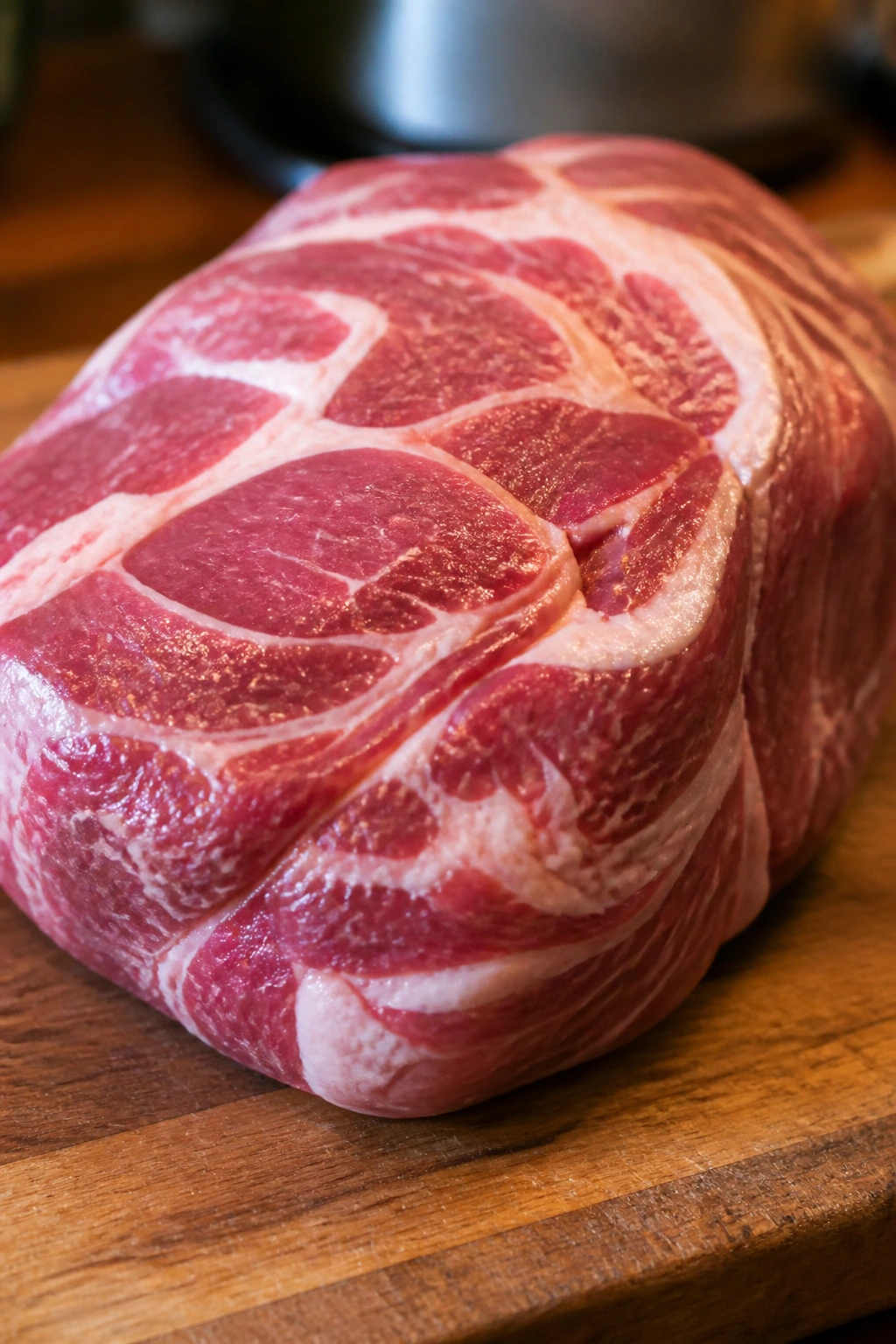
What to use: 4 to 5 pounds boneless pork shoulder, sometimes sold as pork butt, with only the thickest surface fat trimmed away.
Preparation: Pat it dry before seasoning. Dry meat grabs the rub better, and the seasoning clings instead of sliding off in a wet paste.
Substitutions: Bone-in shoulder works too, and it usually tastes a little richer. It needs a bit more time, often 30 to 60 minutes longer, because the bone slows the heat a little.
Tips: Do not pick pork loin here. It is lean, tight, and better suited to slicing. Shoulder is marbled, which is exactly what keeps this recipe from drying out.
Dry Rub
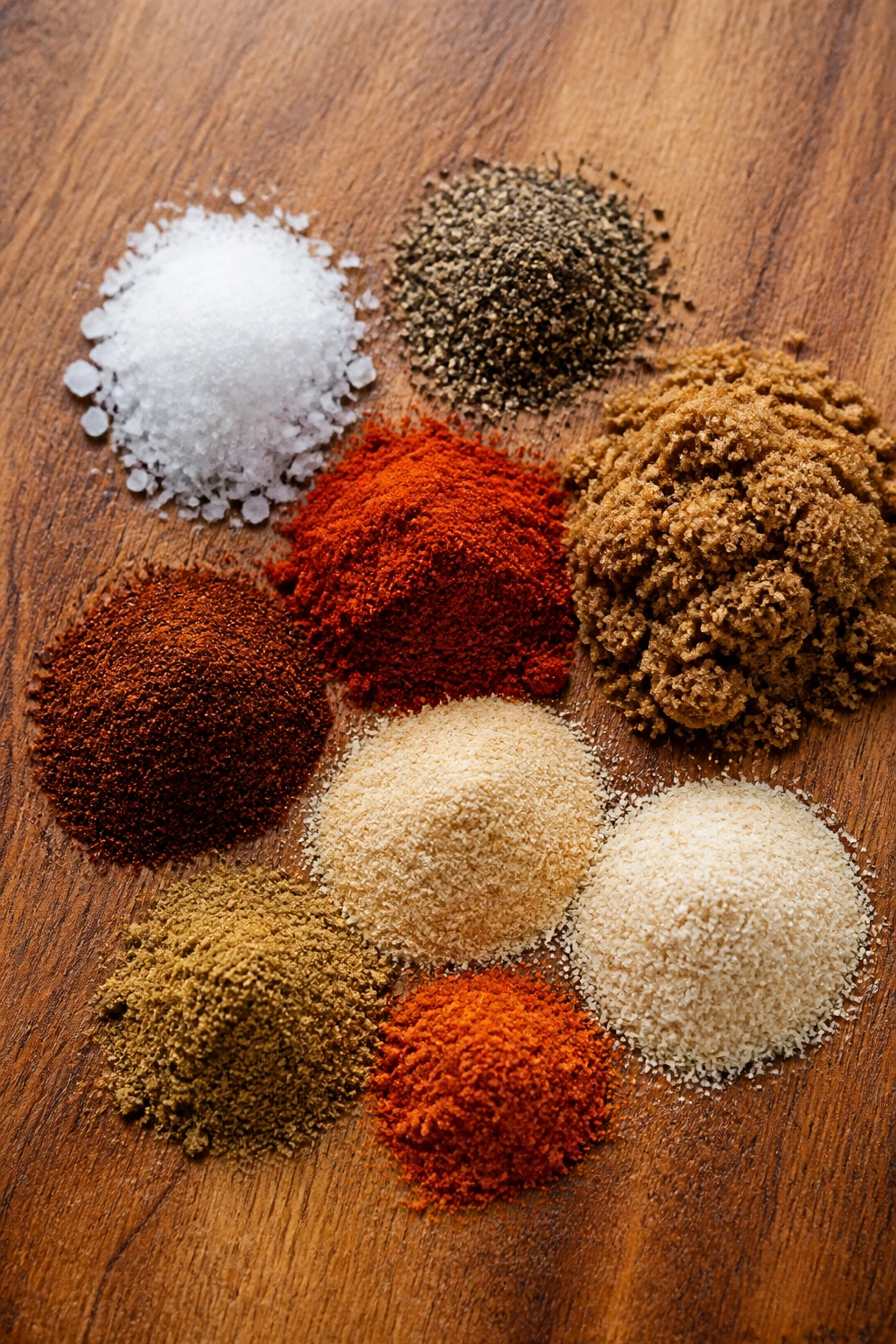
What to use: Kosher salt, black pepper, brown sugar, smoked paprika, chili powder, garlic powder, onion powder, cumin, and a pinch of cayenne if you like heat.
Preparation: Mix the rub in a bowl first so the spices distribute evenly. Then press it onto every side of the roast, especially into seams and folds where the meat likes to hide.
Substitutions: You can swap regular paprika for smoked if that is what you have, though the smoke note gets flatter. A store-bought barbecue rub also works, but check the salt level before you add extra.
Tips: Salt is doing a lot of work here. It seasons beyond the surface and helps the finished meat taste like more than shreds coated in sauce.
Braising Liquid
What to use: Yellow onion, garlic, chicken broth, apple cider vinegar, Worcestershire sauce, mustard, and tomato paste.
Preparation: Slice the onion thick enough that it does not disappear into mush. Smash the garlic so it gives flavor without burning or turning bitter.
Substitutions: If you are out of chicken broth, use water plus an extra teaspoon of salt. White vinegar can stand in for apple cider vinegar, but use a little less because it bites harder.
Tips: Low-sodium broth is the right call here. Barbecue sauce and Worcestershire already bring salt, and you do not want the finished pork to taste muddy or too sharp.
Finishing Sauce
What to use: Barbecue sauce, a little butter if you want shine, and a few spoonfuls of the defatted cooking liquid.
Preparation: Warm the sauce before tossing it with the shredded pork. Cold sauce on hot meat can make the texture feel heavy for a minute.
Substitutions: A Carolina-style vinegar sauce, mustard sauce, or even just the seasoned cooking juices all work. The pork does not need barbecue sauce to be good.
Tips: Add sauce gradually. You can always add more, but you cannot undo a bowl of pork that got drowned.
The Tools That Make the Day Easier
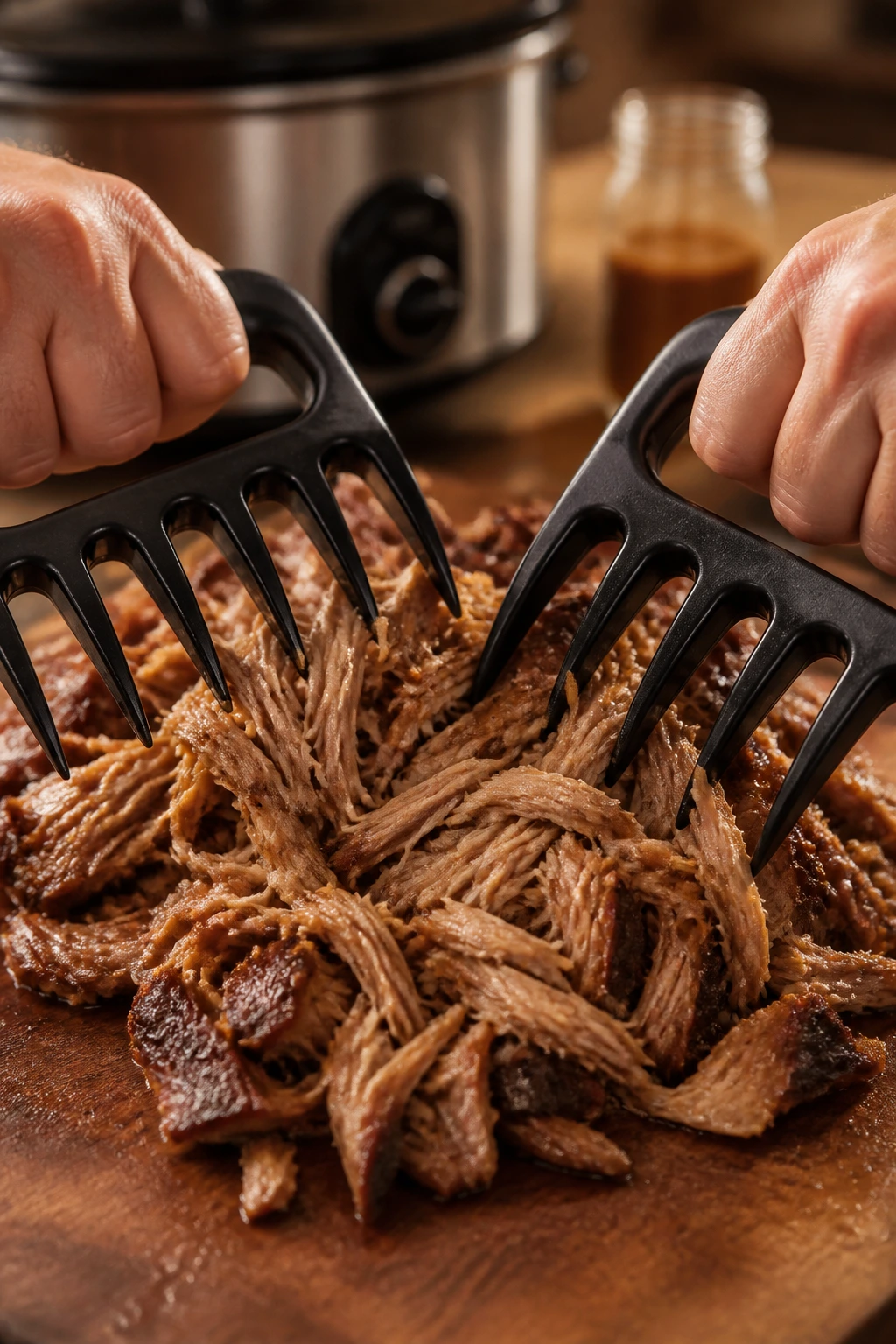
You do not need much gear, which is part of the charm.
-
6-quart or larger slow cooker: A 4- to 5-pound shoulder fits comfortably and cooks more evenly when it is not jammed against the lid.
-
Instant-read thermometer: This is the best way to know when the pork is truly ready. Temperature and texture should agree.
-
Large cutting board or rimmed sheet pan: Use this for shredding so juices do not run all over the counter.
-
Two forks or meat claws: Forks work fine. Meat claws just go faster if you use them often.
-
Fine-mesh strainer or fat separator: Useful for skimming the cooking liquid before you sauce the meat.
-
Small mixing bowl and measuring spoons: You will use these for the rub and the braising liquid.
-
Tongs: Handy for moving the roast in and out of the cooker without tearing up the outside.
-
Slow cooker liner, optional: Makes cleanup easier, though it is not necessary.
Step-by-Step: Building the Pork in the Slow Cooker
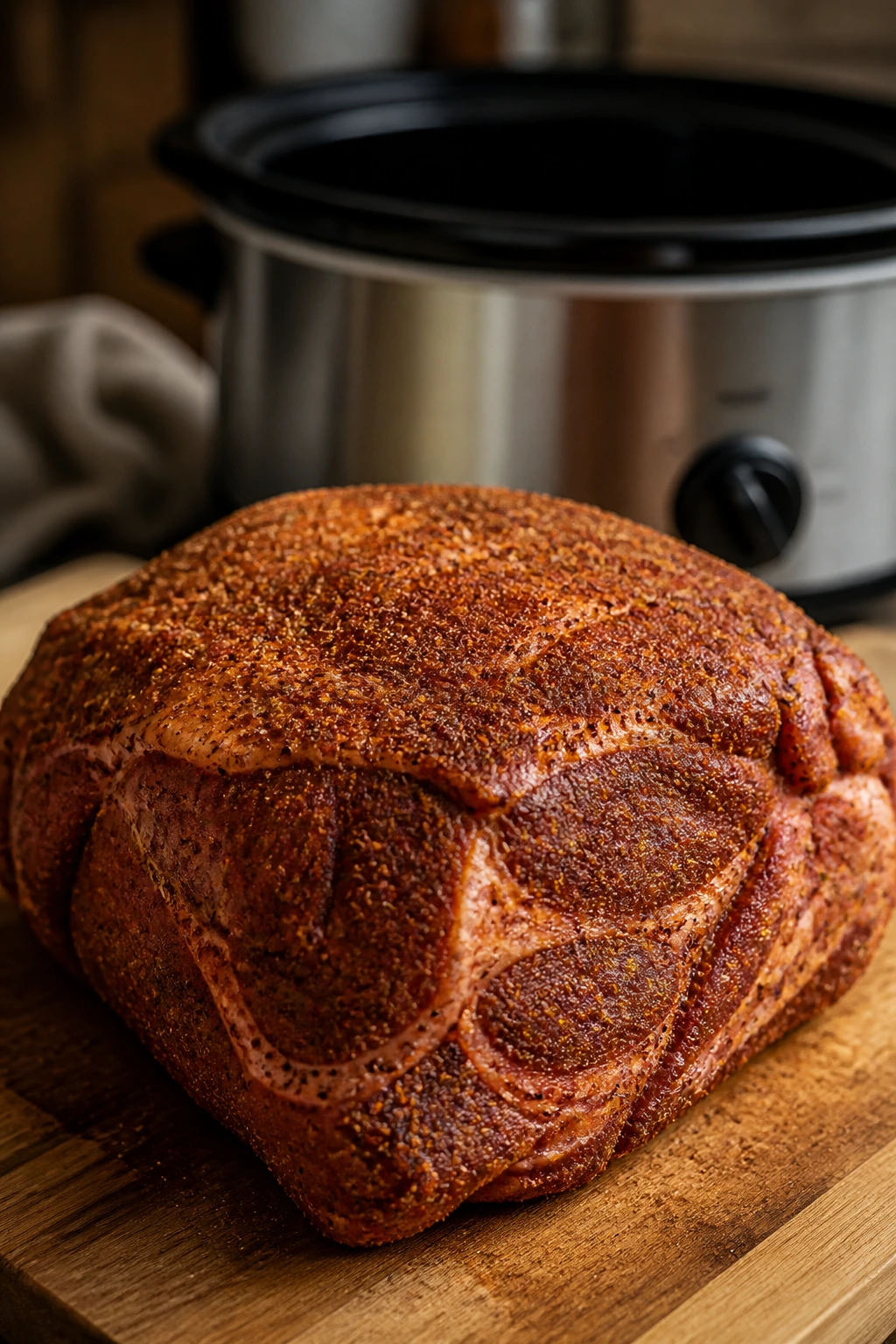
Season the Roast
-
Pat the pork shoulder dry with paper towels. In a small bowl, mix the salt, black pepper, brown sugar, smoked paprika, chili powder, garlic powder, onion powder, cumin, and cayenne if using.
-
Rub the spice mix over every side of the pork shoulder, pressing it into seams and folds so it sticks. Let it sit while you get the cooker ready, about 10 minutes.
Build the Cooking Base
-
Scatter the sliced onion across the bottom of a 6-quart slow cooker and tuck the smashed garlic between the onion rings.
-
Whisk the chicken broth, apple cider vinegar, Worcestershire sauce, mustard, and tomato paste together in a measuring cup until the tomato paste disappears into the liquid. Pour the mixture over the onions. The liquid should coat the bottom and come partway up the sides, not cover the roast.
Cook Until Tender
- Set the seasoned pork on top of the onion layer. Cover and cook on Low for 8 to 10 hours or High for 5 to 6 hours, until the thickest part of the roast reaches 200°F to 205°F and a fork twists into the meat with almost no resistance. Do not keep lifting the lid. Every peek drops the temperature.
Rest and Shred
-
Turn off the slow cooker and let the pork rest in the pot for 15 minutes. That short pause keeps the juices from flooding out the second you move it.
-
Transfer the pork to a large cutting board or rimmed sheet pan. Pull away any large chunks of fat or gristle, then shred the meat with two forks or meat claws into long strands.
Sauce and Finish
-
Strain the cooking liquid through a fine-mesh strainer into a bowl or fat separator. Let the fat rise for a minute, then skim it away. Stir in 1 to 1 1/2 cups barbecue sauce and the butter, if using, then taste and thin with a few spoonfuls of defatted cooking liquid if needed.
-
Return the shredded pork to the slow cooker or a large bowl and toss with enough sauce to coat the strands lightly. The meat should look glossy, not wet. Serve warm.
How to Know When It Is Done Enough to Shred
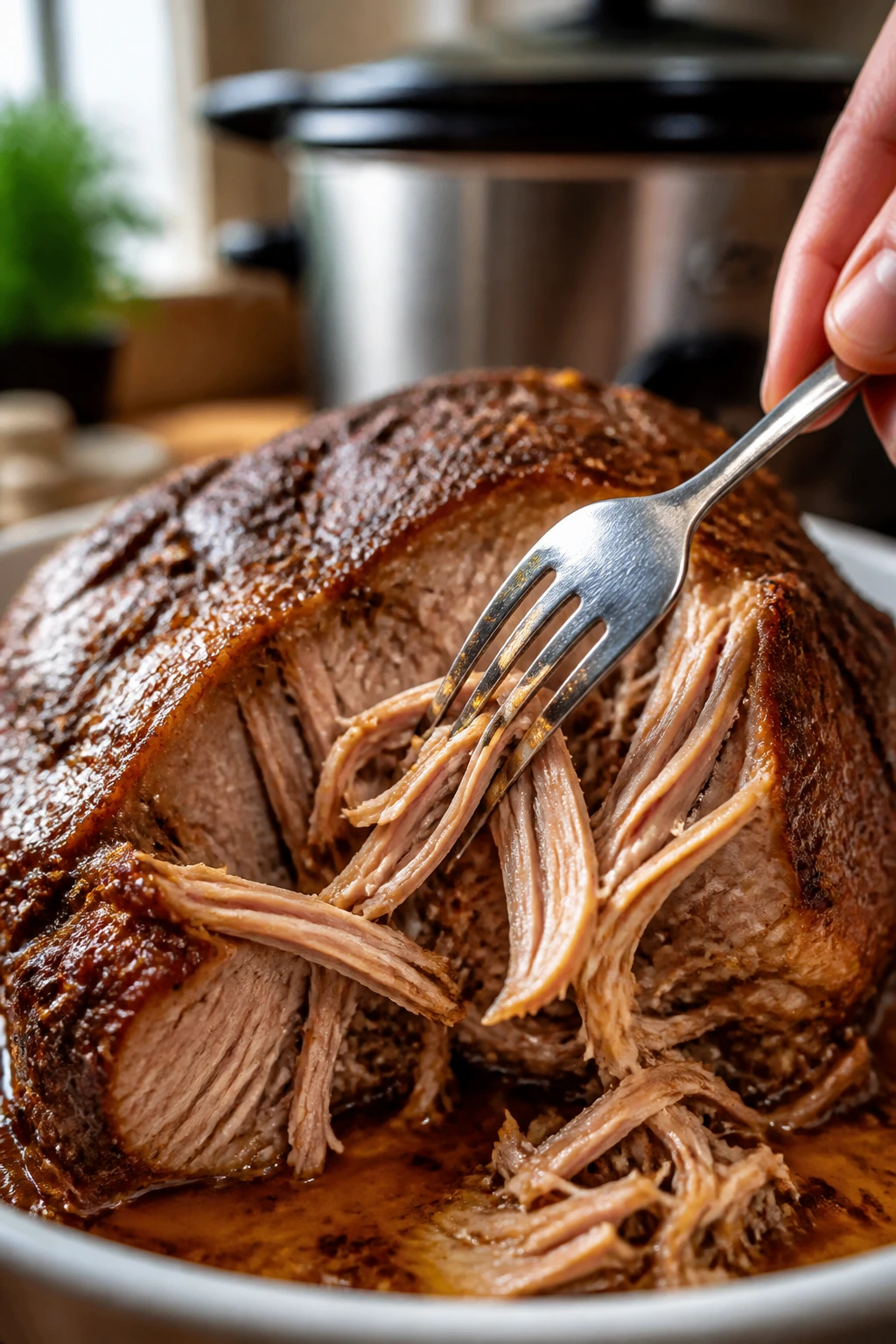
The roast can look ready before it is ready. That is the trap.
Temperature Cue
For pulled pork, you are not chasing the safe-serving temperature that works for a sliceable roast. You want the shoulder to get into the 200°F to 205°F range, where the collagen breaks down and the meat stops resisting the fork. If you stop at 180°F because it looks brown and smells done, you will probably end up slicing it instead of pulling it.
Fork Cue
Slide a fork into the thickest part and twist. A ready roast opens up in strands rather than splitting like a roast beef. The fork should move through the meat with a slow, soft drag, almost like it is stirring warm butter that still has a little body.
Visual Cue
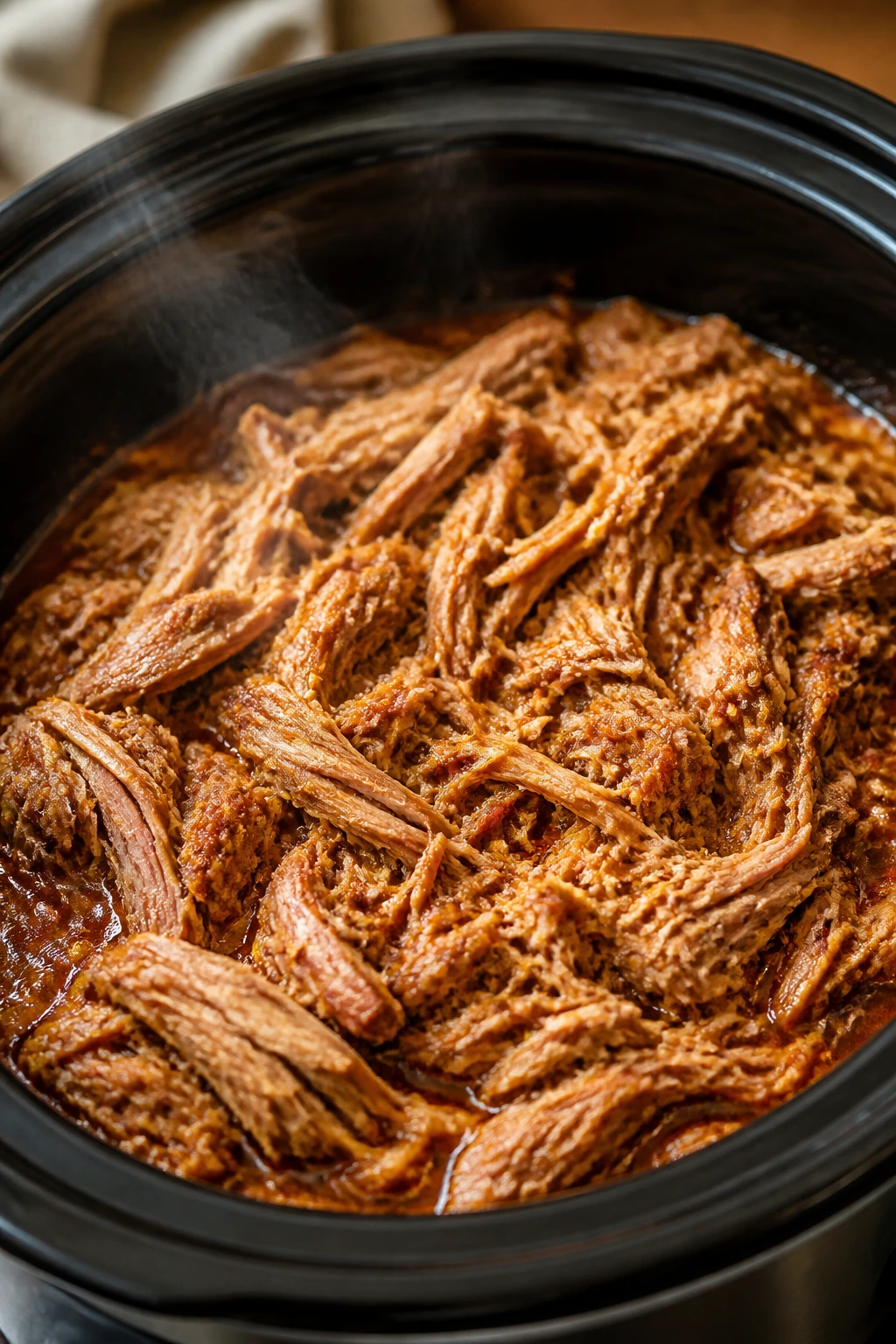
The pork usually pulls back from the edges of the slow cooker, and the surface looks darker and a little wrinkled. If there is a bone in the roast, it often loosens and slides more easily. None of this is dramatic. It is just the meat quietly giving up.
If the pork is still resistant after the clock says it should be done, keep cooking in 20- to 30-minute chunks. A stubborn shoulder usually needs more time, not more force.
Shredding, Saucing, and Keeping the Meat Juicy
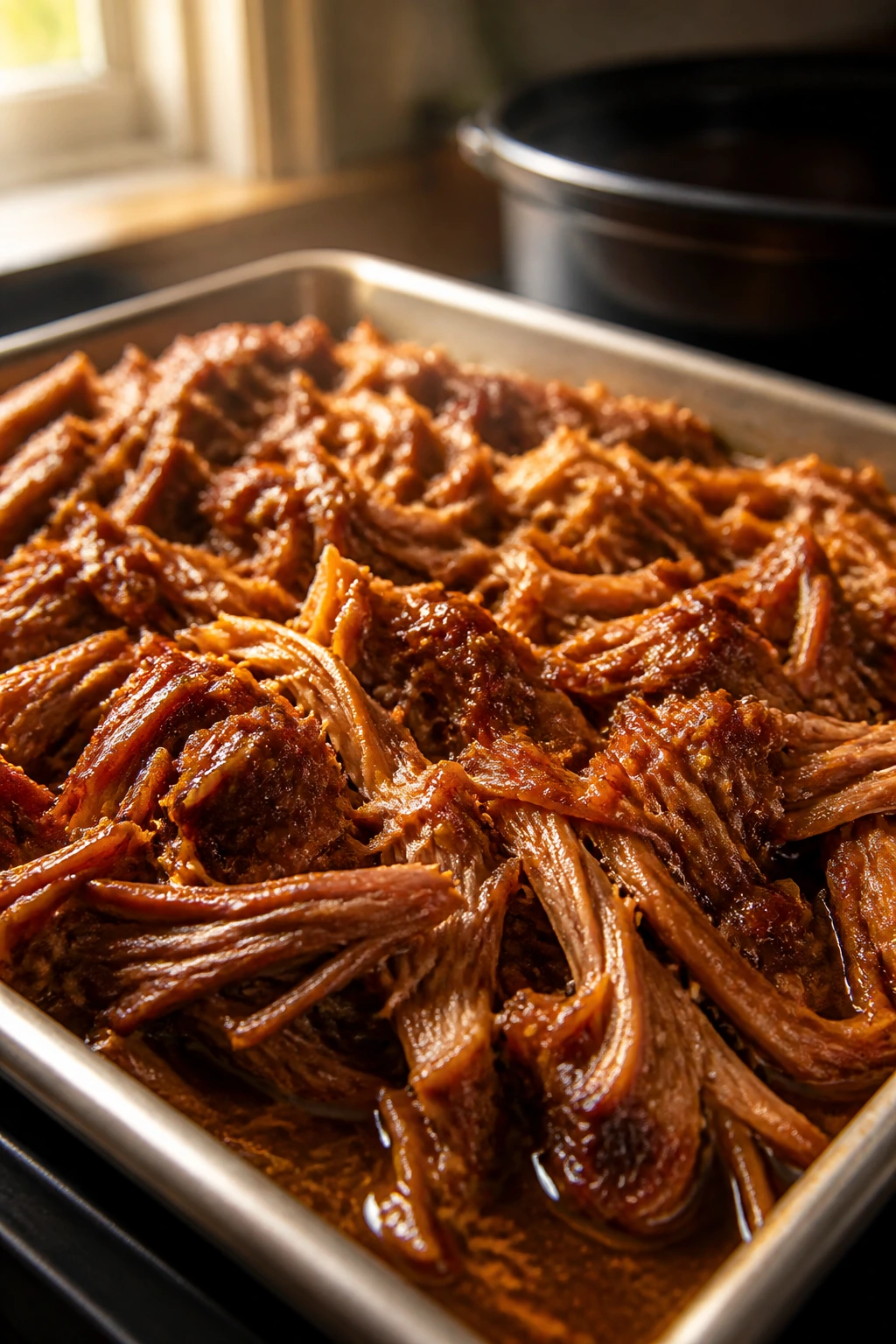
This is where a lot of good pulled pork gets ruined. People shred it, pour sauce over it, and call it finished. That can work, but there is a better way.
Save the Juices
Shred the meat on a rimmed sheet pan or in a large bowl so you can catch the juices that fall out. Those juices are not waste. They are the difference between pork that tastes finished and pork that tastes like it came from a dry sandwich shop tray.
A spoonful or two of the defatted liquid goes a long way. Add too much and the pork turns soupy. Add too little and it starts to eat dry after ten minutes on the plate. The right amount leaves the strands coated and shiny without pooling at the bottom.
Decide How Saucy You Want It
If you want a vinegar-forward sandwich, use less barbecue sauce and more of the cooking liquid. If you want sticky, classic sandwich meat, warm the barbecue sauce first and toss the pork until it is lightly coated. I like to start with less sauce than I think I need, then add a little more after the meat has absorbed the first round. It gives you control.
Give the Edges a Little Character
If you like a little browned edge on the finished meat, spread the sauced pork on a sheet pan and slide it under the broiler for 2 to 3 minutes. Watch it closely. The sugars in the barbecue sauce can go from glossy to scorched in a minute, and the line between the two is not generous.
How to Serve Slow Cooker Pulled Pork Without Making It Soggy
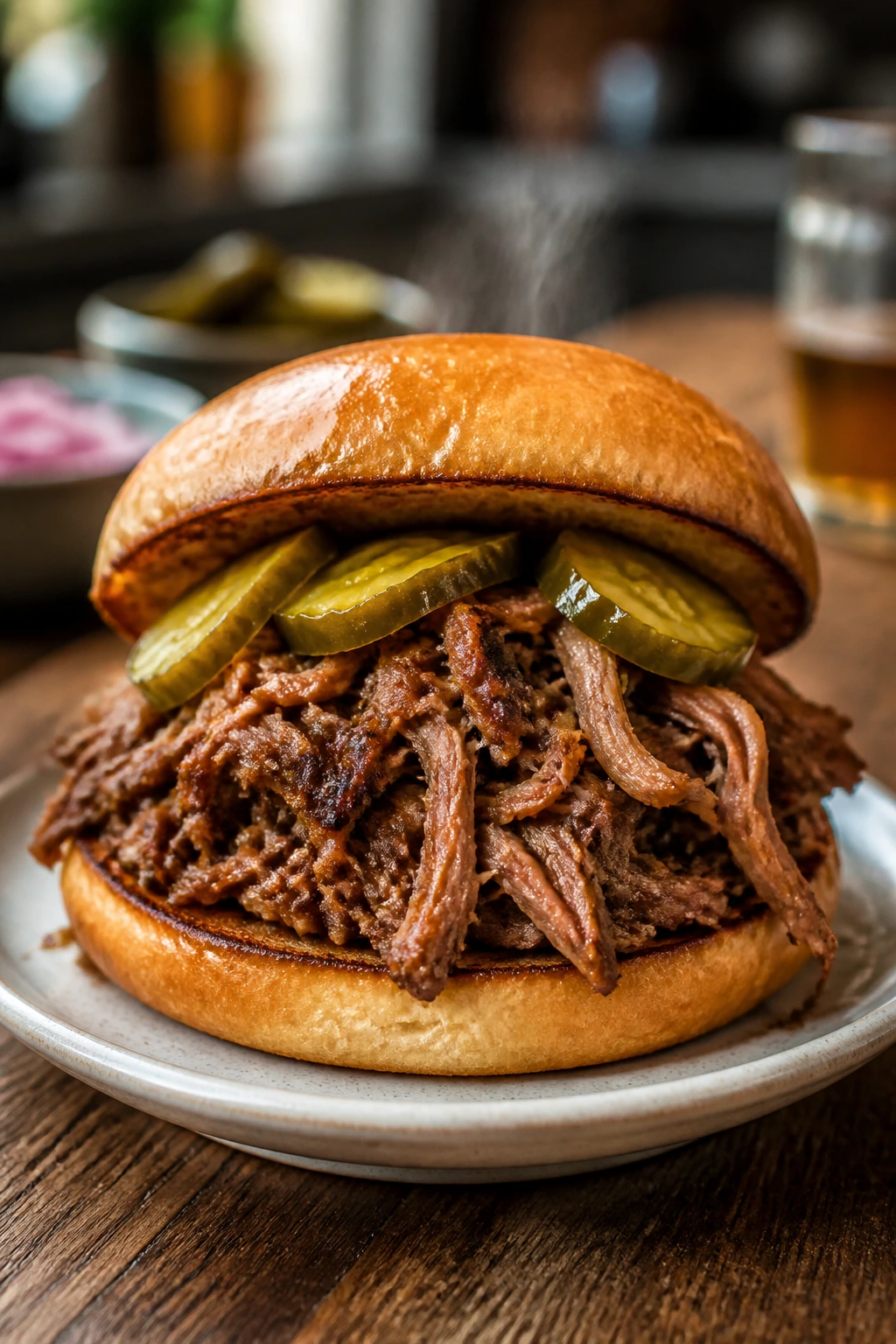
Presentation: Pile the pork loosely on toasted brioche buns or sandwich rolls so the steam can escape instead of turning the bread limp. A few pickles on top are not decoration; they cut through the richness and wake the whole sandwich up. If you are serving it from a bowl, spoon a little of the reserved cooking liquid over the meat right before it hits the table.
Accompaniments: Vinegar slaw, baked beans, potato salad, cornbread, roasted sweet potatoes, and charred corn all make sense here. I especially like a crunchy slaw because it brings a sharp bite that keeps the meal from feeling heavy. If you want to skip bread, pile the pork over rice or roasted potatoes and let the juices do the rest.
Portions: Figure on about 1/2 cup of pork for sliders, 3/4 cup for a standard sandwich, and 6 to 8 ounces of cooked meat if you are serving it as a main plate with sides. A 4- to 5-pound raw shoulder usually gives enough for 8 to 10 people, depending on how generous you are with the fillings and how hungry the crowd is.
Beverage Pairing: Unsweetened iced tea with lemon is the easiest match. A clean lager or a dry hard cider works if you want something colder and sharper. If you do not want alcohol, sparkling water with lime keeps the palate clean between bites.
Practical Tips and Flavor Boosters
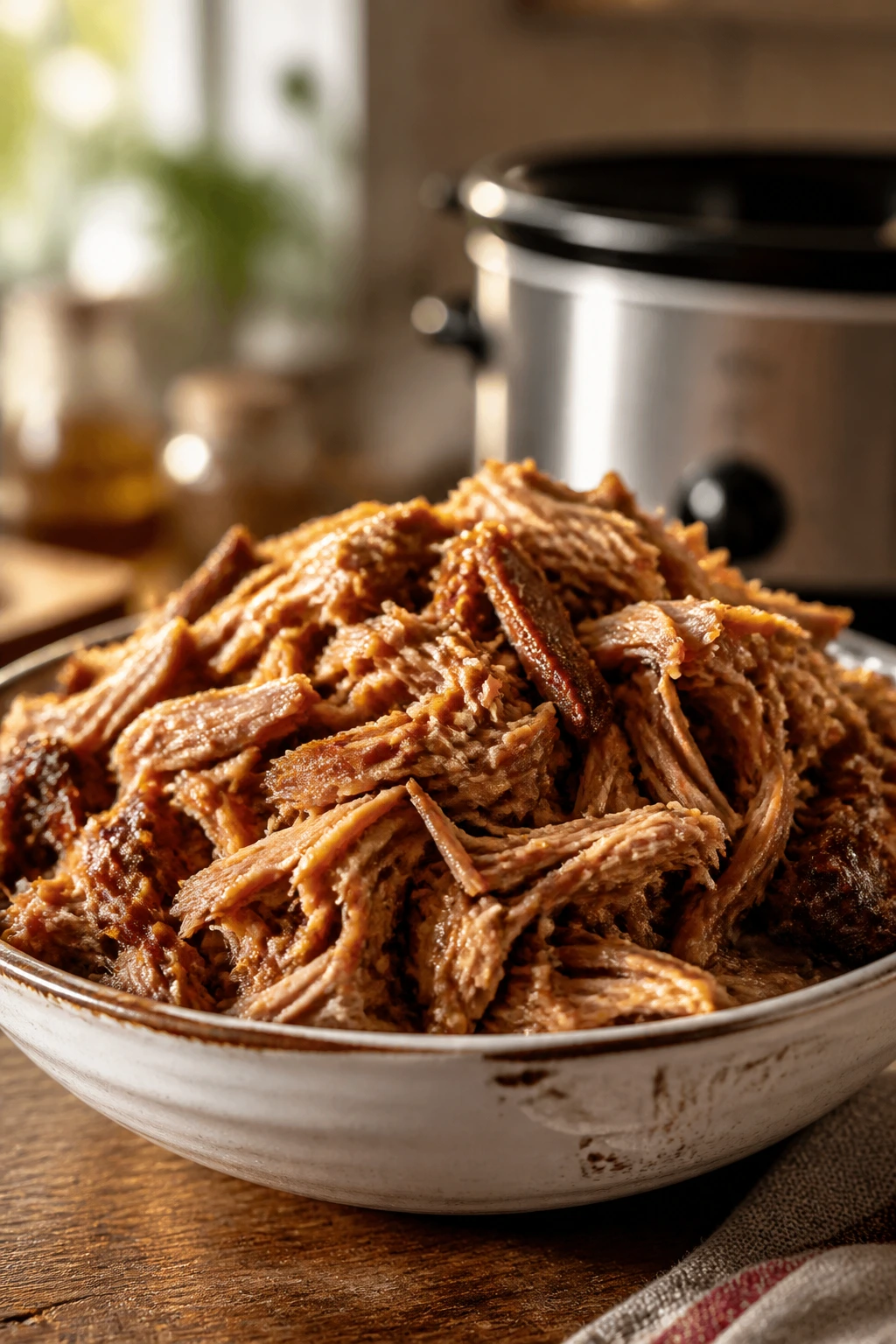
Flavor Boost: Stir 1 to 2 tablespoons of the defatted cooking liquid into the barbecue sauce before you toss it with the pork. That little bit of pork flavor keeps the sauce from tasting bottled and flat.
Time-Saver: Mix the rub the night before and store it in a small jar. You can also slice the onion and smash the garlic ahead of time, which turns the actual prep into a five-minute job the next day.
Texture Boost: If you want crispy edges, spread the sauced pork on a rimmed sheet pan and broil it for a couple of minutes. That works especially well for sandwiches because the bits at the edge get sticky and browned while the inside stays soft.
Cost-Saver: Buy the largest shoulder you can realistically fit in your cooker when it is on sale, then freeze the cooked pork in 2-cup portions with a spoonful of juices. That gives you ready-made filling for tacos, baked potatoes, and rice bowls later without another full cook.
Make-It-Yours: For a sharper sandwich style, lean harder on vinegar and pickles. For a sweeter plate, use a darker barbecue sauce and a little extra brown sugar in the finish. If you want less sauce altogether, stop after the pork is shredded and use only the juices from the pot.
Common Mistakes That Dry Out Pulled Pork
-
Using the wrong cut: Pork loin looks tempting because it is leaner, but it dries out before it turns shreddable. Fix it by starting with pork shoulder or pork butt, which has the fat and connective tissue this method needs.
-
Stopping at the clock instead of the texture: A roast can look “done” at 8 hours and still be too tight to pull apart. Fix it by checking for a 200°F to 205°F internal temperature and a fork that slides in like the meat is softened.
-
Flooding the cooker with liquid: If the roast swims, it steams and dilutes its own flavor. Fix it by using enough liquid to coat the bottom and come partway up the sides, not enough to cover the meat.
-
Adding barbecue sauce too early: Sugar-heavy sauce can mute the meat and turn heavy after hours of heat. Fix it by adding sauce after shredding, when you can control the amount and the texture.
-
Skipping the rest: Moving the roast the second it comes off heat sends the juices straight to the cutting board. Fix it with a 15-minute rest. It is a small pause that pays back in juiciness.
-
Not skimming the fat: A layer of fat can make the finished pork taste greasy instead of rich. Fix it by straining the cooking liquid and skimming the top before you sauce the meat.
Named Variations That Still Keep the Texture
Carolina Tang Pork: Swap the barbecue sauce finish for a sharper mix of apple cider vinegar, yellow mustard, a spoonful of brown sugar, and a pinch of red pepper flakes. This version is especially good on buns with plain slaw because the sauce cuts through the richness instead of covering it.
Smoky Chipotle Pork: Add 1 to 2 chopped chipotle peppers in adobo to the braising liquid and bump the cumin to 1 teaspoon. The heat stays low and smoky, and the pork turns darker and a little more assertive. It is the one I’d use for tacos.
Honey-Mustard Pork: Stir 2 tablespoons honey and an extra tablespoon of mustard into the finishing sauce. You get a rounder, slightly sweeter flavor that works well on soft rolls with dill pickles. It is less sharp than the Carolina version and a little friendlier for sandwiches.
Garlic-Pepper Bowl Pork: Leave out the barbecue sauce at the end and finish the shredded pork with a splash of cooking liquid, a little black pepper, and chopped parsley. Serve it over rice or roasted potatoes. This keeps the meat plain enough that the sides can do more work.
Lower-Sugar Version: Use a barbecue sauce with less sugar, or skip it and finish with strained juices plus a spoonful of tomato paste for body. The meat still tastes full, but the finish stays more savory than sticky.
Storage, Freezing, and Reheating for Slow Cooker Pulled Pork
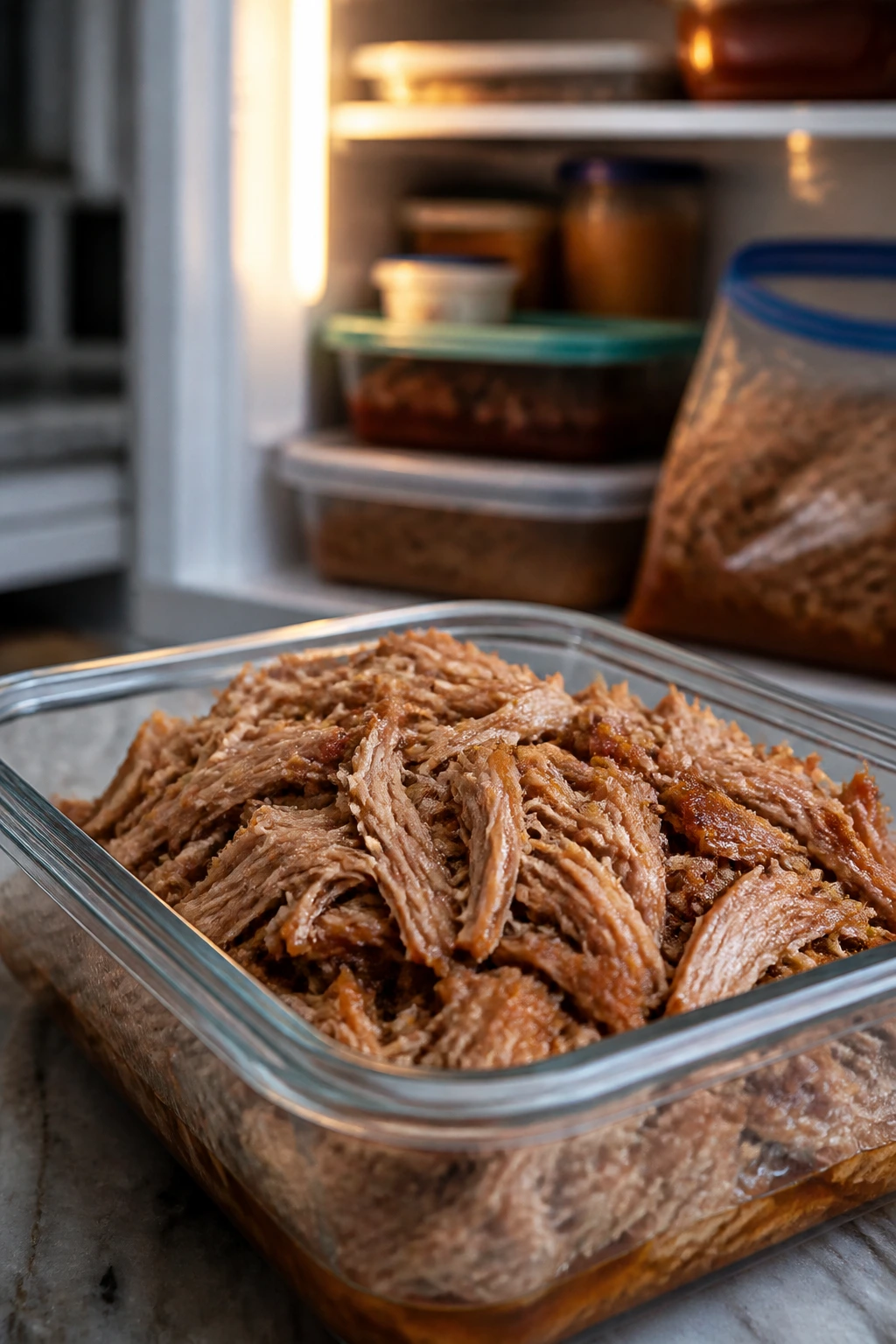
Fridge: Let the pork cool, then store it in airtight containers with a few spoonfuls of the cooking juices. It keeps well for 3 to 4 days in the refrigerator, and it usually tastes even better the next day because the salt and sauce settle into the meat.
Freezer: Portion the pork into 2-cup bags or containers with a little liquid, then press the bags flat so they freeze quickly and thaw without a fight. It keeps for up to 2 to 3 months. I would not freeze it bone dry; the extra juices protect the texture.
Reheating: Warm the pork gently in a covered skillet over medium-low heat with a splash of liquid, stirring every minute or two until it is steaming through. The oven works too: cover it with foil and heat at 300°F until hot. The microwave is fine for small portions, but stop and stir in short bursts so the edges do not turn leathery.
Make-Ahead: You can season the roast up to 24 hours ahead and keep it covered in the fridge. You can also cook the pork a day early, chill it in its juices, and reheat it before serving. That version often tastes deeper, not flatter. The only rule is to cool it promptly and get it into storage once it stops steaming.
Room Temperature: Do not leave cooked pork sitting out for more than 2 hours. If the room is hot, cut that window shorter. Food safety is not the dramatic part of the recipe, but it matters.
Pulled Pork Questions, Answered
Can I use pork loin instead of pork shoulder?
You can, but I would not recommend it. Pork loin is too lean for this kind of long cook, so it dries out before it turns truly shredable. If it is the only cut you have, shorten the cook time a lot and expect slices, not strands.
Do I need to sear the pork first?
No. Searing adds a little browned flavor, but it is not required for this recipe to work. If you want to keep the method as close to set-and-forget as possible, skip the sear and lean on smoked paprika and good seasoning instead.
Can I cook it on High?
Yes. High gets the pork done faster, usually in 5 to 6 hours, but Low gives you more wiggle room and a slightly better texture. If your schedule lets you choose, Low is the safer bet.
Why is there so much liquid in the slow cooker?
Pork shoulder and onions both give off moisture as they cook. That is normal. Strain the liquid, skim the fat, and use only what you need to finish the pork so the strands stay juicy instead of wet.
What if the pork is cooked but still hard to shred?
Keep cooking. A roast can be hot enough and still not tender enough. Give it another 20 to 30 minutes, then test again with a fork. Tough-to-shred pork usually needs time, not more force.
Can I make this without barbecue sauce?
Absolutely. The seasoning, onion, vinegar, and cooking juices carry the recipe on their own. If you want a cleaner finish, toss the shredded pork with a few spoonfuls of defatted juices, a little salt, and a splash of vinegar.
Can I keep it warm for a party?
Yes, but only for a limited stretch. Hold it on the slow cooker’s Warm setting with a few spoonfuls of juices stirred in, and check it every so often so the edges do not dry out. It is better to serve it in batches than to let it sit for hours.
A Final Plate Worth Making Again
A good pork shoulder does not need a lot of help. It needs salt, low heat, a sensible liquid base, and enough time for the muscle to stop behaving like muscle. The slow cooker gives you exactly that, and the meat pays you back with strands that stay juicy instead of falling apart into dry shreds.
What I like most about this recipe is that it does not lock you into one style. Put it on buns with pickles and slaw. Spoon it over rice. Fold it into tacos. Pack it into a baked potato and call it dinner with a straight face. One roast gives you all of that, and the leftovers often taste even better once the juices have had a night to settle in.
If you keep a pork shoulder, an onion, and a bottle of vinegar in the house, you are already most of the way there. The next time you want dinner to do its own work while you do something else, this is the roast to reach for.
Fall-Apart Slow Cooker Pulled Pork — Recipe Card
Recipe Name: Fall-Apart Slow Cooker Pulled Pork
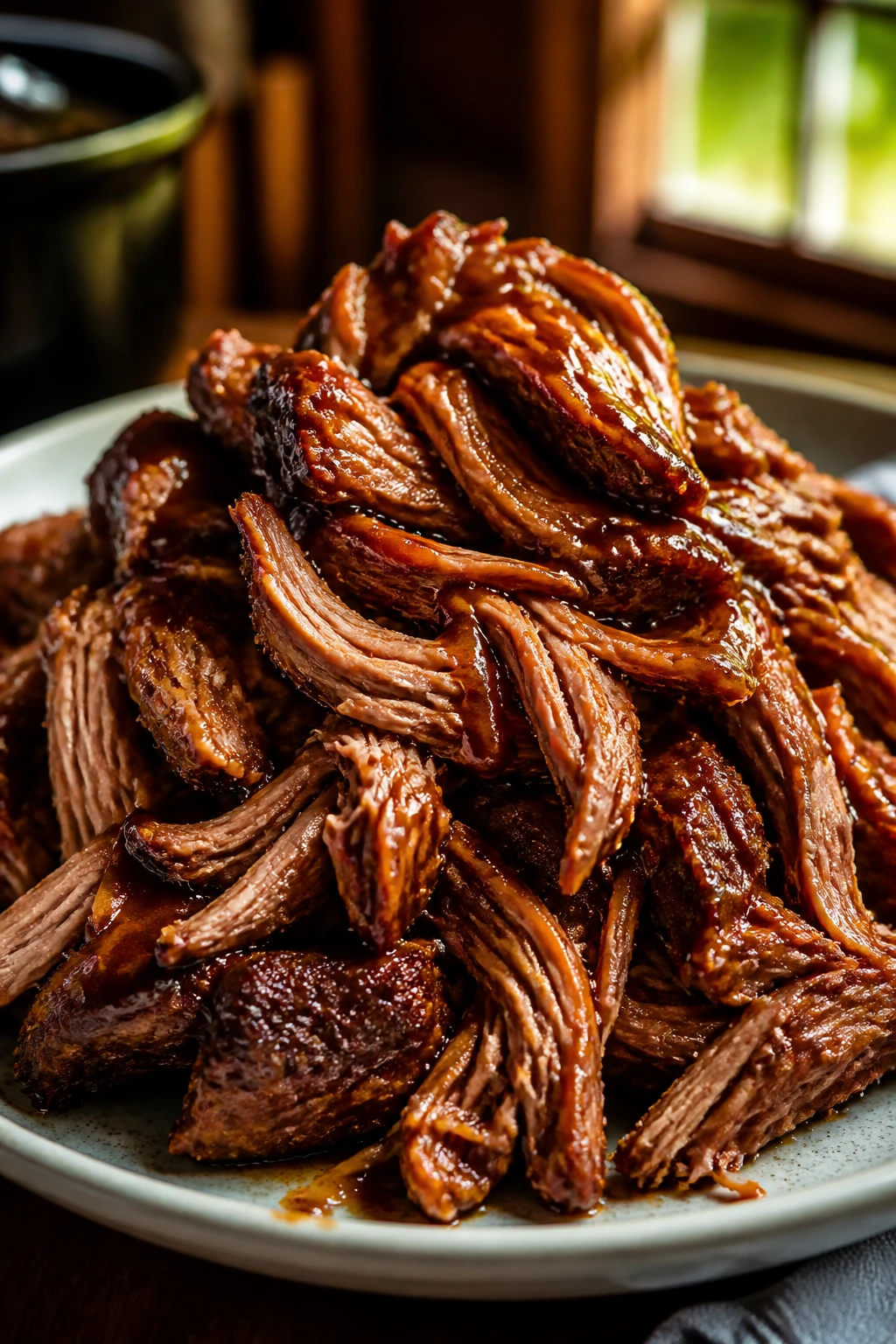
Description: A seasoned pork shoulder slow-cooks with onion, garlic, vinegar, broth, and spices until it shreds into juicy strands. Finish it with barbecue sauce and a little cooking liquid for a glossy, tender result.
Prep Time: 20 minutes
Cook Time: 8 to 10 hours on Low, or 5 to 6 hours on High
Total Time: 8 hours 20 minutes to 10 hours 20 minutes on Low (or 5 hours 20 minutes to 6 hours 20 minutes on High)
Course: Main Course
Cuisine: American
Servings: 8 to 10 servings
Calories: 430 kcal per serving
Ingredients
For the Pork
- 4 to 5 pounds boneless pork shoulder (pork butt), trimmed of excess surface fat
- 1 tablespoon kosher salt
- 2 teaspoons freshly ground black pepper
- 2 tablespoons packed light brown sugar
- 2 tablespoons smoked paprika
- 1 tablespoon chili powder
- 1 teaspoon garlic powder
- 1 teaspoon onion powder
- 1/2 teaspoon ground cumin
- 1/4 teaspoon cayenne pepper, optional
For the Slow Cooker
- 1 large yellow onion, sliced into 1/2-inch rings
- 5 cloves garlic, smashed
- 1 cup low-sodium chicken broth
- 1/2 cup apple cider vinegar
- 2 tablespoons Worcestershire sauce
- 2 tablespoons yellow mustard or Dijon mustard
- 1 tablespoon tomato paste
For Finishing
- 1 to 1 1/2 cups barbecue sauce, plus more for serving
- 2 tablespoons unsalted butter, optional
- Pickles and toasted buns, for serving
Instructions
-
Pat the pork shoulder dry and mix the salt, pepper, brown sugar, paprika, chili powder, garlic powder, onion powder, cumin, and cayenne. Rub the seasoning over the pork on all sides.
-
Scatter the onion and garlic in the bottom of a 6-quart slow cooker. Whisk together the broth, vinegar, Worcestershire sauce, mustard, and tomato paste, then pour it over the onions.
-
Set the pork on top, cover, and cook on Low for 8 to 10 hours or High for 5 to 6 hours, until the meat reaches 200°F to 205°F and shreds easily with a fork.
-
Turn off the heat and let the pork rest for 15 minutes. Transfer it to a cutting board or sheet pan, remove large fat pieces, and shred.
-
Strain the cooking liquid, skim the fat, and stir in the barbecue sauce and butter, if using. Thin with a little reserved liquid if needed.
-
Toss the shredded pork with enough sauce to coat it lightly. Serve warm with pickles and toasted buns, or use in tacos, bowls, or potatoes.
Notes: Add sauce gradually so the pork stays juicy, not soupy. For crisp edges, spread the sauced pork on a sheet pan and broil it for 2 to 3 minutes. If your slow cooker runs hot, start checking for tenderness a little early.