



Cold lettuce and a bowl of hummus do not make dinner. A fresh vegetarian picnic for a healthy dinner has to feel like a meal with a little ceremony: something crisp, something creamy, something salty, and enough substance that nobody starts hunting for chips on the way home.
The mistake most people make is treating a picnic like a snack tray. That works for twenty minutes. After that, the bread gets damp, the fruit gets soft, and the whole spread starts feeling like leftovers that escaped from the fridge.
The better version is a basket built around foods that stay lively at room temperature or near-cold, with enough beans, grains, cheese, or eggs to keep the meal anchored. It does not need to be complicated. It does need to be planned with a bit of care — the same way a good cheese board lives or dies on balance, not on quantity.
Then the whole thing starts making sense. One sharp dressing, one sturdy main, a couple of crunchy sides, fruit that still snaps, and a drink that does not taste like sugar water. That is the shape of a dinner people finish, not just pick at.
Why This Style of Dinner Earns Its Keep
-
It behaves like dinner, not a grazing board: A basket with lentils, grains, produce, and a protein anchor leaves you satisfied in a way raw vegetables alone never will.
-
It saves the kitchen from heat and noise: When the oven stays off and the stovetop stays quiet, the evening feels calmer before you even sit down.
-
It travels better than hot food: Grain salads, wraps, bean salads, and chilled vegetable sides keep their shape longer than anything that depends on steam.
-
It lets fresh produce do more than sit there looking pretty: Cucumbers, herbs, tomatoes, melon, and leafy greens all get used in ways that make them taste brighter, not just greener.
-
It’s easy to scale up or down: Two people, four people, a porch dinner, a park spread — the same formula works if you adjust the portions with some common sense.
-
It gives leftovers a second life: The same bean salad, roasted vegetables, or dressing can turn into lunch the next day without any extra cooking.
What a Picnic Plate Needs Before It Feels Like Dinner
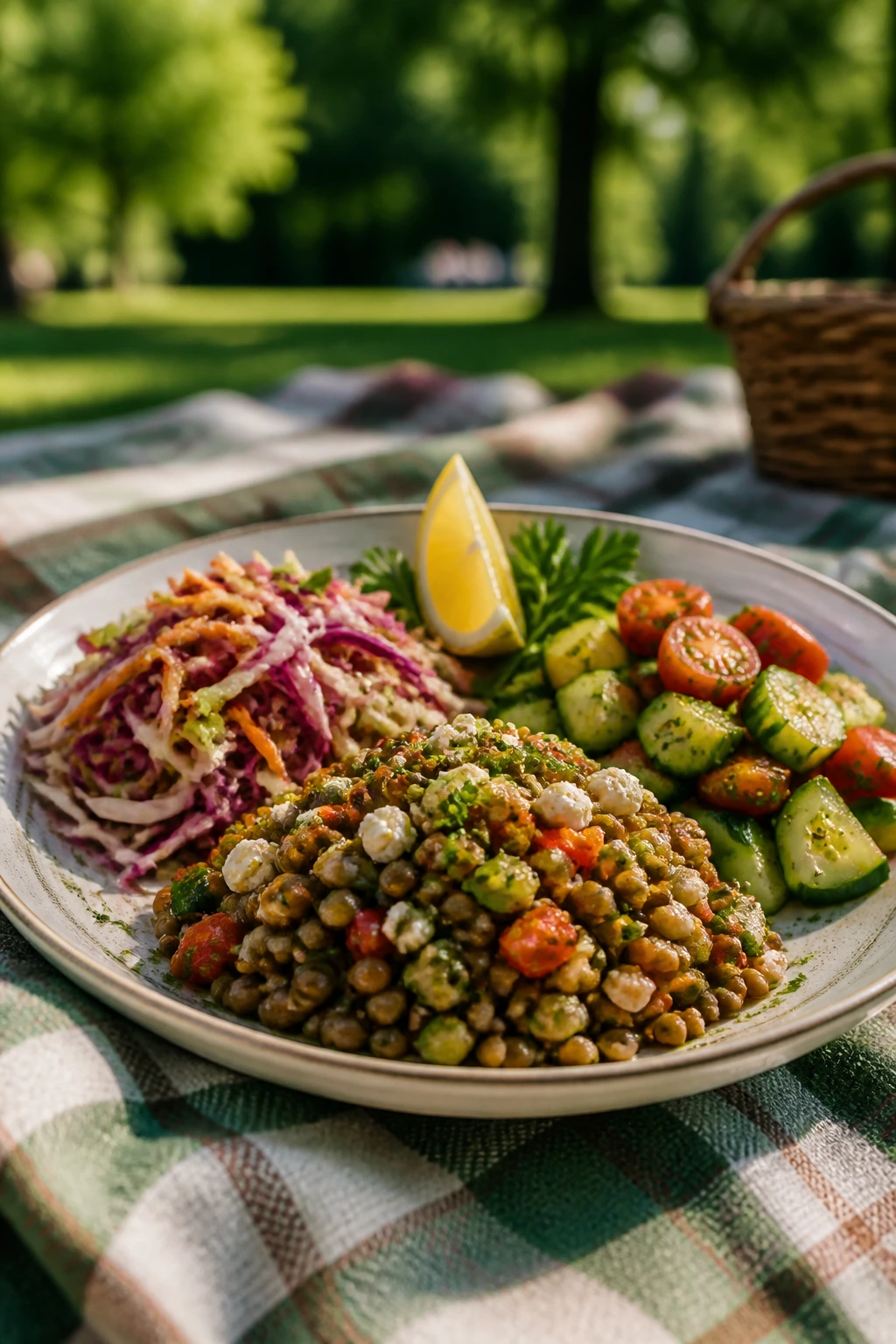
A real picnic dinner needs a little structure. Without it, you end up with a pile of decent foods that never quite become a meal.
I like a simple 1-2-1 formula: one sturdy main, two vegetable sides, and one bright finishing element. The main might be a lentil salad, a wrap, a frittata slice, or a grain bowl. The sides can be crunchy slaw, roasted vegetables served chilled, cucumber salad, or cut raw vegetables with a dip. The bright finish is where the whole thing wakes up — a lemony dressing, pickled onions, herbs, or a fruit salad with mint.
That structure matters because vegetarian picnic food can go flat if it leans too hard in one direction. Too many soft foods, and the meal feels sleepy. Too much raw crunch, and it starts to feel like a snack box from the back of the fridge. A little salt, a little acid, a little fat, and enough texture to make each bite different — that is the whole trick.
For portions, think in dinner terms, not appetizer terms. Most adults do well with 1½ to 2 cups of food, plus bread or fruit if the meal is meant to hold until later. If you’re packing for people with bigger appetites, lean on beans, eggs, cheese, or whole grains instead of just increasing the volume of leafy greens.
Texture Is What Keeps the Basket Interesting
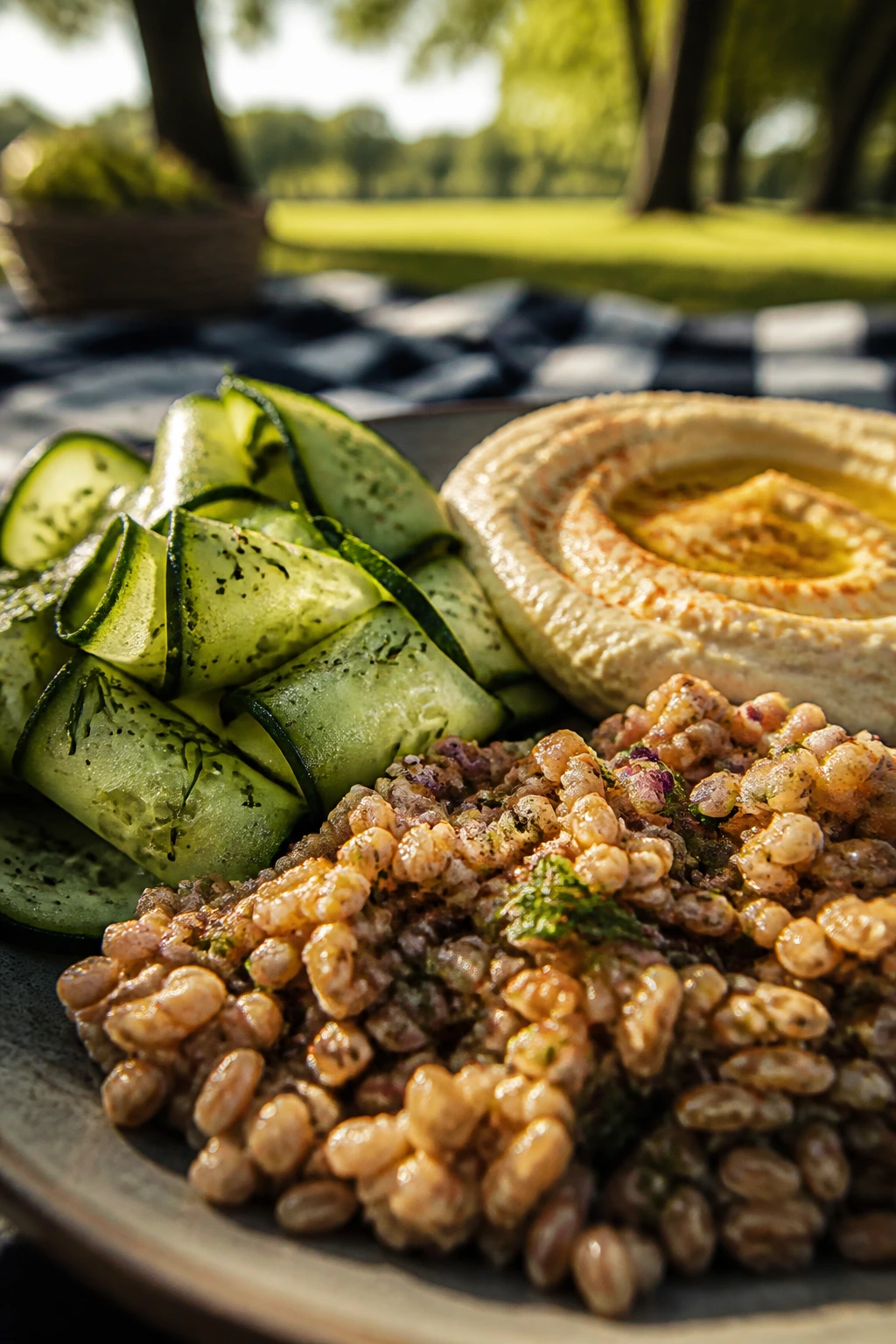
Why do some picnic dinners feel lively and others feel flat before the plates are even set down? Texture.
The first bite should give you something crisp. The second should offer something soft or creamy. The third ought to bring a little chew, or a burst of juice, or that sharp snap you get from a radish cut thin enough to feel almost brittle. If every item is the same temperature and the same texture, the meal starts fading fast.
Crisp Needs Moisture Control
Crisp foods are the easiest to ruin. Lettuce wilts, cucumber sweats, and bread soaks up dressing like it has been waiting all day for trouble. Keep crunchy ingredients dry until the last minute, and give them their own container if they’re living next to anything saucy.
Creamy Needs Salt and Acid
Creamy foods are what make a picnic dinner feel finished. Hummus, yogurt sauces, whipped feta, and bean dips need enough salt to taste awake and enough lemon or vinegar to keep them from feeling heavy. Plain creaminess is where people get tired. Seasoned creaminess is where they keep eating.
Chewy Needs Substance
Beans, farro, quinoa, roasted potatoes, whole-grain bread, and pasta with enough bite all give a picnic some backbone. This is the part that stops the meal from feeling like an extended appetizer hour. I’m a little ruthless about this: if the basket has no chew anywhere, I know it won’t satisfy.
Juicy Needs Boundaries
Fruit is beautiful on a picnic table, but it has to be handled with some discipline. Whole grapes, berries, orange segments, and melon cubes are fine; cut tomatoes and sliced peaches are another story. If they’re too ripe or too wet, they can swamp everything nearby.
Mains That Travel Without Turning Soggy
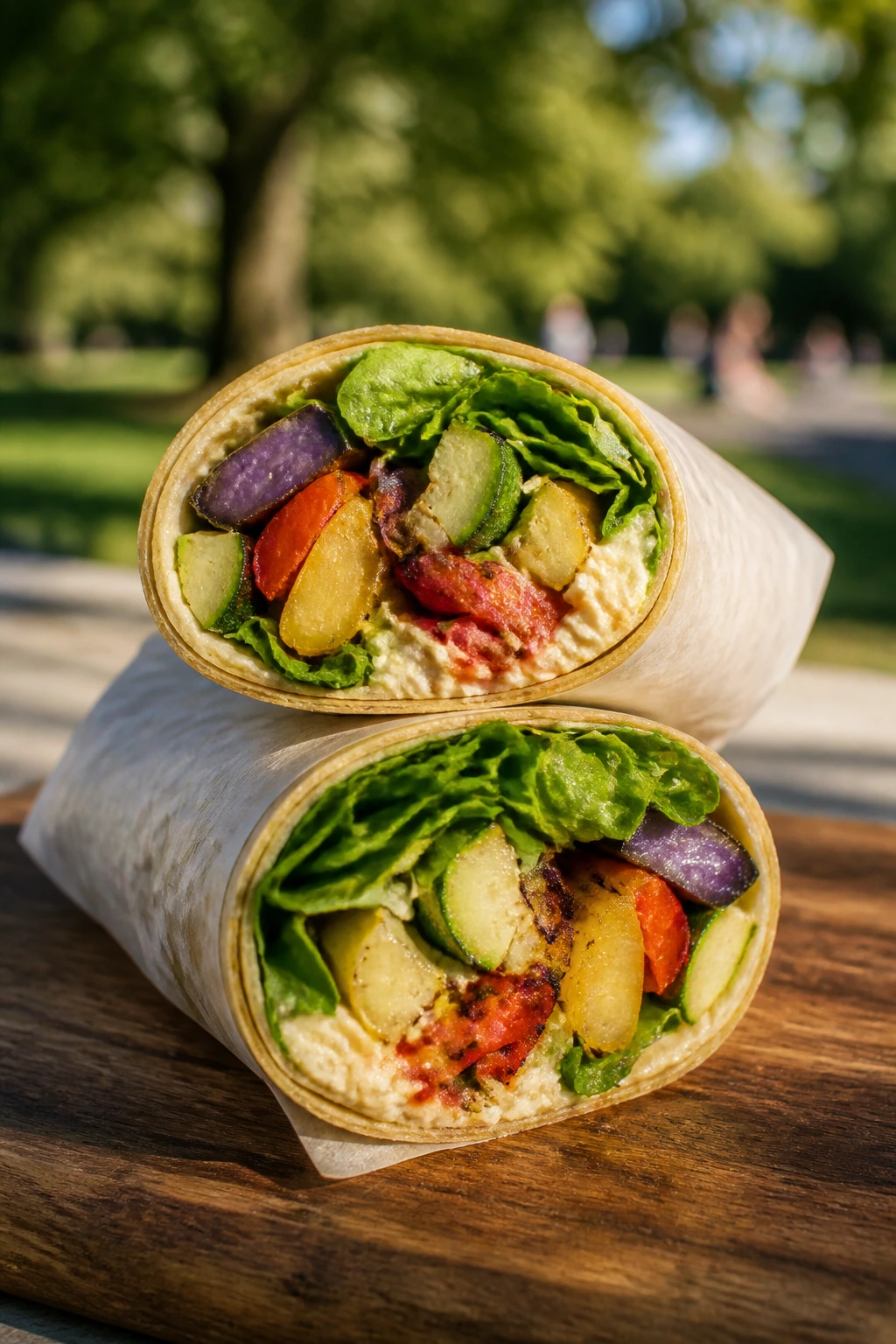
No, a vegetarian picnic dinner does not have to be a giant salad. That’s the laziest move in the category, and it shows.
A better main has a shape you can trust. Grain salads, wraps, egg-based slices, bean salads, and sturdy pasta dishes all work because they hold texture after a bit of time. They also make it easier to build a balanced plate without overthinking the rest of the basket.
Grain Salads and Bean Salads
Farro, barley, quinoa, and brown rice all hold up well when they’re tossed with olive oil, lemon, herbs, and something salty like feta or olives. Beans do the same thing, especially chickpeas, cannellini beans, and lentils. A chilled lentil salad with chopped cucumber, parsley, and red onion can sit in a cooler for hours and still taste like it was made for the evening.
Wraps and Stuffed Pitas
Wraps work if you keep the filling dry enough. Hummus, roasted vegetables, shredded cabbage, sliced peppers, and greens all behave better than juicy tomatoes tucked directly against the bread. If I’m packing wraps, I often put the wettest ingredients in the center, not against the tortilla edge. It sounds small. It matters.
Frittata or Savory Slice
A baked egg dish sliced cold is picnic gold. It eats cleanly, keeps its shape, and does not need reheating to make sense. Spinach, herbs, potatoes, zucchini, and cheese all fit, but the slice should be fairly thick so it does not dry out.
Short Pasta, Done Right
Cold pasta can be wonderful, but only if it’s dressed with purpose. Short shapes like fusilli, rotini, or shells hold vinaigrette and cling to small bits of vegetables. Long noodles tend to go slippery and awkward in picnic settings unless they’re tied together with a sauce that really behaves.
Sides That Stay Crisp and Bright
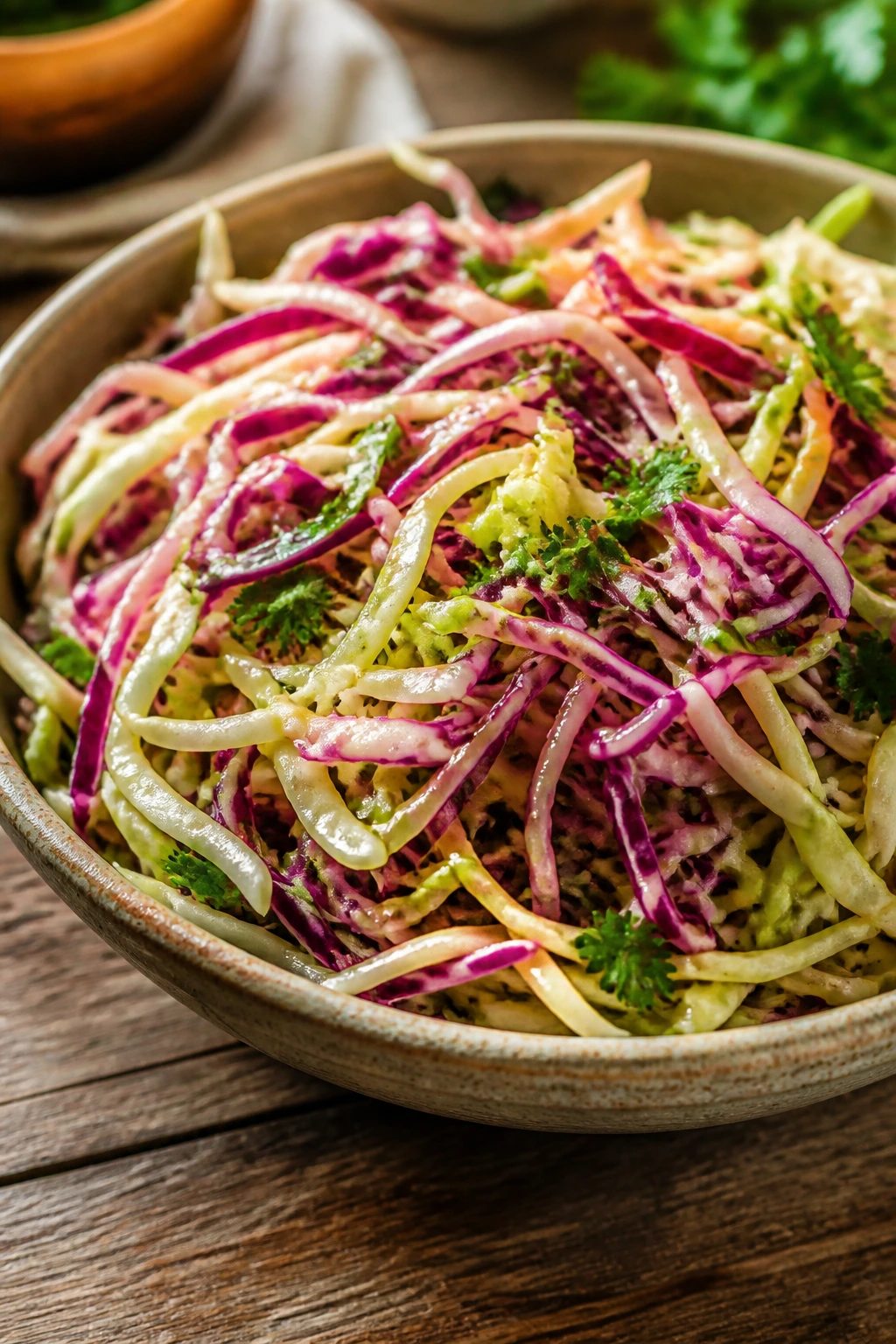
A good side dish on a picnic table should look awake. It should still have some bite when you get to it, even if it’s been sitting for a little while.
Shaved cabbage slaw is one of my favorite picnic sides because it stays crunchy long after lettuce gives up. A cabbage-and-carrot mix tossed with a light vinegar dressing can sit for hours and still taste clean. Radishes, fennel, snap peas, sugar snap pods, and thinly sliced bell peppers bring the kind of crisp that makes you want another bite before you’ve even swallowed the first one.
Roasted vegetables can absolutely belong here, but let them cool first. Warm roasted carrots, asparagus, zucchini, or cauliflower are fine when they’re handled like a side dish and not like a hot entrée. Once they cool, they pick up a firmer feel and carry dressing better. A little lemon zest or chopped herbs at the end keeps them from tasting sleepy.
I also like one component that feels almost pickled — quick-pickled onions, a few capers, some olives, or a spoonful of chopped giardiniera. That salty, acidic note keeps the whole meal from leaning too soft.
If you want the short version, this is the rule: one crunch side, one juicy side, one sharp side. That covers a lot of ground without making the spread feel crowded.
Sauces and Spreads That Pull Everything Together
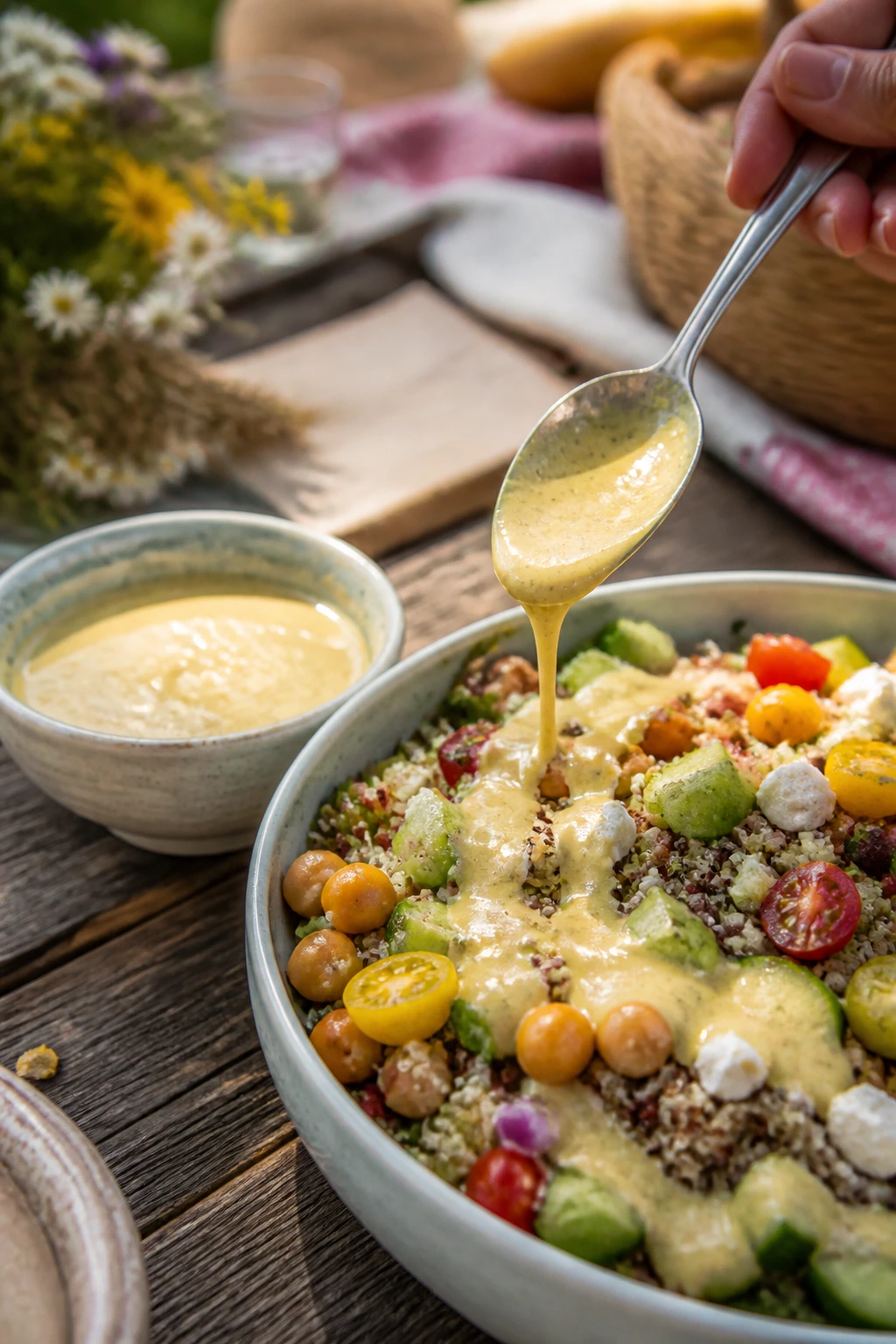
The smell of a good dressing hits before the first bite does. Lemon, garlic, herbs, vinegar, tahini — those are the notes that make a cold meal feel alive instead of assembled.
Sauces and spreads are not decoration here. They’re the part that keeps the food from tasting like it was packed by someone in a hurry. Hummus, white bean dip, tzatziki, pesto, whipped feta, and mustardy vinaigrette all do different jobs, and the trick is not to use all of them at once. Use one or two well.
A vinegar-forward dressing is the safest picnic move because it stays bright and does not collapse the way a dairy-heavy sauce can if the weather is warm. A spoon of Dijon helps it hold together, and a little honey or maple syrup can round off the sharp edge. If you’re making tahini dressing, thin it with water slowly; if you add the liquid too fast, it can seize and go pasty before it loosens again.
For dips, I like to keep the texture thick enough to cling to vegetables but not so thick that it clumps. Hummus should scoop cleanly. Yogurt sauces should slide a little. Pesto should be loosened with olive oil if it’s going anywhere near bread or grains.
A tiny jar of finishing sauce changes the whole dinner. People think they need more food when what they really need is one sharper spoonful.
Bread, Grains, and Starches That Make It Filling
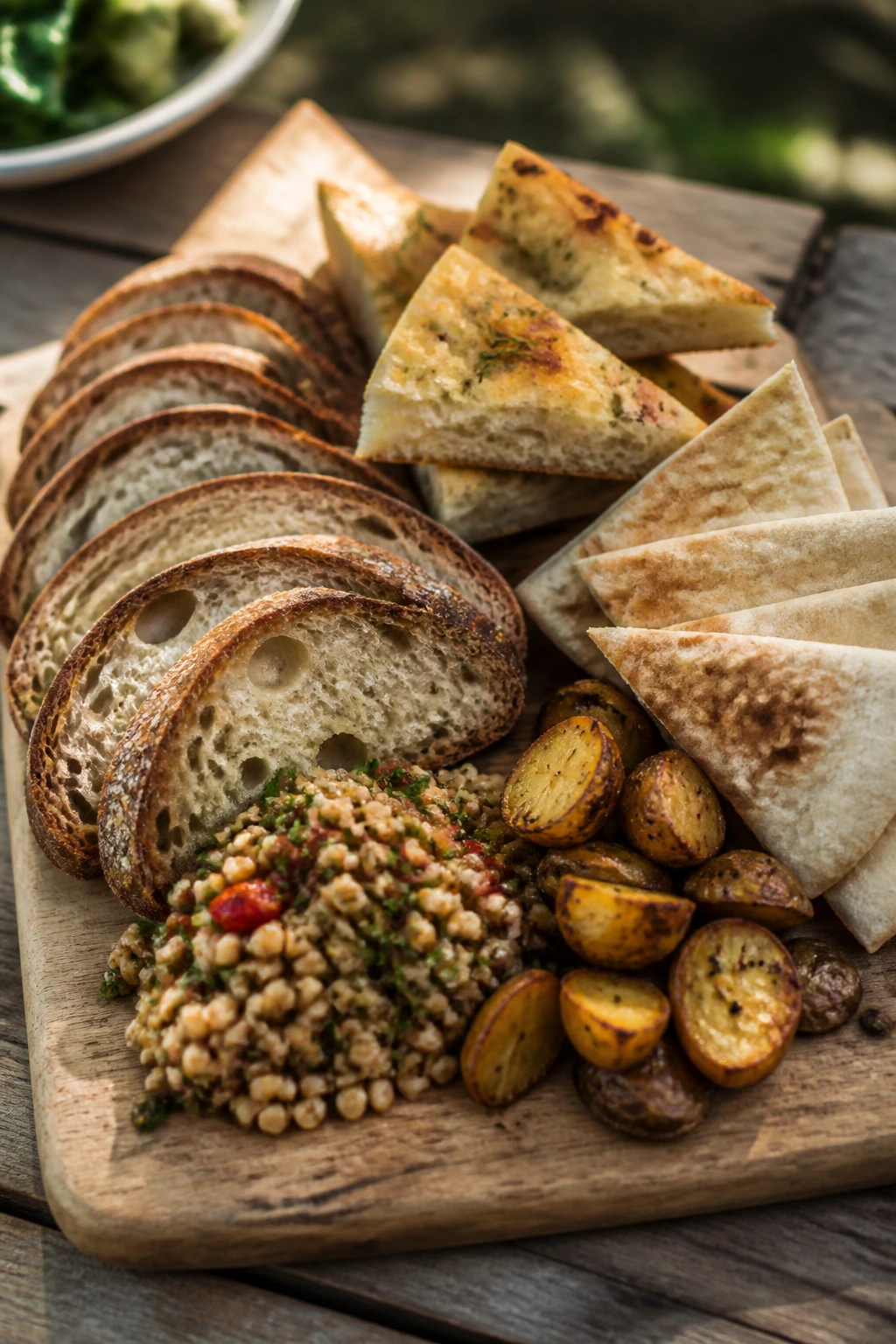
Can a picnic dinner feel complete without bread or grains? Sure, technically. But it usually doesn’t.
Bread, grains, and starches give the meal its quiet backbone. Whole-grain rolls, sourdough slices, pita, focaccia, farro, couscous, potatoes, and even a handful of crisp crackers can turn a bundle of vegetables into a proper dinner. The point is not to pile on carbs for the sake of it. The point is to give the meal something to hold onto.
Sourdough and focaccia are easiest when they’re brushed lightly with olive oil and wrapped in a cloth or parchment, not sealed in plastic where condensation can soften the crust. Pita is a little more forgiving. Whole-wheat tortillas are a workhorse if you’re making wraps, but they need fillings that are drier than you think.
Grains can work warm or cold, but I prefer them just slightly cool with dressing mixed in while they’re still warm enough to absorb flavor. That’s one of the few small moves that makes a big difference. A farro salad dressed after the grains have cooled tastes like leftovers. The same farro tossed with lemon, olive oil, herbs, and salt while still a little warm tastes intentional.
Potatoes deserve a special mention because they can do double duty. A vinaigrette-dressed potato salad stays cleaner and lighter than the mayo-heavy version, and roasted potatoes served at room temperature hold their shape well if they’re cut into chunks that are not tiny. Tiny pieces dry out. Bigger ones stay interesting.
Fruit, Cheese, Nuts, and Small Finishers
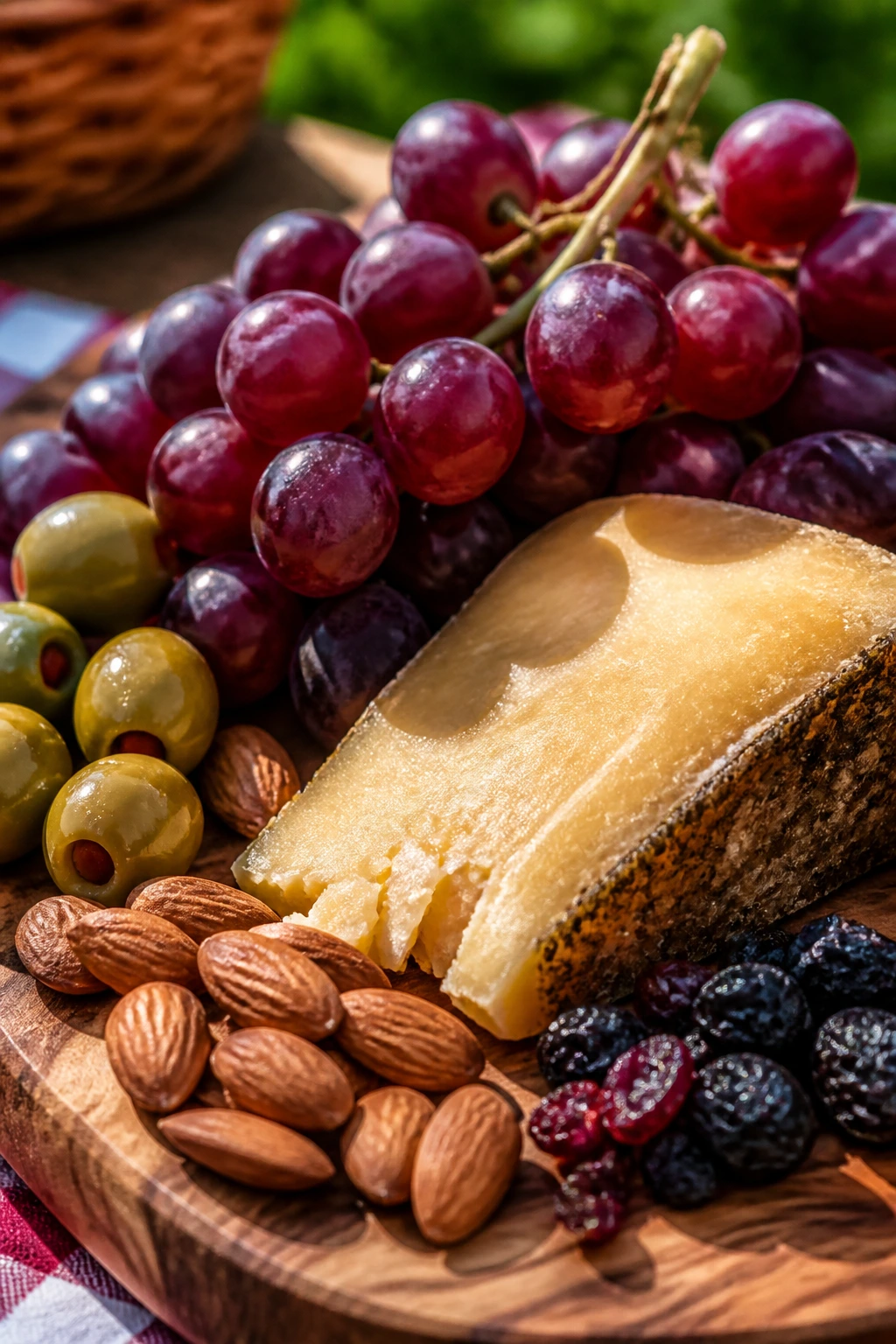
A picnic dinner gets better when there’s one part of the plate that tastes almost like a reset button.
Fruit does that job. Grapes, berries, cherries, orange segments, melon cubes, sliced pears, and firm peaches all bring sweetness that cuts through salt and olive oil. I like fruit that can be eaten with one hand or forked without creating a puddle. Watermelon is fine, but it needs a separate container and a paper towel or two underneath, because it sheds juice like it’s being paid to.
Cheese works too, but choose it with some discipline. Feta, cheddar, manchego, halloumi, and aged goat cheese all survive a picnic better than soft cheese that collapses under heat. If the weather is warm, keep cheese cold until the last possible moment. If it’s a cooler evening, a firmer cheese can sit out a bit longer without drama.
Nuts, seeds, olives, and even a little dark chocolate can play a small supporting role. They’re the tiny details people notice without always naming. A handful of toasted almonds in a salad, pumpkin seeds over cucumbers, or olives tucked beside bread gives the dinner a little more lift.
I wouldn’t make all the finishers sweet. One fruit element is enough. Maybe two if the meal is very green and herb-heavy. Anything beyond that starts drifting away from dinner and into picnic dessert territory, which is a different mood entirely.
Drinks That Match a Light Dinner
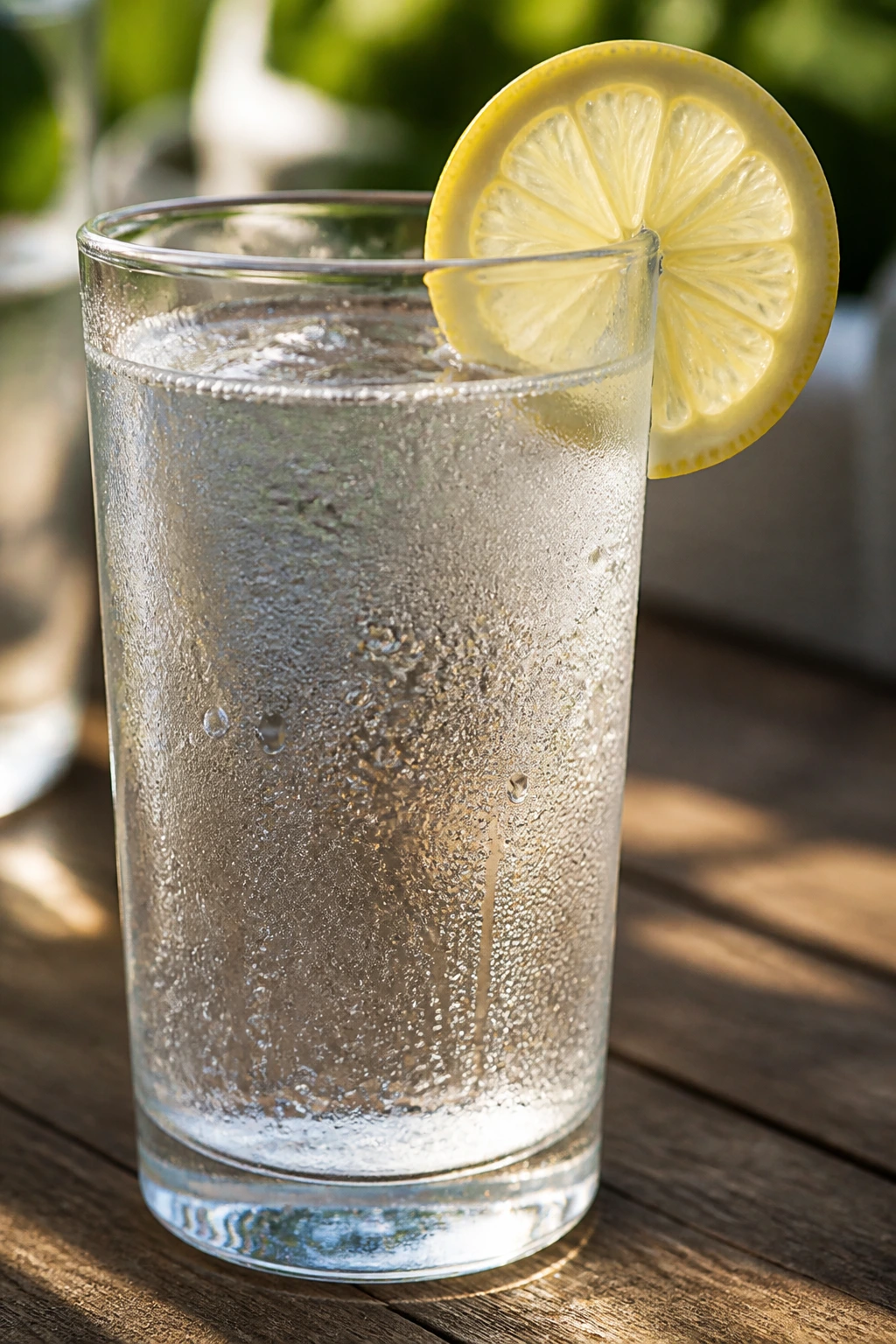
Water is fine. Sparkling water is better. A picnic dinner does not need a complicated drink menu to feel complete.
The best drinks for a fresh vegetarian spread are the ones that cut through herbs, salt, and olive oil without fighting them. Sparkling water with lemon or cucumber is a safe choice. Iced mint tea, hibiscus tea, green tea with citrus, or a chilled ginger infusion all work because they taste clean after a few bites of beans, bread, or cheese.
If you want something a little more substantial, keep it dry. A tart lemonade with less sugar, a shrub-style drink, or a light spritz made with soda water and citrus can fit the meal without making it feel heavy. Sweet drinks can flatten a fresh dinner faster than people expect. By the third sip, the salad starts tasting less bright.
I also like to bring one bottle that is not meant to be fancy at all — just cold, crisp water with a slice of lime or a few mint leaves. People forget to drink during a picnic because the food is relaxed and the conversation runs long. A clean, cold drink keeps the evening from feeling sticky.
And if the meal includes anything salty or pickled, extra water is not optional. It’s the difference between refreshed and thirsty.
Packing the Basket So the Food Arrives in Shape
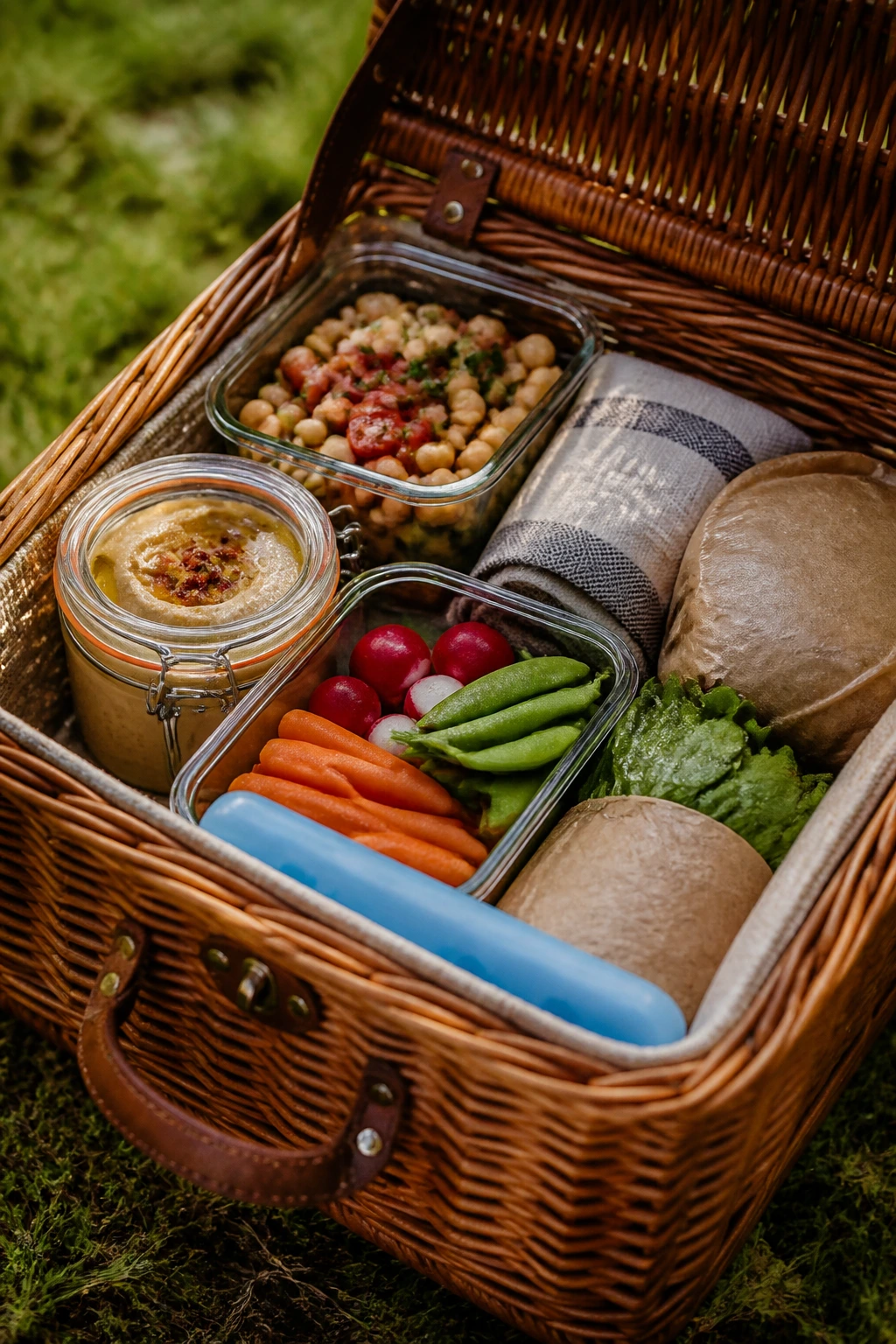
A picnic dinner lives or dies in the packing stage. You can make excellent food and still end up with a compromised meal if the containers are wrong or the cooler is sloppy.
Start with the coldest, heaviest items at the bottom: grain salad, bean salad, dip, fruit, and any cheese. Put ice packs above and below the most delicate containers if you’re using a soft cooler. That simple sandwiching trick helps far more than people think, especially if the basket has to sit in the car for a while.
Keep Wet and Dry Separate
Sauces go in small screw-top jars. Bread gets its own wrap. Greens should never sit under dressing before serving unless you want them to melt into themselves. If you’re packing wraps, keep the filling modest and avoid placing juicy ingredients against the tortilla. A paper towel in the container is not glamorous, but it can save the texture.
Pack in the Order You’ll Eat
The first items you’ll want should be easiest to reach: drinks, napkins, forks, a small knife, and one serving spoon for each big dish. Nobody wants to dig through a basket with one hand while balancing a plate in the other. Keep the fruit and bread near the top if those are meant to come out first.
Don’t Trap Steam
Warm roasted vegetables, cooked grains, and boiled potatoes need to cool before they’re sealed. If you lock them in a container while they’re still hot, the steam condenses and drips back into the food. That is how good vegetables get soggy in a way that feels almost unfair.
A packed picnic should look tidy when you open it. If it already looks messy in the kitchen, it will be worse outside.
Food Safety for Dairy, Eggs, and Cut Produce
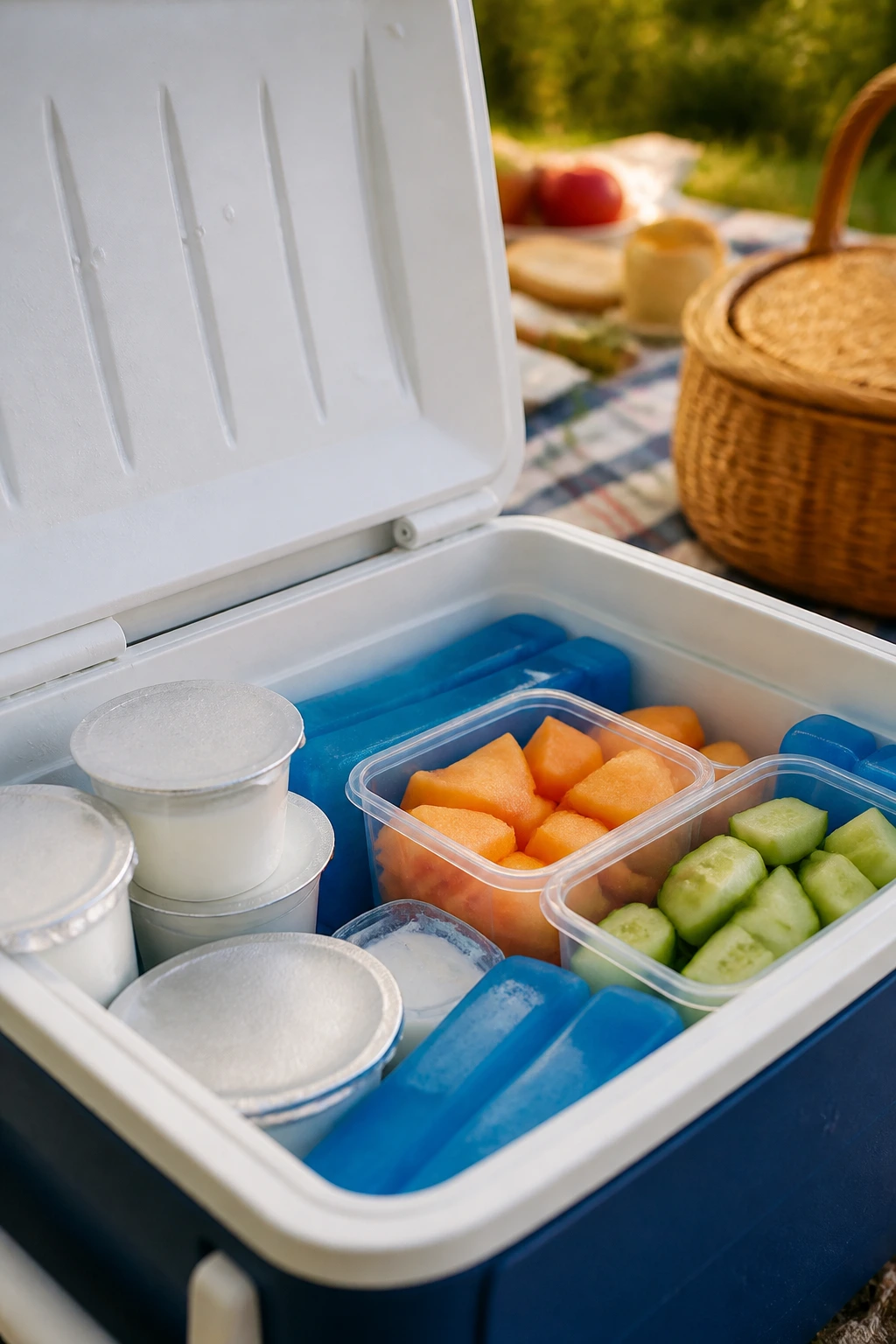
This part is less romantic, but it matters. A picnic dinner that sits out too long stops being a good idea fast.
The basic rule is simple: perishable foods should not sit in the danger zone for more than 2 hours, and if the air is warm enough to make the basket feel hot, cut that down to 1 hour. That applies to dairy, eggs, cooked grains, tofu, hummus, cut fruit, and anything else that spoils faster than a whole apple on the counter. Public health guidance has been steady on this for a reason.
Dairy-heavy dishes need the most care. Yogurt sauces, whipped cheese, fresh mozzarella, and egg-based salads all belong in a cooler or under ice packs if the meal is going to linger. I would not leave a mayo-heavy salad out just because it looks innocent. It’s the sort of food that can make people nervous for a reason.
Cut produce is safer than meat in some ways, but it still dries out, bruises, and loses quality quickly once it’s sliced. Melon, berries, tomatoes, and cucumbers should be packed in containers that close cleanly and kept cold until serving. If you’re making a bowl of fruit, keep it shaded and uncovered only when people are ready to eat.
One last thing: cooler bags work best when they are already cold. If you stuff warm containers into a room-temperature bag and hope for magic, you won’t get it. Pre-chill the containers, add ice packs early, and keep the lid closed until you actually need the food.
Serving It Outdoors, Indoors, or On the Porch
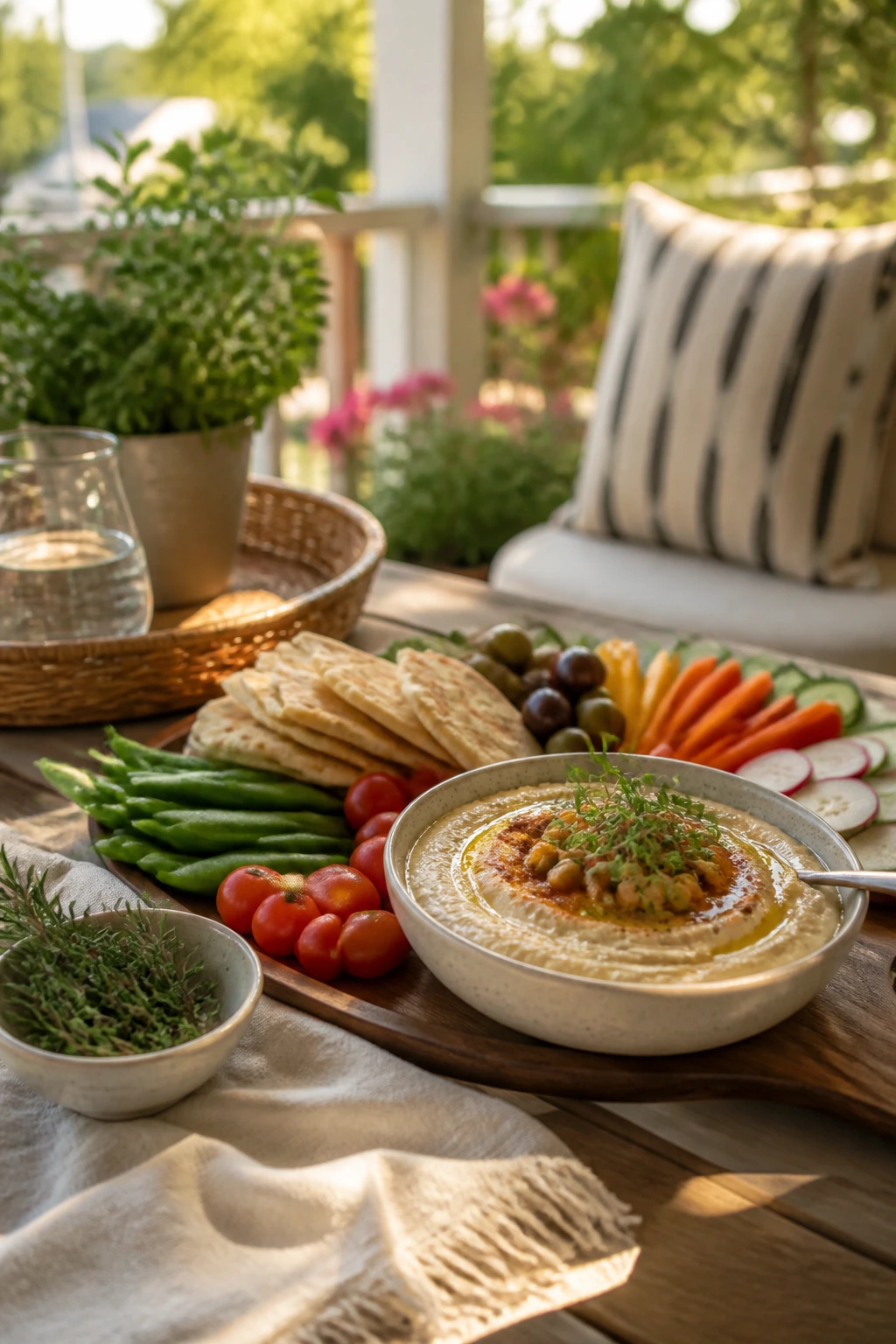
A picnic dinner can feel relaxed without looking random. The plate still matters.
I like to think in layers. Start with the main, then add the crunchy side, then tuck the bright sauce or pickle element beside it, not over everything. A few herbs on top do more than people give them credit for. Chopped parsley, dill, basil, or mint makes cold food taste fresher before the first bite.
If you’re serving outside, keep the spread low and stable. Wide bowls beat tall ones. Flat platters are better than deep containers because they make people see what’s available at a glance. That sounds minor until you realize how much better people eat when the food is easy to reach.
Indoors, the mood changes a little. A picnic dinner on the dining table can feel almost luxurious if you use linen napkins, a cutting board for bread, and one serving bowl that holds the salad without spilling over the rim. The point is not to stage a magazine spread. The point is to make the meal easy to start and easy to finish.
Porch dinners are my favorite, honestly. There’s enough breeze to keep the food lively, enough shade to protect the cooler, and enough looseness that nobody minds if the cheese isn’t sliced perfectly. A picnic dinner done well should feel unfussy, but not careless.
Prep-Day Timing That Makes Evening Easy
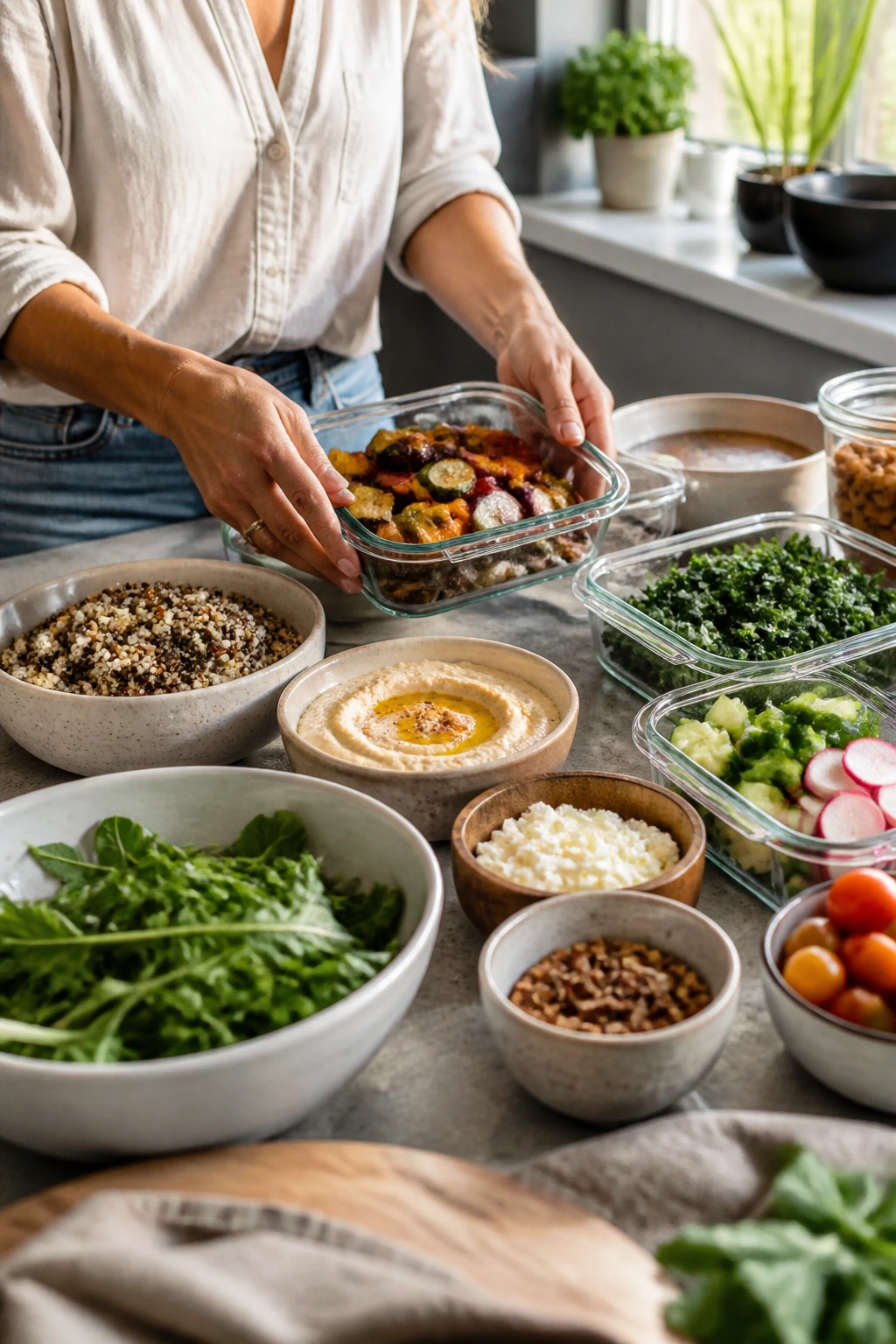
The best picnic dinners are made by people who stop trying to do everything at once.
Here’s the rhythm I trust:
The Day Before
Cook grains, roast vegetables, make dressing, and chill dips. Wash and dry greens or herbs if they’re going to be used. If you’re making anything like a frittata or savory tart, this is the day to bake it so it can firm up cleanly.
Earlier in the Day
Chop vegetables, slice cheese, and portion fruit. Keep acidic ingredients like lemon juice, vinegar, and pickled onions in their own containers until close to serving. If you’re using bread, decide whether it should stay whole, sliced, or lightly toasted before packing.
30 to 45 Minutes Before Leaving
Assemble the cold dishes, pack the cooler, and put the drinks in last. Check that every sauce container closes tightly. This is also the moment to add napkins, forks, serving spoons, and a trash bag or reusable container for scraps.
Right Before Serving
Taste the main salad again. It probably needs a little salt or lemon. That last adjustment matters more than people think. Food that sits for an hour often needs a tiny reset right before it hits the table.
A picnic dinner should feel like it happened in a smooth line, not like a kitchen collapse followed by a basket miracle.
Small Moves That Raise the Flavor Without More Work
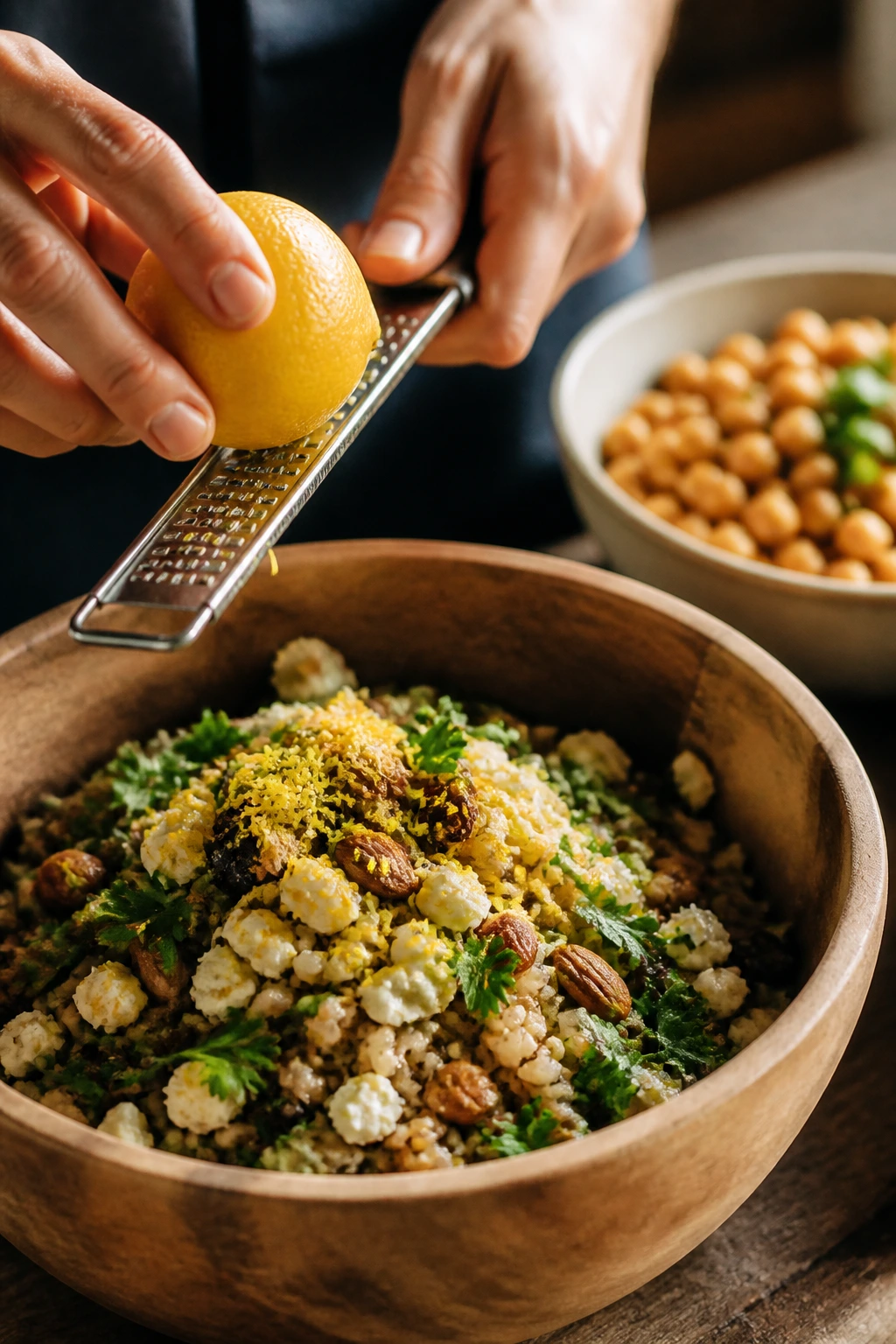
A good basket gets better with tiny, low-effort upgrades. Not fussy ones. Just the kind that make the food taste like someone cared.
Flavor Enhancement: Add citrus zest to a grain salad or bean salad before packing it. Lemon zest, orange zest, or even a little lime zest makes cold food taste brighter without making it wetter.
Time-Saver: Use one dressing in two places. A lemon-Dijon vinaigrette can season both the salad and the roasted vegetables if you keep a small extra portion aside for finishing. Less work, cleaner shopping list, fewer bottles cluttering the cooler.
Pro Move: Toast seeds or nuts in a dry skillet for 3 to 5 minutes until they smell nutty, then pack them separately. Sprinkle them on only when it’s time to eat. They stay crisp that way, and the salad tastes more finished.
Cost-Saver: Lean on cabbage, carrots, lentils, potatoes, and seasonal fruit. Those ingredients cost less than delicate out-of-season produce and keep their texture longer in a basket. I would rather have a sharp carrot slaw than a tired box of expensive salad greens.
Make-It-Yours: If you want the meal vegan, use chickpeas, beans, tofu, tahini, olive oil, and nuts as the backbone. If you want it gluten-free, swap bread for rice, corn tortillas, or roasted potatoes. If you want it more filling, add eggs, hard cheese, or a second grain component instead of just doubling the vegetables.
Mistakes That Turn a Good Picnic into a Sad One
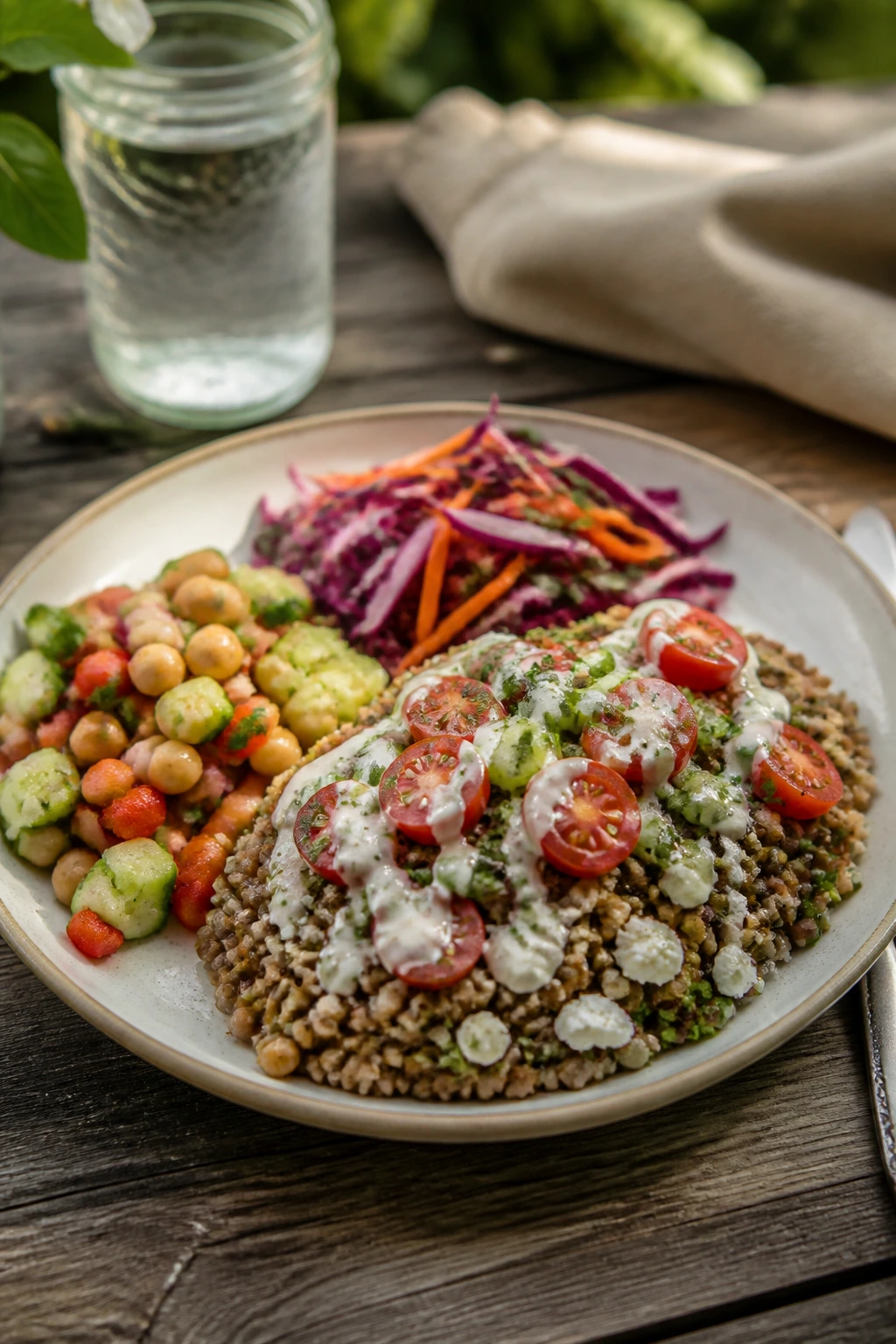
The sad picnic dinner is almost always the result of three or four small mistakes stacked together. Not one huge disaster. Just a few avoidable choices.
Too much dressing too early. The symptom is a salad that looks shiny and tastes dull by the time it’s served. The fix is simple: dress lightly, toss again at the table if needed, and keep a little extra vinaigrette on the side.
Only soft textures. If everything in the basket is creamy, boiled, or soft, the meal feels flat fast. Add something crisp — cabbage, radishes, snap peas, toasted nuts, or a crusty piece of bread.
Packing warm food into closed containers. That turns steam into sogginess. Cool cooked grains, vegetables, or potatoes before sealing them up, even if it takes longer than you want.
Forgetting salt and acid. A cold vegetable spread without enough salt tastes timid. A picnic dinner needs sharper seasoning than a weeknight soup because cold foods mute flavor. Taste the dressing and the main dish before packing.
Trying to make too many dishes. Five excellent components beat nine mediocre ones. Every extra container adds work, leak risk, and cleanup. Keep the basket focused.
Leaving dairy or egg dishes out too long. A good-looking salad is not worth an upset stomach. If the meal has anything that spoils fast, keep it cold until the moment it’s eaten and don’t stretch the sitting time.
Variations for Different Eaters and Weather
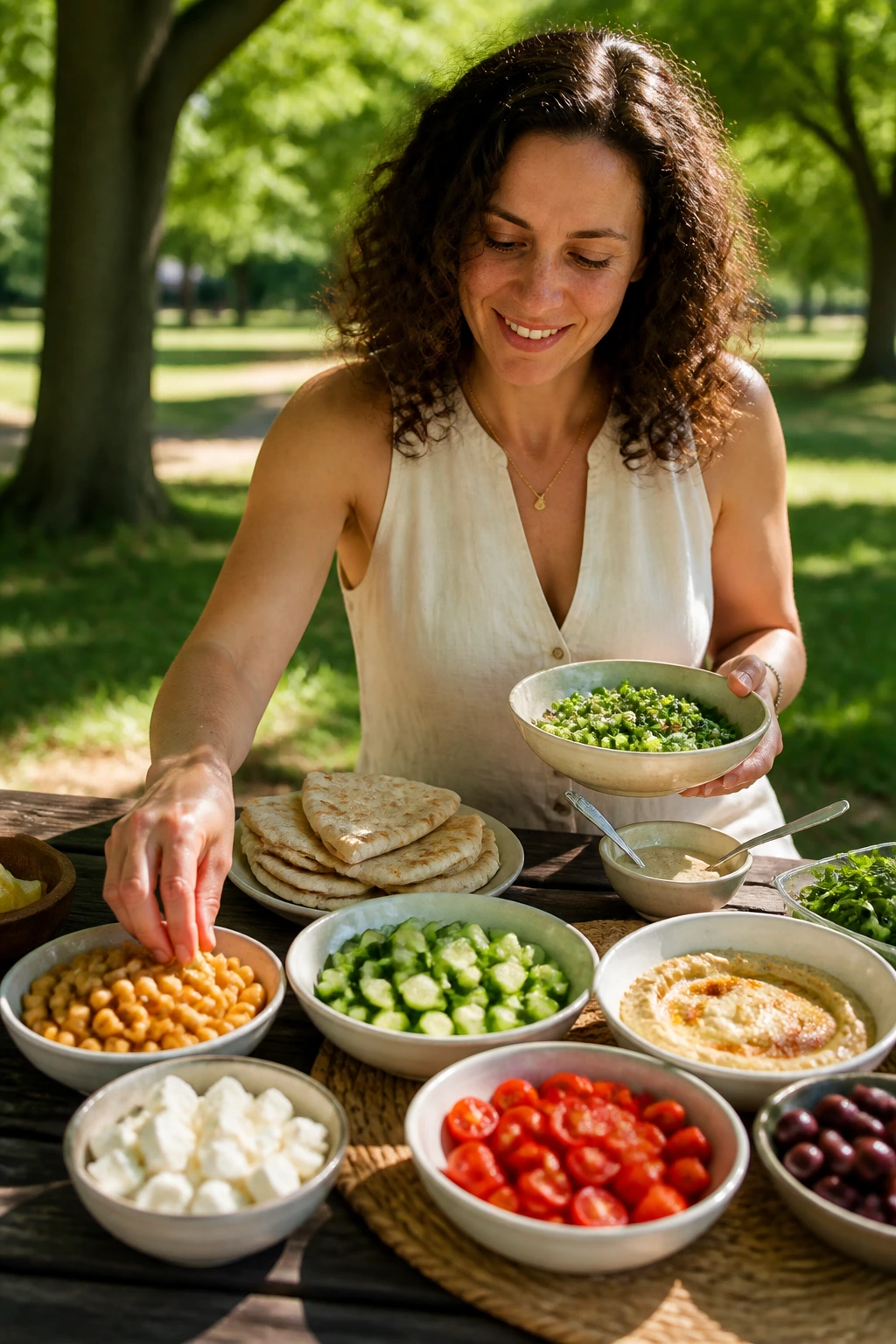
A picnic dinner should bend a little. The bones stay the same, but the details can change.
Mediterranean Porch Spread: Lean on chickpeas, cucumbers, tomatoes, feta, olives, pita, and a lemon-tahini dressing. It’s salty, bright, and sturdy enough to survive a slow evening.
Market Basket Without the Stove: Skip the cooking and build around good bread, marinated beans, hummus, sliced cheese, whole fruit, raw vegetables, and pesto. This works best when the produce is excellent and the shopping is precise.
High-Heat Cooler Day: Use vinegar-based slaws, bean salad, hard cheese, whole fruit, and drinks that are already chilled. Leave soft greens and dairy-heavy sauces at home unless you’ve got a serious cooler setup.
Kid-Ready Finger-Food Dinner: Pack pinwheels, cheese cubes, berries, cucumber sticks, snap peas, and a thick dip. The pieces need to be easy to pick up and not too messy, or they’ll get pushed around the plate.
Budget Pantry Picnic: Build with lentils, cabbage, carrots, potatoes, canned beans, and a mustardy dressing. This is the one I reach for when I want a dinner that tastes deliberate without leaning on expensive ingredients.
Warm-Cool Hybrid: Keep one component warm in a thermos or insulated container — roasted vegetables or seasoned potatoes — and build the rest cold. A mixed-temperature picnic feels more like dinner and less like a lunchbox with ambitions.
The Gear That Earns Its Space
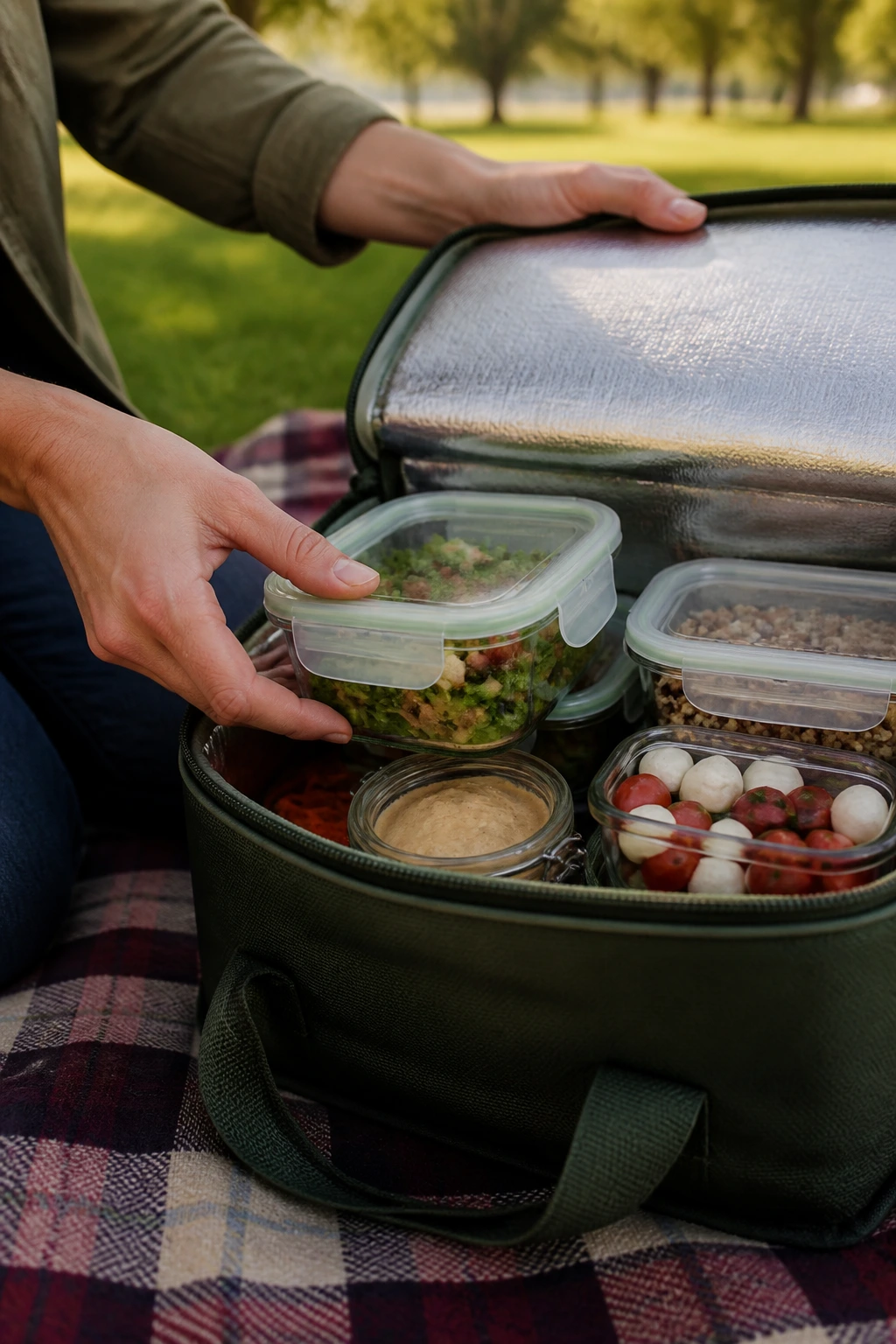
You do not need a mountain of equipment for a good vegetarian picnic dinner. You do need the right containers.
-
Insulated cooler bag or soft-sided cooler: Keeps cold dishes cold long enough to matter, especially if the dinner has dairy or eggs.
-
Flat ice packs: Better than loose ice because they do not create puddles or tip containers.
-
Lidded glass containers: Best for grain salads, bean salads, and dressings; they seal well and do not absorb garlic or onion smells.
-
Small screw-top jars: Perfect for vinaigrettes, sauces, and pickles.
-
Sharp chef’s knife: Useful for clean cuts on herbs, vegetables, fruit, and cheese.
-
Stable cutting board: A board with a damp towel underneath keeps it from sliding while you prep.
-
Serving spoon and tongs: One for saucy foods, one for bread or vegetables.
-
Reusable plates or sturdy bowls: Thin disposable plates buckle under grain salads and hummus.
-
Cloth napkins: They handle spills better than paper and make the meal feel cared for.
-
A small trash bag or lidded container for scraps: Keeps the table from becoming a mess halfway through dinner.
Make-Ahead, Storage, and Leftovers
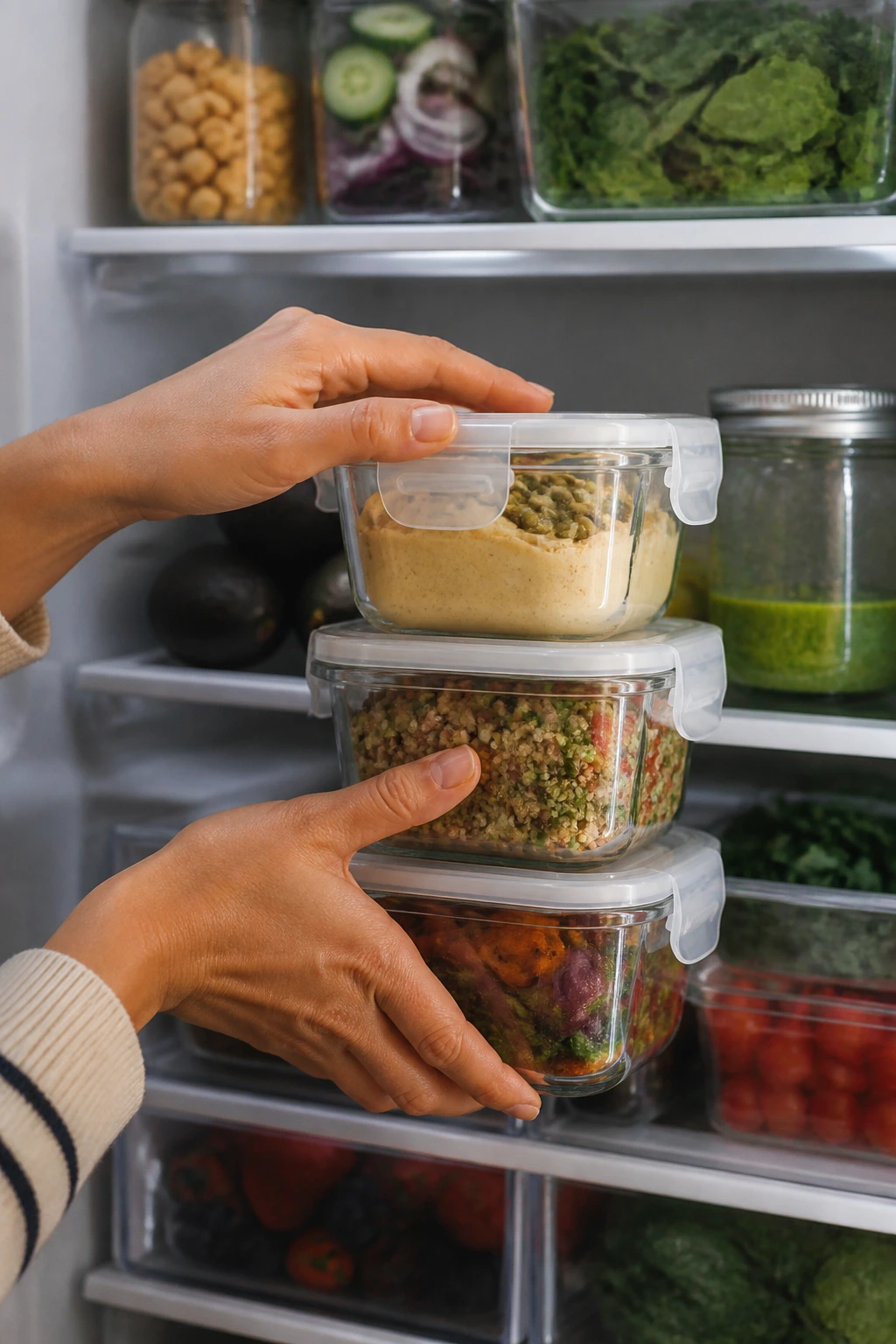
Picnic food usually tastes best when some of it has had time to chill and settle. That’s the good part. The tricky part is knowing what holds up and what turns tired.
Grain salads, bean salads, and vinaigrette-dressed vegetables usually keep 3 to 4 days in the refrigerator if they’re stored in airtight containers. If the salad has soft herbs, fold those in close to serving so they stay fresh-looking. Dips like hummus, bean spread, and tahini sauce often last 4 to 5 days, sometimes a bit longer if they’re cleanly handled and not double-dipped into.
Cut fruit is more fragile. Melon, berries, and sliced peaches are best within 1 to 2 days, and they should stay chilled the whole time. Whole fruit keeps far longer and is easier to manage if you’re packing ahead. Bread is its own category: crusty loaves are best the day they’re bought, but leftover slices can be frozen for about 1 month and revived in a warm oven.
If you’re reheating a warm component, such as roasted vegetables or a frittata, use a 325°F oven for 10 to 15 minutes until heated through. You can also serve both cold, which is often easier for picnic food. What I would not do is microwave a composed salad and hope for the best. That’s how herbs go limp and bread goes rubbery in the same breath.
Leftovers are easiest to repurpose when the ingredients were packed separately in the first place. Grain salad can become lunch. Beans can go into wraps. Roasted vegetables can be piled onto toast with cheese. A smart picnic dinner gives you a second meal without making you cook twice.
Questions People Ask Before They Pack
What makes a vegetarian picnic dinner filling enough for adults?
You need at least one protein anchor — beans, lentils, eggs, cheese, tofu, or a thick dip like hummus — plus a grain or bread. A basket built only from produce tastes fresh, but it usually runs out of steam too fast.
Can I pack this kind of dinner without a cooler?
Yes, if the menu is built around whole fruit, bread, dry crackers, hard cheese, and vinegar-based salads that will be eaten quickly. The minute you add yogurt, eggs, soft cheese, hummus, or cut melon, an insulated cooler becomes the safer choice.
Is pasta salad a good picnic option or a trap?
It can be excellent if you use short pasta, a strong vinaigrette, and vegetables that don’t bleed water everywhere. It becomes a trap when it’s overloaded with mayo, overcooked noodles, and watery tomatoes that go limp in the container.
How do I keep sandwiches and wraps from getting soggy?
Build a moisture barrier. Spread hummus, pesto, or butter on the bread first, then put greens or cabbage next, then the wet ingredients in the middle. If you can, pack tomatoes or dressed vegetables separately and add them right before eating.
What foods should I leave out if the weather is warm?
Anything highly perishable and soft should be treated carefully: mayo-based salads, fresh mozzarella, egg salad, yogurt sauces, cut melon, and tofu that has been sitting around too long. You can still use those foods, but only if they stay cold and don’t sit out past the safe window.
Can this dinner be fully vegan?
Absolutely. Chickpeas, lentils, tofu, beans, hummus, tahini, avocado, nuts, and olive oil give you plenty of weight and flavor without dairy or eggs. Vegan picnic dinners often travel even better because they rely less on delicate cold-chain ingredients.
What’s the best thing to make ahead first?
The dressing. After that, cook grains or roast vegetables. Those two components improve when they’ve had time to cool and absorb seasoning, and they give the rest of the basket something solid to build on.
What if the salad tastes bland after packing?
That usually means it needed more salt, acid, or both before it went into the container. Fix it with a squeeze of lemon, a pinch of salt, or a spoonful of pickled onions right before serving — not by drowning it in dressing.
A Basket Worth Repeating
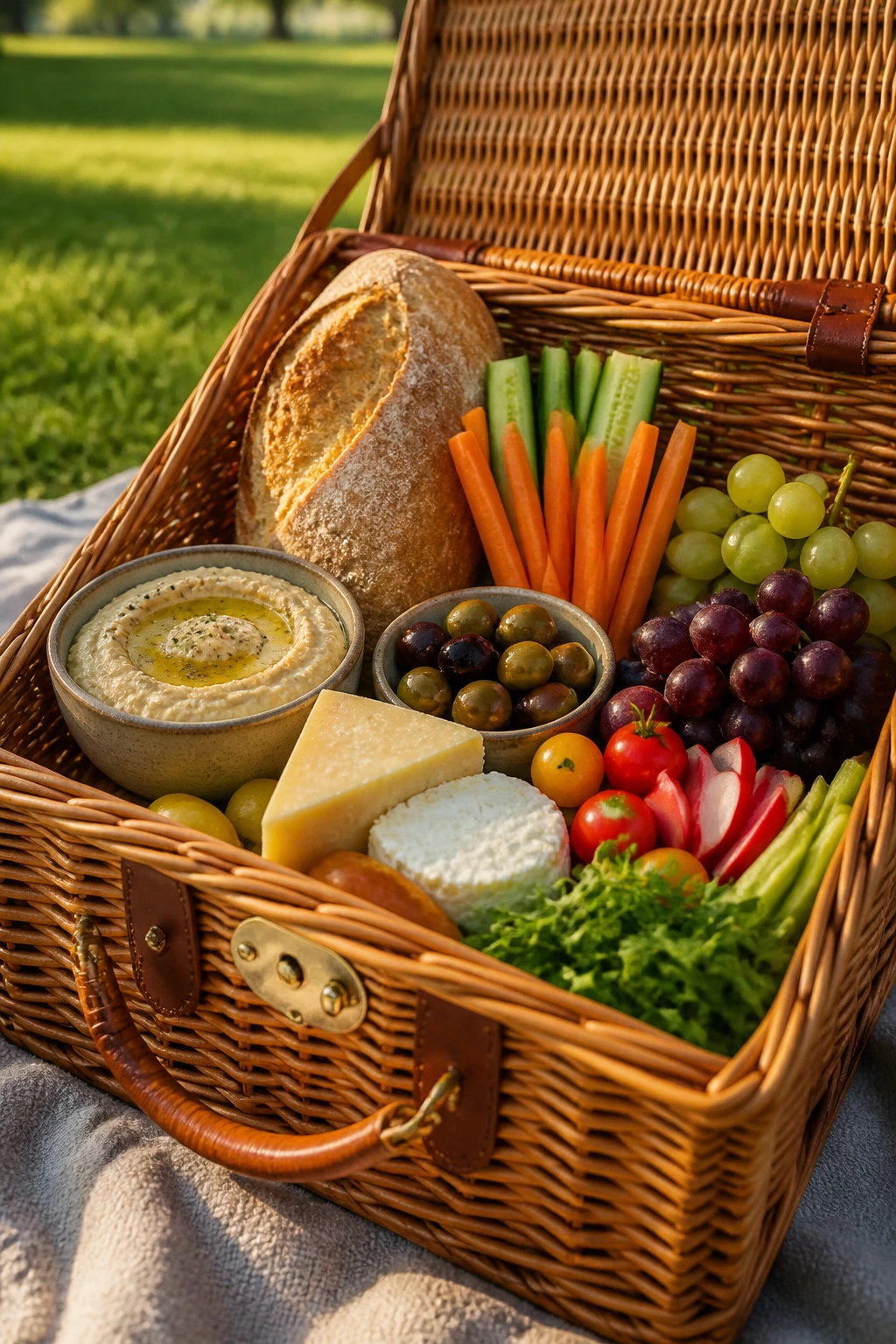
A fresh vegetarian picnic for a healthy dinner works when every part has a job. One thing should crunch. One thing should soften. One thing should be sharp enough to wake everything else up.
That’s the version I keep coming back to, because it doesn’t fight the evening. It uses produce well, travels without fuss, and leaves you fed instead of vaguely disappointed. The food can be casual. The planning shouldn’t be.
Once you’ve built one basket that tastes balanced, the next one gets easier fast. After that, it stops feeling like a special project and starts feeling like a very sensible way to eat dinner.