



A tray of roasted vegetables can rescue a weeknight in a way a salad never quite can. When the edges go brown and the carrots slump into sweetness, the whole pan feels like dinner rather than a side dish. That’s the appeal of roasted vegetables for a healthy dinner: the oven does the heavy lifting, but only if you give it vegetables that like the same heat for roughly the same amount of time.
The mistake most people make is treating every vegetable like it behaves the same. It doesn’t. Broccoli likes craggy edges and a little char. Zucchini collapses if you bully it too early. Potatoes need a head start, and mushrooms will give up a small lake of liquid if they’re crowded into a pan like commuters on a train. Once you learn those differences, the method gets easy in the best possible way.
I come back to this style of dinner because it’s honest. No glossy sauce can hide limp vegetables. No heavy breadcrumb topping can fix underseasoned carrots. When the tray comes out right, you taste sweetness, salt, olive oil, and that slightly smoky edge that only shows up when the vegetables have enough space to brown instead of steam. That’s the whole point.
Why Roasted Vegetables Work So Well for a Healthy Dinner
Big flavor from ordinary ingredients: High heat pulls sweetness out of carrots, onions, squash, and peppers, so a plain tray tastes deeper than the shopping list suggests.
Dinner, not a side dish: A roasted vegetable dinner becomes complete fast when you add beans, eggs, yogurt, grains, or tofu, and you don’t need a complicated sauce to make it feel finished.
Better texture than boiling or steaming: Dry heat gives you browned edges and tender centers; steaming gives you soft vegetables with almost no contrast.
Flexible enough to use what’s in the crisper drawer: Broccoli with a few dark florets, a lonely sweet potato, half a red onion, and a zucchini that needs attention can all be turned into something worth eating.
Low-fuss cleanup: One sheet pan, one cutting board, and one bowl for tossing usually handle the whole job unless you’re roasting a huge batch.
Leftovers stay useful: Roasted vegetables fold into grain bowls, omelets, wraps, soups, and pasta without turning into mush if you store them the right way.
What Happens in the Oven at 425°F
A hot oven is not magic. It’s a very blunt tool, and that’s why it works. Around 425°F, moisture leaves the surface of the vegetables quickly enough for browning to start before the insides turn to paste. That’s the sweet spot for a lot of vegetables that need enough time to soften but not so much time that they collapse.
Why the Surface Matters More Than the Center
The browning people chase is mostly about the surface getting dry enough for color to develop. If the pan is crowded, steam hangs around the vegetables, the surface stays damp, and you end up with pale, soft pieces that taste cooked but not roasted. Give the vegetables space and the oven starts doing the part you wanted all along: deepening flavor instead of just warming food.
That’s why a crowded pan often feels like failure even when the timing looks right. The vegetables may be tender. They just won’t have that nutty, caramelized edge that makes roasted vegetables feel like more than a polite side.
Why Dense Vegetables Need a Head Start
Carrots, potatoes, sweet potatoes, beets, and butternut squash all bring more structure to the party. They can sit in the oven longer without falling apart, which makes them useful anchor vegetables. If you toss them in with zucchini and cherry tomatoes from the very beginning, the quicker vegetables lose their shape while the dense ones are still catching up.
I like to think in stages. Dense first. Medium next. Delicate last. That one habit fixes a surprising number of bland, limp trays.
Why Oil Isn’t the Enemy Here
People often act wary of oil in a healthy dinner, as if a tablespoon of olive oil is somehow a moral failure. It isn’t. A thin coat of oil helps heat move across the surface, improves browning, and carries salt and spices so they cling instead of sliding into the pan. You do not need a puddle. You do need enough to make the vegetables look lightly shiny all over, not dry and dusty.
Choosing Vegetables That Finish at the Same Time
A good pan starts before the oven turns on. The trick is not buying the “healthiest” vegetables in some vague sense. It’s choosing vegetables that want roughly the same roasting window, or at least knowing which ones need to go in later.
Dense Vegetables That Anchor the Pan
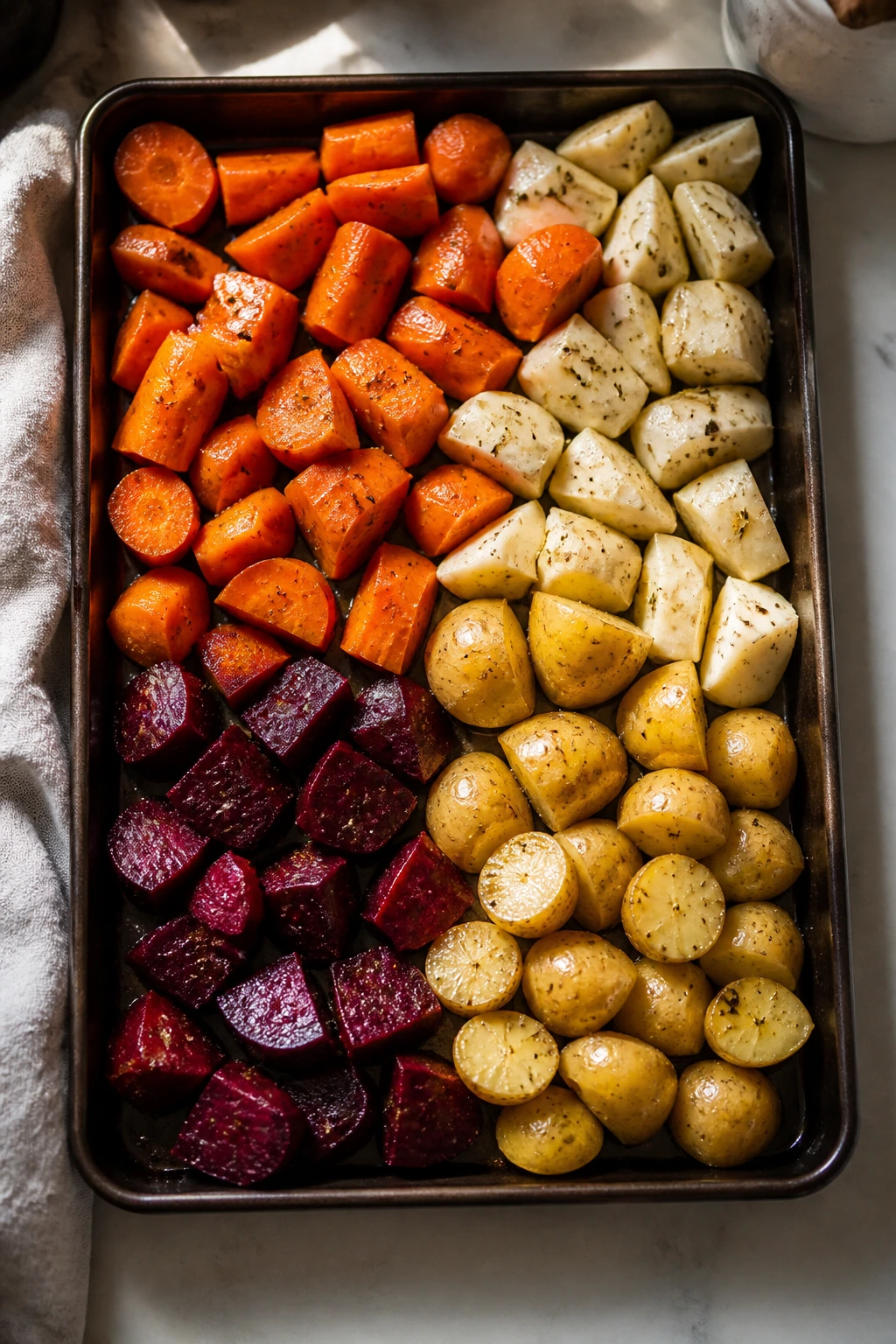
Carrots, parsnips, sweet potatoes, potatoes, beets, turnips, and winter squash are the backbone of a substantial tray. Cut them into roughly 1-inch pieces and they usually need 25 to 40 minutes, depending on the oven and the exact size of the pieces. They give the tray body, and they hold up well under extra seasoning, herbs, or a final drizzle of tahini.
Beets deserve a small warning. They roast beautifully, but they stain everything in sight. If you want a mixed pan with red beets and pale vegetables, I’d roast the beets separately or at least give them their own corner of the tray. Otherwise, your cauliflower turns pink and you either love that or you don’t.
Medium-Speed Vegetables That Love Browning
Broccoli, cauliflower, Brussels sprouts, fennel, onions, bell peppers, and mushrooms all sit in the middle. They brown well, but they also have enough moisture to punish overcrowding. Broccoli and cauliflower florets do best when the cut side can touch the pan. Brussels sprouts want to be halved through the stem so the leaves stay attached and the cut face can caramelize.
Onions are worth every second. They soften, sweeten, and give the tray something close to a built-in sauce if you let the edges darken a little. Red onions are the showier choice, but yellow onions roast beautifully and are usually cheaper.
Quick-Cooking Vegetables That Should Go in Late
Zucchini, yellow squash, asparagus, cherry tomatoes, green beans, snap peas, and leafy greens like kale or chard finish fast. Treat them like the final act, not the opening scene. If they go in too early, they lose their shape and start giving off enough moisture to cool the pan down.
Cherry tomatoes are a special case. They burst, release juice, and turn into a little sauce around the edges of the pan. I like that, but only in moderation. A dozen tomatoes scattered through a tray is one thing. A whole pint dumped onto the sheet pan can drown the vegetables around them.
Cutting and Staging the Pan So Nothing Burns
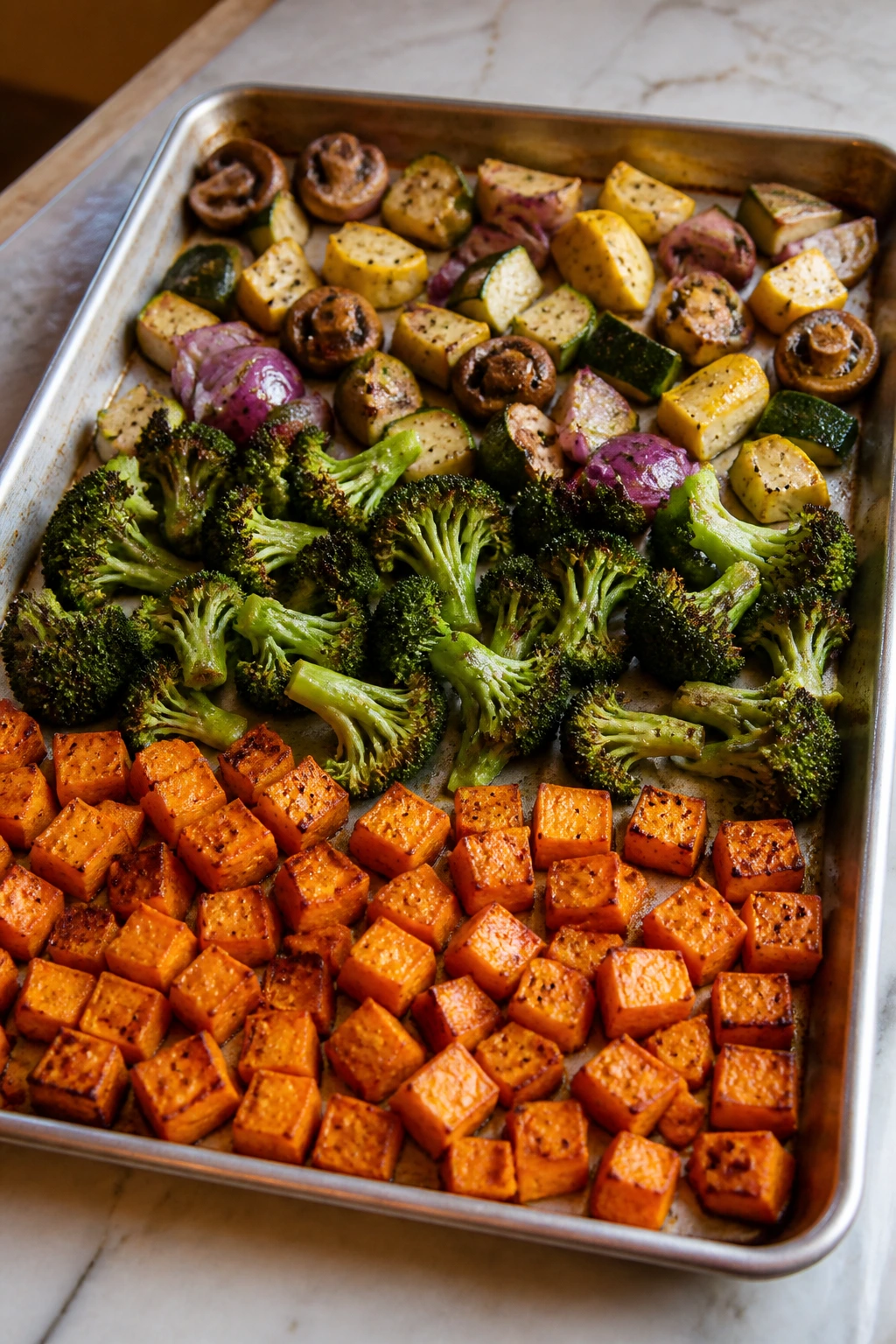
A neat-looking tray is not the goal. Even cooking is the goal. The cut matters more than the presentation, and once you accept that, you stop trying to make every vegetable the same shape. That’s a relief.
Cut for Density, Not for Style
Hard vegetables should be cut smaller than soft ones because they need more time. If you’re roasting carrots with broccoli, the carrots should be closer to 1-inch chunks or thick coins, while the broccoli florets can stay a little larger because they cook faster. Mushrooms can be halved or quartered. Brussels sprouts should be cut through the stem so they don’t fall apart on the tray.
One useful rule: if two vegetables are going in at the same time, the denser one should almost always be cut smaller.
Stage the Pan in Groups
I like three rough groups.
- First group: potatoes, sweet potatoes, carrots, beets, squash.
- Second group: broccoli, cauliflower, Brussels sprouts, onions, mushrooms, peppers.
- Third group: zucchini, asparagus, green beans, tomatoes, kale, fresh herbs.
This is not about making the kitchen look organized. It’s about giving yourself room to roast in stages without scrambling once the pan gets hot.
Don’t Peel Everything Out of Habit
Peeling has its place, but not every vegetable needs it. Thin-skinned potatoes, carrots, and squash often roast well after a good scrub. Leaving the skin on keeps more texture and cuts down on prep time. That said, if a carrot skin looks rough and dry or a potato has eyes sprouting everywhere, peel it. Common sense still matters.
Use Two Pans When One Pan Starts to Look Crowded
A half-empty pan beats a crowded one every time. If the vegetables are touching in a heavy layer, they will steam, no matter how hot the oven is. If needed, split the batch across two sheet pans and rotate them halfway through. It feels a little fussy the first time. It isn’t. It’s the difference between browned and sad.
The Seasoning Formula That Actually Tastes Like Dinner
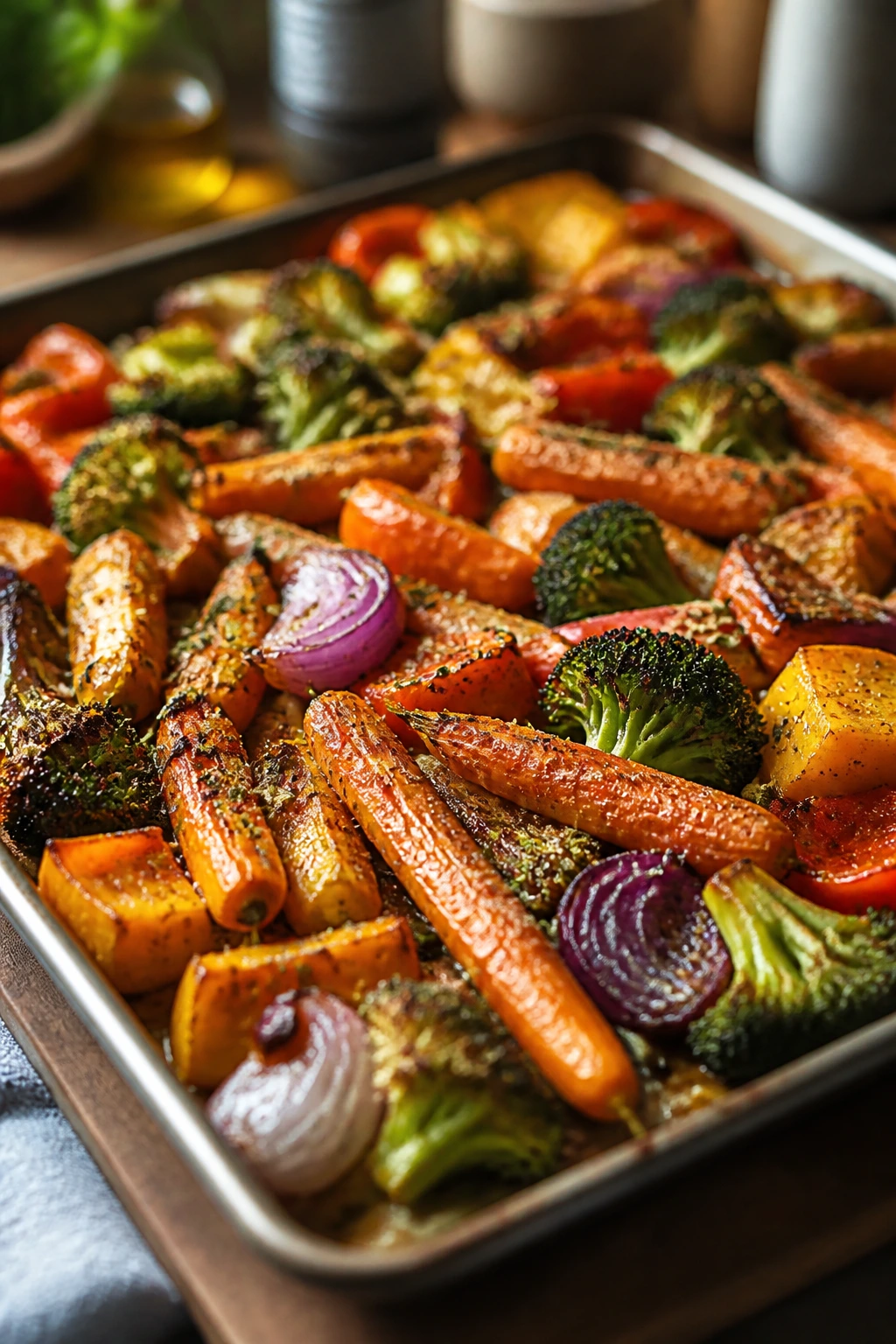
A tray of vegetables can look beautiful and still taste flat if the seasoning is timid. Salt, oil, herbs, spice, and a sharp finish all have jobs to do. Skip one and the tray starts tasting like the inside of a cafeteria steam table.
Start With a Real Base
For about 2 pounds of mixed vegetables, I usually start with:
- 2½ to 3 tablespoons olive oil
- 1 to 1¼ teaspoons kosher salt
- ½ teaspoon black pepper
- 1 teaspoon garlic powder or 2 small grated garlic cloves added late
- 1 teaspoon dried thyme, oregano, rosemary, or a mix
- ½ teaspoon smoked paprika if I want a little warmth
- Pinch of chili flakes if the vegetables need a sharper edge
That amount of oil lightly coats the vegetables without making them greasy. If the tray looks dry after tossing, it usually needs another teaspoon, not a dramatic pour.
Salt Earlier Than You Think
Salt pulls flavor out of vegetables and helps them taste less muddy. I like to season before the vegetables hit the tray, not after. Wait too long and the salt sits on top instead of sinking into the surface as the vegetables soften.
If you’re using coarse kosher salt, use a little more than you would fine salt. If you’re using fine table salt, use less. A tray can go from well-seasoned to oversalted faster than people expect.
Garlic Has a Bad Habit
Raw garlic burns before dense vegetables are done. That bitter edge can wreck a whole pan. Garlic powder is safer if you want the flavor throughout the roast. Fresh garlic is better when added in the last 8 to 10 minutes, or tossed into a finishing oil after the vegetables come out.
I know some people put sliced garlic in from the beginning. Fine, if you enjoy chasing black bits around the pan. I don’t.
Finish With Acid After Roasting
This is the move that turns “roasted vegetables” into dinner. A squeeze of lemon, a spoonful of red wine vinegar, a little sherry vinegar, or even a splash of balsamic at the very end wakes up the salt and makes the browned edges taste brighter. Acid before roasting can make vegetables watery. Acid after roasting makes them taste awake.
Herbs: Woody Before, Tender After
Dried rosemary, thyme, oregano, and sage can go in before roasting. Fresh basil, parsley, dill, mint, or chives belong at the end. If you roast delicate herbs, they go dark and disappear. If you finish with them, they taste like they were added on purpose.
A Sheet-Pan Method That Keeps the Texture Right
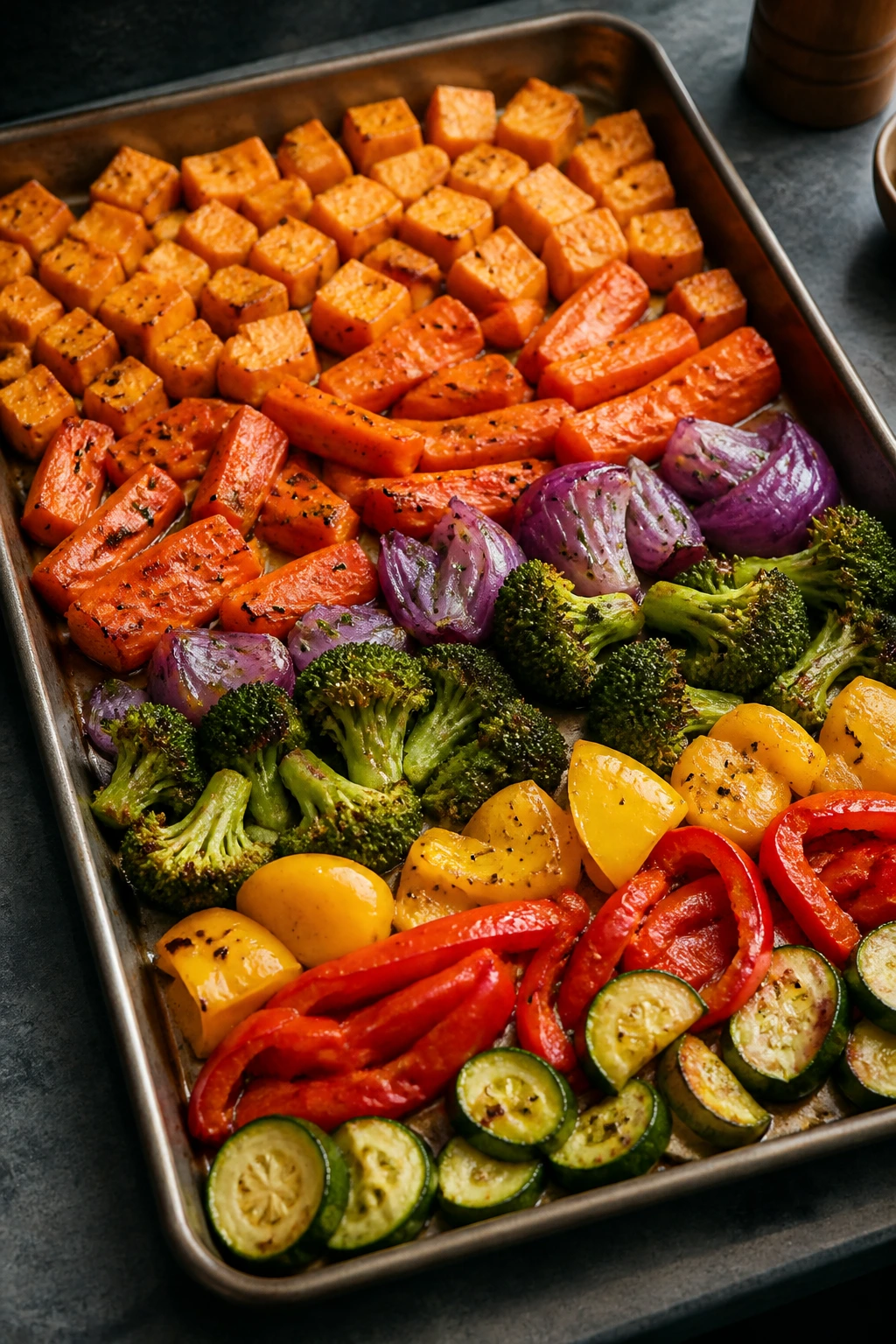
There are endless ways to roast vegetables, but a simple rhythm keeps dinner from turning into a guessing game. This is the one I use when I want a tray that tastes deliberate without feeling fussy.
Prep the oven and pan
- Preheat the oven to 425°F (220°C) and set a rack in the middle position. If your oven runs cool, give it an extra 10 minutes to fully heat.
- Put out one large rimmed sheet pan or two smaller pans if the batch is big. A crowded pan is the fastest route to steamed vegetables.
Start with the dense vegetables
- Toss carrots, potatoes, sweet potatoes, squash, or beets with olive oil, salt, pepper, and dried herbs in a large bowl until every piece looks lightly coated.
- Spread the dense vegetables on the pan in a single layer. Leave a little air between pieces. If they’re piled up, spread them out farther or use a second pan.
Roast in stages
- Roast the dense vegetables for 12 to 15 minutes, then turn them with a spatula so the browned side changes position.
- Add broccoli, cauliflower, Brussels sprouts, onions, or mushrooms to the pan, tossing them with a little more oil and seasoning if needed. Roast for another 12 to 15 minutes, stirring once halfway through.
- Add zucchini, asparagus, green beans, tomatoes, or kale for the final 8 to 10 minutes, just until the quick vegetables are tender and the edges start to blister.
Finish like you mean it
- Pull the pan out and immediately add lemon juice, vinegar, fresh herbs, toasted seeds, grated cheese, or a drizzle of tahini. Taste a piece. Add a pinch more salt if the flavor still feels flat.
The exact times move around depending on cut size and oven strength, but the rhythm stays the same. Dense vegetables get a head start. Soft vegetables join late. Acid and herbs wait until the oven is done doing the hard work.
What to Serve Beside a Pan of Roasted Vegetables
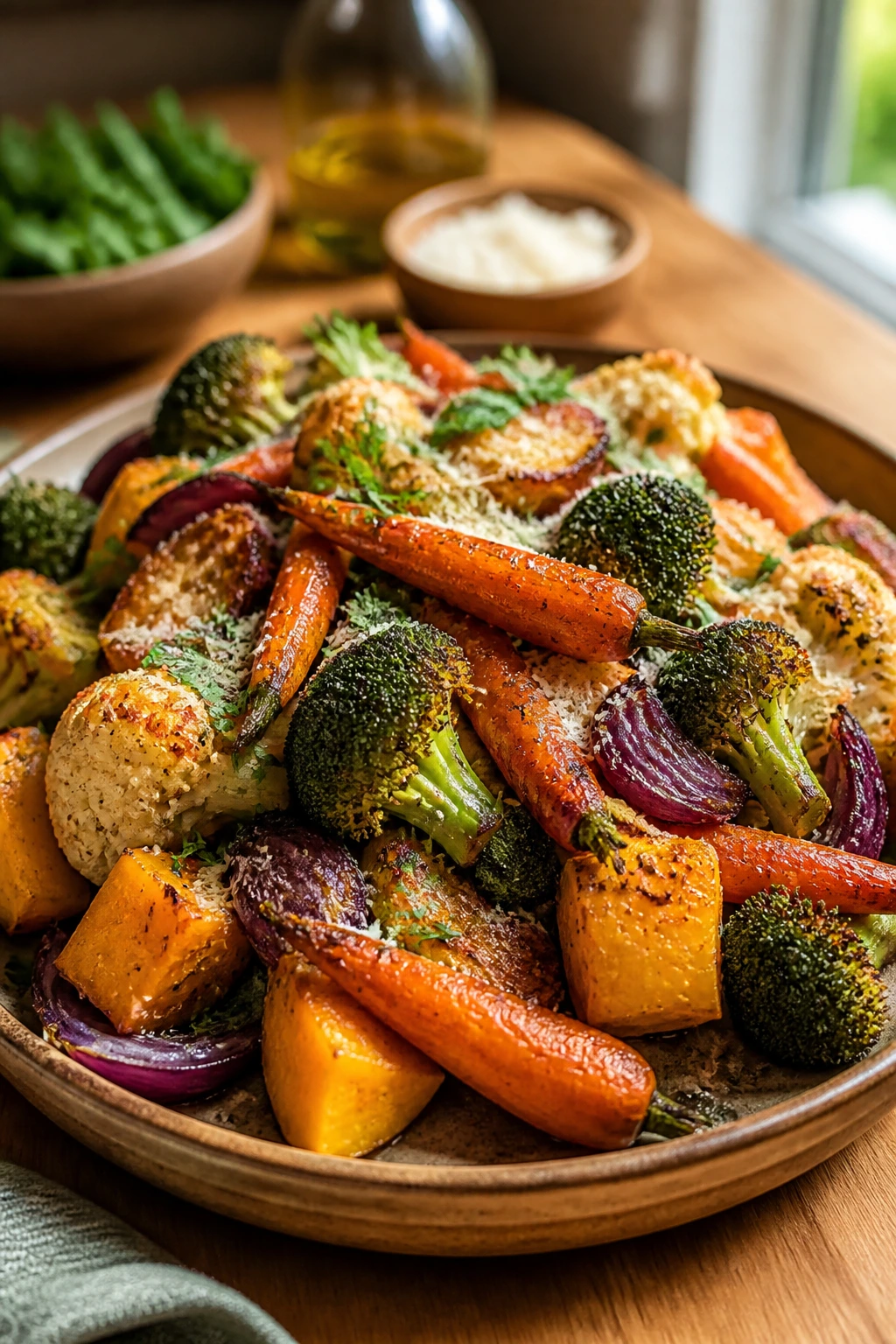
Presentation: Pile the vegetables on a warm platter instead of leaving them on the sheet pan. That one move makes a weeknight dinner feel intentional. Scatter the herbs, seeds, or cheese over the top at the last minute so the colors stay sharp and the best pieces are visible.
Accompaniments: For a full dinner, I like roasted vegetables with cooked chickpeas, white beans, tofu, fried eggs, grilled halloumi, brown rice, farro, quinoa, or warm pita. A garlicky yogurt sauce, tahini-lemon dressing, or a spoonful of pesto can pull everything together fast. If you want a more substantial plate, add a simple soup or a chopped cucumber salad on the side.
Portions: As a side, plan on ¾ to 1 cup per person. As a main course, I’d count about 2 cups per person and add one clear protein source plus a starch or bread. Hungry eaters usually need more than they think, especially if the vegetables are the actual centerpiece and not a polite side note.
Beverage Pairing: A glass of sparkling water with lemon keeps the plate bright, while dry white wine or light red wine handles the smoky edges well. If you want something nonalcoholic with more body, an iced herbal tea with mint or citrus works nicely. Heavy drinks fight the vegetables. Clean ones let the caramelization do its thing.
Small Adjustments That Make the Tray Better
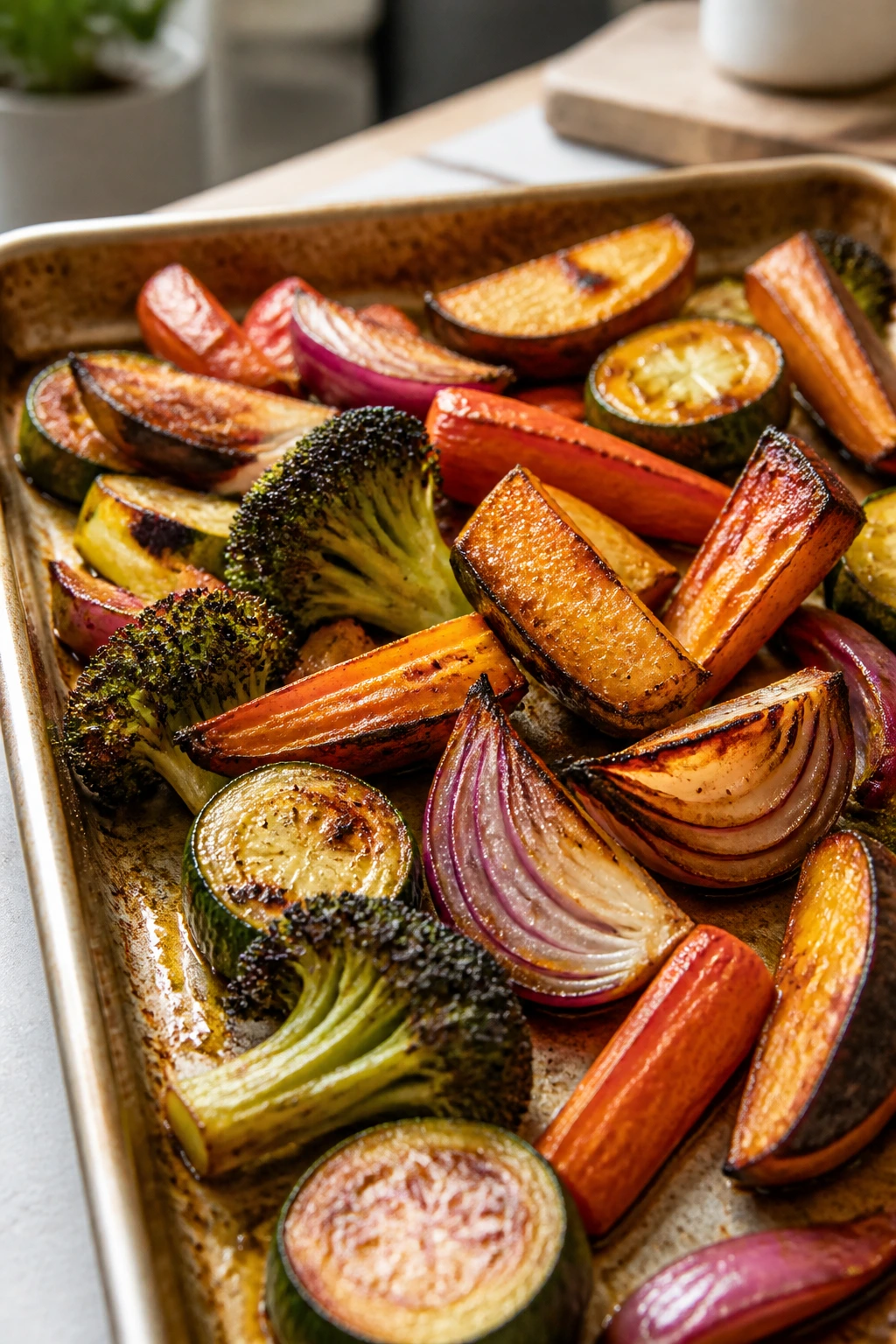
Flavor Enhancement: Add one finishing acid, not three. Lemon juice, red wine vinegar, or sherry vinegar is enough. Pick one and use it with a light hand so the vegetables still taste roasted, not dressed like a salad.
Time-Saver: Cut the dense vegetables ahead of time and keep them in cold water for a few hours if needed, then dry them very well before roasting. Dry surface equals better browning. Wet cut vegetables go straight into steam mode.
Pro Move: Roast broccoli and cauliflower cut-side down for the first half of cooking. The flat side gets close contact with the pan, and those dark patches around the edges are where the good flavor lives.
Cost-Saver: Carrots, onions, cabbage wedges, and potatoes are the low-cost vegetables that still roast with personality. Cabbage surprises people. Cut into thick wedges, brush with oil, and roast until the edges brown. It becomes sweet instead of sulfurous when the heat is high enough.
Texture Fix: If the vegetables are done but the color looks pale, finish them under the broiler for 1 to 2 minutes. Stand there and watch. A broiler goes from useful to scorched in a blink.
The Mistakes That Turn Good Vegetables Limp or Bitter
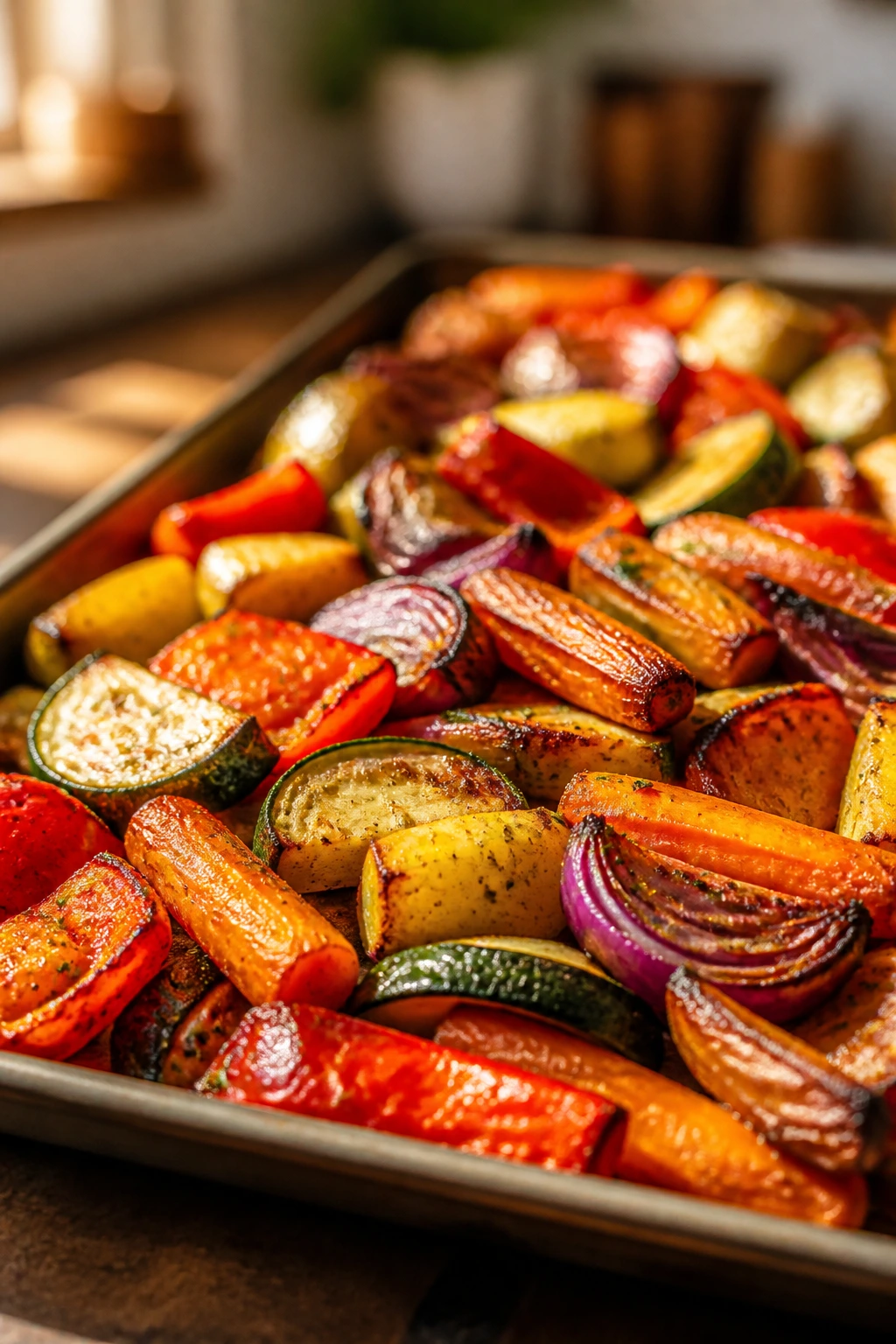
Crowding the pan: The symptom is pale, wet vegetables sitting in a little puddle. The fix is simple: use two pans or roast in batches. If the vegetables are touching, they’re steaming, not roasting.
Using too little salt: The tray tastes clean but flat, like it’s missing the last sentence. Add salt before roasting and taste again after the vegetables come out. Most trays need a small finishing pinch at the end, especially if you used a lot of potatoes or squash.
Adding garlic too early: Burnt garlic smells sharp and bitter, and it spreads fast. If you want whole-clove or sliced garlic flavor, add it late. Garlic powder is safer earlier in the roast.
Cutting everything the same size no matter what it is: A carrot coin and a zucchini half-moon do not need the same treatment. Cut dense vegetables smaller and soft vegetables larger. The pan will thank you.
Skimping on heat: A lukewarm oven gives you limp vegetables and long cooking times. Preheat fully. If your oven has a tendency to run cool, use an oven thermometer or add a few extra minutes before loading the pan.
Drowning the tray in sauce before roasting: Thick sauce before the oven sounds efficient, but it often turns vegetables soft and sticky instead of browned. Keep sauces for the end unless the recipe is built specifically around a glaze.
Variations That Keep the Tray from Getting Boring
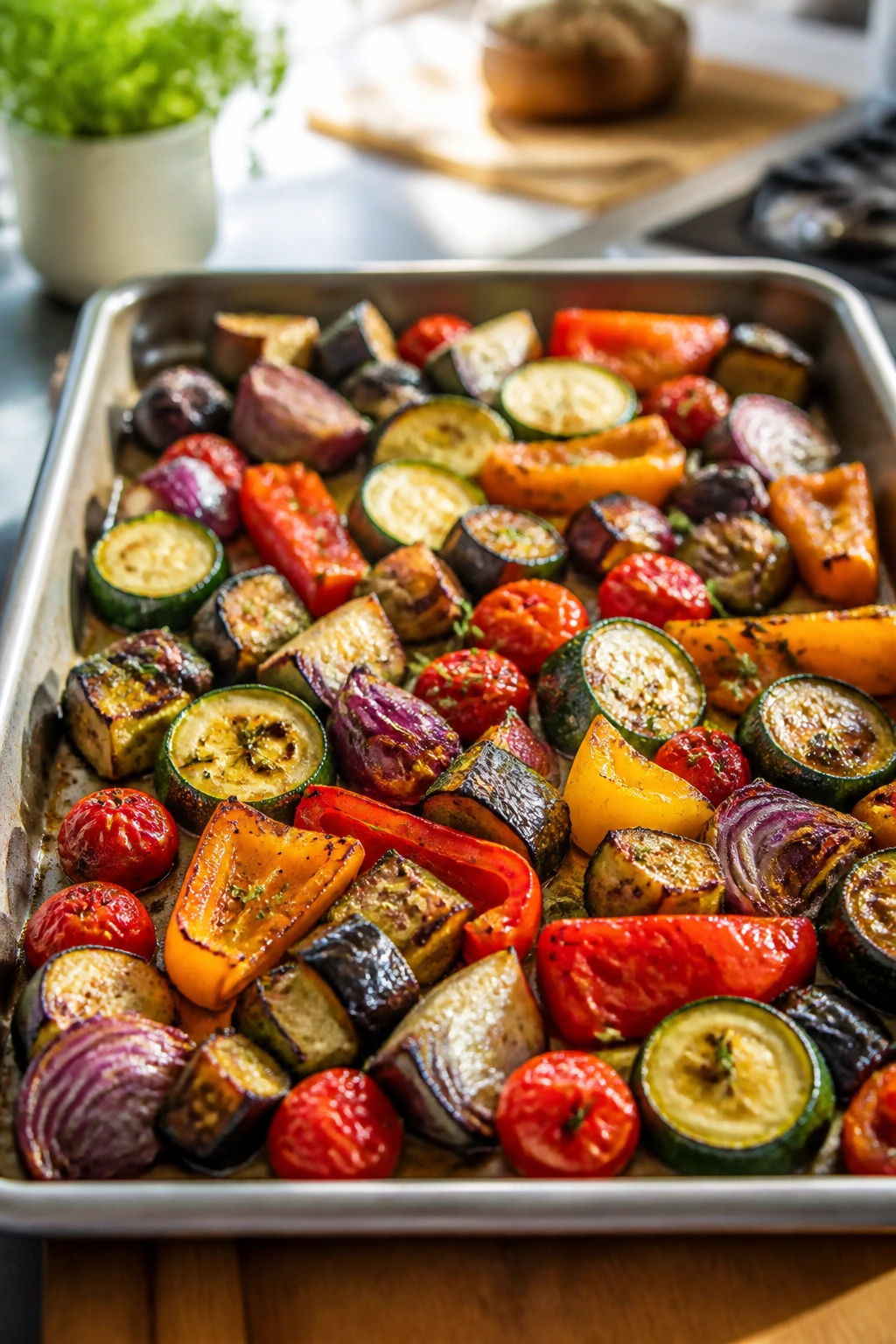
Mediterranean Market Tray: Use zucchini, cherry tomatoes, red onion, eggplant, and bell peppers with olive oil, oregano, and a handful of olives at the end. Finish with feta and parsley. This version tastes brightest with pita and hummus.
Smoky Chili-Lime Vegetables: Toss sweet potatoes, cauliflower, and red onion with cumin, smoked paprika, chili powder, and lime zest before roasting. Squeeze lime juice over the tray after it comes out. It lands somewhere between weeknight dinner and taco filling, and I mean that in a good way.
Miso-Sesame Roast: Whisk a little white miso with oil, ginger, and a splash of soy sauce, then toss with broccoli, mushrooms, and carrots. Keep the miso light so it doesn’t scorch. Finish with sesame seeds and sliced scallions for a savory, almost sticky glaze.
Herb-and-Parmesan Finish: Roast carrots, Brussels sprouts, and cauliflower with olive oil, salt, pepper, and thyme, then shower the hot vegetables with finely grated Parmesan and chopped parsley. The cheese melts just enough to cling to the hot edges. I’d use this one when I want the tray to feel richer without adding a sauce.
High-Protein Bowl Builder: Roast chickpeas on a separate pan with cumin and garlic powder, then serve them over the vegetables with brown rice and tahini sauce. This is the version that turns roasted vegetables into a full, filling dinner with very little extra work.
Tools That Make Roasting Easier
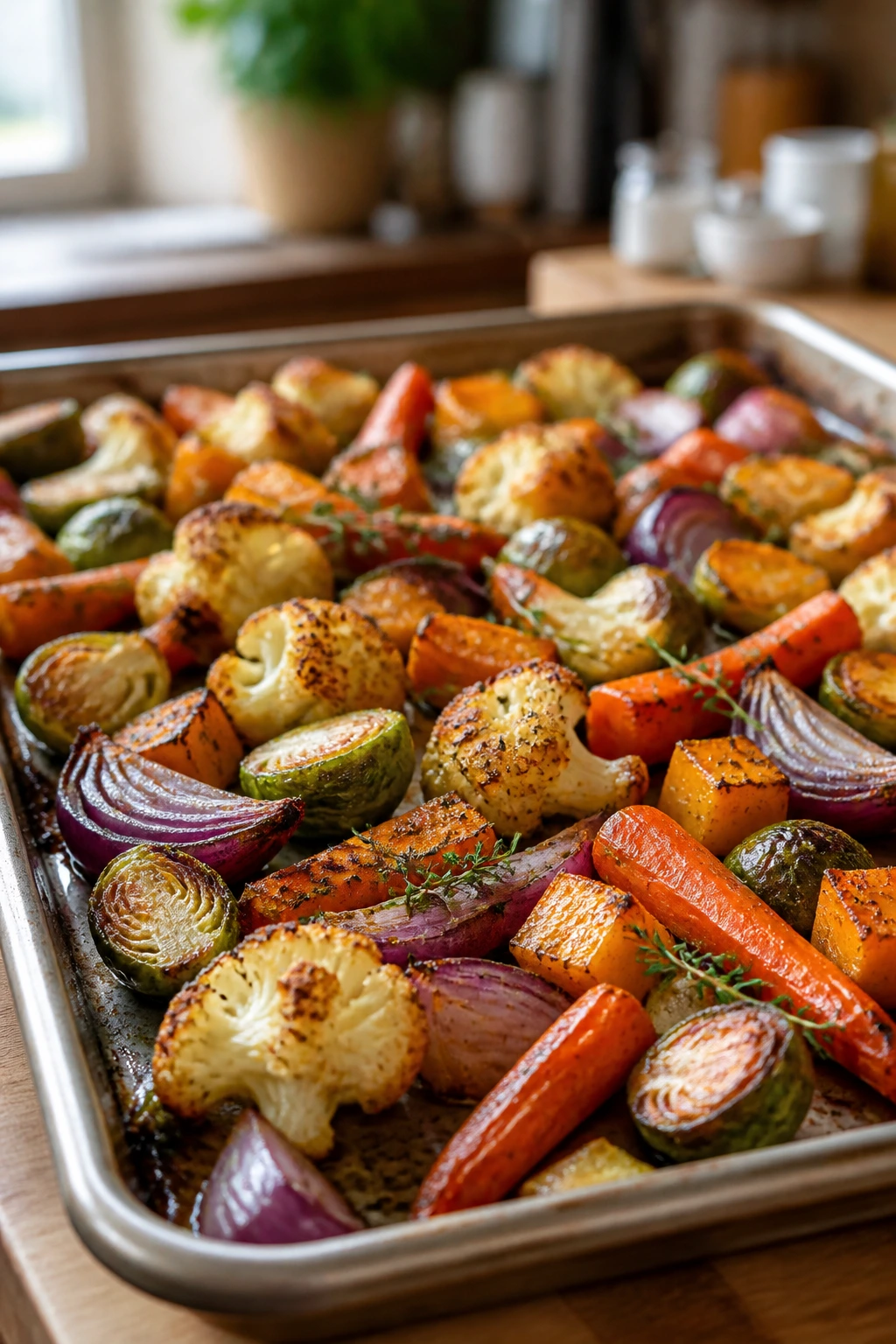
- Large rimmed sheet pan: The rim keeps oil and vegetable juices from spilling into the oven, and a bigger pan means less crowding.
- Second sheet pan: Essential when you’re roasting more than 2 to 3 pounds of vegetables.
- Large mixing bowl: Makes tossing easier and helps coat vegetables evenly.
- Sharp chef’s knife: Uneven cuts cook unevenly, so a decent knife matters more here than fancy gear.
- Cutting board with a towel underneath: Stops the board from sliding while you chop dense vegetables.
- Metal spatula or fish spatula: Thin enough to get under browned pieces without mangling them.
- Parchment paper or foil: Parchment is easier for cleanup; bare metal browns a little harder. Foil is handy, but it can soften the bottom a bit.
- Microplane or zester: Useful for lemon zest, garlic, or finishing cheese when you want a brighter end note.
- Small whisk or jar with lid: Best for quick dressings, tahini sauce, or lemon vinaigrette to serve over the vegetables.
Make-Ahead, Storage, and Reheating Notes
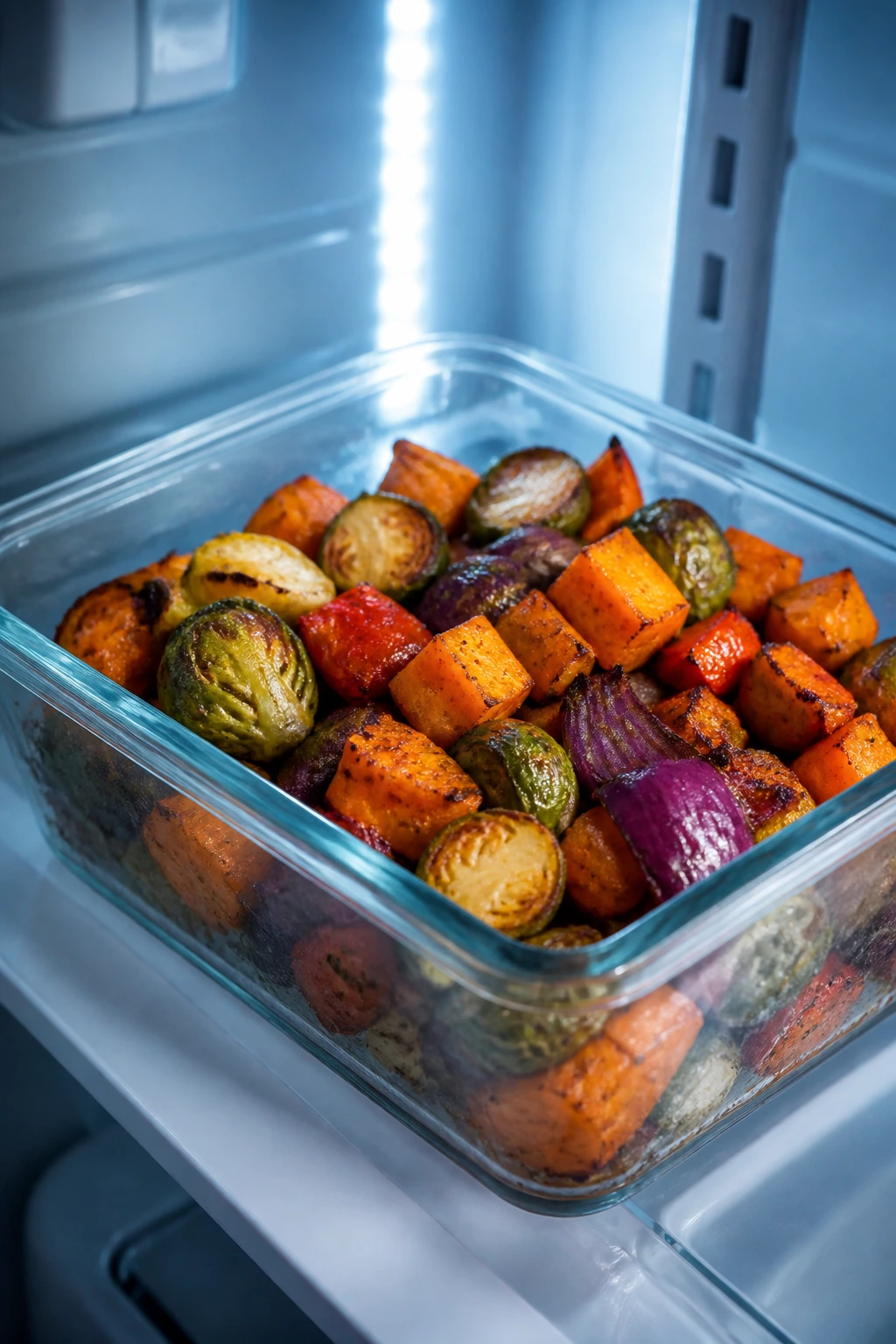
Roasted vegetables hold better than a lot of people expect, but they do have limits. Let them cool for no more than 2 hours at room temperature, then move them into shallow containers so they chill quickly. If you pack them while they’re still steaming hot, the trapped moisture softens the browned edges you worked to build.
In the fridge, roasted vegetables usually keep well for 3 to 4 days. Keep sauces and dressings separate if you can. A tray that’s already dressed in tahini or vinaigrette will soften faster than plain vegetables, especially if tomatoes or zucchini are part of the mix.
Freezing is possible, but it’s not the first choice for every vegetable. Dense vegetables like carrots, sweet potatoes, and cauliflower freeze better than zucchini or mushrooms, which tend to come back soft. If you freeze roasted vegetables, spread them on a tray first, freeze until solid, then move them to a freezer bag. They’re best within 2 months and usually happiest folded into soup, pasta, or a grain bowl rather than reheated as a crisp tray.
For reheating, a 425°F oven for 8 to 12 minutes works best if you want some edge back. An air fryer at 375°F for 4 to 6 minutes also brings the texture back quickly. The microwave is the last resort. It warms vegetables, but it also turns browned edges limp, which is the whole thing you were trying to avoid.
A useful make-ahead trick: roast the dense vegetables first, cool them, and refrigerate them plain. Finish the softer vegetables and any fresh herbs just before serving. That gives you most of the work done without sacrificing the final texture.
Questions People Ask Before They Roast Vegetables
What’s the best oven temperature for roasted vegetables?
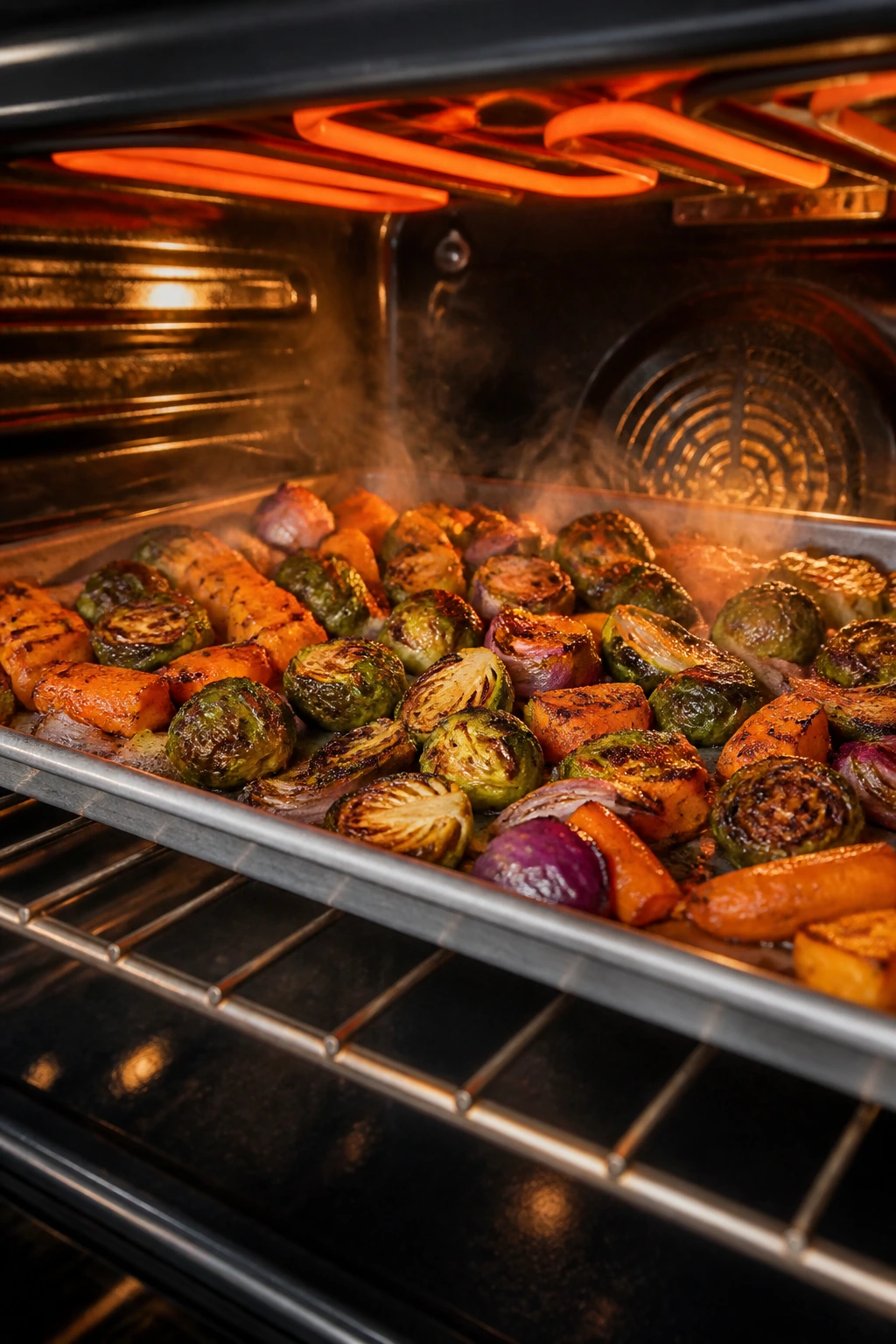
For most mixed trays, 425°F is the most forgiving temperature because it browns the outside before the inside collapses. If you’re roasting very delicate vegetables, you can drop to 400°F, but you’ll usually lose some color. If you want deep browning fast, 450°F works too, though you need to watch the pan closely.
Do I have to peel vegetables before roasting them?
No. Thin skins on carrots, potatoes, squash, and many other vegetables roast well after a good scrub. Peeling makes sense for rough, damaged, or thick skins, but peeling everything by habit wastes time and removes texture.
Why do my vegetables come out soft instead of browned?
Usually the pan is crowded, the oven is too cool, or the vegetables were wet when they hit the tray. Dry them well, spread them out, and use enough heat. One crowded pan can undo everything else.
Can I roast frozen vegetables?
You can, but the texture won’t match fresh vegetables. Frozen broccoli, cauliflower, and Brussels sprouts can work if you roast them hot and don’t expect crisp perfection. They’re often better for meal prep or repurposing into grain bowls and soups than for a tray meant to eat straight from the oven.
How do I keep broccoli from burning before the rest of the vegetables are done?
Cut the florets a bit larger, keep the oven at 425°F instead of blazing hotter, and add broccoli later if the tray also contains potatoes or squash. Broccoli loves high heat, but it can go from browned to bitter at the edges if it sits alone too long.
Can roasted vegetables be the main course without meat?
Absolutely, but they need a little support. Add chickpeas, beans, tofu, eggs, or a grain like farro or brown rice, and finish with yogurt, tahini, or a vinaigrette. The vegetables bring flavor and texture; the extras bring staying power.
What oil works best for roasting?
Olive oil is my first choice because it tastes good and handles oven heat well enough for normal roasting temperatures. Avocado oil also works if you want a more neutral flavor. Butter alone is more fragile and can brown too fast, so I save it for finishing or for mixed butter-and-oil roasting when I want richer flavor.
Should I season before or after roasting?
Both. Salt, pepper, and dried herbs go on before roasting so they can cling and cook into the vegetables. Fresh herbs, lemon juice, vinegar, and cheese belong after the pan comes out, where they stay bright instead of fading.
The Dinner Pan Worth Repeating
Roasted vegetables earn their place because they don’t need to apologize for being vegetables. Given enough heat, enough space, and a little attention to timing, they turn sweet, browned, and sturdy enough to carry dinner instead of hovering on the edge of the plate.
The method rewards small decisions. Cut the carrots smaller. Add the zucchini later. Let the garlic wait. Finish with acid while the tray is still hot. None of that is fancy, but all of it changes the result, and that’s the part people remember the next time they make the pan again.
Once the rhythm sinks in, a healthy dinner stops looking like a compromise. It starts looking like a tray with crisp edges, a bowl of grains or beans, a spoon of yogurt or tahini, and a plate that doesn’t need much else. Keep one eye on the pan, trust the oven, and let the vegetables do what good vegetables do when they’re given the chance.