



Some salads collapse under a fork. A few leaves, a tired drizzle, and a puddle at the bottom of the bowl. A hearty veggie salad with homemade dressing should do the opposite: stay crisp, taste bright, and eat like an actual meal instead of a side dish trying its best.
That’s why the shape of this salad matters so much. Kale gives you a sturdy base. Romaine brings clean crunch. Red cabbage, carrots, cucumber, bell pepper, radishes, chickpeas, avocado, feta, and seeds stack texture on texture so every bite feels different. The homemade tahini-lemon dressing ties it together without turning the bowl soggy or muddy. It clings. That’s the whole trick.
And there’s a small, satisfying bit of craft here. Massaging the kale for half a minute softens the edges without making it limp. Whisking the dressing until it goes glossy and pourable keeps it from tasting like paste. Adding the avocado last keeps the creamy parts creamy. These are tiny moves, but they’re the reason this salad works on a plate, in a lunch container, or on a dinner table when you want something fresh that still has weight.
Why This Hearty Veggie Salad Keeps Its Crunch
- Crunch that holds up: Kale, romaine, cabbage, radishes, and sunflower seeds stay lively even after the dressing hits the bowl.
- Actual meal energy: Chickpeas, feta, avocado, and tahini give the salad enough substance to carry dinner, not just lunch.
- Homemade dressing with backbone: The lemon-tahini dressing coats chopped vegetables instead of sliding off in a thin, oily layer.
- Easy to remix: You can swap the cheese, change the beans, or lean harder into herbs without breaking the balance.
- Built for better leftovers: The sturdy vegetables stay useful for a day or two if you pack them with a light hand and keep the avocado back.
- No sad lettuce base: This is not the kind of salad that wilts if you glance at it too hard.
Yield, Time, and Serving Notes
Yield: 4 main-dish servings or 6 side servings
Prep Time: 25 minutes
Cook Time: 0 minutes
Total Time: 25 minutes
Difficulty: Beginner — the work is mostly chopping and whisking, with one smart step for the kale.
Chill/Rest Time: Optional 10 minutes if you want the kale to soften a little after dressing
Best Served: Right after tossing, while the avocado is fresh and the seeds still have their crunch
The Bowl of Ingredients
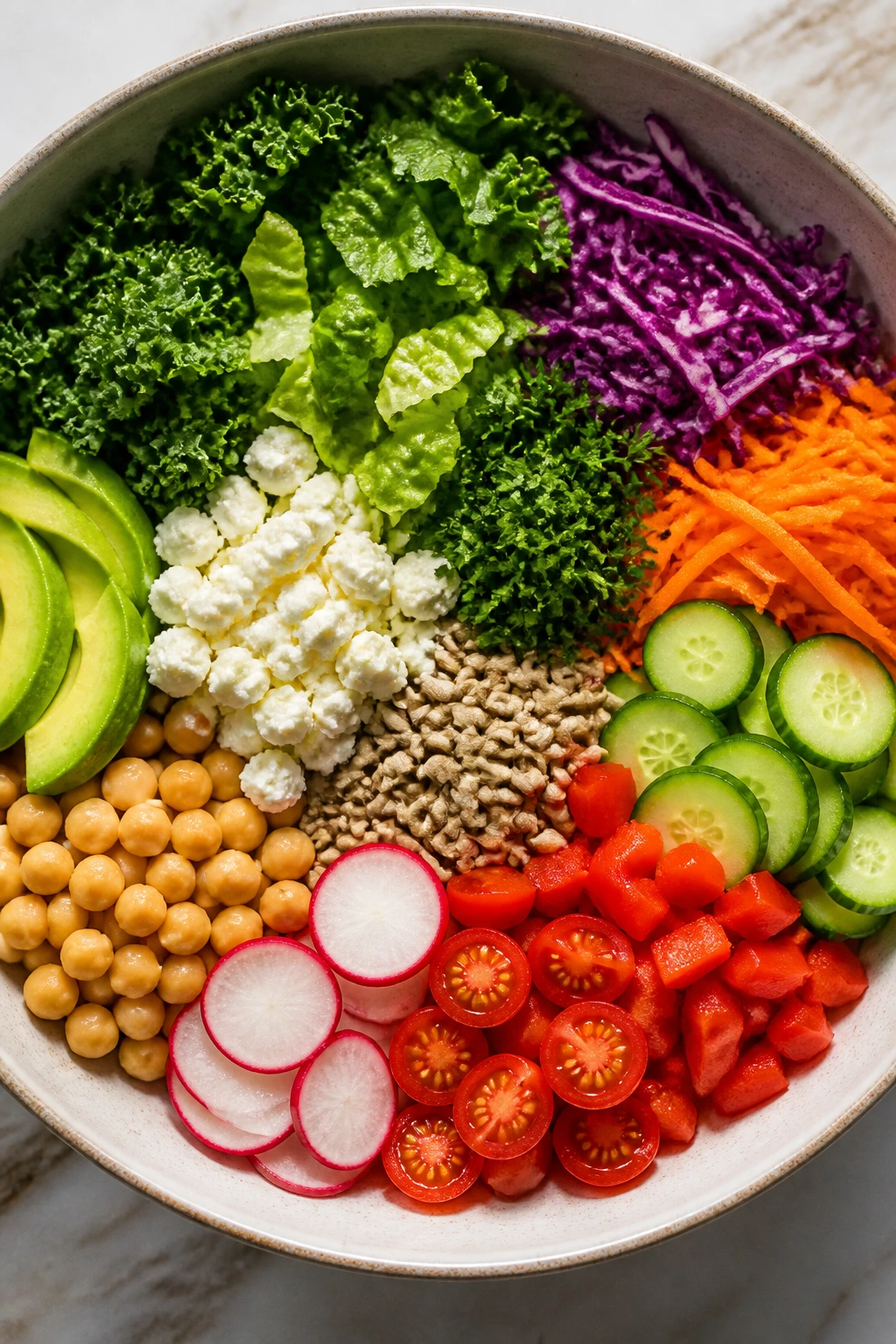
For the Salad
- 5 cups curly kale, stems removed and leaves chopped into bite-size pieces
- 3 cups romaine hearts, chopped
- 1 cup shredded red cabbage
- 1 cup shredded carrots
- 1 cup cucumber, diced and seeded if the center is watery
- 1 red bell pepper, diced
- 1 cup cherry tomatoes, halved
- 4 radishes, thinly sliced
- 1 (15-ounce) can chickpeas, drained and rinsed
- 1 avocado, diced just before serving
- 1/2 cup crumbled feta
- 1/3 cup roasted sunflower seeds
- 1/4 cup chopped fresh parsley
For the Homemade Dressing
- 1/4 cup tahini
- 3 tablespoons fresh lemon juice
- 2 tablespoons extra-virgin olive oil
- 1 tablespoon Dijon mustard
- 1 small garlic clove, finely grated or minced
- 1 teaspoon honey or maple syrup
- 1/2 teaspoon kosher salt
- 1/4 teaspoon black pepper
- 2 to 4 tablespoons warm water, as needed
- 1 teaspoon lemon zest, optional
Why Each Ingredient Earns Its Place
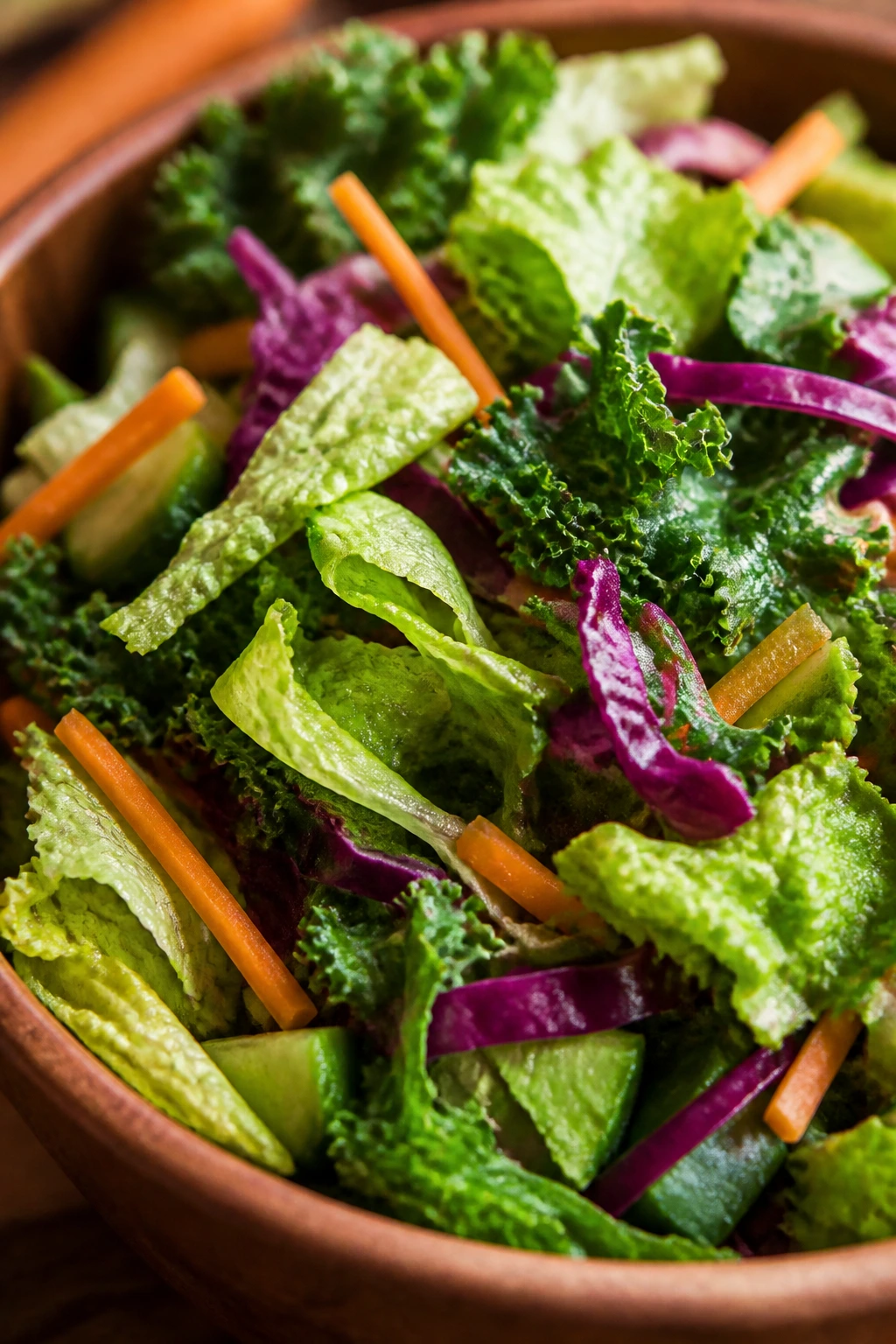
The greens with backbone
What to use: 5 cups curly kale and 3 cups romaine hearts give the bowl structure, volume, and two different kinds of crunch.
Preparation: Strip the kale stems, chop the leaves into bite-size ribbons, and keep the romaine pieces fairly large so they don’t disappear under the heavier vegetables.
Substitutions: Lacinato kale works if you want a softer leaf, and green leaf lettuce can stand in for romaine if that’s what’s in the fridge.
Tips: Kale is much better here than delicate spring mix. It can sit under dressing for a little while without melting into wet confetti.
Crunchy vegetables that keep the bowl awake
What to use: 1 cup shredded red cabbage, 1 cup shredded carrots, 1 cup cucumber, 1 red bell pepper, 1 cup cherry tomatoes, and 4 radishes make the salad look and taste layered.
Preparation: Slice the cabbage thin, seed the cucumber if it looks watery, halve the tomatoes, and cut everything into pieces small enough to grab with a fork but big enough to keep their shape.
Substitutions: Thinly sliced fennel can replace radish for a lighter anise note, and shredded Napa cabbage can stand in for red cabbage if you want a softer chew.
Tips: If your cucumber is very watery, scoop out the seeds. It takes less than a minute and saves the dressing from getting diluted at the bottom of the bowl.
The protein and heft
What to use: 1 (15-ounce) can chickpeas, 1/2 cup crumbled feta, 1/3 cup roasted sunflower seeds, and 1 avocado give the salad its staying power.
Preparation: Rinse the chickpeas well and let them drain fully; pat them dry if you want them to stay firm and not smear dressing around. Add the avocado only at the end.
Substitutions: White beans can replace chickpeas, pumpkin seeds can replace sunflower seeds, and shaved Parmesan can replace feta if you want a saltier, sharper finish.
Tips: Chickpeas taste better here when they’re dry on the outside. Wet chickpeas pull extra dressing into the bowl, and the whole thing turns soft faster than it should.
The dressing that holds everything together
What to use: 1/4 cup tahini, 3 tablespoons lemon juice, 2 tablespoons olive oil, Dijon, garlic, honey or maple syrup, salt, pepper, and warm water make a thick, bright dressing that tastes creamy without dairy.
Preparation: Whisk the tahini first with the lemon juice and Dijon, then add the olive oil, garlic, sweetener, salt, and pepper. Finish with warm water until the dressing is glossy and spoonable.
Substitutions: Almond butter can work in place of tahini in a pinch, though it shifts the flavor into sweeter, nuttier territory. If you want a sharper dressing, swap one tablespoon of lemon juice for apple cider vinegar.
Tips: Tahini often seizes before it loosens. That paste-like stage is normal. Keep whisking and add the water slowly, because a tablespoon too much can make the dressing thin and flat.
Tools That Make the Chopping Easier
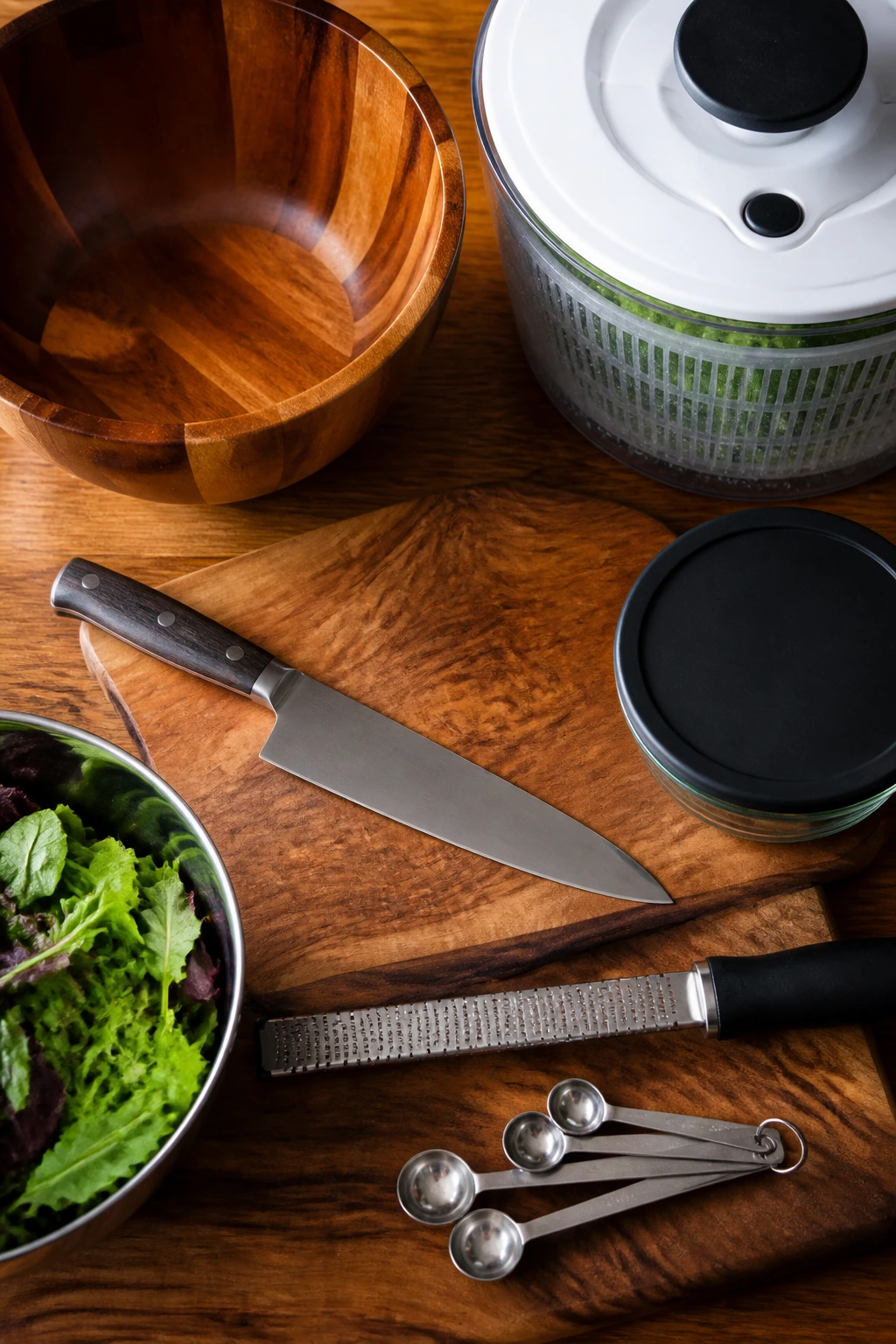
- Large salad bowl: A wide bowl gives you room to toss without flinging cabbage across the counter.
- Chef’s knife: A sharp knife matters more than fancy gear here; clean cuts keep the vegetables tidy.
- Cutting board: Use a roomy board so you can chop in stages without crowding the pile.
- Salad spinner or clean kitchen towels: Dry greens hold dressing better and don’t water down the bowl.
- Small mixing bowl or jar with lid: Either one works for the dressing; a jar is handy if you want to shake instead of whisk.
- Microplane or fine grater: Useful for the garlic if you want it to melt into the dressing instead of showing up in sharp little bites.
- Measuring spoons and cups: Tahini and lemon juice are not ingredients I’d eyeball here. The balance matters.
How to Build the Salad So It Stays Crisp
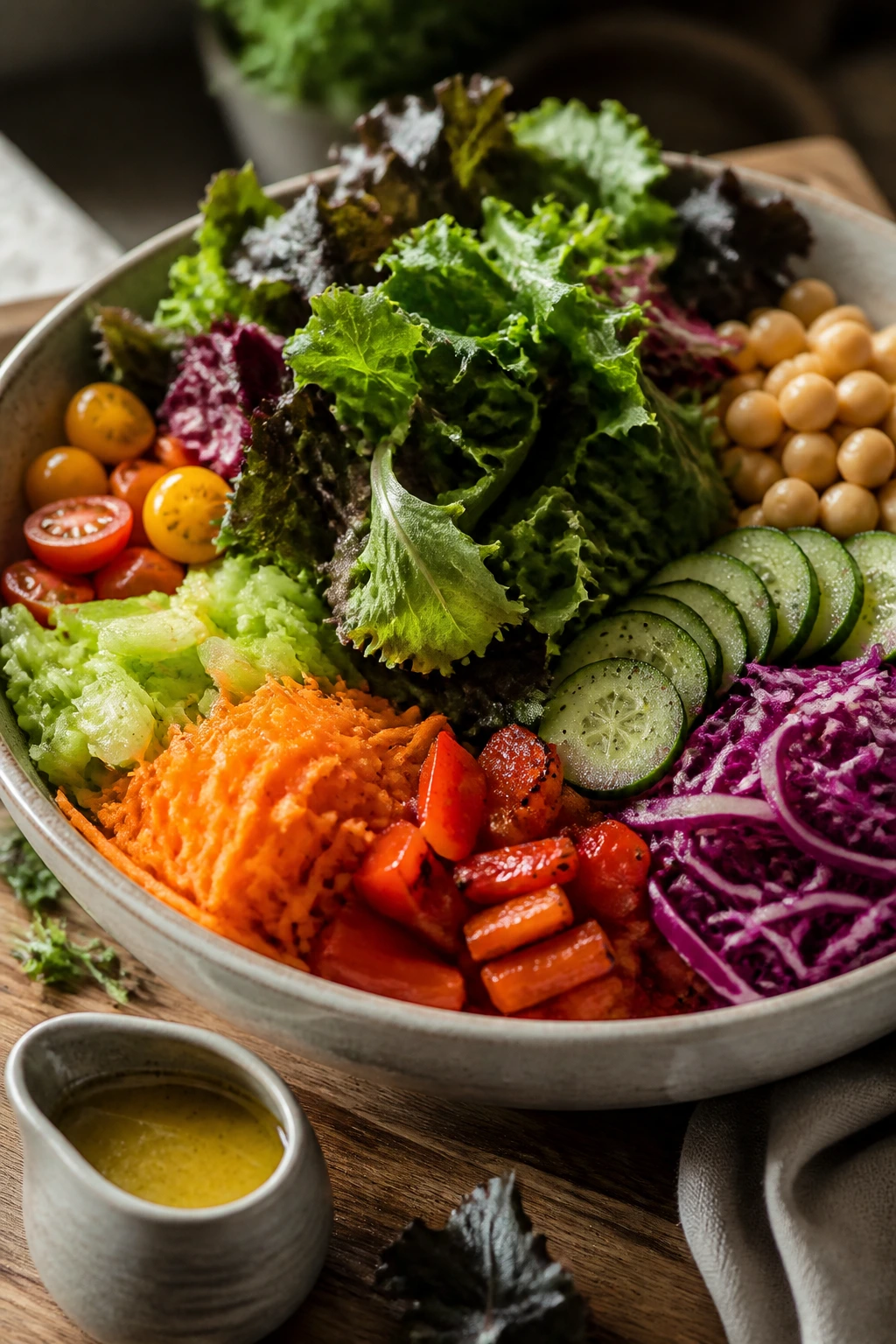
Prep the vegetables carefully.
-
Step 1: Wash and dry the greens. Rinse the kale and romaine well, then dry them thoroughly with a salad spinner or towels. Do not skip the drying step — wet greens make the dressing slide off and pool at the bottom of the bowl.
-
Step 2: Chop the sturdy vegetables. Slice the red cabbage thin, shred or julienne the carrots, dice the cucumber and bell pepper, halve the tomatoes, and thinly slice the radishes. Keep the pieces bite-sized so the salad eats like one bowl, not a pile of side dishes.
-
Step 3: Drain and dry the chickpeas. Rinse the chickpeas under cool water until the liquid runs clear, then let them drain well. If you want a firmer bite, pat them dry with a towel for 20 to 30 seconds.
Make the dressing.
-
Step 4: Whisk the tahini base. In a small bowl, whisk together the tahini, lemon juice, Dijon, garlic, honey or maple syrup, salt, and pepper. The mixture may seize and look thick or slightly clumpy at first. That’s normal.
-
Step 5: Loosen the dressing with water. Whisk in the warm water 1 tablespoon at a time until the dressing turns smooth, glossy, and pourable, like heavy cream that still clings to a spoon. Add the olive oil last and whisk again until the texture looks even. If it goes too thin, a small spoonful of tahini will bring it back.
Assemble and finish.
-
Step 6: Massage the kale first. Put the kale in the large bowl with about 1 tablespoon of dressing and a pinch of salt, then massage it with your hands for 30 to 45 seconds. The leaves should darken and feel less stiff, but they should not collapse.
-
Step 7: Build the bowl in layers. Add the romaine, cabbage, carrots, cucumber, bell pepper, tomatoes, radishes, chickpeas, and parsley. Toss gently with half of the remaining dressing. The bowl should look coated, not soaked.
-
Step 8: Add the creamy and crunchy finishers. Fold in the avocado, feta, and sunflower seeds right before serving. Toss once or twice, just enough to distribute them. Do not overmix here — avocado bruises fast, and feta turns into a smear if you beat it around.
-
Step 9: Taste before you serve. Add the rest of the dressing if the bowl looks dry, then finish with a squeeze of lemon or a pinch more salt if the flavors need sharpening. A good salad should taste bright at the first bite, not after you chew for a while.
How to Serve It Without Making It Feel Like a Side Dish
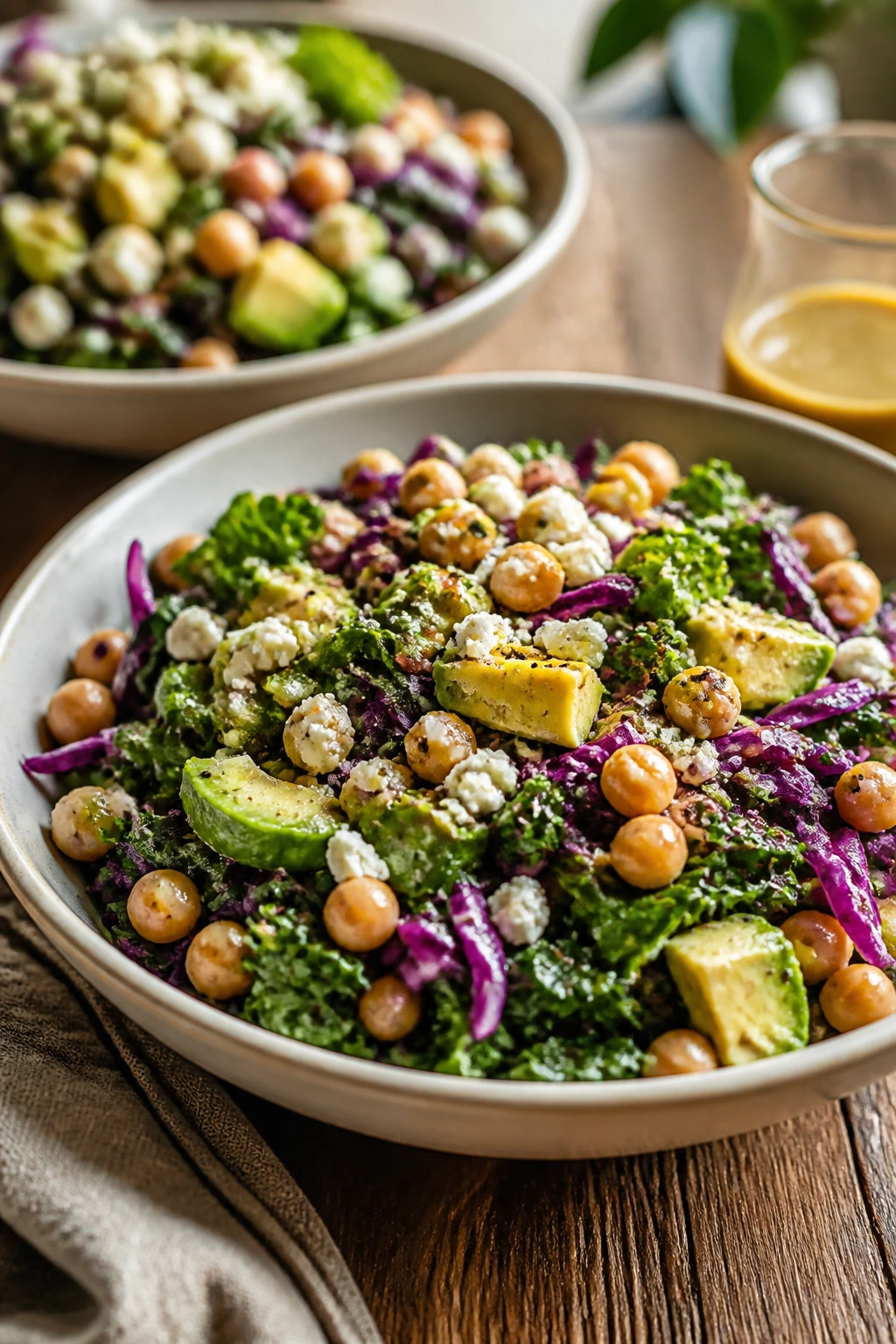
Presentation: Spoon the salad into shallow bowls instead of a deep pile. That keeps the colors visible — the red cabbage, pale chickpeas, green avocado, and little white crumbles of feta should all be easy to see before the fork goes in.
Accompaniments: Serve it with warm pita wedges, crusty sourdough, or a bowl of soup if you want something extra on the table. A simple tomato soup, lentil soup, or a brothy vegetable soup works well because it doesn’t fight the tahini dressing.
Portions: Plan on about 2 to 2 1/2 cups per person for a main meal and 1 to 1 1/2 cups for a side. If you’re feeding bigger appetites, add another can of chickpeas or a second avocado rather than piling on more lettuce.
Beverage Pairing: Sparkling water with lemon keeps the meal clean and bright. If you want wine, go with a dry white like Sauvignon Blanc or a light, crisp rosé.
Tips for Better Flavor and Texture
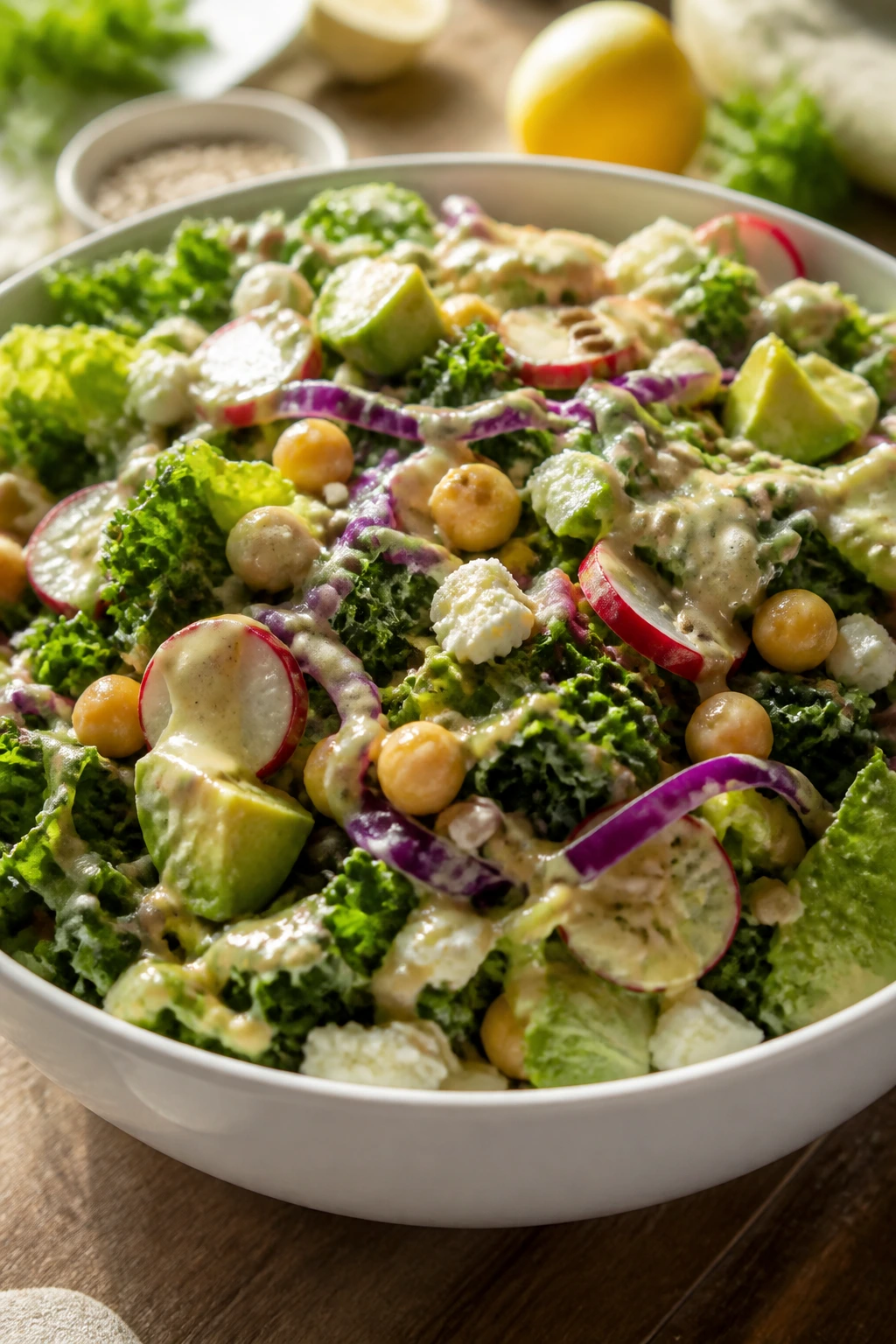
Flavor Enhancement: A little lemon zest in the dressing goes a long way. It gives the tahini something aromatic to grab onto, especially if your lemon juice is mild. I also like a small pinch of sumac on top when I want the salad to taste sharper without getting sour.
Customization: If you want a bigger, beanier bowl, add 1 cup of cooked white beans alongside the chickpeas. If you want more herb flavor, fold in dill or mint with the parsley. Both work, and both change the mood of the salad without changing the structure.
Time-Saver: Pre-shredded cabbage and carrots are fine here, and I’m not precious about it. Just dry them on a clean towel before they go into the bowl, because bagged shredded vegetables often carry a little extra moisture.
Cost-Saver: Sunflower seeds are cheaper than pine nuts and do the job better than you’d expect. They give you the same little salty crunch without asking for much money, and they play nicely with tahini.
Make-It-Yours: For a dairy-free version, skip the feta and add a few chopped olives or extra sunflower seeds. For a more filling dinner bowl, add quinoa or farro under the greens, though I’d keep the grain to about 1/2 cup per serving so the vegetables still stay in charge.
Mistakes That Make the Bowl Fall Flat
-
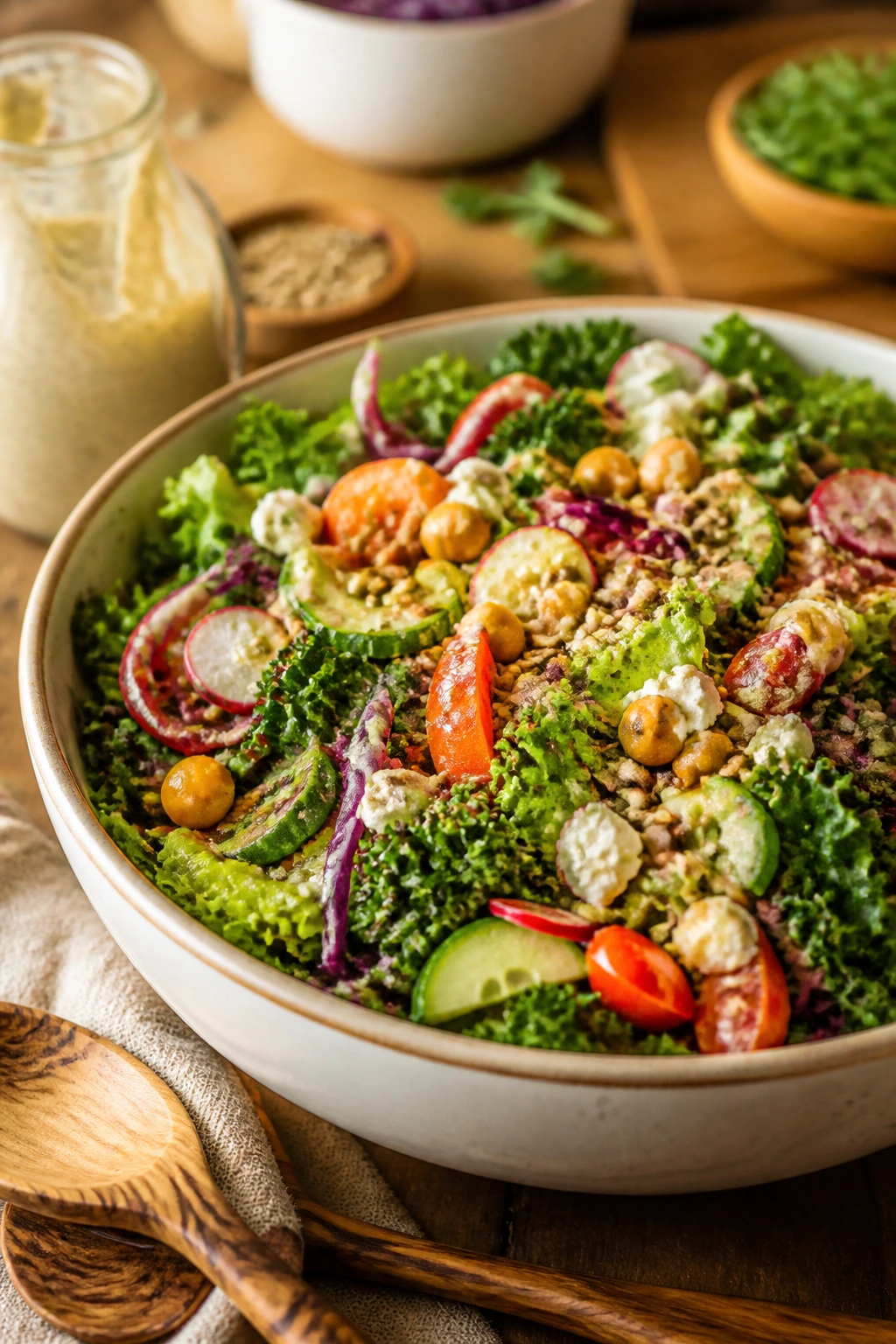
Dressing wet greens: If the salad tastes diluted or the dressing slides off in streaks, the greens were too wet. Dry the kale and romaine thoroughly, then dress in stages instead of dumping everything in at once.
-
Making the tahini dressing too fast: Tahini can look broken and thick for a minute, then become smooth once the water goes in slowly. If you add too much water at once, the dressing turns thin and dull instead of creamy. Fix it by whisking in a spoonful more tahini.
-
Adding avocado too early: Cut avocado at the last minute. If you add it too soon, it browns at the edges and gets smashed by the tossing. The salad still tastes fine, but it loses that fresh, clean look.
-
Skipping salt on the greens: A pinch of salt on the kale during the massage step wakes the whole bowl up. Without it, the dressing has to do all the work, and the salad can taste flat even when every ingredient is fresh.
-
Using only soft vegetables: A bowl built from tomatoes, cucumber, and lettuce alone turns limp fast. Keep at least two sturdy elements — cabbage, kale, radishes, or seeds — so the salad still has bite after the first few forkfuls.
-
Overdressing the bowl: It’s easy to keep pouring when the greens look dry. Stop a little earlier than you think, toss, then taste. You can always add another spoonful, but you cannot take the dressing back once it’s clinging to every leaf.
Variations Worth Trying
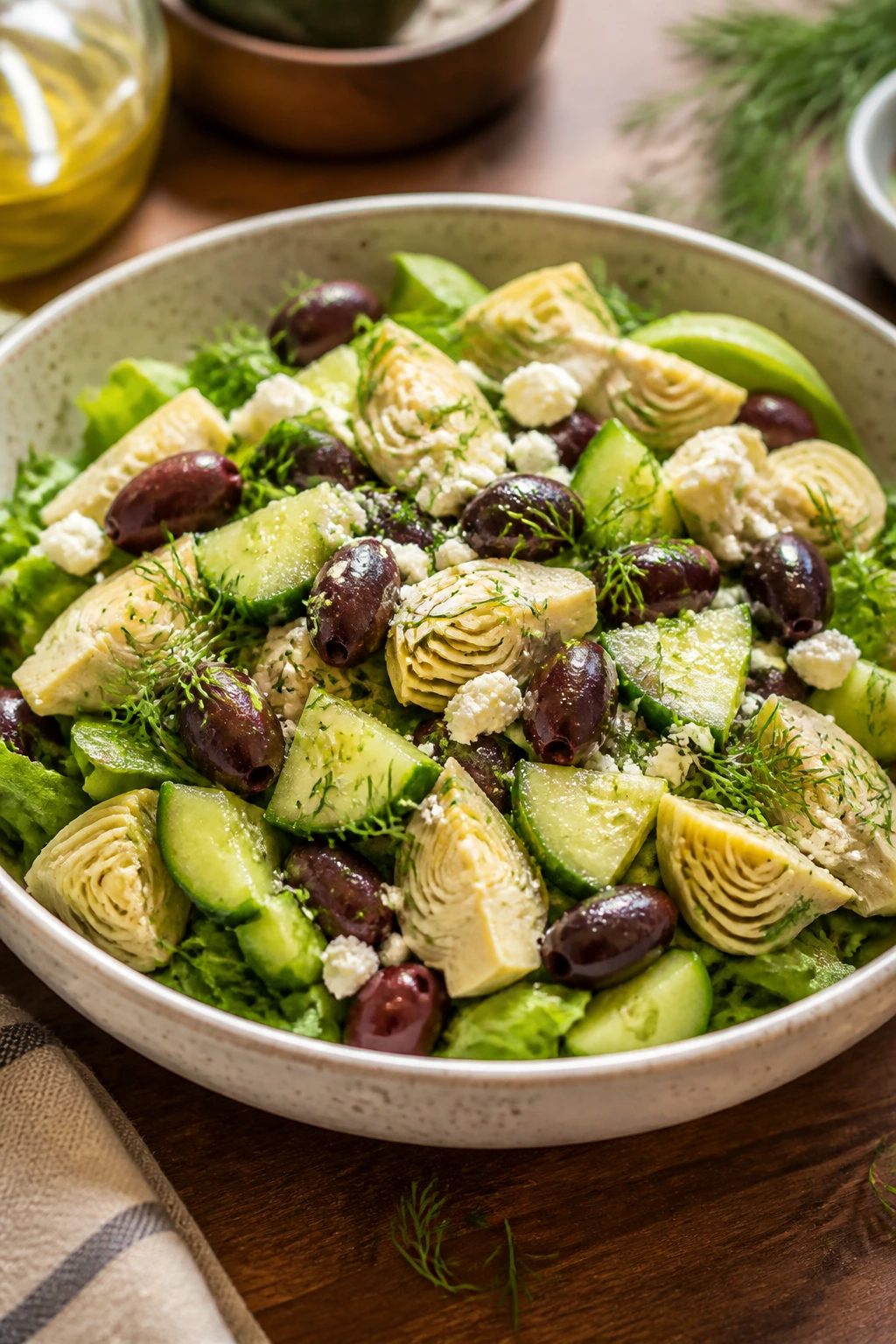
Mediterranean Market Bowl: Swap the parsley for dill, add 1/2 cup chopped kalamata olives, and toss in a handful of diced cucumber and artichoke hearts. The salty brine from the olives and artichokes gives the tahini dressing a sharper edge, and the salad feels a little more dinner-party than lunchbox.
No-Dairy Lemon Herb Bowl: Leave out the feta and add 2 tablespoons hemp seeds plus an extra handful of herbs. The dressing stays the same, but the hemp seeds give a soft nuttiness that fills the space the cheese would normally take.
Spicy Lime Crunch: Replace the lemon juice with lime juice, add 1/2 teaspoon chili flakes to the dressing, and fold in a handful of shredded napa cabbage. A little heat wakes up the tahini in a way that feels clean, not heavy.
Protein-Heavy Lunch Bowl: Add 1 cup cooked quinoa and 1/2 cup shelled edamame to the salad, then increase the dressing by 2 tablespoons so the extra bulk doesn’t dry things out. This version holds up especially well in lunch containers because the grains soak up flavor instead of stealing it.
Radish-and-Apple Snap: Add 1 small crisp apple, diced, and cut the tomatoes back to 1/2 cup. The apple brings sweetness and a sharper crunch, which works if you want the salad to lean fresher and less savory.
Storing, Packing, and Making Ahead
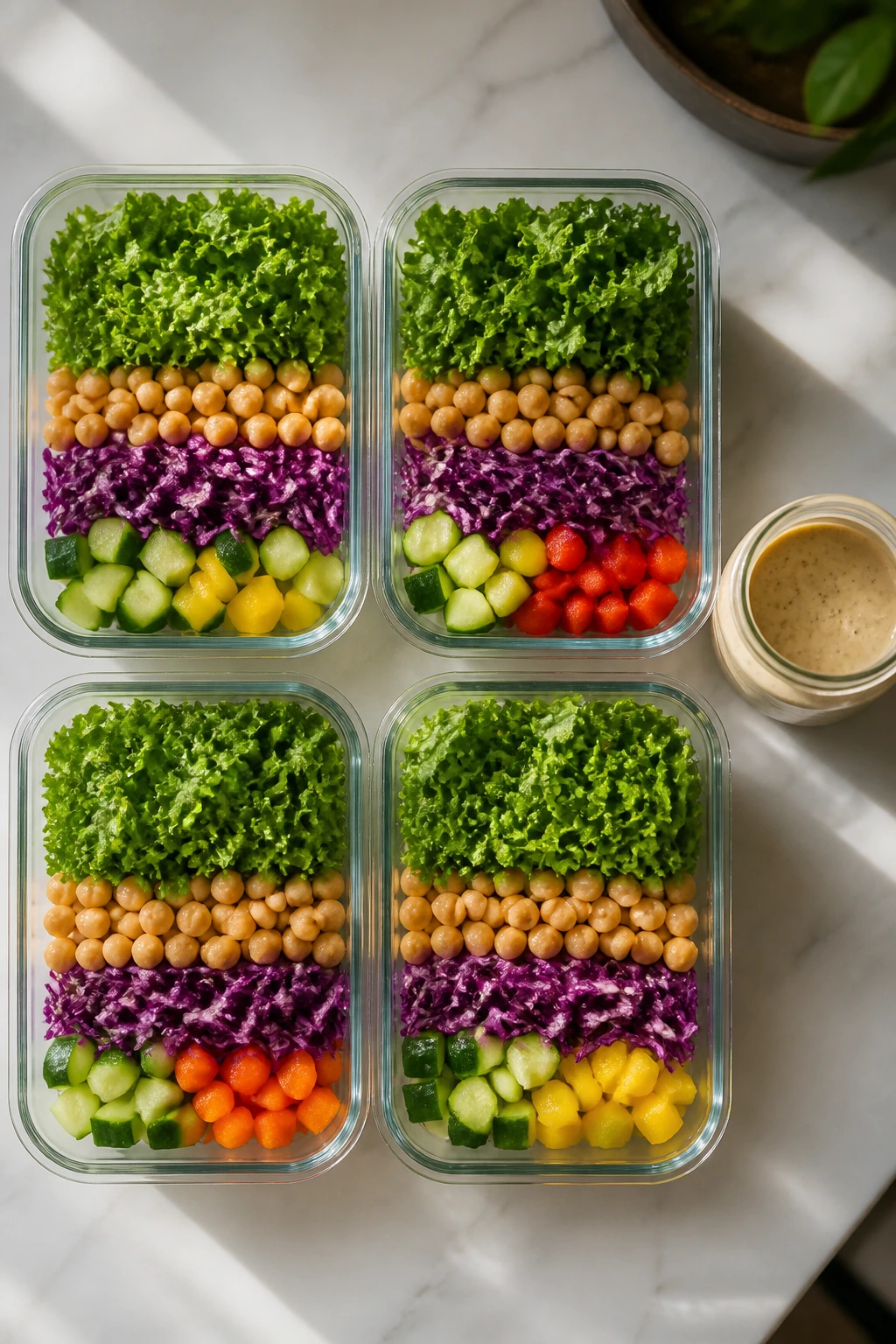
This salad keeps best when the pieces stay separate until the last minute. The chopped kale, romaine, cabbage, carrots, cucumber, bell pepper, radishes, chickpeas, and parsley will hold for 3 to 4 days in the refrigerator if they’re stored in airtight containers and kept as dry as possible. A paper towel in the container helps catch stray moisture, especially for the greens.
The dressing lasts about 1 week in the fridge in a sealed jar. It will thicken when cold, sometimes a lot. Let it sit at room temperature for 10 minutes, then shake or whisk it and add 1 to 2 teaspoons of warm water if needed to bring it back to a pourable texture.
Assembled salad is best eaten right away, but a kale-heavy bowl can survive 24 hours in the fridge if you go light on the dressing and hold the avocado back. If you need to pack it for lunch, layer the chickpeas and cabbage at the bottom, stack the greens above that, and keep the dressing in a separate cup. Add the avocado when you’re ready to eat.
There’s no reheating here, and that’s a good thing. If you decide to add roasted sweet potatoes or another warm element, reheat those separately in a 350°F oven for 8 to 10 minutes, then let them cool a few minutes before mixing them in. Hot vegetables and delicate greens do not get along.
The one thing I would not do is freeze any part of this salad. The vegetables lose their snap, the dressing separates, and the whole point disappears.
Questions Readers Ask About This Salad
Can I use bagged salad greens instead of chopping everything myself?
Yes, but use a sturdier mix than spring mix. Bagged romaine, chopped kale, or a cabbage slaw blend works much better than soft baby greens, which wilt the second the dressing hits them.
What can I use instead of tahini in the dressing?
Plain Greek yogurt, sunflower seed butter, or almond butter can stand in, but the flavor shifts. Greek yogurt makes it tangier and lighter, while seed butter pushes it toward a nuttier, less classic taste. If you want the closest match, sunflower seed butter is the safer swap.
How do I keep the salad from getting soggy?
Dry the vegetables well, dress the kale first, and add the tomatoes, avocado, and seeds at the end. Also, don’t drown the whole bowl in dressing before you taste it; a little goes farther than people expect once the salad gets tossed.
Can I make this salad a full dinner without adding meat?
Yes. Chickpeas, feta, avocado, and sunflower seeds already give it enough heft for most people. If you want it to feel even more substantial, add quinoa or a second can of beans, but you don’t need to turn it into a protein pile for it to work as dinner.
What if my tahini dressing gets thick and pasty?
Add warm water a teaspoon at a time and keep whisking. Tahini often seizes before it loosens, and that first ugly stage is normal. If it stays stubborn, a little more lemon juice usually helps it turn smooth again.
Can I make this salad ahead for lunch boxes?
Yes, with one rule: keep the avocado and dressing separate. Pack the sturdier vegetables and chickpeas together, put the greens on top, and add the avocado right before eating so it stays fresh and doesn’t mash into the dressing.
Do I have to massage the kale?
No, but I recommend it. Thirty seconds with a pinch of salt and a spoonful of dressing softens the leaves enough that they stop feeling coarse, and the salad eats better for it. If you skip it, the kale will stay a little tougher and more rustic.
A Bowl Worth Reaching For
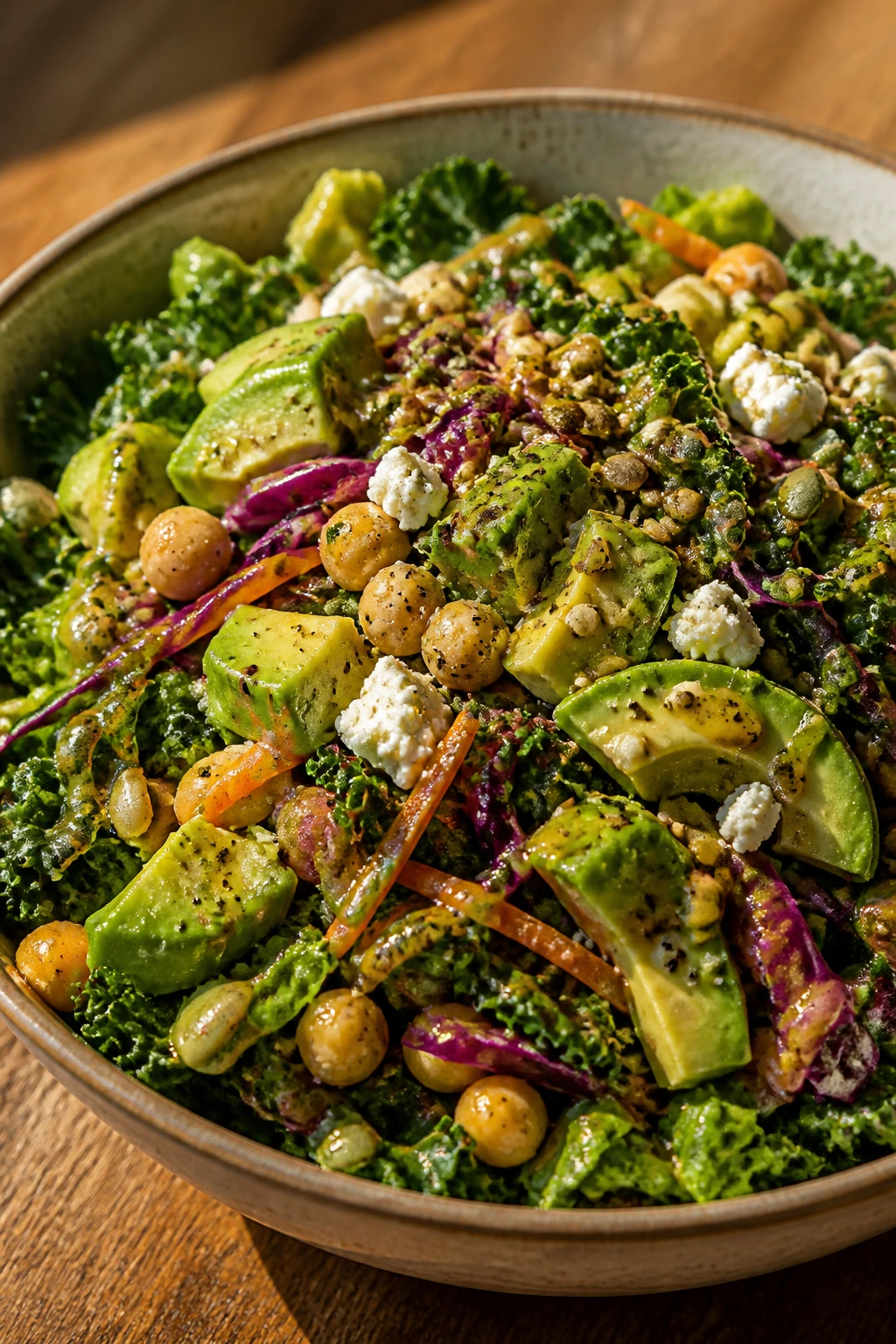
A salad like this earns its keep because it behaves like food, not decoration. It has crunch. It has salt. It has acid, creaminess, and enough heft that you don’t start hunting the pantry ten minutes later. That balance is what makes a hearty veggie salad with homemade dressing worth making more than once.
Keep the pieces dry, keep the dressing bright, and keep the avocado for the end. Those three habits do more for the bowl than any fancy add-in ever will, and once you’ve made it this way a couple of times, it starts to feel less like a recipe and more like a template you can trust.
Hearty Veggie Salad with Homemade Dressing — Recipe Card
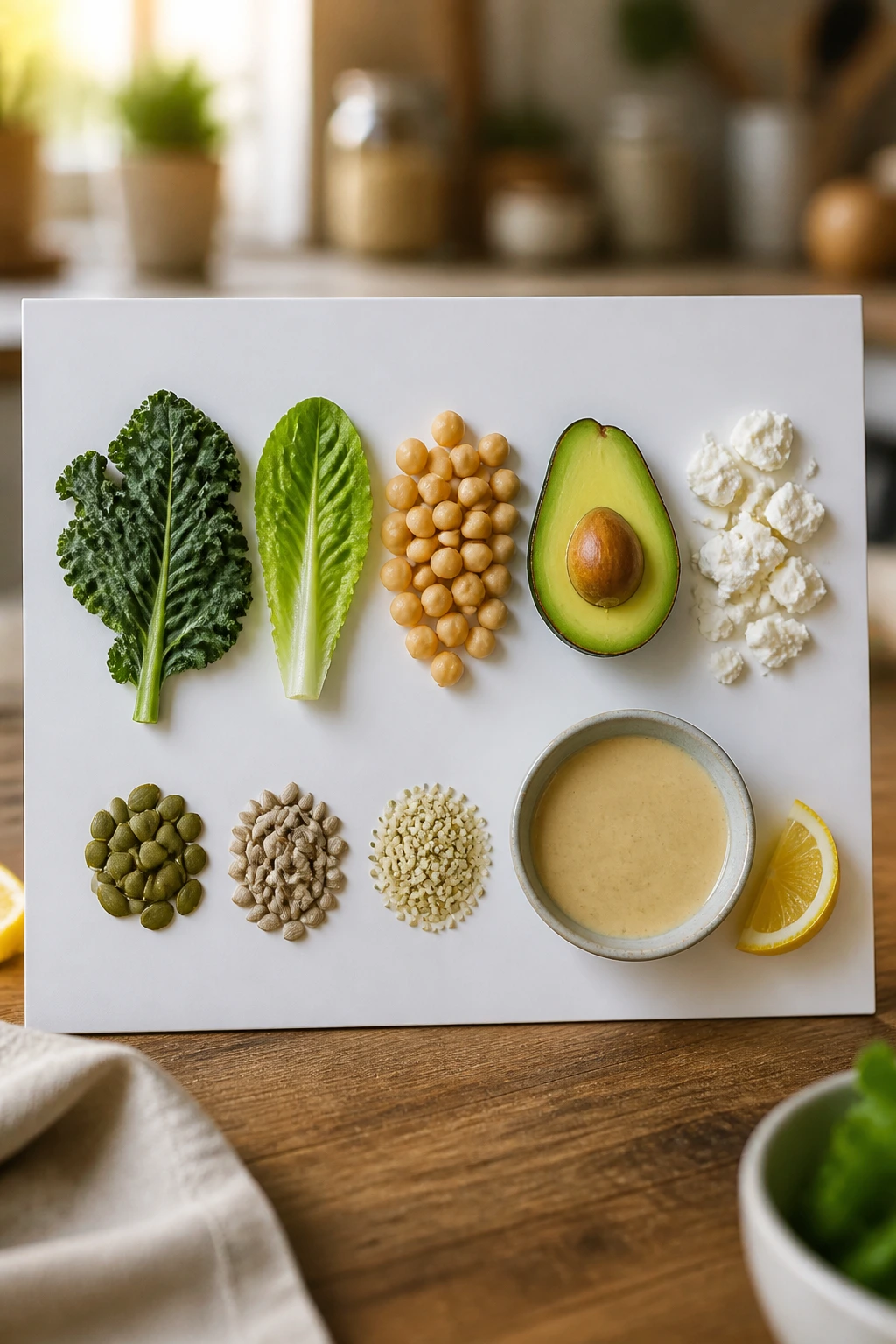
Recipe Name: Hearty Veggie Salad with Homemade Dressing
Description: A crisp, filling vegetable salad built with kale, romaine, chickpeas, avocado, feta, and crunchy seeds, finished with a creamy lemon-tahini dressing. It eats like a full meal and stays lively long after tossing.
Prep Time: 25 minutes
Cook Time: 0 minutes
Total Time: 25 minutes
Course: Main Course, Salad
Cuisine: American
Servings: 4 servings
Calories: About 380 kcal per serving
Ingredients
For the Salad
- 5 cups curly kale, stems removed and chopped
- 3 cups romaine hearts, chopped
- 1 cup shredded red cabbage
- 1 cup shredded carrots
- 1 cup cucumber, diced
- 1 red bell pepper, diced
- 1 cup cherry tomatoes, halved
- 4 radishes, thinly sliced
- 1 (15-ounce) can chickpeas, drained and rinsed
- 1 avocado, diced just before serving
- 1/2 cup crumbled feta
- 1/3 cup roasted sunflower seeds
- 1/4 cup chopped fresh parsley
For the Homemade Dressing
- 1/4 cup tahini
- 3 tablespoons fresh lemon juice
- 2 tablespoons extra-virgin olive oil
- 1 tablespoon Dijon mustard
- 1 small garlic clove, finely grated or minced
- 1 teaspoon honey or maple syrup
- 1/2 teaspoon kosher salt
- 1/4 teaspoon black pepper
- 2 to 4 tablespoons warm water, as needed
- 1 teaspoon lemon zest, optional
Instructions
- Rinse and dry the kale and romaine thoroughly, then chop all the vegetables and drain the chickpeas well.
- Whisk the tahini, lemon juice, Dijon, garlic, sweetener, salt, and pepper in a small bowl.
- Add the warm water 1 tablespoon at a time until the dressing is smooth and pourable, then whisk in the olive oil.
- Massage the kale with a small spoonful of dressing and a pinch of salt for 30 to 45 seconds.
- Add the romaine, cabbage, carrots, cucumber, bell pepper, tomatoes, radishes, chickpeas, and parsley to the bowl and toss with half the dressing.
- Fold in the avocado, feta, and sunflower seeds just before serving, then add more dressing if needed.
- Taste and finish with extra lemon juice, salt, or pepper.
Notes: Add avocado at the last minute, or it will brown and mash. The dressing keeps for about 1 week in the refrigerator. If it thickens after chilling, whisk in a teaspoon or two of warm water before serving.