



The smell hits first: fat warming on metal, pepper catching in the heat, a little smoke curling out of the lid seam before the lid even closes. That’s the moment backyard grilling stops being a chore and starts feeling like a promise. Juicy summer grilling for backyard cookouts is not about piling food over fire and hoping for the best. It’s about knowing where the heat lives, what the meat wants, and when to get out of its way.
The difference between a juicy burger and a dry one is often a matter of minutes. Sometimes less. A chicken breast that looks fine on the outside can turn stringy in the center if it stays on the grate even a little too long. A pork chop can go from rosy and tender to tight and chalky fast enough that you’d swear the grill betrayed you. It didn’t. The grill was honest. The cook just guessed.
That’s why the best cookouts feel calm. The food has a plan. The heat has zones. The platter is ready before the meat comes off, and the thermometer earns its drawer space instead of collecting dust. When you do it that way, the food tastes fuller, the char stays clean, and nobody is standing around poking at a flattened burger while the conversation dies. Start with the heat. The juice follows.
Why Backyard Cookouts Stay Juicy When the Grill Has a Plan
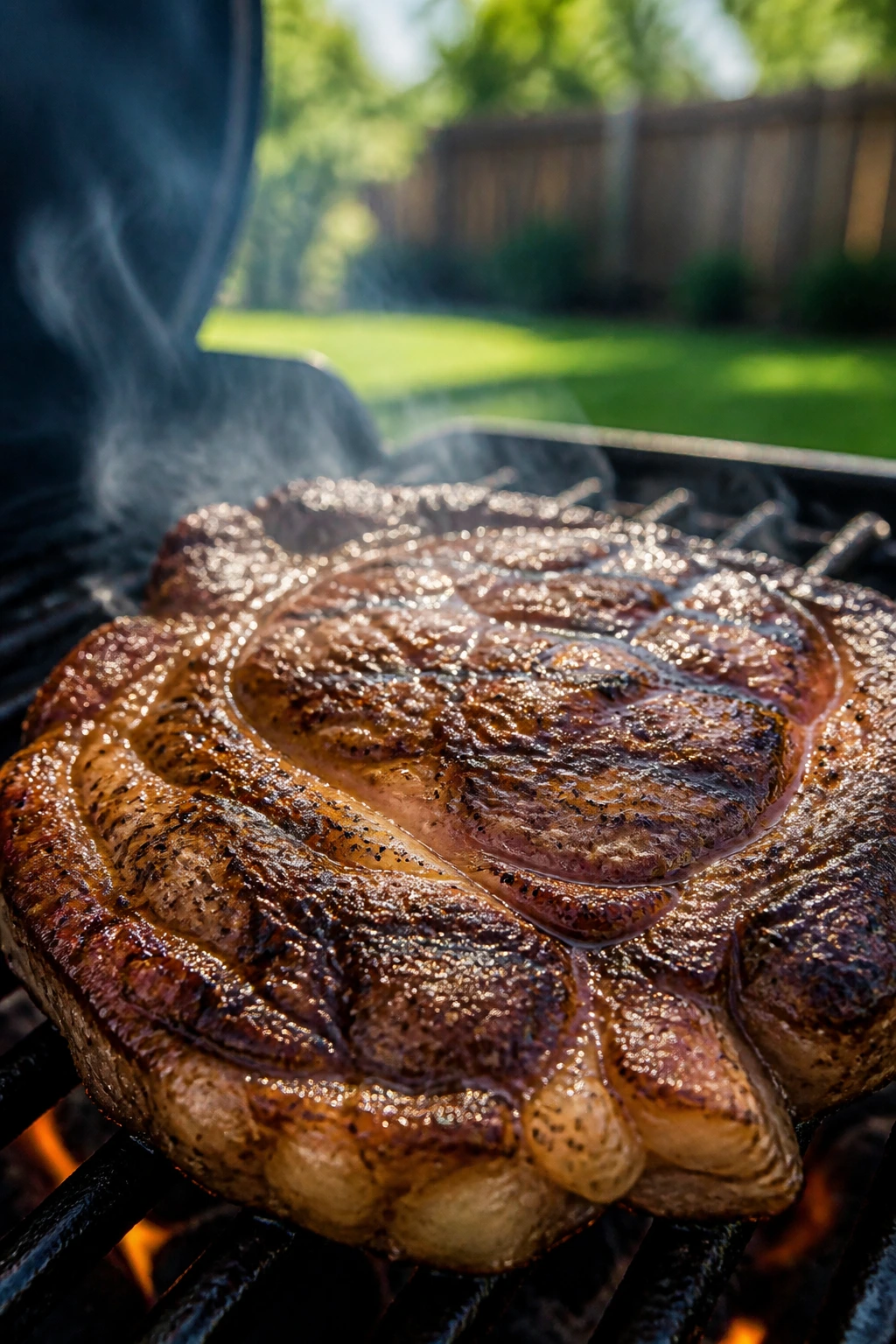
Heat zones matter more than brand names. A grill with a hot side and a cooler side gives you room to sear, then finish gently, which is how you keep thick cuts from drying out before the center catches up.
A thermometer beats guesswork every time. Color lies. Time lies. The little instant-read probe tells you when a burger is done, when chicken is safe, and when a steak should come off before carryover cooking nudges it too far.
Salt changes the meat before it ever meets the flame. A dry-brined chop or chicken thigh cooks more evenly because the salt has time to move inward and help the surface hold onto moisture instead of shedding it.
Fat is a feature, not a flaw. 80/20 beef, bone-in chicken thighs, salmon with skin, and pork shoulder steaks stay forgiving on a hot grill because a bit of fat buffers the heat.
The resting step is not optional. Five to 10 minutes off the grill lets juices settle back into the meat fibers instead of running straight onto the cutting board.
Finishing sauce belongs at the end. A spoon of chimichurri, herb butter, or vinegar-forward barbecue sauce wakes up charred edges without turning the grill work soggy.
Juicy Summer Grilling Starts With Two Heat Zones
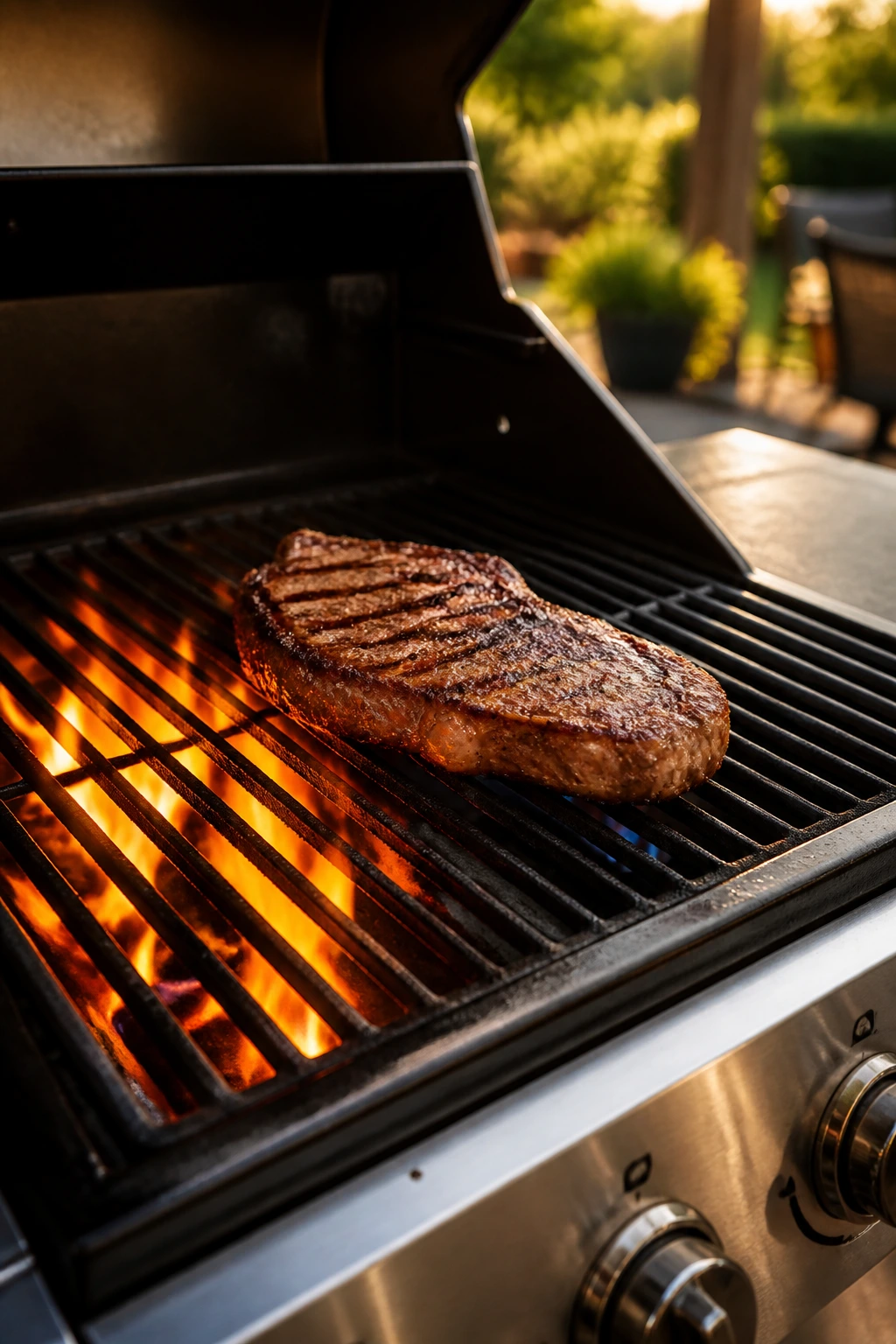
One heat setting is how people end up with blackened outsides and stubbornly raw centers. It feels efficient. It usually isn’t. The better move is to treat the grill like a two-room house: one side for hard searing, one side for slower finishing. Thick steaks, bone-in chicken, pork chops, and even some vegetables need both spaces.
On a gas grill, that means lighting one side hot and leaving the other lower or off. Give the whole setup 10 to 15 minutes with the lid closed so the grates heat evenly, then put the food over the hot side first. Once the surface has the color you want, slide it to the cooler side and close the lid. That’s where juicy summer grilling gets a lot more forgiving.
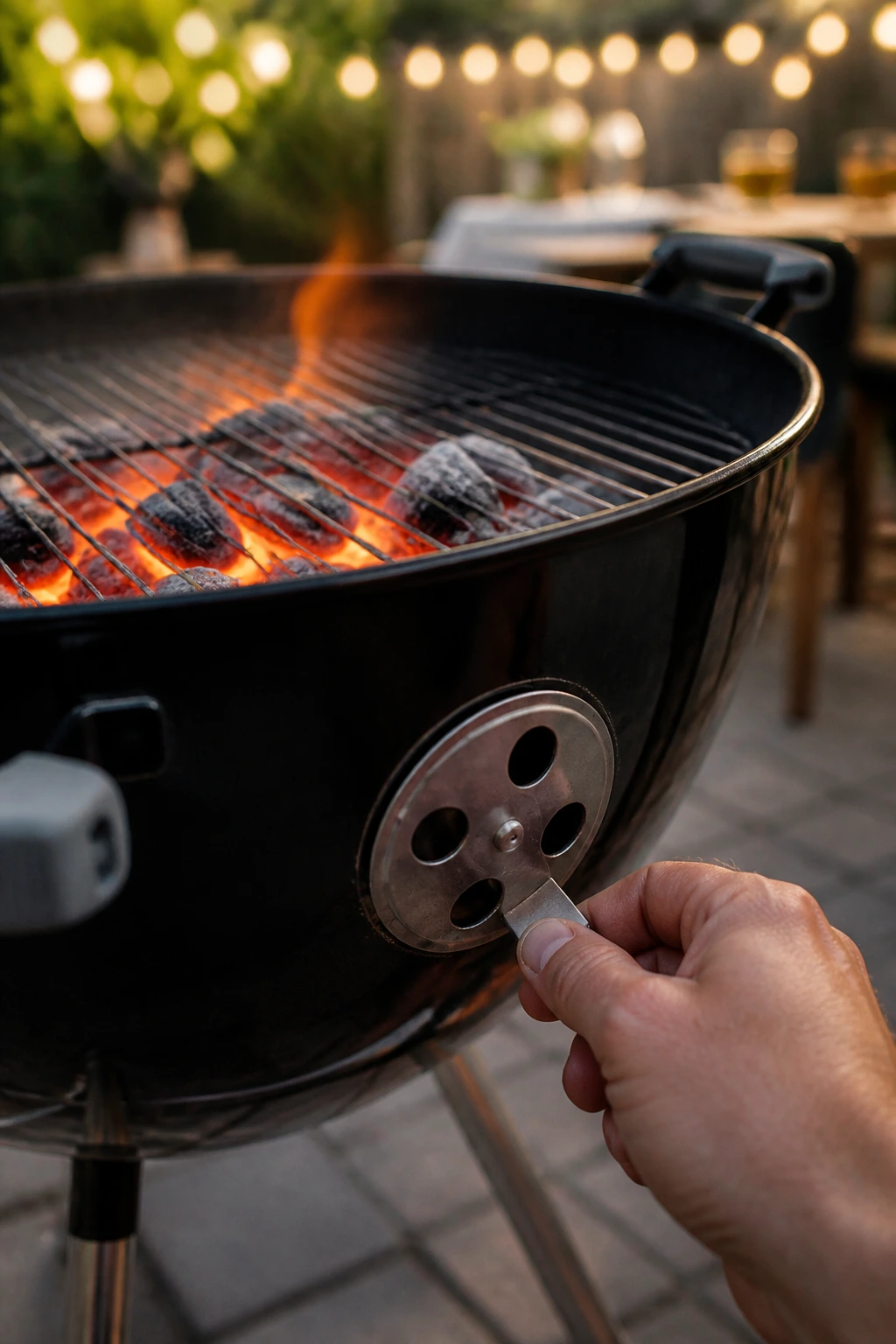
Charcoal asks for a little more hands-on work, but not much. Bank the coals to one side for direct heat and keep the other side bare for indirect cooking. If you want a hotter sear, spread a portion of the coals back under the grate for a minute or two, then move the food away again. The fire doesn’t have to be dramatic. It has to be arranged.
Gas Grill Setup
Start with a clean grate and a preheated lid. Grease trapped on old bars creates unpredictable flare-ups, and those flare-ups are the quickest route to scorched skin and bitter char.
For burgers, sausages, and thinner vegetables, the hot side can do almost all the work. For thicker cuts, sear first, then move to the cooler side and let the lid do what it does best: trap heat and cook the inside without burning the outside.
Charcoal Setup
A chimney starter makes charcoal grilling less fussy, and I’ll happily say that out loud. Light the coals until the edges are covered with gray ash, then bank them to one side. If you want a little smoke, tuck in one chunk of hardwood rather than dumping in a whole forest.
The indirect side is where a lot of backyard cooks save the day. A thick pork chop can finish there in 6 to 10 minutes, a chicken thigh can finish without scorching, and a bun can warm without turning dry and crunchy.
The Spot Most People Ignore
The far edge of the grill, the corner that looks boring, often matters more than the hottest grate bars. That’s the place where food rests after searing. It’s also where you can move anything that starts to char too fast while the center catches up. The food keeps cooking, but in a calmer way.
Salt, Marinades, and the Clock on the Counter
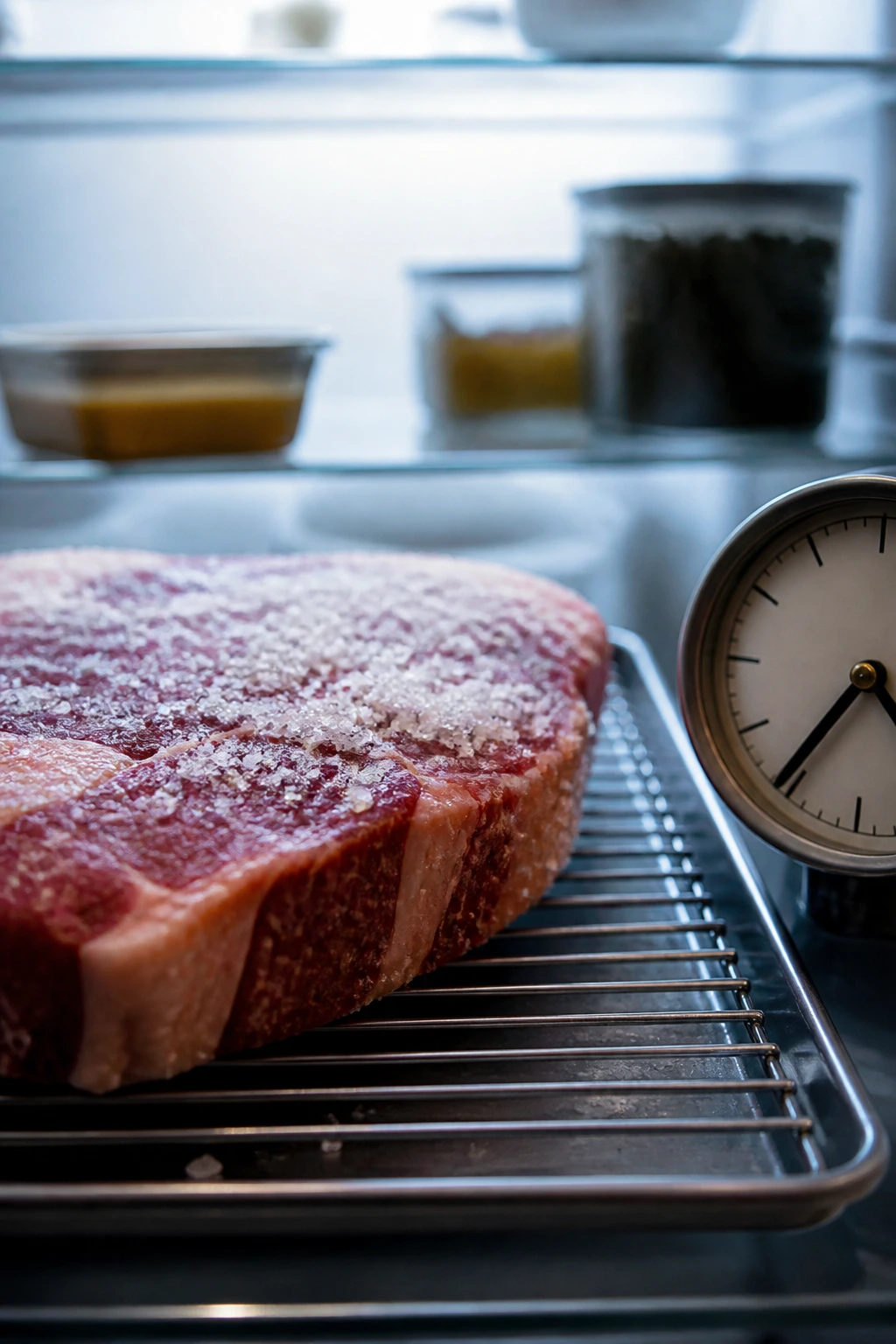
A piece of meat that has been salted at the right time feels different in your hand. Not wet. Not crusty. Just a little tacky, almost like the surface has settled into itself. That’s the dry brine working, and it does more for juicy grilling than a flashy marinade that never really gets past the surface.
Salt ahead of time, and it has a chance to pull moisture out, dissolve into that moisture, and move back in. That sounds fussy, but the result is simple: better seasoning, more even cooking, and a surface that browns instead of steaming. For chicken pieces, pork chops, and steaks, even 30 to 60 minutes helps. For thicker cuts, a few hours in the fridge is even better.
Dry Brine Before You Grill
Use kosher salt, not a snowstorm of fine table salt. Fine salt covers fast and can go too far before you notice. A light coating over the surface, about 1/2 to 3/4 teaspoon per pound depending on the cut and your taste, is usually enough. Set the meat on a rack if you can, uncovered in the fridge, so the surface dries a bit and browns more cleanly.
Chicken skin benefits from this especially. So does pork. A steak that has sat salted for an hour or two often tastes seasoned all the way through rather than merely painted on the outside.
Marinades: Good, but Use Them for the Right Job
Marinades can soften and flavor, but they do not perform miracles. Acidic mixes with lemon, vinegar, yogurt, or wine work best on smaller pieces or on meat that already has a bit of natural tenderness. They’re useful for chicken thighs, shrimp, and flank steak. They’re less useful for trying to rescue a bargain-bin sirloin into something luxurious.
Sugar in a marinade deserves caution. Sugar caramelizes, then burns. If your sauce is sweet, keep it for the final minutes or brush it on after the food has mostly cooked. A sugary glaze that hits the fire too early goes from glossy to bitter fast.
Wet, Dry, and Somewhere In Between
Dry rubs are the easiest place to start if you want clean grill flavor. Paprika, garlic powder, black pepper, salt, and a little brown sugar can build a deep crust without making the food wet. Wet marinades are better when you want herbiness, acidity, or a more pronounced aroma. A paste, which is somewhere between a rub and a marinade, often works beautifully on chicken and pork because it clings to the surface instead of sliding into the drip tray.
Cuts That Stay Tender When the Grill Runs Hot
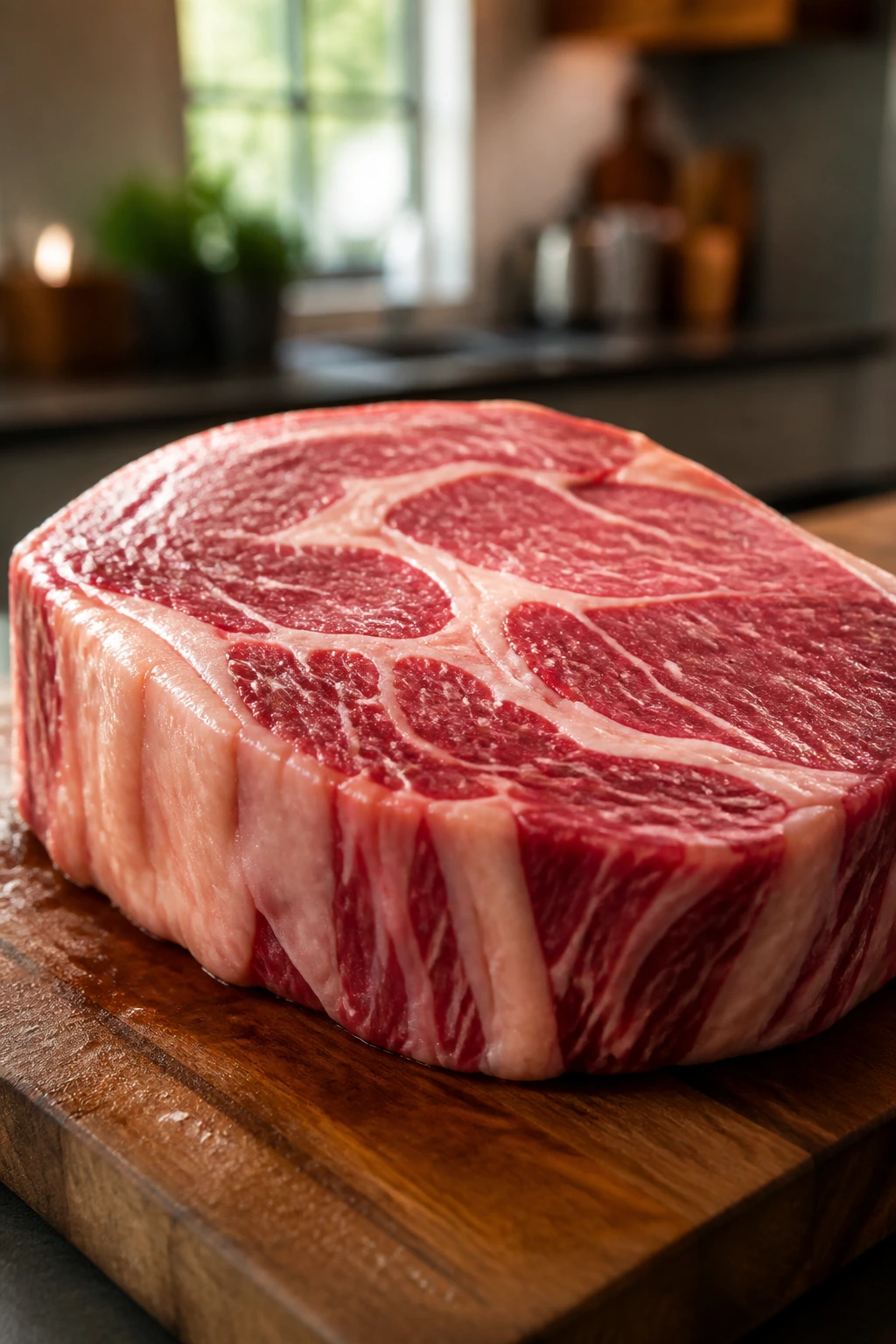
The leanest cut is rarely the smartest cut for a cookout. That’s not me being dramatic. It’s just the way heat works. On a grill, fat buys you forgiveness, and thickness buys you time. Thin, lean meat gives you almost no room for error.
For beef, 80/20 ground chuck, ribeye, strip steak, and even skirt steak in the right hands can all do well. For pork, bone-in chops, shoulder steaks, and sausages hold up better than ultra-lean loin cuts if your timing gets messy. Chicken thighs and drumsticks usually behave better than boneless breasts because their fat and connective tissue cushion the heat. And if you want seafood that won’t punish you, salmon, swordfish, and shell-on shrimp are more forgiving than delicate flakes of white fish.
Beef: Choose Marbling Over Reputation
A ribeye stays juicy because it has streaks of fat running through it. A strip steak does well because it has enough structure to handle a hard sear. Flank and skirt can be excellent too, but they want a fast cook and a clean slice across the grain. If you’re shopping for backyard cookouts and want fewer headaches, thickness matters as much as the cut name. A 1 to 1 1/2-inch steak has a lot more breathing room than a paper-thin one.
Pork: The Bone Helps More Than People Think
Bone-in pork chops cook more evenly than boneless ones, and shoulder steaks can stand up to real heat without collapsing into dryness. Pork tenderloin is tasty, but it needs attention. Blink, and it’s gone from juicy to dry. If you use it, keep it on indirect heat, pull it early, and rest it under loose foil.
Chicken: Thighs Win More Often Than Breasts
I trust thighs more than breasts on a grill that runs hot. Every time. They’re fattier, more forgiving, and less likely to betray you if the lid sits open while someone asks where the corn went. Split breasts can still work, especially if they’re pounded to even thickness or brined ahead. Boneless, skinless breasts are the least forgiving of the bunch.
Seafood: Go Thick When You Can
Salmon fillets with the skin on, shrimp with the shells on, and tuna or swordfish steaks all handle grill heat well. Thin white fish can be done, but they need a clean grate, good oiling, and patience. If you’re feeding a crowd, seafood is best when it’s simple and fast. No one wants a 20-minute grilled cod rescue mission while the burgers are waiting.
Burgers That Keep Their Beefy Middle
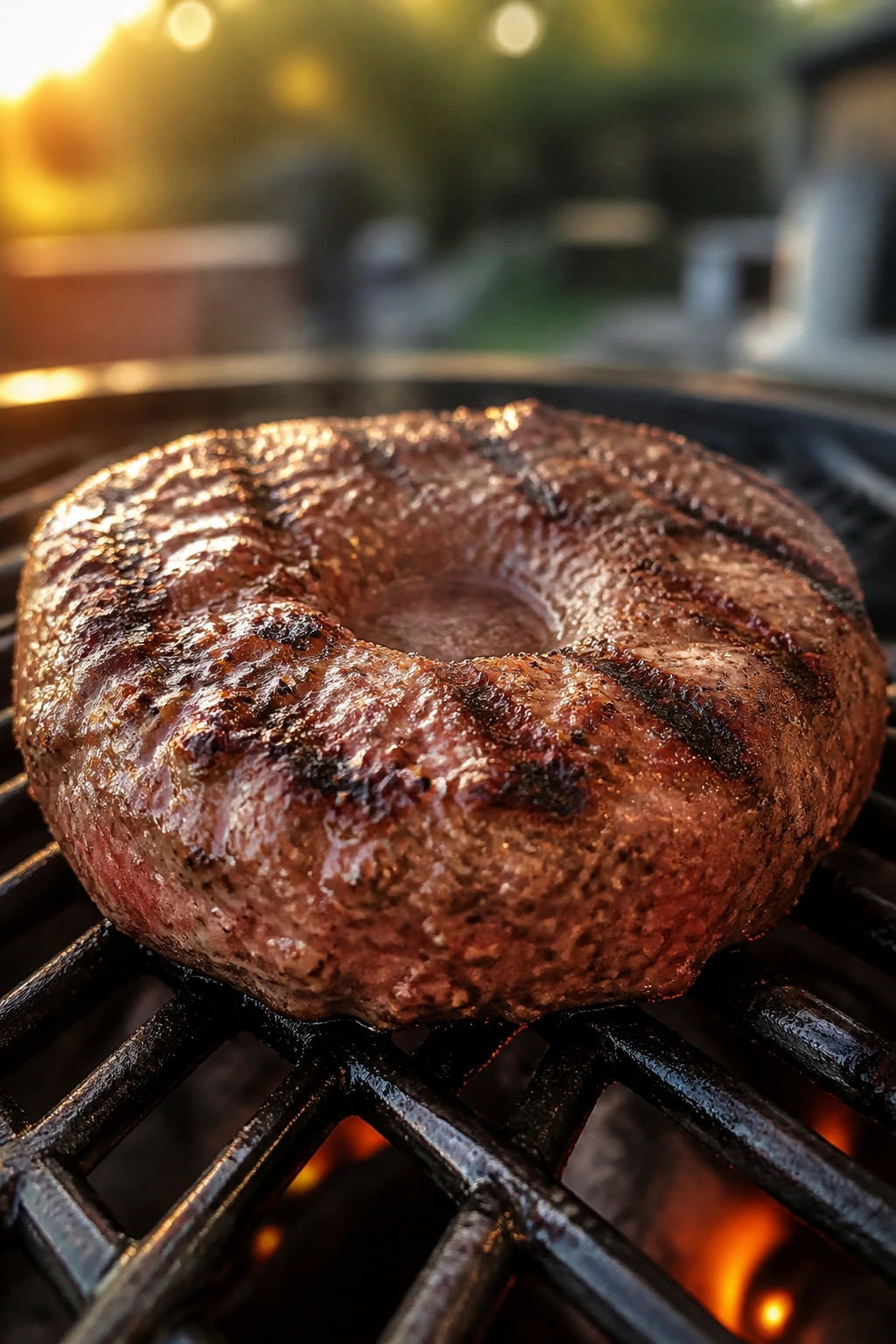
A burger should feel loose in the hand before it cooks. Not crumbly. Not packed like a snowball. Loose enough that the meat is still meat, not a dense little puck pretending to be dinner. Overworking the beef is one of those mistakes that feels harmless until you bite into it and realize the texture has gone tight and pasty.
For juicy summer grilling, the sweet spot is 80/20 ground beef. That extra fat keeps the burger from drying out while the surface browns. If you want a thick burger, shape it gently and make a shallow thumbprint in the center so it doesn’t balloon into a dome. If you like smash burgers, that’s a different game: thin, fast, crisp, and not meant to stay thick and plush. Pick the style you actually want.
How to Shape a Burger That Stays Tender
Handle the meat once or twice, no more. Form it into a patty just larger than the bun, because it will shrink a little as the fat renders. Keep the pressure light. If the edges crack when you form it, you’re pressing too hard.
Season the outside right before grilling or very shortly before. Salt draws moisture out if it sits too long on already-shaped patties, and you can feel that change on the surface. A burger that’s ready for the grill is cool, smooth, and faintly tacky, not slumped and wet.
When to Flip
One clean flip is better than constant fussing. Let the first side set before you touch it. When you see juice bead on the top surface and the edges start to darken, the burger is ready to turn. If it sticks for a second, give it another minute. It will release when the crust has formed.
For doneness, 160°F is the safe minimum for ground beef. Pull them off a few degrees early if you know your grill runs hot, because carryover will finish the job while they rest. A thin slice of cheese can go on during the last minute if that’s your thing, but don’t drown the patty in sauce before it leaves the grate.
A Small Trick That Helps
Toast the buns over indirect heat or on the top rack if your grill has one. A dry, warm bun does a better job holding burger juices than a floppy one. It’s a tiny detail. It matters more than most people admit.
Chicken Worth Serving Without Apology
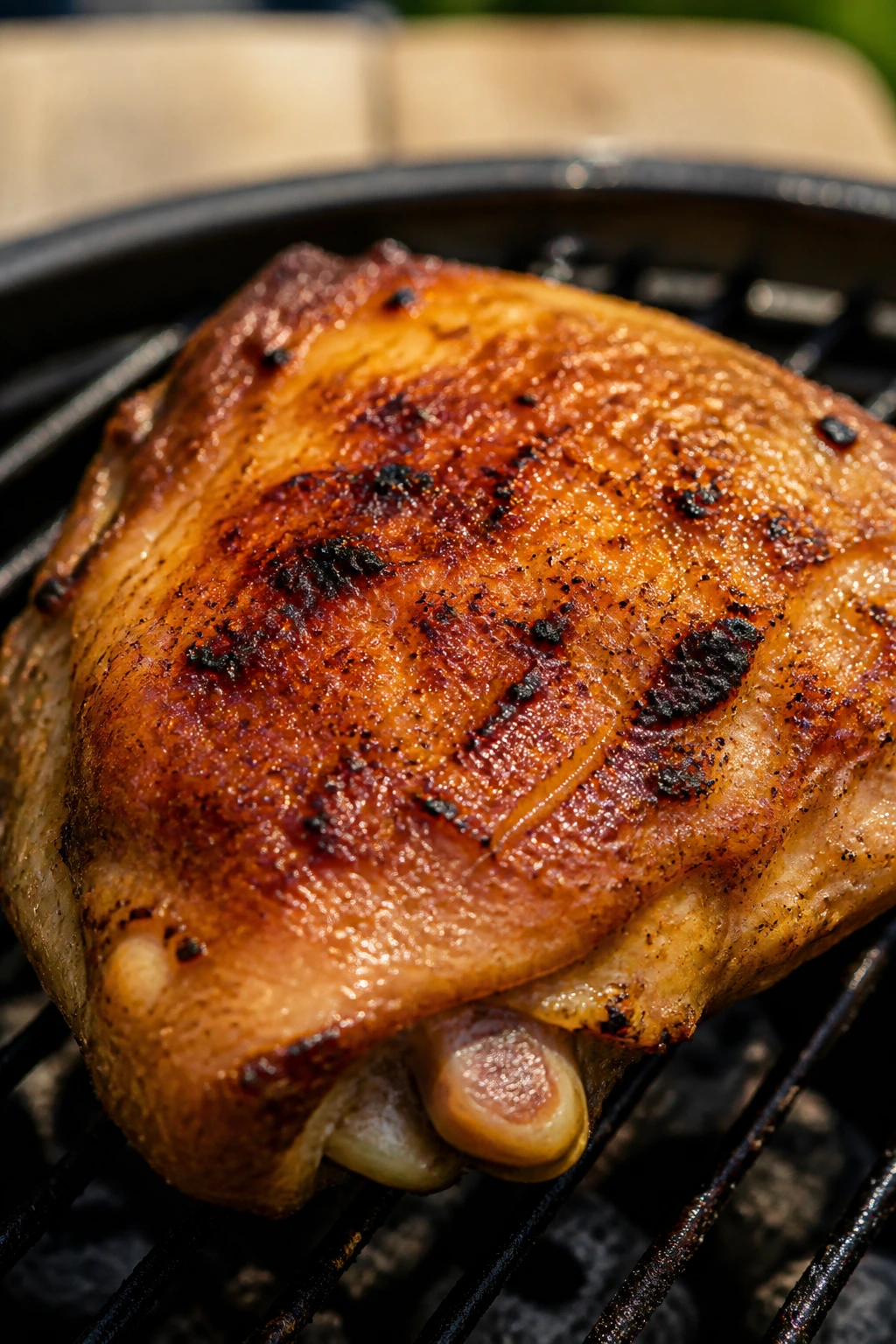
Chicken has a reputation problem. People blame the bird when the real issue is timing. A grill that’s too hot, a breast that’s too thin on one end and too thick on the other, or a cook who waits for the meat to “look done” all push chicken into dry territory. The fix is not mysterious. It’s just more careful.
Bone-in, skin-on chicken thighs are the easiest path to juicy summer grilling. They forgive high heat, they stay succulent, and the skin gets crisp in a way that boneless cuts can’t match. Split breasts and whole legs can also work, but they need a more measured approach. If you want white meat, give it a dry brine and even thickness. If you want to relax, buy thighs.
The Thigh Advantage
Chicken thighs contain more fat and connective tissue than breasts, which means they stay tender even if the cook gets a little enthusiastic with the flame. Grill them over medium heat first, skin-side down if they have skin, until the skin renders and bronzes. Then move them to indirect heat and finish slowly until the thickest part reaches 165°F.
That little move—from direct to indirect—does the heavy lifting. It lets the skin crisp without letting the interior dry out. And yes, thighs can look almost too dark before they’re done. That’s fine. Skin turns deep amber and still tastes great if it hasn’t gone bitter.
Breasts Need a Calmer Hand
If breasts are what you have, pound them to an even thickness or butterfly them so the thinner tail doesn’t dry out while the thicker center cooks. A mild brine helps too. Even 30 minutes in salted water can make a difference, though a dry brine in the fridge is cleaner and less messy.
Cook breast meat over medium heat, not roaring-hot fire. Pull it at 160°F and rest it for five minutes. It will coast to 165°F on the board. That small gap keeps the juices from pouring out when you slice.
Don’t Waste the Skin
Chicken skin isn’t just decoration. It protects the meat from direct flame and gives you a built-in layer of fat that bastes the surface as it cooks. Pat it dry before grilling. Wet skin steams first and crisps later, which is the opposite of what you want.
Steaks and Pork Chops: Fast, Hot, and Not Overcooked
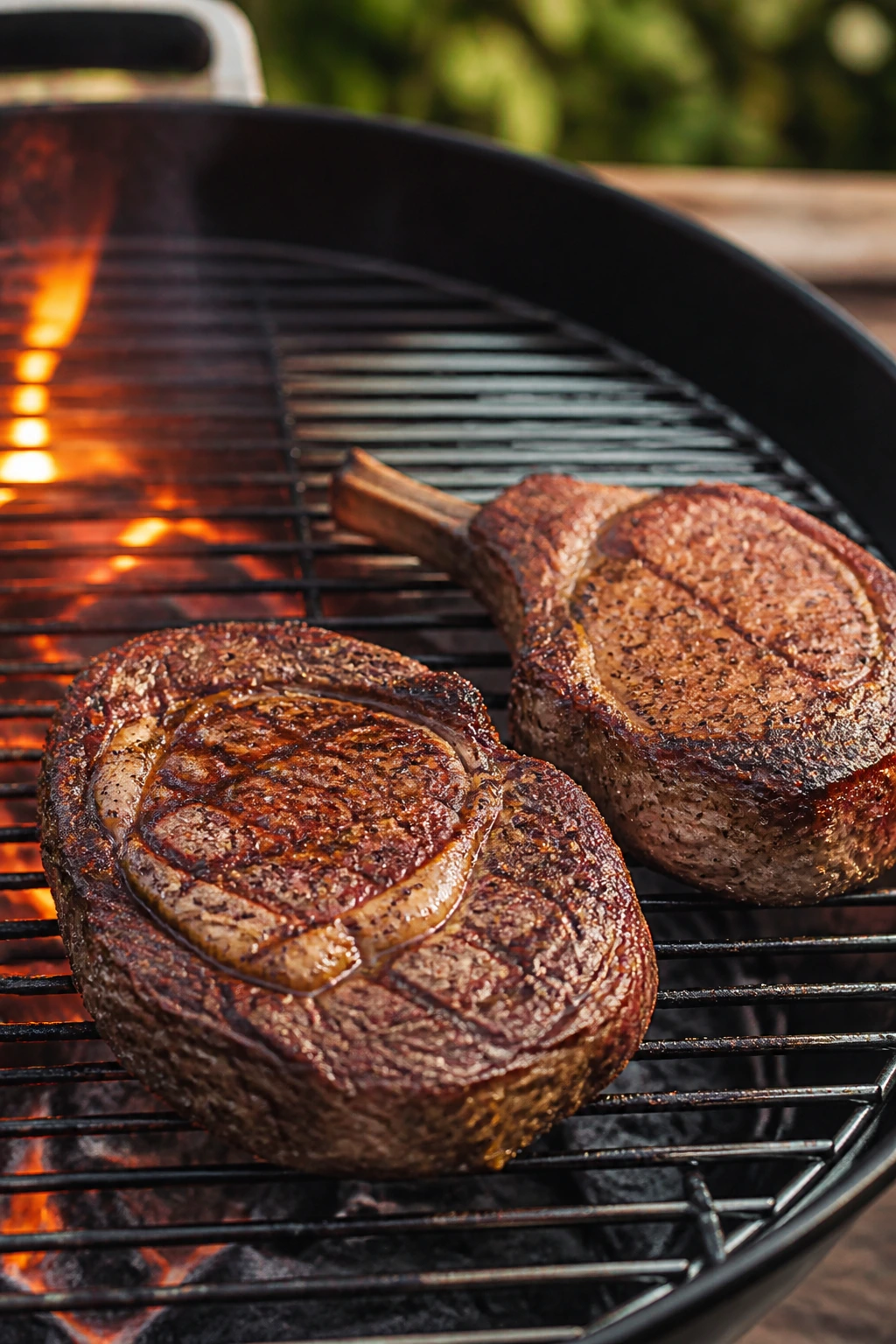
A steak is not a place to get casual. Same with a thick pork chop. These cuts cook fast enough that you can lose them in a minute or two, especially on a grill that’s running hotter than you thought. The upside is that they reward a clean, confident approach. No guesswork. No dozen little flips. Just heat, timing, and a short rest.
For steak, thickness matters more than almost anything else. A 1 1/2-inch ribeye or strip gives you room to sear without hardening the middle. Pork chops want similar respect. Bone-in chops, about 1 to 1 1/4 inches thick, are the ones I reach for when I want a cookout that stays juicy instead of risky.
Steak: Sear, Then Watch the Center
On a steak, the surface needs hard heat for browning, but the inside needs time to catch up. That’s where the two-zone fire earns its keep. Sear the steak over the hot side until you get real color, then move it to the cooler side and close the lid. For medium-rare, pull it around 125 to 130°F. For medium, 135 to 140°F is the usual landing spot.
The steak will rise a few degrees while it rests. That’s carryover cooking. Ignore it and you’ll overshoot every time.
Pork Chops: Keep the Bone if You Can
Boneless chops can be fine, but they tend to dry faster. A bone-in chop holds onto moisture a bit better and cooks more evenly. Salt it ahead if you can. A dry-brined chop browns more cleanly and tastes seasoned all the way through, not just on the surface.
Grill over direct heat until the outside has color, then finish on indirect heat if the chop is thick. Pull pork at 145°F and rest it. That rest matters. Juicy pork needs a pause, not a rush to the plate.
Reverse Sear When the Cut Is Thick
If you’re cooking a thick steak, the reverse sear is worth knowing. Start it on the cooler side until it’s near your target temperature, then sear it hard at the end. The crust ends up deep and even, and the center stays more consistent. It also buys you time if the rest of the cookout is moving in weird directions and the corn still hasn’t shown up.
Seafood That Doesn’t Stick to the Grate
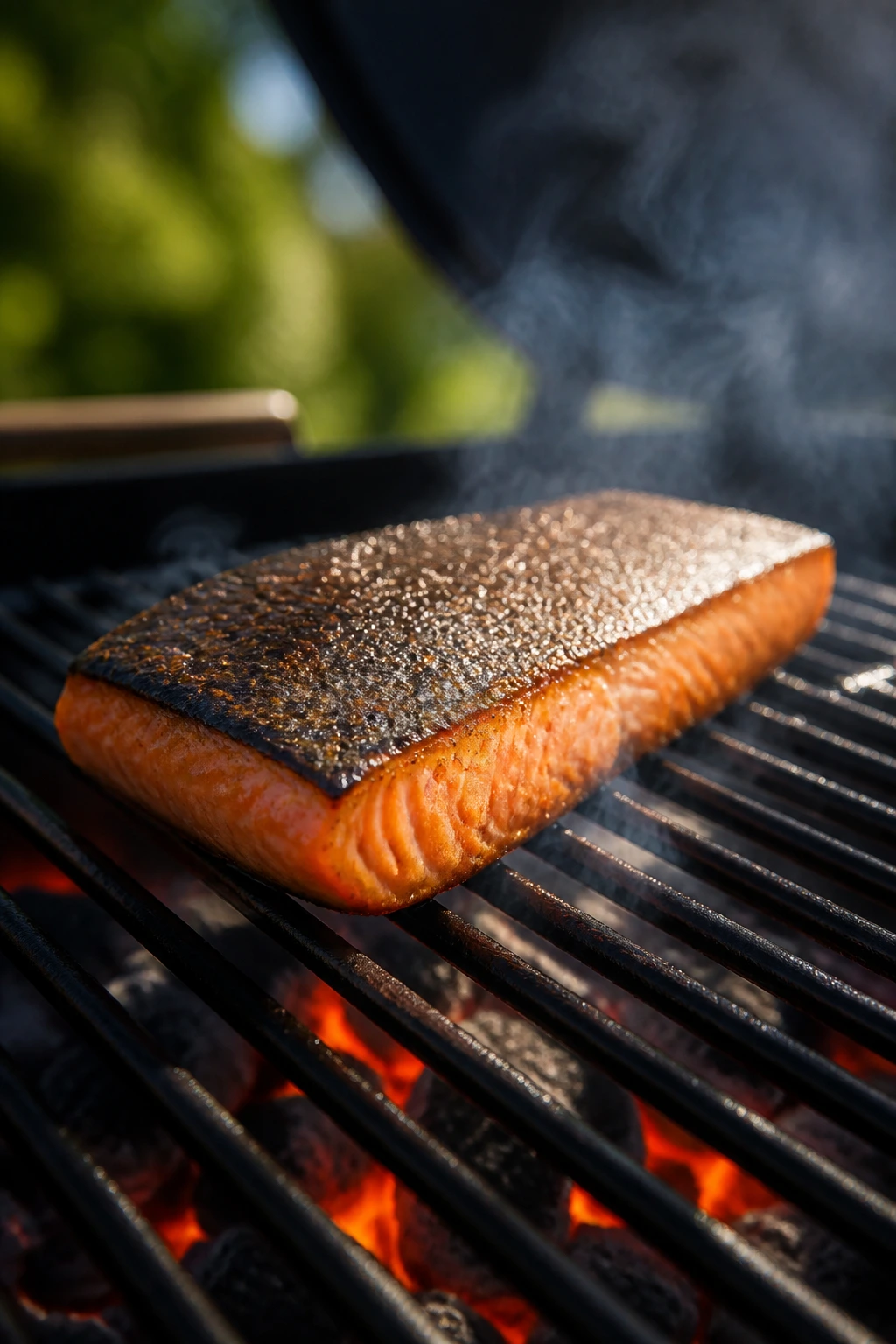
Fish doesn’t fail because it’s delicate. It fails because people treat it like steak. Seafood wants a cleaner grate, a little more oil, and less fiddling. It also wants you to stop trying to rescue it halfway through. Once fish starts to release from the grate, it’s ready. Before that, leave it alone.
Salmon is the easiest place to start because it has enough fat to forgive a brief sear, and the skin gives you a barrier between flesh and metal. Shrimp cooks fast enough that the difference between good and rubbery can be measured in a minute. White fish can be excellent on the grill, but if the fillet is thin or fragile, a fish basket, cedar plank, or foil packet saves a lot of grief.
Salmon: Skin Side Down Is Your Friend
Oil the fish, not the grate alone. A light coating of neutral oil on the salmon skin helps it release, and a clean hot grate keeps the skin from grabbing. Start skin side down and let most of the cook happen that way. If the fillet is thick, you can flip it briefly near the end, but you don’t have to. The skin gets crisp, the flesh stays moist, and the whole thing looks like you knew exactly what you were doing.
Shrimp: Stop at the Curled C
Shrimp is done when it turns opaque and forms a loose C shape. If it tightens into a hard O, you’ve gone too far. Shell-on shrimp stay juicier and pick up more grill flavor. Peeled shrimp cook faster and are easier to eat, which is nice for a crowd, but they need even less time over the flame.
Skewer them if you’re worried about losing little pieces through the grate. Metal skewers are easier than wooden ones, which need soaking and still sometimes misbehave.
White Fish: Use Help When You Need It
Cod, tilapia, and similar fish can absolutely be grilled, but they’re better in a basket or packet if the fillets are thin. A cedar plank adds a smoky edge and keeps the fish from sticking, though it does soften the sear. I’m fine with that trade when the alternative is scraping dinner into the coals.
Vegetables and Fruit Need Their Own Kind of Juiciness
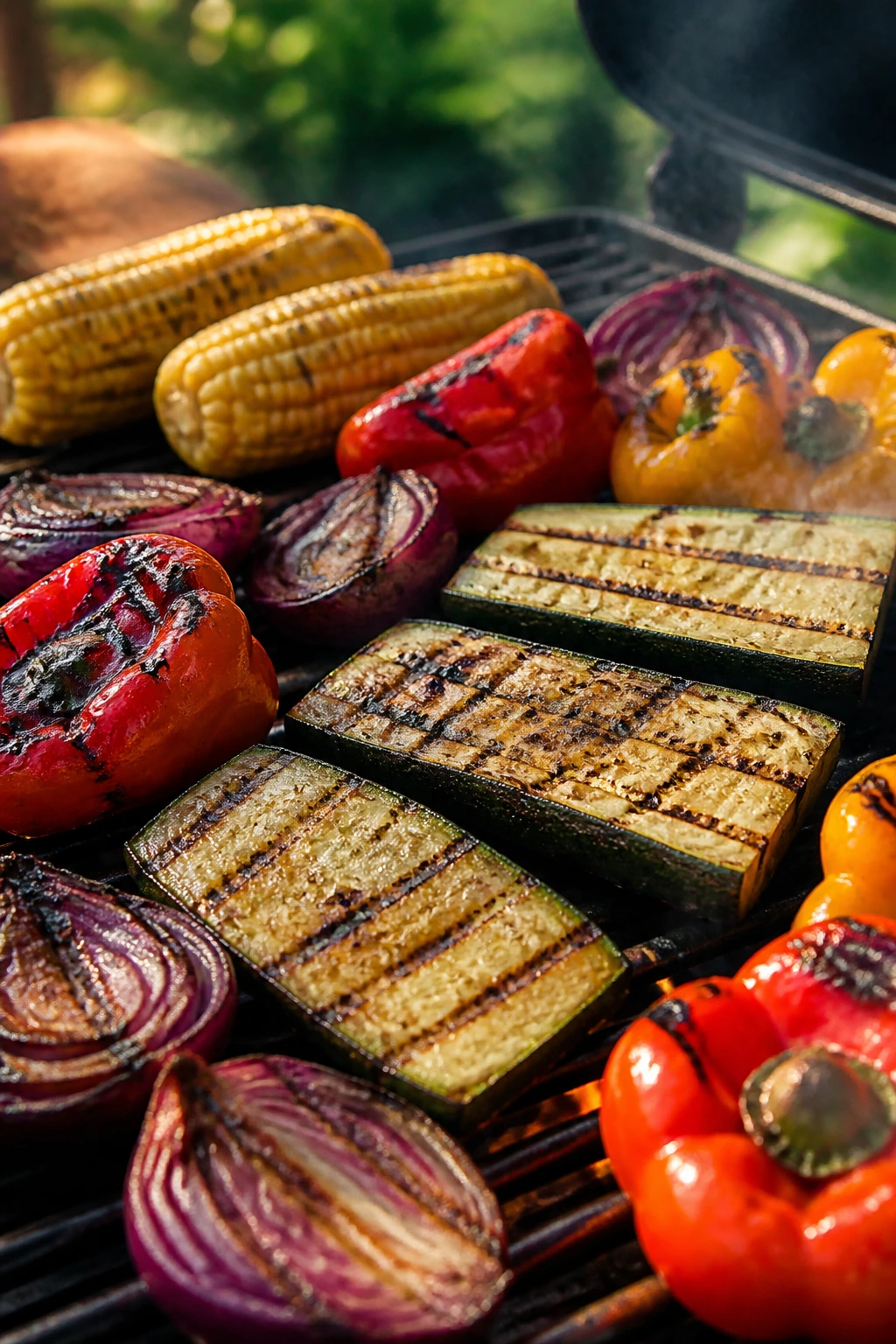
Juicy grilling is not only about meat. A grilled pepper that still has a little snap, a peach with hot syrup running off the cut face, a corn cob with sweet steam trapped under the husk—those are the side dishes people remember. Vegetables dry out too, by the way. So do fruits if you leave them in the heat too long. The trick is to cut them for speed and stop before they collapse.
Zucchini wants lengthwise planks instead of tiny coins. Mushrooms want oil and enough heat to brown before they shrink into leathery little caps. Onions like thick rounds with the root end still holding the rings together. Corn can go directly on the grate or in the husk, depending on whether you want char or steam. Fruit wants a very short stay over fire, which is where a lot of cooks ruin it by being impatient.
Best Produce for the Grate
- Zucchini and summer squash: Cut into 1/2-inch planks so they don’t vanish between the bars.
- Bell peppers: Halve them or cut wide flat panels; a little blistering is the goal.
- Red onions: Thick rounds hold together better than thin slices.
- Mushrooms: Brush with oil right before grilling so they brown instead of drying.
- Corn: Grill in the husk for steaming, or naked for deeper char.
- Peaches and pineapple: Cut into wedges or rings and grill just long enough to mark the surface.
Give Vegetables Real Heat
A lot of people undercook vegetables on the grill, which leaves them pale, wet, and oddly boring. Give them heat strong enough to caramelize the edges. Oil is important here, but not because it makes things greasy. It helps conduct heat and keeps the surface from turning leathery too fast.
Season late for mushrooms and tomatoes. Salt pulls moisture out, and if the slices are thin, they’ll puddle before they get color. For thicker vegetables, a little salt ahead is fine. For fragile produce, wait until the end.
Fruit Wants a Fast Pass
Peaches are fantastic over a grill because the heat wakes up their sugars and turns the cut surface syrupy. Pineapple does something similar, but with more edge. Watermelon can be grilled too, though I like it best in thin wedges with salt and lime after it comes off the grate. The point is not to cook fruit into mush. The point is to mark it just enough that the juices get louder.
Juicy Summer Grilling Needs a Thermometer, Not Guesswork
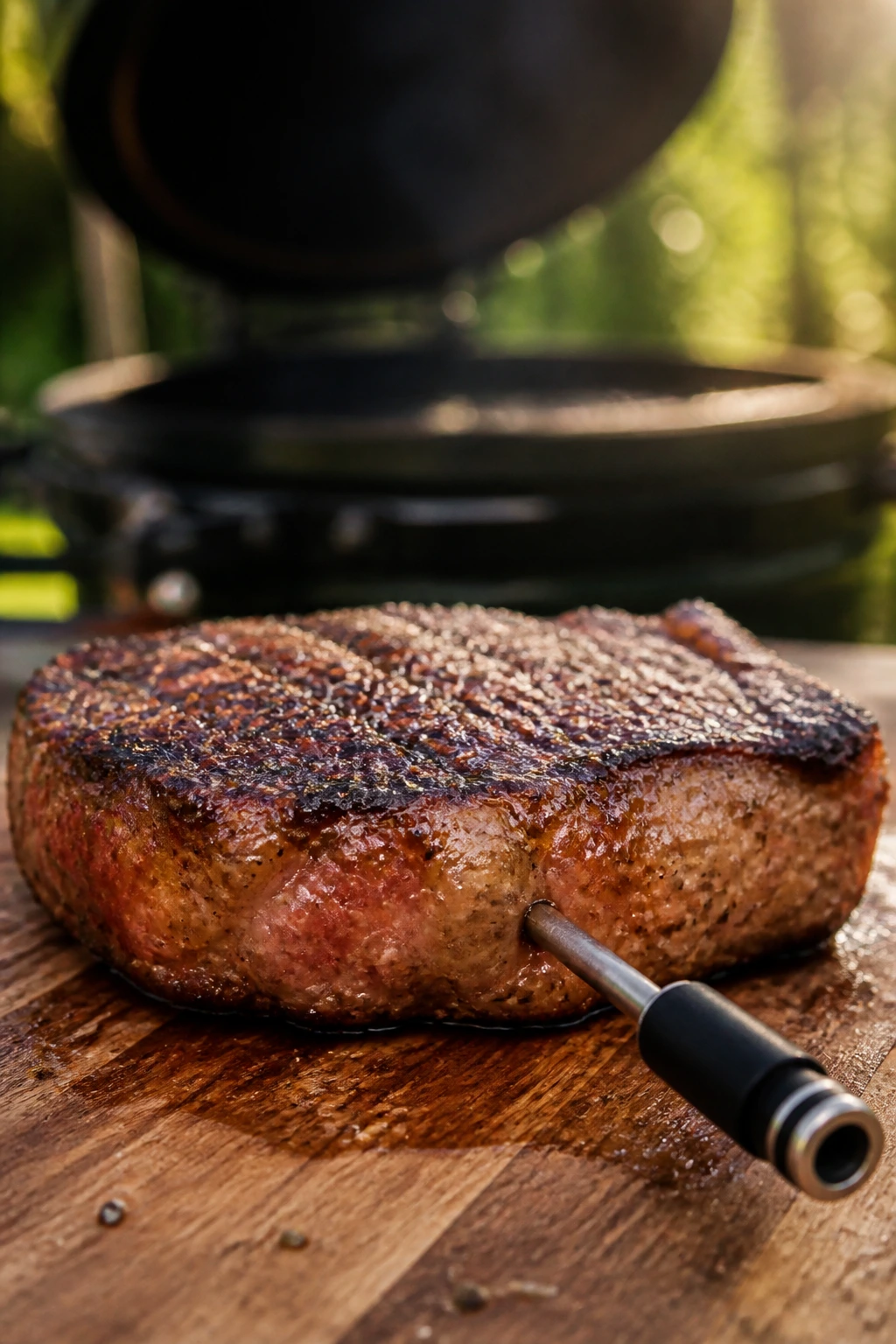
Three numbers matter more than any marinade. A grill that’s hot enough to sear, a rest long enough to settle, and an internal temperature that tells you when to stop. That’s the whole game. Everything else is supporting work.
A good instant-read thermometer earns its space because food doesn’t all finish at the same speed. A burger can look brown and still be underdone. A chicken thigh can look alarmingly dark and still need another few degrees. A pork chop can feel firm and still be just right if you know where the probe went. The thermometer removes drama.
Target Temperatures Worth Remembering
- Ground beef burgers: 160°F for food safety.
- Chicken thighs and breasts: 165°F in the thickest part.
- Pork chops and tenderloin: 145°F, then rest.
- Steaks: 125 to 130°F for rare, 135°F for medium-rare, 140 to 145°F for medium.
- Salmon: 125 to 130°F for a silky center, or 145°F for a firmer finish if that’s your preference.
- Shrimp: Opaque and pink, usually around 120 to 140°F depending on size.
Those ranges are not random. They reflect how different proteins tighten as heat climbs. Chicken breast goes from tender to dry quickly, which is why a five-degree mistake matters. A fatty steak has more room. Shrimp has almost none.
Carryover Cooking Is Real
Pull food a little early if it’s thick. A steak can rise 5 degrees or more while it rests. Chicken and pork usually rise a little less, but they still move. The heat keeps traveling inward once the meat is off the grate, and the juices redistribute at the same time. That’s why cutting too early pours moisture out onto the board. Give it a minute.
Slice the Right Way
A good grill job can still be ruined by bad slicing. Cut steak and flank cuts against the grain. Slice chicken across the thicker muscles. Leave burgers whole if you can; the first cut releases more steam and juice than people expect. And if you’re serving pork chops, let the bone do its part and present them whole, not hacked into strips unless the dish calls for it.
Sauces, Butters, and Glazes That Finish the Job
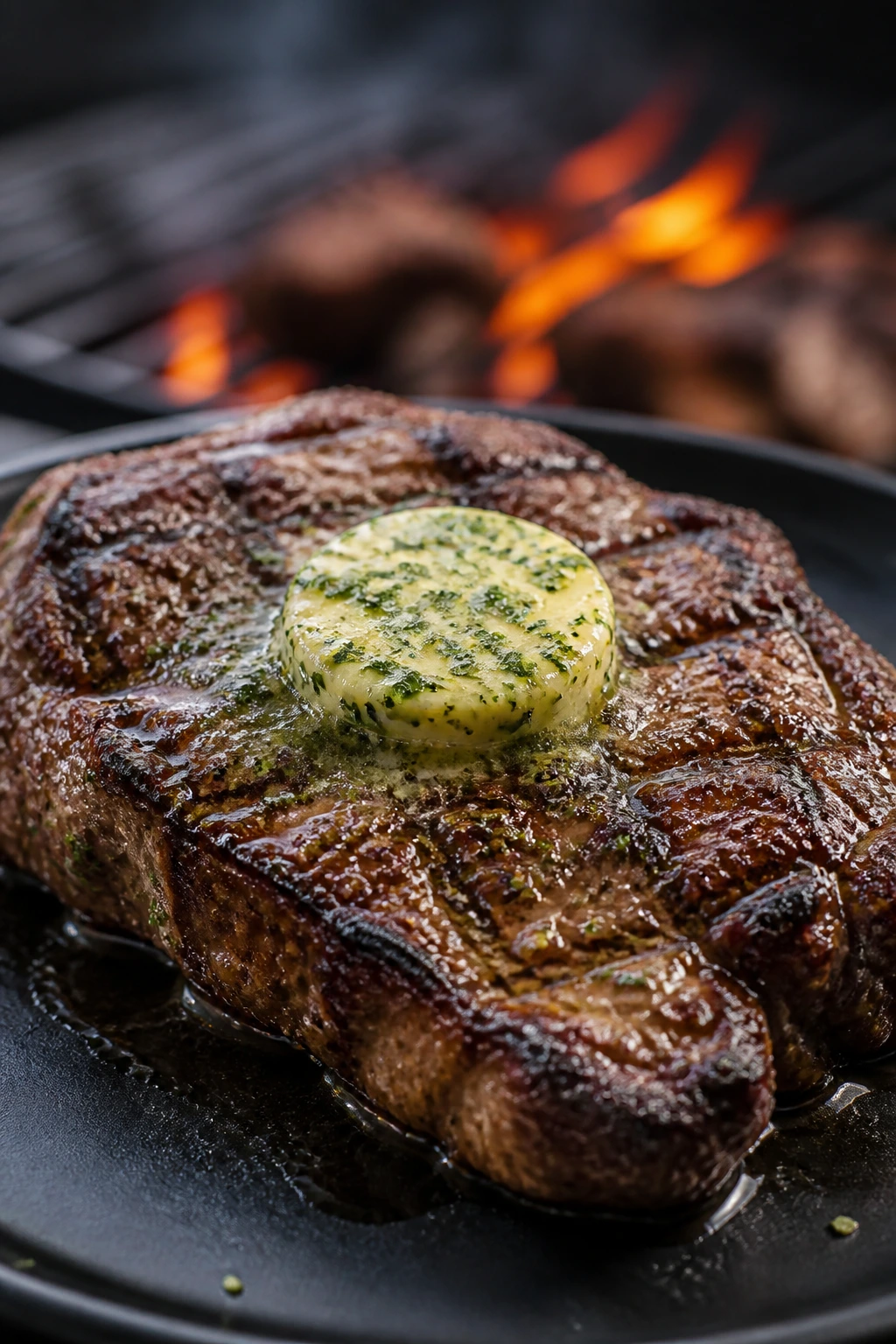
A sauce should finish grilled food, not hide it. If the meat came off the grill already dry, no amount of sauce can fully fix the texture. But if the food is juicy and well-cooked, the right finishing touch makes the plate feel alive. Fresh herbs. Acid. A little fat. A little salt. That’s the good stuff.
Herb butter works best on steak, corn, and even grilled mushrooms. Chimichurri brings garlic, parsley, and vinegar to beef and lamb. A vinegar-based barbecue sauce can cut through rich pork without smothering it. Salsa verde or a tomato-heavy relish is excellent on chicken and fish because it adds brightness after the smoke. The key is to keep sugar-heavy sauces away from the hottest fire until the last minute.
Brush Late, Not Early
If your glaze has brown sugar, honey, maple, or molasses, brush it on during the final 2 to 4 minutes of cooking. That gives it time to bubble and cling without turning bitter. Thin layers work better than thick ones. A heavy coat burns before the center is hot.
Cool Sauces Wake Up Hot Meat
A spoonful of herb sauce over warm steak or grilled chicken does two things at once: it adds moisture on top and it changes the flavor of the crust underneath. The contrast matters. Warm meat plus cool sauce is one of those simple combinations that tastes more deliberate than it is.
Keep One Sauce Uncooked
If you’re serving a crowd, make one sauce that never touches raw meat or the grill. Chimichurri, yogurt sauce, or salsa verde can sit on the side and get dragged across everything on the plate. That keeps things clean and lets guests adjust the amount without drowning the food.
Small Moves That Keep Food Juicy Right Up to the Plate
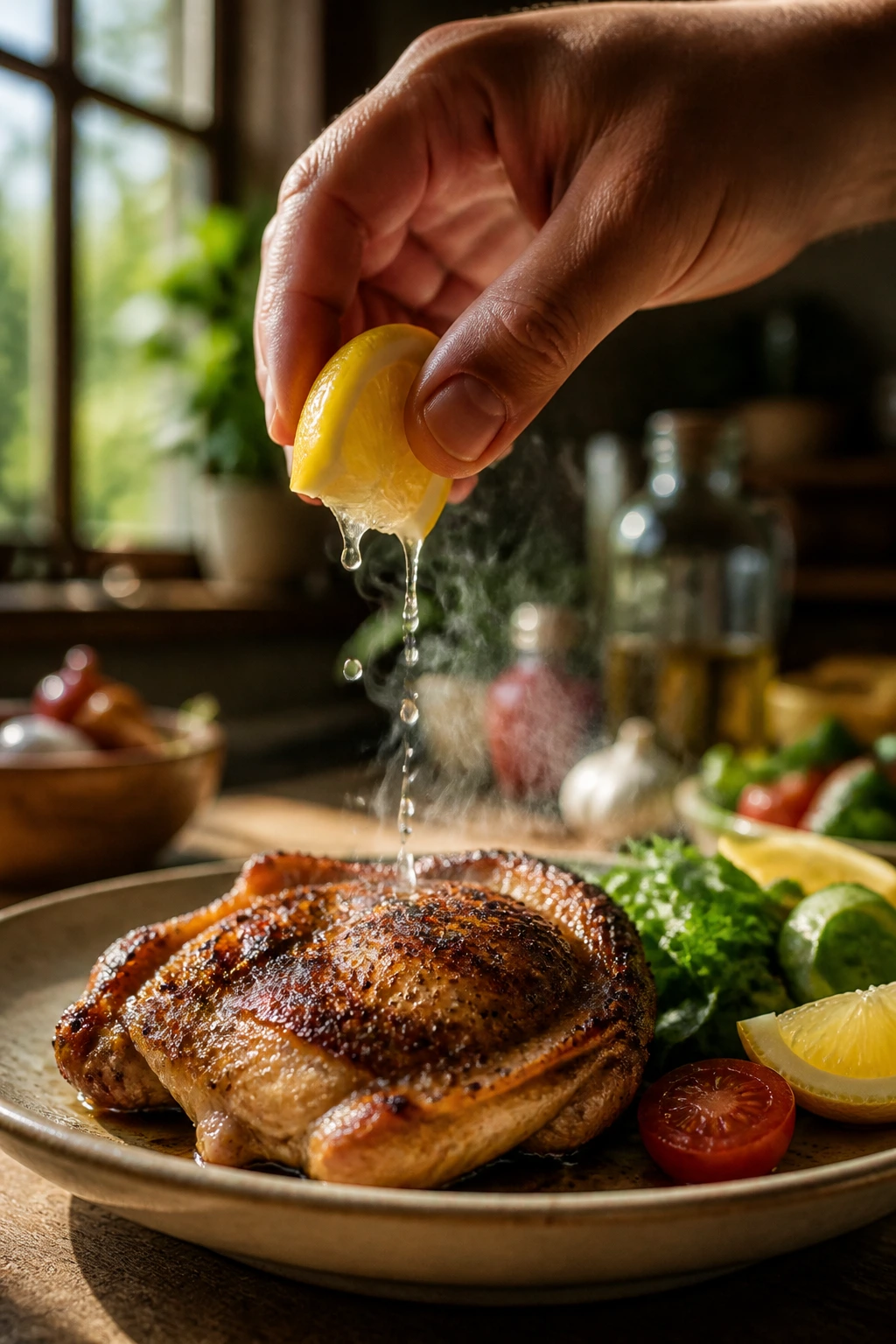
Flavor Enhancement: Finish grilled meat with a tiny hit of acid right before serving. A squeeze of lemon on chicken, a splash of red wine vinegar on steak, or lime on grilled corn makes the food taste juicier because the flavor reads brighter, not because the food changed physically. Small move. Big payoff.
Time-Saver: Build your cookout around one cold prep block. Dry brine the meat in the morning, trim the vegetables early, and mix sauces before the grill ever gets lit. That way the hot part of the evening is mostly fire management, not chopping herbs while burgers sit on the counter getting lonely.
Pro Move: Keep a clean platter for cooked food and a separate one for raw food. It sounds basic because it is basic, and it prevents the sort of cross-contamination that ruins a relaxed evening fast. I also like a second rack or cooling tray for resting meat so the bottom doesn’t steam itself soft.
Cost-Saver: Buy cuts that tolerate a bit of overcooking. Thighs, chicken legs, pork shoulder steaks, and burgers made from chuck are kinder to a cook who has guests talking at the same time. Expensive cuts are great, but they’re not a substitute for timing.
Texture Boost: Let grilled vegetables hit the plate while they still have a little snap. A zucchini plank or pepper strip that’s gone floppy tastes tired. One that still has some structure tastes cleaner and holds onto the smoke better.
Backyard Cookout Mistakes That Drain the Meat
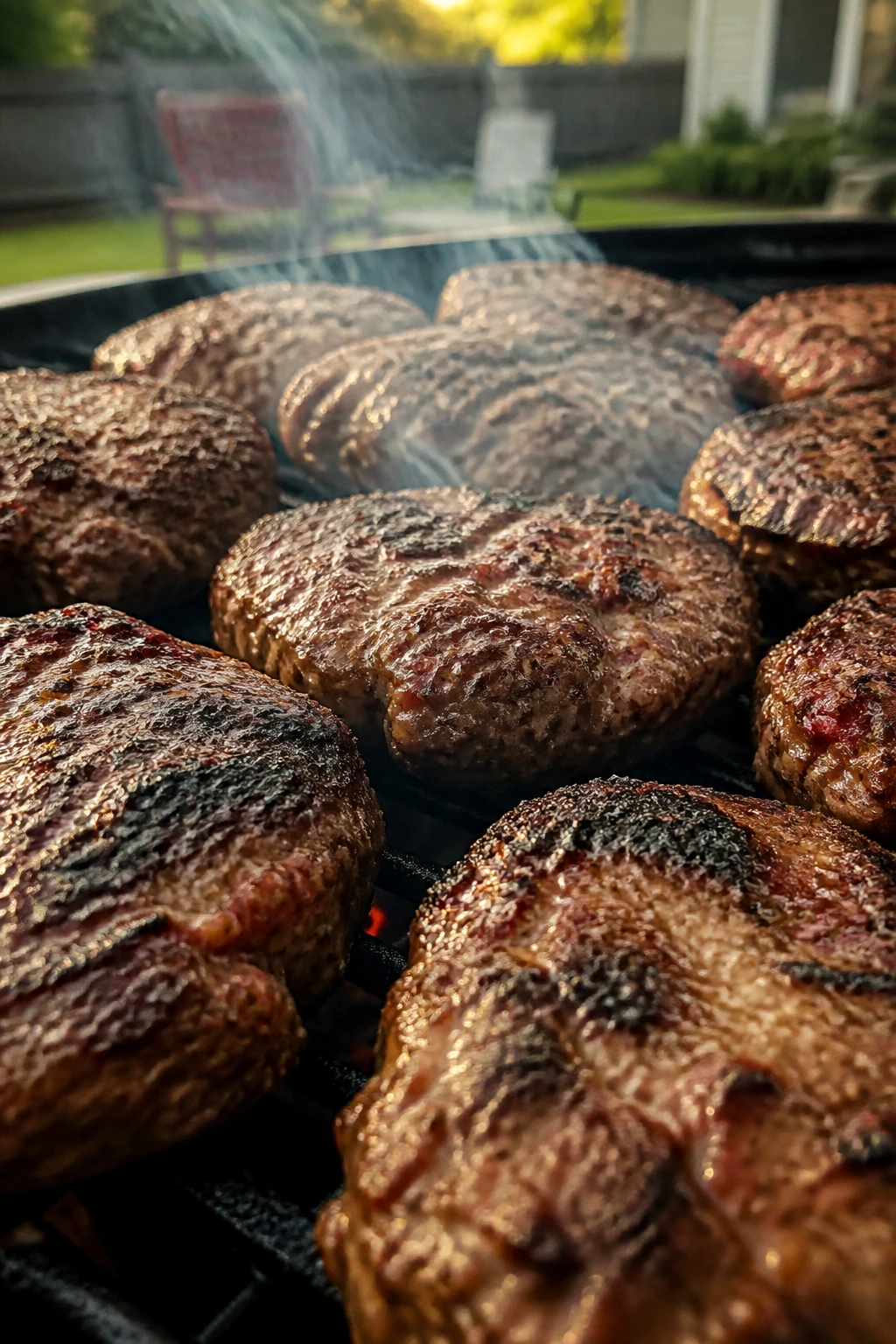
Most dry cookouts are self-inflicted. That’s the irritating part. The grill isn’t always to blame. The food usually started out fine, then got crowded, overhandled, or cooked by clock instead of temperature.
-
Crowding the grate: When pieces sit too close together, steam gets trapped and the meat browns unevenly. The fix is simple: leave space so air can move and flare-ups can be managed.
-
Pressing burgers with a spatula: The sound is satisfying. The result is not. Pressing forces fat and juice onto the fire, which leaves the burger drier and the flames angrier. Shape the patty once, then leave it alone.
-
Saucing too early: Sweet barbecue sauce on direct heat burns before the meat finishes. Brush it on near the end or serve it on the side.
-
Guessing doneness by color: Pink meat can be safe, and brown meat can still be underdone. Use a thermometer. Color is only one clue, not the answer.
-
Skipping the rest: Cutting into meat the second it leaves the grate dumps juices onto the board. Rest it for 5 to 10 minutes depending on size.
-
Ignoring the grain: Steak sliced with the grain can feel stringy even when it’s cooked well. Look at the direction of the muscle fibers and cut across them.
One more problem hides in plain sight: people use the same heat for everything. Thin shrimp, thick pork chops, and vegetables do not all want the same treatment. Treat them like they do, and dinner gets weird in a hurry.
Ways to Change the Cookout Plan Without Losing the Juice
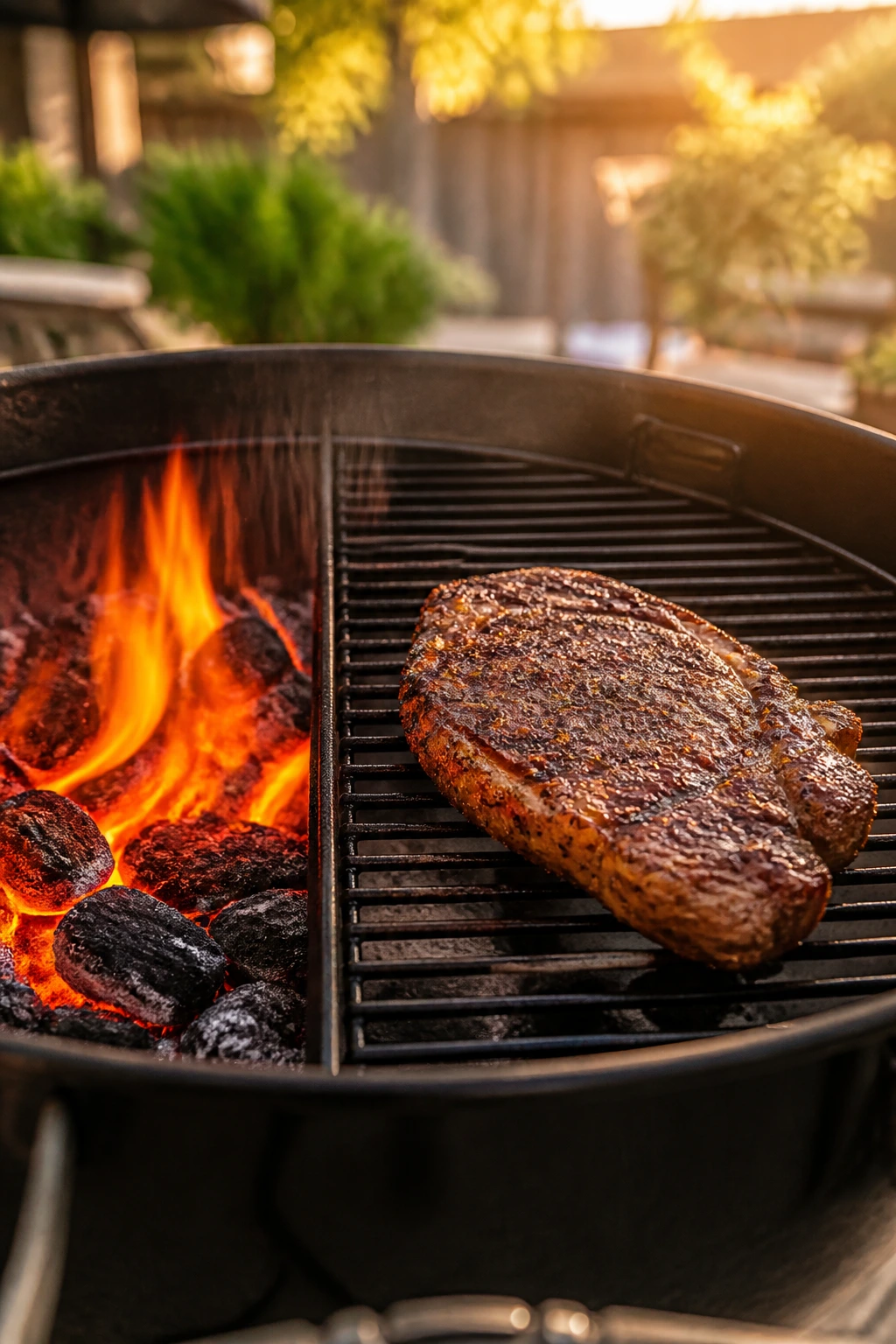
Charcoal-Smoky Weekend Fire: Use a two-zone charcoal bed with a chunk or two of hardwood for steak, chicken thighs, and corn. The smoke is gentler than people think, and the indirect side gives you a safety net when the party runs long.
Gas-Grill After-Work Setup: Preheat the burners, keep one side lower, and use the lid like a second oven. This is the easiest route when you want dinner without spending half the evening feeding coals.
Dry-Brine First, Sauce Later: Salt the meat ahead, skip sugary marinades, and finish with a clean sauce at the table. This keeps the grill from getting sticky and gives you stronger browning on chicken and pork.
Vegetarian Grill Spread: Build the meal around portobello mushrooms, halloumi, zucchini planks, onions, peppers, corn, and peaches. The mix of savory and sweet keeps the plate from feeling like an afterthought, which is where a lot of veggie cookouts go wrong.
Hybrid Indoor Finish: If weather or crowd size gets messy, sear outside and finish thick cuts in a 375°F oven. It’s less romantic, sure. It also keeps dinner moving and protects the texture when the grill space runs out.
The Gear That Makes Backyard Grilling Easier
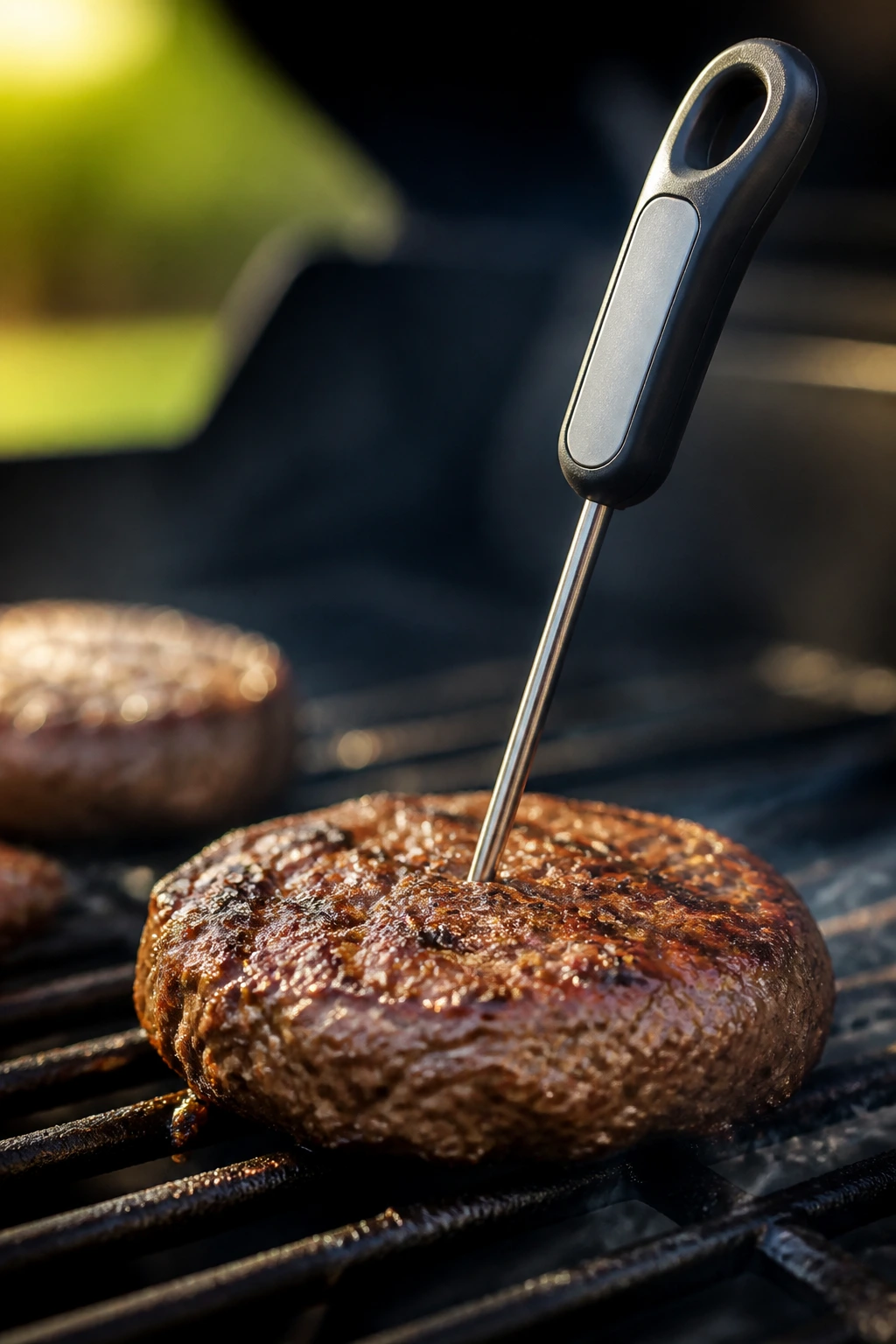
A few tools earn their drawer space every single cookout. Others are nice to have if you’re the sort of person who likes the setup to feel neat and calm. The list below is the gear I’d want before starting a serious round of summer grilling.
- Instant-read thermometer: The one tool that stops guessing. Use it on burgers, chicken, pork, steak, and salmon.
- Long metal tongs: Better than a fork, which pokes holes and lets juices escape.
- Grill brush or scraper: Clean grates release food more reliably and brown it more evenly.
- Chimney starter: Makes charcoal lighting cleaner and easier than piling on lighter fluid.
- Heavy-duty sheet pans: Useful for staging raw food, resting cooked food, and carrying everything back inside.
- Fish spatula: Thin, flexible, and useful for delicate fillets that would fall apart under tongs.
- Basting brush or squeeze bottle: Good for late-stage sauces and oiling vegetables.
- Two serving platters: One for raw staging, one for cooked food. Keep them separate.
- Drip pan or foil tray: Helps tame flare-ups under fatty cuts and makes cleanup less annoying.
- Grill basket or skewers: Handy for shrimp, vegetables, and small pieces that would otherwise slip through the bars.
Make-Ahead, Holding, and Leftover Rules
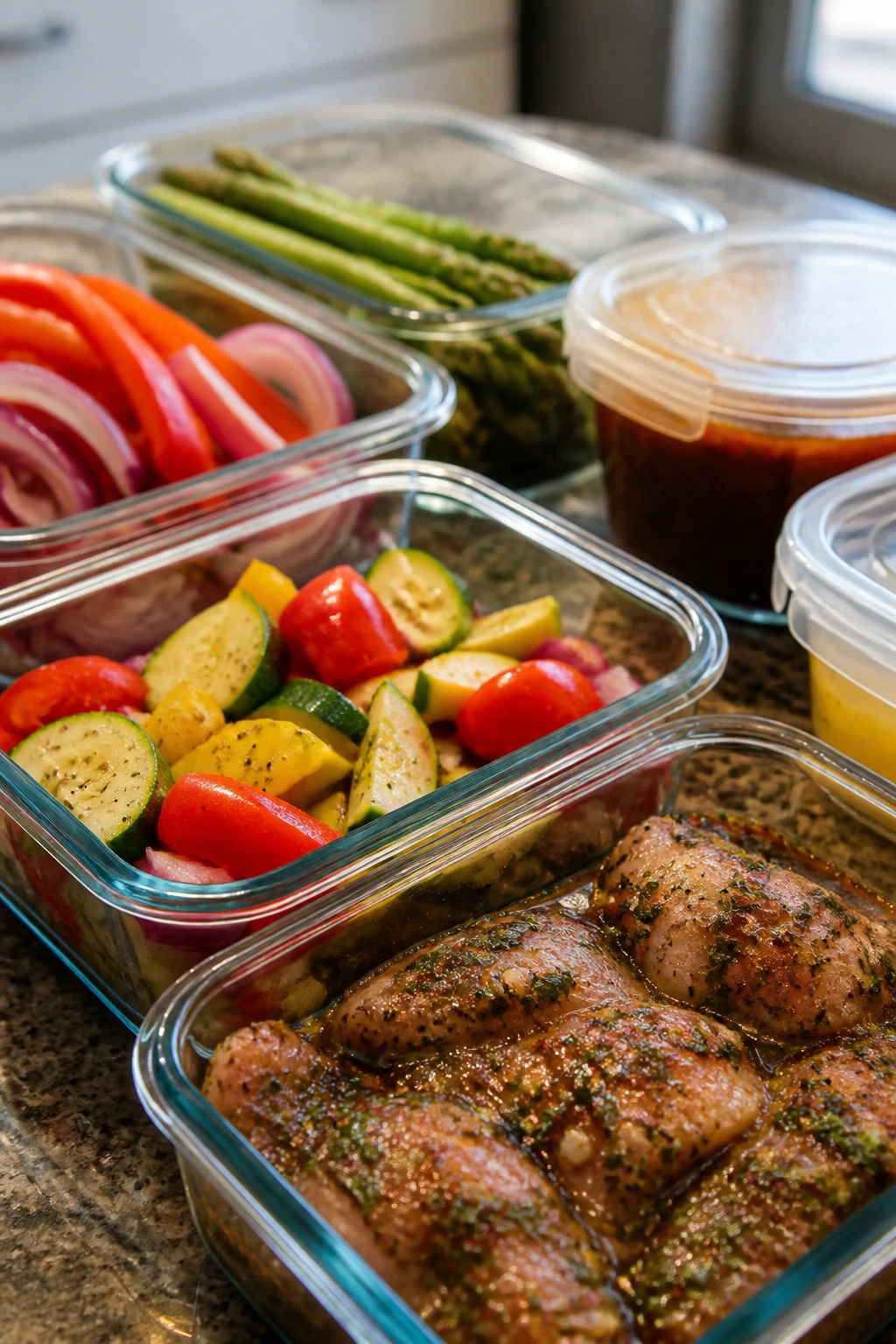
Grilled food is best close to the fire, but that doesn’t mean it has to be chaotic. A little planning keeps the meat juicy and the host from getting trapped at the grill while everyone else starts eating without them. Dry brines, pre-cut vegetables, and sauces all do well ahead of time.
Raw chicken, pork, or beef can be salted and held in the fridge for several hours or overnight, depending on the cut. Marinated seafood is the exception; it usually wants a shorter soak, often 15 to 30 minutes, because acid can start changing the texture in a way you may not want. Vegetables can be trimmed and oiled a few hours before grilling, though tomatoes and mushrooms are better handled closer to fire time so they don’t go soft.
Cooked leftovers should be cooled, covered, and refrigerated within 2 hours. That’s the food-safety line worth respecting. Grilled chicken, pork, and beef usually keep 3 to 4 days in the fridge. Grilled seafood is best within 2 days. Grilled vegetables can usually stay good for 3 to 4 days, though zucchini and mushrooms soften faster than peppers or onions.
Freezing works best for beef patties, sliced steak, pulled pork, and grilled chicken that will be chopped later into salads, wraps, or rice bowls. Most of those hold well for up to 2 months if wrapped tightly. Fish can be frozen after grilling, but the texture is less forgiving when it thaws. If you know a dish is headed for leftovers, plan for reheating methods that restore some moisture instead of trying to serve it cold and expecting magic.
For reheating, low heat wins. A 275°F to 300°F oven with foil loosely covering the food keeps moisture from escaping too fast. A skillet with a splash of water or broth works well for sliced chicken and pork. Burgers can be reheated in a covered skillet over low heat, then finished with a lid for steam. Shrimp and fish need the gentlest touch—short heat, no blasting, or they’ll tighten up again.
Questions People Ask Before They Light the Coals
Is gas or charcoal better for juicy grilling?
Neither one wins by default. Gas gives you control and speed, which helps on weeknights and when you’re cooking several different foods at once. Charcoal brings more smoke and deeper browning, but it asks for a steadier hand. The juiciness usually comes from heat management, not fuel choice.
How do I stop chicken from sticking to the grill?
Start with a clean grate, oil the chicken lightly, and let the surface sear before you try to move it. If the meat sticks, it usually means it isn’t ready to release yet. A good dry brine also helps because drier skin browns more cleanly than wet skin.
What if my grill has one hot side and one weak side?
Use it. That unevenness can actually help if you treat the hot side as the sear zone and the weak side as the finishing zone. People spend too much time trying to force a grill into perfect uniformity when a little variation is often useful.
Can I grill everything ahead of time?
You can grill ahead, but not all foods tolerate it equally. Pork, chicken, beef, and some vegetables reheat well if you keep them covered and warm them gently. Seafood is the least forgiving, so I’d grill that last or keep it very lightly cooked until serving.
Why do my burgers come out dry even when I use good beef?
Usually it’s one of three things: the meat was overhandled, the patties were cooked too long, or they were pressed on the grill and lost their fat. Ground beef needs a light touch and a thermometer. Good beef helps, but it doesn’t cancel out bad handling.
Should I marinate overnight?
Sometimes. Chicken thighs, pork, and some beef cuts do well with longer marinades, especially if the mix isn’t overloaded with acid. Shrimp and delicate fish usually need a short soak or they start to feel mushy on the outside before they’re cooked through.
How do I hold food if guests are late?
Move finished meat to the cooler side of the grill, close the lid, and let it coast on indirect heat. If you need a longer hold, use a 200°F oven and cover the food loosely with foil. Don’t park it over hard heat or the edges keep drying while you wait.
Can I grill vegetables on the same grate as meat?
Yes, as long as the grate is clean and the food is managed properly. Vegetables pick up good flavor from a grill that has already handled chicken or steak, but oil them well and don’t let sugary sauces burn onto the bars first. A clean, brushed grate gives better color and less sticking.
The Cookout Everyone Actually Wants to Stay For
A good backyard cookout doesn’t need fireworks. It needs food that lands on the plate with char, moisture, and enough seasoning to make the second bite better than the first. That’s what happens when the grill gets split into zones, the thermometer gets used, and the food is chosen for the way heat really behaves instead of for the way it looks in a magazine spread.
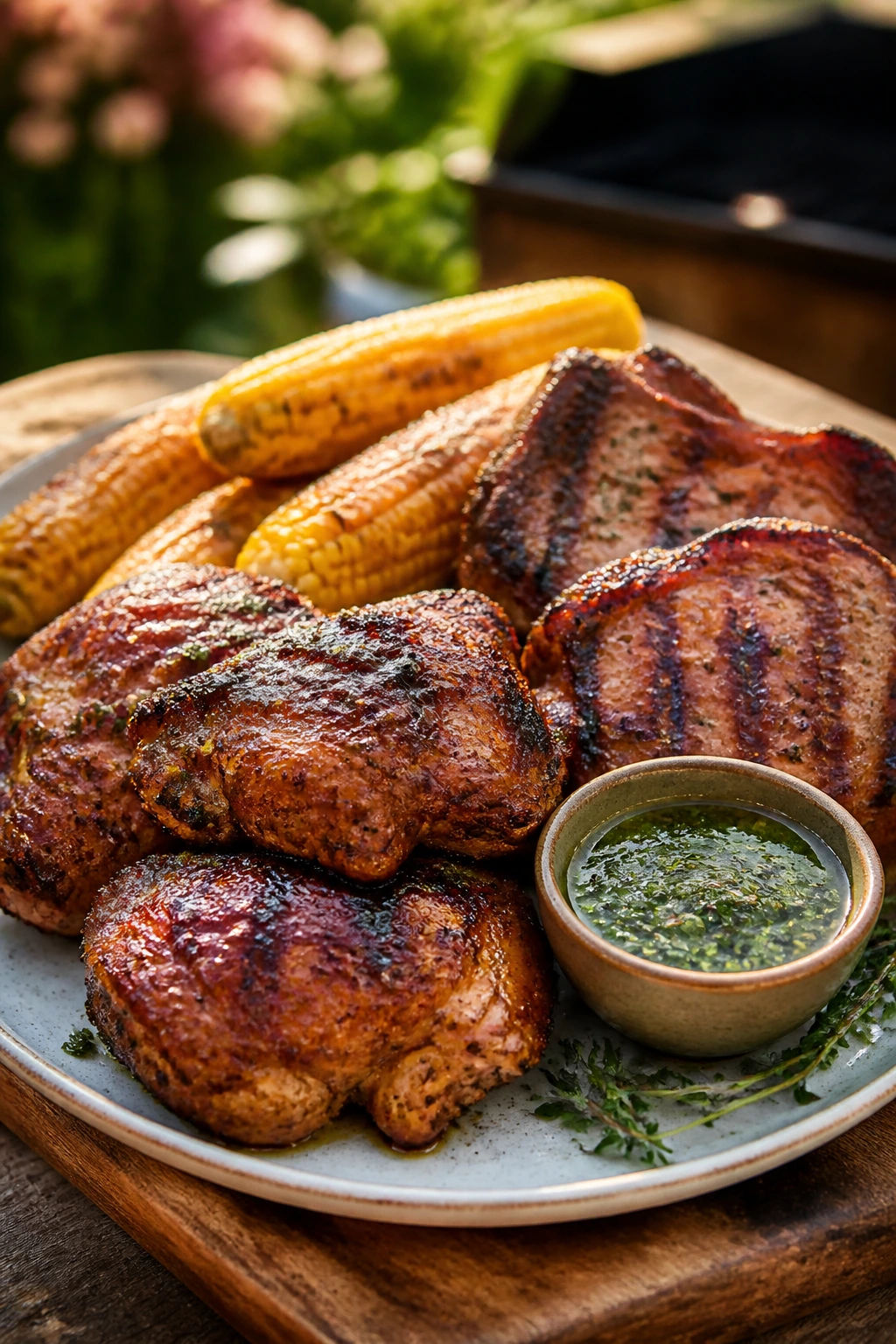
I’ll take a platter of well-rested chicken thighs, a few thick pork chops, charred corn, and a bowl of herb sauce over a rack of dry ribs any day. Maybe that’s a little blunt. Fine. It’s also the reason some cookouts feel like a quiet success while others keep needing apologies.
The nicest thing about juicy summer grilling is that it gets easier once you stop trying to do everything at once. Pick the right cuts. Manage the heat. Pull the food before it’s overdone. The grill stops feeling like a gamble, and the backyard starts feeling like the place everybody wants to linger a little longer.