



Smoke, lemon, and a little blackened edge can turn a plain backyard spread into something people keep talking about while they’re still sitting there with paper plates in their laps. A charred picnic for backyard cookouts is really about control, not aggression. You want the snap of grilled corn, the blistered skin on sausage, the caramelized corners on peaches, and the faint bitter note that makes the next bite taste brighter.
Most picnic food falls apart because it’s built for convenience, not heat. Sandwiches go soggy, leafy salads collapse, and anything mayo-heavy starts looking tired the minute the sun hits it. A charred picnic solves that problem by leaning into foods that taste better after the grill has put a little edge on them — then balancing that with cold crunch, acid, salt, and bread that still has some chew.
The trick is knowing where the line sits. Char should smell smoky and taste savory. Burnt tastes like ash and makes the whole table feel harsh. Get that line right, and you can pull together a backyard cookout spread that feels casual but eats like you meant it.
- Better flavor from the grill, not just the fire: A quick blister on corn, zucchini, peaches, or bread gives the whole picnic more depth without needing complicated marinades.
- Food that still tastes good after it sits for 15 minutes: Chars, vinaigrettes, slaws, and grilled vegetables hold up better on a picnic table than fragile sandwiches or saucy casseroles.
- Less soggy, less limp, more contrast: The mix of hot grilled food and cold crunchy sides keeps every bite from tasting flat.
- Easy to scale up for a crowd: A two-zone grill and a few sheet pans let you cook in batches without losing your mind.
- Works with cheap cuts and simple produce: Bone-in chicken thighs, sausages, cabbage, corn, onions, and stone fruit all take char well and don’t demand fancy handling.
- Safer than a “leave it all out” picnic: If you keep hot food hot and cold food cold, a backyard picnic can be relaxed without being sloppy about food safety.
Why a Charred Picnic Changes the Whole Backyard Cookout
A charred picnic isn’t about making everything dark. It’s about giving the meal a little edge so the rest of the plate has something to push against. A grilled sausage tastes meatier when the casing blisters. Corn tastes sweeter after the kernels pick up a few browned spots. Even a plain slab of bread starts acting like a proper side dish when the cut face kisses the grate for 30 seconds and comes away with crisp ridges.
That matters because backyard cookouts usually fail in one of two ways. Either the food is too soft and the whole table tastes sleepy, or someone chases grill marks so hard that the meal comes out bitter and dry. The sweet spot lives between those extremes. Real char should be patchy. A little black on the onion edges. Deep gold on chicken skin. Mahogany on peach halves where the sugars have tightened and gone glossy.
There’s also a practical reason this style works. Picnic food needs to survive the trip from grill to table without falling apart. A charred edge buys you flavor that does not disappear after a few minutes in a serving dish. That’s why grilled cabbage wedges, sliced steak, blistered peppers, and even charred beans in a vinaigrette can sit comfortably while people wander back for seconds.
The line between charred and burnt
Burnt food tastes one-note and dry. Charred food still has structure inside. If you press on a grilled onion wedge and it collapses into stringy mush, you went too far. If the surface is dark but the center still has bite, you’re in the right place. That difference matters more on picnic food than it does on a plated dinner, because backyard cookouts usually involve a little delay before serving.
Why acid matters so much here
A charred spread without acid can feel heavy fast. Lemon juice, vinegar, pickled onions, yogurt sauce, and tomato-based relishes wake everything up. I’d even call acid the cleanup crew of a good picnic. It lifts the bitter notes, sharpens smoke, and makes grilled fat taste clean instead of greasy.
The Foods That Take Char Well and Still Taste Good Later
Start with ingredients that stay attractive after a few minutes off the heat. That’s the real test. A perfect tenderloin is nice, but if you have to slice it like an emergency and serve it before it dries out, the whole thing turns fussy. Backyard cookouts work better with foods that forgive you.
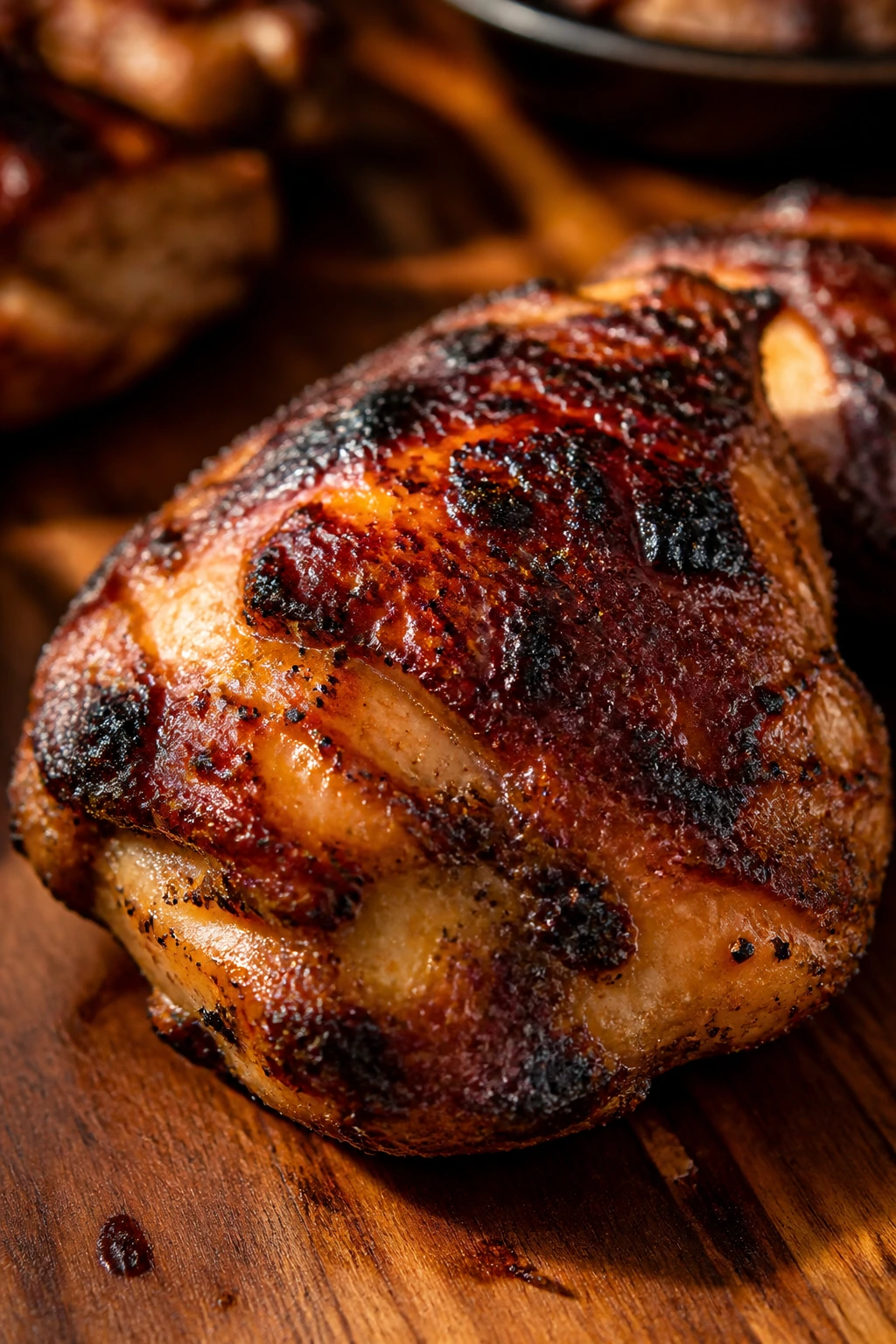
Chicken thighs are my first choice. Bone-in or boneless both work, but thighs keep their moisture better than breasts, and their skin or surface fat takes on a proper browned edge. Sausages are another easy win because the casing does half the work for you. The fat renders, the skin blisters, and you can slice them into thick coins or leave them whole for a more casual spread.
Vegetables are where this style gets fun. Corn, zucchini, eggplant, onions, cabbage, peppers, fennel, mushrooms, and asparagus all take heat well if you treat them differently. Corn wants direct heat and a little butter afterward. Cabbage likes wedges and a slower roast on the grill. Mushrooms need space so they sear instead of steaming. Eggplant likes oil, salt, and enough time to go soft in the middle while the edges darken.
Stone fruit is where people either get timid or get addicted. Peaches, nectarines, plums, and apricots char fast. Half a minute too long and they collapse. Half a minute too short and you miss the magic. The best ones hold shape, go a little glossy on the cut side, and taste like jam with a brighter top note.
Picnic foods that earn their keep on the grate
- Bone-in chicken thighs: They stay juicy, take marinade well, and can handle a hotter grill than chicken breasts.
- Sausages: Bratwurst, Italian sausage, and chorizo all blister well and slice neatly for serving.
- Corn on the cob: Grill in the husk for a softer smoke flavor, or strip it and char the kernels directly.
- Cabbage wedges: They soften without collapsing and stay good even when they cool.
- Zucchini and eggplant: Best cut thick, salted lightly, and oiled before grilling.
- Peaches and plums: Ideal for a sweet side or dessert plate, especially with yogurt, ricotta, or soft cheese.
- Bread: Thick sourdough, baguette, or flatbread can be toasted on the grate for crunch and smoke.
Foods I would skip unless you have a reason
Delicate lettuce, paper-thin fish, and skinless chicken breast need more babysitting than they’re worth in a casual picnic setting. Can they be grilled? Sure. Do they belong on the same relaxed table as sausage, corn, and charred onions? Not really. They ask for tighter timing, and that’s a tax you don’t need to pay unless you want to.
Setting Up the Grill for Controlled Char
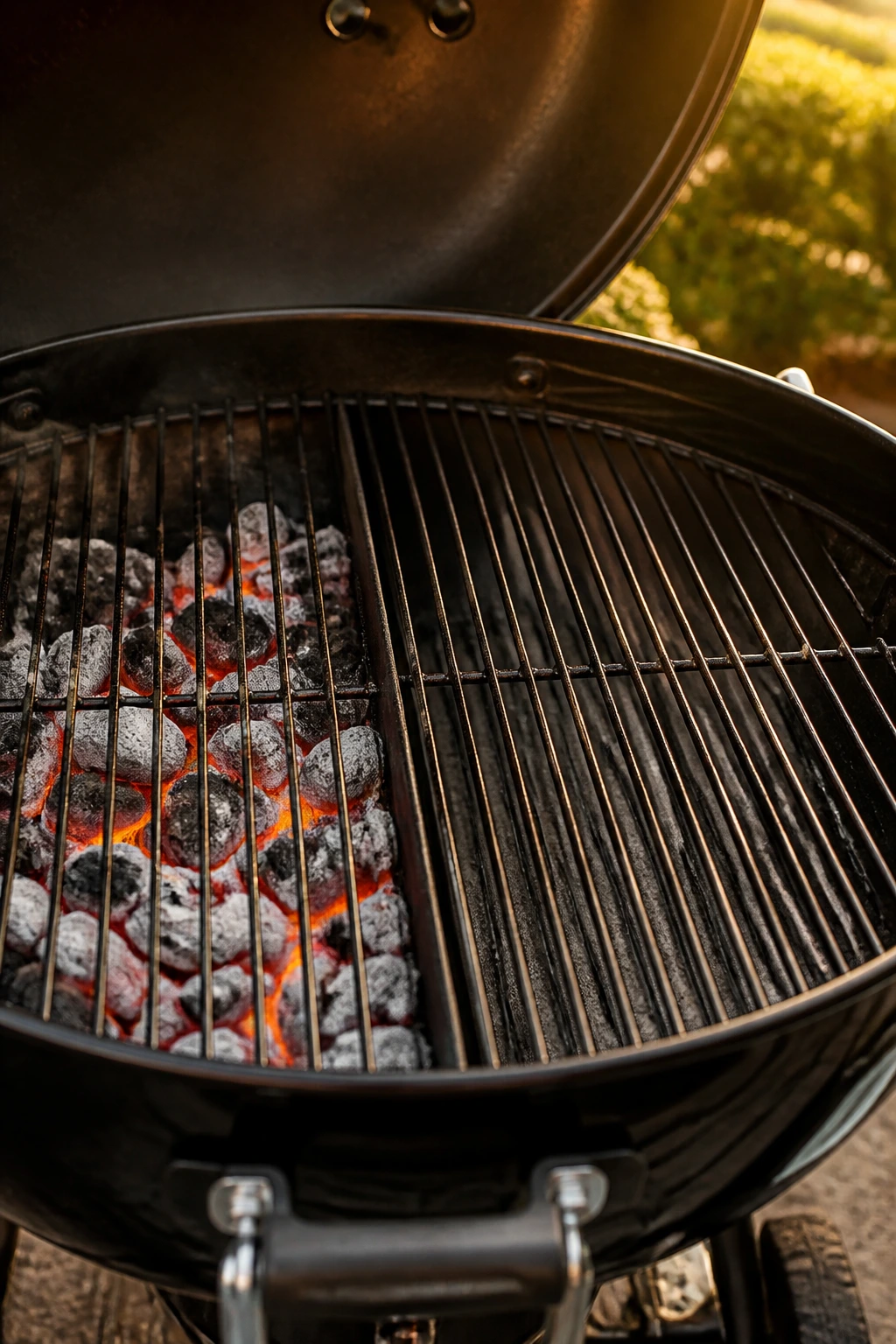
A good grill setup does more than make heat. It gives you options. Direct flame creates char. Indirect heat finishes food without turning the outside into a disaster. If you only use one heat zone, you spend the whole cook fighting flare-ups and moving trays around like you’re in a hurry when you should be calm.
Charcoal gives you a more obvious smoky edge, especially when you build a two-zone fire with coals banked on one side and an empty cooler zone on the other. Gas gives you cleaner control and faster adjustments. I use gas when the menu has a lot of mixed items — vegetables, fruit, sausages, and chicken all in the same round — because it makes the temperature easier to manage. Charcoal wins when I want a little more smell and don’t mind waiting for the coals to settle.
A lid helps more than people think. Closed-lid grilling is not only for big roasts; it keeps the heat moving around thicker foods so the outside can char without the inside lagging behind. That matters for chicken thighs, cabbage wedges, and thick sausages. Open the lid for quick char items like bread and peaches.
A basic grill setup that works
- Preheat the grill until the grates are hot enough to sizzle a drop of water.
- Oil the food, not the grates, when possible. A lightly oiled brush on vegetables and meat works better than dumping oil directly on the bars.
- Keep one hot zone and one cooler zone.
- Park finished food on a rimmed sheet pan, not back on the grate where it can overcook.
- Use an instant-read thermometer. Guessing by cut color is how people dry out chicken thighs that could have been perfect.
Temperatures worth remembering
For most backyard cookouts, 400°F to 450°F gives you enough heat for visible browning without constant flare-ups. Corn and vegetables often want that range. Thicker chicken pieces can start hot to build color, then finish over indirect heat. Chicken should reach 165°F, ground meats 160°F, pork chops and roasts 145°F with a rest, and fish 145°F if you decide to use it. Those numbers are not fussy; they are the difference between a juicy plate and a gamble.
Building a Menu Around Smoke, Salt, Crunch, and Acid
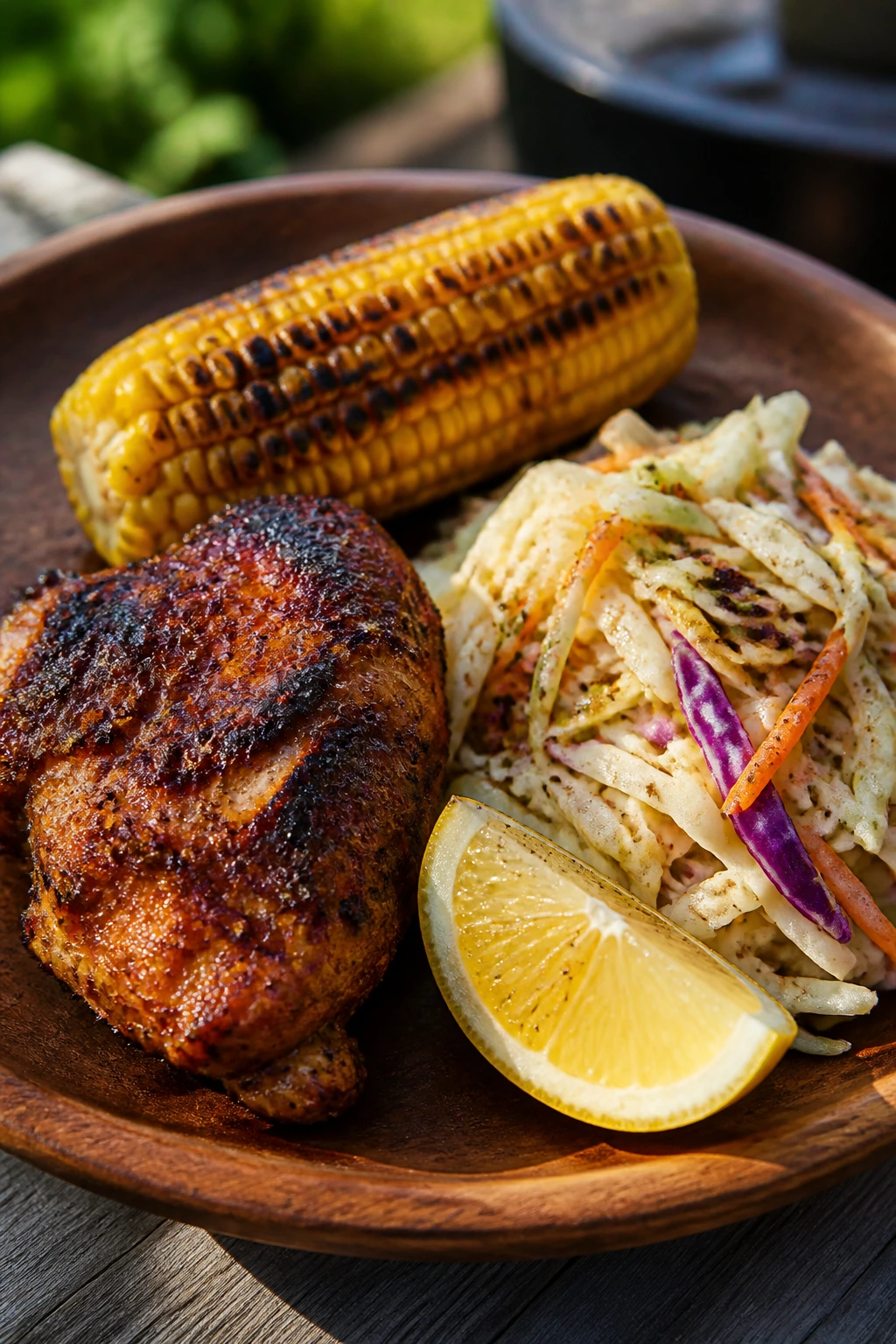
The easiest way to make a charred picnic feel balanced is to stop thinking in single dishes and start thinking in contrasts. Every serving should have at least one hot item, one cold item, one crunchy element, and one sharp thing to cut through the fat. That formula sounds basic, but it keeps the table from turning into a pile of warm beige food.
A chicken thigh on its own tastes fine. Chicken thigh with charred lemon, cucumber salad, and grilled bread tastes planned. Sausage with mustardy slaw and blistered peppers tastes like somebody paid attention. Corn with herb butter is good. Corn with lime, cotija, and a vinegar-dressed bean salad is better because each bite lands somewhere different.
If you’re feeding a crowd, build around one anchor protein and one anchor vegetable, then let the rest of the meal stay loose. A pile of grilled onions, a bowl of tomato salad, a tray of toasted bread, and one cold herb sauce can make even a short grill session feel abundant. The plates don’t need to be crowded. They need to be varied.
A strong picnic plate usually has this shape
- One charred protein: chicken thighs, sausages, steak tips, or halloumi.
- One or two grilled vegetables: corn, cabbage, zucchini, peppers, mushrooms.
- One cold salad: slaw, cucumber salad, bean salad, or tomato-and-onion salad.
- One starch: grilled bread, potato salad, flatbread, or small boiled potatoes with herbs.
- One acidic finish: lemon, vinegar, pickles, relished onions, or a vinaigrette.
- One sweet note if you want it: grilled peaches, nectarines, or pineapple.
My favorite picnic pairing patterns
A smoked sausage with mustard slaw and charred onions is loud in the best way. Chicken thighs with cucumber salad and grilled bread are calmer, more balanced, and easier to eat with one hand. Halloumi with tomatoes, peaches, and basil leans into the salty-sweet thing that makes people pause halfway through a bite and look back at the tray.
If the menu feels too rich, add a green thing that actually has bite. Snap peas, radish slices, shaved fennel, or cabbage dressed with vinegar can all cut through smoke better than a limp lettuce bowl ever will.
Sauces and Dressings That Love a Little Burn
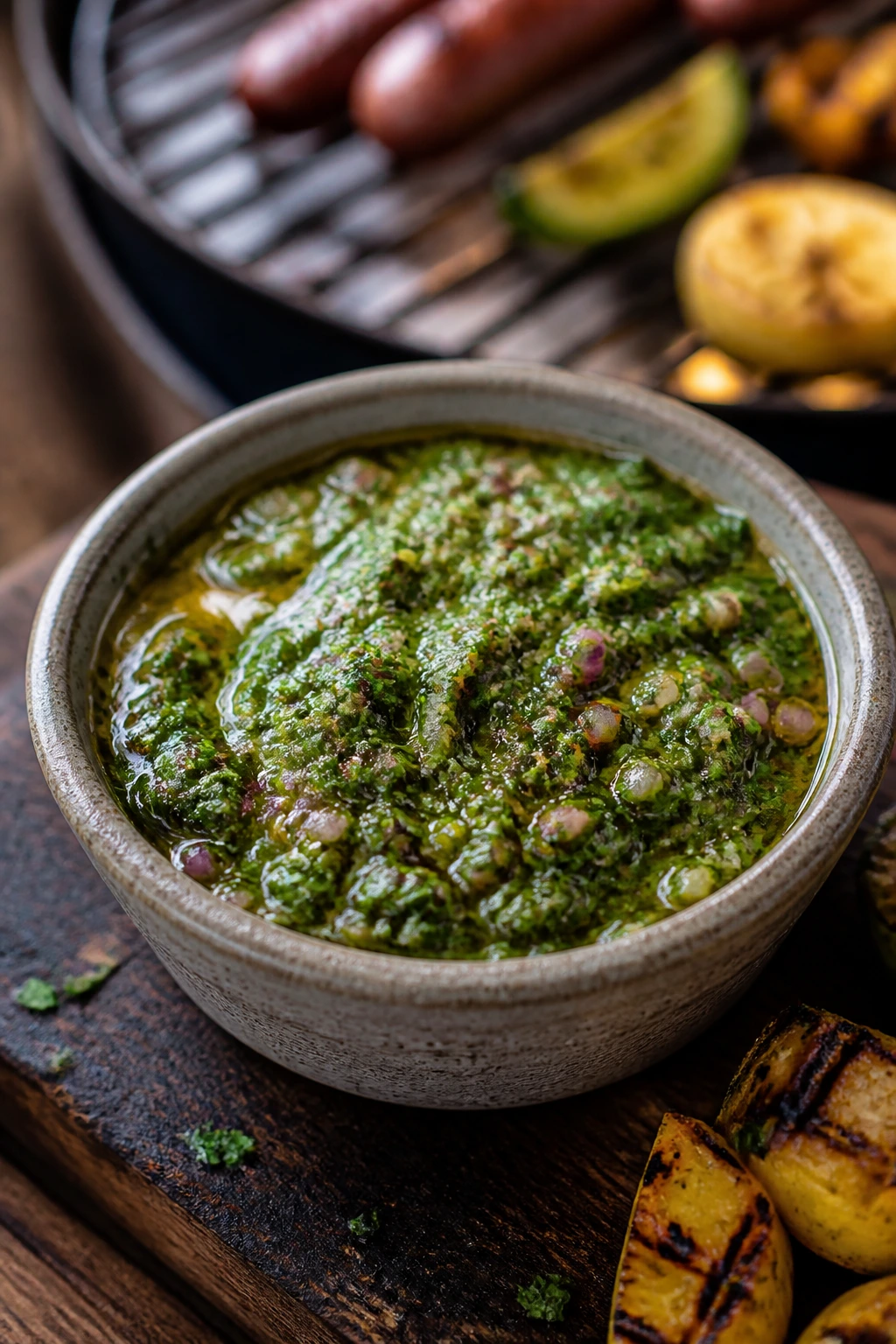
A charred picnic needs sauces the way grilled food needs tongs: not decorative, not optional, just part of the job. The best ones are bright enough to wake up the smoke and sturdy enough to sit on a table without turning into soup. Thin, watery dressings slide off grilled food. Heavy sauces coat it, but they can flatten the char if you overdo them. The sweet spot sits between.
Chimichurri is one of the easiest wins. Parsley, garlic, vinegar, oil, red pepper flakes, and maybe a little oregano give you a raw, grassy punch that wakes up grilled meat. Yogurt sauces do the same job from the cooler side of the menu. Mix plain yogurt with lemon, garlic, dill, and salt, and you get something that can cool down a hot sausage or a charred cabbage wedge without making the plate feel heavy.
Mustard vinaigrette deserves more love than it gets. It works on potato salad, bean salad, and grilled vegetables because mustard gives the dressing enough backbone to cling to rough surfaces. Hot honey is the opposite move: it leans sweet and sticky and works best in tiny amounts over chicken, cornbread, or grilled peaches.
Condiments that fit a charred picnic especially well
- Chimichurri: Best on steak, chicken, mushrooms, and toasted bread.
- Yogurt-herb sauce: Best with sausage, vegetables, and anything spicy.
- Mustard vinaigrette: Best for potato salad, beans, cabbage, and onions.
- Tomato relish: Best with burgers, sausages, and grilled halloumi.
- Hot honey: Best in a light drizzle over chicken skin, cornbread, or fruit.
- Pickled onions: Best on nearly everything except dessert.
The trick with sauce timing
Put wet sauces on the table, not on the food too early, unless the food wants a marinade. Grilled bread gets soggy fast. Charred peaches lose their shape under heavy syrup. Chicken skin softens if you drown it. Spoon the sauce at the last second, or serve it in a bowl and let people decide how much they want.
A Backyard Cookout Picnic Plan You Can Actually Pull Off
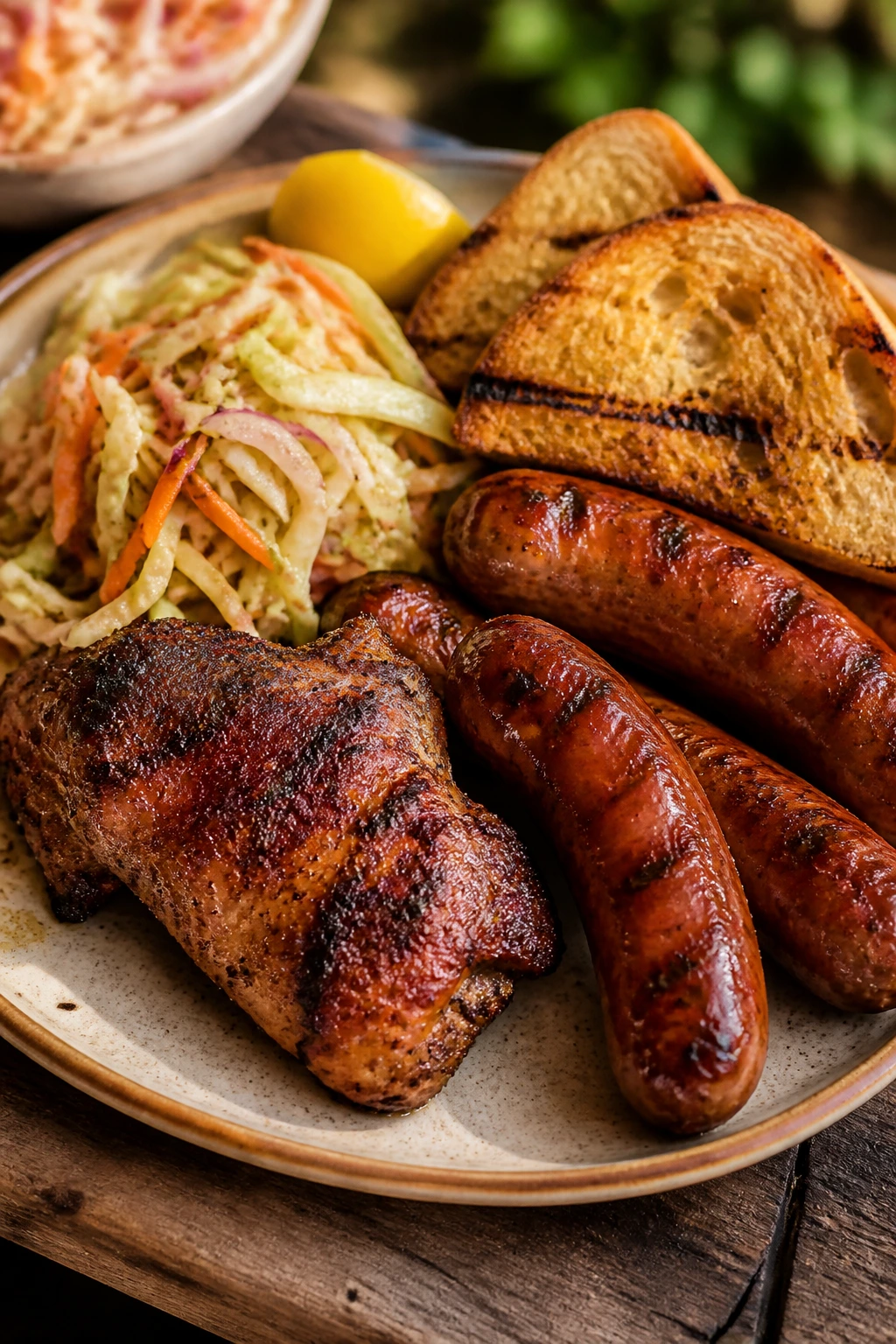
The cleanest cookout happens when you stop treating every dish like a separate project. Start with the foods that need the longest time, and let the quick hitters wait. That sounds obvious until you’re standing at the grill with onions burning and nobody has even seen the salad.
-
Choose one main protein and one backup protein.
Chicken thighs and sausages are an easy pair because they cook at different speeds and both forgive a little delay. If one runs late, the other can hold on a warm tray for a few minutes without wrecking the whole table. -
Prep the cold sides first.
Make slaw, vinaigrette, herb sauce, or potato salad before the fire even gets hot. If a dressing needs to sit for 15 minutes so the garlic mellows, that’s free time. Use it. -
Cut vegetables in the right size.
Thick zucchini planks, cabbage wedges, and whole mushrooms are easier to grill than thin slices. If the piece is too small, it falls through the grate or dries out before it chars. -
Set the grill for two zones.
Hot side for color. Cooler side for finishing. Move food as needed instead of trying to nail everything in one pass. That one change reduces panic more than any fancy tool. -
Cook the items that need rest first.
Chicken and sausage can rest under loose foil while vegetables finish. Bread and fruit come last because they taste best right off the heat. -
Check temperature instead of guessing.
Pull chicken when it reaches 160°F and let carryover finish the job to 165°F. Check sausage for doneness by temperature, not by how brown the outside looks. Some sausages darken before the center is ready. -
Serve on trays, not directly from the grill.
Rimmed sheet pans or large platters keep juices from pooling all over the table. A picnic can look casual and still be organized.
The rhythm that saves the meal
Grill one batch. Rest it. Grill the next batch. That rhythm keeps the food from piling up in the danger zone and keeps you from losing the char you worked for. If you’ve ever tried to do everything at once, you know the problem: the chicken is waiting, the bread is cold, and the vegetables are past their best. A slower hand wins here.
Smart Packing for Coolers, Trays, and Serving Tables
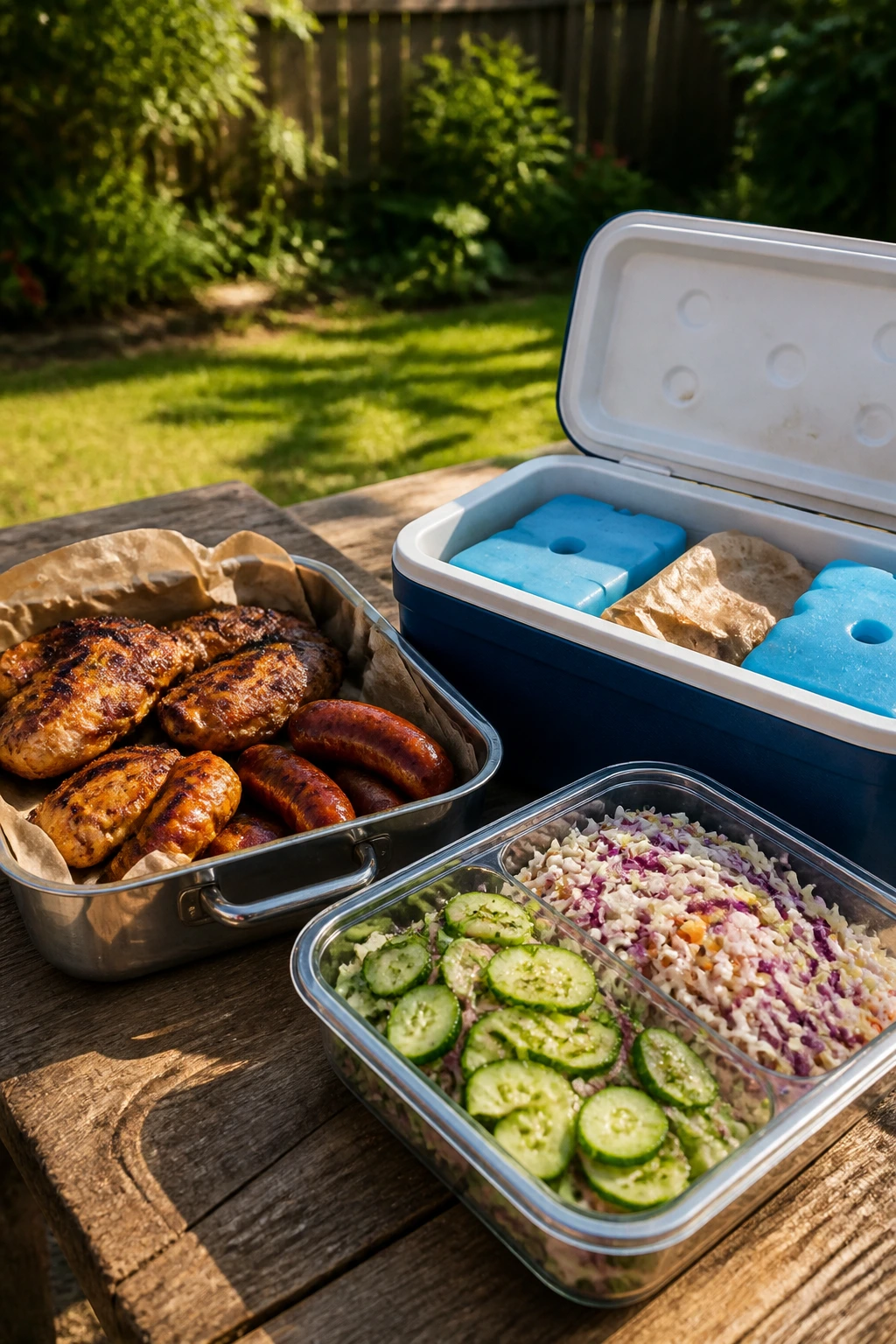
Three containers matter more than one giant tote. One for hot cooked food, one for cold food and dressing, one for raw prep or backup ingredients. Mixing them is how picnic food gets sad and, worse, unsafe.
Use shallow containers when you can. A deep bowl traps steam, and steam softens char. A rimmed baking sheet lined with parchment is oddly useful here because it gives grilled vegetables and bread a place to rest without steaming in their own heat. If you need lids, vent them slightly while food is still hot so the crusty pieces don’t turn limp.
A cooler should do more than keep drinks cold. Park it in the shade if you have any. Pack it with ice packs on the bottom and top, and keep the lid closed until the food is ready to move. If you’re carrying sauces, use small containers that won’t slosh. A vinegar-based dressing is forgiving; a yogurt sauce that warms up and gets thin is less pleasant.
What belongs where
- Hot tray: cooked chicken, sausages, grilled vegetables, toasted bread.
- Cold tray: slaw, cucumber salad, herb sauce, pickles, chopped herbs.
- Cooler: drinks, dairy-based sauces, dessert fruit, anything that needs temperature control.
- Side table: plates, napkins, tongs, extra salt, lemon wedges, and serving spoons.
A small opinion from experience
I never put grilled bread in a covered container. Never. It goes soft faster than people expect, and nobody wants a half-squashed wedge of toasted sourdough that smells like the lid it sat under. Leave bread on a rack or open tray until the last second. It’s one of those tiny things that changes the whole table.
Small Moves That Make the Char Taste Better
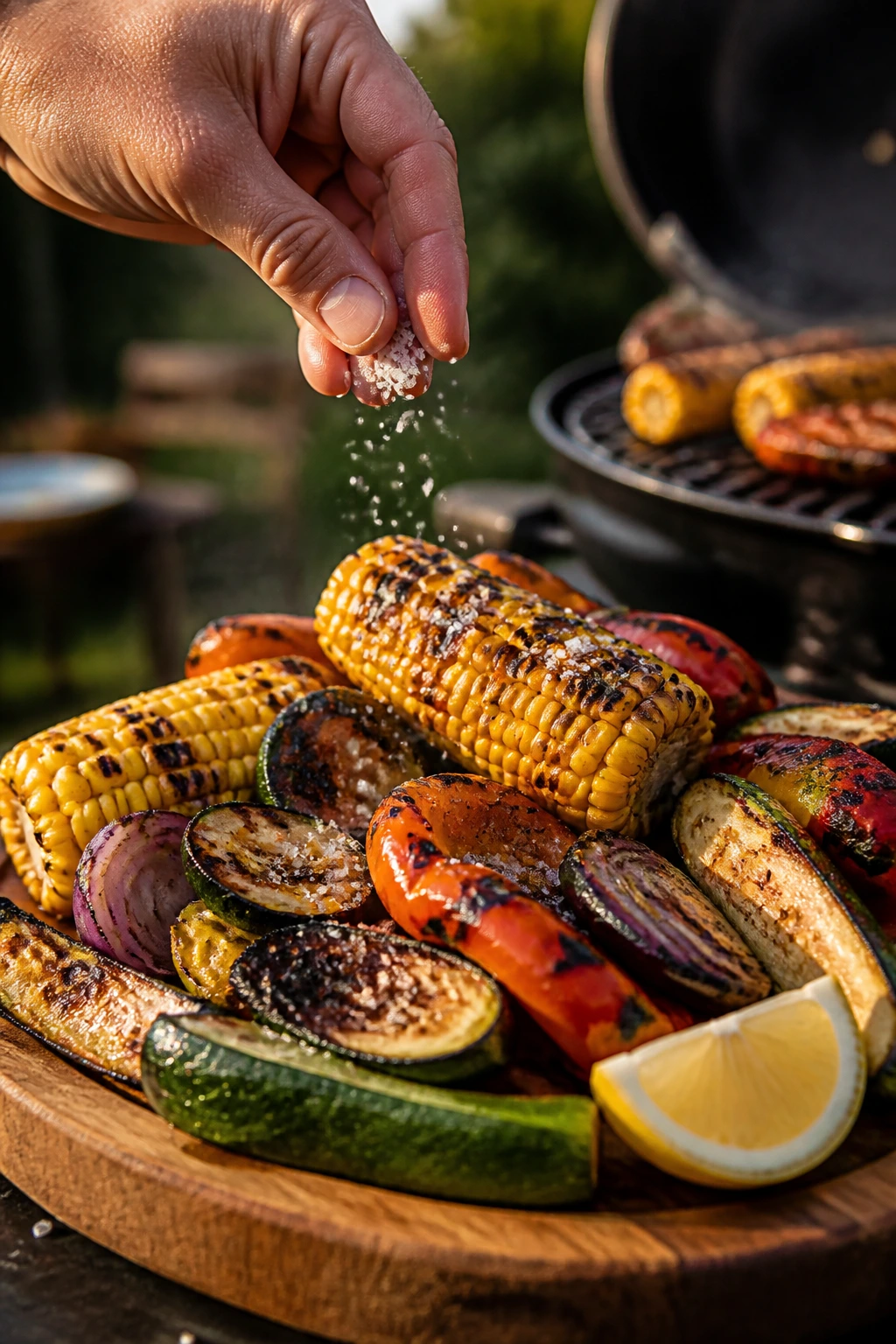
A little more salt does more here than another sauce. That’s the first thing I’d tell anyone trying to make a charred picnic feel intentional instead of improvised. Salt the vegetables before they hit the grill, then finish the cooked food with flaky salt or a quick squeeze of lemon. You’ll get more flavor from the same ingredients, which is the whole point of backyard cooking when the menu is meant to feel relaxed.
Flavor Enhancement: Brush corn with herb butter after grilling, not before. Butter on the grate burns too fast; butter on the hot kernels melts into the nooks and gives the char a richer finish. A tiny bit of lime zest on top makes the whole thing taste sharper.
Time-Saver: Slice onions, wash herbs, and mix dressings earlier in the day. The grill is not the place to be chopping with one hand while smoke hits your face. If prep is already done, you can focus on color and timing.
Pro Move: Char lemon halves cut-side down for 1 to 2 minutes until the flesh goes dark gold and the juice turns sweeter. Squeezed over chicken or vegetables, it tastes less sharp and a little rounder. That tiny difference matters.
Cost-Saver: Buy bone-in thighs, sausages, cabbage, and corn when you want a full picnic spread without an expensive grocery bill. Those ingredients take char beautifully, feed a lot of people, and leave enough room in the budget for a good herb sauce or a few stone fruits.
Make-It-Yours: If you want more heat, add sliced jalapeños or a spoonful of chili crisp to the table. If you want something milder, keep the spice out of the food and let the heat live in one sauce bowl. That way everyone can build their own plate without compromise.
Common Mistakes That Turn Char Into Burnt Edges and Sad Food
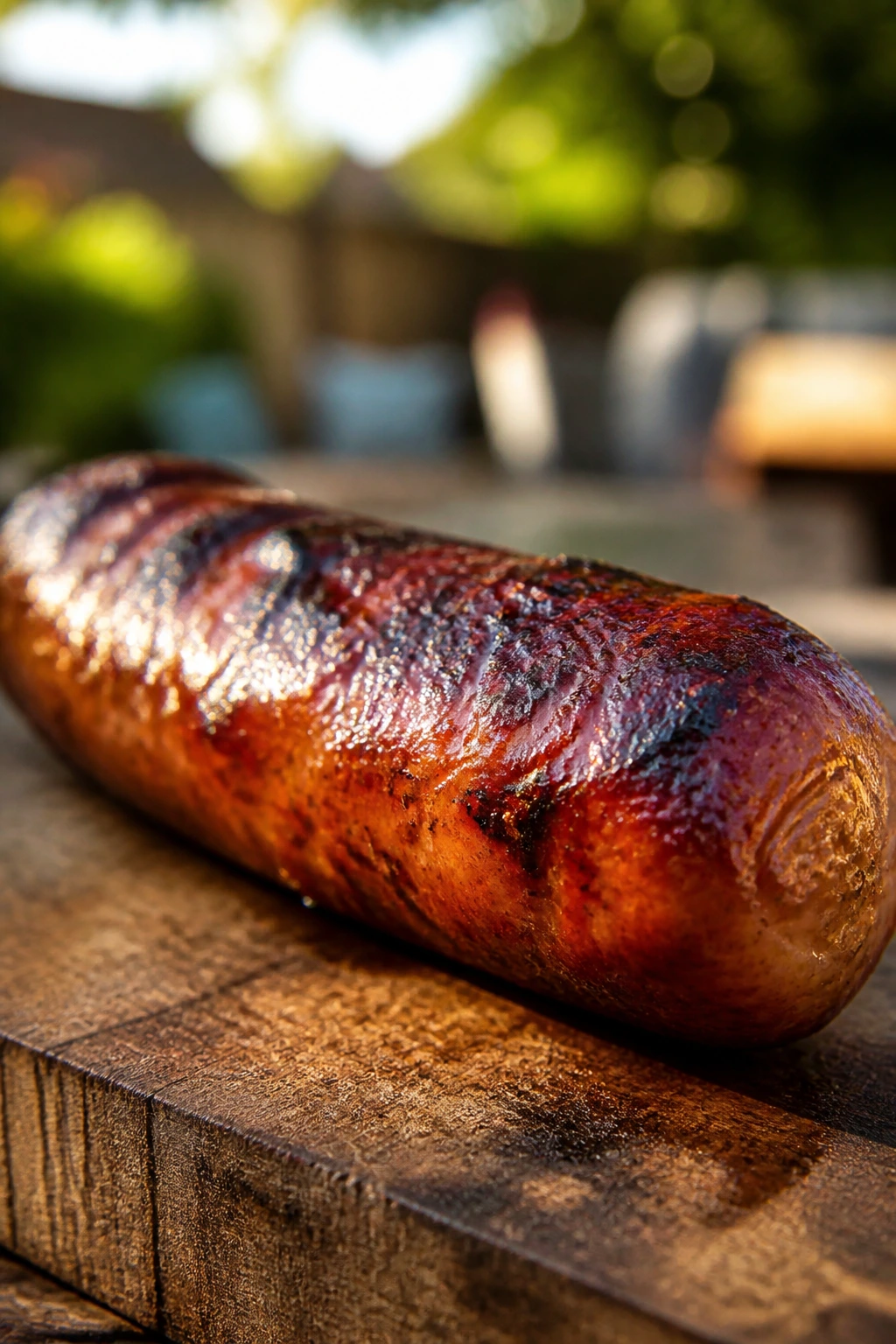
Burnt is not the same as charred. That sounds obvious, but it’s the mistake most people make when they try to grill a picnic spread and end up with food that tastes smoky in the wrong way. If the surface smells acrid before the inside has cooked, pull it back from the flame. Faster is not better here.
Crowding the grate is another mess-maker. When vegetables sit shoulder-to-shoulder, they steam instead of browning, and then you chase color too hard. The fix is simple: use a grill basket for small pieces, or give everything a little breathing room. If the food can’t touch hot metal, it needs a little more time and less chaos.
Sugary marinades can also fool you. Honey, brown sugar, barbecue sauce, and fruit glazes burn fast, especially over direct flame. Apply them late, during the final minute or two, or brush them on after grilling. The food keeps the shine without the bitterness.
Slicing meat too soon ruins the juices you worked to keep in. Chicken thighs need a short rest. Sausages need a rest too, even if people are hovering. If you cut them straight off the grill, the juices run into the tray instead of staying in the meat, and the texture goes from succulent to dry in a hurry.
The most common slipups, in plain terms
- Over-charring on purpose: Deep black spots are fine in small patches; a fully blackened surface tastes bitter. Fix it by moving food to indirect heat sooner.
- Serving damp food under a lid: Steam softens the crust on bread and vegetables. Fix it by using a rack or open tray.
- Forgetting the cold side: A charred picnic still needs salad, pickles, or vinegar. Without acid, everything tastes heavy.
- Letting food sit too long in the sun: Backyard tables can be deceptive. If food sits out for more than 2 hours — or 1 hour when the temperature is hot enough to make things warm fast — move it back into the cooler or heat source.
Variations and Menu Styles Worth Trying
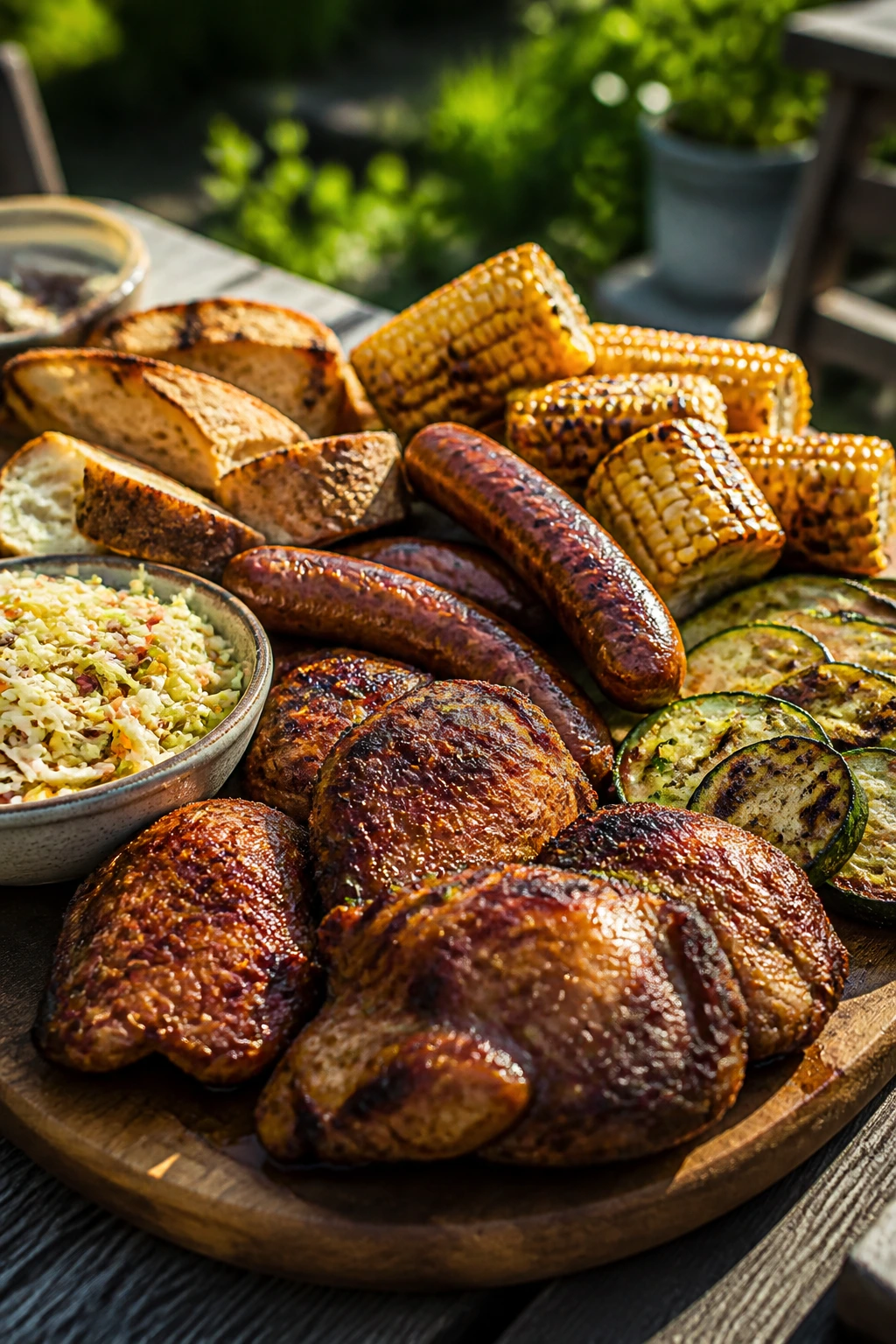
A charred picnic does not have to look the same every time. Once you know the pattern, you can tilt it toward smoke, brightness, vegetables, or bigger-meat energy without changing the whole plan. That flexibility is what keeps it useful.
Smokehouse Picnic Board: Use sausages, chicken thighs, charred onions, grilled corn, and a mustard-heavy slaw. Serve everything on a big board or tray with pickles and sliced bread. It feels hearty and a little rough around the edges in a good way.
Garden-Edge Spread: Center the meal on grilled zucchini, peppers, mushrooms, cabbage, halloumi, and a lemony bean salad. Add flatbread and a herb yogurt sauce. This version is the one I reach for when I want the grill to do the heavy lifting without relying on meat.
Stone-Fruit and Cheese Picnic: Pair grilled peaches or plums with mozzarella, basil, toasted sourdough, and prosciutto or crisped pancetta if you want meat. A drizzle of balsamic or honey pulls it together. It’s part snack board, part cookout, and it disappears faster than people expect.
Spice-Forward Table: Rub chicken or cauliflower with paprika, cumin, garlic, and black pepper, then finish with lime and chili oil. Add a cucumber salad to cool the heat. This version has more punch and works well when people want something louder than plain salt and pepper.
Kid-Friendly Skewer Night: Thread chicken, zucchini, pineapple, and bell peppers onto skewers so there’s less wrestling with knife and fork. Keep the sauces on the side. Kids tend to like the mix of sweetness and char, especially when the pieces are bite-sized and easy to grab.
Gear That Keeps the Char Under Control
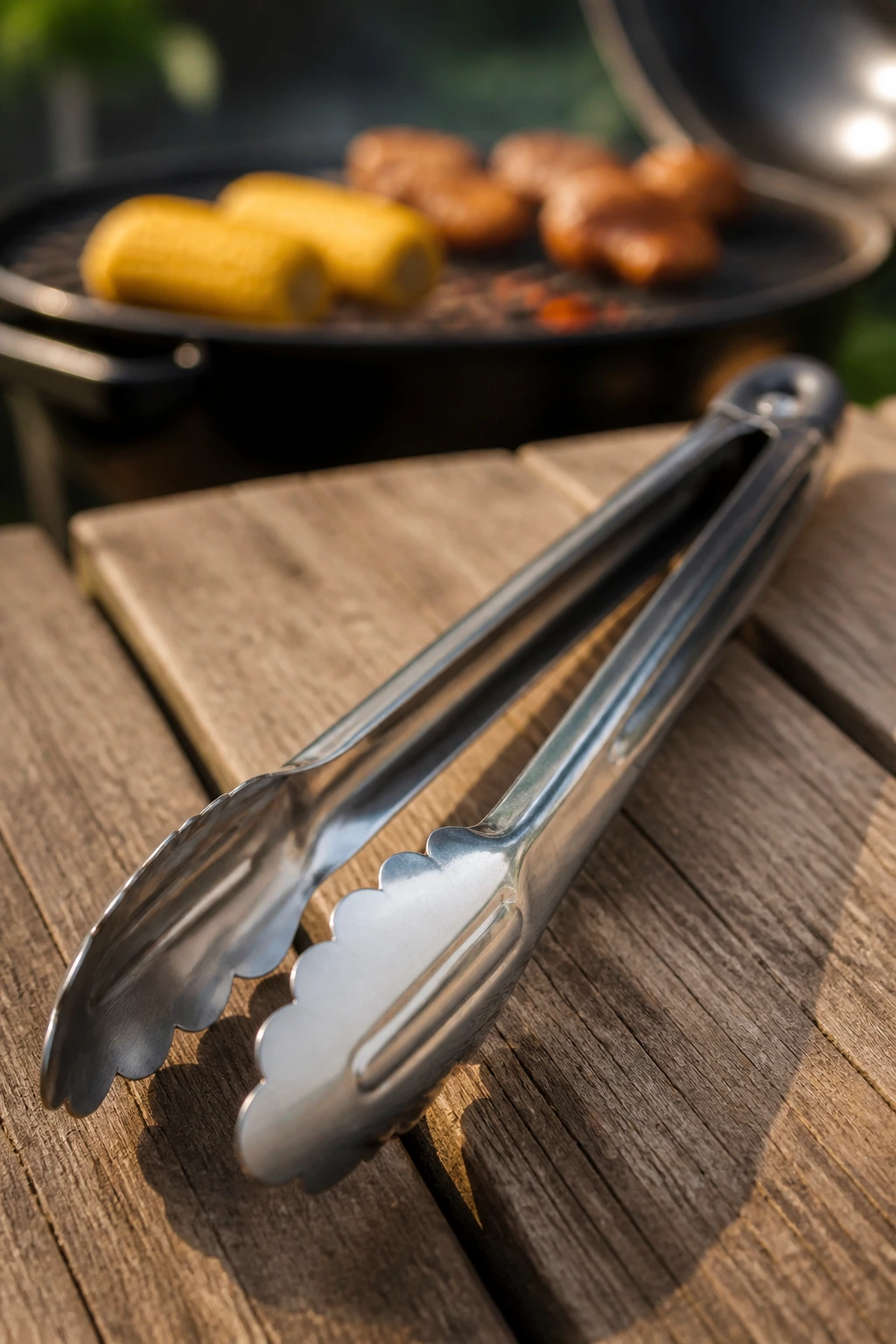
A charred picnic is not a gear contest, but a few tools make the whole thing easier and safer. I’d rather have four useful items than ten flimsy ones. Cheap tongs that flex, a dull knife, and a wobbly platter are the kind of thing that turns a relaxed cookout into a low-level headache.
- Grill, gas or charcoal: Either works. Gas gives you tighter control; charcoal gives you a deeper smoke note.
- Instant-read thermometer: The fastest way to know if chicken or sausage is actually done.
- Long metal tongs: Better than a fork because they don’t puncture meat and let juices leak out.
- Rimmed sheet pans: Essential for resting grilled food, moving items, and catching juices.
- Grill basket: Handy for zucchini, mushrooms, peppers, and smaller items that would slip through the grate.
- Cutting board with a groove: Keeps resting juices from running all over the counter.
- Sharp chef’s knife: Thick vegetables and sliced grilled meat need a clean cut.
- Pastry brush or squeeze bottle: Useful for oil, butter, or finishing sauce.
- Cooler with ice packs: Keeps salads, yogurt sauces, drinks, and dessert fruit cold.
- Serving platters or trays: Wide, shallow ones are better than deep bowls for keeping charred food from steaming itself soft.
Make-Ahead, Storage, and Food Safety That Actually Matters
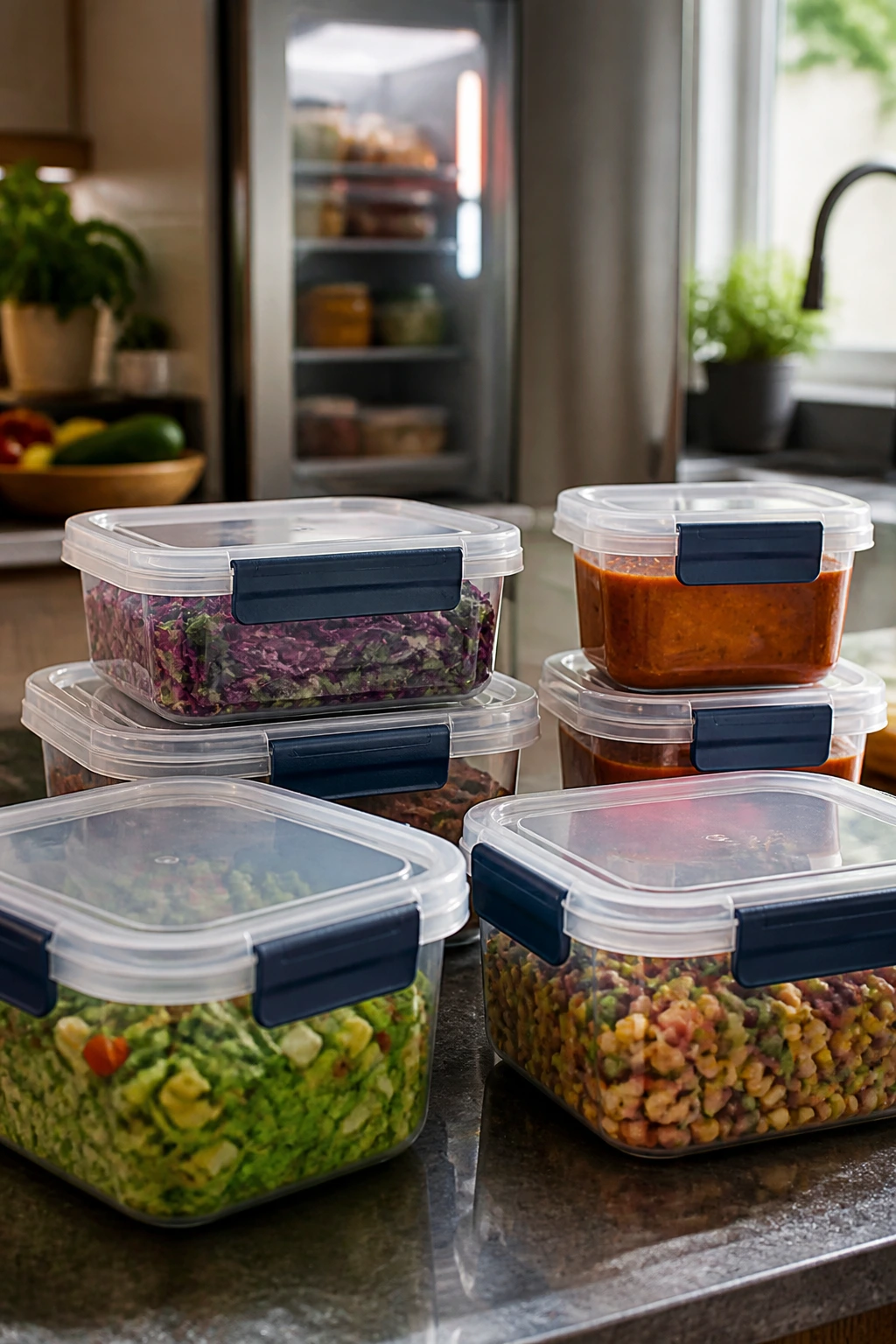
Backyard cookouts get easier when you make a few pieces ahead, but the food only stays good if you treat temperature like it matters. Cold food should stay at 40°F or below. Hot food should stay at 140°F or above if it’s waiting to be served. That simple split keeps a charred picnic safe and comfortable to eat.
Most grilled meats keep well in the refrigerator for 3 to 4 days. Chicken thighs, sausages, steak, and similar items can also be frozen for about 2 to 3 months if you wrap them tightly and label the container. Grilled vegetables usually hold for 3 to 4 days in the fridge, though softer ones like zucchini are best in the first couple of days. Dressings and sauces vary: vinaigrettes often keep for up to 1 week, while yogurt-based sauces are better within 3 to 4 days.
Reheating depends on the food. Chicken and sausage do well in a 325°F oven, covered loosely with foil, until they reach 165°F again. Grilled vegetables warm better in a skillet over medium heat for a few minutes, where they can wake up without turning watery. Bread is best re-crisped on a dry skillet or directly on the grill for 30 to 60 seconds per side.
Make-ahead is where this style gets practical. You can mix sauces a day ahead. You can cut vegetables in the morning and keep them chilled. You can even pre-cook some vegetables, like potatoes or cabbage wedges, if you want the grilling time to stay short. What improves overnight? Slaw, bean salad, mustard vinaigrette, and anything that likes time for the flavors to settle. What does not improve overnight? Toasted bread, grilled peaches, and anything meant to be crisp or juicy at the same minute it leaves the heat.
Frequently Asked Questions About a Charred Picnic for Backyard Cookouts
Can I build this whole picnic on a gas grill instead of charcoal?
Yes, and honestly, gas is easier when you’re cooking several things at once. You still get char if the grill is hot enough and the food isn’t dripping sugar everywhere. Use a two-zone setup and let the lid do some of the work on thicker items.
What should I grill if I don’t want to deal with a long ingredient list?
Chicken thighs, corn, onions, and bread are enough to make the table feel complete. Add one cold side like slaw or cucumber salad, and you’ve got contrast without extra fuss. That’s the version I’d make on a busy day.
How do I keep vegetables from sticking to the grate?
Dry them well, oil them lightly, and don’t move them too soon. If a zucchini plank sticks the second it hits the grill, it probably wasn’t ready to release yet. Give it another 20 to 30 seconds, then lift again with tongs.
Can I char fruit ahead of time?
You can, but only a little ahead. Peaches and plums are best within an hour or two of grilling, because their texture softens as they sit. If you need to prep early, grill them lightly and finish with fresh herbs or yogurt right before serving.
How long can the food sit out at the table?
The safe rule is 2 hours total at room temperature, and 1 hour if the weather is hot enough to make the table feel warm to the touch. After that, move cold foods back into the cooler and hot foods back into heat if you’re still serving. Backyard cookouts run long; food safety has to keep up.
Do I need a thermometer, or can I just cut into the meat?
You really want the thermometer. Cutting chicken or sausage lets the juices escape, and by the time you’re sure it’s done, you’ve already damaged the texture. A thermometer gives you certainty in about 2 seconds.
What’s the best way to make this work for vegetarians?
Lean into vegetables that brown instead of collapse: cabbage, corn, mushrooms, peppers, onions, zucchini, and halloumi if dairy is fine. Add a bean salad or grilled bread, and use an acid-heavy sauce so the plate doesn’t taste flat. You won’t miss the meat if the char and seasoning are doing their job.
Can I use barbecue sauce on the grill?
Yes, but only late in the cooking process. Barbecue sauce usually has sugar in it, and sugar burns fast over direct flame. Brush it on during the final minute or serve it on the side so the flavor stays glossy instead of bitter.
The Plate That Smells Like the Grill
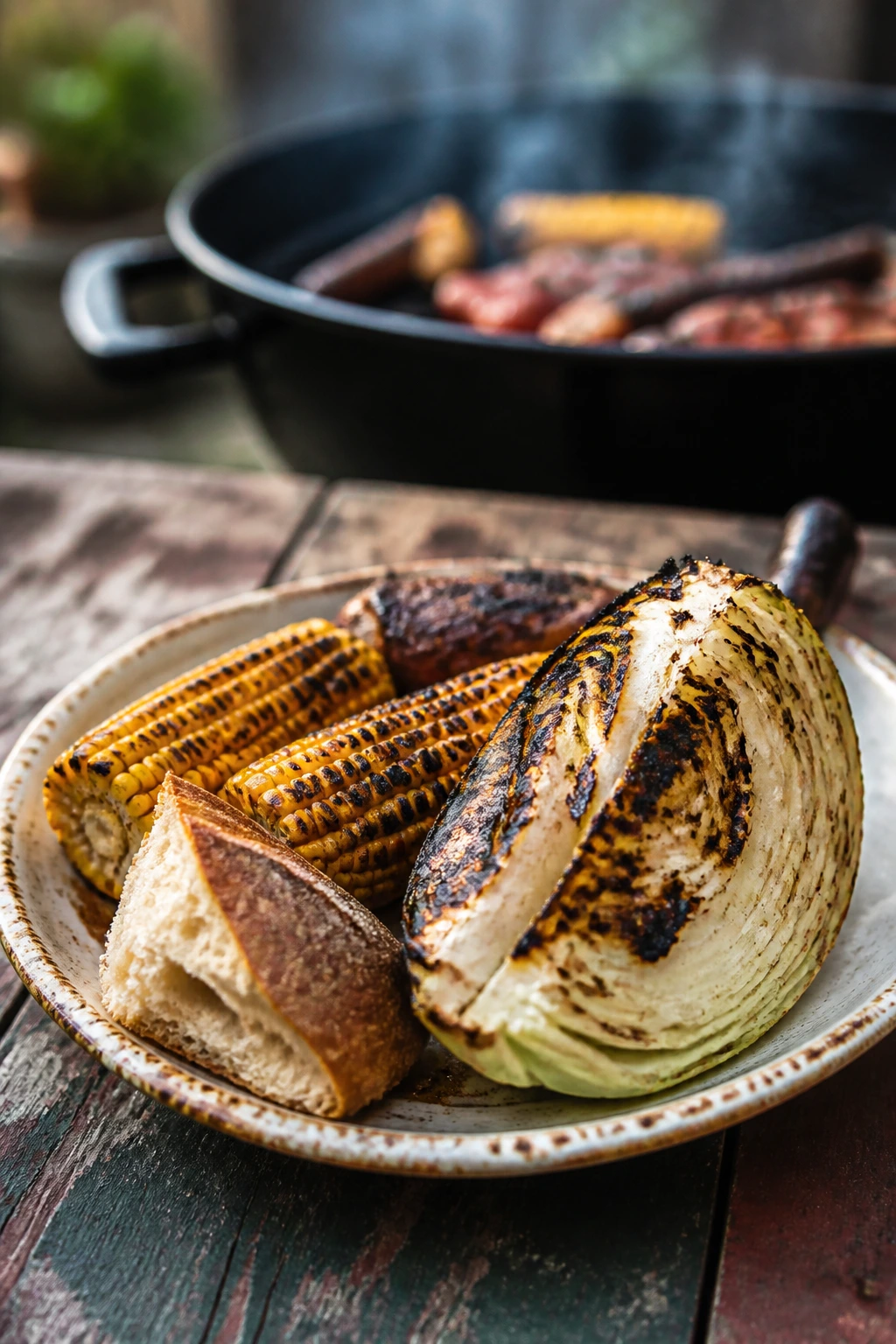
A charred picnic works because it respects a simple truth: backyard food tastes better when it has edges. Not hard edges. Not burnt ones. Just enough color and smoke to make the vegetables sweeter, the meat juicier, and the cold side dishes feel sharper by comparison.
I like this style because it gives you room to cook like a human being. You don’t need precision plating. You need a hot grate, a few smart containers, a bowl of acid nearby, and enough patience to pull food before it crosses the line. Once you get that rhythm, the whole table changes. Corn tastes brighter. Bread feels worth toasting. Even a humble cabbage wedge can steal attention from the main dish.
And that’s the part people remember. Not the perfect fork mark on a peach. The whole spread. The smoke drifting off the tray. The sauce that gets passed around twice. The plate that comes back empty except for a little salt and a few crumbs.