



Hearty Yogurt Chicken Salad with Homemade Dressing is the kind of lunch that doesn’t hide the chicken under a gluey mayo blanket. It tastes clean and full at the same time — cold chicken in tidy chunks, celery with a sharp snap, grapes that burst into sweetness, and a dressing that lands creamy instead of heavy.
The best versions of chicken salad always have a little tension in them. A soft base. A crisp bite. Something tangy enough to wake up the palate after the third forkful. Greek yogurt does that work better than plain mayonnaise in this bowl, and I say that as someone who likes mayonnaise just fine when it has a real job to do. Here, the yogurt gives the dressing a slight bite, the Dijon pulls it tighter, and the lemon keeps it from tasting flat or sleepy.
The small details matter more than people think. Cool the chicken before mixing it. Toast the almonds until they smell nutty, not brown and bitter. Dice the celery fine enough that it spreads through the salad instead of sitting in big awkward chunks. Do those things, and the bowl eats like something you meant to make, not something you threw together because the fridge was empty.
Why This Bowl Earns Its Spot in the Fridge
-
Creamy without the grease: Plain Greek yogurt gives the dressing body, but it doesn’t leave that slick coating on your tongue that some chicken salads do after a few bites.
-
Crunch that stays awake: Celery, toasted almonds, and grapes keep the texture changing from bite to bite, which is the difference between a salad you finish and one you push around.
-
Lunchbox friendly: The flavors settle in after a short chill, so the salad tastes even better after the chicken and dressing sit together for 20 minutes.
-
Flexible in a good way: Spoon it into lettuce cups, pile it on toasted sourdough, or pack it into a wrap without rewriting the recipe.
-
Fast once the chicken is cooked: The dressing takes minutes to whisk, and the rest is chopping and folding. No drama. No mess.
-
Easy to tune: If you want it sharper, add lemon. If you want it richer, add a spoonful of mayonnaise. If you want it more herbal, throw in extra dill.
A Quick Snapshot Before You Start
Yield: Serves 6
Prep Time: 20 minutes
Cook Time: 18 minutes
Total Time: 38 minutes
Chill/Rest Time: 20 minutes
Difficulty: Beginner — the method is straightforward, and an instant-read thermometer keeps the chicken from going dry.
Best Served: Chilled or lightly chilled, about 20 to 30 minutes after mixing.
What Goes Into the Bowl
For the Chicken Salad:
- 1 1/2 pounds boneless, skinless chicken breasts, trimmed
- 1 teaspoon kosher salt, for poaching the chicken
- 1 bay leaf
- 3 celery ribs, finely diced into 1/4-inch pieces
- 1 cup seedless green grapes, halved
- 1/3 cup red onion, minced very fine
- 1/2 cup sliced almonds, toasted and cooled
- 1/4 cup chopped fresh parsley
- 2 tablespoons chopped fresh dill
For the Yogurt Dressing:
- 3/4 cup plain full-fat Greek yogurt
- 1 tablespoon Dijon mustard
- 1 1/2 tablespoons fresh lemon juice
- 1 tablespoon olive oil
- 1 teaspoon honey
- 1 small garlic clove, finely grated
- 1/2 teaspoon kosher salt
- 1/4 teaspoon black pepper
- 1/4 teaspoon celery seed
- 1 to 2 tablespoons cold water, only if needed to thin the dressing
Why Each Ingredient Pulls Its Weight
Chicken That Stays Tender Instead of Fibrous
What to use: 1 1/2 pounds boneless, skinless chicken breasts, trimmed of excess fat. That amount gives you about 4 cups of cooked chicken, which is the sweet spot for a hearty bowl without drowning everything else.
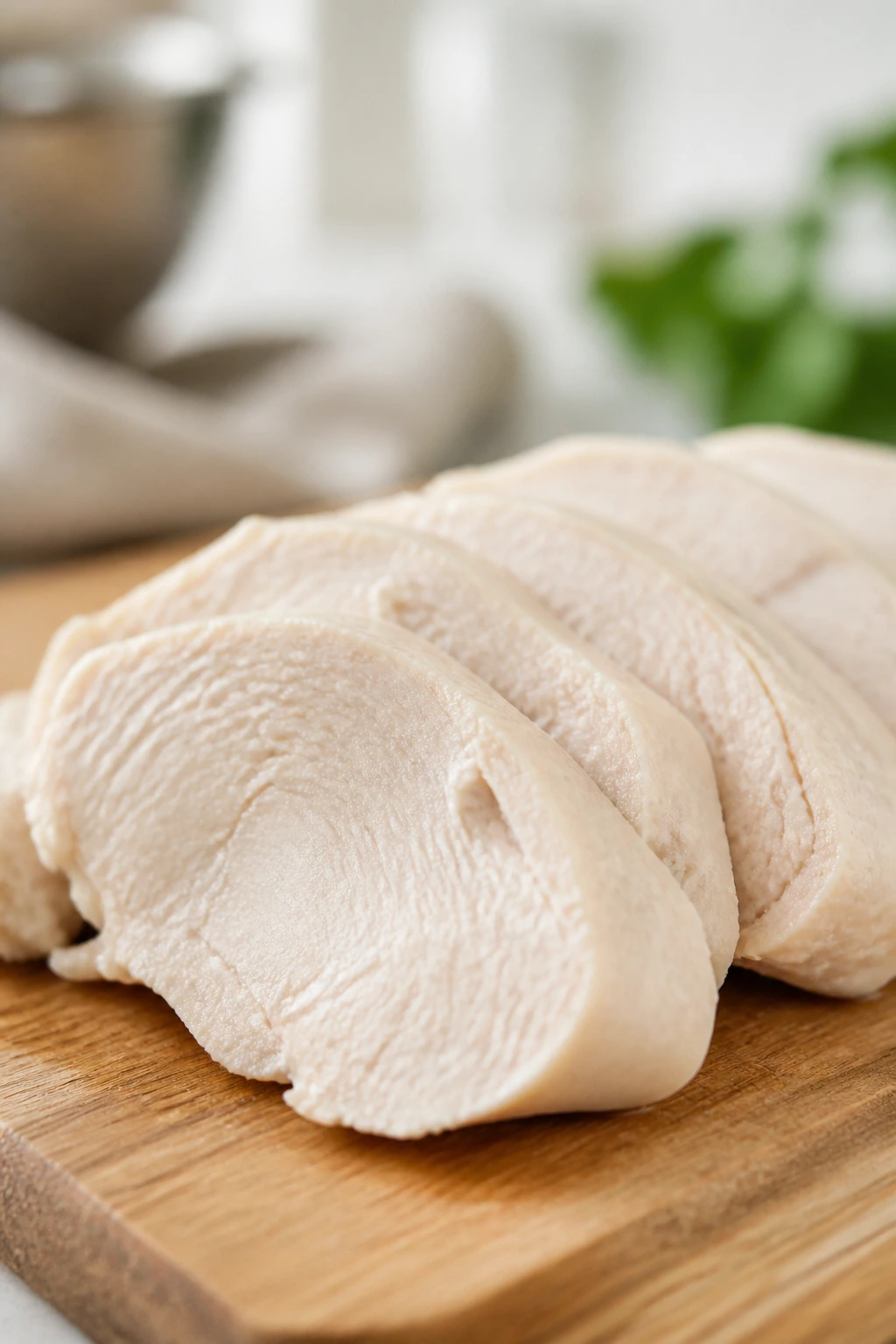
Preparation: Poach the chicken gently, then let it cool before cutting or shredding. I prefer cutting it into bite-size chunks for this recipe because it keeps a little more structure than a full shred.
Substitutions: Boneless thighs work if you want a juicier, slightly richer salad. Rotisserie chicken also works in a hurry; you’ll need about 4 cups shredded, and you can skip the poaching steps.
Tips: Chicken salad goes wrong when the meat is hot and still steaming. Give it time to cool so the dressing doesn’t thin out and slide off every piece.
The Dressing That Keeps the Bowl Creamy
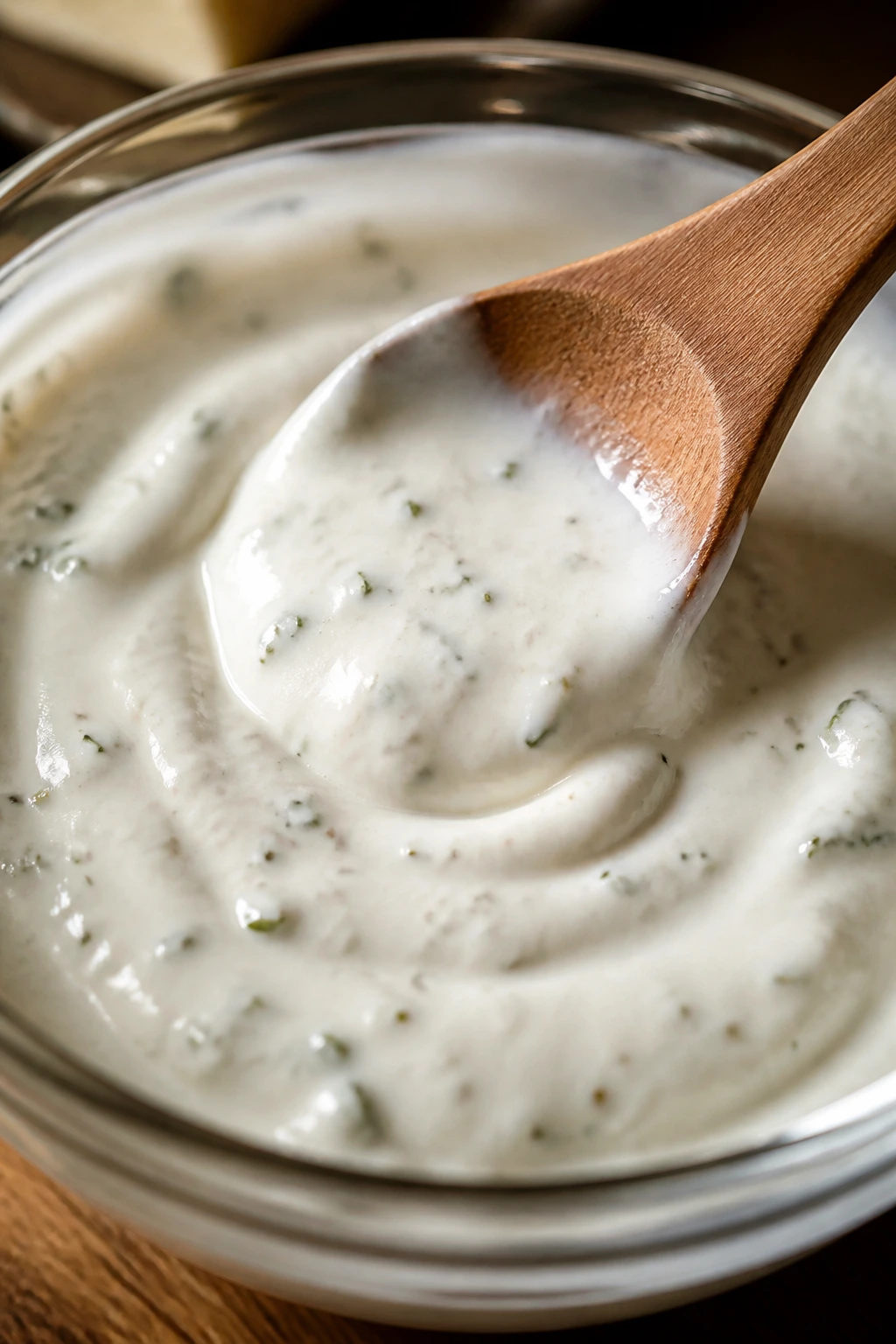
What to use: 3/4 cup full-fat Greek yogurt, Dijon, lemon juice, olive oil, honey, garlic, salt, pepper, and a pinch of celery seed. The yogurt gives body, the oil smooths the edges, and the mustard makes the dressing taste finished instead of flat.
Preparation: Whisk the dressing in a bowl until it looks glossy and smooth, with no little streaks of yogurt hiding at the bottom. If it looks thick enough to sit on a spoon in a heavy lump, add cold water 1 teaspoon at a time.
Substitutions: You can swap in plain strained yogurt if that’s what you have, but thinner yogurts need to be drained first. If you want a slightly richer bowl, add 1 tablespoon mayonnaise — not enough to erase the yogurt, just enough to round it out.
Tips: Full-fat yogurt gives the cleanest texture here. Low-fat versions can taste thin and a little chalky, which is the exact opposite of what this salad needs.
Celery, Grapes, and Onion for Snap and Sweetness
What to use: 3 celery ribs, 1 cup halved green grapes, and 1/3 cup finely minced red onion. This trio gives the salad a cold crunch, a burst of sweetness, and a little sharp edge.
Preparation: Cut the celery small enough that it spreads through the chicken instead of making big crunchy islands. Halve the grapes so they don’t roll away and so each bite gets a little juice.
Substitutions: Diced crisp apple can stand in for the grapes if you want a cleaner, less sweet profile. Shallot can replace red onion if you want something softer and less pungent.
Tips: Red onion needs to be fine. Too much, and the salad bites back in a harsh way. Too little, and it disappears completely under the yogurt.
Herbs, Nuts, and the Finishing Notes
What to use: 1/4 cup chopped parsley, 2 tablespoons chopped dill, and 1/2 cup sliced almonds toasted and cooled. These are the bits that make the bowl taste alive after the first few bites.
Preparation: Chop the herbs right before mixing so they stay bright and don’t collapse into a green blur. Toast the almonds in a dry skillet until they smell warm and nutty, then get them off the heat fast.
Substitutions: Chives can replace some of the dill if you want a more oniony finish. Sunflower seeds work for the almonds if you need a nut-free crunch.
Tips: Don’t skip the toasting. Untoasted almonds taste raw and papery next to the creamy dressing, and the whole bowl loses contrast.
Why the Yogurt Dressing Tastes Better After Five Minutes
A good yogurt dressing should taste a little loud in the bowl. Sharp lemon. Salty yogurt. A mustard edge that hangs around for a second. That first taste may feel bold, and that’s fine — the chicken will soften it once everything gets tossed together.
The olive oil is doing quiet work here. It rounds the yogurt so the dressing clings to the chicken instead of sitting on top of it in a loose white layer. The honey is equally useful, though in a small way; it doesn’t make the salad sweet, it just keeps the lemon and Dijon from snapping too hard.
Taste the dressing before it touches the chicken. Then taste it again after it sits for five minutes. Yogurt changes a little as it rests. So does salt. That pause can save you from overcorrecting with more lemon when what you really needed was another pinch of salt.
The Gentle Poach That Keeps the Chicken Juicy
A lot of chicken salad problems start with dry chicken. People overcook it, shred it into stringy bits, then wonder why the bowl tastes like office lunch from a bad day.
Don’t do that.
Poaching gives you more control than roasting for this specific salad, and it keeps the meat mild enough that the dressing can take the lead. You want the chicken cooked through, obviously, but not blasted with heat until every fiber squeezes itself dry. The thermometer is your friend here. Use it.
How to Cook and Build It
Poach the Chicken:
-
Put the chicken breasts in a medium saucepan in a single layer. Add enough cold water to cover the chicken by about 1 inch, then add 1 teaspoon kosher salt and the bay leaf.
-
Set the pan over medium heat and bring the water to a bare simmer. You want small bubbles around the edges, not a rolling boil. A hard boil tightens the chicken and makes it stringy.
-
Reduce the heat to low and simmer gently for 12 to 15 minutes, until the thickest part of the chicken reaches 165°F on an instant-read thermometer. If the breasts are especially thick, give them a few extra minutes rather than guessing.
-
Move the chicken to a plate and let it rest for 5 minutes. Once it’s cool enough to handle, cut it into 1/2-inch pieces or shred it into bite-size strands. I prefer small chunks here because they hold their shape better once the dressing goes in.
Toast the Almonds: 5. Set a dry skillet over medium heat. Add the sliced almonds and toast them for 3 to 4 minutes, stirring often, until they turn pale gold and smell nutty. Pull them off the heat immediately and scrape them onto a plate so the residual heat doesn’t push them into bitter territory.
Whisk the Dressing: 6. In a large mixing bowl, whisk together the Greek yogurt, Dijon mustard, lemon juice, olive oil, honey, grated garlic, salt, black pepper, and celery seed until smooth and glossy. If the dressing looks thick enough to mound, whisk in 1 tablespoon of cold water.
Assemble the Salad: 7. Add the chicken, celery, grapes, red onion, parsley, dill, and toasted almonds to the bowl. Fold gently with a spatula until everything is coated. Don’t stir like you’re mixing muffin batter — you’re trying to keep the chicken pieces intact and the grapes from getting crushed.
-
Taste and adjust with more salt, another squeeze of lemon, or a teaspoon more water if the dressing feels too thick. The finished salad should coat the ingredients lightly, not sit in a puddle at the bottom of the bowl.
-
Cover and chill for 20 minutes before serving if you have the time. That little rest lets the salt settle in and gives the chicken salad a more unified flavor, especially if the chicken was very plain to begin with.
The Tools That Make the Prep Smoother
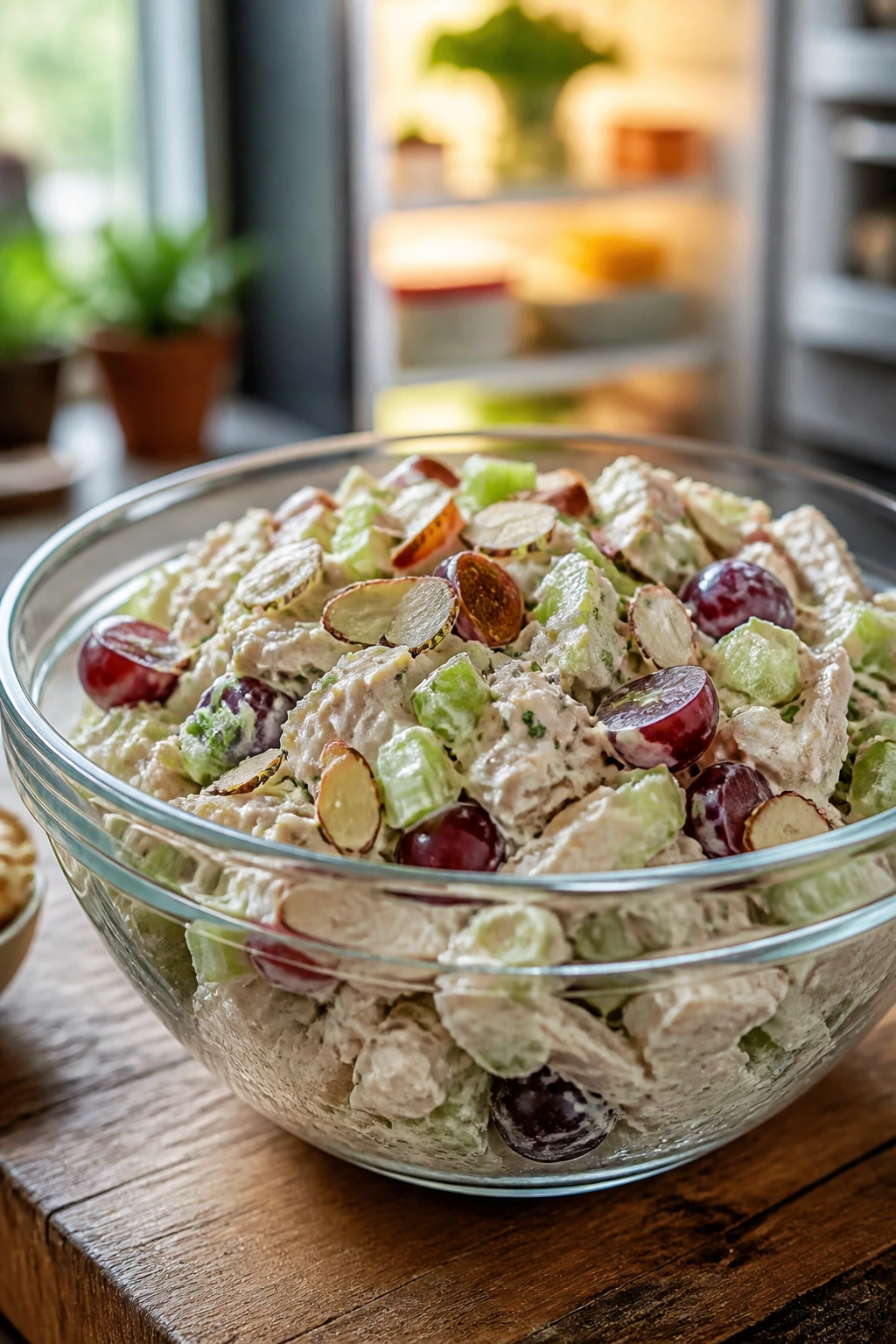
You don’t need much here, which is part of the appeal.
- Medium saucepan with a lid — used for poaching the chicken gently and evenly.
- Instant-read thermometer — the easiest way to stop at 165°F instead of guessing and hoping.
- Large mixing bowl — gives you enough room to fold without losing grapes over the side.
- Whisk — helps the yogurt dressing turn smooth instead of lumpy.
- Chef’s knife — fine dicing matters more than fancy knife skills here.
- Cutting board — a stable board keeps celery and onion from skittering around.
- Dry skillet, 8 to 10 inches — for toasting the almonds without extra oil.
- Slotted spoon or tongs — makes it easier to lift the chicken from the poaching liquid without tearing it.
How to Serve It on Bread, Greens, and Crackers
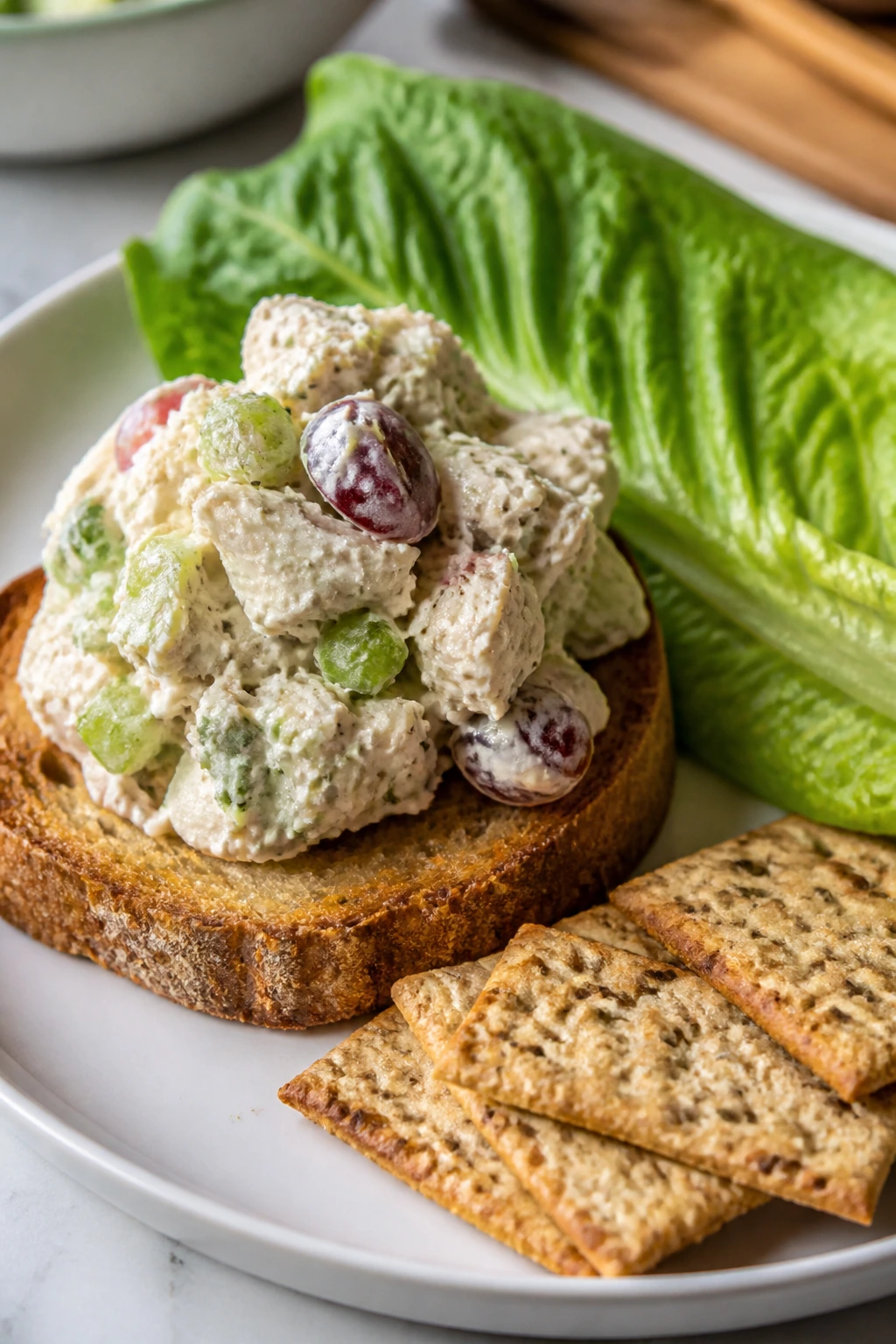
Presentation:
Pile the salad into a shallow bowl and finish it with a few extra almonds and a little dill on top. If you’re serving it as lunch on a plate, a bed of romaine or butter lettuce makes the bowl look crisp and keeps the salad from spreading too far.
Accompaniments:
Toasted sourdough, seeded crackers, rye bread, cucumber slices, or pita chips all work. I like this salad next to something dry and sturdy, because the dressing already brings the moisture. A plain green salad can be too delicate; a handful of sliced radishes or a tart tomato salad gives it a better edge.
Portions:
Figure on about 3/4 cup per person for lunch, or closer to 1 to 1 1/4 cups if it’s the main event inside a sandwich or wrap. If you’re packing it for a picnic, keep the portions a little smaller than you think you need — the richness builds as you eat.
Beverage Pairing:
Cold black tea with lemon, sparkling water with lime, or a dry white wine like Sauvignon Blanc all fit the lemon-Dijon profile without crowding it. If you’re eating it as an afternoon lunch, iced tea is the one I keep coming back to.
Small Fixes That Change the Whole Bowl
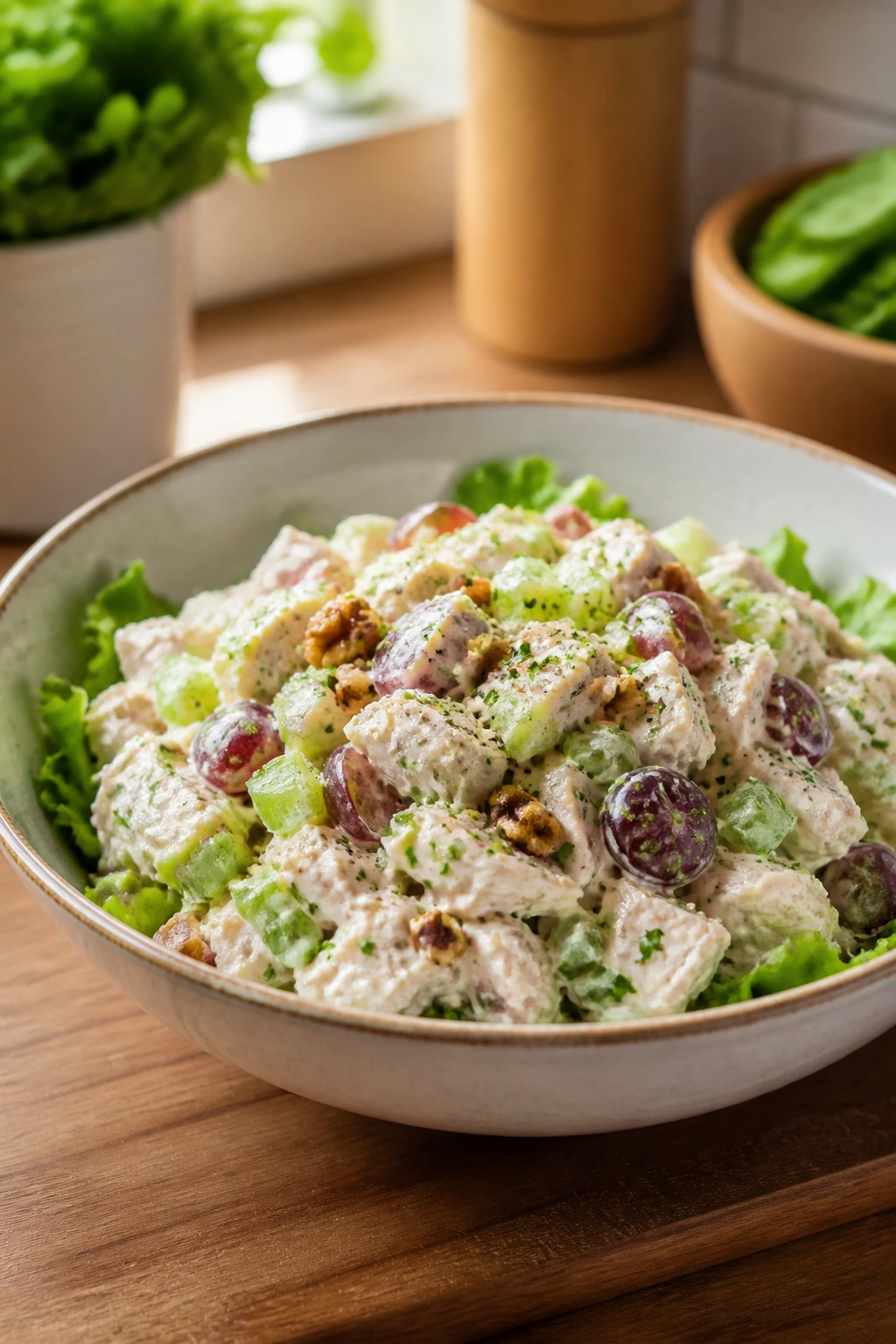
Flavor Enhancement:
A teaspoon of lemon zest in the dressing gives the salad a brighter top note without making it more sour. It’s a tiny move, but it wakes up the yogurt in a way plain lemon juice can’t quite do on its own.
Texture Control:
Cut the celery and onion small, around 1/4 inch. Bigger pieces read as clunky next to the chicken, and very tiny pieces disappear after the salad chills.
Time-Saver:
Poach the chicken and toast the almonds earlier in the day, or even the day before. Cold chicken shreds more cleanly, and almonds that have fully cooled stay crisper when they go into the salad.
Make-It-Yours:
If you like a richer finish, fold in 1 tablespoon mayonnaise at the end. If you want it sharper, add another teaspoon of Dijon instead of more lemon — mustard gives you bite without making the yogurt thin.
Common Mistakes That Flatten the Flavor
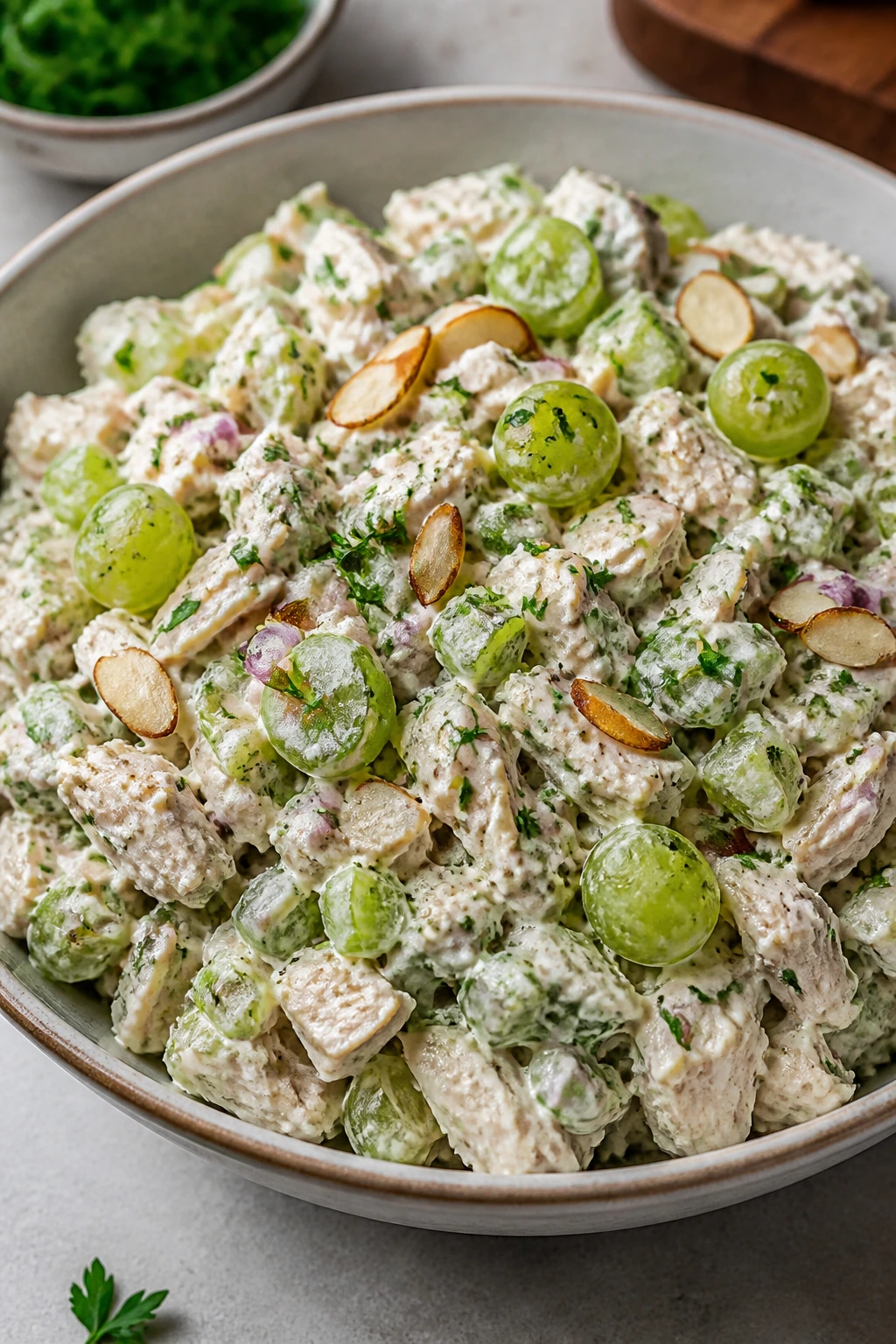
Mixing the salad while the chicken is still hot is the fastest route to a watery bowl. Steam from the chicken loosens the yogurt, softens the celery, and turns the dressing runny. Let the chicken cool for at least 5 minutes after poaching, and longer if the pieces are thick.
Using thin yogurt without draining it makes the dressing slide instead of cling. Regular yogurt can work if you strain it for 20 minutes in a fine-mesh sieve lined with paper towel or cheesecloth, but full-fat Greek yogurt is much easier. If the dressing looks thin in the bowl, it will look worse after chilling.
Oversalting the chicken salad in the wrong stage is another easy trap. Salt the poaching water, yes, but also remember that yogurt, lemon, and Dijon all sharpen as they sit. Start with the measured salt, let the salad rest, then adjust. A heavy hand at the beginning can make the whole thing taste harsh.
Letting the almonds go too dark adds bitterness that shows up fast in a creamy salad. Medium heat is enough. The second they smell toasted, they’re close to done. Pull them early, not late.
Chopping the mix-ins unevenly gives you a weird forkful: one bite all chicken, the next all celery. Keep the celery, onion, and grapes in a similar small size so the dressing lands evenly on everything.
Adding too much dressing at once turns a hearty salad into soup. Start with most of the dressing, fold, then stop and inspect the bowl. Chicken salad should be coated and plush, not swimming.
Four Ways to Make It Your Own Without Ruining It
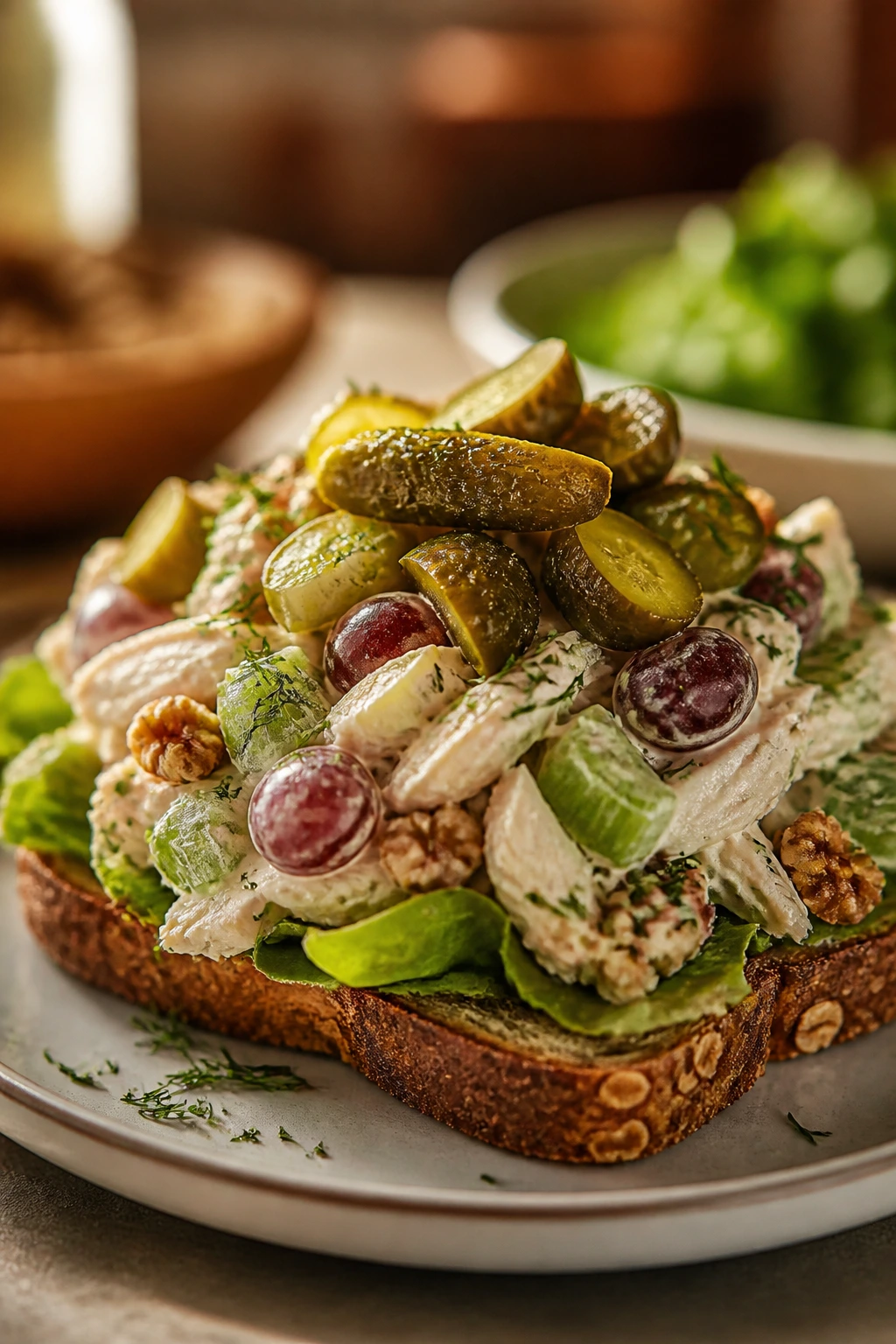
Dill Pickle Crunch:
Add 1/4 cup finely chopped dill pickles and 1 teaspoon of pickle brine to the dressing. This version lands sharper and saltier, which makes it especially good on rye toast or tucked into a sandwich with sliced tomato.
Curry Apricot Lunch Salad:
Whisk 1 to 1 1/2 teaspoons mild curry powder into the dressing and swap the grapes for 1/3 cup chopped dried apricots. The curry should stay in the background, not take over, and the apricots give you small chewy bursts that work better than you’d think.
Apple-Walnut Orchard Bowl:
Replace the grapes with 1 crisp apple, diced small, and swap the almonds for toasted walnuts. Toss the apple pieces with a little lemon juice before they go in so they don’t brown, and keep the dice small enough that the salad still feels balanced.
Lettuce Cup Version:
Skip the bread and spoon the salad into butter lettuce leaves or romaine boats. Add a few extra herbs and serve it cold with sliced cucumbers on the side. This is the version I make when I want the bowl to feel lighter without stripping away the crunch.
How to Keep It Crisp for Lunch Tomorrow
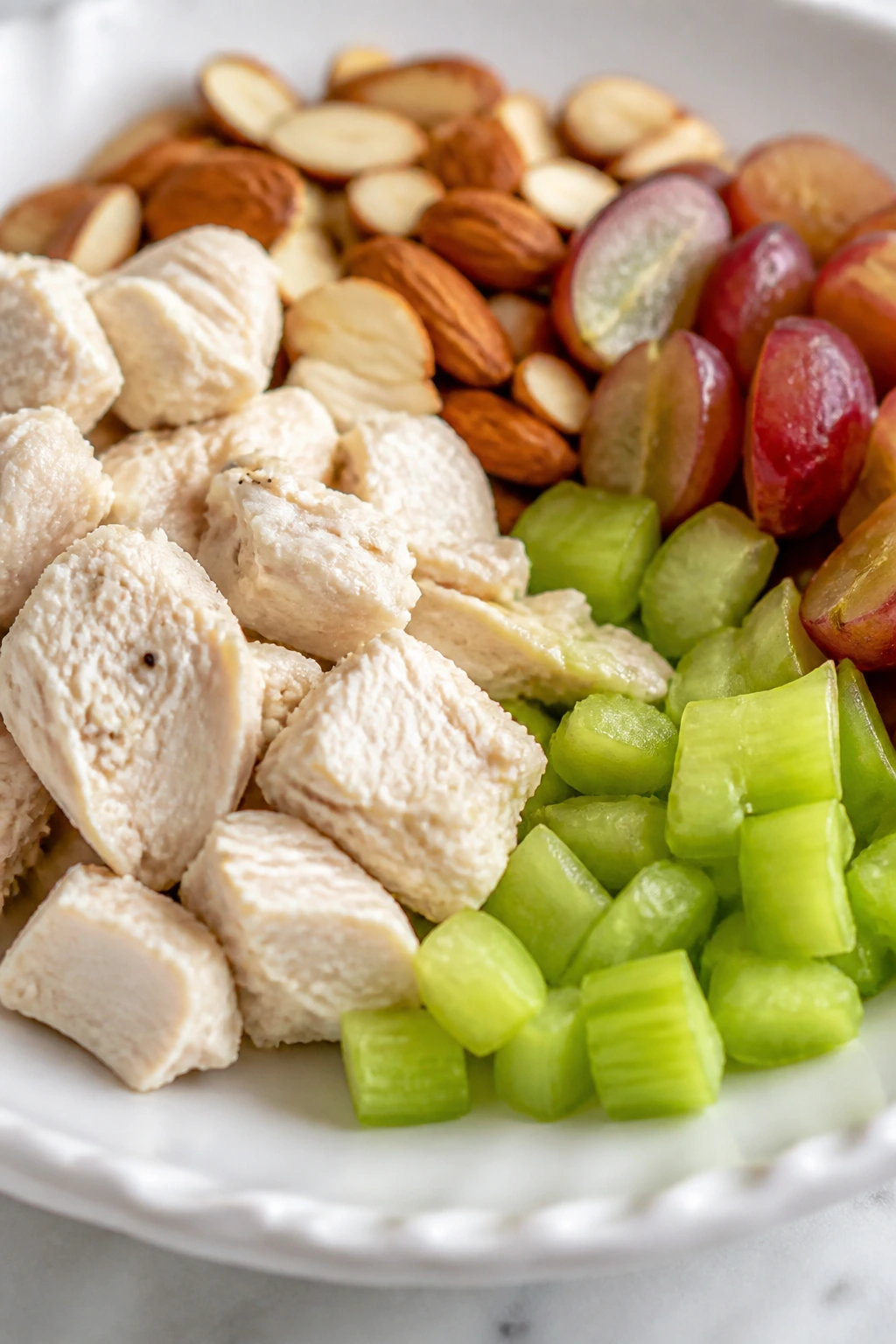
Unassembled components last longer than the finished salad, and that’s the way I like to handle it when I’m meal prepping. The poached chicken keeps for 3 to 4 days in the refrigerator, sealed well in an airtight container. The dressing also keeps for 3 to 4 days, and you may need to whisk in a teaspoon of water after it chills because Greek yogurt thickens in the fridge.
The assembled salad is best within 1 to 2 days, though it will keep for up to 3 days refrigerated if you don’t mind the celery softening a little. If you want the almonds to stay crisp, keep them separate until serving and stir them in at the last minute. That small extra step makes a bigger difference than people expect.
Do not freeze the assembled salad. Yogurt changes texture after thawing, and the celery goes limp in a hurry. If you want to freeze anything, freeze the cooked chicken on its own for up to 2 months, then thaw it in the refrigerator before mixing the salad. There’s no real reheating step for the finished bowl; it’s meant to be eaten cold. If you want the chicken less chilled, let the cooked pieces sit at room temperature for 10 minutes before assembling, but don’t leave the whole salad out longer than 2 hours.
Questions People Ask Before Making It
Can I use rotisserie chicken instead of poaching it?
Yes. Use about 4 cups shredded rotisserie chicken and skip the poaching steps entirely. Just make sure the chicken is cooled before mixing it with the dressing so the yogurt doesn’t thin out.
Will regular yogurt work if I don’t have Greek yogurt?
It can, but it needs help. Drain regular plain yogurt in a fine-mesh sieve for about 20 minutes first, or the dressing may turn too loose and watery. Greek yogurt is still the better choice because it gives the salad a thicker, cleaner finish.
How do I keep the salad from tasting too tart?
Add a pinch more salt before you add more honey. That sounds backward, but salt rounds out yogurt faster than sugar does, and too much sweetness can make the bowl taste flat. A tiny bit more olive oil can also smooth the edges.
Can I make this the night before?
Yes, though I’d keep the almonds separate and stir them in right before serving. The salad tastes stronger the next day, which is useful, but the nuts soften if they sit in the dressing overnight.
What bread works best with this chicken salad?
Sturdy bread wins. Toasted sourdough, rye, seeded sandwich bread, or a soft ciabatta roll all hold up better than flimsy white bread. If the bread squishes the filling the second you bite it, it’s the wrong bread.
Can I leave out the grapes?
Absolutely. If you want a less sweet salad, replace them with diced cucumber or a chopped crisp apple. Both keep the texture lively without pushing the flavor in a sugary direction.
What if my chicken turns out a little dry?
Chop it smaller and let it sit in the dressing for 20 minutes before serving. The yogurt will soften the edges, and the lemon-Dijon dressing helps dry chicken read as seasoned instead of overcooked. It won’t fix truly chalky chicken, but it can rescue a slightly overcooked batch.
A Bowl Worth Making Twice
There’s something satisfying about a chicken salad that knows what it is. It doesn’t try to be fancy. It doesn’t need a pile of garnish to hide behind. It gives you juicy chicken, a dressing with backbone, and enough crunch to keep the last bite interesting.
Keep the chicken cool, keep the dressing bold, and don’t be timid with the salt. That’s the whole trick, really. Once you make this once, it starts becoming less of a recipe and more of a habit — the kind you reach for when you want lunch to feel put together without feeling fussy.
Hearty Yogurt Chicken Salad with Homemade Dressing — Recipe Card
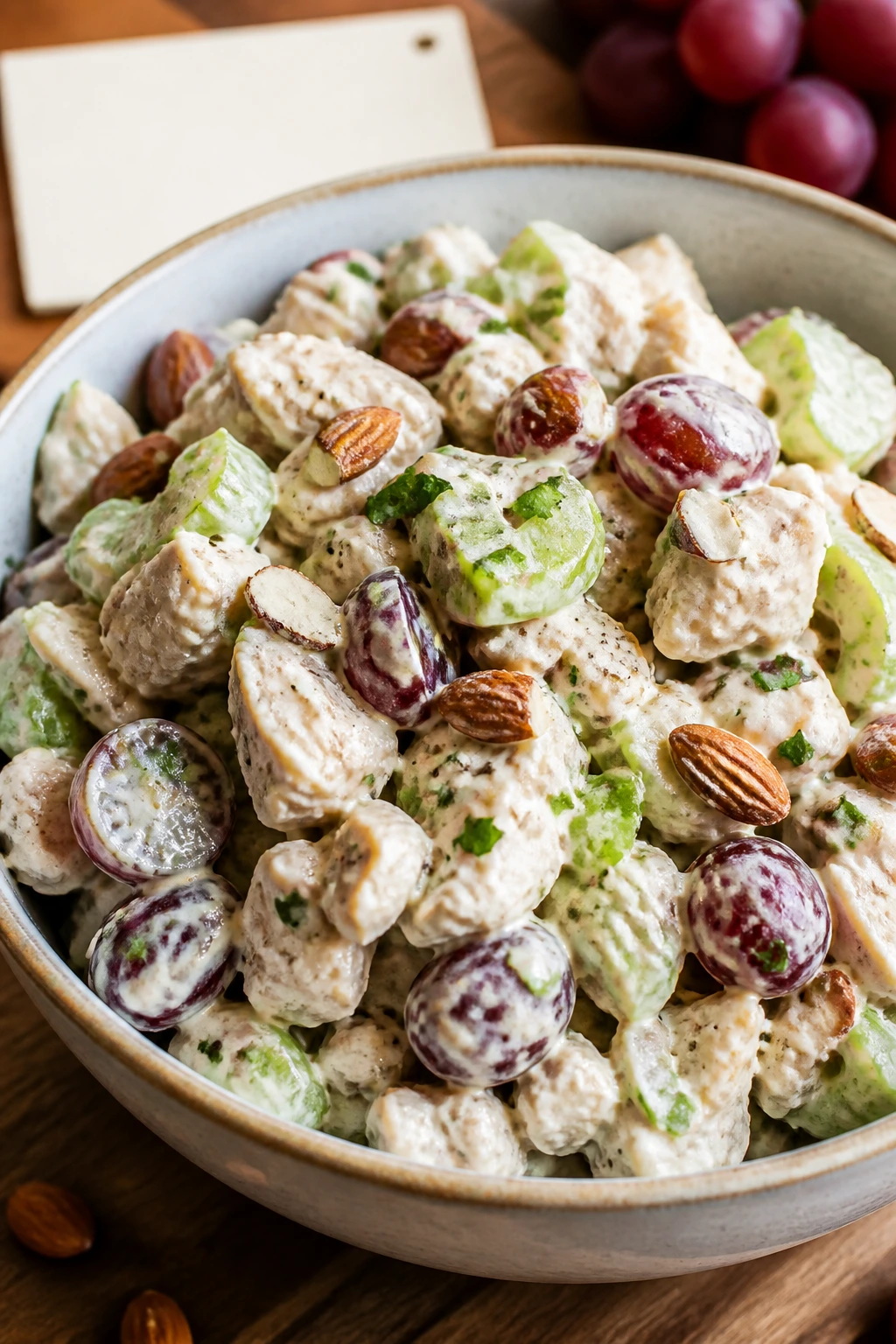
Recipe Name: Hearty Yogurt Chicken Salad with Homemade Dressing
Description: Tender chicken, crisp celery, sweet grapes, toasted almonds, and a creamy Greek yogurt dressing make this a substantial chicken salad that works for sandwiches, lettuce cups, or straight-from-the-bowl lunches.
Prep Time: 20 minutes
Cook Time: 18 minutes
Total Time: 38 minutes
Course: Lunch, Main Dish
Cuisine: American
Servings: 6 servings
Calories: About 310 kcal per serving
Ingredients
For the Chicken Salad:
- 1 1/2 pounds boneless, skinless chicken breasts, trimmed
- 1 teaspoon kosher salt, for poaching the chicken
- 1 bay leaf
- 3 celery ribs, finely diced into 1/4-inch pieces
- 1 cup seedless green grapes, halved
- 1/3 cup red onion, minced very fine
- 1/2 cup sliced almonds, toasted and cooled
- 1/4 cup chopped fresh parsley
- 2 tablespoons chopped fresh dill
For the Yogurt Dressing:
- 3/4 cup plain full-fat Greek yogurt
- 1 tablespoon Dijon mustard
- 1 1/2 tablespoons fresh lemon juice
- 1 tablespoon olive oil
- 1 teaspoon honey
- 1 small garlic clove, finely grated
- 1/2 teaspoon kosher salt
- 1/4 teaspoon black pepper
- 1/4 teaspoon celery seed
- 1 to 2 tablespoons cold water, only if needed to thin the dressing
Instructions
-
Put the chicken breasts in a medium saucepan in a single layer, add cold water to cover by 1 inch, then add the salt and bay leaf.
-
Bring the water to a bare simmer over medium heat, then reduce the heat to low and simmer gently for 12 to 15 minutes, until the chicken reaches 165°F.
-
Transfer the chicken to a plate and rest for 5 minutes. Cut into 1/2-inch pieces or shred into bite-size strands.
-
Toast the almonds in a dry skillet over medium heat for 3 to 4 minutes, stirring often, until pale gold and fragrant. Cool on a plate.
-
Whisk the Greek yogurt, Dijon mustard, lemon juice, olive oil, honey, garlic, salt, pepper, celery seed, and cold water until smooth.
-
Add the chicken, celery, grapes, red onion, parsley, dill, and toasted almonds to the dressing. Fold gently until coated.
-
Taste and adjust with more salt, lemon juice, or a little more water if needed.
-
Chill for 20 minutes before serving, or serve right away if you prefer a fresher texture.
Notes: Use rotisserie chicken if you want a shortcut; you’ll need about 4 cups shredded. Keep the almonds separate if you’re packing leftovers so they stay crisp. Do not freeze the assembled salad.