



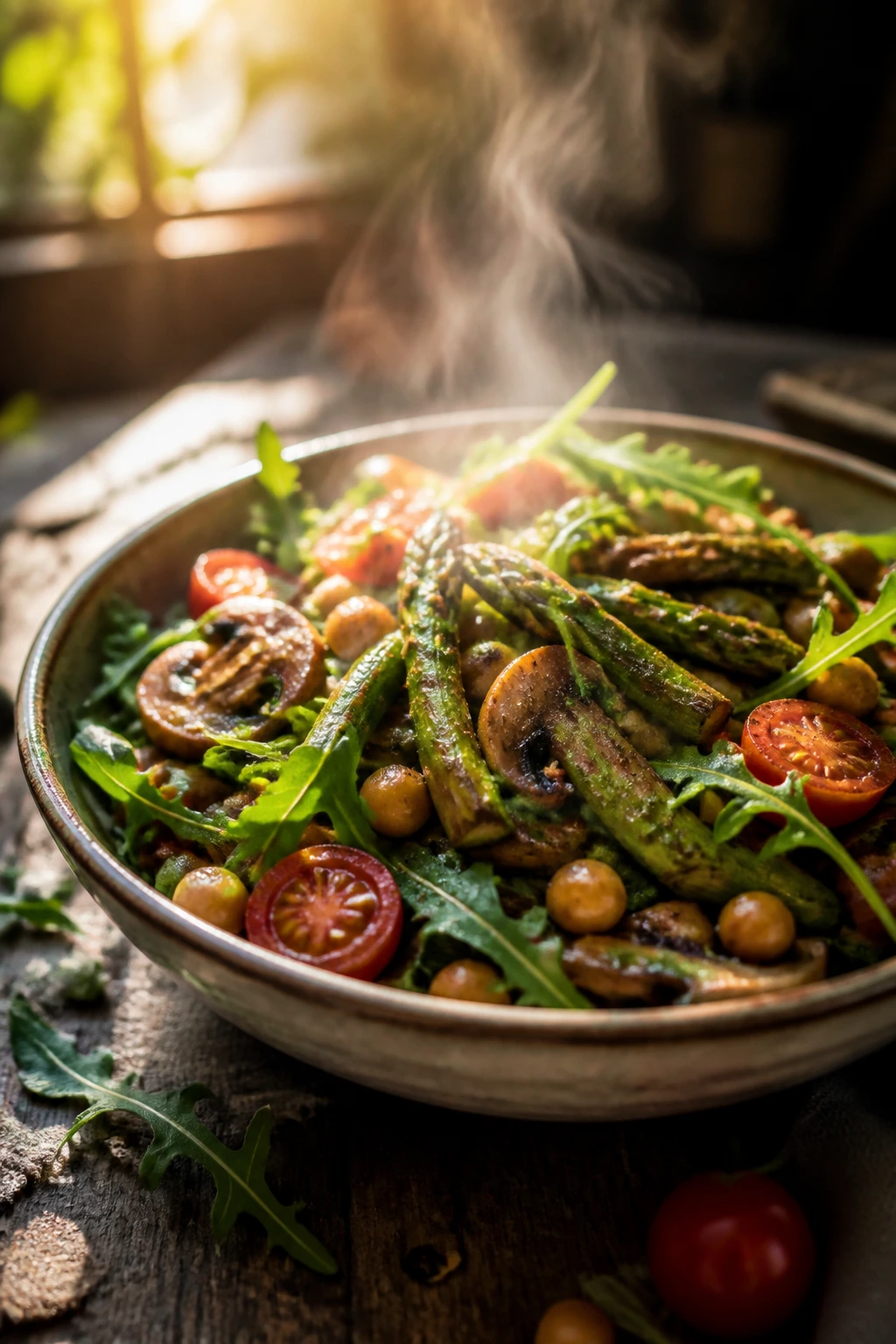
A light warm salad with homemade dressing has a way of making a plate feel awake. The vegetables are warm enough to smell like themselves, the greens still have a little snap, and the dressing lands on top like the last clean brushstroke on a canvas. Miss the timing and the whole thing slides toward limp, soupy disappointment. Get it right and the bowl tastes sharper, fresher, and more deliberate than a pile of ingredients has any right to taste.
The version I keep coming back to uses arugula, asparagus, mushrooms, chickpeas, cherry tomatoes, cucumber, feta, and a lemon-Dijon dressing. Nothing fussy. The trick is in the sequence: roast the vegetables until the edges pick up color, let them cool for a minute or two so they do not scorch the greens, then dress the bowl while the hot vegetables are still carrying steam. That little window matters.
I like warm salads because they do not ask you to choose between comfort and freshness. You get both. The chickpeas bring chew, the almonds bring crunch, the tomatoes collapse just enough to sweeten the dressing, and the arugula keeps the whole thing from feeling heavy. It is the kind of salad that works for lunch, for a side dish, or for dinner when you want a full plate that still feels light on the fork. The ingredients are simple, but the order they meet each other is the whole story.
Why You’ll Want This Bowl on Repeat
-
Fast Assembly: The oven handles the vegetables while you whisk the dressing, so the active work stays close to 20 minutes instead of taking over the evening.
-
Four Textures in One Forkful: Roasted asparagus, soft tomatoes, chewy chickpeas, and sliced almonds give the salad a real mix of bite, which is exactly what a warm salad needs.
-
Bright Homemade Dressing: Lemon, Dijon, garlic, and olive oil make a vinaigrette that clings to the vegetables instead of pooling at the bottom of the bowl.
-
Flexible Enough for the Fridge: If you have mushrooms, broccoli, green beans, or white beans on hand, the same method still works with very little adjustment.
-
Light, But Not Thin: The arugula keeps the bowl sharp, while the chickpeas and feta give it enough body to stand in as lunch without feeling like rabbit food.
-
Better Than a Room-Temperature Salad: Warm vegetables release aroma and sweetness that cold raw vegetables never quite give you. That is the point.
Yield: Serves 4 as a main salad or 6 as a side
Prep Time: 20 minutes
Cook Time: 20 minutes
Total Time: 40 minutes
Chill/Rest Time: None
Difficulty: Beginner — the method is straightforward, but the vegetables need to be handled in the right order.
Best Served: Right after assembly, while the roasted vegetables are still warm and the greens still have some snap.
Why a Warm Salad Feels Different from a Cold Bowl
A cold salad asks every ingredient to behave at the same temperature. A warm salad gets to cheat. The heat from the vegetables softens the edges of the dressing, wakes up the lemon, and makes the olive oil smell fuller. That is why the whole bowl feels more complete than a raw pile of leaves ever could.
There is also a practical reason this style works. Warm vegetables carry flavor differently than chilled ones. Roasted asparagus tastes greener. Mushrooms taste meatier. Cherry tomatoes get sweeter when their skins wrinkle and split at the seam, and chickpeas pick up a dry, nutty chew when they have had enough oven time to crisp a little on the outside. None of that happens by accident.
Homemade dressing matters here more than people tend to admit. A bottled dressing built for a cold salad is often too sweet, too thick, or too blunt for hot vegetables. A lemon-Dijon vinaigrette is thinner, brighter, and better at coating warm surfaces. Dijon helps it stay emulsified for just long enough to cling. That is the small but important trick.
I also think this format is one of the easiest ways to make vegetables feel like dinner without turning them into a casserole or burying them under cheese. The bowl still looks like a salad. It just eats with more depth.
The Short Ingredient List That Keeps This Salad Light
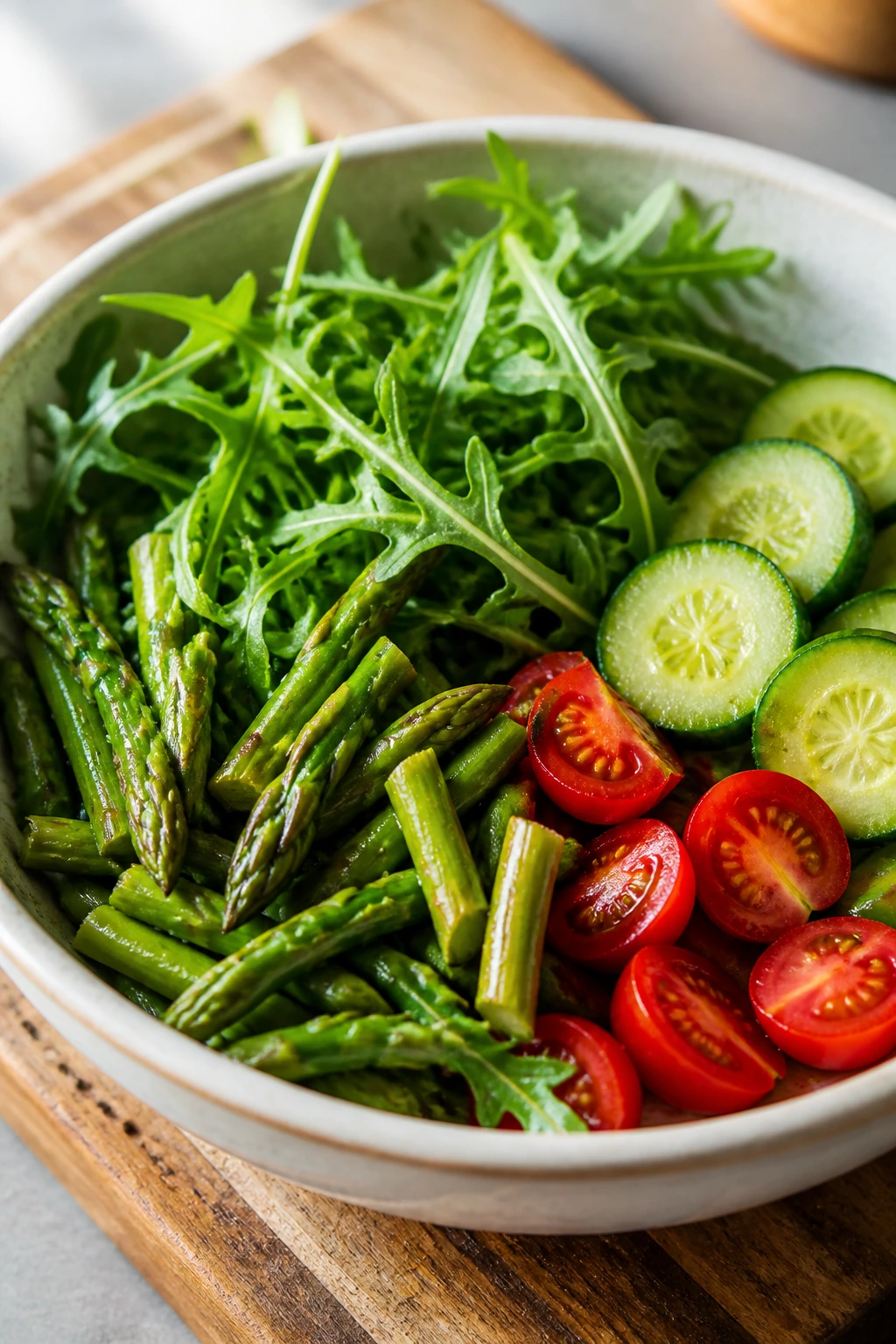
For the Salad
- 1 lb asparagus, trimmed and cut into 2-inch pieces
- 8 oz cremini mushrooms, halved or quartered if large
- 1 can (15 oz) chickpeas, drained, rinsed, and patted dry
- 1 pint cherry tomatoes
- 1 small red onion, cut into 1/2-inch wedges
- 3 tbsp extra-virgin olive oil
- 1 tsp kosher salt
- 1/2 tsp black pepper
- 5 oz baby arugula
- 1 medium cucumber, halved lengthwise and sliced into thin half-moons
- 1/3 cup sliced almonds
- 2 oz feta, crumbled
- 2 tbsp chopped fresh parsley or dill
For the Dressing
- 1/4 cup extra-virgin olive oil
- 3 tbsp fresh lemon juice
- 1 tbsp Dijon mustard
- 1 tsp honey
- 1 small garlic clove, finely grated
- 1/2 tsp kosher salt
- 1/4 tsp black pepper
The list stays short on purpose. The vegetables do the heavy lifting, and the dressing is there to sharpen, not smother. If you are tempted to add three more ingredients, pause and taste the finished bowl first.
How Each Ingredient Pulls Its Weight
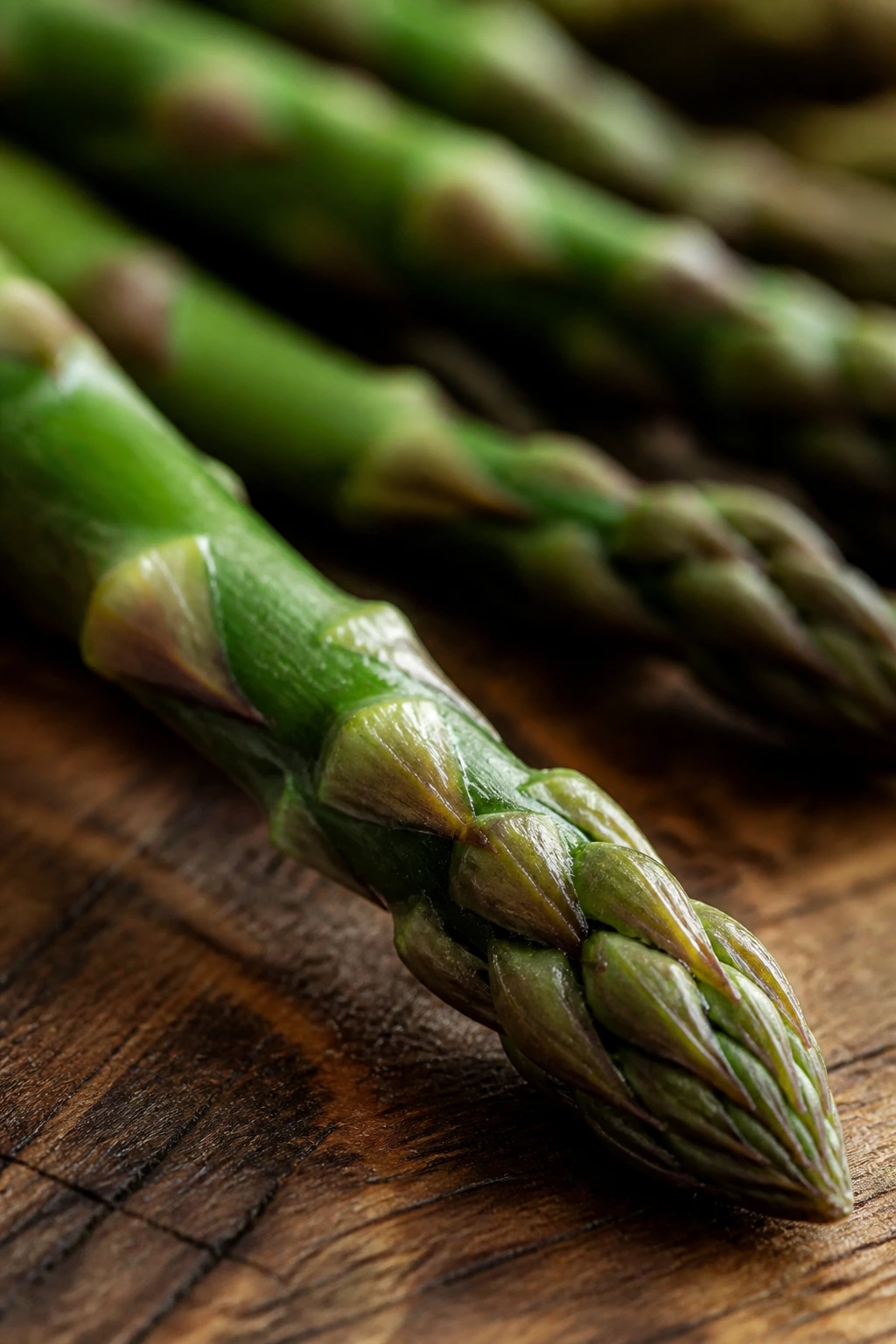
Greens and Cool Crunch
What to use: 5 oz baby arugula and 1 medium cucumber, sliced thin so it keeps a crisp bite.
Preparation: Spin the arugula dry and keep the cucumber chilled until the last minute. Dry leaves and cold cucumber make the warm vegetables feel warmer without turning the bowl soggy.
Substitutions: Baby spinach works if you want a softer leaf, watercress gives more pepper, and shaved fennel adds a clean anise edge.
Tips: Use a wide bowl, not a deep one. Steam trapped under a mound of greens is the quickest way to wreck the texture.
Roasted Vegetables
What to use: 1 lb asparagus, 8 oz cremini mushrooms, 1 pint cherry tomatoes, 1 small red onion, 3 tbsp olive oil, 1 tsp kosher salt, and 1/2 tsp black pepper.
Preparation: Trim the woody ends off the asparagus, cut the mushrooms so the cut sides can brown, and keep the onion in larger wedges so it softens without disappearing.
Substitutions: Broccoli florets, zucchini, green beans, or shaved Brussels sprouts all work if asparagus is not appealing.
Tips: Mushrooms need space. If they are crowded, they leak moisture and steam instead of browning, which gives the whole salad a duller, flatter flavor.
Protein and Crunch
What to use: 1 can chickpeas, 1/3 cup sliced almonds, and 2 oz feta.
Preparation: Dry the chickpeas well before roasting, toast the almonds until fragrant, and crumble the feta just before serving so it stays in soft, salty pieces.
Substitutions: Cannellini beans, sunflower seeds, pumpkin seeds, or goat cheese all fit here.
Tips: Chickpeas are not here as a token protein. They give the salad enough body to eat like a real meal, and the almonds keep the whole thing from feeling soft all the way through.
Homemade Dressing
What to use: 1/4 cup olive oil, 3 tbsp lemon juice, 1 tbsp Dijon mustard, 1 tsp honey, 1 small garlic clove, 1/2 tsp kosher salt, and 1/4 tsp black pepper.
Preparation: Whisk the dressing until it turns glossy and lightly thickened, or shake it in a jar until the mustard disappears into the oil.
Substitutions: White wine vinegar can replace part of the lemon juice, maple syrup can replace the honey, and a tiny grated shallot can stand in for the garlic if you want a softer bite.
Tips: Let the dressing sit for 5 minutes before using it if the garlic tastes too sharp. That short rest takes the edge off without muting the lemon.
Herbs and Finishes
What to use: 2 tbsp chopped fresh parsley or dill.
Preparation: Chop the herbs just before serving so they stay bright and do not bruise into the greens.
Substitutions: Chives, mint, or basil can step in depending on what is in the kitchen.
Tips: Add the herbs at the end. If they go in too early, the aroma gets buried under the warm vegetables instead of sitting on top of them.
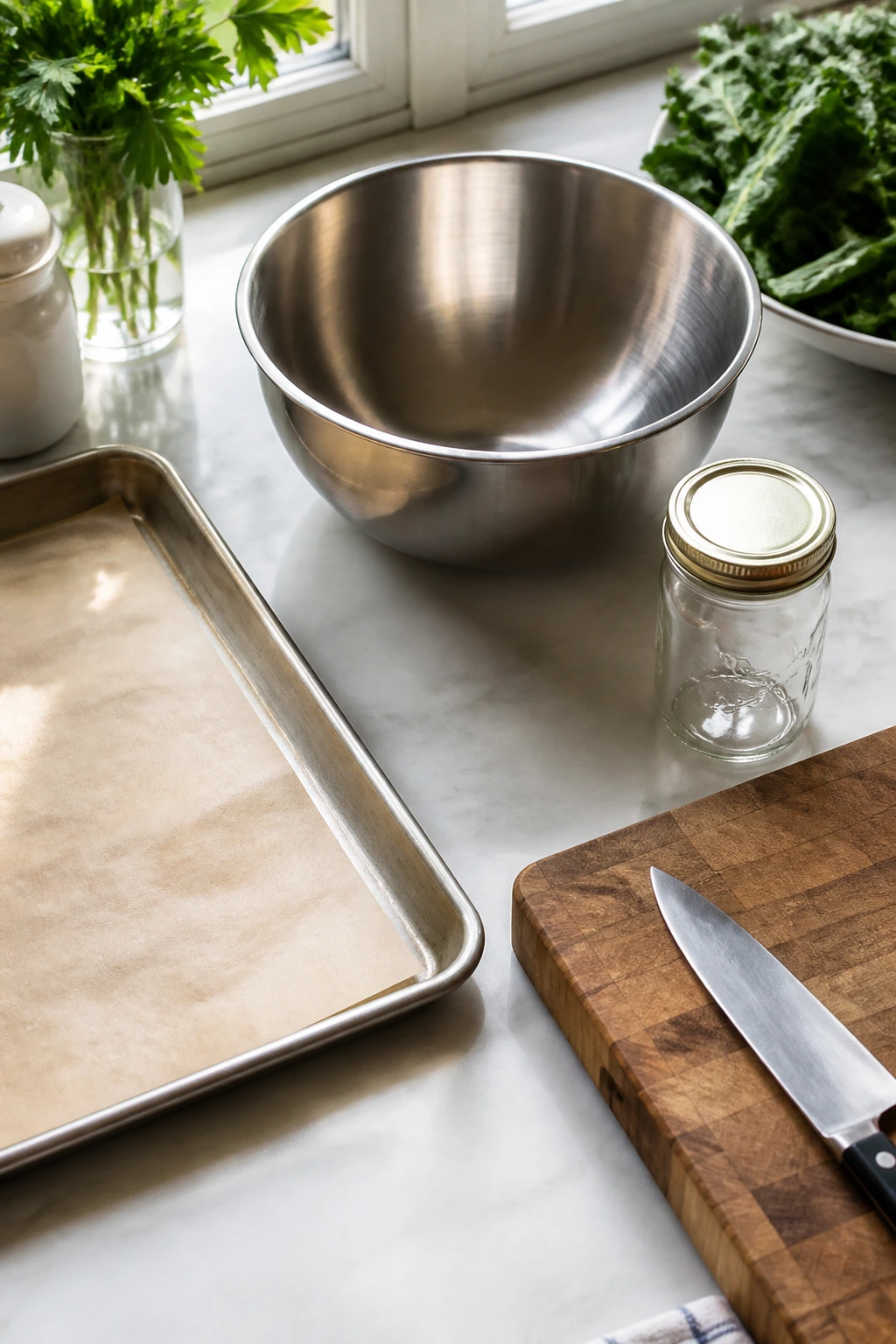
The Tools That Keep the Greens Crisp
-
Rimmed baking sheet — A half-sheet pan gives the vegetables enough space to roast instead of steam. If your pan is small, use two.
-
Parchment paper — Keeps the chickpeas and mushrooms from sticking and makes cleanup almost embarrassingly easy.
-
Large mixing bowl — A wide bowl gives you room to toss the salad without crushing the arugula under the hot vegetables.
-
Small bowl or jar with a lid — Either one works for the dressing. A jar is handy because you can shake it and store leftovers in the same container.
-
Chef’s knife — You will use it for the asparagus, onion, cucumber, and mushrooms. A sharp knife matters more here than a fancy one.
-
Cutting board — A stable board makes quick work of the vegetables. I like to keep a damp towel underneath so it does not slide around.
-
Tongs or a large spoon — Useful for tossing the vegetables halfway through roasting and for folding the salad together without bruising the leaves.
-
Salad spinner — Optional, but worth it if your arugula tends to hold water after washing. Wet leaves are a bad start.
How to Build the Salad Step by Step
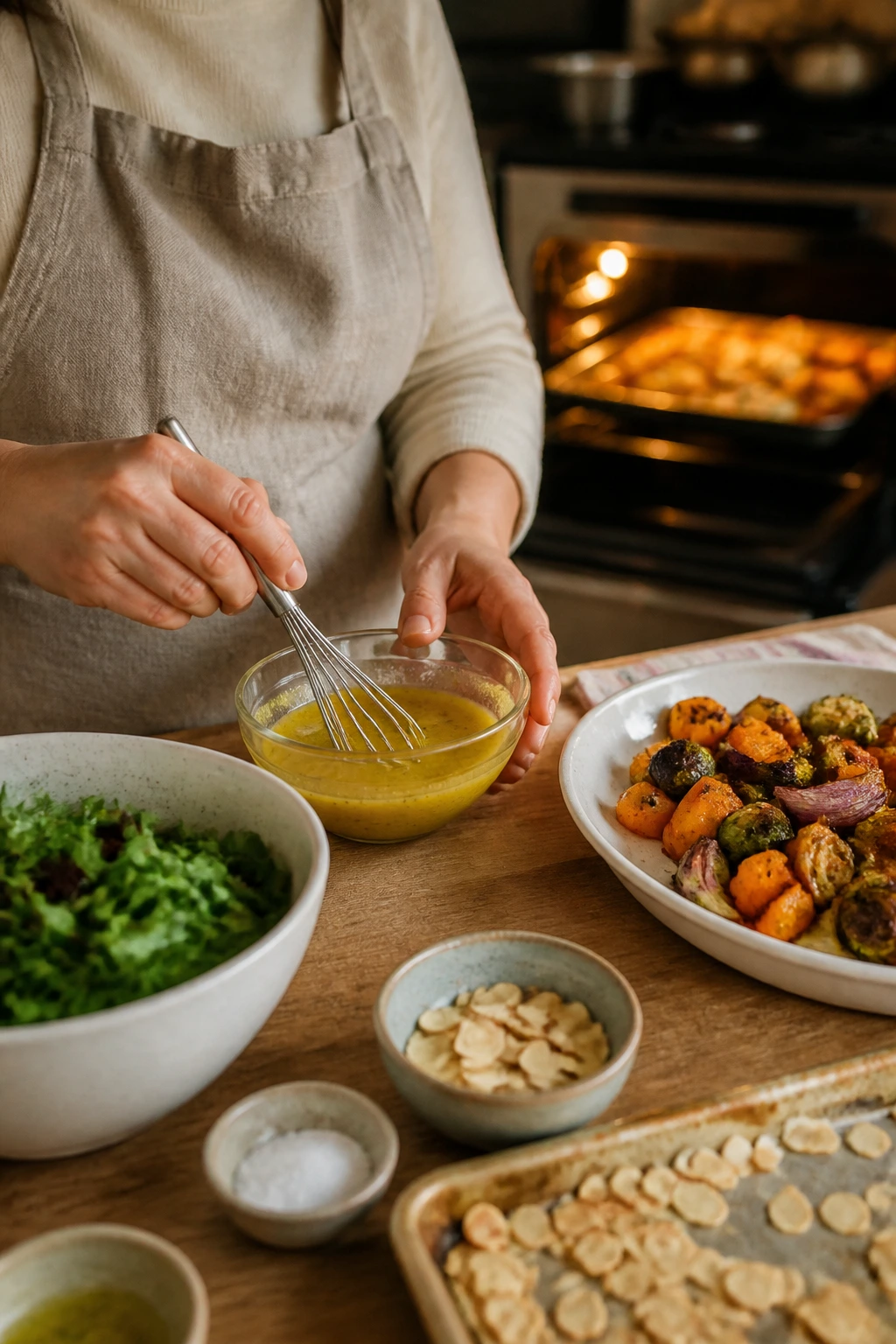
Mix the Dressing and Toast the Almonds
-
In a small bowl or jar, whisk together the 1/4 cup olive oil, 3 tbsp lemon juice, 1 tbsp Dijon mustard, 1 tsp honey, 1 grated garlic clove, 1/2 tsp kosher salt, and 1/4 tsp black pepper until the dressing looks smooth and slightly thickened. Set it aside while you roast the vegetables.
-
Place the 1/3 cup sliced almonds in a dry skillet over medium heat. Toast for 2 to 3 minutes, stirring often, until they smell nutty and the edges take on a pale golden color. Do not walk away here — sliced almonds go from pale to burnt in a blink. Transfer them to a plate as soon as they are ready.
Roast the Vegetables
-
Preheat the oven to 425°F (220°C) and line a rimmed baking sheet with parchment paper.
-
In a large bowl, toss the asparagus, mushrooms, chickpeas, cherry tomatoes, and red onion with the 3 tbsp olive oil, 1 tsp kosher salt, and 1/2 tsp black pepper. Spread everything out in a single layer on the baking sheet. Leave a little room between the pieces so the mushrooms and chickpeas can brown properly.
-
Roast for 18 to 22 minutes, stirring once halfway through, until the mushrooms are browned at the edges, the chickpeas look lightly blistered, the asparagus is tender-crisp, and the tomatoes are starting to wrinkle and split. If the pan looks crowded, use a second sheet pan instead of piling everything on one tray. Crowding turns roasting into steaming, and steaming is the enemy here.
Assemble and Finish
-
Put the baby arugula and cucumber in a large serving bowl. Let the roasted vegetables rest on the pan for 2 minutes, then add them to the bowl while they are still warm but not screaming hot. Drizzle with about half the dressing and toss gently until the leaves are just glossy and the arugula has started to soften at the edges.
-
Add the feta, toasted almonds, and chopped parsley or dill. Taste and add more dressing if needed. If the bowl tastes flat, finish with a pinch more salt or a squeeze of lemon instead of pouring on more oil. Serve immediately.
How to Serve It Without Wilt and Slack
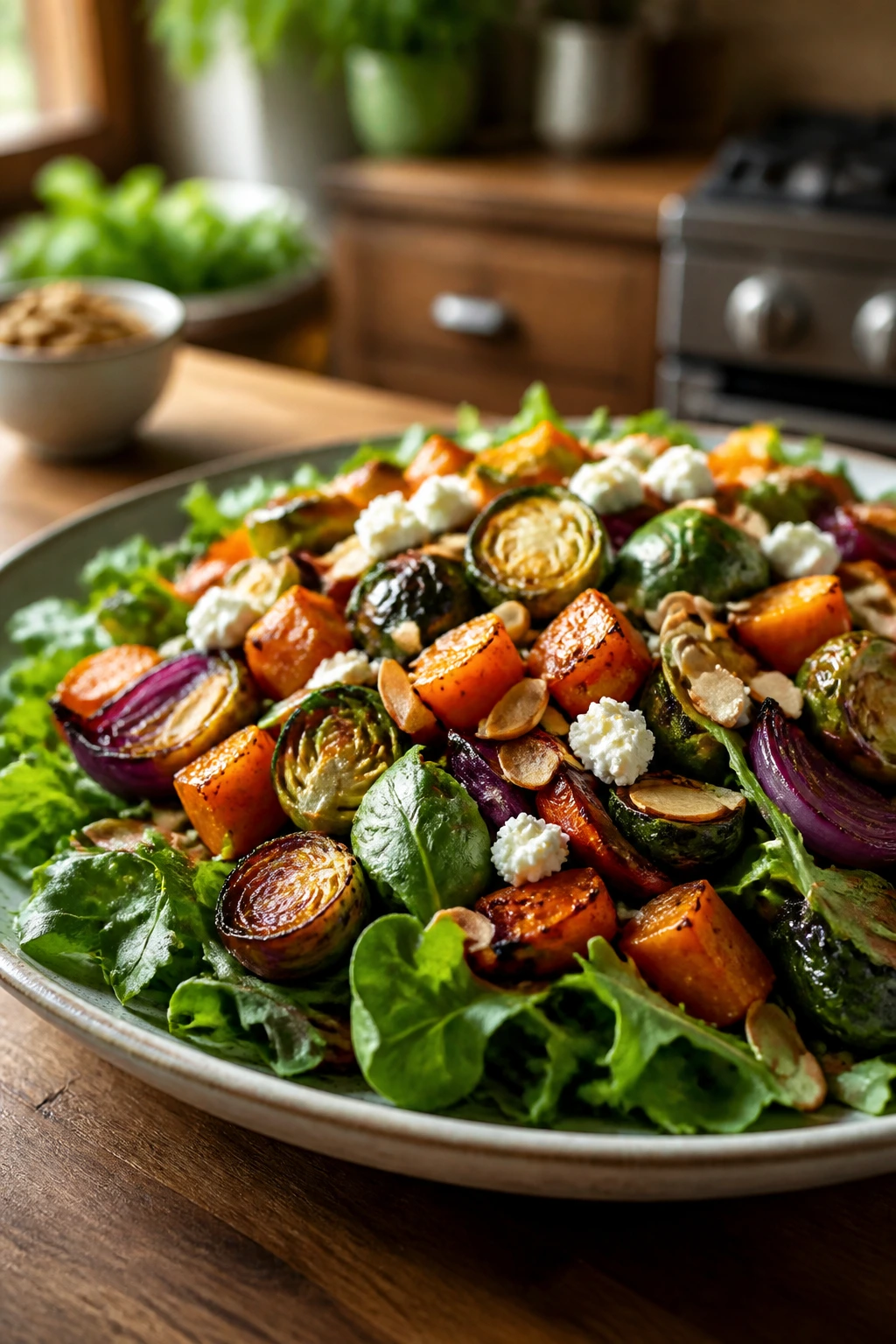
Presentation: Use a shallow bowl or a wide platter instead of a deep serving bowl. The warm vegetables need room to sit on top of the greens, not disappear underneath them. I like to scatter the feta and almonds last so the bowl still looks open and textured rather than packed down.
Accompaniments: A slice of crusty sourdough is the easiest side if you want bread. Grilled salmon, simple roasted chicken, or a soft-boiled egg turns the salad into dinner without changing the flavor profile much. If you are serving it as a side, it sits nicely next to soup, grilled fish, or a plain omelet.
Portions: Four main portions is the sweet spot for this recipe. For a side dish, it stretches to six if you keep the servings loose and do not overload each plate with the warm vegetables. If you want to scale it up, roast on two pans so the vegetables still brown instead of crowding together.
Beverage Pairing: A crisp Sauvignon Blanc or a dry rosé keeps pace with the lemon dressing. For a nonalcoholic option, sparkling water with cucumber and lemon is clean and matches the salad’s bright, sharp edges.
Small Tweaks That Make the Salad Taste Sharper
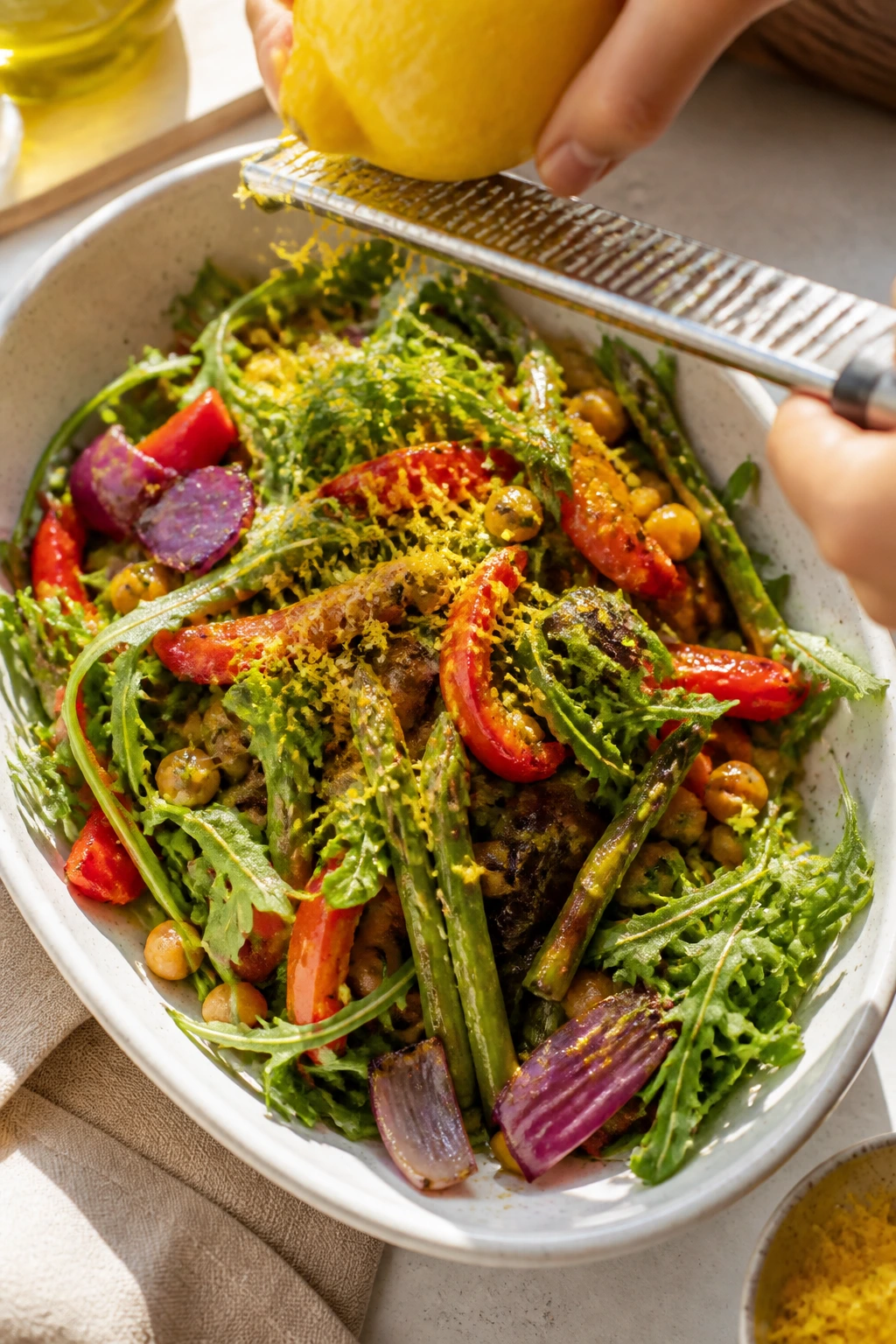
Flavor Enhancement: Add 1 teaspoon of lemon zest to the dressing if you want the bowl to smell brighter the second it hits the table. Zest gives you the lemon oil, not just the juice, and that little hit of aroma changes the whole first bite.
Time-Saver: Wash and dry the greens while the vegetables roast. The oven time becomes prep time, which is a much better use of those 20 minutes than standing around waiting for the timer to beep.
Pro Move: Let the roasted vegetables sit on the pan for 2 minutes before they touch the greens. That short pause takes the edges off the steam without cooling them enough to lose their warmth. It is a tiny thing, but tiny things are the difference between a salad that feels composed and one that feels soggy.
Cost-Saver: Swap the almonds for sunflower seeds and leave the feta out if you need to trim the price. The lemon-Dijon dressing still does the important work, and the salad keeps its crunch and brightness.
If you want a little more heft, add a handful of cooked quinoa or a few slices of grilled chicken. I would not add both unless you are turning the bowl into a full dinner. One anchor is enough.
The Mistakes That Turn a Warm Salad Limp
-
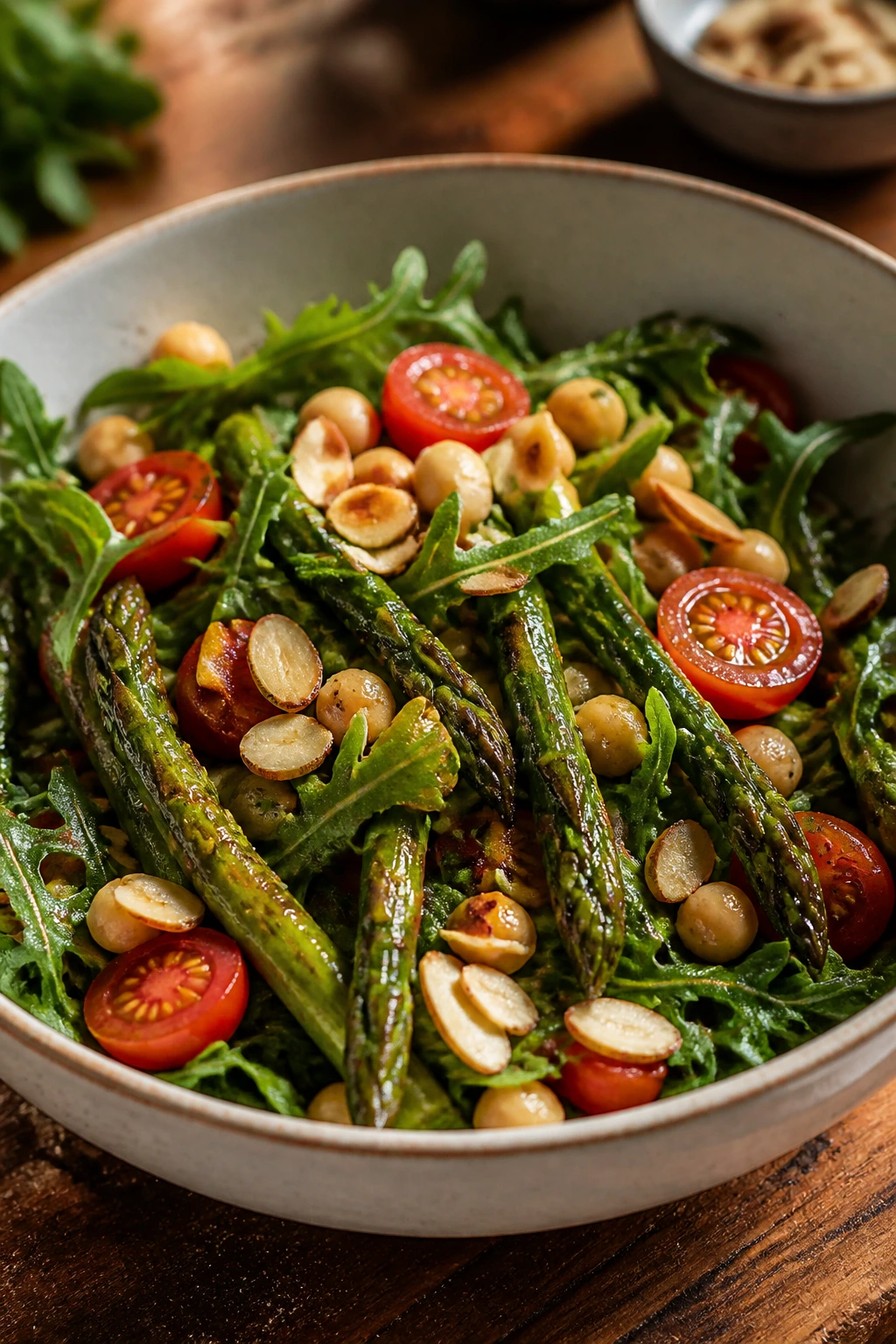
Crowding the pan: The vegetables steam, the chickpeas stay soft, and the mushrooms go pale instead of brown. Use a large sheet pan or split the batch across two pans.
-
Dressing the greens too early: Arugula goes floppy fast once the hot vegetables hit it. Wait until the vegetables are out of the oven and toss right before serving.
-
Using wet chickpeas: Moist chickpeas roast into chewy little pebbles instead of picking up a crisp skin. Drain them, rinse them, then pat them dry with a clean towel.
-
Overcooking the asparagus: Thin spears can go from tender to stringy in a couple of minutes. Pull the tray when the stalks still have a slight bite and the tips look bright, not dull.
-
Pouring on too much dressing: The bowl becomes slick and the arugula loses its edge. Start with half, toss, taste, then add more only if the vegetables still need it.
-
Skipping the final taste: Warm vegetables can absorb salt differently after roasting, and the feta adds its own salinity. Taste the assembled salad before serving so you know whether it needs lemon, salt, or nothing at all.
Three Ways to Change the Bowl Without Losing Its Shape
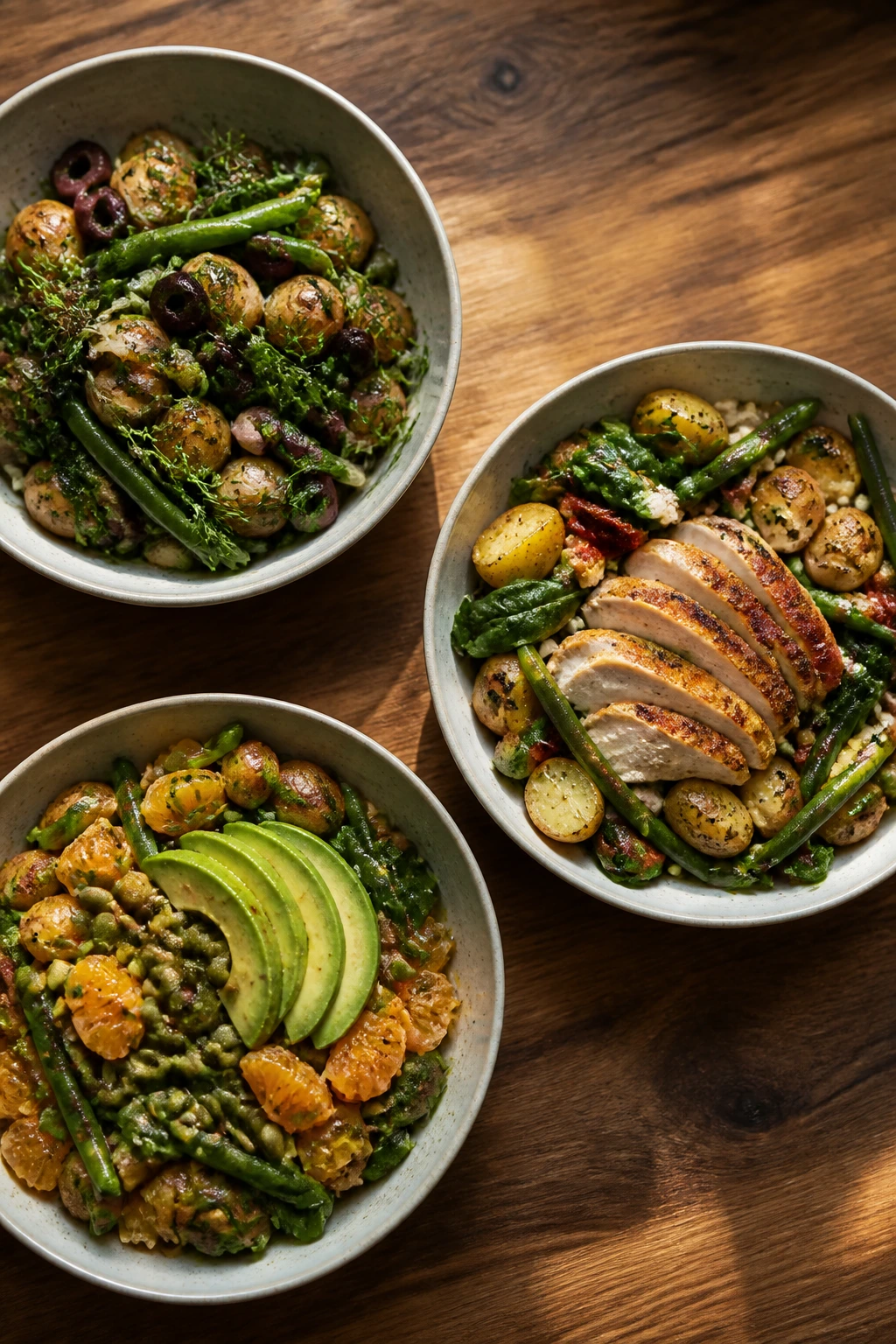
Mediterranean Olive-and-Caper Version
Add 1/3 cup sliced olives and 1 tbsp capers after the vegetables come out of the oven. Swap the parsley for dill and add a pinch of oregano to the dressing. This version gets saltier and sharper, which I like when the rest of the table is heavy on bread or grilled meat.
Protein-Forward Dinner Bowl
Top the finished salad with 8 oz grilled chicken, salmon, or seared tofu. Keep the vegetables and dressing exactly the same, then reduce the salad to two large dinner portions. The warm vegetables keep the plate from feeling like plain protein and leaves.
Dairy-Free Citrus Bowl
Skip the feta and add 1/4 avocado, sliced, plus 2 tbsp toasted pumpkin seeds. A little extra parsley and an extra squeeze of lemon keep the bowl lively without bringing dairy back in. The avocado makes the salad softer and richer, so I would use this one when you want a smoother finish.
Broccoli and White Bean Swap
Replace the asparagus with 1 small head broccoli, cut into florets, and swap the chickpeas for 1 can cannellini beans. Broccoli needs a few extra minutes in the oven, and the white beans bring a creamier bite than chickpeas. This version feels a little more substantial, but it still stays light enough to work as lunch.
Make-Ahead, Storage, and Reheating
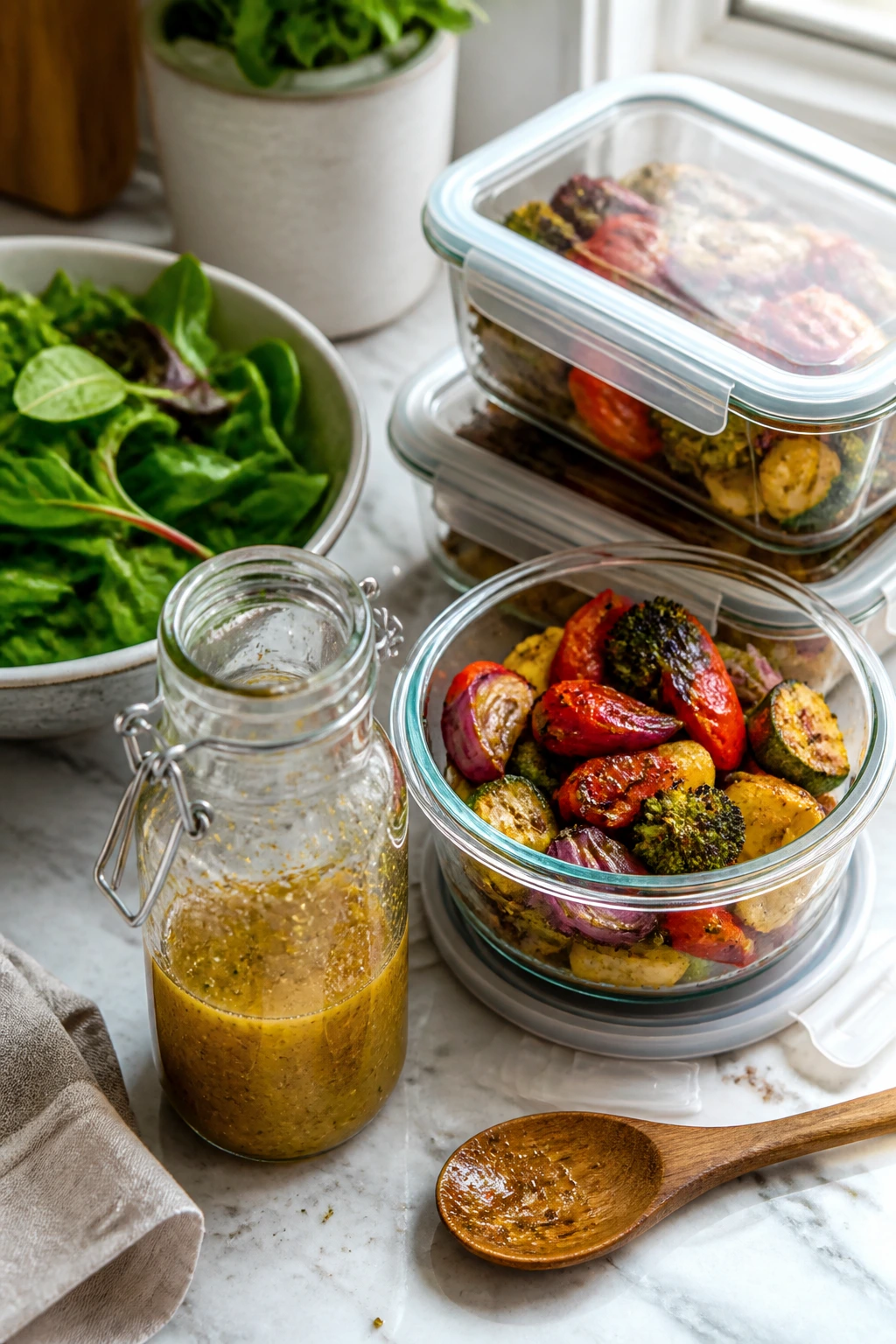
The dressing keeps best in a sealed jar in the fridge for 5 to 7 days. It will separate as it sits, which is normal. Shake it hard before using, and let it sit at room temperature for 5 minutes if the olive oil turns cloudy.
The roasted vegetables and chickpeas hold up for up to 3 days refrigerated in an airtight container. Keep the almonds, feta, greens, and cucumber separate if you want the leftovers to taste close to fresh. The vegetables can be reheated in a 400°F oven for 6 to 8 minutes or in a hot skillet over medium heat for 3 to 4 minutes until warm again.
An assembled salad is at its best immediately, and that is not me being dramatic. Once the dressing and hot vegetables touch the arugula, the greens start to relax. If you do need to save leftovers, store the components separately and assemble only the portion you plan to eat.
Freezing is not a good match for the finished salad. The dressing does not freeze cleanly, and the asparagus, tomatoes, and cucumber lose too much texture after thawing. If you want to freeze anything, freeze only the roasted chickpeas and vegetables for up to 1 month, knowing the texture will be softer when they come back.
For make-ahead planning, the easiest order is this: make the dressing up to a week ahead, roast the vegetables the day before or the morning of, wash and dry the greens early, and toast the almonds whenever you have a free minute. That spread keeps the final assembly quick without making the salad feel like leftovers wearing a costume.
Frequently Asked Questions
Can I make this salad without chickpeas?
Yes. White beans, lentils, or grilled chicken all work, but chickpeas are the easiest vegetarian option because they hold their shape in the oven and give the salad some chew. If you leave them out, add a little extra vegetable or nuts so the bowl still feels complete.
What greens work best if I do not like arugula?
Baby spinach is the softest swap, but it wilts faster and has less bite. Watercress or a baby kale mix works better if you still want a leafy edge that can handle warm vegetables.
Can I roast everything ahead of time?
You can roast the vegetables and chickpeas up to 3 days ahead, then reheat them in a hot oven or skillet before assembling. Do not reheat the greens; keep them cold and add them only when the vegetables are ready to serve.
Do I have to use homemade dressing?
No, but I think this salad loses a lot if you use a thick bottled dressing. The lemon-Dijon vinaigrette is thinner, brighter, and better at coating warm vegetables, which is half the appeal of the dish.
How do I keep the salad from getting soggy?
Dry the chickpeas, do not crowd the pan, and wait to dress the greens until the vegetables are warm but not steaming. If you use cucumber, slice it thin and keep it chilled until the last minute.
Can I serve this as a full meal?
Yes. Four portions works as a main course, and the salad can stretch further if you add grilled fish, chicken, tofu, or a soft-boiled egg. If you are serving it solo, keep the almonds and feta generous so the bowl has enough body.
What if my vegetables taste bland after roasting?
The usual cause is under-salting or crowding the pan. Add a pinch more salt while the vegetables are still hot, then hit them with a fresh squeeze of lemon before they go on the greens.
A Bowl Worth Repeating
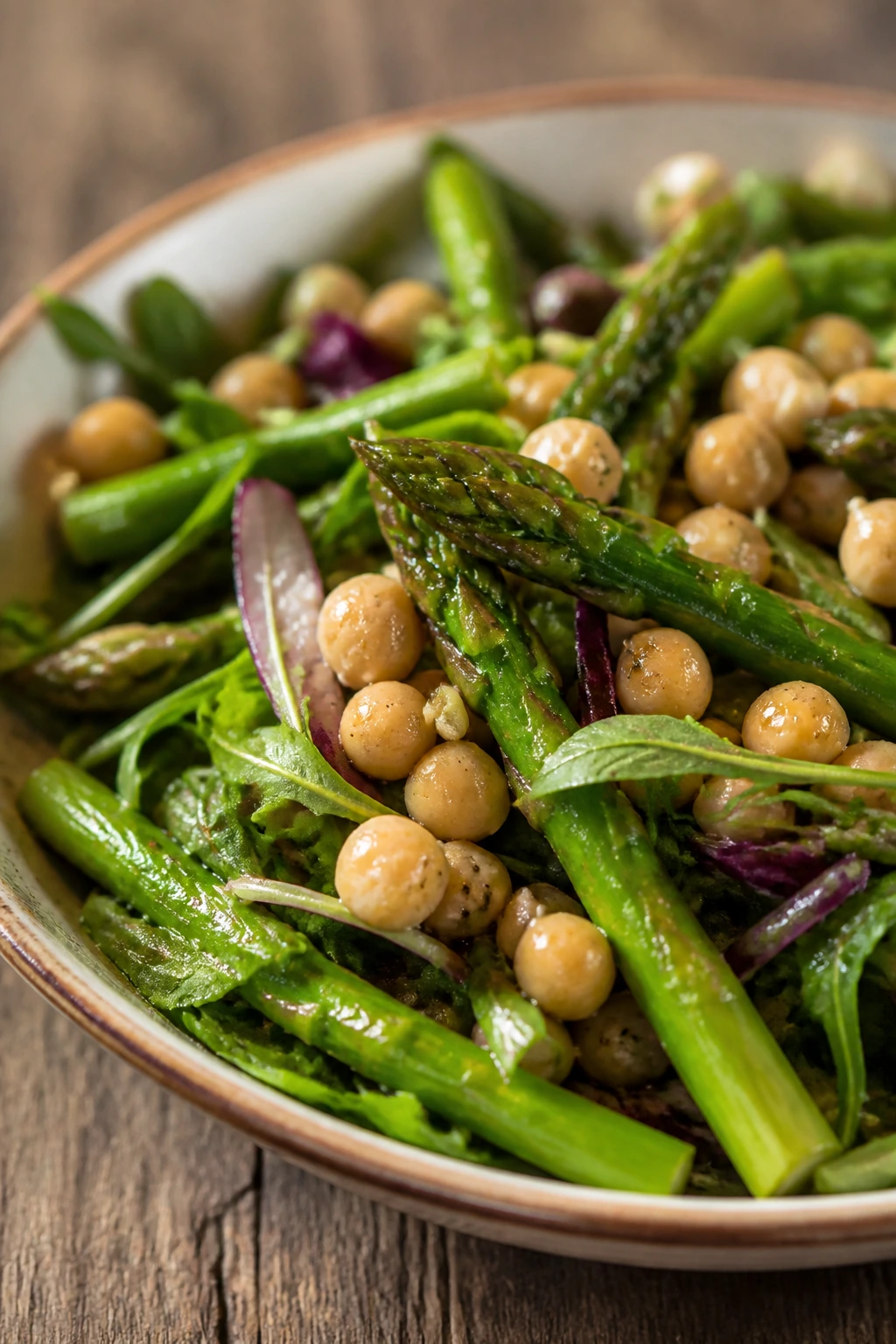
A warm salad works when the hot parts and the cold parts keep their own identities. That sounds a little fussy until you taste the difference: the asparagus stays bright, the chickpeas hold their chew, and the dressing moves through the bowl instead of disappearing into it. The whole plate feels more awake than a standard cold salad, and it still eats light.
Make this once and it starts to change the way you think about salads. Not as a pile of leaves. As a quick composition of textures, heat, acid, and salt that only needs a hot pan and a decent vinaigrette to feel finished. Once you have the rhythm, the vegetables become the variable — and that is the part that keeps this recipe useful.
Light Warm Salad with Homemade Dressing — Recipe Card
Recipe Name: Light Warm Salad with Homemade Dressing
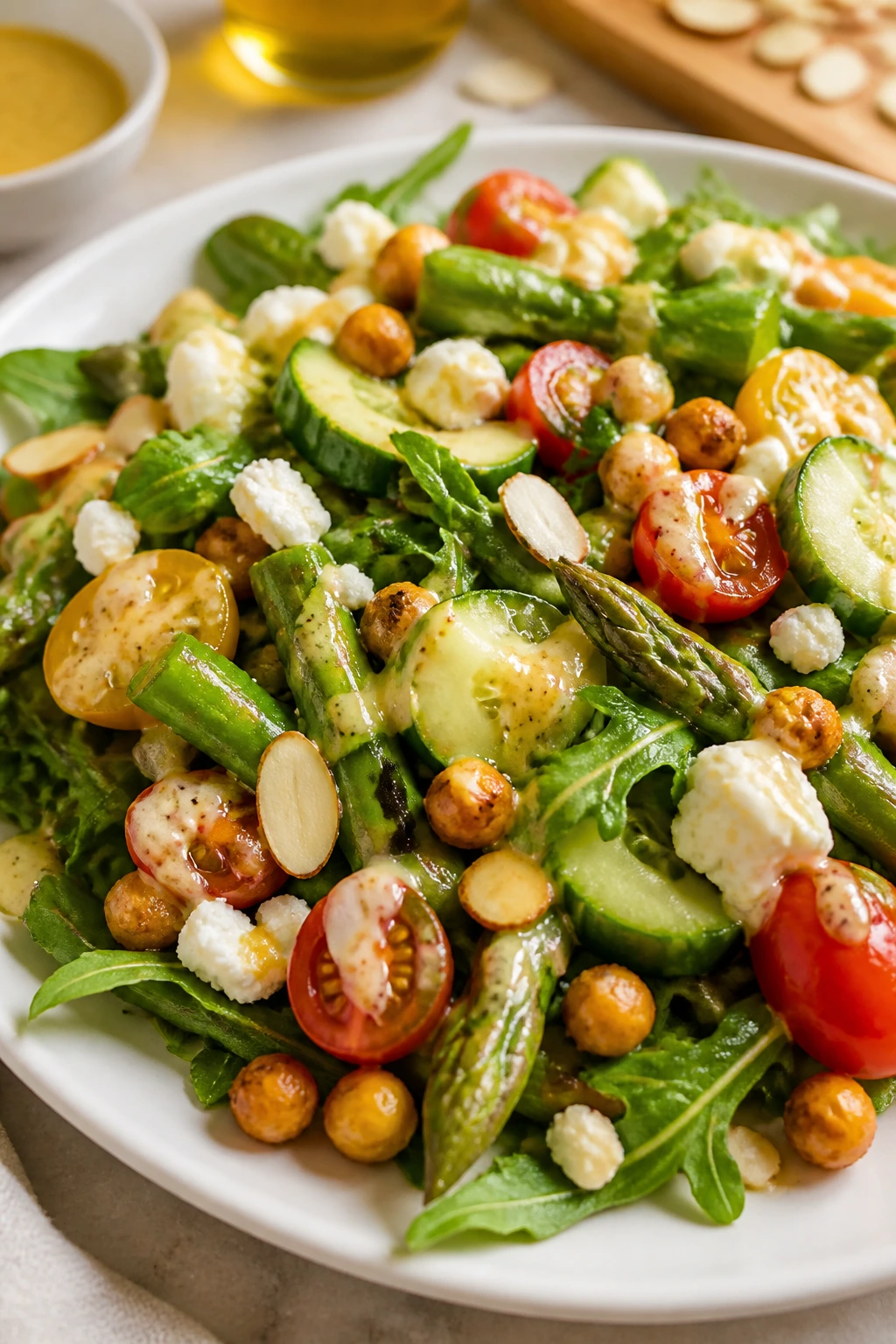
Description: A warm vegetable salad with peppery arugula, roasted chickpeas, tender asparagus, cherry tomatoes, cucumber, feta, toasted almonds, and a bright lemon-Dijon dressing. The contrast between warm vegetables and cool greens keeps every bite crisp and lively.
Prep Time: 20 minutes
Cook Time: 20 minutes
Total Time: 40 minutes
Course: Lunch, Side Dish, Light Dinner
Cuisine: Mediterranean-inspired
Servings: 4 servings
Calories: About 375 kcal per serving
Ingredients
For the Salad
- 1 lb asparagus, trimmed and cut into 2-inch pieces
- 8 oz cremini mushrooms, halved or quartered if large
- 1 can (15 oz) chickpeas, drained, rinsed, and patted dry
- 1 pint cherry tomatoes
- 1 small red onion, cut into 1/2-inch wedges
- 3 tbsp extra-virgin olive oil
- 1 tsp kosher salt
- 1/2 tsp black pepper
- 5 oz baby arugula
- 1 medium cucumber, halved lengthwise and sliced into thin half-moons
- 1/3 cup sliced almonds
- 2 oz feta, crumbled
- 2 tbsp chopped fresh parsley or dill
For the Dressing
- 1/4 cup extra-virgin olive oil
- 3 tbsp fresh lemon juice
- 1 tbsp Dijon mustard
- 1 tsp honey
- 1 small garlic clove, finely grated
- 1/2 tsp kosher salt
- 1/4 tsp black pepper
Instructions
-
Whisk together the dressing ingredients in a small bowl or jar and set aside.
-
Toast the sliced almonds in a dry skillet over medium heat for 2 to 3 minutes, stirring often, until fragrant and lightly golden. Transfer to a plate.
-
Preheat the oven to 425°F (220°C) and line a rimmed baking sheet with parchment paper.
-
Toss the asparagus, mushrooms, chickpeas, cherry tomatoes, and red onion with the olive oil, salt, and pepper. Spread in a single layer on the prepared sheet pan.
-
Roast for 18 to 22 minutes, stirring once halfway through, until the mushrooms are browned, the chickpeas are lightly blistered, the asparagus is tender-crisp, and the tomatoes are wrinkled.
-
Add the arugula and cucumber to a large bowl. Let the roasted vegetables rest for 2 minutes, then add them to the bowl and toss gently with half the dressing.
-
Add the feta, toasted almonds, and herbs. Taste and add more dressing, lemon, or salt if needed. Serve immediately.
Notes: Keep the vegetables in a single layer so they brown instead of steam. Assemble the salad right before serving for the best texture. If you want a more filling version, add grilled chicken or salmon.