



The sauces that vanish first at a cookout are rarely the thick, sticky ones that cling like syrup. They’re the bright ones. The sauces that hit the tongue with a vinegar snap, a little mustard bite, smoke in the background, and enough sweetness to keep everything from tasting stern. That balance matters more once the grill is hot and the meat is already doing half the talking.
This tangy BBQ sauce is built for that exact moment. It can coat chicken thighs, pork chops, tofu, ribs, or grilled vegetables without turning into burnt sugar on the grates, and it tastes clean enough to eat by the spoonful if you catch yourself “testing” it three times in a row. I like sauces that pull flavor forward instead of smothering it, and this one does that job with a pantry lineup that behaves like it has something to prove.
There’s also the practical side, which backyard cookouts expose fast. A sauce that doubles as a marinade needs to be handled with a little care, because the bowl that touched raw meat is no longer your serving bowl, and because acid, salt, and sugar all behave differently once they meet heat. Get those details right and the sauce stays glossy, sharp, and steady from the first brush on the grill to the last dab on the plate.
Why This Sauce Earns Its Spot at the Cookout Table
-
Bright, not syrupy: The vinegar and mustard keep the sauce lively, so it cuts through smoky chicken skin instead of sitting on top of it like jam.
-
Two jobs, one batch: A clean portion can stay on the side for serving while the rest marinates meat, which makes the whole setup feel organized instead of messy.
-
Friendly with heat: The sugar level is high enough for color but low enough that a 10-to-12-minute simmer and a late brush on the grill keep it from burning into bitter spots.
-
Works across the grill: Chicken thighs, pork chops, tofu, shrimp, and even thick slabs of zucchini take on the sauce differently, but none of them fight it.
-
No special bottle required: Ketchup, cider vinegar, molasses, mustard, Worcestershire, and a few spices build a sauce with a deep, cookout-ready taste from plain grocery-store ingredients.
-
Tastes better after a short rest: A 20- to 30-minute cool-down lets the vinegar edge soften and gives the spices a chance to settle into the tomato base.
Why Tang Beats Sticky Sweetness Over Hot Coals
A lot of backyard sauces lean hard on brown sugar and stop there. That works until the grill gets hot enough to expose the trick. Sweetness alone turns clingy fast, and clingy sauce is exactly what burns first on the grate. Tang, on the other hand, keeps the sauce alert. It gives the meat something to meet instead of something to fight.
The vinegar in this sauce does more than make it taste bright. It keeps the flavor from going flat after a few minutes on smoke and flame, especially on fatty cuts like chicken thighs or pork shoulder slices. Mustard helps too; it brings a little bite and a faint savory note that keeps the sauce from reading as ketchup in a costume. Molasses rounds the sharpness and leaves a darker color on the meat, which is half the appeal of a good grill glaze.
Heat changes sugar fast. Around direct flames or a scorching grill surface, a sauce loaded with sugar can go from glossy to bitter in a hurry. That is why this version leans on vinegar and mustard, then asks you to brush it late. The goal is not to lacquer the meat from the start. The goal is to let the meat cook, then give it a shiny, tangy finish in the final minutes.
A sauce like this also has a better nose. The first whiff is vinegar and spice, then tomato and molasses, then the savory little backbeat from Worcestershire and soy. That smells like a cookout before the first burger even leaves the cooler.
The Sauce Ingredients, Measured for Tang and Smoke
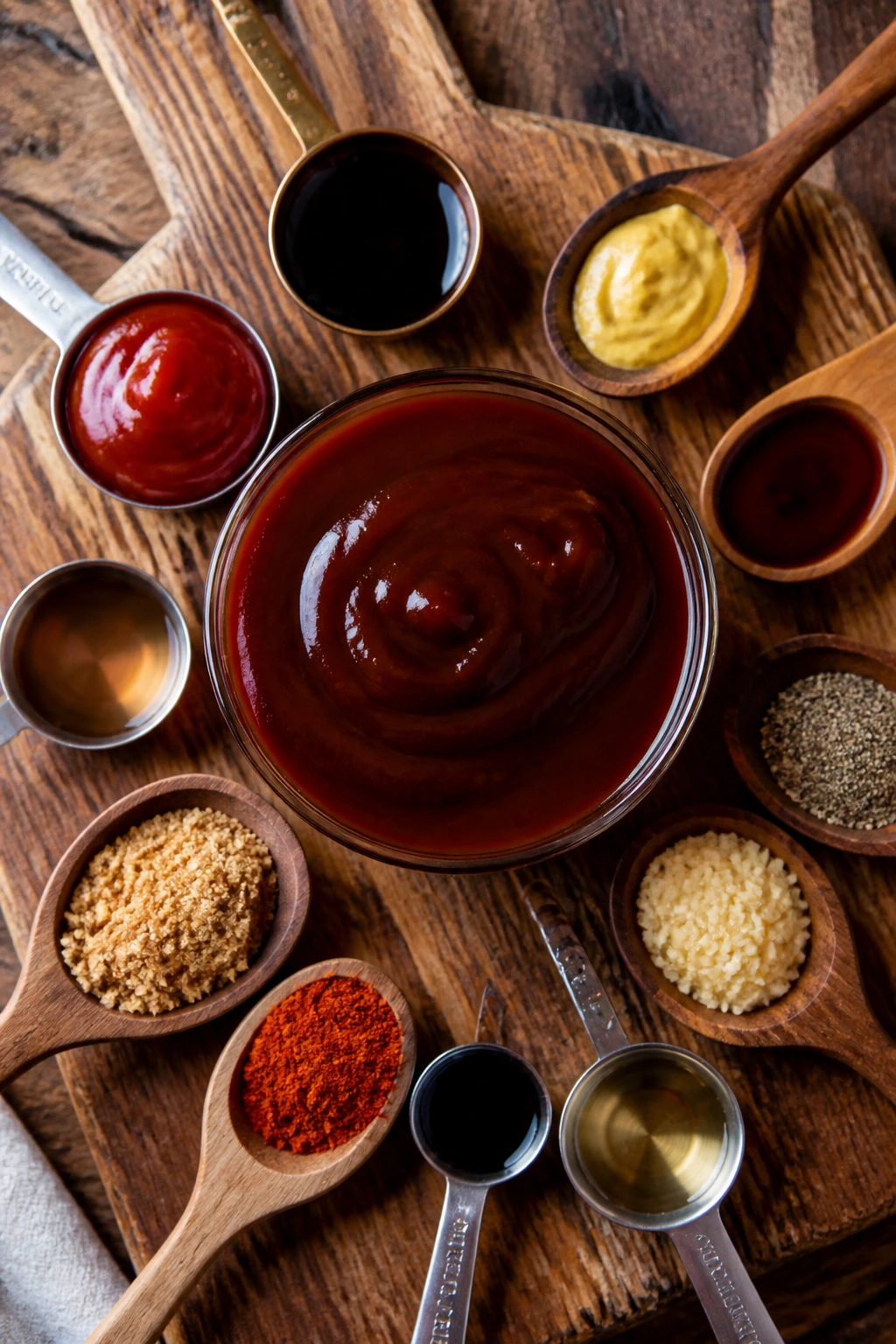
For the Sauce
- 1 cup ketchup
- 1/2 cup apple cider vinegar
- 1/4 cup water or unsweetened apple juice
- 1/4 cup packed dark brown sugar
- 2 tablespoons unsulfured molasses
- 2 tablespoons yellow mustard
- 1 tablespoon Worcestershire sauce
- 1 tablespoon soy sauce
- 1 tablespoon neutral oil or unsalted butter, melted
- 2 teaspoons smoked paprika
- 1 teaspoon garlic powder
- 1 teaspoon onion powder
- 2 cloves garlic, finely grated
- 1/2 teaspoon kosher salt, plus more to taste
- 1/2 teaspoon freshly ground black pepper
- 1/4 teaspoon cayenne pepper
- 1 tablespoon hot sauce, optional
Tomato Backbone
What to use: 1 cup ketchup, and nothing fancy is required here. A straightforward ketchup with a clean tomato taste gives the sauce body and the familiar barbecue base people expect.
Preparation: Measure it straight into the saucepan so it becomes the anchor for the vinegar, mustard, and spices. If your ketchup is especially thick, whisk it a little longer at the start so no clumps hide in the bottom of the pan.
Substitutions: Tomato paste can work in a pinch, but it needs extra water and a little more sugar to soften the edge. If you go that route, use 1/2 cup tomato paste plus 1/2 cup water and taste carefully before adding more sweetener.
Tips: Cheap ketchup is fine here. The vinegar, molasses, and spices do the heavy lifting, and the sauce will be cooked long enough that no one is sniffing for artisanal tomato notes.
Vinegar and Sweetness
What to use: 1/2 cup apple cider vinegar, 1/4 cup packed dark brown sugar, and 2 tablespoons unsulfured molasses. That trio is the heart of the tangy profile.
Preparation: Pack the brown sugar into the measuring cup so the amount is consistent, and stir the molasses well before measuring since it likes to cling to the spoon. If the molasses is stiff, let the spoon sit under warm water for a few seconds first.
Substitutions: White vinegar will make the sauce sharper and a little cleaner on the tongue; if you use it, add 1 tablespoon apple juice or honey to round it out. Maple syrup can replace part of the brown sugar if you want a softer, woodsy sweetness.
Tips: The acid should sound bright, not harsh. If the finished sauce makes you pucker before the meat touches it, give it a few more minutes on the stove or add another spoonful of brown sugar.
Mustard and Umami
What to use: 2 tablespoons yellow mustard, 1 tablespoon Worcestershire sauce, and 1 tablespoon soy sauce. These are the quiet depth-builders that keep the sauce from tasting one-note.
Preparation: Whisk them in early so they disperse evenly through the ketchup base. Yellow mustard is ideal because its plain, sharp flavor survives the simmer without turning muddy.
Substitutions: Dijon mustard works if you want a more grown-up bite, though it brings a slightly hotter mustard flavor. Tamari can replace soy sauce if you want a gluten-free version.
Tips: Don’t overdo the soy sauce. It adds salt and savory depth quickly, and too much will push the sauce toward a soy glaze instead of barbecue territory.
Spice Cabinet
What to use: 2 teaspoons smoked paprika, 1 teaspoon garlic powder, 1 teaspoon onion powder, 1/2 teaspoon black pepper, 1/4 teaspoon cayenne pepper, and 2 cloves finely grated garlic.
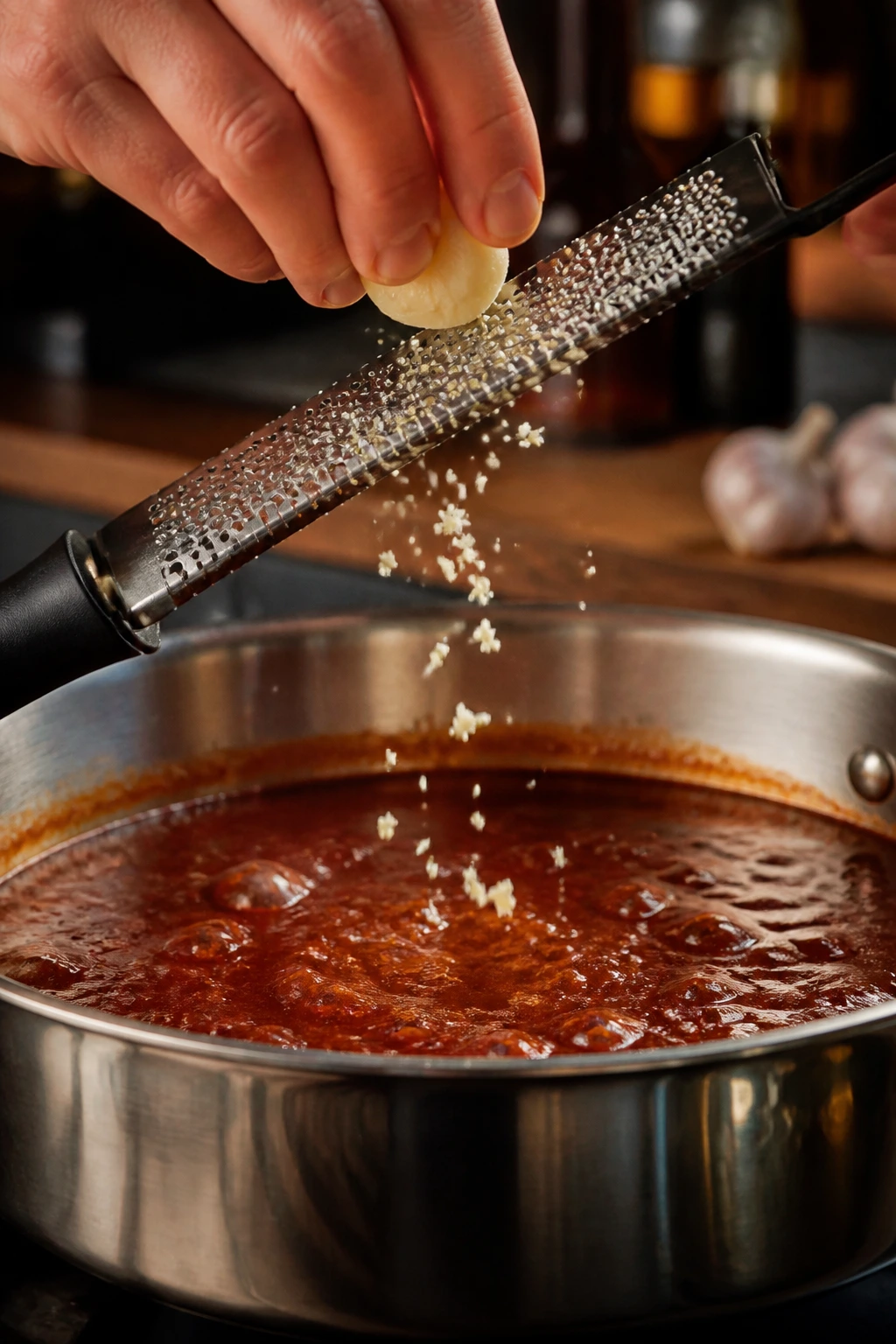
Preparation: Grate the garlic so it melts into the sauce rather than standing out in harsh little pieces. If you’re using a microplane, keep your fingertips away from the last inch of the clove — that thing has a sharp edge.
Substitutions: Sweet paprika can replace smoked paprika if that’s all you have, but the sauce will lose some grill character. A pinch of chipotle powder can stand in for part of the cayenne if you want smoke with the heat.
Tips: Smoked paprika blooms nicely in warm fat. That’s one reason the oil or butter matters here; it helps the spice taste fuller instead of dusty.
Body and Finish
What to use: 1/4 cup water or unsweetened apple juice, plus 1 tablespoon neutral oil or unsalted butter. The liquid loosens the sauce at the start, and the fat gives it a sheen.
Preparation: Use room-temperature water so the sauce doesn’t seize when it hits the pan. If you choose butter, melt it first so it disappears cleanly into the sauce.
Substitutions: Apple juice adds a faint fruit note and works well with pork. Neutral oil keeps the sauce more stable if you plan to refrigerate it or use it as a marinade the same day.
Tips: A sauce that starts out a touch loose often finishes better than one that’s already thick. It will reduce on the stove and tighten again as it cools, so don’t panic if it looks a little thin midway through cooking.
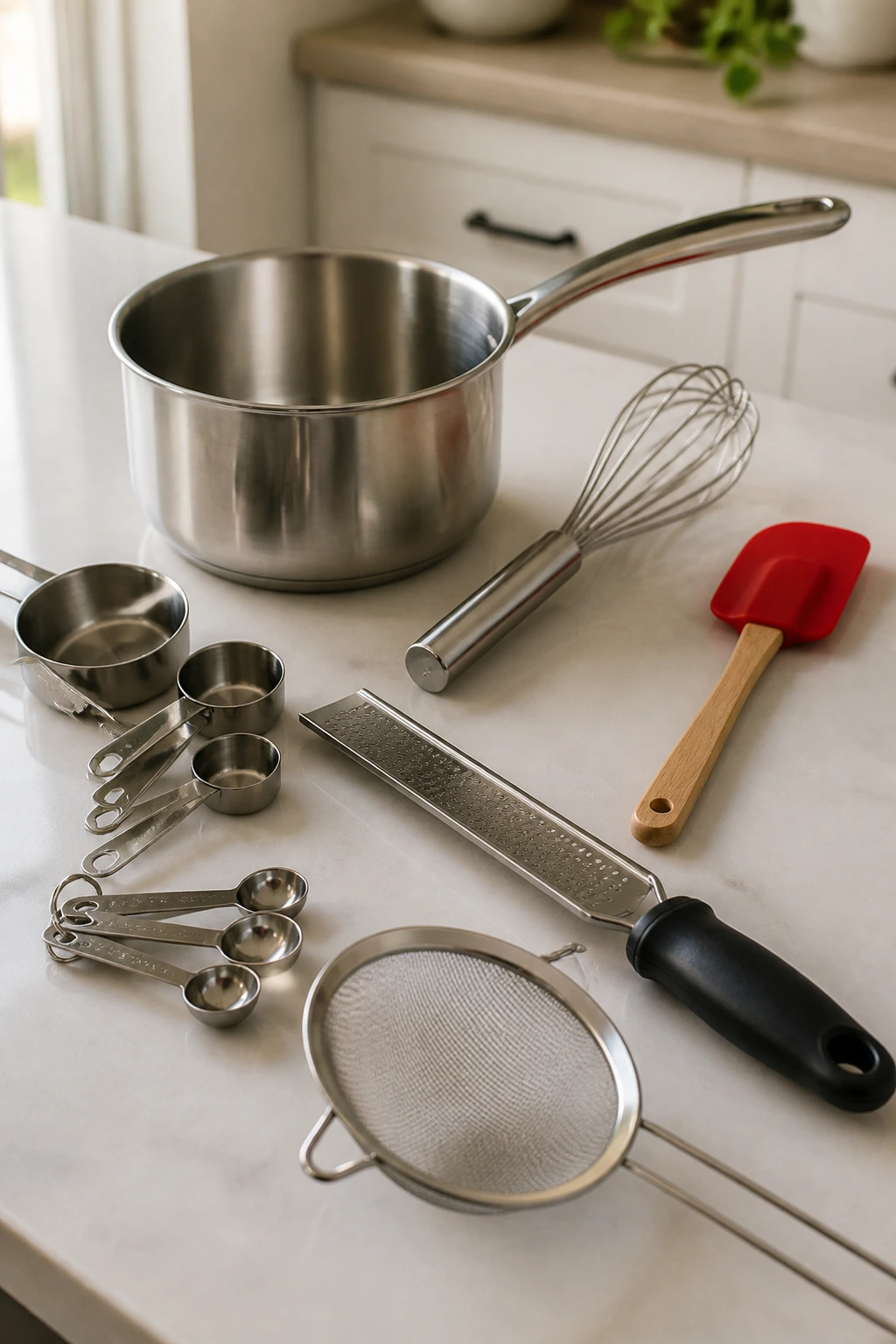
The Tools That Make a Glossy Sauce Easier
-
2-quart saucepan: Big enough to keep the sauce from splattering while still letting it reduce quickly.
-
Whisk: Better than a spoon for blending ketchup, mustard, and vinegar into one smooth base.
-
Silicone spatula: Useful for scraping the bottom of the pan so sugar doesn’t catch and scorch in one spot.
-
Microplane or fine grater: Best for grating the garlic so it melts into the sauce instead of floating around in chunks.
-
Measuring cups and spoons: The ratios matter here; an extra splash of vinegar or a heavy spoon of molasses changes the whole profile.
-
Heatproof bowl or mason jar: Needed for the clean reserved sauce, which should stay untouched once the raw meat comes into play.
-
Silicone pastry brush or clean basting brush: Handy if you want to paint the sauce on ribs or chicken during the last stretch on the grill.
-
Fine-mesh strainer, optional: Only needed if you want the smoothest possible finish after simmering grated garlic into the sauce.
How to Cook the Sauce Without Scorching the Sugar
Build the Base
-
Whisk the ketchup, apple cider vinegar, water, brown sugar, molasses, mustard, Worcestershire, soy sauce, oil or melted butter, smoked paprika, garlic powder, onion powder, grated garlic, salt, black pepper, cayenne, and hot sauce if using in a 2-quart saucepan until the mixture looks even and loose.
-
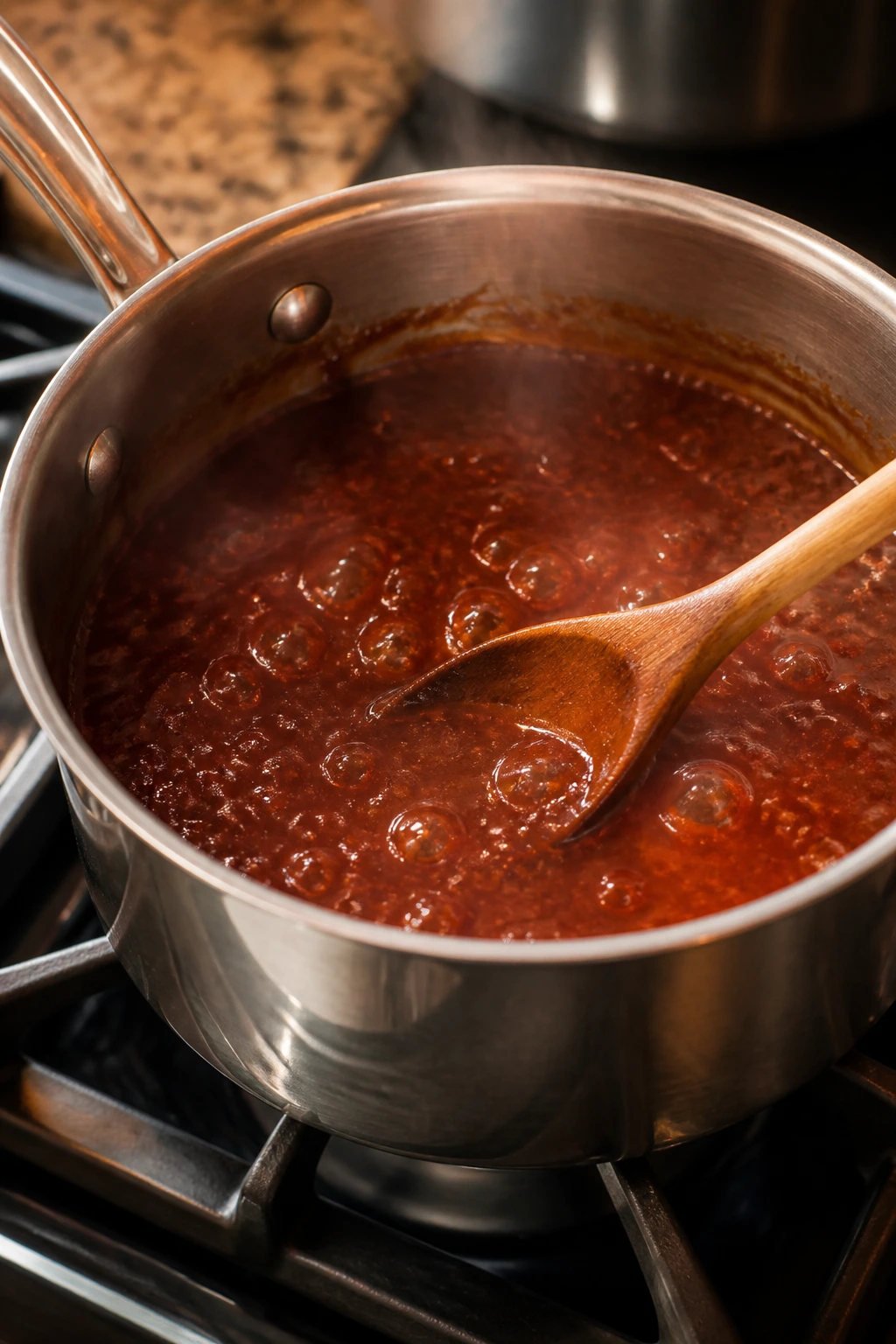
Set the pan over medium heat and bring the sauce to a gentle simmer, stirring every 20 to 30 seconds. The sugar should dissolve and the vinegar should lose that sharp, raw edge after about 4 to 5 minutes. Do not let it boil hard — once sugar starts slamming against the sides of the pan, bitterness shows up fast.
Reduce and Thicken
-
Lower the heat to medium-low and keep the sauce at a steady, lazy simmer for 10 to 12 minutes, stirring often and scraping the bottom of the pan. By the end, the sauce should look darker, glossier, and thick enough to coat the back of a spoon in a thin layer.
-
Drag a spoon through the sauce and watch the trail. If it closes quickly, give the sauce another minute or two; if it hangs open for a second before smoothing out, you’re in the right zone.
Taste and Adjust
-
Pull the pan partly off the heat and taste a small dab on a spoon. Add another teaspoon of vinegar if you want more snap, a teaspoon of brown sugar if the finish feels too sharp, or a pinch of salt if the flavors seem flat. Go slowly — a little vinegar changes the sauce more than people expect.
-
Whisk in the butter or oil until fully blended and the sauce turns shiny. If you want a silky finish, strain it now through a fine-mesh strainer, but I usually skip that step unless I’m serving it in a bowl where texture matters.
Cool It for the Grill
-
Set the pan aside and let the sauce cool for 20 to 30 minutes before using it as a marinade. It will thicken a little as it sits, so don’t judge the final texture while it’s still steaming.
-
Pour 1 cup of the cooled sauce into a clean bowl or jar and keep it untouched for serving. Use the rest for marinating the meat. Once raw meat touches the sauce, that portion belongs to the grill, not the table.
How to Turn the Sauce Into a Safe Marinade
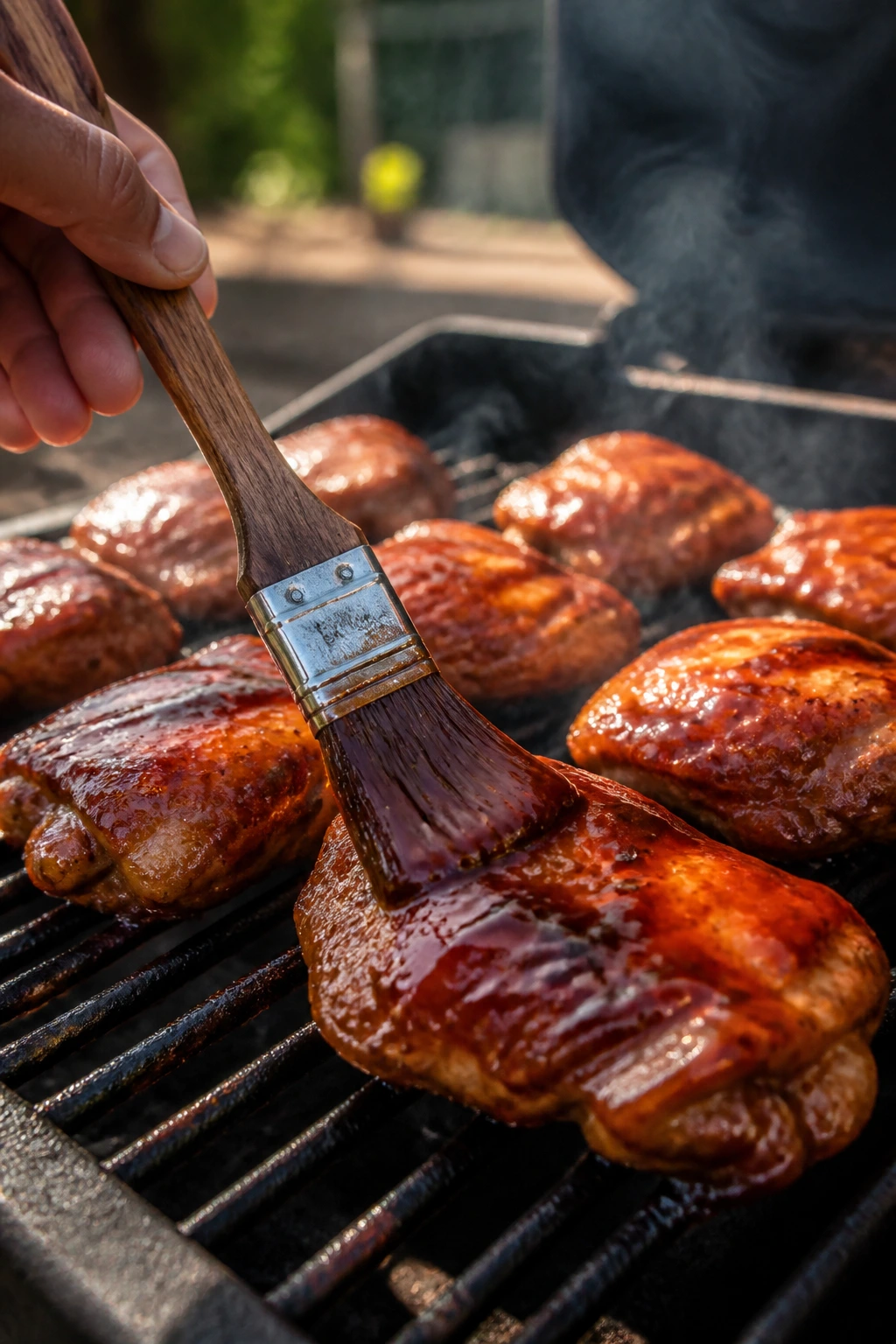
A good marinade needs enough salt, acid, and flavor to cling to the meat, but it also needs discipline. Tangy sauces can turn delicate proteins mushy if they sit too long, and they can turn a clean cookout into a food-safety headache if you forget which bowl touched what. The fix is simple: split the sauce before it ever meets raw meat.
I like to think of the sauce as having two lives. The first is the clean bowl that stays on the side for brushing and serving. The second is the working bowl that coats the chicken, pork, tofu, or shrimp. That separation sounds fussy until you’re standing at the grill, and then it feels like common sense.
For chicken thighs or drumsticks, 4 to 12 hours is the sweet spot. Chicken breasts can take less, usually 2 to 4 hours, because they dry out faster and the acid has less cushion to work with. Pork chops and tenderloin sit comfortably in the middle, about 2 to 6 hours. Shrimp is the delicate one — 15 to 30 minutes is enough, and much longer can make the outside turn soft in a way that no grill can fix.
If you want a rough map, this helps:
- Chicken thighs and drumsticks: 4 to 12 hours
- Chicken breasts: 2 to 4 hours
- Pork chops or tenderloin: 2 to 6 hours
- Shrimp: 15 to 30 minutes
- Tofu: 30 minutes to 2 hours
- Beef strips or flank steak: 2 to 6 hours
A shallow glass dish works well if the protein is flat. A zip-top bag is better for smaller cuts because the sauce coats every surface with less fuss. Either way, refrigerate the meat while it marinates, turn it once halfway through if you remember, and bring the meat back to a cool room temperature for about 15 to 20 minutes before grilling.
If you want to use the leftover marinade as a glaze, boil it hard for at least 5 minutes first. That works, but the sauce tastes flatter than the clean reserved portion, which is why I still prefer to split it at the start.
How to Serve It at the Table
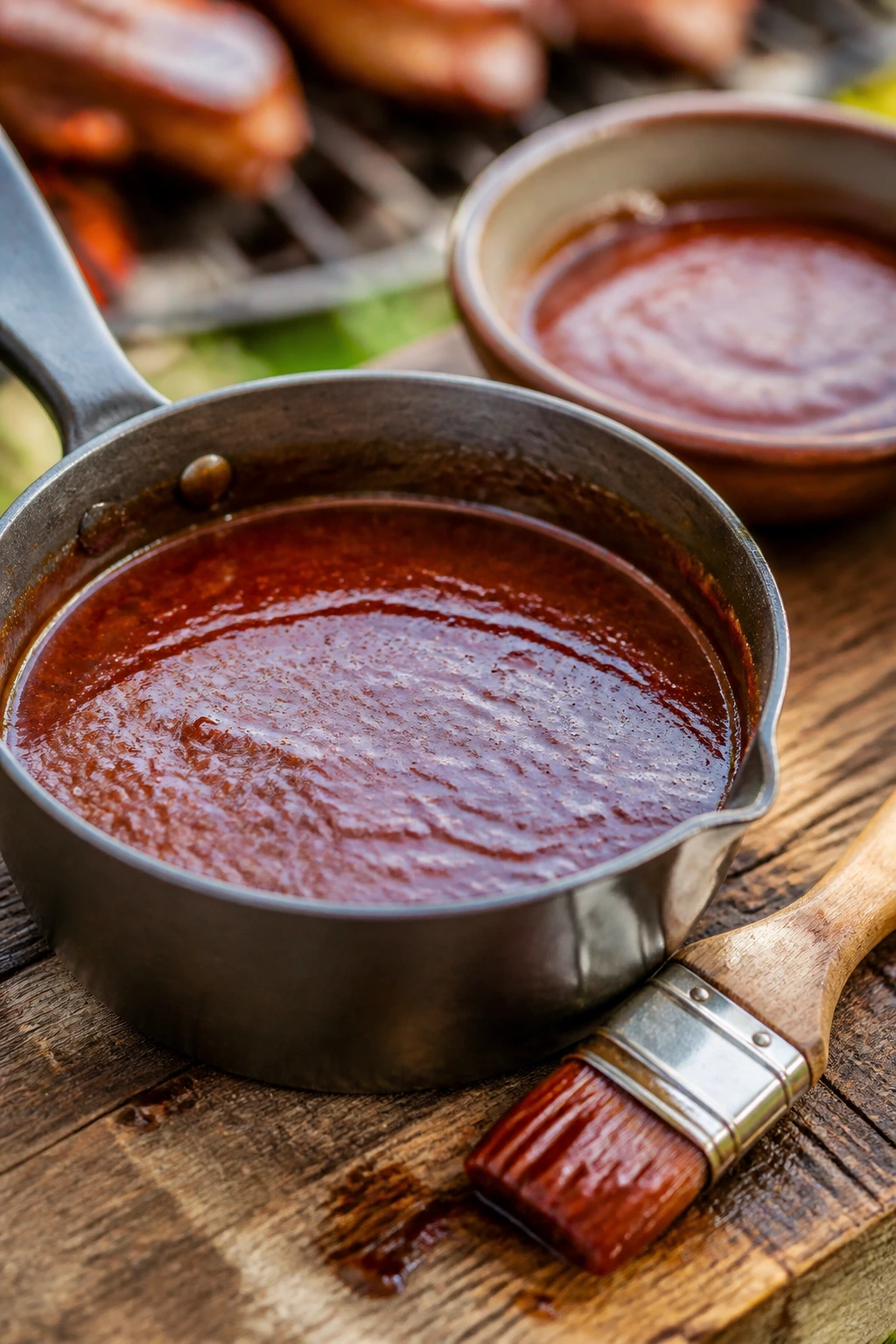
Presentation: Serve the clean reserved sauce warm in a small saucepan, a shallow bowl, or a squeeze bottle if you want the cookout table to feel easy to navigate. A brush resting beside the bowl makes the whole thing look intentional, and it saves you from dripping sauce all over the platter.
Accompaniments: This sauce likes smoky chicken thighs, pulled pork, grilled pork chops, corn on the cob, vinegar slaw, baked beans, potato salad, and thick slices of grilled zucchini. I also like it with pickles on the side, because the crunch and brine make the tang in the sauce feel sharper.
Portions: Plan on about 2 tablespoons of sauce per serving at the table and roughly 1/4 cup of sauce per pound of meat for marinating. One full batch covers about 2 to 3 pounds of protein comfortably, with enough left over for guests who like a second brush.
Beverage Pairing: I’d put cold unsweetened iced tea with lemon next to this without hesitation. A pale lager or a ginger beer works too, especially if the meat has a little smoke on it.
Small Tweaks That Make the Flavor Pop
Flavor Enhancement: Stir in 1 teaspoon of bourbon or 1 teaspoon of strong brewed coffee after the sauce comes off the heat. Both deepen the background flavor without making the sauce taste like a cocktail or a mocha — you just get a darker, rounder finish.
Time-Saver: Grate the garlic right into the saucepan and use the same microplane for the onion powder bottle top if it spills. Fewer bowls, fewer bits to clean, and the garlic disappears into the sauce faster.
Cost-Saver: Use standard yellow mustard and a decent everyday ketchup. The sauce cooks long enough that premium condiments don’t buy you much here, and I’d rather spend that money on better meat or a bag of charcoal.
Sauce Temperature: If the sauce thickens too much after chilling, loosen it with 1 to 2 tablespoons of water or apple juice over low heat. Don’t reach for more vinegar first unless you want the tang to jump forward again.
Make-It-Yours: If you like a brighter edge, add a teaspoon of apple cider vinegar at the very end instead of during the simmer. If you want deeper sweetness, add another teaspoon of molasses, but stop before the sauce turns heavy.
Common Ways This Sauce Goes Wrong
-
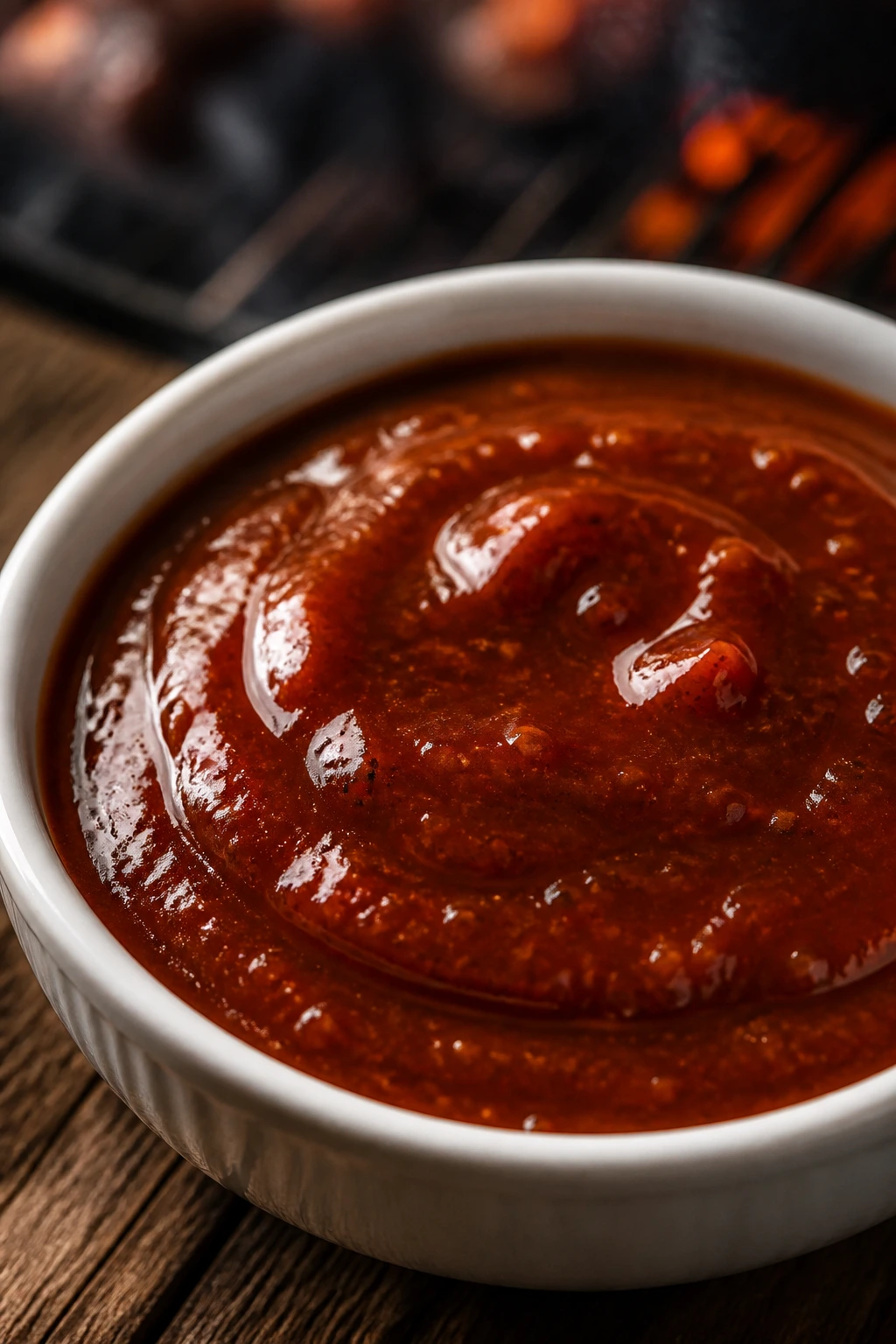
Boiling it hard. The sauce can taste bitter or burnt at the edges if the sugar gets too aggressive on the stove. Keep it at a gentle simmer, and if you see big bubbles popping through the center, turn the heat down.
-
Using one bowl for everything. A sauce that touched raw meat should not be brought back to the table unless it has been boiled first, and even then it’s a second-best choice. Reserve a clean portion before marinating so the serving sauce stays safe and bright.
-
Marinating delicate proteins too long. Shrimp, thin chicken breasts, and tender fish can go soft or chalky if they sit in the acid for hours. Short windows are better here, and the thinner the cut, the shorter the soak.
-
Brushing it on too early. Sugar and direct flame are not friends. If you coat chicken in this sauce at the start of grilling, expect dark patches and bitter spots before the meat finishes cooking.
-
Forgetting the sauce thickens as it cools. Hot sauce looks looser in the pan than it will on the plate. If you wait until it’s cold before deciding it needs more reduction, you’ll often go too far.
-
Oversalting the final batch. Soy sauce and Worcestershire already bring salt, so a heavy hand with extra salt can flatten the tang. Taste first, then season in tiny pinches.
Flavor Variations That Still Taste Like Barbecue
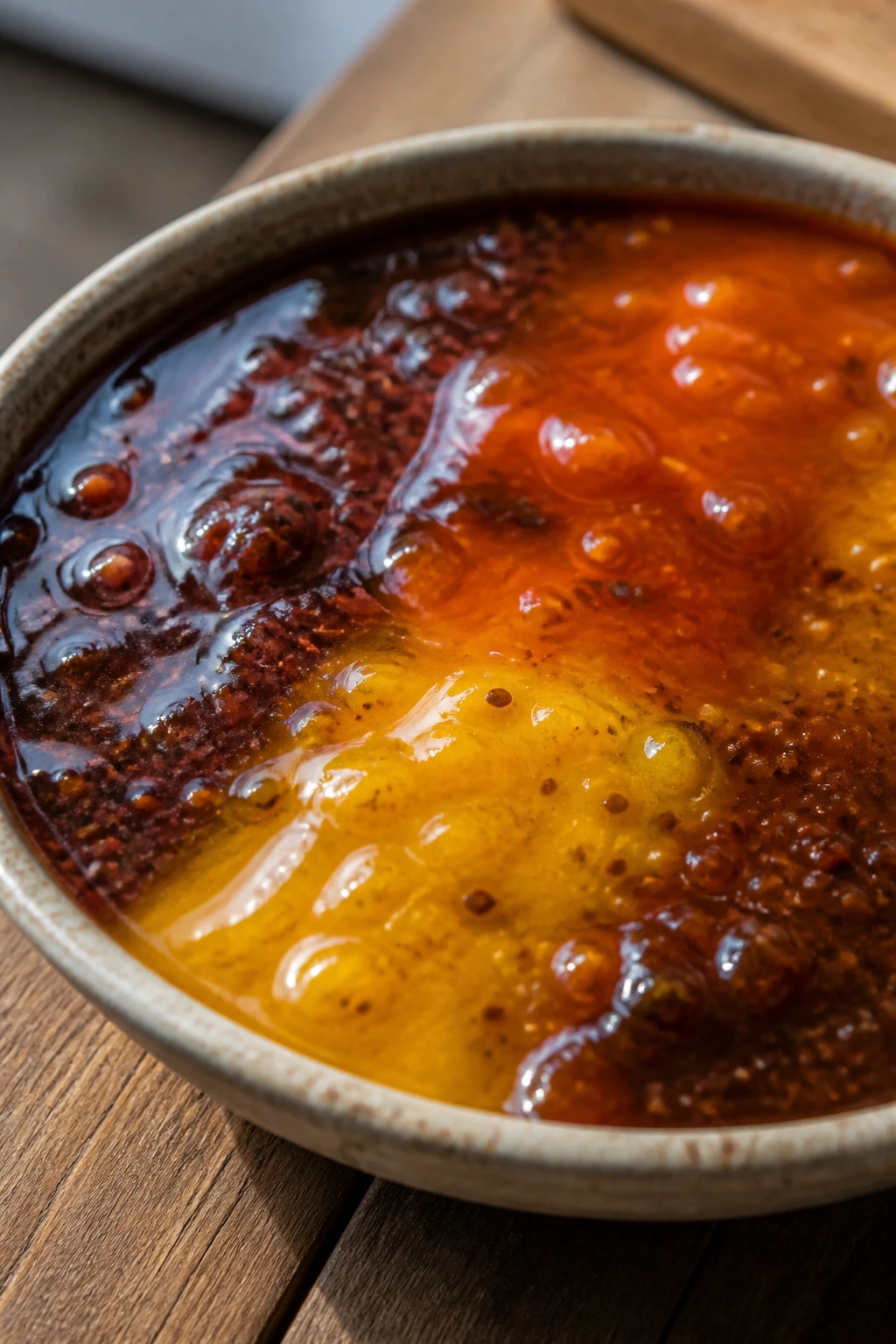
Smoky Chipotle Back Porch Sauce
Stir in 1 to 2 minced chipotles in adobo plus 1 tablespoon of adobo sauce, then cut the cayenne in half. This version tastes a little darker and works especially well on chicken thighs or pork shoulder slices that can handle heat without getting lost in it.
Peach-Glaze Cookout Finish
Add 1/2 cup peach preserves and reduce the brown sugar to 2 tablespoons. The fruit softens the vinegar edge and gives the sauce a sticky finish that loves pork chops and grilled chicken legs.
Carolina Mustard Snap
Replace half the ketchup with yellow mustard and bump the vinegar up by 2 tablespoons. The sauce gets thinner, brighter, and more assertive, which makes it a natural fit for pulled pork sandwiches and smoked sausage.
Bourbon Black Pepper Brush
Whisk in 2 tablespoons of bourbon after the sauce comes off the heat, then add an extra 1/2 teaspoon black pepper. The alcohol cooks off fast, leaving behind a warm edge that flatters beef ribs and thicker cuts of pork.
Keeping the Sauce Fresh for the Next Grill Night
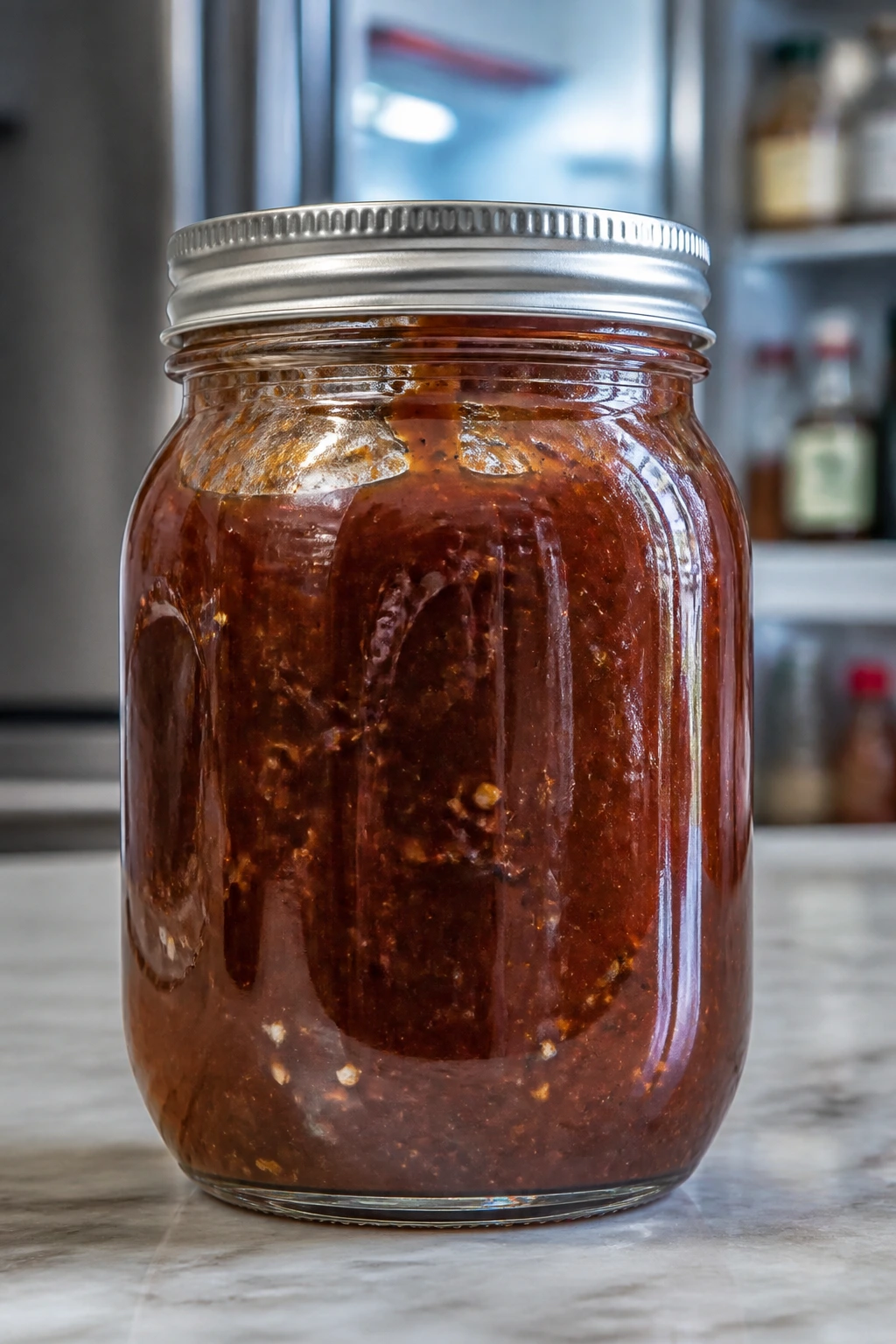
The plain cooked sauce keeps well in the refrigerator for 7 to 10 days in a sealed jar or container. It usually tastes a little better on day two because the vinegar calms down and the spices settle into the tomato base. If the top layer thickens, that’s normal; a spoonful of water or apple juice and a low warm-up brings it back.
Frozen sauce is fine for up to 3 months if you store it in a freezer-safe container with a little headspace. I like freezing it in 1/4-cup portions so I can thaw only what I need for brushing or marinating. Thaw it overnight in the refrigerator, not on the counter, because sugar-heavy sauces can warm unevenly.
If the sauce has already touched raw meat, keep that meat refrigerated and cook it within the usual safe window for the protein you chose. Shrimp should be cooked fast, chicken should not linger, and pork is more forgiving but still belongs in the fridge. The sauce itself is not the problem; the raw protein is.
To reheat the clean sauce, use a small saucepan over low heat and stir in a tablespoon of water if it feels stiff. The microwave works in short 15-second bursts too, but stir between each burst or the sugars can get hot in one corner and leave you with a weirdly overcooked edge.
Frequently Asked Questions
Can I use this sauce as both the marinade and the table sauce?
Yes, but only if you reserve a clean portion before any raw meat touches the bowl. That clean portion can stay on the side for serving, while the rest does the marinating job. If you mix the two after the fact, you’ve made the whole batch a marinade and it needs to be treated that way.
How long should chicken sit in this sauce?
Chicken thighs can handle 4 to 12 hours, while chicken breasts usually do better with 2 to 4 hours. The vinegar gives the outside flavor fast, so longer is not automatically better, especially with lean cuts that dry out quickly on the grill.
What if I only have white vinegar instead of apple cider vinegar?
Use it if that’s what’s in the cupboard, but expect a sharper, cleaner bite. A tablespoon of apple juice, honey, or even a little extra molasses can soften the edge and keep the sauce from tasting too blunt.
Can I make this without ketchup?
You can, though the texture changes. Tomato paste thinned with water makes the base more intense and less familiar, and you’ll want to taste carefully because tomato paste brings a deeper, sometimes more metallic note if the vinegar is too aggressive.
Why did my sauce taste bitter after cooking?
Usually the heat was too high or the pan stayed on the burner too long while the sugar cooked down. A bitter note can also come from burnt paprika or garlic at the bottom of the pan, which is why constant stirring matters here more than people expect.
Can I use this sauce on shrimp or vegetables?
Yes, but shrimp needs a very short marinating time — 15 to 30 minutes is plenty. Vegetables are even simpler: toss them lightly or brush them just before grilling, since acid can soften thin slices if they sit too long.
How do I keep the sauce from burning on the grill?
Brush it on during the last 5 to 8 minutes of cooking, then move the food to a cooler spot if the grill has flare-ups. If you’re working over charcoal, stay near indirect heat for the final brush so the sugar glosses instead of scorching.
Can I freeze raw meat in this marinade?
Yes, if the meat and marinade go into a freezer bag together before the sauce has touched anything else. Thaw it in the refrigerator, then cook it within a day of thawing so the texture stays where you want it.
The Last Brush Before the Plate
A tangy barbecue sauce earns its keep by doing something the sweeter bottled stuff usually misses: it stays lively after smoke, heat, and fat have all had their turn. That little vinegar edge is not a stunt. It’s the reason the sauce still tastes awake when the food hits the platter.
The best part is that this sauce doesn’t demand a special pantry or a fussy technique. Keep the heat gentle, reserve a clean portion, and remember that the grill will punish sugar if you rush it. Once you’ve made it once, the balance starts to feel obvious, and you’ll probably start adjusting the vinegar, mustard, or molasses to fit whatever’s on the grate.
Marinated Tangy BBQ Sauce for Backyard Cookouts — Recipe Card
Recipe Name: Marinated Tangy BBQ Sauce for Backyard Cookouts
Description: A tangy, smoky barbecue sauce that works as both a grilling marinade and a finishing sauce. It’s bright enough to cut through rich meat, glossy enough to brush on at the end, and simple enough to make from pantry staples.
Prep Time: 15 minutes
Cook Time: 12 to 15 minutes
Total Time: 35 to 40 minutes, plus 20 to 30 minutes cooling and 4 to 12 hours marinating if used on meat
Course: Condiment
Cuisine: American
Servings: About 12 servings
Calories: About 60 kcal per 1/4-cup serving
Ingredients
- 1 cup ketchup
- 1/2 cup apple cider vinegar
- 1/4 cup water or unsweetened apple juice
- 1/4 cup packed dark brown sugar
- 2 tablespoons unsulfured molasses
- 2 tablespoons yellow mustard
- 1 tablespoon Worcestershire sauce
- 1 tablespoon soy sauce
- 1 tablespoon neutral oil or unsalted butter, melted
- 2 teaspoons smoked paprika
- 1 teaspoon garlic powder
- 1 teaspoon onion powder
- 2 cloves garlic, finely grated
- 1/2 teaspoon kosher salt, plus more to taste
- 1/2 teaspoon freshly ground black pepper
- 1/4 teaspoon cayenne pepper
- 1 tablespoon hot sauce, optional
Instructions
-
Whisk the ketchup, vinegar, water, brown sugar, molasses, mustard, Worcestershire, soy sauce, oil or butter, smoked paprika, garlic powder, onion powder, grated garlic, salt, black pepper, cayenne, and hot sauce in a 2-quart saucepan until smooth.
-
Set over medium heat and bring to a gentle simmer, stirring often, until the sugar dissolves and the sauce loses its raw vinegar edge, about 4 to 5 minutes.
-
Lower the heat to medium-low and simmer for 10 to 12 minutes, stirring regularly, until the sauce is glossy and thick enough to coat the back of a spoon.
-
Whisk in the butter or oil until fully blended. Taste and adjust with a little extra vinegar, brown sugar, or salt if needed.
-
Cool for 20 to 30 minutes. Reserve 1 cup in a clean bowl for serving, then use the remaining sauce as a marinade for chicken, pork, tofu, shrimp, or vegetables.
Notes: Keep a clean portion aside before the sauce touches raw meat. For a thinner brush-on glaze, stir in 1 to 2 tablespoons of water when reheating. If the sauce seems too sharp after chilling, a short warm-up rounds it out fast.