



A charred picnic lunch for backyard cookouts works because it gives the table a little edge. Not drama. Edge. A few blistered green beans, chicken with bronzed skin, corn with smoky freckles, bread kissed by the grate — those are the flavors that make people keep reaching back across the board.
The trick is restraint. You want smoke, browned surfaces, and a little bitterness at the rim; you do not want everything tasting like soot. That balance matters even more outdoors, where food gets eaten in shifting light, sometimes while people are standing up, sometimes after a long pause while somebody finds extra napkins or chases a fly away from the potato salad.
The best versions are never fussy. They’re built from foods that can take heat, travel well, and still taste sharp once they’ve cooled a bit. That means choosing ingredients with enough structure to survive the grill, then pairing them with cold crunch, acid, and a sauce that wakes things back up. Once you know the rhythm, the whole spread starts to make sense.
Why This Approach Works at a Backyard Cookout
-
The grill does part of the seasoning for you: A little smoke and char on chicken, zucchini, or peaches gives the food a darker, deeper taste that a cold deli tray never gets.
-
You can prep most of it early: Grain salads, quick pickles, sauces, and chopped vegetables hold up for hours in the fridge, which means the grill becomes the last step instead of the whole job.
-
The menu stays flexible: If the market has good corn and peaches, lean that way. If the peaches are dull, go heavier on peppers, onions, and cucumbers. The structure stays the same.
-
It’s built for grazing: People don’t have to sit down and commit to a plate all at once. They can take a piece of grilled bread, a few slices of charred chicken, a spoonful of slaw, and come back for more.
-
The contrast keeps every bite interesting: Hot next to cold. Soft next to crunchy. Smoky next to sharp. That’s what stops a cookout lunch from turning mushy and flat halfway through.
Why Charred Food Makes a Picnic Table Feel Alive
Char is not the same thing as burned food, and the difference matters more than people think. Burned food tastes harsh and one-note, like someone left the pan on too long. Good char has brown, bitter, and sweet all mixed together at the edges, which is why a grilled peach or a blistered pepper can taste almost round even before the sauce goes on.
That’s the part a backyard cookout often misses. People focus on the protein, then fill in the rest with pale sides and soft bread. The result feeds everyone, sure, but it doesn’t have a point of view. A charred picnic lunch has a point of view. It says the fire was worth lighting, and the smoke had a job to do.
Where char helps most
Grilled chicken thighs take on smoke quickly because the skin and fat give the surface something to brown. Zucchini, eggplant, and onions get a sweeter edge after a few minutes over direct heat, and even a slice of sourdough turns better when the grate dries out the cut face. Fruit does this too, though in a gentler way. A peach or pineapple slice with a little blackening tastes brighter than the same fruit served raw, especially once a salty cheese or herb sauce is nearby.
Char needs a partner
That last point is the one people skip. Char on its own gets tired. You need acid, salt, and something cold to keep the plate from leaning too far in one direction. A squeeze of lemon over grilled corn, pickled onions with sausage, yogurt sauce under eggplant — those details are what keep the lunch from tasting like a side dish pretending to be a meal.
One more thing. Patchy browning is fine. A weirdly perfect grill pattern is not the goal. Flavor is the goal.
The Five-Part Flavor Formula: Smoke, Acid, Crunch, Salt, and Cold
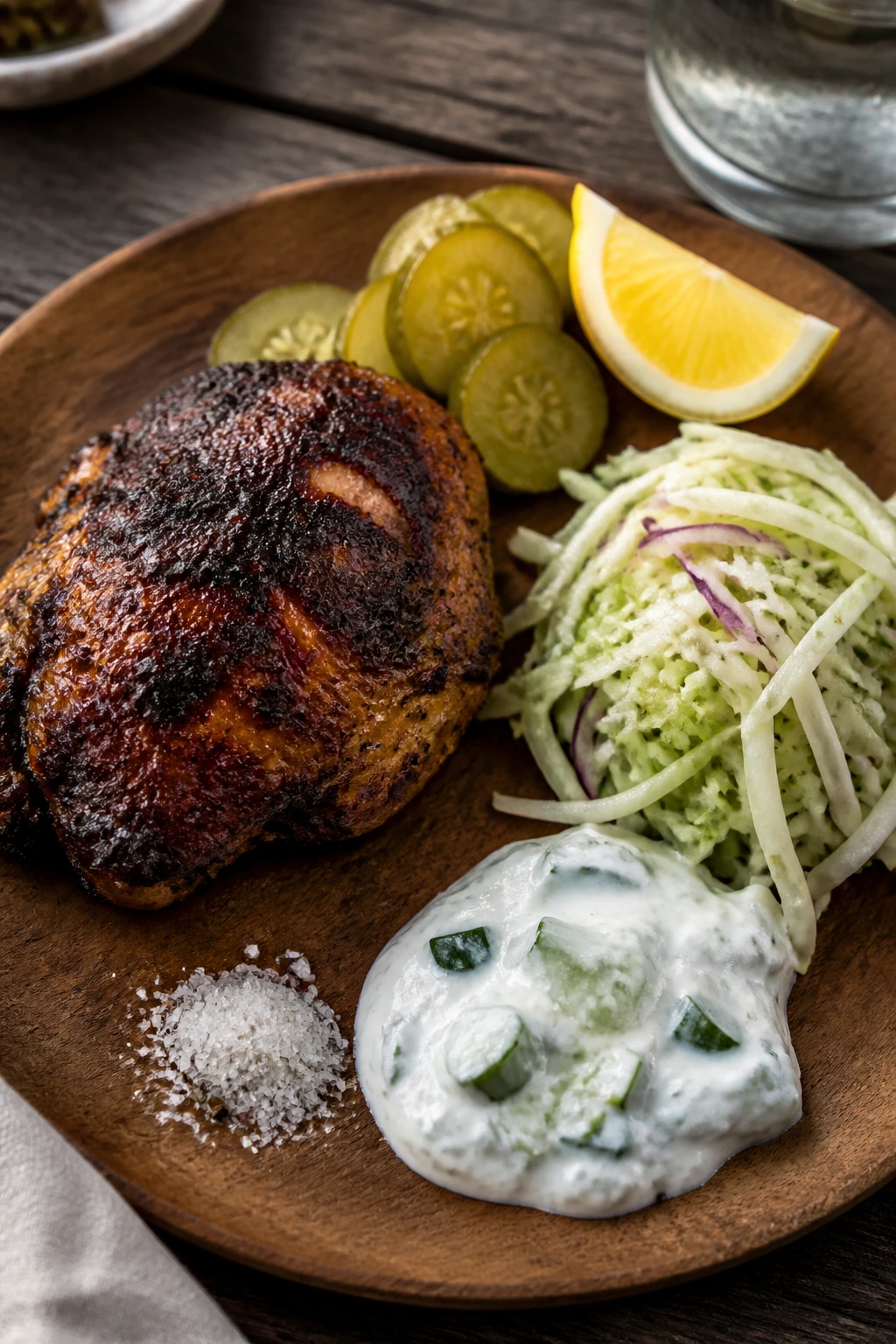
A good backyard spread usually needs all five of these pieces, even if they show up in different places on the table. Miss one, and the food still works. Miss two, and the plate starts to feel heavy. Miss three, and people reach for soda because the meal has lost its shape.
Smoke gives the food its backbone
Smoke comes from the grill itself, but you can help it along with dry surfaces and enough space between the pieces. Wet vegetables steam before they brown. Overcrowded chicken steams too. The first fix is simple: pat things dry, oil them lightly, and give the food room.
Acid keeps char from feeling dull
Vinegar, lemon juice, pickled onions, a sharp mustard sauce — these are not garnish. They’re the reset button. A grilled plate without acid starts tasting thick after the second bite, especially when bread or cheese is involved. I like at least one sour or pickled element on every picnic board because it wakes up the fat and cuts through the smoke.
Crunch stops the whole lunch from going soft
Crunch can come from raw cabbage, sliced radishes, cucumbers, toasted seeds, or even a cracked crust on bread. It does not need to be loud. It just needs to be there. A spoonful of cabbage slaw beside charred chicken or a handful of torn herbs over grilled vegetables does more work than a decorative sprinkle ever will.
Salt needs to be deliberate
Char deepens flavor, but it does not replace salt. Halloumi, feta, olives, cured meats, well-seasoned chicken skin, salted butter on grilled bread — these all carry the same job in different forms. If the food tastes flat after grilling, the answer is usually salt in the right place, not more time over the fire.
Cold keeps the table honest
A chilled cucumber salad. A bowl of yogurt sauce. Sliced melon. Even a cold beer or sparkling water with lemon. The cold elements make the warm ones feel hotter and the smoky ones feel cleaner. That contrast is what keeps the lunch from settling into one heavy temperature.
Proteins That Handle High Heat Without Drying Out
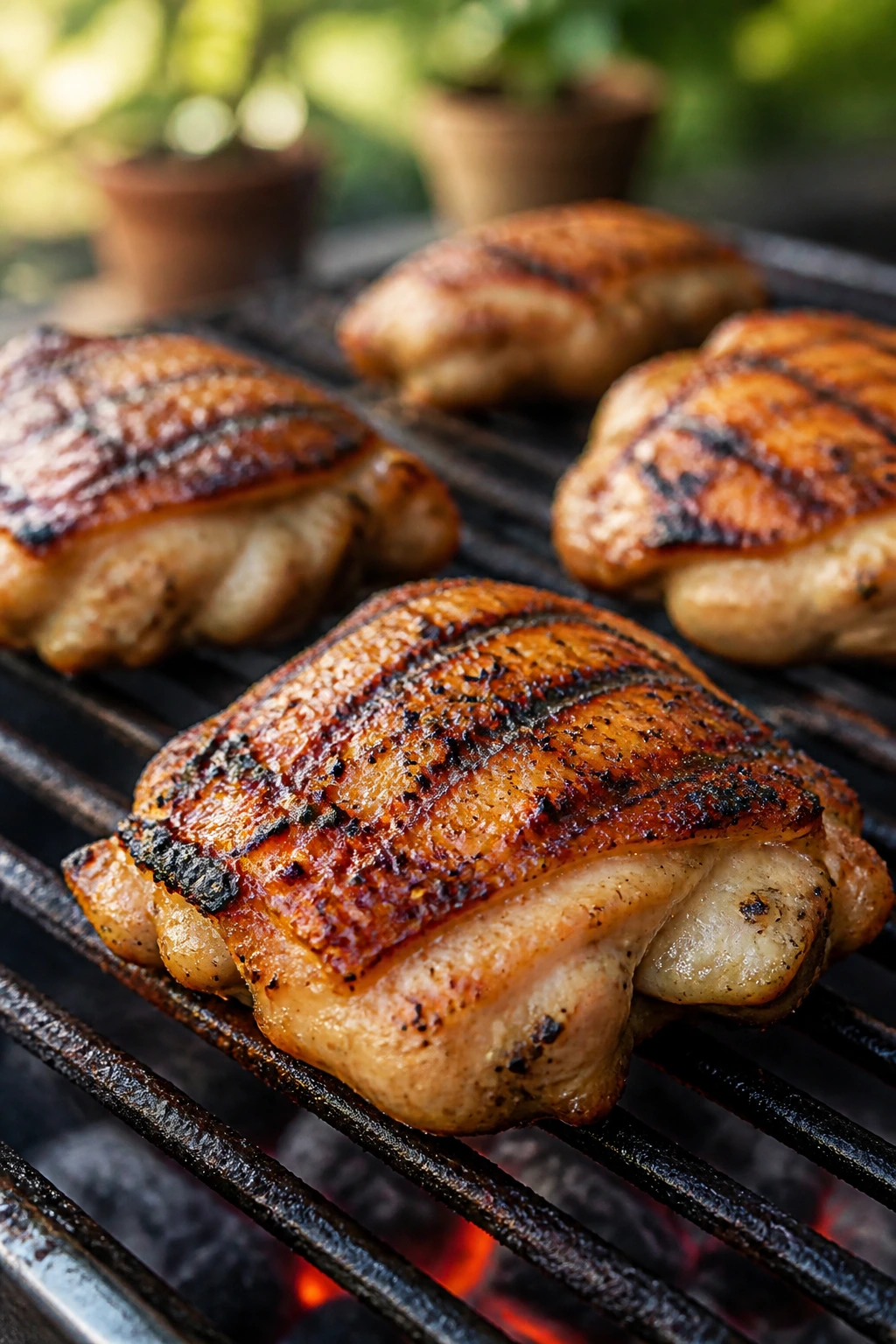
I trust chicken thighs far more than chicken breasts for this kind of meal. Breasts can work, but they ask for more attention than a picnic lunch deserves. Thighs forgive a longer rest, a hotter grate, and a slightly late guest who keeps chatting while the food sits nearby. They also hold onto seasoning better, especially if you salt them ahead of time.
Chicken thighs are the safest anchor
Boneless, skin-on thighs give you crisp spots and juicy meat in about 10 to 14 minutes over medium-high heat, depending on thickness. Bone-in thighs take longer, but they bring more flavor if you have the patience. If you’re feeding a crowd, thighs are the practical choice. They slice cleanly, don’t dry out as fast, and still taste good once they’ve cooled a little on the board.
Marinate them if you want, but don’t drown them. A simple mix of oil, garlic, citrus, and herbs is enough. Too much sugar and the skin burns before the meat cooks through. Too much acid and the surface gets soft instead of browned.
Sausages, halloumi, and other easy wins
Sausage deserves a place on this table because it brings salt, fat, and char without much drama. The trick is to cook it over medium heat so the casing browns before it splits. Halloumi is another smart choice. It’s the salty, squeaky cheese that actually likes the grill, and it gives you a meaty bite without any meat at all.
Cut halloumi into thick slabs, not tiny cubes. Small pieces disappear between the grates. Thick pieces pick up dark lines and stay tender in the middle. If the cheese is very salty, rinse it first and pat it dry. That step sounds fussy until you taste the finished plate and realize the salt level finally makes sense.
Seafood needs less time, not more heat
Shrimp is good here when the grill is hot and the cooking time is short — two minutes per side, maybe three if the pieces are large. Skewers make them easier to handle. Fish can work too, but I’d keep it to firm fillets or thicker steaks that can be turned once without falling apart. Salmon with crisp skin is the cleanest option if you want seafood on the board.
The mistake with seafood is always the same: people keep cooking it because they’re afraid of underdone centers. By the time the flesh turns chalky, the grill has already won. Take it off when it’s just opaque and still a little glossy in the middle; carryover heat does the rest.
Vegetables and Fruit That Earn Their Grill Marks
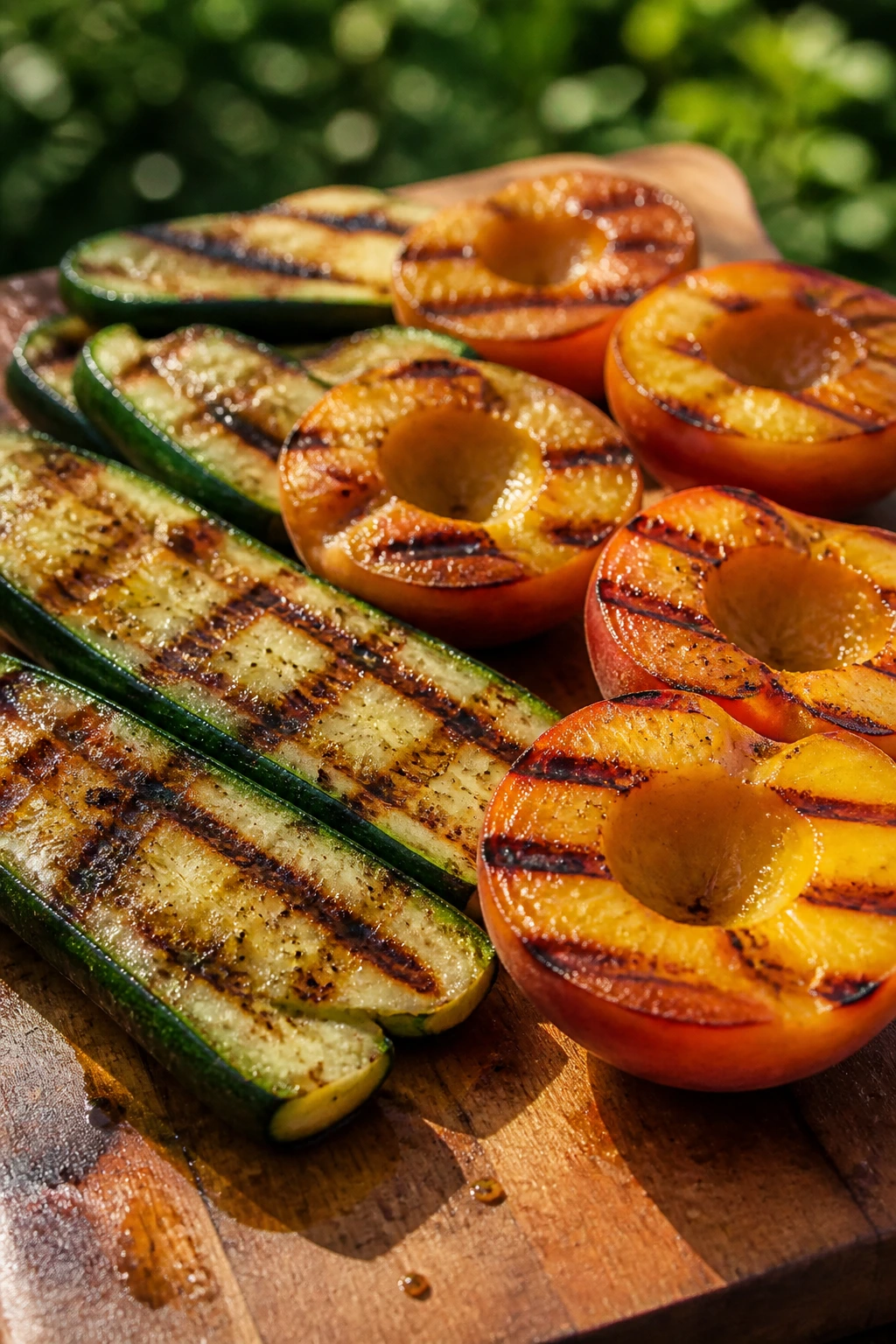
A backyard cookout gets better when the vegetables are treated like the main event instead of a side note. Zucchini, eggplant, onions, peppers, corn, mushrooms, peaches, and pineapple all take to flame in their own ways, but they need different cuts and different timing. That’s where most people get lazy, and laziness shows up as limp slices and a tray full of steam.
Vegetables that love direct heat
Zucchini should be cut lengthwise into planks, about 1/3 to 1/2 inch thick. Coins look neat on a cutting board and collapse on the grill. Planks hold up long enough to pick up color, and they’re easier to eat with a fork or fingers. Brush both sides with oil, season with salt, and grill for about 2 to 3 minutes per side until the edges darken.
Eggplant wants a little more attention because it drinks oil like a sponge. Cut it into thick rounds or slabs, salt it for 15 to 20 minutes if it seems watery, then blot it dry before grilling. If you skip the salt step, the slices can go soft without ever getting proper browning. Bell peppers should be cut into wide strips and grilled until the skins blister in spots, usually 6 to 8 minutes total.
Onions are better in wedges than rings because the root end keeps them together. A little char on the outer layers gives them sweetness that raw onions never deliver. Mushrooms are good too, especially cremini or large portobellos, but they need enough oil to avoid sticking and enough space so the steam can escape.
Fruit that turns savory and sweet
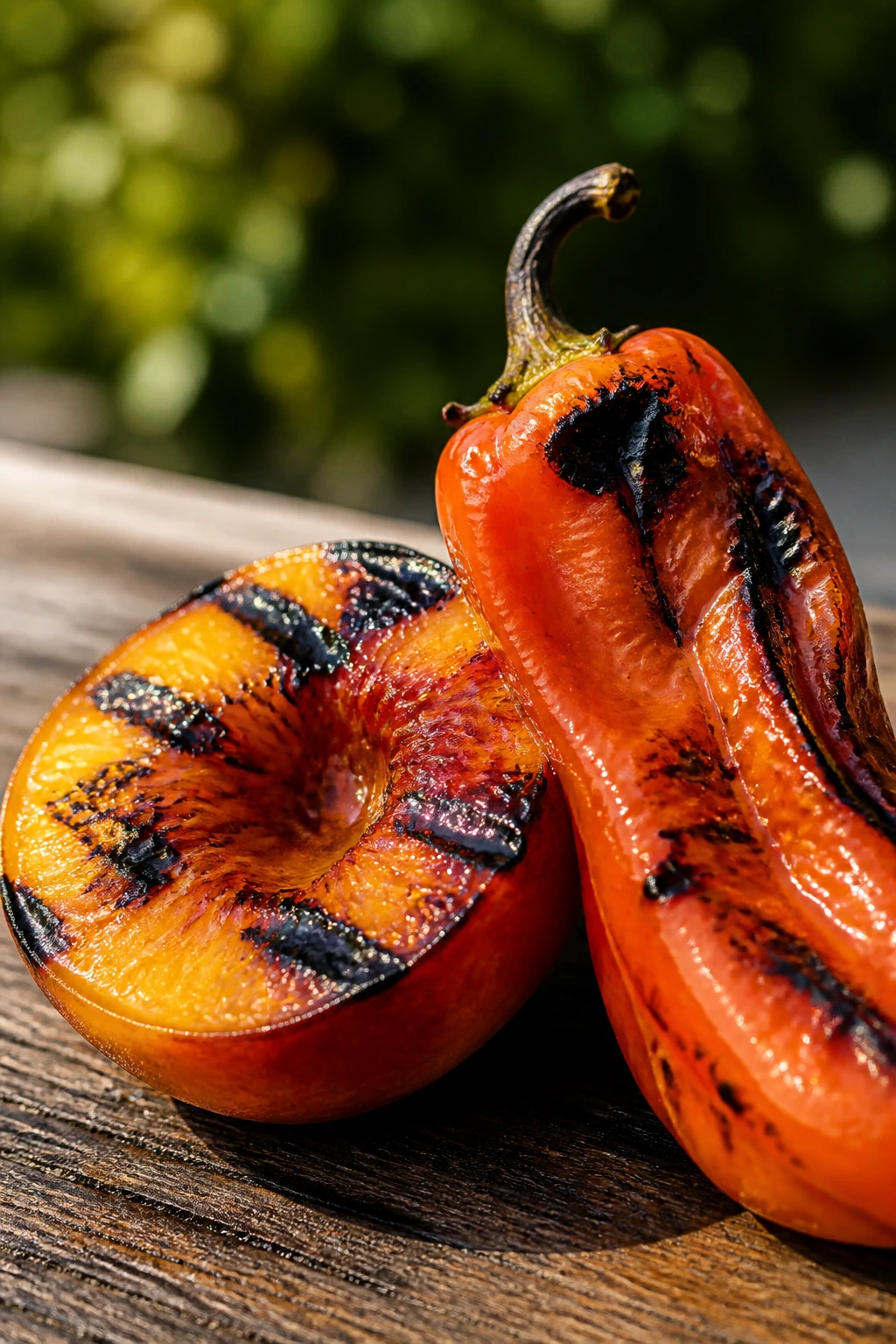
Peaches are the sleeper hit of a picnic board. Use firm-ripe fruit, not soft ones that will turn to jam on the grate. Cut them in half or thick wedges, brush lightly with oil, and grill cut-side down for 2 to 3 minutes until they pick up dark lines. The fruit should still hold its shape when you lift it.
Pineapple does the same trick, just louder. The sugar caramelizes fast, so keep an eye on it. A few black spots are good. An all-over crust means you waited too long. Grapes and berries are not the move here. They’re too delicate and mostly become hot messes.
I leave cucumbers, lettuce, and soft herbs off the grill entirely. They belong in the cold part of the lunch, where they can stay crisp and give the smoky food something bright to lean against.
Bread, Grains, and Greens That Hold the Rest of the Lunch Together
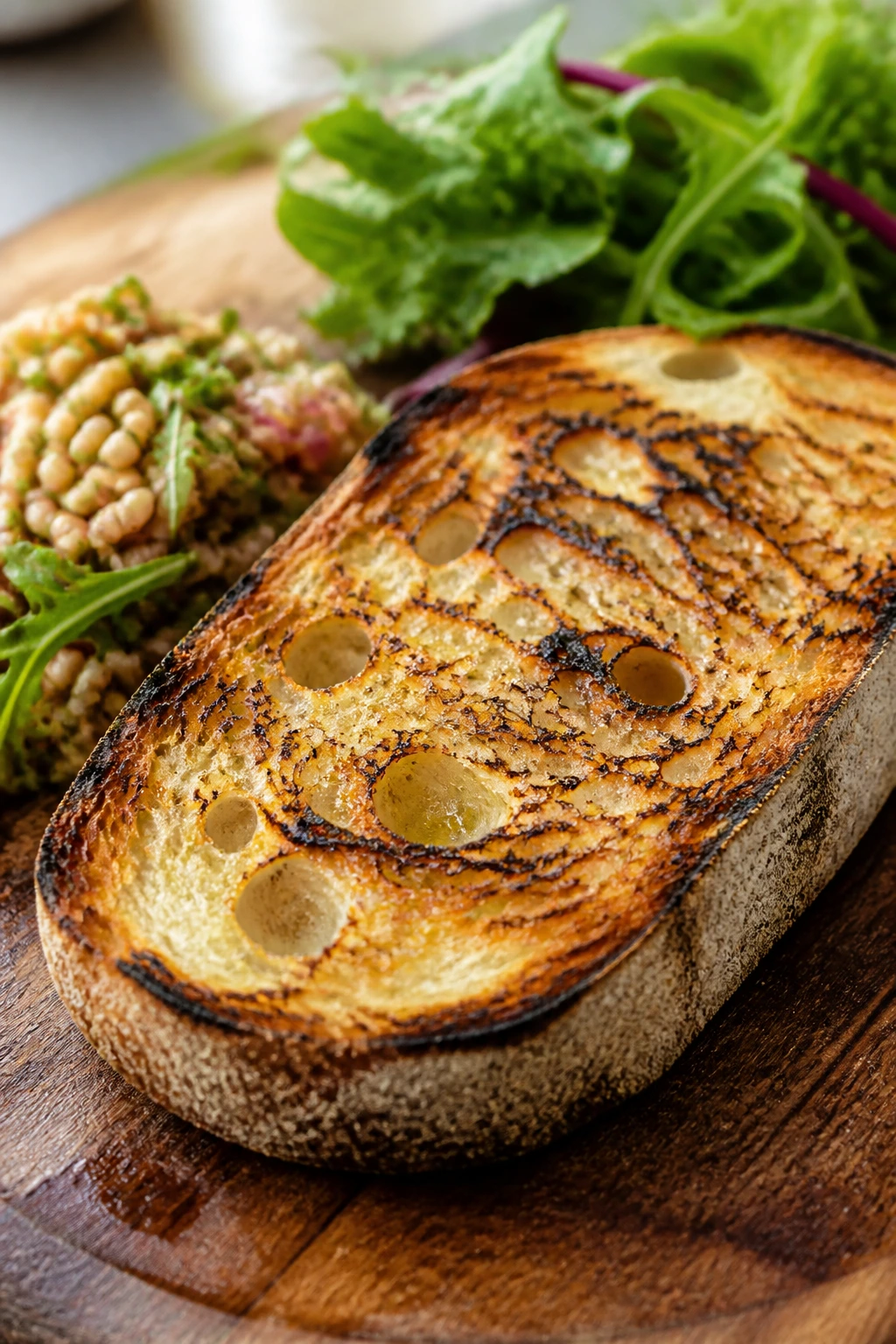
I don’t build this kind of meal on delicate lettuce, and I’ll say that plainly. A picnic lunch needs structure. Bread, grains, or sturdy greens give the charred pieces something to land on, and they also keep the board from feeling like a pile of separate bites. The wrong base turns soggy fast. The right base soaks up juices and still tastes good after a few minutes on the table.
Why bread matters more than people admit
Grilled bread is one of the easiest upgrades on a cookout table. Use sourdough, ciabatta, country loaf, or pita, and brush the cut side with olive oil before it goes over the heat. Thirty to sixty seconds per side is usually enough. You want the surface dried out and lightly marked, not brittle.
That little bit of toast does a lot. It keeps sauce from flooding the plate. It gives the grilled vegetables something to sit on. It also survives better than a soft sandwich bun, which can go limp the second warm juices touch it. If I’m choosing between a beautiful crust and a fluffy interior, I’m choosing the crust every time.
Grain salads do the heavy lifting in warm weather
Farro, barley, couscous, quinoa, and rice salads all work, but they behave differently. Farro and barley stay chewy after chilling, which is why I like them under grilled vegetables or sliced chicken. Couscous is lighter and faster, but it needs a sharper dressing because it doesn’t bring much flavor on its own. Quinoa is fine if you rinse it well and keep it from going mushy.
Grain salads are useful because they absorb dressing without collapsing. That means you can make them ahead, then top them with grilled onions, herbs, nuts, or feta right before serving. They carry the smoky pieces without stealing the show.
Greens need to be sturdy or they need to stay raw and separate
Kale slaw, romaine wedges, cabbage ribbons, and shaved fennel can handle a picnic board. Baby greens cannot. I like to dress the sturdier greens lightly and keep softer herbs — dill, parsley, mint — for the final pass over the top. That last sprinkle of green makes the grilled food look and taste fresher without asking the leaves to survive all afternoon.
If you want the simplest template, use one charred protein, one grilled vegetable, one crunchy cold side, one bread, and one sharp sauce. That’s enough to build a lunch that feels complete.
Sauces, Pickles, and Condiments That Keep Every Bite Bright
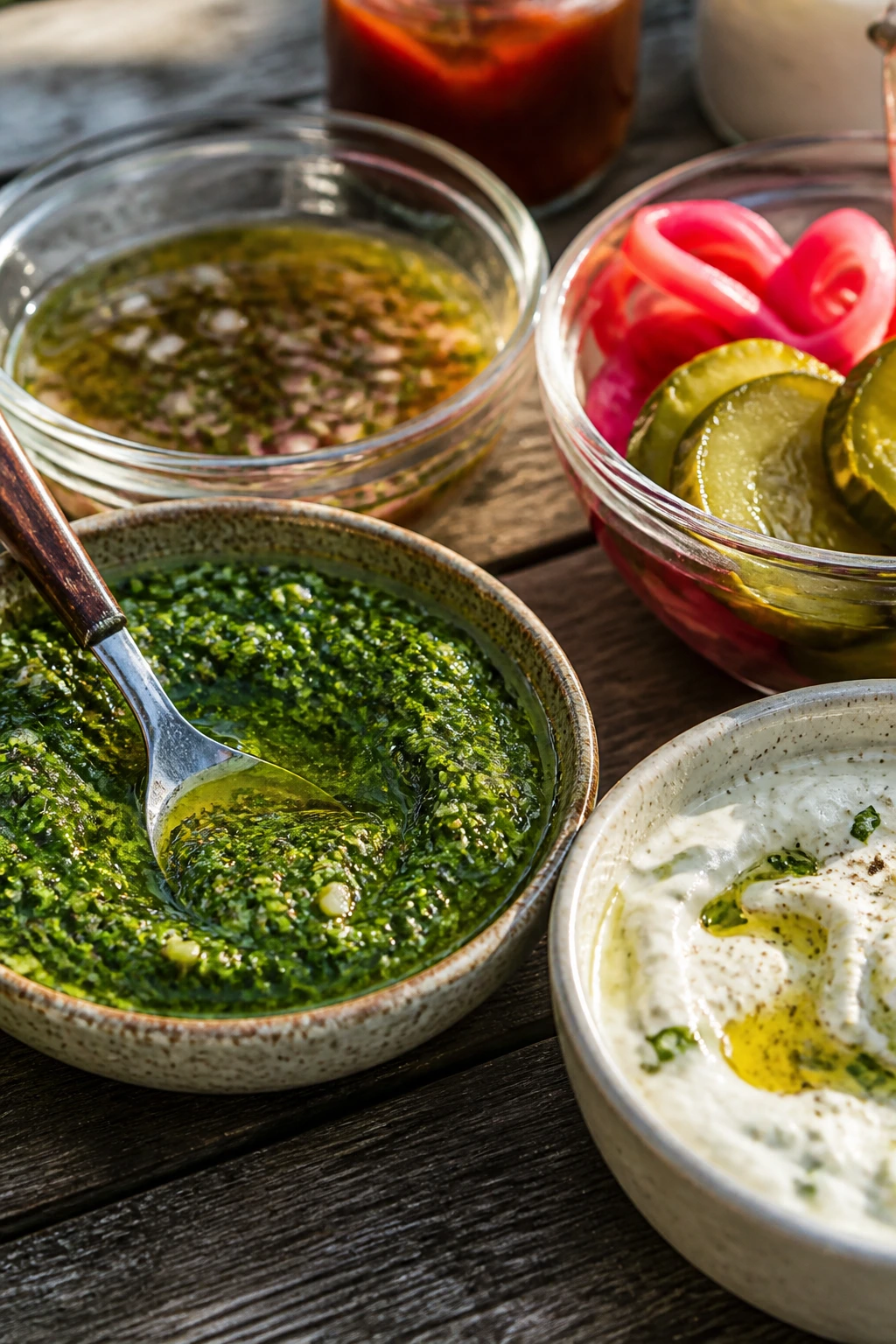
Sauce is what keeps the third bite from sounding like the first two. It also solves one of the oldest cookout problems: good grilled food can get dull if it sits out too long or if every component leans in the same direction. A sauce or pickle gives the meal a jolt.
What the sauces should taste like
I like one herb-heavy sauce, one creamy sauce, and one sharp condiment on the table. Chimichurri, salsa verde, green herb oil, or a parsley-garlic mix gives the food brightness. Yogurt sauce, tahini sauce, or a light ranch-style dressing cools the char and softens any bitterness. Mustard vinaigrette or a lemony oil vinaigrette cuts through fat and keeps the plate lively.
The creamy sauce should stay loose, not gluey. If it’s too thick, it smothers the char instead of backing it up. Thin it with lemon juice, water, or a little extra oil until it pours off a spoon. That matters on a picnic board because people will spoon it over everything, not just dab it neatly.
Pickles are not optional
Quick-pickled onions, cucumbers, jalapeños, radishes, or even green tomatoes give the table the kind of bite that grilled food loves. They take barely any time to make if you know the ratio: vinegar, a little water, salt, and a touch of sugar if the acid is sharp. Fifteen minutes is enough for thin slices of onion to lose their raw edge.
You do not need a canner to do this well. A jar and a hot liquid are enough. The pickle should taste clean and bright, not syrupy. And if you think the table has enough acid already, taste the sausage or halloumi first. It probably does not.
Finishers matter more than decoration
A squeeze of lemon, a few flakes of salt, a spoonful of chili crisp, toasted sesame seeds, chopped dill, mint, or parsley — these last details are small, but they change the whole mouthfeel of the lunch. They also let people adjust their own plates, which is handy when kids, spice lovers, and salt-sensitive relatives all show up at the same board.
Building a Picnic Lunch That Stays Good After It Leaves the Grill
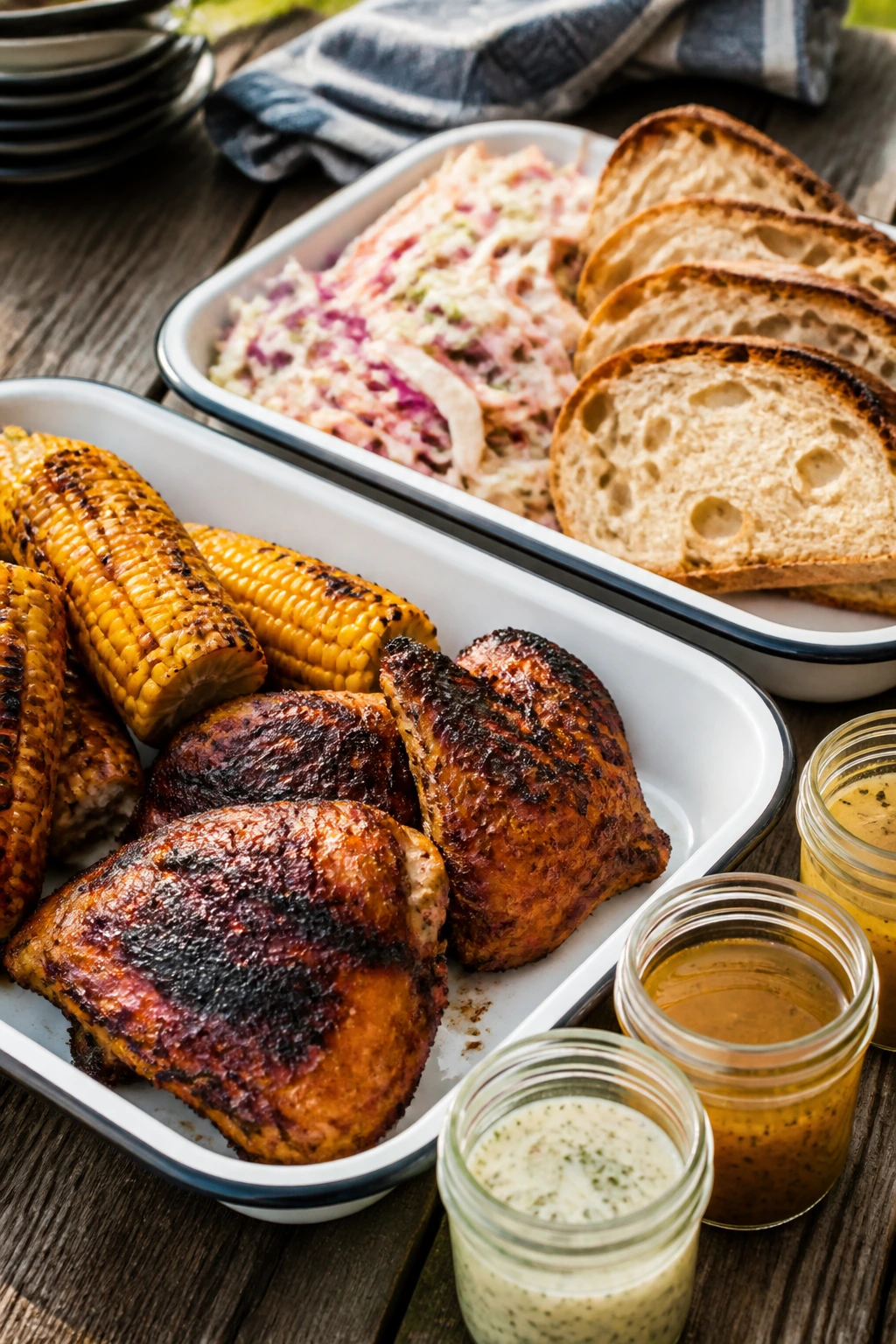
The food is only half the job. The other half is keeping it from turning soft, warm, or messy before people actually eat it. Backyard cookouts live or die on timing, and timing gets easier if you pack the meal in layers instead of tossing everything into one big bowl and hoping for the best.
Keep hot and cold separate
Hot grilled items should go on one tray. Cold sides should go on another. Sauces need their own containers. Bread should not sit under juicy vegetables, and dressed slaws should never be packed with hot chicken unless you want soggy cabbage and a sad board.
If the meal has to travel even a short distance, use shallow containers. Deep tubs trap steam, which is the enemy of char. A shallow dish lets the food cool a little faster and keeps the surface from sweating itself soft. If you’re carrying the food outside on a hot day, a cooler or at least a couple of ice packs under the cold sides is worth the tiny bit of hassle.
Shade is part of the recipe
People forget this every time. Food sitting in direct sun warms faster than you expect, and mayonnaise-based salads or yogurt sauces do not care that the patio looked pretty at noon. Set the table in the shade if you can. If not, bring out the most perishable things last and keep the rest covered.
USDA food safety guidance is boring in the best way: keep hot foods hot, keep cold foods cold, and do not let perishable food sit in the danger zone for more than 2 hours, or 1 hour if the weather is hot enough to speed things up. That rule alone saves more backyard lunches than any fancy tool.
Build in waves
The easiest way to serve a charred picnic lunch is in waves. Put out the bread and cold sides first. Then bring out the grilled protein and vegetables. Sauces and pickles go at the end so they stay fresh and sharp. People usually appreciate the rhythm because it keeps the board from being crowded and lets the smoky food stay warm long enough to matter.
Timing the Grill and the Table So Nothing Sits Around
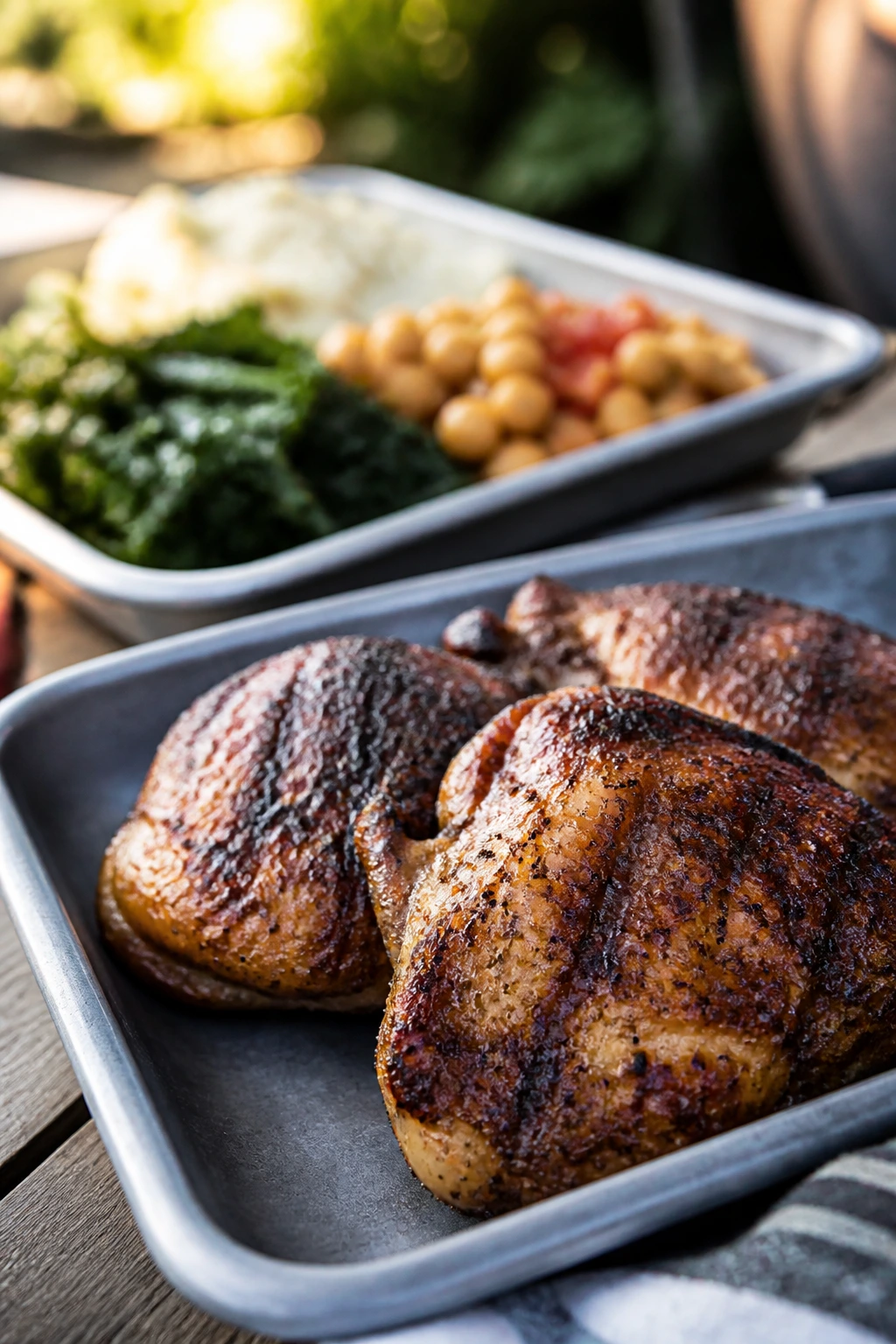
A cookout lunch gets stressful when everything seems ready at the same moment. It feels productive for about five minutes, then the bread goes cold, the vegetables slump, and somebody asks where the tongs went. A better plan is to stage the work so the grill finishes last and the table is ready before the food is.
A simple timeline helps
-
Start with sauces and pickles first. They improve while they sit, and they do not mind waiting. A quick-pickled onion can be done well before the grill is even lit.
-
Preheat the grill early. Gas needs about 10 to 15 minutes to get properly hot. Charcoal needs enough time for the coals to ash over and settle into an even bed. If you’re using a charcoal grill, bank some coals to one side for a two-zone setup.
-
Prep the cold sides while the grill heats. This is when grain salads, slaw, cut fruit, and herbs should be finished. Put dressings in separate jars. Slice bread. Check the salt level on the cold side now, not after the hot food has landed.
-
Cook the longest items first. Chicken thighs, sausages, thick eggplant, and corn should go on before the quick stuff. Shrimp, bread, peach halves, and thin vegetables can wait until the last few minutes.
-
Rest the meat before slicing. Five to 10 minutes is usually enough for chicken thighs or steak. If you cut too soon, the juices run onto the board and the whole table gets wet in the wrong way.
-
Finish with the fast pieces. Bread, delicate vegetables, seafood, and fruit only need a short time on the heat. Do them last so they arrive at the table with some warmth and texture left.
Two-zone heat matters
If you only remember one grilling habit, make it this one. Direct heat for browning, indirect heat for finishing. That setup keeps you from burning the outside while the center catches up. It’s especially useful with thicker chicken thighs or sausage links that need a little patience.
And if a flare-up starts, move the food. Don’t fight the fire with panic. The grill is a tool, not a test.
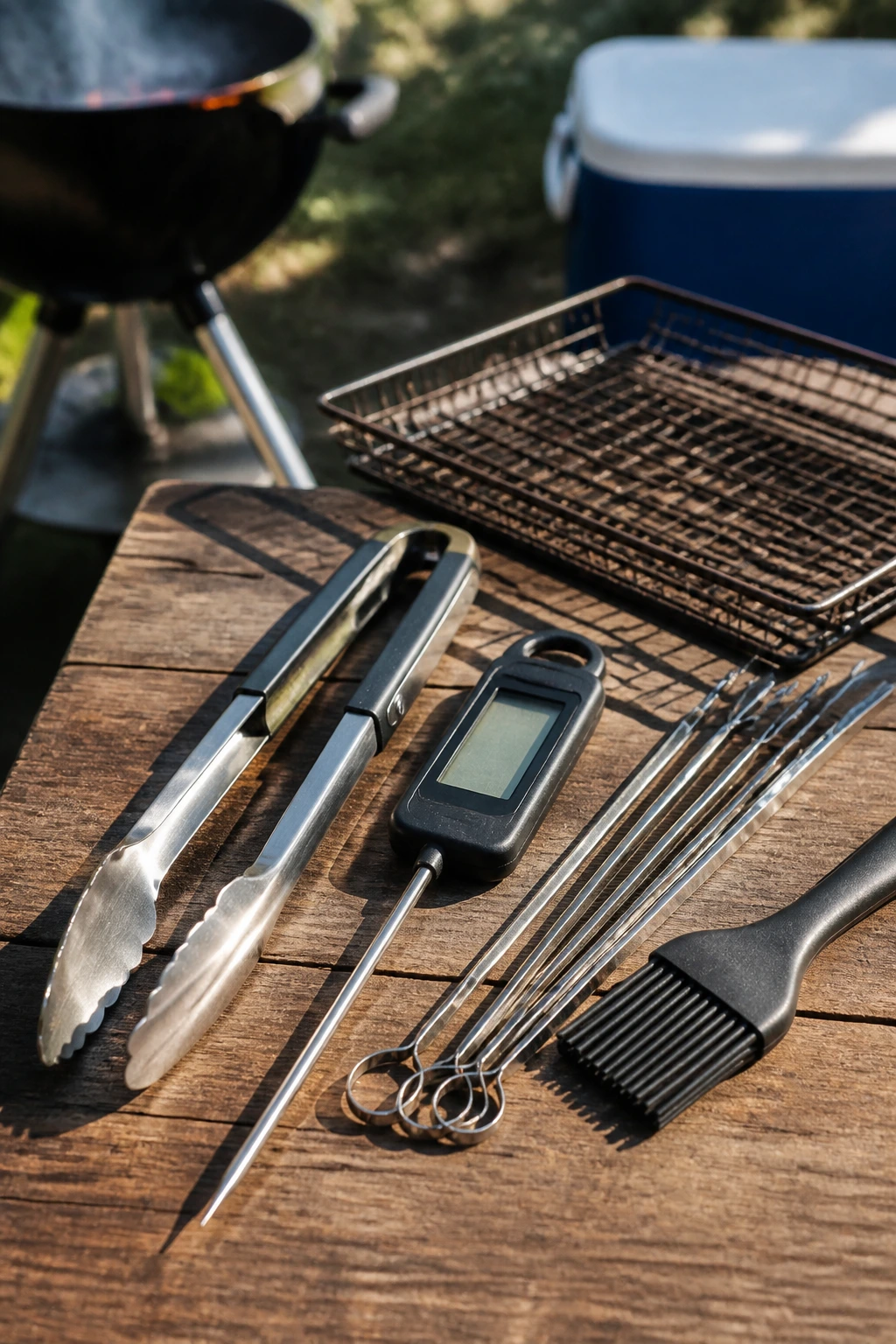
Essential Tools for a Charred Picnic Lunch
-
Gas or charcoal grill: Either one works; charcoal gives a deeper smoke note, while gas is easier to control for mixed items.
-
Instant-read thermometer: The cleanest way to know when chicken, sausages, or fish are done without guessing.
-
Long-handled tongs: They keep your hands away from the heat and help you turn vegetables without piercing them.
-
Grill basket: Useful for zucchini, mushrooms, peppers, and small pieces of fruit that would slip through the grates.
-
Metal skewers or soaked wooden skewers: Handy for shrimp, onions, or mixed vegetable skewers.
-
Rimmed sheet pans: Better than flat plates for carrying food in and out of the kitchen, and they catch juices.
-
Shallow lidded containers: Ideal for sauces, slaw, grain salads, and leftovers that need to stay separate.
-
Cutting board with a juice groove: Keeps sliced chicken and grilled fruit from flooding the table.
-
Sharp chef’s knife: Makes quick work of onions, herbs, bread, and the bigger vegetables.
-
Cooler or insulated bag with ice packs: Worth it for keeping cold sides and sauces below 40°F when the lunch has to sit for a while.
-
Basting brush or clean pastry brush: Good for oiling bread and vegetables without drenching them.
-
Butcher paper or parchment: Makes serving boards and sheet-pan spreads easier to manage and easier to clean.
Smart Shopping for Better Char and Better Texture
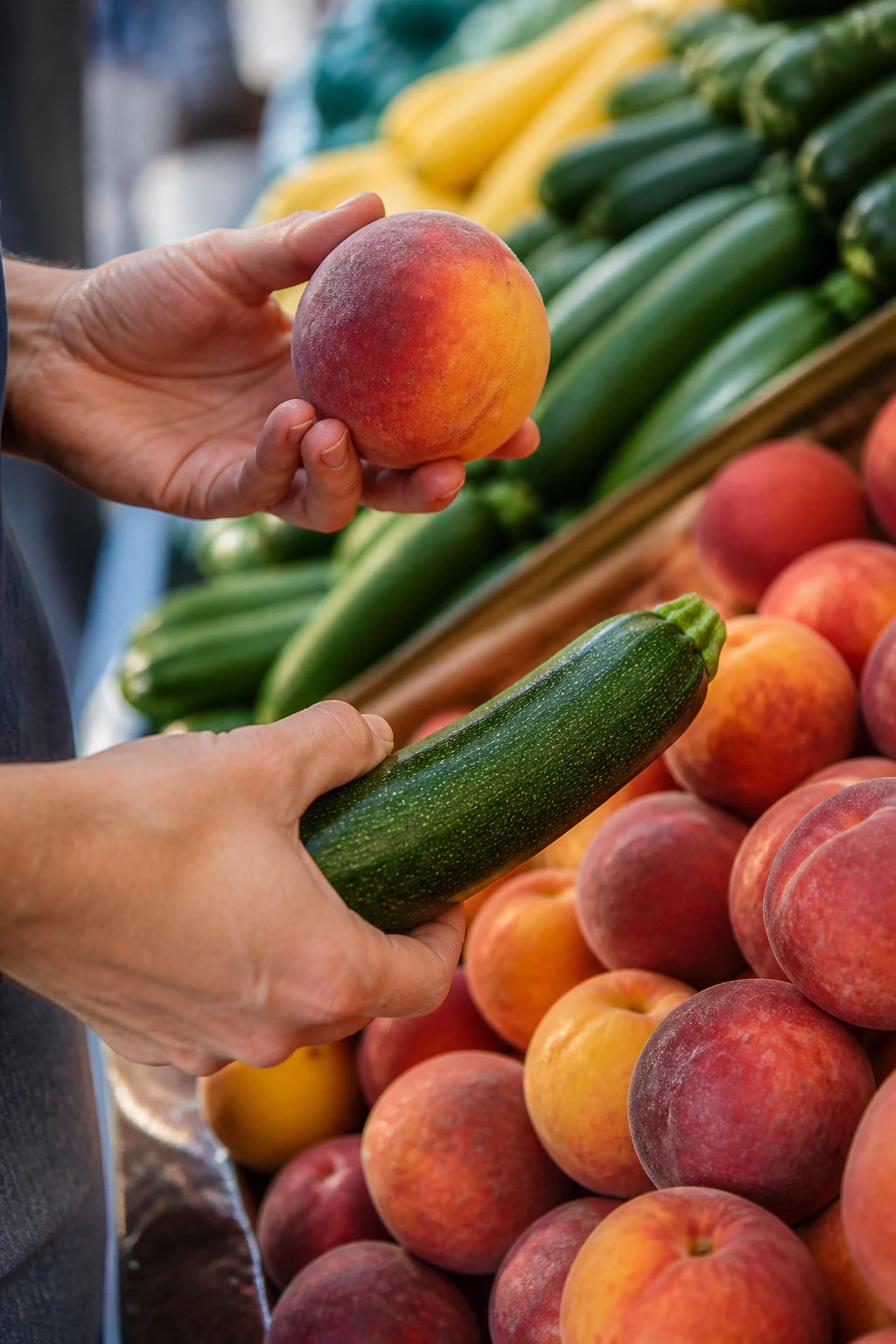
The grocery list matters more than people want to admit. Char helps, but it can’t rescue tired produce or meat that’s too lean to stay juicy. If the ingredients are smart, the grill only has to do a little work.
Start with protein that suits high heat. For chicken, thighs beat breasts because they tolerate longer cooking without drying out. For sausage, choose a version with enough fat to stay juicy and enough casing to brown. If you’re buying halloumi, look for one packed in brine so it keeps its shape on the grate. With shrimp, frozen is often better than “fresh” shrimp that’s been sitting on ice for too long — thaw it overnight and pat it dry before grilling.
Vegetables should be firm and dry. Zucchini should feel heavy for its size. Eggplant should have taut skin, not wrinkles. Mushrooms should look dry on the surface, not wet and slimy in the package. Corn should have tight husks and silk that looks moist, not brittle. If you buy peaches, use fruit that gives slightly at the shoulder but still resists when you press it. Too soft, and you’ll end up with compote before it ever hits the grate.
Bread deserves better treatment too. Buy a loaf with a real crust. Fluffy sandwich bread is fine for toast, but it turns limp fast when grilled food starts leaking juices. Sourdough, ciabatta, fougasse, pita, and sturdy flatbreads all hold up better. If you’re using a bakery loaf, ask for something with structure, not just volume.
I also buy more lemon than I think I need. That sounds small, but it matters. Charred food usually wants a bright finish, and one lemon disappears fast once a crowd starts squeezing.
How to Serve the Spread Without Making a Mess
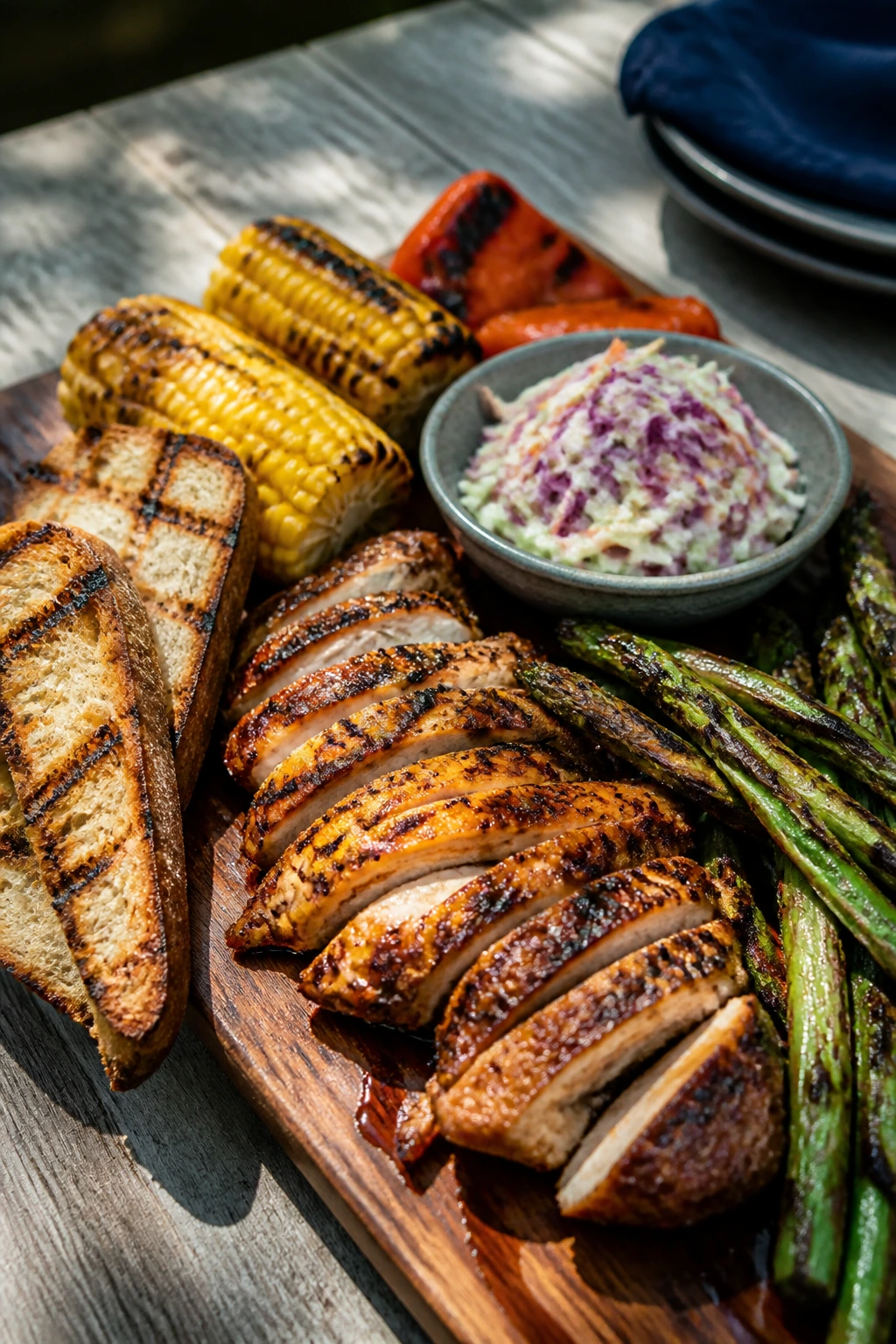
Presentation: Serve the charred pieces on a large board, rimmed tray, or butcher-paper-lined table section so the browned edges stay visible and the juices don’t vanish into a deep bowl. Put the protein in one cluster, the grilled vegetables in another, and let the bread lean against the edges rather than stacking it underneath the wet items.
Accompaniments: Pair the smoky food with one cold crunchy side and one creamy or sharp side. I like cabbage slaw, tomato-cucumber salad, grilled corn cut from the cob, potato salad with a mustard bite, or a farro salad with herbs. A bowl of pickles or quick-pickled onions is almost always the first thing people finish.
Portions: For a lunch-style cookout plate, plan on about 6 to 8 ounces of protein per adult, plus one to two cups of vegetables or salad and one piece of grilled bread or a half cup of grains. If the spread is snacky and people are grazing, reduce the protein slightly and give them more bread, pickles, and vegetables. Kids usually do better with smaller pieces and more dips.
Beverage Pairing: Iced tea with lemon, sparkling water with citrus, a crisp lager, or a dry cider all match the smoky, salty profile without burying it. If you want one non-alcoholic drink that fits almost everything here, make it cold tea with a little honey and plenty of lemon.
Additional Tips and Flavor Boosters
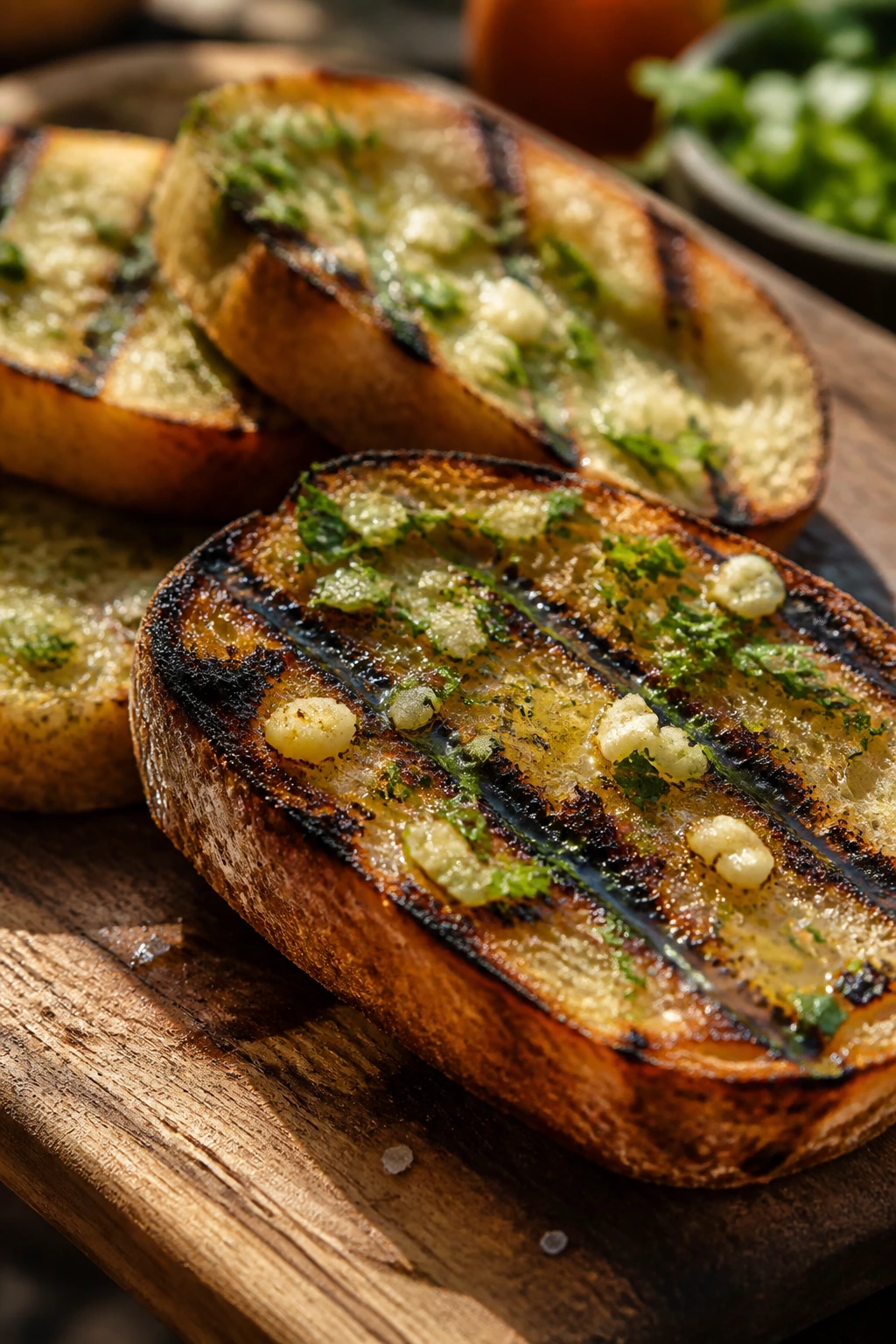
Flavor Enhancement: Brush grilled bread with olive oil mixed with a little crushed garlic and chopped herbs, then finish with flaky salt. That tiny move makes plain bread taste like it was meant to sit beside the grill instead of being an afterthought.
Customization: If you like heat, put chili crisp, sliced jalapeños, or red pepper vinegar on the table rather than burying the heat in the marinade. People can control their own plates, and the smoke from the grill won’t fight the spice. For a softer profile, use dill, mint, and yogurt instead.
Serving Suggestions: A few finishing touches go a long way: lemon zest over zucchini, chopped parsley over chicken, sesame seeds over cabbage, or torn basil over grilled peaches. I like one herb that smells green, one acid that bites, and one crunchy topping. That combination keeps the meal from flattening out after the first round.
Make-It-Yours: For gluten-free eaters, swap the bread for grilled corn tortillas or thick lettuce leaves and lean harder on grain salads. For dairy-free plates, use tahini sauce or olive-oil vinaigrette instead of yogurt or ranch. For a vegetarian spread, add halloumi, mushrooms, chickpeas, and extra grilled onions so the board still feels complete.
A small note on salt helps too. If your sauce is doing the seasoning, keep the vegetables lighter. If the protein is heavily seasoned, let the cold salad carry a little more acid instead of piling on more salt at the last second.
Common Mistakes That Ruin Cookout Picnic Food
-
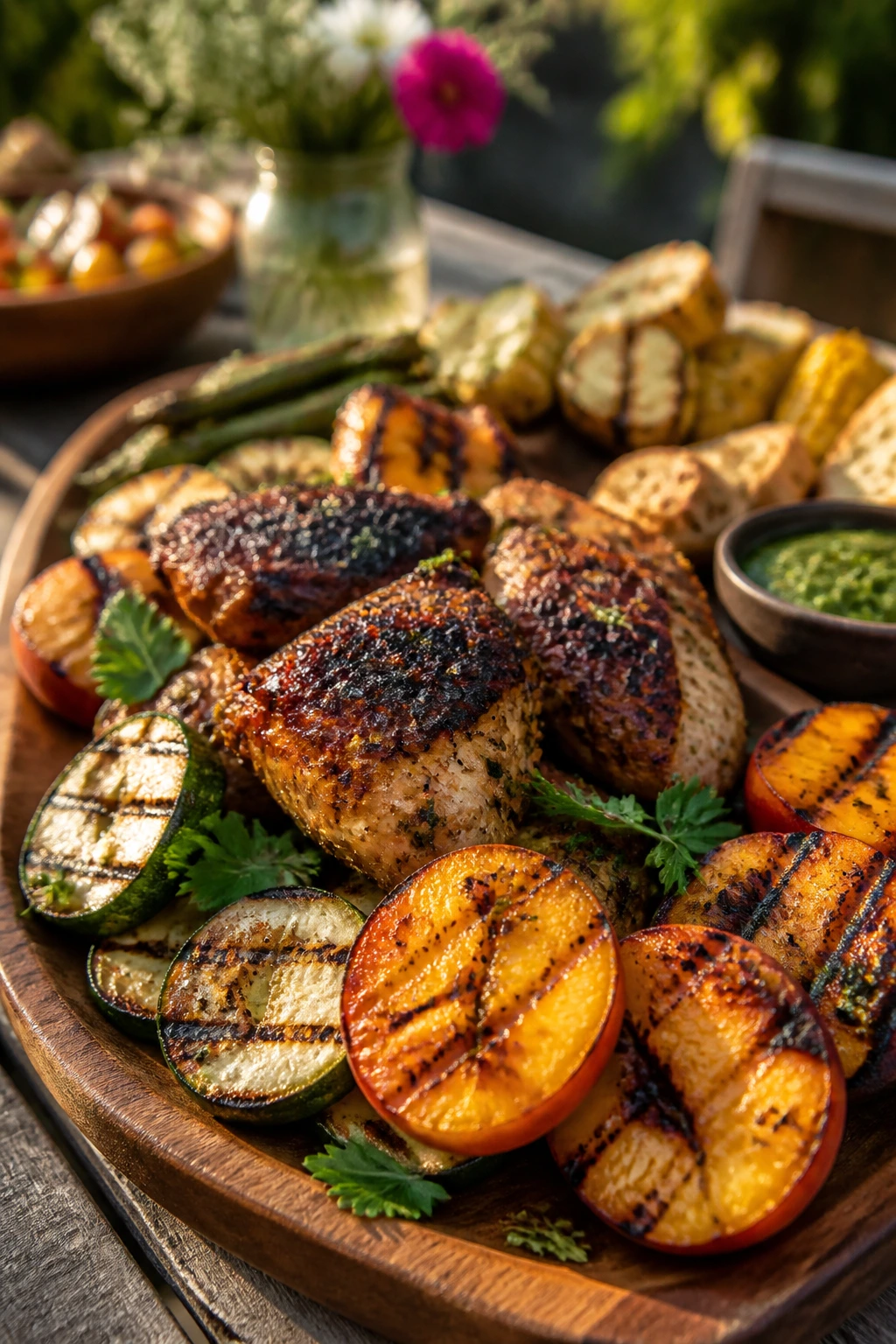
Trying to char everything at once: The grill gets crowded, the temperature drops, and the food starts steaming instead of browning. Fix it by cooking in batches and leaving open space around each piece.
-
Using thin slices that can’t survive the heat: Tiny zucchini coins, paper-thin onions, and limp mushrooms tend to shrivel before they brown. Cut vegetables thicker than you think they need to be, especially if they’re going on direct heat.
-
Dressing the cold sides too early: Slaw and grain salads that sit in dressing for too long can get soggy or dull. Keep the dressing separate until the last few minutes, then toss and serve.
-
Slicing meat too soon: If chicken or steak goes from grill to cutting board to knife in under a minute, the juices run out and the texture suffers. Rest it for 5 to 10 minutes and slice against the grain if the cut allows it.
-
Forgetting the food-safety clock: Even a beautiful picnic board becomes a problem if mayo, yogurt, or cooked meat sits out too long. Keep cold dishes on ice when needed, serve smaller batches, and move leftovers back into the fridge fast.
-
Relying on char alone for flavor: Brown edges help, but they do not season the plate by themselves. Taste the finished food and finish with salt, lemon, herbs, or vinegar if it needs a lift.
Variations and Alternative Picnic Builds
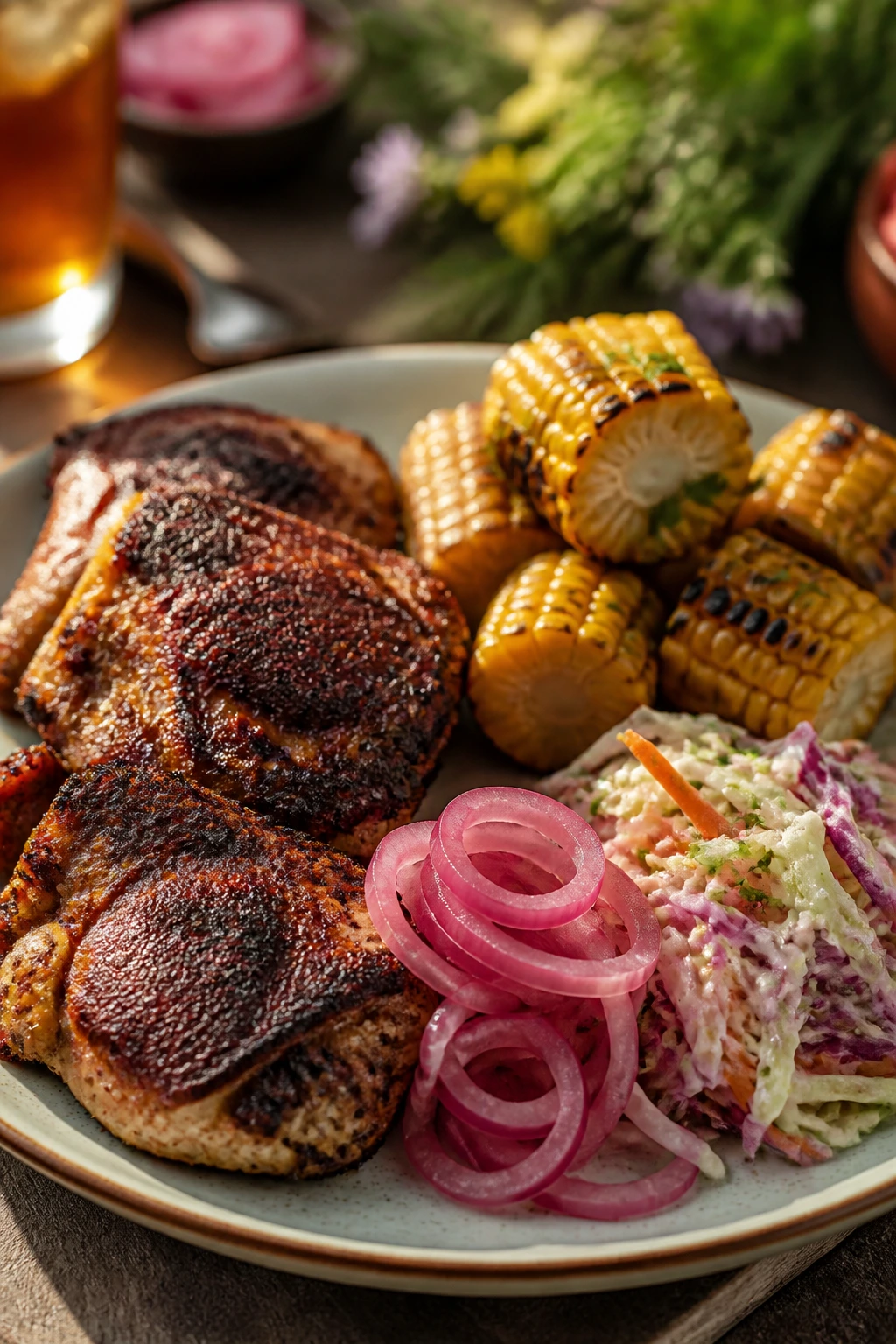
Southern Smoke Plate: Use chicken thighs, grilled corn, pickled onions, and a tangy slaw with mustard or vinegar. This version likes a little extra smoke and holds up well if the table gets crowded, because the flavors are sturdy and familiar.
Mediterranean Yard Lunch: Build around halloumi, zucchini, eggplant, pita, olives, cucumbers, and a lemony yogurt or tahini sauce. It’s salty, bright, and easy to eat with your hands or a fork, which makes it one of the least fussy ways to feed a group.
Vegetable-First Char Board: Center the meal on mushrooms, peppers, onions, eggplant, farro, chickpeas, and herby dressing. This one tastes rich enough to satisfy meat eaters, especially if you add toasted seeds or a creamy sauce to give it some weight.
Seafood and Citrus Tray: Use shrimp or salmon, grilled lemon, herbs, and a cold cucumber salad on the side. Keep the grill time short and the seasoning sharp; seafood loses its charm fast if you overwork it.
Kid-Friendly Snack Spread: Mix sausage coins, grilled bread, melon, corn, cheese cubes, and a mild dipping sauce. Kids usually like the contrast of warm and cold, and the small pieces are easier to manage than a giant plated lunch.
If you want a single rule for variations, it’s this: keep the char, keep the acid, and change the center of gravity. That way the meal still feels like the same idea, just tilted in a different direction.
Make-Ahead, Storage, and Reheating Guidance
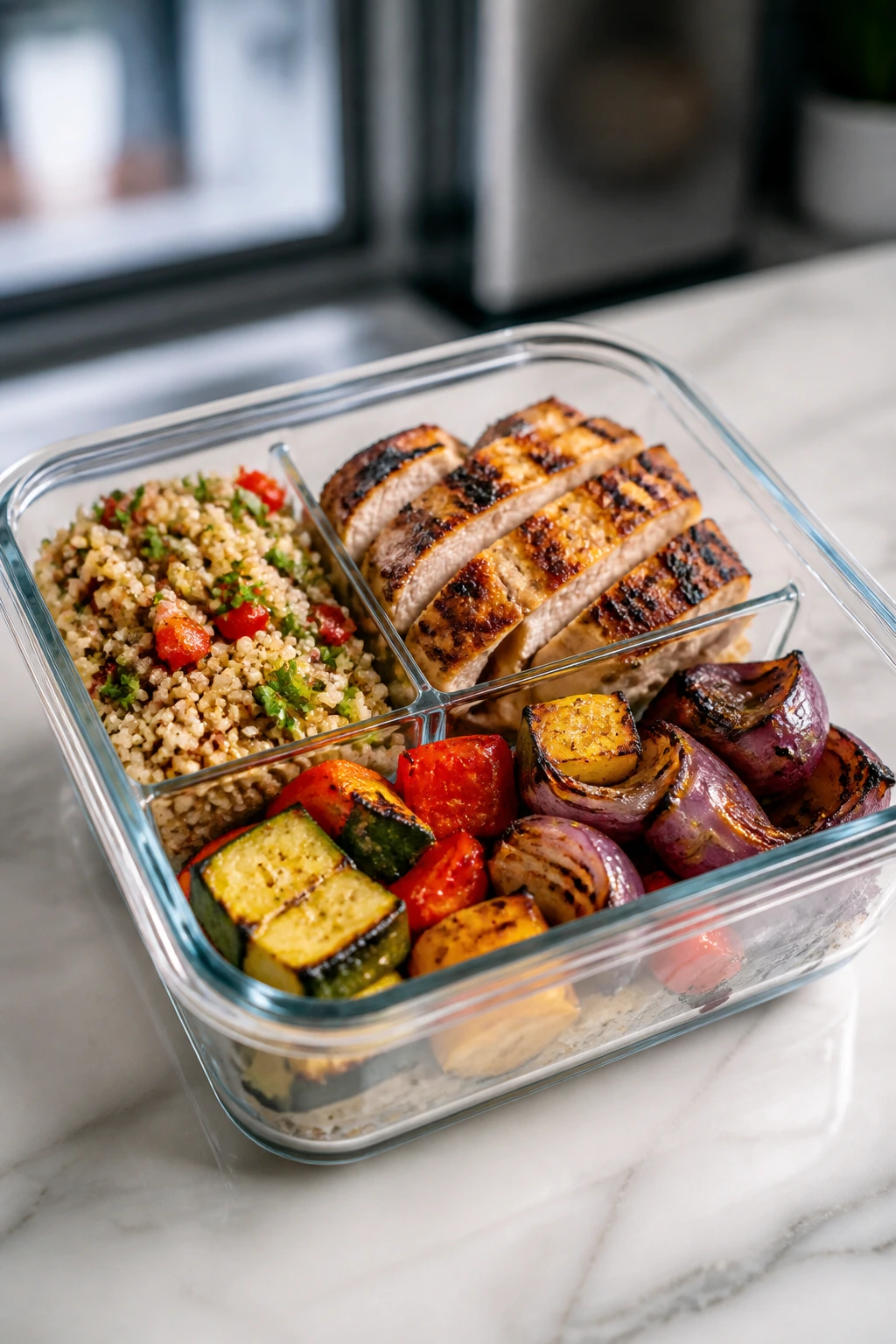
A charred picnic lunch behaves best when the parts stay separate. Grilled proteins keep well in the fridge for 3 to 4 days if they’re cooled quickly and stored in shallow containers. Grilled vegetables usually hold for about 3 days, though the texture softens a little each day. Grain salads are the most reliable leftovers in the bunch and often keep for 4 days, especially if the dressing is acidic.
Sauces and pickles last longer. Yogurt-based sauces are usually best within 3 to 4 days. Vinaigrettes and herb sauces can go a bit longer, often 4 to 5 days if stored cold and clean. Quick-pickled onions or cucumbers can last 1 to 2 weeks in the fridge, and they’re often better on day two than on day one because the flavor settles down.
Freezing works for some pieces and not others. Grilled chicken thighs freeze well for about 2 to 3 months if wrapped tightly and cooled before freezing. Sausages can usually be frozen too, though the texture may soften a bit when reheated. Grilled vegetables do freeze, but I only do it if I’m planning to chop them into grain bowls or fold them into an omelet later. I do not freeze cucumbers, leafy salads, or dairy sauces. They turn watery and strange.
Reheating should be gentle. Chicken and sausage do best in a 300°F oven, loosely covered, until they reach a safe internal temperature and feel hot through the center. A skillet on medium heat works for vegetables if you want to re-crisp the edges. Bread belongs back on the grill or into a toaster, not under the broiler for so long that it goes from toasted to wrecked in thirty seconds.
For make-ahead work, do the sauces and pickles first, then the grain salads, then the meat marinade. Grill the main pieces close to serving if you can. If you have to assemble sandwiches or wraps in advance, keep wet ingredients out of the bread until the last possible moment. That tiny rule saves more picnic lunches than any elaborate packing plan.
Frequently Asked Questions
Can I make a charred picnic lunch on a gas grill instead of charcoal?
Yes, and it works well. Gas gives you steadier heat, which is useful when you’re juggling chicken, bread, and vegetables at the same time. Let the grill preheat fully, keep a cooler zone on one side if you can, and use direct heat only for the pieces that need fast color.
What’s the safest protein if I don’t want to babysit the grill?
Chicken thighs and sausages are the least fussy choices. Chicken thighs stay juicy longer than breasts, and sausages tolerate a little delay without drying out. Use an instant-read thermometer and pull chicken at 165°F so you’re not guessing near the end.
How do I keep vegetables from sticking to the grates?
Dry them well, oil them lightly, and don’t try to move them too early. A vegetable that sticks usually isn’t ready to turn yet. A grill basket helps a lot for cut pieces, especially mushrooms, zucchini, and onions.
Can this meal be vegetarian without feeling like a side dish?
Absolutely. Halloumi, eggplant, mushrooms, chickpeas, farro, grilled bread, and a sharp sauce give you enough heft to make the meal feel complete. The key is to keep the charred components substantial and to add salt, acid, and crunch so the board has balance.
Do charred picnic foods need to be served warm?
Not all of them. Chicken, sausages, grilled bread, and vegetables taste best warm or just off the grill, but grain salads, pickles, slaw, and sauces are built to be cool. The spread works because it mixes temperatures, not because everything has to be hot.
What if I only have a small grill?
Cook in waves and keep finished food on a sheet pan in a warm spot or lightly covered with foil. A small grill makes batching more important, not impossible. Start with the items that take the longest and use a grill basket so you can move fast without losing pieces through the grates.
Can I make parts of this lunch the day before?
Yes. Sauces, pickles, grain salads, and even some chopped vegetables can be done ahead. I’d leave the bread, fruit, and anything leafy until the day of serving so they keep their texture.
How do I char fruit without turning it to mush?
Choose firm-ripe fruit and keep the cut side on the grate for a short time only. Peaches, pineapple, and plums work best when they’re grilled just long enough to pick up marks and a little sweetness at the edge. Soft fruit goes from perfect to collapsed fast, so stay close.
The Plate Worth Carrying Outside
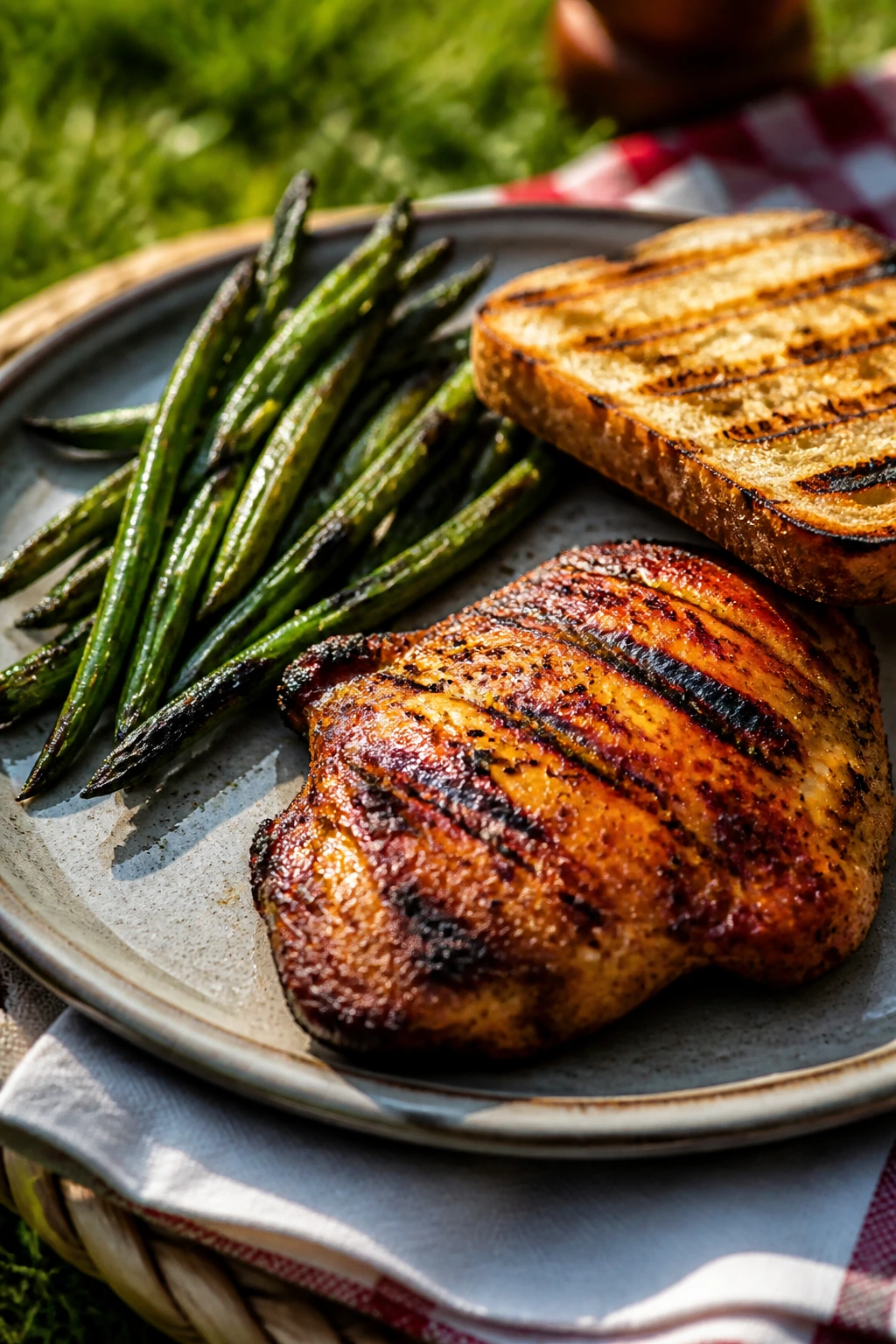
A charred picnic lunch for backyard cookouts is worth the trouble because it makes simple food taste deliberate. The grill gives the meal shape, the cold sides give it lift, and the sauces keep it from settling into one heavy note. That’s the whole trick, really. Smoke without sloppiness. Color without bitterness. Enough planning that the lunch feels easy once it hits the table.
And it does not have to be complicated. One good protein, one or two vegetables that can take heat, one crunchy cold side, one sharp sauce, and a piece of bread with real crust — that’s enough to make people linger. The next time you fire up the grill, build around that pattern and let the char do what it does best: make ordinary ingredients taste like somebody cared.