



A moist pound cake with cream cheese frosting has a way of ruining dessert restraint in the best possible sense. One slice looks innocent on the plate — dense, golden, a little glossy from the butter — and then you cut into it and the crumb gives just enough resistance before yielding to a soft, tight texture that feels rich without being heavy.
The dry, dusty pound cakes that crumble into beige fragments? Not here. The cake in this recipe leans on butter, cream cheese, and sour cream for tenderness, then gets finished with a frosting that brings a cool tang and a little shock of sweetness at the edge of each bite. That contrast matters. A pound cake on its own can drift toward plain if it’s not handled carefully; cream cheese frosting gives it structure, flavor, and a finish that makes the whole thing feel complete.
There’s also a practical reason I keep coming back to this style of cake: it slices cleanly after a proper cool-down, holds up well for a second day, and doesn’t need a stack of gimmicks to taste like a proper dessert. The batter is simple. The technique is not complicated. But the details — room-temperature ingredients, slow mixing, a careful bake, and patient cooling — are what keep this from turning into a brick with frosting on top.
Why This Pound Cake Earns a Spot on the Dessert Table
Tender for days: The combination of butter, cream cheese, and sour cream keeps the crumb soft long after the cake leaves the oven, so the second slice is usually as good as the first.
Dense, not heavy: A pound cake should have weight and a fine crumb, not a sponge-cake bounce. This one lands in the middle: firm enough to cut neatly, soft enough to melt on the tongue.
Cream cheese frosting cuts the sweetness: Plain vanilla buttercream can make pound cake taste sugary from edge to edge. The tang in the frosting keeps each bite sharp and balanced.
Good for slicing and serving: Bundt cakes and loaf cakes both handle neat slices well, which matters when you want a dessert that behaves at a party instead of slumping under a spoon.
Easy to dress up or leave plain: Fresh berries, shaved lemon zest, toasted pecans, or nothing at all all work here. The cake doesn’t need a pile of extras to taste finished.
Better the next day: Once the frosting settles and the crumb has time to relax, the flavor gets rounder and the texture turns even smoother. Some cakes fall apart after a night in the fridge. This one usually improves.
Bake-Day Facts at a Glance
Yield: 12 generous slices
Prep Time: 25 minutes
Cook Time: 65 to 75 minutes
Total Time: 1 hour 30 minutes to 1 hour 40 minutes, plus cooling time
Difficulty: Intermediate — the method is straightforward, but the cake depends on proper creaming, careful mixing, and a clean doneness check.
Chill/Rest Time: 1 to 2 hours for full cooling before frosting
Best Served: At room temperature, after the frosting has had 20 to 30 minutes to set
The Ingredients for the Cake and Frosting
For the Pound Cake:
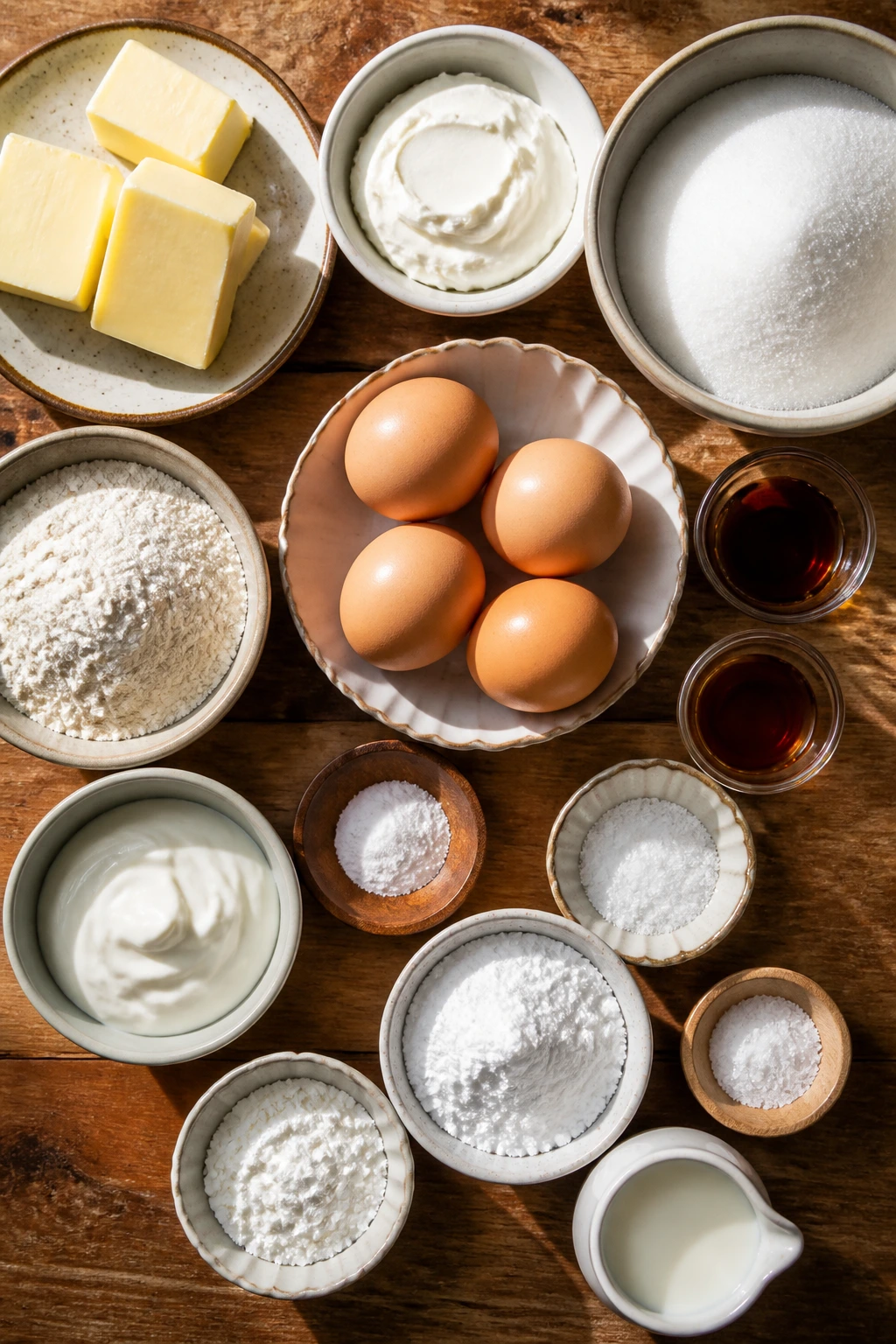
- 1 cup (2 sticks / 226 g) unsalted butter, softened to cool room temperature
- 4 oz (113 g) cream cheese, softened
- 2 cups (400 g) granulated sugar
- 4 large eggs, room temperature
- 2 teaspoons pure vanilla extract
- 1/2 teaspoon pure almond extract, optional but strongly recommended
- 2 1/2 cups (300 g) cake flour, spooned and leveled
- 1/4 cup (30 g) cornstarch
- 1 teaspoon baking powder
- 1/2 teaspoon fine sea salt
- 1/2 cup (120 g) sour cream, room temperature
For the Cream Cheese Frosting:
- 8 oz (226 g) cream cheese, softened
- 4 tablespoons (56 g) unsalted butter, softened
- 2 1/2 cups (300 g) powdered sugar, sifted
- 1 teaspoon pure vanilla extract
- Pinch of fine sea salt
- 1 to 2 tablespoons heavy cream or milk, as needed for spreading consistency
What Each Ingredient Is Doing in the Crumb
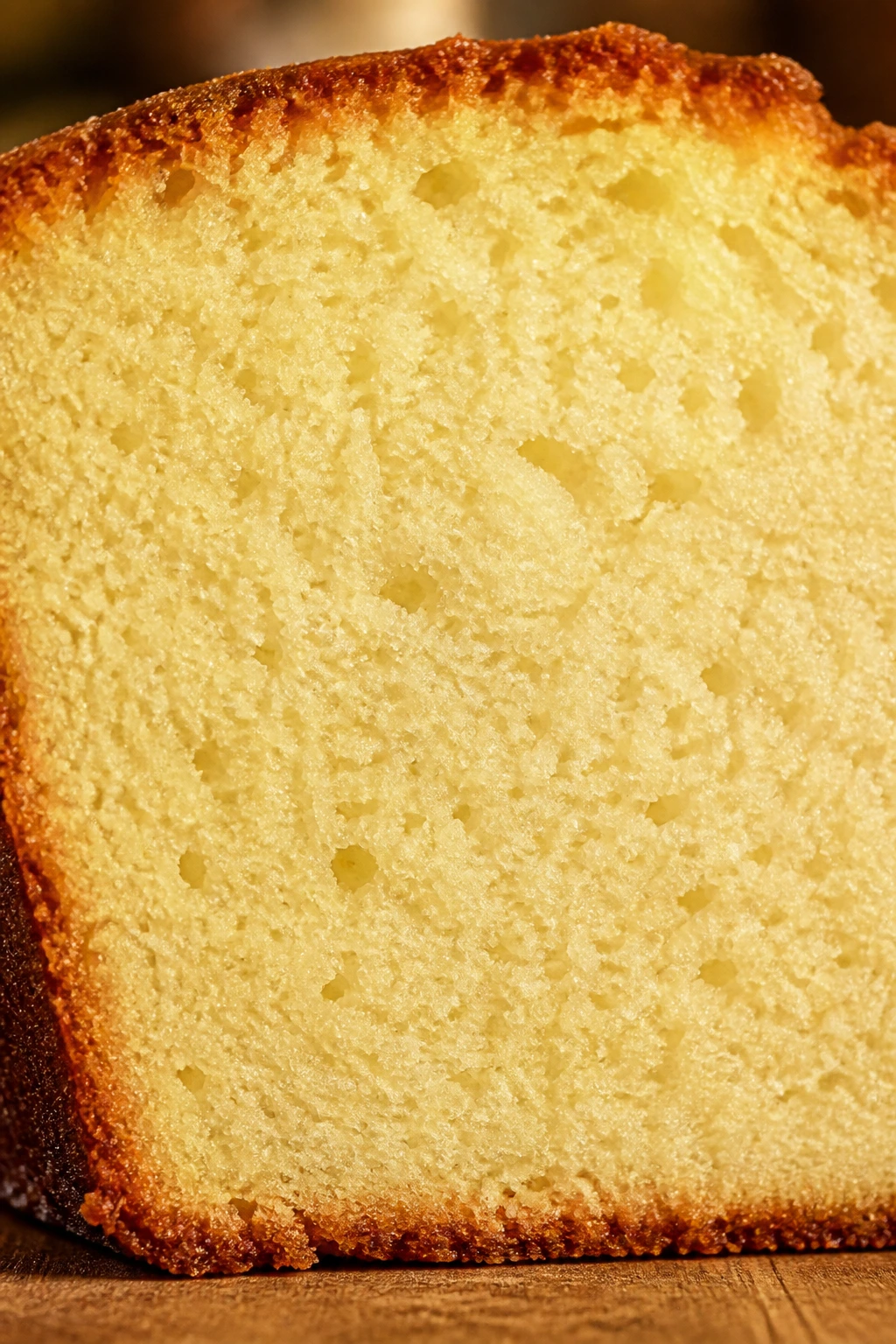
Butter, Cream Cheese, and Sugar
What to use: Start with 1 cup of unsalted butter, 4 oz of cream cheese, and 2 cups of granulated sugar for the cake base, plus another 8 oz of cream cheese and 4 tablespoons of butter for the frosting.
Preparation: Let both the butter and cream cheese soften until they dent easily when pressed, but do not let them get greasy or melty. For the cake, they should be soft enough to cream together without lumps; for the frosting, they should beat into a smooth paste without little white flecks.
Substitutions: If you only have salted butter, use it and reduce the fine sea salt in the cake by a small pinch. Reduced-fat cream cheese is a poor trade here — it often gives the frosting a softer, looser body and a slightly gummy finish.
Tips: Cream cheese in the batter helps the cake stay tender, but only if it blends fully with the butter and sugar. Tiny lumps at this stage are fine. Big cold chunks are not.
Flour, Cornstarch, Baking Powder, and Salt
What to use: The dry mix uses 2 1/2 cups cake flour, 1/4 cup cornstarch, 1 teaspoon baking powder, and 1/2 teaspoon fine sea salt.
Preparation: Spoon the cake flour into the measuring cup and level it off instead of scooping straight from the bag. Cor nstarch is included to soften the crumb a little further; whisk it thoroughly with the flour so it disappears into the mix.
Substitutions: If cake flour isn’t on hand, use 2 1/4 cups all-purpose flour plus 1/4 cup cornstarch. The texture won’t be identical, but it still bakes up with a fine crumb and good sliceability.
Tips: Don’t add extra baking powder because you want more lift. Pound cake is not supposed to rise like a layer cake. Too much leavening pushes the crumb apart and gives you a rough, uneven slice.
Eggs, Sour Cream, and Vanilla
What to use: Four large eggs and 1/2 cup sour cream form the moisture backbone, while 2 teaspoons vanilla and 1/2 teaspoon almond extract bring the flavor.
Preparation: Bring the eggs and sour cream to room temperature before mixing. Cold eggs can make the batter look curdled for longer, and cold sour cream stiffens the mixture just enough to make it harder to blend evenly.
Substitutions: Greek yogurt can stand in for sour cream if that’s what you have, though full-fat yogurt is the safer swap. If almond extract isn’t your thing, use an extra 1/2 teaspoon vanilla instead.
Tips: Add the eggs one at a time and let each one disappear before the next goes in. That slow build keeps the batter smooth and helps the cake stay stable in the oven.
Powdered Sugar and Heavy Cream for the Frosting
What to use: The frosting needs 2 1/2 cups powdered sugar, 1 teaspoon vanilla, a pinch of salt, and 1 to 2 tablespoons heavy cream or milk to adjust the texture.
Preparation: Sift the powdered sugar if it looks clumpy. Cream cheese frosting picks up lumps fast, and once they’re in there, you have to beat the frosting longer, which can thin it out.
Substitutions: Milk works if that’s what’s in the fridge, but heavy cream gives a richer, more plush finish. If you want a tangier frosting, add another tablespoon of cream cheese and reduce the cream by a teaspoon or two.
Tips: Aim for a spreadable frosting, not a pourable one. It should hold a soft swirl on the spoon and slide slowly off the spatula, not run like glaze.
The Tools and Pan Prep That Matter
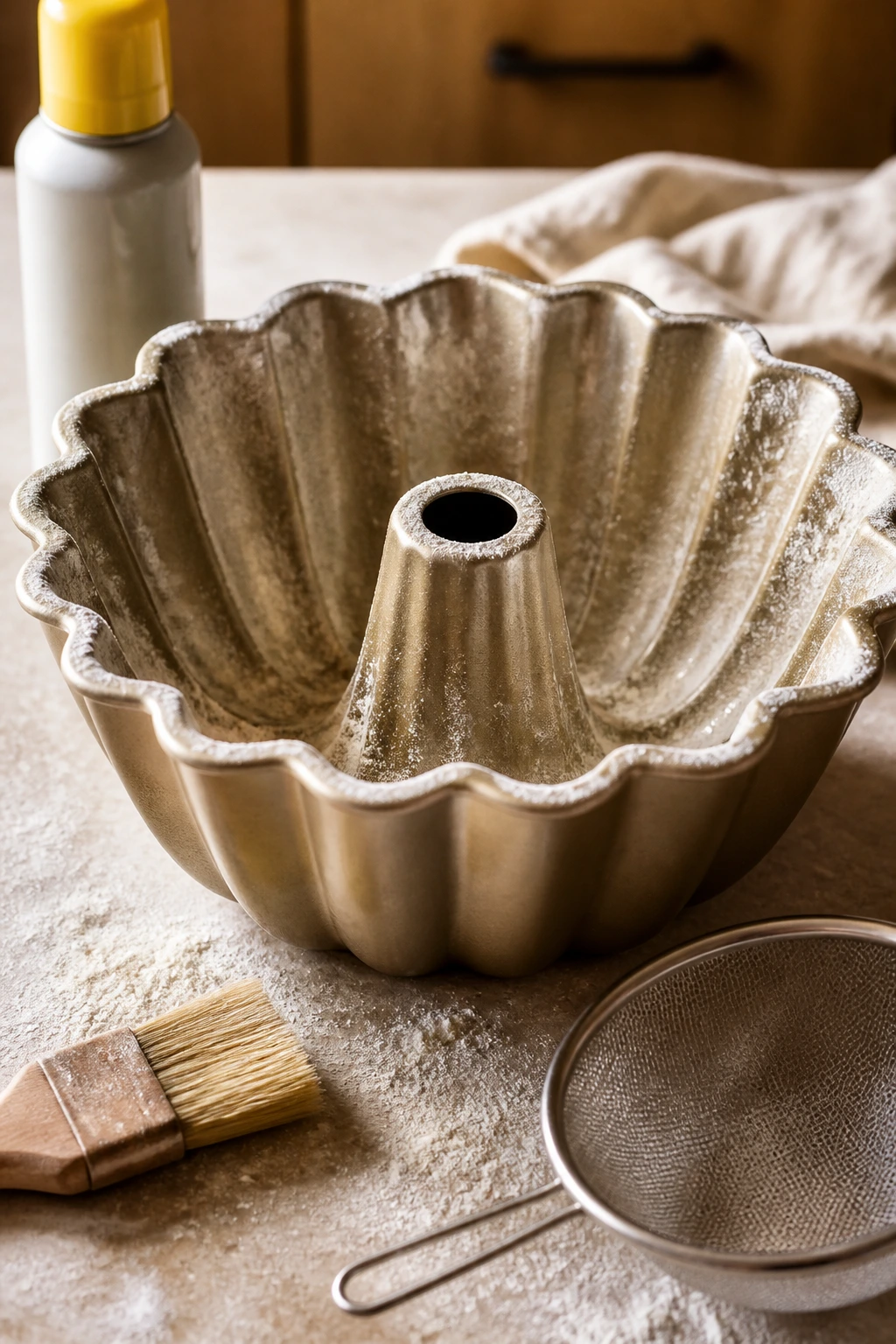
A pound cake looks simple, but the pan and the prep decide whether you get a clean release or a broken mess stuck to the grooves.
- 10-cup Bundt pan: The best shape for this batter; it bakes evenly and gives you those clean slices with a browned edge.
- Baking spray with flour or softened butter plus flour: Use enough to coat every ridge in the pan. Bundt pans are unforgiving if you miss a spot.
- Stand mixer or hand mixer: A stand mixer makes the creaming easier, but a hand mixer works fine if you keep the bowl scraped down.
- Large mixing bowls: You need one for dry ingredients and one for the batter, so the flour doesn’t get forgotten in the corner of the counter.
- Rubber spatula: Essential for scraping the bowl and folding in the final bits of flour by hand.
- Wire cooling rack: The cake needs air underneath it after baking, or steam can make the bottom soggy.
- Offset spatula or small icing spatula: Handy for spreading the frosting into the ridges and over the crown of the cake.
- Fine-mesh sieve: Not mandatory, but very useful for sifting powdered sugar and cake flour if your pantry ingredients tend to clump.
Mixing the Batter Without Turning It Heavy
Prepare the Pan and Heat the Oven:
-
Preheat the oven to 325°F (165°C) and position a rack in the lower-middle part of the oven. A pound cake needs steady heat, not an aggressive blast from the top element.
-
Generously grease a 10-cup Bundt pan with baking spray that includes flour, or brush the pan with softened butter and dust it with flour. Tap the pan over the sink, then turn it upside down and knock out every loose bit. Any bare patch can glue the cake in place.
-
In a medium bowl, whisk together the cake flour, cornstarch, baking powder, and salt until the mixture looks even and pale. Set it aside.
Cream the Base:
-
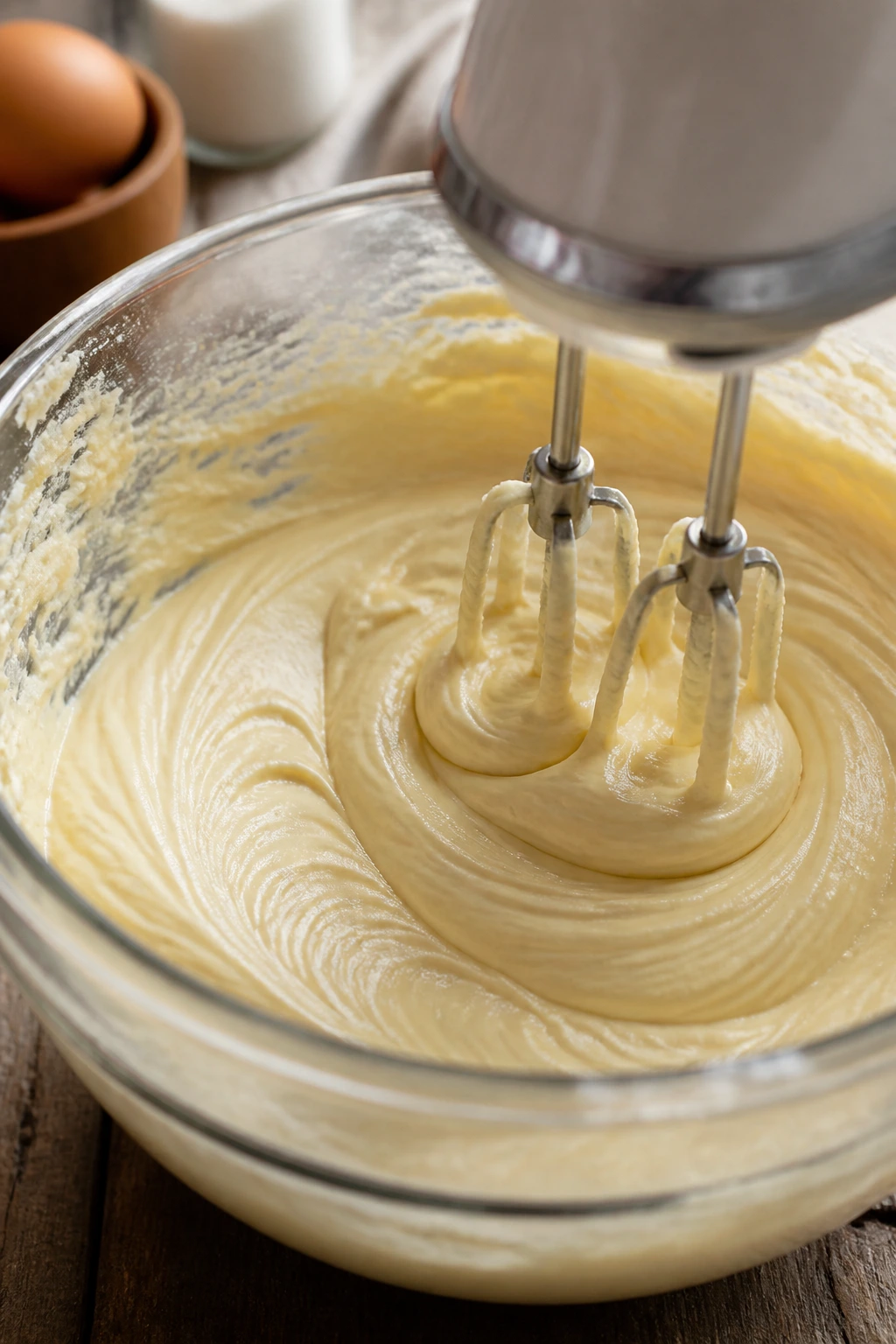
In a large bowl or stand mixer fitted with the paddle attachment, beat the butter and cream cheese on medium speed for about 1 minute, just until smooth. Add the sugar and beat for 3 to 4 minutes more, until the mixture looks lighter in color and visibly fluffy. Scrape the bowl halfway through. If the sugar still looks gritty, keep going; that’s the point of this stage.
-
Add the eggs one at a time, beating for 15 to 20 seconds after each addition. Stop and scrape the bowl after the second egg and again after the fourth. Mix in the vanilla and almond extract. The batter may look a little loose and glossy. That’s fine.
Finish the Batter:
-
Reduce the mixer speed to low. Add the dry ingredients in three additions, alternating with the sour cream in two additions: flour, sour cream, flour, sour cream, flour. Mix only until the flour disappears. Do not beat past that point or the cake can turn tight and rubbery.
-
Use a rubber spatula to fold the batter once or twice from the bottom of the bowl. This catches any flour hiding at the edge without overworking the mix. The batter should be thick, smooth, and scoopable.
Bake and Cool:
-
Spoon the batter into the prepared Bundt pan and smooth the top with a spatula. Tap the pan once or twice on the counter to pop any large air pockets. Do not shake it wildly. That only makes uneven tunnels.
-
Bake for 65 to 75 minutes, rotating the pan once around the 45-minute mark if your oven has hot spots. The cake is done when the top is deep golden, the edges have started to pull away from the pan, and a tester comes out with a few moist crumbs. If you use a thermometer, the center should read about 200°F to 205°F (93°C to 96°C). A dry toothpick is not the only sign of doneness; pound cake can still be underbaked in the middle when the skewer looks clean.
-
Cool the cake in the pan on a wire rack for 15 minutes. Invert it onto the rack, lift the pan off carefully, and let the cake cool completely for at least 1 hour, preferably longer. Frosting a warm cake is how you end up with a sliding, oily mess.
Whipping the Cream Cheese Frosting
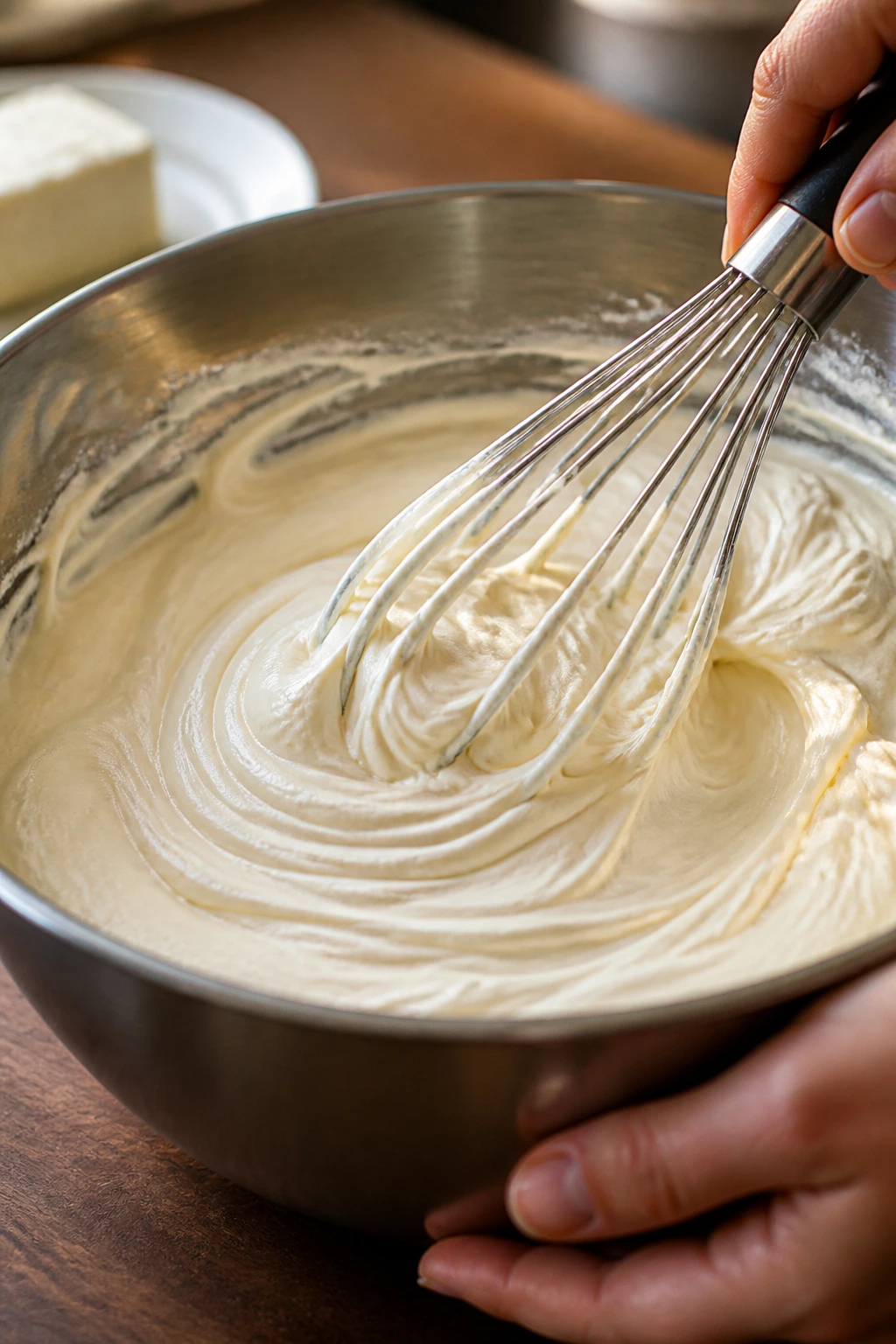
The frosting should taste like sweet cream cheese, not powdered sugar with a whisper of dairy. That balance comes from beating the fat first, then adding the sugar in stages so the texture stays smooth.
In a medium bowl, beat the cream cheese and butter together for about 1 minute until the mixture turns silky. Add the powdered sugar in two additions, mixing on low at first so the sugar doesn’t blow out of the bowl, then on medium until the frosting looks thick and spreadable. Add the vanilla, salt, and just enough cream or milk to loosen it into a soft frosting that spreads without tearing the cake.
If the frosting looks shiny and runny, it’s too warm. Pop the bowl into the fridge for 10 to 15 minutes, then stir again. If it feels stiff enough to crack, add a teaspoon of cream at a time. I like a frosting that holds a modest swoop when dragged with a spoon; it should sit on the cake rather than sink into it.
How to Serve a Slice of Pound Cake
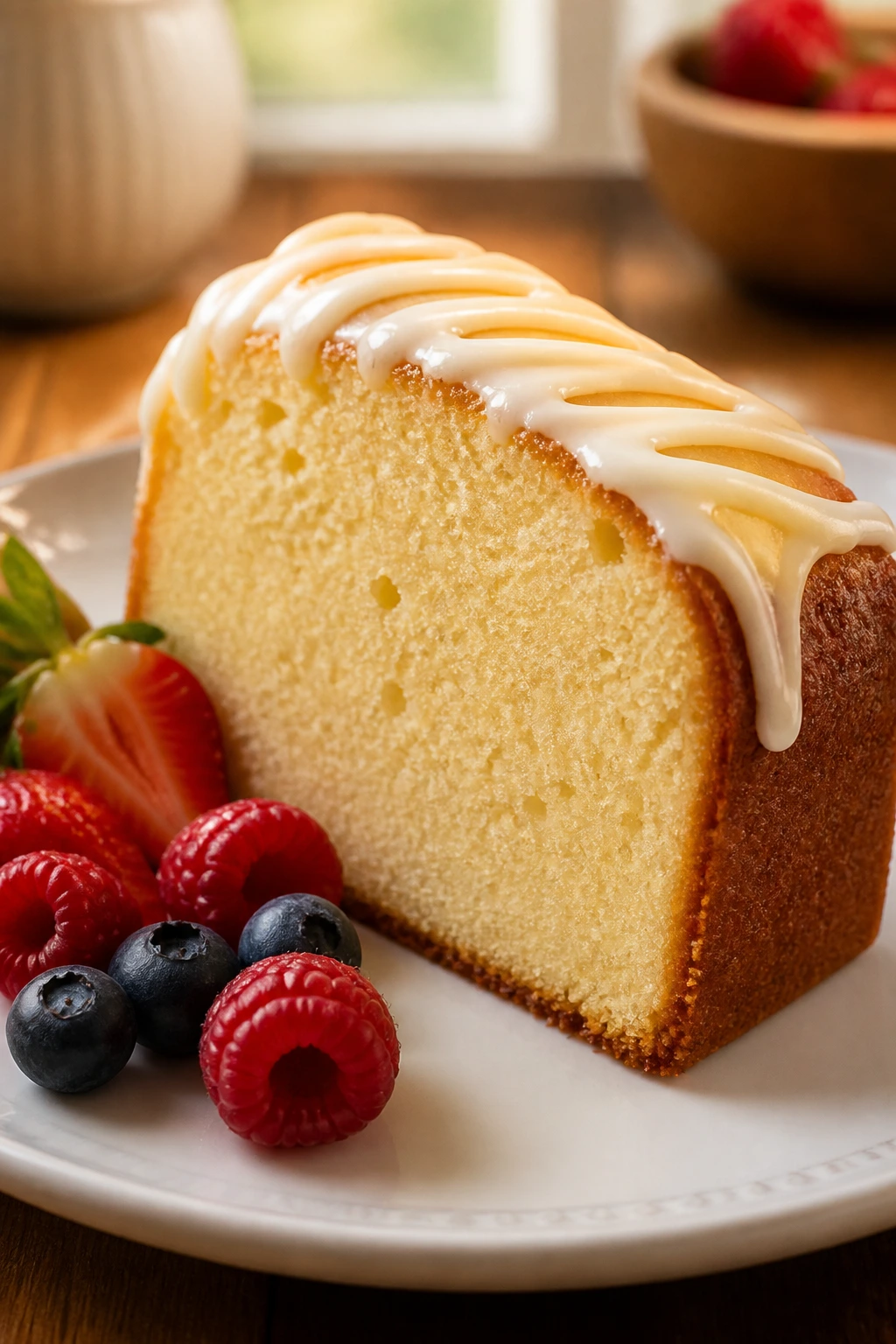
Presentation: Let the frosting settle for 20 to 30 minutes before slicing, then use a long serrated knife wiped clean between cuts. On a Bundt cake, I like to spoon the frosting in thick ribbons over the crown and let a little drift down the ridges instead of covering every inch. It looks neater and keeps the cake from feeling smothered.
Accompaniments: Fresh berries are the easiest win here, especially strawberries or raspberries with a tiny pinch of sugar and a squeeze of lemon. A scoop of vanilla bean ice cream also works, though I prefer it only when the cake is still slightly warm. If you want a sharper contrast, serve it with a handful of toasted pecans or a spoonful of tart cherry compote.
Portions: Twelve slices is the sweet spot for a 10-cup Bundt cake. For a dessert table, cut slightly smaller wedges and you’ll stretch it to 14 servings without making the cake feel skimpy. If you’re serving it as a coffee cake with brunch, thicker slices are better; they hold their shape and don’t vanish under a fork.
Beverage Pairing: Black coffee is the obvious match, but a strong cup of tea — Earl Grey or English breakfast — does a better job of cutting the frosting’s richness. For a colder pairing, cold milk works exactly the way it did when you were a kid, and I’m not pretending that’s a downside.
Small Moves That Make a Big Difference
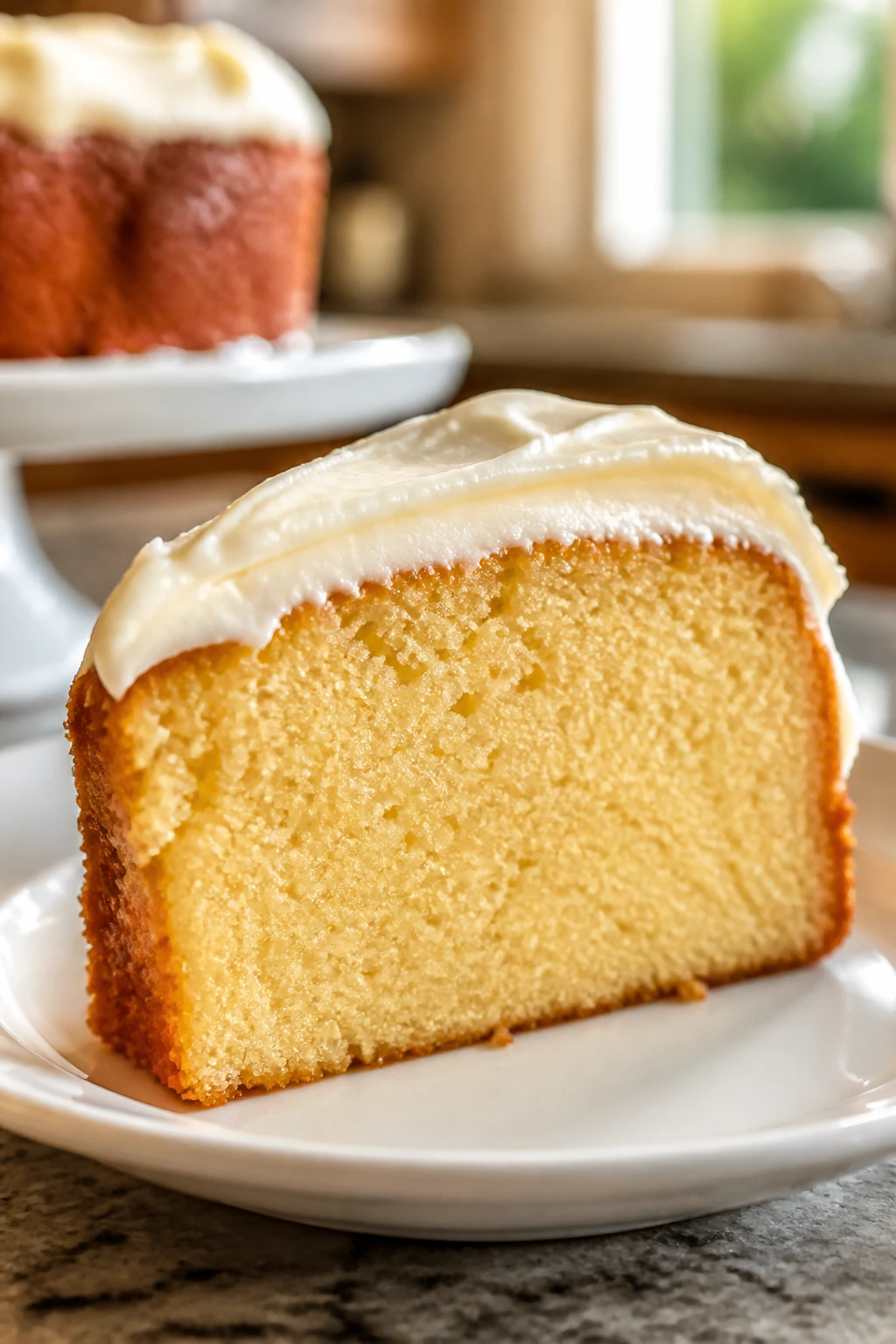
Flavor Enhancement: A teaspoon of finely grated lemon zest in the frosting wakes up the tang without making the cake taste like lemon cake. If you want the cake itself to carry a little more aroma, keep the almond extract and use a high-quality vanilla that smells round, not sharp.
Time-Saver: Bake the cake a day ahead, wrap it well once it cools, and frost it the next day. Pound cake is one of those desserts that handles a pause better than a lot of layer cakes, and the texture often slices more cleanly after a rest.
Pro Move: Put a folded kitchen towel under the mixing bowl when you add the flour. It keeps the bowl from skating around the counter when the mixer is on low, which sounds small until you’ve been chasing a slippery bowl with one hand and a spatula with the other.
Cost-Saver: If cake flour isn’t already in your pantry, the cornstarch-and-all-purpose swap works. The cake will still be soft and fine-crumbed. Spend the money on decent cream cheese instead; the frosting taste changes more from that choice than it does from a fancy flour brand.
Serving Trick: If you’re using berries, toss them with just a teaspoon of sugar and let them sit for 10 minutes. The juices that collect at the bottom make a clean plate look more polished, and the fruit’s tartness keeps the frosting from taking over.
Common Pound Cake Mistakes and How to Avoid Them
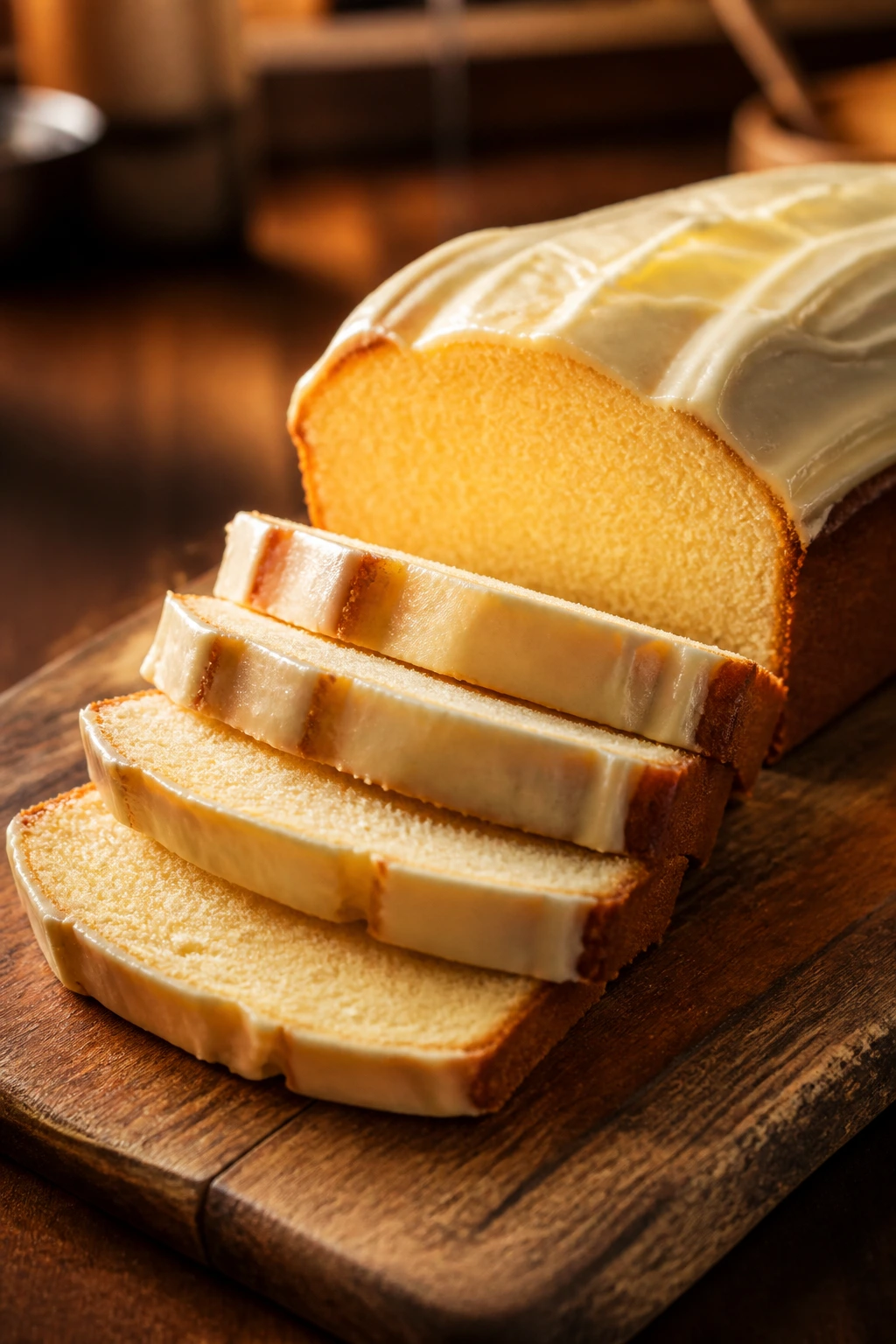
The most common error is rushing the creaming stage. If the butter, cream cheese, and sugar never get fully aerated, the batter stays dense in the wrong way and the finished cake can feel squat. Give the mixer time. You want the mixture paler and fluffier, not merely blended.
Another trap is overmixing after the flour goes in. The batter may still look a bit streaky when you stop, and that’s the moment to trust your hands and walk away. If you keep beating, the crumb turns tight and bouncy instead of soft and even. Once flour is added, the mixer should slow down and the spatula should take over.
Pan prep matters more than people admit. Bundt pans have every kind of ridge and curve, and a missed spot can trap half the cake. I always check the center tube, the deep grooves, and the edge where the batter starts to climb. Miss that, and the cake tears on release.
Underbaking is sneaky because pound cake can look done long before the middle sets. A clean tester in one corner doesn’t tell you much if the center still jiggles. Use the color of the crust, the way the edges pull back, and the internal temperature if you have a thermometer. That extra few minutes in the oven is what saves the slice.
Frosting too early ruins more cakes than people like to admit. Warm pound cake melts cream cheese frosting into a glossy slide, and then you spend the next hour trying to patch the top. Let the cake cool all the way through. A patient bake is what gives you clean slices later.
Flavor Variations Worth Trying
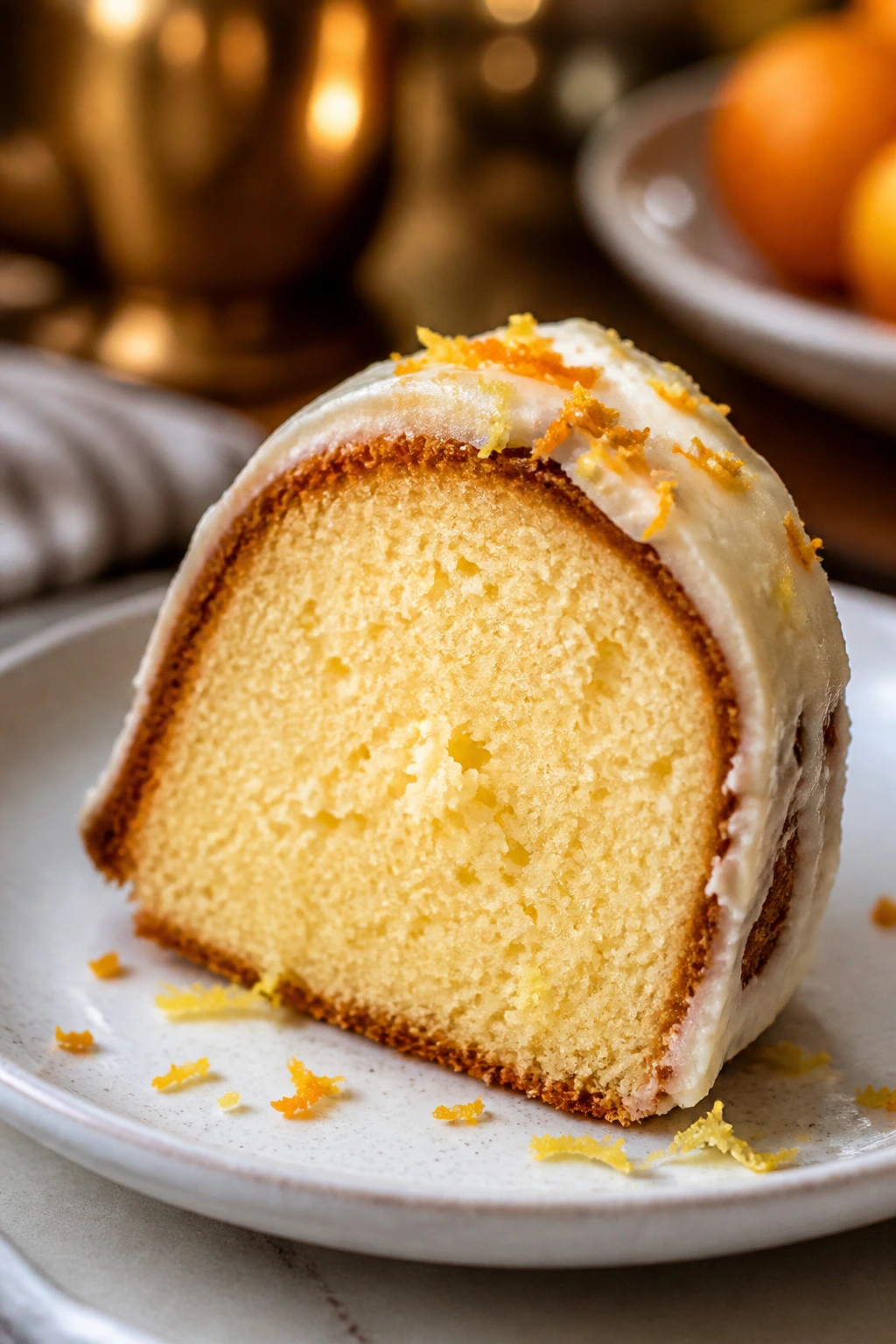
Lemon Cloud Slice: Add 1 tablespoon of lemon zest to the batter and 1 to 2 teaspoons of lemon juice to the frosting. The cake stays rich, but the citrus keeps each bite bright and slightly sharper.
Brown Sugar Walnut Finish: Replace 1/2 cup of the granulated sugar in the cake with packed light brown sugar and sprinkle chopped toasted walnuts over the frosting. The result is deeper and a little nutty, with a softer sweetness that leans toward old-school coffee cake.
Orange Cream Version: Swap the almond extract for 1 teaspoon of orange zest and use orange zest in the frosting as well. This version is especially good with sliced strawberries or a few blood orange segments on the plate.
Gluten-Free Pantry Cake: Use a cup-for-cup gluten-free flour blend that includes xanthan gum and keep the rest of the recipe the same. The texture will be a touch more delicate, so let the cake cool fully before moving it. Warm slices can break more easily than the standard version.
Barely Sweet Tea Cake Style: Skip the frosting and dust the cooled cake with powdered sugar instead, then serve it with berries. This is the version I’d choose for afternoon coffee or a quieter dessert table when you want butter flavor to be the main event.
Storage, Make-Ahead, and Reheating
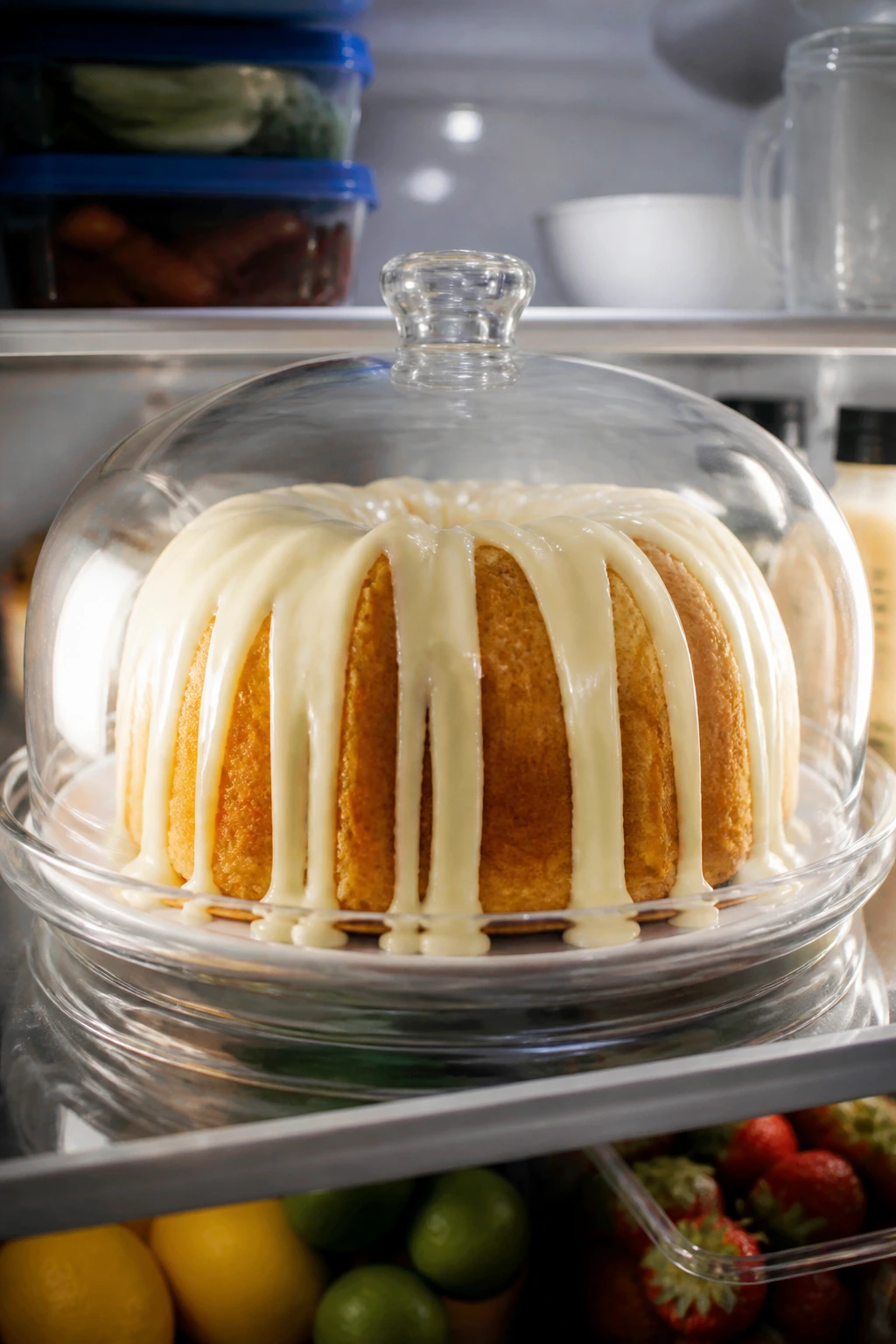
Cream cheese frosting changes the storage equation a little, so the safest rule is to keep the finished cake covered in the refrigerator. Once frosted, it will hold for up to 5 days in an airtight container or under a cake dome. Before serving, let it sit at room temperature for 20 to 30 minutes so the frosting softens and the crumb loses that chilled, slightly firm texture.
An unfrosted pound cake stores well at room temperature for 2 days if it’s wrapped tightly in plastic or kept in an airtight container. If your kitchen runs warm, I’d shorten that and move it to the fridge by the end of the first day. The cake actually does fine in the refrigerator, but it needs to be sealed well or the edges dry out fast.
For freezing, wrap the unfrosted cake tightly in plastic wrap and then in foil, or place slices in a freezer bag with the air pressed out. It keeps for up to 2 months that way. Thaw overnight in the refrigerator, then bring it to room temperature before frosting or serving. You can freeze frosted slices too, but the frosting texture softens a little on thawing, so I prefer freezing the plain cake and frosting it later.
If you want to reheat a slice, give it 8 to 12 seconds in the microwave just to take the chill off, not to warm it through. More than that starts to melt the frosting and makes the crumb feel greasy. A plain slice can also be warmed in a low oven at 300°F (150°C) for about 5 minutes, but once the frosting is on, the microwave on very low power is the safer path.
The cake also makes a strong make-ahead dessert. Bake it one day, cool it fully, wrap it, and frost it the next. The flavor settles in nicely overnight, and the crumb slices more cleanly when it has had time to rest.
Questions People Ask Before Baking It
Can I make this pound cake in a loaf pan instead of a Bundt pan?
Yes, though the bake time changes. Divide the batter between two 9×5-inch loaf pans or use one generously sized loaf pan if you want a taller slice, then start checking around the 50-minute mark. The cake should still have that deep golden color and a center that reaches about 200°F to 205°F.
Why did my pound cake crack on top?
A crack on top is normal for pound cake, especially with a dense, rich batter. The outside sets first while the center keeps rising, and that split is part of the look. A huge, collapsed crack usually means the oven was too hot or the batter was undermixed in the center, so check your oven temperature and scrape the bowl well.
Can I use low-fat cream cheese in the frosting?
I wouldn’t. Low-fat cream cheese has more water and less fat, which makes the frosting looser and sometimes a little grainy. Full-fat block-style cream cheese gives the frosting the thick, smooth body it needs to sit on top of the cake without sliding.
Does this cake need to be refrigerated?
Once frosted, yes. Cream cheese frosting is safest in the fridge, and the cake keeps best there for several days as long as it’s wrapped or covered well. If you’re serving it the same day and it will be gone within a few hours, it can sit out briefly, but I still prefer the fridge once the party is over.
Can I leave out the almond extract?
Absolutely. The cake still tastes good with vanilla alone, though the almond extract adds a subtle bakery-style note that people usually can’t name but notice when it’s missing. If you skip it, increase the vanilla by 1/2 teaspoon.
What if the frosting is too thick or too thin?
Too thick means the cream cheese or butter was cold, so let the bowl sit for 5 minutes and beat again with a teaspoon of milk or cream. Too thin means the mixture warmed up too much or too much liquid went in; chill it for 10 minutes and stir before adding more powdered sugar. The target texture is spreadable, not pourable.
The Slice That Keeps Its Shape
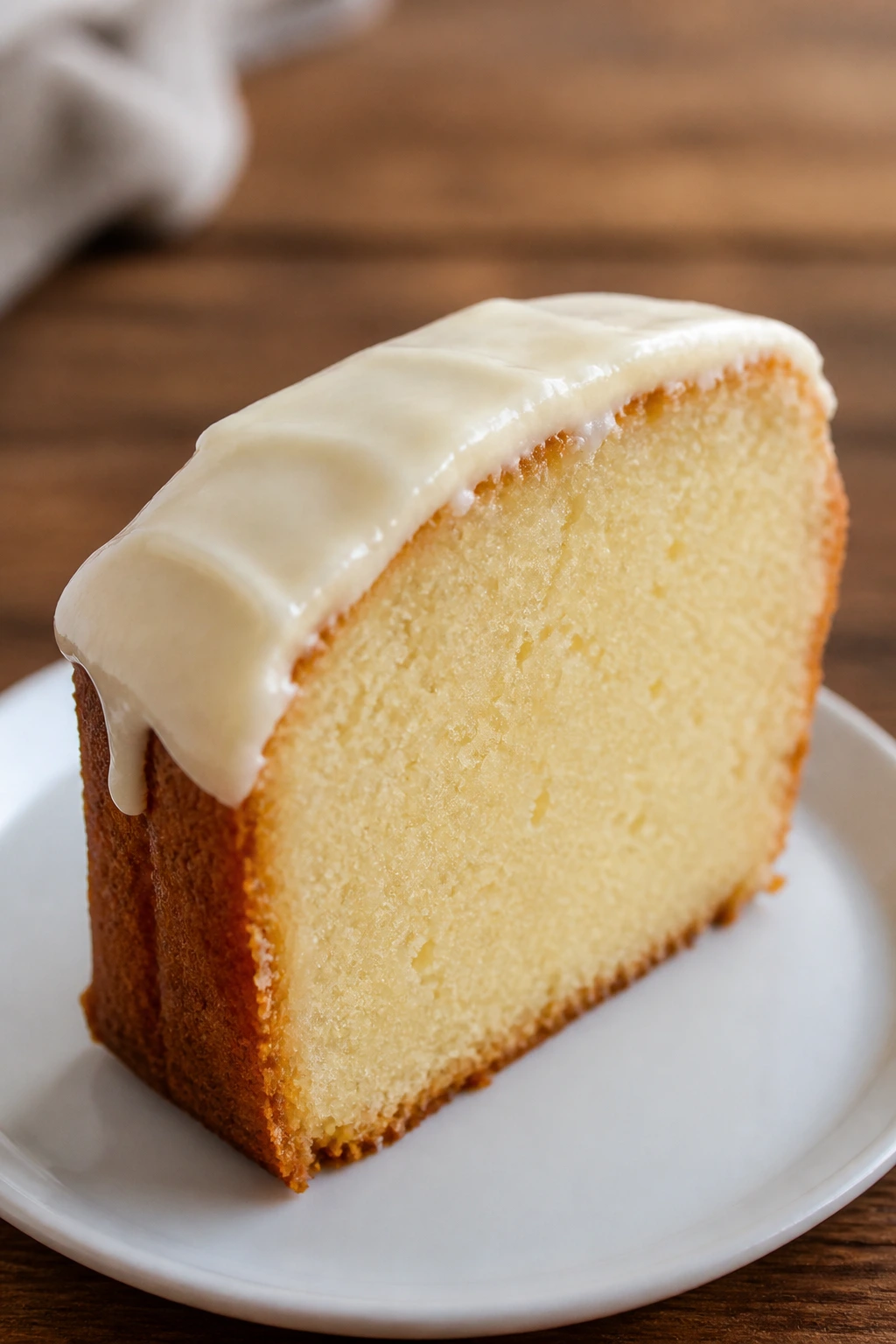
There’s a reason this kind of cake keeps showing up at family tables, church kitchens, and coffee breaks that turn into dessert breaks. It cuts cleanly. It tastes richer than it looks. And the cream cheese frosting gives it a tangy edge that keeps the sweetness in check, which is half the battle with pound cake.
What I like most is the balance. The cake has enough structure to feel substantial, but the crumb stays tender because the batter is handled with some restraint and baked slowly. The frosting doesn’t need to hide anything. It just finishes the job.
Bake it once with a patient hand and a cool cake, and you’ll understand why people keep a recipe like this tucked into a card box instead of chasing something fancier.
Moist Pound Cake with Cream Cheese Frosting — Recipe Card
Recipe Name: Moist Pound Cake with Cream Cheese Frosting
Description: A buttery, tender Bundt-style pound cake with a fine crumb, finished with a tangy cream cheese frosting that keeps each slice rich but balanced. The cake bakes up dense in the classic pound-cake way, but the sour cream and cream cheese keep it soft for days.
Prep Time: 25 minutes
Cook Time: 65 to 75 minutes
Total Time: 1 hour 30 minutes to 1 hour 40 minutes, plus cooling time
Course: Dessert
Cuisine: American
Servings: 12 slices
Calories: About 610 kcal per serving
Ingredients
For the Pound Cake:
- 1 cup (2 sticks / 226 g) unsalted butter, softened to cool room temperature
- 4 oz (113 g) cream cheese, softened
- 2 cups (400 g) granulated sugar
- 4 large eggs, room temperature
- 2 teaspoons pure vanilla extract
- 1/2 teaspoon pure almond extract, optional but recommended
- 2 1/2 cups (300 g) cake flour, spooned and leveled
- 1/4 cup (30 g) cornstarch
- 1 teaspoon baking powder
- 1/2 teaspoon fine sea salt
- 1/2 cup (120 g) sour cream, room temperature
For the Cream Cheese Frosting:
- 8 oz (226 g) cream cheese, softened
- 4 tablespoons (56 g) unsalted butter, softened
- 2 1/2 cups (300 g) powdered sugar, sifted
- 1 teaspoon pure vanilla extract
- Pinch of fine sea salt
- 1 to 2 tablespoons heavy cream or milk, as needed
Instructions
-
Preheat the oven to 325°F (165°C) and grease a 10-cup Bundt pan thoroughly with baking spray containing flour or with butter and flour.
-
Whisk together the cake flour, cornstarch, baking powder, and salt in a medium bowl.
-
Beat the butter and cream cheese until smooth, then add the sugar and cream until light and fluffy, about 3 to 4 minutes.
-
Add the eggs one at a time, beating briefly after each addition. Mix in the vanilla and almond extract.
-
Add the dry ingredients in three additions, alternating with the sour cream, and mix only until combined.
-
Spread the batter into the prepared pan and smooth the top.
-
Bake for 65 to 75 minutes, until deep golden and a tester comes out with moist crumbs or the center reaches 200°F to 205°F.
-
Cool in the pan for 15 minutes, then invert onto a wire rack and cool completely.
-
Beat the cream cheese and butter for the frosting until smooth, then add the powdered sugar, vanilla, salt, and enough cream or milk to make a spreadable frosting.
-
Frost the cooled cake, let it set for 20 to 30 minutes, then slice and serve.
Notes: Cool the cake fully before frosting, use full-fat block cream cheese for the best texture, and store the finished cake covered in the refrigerator for up to 5 days.