



A good Tuesday-night roast has to earn its keep. Roasted chicken and wild rice does that in a way plain baked chicken breasts never manage: the rice catches the drippings, the mushrooms turn glossy, and the top of the chicken goes bronzed while the grains underneath stay chewy instead of collapsing into glue.
Wild rice is a little stubborn, which is part of why I like it here. It is not polished white rice with a short memory; it has a darker, nuttier bite and a thin hull that holds up to a long oven stay, so you can build a dinner around it instead of treating it like a side that disappears.
I reach for bone-in thighs more than breasts for this kind of roast. Thighs can sit in a hot oven long enough for the wild rice to finish without turning dry and stringy, and the skin gives you that salt-and-paprika crust that tastes like effort even when the method is straightforward. Once the onion, celery, carrots, and mushrooms have softened in the pot, the whole thing starts smelling like a much slower dinner.
Why Roasted Chicken and Wild Rice Works in One Pot
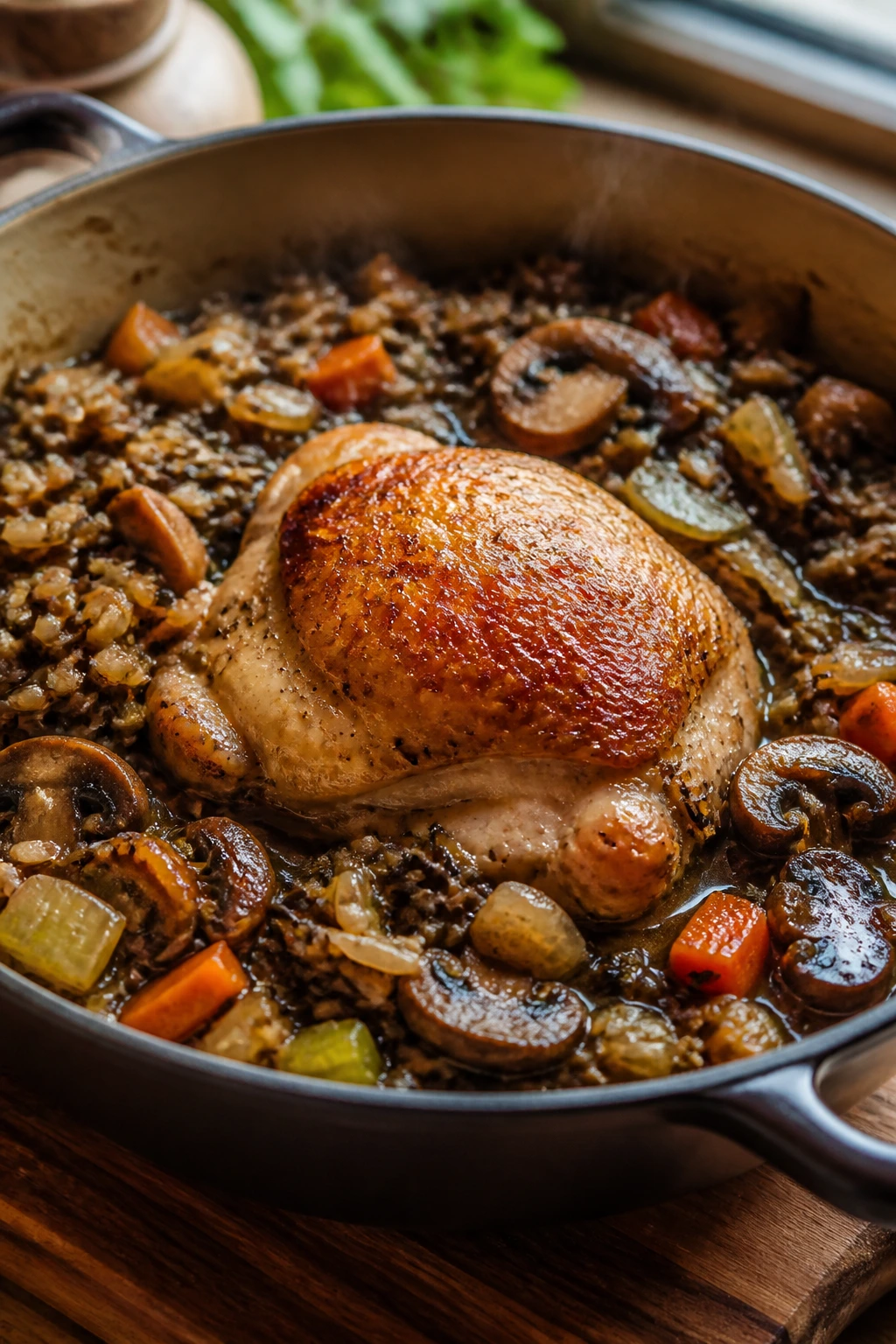
A one-pot chicken dinner has to do more than save dishwashing. It has to create its own sauce, build its own texture, and keep the chicken from drying out while the rice cooks. This one does all three, and it does them without asking for much more than a sharp knife and a Dutch oven.
- The drippings go somewhere useful: The chicken fat and seasoned juices run into the rice, which means every spoonful tastes seasoned from the inside out instead of from a sprinkle of salt at the end.
- Bone-in thighs buy you time: Thighs are forgiving at 175°F to 180°F, so they stay juicy while the wild rice finishes its longer oven bath.
- Wild rice keeps its bite: Pure wild rice stays chewy and a little dramatic, which is exactly what you want under tender chicken and soft vegetables.
- The vegetable base does real work: Onion, celery, carrots, and mushrooms soften into the broth and give the pot a savory background that tastes like it simmered longer than it did.
- It reheats like a real dinner: The rice softens overnight in a good way, and a splash of broth brings the whole thing back without turning it into mush.
Yield, Timing, and What to Expect at the Table
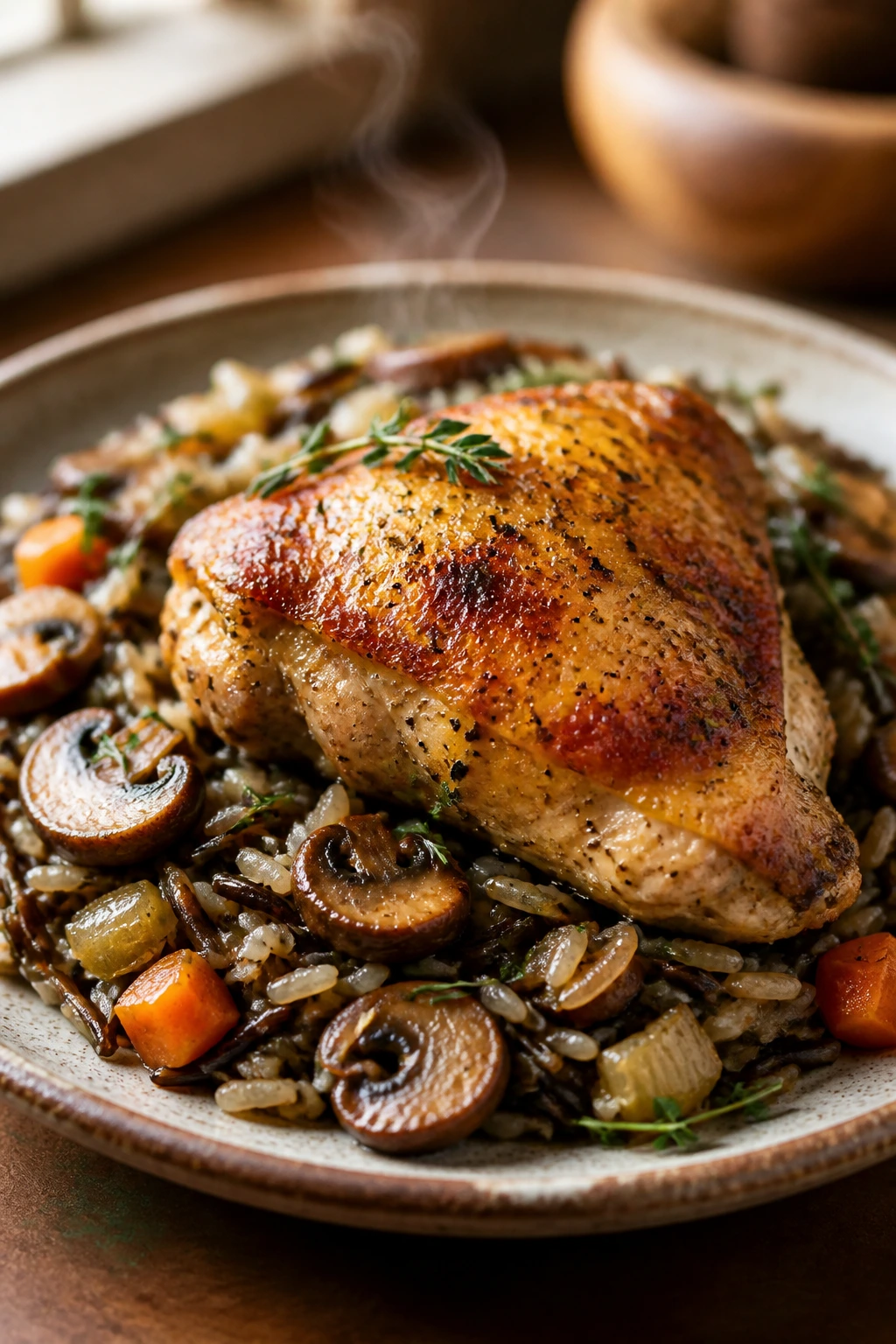
This version leans on a covered Dutch oven and a modest amount of oven time, so you get a full dinner without standing over the stove every five minutes. The timing below assumes you’re using bone-in, skin-on thighs and pure wild rice, not a quick-cooking blend.
Yield: Serves 6
Prep Time: 20 minutes
Cook Time: 1 hour 5 minutes
Total Time: 1 hour 35 minutes, including 10 minutes of resting
Difficulty: Intermediate — the steps are simple, but the rice, liquid, and chicken all need to land at the same finish line.
Chill/Rest Time: 10 minutes
Best Served: Warm, straight from the Dutch oven
The doneness cues matter more than the clock here. The chicken should hit 175°F to 180°F in the thickest part of the thigh, and the wild rice should be tender with a few split grains on top and no hard center left behind. If the rice still feels stubborn, give it a little more covered time with a splash of broth. Don’t guess. Use the thermometer.
The Ingredient List
For the Chicken
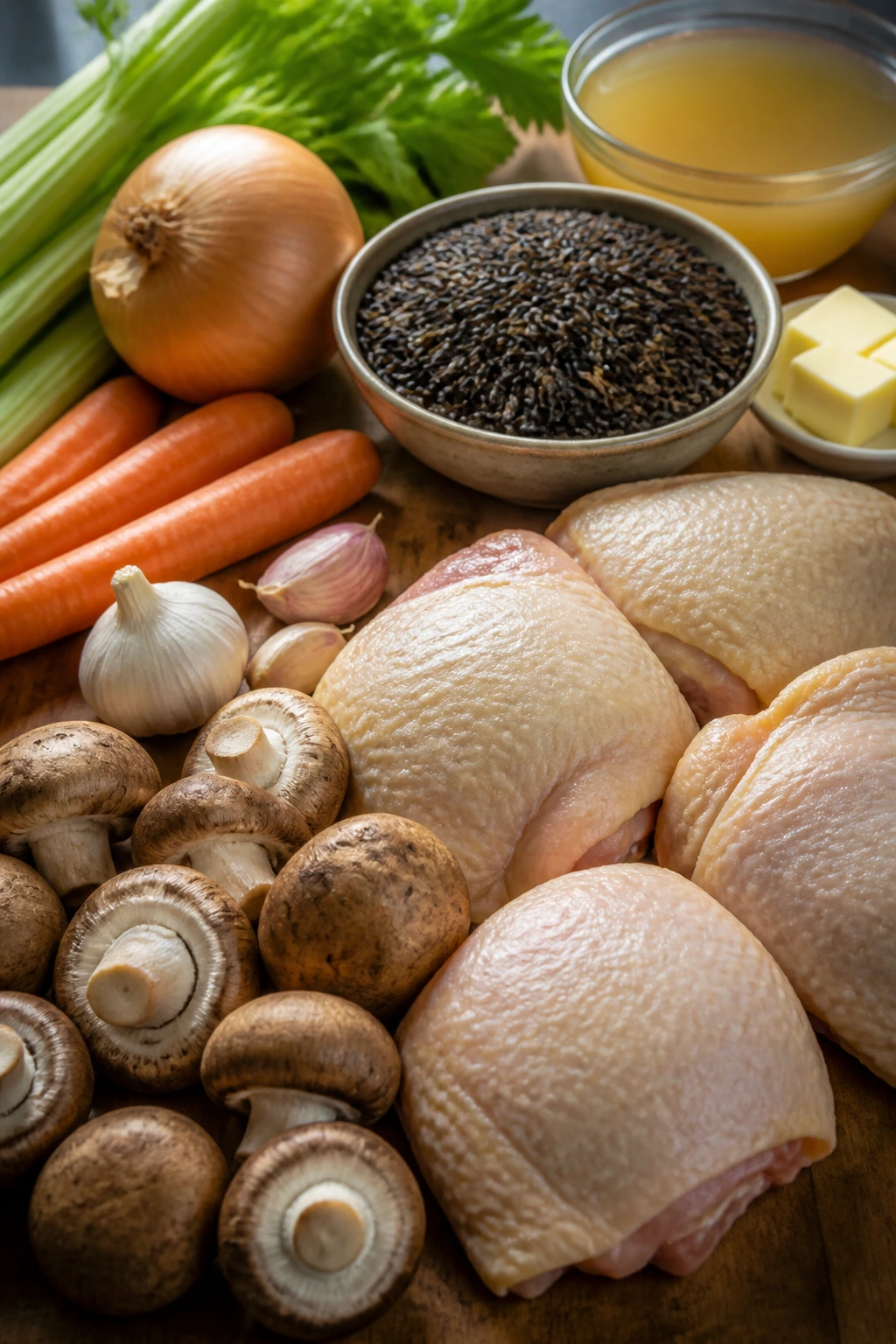
- 6 bone-in, skin-on chicken thighs, about 2 1/2 to 3 pounds
- 1 1/2 teaspoons kosher salt
- 1 teaspoon black pepper
- 1 teaspoon smoked paprika
- 1 teaspoon garlic powder
- 1 tablespoon olive oil
For the Wild Rice Base
- 1 tablespoon unsalted butter
- 1 medium yellow onion, diced small
- 2 celery stalks, diced
- 2 medium carrots, diced
- 8 ounces cremini mushrooms, sliced
- 2 cloves garlic, minced
- 1 1/2 cups pure wild rice, rinsed and drained
- 4 1/2 cups low-sodium chicken broth
- 1 bay leaf
- 1 teaspoon fresh thyme leaves or 1/2 teaspoon dried thyme
- 1/2 teaspoon dried rosemary, crushed between your fingers
- 1 tablespoon Dijon mustard
To Finish
- 1 teaspoon lemon zest
- 1 tablespoon lemon juice
- 2 tablespoons chopped parsley
Why Each Piece Belongs in Roasted Chicken and Wild Rice
Chicken Thighs
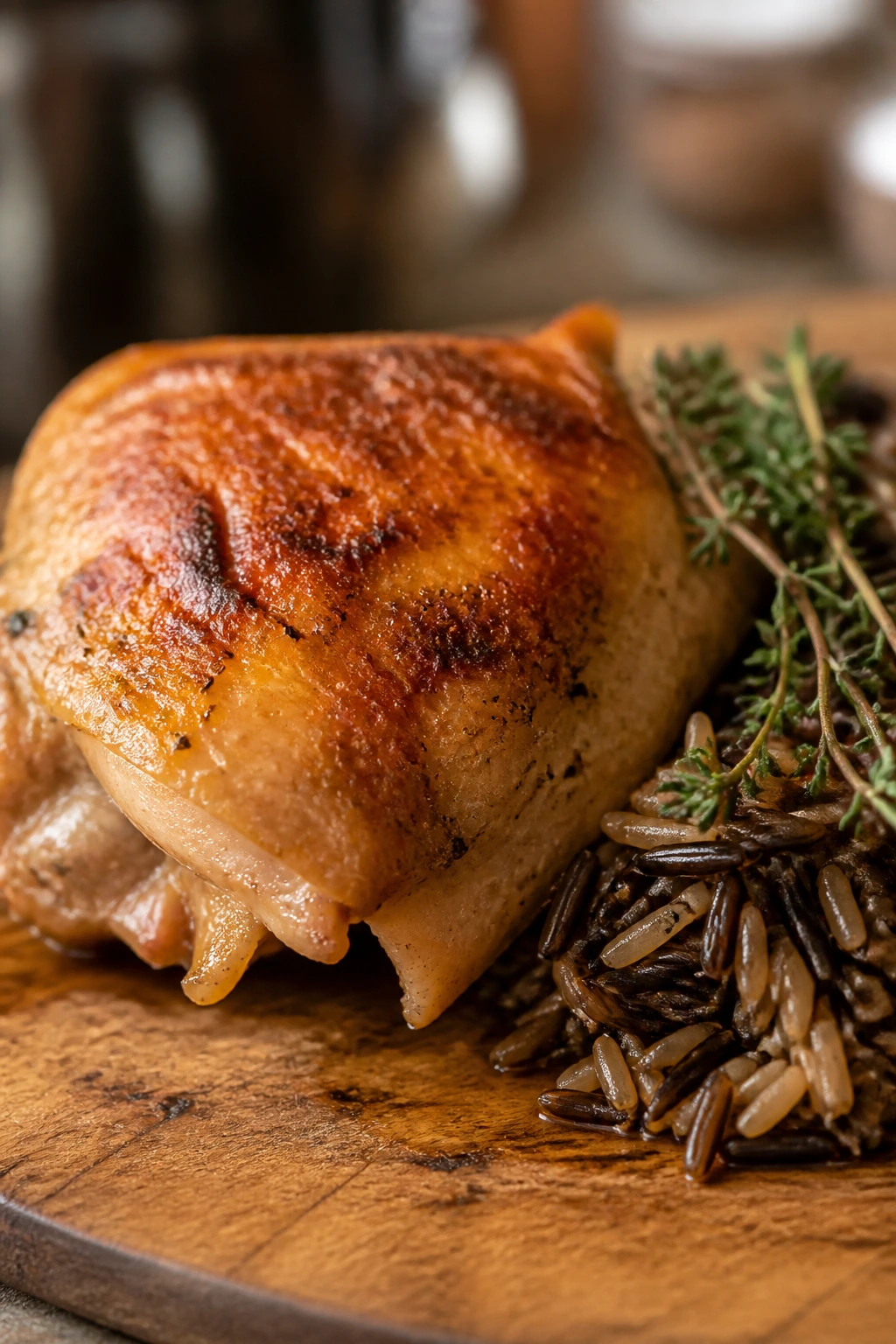
What to use: 6 bone-in, skin-on thighs, about 2 1/2 to 3 pounds. They are the backbone of the dish because they can roast long enough for the rice to finish without drying out.
Preparation: Pat the thighs dry with paper towels before seasoning. Dry skin browns; damp skin steams, and that difference shows up fast once the lid comes off.
Substitutions: Bone-in drumsticks work almost the same way. Bone-in chicken breasts can work too, but they need a closer eye and usually finish earlier than the rice.
Tips: Let the seasoned thighs sit on the counter while you build the base, about 15 minutes. That little pause takes the cold edge off the meat and helps the skin roast more evenly.
Pure Wild Rice
What to use: 1 1/2 cups pure wild rice, rinsed and drained. Pure wild rice has a longer cooking window and a firmer, nuttier bite than a blend, which is why it holds up in the oven.
Preparation: Rinse it in a fine-mesh strainer until the water runs less dusty. Wild rice often carries a little field dust, and washing keeps the broth cleaner.
Substitutions: A wild rice blend will cook faster and softer, but it changes the timing enough that you need to check earlier. Brown rice is a different animal and needs a separate formula.
Tips: Do not soak the rice for this version unless you’re trying to shave off a little time and are willing to watch the liquid level closely. Straight rinsed rice gives you the most predictable result in the Dutch oven.
Aromatics and Mushrooms
What to use: 1 onion, 2 celery stalks, 2 carrots, and 8 ounces cremini mushrooms. This is the flavor base that keeps the rice from tasting plain.
Preparation: Dice the onion, celery, and carrots small and slice the mushrooms about 1/4 inch thick. Smaller pieces soften at the same speed as the rice cooks and won’t leave you with crunchy bits at the end.
Substitutions: Leeks can stand in for onion, parsnips can replace carrots, and chopped fennel can step in for celery if you like a faint anise note. White mushrooms work, but cremini have more depth.
Tips: Let the mushrooms cook until their liquid evaporates and they start to brown at the edges. That browned edge is where the savory flavor lives; pale mushrooms taste flat.
Broth, Mustard, and Herbs
What to use: 4 1/2 cups low-sodium chicken broth, 1 tablespoon Dijon mustard, 1 bay leaf, thyme, and rosemary. These ingredients carry the rice and create the light sauce in the bottom of the pot.
Preparation: Measure the broth before you start roasting so you can add it all at once. Crush the rosemary between your fingers before it goes in; that wakes up the oils and keeps the herb from tasting dusty.
Substitutions: Chicken stock works fine. If your broth is salty, reduce the chicken seasoning by about 1/2 teaspoon so the pot doesn’t drift too far in that direction.
Tips: Dijon sounds small, but it helps the broth taste rounded instead of thin. You won’t taste “mustard” so much as a little backbone.
Lemon and Parsley Finish
What to use: 1 teaspoon lemon zest, 1 tablespoon lemon juice, and 2 tablespoons chopped parsley. These are the bright notes that stop the finished pot from feeling heavy.
Preparation: Zest the lemon before you cut it. It’s one of those tiny kitchen annoyances that turns into a sloppy job if you reverse the order.
Substitutions: A little chopped dill can replace some of the parsley if you want a sharper herbal edge. If you’re out of lemon, a splash of white wine vinegar works in a pinch, though lemon tastes cleaner here.
Tips: Add the lemon at the end, not during the roast. Heat dulls citrus, and this dish needs that fresh pop right before serving.
The Dutch Oven and Other Gear That Make This Easier
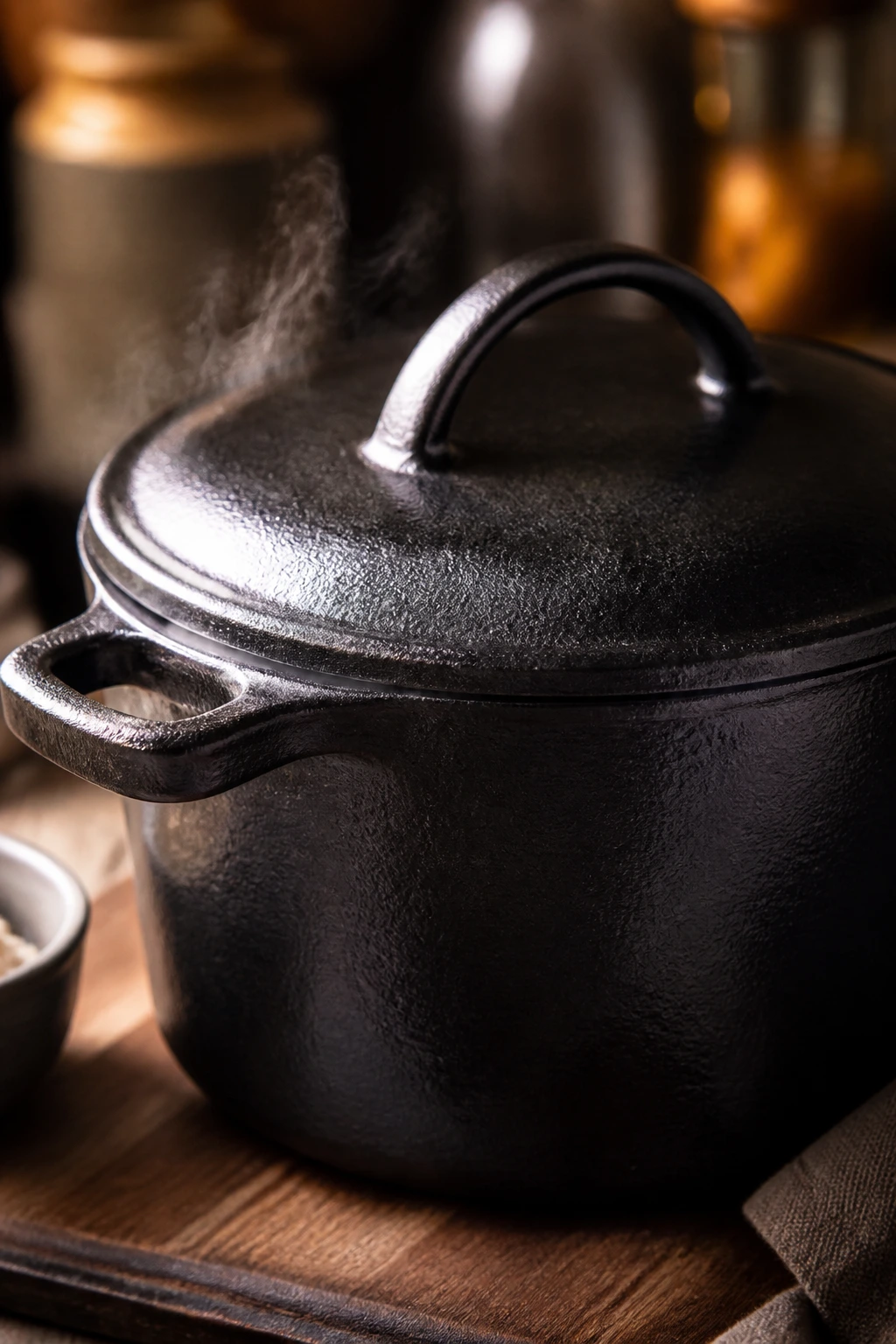
A heavy pot is not optional here. You want even heat on the bottom, a tight lid, and enough depth for the rice and chicken to sit together without crowding.
- 5- to 6-quart Dutch oven with a tight-fitting lid — This is the best vessel for the job because it heats evenly and holds enough liquid for the wild rice.
- Instant-read thermometer — The fastest, cleanest way to check doneness without cutting into the chicken and leaking the juices.
- Chef’s knife and cutting board — Small, even dice on the vegetables help them soften on the same schedule as the rice.
- Wooden spoon or heatproof spatula — Useful for scraping up the browned bits after the vegetables hit the pot.
- Fine-mesh strainer — Rinse the wild rice in this so you don’t clog the sink with tiny dark grains.
- Microplane or small grater — Handy for lemon zest at the end, and much less awkward than using a box grater for one teaspoon.
If your lid fits loosely, a sheet of foil under the lid can seal the pot well enough. Not elegant. Works fine.
Step-by-Step: Building the Rice and Roasting the Chicken
Prep the Chicken and Oven
-
Preheat the oven to 375°F (190°C) and set a rack in the center.
-
Pat the chicken thighs dry with paper towels, then season them with the kosher salt, black pepper, smoked paprika, and garlic powder. Rub the seasonings over both sides so the skin is evenly coated.
-
Let the chicken sit for 15 minutes while you build the base. That short pause helps the seasoning cling and takes the chill off the meat.
Build the Wild Rice Base
-
Set a 5- to 6-quart Dutch oven over medium heat and melt the butter with the olive oil.
-
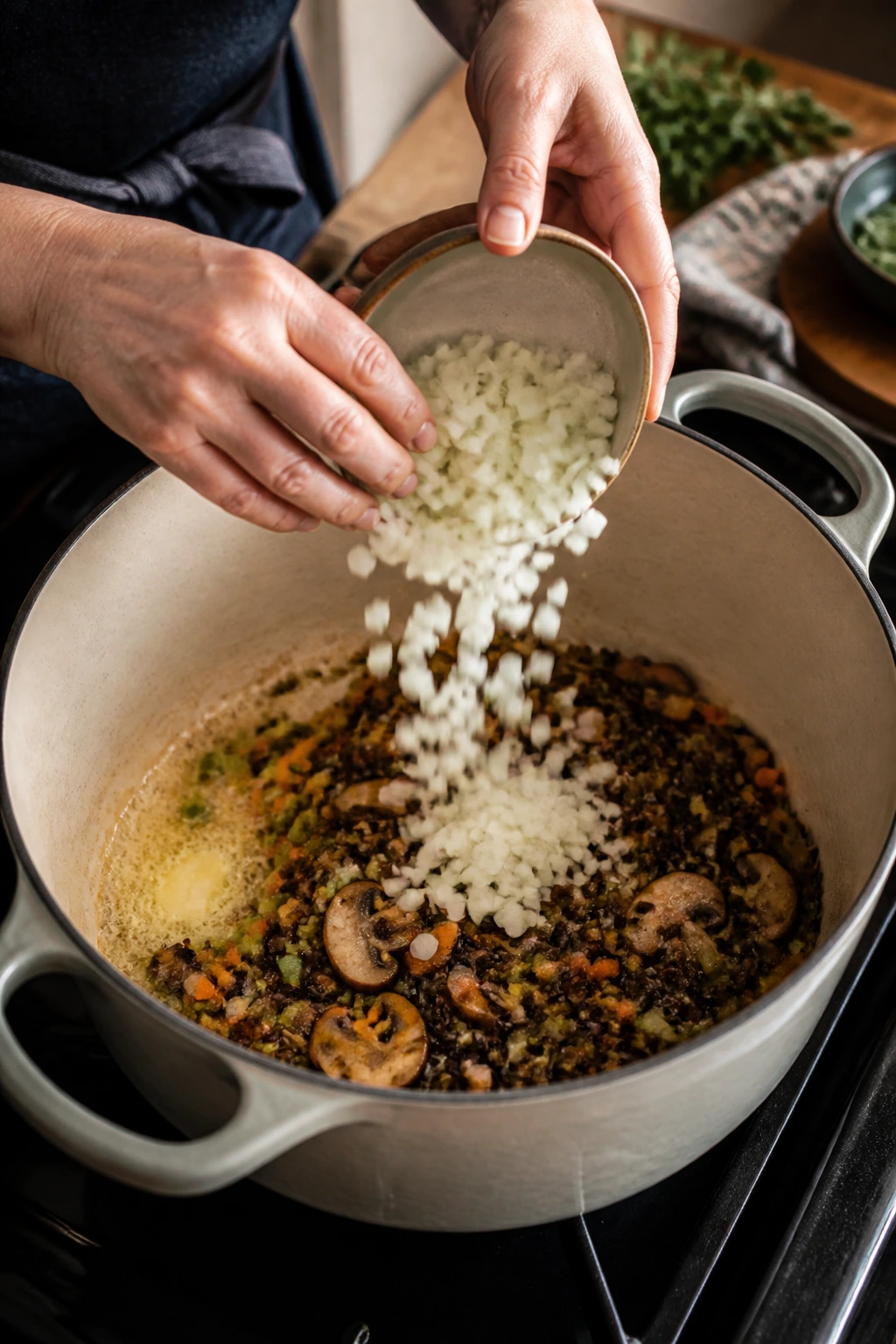
Add the onion, celery, and carrots and cook for 4 to 5 minutes, stirring often, until the onion turns translucent and the edges of the carrots start to soften.
-
Stir in the mushrooms and cook for another 4 to 5 minutes, until they shrink, give off their moisture, and start to brown around the edges. Add the garlic and cook for 30 seconds, just until fragrant.
-
Stir in the wild rice, thyme, rosemary, and Dijon mustard and cook for 1 minute. The rice should smell a little toasty and the mustard should disappear into the vegetables.
-
Pour in the chicken broth and add the bay leaf, scraping the bottom of the pot with the spoon to loosen any browned bits. Bring the liquid to a gentle simmer.
Roast
-
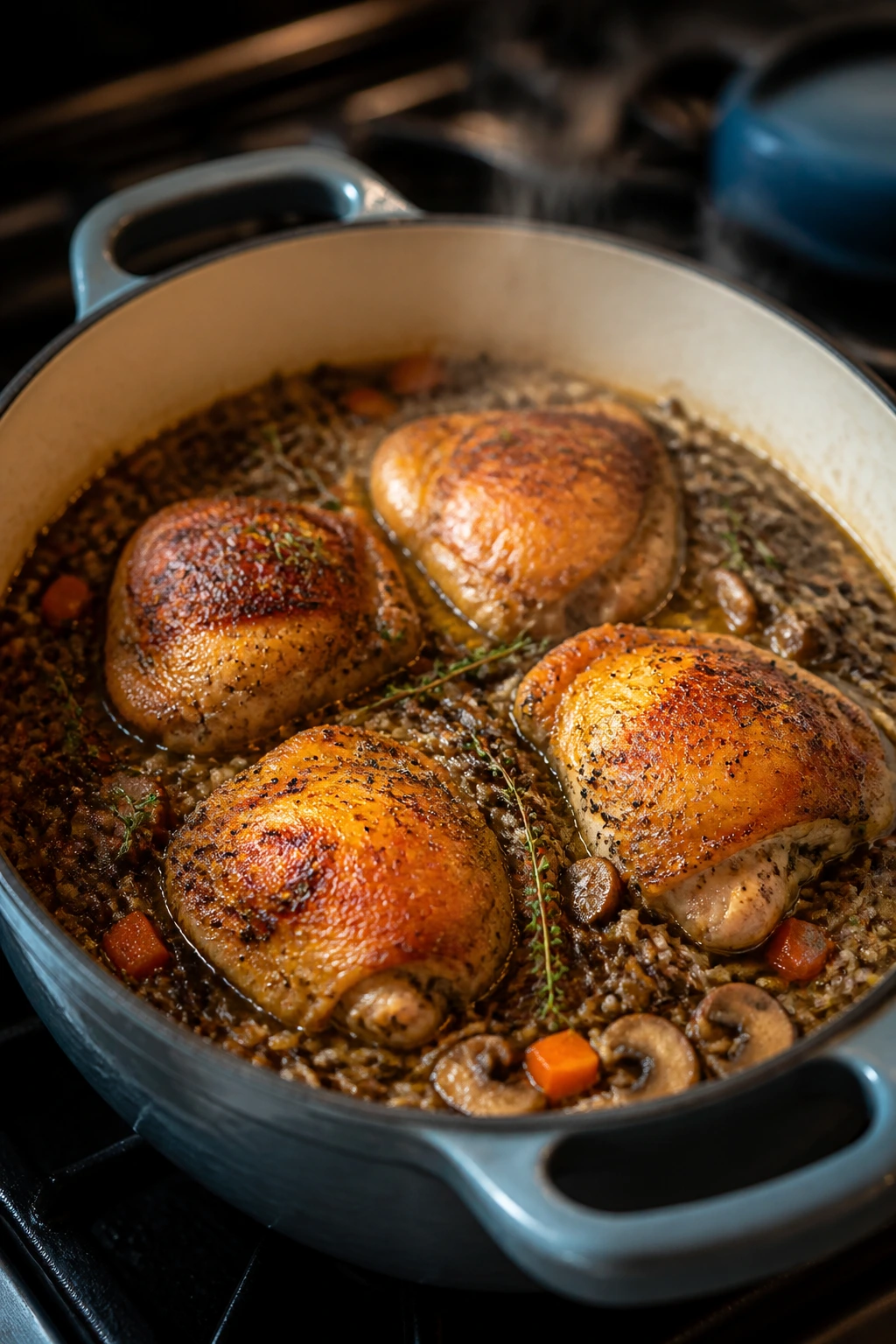
Nestle the chicken thighs skin-side up on top of the rice. Do not stir once the chicken is in place. The thighs should sit mostly above the liquid so they roast, not poach.
-
Cover the pot tightly and transfer it to the oven. Roast for 40 minutes.
-
Uncover the Dutch oven and continue roasting for 15 to 20 minutes until the chicken reaches 175°F to 180°F in the thickest part and the wild rice is tender. If the rice still feels chewy, add 1/4 to 1/2 cup hot broth around the edges, re-cover, and bake for 5 to 8 minutes more.
Finish and Serve
-
Remove the pot from the oven and rest it, uncovered, for 10 minutes. This gives the rice time to settle and the juices time to soak back into the chicken.
-
Discard the bay leaf, then stir in the lemon zest, lemon juice, and parsley around the chicken. Fluff the rice lightly with a fork so the grains separate instead of mashing into a paste.
-
Taste the rice and adjust with a pinch of salt or another squeeze of lemon if it needs it. Serve directly from the pot or spoon onto warm plates.
How to Plate It Without Fuss
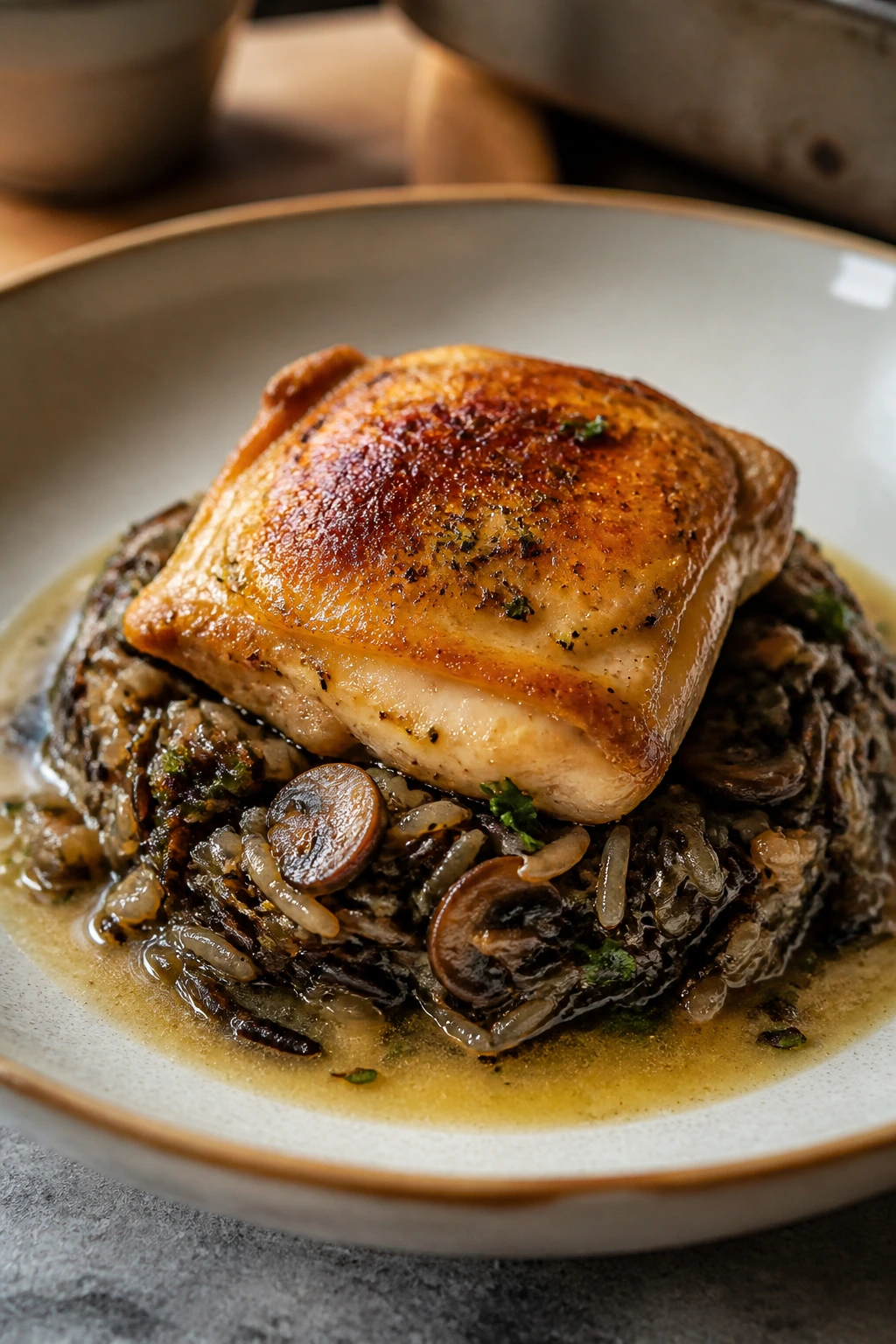
The nicest way to serve this is the least fussy one. Spoon a mound of wild rice into a shallow bowl, tuck a thigh on top, and let a little of the buttery broth puddle around the edges. That drizzle matters more than fancy garnish.
Presentation: Use wide, shallow bowls or dinner plates so the rice stays visible. A scatter of parsley and a strip of lemon zest over the top makes the dish look fresh instead of muddy, and the contrast between dark rice and bronzed chicken always looks good on a plate.
Accompaniments: A sharp green salad with lemon vinaigrette cuts through the richness, and roasted green beans or broccoli fit naturally beside the pot. A piece of crusty bread helps soak up the broth left at the bottom, which is one of the reasons people keep going back for seconds.
Portions: Plan on one thigh and about 1 cup of rice per person. For bigger appetites, I’d rather cook the recipe as written and serve with a salad than stretch the pot too thin, because crowded rice turns soft and dull.
Beverage Pairing: A dry cider keeps the meal bright. If you want wine, a light Pinot Noir or a citrusy white like Sauvignon Blanc sits well next to the herbs and mushrooms.
Practical Ways to Improve the Pot
Flavor Enhancement: Add an extra teaspoon of Dijon to the broth if you like a deeper savory note, or finish with a tiny knob of cold butter stirred into the rice after resting. That last bit gives the grains a soft sheen and helps the broth cling.
Time-Saver: Chop the onion, celery, carrots, and mushrooms earlier in the day and keep them in a covered container in the fridge. If you do that, the whole dish moves much faster once you walk in the door and put the pot on the stove.
Cost-Saver: Chicken leg quarters can replace the thighs if they’re cheaper where you shop. They take the same basic treatment, though you may need to trim a little excess skin and give them a few extra minutes in the oven.
Pro Move: Once the pot comes out of the oven, tilt it slightly and spoon some of the liquid from the edge over the tops of the chicken thighs. The skin won’t be glass-crisp, but that little bath gives you a glossy finish and better flavor.
Serving Suggestion: A squeeze of lemon at the table wakes everything up. I also like a pinch of flaky salt on the chicken skin right before serving, because the contrast against the soft rice is half the fun.
Mistakes That Make Wild Rice Tough or Mushy
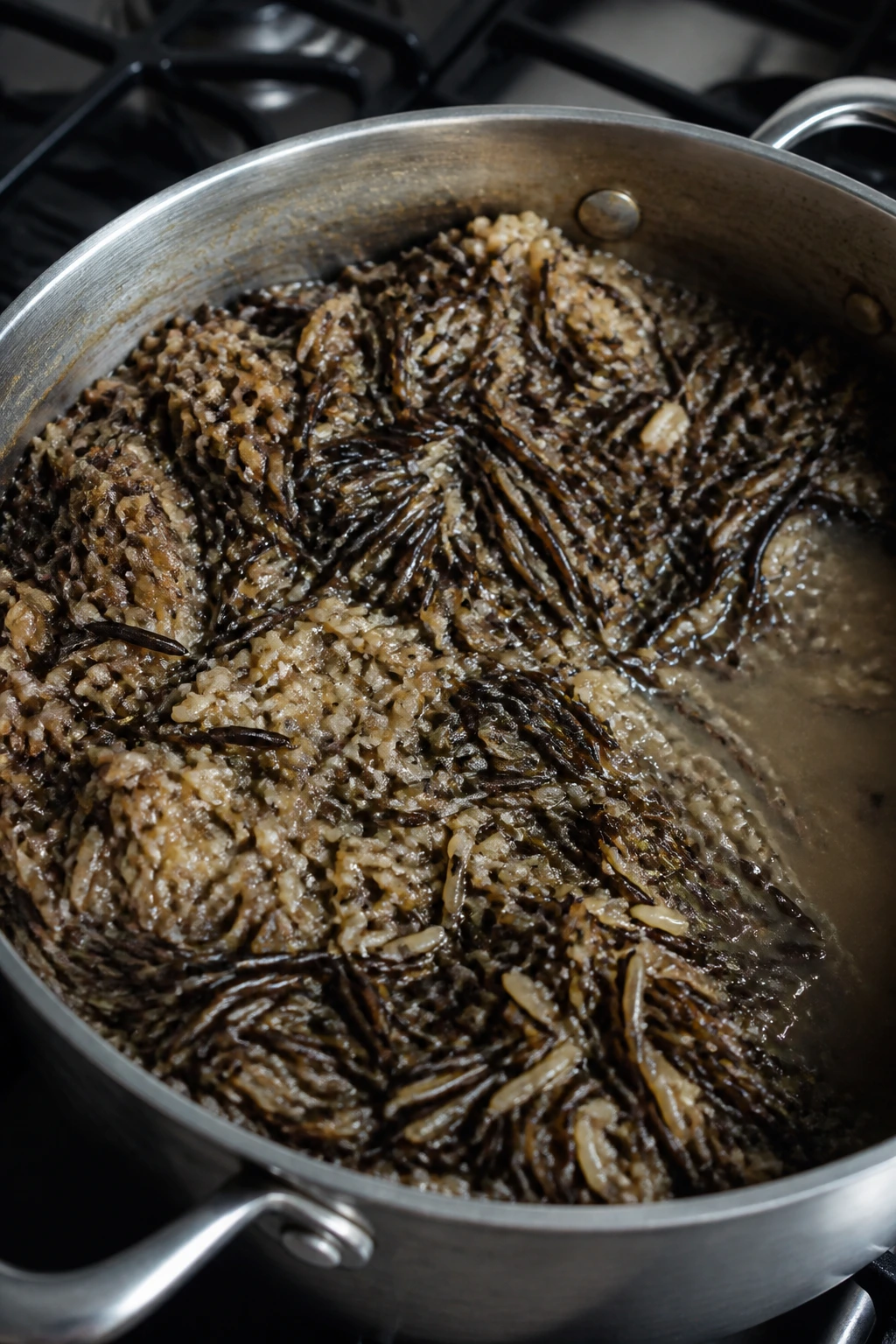
Using a wild rice blend and timing it like pure wild rice
A blend usually has other grains mixed in, and they cook faster than pure wild rice. If you use a blend and follow this timing blindly, the rice can go soft before the chicken skin finishes browning.
Crowding the pot with too many thighs
If the chicken overlaps too much, the skin steams and the rice underneath can cook unevenly. Keep the thighs in a single layer on top of the rice, and if your pot is small, split the recipe into two pans.
Shorting the broth
Wild rice needs enough liquid to plump fully, and a dry pot leaves you with hard centers. If the rice still tastes stubborn at the end, don’t assume it’s done because the chicken is; add a little hot broth and keep going.
Uncovering too early
The skin looks pale for longer than people expect, especially after the covered roast. If you uncover too soon, you’ll get chicken that’s cooked but not appealing on top, and the rice may still be underdone.
Skipping the rest
Hot rice straight from the oven looks finished, but it is still moving around in the pot. Give it 10 minutes to settle so the broth thickens a little and the chicken juices stay in the meat instead of spilling across the plate.
Underseasoning because the broth is low-sodium
Low-sodium broth gives you control, but it also means the pot needs enough salt up front. Taste the rice at the end and correct it with a pinch if it feels flat; wild rice needs more salt than people usually expect.
Flavor Swaps and Adaptations
Creamy Mushroom Finish
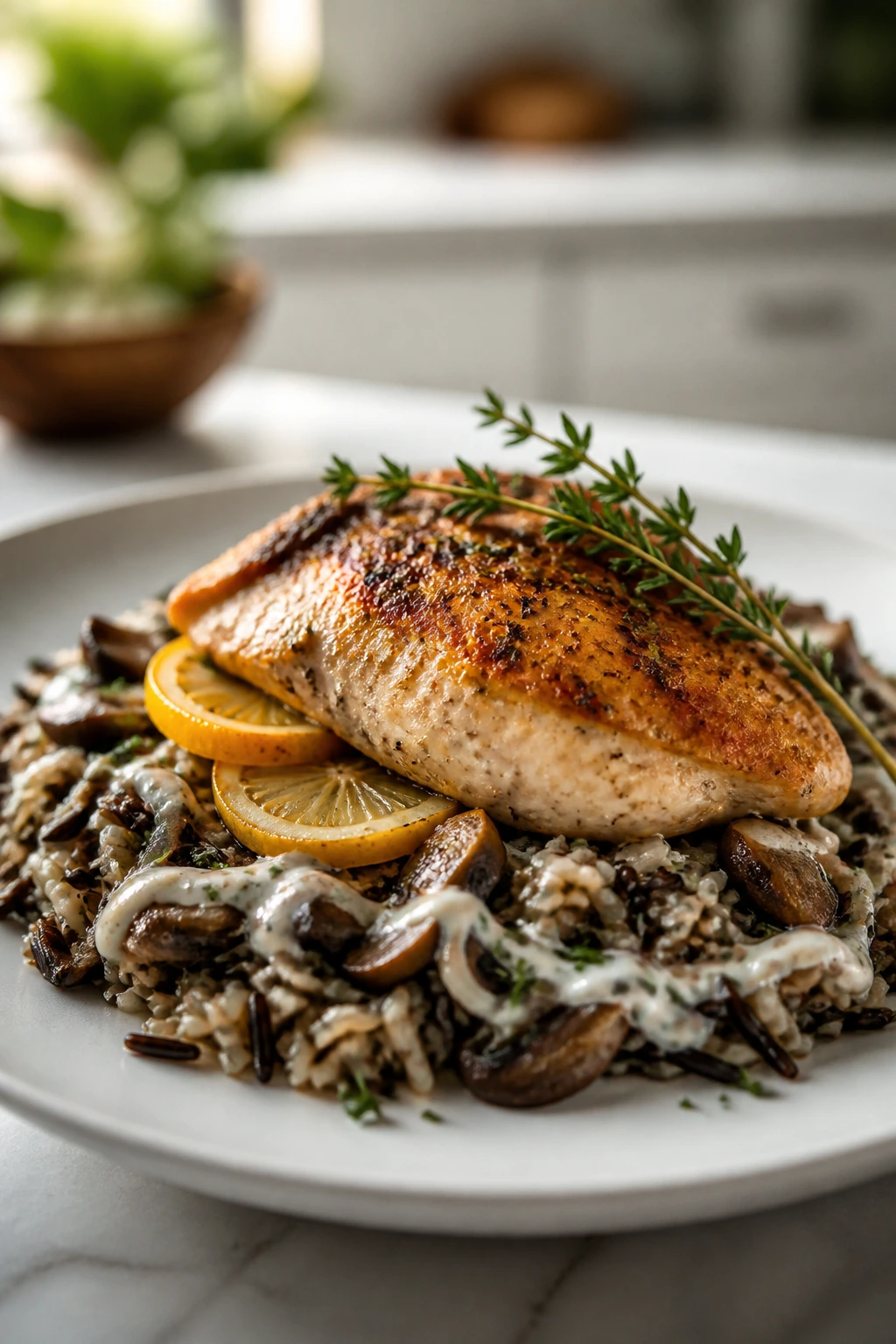
Stir 1/3 cup crème fraîche or sour cream into the rice after the pot comes out of the oven, off the heat. The broth turns silkier, and the mushrooms taste richer, which is a nice move if you want the dinner to lean more cozy than bright.
Lemon-Thyme Roast
Tuck a few thin lemon slices under the chicken before it goes into the pot and double the thyme. This makes the whole dish taste cleaner and sharper, especially if you’re serving it with a bitter green salad.
Smoky Bacon Version
Cook 4 ounces of diced bacon in the Dutch oven first, then use the rendered fat in place of part of the butter and oil. The bacon drippings give the rice a deeper, smokier base, and the chicken skin picks up that flavor as it roasts.
Root Vegetable Pot
Swap the carrots and celery for diced parsnip and a little rutabaga when you want a more earthy pot. Keep the pieces small so they soften in the same window as the rice, and expect a slightly sweeter finish.
Bone-In Breast Swap
Use 4 bone-in chicken breasts if that’s what you have, but start checking them earlier, around the 35-minute mark after uncovering. Breasts are less forgiving than thighs, so pull them as soon as they reach 165°F and let the rice keep going if it needs more time.
Leftovers, Freezing, and Reheating
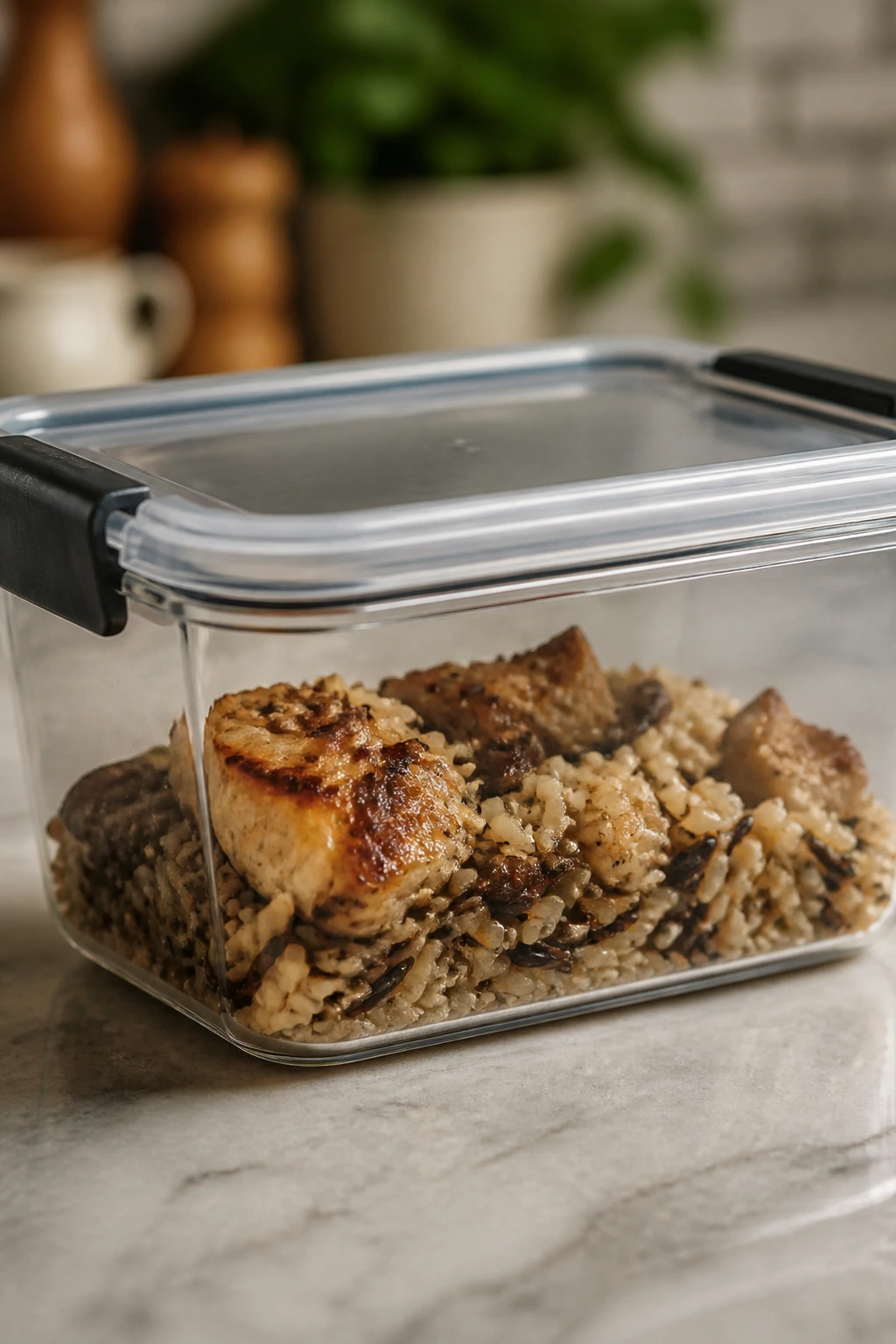
The leftovers hold up better than you might expect, though the chicken skin softens in the fridge. That’s normal. The rice and vegetables keep tasting like dinner, not like a compromise, as long as you reheat them with a little moisture.
Refrigerator: Cool the pot for no more than 2 hours at room temperature, then transfer the chicken and rice to airtight containers. They keep well for 3 to 4 days in the fridge.
Freezer: Freeze the rice and chicken in airtight containers or freezer bags for up to 2 months. The rice texture changes a little after thawing, but it is still good enough for a second dinner if you reheat it gently.
Reheating: For the oven, put the rice and chicken in a baking dish, splash in 2 to 3 tablespoons of broth, cover with foil, and heat at 325°F for 20 to 25 minutes. If you want the skin to firm up again, uncover for the last 3 minutes or slide it under the broiler for a very short blast.
Microwave: Reheat a portion in a covered bowl with a tablespoon of broth or water, using 60-second bursts and stirring the rice between them. The chicken won’t stay crisp, but the rice comes back soft and warm without drying out.
Stovetop: Put the rice in a skillet with a splash of broth, cover, and warm over low heat for 5 to 7 minutes. If the chicken is already off the bone or cut up, it can go in for the last minute, just long enough to heat through.
Make-Ahead: You can chop the vegetables a day ahead, season the chicken in the morning, and keep both cold until dinner. If you want to get even farther ahead, cook the vegetable-and-rice base separately, chill it, and roast fresh chicken on top when you’re ready; that keeps the skin in better shape than reheating a fully assembled pot.
Questions People Ask Before They Cook It

Can I use chicken breasts instead of thighs?
Yes, but you need to watch the clock more closely. Bone-in breasts usually finish earlier than thighs, and if they stay in the pot until the rice is fully done, they can dry out along the edges. I’d pull them as soon as they hit 165°F and let the rice catch up if needed.
Do I really need to rinse the wild rice?
I do, and I think it’s worth the extra minute. Rinsing removes the dusty starch and tiny debris that can cloud the broth, and it helps the finished rice taste cleaner.
Can I use a wild rice blend?
You can, but it cooks faster and softer than pure wild rice. Start checking it earlier and be ready to reduce the broth a little, because many blends include white rice or parboiled grains that don’t need the same long oven stay.
What if my rice is still chewy when the chicken is done?
Keep the chicken on a plate, add a splash of hot broth to the pot, cover it again, and return it to the oven for 5 to 8 minutes. Wild rice is one of those ingredients that usually needs one more nudge, not a full reset.
How do I keep the chicken skin from getting soggy?
Keep the thighs skin-side up the whole time and resist the urge to bury them in the rice. The covered roast gets the rice cooking, but the uncovered finish is what dries and colors the skin.
Can I make this in a regular baking dish instead of a Dutch oven?
Yes, but choose a deep dish and cover it tightly with foil. A Dutch oven holds heat more evenly, so a baking dish may need a few extra minutes and the rice can dry at the edges if the seal is loose.
Can I add more vegetables without wrecking the timing?
Yes, but keep them small and choose vegetables that soften at about the same speed as the onion and carrot. Mushrooms, chopped fennel, and diced parsnips are the safest bets; big chunks of potato or squash will take the pot in a different direction.
A Roast Worth Repeating
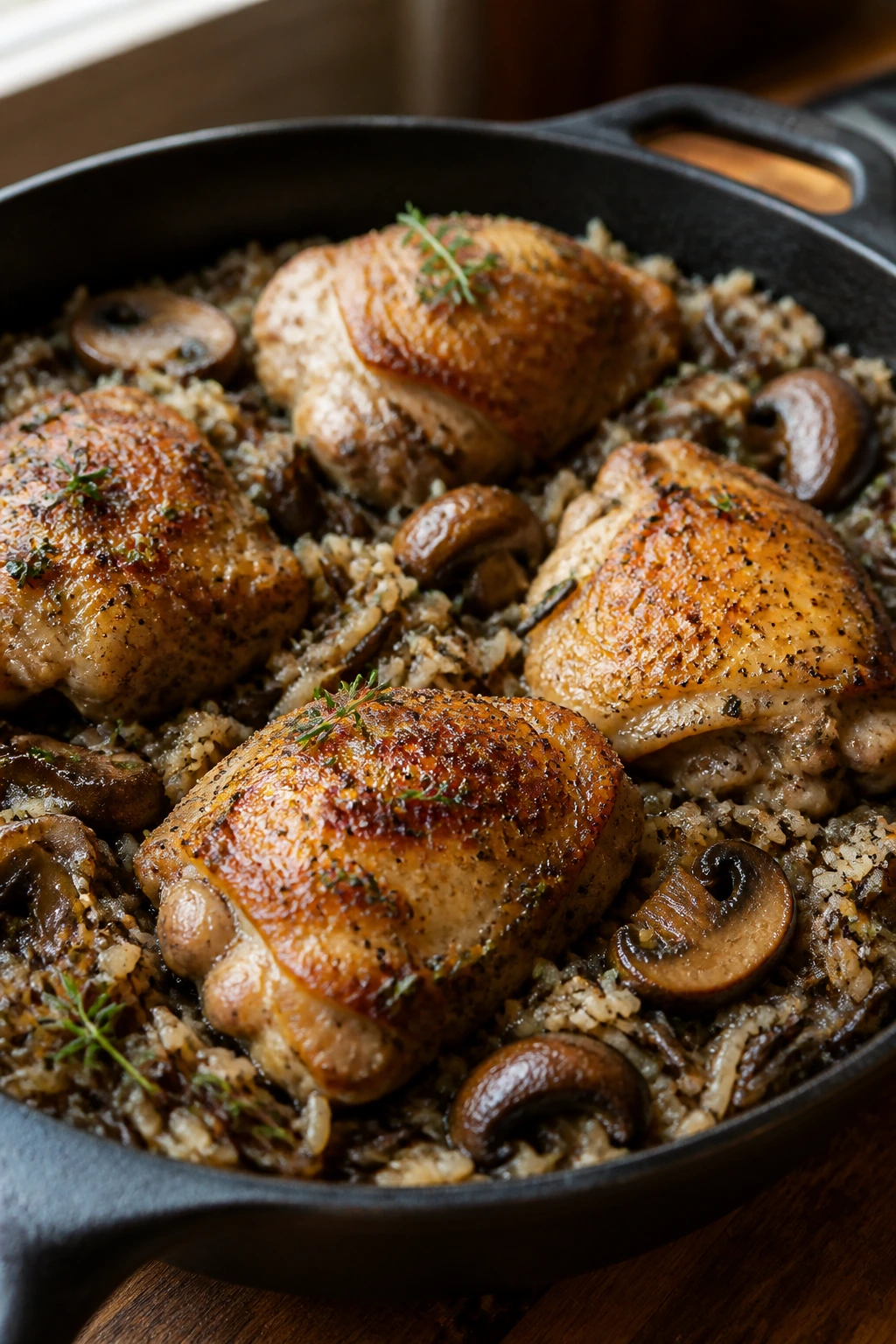
There’s a reason this kind of dinner keeps finding its way back onto my table. The chicken comes out bronzed and salty, the wild rice tastes nutty instead of tired, and the whole pot feels more generous than the ingredient list suggests. That’s the kind of cooking I like on a busy night: not fancy, not rushed, and not forgettable.
Keep a bag of pure wild rice and a pack of thighs in reach, and this meal stays within arm’s length when you want something that feels warmer than takeout and more grounded than pasta. Once you’ve made it once, the timing sticks in your head.
Roasted Chicken and Wild Rice — Recipe Card
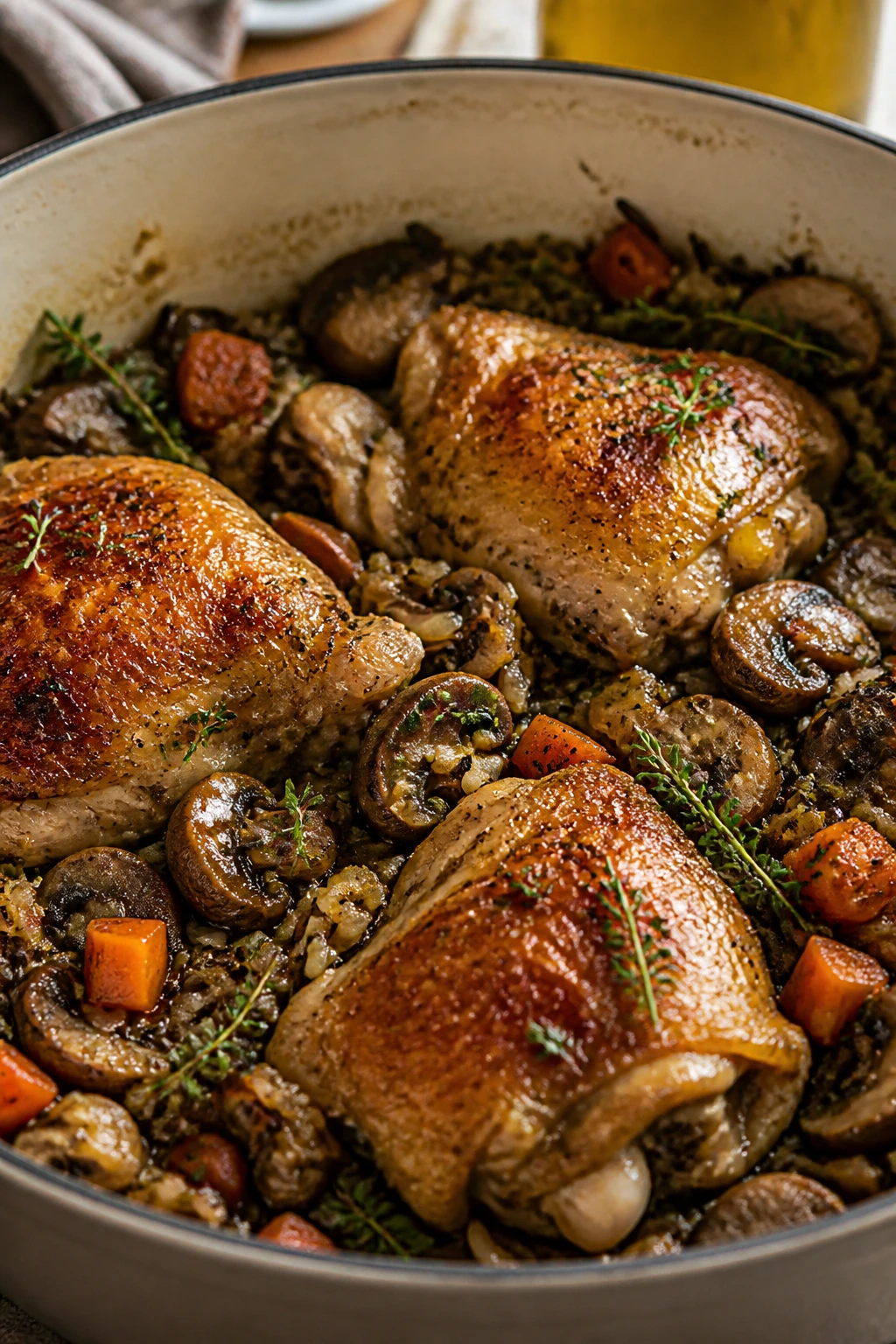
Recipe Name: Roasted Chicken and Wild Rice
Description: A one-pot chicken dinner with bronzed bone-in thighs, chewy wild rice, mushrooms, carrots, and herbs baked together in a Dutch oven. The rice catches the drippings, so every spoonful tastes fuller than the ingredient list suggests.
Prep Time: 20 minutes
Cook Time: 1 hour 5 minutes
Total Time: 1 hour 35 minutes, including resting
Course: Main Course
Cuisine: American
Servings: 6
Calories: About 430 kcal per serving
Ingredients
For the Chicken:
- 6 bone-in, skin-on chicken thighs, about 2 1/2 to 3 pounds
- 1 1/2 teaspoons kosher salt
- 1 teaspoon black pepper
- 1 teaspoon smoked paprika
- 1 teaspoon garlic powder
- 1 tablespoon olive oil
For the Wild Rice Base:
- 1 tablespoon unsalted butter
- 1 medium yellow onion, diced small
- 2 celery stalks, diced
- 2 medium carrots, diced
- 8 ounces cremini mushrooms, sliced
- 2 cloves garlic, minced
- 1 1/2 cups pure wild rice, rinsed and drained
- 4 1/2 cups low-sodium chicken broth
- 1 bay leaf
- 1 teaspoon fresh thyme leaves or 1/2 teaspoon dried thyme
- 1/2 teaspoon dried rosemary, crushed between your fingers
- 1 tablespoon Dijon mustard
To Finish:
- 1 teaspoon lemon zest
- 1 tablespoon lemon juice
- 2 tablespoons chopped parsley
Instructions
- Preheat the oven to 375°F (190°C) and set a rack in the center.
- Pat the chicken thighs dry, then season with salt, pepper, smoked paprika, and garlic powder.
- Melt the butter with the olive oil in a Dutch oven over medium heat.
- Cook the onion, celery, and carrots for 4 to 5 minutes, then add the mushrooms and cook until browned.
- Stir in the garlic, wild rice, thyme, rosemary, and Dijon mustard, then cook for 1 minute.
- Pour in the broth, add the bay leaf, and bring to a simmer.
- Nestle the chicken thighs skin-side up on top of the rice, cover tightly, and roast for 40 minutes.
- Uncover and roast for 15 to 20 minutes more until the chicken reaches 175°F to 180°F and the rice is tender.
- Rest for 10 minutes, discard the bay leaf, then stir in the lemon zest, lemon juice, and parsley.
Notes: Use pure wild rice, not a quick-cooking blend, for the timing listed here. If the rice still tastes chewy at the end, add a splash of hot broth and cover for a few more minutes.