



A good school-night roast has to do two jobs at once: feed kids without a negotiation and let the cook stand upright for a few minutes before the dishes start. Roasted chicken for kids for weeknight dinners lives or dies on that test. If the skin is pale, the vegetables are mushy, or the seasoning tastes like it came from a spice cabinet that got bored, the whole thing falls flat.
I prefer bone-in thighs and drumsticks here. They stay juicy, they handle a hot oven without drying out, and kids can grab them without a knife fight. A whole bird can be lovely, but on a Tuesday it asks for more time, more carving, and more patience than most kitchens have to spare.
The version below keeps the seasoning mild—garlic, paprika, onion powder, a little thyme, a touch of honey—and lets the heat do the work. The potatoes catch the drippings, the carrots soften at the edges, and the chicken skin turns bronze and crinkly instead of leathery. That’s the point: dinner that tastes familiar, smells like real food, and does not ask for a side quest.
The small details matter. Dry skin browns, crowded pans steam, and thighs taste better when you let them reach 175°F before you call them done. Get those pieces right, and the rest is almost embarrassingly easy.
Why This Simple Roast Earns Its Spot on a Weeknight Table
Kid-friendly flavor: The paprika, garlic, and honey keep the chicken savory and gently sweet instead of sharp or spicy, which matters more than people admit when the people at the table are under ten.
One pan, fewer arguments: Chicken, potatoes, and carrots roast together on the same tray, so dinner lands with very little cleanup and no juggling of three burners at once.
Crisp skin without fuss: A hot oven and dry chicken skin do the heavy lifting here; you are not babysitting a sauce or turning every piece of meat into a culinary project.
Leftovers with a second life: Cold roasted chicken can become lunchbox chunks, quesadilla filling, or chopped meat for fried rice, which makes one tray do more than one night’s work.
Flexible enough for real life: If your carrots are a little thick or your potatoes are a little small, the recipe still behaves. That kind of forgiveness is the difference between a recipe you admire and one you repeat.
The Clock, the Yield, and What Lands on the Plate
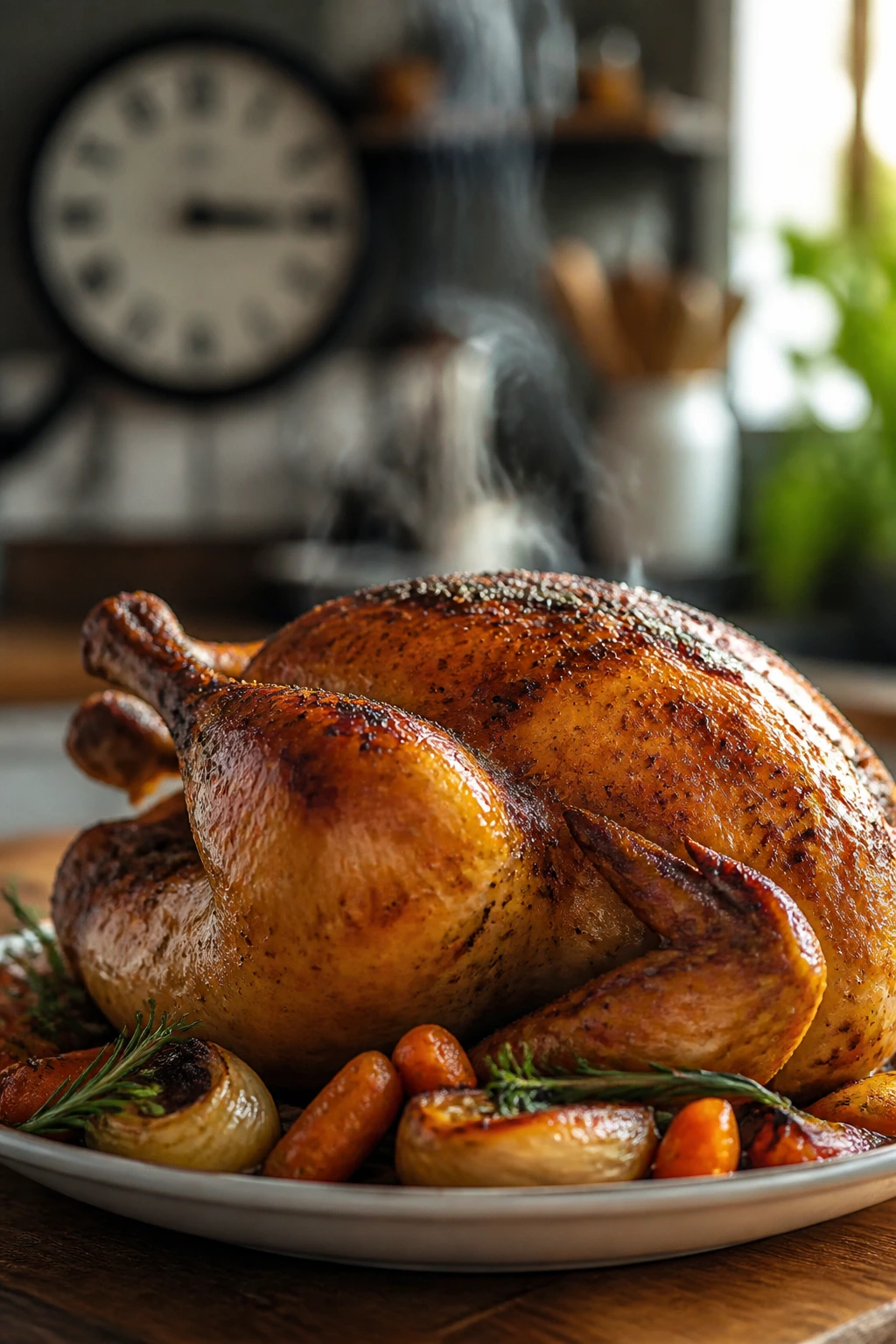
How much time does this actually ask of you? Less than people fear, and more or less exactly the amount a school night can give if you start the oven early and don’t wander off into email halfway through.
Yield: Serves 4 to 6
Prep Time: 15 minutes
Cook Time: 40 to 45 minutes
Total Time: 55 to 60 minutes
Difficulty: Beginner — the oven does most of the work, and the chicken tells you when it is done if you use a thermometer.
Chill/Rest Time: 10 minutes resting after roasting
Best Served: Warm, straight from the pan or a platter
This is a dinner that likes to be eaten while the skin is still crisp and the vegetables are still steaming. It will still taste good later, but the first pass is the best one.
What Goes Into the Pan
You do not need a long shopping list to make roasted chicken for kids feel complete. The ingredient list is short on purpose, and each item has a clear job.
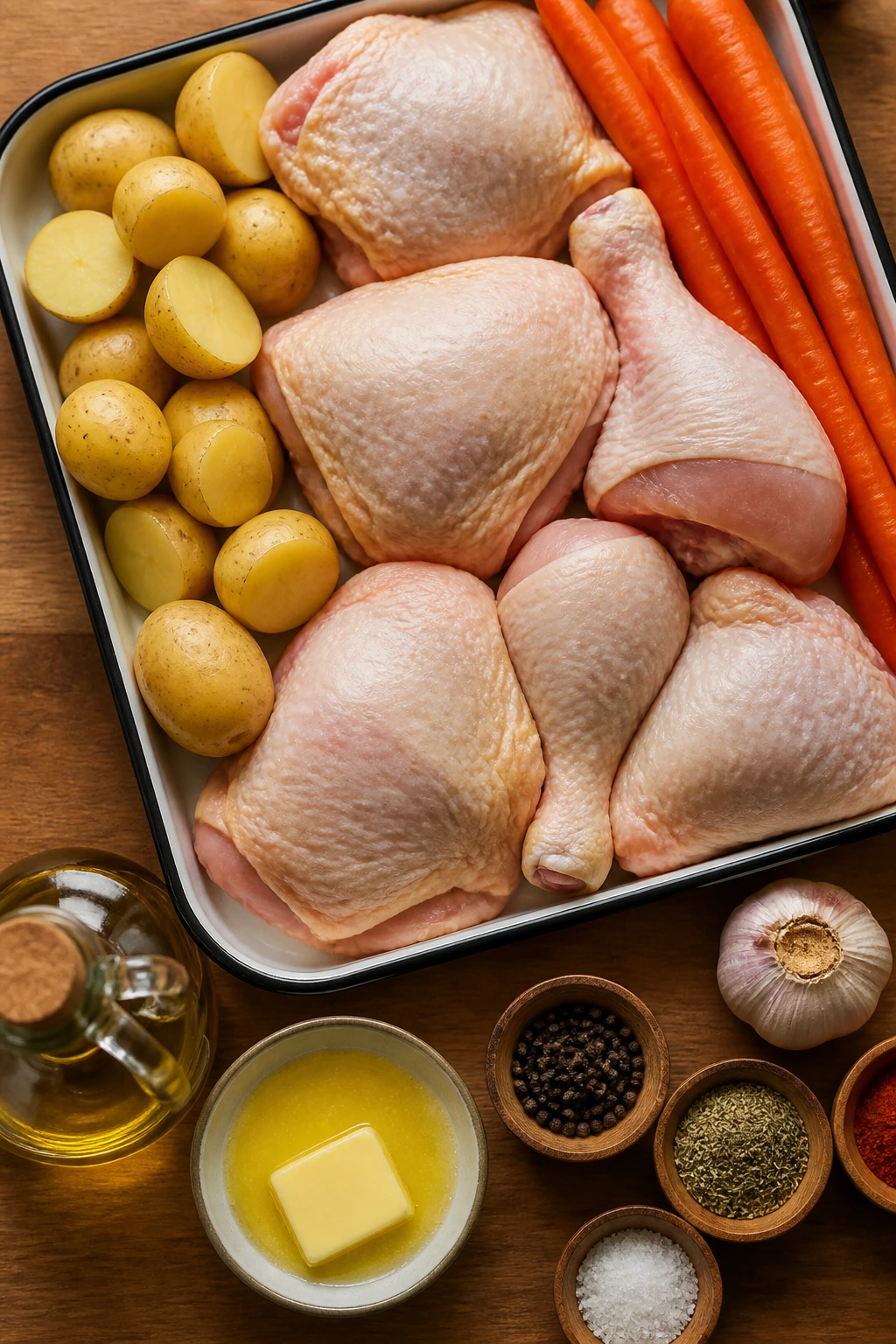
- 2 pounds bone-in, skin-on chicken thighs and drumsticks, patted dry
- 1 1/2 pounds baby Yukon Gold potatoes, halved if larger than 1 inch
- 1 pound carrots, peeled and cut into 2-inch sticks
- 2 tablespoons olive oil, divided
- 1 tablespoon melted unsalted butter
- 1 1/2 teaspoons kosher salt, divided
- 1 teaspoon sweet paprika
- 1 teaspoon garlic powder
- 1 teaspoon onion powder
- 1/2 teaspoon dried thyme
- 1/2 teaspoon black pepper, divided
- 1 tablespoon honey
- 1 tablespoon lemon juice
- 1 tablespoon chopped fresh parsley, for serving
If your potatoes are the size of golf balls, halve them. If your carrots are very thick, split them lengthwise before cutting them into sticks. The goal is not precision for its own sake. The goal is for the vegetables to finish at the same time as the chicken instead of sulking on the tray while the meat gets overdone.
Why Each Ingredient Pulls Its Weight
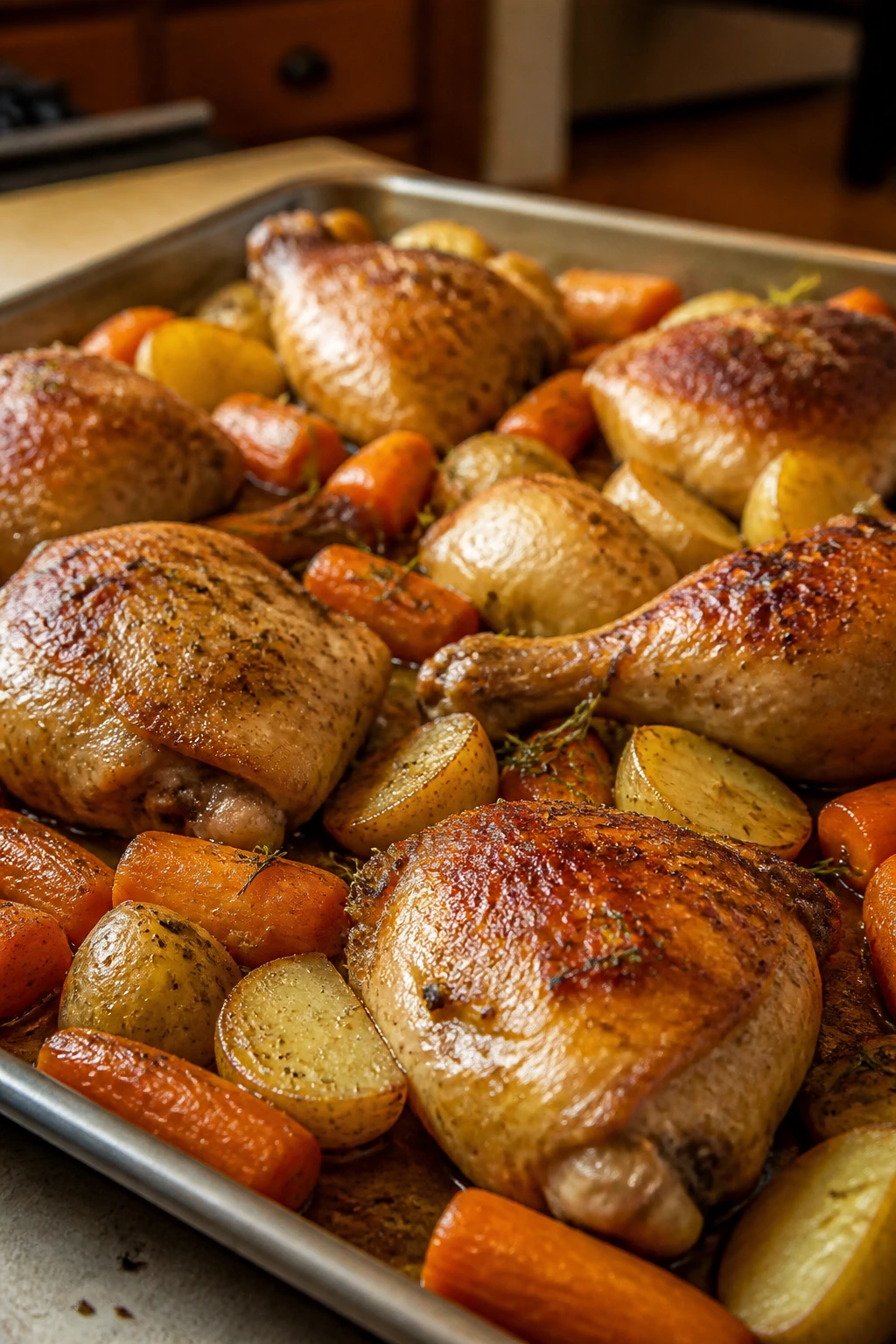
Why do these plain ingredients work so well together? Because none of them is freeloading. Chicken brings the main protein, the vegetables build the side dish, and the seasoning blend does the quiet, important work of browning, perfume, and balance.
Chicken Pieces
- What to use: 2 pounds bone-in, skin-on chicken thighs and drumsticks, about 6 pieces total depending on size.
- Preparation: Pat the chicken dry with paper towels and leave the pieces in a single layer while you season the vegetables. Dry skin is what gives you that deep gold finish instead of pale, rubbery skin.
- Substitutions: Boneless, skinless thighs can work, and so can bone-in breasts if that is what you have. Breasts will need less time and a lower target temperature, which I talk about in the variations.
- Tips: Try to keep the pieces similar in size. A giant thigh and a tiny drumstick on the same tray will not brown at the same speed, and that is how dinner turns uneven.
Potatoes and Carrots
- What to use: 1 1/2 pounds baby Yukon Gold potatoes and 1 pound carrots, cut into sturdy, bite-size pieces.
- Preparation: Halve the potatoes if they are larger than 1 inch, and cut the carrots into 2-inch sticks so they roast instead of turning limp.
- Substitutions: Parsnips, sweet potatoes, or small wedges of red onion all fit here. Sweet potatoes bring more sweetness; parsnips lean earthier and a little nuttier.
- Tips: Yukon Gold potatoes are the sweet spot for this dish because they get creamy inside without falling apart into floury crumbs. I would not use giant russets unless you want to wait longer than the chicken needs.
Seasoning and Fat
- What to use: 2 tablespoons olive oil, 1 tablespoon melted butter, 1 1/2 teaspoons kosher salt, paprika, garlic powder, onion powder, thyme, and black pepper.
- Preparation: Stir the spices together before they hit the chicken. Once the oil is mixed in, it becomes a paste that clings better and browns more evenly.
- Substitutions: Smoked paprika can replace sweet paprika if you want a deeper, more roasted flavor. Dried rosemary can stand in for thyme, though I would use a lighter hand because rosemary can bully the other flavors.
- Tips: Butter helps the skin brown and gives the vegetables a rounder taste, but too much butter can make the pan greasy. One tablespoon is enough.
Sweet and Bright Finish
- What to use: 1 tablespoon honey, 1 tablespoon lemon juice, and 1 tablespoon chopped parsley.
- Preparation: Mix the honey and lemon juice into the seasoning paste, then save the parsley for the end. Brightness belongs at the finish, not under the heat for 45 minutes.
- Substitutions: Maple syrup can replace honey, and chives or dill can replace parsley if that is what you have.
- Tips: The lemon is not there to make the chicken taste lemony. It just keeps the honey from tasting flat and makes the whole tray taste cleaner.
The Sheet Pan and Tools That Make Cleanup Easier
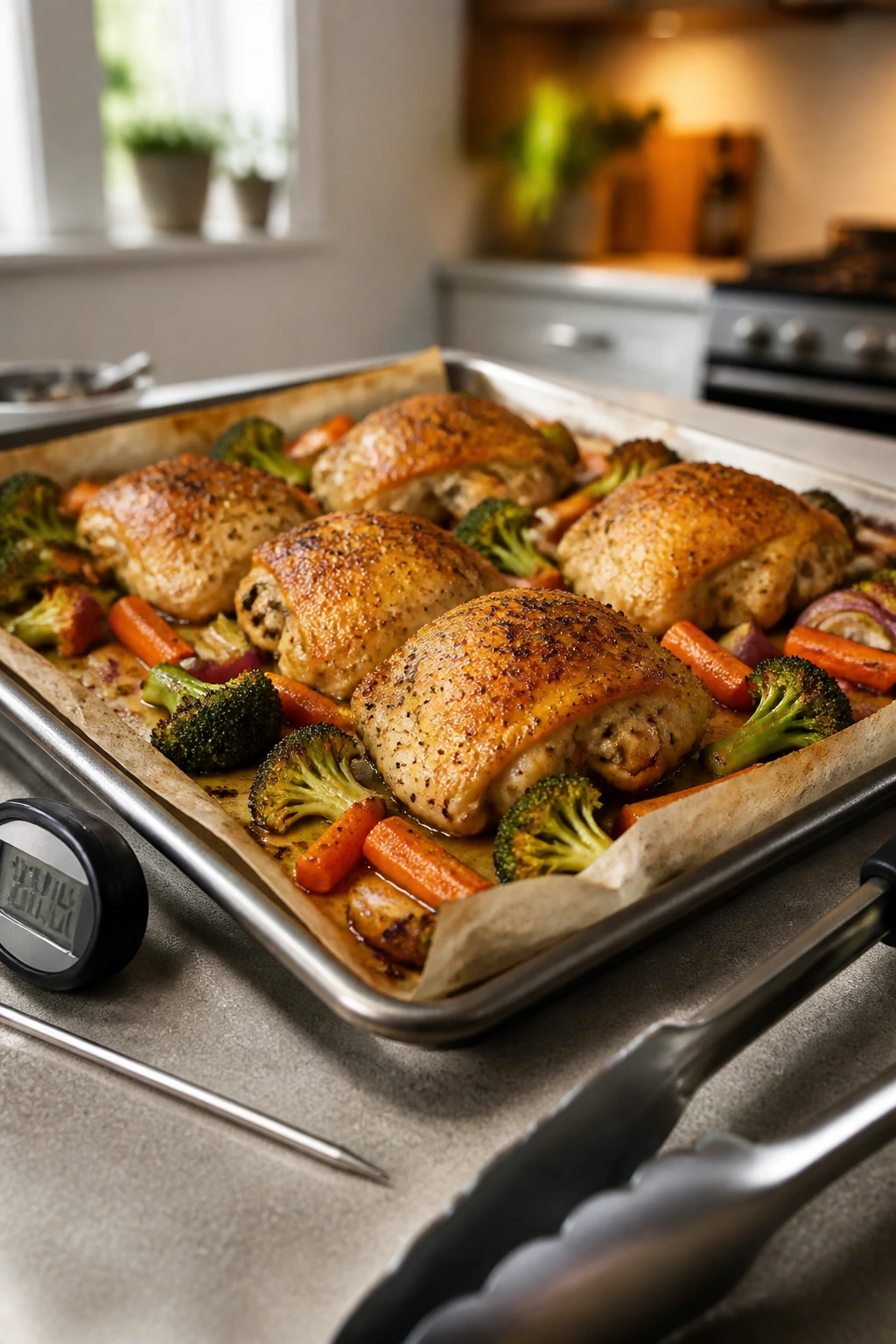
The setup matters more than people think. A hot oven can rescue a lot, but it cannot rescue a pan that is too small or a tray that makes you fight every carrot by hand.
Rimmed 13 x 18-inch sheet pan: This gives the chicken enough room to roast instead of steam. If your pan is smaller, split everything between two pans.
Parchment paper or foil: Parchment makes cleanup fast. Foil browns the vegetables a little harder on the bottom. Either works; I usually pick parchment unless I want extra caramelization.
Large mixing bowl: You need room to toss the potatoes, carrots, and seasoning without half of it ending up on the counter.
Tongs: Useful for placing the chicken and nudging the vegetables around halfway through roasting. Forks punch holes in the skin and let juices escape.
Instant-read thermometer: This is the difference between guessing and knowing. Thighs are best when they hit 175°F to 185°F, which sounds high if you are used to breast meat, but that range gives dark meat its tenderness.
Sharp knife and cutting board: Nothing fancy here. Just something that can cut carrots cleanly instead of smashing them flat at the ends.
Roasting the Chicken Until the Skin Turns Deep Gold
Preheat first. Always. A hot oven is what gives you roasted chicken that feels roasted instead of merely heated through.
Prep the Pan
- Position a rack in the center of the oven and preheat to 425°F (220°C). Line a rimmed sheet pan with parchment paper for easier cleanup, or use foil if you want a little more browning underneath the vegetables.
- Pat the chicken dry with paper towels and set it on a plate while you prep the vegetables. Do not skip this step; wet skin steams, and steamed chicken skin is the opposite of what you want on a weeknight.
Season the Vegetables and Chicken
3. In a large bowl, toss the potatoes and carrots with 1 tablespoon olive oil, 1/2 teaspoon kosher salt, and 1/4 teaspoon black pepper until every piece is lightly coated. Spread the vegetables on the sheet pan in a single layer, leaving an open space in the middle for the chicken.
4. In the same bowl, stir together the remaining 1 tablespoon olive oil, the melted butter, the remaining 1 teaspoon kosher salt, the remaining 1/4 teaspoon black pepper, the paprika, garlic powder, onion powder, thyme, honey, and lemon juice. The mixture should look glossy and a little thick, like a loose paste.
5. Add the chicken to the bowl and turn each piece until it is coated on all sides. Use your hands or tongs to work the seasoning up under any loose skin if you want stronger flavor on the meat itself.
Roast and Finish
6. Nestle the chicken pieces skin-side up on the pan among the vegetables. Leave a little breathing room between the pieces. Crowding is the fastest way to get pale skin and soggy potatoes.
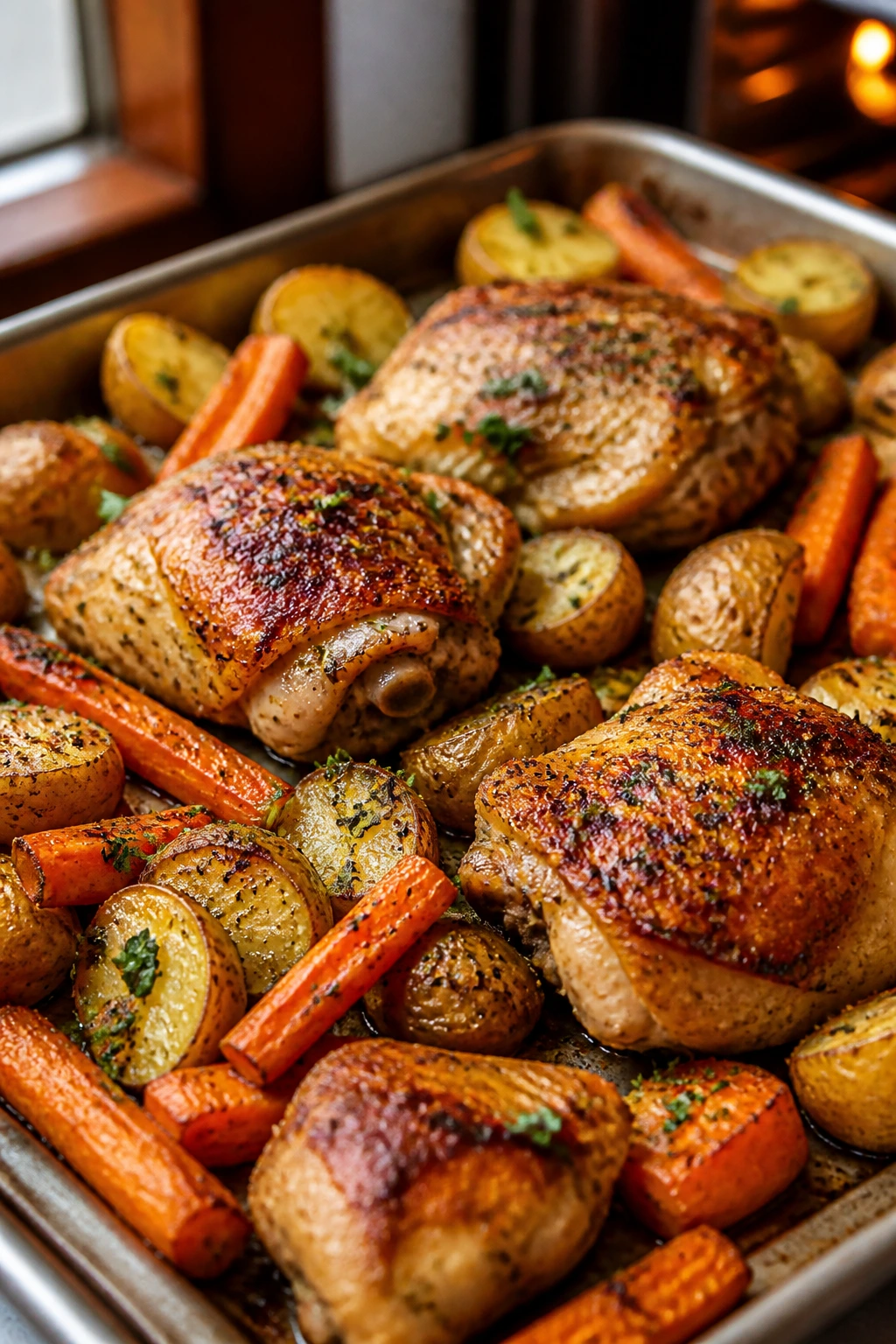
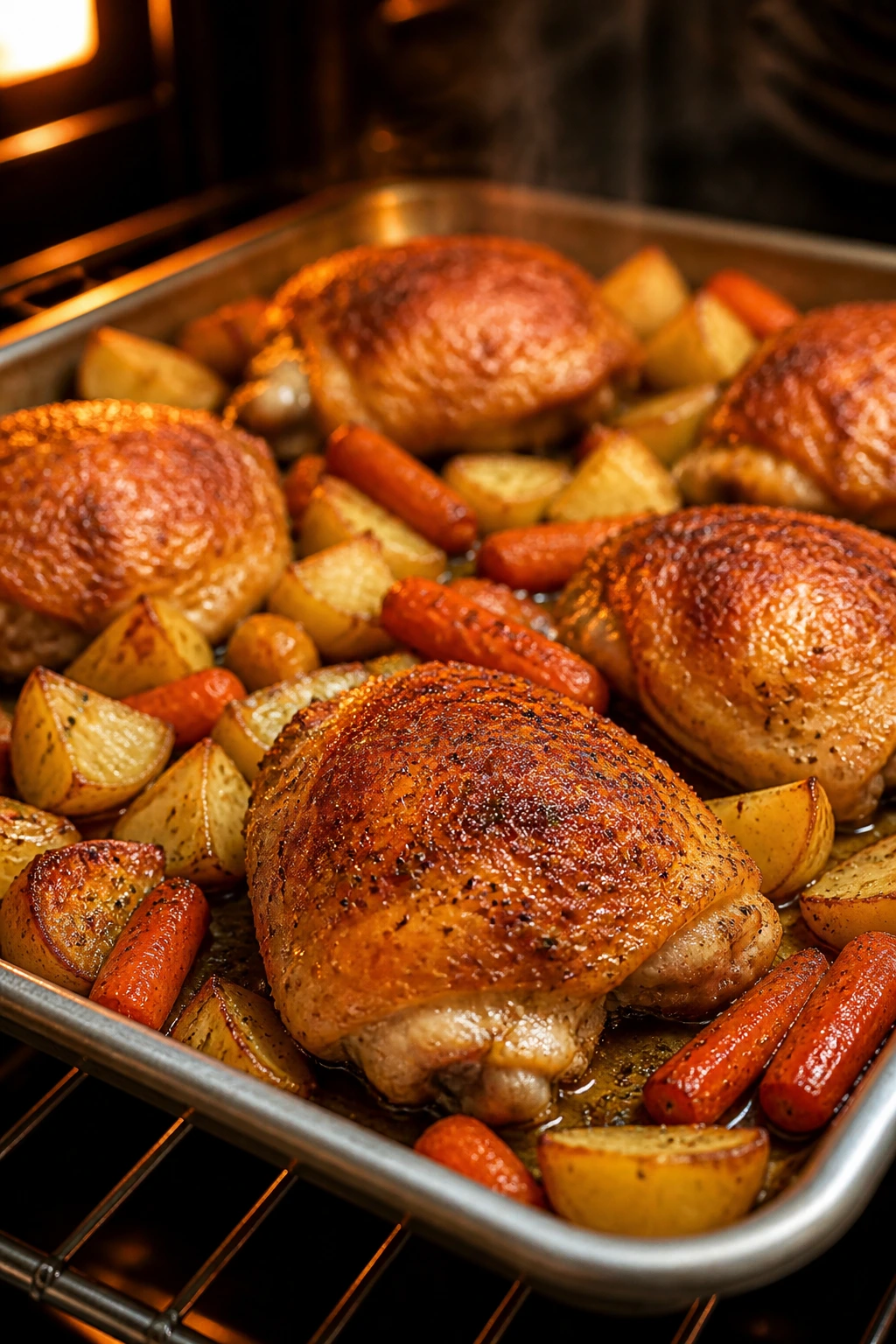
7. Roast for 20 minutes, then rotate the pan from front to back. Stir the vegetables gently so the bottom pieces move to the top, then continue roasting for 18 to 25 minutes more, until the chicken reaches 175°F to 185°F in the thickest part and the potatoes are tender when pierced with a fork. The skin should be deep gold with browned spots at the edges.
8. If the skin darkens faster than the chicken cooks, lay a loose sheet of foil over the top for the final 10 minutes. Remove the pan from the oven and let it rest for 10 minutes before serving. Scatter the parsley over the top and spoon any juices from the pan over the chicken and vegetables.
A small note that saves a lot of grief: if you are using oversized drumsticks or especially large thighs, give the tray another 5 minutes before you check again. Ovens vary more than people admit, and dark meat rewards patience.
How to Plate Roasted Chicken for Kids Without a Fight
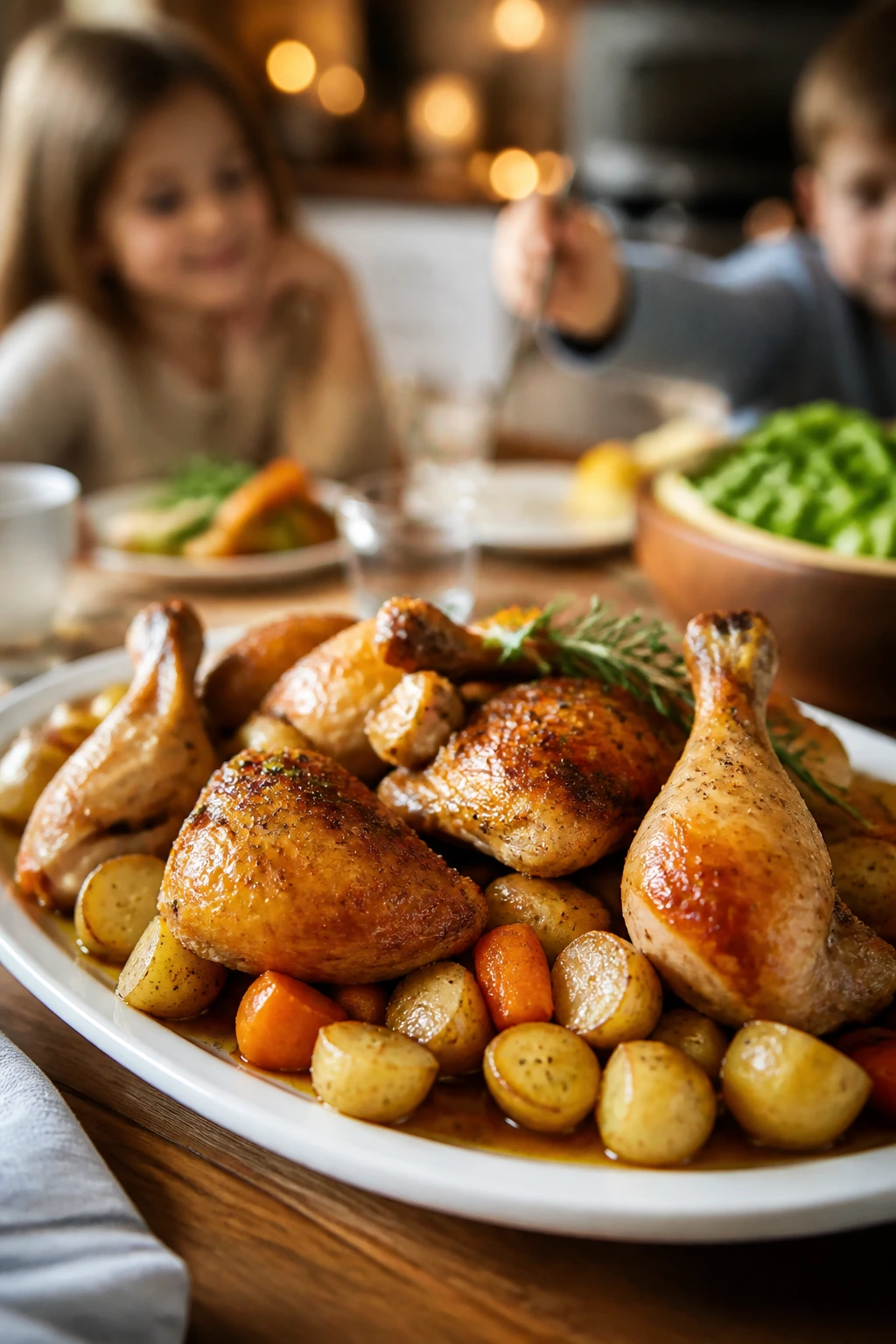
Kids eat with their eyes first, then their hands, then their opinions. In that order.
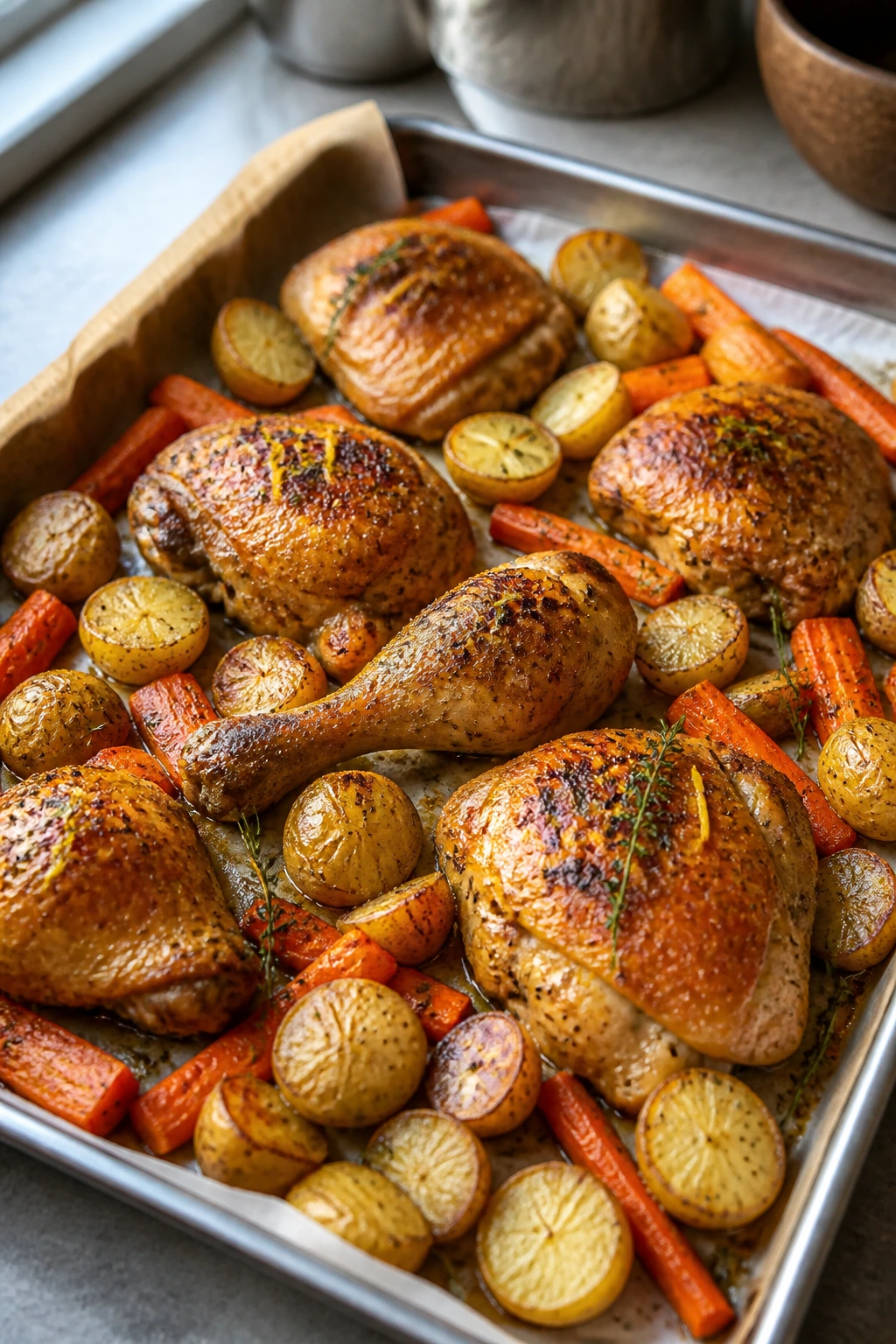
Presentation: Pile the potatoes and carrots on a warm platter, then set the chicken pieces on top so the browned skin is visible. Spoon the pan juices over everything right before the platter hits the table. That glossy finish matters; it makes the tray look cared for, not merely cooked.
Accompaniments: I like this with a bowl of peas, sliced cucumbers, or a simple apple salad if the vegetables on the tray are not enough for the people at the table. Warm dinner rolls are a smart addition because they catch the juices. If your family wants sauce, a spoonful of plain yogurt with a little lemon and salt works better than a heavy gravy.
Portions: Plan on 1 chicken piece per child if the pieces are small and 2 pieces for most adults, plus a generous scoop of potatoes and carrots. If the pieces are large, one thigh and a few drumsticks between two younger kids is often enough. The tray is easy to scale up; just use a second sheet pan so the food does not pile on top of itself.
Beverage Pairing: Cold milk is the easy answer for younger kids. For everyone else, sparkling water with lemon or unsweetened iced tea keeps the meal feeling clean rather than heavy. If you want something a little sweeter on the table, apple juice fits the roast carrots better than orange juice does.
Small Tweaks That Make This Recipe Easier on a Tuesday
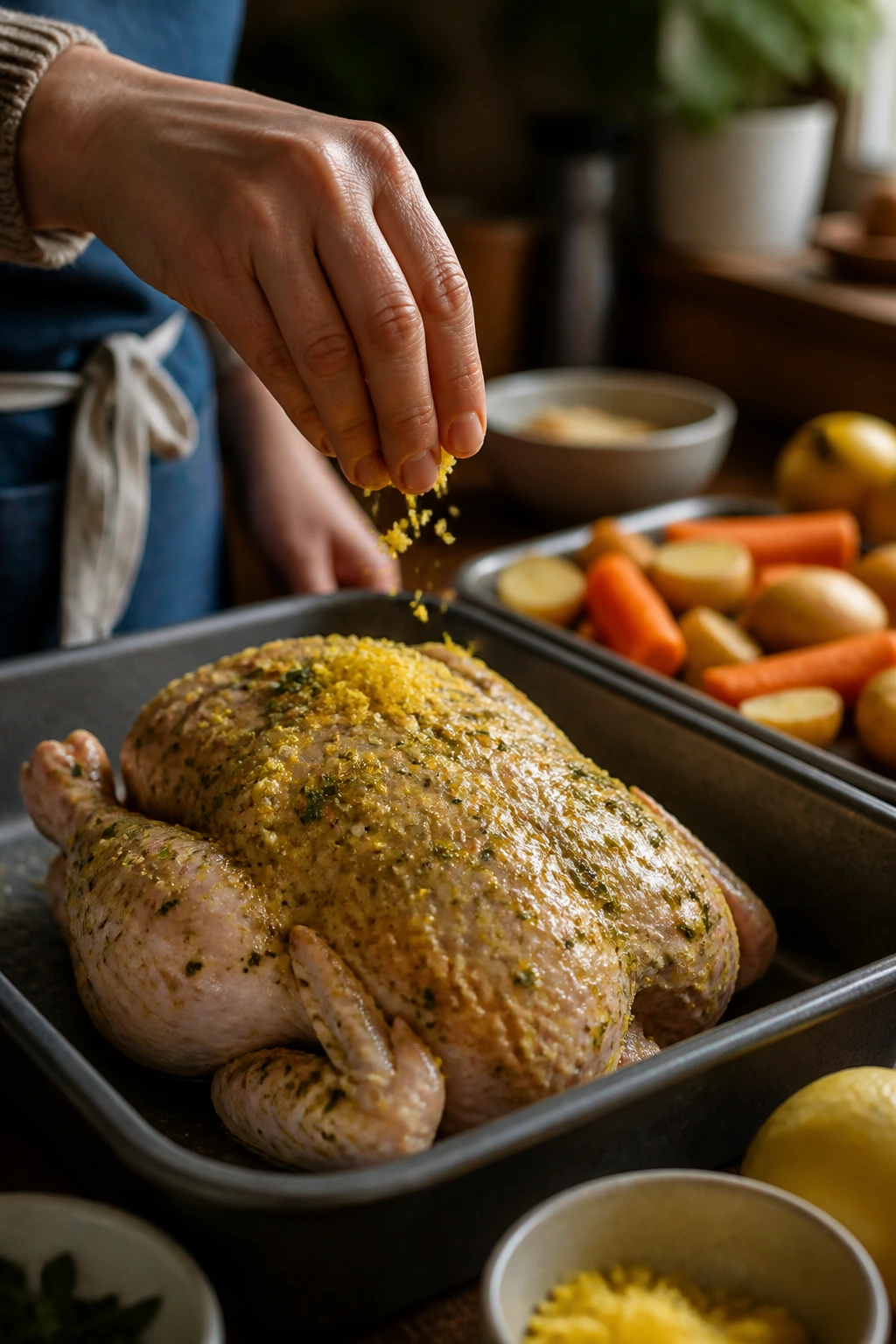
Flavor Enhancement: Rub 1 teaspoon of lemon zest into the seasoning paste if you want the chicken to taste brighter without adding more acidity. The zest clings to the skin and perfumes the tray while it roasts.
Time-Saver: Cut the carrots and potatoes up to 24 hours ahead and store them in airtight containers in the fridge. Pat the potatoes dry before they go on the pan; moisture sitting on the cut sides slows browning.
Pro Move: Place the potato halves cut-side down. The flat side gets direct contact with the hot pan and turns golden where it touches. That little browned patch is usually the part kids eat first.
Make-It-Yours: If your family prefers a dairy-free tray, skip the butter and use 1 extra tablespoon of olive oil. If you want lower salt, keep the same spice blend but reduce the kosher salt by 1/2 teaspoon and add the lemon juice at the end so the flavor still feels lively.
A tiny habit that helps: taste the seasoning paste on a carrot before it goes into the oven. Not because raw carrots are thrilling, but because you can tell in five seconds whether the tray needs a touch more salt or another grind of pepper.
The Mistakes That Make Roast Chicken Dry or Bland
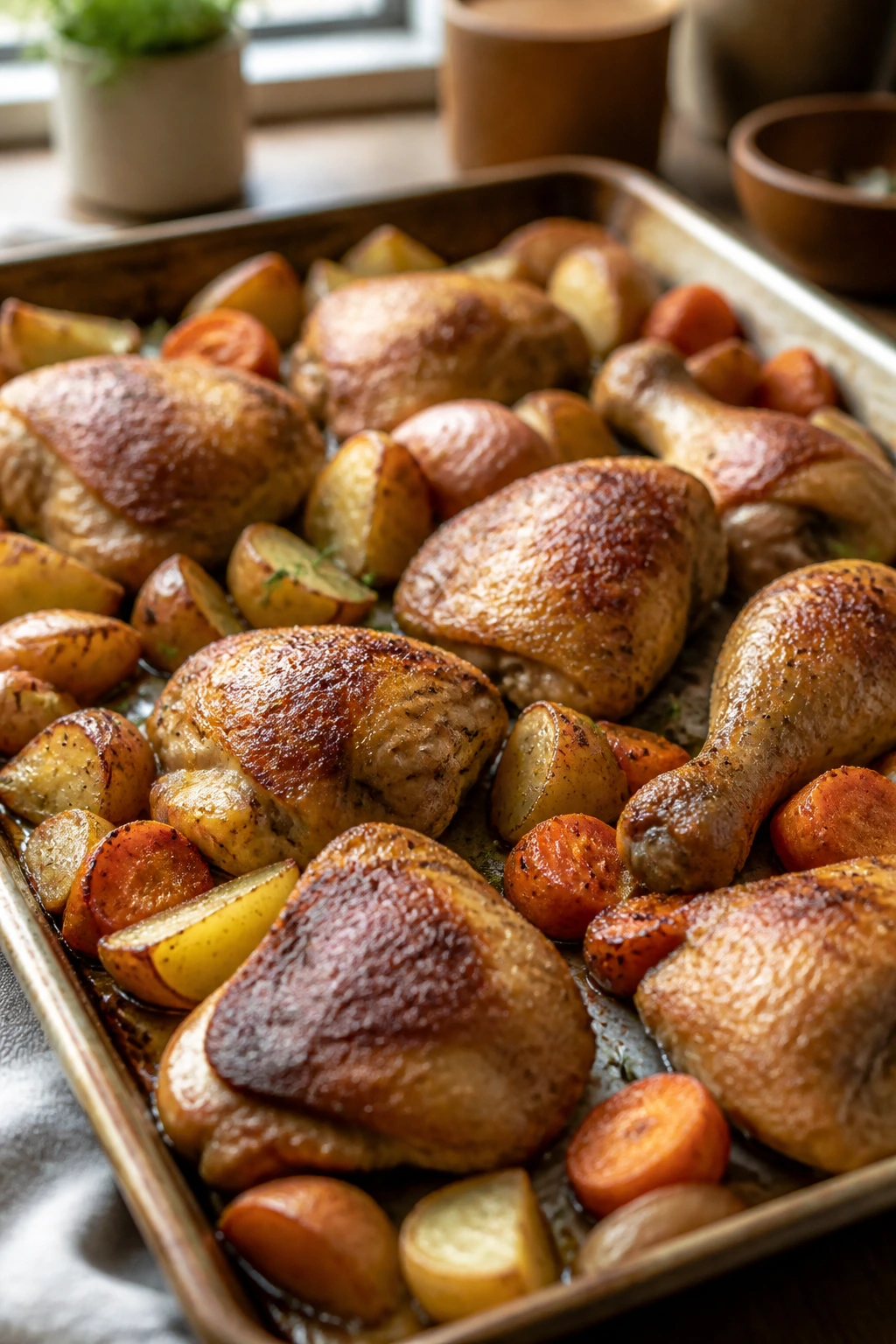
A few common missteps keep this dinner from turning into the tray you hoped for. None of them are dramatic. All of them matter.
-
Starting with wet chicken: If the skin goes into the oven damp, it steams before it browns. The fix is simple: pat the pieces dry with paper towels and let them sit out while you prep the vegetables.
-
Crowding the pan: When the chicken pieces touch and the vegetables pile on top of each other, the tray traps steam. You end up with limp potatoes and skin that looks blushed instead of roasted. Use a bigger pan or split the batch.
-
Cutting the vegetables too large: Thick carrot chunks can still be raw when the chicken is done. Keep the carrots to 2-inch sticks and halve the potatoes if they are larger than a golf ball.
-
Pulling dark meat too early: Chicken thighs and drumsticks can be safe at 165°F, but they are better once they hit 175°F or a little higher. At 165°F, the meat can still feel a bit tight near the bone. A thermometer saves you from stopping too soon.
-
Adding too much honey: A heavy hand with honey can make the seasoning darken too fast and taste sticky at the edges. One tablespoon is enough for color and mild sweetness. More is not better here.
-
Skipping the rest: Slice or serve the chicken the second it comes out, and the juices run onto the board instead of staying in the meat. Ten minutes gives the fibers time to relax, and the chicken stays moist when you cut into it.
If you fix only two things, fix dryness and crowding. Those are the two that matter most.
A Few Smart Variations on the Same Pan
Garlic-Parmesan Finish
Stir 1/4 cup finely grated Parmesan into the tray during the last 5 minutes of roasting, then serve with extra parsley. It gives the potatoes a salty crust and makes the chicken skin taste a little more savory without turning the whole pan cheesy.
All-Drumstick Supper
Use 8 medium drumsticks instead of a thigh-and-drumstick mix, and keep the seasoning exactly the same. Drumsticks are easy for smaller hands to hold, and they tend to be a little cheaper per pound. Roast them for about 35 to 40 minutes, checking for an internal temperature of 175°F near the bone.
Lemon-Herb Pan
Swap the thyme for 1 teaspoon dried oregano or rosemary, and tuck 4 thin lemon slices under the chicken pieces before roasting. This version tastes brighter and a little more grown-up, but it still stays mild enough for kids who dislike sharp flavors.
Dairy-Free, Extra-Rich Version
Skip the butter and use 3 tablespoons olive oil total. Add the lemon juice and honey exactly as written, and finish the pan with a drizzle of good olive oil after roasting. The meat stays moist, and nobody misses the butter unless they know it was supposed to be there.
Breast Swap for Leaner Eaters
If someone at the table only eats white meat, use 4 bone-in, skin-on chicken breasts and roast at 400°F for 25 to 30 minutes, or until the breasts reach 165°F. Pull the breasts earlier than the thighs in a mixed tray, because they dry out faster and do not forgive overcooking the same way.
Keeping Leftovers Tender for Lunches and Round Two
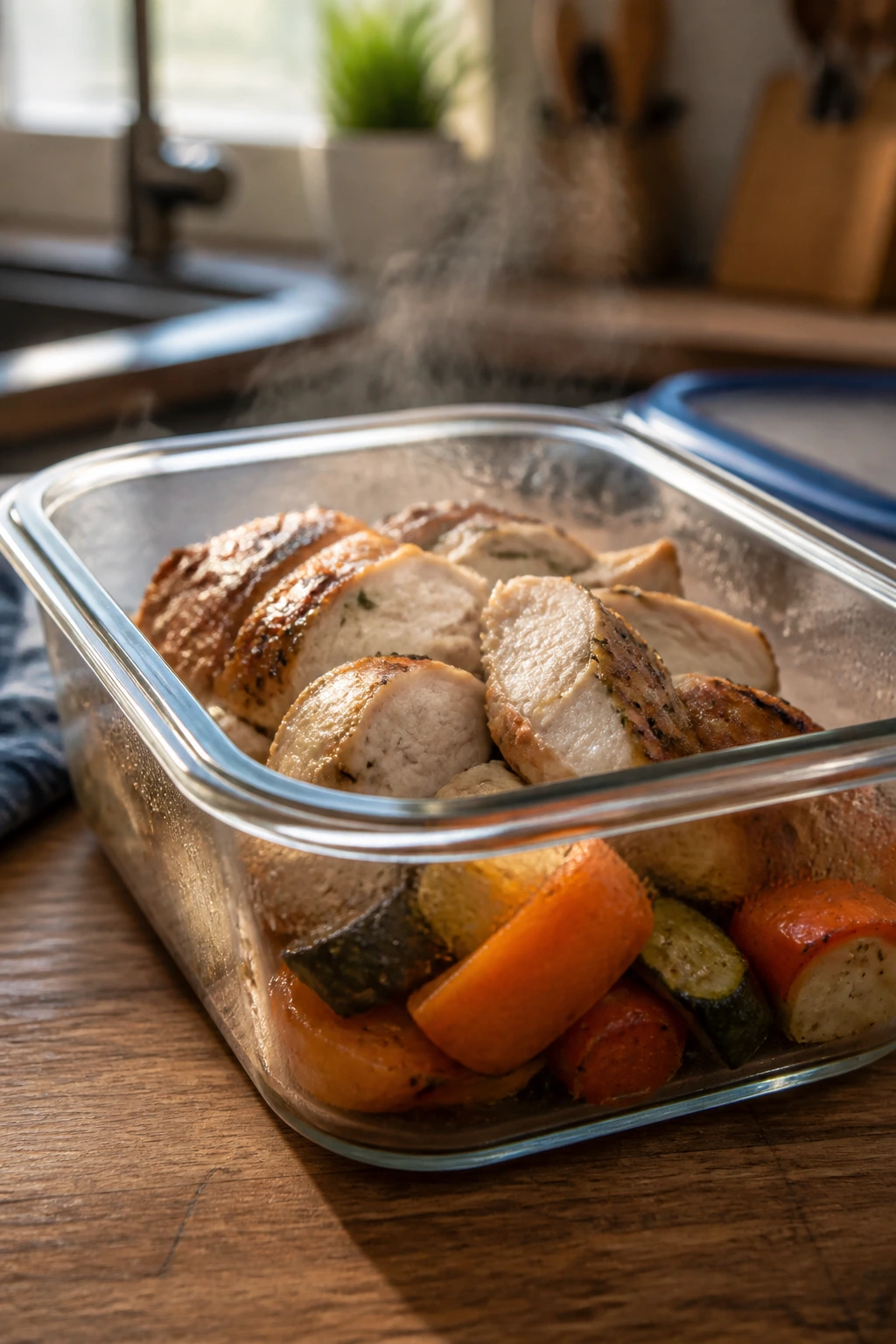
Roasted chicken is one of those dishes that behaves better the next day if you store it the right way. The trick is to protect the meat from drying out and keep the vegetables from turning sad and leathery.
Room Temperature: Do not leave the chicken out longer than 2 hours after serving. If the kitchen is hot, give it even less time before packing it away.
Refrigerator: Store leftovers in airtight containers for 3 to 4 days. I like to separate the chicken from the vegetables so the potatoes do not absorb all the juices and turn soft in a bad way. If the pan juices are still good, pour a spoonful over the chicken before sealing the container.
Freezer: The chicken freezes well for up to 2 months, though the vegetables lose a little of their charm. If you plan to freeze it, freeze the chicken pieces separately from the potatoes and carrots. That way you can revive the chicken later and make fresh vegetables on the side.
Reheating: The oven gives the best texture. Put the chicken in a baking dish, add 1 to 2 teaspoons of water or broth, cover with foil, and heat at 350°F for 15 to 20 minutes, until the chicken reaches 165°F. For crisp skin, uncover it for the last 5 minutes. The microwave works for lunch boxes, but use medium power and cover the chicken with a damp paper towel so the meat does not go stringy.
Make-Ahead: The seasoning mixture can be stirred together a day or two in advance and kept in a small jar. You can also prep the carrots and potatoes the day before, then dry them well before roasting. If you want to get ahead even more, season the chicken up to 8 hours before cooking and keep it uncovered in the fridge so the skin dries out a little.
Leftover chicken is also a gift for the next meal. Chop it into small cubes and tuck it into rice, pasta, or quesadillas, and it stops feeling like leftovers at all.
Questions Parents Usually Ask About Roasted Chicken for Kids
Can I use chicken breasts instead of thighs and drumsticks?
Yes, but treat them like a different ingredient, not a simple swap. Breasts need less time and a lower final temperature, usually around 165°F, or they dry out fast. If you want one tray to feed everyone, keep the breasts separate and pull them before the dark meat is fully finished.
How do I keep the skin crisp if my kids only eat the meat?
Dry skin is the starting point, but airflow matters too. Leave space around the pieces and do not cover the pan until after the roast is done. If the skin softens while the chicken rests, set the pieces on a rack for a few minutes before serving so the steam escapes.
Do I have to flip the chicken halfway through?
No. In fact, I would rather you did not. Roasting skin-side up the whole time lets the fat render from the skin and keeps the crust from tearing. Stir the vegetables, rotate the pan, and leave the chicken alone.
What if the vegetables are done before the chicken?
Pull the vegetables to a bowl, cover them loosely with foil, and let the chicken finish on the sheet pan. This usually happens only if your carrot pieces are small or your oven runs hot. If you see the potatoes softening early, that is your clue to move them out of the way before they collapse.
Can I season the chicken ahead of time?
Yes. Up to 8 hours ahead is a sweet spot. The salt and seasoning will seep into the meat a bit, and the skin dries enough to brown better. Just keep the chicken uncovered in the fridge, or the skin traps moisture and loses that crisp edge.
What if I do not own an instant-read thermometer?
You can still cook the chicken, but you lose the easiest signal. Look for clear juices, deeply golden skin, and meat that pulls back from the bone a little at the joint. That said, a thermometer is cheap compared with the cost of guessing wrong three dinners in a row.
Can I make this on two sheet pans?
Absolutely, and I often do if the vegetables are plentiful. Use one pan for chicken and one for vegetables, because chicken skin browns better when it is not sitting in vegetable steam. Rotate both pans halfway through roasting so the hot spots do not do all the work.
A Roast Worth Repeating
The best thing about a tray like this is that it does not ask you to be in the mood for anything special. You do not need a sauce, a marinade, or a long list of ingredients you only buy for one recipe. You need a hot oven, dry chicken, enough space on the pan, and the patience to let the skin turn the right shade of gold.
That is why this stays in rotation. It looks plain going in and feels generous coming out. On a night when everyone is hungry and the clock is loud, that kind of dinner earns its place fast.
Roasted Chicken for Kids for Weeknight Dinners — Recipe Card
Recipe Name: Roasted Chicken for Kids for Weeknight Dinners
Description: Bone-in chicken thighs and drumsticks roast with baby potatoes and carrots on one pan, seasoned with paprika, garlic, onion, thyme, honey, and lemon for a mild, kid-friendly dinner with crisp skin and tender vegetables.
Prep Time: 15 minutes
Cook Time: 40 to 45 minutes
Total Time: 55 to 60 minutes, plus 10 minutes resting
Course: Dinner
Cuisine: American
Servings: 4 to 6
Calories: about 450 kcal per serving
Ingredients
For the Chicken and Vegetables:
- 2 pounds bone-in, skin-on chicken thighs and drumsticks, patted dry
- 1 1/2 pounds baby Yukon Gold potatoes, halved if larger than 1 inch
- 1 pound carrots, peeled and cut into 2-inch sticks
- 2 tablespoons olive oil, divided
- 1 tablespoon melted unsalted butter
- 1 1/2 teaspoons kosher salt, divided
- 1 teaspoon sweet paprika
- 1 teaspoon garlic powder
- 1 teaspoon onion powder
- 1/2 teaspoon dried thyme
- 1/2 teaspoon black pepper, divided
- 1 tablespoon honey
- 1 tablespoon lemon juice
- 1 tablespoon chopped fresh parsley, for serving
Instructions
-
Preheat the oven to 425°F (220°C) and line a rimmed sheet pan with parchment paper or foil.
-
Toss the potatoes and carrots with 1 tablespoon olive oil, 1/2 teaspoon kosher salt, and 1/4 teaspoon black pepper, then spread them on the sheet pan.
-
Stir together the remaining 1 tablespoon olive oil, melted butter, remaining 1 teaspoon salt, remaining 1/4 teaspoon black pepper, paprika, garlic powder, onion powder, thyme, honey, and lemon juice.
-
Coat the chicken with the seasoning mixture and place the pieces skin-side up on the sheet pan with the vegetables.
-
Roast for 20 minutes, rotate the pan, and stir the vegetables gently.
-
Continue roasting for 18 to 25 minutes more, until the chicken reaches 175°F to 185°F and the vegetables are tender.
-
Rest for 10 minutes, then finish with parsley and pan juices before serving.
Notes: Keep the chicken pieces spaced out for crisp skin. If your carrots are thick, slice them smaller so they finish on time. Leftovers reheat best in a 350°F oven, covered with foil.