



Roasted garlic chicken has the rare trick of making a Tuesday feel planned. The chicken comes out with bronzed skin, the potatoes soak up the drippings, and the garlic turns from sharp and stingy into something soft enough to smear across the back of a spoon. The smell alone does half the work: sweet garlic, hot poultry fat, a little lemon, a little thyme. It’s the kind of pan that makes people wander into the kitchen and ask when dinner will be ready, which is usually a good sign.
What I like most about this style of dinner is how little drama it needs. A hot oven does the heavy lifting. Bone-in thighs stay juicy at a higher temperature than breasts do, and whole heads of garlic mellow instead of burning the way minced garlic often does in a fast roast. That matters. A lot. If you’ve ever tried to “save time” by throwing chopped garlic directly onto a sheet pan, you already know how quickly it can go from fragrant to bitter.
I also like that this meal has a built-in sense of restraint. It doesn’t ask for a sauce whisked in a separate pan, or a marinade that needs hours, or a long list of vegetables that all cook on different clocks. It asks for good chicken, a couple of heads of garlic, sturdy potatoes, and enough heat to brown the edges. Once the pan goes in, the rest is mostly watching for color, checking the temperature, and waiting for the garlic to soften into something almost spreadable.
Why This Roasted Garlic Chicken Pulls Its Weight on a Busy Night
One pan really is enough here. The chicken, potatoes, onion, and garlic all roast together on the same rimmed sheet pan, which means the oven becomes the cook and your cleanup stays mercifully small.
The garlic does more than garnish. Two whole heads turn sweet, mellow, and spoonable in about 45 minutes, so you get a built-in finish without making a separate sauce pan.
Thighs are the smart cut for this job. Bone-in, skin-on thighs handle a hot oven with far less fuss than breasts, and they give you crisp skin before the meat dries out.
The potatoes pick up the good stuff. Baby Yukon Golds catch the chicken fat, garlic oil, and lemon juice in their cut sides, so the side dish tastes like it belongs to the same meal instead of sitting beside it.
Leftovers don’t feel like punishment. The next day, the garlic tastes deeper, the chicken stays useful for salads or rice bowls, and the potatoes reheat without turning into paste if you warm them the right way.
It smells expensive without acting expensive. That’s maybe the real reason this recipe keeps showing up on my list. It gives you the feeling of a slow roast, but the method is plain enough to make on a school night.
Yield: Serves 4 to 6
Prep Time: 15 minutes
Cook Time: 45 minutes
Total Time: 1 hour
Difficulty: Beginner — the method is straightforward, but the pan benefits from one thermometer check and a little attention to browning.
Chill/Rest Time: 5 minutes resting
Best Served: Warm, straight from the oven after a short rest.
The Ingredients That Carry the Whole Pan
The shopping list is short, but each ingredient is doing a job. That’s the nice thing about a roasted dinner like this: nothing is filler.
For the Sheet Pan Chicken and Vegetables:
- 2 1/2 to 3 pounds bone-in, skin-on chicken thighs, about 6 thighs
- 1 1/2 pounds baby Yukon Gold potatoes, halved
- 1 large yellow onion, cut into 8 wedges
- 2 heads garlic
- 1/4 cup olive oil, divided
- 1 1/2 teaspoons kosher salt, divided
- 1 teaspoon black pepper, divided
- 1 teaspoon smoked paprika
- 1 teaspoon dried thyme
- 1 lemon, halved
- 1 tablespoon unsalted butter
- 2 tablespoons chopped fresh parsley
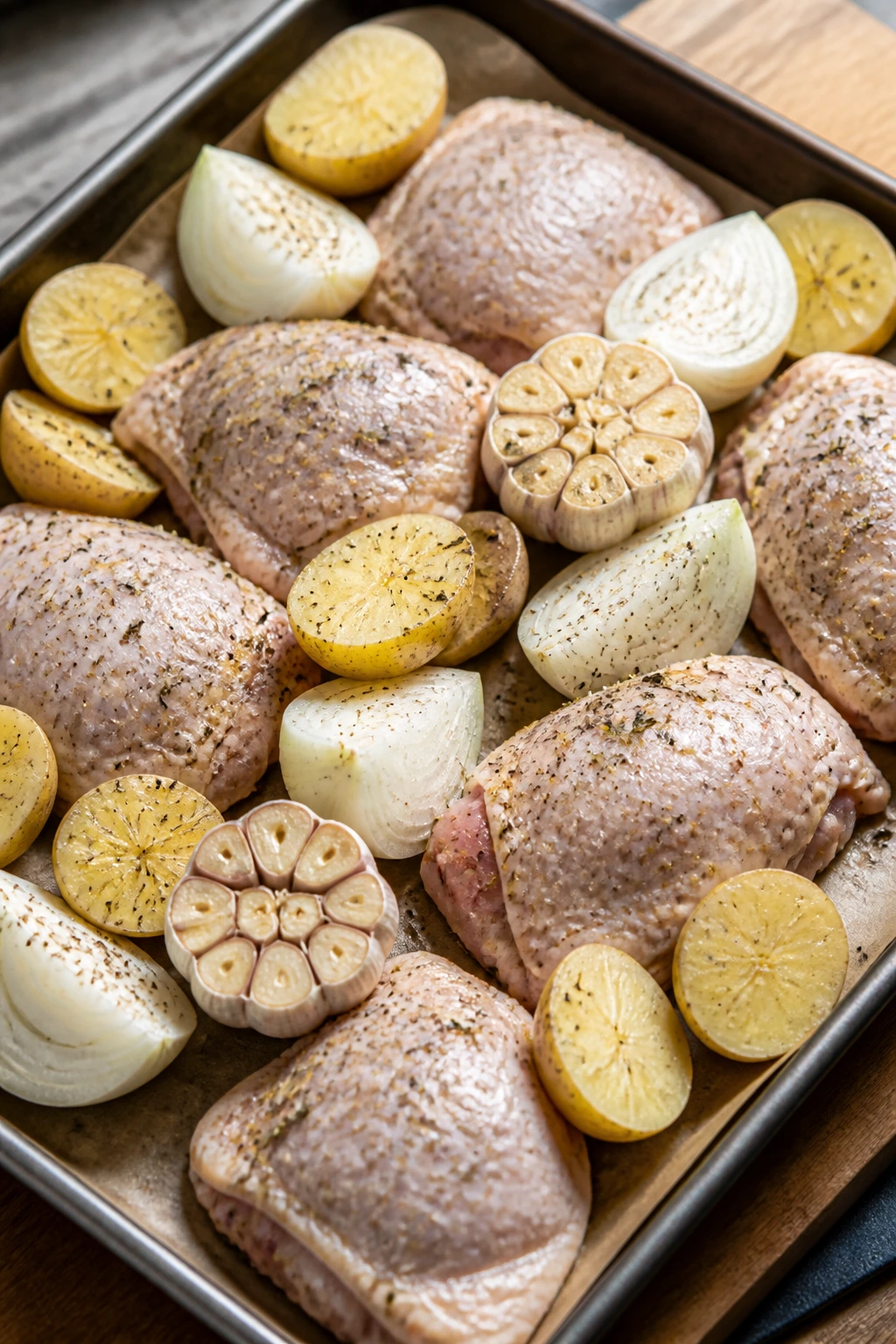
You can almost see the pan before it goes in: pale potato halves, onion wedges with their outer edges curling a little, chicken thighs sitting dark and heavy on top, and two little foil-wrapped garlic heads tucked into the side like they know they’re about to become the best part.
Why Each Ingredient Matters
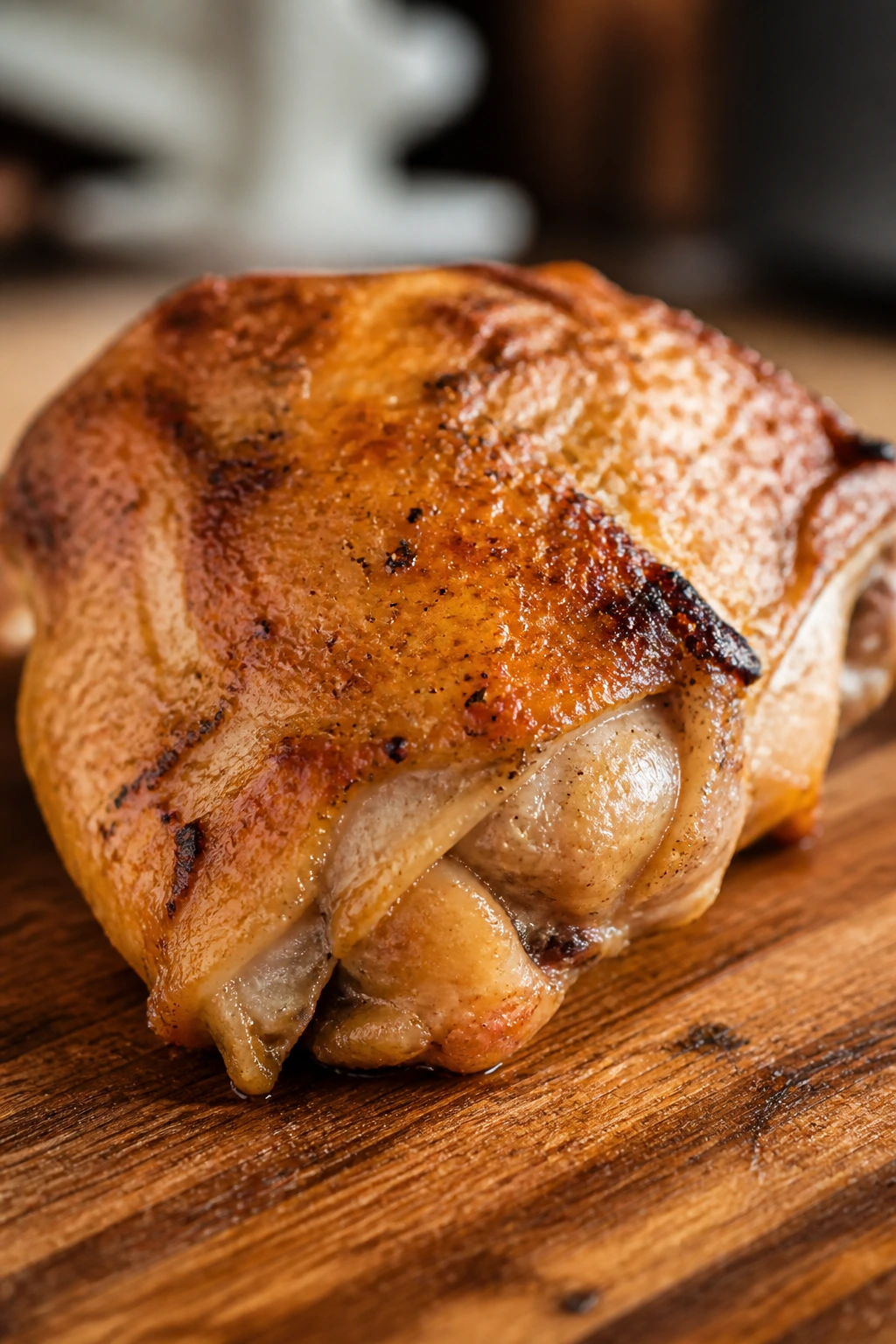
Chicken Thighs
Chicken thighs are the engine here. They have enough fat and connective tissue to stay juicy in a hot oven, and the skin has enough fat of its own to brown instead of shrinking into something leathery.
What to use: 2 1/2 to 3 pounds bone-in, skin-on chicken thighs, which is usually 6 medium thighs.
Preparation: Pat them very dry with paper towels, then season them while the oven heats so the salt has a few minutes to settle into the surface.
Substitutions: Bone-in drumsticks work well, and boneless thighs work too if you trim the cook time by 8 to 10 minutes. Chicken breasts can be used, but they need closer watching and should go in later if they’re thick.
Tips: Dry skin browns. Wet skin steams. If you skip the paper towel step, you can still make dinner, but you’ll leave color on the table.
Baby Yukon Gold Potatoes and Onion Wedges
The potatoes and onion are doing the side-dish work while the chicken roasts. Yukon Golds are my favorite here because they get creamy in the middle without falling apart, and their thin skins take on the chicken fat in a way russets never quite do.
What to use: 1 1/2 pounds baby Yukon Gold potatoes, halved, and 1 large yellow onion cut into 8 wedges.
Preparation: Keep the potato halves close in size so they finish together, and cut the onion wedges thick enough that they stay intact through the roast.
Substitutions: Baby red potatoes, fingerlings, or small new potatoes all work. If you want a lower-starch pan, cauliflower florets or fennel wedges can replace some or all of the potatoes.
Tips: Put the potato cut sides down on the pan if you can. That contact with the metal is what gives you those browned edges instead of pale, soft bottoms.
Whole Garlic Heads
Whole heads of garlic are the point of the recipe. Minced garlic would burn in this oven. Whole heads soften slowly, and the cloves turn buttery and sweet in a way that feels almost unfair.
What to use: 2 whole heads garlic.
Preparation: Slice off the top quarter-inch of each head so the tops of the cloves are exposed, then drizzle with a little olive oil and wrap each head loosely in foil.
Substitutions: If you only have peeled cloves, use 8 to 10 of them and tuck them under a loose foil packet on the pan. Shallots can give a similar sweet note, but they won’t taste like roasted garlic.
Tips: If the cloves feel firm when you squeeze the wrapped head at the end of roasting, give them 5 more minutes. Soft garlic should feel almost paste-like through the foil.
Olive Oil, Salt, Pepper, Smoked Paprika, Thyme, Lemon, Butter, and Parsley
This is where the pan gets its shape. Olive oil helps the skin color and keeps the vegetables from drying out. Salt pulls flavor through the chicken and potatoes. Smoked paprika brings a little warmth and color. Thyme keeps the garlic from tasting flat. Lemon and parsley wake everything back up at the end.
What to use: 1/4 cup olive oil, 1 1/2 teaspoons kosher salt, 1 teaspoon black pepper, 1 teaspoon smoked paprika, 1 teaspoon dried thyme, 1 lemon, 1 tablespoon unsalted butter, and 2 tablespoons chopped parsley.
Preparation: Mix the seasonings before they hit the pan so you can coat the chicken and vegetables evenly. Cut the lemon in half before you start roasting so it’s ready at the end.
Substitutions: Rosemary can replace thyme, and if you want a sharper finish, you can swap a teaspoon of Dijon for part of the butter. For a dairy-free pan, use all olive oil and skip the butter.
Tips: Don’t squeeze the lemon onto the pan before roasting. Acid softens the bright edge of the finish, and the dish needs that sharp hit at the end.
The Gear That Keeps the Skin Crisp
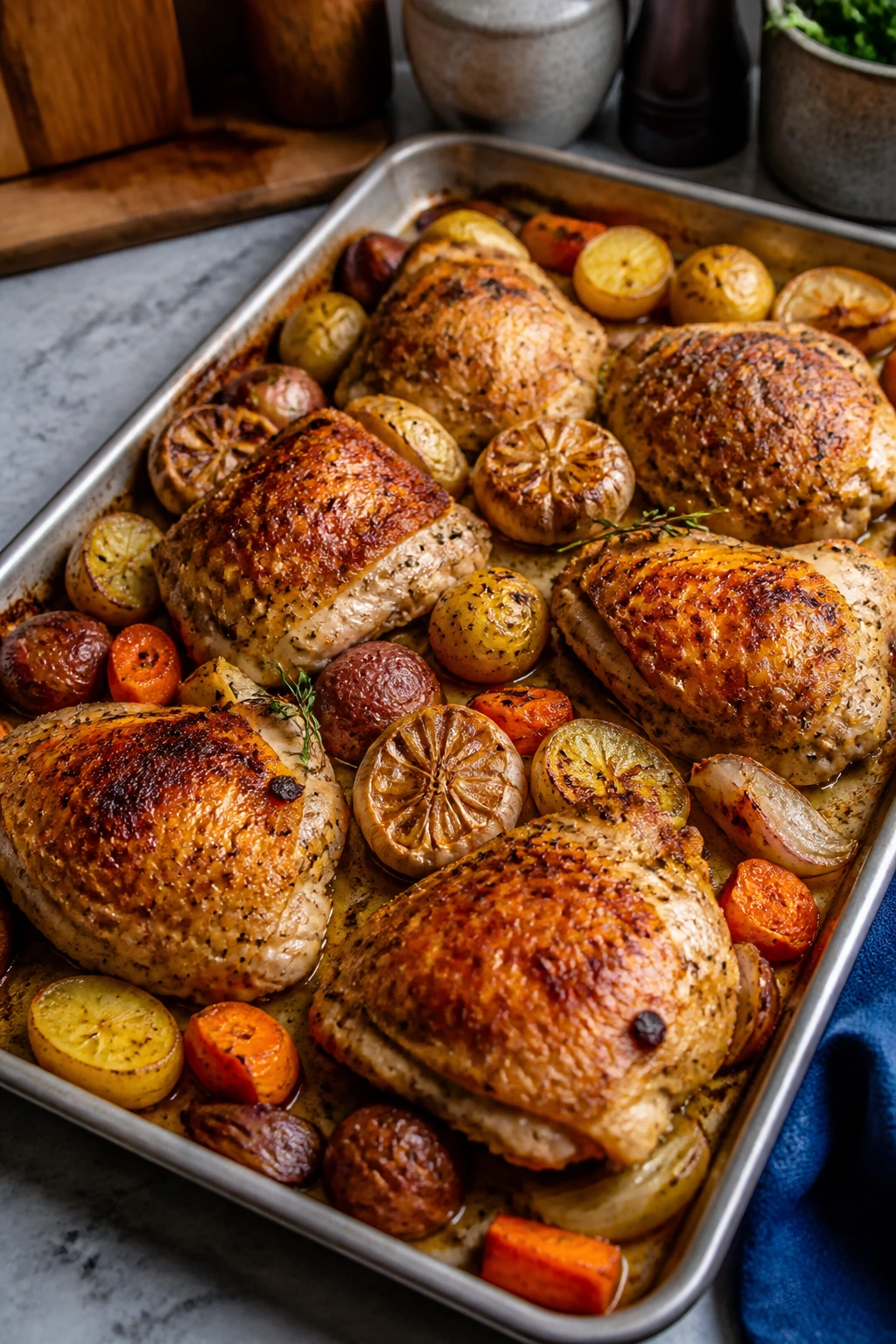
You do not need a fancy roasting setup for this. A decent rimmed sheet pan and an instant-read thermometer do most of the work, and that’s the sort of equipment I trust on a weeknight.
- Large rimmed sheet pan, 18 x 13 inches if you have it — The extra surface area keeps the potatoes in a single layer and gives the chicken room to brown instead of steam.
- Heavy-duty foil or parchment paper, optional — Foil gives you the easiest cleanup; parchment works if you prefer it, though foil is a little friendlier when the drippings start to caramelize.
- Instant-read thermometer — This is the difference between guessing and knowing. Use it in the thickest part of the thigh near the bone.
- Sharp chef’s knife — You need it for clean onion wedges and evenly cut potato halves.
- Cutting board — A sturdy board keeps the prep faster and safer, especially when you’re slicing slippery potatoes.
- Tongs — Handy for moving the chicken without tearing the skin.
- Small fork or spoon — You’ll use it to mash the roasted garlic into the butter and pan juices at the end.
A heavy metal pan browns better than a glass dish. That’s not a theory thing. It’s the difference between a potato that has edges and a potato that looks boiled in place.
How to Roast the Chicken and Garlic on One Pan
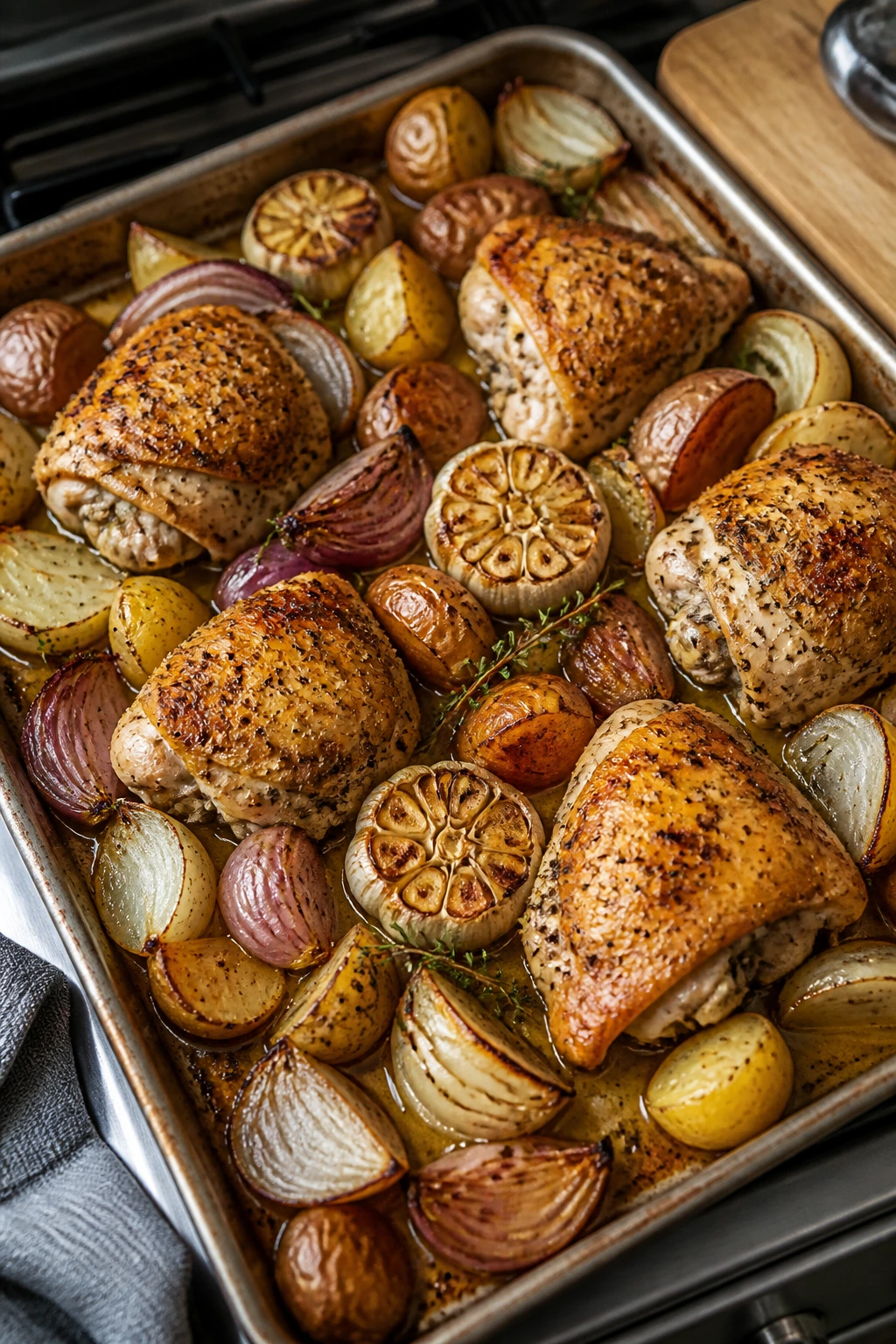
Prep the Oven and the Chicken
-
Preheat the oven to 425°F (220°C) and position a rack in the center. Set out a large rimmed sheet pan. If you want the easiest cleanup, line it with foil; if you want a little more browning, leave the pan bare.
-
Pat the chicken thighs dry with paper towels, then place them in a medium bowl. Drizzle with 1 tablespoon of the olive oil, sprinkle with 1/2 teaspoon of the kosher salt, 1/2 teaspoon of the black pepper, the smoked paprika, and the thyme, and rub the seasoning over both sides. Let the chicken sit while you cut the vegetables. Do not skip the drying step — wet skin steals the crispness.
Build the Vegetable Base
-
Toss the potatoes and onion with the remaining 2 tablespoons olive oil, the remaining 1 teaspoon kosher salt, and the remaining 1/2 teaspoon black pepper. Spread them on the sheet pan in a single layer, with the potato cut sides facing down where possible.
-
Prepare the garlic heads by slicing off the top quarter-inch of each head, drizzling the exposed cloves with the remaining 1 tablespoon olive oil, and wrapping each head loosely in foil. Set the packets on the pan between the potatoes. Roast for 15 minutes. The potatoes should start to take on color at the edges, and the onion should look glossy rather than raw. If your potato halves are larger than a golf ball, give them 5 extra minutes before adding the chicken.
Roast, Finish, and Rest
-
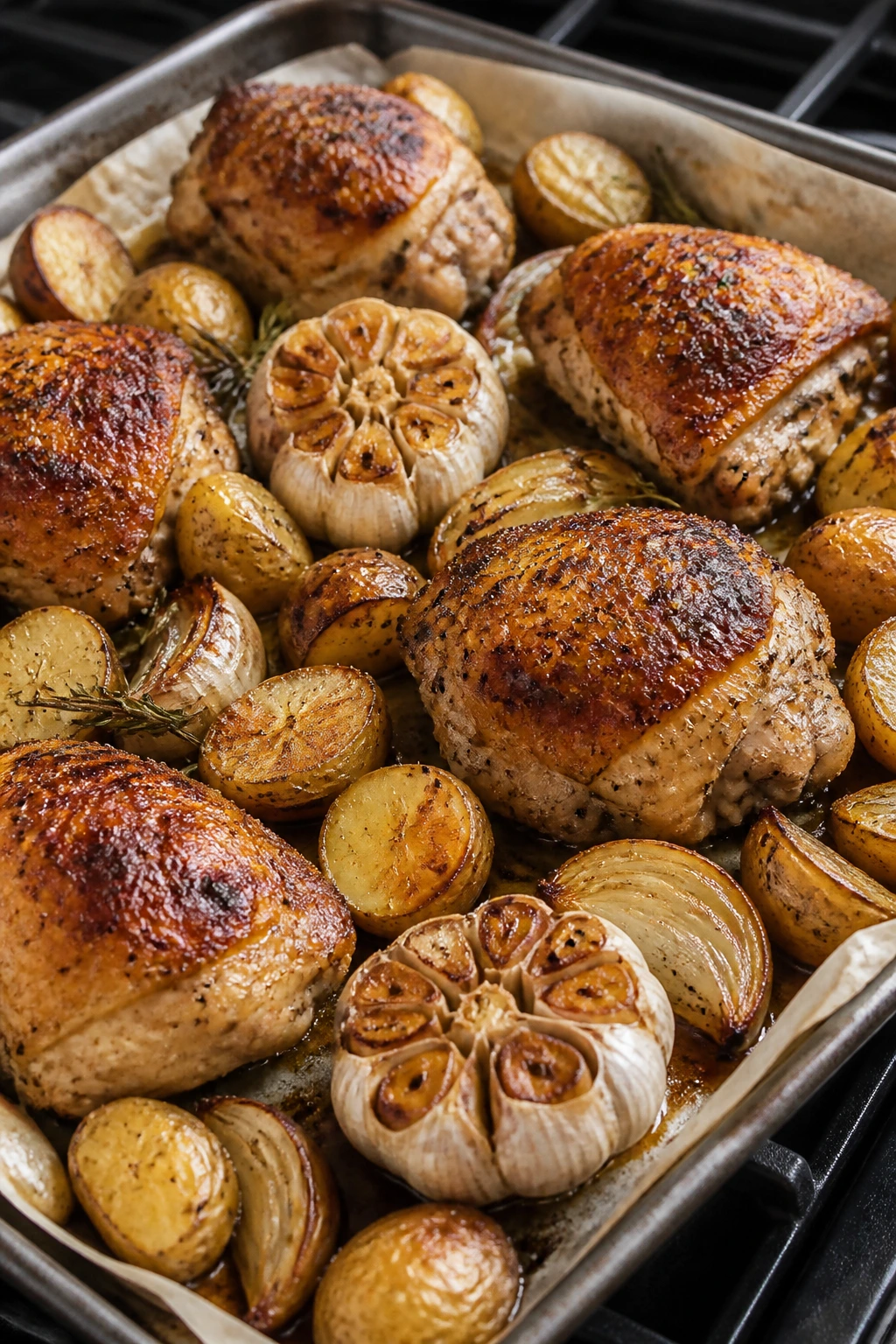
Nestle the chicken thighs onto the pan skin-side up, leaving a little room between each piece. Push them down gently so the skin makes contact with the hot pan, but do not bury them in the potatoes. Roast for 25 to 30 minutes more, until the thickest thigh reads 165°F (74°C) on an instant-read thermometer and the skin is deep golden with a few darker brown spots.
-
Check the garlic packets at the same time. When the cloves feel soft if you press the foil with a spoon, they’re ready. If they still feel firm, leave them in for the last 5 minutes of roasting.
-
Rest the chicken for 5 minutes on the pan or a platter. Unwrap the garlic, squeeze the soft cloves into a small bowl, and mash them with the butter and the juice from half the lemon. Spoon that roasted garlic butter over the chicken and potatoes, then finish with parsley and the remaining lemon half for squeezing at the table. If the skin needs a little more color, slide the pan under the broiler for 1 minute at the end, but watch it the entire time.
How I Like to Serve It at the Table
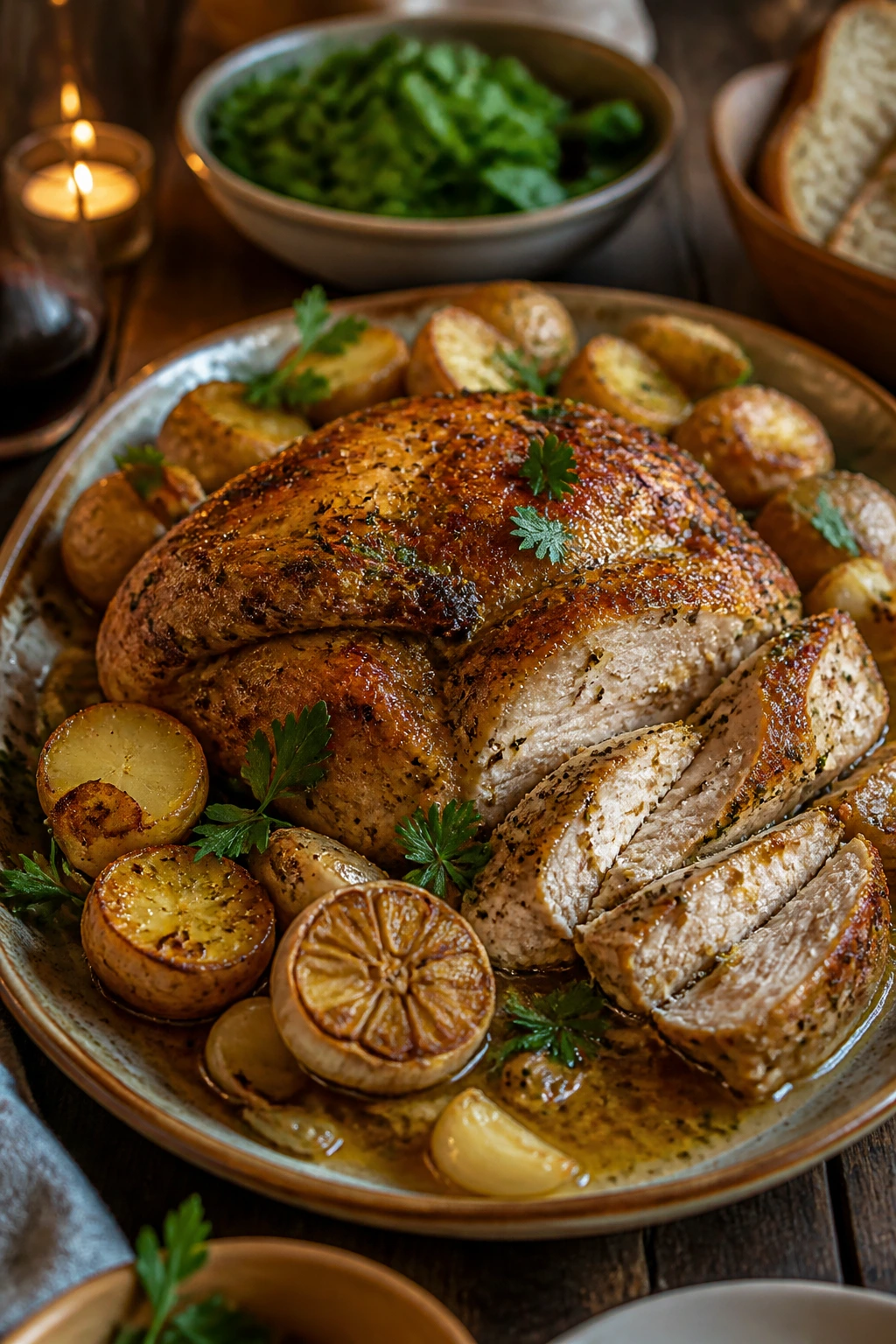
Presentation: I like to move the chicken to a warm platter first, then spoon the potatoes and onion around it so the roasted garlic butter can run into all the gaps. The soft garlic should look glossy, not neat. A few parsley leaves on top are enough; you do not need to bury the pan in greenery.
Accompaniments: A sharp green salad works well because it cuts through the richness. So do buttered green beans, sautéed spinach, or crusty bread for anyone who wants to mop up the pan juices. If you skip the potatoes, a bowl of rice or couscous catches the garlic butter nicely.
Portions: Plan on 1 thigh per person for a smaller meal and 2 thighs for a hungry adult. With the potatoes and onion in the pan, 4 to 6 servings is realistic. If you’re feeding bigger appetites, add a second sheet pan of vegetables rather than piling everything onto one crowded pan.
Beverage Pairing: A crisp Sauvignon Blanc fits the lemon and garlic without fighting the skin’s richness. If you want something nonalcoholic, cold sparkling water with lemon or iced black tea keeps the meal clean and bright. A light lager also works if that’s your lane.
The Little Moves That Make It Taste Slower-Cooked
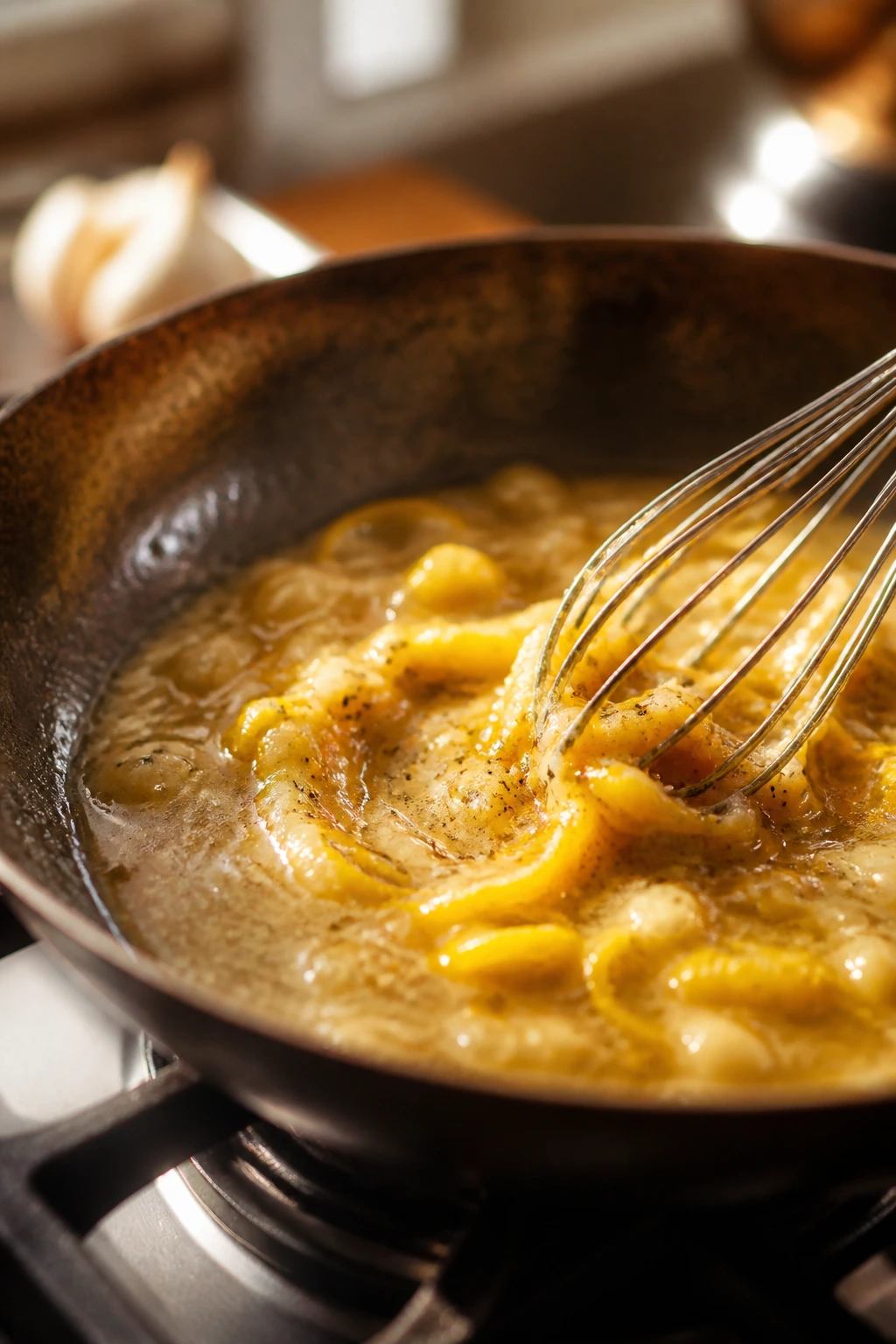
Flavor Enhancement: A teaspoon of lemon zest stirred into the roasted garlic butter makes the whole pan taste brighter. The heat wakes up the oils in the zest, so you get a clean citrus edge instead of plain acidity. I like to add it right after mashing the garlic, while the butter is still warm enough to melt into the paste.
Time-Saver: Buy baby potatoes that are genuinely small and skip any peeling. If they’re close in size to the thighs, the pan cooks more evenly and you don’t spend your evening trimming away tiny spots. Pre-cut onion wedges save another few minutes, but whole onions sliced once through the root are still fine if that’s what you’ve got.
Pro Move: Leave the seasoned chicken uncovered on a plate for 10 minutes while the oven heats. That short pause dries the surface a little more and helps the skin brown faster. It sounds small, and it is small, but small changes matter when the goal is a crisp top and a juicy middle.
Make-It-Yours: If you want a sharper pan, whisk 1 teaspoon of Dijon into the roasted garlic mash. If you want more heat, add a pinch of red pepper flakes to the potatoes before roasting. If you want a more herb-forward dinner, use chopped rosemary instead of thyme, but keep the amount modest; rosemary can get woody if you treat it like parsley.
Cost-Saver: Thighs are usually kinder to the grocery bill than breasts, and they don’t punish you for buying the cheaper family pack. This is one of those places where the less expensive cut is also the better cut. Not always. Here, yes.
Mistakes That Turn a Good Pan Dull or Dry
-
Crowding the pan — If the potatoes are stacked on top of each other or the chicken pieces are jammed elbow-to-elbow, the pan traps steam and the skin stays pale. Use a larger pan or split the recipe between two pans if needed.
-
Skipping the dry skin step — Chicken that goes into the oven wet often finishes with soft, rubbery skin instead of crisp edges. Pat it dry, season it, and give it a few minutes to sit while you prep the vegetables.
-
Putting the garlic out in the open — Whole heads of garlic left bare on a hot pan can scorch on top before the cloves go soft. Wrapping them loosely in foil gives them a gentler roast and keeps the flavor sweet.
-
Guessing on doneness — Cutting into the chicken to check leaks out the juices you just waited for. Use an instant-read thermometer and stop at 165°F in the thickest part of the thigh.
-
Under-seasoning the vegetables — Potatoes can taste flat if you only season the chicken and hope the drippings will handle the rest. Toss the potatoes and onion with salt before they ever hit the pan.
-
Adding lemon too early — Lemon goes bright and flat if it roasts the whole time. Save it for the finish, when the garlic is soft and the chicken skin is already browned.
Flavor Swaps Worth Trying
Lemon-Rosemary Pan
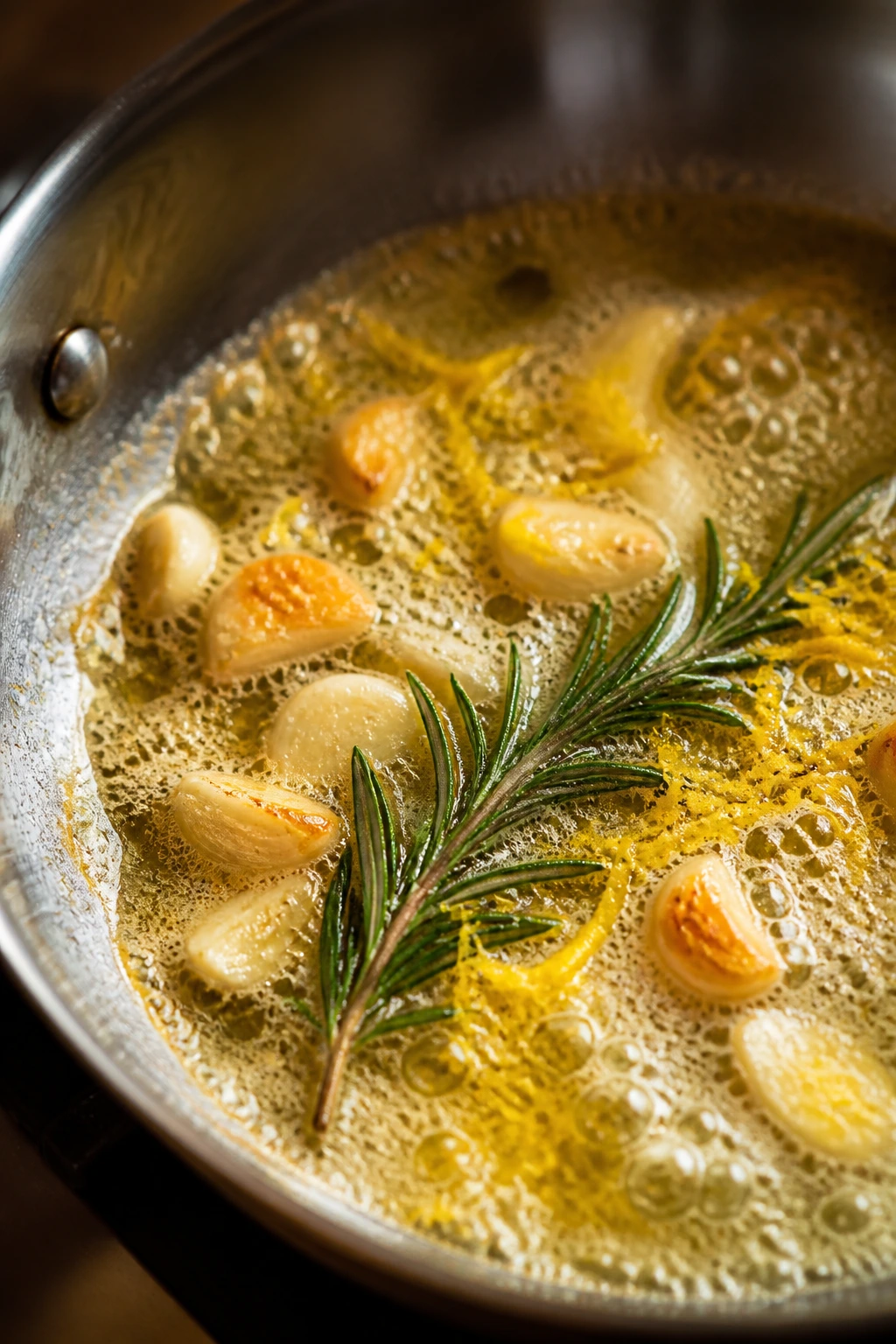
Swap the thyme for 1 teaspoon chopped rosemary and add a little lemon zest to the garlic butter. The flavor leans sharper and more piney, which works nicely if you’re serving the chicken with a simple salad instead of extra starch.
Smoky Paprika Heat
Double the smoked paprika and add a small pinch of cayenne to the chicken seasoning. The skin takes on a deeper brick-red color, and the finish has a low, slow heat that lingers without overpowering the garlic.
Dijon Garlic Finish
Stir 1 teaspoon Dijon into the mashed roasted garlic, butter, and lemon juice. The mustard doesn’t make the dish taste like mustard; it just adds a little backbone and helps the pan juices cling to the chicken and potatoes.
Dairy-Free Garlic Spoon-Over
Skip the butter and mash the roasted garlic with 2 teaspoons extra olive oil and a spoonful of hot pan juices. The finish stays silky, and you still get the mellow garlic paste that makes the recipe work.
Lower-Carb Cauliflower Roast
Replace half or all of the potatoes with cauliflower florets and add them during the last 20 minutes of roasting so they don’t collapse. The cauliflower catches the garlic butter well, and the chicken still gets the same crisp skin on top.
Storing, Reheating, and Prepping Ahead
Room Temperature: Don’t leave the chicken out longer than 2 hours, and keep that closer to 1 hour if the kitchen is warm. Garlic and potatoes are not the problem here; the chicken is.
Fridge: Store leftovers in a covered container for 3 to 4 days. If you can, keep the chicken pieces separate from the potatoes so the skin doesn’t sit against the vegetables and soften quite as fast.
Freezer: Cooked chicken and potatoes freeze for up to 2 months, though the potatoes will soften a little after thawing. The roasted garlic mash freezes well in small spoonfuls, which is handy if you want the flavor without roasting another whole pan.
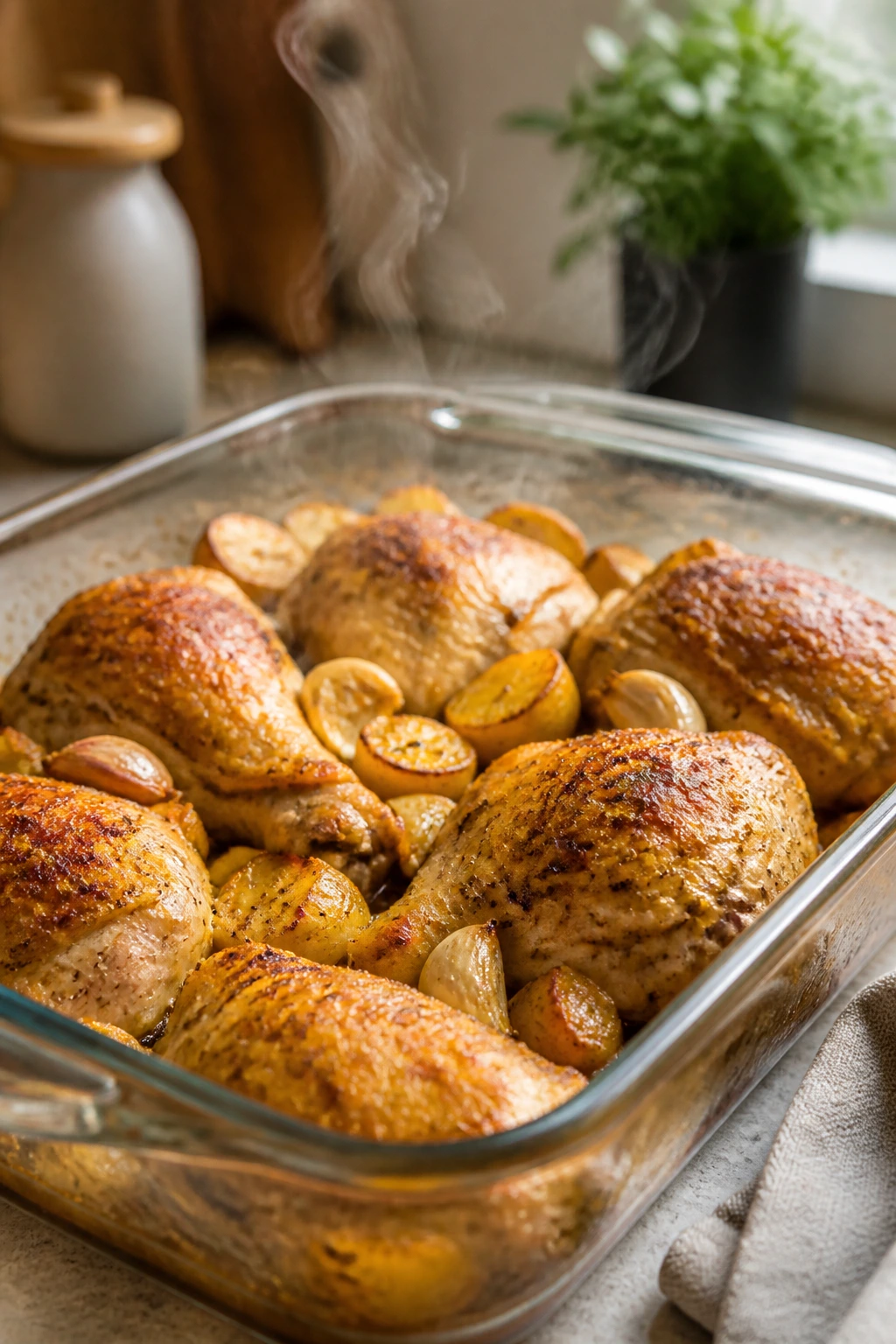
Reheating: The best texture comes from a 375°F (190°C) oven. Put the chicken and potatoes in a baking dish or on a small sheet pan, cover loosely with foil, and heat for 12 to 18 minutes, until the chicken reaches 165°F again. Uncover for the last 2 minutes if you want to wake the skin back up. A skillet over medium heat works too, especially for the potatoes, but the microwave will soften the skin no matter how politely you use it.
Make-Ahead: You can season the chicken and refrigerate it for up to 24 hours, uncovered or loosely covered, which dries the skin a bit and helps with browning. The potatoes and onion can be cut several hours ahead and stored in the fridge; if the potatoes sit cut for long enough to darken, keep them in cold water, then dry them very well before roasting. The garlic heads can be trimmed earlier in the day, wrapped, and parked in the fridge until you’re ready to roast.
Questions People Ask Before the Pan Goes In
Can I use chicken breasts instead of thighs?
You can, but breasts need a tighter watch because they dry out faster in a hot oven. If you use them, add them after the potatoes have already roasted for 10 minutes and start checking the thickest part at 160°F so you can rest them to 165°F without overcooking.
Do I have to wrap the garlic in foil?
I strongly prefer it. The foil keeps the tops from scorching before the cloves turn soft, and it makes the roasted garlic sweeter and easier to mash at the end. If you leave the heads exposed, watch them closely and cover them once the tops start to color too fast.
What if my potatoes are still firm when the chicken is done?
Pull the chicken to rest and let the potatoes keep roasting for another 5 to 10 minutes. Next time, cut the potatoes smaller or give them a longer head start before the chicken joins the pan.
Can I make this ahead of time?
You can prep most of it ahead, but the finished dish is best fresh from the oven. Season the chicken, cut the vegetables, and trim the garlic earlier in the day, then roast right before dinner so the skin stays crisp.
Is the butter necessary?
No, but it does make the roasted garlic taste rounder and gives the pan juices a softer finish. If you want to skip it, use a little more olive oil and a splash of lemon juice or chicken juices at the end.
Can I use a convection oven or air fryer?
A convection oven works fine and may shave a few minutes off the cook time; start checking the chicken early. An air fryer is less friendly for the full sheet-pan setup, though you can cook the chicken in batches and roast the garlic separately if you’re determined.
Why does my roasted garlic still taste sharp sometimes?
Usually the cloves didn’t roast long enough, or the heads were left too exposed to direct heat. You want the cloves soft all the way through, not just browned on top. If they still feel firm when you squeeze the foil packet, give them a few more minutes and let them collapse fully.
A Dinner You’ll Make Again
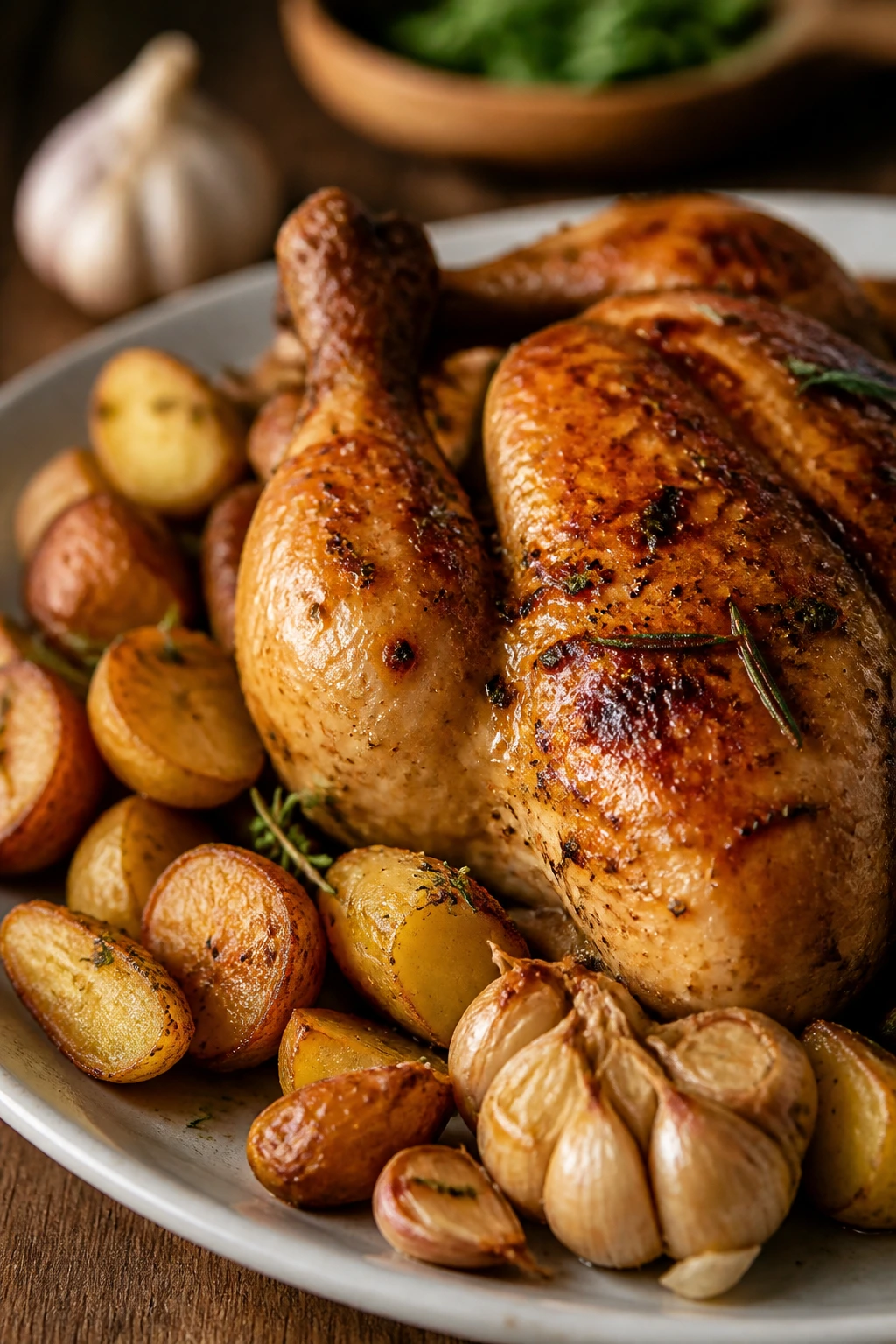
A pan of roasted garlic chicken has a way of making dinner feel more settled than it looked 20 minutes earlier. The chicken comes out bronzed, the potatoes go soft in the middle and crisp at the edges, and the garlic stops being a background note and becomes the part you talk about while you’re eating. That’s a useful thing to have in your back pocket.
Keep the ingredients simple and the heat honest, and this dinner will keep giving back. The oven does the slow work, the garlic turns gentle, and you get a meal that feels calm without asking for much from you. That’s a trade I’ll take any night.
Roasted Garlic Chicken for Weeknight Dinners — Recipe Card
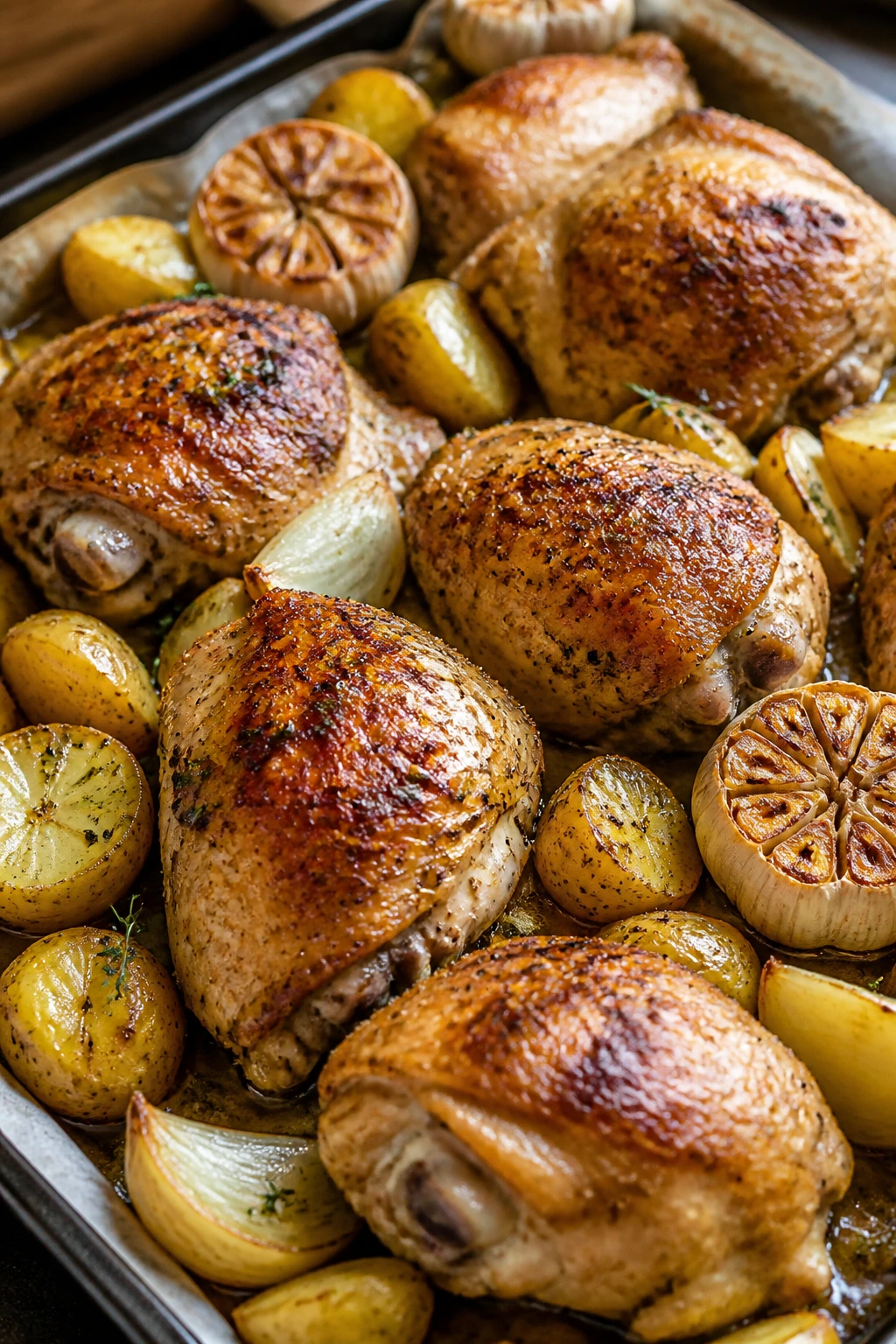
Recipe Name: Roasted Garlic Chicken for Weeknight Dinners
Description: Bone-in chicken thighs roast with baby Yukon Gold potatoes, onion wedges, and whole heads of garlic until the skin is crisp and the garlic turns sweet and spreadable. A lemon-butter finish pulls the whole pan together.
Prep Time: 15 minutes
Cook Time: 45 minutes
Total Time: 1 hour
Course: Dinner, Main Course
Cuisine: American
Servings: 4 to 6 servings
Calories: about 560 kcal per serving
Ingredients
For the Sheet Pan Chicken and Vegetables:
- 2 1/2 to 3 pounds bone-in, skin-on chicken thighs, about 6 thighs
- 1 1/2 pounds baby Yukon Gold potatoes, halved
- 1 large yellow onion, cut into 8 wedges
- 2 heads garlic
- 1/4 cup olive oil, divided
- 1 1/2 teaspoons kosher salt, divided
- 1 teaspoon black pepper, divided
- 1 teaspoon smoked paprika
- 1 teaspoon dried thyme
- 1 lemon, halved
- 1 tablespoon unsalted butter
- 2 tablespoons chopped fresh parsley
Instructions
-
Preheat the oven to 425°F (220°C) and position a rack in the center. Set out a large rimmed sheet pan.
-
Pat the chicken thighs dry, then season them with 1 tablespoon olive oil, 1/2 teaspoon kosher salt, 1/2 teaspoon black pepper, the smoked paprika, and the thyme.
-
Toss the potatoes and onion with the remaining 2 tablespoons olive oil, the remaining 1 teaspoon kosher salt, and the remaining 1/2 teaspoon black pepper. Spread them on the sheet pan in a single layer.
-
Slice the top quarter-inch off each garlic head, drizzle with the remaining 1 tablespoon olive oil, wrap each head loosely in foil, and place them on the pan. Roast for 15 minutes.
-
Nestle the chicken thighs onto the pan skin-side up. Roast for 25 to 30 minutes more, until the thickest part of the chicken reaches 165°F (74°C) and the skin is deep golden.
-
Unwrap the garlic. Squeeze the soft cloves into a bowl, mash with the butter and juice from half the lemon, and spoon over the chicken and vegetables.
-
Rest for 5 minutes, then finish with parsley and the remaining lemon half for squeezing at the table.
Notes: For crispier skin, broil for 1 minute at the end, watching closely. If the potatoes are large, give them a few extra minutes before adding the chicken. Leftovers keep 3 to 4 days refrigerated.