



Creamy easy grilled chicken for weeknight dinners has one job: make the house smell like dinner happened on purpose.
The chicken picks up a little smoke and those dark grill stripes, then gets sliced and spooned with a garlic-Dijon cream sauce that clings to each piece instead of running off the plate. It tastes richer than the ingredient list suggests, which is part of the charm. A small handful of pantry things, a hot grill, one skillet, done.
I like this kind of dinner because it solves the two problems that usually show up at 6:15 p.m.: everyone wants something substantial, and nobody wants a sink full of pans. The chicken can be seasoned ahead, the sauce comes together while the meat rests, and if you keep the heat under control the whole thing lands on the table in about half an hour. Even better, the leftovers stay useful — sliced cold into a salad, tucked into a wrap, or warmed over rice the next day.
The trick is not fancy. Pound the chicken to an even thickness, grill it to the right temperature, and keep the cream sauce at a lazy simmer so it turns silky instead of split. That’s the whole game. And once you’ve done it once, the recipe stops feeling like a project and starts feeling like a reliable habit.
-
Fast without feeling rushed: The chicken grills in about 10 to 12 minutes, and the sauce makes itself while the meat rests, so the timing feels tidy instead of chaotic.
-
A better texture than baked chicken: Direct heat gives you browned edges and those little charred spots that keep the meat from tasting flat or steamed.
-
A sauce that actually stays on the chicken: Dijon, broth, cream, and finely grated Parmesan make a sauce that coats each slice instead of pooling sadly at the bottom of the plate.
-
One skillet, one grill, one less mess: You only need a grill or grill pan plus a saucepan or skillet for the sauce, which keeps cleanup refreshingly boring.
-
Easy to stretch for a crowd: Add a few more chicken breasts and double the sauce if you’re serving rice, pasta, or mashed potatoes. The method scales cleanly.
-
Flexible enough for real life: Boneless thighs, an indoor grill pan, or a quick swap in the herb finish all work without turning dinner into a different recipe.
Why This Grilled Chicken Feels Right After a Long Day
Dry grilled chicken is the enemy here. You know the kind: marked on the outside, gray and stringy in the middle, politely covered by whatever sauce was meant to rescue it. This version avoids that trap by treating the grill as a finishing tool, not a punishment device. The chicken gets pounded to an even thickness, seasoned with a simple rub, and pulled at the right internal temperature so it stays juicy enough to stand up to the sauce.
The sauce matters just as much as the chicken. Heavy cream alone tastes heavy. Broth alone tastes thin. Put them together with garlic, Dijon mustard, butter, and Parmesan, and the whole thing starts acting like a proper pan sauce — glossy, savory, and sharp enough to cut through the richness. That Dijon is not there for style points. It quietly keeps the sauce from tasting one-note.
Why the Grill Changes the Whole Dish
The grill gives you a little bitterness at the edges, and that bit of char is what makes the creamy sauce sing. Without it, the sauce can feel like it belongs on any chicken breast in any skillet. With the grill marks, the dish has a spine.
There’s also a practical reason I prefer grilling for this recipe. Chicken breasts can dry out fast in a skillet if they’re thick on one side and thin on the other. On the grill, even heat and a little spacing around each piece help the meat cook faster and more evenly. The surface browns before the center overcooks. That’s the sweet spot.
Why the Sauce Formula Works
The sauce starts with butter and shallot, which gives it a soft, sweet base. Garlic comes next, but only for a few seconds, because burned garlic turns a whole pan bitter in a flash. After that, the broth loosens the browned bits from the skillet, the cream makes it lush, and the Parmesan gives it body. Lemon juice at the end keeps the sauce from tasting sleepy.
If you’ve made cream sauces before and had them split, the usual culprit is heat. Keep it at a gentle simmer, not a rolling boil. Once the Parmesan melts and the sauce lightly coats a spoon, you’re there. No need to chase a thicker result by boiling the thing into trouble.
The Short Ingredient List That Makes This Dish Work
Yield: Serves 4
Prep Time: 15 minutes
Cook Time: 20 minutes
Total Time: 35 minutes
Difficulty: Beginner — the steps are plain, but the chicken thermometer and the sauce heat need a little attention.
Best Served: Warm, within 10 minutes of saucing
For the Chicken
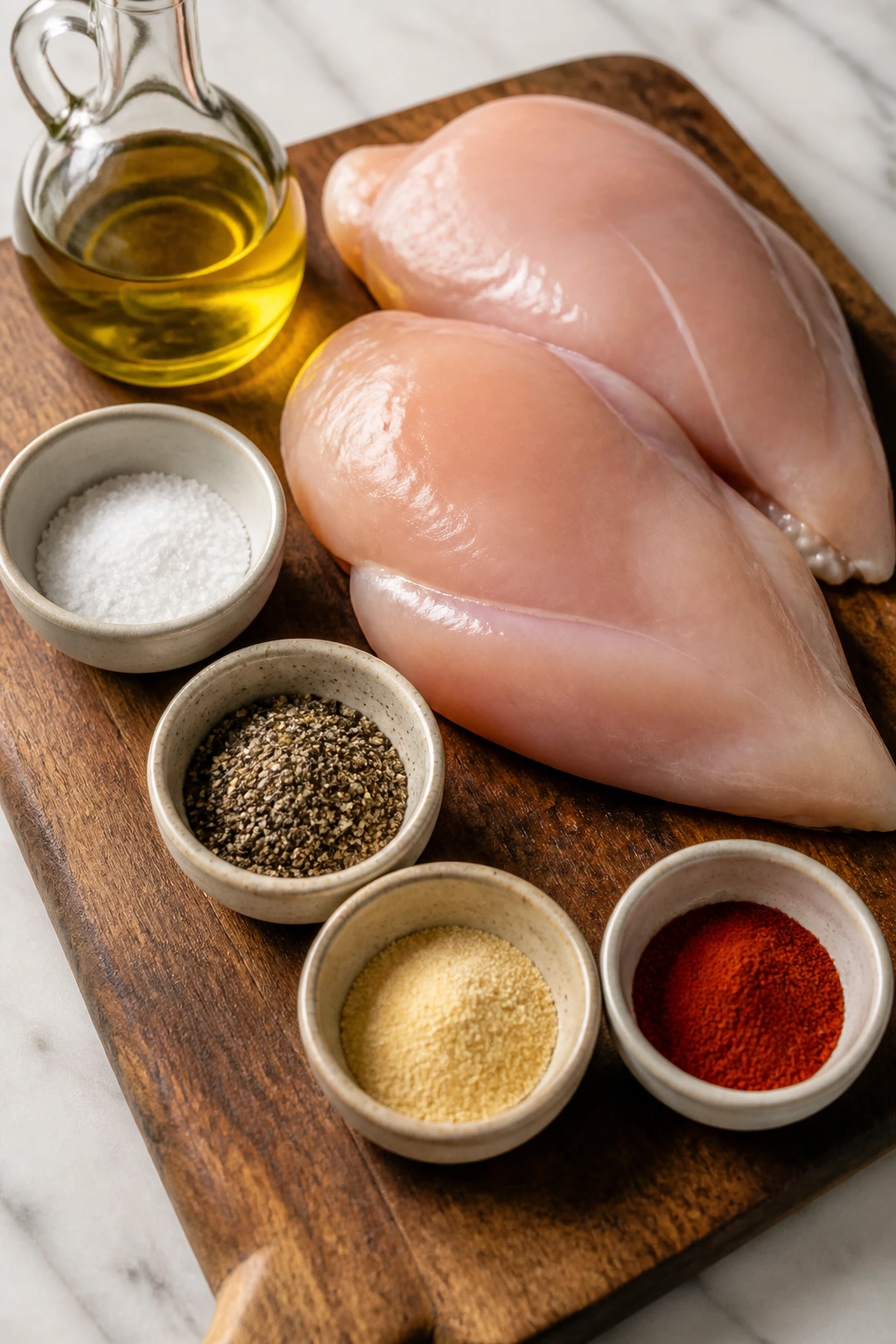
- 1 1/2 pounds boneless, skinless chicken breasts, ideally 2 large pieces or 4 smaller pieces
- 2 tablespoons olive oil
- 1 1/2 teaspoons kosher salt
- 1 teaspoon black pepper
- 1 teaspoon garlic powder
- 1 teaspoon smoked paprika
For the Creamy Dijon-Parmesan Sauce
- 1 tablespoon unsalted butter
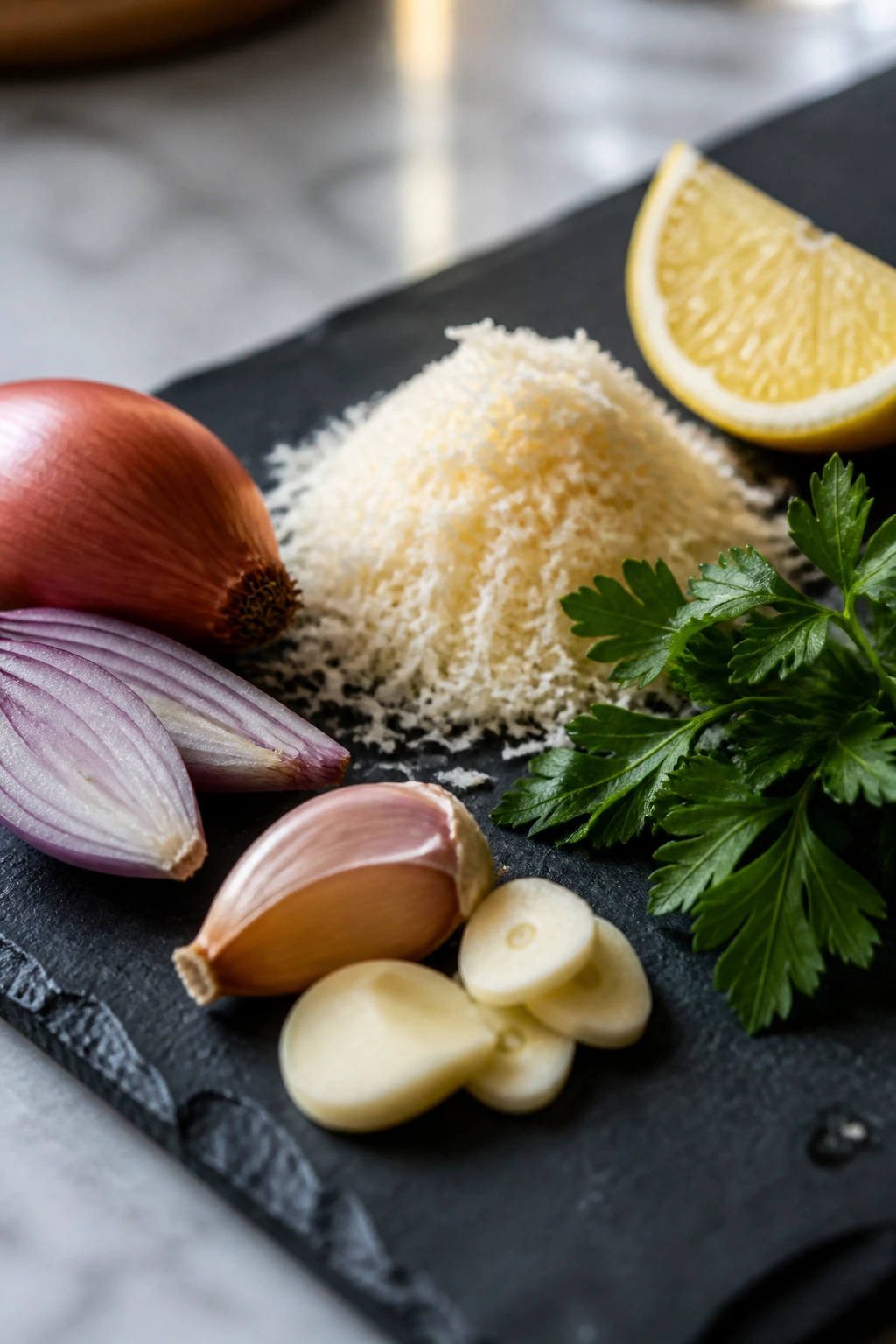
- 1 small shallot, finely minced, about 1/4 cup
- 2 cloves garlic, minced
- 3/4 cup low-sodium chicken broth
- 3/4 cup heavy cream
- 1 tablespoon Dijon mustard
- 1/3 cup finely grated Parmesan cheese
- 1 tablespoon fresh lemon juice
- 1/4 teaspoon kosher salt
- 1/4 teaspoon black pepper
- 2 tablespoons chopped fresh parsley
- Pinch red pepper flakes, optional
Why Each Ingredient Earns Its Spot
Chicken Breasts
What to use: 1 1/2 pounds boneless, skinless chicken breasts, with pieces that are similar in size so they finish together.
Preparation: Pat them dry and pound the thick end so each piece is about 3/4 inch thick from edge to edge. That one move does more for tenderness than almost anything else in the recipe.
Substitutions: Boneless, skinless chicken thighs work well if you want a juicier, slightly richer version. Chicken cutlets also work, though they cook faster and need closer watching.
Tips: Dry chicken sears better on the grill. If the surface is wet, you’ll get more steaming than browning, and the seasoning will slide around instead of sticking.
Olive Oil and the Seasoning Rub
What to use: 2 tablespoons olive oil, 1 1/2 teaspoons kosher salt, 1 teaspoon black pepper, 1 teaspoon garlic powder, and 1 teaspoon smoked paprika.
Preparation: Mix the oil and spices into a loose paste and rub it over every side of the chicken. Let it sit while the grill heats so the salt has a few minutes to start seasoning the meat.
Substitutions: Avocado oil can stand in for olive oil. Sweet paprika works if you want less smoke, and a pinch of cayenne can replace the red pepper flakes in the sauce if you like more heat.
Tips: Smoked paprika gives the chicken a deeper grillhouse look without making the flavor heavy. Use enough to tint the meat a brick-red color, not enough to make it taste like a spice cabinet.
Butter, Shallot, Garlic, and Broth
What to use: 1 tablespoon unsalted butter, 1 small shallot, 2 cloves garlic, and 3/4 cup low-sodium chicken broth.
Preparation: Mince the shallot finely so it melts into the sauce instead of showing up as chunks. Keep the broth measured and ready before you start cooking, because garlic only needs a short sauté.
Substitutions: A quarter cup of finely chopped onion can replace the shallot. Vegetable broth works if that’s what you have, though the sauce will taste a touch softer.
Tips: Low-sodium broth gives you room to season the sauce properly after the Parmesan goes in. Salted broth can push the finished sauce into “too much” territory fast.
Heavy Cream, Dijon, Parmesan, and Lemon
What to use: 3/4 cup heavy cream, 1 tablespoon Dijon mustard, 1/3 cup finely grated Parmesan, and 1 tablespoon fresh lemon juice.
Preparation: Grate the Parmesan from a block with a microplane or the fine side of a box grater. Measure the lemon juice separately and add it at the end, once the sauce has thickened.
Substitutions: Half-and-half can replace the cream if you’re careful with the heat, but the sauce will be thinner. Pecorino Romano can replace Parmesan for a sharper finish, though it’s saltier and needs a lighter hand.
Tips: Parmesan from a shaker or a bag of pre-shredded cheese often melts into a gritty sauce. A fine grate turns smooth. That detail matters here.
Fresh Parsley and Red Pepper Flakes
What to use: 2 tablespoons chopped fresh parsley and a pinch of red pepper flakes if you want a little edge.
Preparation: Chop the parsley right before you finish the sauce so it stays bright. Stir it in off the heat or at the very end so it keeps its color.
Substitutions: Chives, dill, or tarragon can stand in for parsley if you want a different herb note. Skip the red pepper flakes if the people at the table prefer a softer sauce.
Tips: Fresh herbs at the end keep the whole dish from tasting heavy. The sauce already has cream and cheese working on it; a green herb keeps it honest.
Special Equipment You’ll Want Nearby
-
Outdoor grill or cast-iron grill pan: Either one works. A grill pan gives you the same char lines indoors, though it won’t add the smoke you get from a real grill.
-
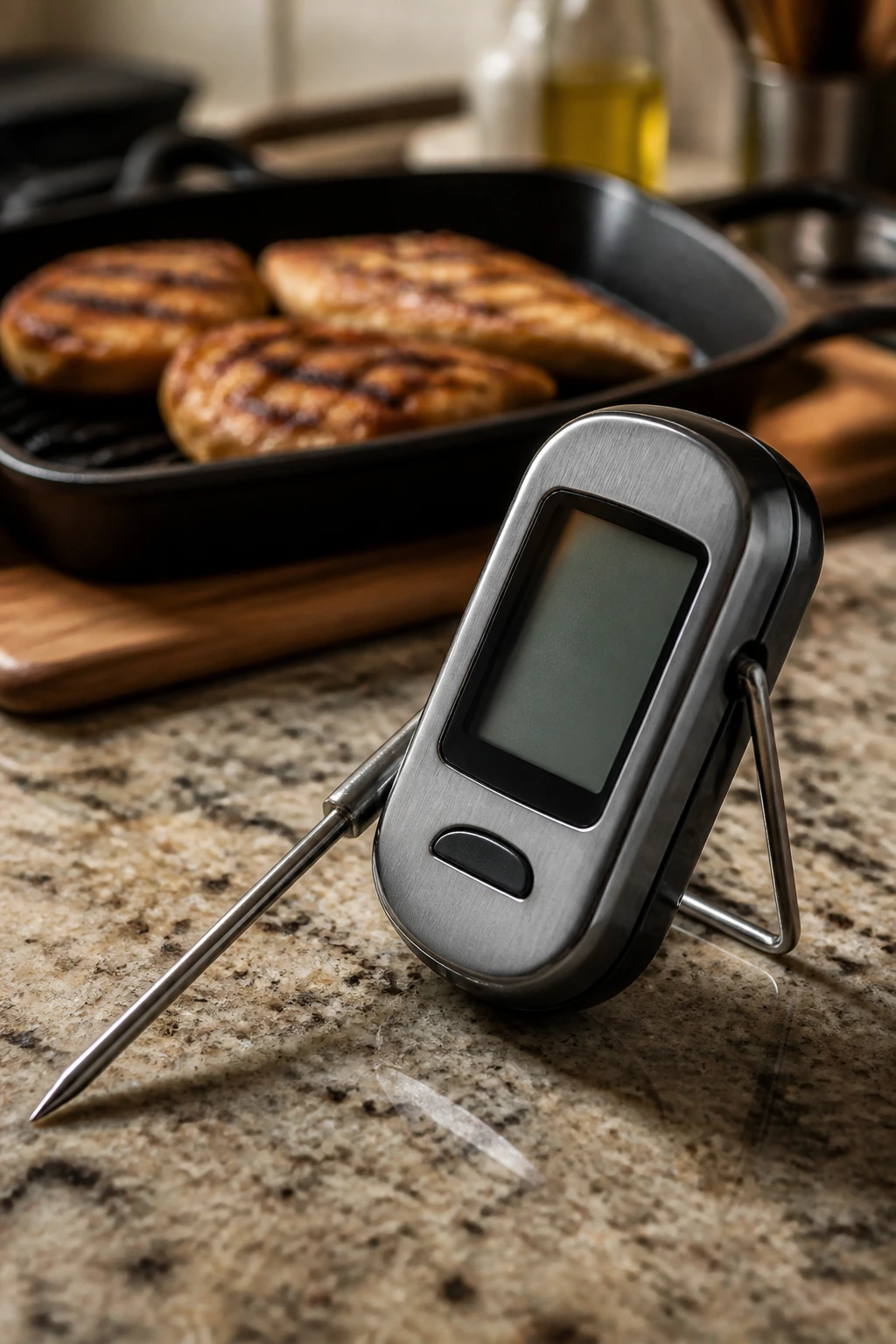
Instant-read thermometer: This is the thing that keeps chicken breasts from becoming dry. Aim for 165°F in the thickest part.
-
12-inch skillet or sauté pan: Use this for the sauce. A wide pan gives the liquid room to reduce without crowding.
-
Tongs: Better than a fork. A fork pokes holes and lets juice escape.
-
Meat mallet or rolling pin: Handy for evening out the chicken so it cooks at the same rate from end to end.
-
Microplane or fine box grater: Use this for the Parmesan. The finer the grate, the smoother the sauce.
-
Small whisk: Helps the sauce stay glossy when the cream, mustard, and cheese come together.
-
Cutting board with a shallow groove: Useful when you slice the chicken after it rests. Those juices belong in the dish, not on the counter.
How to Grill and Finish the Chicken Without Drying It Out
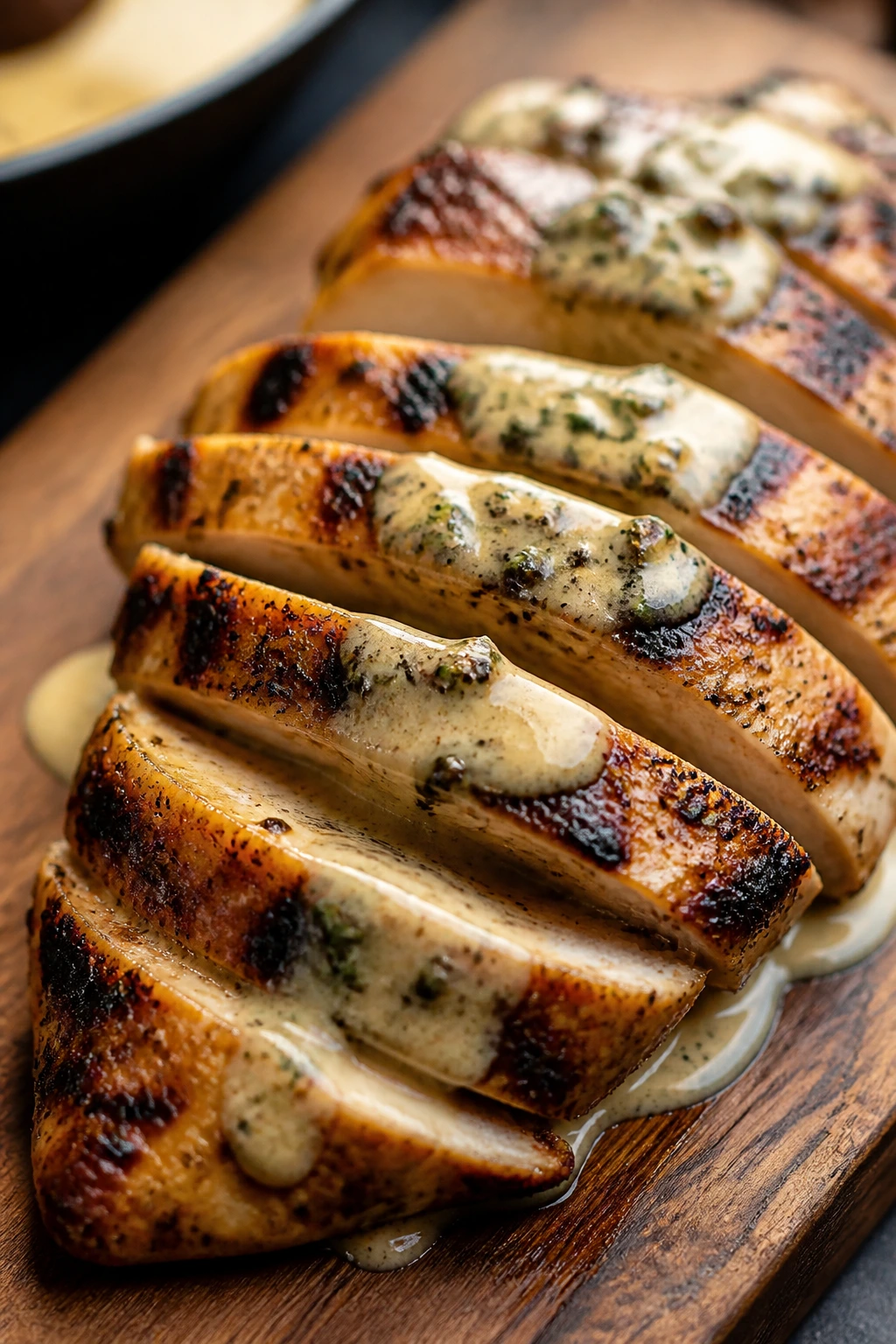
Prep the Chicken
-
Pat the chicken breasts dry with paper towels. If one end is much thicker than the other, place the chicken between two sheets of plastic wrap and pound the thicker side until each piece is an even 3/4 inch thick.
-
Stir the olive oil, kosher salt, black pepper, garlic powder, and smoked paprika together in a small bowl. Rub the mixture all over the chicken, making sure the sides and edges are coated too. Let the chicken sit while the grill heats, about 10 to 15 minutes.
Heat the Grill and Cook the Chicken
-
Preheat an outdoor grill or a cast-iron grill pan over medium-high heat, about 450°F to 475°F. Brush or oil the grates well. If the grill is not clean and lightly oiled, the chicken will stick and tear before it gets those clean grill marks.
-
Lay the chicken on the hot grill and cook for 5 to 6 minutes on the first side without moving it. Flip once the underside has deep brown marks and the meat releases easily. Cook the second side for another 4 to 6 minutes, or until the thickest part reaches 165°F on an instant-read thermometer. Do not guess by color alone; chicken can look done before the center is safe or juicy.
-
Transfer the chicken to a plate and let it rest for 5 minutes. The juices settle back into the meat during this pause, and the slices stay cleaner when you cut them. Cover loosely with foil if you want, but don’t wrap it tight.
Build the Creamy Sauce
-
While the chicken rests, place the butter in a 12-inch skillet over medium heat. Once it melts, add the minced shallot and cook for 1 to 2 minutes, stirring often, until it softens and turns translucent at the edges. Add the garlic and cook for 30 seconds, just until fragrant. If the garlic starts to brown, pull the pan off the heat for a few seconds.
-
Pour in the chicken broth and use a wooden spoon to scrape up any browned bits from the skillet. Let the broth simmer for 1 minute, then stir in the heavy cream, Dijon mustard, 1/4 teaspoon kosher salt, and 1/4 teaspoon black pepper. Reduce the heat to medium-low and simmer for 3 to 4 minutes, stirring often, until the sauce lightly coats the back of a spoon.
-
Sprinkle in the Parmesan a little at a time, whisking until it melts smoothly. If the sauce looks a touch too thick, add 1 to 2 tablespoons more broth. If it seems thin, let it bubble gently for another minute. Stir in the lemon juice, parsley, and red pepper flakes, if using, then taste and adjust salt only if needed. Keep the sauce at a gentle simmer; a hard boil can make it look greasy or broken.
Serve
- Slice the chicken across the grain into thick strips or keep the breasts whole. Spoon the creamy sauce over the top, letting some run down the sides, and serve immediately while the chicken is still hot.
How to Serve It So the Plate Feels Finished
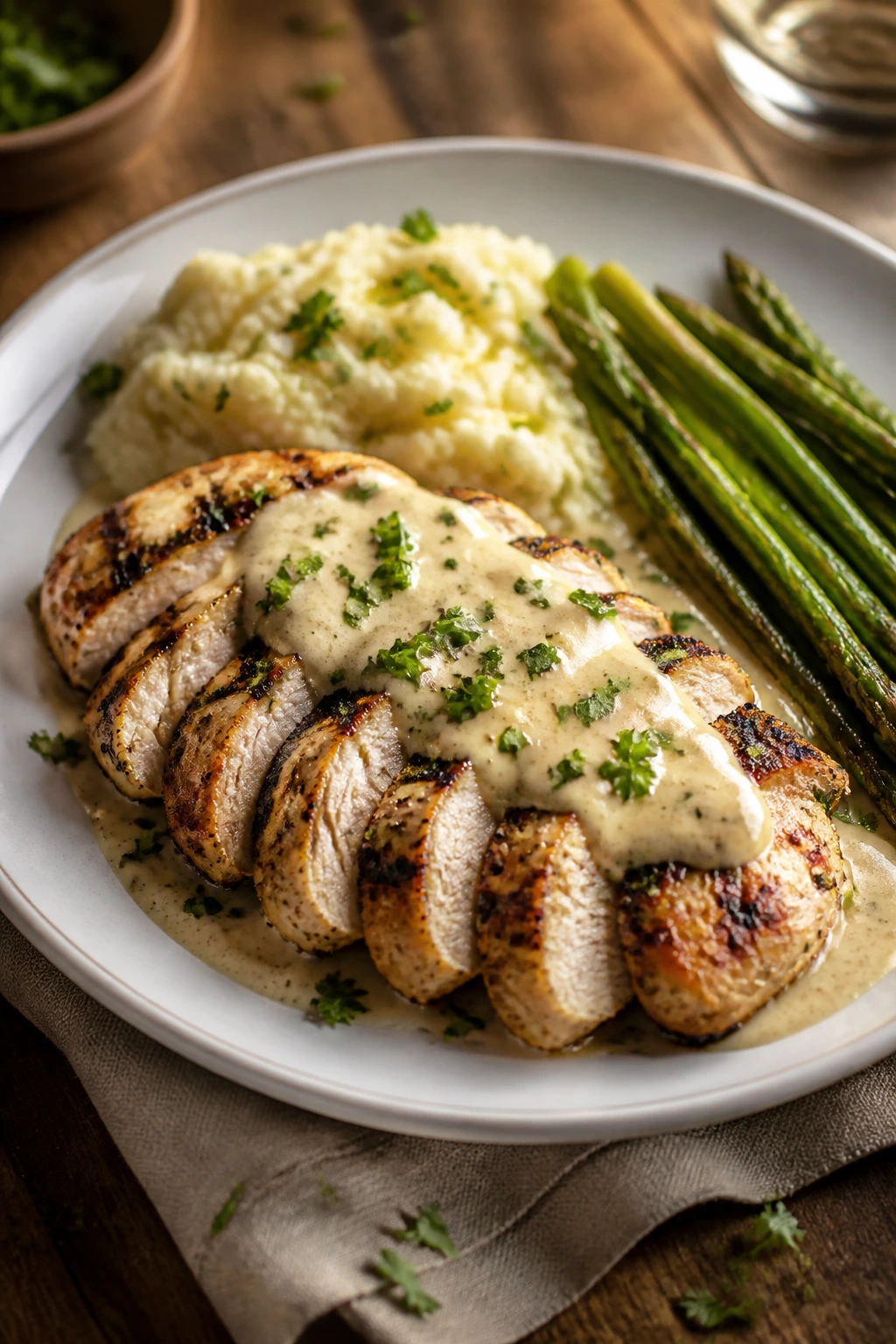
Presentation: Slice the chicken on a slight diagonal and fan it over the plate or over a mound of rice, mashed potatoes, or buttered orzo. Spoon the sauce across the center so the grill marks still show at the edges, then finish with parsley and a few grinds of black pepper.
Accompaniments: I like this with something that can catch the sauce: garlicky mashed potatoes, rice pilaf, roasted baby potatoes, or crusty bread that can mop the last streaks from the plate. A green side helps a lot too — steamed broccoli, charred asparagus, green beans with lemon, or a simple romaine salad with sharp vinaigrette.
Portions: Plan on one chicken breast or 5 to 6 ounces of cooked chicken per person. If you’re serving pasta or potatoes underneath, the portion can be a little smaller because the sauce does some of the heavy lifting.
Beverage Pairing: A crisp white wine like sauvignon blanc or pinot grigio works well because it cuts through the cream. If wine isn’t happening, cold sparkling water with lemon or unsweetened iced tea keeps the meal feeling clean instead of heavy.
Small Tweaks That Make a Real Difference
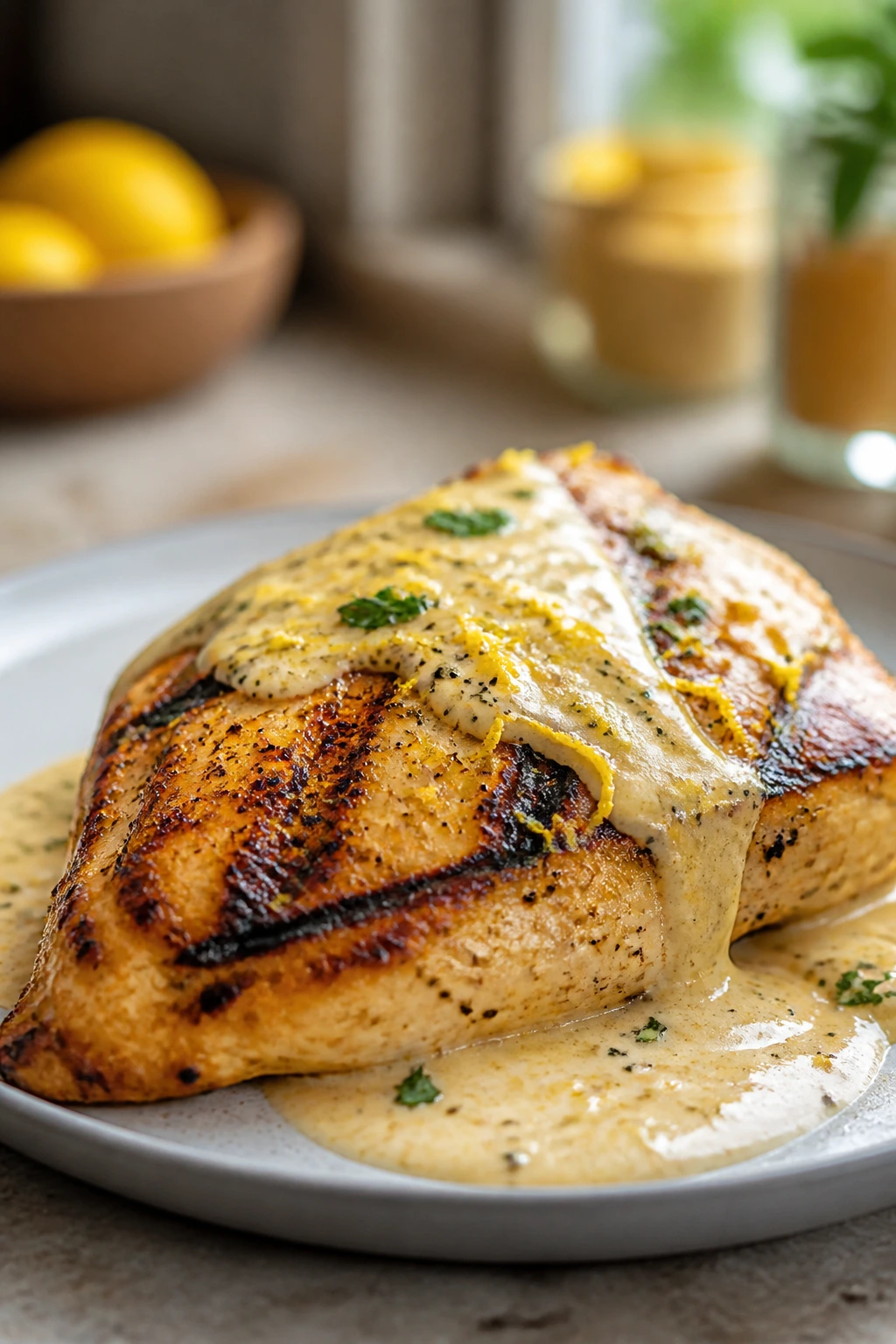
Flavor Enhancement: A little lemon zest in the sauce — about 1/2 teaspoon — wakes up the cream without making it sour. I like adding it right at the end with the parsley so the aroma stays bright.
Time-Saver: Season the chicken earlier in the day and keep it covered in the fridge for up to 12 hours. By dinner time, the grill only needs to do the cooking, not the seasoning, and the whole thing moves faster.
Pro Move: Warm the plates for a minute or two in a low oven if you want the sauce to stay glossy longer. Cream sauces cool down fast on a cold plate, and the texture changes before the flavor does.
Cost-Saver: Boneless chicken thighs are often cheaper than breasts and still taste good with this sauce. They take a few extra minutes on the grill, but they’re forgiving, which matters when the rest of the table is already hungry.
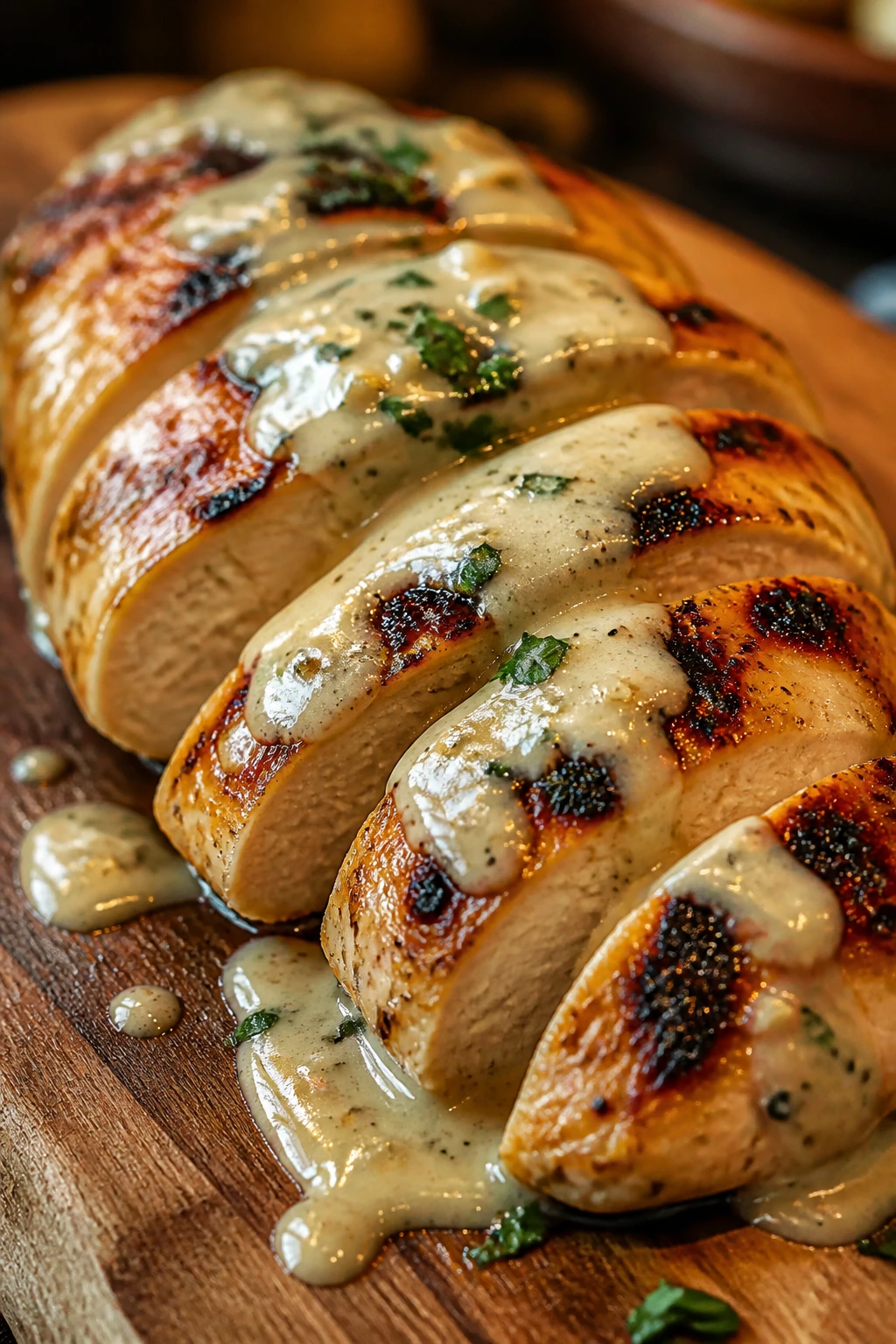
The Mistakes That Turn Chicken Dry or the Sauce Grainy
-
Starting with uneven chicken: One end cooks before the other, so you end up with either a dry thin half or an undercooked thick half. Pound the breasts to even thickness, and the grill becomes far more predictable.
-
Cranking the grill too hot: Black stripes with a pale, raw center are the giveaway. Medium-high heat gives you color without scorching the outside before the inside catches up.
-
Boiling the cream sauce hard: The sauce can separate and look greasy around the edges. Keep the heat low once the cream goes in, and let time do the thickening instead of force.
-
Using coarse or pre-shredded Parmesan: Big shreds melt unevenly and can leave the sauce grainy. Grate it finely so it disappears into the cream in a smooth, even way.
-
Skipping the rest: Slice chicken straight off the grill and the juices flood the board. Resting for 5 minutes keeps the meat moister and the sauce from getting watered down.
-
Adding lemon too early: Acid can make a cream sauce taste flat or act oddly if the pan is still too hot. Stir the lemon in off the heat, after the cheese has melted and the sauce has settled.
Flavor Variations for Different Moods
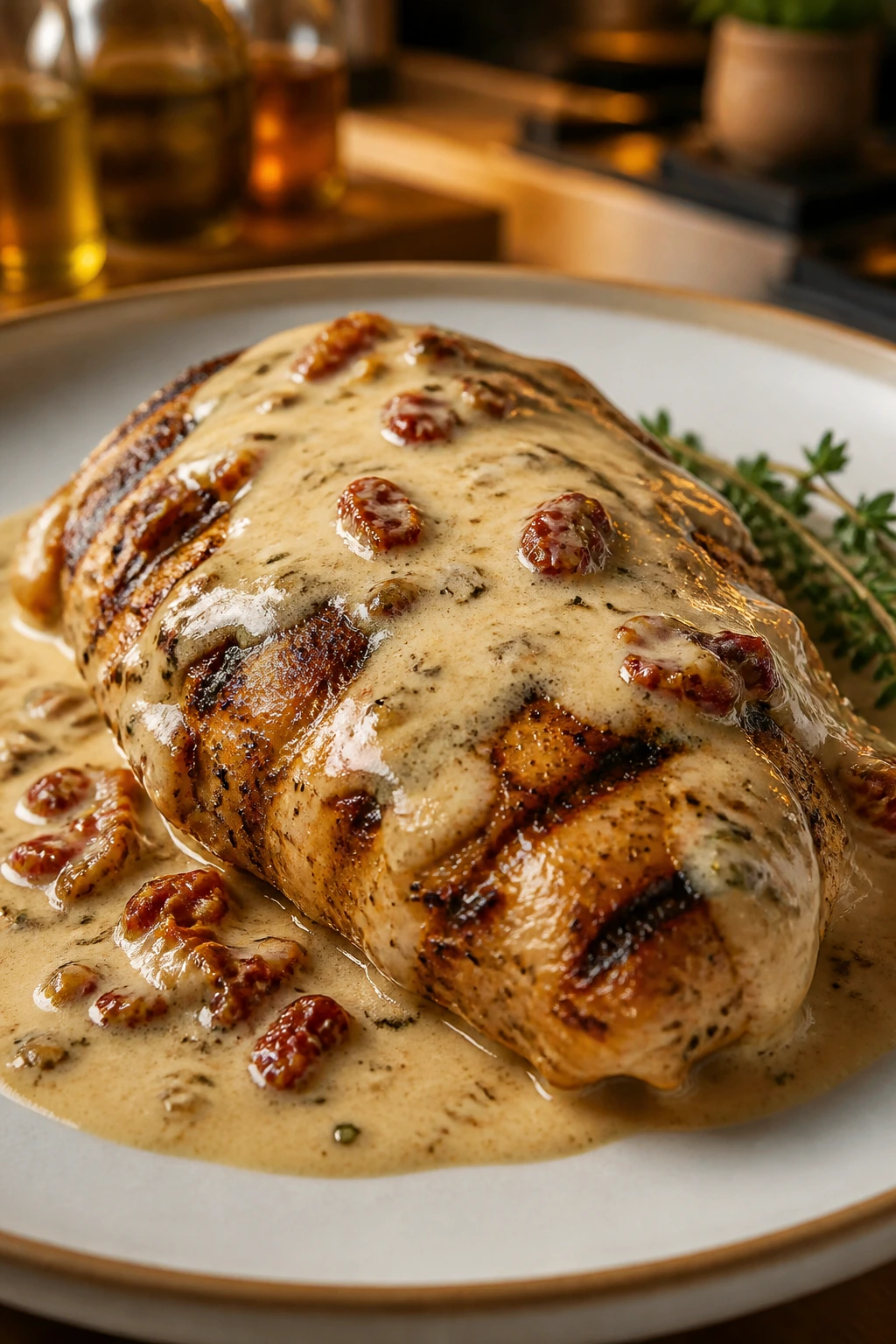
Sun-Dried Tomato Cream: Stir 1/4 cup chopped sun-dried tomatoes into the sauce after the broth goes in, along with 1 tablespoon of the tomato oil from the jar. The finished plate gets a deeper, sweeter edge and works especially well over pasta.
Mushroom and Thyme Skillet: Sauté 8 ounces of sliced cremini mushrooms with the shallot until they release their liquid and start to brown. Add 1 teaspoon fresh thyme leaves with the cream, and you get a more earthy, steakhouse-style version that sits nicely beside mashed potatoes.
Smoky Chipotle Finish: Replace the smoked paprika in the chicken rub with 1/2 teaspoon chipotle powder, then stir 1 teaspoon finely chopped chipotle in adobo into the sauce. It’s a sharper, smokier version that likes rice, corn, and a few squeezed lime wedges.
Parmesan Spinach Version: Stir 2 loose handfuls of baby spinach into the sauce right after the cheese melts. The spinach wilts in seconds, and the result feels a little greener and more substantial without changing the core flavor.
Lemon-Herb Garden Style: Add 1 teaspoon chopped dill or tarragon along with the parsley, and bump the lemon juice to 1 1/2 tablespoons if you like a brighter finish. This one tastes lighter and fresher, which is useful when the rest of the table wants something less rich.
Keeping Leftovers Tender
Let the chicken and sauce cool for about 20 minutes before packing them away. If you seal hot food in a container, condensation builds up and turns the sauce dull and watery. Shallow containers cool faster and keep the sauce from clumping around the edges.
In the fridge, the cooked chicken and sauce keep well for 3 to 4 days. I prefer storing them together if you know you’ll reheat the whole dish, but separate containers make sense if you plan to slice the chicken cold for salads or wraps. Keep everything tightly covered so the garlic and Dijon don’t take over the fridge.
Freezing is possible, but it’s smarter to freeze the chicken separately from the sauce. The chicken keeps for up to 2 months in the freezer. The cream sauce can be frozen for about 1 month, though it may separate a little when thawed. If that happens, whisk it over low heat with a splash of broth until it comes back together.
For reheating, the stovetop gives the best texture. Put the chicken and sauce in a skillet over low heat with 1 to 2 tablespoons of broth or water, cover loosely, and warm until the chicken reaches 165°F and the sauce is hot but not bubbling hard. The microwave works in a pinch, but use 50% power in short bursts so the sauce doesn’t split and the chicken doesn’t turn rubbery.
Make-ahead notes are straightforward. You can season the chicken up to 12 hours ahead, and you can make the sauce base — butter, shallot, garlic, broth, cream, and Dijon — earlier in the day, then finish it with Parmesan, lemon, and parsley right before serving. That last-minute finish keeps the texture smooth.
Questions People Ask Before They Make It
Can I use chicken thighs instead of breasts?
Yes, and they’re forgiving. Boneless, skinless thighs usually need a few extra minutes on the grill, and they’re done when they reach 165°F to 175°F depending on how tender you like them. The sauce works the same way, though thighs bring enough flavor that you may use a little less salt in the rub.
Do I need an outdoor grill, or will a grill pan work?
A grill pan works fine. Preheat it well over medium-high heat and oil it lightly so the chicken gets clean marks instead of sticking, then cook in batches if needed so the pan doesn’t cool down too much.
Can I make the sauce ahead of time?
You can, but stop before the Parmesan, lemon, and parsley go in. Rewarm the base gently over low heat, then finish it right before serving so the texture stays smooth and the herbs stay fresh.
What if my sauce turns grainy or looks broken?
Usually the heat was too high or the Parmesan went in too fast. Pull the pan off the burner, whisk in 1 to 2 tablespoons of warm broth, and keep stirring over very low heat until it comes back together. A splash of cream can help too.
Can I bake the chicken instead of grilling it?
Yes. Bake seasoned chicken breasts on a sheet pan at 425°F until they hit 165°F, usually 18 to 22 minutes depending on thickness. You’ll lose the grill marks, but the sauce covers plenty of sins.
What if I only have milk, not cream?
Milk can work in a pinch, but the sauce will be thinner and a little less stable. If that’s your only option, keep the heat low and add a teaspoon of cornstarch mixed with a tablespoon of cold water before the Parmesan goes in.
What sides fit this dish best?
You want something that can catch the sauce or something sharp enough to cut through it. Rice, mashed potatoes, roasted potatoes, asparagus, green beans, broccoli, or a crisp salad with lemon dressing all fit without fighting the chicken.
Is this good for meal prep?
Yes, especially if you keep the sauce and chicken in separate containers. The chicken slices well cold and reheats gently, while the sauce stays smoother if you warm it slowly with a splash of broth instead of blasting it in the microwave.
A Dinner Worth Repeating
There’s a reason this kind of meal keeps showing up on my own dinner table. It has that rare combination of simple parts and a finished taste. Grill marks, creamy sauce, a little garlic, a little Dijon, and chicken that still feels like chicken instead of a beige obligation.
The real payoff is how calm the whole thing feels once you’ve made it once. You’ll know exactly how hard to heat the pan, when the sauce wants the lemon, and how the chicken should look when it’s ready to rest. That means the recipe stops being a guess and starts being one of those easy, repeatable dinners you can pull out without thinking too much.
Creamy Easy Grilled Chicken for Weeknight Dinners — Recipe Card
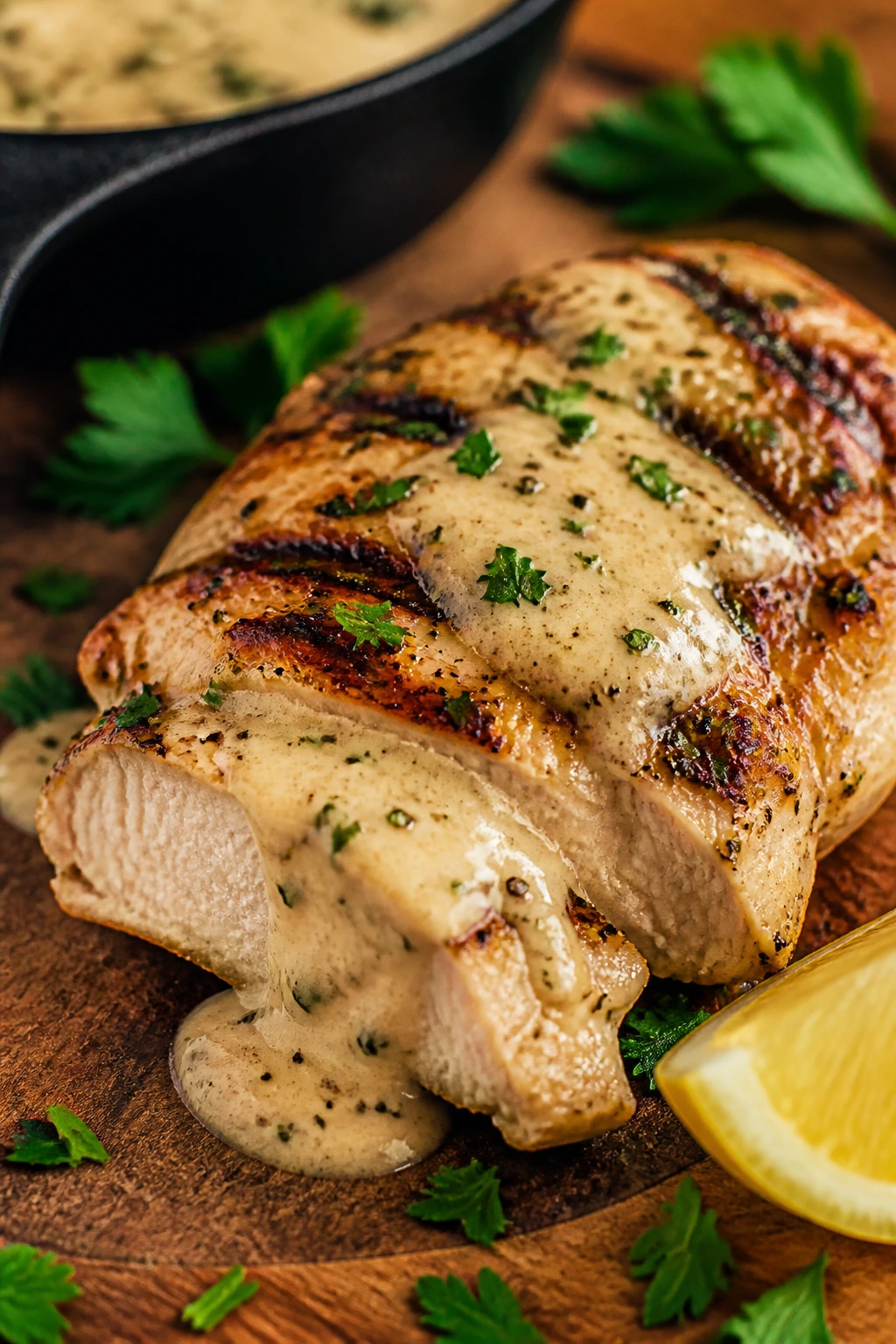
Recipe Name: Creamy Easy Grilled Chicken for Weeknight Dinners
Description: Juicy grilled chicken breasts topped with a silky Dijon-Parmesan cream sauce, finished with lemon and parsley. It’s a simple skillet-and-grill dinner that tastes like you put in more work than you did.
Prep Time: 15 minutes
Cook Time: 20 minutes
Total Time: 35 minutes
Course: Dinner, Main Course
Cuisine: American
Servings: 4 servings
Calories: About 455 kcal per serving
Ingredients
For the Chicken:
- 1 1/2 pounds boneless, skinless chicken breasts, pounded to even 3/4-inch thickness
- 2 tablespoons olive oil
- 1 1/2 teaspoons kosher salt
- 1 teaspoon black pepper
- 1 teaspoon garlic powder
- 1 teaspoon smoked paprika
For the Creamy Dijon-Parmesan Sauce:
- 1 tablespoon unsalted butter
- 1 small shallot, finely minced, about 1/4 cup
- 2 cloves garlic, minced
- 3/4 cup low-sodium chicken broth
- 3/4 cup heavy cream
- 1 tablespoon Dijon mustard
- 1/3 cup finely grated Parmesan cheese
- 1 tablespoon fresh lemon juice
- 1/4 teaspoon kosher salt
- 1/4 teaspoon black pepper
- 2 tablespoons chopped fresh parsley
- Pinch red pepper flakes, optional
Instructions
-
Pat the chicken dry and pound it to an even 3/4-inch thickness if needed.
-
Mix the olive oil, salt, pepper, garlic powder, and smoked paprika, then rub the mixture over the chicken.
-
Preheat an outdoor grill or grill pan over medium-high heat and oil the grates well.
-
Grill the chicken for 5 to 6 minutes per side, until the thickest part reaches 165°F.
-
Rest the chicken for 5 minutes.
-
Melt the butter in a skillet over medium heat, then cook the shallot for 1 to 2 minutes and the garlic for 30 seconds.
-
Add the broth and scrape up the browned bits, then stir in the cream, Dijon, salt, and pepper. Simmer gently for 3 to 4 minutes.
-
Whisk in the Parmesan until smooth, then add the lemon juice, parsley, and red pepper flakes if using.
-
Slice the chicken and spoon the sauce over the top.
Notes:
Use a microplane or fine grater for the Parmesan so the sauce stays smooth. If the sauce thickens too much, loosen it with 1 to 2 tablespoons of warm broth. Reheat leftovers over low heat, not a hard boil.