



A good Caprese quinoa should smell like a cutting board after a summer tomato gets sliced open—sweet, green, a little peppery, and full of juice. If it smells dull, the whole bowl falls flat. If the basil is tired and the mozzarella is rubbery, no amount of olive oil saves it.
That’s why this version matters. Authentic Caprese quinoa is not trying to be fancy, and it’s not pretending quinoa came from an old Italian farmhouse pantry. It’s doing something more honest: taking the strict little caprese trio—ripe tomatoes, fresh mozzarella, basil—and giving it enough body to eat like lunch instead of a side dish that disappears before you sit down.
And yes, the title has “Like Nonna Used to Make” in it, which is half joke and half promise. The quinoa is the modern part. The soul of it is old-school: a short ingredient list, no noisy extras, and the kind of seasoning that depends on good olive oil, proper salt, and tomatoes that actually taste like tomatoes. When the grain is warm, the cheese is cold, and the basil goes in at the last second, the bowl comes alive in a way that feels simple rather than plain.
Why This Bowl Keeps Getting Requested
It eats like a meal, not a garnish.
One cup of dry quinoa turns into enough fluffy grain to carry the tomatoes, cheese, and dressing without turning the bowl into a pile of toppings.
The caprese flavor stays front and center.
There’s no heavy sauce here, no mayo, and no long ingredient parade. You taste basil first, then sweet tomato, then the milky snap of mozzarella, then olive oil at the finish.
Warm quinoa changes everything.
Just-warm quinoa soaks up the tomato juices and dressing in a way cold grain never will, which means the bottom of the bowl gets seasoned instead of soggy.
It works for lunch, dinner, or the side dish slot.
A shallow bowl of this sits comfortably next to grilled chicken, roasted fish, or a hunk of focaccia, but it also stands on its own if you want something light and filling.
You can prep the moving parts separately.
Cook the quinoa ahead, halve the tomatoes later, and tear the basil at the last minute. That timing keeps the bowl bright instead of sleepy.
It’s one of those rare leftovers that still has manners.
The quinoa holds up for a couple of days, and if you keep the basil out until serving, the bowl doesn’t collapse into a damp, sad mess.
The Clock, the Yield, and the Sweet Spot for Serving
Caprese quinoa is a fast dish, but the fast part can fool people. The quinoa itself takes about 15 minutes, and the rest of the work is knife time and restraint. Give the grains a few minutes to cool after cooking, and the whole thing tastes cleaner. Rush that step and the mozzarella gets limp, the basil bruises, and the bowl loses its edge.
Yield: Serves 4 as a main or 6 as a side
Prep Time: 20 minutes
Cook Time: 20 minutes
Total Time: 40 minutes
Difficulty: Beginner — the method is straightforward, and the only real skill is keeping the quinoa fluffy and the basil bright.
Chill/Rest Time: 10 minutes, optional, for cooling the quinoa slightly
Best Served: Warm or at room temperature, with the basil added at the last minute
The Short Ingredient List That Carries the Whole Dish
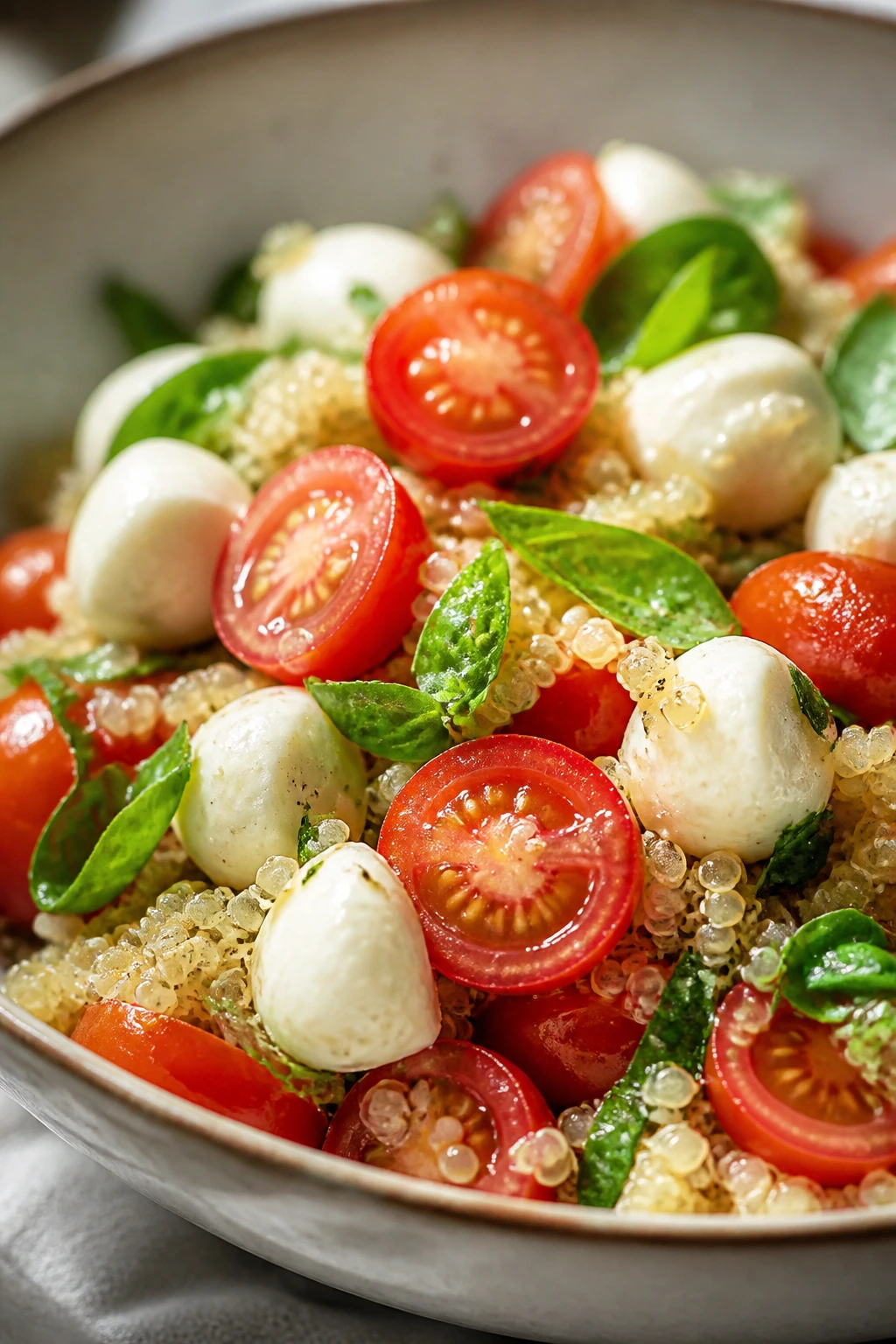
Keep the list short, but don’t confuse short with casual. Every ingredient has to pull its weight here. If the tomatoes are pale, the olive oil tastes flat, or the mozzarella sweats through the bowl, the dish tells on you.
For the Quinoa Base:
- 1 cup dry white quinoa, rinsed well — white quinoa gives the cleanest texture and keeps the bowl light.
- 2 cups water or low-sodium vegetable broth — broth adds a little savory depth; water keeps the flavor more neutral.
- 1/2 teaspoon fine sea salt — seasons the grains from the inside out.
For the Caprese Toss:
- 2 cups cherry tomatoes, halved — use the ripest ones you can find; they should smell like they’ve spent some time in the sun.
- 8 ounces fresh mozzarella pearls or 1 large ball fresh mozzarella, torn into bite-size pieces — drain it well so the bowl doesn’t turn watery.
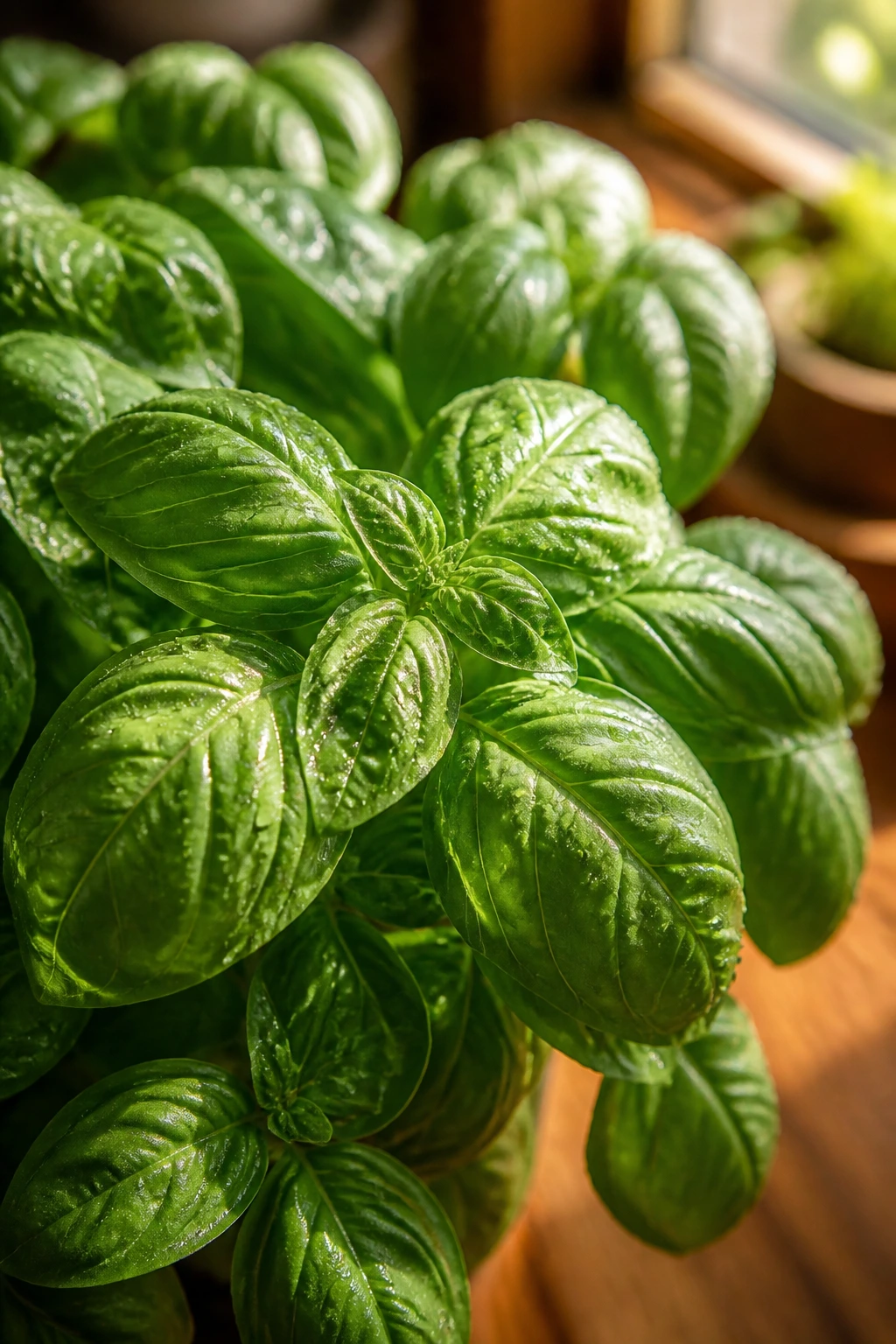
- 1 packed cup fresh basil leaves, torn — tear the leaves by hand so they don’t bruise into dark strips.
- 3 tablespoons extra-virgin olive oil — pick one that tastes grassy or peppery instead of vague.
- 1 1/2 tablespoons red wine vinegar — enough brightness to wake up the tomatoes without making the bowl taste sharp.
- 1/2 teaspoon kosher salt, plus more to taste — you’ll need this after the quinoa is cooked.
- 1/4 teaspoon freshly ground black pepper — small amount, but it matters.
Why Each Ingredient Has a Job to Do
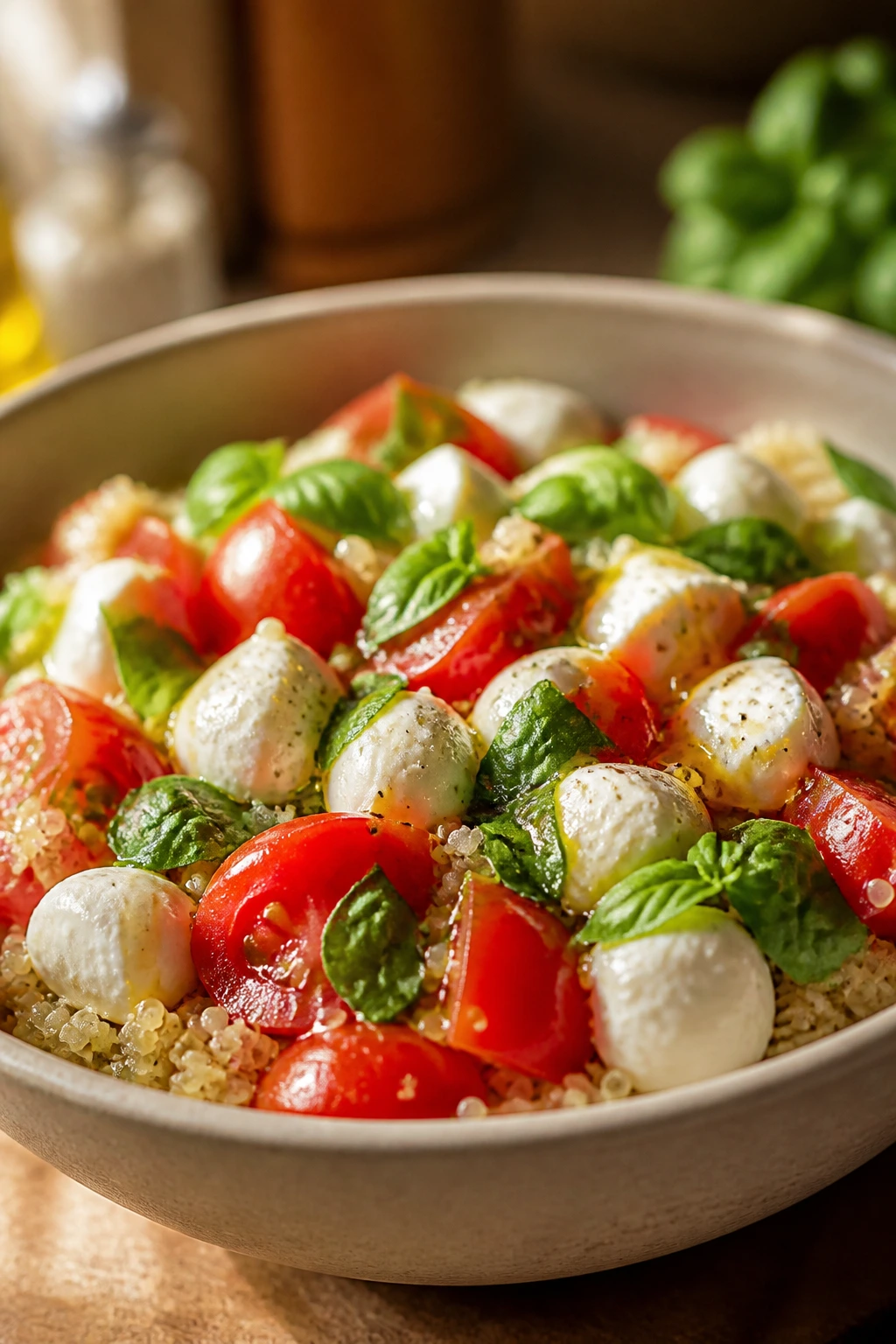
The quinoa base
What to use: 1 cup dry white quinoa, plus 2 cups water or low-sodium vegetable broth and 1/2 teaspoon fine sea salt.
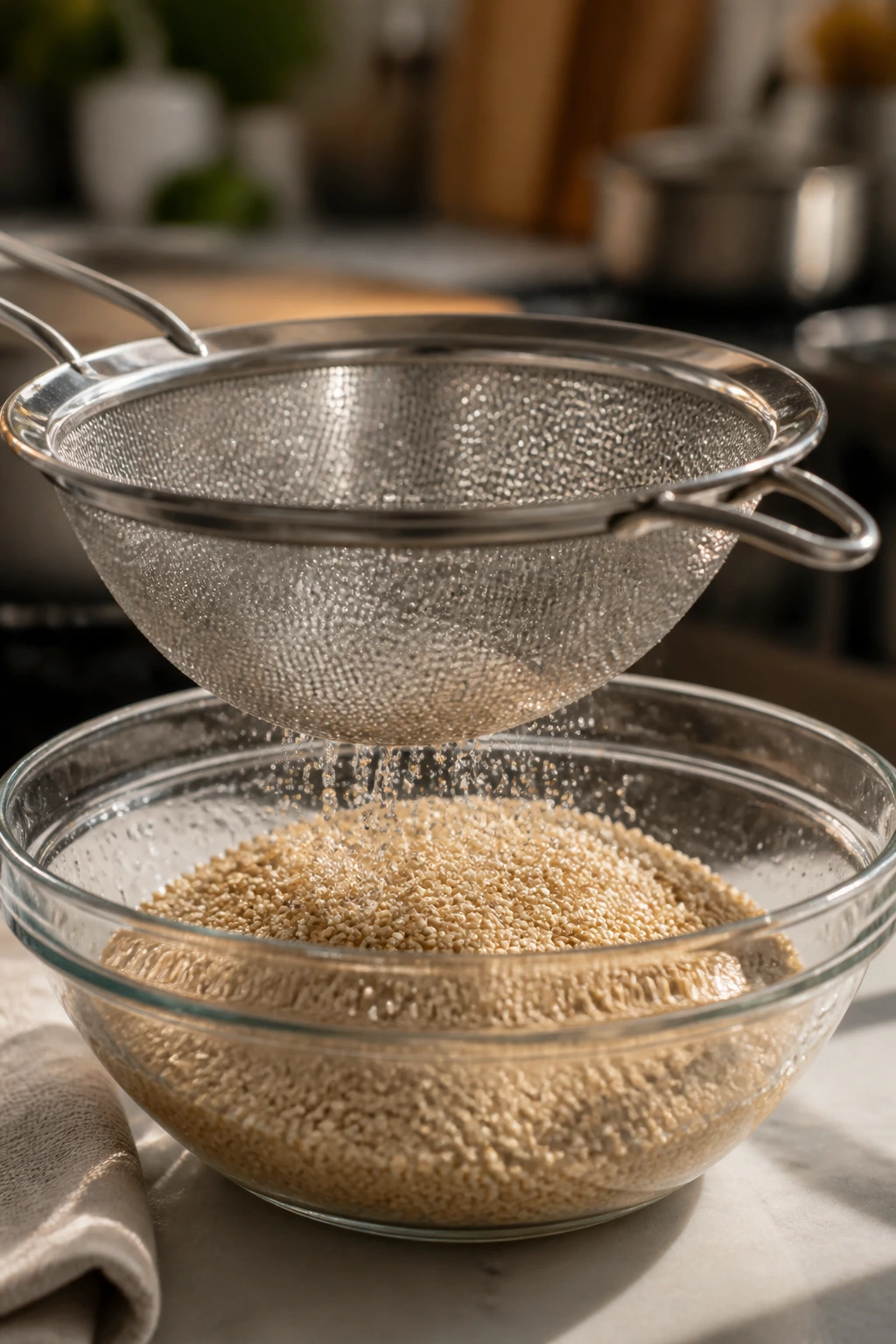
Preparation: Rinse the quinoa in a fine-mesh strainer under cold running water for 30 to 60 seconds, rubbing it lightly with your fingers as the water runs through. That wash matters because quinoa has a natural coating called saponin, and it can taste chalky if you skip this step.
Substitutions: Tri-color quinoa works, but it’s a little firmer and looks busier in the bowl. If you want a softer, cleaner look, stick with white quinoa.
Tips: Cook the quinoa in a saucepan with a tight lid so the grains steam evenly after the liquid is absorbed. I also like to spread it on a sheet pan after fluffing; a deep bowl traps steam and keeps the grain clumpy.
Tomatoes and basil
What to use: 2 cups cherry tomatoes, halved, and 1 packed cup fresh basil leaves, torn.
Preparation: Halve the tomatoes only when you’re close to assembling, then let them sit for a minute with a pinch of salt if they need help releasing juice. Tear the basil by hand into big pieces, or stack the leaves and slice once with a very sharp knife.
Substitutions: Grape tomatoes work if they’re the sweet, dense kind. Heirloom tomatoes can be used too, but cut them into bite-size chunks and drain off excess liquid so the bowl doesn’t go watery.
Tips: Basil bruises fast under a dull knife, and bruised basil tastes flat and looks dark. Tomatoes should be ripe enough that the skins split a little under the blade, not leathery or pale.
Mozzarella
What to use: 8 ounces fresh mozzarella pearls or one large ball of fresh mozzarella, torn into bite-size pieces.
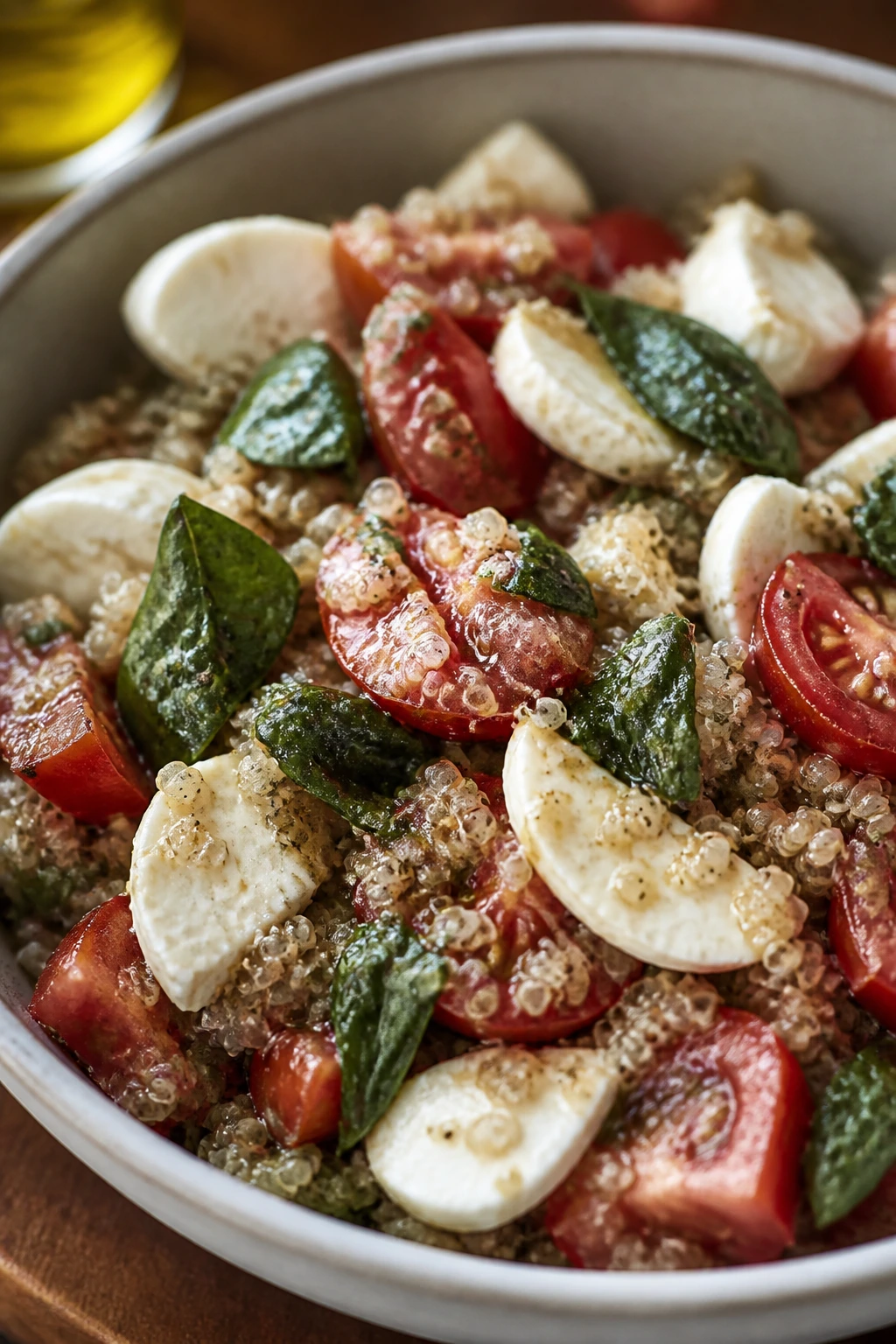
Preparation: Drain the cheese well and pat it dry with paper towels before it hits the bowl. If you’re using a ball of mozzarella, tear it instead of slicing it into neat cubes; torn edges catch dressing better.
Substitutions: Burrata works when you want a richer finish, though it’s softer and should be handled gently. If you can’t find mozzarella pearls, ciliegine-size balls are the next easiest option.
Tips: Fresh mozzarella should taste milky and clean, not squeaky or bland. If it sits in a puddle of whey, that liquid will loosen the dressing and pool at the bottom of the bowl.
Olive oil, vinegar, salt, and pepper
What to use: 3 tablespoons extra-virgin olive oil, 1 1/2 tablespoons red wine vinegar, 1/2 teaspoon kosher salt, and 1/4 teaspoon freshly ground black pepper.
Preparation: Whisk the oil, vinegar, salt, and pepper together before they touch the quinoa. A quick whisk helps the seasoning cling evenly instead of landing in one heavy spot.
Substitutions: Lemon juice can stand in for the vinegar if that’s what you have, though it tastes a touch brighter and less rounded. Balsamic vinegar is sweeter and heavier; save it for a drizzle at the table if you like that flavor.
Tips: Use salt twice: once in the quinoa water and again in the final toss. Quinoa is mild, and without that second pinch the whole bowl can taste oddly unfinished.
The Tools That Keep Quinoa Light and Tomatoes Intact
You do not need a parade of gadgets for this. You need a few solid basics and a little care with how you use them.
- Fine-mesh strainer — this is the best way to rinse quinoa without losing grains down the sink.
- Medium saucepan with a tight-fitting lid — it gives the quinoa an even simmer and the right amount of steam.
- Large mixing bowl — roomy enough for folding without crushing the tomatoes or cheese.
- Sharp chef’s knife — halved tomatoes and torn mozzarella both look and taste better when they’re cut cleanly.
- Cutting board — a damp kitchen towel underneath keeps it from skittering when you’re slicing tomatoes.
- Wooden spoon or silicone spatula — gentler than metal when you toss the grain and cheese together.
- Measuring cups and spoons — this recipe is simple enough that a sloppy pour of oil or vinegar shows up immediately.
- Sheet pan or large plate — useful for cooling the quinoa faster, which keeps the bowl from steaming itself into mush.
- Small whisk or fork — either one will emulsify the dressing just enough to coat the grains evenly.
The Step-by-Step Path to a Bowl That Still Tastes Fresh
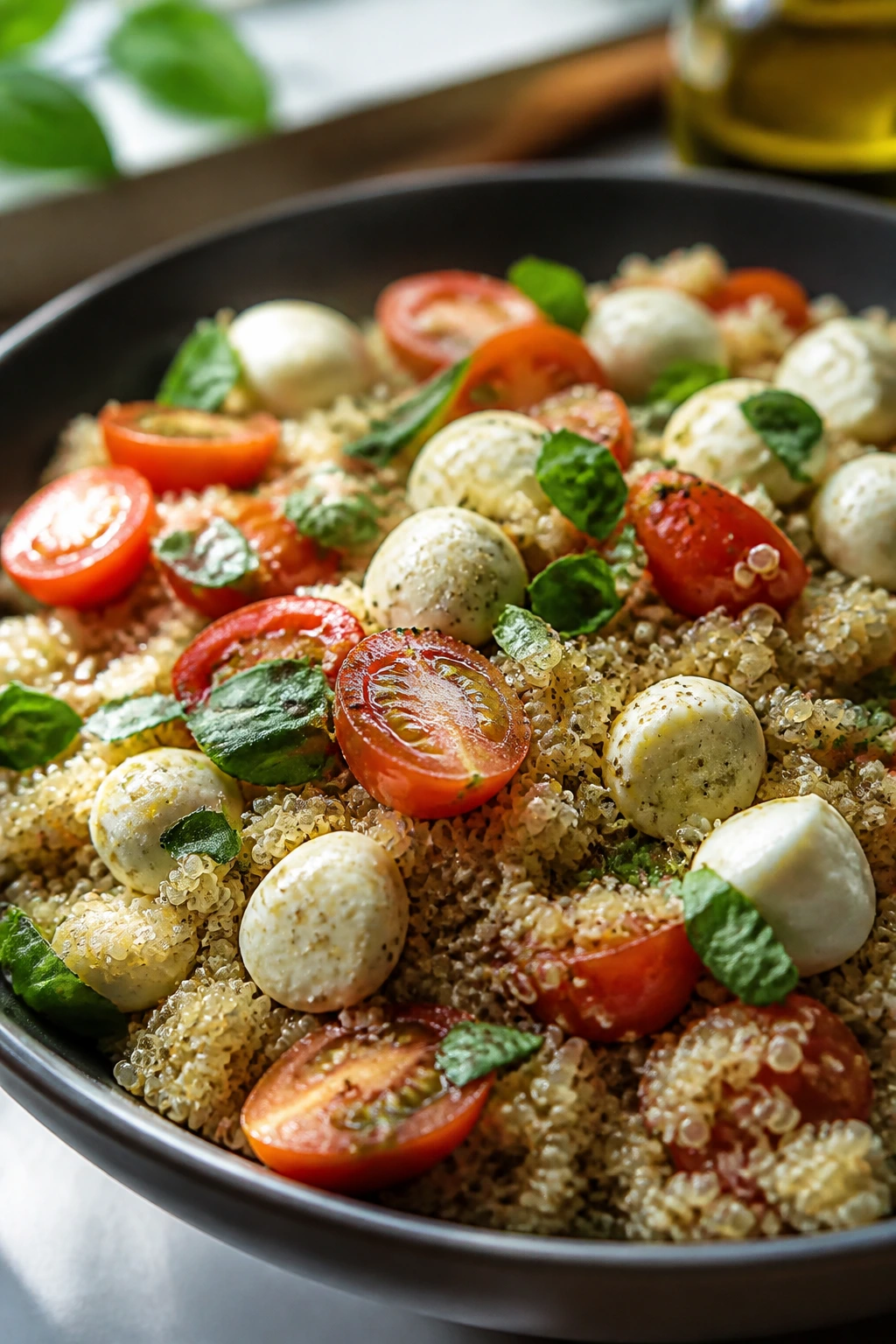
The whole trick here is timing. Warm quinoa wants to absorb flavor; hot quinoa wants to steam the cheese; cold quinoa wants to taste like leftovers. Aim for that middle temperature, and the rest is easy.
Cook the Quinoa
- Rinse 1 cup dry white quinoa in a fine-mesh strainer under cold running water for 30 to 60 seconds, shaking it well so the grains don’t stay wet. Don’t skip this — unwashed quinoa can taste dusty or bitter.
- Combine the rinsed quinoa, 2 cups water or low-sodium vegetable broth, and 1/2 teaspoon fine sea salt in a medium saucepan. Bring it to a boil over medium-high heat.
- Reduce the heat to low, cover the pan, and simmer for 15 minutes, or until the liquid is absorbed and the little spiral “tails” of the quinoa have opened. Do not stir while it simmers; that’s how you turn the grains gummy.
- Remove the pan from the heat and let it sit, covered, for 5 minutes. Fluff the quinoa with a fork, then spread it on a sheet pan or large plate for 5 to 10 minutes until it’s just warm, not steaming.
Build the Caprese Bowl
- While the quinoa cools, halve the 2 cups cherry tomatoes, tear or drain the 8 ounces fresh mozzarella, and tear the 1 packed cup basil leaves. In a small bowl, whisk together the 3 tablespoons olive oil, 1 1/2 tablespoons red wine vinegar, 1/2 teaspoon kosher salt, and 1/4 teaspoon black pepper.
- Add the warm quinoa to a large mixing bowl and pour over about half of the dressing. Fold gently until the grains are lightly glossy and evenly coated. Let it sit for 2 minutes so the seasoning sinks in.
- Fold in the tomatoes and mozzarella with a light hand. If the tomatoes are especially juicy, spoon a little of that juice into the bowl; it seasons the grain without making the texture loose.
- Add the torn basil and the remaining dressing, then toss once or twice more. Taste and adjust with another pinch of salt or a small splash of vinegar if the bowl feels flat. Serve right away, or let it sit 5 to 10 minutes at room temperature for a softer, more blended finish.
How to Serve It Without Flattening the Basil
Presentation:
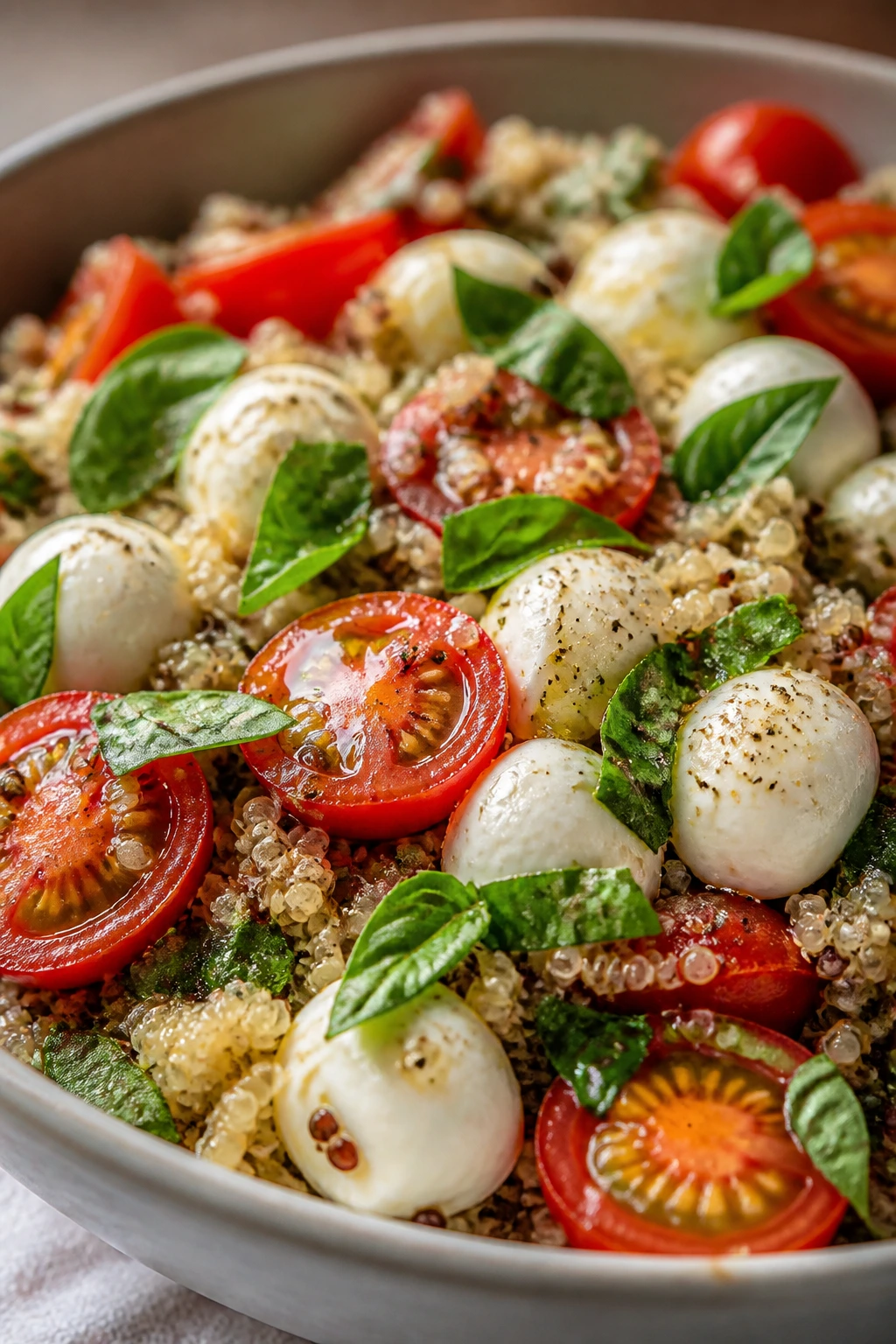
Use a shallow bowl or wide platter rather than a deep soup bowl. That shape keeps the tomatoes and mozzarella visible, and it lets the olive oil settle around the grain instead of hiding at the bottom. A few extra basil leaves on top, torn rather than chopped, make the whole thing look intentional without fussing it up.
Accompaniments:
A thick slice of toasted ciabatta is the obvious move, and I’m not going to argue with bread that can mop up tomato juice and olive oil. If you want a fuller plate, serve the quinoa next to grilled chicken cutlets, seared salmon, or a simple salad of arugula with lemon and shaved fennel. Roasted zucchini, eggplant, or a pile of marinated artichokes also fit the Mediterranean lane nicely.
Portions:
Figure on about 1 1/2 cups per person for a light main and closer to 3/4 to 1 cup if the quinoa is acting as a side. That makes the recipe an easy fit for lunchboxes, picnic spreads, or a dinner plate with one protein on the side. If you’re scaling up, double the quinoa liquid exactly and taste the final bowl before adding the last pinch of salt.
Beverage Pairing:
A crisp Pinot Grigio or a dry, pale rosé matches the tomato and basil without fighting the olive oil. If you want something nonalcoholic, sparkling water with a squeeze of lemon and a basil leaf floating in the glass keeps the whole meal feeling clean and bright.
The Small Moves That Change the Bowl the Most
Flavor Enhancement:
Keep back 1 teaspoon of olive oil and drizzle it over the finished bowl right before serving. That last slick of oil sits on the tomatoes and mozzarella instead of disappearing into the quinoa, and it gives the dish the glossy finish people remember.
Time-Saver:
Cook the quinoa up to 3 days ahead and chill it in a shallow container. If it clumps in the fridge, break it up with a fork and add a teaspoon of warm water before tossing so the grains loosen without getting wet.
Texture:
If your tomatoes are very juicy, set them in a colander for 5 minutes after cutting and shake off the excess liquid. That little pause keeps the bowl from pooling while still giving you enough tomato juice to season the quinoa.
Make-It-Yours:
If you want more body without losing the caprese feel, fold in 1 cup drained cannellini beans or a handful of arugula at the end. The beans make the bowl more filling, and the arugula adds a peppery bite that sits comfortably next to basil.
What Usually Goes Wrong With Caprese Quinoa
-
Skipping the rinse. The quinoa tastes chalky or faintly bitter, and the whole bowl feels off no matter how good the tomatoes are. Rinse until the water runs mostly clear; that’s the small, boring step that keeps the grain clean.
-
Letting the quinoa stay too hot. Basil goes dark and limp, and the mozzarella starts to soften into a paste rather than staying in soft pieces. Spread the quinoa on a tray for a few minutes before you mix it.
-
Using wet mozzarella. If the cheese comes straight from liquid and goes into the bowl without draining, the dressing thins out and collects at the bottom. Pat the cheese dry with paper towels before you cut or tear it.
-
Chopping basil too early. Basil bruises fast, and once it bruises, the color turns dull and the scent fades. Tear it at the end or slice it once with a sharp knife only when you’re ready to serve.
-
Drowning the quinoa in dressing. Olive oil should coat the grains, not make them swim. Start with half the dressing, taste, and add the rest only if the bowl still feels dry.
-
Starting with bland tomatoes. No amount of mozzarella fixes a tomato that tastes like wet cardboard. If the tomatoes aren’t sweet and fragrant, give them extra salt and a minute to sit, or wait for better ones.
Ways to Bend the Bowl Without Breaking It
Burrata Centerpiece Caprese
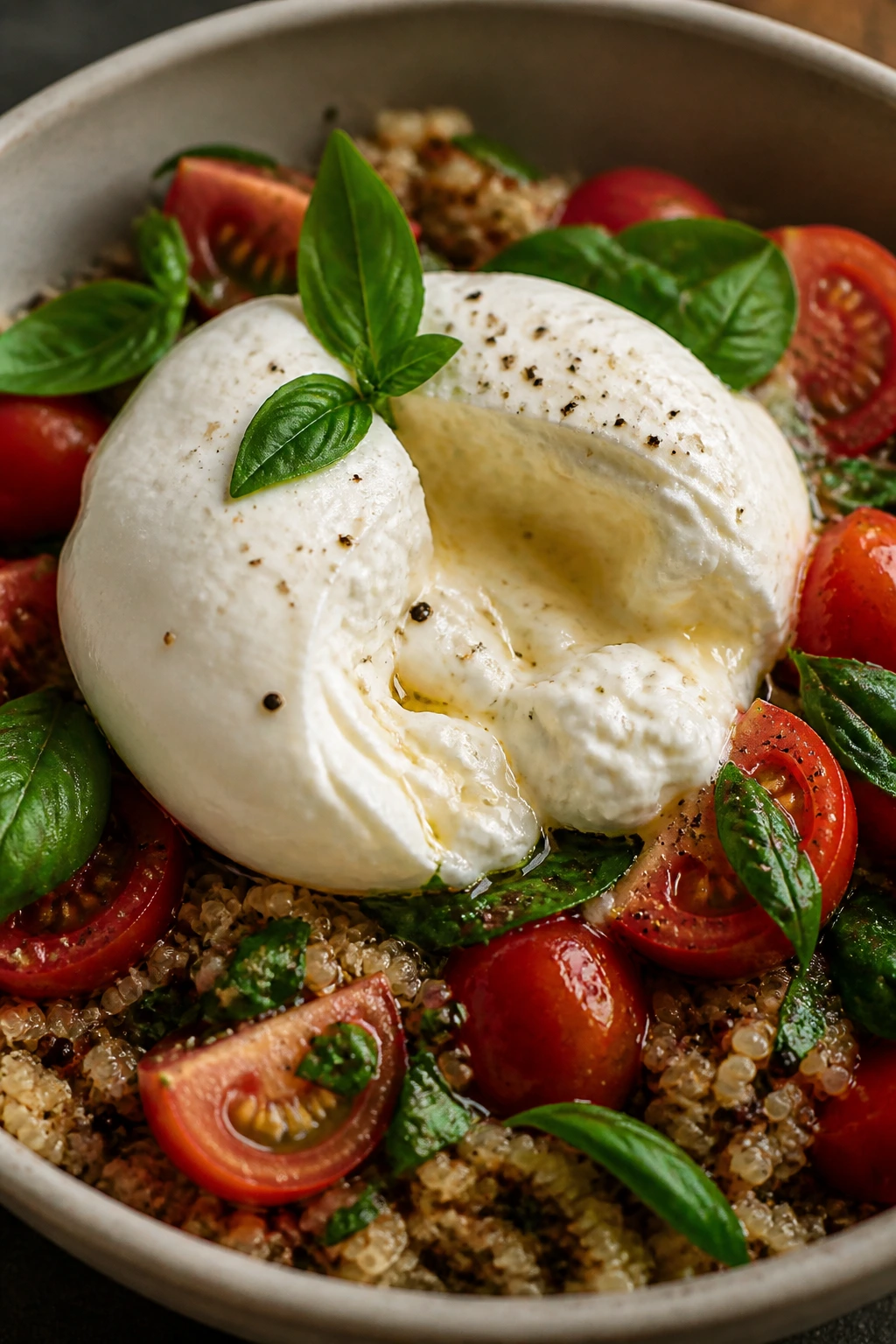
Swap the mozzarella pearls for one 8-ounce ball of burrata and tear it over the finished bowl right before serving. Burrata brings a creamy center that melts into the warm quinoa, but it needs gentle handling, so don’t stir after it goes in.
Grilled Tomato Caprese Quinoa
Halve the tomatoes and sear them cut side down in a hot skillet for 2 to 3 minutes until they blister and pick up char on the edges. The smoky note adds depth when the tomatoes are a little shy on flavor, and the bowl gets a more dinner-like feel.
White Bean Lunch Bowl
Fold in 1 cup rinsed and drained cannellini beans with the tomatoes. The beans make the bowl more filling and give it a softer, creamier texture without drifting far from the caprese profile.
Chicken Cutlet Version
Top each serving with sliced grilled chicken cutlets or leftover roasted chicken breast. The quinoa still carries the tomatoes, basil, and mozzarella, but the protein makes the bowl land squarely in dinner territory.
Dairy-Free Herb Bowl
Use a dairy-free mozzarella that melts softly, or skip the cheese and add extra olive oil plus a handful of cannellini beans. It won’t be traditional caprese in the strict sense, but the tomato-basil core still reads clearly.
Making It Ahead, Storing It, and Warming It Back Up
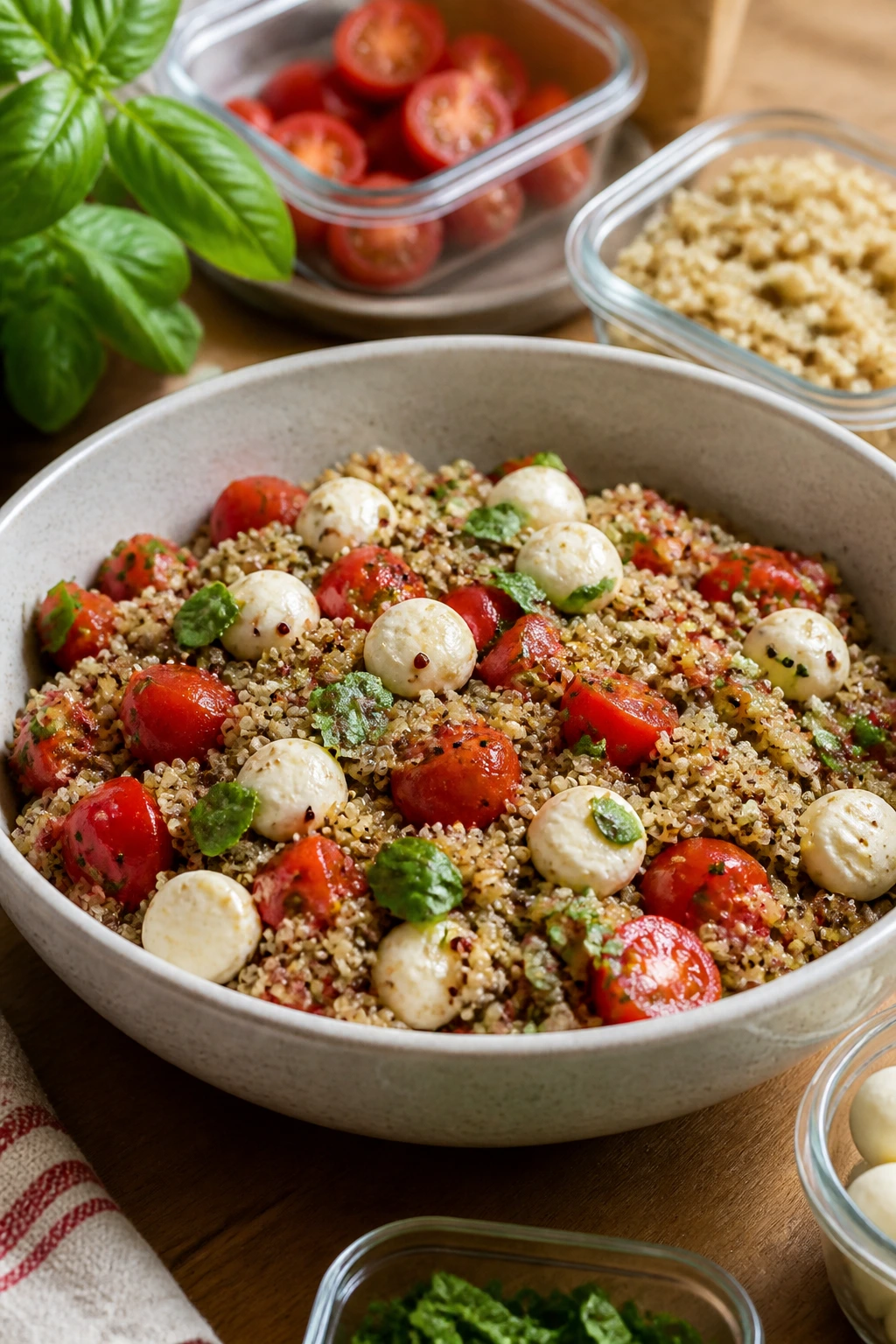
This bowl is friendly to planning, but only if you keep the components from getting tangled too early. Quinoa can be cooked ahead, and the tomatoes can be halved a little in advance, but basil and mozzarella are best added close to serving. That’s the difference between a bowl that tastes fresh and one that tastes like it spent the afternoon in a container.
Room temperature:
Once assembled, don’t leave the bowl out longer than 2 hours. The mozzarella is fresh cheese, and the tomatoes keep releasing liquid as they sit, which changes the texture fast.
Refrigerator:
The assembled salad keeps for about 3 days in the fridge, though the basil will darken and the tomatoes will soften. For the best texture, store the cooked quinoa separately for up to 4 days, the tomatoes and mozzarella in another container for 1 to 2 days, and the basil wrapped in a dry paper towel inside a bag or lidded container.
Freezer:
Freeze only the cooked quinoa, not the assembled salad. Plain cooked quinoa keeps for up to 2 months in a freezer bag laid flat, which helps it thaw more evenly. Tomatoes and fresh mozzarella do not come back well after freezing; the texture gets watery and grainy.
Reheating:
If you want the quinoa base warm, microwave it with 1 to 2 teaspoons of water for 30 to 45 seconds, then fluff it before adding the fresh toppings. You can also warm it in a skillet over low heat with a splash of water and a drizzle of olive oil. Add the tomatoes, mozzarella, and basil after reheating so the cheese stays soft instead of melting out of shape.
Make-ahead rhythm:
Cook the quinoa a day or two ahead if that suits your schedule, but do the final toss on the day you plan to eat. If the grain seems tight after chilling, loosen it with a little olive oil before adding the tomatoes. Basil wants last-minute attention. It always does.
Questions People Ask Before They Make It
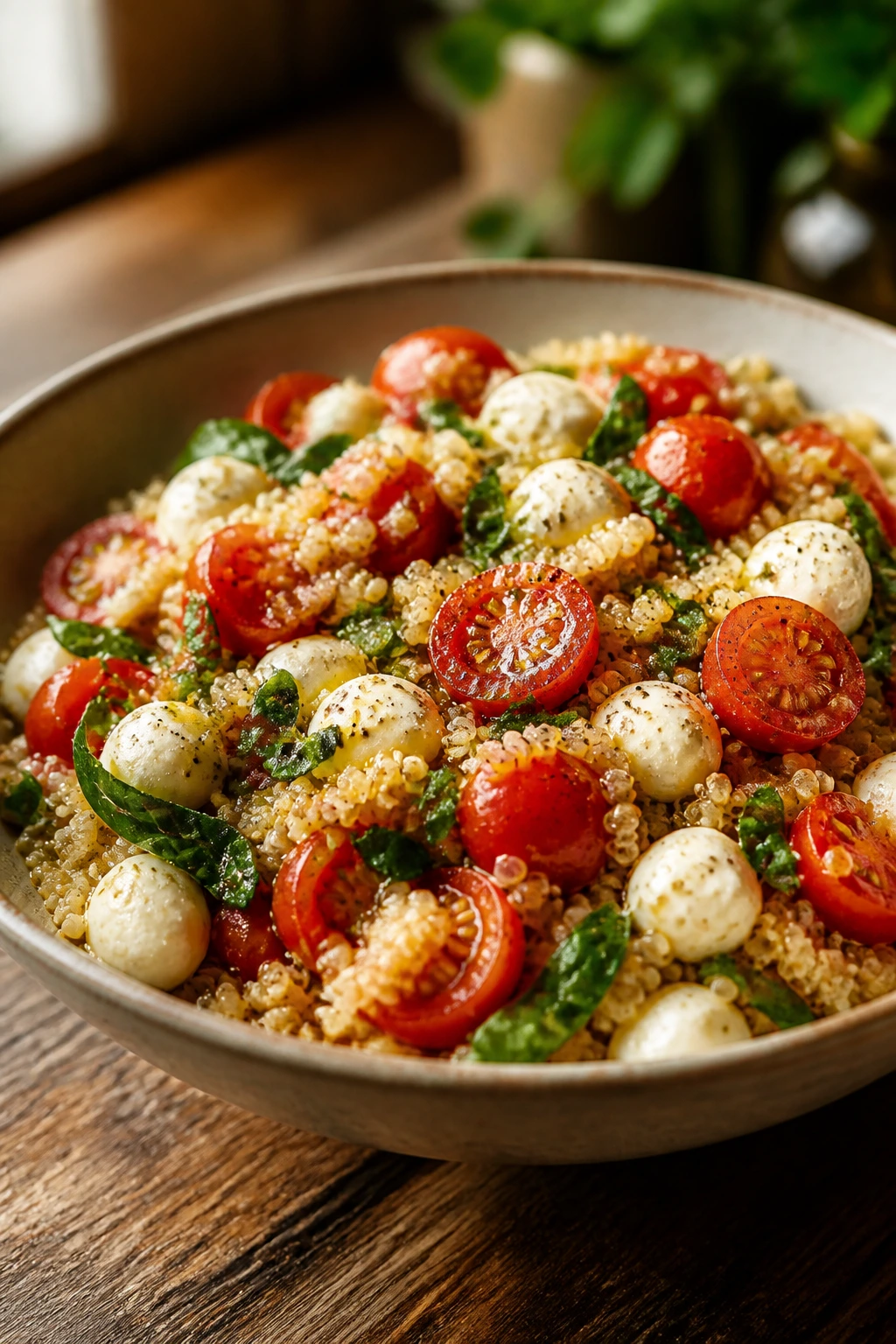
Can I serve caprese quinoa warm?
Yes, and honestly, that’s the version I reach for first. Warm quinoa lets the olive oil spread through the grains and gives the tomatoes a little more perfume, while the mozzarella stays in soft, milky pieces rather than melting into strings.
Do I have to rinse the quinoa?
Yes. Rinsing removes saponin, the natural coating that can make quinoa taste bitter or soapy. It takes less than a minute, and skipping it is one of the fastest ways to make the bowl taste off.
Can I use balsamic glaze instead of red wine vinegar?
You can, but I’d treat it as a finishing drizzle rather than the main dressing. Balsamic glaze brings sweetness and a thicker texture, which can blur the clean caprese profile if you mix it through the whole bowl.
What if my tomatoes taste bland?
Salt them lightly and let them sit for 10 minutes before you assemble the bowl. That draws out a little juice and wakes up the flavor; if they’re still weak, add a touch more red wine vinegar and a pinch more salt to the finished quinoa.
Can I make this the night before?
You can make the quinoa the night before and keep it chilled, but hold back the tomatoes, mozzarella, and basil until serving time. If you assemble the full bowl too early, the basil darkens and the tomatoes dump too much liquid into the grain.
Can I use burrata instead of mozzarella pearls?
Yes, but use it as a top layer rather than stirring it through the salad. Burrata is softer and richer, so it works best when you tear it over the finished bowl and let people scoop into it as they eat.
How do I keep the basil from turning black?
Tear it at the last minute and toss it in gently, not aggressively. A sharp knife is fine if you only cut once, but a dull blade bruises the leaves and strips away that clean, sweet scent basil is famous for.
A Bowl Worth Putting Back on the Table
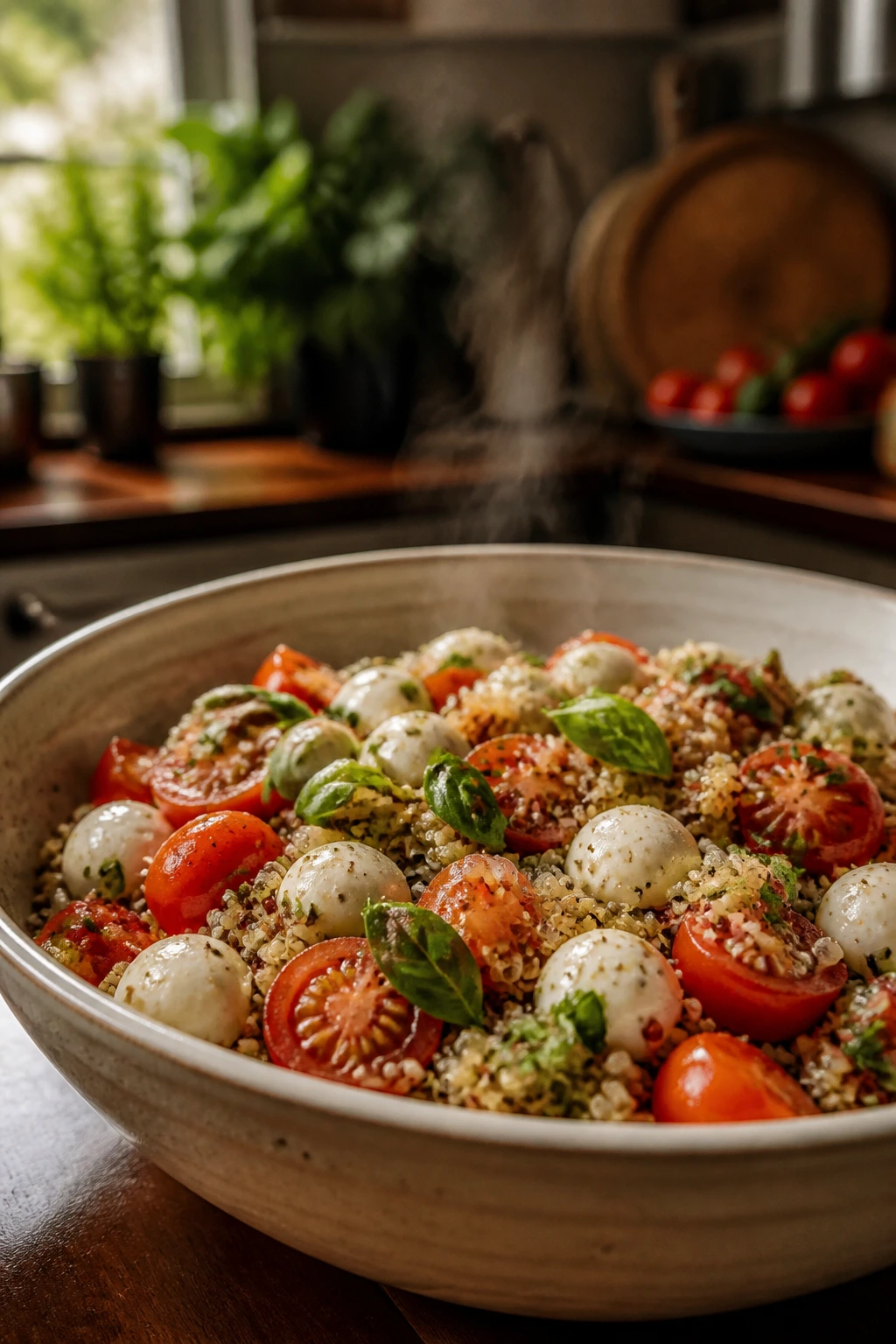
What makes this dish stick with people is not some complicated trick. It’s the opposite. The quinoa gives the caprese trio a place to land, and the caprese trio gives the quinoa a reason to matter. That balance is what makes the bowl feel useful instead of trendy.
Keep the tomatoes ripe, the basil fresh, and the mozzarella dry enough to behave, and this becomes one of those recipes you stop thinking about and start making on instinct. It’s the sort of bowl that fits a quiet lunch, a no-fuss dinner, or the kind of table where people keep reaching in for one more forkful.
Authentic Caprese Quinoa Like Nonna Used to Make — Recipe Card
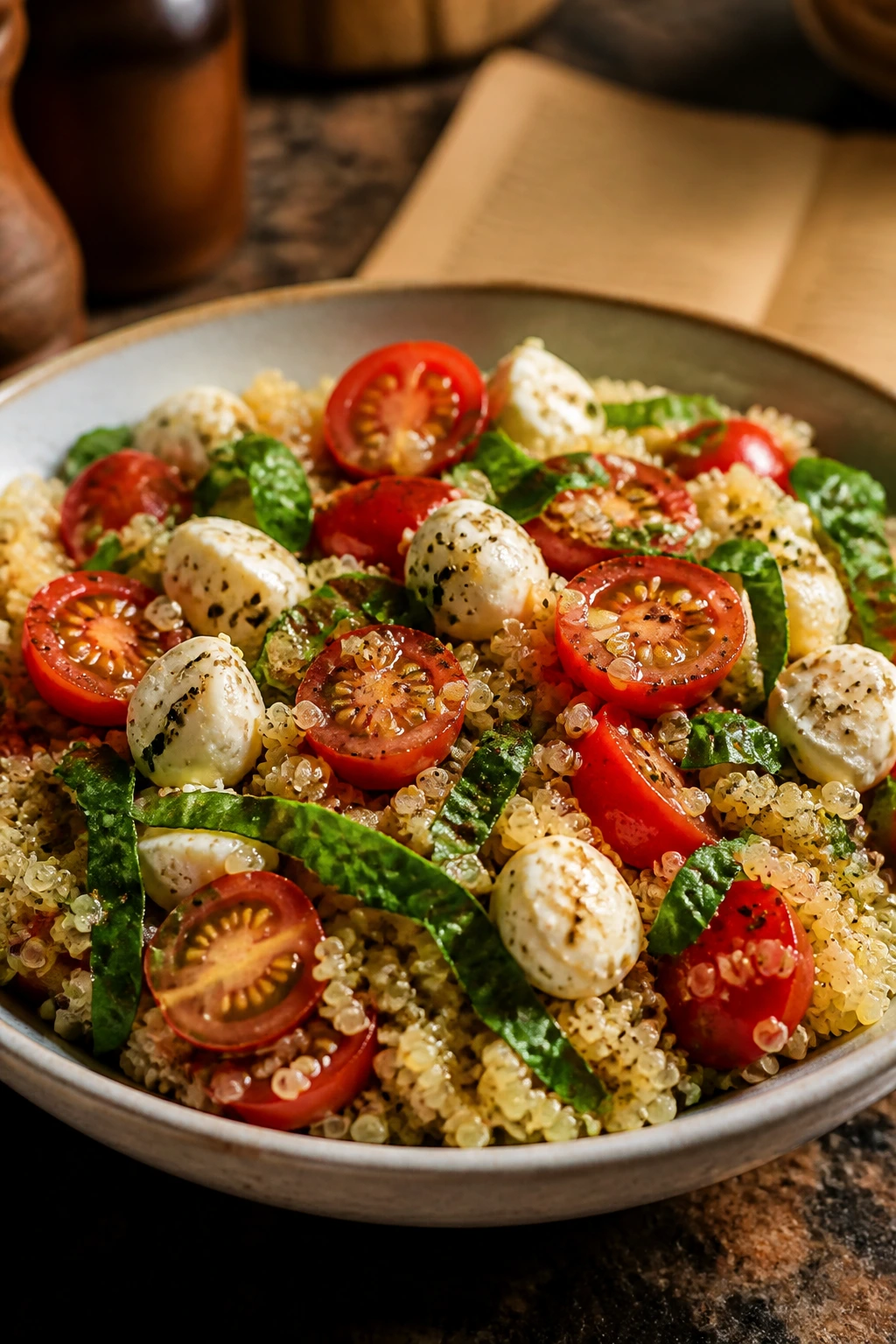
Recipe Name: Authentic Caprese Quinoa Like Nonna Used to Make
Description: Fluffy white quinoa tossed with ripe cherry tomatoes, fresh mozzarella, basil, olive oil, and red wine vinegar. It tastes like a caprese salad that decided to become lunch.
Prep Time: 20 minutes
Cook Time: 20 minutes
Total Time: 40 minutes
Course: Side Dish or Light Main
Cuisine: Italian-American / Mediterranean
Servings: 4 servings
Calories: about 320 kcal per serving
Ingredients
For the Quinoa:
- 1 cup dry white quinoa, rinsed well
- 2 cups water or low-sodium vegetable broth
- 1/2 teaspoon fine sea salt
For the Caprese Toss:
- 2 cups cherry tomatoes, halved
- 8 ounces fresh mozzarella pearls or 1 large ball fresh mozzarella, torn into bite-size pieces
- 1 packed cup fresh basil leaves, torn
- 3 tablespoons extra-virgin olive oil
- 1 1/2 tablespoons red wine vinegar
- 1/2 teaspoon kosher salt, plus more to taste
- 1/4 teaspoon freshly ground black pepper
Instructions
- Rinse the quinoa in a fine-mesh strainer, then combine it with the water or broth and fine sea salt in a saucepan.
- Bring to a boil, reduce the heat to low, cover, and simmer for 15 minutes until the liquid is absorbed.
- Remove from the heat, rest covered for 5 minutes, then fluff and cool slightly.
- Halve the tomatoes, drain the mozzarella, tear the basil, and whisk the olive oil, red wine vinegar, kosher salt, and black pepper.
- Toss the warm quinoa with half of the dressing, then fold in the tomatoes and mozzarella.
- Add the basil and remaining dressing, taste, adjust salt, and serve warm or at room temperature.
Notes: Best served the day it’s made. If you prep ahead, keep the basil separate until the final toss, and add a little extra olive oil or vinegar at the table if the chilled quinoa tastes tight.