



Takeout has a way of flattening a holiday. The chile oil separates, the greens steam themselves limp, and the dish that was supposed to feel lucky arrives in a cardboard cave with a rubber band around the bag.
Spicy Chinese New Year food is different when it leaves your own kitchen. The heat lands with more control, the aromatics hit first, and the whole table can be paced the way you want it paced — one fiery dish, one cool dish, one noodle bowl that smells like ginger and scallion the second it comes off the burner. That’s the real advantage. Not just flavor. Timing. Texture. The feeling that someone actually thought about the meal instead of merely sending it out.
Chinese New Year cooking also carries a lot of meaning, and the spice doesn’t cancel that out. A whole fish still signals abundance. Dumplings still look like little gold ingots. Long noodles still belong on the table uncut. Add a little Sichuan peppercorn, a spoon of chili crisp, or a properly fried chile oil, and the meal stops tasting like delivery night and starts tasting like a gathering.
The best part? You do not need a restaurant setup to pull it off. You need a hot pan, a few sharp pantry staples, and enough respect for heat to treat it as an ingredient rather than a dare.
Why This Style of Feast Wins
-
Heat stays bright: A properly built chile sauce tastes alive, not flat, because the garlic, ginger, and spices bloom in oil before they ever hit the table.
-
Textures hold up: At home, you can keep green beans crisp, fish silky, and dumplings actually juicy instead of soggy from a steamy delivery box.
-
The symbolism still works: Whole fish, uncut noodles, folded dumplings, and round bowls all carry the right holiday cues without making the meal feel stiff.
-
You control the fire: Some people want a lip-tingle from Sichuan peppercorn; others want a small spoon of chili crisp on the side. Home cooking lets both happen.
-
Leftovers don’t collapse: Several spicy dishes taste better the next day once the sauce settles, which is a rare and welcome thing in holiday food.
-
The table feels deliberate: One glossy red dish beside a cool cucumber salad and a bowl of plain rice looks like a feast, not a pile of leftovers with chopsticks beside them.
Why Spicy Chinese New Year Food Beats a Paper Takeout Bag
Takeout is built for speed. A holiday table needs more than speed. It needs contrast, temperature, and timing — the things that disappear first when food sits in a lidded container for twenty minutes.
A good homemade spicy dish has edges. The garlic is sweet, not bitter. The chile oil is fragrant, not greasy. The scallions still smell green when they hit the plate. Those details sound tiny, but they’re the difference between a meal that tastes assembled and a meal that tastes composed.
There’s also the matter of ceremony. Chinese New Year food often carries symbolism, and that symbolism gets lost fast when everything arrives in the same brown carton. A whole fish still wants to be whole. A nest of noodles wants to stay long. Dumplings want their pleats visible. When you cook at home, those gestures stay intact, and the spice becomes part of the celebration instead of a sauce packet with a pulse.
One more thing. Delivery heat is usually blunt. It shows up as salt, sugar, and a quick burn. Home-cooked heat can be layered: dried chiles for warmth, Sichuan peppercorn for that lemony tingle, black vinegar for a clean bite, and a little sugar to make the chile flavor spread across the tongue instead of sitting in one hot spot. That layering is where the good stuff lives.
The Pantry That Makes Holiday Heat Taste Clean
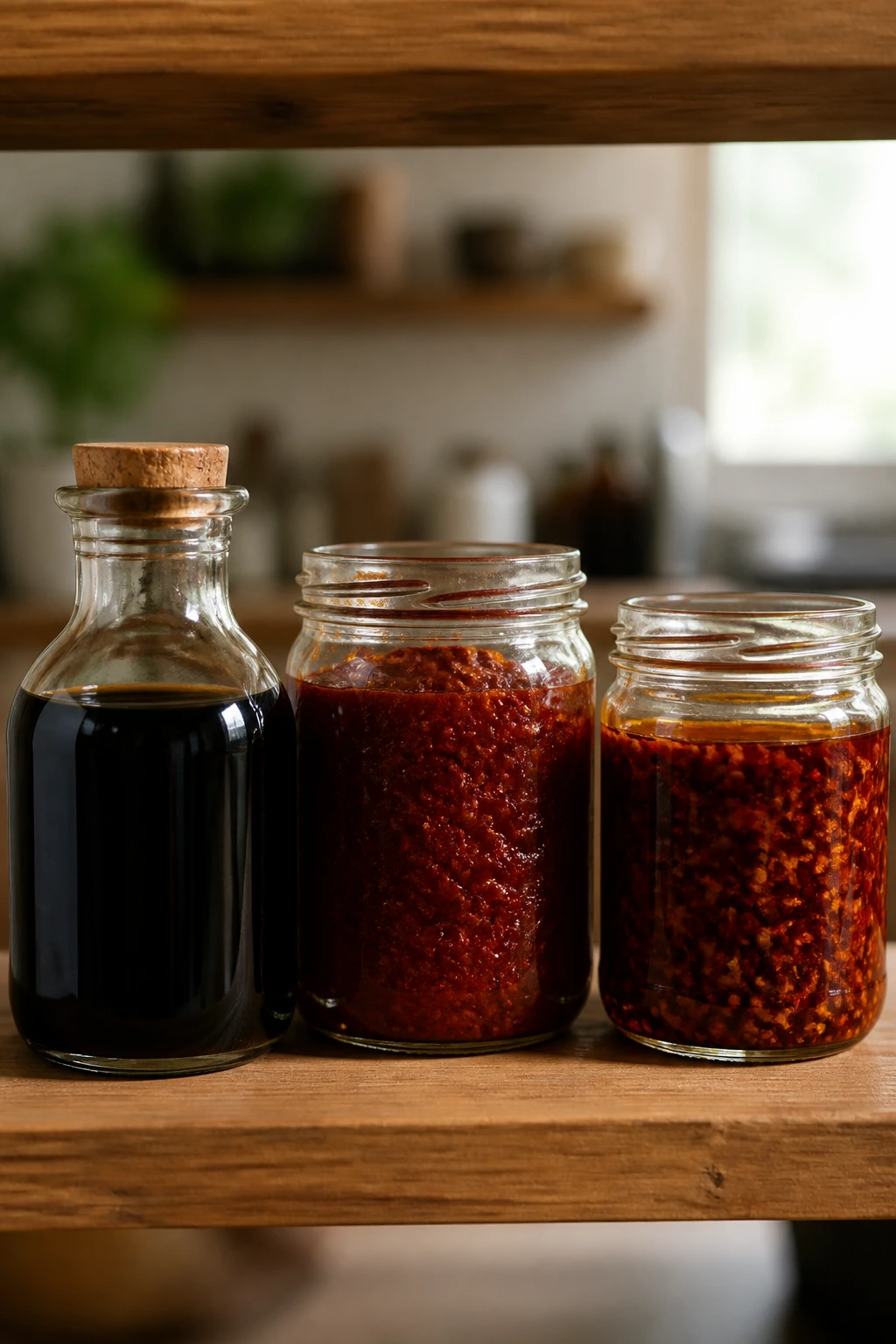
A spicy Lunar New Year spread lives or dies on the pantry. Not the decorative part. The useful part. If your cabinet can produce a good chile oil, a clean soy sauce, and one fermented paste that smells like the deep end of a proper kitchen, you’re already most of the way there.
The fermented backbone
Doubanjiang is the big one. It’s salty, fermented, chile-stained bean paste, and it gives dishes like mapo tofu and spicy braises their backbone. Buy one that smells earthy and savory, not just salty. A spoonful should taste deep before it tastes hot.
Black vinegar, especially the dark, malty kind often sold as Chinkiang vinegar, gives heat somewhere to land. It cuts grease, sharpens pork, and makes dumpling sauce taste like it took more effort than it did. If you’ve only used balsamic, this is not the same thing. It’s cleaner and more savory.
Light soy sauce carries salt and aroma. Dark soy sauce brings color and a little syrupy depth. You do not need a dozen soy sauces. You need the right one for the job and a steady hand.
The heat tools
A jar of chili crisp earns its spot because it does two things at once: it adds heat and crunch. That’s why people keep reaching for it. Still, it isn’t a replacement for everything. On a holiday table, I like it as one note, not the whole song.
Sichuan peppercorns are worth buying whole and grinding in small amounts. Once ground, they lose their perfume fast. The flavor is floral, citrusy, and a little numbing in the way a strong mint can be numbing. Freshly toasted peppercorns smell electric. Stale ones smell like dust.
Dried chiles work better than bottled heat when you want to build a dish from the bottom up. They crackle in hot oil, tint the fat red, and give you a deeper burn than hot sauce ever can. Fresh chilies are good too, but they bring a greener, sharper heat. Use both when you want layers.
The aromatics and finishers
Ginger, garlic, and scallions are non-negotiable for this kind of cooking. Chop them with some care. Ragged chunks brown unevenly and can turn harsh. Thin slices and fine mince give you a sweeter, cleaner result.
Shaoxing wine is one of those bottles that disappears fast once you start using it properly. It softens raw edges in stir-fries and braises. If you can’t find it, a dry sherry is the closest practical swap.
Sesame oil should stay in the finishing lane. It smells lovely, but it burns quickly. A few drops at the end is plenty. If you pour it in too early, you waste the thing that makes it useful.
A good pantry for this meal is not huge. It’s targeted. And if the labels on the jars are short, even better. Short labels usually mean the food inside knows what it is.
The Dishes That Belong on a Spicy Lunar New Year Table
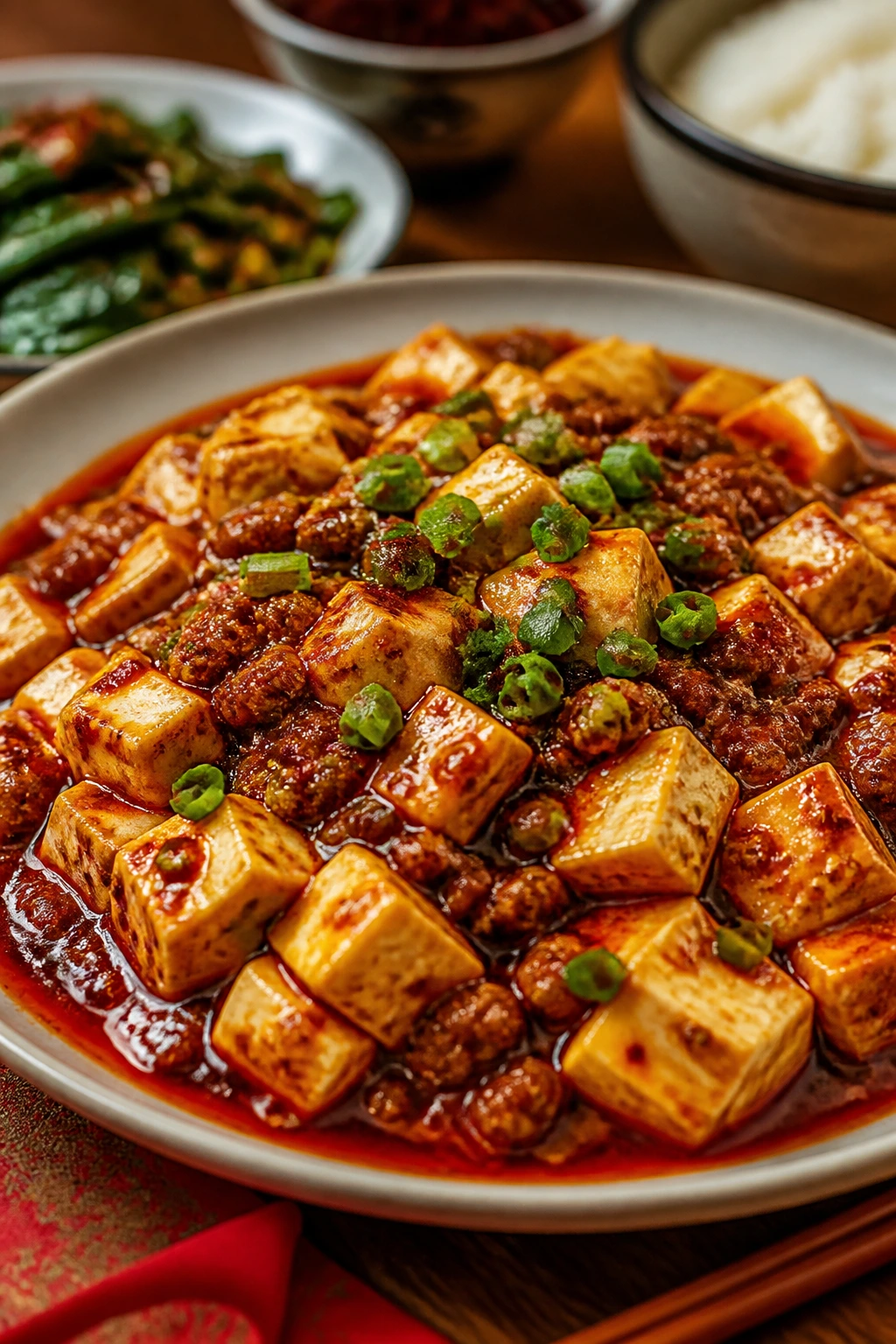
A holiday spread does not need every dish to be fiery. That’s a mistake people make when they get excited. Better to think in roles: one spicy centerpiece, one cooling dish, one noodle, one fish, one dumpling, one green vegetable. That balance keeps the table from collapsing under its own heat.
Here’s the menu logic I trust most.
-
Mapo tofu belongs because it gives you silky tofu, minced pork or mushrooms, and that beautiful red oil that stains rice in the best way. It’s soft and loud at the same time.
-
Chili oil dumplings or wontons work because every bite holds a little sauce in the pleats. They’re great with black vinegar and minced garlic, which is a combination I never get bored of.
-
Mala shrimp or another quick seafood stir-fry feels celebratory without sitting heavy. Shrimp cooks fast, and the sweetness of the shellfish plays nicely against chile and peppercorn.
-
Dry-fried green beans bring texture. The blistered edges and the crisp-tender middle keep the meal from turning into a pile of soft things.
-
Dan dan noodles can be the bold noodle dish on the table, especially if you want a nutty, spicy bowl that people can mix to their own taste.
-
Steamed whole fish with ginger, scallions, and a little chile is where the holiday symbolism really lands. Keep it whole. Head to tail. That matters.
-
Smashed cucumber salad with chili oil is the cooling reset button. A little garlic, a little vinegar, a little sesame oil. It wakes the mouth back up.
A table built from those parts feels complete. It also gives the eater a rhythm: hot, cool, chewy, silky, crisp, long, whole. That rhythm is what takeout usually misses.
Building a Lucky Menu Without Turning It Into a Fire Alarm
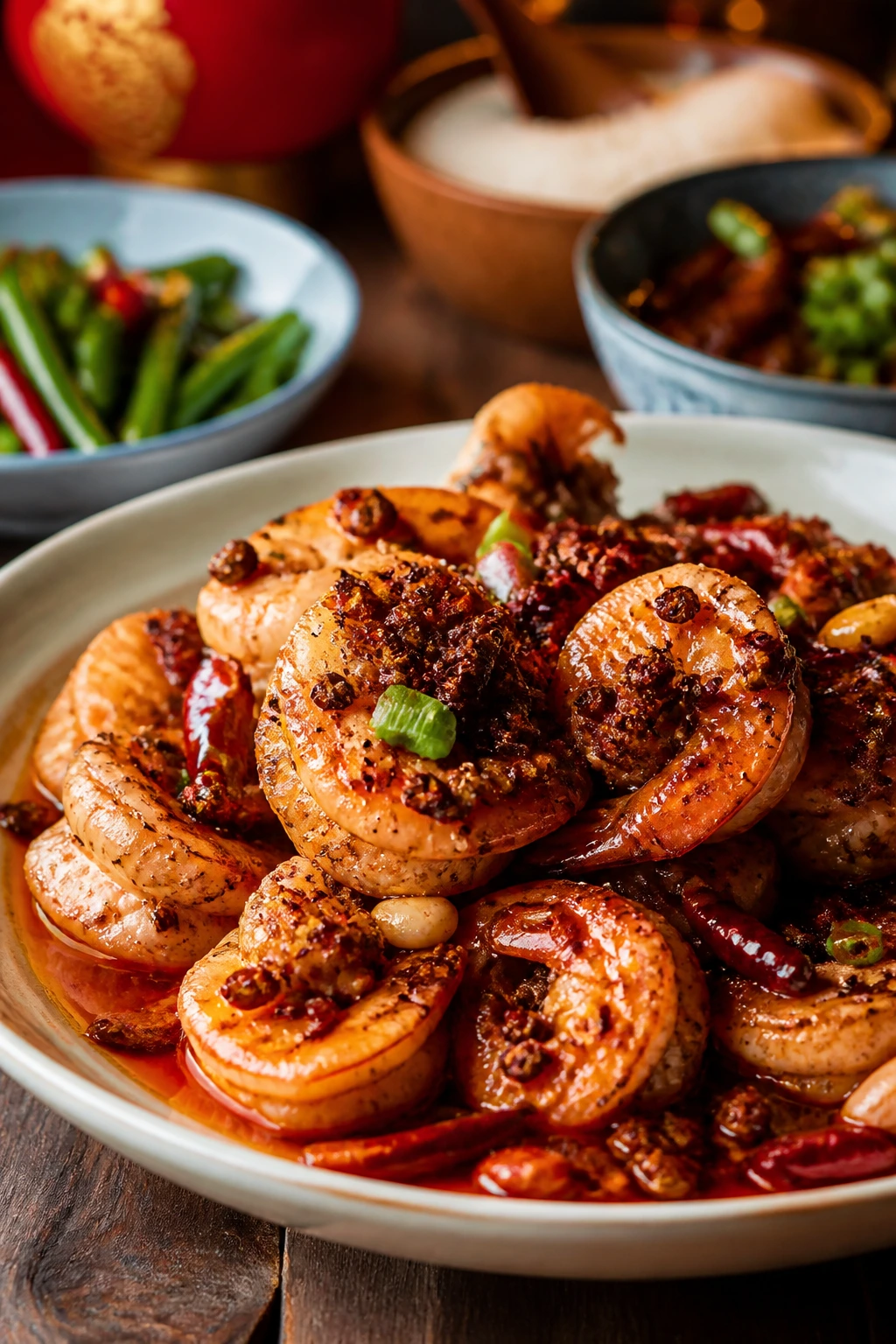
A spicy New Year menu works best when it has a heat ladder. Not a blaze. A ladder. Start with flavor, then move into heat, then give people something cool or plain to bring the palate back down.
If you’re cooking for four to six people, I like this shape: one spicy main, one seafood or fish dish, one noodle dish, one vegetable, one cool side, and one dumpling or starter. That’s enough to feel festive without leaving everybody winded halfway through the meal.
For a larger table, add another vegetable or a second noodle. Do not just double the heat. Nobody needs three dishes that fight each other for first place.
A smart menu rhythm
First bite: something sharp and small, like cucumber salad or dumplings with vinegar.
Middle of the table: your boldest dish — mapo tofu, mala shrimp, or a chile-oil braise.
Anchor dish: the fish or noodles, which should feel steady, not aggressive.
Reset dish: a green vegetable or a lightly seasoned tofu dish that gives the tongue a break.
That structure matters more than people think. If every dish is spicy, the meal gets blurry. The chiles stop reading as special and start reading as noise.
Regional style matters too. Sichuan and Hunan kitchens lean into heat in ways that Cantonese holiday food usually doesn’t. That does not mean you’re doing it wrong if your table is a little calmer. It means you can borrow the heat where it adds lift and leave the rest of the meal to do its symbolic work.
One of my favorite moves is to keep the chile oil on the side for at least one dish. People can spoon on what they want. Kids, elders, and chili-happy adults all get what they want without turning dinner into a negotiation.
The Home Techniques That Make Restaurant-Style Flavor at Home
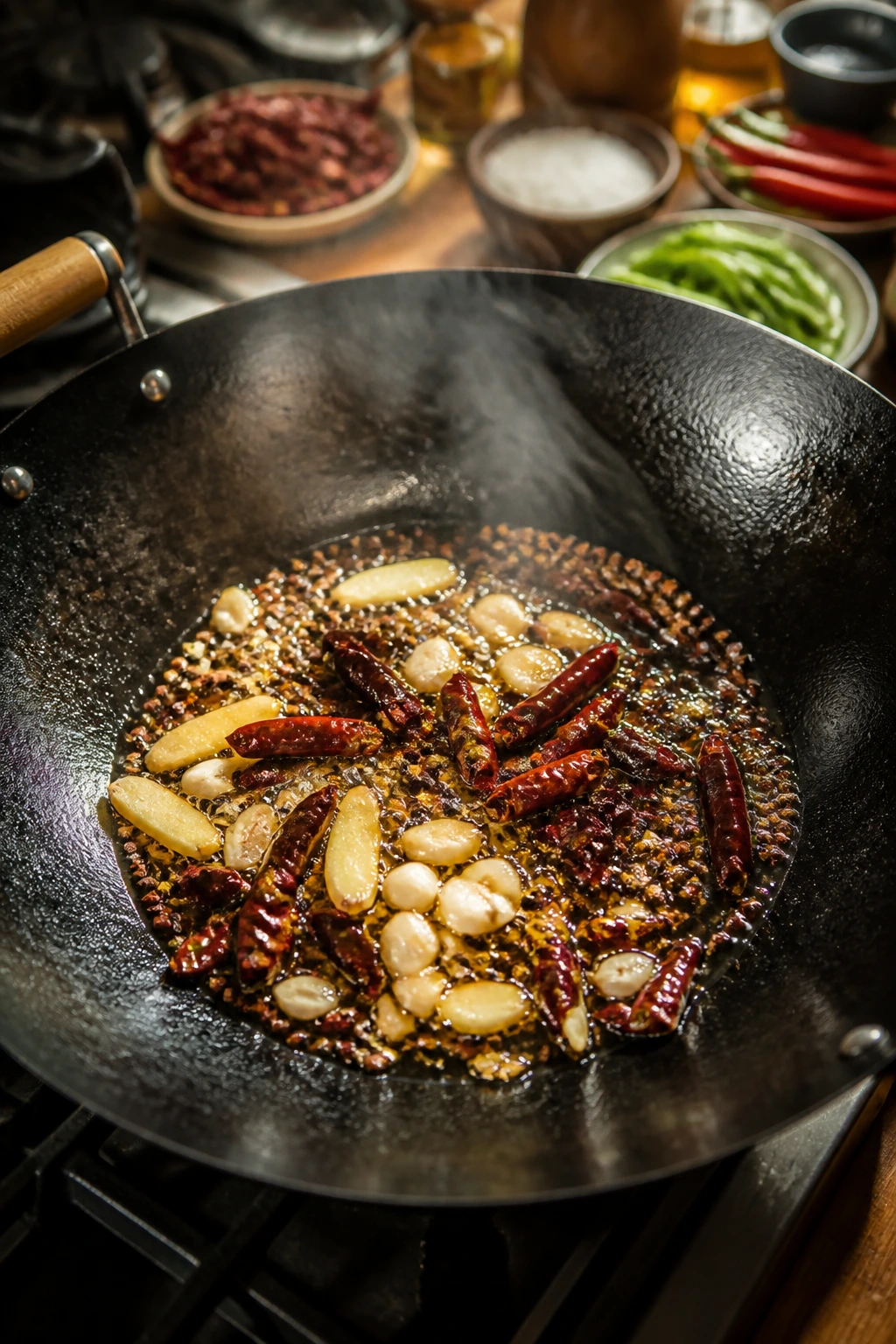
You do not need a restaurant wok station to make this food taste sharp. You need a few reliable habits and the nerve not to crowd the pan.
Bloom the spices in oil
This is the move that separates decent from memorable. Heat the oil until it shimmers, then add dried chiles, peppercorns, ginger, garlic, or a spoon of doubanjiang and let them sizzle just long enough to smell fragrant. Not smoky. Fragrant. If the garlic goes brown too fast, the oil is too hot.
That moment in the pan pulls flavor out of the aromatics and into the fat, which is why the sauce tastes woven together instead of dumped together.
Keep proteins tender
Velveting is worth learning if you cook chicken, beef, or shrimp for this kind of meal. A light coat of cornstarch, a little soy sauce, sometimes egg white, and a short rest before cooking can keep the meat silky through a hard stir-fry. You’re not making a batter. You’re making a buffer.
Shrimp needs less help. A quick salt-and-wine marinade, then a fast sear, is plenty. Cook it until just opaque and curl-shaped, not until it turns into little rubber commas.
Don’t drown the pan
Crowding kills spice. It cools the pan and makes everything stew. If you’re cooking green beans, chicken, or sliced beef, do it in batches. Yes, it takes a few extra minutes. It also keeps the edges browned and the sauce glossy instead of thin.
Finish with acid and freshness
This part gets skipped too often. A splash of black vinegar, a handful of scallions, a few cilantro leaves if your household likes them, or a final drizzle of sesame oil can turn a good spicy dish into one that smells alive on the plate. The last hit of freshness matters because heat flattens fast once the food sits.
And that’s the thing people forget. Great home-cooked spicy food is not just about intensity. It’s about contrast.
How to Plate a Spicy New Year Spread So It Looks Intentional
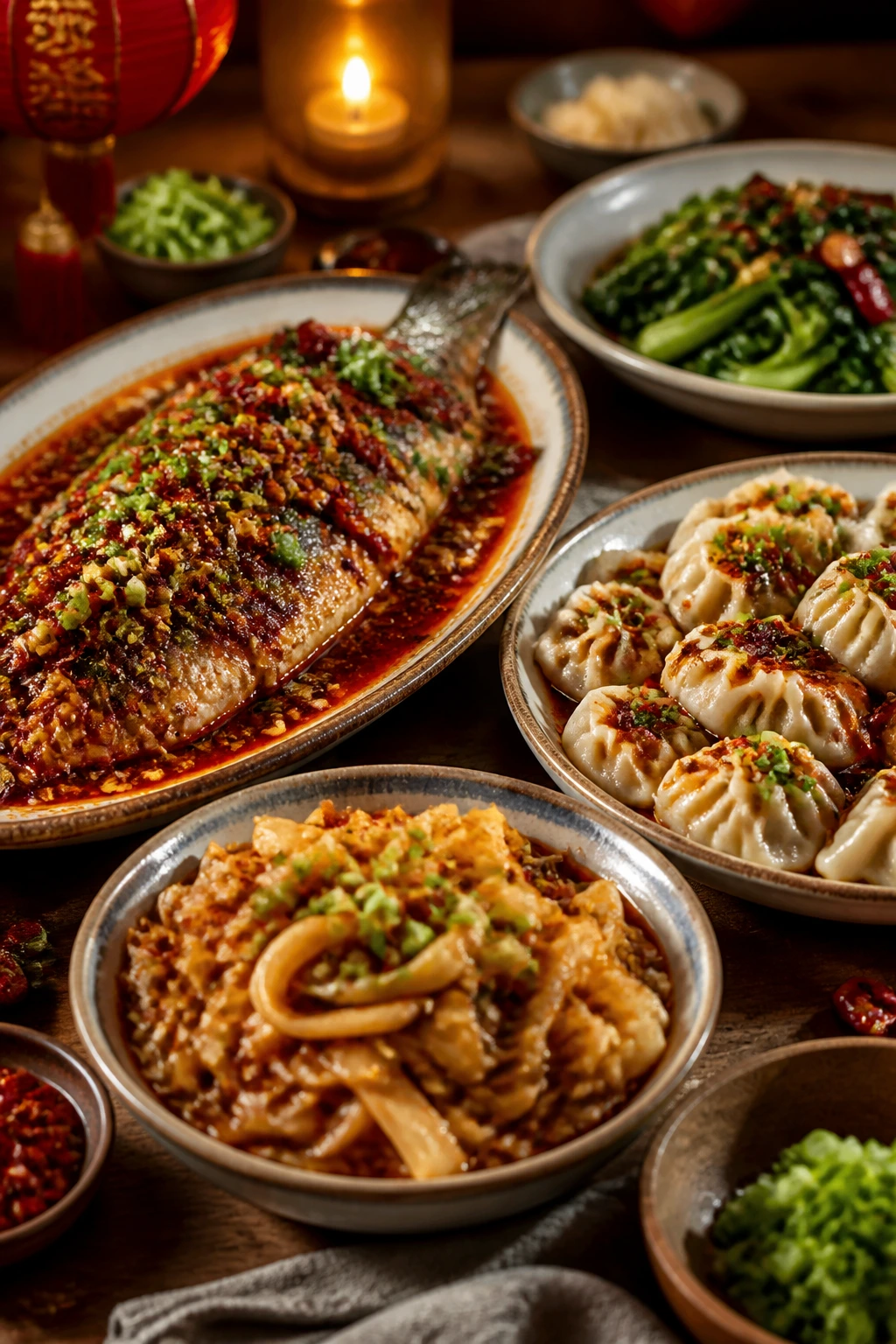
A feast can taste right and still look chaotic. The fix is simple: give each dish room, and let the colors do some of the work.
Presentation: Use wide platters for whole fish and green vegetables, shallow bowls for noodles, and a flat serving plate for dumplings so the pleats stay visible. Keep the red oil where people can see it, but don’t flood the plate until the surface looks glossy and heavy. A few scallion greens, sliced red chiles, or toasted sesame seeds go farther than a mountain of garnish.
Accompaniments: Plain jasmine rice is the quiet hero here. It takes heat, salt, and sauce without arguing. I’d also put a cooling cucumber salad, steamed bok choy or gai lan, and one simple starch on the table — mantou, rice cakes, or long noodles depending on your family’s traditions. A small dish of black vinegar with minced garlic is useful too. So is extra chili crisp, if the table runs that way.
Portions: For four people, one centerpiece dish and three supporting dishes can be enough if one of them is noodles or rice. For six to eight people, plan on one fish, one spicy tofu or meat dish, one vegetable, one noodle, one cooling side, and one dumpling plate. If the menu gets heavier, scale the vegetables up instead of adding another fried item. That keeps the meal from sitting like a brick.
Beverage Pairing: Unsweetened jasmine tea is the cleanest match. Oolong works too, especially with mala heat. If you want something colder, a dry lager or a sparkling water with lime cuts through chile oil nicely. Sweet drinks tend to make the spice feel clumsier, so I’d avoid anything syrupy unless that’s what your household already loves.
The best-looking table is not the one with the most color. It’s the one where you can tell each dish has a job.
Smart Tips for Bigger Flavor, Faster Service, and Less Stress
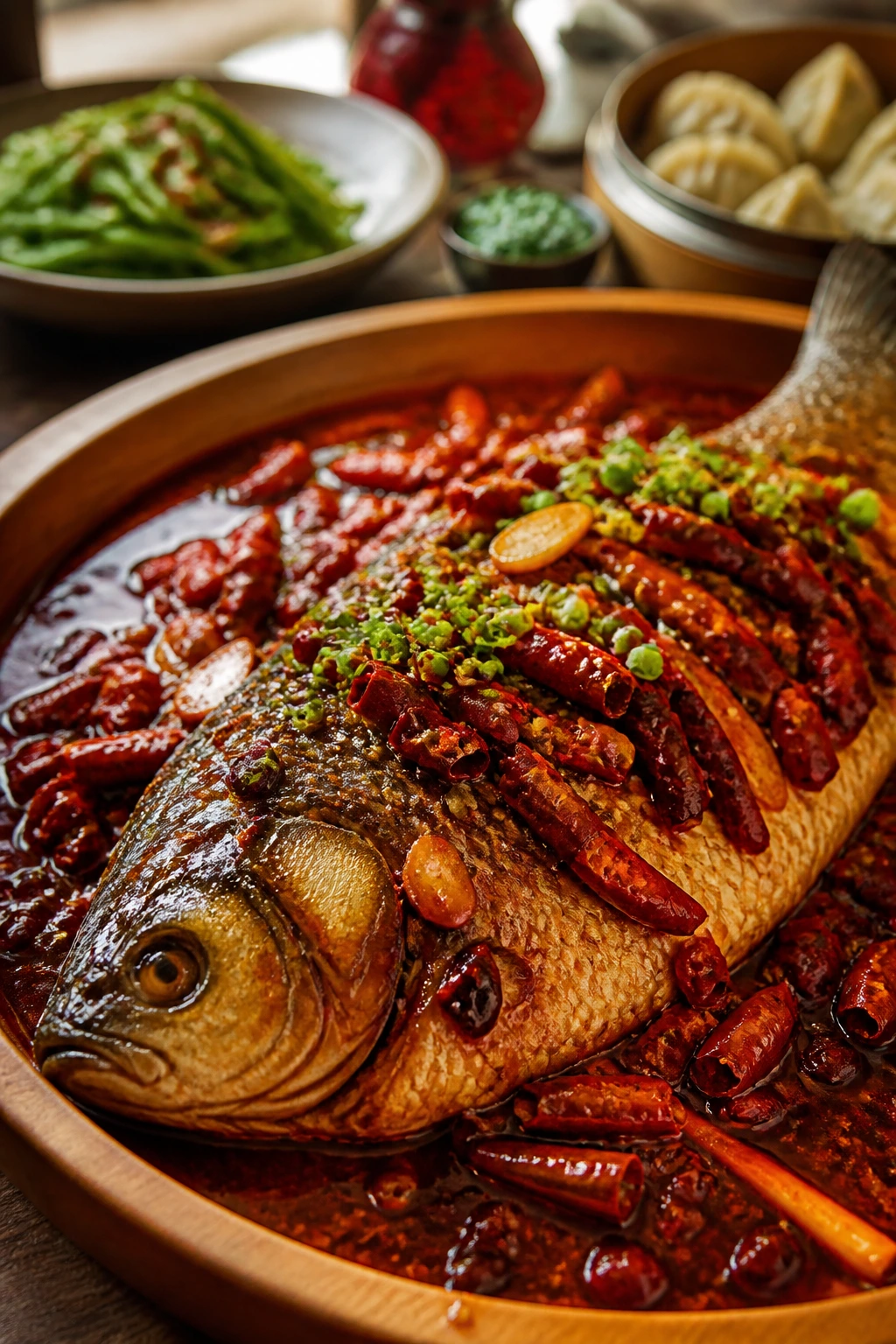
Flavor Enhancement: Keep a small bowl of seasoned chile oil on the table, but finish each dish with a separate, lighter drizzle of sesame oil or black vinegar. That gives the food a fresh smell right before serving. A single teaspoon of vinegar at the end can make a salty dish taste cleaner.
Time-Saver: Chop ginger, garlic, scallions, and any fresh chiles before you heat the wok. Line them up in little bowls. Once the pan is hot, you do not want to be hunting for a cutting board while the garlic threatens to burn.
Pro Move: Blanch green vegetables for 30 to 60 seconds, then stir-fry or dress them quickly. You’ll get a brighter color and a cleaner bite. If you’ve ever had limp bok choy at a holiday meal, you know why this matters.
Cost-Saver: Use tofu, mushrooms, chicken thighs, and dried shiitake when seafood is too expensive or the table needs to be fed without fuss. These ingredients absorb chile and soy beautifully, and they still feel celebratory when plated with care.
One more small thing. Keep a cool side ready before the spicy dishes finish. A smashed cucumber salad or a lightly dressed cabbage slaw buys you breathing room between batches. It also makes the meal feel planned, which is half the battle.
The Mistakes That Flatten the Flavor or Ruin the Texture
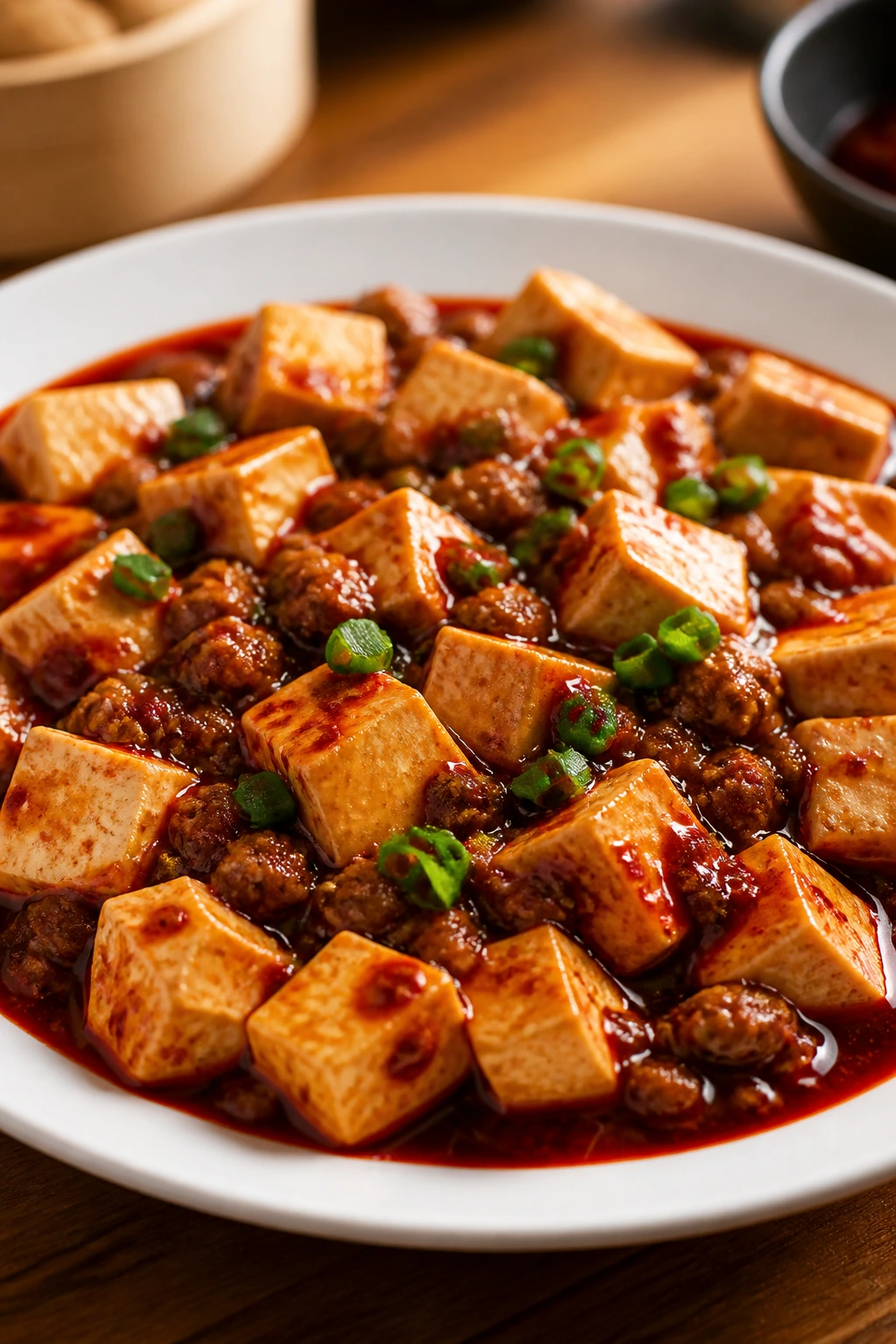
The biggest mistake is treating every dish like a chili contest. Too much heat, too early, and the table loses contrast. The fix is to make one or two dishes genuinely spicy and let the rest stay aromatic, savory, or cool. Heat should move across the table. It should not sit there like a threat.
Another common problem is stale pantry ingredients. Old Sichuan peppercorns taste dull and dusty. Thin, tired chili oil just tastes oily. If a jar has been open forever and smells flat, replace it. Holiday food shows every weakness in the pantry because there’s nowhere to hide.
Crowding the pan is another one. It happens with green beans, shrimp, sliced beef, even dumplings. The symptom is pale food with soft edges and a sauce that looks watery around the sides. Cook in batches, use a hotter pan, and give the ingredients room to sizzle instead of steam.
People also overdo the finishing sauces. A heavy pour of soy, sesame oil, and chile crisp can bury the flavor of the actual ingredients. Better to season the dish in layers and leave a little extra sauce on the side. That way the first bite tastes balanced instead of loud.
And yes, timing matters. A whole fish, a crisp vegetable, and a noodle dish should not all sit around waiting for the last stir-fry to finish. That’s how the greens wilt and the noodles glue themselves together. Stage the meal. Serve the fish, noodles, and vegetables when they’re ready, not when the last pan finally behaves.
Variations for Different Tastes, Budgets, and Spice Tolerances
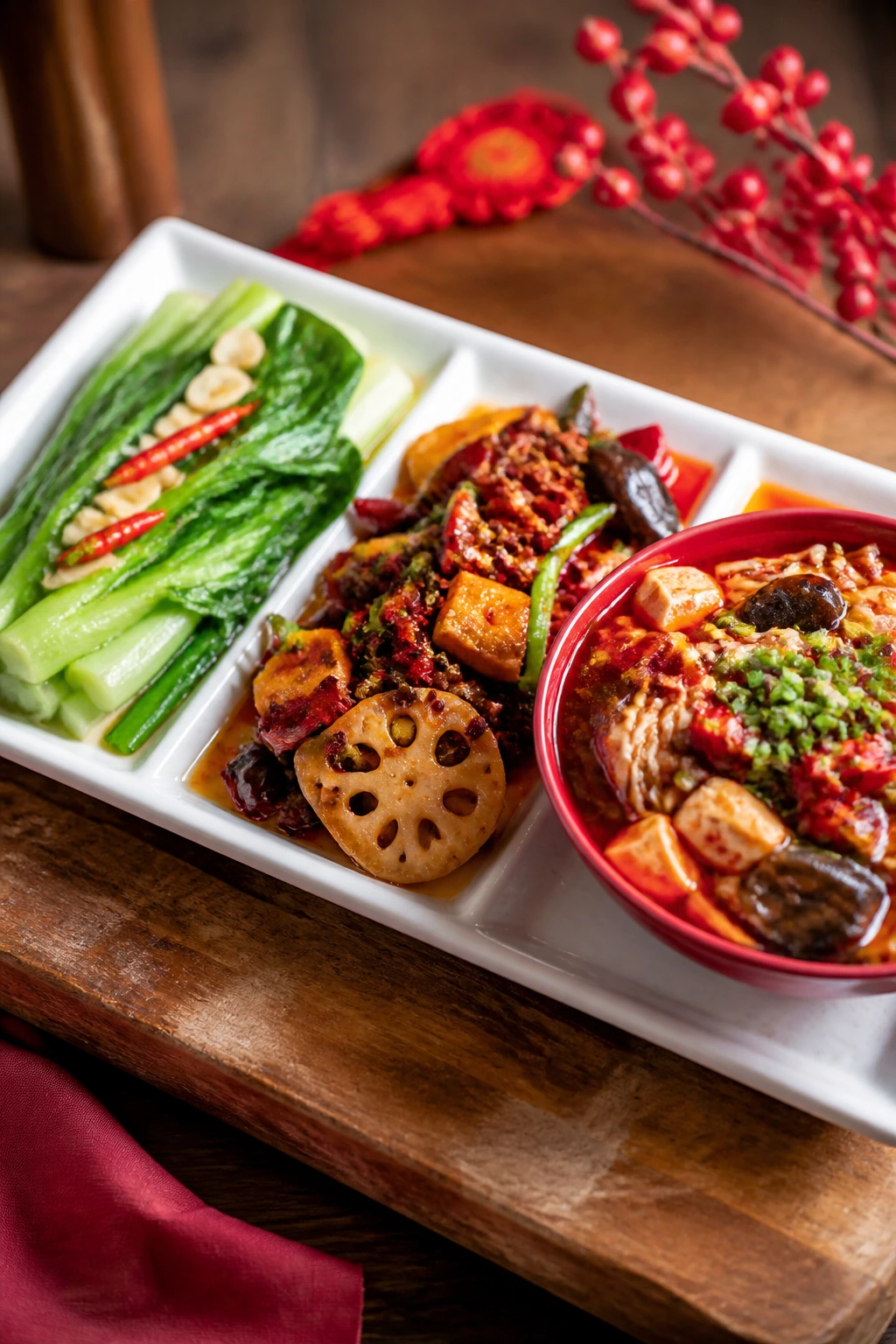
Gentle Heat Family Table: Keep the chile oil on the side and let ginger, scallion, and black vinegar do more of the work. This version still feels festive, but nobody has to drink water between bites. It’s the one I’d use if the table has mixed age groups or a few cautious eaters.
Mala-Forward Sichuan Spread: Lean hard into doubanjiang, dried chiles, and freshly ground Sichuan peppercorns. Mapo tofu, mala shrimp, dan dan noodles, and dry-fried green beans fit neatly here. It’s the most dramatic version of the meal, and it works best when you balance it with a cold cucumber dish and plain rice.
Vegetarian Red-Bowl Feast: Build around tofu, mushrooms, napa cabbage, glass noodles, and green beans. A good mushroom stock plus chile oil and black vinegar can make this table feel deep and satisfying without any meat at all. Dried shiitake are your friend here. They carry a lot of weight for very little money.
Seafood and Ginger Celebration: Use whole fish, shrimp, scallops, or crab with chile, scallion, and ginger. The spice should support the seafood, not cover it. This version feels lighter on the tongue and is especially good when you want the table to smell fragrant rather than heavy.
Pantry-Shortcut Holiday Menu: Frozen dumplings, store-bought chili crisp, good soy sauce, a whole fish or a simple tofu dish, and one crisp vegetable. It’s the version you make when time is tight but you still want the meal to feel deliberate. The shortcut is not shameful if you finish with fresh scallions and a little vinegar.
Budget Feast with a Lot of Presence: Chicken thighs, tofu, green beans, cabbage, and rice noodles can carry a table beautifully if the seasonings are right. The trick is to spend on one or two strong pantry items — a good black vinegar, a solid doubanjiang, fresh Sichuan peppercorns — and let the cheaper ingredients do the volume work.
Tools and Equipment That Make the Work Easier
-
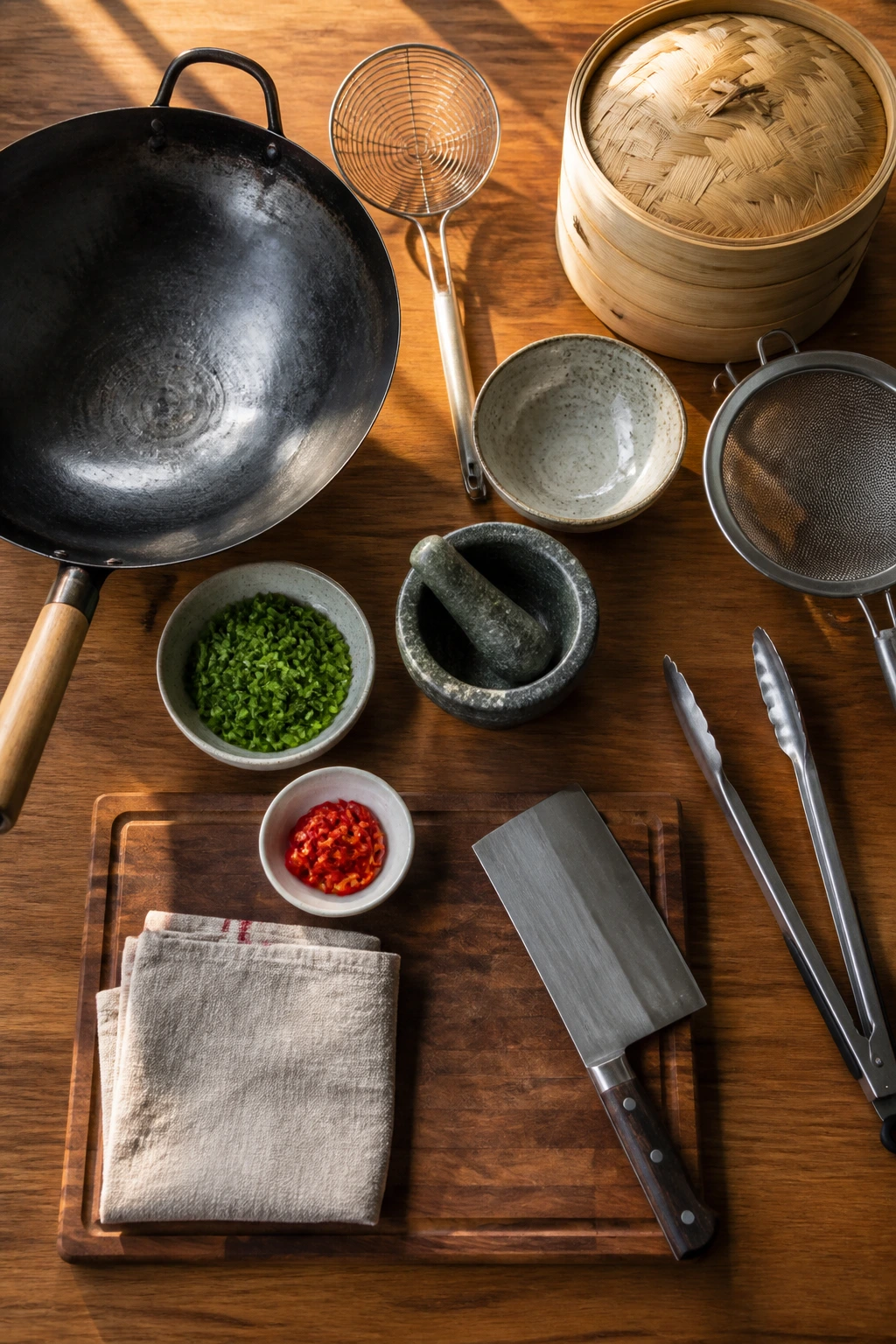
Wok or 12-inch heavy skillet: A wok is ideal for fast stir-fries, but a heavy skillet can do the job if it gets hot and stays hot.
-
Spider or slotted spoon: Useful for lifting dumplings, blanching vegetables, and pulling fried bits from oil without dragging half the pan along with them.
-
Small prep bowls: These save you from scrambling once the burner is on. They’re especially useful when you’re working with ginger, garlic, scallions, chile flakes, and peppercorns.
-
Sharp chef’s knife: A clean slice matters here. Ragged scallions, smashed garlic, and uneven fish pieces all cook badly.
-
Cutting board with a damp towel under it: Old-school, but worth it. The board won’t slide while you chop.
-
Steamer basket or bamboo steamer: Handy for fish, buns, and vegetable dishes. A metal steamer insert works too.
-
Fine-mesh strainer: Good for washing rice, rinsing peppercorns, straining sauces, or fishing out fried chile bits if you want a cleaner finish.
-
Tongs or a heatproof spatula: You’ll need one of these for turning protein without tearing it apart.
-
Mortar and pestle or spice grinder: Helpful for freshly grinding Sichuan peppercorns. A clean coffee grinder works in a pinch.
-
Airtight storage containers: You’ll want them for sauces, chopped aromatics, and leftovers that should not sit exposed to the fridge.
A wok is nice. A good burner is nicer. But if you have a sturdy skillet and decent timing, you can still make this food sing.
Make-Ahead, Storage, and Reheating Without Wrecking the Meal
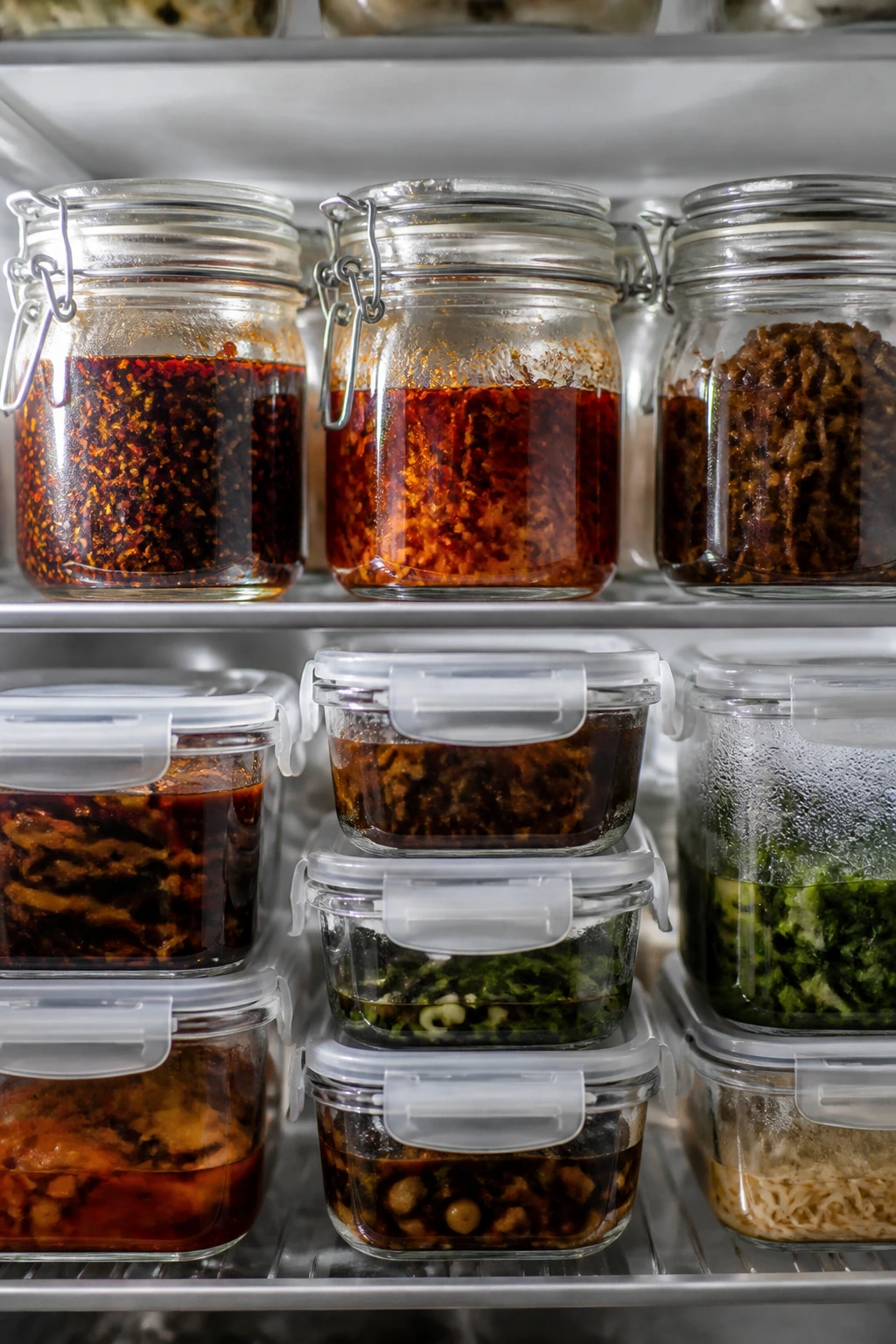
A little planning goes a long way here, especially because some spicy dishes improve overnight and others turn sad if you look at them too long.
Sauces and condiments: Chili crisp, soy-vinegar dipping sauce, and dry seasoning mixes can usually be made a few days ahead and kept refrigerated in airtight containers. If you make homemade chile oil with dried ingredients only, it can keep for about 2 to 3 weeks in the fridge. If you add fresh garlic or shallots, shorten that to about 1 week and keep everything very clean and dry.
Dumplings and wontons: Uncooked dumplings freeze well for up to 2 months if you freeze them on a tray first, then bag them once solid. Cook them straight from frozen; add a minute or two to the boil or steam time. Cooked dumplings are best eaten the same day, though leftovers can be reheated in a skillet with a teaspoon of oil and a splash of water under a lid.
Stir-fries and braises: Most cooked meat or tofu dishes keep well for 3 to 4 days in the fridge. Reheat them in a skillet over medium heat with a spoonful of water or stock so the sauce loosens before it tightens again. Microwave reheating works in a pinch, but the edges get softer.
Fish: Steamed whole fish is one of those dishes that wants to be eaten fresh. If you do have leftovers, refrigerate them promptly and use them within 1 day. Reheat gently, if at all. Honestly, fish is often better flaked into congee or a light noodle soup than dragged back into a hot pan.
Vegetables: Crisp green vegetables keep for 2 to 3 days, but their texture is best on day one. Reheat quickly in a hot skillet, or eat them cold with a little sesame oil and vinegar if the fridge has already taken some of their spring away.
Noodles and rice: Plain rice keeps well for 3 to 4 days if cooled and refrigerated properly. Noodles are pickier. Store them with a little sauce so they do not dry into a clump, and reheat with a splash of water in a skillet. A cold noodle salad can be revived with a little vinegar and sesame oil, which is a fine way to rescue leftovers.
Make the sauces, chop the aromatics, and freeze the dumplings ahead of time if you can. The last-day work should be mostly cooking, not knife work.
Questions People Ask About Spicy Chinese New Year Food
How spicy should a New Year menu be?
Spicy enough to feel intentional, not so spicy that people stop tasting the fish, the noodles, or the dumplings. One dish can carry real heat, another can be mildly tingly, and the rest can stay aromatic. That gives you a table with shape instead of a single flavor note repeated eight times.
Can I make this meal if my family does not like Sichuan peppercorns?
Yes. Leave the peppercorns out and lean on chile oil, garlic, ginger, and black vinegar instead. You’ll still get warmth and aroma, just without the tongue-tingling numbness that makes mala so distinct.
What’s the best dish to make ahead?
Dumplings, sauces, and some braised tofu or mushroom dishes are the safest bets. They hold texture well and often taste better after the flavors settle. Fish and crisp vegetables are the opposite; they should be cooked close to serving time.
Do I need a wok, or will a skillet work?
A wok helps, but it is not mandatory. A heavy 12-inch skillet can get hot enough for most home versions of these dishes, especially if you cook in batches and do not crowd the pan. The real requirement is heat and patience.
What if I cannot find doubanjiang or black vinegar?
Use what you can get, but keep the substitutes honest. Miso plus chili paste can stand in for some of the depth of doubanjiang, and rice vinegar mixed with a tiny splash of soy is a workable backup for black vinegar. The flavor will be different, but the meal can still be good.
How do I keep the vegetables crisp?
Blanch them briefly, drain them well, and finish them fast in a hot pan. If they sit in sauce too long, they soften and lose that bright bite that makes them such a useful counterpoint to spicy dishes.
Can I make the meal vegetarian and still have it feel festive?
Absolutely. Use tofu, mushrooms, green beans, napa cabbage, and noodles, and build the flavor with chile oil, black vinegar, ginger, and good soy sauce. Dried shiitake and fermented bean paste can give the dishes enough depth that nobody feels shortchanged.
What should I do if the food tastes flat at the end?
Add one small correction, not five. A pinch of salt, a splash of black vinegar, or a few fresh scallions can wake the whole dish back up. If it still tastes dull after that, the issue was probably stale aromatics or under-browned spices earlier in the cook.
Is it okay to serve one very spicy dish and keep everything else mild?
That’s often the smartest move. A single bold dish gives the meal personality, and the milder dishes give everybody somewhere to land. Holiday food is better when it has a pulse and a resting place.
A Table Worth Sitting Down To
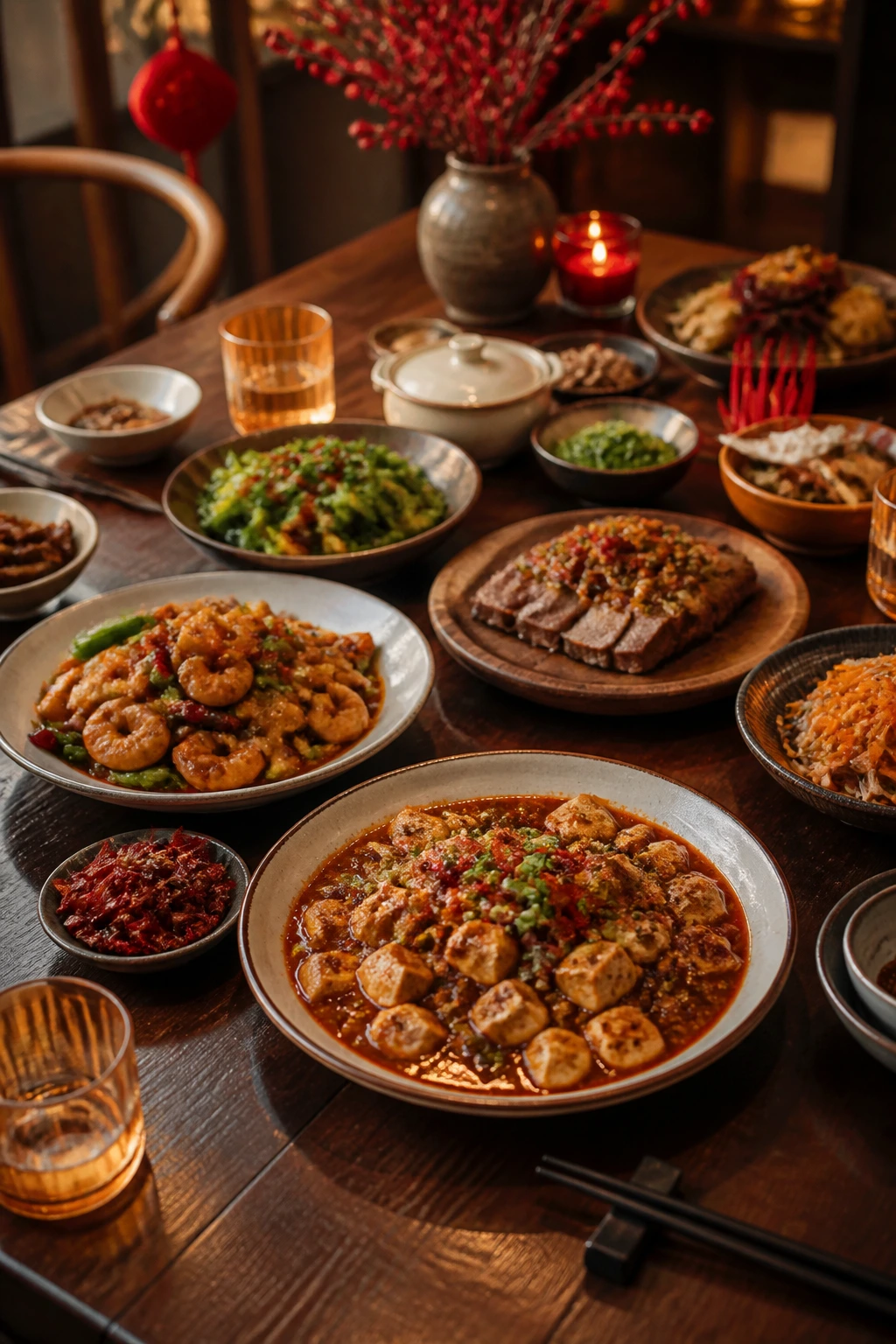
The best spicy Chinese New Year food does not shout all night. It opens the meal, clears the palate, and makes the other dishes taste more like themselves. That’s why home cooking wins here. You can decide where the fire belongs and where it should pause.
Takeout can feed people. A proper holiday table does more than that. It brings together heat, luck, texture, and a little bit of patience, which is usually the part delivery never gets right. If you build the menu with that in mind, the food will feel festive before anyone even picks up a pair of chopsticks.
And once you’ve done it once, you stop thinking of spicy holiday food as a special project. It becomes the kind of meal that people expect, ask for, and remember.