



The trick with spicy Chinese pork belly is not drowning it in more sauce. It’s giving the fat time to render until the edges go bronze and the pan smells like garlic, soy, and chili hitting hot metal.
That’s where takeout usually slips. The carton traps steam, the glaze gets sticky in a hurry, and the pork turns soft in the wrong way — not tender, just tired. At home, you get to keep the heat honest. You can let the belly brown properly, pull it out before it goes greasy, and build the sauce in the fat that’s left behind.
I like this style of pork belly because it tastes clear, not muddled. There’s salt from soy sauce, heat from chili garlic sauce, a little sweetness to round the edges, and a sharp little lift from rice vinegar and Shaoxing wine. Scallions go in at the end so they still taste green. Sesame oil finishes the whole thing with that nutty smell that makes people hover near the stove.
What makes it work is not complicated, but each choice matters, and the first one is the fat management.
Why This Spicy Chinese Pork Belly Wins Over the Takeout Box
Crisp edges, not greasy cubes: Rendering the pork belly in a wide skillet gives you browned corners and a tender center, so the fat tastes deliberate instead of heavy.
A sauce that clings instead of puddling: The glaze tightens at the end with a small cornstarch slurry, which means every piece gets lacquered without drowning the pan.
Heat you can actually steer: Two tablespoons of chili garlic sauce bring steady warmth, and a pinch of Sichuan peppercorn adds that gentle tingle if you want the dish to lean bolder.
One pan after the chopping is done: Once the pork and vegetables are prepped, the whole dish builds in the same skillet, which keeps cleanup sane and keeps the sauce tied to the meat.
Bright enough to keep the fat in check: Rice vinegar and Shaoxing wine cut through the richness, so the finish tastes savory and sharp, not sticky-sweet.
Leftovers that still make sense: Reheated in a skillet, the pork belly picks up its glaze again instead of turning rubbery the way it does in a microwave.
Why This Spicy Chinese Pork Belly Tastes Bigger at Home
Takeout has to travel. That sounds obvious, but it changes everything.
A restaurant container needs a sauce thick enough to survive a car ride and a pork belly that can sit in steam without falling apart. That usually means more sugar, more starch, and less of the crackly, browned edge that makes pork belly worth cooking in the first place. Home cooking gives you the luxury of stopping at the right moment — when the glaze is shiny and the pork is bronzed, not when the sauce has turned into paste.
What Takeout Has to Compromise On
The usual weak point is texture. Pork belly that spends too long in a closed container loses its crispness fast, and once the sauce cools, the fat reads as heavy instead of rich. You can taste the difference immediately. One bite feels soft and a little dull; the other has browned edges, a sharp savory hit, and then that slow melt from the fat itself.
There’s also the sugar problem. To make a dish taste good after 20 minutes in a box, some kitchens push the sweetness harder than they should. That can work in a pinch, but it flattens the flavor. When you cook at home, you can keep the sweetness in the background where it belongs and let soy, ginger, vinegar, and chili do the louder work.
What Pork Belly Wants Instead
Pork belly behaves best when it gets patience first and sauce second. That means a dry surface, a hot pan, and enough time for the fat to render before the glaze goes in. It’s a simple rule, but it changes the whole dish.
I also think this cut deserves acidity more than most people give it. Fat needs something sharp next to it. Rice vinegar does that job neatly, and Shaoxing wine brings a dry, savory depth that keeps the sauce from tasting like candy. If you’ve only had pork belly buried in sticky glaze, this version feels cleaner and more focused.
The Ingredients and Timing That Keep the Bowl in Balance
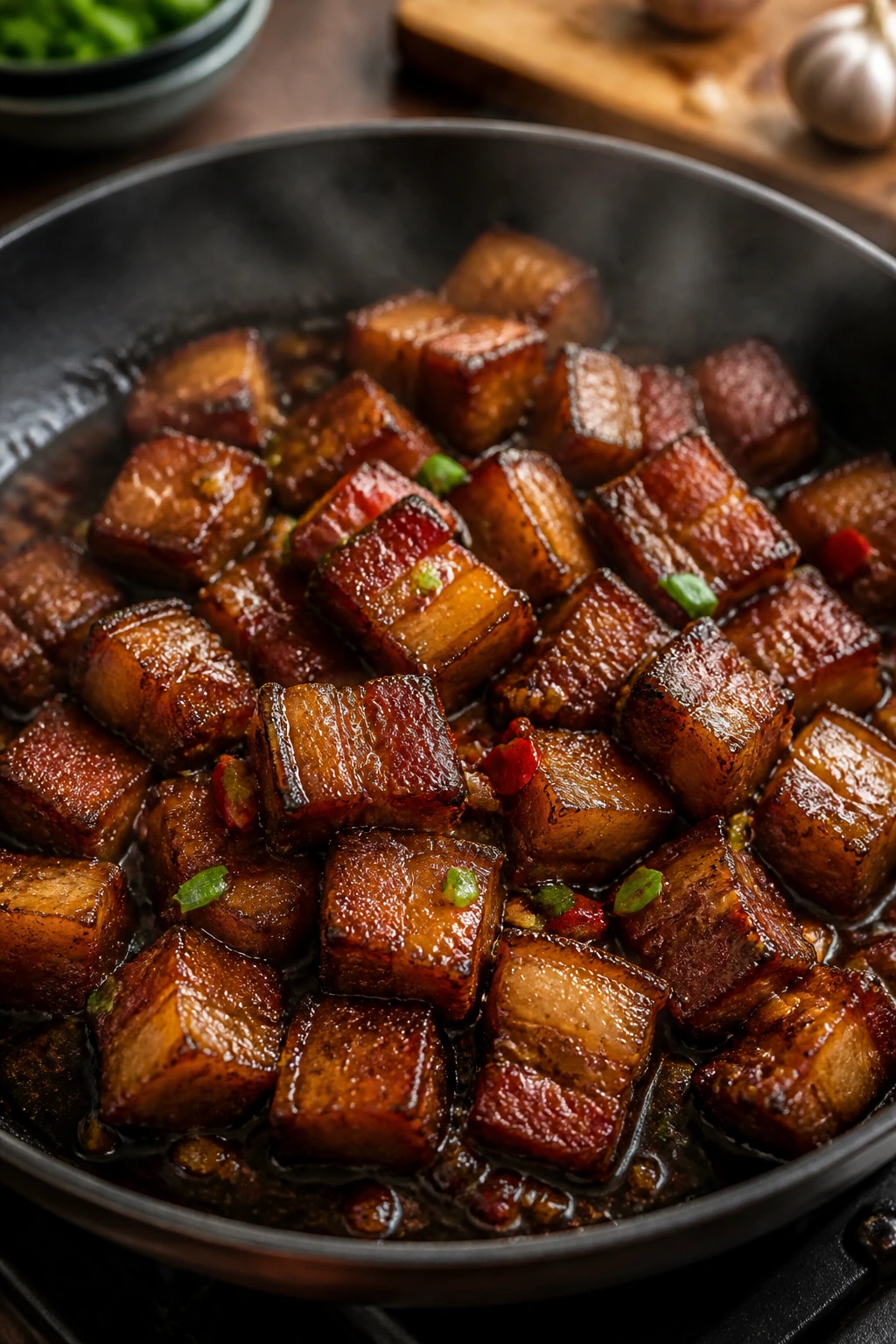
The first thing worth saying: this is not a huge-ingredient dish. It tastes layered because the ingredients are chosen with some discipline, not because the pantry exploded.
Yield: Serves 6
Prep Time: 20 minutes
Cook Time: 25 minutes
Total Time: 45 minutes
Difficulty: Intermediate — the method is straightforward, but pork belly asks for attention while the fat renders and the glaze thickens.
Best Served: Right away, over steamed jasmine rice, while the sauce is glossy and the edges still have some bite.
For the Pork Belly:
- 2 pounds skinless pork belly, cut into 1-inch cubes
- 1 teaspoon kosher salt
- 1/2 teaspoon Chinese five-spice powder
- 1 tablespoon neutral oil, if needed
For the Sauce:
- 3 tablespoons soy sauce
- 1 tablespoon dark soy sauce
- 2 tablespoons Shaoxing wine or dry sherry
- 2 tablespoons rice vinegar
- 1 tablespoon honey
- 1 tablespoon packed light brown sugar
- 2 tablespoons chili garlic sauce
- 1 tablespoon fresh ginger, minced
- 4 garlic cloves, minced
- 1/2 cup water or low-sodium chicken broth
- 1 teaspoon cornstarch mixed with 2 tablespoons cold water
- 1/2 teaspoon ground Sichuan peppercorns, optional
For the Finish:
- 1 small yellow onion, sliced into thin wedges
- 1 medium red bell pepper, sliced into thin strips
- 3 scallions, sliced
- 1 teaspoon toasted sesame oil
- 1 tablespoon toasted sesame seeds
Why Each Ingredient Earns Its Place
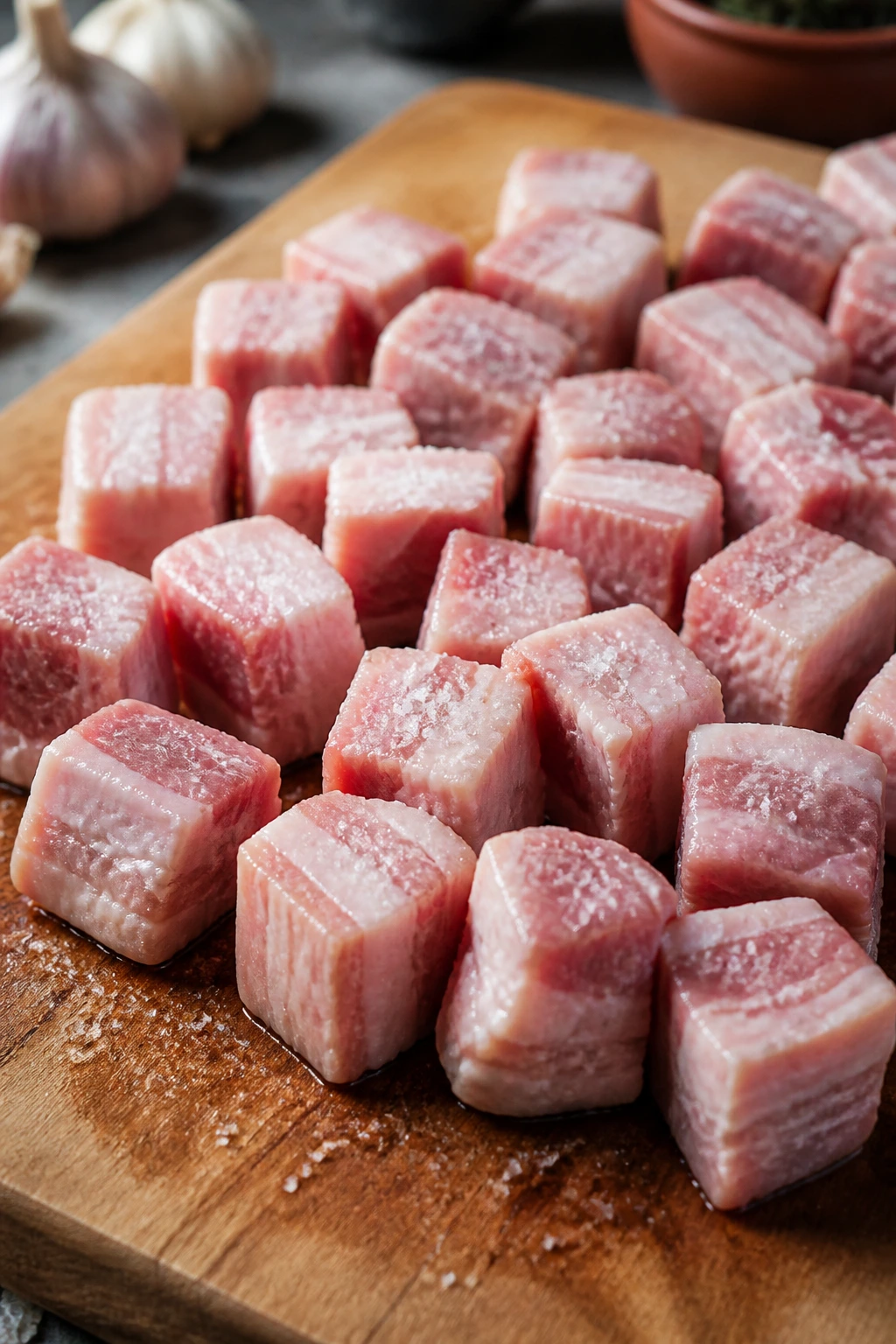
Pork Belly
- What to use: 2 pounds of skinless pork belly, cut into 1-inch cubes, gives you enough fat to render and enough surface area to brown.
- Preparation: Chill it for about 20 minutes before cutting if it feels soft; the firmer fat slices cleaner and spatters less in the pan.
- Substitutions: Boneless pork shoulder is the closest stand-in if pork belly is hard to find, though it won’t melt the same way.
- Tips: Dry the pieces until the surface looks matte, not shiny. Wet pork steams first and browns later, which is the wrong order here.
The Sauce Base
- What to use: Soy sauce, dark soy sauce, Shaoxing wine, rice vinegar, honey, brown sugar, and water or broth build the salty-sweet backbone of the dish.
- Preparation: Whisk everything before the pan gets hot, and keep the cornstarch slurry separate until the very end.
- Substitutions: Dry sherry handles the Shaoxing wine job well, tamari can replace soy sauce, and apple cider vinegar works in a pinch if rice vinegar is missing.
- Tips: Dark soy sauce is there mostly for color and a deeper look in the pan. Don’t add extra soy sauce just to make the glaze darker.
Heat and Aromatics
- What to use: Chili garlic sauce, ginger, garlic, and optional Sichuan peppercorns give the dish its sharp, hot edge.
- Preparation: Mince the ginger and garlic fine so they disappear into the glaze instead of sticking out in bits.
- Substitutions: Chili crisp can replace chili garlic sauce if you want a little crunch and more chili oil in the sauce.
- Tips: Garlic burns fast. Let the onion soften a touch first, then add the garlic and ginger and keep them moving.
Vegetables and Finish
- What to use: One small onion, one red bell pepper, scallions, toasted sesame oil, and sesame seeds keep the dish from feeling too dense.
- Preparation: Slice the onion and pepper thin so they soften in minutes, not forever.
- Substitutions: Snap peas, broccoli florets, or thin celery slices all work if you want a different crunch.
- Tips: Add scallions and sesame oil after the heat is off. Their flavor stays cleaner that way, and the scallions keep a little snap.
The Tools That Make Pork Belly Easier
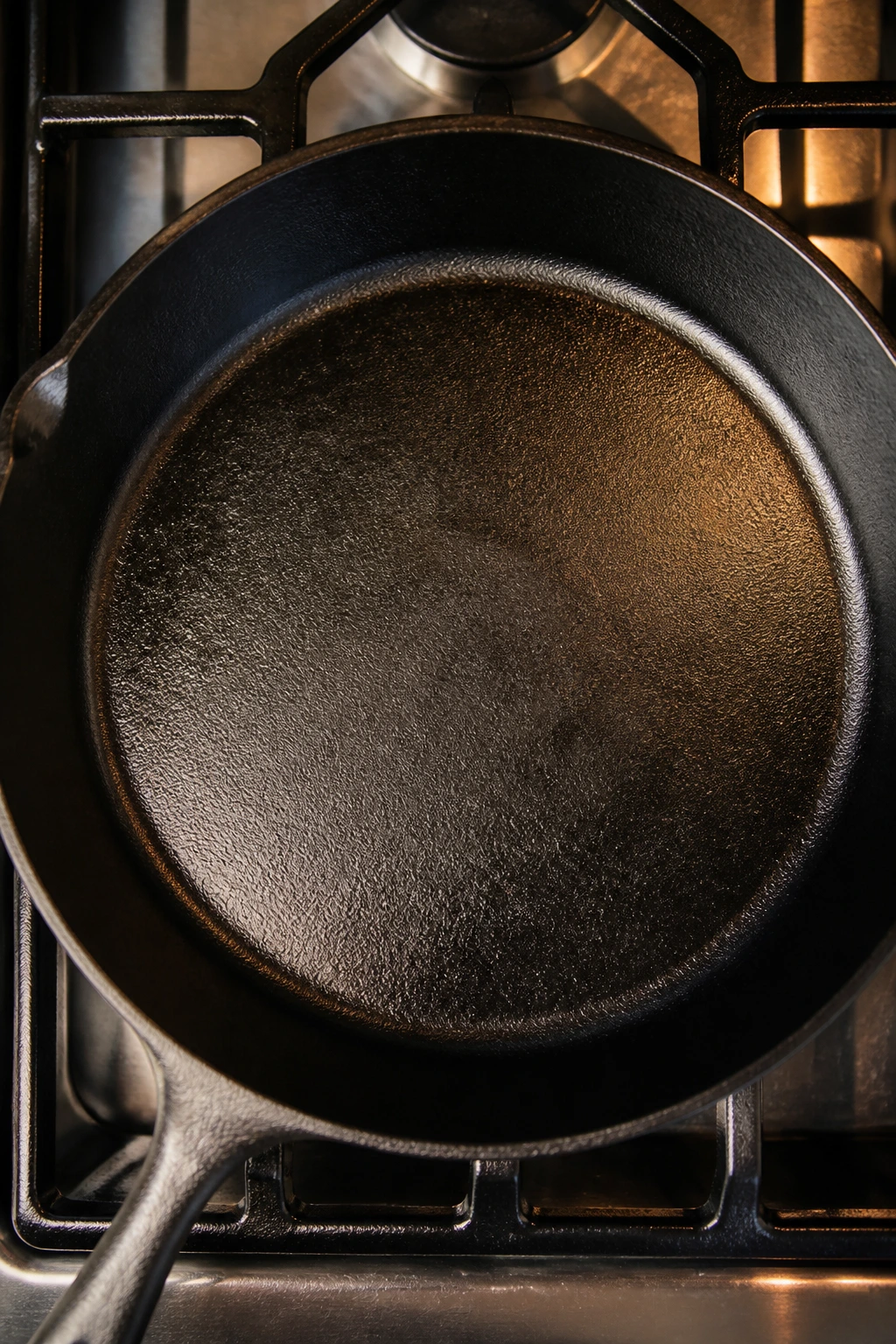
A good skillet matters here. A lot.
- 12-inch skillet or wok: The wide surface helps the pork belly brown instead of steam. A wok works if you keep the pork near the center.
- Sharp chef’s knife: Cold pork belly cuts much cleaner, and a dull knife turns it into a slippery mess.
- Large cutting board: You’ll want room for the pork, the onion, and the pepper without stacking things on top of each other.
- Tongs or a metal spatula: Pork belly pieces are slippery once they start rendering, and you need something that can lift them without tearing the browned sides.
- Small bowl and whisk: The sauce needs to be mixed before the pan gets hot. No scrambling.
- Paper towels: These matter more than people think. Dry pork browns. Wet pork sighs in the pan.
- Heatproof spoon or ladle: Useful for skimming off excess fat if the pan renders more than you need.
Cut, Salt, and Dry the Pork Belly
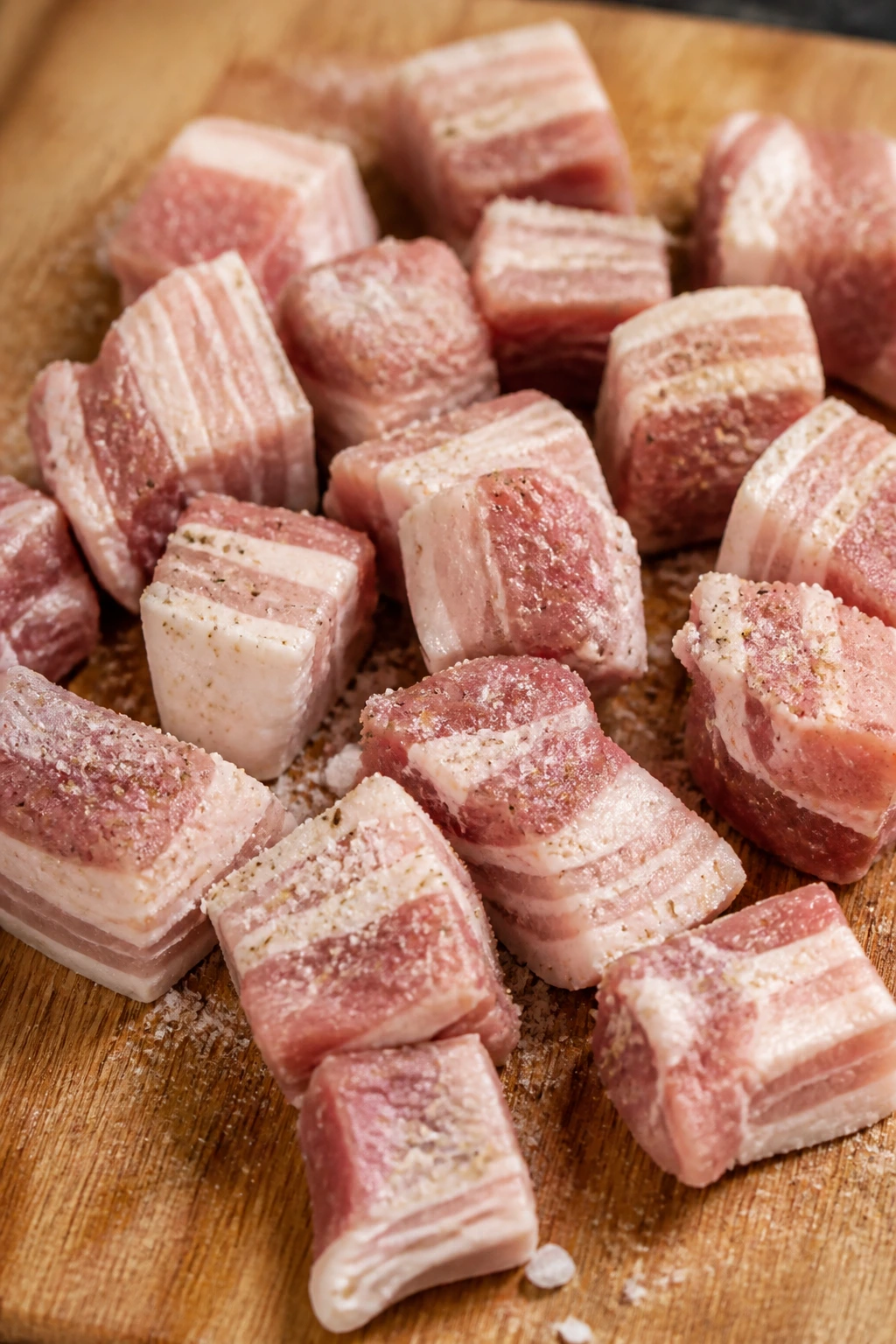
A little prep makes the difference between browned pork and greasy pork.
Prep the Pork Belly:
- Pat the 2 pounds of skinless pork belly dry with paper towels until the surface feels matte rather than slick.
- Trim off any tough, hard white bits of fat if you see them, then cut the pork into 1-inch cubes. If the belly is too soft to slice neatly, chill it for 15 to 20 minutes first.
- Toss the cubes with 1 teaspoon kosher salt and 1/2 teaspoon Chinese five-spice powder in a bowl. Let them sit while you mix the sauce, about 10 minutes. The seasoning starts drawing the surface into better shape, and the pork will brown more cleanly.
Small cubes are the right size for this dish. Bigger chunks take too long to render at home. Smaller bits can overcook before the glaze finishes. One inch gives you a good compromise — enough fat to stay lush, enough surface to take a serious sear.
Render the Fat and Brown the Edges
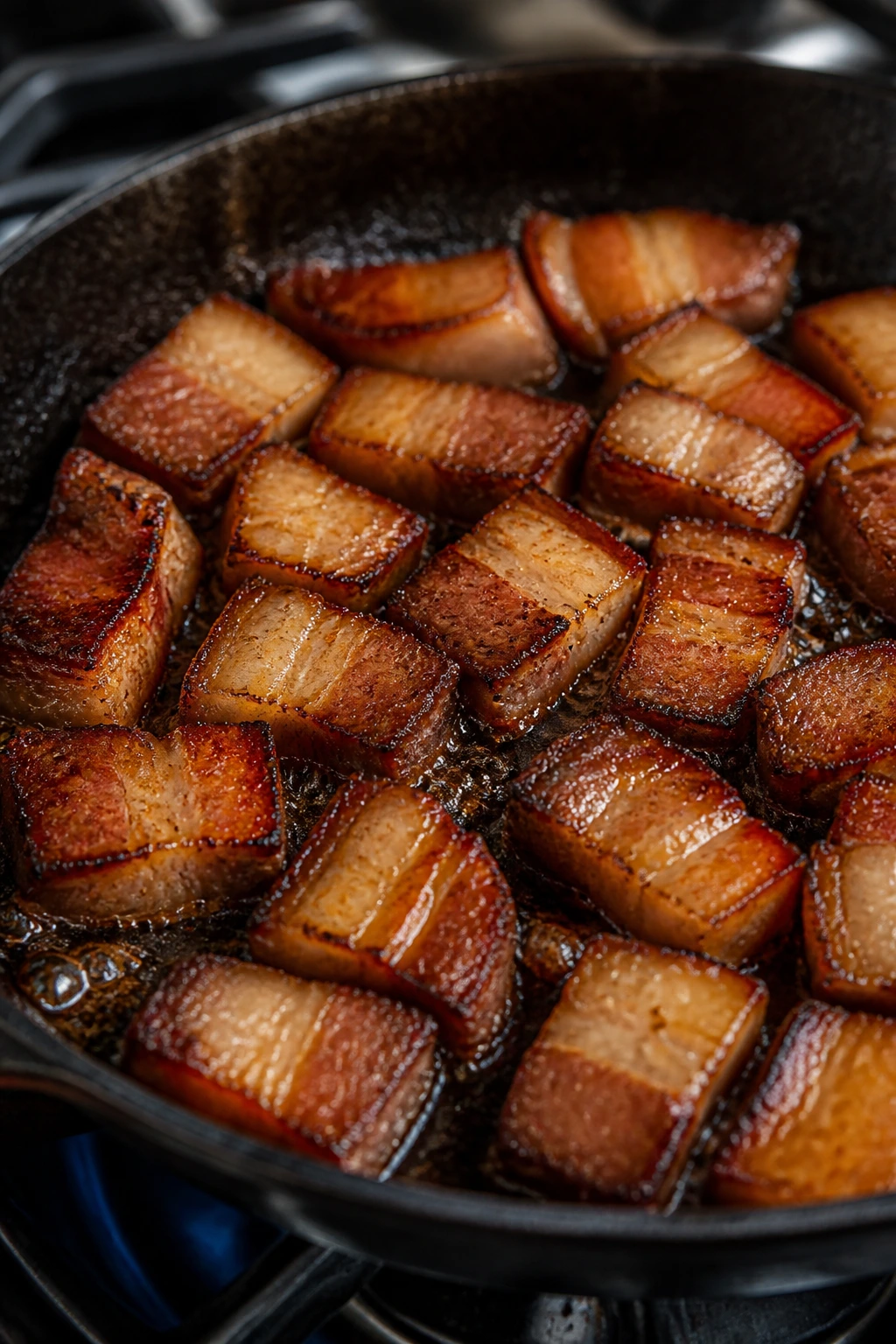
This is where the whole dish starts to pay off. Don’t rush it.
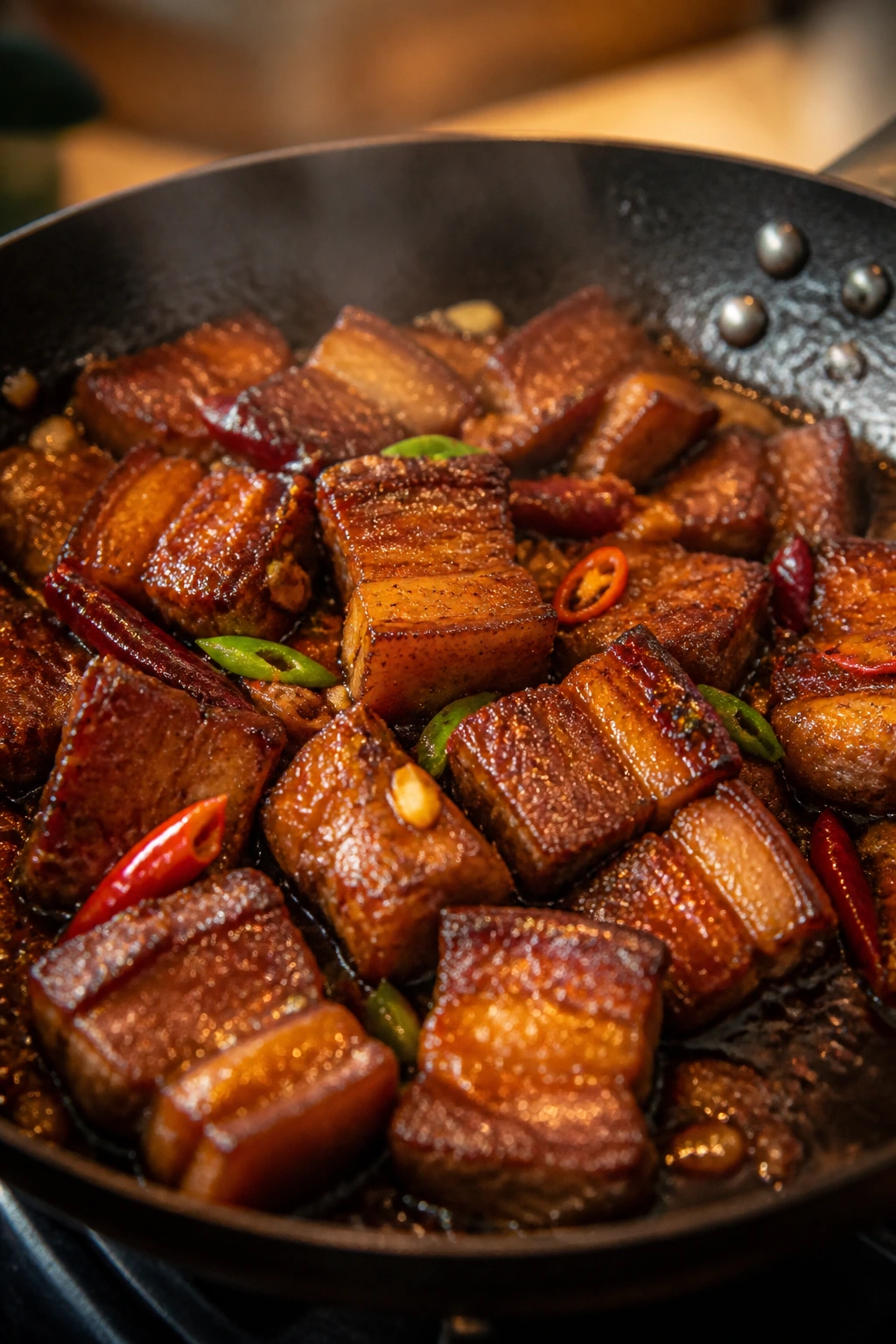
Render and Brown: 4. Place the seasoned pork belly in a cold 12-inch skillet in a single layer. Set the pan over medium heat and let it warm gradually. The pork will start to hiss as the fat melts. Cook for 6 to 8 minutes, stirring only once or twice, until the first sides look golden and the fat has begun to pool in the pan. 5. Turn the pieces and keep cooking for another 5 to 7 minutes, until most sides are bronzed and the edges look crisp, almost glassy. If your skillet starts filling with a lot of fat, spoon off some so the pork is still frying rather than swimming. Do not crowd the pan; if the pieces are sitting on top of one another, brown them in two batches. 6. Transfer the pork belly to a plate with a slotted spoon. Pour off all but 1 tablespoon of rendered fat. If the pan looks dry, add the 1 tablespoon neutral oil. The goal is a thin, shiny film — enough to carry the aromatics, not enough to make the dish oily.
That first browning is the whole backbone of the recipe. If you stop too early, the belly tastes soft but flat. If you push too hard, the sugar in the glaze later has to rescue a pan that’s already overdone. The sweet spot is browned, not scorched.
Build the Sauce and Add the Heat
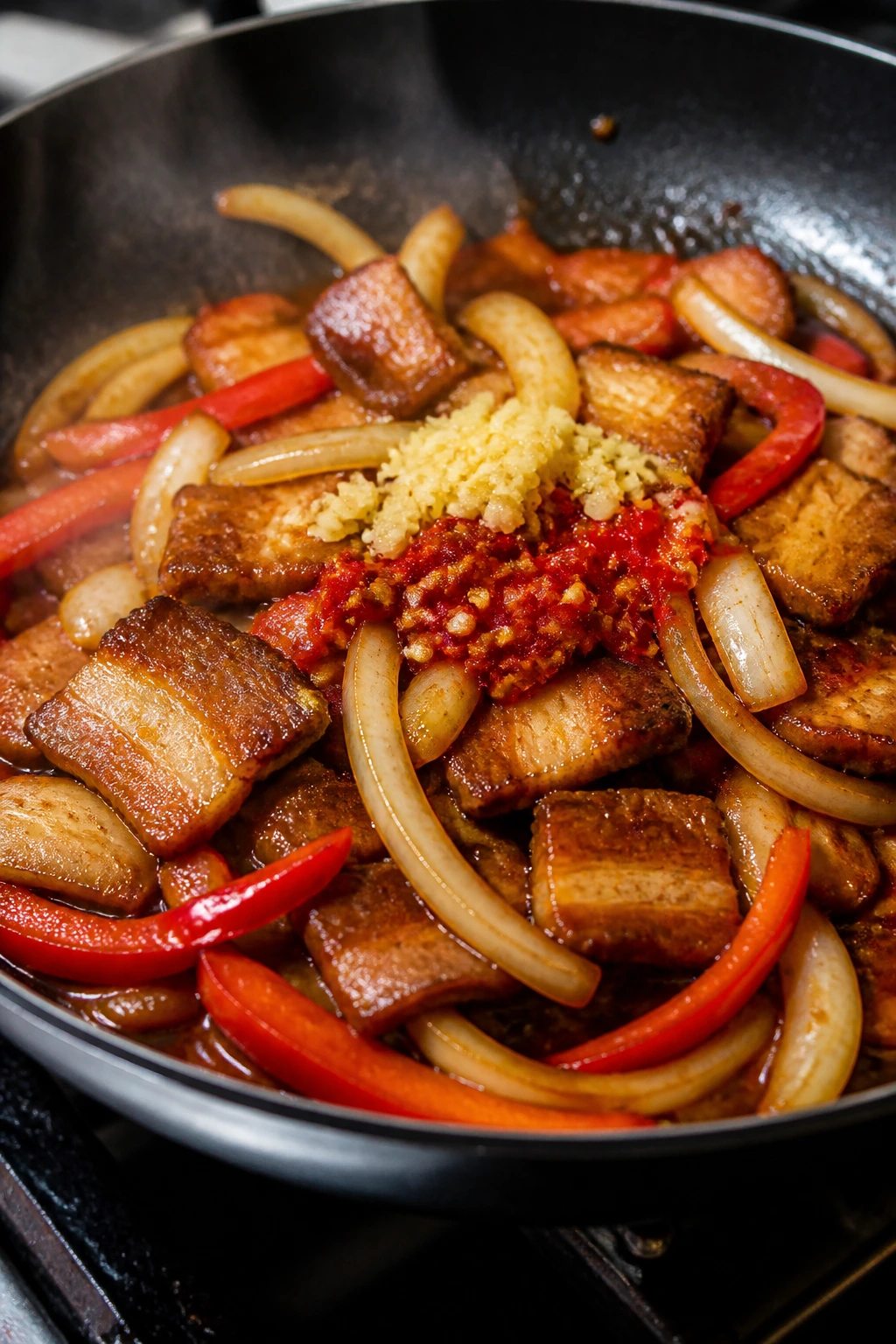
Once the pork has done its part, the sauce comes together fast.
Make the Glaze: 7. Add the sliced onion and red bell pepper to the skillet. Cook over medium heat for 3 to 4 minutes, stirring occasionally, until the onion starts to soften and the pepper shows a few browned edges. 8. Add the minced ginger, minced garlic, 2 tablespoons chili garlic sauce, and the optional Sichuan peppercorns. Stir for about 30 seconds, just until the kitchen smells sharp and warm. Do not let the garlic brown too much — once it goes dark, the sauce turns bitter. 9. Pour in the whisked sauce mixture: 3 tablespoons soy sauce, 1 tablespoon dark soy sauce, 2 tablespoons Shaoxing wine or dry sherry, 2 tablespoons rice vinegar, 1 tablespoon honey, 1 tablespoon brown sugar, and 1/2 cup water or broth. Bring it up to a lively simmer and let it bubble for 2 to 3 minutes.
You want the sauce to smell savory and a little sweet, with the vinegar still noticeable. If it smells only sugary, it needs more heat or more time. If it smells flat, the vinegar and wine haven’t had enough room yet.
Finish the Glaze and Balance the Bowl
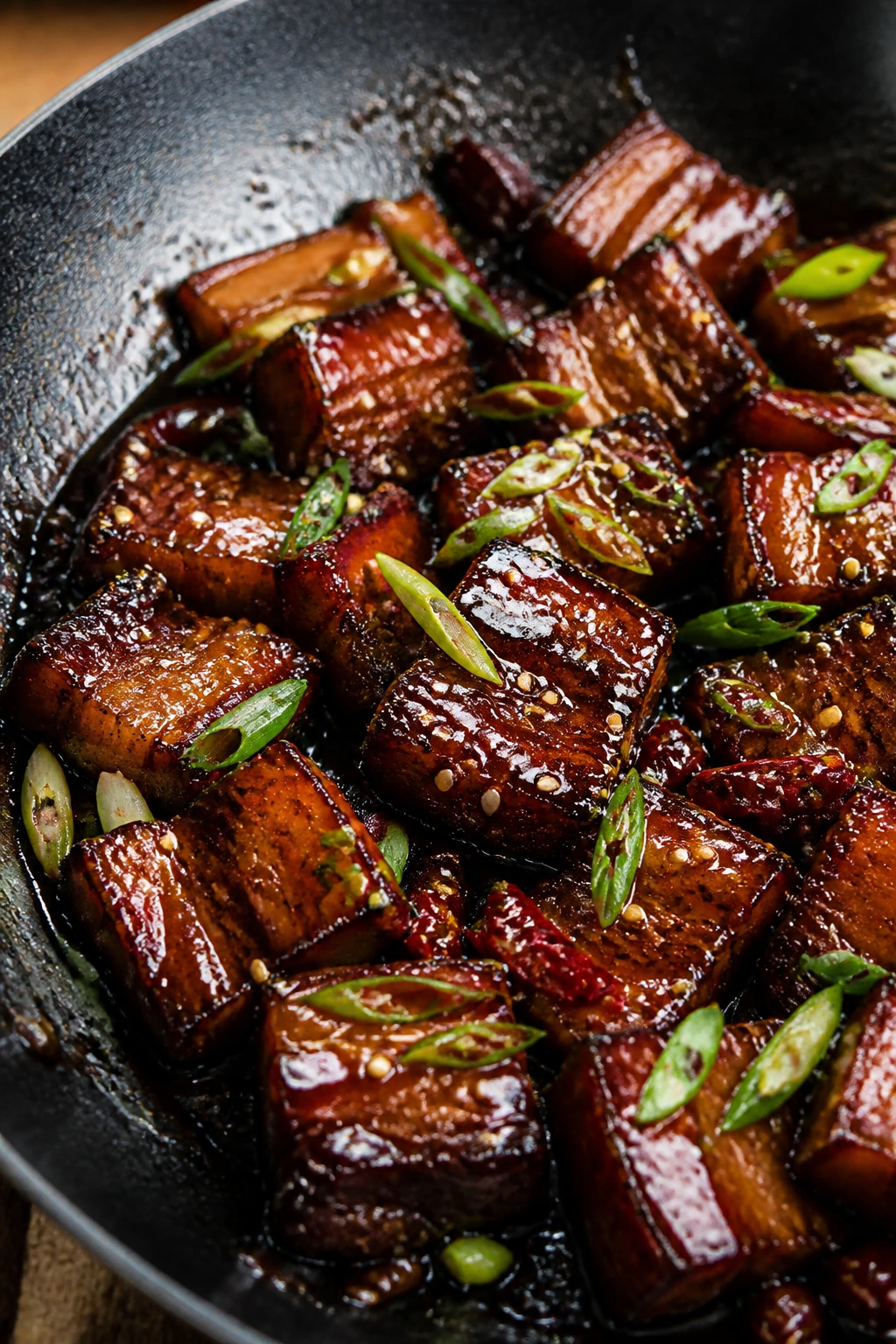
This last part is short, and that’s exactly why you should pay attention.
Thicken and Toss: 10. Stir the 1 teaspoon cornstarch mixed with 2 tablespoons cold water again, then pour it in slowly while stirring. Simmer for 30 to 45 seconds until the sauce turns glossy and coats the back of a spoon. Do not walk away here — cornstarch can swing from perfect to gluey fast. 11. Return the browned pork belly and any juices to the skillet. Toss for 1 to 2 minutes until the pieces are fully coated and the sauce clings instead of pooling. Turn off the heat, then add the sliced scallions, 1 teaspoon toasted sesame oil, and 1 tablespoon toasted sesame seeds. 12. Taste the sauce. If it needs more lift, add a teaspoon of rice vinegar. If it needs more heat, add a small spoonful more chili garlic sauce. Serve immediately.
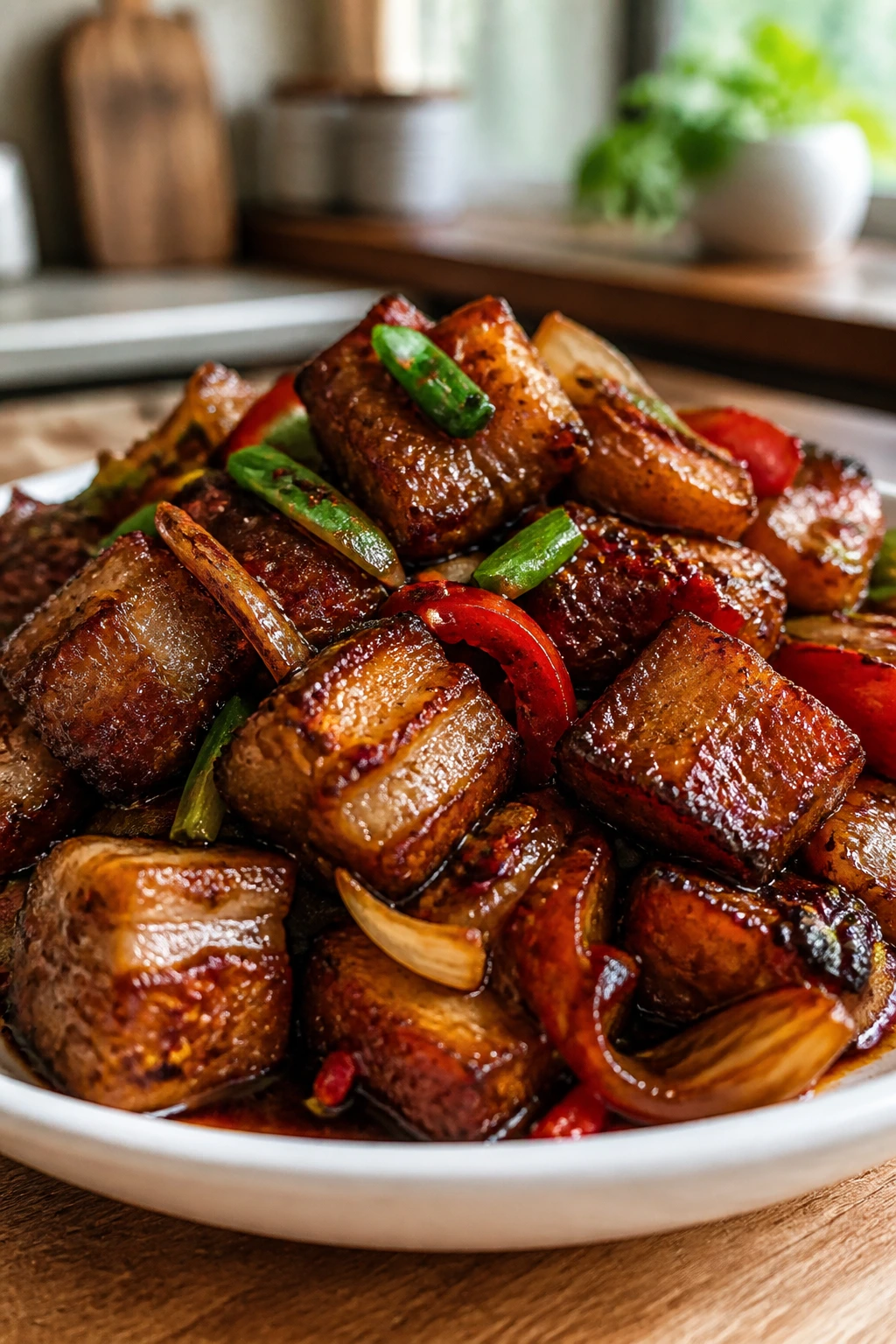
The finished dish should look lacquered, not wet. You should see the onions and peppers tucked around the pork, not buried under it. The smell is a good clue: soy and chili first, sesame at the end, and a faint hit of vinegar that keeps everything awake.
How to Serve It Without Losing the Crunch
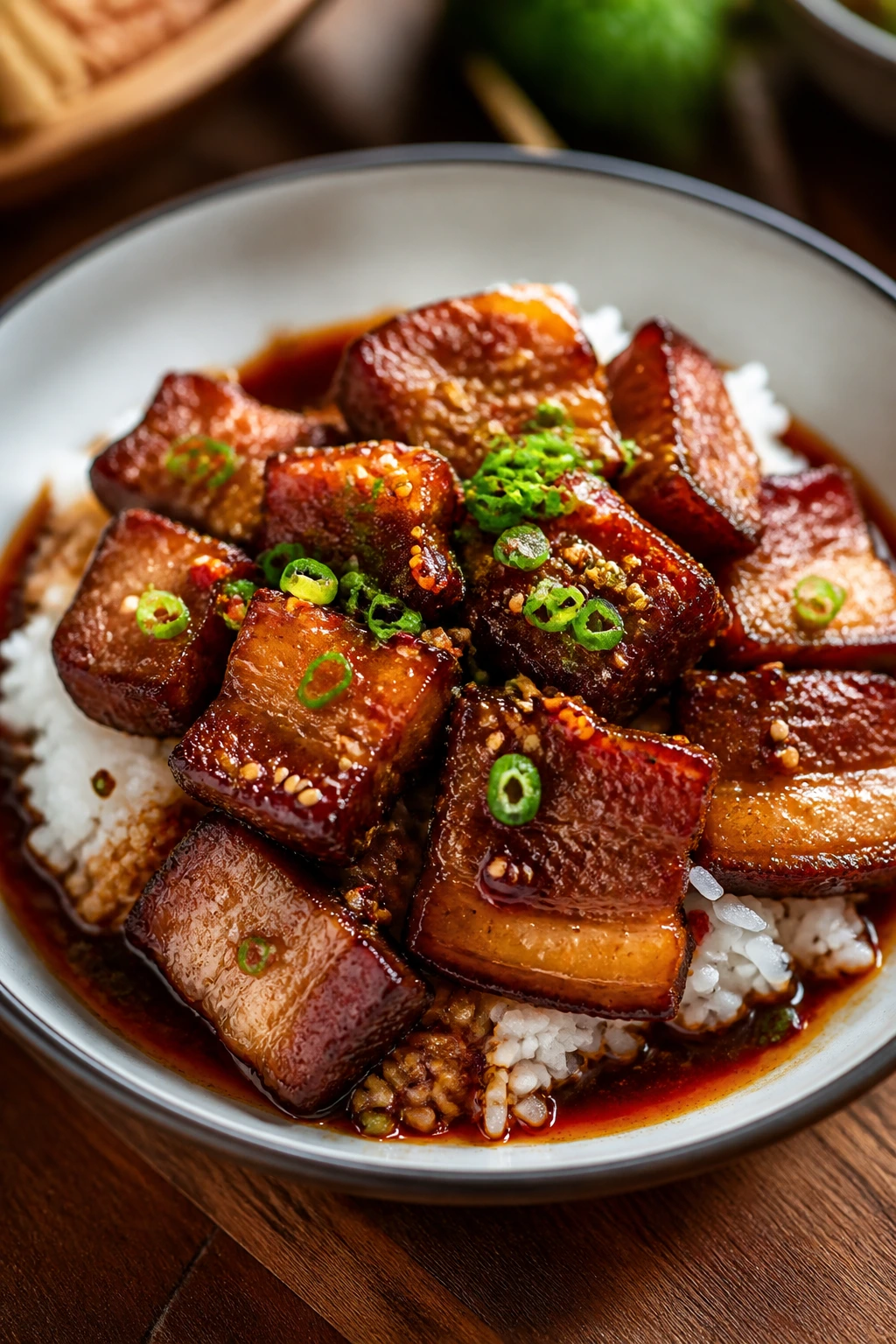
Presentation: Spoon the pork belly over a shallow mound of steamed jasmine rice, then drag the sauce around the outside of the bowl instead of pouring every drop over the top. That keeps some browned edges exposed. Finish with a scatter of scallions and sesame seeds so the plate looks fresh instead of monochrome.
Accompaniments: Plain white rice is the cleanest partner, but this also likes garlic-sautéed bok choy, steamed broccoli, cucumber salad, or a quick pile of blanched green beans. If you want a fuller dinner, serve it with rice noodles tossed in a little sesame oil and salt. A few pickled carrots on the side do a nice job of cutting the richness.
Portions: As written, the recipe serves 6 over rice or 4 if you want a heavier main dish with smaller sides. For lunch bowls, figure on about 1 cup rice and a generous scoop of pork and vegetables per person. If you’re scaling up, double the sauce before you double the pork. The glaze disappears faster than people expect.
Beverage Pairing: A cold, dry lager handles the fat well, and unsweetened oolong tea keeps the whole plate feeling balanced. If you prefer wine, a crisp off-dry Riesling works better than anything heavily oaked. The point is to keep the drink clean and cooling.
Extra Tips for Better Pork Belly
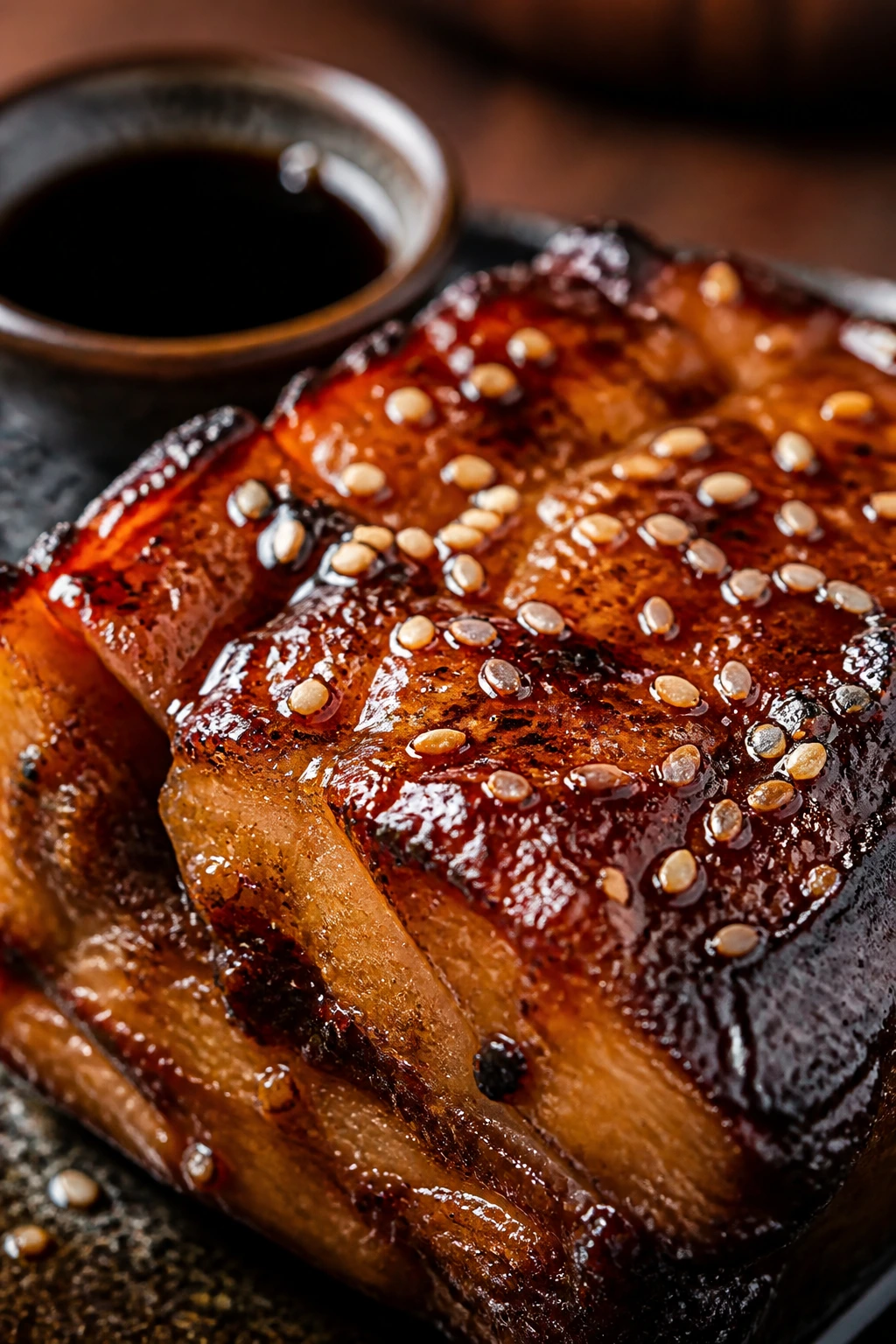
Flavor Enhancement: Add 1 teaspoon black vinegar at the very end if you want a deeper, rounder tang. It gives the sauce a darker edge that works beautifully with the soy and chili.
Customization: If you want more vegetables, toss in 2 cups broccoli florets or 1 cup snap peas after the onion and bell pepper start softening. They bulk up the dish without stealing the sauce.
Serving Suggestions: I like a final sprinkle of extra scallions and a pinch of toasted sesame seeds right before the bowl hits the table. Thin slices of fresh red chili look sharp here too, if you want more heat and color.
Make-It-Yours: For a gluten-free version, use tamari instead of soy sauce and check that the chili garlic sauce is certified gluten-free. For a less sweet version, cut the brown sugar down to 2 teaspoons and lean harder on the vinegar.
Mistakes That Turn the Sauce Muddy
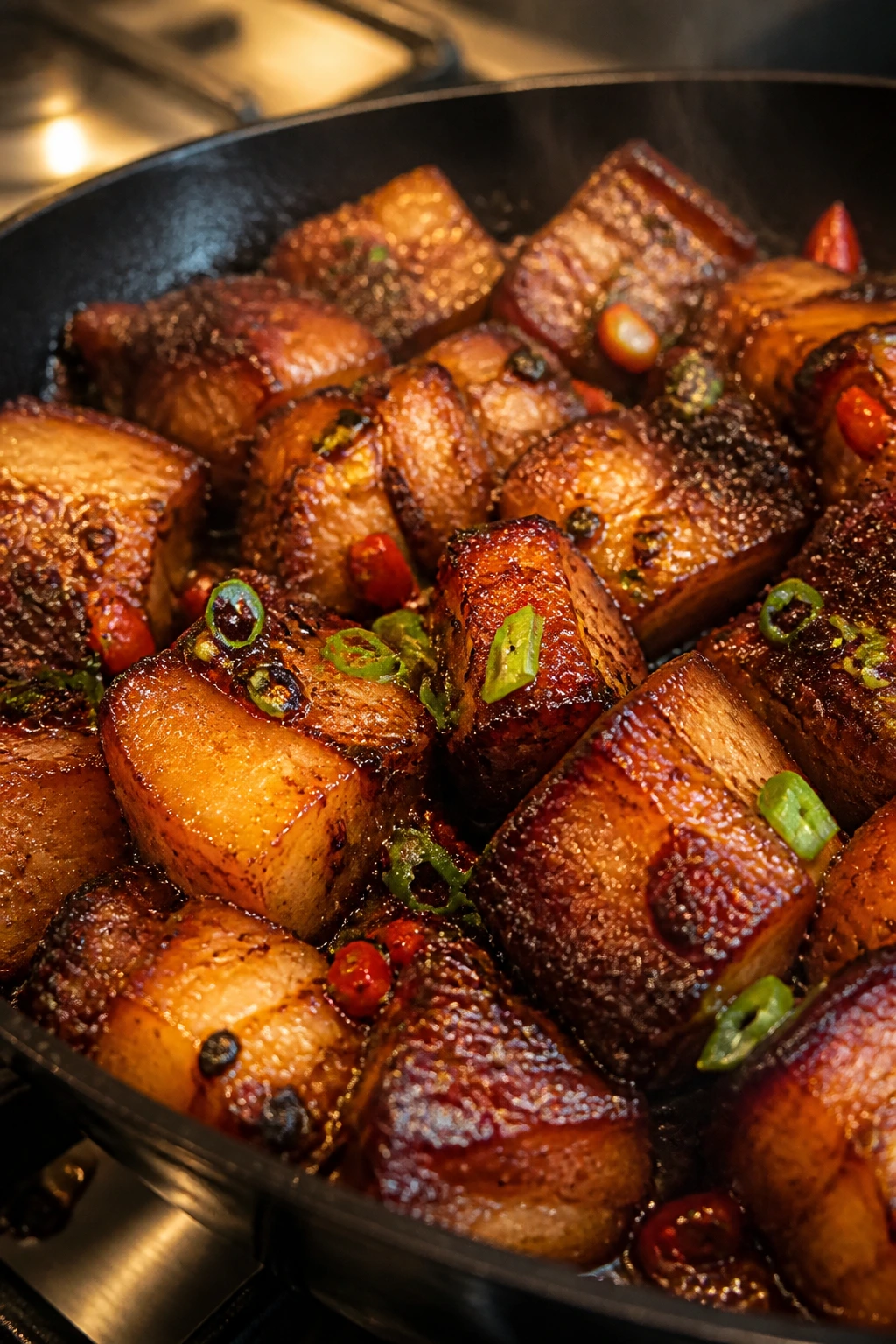
Crowding the skillet: This is the easiest way to ruin the texture. If the pork pieces are packed together, they steam instead of browning, and the fat turns soft and dull. Fix it by cooking in two batches if your pan can’t hold everything in a single layer.
Starting with wet pork: If the surface is damp, the pieces spit, sputter, and lose time before they ever brown. Dry them well with paper towels. If the pork is cold and sticky, chill it for 15 minutes first so the knife cuts cleaner and the pan stays calmer.
Burning the garlic: Garlic only needs a short visit in the pan. If it gets dark before the sauce goes in, the whole dish picks up a bitter edge. Add garlic after the onion softens, and keep stirring for the first 30 seconds.
Thickening too early: Cornstarch needs bubbling sauce to work properly. If you add it before the liquid is hot, you get little cloudy clumps instead of a glossy glaze. Wait until the sauce is actively simmering, then stir in the slurry.
Over-reducing the sauce: Pork belly already brings plenty of richness. If the glaze gets too thick before the pork goes back in, the finished dish can turn sticky-salty instead of balanced. Stop when the sauce coats a spoon, not when it looks like caramel.
Skipping the final acid check: A good pork belly dish always needs one last taste. If the sauce tastes heavy, a teaspoon of rice vinegar wakes it up fast. That tiny adjustment matters more than people think.
Flavor Twists and Smart Variations
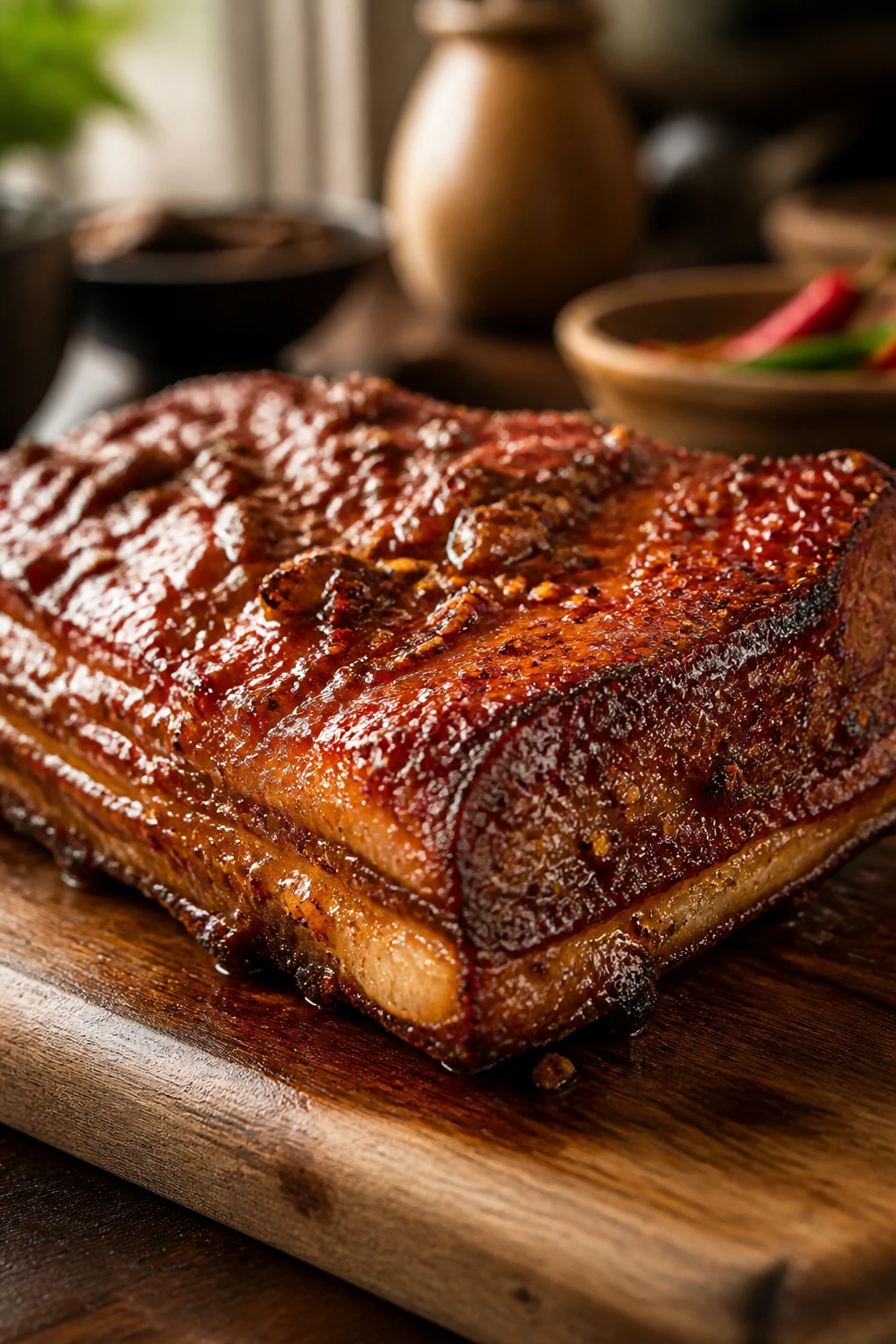
Mala Market Stall Version: Add an extra 1 teaspoon chili garlic sauce and the full 1/2 teaspoon Sichuan peppercorns. The result is hotter, more tingly, and a little closer to the street-food style that leaves your lips buzzing after the third bite.
Black-Vinegar Belly: Replace half of the rice vinegar with black vinegar if you like a darker, deeper tang. The sauce gets less sharp and more rounded, which suits a richer bowl of rice.
Broccoli Dinner Bowl: Toss in 2 cups broccoli florets after the onion and bell pepper soften. The broccoli drinks up the sauce, stretches the dish a bit farther, and gives you something green against all that pork.
Gluten-Free Pantry Swap: Use tamari instead of soy sauce and double-check the chili garlic sauce label. The rest of the recipe stays the same, which is one of the reasons I like this dish so much — it doesn’t fall apart when you make a sensible swap.
Less-Spicy Family Version: Drop the chili garlic sauce to 1 tablespoon and skip the Sichuan peppercorns. You still get the savory pork belly, the glossy glaze, and the ginger-garlic base, but the heat stays gentle enough for a wider table.
Make-Ahead, Storage, and Reheating
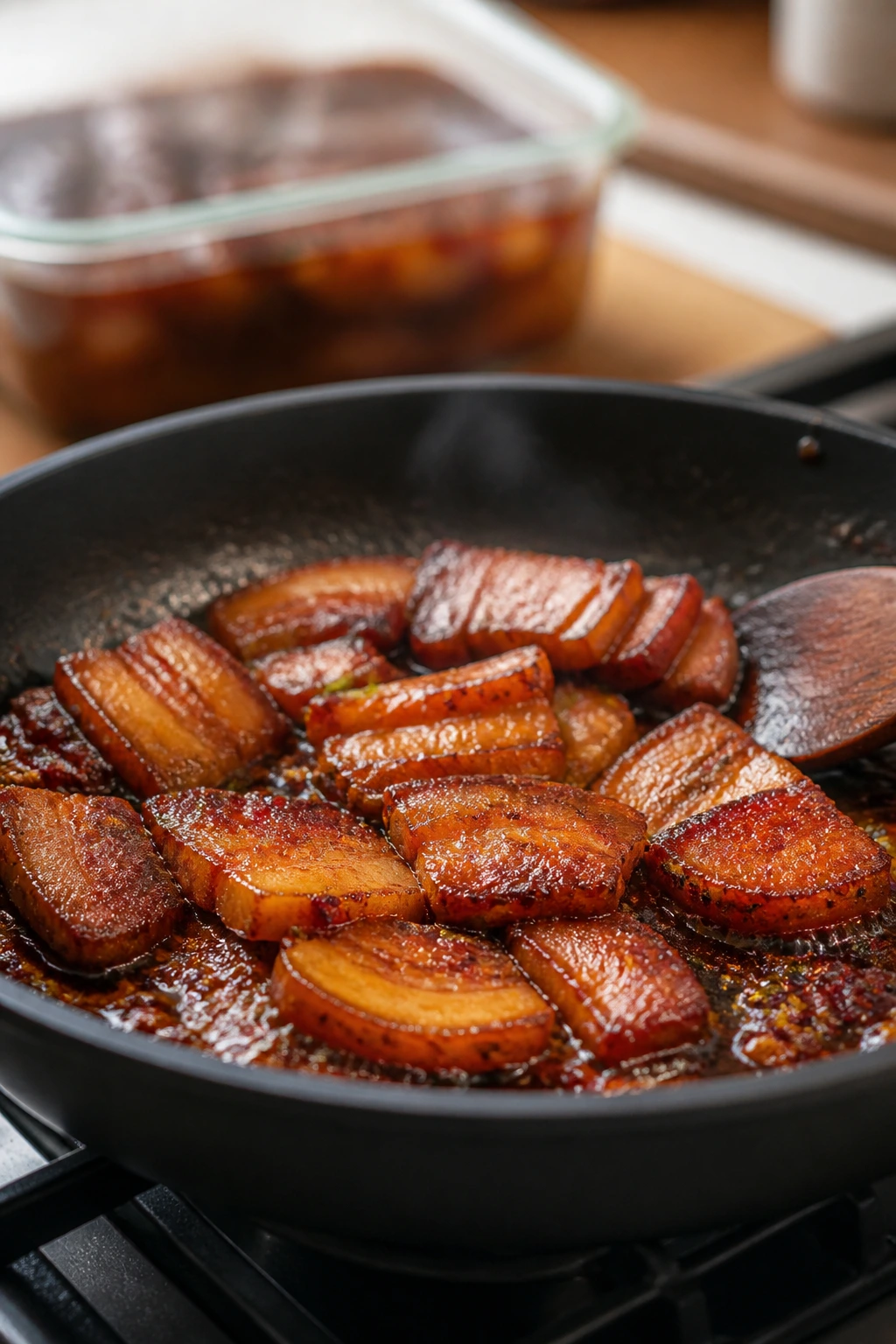
Pork belly is richest the day you make it, but the leftovers are worth saving if you treat them right.
Store the cooked pork belly in an airtight container in the refrigerator for 3 to 4 days. If possible, keep the rice separate. The sauce can soak into the rice in a good way, but it also makes the grains collapse faster if they sit together overnight.
For the freezer, pack the pork and sauce in a tight container for up to 2 months. The texture softens after freezing, so I would not freeze it if you’re chasing crisp edges. I would freeze it if you want a fast dinner later. Those are not the same goal.
Best Reheating Method
A skillet beats the microwave every time for this dish. Put the pork belly and sauce in a skillet over medium heat with 1 to 2 tablespoons of water or broth and stir gently for 3 to 5 minutes until the sauce loosens and the pork is hot through. If you need the microwave, use 50 to 70 percent power in short bursts, then finish the last minute in a skillet to bring back some gloss.
Make-Ahead Notes
You can cut the pork belly and mix the sauce up to 1 day ahead. Keep them separate in the fridge. If you want to get ahead even more, render the pork belly in advance, chill it, and finish it in the sauce right before dinner. That gives you the easiest weeknight path without sacrificing the browned edges.
The dish does deepen a little by the next day, mostly because the soy, ginger, and vinegar settle into the fat. It’s not quite as crisp, but the flavor gets a little quieter and rounder. That’s not a bad trade if you’re reheating carefully.
Questions People Ask Before They Cook Pork Belly
Can I use pork shoulder instead of pork belly?
Yes. Pork shoulder is the nearest substitute if you want something easier to find and a little less rich. It won’t melt the same way pork belly does, but it still works well with the soy-chili glaze and the onion-pepper base.
Do I need a wok for this recipe?
No. A 12-inch skillet is actually easier here because it gives the pork more flat contact with the heat. A wok works if that’s what you have, but the curved shape can make browning a little less even.
What if I don’t have dark soy sauce?
Use another tablespoon of regular soy sauce and accept a slightly lighter color. You can add a tiny pinch of brown sugar or a few drops of molasses if you want the sauce darker, but don’t overdo it. Dark soy is mostly about color and depth, not salt.
Can I make it less spicy without losing the flavor?
Absolutely. Cut the chili garlic sauce to 1 tablespoon and skip the Sichuan peppercorns. The ginger, garlic, soy, and vinegar still carry the dish, so it won’t taste flat or bland.
What if the sauce gets too thick?
Splash in 1 to 2 tablespoons of water or broth and stir over low heat until it loosens. The fix is fast. Don’t keep cooking it hard, or the glaze will turn sticky in a way that clings to the spoon more than the pork.
Can I roast the pork belly first instead of pan-rendering it?
Yes. Roast the cubes on a rack set over a sheet pan at 425°F / 220°C until they’re browned and rendered, then finish them in the skillet with the sauce. That method is handy if you want to cook a larger batch without standing over the stove.
Why does my pork belly taste greasy instead of rich?
Usually the pan was crowded, the fat wasn’t drained, or the pork never browned enough before the sauce went in. Leave just a thin layer of fat in the skillet, brown the pork properly, and keep the glaze bright with vinegar at the end. That combination makes the richness taste clean.
Why This Pork Belly Sticks
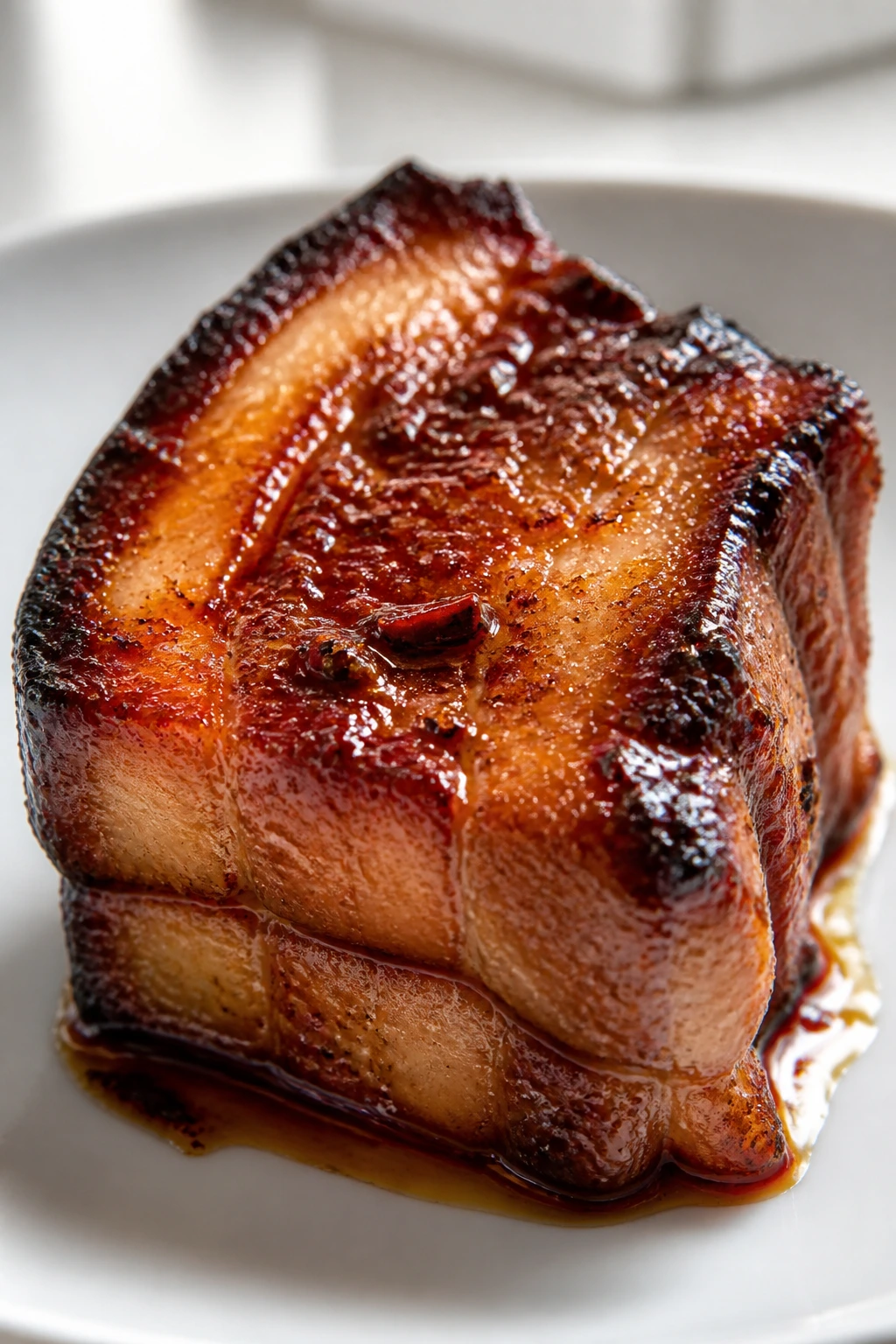
Pork belly isn’t a shy ingredient. It wants heat, salt, acid, and enough time in the pan to turn its own fat into flavor instead of a problem.
That’s why this version works so well. The edges brown first, the sauce stays sharp enough to cut through the richness, and the scallions come in at the end so the whole bowl tastes alive instead of heavy. It’s the kind of dinner that looks simple on paper and then gets people asking for a second spoonful before the bowl is empty.
The next time a sticky takeout box looks tempting, fire up the skillet instead. You’ll get the same kind of big, glossy comfort — only cleaner, hotter, and with the brown edges exactly where they should be.
Spicy Chinese Pork Belly — Recipe Card
Recipe Name: Spicy Chinese Pork Belly Better than Takeout
Description: Crisp-edged pork belly is tossed in a glossy soy-chili glaze with ginger, garlic, onion, and bell pepper. The sauce lands savory, spicy, and lightly sweet, with enough vinegar to keep the richness from feeling heavy.
Prep Time: 20 minutes
Cook Time: 25 minutes
Total Time: 45 minutes
Course: Main Course
Cuisine: Chinese-Inspired
Servings: 6
Calories: 820 kcal
Ingredients
For the Pork Belly:
- 2 pounds skinless pork belly, cut into 1-inch cubes
- 1 teaspoon kosher salt
- 1/2 teaspoon Chinese five-spice powder
- 1 tablespoon neutral oil, if needed
For the Sauce:
- 3 tablespoons soy sauce
- 1 tablespoon dark soy sauce
- 2 tablespoons Shaoxing wine or dry sherry
- 2 tablespoons rice vinegar
- 1 tablespoon honey
- 1 tablespoon packed light brown sugar
- 2 tablespoons chili garlic sauce
- 1 tablespoon fresh ginger, minced
- 4 garlic cloves, minced
- 1/2 cup water or low-sodium chicken broth
- 1 teaspoon cornstarch mixed with 2 tablespoons cold water
- 1/2 teaspoon ground Sichuan peppercorns, optional
For the Finish:
- 1 small yellow onion, sliced into thin wedges
- 1 medium red bell pepper, sliced into thin strips
- 3 scallions, sliced
- 1 teaspoon toasted sesame oil
- 1 tablespoon toasted sesame seeds
Instructions
-
Season the pork: Pat the pork belly dry, cut into 1-inch cubes, and toss with salt and five-spice powder. Let it sit for 10 minutes.
-
Mix the sauce: Whisk together the soy sauces, Shaoxing wine, rice vinegar, honey, brown sugar, chili garlic sauce, ginger, garlic, water or broth, and optional Sichuan peppercorns. Keep the cornstarch slurry separate.
-
Render the pork: Put the pork belly in a cold skillet in a single layer and cook over medium heat until browned and the fat begins to render, then turn and brown the other sides. Remove the pork and pour off all but 1 tablespoon of fat.
-
Cook the vegetables: Add the onion and bell pepper to the skillet and cook until softened at the edges. Add the ginger, garlic, and chili garlic sauce, then stir briefly until fragrant.
-
Simmer the glaze: Pour in the sauce mixture and bring it to a simmer. Cook until the liquid bubbles and the flavors come together.
-
Thicken and finish: Stir the cornstarch slurry again and add it slowly, simmering until the sauce turns glossy and coats a spoon. Return the pork to the skillet and toss until coated. Turn off the heat, then add scallions, sesame oil, and sesame seeds.
Notes: Don’t crowd the pan; cook in batches if needed. Add a splash of rice vinegar at the end if the sauce tastes too sweet. Reheat leftovers in a skillet for the best texture.