



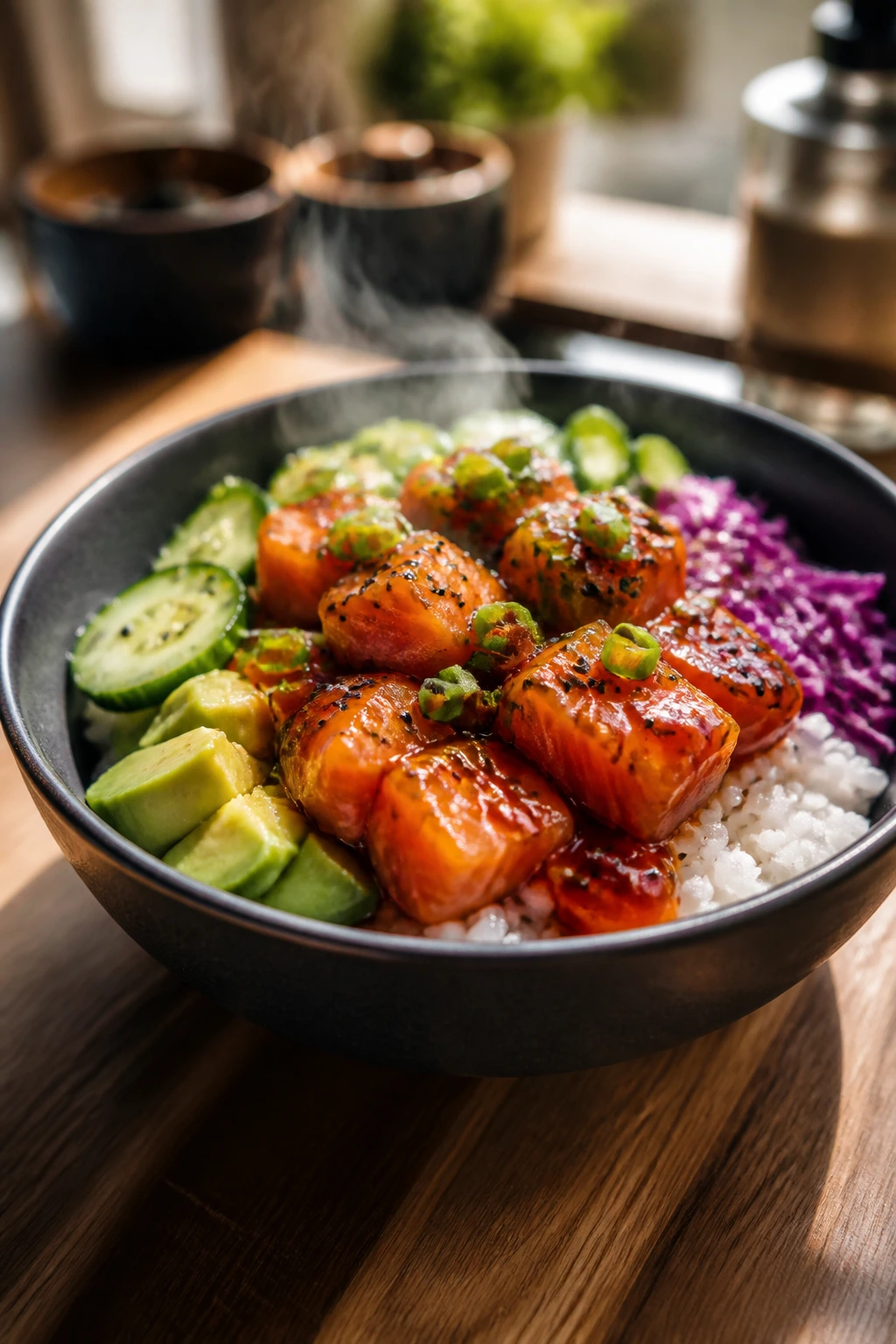
If your idea of takeout is a bowl that arrives lukewarm, with the sauce pooled in one corner and the salmon tasting more like the container than the fish, this sweet and sour salmon poke bowl fixes the whole mess. The point here is contrast: glossy salmon, cool crunch, warm rice, bright acid, and just enough sweetness to make the whole thing feel polished without turning syrupy.
I like bowls that behave. The rice should stay fluffy, the cucumber should still snap, and the salmon should taste like salmon first, sauce second. This version gets there by treating every part separately for a few minutes, which sounds fussy until you taste the finished bowl and realize the extra care is doing all the heavy lifting.
And yes, this is a poke bowl in the loose, modern sense — a rice bowl built around fish, toppings, and a clean finish — but it borrows the sweet-and-sour backbone of Chinese-American takeout in a way that makes a lot of sense. The glaze is sharp enough to wake up rich salmon, the toppings keep each bite from feeling heavy, and the whole thing lands with the kind of clean, bright flavor that disappears faster than you expect.
Why You’ll Love This Bowl
- Hot rice, cool crunch: The temperature contrast makes each bite feel structured instead of sloppy, which is exactly what most takeout bowls miss.
- Sweet and sour without the sugar bomb: The glaze leans on pineapple juice, rice vinegar, soy, and a little ketchup, so it tastes bright and sticky instead of cloying.
- Fast enough for a weeknight, careful enough for company: The salmon sears in minutes, but the bowl still looks like you paid attention.
- Built for texture: Avocado, cucumber, edamame, nori, and sesame seeds keep the bowl from collapsing into one soft note.
- Flexible by design: You can make it with salmon cubes, seared fillet, or even leftover cooked salmon if that’s what’s in the fridge.
- Better than boxed takeout for leftovers: The parts store well separately, so lunch the next day still tastes fresh instead of limp.
What Makes Sweet and Sour Salmon Taste So Good in a Bowl
Sweet and sour works on salmon because salmon gives you fat, and fat wants acid. That’s the whole trick. A rich fish like salmon can take a sharp glaze without losing its shape, while something milder would get buried under the same sauce. Here, the pineapple juice and rice vinegar cut through the salmon’s oil, and the honey rounds off the edges just enough to keep the bite from turning harsh.
The bowl format matters too. A plate lets sauce run everywhere. A bowl holds the rice in place, so the glaze can seep into the top layer while the rest stays fluffy and distinct. That means you get sauce where you want it — on the rice, on the salmon, around the avocado — without drowning the cucumber or turning the nori into a damp ribbon.
I also like that this dish borrows from two habits that usually work against each other. Chinese sweet-and-sour dishes often want a sticky gloss and bold contrast. Poke bowls want freshness and clean bite. Put them together and, when you keep the sauce light-handed, the result feels more polished than either one alone.
Nope, it is not traditional poke. That’s fine. The structure is what matters here, and the structure is excellent.
Timing, Yield, and the Best Serving Window
Yield: Serves 4
Prep Time: 25 minutes
Cook Time: 20 minutes
Total Time: 45 minutes
Difficulty: Intermediate — the steps are simple, but the rice, glaze, and salmon each need their own timing.
Chill/Rest Time: 10 minutes for the rice to rest after cooking
Best Served: Right after assembly, while the rice is warm and the toppings are still crisp
The sweet spot for this bowl is narrow, and that’s a good thing. The rice should be warm enough to soften the glaze a little, but not so hot that it melts the avocado or steams the cucumber. The salmon should come off the pan glossy and just cooked through, then meet the sauce for a short toss so it clings instead of sliding off.
If you are making this for a table meal, cook the components in this order: rice first, glaze while the rice cooks, salmon last, toppings while the salmon sears. That rhythm keeps everything from waiting around and going soft. A bowl like this rewards attention, but it does not require drama.
The Ingredient List for a Bowl With Real Crunch
For the sushi rice:
- 2 cups sushi rice, rinsed until the water runs mostly clear
- 2 1/2 cups water
- 2 tablespoons rice vinegar
- 1 tablespoon granulated sugar
- 3/4 teaspoon kosher salt
For the salmon and sweet-sour glaze:
- 1 1/2 pounds salmon fillet, skin removed and cut into 1-inch cubes
- 1 tablespoon neutral oil, such as avocado, grapeseed, or canola
- 1/2 teaspoon kosher salt
- 1/4 teaspoon black pepper
- 1/4 cup pineapple juice
- 2 tablespoons rice vinegar
- 2 tablespoons ketchup
- 1 1/2 tablespoons honey
- 1 tablespoon low-sodium soy sauce or tamari
- 1 teaspoon fresh ginger, finely grated
- 1 small garlic clove, finely grated
- 1 teaspoon cornstarch mixed with 1 tablespoon cold water
For the toppings:
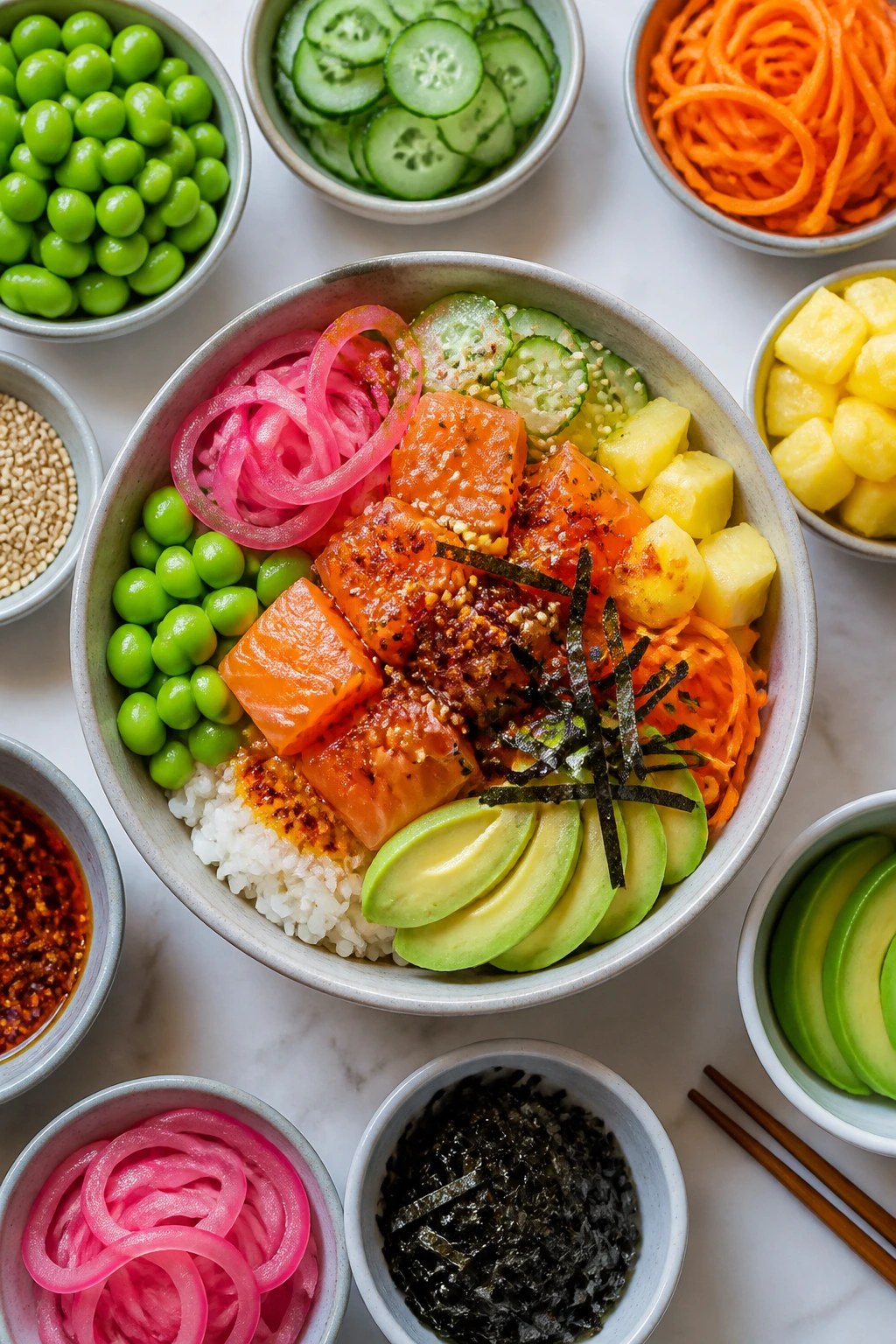
- 1 cup shelled edamame, thawed if frozen
- 1 cup cucumber, diced into small pieces
- 1 cup carrot, shredded or cut into thin matchsticks
- 1 cup pineapple, diced small and well drained
- 1 ripe avocado, sliced
- 2 scallions, thinly sliced
- 1 sheet nori, cut into thin ribbons
- 1 tablespoon toasted sesame seeds
- 1 to 2 teaspoons chili crisp, optional
- 2 tablespoons pickled red onion or quick-pickled cucumber, optional
Why Each Ingredient Earns Its Place
Sushi Rice: The Soft, Steady Base
What to use: 2 cups sushi rice and 2 1/2 cups water make enough for four generous bowls.
Preparation: Rinse the rice until the water looks nearly clear, then season it while it’s still hot so the vinegar mixture sinks in evenly.
Substitutions: Short-grain brown rice works if you want a nuttier chew; jasmine rice is fine in a pinch, though the bowl will feel looser.
Tips: Seasoned rice should taste lightly tangy, not sharp. If it tastes bold on its own, it is too acidic for the bowl.
Salmon and Glaze: Where the Bowl Gets Its Personality
What to use: 1 1/2 pounds salmon cut into 1-inch cubes gives you tender bites that sear quickly and hold their shape.
Preparation: Pat the salmon dry before it hits the pan, because wet fish steams and turns pale.
Substitutions: Trout, arctic char, or even firm tuna can work with the same glaze; cooked salmon leftovers also fit if you want to skip the pan.
Tips: Use the heat to create a light crust, then let the glaze do the flavor work. Salmon does not need to be buried.
Crunch and Color: The Toppings That Keep It Awake
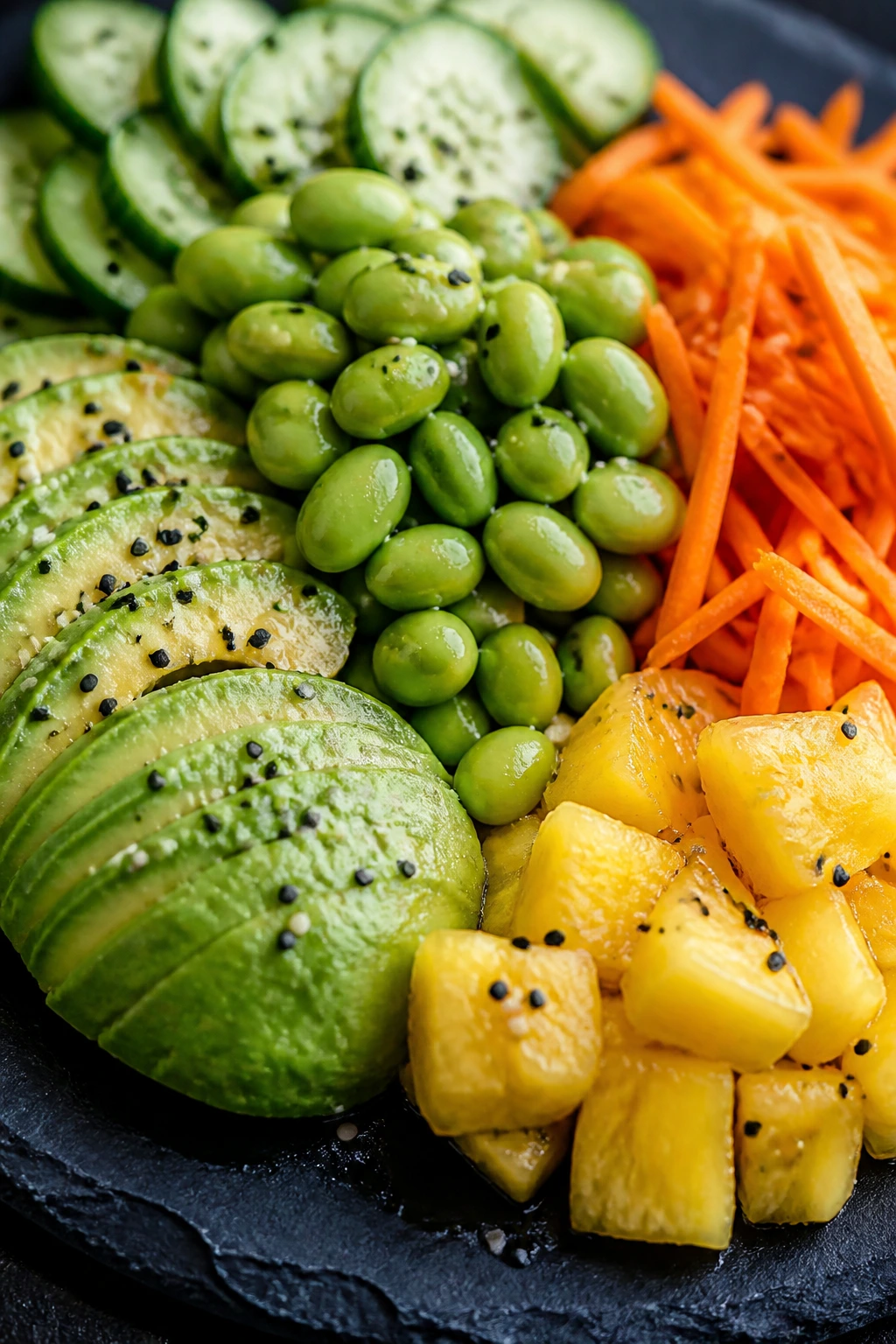
What to use: Cucumber, carrot, edamame, pineapple, scallions, and nori bring the cold, crisp, and sweet pieces that stop the bowl from feeling heavy.
Preparation: Keep watery toppings dry and cut small; a big wet cucumber chunk makes the rice soggy faster than you’d think.
Substitutions: Shredded cabbage, mango, radish, or snap peas all work if you want more bite or a different kind of sweetness.
Tips: If your pineapple is very juicy, drain it on paper towels for a minute or two. That tiny step matters.
Finishing Ingredients: The Small Details That Make It Taste Finished
What to use: Toasted sesame seeds, nori, scallions, and a little chili crisp give the bowl the final lift.
Preparation: Slice the scallions thin and cut the nori just before serving so it stays crisp.
Substitutions: Furikake, black sesame seeds, or crushed seaweed snacks can stand in for nori and sesame if that’s what you have.
Tips: Finish with the smallest amount of chili crisp you think you need, then stop. The glaze should still read sweet and sour, not chili-forward.
Special Equipment for Salmon Bowl Night
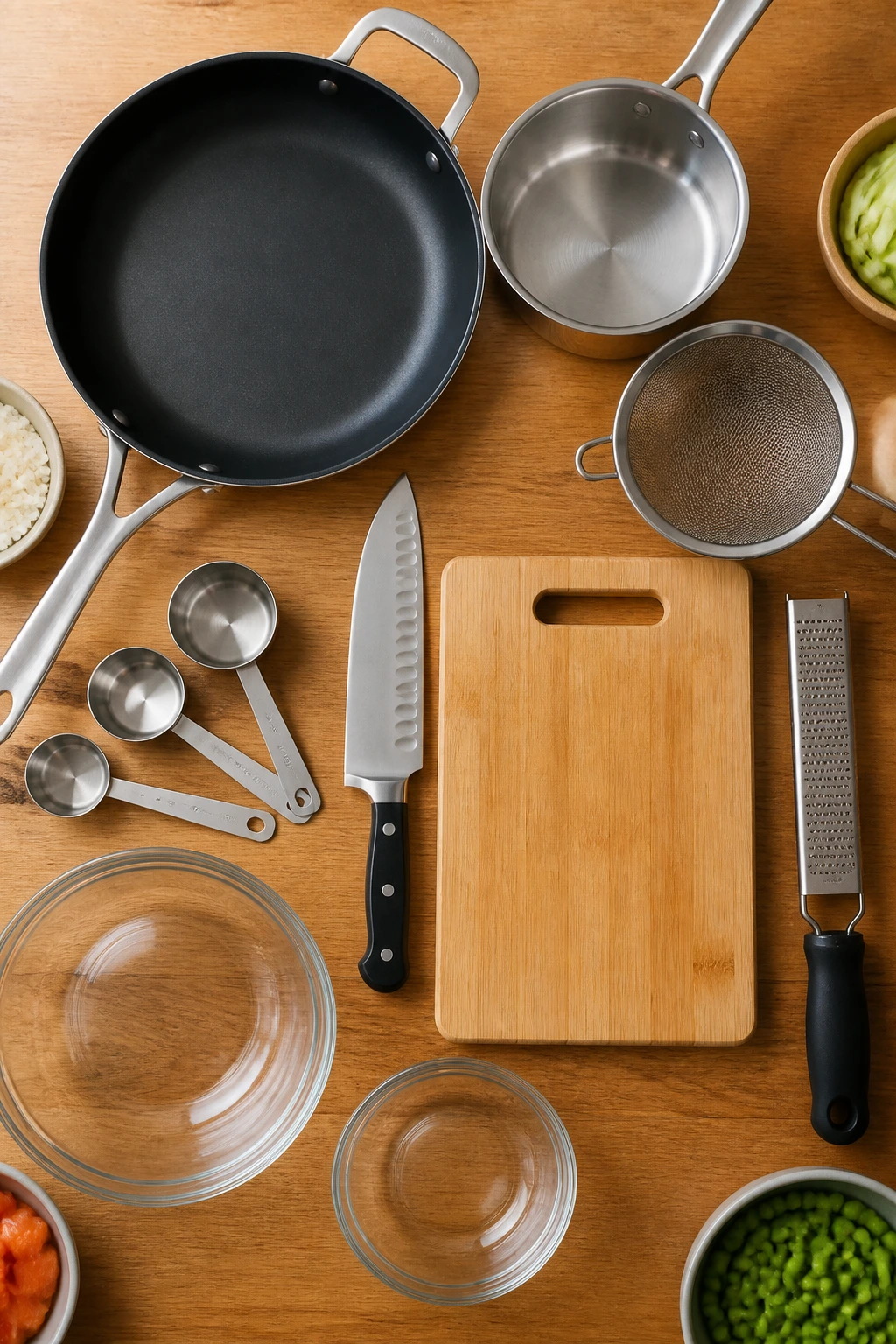
- Medium saucepan with lid — for cooking the sushi rice on the stove; a rice cooker works too if that’s your habit.
- 12-inch skillet — gives the salmon enough room to sear instead of crowding.
- Small saucepan or deep skillet — useful for simmering and thickening the glaze.
- Fine-mesh strainer — makes rinsing the rice fast and clean.
- Sharp chef’s knife — the salmon cubes and vegetable cuts stay neat only if the knife is sharp.
- Cutting board with a damp towel underneath — keeps the board from skating around while you cut.
- Microplane or small grater — for the ginger and garlic, which should disappear into the glaze instead of floating around in bits.
- Measuring cups and spoons — the glaze is delicate enough that eyeballing it gets you in trouble.
- Instant-read thermometer — optional, but useful if you want the salmon cooked to a specific temperature.
- Mixing bowls — one for the glaze, one for the toppings, one for the rice if you like to keep things tidy.
How to Make a Sweet and Sour Salmon Poke Bowl Step by Step
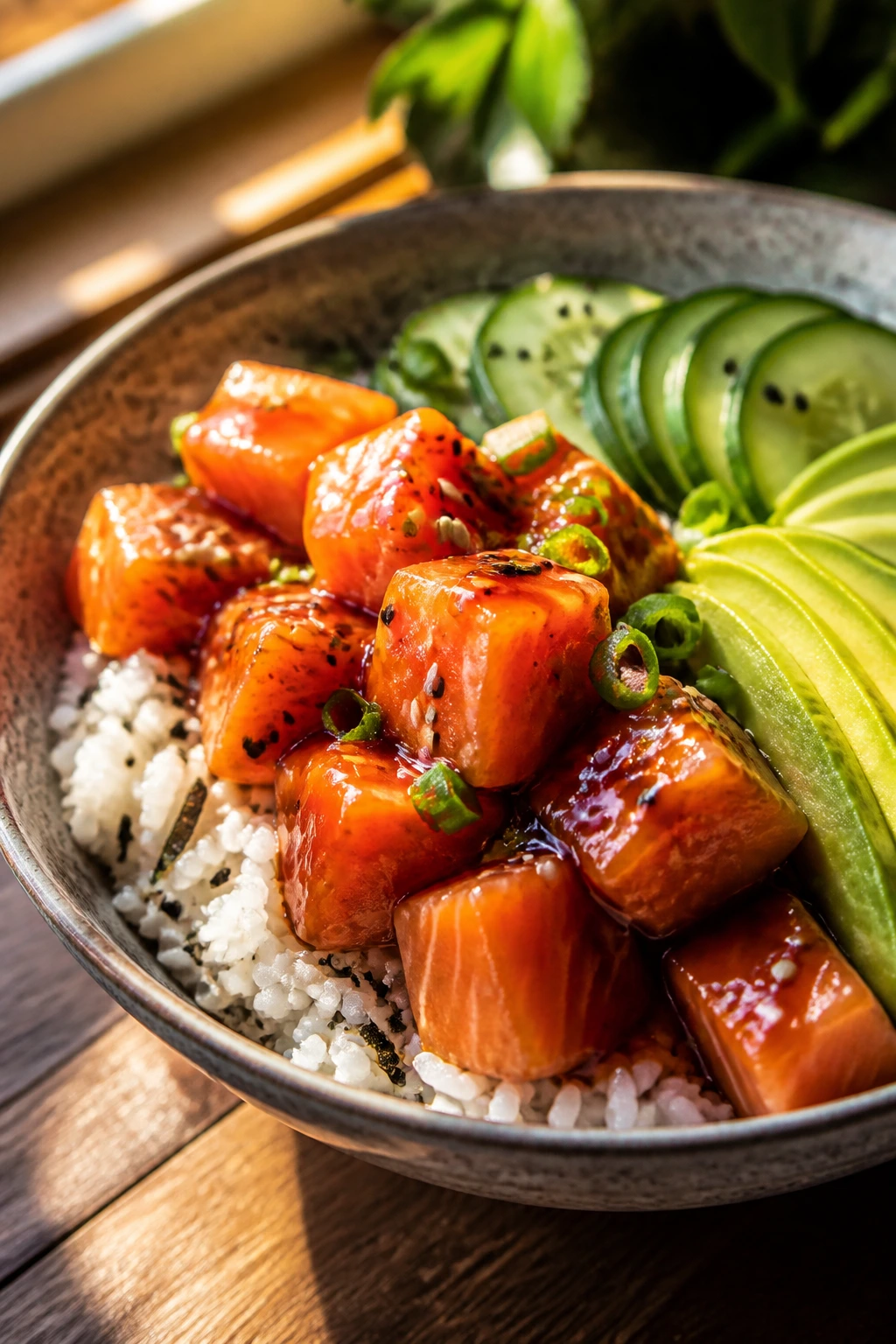
Cook the Rice Base:
- Rinse 2 cups sushi rice in a fine-mesh strainer under cool running water, swishing with your hand, until the water runs mostly clear. The rice should look clean, not chalky.
- Combine the rinsed rice and 2 1/2 cups water in a medium saucepan. Bring to a boil over medium-high heat, then cover, reduce to low, and cook for 18 minutes without lifting the lid. Do not stir the rice while it cooks.
- Turn off the heat and let the rice rest, covered, for 10 minutes. The surface should look glossy and the steam should smell mild, not wet or grassy.
- Mix 2 tablespoons rice vinegar, 1 tablespoon sugar, and 3/4 teaspoon kosher salt in a small bowl until the sugar dissolves. Fold it into the hot rice with a rice paddle or spoon, then fluff gently and set aside.
Make the Sweet and Sour Glaze: 5. Whisk together 1/4 cup pineapple juice, 2 tablespoons rice vinegar, 2 tablespoons ketchup, 1 1/2 tablespoons honey, 1 tablespoon soy sauce, 1 teaspoon grated ginger, 1 small grated garlic clove, and the cornstarch slurry in a small saucepan. 6. Set the pan over medium heat and bring the mixture to a gentle simmer, whisking often. Cook for 1 to 2 minutes, until the sauce turns glossy and thick enough to coat the back of a spoon. If it gets too thick, add 1 teaspoon water at a time. 7. Remove the glaze from the heat and let it cool slightly. It should still be pourable, not sticky like candy.
Sear the Salmon: 8. Pat the salmon cubes dry with paper towels, then season them with 1/2 teaspoon kosher salt and 1/4 teaspoon black pepper. 9. Heat 1 tablespoon neutral oil in a 12-inch skillet over medium-high heat until it shimmers. Add the salmon in a single layer and sear for about 1 minute, then turn the pieces and cook 2 to 3 minutes more, turning gently, until the outside is lightly browned and the center is just opaque. For fully cooked fish, cook to 145°F; for a juicier center, pull at 125 to 130°F. 10. Pour about half the glaze over the salmon and toss very gently in the pan or in a warm bowl until each piece is lightly coated. You want a shine, not a bath.
Build the Bowls: 11. Divide the rice among 4 bowls and spread it into a shallow bed so the toppings sit on top instead of sinking in. 12. Arrange the salmon, edamame, cucumber, carrot, pineapple, and avocado in separate clusters around the rice. Scatter the scallions, nori, sesame seeds, and optional chili crisp over the top, then finish with the remaining glaze.
How to Plate It So Nothing Goes Soggy
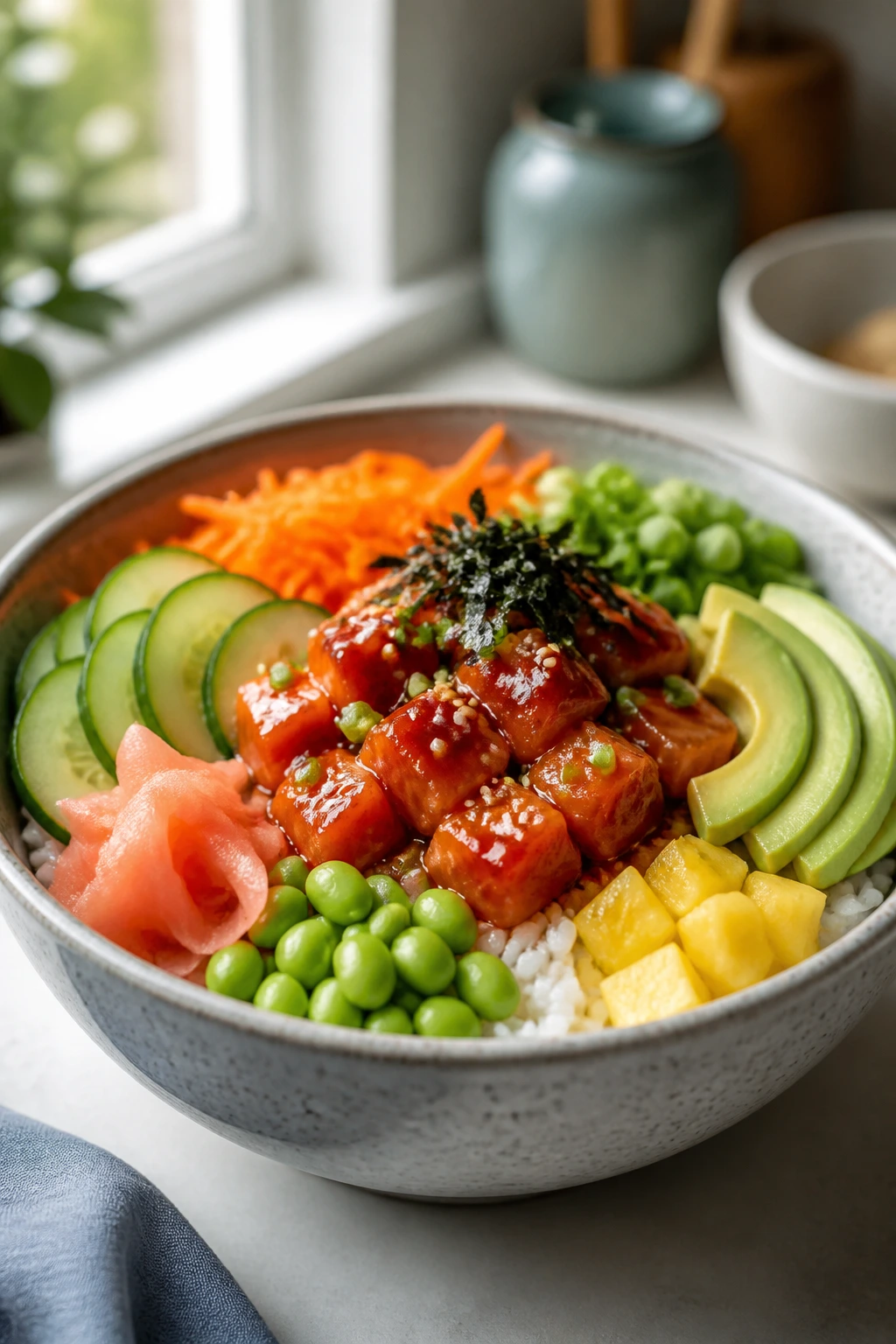
Presentation: Spoon the rice into the bottom third of each bowl, then build the toppings in little sections around the salmon rather than dumping everything in the center. That keeps the bowl looking clean and gives each bite a different mix of flavors. I like the salmon slightly off-center, with avocado fanned beside it and the nori on top at the very end.
Accompaniments: A simple cucumber salad with rice vinegar works well if you want something extra, but the bowl already carries a lot. If you need bread, skip it; the rice is the starch. A side of miso soup or a small bowl of clear broth makes sense if you’re serving this as a larger dinner.
Portions: One bowl serves one hungry person or two lighter eaters if you add a salad on the side. If you’re scaling up, keep the salmon and rice proportional and then lean on the toppings to stretch the meal. The avocado and cucumber are the easiest places to add volume without making the bowl feel heavier.
Beverage Pairing: I like cold jasmine tea here, unsweetened if possible, because it clears the sweet glaze between bites. A dry sparkling water with lime works too. If you want alcohol, a crisp lager or a lightly chilled riesling fits the sweet-sour profile without fighting it.
Practical Tips for Better Sweet and Sour Flavor
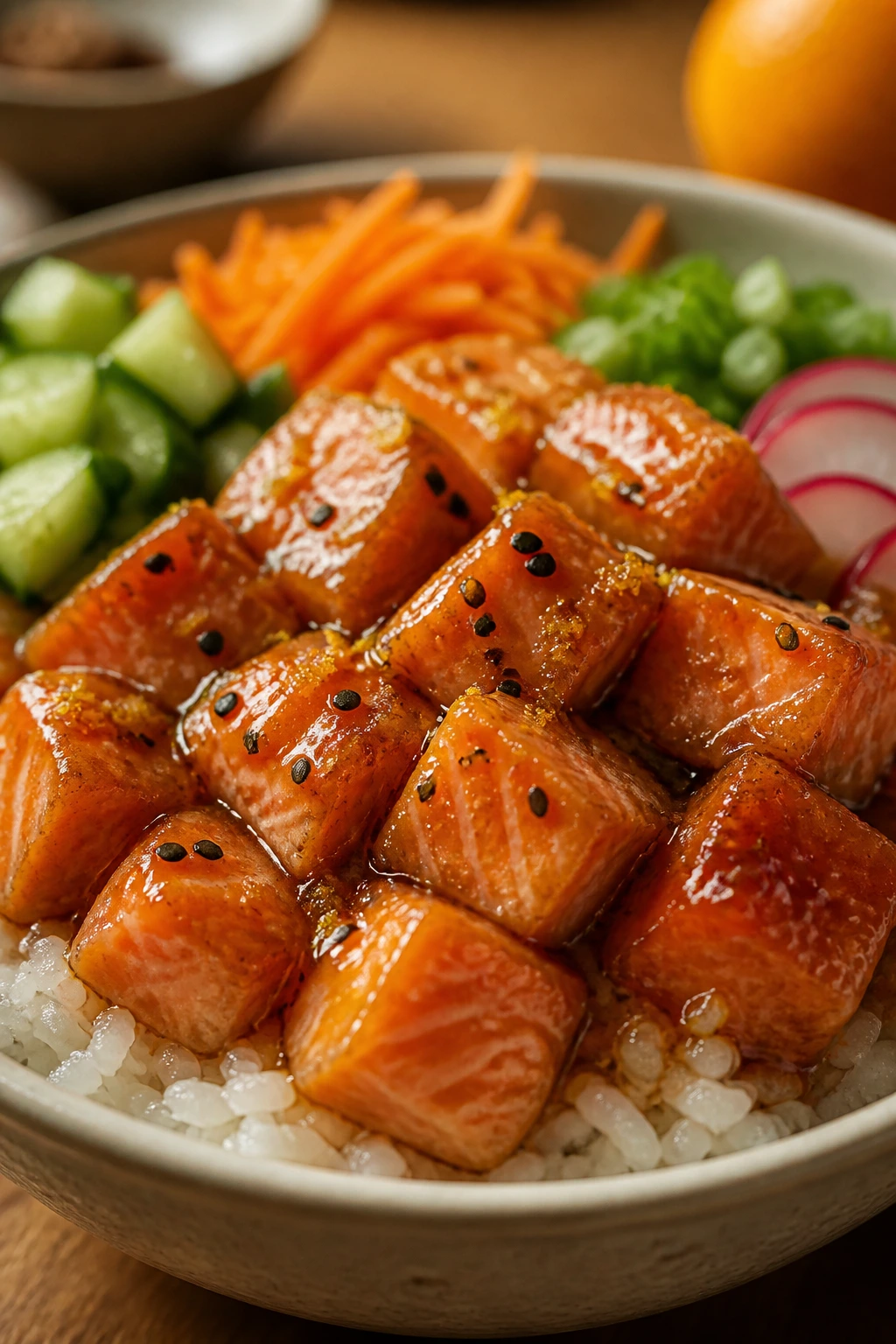
Flavor Enhancement: A teaspoon of orange zest in the glaze adds a clean citrus note that sits well with the pineapple and ginger. It does not make the bowl taste like orange chicken; it just sharpens the edges.
Time-Saver: Cook the rice first and spread it out in a wide bowl while you handle the glaze and salmon. A little airflow helps the rice cool enough to hold its shape without turning dense.
Pro Move: Drain the pineapple well, then pat it dry. That one move stops the bowl from leaking sweet juice into the rice and muddying the sauce.
Cost-Saver: If salmon is running expensive or you have a smaller fillet, cut it into slightly smaller cubes and bulk up the bowl with extra edamame and cucumber. The dish still feels generous because the glaze and toppings carry so much weight.
Make-It-Yours: If you like heat, add a teaspoon of chili crisp to the glaze or a drizzle on top at the end. If you prefer a softer sweet note, swap half the pineapple juice for orange juice and keep the honey at the lower end.
Common Mistakes That Make the Bowl Flat
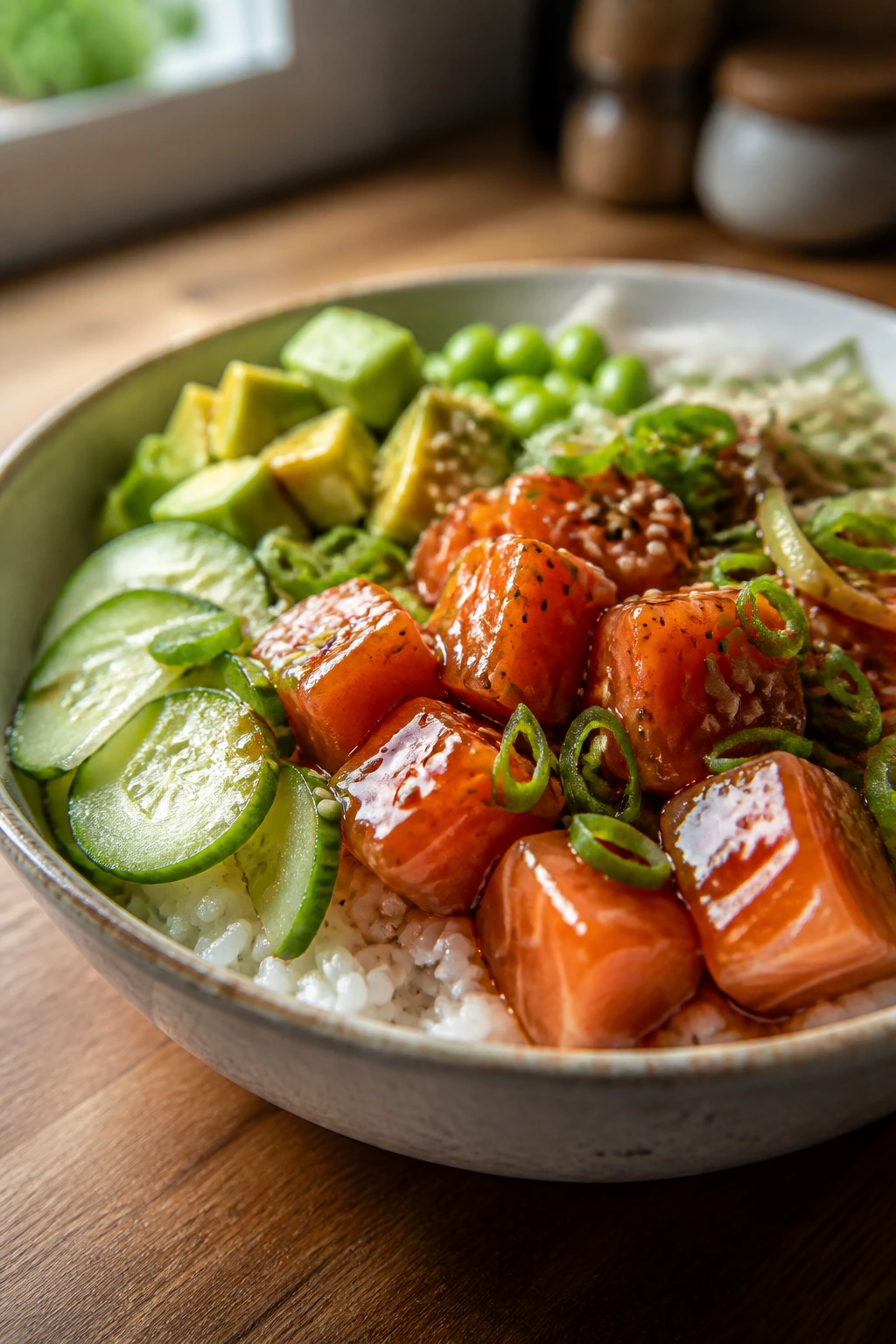
- Cooking the salmon too long: The cubes go from glossy to dry fast. The fix is simple: pull them when the centers are just opaque and still juicy, then let the glaze finish the look.
- Making the sauce too thick: A glaze that sits in a blob on the spoon will harden as it cools. Stop cooking when it’s shiny and lightly coats the spoon, not when it starts behaving like candy.
- Using wet toppings: Watery cucumber, un-drained pineapple, or avocado cut too early can turn the bowl soupy. Dry the toppings and slice the avocado right before assembling.
- Putting hot salmon on cold rice straight from the fridge: The rice stays firm and the contrast feels muddy. Warm the rice until it’s soft and steamy, then let it sit for a minute before you build.
- Crowding the skillet: If all the salmon cubes touch, they steam instead of sear. Cook in two batches if you need to; the few extra minutes are worth it.
- Forgetting salt in the rice: Sweet and sour sauce can carry a lot, but the bowl still needs a salted base. Seasoning the rice while it’s hot is the easiest fix.
Variations That Still Taste Like the Same Dish
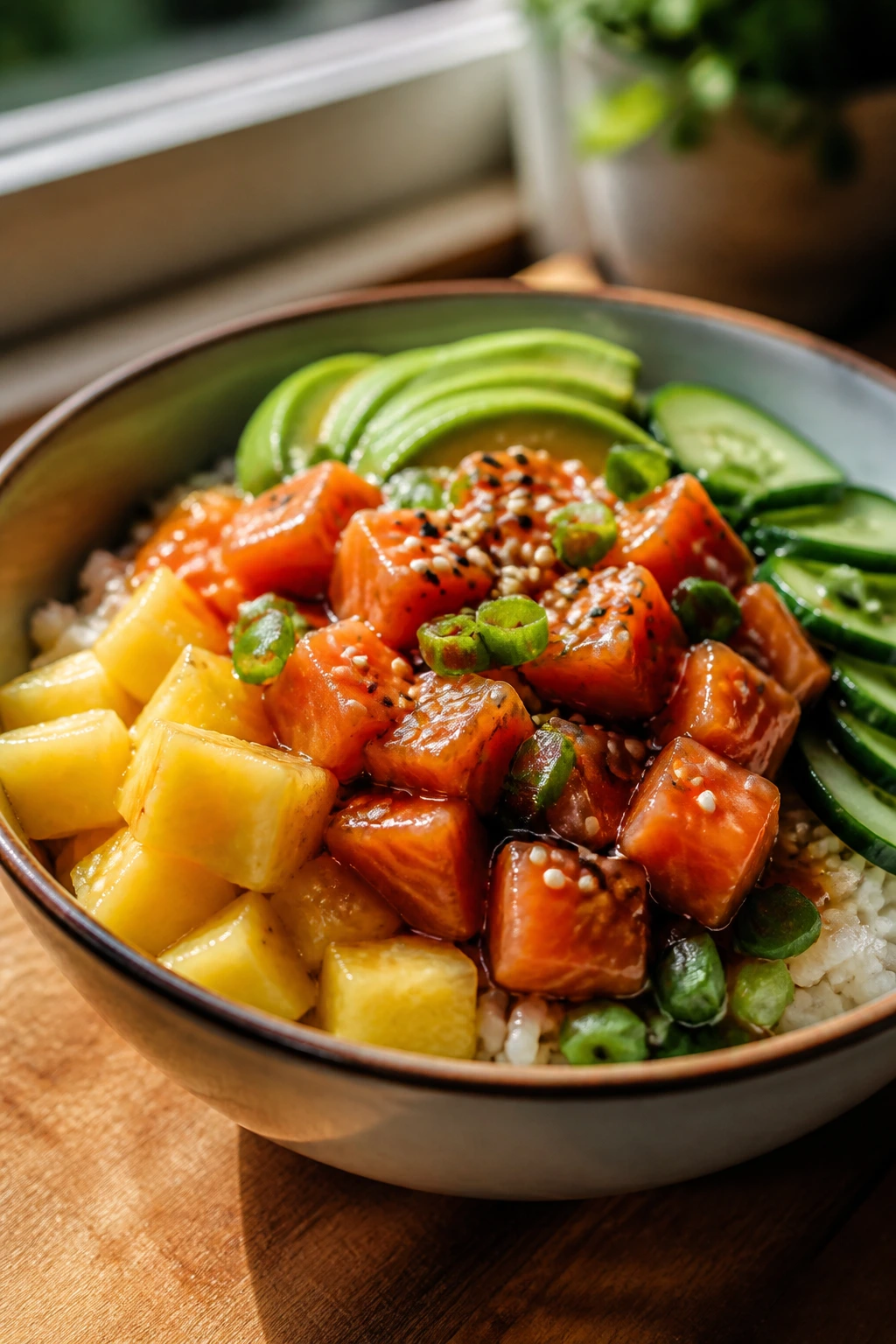
Spicy Chili Crisp Bowl: Stir 1 teaspoon chili crisp into the glaze and finish with another teaspoon over the top. The heat plays nicely with the pineapple, and the crispy bits add a little crackle that works with the salmon.
Pineapple-Forward Island Version: Double the pineapple in the topping mix and replace half the ketchup in the glaze with 2 extra tablespoons pineapple juice. This version tastes lighter and fruitier, especially if you serve it on warm rice in warmer weather.
Cucumber Crunch Bowl: Skip the avocado and use extra cucumber, radish, and shredded cabbage instead. The bowl gets sharper and lighter, with more snap and less creaminess.
Raw Salmon Poke Style: If you want the bowl colder and closer to a true poke bowl, use very fresh salmon cut into 1/2-inch cubes and marinate it briefly in half the glaze for 10 minutes, then spoon it over seasoned rice without cooking. Use salmon you trust, keep it cold, and do not let it sit around on the counter.
Gluten-Free, Lower-Sodium Bowl: Use tamari instead of soy sauce and keep the sesame seeds, vegetables, and rice the same. You can also reduce the soy by half and add another teaspoon of rice vinegar if you want the glaze brighter with less salt.
Make-Ahead, Storage, and Reheating
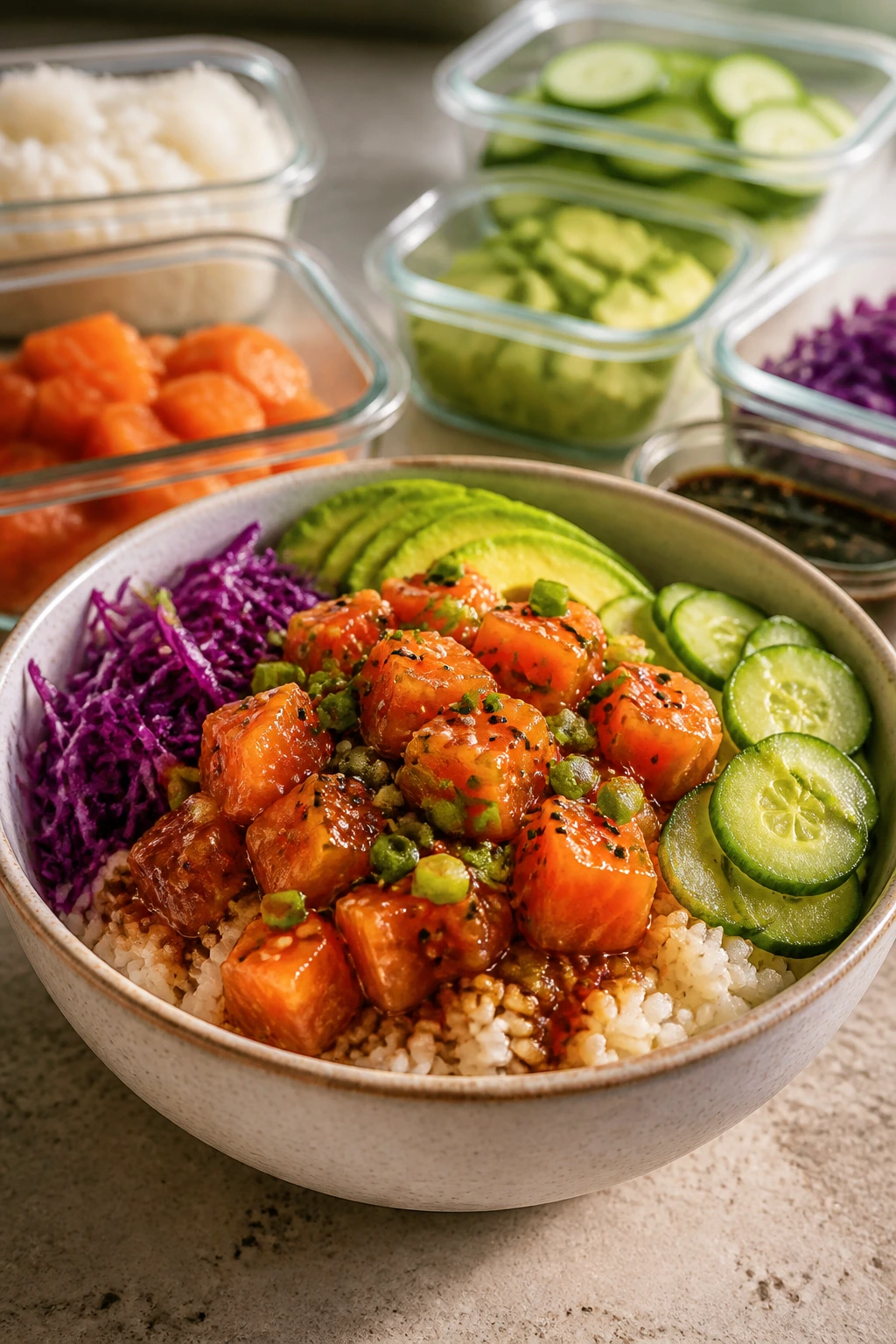
The parts of this bowl store well separately, which is the only way I’d make it ahead. The assembled bowl, avocado and all, is best eaten the day it’s built. Once the rice, salmon, and toppings start mingling in one container, the textures blur fast.
Cooked rice keeps in an airtight container in the fridge for 3 to 4 days. Salmon keeps for up to 2 days refrigerated, though I think it tastes best within the first day. The glaze can sit in the fridge for 5 days in a small jar or container. Crisp toppings like cucumber, carrot, and scallions keep for 2 to 3 days if you store them dry with a paper towel in the container.
For reheating rice, sprinkle in 1 to 2 tablespoons of water and cover the bowl loosely before microwaving for 60 to 90 seconds. The grains should loosen and steam, not dry out. Salmon is gentler in a skillet over low heat for 1 to 2 minutes, just until warm, or in a 300°F oven for 6 to 8 minutes. I would not blast it in a hot microwave unless you like dry edges.
Freezing works only in parts. Cooked salmon can be frozen for up to 1 month, but the texture softens a little when thawed. Rice can also be frozen for about 1 month in a flat bag or sealed container. The toppings do not freeze well at all, so leave the cucumber, avocado, and pineapple out of the freezer and buy those fresh.
If you want to prep ahead for a busy night, make the glaze and the rice one day in advance, and cut the vegetables the same day you plan to serve them. That gives you most of the work done without sacrificing the crisp finish that makes the bowl worth eating.
Sweet and Sour Salmon Poke Bowl FAQs
Can I use raw salmon instead of seared salmon?
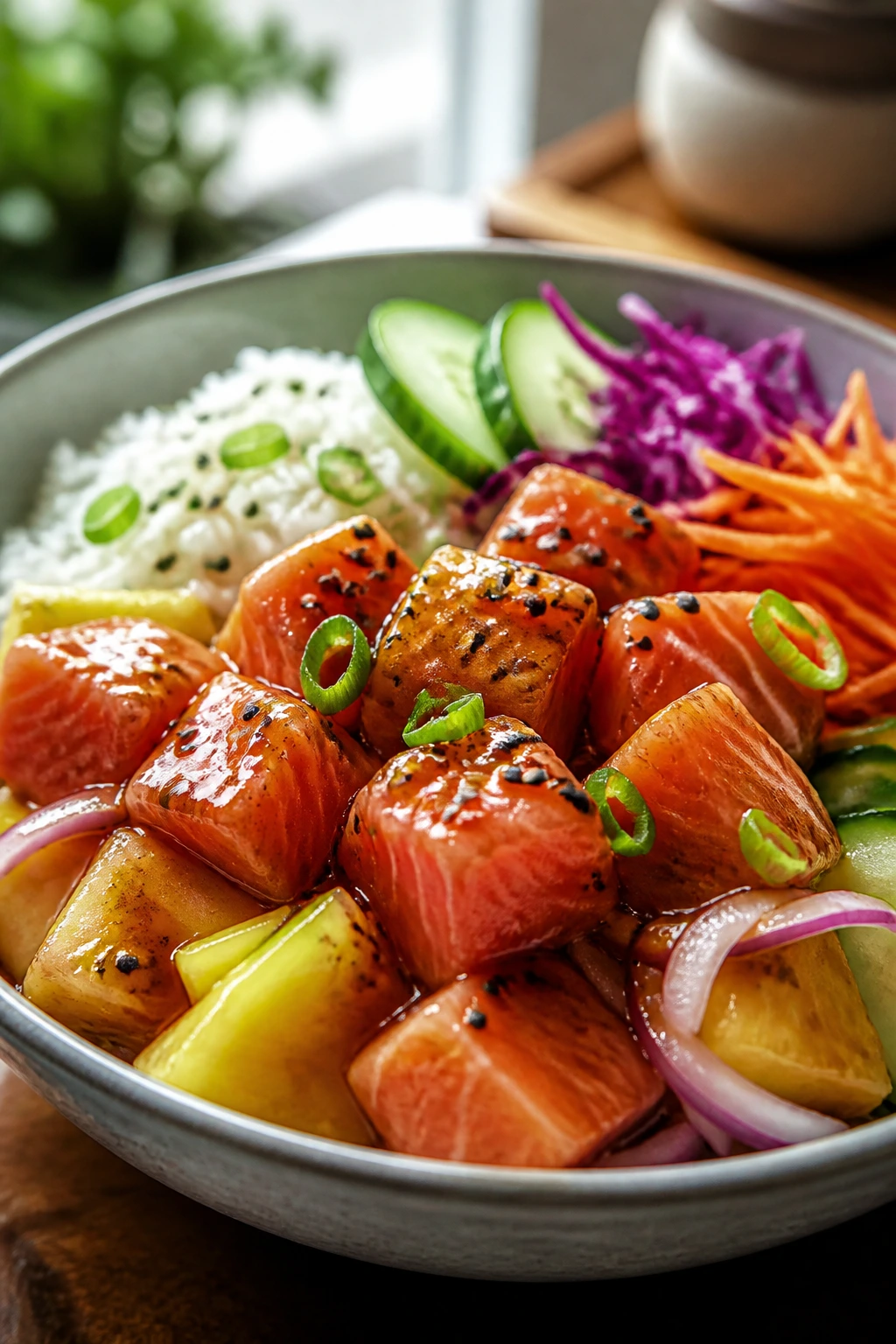
Yes, if you buy salmon you trust and keep it cold the whole time. Slice it into small cubes, marinate it very briefly, and serve it right away; do not let it sit in the glaze long enough to turn mushy. If you want a safer all-purpose version, seared salmon is the easier route.
What rice works best if I do not have sushi rice?
Short-grain rice is the closest substitute because it stays a little sticky and holds the bowl together. Jasmine rice can work, but the bowl will feel looser and the sauce will run more. I would not use long-grain rice here unless that’s all you’ve got.
Can I make this with leftover cooked salmon?
Absolutely. Flake the salmon gently, warm the rice, and spoon the glaze over the fish just before serving. The texture is different from seared cubes, but it still tastes sharp and satisfying.
How do I keep the avocado from browning if I prep ahead?
Slice it at the last minute if you can. If you need to prep it early, brush the cut surface with a tiny bit of lime or lemon juice and cover it tightly with plastic wrap pressed right against the flesh.
What if my glaze is too thin?
Let it simmer for another 30 to 60 seconds, stirring often. If it still looks loose, whisk in another teaspoon of cornstarch mixed with cold water and give it a short simmer. Do not keep boiling it hard or the sweet parts will get sticky and scorched.
Can I turn this into meal prep?
Yes, but keep the components separate. Pack the rice, salmon, and toppings into different containers, then assemble after reheating the rice and salmon. That keeps the cucumber crisp and the avocado from turning sad.
Does the salmon need to be cooked all the way through?
If you want fully cooked fish, the safe internal temperature is 145°F, which is the food-safety line many cooks use. For a juicier center, pull it earlier and let it finish gently off the heat. The choice is yours, but the fish should never look translucent in the middle.
Can I skip the ketchup in the glaze?
You can, but you’ll lose some of that familiar sweet-sour takeout flavor and the color will be paler. If you want a cleaner glaze, replace the ketchup with more pineapple juice and a teaspoon of tomato paste, which keeps the body without tasting like tomato sauce.
Why This Bowl Keeps Coming Back to My Table
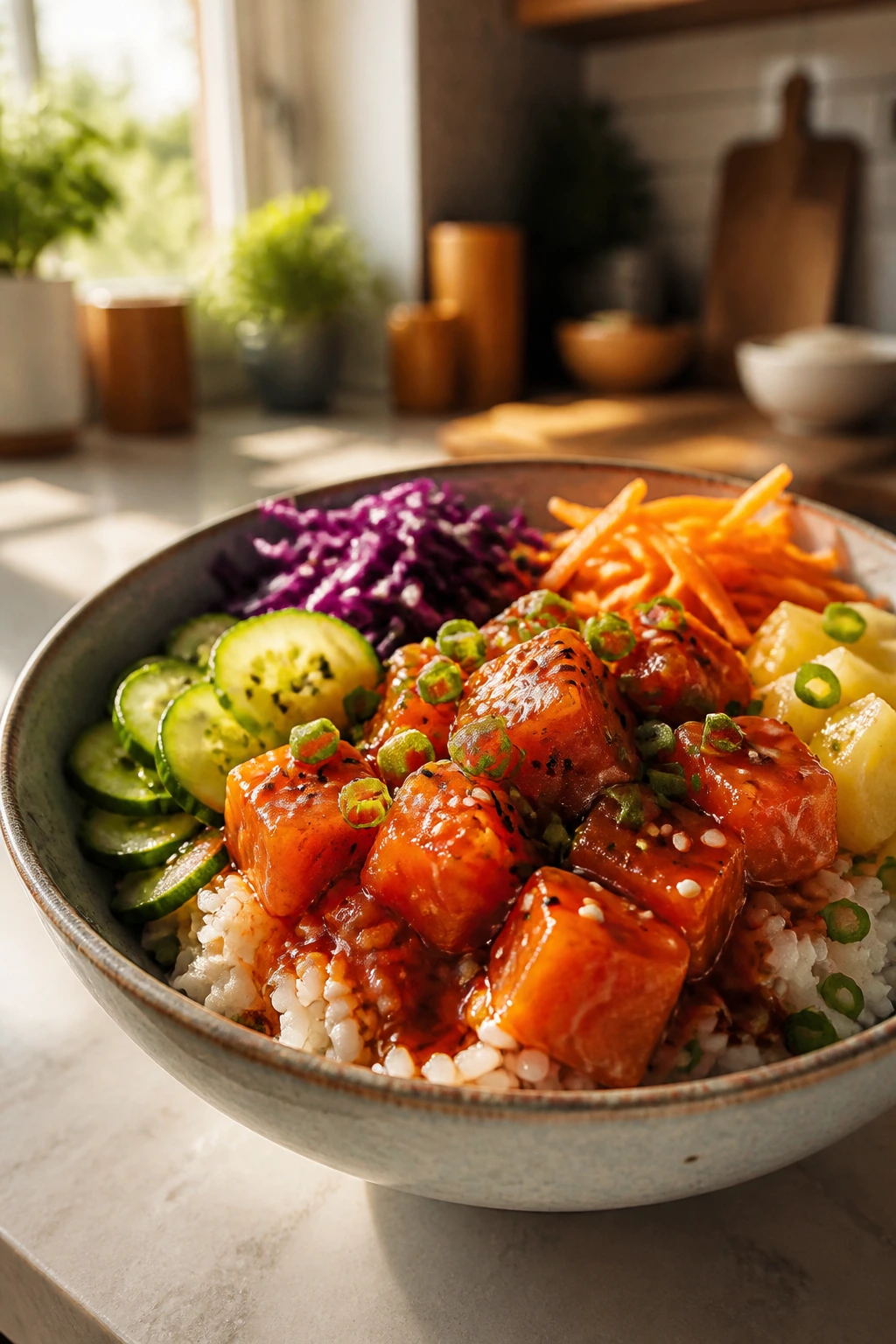
A bowl like this works because it understands restraint. The sauce is present, not pushy. The salmon is rich, but it’s not buried. The vegetables stay crisp long enough to matter, which is the difference between a bowl that feels assembled and one that feels thought through.
The best part is how easily it slips into regular cooking. You do not need a complicated pantry or a weekend block of time. You need a hot pan, decent salmon, and the habit of keeping textures separate until the last minute. That’s the move, and it never gets old.
Sweet and Sour Salmon Poke Bowl — Recipe Card
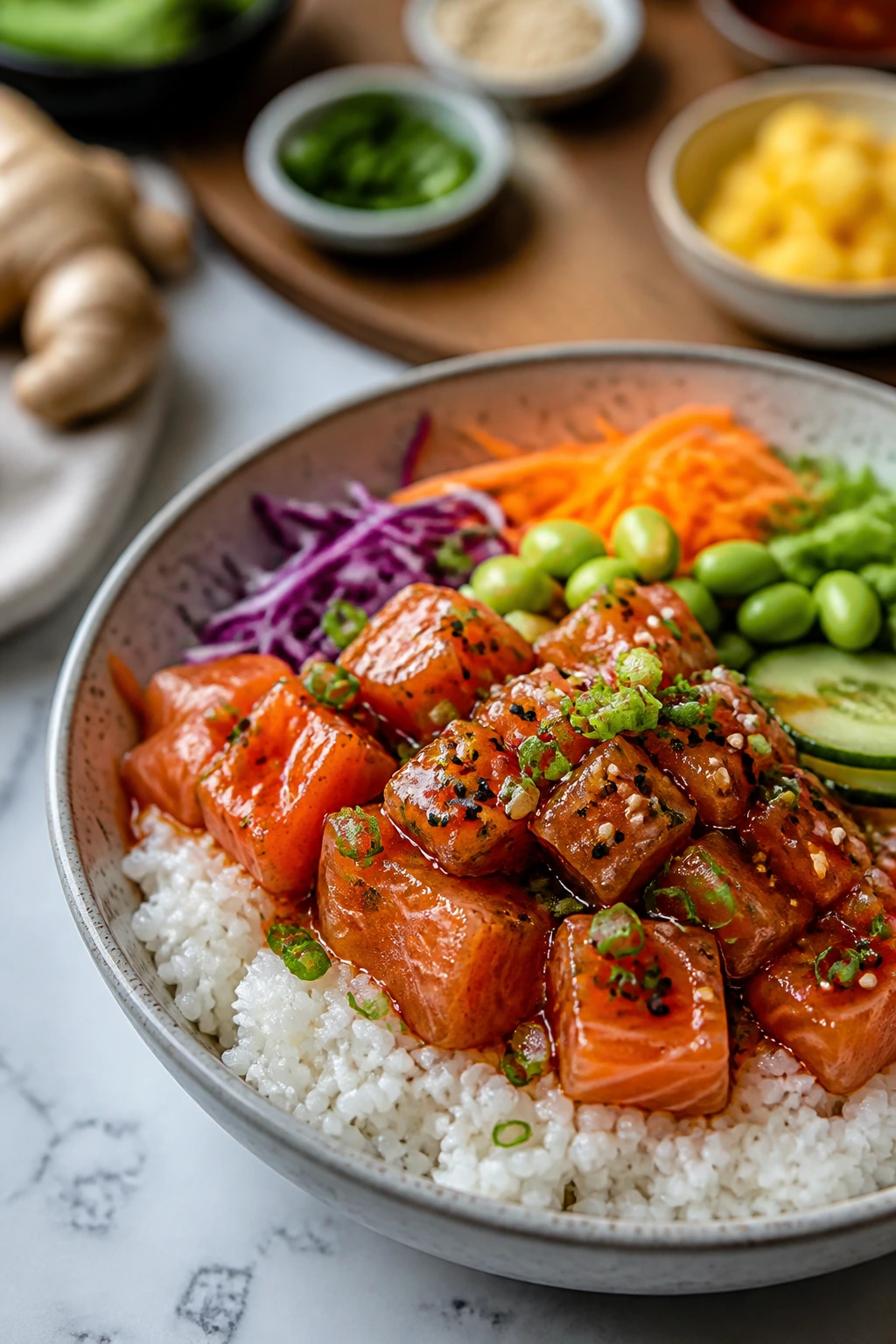
Recipe Name: Sweet and Sour Salmon Poke Bowl
Description: Glossy seared salmon, tangy sweet-and-sour glaze, warm sushi rice, and crisp vegetables come together in a bowl that tastes brighter and fresher than most takeout versions. The balance of hot, cool, soft, and crunchy is the whole point.
Prep Time: 25 minutes
Cook Time: 20 minutes
Total Time: 45 minutes
Course: Dinner, Main Course
Cuisine: Asian-Inspired, Chinese-Inspired, Hawaiian-Inspired Fusion
Servings: 4 servings
Calories: About 690 kcal per serving
Ingredients
For the sushi rice:
- 2 cups sushi rice, rinsed until the water runs mostly clear
- 2 1/2 cups water
- 2 tablespoons rice vinegar
- 1 tablespoon granulated sugar
- 3/4 teaspoon kosher salt
For the salmon and sweet-sour glaze:
- 1 1/2 pounds salmon fillet, skin removed and cut into 1-inch cubes
- 1 tablespoon neutral oil
- 1/2 teaspoon kosher salt
- 1/4 teaspoon black pepper
- 1/4 cup pineapple juice
- 2 tablespoons rice vinegar
- 2 tablespoons ketchup
- 1 1/2 tablespoons honey
- 1 tablespoon low-sodium soy sauce or tamari
- 1 teaspoon fresh ginger, grated
- 1 small garlic clove, grated
- 1 teaspoon cornstarch mixed with 1 tablespoon cold water
For the toppings:
- 1 cup shelled edamame, thawed
- 1 cup cucumber, diced
- 1 cup carrot, shredded or cut into thin matchsticks
- 1 cup pineapple, diced and well drained
- 1 ripe avocado, sliced
- 2 scallions, thinly sliced
- 1 sheet nori, cut into thin ribbons
- 1 tablespoon toasted sesame seeds
- 1 to 2 teaspoons chili crisp, optional
- 2 tablespoons pickled red onion or quick-pickled cucumber, optional
Instructions
- Rinse the sushi rice until the water runs mostly clear, then cook it with the water in a covered saucepan for 18 minutes over low heat after it comes to a boil. Rest for 10 minutes.
- Mix the rice vinegar, sugar, and salt, then fold the mixture into the hot rice.
- Whisk the pineapple juice, rice vinegar, ketchup, honey, soy sauce, ginger, garlic, and cornstarch slurry in a small saucepan. Simmer until glossy and lightly thickened.
- Pat the salmon dry, season it with salt and pepper, and sear it in neutral oil over medium-high heat until browned outside and just cooked through, about 3 to 4 minutes total.
- Toss the salmon gently with half the glaze.
- Divide the rice into 4 bowls and top with the salmon, edamame, cucumber, carrot, pineapple, avocado, scallions, nori, sesame seeds, and optional chili crisp.
- Spoon the remaining glaze over the bowls and serve right away.
Notes: Keep the toppings dry for the best texture. For a juicier salmon center, pull it around 125 to 130°F; for fully cooked fish, take it to 145°F. The glaze can be made 5 days ahead, and the rice reheats well with a splash of water.