



The first thing you notice about a good sticky smoked sausage stir fry is the smell. Smoke from the sausage hits the hot pan, garlic softens in the fat, and the soy-hoisin sauce turns glossy the second it meets the heat. That’s the whole appeal right there: big flavor, fast movement, and a pan that looks like it knows exactly what it’s doing.
This version leans hard into that takeout-style sweet-salty gloss, but it uses ingredients you can keep on hand without planning your week around them. Smoked sausage gives the stir fry a head start because it’s already cooked and already seasoned. That means the pan gets to focus on browning, blistering, and saucing instead of waiting around for meat to cook through.
A lot of stir fries go wrong in a boring way. The sauce stays thin. The vegetables collapse. The meat tastes fine but flat. This one avoids that by building a little caramelization on the sausage first, then using a cornstarch-thickened sauce that clings instead of puddling. The result is closer to the glossy box you’d get from a good takeout place, only hotter, fresher, and more satisfying when you scrape the pan clean.
Why This Sticky Smoked Sausage Stir Fry Keeps Showing Up on My Stove
Fast Browning: Smoked sausage gives you a built-in sear in about 3 to 4 minutes, so you get deep, savory edges before the vegetables even start to soften.
Sticky Sauce, Not Thin Sauce: The soy, hoisin, honey, vinegar, and cornstarch mixture thickens in the pan in under 2 minutes, which means the glaze clings to every slice instead of sliding off.
Flexible Vegetables: Bell peppers, broccoli, snap peas, cabbage, and green beans can all work here, as long as you keep the pieces close to the same size so they cook in the same window.
Takeout Energy Without the Wait: The flavor profile lands in that salty-sweet, glossy lane people usually chase in a container of stir fry, but you don’t need to deep-fry anything or marinate for hours.
Leftovers Hold Their Own: Smoked sausage stays juicy after reheating, and the sauce keeps the rice or noodles from drying out in the fridge.
One Pan, Real Dinner: This is the kind of meal that fills the kitchen with garlic and soy, then leaves you with one skillet and a cutting board to wash. That’s not a small thing.
Yield: Serves 4
Prep Time: 15 minutes
Cook Time: 15 minutes
Total Time: 30 minutes
Difficulty: Beginner — the method is straightforward, and the only real skill is keeping the pan hot enough to brown instead of steam.
Best Served: Right away, spooned over hot rice or tossed with noodles.
Why This Sticky Smoked Sausage Stir Fry Tastes So Close to Takeout
What makes this dish work is not mystery. It’s timing, heat, and a little bit of fat in the pan.
A smoked sausage stir fry starts with an advantage most weeknight dinners do not have: the protein is already cooked. That means you can spend your attention on browning the edges, which is where the flavor lives. If you let the sausage sit undisturbed long enough, those slices pick up little mahogany patches that taste saltier and deeper than the pale center of the sausage ever could. That browned surface is doing real work.
The other trick is the sauce. Takeout-style stir fry sauce usually needs three things to feel right: salt, sweetness, and enough body to cling. Soy sauce handles the salt, hoisin adds sweetness plus that dark, almost plum-like depth, and a touch of honey or brown sugar rounds the edges. Rice vinegar keeps the whole thing from tasting sticky in the wrong way. Then cornstarch steps in and gives the sauce that thick, shiny finish that coats a spoon instead of running off it.
Why smoked sausage belongs here
I know some people expect stir fry to be all chicken, shrimp, or tofu. Fine. But smoked sausage earns its spot because it already brings seasoning, fat, and smoke, all of which behave beautifully in a hot skillet. You’re not babysitting raw meat. You’re browning a fully cooked ingredient that can stand up to a strong sauce.
That matters because the vegetables stay crisp while the sausage does the heavy lifting. If you use a sausage with a little garlic or pepper in it, even better. The final dish feels layered without asking much from you.
Why the vegetables stay interesting
Broccoli, peppers, and snap peas have different jobs in the pan. Broccoli gives you bite and soaks up sauce in the little nooks. Peppers add sweetness and color. Snap peas stay snappy even after a short toss in the glaze, which keeps the whole skillet from turning soft and one-note.
And yes, you can make this with whatever vegetables are sitting in your crisper drawer. The structure still holds as long as you keep the cut sizes honest and don’t overload the skillet.
The Ingredients, Measured and Ready
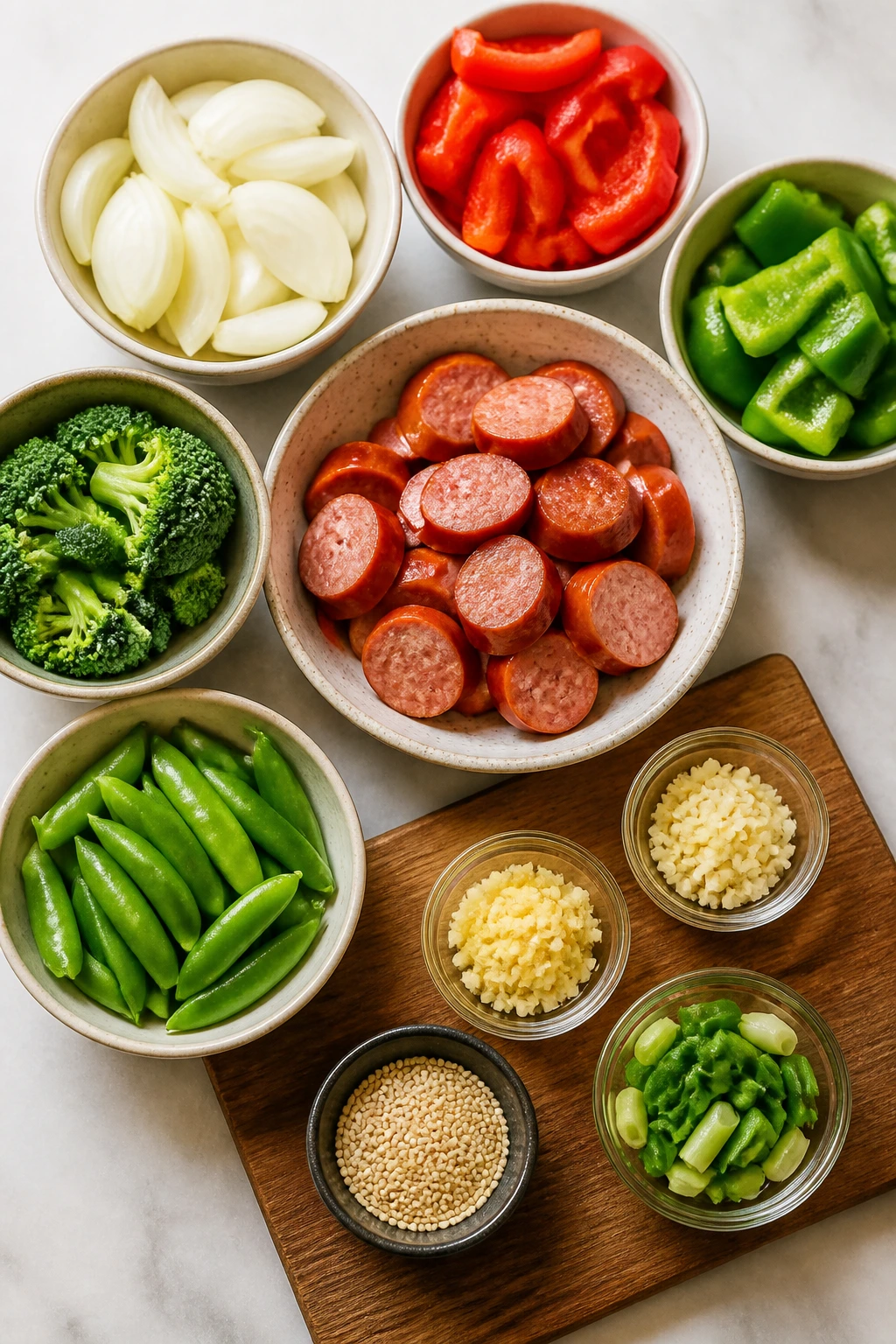
For the Stir Fry
- 1 1/2 pounds fully cooked smoked sausage or kielbasa, sliced into 1/4-inch coins
- 1 tablespoon neutral oil, such as avocado, canola, or peanut oil
- 1 small yellow onion, cut into thin wedges
- 1 red bell pepper, sliced into 1/2-inch strips
- 1 green bell pepper, sliced into 1/2-inch strips
- 2 cups broccoli florets, cut into bite-size pieces
- 1 cup snap peas, trimmed
- 3 cloves garlic, minced
- 1 tablespoon fresh ginger, grated
- 2 scallions, thinly sliced, for finishing
- 1 tablespoon toasted sesame seeds, for finishing
For the Sticky Sauce
- 1/4 cup low-sodium soy sauce
- 1/4 cup chicken broth or water
- 2 tablespoons hoisin sauce
- 1 tablespoon oyster sauce
- 2 tablespoons honey or packed brown sugar
- 2 tablespoons rice vinegar
- 1 tablespoon cornstarch
- 1 teaspoon toasted sesame oil
- 1/2 teaspoon red pepper flakes or 1 teaspoon chili garlic sauce, optional
Why Each Ingredient Earns Its Place
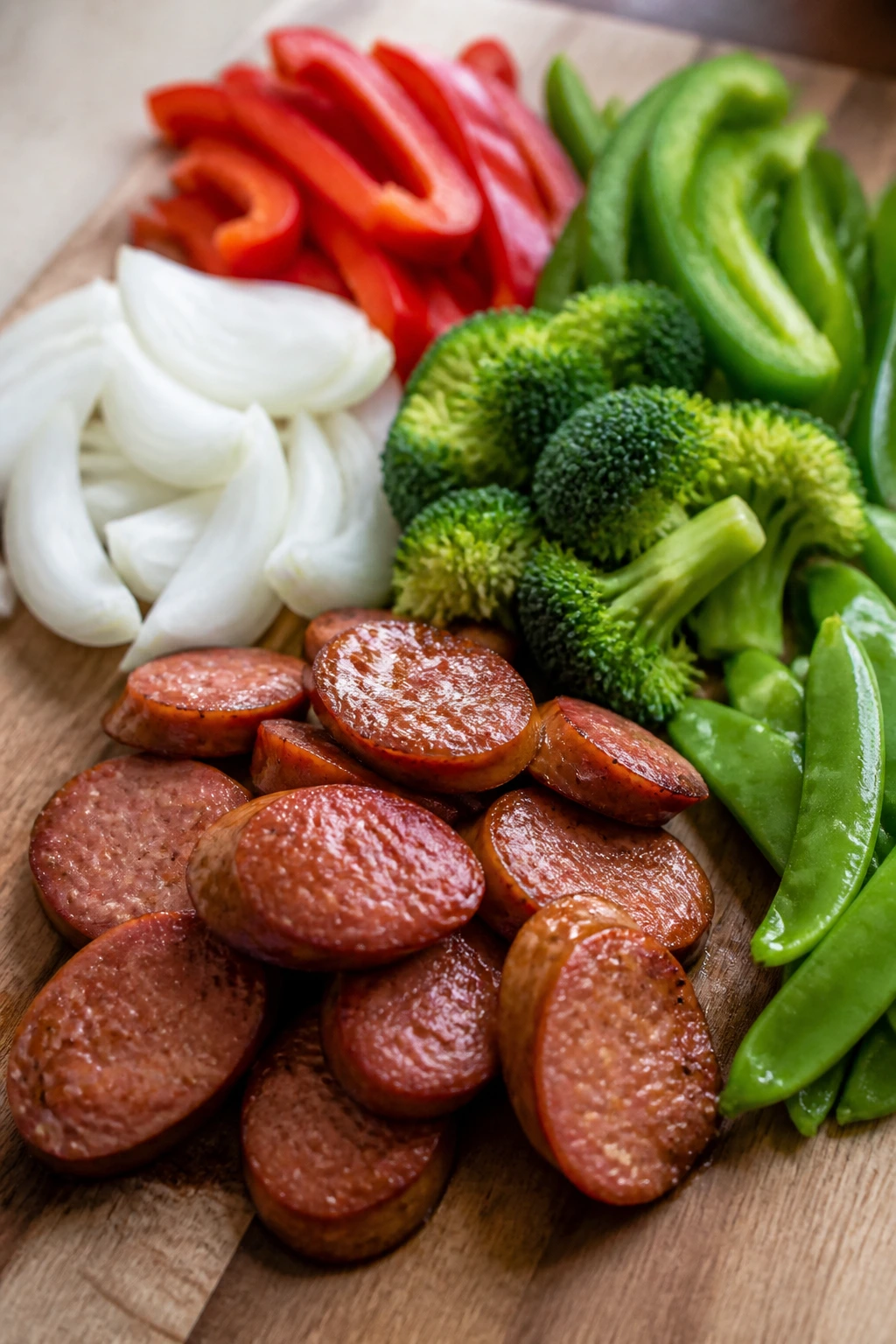
Smoked Sausage
- What to use: 1 1/2 pounds fully cooked smoked sausage or kielbasa, sliced into 1/4-inch coins.
- Preparation: Slice it before you heat the pan so the edges can brown evenly instead of curling or sticking.
- Substitutions: Andouille gives you more heat, chicken sausage lightens the dish, and plant-based smoked sausage works if you want a meatless version.
- Tips: Pat the slices dry with a paper towel if they look wet. Dry sausage browns; damp sausage steams.
Vegetables
- What to use: 1 small onion, 1 red bell pepper, 1 green bell pepper, 2 cups broccoli florets, and 1 cup snap peas.
- Preparation: Cut everything into similar bite sizes, but keep the broccoli a little smaller so it finishes in the same window as the peppers.
- Substitutions: Cabbage, green beans, mushrooms, asparagus, or carrots all fit the same pan. Frozen stir-fry vegetable blends can work too, though they release more water.
- Tips: Harder vegetables need smaller cuts; softer vegetables can stay a little larger. That’s the easiest way to avoid undercooked broccoli and mushy peppers in the same skillet.
Sticky Sauce
- What to use: 1/4 cup soy sauce, 1/4 cup broth or water, 2 tablespoons hoisin, 1 tablespoon oyster sauce, 2 tablespoons honey or brown sugar, 2 tablespoons rice vinegar, 1 tablespoon cornstarch, and 1 teaspoon toasted sesame oil.
- Preparation: Whisk the cornstarch completely into the liquid before it hits the hot pan. If you see specks or lumps in the bowl, keep whisking.
- Substitutions: Tamari stands in for soy sauce if you need gluten-free. If you skip oyster sauce, add another teaspoon of soy sauce and a pinch more honey to keep the balance.
- Tips: Hoisin already brings sweetness, so don’t rush the honey higher. Too much sugar turns the glaze heavy instead of glossy.
Aromatics and Finish
- What to use: 3 cloves garlic, 1 tablespoon fresh ginger, 2 scallions, and 1 tablespoon toasted sesame seeds.
- Preparation: Mince the garlic finely and grate the ginger so they disappear into the sauce instead of landing in hard little chunks.
- Substitutions: Garlic paste works in a pinch. Ground ginger can stand in if you’re desperate, but use only 1/4 teaspoon because the flavor hits harder and less cleanly.
- Tips: Garlic burns fast in a hot skillet. Add it late, and keep it moving.
The Pan, the Heat, and the Little Tools That Make This Easier
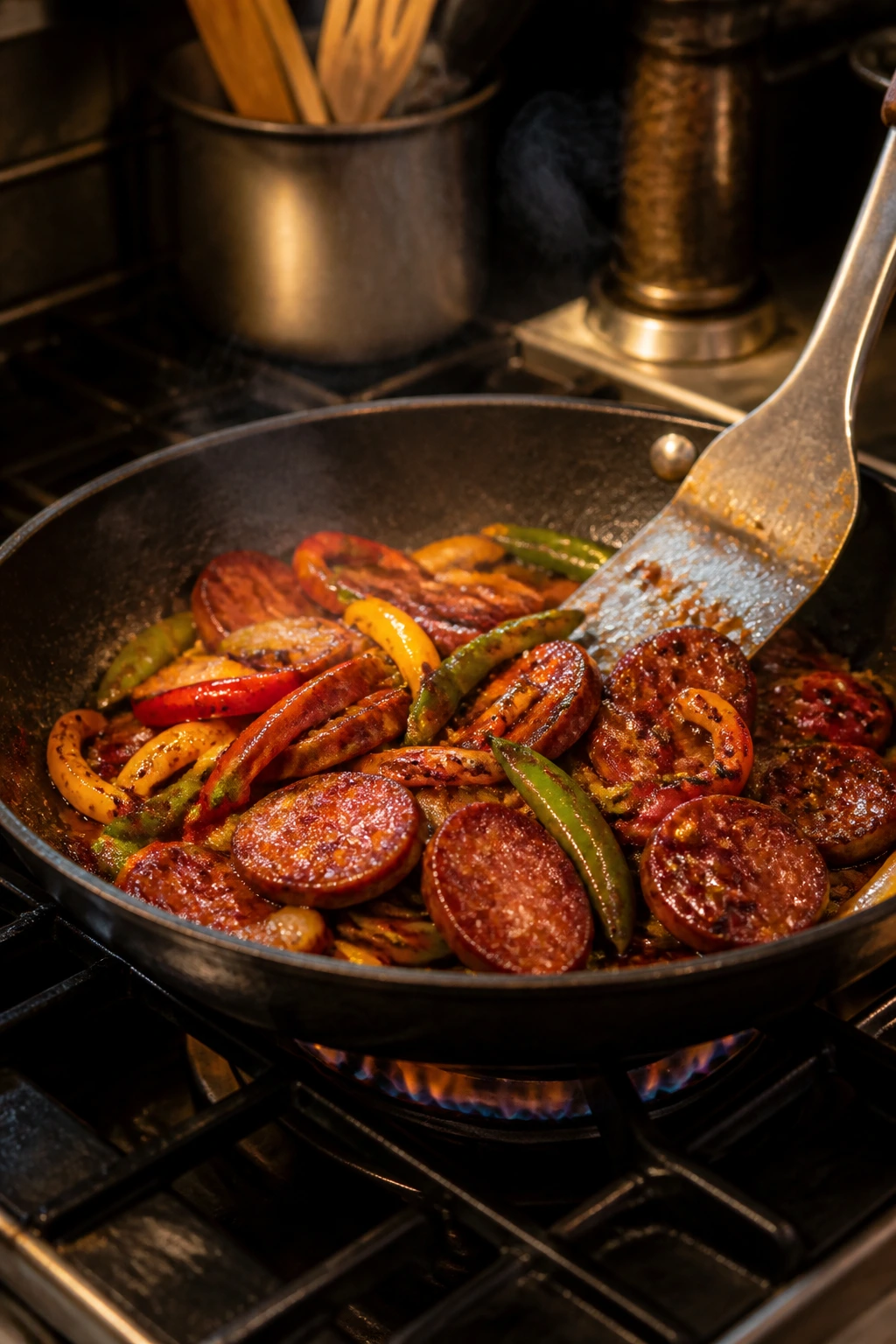
You do not need fancy gear for this, but the right tools make the difference between a slick stir fry and a sticky mess.
- 12-inch skillet or wok: A wide surface lets the sausage brown instead of crowding. If your skillet is smaller, cook in batches.
- Sharp chef’s knife: Thin, even slices of sausage and vegetables cook at the same speed, which keeps the final texture more balanced.
- Cutting board: A roomy board matters here because you’ll be chopping several vegetables, and tiny crowded piles lead to sloppy cuts.
- Small mixing bowl: This is for the sauce. A bowl with enough room to whisk without splashing is worth it.
- Whisk or fork: You need something that can fully dissolve the cornstarch before it hits the heat.
- Wooden spoon or spatula: Use it to toss the sausage and vegetables without scraping the pan hard enough to break up the broccoli.
- Measuring spoons and cups: The sauce depends on the sugar, vinegar, and cornstarch ratio. Guessing is how it ends up thin or cloying.
If you have a microplane, use it for the ginger. If you do not, mince it as finely as you can. The flavor is still there either way.
How to Cook It So the Sauce Clings
Prep the Sauce and Vegetables
-
In a small bowl, whisk together the soy sauce, broth, hoisin, oyster sauce, honey, rice vinegar, cornstarch, toasted sesame oil, and red pepper flakes or chili garlic sauce, if using. Keep whisking until the cornstarch disappears and the liquid looks smooth, not cloudy in clumps.
-
Slice the smoked sausage into 1/4-inch coins and cut the vegetables before you turn on the heat. Once the pan is hot, the cooking moves quickly, and you do not want to be chopping broccoli while the sausage sits.
Brown the Sausage
-
Heat a 12-inch skillet or wok over medium-high heat for 2 minutes. Add the neutral oil, then the sausage in a single layer. Cook for 3 to 4 minutes, stirring only once or twice, until the edges are deep golden brown and the slices smell smoky and a little caramelized.
-
If the sausage releases a lot of fat, keep it in the pan for flavor. If the pan looks greasy, spoon off a little of the excess, but leave enough to coat the vegetables lightly.
Build the Vegetables
-
Add the onion, bell peppers, broccoli florets, and snap peas. Stir-fry for 4 to 5 minutes, tossing often, until the onion starts to soften, the peppers brighten, and the broccoli turns vivid green with crisp-tender stems. Do not let the vegetables go limp. If the pan starts looking dry, add 1 to 2 tablespoons of water and let it steam for 30 seconds.
-
Add the garlic and ginger and stir for 30 seconds, just until fragrant. Do not walk away here. Garlic goes from sweet to bitter fast in a hot skillet.
Finish the Glaze
-
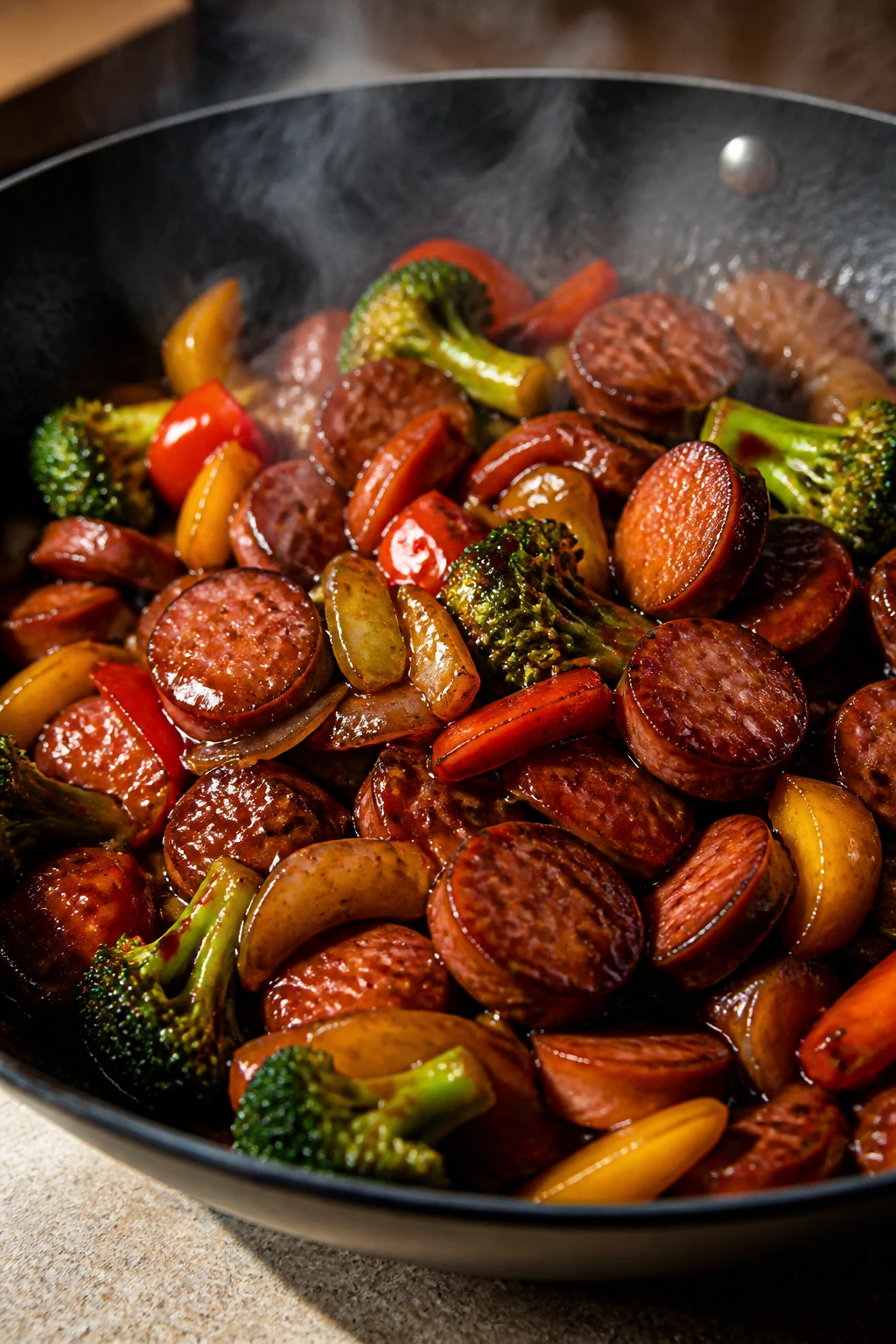
Give the sauce one more whisk, then pour it into the pan. Toss constantly for 1 to 2 minutes until the sauce bubbles and thickens enough to coat every slice of sausage and every piece of vegetable in a shiny layer.
-
Remove the skillet from the heat. Scatter the scallions and sesame seeds over the top, then taste a piece of broccoli and a slice of sausage. If you want more sharpness, add a small splash of rice vinegar. If you want more heat, add another pinch of red pepper flakes.
-
Serve immediately. The sauce is at its best in that narrow window where it’s glossy and clingy, not stiff.
How to Put It on the Plate
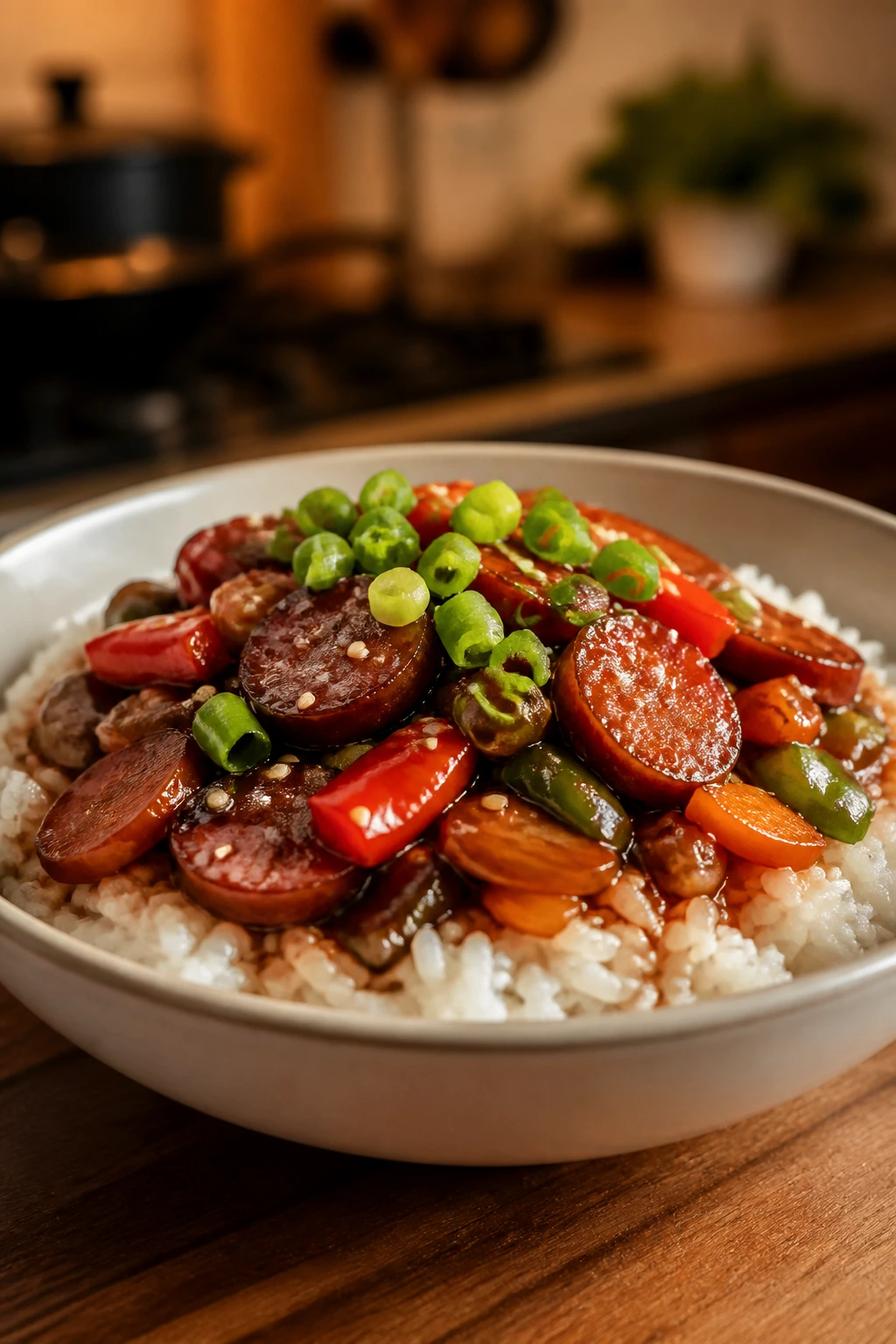
Presentation: Spoon the sticky smoked sausage stir fry over a bed of hot jasmine rice in shallow bowls. Let the glossy sauce sink into the rice a little, then pile the sausage and vegetables on top so the colors stay visible. A scatter of scallions and sesame seeds gives it a finished look without making it fussy.
Accompaniments: Plain rice is the easiest match, but steamed rice noodles, lo mein noodles, or even fried rice all work. If you want a vegetable on the side, quick-sautéed bok choy or sliced cucumbers dressed with rice vinegar gives the plate some lift. I also like it with a simple cabbage slaw when I want more crunch.
Portions: One serving is about a quarter of the skillet, plus 3/4 cup cooked rice if you’re building a full bowl. If you’re serving a crowd, double the vegetables before you double the sausage; that keeps the dish from feeling too heavy.
Beverage Pairing: Unsweetened jasmine tea is my first choice because it cleans up the soy and hoisin without fighting the smoke. A cold lager works well too. For a non-alcoholic option, sparkling water with lime is enough.
Small Tweaks That Make a Big Difference
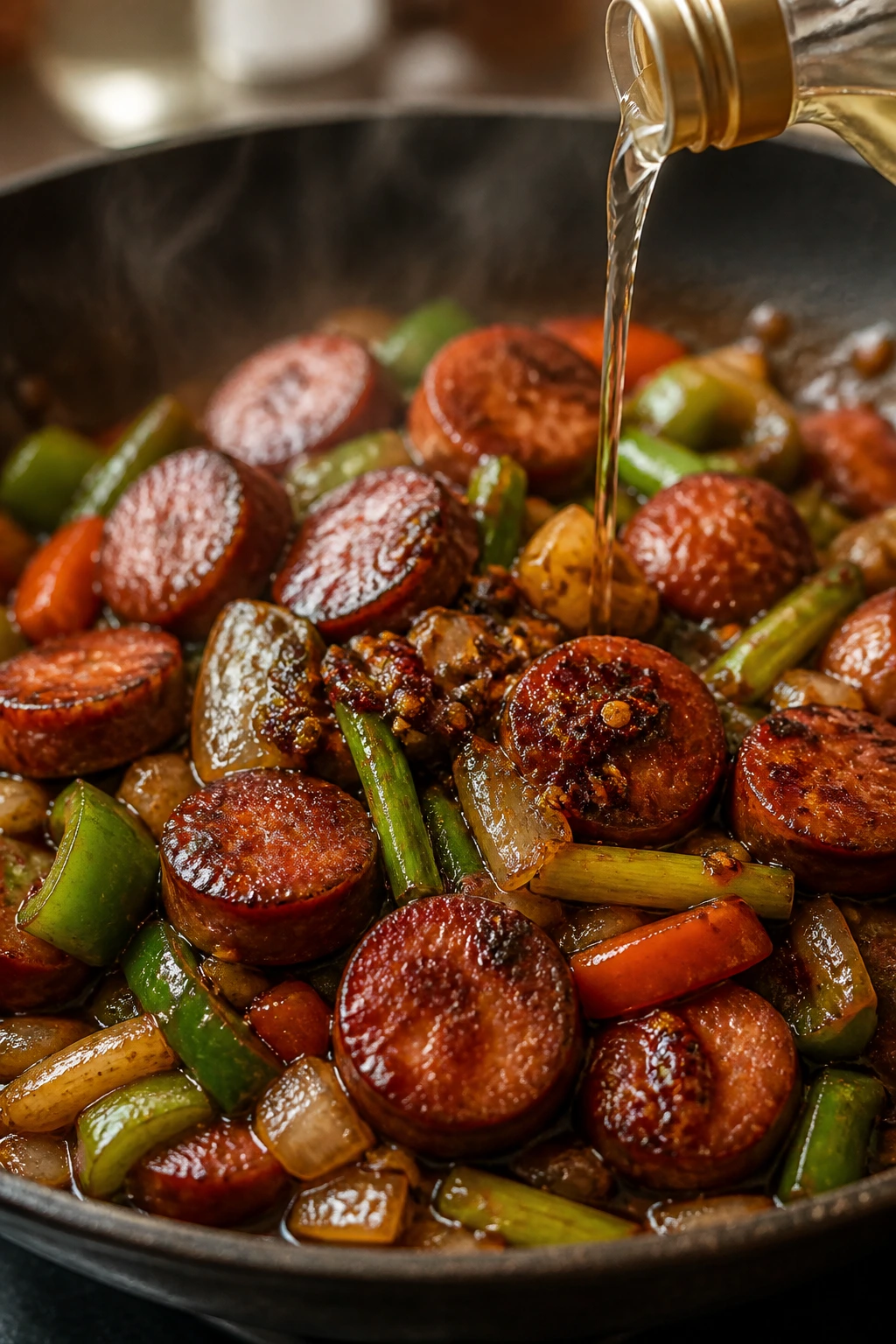
Flavor Enhancement: A teaspoon of Chinese black vinegar or a few drops of rice vinegar at the end sharpens the sauce and keeps the sweetness from sitting too heavy on the tongue. If you like a little heat, a spoonful of chili crisp stirred in off the heat adds crunchy chili bits and a deeper burn than plain flakes.
Time-Saver: Slice the sausage and vegetables earlier in the day and keep them in separate containers in the fridge. The sauce can be whisked together up to 5 days ahead and stored in a jar. That turns the actual cooking into a 15-minute sprint.
Texture Move: If you want more browning on the sausage, let the slices sit untouched for the first minute and a half. That quiet stretch matters. Moving them too early drags moisture across the pan and kills the sear.
Cost-Saver: Cabbage and carrots are cheaper than snap peas and broccoli, and they behave well in this sauce. Thinly sliced green cabbage softens into sweet ribbons, while carrots keep a little snap if you slice them on the bias.
Make-It-Yours: If you want a meatless version, use smoked plant-based sausage and add an extra handful of broccoli or mushrooms so the pan still feels full. If you want more richness, toss in a handful of roasted peanuts at the end. That little crunch changes the whole bite.
Mistakes That Turn Sticky into Soggy
-
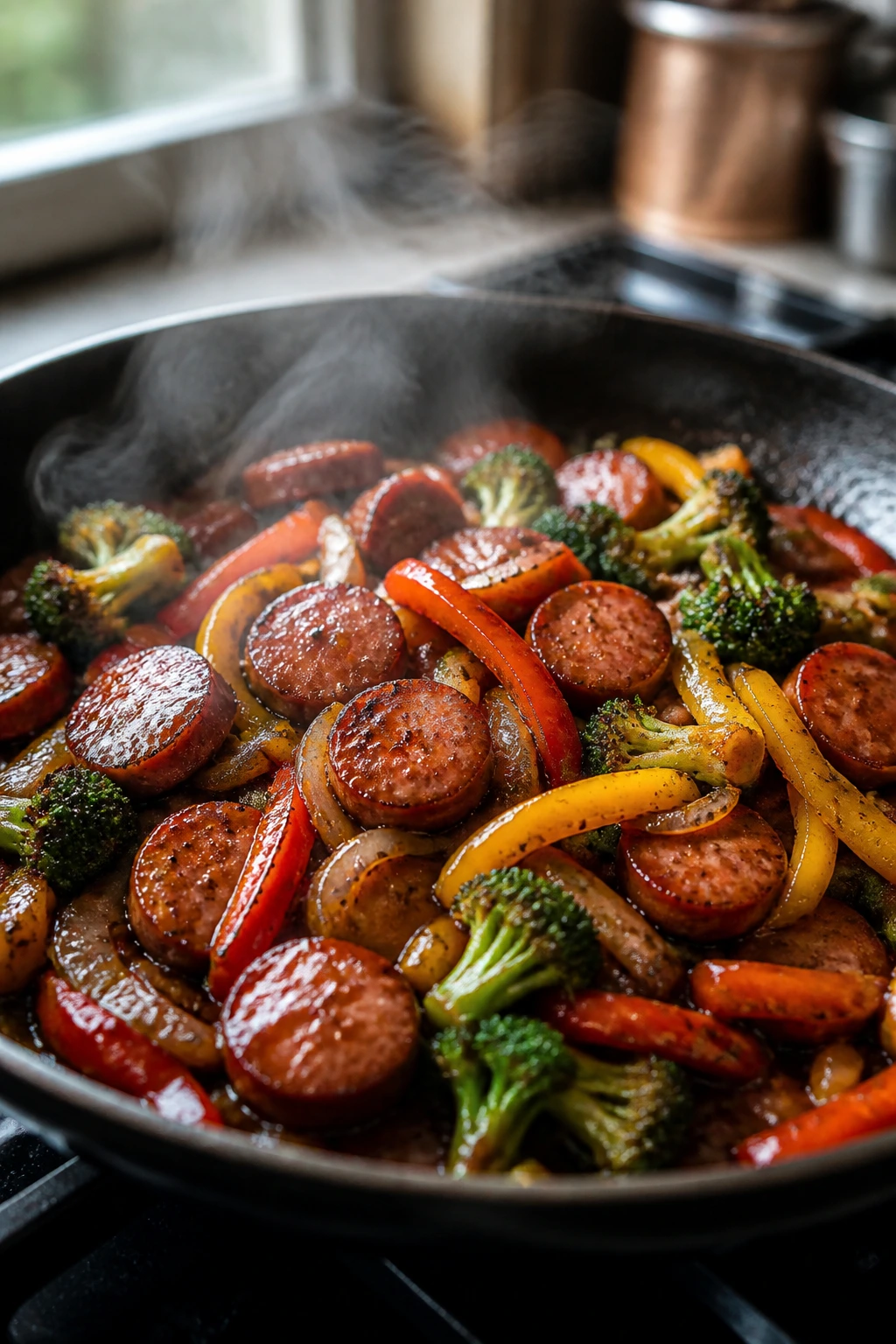
Crowding the skillet. When the pan is packed, the sausage and vegetables release moisture and start steaming. The symptom is pale sausage and soft peppers. Use a 12-inch skillet, or cook in two batches if your pan is smaller.
-
Adding the sauce before the vegetables are hot. If the vegetables are still cool when the sauce goes in, the glaze thickens unevenly and can turn watery at the bottom. Make sure the broccoli and peppers are already hot and just barely tender before you pour.
-
Overcooking the broccoli. Broccoli goes from crisp to tired faster than people expect. If the florets get olive-green and floppy, you went too far. Cut them small, keep the heat high, and stop as soon as the stems are tender enough to bite cleanly.
-
Forgetting to whisk the cornstarch. Cornstarch settles fast. If it sits in the bowl and then hits the pan in clumps, you get little pale lumps instead of a smooth glaze. Whisk right before pouring.
-
Letting the sauce get too sweet. Hoisin, honey, and sausage already bring plenty of sweetness. If the finished dish tastes sticky in a clumsy way, a teaspoon of rice vinegar usually fixes it faster than more salt.
-
Walking away during the garlic step. Garlic only needs 30 seconds in the pan. Any longer, and it turns sharp or bitter. Have the sauce ready before you add it so you can move straight to the finish.
Variations for Heat, Veg, and Pantry Swaps
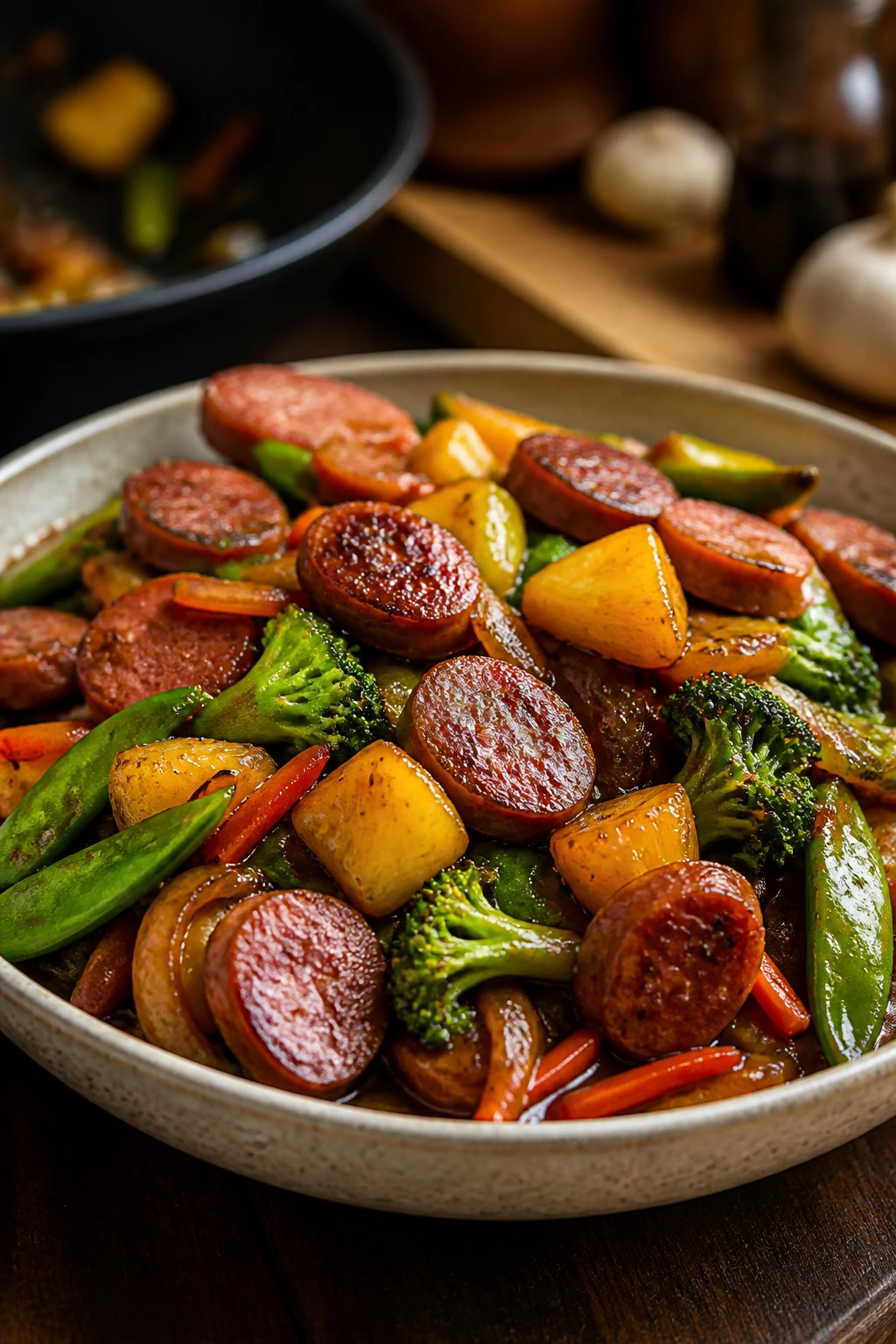
Chili Crisp Firecracker Stir 1 to 2 teaspoons of chili crisp into the sauce after the pan comes off the heat, then finish with extra scallions. The crispy chile bits bring texture, not just heat, which makes the glaze feel more alive.
Pineapple Pepper Glaze Add 1 cup of fresh pineapple chunks or well-drained canned pineapple during the last minute of cooking, right before the sauce. The fruit’s acid and sweetness play nicely with the smoke from the sausage, and the juices thicken into the glaze instead of watering it down.
Cabbage-Heavy Pantry Bowl Swap the broccoli and snap peas for 4 cups of thinly sliced green cabbage and 1 cup of julienned carrots. Cabbage wilts into silky ribbons in a hot pan, and carrots keep enough bite to stop the bowl from turning soft.
Gluten-Free Tamari Swap Use tamari instead of soy sauce and make sure your hoisin and oyster sauce are labeled gluten-free. The flavor stays deep and savory, and the sauce still thickens the same way because the cornstarch does the heavy lifting.
Noodle Toss Night Skip the rice and toss the finished stir fry with 8 ounces of cooked lo mein, ramen, or rice noodles. Save 2 tablespoons of the cooking water or noodle water to loosen the sauce if needed, then toss fast so the noodles pick up every shiny bit.
Make-Ahead, Storage, and Reheating Without Losing the Gloss
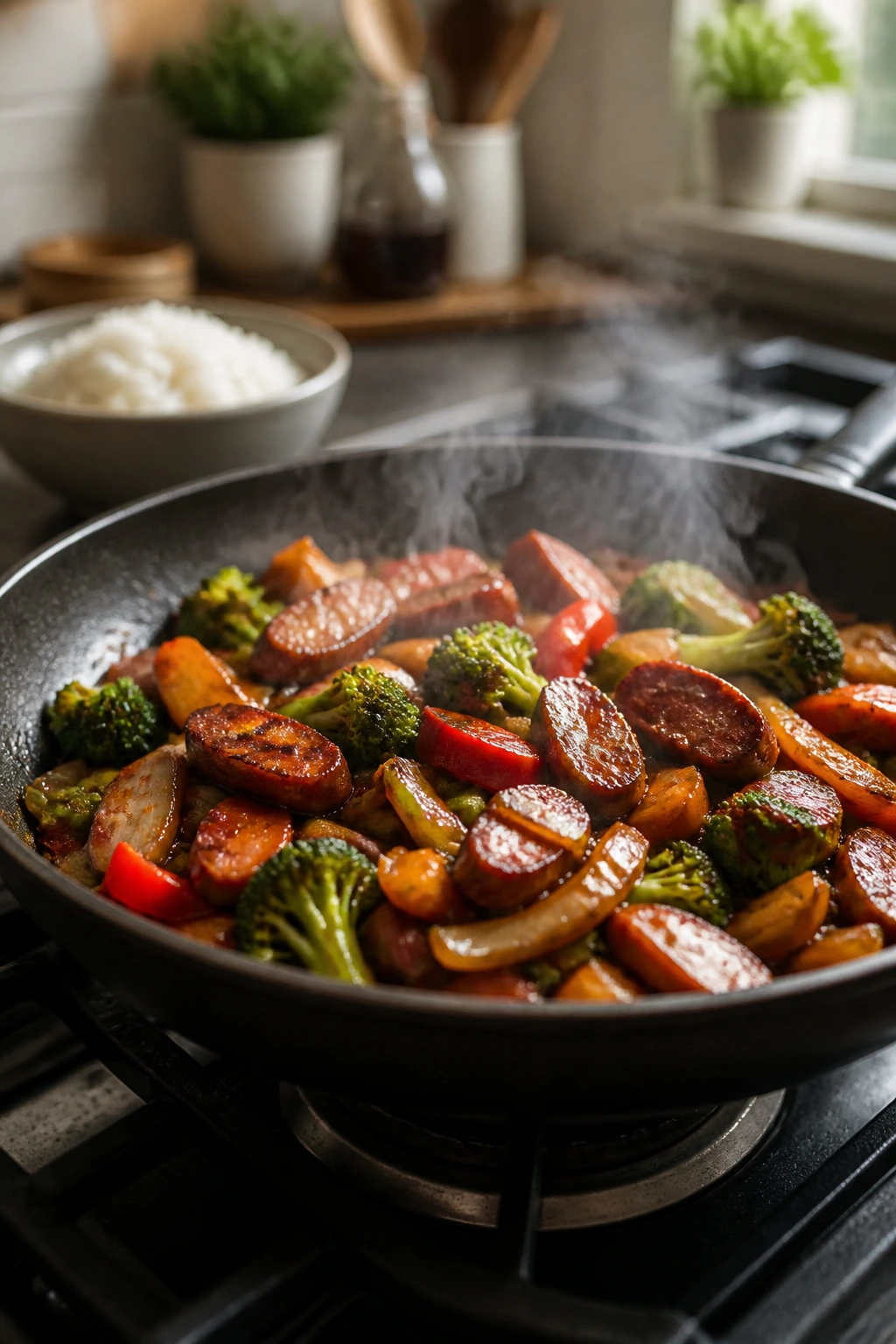
This dish keeps well, but the texture is best when you treat the rice, vegetables, and sauce with a little care.
The cooked stir fry will keep in the refrigerator for up to 4 days in a sealed container. If you’re packing leftovers with rice, store the rice separately if you can. Rice drinks up sauce overnight, and the stir fry itself is much nicer when it isn’t fighting a dry block of starch.
For the freezer, the sausage-and-vegetable mixture holds for up to 2 months. I would freeze it without rice. Rice goes grainy after freezing and thawing, and it never fully comes back. Let the stir fry cool completely before freezing in a flat container or freezer bag so it chills fast and reheats evenly.
To reheat on the stove, add the leftovers to a skillet over medium heat with 1 to 2 tablespoons of water. Cover for 1 minute to loosen the sauce, then uncover and stir until steaming hot. If you use the microwave, heat in 45-second bursts and stir between each one so the sauce does not split at the edges.
Make-ahead prep works well here. The sauce can be mixed 5 days in advance, the sausage can be sliced a day or two ahead, and the vegetables can be washed and cut the day before. If you want the freshest texture, cook everything right before serving and keep the sauce separate until the very end.
Food safety is straightforward: do not leave the finished stir fry out for more than 2 hours. If your kitchen is warm and the pan sits around for a while, get it into containers sooner.
Questions People Ask Before the First Pan
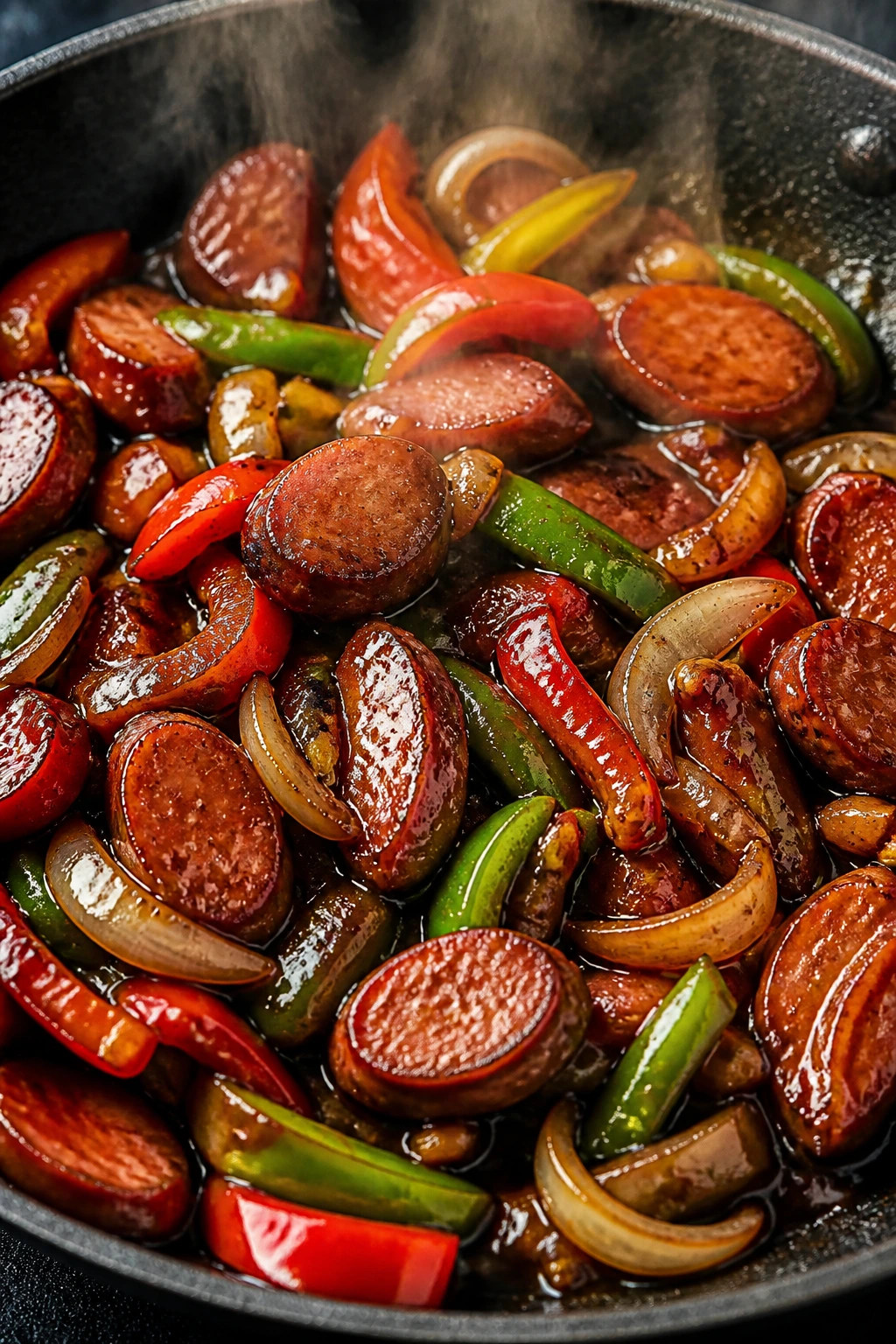
Can I use raw sausage instead of smoked sausage?
Yes, but it changes the timing. Raw sausage needs to be cooked through before the vegetables go in, which adds several minutes and a little more cleanup. Fully cooked smoked sausage is faster and browns more cleanly, which is why it works so well here.
What kind of smoked sausage tastes best in this stir fry?
Kielbasa is the easiest option because it’s mild, smoky, and sturdy. Andouille brings more spice, which is useful if you like heat. Chicken or turkey smoked sausage makes the dish lighter, though the pan may need an extra teaspoon of oil because it releases less fat.
Can I make it without hoisin sauce?
You can, but the sauce will need another layer of sweetness and body. Add an extra tablespoon of honey or brown sugar, plus a teaspoon of soy sauce and a small pinch of five-spice if you have it. The flavor won’t be identical, but it will still land in the right neighborhood.
Why did my sauce turn runny instead of sticky?
Usually the cornstarch didn’t dissolve fully, or the pan didn’t stay hot enough for the sauce to bubble. If the sauce looks thin, keep it on the heat for another minute or two and toss constantly. If it still refuses to thicken, mix 1 teaspoon cornstarch with 1 tablespoon cold water and stir it in.
Can I use frozen vegetables?
Yes, but frozen vegetables release more water, so the stir fry needs a hotter pan and a little more patience. Don’t thaw them first. Add them straight from frozen and cook off the moisture before the sauce goes in, or the glaze will thin out.
How do I make it less sweet?
Cut the honey back to 1 tablespoon and add an extra teaspoon of rice vinegar. You can also increase the soy sauce by 1 tablespoon if you want more salt and less sweetness. The best version of this dish should taste balanced, not dessert-like.
Will this work with noodles instead of rice?
Absolutely. Toss the finished stir fry with cooked lo mein, ramen, or rice noodles, then loosen with a splash of water if the sauce grabs too tightly. Noodles make the dish feel richer, while rice keeps it cleaner and more sauce-forward.
A Skillet Worth Repeating
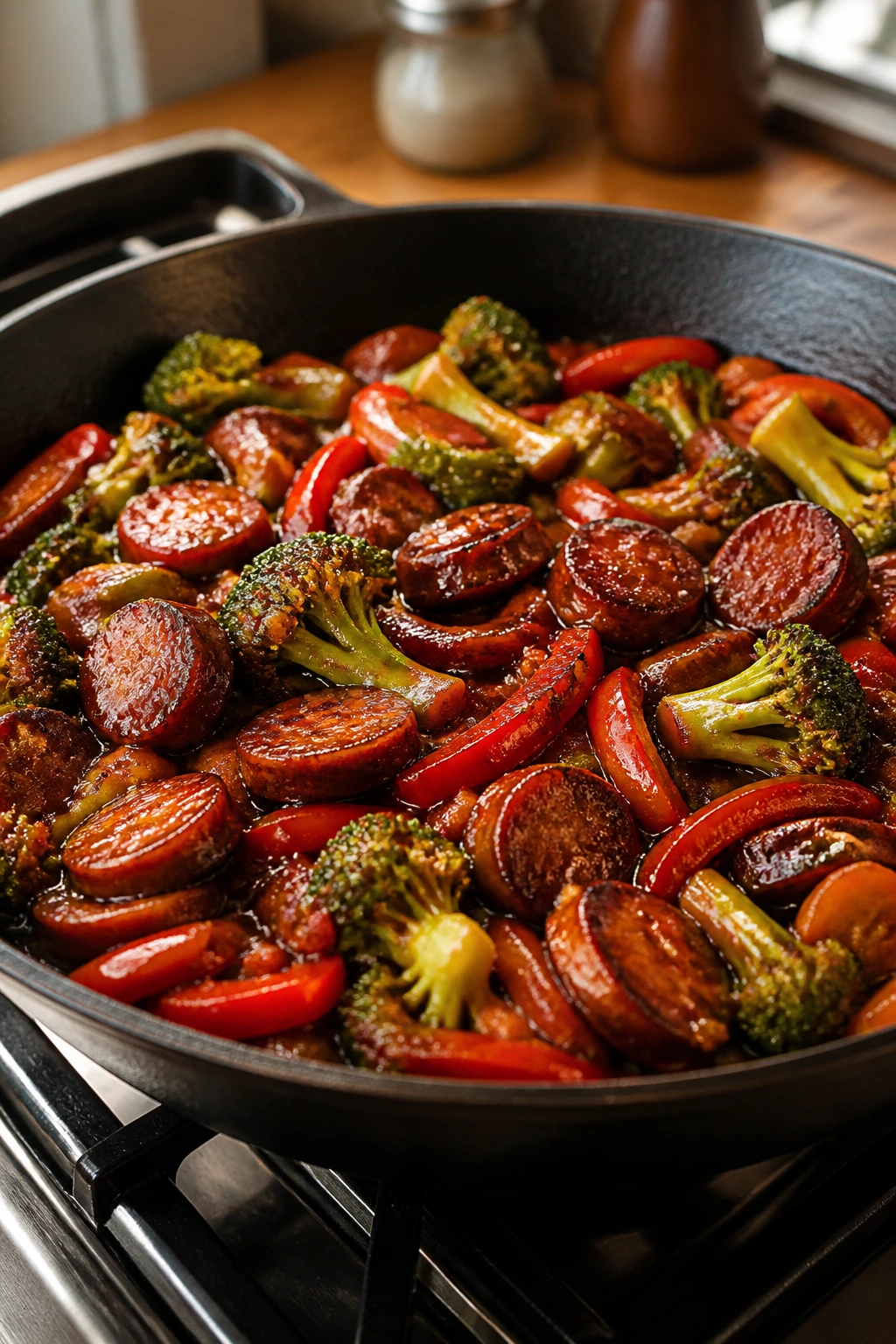
This is one of those dinners that earns a place in the regular rotation because it respects your time and still tastes like somebody paid attention. The sausage brings smoke and salt, the vegetables bring crunch and color, and the sauce gives the whole pan that shiny finish people usually chase from a carton.
Keep the heat up, keep the vegetables crisp, and do not be shy about the vinegar at the end if the sauce needs a little lift. That last splash is often the difference between a decent stir fry and one you start making on purpose.
Sticky Smoked Sausage Stir Fry — Recipe Card
Recipe Name: Sticky Smoked Sausage Stir Fry
Description: A glossy, savory-sweet stir fry with browned smoked sausage, crisp vegetables, and a sticky soy-hoisin glaze. Serve it over rice or noodles for a fast, takeout-style dinner with real texture.
Prep Time: 15 minutes
Cook Time: 15 minutes
Total Time: 30 minutes
Course: Main Course
Cuisine: Asian-Inspired, Chinese-Inspired
Servings: 4 servings
Calories: About 430 kcal per serving
Ingredients
For the Stir Fry:
- 1 1/2 pounds fully cooked smoked sausage or kielbasa, sliced into 1/4-inch coins
- 1 tablespoon neutral oil
- 1 small yellow onion, cut into thin wedges
- 1 red bell pepper, sliced into 1/2-inch strips
- 1 green bell pepper, sliced into 1/2-inch strips
- 2 cups broccoli florets, cut into bite-size pieces
- 1 cup snap peas, trimmed
- 3 cloves garlic, minced
- 1 tablespoon fresh ginger, grated
- 2 scallions, thinly sliced, for finishing
- 1 tablespoon toasted sesame seeds, for finishing
For the Sticky Sauce:
- 1/4 cup low-sodium soy sauce
- 1/4 cup chicken broth or water
- 2 tablespoons hoisin sauce
- 1 tablespoon oyster sauce
- 2 tablespoons honey or packed brown sugar
- 2 tablespoons rice vinegar
- 1 tablespoon cornstarch
- 1 teaspoon toasted sesame oil
- 1/2 teaspoon red pepper flakes or 1 teaspoon chili garlic sauce, optional
Instructions
- Whisk the soy sauce, broth, hoisin, oyster sauce, honey, rice vinegar, cornstarch, sesame oil, and optional heat in a small bowl until smooth.
- Slice the smoked sausage and vegetables before cooking.
- Heat a 12-inch skillet or wok over medium-high heat for 2 minutes. Add the oil and sausage. Cook 3 to 4 minutes until browned.
- Add the onion, bell peppers, broccoli, and snap peas. Stir-fry 4 to 5 minutes until crisp-tender.
- Add the garlic and ginger. Stir 30 seconds.
- Whisk the sauce again and pour it into the skillet. Toss 1 to 2 minutes until glossy and thick.
- Remove from heat. Top with scallions and sesame seeds, then serve immediately.
Notes: Add 1 teaspoon rice vinegar at the end if you want brighter flavor. For gluten-free, use tamari and gluten-free hoisin/oyster sauce. Leftovers keep 4 days in the fridge and reheat best in a skillet with a splash of water.