



A chicken Philly goes wrong fast. Leave the skillet too cool and the onions turn limp; crowd the pan and the chicken steams gray; pile the filling into cold rolls and the whole thing collapses into a soggy mess before the first bite. Tender Chicken Philly for Weeknight Dinners lives or dies on heat control and timing, which is why the best versions feel almost suspiciously simple once you’ve made them a couple of times.
I like this sandwich because it gives you a real dinner, not a sad compromise. The chicken stays juicy when it’s sliced thin and cooked quickly. The peppers still have a little snap. The onions go sweet at the edges, and the provolone melts into those soft, stretchy pockets that make the whole thing feel finished instead of merely assembled.
There’s also a practical charm to it that I never get tired of. You can buy the chicken, slice the vegetables, and be eating in under an hour without resorting to jarred sauce or a pile of shortcut ingredients that taste like they were designed in a lab. The trick is old-fashioned and a little fussy in the right places — hot pan, thin slices, a brief simmer, toasted rolls — and once you learn those pieces, you can make it without thinking too hard.
Why This Chicken Philly Works on a Busy Night
- Fast Sizzle: Thin chicken strips cook in about 5 to 6 minutes in a hot skillet, which is why this feels like dinner and not a project.
- Juicy Center: Boneless chicken thighs stay tender even if you let them sit in the pan a minute too long, which gives you a little breathing room.
- One-Pan Flavor: The onions, peppers, and browned chicken all share the same skillet, so the pan drippings do the heavy lifting instead of a long ingredient list.
- Reliable Melt: Provolone softens into a smooth, salty layer that holds the filling together without turning gluey.
- Roll-Friendly Filling: A quick reduction with broth and Worcestershire leaves just enough moisture to taste rich, not enough to flood the bread.
- Easy to Stretch: If someone shows up hungry, you can add extra peppers, extra onion, or a few more mushrooms without changing the whole feel of the dish.
Yield: Serves 4
Prep Time: 15 minutes
Cook Time: 20 minutes
Total Time: 35 minutes
Difficulty: Beginner — the method is straightforward, but the chicken should be sliced thin and the skillet needs to stay hot.
Best Served: Right after the cheese melts and the rolls are toasted.
What Goes Into the Skillet and the Roll
For the Chicken and Vegetables:
- 1 1/2 lb boneless, skinless chicken thighs, trimmed and sliced into 1/4-inch strips
- 1 1/2 teaspoons kosher salt
- 1 teaspoon black pepper
- 1 teaspoon garlic powder
- 1 teaspoon onion powder
- 1/2 teaspoon smoked paprika
- 2 tablespoons neutral oil, divided
- 2 tablespoons unsalted butter, divided
- 1 large yellow onion, thinly sliced
- 1 green bell pepper, thinly sliced
- 1 red bell pepper, thinly sliced
- 8 ounces cremini mushrooms, sliced, optional but recommended
- 2 garlic cloves, minced
- 1 tablespoon Worcestershire sauce
- 1/4 cup low-sodium chicken broth
For the Sandwiches:
- 8 slices provolone cheese
- 4 hoagie rolls, split but not fully separated
- 2 tablespoons softened butter, for toasting the rolls
- Pickled hot peppers or banana peppers, for serving, optional
Why Each Ingredient Has a Job to Do
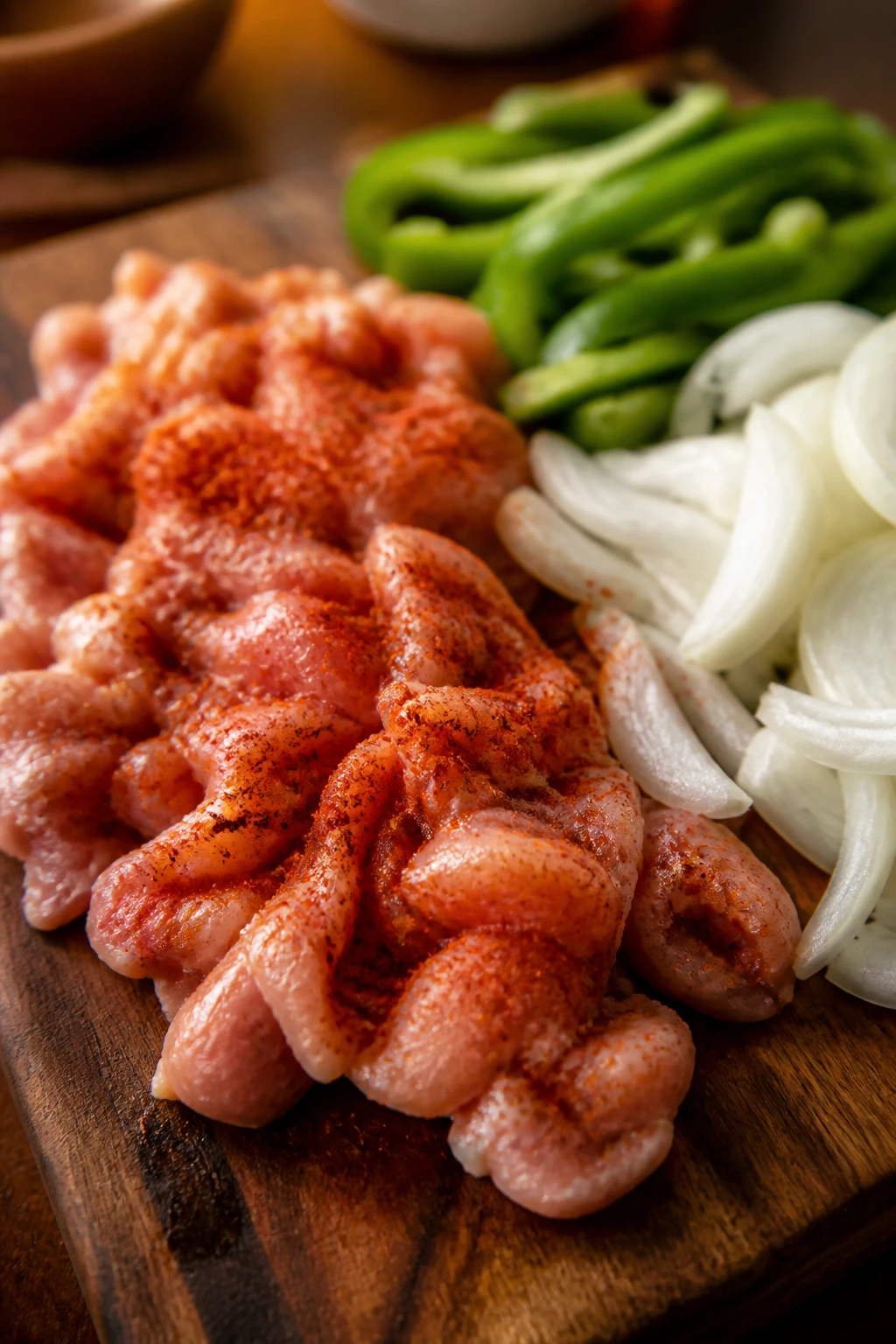
Chicken That Stays Juicy
What to use: 1 1/2 pounds boneless, skinless chicken thighs, sliced into thin strips about 1/4 inch wide. Thighs are the safer choice here because they forgive a slightly hot pan and don’t dry out the way breasts can.
Preparation: Trim away stray fat, pat the meat dry, and slice it across the grain. If the chicken is soft and floppy, park it in the freezer for 15 minutes first; it firms up just enough to cut cleanly.
Substitutions: Boneless, skinless chicken breasts work if that’s what you have, but slice them thinner and shave a minute or two off the cook time. Rotisserie chicken is a poor fit here because it doesn’t pick up the same skillet flavor, though you can use it in a pinch.
Tips: If the chicken goes into the pan in one clump, it steams instead of browns. Separate the strips before they hit the skillet, and you’ll get more color in less time.
Onions, Peppers, and the Savory Base
What to use: 1 large yellow onion, 1 green bell pepper, 1 red bell pepper, and 8 ounces of sliced cremini mushrooms if you want the filling a little meatier. Those vegetables give the sandwich its sweet, savory, slightly messy edge.
Preparation: Slice everything into long, even strips so the filling stays easy to eat. The onions should be thin enough to soften fast, but not shaved so thin that they disappear.
Substitutions: A white onion can replace the yellow onion, and a yellow or orange bell pepper can stand in for the red. If mushrooms are not your thing, add another half pepper and a little more onion instead.
Tips: Vegetables need more heat than people expect. If the onion is pale and wet, keep cooking; you want soft edges and a few browned spots, not raw crunch.
Cheese and Bread, Which Matter More Than People Admit
What to use: 8 slices provolone cheese and 4 hoagie rolls, split. Provolone gives you a mellow, salty melt that tastes like the sandwich it belongs on.
Preparation: Split the rolls without tearing them apart completely, so they stay hinged and easier to fill. Brush the cut sides with softened butter before toasting; that thin layer keeps the interior from turning leathery.
Substitutions: White American cheese melts even softer and a little gooier. Mozzarella works if you want a milder stretch, though it gives less flavor than provolone.
Tips: I do not buy pre-shredded cheese for this. The anti-caking powder makes it melt less cleanly, and a sandwich like this deserves a smoother finish.
Seasoning and the Little Splash That Pulls It Together
What to use: 1 1/2 teaspoons kosher salt, 1 teaspoon black pepper, 1 teaspoon garlic powder, 1 teaspoon onion powder, 1/2 teaspoon smoked paprika, 1 tablespoon Worcestershire sauce, and 1/4 cup low-sodium chicken broth. This is enough to season the whole skillet without turning the filling salty.
Preparation: Mix the dry seasoning before the chicken hits the pan so you can coat it evenly. Keep the broth nearby; it goes in right after the vegetables and deglazes the browned bits left behind by the chicken.
Substitutions: If you need a gluten-free option, check the Worcestershire bottle carefully or use a gluten-free version. A small splash of soy sauce can stand in for Worcestershire if that’s what’s in the cabinet, but go lightly.
Tips: Worcestershire and broth are not there for extra liquid alone. They turn the browned residue in the pan into a glossy coating that makes every bite taste finished.
The Tools That Make the Job Easier
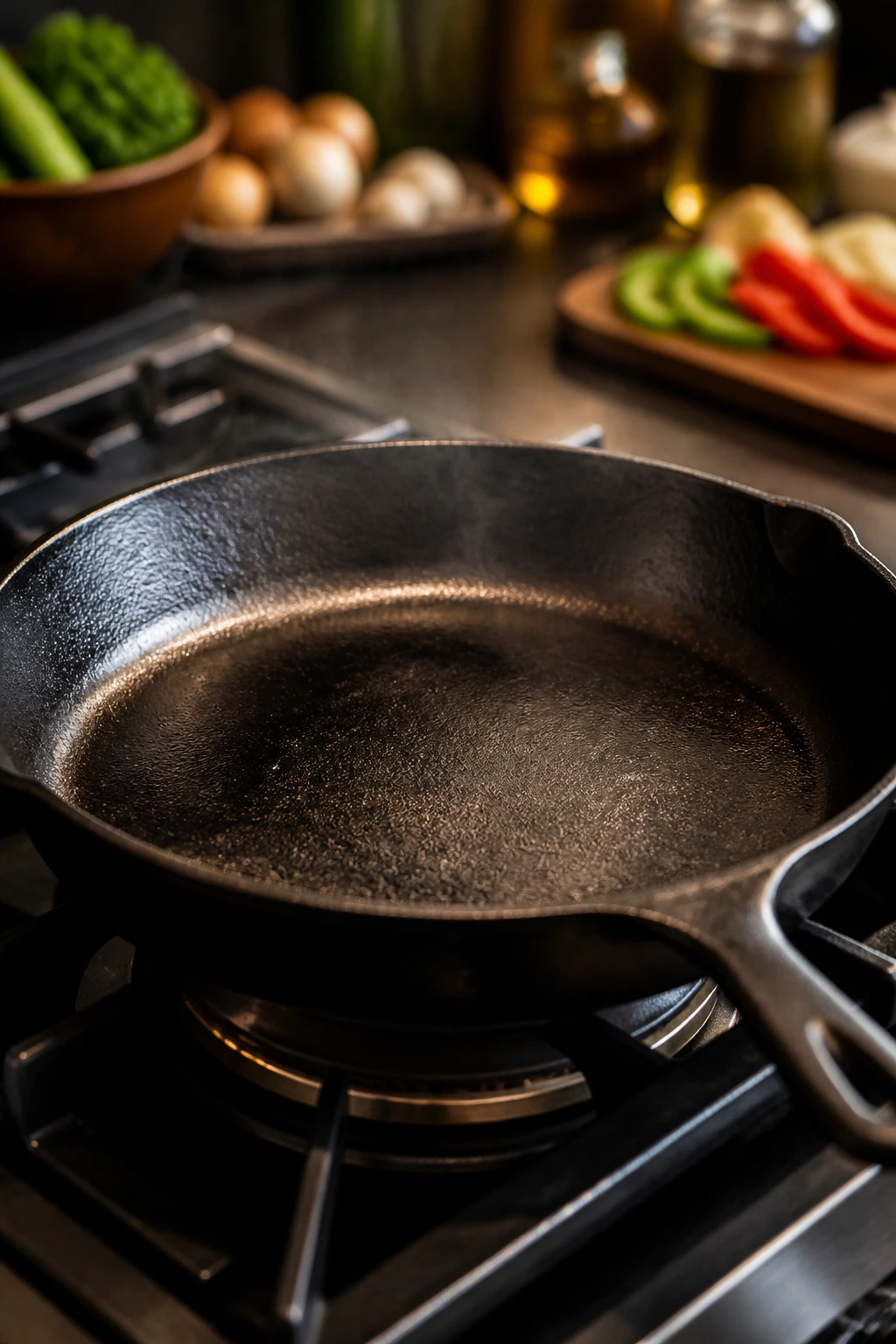
- 12-inch cast-iron or stainless-steel skillet: Big enough to keep the chicken from crowding, which matters more than people think.
- Sharp chef’s knife: Thin slices come from a sharp blade, not from wishful thinking.
- Large cutting board: You want room to work without chasing onions across the counter.
- Tongs or a thin spatula: Tongs help with the chicken; a spatula helps scrape up the browned bits.
- Instant-read thermometer: This is the easiest way to stop the chicken at 165°F without guessing.
- Rimmed baking sheet or broiler-safe pan: Handy if you toast the rolls under the broiler instead of in a second skillet.
- Small bowl for the seasoning: Not glamorous, but it keeps the chicken from getting under-seasoned in patches.
How to Cook the Filling Without Dry Chicken
Prep the Chicken
- Pat the chicken thighs dry with paper towels, trim away extra fat, and slice them into 1/4-inch strips across the grain. Dry chicken browns better, and thin pieces cook faster than thick ones.
- In a medium bowl, toss the chicken with the salt, black pepper, garlic powder, onion powder, and smoked paprika until every strip has a light, even coating.
Brown the Chicken
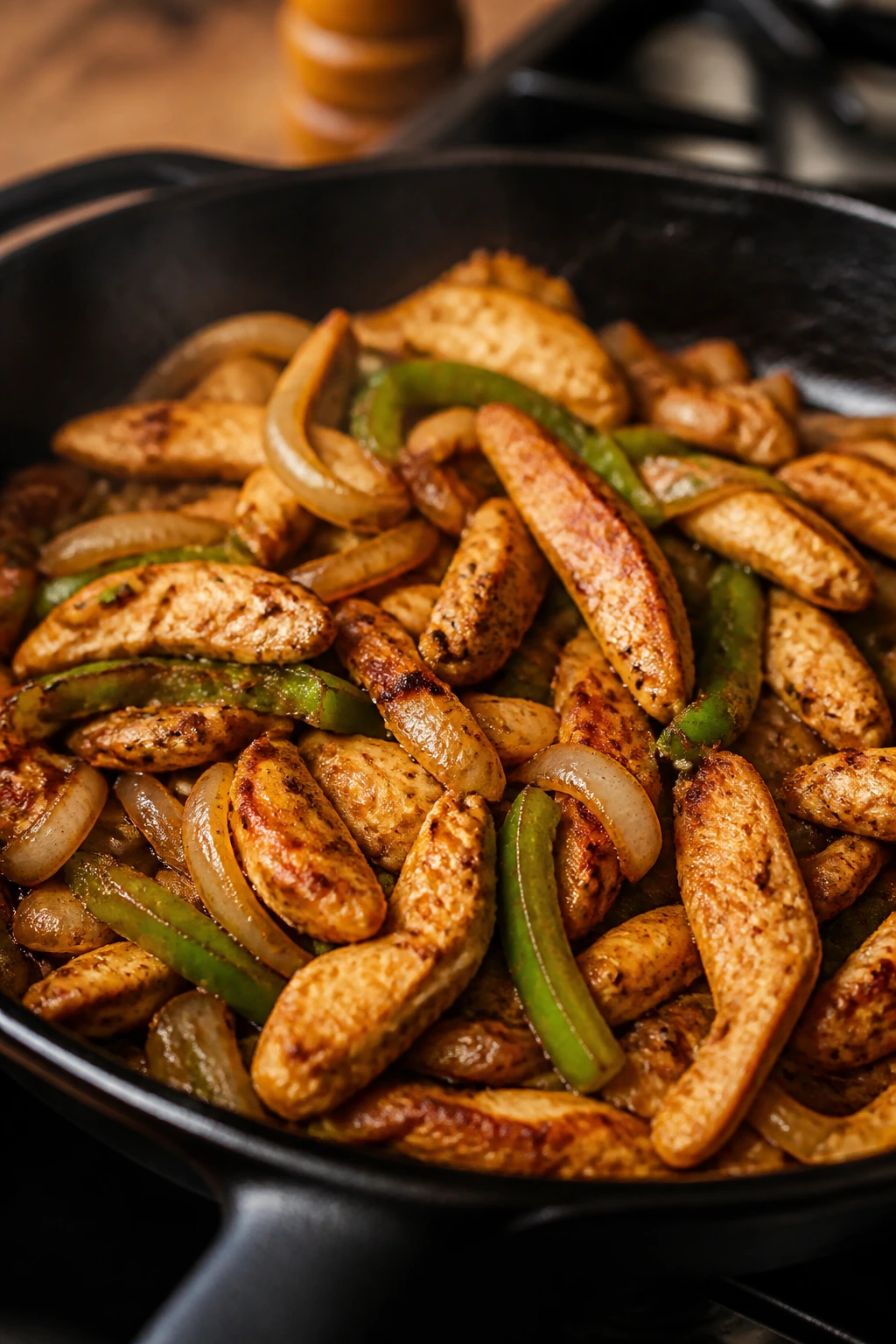
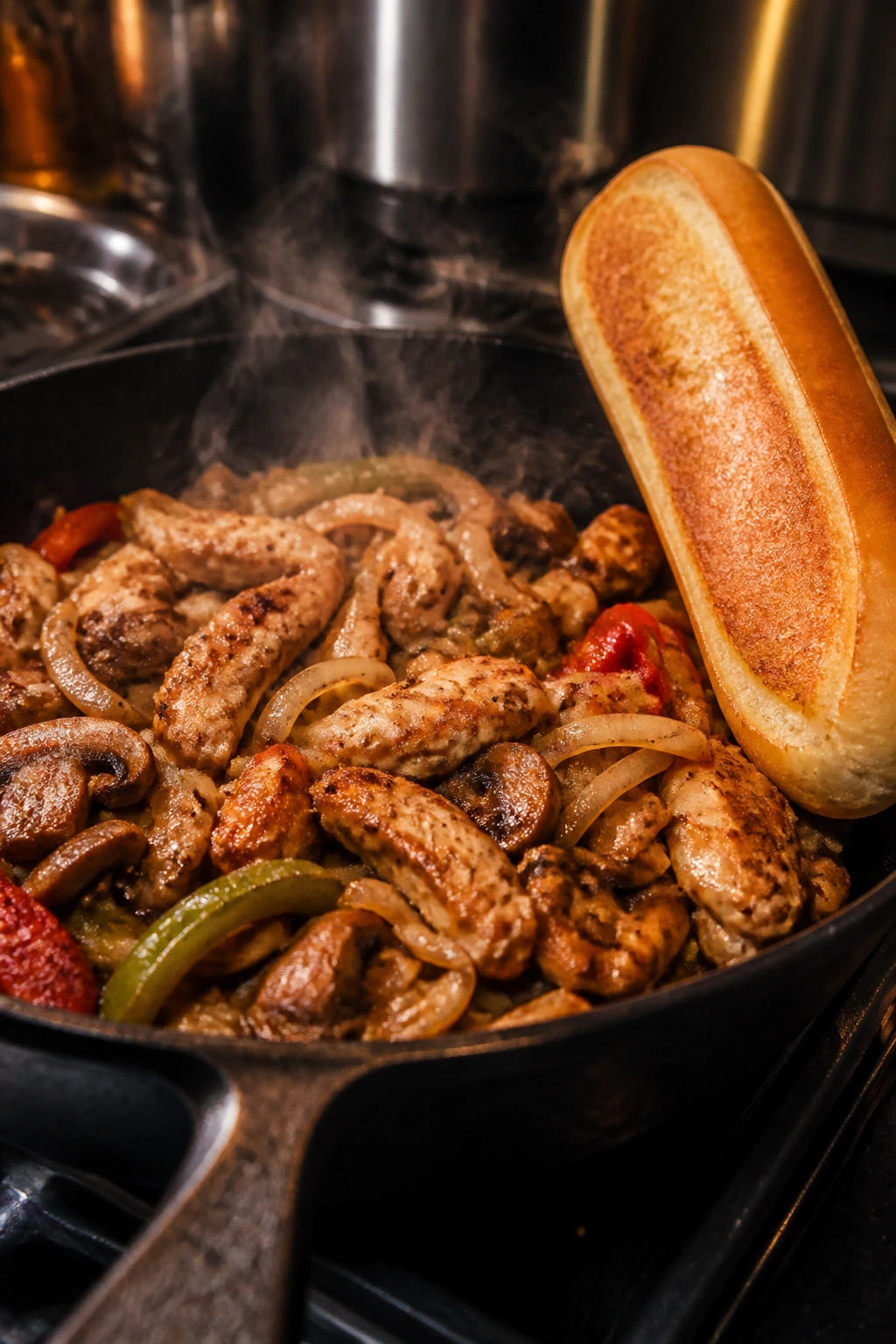
- Set a 12-inch skillet over medium-high heat and add 1 tablespoon of the oil and 1 tablespoon of the butter. When the butter foams and the fat starts to shimmer, add the chicken in a single layer. Do not pile it up; crowded chicken steams and loses color.
- Let the chicken sit for about 2 minutes without stirring, then flip and cook for another 2 to 4 minutes, stirring once or twice, until the pieces are lightly browned and the thickest strip reaches 165°F. Transfer the chicken to a plate.
Build the Vegetable Filling
- Reduce the heat to medium. Add the remaining 1 tablespoon oil and 1 tablespoon butter, then stir in the onion, bell peppers, and mushrooms if using. Cook for 6 to 8 minutes, stirring occasionally, until the onions turn soft and the edges of the peppers pick up a little brown color.
- Add the minced garlic and cook for 30 seconds, just until it smells sweet and sharp at the same time. Garlic burns fast, so this is a quick stop, not a long one.
- Pour in the Worcestershire sauce and chicken broth, then scrape the bottom of the skillet with your spatula to loosen the browned bits. Simmer for 1 to 2 minutes until the liquid reduces to a thin, glossy coating instead of a puddle.
Finish the Filling
- Return the chicken and any juices to the skillet. Toss for 1 to 2 minutes until everything is hot and the chicken looks coated instead of dry.
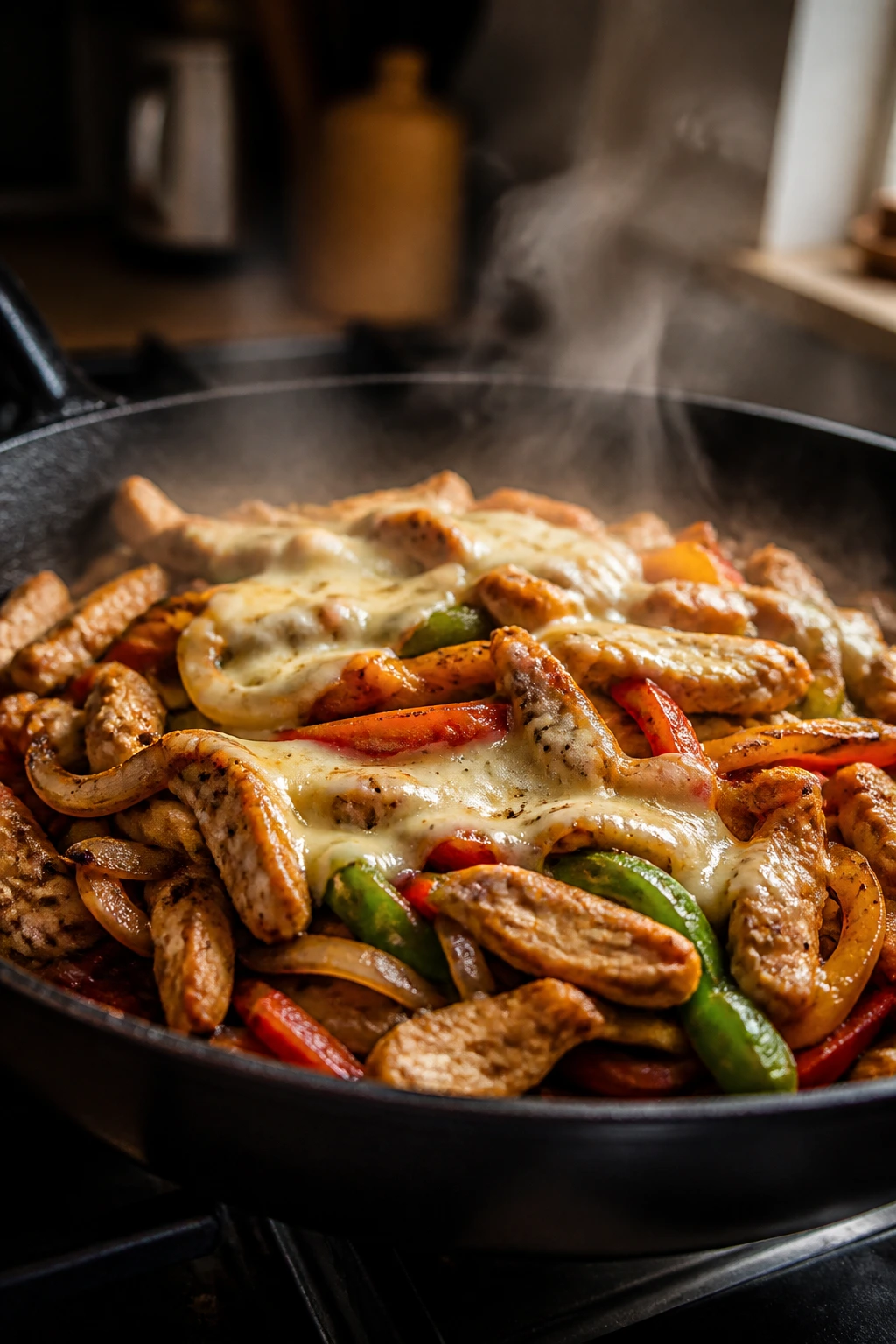
- Lay the provolone slices over the top, turn off the heat, and cover the skillet for 1 minute until the cheese melts into soft, pale folds. If the pan still looks watery, simmer for 30 seconds more before adding the cheese.
Toast and Assemble
- Brush the cut sides of the hoagie rolls with the softened butter. Toast them cut-side down in a second skillet or under the broiler for 1 to 2 minutes, watching closely, until the edges turn golden.
- Divide the filling among the rolls, spooning a little of the juices over the top of each one. Add pickled peppers if you like a sharper bite, then serve right away.
How to Serve It on a Busy Night
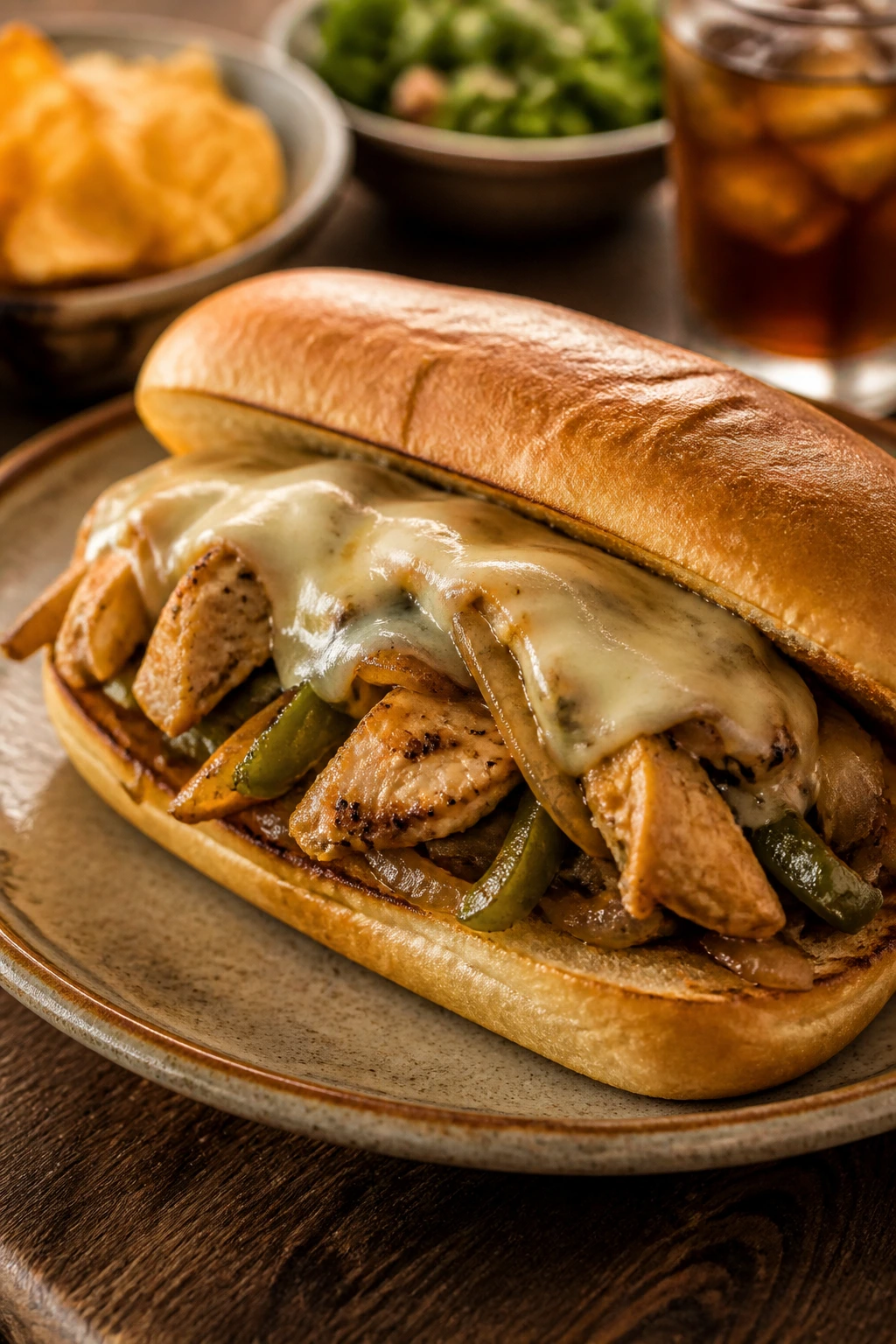
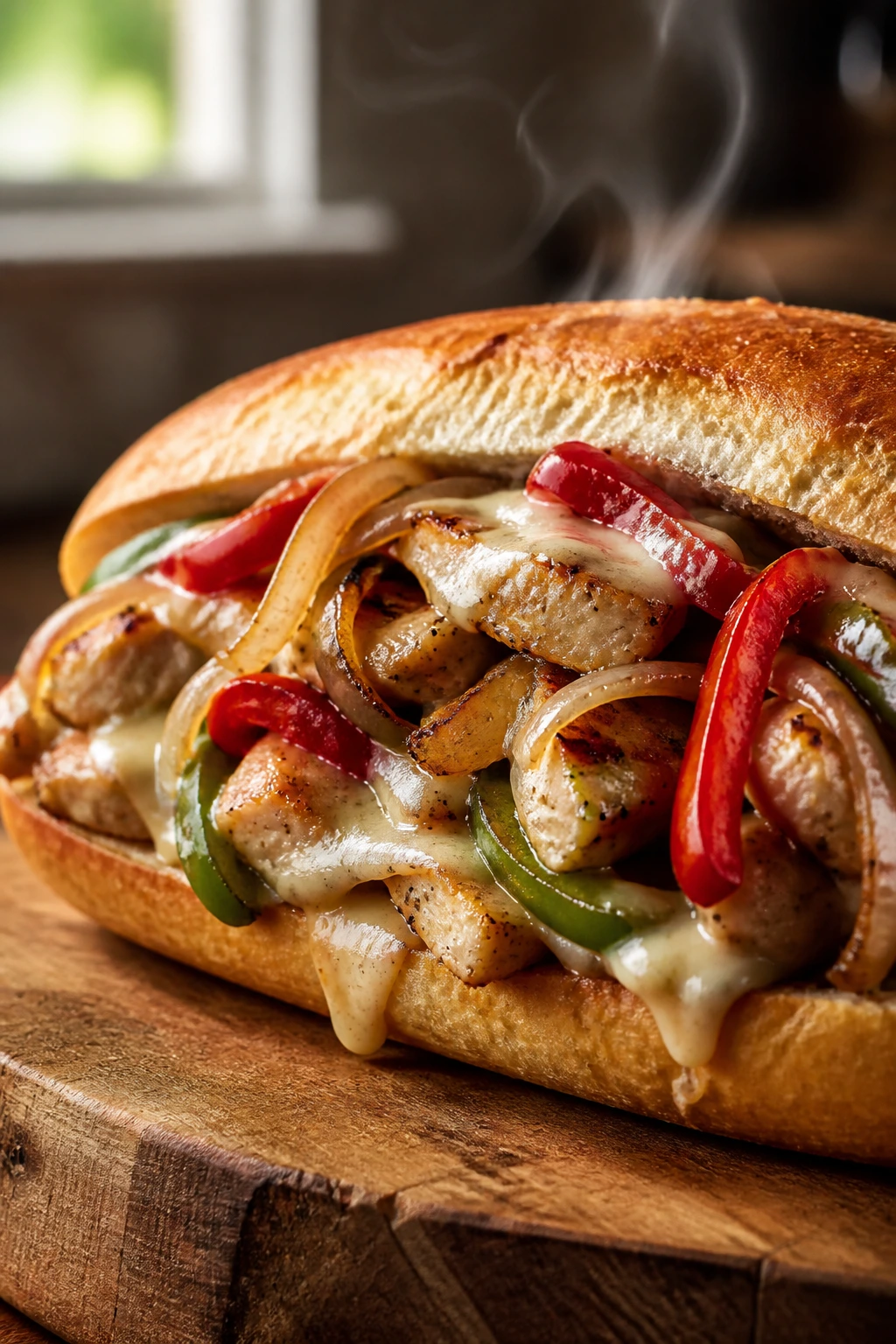
Presentation: Pile the filling high enough that the provolone drapes over the chicken in visible layers. I like to tuck a few extra onion strands on top and let the cheese show a little, because a flat sandwich always looks less inviting than one with some height.
Accompaniments: Kettle chips, dill pickles, and a crisp vinegar-dressed salad all make sense here. If you want something warmer, roasted potato wedges or a handful of fries fit the sandwich’s salty, peppery mood without fighting it.
Portions: One sandwich feeds most adults, especially with chips or salad alongside it. If you’re serving lighter eaters, or the rolls are especially large, half a sandwich plus a side is a more honest portion than pretending one loaf-sized sub is modest.
Beverage Pairing: I like iced tea with lemon because it cuts through the melted cheese without getting in the way. A cold lager also works if you want something with more bite, and sparkling water with a squeeze of lime keeps the plate from feeling heavy.
Small Moves That Improve Flavor and Speed
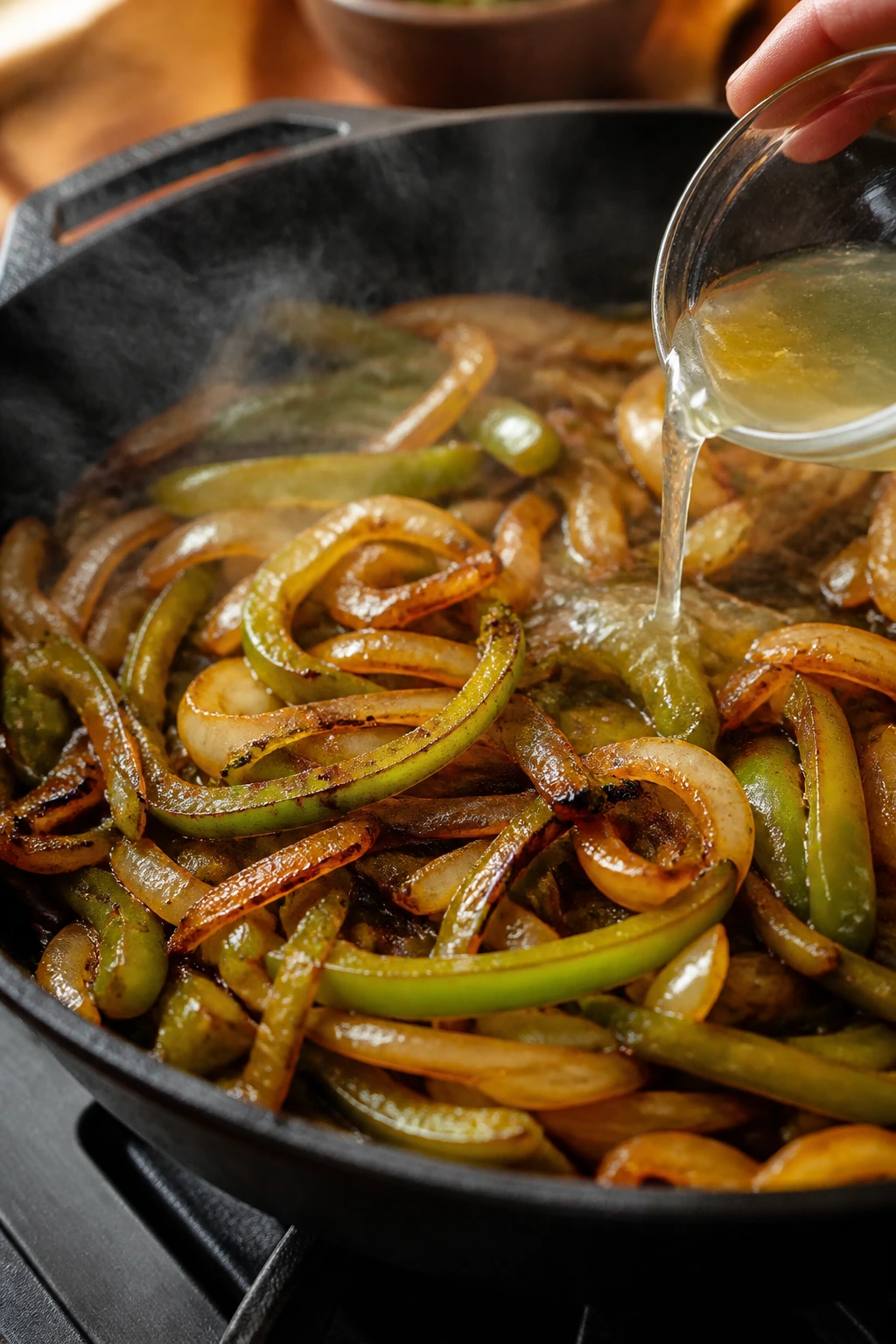
Flavor Enhancement: Keep the pan hot enough that the onions and peppers pick up a little color. That browned edge is where the sweetness lives, and it gives the sandwich more depth than a soft sauté ever will. If you want a sharper finish, a teaspoon of pickle brine stirred in at the very end wakes up the whole skillet.
Time-Saver: Slice the onions and peppers while the chicken is parked in the freezer for 10 to 15 minutes. The firmer chicken is easier to cut, and you’ll spend less time wrestling with slippery pieces on the board.
Pro Move: Toast the rolls after the filling is done, not before. Freshly toasted bread gives you a crisp shell and a soft middle, which is the only way this sandwich behaves itself once the hot filling hits it.
Cost-Saver: If the mushrooms look pricey, skip them and lean harder on onions. A second half onion and a little extra bell pepper can bulk out the skillet without making the sandwich taste thin.
Make-It-Yours: For a brighter, slightly sharper sandwich, use half provolone and half white American. For a richer one, brush the rolls with butter and toast them in the same skillet after the filling comes out; they’ll pick up the leftover flavor from the pan.
Common Mistakes That Make a Good Philly Fall Flat
Cutting the chicken too thick: Thick pieces take longer to cook, and by the time the centers are done, the outside feels dry. Slice it thin, across the grain, and the whole skillet cooks in one quick pass.
Crowding the pan: If all the chicken goes in at once, the moisture has nowhere to go and the meat turns pale instead of browned. Work in a single layer, and if your skillet is small, cook the chicken in two batches.
Leaving the vegetables undercooked: Pale onions and crunchy peppers might look neat in the pan, but they taste raw once they land in the roll. Cook until the onions are soft and the pepper edges start to blister a little.
Skipping the toast on the bread: Soft rolls absorb the juices fast and end up limp from heel to heel. A quick toast gives the sandwich a little backbone, which matters more than most people expect.
Adding the cheese before the liquid reduces: If there’s too much broth in the skillet, the cheese melts into a slippery mess instead of settling over the filling. Reduce the pan juices until they coat the spoon, then melt the cheese.
Overcooking the final mixture: Once the chicken is done and the cheese is melted, stop. Stirring it over high heat for another five minutes is how you turn a juicy dinner into dry filler.
Variations for Different Tastes and Diets
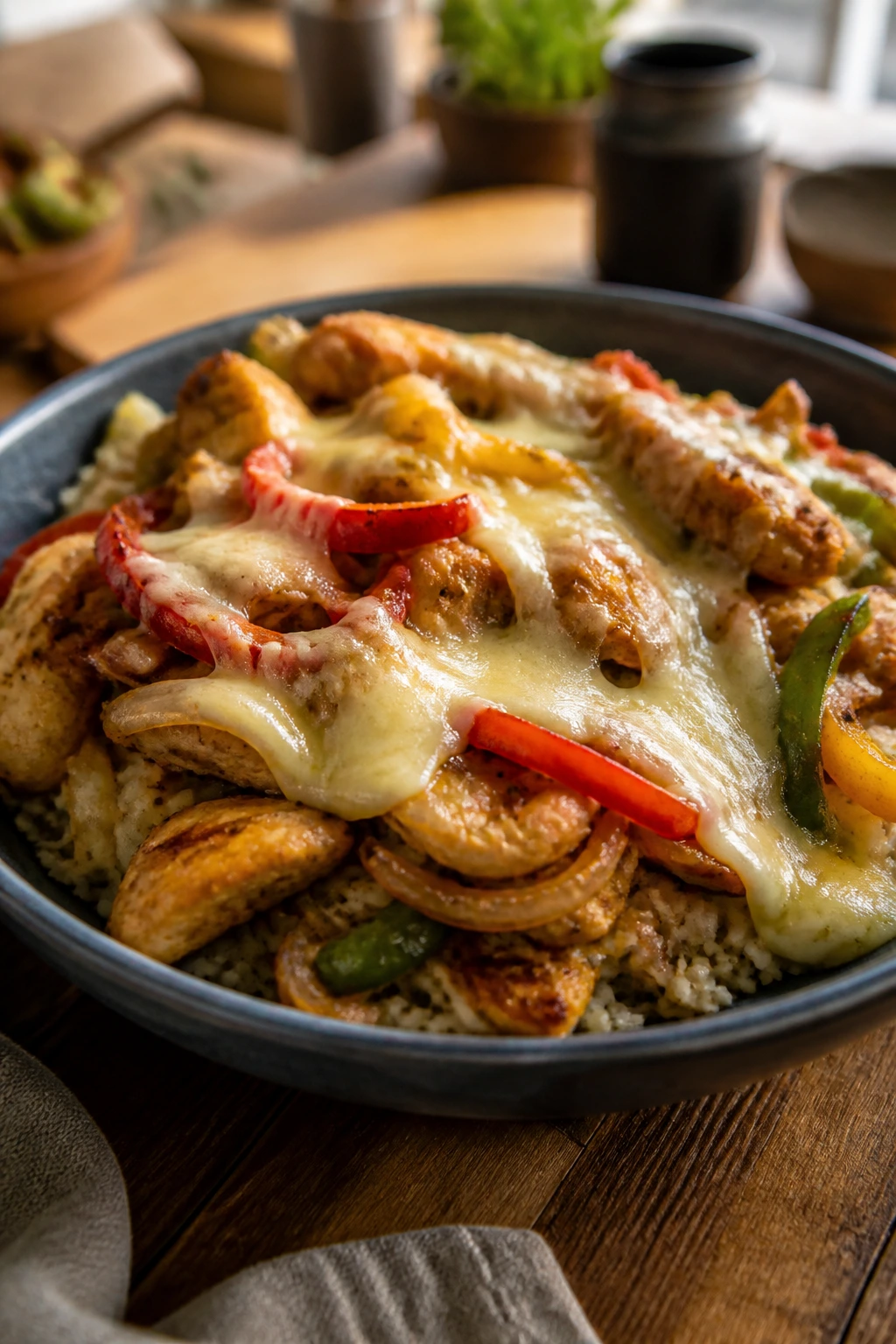
White American Deli Melt: Swap the provolone for white American and keep everything else the same. The flavor turns softer and a little more nostalgic, and the cheese melts into a smoother, looser blanket that feels closer to a classic deli sandwich.
Pepper Jack Heat: Replace half or all of the provolone with pepper jack and add a few sliced pickled jalapeños at the end. This version has more bite without changing the cooking method, which makes it a good choice when you want the sandwich to wake up a little.
Mushroom-Heavy Skillet: Increase the mushrooms to 12 ounces and leave the peppers exactly as written. The extra mushrooms soak up the buttery skillet flavor and make the filling feel meatier, even though nothing complicated is happening.
Chicken Philly Bowl: Skip the rolls and serve the filling over roasted potatoes, rice, or a heap of shredded lettuce. I like this when I want the same flavor but less bread, and the skillet juices become a built-in sauce instead of something the roll has to absorb.
Gluten-Free Roll Swap: Use sturdy gluten-free sandwich rolls and make sure the Worcestershire sauce is certified gluten-free. Toasting the rolls is even more important here, because gluten-free bread softens faster once the filling goes on.
Make-Ahead, Storage, and Reheating
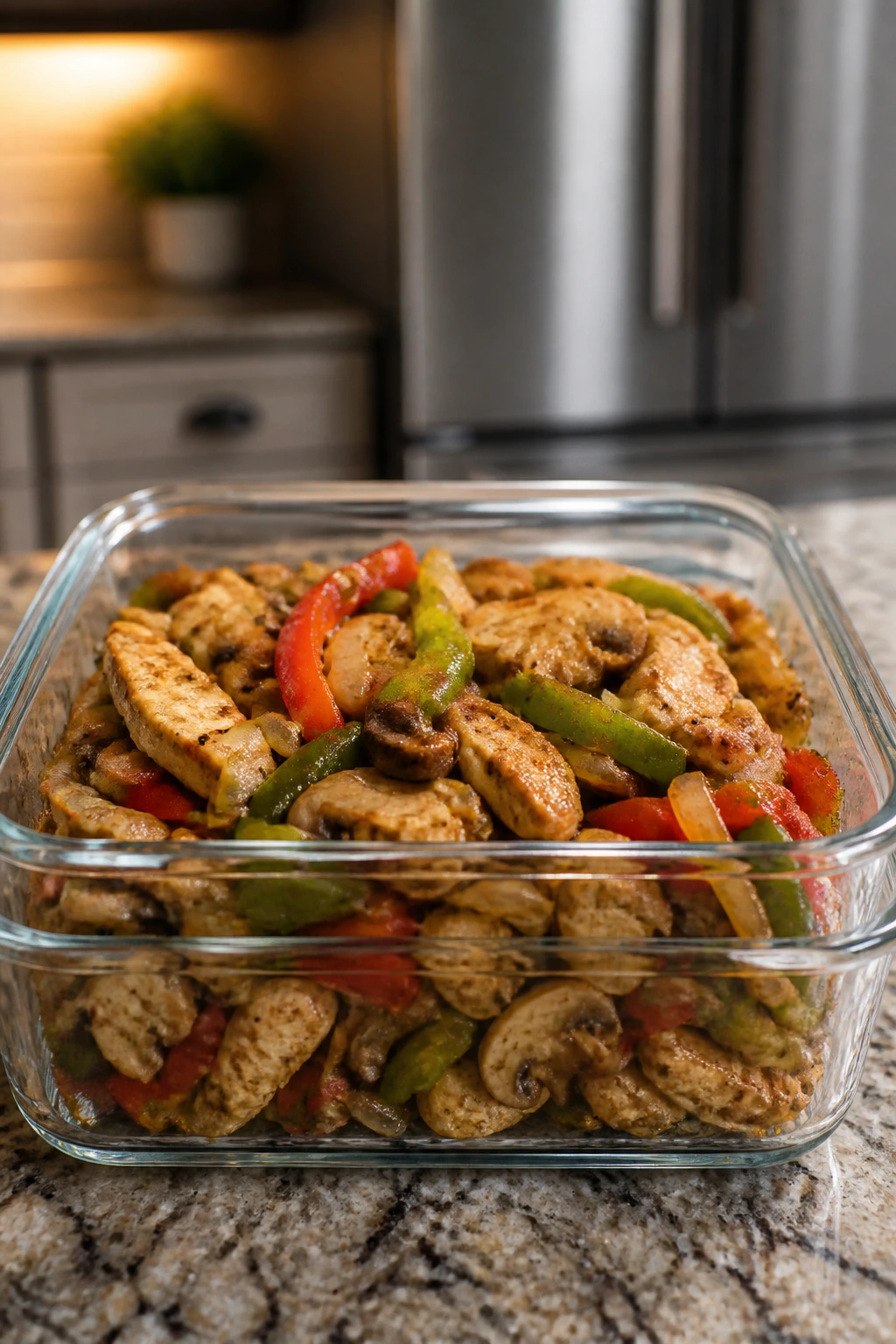
The filling keeps well, which is one reason I reach for this sandwich on nights when the kitchen clock feels loud. Cooked chicken, peppers, onions, and mushrooms will hold in an airtight container in the refrigerator for 3 to 4 days. If you want to freeze it, cool the filling first, then pack it into a shallow container or freezer bag and freeze for up to 2 months.
The bread is a different story. Hoagie rolls should be bought for the meal and toasted right before serving, because once they’ve been filled and chilled, they lose the crisp edge that makes the sandwich hold together. If you need to make part of the meal ahead, cook the filling and leave the rolls untouched until dinner time.
For reheating, the skillet beats the microwave. Put the filling in a skillet over medium heat with a lid, add a spoonful of water if it looks dry, and warm it for 4 to 6 minutes until the chicken is hot through. If you’re reheating from frozen, thaw the filling overnight in the fridge first; that keeps the vegetables from turning mushy.
You can also reheat a fully assembled sandwich, but I don’t love it. Wrap it loosely in foil and warm it in a 325°F oven for 12 to 15 minutes, then open the foil for the last few minutes so the bread doesn’t stay damp. It works in a pinch, though the rolls won’t be as crisp as they are fresh from the skillet.
For make-ahead prep, slice the vegetables and chicken up to 24 hours ahead and keep them separate in the refrigerator. I would season the chicken just before cooking rather than the night before, because salt draws moisture out of the meat and can leave the strips wetter than you want for a good sear.
Frequently Asked Questions
Can I use chicken breasts instead of thighs?
Yes, and the sandwich still works. Slice the breasts thinner than you would thighs, cook them just until they reach 165°F, and pull the skillet off the heat quickly so they don’t dry out. A tablespoon of extra broth at the end can help keep the filling moist.
What cheese tastes closest to a classic cheesesteak melt?
White American is the softest, meltiest option, and it gives the filling that diner-style stretch. Provolone has a little more flavor and feels less heavy, so it’s the one I reach for when I want the chicken to stay front and center.
Do I have to use mushrooms?
No. They’re there because they soak up flavor and make the skillet taste deeper, not because the sandwich falls apart without them. If you skip them, add a little more onion or pepper so the filling still feels generous.
How do I keep the rolls from getting soggy?
Toast the cut sides, drain off any extra puddle of broth before filling the sandwiches, and serve them right away. If the skillet looks wetter than you want, let it simmer for another minute before the cheese goes on; the filling should be glossy, not soupy.
Can I make the filling ahead of time?
Absolutely. The filling reheats well for 3 to 4 days in the fridge, and the flavor often settles in a little better after a night. Just reheat it in a skillet, then toast the rolls and add the cheese at the end.
What’s the best way to reheat leftovers without drying them out?
Use a skillet with a lid and a small splash of water or broth. Covering the pan traps enough steam to warm the chicken evenly, and the lid keeps the vegetables from turning shriveled while you wait for the center to heat through.
Can I make this on a griddle instead of a skillet?
Yes, and a flat-top style griddle works well if you’re making more than four sandwiches. Spread the chicken and vegetables into their own zones so they brown instead of blending into one soft pile, then melt the cheese at the end and move everything to the rolls.
The Sandwich I Reach For on Busy Nights

A good Chicken Philly doesn’t need a long ingredient list or a clever trick. It needs hot metal, thin slices, a little patience with the onions, and the sense to stop cooking before the chicken turns leathery.
That’s the part I like most. Once the bread is toasted and the provolone has gone soft over the top, the sandwich feels more deliberate than the time you spent making it, which is exactly the kind of weeknight cooking I trust.
Tender Chicken Philly Sandwiches — Recipe Card
Recipe Name: Tender Chicken Philly Sandwiches
Description: Juicy chicken thighs, sweet peppers and onions, melted provolone, and toasted hoagie rolls come together in one skillet for a sturdy, satisfying sandwich with a proper hot finish.
Prep Time: 15 minutes
Cook Time: 20 minutes
Total Time: 35 minutes
Course: Dinner, Main Course
Cuisine: American
Servings: 4 servings
Calories: About 560 kcal per serving
Ingredients
For the Chicken and Vegetables:
- 1 1/2 lb boneless, skinless chicken thighs, trimmed and sliced into 1/4-inch strips
- 1 1/2 teaspoons kosher salt
- 1 teaspoon black pepper
- 1 teaspoon garlic powder
- 1 teaspoon onion powder
- 1/2 teaspoon smoked paprika
- 2 tablespoons neutral oil, divided
- 2 tablespoons unsalted butter, divided
- 1 large yellow onion, thinly sliced
- 1 green bell pepper, thinly sliced
- 1 red bell pepper, thinly sliced
- 8 ounces cremini mushrooms, sliced, optional
- 2 garlic cloves, minced
- 1 tablespoon Worcestershire sauce
- 1/4 cup low-sodium chicken broth
For the Sandwiches:
- 8 slices provolone cheese
- 4 hoagie rolls, split but not fully separated
- 2 tablespoons softened butter, for toasting the rolls
- Pickled hot peppers or banana peppers, for serving, optional
Instructions
- Pat the chicken dry, trim it, slice it into 1/4-inch strips, and toss it with the salt, black pepper, garlic powder, onion powder, and smoked paprika.
- Heat 1 tablespoon oil and 1 tablespoon butter in a large skillet over medium-high heat. Add the chicken in a single layer and cook until lightly browned and just cooked through, about 4 to 6 minutes total. Transfer to a plate.
- Add the remaining oil and butter to the skillet. Cook the onion, bell peppers, and mushrooms, if using, over medium heat for 6 to 8 minutes until softened and lightly browned.
- Stir in the garlic and cook for 30 seconds. Add the Worcestershire sauce and chicken broth, scraping up any browned bits, and simmer for 1 to 2 minutes until the liquid reduces.
- Return the chicken and any juices to the skillet. Toss for 1 to 2 minutes until hot, then lay the provolone over the top and cover until melted.
- Brush the hoagie rolls with softened butter and toast the cut sides in a skillet or under the broiler until golden.
- Fill the rolls with the chicken mixture, spooning a little of the pan juices over the top. Add pickled peppers if desired and serve immediately.
Notes: Slice the chicken thin so it cooks fast and stays tender. Keep the rolls toasted and the filling hot. Reheat leftovers in a skillet with a lid for the best texture.