



A budget dinner for two has a bad reputation. People picture limp noodles, a half-empty jar of sauce, and a plate that feels like a compromise before the plates even hit the table. The better version is simpler and more useful: a short list of ingredients, a small pan, and enough flavor that you do not miss the price tag.
These budget dinner ideas for two lean on pantry staples, cheap proteins, and vegetables that do a lot of work for very little money. Pasta, rice, beans, eggs, cabbage, potatoes, canned tomatoes, and a few smart seasonings can carry a week of dinners without turning the kitchen into a second job. That matters more than fancy technique. It matters more than a long grocery list, too.
I keep coming back to meals like these because they behave in real life. They do not ask for twelve specialty ingredients, and they do not leave you with a mountain of leftovers you never wanted in the first place. Some are skillet-fast, some are cozy and spoonable, and a few are the sort of humble dinners that taste better than they have any right to.
Why You’ll Love This Collection
-
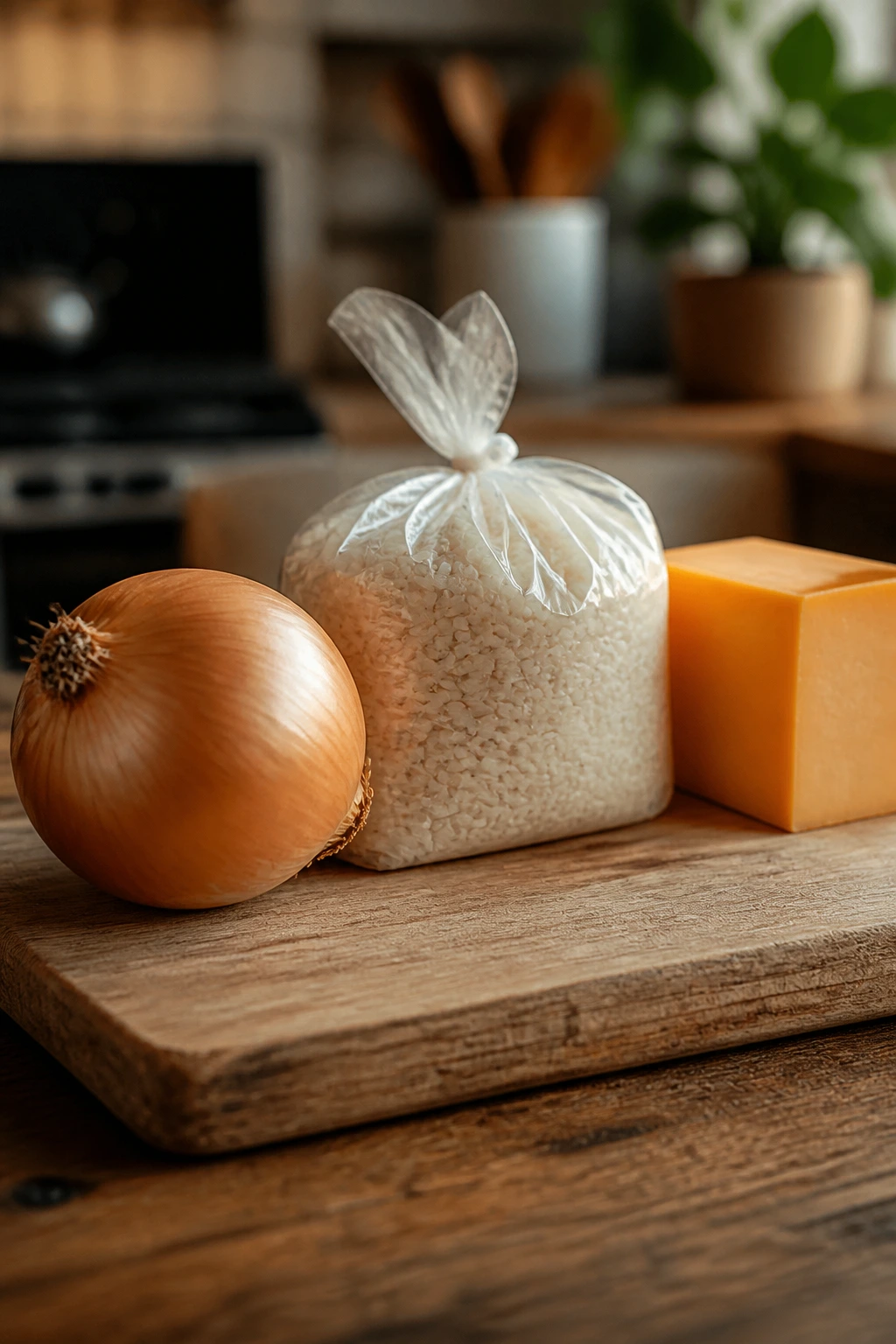
Small grocery lists: Most of these dinners are built around ingredients you can use across multiple meals, so one onion, one bag of rice, or one block of cheese does more than one job.
-
Fast cleanup: A lot of the recipes here use one skillet, one pot, or one sheet pan, which keeps the sink from becoming the real burden of the night.
-
Flexible proteins: Eggs, beans, tuna, chicken thighs, sausage, lentils, and ground meat show up where they make sense, so you can buy what is on sale and skip the rest.
-
Filling without fuss: Cheap meals fail when they leave you hungry an hour later. These lean on starch, fiber, and enough protein to make two people feel fed.
-
Leftovers that make sense: Several of these dishes hold up well the next day, which is the closest thing dinner has to a savings plan.
-
Easy to scale: If you cook for two now and four later, most of these recipes adapt cleanly without a full rewrite of the ingredient list.
1. Garlic Butter Spaghetti with Toasted Breadcrumbs
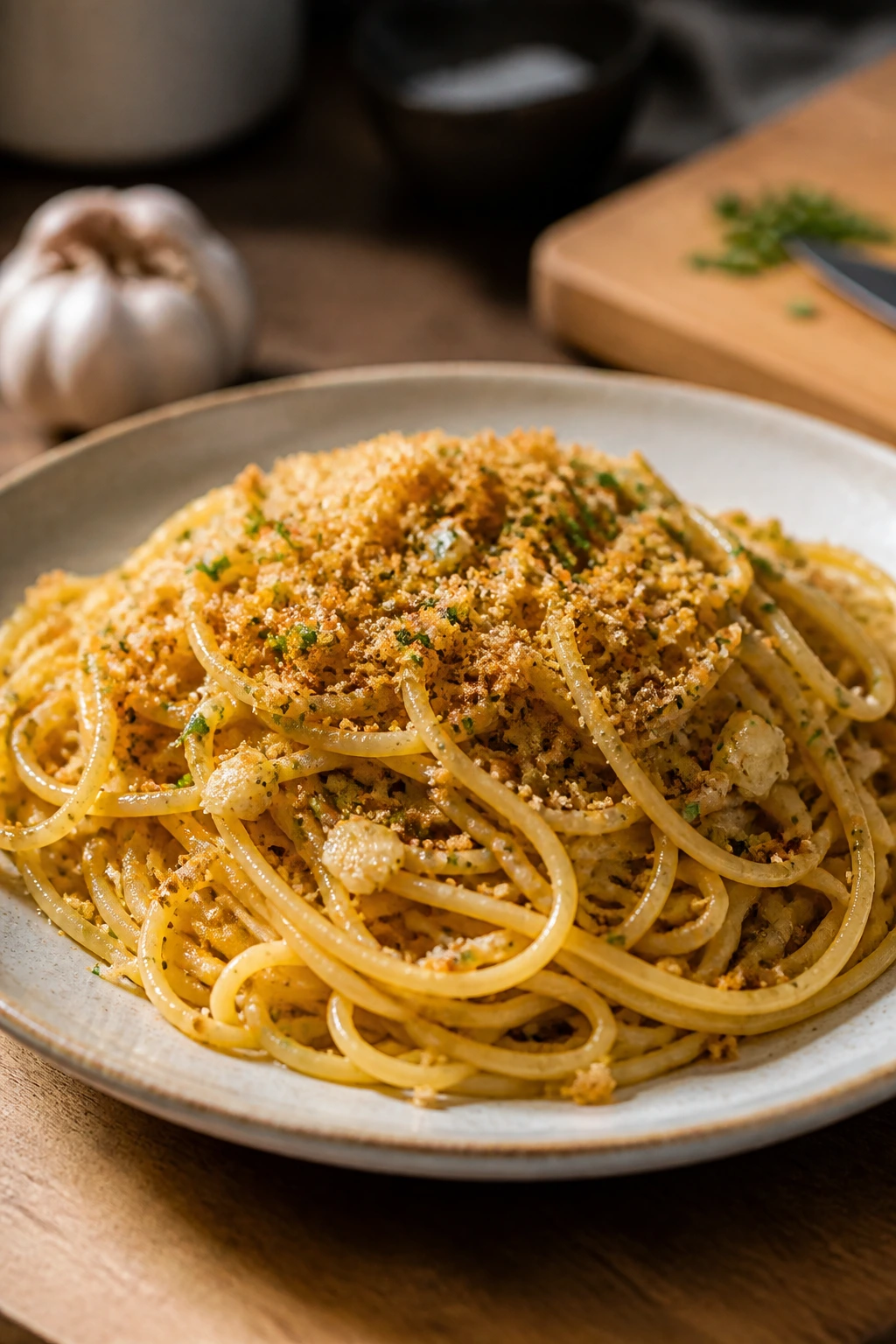
This is the sort of dinner that smells like you spent more than you did. Butter and garlic bloom in the pan, the pasta gets glossed with a little starchy water, and the toasted breadcrumbs on top bring the crunch that plain spaghetti almost always needs.
I like this one on the nights when the pantry feels thin but the table still needs to feel full. Eight ounces of spaghetti, a few cloves of garlic, and a handful of crumbs can land like a proper meal if you keep the seasoning sharp and the butter from browning too hard.
Why It Works
The breadcrumbs matter. They give the dish texture, a little toastiness, and the illusion of abundance, which is no small thing when you are cooking on a budget. Salted pasta water and parmesan do the heavy lifting, while garlic butter ties everything together without asking for a fancy sauce. It is cheap, fast, and strangely satisfying in that old-fashioned way where a small bowl feels complete.
Key Ingredients
- 8 ounces spaghetti
- 3 tablespoons unsalted butter
- 3 cloves garlic, minced
- 1/3 cup breadcrumbs
- 1 tablespoon olive oil
- 1/4 teaspoon red pepper flakes, optional
- 1/4 cup grated parmesan
- 2 tablespoons chopped parsley
- Salt and black pepper, to taste
Quick Steps
- Bring a large pot of salted water to a boil and cook the spaghetti until just shy of tender, about 8 to 10 minutes.
- While the pasta cooks, heat 1 tablespoon olive oil in a skillet over medium heat and toast the breadcrumbs until golden and crisp, 2 to 3 minutes.
- Add the butter to the same pan, then stir in the garlic and red pepper flakes for about 30 seconds, just until fragrant.
- Reserve 1/2 cup pasta water, drain the spaghetti, and add it to the skillet.
- Toss with parmesan, parsley, and a splash of pasta water until the sauce lightly coats the noodles and looks glossy rather than wet.
Tips and Variations
- Add a fried egg on top if you need more protein.
- A squeeze of lemon wakes up the whole bowl.
- Toss in a handful of frozen peas during the last minute of pasta cooking for a little color and bulk.
2. Creamy Tomato Tortellini with Spinach
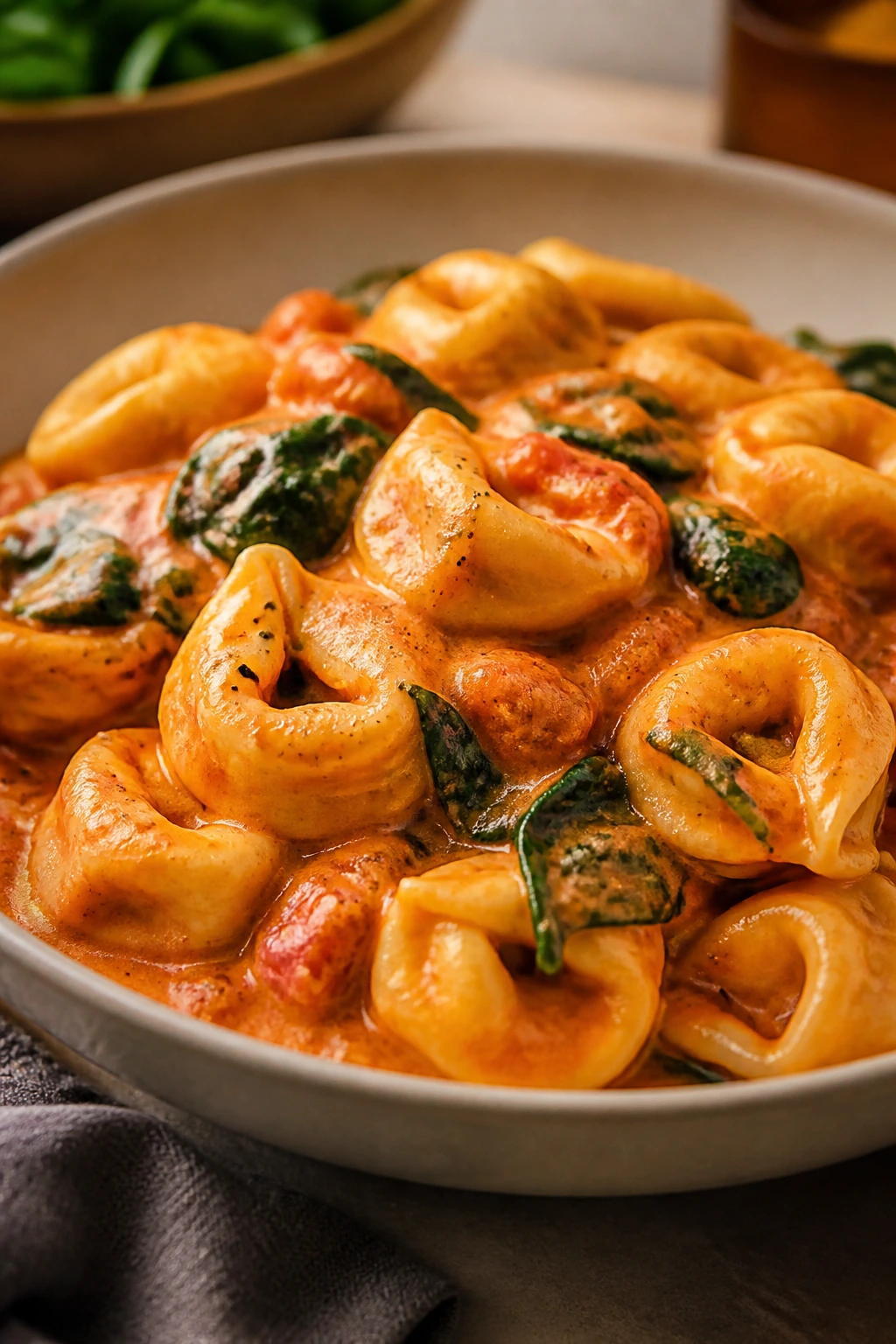
This one feels a little richer than the price tag suggests. Cheese tortellini, canned tomatoes, and spinach turn into a creamy red sauce that clings to every fold of pasta, and the result tastes like a dinner that took a lot more effort than it did.
It is one of my favorite budget cheats because tortellini does so much work on its own. You are not building dinner from scratch; you are giving a small package of pasta a better stage to stand on.
Why It Works
The trick here is buying one good package of tortellini and stretching it with sauce and greens. A can of tomatoes gives you volume, spinach softens into the sauce without complaint, and a little cream or half-and-half smooths the acidity enough to make the whole dish feel round. It is economical, but it does not read as frugal in the sad sense of the word.
Key Ingredients
- 9 ounces cheese tortellini, fresh or refrigerated
- 1 tablespoon olive oil
- 1 small onion, finely diced
- 2 cloves garlic, minced
- 1 can crushed tomatoes, 14.5 ounces
- 1/2 cup vegetable broth or water
- 1/3 cup heavy cream or half-and-half
- 2 cups fresh spinach
- 1/4 cup grated parmesan
- Salt, black pepper, and a pinch of sugar
Quick Steps
- Heat the olive oil in a skillet over medium heat and cook the onion until soft and translucent, about 4 minutes.
- Stir in the garlic and cook for 30 seconds, then add the tomatoes, broth, salt, pepper, and a pinch of sugar.
- Simmer the sauce for 8 to 10 minutes until it thickens slightly and the tomato flavor tastes less sharp.
- Add the tortellini and cook according to the package directions, stirring gently so the pasta does not stick.
- Stir in the cream, spinach, and parmesan, then cook just until the spinach wilts and the sauce turns silky.
Tips and Variations
- Frozen spinach works if you squeeze it dry first.
- A spoonful of pesto at the end gives the sauce more depth.
- Serve with garlic toast if you want the meal to feel bigger without spending much more.
3. Black Bean and Corn Taco Skillet
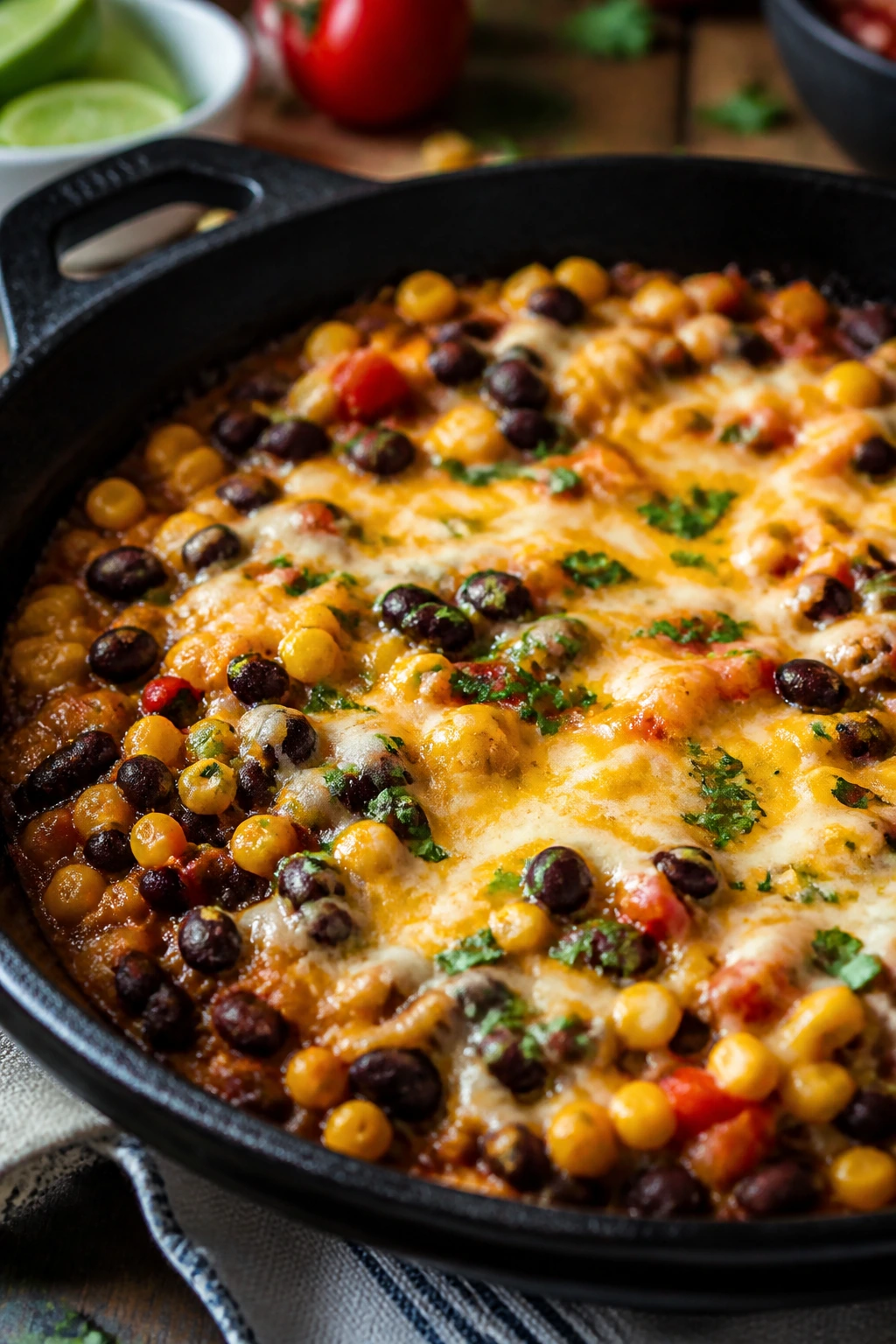
A taco skillet is what I make when I want dinner to feel lively without touching the grocery budget too hard. Black beans, corn, salsa, and melted cheese bring enough color and heat that nobody notices how cheap the base really is.
You can eat it straight from the pan with tortillas, pile it into bowls, or scoop it up with chips if that is what the night calls for. Flexible dinners like this are useful. Useful and cheap. That combination never gets old.
Why It Works
Beans bring protein and body, corn adds sweetness, and salsa does the seasoning work for you. That is why this meal punches above its cost: most of the flavor is already built in before the pan gets hot. A little cheese on top gives it stretch, and the whole thing feels more like a casual taco night than a budget rescue operation.
Key Ingredients
- 1 tablespoon neutral oil
- 1 small onion, diced
- 1 bell pepper, diced
- 1 can black beans, drained and rinsed
- 1 cup frozen corn
- 1 cup salsa
- 1 teaspoon chili powder
- 1/2 teaspoon ground cumin
- 1 cup shredded cheddar or Mexican blend
- 4 small tortillas or 2 large flour tortillas
- Lime wedges, for serving
Quick Steps
- Heat the oil in a skillet over medium heat and cook the onion and bell pepper until softened, about 5 minutes.
- Stir in the black beans, corn, salsa, chili powder, cumin, salt, and pepper.
- Simmer for 5 to 7 minutes until the mixture thickens and the corn is hot through.
- Sprinkle the cheese over the top and cover the pan for 1 to 2 minutes so it melts.
- Serve in warm tortillas, over rice, or with chips and lime wedges.
Tips and Variations
- Add leftover cooked chicken if you have it.
- A spoonful of sour cream makes the skillet taste richer without much cost.
- If your salsa is very watery, simmer it a little longer before adding the cheese.
4. Tuna Noodle Skillet with Peas and Cheddar
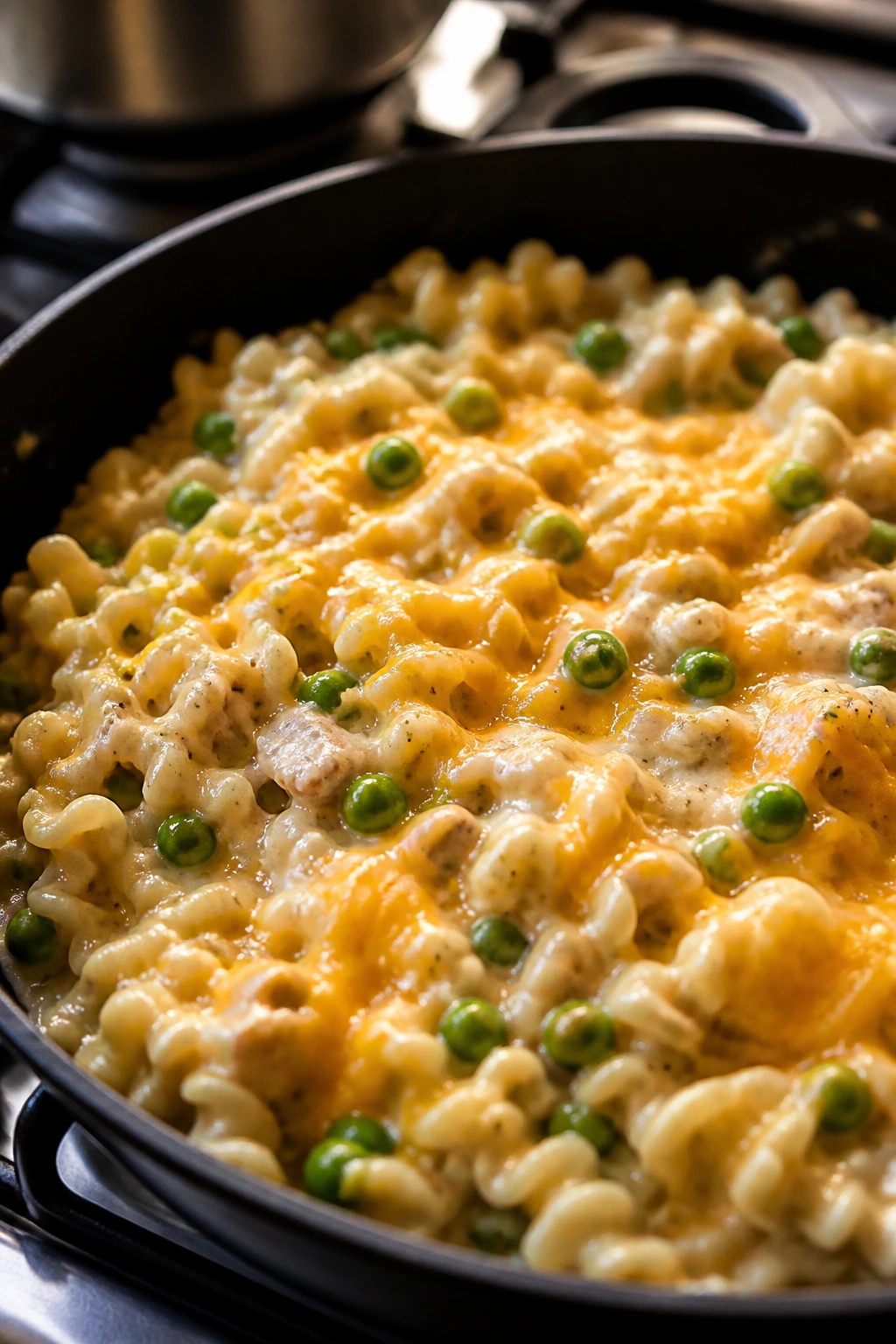
This is the sort of meal that lives somewhere between comfort food and a useful cleanup recipe. It has the cozy, old-school feel of tuna casserole, but it stays on the stovetop and moves fast enough for a weeknight.
The tuna is mild, the noodles are soft, and the peas keep the whole thing from feeling too heavy. I like a little sharp cheddar in here because it gives the skillet a salty edge that canned tuna needs.
Why It Works
Tuna is one of the cheapest proteins you can keep on hand, and egg noodles cook fast enough to make the whole dish feel low-effort. A quick milk sauce thickened with flour gives you creaminess without needing canned soup, and peas bring color plus a little sweetness. It is simple food, but not dull food.
Key Ingredients
- 6 ounces egg noodles
- 2 tablespoons butter
- 1 small onion, finely diced
- 2 tablespoons all-purpose flour
- 1 1/2 cups milk
- 1 can tuna, 5 ounces, drained
- 1 cup frozen peas
- 1/2 cup shredded cheddar
- 1 teaspoon Dijon mustard
- Salt and black pepper, to taste
- 1/4 cup breadcrumbs, optional for topping
Quick Steps
- Cook the egg noodles in salted water until just tender, then drain.
- Melt the butter in a skillet over medium heat and cook the onion until soft, about 4 minutes.
- Stir in the flour and cook for 1 minute, then whisk in the milk until the sauce is smooth.
- Add the tuna, peas, mustard, salt, pepper, and noodles, stirring until everything is coated.
- Stir in the cheddar until melted, or top with breadcrumbs and toast under a broiler for a minute if you want crunch.
Tips and Variations
- Celery salt gives the tuna a more classic casserole flavor.
- Swap peas for frozen mixed vegetables if that is what you have.
- A squeeze of lemon keeps the sauce from tasting flat.
5. Chickpea Coconut Curry with Rice
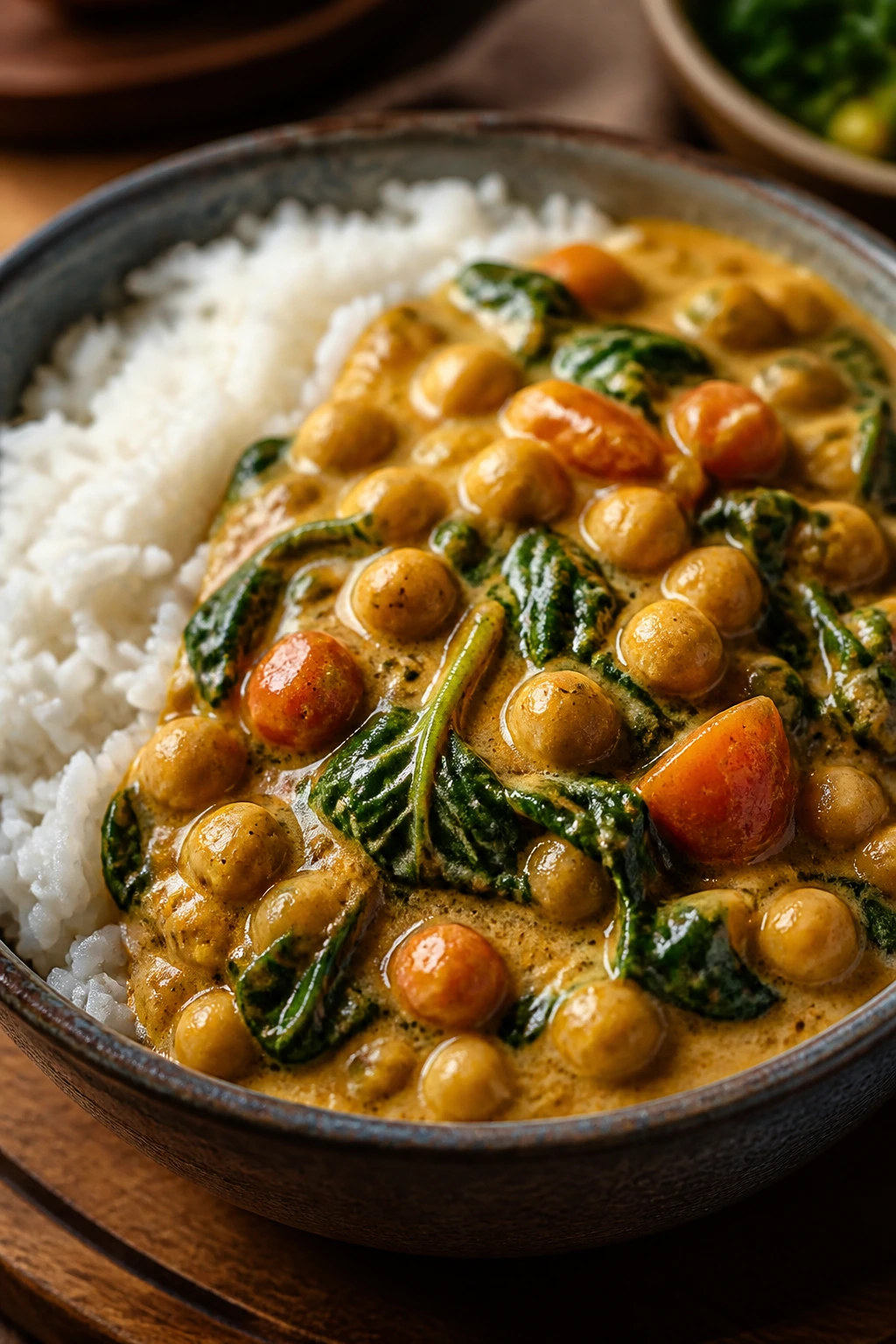
This is one of those dinners that feels warm and generous even though the ingredients are plain. Chickpeas, coconut milk, curry powder, and rice give you a bowl that tastes layered, creamy, and calm all at once.
It is also a nice reminder that budget food does not have to be gray or monotonous. A can of chickpeas can carry a lot more personality than people give it credit for.
Why It Works
Coconut milk creates the body, chickpeas provide enough bite to make the bowl feel substantial, and curry powder brings the spice without making you buy half a spice drawer. Rice is the cheap anchor here, and spinach disappears into the sauce with no trouble at all. The result is filling, flexible, and good enough to repeat.
Key Ingredients
- 1 cup jasmine or basmati rice
- 1 tablespoon oil
- 1 small onion, chopped
- 2 cloves garlic, minced
- 1 tablespoon curry powder
- 1 can chickpeas, drained and rinsed
- 1 can coconut milk, 13.5 ounces
- 1 cup vegetable broth or water
- 2 cups fresh spinach
- 1 lime, cut into wedges
- Salt, to taste
Quick Steps
- Cook the rice according to the package directions.
- Heat the oil in a skillet over medium heat and cook the onion until soft, about 5 minutes.
- Stir in the garlic and curry powder, cooking for 30 seconds until fragrant.
- Add the chickpeas, coconut milk, broth, and salt, then simmer for 10 to 12 minutes.
- Stir in the spinach until wilted and serve over rice with lime juice squeezed over the top.
Tips and Variations
- A spoonful of tomato paste makes the curry deeper and a little richer.
- If you like heat, add a pinch of cayenne or chili flakes.
- Frozen spinach works well here and often costs less than fresh.
6. Sheet-Pan Sausage, Potatoes, and Peppers
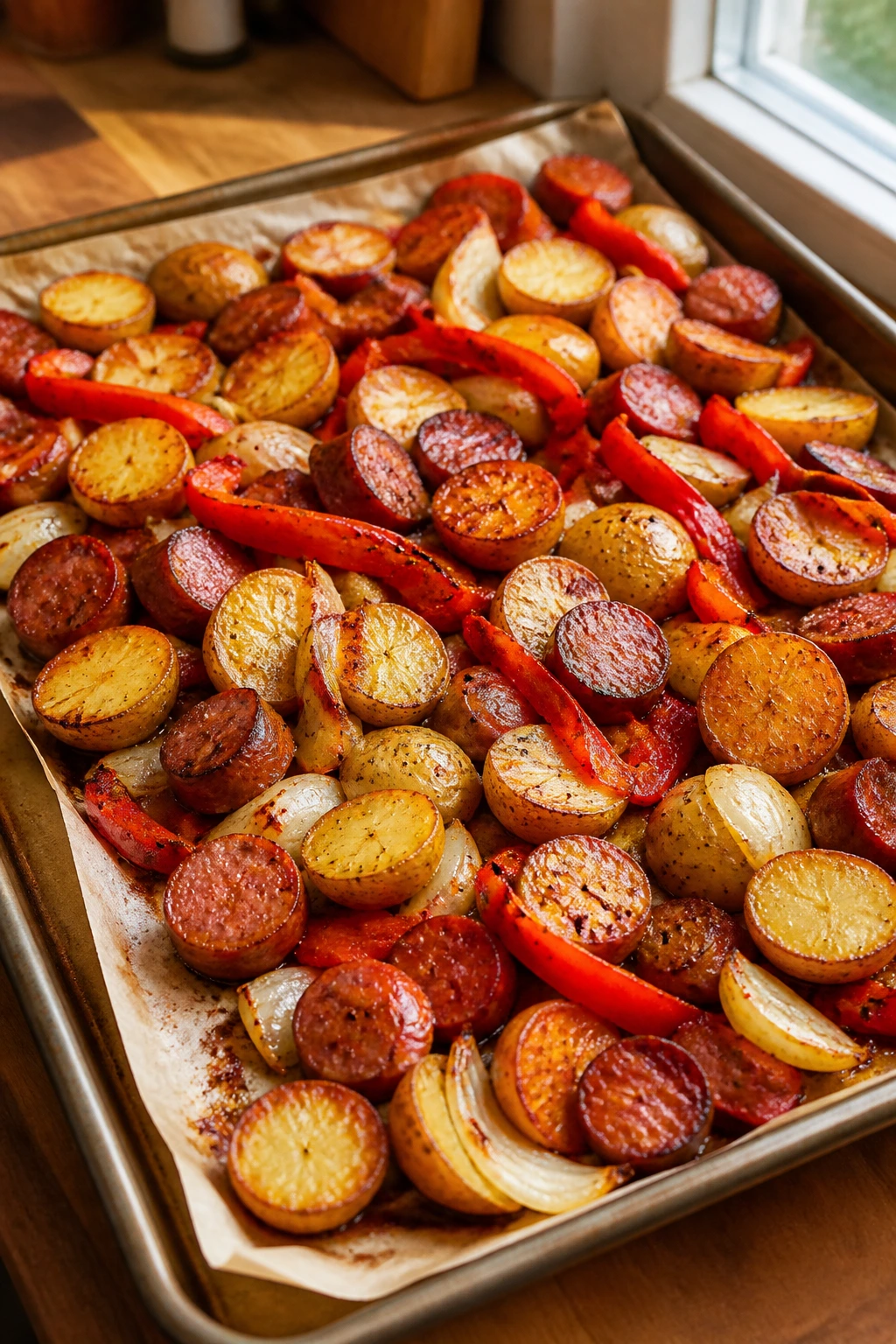
Sheet-pan dinners are the easiest way to get a full meal without babysitting a stove. Smoked sausage, potatoes, and peppers roast together until the edges turn brown and the kitchen starts smelling like you did more work than you did.
This is a smart budget move because sausage brings its own seasoning. You are not building flavor from scratch, which means the rest of the ingredients can stay cheap and simple.
Why It Works
Sausage gives you salt, fat, and a strong savory backbone, so the potatoes only need a little oil and a few spices to taste complete. Potatoes roast into something crisp-edged and filling, while peppers and onions soften into the drippings. One pan, one oven, very little cleanup. Hard to complain about that.
Key Ingredients
- 12 ounces smoked sausage, sliced into coins
- 1 pound baby potatoes, halved
- 1 red bell pepper, sliced
- 1 yellow onion, sliced
- 2 tablespoons olive oil
- 1 teaspoon paprika
- 1/2 teaspoon garlic powder
- Salt and black pepper, to taste
- 1 teaspoon Dijon mustard, optional for serving
Quick Steps
- Heat the oven to 425°F and line a sheet pan with parchment for easier cleanup.
- Toss the potatoes, peppers, onion, oil, paprika, garlic powder, salt, and pepper on the pan.
- Roast for 15 minutes, then add the sausage and flip the vegetables.
- Roast for another 15 to 20 minutes until the potatoes are tender and the edges are deeply browned.
- Serve with a little mustard or a splash of hot sauce if you want extra bite.
Tips and Variations
- Cut the potatoes small so they finish at the same time as the peppers.
- Kielbasa, andouille, or even chicken sausage all work.
- A handful of chopped parsley at the end makes the pan look and taste fresher.
7. Lemon Herb Chicken Thighs with Couscous
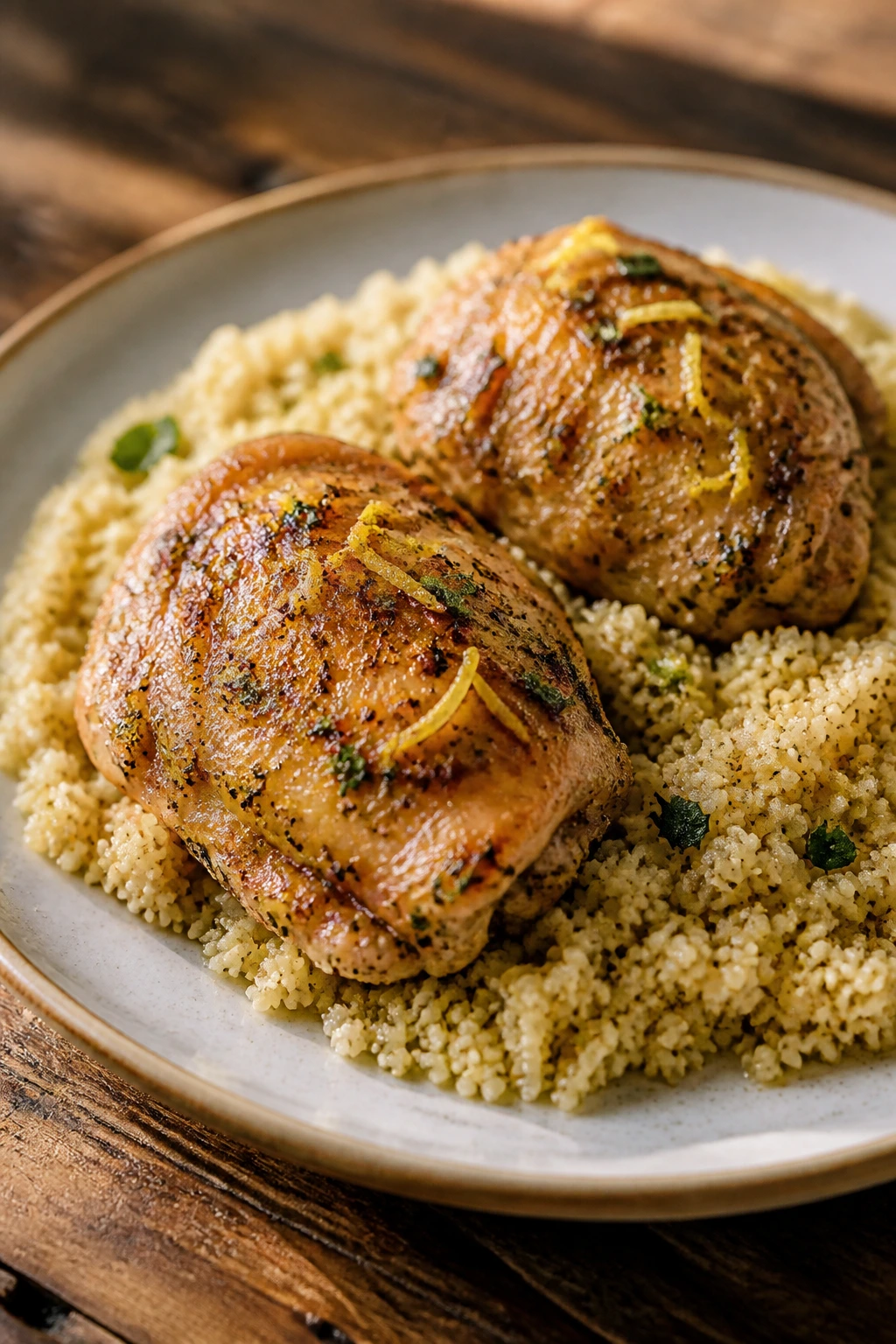
Chicken thighs are one of the best bargains in the meat case, and I will happily defend that opinion. They stay juicy, take on strong seasoning well, and feel a little more generous than their price suggests.
Couscous is the other smart move here. It cooks in minutes, drinks up lemon and broth, and gives the plate enough bulk that two thighs are more than enough for two people.
Why It Works
Thighs have enough fat to stay tender, which means you do not need expensive tricks to keep them from drying out. Lemon, garlic, and oregano make the chicken taste bright rather than heavy, while couscous gives you a quick starch that feels lighter than rice. If you want a dinner that tastes composed without much effort, this one does the job.
Key Ingredients
- 4 boneless, skinless chicken thighs, about 1 pound
- 1 tablespoon olive oil
- 1 lemon, zested and juiced
- 2 cloves garlic, minced
- 1 teaspoon dried oregano
- 1/2 teaspoon paprika
- Salt and black pepper, to taste
- 1 cup couscous
- 1 cup chicken broth or water
- 1 tablespoon butter
- 2 tablespoons chopped parsley
Quick Steps
- Season the chicken with salt, pepper, oregano, paprika, lemon zest, and garlic.
- Heat the oil in a skillet over medium-high heat and sear the chicken for 4 to 5 minutes per side.
- Lower the heat, add a splash of water if the pan looks dry, and cook until the chicken reaches 165°F in the thickest part.
- Bring the broth or water to a boil in a small saucepan, stir in the couscous and butter, cover, and let it stand for 5 minutes.
- Fluff the couscous, stir in parsley and lemon juice, then serve under or beside the chicken.
Tips and Variations
- Boneless thighs work best, but bone-in thighs can be used if you add a few extra minutes.
- A spoonful of yogurt on the side cools the lemon nicely.
- Add chopped cucumber or tomatoes if you want a fresher plate.
8. Bean and Cheese Quesadilla Supper
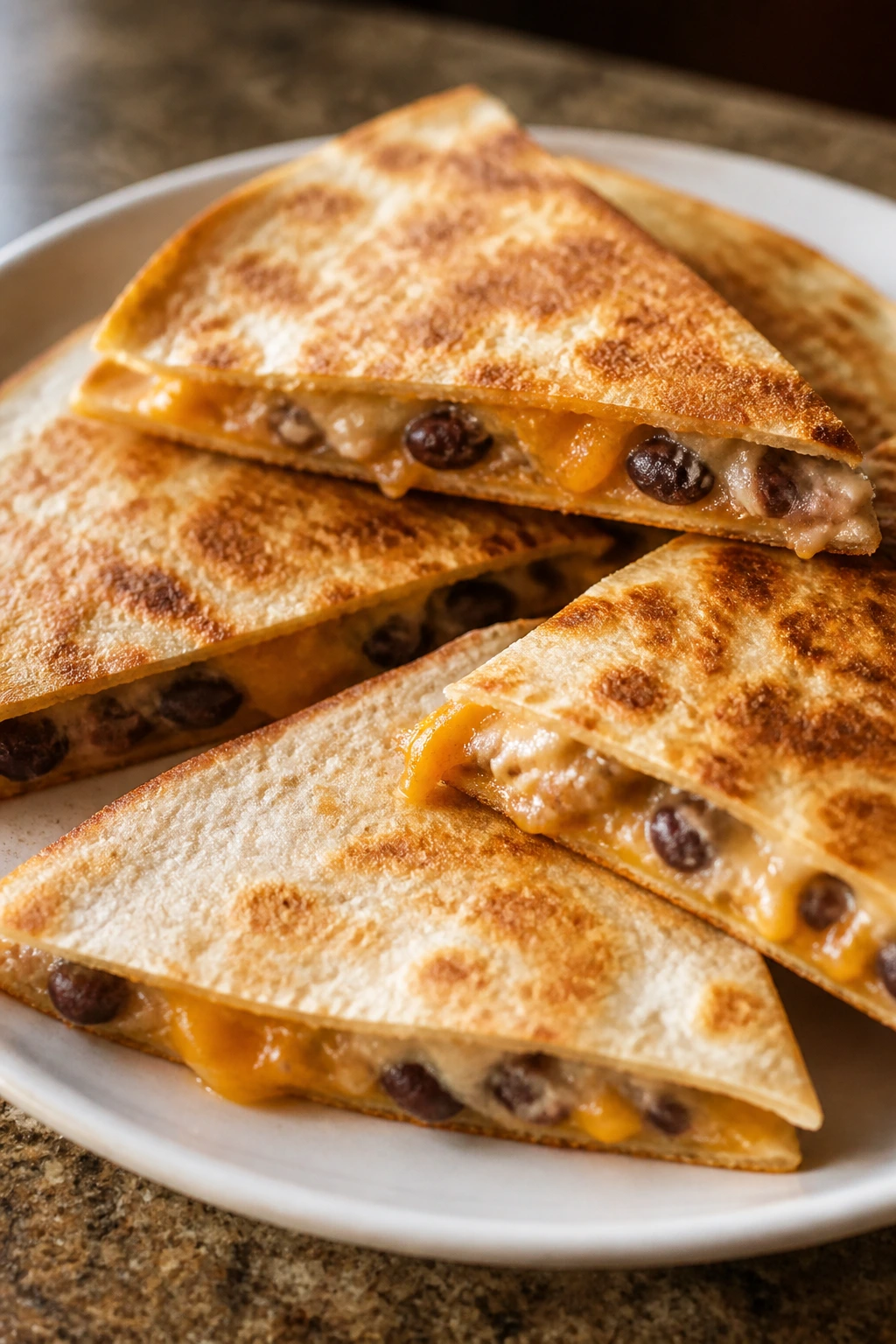
Some nights want a plated dinner. Some nights want something hot, crisp, and easy to hand over with salsa on the side. Quesadillas sit firmly in the second camp, and that is exactly why they earn a place here.
Beans make the filling cheap and filling, cheese does the melting, and a skillet turns the tortilla into something golden and crackly. If you keep the pan at medium heat, the outside turns crisp before the cheese has a chance to burn. That balance matters.
Why It Works
Refried beans or mashed black beans give you a creamy center, and cheese pulls everything together without requiring meat. A little onion or taco seasoning can make the filling taste more finished, but the core idea stays simple and budget-friendly. You can serve these as a full meal with salsa and a quick side salad, or cut them into wedges and let everyone pretend it is a snack night.
Key Ingredients
- 4 medium flour tortillas
- 1 cup refried beans or mashed black beans
- 1 1/2 cups shredded cheddar or Monterey Jack
- 1/4 small onion, finely minced and sautéed, optional
- 1 teaspoon taco seasoning, optional
- 1 tablespoon butter or oil for the pan
- Salsa, for serving
- Sour cream or plain yogurt, optional
Quick Steps
- Mix the beans with taco seasoning and onion if you are using them.
- Heat a skillet over medium heat and add a little butter or oil.
- Spread beans and cheese over two tortillas, then top with the other two tortillas.
- Cook each quesadilla for 2 to 3 minutes per side until golden and the cheese is fully melted.
- Let them rest for a minute, then cut into wedges and serve with salsa.
Tips and Variations
- Add leftover cooked chicken or corn if you want more bulk.
- A dry skillet works, but butter gives the tortilla better browning.
- Serve with shredded lettuce and hot sauce to make it feel more like a meal.
9. Veggie Fried Rice with Egg and Scallions
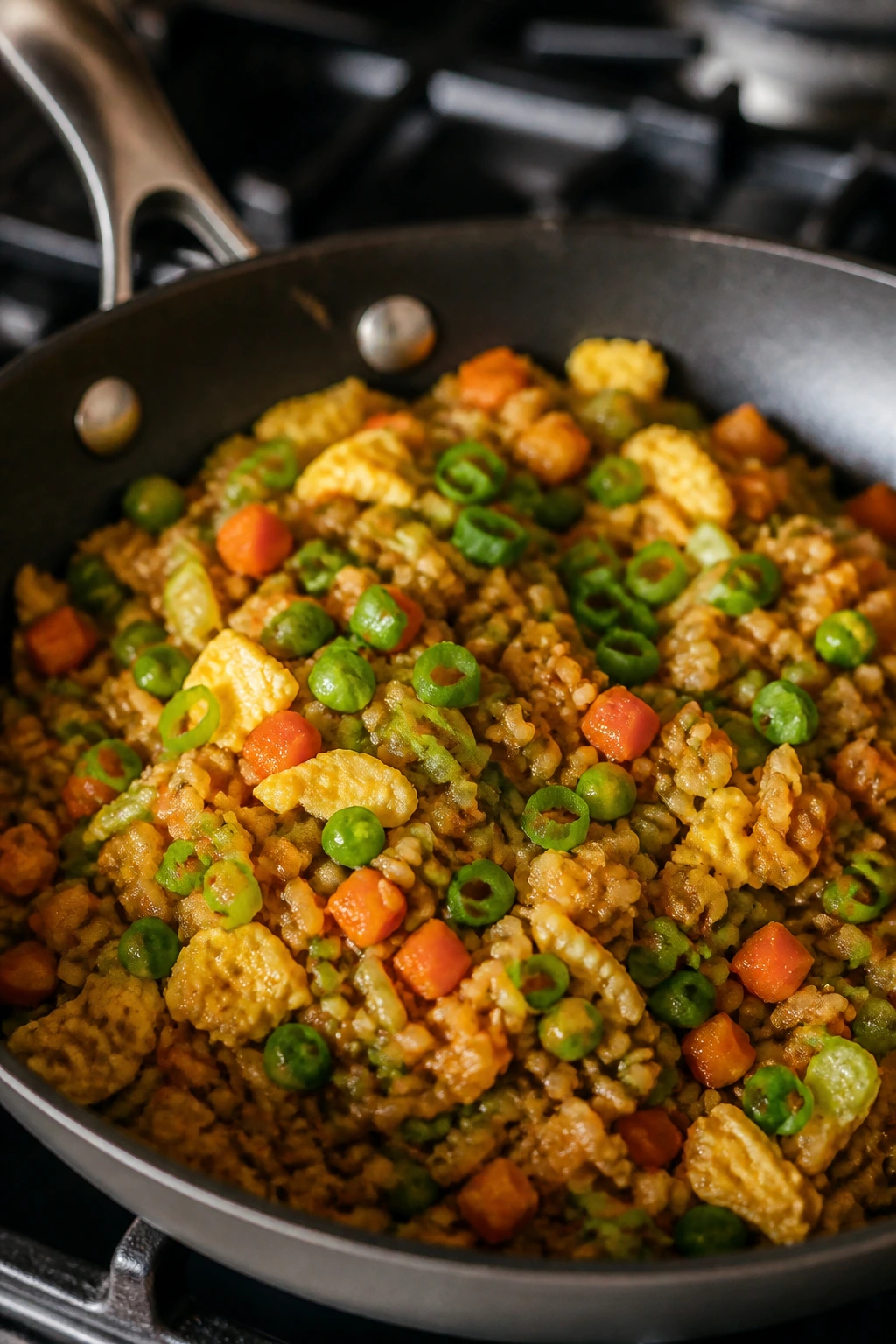
Fried rice is one of the few dinners that gets better when you treat leftovers like an advantage instead of a problem. Cold rice, scrambled eggs, frozen vegetables, and a fast soy-sesame sauce come together in a skillet that tastes far less plain than the ingredient list looks.
I like this recipe because it is forgiving. If the fridge is nearly empty, fried rice does not panic. It improvises.
Why It Works
Dry, cold rice is the secret. Fresh rice turns soft and sticky in the pan, while day-old rice stays separate and soaks up sauce without collapsing. Eggs add cheap protein, frozen vegetables keep the cost down, and a little sesame oil at the end makes the whole pan taste like it came from a takeout box in a good way.
Key Ingredients
- 3 cups cold cooked rice
- 2 eggs, lightly beaten
- 1 cup frozen peas and carrots
- 2 scallions, sliced
- 2 cloves garlic, minced
- 2 tablespoons soy sauce
- 1 teaspoon sesame oil
- 1 tablespoon neutral oil
- Salt and pepper, to taste
- 1 tablespoon butter, optional
Quick Steps
- Heat the neutral oil in a large skillet or wok over medium-high heat.
- Scramble the eggs in the pan, then remove them to a plate.
- Add the garlic and frozen vegetables and cook until hot and lightly browned in spots.
- Stir in the rice, soy sauce, sesame oil, butter if using, and a pinch of pepper.
- Return the eggs, add the scallions, and toss until the rice is hot and the grains look separate.
Tips and Variations
- A splash of rice vinegar sharpens the flavor at the end.
- Leftover cabbage or chopped mushrooms fit in well.
- If your rice is clumped, break it up with damp hands before it hits the pan.
10. One-Pot Lentil Soup with Carrots and Bread
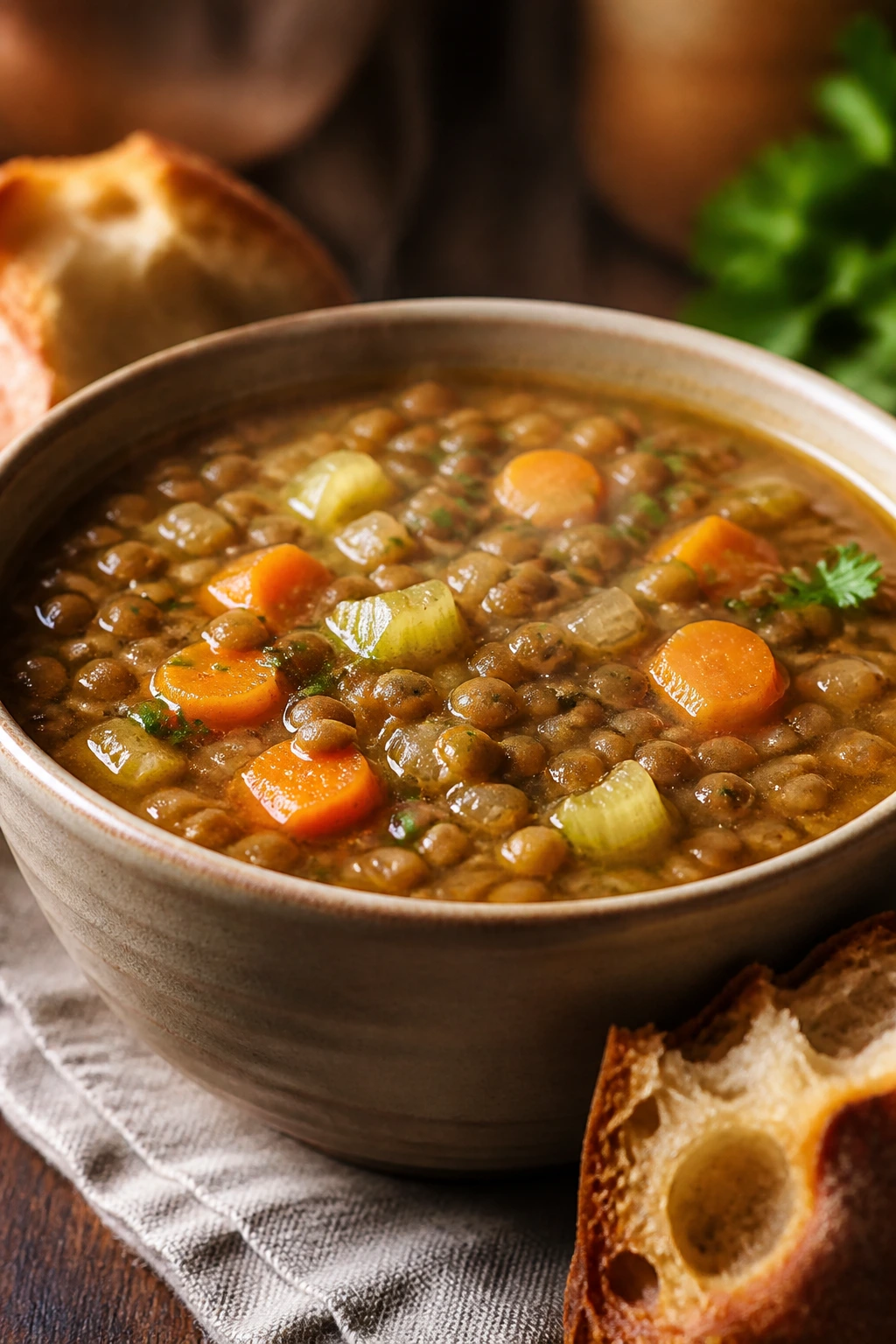
Lentil soup is what budget cooking looks like when it remembers to be kind. Lentils are cheap, filling, and steady in a way that makes a pot feel sturdier than it should for the money.
The vegetables do not need to be fancy. Onion, carrot, and celery are enough to build a good base, and a squeeze of lemon at the end keeps the soup from tasting tired.
Why It Works
Lentils cook faster than most dried beans and bring their own creamy texture as they simmer. Tomato paste gives the broth depth, while carrots and celery provide the sort of quiet sweetness that keeps the bowl from feeling flat. It is the kind of meal that costs little, feeds two well, and leaves the kitchen smelling clean and good.
Key Ingredients
- 1 cup brown or green lentils, rinsed
- 1 tablespoon olive oil
- 1 onion, diced
- 2 carrots, diced
- 2 celery stalks, diced
- 3 cloves garlic, minced
- 1 tablespoon tomato paste
- 6 cups vegetable broth or water
- 1 bay leaf
- 1/2 teaspoon ground cumin
- Salt, black pepper, and lemon juice, to taste
- Crusty bread, for serving
Quick Steps
- Heat the oil in a pot over medium heat and cook the onion, carrots, and celery until softened, about 6 minutes.
- Stir in the garlic, tomato paste, and cumin and cook for 1 minute.
- Add the lentils, broth, bay leaf, salt, and pepper.
- Bring to a boil, then simmer uncovered for 25 to 30 minutes until the lentils are tender but not falling apart.
- Remove the bay leaf, add lemon juice, and serve with bread.
Tips and Variations
- Add chopped kale in the last 5 minutes if you want greens.
- A spoonful of yogurt on top gives the soup a creamy finish.
- If the soup thickens too much, loosen it with a splash of hot water.
11. Baked Ziti for Two with Ricotta and Mozzarella
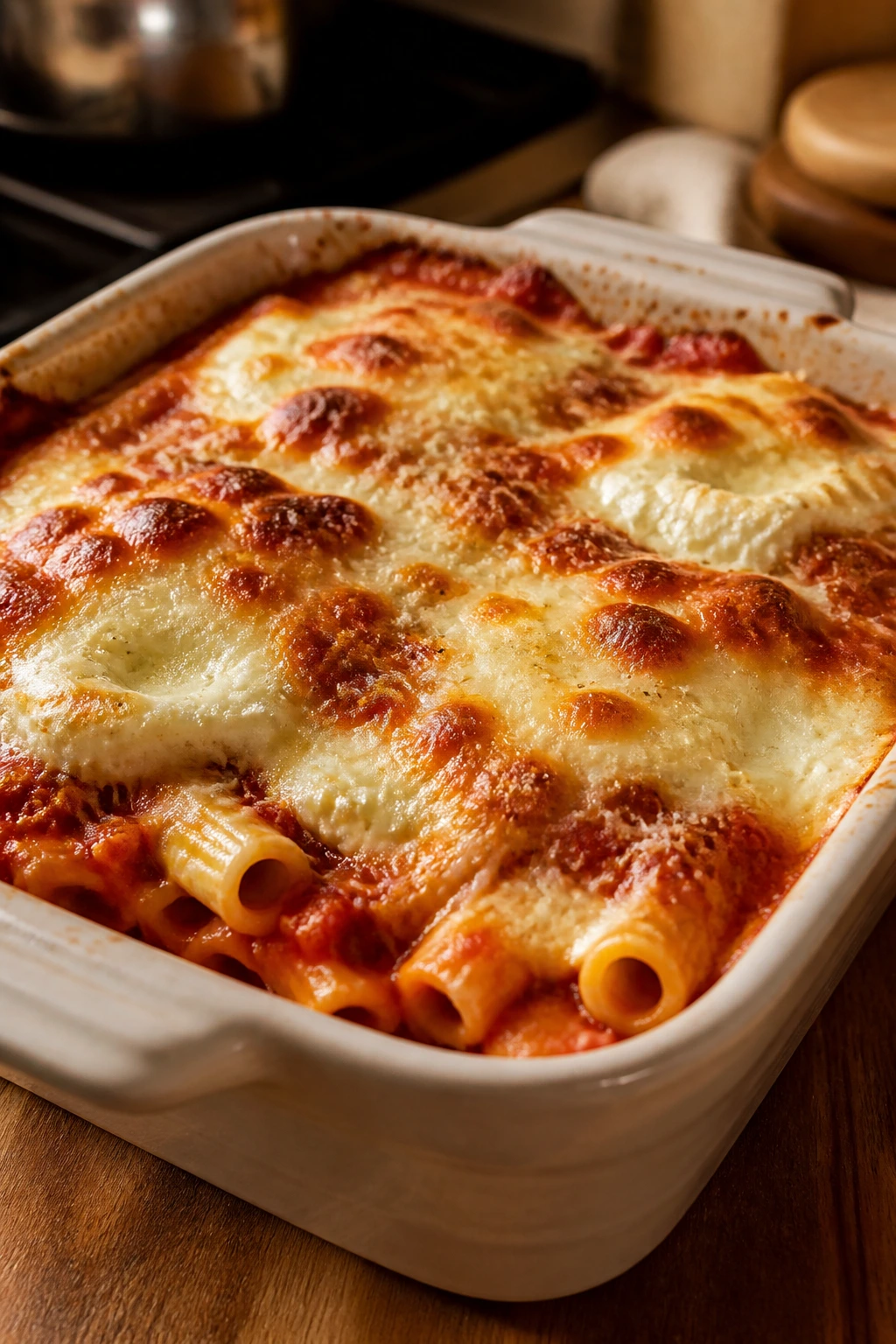
Baked pasta is a little more effort than plain stovetop noodles, but it pays off in comfort. Ziti, marinara, ricotta, and mozzarella give you a small casserole that feels like a full evening meal instead of just dinner.
It is also a good one for people who want leftovers without cooking a giant tray. Two servings in a small baking dish means you get the baked-cheese experience without a week of pasta fatigue.
Why It Works
The ricotta softens the sauce and makes the pasta feel creamy without needing a heavy cream base. Mozzarella gives the browned top everyone wants, and a short bake lets the flavors settle into one another. This is one of the best examples of inexpensive ingredients pretending to be something much more generous.
Key Ingredients
- 8 ounces ziti or penne
- 1 tablespoon olive oil
- 1 small onion, diced
- 2 cloves garlic, minced
- 1 1/2 cups marinara sauce
- 1/2 cup ricotta
- 1 cup shredded mozzarella
- 2 tablespoons grated parmesan
- 1 teaspoon Italian seasoning
- Salt and black pepper, to taste
Quick Steps
- Heat the oven to 375°F and grease a small baking dish.
- Cook the pasta until just al dente, then drain.
- Cook the onion in olive oil until soft, add the garlic, then stir in the marinara and seasoning.
- Combine the pasta, sauce, and ricotta, then spoon into the baking dish.
- Top with mozzarella and parmesan and bake for 15 to 20 minutes until bubbling and browned at the edges.
Tips and Variations
- A few spoonfuls of pasta water help the sauce cling better.
- Add spinach or sautéed mushrooms if you want vegetables inside the bake.
- Let it rest for 5 minutes before serving so the layers settle.
12. Shakshuka with Crusty Bread
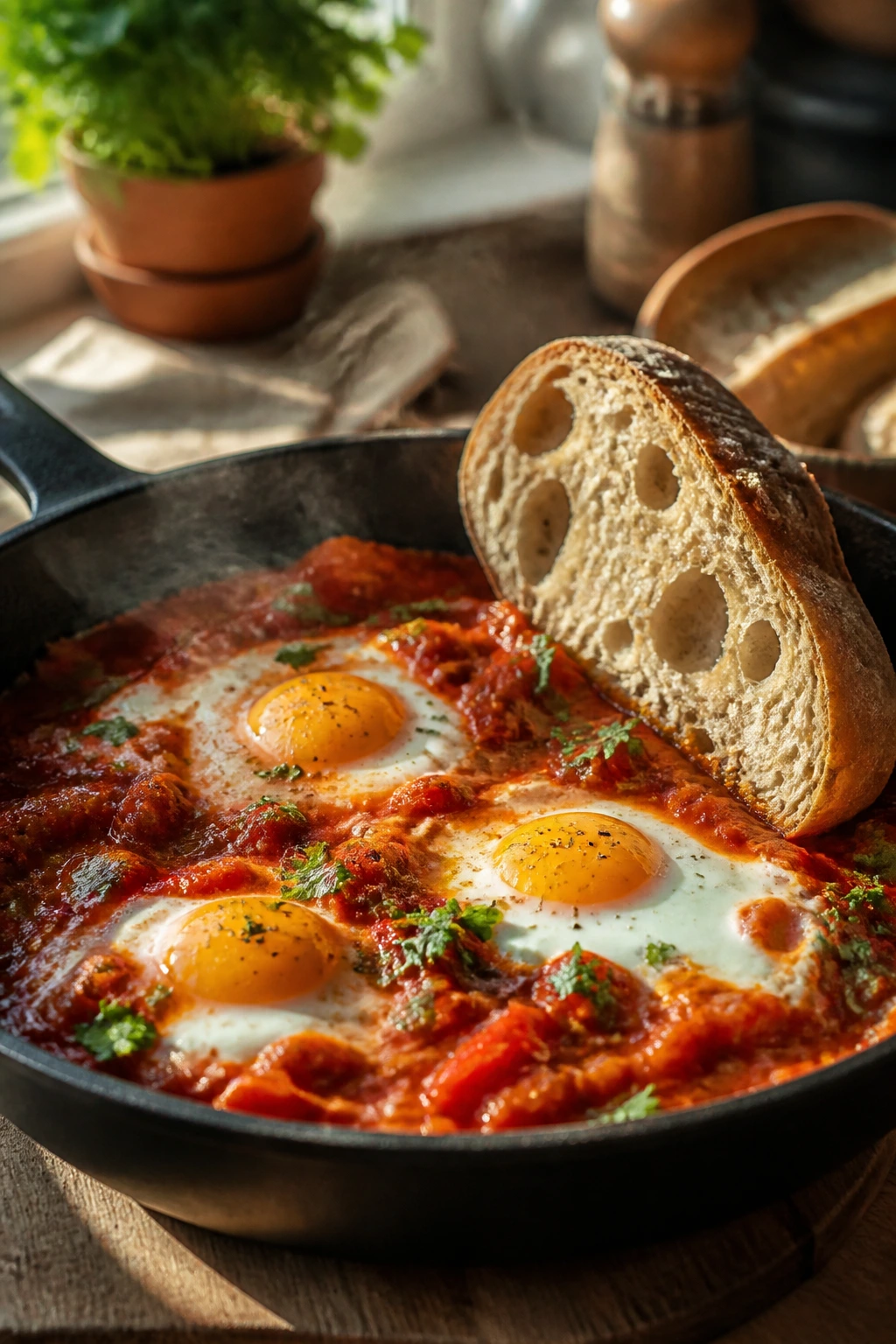
Shakshuka has a way of making eggs feel like a proper dinner. The sauce is spiced, tomato-rich, and a little smoky, and the eggs poach right in the pan until the whites set and the yolks stay soft.
This is the kind of meal that looks more elaborate than the shopping list suggests. Tomatoes, onions, peppers, garlic, eggs, and bread. That is the whole deal, and it works beautifully.
Why It Works
Eggs are one of the cheapest proteins around, and shakshuka gives them a better job than plain scrambling. The tomato sauce carries cumin and paprika, the pepper softens into sweetness, and the yolks become part of the sauce when you tear into them with bread. It is cheap, yes, but it feels deliberate.
Key Ingredients
- 1 tablespoon olive oil
- 1 small onion, diced
- 1 bell pepper, diced
- 2 cloves garlic, minced
- 1 teaspoon ground cumin
- 1 teaspoon paprika
- 1 can crushed tomatoes, 14.5 ounces
- 4 large eggs
- 1/4 cup crumbled feta, optional
- 2 tablespoons chopped parsley
- Crusty bread, for serving
Quick Steps
- Heat the oil in a skillet over medium heat and cook the onion and pepper until softened, about 6 minutes.
- Stir in the garlic, cumin, and paprika for 30 seconds.
- Add the tomatoes, salt, and pepper, then simmer until the sauce thickens, about 8 minutes.
- Make four shallow wells in the sauce and crack in the eggs.
- Cover the pan and cook for 5 to 7 minutes until the whites are set but the yolks are still soft.
Tips and Variations
- Feta is optional, but a little on top gives the pan more salt and tang.
- Harissa or chili flakes bring heat fast.
- Serve with yogurt if you want to cool the spices down a touch.
13. Crispy Potato and Egg Hash
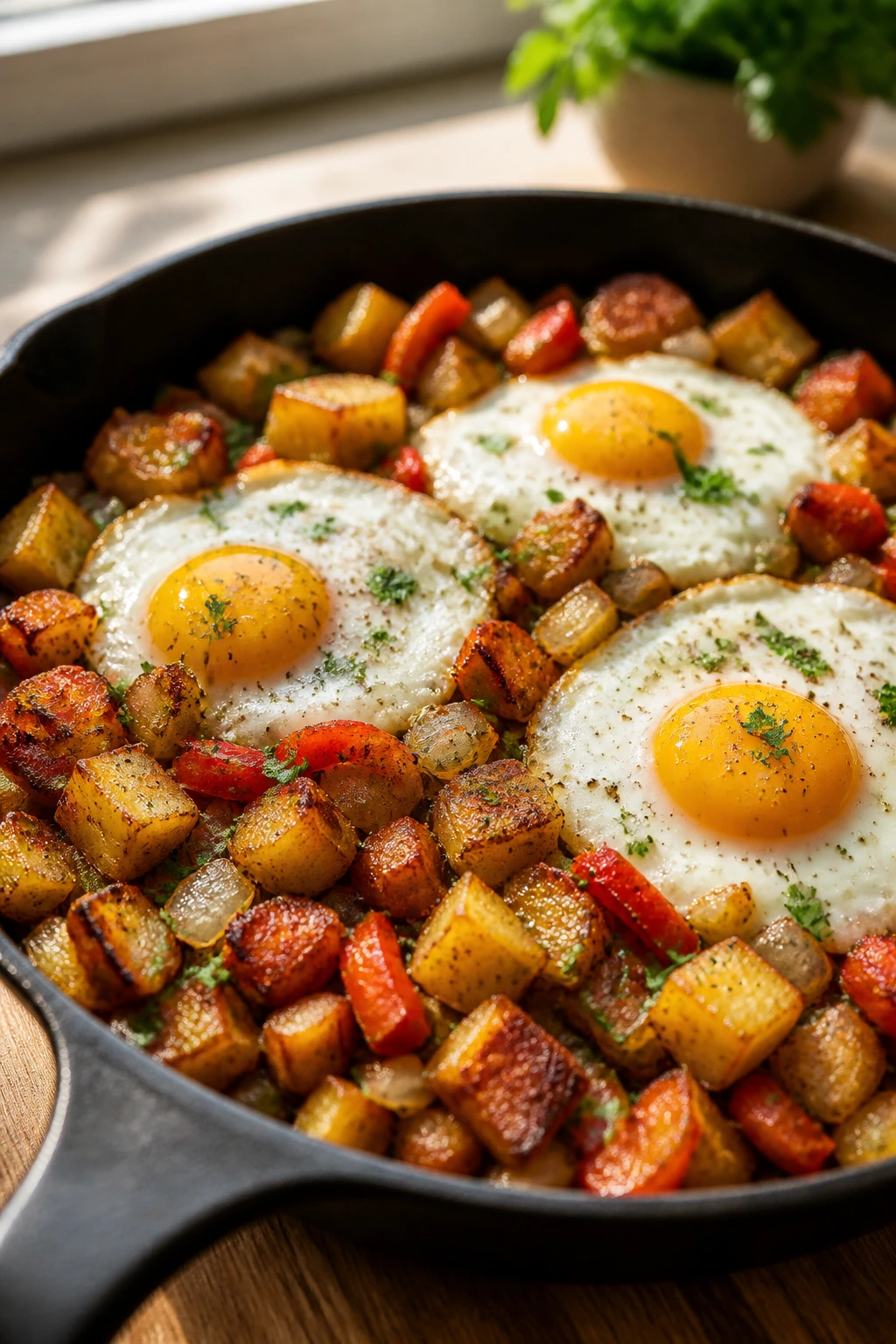
There are nights when breakfast for dinner feels less like a gimmick and more like a mercy. Potato hash is cheap, filling, and easy to stretch with eggs, onions, and whatever lonely vegetable is hanging around the crisper.
What I like here is the texture. Crisp potatoes, soft onions, and eggs cooked your way give you a plate that feels simple but complete, which is hard to beat for the price.
Why It Works
Potatoes are cheap, but they need proper browning to taste like anything. Once the edges start to crisp, they pick up the salt and spice in the pan and turn into a real base for eggs. A skillet is doing all the work, and the eggs bring the meal back into dinner territory with almost no extra cost.
Key Ingredients
- 1 pound russet or Yukon Gold potatoes, diced small
- 2 tablespoons oil
- 1 small onion, diced
- 1 bell pepper, diced, optional
- 4 eggs
- 1/2 teaspoon smoked paprika
- Salt and black pepper, to taste
- 2 tablespoons scallions, sliced
- Hot sauce, for serving
Quick Steps
- Parboil the diced potatoes for 5 minutes, or microwave them with a splash of water until just tender.
- Heat the oil in a large skillet over medium-high heat and cook the potatoes until golden and crisp, about 10 minutes.
- Add the onion and pepper and cook until softened.
- Sprinkle in the smoked paprika, salt, and pepper, then make four little spaces in the hash.
- Crack in the eggs, cover the pan, and cook until the whites are set and the yolks are the texture you want.
Tips and Variations
- Use leftover roasted potatoes if you have them.
- Shredded cheese can go on in the last minute if you want more richness.
- A spoonful of salsa makes a fast, cheap topping.
14. Ramen with Cabbage, Sesame, and Soft Egg
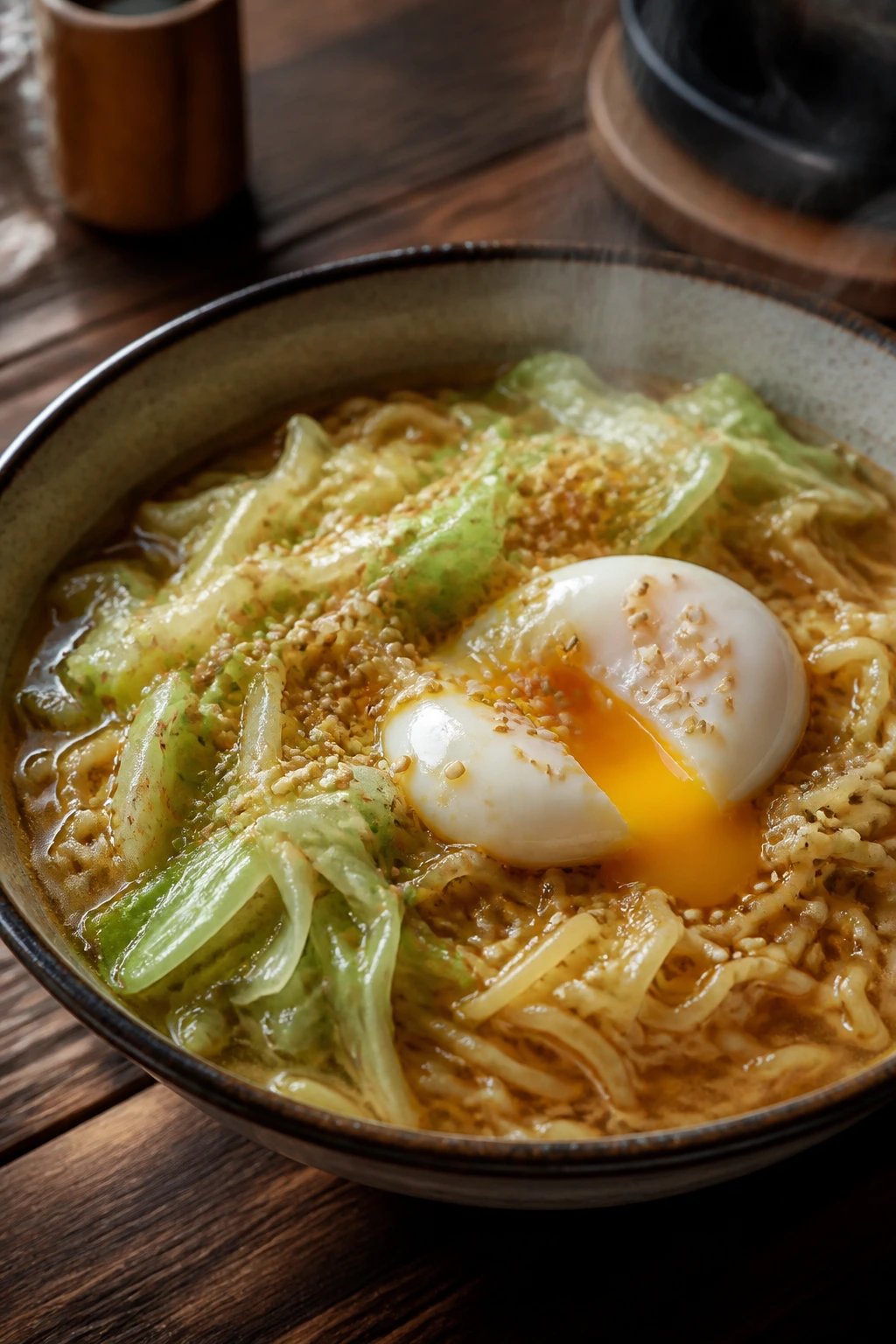
Instant ramen is a useful starting point, not a dead end. Once you add cabbage, a soft egg, scallions, and a little sesame oil, the bowl stops tasting like a dorm-room shortcut and starts tasting like a smart cheap dinner.
Cabbage is one of the great budget vegetables. It lasts, it stays crisp in the fridge, and it bulks up ramen in a way that feels sensible rather than stingy.
Why It Works
Ramen packets bring salt and flavor fast, but they need help if you want a proper meal. Cabbage gives crunch and volume, eggs add protein, and sesame oil brings a nutty finish that makes the broth feel more finished. The whole bowl is built from inexpensive pieces that play well together.
Key Ingredients
- 2 packs instant ramen noodles
- 2 eggs
- 2 cups shredded cabbage
- 1 carrot, julienned or grated
- 2 scallions, sliced
- 1 tablespoon soy sauce
- 1 teaspoon sesame oil
- 1 teaspoon rice vinegar or chili crisp, optional
- 1 tablespoon neutral oil
Quick Steps
- Soft-boil the eggs for 6 to 7 minutes, then move them to cold water and peel them.
- Cook the ramen noodles according to the package directions, using slightly less seasoning packet if you want to control the salt.
- Heat the oil in a skillet and stir-fry the cabbage and carrot for 2 to 3 minutes so they stay a little crisp.
- Add the cooked noodles, soy sauce, sesame oil, and a splash of the noodle broth.
- Divide into bowls, top with sliced eggs and scallions, and finish with rice vinegar or chili crisp if you like heat.
Tips and Variations
- A spoonful of peanut butter makes the broth richer and thicker.
- Frozen edamame works if you want more protein.
- If you like a softer cabbage texture, cook it a minute longer before adding the noodles.
15. Ground Beef and Cabbage Skillet
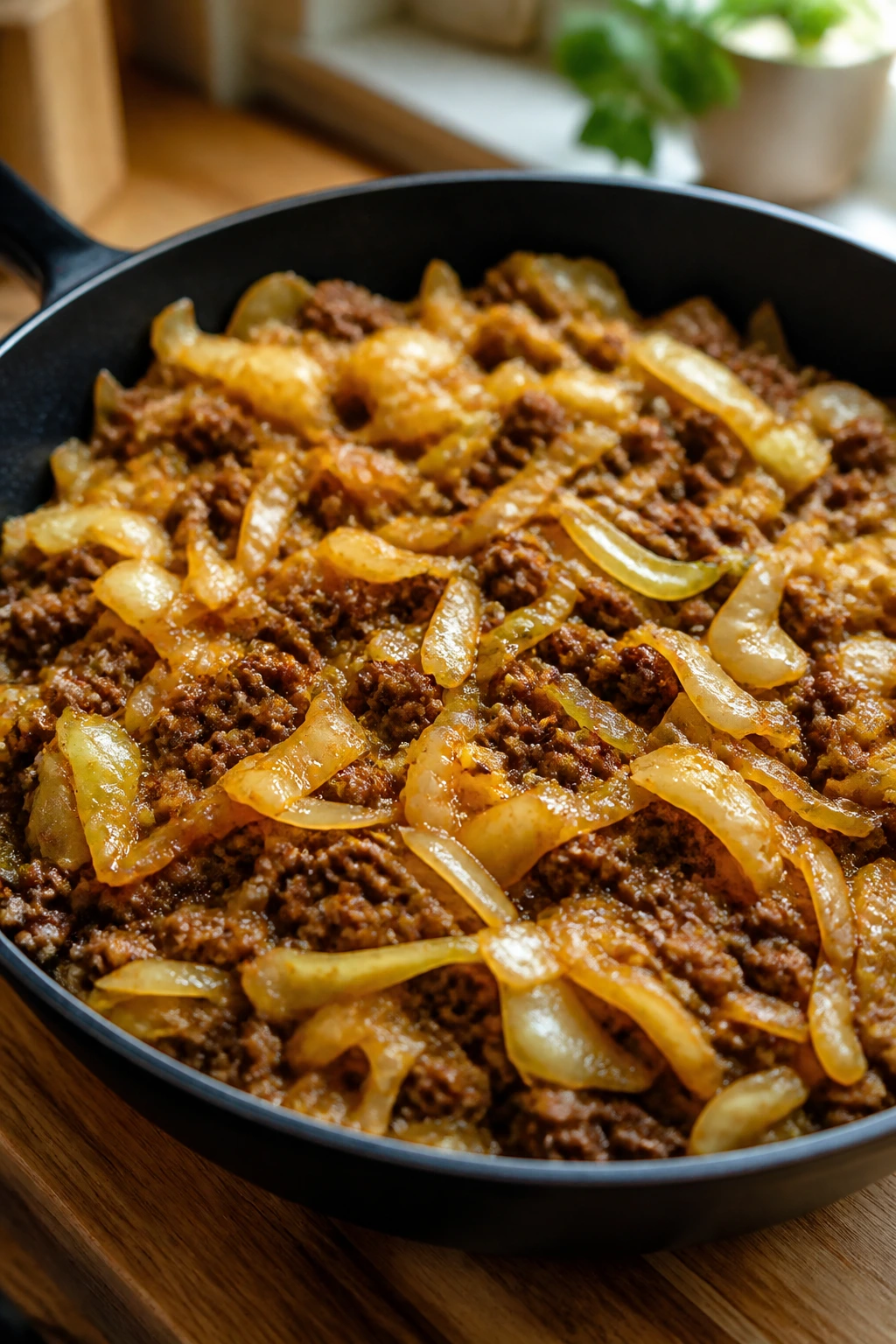
Ground beef and cabbage is old-school in the best way. It is cheap, sturdy, and much better than people expect when the seasoning is handled with a little care.
Cabbage stretches the beef without making the pan feel thin. A bit of tomato paste or soy sauce deepens the flavor, and if you spoon the mixture over rice, the whole thing suddenly feels like a proper dinner instead of a budget exercise.
Why It Works
Beef gives the skillet richness, cabbage adds volume, and both soak up seasoning well. Tomato paste or soy sauce gives the pan a darker, more savory edge, which matters because plain beef can taste flat if you rush it. This is one of those meals that feels humble right up until the first bite.
Key Ingredients
- 8 ounces ground beef
- 1/2 medium head green cabbage, shredded
- 1 small onion, sliced
- 2 cloves garlic, minced
- 1 tablespoon tomato paste or soy sauce
- 1/2 teaspoon paprika
- Salt and black pepper, to taste
- 1 tablespoon oil
- 1 cup cooked rice, for serving
- Chopped parsley or scallions, optional
Quick Steps
- Heat the oil in a large skillet over medium-high heat and brown the beef, breaking it up as it cooks.
- Add the onion and garlic and cook until the onion softens.
- Stir in the cabbage, tomato paste or soy sauce, paprika, salt, and pepper.
- Cook for 8 to 10 minutes, stirring often, until the cabbage softens and picks up some browned edges.
- Serve hot over rice and finish with parsley or scallions.
Tips and Variations
- A splash of vinegar at the end brightens the whole skillet.
- Caraway seeds give it a more cabbage-and-kraut flavor.
- If you want more heat, add chili flakes with the garlic.
16. Pesto Gnocchi with White Beans
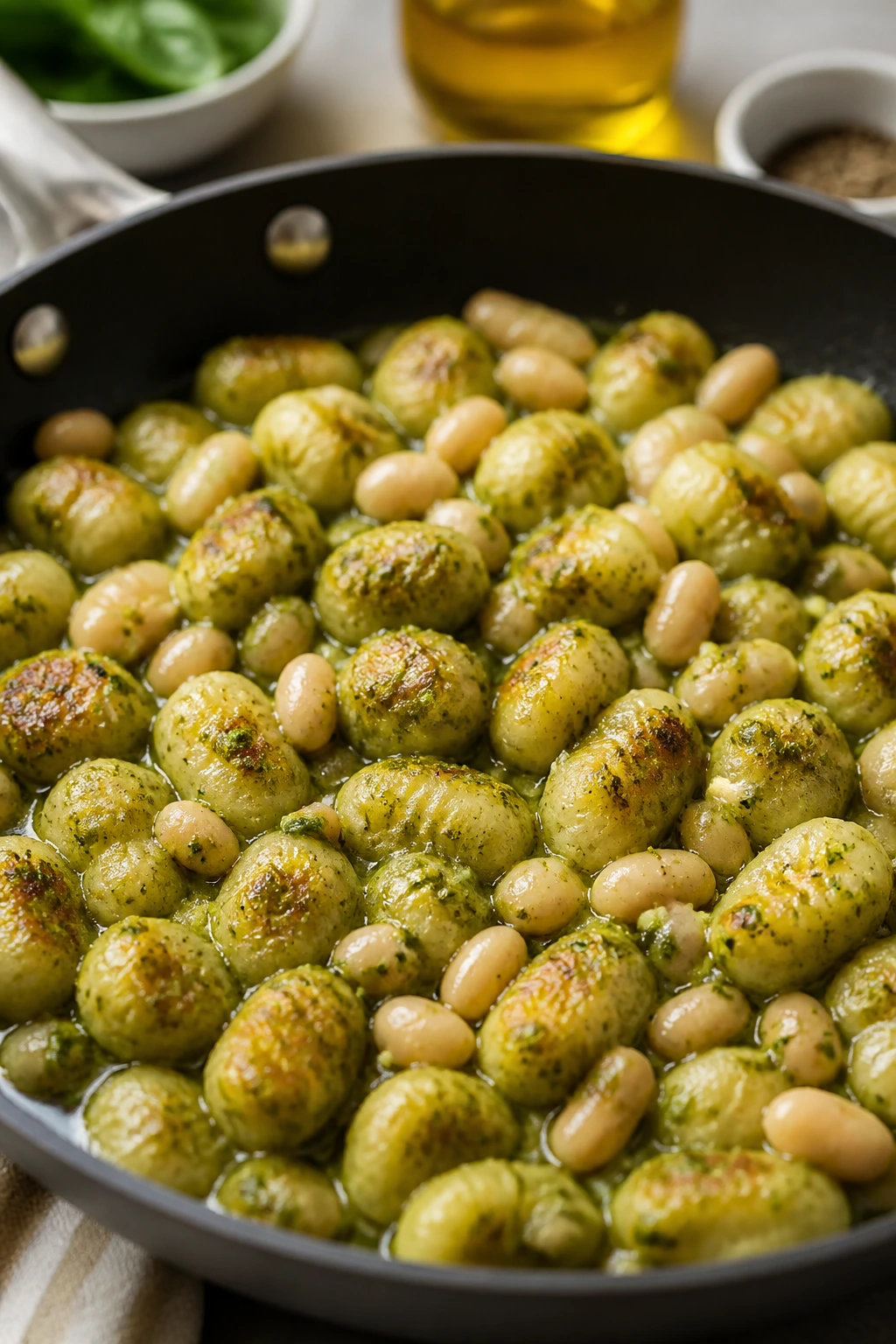
Gnocchi is a strange little budget luxury. It cooks fast, it feels soft and comforting, and it turns into dinner with almost no ceremony at all.
White beans stretch the plate and add substance, while pesto makes the whole thing taste more expensive than it is. A few tomatoes or a handful of spinach help if you want the pan to look and taste fuller.
Why It Works
Shelf-stable gnocchi browns quickly in a skillet, which gives you crisp edges instead of a mushy bowl. White beans add protein and a creamy bite, and pesto carries enough basil, garlic, and cheese to season the dish without extra sauce work. You get richness, but not heaviness.
Key Ingredients
- 12 ounces shelf-stable gnocchi
- 1 tablespoon olive oil
- 1 can white beans, drained and rinsed
- 1/3 cup pesto
- 2 cups baby spinach
- 1/2 cup cherry tomatoes, halved, optional
- 1/4 cup grated parmesan
- Salt and black pepper, to taste
- Lemon wedges, optional
Quick Steps
- Heat the olive oil in a skillet over medium heat and add the gnocchi in a single layer.
- Cook until the gnocchi are golden on the outside, turning them now and then, about 6 to 8 minutes.
- Add the beans, spinach, tomatoes if using, and a pinch of salt and pepper.
- Stir until the spinach wilts and the beans are hot.
- Remove from the heat and toss with pesto and parmesan, then serve with lemon if you want a brighter finish.
Tips and Variations
- Frozen peas can stand in for spinach if that is cheaper.
- A spoonful of pasta water helps the pesto coat the gnocchi.
- Sun-dried tomatoes make the dish taste richer without much extra cost.
17. Turkey Meatballs with Marinara and Polenta
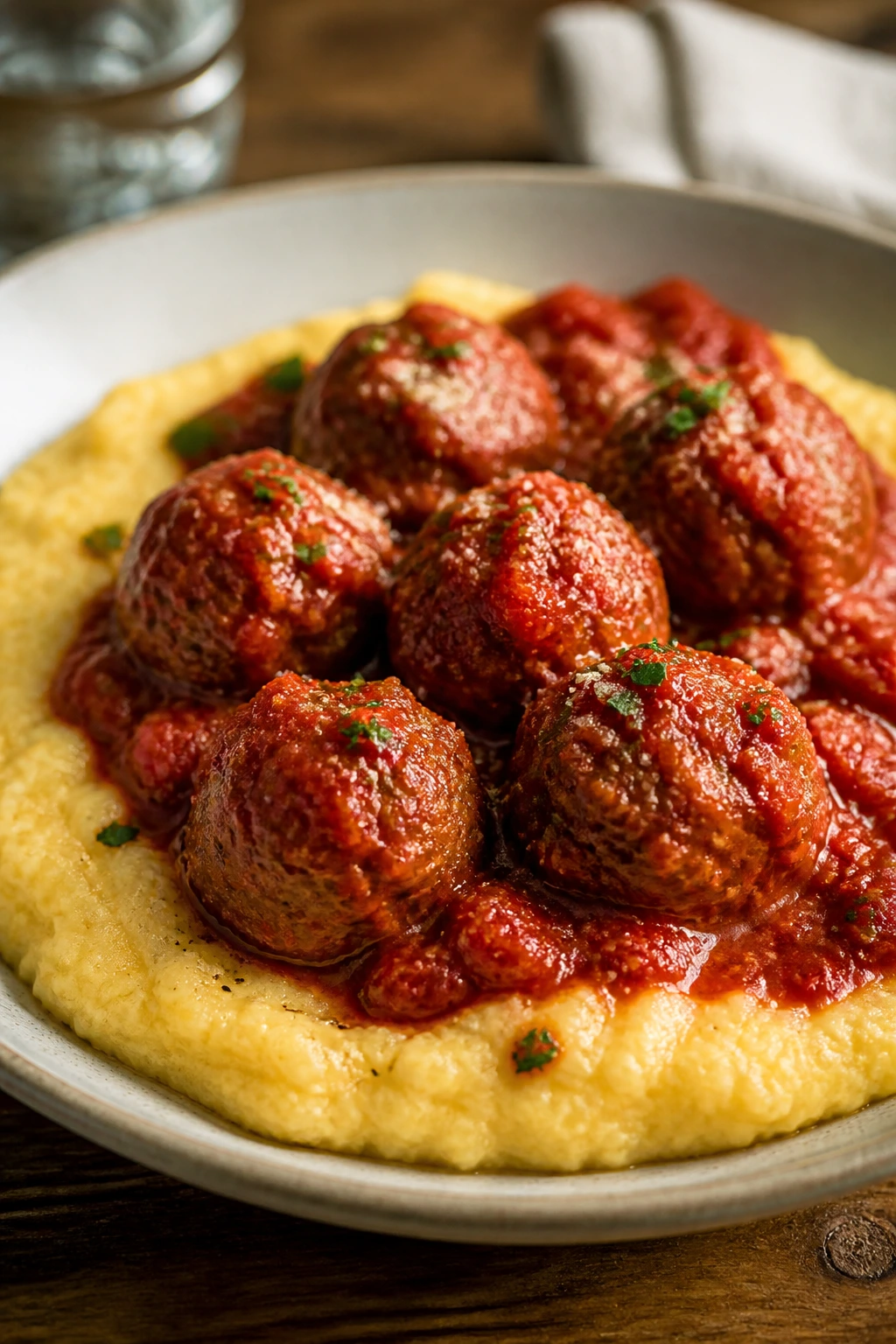
Meatballs sound fancier than they are, especially when they are made in a small batch for two. Ground turkey keeps the cost manageable, and polenta gives you a soft, spoonable base that feels different from the usual pasta routine.
This is one of those dinners that looks like you planned ahead. You did not have to. The sauce and the meatballs do most of the work for you.
Why It Works
Ground turkey is lean, so it benefits from breadcrumbs, egg, and a quick simmer in marinara. That keeps the meatballs tender instead of dry. Polenta is the cheap wildcard here: it cooks into a creamy base that soaks up sauce and makes the whole plate feel warm and complete.
Key Ingredients
- 12 ounces ground turkey
- 1 egg
- 1/4 cup breadcrumbs
- 2 tablespoons grated parmesan
- 1 clove garlic, minced
- 1 teaspoon Italian seasoning
- 1 1/2 cups marinara sauce
- 1/2 cup instant polenta
- 2 cups water or milk
- 1 tablespoon butter
- Salt and black pepper, to taste
Quick Steps
- Mix the turkey, egg, breadcrumbs, parmesan, garlic, Italian seasoning, salt, and pepper just until combined.
- Shape into 8 small meatballs and brown them in a skillet with a little oil.
- Add the marinara, cover, and simmer gently for 10 to 12 minutes until the meatballs are cooked through.
- Meanwhile, bring the water or milk to a boil, whisk in the polenta, and cook according to the package directions.
- Stir in butter and a pinch of salt, then serve the meatballs and sauce over the polenta.
Tips and Variations
- Beef or a mix of beef and turkey works if that is what is on sale.
- If the sauce gets too thick, loosen it with a splash of water.
- A little chopped basil on top makes the plate feel fresher.
18. Broccoli Cheddar Baked Potatoes with Scallions
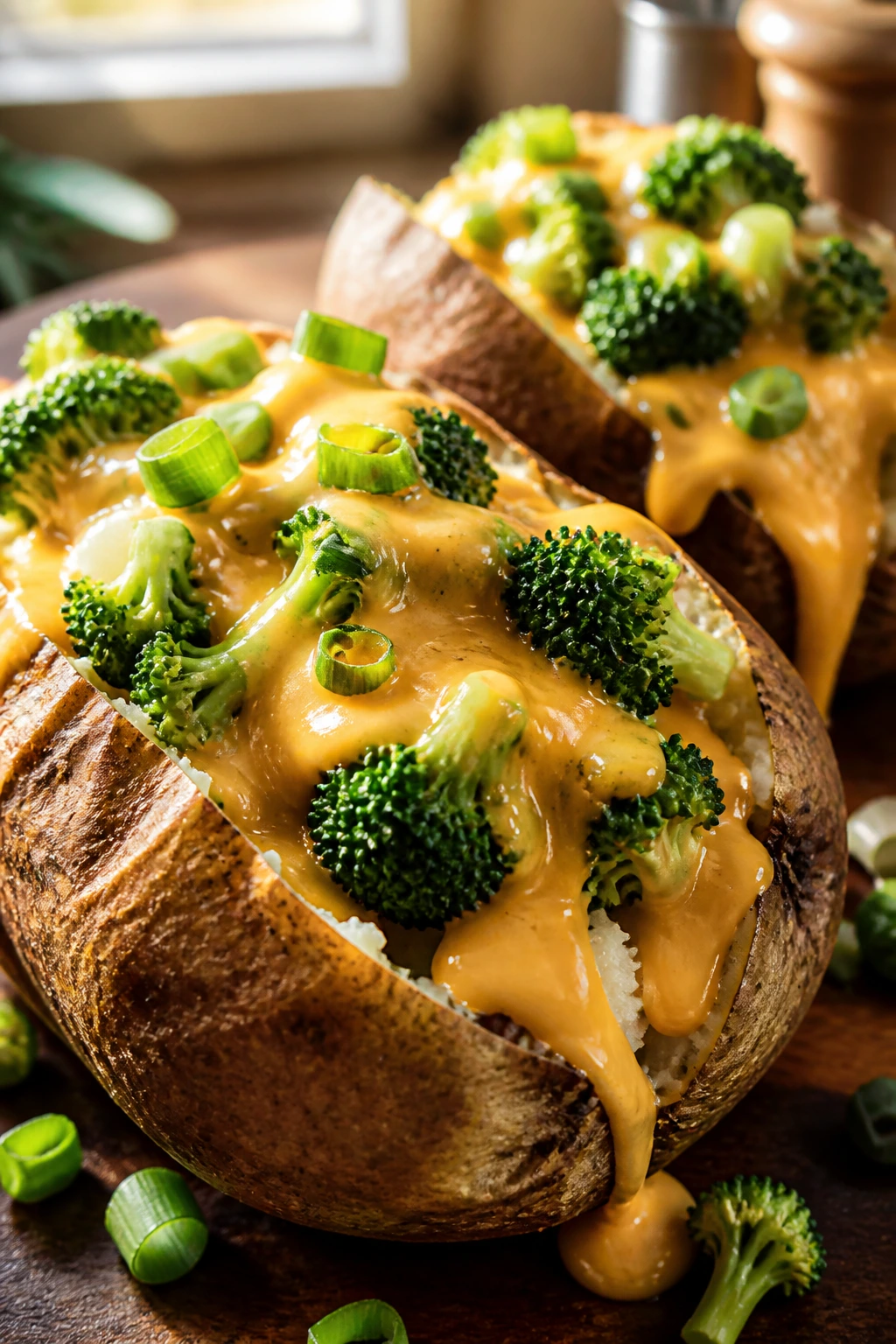
Baked potatoes are underrated in a budget kitchen. They are cheap, filling, and easy to make feel complete when you add a bright vegetable and a sauce that melts into the fluffy interior.
Broccoli and cheddar are a classic pair for a reason. The broccoli gives the plate something green, the cheese sauce makes the whole thing feel indulgent, and the potato holds everything together without asking for much.
Why It Works
A baked potato is a very good blank canvas. Once you split it open and fork up the inside, it catches butter, cheese sauce, and broccoli in a way that feels more layered than the ingredient list suggests. It is a simple dinner, but not a boring one.
Key Ingredients
- 2 large russet potatoes
- 2 cups broccoli florets, chopped small
- 1 tablespoon butter
- 1 tablespoon all-purpose flour
- 1 cup milk
- 1 cup shredded cheddar
- Salt and black pepper, to taste
- 2 tablespoons sliced scallions
- Optional: crumbled bacon or hot sauce
Quick Steps
- Bake the potatoes at 425°F for 45 to 55 minutes, or microwave them until tender if you are short on time.
- Steam or blanch the broccoli until just tender and bright green.
- Melt the butter in a small saucepan, whisk in the flour, then add the milk and cook until the sauce thickens.
- Stir in the cheddar until smooth, then season with salt and pepper.
- Split the potatoes, fluff the insides, top with broccoli and cheese sauce, and finish with scallions.
Tips and Variations
- Add a little Dijon to the cheese sauce if you want it sharper.
- Sour cream on the side makes the potato richer.
- If you bake the potatoes ahead, reheat them in a 375°F oven so the skins stay decent.
Why Small-Batch Cooking Helps a Grocery Budget
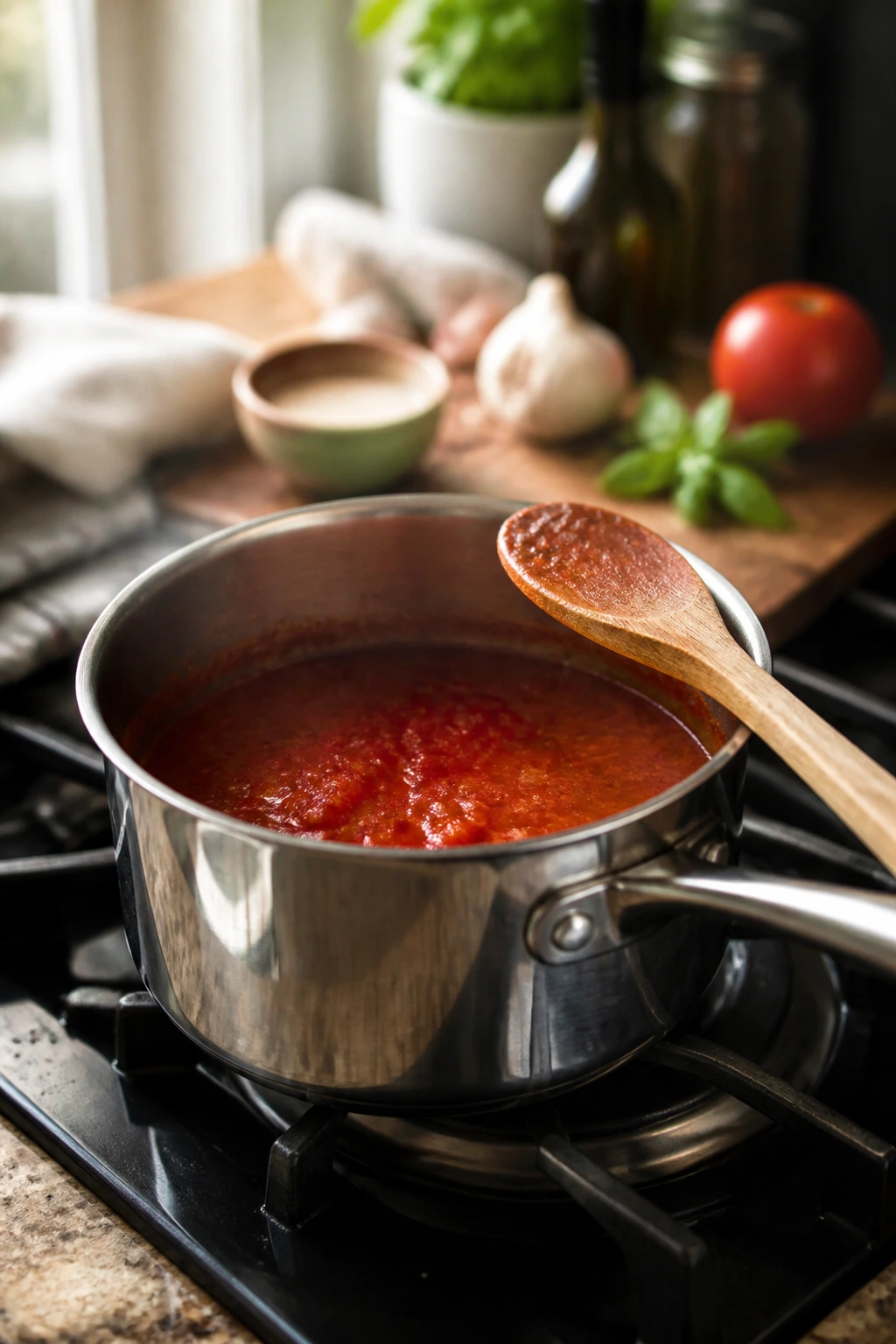
Cooking for two changes the math in a good way. You can buy one onion and know it will get used. One bag of potatoes can cover several dinners. A small block of cheese goes farther when it is not being asked to feed a crowd, and that matters because waste is where a lot of grocery money quietly disappears.
Small-batch dinners also cook faster, which is worth money even if nobody puts it on the receipt. A smaller pan browns better, a shorter simmer uses less fuel, and a dish built for two rarely needs the kind of expensive “fixing” that large batch cooking sometimes demands after the fact. A sauce does not have to feed six people, so it can stay focused.
There is another benefit that does not get enough credit: you get better timing. Two portions are easier to keep hot, crisp, and fresh. That is one reason the food here tastes more generous than cheap food has any right to. Less scale, less waste, better texture.
Essential Equipment for These Recipes
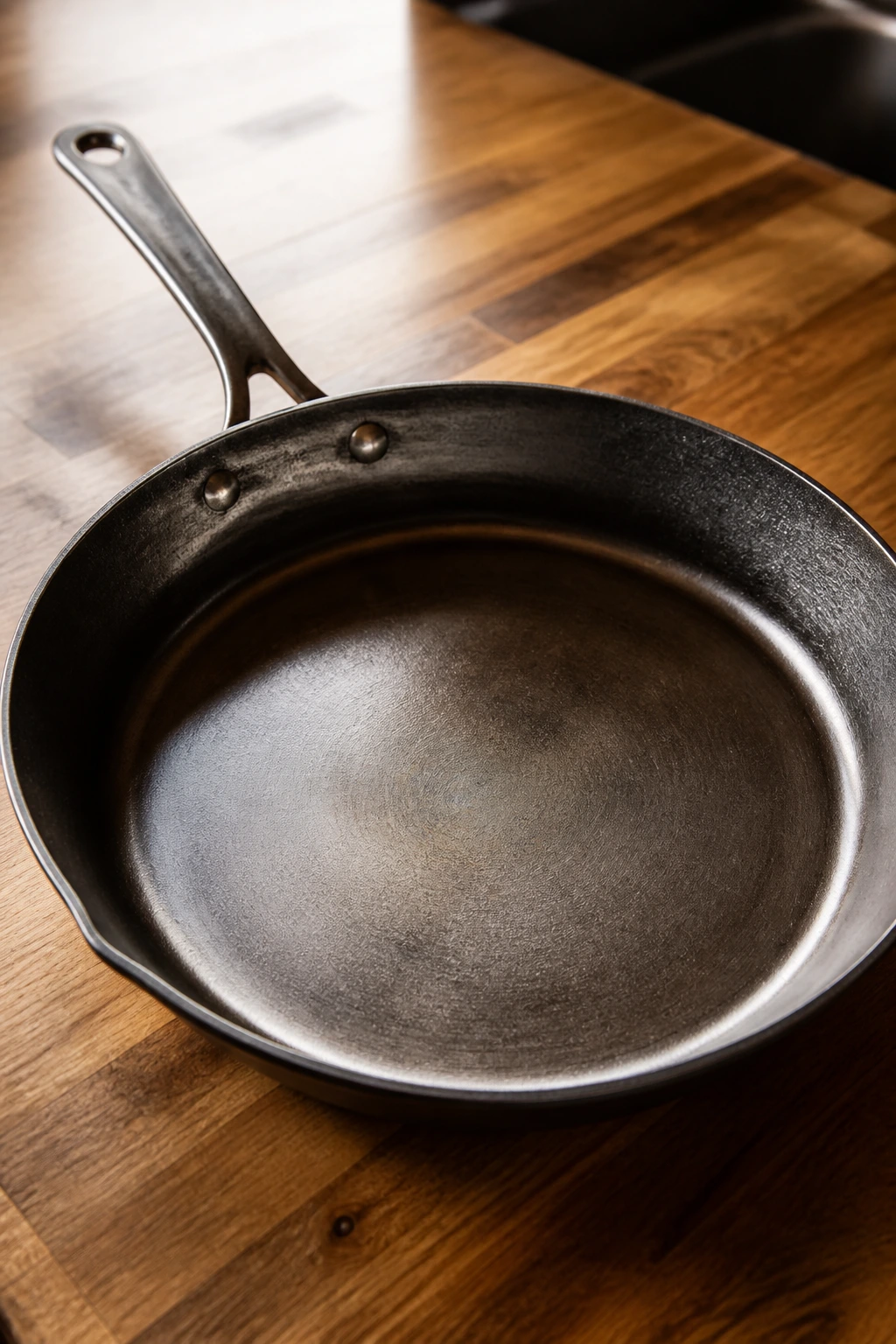
- 12-inch skillet: Big enough for fried rice, skillet dinners, and sauces without crowding the pan.
- Medium saucepan: Useful for pasta, rice, polenta, and quick soups.
- Sheet pan: Needed for the sausage-and-potato dinner and any roasting job that wants space.
- Small baking dish: A 1.5- to 2-quart dish works for baked ziti and baked potato reheats.
- Large pot: For spaghetti, lentils, and anything that needs serious boiling water.
- Colander: Pasta and rice rinsing are easier when draining is not a balancing act.
- Sharp chef’s knife: Chopping onions, cabbage, peppers, and potatoes gets much easier with a decent edge.
- Cutting board: A sturdy board helps when you are slicing a lot of cheap vegetables fast.
- Wooden spoon or spatula: Good for scraping browned bits and keeping skillet dinners moving.
- Measuring cups and spoons: Budget cooking still needs accuracy, especially for starches and sauces.
- Box grater: Handy for cheddar, parmesan, and the occasional potato or cabbage shred.
- Tight-sealing containers: Important if you want leftovers to keep their shape and not taste like the fridge.
Smart Shopping and Ingredient Tips
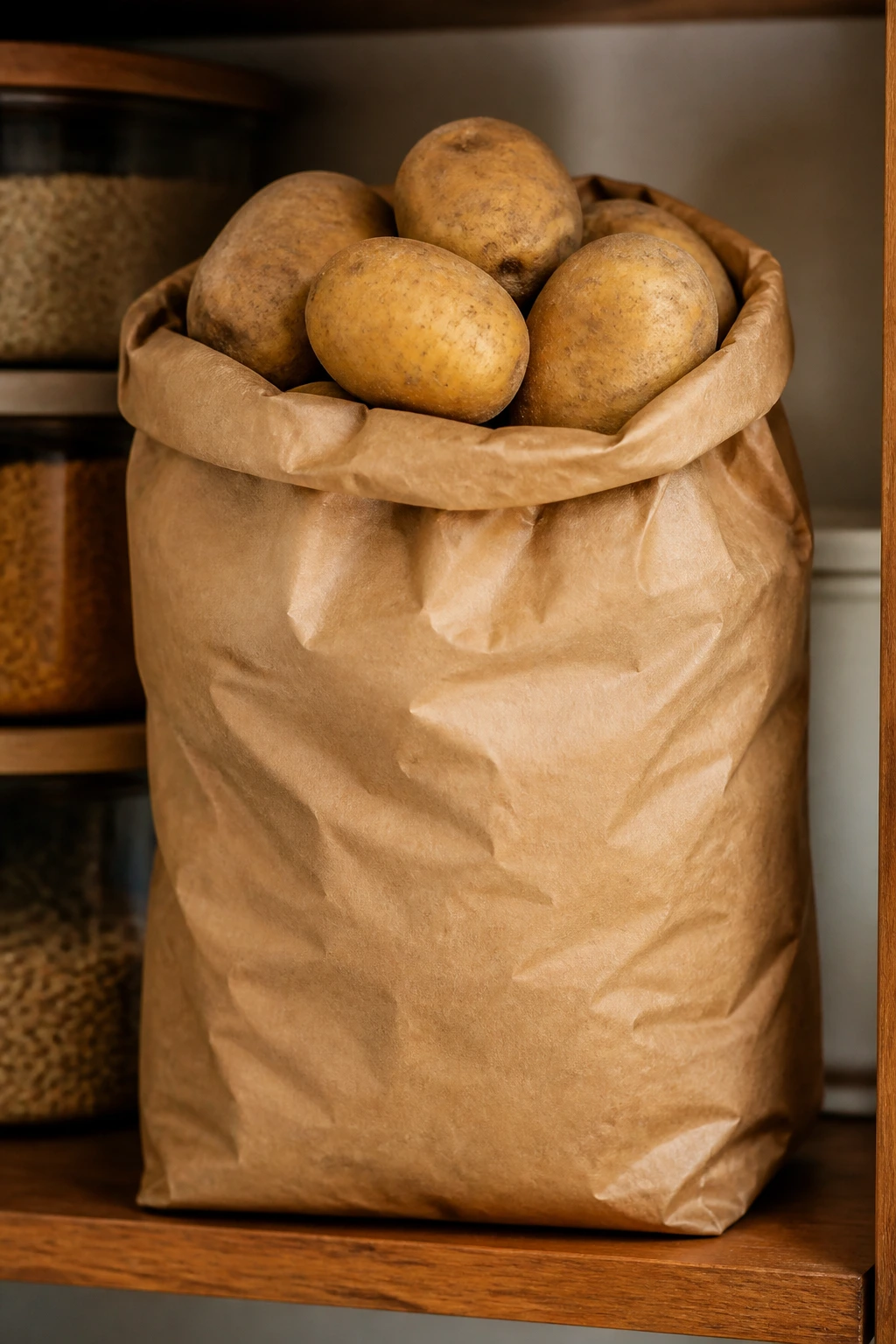
The easiest way to keep dinner cheap is to stop buying ingredients that only do one job. Onion, garlic, rice, pasta, potatoes, cabbage, eggs, canned beans, canned tomatoes, broth, and shredded cheese show up all over this collection for a reason. They are flexible. They can become a few different dinners without making the cart feel bloated.
Store-brand pantry staples are usually the right call here. Pasta, canned tomatoes, coconut milk, beans, and broth do not need fancy labels to work in a skillet or pot. I would rather buy a solid store-brand can of tomatoes and a little extra cheese than spend money on a premium jarred sauce and then have to stretch it with water.
Frozen vegetables deserve more respect, especially peas, corn, spinach, and mixed carrots. They are often cheaper than fresh, and they do not rot before you use them. That matters a lot when you are cooking for two and do not want half a bag going slimy in the crisper.
When meat is part of the meal, choose cuts that hold up well and do not need much babysitting. Chicken thighs, smoked sausage, ground turkey, and ground beef all fit that bill. They give you flavor faster than leaner, pricier cuts, which is why they show up so often in budget dinner ideas for two.
How to Serve These Recipes
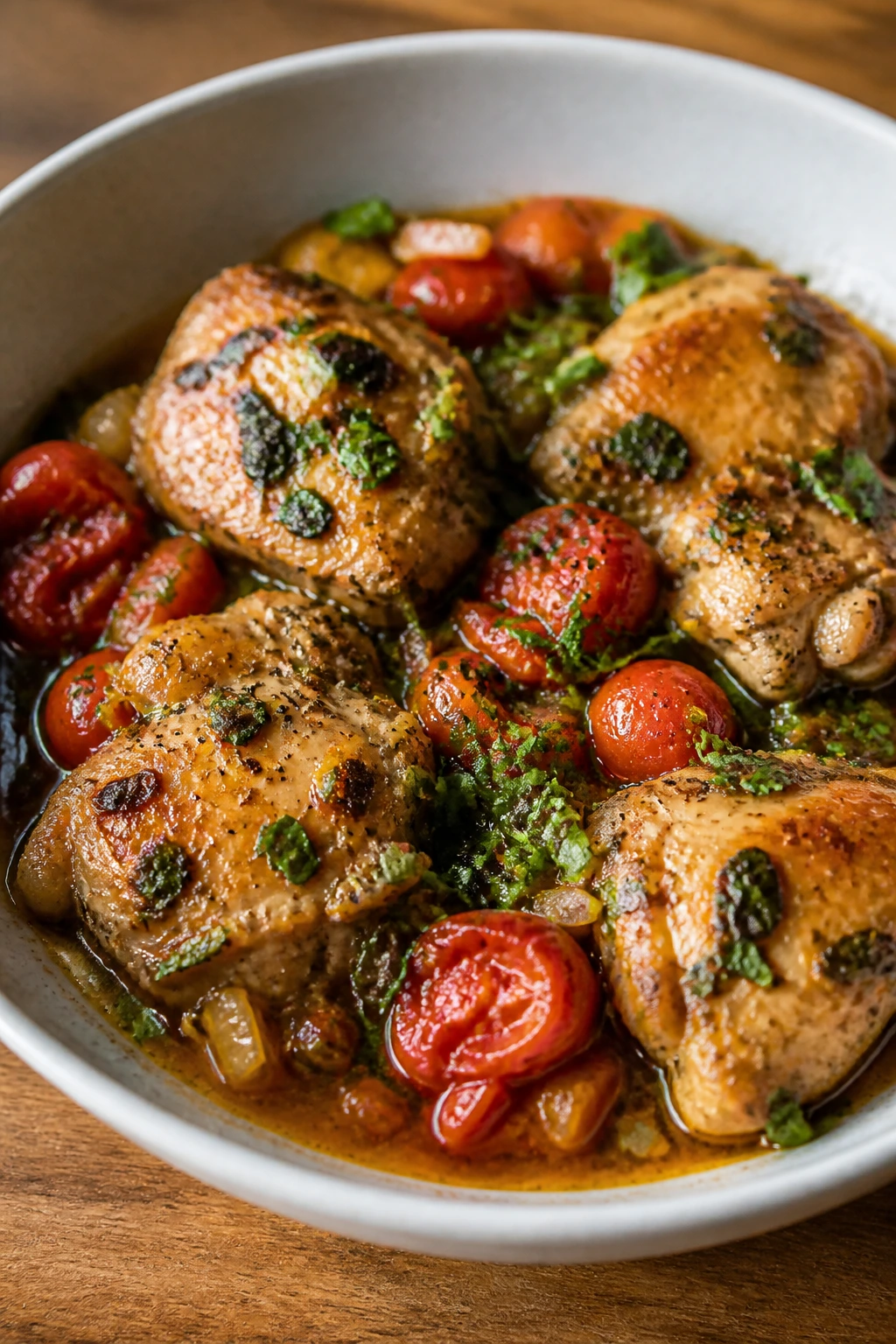
Presentation: Use shallow bowls for saucy meals and warm plates for crisp skillet dinners. A little chopped parsley, scallion, or lemon zest goes farther than people think, and a final sprinkle of cheese or a ribbon of olive oil helps cheap food look intentional.
Accompaniments: Keep the sides simple. Garlic toast, a green salad, steamed broccoli, cucumber slices, or a piece of fruit are enough to round out most of these dinners without sending the bill skyward. Bread is useful here because it catches sauce and fills the table without adding much cost.
Portions: Most of these recipes are built for two normal servings, which means a hungry pair can eat well without leftovers being forced on you. If one person eats more, add a cheap starch like rice, potatoes, or bread rather than doubling the protein every time.
Beverage Pairing: Sparkling water with lemon works with almost everything here. I also like iced tea, a light lager with the sausage pan, or plain water with lime for the spicier dishes. Nothing fancy required. The food is already doing enough.
Additional Tips and Flavor Boosters
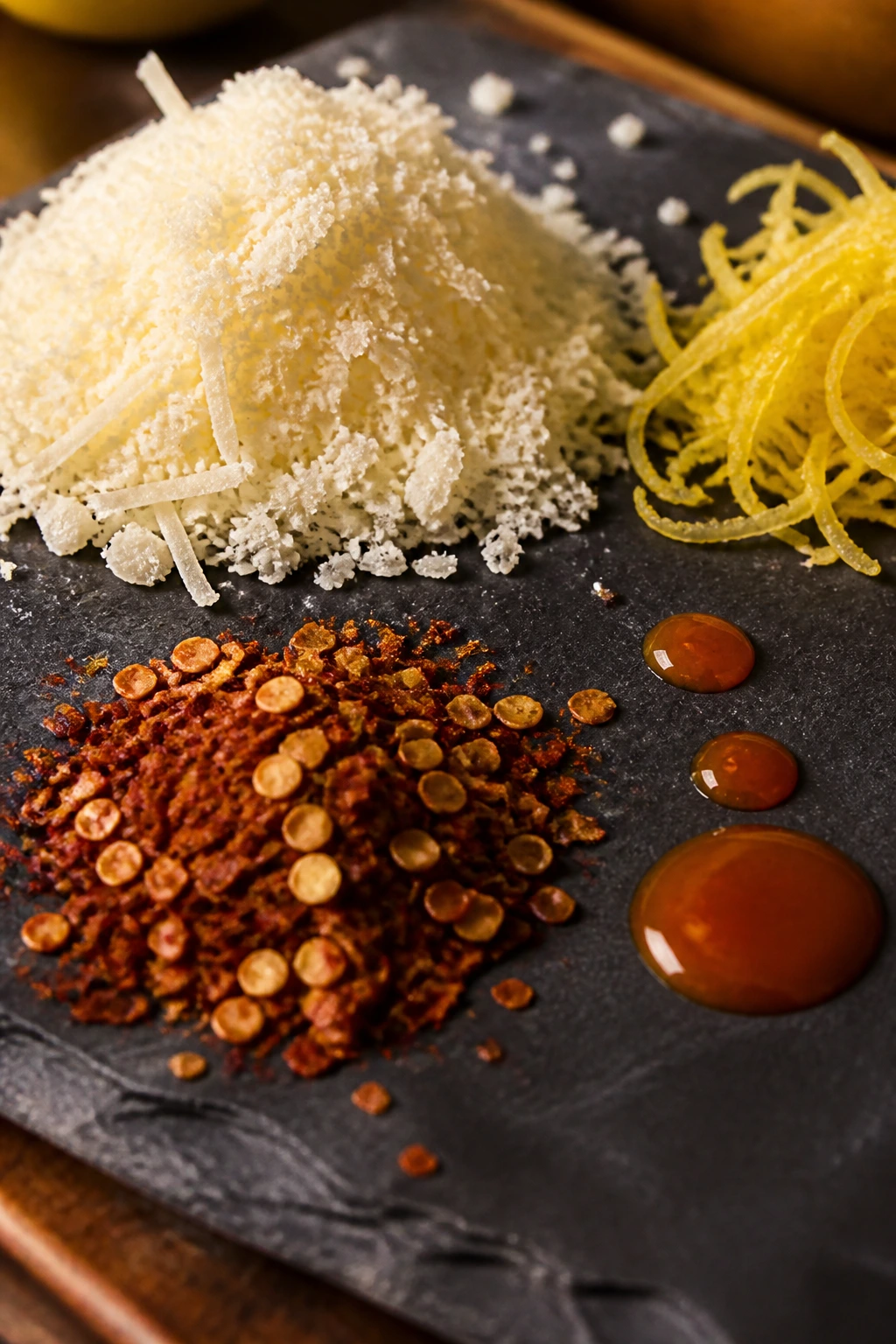
Flavor Enhancement: Keep a few finishers on hand: grated parmesan, lemon, chili flakes, hot sauce, and a decent vinegar. One squeeze or one spoonful at the end can wake up a whole pan that tasted a little flat a minute before.
Customization: Most of these recipes can take a vegetable add-in without breaking. Spinach, cabbage, peas, corn, mushrooms, and carrots are all cheap ways to make a meal feel fuller. If you have a single lonely zucchini or half a bell pepper, use it.
Serving Suggestions: A spoonful of yogurt on curry, a fried egg on pasta, a little feta on shakshuka, or scallions on potatoes all change the mood of the dish. Garnishes are not decoration here; they are the last layer of flavor.
Make-It-Yours: For dairy-free meals, swap in olive oil, coconut milk, or nutritional yeast where it makes sense. For a meatless plate, beans, eggs, and lentils usually step in without a fight. For extra heat, chili crisp or red pepper flakes usually solve the problem faster than a whole new recipe.
Make-Ahead, Storage, and Reheating Guidance
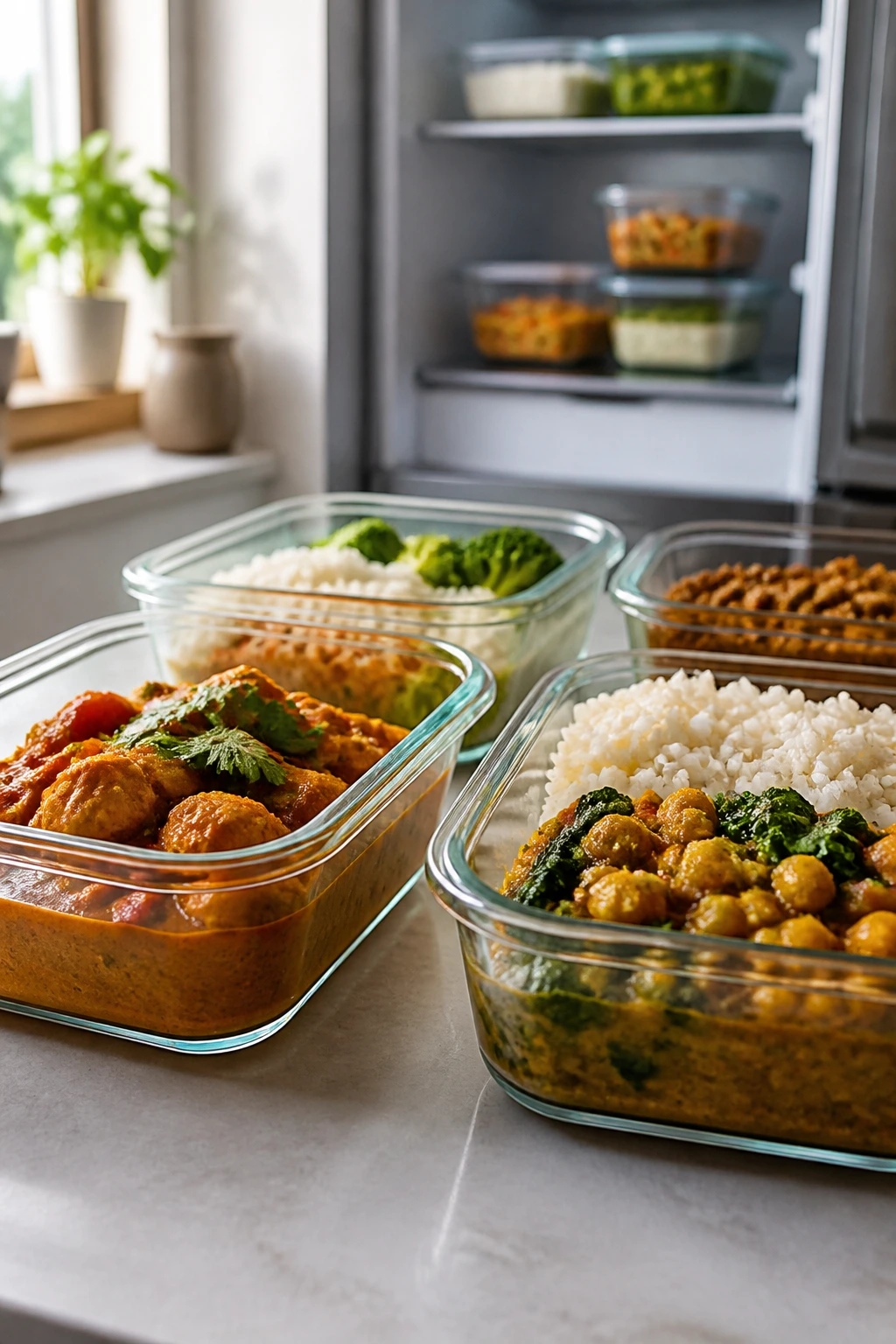
Most of these dinners keep well in the fridge for 3 to 4 days, though egg-heavy dishes like shakshuka and fried rice are best eaten within 2 days. Soups, lentil dishes, curries, baked ziti, meatballs, and the sausage pan are the most freezer-friendly. They can usually be frozen for up to 2 months in airtight containers, though pasta textures soften a little after thawing.
Reheat saucy dishes on the stovetop over low heat with a splash of water, broth, or milk. That keeps the sauce loose and stops cheese from turning grainy. Pasta bakes do well in a 350°F oven covered with foil until hot in the center; uncover for the last few minutes if you want the top to crisp again.
Fried rice, skillet hash, and cabbage-based dishes are better reheated in a skillet than in the microwave. A little oil in the pan helps bring the texture back. Eggs are the exception. Soft eggs should usually be cooked fresh, because reheating them can turn the yolk rubbery.
If you want to make ahead, prep the vegetables, grate the cheese, mix the seasonings, and portion the proteins first. That small amount of work saves more time than most elaborate meal prep schemes, and it does not leave you with a fridge full of containers you forgot to label.
Variations and Adaptations to Try
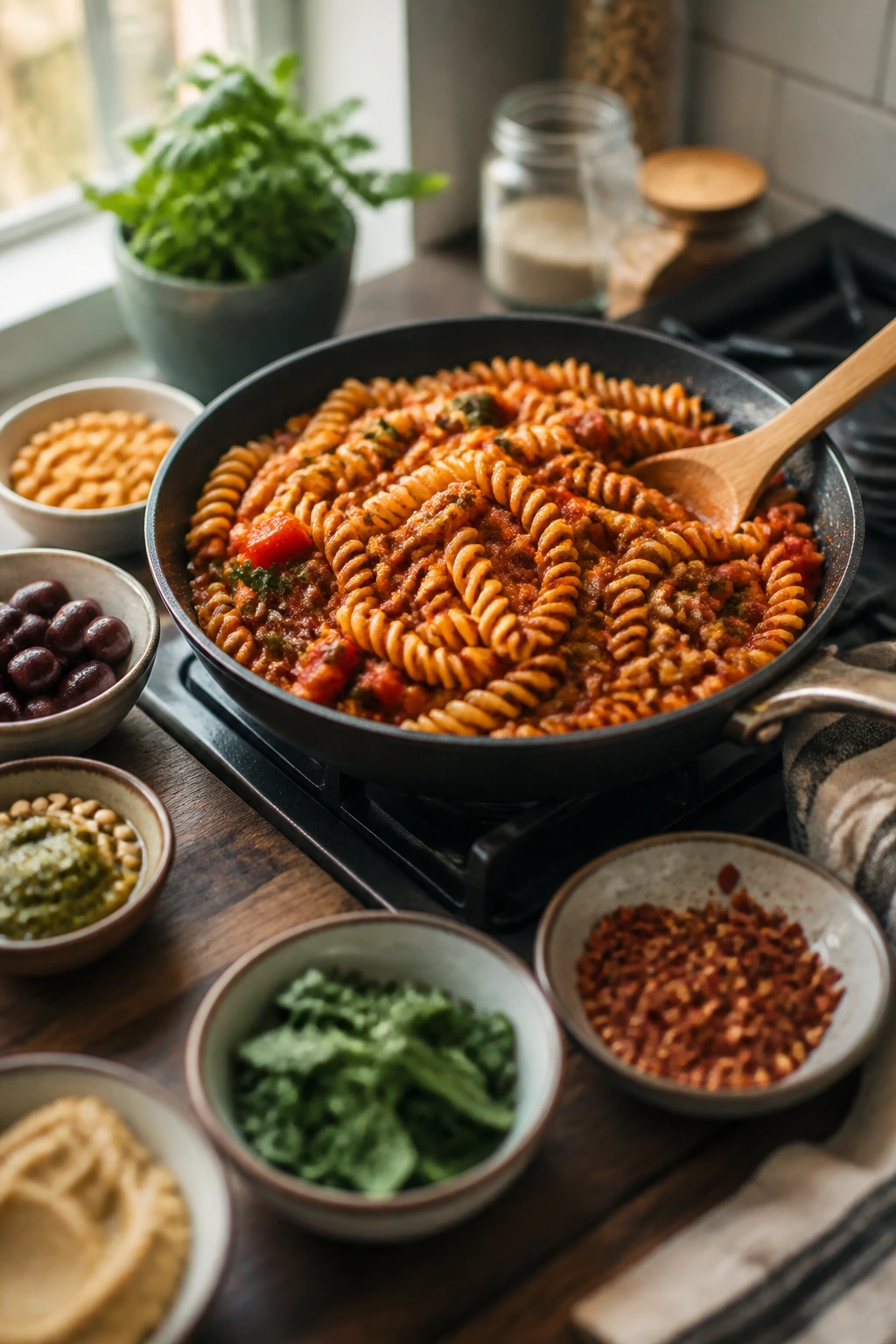
Pantry-Only Night: Build dinner from canned beans, pasta, rice, tomatoes, tuna, and frozen vegetables. This version is less about a specific recipe and more about using what you already own before buying anything new.
Dairy-Free Plate: Skip cream, butter, and cheese where possible, then lean on olive oil, coconut milk, tahini, and extra herbs. The chickpea curry, lentil soup, and ramen bowl adapt especially well.
Meatless Protein Boost: Add eggs, white beans, chickpeas, or lentils to dishes that feel too light. This works best in the fried rice, the tomato tortellini, the quesadilla supper, and the baked potato dinner.
Low-Sodium Swap: Use unsalted broth, rinse canned beans, and season with citrus, vinegar, garlic, and herbs instead of relying on salt alone. Sausage, ramen, and packaged sauces are the main places to watch.
Spice-Friendly Version: Add chili flakes, cayenne, hot sauce, harissa, or chili crisp to the table instead of burying heat in the whole pan. That keeps the second serving flexible for anyone who prefers less fire.
Gluten-Free Road: Use rice, potatoes, polenta, corn tortillas, and gluten-free pasta or gnocchi where needed. The taco skillet, curry, shakshuka, lentil soup, and broccoli cheddar potatoes are the easiest places to start.
Common Mistakes to Avoid
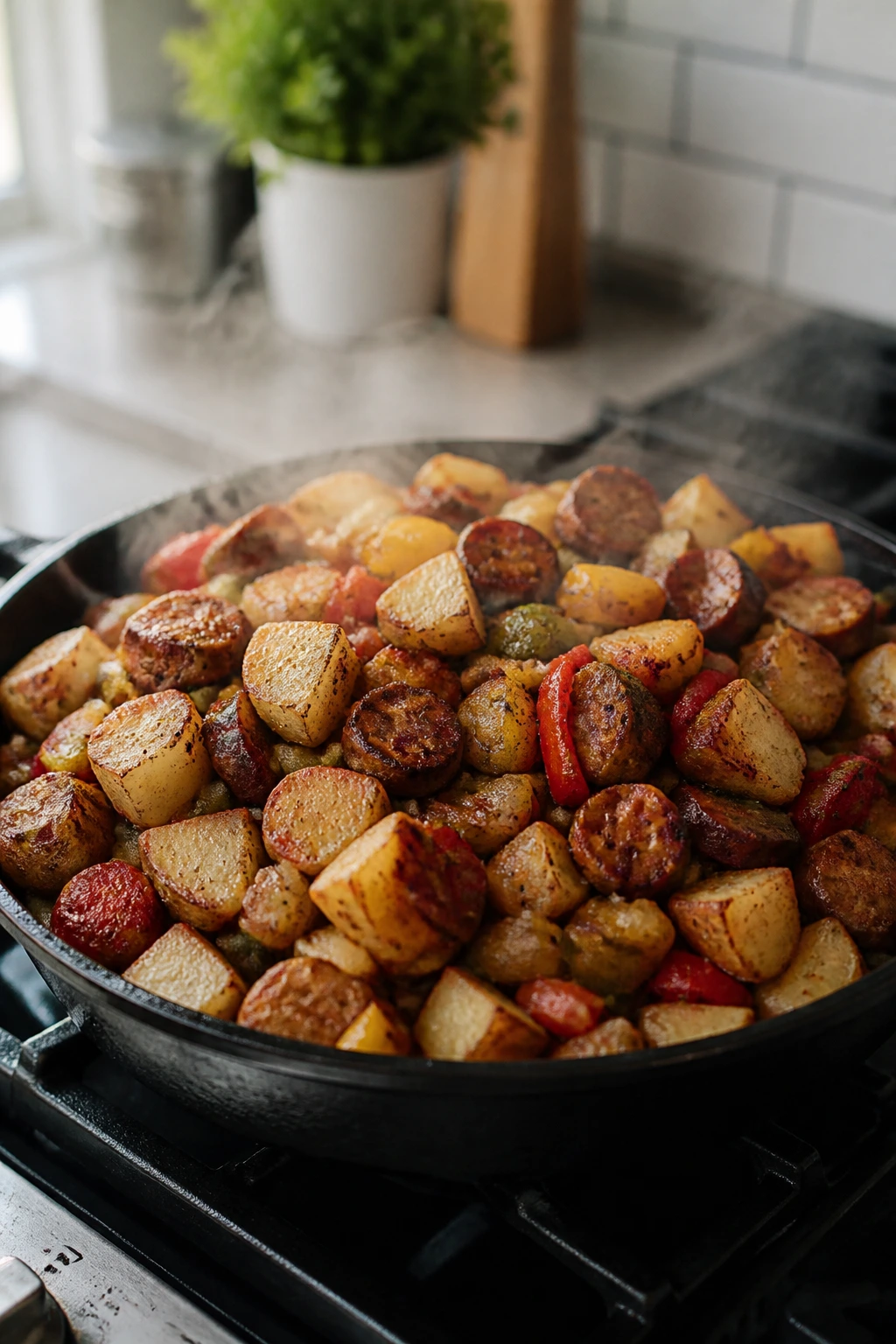
Buying too many one-use ingredients: A recipe looks cheap until you need a special jar of sauce, a niche cheese, and a spice you will never touch again. The fix is to choose dinners that share onions, garlic, rice, pasta, beans, and cheese across the week.
Crowding the pan: Potatoes won’t crisp, sausage won’t brown, and vegetables will steam if the pan is packed. Give the food room, or use a bigger skillet or sheet pan than you think you need.
Underseasoning the cheap stuff: Beans, rice, potatoes, lentils, and cabbage all need salt, acid, and a little fat to taste like dinner. If a dish seems dull, it usually needs one of those three before it needs anything else.
Cooking pasta or rice to death: Budget meals fall apart fast when starches turn mushy. Drain pasta a minute early, use cold rice for fried rice, and stop simmering lentils when they are tender, not collapsing.
Forgetting the finish: A squeeze of lemon, a spoonful of yogurt, fresh herbs, or a bit of hot sauce often turns a flat dinner into a good one. Skipping the final touch saves nothing if the bowl ends up tasting one-note.
Treating leftovers like an afterthought: If you know a dish will become tomorrow’s lunch, keep the sauce a little looser and the noodles a little firmer. Small adjustments make reheating much kinder.
Frequently Asked Questions

What is the cheapest dinner idea in this collection?
The lentil soup, black bean taco skillet, and garlic butter spaghetti are usually the lowest-cost options because they lean heavily on pantry staples. If your grocery budget is tight, those three are the first ones I would make.
Can I use frozen vegetables instead of fresh?
Yes, and in several of these recipes frozen vegetables are the better buy. Frozen peas, spinach, corn, carrots, and mixed vegetables hold up well, cost less, and cut down on waste.
How do I scale these meals for four people?
Most of them scale cleanly by doubling, but watch the pan size and cook times. For anything that browns well, like sausage, potatoes, or fried rice, use a larger pan or two pans so the food does not steam.
Which recipes freeze the best?
Lentil soup, chickpea curry, baked ziti, turkey meatballs, and the sausage pan all freeze well. Dishes with eggs, crisp potatoes, or soft pasta textures are usually better fresh.
How do I make these meals more filling without spending much more?
Add rice, potatoes, bread, beans, or eggs before you add more meat. Those ingredients stretch a plate cheaply and usually help the meal feel more balanced, too.
Can I swap in store-brand ingredients?
Absolutely. Store-brand pasta, beans, tomatoes, broth, cheese, and frozen vegetables are usually fine for these dinners. Save the splurge for a finishing cheese or a good olive oil if you want one nicer ingredient on the table.
What if I only have one skillet and no baking dish?
You can still make most of these. The sheet-pan meal needs a sheet pan, but the rest can be adapted to a skillet, pot, or saucepan with only minor timing changes.
How do I stop cheap meals from tasting bland?
Salt early, then finish with acid and something fresh. Lemon, vinegar, herbs, scallions, mustard, chili flakes, and parmesan are the small extras that keep budget food from tasting like a shortcut.
The Kind of Dinner Plan That Keeps Working
The best part of cooking this way is not that it saves money once. It is that it keeps saving money every week without making dinner feel smaller than it should. Two-person meals reward restraint. They reward good pantry habits. They reward the kind of shopping list that knows when to stop.
Pick a few of these and keep the ingredients in rotation. Once you know which cheap dinners you actually enjoy, the whole week gets calmer. And calmer, in the kitchen, is worth a lot.