



Easter desserts have a bad habit of looking lovely on the table and drying out by the second day. One slice is plush. The next slice is a little sad, especially if the cake was baked lean, left uncovered, or built on a crumb that never had enough fat to begin with.
That’s why the best Easter cake recipes are the ones that keep their texture after the first round of coffee, after the second round of leftovers, and after somebody leaves the lid off the cake carrier for half an afternoon. Oil, sour cream, ricotta, yogurt, fruit purée, syrup, and a few smart glazes do the heavy lifting. Not magic. Just good baking sense.
These are the cakes I reach for when I want something spring-bright, easy to serve, and still soft on day three. Some are traditional, some lean brunchy, some feel a little festive in a candy-coated, pastel-sprinkled way. All of them know how to stay tender when the holiday table gets busy.
Why These Easter Cakes Stay Soft
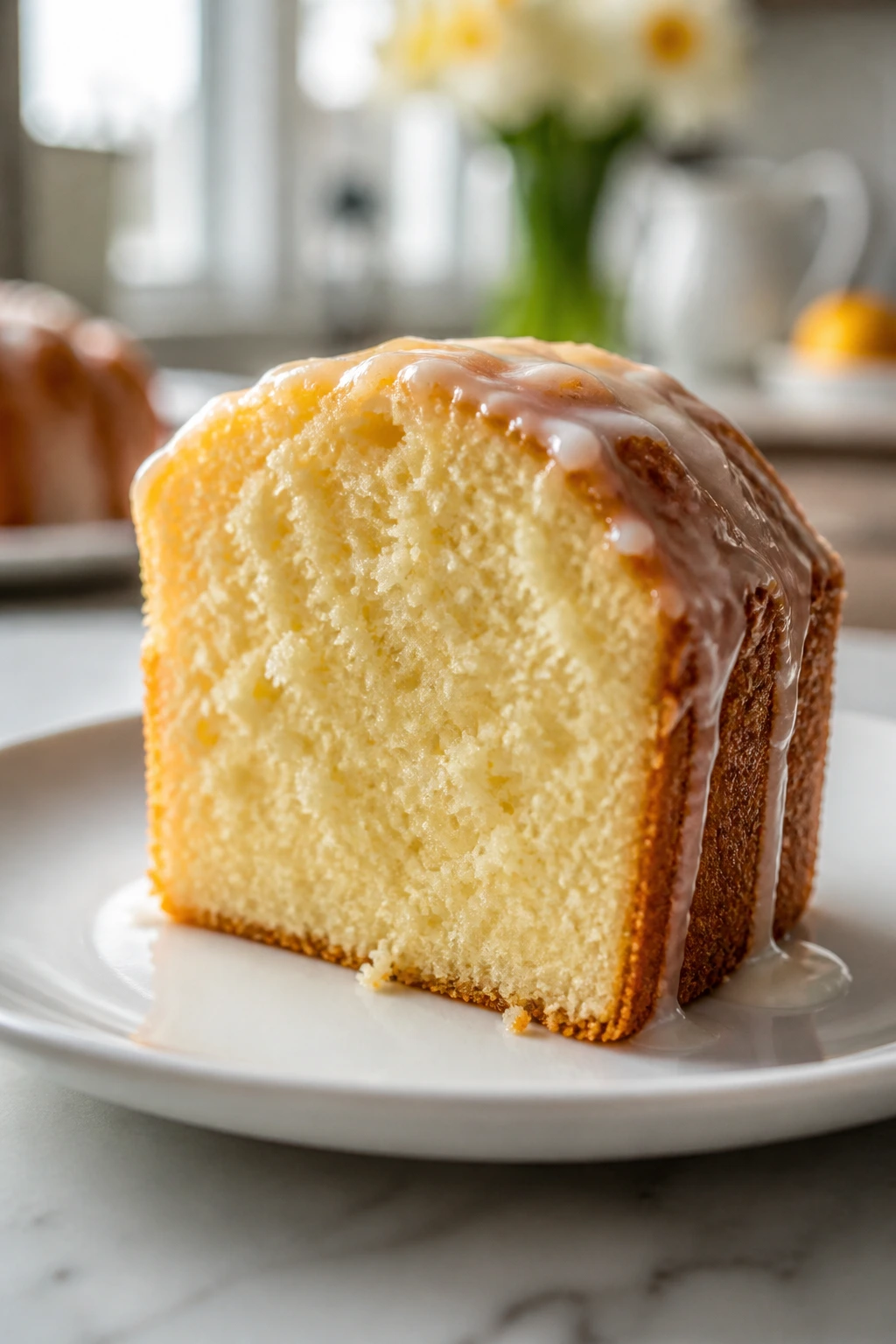
- High-moisture batters: Cakes made with sour cream, yogurt, ricotta, or buttermilk hold onto water better than lean butter cakes, so the crumb stays plush instead of turning chalky.
- Oil and fruit do real work: Oil stays liquid at room temperature, and fruit like banana, pineapple, citrus, or berries keeps the crumb from drying out while adding flavor that still tastes good on day two.
- Glazes matter more than people think: A thin lemon glaze or honey syrup seals the top just enough to slow drying without making the cake sticky.
- Bundts and loaf cakes age well: Their tighter shape gives you a little more structure, which helps them stay neat and moist longer than an airy layer cake that sits exposed.
- These cakes are built for Easter timing: Most of them can be baked a day ahead, frosted or glazed later, and still slice cleanly when the dessert plates come out.
- The flavors fit the season without being fragile: Citrus, coconut, carrot, almond, honey, and berry cakes all taste brighter after resting, not flatter.
1. Lemon Ricotta Olive Oil Cake with Blueberry Glaze
A slice of this cake should feel soft enough that the fork gives with almost no resistance. The crumb is pale, fine, and faintly creamy from the ricotta, while the lemon keeps it from drifting into bland breakfast-cake territory. I like this one for Easter because it can sit on the counter a day and still taste like someone cared.
Why It Works: Ricotta brings moisture without making the cake heavy, and olive oil keeps the crumb supple even after the cake cools. Lemon zest in the batter plus lemon juice in the glaze gives you brightness in two places, which matters when a cake has enough dairy richness to risk tasting flat. Bake it at 350°F and stop when the center just springs back; overbaking this cake steals the whole point.
Key Ingredients:
- 2 cups all-purpose flour
- 2 teaspoons baking powder
- 1/2 teaspoon fine salt
- 3/4 cup granulated sugar
- Zest of 2 lemons
- 3 large eggs
- 1 cup whole-milk ricotta
- 1/3 cup olive oil
- 1/4 cup milk
- 3 tablespoons lemon juice
- 1 teaspoon vanilla extract
- 1 cup blueberries for the glaze or topping
Quick Steps:
- Preheat the oven to 350°F and grease a 9-inch round cake pan; line the bottom with parchment.
- Whisk flour, baking powder, and salt in one bowl.
- Beat sugar, lemon zest, and eggs for 2 minutes until pale, then mix in ricotta, olive oil, milk, lemon juice, and vanilla.
- Fold in the dry ingredients just until the batter looks smooth, then spread it in the pan and scatter blueberries over the top.
- Bake for 38 to 45 minutes, until the center springs back and a tester comes out with a few moist crumbs.
- Cool for 20 minutes, then drizzle with glaze and let it set before slicing.
Equipment for This Recipe:
- 9-inch round cake pan
- Mixing bowls
- Whisk and spatula
- Microplane for the lemon zest
How to Serve This Dish:
Serve thick wedges with extra blueberries and a spoonful of lightly whipped cream. The cake looks best with a loose glaze dripping down the sides and a few torn mint leaves if you like that sort of thing. It’s rich enough for dessert, but not so rich that it can’t sit next to coffee.
Pro Tips for This Recipe:
- Use whole-milk ricotta, not the dry stuff from the corner of the tub.
- If your ricotta looks watery, drain it in a sieve for 10 minutes first.
- Don’t skip the lemon zest; the juice alone won’t carry the flavor.
- A day of rest makes the lemon taste rounder, not duller.
Variations on This Dish:
- Blueberry Swirl Version: Fold 1 cup blueberries tossed with 1 tablespoon flour into the batter instead of using them only on top.
- Orange-Ricotta Swap: Use orange zest and 2 tablespoons orange juice if you want a softer citrus edge.
- Almond Finish: Replace 1/2 teaspoon of vanilla with almond extract and top with sliced almonds before baking.
Common Mistakes to Avoid with This Dish:
- Don’t overmix once the flour goes in. The cake turns tight fast.
- Don’t bake until the center feels firm; it should still have a little give.
- Don’t glaze a hot cake unless you want the topping to run off into a puddle.
2. Classic Carrot Sheet Cake with Cream Cheese Frosting
Carrot cake done right is soft, a little sticky at the crumb, and fragrant with cinnamon before the frosting even gets involved. Sheet cake is the move here. It gives you more surface area for frosting, easier slicing, and a cake that stays tender because the thinner bake cooks evenly.
Why It Works: Grated carrots melt into the batter and keep the crumb moist for days, while oil keeps the texture soft even after refrigeration. A touch of crushed pineapple is optional, but I like it here because it keeps the cake from tasting dense or overly spicy. Cream cheese frosting adds tang, and tang matters; it keeps the sweetness from feeling heavy.
Key Ingredients:
- 2 1/2 cups all-purpose flour
- 2 teaspoons baking powder
- 1 teaspoon baking soda
- 2 teaspoons cinnamon
- 1/2 teaspoon nutmeg
- 1/2 teaspoon fine salt
- 1 1/4 cups neutral oil
- 1 3/4 cups granulated sugar
- 4 large eggs
- 3 cups finely grated carrots
- 1 cup chopped walnuts
- 1/2 cup crushed pineapple, drained
- 8 ounces cream cheese
- 1/2 cup unsalted butter
- 3 cups powdered sugar
- 1 teaspoon vanilla
Quick Steps:
- Heat the oven to 350°F and grease a 9×13-inch pan.
- Whisk the dry ingredients together.
- Beat oil, sugar, and eggs until glossy, then mix in carrots, walnuts, and pineapple.
- Fold in the dry ingredients just until no flour streaks remain.
- Bake for 28 to 34 minutes, until the middle springs back and the edges pull slightly from the pan.
- Cool completely, then beat the frosting smooth and spread it over the top in thick swirls.
Equipment for This Recipe:
- 9×13-inch baking pan
- Box grater or food processor
- Hand mixer
- Offset spatula
How to Serve This Dish:
Cut into generous squares and serve cold or at cool room temperature. A dusting of cinnamon on the frosting looks nice, but I usually leave it plain and let the orange-brown cake speak for itself. It stands up well beside coffee, tea, or a plate of fresh berries.
Pro Tips for This Recipe:
- Grate the carrots finely so they disappear into the crumb instead of sitting in strands.
- Drain the pineapple well or the cake can turn gummy near the bottom.
- Frost only when the cake is fully cool; warm frosting slides.
- If you like nuts, toast the walnuts first for a better crunch.
Variations on This Dish:
- Pecan Porch Cake: Swap the walnuts for chopped pecans and add 1 tablespoon maple syrup to the frosting.
- Orange-Carrot Version: Add orange zest to the batter and 1 tablespoon orange juice to the frosting.
- No-Frosting Snack Cake: Skip the frosting and dust the top with powdered sugar for a lighter finish.
Common Mistakes to Avoid with This Dish:
- Don’t use pre-shredded carrots; they’re too dry and too thick.
- Don’t add too much flour while dusting the carrots. Measure carefully.
- Don’t refrigerate the frosted cake uncovered; the frosting dries fast.
3. Coconut Buttermilk Layer Cake with Tangy Cream Cheese Filling
This is the cake that looks like Easter when you cut into it. White crumb. Snowy frosting. Coconut flakes on the outside if you want the full effect. But the real charm is the texture: soft, slightly springy, and cool on the tongue without feeling heavy.
Why It Works: Buttermilk gives the crumb a fine, tender structure, and the coconut milk adds flavor without requiring a fussy custard. I like a small amount of cream cheese in the filling because coconut cake can taste one-note fast. The cake layers stay soft for days because the batter uses both dairy and fat, then the frosting seals in moisture.
Key Ingredients:
- 3 cups cake flour
- 2 1/2 teaspoons baking powder
- 1/2 teaspoon baking soda
- 1/2 teaspoon fine salt
- 1 cup unsalted butter, softened
- 2 cups granulated sugar
- 4 large egg whites
- 1 cup buttermilk
- 1/2 cup canned coconut milk
- 1 teaspoon vanilla
- 1 teaspoon coconut extract
- 1 cup sweetened shredded coconut
- 8 ounces cream cheese
- 1/2 cup butter for frosting
- 3 cups powdered sugar
Quick Steps:
- Preheat the oven to 350°F and grease two 8-inch round pans.
- Whisk the dry ingredients together.
- Beat butter and sugar until pale, then add egg whites one at a time.
- Mix in the buttermilk, coconut milk, vanilla, and coconut extract, then fold in the dry ingredients.
- Divide the batter between the pans and bake 24 to 28 minutes, until the tops spring back.
- Cool completely, fill and frost, then press shredded coconut around the sides.
Equipment for This Recipe:
- Two 8-inch round cake pans
- Electric mixer
- Cake turntable or flat plate
- Offset spatula
How to Serve This Dish:
Slice it chilled for clean layers, then let the slice sit 10 minutes before eating so the coconut flavor opens up. It’s pretty enough for the center of the table and sturdy enough to travel, which is rare in layer cakes. Fresh raspberries on the side work well if you want a little sharpness.
Pro Tips for This Recipe:
- Cake flour makes the crumb finer; don’t swap in all-purpose unless you have to.
- Use full-fat coconut milk from a can, not the carton drink.
- Toast half the coconut for the outside if you want a deeper flavor.
- Chill the frosted cake 30 minutes before slicing.
Variations on This Dish:
- Pineapple Coconut Twist: Add 1/2 cup crushed pineapple, well drained, to the filling.
- Lime Coconut Version: Replace the vanilla in the frosting with lime zest and a spoonful of lime juice.
- Sheet Cake Shortcut: Bake in a 9×13-inch pan for 30 to 35 minutes and frost in one layer.
Common Mistakes to Avoid with This Dish:
- Don’t overbake the layers; coconut cake dries out faster than it looks.
- Don’t use low-fat coconut milk. It’s thin and loses flavor.
- Don’t frost warm layers unless you want the filling to slide.
4. Strawberry Sour Cream Snack Cake with Vanilla Sugar
A strawberry cake can go wrong in a hurry if the berries leak too much water. This one avoids that mess by using small pieces of fruit and sour cream, which gives the crumb a plush, almost velvet texture. It’s the sort of cake that disappears by the second coffee refill.
Why It Works: Sour cream adds both fat and acidity, which makes the crumb tender and keeps the strawberry flavor bright. Tossing the berries with a little flour helps them stay suspended instead of sinking into the bottom. Vanilla sugar on top gives a crackly finish that tastes like a bakery crumb without the fuss of streusel.
Key Ingredients:
- 2 cups all-purpose flour
- 1 1/2 teaspoons baking powder
- 1/2 teaspoon baking soda
- 1/2 teaspoon fine salt
- 1/2 cup unsalted butter, softened
- 1 cup granulated sugar
- 2 large eggs
- 1 cup sour cream
- 1 teaspoon vanilla extract
- 2 cups chopped strawberries
- 1 tablespoon flour for the berries
- 2 tablespoons coarse sugar for the top
Quick Steps:
- Preheat the oven to 350°F and line an 8-inch square pan with parchment.
- Whisk the dry ingredients together.
- Cream the butter and sugar, then add the eggs, sour cream, and vanilla.
- Fold in the dry ingredients, then gently stir in the floured strawberries.
- Spread the batter in the pan, sprinkle with coarse sugar, and bake for 35 to 40 minutes.
- Cool until the center is set and the top feels springy, then cut into squares.
Equipment for This Recipe:
- 8-inch square baking pan
- Parchment paper
- Mixing bowls
- Rubber spatula
How to Serve This Dish:
Serve it plain or with a spoon of softly whipped cream. I like it best cut into thick squares, not skinny little bars; the crumb is part of the appeal. It feels at home on a brunch table, but it holds up fine as dessert after ham or roast chicken.
Pro Tips for This Recipe:
- Use firm strawberries; mushy ones bleed too much.
- Chop the fruit small so the batter bakes evenly.
- Cool completely before slicing or the berry pockets can tear.
- A tiny pinch of black pepper in the berries gives the flavor more shape.
Variations on This Dish:
- Raspberry Swap: Use chopped raspberries and reduce the berries to 1 1/2 cups because they’re juicier.
- Lemon-Strawberry Version: Add lemon zest to the batter and a lemon glaze over the top.
- Chocolate Chip Detour: Fold in 1/2 cup white chocolate chips if you want more sweetness.
Common Mistakes to Avoid with This Dish:
- Don’t dump in extra flour when the batter looks soft. Sour cream batter is supposed to be thick.
- Don’t cut the cake hot. The fruit needs time to set.
- Don’t use huge strawberry pieces; they make wet pockets.
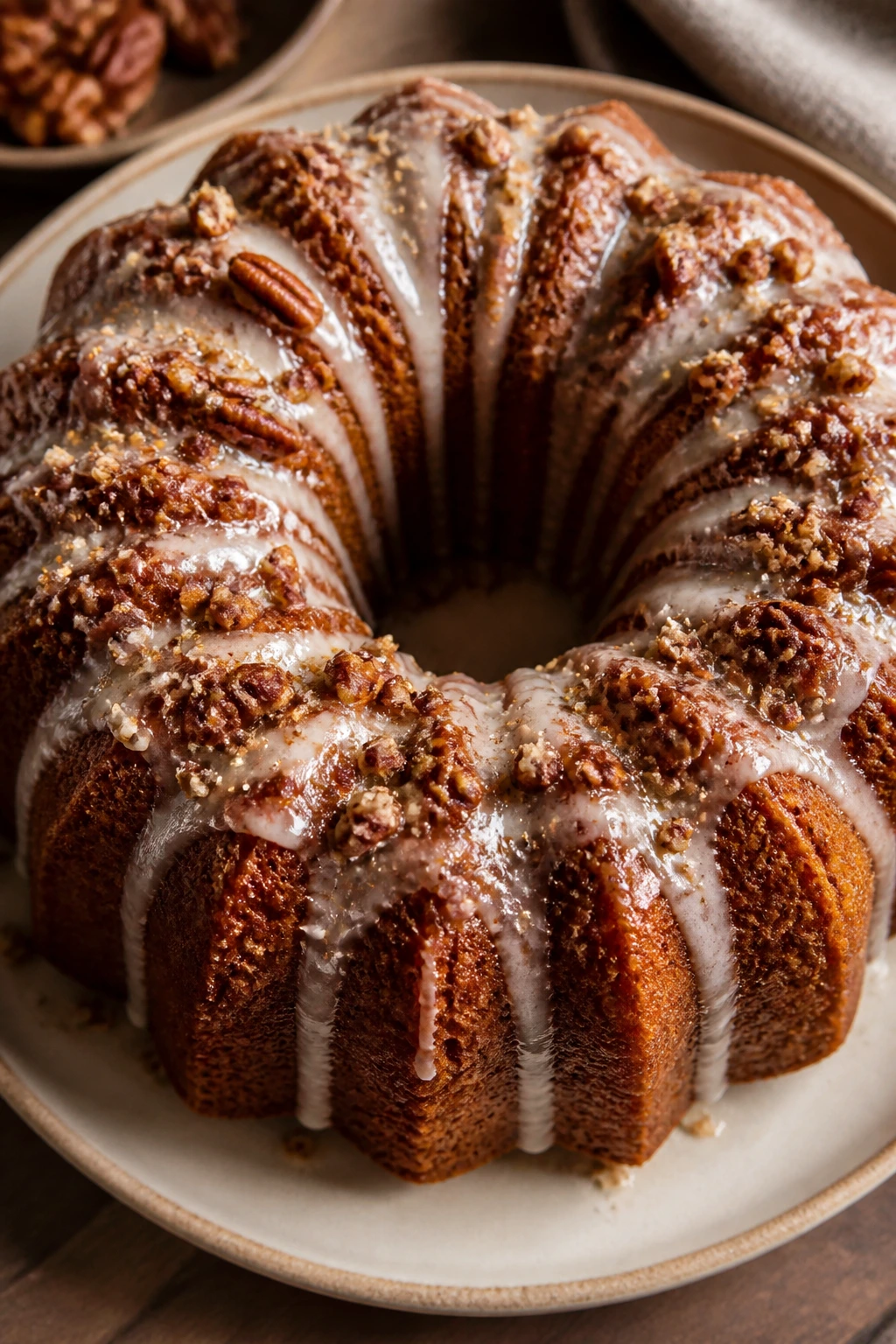
5. Hummingbird Bundt Cake with Toasted Pecans
Hummingbird cake has a way of tasting like banana bread that got dressed up for Easter brunch. There’s pineapple, banana, cinnamon, and nuts, and the result is moist enough to survive a long table service without going dry or sad. Bundt format makes it easier to glaze and slice.
Why It Works: Banana and pineapple both add moisture, while the oil keeps the crumb soft even after a day on the counter. The pecans bring crunch, but only if you toast them first; raw nuts can taste flat inside a rich cake. Bundt pans also bake the cake evenly, which matters because this batter is dense in the best way.
Key Ingredients:
- 3 cups all-purpose flour
- 2 teaspoons baking soda
- 1 teaspoon cinnamon
- 1/2 teaspoon fine salt
- 1 1/2 cups granulated sugar
- 1 cup neutral oil
- 3 large eggs
- 3 very ripe bananas, mashed
- 1 cup crushed pineapple, drained
- 1 teaspoon vanilla
- 1 cup chopped toasted pecans
- 4 ounces cream cheese for glaze
- 1 1/2 cups powdered sugar
Quick Steps:
- Heat the oven to 350°F and grease a 10-cup Bundt pan well.
- Whisk the dry ingredients together.
- Beat sugar, oil, and eggs until smooth, then mix in bananas, pineapple, and vanilla.
- Fold in the dry ingredients and pecans, then scrape the batter into the pan.
- Bake 50 to 60 minutes, until a skewer comes out clean and the top feels firm.
- Cool 15 minutes in the pan, invert, cool fully, then drizzle with glaze.
Equipment for This Recipe:
- 10-cup Bundt pan
- Nonstick spray with flour
- Mixing bowls
- Cooling rack
How to Serve This Dish:
A thick slice with cream cheese glaze is enough on its own, but a few fresh berries on the plate make the color pop. This cake travels well, which is handy if you’re taking dessert to someone else’s table. It’s even better the next day.
Pro Tips for This Recipe:
- Drain the pineapple well or the crumb can get heavy.
- Grease every ridge of the Bundt pan; missed spots will ruin the look.
- Use bananas that are fully spotted and soft.
- Let the cake cool before glazing so the drizzle stays in place.
Variations on This Dish:
- Coconut Pecan Version: Add 1/2 cup shredded coconut to the batter.
- Spice-Heavy Twist: Add 1/4 teaspoon nutmeg and 1/4 teaspoon allspice.
- Cupcake Shortcut: Bake in lined muffin tins for 18 to 22 minutes.
Common Mistakes to Avoid with This Dish:
- Don’t under-drain the pineapple.
- Don’t unmold too early or the cake can tear.
- Don’t skip toasting the pecans if you want their flavor to show up.
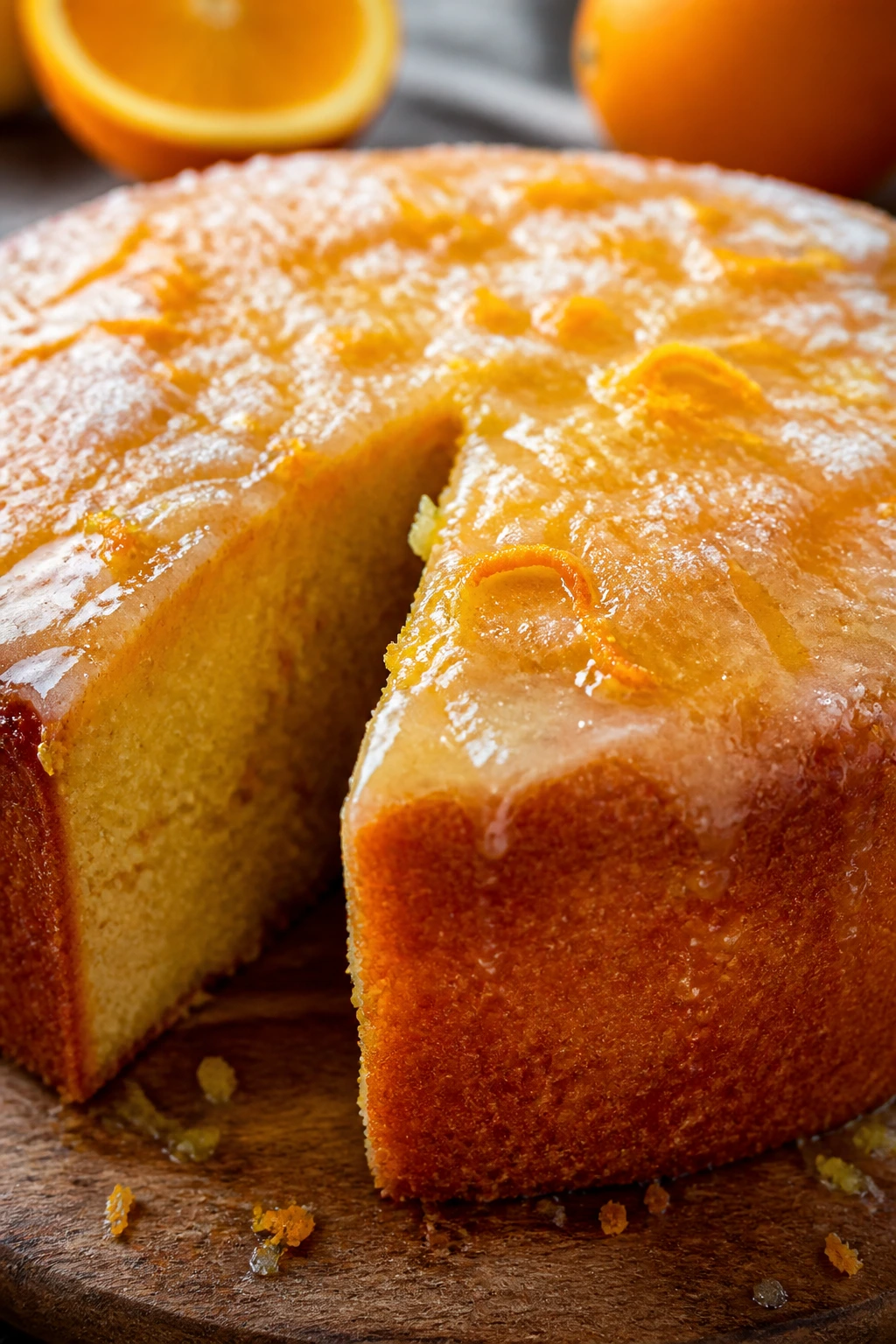
6. Orange Cardamom Olive Oil Cake with Citrus Glaze
If you want a cake that tastes like spring sunlight and still slices neatly three days later, this one is the answer. Olive oil keeps the crumb soft, orange gives it lift, and cardamom adds a floral edge that keeps the whole thing from feeling basic. It’s understated in the best way.
Why It Works: Oil cakes stay tender longer than butter-heavy cakes because the fat remains liquid at room temperature. Orange zest perfumes the batter, while orange juice in the glaze gives you a fresh finish that cuts through the sweetness. Cardamom is a small ingredient with a big job; it gives the cake a warm, almost tea-like backbone.
Key Ingredients:
- 2 1/4 cups all-purpose flour
- 2 teaspoons baking powder
- 1/2 teaspoon baking soda
- 1/2 teaspoon fine salt
- 1 cup granulated sugar
- Zest of 2 oranges
- 3 large eggs
- 3/4 cup olive oil
- 1/2 cup plain yogurt
- 1/4 cup orange juice
- 1 teaspoon vanilla
- 1 teaspoon ground cardamom
- 1 cup powdered sugar for glaze
Quick Steps:
- Preheat the oven to 350°F and grease a 9-inch round pan or loaf pan.
- Whisk flour, baking powder, baking soda, salt, and cardamom.
- Rub orange zest into the sugar, then whisk in eggs, oil, yogurt, orange juice, and vanilla.
- Fold in the dry ingredients until the batter is smooth.
- Bake 40 to 45 minutes for a round pan or 50 to 55 minutes for a loaf pan, until the top springs back.
- Cool, then glaze and let the citrus set before slicing.
Equipment for This Recipe:
- 9-inch round pan or 9×5-inch loaf pan
- Whisk
- Citrus zester
- Small bowl for the glaze
How to Serve This Dish:
Serve slender slices with tea, coffee, or a spoonful of Greek yogurt if you want something a little sharper. The glaze should be thin enough to drip, not plastered on. A few orange segments on the side make the whole plate taste brighter.
Pro Tips for This Recipe:
- Rub the zest into the sugar before mixing; it wakes up the orange oil.
- Use a mild olive oil, not a peppery one.
- Let the glaze sit 10 minutes before cutting.
- Cardamom loses punch if you buy it ground and leave it too long in the cabinet.
Variations on This Dish:
- Lemon Cardamom Swap: Replace the orange with lemon and keep the cardamom.
- Poppy Seed Version: Add 2 tablespoons poppy seeds for a little crunch.
- Honey Glaze Finish: Replace half the powdered sugar glaze with honey and a spoonful of warm water.
Common Mistakes to Avoid with This Dish:
- Don’t use a bold, grassy oil unless you want a savory edge.
- Don’t overmix once the flour is added.
- Don’t glaze a hot cake or the finish will disappear.
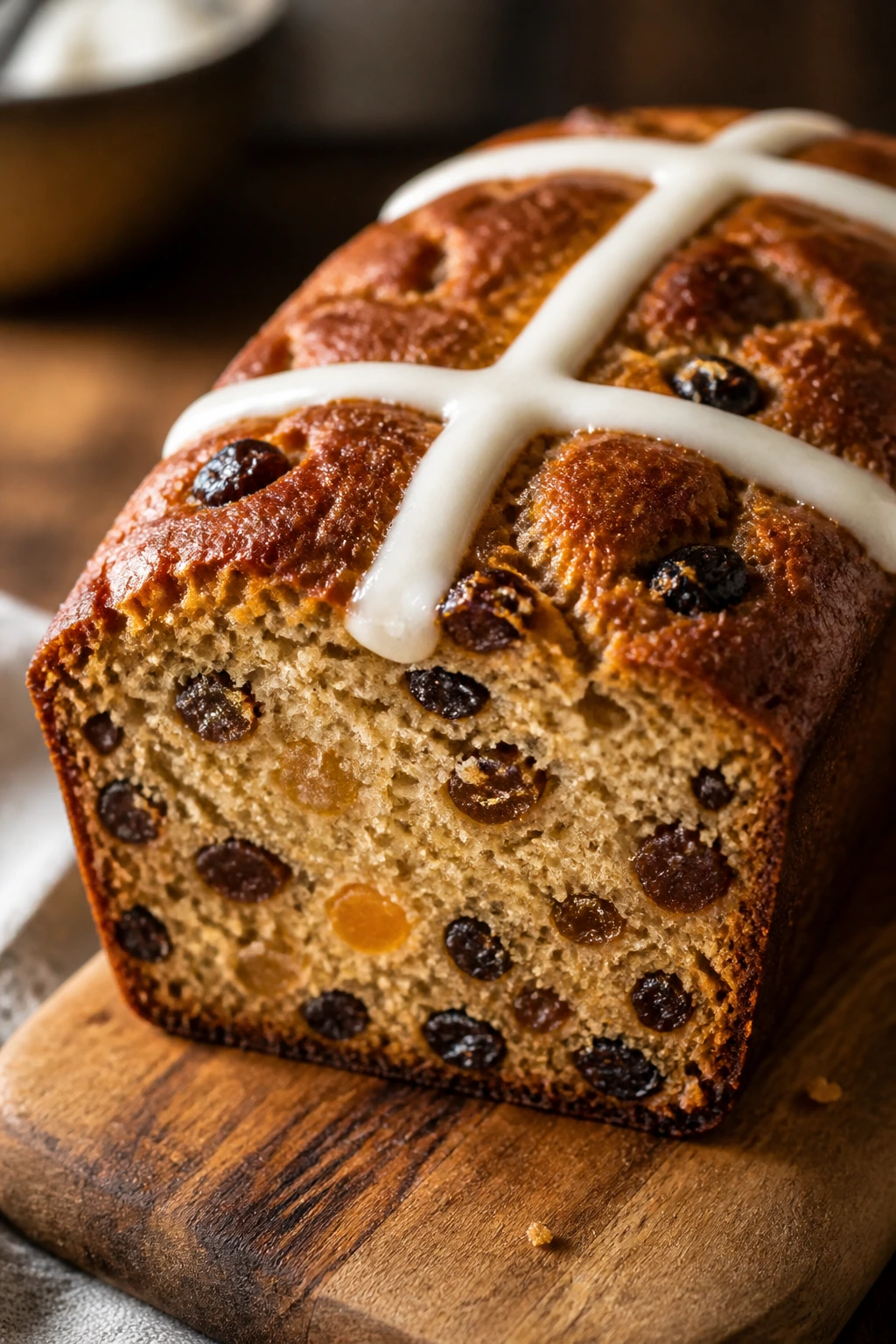
7. Hot Cross Bun Loaf Cake with Spiced Fruit
Hot cross buns are lovely, but they can be fussy and best eaten warm. Turning those flavors into a loaf cake is the smarter move. You get cinnamon, nutmeg, citrus zest, and dried fruit in a soft slice that stays good for days.
Why It Works: The batter borrows the spice profile of hot cross buns but skips the yeast, which means the crumb stays tender without needing a proofing schedule. Milk and butter keep the loaf soft, while the dried fruit gives little chewy pockets instead of wet ones. A thin icing cross on top keeps the Easter reference without turning the cake into bread cosplay.
Key Ingredients:
- 2 cups all-purpose flour
- 2 teaspoons baking powder
- 1/2 teaspoon baking soda
- 1 teaspoon cinnamon
- 1/4 teaspoon nutmeg
- 1/2 teaspoon fine salt
- 1/2 cup unsalted butter, softened
- 3/4 cup brown sugar
- 2 large eggs
- 3/4 cup milk
- 1 teaspoon vanilla
- 1 cup mixed dried fruit
- Zest of 1 orange
- 1/2 cup powdered sugar for the icing
Quick Steps:
- Preheat the oven to 350°F and line a 9×5-inch loaf pan with parchment.
- Whisk the dry ingredients together.
- Beat butter and brown sugar until fluffy, then add eggs, milk, vanilla, and orange zest.
- Fold in the dry ingredients, then stir in the dried fruit.
- Bake 50 to 60 minutes, until the top is browned and a tester comes out clean.
- Cool, then pipe or spoon on the icing cross.
Equipment for This Recipe:
- 9×5-inch loaf pan
- Parchment paper
- Mixing bowls
- Small piping bag or zip-top bag for the cross
How to Serve This Dish:
This cake is good slightly warm, sliced thick, with salted butter if you want it more breakfast-like. For dessert, I like it with a little orange marmalade on the side. It tastes most complete after it rests overnight.
Pro Tips for This Recipe:
- Chop larger dried fruit so the slices cut cleanly.
- Soak very dry fruit in warm tea for 10 minutes, then drain.
- Don’t overfill the loaf pan; it needs room to rise.
- A little orange zest in the icing makes the top taste more alive.
Variations on This Dish:
- Currant Purist’s Version: Use currants and candied peel for a more traditional flavor.
- Chocolate Chip Easter Loaf: Replace half the dried fruit with mini chocolate chips.
- Glazed Bun Style: Brush the warm loaf with a tablespoon of honey thinned with hot water.
Common Mistakes to Avoid with This Dish:
- Don’t use fruit that’s still wet from soaking.
- Don’t slice while hot; the crumb needs time to set.
- Don’t skip the orange zest, or the spices can taste flat.
8. Coconut Tres Leches Cake
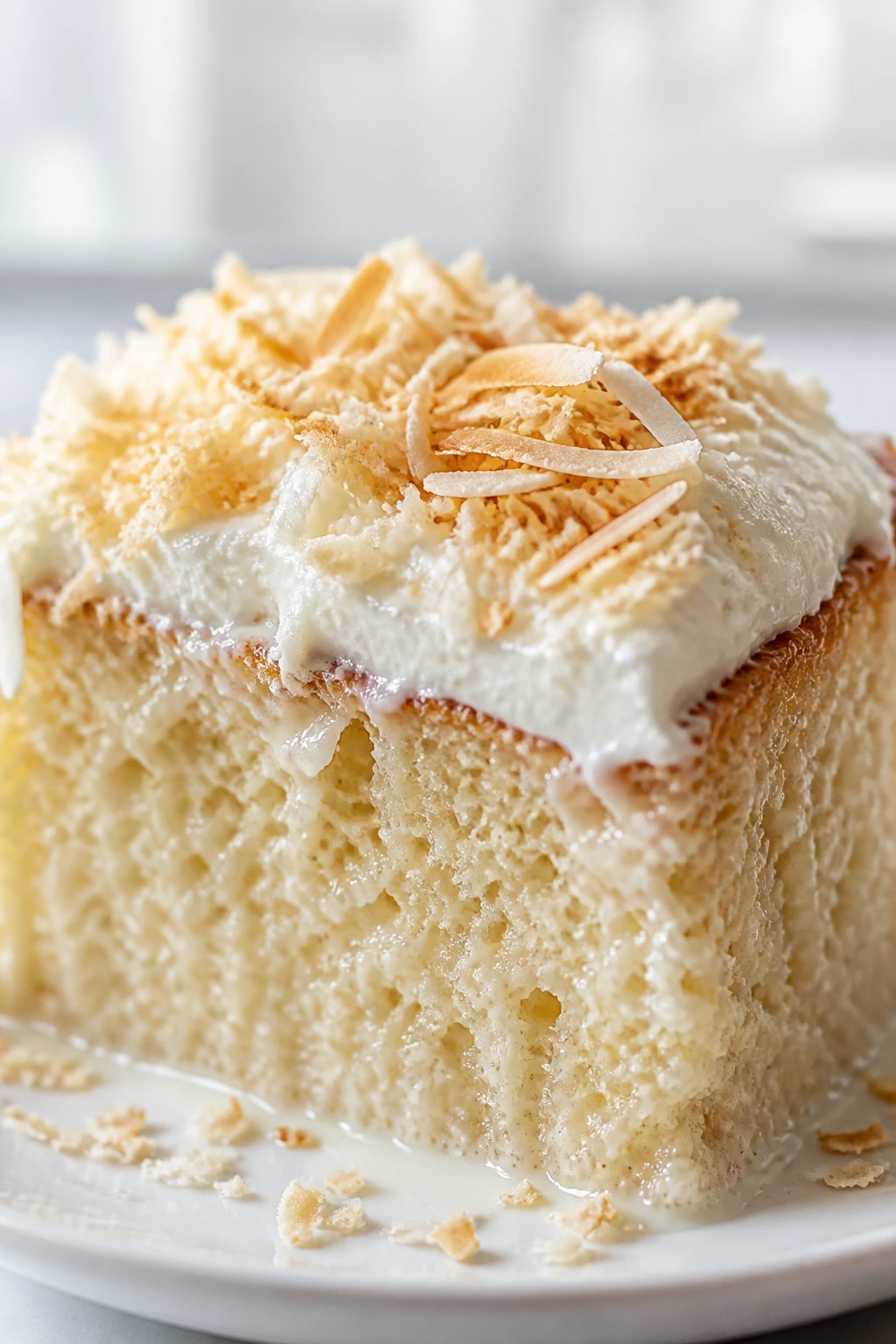
This is the softest cake in the bunch, and I mean that in the best possible way. Tres leches is already famous for its soak, but coconut milk gives it a spring flavor that fits Easter without feeling obvious. Every slice should look almost custardy at the bottom.
Why It Works: Sponge cake is built to absorb liquid, and the three-milk soak turns it into something plush and spoonable. Coconut milk adds flavor, evaporated milk adds body, and sweetened condensed milk keeps the cake sweet and silky. The cake rests better overnight, which is rare and useful; the texture improves as the milk settles into the crumb.
Key Ingredients:
- 1 cup all-purpose flour
- 1 1/2 teaspoons baking powder
- 1/4 teaspoon fine salt
- 5 large eggs, separated
- 3/4 cup granulated sugar
- 1/3 cup milk
- 1 teaspoon vanilla
- 1 can sweetened condensed milk
- 1 can evaporated milk
- 1 cup canned coconut milk
- 1 1/2 cups whipped cream
- Toasted coconut for topping
Quick Steps:
- Preheat the oven to 350°F and grease a 9×13-inch pan.
- Whisk flour, baking powder, and salt.
- Beat egg yolks with sugar until pale, then mix in milk and vanilla.
- Fold in whipped egg whites and the dry ingredients, then bake 25 to 30 minutes.
- Cool, whisk the three milks together, and pour them slowly over the cake.
- Chill at least 4 hours, top with whipped cream, and finish with toasted coconut.
Equipment for This Recipe:
- 9×13-inch baking pan
- Electric mixer
- Large bowl for whipping egg whites
- Fork or skewer for poking the cake
How to Serve This Dish:
Serve it cold, cut into squares, with extra whipped cream if your crowd likes dessert on the creamy side. A little lime zest on top is sharp and lovely against the coconut. It’s the cake you bring out when you want silence at the table for a second.
Pro Tips for This Recipe:
- Don’t overbake the sponge; dry cake won’t soak properly.
- Poke the surface evenly so the milk distributes from edge to edge.
- Chill overnight if you can. The texture gets better.
- Toast the coconut until lightly gold, not dark brown.
Variations on This Dish:
- Lime Coconut Version: Add lime zest to the whipped cream.
- Berry Tres Leches: Spoon macerated strawberries over the top before serving.
- Almond Coconut Twist: Add 1/2 teaspoon almond extract to the milk soak.
Common Mistakes to Avoid with This Dish:
- Don’t pour the milk in too fast or it can pool at the bottom.
- Don’t serve it warm; the soak needs time.
- Don’t use carton coconut drink. It’s too thin.
9. Pistachio Yogurt Cake with Orange Glaze
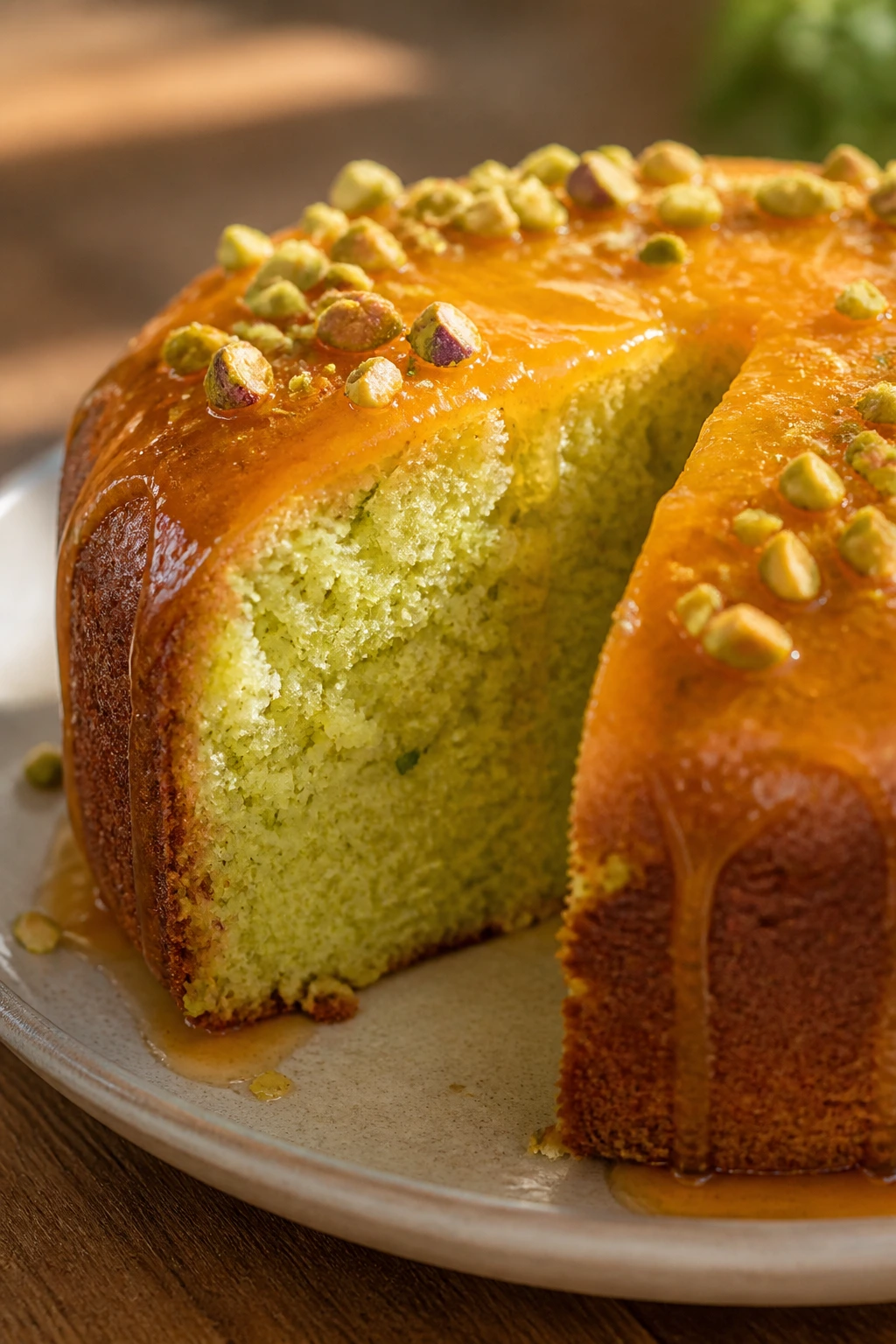
Pistachio cake can taste expensive or dusty, depending on how it’s made. Yogurt fixes that. It gives the crumb a soft, springy bite and keeps the nut flavor from turning dry. Orange glaze on top sharpens everything.
Why It Works: Yogurt keeps the batter moist and adds enough acidity to lift the crumb. Ground pistachios bring fat and flavor, which is why the cake stays tender even with a relatively simple ingredient list. Orange glaze balances the nuttiness with a clean finish, and the cake cuts neatly after a full cool-down.
Key Ingredients:
- 1 3/4 cups all-purpose flour
- 1 teaspoon baking powder
- 1/2 teaspoon baking soda
- 1/2 teaspoon fine salt
- 3/4 cup shelled pistachios, finely ground
- 3/4 cup butter, softened
- 1 cup granulated sugar
- 3 large eggs
- 1 cup plain yogurt
- 1 teaspoon vanilla
- Zest of 1 orange
- 1 cup powdered sugar for glaze
Quick Steps:
- Preheat the oven to 350°F and line a 9-inch round pan or loaf pan.
- Whisk flour, baking powder, baking soda, salt, and ground pistachios.
- Beat butter and sugar until light, then add eggs, yogurt, vanilla, and orange zest.
- Fold in the dry ingredients and scrape the batter into the pan.
- Bake 40 to 50 minutes, until the center springs back and a tester comes out clean.
- Cool, then glaze and scatter chopped pistachios over the top.
Equipment for This Recipe:
- 9-inch round pan or loaf pan
- Food processor for the pistachios
- Hand mixer
- Wire rack
How to Serve This Dish:
Serve thin slices with fresh strawberries or raspberries. The green crumb and orange glaze look especially good on a white plate, which is a small but satisfying detail. It works for brunch and dessert without needing to choose a side.
Pro Tips for This Recipe:
- Grind the pistachios finely so the crumb stays soft.
- Use unsweetened yogurt; flavored yogurt throws off the balance.
- Don’t overbake or the nut flavor gets dry.
- Add the glaze only once the cake is fully cool.
Variations on This Dish:
- Cardamom Pistachio Version: Add 1/2 teaspoon cardamom to the dry mix.
- Rosewater Glaze: Add a drop or two of rosewater to the icing if you like floral notes.
- Lemon Pistachio Swap: Replace orange with lemon for a sharper finish.
Common Mistakes to Avoid with This Dish:
- Don’t leave pistachios coarse; the cake gets crumbly.
- Don’t use salted pistachios without adjusting the salt.
- Don’t rush the cooling step before glazing.
10. Vanilla Sour Cream Pound Cake with Berry Compote
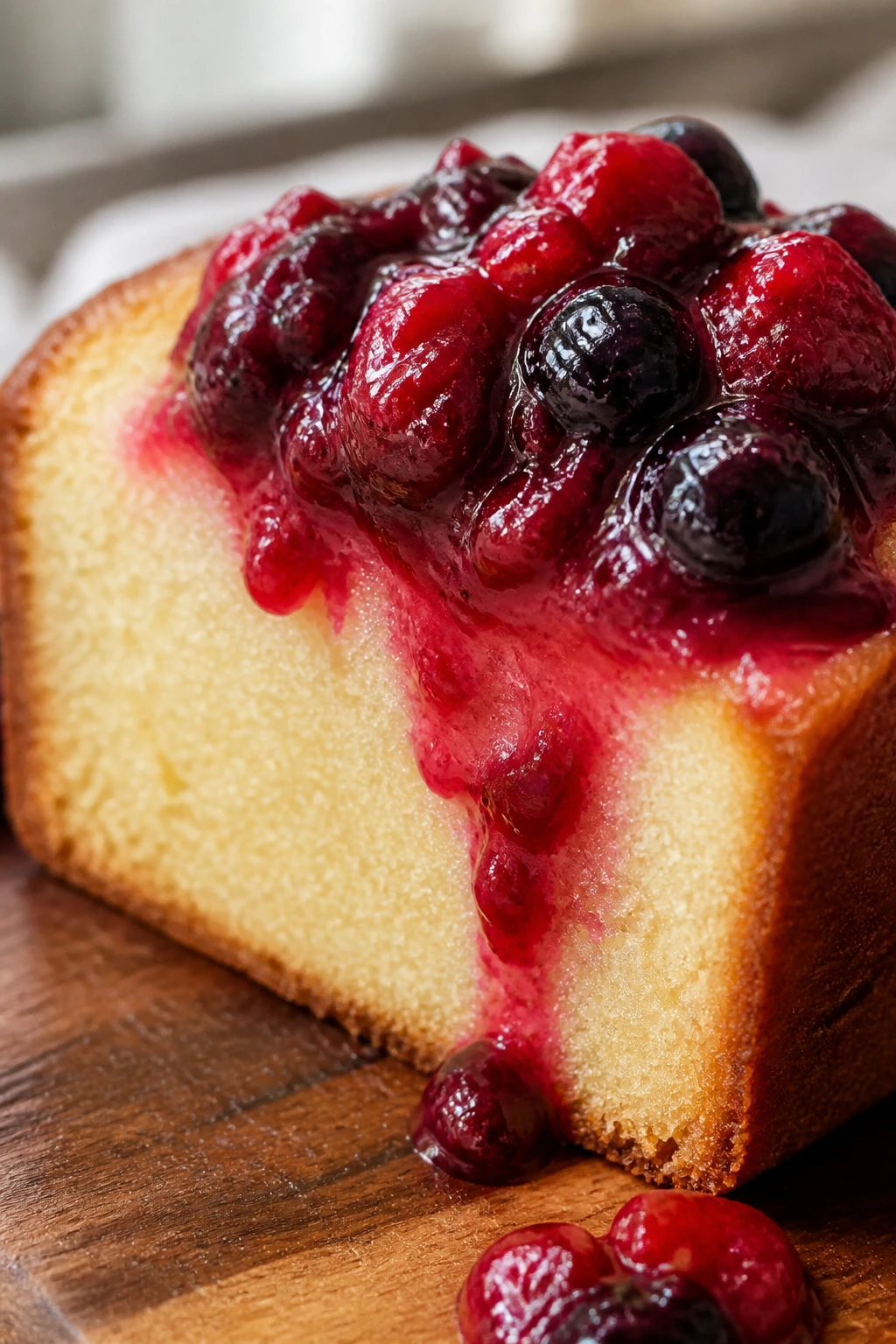
Pound cake gets dismissed as plain until you taste a good one on day two. Then the dense, buttery slices start to make sense. Sour cream keeps this version soft, and vanilla gives it enough warmth to stand on its own or carry berries and cream.
Why It Works: Sour cream adds moisture and a little tang, which prevents pound cake from tasting heavy or stale by the next day. A traditional pound cake structure can be dry if you overbake it; this version gets a better margin of error because the dairy softens the crumb. Berry compote brings freshness without forcing the cake to be stacked or frosted.
Key Ingredients:
- 2 1/2 cups all-purpose flour
- 1 teaspoon baking powder
- 1/2 teaspoon fine salt
- 1 cup unsalted butter, softened
- 1 3/4 cups granulated sugar
- 4 large eggs
- 1 cup sour cream
- 2 teaspoons vanilla extract
- 1 cup mixed berries
- 2 tablespoons sugar for the compote
- 1 tablespoon lemon juice
Quick Steps:
- Heat the oven to 325°F and grease a Bundt pan or loaf pan.
- Whisk flour, baking powder, and salt.
- Beat butter and sugar until fluffy, then add eggs one at a time.
- Mix in sour cream and vanilla, then fold in the dry ingredients.
- Bake 55 to 70 minutes, depending on the pan, until a skewer comes out with a few moist crumbs.
- Simmer berries, sugar, and lemon juice for a quick compote while the cake cools.
Equipment for This Recipe:
- Bundt pan or 9×5-inch loaf pan
- Stand mixer or hand mixer
- Small saucepan for the compote
- Cooling rack
How to Serve This Dish:
Serve with a spoonful of warm berry compote and maybe a little whipped cream if the table wants more. Pound cake slices can be toasted the next morning, which is one reason I like having leftovers. The texture holds up instead of collapsing.
Pro Tips for This Recipe:
- Start with fully softened butter so the batter creams evenly.
- Use room-temperature eggs and sour cream.
- Check the cake early; pound cake goes from done to dry faster than you think.
- Let it cool fully before slicing, or the crumb will compress.
Variations on This Dish:
- Lemon Pound Cake: Add lemon zest and a lemon glaze instead of berry compote.
- Almond Vanilla Twist: Replace 1 teaspoon vanilla with almond extract.
- Marbled Berry Version: Swirl 1/3 cup berry compote through the batter before baking.
Common Mistakes to Avoid with This Dish:
- Don’t overbeat the flour in. That tightens the crumb.
- Don’t bake in too hot an oven; the outside sets too fast.
- Don’t slice while warm if you want neat pieces.
11. Simnel Cake with Marzipan
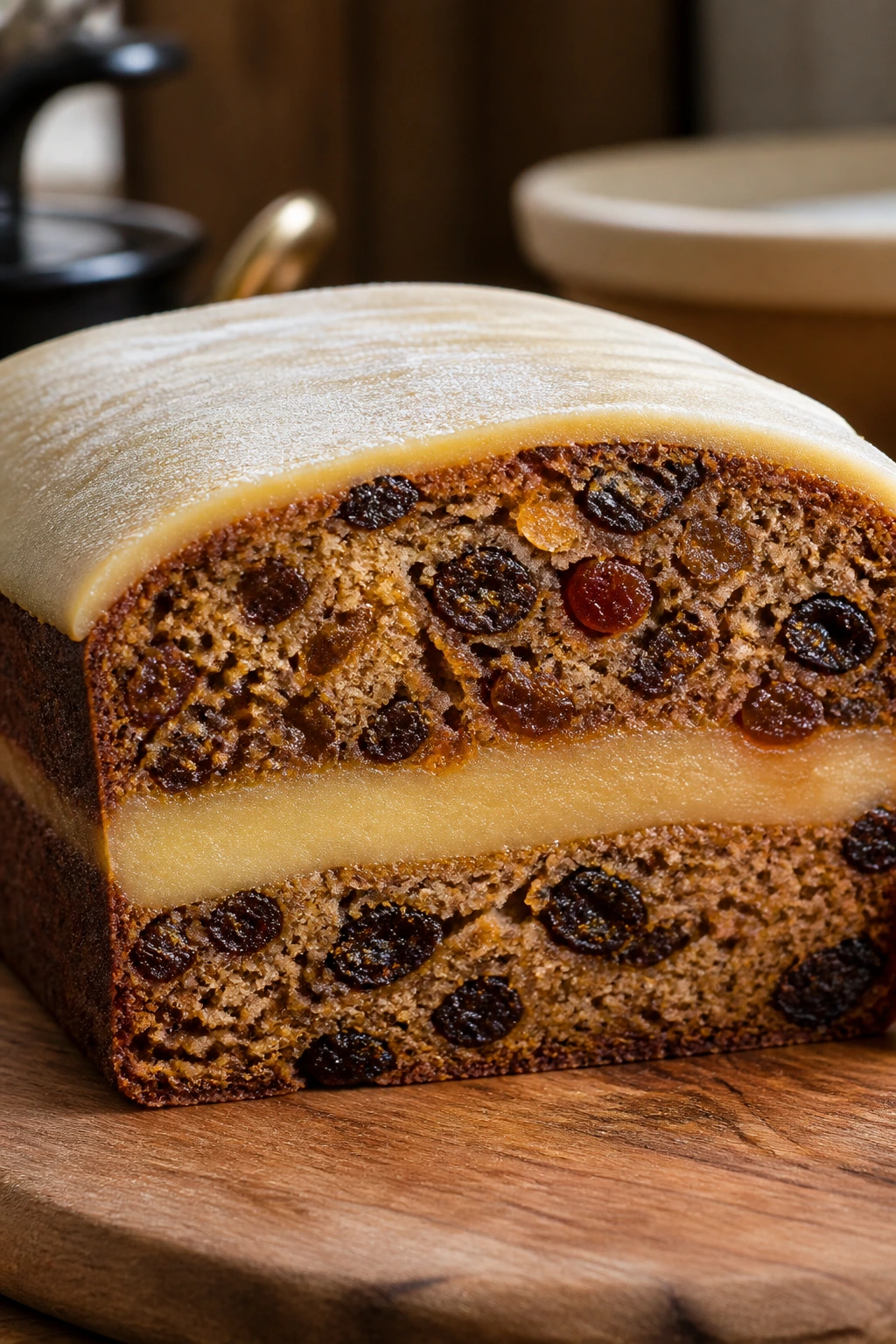
Simnel cake has a longer memory than most Easter desserts. It brings dried fruit, citrus, warm spice, and marzipan together in a way that feels old-fashioned without being dusty. Properly made, it stays soft for days because the fruit and almond paste keep the crumb from drying out.
Why It Works: Soaked fruit carries moisture into the cake, and marzipan gives both flavor and fat. The almond notes mellow the spice so the cake feels rounded, not heavy. A thin layer of marzipan baked into the middle is the traditional move, and it helps the loaf-like crumb stay tender after resting.
Key Ingredients:
- 1 3/4 cups mixed dried fruit
- 2 tablespoons orange juice
- 2 cups all-purpose flour
- 1 teaspoon baking powder
- 1/2 teaspoon mixed spice or cinnamon
- 1/2 teaspoon fine salt
- 1/2 cup unsalted butter, softened
- 1/2 cup light brown sugar
- 3 large eggs
- 1/4 cup milk
- 1 teaspoon vanilla
- 7 ounces marzipan, divided
- 2 tablespoons apricot jam for glaze
Quick Steps:
- Soak the dried fruit in orange juice for 30 minutes.
- Heat the oven to 325°F and line a 7-inch round cake pan.
- Cream butter and sugar, then add eggs, milk, and vanilla.
- Fold in the dry ingredients and soaked fruit.
- Spoon half the batter into the pan, add a layer of marzipan, then top with the rest of the batter.
- Bake 60 to 75 minutes, glaze with warm apricot jam, and decorate with marzipan balls if you want the full tradition.
Equipment for This Recipe:
- 7-inch round cake pan
- Parchment paper
- Mixing bowls
- Small saucepan or microwave bowl for the jam
How to Serve This Dish:
Slice thinly; this cake is rich and you do not need a huge wedge. A cup of strong tea is the natural partner. It tastes even better after a day or two, which is part of the point.
Pro Tips for This Recipe:
- Soak the fruit long enough to plump, but drain if the liquid hasn’t absorbed.
- Weigh the marzipan portions so the middle layer stays even.
- Don’t bake too hot or the fruit can scorch.
- Let the glaze set before wrapping the cake.
Variations on This Dish:
- Apricot-Only Version: Use chopped dried apricots and a little extra orange zest.
- Spice-Forward Cake: Add ginger and nutmeg for a warmer profile.
- Mini Simnel Loaves: Split the batter into small pans for giftable cakes.
Common Mistakes to Avoid with This Dish:
- Don’t skip soaking the fruit.
- Don’t cut into it before it cools; marzipan needs time to settle.
- Don’t use overly sweet marzipan if you want balance.
12. Mini Egg Chocolate Bundt Cake
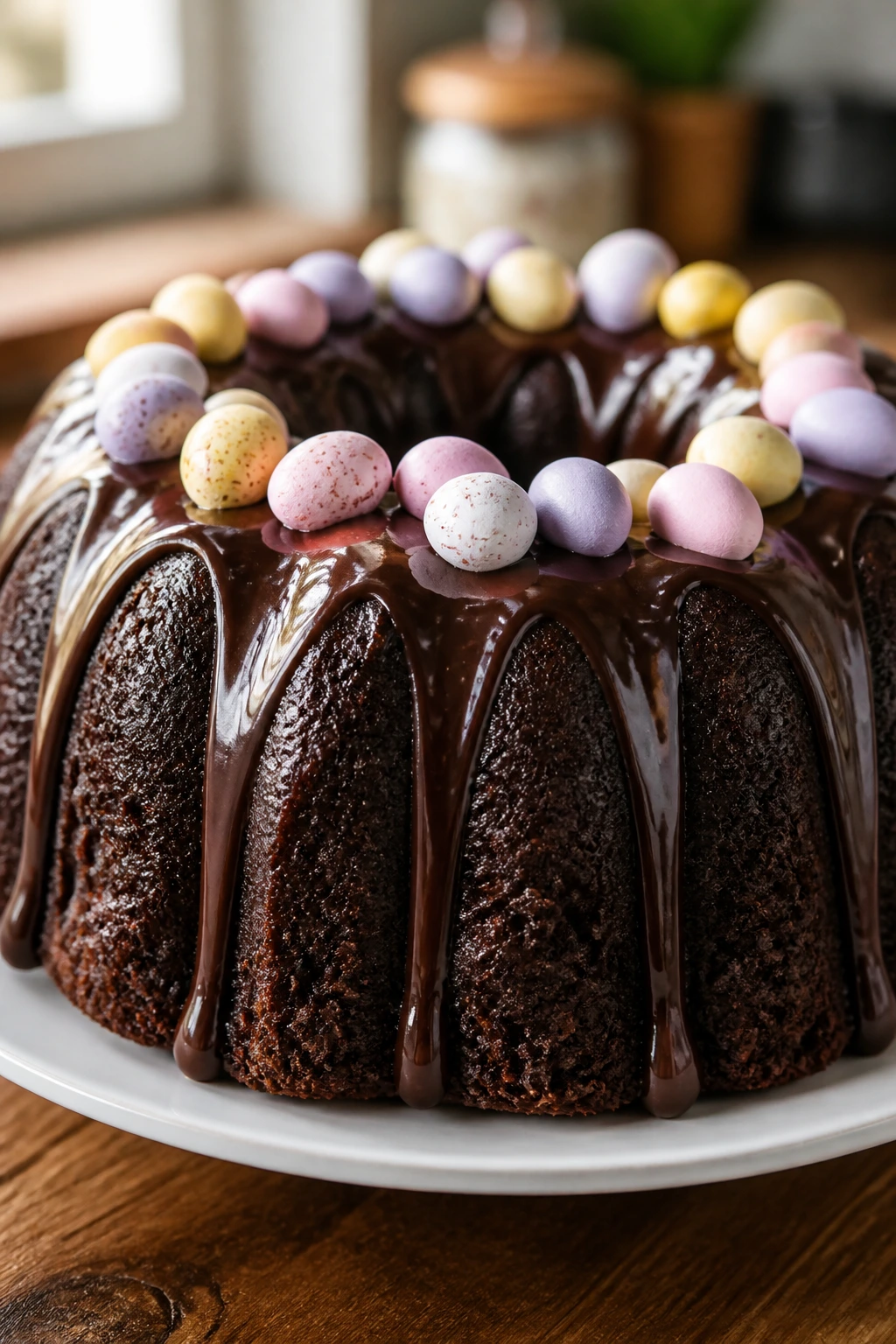
Chocolate cake at Easter can go twee fast, but a good Bundt cake with mini eggs on top knows exactly how much fun it should have. This one is dark, moist, and a little bit dramatic, with a glossy glaze that catches the pastel candy shell in the nicest way.
Why It Works: Sour cream and oil keep chocolate cake soft for days, and cocoa powder gives the crumb a deep flavor without needing melted chocolate. A Bundt pan helps it bake evenly, which matters because chocolate batters can dry on the edges before the center finishes. Mini eggs are for the finish, not the batter; that keeps them crunchy instead of muddy.
Key Ingredients:
- 2 cups all-purpose flour
- 3/4 cup unsweetened cocoa powder
- 2 teaspoons baking soda
- 1/2 teaspoon fine salt
- 1 cup granulated sugar
- 1 cup brown sugar
- 1 cup neutral oil
- 2 large eggs
- 1 cup sour cream
- 1 cup hot coffee or hot water
- 2 teaspoons vanilla
- 1 cup mini chocolate eggs
- 1 cup powdered sugar for glaze
Quick Steps:
- Preheat the oven to 350°F and grease a 10-cup Bundt pan.
- Whisk flour, cocoa, baking soda, and salt.
- Beat sugars, oil, eggs, sour cream, vanilla, and hot coffee until smooth.
- Fold in the dry ingredients, then pour the batter into the pan.
- Bake 45 to 55 minutes, until a tester comes out with moist crumbs.
- Cool, unmold, glaze lightly, and press mini eggs into the top before the glaze sets.
Equipment for This Recipe:
- 10-cup Bundt pan
- Electric mixer
- Sifter or whisk
- Cooling rack
How to Serve This Dish:
Cut generous slices and add strawberries if you want a little freshness next to the chocolate. The candy on top makes it festive enough without needing extra decoration. It’s the kind of cake people photograph before eating, which is not a bad thing.
Pro Tips for This Recipe:
- Hot coffee deepens the chocolate flavor; don’t worry, it won’t taste like coffee.
- Grease the Bundt pan well and get into every groove.
- Don’t overload the top with candy before glazing; it’ll slide off.
- Let the cake cool completely before finishing it.
Variations on This Dish:
- Chocolate Orange Version: Add orange zest to the batter.
- Peppermint-Free Truffle Cake: Top with chopped dark chocolate instead of candy eggs.
- Sheet Cake Shortcut: Bake in a 9×13-inch pan for easier serving.
Common Mistakes to Avoid with This Dish:
- Don’t overbake chocolate cake and expect the glaze to hide it.
- Don’t skip the sour cream.
- Don’t add candy too early or the shells soften.
13. Lemon Poppy Seed Loaf Cake with Honey Drizzle
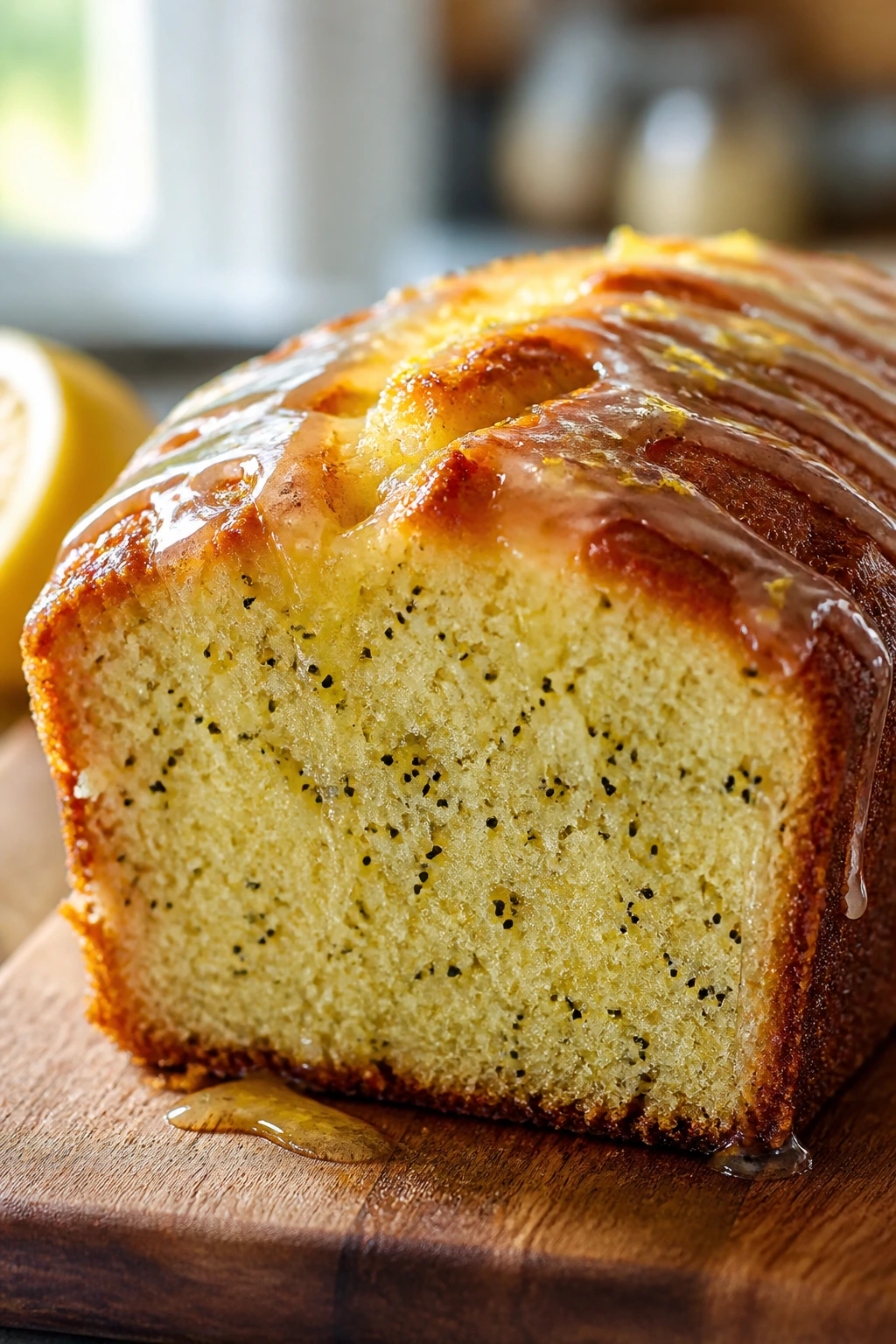
A lemon poppy seed loaf is one of those cakes that behaves well in almost any setting. Brunch. Dessert. Coffee break. The poppy seeds give texture, the lemon keeps the crumb bright, and the honey drizzle adds a soft finish that sticks around instead of drying to a crack.
Why It Works: Yogurt or sour cream keeps the loaf soft, while lemon juice and zest keep it from tasting like plain sweet bread. Poppy seeds don’t add much flavor on their own, but they give the cake a little snap in each bite. A honey drizzle helps the top stay moist for days.
Key Ingredients:
- 2 cups all-purpose flour
- 2 teaspoons baking powder
- 1/2 teaspoon fine salt
- 2 tablespoons poppy seeds
- 3/4 cup granulated sugar
- Zest of 2 lemons
- 3 large eggs
- 1 cup plain yogurt
- 1/2 cup neutral oil
- 1/4 cup lemon juice
- 1 teaspoon vanilla
- 2 tablespoons honey for drizzle
Quick Steps:
- Heat the oven to 350°F and line a 9×5-inch loaf pan.
- Whisk flour, baking powder, salt, and poppy seeds.
- Rub lemon zest into the sugar, then whisk in eggs, yogurt, oil, lemon juice, and vanilla.
- Fold in the dry ingredients and pour into the pan.
- Bake 50 to 60 minutes, until the top is golden and a tester comes out clean.
- Brush with honey while warm, then cool before slicing.
Equipment for This Recipe:
- 9×5-inch loaf pan
- Mixing bowls
- Microplane
- Pastry brush
How to Serve This Dish:
Serve thin slices with tea or coffee and a few fresh berries if you have them. The cake is fine plain, but the honey finish gives it a glossy top that feels more finished. It travels well, which is useful when Easter brunch moves from kitchen to porch to car.
Pro Tips for This Recipe:
- Don’t overdo the poppy seeds; too many make the loaf crumbly.
- The honey drizzle should go on while the cake is still warm.
- Let the loaf cool completely before wrapping.
- Use fresh lemons; bottled juice tastes flat here.
Variations on This Dish:
- Orange Poppy Seed Version: Swap the citrus and keep everything else.
- Almond Lemon Loaf: Add 1/2 teaspoon almond extract.
- Glazed Brunch Loaf: Replace honey with a powdered sugar lemon glaze.
Common Mistakes to Avoid with This Dish:
- Don’t cut while warm or the crumb compresses.
- Don’t skip the citrus zest.
- Don’t bake in a dark loaf pan without checking early; it browns fast.
14. Raspberry Almond Crumb Cake
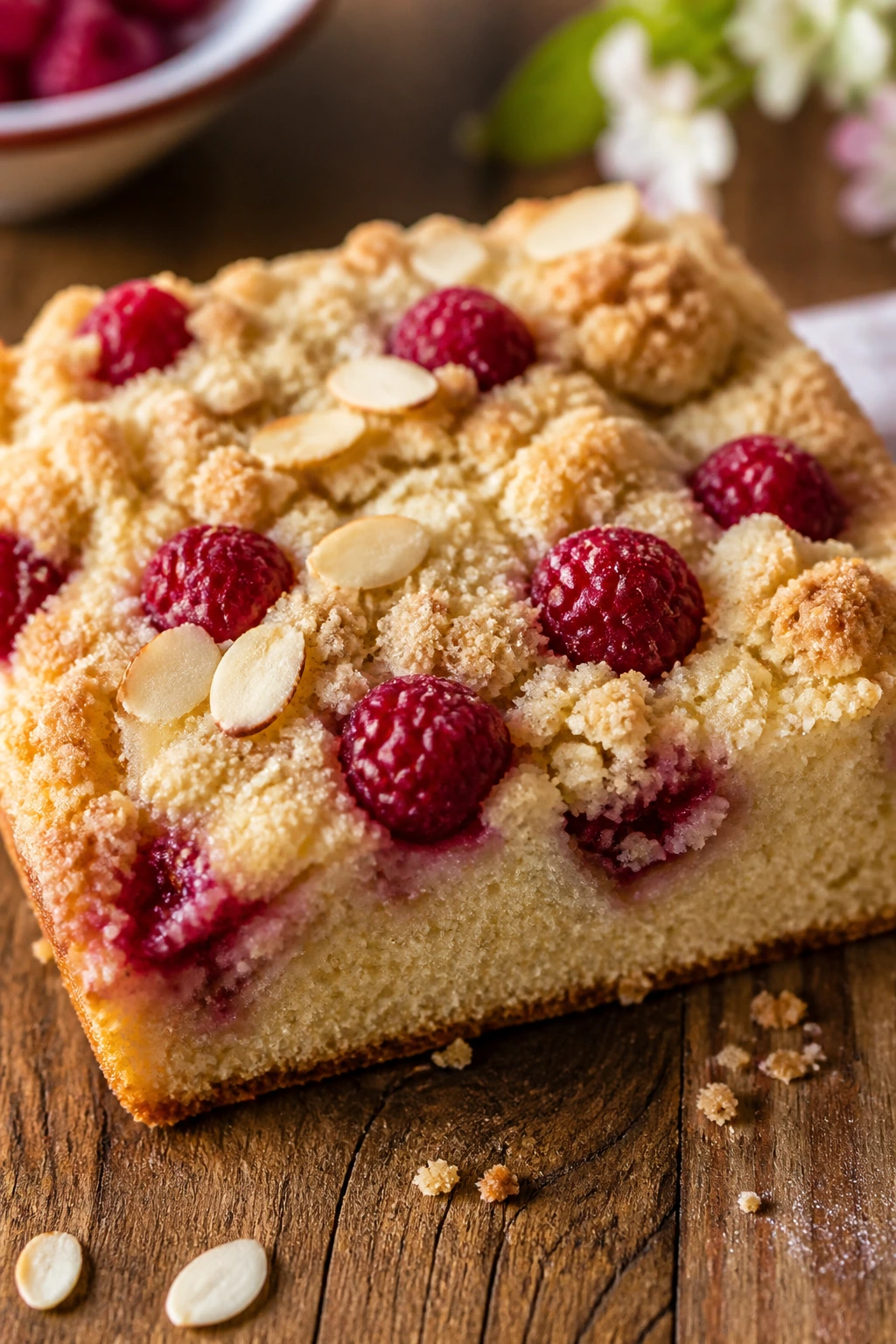
Crumb cake is the quiet member of the table, and I mean that kindly. It doesn’t show off. It just shows up with a buttery top, tart fruit, and a tender base that keeps well for days because the fruit and fat keep the crumb from drying out.
Why It Works: Almond extract sharpens the batter, while sour cream gives it a plush texture that stays soft longer than a standard butter cake. Raspberry filling or fresh raspberries adds enough tang to keep the crumb topping from feeling sugary. A thick crumb layer is part of the design, not an accident.
Key Ingredients:
- 2 cups all-purpose flour
- 1 teaspoon baking powder
- 1/2 teaspoon baking soda
- 1/2 teaspoon fine salt
- 1/2 cup butter, softened
- 1 cup granulated sugar
- 2 large eggs
- 1 cup sour cream
- 1 teaspoon almond extract
- 1 1/2 cups raspberries
- 1/2 cup brown sugar for crumb
- 4 tablespoons cold butter for crumb
Quick Steps:
- Preheat the oven to 350°F and line an 8-inch square pan.
- Mix the crumb topping with flour, brown sugar, and cold butter until clumpy.
- Beat butter and sugar, then add eggs, sour cream, and almond extract.
- Fold in the dry ingredients and spread the batter in the pan.
- Scatter raspberries over the top, add the crumb, and bake 40 to 45 minutes.
- Cool until set, then cut into squares.
Equipment for This Recipe:
- 8-inch square pan
- Pastry cutter or fingertips
- Mixing bowls
- Parchment paper
How to Serve This Dish:
Serve it at room temperature with coffee or a cold glass of milk. It’s excellent for people who want cake without frosting. A dusting of powdered sugar makes it look finished in about ten seconds.
Pro Tips for This Recipe:
- Use cold butter in the crumb so it stays chunky.
- Toss fresh raspberries with a teaspoon of flour if they’re very juicy.
- Don’t press the crumb topping down.
- Cool before cutting so the fruit layer stays put.
Variations on This Dish:
- Blueberry Almond Version: Use blueberries and a little lemon zest.
- Apricot Crumb Cake: Swap raspberries for chopped apricots.
- Extra-Crumb Top: Double the crumb topping if you like a heavier, bakery-style cap.
Common Mistakes to Avoid with This Dish:
- Don’t make the crumb too fine; you want clumps.
- Don’t overbake or the fruit dries out.
- Don’t use thawed frozen raspberries unless you drain them first.
15. White Chocolate Coconut Cake with Mascarpone Frosting
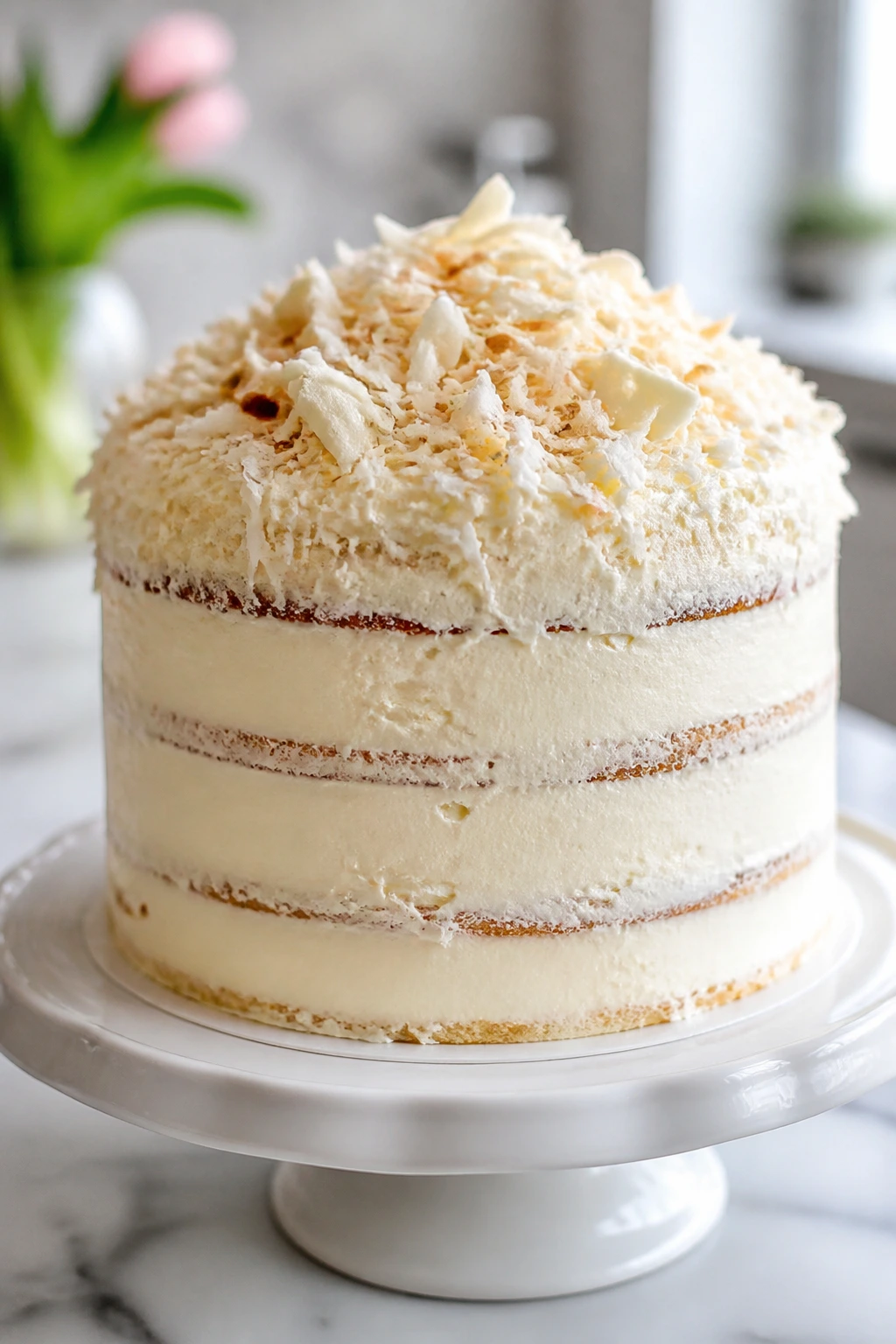
This cake tastes like a polished Easter centerpiece, but the structure is practical. White chocolate adds sweetness and softness, coconut keeps the crumb springy, and mascarpone frosting gives you that cool, creamy finish that doesn’t feel as heavy as full cream cheese frosting.
Why It Works: Melted white chocolate in the batter adds fat and tenderness, while coconut milk gives the crumb a gentle richness. Mascarpone whips into a frosting that’s lighter than standard buttercream and less tangy than cream cheese. The cake stays soft because it’s built with moisture at every stage, not just the batter.
Key Ingredients:
- 3 cups cake flour
- 2 1/2 teaspoons baking powder
- 1/2 teaspoon salt
- 1 cup unsalted butter, softened
- 1 3/4 cups sugar
- 4 eggs
- 1 cup coconut milk
- 1 teaspoon vanilla
- 4 ounces melted white chocolate
- 1 cup shredded coconut
- 8 ounces mascarpone
- 2 cups powdered sugar
Quick Steps:
- Heat the oven to 350°F and grease two 8-inch cake pans.
- Whisk cake flour, baking powder, and salt.
- Cream butter and sugar, add eggs, then mix in coconut milk, vanilla, and melted white chocolate.
- Fold in the dry ingredients and shredded coconut.
- Bake 25 to 30 minutes, cool, and frost with mascarpone cream.
- Finish with coconut around the sides if you want a full Easter look.
Equipment for This Recipe:
- Two 8-inch round pans
- Electric mixer
- Offset spatula
- Cooling rack
How to Serve This Dish:
Serve chilled but not icy; mascarpone tastes best when it softens a little. Fresh raspberries or sliced kiwi give the plate some acidity. This one looks best with a clean knife and a patient hand.
Pro Tips for This Recipe:
- Melt the white chocolate gently so it stays smooth.
- Don’t overwhip mascarpone or it can loosen.
- Use unsweetened coconut in the frosting coat if the cake itself is sweet.
- Chill the frosted cake 20 to 30 minutes before slicing.
Variations on This Dish:
- Lemon Coconut Swap: Add lemon zest and a lemon curd layer.
- Almond Coconut Version: Add almond extract to the batter.
- Sheet Cake Shortcut: Bake it in one pan for easier serving.
Common Mistakes to Avoid with This Dish:
- Don’t let the white chocolate seize.
- Don’t frost warm layers.
- Don’t use watery coconut milk.
16. Honey Cardamom Tea Cake
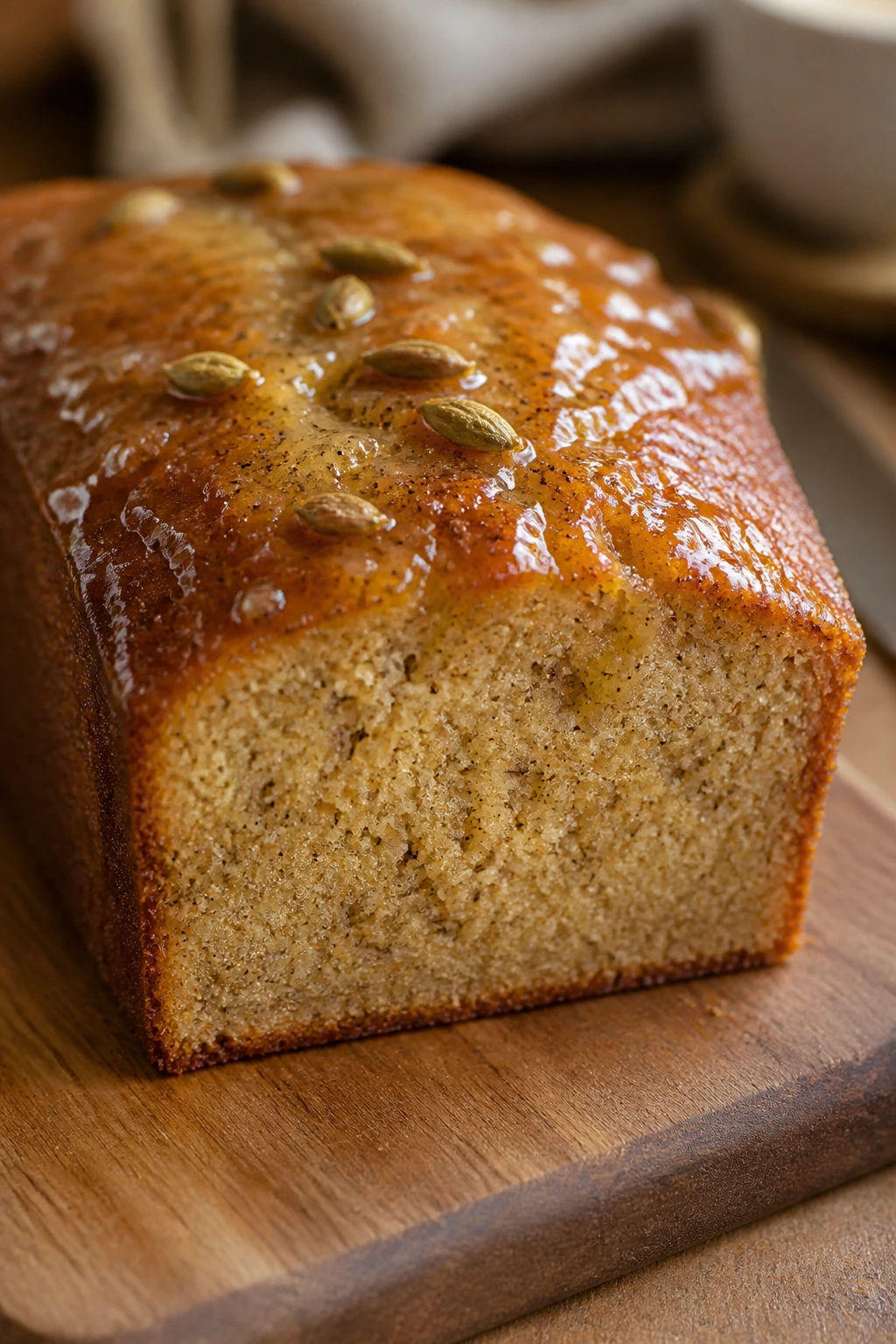
Honey cakes age well. That’s half the reason people keep coming back to them. This one has a soft, fine crumb, a warm cardamom finish, and a glossy honey glaze that keeps the top from drying out even after a couple of days.
Why It Works: Honey holds moisture better than plain sugar alone, which means the cake stays tender without needing a heavy frosting. Yogurt adds softness and a little tang, and cardamom gives the loaf a fragrant lift that feels right next to tea or coffee. The glaze is not decoration here; it’s part of the moisture plan.
Key Ingredients:
- 2 cups all-purpose flour
- 1 1/2 teaspoons baking powder
- 1/2 teaspoon baking soda
- 1/2 teaspoon fine salt
- 1 teaspoon ground cardamom
- 1/2 cup butter, softened
- 3/4 cup honey
- 1/2 cup granulated sugar
- 2 large eggs
- 1 cup plain yogurt
- 1 teaspoon vanilla
- 2 tablespoons honey for glaze
Quick Steps:
- Preheat the oven to 350°F and line a loaf pan.
- Whisk flour, baking powder, baking soda, salt, and cardamom.
- Beat butter, honey, and sugar until smooth, then add eggs, yogurt, and vanilla.
- Fold in the dry ingredients and scrape into the pan.
- Bake 45 to 55 minutes, until the top is golden and springs back lightly.
- Brush with warm honey when the loaf is still warm.
Equipment for This Recipe:
- 9×5-inch loaf pan
- Mixing bowls
- Whisk
- Pastry brush
How to Serve This Dish:
Serve thick slices with butter if you want breakfast energy, or with whipped cream and poached pears if you want it as dessert. It’s one of those cakes that tastes better after it has settled. The honey tone deepens overnight.
Pro Tips for This Recipe:
- Warm the honey slightly so it mixes cleanly.
- Don’t overbake; honey cakes can turn dry at the edges.
- Cardamom is stronger when fresh.
- Brush the glaze on while the loaf is warm, not hot.
Variations on This Dish:
- Orange Honey Cake: Add orange zest and a splash of juice.
- Sesame Finish: Sprinkle toasted sesame seeds on top before baking.
- Ginger Honey Version: Add grated fresh ginger for a sharper edge.
Common Mistakes to Avoid with This Dish:
- Don’t use very dark honey unless you want a heavier flavor.
- Don’t skip the glaze.
- Don’t slice before the loaf cools enough to set.
17. Blood Orange Upside-Down Cake
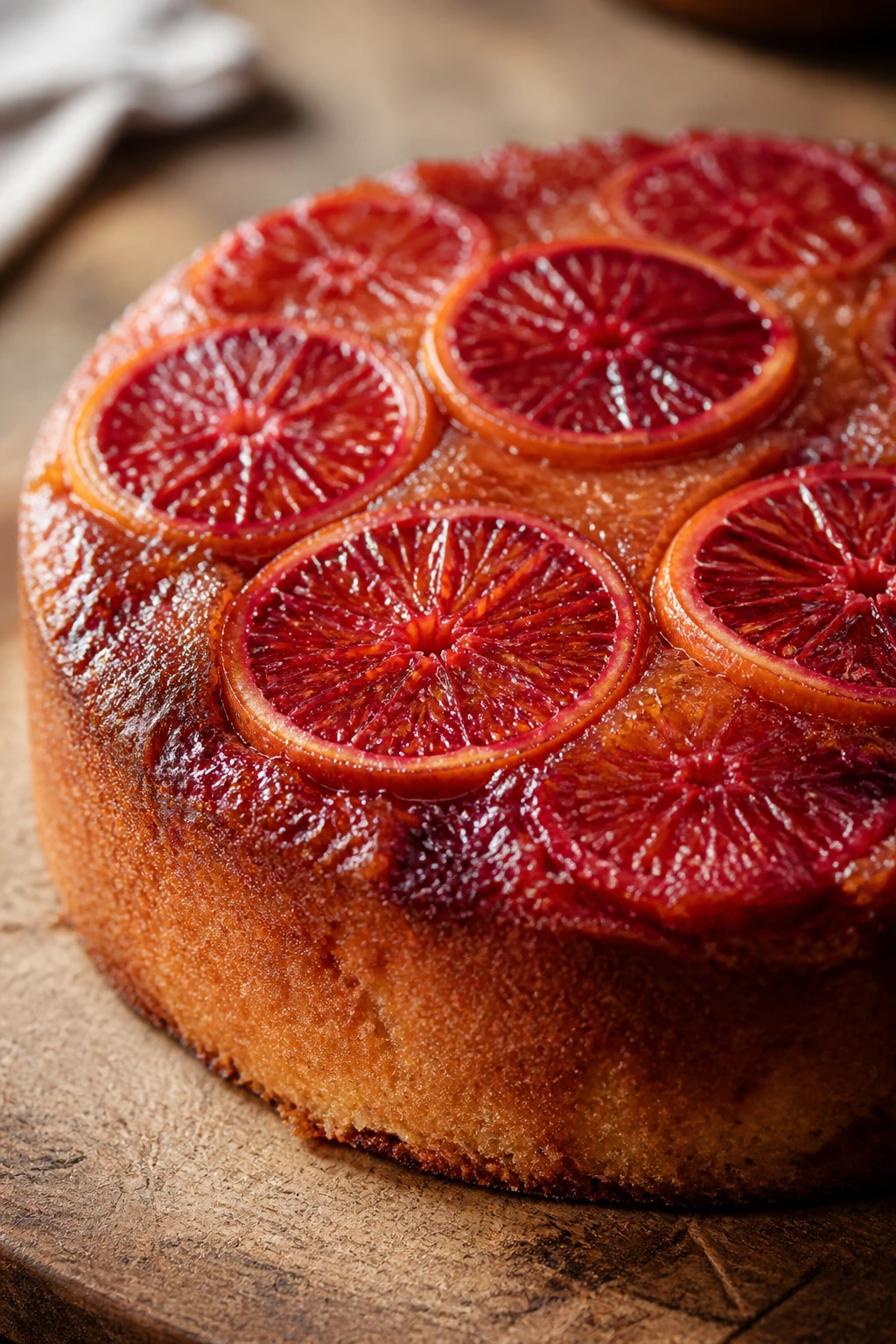
Upside-down cake solves a practical problem in a pretty way: the fruit keeps the top moist. Blood oranges add color and a sharp, berry-like note that makes the cake taste springy without needing much extra decoration. It’s an easy way to get a dessert that looks more involved than it is.
Why It Works: Fruit baked under the batter steams the top of the cake as it cooks, which helps the crumb stay soft. A yogurt or sour cream batter gives structure without dryness, and the caramelized citrus top locks in moisture as it cools. Blood orange has enough acidity to keep the sweetness from going muddy.
Key Ingredients:
- 2 blood oranges, thinly sliced
- 1/4 cup butter for the pan
- 1/2 cup brown sugar
- 2 cups all-purpose flour
- 2 teaspoons baking powder
- 1/2 teaspoon fine salt
- 1/2 cup butter, softened
- 1 cup granulated sugar
- 3 eggs
- 1 cup sour cream
- 1 teaspoon vanilla
Quick Steps:
- Heat the oven to 350°F and melt butter in a 9-inch cake pan or skillet, then sprinkle brown sugar over it.
- Arrange the orange slices in the bottom in a single layer.
- Whisk flour, baking powder, and salt.
- Beat butter and sugar, then add eggs, sour cream, and vanilla.
- Fold in the dry ingredients, spread gently over the oranges, and bake 40 to 45 minutes.
- Cool 10 minutes, invert onto a plate, and let the syrup settle before serving.
Equipment for This Recipe:
- 9-inch cake pan or oven-safe skillet
- Knife for slicing citrus
- Mixing bowls
- Serving plate with a lip
How to Serve This Dish:
Serve warm or room temperature with a spoonful of crème fraîche or plain yogurt if you want a sharper contrast. The glazed orange top does all the visual work, so you don’t need extra garnish. It’s a good one for a smaller Easter table.
Pro Tips for This Recipe:
- Slice the oranges very thin so they soften fully.
- Remove any seeds before arranging the fruit.
- Let the cake rest a few minutes before turning it out.
- If your oranges are very tart, add an extra tablespoon of sugar to the pan.
Variations on This Dish:
- Meyer Lemon Version: Use Meyer lemons for a softer citrus profile.
- Grapefruit Upside-Down Cake: Use pink grapefruit if you want more bitterness.
- Honey Citrus Pan: Replace half the brown sugar with honey for a lighter caramel note.
Common Mistakes to Avoid with This Dish:
- Don’t invert too late or the fruit can stick.
- Don’t slice the citrus too thick.
- Don’t overfill the pan; the batter needs room to rise.
18. Meyer Lemon Sheet Cake with Cream Cheese Frosting
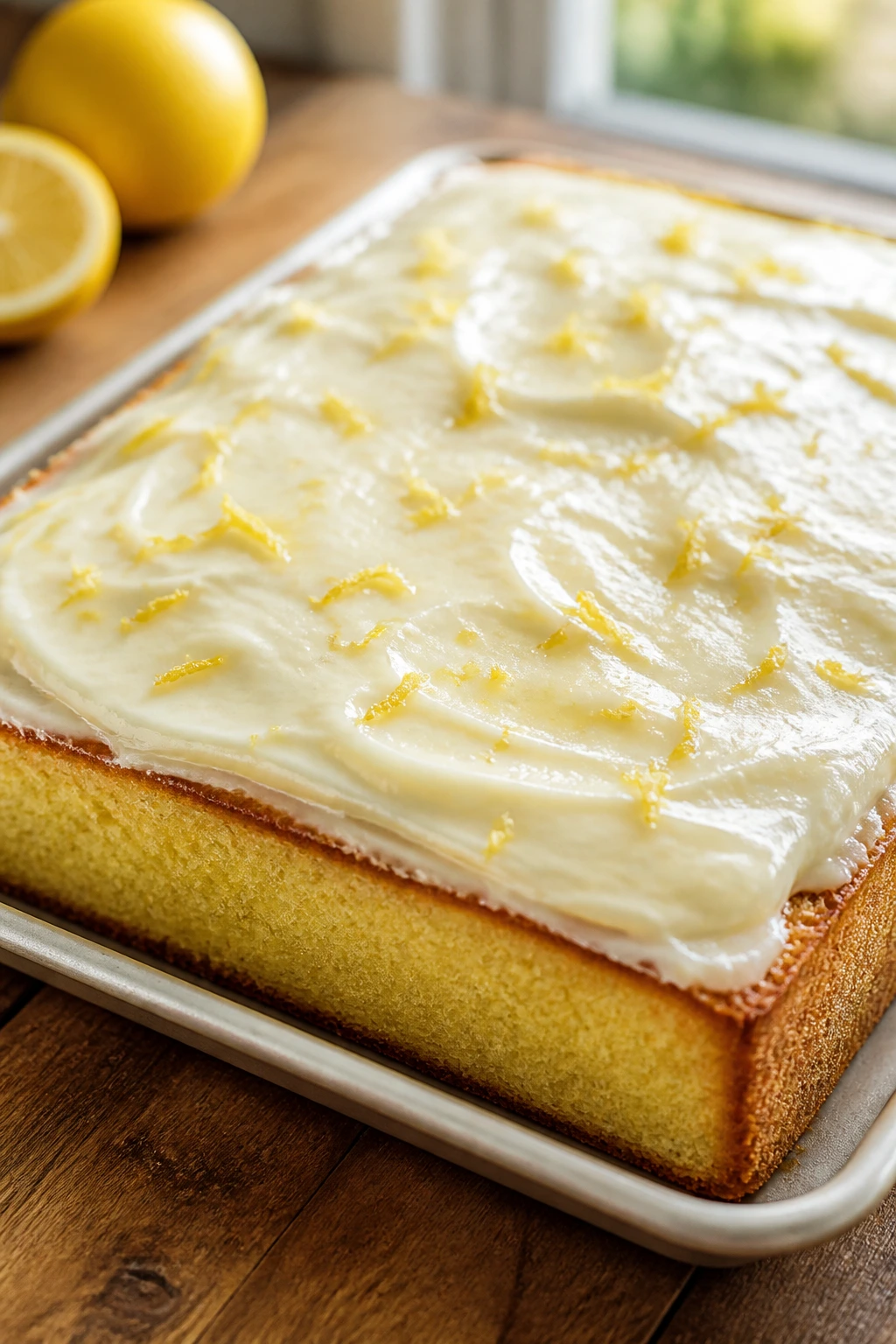
Meyer lemon has a softer, sweeter edge than regular lemon, which makes it perfect for a sheet cake that needs to feed a crowd without biting back. This version is bright but mellow, and the cream cheese frosting gives it the right amount of tang to keep the sweetness in check.
Why It Works: Sheet cake bakes evenly and stays moist longer because it has more surface area for frosting. Sour cream in the batter and cream cheese in the frosting both add fat and moisture, while Meyer lemon zest carries the flavor through the whole cake. If you want a cake that slices neatly and still tastes fresh two days later, this is the one.
Key Ingredients:
- 2 1/2 cups all-purpose flour
- 2 teaspoons baking powder
- 1/2 teaspoon baking soda
- 1/2 teaspoon fine salt
- 1 cup butter, softened
- 1 1/2 cups granulated sugar
- 3 eggs
- 1 cup sour cream
- Zest and juice of 2 Meyer lemons
- 8 ounces cream cheese
- 1/2 cup butter for frosting
- 3 cups powdered sugar
Quick Steps:
- Preheat the oven to 350°F and grease a 9×13-inch pan.
- Whisk flour, baking powder, baking soda, and salt.
- Cream butter and sugar, then add eggs, sour cream, lemon zest, and lemon juice.
- Fold in the dry ingredients and spread the batter in the pan.
- Bake 28 to 33 minutes, until the center springs back.
- Cool completely, then frost in thick swoops.
Equipment for This Recipe:
- 9×13-inch pan
- Mixer
- Microplane
- Offset spatula
How to Serve This Dish:
Cut it into squares and serve with berries if you want a little color contrast. It’s easy to transport, easy to portion, and easy to make look generous. A few curls of lemon zest on top make it feel finished without much work.
Pro Tips for This Recipe:
- Meyer lemons are sweeter; regular lemons work, but reduce the juice slightly.
- Frost only when the cake is cold.
- A tiny pinch of salt in the frosting keeps it from tasting flat.
- Chill briefly before slicing for sharper squares.
Variations on This Dish:
- Lemon Poppy Sheet Cake: Add poppy seeds to the batter.
- Lavender Lemon Version: Use a small amount of culinary lavender in the frosting.
- Blueberry Lemon Squares: Fold blueberries into the batter for color and moisture.
Common Mistakes to Avoid with This Dish:
- Don’t use a hot cake for frosting.
- Don’t overdo the lemon juice or the batter can loosen too much.
- Don’t underbake the center; sheet cakes still need a little spring.
19. Apricot Almond Tea Cake with Brown Sugar Glaze
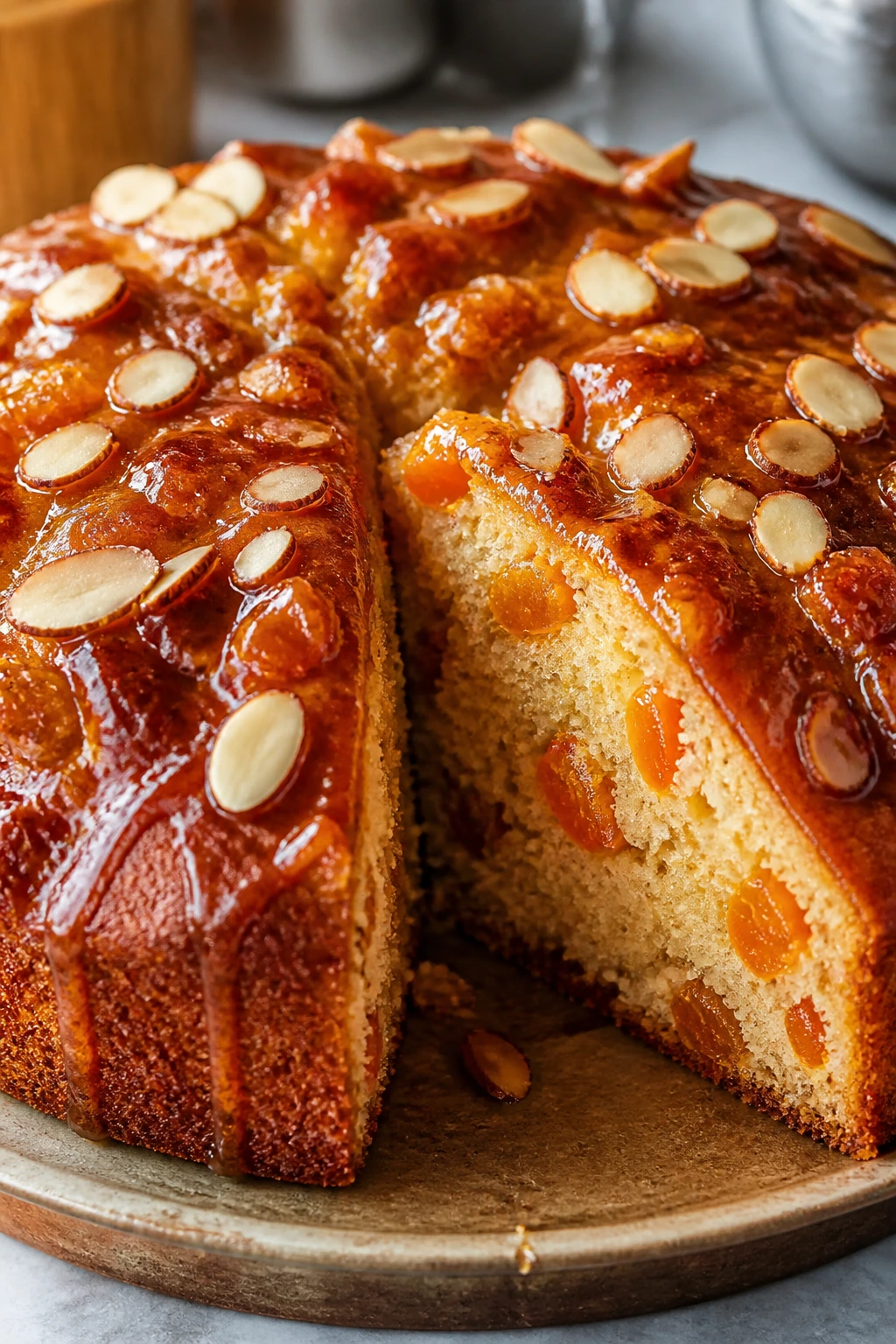
Apricot and almond are a calm, elegant pair, and they make a cake that tastes like it has been baked by someone who knows how to wait for dessert. Dried apricots keep the crumb moist, while almond flour or almond extract gives the whole thing a soft marzipan-adjacent note. Brown sugar glaze brings a little stickiness in the best way.
Why It Works: Dried apricots hold moisture and add chew, which helps the cake stay soft for days. Almond flour or extract adds richness without making the cake dense, and brown sugar in the glaze gives the top a faint caramel note. This is the kind of cake that gets better after sitting overnight because the fruit and almond flavor mingle.
Key Ingredients:
- 1 3/4 cups all-purpose flour
- 1/2 cup almond flour
- 2 teaspoons baking powder
- 1/2 teaspoon salt
- 1/2 cup butter, softened
- 1 cup granulated sugar
- 3 eggs
- 1 cup plain yogurt
- 1 teaspoon almond extract
- 1 cup chopped dried apricots
- 1/2 cup brown sugar for glaze
- 2 tablespoons milk
Quick Steps:
- Heat the oven to 350°F and line a 9-inch round or square pan.
- Whisk flours, baking powder, and salt.
- Cream butter and sugar, then add eggs, yogurt, and almond extract.
- Fold in the dry ingredients and chopped apricots.
- Bake 38 to 45 minutes, until the top is golden and the center is set.
- Warm the brown sugar glaze ingredients together and spoon over the cooled cake.
Equipment for This Recipe:
- 9-inch round or square pan
- Mixing bowls
- Small saucepan
- Knife for chopping apricots
How to Serve This Dish:
Serve with whipped cream or plain yogurt if you want to keep it light. It’s especially good with tea, which suits the almond flavor. A few toasted almond slices on top give it a little crunch.
Pro Tips for This Recipe:
- Chop the apricots small so the slices cut cleanly.
- If the fruit is very dry, soak it in warm water for 5 minutes and pat dry.
- Don’t overmix; almond cakes can tighten quickly.
- Brush on the glaze while the cake is only slightly warm.
Variations on This Dish:
- Cherry Almond Version: Swap apricots for dried cherries.
- Orange Blossom Twist: Add a small splash of orange blossom water to the glaze.
- Pistachio Apricot Cake: Replace part of the almond flour with finely ground pistachios.
Common Mistakes to Avoid with This Dish:
- Don’t leave the apricot chunks too large.
- Don’t use too much almond extract; it can take over.
- Don’t glaze a hot cake.
20. Pastel Confetti Buttermilk Cake with Mascarpone Frosting
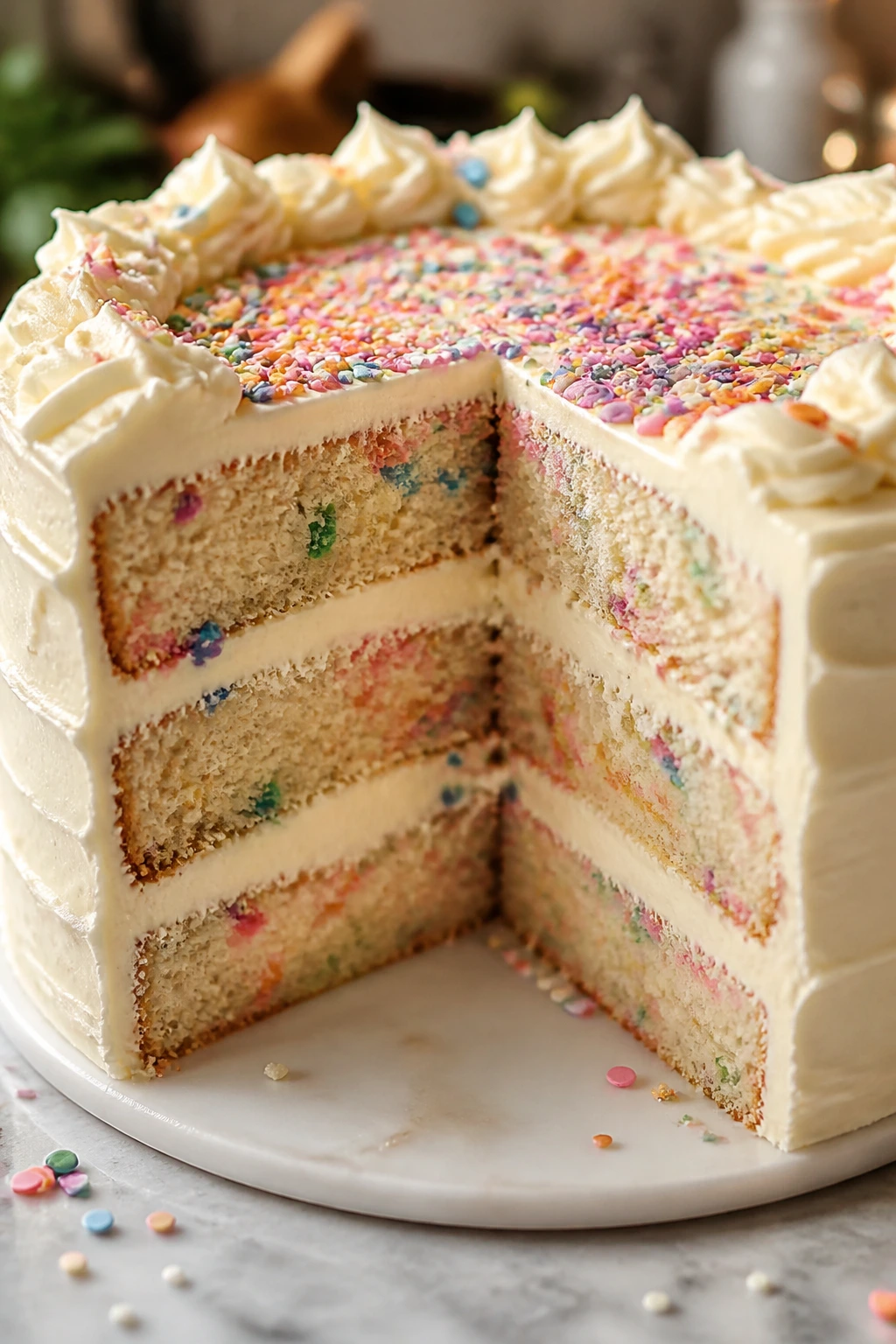
Confetti cake can be cheap and cheerful, or it can taste like a sugar rush in a tuxedo. Buttermilk fixes the texture. Mascarpone softens the frosting. The sprinkles stay festive without making the crumb taste like a box mix.
Why It Works: Buttermilk gives the cake a fine, tender crumb and keeps it soft even after a day or two. Mascarpone frosting is richer and less sweet than standard buttercream, which matters because confetti cakes can lean sugary fast. A little vanilla and a lot of patience with the cooling time keep the whole thing tidy.
Key Ingredients:
- 2 1/2 cups all-purpose flour
- 2 1/2 teaspoons baking powder
- 1/2 teaspoon salt
- 1/2 cup butter, softened
- 1 3/4 cups sugar
- 4 eggs
- 1 cup buttermilk
- 2 teaspoons vanilla
- 1/3 cup pastel sprinkles
- 8 ounces mascarpone
- 1 1/2 cups powdered sugar
- 1/2 cup butter for frosting
Quick Steps:
- Preheat the oven to 350°F and grease two 8-inch pans.
- Whisk flour, baking powder, and salt.
- Beat butter and sugar until fluffy, then add eggs one at a time.
- Mix in buttermilk and vanilla, fold in the dry ingredients, then stir in sprinkles last.
- Bake 24 to 28 minutes, cool completely, and frost with mascarpone cream.
- Finish with a small scatter of sprinkles right before serving.
Equipment for This Recipe:
- Two 8-inch round pans
- Hand mixer or stand mixer
- Offset spatula
- Cooling rack
How to Serve This Dish:
This is the one you slice when Easter needs a little color. It looks best with neat layers and a restrained handful of sprinkles on top, not a full blizzard. Serve it cool so the frosting holds its shape.
Pro Tips for This Recipe:
- Add sprinkles at the very end of mixing so they don’t streak the batter.
- Use jimmies, not tiny nonpareils, or the color can bleed.
- Chill the frosted cake briefly before slicing.
- Don’t overbake; buttermilk cake dries out faster than you expect.
Variations on This Dish:
- Chocolate Confetti Version: Replace 1/3 cup flour with cocoa powder.
- Strawberry Sprinkle Cake: Add a thin strawberry jam layer between the cakes.
- Single-Layer Shortcut: Bake in a 9×13-inch pan for easier serving.
Common Mistakes to Avoid with This Dish:
- Don’t use too many sprinkles or the crumb gets muddy.
- Don’t frost warm layers.
- Don’t expect tiny nonpareils to stay crisp; they dissolve fast.
Why These Cakes Keep Their Soft Crumb
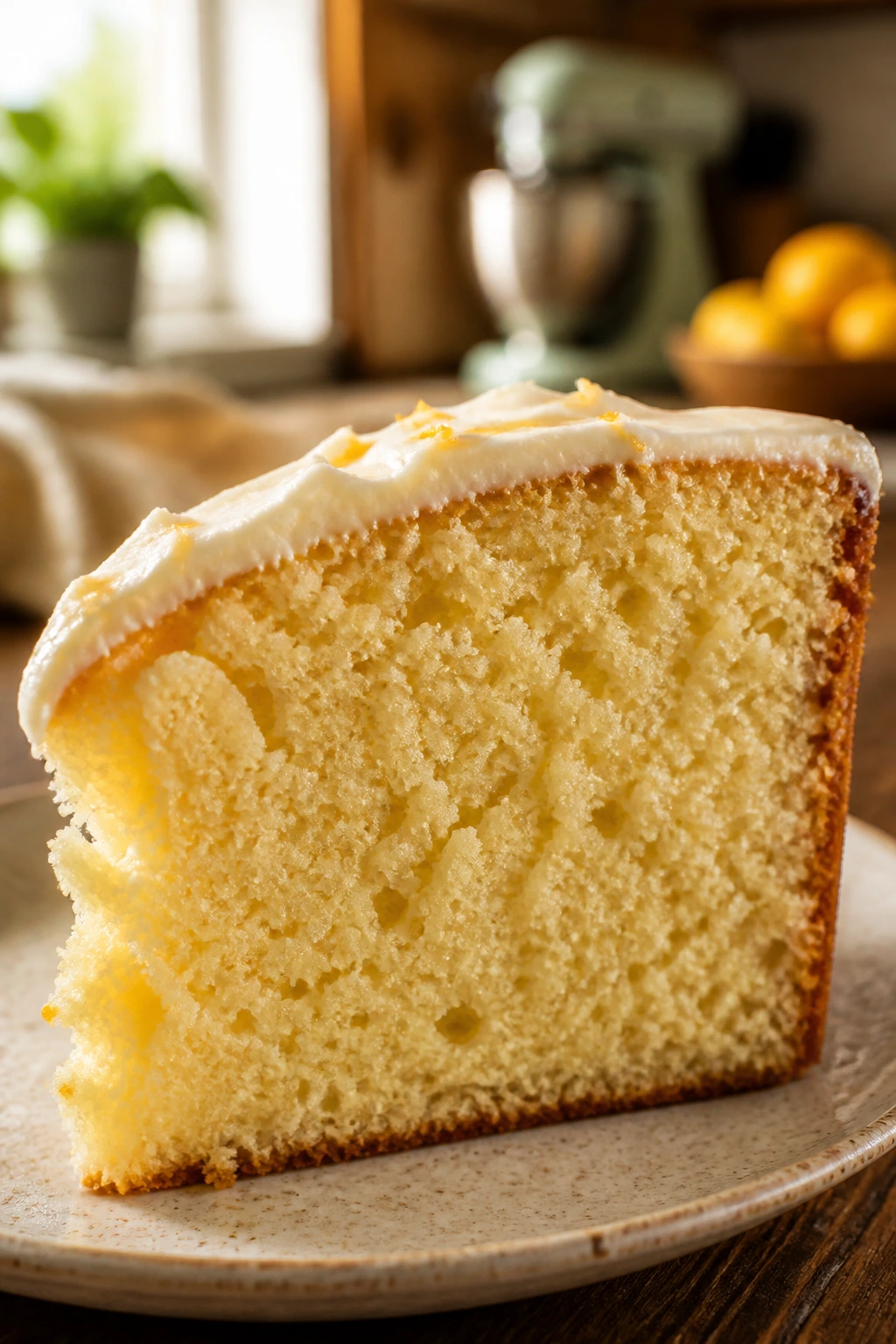
The secret here isn’t one clever trick. It’s a pattern. These cakes use ingredients that hold moisture and a baking style that doesn’t chase a bone-dry crumb. Sour cream, yogurt, ricotta, buttermilk, oil, fruit, and honey all stay in the mix because they keep the cake soft long after the first slice is gone.
Bundts, loaf cakes, and sheet cakes also earn their place. They bake evenly, stay easier to cover, and don’t dry out as fast as a thin layer cake sitting uncovered on a cake stand. Even the decorated cakes in this group use frosting or glaze as a moisture shield, not just a pretty hat.
That matters more than people admit. A cake can taste fine fresh from the oven and then go flat the next day if it was built lean, overbaked, or left naked on the counter. These recipes avoid that trap. They’re meant to be useful, not delicate.
Essential Equipment for These Recipes

- 9×13-inch sheet pan: Best for carrot cake, Meyer lemon cake, and any recipe that needs easy slicing.
- 8-inch or 9-inch round cake pans: Handy for layered cakes and smaller desserts that look tidy on the table.
- Bundt pan: Useful for hummingbird cake, chocolate cake, and pound cake; it gives a nice crust and easy serving.
- 9×5-inch loaf pan: Perfect for tea cakes, citrus loaves, and anything you want to slice for breakfast the next day.
- Electric mixer: A hand mixer works fine for most of these cakes, though a stand mixer helps with buttercream and mascarpone frosting.
- Microplane or fine zester: Citrus cakes live or die by proper zest.
- Offset spatula: Makes frosting sheet cakes and layer cakes less annoying.
- Cooling rack: This one matters more than it looks; cakes need air underneath or the bottom steams.
- Parchment paper: A small strip under loaf cakes or square cakes saves you from sticky edges.
- Cake tester or thin skewer: Better than guessing. Dry cake is easy to create and hard to fix.
Smart Shopping and Ingredient Tips
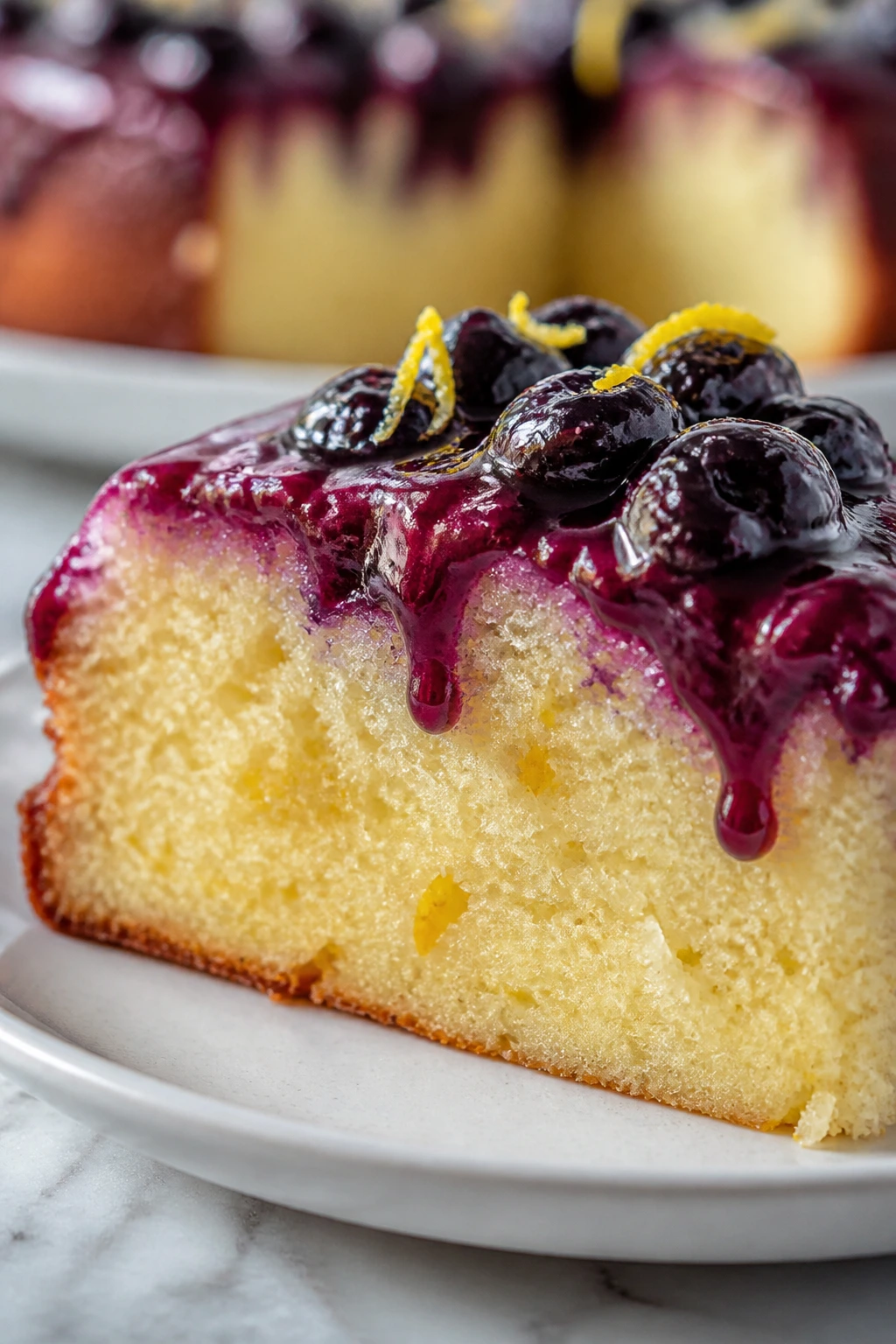
Buy the dairy with texture in mind. Full-fat sour cream, whole-milk ricotta, and thick yogurt behave better than the low-fat versions, which can make the crumb loose or bland. For cakes that depend on richness, this is not the place to trim fat and hope for the best.
Citrus should smell bright the moment you pick it up. If a lemon, orange, or blood orange feels heavy for its size and has a fragrant peel, you’re in good shape. Zest brings more flavor than juice in most cake batters, so pick fruit with clean skins and skip anything waxy or dull if you can help it.
Fresh spices are worth the drawer space. Cardamom, cinnamon, nutmeg, and mixed spice lose punch if they’ve been sitting around forever. You don’t need expensive jars, but you do need spices that still smell like something when you open them.
For fruit cakes, choose dried fruit that’s soft, not leathery. Apricots, currants, and raisins should bend, not crack. If they’re dry, a short soak in warm juice or tea can make the difference between a cake that slices cleanly and one that feels dusty in the middle.
Use good chocolate only where it changes the cake. In the chocolate Bundt, cocoa does most of the work, so you don’t need fancy bars. In the white chocolate cake, though, cheap chips can taste waxy, so a better white chocolate gives a cleaner flavor.
One more thing. Buy enough eggs, then let them warm up. Room-temperature eggs mix into batter more smoothly and help cakes rise with less curdling. Cold eggs are one of those small annoyances that turn into bigger problems than they should.
How to Serve These Easter Cakes
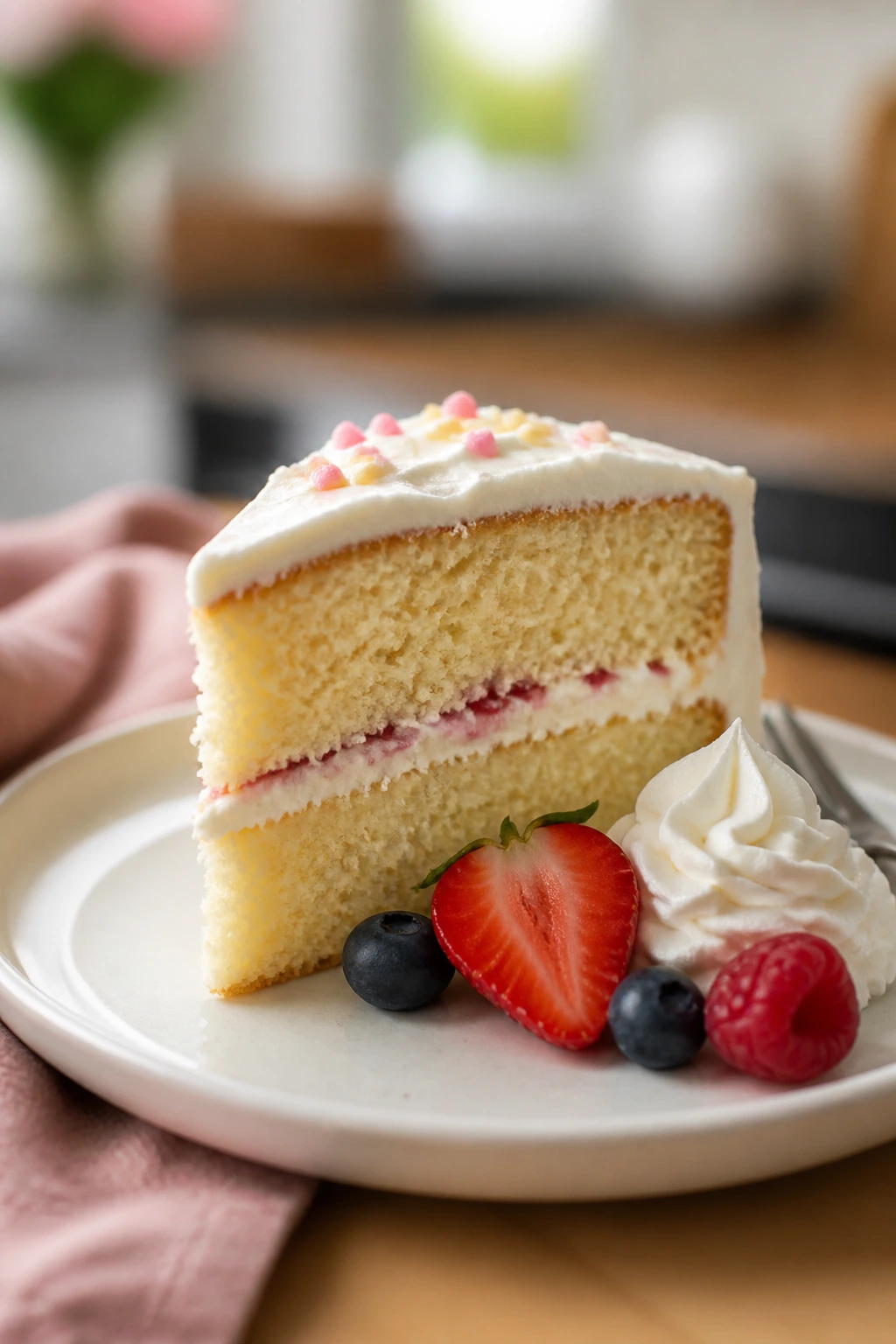
Presentation:
A few of these cakes want a clean dusting of powdered sugar. Others need a thin glaze that drips down the sides and sets into a glossy shell. Layer cakes look best when the frosting is not overworked; rough swoops with an offset spatula usually look better than a perfectly smoothed finish.
Accompaniments:
Fresh berries, whipped cream, lemon curd, berry compote, and lightly sweetened yogurt work across almost the whole collection. Coconut cakes like pineapple or raspberries. Citrus cakes can take on strawberries or orange segments. Carrot cake and hummingbird cake like coffee, black tea, or a cold glass of milk. Pound cake and tea cakes are excellent with compote or a spoon of jam.
Portions:
Bundt and loaf cakes slice into 8 to 12 pieces depending on thickness. Sheet cakes stretch farther; a 9×13-inch pan usually feeds 12 to 15 with sensible portions, more if the slices are narrow. Layer cakes need a heavier hand with the knife and a lighter hand with the fork. Easter dessert tables tend to invite second servings, so I like cakes that can be cut a little smaller without looking stingy.
Beverage Pairing:
Coffee works with nearly all of them, especially carrot, pound, and chocolate cakes. Earl Grey or English breakfast tea suits citrus and honey cakes. For a brunch table, sparkling water with lemon or a simple mimosa fits the brighter cakes nicely, and a small pour of cold milk still wins with the chocolate and confetti versions.
Additional Tips and Flavor Boosters
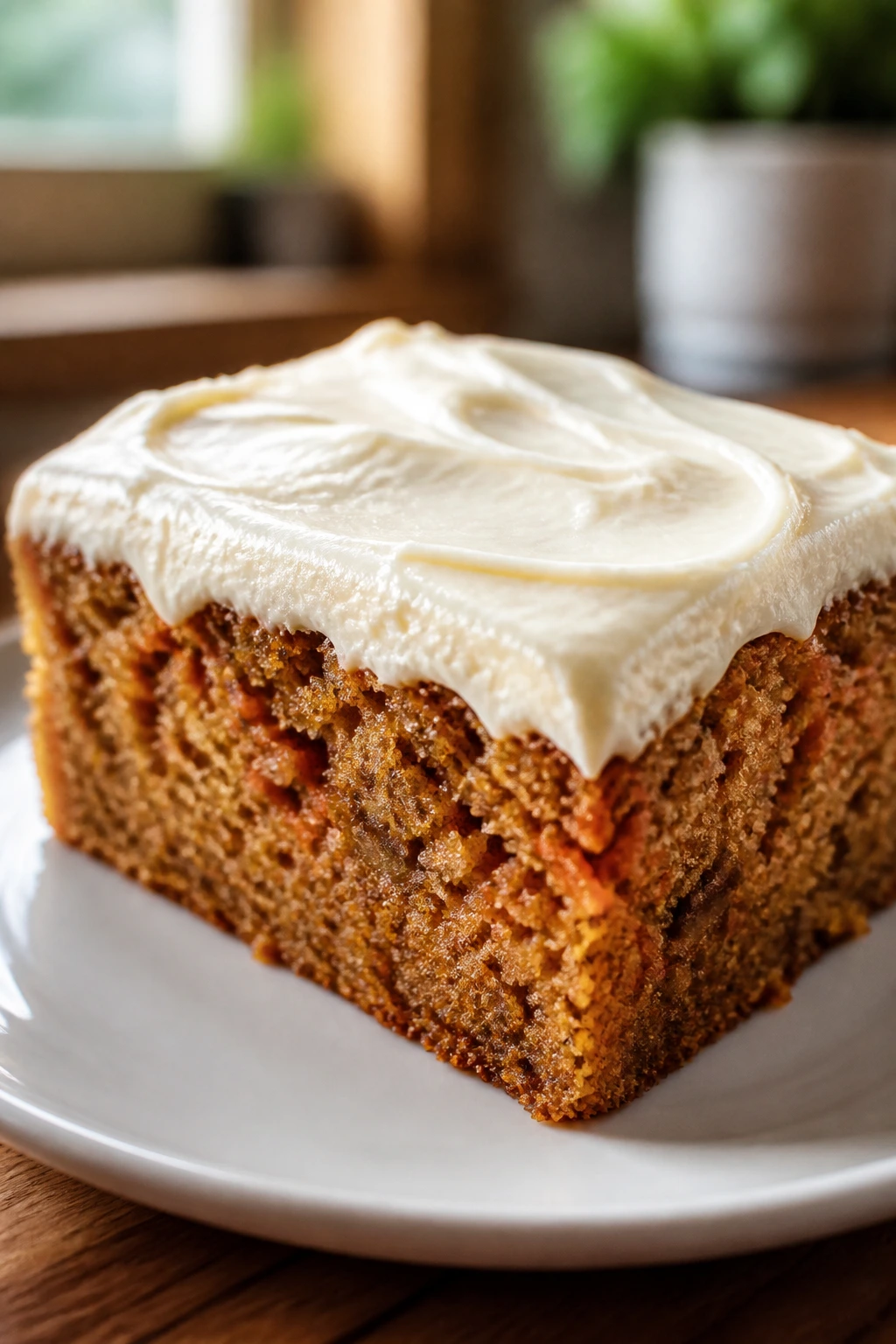
Flavor Enhancement:
A spoonful of citrus zest in the sugar, not just the batter, makes lemon and orange cakes taste louder without making them sharper. For spice cakes, toast the cinnamon or cardamom in the dry pan for a minute first if you want the aroma to open up. Tiny step. Big payoff.
Customization:
Fold chopped nuts into the carrot, hummingbird, pistachio, and apricot cakes if your crowd likes crunch. Swap berries based on what looks good and smells sweet. If someone at the table avoids nuts, leave them out and lean on a glaze or crumb topping for texture instead.
Serving Suggestions:
Fresh mint, toasted coconut, candied citrus peel, and a few berries on the side are enough garnish for most of these cakes. Don’t bury the cake under decoration. The soft crumb is the whole point, and the topping should make that easier to see, not hide it.
Make-It-Yours:
For a dairy-light version, use oil cakes, olive oil cakes, or fruit-topped sheet cakes with a simple citrus glaze. For a lower-sugar version, cut the frosting sweetness with cream cheese or mascarpone and rely on fruit for the rest. For a richer dessert, add a thin layer of jam, curd, or fruit compote between cake layers instead of piling on thicker frosting.
Make-Ahead, Storage, and Reheating Guidance
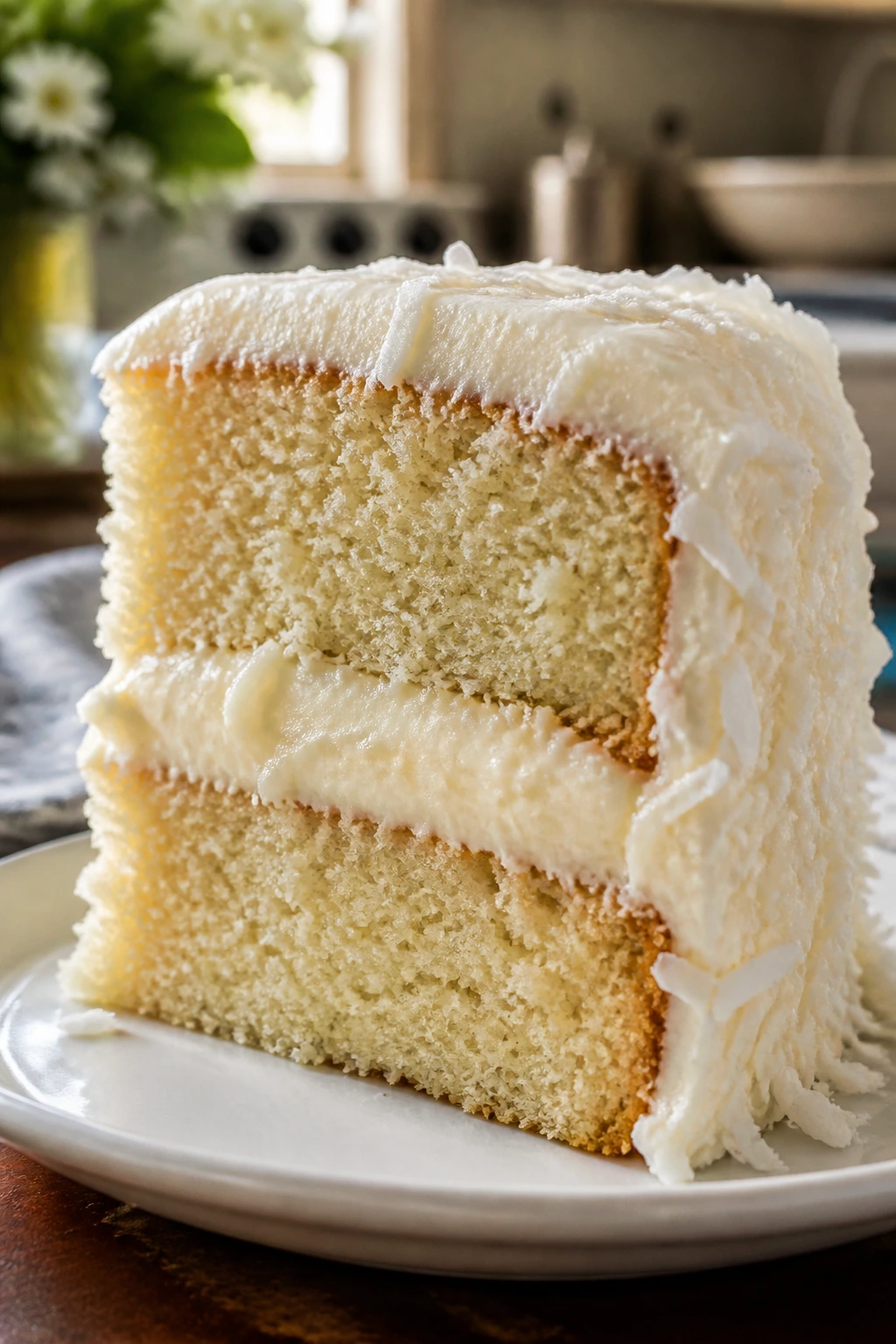
Most of these cakes are happiest after they’ve had a little time to settle. Loaf cakes, Bundts, pound cakes, and glazed cakes can usually sit at room temperature for 2 to 3 days if they’re covered well. Frosted cakes, especially anything with cream cheese, mascarpone, or whipped cream, belong in the fridge and do best within 4 days.
Wrap unfrosted cakes tightly in plastic wrap once they’re completely cool. Then slip them into a zip-top bag or airtight container so the edges don’t dry out. If you’re making a layer cake ahead, bake the layers one day, wrap them once cool, and frost the next day. That’s usually the cleanest path.
Freezing works better than people expect. Most unfrosted cakes freeze well for up to 2 months if wrapped tightly and stored flat. Thaw overnight in the fridge, still wrapped, so condensation stays on the outside instead of soaking the crumb. Glazes can be added after thawing. Frosting should usually wait until after the cake has fully thawed.
Reheating is gentle, not aggressive. A slice of pound cake, tea cake, or loaf cake can be warmed for 10 to 15 seconds in the microwave, just enough to wake up the butter without drying the edges. Tres leches and cream-frosted cakes should not be reheated; serve them cold or slightly chilled. If a cake feels a little stale, a spoonful of warm compote or a thin drizzle of simple syrup can bring it back faster than any oven trick.
Variations and Adaptations to Try
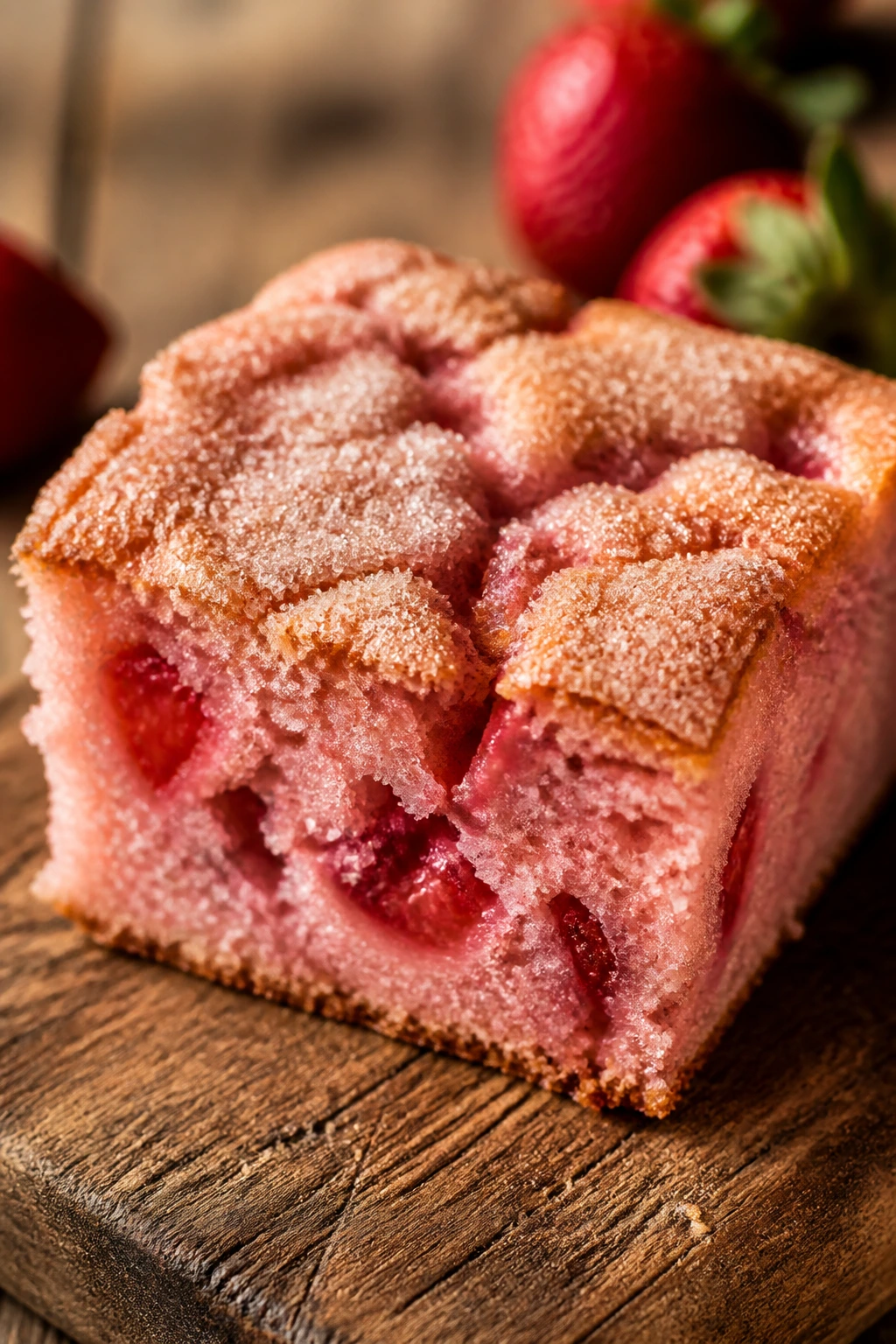
Gluten-Free Spring Table:
Use a good 1:1 gluten-free flour blend in the loaf cakes, Bundts, and sheet cakes. The texture will be a touch more delicate, so cool them fully before slicing. Cakes with sour cream, yogurt, or ricotta handle the swap better than lean butter cakes.
Dairy-Lighter Version:
Reach for olive oil cakes, orange cakes, and fruit sheet cakes. Swap dairy frosting for a citrus glaze, berry compote, or whipped coconut cream. The result stays soft without leaning on buttercream.
Lower-Sugar Easter Dessert:
Choose cakes with fruit, spice, and glaze rather than heavy frosting. Cut frosting sweetness by using mascarpone or cream cheese with less powdered sugar, then let berries, citrus, or honey carry the flavor. The cake will taste cleaner and not quite so sticky.
Kid-Friendly Candy Cake:
The confetti cake and chocolate Bundt are the obvious picks here. Use sprinkles, mini eggs, or a thin chocolate glaze, but keep the decoration on top instead of mixing too much candy into the batter. Too many add-ins can make the crumb muddy.
Brunch-Side Sweetness:
For a lighter table, make loaf cakes, tea cakes, and citrus cakes with thin glazes. They slice neatly, stack well on a platter, and don’t require forks, which is a small mercy when plates are already full.
Regional Spring Twist:
Shift the flavors toward local fruit or spices that make sense where you live. Strawberries, apricots, blood oranges, lemons, or honey can all take the lead without changing the basic method. The texture trick stays the same: keep the crumb moist and the topping restrained.
Common Mistakes to Avoid
The first mistake is overbaking. It happens all the time because a cake can look done before it truly is, especially loaf cakes and Bundts. The fix is simple: check early, test the center, and pull the cake when it still has a little spring. Dry cake is not a badge of honor.
The second mistake is using low-fat dairy or watery substitutes in cakes that depend on moisture. Thin yogurt, skim milk, and low-fat ricotta can make a batter behave strangely and a cake taste flat. If you want the cake to stay soft for days, use the full-fat version whenever the recipe calls for dairy as texture, not just liquid.
Third, people rush the cooling process. Warm cake is fragile. If you frost, glaze, or slice too soon, the structure tears and the finish runs. Give the cake enough time to cool, then set it aside another few minutes if you need clean slices.
Fruit missteps cause trouble too. Wet strawberries, under-drained pineapple, or very dry apricots can all throw off the crumb. Handle fruit according to what it actually is, not the assumption that fruit is just fruit. Some needs draining. Some needs chopping. Some needs a quick soak.
The last mistake is storing the cake loosely. A naked cake on the counter dries out at the edges before the center has a chance to be finished. Wrap it, cover it, or box it. The difference shows up on day two, when the soft cakes still taste soft and the neglected ones start to taste like the air around them.
Frequently Asked Questions
Can I bake these cakes a day ahead?
Yes, and several of them improve overnight. Lemon loaf cakes, pound cakes, carrot cake, hummingbird cake, and most Bundts taste softer and more settled on day two. Frost right before serving if you want the cleanest look.
Which cakes hold up best without refrigeration?
Glazed loaf cakes, Bundts, pound cakes, and unfrosted sheet cakes are the safest bets. Anything with cream cheese, mascarpone, whipped cream, or tres leches milk soak should go into the fridge once it has cooled. If the table is warm or the room sits out for hours, chill the creamy ones.
Can I freeze leftover slices?
Yes. Wrap individual slices tightly, then place them in a freezer bag or airtight container. Unfrosted slices usually freeze best, but even frosted slices can work if the frosting is firm and not whipped cream-based. Thaw in the fridge, not on the counter, so the crumb doesn’t sweat.
What if I only have all-purpose flour and not cake flour?
Use all-purpose flour in the loaves, Bundts, and sheet cakes without much worry. For lighter layer cakes, the crumb may be a bit less fine, but it still works. If you want to mimic cake flour, remove 2 tablespoons of flour per cup and replace them with cornstarch.
How do I keep fruit from sinking?
Toss chopped berries, apricots, or pineapple with a little flour before folding them in. Keep the pieces small, and don’t make the batter too thin. Dense fruit like dried apricots and drained pineapple behave better than wet fruit straight from the bowl.
Can I make any of these without frosting?
Absolutely. The citrus cakes, honey cake, loaf cakes, and pound cakes are excellent with just a glaze or a dusting of powdered sugar. If you want less sugar on the plate, use a berry compote or a spoonful of yogurt instead of frosting.
What’s the best cake here for a big crowd?
The 9×13 sheet cakes are the easiest to scale and slice, especially carrot cake and Meyer lemon cake. They travel well and don’t demand careful layering. If you want something more dramatic, a Bundt cake still serves a crowd without making you fight the knife.
Why do some cakes taste better the next day?
The moisture redistributes. Honey settles in, citrus softens, spice rounds out, and the crumb stops feeling freshly baked and starts feeling complete. That’s why the make-ahead cakes in this group hold up so well.
The Last Slice
A good Easter cake should do two jobs at once. It needs to look right on the table, and it needs to taste good after the first round of serving, when the plates are stacked and the cover is back on the cake stand. That’s where these recipes earn their keep.
Pick the one that fits your table, your schedule, and your patience level. A loaf cake for brunch. A Bundt for easy slicing. A frosted sheet cake when you need a crowd mover. Then let the leftovers prove the point the next day.