



Some takeout lemon chicken arrives looking right and tasting wrong. The coating is pale and limp, the lemon sauce tastes like candy with a citrus sticker on it, and the whole thing gives up the moment steam hits the lid. Chinese lemon chicken should be more than that. It should crack a little when you bite in, then give way to juicy chicken and a sauce that smells like fresh peel, ginger, and hot oil.
At home, the dish gets better because you can control the one thing restaurants often rush: timing. Fresh lemon zest changes the whole smell of the sauce. A little rice vinegar keeps the sweetness from turning syrupy. A second fry gives the chicken a sturdier shell, the kind that can survive a quick toss in sauce without going soggy in the bowl.
The funny thing is that this dish is not hard. It’s fussy in only the useful ways. Heat matters. Batch size matters. So does the moment you combine the chicken and sauce. Get those three pieces right and you end up with a plate that tastes bright, crisp, and a little addictive in the way the best takeout food is supposed to feel.
Why Chinese Lemon Chicken Works at Home
Crisp chicken that doesn’t wilt on the plate: The batter sets into a thin, craggy shell, and the double fry gives it enough structure to survive a glossy sauce without collapsing immediately.
A lemon sauce with real aroma, not just sweetness: Fresh zest, fresh juice, ginger, and garlic create a sharper, cleaner flavor than bottled lemon sauce or lemon syrup ever can.
You control the sweetness instead of inheriting it: Some restaurant versions lean hard into sugar. At home, you can keep the sauce lively, then nudge it sweeter or sharper to taste.
The ingredients are ordinary, but the result is not: Chicken, cornstarch, flour, soy sauce, and a couple of lemons do most of the heavy lifting. The trick is in how they meet heat.
It fits a weeknight without tasting like one: Once you’ve set up the bowls, the frying and sauce work move fast. The only part that asks for attention is the oil temperature, and that’s easy to watch with a thermometer.
It scales cleanly for more people: Double the chicken, sauce, and coating, and the method stays the same. You just need a second frying batch and a larger bowl for tossing.
Yield: Serves 4
Prep Time: 25 minutes
Cook Time: 20 minutes
Total Time: 45 minutes
Difficulty: Intermediate — the steps are straightforward, but frying in batches and finishing the sauce at the right moment takes a little attention.
Chill/Rest Time: 10 minutes for the batter to hydrate
Best Served: Right away, while the coating is still crisp
The Ingredient Lineup for Crisp Chicken and Sharp Lemon Sauce
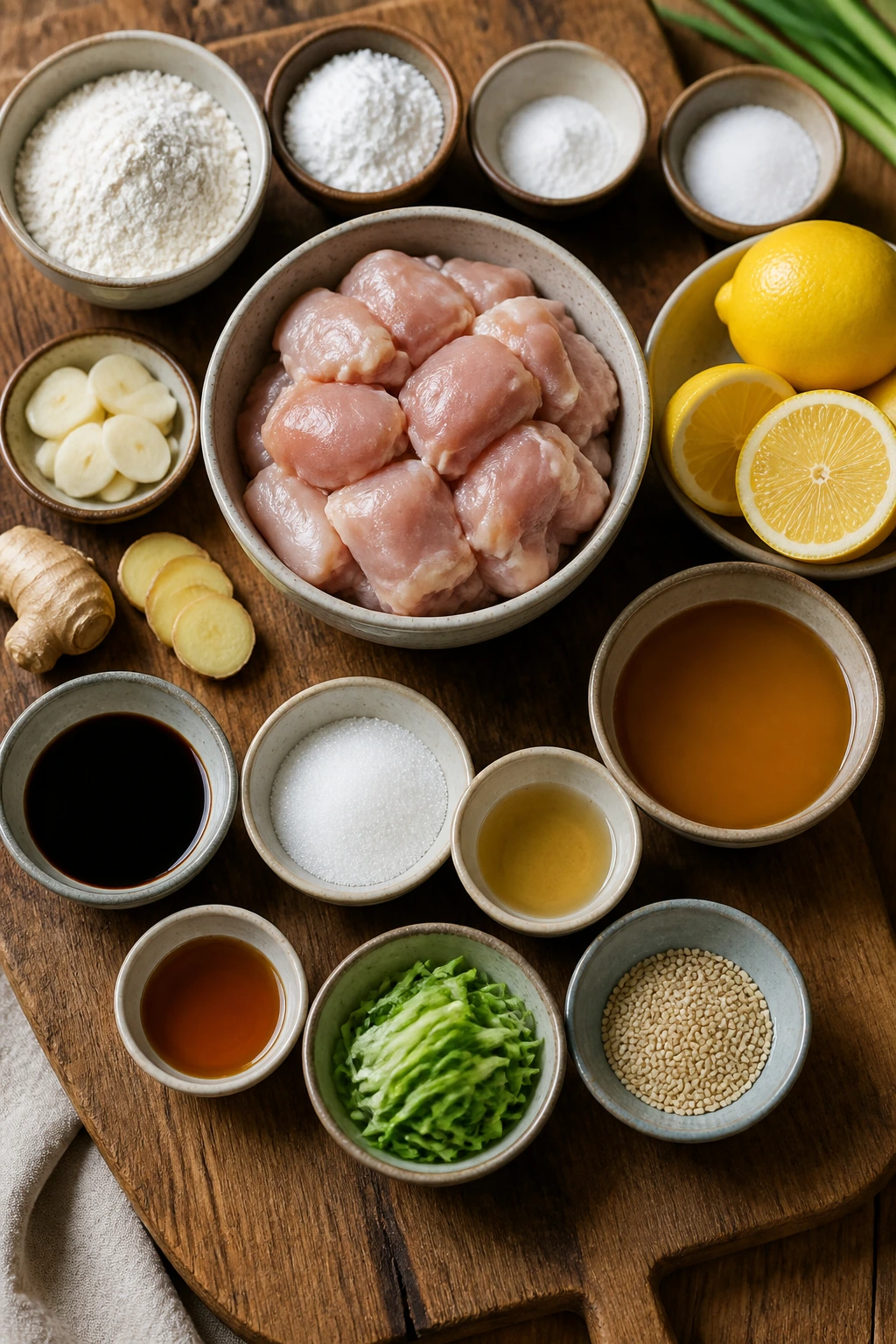
The ingredient list looks short, which is deceptive in a good way. Every item has a job, and if you skip one of the small pieces, the whole dish gets flatter, softer, or sweeter than it should be.
For the Chicken:
- 1 1/2 pounds boneless, skinless chicken thighs, cut into 1-inch pieces
- 1 teaspoon kosher salt
- 1/2 teaspoon white pepper
- 1 tablespoon Shaoxing wine or dry sherry
- 1 large egg
- 1 tablespoon cornstarch
For the Batter:
- 1/2 cup all-purpose flour
- 1/2 cup cornstarch
- 1 teaspoon baking powder
- 1/2 teaspoon kosher salt
- 3/4 cup cold water or cold club soda
For the Lemon Sauce:
- 1 cup low-sodium chicken broth
- 1/2 cup fresh lemon juice, from 3 to 4 lemons
- 1 tablespoon finely grated lemon zest
- 1/3 cup granulated sugar
- 2 tablespoons soy sauce
- 1 tablespoon rice vinegar
- 2 cloves garlic, finely minced or grated
- 1 teaspoon fresh ginger, finely grated
- 1 1/2 tablespoons cornstarch mixed with 2 tablespoons cold water
- 1 teaspoon toasted sesame oil
For Frying and Serving:
- 3 cups neutral oil, for shallow frying
- 2 scallions, thinly sliced
- 1 tablespoon toasted sesame seeds
- Lemon slices, for garnish
Why Each Ingredient Earns Its Place
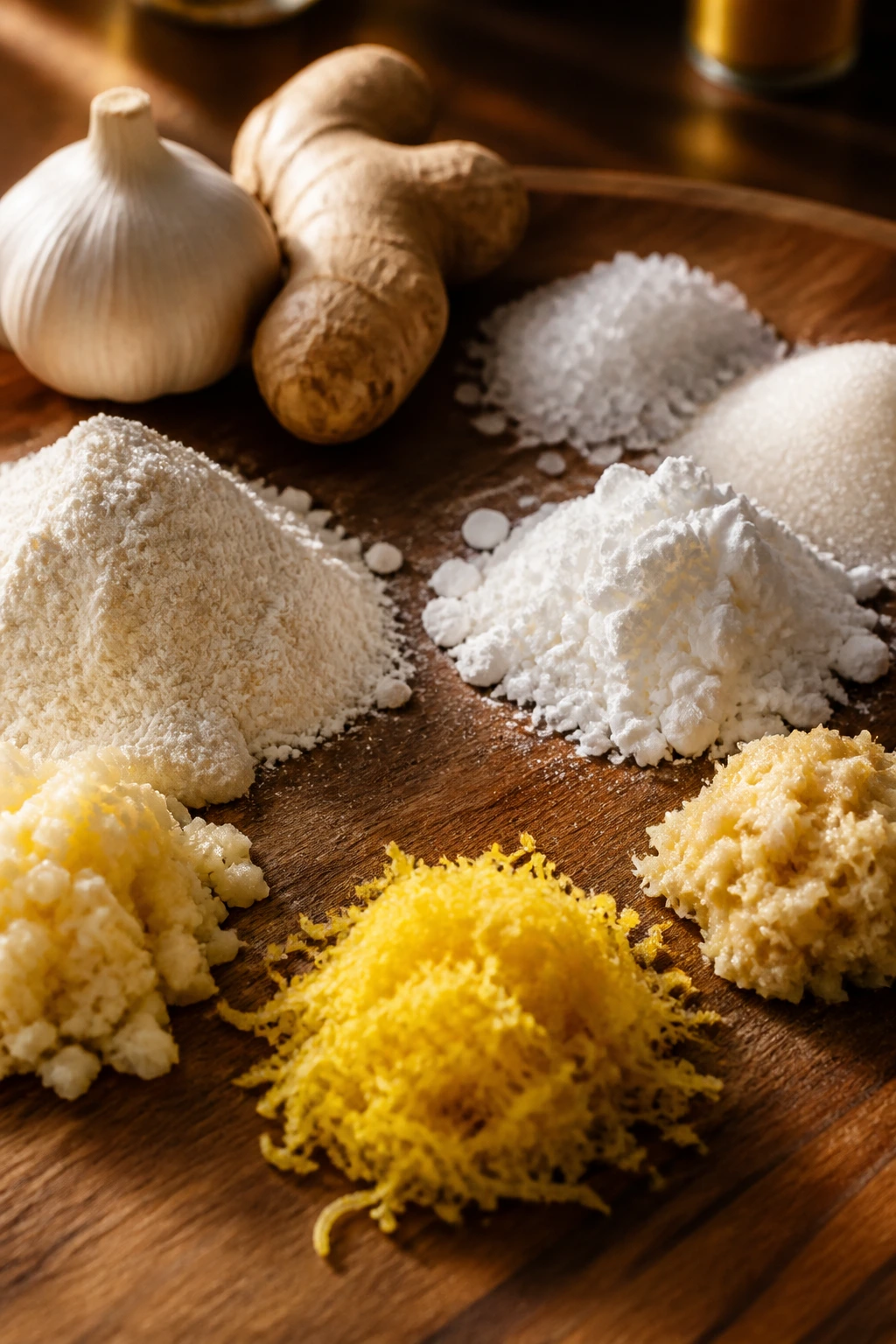
Chicken
- What to use: 1 1/2 pounds boneless, skinless chicken thighs cut into 1-inch pieces. Thighs stay juicier than breast meat and keep a little more flavor after frying.
- Preparation: Trim off obvious fat, pat the chicken dry, and cut it into pieces that are close in size. Even pieces fry at the same pace, which keeps the crust from overbrowning before the inside cooks through.
- Substitutions: Boneless chicken breasts work if that’s what you have; cut them into slightly larger pieces and shave a minute or so off the first fry. Chicken tenderloins also work, though they cook faster and need a careful eye.
- Tips: Cold chicken fries cleaner than warm chicken, so keep the pieces chilled until you’re ready to coat them. If the chicken is wet, the batter slides around instead of gripping.
The Crisp Coating
- What to use: Flour, cornstarch, baking powder, salt, and cold water or club soda. The cornstarch helps the crust fry up lighter and crisper than flour alone.
- Preparation: Whisk the dry ingredients first so the baking powder doesn’t clump in one corner of the bowl. Add the liquid slowly until the batter looks like thick cream and drips in ribbons.
- Substitutions: Potato starch can replace part of the cornstarch if you want an even lighter shell. Rice flour also works, though it gives a slightly drier finish.
- Tips: Cold liquid matters more than people think. Warm batter starts losing lift before it ever hits the oil, and that shows up as a heavy crust.
The Lemon Sauce
- What to use: Lemon juice, zest, broth, sugar, soy sauce, rice vinegar, garlic, ginger, slurry, and toasted sesame oil. The zest gives the sauce perfume; the juice gives it bite.
- Preparation: Zest the lemons before juicing them. That sounds obvious, but it saves you from squeezing a slippery half lemon while trying to catch the zest later.
- Substitutions: Honey can replace part of the sugar if you like a rounder sweetness. If you’re out of chicken broth, water works in a pinch, though the sauce will taste thinner and need a little extra salt.
- Tips: The sauce should smell bright before it ever reaches the chicken. If it smells mostly sweet at the stove, it probably needs another tablespoon of lemon juice or a pinch more zest.
Aromatics and Finish
- What to use: Garlic, ginger, scallions, sesame seeds, and a tiny pour of toasted sesame oil. These are the ingredients that keep the dish from tasting flat.
- Preparation: Grate the ginger finely and mince the garlic small enough that it melts into the sauce. Slice the scallions thin so they land like green confetti on top.
- Substitutions: A pinch of dried chili flakes can stand in for fresh heat if you want a little edge. Cilantro works as a garnish too, though it changes the feel of the plate.
- Tips: Add the sesame oil off heat. If you cook it hard, the aroma gets muted and the whole point disappears.
The Tools That Make Frying Less Messy
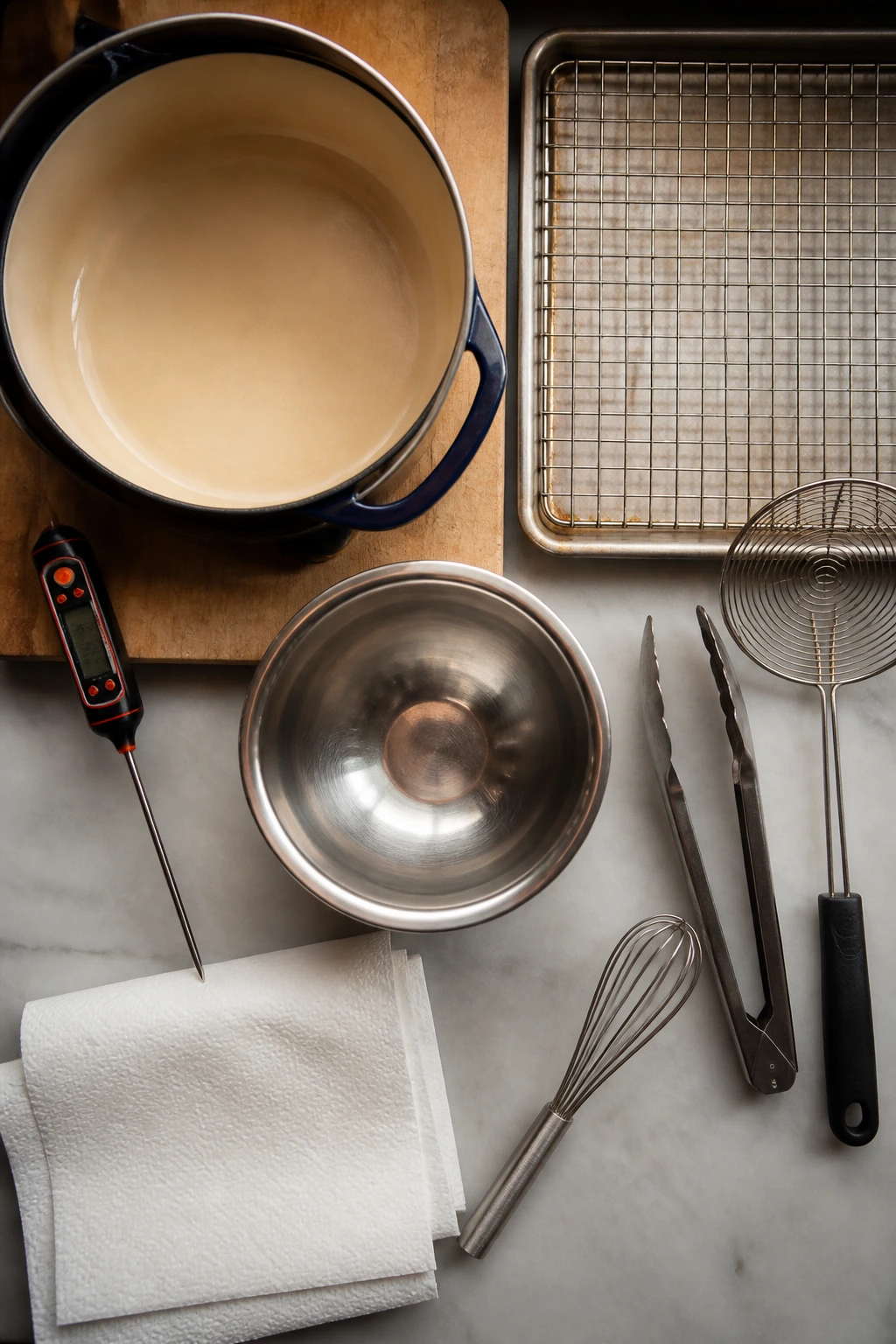
You do not need a restaurant kitchen for this. You do need a few pieces of equipment that keep the frying controlled and the sauce smooth.
- 12-inch heavy skillet or Dutch oven: A heavy base keeps the oil temperature steadier. Thin pans cool too fast once the chicken goes in.
- Instant-read thermometer: This is the difference between crisp chicken and greasy chicken. Guessing with oil temperature is how people end up disappointed.
- Wire rack set over a sheet pan: Let the fried chicken drain on a rack, not on a flat plate. Air moving under the coating keeps it from steaming itself soft.
- Medium mixing bowl for the batter: Wide enough to dip chicken pieces without splashing the counter.
- Small saucepan or deep skillet for the sauce: Something that lets you whisk without sloshing.
- Microplane or fine grater: Best tool for zesting lemons and grating ginger finely.
- Tongs or a spider skimmer: Safer than a fork when moving chicken in and out of oil.
- Small whisk: Handy for the sauce slurry and for smoothing the batter.
- Paper towels: Useful under the rack if you want to catch drips, though the rack does the real work.
How to Fry and Sauce Chinese Lemon Chicken
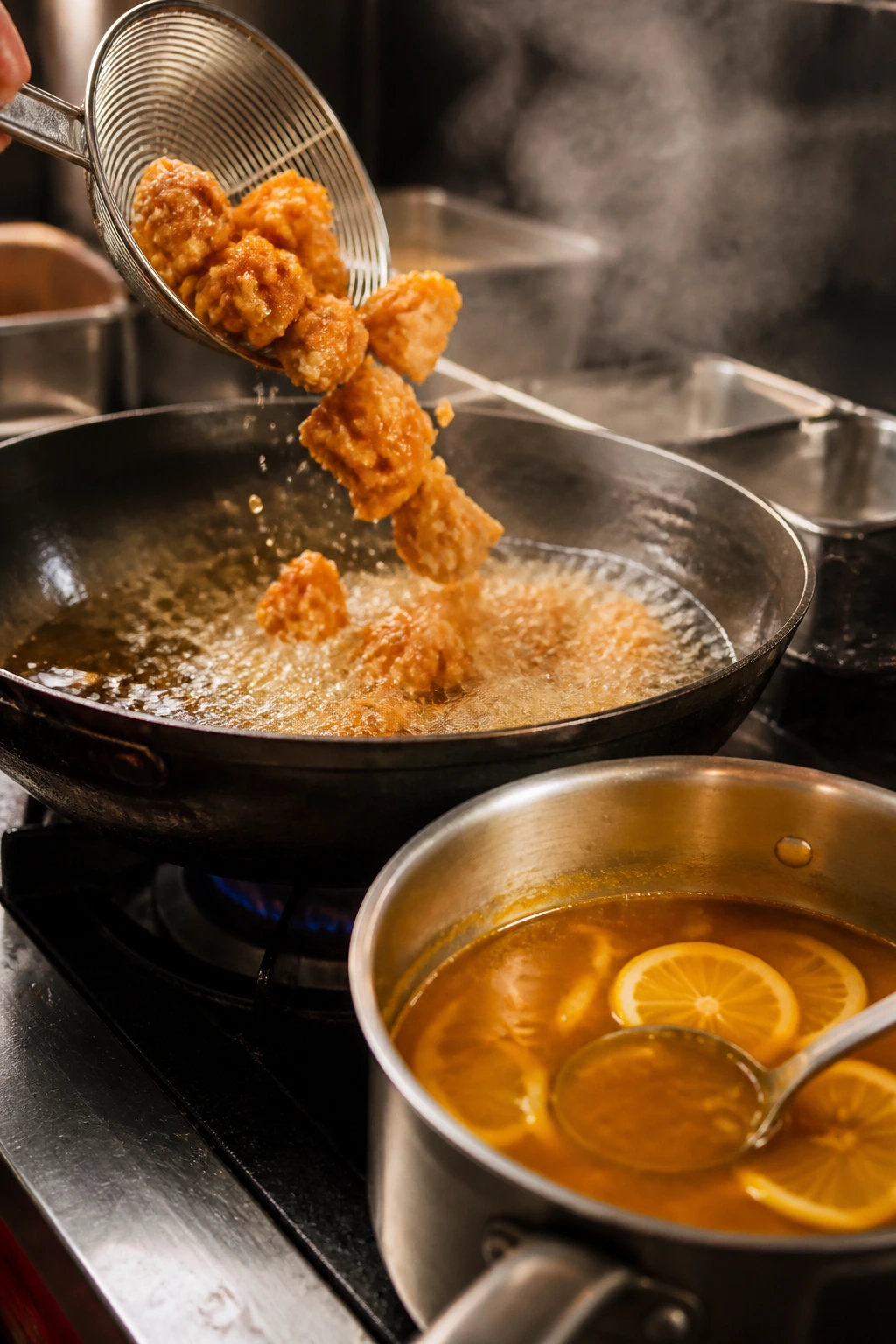
Build the sauce base first.
- Zest 1 lemon until you have about 1 tablespoon of fine zest, then juice 3 to 4 lemons until you have 1/2 cup juice.
- In a small saucepan, whisk together the chicken broth, lemon juice, zest, sugar, soy sauce, rice vinegar, garlic, and ginger. Set it aside while you fry the chicken.
Mix the chicken and batter.
3. In a medium bowl, toss the chicken with the salt, white pepper, Shaoxing wine, egg, and 1 tablespoon cornstarch until every piece looks lightly coated and tacky. The chicken should look slick, not wet and soupy.
4. In a second bowl, whisk together the flour, cornstarch, baking powder, and salt. Add the cold water or club soda and whisk just until smooth. A few tiny lumps are fine.
5. Let the batter rest for 10 minutes. Do not skip this pause — the flour hydrates, the bubbles settle a little, and the coating clings better.
Heat the oil and fry.
6. Pour the oil into a heavy skillet or Dutch oven to a depth of about 1 1/2 inches and heat it over medium-high until it reaches 350°F. If you drop in a little batter, it should bubble immediately and rise to the surface.
7. Dip each chicken piece into the batter, let the excess drip off for a second, and lower it carefully into the hot oil. Fry in batches for 4 minutes, turning once or twice, until the pieces are pale golden and set.
8. Transfer the chicken to the wire rack and let it rest for 5 minutes. This is the moment that stops the crust from getting chewy too soon.
9. Raise the oil temperature to 375°F and fry the chicken a second time for 60 to 90 seconds, just until the coating turns deeper gold and sounds a little drier when you tap it with tongs. Drain again on the rack.
Finish the sauce and bring it together.
10. Bring the lemon sauce base to a simmer over medium heat. Cook for 1 to 2 minutes until the sugar dissolves and the garlic smells sweet rather than raw.
11. Whisk the cornstarch slurry again and stream it into the simmering sauce while whisking. Cook for 30 to 60 seconds, just until the sauce looks glossy and lightly thick enough to coat the back of a spoon.
12. Turn off the heat and stir in the toasted sesame oil. Toss the chicken with the sauce in a large bowl if you want full coverage, or spoon the sauce over the chicken on the plate if you want the crust to stay crisper. Finish with scallions, sesame seeds, and lemon slices.
How to Serve It So the Coating Stays Crisp
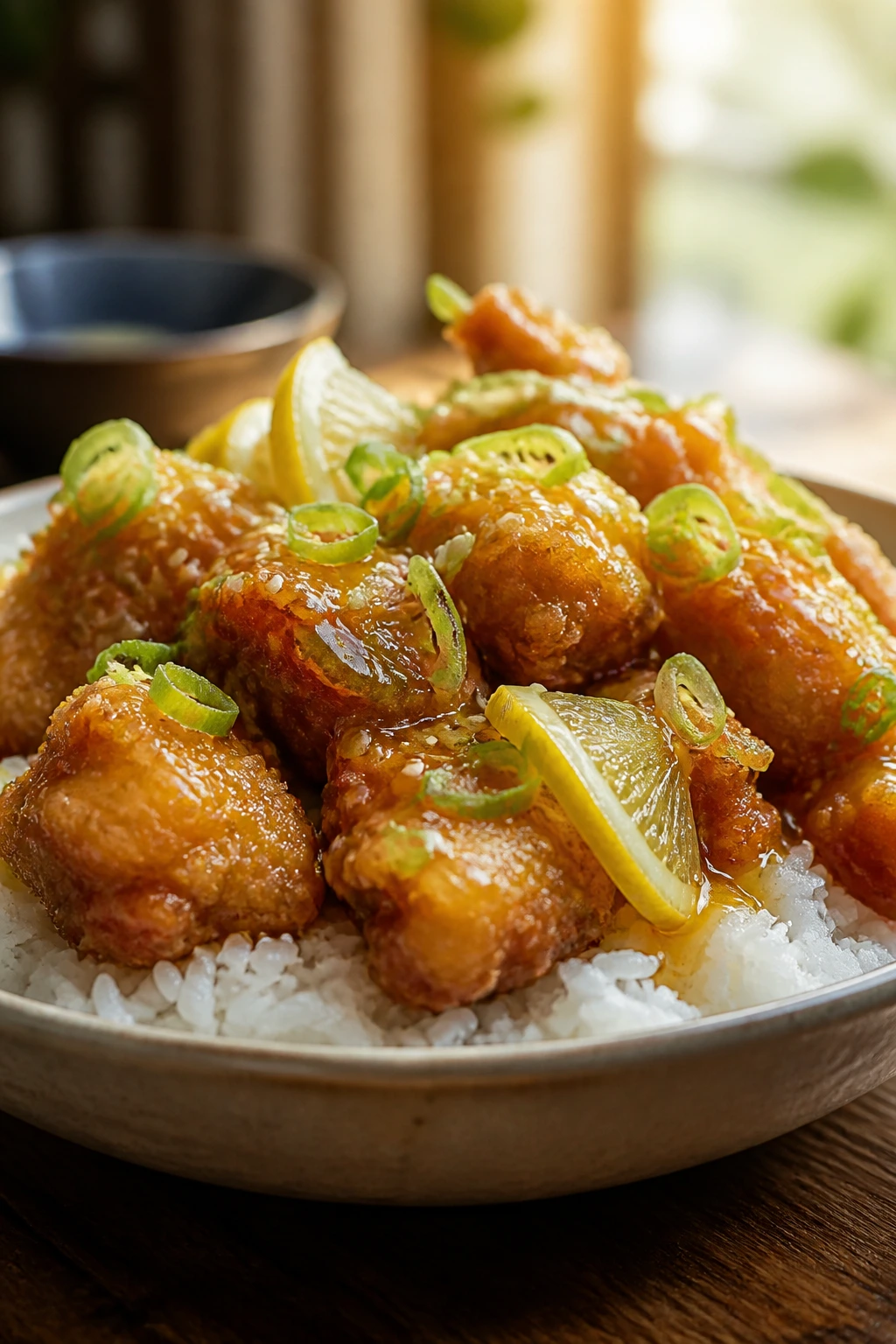
Presentation: I like serving Chinese lemon chicken over a bed of plain jasmine rice, with the sauce spooned mostly over the chicken and a little pooled on the rice. That gives you the shiny, restaurant-style look without burying the crust under too much liquid. A scatter of scallions and sesame seeds keeps the plate from looking heavy.
Accompaniments: Steamed broccoli, bok choy, or snap peas fit naturally here because they catch stray sauce without fighting it. If you want a fuller spread, add egg fried rice, a simple cucumber salad, or even plain lo mein tossed with a little sesame oil. The one side I’d avoid is anything creamy; it muddies the bright lemon flavor.
Portions: Four servings is a comfortable read on the recipe if rice is on the side. If you’re serving it as part of a bigger spread, you can stretch it to six smaller portions. If this is the whole meal, keep it at four and make extra rice.
Beverage Pairing: A cold lager or dry pilsner works well because it cuts the sweetness in the sauce. If you want something nonalcoholic, go for unsweetened iced green tea or sparkling water with a squeeze of lemon. Sweet drinks make the sauce feel heavier.
Small Moves That Improve the Flavor
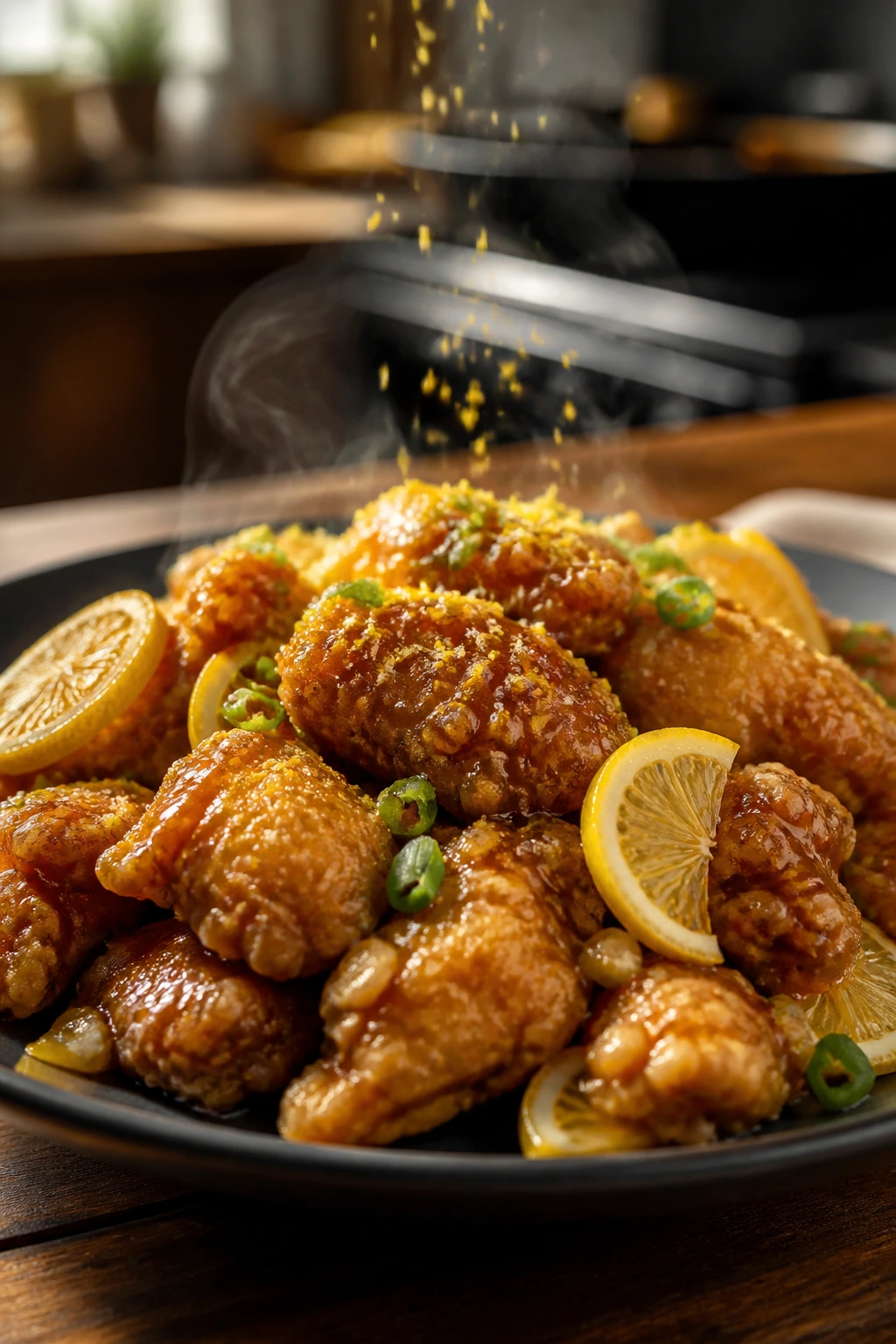
Flavor Enhancement: Save a little zest for the very end and sprinkle it over the plated chicken. Heat dulls citrus aroma, and that final pinch brings the lemon back to the front of the nose before the first bite even lands.
Time-Saver: Mix the sauce base earlier in the day and keep it chilled, but hold the cornstarch slurry until you’re ready to finish. The sauce base can sit for hours without losing anything; the slurry should be fresh so the texture stays smooth.
Pro Move: Double frying is worth the extra five minutes. The first fry cooks the chicken through; the second fry tightens the crust and makes it sound dry when you lift it from the oil. That little crisp window is what keeps the dish from turning soft the second the sauce goes on.
Cost-Saver: Chicken thighs are usually cheaper than breasts and hold up better to frying. They also forgive a minute or two of extra cooking, which makes the whole process less stressful if your oil drops a little between batches.
Make-It-Yours: If you like more heat, add a pinch of white pepper to the sauce or a few chili flakes at the end. If you prefer a softer lemon profile, reduce the sugar by 1 tablespoon and add an extra teaspoon of zest instead. That changes the aroma more than the sweetness, which is usually the better move.
Common Mistakes That Flatten the Dish
-
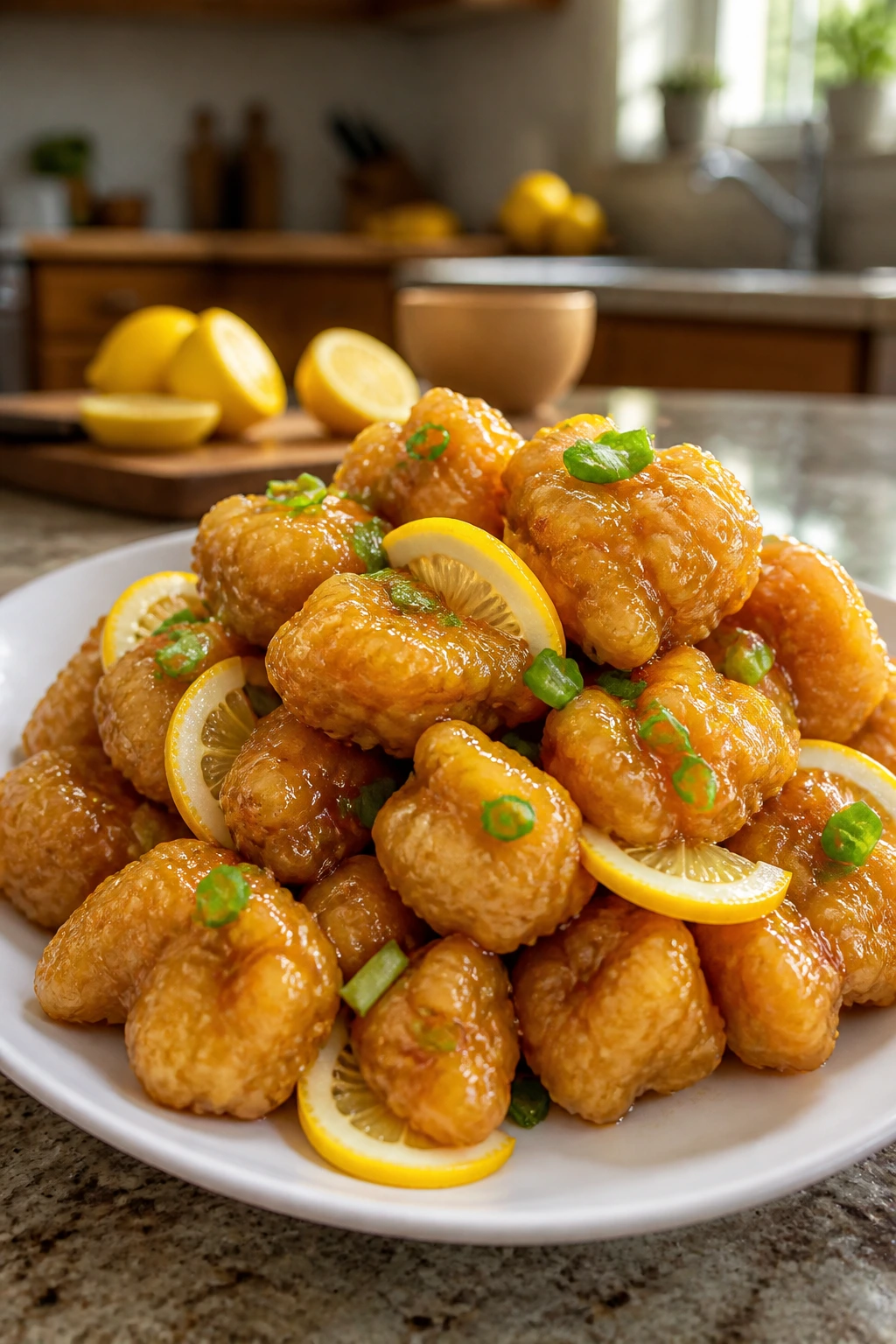
Oil that’s too cool: The chicken comes out pale, greasy, and heavy instead of crisp. The fix is simple: keep the oil around 350°F for the first fry and 375°F for the second, and let it recover between batches.
-
Tossing the chicken in sauce too early: The coating softens fast, and by the time the food hits the table, the crust has gone floppy. If you want crunch, sauce the chicken right before serving or serve the sauce on the side for dipping.
-
Using bottled lemon juice alone: Bottled juice can taste flat or sharp in the wrong way. Fresh zest changes the smell of the sauce, and that’s half the point of making the dish in the first place.
-
Making the sauce too thick: If the slurry goes in too heavy, the sauce turns gluey and clings in a sticky layer rather than a glossy one. Fix it by adding the cornstarch gradually and stopping when the sauce coats a spoon instead of clumping on it.
-
Crowding the pan: Too many pieces at once drop the oil temperature and the batter starts steaming before it crisps. Fry in smaller batches and keep the finished chicken on a rack, not in a pile.
-
Skipping the second fry: One fry is fine in a pinch, but the shell will be softer and more fragile. The second pass adds a drier, more brittle edge that holds up better once the sauce goes on.
Variations That Fit Different Kitchens
Extra-Zesty Lemon Chicken: Reduce the sugar to 1/4 cup and add an extra teaspoon of zest to the sauce. This version leans sharper and cleaner, which works well if your lemons are fragrant and not too acidic.
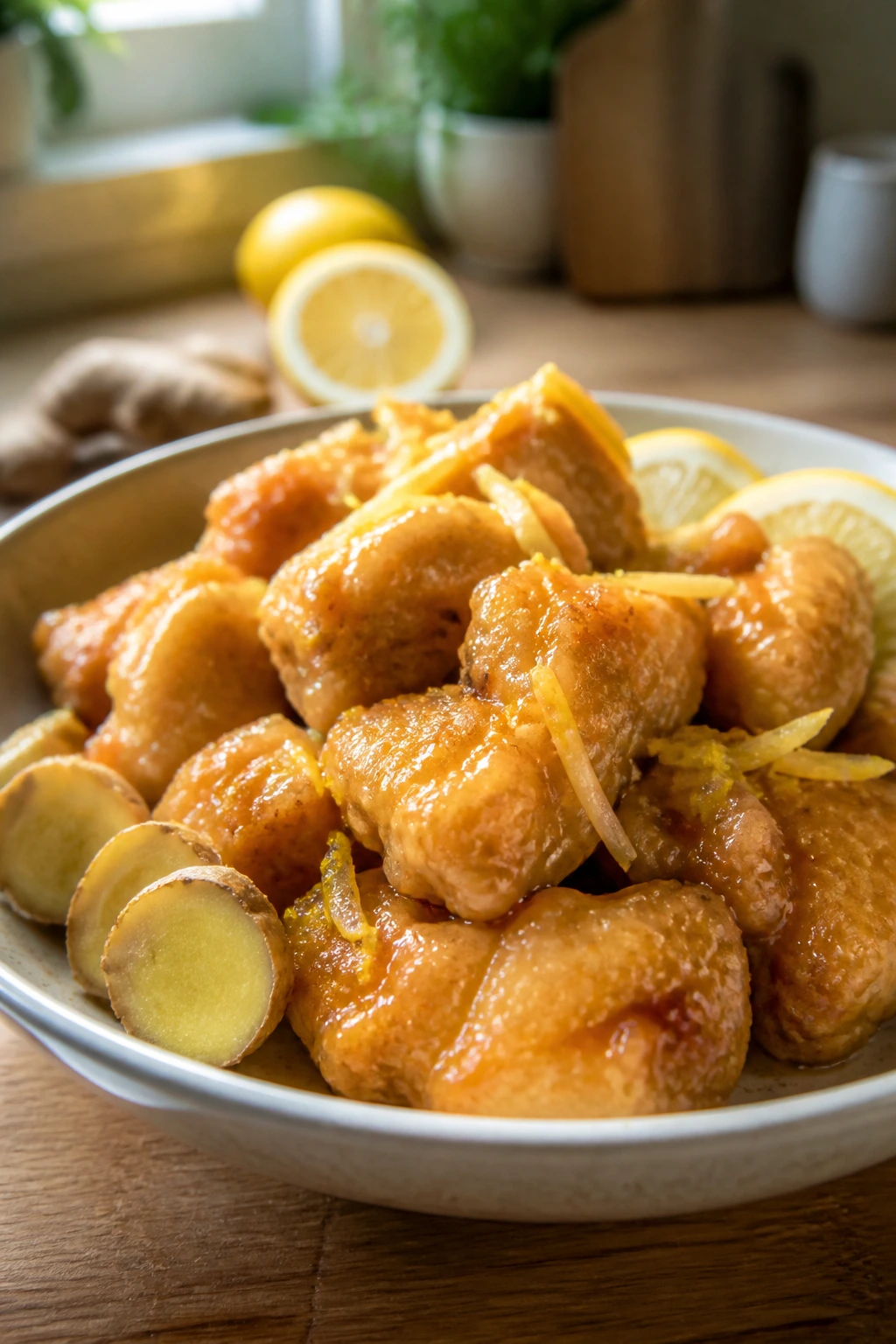
Ginger-Forward Lemon Chicken: Double the ginger to 2 teaspoons and slice a few thin coins into the sauce while it simmers. The ginger warms the finish and makes the lemon taste less candy-like.
Gluten-Free Crunch: Swap the flour for rice flour and use tamari instead of soy sauce. The coating comes out a little lighter and more brittle, which is a nice trade if you need the dish to stay wheat-free.
Air-Fryer Shortcut: Coat the chicken as directed, spray it lightly with oil, and air-fry at 400°F until golden and cooked through, usually 12 to 14 minutes depending on piece size. The texture is drier than the fried version, but the lemon sauce still carries the dish.
Spicy Lemon Finish: Stir a pinch of chili flakes or a drizzle of chili oil into the sauce at the very end. The heat sits underneath the citrus instead of fighting it, which keeps the flavor balanced.
Storing, Reheating, and Making It Ahead
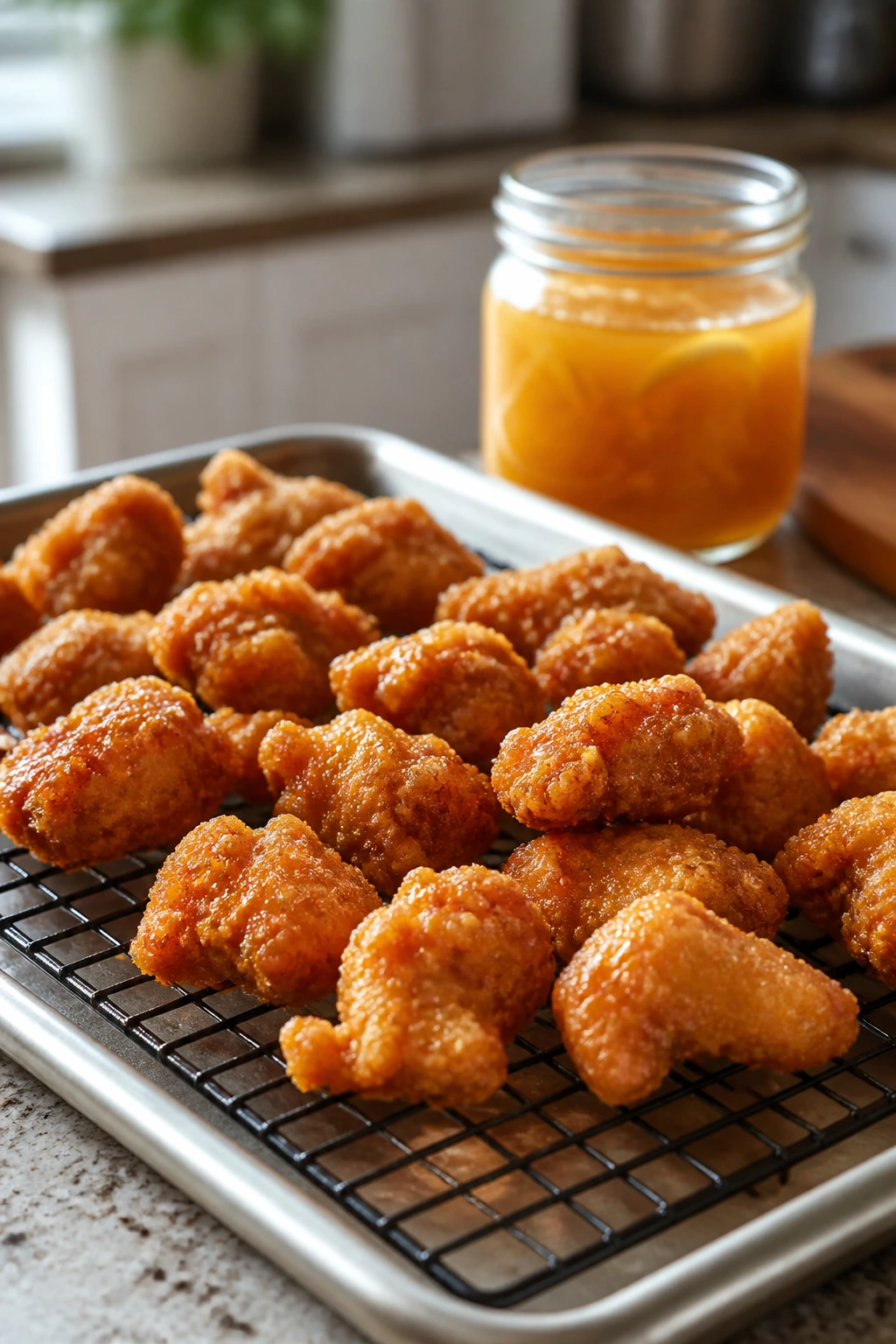
The best version of Chinese lemon chicken is the one you serve immediately. Crisp fried chicken and glossy sauce are not naturally friendly leftovers. That said, you can manage the leftovers well if you separate the parts and stop the chicken from steaming itself into softness.
Store the fried chicken and sauce in separate airtight containers once they’ve cooled. The chicken keeps in the refrigerator for up to 3 days, and the sauce keeps for 4 days. If you combined them already, the dish will still hold for 2 to 3 days in the fridge, but the coating will soften.
For freezing, freeze the chicken only, not the finished sauced dish. Lay the fried pieces in a single layer on a tray until firm, then transfer them to a freezer bag or container for up to 2 months. The sauce can be frozen for about 1 month, but cornstarch-thickened sauces sometimes separate a little when they thaw, so whisking in a splash of broth while reheating helps bring it back.
To reheat the chicken, use a 375°F oven or air fryer for 5 to 10 minutes until hot and re-crisped. Reheat the sauce in a small saucepan over low heat with 1 to 2 tablespoons water or broth, whisking until smooth. If the dish was stored already combined, reheat it gently in a skillet over medium-low heat and expect a softer coating. That’s not a failure; it’s just the truth of leftovers.
For make-ahead work, you can cut the chicken and mix the sauce base earlier in the day. Keep the slurry separate until the end, and don’t mix the batter until you’re close to frying. Batter waits badly. Sauce waits well.
Questions Home Cooks Ask About Chinese Lemon Chicken

Can I use chicken breasts instead of thighs?
Yes. Pound the breasts lightly so they’re an even thickness, cut them into 1-inch pieces, and watch the first fry closely because they cook a touch faster. Thighs are more forgiving, but breasts will still work if you don’t overcook them.
Why does my lemon sauce taste bitter?
Usually it’s too much white pith from the lemons or a heavy hand with the zest grater. Use a microplane and stop when you hit the yellow skin, not the white layer underneath, and keep the simmer short so the zest stays fragrant instead of bitter.
Can I bake the chicken instead of frying it?
You can, though the crust won’t be the same. Bake the coated chicken on a wire rack set over a sheet pan at 425°F until golden and cooked through, then sauce it right before serving. It works, but it’s a different texture.
Do I need Shaoxing wine?
No. Dry sherry is the closest easy swap, and a splash of water with a pinch of sugar can stand in if that’s what you have. The wine adds a little roundness, but it’s not make-or-break.
How do I keep the coating crisp for a dinner party?
Double fry the chicken, keep it on a wire rack in a low oven for no more than 20 minutes, and hold the sauce separately. Toss the chicken with sauce in small batches as you serve so it doesn’t sit under liquid for long.
Can I make the sauce ahead of time?
Yes, and that’s one of the better shortcuts here. Mix the broth, lemon, sugar, soy sauce, vinegar, garlic, and ginger ahead of time, then add the slurry and sesame oil only when you’re reheating and ready to serve.
What oil should I use for frying?
Choose a neutral oil with a high smoke point, such as canola, vegetable, or peanut oil. Olive oil is the wrong fit here because its flavor fights the lemon and its smoke point is too low for a clean fry.
Why This Plate Keeps Getting Repeated
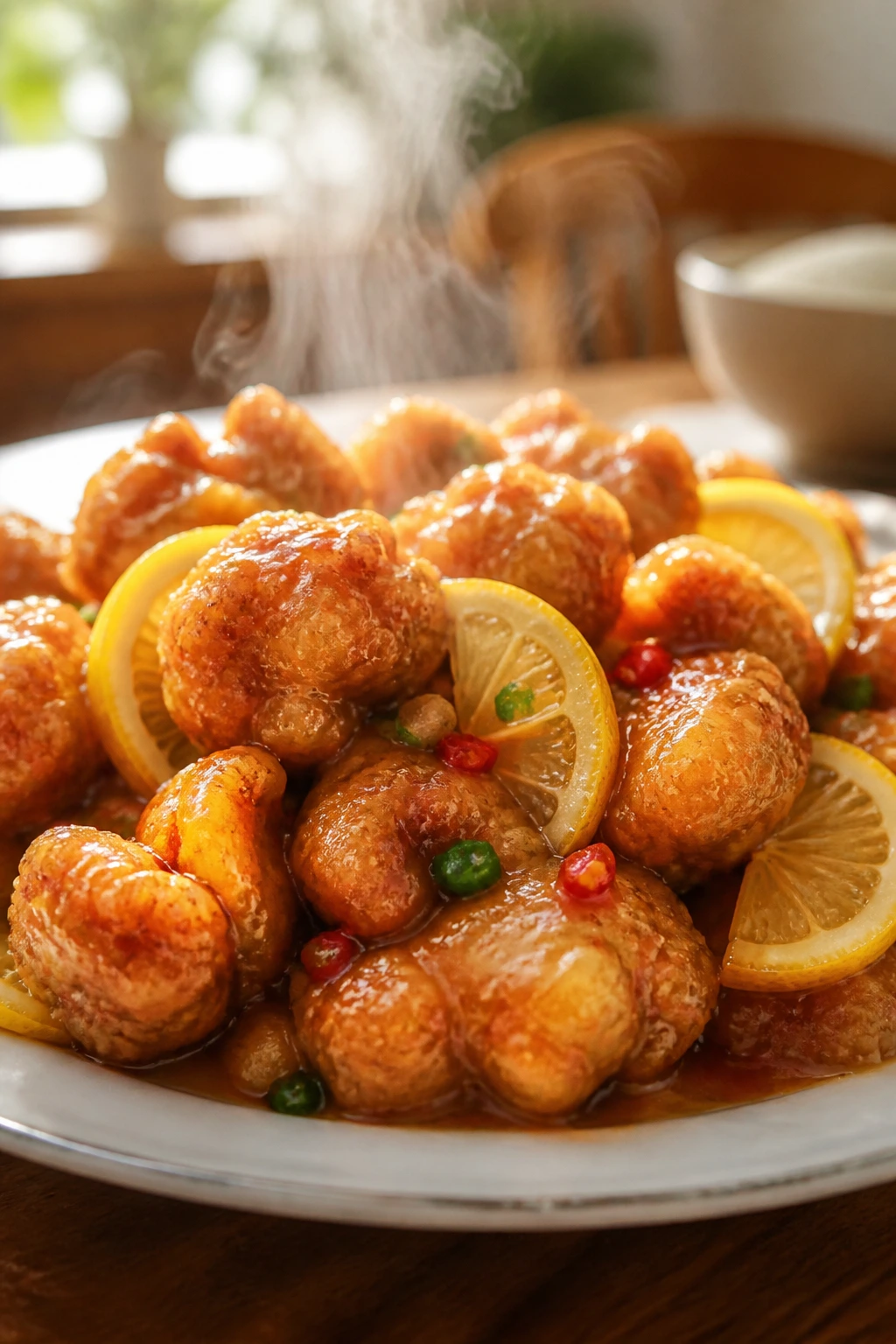
A good Chinese lemon chicken should smell alive before it reaches the table. Lemon peel, ginger, garlic, and hot oil do that work together, and once the sauce hits the chicken at the right second, the whole thing snaps into place. That crunch matters. So does the brightness.
Make it once with the recipe as written, then adjust the sugar and lemon to suit your own taste. Some people want a sharper sauce, some want a softer one, and both are fine as long as the chicken still has room to crack under the first bite. That’s the part worth protecting.
Chinese Lemon Chicken — Recipe Card
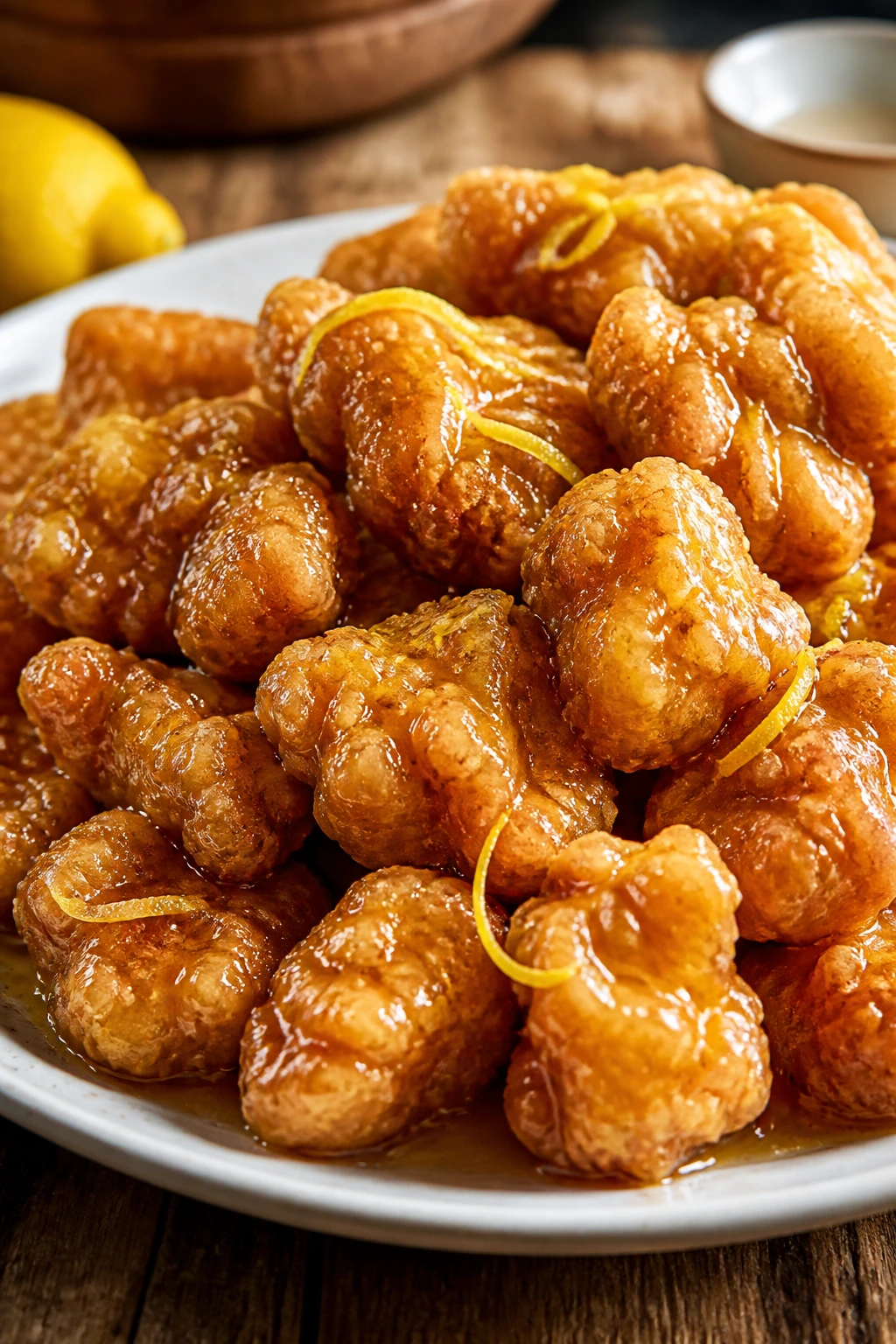
Recipe Name: Aromatic Chinese Lemon Chicken Better than Takeout
Description: Crisp fried chicken tossed in a glossy lemon sauce made with fresh juice, lemon zest, ginger, garlic, and a little soy for balance. The coating stays craggy if you fry it in batches and finish the sauce at the last second.
Prep Time: 25 minutes
Cook Time: 20 minutes
Total Time: 45 minutes
Course: Dinner, Main Course
Cuisine: Chinese-American
Servings: 4 servings
Calories: About 560 kcal per serving
Ingredients
For the Chicken:
- 1 1/2 pounds boneless, skinless chicken thighs, cut into 1-inch pieces
- 1 teaspoon kosher salt
- 1/2 teaspoon white pepper
- 1 tablespoon Shaoxing wine or dry sherry
- 1 large egg
- 1 tablespoon cornstarch
For the Batter:
- 1/2 cup all-purpose flour
- 1/2 cup cornstarch
- 1 teaspoon baking powder
- 1/2 teaspoon kosher salt
- 3/4 cup cold water or cold club soda
For the Lemon Sauce:
- 1 cup low-sodium chicken broth
- 1/2 cup fresh lemon juice, from 3 to 4 lemons
- 1 tablespoon finely grated lemon zest
- 1/3 cup granulated sugar
- 2 tablespoons soy sauce
- 1 tablespoon rice vinegar
- 2 cloves garlic, finely minced or grated
- 1 teaspoon fresh ginger, finely grated
- 1 1/2 tablespoons cornstarch mixed with 2 tablespoons cold water
- 1 teaspoon toasted sesame oil
For Frying and Serving:
- 3 cups neutral oil, for shallow frying
- 2 scallions, thinly sliced
- 1 tablespoon toasted sesame seeds
- Lemon slices, for garnish
Instructions
-
Zest 1 lemon and juice enough lemons to get 1/2 cup juice. Whisk the broth, lemon juice, zest, sugar, soy sauce, vinegar, garlic, and ginger together in a small saucepan and set aside.
-
In a medium bowl, toss the chicken with the salt, white pepper, Shaoxing wine, egg, and 1 tablespoon cornstarch until lightly coated.
-
In a second bowl, whisk together the flour, cornstarch, baking powder, and salt. Add the cold water or club soda and whisk until smooth and thick enough to coat the chicken.
-
Let the batter rest for 10 minutes.
-
Heat 3 cups neutral oil in a heavy skillet or Dutch oven to 350°F.
-
Dip the chicken pieces into the batter, let the excess drip off, and fry in batches for about 4 minutes until pale golden. Drain on a wire rack.
-
Raise the oil temperature to 375°F and fry the chicken again for 60 to 90 seconds until deeper golden and crisp. Drain again on the rack.
-
Bring the sauce base to a simmer over medium heat. Cook for 1 to 2 minutes until the sugar dissolves and the aromatics smell sweet.
-
Whisk the cornstarch slurry and stream it into the simmering sauce. Cook for 30 to 60 seconds until glossy and lightly thickened, then stir in the sesame oil.
-
Toss the chicken with the sauce right before serving, or spoon the sauce over the chicken to keep more crunch. Garnish with scallions, sesame seeds, and lemon slices.
Notes: Fry in smaller batches for the best crust. Keep the sauce and chicken separate until the last moment if you want the coating to stay crisp. A final pinch of fresh zest over the plated chicken makes the lemon smell sharper.