



The best spicy Chinese better-than-takeout dinner is the one that lands on the table with steam still rising from the rice and a little shine still clinging to the vegetables. That glossy sauce, the one that sticks to the chicken instead of sliding into a puddle at the bottom of the bowl, is the whole point here. So is the smell: garlic going sweet in hot oil, ginger flashing sharp for a few seconds, and a whisper of chile that shows up before the first bite and stays politely in the background until halfway through.
I’ve never been interested in copying a sad carton of takeout one-for-one. The goal is better than that. The home version should be cleaner, brighter, and more alive, with chicken that stays juicy, broccoli that still has a little crunch, and a sauce that tastes like it was built on purpose instead of poured from a jug.
What makes this dish work isn’t mystery. It’s a few small, old-school moves done in the right order: a quick cornstarch marinade, a sauce mixed before the heat goes on, and a hot pan that lets the vegetables sear instead of steam. That’s the difference between a dinner that feels greasy and one that tastes like someone actually cared. And yes, it matters.
Why This Spicy Chinese Better-Than-Takeout Stir-Fry Earns Its Keep
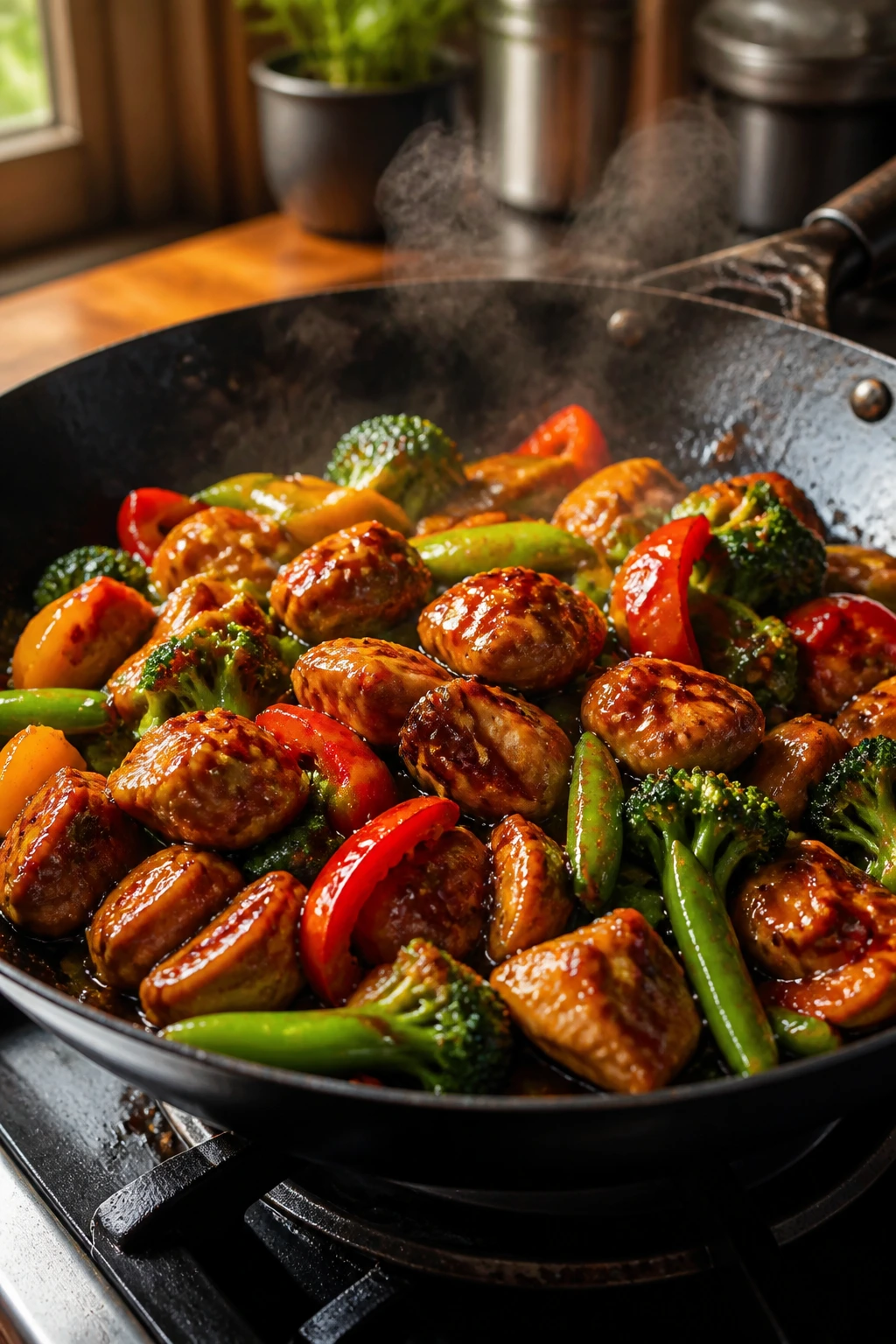
-
Fast enough for a normal night: The chicken marinates while you chop the vegetables, so the active work stays under 25 minutes and the pan time is even shorter.
-
Glossy, not greasy: A little cornstarch in the marinade and a little more in the sauce give you that clingy finish that takeout often misses when it gets sloppy.
-
Heat you can steer: Chili crisp, dried chiles, and Sichuan peppercorn let you keep the burn lively and aromatic instead of turning it into a blunt, sweaty wall of spice.
-
Chicken thighs play nicer: Thighs stay juicy in a screaming-hot pan, which is exactly what you want when the sauce gets added at the end and everything comes together fast.
-
The vegetables still have a spine: Broccoli, peppers, and snap peas keep some bite if you don’t drown them in liquid. Limp stir-fry is a crime against dinner.
-
It scales cleanly: Double the sauce, cook the chicken in batches, and you can feed a bigger table without changing the flavor profile or ending up with soup.
How Takeout Flavors Get Built From Scratch
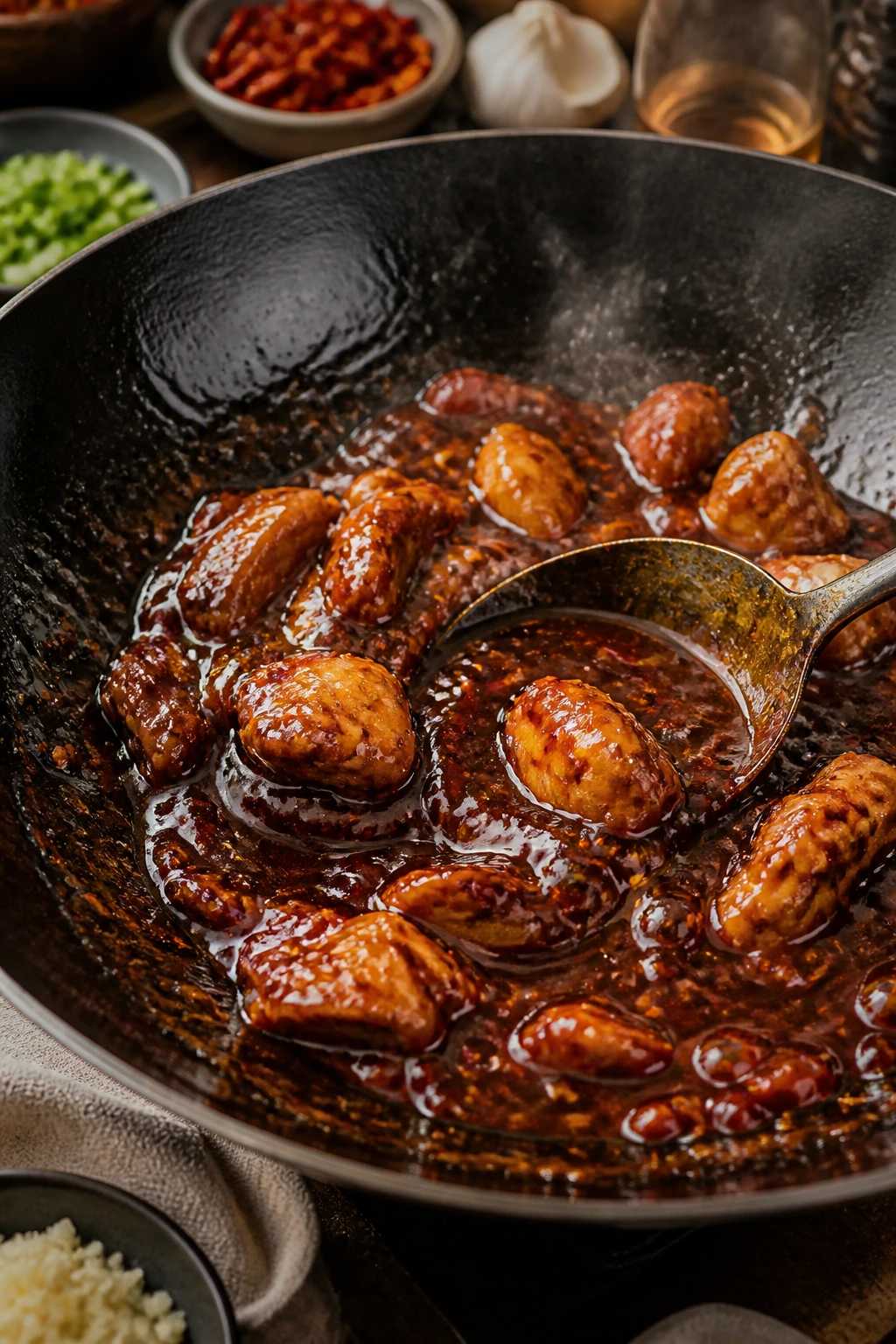
Chinese takeout gets praised for its sauce, but the real trick is balance. Salt, sweetness, acid, heat, and a little fat have to land in the same spoonful. If any one of them gets too loud, the whole dish starts tasting flat or sticky in the wrong way. The version that works at home doesn’t need a giant list; it needs the right ratios and a hot pan.
The sauce in this recipe leans on soy sauce for salt, oyster sauce for body, rice vinegar for brightness, and chili crisp for heat that has some texture to it. Shaoxing wine gives the sauce that restaurant depth people often describe as “takeout flavor,” even if they can’t name the bottle. That bottle matters. A tablespoon or two changes the whole mood of the pan.
Chicken thighs are the other quiet hero. They forgive a hot burner and a slightly distracted cook, which is more than can be said for chicken breast. You’re after browned edges and a juicy center, not a dry pile of protein. The cornstarch coating helps with that, and it also thickens the sauce in the final toss so the whole dish looks lacquered instead of wet.
Why the chicken gets velveted a little
That thin coating of soy sauce, wine, and cornstarch is the home-cook version of velveting. The chicken doesn’t sit in a bath for hours. It gets a short rest, just long enough for the surface to take on seasoning and for the cornstarch to form a protective film. That means the chicken sears instead of tightening up like a rubber band.
Why the spice tastes layered, not one-note
Dried chiles, chili crisp, and a pinch of ground Sichuan peppercorn do different jobs. The chiles bring heat that blooms in the oil. Chili crisp adds savory crunch and chile flavor that hangs around. Sichuan peppercorn is the sneaky one; it brings that tingly, almost citrusy numbness if you use it lightly. Skip it if you want a cleaner chili profile, but don’t use too much. A half teaspoon is enough.
Yield: Serves 4
Prep Time: 20 minutes
Cook Time: 15 minutes
Total Time: 35 minutes
Difficulty: Intermediate — the method is straightforward, but the heat moves fast and the sauce needs your attention for the last few minutes.
Chill/Rest Time: 15 minutes for the chicken marinade
Best Served: Right away, while the sauce is glossy and the vegetables still have a little bite
The Ingredient List That Keeps the Pan Moving
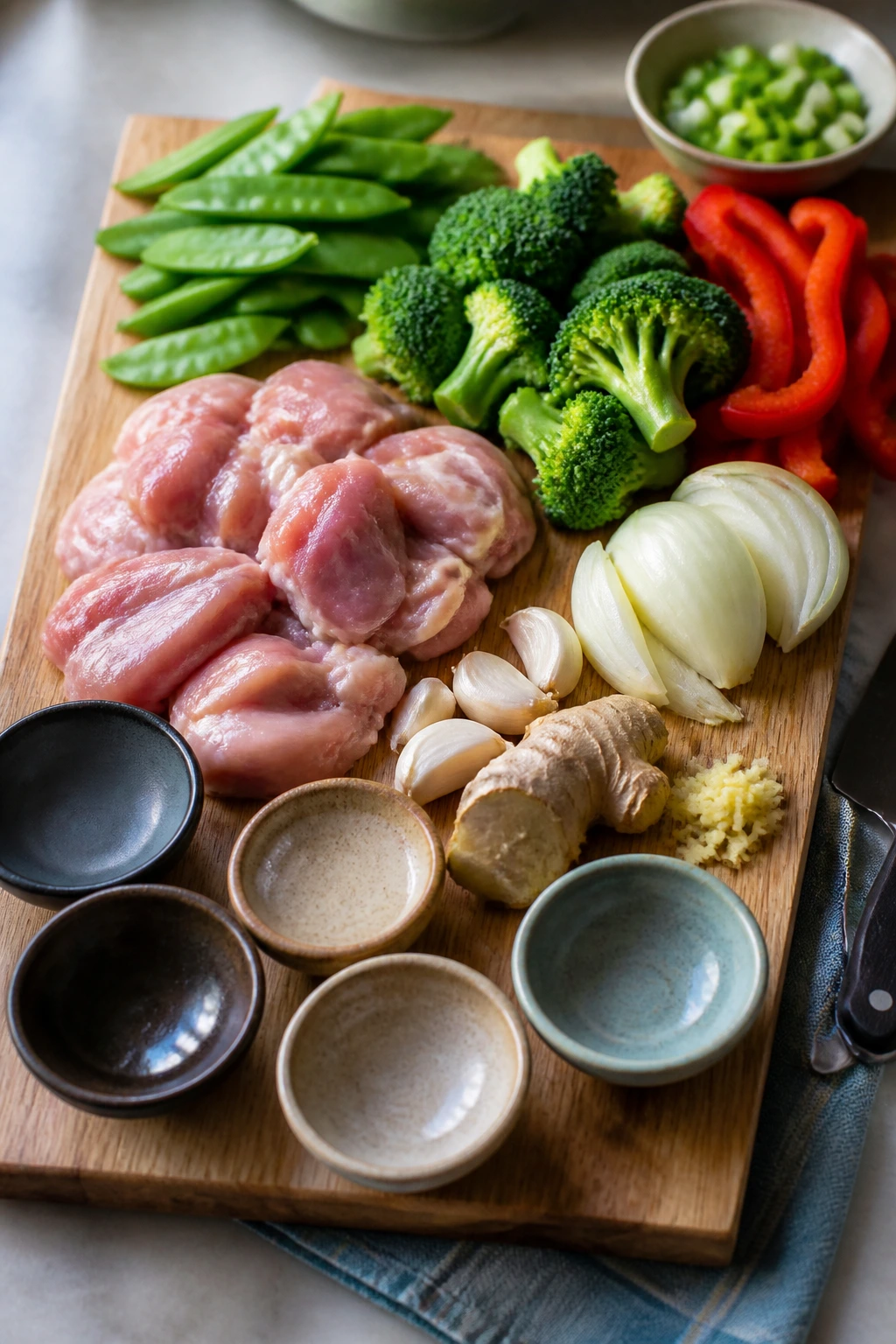
For the Chicken
- 1½ pounds boneless, skinless chicken thighs, trimmed and cut into 1-inch pieces
- 1 tablespoon light soy sauce
- 1 tablespoon Shaoxing wine or dry sherry
- 1 teaspoon cornstarch
- 1 teaspoon neutral oil
- ¼ teaspoon fine salt
For the Sauce
- 3 tablespoons light soy sauce
- 2 tablespoons oyster sauce
- 1 tablespoon chili crisp or chili oil
- 1 tablespoon rice vinegar
- 1 tablespoon Shaoxing wine or dry sherry
- 1 tablespoon honey or packed brown sugar
- ¾ cup low-sodium chicken stock
- 1 teaspoon toasted sesame oil
- 1 teaspoon cornstarch
- ½ teaspoon ground Sichuan peppercorns, optional
- 2 dried red chiles, stemmed
For the Stir-Fry
- 2 tablespoons neutral oil, divided
- 1 small yellow onion, cut into ½-inch wedges
- 4 cloves garlic, minced
- 1 tablespoon fresh ginger, minced
- 2 cups broccoli florets, cut into bite-size pieces
- 1 red bell pepper, sliced into thin strips
- 1 cup snap peas, trimmed
- 2 scallions, sliced, whites and greens separated
For Serving
- 3 to 4 cups hot cooked jasmine rice, or steamed rice noodles
- 1 tablespoon toasted sesame seeds
- Extra chili crisp, for serving
What Each Ingredient Is Doing in the Pan
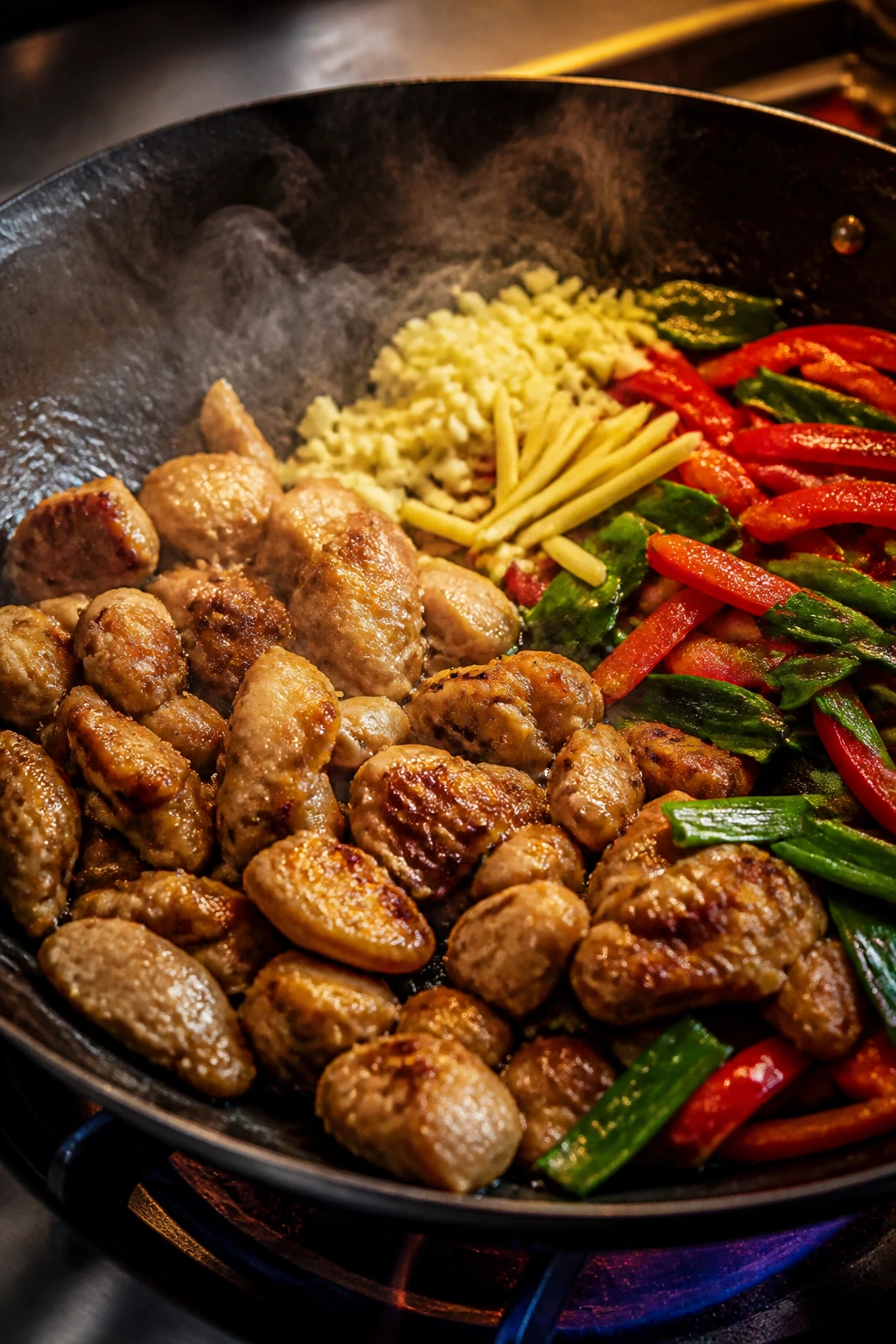
Chicken and Marinade
What to use: 1½ pounds boneless, skinless chicken thighs, cut into 1-inch pieces, plus soy sauce, Shaoxing wine, cornstarch, oil, and salt.
Preparation: Cut the thighs into pieces that are close in size so they cook at the same speed; uneven chunks are where dry edges and undercooked centers start.
Substitutions: Chicken breast works if you prefer it, though it needs a shorter cook time; firm tofu can stand in if you press it well and crisp it before the vegetables go in.
Tips: Thighs are more forgiving in a hot wok, and the cornstarch coating gives you a satin finish instead of a chalky one.
The Spicy-Savory Sauce
What to use: Soy sauce, oyster sauce, chili crisp, rice vinegar, Shaoxing wine, honey, chicken stock, sesame oil, cornstarch, and Sichuan peppercorn if you want that tingle.
Preparation: Whisk the sauce until the cornstarch disappears; if you see white streaks, you will probably see clumps later.
Substitutions: Use mushroom stir-fry sauce in place of oyster sauce for a vegetarian version, and swap the chicken stock for water or vegetable broth if that’s what you have.
Tips: The sauce should taste a touch sharper and a touch saltier than you want in the final dish, because the vegetables and chicken will pull it back into balance.
Vegetables and Aromatics
What to use: Onion, garlic, ginger, broccoli, bell pepper, snap peas, and the white parts of the scallions.
Preparation: Keep the broccoli florets small enough to eat in one or two bites, slice the bell pepper thin, and separate the scallion whites from the greens so they can go in at different times.
Substitutions: Broccolini, green beans, baby bok choy, snow peas, or sliced mushrooms all work well here; pick two or three and keep the total volume similar.
Tips: Cut the vegetables before the pan heats up. The moment the oil hits the burner, you’ll be glad you did.
Finishing and Serving
What to use: Jasmine rice, sesame seeds, and extra chili crisp if you want more crunch or more heat.
Preparation: Cook the rice ahead if you can; fresh rice is fine, but slightly cooled rice absorbs the sauce more neatly than steaming-hot rice straight from the pot.
Substitutions: Rice noodles, brown rice, or even plain noodles work when that’s what the pantry gives you.
Tips: Keep the garnish simple. A scatter of sesame seeds and scallion greens is enough; this dish does not need a confetti parade.
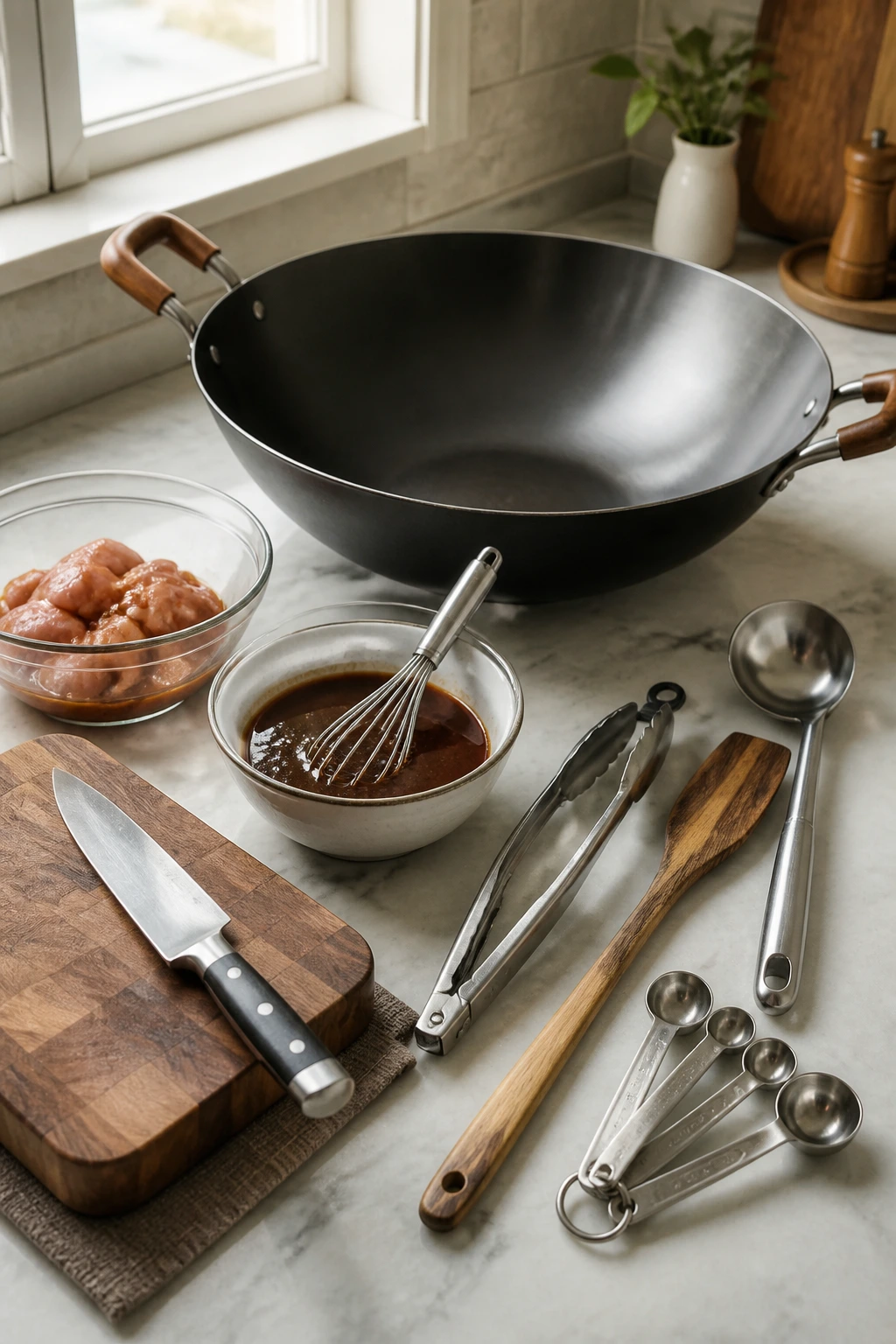
The Tools That Make Stir-Frying Less Chaotic
-
12-inch wok or large stainless-steel skillet: A wide surface keeps the chicken and vegetables in contact with heat instead of stacking them on top of one another.
-
Medium mixing bowl: You need one bowl for the chicken marinade and one for the sauce, unless you enjoy juggling everything at once.
-
Whisk or fork: The cornstarch in the sauce needs a thorough mix so it thickens smoothly.
-
Wooden spoon or heatproof spatula: A flat-edged utensil helps you scoop the browned bits without scraping your pan to death.
-
Sharp chef’s knife: Clean vegetable cuts matter here; ragged slices release more moisture and steam instead of sear.
-
Cutting board with a damp towel underneath: Keeps the board from sliding while you chop onion and chicken.
-
Tongs: Handy for turning the chicken in the pan and moving pieces quickly.
-
Measuring spoons and cups: Stir-fries move fast; guessing at the sauce rarely ends well.
The Stir-Fry Method, Step by Step
Marinate the Chicken
-
In a medium bowl, toss the chicken thighs with 1 tablespoon soy sauce, 1 tablespoon Shaoxing wine, 1 teaspoon cornstarch, 1 teaspoon neutral oil, and ¼ teaspoon salt until every piece is lightly coated.
-
Let the chicken rest for 15 minutes while you prep the vegetables and whisk the sauce. Do not skip this pause; even a short rest helps the seasoning sink in and gives the surface a better sear.
Mix the Sauce
-
In a small bowl or measuring cup, whisk together 3 tablespoons soy sauce, 2 tablespoons oyster sauce, 1 tablespoon chili crisp, 1 tablespoon rice vinegar, 1 tablespoon Shaoxing wine, 1 tablespoon honey, ¾ cup chicken stock, 1 teaspoon sesame oil, 1 teaspoon cornstarch, and the ground Sichuan peppercorns if you’re using them.
-
Stir until the mixture looks smooth and the cornstarch disappears. Set it right next to the stove, because once the pan is hot you won’t want to be hunting for it.
Sear the Chicken
-
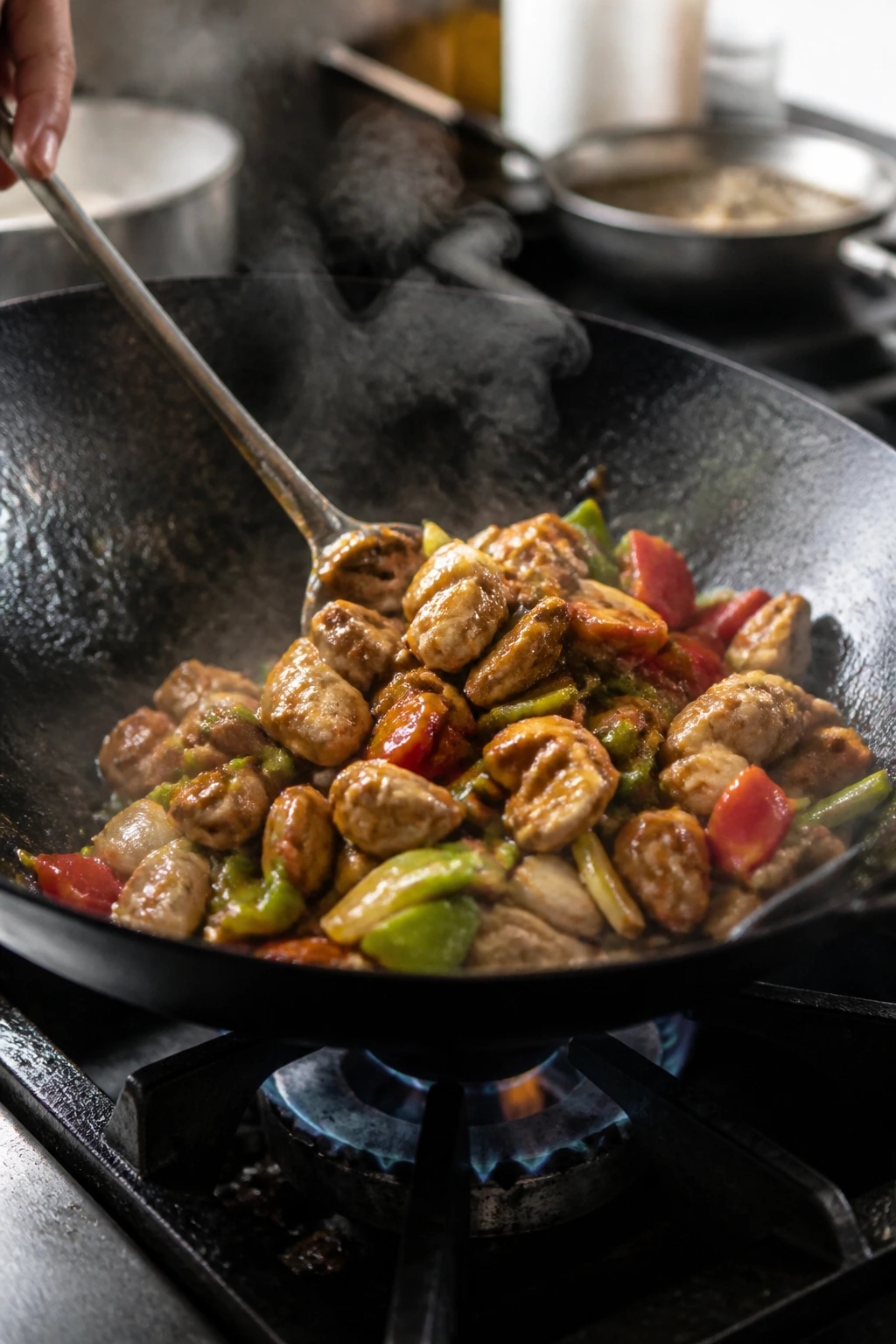
Heat a wok or large skillet over high heat until a drop of water beads and vanishes almost immediately. Add 1 tablespoon neutral oil and swirl to coat the pan.
-
Add the chicken in a single layer and leave it alone for 1 to 2 minutes so the bottom can brown. Then stir-fry for another 2 to 3 minutes, turning the pieces until the outside is lightly golden and the center is still a little underdone. Transfer the chicken to a clean plate. If your pan is small, cook the chicken in two batches so it browns instead of steaming.
Stir-Fry the Vegetables
-
Add the remaining 1 tablespoon oil to the pan. Drop in the onion wedges, garlic, ginger, and dried chiles, and stir for 10 to 15 seconds until the garlic smells sweet and the edges of the onion start to soften.
-
Add the broccoli and 2 tablespoons of water. Stir, then cover for 45 to 60 seconds so the broccoli can steam just enough to turn bright green and slightly tender. Uncover and add the bell pepper, snap peas, and scallion whites. Toss for 1 to 2 minutes until the vegetables are crisp-tender and the pan smells peppery and fresh.
Glaze and Finish
-
Give the sauce one more stir and pour it into the pan. Cook for 30 to 60 seconds, stirring constantly, until it bubbles, thickens, and turns glossy enough to coat the vegetables in a thin sheen.
-
Return the chicken and any juices to the pan. Toss for 1 to 2 minutes, until the chicken reaches 165°F in the thickest pieces and the sauce clings instead of pooling. Turn off the heat, fold in the scallion greens, and taste for salt or acid. Serve immediately over rice or noodles with sesame seeds and extra chili crisp.
How to Serve It So the Sauce Stays Glossy
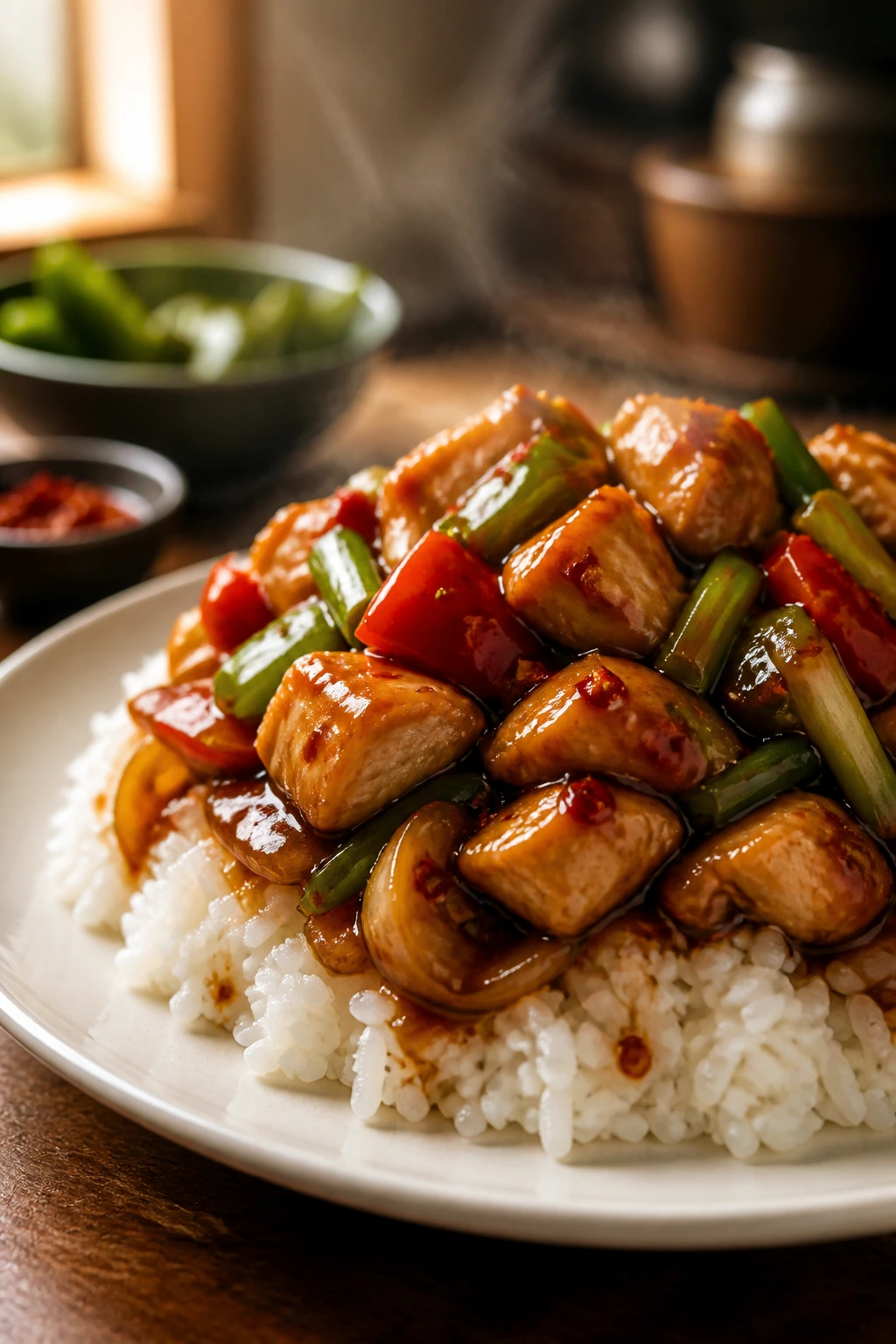
Presentation: Spoon the stir-fry over a mound of jasmine rice rather than spreading it flat on a plate. That little mound keeps the sauce from running everywhere and makes the chicken and vegetables look stacked instead of scattered.
Accompaniments: Plain rice is the cleanest match, but rice noodles are good when you want a softer, slurpier dinner. A cucumber salad with rice vinegar and a pinch of sugar cuts through the heat nicely, and a simple bowl of egg drop soup on the side makes the meal feel complete without fighting the main event.
Portions: Plan on about 1½ cups of stir-fry plus ¾ to 1 cup cooked rice per person. If you’re serving people with bigger appetites, cook an extra cup of rice and keep the sauce where it is; that’s the easier lever to pull.
Beverage Pairing: Cold jasmine tea, plain seltzer with lime, or a crisp lager all work. If you want wine, a dry Riesling handles the sweet-salty-spicy balance better than anything heavy or oaky.
Practical Tricks for Better Heat, Better Texture, and Better Sauce
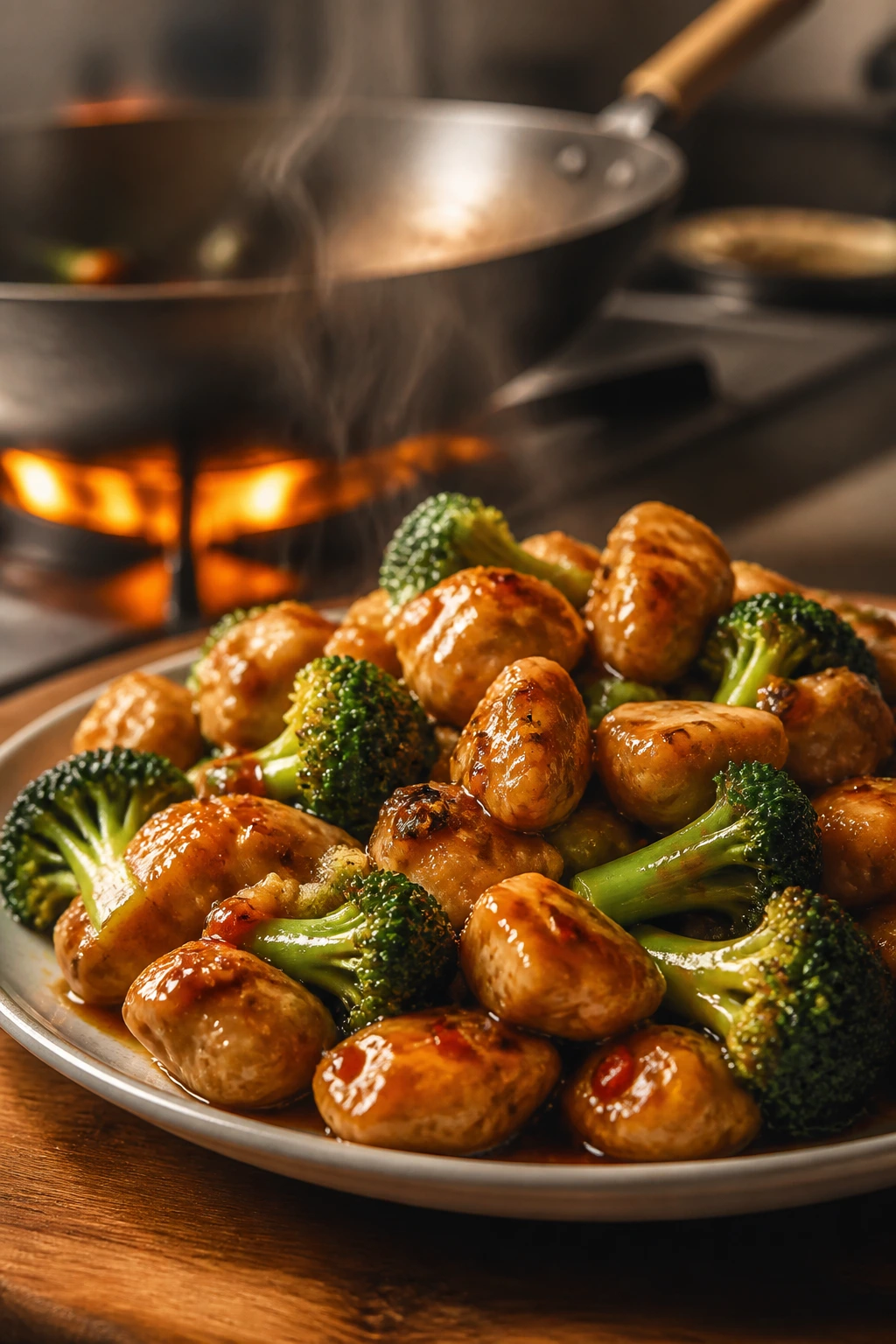
Flavor Enhancement: A teaspoon of Chinkiang black vinegar at the very end gives the sauce a darker, rounder edge. I like this move when the chili crisp is hot but a little one-dimensional; the vinegar wakes everything up without making the dish taste sour.
Time-Saver: Mix the sauce in the morning and keep it covered in the fridge. Cut the broccoli and peppers a few hours ahead, too, and you’ve turned a 35-minute dinner into one that moves like a 15-minute sprint once the burner comes on.
Pro Move: If your stove runs weak, cook the chicken in two batches and the vegetables in two fast waves. Crowding is the enemy here. The pan should sound active and a little fierce, not wet and sleepy.
Cost-Saver: Broccoli crowns are usually cheaper than pre-cut florets, and the stems can be peeled and sliced thin if you don’t want to waste them. Frozen snap peas work in a pinch; thaw and dry them first so they don’t dump water into the pan.
Make-It-Yours: Add a handful of roasted peanuts at the end for crunch, or swap half the broccoli for mushrooms if you want a deeper, earthier pan. If you need lower heat, halve the chili crisp and keep the Sichuan peppercorn out. The dish still tastes alive.
Mistakes That Make Stir-Fries Watery or Flat
-
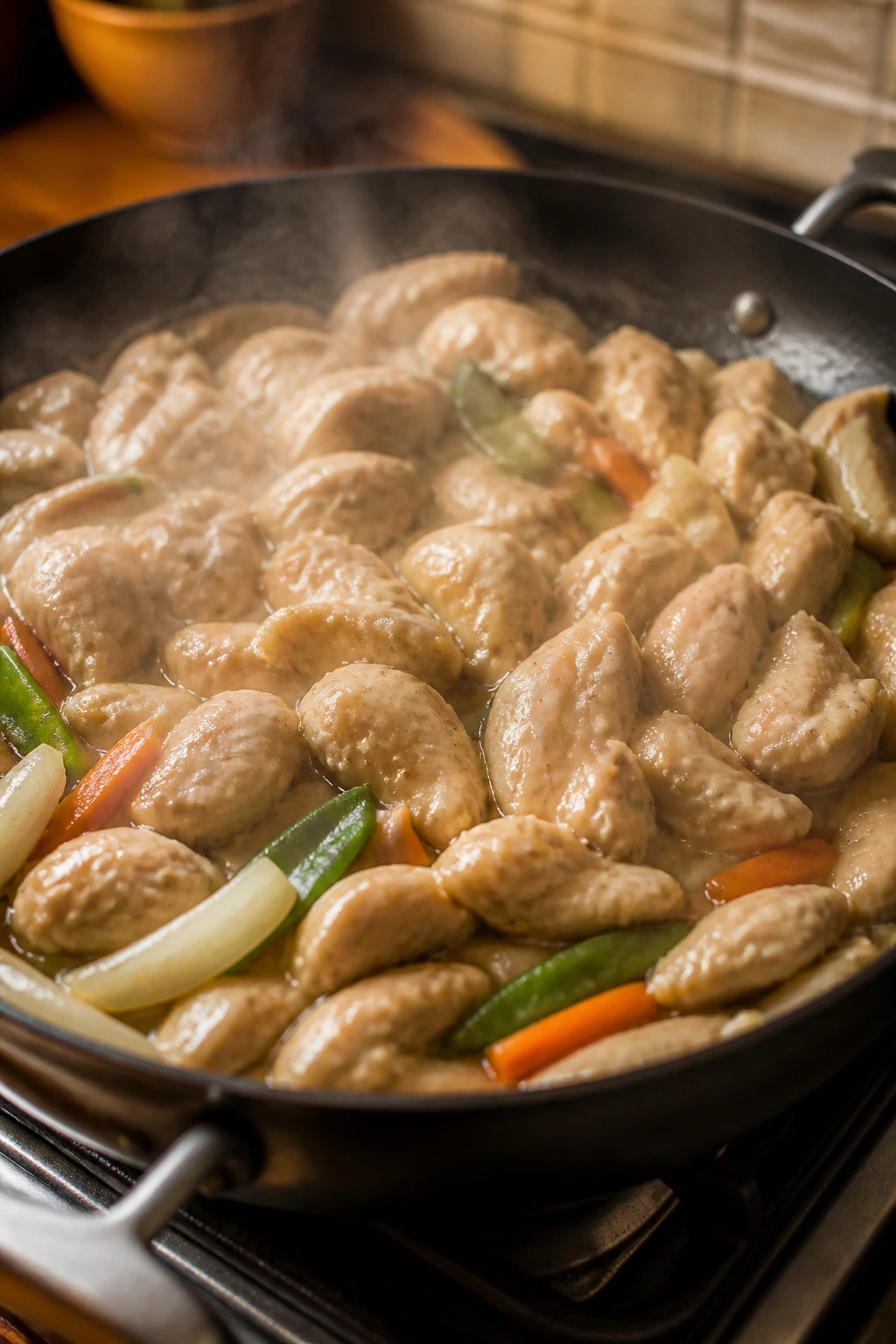
Crowding the pan: If the chicken piles up, it steams and turns pale instead of browning. Fix it by cooking in batches and giving the pieces room to sizzle.
-
Pouring in the sauce too early: Add it before the vegetables are ready and the pan goes from stir-fry to braise. The broccoli softens too much, and the sauce loses that glossy finish. Wait until the vegetables are crisp-tender first.
-
Using too much cornstarch: A heavy hand turns the sauce gluey and dull. One teaspoon in the sauce is enough here; if you want it thicker, let it bubble for a few seconds longer instead of adding more starch.
-
Skipping the final taste: Soy, oyster sauce, and stock all carry salt, so the balance can shift depending on the brand you use. Taste after the last toss and add a splash of vinegar or a pinch of salt if the sauce feels flat.
-
Letting the garlic burn: Garlic goes bitter in a hot wok fast. It should smell sweet and sharp for seconds, not sit in the pan long enough to turn brown and bitter at the edges.
-
Serving it after it sits too long: This dish is at its best right after the final toss. If it waits on the stove for ten minutes, the vegetables soften and the sauce thickens in a way that feels tired. Get the rice ready first.
Variations That Still Taste Like Chinese Takeout
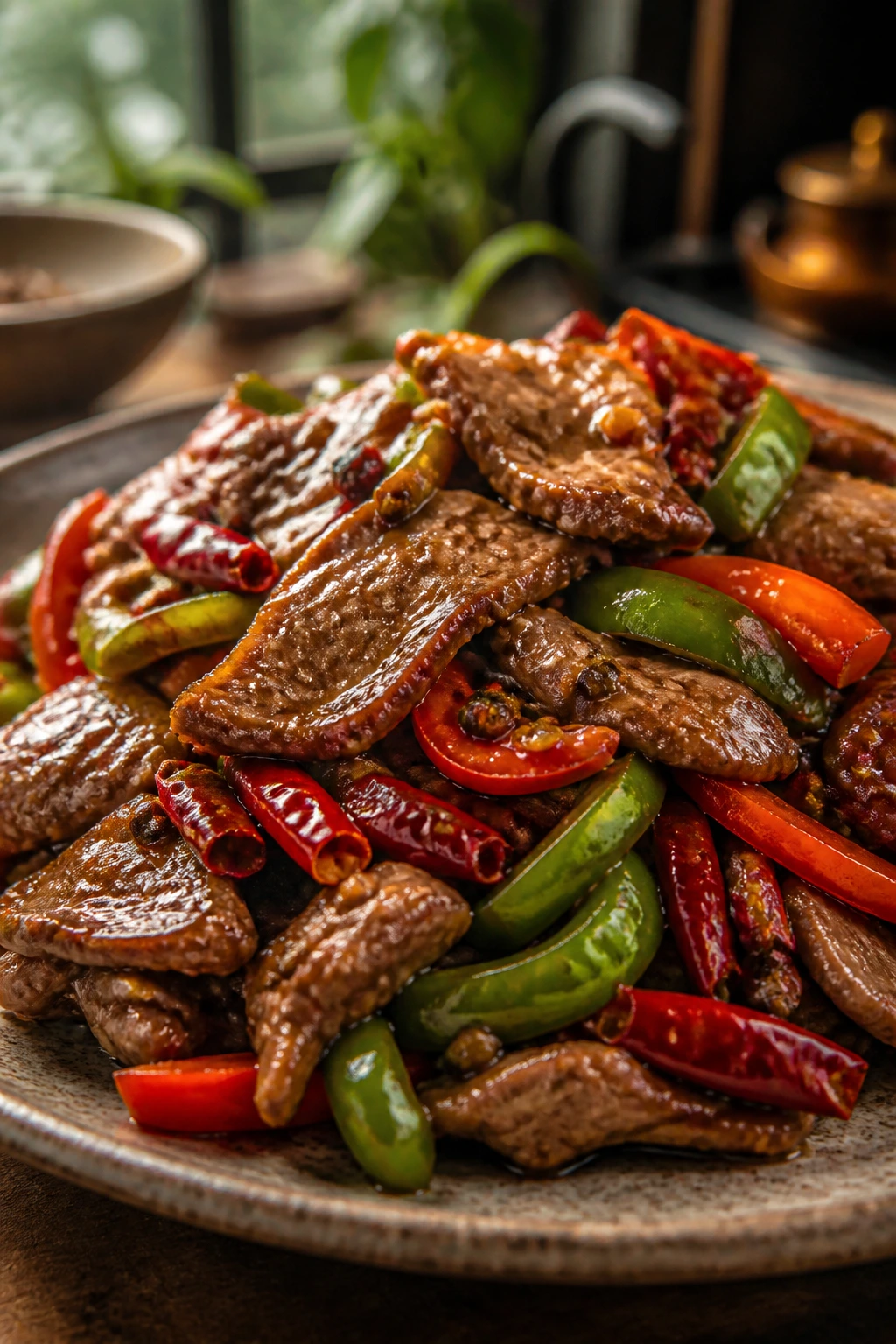
Mala Beef Stir-Fry
Swap the chicken thighs for 1½ pounds of flank steak sliced thin across the grain. Freeze the steak for 20 minutes before slicing so you get clean, paper-thin strips, and cook it in a screaming-hot pan for only 60 to 90 seconds before pulling it out. The flavor lands a little more savory and a little less tender, which is exactly what you want from beef.
Crispy Tofu and Mushroom Bowl
Press 14 ounces of extra-firm tofu for at least 20 minutes, cut it into cubes, and toss it with 1 tablespoon cornstarch before pan-frying until the edges go gold. Add 8 ounces of sliced mushrooms with the vegetables so they can soak up the sauce. This version keeps the same spicy-sweet shape, but the tofu gives you crunchy edges and a softer middle.
Firecracker Noodle Version
Cook 8 ounces of lo mein or wheat noodles, then toss them into the finished sauce with the chicken and vegetables. You may want to add another ¼ cup stock because noodles drink sauce quickly. This one is for the nights when you want the whole thing in a bowl with a fork and no side rice at all.
Mild Family Pan
Drop the chili crisp to 1 teaspoon, skip the Sichuan peppercorn, and add an extra tablespoon of honey. The dish still tastes like takeout, but the heat stays in the background instead of making small children glare at you over the table.
Garlicky Broccoli Shortcut
If you want a stripped-down version, keep the chicken, broccoli, garlic, and sauce, then leave out the bell pepper and snap peas. The pan gets tighter and more savory, with fewer moving parts and less chopping. I reach for this version when the crisper drawer is nearly empty.
Make-Ahead, Storage, and Reheating Without Killing the Vegetables
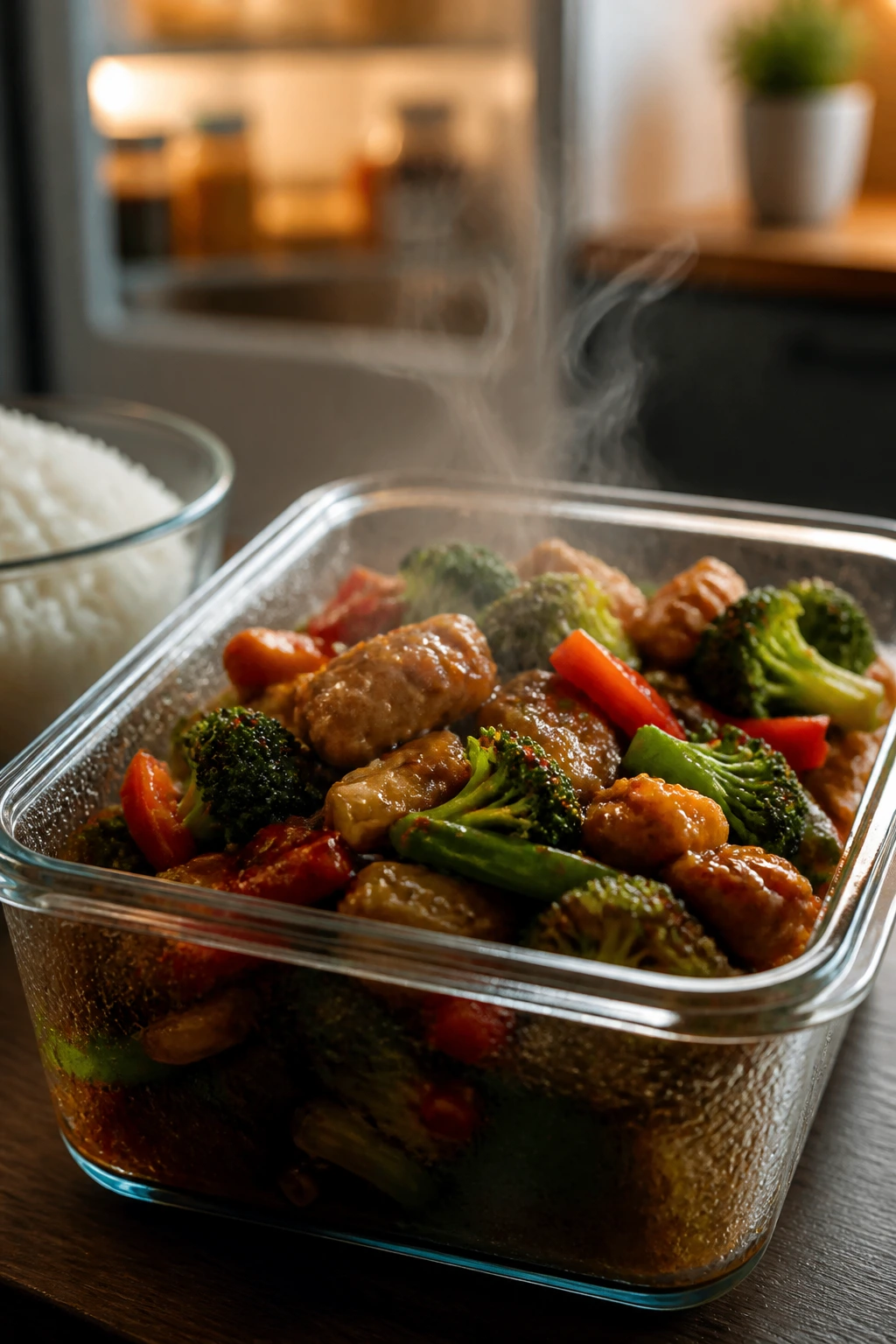
Cooked stir-fry holds up in the fridge for 3 to 4 days in an airtight container. Keep the rice separate if you can; rice and saucy vegetables in the same box tend to go mushy together, and nobody needs that at lunch. If you’re packing meals, let everything cool for about 20 minutes before sealing the container so condensation doesn’t settle on top.
Freezing works, but with a catch. The chicken and sauce freeze well for up to 2 months, while broccoli and snap peas lose some of their snap after thawing. If you want to freeze this dish, I’d freeze the chicken and sauce together, then add fresh vegetables when you reheat it, or at least expect the vegetables to come back softer than they started.
For reheating, a skillet wins. Put the stir-fry in a pan over medium heat with 1 to 2 tablespoons of water and stir until it’s hot and glossy again, about 3 to 5 minutes. The microwave works in a pinch, but use short bursts of 45 to 60 seconds, stir between each one, and stop as soon as the chicken is hot so the vegetables don’t turn wrinkled and tired.
If you want to make the sauce ahead, that’s easy. It keeps in the fridge for 3 days, and you can whisk it again before cooking if the cornstarch settles. The vegetables should be cut the day you cook if you care about crisp edges, though the onion and broccoli can sit prepped in the fridge for a few hours without trouble.
Common Questions Before You Turn on the Burner
Can I use chicken breast instead of thighs?
Yes, but cut the breast into slightly larger bite-size pieces and pull it from the pan a little sooner. Breast dries out fast once it crosses 165°F, so don’t wait for it to look deeply browned. Thighs are easier, full stop.
What if I don’t have Shaoxing wine?
Dry sherry is the best swap, and if you don’t have that, a splash of water plus a pinch more rice vinegar will do in a pinch. The flavor won’t be exactly the same, but it will still have the right shape. Skip sweet cooking wine; it throws the balance off.
How spicy is this dish?
It lands in the medium-hot range if you use the amounts listed. The chili crisp gives heat with flavor, not just burn, and the Sichuan peppercorn adds a tingle more than a raw fire. If you want it fierier, add a second dried chile or finish with more chili crisp at the table.
Can I make this gluten-free?
Yes, but choose a gluten-free soy sauce or tamari and make sure your oyster sauce is labeled gluten-free as well. The rest of the recipe stays the same. The sauce thickens the same way either way.
Why did my sauce get too thick?
It probably cooked a little too long after the cornstarch hit the pan, or the burner was hotter than you expected. Stir in a tablespoon or two of stock or water and toss until the sauce loosens back up. Stir-fries forgive quick adjustments if you catch them early.
Can I use frozen vegetables?
You can, though they need extra attention. Thaw them first and pat them dry, or they’ll dump water into the pan and steam everything around them. Frozen broccoli florets work better than soft vegetables like zucchini or mushrooms.
Do I need a wok for this?
No, a 12-inch skillet works well as long as it gets hot and isn’t crowded. A wok is helpful because of the shape, but a good skillet with a wide surface area still gives you browning, which is the part you actually taste.
The Last Sizzle
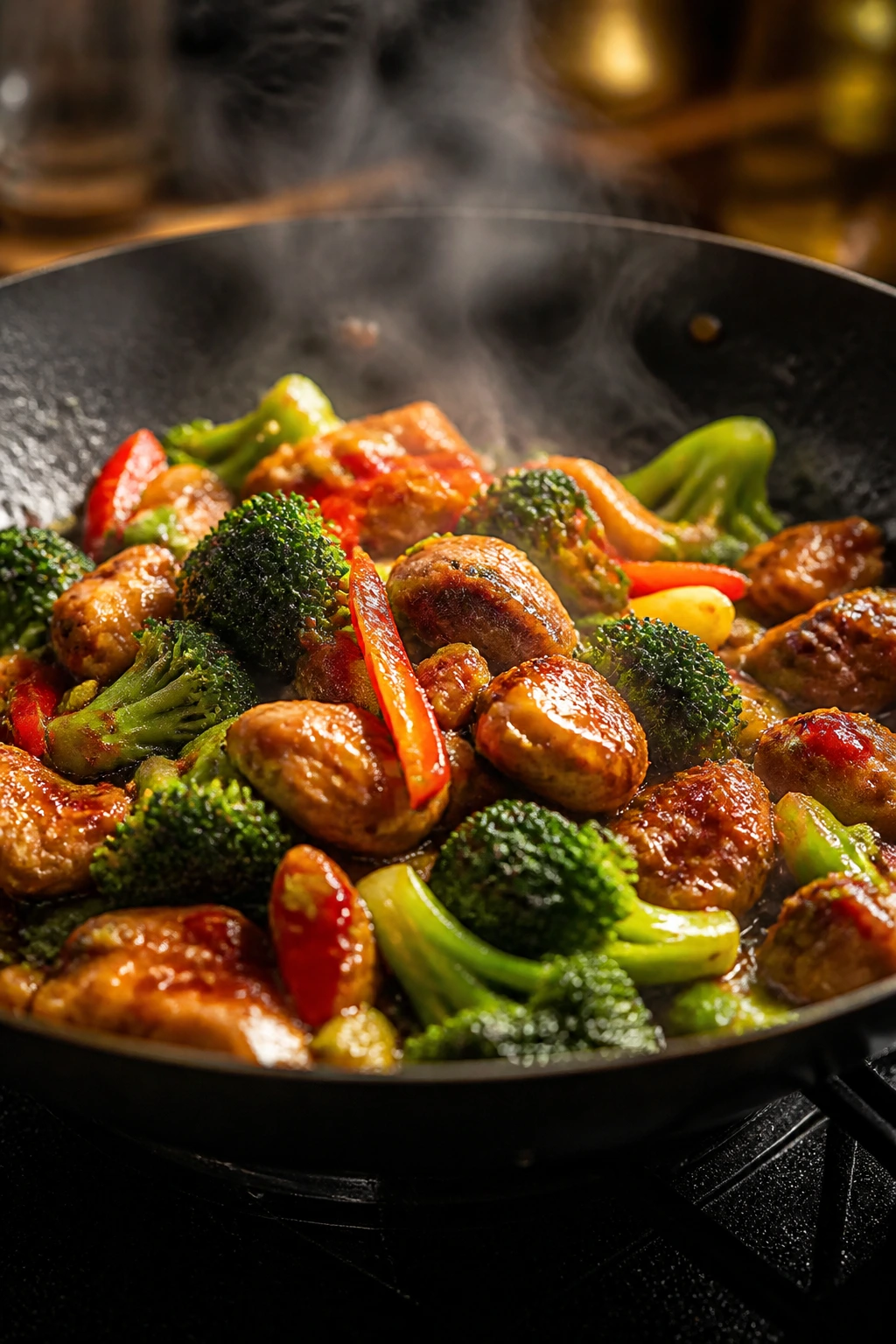
This is the kind of dinner that makes the takeout menu stay unopened in the drawer. The chicken stays juicy, the sauce lands glossy, and the vegetables keep enough firmness to make each bite feel deliberate instead of soggy. That’s the whole charm of a stir-fry done well: nothing wasted, nothing mushy, and nothing left to chance.
Keep the ingredients on hand once, and this stops being a project and starts being a reflex. Rice, chicken thighs, garlic, ginger, broccoli, a bottle of soy sauce, and one good spicy condiment will carry you farther than a dozen random jars ever will. The next time the craving hits, the pan should win.
Spicy Chinese Better-Than-Takeout Stir-Fry — Recipe Card
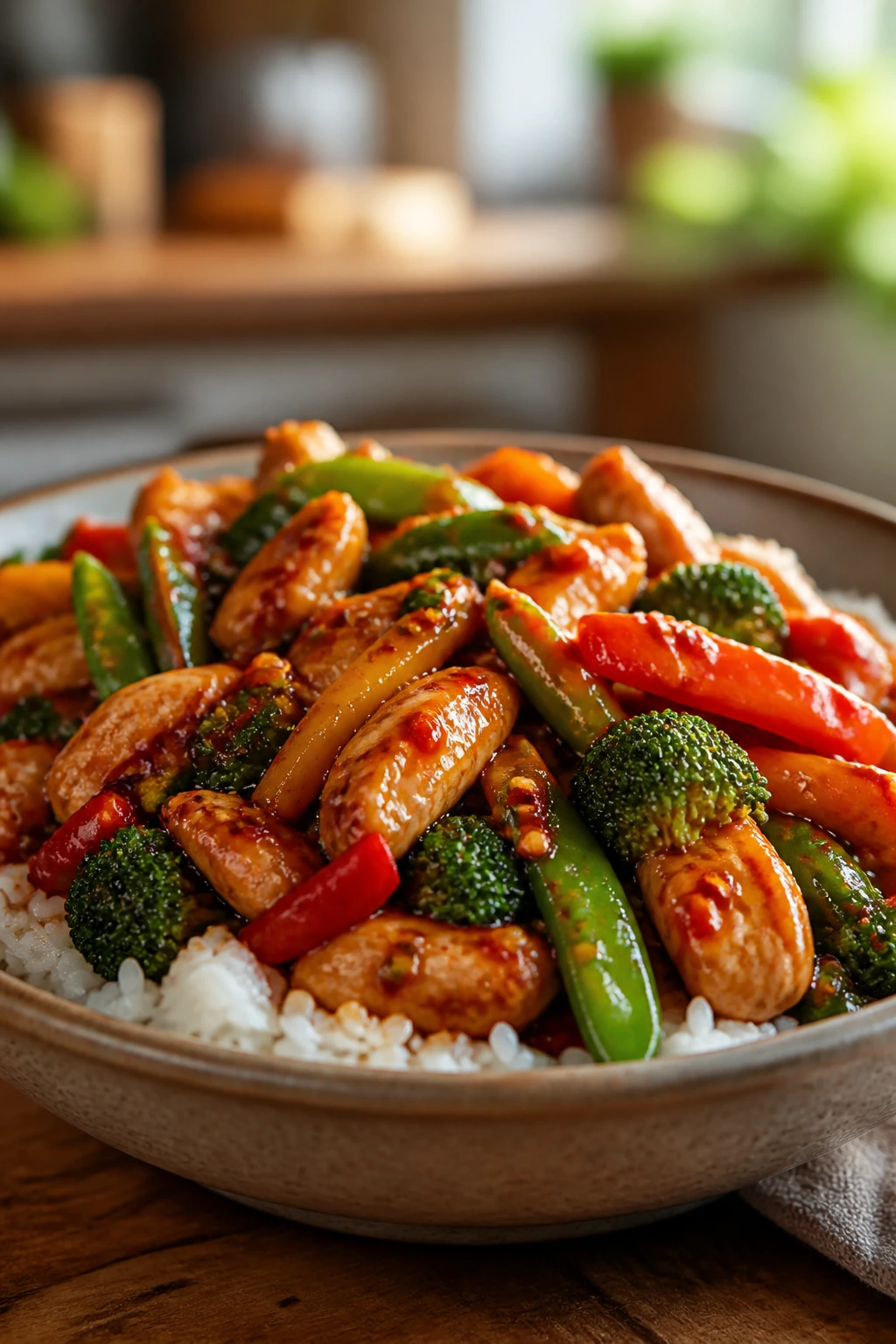
Recipe Name: Spicy Chinese Better-Than-Takeout Stir-Fry
Description: A glossy, spicy Chinese-inspired chicken stir-fry with crisp vegetables, a salty-sweet chile sauce, and enough heat to feel lively without bulldozing the rest of the plate. Best served over jasmine rice while the sauce is still shiny.
Prep Time: 20 minutes
Cook Time: 15 minutes
Total Time: 35 minutes
Course: Main Course
Cuisine: Chinese-Inspired / Chinese-American
Servings: 4 servings
Calories: About 530 kcal per serving
Ingredients
For the Chicken
- 1½ pounds boneless, skinless chicken thighs, trimmed and cut into 1-inch pieces
- 1 tablespoon light soy sauce
- 1 tablespoon Shaoxing wine or dry sherry
- 1 teaspoon cornstarch
- 1 teaspoon neutral oil
- ¼ teaspoon fine salt
For the Sauce
- 3 tablespoons light soy sauce
- 2 tablespoons oyster sauce
- 1 tablespoon chili crisp or chili oil
- 1 tablespoon rice vinegar
- 1 tablespoon Shaoxing wine or dry sherry
- 1 tablespoon honey or packed brown sugar
- ¾ cup low-sodium chicken stock
- 1 teaspoon toasted sesame oil
- 1 teaspoon cornstarch
- ½ teaspoon ground Sichuan peppercorns, optional
- 2 dried red chiles, stemmed
For the Stir-Fry
- 2 tablespoons neutral oil, divided
- 1 small yellow onion, cut into ½-inch wedges
- 4 cloves garlic, minced
- 1 tablespoon fresh ginger, minced
- 2 cups broccoli florets, cut into bite-size pieces
- 1 red bell pepper, sliced into thin strips
- 1 cup snap peas, trimmed
- 2 scallions, sliced, whites and greens separated
For Serving
- 3 to 4 cups hot cooked jasmine rice, or steamed rice noodles
- 1 tablespoon toasted sesame seeds
- Extra chili crisp, for serving
Instructions
-
Toss the chicken with the soy sauce, Shaoxing wine, cornstarch, oil, and salt. Rest 15 minutes.
-
Whisk together the sauce ingredients until smooth.
-
Heat 1 tablespoon oil in a wok or large skillet over high heat. Add the chicken in a single layer and sear 3 to 5 minutes total, until lightly browned. Remove to a plate.
-
Add the remaining oil, then stir-fry the onion, garlic, ginger, and dried chiles for 10 to 15 seconds.
-
Add the broccoli and 2 tablespoons water. Cover for 45 to 60 seconds, then uncover and add the bell pepper, snap peas, and scallion whites. Stir-fry 1 to 2 minutes until crisp-tender.
-
Stir the sauce again and pour it into the pan. Cook 30 to 60 seconds, stirring, until glossy and lightly thickened.
-
Return the chicken and any juices to the pan. Toss 1 to 2 minutes, until the chicken reaches 165°F and the sauce clings to everything.
-
Turn off the heat. Stir in the scallion greens. Serve over rice or noodles with sesame seeds and extra chili crisp.
Notes: Chicken thighs stay juicier than breast here. If the sauce thickens too fast, add a splash of stock or water. Keep the pan hot and the vegetables crisp.