



The first thing you notice about authentic sweet Italian sausage is the smell. Fennel warms up in the fat, garlic softens at the edges, and the pork itself starts to taste rounder before it even touches a pan. That scent is half the story right there. It’s the kind of smell that makes people drift into the kitchen asking when dinner starts, even if dinner is still a long way off.
Sweet Italian sausage does not mean sugary sausage. That’s the part people get wrong. The “sweet” in this old-school style means mild, fennel-forward, and not hot enough to make you reach for water after every bite. When it’s done right, the sausage is juicy and springy, with a coarse, handmade texture that feels miles away from the mushy links that sit in plastic trays at the supermarket.
What makes the homemade version worth the trouble is control. You decide how much fennel goes in. You decide whether the garlic should lean mellow or sharp. You decide how much heat belongs in the background — and for this style, the answer is usually “not much.” Keep the meat cold, mix it until it turns sticky, and stop before it turns paste-like. That’s the difference between sausage that snaps and sausage that slumps.
Why This Batch Works So Well
A good sausage recipe is short for a reason. Pork shoulder, salt, fennel, garlic, a little wine, and a few pantry spices are enough when you treat each one properly. The trick isn’t piling on more ingredients. It’s making the few you have behave.
Fennel is the backbone. Toasted and lightly crushed, it gives that sweet-anise smell that people associate with butcher shops, Sunday sauce, and sausage links tucked into rolls. If the fennel is stale or ground into dust, the sausage tastes flat. If it’s toasted just enough, the aroma blooms the second it hits the meat.
Cold mixing changes the texture. Pork fat needs to stay in little pieces, not smear into the bowl. When the mixture stays cold, the links cook up juicy and bouncy instead of dense. That part sounds small. It isn’t.
And then there’s the seasoning balance. Too much heat and the sausage stops feeling sweet. Too little salt and the fennel tastes vague instead of clear. Once you nail that balance, the sausage starts acting like a supporting actor that steals the scene anyway — great in sauce, great with peppers, great on its own with mustard and bread.
What Sweet Italian Sausage Actually Means
Why does sweet Italian sausage taste savory when the name sounds like dessert? Because “sweet” is about the absence of heat, not a sugar rush. The flavor should feel rounded, fragrant, and gently aromatic, not candy-like. If you’ve only had hot Italian sausage, the sweet version can seem almost calm by comparison.
Sweet Is Not Sugar
Some home cooks add sugar because they think the name demands it. It doesn’t. A tiny amount can smooth out the edges, but the real sweetness comes from fennel, garlic, and pork that’s seasoned well enough to taste complete on its own. If the fennel is good and the salt is right, you won’t miss the sugar at all.
That’s the version I prefer. Cleaner. Less distracted.
Hot Sausage Is a Different Animal
Hot Italian sausage usually brings more red pepper, more blunt heat, and a sharper finish. Good hot sausage has its place, especially in a spicy tomato sauce, but it changes the mood of the plate. Sweet sausage is more flexible. It can sit next to peppers and onions, get sliced into pasta, or be tucked into a sandwich without turning the whole meal into a fire drill.
If your family grew up with one style and not the other, that family preference can feel personal. Fair enough. But the base technique stays the same: cold meat, proper salt, and a seasoning blend that smells like fennel and garlic before it ever hits the pan.
The Pork Shoulder Choice That Changes the Texture
Lean pork makes poor sausage. There, I said it.
The fat is not the enemy here. It is the reason the links stay juicy after cooking and why the texture feels springy instead of mealy. Pork shoulder is the cut that usually gets this right because it carries enough fat to keep the sausage tender without turning greasy. If you buy pork loin and try to force it into sausage, you’ll end up fighting dryness all the way to the plate.
What to Ask the Butcher For
If you’re buying ground pork, ask for ground pork shoulder with about 20% fat. That’s the sweet spot for homemade sweet Italian sausage. If the butcher can grind it coarse, even better. A coarse grind gives the finished sausage a more old-fashioned bite, the kind that breaks neatly when you cut into it.
If you’re starting with a whole shoulder, cut it into 1-inch chunks and chill it well before grinding. Cold meat grinds cleaner. Warm meat smears. That’s not a small difference; it’s the difference between sausage and pink meat paste.
Why a Little Fat Is Nonnegotiable
Fat carries flavor. It also protects the meat from drying out when the links hit the heat. When you bite into a well-made sausage, the fat should taste rich, not slick. That happens when the ratio is right and the meat is mixed just enough to bind.
You can make sausage with slightly leaner pork if you have to, but the result wants gentler cooking and maybe a splash more wine in the mix. Go too lean, and you’ll spend the whole time trying to save a sausage that never wanted to cooperate in the first place.
Fennel, Garlic, and the Spice Blend That Makes It Taste Right
The fennel should smell sweet when you crush it. Not dusty. Not old. Sweet, almost floral, with that clean anise note that tells you the batch is on the right track.
That’s the flavor people remember. The pork matters, sure. The salt matters more than people think. But fennel is the thing that makes sweet Italian sausage taste like itself. Garlic gives it backbone, paprika adds color and a warm edge, and black pepper keeps the whole mix from feeling soft and sleepy.
Toast the Fennel Just Enough
A dry skillet and 60 to 90 seconds is usually enough. You’re not trying to brown the seeds into bitterness. You’re waking them up. Once they smell fragrant, dump them out and let them cool for a minute before crushing. A mortar and pestle works well here, but the bottom of a small pan or a rolling pin does the job too.
Crush half of the seeds more finely and leave the rest a little rough. That gives the sausage two kinds of fennel flavor: some that spreads through the meat, and some that shows up in little bursts when you bite into a link.
Garlic Paste Beats Chopped Bits
Chopped garlic can stay stubborn in sausage and cook unevenly. Grated garlic or a paste disappears into the meat more neatly and gives a steadier flavor. It also keeps you from hitting a pocket of raw garlic in the finished link, which is never the goal.
If you like garlic, and I do, the best version is the one that smells sweet and rounded once it’s mixed with the pork. Sharp raw garlic should fade into the background before the sausage ever gets stuffed.
Paprika is mostly there for warmth and color. Oregano and coriander keep the seasoning from feeling one-note. And the little bit of red pepper flakes, if you use them, should behave like a wink rather than a shout.
What Goes Into the Bowl
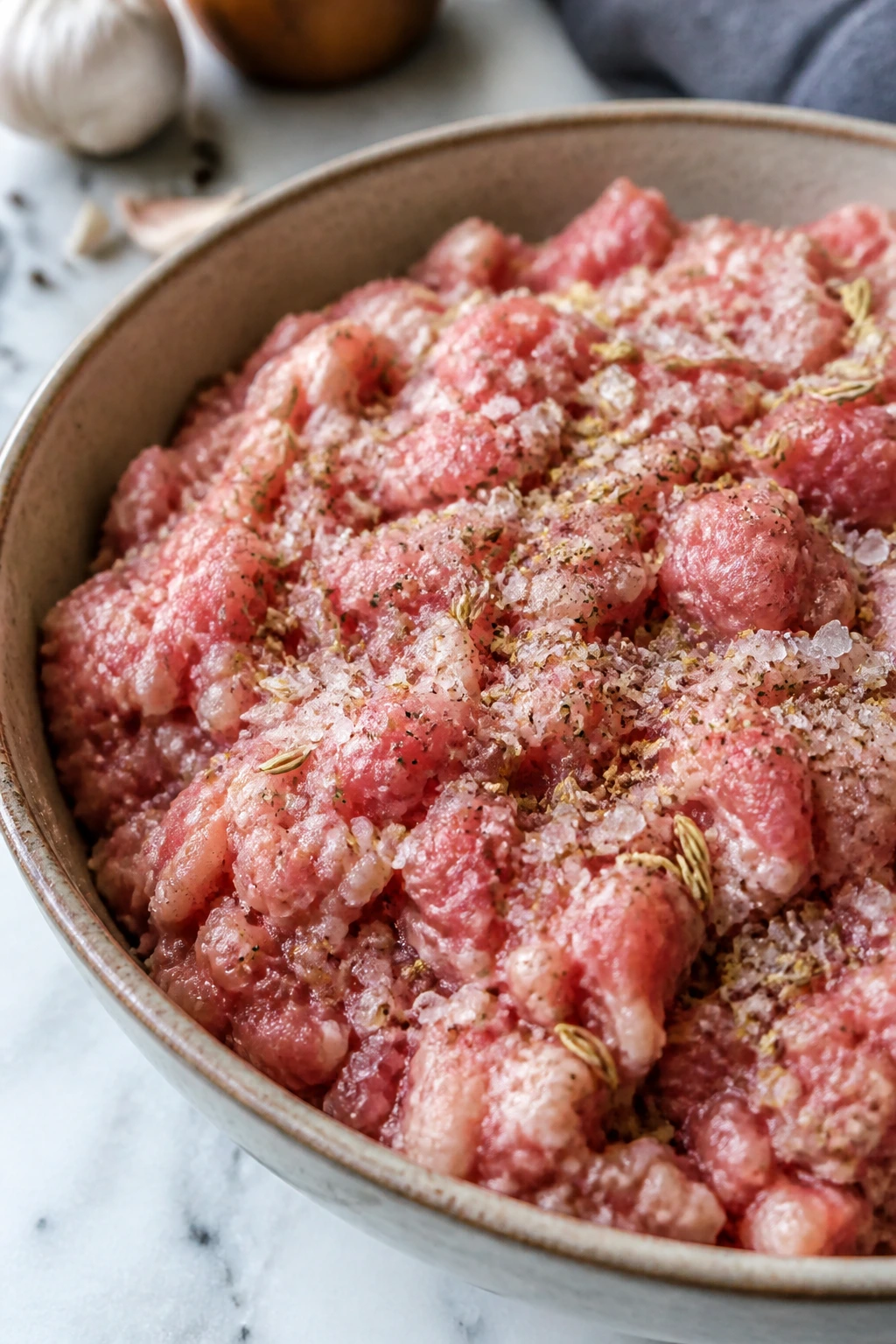
A sausage batch should look almost suspiciously short when it’s laid out on the counter. That’s a good sign. Short ingredient lists leave less room for clutter and more room for the pork to taste like pork.
Yield: About 10 to 12 links, serves 6 to 8
Prep Time: 40 minutes
Cook Time: 15 to 20 minutes
Total Time: 1 hour 30 minutes
Difficulty: Intermediate — the seasoning is simple, but stuffing casings and keeping the mixture cold takes steady hands.
Chill/Rest Time: 30 minutes before cooking, or up to 24 hours in the refrigerator
Best Served: Warm from the skillet, or sliced into sauce after a short rest
For the Sausage:
- 3 pounds ground pork shoulder, very cold and about 20% fat
- 18 grams kosher salt
- 2 tablespoons fennel seeds, lightly toasted and crushed
- 2 teaspoons sweet paprika
- 6 cloves garlic, finely grated or pounded to a paste
- 2 teaspoons freshly ground black pepper
- 1 teaspoon dried oregano
- 1/2 teaspoon ground coriander
- 2 tablespoons chopped flat-leaf parsley
- 1/4 teaspoon red pepper flakes, optional
- 1/4 cup dry white wine, chilled
- 2 tablespoons ice water
For Stuffing:
- 10 feet natural hog casings, rinsed and soaked in cool water
Pork Shoulder
What to use: 3 pounds ground pork shoulder with visible fat marbling, or a butcher’s coarse grind.
Preparation: Keep it cold right up until mixing time. If you’re grinding your own shoulder, cut it into 1-inch chunks and chill the pieces until they firm up.
Substitutions: Ground pork with roughly 20% fat works well, and a butcher can grind shoulder if you don’t have a grinder at home.
Tips: If the meat feels soft or slick, give it 10 to 15 minutes in the refrigerator before you mix. Warm fat smears, and smeared fat means dense sausage.
Fennel, Garlic, and the Spice Blend
What to use: 2 tablespoons fennel seeds, 6 cloves garlic, 2 teaspoons sweet paprika, 2 teaspoons black pepper, 1 teaspoon oregano, 1/2 teaspoon coriander, and the optional red pepper flakes.
Preparation: Toast the fennel briefly, crush it, and grate the garlic so it disappears evenly into the meat.
Substitutions: Fennel pollen, if you have it, can replace part of the fennel seed for a softer aroma; anise seed works in a pinch, though it tastes sharper.
Tips: The fennel should smell bright, not burnt. Burnt fennel is bitter and hard to hide once it’s in the bowl.
Wine, Water, and Parsley
What to use: 1/4 cup dry white wine, 2 tablespoons ice water, and 2 tablespoons chopped flat-leaf parsley.
Preparation: Keep the wine chilled and chop the parsley fine so it doesn’t clump.
Substitutions: Cold water can replace the wine if you want to keep the flavor simpler, though the sausage loses a little brightness.
Tips: The liquid helps the mixture bind and keeps the seasoning from tasting dusty. Don’t overdo it, though — sausage needs a moist mix, not a batter.
Casings
What to use: 10 feet natural hog casings.
Preparation: Soak them in cool water, then rinse both the outside and the inside until the salt smell is gone.
Substitutions: If casings aren’t your thing, the same mixture can be used bulk-style for patties, crumbles, or sauce meat.
Tips: Keep the casings in a bowl of fresh water while you work. Dry casings split easier, and split casings are a nuisance nobody needs.
The Tools That Make Stuffing Casings Less Messy
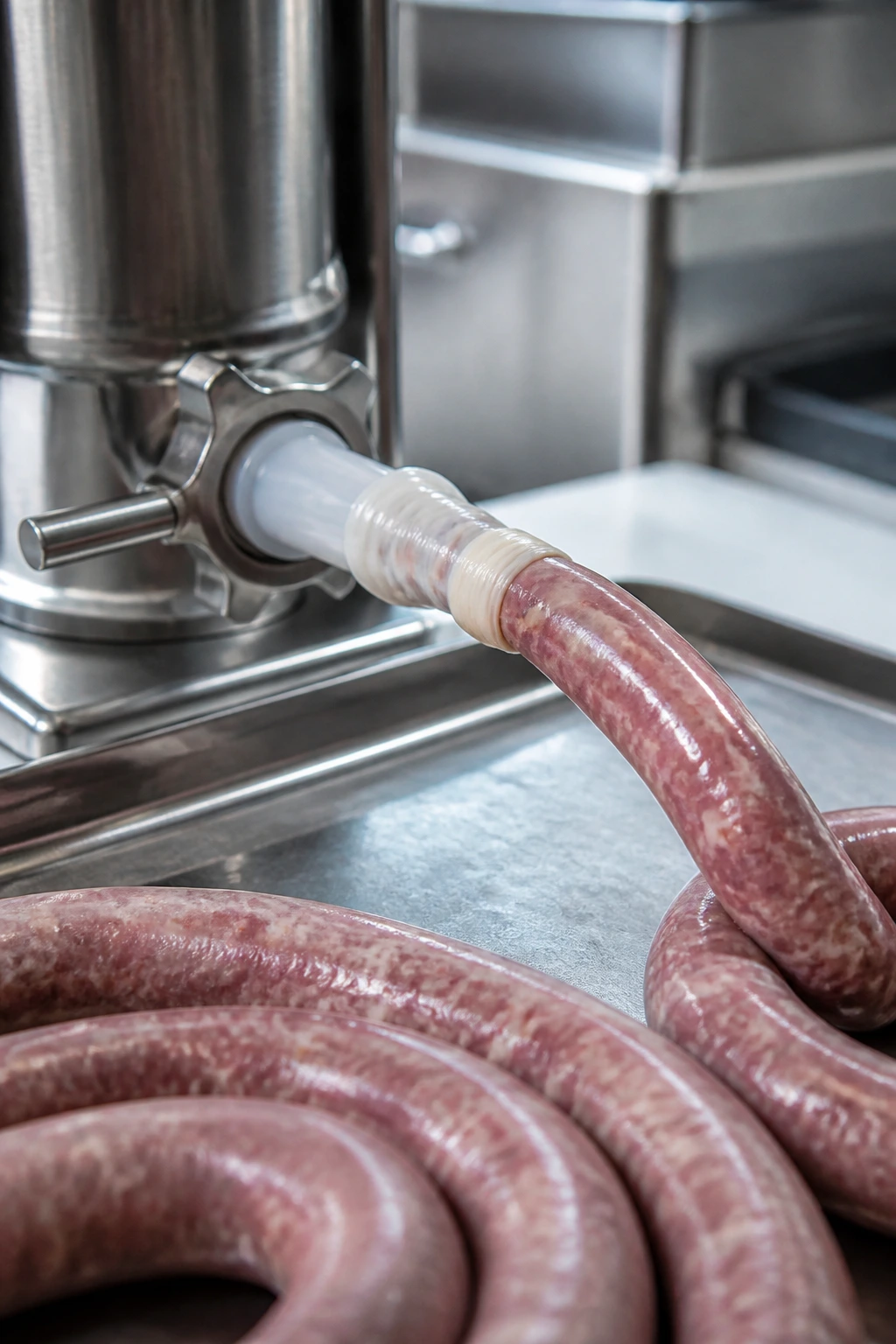
You do not need a butcher shop to make good homemade sweet Italian sausage. You do need a few tools that make the work cleaner and keep the meat cold while you handle it.
- Large mixing bowl — A wide bowl gives you room to mix without pushing the pork around too long.
- Small dry skillet — Use this to toast the fennel seeds before they go into the sausage.
- Mortar and pestle or spice grinder — Either one will crush the fennel without turning it into powder.
- Sausage stuffer attachment or dedicated stuffer — This is the cleanest way to fill natural casings. A grinder with a stuffing tube works too.
- Meat grinder, optional — Helpful if you start with a whole pork shoulder and want a coarse grind. If you buy ground pork shoulder, skip it.
- Sheet pan lined with parchment — This gives the stuffed links a flat place to rest before cooking.
- Instant-read thermometer — The only honest way to know when pork sausage is done. Aim for 160°F in the thickest link.
- Kitchen scale, optional — Useful for portioning the sausage into even links and checking your salt if you like precision.
A chilled metal bowl is nicer than a warm one. So is working near a cold sink or a refrigerator shelf if your kitchen runs hot. These are boring details until the sausage starts to smear. Then they become the whole story.
How to Mix, Stuff, and Cook the Sausage
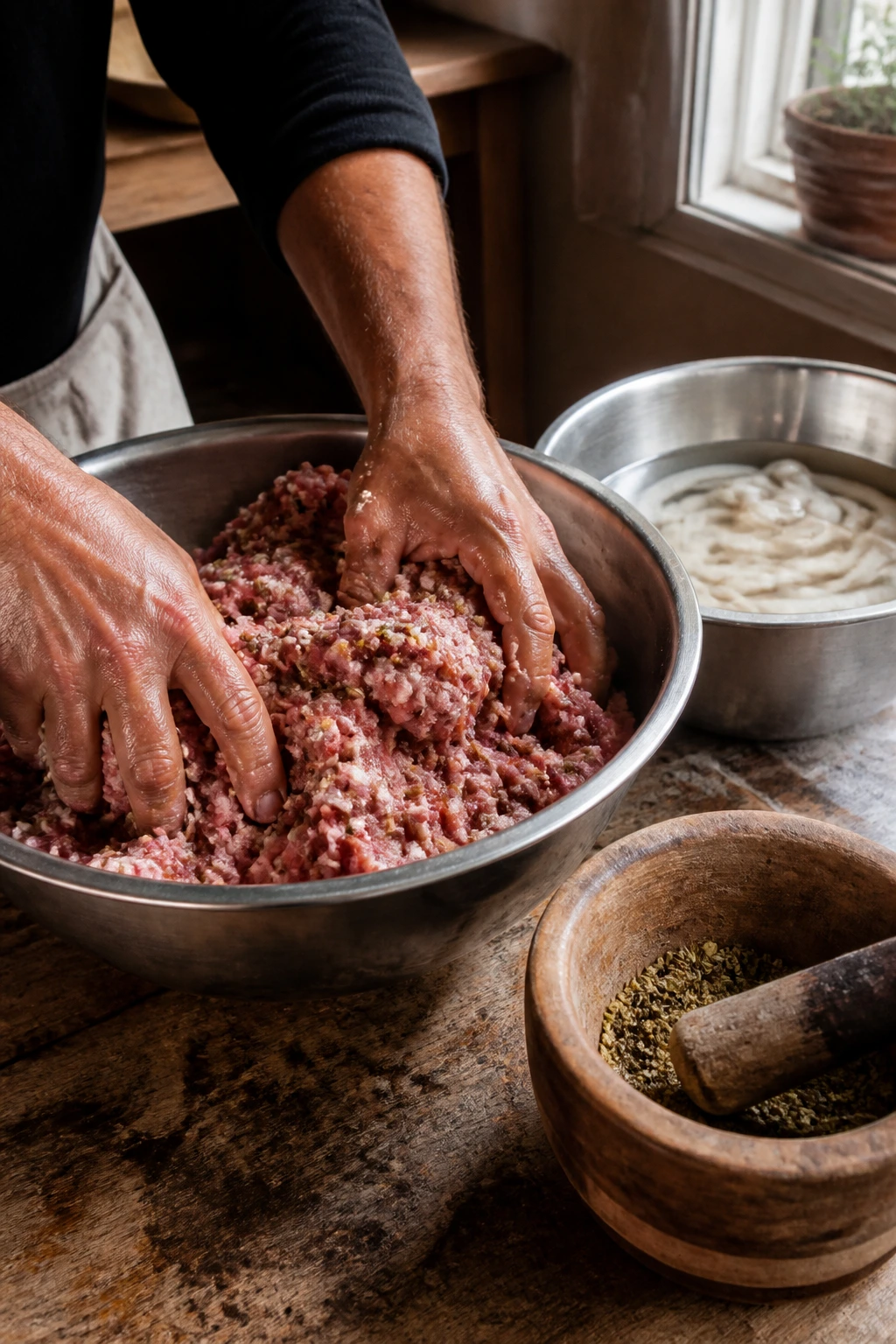
There’s no mystery in the method. The mystery is usually in people rushing the method.
Phase One: Get the casings and spices ready
-
Soak the casings. Place the hog casings in a bowl of cool water and soak them for at least 30 minutes. Rinse them well, inside and out, until the water runs mostly clear and the salt smell fades. Keep them in fresh water while you work so they stay supple.
-
Toast and crush the fennel. Set a dry skillet over medium heat and toast the fennel seeds for 60 to 90 seconds, just until they smell fragrant. Pull them off the heat immediately and crush them lightly with a mortar and pestle or the bottom of a heavy pan.
-
Chill the pork. If the pork has been sitting out, tuck it into the refrigerator for 10 to 15 minutes before mixing. You want it cold enough that the fat still feels firm.
Phase Two: Mix the sausage
-
Combine the meat and seasonings. Put the pork, salt, fennel, paprika, garlic, black pepper, oregano, coriander, parsley, optional red pepper flakes, wine, and ice water in a large bowl. Use your hands to distribute the spices evenly before you start kneading.
-
Mix until sticky, not pasty. Work the mixture with cold hands for about 2 to 3 minutes, folding and squeezing until it starts to cling to itself. You’re looking for a tacky, cohesive texture. Stop as soon as the meat starts to look bound. Overmixing turns sausage dense.
-
Cook a test patty. Pinch off a teaspoon of the mixture and fry it in a small skillet for 1 to 2 minutes per side. Taste it. If it needs more salt, add a pinch. If you want more fennel, add a little more. This tiny test saves the whole batch.
Phase Three: Stuff and shape the links
-
Thread the casing onto the stuffer. Slide one end of the casing onto the stuffing tube, leaving a few inches hanging off the end. Tie a knot in the tail or hold it closed with your fingers until the filling starts to move.
-
Fill the casing loosely. Feed the sausage mixture into the stuffer and fill the casing until it’s firm but still gives a little when you press it. Do not pack it tight. A stuffed sausage needs room to twist and expand.
-
Twist into links. Twist the filled rope into 5- to 6-inch links, alternating the direction of each twist so the links don’t unwind. If you see a trapped air pocket, prick it with a clean needle or sausage pricker.
-
Rest the links. Lay the finished links on a parchment-lined sheet pan and refrigerate them for 30 minutes. That short rest firms the casing and helps the shape hold during cooking.
Phase Four: Cook the sausage
- Cook gently in a skillet. Put the links in a large skillet in a single layer and add 1/4 cup water. Set the pan over medium heat, cover it, and let the links steam and render for 8 minutes. Uncover, turn them often, and cook for another 6 to 8 minutes until the water is gone, the casings are browned, and the center reaches 160°F. If the pan gets too hot too fast, lower the heat; the outside should brown, not split open.
Let them rest for 3 minutes before cutting. The juices settle, and the first slice stops running all over the board.
How to Serve It at the Table

The sausage is rich enough that the rest of the plate should stay sharp and simple. That balance matters. You want something bright, something starchy, and maybe one bitter vegetable to keep the whole meal from feeling heavy.
Presentation: Serve the links whole on a warm platter, then slice one open so the fennel-scented steam has somewhere to go. If you’re making sandwiches, tuck the sausage into a split roll and spoon a little of the browned pan liquid over the top. The glossier the sausage looks, the more appetizing it feels.
Accompaniments: Roasted peppers and onions are the obvious partner, and for good reason. Polenta, rigatoni with tomato sauce, garlicky broccoli rabe, or a thick piece of crusty bread all work too. I like it best with something that can catch the juices.
Portions: Plan on 2 links per dinner plate if the sausage is the main event, or 1 link per sandwich. If you’re slicing it into pasta, 1 pound serves 4 people with moderate appetites, especially if there’s bread on the table.
Beverage Pairing: A dry Chianti works well, but a lightly chilled Lambrusco is even better if you like a little fizz against the fat. Sparkling water with lemon also does the job if you want the fennel to stay front and center.
Tips That Make the Batch Better
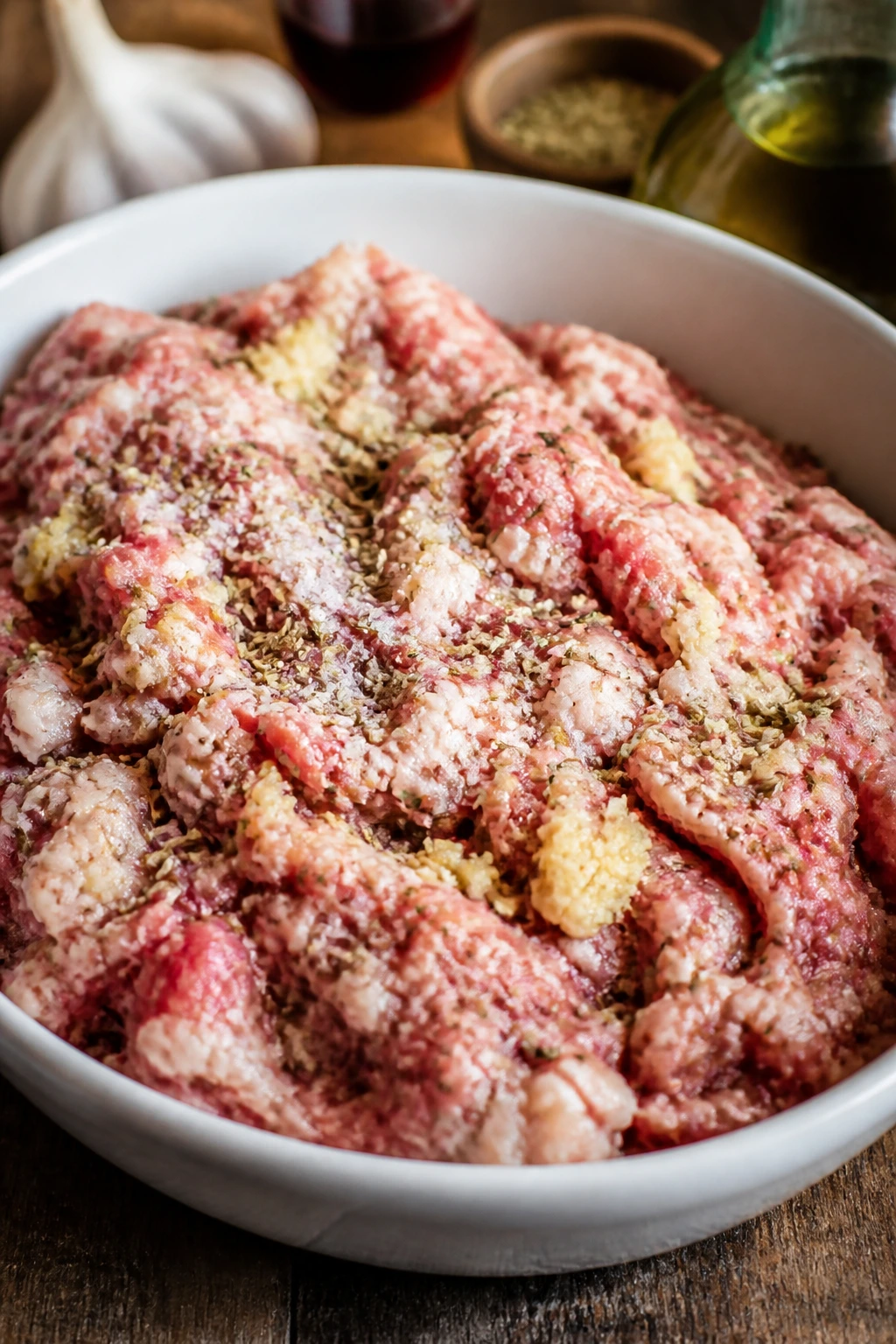
The basic recipe is solid. A few small moves make it sing.
Flavor Enhancement: Toast the fennel seeds in two stages — some crushed fine, some left a little rough. The fine pieces flavor the meat, while the rough ones burst on the tongue when you bite into the link. That little contrast gives the sausage a handmade feel.
Customization: If you want a brighter finish, add 1 teaspoon of orange zest to the mix. If you want the sausage to feel more like a butcher counter special, fold in 1 tablespoon of finely grated onion. Both changes work, but keep them subtle. You’re nudging the flavor, not rewriting it.
Time-Saver: Mix the sausage seasoning into the pork the night before and cover the bowl tightly. The salt starts doing its work, the garlic settles, and the mixture firms up overnight. Stuffing the casings the next day feels less slippery and less fussy.
Serving Suggestions: Brown a few sage leaves in the skillet after the sausage comes out and scatter them over the platter. Or spoon the links over soft polenta with a little of the rendered fat spooned on top. That fat is the flavor, so don’t throw it away unless it’s burnt.
One more thing. If you’re serving the sausage in sauce, brown the links first, then simmer them gently in the tomato sauce for 15 to 20 minutes. That’s how you get the sausage to absorb the sauce without losing its own seasoning. The two should taste like they were meant to sit together all along.
Mistakes That Turn Good Sausage Tough or Bland
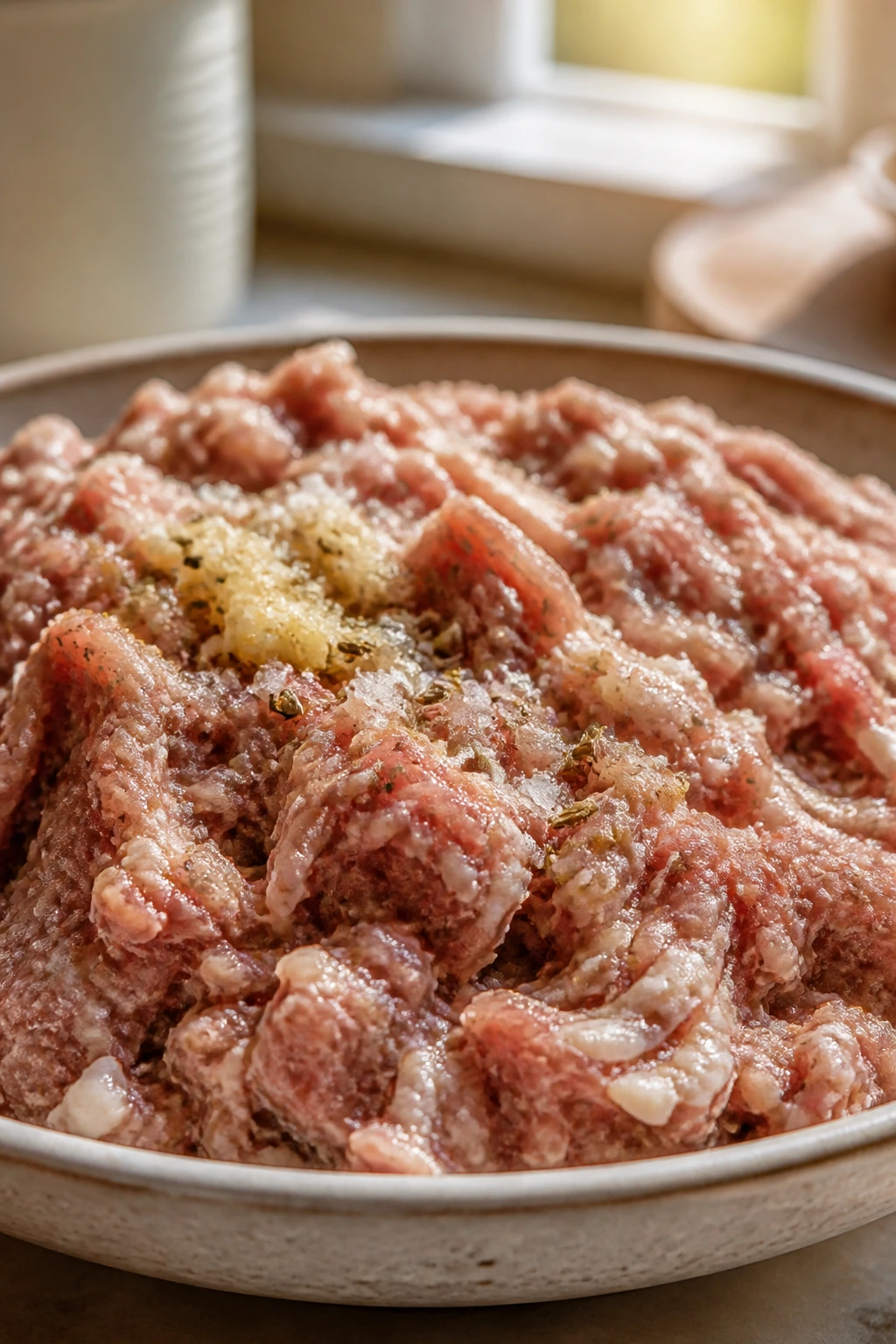
A sausage batch usually goes wrong in the same few places. The good news: each one is easy to avoid once you know what to look for.
-
Letting the pork warm up too much. The mixture starts looking shiny and greasy, and the finished links feel dense. Fix it by keeping the bowl cold and returning the pork to the refrigerator if it starts softening before you finish mixing.
-
Skipping the test patty. The whole batch can end up under-salted or timid on fennel, and you won’t know until the links are cooked. Fry a tiny patty first. It takes two minutes and tells you exactly what the sausage wants.
-
Stuffing the casings too tightly. The links split, twist awkwardly, or bulge like they’re about to burst. Leave a little give in the casing so the sausage can expand as it cooks.
-
Cooking over high heat. The skin browns too fast, then tears before the center reaches temperature. Medium heat is slower, but it keeps the casing intact and gives the fat time to render properly.
-
Using stale fennel or weak garlic. The sausage tastes flat, even if the salt is right. Fennel should smell sweet when you crush it, and garlic should be fresh enough to grate without a dull, papery smell. If either one seems tired, replace it.
-
Overmixing the meat. The texture turns bouncy in the wrong way, almost like a hot dog instead of a sausage. Mix until the pork clings to itself, then stop. You’re looking for cohesion, not paste.
If you fix those six things, the sausage gets a lot easier. Most of the “hard part” is just paying attention long enough to notice what the meat is telling you.
Variations That Still Taste Like Italian Sausage
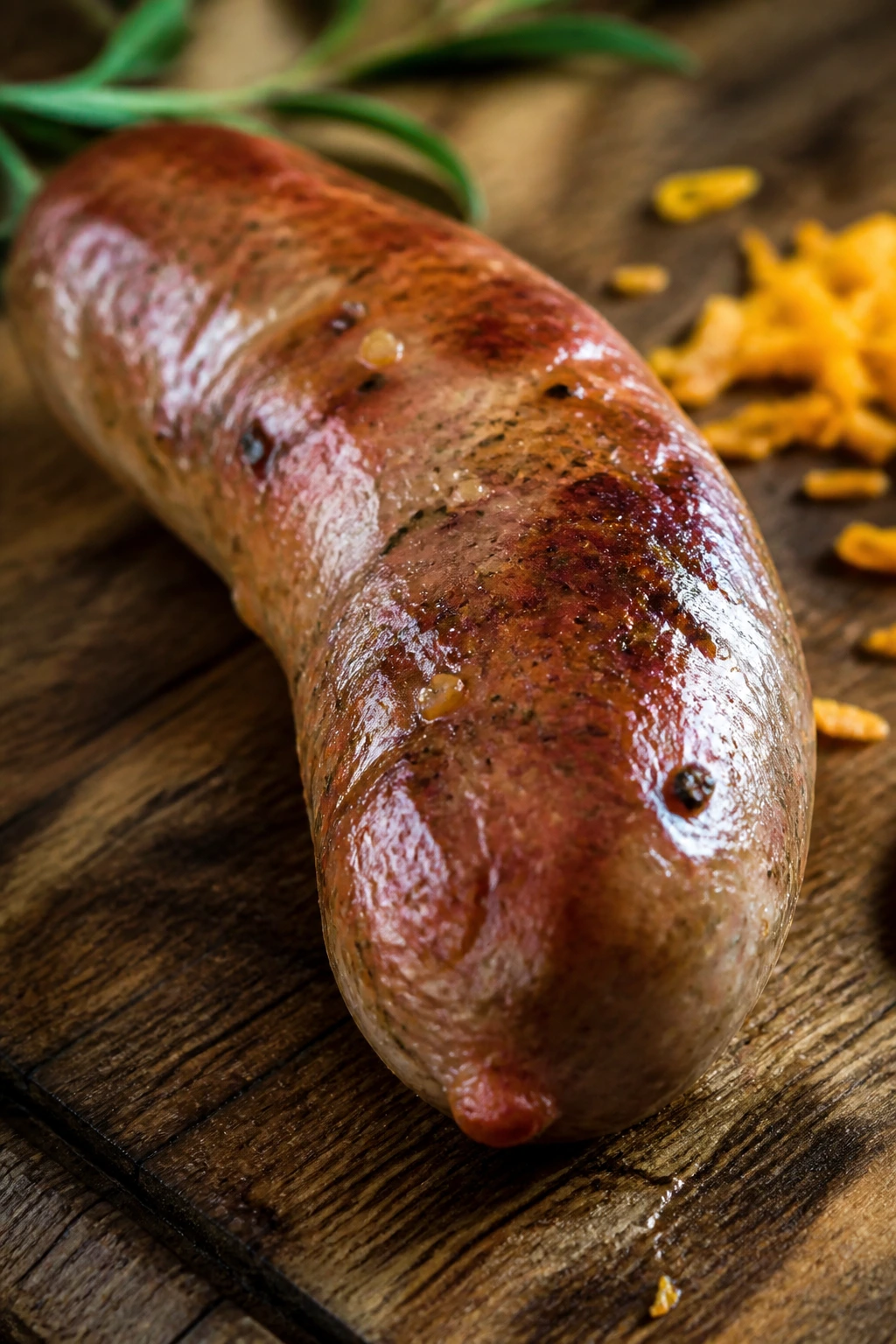
A good sausage recipe can bend a little without losing its face. These versions all stay in the same family.
Mild Sunday Links
Leave out the red pepper flakes and add an extra tablespoon of parsley. This version stays soft, fragrant, and old-school mild, which is handy if you’re serving kids or people who don’t want any heat at all.
Sauce Pot Bulk Sausage
Skip the casings and shape the mixture into loose patties or rough crumbles. Brown it in a skillet, then simmer it in tomato sauce for 15 to 20 minutes. That’s the easiest version when you want the flavor in a pasta sauce without the work of linking.
Calabrian Kick
Add 1 teaspoon Calabrian chili paste or increase the red pepper flakes to 1 teaspoon. The sausage shifts from gentle to lively, and it works especially well with peppers, onions, and thick bread.
Orange and Fennel Twist
Add 1 teaspoon finely grated orange zest and, if you can find it, 1/2 teaspoon fennel pollen. The citrus lifts the pork and makes the fennel smell even sweeter. I like this one in sandwiches where the toppings are simple.
Turkey-Thigh Blend
Replace 1 pound of the pork shoulder with ground turkey thigh. Add 1 tablespoon olive oil if the mixture seems dry, and cook it to 165°F because poultry has a different safe temperature. It’s not the most traditional move, but it gives you a lighter sausage that still carries the fennel and garlic well.
Storing, Freezing, and Reheating Without Drying It Out
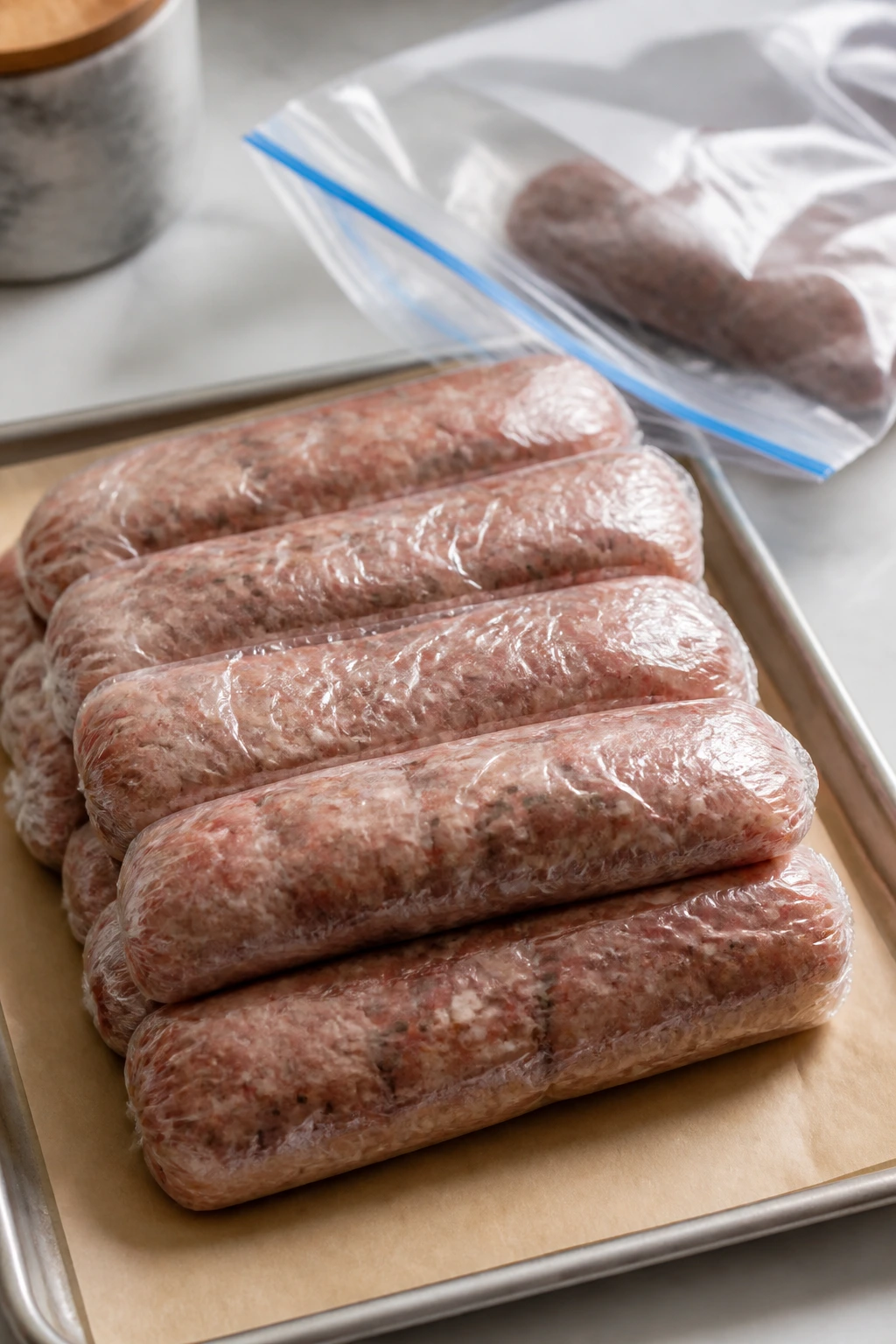
Homemade sausage keeps well if you treat it like raw meat first and cooked leftovers second. That means cold storage, tight wrapping, and gentle reheating.
Raw Sausage
Stuffed or bulk sausage can sit in the refrigerator for up to 24 hours before cooking, as long as it stays below 40°F. If you need to keep it longer, freeze it. Lay the links on a parchment-lined sheet pan first so they freeze flat and separate, then move them to a freezer bag or wrapped container after they’re solid.
Uncooked sausage keeps in the freezer for up to 2 months with good texture. After that, it’s still safe if frozen solid, but the pork can pick up freezer flavor and the texture starts to fade.
Cooked Sausage
Cooked links keep in the refrigerator for 3 to 4 days. Wrap them tightly or store them in a covered container so they don’t dry out or smell like the rest of the fridge. If you’ve sliced the sausage and tucked it into sauce, store the sauce and sausage together; the meat stays moister that way.
Cooked sausage freezes for up to 2 to 3 months. Wrap individual links or portioned pieces, then move them into a freezer bag. That makes reheating easier because you only thaw what you need.
Reheating
For the best texture, reheat sausage in a skillet over medium-low heat with 1 to 2 tablespoons of water and a lid. The steam warms the center before the outside dries out. Once the links are hot, uncover the pan for a minute or two if you want the casings to crisp back up.
The oven works too. Set the sausage on a baking sheet, cover loosely with foil, and warm it at 325°F until heated through. If the sausage is already sliced and going into sauce, add it near the end so it warms without losing its juice.
One small but useful detail: if you’re cooking the sausage later the same day, let it sit uncovered on a tray in the fridge for an hour before cooking. The casing dries just enough to brown better.
Questions People Ask Before They Make a Batch
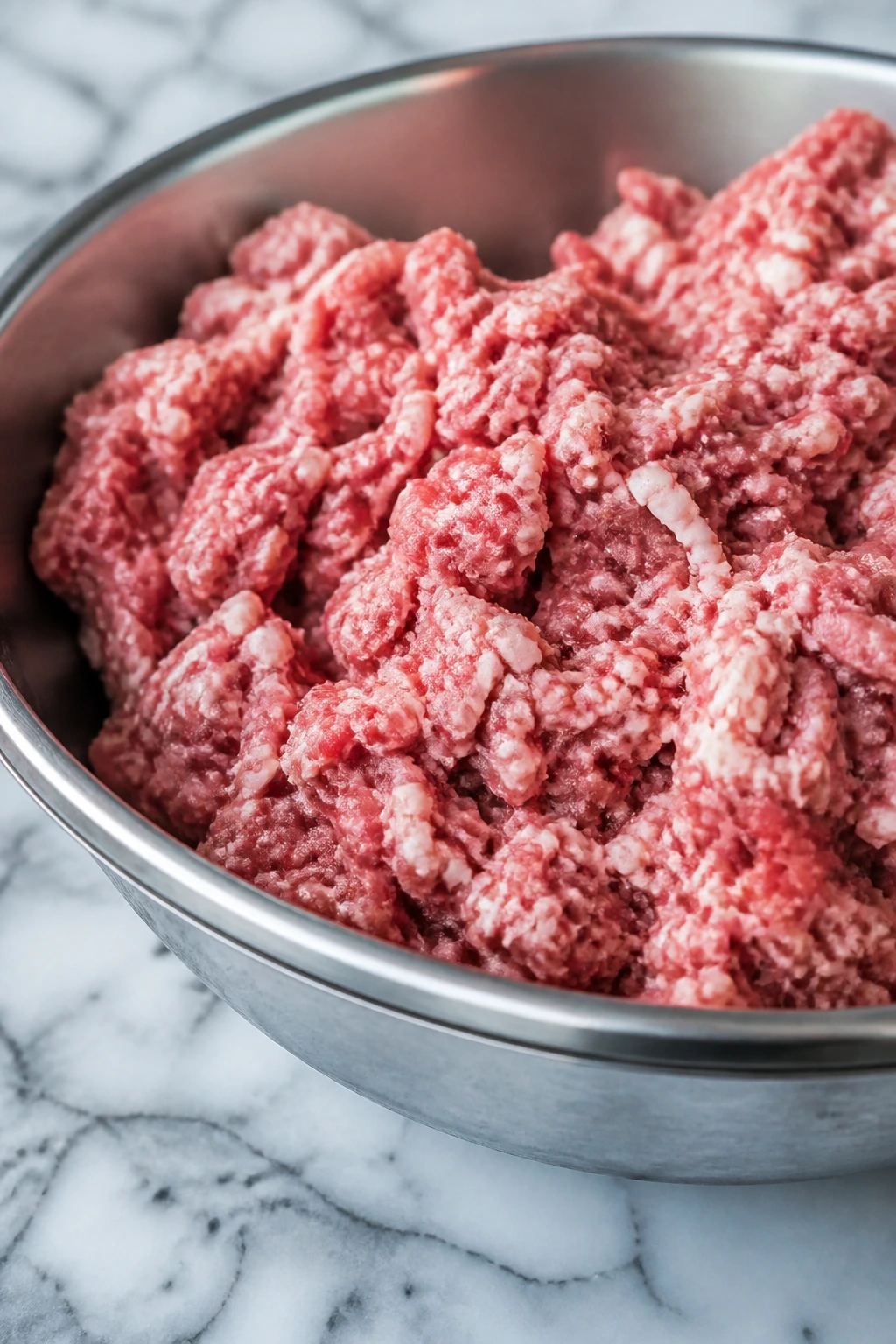
Do I have to use hog casings?
No. Hog casings give you the old-school snap, but the same mixture works as bulk sausage, patties, or crumbles. If casings feel like too much trouble, make the filling without them and cook it in a skillet for pasta sauce, sandwiches, or breakfast-style hash.
Can I use pre-ground pork from the store?
Yes, as long as it isn’t too lean. Look for ground pork with enough fat to stay juicy, roughly the same richness you’d get from a pork shoulder grind. If the package looks pale and dry, skip it and ask a butcher for a richer grind.
What makes this sausage taste “sweet” if there’s no sugar?
The flavor comes from fennel, gentle garlic, and the lack of heavy heat. Sweet Italian sausage is mild and aromatic rather than sugary. The paprika and parsley help round the flavor, but the fennel is the note people remember.
Can I bake the links instead of cooking them in a skillet?
Yes. Set the links on a rack over a sheet pan and bake them at 400°F for 18 to 22 minutes, turning once, until they reach 160°F. Baking is tidy, though you lose a little of the browned edge and skillet flavor that a pan gives you.
How do I know the mixture is mixed enough?
Pick up a handful and squeeze it. It should cling together and feel tacky, not crumbly. If the sausage still falls apart in your hand, it needs another minute of mixing; if it starts looking smooth and almost emulsified, stop immediately.
Why did my links split when I cooked them?
Usually the casings were packed too tight, the heat was too high, or both. The fix is simple: leave a little slack in the casing, cook over medium heat, and let the sausage steam for a few minutes before browning it hard. That gives the inside time to catch up.
Can I freeze the sausage before cooking it?
Absolutely. In fact, the uncooked links freeze better than many people expect if you lay them flat first and freeze them separately. Once they’re solid, bag them up and thaw them in the refrigerator overnight before cooking.
A Batch Worth Repeating
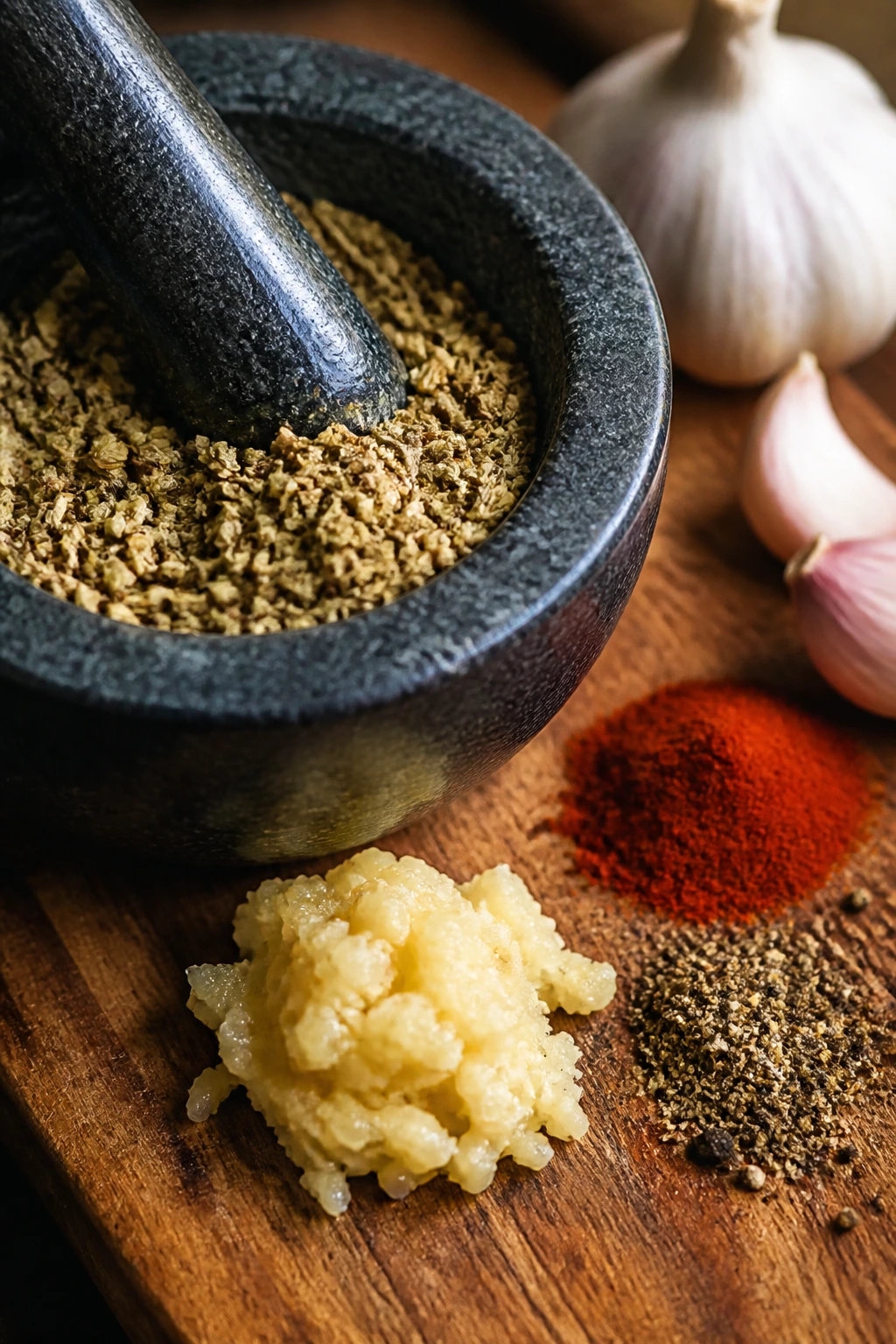
The nicest part about making sweet Italian sausage at home is that the second batch feels easier than the first. Once you’ve handled the casings, learned how cold the meat should stay, and tasted that little test patty, the recipe stops being fussy. It becomes a rhythm. Toast the fennel. Mix the pork. Keep your hands cold. Stop before the meat turns into paste.
And then the sausage hits the pan and everything makes sense. The links brown, the kitchen smells like garlic and pork fat, and suddenly you’ve got something that can go into sauce, onto a platter, or straight onto bread with peppers and onions. That’s a useful kind of recipe. The kind you keep around because it earns its place.
Authentic Sweet Italian Sausage Like Nonna Used to Make — Recipe Card

Recipe Name: Authentic Sweet Italian Sausage Like Nonna Used to Make
Description: A fennel-forward homemade pork sausage with garlic, parsley, and a mild seasoning blend that tastes like an old Sunday supper. Stuff it into hog casings for links or use it bulk-style for sauce, pasta, or sandwiches.
Prep Time: 40 minutes
Cook Time: 15 to 20 minutes
Total Time: 1 hour 30 minutes
Course: Main Course or Sausage Component
Cuisine: Italian-American
Servings: 6 to 8 servings | About 10 to 12 links
Calories: About 350 kcal per serving
Ingredients
For the Sausage:
- 3 pounds ground pork shoulder, very cold
- 18 grams kosher salt
- 2 tablespoons fennel seeds, lightly toasted and crushed
- 2 teaspoons sweet paprika
- 6 cloves garlic, finely grated or pounded to a paste
- 2 teaspoons freshly ground black pepper
- 1 teaspoon dried oregano
- 1/2 teaspoon ground coriander
- 2 tablespoons chopped flat-leaf parsley
- 1/4 teaspoon red pepper flakes, optional
- 1/4 cup dry white wine, chilled
- 2 tablespoons ice water
For Stuffing:
- 10 feet natural hog casings, rinsed and soaked in cool water
Instructions
-
Soak the hog casings in cool water for at least 30 minutes, then rinse them inside and out. Toast the fennel seeds in a dry skillet for 60 to 90 seconds and crush them lightly.
-
Combine the pork, salt, fennel, paprika, garlic, black pepper, oregano, coriander, parsley, red pepper flakes, wine, and ice water in a large bowl. Mix with cold hands until the meat looks sticky and cohesive.
-
Fry a teaspoon of the mixture as a test patty for 1 to 2 minutes per side. Taste and adjust the seasoning if needed.
-
Thread the casing onto a stuffer, fill it loosely with the sausage mixture, and twist into 5- to 6-inch links. Prick any air pockets with a clean needle.
-
Rest the links on a parchment-lined tray in the refrigerator for 30 minutes. Cook in a skillet with 1/4 cup water over medium heat, covered for 8 minutes, then uncovered and turned often for 6 to 8 minutes more until browned and the center reaches 160°F.
Notes: Keep the pork cold the whole time. For bulk sausage, skip the casings and shape the mixture into patties or crumbles. Freeze uncooked links flat on a tray before bagging them.