



Creamy buffalo chicken is one of those weeknight dinners that looks like you worked harder than you did. A hot skillet, a little browning on the chicken, then that orange-red sauce melting into cream cheese and turning glossy instead of harsh. It smells like tangy hot sauce at first, then settles into something rounder and richer once the dairy hits the pan.
That shift matters. Buffalo sauce on its own can be sharp and one-note if you don’t give it something to lean against. A little cream cheese, a splash of broth, and enough heat control to keep the sauce from breaking turn the whole thing into dinner instead of a dare. I like this style because it keeps the punch of buffalo wings but eats like a proper meal, with chicken that stays juicy and a sauce that clings to rice, potatoes, pasta, or a pile of toasted rolls.
There’s also a practical reason this dish keeps showing up in my own rotation: it doesn’t need a long ingredient list or any special choreography. Dice the chicken, season it well, sear it hard enough to get color, then build the sauce in the same pan so every browned bit ends up where it belongs. That’s the kind of cooking I trust on a Tuesday. Straightforward. Fast enough. And still worth sitting down for.
Why Creamy Buffalo Chicken Deserves a Spot in the Weeknight Rotation
- Big flavor, short cook time: The chicken browns in about 6 to 8 minutes, and the sauce comes together in the same skillet while the meat finishes cooking.
- One-pan cleanup: You’re not juggling a separate sauce pot, baking dish, and extra skillet unless you want to.
- Easy to stretch: Spoon it over rice, mashed potatoes, egg noodles, or a baked potato and suddenly one pan feeds more people.
- Flexible heat level: A milder buffalo sauce keeps the tang without too much burn, while a hotter bottle turns the whole thing into proper comfort food for spice people.
- Leftovers reheat well: The sauce thickens in the fridge, which is actually useful; a splash of broth brings it right back.
- Feels more like dinner than a snack: Wing flavor is fun. Creamy buffalo chicken with a real base underneath it feels finished.
Weeknight Timing and Yield at a Glance
Yield: Serves 4
Prep Time: 15 minutes
Cook Time: 25 minutes
Total Time: 40 minutes
Difficulty: Beginner to Intermediate — the technique is simple, but you do need to watch the heat so the dairy stays smooth.
Best Served: Hot from the skillet over rice, potatoes, or noodles
Ingredients That Build the Dish
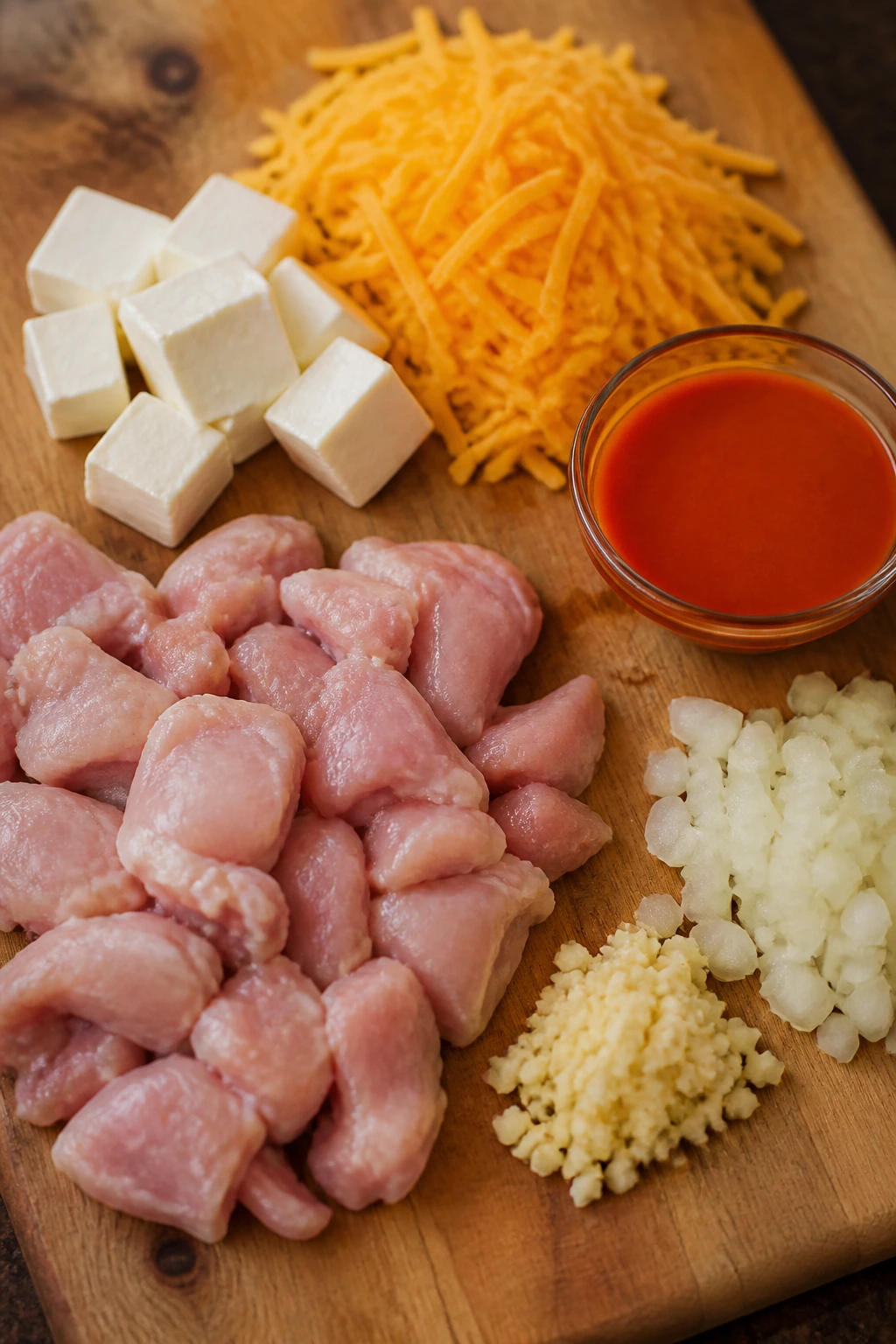
For the Chicken:
- 1 1/2 pounds boneless, skinless chicken thighs, cut into 1-inch pieces
- 1 teaspoon kosher salt
- 1/2 teaspoon black pepper
- 1 teaspoon garlic powder
- 1 teaspoon smoked paprika
- 2 tablespoons olive oil
For the Creamy Buffalo Sauce:
- 1 small yellow onion, finely diced
- 3 cloves garlic, minced
- 3/4 cup buffalo sauce
- 1/2 cup low-sodium chicken broth
- 4 ounces cream cheese, softened and cut into cubes
- 1/2 cup heavy cream
- 1 cup shredded sharp cheddar cheese
For Finishing:
- 2 tablespoons chopped chives or sliced green onions
- Blue cheese crumbles, for serving, optional
- Cooked rice, mashed potatoes, pasta, or toasted rolls, for serving
What Each Ingredient Is Doing in the Pan
Chicken
What to use: 1 1/2 pounds boneless, skinless chicken thighs, cut into 1-inch pieces.
Preparation: Pat them dry before seasoning; damp chicken steams instead of browning, and you’ll lose the little bits of crust that make the sauce taste deeper.
Substitutions: Boneless chicken breasts work too, though they need a shorter cook time and a little more attention; chicken tenders are another fast option if you want to skip trimming.
Tips: Thighs are more forgiving in a creamy sauce. If you walk away for two extra minutes, they don’t punish you the way breast meat does.
Dairy and Sauce Base
What to use: 4 ounces cream cheese, 1/2 cup heavy cream, and 1 cup shredded sharp cheddar.
Preparation: Let the cream cheese soften on the counter for 20 to 30 minutes, then cube it so it melts faster and more evenly.
Substitutions: Half-and-half can replace the heavy cream if you want a lighter sauce, though it will be a little thinner; Monterey Jack can stand in for cheddar if you want a softer melt.
Tips: Buy block cheese and shred it yourself if you can. Pre-shredded cheese works in a pinch, but the anti-caking coating can make the sauce slightly less smooth.
Buffalo Sauce and Broth
What to use: 3/4 cup buffalo sauce and 1/2 cup low-sodium chicken broth.
Preparation: Measure the buffalo sauce before you start cooking; once the chicken is sizzling, it’s easier to move fast if the bottle is already open and ready.
Substitutions: Use a milder wing sauce if your bottle runs hot, or add 1 to 2 tablespoons of melted butter if you want a more classic wing-style finish.
Tips: A low-sodium broth gives you room to season the chicken properly without drifting into an overly salty skillet.
Aromatics
What to use: 1 small yellow onion and 3 cloves garlic.
Preparation: Dice the onion finely so it softens in the time it takes the chicken to finish; mince the garlic small enough that it melts into the sauce instead of poking out in little sharp pieces.
Substitutions: A shallot can replace the onion for a slightly sweeter base, and 1 teaspoon garlic paste can stand in for fresh garlic if that’s what you have.
Tips: Let the onion pick up a little color before adding the liquids. A pale onion tastes flat; a lightly golden one gives the sauce more depth.
Seasonings
What to use: 1 teaspoon kosher salt, 1/2 teaspoon black pepper, 1 teaspoon garlic powder, and 1 teaspoon smoked paprika.
Preparation: Mix the dry seasonings together before they hit the chicken so the coating is even.
Substitutions: Onion powder can replace some of the garlic powder if you want a rounder base, and regular paprika works if smoked paprika isn’t in your cupboard.
Tips: Smoked paprika is worth keeping here. It gives the sauce a subtle grilled note, which keeps the whole dish from tasting too soft.
The Tools That Make This Go Smoothly
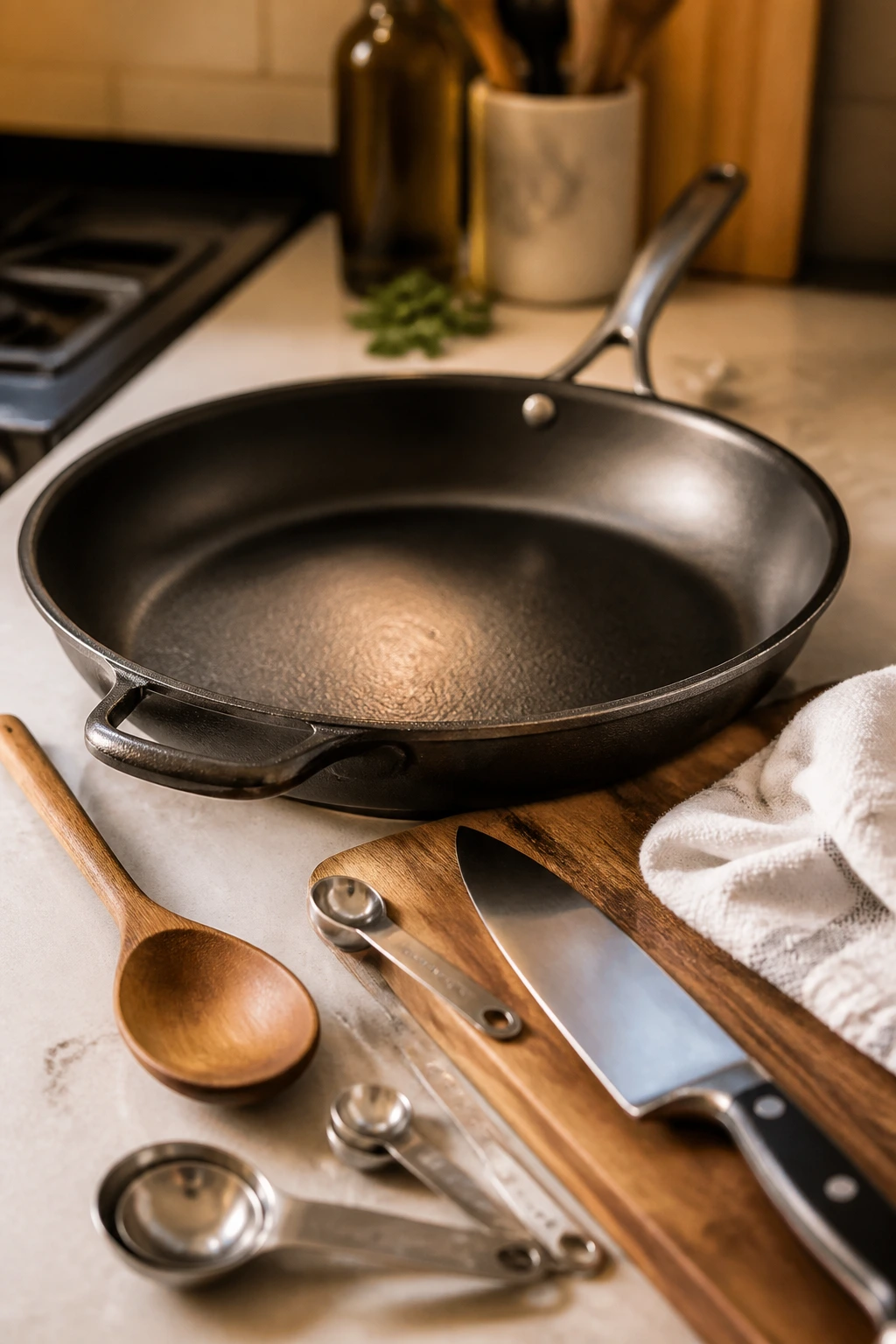
- 12-inch heavy skillet: Cast iron or stainless steel both work; you want enough surface area for browning without crowding.
- Wooden spoon or silicone spatula: Helpful for scraping up the browned bits without scratching the pan.
- Sharp chef’s knife: Cutting the chicken into even pieces helps it cook at the same pace.
- Cutting board with a damp towel underneath: A small thing, but it keeps the board from sliding while you work.
- Measuring cups and spoons: The sauce ratio matters here, especially if you like it thicker or looser.
- Instant-read thermometer: Not required, but it takes the guesswork out of chicken; 165°F in the thickest piece means you’re done.
- Medium mixing bowl: Useful if you want to toss the chicken with the seasonings first instead of seasoning it right in the pan.
Browning the Chicken Without Drying It Out
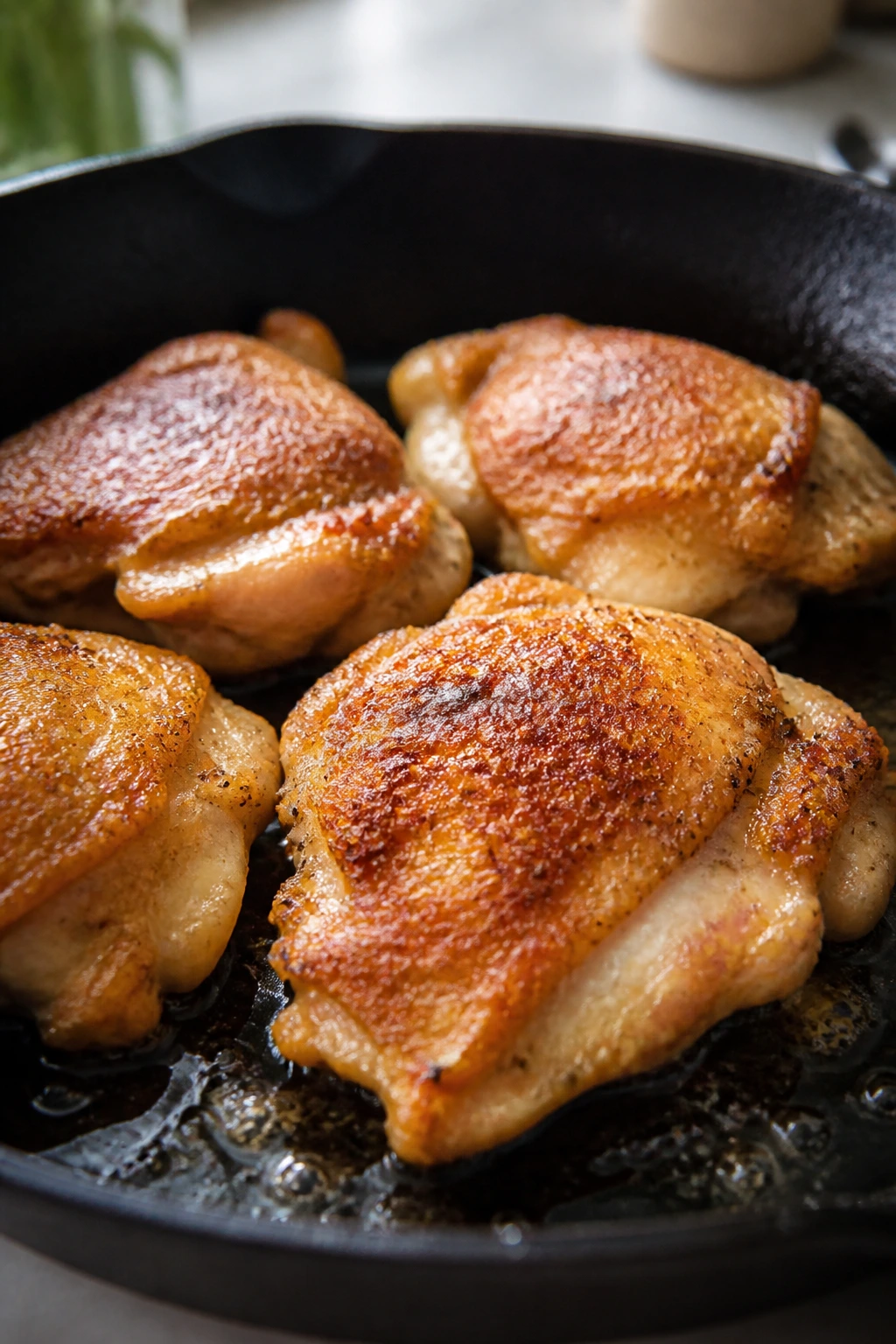
The chicken should go into a hot pan, not a tepid one. That’s the difference between pale, rubbery pieces and chicken with a little browned edge that tastes like somebody paid attention. You’re not trying to cook it through on the first pass. You’re trying to give it color and get it about 80 percent of the way there.
Start by heating the olive oil over medium-high heat until it shimmers. Add the seasoned chicken in a single layer and leave it alone for the first couple of minutes. If you start poking at it immediately, it won’t form the crust that later dissolves into the sauce.
Once the first side has some color, turn the pieces and cook them for another 2 to 3 minutes. They should still look slightly underdone in the center. That’s fine. The sauce will finish them later, and if you cook them fully now, they’ll be overdone by the time dinner hits the table.
If your skillet is small, work in two batches. Crowding is the enemy here. It drops the pan temperature, and then the chicken steams in its own moisture instead of browning. You end up with gray pieces and a sauce that has nothing interesting in it.
Building the Creamy Buffalo Sauce
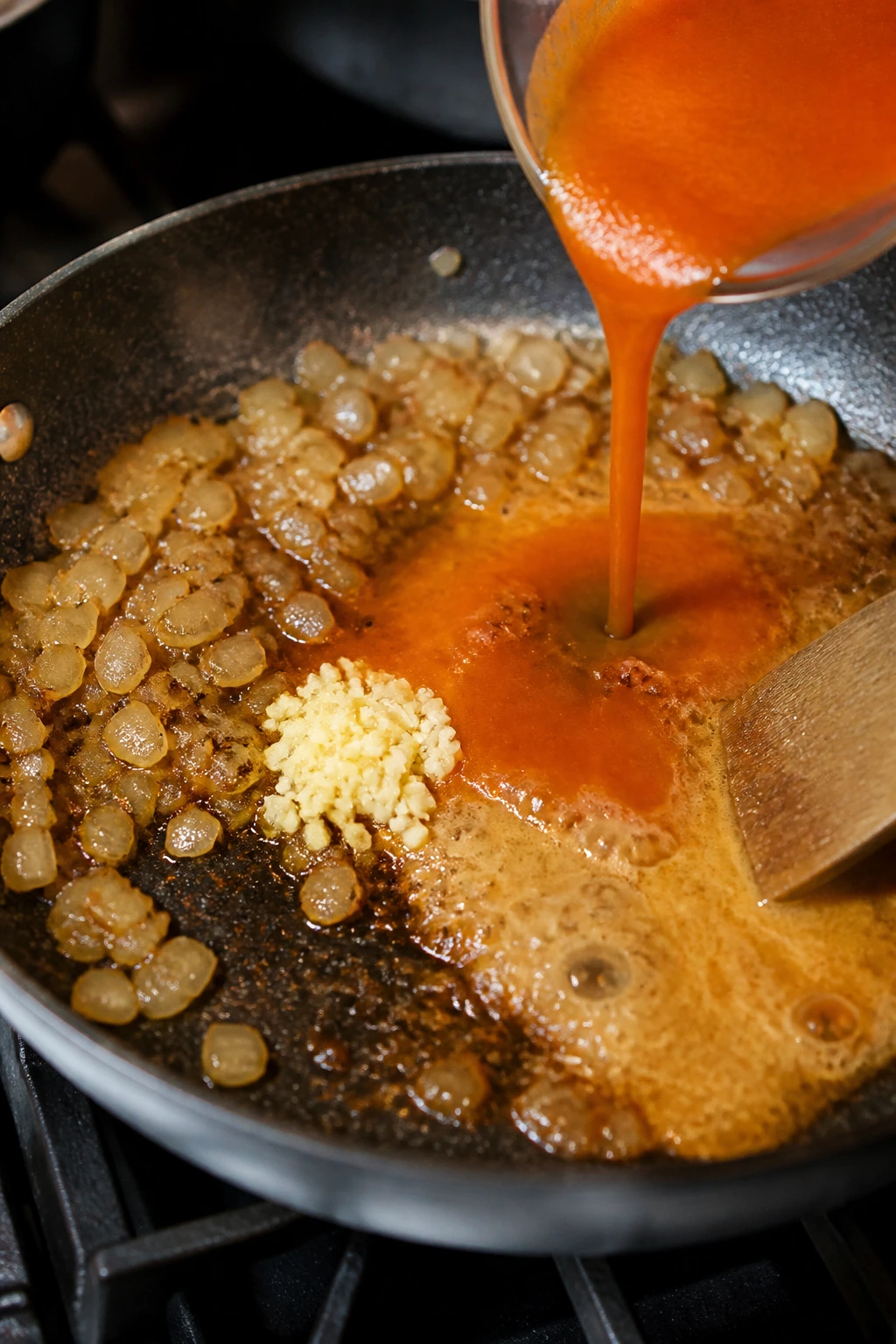
This is the part where the kitchen starts to smell like dinner.
After the chicken comes out, the onion goes into the same pan. Those browned bits left behind are not a mess to clean up; they’re the base of the sauce. Stir the onion for about 3 minutes, just until it softens and starts to go translucent around the edges. Add the garlic for 30 seconds, no more, or it can turn bitter fast.
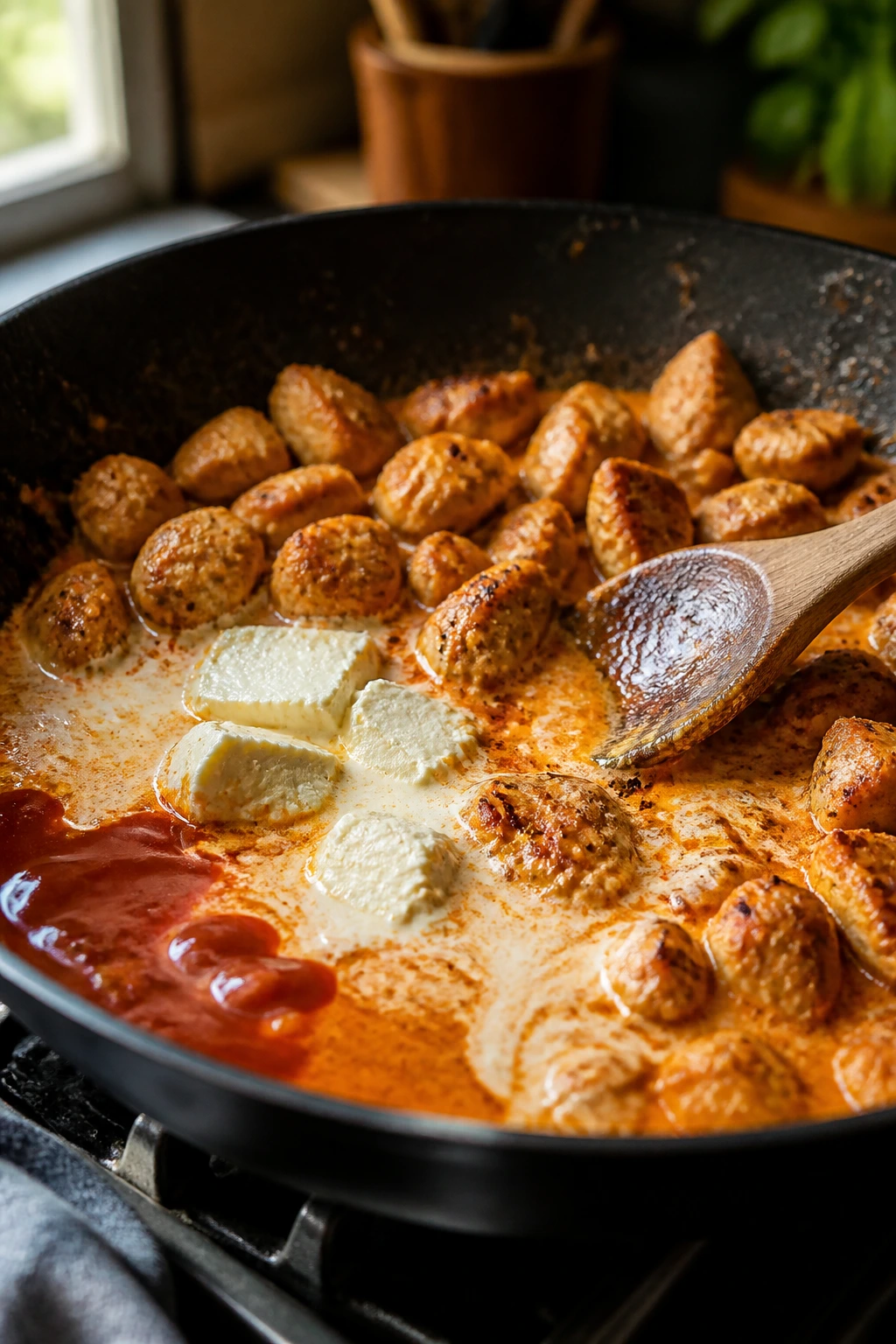
Pour in the buffalo sauce and chicken broth, then scrape the bottom of the pan with your spoon. The liquid should loosen every browned bit and take on a slightly deeper color almost immediately. That’s a good sign. It means the skillet is doing more than one job, which is the whole appeal of a weeknight pan dinner.
Now add the cream cheese cubes. Keep the heat at medium, not high. High heat makes dairy sulk, separate, or go grainy. Medium heat gives the cream cheese time to melt into the liquid and turn the sauce smooth. Stir until you can’t see white chunks anymore, then pour in the heavy cream.
The sauce should look glossy and pale orange by now. Give it another minute or two, then stir in the shredded cheddar in small handfuls. If you dump it all at once, it can clump. If you add it gradually, it disappears into the sauce and gives you that thick, clingy texture that makes this dish work so well over rice or potatoes.
Finishing the Skillet So the Sauce Stays Silky
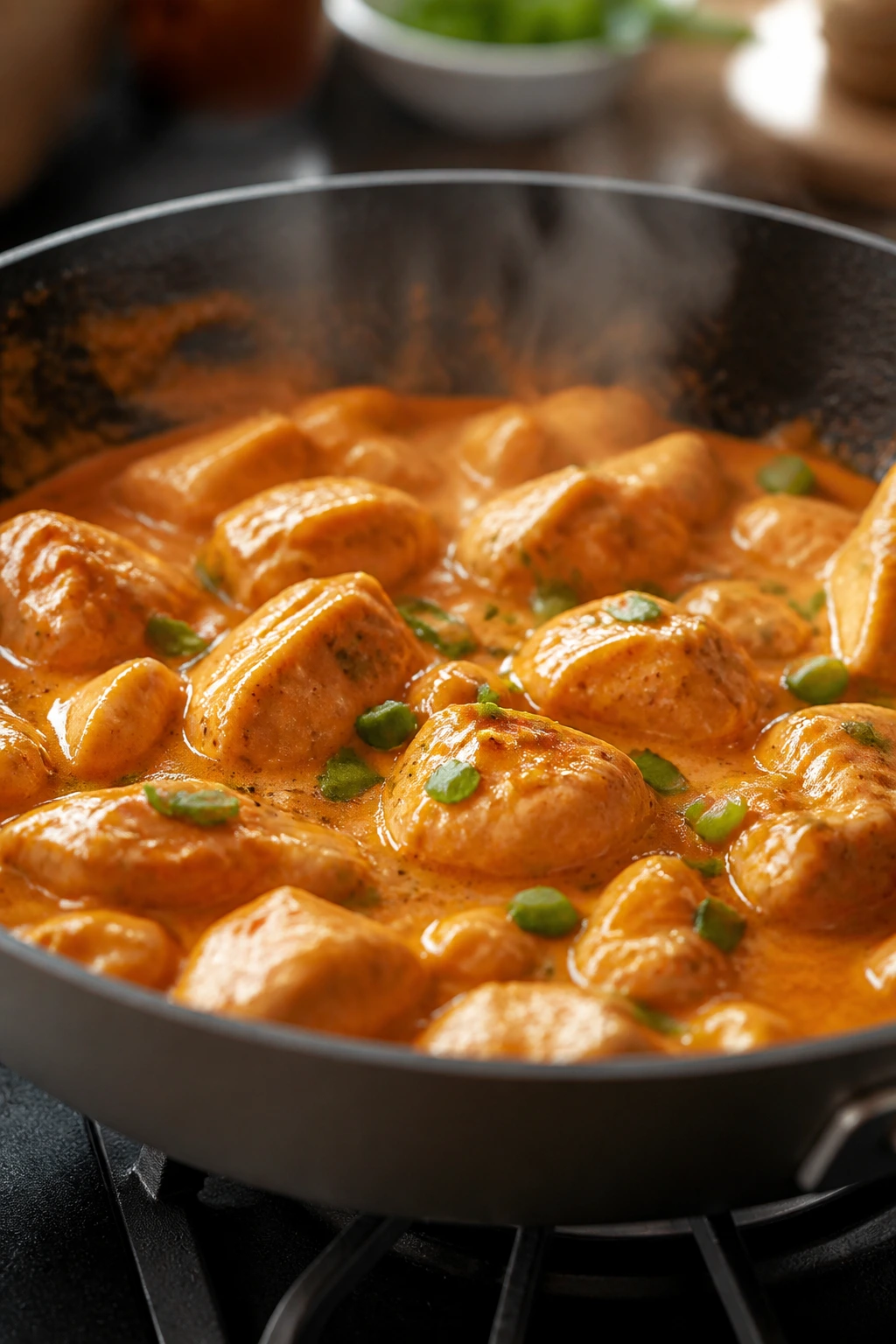
When the sauce is smooth, return the chicken and any juices from the plate to the pan. That plate juice matters. It’s seasoned, and it’s chicken-flavored in a way no broth can fake. Stir everything gently so the chicken gets coated without shredding the pieces apart.
Let the whole skillet simmer for 3 to 5 minutes over low heat. Not a hard boil. A simmer. You want the chicken to finish cooking and the sauce to tighten slightly around it. If it starts bubbling aggressively, turn the heat down. Buffalo sauce already brings heat and acid; it does not need a wrestling match on the burner.
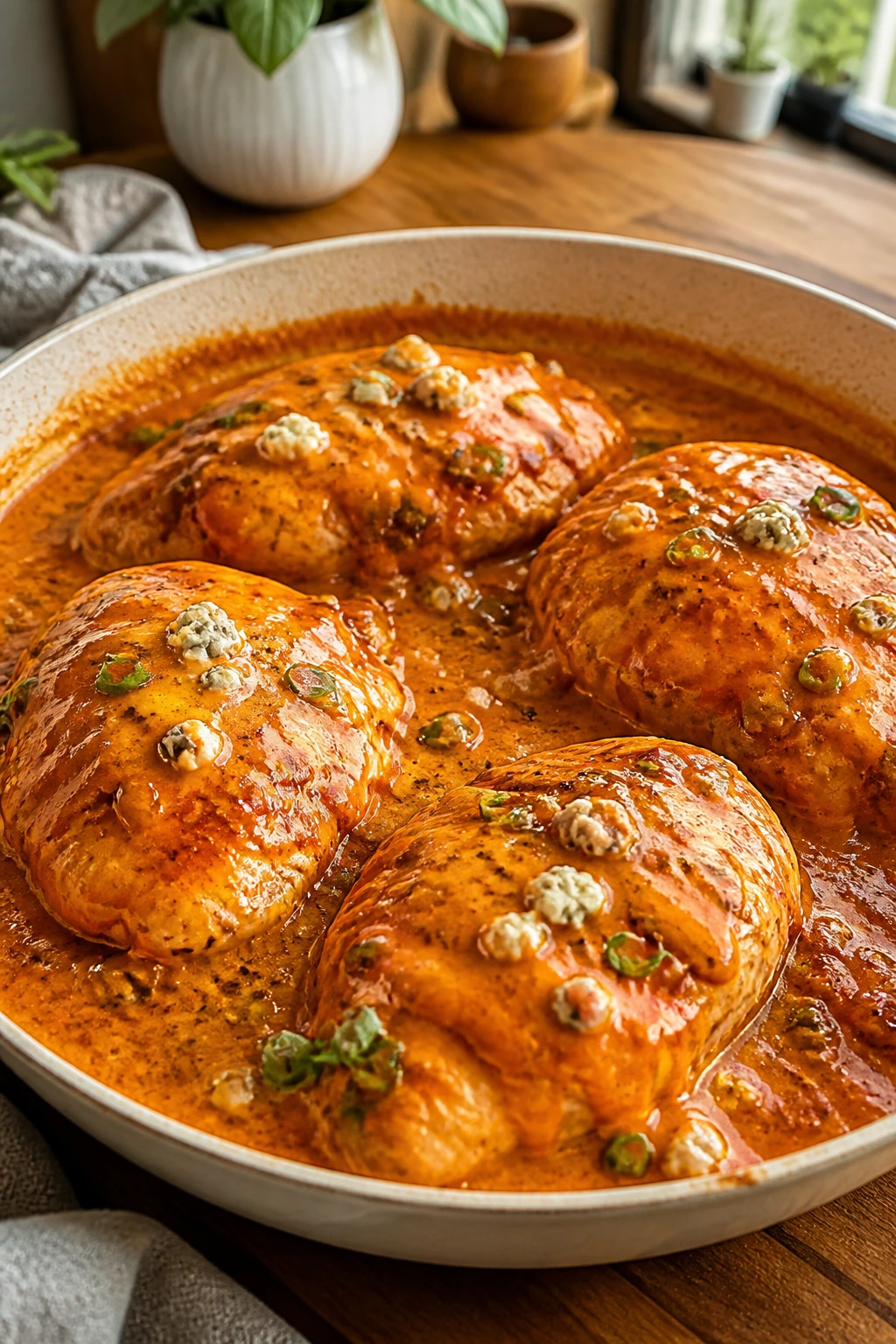
You’re looking for the sauce to coat the chicken in a thick, shiny layer. It should pool a little in the skillet but not run like soup. If it seems too loose, let it sit for another minute or two off the heat. Cream-based sauces usually thicken a touch as they rest.
Finish with chives or green onions and, if you like the salty-sharp thing, a few crumbles of blue cheese. I know blue cheese is a dividing line. If you love it, this is the place for it. If you don’t, skip it without guilt. The dish still works.
How I Like to Serve It at the Table
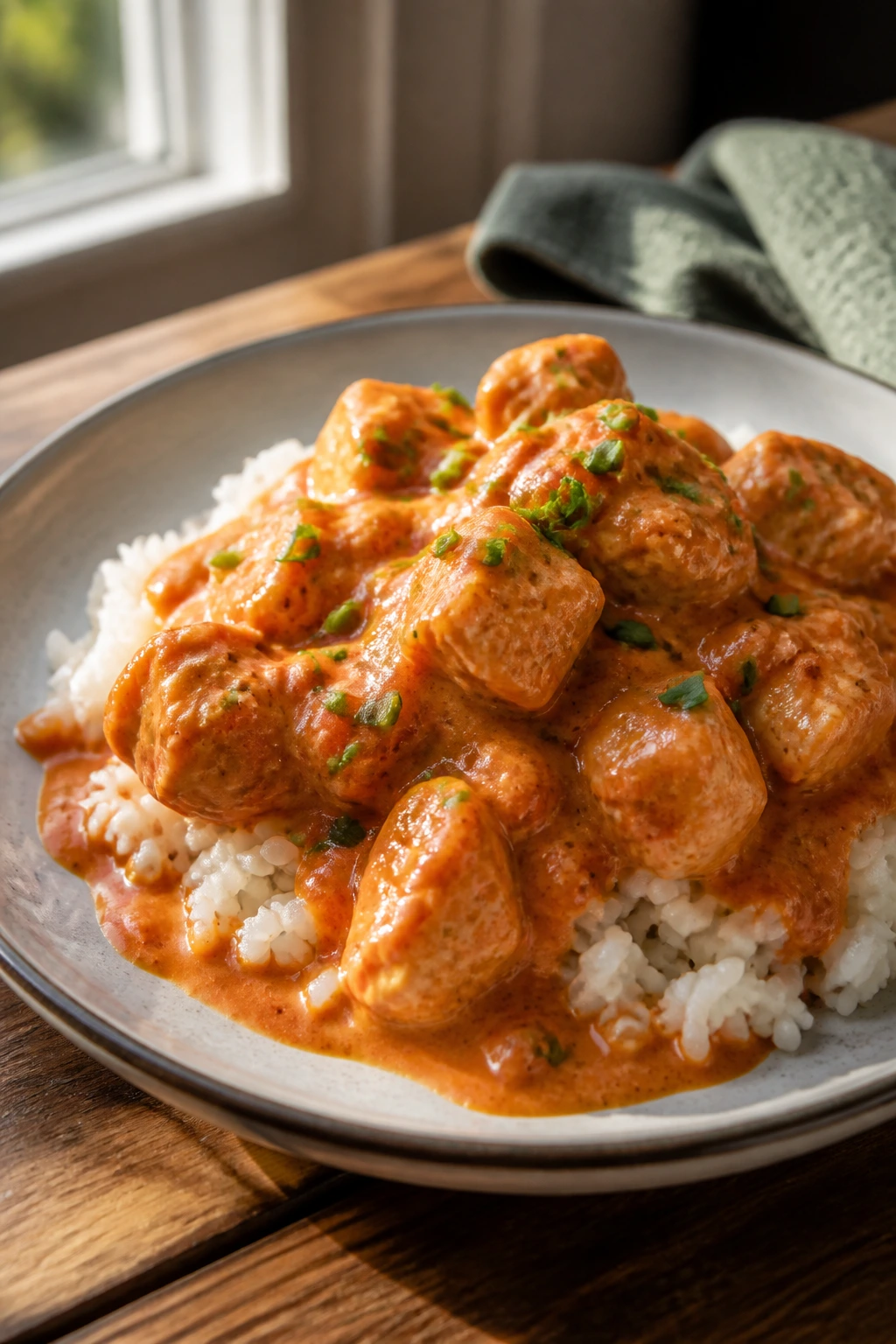
Presentation: Spoon the creamy buffalo chicken over a bed of white rice, mashed potatoes, or buttered egg noodles, then let some of the sauce spill around the edges. A little chopped chive on top keeps the plate from looking heavy.
Accompaniments: Celery sticks and a crisp green salad make sense here because they cut through the sauce. Garlic bread is also fair game if you want the sort of dinner that disappears without much conversation.
Portions: Four generous servings works if you’re pairing it with a starch. If you serve it by itself, expect it to lean closer to three hearty portions. Doubling the recipe is easy; just use a wider skillet or a Dutch oven so the chicken still browns.
Beverage Pairing: A cold lager or a simple sparkling water with lime handles the heat without fighting the sauce. If you want something nonalcoholic with a little more character, iced tea with lemon works well too.
Small Upgrades That Matter More Than Fancy Extras
Flavor Enhancement: A teaspoon of white vinegar added at the very end can wake the whole pan up if your buffalo sauce tastes flat. Use it sparingly. You want a brighter finish, not a sour one.
Time-Saver: Dice the onion and chicken in the morning and store them separately in the fridge. That turns the actual dinner process into a fast sauté-and-simmer job, which is the whole point on a busy night.
Texture Move: If you want a thicker sauce, let it rest for 5 minutes before serving. The cheese and cream settle into a richer, spoon-coating consistency once the pan comes off the heat.
Make-It-Yours: Toss in a handful of baby spinach at the end if you want some green in the skillet. It wilts in under a minute and doesn’t get in the way of the buffalo flavor.
Common Mistakes That Turn the Sauce Grainy or Thin
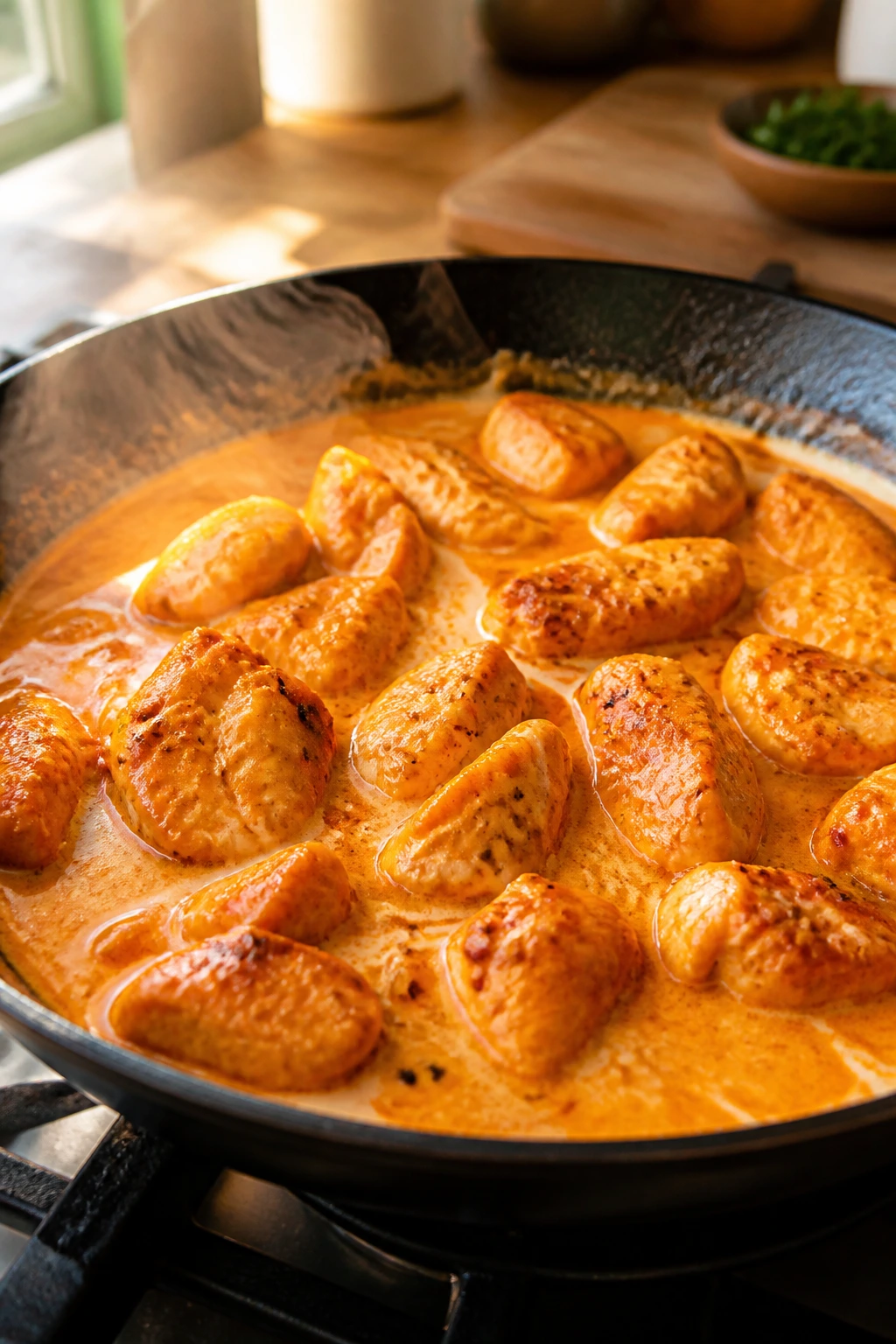
Using too much heat after the dairy goes in is the big one. The sauce can split and look oily around the edges if you boil it hard. Keep it at a low simmer, and if it starts bubbling like soup, turn the burner down before you add the cheddar.
Adding cold cream cheese in one block makes the sauce fight back. You’ll see little pale chunks floating around long after you think everything should be smooth. Cut the cream cheese into cubes and let it soften first; it melts much faster and behaves better.
Crowding the pan with chicken is another easy mistake. When pieces sit on top of each other, they steam instead of browning, and the finished dish tastes flatter. If your skillet is busy, cook the chicken in batches and take the extra minute.
Skipping the seasoning on the chicken leaves the sauce carrying all the flavor by itself. That sounds harmless until you taste it and realize the sauce is doing all the work while the chicken tastes like plain meat under heat. Salt and spice the chicken before it hits the pan so each bite has its own seasoning.
Over-thinning the sauce with broth can make the whole thing feel watery even when the flavor is fine. Start with the half cup listed, then stop and assess before adding more liquid. You can always loosen the sauce later with a splash of broth or cream.
Variations That Keep the Buffalo Backbone

Blue-Cheese Skillet Finish: If you like the classic wing plate vibe, stir 2 tablespoons of blue cheese crumbles into the sauce at the very end and sprinkle a little more on top. The salty bite plays well against the cream cheese, though it’s a sharper profile than cheddar alone.
Buffalo Chicken Pasta Night: Toss the finished chicken and sauce with 12 ounces of cooked penne or rotini. Save a cup of pasta water before draining; a splash of it helps the sauce cling to the noodles instead of sitting underneath them.
Lower-Lactose Version: Use lactose-free cream cheese and half-and-half, then replace the cheddar with a sharper aged cheese in a smaller amount. The sauce won’t taste identical, but it will keep the same creamy shape and buffalo bite.
Green and Creamy: Add 2 cups of baby spinach or a cup of finely chopped steamed broccoli right after the chicken goes back in. The vegetables soften in the hot sauce and make the skillet feel more complete without stealing the flavor.
Lighter Buffalo Chicken: Swap the heavy cream for evaporated milk and reduce the cheddar to 3/4 cup. The sauce stays smooth, but it lands a little lighter on the fork and doesn’t coat quite as heavily.
Make-Ahead, Storage, and Reheating Without Ruining the Texture
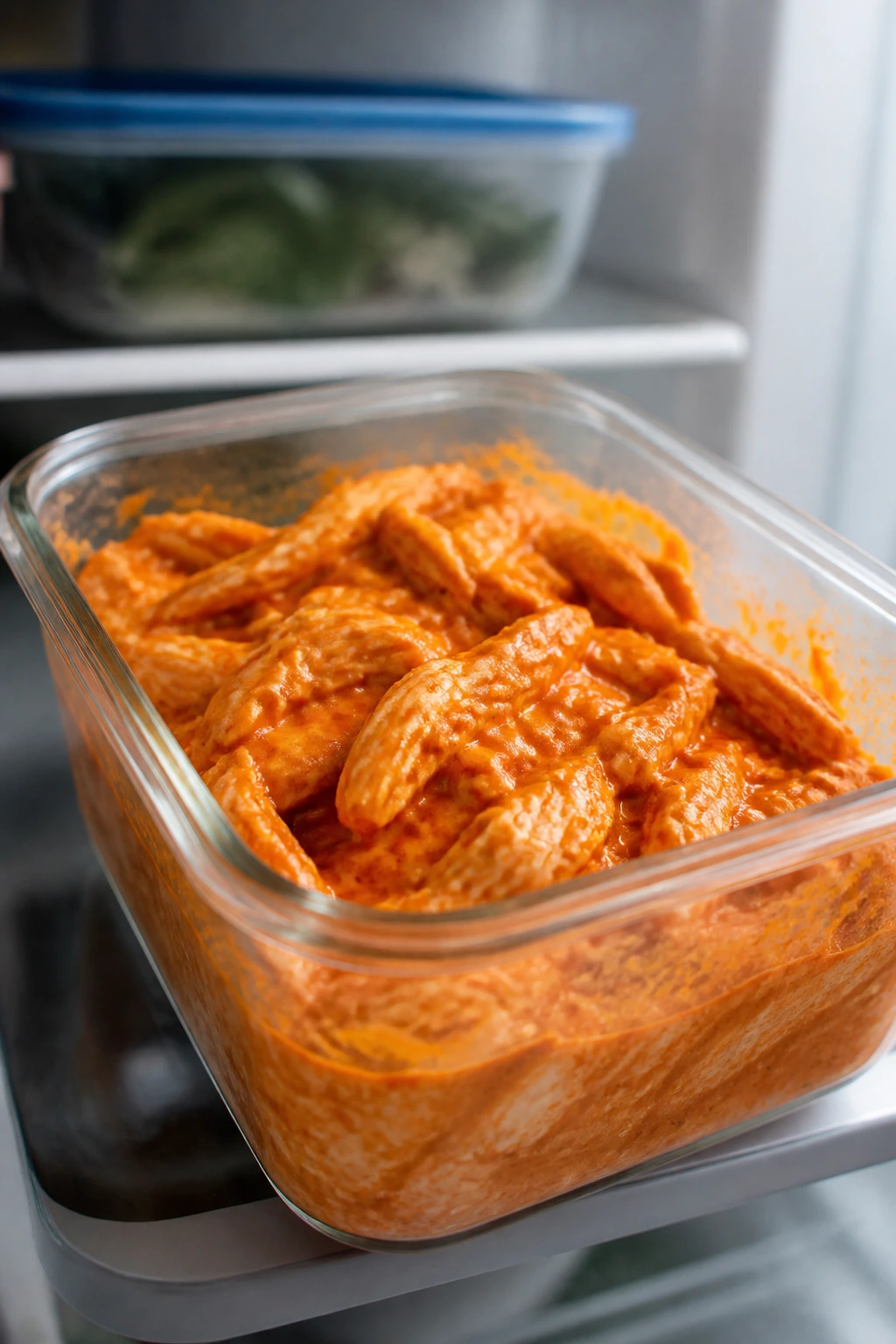
Creamy buffalo chicken keeps well in the fridge for 3 to 4 days in a sealed container. It also freezes for up to 2 months, though the sauce may separate a little when it thaws. That’s not a disaster. It just means you need a gentle reheating method and a spoon.
For the fridge, let the dish cool for 20 to 30 minutes before packing it away. Don’t trap a steaming-hot skillet full of sauce in a container; that extra heat condenses into water and makes the sauce looser than it needs to be. If you plan to eat it over the next few days, store the chicken and sauce together. The flavor actually settles in well overnight.
For reheating, the stovetop is the best option. Put the chicken and sauce in a skillet over low heat with 1 to 2 tablespoons of chicken broth, water, or cream. Stir often until it’s hot and smooth again. The microwave works too, but use 50 percent power and stop to stir every 45 seconds so the dairy doesn’t separate at the edges.
If you want to make this ahead, cook the chicken and sauce fully, then cool and refrigerate. It can be reheated without trouble, but I would not cook the chicken all the way, chill it, and expect the texture to improve later. Buffalo sauce is forgiving. Overcooked chicken is not.
Questions People Ask Before They Cook It
Can I use chicken breasts instead of thighs?
Yes. Cut the breasts into 1-inch pieces and shave a minute or two off the browning time, since they dry out faster than thighs. Keep the simmer short and pull the pan as soon as the chicken reaches 165°F.
How spicy is this recipe?
That depends on the buffalo sauce you buy. Some bottles bring a steady medium heat, while others lean much hotter, so taste the sauce before you cook if you’re nervous. If it’s too hot, add an extra tablespoon or two of cream and another small handful of cheddar.
Can I make creamy buffalo chicken in a slow cooker?
You can, but the texture changes. A slow cooker gives you soft chicken and a looser sauce, which works fine for sandwiches or bowls, though you lose the browned flavor from the skillet. If you go that route, stir the cream cheese and cheddar in near the end so they don’t sit in the heat for hours.
What should I do if the sauce looks grainy?
Take the pan off the heat right away and whisk in a tablespoon of warm cream or broth. Graininess usually comes from heat that’s too aggressive or cheese that went in too fast. A little extra liquid and a gentler temperature can pull it back together.
Can I freeze leftovers with rice or pasta mixed in?
You can, but the starch softens a lot after thawing. I’d freeze the chicken and sauce by themselves, then make fresh rice, noodles, or potatoes when you reheat. That keeps the texture cleaner and stops everything from turning mushy.
Is blue cheese required?
Not at all. It’s a finishing option, not a rule. Cheddar carries the recipe just fine, and plenty of people prefer the cleaner, less sharp flavor without blue cheese on top.
How do I make it thicker without adding more cheese?
Let it simmer uncovered for a few extra minutes, then rest it off the heat for 5 minutes before serving. That reduction concentrates the sauce without making it heavier or saltier. If you still want more body, stir in a teaspoon of cornstarch mixed with a tablespoon of cold water.
A Skillet Dinner You’ll Keep Coming Back To
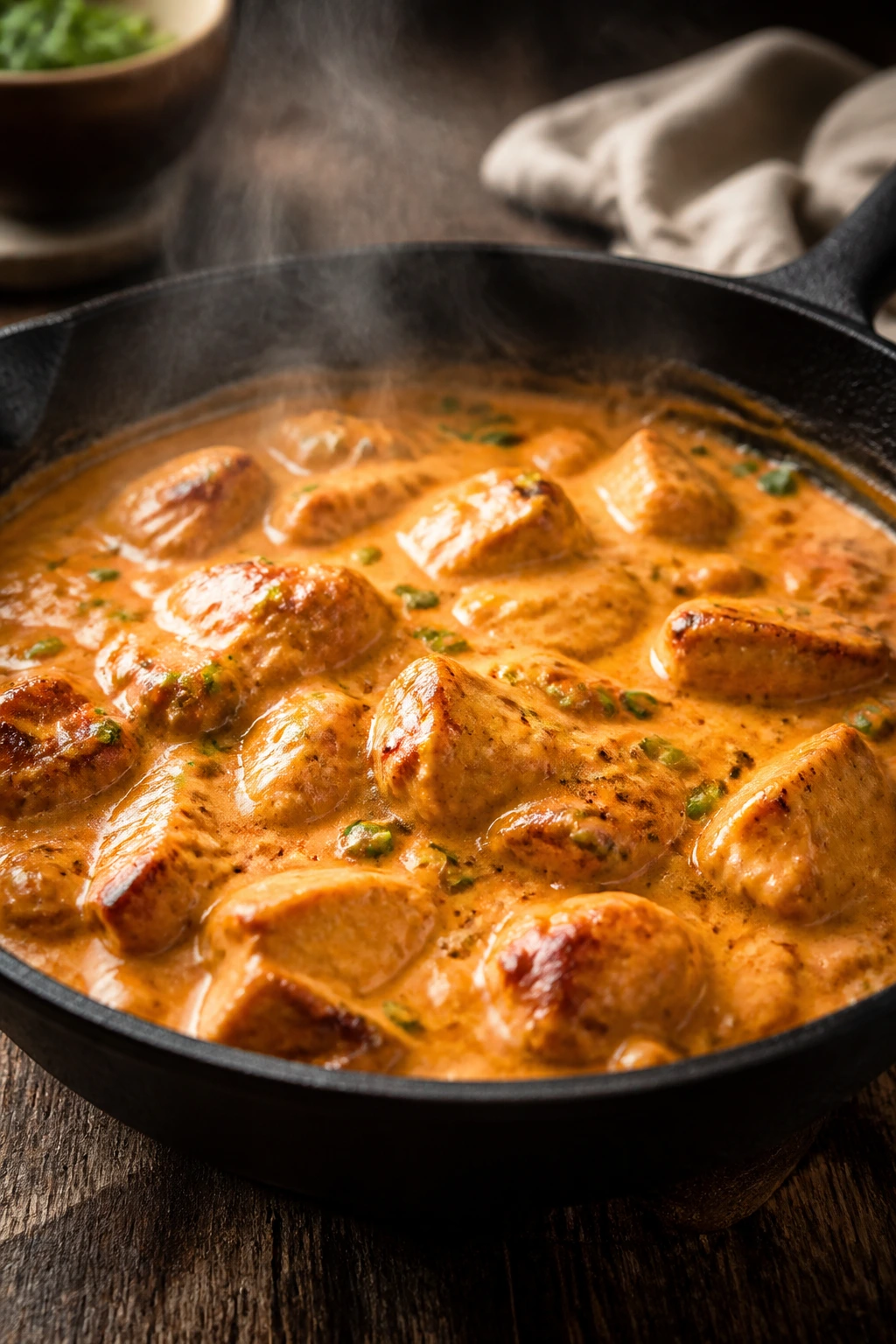
Creamy buffalo chicken works because it keeps the parts people actually want: the vinegar-and-cayenne snap of buffalo sauce, the mellow richness of cream, and chicken that tastes like it had a plan. None of those pieces has to shout. Put them in the right order, keep the heat under control, and the skillet does the rest.
I like that it feels casual without tasting careless. That’s a rare combination. Serve it over rice when you want comfort, tuck it into rolls when you want something messy and fun, or spoon it over potatoes when you want the sauce to do the heavy lifting. However you plate it, this is the kind of dinner that makes a plain Tuesday feel a little more organized.
Creamy Buffalo Chicken for Weeknight Dinners — Recipe Card
Recipe Name: Creamy Buffalo Chicken for Weeknight Dinners
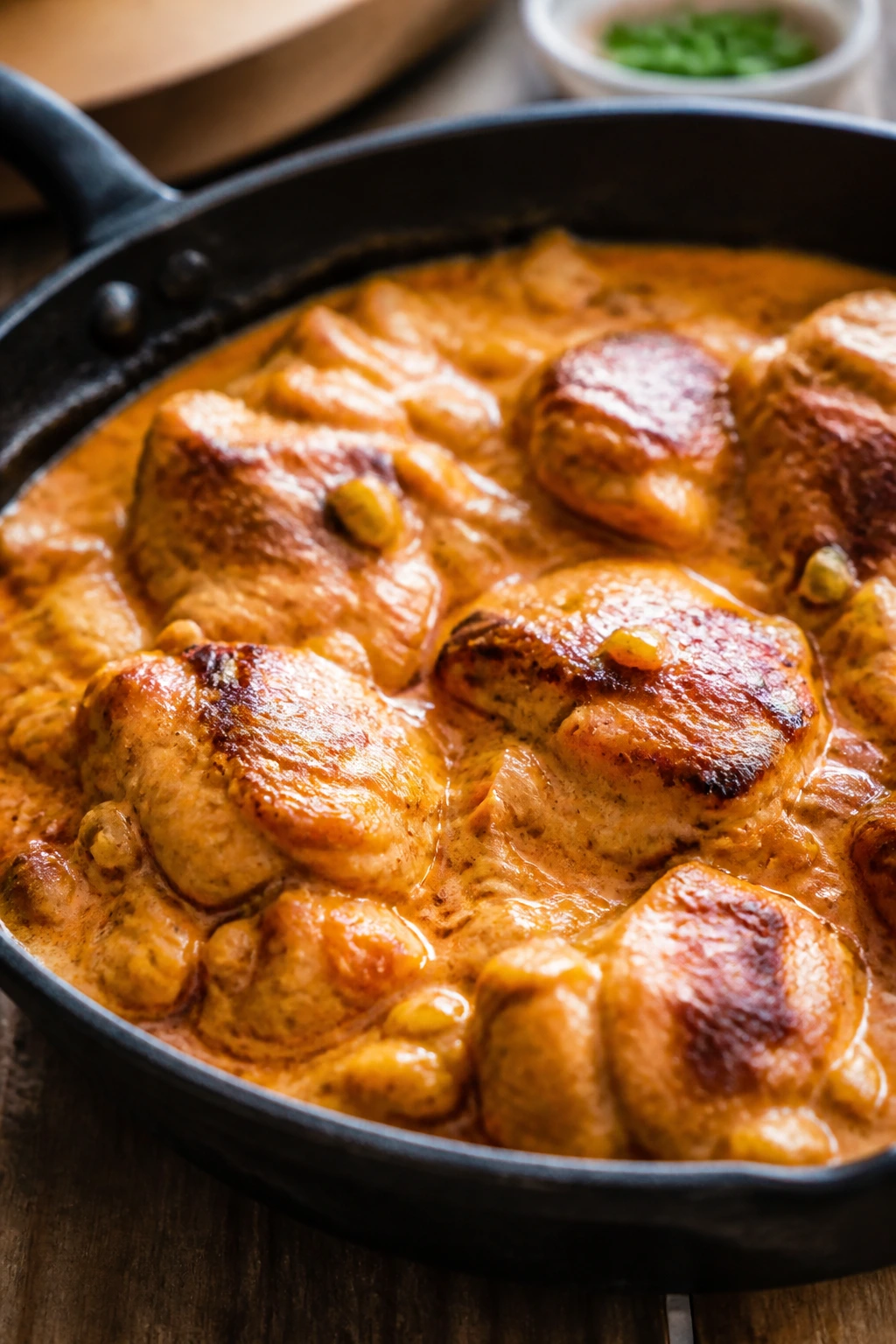
Description: Tender chicken thighs are browned, then simmered in a creamy buffalo sauce with cream cheese, cheddar, garlic, and onion. Spoon it over rice, potatoes, noodles, or toasted rolls for a fast skillet dinner with real heat and a smooth, glossy sauce.
Prep Time: 15 minutes
Cook Time: 25 minutes
Total Time: 40 minutes
Course: Main Course, Dinner
Cuisine: American
Servings: 4 servings
Calories: About 520 kcal per serving
Ingredients
For the Chicken:
- 1 1/2 pounds boneless, skinless chicken thighs, cut into 1-inch pieces
- 1 teaspoon kosher salt
- 1/2 teaspoon black pepper
- 1 teaspoon garlic powder
- 1 teaspoon smoked paprika
- 2 tablespoons olive oil
For the Creamy Buffalo Sauce:
- 1 small yellow onion, finely diced
- 3 cloves garlic, minced
- 3/4 cup buffalo sauce
- 1/2 cup low-sodium chicken broth
- 4 ounces cream cheese, softened and cubed
- 1/2 cup heavy cream
- 1 cup shredded sharp cheddar cheese
For Serving:
- 2 tablespoons chopped chives or sliced green onions
- Blue cheese crumbles, optional
- Cooked rice, mashed potatoes, pasta, or toasted rolls
Instructions
-
Season the Chicken: Toss the chicken with salt, pepper, garlic powder, and smoked paprika.
-
Brown the Chicken: Heat the olive oil in a 12-inch skillet over medium-high heat. Add the chicken in a single layer and cook for 5 to 6 minutes, turning once, until lightly browned and mostly cooked through. Remove to a plate.
-
Cook the Onion and Garlic: Add the onion to the same skillet and cook for 3 minutes, stirring, until softened. Stir in the garlic and cook for 30 seconds.
-
Build the Sauce Base: Pour in the buffalo sauce and chicken broth, scraping up the browned bits from the bottom of the pan.
-
Melt in the Cream Cheese: Add the cream cheese cubes and stir over medium heat until fully melted and smooth.
-
Add the Cream and Cheddar: Stir in the heavy cream, then add the cheddar a handful at a time until the sauce is glossy and thick.
-
Finish Cooking the Chicken: Return the chicken and any juices to the skillet. Simmer over low heat for 3 to 5 minutes, until the chicken reaches 165°F and the sauce coats it well.
-
Serve: Top with chives or green onions and blue cheese crumbles, if using. Spoon over rice, mashed potatoes, pasta, or toasted rolls.
Notes:
- Soften the cream cheese first so the sauce stays smooth.
- Keep the heat low once the dairy goes in.
- If the sauce thickens too much, loosen it with 1 to 2 tablespoons of broth or cream.