



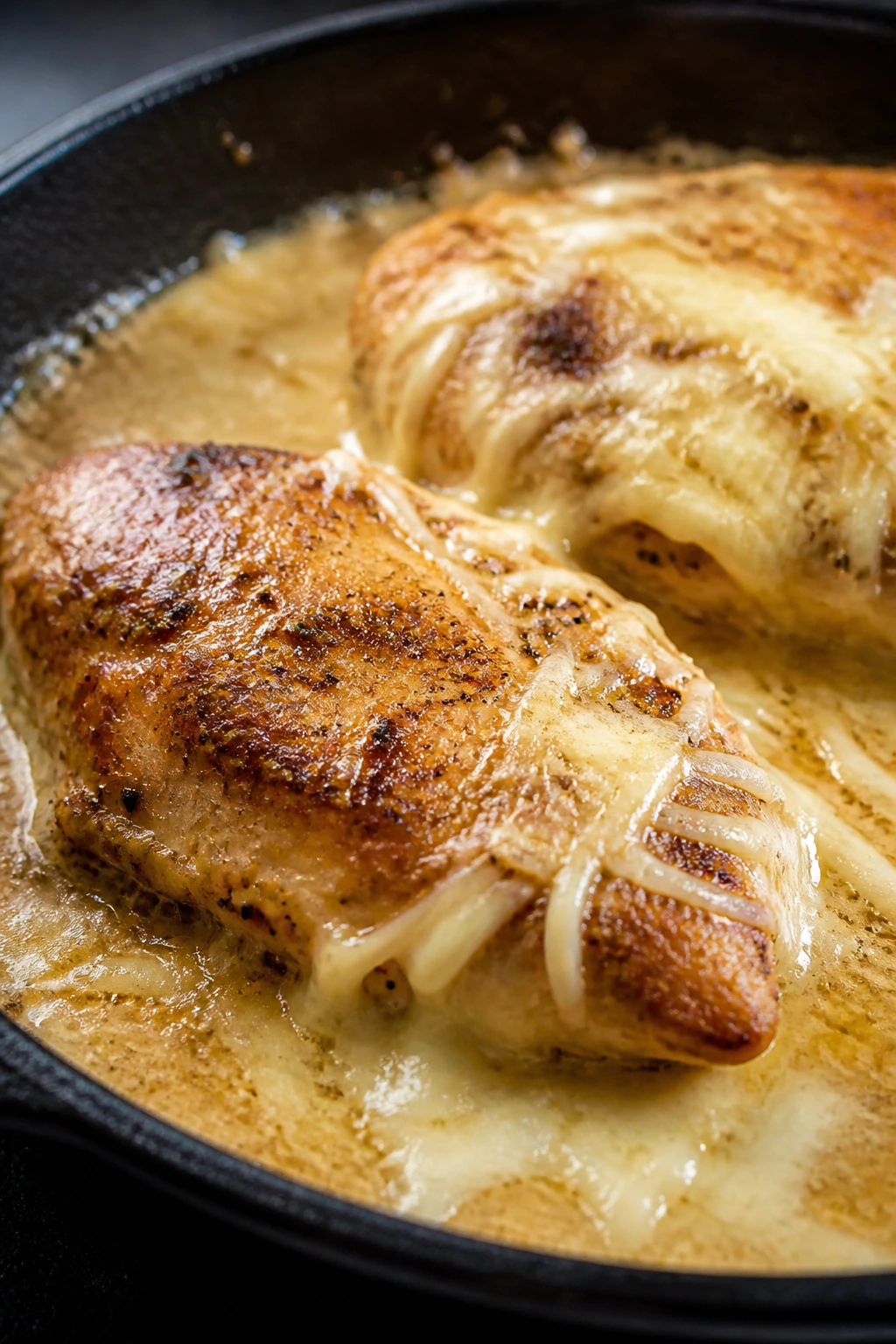
Some chicken dinners ask you to choose: juicy meat or a sauce worth eating. This one refuses that bargain. Tender Cheesy Chicken gives you browned edges, a soft center, and a glossy cheese sauce that clings to the meat instead of sliding off in one sad sheet.
The part that matters most is not the cheese. It’s the heat. Pound the chicken to an even thickness, sear it hard enough to build color, then back off the burner before the dairy goes in. That’s the whole trick, and it’s the reason the chicken stays tender instead of drying out while you chase the sauce around the pan.
I reach for this kind of dinner on nights when I want something that feels planned without taking half the evening. A skillet, a few pantry things, one good thermometer, and you’re there. Not fussy. Not complicated. Just the kind of chicken that makes you keep the pan on the stove a little longer because the smell is doing half the work already.
Why Tender Cheesy Chicken Stays Juicy Instead of Dry
The chicken cooks evenly because you make it even first. Thick chicken breasts are the enemy of a calm weeknight pan. One end hits temperature faster than the other, so you either dry out the thin side or leave the middle underdone. Pounding the breasts to about 3/4-inch thickness turns that into a non-issue.
The sauce starts with the pan, not with a jar. Browning the chicken leaves little browned bits on the bottom of the skillet, and those bits dissolve into the broth and cream. That is where the real flavor lives. A quick scrape with a wooden spoon gives the sauce a roasted, savory note that plain melted cheese can’t fake.
The cheese works because it is used in layers. Cream cheese makes the sauce smooth. Mozzarella gives you that soft melt. Parmesan brings the salt and the sharper finish. If you use all three in the right order, the sauce turns glossy instead of greasy.
It is faster than it looks. Once the chicken is pounded and seasoned, it spends only a few minutes per side in the pan. The rest happens while the sauce comes together. That is the sweet spot for a dinner that feels like effort but behaves like a normal Tuesday.
Leftovers hold up better than most creamy chicken dishes. Reheat it gently with a spoonful of broth, and the sauce loosens instead of seizing into a clump. The chicken stays pleasant the next day, which is more than I can say for a lot of skillet dinners that look good for one hour and then quit.
A Fast Look at the Clock and the Pan Size
If you’ve got a half hour and one decent skillet, you’re in the right place. The chicken cooks quickly because the pieces are cut to a manageable thickness, and the sauce comes together in the same pan, which cuts down on dishes and keeps the flavor concentrated.
Yield: Serves 4
Prep Time: 15 minutes
Cook Time: 20 to 25 minutes
Total Time: 35 to 40 minutes
Difficulty: Beginner — the steps are straightforward, but the pan heat matters, so an instant-read thermometer helps a lot.
Chill/Rest Time: 5 minutes
Best Served: Right after the short rest, while the cheese is soft and the sauce still moves easily over rice, noodles, or potatoes.
What Goes Into the Skillet Tonight
The ingredient list is short enough to memorize after one run, and that’s part of the appeal. Every piece earns its place: the flour gives the chicken a light crust, the broth keeps the sauce from feeling heavy, and the cheese finishes things with a smooth, stretchy layer.
For the Chicken
- 2 pounds boneless, skinless chicken breasts, sliced horizontally into 4 cutlets or pounded to an even 3/4-inch thickness
- 1 1/2 teaspoons kosher salt
- 1 teaspoon freshly ground black pepper
- 1 teaspoon garlic powder
- 1 teaspoon paprika, sweet or smoked
- 1/2 cup all-purpose flour, for a light coating
- 2 tablespoons olive oil
- 1 tablespoon unsalted butter
For the Cheesy Pan Sauce
- 3 cloves garlic, minced
- 1 cup low-sodium chicken broth
- 3/4 cup heavy cream
- 2 ounces cream cheese, softened and cut into cubes
- 1 teaspoon Dijon mustard
- 1 cup shredded mozzarella
- 1/2 cup finely grated Parmesan
- 1 tablespoon lemon juice, optional but useful at the end
- 2 tablespoons chopped parsley, for serving
- Pinch crushed red pepper flakes, optional
Why Each Ingredient Earns Its Spot
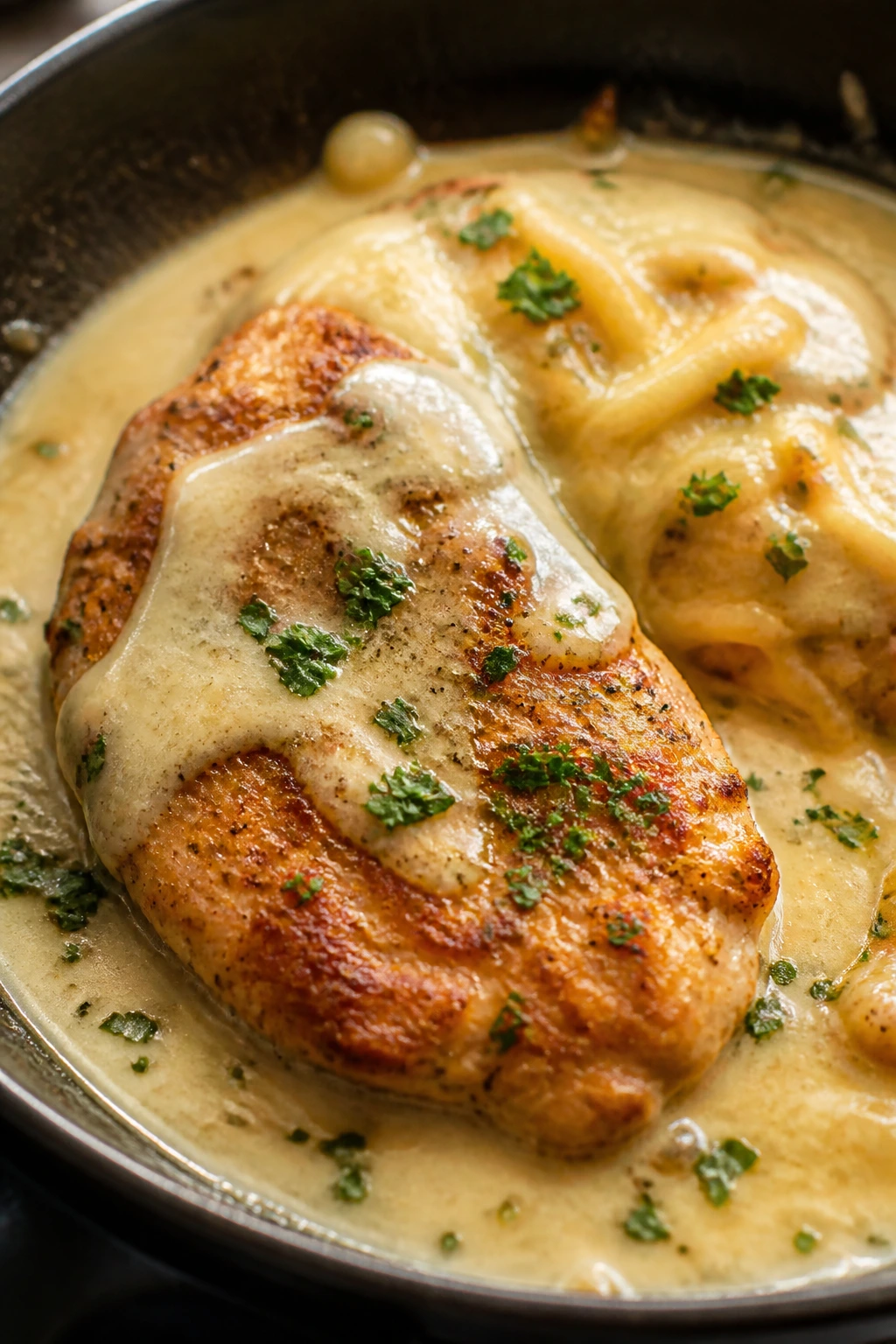
Chicken Breasts
What to use: 2 pounds boneless, skinless chicken breasts, ideally cut into 4 cutlets or pounded to an even 3/4-inch thickness.
Preparation: Pat the chicken dry first, then slice the thicker pieces or pound them between parchment or plastic wrap. Dry, even pieces brown better and cook at the same rate.
Substitutions: Boneless, skinless chicken thighs work if you want a richer, more forgiving cut; they need a slightly longer cook time. Chicken tenderloins also work, though they cook faster and can go dry if you walk away.
Tips: Large supermarket chicken breasts are often uneven and much thicker than they look in the package. If you skip the pounding step, the edges will dry out before the center catches up.
The Seasoned Flour Coat
What to use: 1/2 cup all-purpose flour mixed with salt, pepper, garlic powder, and paprika.
Preparation: Whisk the flour and seasonings together, then give the chicken a light, even dusting. Shake off the extra flour; you want a thin veil, not a bakery-shell crust.
Substitutions: A 1:1 gluten-free flour blend works cleanly here. Cornstarch can also work, but use less of it and keep the coating light so it doesn’t get gummy.
Tips: The flour does two jobs: it helps the chicken brown and it gives the sauce a tiny bit of body. Too much flour leaves the pan tasting dusty, so don’t be heavy-handed.
The Creamy Garlic Sauce
What to use: 1 cup low-sodium chicken broth, 3/4 cup heavy cream, 2 ounces cream cheese, and 1 teaspoon Dijon mustard.
Preparation: Soften the cream cheese before it hits the pan. Cold cream cheese drops in lumpy and takes longer to melt, which means you’ll be tempted to turn the heat up. That is how sauces break.
Substitutions: Half-and-half can stand in for the cream if you want a lighter sauce, though you’ll need to keep the heat low and simmer a little longer. Vegetable broth works if that is what you have.
Tips: Dijon doesn’t make the sauce taste like mustard; it sharpens the dairy and keeps the whole thing from tasting flat. A tiny spoonful is enough. More than that and the sauce starts to lean tart.
The Cheese Finish
What to use: 1 cup shredded mozzarella, 1/2 cup finely grated Parmesan, and a spoonful of parsley at the end.
Preparation: Grate the Parmesan finely. I don’t love the pre-shredded Parmesan here because it can stay grainy in a cream sauce. Mozzarella can be pre-shredded if that’s what’s in the fridge.
Substitutions: Provolone melts beautifully and gives a softer finish. Monterey Jack works too if you want a cleaner melt with a little less pull.
Tips: Put the mozzarella on first, then finish with Parmesan. Mozzarella melts into the sauce; Parmesan seasons the top layer and keeps the cheese from tasting one-note.
The Tools That Make the Sear Easier
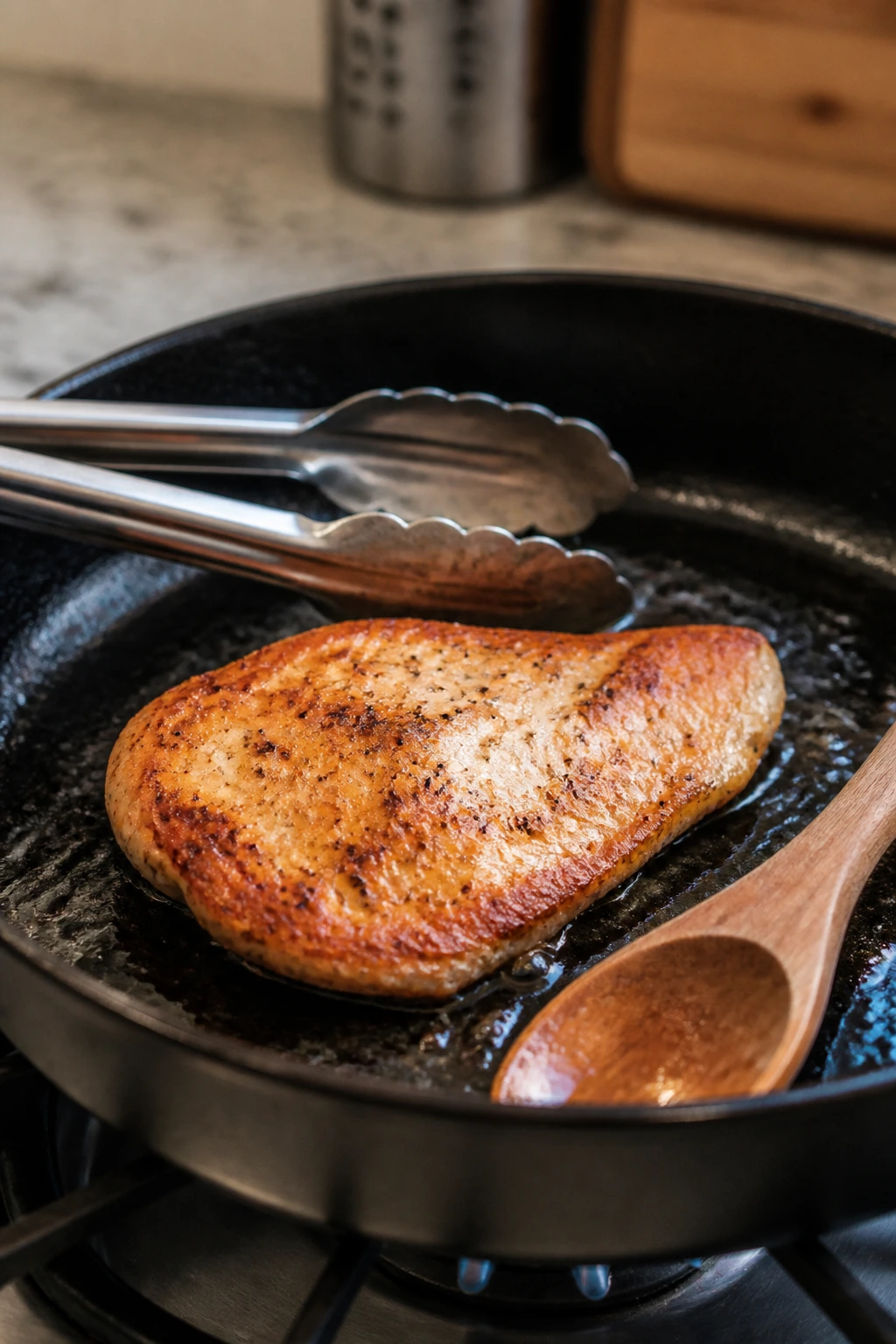
You do not need a pile of gadgets for this, but the right few tools make the whole skillet behave better.
- 12-inch oven-safe skillet — Big enough for 4 chicken cutlets without crowding, which matters because steam ruins browning.
- Tongs — Easier than a fork for flipping chicken without tearing the crust or poking juice out of the meat.
- Instant-read thermometer — The cleanest way to stop guessing. Chicken breasts get dry fast once they pass the safe point.
- Wooden spoon or silicone spatula — Good for scraping up the browned bits after you add broth.
- Shallow bowl or pie plate — Makes the flour coating easy and keeps your counter from becoming a snowy mess.
- Lid or sheet of foil — Handy for melting the cheese gently if you don’t want to use the broiler.
- Microplane or fine grater — Best for Parmesan and, if you use it, a little lemon zest at the end.
How to Cook It Without Drying Out the Chicken
Prep and Season
-
Pat and pound the chicken. Dry the chicken breasts with paper towels. If they are thick in the middle, slice them horizontally into 4 cutlets or pound them between two sheets of parchment until they’re an even 3/4-inch thick. Season both sides with the salt, pepper, garlic powder, and paprika.
-
Set up the flour coating. In a shallow bowl, whisk the flour with any seasoning that fell off the chicken. Dredge each piece lightly, then shake off the excess. You want a thin, even coat that will brown, not a thick flour shell that turns gummy in the sauce.
Sear and Build the Sauce
-
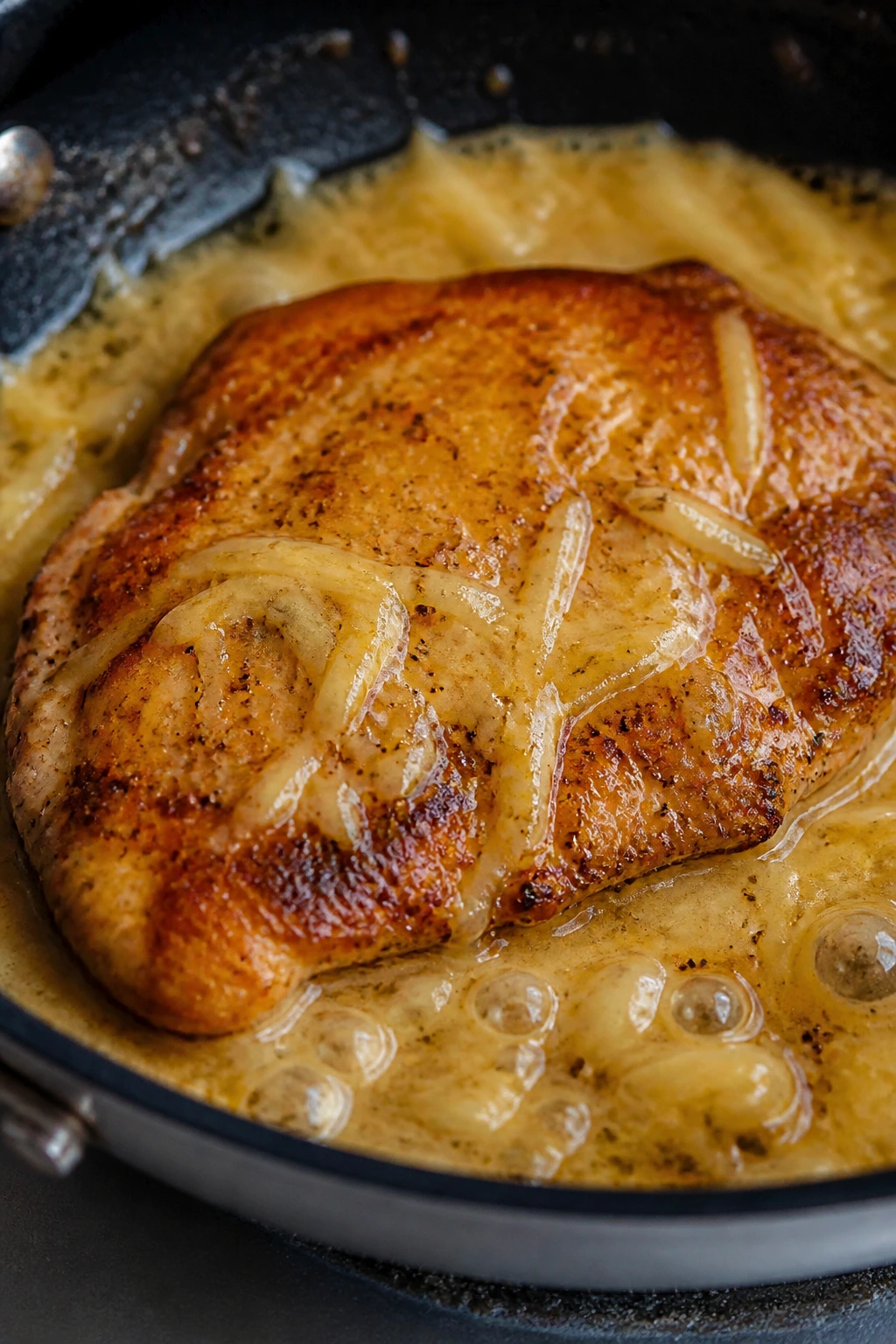
Heat the skillet. Set a 12-inch skillet over medium-high heat and add the olive oil and butter. When the butter foams and the oil shimmers, lay in the chicken in a single layer. Cook for 3 to 4 minutes per side, until the crust turns deep golden and the chicken releases easily from the pan. If the skillet is crowded, sear in batches. Crowding traps steam and steals the browning you need.
-
Move the chicken aside. Transfer the chicken to a plate. It does not need to be fully cooked yet; a little underdone in the center is fine because it will finish in the sauce.
-
Cook the garlic and deglaze. Lower the heat to medium. Add the minced garlic and stir for 20 to 30 seconds, until fragrant but not browned. Pour in the chicken broth and scrape the bottom of the skillet with a wooden spoon to loosen the browned bits. The pan should smell savory and a little sweet at this point.
-
Make the creamy sauce. Whisk in the heavy cream, cream cheese, and Dijon mustard. Keep the sauce at a gentle simmer for 2 to 3 minutes, stirring until the cream cheese disappears and the sauce turns smooth and glossy. Do not let it boil hard once the dairy goes in. High heat can make the sauce split and look oily. If it gets too thick, whisk in 1 to 2 tablespoons of broth.
Finish with Cheese
-
Return the chicken. Nestle the chicken and any juices back into the skillet. Spoon the sauce over each piece, then scatter the mozzarella and Parmesan on top. Cover the skillet and cook on low for 2 to 3 minutes, until the cheese melts and the thickest part of the chicken reaches 165°F.
-
Brown the top if you want it. If your skillet is oven-safe and the handle can go under the broiler, uncover it and slide it under a hot broiler for 1 to 2 minutes. Stay close. Cheese goes from pale to scorched fast, and there is no graceful recovery from that.
-
Rest and finish. Pull the skillet off the heat and let it sit for 5 minutes. Finish with parsley and a small squeeze of lemon juice if you want a brighter edge. The sauce settles during that short rest and clings better when you spoon it onto the plate.
How to Serve It on a Real Weeknight
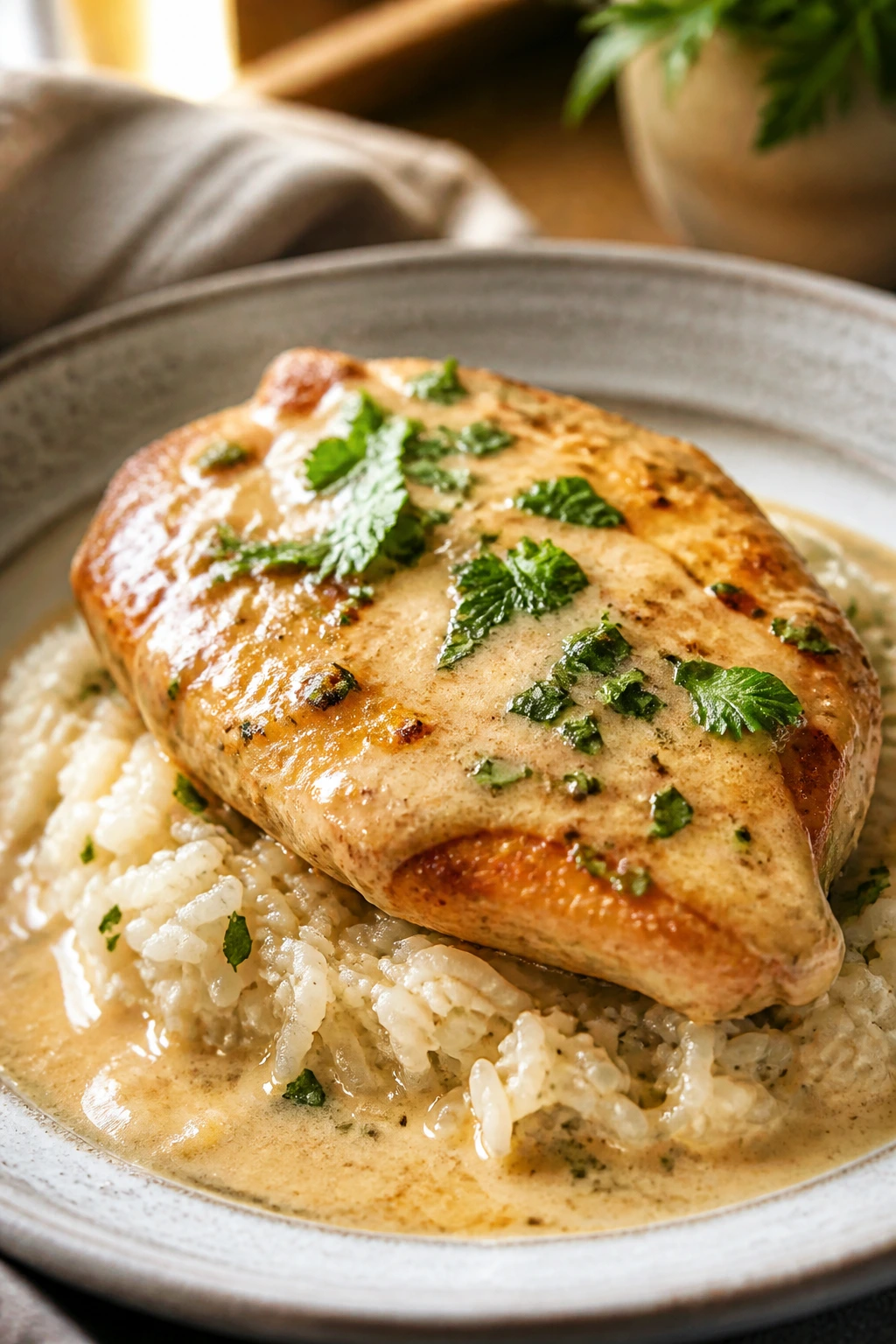
Presentation: I like to set one chicken cutlet over a small bed of buttered rice or mashed potatoes, then spoon the sauce around the sides instead of drowning the whole piece. That keeps the melted cheese visible and makes the plate look calmer, which sounds silly until you sit down and eat it. A little parsley on top is enough color.
Accompaniments: This chicken wants something that can catch the sauce. Egg noodles, garlic rice, roasted baby potatoes, or even toasted sourdough all work. On the vegetable side, green beans, broccoli, or a simple salad with a sharp vinaigrette cut through the richness without making the plate feel unfinished.
Portions: One cutlet per person is right for a normal dinner when you’re serving it with a starch and a vegetable. If the chicken breasts are large, you can slice each one after cooking and stretch the dish farther. For smaller appetites, half a cutlet over rice with plenty of sauce is more than enough.
Beverage Pairing: A chilled Sauvignon Blanc or a dry pinot grigio keeps the dairy from feeling too heavy. If you want something nonalcoholic, sparkling water with lemon or a glass of unsweetened iced tea does the same job without fighting the garlic.
Small Upgrades That Change the Flavor
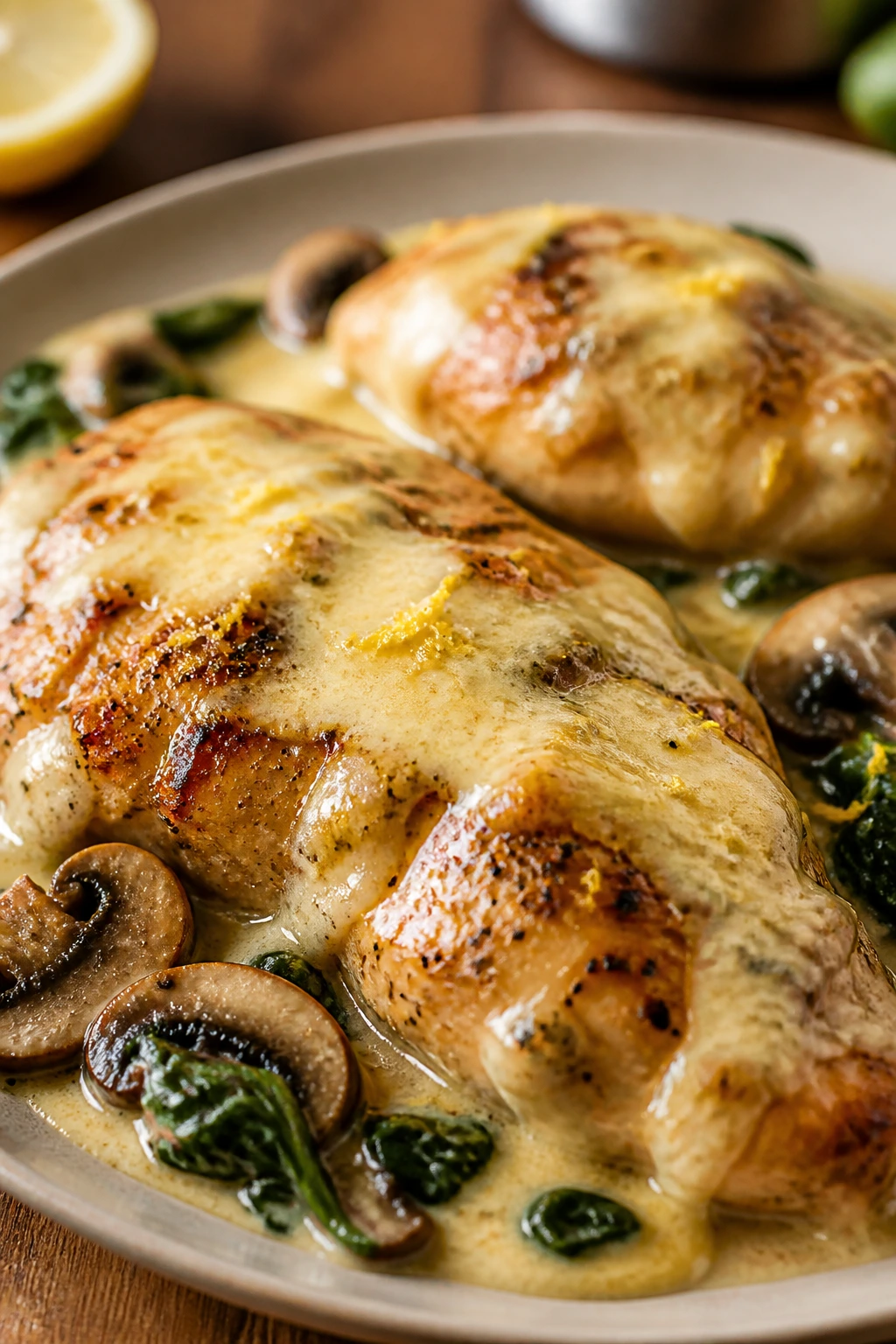
Flavor Enhancement: A small grating of lemon zest stirred into the sauce at the very end wakes everything up. You do not need much — half a teaspoon is enough to keep the cream and cheese from tasting flat. If you like a little heat, a pinch of red pepper flakes in the broth step gives the sauce a slow, warm finish.
Customization: Sautéed mushrooms are the easiest add-in here. Cook 8 ounces of sliced cremini mushrooms after the chicken comes out and before the garlic goes in, and they’ll pick up the browned residue from the skillet. Baby spinach is another easy move; toss in 2 or 3 handfuls after the cream cheese melts and let it wilt for 30 to 45 seconds.
Serving Suggestions: Fresh parsley is the cleanest garnish, but chopped chives or thinly sliced basil also work. I like a final crack of black pepper over the cheese because it gives the top a little bite and keeps the plate from looking monochrome. If you serve it with noodles, use a spoon to drag a little sauce under the chicken so every bite gets some.
Cost-Saver: If mozzarella feels expensive, use a blend of mozzarella and provolone. Both melt well, and the flavor difference is small once the sauce is already creamy. Buy the Parmesan in a wedge and grate it yourself; that wedge goes farther than the bagged stuff and tastes sharper.
Mistakes That Turn Tender Chicken Tough
-
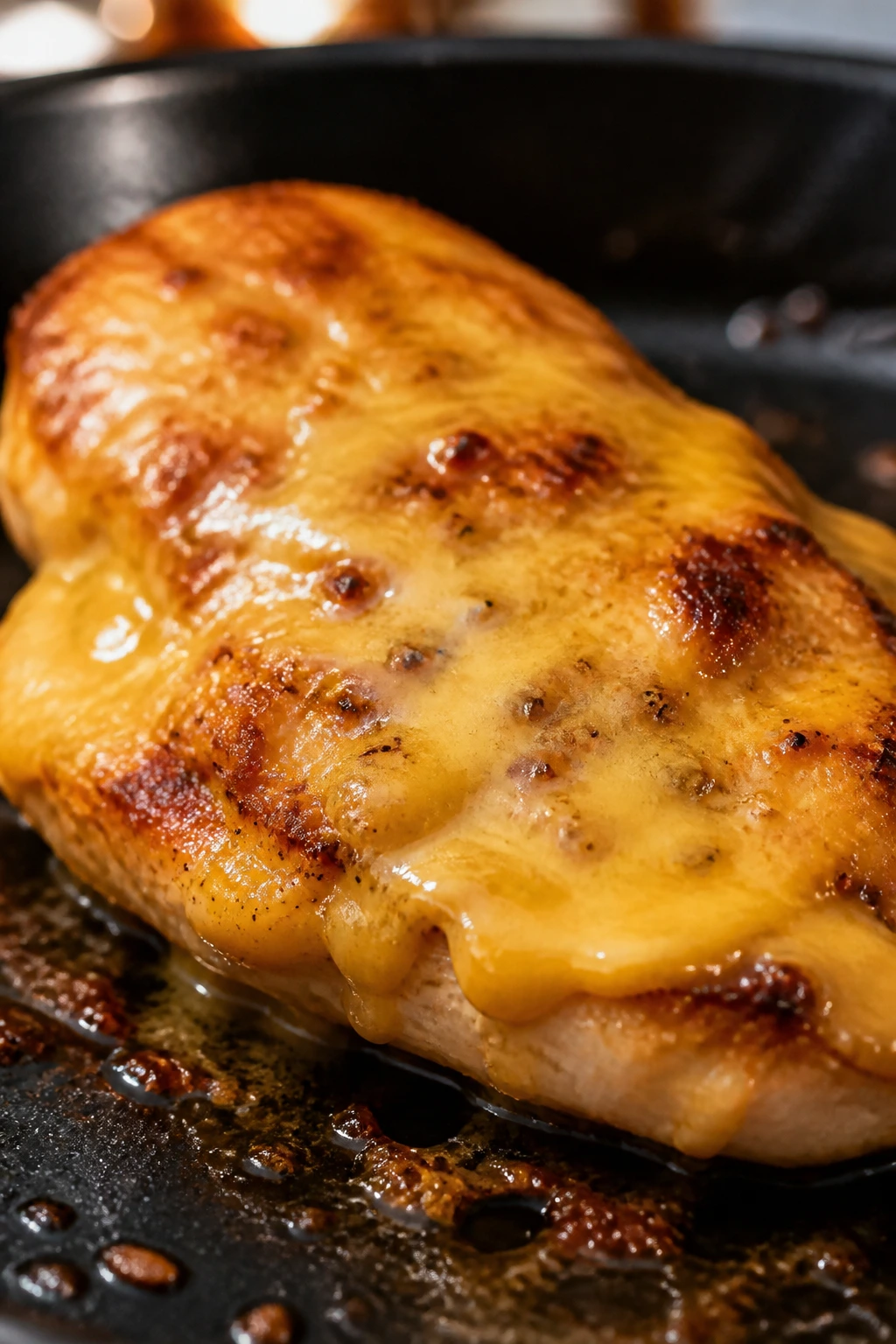
Crowding the skillet. If the chicken pieces are packed too tightly, they steam instead of browning. The surface turns pale, the sauce tastes flatter, and the chicken looks cooked but not appetizing. Fix it by searing in two rounds.
-
Turning the heat up when the sauce looks thin. That move is how dairy sauces separate. The oil slick appears first, then the sauce starts to look grainy. Keep the flame at medium-low once the cream goes in, and let the sauce thicken gently.
-
Adding cold cream cheese in big cubes. It melts unevenly and leaves little soft lumps that make the sauce feel unfinished. Let it sit out for 15 to 20 minutes before cooking, or whisk it into the broth before the cream goes in.
-
Skipping the thermometer. Chicken breasts can look done while still being under temperature in the center. Or they can hit safe temperature and still get dry if you leave them another minute. Pull the thickest part at 160°F to 162°F and let the rest of the heat carry it to 165°F while it rests.
-
Using too much Parmesan salt at the start. Parmesan is salty enough to change the whole pan. Season the chicken well, then taste the sauce after the cheese melts and adjust at the end. That keeps the finished dish from tasting sharp or over-salted.
-
Letting the garlic brown. Garlic only needs 20 to 30 seconds in the hot pan. Once it goes from fragrant to tan, it starts tasting bitter, and that bitterness hangs around in the sauce. If the garlic darkens, pull the pan off the heat and start over if you can.
Variations for Different Kitchens and Tastes
Mushroom-and-Thyme Skillet: Add 8 ounces of sliced cremini mushrooms after the chicken comes out and cook them until the moisture cooks off and the edges brown. A pinch of thyme in the sauce gives the whole pan a deeper, woodsy flavor that fits well with mashed potatoes.
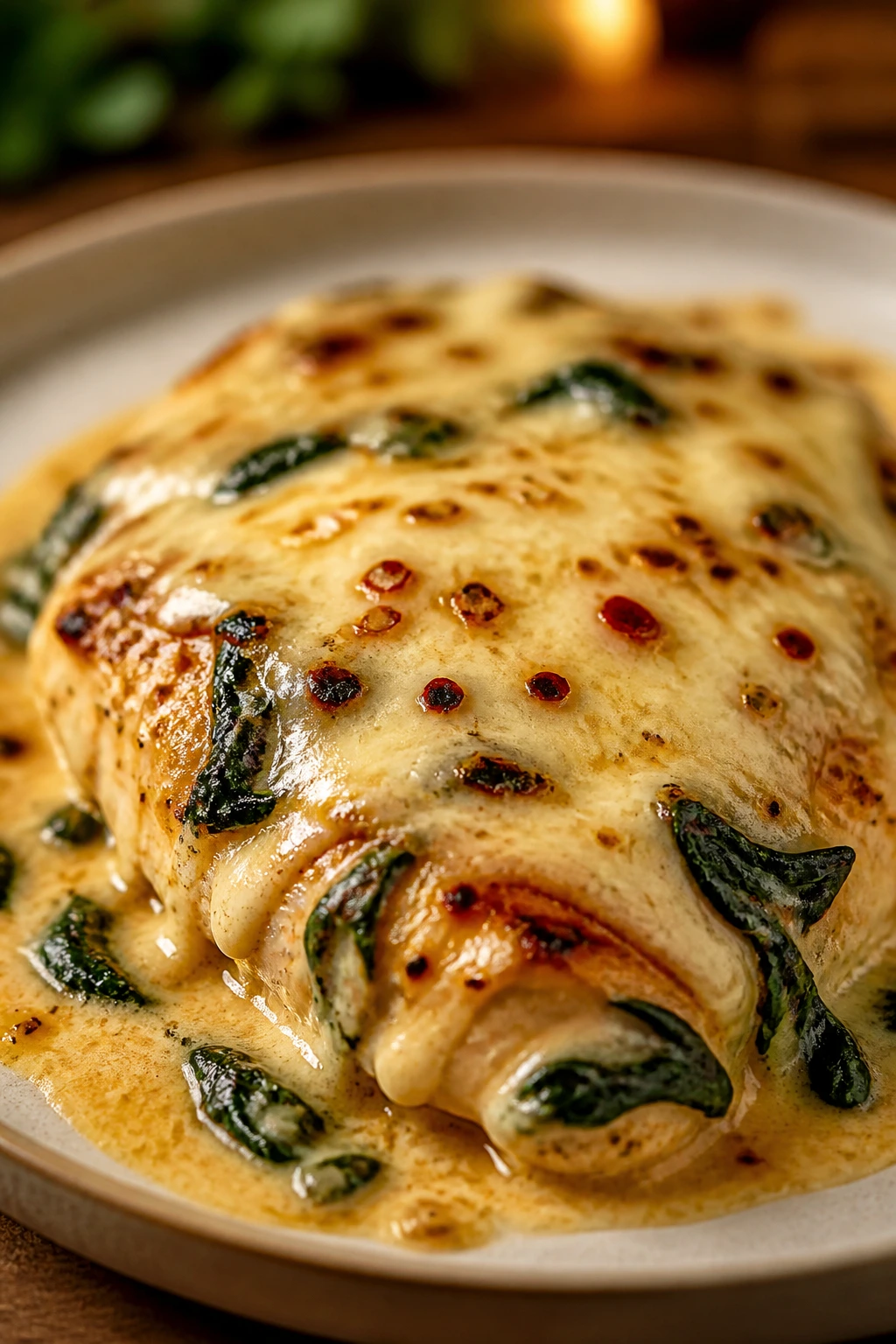
Spinach Under the Cheese: Stir 2 to 3 packed cups of baby spinach into the sauce after the cream cheese melts. It wilts fast and turns the sauce a little greener and lighter, which is handy when you want something that feels less heavy on the plate.
Pepper Jack Kick: Swap half the mozzarella for pepper jack and add a pinch of crushed red pepper flakes to the sauce. You get a sharper melt and a little heat, which works well if you’re serving the chicken over rice or tucked into toasted buns the next day.
Provolone Blanket: Use provolone instead of mozzarella, or mix the two half and half. Provolone melts into a softer, silkier cap and has a little more flavor than plain mozzarella, so the sauce tastes less mellow.
Baked Family-Style Pan: If you want to feed more people, sear the chicken and make the sauce on the stove, then move everything into a baking dish, top with cheese, and bake at 400°F for 8 to 10 minutes. That version is useful when your skillet is too small or you want to carry the dish straight to the table.
How to Store, Reheat, and Make Ahead
Refrigerator
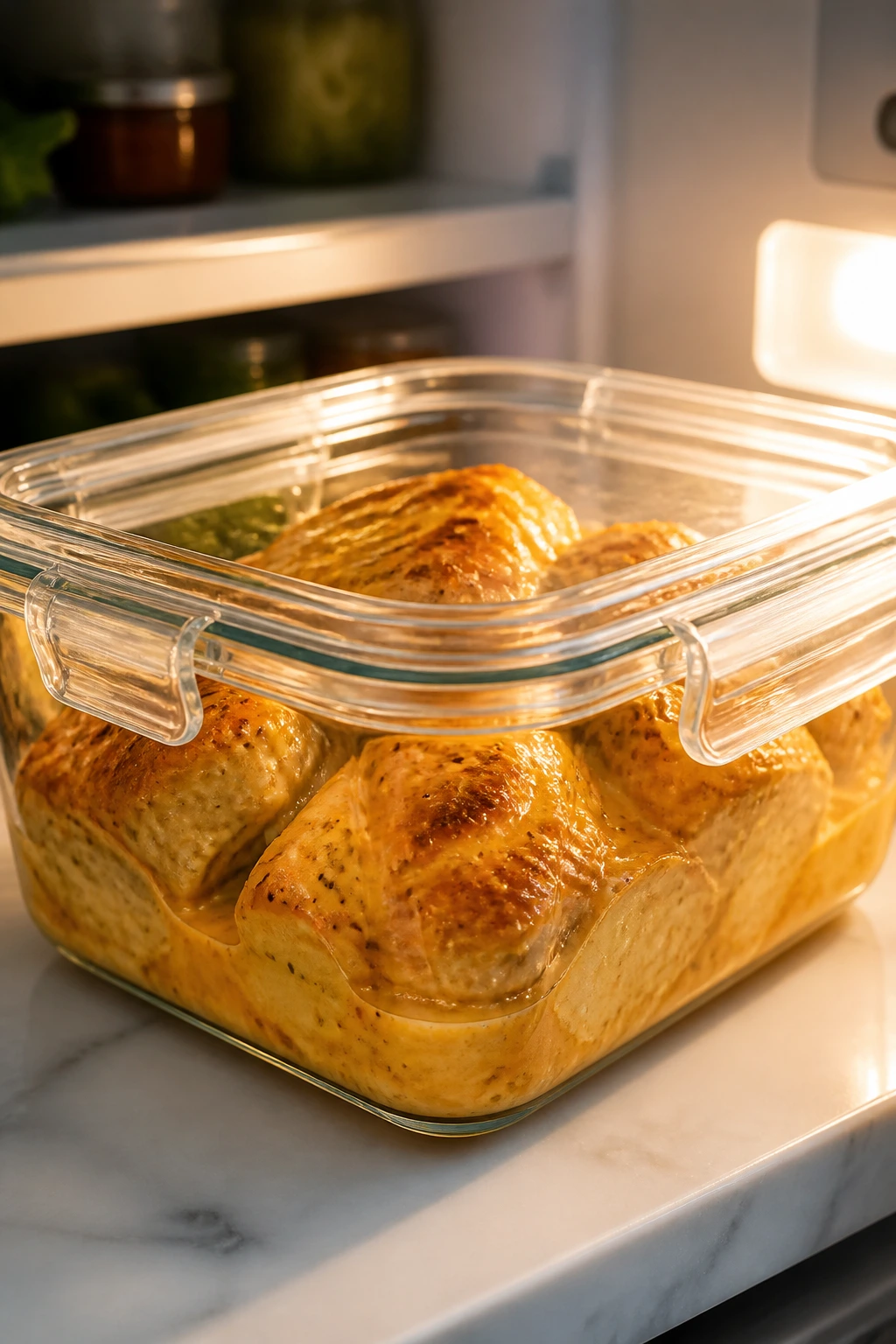
Store leftovers in an airtight container for 3 to 4 days. The sauce will thicken as it chills, and that is normal. Keep the chicken pieces together with the sauce so they do not dry out on the edges.
Freezer
You can freeze the finished dish for up to 2 months, though the sauce may separate a little when it thaws. Let it cool completely first, then freeze in a shallow, airtight container so it chills quickly and evenly. Thaw it in the refrigerator overnight rather than on the counter.
Reheating
For the best texture, reheat leftovers in a skillet over low heat with 2 to 3 tablespoons of broth per serving. Cover the pan and heat until the chicken is warmed through and the sauce loosens again, usually 6 to 8 minutes. If you use the microwave, go low and slow — about 50 percent power in 45-second bursts — and stir the sauce between bursts so it does not split.
Make-Ahead
You can pound and season the chicken up to 24 hours ahead. Keep it covered in the refrigerator, and leave the flour coating for just before cooking so it stays dry and light. You can also grate the cheese and mince the garlic a day ahead, which takes the sharp edges off the prep when dinnertime arrives.
If you want to cook the whole dish ahead, stop there. The finished chicken is fine the next day, but the sauce is at its silkiest within the first hour after cooking. A quick reheat with a splash of broth brings it back, though it never quite has the same fresh-from-the-pan gloss.
Questions People Actually Ask
Can I use chicken thighs instead of breasts?
Yes. Boneless, skinless thighs work well and are a little more forgiving if you get distracted. They usually need a few extra minutes in the pan and are best cooked to about 175°F for the best texture.
What cheese melts best here?
Mozzarella gives the classic stretch, provolone melts into a softer blanket, and Monterey Jack melts fast with a clean finish. Parmesan should stay in the support role; it seasons the sauce, but it does not make a good full topping on its own.
Do I have to use flour?
No, but the flour coating helps the chicken brown and gives the sauce a little body. If you need a gluten-free version, use a 1:1 gluten-free flour blend or skip the coating and simmer the sauce an extra minute or two.
My sauce looks grainy. Can I fix it?
Usually, yes. Pull the pan off the heat and whisk in 1 to 2 tablespoons of warm broth. If the sauce is still rough, add a spoonful of cream cheese and stir gently until it smooths out.
Can I make this without an oven-safe skillet?
Yes. Finish the chicken entirely on the stove with the lid on, or transfer the chicken and sauce to a baking dish before adding the cheese. A broiler is optional, not required.
How do I keep the chicken from drying out?
Two things matter most: even thickness and temperature control. Pound the chicken so the thick end and thin end cook at the same pace, and pull it as soon as the thickest point reaches 160°F to 162°F so the rest of the heat can finish the job while it rests.
Can I make this ahead for guests?
You can prep the chicken and sauce components ahead, but I would cook the dish right before serving if you can. Cream sauces are at their best when they are fresh and glossy, and the cheese looks better when it has only just melted.
What should I do if the sauce gets too thick?
Add broth a tablespoon at a time while the pan stays over low heat. That loosens the sauce without thinning the flavor too much. Milk works too, though broth keeps the savory note stronger.
A Reliable Dinner That Doesn’t Ask Much
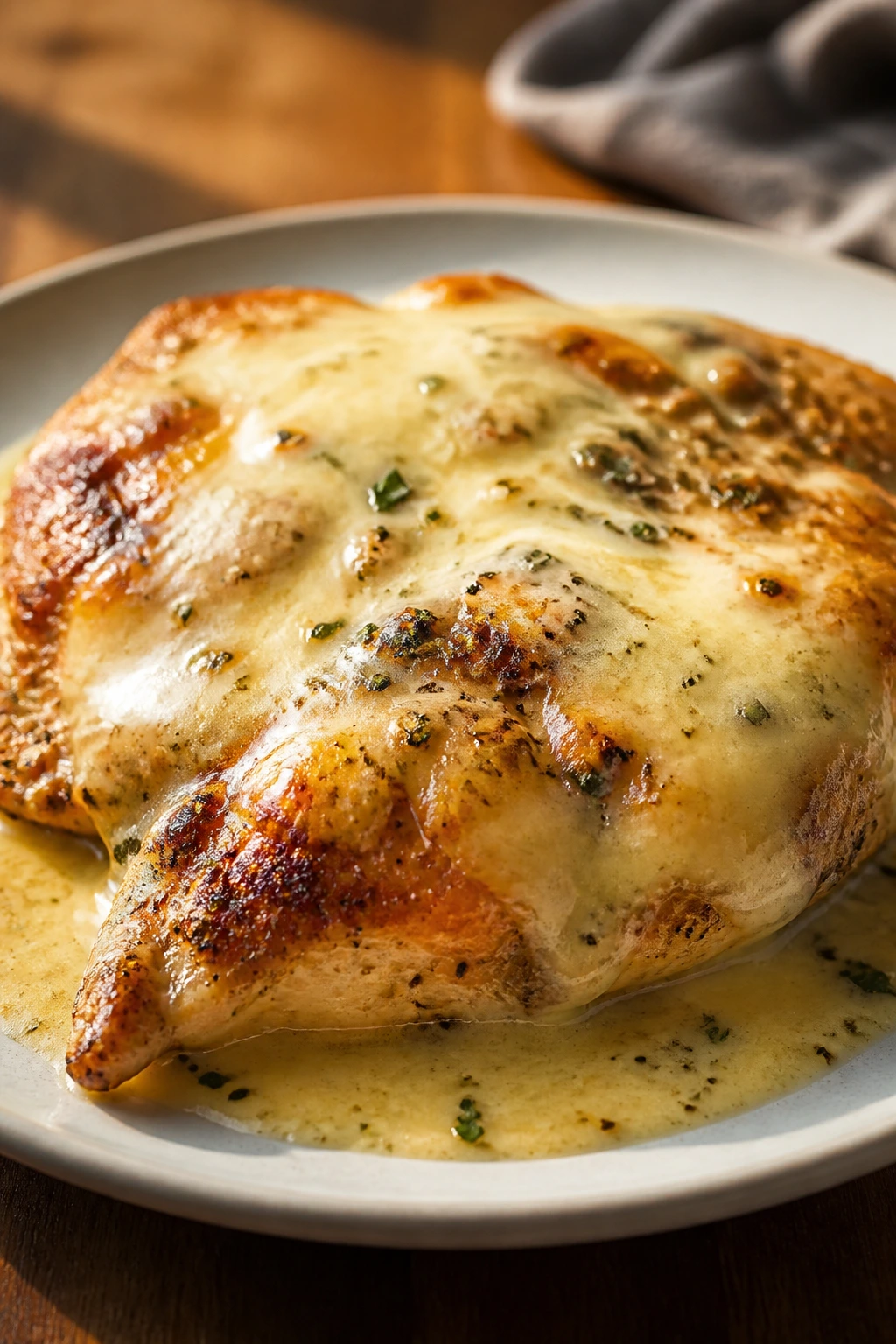
Some recipes are loud about being easy and then fall apart the second the heat gets a little high. This one is more honest than that. It gives you a straightforward set of moves, but it pays you back only if you respect the pan: dry the chicken, keep the heat sensible once the dairy goes in, and stop cooking when the thermometer says the meat is done.
That’s why I keep coming back to it. The chicken stays tender, the cheese melts into a real sauce, and dinner lands on the table without feeling like a compromise. Once you’ve made it a couple of times, the rhythm becomes familiar in the best way — the kind of familiar that means you can cook it while talking, listening, and doing everything else an ordinary evening throws at you.
Tender Cheesy Chicken — Recipe Card
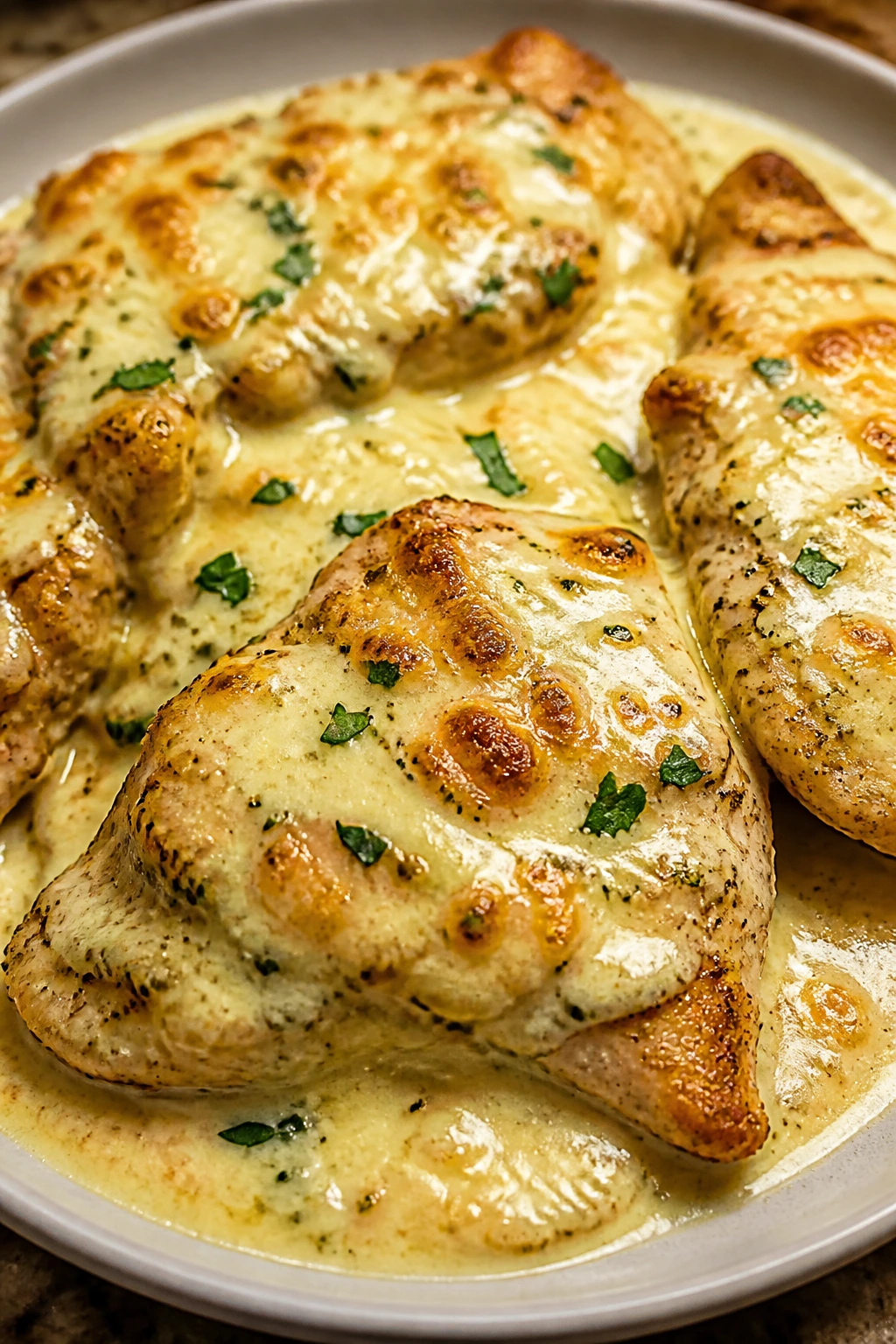
Recipe Name: Tender Cheesy Chicken
Description: Juicy chicken breasts are lightly coated, seared, and finished in a creamy garlic cheese sauce with mozzarella and Parmesan. It is the kind of skillet dinner that tastes richer than the ingredient list looks.
Prep Time: 15 minutes
Cook Time: 20 to 25 minutes
Total Time: 35 to 40 minutes
Course: Dinner, Main Course
Cuisine: American
Servings: 4 servings
Calories: About 700 kcal per serving
Yield: 4 servings
Difficulty: Beginner — the method is simple, but an instant-read thermometer helps keep the chicken tender.
Chill/Rest Time: 5 minutes
Best Served: Right after resting, while the sauce is glossy and the cheese is fully melted.
Ingredients
For the Chicken
- 2 pounds boneless, skinless chicken breasts, sliced horizontally into 4 cutlets or pounded to an even 3/4-inch thickness
- 1 1/2 teaspoons kosher salt
- 1 teaspoon freshly ground black pepper
- 1 teaspoon garlic powder
- 1 teaspoon paprika, sweet or smoked
- 1/2 cup all-purpose flour, for a light coating
- 2 tablespoons olive oil
- 1 tablespoon unsalted butter
For the Cheesy Pan Sauce
- 3 cloves garlic, minced
- 1 cup low-sodium chicken broth
- 3/4 cup heavy cream
- 2 ounces cream cheese, softened and cut into cubes
- 1 teaspoon Dijon mustard
- 1 cup shredded mozzarella
- 1/2 cup finely grated Parmesan
- 1 tablespoon lemon juice, optional but useful at the end
- 2 tablespoons chopped parsley, for serving
- Pinch crushed red pepper flakes, optional
Instructions
-
Pat the chicken dry, slice or pound it to even thickness, and season both sides with salt, pepper, garlic powder, and paprika.
-
Dredge the chicken lightly in the flour, shaking off the excess.
-
Heat olive oil and butter in a 12-inch skillet over medium-high heat. Sear the chicken for 3 to 4 minutes per side until golden, then transfer it to a plate.
-
Reduce the heat to medium. Add the garlic and cook for 20 to 30 seconds, then deglaze the pan with chicken broth and scrape up the browned bits.
-
Whisk in the heavy cream, cream cheese, and Dijon mustard. Simmer gently for 2 to 3 minutes until smooth and glossy.
-
Return the chicken and any juices to the skillet. Spoon the sauce over the top, add the mozzarella and Parmesan, and cover for 2 to 3 minutes until the cheese melts and the chicken reaches 165°F.
-
Optional: uncover and broil for 1 to 2 minutes for a lightly browned top, watching closely.
-
Rest for 5 minutes, then finish with parsley and a squeeze of lemon juice if using.
Notes: Keep the heat low once the dairy goes in. Grate the Parmesan yourself if you can, and add broth a tablespoon at a time if the sauce thickens too much.