



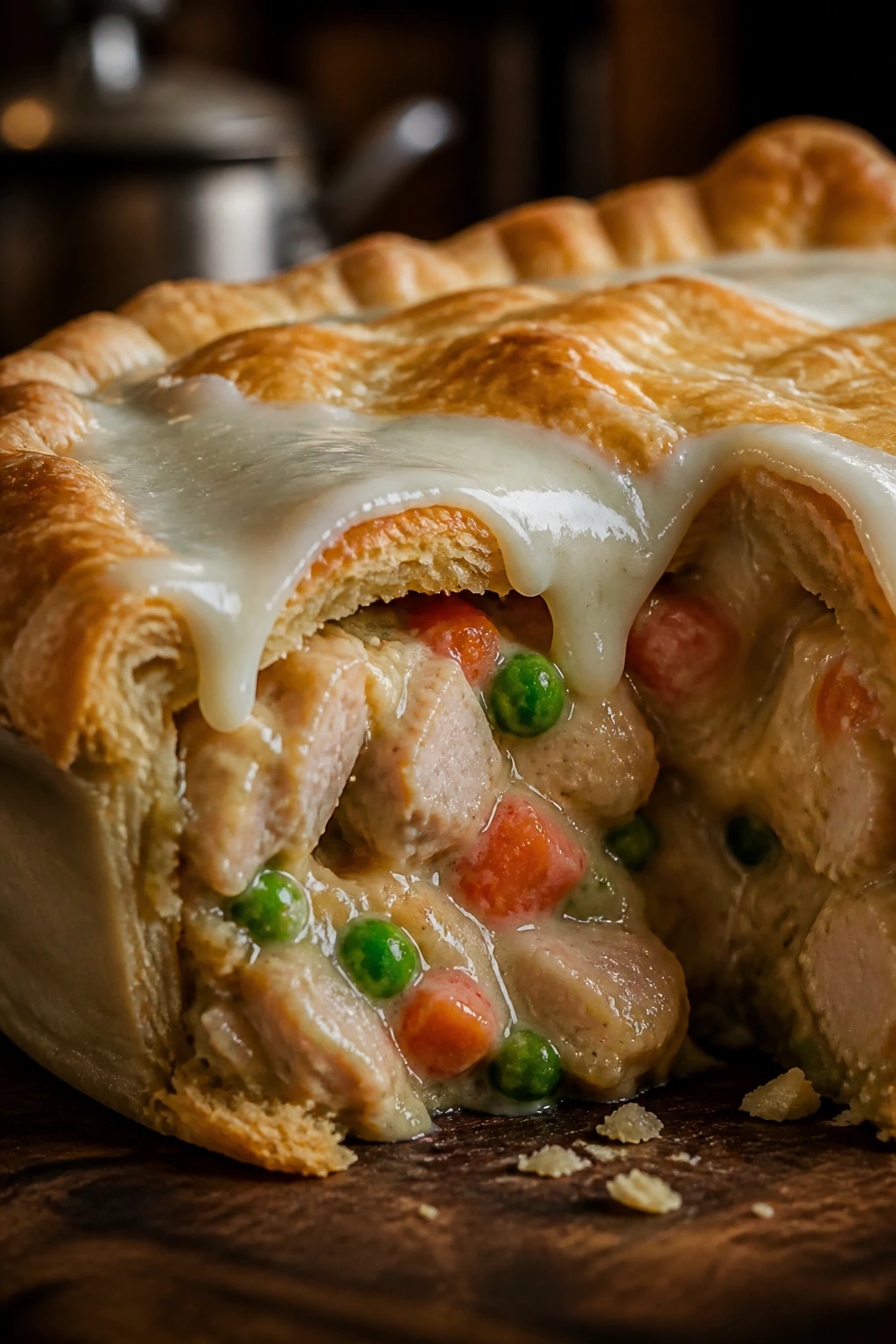
Chicken pot pie usually makes one promise and keeps a different one. You expect a flaky lid, a creamy middle, and maybe a little chicken flavor if the cook was generous. This version goes further. It keeps the buttery crust and the thick filling, then throws in a cream cheese frosting that sounds strange until you taste the first forkful and realize the tang is doing real work, not just making noise.
The frosting here is not birthday-cake sweet. It’s whipped cream cheese with a little butter, chives, lemon, garlic powder, and barely enough powdered sugar to smooth it out. Spread thinly over warm slices or piped in small swirls along the crust, it acts like a cool, rich contrast to the hot filling underneath. That contrast matters. A pie this creamy can blur into one note fast, and the frosting gives your tongue a sharp little reset between bites.
There’s also the practical side, which is usually where this kind of recipe lives or dies. The filling has to be thick enough to sit inside the crust without flooding it. The bottom crust has to bake instead of steaming. The frosting has to stay plush, not slide off into a greasy puddle. Get those three things right, and this becomes the sort of pie that makes people pause mid-slice and look at it twice.
What Makes This Pot Pie Different from the Usual Chicken-and-Crust Situation
Most chicken pot pies are built on restraint. This one is not. It’s richer, thicker, and a little more playful, which is exactly why it works. The filling leans on heavy cream and a proper roux, so it eats like silk rather than soup, and the cream cheese frosting adds a cold, tangy finish that cuts through the butter in the crust.
That’s a fancy way of saying the pie has layers in the mouth, not just on the plate. You get savory chicken first, then sweet peas and corn, then the warm onion-and-thyme base, then the crisp top crust, and finally that cool cream cheese edge if you add it at the table. It sounds overbuilt. It isn’t. The trick is keeping each part distinct.
Pot pie started as a way to stretch leftover meat under pastry, which is why the best versions usually feel sturdy and homey rather than delicate. This one keeps that backbone, but it dresses it up. I like that about it. It still tastes like dinner, but it has enough flair to make a plain weeknight feel a little more considered.
A lot of cream sauces fail because they try to do too much. This one avoids that by staying savory, using lemon in tiny amounts, and letting thyme and chives do the talking. The frosting is the wild card, sure, but used lightly, it doesn’t turn the pie into dessert. It just gives the whole thing a cold, sharp edge that you don’t expect from a pot pie.
Why You’ll Want to Make This One Again
-
The filling stays spoonable, not runny: A roux-based sauce thickens to the point where it coats the back of a spoon, which means it stays inside the crust instead of leaking onto the cutting board.
-
The crust gets to stay crisp: Cooling the filling for a few minutes before assembly keeps the bottom from turning soft and soggy before the pie even hits the oven.
-
The frosting actually serves a purpose: The cream cheese topping adds tang and coolness, which keeps the rich filling from feeling heavy after two bites.
-
It handles rotisserie chicken well: You can start with cooked chicken and move fast without the flavor tasting rushed or flat.
-
Leftovers cut cleaner the next day: Once the filling settles overnight, slices hold their shape better, and the flavors pull together instead of separating.
-
You can make it as fancy or plain as you want: Pipe frosting on the pie, dab it on each slice, or skip the decoration and keep the topping simple. The structure holds either way.
The Clock, the Yield, and the Best Moment to Bring It to the Table
Yield: Serves 6 to 8
Prep Time: 30 minutes
Cook Time: 40 to 45 minutes
Total Time: 1 hour 15 minutes
Difficulty: Intermediate — the steps are straightforward, but the sauce, crust, and frosting each need a little attention.
Chill/Rest Time: 15 to 20 minutes
Best Served: Warm, after a short rest so the filling settles and the slices hold together.
A pie like this wants a little patience at the end. Not much. Just enough for the filling to stop sloshing when you cut through it. If you rush the rest, the first slice will slump, the crust will crack at the wrong angle, and all that work inside the skillet will end up on the plate in a messy heap.
The Exact Ingredients for the Filling, Crust, and Frosting
For the Filling:
- 2 tablespoons unsalted butter
- 1 tablespoon olive oil
- 1 medium yellow onion, diced small
- 2 medium carrots, peeled and diced small
- 2 celery ribs, diced small
- 3 cloves garlic, minced
- 1/3 cup all-purpose flour
- 2 cups low-sodium chicken broth
- 1 cup heavy cream
- 1/2 cup whole milk
- 3 cups cooked chicken, shredded or diced into 1/2-inch pieces
- 1 cup frozen peas
- 1 cup frozen corn
- 1 teaspoon kosher salt
- 1/2 teaspoon black pepper
- 1 teaspoon dried thyme
- 1/2 teaspoon dried sage
- 1 tablespoon chopped fresh parsley
- 1 teaspoon lemon juice
For the Crust and Finish:
- 2 refrigerated 9-inch pie crusts or 1 homemade double-crust 9-inch pie crust
- 1 large egg, beaten with 1 tablespoon water
For the Cream Cheese Frosting:
- 4 ounces cream cheese, softened
- 2 tablespoons unsalted butter, softened
- 1 tablespoon powdered sugar
- 1 tablespoon heavy cream, plus a little more if needed
- 1 tablespoon finely chopped chives
- 1 teaspoon lemon juice
- 1/4 teaspoon garlic powder
- 1/4 teaspoon kosher salt
- 1/8 teaspoon black pepper
Why Each Ingredient Is Pulling Its Weight
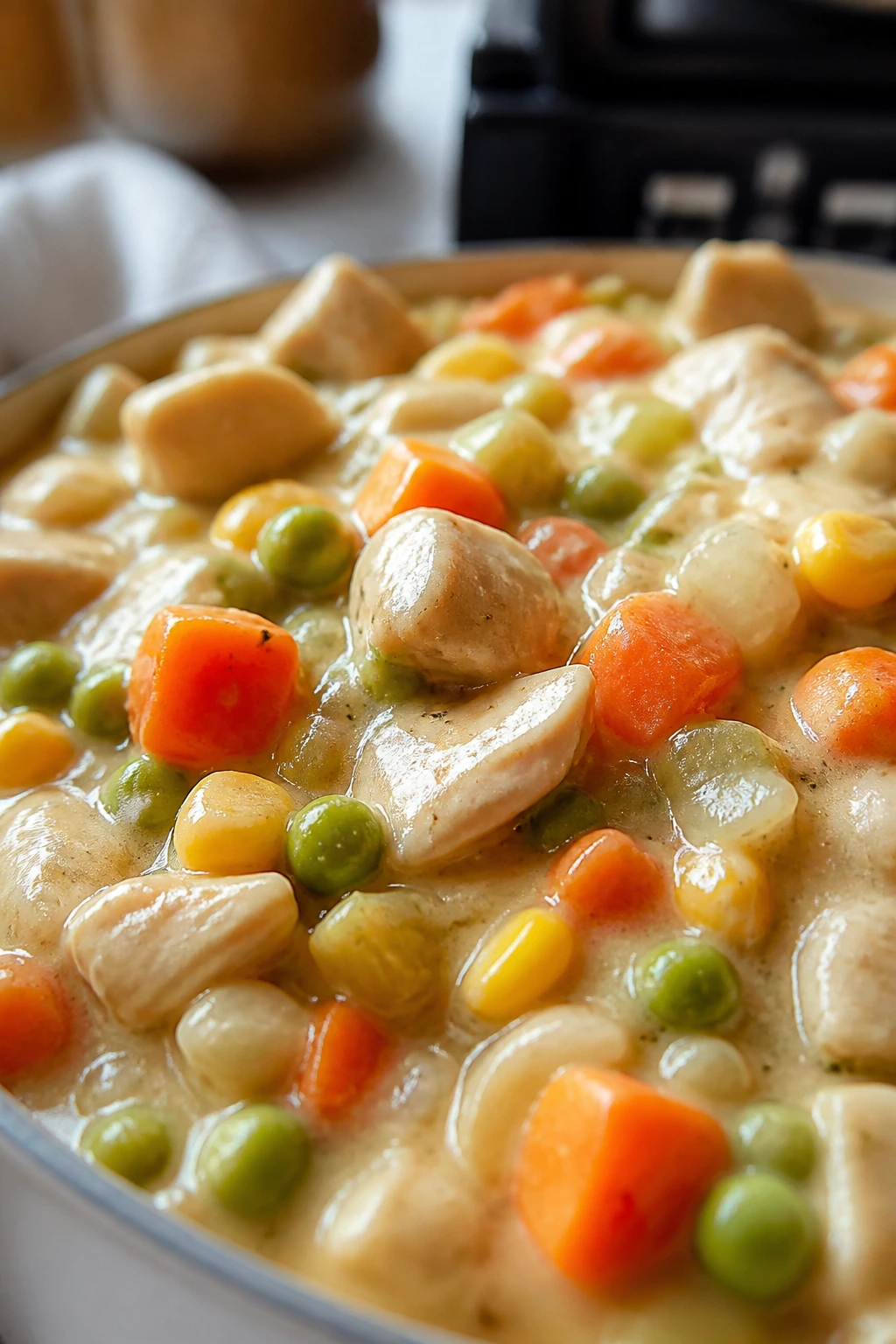
Cooked Chicken and the Savory Base
What to use: 3 cups cooked chicken, shredded or diced into 1/2-inch pieces.
Preparation: If you’re using rotisserie chicken, pull off the skin and shred the meat into pieces that aren’t too fine. If you’re cooking chicken from raw, poach or roast it first and let it cool before cutting.
Substitutions: Leftover turkey works neatly here, and even cooked chicken thighs from another meal are fine as long as they’re not heavily seasoned with something sweet.
Tips: Thigh meat stays juicier than breast meat, especially in a creamy pie. If you use breast meat, keep the pieces a little larger so they don’t dry out after baking.
Vegetables That Keep the Filling from Feeling Flat
What to use: 1 medium yellow onion, 2 medium carrots, 2 celery ribs, 1 cup frozen peas, and 1 cup frozen corn.
Preparation: Dice the onion, carrots, and celery small enough that they soften before the crust overbakes. The peas and corn go in near the end, straight from frozen.
Substitutions: Green beans, diced parsnips, or chopped mushrooms all work if you want a slightly different feel. Frozen mixed vegetables are fine in a pinch, but I prefer the clean sweetness of peas and corn.
Tips: Keep the carrot pieces small. Big chunks stay stubbornly firm, and then every bite feels uneven. The vegetables should taste integrated, not like they were dropped in by accident.
The Sauce That Holds the Whole Pie Together
What to use: 2 tablespoons butter, 1 tablespoon olive oil, 1/3 cup all-purpose flour, 2 cups chicken broth, 1 cup heavy cream, 1/2 cup whole milk, 1 teaspoon kosher salt, 1/2 teaspoon black pepper, 1 teaspoon dried thyme, 1/2 teaspoon dried sage, 1 tablespoon parsley, and 1 teaspoon lemon juice.
Preparation: Build the sauce in a skillet after the vegetables have softened. Whisk the broth in slowly so the roux doesn’t clump, then add the cream and milk and let the mixture thicken before the chicken goes in.
Substitutions: Half-and-half can replace the cream and milk if that’s what you’ve got, though the sauce will be a little looser. If you need a gluten-free version, use a certified gluten-free flour blend or a cornstarch slurry instead of wheat flour.
Tips: The sauce should look glossy and thick enough to leave a path when you drag a spoon through it. If it looks like chicken soup, it is not ready for the crust.
Crust and Browning
What to use: 2 refrigerated pie crusts or 1 homemade double-crust pie crust, plus 1 egg beaten with 1 tablespoon water.
Preparation: Let refrigerated crusts sit out just long enough to unroll without cracking. Keep the top crust cold if possible, because cold pastry puffs and browns more cleanly.
Substitutions: Puff pastry can replace the top crust if you want something lighter and more flaky, though it’s a little less sturdy for clean slices. A biscuit topping is another route, but that turns the pie into a different dish.
Tips: The egg wash is not optional if you want that deep golden color. It’s a small step with a big visual payoff, and it also helps the top crust seal around the vents.
Cream Cheese Frosting, Reimagined for Dinner
What to use: 4 ounces cream cheese, 2 tablespoons butter, 1 tablespoon powdered sugar, 1 tablespoon heavy cream, 1 tablespoon chives, 1 teaspoon lemon juice, 1/4 teaspoon garlic powder, 1/4 teaspoon salt, and 1/8 teaspoon black pepper.
Preparation: Beat the cream cheese and butter until smooth before adding the rest. If the frosting looks stiff, add cream a teaspoon at a time until it pipes easily but still holds a ridge.
Substitutions: Swap chives for dill if you want a brighter finish, or use parsley for a more neutral look. If you want zero sweetness, trim the powdered sugar to 1 teaspoon and keep the texture in mind rather than the flavor.
Tips: The frosting should taste more tangy than sweet. If it starts to feel like dessert frosting, you’ve gone too far. Pull it back with salt, lemon, and a little more cream cheese.
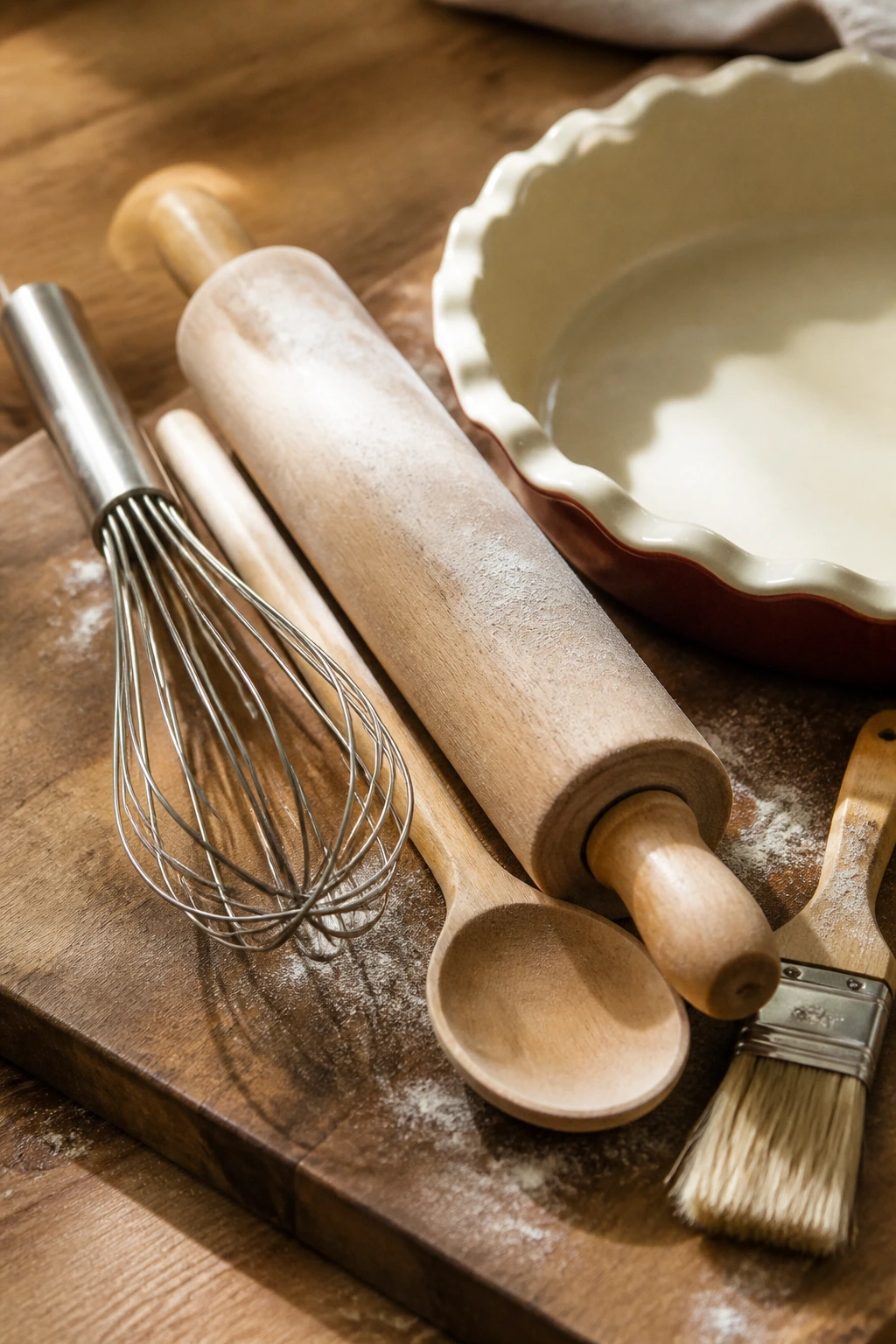
The Tools That Make Assembly Easier
-
9-inch deep-dish pie plate: A standard pie plate can work, but deep-dish gives the filling room without slopping over the edge.
-
Large skillet or sauté pan: You need enough surface area to cook the vegetables and build the sauce without crowding.
-
Whisk: Essential for keeping the roux smooth when the broth goes in.
-
Wooden spoon or heatproof spatula: Helpful for stirring the filling once it thickens and for scraping the pan clean.
-
Rolling pin: Optional if you’re using homemade dough or need to shape refrigerated crusts a bit.
-
Pastry brush: Makes the egg wash fast and even.
-
Rimmed baking sheet: Set the pie plate on it to catch any filling that bubbles over.
-
Mixing bowl: Useful for the frosting and for cooling the filling if you want to move it out of the skillet.
-
Hand mixer or stand mixer: Not required, but it makes the frosting smoother and lighter.
Build the Pie, Step by Step
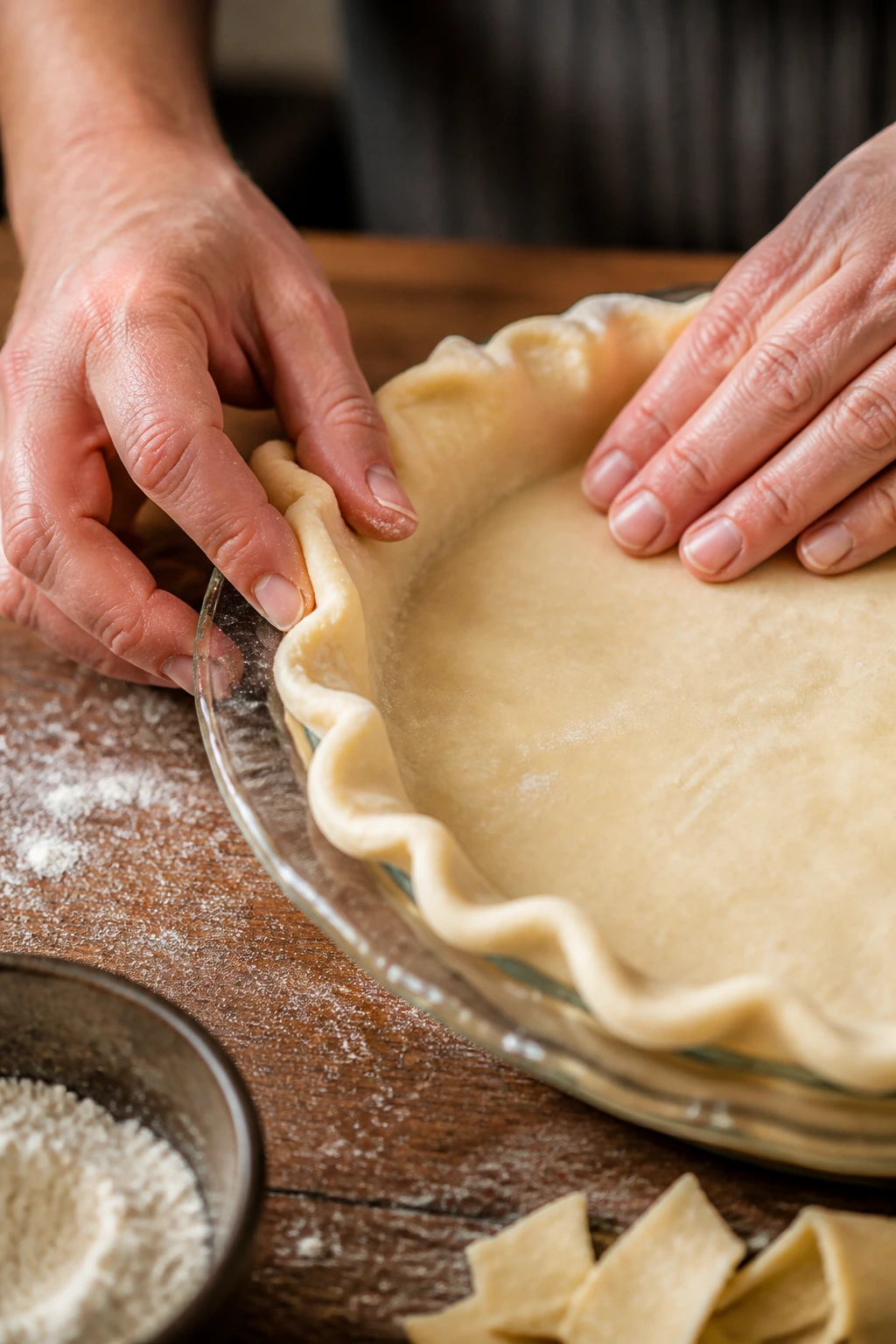
Prepare the Oven and Pan:
-
Preheat the oven to 400°F (200°C) and place a rack in the lower third of the oven. Set a rimmed baking sheet on the rack below if your oven runs hot or your pie plate is shallow.
-
Take the pie crusts out of the fridge and let them sit while you make the filling, just long enough that they unroll without cracking. Keep them cold. Warm crust is sticky crust.
Cook the Filling: 3. Melt the butter and olive oil together in a large skillet over medium heat. Add the onion, carrots, celery, and 1/2 teaspoon of the salt, then cook for 8 to 10 minutes, stirring often, until the onion looks translucent and the carrots are starting to soften at the edges.
-
Add the garlic, thyme, and sage, and stir for 30 seconds, just until the garlic smells sweet rather than sharp. Sprinkle the flour over the vegetables and stir for 1 full minute so the flour coats everything and loses its raw smell.
-
Slowly whisk in the chicken broth, scraping the bottom of the pan to smooth out any flour clumps. Stir in the heavy cream and milk, then let the mixture simmer for 3 to 5 minutes, stirring often, until the sauce thickens enough to coat the back of a spoon and leave a clear trail when you drag your finger through it. If it still looks thin, keep simmering; thin filling is the fastest route to a soggy pie.
-
Add the chicken, peas, corn, black pepper, parsley, and lemon juice. Stir until the chicken is coated and the vegetables are distributed evenly, then taste and adjust with the remaining salt if needed. Remove the skillet from the heat and let the filling cool for 10 to 15 minutes.
Assemble the Pie: 7. Fit one pie crust into the bottom of the pie plate, pressing it gently into the corners without stretching it. Spoon in the filling and smooth the surface, but do not mound it above the rim unless you enjoy cleaning burnt drips out of the oven later.
- Drape the second crust over the top, trim the excess to about 1 inch, then fold the top edge under the bottom edge and crimp it firmly. Cut 4 to 5 slits in the top so steam has somewhere to go. Brush the crust with the egg wash. Skip the vents only if you want the top crust to puff unevenly and crack in strange places.
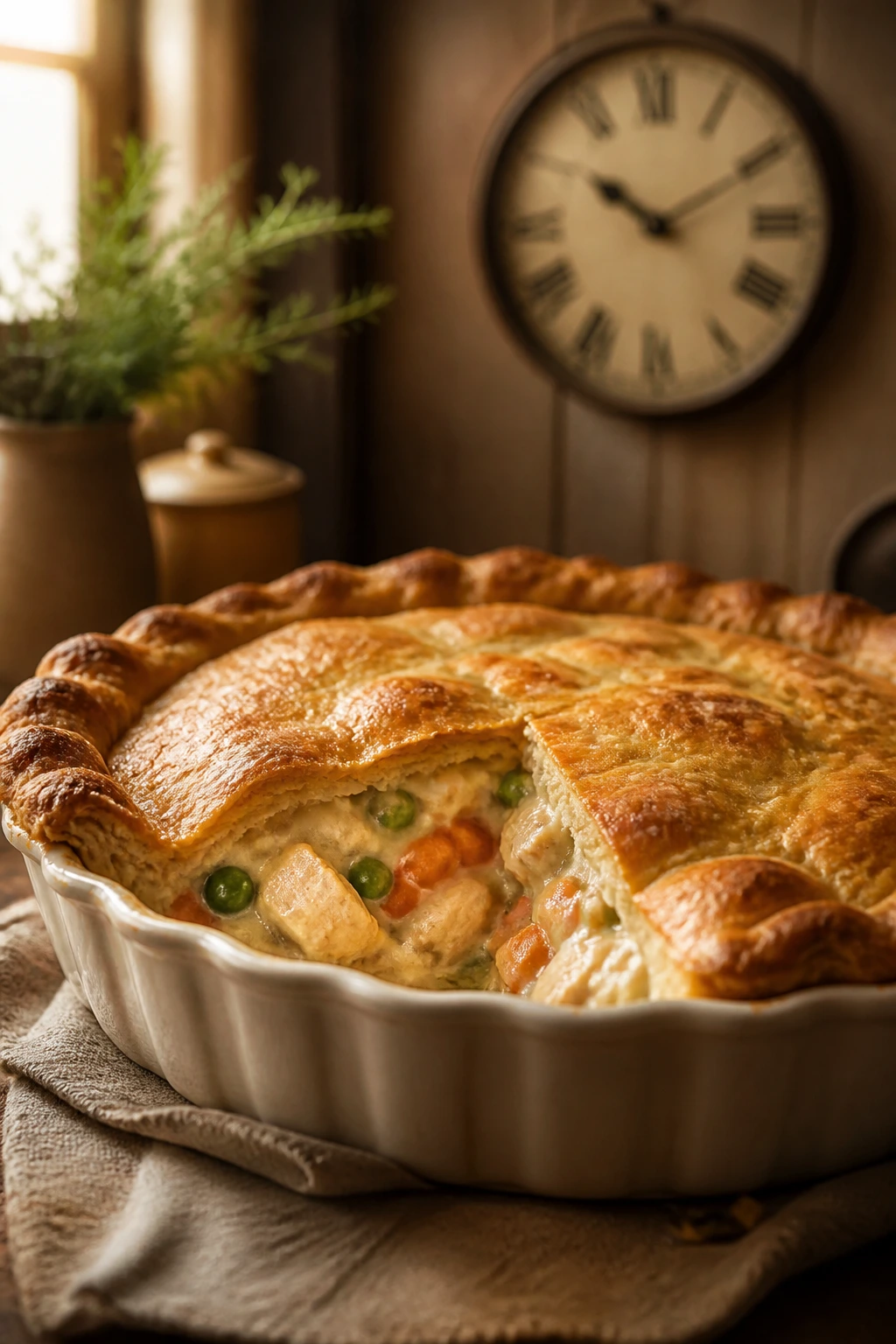
Bake and Finish: 9. Bake for 35 to 45 minutes, until the crust is deep golden brown and the filling is bubbling through the vents. If the edges color too fast, cover them loosely with foil strips for the last 10 to 15 minutes.
-
While the pie bakes, beat the cream cheese and butter in a bowl until smooth and fluffy. Add the powdered sugar, heavy cream, chives, lemon juice, garlic powder, salt, and pepper, then beat again for 30 to 45 seconds until the frosting is light and pipeable. If it feels too stiff, add a few drops of cream; if it feels too loose, chill it for 5 to 10 minutes.
-
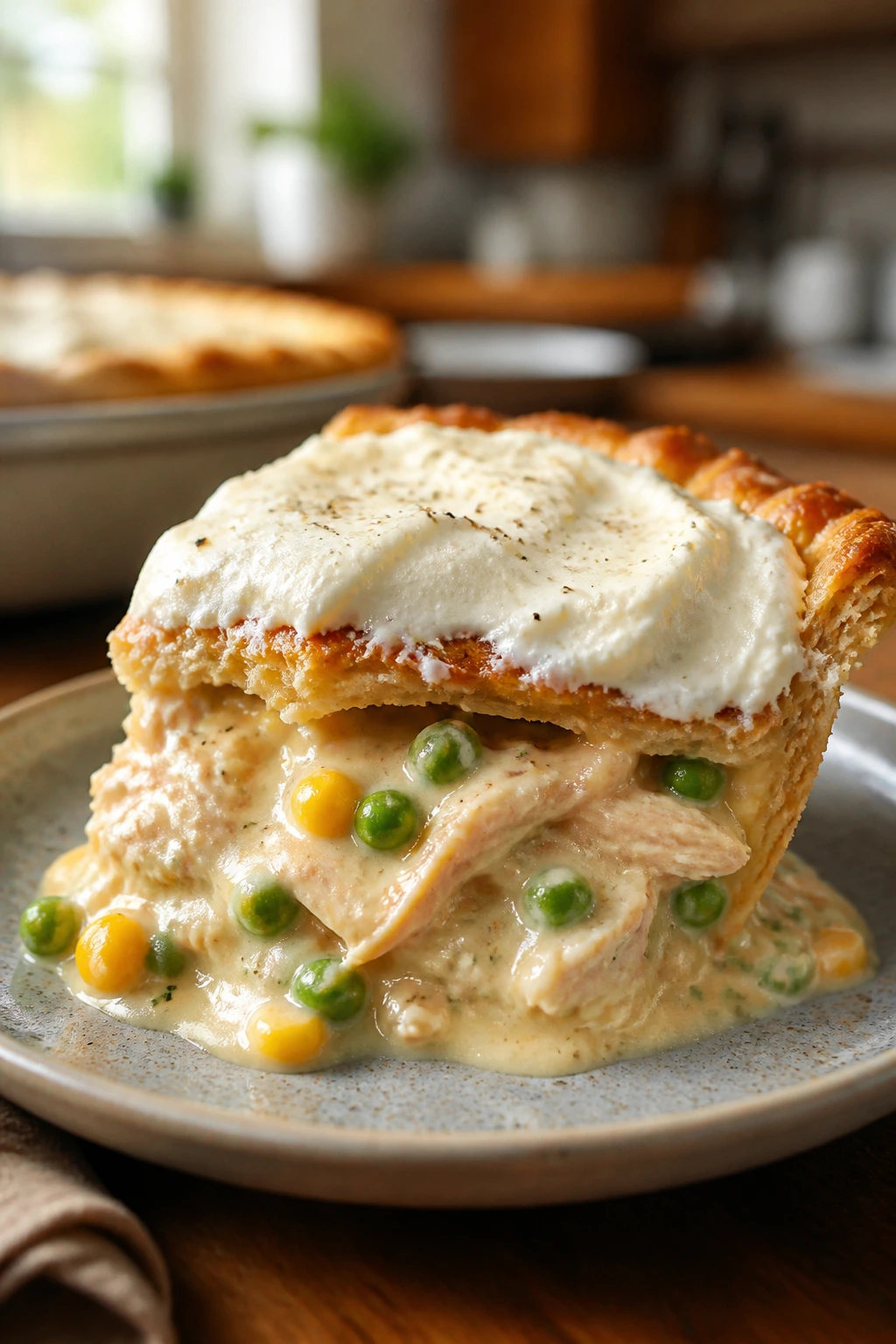
Remove the pie from the oven and let it rest for 15 to 20 minutes. Pipe or spoon the frosting onto the crust edge, onto each plated slice, or in small swirls around the rim of the pie. Do not cover the whole pie while it is scorching hot; the frosting will melt before it looks intentional.
-
Slice with a sharp knife, wiping the blade between cuts for the neatest edges, and serve while the filling is still warm and the crust is crisp.
How to Serve a Slice with the Frosting Finish
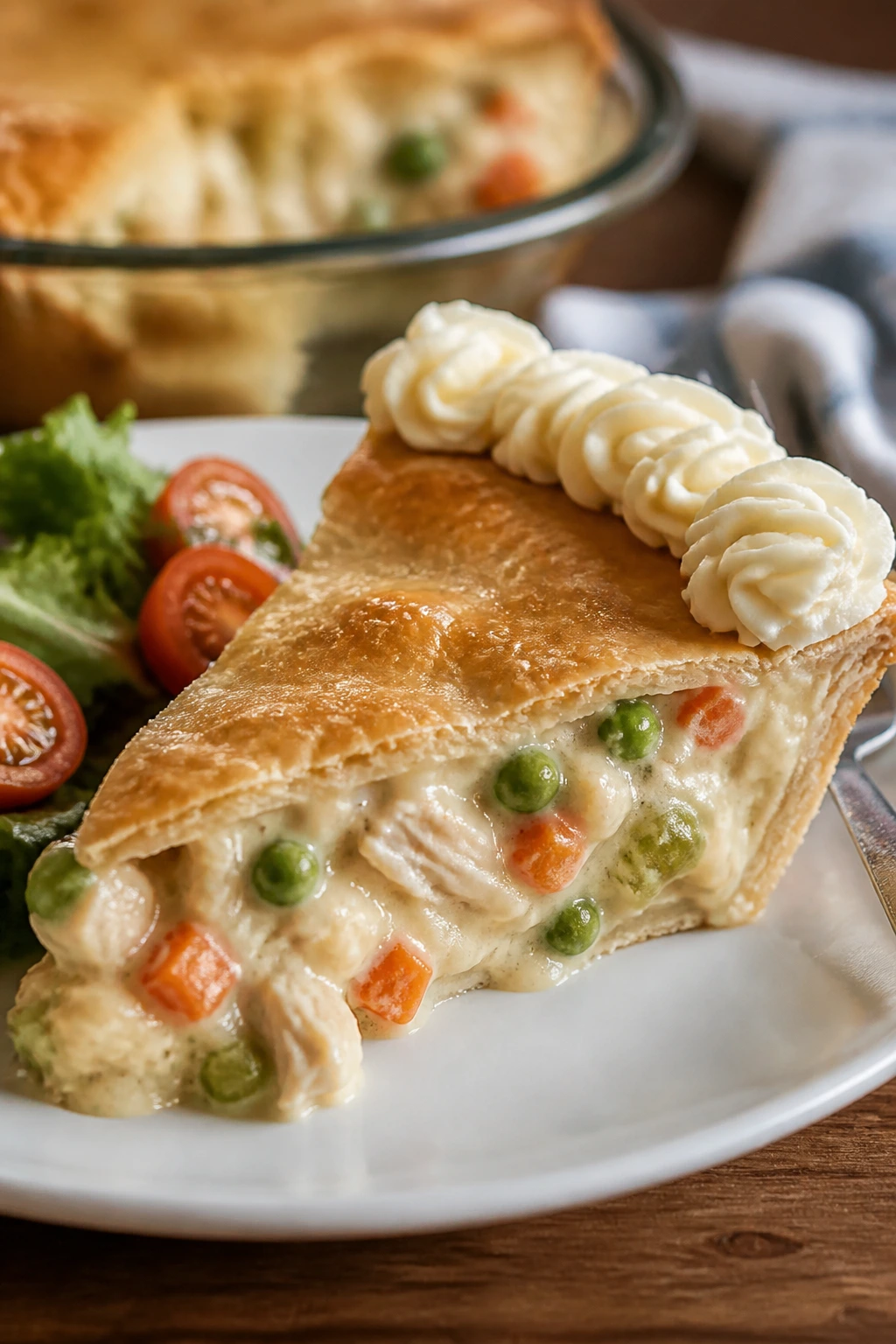
Presentation: A warm wedge on a white plate shows off the contrast best: deep golden crust, pale cream filling, and a few swirls of frosting either on top of the crust edge or beside the slice. A tiny scatter of chopped chives keeps the topping from looking too sweet.
Accompaniments: I’d pair this with something crisp and sharp, like a romaine salad with lemon vinaigrette, roasted green beans with garlic, or a shaved apple slaw. The pie is already rich, so the side should bring bite.
Portions: One slice from a 9-inch deep-dish pie is a proper serving, and six generous slices is where this recipe feels most comfortable. If you’re feeding people with larger appetites, plan on eight smaller pieces and a green side dish.
Beverage Pairing: Dry cider works better than a sweet one here. A lightly oaked chardonnay or even sparkling water with lemon keeps the meal from leaning too heavy.
Little Fixes That Improve the Crust, Filling, and Frosting
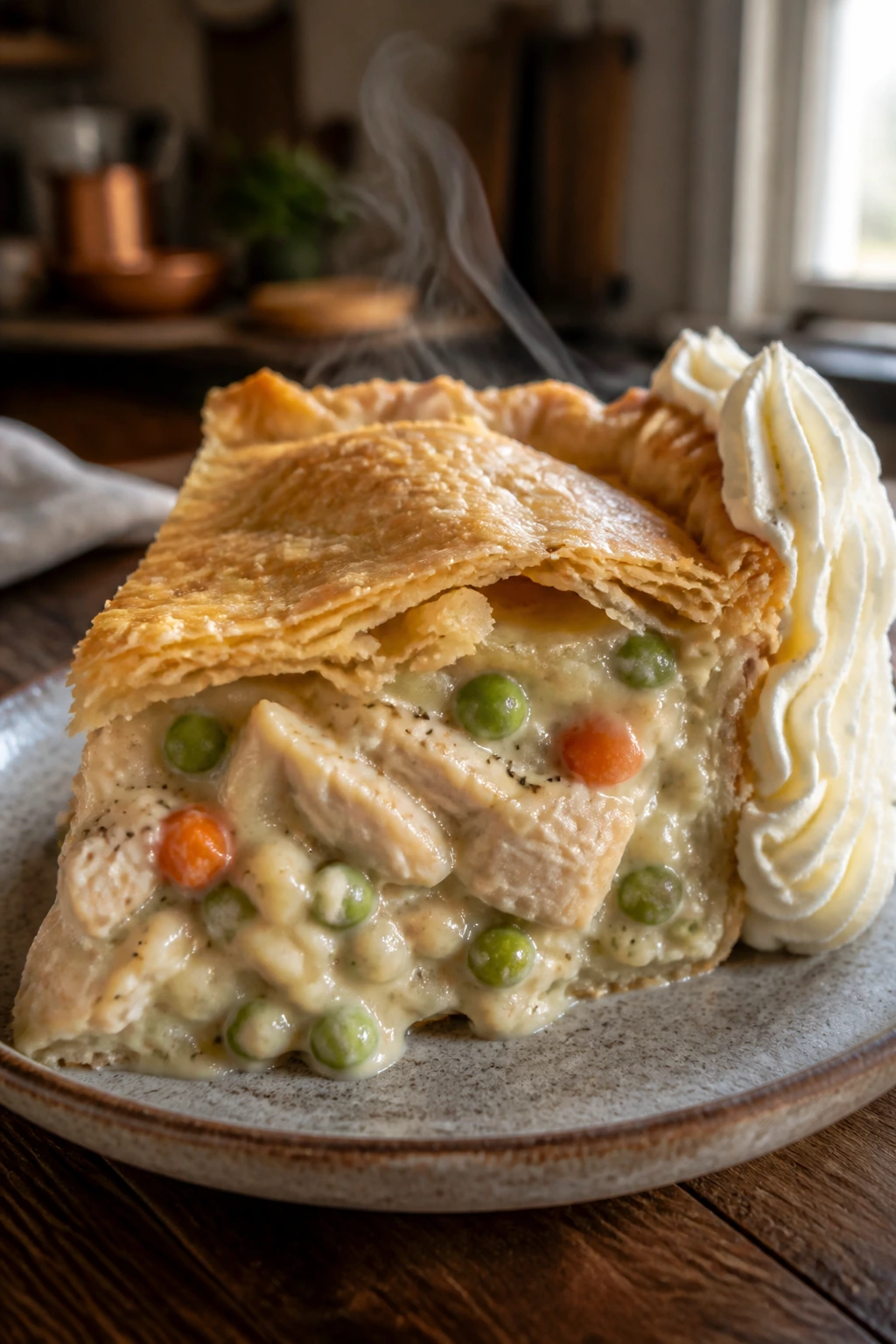
Flavor Enhancement: A teaspoon of Dijon mustard in the filling would work if you want a slightly sharper backbone, but it should stay in the background. The lemon in the frosting does some of that lifting already, so don’t pile on too much acid.
Time-Saver: Rotisserie chicken is the cleanest shortcut in this recipe. The filling is where the flavor happens; there is no need to roast a chicken from scratch unless you actually want that extra step.
Texture Fix: Let the filling cool for 10 to 15 minutes before it goes into the crust. Hot filling starts steaming the bottom pastry immediately, and that steam is what turns a crisp base into a damp one.
Make-It-Yours: If you want the frosting to read more savory, add another tablespoon of chives and a pinch of dill. If you want a softer finish, spread a thin line of frosting along the inner edge of the crust instead of piping it thick.
The Mistakes That Turn a Good Pie Heavy
-
A thin filling: If the sauce pours like gravy before baking, it will stay loose after baking. Simmer until it thickens to a spoon-coating consistency, not a soup consistency.
-
Assembling the pie with hot filling: Fresh-off-the-stovetop filling softens the bottom crust before the oven can set it. Give it a brief rest so the pastry starts out with a fighting chance.
-
Forgetting the vents: A sealed top crust traps steam, which can make the pastry balloon and collapse in the middle. A few slits are not decoration; they’re release valves.
-
Using too much frosting: A thick layer of sweetened cream cheese on top of a hot savory pie will feel off, fast. Keep the frosting light and tangy, then use more only if the slice needs it at the plate.
-
Cutting the pie immediately: The filling needs time to settle or it will spill across the board. Fifteen minutes is the minimum I’d give it, and a little longer is even better if you can stand it.
Variations That Still Taste Like Chicken Pot Pie
Herb-Garden Finish: Add dill and extra chives to the frosting, and swap the dried sage in the filling for a little tarragon if you like a brighter herbal edge. This version feels fresher and works especially well if you’re serving the pie with a lemony salad.
Turkey and Mushroom Swap: Replace the chicken with cooked turkey and add 1 cup of sautéed mushrooms to the filling after the onion softens. The mushrooms give the sauce a darker, earthier note that plays well with leftover holiday meat.
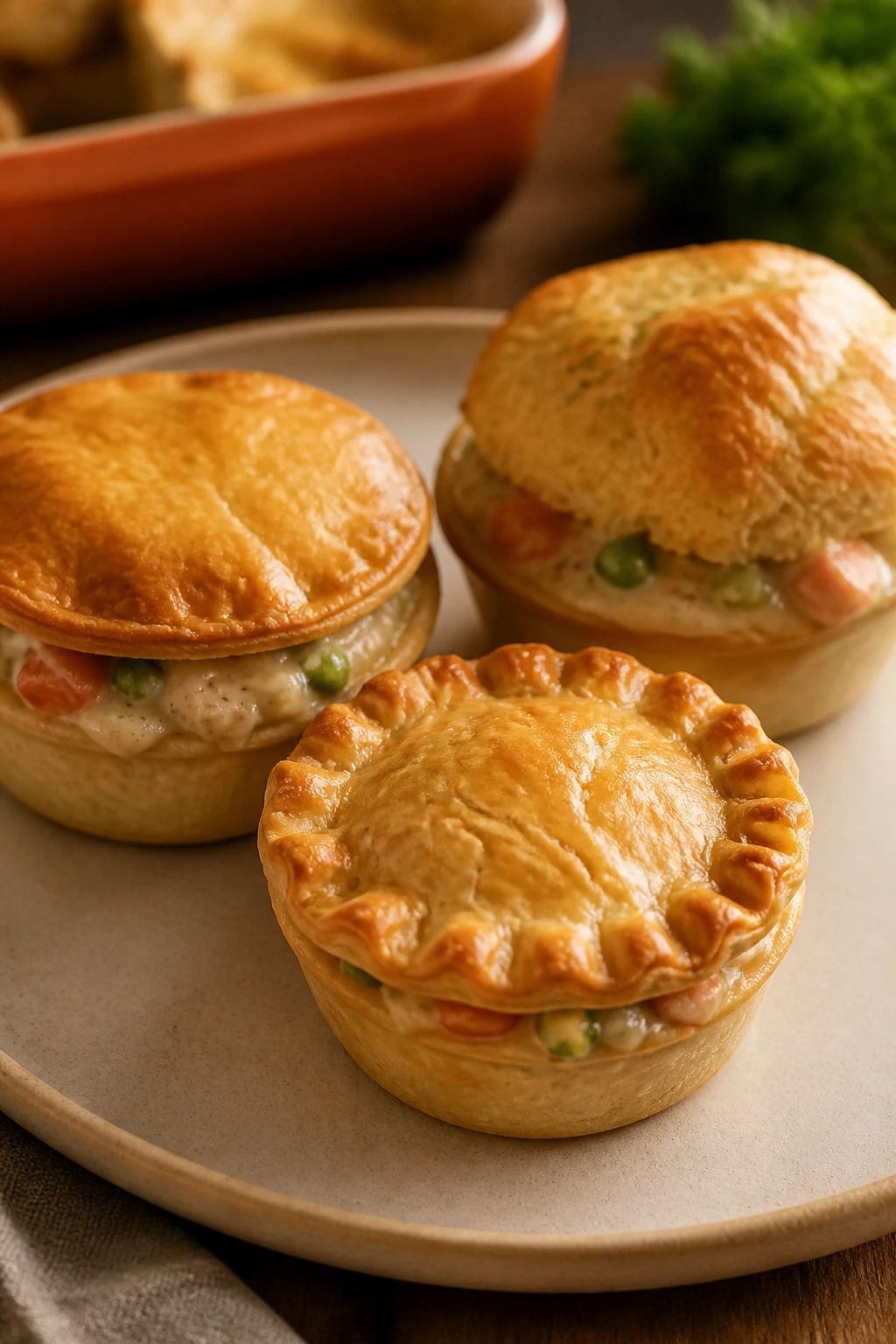
Biscuit-Lid Shortcut: Skip the top pie crust and top the filling with 8 small biscuit rounds arranged close together. Bake until the biscuits are golden and cooked through, then add tiny frosting dollops at the table rather than on the pie itself.
Gluten-Free Version: Use a sturdy gluten-free pie crust and thicken the filling with a cornstarch slurry instead of flour. Whisk 2 tablespoons cornstarch into 2 tablespoons cold water, then add it to the simmering broth-cream mixture and cook until glossy and thick.
Sharper, More Savory Topping: Drop the powdered sugar to 1 teaspoon and add a little extra pepper and chives. That makes the frosting feel more like a whipped cream cheese spread, which is a good fit if the sweet note feels too odd for your table.
Make-Ahead, Storage, and Reheating Without Ruining the Crust
This pie keeps best when the parts don’t all meet too early. You can make the filling up to 2 days ahead and refrigerate it in an airtight container, then assemble and bake the pie the day you want to serve it. The frosting also keeps well for 2 to 3 days in the fridge, covered tightly; if it firms up, let it sit at room temperature for 10 minutes and beat it briefly before using.
Once baked, the pie should not sit out for more than 2 hours because of the dairy-rich filling and frosting. After that, refrigerate leftovers in the pie dish or transfer slices to a sealed container. The crust softens a little in the fridge, which is normal, but the filling actually gets better as it rests and thickens.
For reheating, the oven is the move. Heat slices at 350°F (175°C) for 15 to 20 minutes, or until the center is hot and the crust edges feel crisp again. The microwave works in a pinch, but the pastry goes limp almost immediately, and that’s a bad trade for something this buttery.
Freezing works best without the frosting on top. Wrap the baked and cooled pie tightly in foil and freeze it for up to 2 months, or freeze individual slices on a tray first and then wrap them once solid. Thaw overnight in the refrigerator, then reheat in a 350°F oven until hot through. Make the frosting fresh or rewhip it after thawing; frozen cream cheese frosting tends to lose its smooth finish.
Questions People Usually Ask Before They Bake This
Can I use rotisserie chicken?
Yes, and it’s probably the easiest way to make this pie on a normal night. Pull off the skin, shred or dice the meat, and measure out 3 packed cups so the filling stays balanced.
Does the cream cheese frosting taste sweet?
Only a little. The powdered sugar is there for texture, not dessert sweetness, and the chives, lemon, and pepper keep the topping squarely in savory territory.
Can I make the filling ahead of time?
Absolutely. In fact, I prefer it that way because cooled filling is easier to spoon into the crust and less likely to soften the bottom pastry before baking.
How do I keep the bottom crust from getting soggy?
Start with a thick filling, let it cool before assembly, and bake the pie on the lower third of the oven. A metal pie pan helps too, because it conducts heat better than glass.
Can I freeze the whole pie?
Yes, but freeze it without the frosting if you want the cleanest result. Add the frosting after reheating so it stays fluffy and doesn’t separate.
What if my filling looks too thin after I add the broth?
Keep simmering it for 2 to 4 more minutes. If it still looks loose, make a quick slurry with 1 tablespoon flour and 2 tablespoons cold water, whisk it in, and cook until the sauce tightens.
Can I use puff pastry instead of pie crust?
You can, especially on top only. Puff pastry gives you more lift and flake, but it is less practical for the bottom because the filling can soften it faster than pie dough.
A Pie That Earns the Extra Bowl
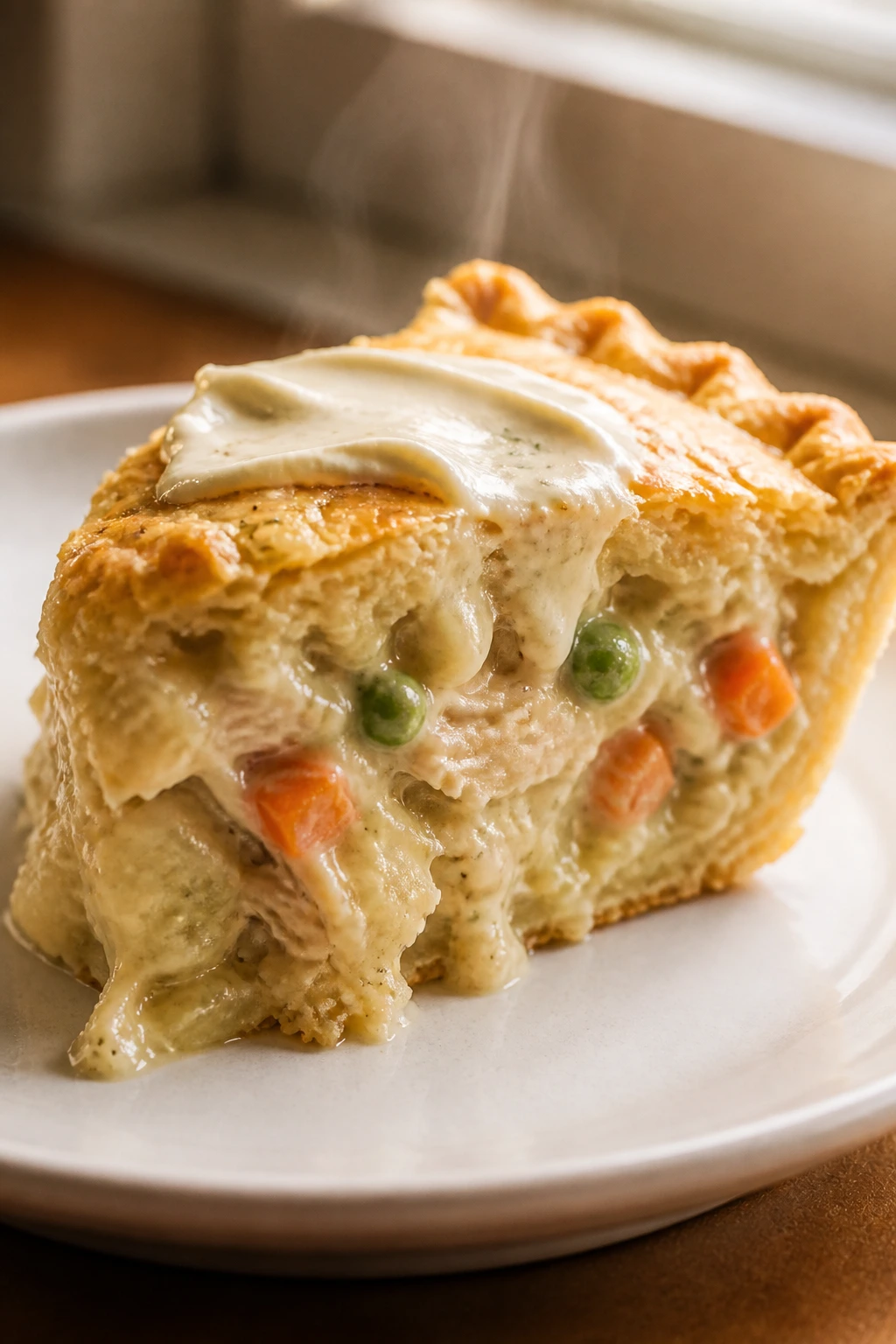
Some recipes feel like they were built to impress a camera. This one doesn’t care about that. It cares about heat, texture, and the small argument between buttery crust and creamy filling, then it adds a cream cheese frosting finish that turns the whole thing a little sly. The result is rich without getting muddy, playful without losing dinner’s basic job description.
If you make it, give the pie its rest, keep the frosting light, and don’t fight the crust. Those three choices do more for the final slice than any garnish ever will. After that, it’s just a matter of getting a sharp knife through the top and serving the first wedge while the filling is still steaming.
Decadent Creamy Chicken Pot Pie with Cream Cheese Frosting — Recipe Card
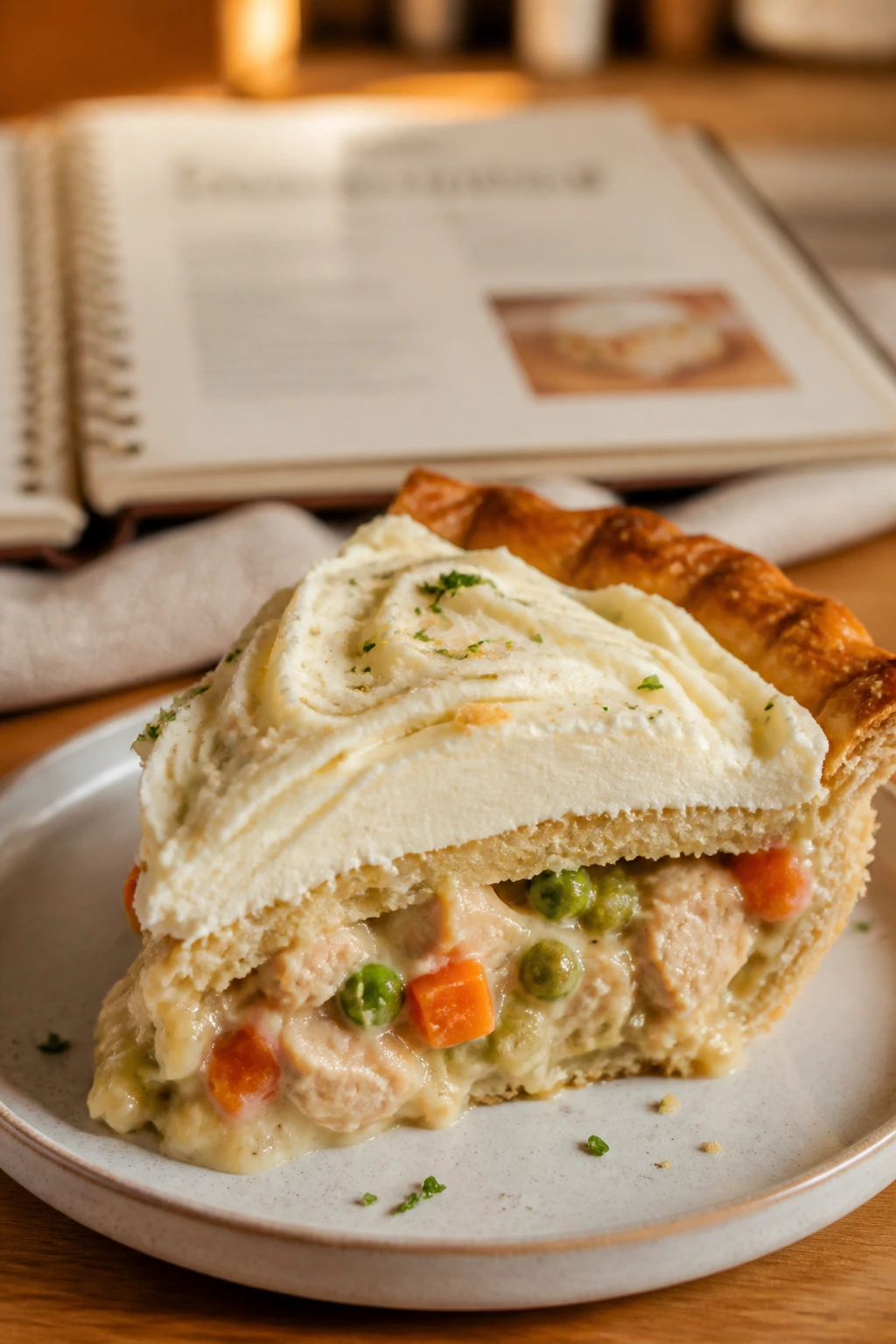
Recipe Name: Decadent Creamy Chicken Pot Pie with Cream Cheese Frosting
Description: A rich chicken pot pie with a thick cream-based filling, flaky double crust, and a tangy cream cheese frosting finish. The frosting stays savory with chives, lemon, and black pepper, so the whole pie still eats like dinner.
Prep Time: 30 minutes
Cook Time: 40 to 45 minutes
Total Time: 1 hour 15 minutes
Course: Dinner, Main Course
Cuisine: American
Servings: 6 to 8 servings
Calories: About 650 kcal per serving
Ingredients
For the Filling:
- 2 tablespoons unsalted butter
- 1 tablespoon olive oil
- 1 medium yellow onion, diced small
- 2 medium carrots, peeled and diced small
- 2 celery ribs, diced small
- 3 cloves garlic, minced
- 1/3 cup all-purpose flour
- 2 cups low-sodium chicken broth
- 1 cup heavy cream
- 1/2 cup whole milk
- 3 cups cooked chicken, shredded or diced into 1/2-inch pieces
- 1 cup frozen peas
- 1 cup frozen corn
- 1 teaspoon kosher salt
- 1/2 teaspoon black pepper
- 1 teaspoon dried thyme
- 1/2 teaspoon dried sage
- 1 tablespoon chopped fresh parsley
- 1 teaspoon lemon juice
For the Crust and Finish:
- 2 refrigerated 9-inch pie crusts or 1 homemade double-crust 9-inch pie crust
- 1 large egg, beaten with 1 tablespoon water
For the Cream Cheese Frosting:
- 4 ounces cream cheese, softened
- 2 tablespoons unsalted butter, softened
- 1 tablespoon powdered sugar
- 1 tablespoon heavy cream, plus a little more if needed
- 1 tablespoon finely chopped chives
- 1 teaspoon lemon juice
- 1/4 teaspoon garlic powder
- 1/4 teaspoon kosher salt
- 1/8 teaspoon black pepper
Instructions
-
Preheat the oven to 400°F (200°C) and place a rack in the lower third. Set a rimmed baking sheet on the rack below if you want extra drip protection.
-
Melt the butter and olive oil in a large skillet over medium heat. Add the onion, carrots, celery, and 1/2 teaspoon salt, then cook for 8 to 10 minutes until the onion is translucent and the carrots start to soften.
-
Add the garlic, thyme, and sage. Stir for 30 seconds, then sprinkle the flour over the vegetables and cook for 1 minute.
-
Whisk in the chicken broth slowly, then add the heavy cream and milk. Simmer for 3 to 5 minutes until the sauce is glossy and thick enough to coat a spoon.
-
Stir in the chicken, peas, corn, black pepper, parsley, and lemon juice. Taste and adjust the salt if needed, then let the filling cool for 10 to 15 minutes.
-
Fit one pie crust into a 9-inch deep-dish pie plate. Spoon in the cooled filling, then cover with the second crust, trim, crimp, and cut 4 to 5 vents in the top.
-
Brush the top crust with the egg wash and bake for 35 to 45 minutes, until the crust is deep golden brown and the filling bubbles through the vents.
-
While the pie bakes, beat the cream cheese and butter until smooth. Add the powdered sugar, cream, chives, lemon juice, garlic powder, salt, and pepper, then beat until fluffy and pipeable.
-
Let the baked pie rest for 15 to 20 minutes. Pipe or spoon the frosting onto the crust edge or onto each plated slice, then serve warm.
Notes: Cool the filling before assembly so the bottom crust stays crisp. For the neatest look, pipe the frosting on slices rather than across the whole hot pie. Leftovers keep 3 to 4 days in the refrigerator.