



Toasted pecans have a way of making a kitchen feel warmer than the thermostat says it is. That smell—brown, buttery, a little sweet, a little earthy—does half the work before the pan even comes out of the oven.
That is why a pecan crumble with cream cheese frosting earns its spot on a dessert table so easily. You get a soft cake underneath, a rough, craggy top that breaks cleanly under a fork, and a frosting that lands with a cool tang instead of a sugary wallop. It sits right on the line between coffee cake and dessert bar, which is one reason I keep coming back to this style of bake. It doesn’t need ceremony. It just needs a plate and a knife.
The texture is the whole story here. The crumble should stay sandy in the bowl, then bake into little islands of brown sugar and butter on top of the cake. The frosting should spread in thick swipes, not pour, and the cake itself has to stay tender enough that the fork goes through without dragging crumbs all over the place. Get the timing and the mixing right, and the pan looks almost rustic in the best way—messy at first glance, but precise where it counts.
Why This Pecan Crumble Keeps People Hovering Near the Pan
- Brown sugar depth: The crumble and the cake both use brown sugar, so the finished dessert tastes toasted even before you add the pecans.
- Tangy finish: Cream cheese frosting cuts through the richness, which keeps each bite from turning heavy or flat.
- Clean slices: Once the cake cools and the frosting sets, the squares hold their shape instead of slumping into a soft pile.
- Crunch in every bite: Toasted pecans go into the crumble and over the top, so the nut flavor doesn’t disappear into the batter.
- No fussy layers: You’re making one cake, one crumble, and one frosting. That’s it. The rhythm is simple, but the result looks layered and deliberate.
- Better on day two: The brown sugar, cinnamon, and pecans settle together overnight, and the frosting softens just enough to taste richer.
Timing, Yield, and the Pan That Gives You Clean Squares
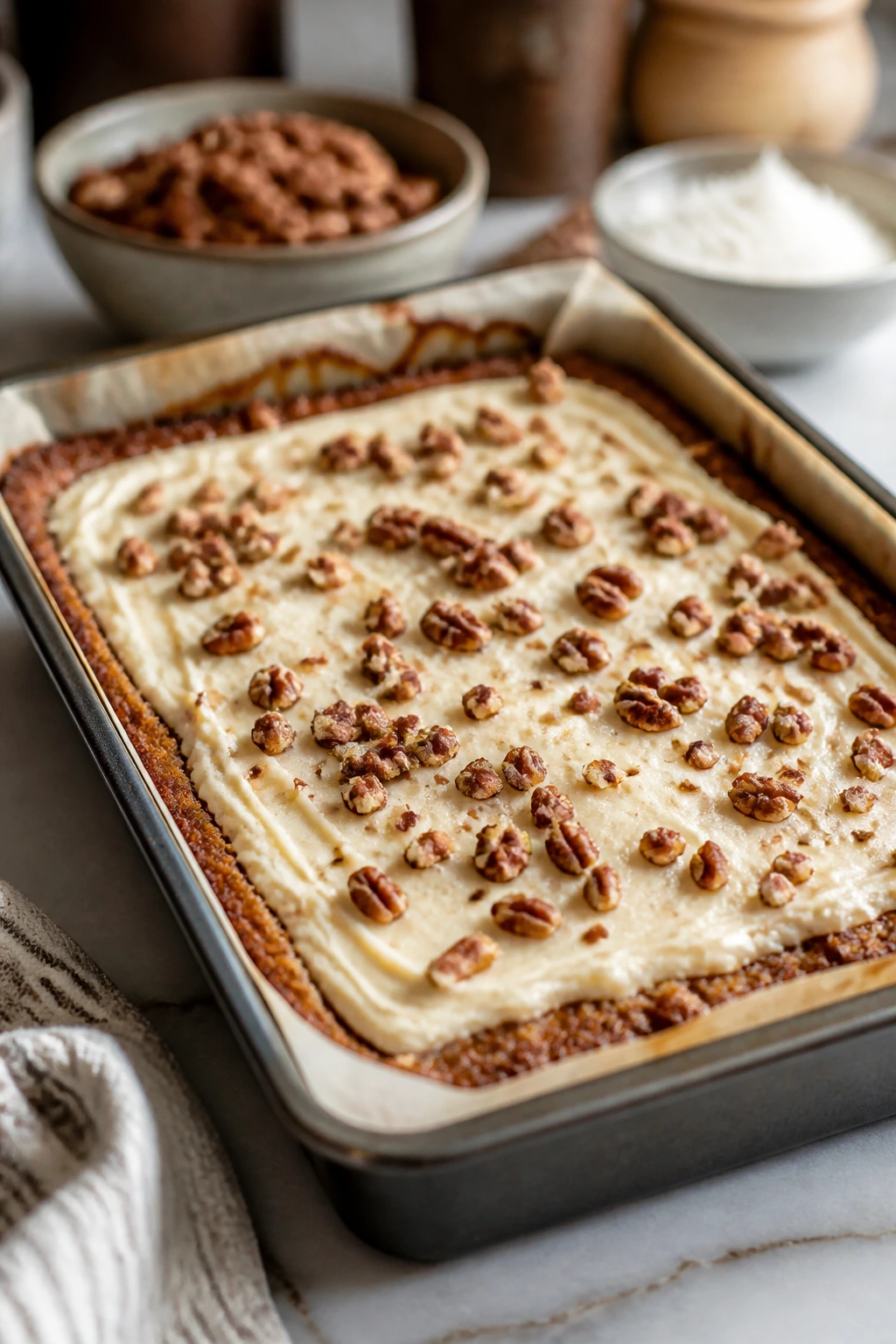
Yield: Serves 16
Prep Time: 25 minutes
Cook Time: 35 to 40 minutes
Total Time: 1 hour 5 minutes active + 1 hour cooling
Difficulty: Intermediate — the mixing itself is straightforward, but the crumble texture and the frosting need a little attention.
Chill/Rest Time: 15 minutes optional after frosting for cleaner slices
Best Served: Slightly cool or at room temperature, when the frosting is set but still soft at the edges.
A 9×13-inch metal baking pan gives the most even browning. Glass works in a pinch, but the edges tend to lag a little and the center can take longer to set. If you use glass, drop the oven temperature by 25°F and watch the bake a few minutes longer.
I also like lining the pan with parchment so the cake lifts out cleanly. If you’ve ever tried to pry a sticky square from the corner of a greased pan, you already know why that matters.
The Ingredient List I’d Actually Buy for This Bake
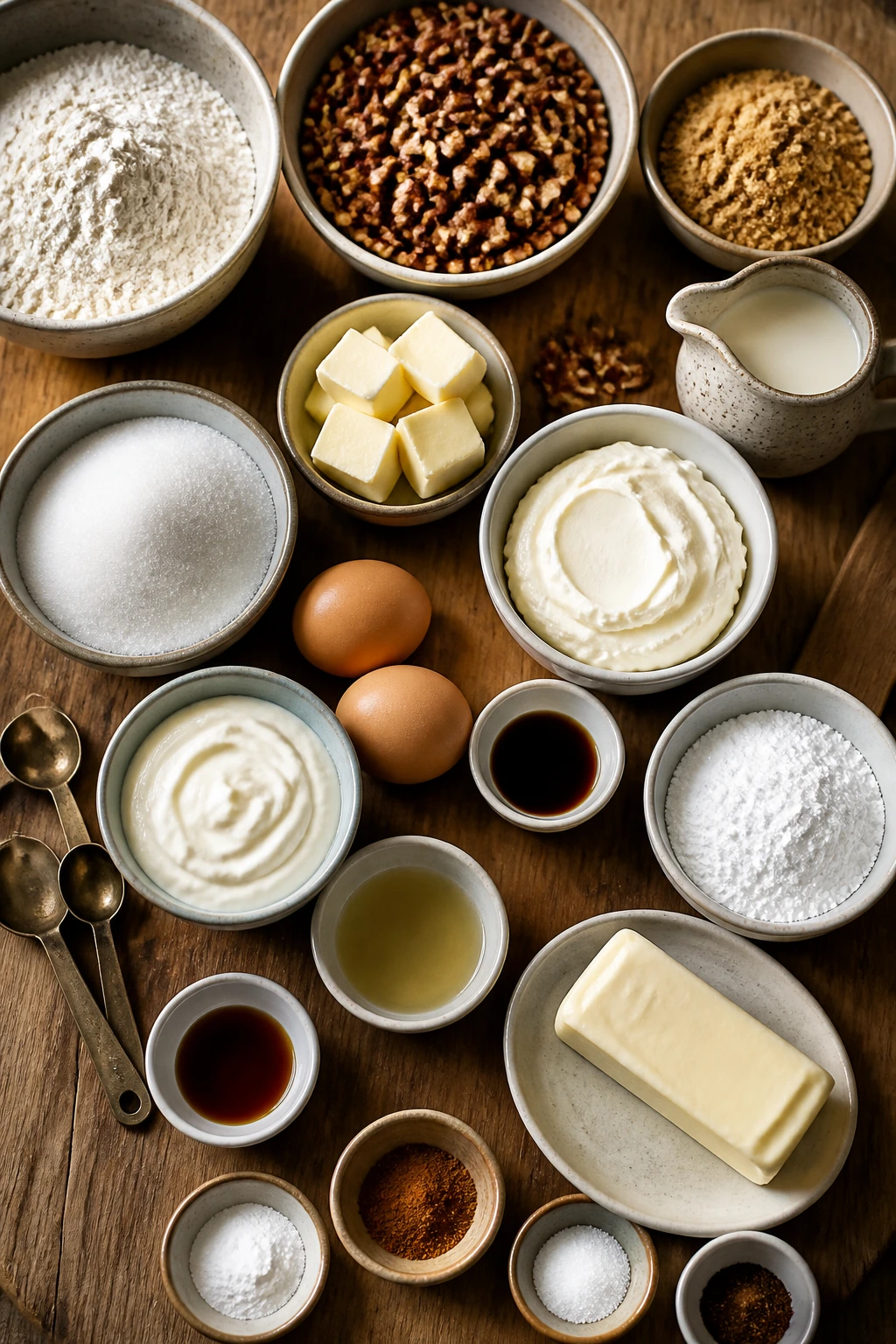
For the Pecan Crumble:
- 1 1/2 cups all-purpose flour
- 1 cup packed light brown sugar
- 3/4 cup chopped pecans, toasted
- 1 teaspoon ground cinnamon
- 1/2 teaspoon fine salt
- 10 tablespoons unsalted butter, melted and cooled for 2 minutes
For the Cake:
- 2 cups all-purpose flour
- 1 teaspoon baking powder
- 1/2 teaspoon baking soda
- 1/2 teaspoon fine salt
- 1 teaspoon ground cinnamon
- 1/2 cup (1 stick) unsalted butter, softened to room temperature
- 3/4 cup granulated sugar
- 1/2 cup packed light brown sugar
- 3 large eggs, room temperature
- 1 teaspoon pure vanilla extract
- 1 cup sour cream, room temperature
- 1/4 cup whole milk, room temperature
For the Cream Cheese Frosting:
- 8 ounces cream cheese, softened
- 1/2 cup (1 stick) unsalted butter, softened
- 2 1/2 cups powdered sugar, sifted
- 1 teaspoon pure vanilla extract
- 1/4 teaspoon fine salt
- 1 to 2 tablespoons whole milk or heavy cream, as needed for spreading
For Finishing:
- 1/2 cup chopped pecans, toasted
Why Each Ingredient Pulls Its Weight
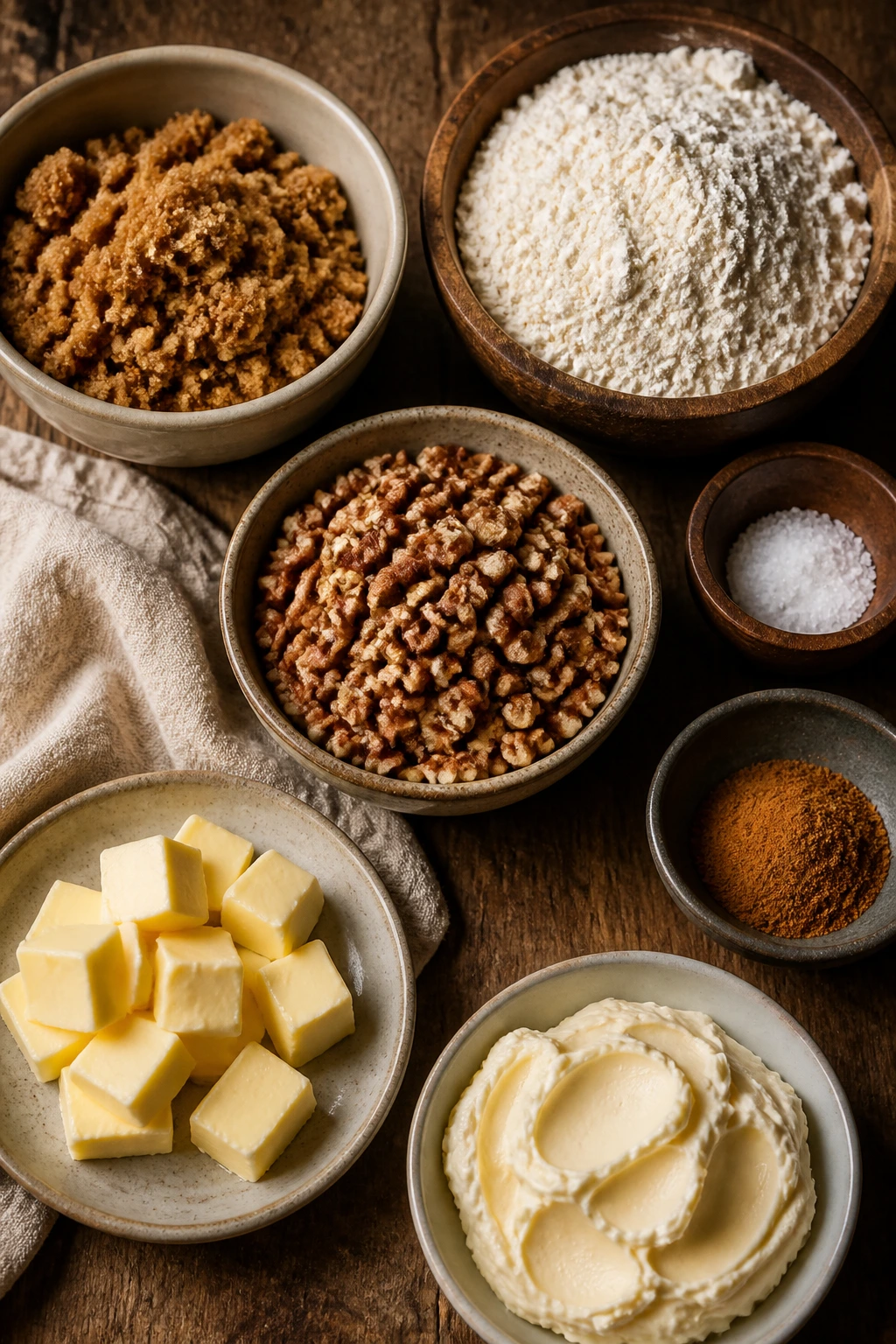
The Pecan Crumble
What to use: 3/4 cup toasted chopped pecans, 1 cup packed light brown sugar, 1 1/2 cups flour, 10 tablespoons melted butter, cinnamon, and salt.
Preparation: Toast the pecans first so they smell nutty and taste deeper, then chop them into pieces that are small enough to scatter but big enough to crunch.
Substitutions: Walnuts work if that’s what you have, and dark brown sugar makes the crumble taste a touch more molasses-heavy.
Tips: Let the melted butter cool for a couple of minutes before mixing it in. If it’s piping hot, the crumble turns greasy and pasty instead of pebbly.
The crumble is not there only for looks. It is the textural counterpoint that makes the whole pan interesting.
The Cake Batter
What to use: 2 cups flour, baking powder, baking soda, salt, cinnamon, softened butter, granulated sugar, brown sugar, eggs, vanilla, sour cream, and milk.
Preparation: Keep the dairy at room temperature so the batter mixes smoothly and doesn’t seize into little cold lumps.
Substitutions: Full-fat Greek yogurt can stand in for sour cream, though the cake will be a shade denser.
Tips: The sour cream is doing real work here. It keeps the crumb tender and gives the cake a slight tang that plays well with the frosting.
I prefer a mix of granulated sugar and brown sugar in the batter. The granulated sugar helps the cake rise and stay lighter, while the brown sugar keeps the flavor from tasting plain.
The Cream Cheese Frosting
What to use: 8 ounces cream cheese, 1/2 cup butter, 2 1/2 cups powdered sugar, vanilla, salt, and 1 to 2 tablespoons milk or cream.
Preparation: Soften the cream cheese and butter fully, then beat them until no pale lumps remain before the sugar goes in.
Substitutions: If you want a sharper finish, add a teaspoon of lemon juice. If you want a richer frosting, use heavy cream instead of milk.
Tips: Sift the powdered sugar if it’s clumped. That one small move keeps the frosting smooth instead of grainy.
The frosting should taste tangy and a little salty, not like sweetened drywall. A pinch of salt matters more here than most people think.
The Toasted Pecan Finish
What to use: 1/2 cup chopped toasted pecans for the top.
Preparation: Toast them until fragrant, then let them cool before sprinkling them over the frosting.
Substitutions: If you like a little more color, mix in a tablespoon of finely chopped candied ginger or a dusting of cinnamon.
Tips: Add the topping after frosting, not before. The contrast of soft frosting and sharp pecan edges is what makes the top worth looking at.
The Tools That Make the Crumble Behave
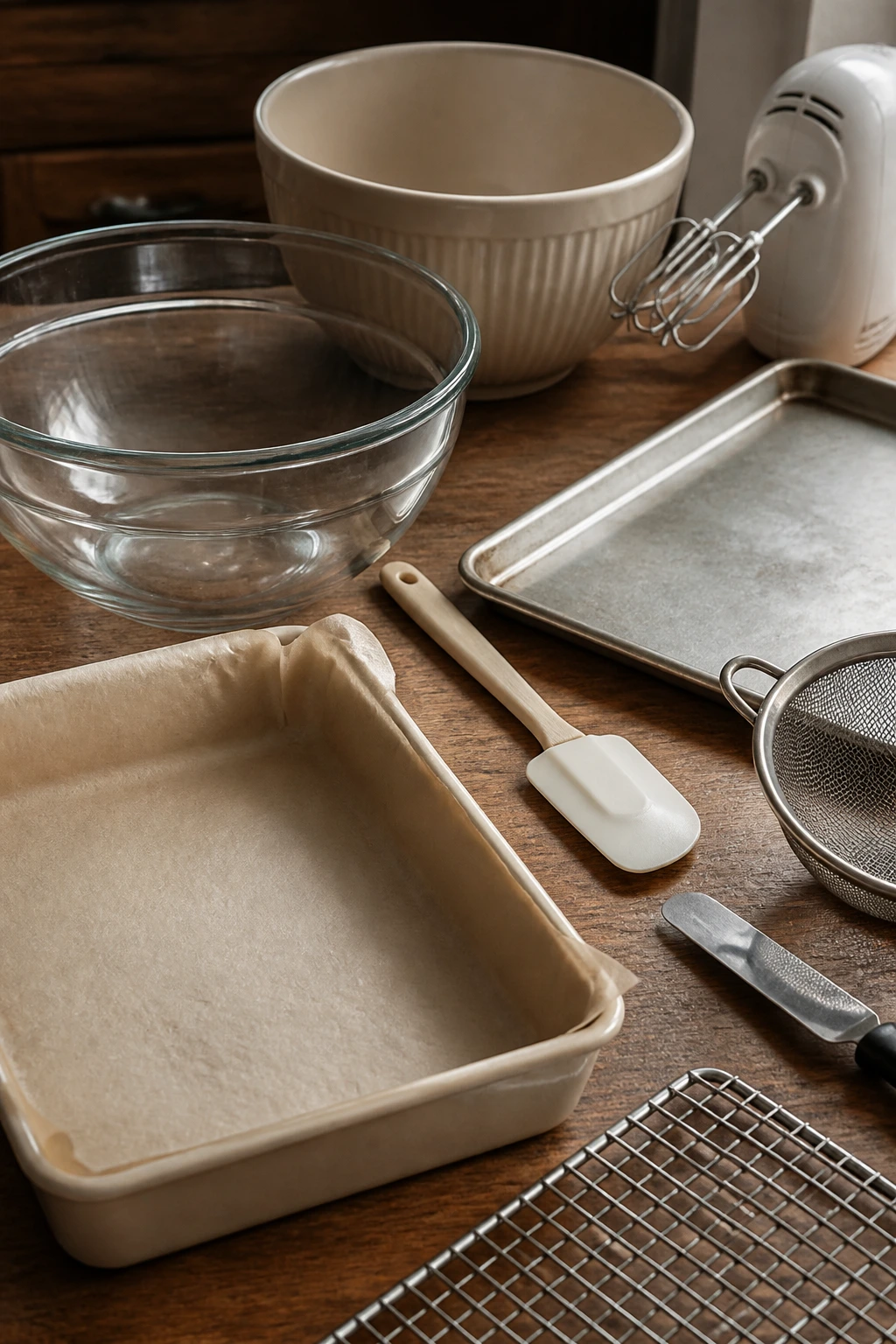
- 9×13-inch metal baking pan — Bakes the edges evenly and gives the cleanest browning.
- Parchment paper — Leave an overhang on two sides so you can lift the cake out without digging at it.
- Medium mixing bowl — Best for the crumble; you want enough room to toss without launching flour into the air.
- Large mixing bowl or stand mixer bowl — Needed for the cake batter and the frosting.
- Hand mixer or stand mixer — A hand mixer is enough, but a stand mixer saves your arm when the frosting thickens.
- Rubber spatula — For folding the batter and scraping the bowl clean.
- Cooling rack — Keeps steam from building under the pan.
- Offset spatula or butter knife — Helps spread the frosting in an even layer without tearing the cake.
- Fine-mesh sieve — Optional, but helpful if your powdered sugar is lumpy.
- Sheet pan — Useful for toasting the pecans in one even layer.
Mixing the Crumble So It Stays Sandy, Not Doughy
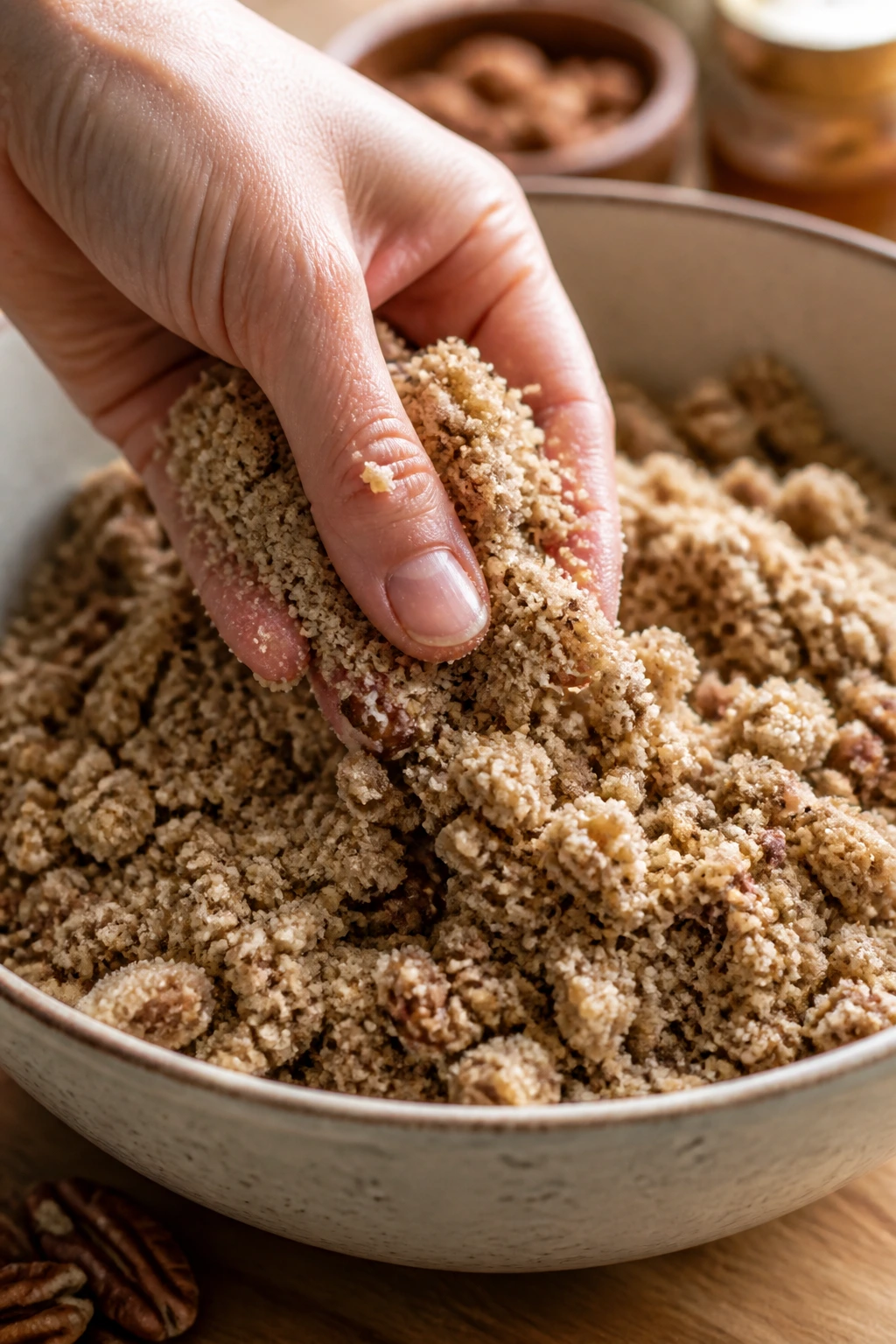
The crumble should feel like damp sand with some bigger pebbles in it. That texture sounds fussy, but it is the difference between a proper topping and a paste that melts into the cake.
Make the crumble topping:
-
Preheat and prep: Heat the oven to 350°F (175°C). Line a 9×13-inch metal baking pan with parchment paper, leaving enough overhang on the long sides to lift the cake later. If the pecans are raw, spread the full 1 1/4 cups on a sheet pan and toast them for 6 to 8 minutes, until fragrant and a shade darker. Cool, then chop.
-
Mix the dry crumble ingredients: In a medium bowl, whisk together the flour, brown sugar, cinnamon, and salt. Stir in the toasted chopped pecans until they’re evenly distributed and the mixture looks speckled and coarse.
-
Add the butter carefully: Pour in the melted butter and stir with a fork until the mixture forms clumps the size of peas and small marbles. Stop as soon as the flour disappears. If you keep mixing, the crumble turns smooth and heavy instead of crumbly.
-
Set the crumble aside: Let it sit while you make the cake batter. If your kitchen is warm and the topping starts to look greasy, slide the bowl into the fridge for 10 minutes.
Building the Batter Without Beating the Air Out of It
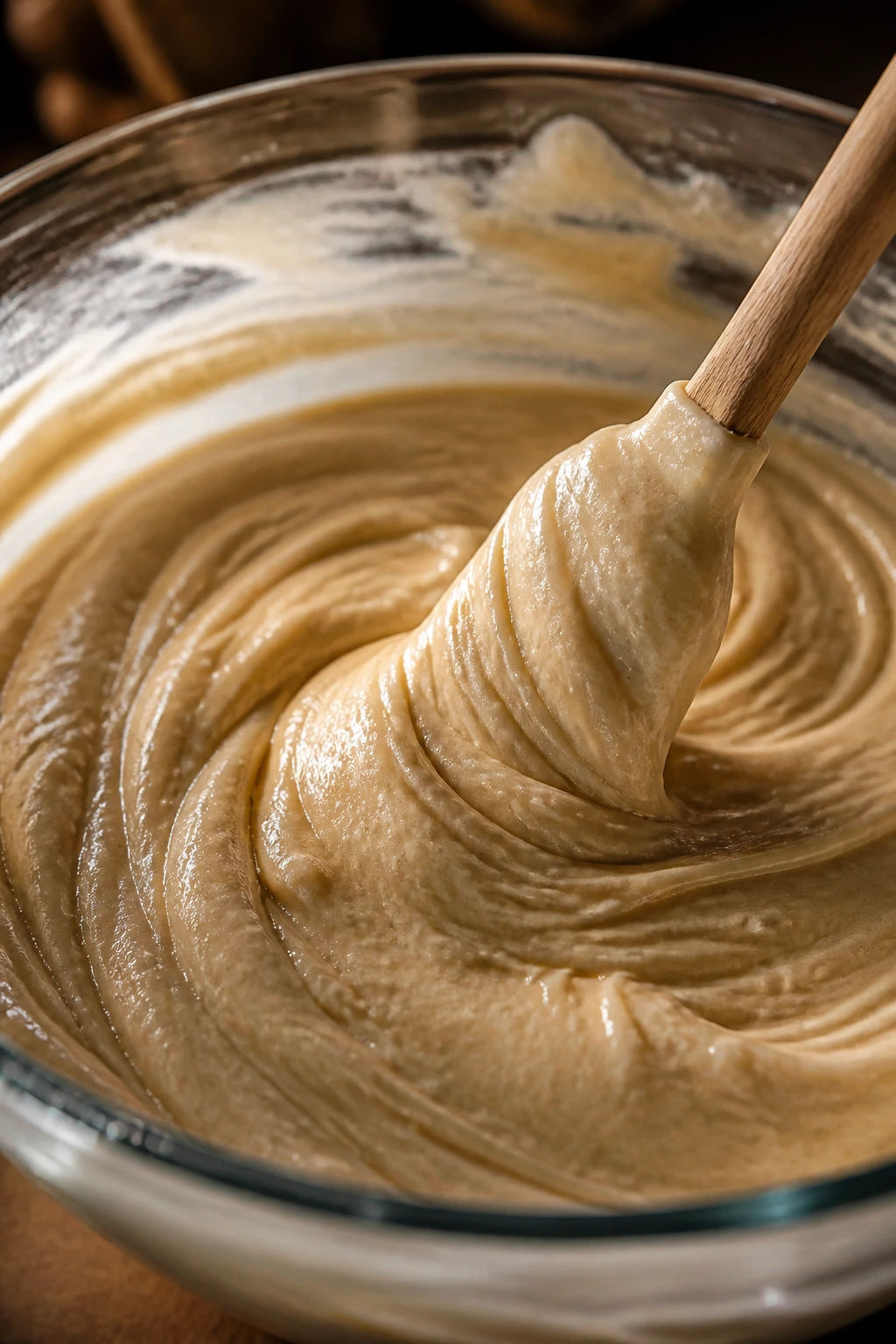
The cake batter wants to be mixed just enough to come together. That is the whole trick. Not more.
Make the cake batter:
-
Whisk the dry ingredients: In a separate bowl, whisk the flour, baking powder, baking soda, salt, and cinnamon until the color looks even and there are no obvious streaks.
-
Cream the butter and sugars: In a large bowl, beat the softened butter, granulated sugar, and brown sugar on medium speed for 2 to 3 minutes, until pale and fluffy. Scrape down the bowl once or twice. The mixture should look a little lighter and feel thicker, not liquidy.
-
Add the eggs and dairy: Beat in the eggs one at a time, mixing about 20 seconds after each addition. Add the vanilla, then the sour cream and milk, and mix just until smooth. The batter may look slightly loose and glossy; that is fine.
-
Fold in the dry ingredients: Add the flour mixture in two additions, folding on low speed or by hand with a spatula until the last streaks of flour disappear. Do not overmix. Overworking the batter makes the crumb tight and dry instead of tender.
-
Spread and top: Scrape the batter into the prepared pan and smooth it into an even layer. Scatter the crumble over the top in handfuls, squeezing some of it lightly between your fingers so you get both fine crumbs and chunky bits. Press the topping down only a little. You want it to sit on the surface, not sink into the batter.
Baking Until the Center Springs Back
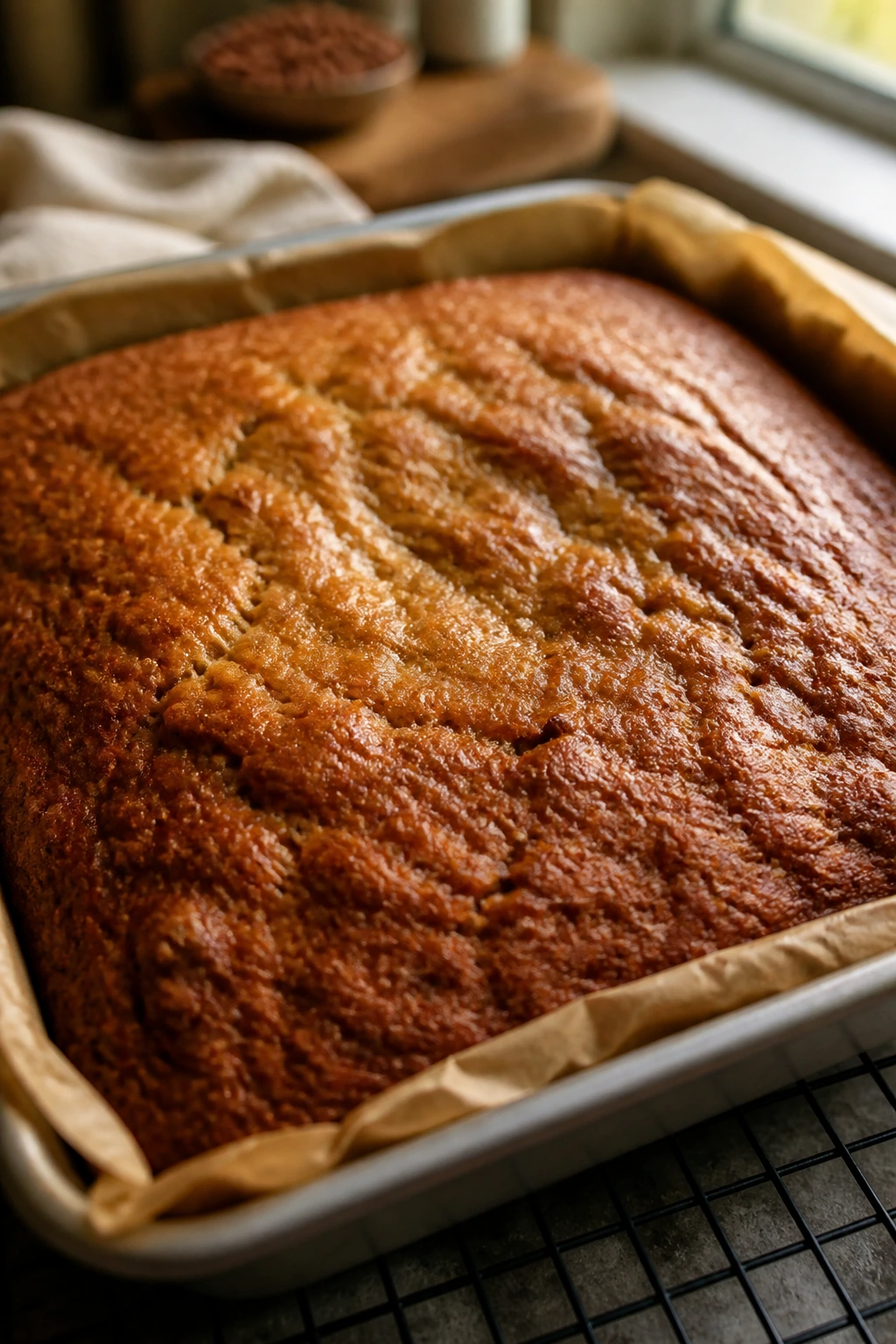
The cake is done when the center gives a little under your finger and then rises back up. If you bake until the top looks dry everywhere, you’ve gone too far.
Bake and cool the cake:
-
Bake the cake: Place the pan on the center rack and bake for 35 to 40 minutes. Around the 25-minute mark, peek at the top. If the crumble is browning fast, tent loosely with foil for the last 10 minutes. The cake is ready when the top is deep golden, the edges pull slightly from the pan, and a toothpick inserted in the center comes out with a few moist crumbs, not wet batter.
-
Cool with patience: Set the pan on a wire rack and cool for 20 minutes in the pan. Then lift the cake out using the parchment overhang and cool it completely on the rack, about 45 to 60 minutes more. Do not frost it while warm. Even a little heat will soften the frosting into a slide.
Whipping the Cream Cheese Frosting Until It Spreads Cleanly
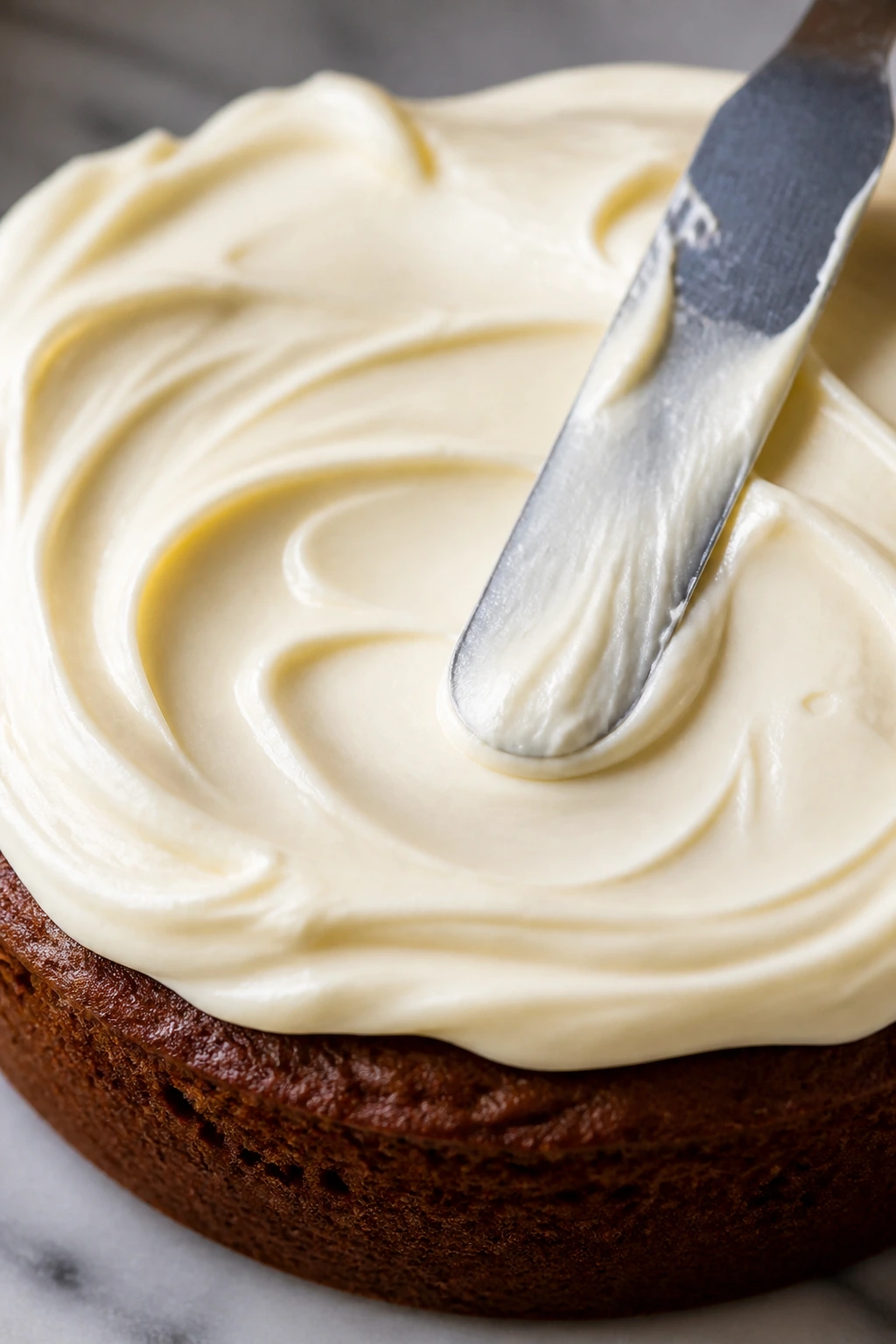
Cream cheese frosting gets judged on texture first. If it’s lumpy, no one cares how pretty the swirl is. If it’s too soft, it slips off the crumb top and pools at the edges.
Make the frosting:
-
Beat the base: In a large bowl, beat the cream cheese and butter together on medium speed for 2 to 3 minutes, until smooth and fully blended. Scrape the bowl so there are no hidden cold pockets near the bottom.
-
Add the sugar and finish the texture: Add the powdered sugar, vanilla, and salt. Beat on low speed at first so the sugar does not fly everywhere, then increase to medium until the frosting is thick, smooth, and spreadable. Add 1 to 2 tablespoons milk or cream only if needed. You want frosting that holds a swoop from the spatula, not one that pours.
-
Frost and garnish: Spread the frosting over the cooled cake in a thick layer, then scatter the remaining toasted pecans across the top. If you want neat slices, chill the frosted cake for 15 minutes before cutting. A warm knife helps too; wipe it clean between cuts.
Slicing, Serving, and What to Put Beside It
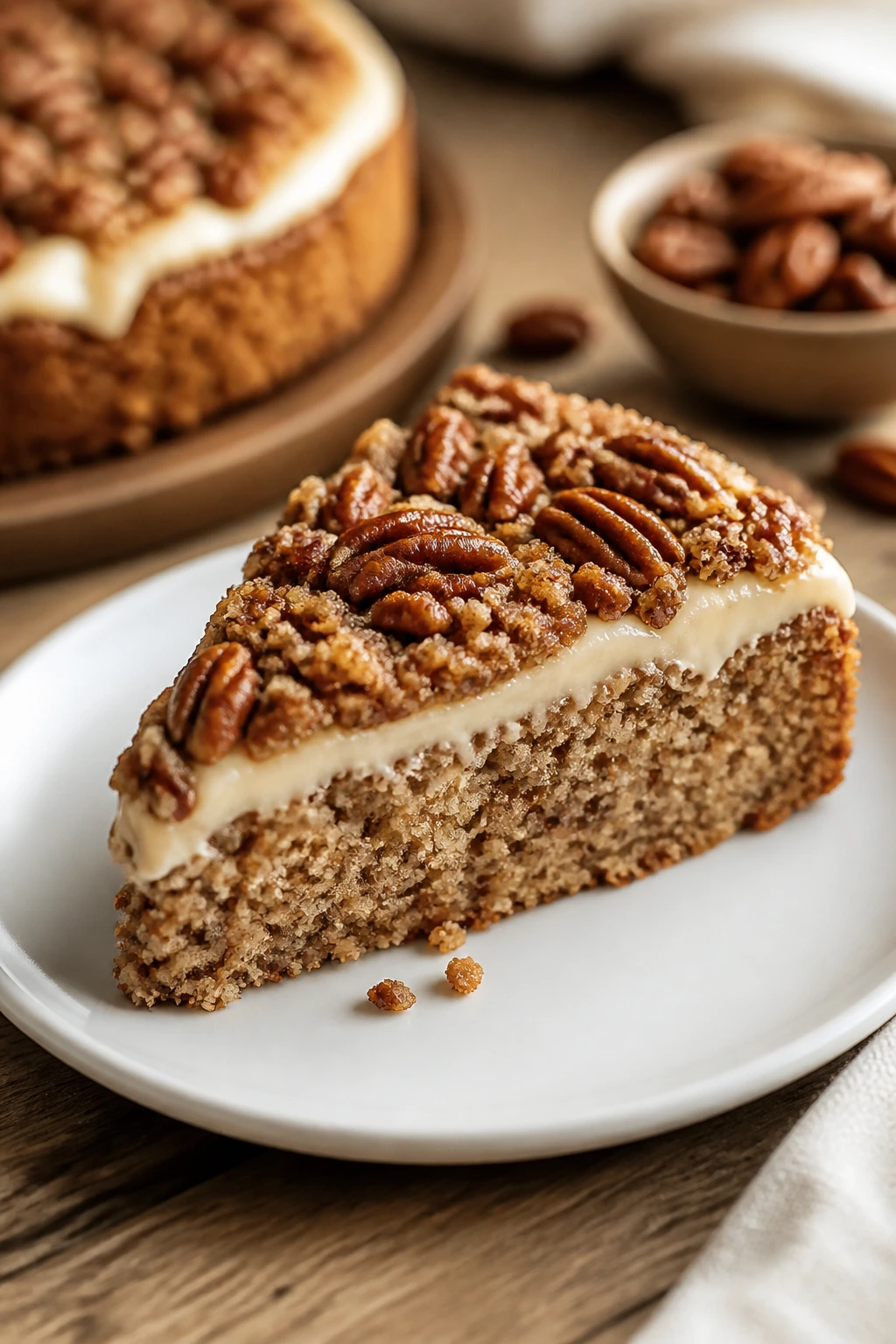
Presentation: I like this cake cut into 16 squares and served on simple white plates so the ridged pecan top does the talking. A small swipe of frosting along the plate edge looks tidy, but the cake doesn’t need much decoration. The crumble already gives you enough texture to look interesting in the pan.
Accompaniments: A hot cup of coffee is the obvious partner, and it works because the bitterness balances the frosting. Cold milk is the old-school choice, especially if you serve the cake a little chilled. For a more dessert-like plate, add a scoop of vanilla ice cream and let it melt into the crumb. A plain fruit salad can work too, but keep the fruit bright and simple—berries, orange segments, maybe sliced pears—so it doesn’t fight the pecans.
Portions: Sixteen small squares are the right size if the cake is part of a larger spread. If you want it to feel like the main event, cut 12 larger pieces and accept that the frosting will look more dramatic on the plate. The pan is rich enough that smaller slices often make more sense, especially after a full meal.
Beverage Pairing: Strong coffee, black tea, or a glass of cold milk all do the job. If you’re serving it after dinner, a small pour of bourbon or a coffee liqueur works with the brown sugar and pecans without making the dessert taste boozy.
Small Upgrades That Change the Whole Pan
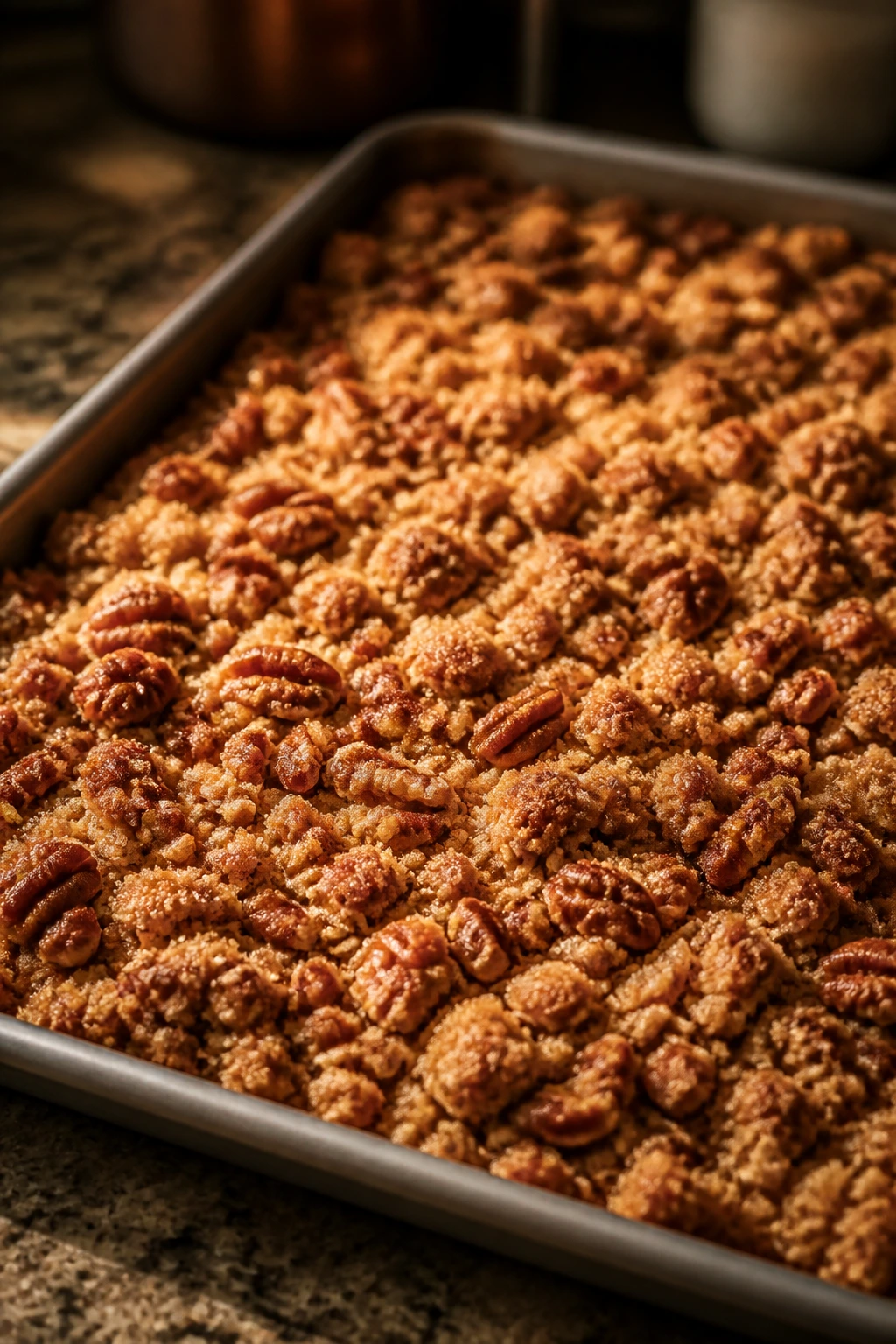
Flavor Enhancement: A pinch of espresso powder in the cake batter deepens the brown sugar flavor without making the dessert taste like coffee. Half a teaspoon is plenty. If you want the frosting to lean warmer, add 1/2 teaspoon cinnamon or a tiny grating of nutmeg.
Time-Saver: Toast all the pecans at once on one sheet pan, then divide them between the crumble and the top. You can also mix the crumble a day ahead and keep it covered in the fridge; it will stay easy to scatter and bake up with bigger clumps.
Texture Move: If the crumble feels soft or greasy before baking, chill it for 10 minutes. Cold butter solids inside the topping create the jagged bits that brown into crisp edges. That little pause pays off in the oven.
Make-It-Yours: If you want a sharper, brighter finish, add 1 teaspoon finely grated orange zest to the frosting. For a slightly deeper pantry version, swap the light brown sugar for dark brown sugar, but expect a darker, more molasses-heavy bite. Walnuts can replace half the pecans if that’s what you have on hand.
The Mistakes That Flatten the Crumble or Split the Frosting
-
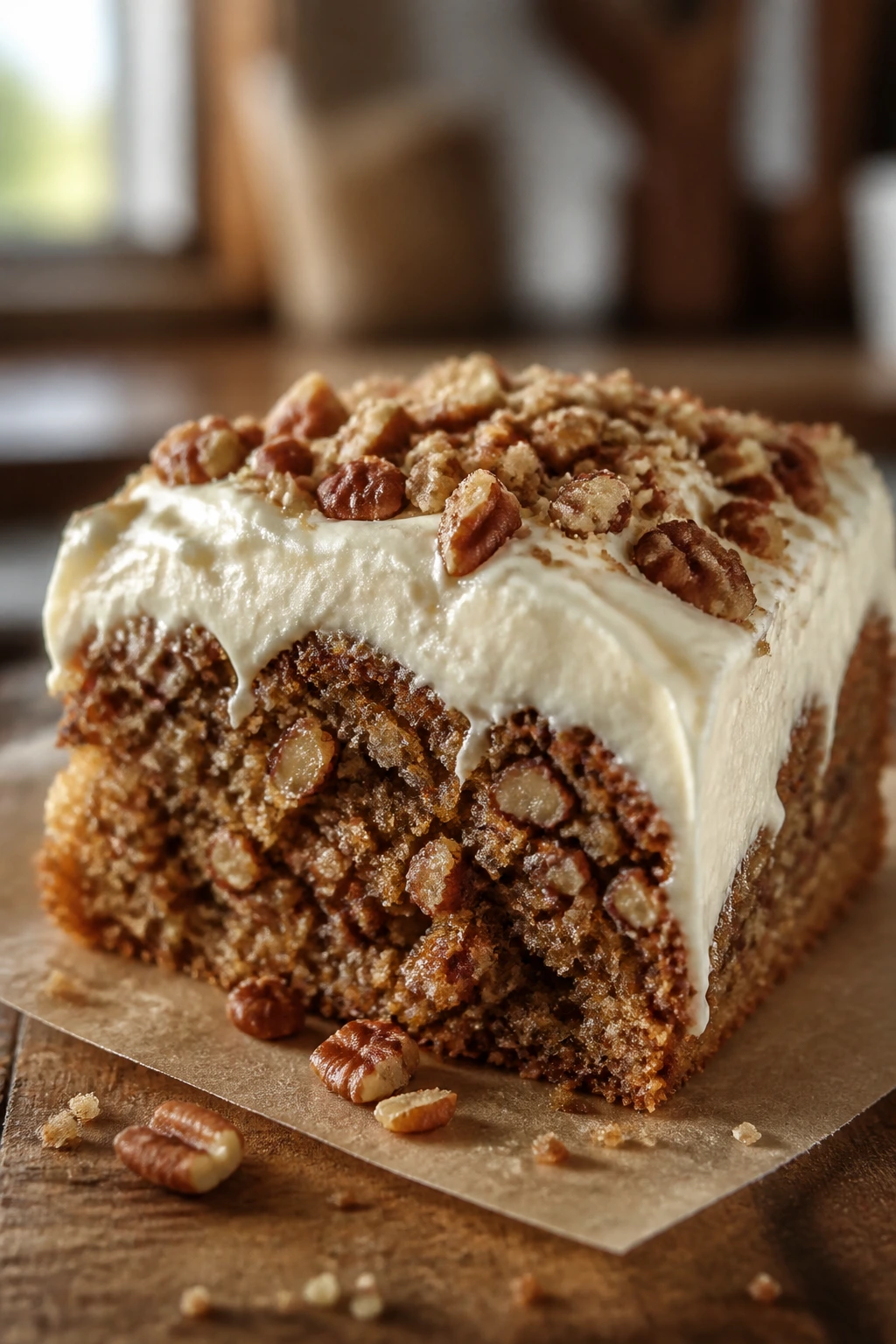
Turning the crumble into paste: If the butter is too hot or the mixture is stirred too long, the topping loses its sandy texture and bakes into a flat sheet. The fix is simple: cool the melted butter for 2 minutes before mixing, and stop as soon as the flour disappears.
-
Overmixing the batter after the flour goes in: The cake gets tight, chewy, and a little rubbery around the edges. Fold just until the dry streaks are gone, then stop. A few tiny flour flecks beat a tough crumb every time.
-
Frosting a warm cake: The frosting turns glossy and slides into the ridges instead of sitting on top. Let the cake cool all the way; if you’re in a hurry, at least let it sit until the pan feels barely warm at the edges, then give it a short chill before frosting.
-
Using cold cream cheese or butter for the frosting: Lumps hide in the bowl and stay there no matter how long you beat. Bring both to room temperature first. If the frosting still looks grainy, beat it for another minute before you add more sugar.
-
Skipping the toasted pecans: Raw pecans taste fine, but they don’t give the same deep, buttery aroma. Toasting takes only a few minutes and makes the whole pan smell better. That one step is worth it.
-
Overbaking because the center looks pale: Brown sugar cakes can look underdone when they’re actually ready. Check for spring in the center and moist crumbs on the toothpick, not wet batter. Pull it the moment the edges start to release.
Four Variations That Still Taste Like the Original
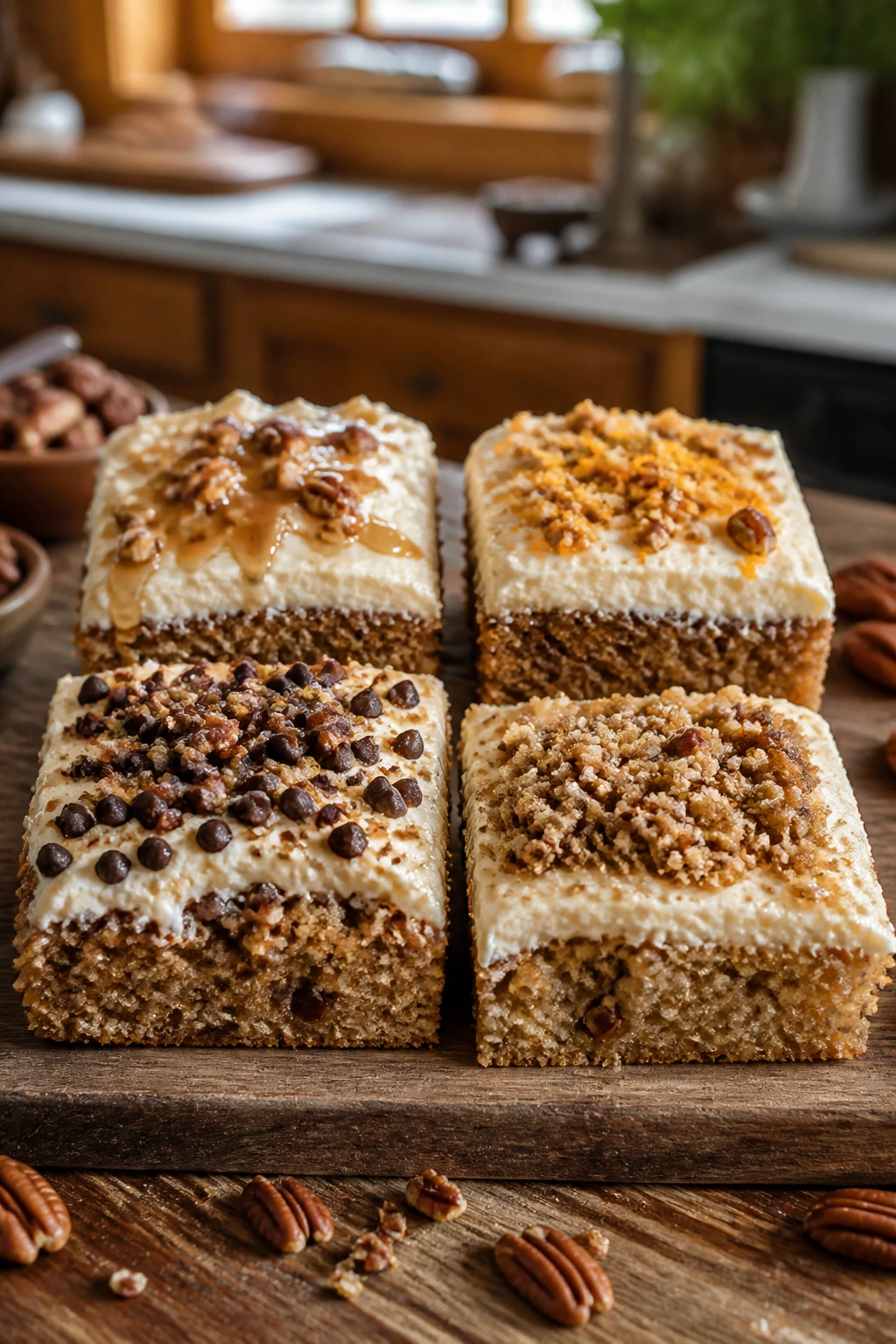
Maple-Pecan Brunch Slice
Swap 2 tablespoons of the powdered sugar in the frosting for 2 tablespoons pure maple syrup, then add a little extra powdered sugar only if the frosting needs thickening. The maple note pulls the pecans closer to their natural flavor and makes the cake taste a little more breakfast-friendly.
Orange-Spiced Crumble
Add 1 teaspoon finely grated orange zest to the cake batter and 1 teaspoon to the frosting. The citrus does not make the dessert taste fruity; it just sharpens the brown sugar and keeps the pecans from feeling one-note.
Chocolate-Pecan Corner
Fold 3/4 cup mini chocolate chips into the cake batter after the dry ingredients go in. The chocolate melts into small pockets that work especially well if you serve the cake cold, because the frosting and chocolate set into a firmer, fudgier bite.
Gluten-Free Pantry Swap
Use a good 1:1 gluten-free baking flour in place of the all-purpose flour in both the crumble and the cake. The texture will be a touch more delicate, so let the cake cool fully before lifting it from the pan. The frosting and pecans hide most of the difference.
Storing, Freezing, and Making Pieces Ahead
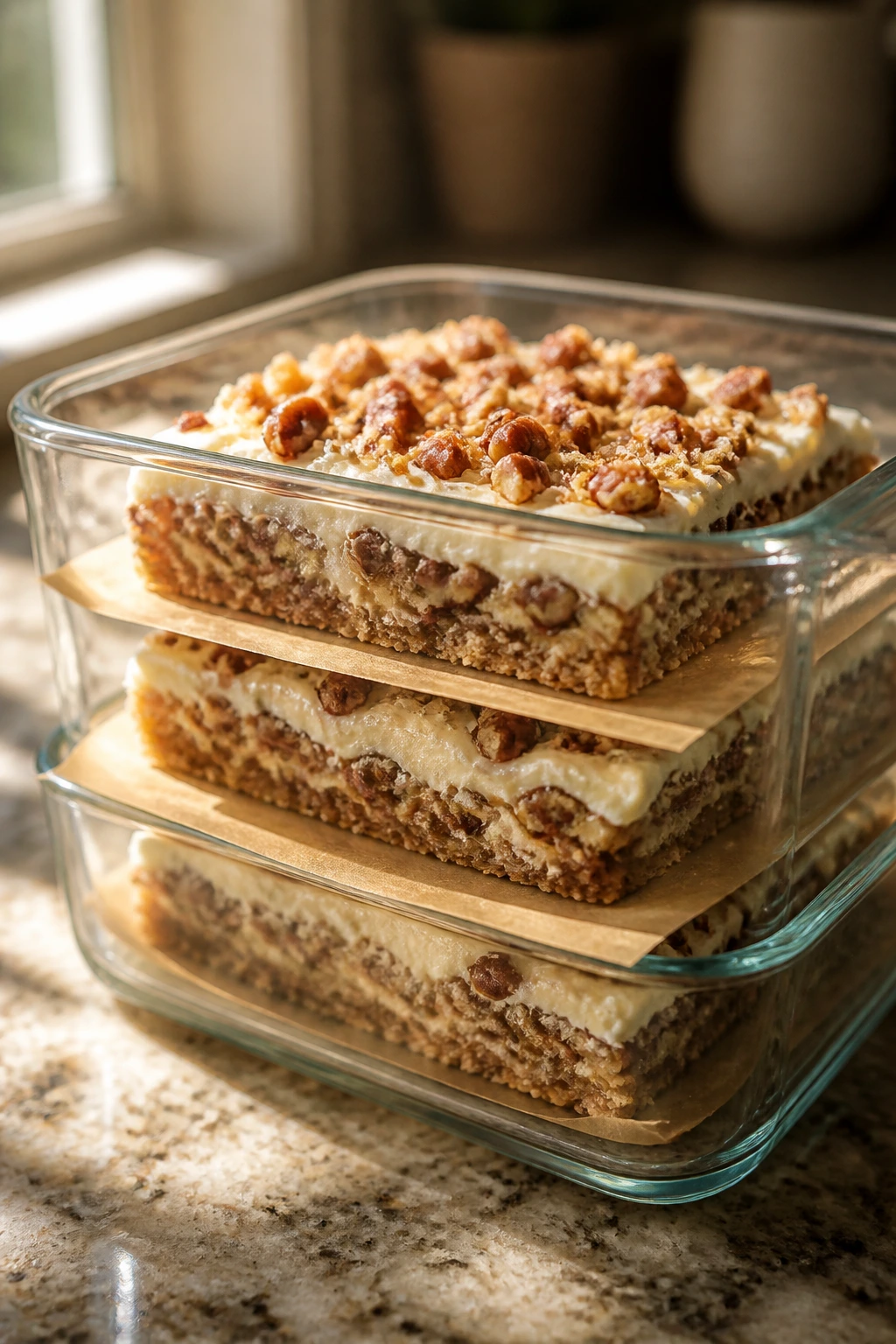
Because the frosting contains cream cheese, the frosted cake should not sit out for long. Once you cut into it, cover the pan or wrap the individual pieces and refrigerate within 2 hours. If the cake is unfrosted, it can stay at room temperature, tightly covered, for up to 1 day.
In the refrigerator, frosted slices keep well for 4 to 5 days. I like to place parchment between slices if I’ve stacked them in a container, because cream cheese frosting will smear if the cake is packed too tightly. To serve, let a slice sit at room temperature for 20 to 30 minutes so the frosting softens and the crumb doesn’t feel cold and firm.
Freezing works better than people expect. Wrap individual frosted slices tightly in plastic wrap, then foil, and freeze for up to 2 months. Thaw overnight in the refrigerator. If you want to freeze the cake before frosting, that is even easier: wrap the cooled unfrosted slab, freeze it for up to 2 months, then thaw and frost the next day.
For make-ahead work, the crumble can be mixed and refrigerated for 2 days before baking. The frosting can be made 3 days ahead and kept covered in the fridge; just beat it briefly again to loosen it before spreading. The cake itself can be baked a day early, then frosted once it has fully cooled. In practice, that often gives you cleaner slices and a more settled crumb.
Questions People Ask Before Baking It Again

Can I use walnuts instead of pecans?
Yes. Walnuts bring a more bitter, woodsy edge, while pecans are sweeter and softer in flavor. If you swap them, toast them the same way so the topping still has that deep nutty smell.
Do I really need to toast the pecans?
I would not skip it. Toasting takes the raw edge off the nuts and makes the whole dessert smell richer, especially once the butter and brown sugar start baking around them. Six to eight minutes in the oven is enough.
Can I make the cake ahead and frost it later?
Absolutely. Bake the cake, cool it completely, and keep it covered overnight at room temperature if it’s unfrosted. Frost the next day, or freeze the unfrosted cake and frost after thawing.
Why did my crumble sink into the batter?
Usually the butter in the topping was too warm, the batter was too loose, or the crumble was pressed too hard into the surface. Chill the topping briefly if it feels soft, and scatter it lightly instead of packing it down.
What if my frosting turns runny?
It usually means the cream cheese or butter was too warm, or the milk went in too fast. Chill the bowl for 10 to 15 minutes, then beat it again. If it still needs structure, add a little more sifted powdered sugar, a tablespoon at a time.
Can I bake this in a smaller pan?
You can, but the bake time changes and the center will be thicker. A 9-inch square pan will need more time and may brown faster at the edges, so I prefer the 9×13 for even slices and a better crumble-to-cake ratio.
How do I know it’s done without drying it out?
Look for a top that is deep golden, not pale blonde, and a center that springs back when touched lightly. A toothpick should come out with moist crumbs, not wet batter. If it comes out perfectly clean, the cake is probably a shade farther along than I’d choose.
One More Slice
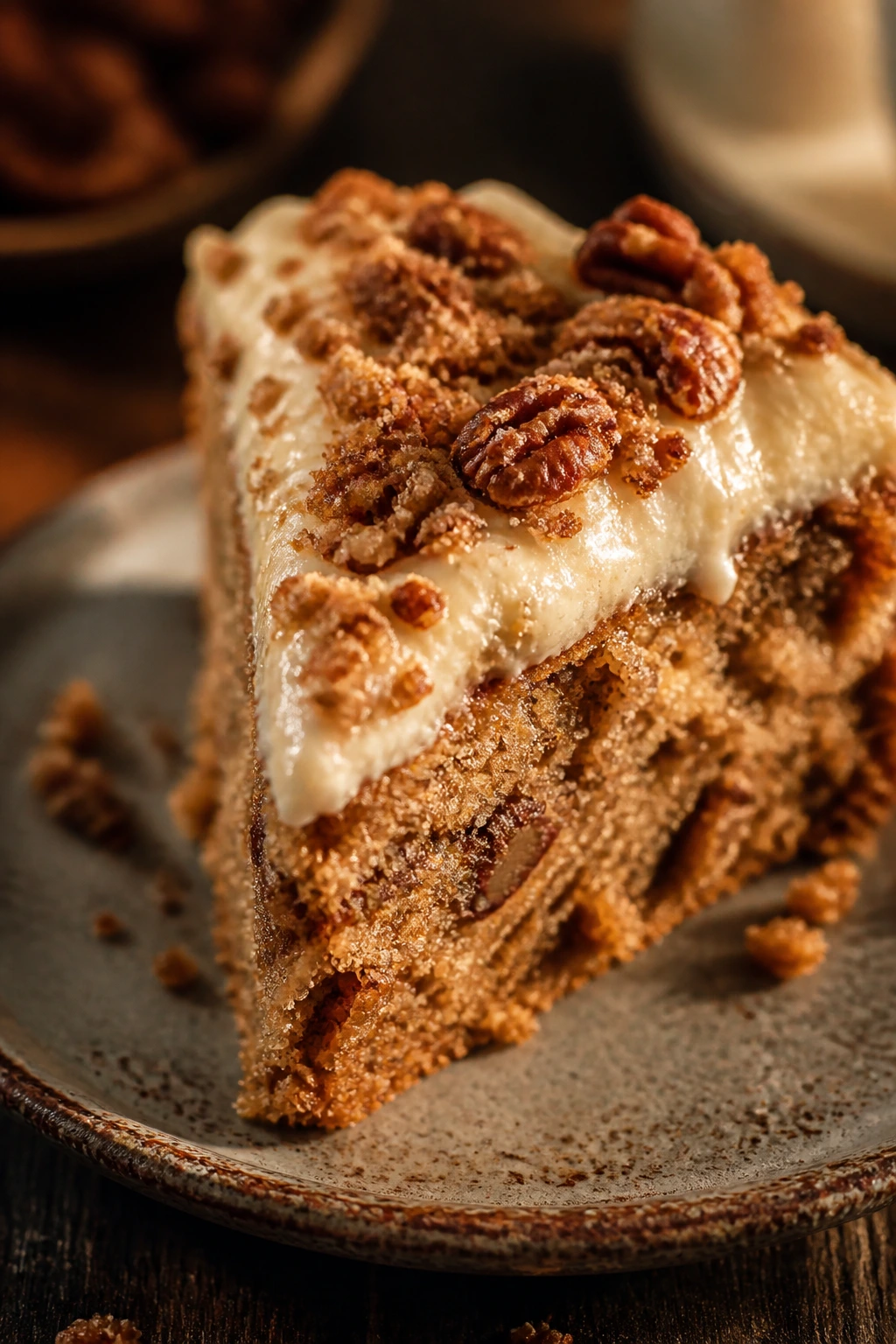
This is the kind of dessert that looks casual in the pan and feels more deliberate on the plate. The crumble gives you rough, toasty edges; the cake stays soft; the frosting brings the whole thing back into balance. That mix matters. Without the tangy frosting, the pan leans sweet. Without the crumble, it loses its point.
Keep this one in your back pocket for the days when you want a dessert that does not need embellishment to feel finished. A square cut while the frosting is still cool and a cup of coffee beside it is enough. If there’s a better use for toasted pecans, brown sugar, and cream cheese frosting in the same pan, I have not found it.
Decadent Pecan Crumble with Cream Cheese Frosting — Recipe Card
Recipe Name: Decadent Pecan Crumble with Cream Cheese Frosting
Description: A tender cinnamon-vanilla cake topped with a buttery brown sugar pecan crumble and finished with tangy cream cheese frosting. The top stays craggy, the crumb stays soft, and the frosting sets into clean, rich slices.
Prep Time: 25 minutes
Cook Time: 35 to 40 minutes
Total Time: 1 hour 5 minutes active + 1 hour cooling
Course: Dessert
Cuisine: American
Servings: 16
Calories: 475 kcal
Ingredients
For the Pecan Crumble:
- 1 1/2 cups all-purpose flour
- 1 cup packed light brown sugar
- 3/4 cup chopped pecans, toasted
- 1 teaspoon ground cinnamon
- 1/2 teaspoon fine salt
- 10 tablespoons unsalted butter, melted and cooled for 2 minutes
For the Cake:
- 2 cups all-purpose flour
- 1 teaspoon baking powder
- 1/2 teaspoon baking soda
- 1/2 teaspoon fine salt
- 1 teaspoon ground cinnamon
- 1/2 cup (1 stick) unsalted butter, softened to room temperature
- 3/4 cup granulated sugar
- 1/2 cup packed light brown sugar
- 3 large eggs, room temperature
- 1 teaspoon pure vanilla extract
- 1 cup sour cream, room temperature
- 1/4 cup whole milk, room temperature
For the Cream Cheese Frosting:
- 8 ounces cream cheese, softened
- 1/2 cup (1 stick) unsalted butter, softened
- 2 1/2 cups powdered sugar, sifted
- 1 teaspoon pure vanilla extract
- 1/4 teaspoon fine salt
- 1 to 2 tablespoons whole milk or heavy cream, as needed for spreading
For Finishing:
- 1/2 cup chopped pecans, toasted
Instructions
-
Preheat the oven to 350°F (175°C) and line a 9×13-inch metal baking pan with parchment paper, leaving an overhang on the long sides.
-
To make the crumble, whisk together the flour, brown sugar, cinnamon, and salt. Stir in the toasted pecans, then add the melted butter and mix until sandy clumps form. Set aside.
-
In a separate bowl, whisk together the flour, baking powder, baking soda, salt, and cinnamon for the cake.
-
Beat the softened butter, granulated sugar, and brown sugar until pale and fluffy. Add the eggs one at a time, then mix in the vanilla, sour cream, and milk.
-
Fold in the dry ingredients just until no streaks of flour remain. Spread the batter into the prepared pan.
-
Scatter the crumble evenly over the batter, squeezing some of it into larger clumps with your fingers.
-
Bake for 35 to 40 minutes, until the top is deep golden and a toothpick inserted in the center comes out with moist crumbs. Cool for 20 minutes in the pan, then lift out and cool completely on a rack.
-
Beat the cream cheese and butter until smooth. Add the powdered sugar, vanilla, and salt, then beat until thick and spreadable. Add 1 to 2 tablespoons milk or cream only if needed.
-
Spread the frosting over the cooled cake and sprinkle the toasted pecans over the top.
Notes: Toasting the pecans makes the flavor deeper and the topping more fragrant. Chill the frosted cake for 15 minutes before slicing if you want the cleanest squares.