



Easy party food for a crowd cheap simple under $10 has a narrow lane, and that lane is where the best snack tables live: salty, warm, easy to grab, and built from ingredients that don’t feel precious. I’m treating the $10 mark as the cost for each dish or tray, not the entire party spread. A whole party for ten dollars total is mostly chips, popcorn, and one bowl of dip. A real spread happens when you stack a few smart trays together.
Cheap doesn’t have to mean skimpy. It usually means the food was built around the right base—potatoes, pasta, beans, eggs, tortillas, cabbage, popcorn—and then finished with one thing that wakes it up: mustard, pickles, salsa, hot sauce, lemon, scallions, paprika. That’s the trick. Not luxury. Not decoration. Volume, salt, and one bright edge.
I’ve got a bias here, and I’m not hiding it: I’d rather put one hot tray, one cold bowl, and one crunchy snack on a folding table than spend half the budget on a tray of tiny fussy bites that nobody notices after ten minutes. The dishes below are the ones that keep people hovering near the food, and more important, they don’t make your wallet wince while you’re still buying paper plates.
Why This Spread Works on a Tight Budget
-
Potatoes, pasta, beans, eggs, and tortillas carry a crowd because they fill space fast and take on flavor without needing expensive extras.
-
One hot tray beats three decorative platters because warm food pulls people in and buys you time while the rest of the table gets set.
-
Crunch changes everything; chips, popcorn, roasted potatoes, and toasted tortillas keep cheap food from feeling flat after the first handful.
-
Store-brand ingredients are good enough here when the dish gets baked, mixed, or sauced. House-label salsa, buns, cheese, and canned beans hold up fine.
-
Make-ahead food saves money and sanity because the dishes that rest overnight—pasta salad, hummus, deviled eggs, meatballs—are often the ones that taste more settled the next day.
-
A fresh finish keeps the table from looking brown and beige. Even one tray of fruit, pickles, or chopped cabbage makes the whole spread feel brighter.
The $10 Rule: Buy the Base First
A cheap party table gets expensive when you buy decoration before you buy substance. That’s the whole game. A ribbon of parsley doesn’t feed anyone. A tray of crackers with too little topping looks sad no matter how pretty it is. What does feed people is a bowl, a pan, or a tray built around one sturdy base that can take salt, sauce, or cheese without collapsing.
Start with the thing that gives you volume. Potatoes. Pasta. Beans. Eggs. Tortillas. Popcorn. Even cabbage, if you slice it thin and let it do the crunchy work. Those ingredients are cheap because they stretch. They absorb dressing, carry seasoning, and make a party table look full without making the checkout total ugly.
Then buy one strong flavor. Salsa. Ketchup mixed with mustard. Barbecue sauce. Garlic and lemon. Sour cream with scallions. Pickle relish. That one bright note keeps the food from tasting like the pantry exploded on a sheet pan. You do not need ten toppings. You need one thing that says, “This is finished.”
The backbone ingredients I reach for
-
1 bag of potatoes, 5 lb if possible — roasted, wedged, or baked, they turn into a lot of food for very little money.
-
1 lb dried pasta or 1 lb boxed pasta — short shapes hold dressing and make a cold side that actually fills people up.
-
2 cans of beans or chickpeas — cheap protein, easy texture, and they make dips, salads, and tray bakes work harder.
-
1 dozen eggs — tidy, portable, and a weirdly elegant answer when the budget is thin.
-
1 bag of tortillas or slider buns — one package becomes a whole tray if you add beans, cheese, or a little meat.
-
1 bag of popcorn kernels or a family-size bag of chips — this is the low-cost insurance policy for when people show up hungrier than expected.
One more thing. Keep a small line between “cheap” and “careless.” A $9 tray of potatoes still needs enough salt. A $7 bowl of pasta salad still needs acid. And yes, the food can be simple. It should not be bland.
Sloppy Joe Sliders on Soft Buns
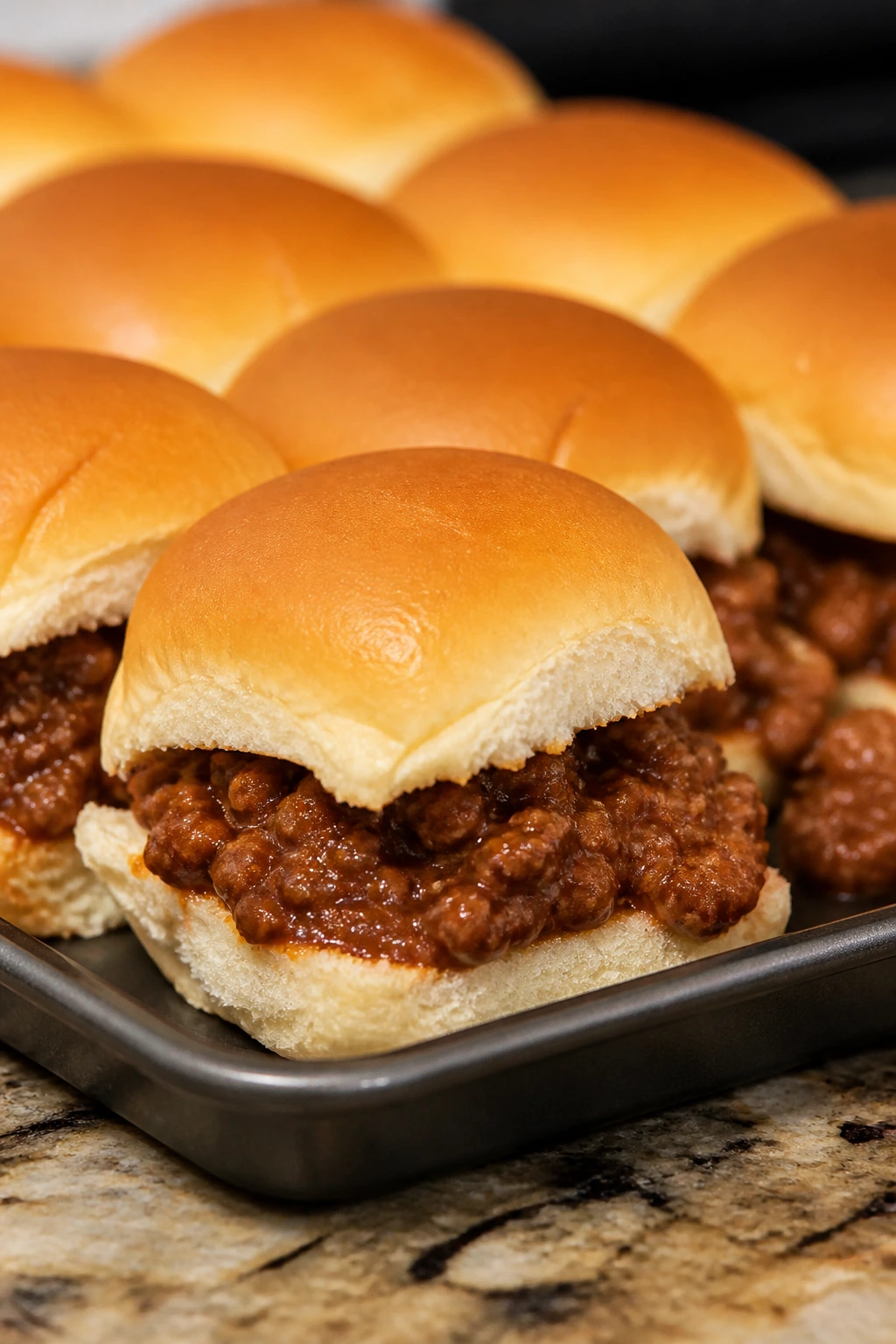
A tray of sloppy joe sliders has the right kind of chaos for a party. Soft buns. Saucy filling. A little shine on the top from the sauce. They disappear fast because they behave like real food, not snack filler, and that matters when people are standing around with paper napkins.
The budget angle is straightforward: one pound of ground beef or turkey, one onion, a small bottle of ketchup, mustard, and a pack of slider buns can stay under $10 if you skip the fancy cheese and let the sauce do the talking. If you want to stretch the meat even farther, stir in half a cup of cooked lentils or very finely chopped mushrooms. That sounds like a compromise, but it isn’t. Once the meat gets simmered in sauce, the extra volume mostly disappears into the texture.
Toast the cut sides of the buns for a few minutes before filling them. That tiny step keeps the bottom from going damp and floppy while the tray sits on the table. Sloppy joes are only sloppy in the filling. The bun should still hold together.
What makes them work: the filling is soft enough to scoop, but thick enough to stay put. You want it spoonable, not soupy. If you drag a spoon through the pan and it leaves a clear trail for a second before filling in, you’re in the right place. Serve with sliced pickles or a quick cabbage slaw, and you’ve got tang to cut through all that sweet-salty sauce.
Bean-and-Cheese Nacho Tray That Stays Hot
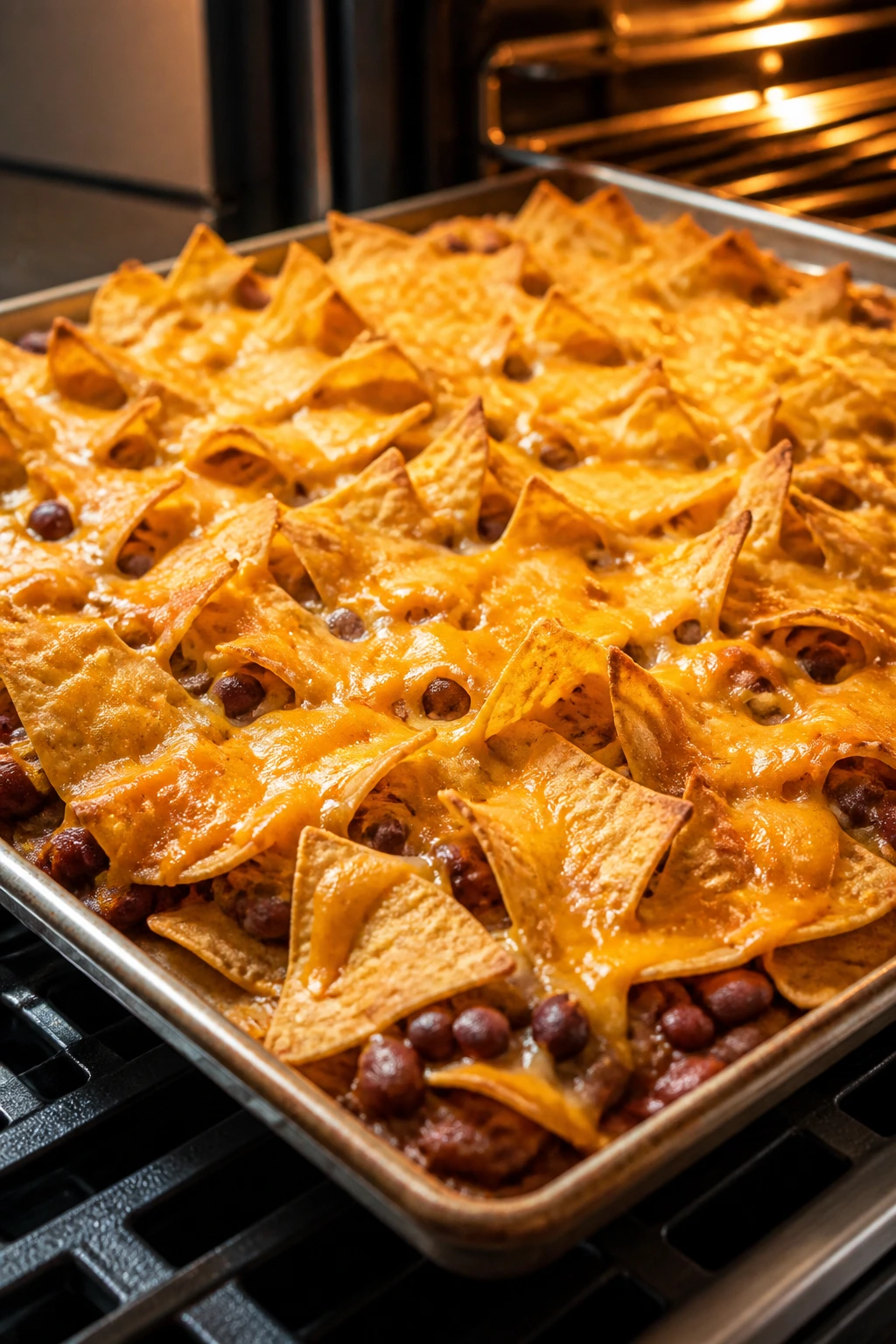
Why do nachos empty first? Because they ask almost nothing of the guest. One hand. One bite. No knife, no fork, no standing ceremony. And when you bake the chips with beans and cheese before the party starts, the whole tray tastes warmer and more generous than the ingredient list suggests.
The cheapest route is a big bag of tortilla chips, a can or two of refried beans, shredded cheese, and a jar of salsa for finishing. If you’ve got a few jalapeño slices or scallions, great. If not, don’t overthink it. The bones of the dish are already doing the job. Spread the chips in a thick layer on a rimmed sheet pan, dollop warm beans across the top, scatter cheese, and bake at 400°F for about 8 to 10 minutes until the cheese melts and the chips at the edges start to smell toasty.
Keep the wet stuff off the tray until the end
-
Salsa and sour cream should go on after baking, not before. Wet toppings turn chips into limp cardboard.
-
Black beans work too if you mash about half of them with a fork and warm them with a spoonful of salsa or oil.
-
Use one strong cheese—cheddar, Monterey Jack, or a house blend. A little goes farther when the heat is doing the work.
-
Add heat carefully. One chopped jalapeño can be enough for the whole tray if the crowd is mixed.
These are best served immediately, while the cheese is still stretchy and the chips still have edges. A nacho tray does not need to sit around for half an hour. It is a first-wave food. Make it act like one.
Deviled Eggs with Pickle Relish and Paprika
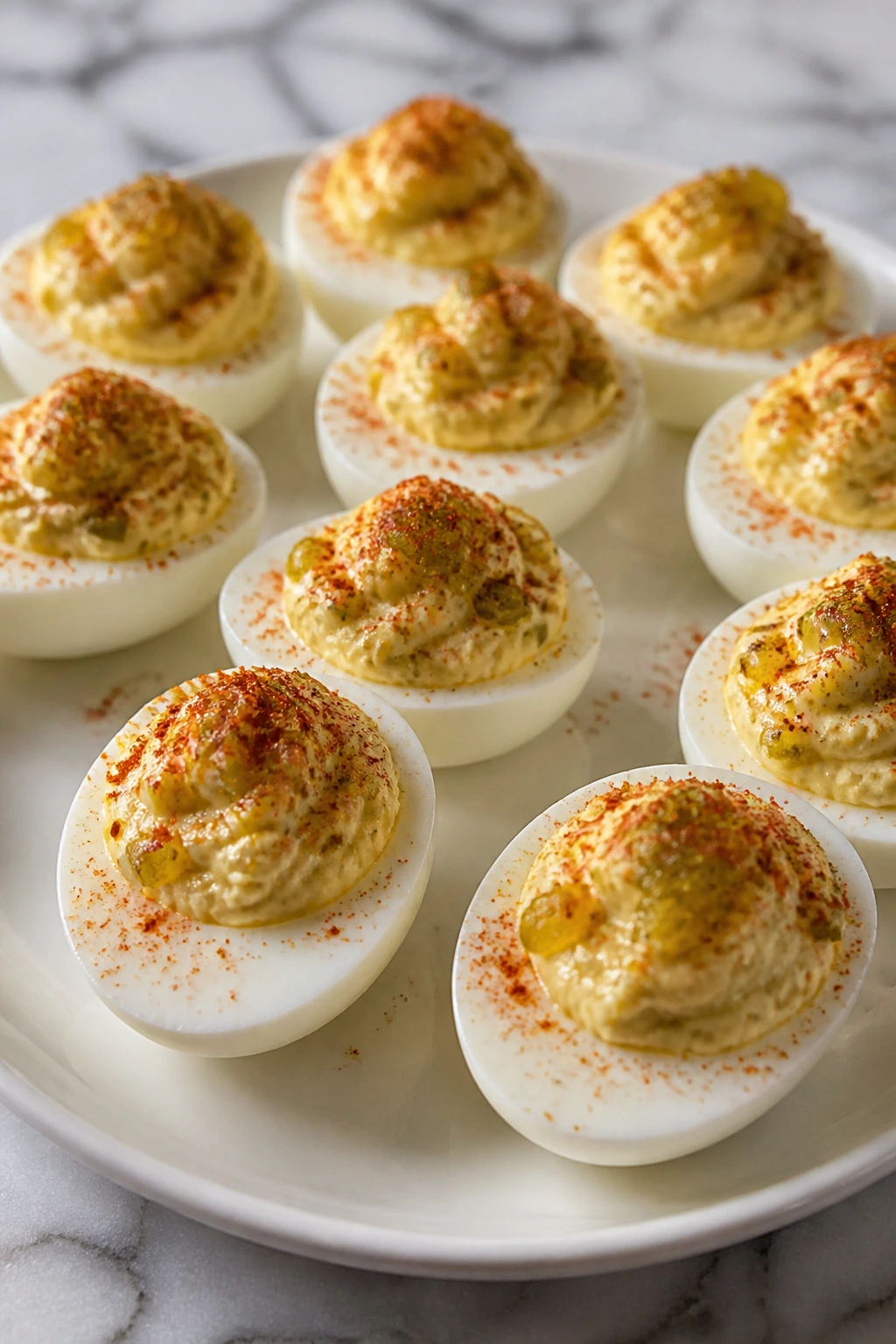
A dozen eggs is one of the quiet bargains of party food. People forget that until they open the lid on a tray of deviled eggs and realize the whole thing costs less than one tray of deli meat. They’re tidy, they’re cold, and they work with hands instead of utensils. That makes them useful in the real world, not just the pretty one.
You can keep the filling old-school—mayonnaise, mustard, a little pickle relish, salt, pepper—or nudge it in a sharper direction with a spoon of sour cream and a splash of vinegar. I like a rough, not-too-smooth filling. A bit of texture keeps them from tasting like baby food in white halves. A fork mash is fine. A piping bag is optional. A teaspoon works if you’re in a hurry.
The detail that matters most is chilling. Eggs that have been boiled, peeled, filled, and then left to warm up on a counter get dull fast. Keep them cold until the last minute, then bring out only part of the tray and refill as needed. A dusting of paprika, chopped chives, or a few tiny pickle pieces on top gives you color without extra spending.
If you want a cheap party food that feels more composed than it sounds, deviled eggs do that job better than almost anything else. They’re neat. They’re old-fashioned in a good way. And they vanish.
Pasta Salad with Broccoli, Onion, and Italian Dressing
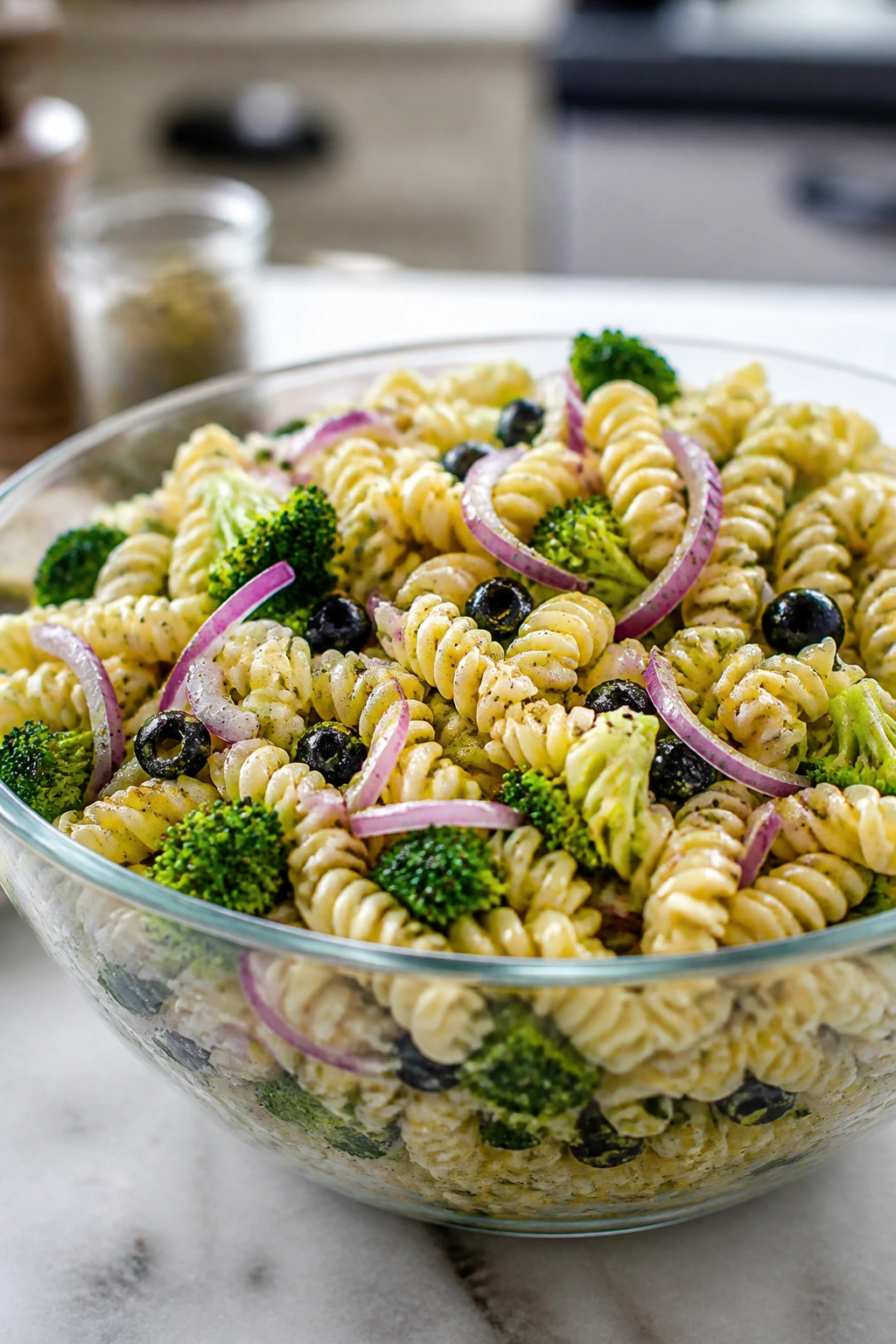
Pasta salad is cheap because the pasta carries the whole thing. That’s the part people miss. A pound of rotini or shells takes on dressing, clings to tiny bits of vegetable, and turns into a cold side that actually fills a plate instead of just decorating it. It’s one of the few buffet dishes that improves after a little rest.
The shape matters more than people think. Rotini, bow ties, and shells catch dressing in the little folds. Straight spaghetti salad can work, but it feels awkward on a party table. You want a pasta that holds onto flavor and doesn’t slide around like it’s trying to escape the bowl.
For budget purposes, use what’s on hand: a handful of thawed frozen peas, chopped broccoli florets, diced onion, sliced olives, or a few cubes of cheese. A simple Italian dressing does the job, though a splash of vinegar or a spoon of pickle brine wakes the whole bowl up if it tastes sleepy. If you’re using a creamy dressing, keep it light. Too much makes the salad heavy and gloppy.
The pasta salad details that matter
-
Salt the pasta water well. Bland pasta needs more rescue later than you think.
-
Cool the pasta before dressing so it doesn’t drink up all the oil and go greasy.
-
Add crunchy bits last if you want them to stay crisp. Cucumber and celery can go soft fast.
-
Taste again after 20 minutes. Pasta salad changes as it sits, and it usually wants one more pinch of salt or splash of vinegar.
This is one of the best make-ahead party foods in the whole budget category. It can sit in the fridge overnight and still hold up when the first guests walk in. In fact, it often tastes better once the onion stops being so loud.
Baked Meatballs in Barbecue Sauce
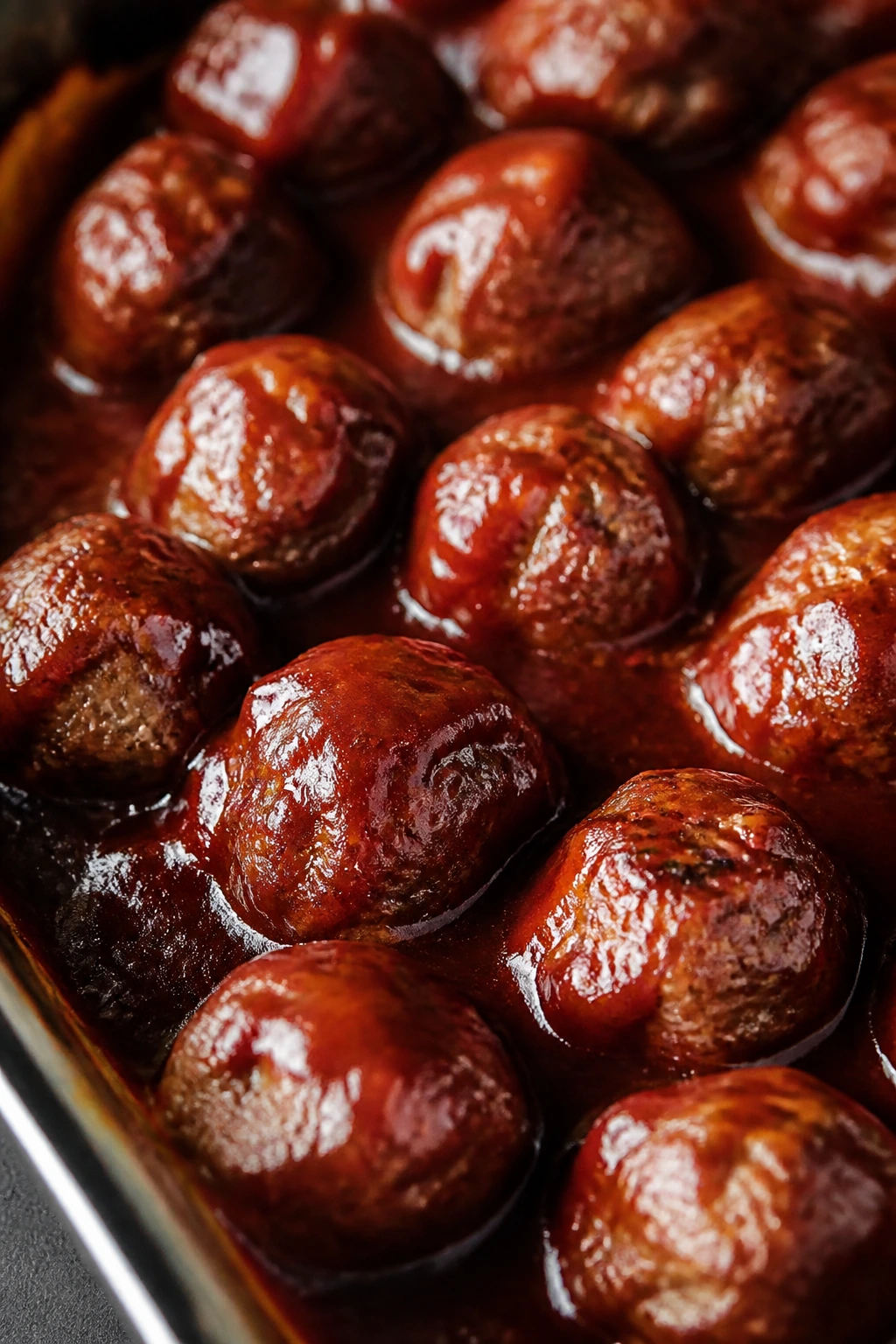
Meatballs are where the table starts looking more expensive than it is. That’s the trick. A saucy pan of little browned balls looks like effort, even when the ingredients are plain and the method is straightforward. And because they’re bite-size, people eat them fast.
For the budget version, don’t get precious about the meat. Ground beef, turkey, or a mix with breadcrumbs and egg all work. A bit of grated onion keeps them moist and saves you from buying a separate flavor bomb. Bake them on a sheet pan at 400°F until browned and cooked through, then toss them in barbecue sauce and warm them for a few minutes more. You want the sauce to cling, not pool. If it slides off in a red puddle, it needs another minute.
Barbecue sauce gives you sweetness and smoke in one bottle, which is why it earns its keep here. If you want the sauce tighter, stir in a spoon of ketchup or tomato paste. If you want a little bite, add a few drops of hot sauce. Don’t overcomplicate the pan. Meatballs are good because they’re direct.
Serve them with toothpicks in a shallow bowl or keep them in a small slow cooker on warm if the party runs long. A lot of buffet food feels like it was designed by committee. Meatballs don’t. They know exactly what they’re doing.
Sheet-Pan Quesadillas Cut Into Squares
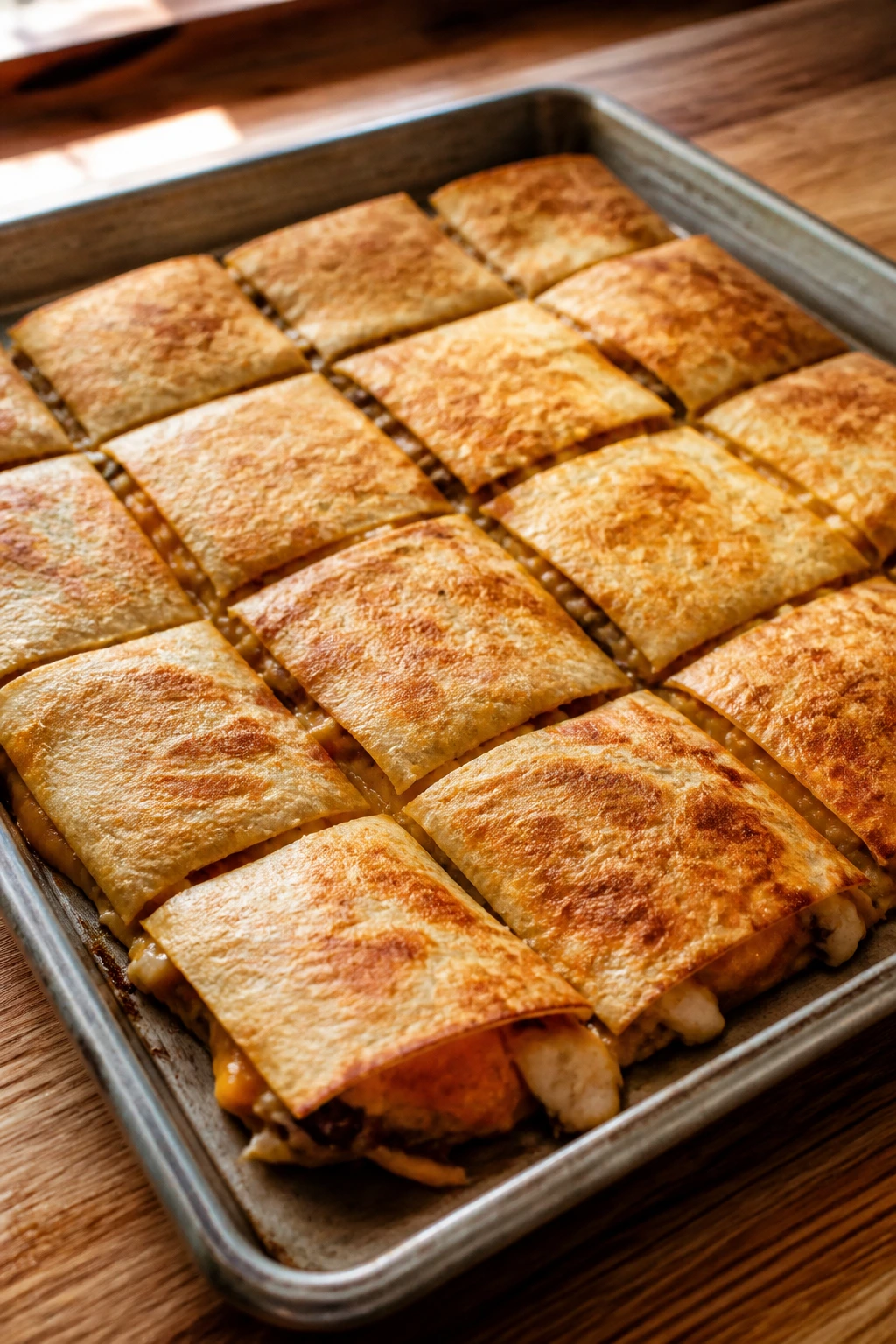
If I had to feed a dozen people with one sheet pan and one bag of tortillas, I’d make quesadillas. They’re cheap because tortillas stretch, beans bulk them up, and cheese does the job of making everyone think the tray cost more than it did. Cut into squares, they behave like party food instead of dinner food.
The nice part is how little structure they need. A layer of shredded cheese, a thin spread of refried beans or black beans, maybe a little onion or corn if you have it, then another tortilla on top. Bake until the bottoms are crisp and the cheese is fully melted, usually 10 to 12 minutes at 425°F, then flip or finish briefly under the broiler if you want more browning. The edges should have those little browned freckles that smell like toasted bread and melted milk.
This is one of the best places to use leftover bits from the fridge. A few spoonfuls of chicken, a scattering of peppers, the last of the corn, half a jalapeño. Small amounts matter here. You don’t need a loaded filling. You need enough to taste the fillings in each square.
A few useful rules
-
Don’t overstuff the tortillas. A thin layer cooks evenly and cuts cleanly.
-
Use a baking sheet with a rim so the oil and melted cheese stay where they belong.
-
Let it rest for 2 minutes before slicing. The cheese sets a little and the squares hold together better.
-
Serve salsa on the side if the crowd likes control over heat.
These make sense at parties because they can be eaten standing up, and they don’t collapse the way some budget food does. You get crunch, cheese, and filling in one bite. That’s a useful bit of engineering.
Hummus, Pita, and Crunchy Vegetables
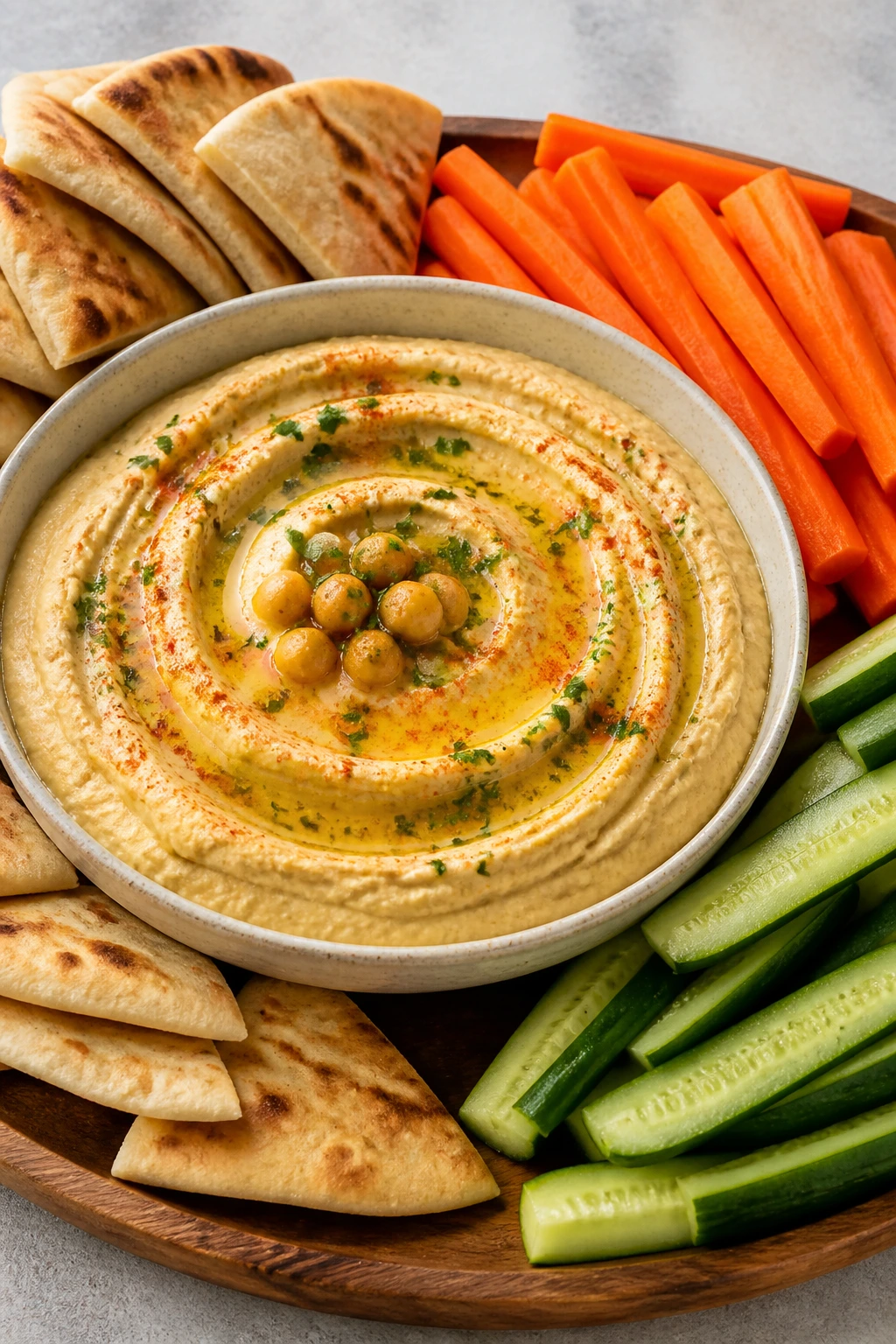
A bowl of hummus on a party table has a different energy from baked food. Calm. Clean. A little cool. It gives the spread some breathing room. And because chickpeas are cheap, it’s one of the easiest ways to make a tray look generous without spending much.
Homemade hummus can stay very inexpensive if you use canned chickpeas, a little lemon, garlic, and olive oil. Tahini is nice, but if the budget is tight, a spoonful of peanut butter or extra olive oil can stand in without wrecking the flavor. Blend the chickpeas until they’re smoother than you think they need to be. If the mixture feels thick or chalky, a few spoonfuls of chickpea liquid or water fix it fast.
Pair the hummus with pita wedges, carrot sticks, sliced cabbage, celery, and cucumber if you can afford it. Cabbage gets overlooked at parties, which is a shame; sliced thin, it’s cheaper than most salad greens and stays crisp much longer. Add a dusting of paprika or cumin over the top and a thin ribbon of olive oil. That one swipe makes the bowl look finished.
This is the kind of tray that helps you balance out heavier food. After a slider, a meatball, or a few wedges, people want something cool and crunchy. Hummus answers that without asking for much in return.
Potato Wedges with Sour Cream and Scallions
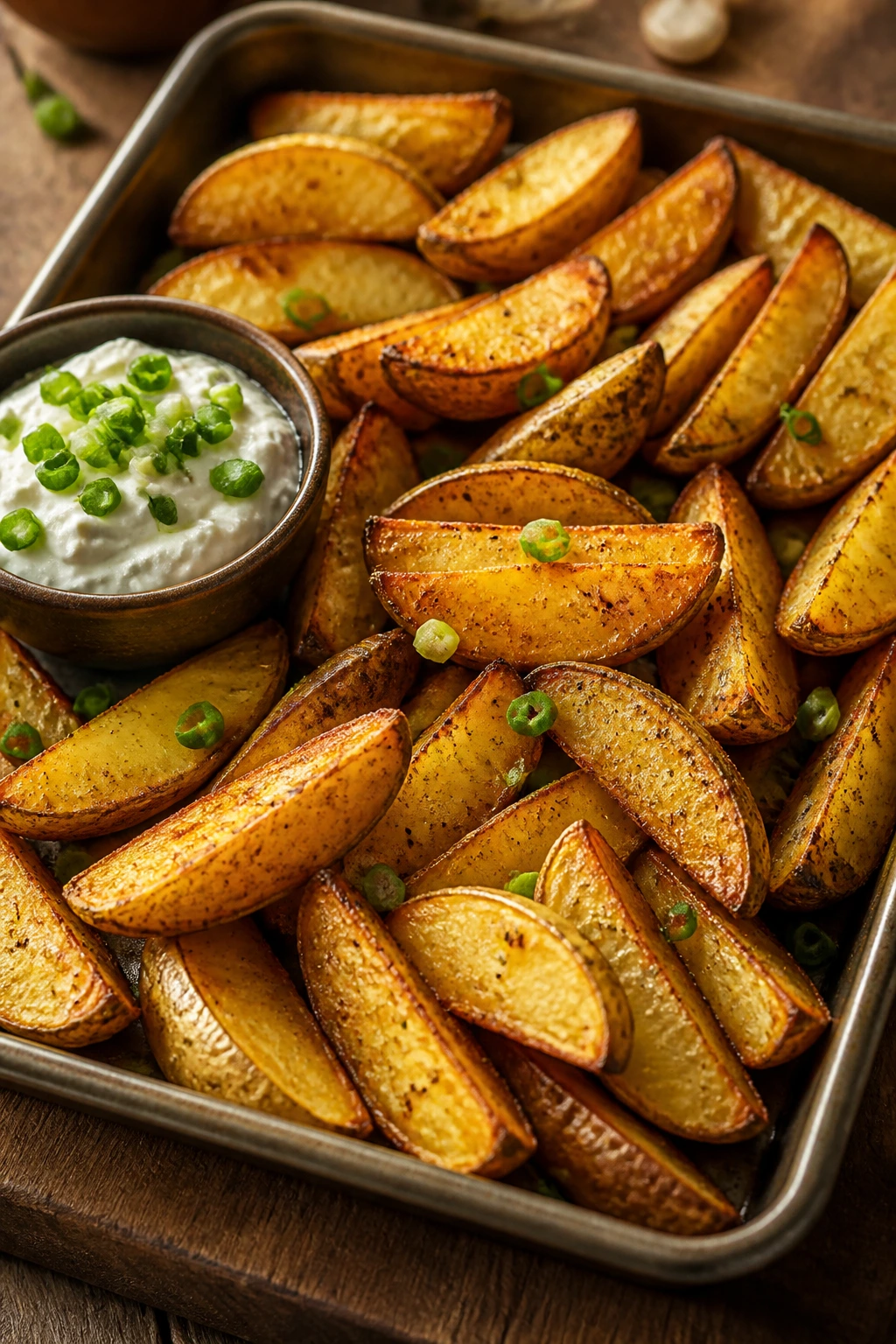
Potatoes are the honest answer to a hungry room. Cheap, filling, and happy to take on salt, fat, smoke, or cheese. Roast them into wedges and they become party food with almost no personality tax. Everyone understands what a potato wedge is supposed to do.
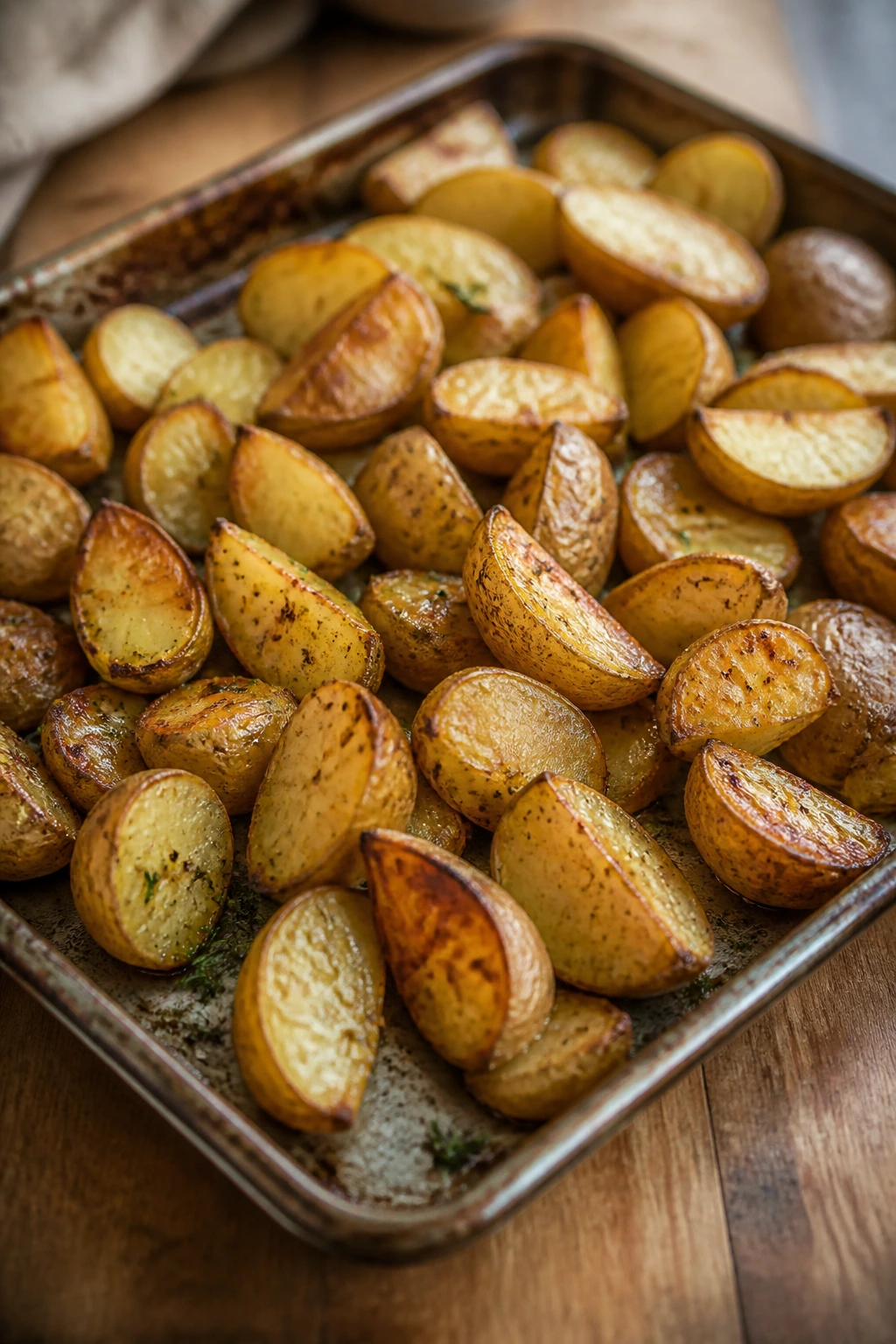
Cut the potatoes into even wedges so they roast at the same speed. Toss with oil, salt, black pepper, and paprika. At 425°F, they usually need about 30 to 40 minutes, depending on how thick you cut them and how crowded the pan is. Flip once halfway through. If the edges are browned and the centers feel tender when pierced with a knife, they’re done. If they’re pale and soft, give them a few more minutes. Pale potatoes are a waste of a hot oven.
The sour cream on the side is not just decoration; it gives the wedges a cool, sharp contrast. If sour cream feels too rich, plain yogurt with a pinch of salt works fine. Scallions, chives, or even a spoon of salsa make the whole tray look like you thought about it longer than you did.
This is one of the easiest ways to put a hot, substantial dish on the table for very little money. It’s also one of the most forgiving. A little overbrowning can be good here. Potatoes like a bit of attitude.
Popcorn Snack Mix for Bowls and Paper Bags
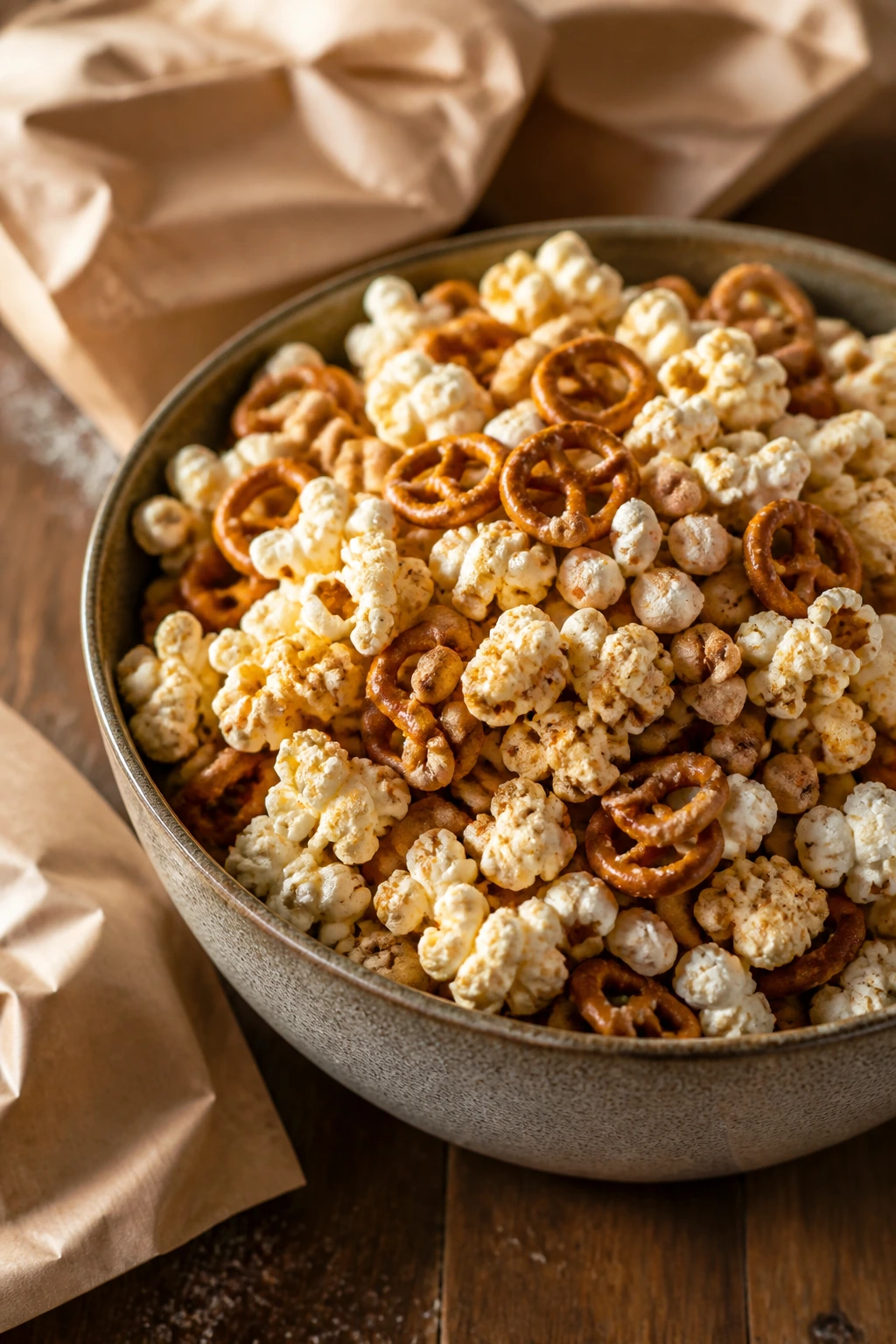
A giant bowl of popcorn is the cheapest piece of theater on the table. It fills space, it sounds festive when people scoop it, and it makes everyone feel like there’s more food than there really is. That matters. People eat with their eyes first, even when they say they don’t.
Popcorn is also brutally economical. A small bag of kernels makes a mountain of food once it’s popped. Add peanuts, pretzels, cereal, or a handful of crackers, and the bowl goes from “movie night” to “party table.” Salt it lightly while it’s still warm so the seasoning sticks. If you want a savory version, use garlic powder, smoked paprika, or ranch-style seasoning. If you want sweet-salty, a dusting of cinnamon sugar does the trick.
The best part is how portable it is. Paper bags, small cups, and clear bowls all work. That means less hovering over one giant serving bowl and fewer hands dipping into the same place. You can make a large batch, portion it out, and move on with your life.
Popcorn doesn’t pretend to be fancy. That’s why it’s useful. It’s the extra food that keeps the table from running dry before the main trays have had a chance to settle.
Fruit Skewers with Yogurt Dip
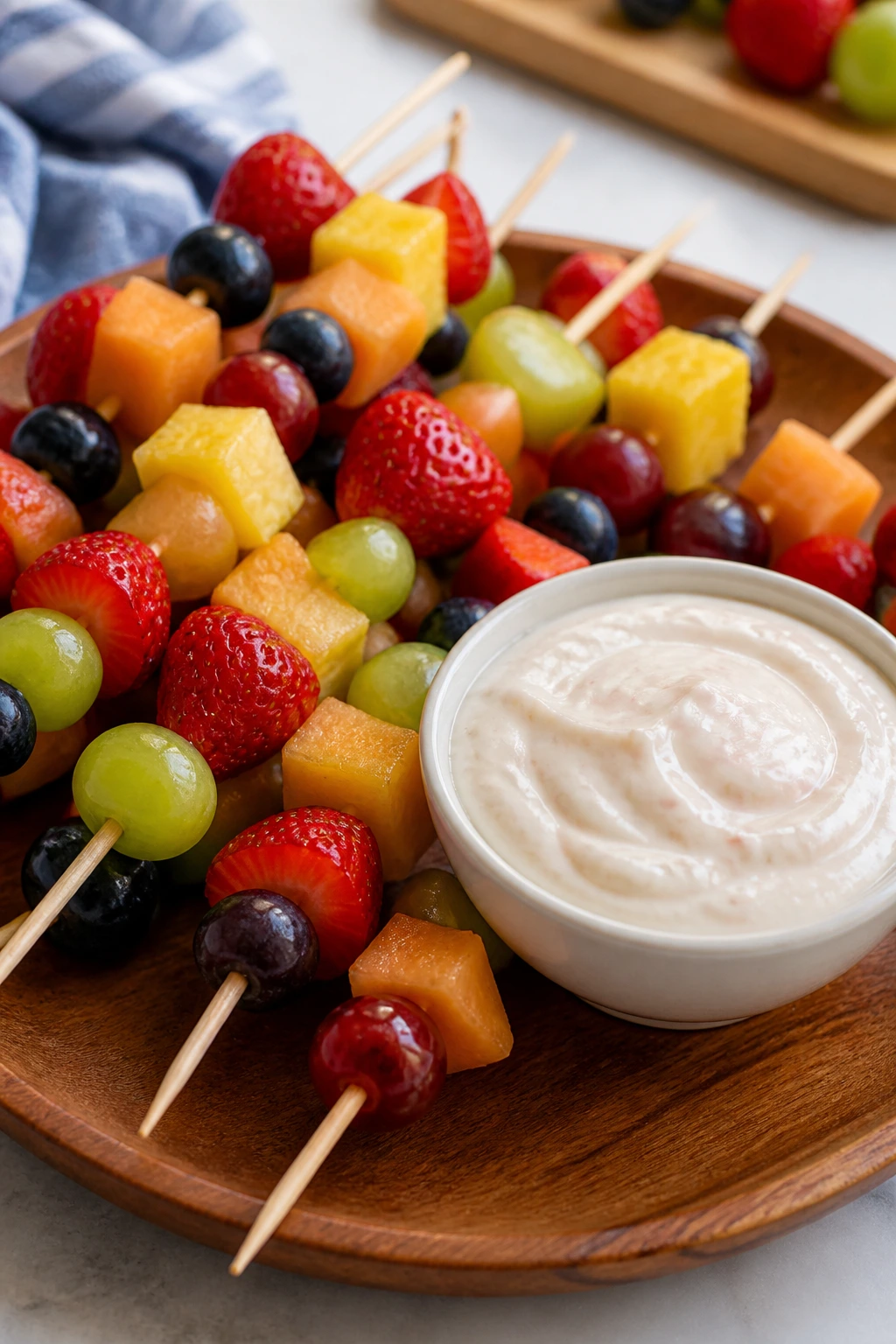
Every cheap party needs one cold, bright tray. Fruit skewers do that job without asking you to build a whole fruit sculpture. They give color, sweetness, and a little snap between all the salty food. Even a small amount changes the look of the table.
To keep the budget sane, choose two sturdy fruits and one softer one. Grapes, apple chunks brushed with lemon juice, pineapple, orange segments, melon, strawberries if they’re priced well. Thread them onto short skewers or even sturdy toothpicks if that’s what you have. The shape matters less than the idea: mixed colors, easy grabs, no knife required.
The yogurt dip can be as plain or as dressed-up as you like. Greek yogurt, a spoon of honey, a squeeze of lemon, maybe a pinch of cinnamon. That’s enough. If you’re already serving a lot of savory food, the sweet-tangy dip brings the room back to life. Keep the fruit chilled until the last minute and cut the apples closer to serving time so they don’t brown and look tired.
Fruit trays are especially useful if the crowd includes kids, older guests, or people who like a break from cheese and sauce. They’re the soft landing at the end of the buffet, and you should keep one on the table if you can.
How to Build a Cheap Party Menu Without Wasting Food
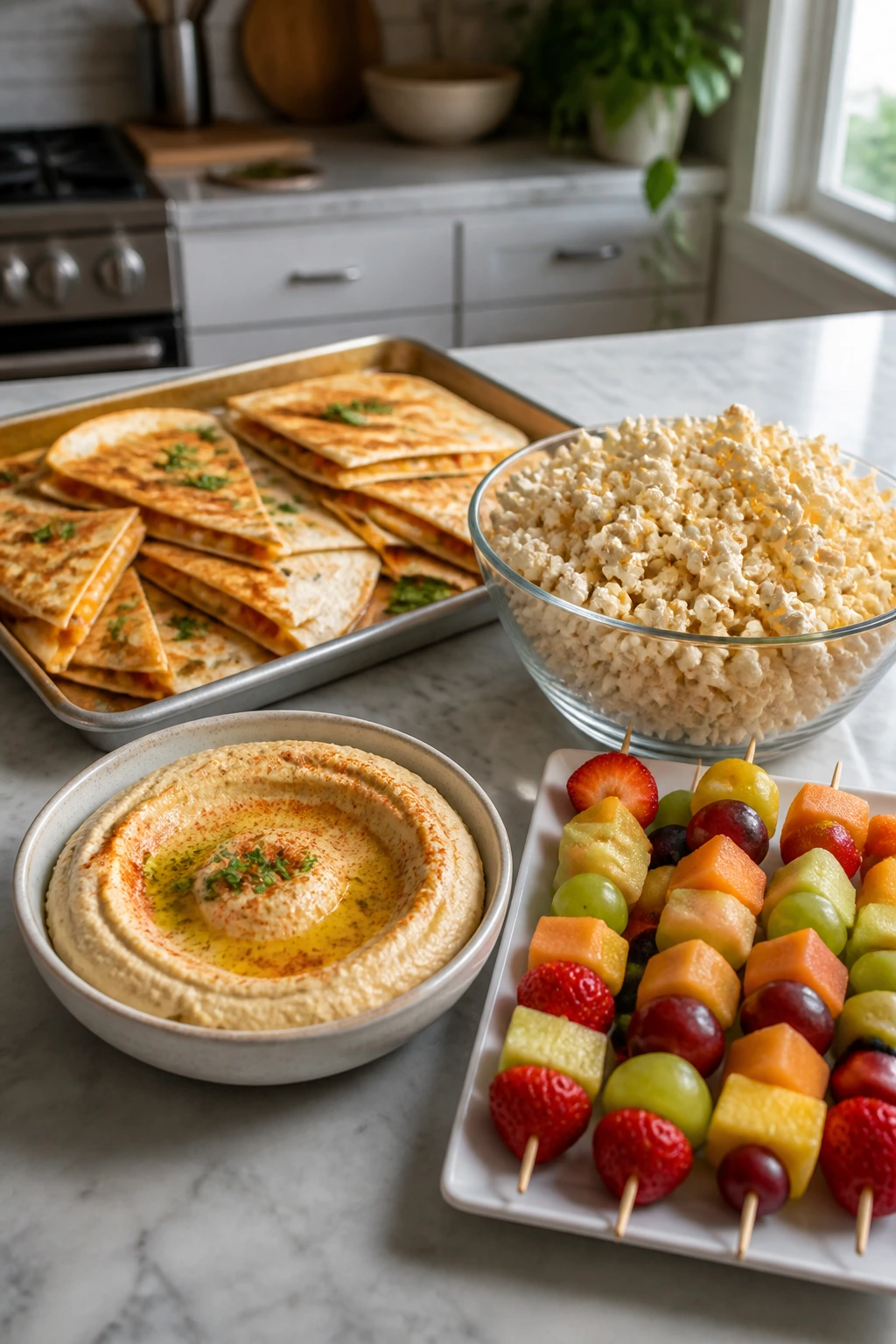
The smartest budget party menu is not a pile of random dishes. It’s a pattern. One hot tray. One cold bowl. One crunchy snack. One fresh thing. That’s enough for most gatherings, and it keeps you from buying three different kinds of cheese just because they were on sale.
If you’re feeding 8 to 10 people, three dishes can cover you if one of them is a filling starch like sliders, quesadillas, or potato wedges. For 12 to 16 people, add a cold side and a snack bowl. For a bigger crowd, repeat the cheapest base ingredients—more popcorn, more potato wedges, more pasta salad—rather than trying to invent a new food category every twenty minutes.
Good low-budget menu pairings
-
Game-night spread: nacho tray, popcorn mix, fruit skewers, lemonade.
-
Birthday spread: sloppy joe sliders, pasta salad, deviled eggs, potato wedges.
-
Potluck spread: hummus board, quesadillas, deviled eggs, fruit skewers.
-
Late-afternoon snack table: popcorn, hummus and veg, pasta salad, sliders cut small.
The key is not variety for its own sake. It’s balance. If everything is soft, the table feels dull. If everything is hot, you’ll spend the whole party rushing to keep it hot. If everything is creamy, people get tired halfway through. Mix textures and temperatures and the menu starts feeling bigger than it cost.
How to Serve a Budget Party Table
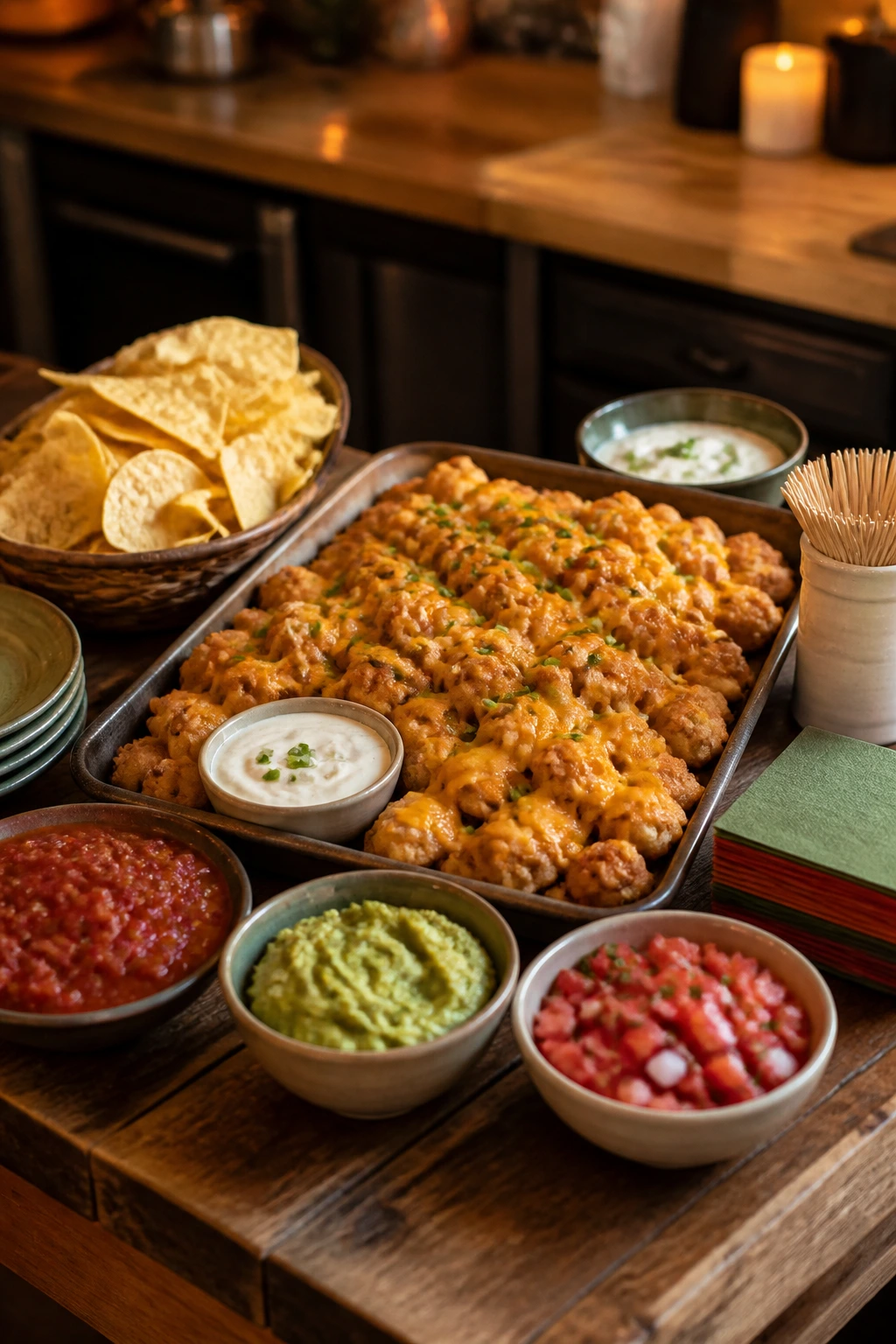
Presentation: Put the hottest food in the center and fan everything else around it so the table feels full from the start. Use shallow bowls for snacks, rimmed trays for anything saucy, and separate plates or small bowls for wet toppings like salsa, sour cream, or yogurt dip. A cheap tray looks better when it’s not crowded edge to edge.
Accompaniments: Keep the side items practical: napkins, small plates, toothpicks, tongs, paper cups, and one or two backup starches like chips or bread. Pickles, sliced onions, lemon wedges, and hot sauce should sit in little bowls nearby so guests can finish food the way they like. Don’t line up three creamy dishes next to each other. That gets heavy fast.
Portions: For snack-style eating, plan on 4 to 6 bite-size pieces per person plus one heavier side, like pasta salad or potato wedges. For a party that runs through a meal hour, build each person a plate around one main tray and two smaller sides. If you’re unsure, make a little more of the cheapest item—popcorn, potatoes, pasta, beans—rather than betting on the expensive thing to stretch.
Beverage Pairing: Cold lemonade, iced tea, sparkling water with lemon, or plain seltzer all work with this kind of food. If the crowd wants alcohol, light beer or a simple lager stays out of the way and doesn’t fight the salt. Sweet soda can be a bit much with a lot of cheese, so I’d keep that as an option, not the main drink.
Additional Tips and Flavor Boosters
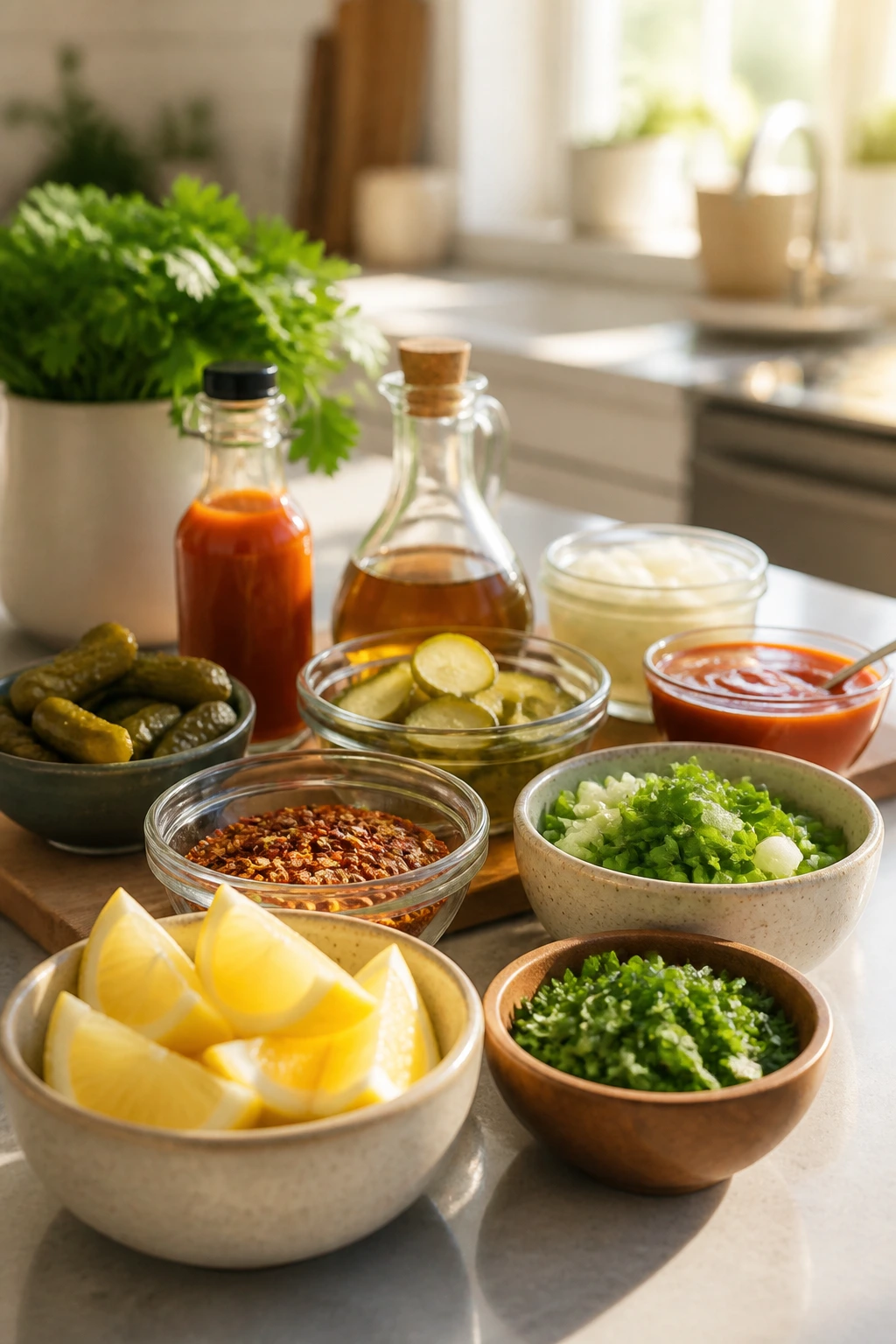
Flavor Enhancement: Acid is the cheapest upgrade in the kitchen. A squeeze of lemon over hummus, a splash of vinegar in pasta salad, pickle juice in egg filling, or a few chopped pickles on sliders can wake up a bland tray without adding much cost. Hot sauce earns its keep too. A tiny bottle lasts longer than you’d expect.
Customization: If you want the table to suit mixed tastes, build dishes that can be finished at the table. Put jalapeños, scallions, crushed chips, shredded cabbage, and extra sauce in small bowls nearby. That lets spicy eaters go in harder while mild eaters stay with the plain base. Cheap party food works better when guests can nudge the flavor themselves.
Serving Suggestions: Choose one garnish and repeat it across the spread. Scallions on potatoes. Paprika on eggs. Pickles on sliders. Herbs on hummus. That repetition makes the table look planned, even if you built it from store-brand odds and ends. One small bowl of something bright—cabbage slaw, fruit, lemon wedges—goes a long way.
Make-It-Yours: For a vegetarian spread, lean hard on beans, eggs, hummus, pasta salad, potatoes, and fruit. For dairy-free guests, cut back on cheese and sour cream, then add salsa, olive oil, and lemon. For gluten-free eaters, potatoes, popcorn, eggs, hummus, beans, and fruit already cover a lot of ground. For kid-friendly tables, keep one plain tray—sliders without onions, fruit skewers, popcorn, simple quesadillas—so the kids don’t have to negotiate every bite.
Common Mistakes That Make a Cheap Party Table Feel Thin
The biggest mistake is building the spread from too many small, expensive things. A few ounces of fancy cheese, a tub of specialty dip, and a bag of pre-cut vegetables can burn through the budget before the table looks full. The fix is blunt: start with the cheap base, then add one strong finishing note.
Another common miss is serving only soft food. Soft food goes stale in the mouth fast. If every tray is creamy, mashed, or melted, people eat a few bites and drift away. Add crunch on purpose—chips, popcorn, roasted potatoes, toasted tortillas, cabbage, carrots. One crisp thing changes the whole table.
Watery toppings can ruin an otherwise good spread. Salsa dumped onto chips too early turns nachos limp. Dressing poured over pasta salad before the pasta cools makes the bowl greasy. Fruit cut too far ahead can look tired and brown at the edges. Hold wet items back until the last minute, and use acid on anything that bruises or oxidizes fast.
People also forget the salt. Cheap ingredients need seasoning more than expensive ones do. Potatoes need salt in the roasting pan. Eggs need salt in the filling. Pasta needs salt in the water. That is not optional. If the food tastes flat, the answer is usually not another fancy ingredient. It’s salt, acid, or both.
And finally, don’t ignore serving tools. One spoon, one pair of tongs, and a stack of napkins can save the table from turning into a mess of fingers and crossed flavors. Small detail. Big difference.
Cheap Party Menu Variations Worth Trying
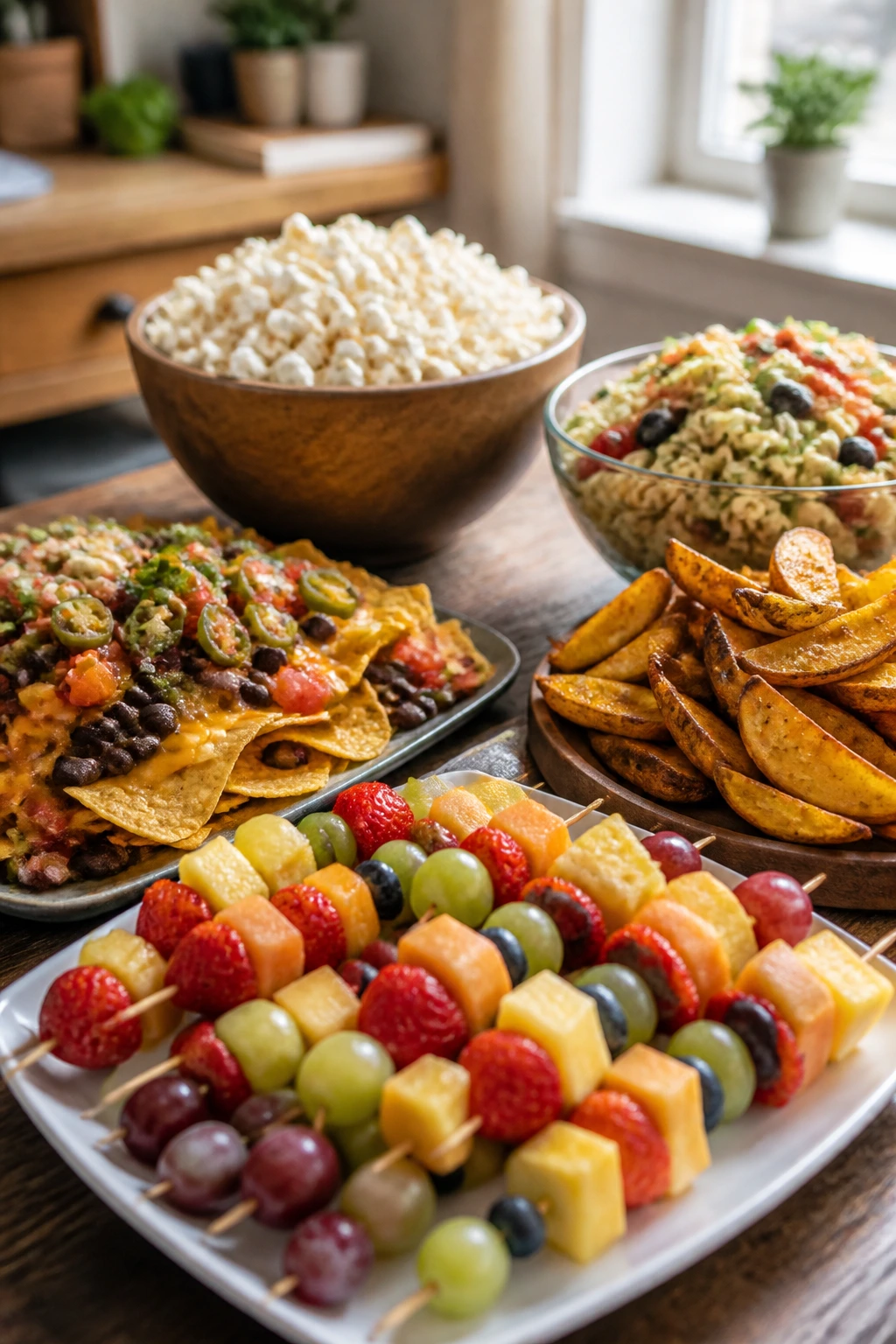
Pantry-Only Party: Build the table from what lasts in the cupboard: popcorn, canned beans, pasta, tortillas, eggs, and chips. This version is useful when you want to shop once and stop. It leans hard on salt, vinegar, and canned tomato products, which means the flavor comes from seasoning rather than fresh produce.
No-Oven Spread: Hummus, deviled eggs, fruit skewers, pasta salad, and popcorn cover a surprising amount of ground without turning on the oven. That makes this version friendly for warm kitchens or parties where the oven is already busy with someone else’s dish. Keep a bowl of ice nearby for the cold foods and you’re set.
Vegetarian Crowd Table: Bean nachos, potato wedges, hummus with vegetables, pasta salad, and fruit skewers give you a table that feels full without any meat at all. The trick here is using beans, eggs, and cheese to keep the food satisfying. A vegetarian party spread gets thin when it leans only on vegetables and bread, so keep the starches in play.
Gluten-Free Swap Board: Potatoes, popcorn, eggs, hummus, fruit, and corn chips cover the table without much trouble. You can still make sliders or quesadillas for the rest of the group, but the gluten-free guests get a whole lane to themselves instead of a sad corner. Keep separate utensils on the gluten-free items if you’re serving a mixed crowd.
Spice-Forward Snack Night: Add jalapeños to the nachos, hot sauce to the eggs, chipotle to the hummus, and a bit of cayenne to the potatoes. That gives the table some heat without forcing every dish to taste the same. Spice works best here when it’s mixed with a few mild foods, not when everything is blasting.
Kid-Friendly Mix: Plain sliders, simple quesadillas, fruit skewers, popcorn, and potato wedges with minimal seasoning make a spread that children can actually eat without negotiating every bite. Keep dips on the side and skip the strong onion notes. A party table for kids gets easier when the food looks familiar the first time they see it.
Tools That Make the Whole Spread Easier
-
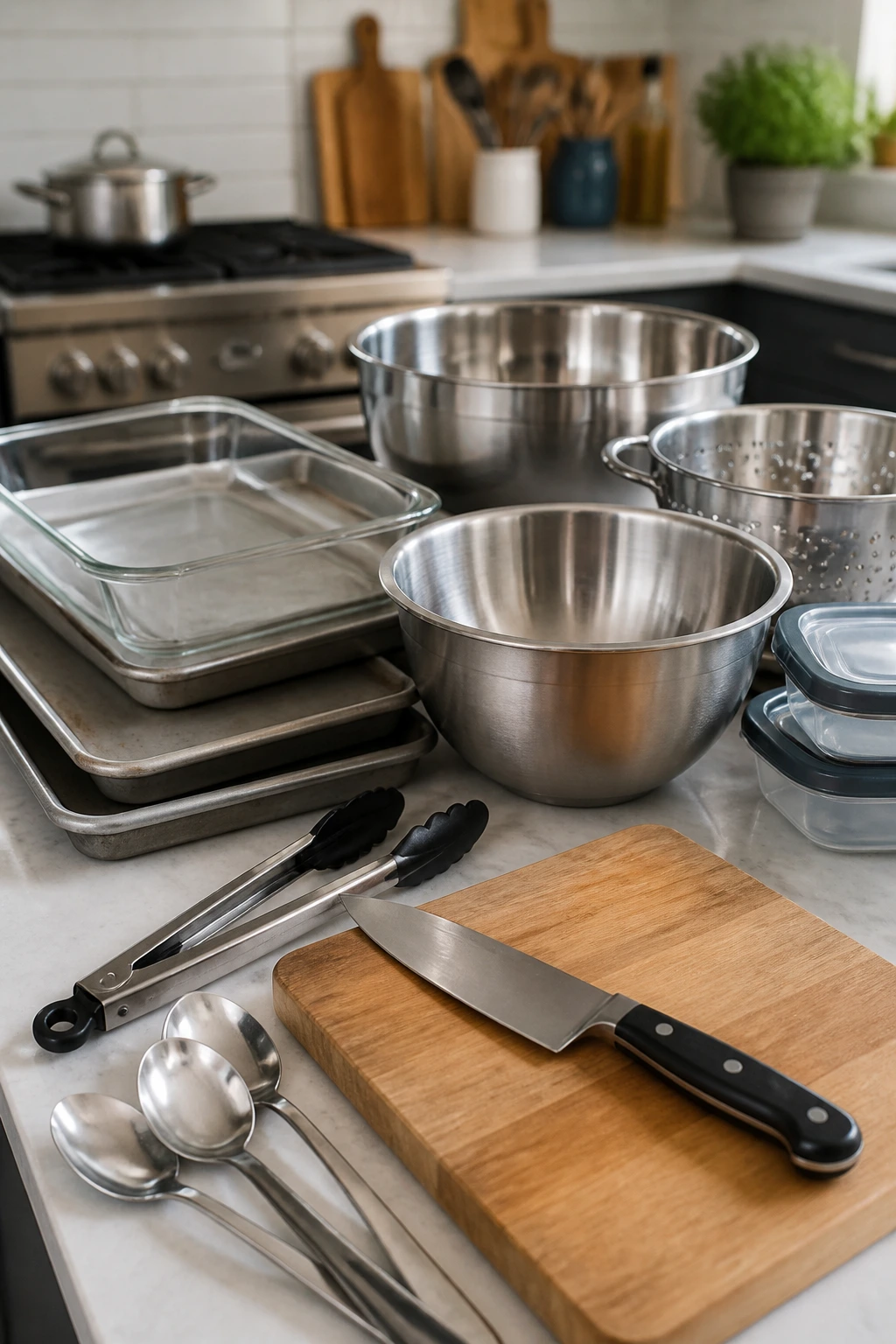
Rimmed half-sheet pans — These are the workhorses for sliders, quesadillas, potatoes, and nachos because they keep melted cheese and oil from wandering.
-
9×13-inch baking dish — Best for saucy foods and anything that needs a neat, contained shape on the table.
-
Large mixing bowls — Useful for pasta salad, popcorn mix, egg filling, and hummus. One bowl that’s too small wastes time.
-
Chef’s knife and sturdy cutting board — You’ll use these for onions, cabbage, fruit, potatoes, and almost every garnish.
-
Colander — Necessary for pasta, draining beans, and cooling anything wet enough to need a rinse.
-
Serving tongs and big spoons — These keep the buffet clean and stop everyone from using their hands in the main bowl.
-
Toothpicks or cocktail picks — Handy for meatballs, sliders, fruit skewers, and any bite-size food that wants to be neat.
-
Airtight containers — Leftovers hold better when they’re sealed quickly and not left in the open on the counter.
-
Foil and parchment paper — Cheap cleanup help. They also let you build trays faster when the party clock is ticking.
Make-Ahead, Storage, and Reheating Guidance
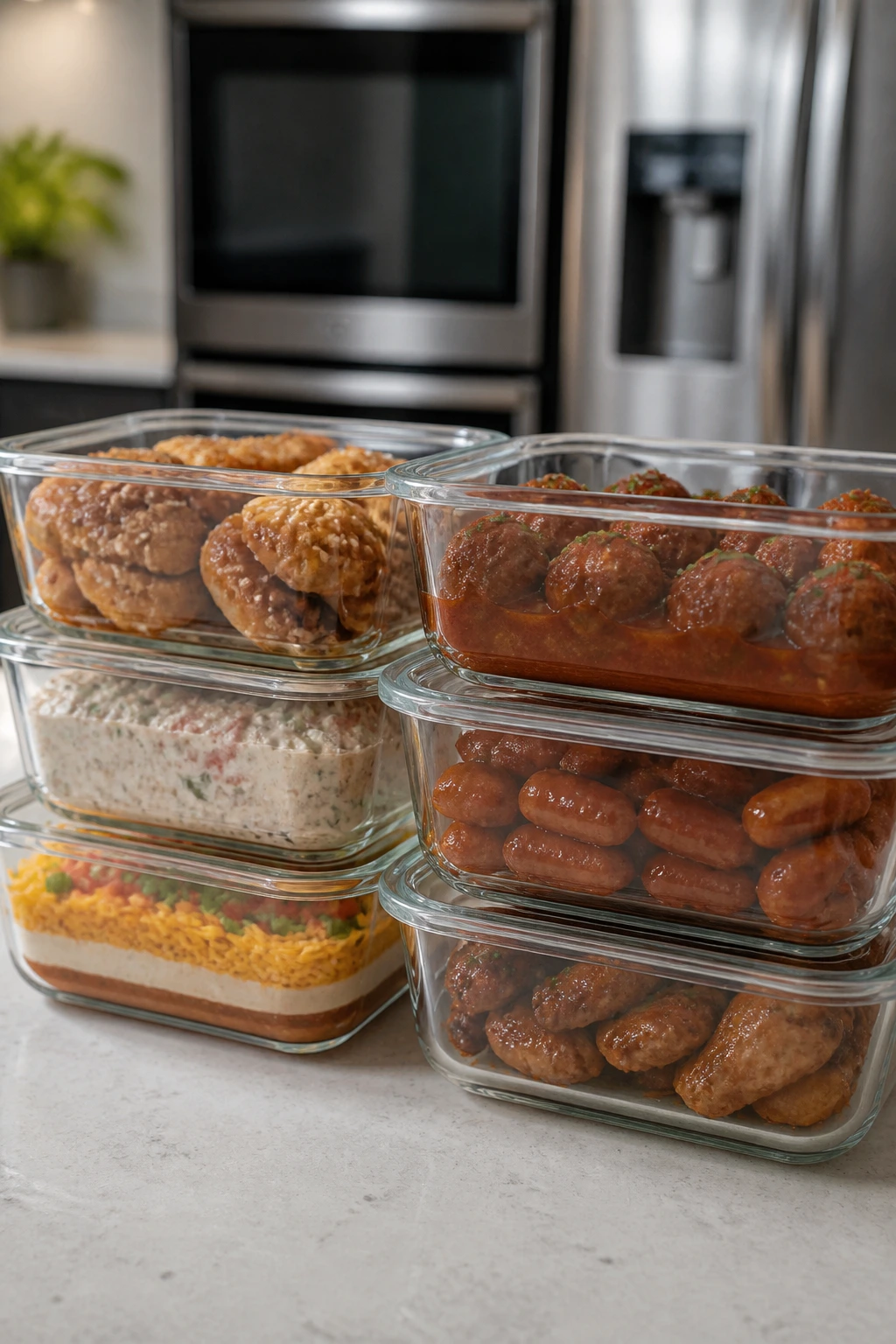
Hot trays behave best when they are either served soon or reheated with care. Sliders, quesadillas, meatballs, and potato wedges are usually at their best the same day they’re made. If you need to hold them, keep them loosely covered in a 200°F to 250°F oven for a short stretch, or reheat covered at 325°F until hot in the middle. Once they’ve cooled, they’ll keep in the fridge for up to 3 days. Meatballs freeze well for up to 2 months; sliders and quesadillas are less happy in the freezer, mostly because the bread or tortilla texture changes.
Cold foods have a better make-ahead window. Pasta salad keeps for 3 to 4 days in the refrigerator if it’s covered and chilled promptly. Hummus holds for 4 to 5 days and often loosens up nicely with a splash of water or lemon before serving. Deviled eggs are the most delicate of the bunch; plan on 2 days in the fridge, and keep them cold until the last minute. If the room is warm, don’t leave egg or dairy dishes out for more than 1 hour before moving them back to the fridge.
Dry snacks like popcorn mix should stay in airtight containers at room temperature for 2 to 3 days. After that, they start losing the crisp bite that makes them worth making. Fruit skewers are best the day they’re assembled, though apple and banana pieces need extra care because they brown fast. Brush cut fruit with lemon juice and cover it well if you’re making it a few hours ahead.
A few make-ahead shortcuts help more than people expect. Boil and peel the eggs a day early. Shape meatballs in the morning and bake them later. Make pasta salad before the crowd arrives so the dressing can settle into the pasta. The dishes that need the most attention are the ones that should be handled closest to serving time. That split saves stress.
Frequently Asked Questions
Can I really feed a crowd for around ten dollars?
If you mean one dish or one tray, yes—especially when you use pantry staples like potatoes, pasta, beans, eggs, popcorn, and tortillas. If you mean an entire party spread for ten dollars total, you’re mostly talking chips, one dip, and maybe popcorn. The math gets much easier when you think in trays, not individual servings.
What’s the cheapest party food that still feels substantial?
Potato wedges, pasta salad, deviled eggs, bean nachos, and popcorn all punch above their cost. They’re filling because they’re built on starch, eggs, or beans instead of expensive small-bite ingredients. That extra bulk matters more than a fancy garnish ever will.
Which dishes are best to make the day before?
Pasta salad, hummus, meatballs, and deviled egg filling all do well with a head start. The flavors settle, and the party-day workload drops. Just hold back anything crunchy or fresh—like chips, lettuce, or cut fruit—until closer to serving so it doesn’t soften.
How do I keep hot food warm without a chafing dish?
Use the oven on low, around 200°F to 250°F, and keep trays loosely covered with foil. If you’ve got a slow cooker, meatballs and sauces can sit on warm for a good stretch. A clean kitchen towel over a covered dish also helps hold heat for a little while, though it’s not a long-term fix.
What should I bring if I need a cheap potluck dish that people will actually eat?
Pasta salad, deviled eggs, popcorn mix, or a tray of quesadillas cut into squares are all practical choices. They travel well, they don’t need expensive ingredients, and they’re easy to portion. Anything that can be picked up by hand tends to vanish first.
Can I use frozen vegetables and canned beans?
Absolutely. Frozen peas, thawed broccoli, and canned beans are part of the reason these dishes stay cheap. They’re consistent, quick, and easier to keep on hand than fragile fresh produce. Just drain them well so the tray doesn’t turn watery.
What if my guests are picky eaters?
Give them one plain option, one crunchy option, and one dip. Plain sliders, popcorn, fruit skewers, and simple quesadillas are safer than elaborate layered food with a lot of visible mix-ins. The more people can build their own bite, the less likely they are to reject the whole tray.
How much food should I make per person?
For snack-style eating, plan on 4 to 6 bite-size pieces per guest plus one heavier side like pasta salad or potato wedges. For a party that stretches into meal time, make at least one filling main and two supporting dishes. If you’re uncertain, lean toward the cheapest filling item and make a little extra of that.
How do I keep chips from going soggy?
Only bake the toppings onto the chips right before serving, and keep wet ingredients like salsa, sour cream, and juicy tomatoes in separate bowls. If the tray needs to sit for a while, use thicker chips and add the saucy parts at the last minute. Thin chips and early assembly are a soggy disaster waiting to happen.
A Table That Looks Fuller Than It Cost
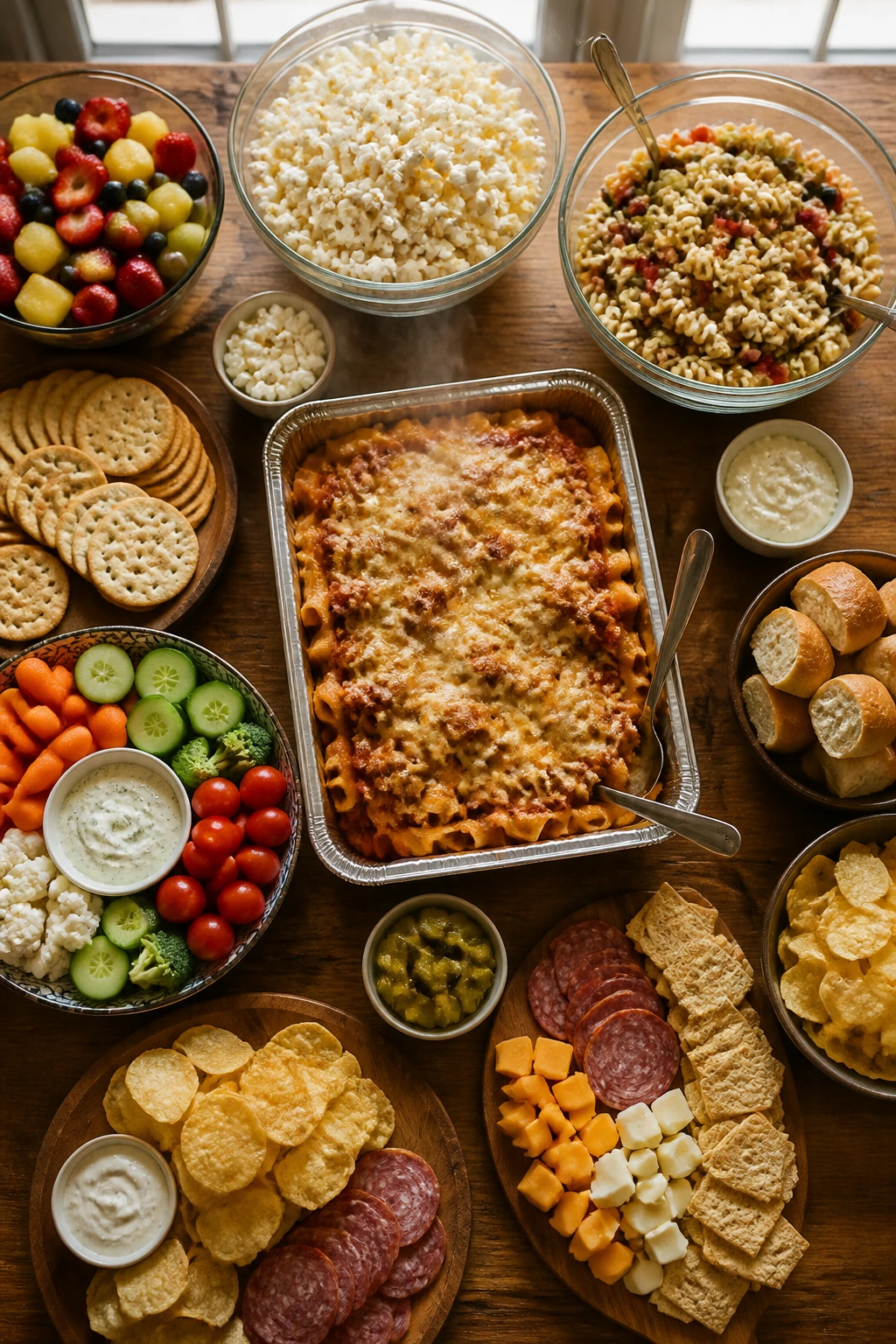
A cheap party spread looks best when it’s built from a few dependable foods, not a dozen expensive ones. One hot tray, one cold bowl, one crunchy snack, and one fresh finish can carry an entire room if the seasoning is on point and the portions are sensible. That’s the part people remember. Not the price tag.
The nice surprise is how little fuss these foods ask for. Potatoes roast while you set the table. Pasta salad gets better while you’re doing something else. Eggs, hummus, popcorn, and fruit all play a role without hogging the stove. That kind of menu leaves room for the actual party.
Start with the base, add one bright flavor, and keep the textures mixed. The food will look fuller, taste sharper, and hold up longer while people wander in hungry.