



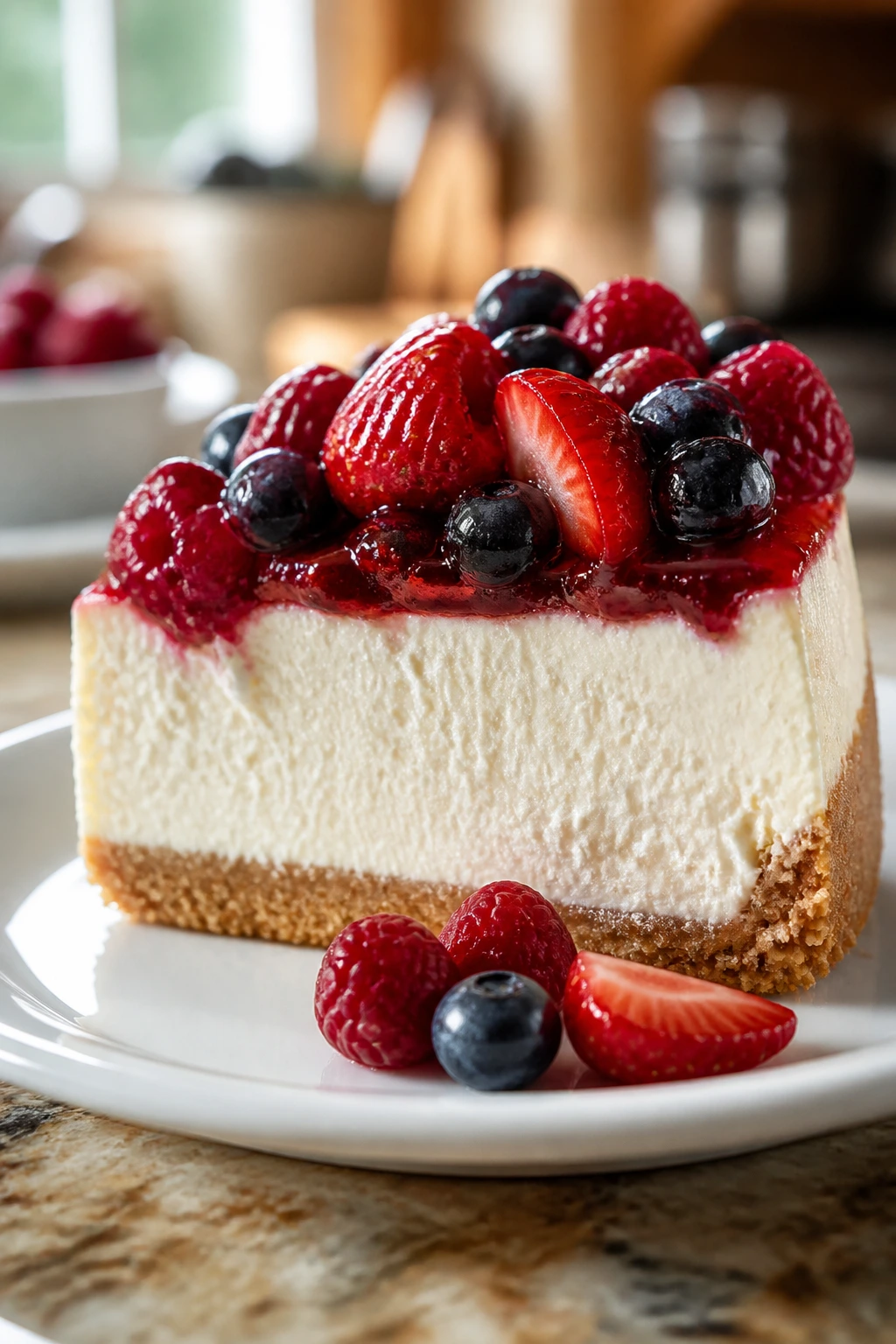
Cheesecake can go heavy fast. One thick slice and your fork starts fighting the plate. This fluffy berry topped cheesecake with cream cheese frosting takes a different path: the filling is whipped, chilled, and soft enough to feel airy, but it still slices cleanly because the base has just enough structure to hold the berries without collapsing into a puddle.
The cream cheese frosting is not there as a decoration after the fact. It gives the top a second layer of tang and makes the whole dessert taste more complete, less like a plain cheesecake that got dressed up for a party. The berries do the part that sugar alone never manages — they keep each bite awake. Strawberries bring body, blueberries add sweetness, raspberries cut through the richness with a sharp little bite.
I like desserts that look generous but behave neatly when you cut them. This one does both, as long as you respect the chill time and keep the berries dry until the end. The filling is mousse-like, the crust stays crisp, and the frosting spreads like satin when it’s beaten properly — not too soft, not too stiff, just smooth enough to catch the edge of a spoon.
Why This Berry Topped Cheesecake Works So Well
-
The filling stays light without turning flimsy: Whipped cream folded into the cream cheese gives the cheesecake a softer, airier finish, while a small amount of gelatin keeps it from slumping when you slice it.
-
The crust doesn’t go soggy under the filling: Baking the graham base for 8 to 10 minutes dries out the crumbs just enough to keep the bottom crisp after a long chill.
-
The lemon keeps the dairy from tasting flat: A tablespoon of lemon juice and a little zest wake up the cream cheese, which matters when you’re stacking frosting on top of frosting-adjacent filling.
-
The berries are doing real work, not just decoration: Their tart juices cut through the sweet frosting and give the dessert a fresh edge that keeps you coming back for another slice.
-
It can be made ahead without stress: The filling needs time to set anyway, so the dessert actually improves when you build it the day before and finish it with berries close to serving.
Yield: 12 slices
Prep Time: 30 minutes
Cook Time: 10 minutes for the crust
Total Time: 40 minutes active + 6 hours chilling
Chill/Rest Time: At least 6 hours, overnight is better
Difficulty: Intermediate — the method is straightforward, but the texture depends on careful whipping, proper gelatin handling, and patient chilling.
Best Served: Cold, after the frosting has had 20 to 30 minutes to settle with the berries on top
What Goes Into the Pan
For the Graham Cracker Crust:
- 2 1/2 cups graham cracker crumbs, finely crushed
- 1/4 cup granulated sugar
- 1/2 teaspoon fine sea salt
- 10 tablespoons unsalted butter, melted and slightly cooled
For the Fluffy Cheesecake Filling:
- 24 ounces full-fat cream cheese, softened to room temperature
- 3/4 cup powdered sugar
- 1/2 cup sour cream, room temperature
- 1 tablespoon fresh lemon juice
- 1 teaspoon finely grated lemon zest
- 1 teaspoon vanilla extract
- 1/4 teaspoon fine salt
- 2 teaspoons unflavored powdered gelatin
- 3 tablespoons cold water
- 1 1/2 cups cold heavy cream
For the Cream Cheese Frosting:
- 8 ounces cream cheese, softened
- 1/2 cup unsalted butter, softened
- 2 cups powdered sugar, sifted
- 1 teaspoon vanilla extract
- Pinch of fine salt
- 1 to 2 tablespoons heavy cream, as needed
For the Berry Topping:
- 1 cup strawberries, hulled and sliced
- 1 cup blueberries
- 1 cup raspberries
- 1 tablespoon honey
- 1 teaspoon fresh lemon juice
What Each Ingredient Does in the Bowl and on the Plate
Crust
- What to use: 2 1/2 cups graham cracker crumbs, 1/4 cup granulated sugar, 1/2 teaspoon fine sea salt, and 10 tablespoons melted unsalted butter.
- Preparation: Crush the crackers to fine, even crumbs so the crust presses together without rough shards that crumble at the first cut. Stir until the mixture looks like damp sand and holds its shape when squeezed.
- Substitutions: Digestive biscuits, vanilla wafers, or gluten-free graham-style crumbs all work. For a deeper flavor, crushed shortbread gives a buttery, softer base.
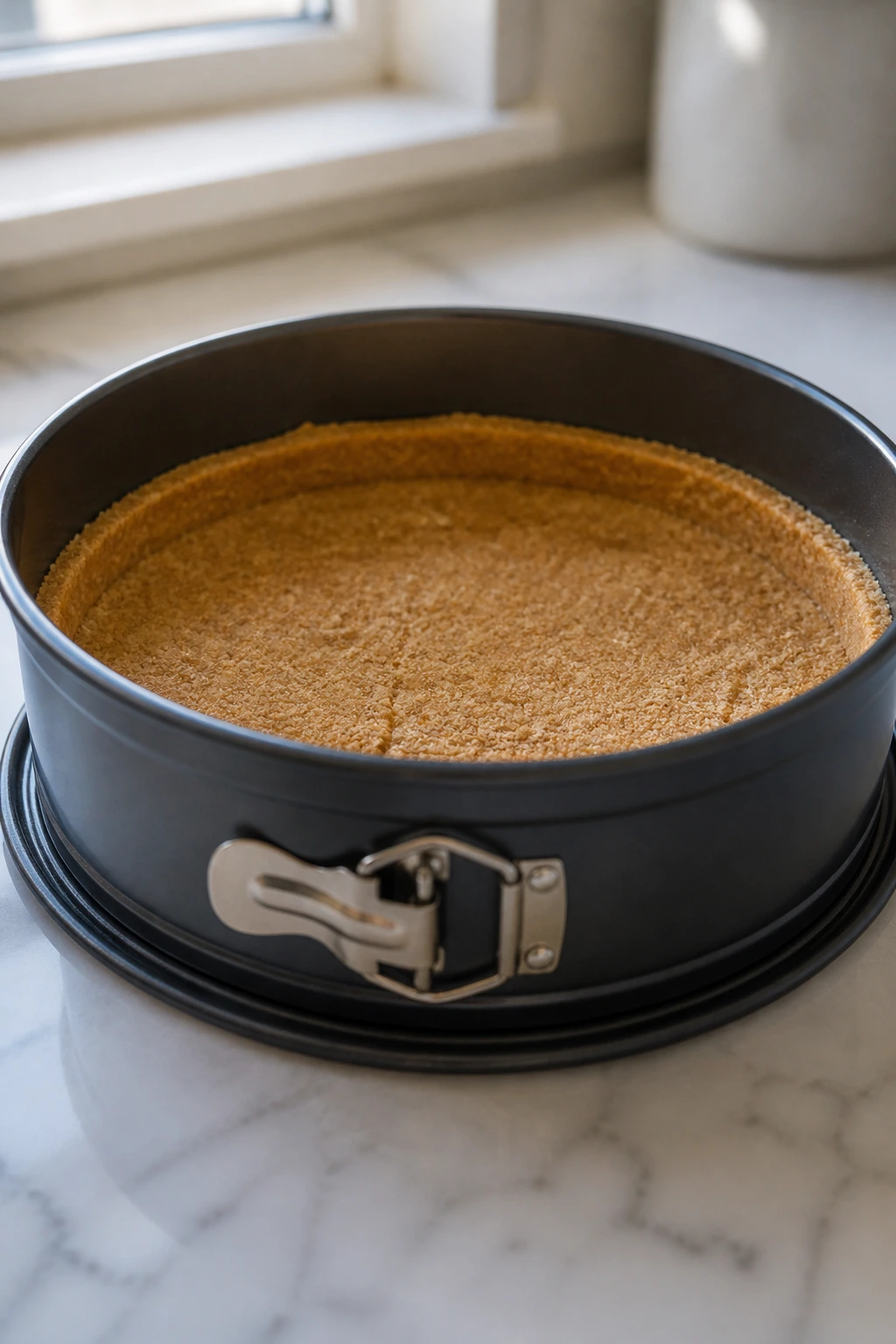
- Tips: Press the crust firmly with the bottom of a measuring cup, especially where the sides meet the base. A crust that feels packed tight before baking is much less likely to break when you release the springform ring.
Cheesecake Filling
- What to use: 24 ounces full-fat cream cheese, 3/4 cup powdered sugar, 1/2 cup sour cream, 1 tablespoon lemon juice, 1 teaspoon lemon zest, 1 teaspoon vanilla, 1/4 teaspoon salt, 2 teaspoons powdered gelatin, 3 tablespoons cold water, and 1 1/2 cups cold heavy cream.
- Preparation: Bring the cream cheese and sour cream to room temperature so they beat smooth without little lumps. Keep the heavy cream cold until the moment you whip it, and bloom the gelatin in cold water before warming it.
- Substitutions: Mascarpone can replace up to 8 ounces of the cream cheese for a silkier, milder filling. If you want a softer set, you can leave out the gelatin and chill overnight, though the slices will be more delicate.
- Tips: Use block cream cheese, not whipped tub cream cheese. The tub version carries extra moisture and can make the filling slack, which is the last thing you want under a thick layer of frosting.
Cream Cheese Frosting
- What to use: 8 ounces cream cheese, 1/2 cup unsalted butter, 2 cups powdered sugar, 1 teaspoon vanilla, a pinch of salt, and 1 to 2 tablespoons heavy cream.
- Preparation: Soften the cream cheese and butter until they yield easily to a finger press, then beat them together until pale and smooth before adding the sugar. If the butter is cold in the middle, you’ll end up with tiny lumps that never quite disappear.
- Substitutions: Mascarpone can replace half the cream cheese for a softer frosting with a cleaner dairy note. If you prefer a less sweet top, start with 1 1/2 cups powdered sugar and stop there if the frosting already holds its shape.
- Tips: Beat the frosting only until it looks fluffy and spreadable. Overbeating makes it too airy, which sounds harmless until it starts tearing the cheesecake surface when you spread it.
Berry Topping
- What to use: 1 cup strawberries, 1 cup blueberries, 1 cup raspberries, 1 tablespoon honey, and 1 teaspoon lemon juice.
- Preparation: Wash the berries well ahead of time, then dry them on a towel until the surface feels dry to the touch. Slice the strawberries into pieces that are small enough to stay put on the frosting instead of sliding off the edge.
- Substitutions: Blackberries, cherries, or thin plum slices all work if berries are expensive or out of shape. If your fruit is already sweet and fragrant, skip the honey and let the fruit stand on its own.
- Tips: Toss the berries with honey and lemon only when the cheesecake is ready for the table. The fruit looks brighter, and the juices stay on top instead of bleeding into the frosting.
The Tools That Keep the Fillings Light
- 9-inch springform pan — the removable ring is what gives you clean sides when the cheesecake is set.
- Parchment paper round — keeps the crust from welding itself to the pan base.
- Electric hand mixer or stand mixer — you need enough speed to beat cream cheese smooth and whip the heavy cream without a workout.
- Two large mixing bowls — one for the filling, one for the frosting, so you do not have to rush cleanup mid-recipe.
- Rubber spatula — fold with this, not a whisk; the spatula keeps the whipped cream from deflating.
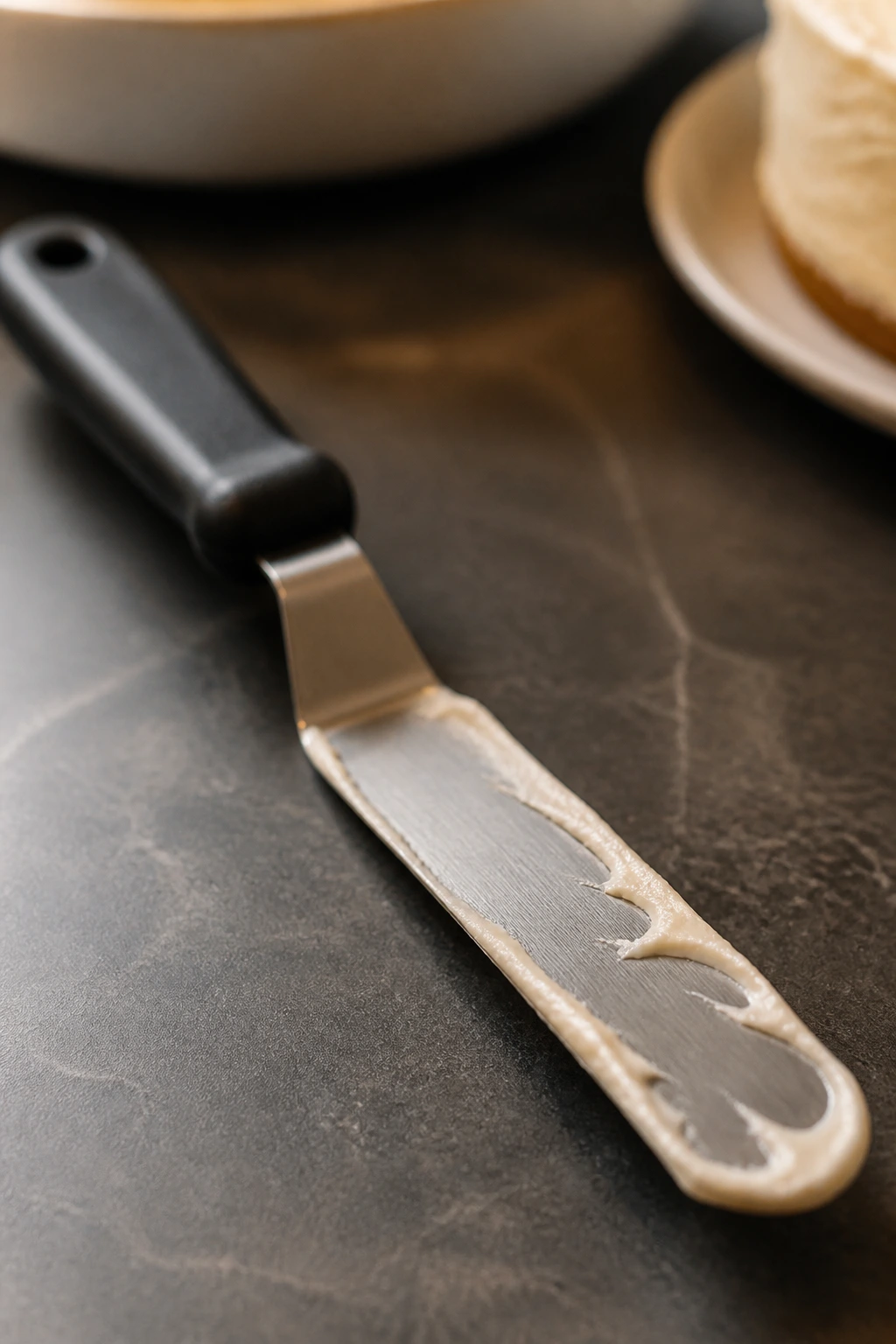
- Offset spatula — makes the frosting level and helps you tuck it right up to the edge.
- Small microwave-safe bowl or tiny saucepan — for blooming and warming the gelatin.
- Sharp knife and cutting board — for berries, but also for slicing the finished cheesecake cleanly.
- Hot mug of water or tall glass — dip the knife blade between cuts so the slices come out neat rather than ragged.
How to Build the Cheesecake Layer by Layer
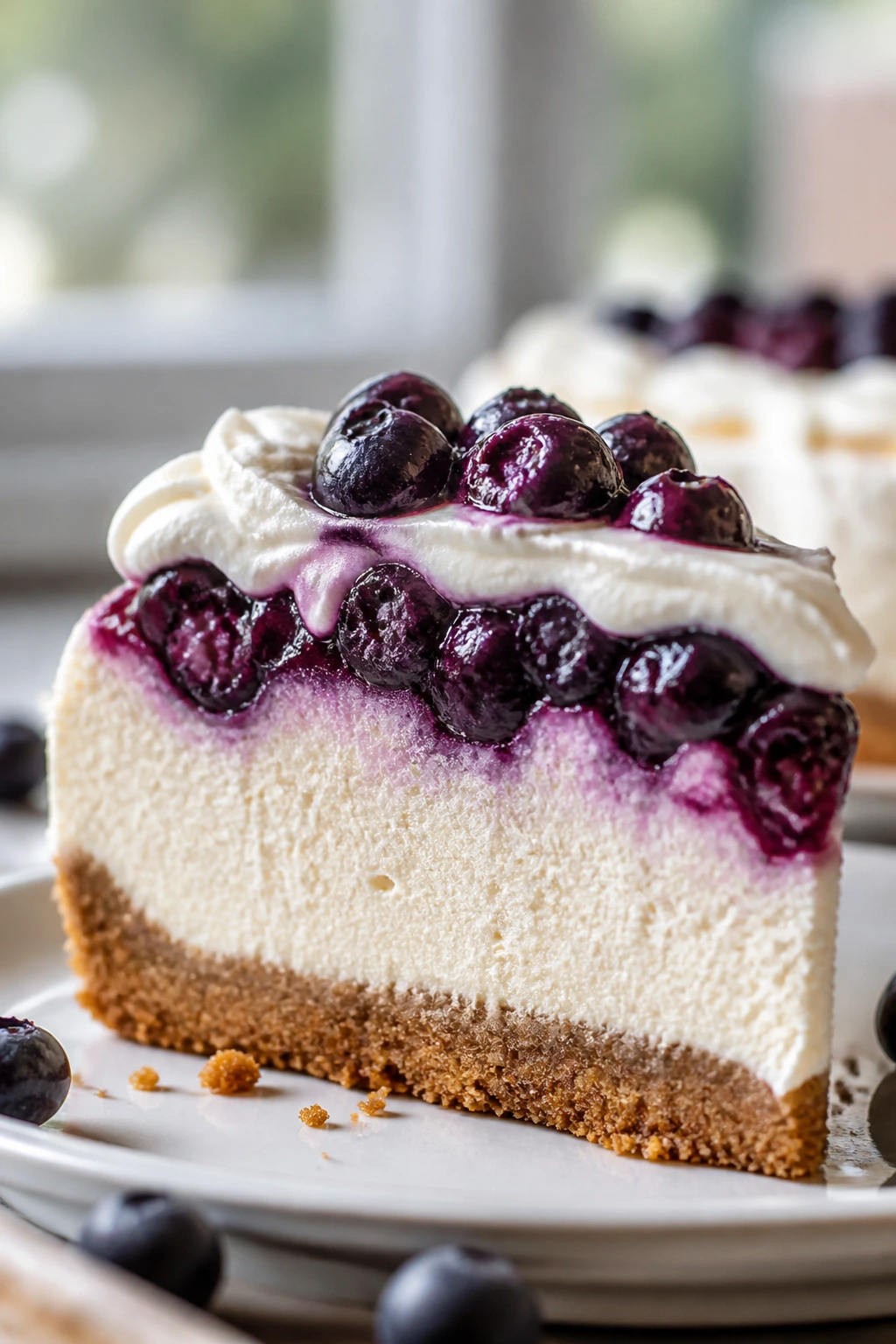
Prepare the Pan and Crust
-
Preheat the oven to 350°F (175°C). Lightly grease a 9-inch springform pan and line the bottom with a parchment round.
-
Stir the graham cracker crumbs, sugar, salt, and melted butter in a medium bowl until every crumb looks damp and the mixture feels like wet sand. Press it into the bottom and 1 inch up the sides of the pan, packing it firmly with the bottom of a measuring cup. Bake for 8 to 10 minutes, until the crust smells toasty and the edges darken a shade. Cool completely on a rack.
Make the Cheesecake Filling
-
Sprinkle the gelatin over the cold water in a small bowl and let it sit for 5 minutes. It should turn thick and spongy, almost like set applesauce.
-
Beat the softened cream cheese and powdered sugar on medium speed for 1 to 2 minutes, until the mixture looks smooth and glossy. Beat in the sour cream, lemon juice, lemon zest, vanilla, and salt, then scrape the bowl well. Any unblended cream cheese will show up later as a white streak in the finished slice.
-
Warm the bloomed gelatin in the microwave for 5 to 8 seconds, or over very low heat, just until it turns liquid. Stir 2 tablespoons of the cream cheese mixture into the gelatin to temper it, then beat the gelatin mixture back into the bowl on low speed. Do not let the gelatin boil — if it gets too hot, it can set in stringy bits instead of disappearing into the filling.
-
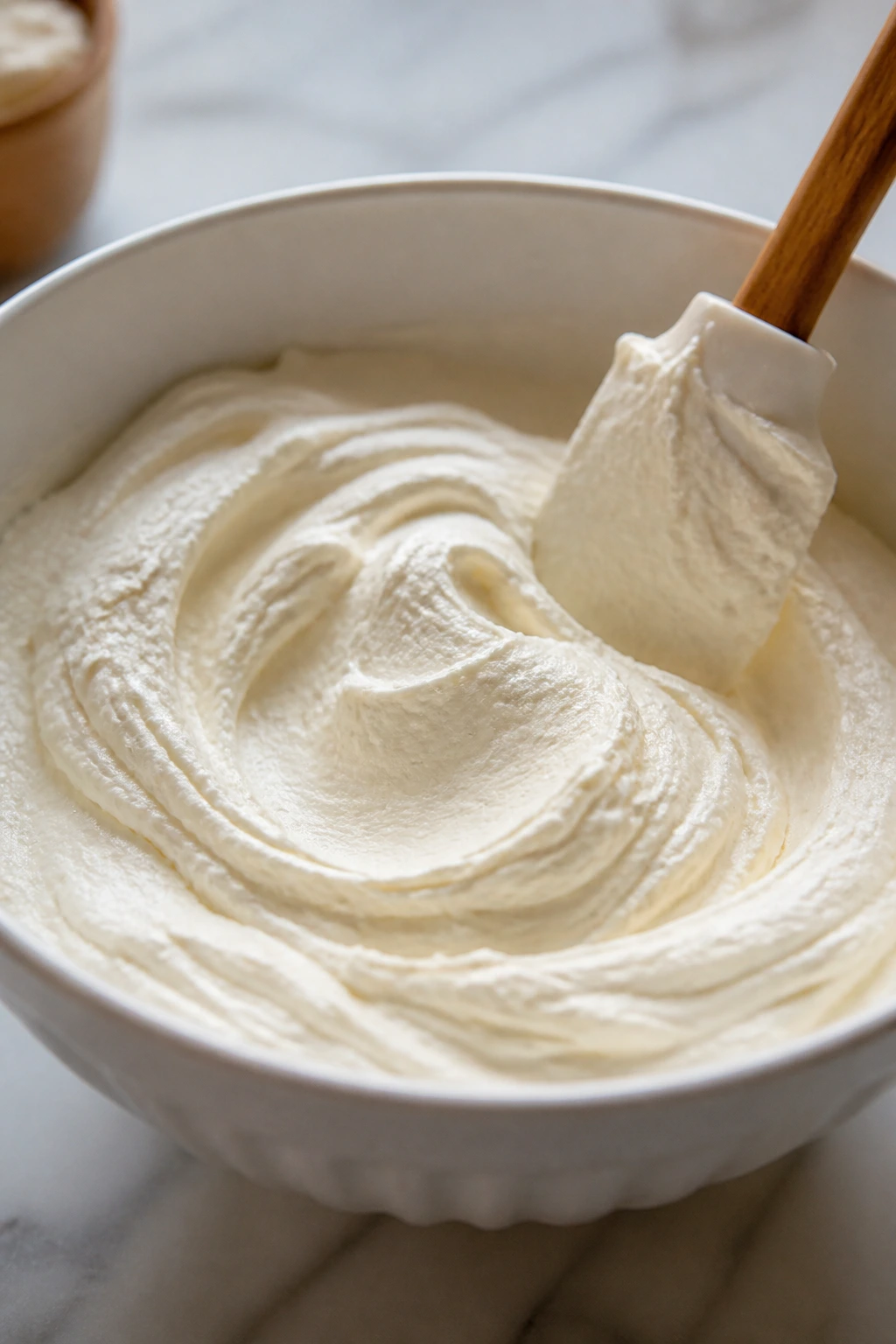
In a separate bowl, whip the cold heavy cream to soft peaks, about 2 to 3 minutes on medium-high speed. The cream should hold shape but still bend at the tip. If it stands straight up like a little white spear, you’ve gone too far.
-
Fold the whipped cream into the cream cheese base in two additions, using a rubber spatula and broad sweeps from the bottom of the bowl up to the top. Stop the moment the mixture looks even and fluffy. A faint streak or two is fine; overmixing knocks the air out and makes the filling heavier than it should be.
-
Spoon the filling into the cooled crust and smooth the top with an offset spatula. Tap the pan gently on the counter twice to release trapped air, then cover loosely and refrigerate for at least 6 hours, or overnight if you want the cleanest cuts.
Frost and Finish
-
Beat the frosting cream cheese and butter together until smooth, then add the powdered sugar, vanilla, salt, and enough heavy cream to make the frosting spreadable. Mix until the frosting looks pale and thick, but stop before it turns fluffy and loose.
-
Spread or pipe the frosting over the chilled cheesecake. Toss the berries with the honey and lemon juice in a small bowl, then arrange them over the frosting just before serving. Keep the berries clustered where they belong — the center, a ring around the edge, or a loose mound down one side all work.
-
Run a thin knife around the edge of the springform pan, release the sides, and slice with a hot, dry knife wiped clean between cuts. If the knife starts dragging through the frosting, dip it back into hot water and dry it again before the next slice.
How to Serve a Clean, Cold Slice
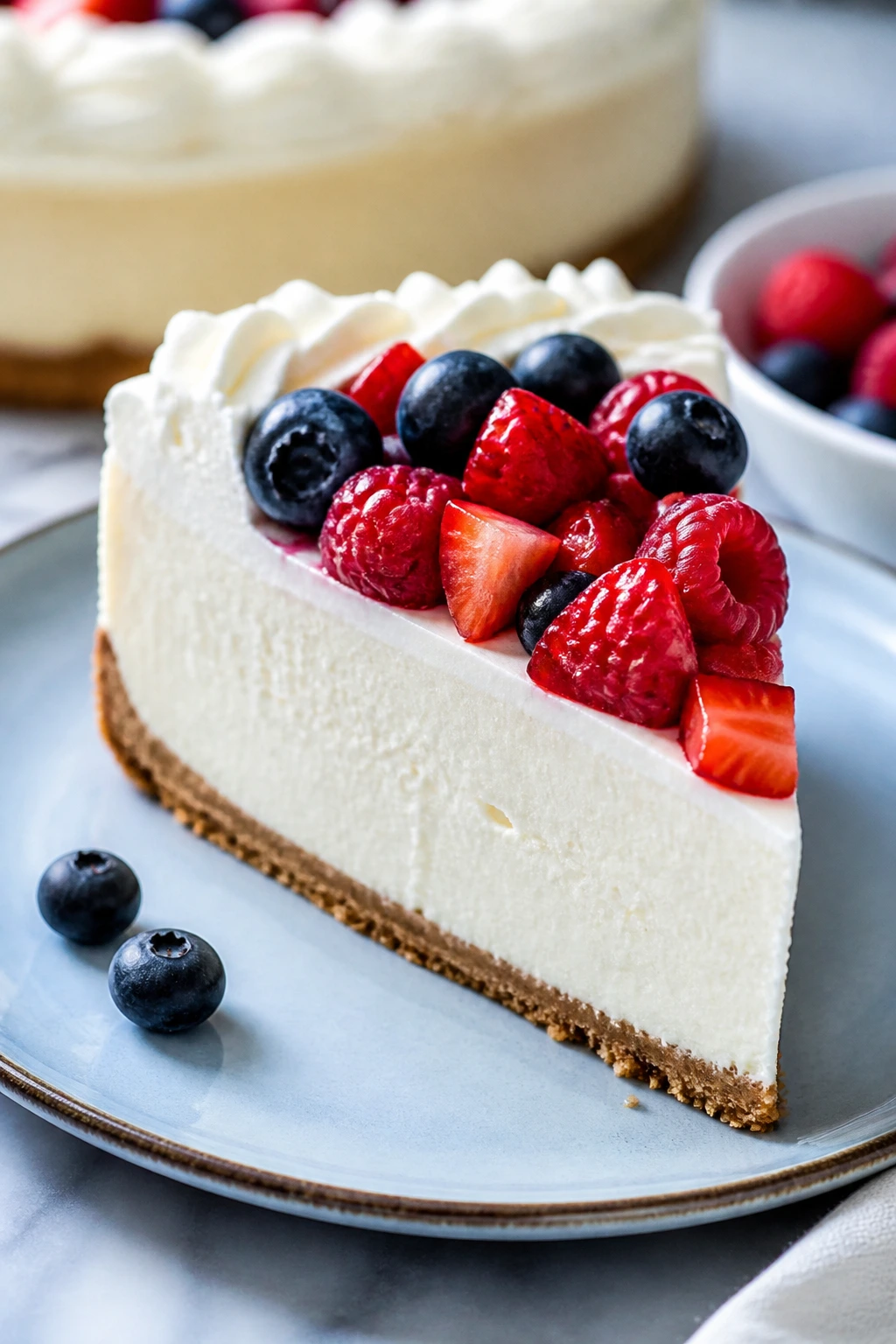
Presentation:
Serve this cheesecake straight from the fridge on chilled dessert plates. A cold plate helps the frosting hold its shape a little longer, which matters if the room is warm or the table is crowded. I like a ring of berries near the outer edge and a few scattered in the center, because it looks deliberate instead of dumped on top. If you want a sharper finish, smooth the frosting all the way to the edge and leave the berries slightly off-center so each slice shows both white frosting and fruit.
Accompaniments:
A plain espresso or strong drip coffee is the easiest match, because the bitterness cuts through the cream cheese and sugar. Black tea with a little bergamot, like Earl Grey, works too. If you want something a little more celebratory, pour a dry sparkling wine in small glasses and keep the pours modest; the bubbles reset your palate between bites. You do not need a sauce on the side. The cheesecake is already rich enough.
Portions:
A 9-inch cheesecake cuts into 12 generous slices, which is the portion I’d use when dessert is the main event. If it’s one of several sweets on the table, cut 14 smaller wedges and keep the knife hot so the slices stay tidy. For a bigger gathering, make two cheesecakes rather than trying to stack the filling taller in one pan. The texture is better when the layer is even.
Beverage Pairing:
Coffee is the obvious choice, but not the only one. A glass of prosecco, dry rosé, or even a cold cup of unsweetened tea gives the berries enough room to taste fresh. For an after-dinner pairing with more depth, serve the cheesecake with a dark roast coffee and a few extra raspberries on the side.
Small Tweaks That Improve the Whole Dessert
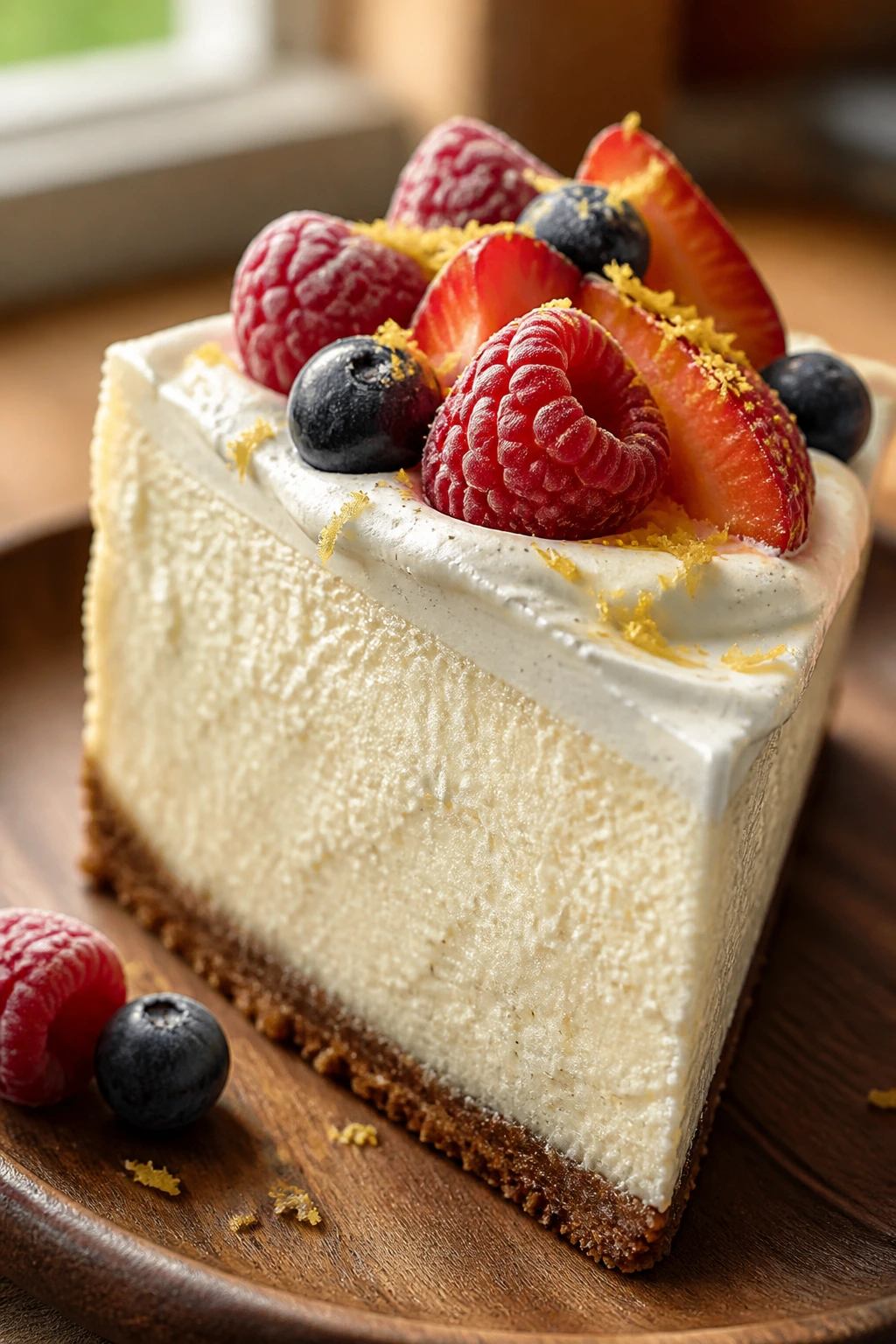
Flavor Enhancement: A teaspoon of vanilla bean paste in the frosting gives the top a deeper vanilla note and those tiny black specks that make the frosting look polished without much effort. If you like a sharper finish, grate a little extra lemon zest over the berries right before serving.
Time-Saver: Bake the crust the day before and keep it covered at room temperature, then make the frosting ahead and chill it in a container. The filling still needs its own chill time, but breaking the work into two smaller sessions makes the last stretch feel less crowded.
Texture Control: Keep the heavy cream cold until the last minute, and whip it in a chilled bowl if your kitchen runs warm. Soft peaks are the target. Stiff peaks sound like a smart shortcut, but they make folding harder and can leave little white lumps in the filling.
Berry Handling: Dry the berries after washing them. I mean dry-dry, not “shook off a little water with a paper towel.” Surface moisture turns into red streaks and slippery spots on the frosting, and that is the fastest way to make a careful dessert look rushed.
Make-It-Yours: If you like a little more tang, replace 2 tablespoons of the sour cream with plain Greek yogurt. If you want a softer, rounder flavor, swap half the strawberries for blackberries and leave the honey out of the topping. The fruit will taste less sweet, but in a cheesecake like this, that can be a good thing.
What Usually Goes Wrong With Cheesecake Like This
-
The whipped cream gets overbeaten: The filling turns grainy or looks streaky instead of light and smooth. Stop at soft peaks, where the cream still droops slightly at the tip.
-
The gelatin goes in too hot: You’ll see little stringy bits or a faint curdled look in the filling. Let the gelatin cool for a few seconds after melting, then temper it with some of the cream cheese mixture before beating it in.
-
The cheesecake gets frosted before it sets: The frosting sinks into the top and the berries slide around like marbles. Give the filling its full chill, even if the surface looks ready early.
-
The berries are too wet: Wash them too close to assembly and the frosting starts to look streaked and slick. Dry the fruit on towels, then top the cheesecake right before serving.
-
The crust is packed loosely: The first slice breaks apart at the base and leaves crumbs everywhere. Press the crust harder than feels necessary before baking; it should feel compact and sturdy under your fingers.
-
The knife is dull or dry: You end up with ragged, torn slices instead of clean wedges. Heat the blade in hot water, dry it fast, and wipe it after each cut. It sounds fussy. It isn’t.
Flavor Swaps That Still Keep the Texture Right
Lemon-Raspberry Brightened Version
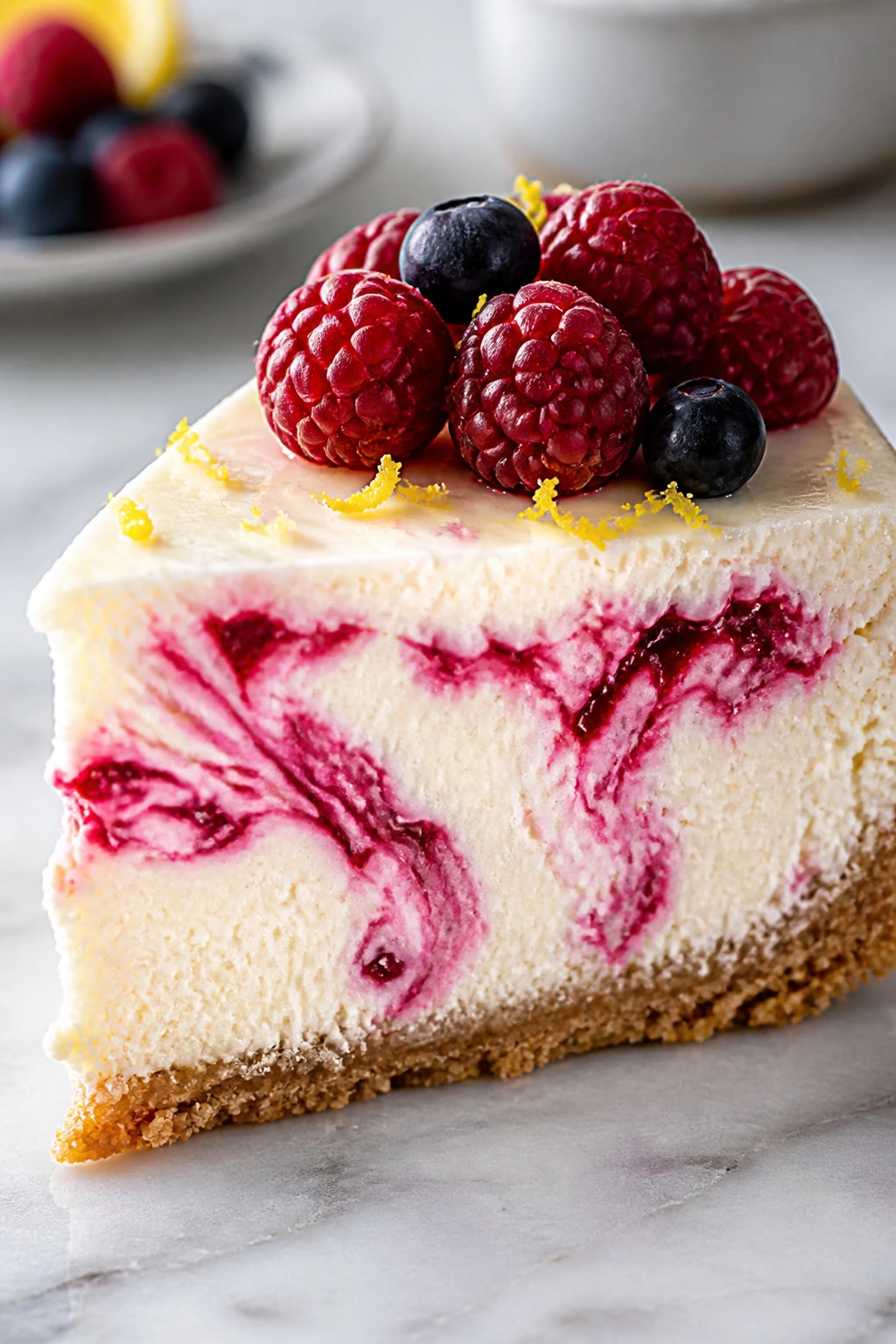
Increase the lemon zest in the filling to 2 teaspoons and use mostly raspberries with a few blueberries on top. The extra tartness cuts through the frosting and gives the dessert a sharper edge, which I like when the rest of the meal ran rich.
Chocolate Cookie Crust
Swap the graham crumbs for chocolate wafer crumbs and reduce the crust sugar to 2 tablespoons. The darker crust changes the whole feel of the cheesecake; the berries pop harder, and the frosting tastes a little more like a bakery dessert than a picnic dessert.
Strawberries-and-Cream Style
Use only strawberries on top and slice them thin so they fan out instead of piling high. Add a tiny splash of almond extract to the frosting — 1/4 teaspoon is enough — and the whole dessert leans toward strawberry shortcake without losing the cheesecake backbone.
Gluten-Free Almond Base
Use gluten-free graham-style crumbs or crushed almond cookies in place of the standard grahams. Add an extra tablespoon of melted butter if the mixture seems dry, because gluten-free crumbs often need a touch more fat to hold together after baking.
Soft-Set No-Gelatin Version
Leave out the gelatin, whip the cream to medium-soft peaks, and chill the cheesecake overnight. The slices will be softer and more mousse-like, so serve them very cold and cut them with a warm knife. I’d use this version when I want a spoonable center rather than a firm wedge.
Make-Ahead, Fridge Time, and Freezer Notes
Room Temperature: Once the cheesecake is frosted and topped with berries, it should not sit out for more than 2 hours. If the room is warm or the dessert is outside, shorten that to 1 hour. The frosting softens quickly, and once it starts to lose its shape, the berries slide around.
Refrigerator: Cover the cheesecake lightly and keep it in the fridge for up to 4 days. The flavor is usually best on day 1 and day 2, when the berries still look fresh and the crust has not absorbed much moisture. By day 3, the frosting may start to lose its sharp edges, though the dessert still eats well.
Freezer: Freeze the cheesecake without the berry topping for the cleanest result. Wrap the set cheesecake or individual slices tightly in plastic wrap, then in foil, and freeze for up to 1 month for best texture. It will keep longer than that, but the crust and filling start to pick up a faint icy note after the first month. Thaw overnight in the refrigerator, then top with fresh berries after it has softened.
Make-Ahead: The crust can be baked a day ahead and held covered at room temperature. The frosting can be made 2 to 3 days ahead and kept chilled in a sealed container; beat it again briefly before spreading. The filling and full cheesecake are best assembled the day before serving, because the overnight chill gives the cleanest slice and the most stable top. Add the berries at the end, not the night before, unless you like a wetter, softer surface.
Berry Cheesecake Questions People Ask Most
Can I make this cheesecake without gelatin?
Yes, but the slice will be softer and more mousse-like. Skip the gelatin, whip the cream to medium-soft peaks, and give the cheesecake an overnight chill so it sets as much as it can on its own.
Can I use frozen berries on top?
I wouldn’t use them straight from the freezer. They thaw too wet and bleed into the frosting, which muddies the look and softens the top. If frozen berries are what you have, thaw them first and use them as a spooned topping rather than scattered whole.
How far ahead can I make it?
The cheesecake itself can be made a full day ahead, and that’s the timing I prefer. You can make the crust and frosting earlier than that, but the berries should go on close to serving time so they stay bright and dry.
Can I use a pie dish instead of a springform pan?
You can, but you’ll get a shallower dessert and serving will be less neat. A springform pan is better because the filling is soft before chilling, and the removable sides let it release without dragging the crust apart.
Why did my filling turn soft instead of fluffy?
Usually one of three things happened: the cream was underwhipped, the gelatin was skipped or underbloomed, or the cheesecake did not chill long enough. Fix the first two by watching your peaks and measuring the gelatin carefully; fix the third by waiting longer, not by pushing the pan into the freezer.
Can I make the frosting less sweet?
Yes. Drop the powdered sugar to 1 1/2 cups and beat the frosting a little longer to get smoothness back. You can also add a spoonful of sour cream or mascarpone for tang, but do it slowly so the frosting stays spreadable rather than loose.
What berries work best if I don’t want a mix?
Strawberries give the top the most body, raspberries give the sharpest contrast, and blueberries are the easiest to arrange in a neat pattern. If you want one fruit only, strawberries are the safest bet because they hold their shape and don’t bleed as much as raspberries.
A Chill Worth Waiting For
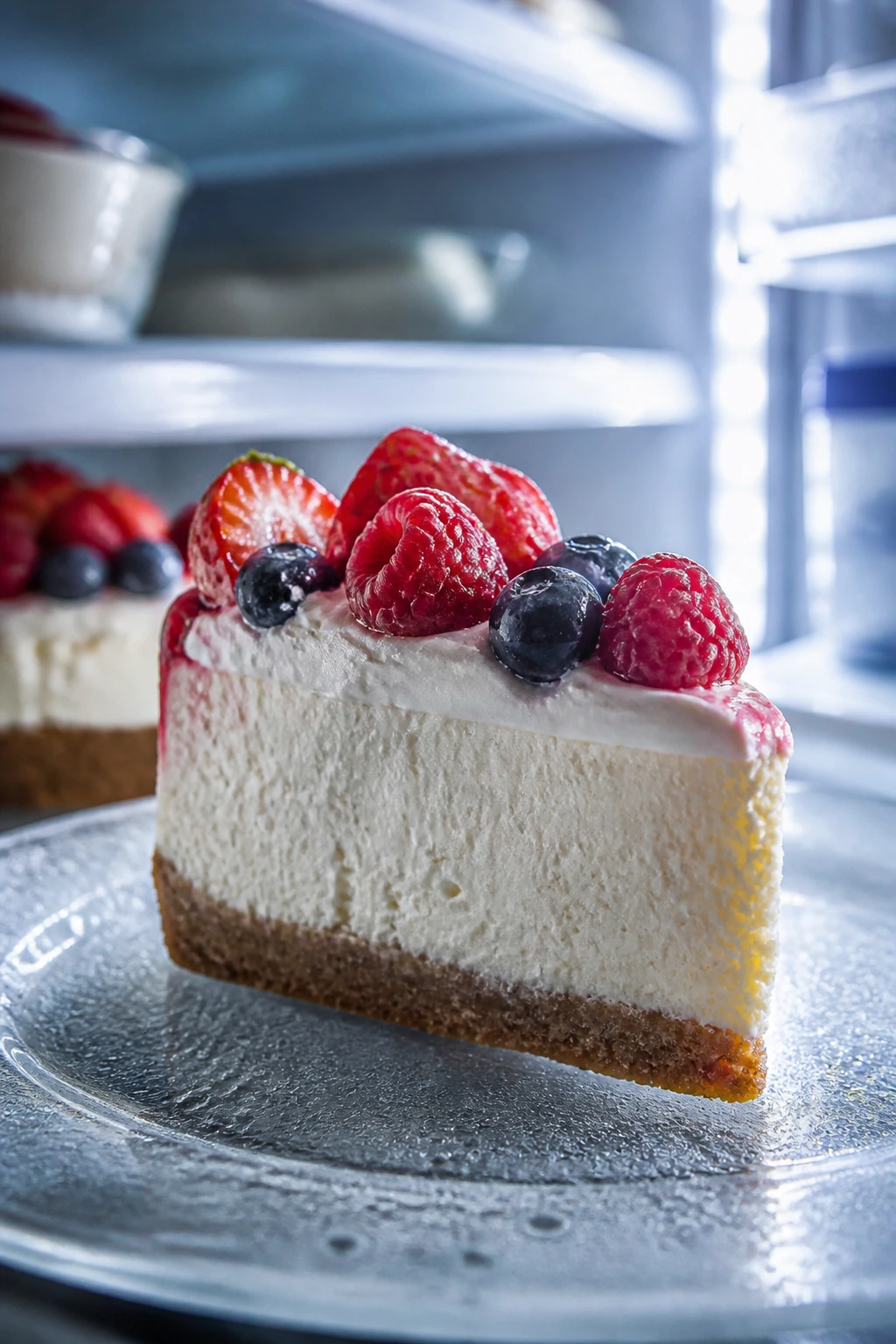
The nicest thing about this cheesecake is how calm it is once you give it the time it wants. No frantic oven checking. No guessing whether the center has set. Just a cool, creamy filling, a crust with some snap left in it, and berries that taste fresh instead of decorative.
Keep the cream cheese soft, the heavy cream cold, and the berries dry until the end. That’s the whole game, really. Give it that one long chill, and the first slice will hold together cleanly, with the frosting intact and the fruit sitting where you meant it to sit.
Fluffy Berry Topped Cheesecake with Cream Cheese Frosting — Recipe Card
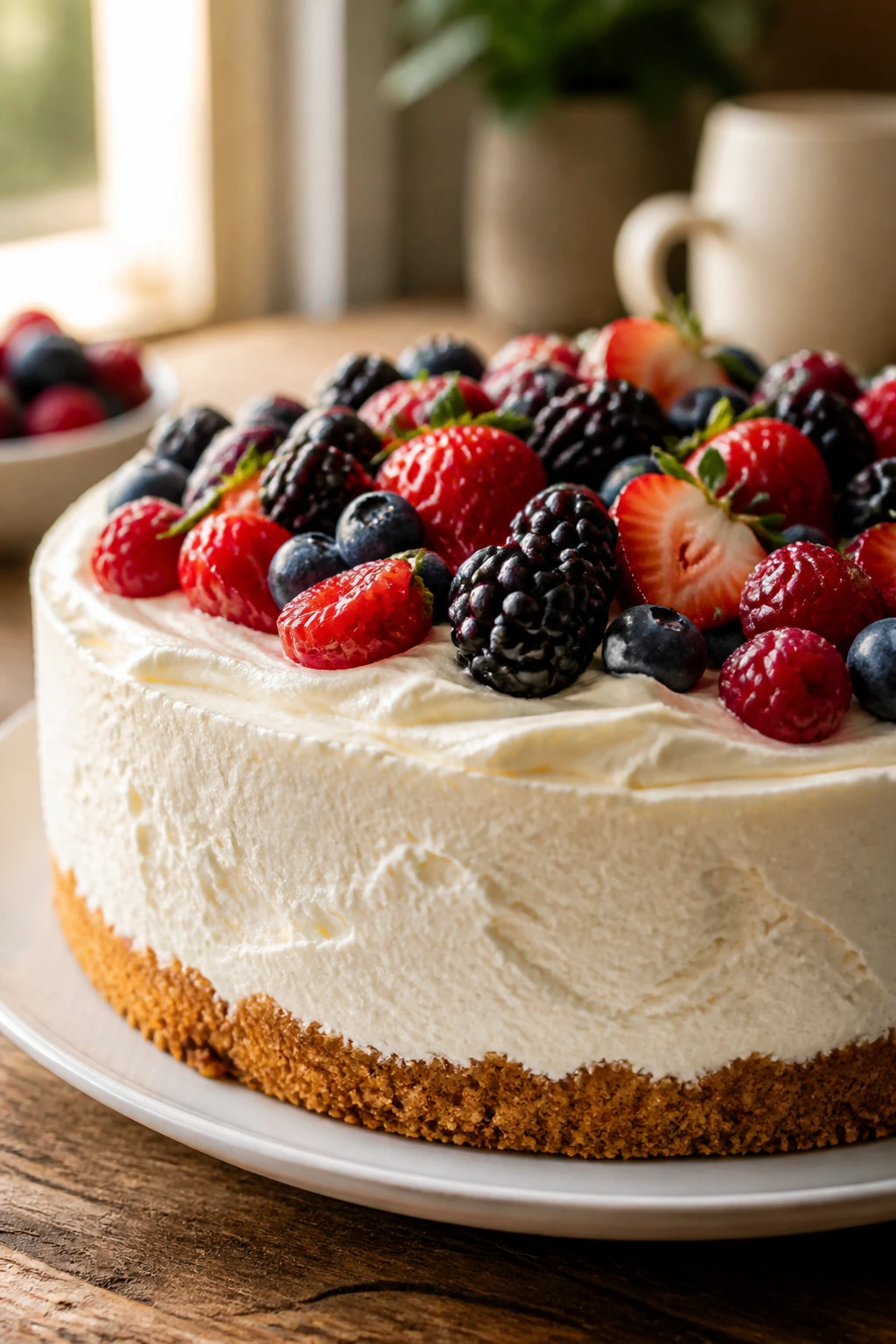
Recipe Name: Fluffy Berry Topped Cheesecake with Cream Cheese Frosting
Description: A chilled no-bake cheesecake with a crisp graham crust, a light whipped filling, and a smooth cream cheese frosting on top. Fresh berries finish the dessert with tart, juicy contrast.
Prep Time: 30 minutes
Cook Time: 10 minutes
Total Time: 40 minutes active + 6 hours chilling
Course: Dessert
Cuisine: American
Servings: 12 servings
Calories: About 690 kcal per serving
Ingredients
For the Graham Cracker Crust:
- 2 1/2 cups graham cracker crumbs, finely crushed
- 1/4 cup granulated sugar
- 1/2 teaspoon fine sea salt
- 10 tablespoons unsalted butter, melted and slightly cooled
For the Fluffy Cheesecake Filling:
- 24 ounces full-fat cream cheese, softened to room temperature
- 3/4 cup powdered sugar
- 1/2 cup sour cream, room temperature
- 1 tablespoon fresh lemon juice
- 1 teaspoon finely grated lemon zest
- 1 teaspoon vanilla extract
- 1/4 teaspoon fine salt
- 2 teaspoons unflavored powdered gelatin
- 3 tablespoons cold water
- 1 1/2 cups cold heavy cream
For the Cream Cheese Frosting:
- 8 ounces cream cheese, softened
- 1/2 cup unsalted butter, softened
- 2 cups powdered sugar, sifted
- 1 teaspoon vanilla extract
- Pinch of fine salt
- 1 to 2 tablespoons heavy cream, as needed
For the Berry Topping:
- 1 cup strawberries, hulled and sliced
- 1 cup blueberries
- 1 cup raspberries
- 1 tablespoon honey
- 1 teaspoon fresh lemon juice
Instructions
-
Preheat the oven to 350°F (175°C). Lightly grease a 9-inch springform pan and line the bottom with parchment paper.
-
Mix the graham cracker crumbs, sugar, salt, and melted butter until the mixture feels like damp sand. Press it firmly into the bottom and 1 inch up the sides of the pan, then bake for 8 to 10 minutes. Cool completely.
-
Sprinkle the gelatin over the cold water and let it bloom for 5 minutes.
-
Beat the cream cheese and powdered sugar until smooth, then mix in the sour cream, lemon juice, lemon zest, vanilla, and salt.
-
Warm the gelatin just until liquid, temper it with 2 tablespoons of the cream cheese mixture, then beat it back into the filling.
-
Whip the cold heavy cream to soft peaks, then fold it into the cream cheese base in two additions.
-
Spoon the filling into the cooled crust, smooth the top, and chill for at least 6 hours or overnight.
-
Beat the frosting cream cheese and butter until smooth, then add the powdered sugar, vanilla, salt, and enough heavy cream to make it spreadable.
-
Spread or pipe the frosting over the chilled cheesecake.
-
Toss the berries with honey and lemon juice, then arrange them over the frosting just before serving.
-
Release the springform ring, slice with a hot dry knife, and wipe the blade between cuts.
Notes: Add the berries at the very end for the cleanest top. Freeze the cheesecake without berries if you want to store it longer. If your kitchen runs warm, chill the mixing bowl before whipping the cream.